Duolingo Targets Math and Music as Active User Base Hits 100 Million
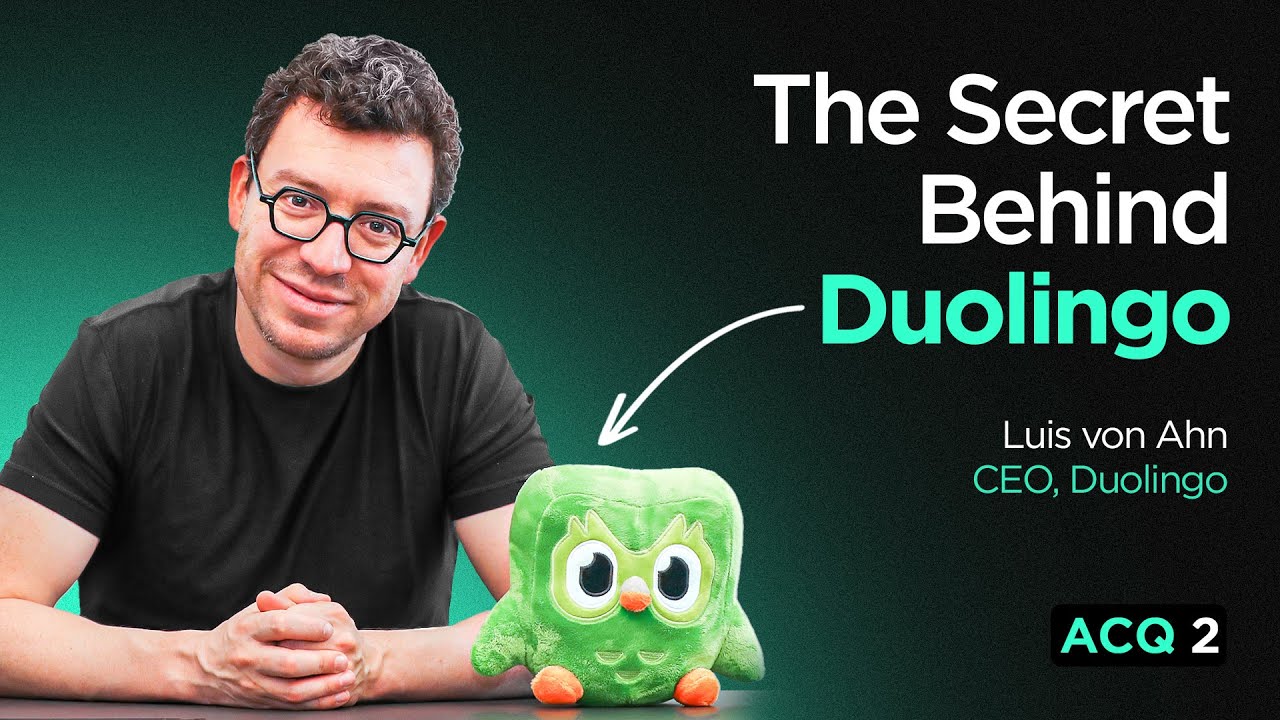
ACQ2: Why Duolingo Worked (with Luis von Ahn, CEO) — Acquired

Acquired

Gamification and AI-driven content generation allowed Duolingo to scale into a $9 billion company by solving the user motivation problem rather than focusing strictly on traditional educational outcomes.

AI-assisted summary of ACQ2: Why Duolingo Worked (with Luis von Ahn, CEO) — original source. Check the original for full context.

Source published:

Detailed notes

## Background This episode was published on YouTube by the Acquired channel on April 10, 2025, and features an interview originally released on November 10, 2024. The page description outlines how Duolingo founder and CEO Luis von Ahn transformed language learning into a $9B publicly traded EdTech company, driven by his personal experience of how learning English can radically alter someone's life trajectory and earning potential.

## TL;DR In this conversation, Duolingo co-founder and CEO Luis von Ahn breaks down how the company achieved extreme scale by gamifying education and pivoting to short, three-minute lessons that solve the core problem of user motivation. He details Duolingo's early mobile-first transition, its monetization struggles with intensely mission-driven staff, and the accidental viral fame of its green owl mascot that saved millions in marketing costs. Von Ahn also discusses the modern integration of Large Language Models to accelerate content creation and conversational practice, while outlining his ultimate goal to establish Duolingo scores as a universal metric for language fluency.

## Atmosphere & style The conversation carries a witty, candid, and intellectually engaging tone, blending high-level business strategy with lighthearted, self-deprecating humor. There is a playful dynamic between the hosts and von Ahn, who speaks with the analytical sharpness of a computer science professor combined with the grounded humility of a founder who remembers his roots. The narrative arc moves from humorous early failures and accidental viral memes to a deeply poignant and inspiring conclusion, leaving listeners with a profound sense of how childhood observation of socioeconomic inequality fueled a global mission to democratize education.

## Key takeaways - [00:00](https://www.youtube.com/watch?v=vx2uIgL1QVw&t=0s) Luis von Ahn co-founded Duolingo to democratize education, specifically targeting English learning due to its massive impact on earning potential in non-English speaking countries. - [01:41](https://www.youtube.com/watch?v=vx2uIgL1QVw&t=101s) The primary bottleneck in self-guided education is not teaching the material, but keeping the user motivated over a sustained period. - [03:03](https://www.youtube.com/watch?v=vx2uIgL1QVw&t=183s) Duolingo shifted from 30-minute lessons to a highly gamified 3-minute unit structure to take advantage of micro-moments throughout a user's day. - [03:03](https://www.youtube.com/watch?v=vx2uIgL1QVw&t=183s) The streak mechanic is highly effective for engagement, resulting in roughly 8% of active users maintaining a streak longer than a year. - [07:17](https://www.youtube.com/watch?v=vx2uIgL1QVw&t=437s) In 2011, Duolingo committed fully to a mobile-first engineering approach, which quickly drove mobile traffic to eclipse web traffic within weeks. - [12:25](https://www.youtube.com/watch?v=vx2uIgL1QVw&t=745s) Duolingo experiences a geographical paradox where 80% of users are international, yet roughly half of its revenue is generated by a high subscription-conversion rate in the US. - [18:53](https://www.youtube.com/watch?v=vx2uIgL1QVw&t=1133s) Avoiding early monetization from 2012 to 2016 allowed Duolingo's engineering team to focus entirely on driving Day 1 retention from 13% up to roughly 50%. - [22:25](https://www.youtube.com/watch?v=vx2uIgL1QVw&t=1345s) The iconic, passive-aggressive personality of the Green Owl mascot was an accidental byproduct of a notification rule meant to reduce user spam. - [26:58](https://www.youtube.com/watch?v=vx2uIgL1QVw&t=1618s) Replicating Duolingo's playbook today is exceedingly difficult because the global app store distribution channels are mostly set in stone compared to 2012. - [28:55](https://www.youtube.com/watch?v=vx2uIgL1QVw&t=1735s) As an educational brand, Duolingo benefits from a 'good guys' public perception, allowing them to use edgy or risky marketing stunts that other sectors cannot deploy. - [32:20](https://www.youtube.com/watch?v=vx2uIgL1QVw&t=1940s) To prevent metric optimization from eroding the user experience over time, Duolingo utilizes an 'anti-knowledge' leadership panel that actively blocks potentially disruptive short-term revenue tests. - [40:20](https://www.youtube.com/watch?v=vx2uIgL1QVw&t=2420s) The 'session end screen' possesses the highest leveraged statistical impact on next-day user retention, whereas changes in the middle of a lesson yield almost zero impact. - [48:12](https://www.youtube.com/watch?v=vx2uIgL1QVw&t=2892s) Duolingo leverages Large Language Models to automate content creation, drastically compressing multi-year development pipelines down to a few months. - [52:03](https://www.youtube.com/watch?v=vx2uIgL1QVw&t=3123s) AI-driven conversational practice removes social anxiety for language learners, who are historically terrified of being judged by real human speakers. - [55:23](https://www.youtube.com/watch?v=vx2uIgL1QVw&t=3323s) Rather than looking to institutional EdTech models, Duolingo models its consumer engagement and monetization strategies after scale platforms like Spotify, Netflix, and Meta. - [57:18](https://www.youtube.com/watch?v=vx2uIgL1QVw&t=3438s) The Duolingo English Test (DET) has achieved mainstream institutional validity, gaining acceptance from 98 of the top 100 US universities. - [59:03](https://www.youtube.com/watch?v=vx2uIgL1QVw&t=3543s) Duolingo benefits from a psychological tailwind of users seeking productive screen time, which offers a more fulfilling emotional return than traditional social media scrolling. - [01:01:38](https://www.youtube.com/watch?v=vx2uIgL1QVw&t=3698s) The ultimate inspiration for Duolingo stems from the founder's childhood in Guatemala, where he witnessed deep educational disparities between privileged private school students and those with limited access.

## Detailed walkthrough ### [00:00](https://www.youtube.com/watch?v=vx2uIgL1QVw&t=0s) Introduction and the Origins of Duolingo

The hosts introduce Luis von Ahn, the co-founder and CEO of Duolingo, highlighting his impressive background as a former math professor at Carnegie Mellon University (2005–2012) and the creator of reCAPTCHA, a technology he sold to Google in 2009. A Guatemalan immigrant who studied mathematics at Duke before earning his PhD in computer science, von Ahn explains that Duolingo is currently the most popular education app in the world, boasting around 100 million monthly active users. Beyond language learning, it is widely recognized for its "unhinged yet wholesome Green Owl" mascot that frequently performs bizarre stunts on TikTok.

Von Ahn reveals that the initial mission-driven core of the company was specifically to teach English, as mastering the language is deeply transformational in non-English speaking countries and directly correlates with a massive increase in earning potential. They eventually reasoned that if they were going to teach English, they might as well expand to other languages, which ultimately vaulted them to a publicly traded company valued at $9 billion.

[01:41](https://www.youtube.com/watch?v=vx2uIgL1QVw&t=101s) The Key to Extreme Scale: Solving the Motivation Problem

When asked why Duolingo succeeded at an extreme scale while previous language learning companies remained fragmented and subscale, von Ahn shares a single, crucial insight: "the hardest thing about learning something by yourself is staying motivated by a margin." While traditional educational apps obsess over learning outcomes, von Ahn argues that teaching the material is not the true bottleneck. He points out that anyone can learn a subject like quantum physics by simply picking up a book, but nobody does it because reading the book is tedious. Duolingo's core triumph was turning the educational process into something people actually *want* to do through stellar product design and psychology.

[03:03](https://www.youtube.com/watch?v=vx2uIgL1QVw&t=183s) The Failure of 30-Minute Lessons and the Shift to Gamification

The inception of Duolingo's gamification strategy came from a place of personal failure in 2011. At the time, von Ahn was a professor and his co-founder was his PhD student; they were originally just searching for a thesis topic and only vaguely considered turning it into a business. The co-founder was a native Swiss German speaker and von Ahn a native Spanish speaker. They decided to build the initial courses for each other's languages. In an amusing aside, von Ahn admits he naively thought German and Swiss German were practically the same—akin to British and American English—only to find out they are completely different languages.

Every morning at 9:00 a.m., they would ask each other if they had completed their respective lessons, and both confessed they hadn't because it was "so boring." The original lessons were 30 minutes long with zero game mechanics. Recognizing that even they couldn't stay engaged, they entirely re-engineered the app's structure:

* **3-Minute Units:** Shifting from 30 minutes to 3 minutes was vital. It allowed users to complete lessons during micro-moments of the day, like waiting for a bus or using the bathroom. * **Dopamine Hits:** They implemented visual progress bars and celebrated correct answers with satisfying "little explosions" of animations. * **The Streak:** Now active for roughly 12 years, the streak counter resets to zero if a user misses a day. This mechanic is so powerful that roughly 8% of Duolingo's active users—about 8 million daily active users—have a streak longer than 365 days. * **Sophisticated Notifications:** Unlike typical apps where frequent notifications feel like spam, users tolerate them from Duolingo because they view language learning as self-improvement. The company leverages a highly sophisticated, custom-trained AI system to predict exactly when to send a notification and what text will successfully drive a user back to the app. * **Social Mechanics:** They optimized a complex "science" behind leaderboards after initially getting them very wrong, later adding features like friend streaks and shared quests.

[07:17](https://www.youtube.com/watch?v=vx2uIgL1QVw&t=437s) Expanding Markets and the Mobile-First Revolution

Reflecting on the era between 2012 and 2015 when "gamification" was an overused venture capital buzzword, von Ahn notes that while it is useless for mandatory tasks—such as the Duolingo English Test, a standardized TOEFL competitor making up 10% of their business that students *must* take—it is essential for voluntary education. This engagement model allowed Duolingo to massively expand the language-learning market. In fact, 80% of Duolingo users in the US and UK were not learning a language at all before discovering the app.

This extreme market expansion was a tough sell during their 2011 Series A fundraising round with Union Square Ventures. Years later, USV partner Brad Burnham confessed to von Ahn that they didn't actually think Duolingo would succeed in language learning; they just liked the founders and assumed they would eventually pivot into something else. However, by the Series B round, the app had achieved undeniable product-market fit, accumulating millions of users.

A large driver of this growth was their early choice to go mobile-first. In 2011, most tech companies treated mobile apps as limited "companion apps" to a primary desktop website. Duolingo chose to put 100% of its website functionality into its iPhone app. Upon launch, mobile traffic overtook web traffic within a matter of weeks. Today, mobile accounts for roughly 95% of their traffic. Von Ahn notes they were closely studying highly polished, native mobile apps of the era, such as Instagram and Dave Morin's Path, to learn how to design specifically for a phone screen rather than simply shrinking a web browser interface.

[12:25](https://www.youtube.com/watch?v=vx2uIgL1QVw&t=745s) Evaluating Market Sizes and the "Duolingo for X" Phenomenon

The hosts circle back to how investors routinely misjudge market sizes. Von Ahn explains that language learning was heavily underappreciated by American VCs because English speakers live in a dominant linguistic bubble where learning a second language feels optional. Coming from Guatemala, von Ahn knew firsthand that learning English was a brutal prerequisite for even mild professional success, a reality shared by billions of people worldwide.

When evaluating new subjects to target internally, Duolingo looks for high-frequency behaviors that billions of people want to do every day. This logic led them to expand into math and music. They intentionally avoided niche fields like chemistry because, despite a personal love for the subject, there simply isn't a billion-person daily market for it. Von Ahn smiles at how often he sees social media advertisements for startups claiming to be the "Duolingo for whatever," setting up a discussion on what fields truly fit their formula.

The Edge of Language Learning and App Expansion

The speaker shares a lighthearted aside about getting targeted with bizarre advertisements, such as "Duolingo for anger," jokingly questioning whether it implies teaching people how to become angry or how to manage it. Turning to broader educational products, they note that while other subjects show promise, it remains incredibly difficult to compete with language learning. Subjects like math and music are projected to become massive, but language learning holds a unique psychological and structural advantage.

Most subjects are heavily tethered to formal schooling—very few people actively choose to learn math outside of a school setting. In contrast, language learning bridges both academic requirements and spontaneous personal desires. If you ask a random person on the street if they want to improve their Spanish, the typical response is an enthusiastic, "Yeah, why not?" Furthermore, music apps face a steep physical barrier that language apps do not: music requires a physical instrument that usually costs $200 to $300, whereas language learning requires absolutely no external hardware.

The Dynamics of Global Users and US Monetization

The interviewer pivots to Duolingo's business model, highlighting a fascinating geographical paradox: the vast majority of usage happens outside the United States with people learning English, yet most of the company's revenue is generated inside the US. The speaker confirms this dynamic with hard statistics, stating that English alone accounts for 45% of their active user base. Geographically, only 20% of active users reside in the US, while the remaining 80% are international. Despite this, about half of the company's total revenue originates from the US market.

This financial discrepancy boils down to wealth and cultural behavior. Users in the US are highly accustomed to paying for digital subscriptions, outstripping almost every other country in their propensity to spend. In many international markets, consumers are fundamentally resistant to digital subscriptions, a hurdle that even major players like Spotify and Netflix struggle to overcome. Duolingo maintains an exceptionally high-quality free tier, resulting in only 9% of monthly active users converting to paid subscriptions, while 91% use the app entirely for free. In developing countries like Brazil or Vietnam, users exhibit a strict "won't pay unless they have to" mentality, rejecting convenience upgrades even if priced as low as 50 cents. Conversely, US users gladly pay simply to eliminate ads.

- **Active English Learners:** 45% of total users. - **User Distribution:** 20% in the US, 80% international. - **Revenue Distribution:** Approximately 50% comes from the US. - **Paying Conversion Rate:** Only 9% of monthly active users pay; 91% use the free version. - **Ad Load Structure:** The free tier features a light ad load consisting of one 5-second skippable ad at the end of a 3-to-4-minute lesson.

The "Late-Stage Capitalism" Awakening and Employee Pushback

When reflecting on the company's origins, the speaker notes that Duolingo launched in 2012 but did not make a single dollar for its first several years. The app originally had no ads and no payment gateway. This anti-monetization stance persisted until 2016, right after raising a funding round from Google Capital (now Capital G) at a half-billion-dollar valuation with zero revenue. The partner from the firm, Leela Sturdy, flew out to their Pittsburgh office, "got us drunk," and explicitly told them they needed to start making money immediately. The interviewer jokes about the classic founder secret: the only thing better than making a lot of money is making no money at all, because everything in between invites harsh scrutiny.

Implementing this change triggered an internal cultural crisis. Because Duolingo had spent years making no money, they had attracted intensely mission-driven employees who loved providing free education. When told they needed to monetize, the staff was genuinely shocked, asking, "But why?" When the speaker explained it was necessary to pay their salaries, the employees naively countered that their salaries had been paid fine so far, asking why they couldn't just keep doing whatever they had been doing. The speaker jokes that he practically had to run a seminar on "late-stage capitalism" to convince his team over a grueling six-month period that making money was not inherently evil. The turning point came when the staff realized that generating revenue would allow them to reinvest in the mission and keep the vast majority of the company focused on building a great product rather than chasing dollars.

- **Launch Year:** 2012. - **First Monetization Strategy Shift:** 2016–2017. - **Historical Valuation:** ~$500 million valuation with $0 revenue. - **Internal Transition:** Took 6 months to convince the mission-driven staff to accept monetization. - **Freemium Context:** In 2017/2018, the freemium model was unproven; YouTube only had ads (no premium), and Netflix was strictly paid.

The 5-Year Optimization Window and Retention Breakthroughs

The speaker passionately argues that avoiding early monetization was the ultimate catalyst for Duolingo's massive growth. Because they weren't making money, they couldn't run Performance Marketing—which the speaker viewed as foolish anyway, since paying Google $30 to acquire a user makes no sense if you cannot monetize them. With zero marketing budget and a room full of engineers, the company poured 100% of its energy into two metrics: teaching better and maximizing user retention.

From 2012 to 2017, the team did nothing but run endless A/B tests to optimize user retention. When the app first launched, its Day 1 retention rate was a dismal 13%, meaning they lost 87% of their users the very next day. By focusing entirely on product experience rather than tweaking ad pipelines or monetization funnels, they managed to skyrocket that Day 1 retention figure to roughly 50% by 2017. The interviewer notes that this pure product focus built a incredibly durable asset and user base, ensuring that the monetization machine they eventually implemented would sit on top of a highly sticky ecosystem.

- **Day 1 Retention at Launch:** 13% (87% of users did not return the next day). - **Day 1 Retention by 2017:** Driven up to approximately 50% through relentless engineering and A/B testing.

Accidental Memes and the $450 Million Green Owl

The conversation shifts to Duolingo's iconic branding. The interviewer questions how a couple of computer science phds from Carnegie Mellon University (CMU)—an institution not traditionally famous for world-class consumer marketing—managed to build such a cuddly and culturally dominant mascot. The speaker explains the mascot choice was intentional, selecting an owl as a Western symbol of knowledge. The iconic green color, however, was born entirely out of playful spite: the co-founder hated the color green, so the speaker chose it just to tease him.

The owl's legendary, slightly menacing personality was a total accident. Initially, the owl only appeared on the app icon and push notifications. To avoid being spammy, the team decided to stop sending push notifications entirely after a user showed 5 days of inactivity. Wanting to "get the credit for it" and show they were good guys, they designed the final 5th-day notification to read: "These notifications don't seem to be working. We're going to stop sending them for now." This unexpected passive-aggressive tone triggered immense user guilt, causing people to flood back to the app because they felt like Duolingo was giving up on them. This sparked a wave of internet memes painting the owl as a psychotic stalker who would hunt you down if you missed your lessons.

Embracing the internet culture, Duolingo bought a physical owl suit for campus recruiting events, which eventually wound up in the hands of a young employee named Zarya. She proposed using the suit to record strange, unhinged videos for TikTok. Though the speaker initially thought it was "such a dumb idea," he was proven entirely wrong. Today, the company estimates that roughly 15% of their daily new users are driven purely by this organic, owl-driven earned media. The interviewer calculates that if acquiring a user costs $30 on the open market, this quirky viral strategy translates to hundreds of millions of dollars in free marketing value, making Duo "the most valuable owl in history."

- **The Silent Cutoff Rule:** Duolingo stops push notifications after 5 days of inactivity. - **The Viral Growth Metric:** Roughly 15% of daily new users originate directly from the owl's social media presence and organic memes. - **Inferred Media Value:** Valued at potentially hundreds of millions of dollars in saved customer acquisition costs (CAC).

The "Make Your Beer Taste Better" Philosophy

Compliance frameworks such as SOC 2, ISO 27001, GDPR, and HIPAA are notoriously resource-draining for any organization. Vanta automates these complex efforts, making them fast and simple. This strategy directly aligns with a core heuristic popularized by Jeff Bezos: companies should exclusively focus their limited time and resources on what "actually makes your beer taste better." In other words, organizations should invest only in what moves the needle for their product and customers, outsourcing everything else.

While compliance and vendor trust are essential for unlocking revenue—as modern enterprise customers and partners strictly demand them—these requirements add zero flavor to a core product. Vanta eliminates the fragmented spreadsheets and manual reviews by providing a single software pane of glass that connects to an organization’s services via APIs. This setup transforms security reviews from static snapshots into real-time monitoring.

* **Global Reach:** Vanta supports over 7,000 customers globally, ranging from early-stage startups to large enterprises. * **Integrations:** The platform integrates with more than 300 external tools and allows users to build private integrations for internal systems. * **Special Offer:** Acquired listeners receive a $1,000 free credit by visiting `vanta.com/acquired`.

---

Why Duolingo’s 2012 Playbook Is "Set in Stone" Today

When asked what advice can be extracted from Duolingo's playbook for newer startups, the reality is that replicating their exact trajectory is incredibly difficult. A massive portion of Duolingo's value stems from a foundational obsession with AB testing. The entire product organization—including product managers, engineers, and designers—is structured around shipping tests as rapidly as possible. While this approach is a powerful tool for consumer products with large user bases, the broader market environment has fundamentally shifted.

Duolingo benefited heavily from launching its app in 2012 when the mobile ecosystem was wide open. Today, the global app market is "pretty close to set in stone." A year-over-year comparison of the top 50 global apps reveals almost total stagnation, with only one or two slots changing positions annually. Because the distribution channels are so locked down by entrenched incumbents, a strategy reliant on releasing a totally free, premium-tier app and waiting years to monetize it is highly unlikely to succeed in the modern market.

---

The "Good Guys" Advantage in Viral Marketing

Duolingo has successfully generated hundreds of millions of dollars in free, earned media through clever and often risky marketing campaigns. However, this success is deeply tied to their identity as an education company. Because language learning is universally viewed as a positive pursuit, the public and media grant them a unique license to execute edgy stunts. "It's kind of hard to say that language learning is bad for you," which allows the brand to get away with risque content on platforms like TikTok.

This goodwill does not easily translate to other sectors. For instance, if a fintech company utilized a mascot "sitting there with a knife saying use our app more," the public would immediately accuse them of predatory behavior. Furthermore, Duolingo's lack of traditional corporate enemies makes them an anomaly for a $10 billion enterprise. When meeting executives at other major corporations, the conversation is rarely adversarial; instead, executives frequently note that their daughters love the app. Because everyone views the green owl favorably, Duolingo's primary competition isn't legacy language software, but rather the platforms fighting for user attention.

* **Core Competitors:** Duolingo views its actual competitors as TikTok and Instagram because they compete directly for user time. * **User Churn Reality:** When lapsed users are asked why they stopped using Duolingo, the most common response is simply that they are spending more time on social media.

---

Being Anti-Knowledge: The Perils of Pure Optimization

While Duolingo is deeply data-driven, relying purely on metric optimization can lead an organization into dangerous territory. To illustrate this, a cautionary tale is frequently shared internally regarding the early days of Groupon, told by its founder Andrew Mason. Originally, Groupon strictly limited notifications to one email per day to avoid spamming users. However, an enterprising product manager asked to test sending two emails under the clever guise of: "Are you against knowledge?" The test was highly successful, showing that two emails generated more revenue than one. This kicked off a cycle where they tested three, four, and eventually seven or eight emails, continuously chasing positive short-term metrics until the email channel completely collapsed because users marked it as spam.

To prevent this style of short-term optimization from degrading the product, Duolingo uses an intentional "anti-knowledge" stance during its product review process. Every single change destined for the app must be vetted by a panel of approximately five senior leaders, including the CEO. This committee routinely kills experiments before they launch based purely on intuition and common sense, refusing to even learn what the short-term data might look like because certain optimizations are simply too tempting to ignore.

* **The Full-Screen Ad Example:** A product manager recently wanted to test a disruptive, full-screen takeover ad upon app launch. The review team blocked it because the temptation of seeing a potential $50 million short-term revenue bump would create massive friction with the finance team and the CFO. * **The User-First Rule:** When forced to evaluate tricky trade-offs between monetization and user retention, Duolingo almost always defaults to protecting active users. Unless a monetization test promises to bring in $500 million, it will not be launched if it decreases active users.

---

Developing a "Learning Machine" Gut

Maintaining a user-first philosophy is a hallmark of founder-led companies, where intuitive guardrails protect the long-term brand value from being eroded by professional management chasing quarterly targets. While this gatekeeping originally relied entirely on the founder's personal gut feelings, it has evolved into a shared instinct among a core leadership group, including the Head of Product and Chief Design Officer. This alignment ensures the company's core values would remain intact even if the founder were "hit by a bus."

Interestingly, Duolingo’s collective intuition has transformed into a highly accurate "learning machine" because it is constantly calibrated against the results of their massive testing pipeline. Even though their historical win rate for experiments runs at a humbling "yearly close to 50/50," years of reviewing test data have given leadership a precise understanding of which areas of the application possess the leverage to move specific metrics.

* **High-Impact Areas:** Experience has taught the team that the "session end screen"—the screen shown immediately after a user completes a lesson—holds immense leverage over whether a user returns the next day. * **Low-Impact Areas:** Conversely, changing elements or screens located in the exact middle of a lesson has almost zero statistical impact on next-day user retention.

[45:56](https://www.youtube.com/watch?v=vx2uIgL1QVw&t=2756s) The Evolution of Statistical Sophistication

The speaker explains that while most experiments at Duolingo run for two weeks because they quickly gather enough data, some complex ones run for about six months. Long-term testing is crucial because initial user behavior often spikes significantly at the beginning before settling down as people acclimate to a change. When asked where this strong statistical DNA originated, the speaker reflects on the company's early roots, noting that the first many employees were "computer nerds from Carnegie Mellon" who entered the company with a solid baseline understanding of statistical significance.

While that early grasp was decent, the level of sophistication today is night and day. The speaker admits with a laugh that knowing what he knows now, they likely analyzed many experiments from eight years ago incorrectly by focusing too narrowly on basic metrics like averages. Today, Duolingo employs people with phds in statistics who "honest to God know what they're doing," to the point where the speaker jokingly notes he no longer fully understands their methods and simply trusts them when they say, "do this." A parallel transformation occurred in their teaching methodologies; they graduated from early intuition to hiring dozens of phds in second language acquisition to rigorously track and optimize learning outcomes.

- Duolingo runs most experiments for two weeks, but extends some to six months to account for initial novelty effects wearing off. - The early team's statistical baseline was heavily influenced by Carnegie Mellon University alumni.

[48:12](https://www.youtube.com/watch?v=vx2uIgL1QVw&t=2892s) Leveraging Large Language Models for Content Creation

The speaker enthusiastically agrees that Duolingo is perfectly suited for the AI era because the company's goal from day one was to have a computer, rather than an expensive human, teach a language. The rise of Large Language Models (LLMs) has been a massive tailwind specifically because the "second L is language." Duolingo is using LLMs in two massive areas, the first being content and data creation. Content used to be "half handmade" by humans using digital tools, but today, most of their language learning content is generated by AI, which saves money and dramatically increases development speed.

To illustrate this shift, the speaker shares an anecdote from about five years ago when a team member pitched a feature—now called "Duo Radio"—which functions like a mini two-minute animated podcast to teach listening skills. When told it would take five years to manually create enough interesting audio and graphical content across Duolingo's 40 languages, the speaker immediately put a "red light" on the project. With LLMs, they can now spin up that same volume of data in a couple of months, allowing them to spot-check it, regenerate what they do not like, and greenlight features that were previously practically impossible to scale.

- Duolingo teaches 40 different languages. - "Duo Radio" acts as a mini two-minute podcast lesson designed to train listening comprehension. - AI has compressed a five-year manual content creation pipeline down to just a couple of months.

[52:03](https://www.youtube.com/watch?v=vx2uIgL1QVw&t=3123s) Conversational Practice Without the Fear of Judgment

The second major AI frontier for Duolingo is conversational practice. The company is rolling out a feature where users can have a realistic video call with an animated Duolingo character to practice speaking. The interviewer references observations from Mark Zuckerberg about Meta AI, noting that people often want to practice difficult real-life conversations in a safe environment first. The speaker validates this deeply, explaining that user studies show an overwhelming majority of language learners—save for a few extreme extroverts—are terrified of talking to real people in a language they have not mastered.

Talking to an animated character removes the friction of social anxiety. As the speaker humorously points out, users don't feel judged by an animated character, "even though technically they're really judging you because that's mainly what the thing is doing." When asked if Duolingo plans to monetize or share its massive data pipeline with outside LLM developers, the speaker clarifies that they are keeping the data internal for now.

- Over 1 billion exercises are solved by Duolingo users every single day. - Duolingo's current efficacy matches classroom learning, but the company aims to equal a premium $50-an-hour one-on-one human tutor within three years. - The app's asynchronous, bite-sized structure allows it to capture user touchpoints (like 3-minute sessions) that a real human tutor never could.

[55:23](https://www.youtube.com/watch?v=vx2uIgL1QVw&t=3323s) Looking Outside the EdTech Sector for Inspiration

When asked about role models in the education tech sector, the speaker admits they mostly look outside of it. The problem with traditional EdTech companies is that they typically monetize by selling directly to school systems, which results in building a "Salesforce for K through 12 schools." Because Duolingo is strictly a direct-to-consumer company, they draw inspiration from consumer giant apps like Spotify, Netflix, and Meta rather than traditional education publishers.

The interviewer observes that Duolingo is essentially building a durable consumer brand in the same vein as historical, elite institutions like Harvard, Stanford, or CMU, but is simply 75 years earlier on its journey and reaching 100 million people via software rather than a few thousand on campus. The speaker embraces this comparison, joking that perhaps in 75 years Duolingo will also have "really stodgy Stone buildings and a $30 billion endowment." He recalls a rule of thumb shared by board member Bing Gordon, who claims a university's true market cap is roughly twice its endowment, implying Stanford is effectively an 80-billion-dollar entity.

- Duolingo targets consumer-level engagement rather than navigating institutional B2B school supply chains. - Board member Bing Gordon famously claims that a university's equivalent market cap is two times its financial endowment. - Duolingo trades places with Pearson on any given day as the world's most valuable education company, achieved primarily through a single app.

[57:18](https://www.youtube.com/watch?v=vx2uIgL1QVw&t=3438s) Owning the Universal Language Score

The conversation shifts to Duolingo's ambitions to become a formal accreditation-bearing institution. The company has already made significant strides with the Duolingo English Test (DET), an online, certified exam used by foreign students applying to American colleges. The test has achieved massive institutional validity, being accepted by 98 out of the top 100 US universities according to *U.S. News & World Report*.

The ultimate goal is to move past vague descriptions of language fluency—like someone saying they took "four years of high school French"—and establish a universal metric. The speaker envisions a future where someone can cleanly state, "I'm a Duolingo 65." To close out the segment, the interviewer asks about the biggest macro factors shaping their future, and the speaker reiterates that AI remains their most powerful current tailwind.

- The Duolingo English Test is accepted by 98 of the top 100 US universities as ranked by U.S. News & World Report. - Duolingo aims to transition the app's internal scoring metrics into a globally recognized standard for tracking real-world fluency.

Tailwind and Headwinds: The Reality of Modern Tech Talent

The conversation shifts toward the macro forces affecting Duolingo, starting with a significant psychological tailwind. There is a growing proportion of users who actively want to spend their time online doing useful things. Spending 30 minutes on Duolingo yields a fundamentally different, more fulfilling emotional return than spending 30 minutes scrolling through Instagram, which often leaves users lamely thinking, "my God I just lost 30 minutes of my life." This desire for productive screen time provides a powerful, natural wind at the company's back.

However, internal headwinds present a completely different challenge, particularly for the founder on a personal level. Because Duolingo hires from the absolute top tier of the global talent pool, a pervasive culture of entitlement can occasionally creep into the workplace. It proves culturally jarring for a founder who grew up in a developing country experiencing daily infrastructure failures, where having no electricity for two to three hours every single day was a baseline reality. Navigating complaints from employees who are upset about trivial office perks—humorously exemplified by the grievance of "why do we only have two flavors of coconut water"—is an ongoing, difficult management hurdle.

The hosts playfully connect this entitlement back to the elite educational institutions discussed earlier in the episode. They suggest that the brand capture of elite universities breeds this silver-spoon attitude, noting that a universal, objective standard—like a hypothetical "Duolingo score" for how good a product manager you are—could bypass these institutional biases and level the playing field for exceptional talent from humbler backgrounds.

- **The Duolingo Effect:** 30 minutes on Duolingo provides positive utility, contrasting sharply with the regret associated with 30 minutes on Instagram. - **The Infrastructure Contrast:** The founder experienced 2–3 hours of daily power outages during childhood, making workplace complaints about coconut water flavors difficult to digest.

---

Formative Years in Guatemala and the Genesis of Duolingo

The dialogue dives deeper into how the founder’s upbringing in Guatemala shaped the entire mission of Duolingo. Having the rare opportunity to attend a private, English-speaking school was entirely life-changing, as language acquisition is a critical driver of upward mobility in developing nations. Though the family was not wealthy by Western standards—operating at a comfortable middle-class level in Guatemala that might register as poor by US benchmarks—the founder's mother sacrificed virtually all her disposable income to secure him a spot at an elite school alongside the country's ultra-wealthy elite.

This unique vantage point allowed him to look directly across the socioeconomic divide. By observing the stark contrast between his own rapid academic development and the limited educational outcomes of the neighborhood kids he lived near, the brutal inequality of access became undeniable. It was blatantly clear that he was learning "twice as much as they were" simply due to institutional privilege. This profound childhood realization served as the direct catalyst for founding Duolingo, cementing a lifelong drive to build a platform that provides high-quality education to absolutely everyone for free.

The episode wraps up on this poignant note, with the hosts expressing their gratitude for a fascinating conversation before signing off.

- **The Sacrifice:** The founder's mother spent nearly all her money to afford a premium education at a fancy private school. - **The Core Mission:** Duolingo was explicitly built to democratize education and counteract the severe disparity where wealthy children learn twice as much as their peers.

## Notable quotes > [01:41](https://www.youtube.com/watch?v=vx2uIgL1QVw&t=101s) the hardest thing about learning something by yourself is staying motivated by a margin. — Luis von Ahn

> [17:37](https://www.youtube.com/watch?v=vx2uIgL1QVw&t=1057s) These notifications don't seem to be working. We're going to stop sending them for now. — Duolingo notification

> [17:37](https://www.youtube.com/watch?v=vx2uIgL1QVw&t=1057s) the most valuable owl in history. — Host

> [22:25](https://www.youtube.com/watch?v=vx2uIgL1QVw&t=1345s) actually makes your beer taste better. — Jeff Bezos

> [25:45](https://www.youtube.com/watch?v=vx2uIgL1QVw&t=1545s) pretty close to set in stone. — Luis von Ahn

> [28:45](https://www.youtube.com/watch?v=vx2uIgL1QVw&t=1725s) It's kind of hard to say that language learning is bad for you, — Luis von Ahn

> [28:45](https://www.youtube.com/watch?v=vx2uIgL1QVw&t=1725s) sitting there with a knife saying use our app more, — Luis von Ahn

> [32:25](https://www.youtube.com/watch?v=vx2uIgL1QVw&t=1945s) Are you against knowledge? — Product Manager

> [36:45](https://www.youtube.com/watch?v=vx2uIgL1QVw&t=2205s) hit by a bus. — Luis von Ahn

> [45:56](https://www.youtube.com/watch?v=vx2uIgL1QVw&t=2756s) honest to God know what they're doing, — Luis von Ahn

> [52:03](https://www.youtube.com/watch?v=vx2uIgL1QVw&t=3123s) even though technically they're really judging you because that's mainly what the thing is doing. — Luis von Ahn

> [55:23](https://www.youtube.com/watch?v=vx2uIgL1QVw&t=3323s) Salesforce for K through 12 schools. — Luis von Ahn

> [55:23](https://www.youtube.com/watch?v=vx2uIgL1QVw&t=3323s) really stodgy Stone buildings and a $30 billion endowment. — Luis von Ahn

> [57:18](https://www.youtube.com/watch?v=vx2uIgL1QVw&t=3438s) I'm a Duolingo 65. — Luis von Ahn

> [58:58](https://www.youtube.com/watch?v=vx2uIgL1QVw&t=3538s) why do we only have two flavors of coconut water — Employee

## Mentioned Luis von Ahn, Duolingo, Carnegie Mellon University, reCAPTCHA, Google, Duke, TikTok, Union Square Ventures, Brad Burnham, Instagram, Dave Morin, Path, Vanta, Jeff Bezos, Andrew Mason, Groupon, Duo Radio, Mark Zuckerberg, Meta AI, Spotify, Netflix, Meta, Harvard, Stanford, Bing Gordon, Pearson, Duolingo English Test, U.S. News & World Report, Guatemala

[Source](https://www.youtube.com/watch?v=vx2uIgL1QVw)

中文简报

Duolingo活跃用户突破1亿,发力数学与音乐领域 游戏化与AI驱动的内容生成帮助Duolingo成长为一家估值90亿美元的公司,其核心在于解决用户动力难题,而非单纯聚焦于传统教学成效。 在本次对话中,Duolingo联合创始人兼CEO Luis von Ahn详细解析了公司如何通过教育游戏化以及转向三分钟短课程来解决用户动力这一核心难题,进而实现极大规模增长。他详细讲述了Duolingo早期向移动端优先的转型、面对极富使命感的员工时所经历的变现困境,以及其绿色猫头鹰吉祥物意外走红并省去数百万美元营销成本的经历。Von Ahn还探讨了结合现代大语言模型加速内容创作与对话练习的实践,并概述了他的终极目标:将Duolingo考试成绩树立为全球通用的语言熟练度衡量标准。 Luis von Ahn联合创立Duolingo旨在实现教育普惠,并特别聚焦于英语学习,因为英语能力对非英语国家人群的收入潜力有着巨大影响。 (0:00) 自主学习的核心瓶颈不在于讲授知识,而在于如何让用户长期保持学习动力。 (1:41) Duolingo从30分钟的长课程转向高度游戏化的3分钟单元结构,以充分利用用户全天各时段的碎片化时间。 (3:03) 连续打卡机制在促活方面极为有效,使得约8%的活跃用户能保持连续打卡超过一年。 (3:03) 2011年,Duolingo全面转向移动端优先的工程开发策略,在短短数周内移动端流量便迅速超越了网页端。 (7:17)

Reading summary

Duolingo scaled into a multibillion-dollar education company by treating user motivation and retention—rather than educational pedagogy alone—as its primary product bottleneck, according to co-founder and CEO Luis von Ahn. Gamification and Solving the Self-Study Motivation Gap (1:41) Von Ahn argues that traditional education apps stall because learning alone fails from lack of motivation rather than lack of materials. After he and his co-founder found their initial 30-minute lessons too dull to complete, Duolingo redesigned its core experience around three-minute micro-lessons, animated visual rewards, and streak tracking. The streak mechanic proved particularly durable: approximately 8% of active users—about 8 million daily active users—maintain streaks exceeding 365 days. Prioritizing Product Retention Over Premature Monetization From its 2012 launch until 2016, Duolingo generated zero revenue, allowing the engineering team to focus entirely on learning efficacy and user retention via relentless A/B testing instead of paid user acquisition. This sustained focus lifted Day 1 retention from 13% at launch to roughly 50% by 2017. When monetization finally began following a $500 million valuation round led by Capital G, the transition required a six-month internal effort to persuade mission-driven employees that monetization would fund their social goals. Geographic Asymmetry in Usage and Revenue (12:25) Duolingo’s business exhibits a sharp geographic divide: 80% of its active users live outside the United States, and English learners account for 45% of the overall user base, reflecting high demand for upward economic mobility in developing nations. However, roughly 50% of total revenue originates from the 20% of users based in the US, where consumer propensity to pay for digital subscriptions is significantly higher. Globally, only 9% of monthly active users convert to paid subscriptions, with the remaining 91% using the ad-supported free tier. Earned Media and Metric Governance Safeguards Organic brand equity has driven substantial growth, with about 15% of daily new users coming directly from viral social media campaigns featuring its mascot. To preserve long-term brand goodwill, Duolingo enforces an 'anti-knowledge' policy at the executive level: a panel of five senior leaders routinely vet and veto tests—such as disruptive full-screen ads—before launch. The team deliberately avoids optimizing for short-term revenue spikes if an experiment threatens to degrade active user retention. Scaling Content and Conversational Practice via AI (48:12) Von Ahn identifies large language models as a pivotal tailwind for reducing operating overhead and expanding functionality. AI content generation compressed complex features like 'Duo Radio' from a projected five-year manual effort across 40 languages into a matter of months. Duolingo is also deploying animated AI character video calls to help learners overcome the social anxiety of conversational practice, aiming within three years to match the instructional efficacy of a $50-per-hour human tutor. Duolingo is leveraging its standardized testing platform, the Duolingo English Test—already accepted by 98 of the top 100 US universities—to establish a universal scoring benchmark for language proficiency, though von Ahn notes that today's more saturated app market makes replicating Duolingo's original zero-revenue playbook exceedingly difficult for newer startups.

精炼阅读摘要

Duolingo联合创始人兼CEO Luis von Ahn指出,自主学习的最大瓶颈并非教学内容本身,而是持续的动力;公司通过游戏化产品机制、移动优先策略和长达五年的留存率优化,成功开辟出庞大的全球语言学习市场。 破解动机瓶颈与游戏化产品设计 Von Ahn回顾称,2011年项目初期他和联合创始人在互相学习德语和西班牙语时,发现30分钟且毫无趣味的课程难以坚持,由此确立了解决动力问题的核心思路。团队随后重构了产品结构:将单节课程压缩至3分钟以适配公交或洗手间等碎片场景;加入进度条与答对时的微动效作为即时奖励;建立连续打卡机制,目前约8%的活跃用户(约800万日活跃用户)连胜记录已超过365天。此外,公司利用自研AI模型预测发送推送通知的最佳时机与文案,并开发出好友连胜、共享任务和排行榜等社交玩法。对于非强制性的自愿学习而言,游戏化不仅提升了黏性,更显著扩展了市场,美英两国80%的用户在接触该软件前并未学习任何语言。 延迟变现专注留存与全球商业化错位 (12:25) 从2012年上线到2016年,Duolingo完全没有广告和支付网关,甚至在2016年以5亿美元估值完成Capital G投资时营收仍为零。投资方介入后团队耗时6个月说服具有强使命感的员工接受商业化。Von Ahn认为早期放弃变现反而成就了公司,因为无法采购效果营销,工程团队将全部精力投入A/B测试,使次日留存率从最初的13%攀升至2017年的约50%。在商业模式上,公司呈现出显著的地理错位:学习英语的用户占总活跃用户的45%,80%的用户分布在海外,但约50%的收入来自仅占20%用户的美国市场。Duolingo采用高品质免费增值模式,仅9%的月活用户付费,91%的用户依靠微量广告(3至4分钟课程后仅展示5秒可跳过广告)完全免费使用。 绿色猫头鹰效应与反过度优化机制 (45:56) Duolingo标志性的绿色猫头鹰IP源于偶然:猫头鹰象征知识,而绿色仅为戏弄反感该颜色的联合创始人。早期团队设定用户连续5天不活跃即停止打卡推送,其末次文案带有的被动攻击语气引发用户愧疚并在网络上催生出“狂躁监工”的恶搞梗。随后员工穿玩偶服拍摄的TikTok视频迅速走红,目前约15%的每日新增用户纯粹来自该IP带来的自然传播,节省了数亿美元的获客成本。与此同时,为规避类似Groupon因过度追求短期邮件点击而摧毁渠道的教训,Duolingo推行“反知识”审查原则,由包括CEO在内的约五人高管团队以直觉拦截破坏长期体验的测试,例如否决应用启动全屏弹窗广告;公司在变现与留存权衡中始终优先保护活跃用户。 AI赋能内容生成与机构化长期愿景 (48:12) LLM技术与Duolingo软件教学的定位高度契合,主要体现在两个维度:一是内容生产,过去制作涵盖40种语言的听力练习“Duo Radio”需人工耗时5年,如今借助大模型可在数月内完成生成与校对;二是对话练习,新推出的虚拟角色视频通话功能消除了用户在真人交流时的社交焦虑和受评判感。公司每日被解答的练习量超过10亿次,短期目标是在三年内使教学效果匹敌时薪50美元的一对一人类导师。此外,Duolingo摆脱了传统教育科技面向K12学校采购的B2B模式,依托标准化考试DET拓展机构认可度,目前该测试已被《美国新闻与世界报道》排名前100的美国高校中的98所接受,公司长远目标是将软件内测评分数转化为全球通用的语言能力认证标准。 Von Ahn创立Duolingo的初衷源于在危地马拉目睹优质教育资源的不平等,希望让全球用户免费获取高质量教育。但他也坦言当年的打法在当下极难复制:2012年处于移动端红利期,而如今全球前50大应用生态已基本固化;此外,公司内部顶尖人才对微小福利的优越感诉求,也与他成长于基础设施匮乏环境下的价值观形成了持续的管理挑战。

Detailed notes — zh

## Background 本期节目由知名商业播客《Acquired》于 2025 年 4 月 10 日发布在 YouTube 平台。节目对话了多邻国(Duolingo)联合创始人兼 CEO Luis von Ahn,围绕他个人通过学英语改变命运的历程,深度拆解了这家市值达 90 亿美元的教育科技龙头是如何打破行业魔咒、重塑自选型教育生态的。 ## TL;DR 多邻国成功的底层洞察在于认识到自学最难的不是教学本身,而是对抗枯燥并维持学习动力。团队通过 3 分钟碎片化微课程、连胜机制(Streak)与智能化推送,将产品打造为高粘性的游戏化习惯飞轮,并在创业早期长达五年克制变现,将工程师资源全部押注于次日留存率的极致优化。面对大语言模型(LLM)的爆发,多邻国借助每天产生的 10 亿道习题互动数据全面赋能内容批量生成与拟真角色口语对练,同时借助多邻国英语测试(DET)重塑全球语言评估标准,致力于通过人人触手可及的免费移动产品打破特权阶层对优质教育资源的垄断。 ## Atmosphere & style 整场对话在轻松风趣又充满商业敏锐度的氛围中展开,Luis 展现出顶级计算机学者兼成熟创业者特有的自嘲与理性通透。从早期两位创始人互相嫌弃课程无聊、因为讨厌绿色而挑中绿鸟吉祥物,到与投资人在酒吧被下通牒要求赚钱的趣事,现场笑声不断却句句直击商业本质。叙事弧线从早期极客式的懵懂摸索自然过渡到严谨克制的数据哲学,并在尾声 Luis 回忆危地马拉童年经历时沉淀为深刻的使命感,兼具极客智慧、战略深度与动人的人文关怀。 ## Bulletin - [00:00](https://www.youtube.com/watch?v=vx2uIgL1QVw&t=0s) 多邻国(Duolingo)凭借游戏化微学习与 1 亿月活跃用户成长为市值约 90 亿美元的教育科技龙头,其中每天完成的练习题量已突破 10 亿道。 - [22:16](https://www.youtube.com/watch?v=vx2uIgL1QVw&t=1336s) 前五年彻底放弃变现,将工程算力全部押注在留存率打磨上,次日留存率从初期的 13% 大幅拉升至近 50%,为后续商业化筑起极高壁垒。 - [48:12](https://www.youtube.com/watch?v=vx2uIgL1QVw&t=2892s) 利用大语言模型(LLM)实现课程内容批量自动生成,将过去需耗时 5 年的手工听力内容开发周期大幅缩短至数月,并上线了消除社交评判压力的 AI 角色实时视频通话功能。 - [57:12](https://www.youtube.com/watch?v=vx2uIgL1QVw&t=3432s) 旗下多邻国英语测试(DET)已被全美排名前 100 高校中的 98 所采纳,正致力于取代传统模糊年限描述,建立全球统一的标准化语言能力衡量指标。 ## Key takeaways - [01:41](https://www.youtube.com/watch?v=vx2uIgL1QVw&t=101s) 自学教育的核心痛点在于维持动力而非灌输知识,多邻国通过 3 分钟微课程与连胜打卡将学习门槛降至极低。 - [04:48](https://www.youtube.com/watch?v=vx2uIgL1QVw&t=288s) 连胜机制展现极强用户粘性,目前有 800 万 DAU(约占全平台活跃用户的 8%)保持着 365 天以上的未间断打卡记录。 - [10:07](https://www.youtube.com/watch?v=vx2uIgL1QVw&t=607s) 敏锐抓住 Mobile Native 浪潮,拒绝做桌面端的‘伴侣缩小版’,iPhone 版上线数周后移动端流量便反超网页端,目前移动端占比达 95%。 - [15:54](https://www.youtube.com/watch?v=vx2uIgL1QVw&t=954s) 呈现全球用户金字塔与收入倒挂:80% 活跃用户在海外(其中 45% 学英语),但约 50% 营收来自数字订阅习惯成熟的美国本土市场。 - [19:18](https://www.youtube.com/watch?v=vx2uIgL1QVw&t=1158s) 耗时半年重塑团队对商业化的认知,采用 Freemium 免费增值模式,通过高付费意愿用户的订阅去广告收入反哺全球全免费的高质量课程。 - [25:12](https://www.youtube.com/watch?v=vx2uIgL1QVw&t=1512s) 绿色猫头鹰吉祥物 Duo 源于创始人的调侃恶趣味,而第 5 天未登录停发通知意外催生了全网内疚式梗文化与 TikTok 爆款营销,带来价值数亿美元的自然媒体获客。 - [37:23](https://www.youtube.com/watch?v=vx2uIgL1QVw&t=2243s) 警惕数据至上的‘Groupon 邮件陷阱’,设立高管产品评审以‘反知识’防线拒绝滥用全屏弹窗等短期暴利但长期透支品牌声誉的行为。 - [31:40](https://www.youtube.com/watch?v=vx2uIgL1QVw&t=1900s) 全员沉淀出强大的 A/B 测试文化,每年开展约 2000 次实验,通过持续的数据反馈让核心团队建立起关于关键产品杠杆的高精度直觉学习机。 - [52:03](https://www.youtube.com/watch?v=vx2uIgL1QVw&t=3123s) AI 对话功能击碎了用户与真人外教开口交流的社交恐惧和出丑焦虑,提供零心理压力、随叫随到的高频口语实战场景。 - [53:21](https://www.youtube.com/watch?v=vx2uIgL1QVw&t=3201s) 相比于 50 美元/小时且无法随叫随到的真人私教,多邻国凭借随时利用碎片时间学习的结构性优势,有望在数年内追平并超越真人辅导效果。 - [55:23](https://www.youtube.com/watch?v=vx2uIgL1QVw&t=3323s) 跳出传统向学校售卖软件的 To-School 繁琐采购路径,多邻国作为纯粹的 DTC 消费级产品,全面借鉴游戏公司、Spotify 和社交平台的机制与体验。 - [01:01:58](https://www.youtube.com/watch?v=vx2uIgL1QVw&t=3718s) 创始人结合在危地马拉目睹的阶层教育鸿沟,确立了通过免费、低门槛移动软件打破特权阶级教育垄断的底层初心。 ## Detailed walkthrough ### [00:00](https://www.youtube.com/watch?v=vx2uIgL1QVw&t=0s) 嘉宾背景与多邻国的诞生愿景 节目开场介绍了多邻国(Duolingo)联合创始人兼首席执行官 Luis von Ahn。Luis 的经历极富传奇色彩:他来自危地马拉,移民美国后在杜克大学攻读数学,随后在卡耐基梅隆大学(CMU)获得计算机科学博士学位,并在 2005 至 2012 年间留校担任副教授。在创立多邻国之前,他最为人熟知的成就是发明了几乎所有网民都填写过成百上千次的验证码系统 reCAPTCHA,该项目于 2009 年被 Google 收购。 当被问及多邻国究竟是什么时,Luis 幽默地概括:它不仅是全球最受欢迎的语言学习方式,也是全球规模最大的教育类 App,拥有约 1 亿月活跃用户(MAU);与此同时,大家也熟知那只在 TikTok 上经常干各种怪事的“精神失常却又很治愈的绿鸟吉祥物”(Duo)。Luis 解释道,多邻国的初心源于一项极具使命感的目标——教全世界的人学英语。在非英语母语国家,学会英语具有颠覆性的改变力量,能直接帮人们赚到更多的钱。既然平台可以教英语,顺便也能教其他语言,团队由此扩展了语种覆盖,一步步成长为全球语言学习领域的绝对龙头。 - **月活跃用户规模(MAU)**:约 1 亿用户。 - **核心社会价值**:在非英语国家,英语能力直接关系到个人收入和经济阶层跃升,是极具颠覆性的生活技能。 --- ### [01:41](https://www.youtube.com/watch?v=vx2uIgL1QVw&t=101s) 核心洞察:自学最难的不是教学,而是维持动力 主持人提出疑问:在过去的语言学习赛道上,几乎所有公司都是小规模、碎片化且难以做大的,为何多邻国能够打破魔咒,成长为一家市值 90 亿美元的上市公司?Luis 回答,若提炼出最核心的一个原因,在于团队很早就参透了一个底层洞察:“一个人自学某样东西,最艰难的部分被远远低估了——那就是保持动力(staying motivated by a margin)。” 大多数教育类产品往往把重心全部放在“学习结果(learning outcomes)”上,试图直接把知识灌输给用户。但 Luis 指出这完全本末倒置,因为获取知识本身并不是难点。想学量子物理,任何人都可以去买一本教材自学,现实中没人这么做纯粹是因为读量子物理书太枯燥、太难坚持。因此,如果能把学习过程重塑为一件人们“自己主动想去做”的事情,爆发出的能量将是不可思议的。虽然多邻国后续在产品打磨和视觉设计上也极其出色,但这一切的根基都在于“如何让用户主动想学”。 --- ### [03:05](https://www.youtube.com/watch?v=vx2uIgL1QVw&t=185s) 创业初期的啼笑皆非:联合创始人之间互相放弃的 30 分钟课程 回到 2011 年多邻国刚启动的时候,这个项目最初甚至不是一家正规公司,而是 Luis 作为大学教授,为他的博士生 Severin Hacker(多邻国联合创始人兼 CTO)寻找毕业论文题目的尝试。Luis 的学术研究方向原本是众包(crowdsourcing),但当时两人想探索如何用计算机进行教学。Luis 的母语是西班牙语,Severin 的母语是瑞士德语(Swiss German),两人便商定各自开发一套语言课程互相学习。 Luis 当时犯了个极为幼稚的错误:“我以为德语和瑞士德语是同一种语言,就像英式英语和美式英语一样,结果根本不是,它们完全是两门不同的语言!”好在 Severin 本身也会标准高地德语(Hochdeutsch),于是 Severin 做德语课,Luis 做西班牙语课。结果项目立刻碰壁:每天早上九点两人在办公室碰头,互相询问“昨晚做西班牙语/德语课了吗”,得到的回答都是干脆的“没做,太无聊了”。当时一节课长达 30 分钟,既没有游戏化机制也没有即时反馈,连两个创始人自己都无法坚持学下去。这一挫败直接促使他们彻底重构产品机制,将趣味性与参与感提升到了最高优先级。 ```mermaid flowchart TD accTitle: Duolingo Early Pivot Flow accDescr: 描述多邻国早期课程形式的挫败与向游戏化微学习的转变路径 subgraph EarlyStage["早期原型 (2011)"] A["30分钟长课程无游戏化"] --> B["创始人互相无法坚持"] B --> C["意识到自学核心痛点: 枯燥与缺乏动力"] end subgraph PivotStage["产品机制重塑"] C --> D["碎片化拆解: 缩短至3分钟微课程"] D --> E["引入游戏化与即时正反馈"] E --> F["构建多重留存飞轮: 连胜、通知与社交"] end ``` --- ### [04:48](https://www.youtube.com/watch?v=vx2uIgL1QVw&t=288s) 驱动高粘性的三大杠杆:3 分钟颗粒度、连胜与智能通知 为了让学习过程变得令人愉悦且易于下咽,团队开始大刀阔斧地推行一系列设计改进,并沉淀出几个支撑亿级留存的核心杠杆: 1. **3 分钟碎片化课程(Micro-lessons)**:彻底淘汰 30 分钟的冗长设计,压缩成 3 分钟一节的小单元。即便用户最终在 App 停留 30 分钟,将其切成小块也至关重要——这意味着用户可以在等公交车或上厕所的碎片时间里随手完成一课。界面顶部的进度条随着答题不断被填满,答对题目时还会伴随清脆的小音效与动画爆炸,提供连续的多巴胺奖励。 2. **连胜机制(Streak)**:这项推行了约 12 年的机制极其强大。连胜天数记录用户连续使用的天数,一旦某一天中断就会清零。Luis 披露了一组惊人数据:目前多邻国约有 800 万日活跃用户(DAU)的连胜记录超过了 365 天,意味着平台上约 8% 的活跃用户在过去整整一年乃至更长时间里,从未间断过哪怕一天。 3. **精准且克制的 AI 通知系统**:普通 App 滥用通知往往会招致用户反感并被卸载,但教育类产品拥有天然优势,因为用户心理上普遍认为“学习是对自己有益的事”。多邻国在此基础上训练了复杂的 AI 系统,算法会精确预测向用户推送通知的最佳时间节点以及最优文案,极大提高了召回率。 4. **社交与竞技机制**:引入了排行榜(Leaderboards)、好友合力连胜(Friend Streaks)以及好友任务(Friend Quests)。Luis 坦言排行榜背后有一整套行为科学门道,团队早期曾走过不少弯路,如今这套社交竞技体系已成为用户留存的核心支柱之一。 - **超长连胜规模**:800 万 DAU 保持着 365 天以上的连续打卡记录。 - **高粘性占比**:至少一年未断签的用户占到整体活跃用户的约 8%。 --- ### [07:17](https://www.youtube.com/watch?v=vx2uIgL1QVw&t=437s) 游戏化的边界与撬动未开发的蓝海市场 主持人提到,在 2012 至 2015 年间,“游戏化(Gamification)”是硅谷风投圈最火爆的流行词,几乎每个创业项目的 Pitch 都会加上这个标签,而多邻国是极少数真正以此理念打造出百亿级上市公司的典范。 对此,Luis 保持了客观理性的审视。他指出,游戏化并非万能药,对于那些“用户无论如何都必须完成的任务”,游戏化其实毫无用处。例如多邻国旗下约占业务营收 10% 的“多邻国英语测试”(Duolingo English Test,DET,托福 TOEFL 的直接竞争对手),由于它是用于大学申请的强制性标准化考试,用户必须通过它拿到录取,“无论你做不做游戏化,用户都必须硬着头皮考完”。但在自选型教育(Self-guided education)领域,游戏化则是生死攸关的胜负手,因为这类学习的核心全在激发动力、抵抗放弃。 这种机制甚至从根本上做大了语言学习的总体潜在市场(TAM)。Luis 指出,在很多国家,多邻国彻底激发了原本没有语言学习需求的人群。以美国市场为例,平台高达 80% 的用户在接触多邻国之前完全没有在学任何外语。多邻国不仅颠覆了传统语言教育工具,更凭借极低的心智门槛与游戏化上瘾机制,将广大的普通大众引入了语言学习领域。 ### [08:49](https://www.youtube.com/watch?v=vx2uIgL1QVw&t=529s) 早期融资与市场规模的偏见:Union Square Ventures 的投资内幕 Luis von Ahn 探讨了 Duolingo 在不同地区的市场扩张情况。在英语国家(如美国、英国、澳大利亚),Duolingo 极大地拓宽了原本较窄的语言学习受众盘子;而在大众主要目的是为了学英语的非英语国家,市场原本就庞大,Duolingo 的扩张倍数反而没有英语国家那么夸张。 主持团队好奇在 Duolingo 早期融资时,投资人是否质疑过“语言学习市场太小”。Luis 回忆起 2011 年的 A 轮融资,当时由声名显赫的 Union Square Ventures(USV,当时刚投出了 Twitter 等明星项目)领投。合伙人 Brad Burnham 后来加入了董事会并与 Luis 成为挚友。然而多年后,Brad 坦白道:“我们当时根本没觉得你能做成这个项目,我们只是喜欢你这个人,觉得你肯定会转型(pivot)去做别的。”彼时的 Duolingo 连产品雏形都没有,完全是基于对创始人的认可才完成融资。但到了 B 轮融资时,局面截然不同:尽管公司当时没有任何收入,但上线短短两年左右就已聚拢了数百万用户,数据本身已经证明了产品与市场的契合度(Product Market Fit)。 - **2011 年 A 轮融资**:由 Union Square Ventures 领投,Brad Burnham 负责并进入董事会。 - **投资逻辑的反差**:早期投资人并不看好当时的语言学习概念,而是押注创始团队本身的潜力,预期他们后续会转向其他方向。 - **B 轮的数据转折**:零营收状态下坐拥数百万活跃用户,强劲的用户增长让后续融资顺畅得多。 --- ### [10:07](https://www.youtube.com/watch?v=vx2uIgL1QVw&t=607s) 从网站到 App:抓住 Mobile Native 的时代红利 主持团队询问 Duolingo 从立项之初是否就规划为“移动优先(Mobile First)”。Luis 澄清,在 2011 年几乎没有公司在做移动优先,大家的思维惯性依然是“网站优先”,绝大部分流量停留在笔记本或台式电脑上。Duolingo 在刚启动时也设想做成一个网站,但在头几个月里,团队敏锐地意识到移动化的大势所趋。 当时大多数机构的做法是把 App 当作网站的“伴侣(Companion App)”——例如银行 App 仅供用户查个余额,核心功能全在网页端。Duolingo 抓住了关键洞察:直接将网站的所有功能完整装进 App 中,不做阉割版。当团队首次推出 iPhone App 时,仅用了短短几周,手机端的流量就迅速超越了网页端。这次转变坚定了他们全面转向 Mobile Native 的决心。 在产品设计哲学上,Duolingo 深受当时先锋移动应用的影响。他们密切关注着 Instagram 以及 Dave Morin 打造的 Path,认识到移动设计不是简单地把庞大的桌面网页“等比缩小”塞进狭窄的手机屏幕,而是必须从根本上重构交互模式。 ```mermaid flowchart TD accTitle: 移动端架构转型 accDescr: 展示 Duolingo 从传统伴侣应用思路走向全功能原生移动端并带来流量反超的逻辑 subgraph OldModel ["传统桌面思维 (2011年前后)"] W1["主功能网站 (Web First)"] --> C1["简陋伴侣应用 (仅查看状态/缩水版)"] end subgraph DuoModel ["Duolingo 原生思维 (Mobile Native)"] Ref["借鉴 Instagram / Path 移动端体验"] --> App["全功能原生移动端 App"] App --> Res["数周内流量反超网页端\n目前移动端占比达 95%"] end ``` - **流量结构逆转**:iPhone 版 App 上线几周内即超越网页流量;如今移动端流量占比已达 95%,网页端仅占约 5%。 - **设计范式跃迁**:拒绝把网页“缩小化”,借鉴 Instagram 和 Path 的原生移动交互设计。 --- ### [12:25](https://www.youtube.com/watch?v=vx2uIgL1QVw&t=745s) 为什么学英语是真正的世界级刚需 针对外界常问的“如何判断一个看起来小的市场其实是个超级大赛道”,Luis 直言这很大程度上源于美国本土投资人的视角盲区。在美国,人们本身就讲世界上最强势的通用语言(英语),因此缺乏强烈的学外语动机,容易低估语言学习的潜力。 但对于成长于危地马拉的 Luis 以及出生在非英语国家的联合创始人而言,现实完全相反:在母国,学好英语是通往成功的核心前提。全球有数十亿人正在学习或渴望学习英语,这注定是一个庞大无比的刚需市场。 在评估横向扩张品类时,Duolingo 内部建立了一个核心准则:关注那些拥有数亿甚至数十亿人“每天或接近每天都在做”的事情。这也是为什么他们选择拓展数学(Math)和音乐(Music),而不是化学这类虽然重要、但缺乏十亿级大众日常需求的垂直学科。 - **语言学习的独特优势**:绝大多数学科(如数学)人们只在学校里被动学习,出了校门很少有人主动想学;但语言学习是极少数无论在校内还是校外,大众都有自发学习意愿的领域。 - **与音乐品类的对比壁垒**:学习音乐通常需要花费两三百美元购买乐器作为前置门槛,而语言学习门槛几乎为零。 - **市场规模的判断基准**:优先选择数亿至数十亿人存在日常学习诉求的通识领域。 --- ### [15:54](https://www.youtube.com/watch?v=vx2uIgL1QVw&t=954s) 全球用户金字塔与美国的商业化变现飞轮 主持团队点出 Duolingo 商业模式中一个非常有趣的错位现象:最大的用户群在海外学英语,但绝大部分收入却来自美国本土。Luis 拆解了具体的数据结构与背后的消费心智差异。 数据分布显示,英语是绝对的主力,单是学习英语的用户就占据了全平台活跃用户的 45%,且绝大部分分布在美国以外。在地理维度上,美国用户仅占活跃用户的约 20%,其余 80% 均来自海外。然而在营收端,仅美国一个国家就贡献了全平台约 50% 的收入。 Luis 指出,造成这种地域收入落差的核心原因在于数字订阅付费意愿。美国消费者在流媒体(如 Netflix、Spotify)等产品的长期教育下,对数字订阅形成了极高的接受度与付费习惯;而在许多海外中低收入国家,这种消费习惯尚未普及,甚至连 Netflix 和 Spotify 的渗透率也远不如美国。此外,由于 Duolingo 坚守免费版本的完整与高质量(整体 MAU 中仅约 9% 为付费订阅用户,其余 91% 均为免费用户),海外低收入地区的用户普遍抱有“只要不是非付不可,即便降价到 50 美分也不会掏钱”的心理,导致其变现转化极度依赖以美国为代表的成熟富裕市场。 | 核心维度 | 美国本土市场 | 海外市场 | |:--- |:--- |:--- | | **活跃用户占比** | 约 20% | 约 80%(其中 45% 的全平台活跃用户专注于学英语) | | **营收贡献比例** | 约 50% | 约 50% | | **付费订阅习惯** | 极高,习惯于应用及流媒体的数字订阅生态 | 较低,对数字订阅接受度有限,极难转化 | | **整体付费渗透率** | 全球整体付费率仅约 9%,91% 用户依赖极其好用的免费版本学习 | ### [17:43](https://www.youtube.com/watch?v=vx2uIgL1QVw&t=1063s) 早期零收入与 CapitalG 合伙人的一席酒话 在谈到全球不同区域用户的付费意愿时,Luis von Ahn 指出,像美国这样的发达市场,用户更愿意为“便利”买单,比如很多人仅仅为了“不想看广告”就愿意每月掏钱订阅;但在越南、巴西等发展中国家,这种消费习惯却大不相同,虽然也有极少数人付费,但比例远远低于美国。多邻国当时的免费版本虽然包含广告,但广告负荷(ad load)极其克制——每节课大约耗时三到四分钟,结束后只插播一条时长仅 5 秒、可随时跳过的广告。 更令人惊奇的是多邻国早期的商业化节奏。产品早在 2012 年就正式上线,但在随后长达四五年的时间里,公司一分钱都没有赚。应用内既没有植入广告,也没有提供任何付费通道,用户哪怕想给钱也无门可入。这种情况一直维持到 2016 至 2017 年。彼时,多邻国刚完成一轮来自 CapitalG(前身为 Google Capital)的融资,估值已经高达约 5 亿美元,但账面营收依然为零。CapitalG 的投资合伙人 Laila Sturdy 特地飞到多邻国总部所在地匹兹堡,把 Luis 和团队拉出去喝酒,并在酒过三巡后直截了当地下了通牒:“你们得开始赚钱了,就从明天开始。” Acquired 主持人打趣道,Luis 作为创业者显然深谙创投圈的经典潜规则:“在科技界,唯一比赚大钱更爽的事,就是完全不赚钱;夹在两者中间赚点蝇头小利反而是最糟糕的。”Luis 笑着认同了这一点,并坦言接下来的内部转型远比想象中更加艰难。 --- ### [19:18](https://www.youtube.com/watch?v=vx2uIgL1QVw&t=1158s) 耗时半年的内部观念重塑:向理想主义工程师证明“赚钱并不邪恶” 从匹兹堡那家酒吧回到办公室的第二天,Luis 迎面撞上了一场严峻的文化冲突。多邻国最初几年吸引的员工全都是极度由使命感驱动(mission-driven)的人,大家加入的原因就是热爱“向全世界提供免费平民化教育”的理想。当 Luis 召集大家并宣布“我们必须摸索如何盈利”时,全体员工陷入了巨大的震惊与困惑,纷纷反问:“为什么?你之前不是一直在按时给我们发薪水吗?难道过去这种模式出问题了吗?为什么我们不能像以前一样继续做下去?” Luis 不得不苦口婆心地做思想工作,甚至开玩笑说要在公司里办一场关于“晚期资本主义”的研讨会,告诉大家风投的钱不可能无限期融下去。多邻国整整花了六个月的时间,才让团队真正接受“赚钱本身并不是邪恶的”。大家最终被说服的核心逻辑在于:如果公司拥有健康的造血能力,就能赚到更多的钱,进而把更多资金重新投入到教育使命中去。Luis 向团队承诺,全公司绝大部分人依然会专注于打磨产品本身,只有极少部分人去攻坚商业化变现。时至今日,多邻国负责变现业务的人数占比依然相对很小。 在确立变现路径时,多邻国选择了当时前景并不明朗的 Freemium(免费增值)模式。在 2016 年前后,Spotify 虽已崭露头角,但“靠免费加轻量广告、付费免广告”能否在教育软件中走通,行业内完全没有定论(彼时 YouTube 尚未普及无广告订阅,Netflix 更是坚决不放广告)。然而事实证明,这种模式与多邻国的使命达成了完美契合——任何经济条件的用户都能彻底免费学完所有课程,而支付能力更强的用户则花钱买断广告,间接补贴了全球免费学习者的服务成本。 ```mermaid flowchart TD accTitle: 多邻国免费增值模式与使命闭环 accDescr: 展示了多邻国如何通过高留存的免费产品吸引海量用户,进而转化为广告与订阅收入,并将资金再投资回免费教育使命中。 subgraph CoreProduct["核心产品飞轮"] A["高品质全免费语言课程"] --> B["海量全球免费用户"] B --> C["沉淀高频学习数据与留存"] end subgraph Monetization["双轨变现体系"] C --> D["绝大多数用户:轻量免打扰广告"] C --> E["高付费意愿用户:付费订阅去广告"] end subgraph MissionReinvest["使命再投资"] D --> F["健康自由现金流"] E --> F F --> G["更大规模投入产品研发与算法优化"] G --> A end ``` --- ### [22:16](https://www.youtube.com/watch?v=vx2uIgL1QVw&t=1336s) 克制变现的战略红利:工程力量全力攻坚“次日留存率” 回顾这段历史,Luis 坚信早期完全放弃商业化是多邻国能够实现爆发式增长的最关键决策。因为前五年没有任何进账,公司根本没有资本去玩“买量”游戏(Performance Marketing)。Luis 认为,花 30 美元从 Google 买来一个用户,却完全不从其身上榨取任何收益,是极其愚蠢的做法;只有在单客终身价值明确高于获客成本时,投放买量才合乎逻辑。 既然无法花钱买流量,账上又养着一大批顶级工程师,团队唯一能做的事情就只剩下了两样:**把教学体验做得更好**,以及**死磕用户留存率(Retention Rate)**。 从 2012 年到 2017 年整整五年间,多邻国全员扑在用户留存的极致优化上,进行了不计其数的 A/B 测试。 - **次日留存率(Day 1 Retention)的变化**:刚上线时,多邻国的次日留存率只有惨淡的 13%(意味着第一天注册的新用户中有 87% 第二天不会再打开 App); - **优化成果**:经过长达五年的疯狂实验和迭代,到 2017 年前后,这个指标被硬生生拉升到了近 50% 左右。 这种克制为多邻国打磨出了一项极其坚固的“持久资产”(durable asset)。如果多邻国在创业初期就急于变现,工程师的精力必然会被分散去搭建复杂的广告竞价系统、优化收益漏斗等杂事上,而这些琐事对长期自然增长毫无帮助。正因为早早把产品打造成了一个能牢牢黏住用户的蓄水池,后来一旦启动商业化引擎,整套增长飞轮便展现出了不可撼动的稳定性。 --- ### [25:12](https://www.youtube.com/watch?v=vx2uIgL1QVw&t=1512s) 猫头鹰 Duo 的身世之谜:讨厌绿色的合伙人与通知栏里的古怪灵魂 当被问及两个来自卡耐基梅隆大学(CMU)的计算机博士究竟如何打造出一个现象级的超级消费品品牌时,Luis 坦白,多邻国标志性的绿色猫头鹰“Duo”的诞生完全是一连串机缘巧合与恶趣味的产物。 CMU 固然拥有顶尖的设计学院,但初期的多邻国并不懂高深的 IP 运作。他们当时只明确了一件事:产品需要一个吉祥物。猫头鹰在西方传统文化中是知识和智慧的化身,因此动物原型很快敲定。至于为什么是绿色,原因却极其滑稽——Luis 的联合创始人 Severin Hacker 极度讨厌绿色,Luis 觉得故意选用一个让搭档看着难受的颜色“会非常好玩”,于是绿色猫头鹰就这样定版了。如今,绿色的猫头鹰元素已经铺满了多邻国的整座办公楼。 这只猫头鹰的形象与性格经历了数年的戏剧化演进: - **外观重塑**:最初版本的猫头鹰长相平平,甚至有点粗糙古怪,一点也不软萌。后来公司招募了顶级插画团队,现任艺术总监 Greg Hartman 对其进行了彻底重绘,才变成了如今圆润可爱的模样。 - **人设诞生**:吉祥物那标志性的、略带强迫症与阴阳怪气的“催命式”人设完全是个意外。早期 Duo 根本没有进入 App 主界面内部,用户唯一能看到它的地方只有手机桌面的图标,以及弹出的推送通知(Push Notification)。每次推送时,弹窗左侧都会带着那张猫头鹰大脸,看起来就像是猫头鹰本人在跟用户说话。团队顺水推舟,开始在通知文案中加入各种古灵精怪、不按常理出牌的调侃话术,多邻国猫头鹰名震全网的人格特质由此拉开序幕。 ### [02:58](https://www.youtube.com/watch?v=vx2uIgL1QVw&t=178s) 欲擒故纵的推送通知与互联网梗文化的诞生 多邻国在推送通知(Push Notifications)上经历了一次纯属意外的转折。团队当时认为不能过度骚扰用户,于是决定:如果一个用户连续 5 天未打开应用,就彻底停止向其发送通知。既然要停发,多邻国团队灵机一动,觉得应该“领下这份情”,让用户知道多邻国是“好人”,于是在第 5 天发出最后一条通知,文案写道:“这些通知似乎没什么用,我们先暂停发送了。”("These notifications don't seem to be working, we're going to stop sending them for now.") 令团队始料未及的是,这条通知不仅没有让用户离开,反而带来了巨大的回流。用户仿佛觉得多邻国像母亲一样在对自己进行“内疚式情感绑架”(guilt tripping),因感到被多邻国“放弃”而纷纷重返应用。这一现象迅速在全网引发梗图狂欢,网友们将这只绿色猫头鹰(Duo)描绘成一个对促使用户打卡偏执成狂、甚至你不学习就会追杀你的极端角色。面对社区自发创作的梗文化,多邻国没有扑灭它,而是顺水推舟,开始下场官方自嘲与推动这些梗。 随后团队做了一套猫头鹰人偶服(owl suit),起初只是打算用于大学校园招聘等活动,但一位名叫 Zarya 的年轻女员工提议让人偶穿着衣服在 TikTok 上拍各种荒诞搞怪的短视频。Luis 最初觉得“这简直是个蠢主意”,但事实证明他彻底错了——TikTok 短视频在全球爆火,让多邻国获得了巨大的品牌曝光度。 - **自然获客(Earned Media)价值量化**:多邻国每天约 15% 的新增用户直接来自于猫头鹰相关的奇怪营销,其余大部分来自口碑推荐。 - **折算获客成本**:在拥有上亿用户的盘子下,若按 Google 渠道获客成本每人约 30 美元计算(即便算上可能流失的用户),猫头鹰梗文化带来的自然媒体价值高达数亿美元,堪称“史上最值钱的猫头鹰”。 ```mermaid flowchart TD accTitle: Duolingo notification and meme flywheel accDescr: A flow diagram showing how the 5-day inactive notification evolved into an internet meme culture and viral TikTok marketing engine. subgraph Notification["推送策略转变"] A["5天未活跃停止打扰"] --> B["发送'放弃提醒'文案"] B --> C["用户产生愧疚感并回流"] end subgraph MemeCulture["社区与梗文化"] C --> D["全网形成'催学猫头鹰'梗"] D --> E["官方参与自嘲并放大梗"] end subgraph ViralMarketing["TikTok病毒营销"] E --> F["制作猫头鹰人偶服"] F --> G["发布荒诞搞怪短视频"] G --> H["带来15%新增用户与数亿美元媒体价值"] end ``` --- ### [31:40](https://www.youtube.com/watch?v=vx2uIgL1QVw&t=1900s) 增长秘诀:极致的 A/B 测试文化与移动应用市场的定型 面对创业公司能否复制其策略的疑问,Luis 直言许多现象无法直接照搬,但多邻国核心战略支柱中有一项极其关键——对 A/B 测试(A/B Testing)的狂热痴迷。Luis 认为公司大约一半的价值都要归功于此:多邻国每年大约运行 2,000 次各种各样的 A/B 测试,不仅是产品经理,包括工程师和设计师在内的整个产研组织,都是围绕着“尽可能快地交付 A/B 测试”这一目标构建的。Luis 建议,任何拥有大规模用户的 C 端消费级产品,都可以通过 A/B 测试来提升几乎所有指标;但如果是 B2B SaaS 这类产品,则不适合盲目套用这套方法。 至于“先做免费增值(Freemium)且长期不商业化”的策略,Luis 坦言该策略在今天恐怕很难走通: - **移动 App 市场已经固化**:多邻国在 2012 年推出应用时,移动应用市场格局尚未定型;而如今全球排名前 50 的应用年复一年基本没有变化,极难挤入。 - **时代红利消逝**:如今要想靠同样的方式冷启动并占领应用商店榜单,外部环境已经截然不同。 --- ### [33:50](https://www.youtube.com/watch?v=vx2uIgL1QVw&t=2030s) 教育公司的道德护城河与真正的时间争夺战 当讨论到如何获取价值数亿美元的免费媒体曝光时,Luis 指出多邻国具备一个独特的优势:它是一家教育公司。正因为多邻国教的是语言,公众普遍认为“学外语无论如何都是有益的”,这赋予了品牌巨大的道德宽容度。他们可以在 TikTok 上做一些略显出格、冒险(risque)的搞怪举动,大众依然觉得“他们是好人”;如果换成一家金融科技(Fintech)公司,用一个拿刀的吉祥物逼人使用借贷产品,立刻会被谴责为高利贷和恶意掠夺。 这种“非防御性”特质也让多邻国在商业社交中极受欢迎。无论去跟哪家大公司的高管交谈,对方不仅不把多邻国视作竞争对手,反而热情洋溢地说“我女儿超喜欢你们”。对于一家百亿美元市值的企业而言,几乎没有任何“宿敌”,大家对那只绿色猫头鹰都抱有善意。 谈到真正的竞争对手时,Luis 明确表示,多邻国早已不关注传统的旧式语言学习软件,因为他们真正在争夺的是“用户的注意力与时间”: - **真正的对手**:不是其他教育软件,而是 Instagram、TikTok 等超级社交娱乐平台。 - **现状与清醒认知**:在这场争夺战中,多邻国自认目前依然是“落后”的一方,因为用户在短视频平台和社交软件上消耗的时长,依然远高于在多邻国上学习的时间。 ### [36:10](https://www.youtube.com/watch?v=vx2uIgL1QVw&t=2170s) 真正的竞争对手:抢夺用户时间的社交网络 Luis von Ahn 谈到 Duolingo 的流失用户调研时指出,当询问用户为什么停止打卡时,最常见的答案往往不是转去了其他教育竞品,而是诸如“我在 Instagram 等社交媒体上花了更多时间”。在本质上,Duolingo 的竞争对手并非同类教育软件,而是任何能够掠夺用户注意力和时间的平台。 Acquired 主持人随之抛出一个核心疑问:Duolingo 在业界素以极其严密的 A/B 测试、数据驱动文化以及推送通知背后的 AI 算法闻名。那么作为企业领导者,Luis 是如何在“数据驱动与实验文化”与“领导者直觉(Instinct)”之间取得平衡的? Luis 坦言,Duolingo 的运作方式看似有些矛盾,他们实际上同时兼具两者。公司很早就意识到,如果不加节制地盲目追求纯粹的实验和指标优化,往往会把产品带入万劫不复的深渊。 --- ### [37:23](https://www.youtube.com/watch?v=vx2uIgL1QVw&t=2243s) Groupon 的邮件警示:“你难道反对获取知识吗?” 为了阐明盲目 A/B 测试的危害,Luis 分享了一个在 Duolingo 内部代代相传、借鉴自 Groupon 创始人 Andrew Mason(同为匹兹堡人)的经典商业案例。 早期的 Groupon 依靠向用户发送折扣团购邮件运营。当时 Andrew Mason 坚持一条硬性铁律:每天只能给用户发一封邮件、推荐一个 Deal,因为超过一封就是对用户的骚扰。直到有一天,一位富有进取心(但也充满危险)的产品经理提出尝试每天发两封。Andrew 最初坚决拒绝,该产品经理却提出了一个让人无法反驳的话术: > “我们并不是要直接上线发两封,我们只是想通过测试知道结果。你难道反对获取知识吗?(Are you against knowledge?)” Andrew 妥协了,测试结果显示发两封邮件的效果远好于一封。既然两封更好,团队便顺理成章地测试三封、四封,每一次短期数据都验证了“增加频次能带来更多收益”。整个团队依靠 A/B 测试一路加码到一天发七八封邮件,最终导致大量用户将邮件标记为垃圾邮件,整个推送渠道彻底报废崩溃。Luis 强调,常识必须永远凌驾于 A/B 测试之上。 ```mermaid flowchart TD accTitle: Groupon 邮件过度测试的负向循环 accDescr: 展示从每天一封邮件通过短期指标优化导致整个渠道崩溃的逻辑链路 subgraph Step1["初衷与克制"] A["每日严格限制发送 1 封邮件"] --> B{"PM提议:测试发送 2 封<br/>'你难道反对获取知识吗?'"} end subgraph Step2["短期指标诱惑"] B --> C["A/B 测试:2 封表现优于 1 封"] C --> D["逐步加码测试:3封、4封甚至7-8封<br/>短期转化与点击持续攀升"] end subgraph Step3["渠道崩塌"] D --> E["超出用户耐受极限,大量用户标记垃圾邮件"] E --> F["邮件渠道彻底死掉(Channel Dies)"] end ``` --- ### [39:04](https://www.youtube.com/watch?v=vx2uIgL1QVw&t=2344s) “反知识”防线:五人产品评审与拒绝全屏弹窗 Duolingo 由此总结出一套两步走机制。在任何改动进入 A/B 测试之前,公司设立了由 Luis 以及产品负责人、设计负责人等约 5 位核心高管组成的“产品评审(Product Review)”小组。所有计划上线的改动都必须经受严格的常识与直觉检验,许多提议在测试前就会被直接叫停。 在这里,领导团队明确选择“反知识(Anti-knowledge)”——有些事情坚决不去测,因为一旦知道了短期测试结果,诱惑将难以抵挡。Luis 举了一个真实的例子:曾有产品经理提出想测试“用户一打开 App 就弹出全屏插屏广告”。管理层断然否决了该想法。在商业化(Monetization)方面尤其如此,一旦测试证明某个糟糕的体验每年能多赚 5000 万美元,CFO 和财务团队就会冲进办公室施压要求上线。为了避免将团队逼入与短期巨额收益对抗的境地,他们选择从源头上切断这种“知识”。 主持人指出,这种克制背后隐含着一种难以量化的折现逻辑:善待用户、让产品保持良好声誉,其实维系着未来的长远商业价值;如果只顾眼前,实质上是在透支未来的收入。Luis 坦言他们从未尝试通过复杂的公式去量化品牌价值,完全依赖这几位核心领导者的直觉。在权衡取舍上,Duolingo 始终遵循“用户优先”的基本原则:如果一项改动会导致流失 10,000 名活跃用户,除非它能带来 5 亿美元的颠覆性收入,否则绝不上线。 --- ### [42:10](https://www.youtube.com/watch?v=vx2uIgL1QVw&t=2530s) 温水煮青蛙、创始人直觉与核心高管的直觉同频 Acquired 的两位主持人对此感同身受并打趣道,如果让两人去追求“Acquired 的商业价值最大化”,他们能在十分钟内想出一大堆变现方案(例如把节目改成日更),在接下来的几个月赚得盆满钵满,但这会彻底毁掉节目的灵魂。 Luis 笑着形容,Duolingo 的产品经理们其实也非常擅长“温水煮青蛙”,不断试探并蚕食他的底线,五年前他坚决不同意的事情,随着团队循序渐进地推进,现在他也慢慢接受了一部分。虽然他承认自己有时也会看走眼,但他坚信: > “从长远来看,做对用户最好的事情才是真正实现价值最大化的途径——这里的‘最好’指的不是用户口头上提的各种古怪需求,而是你发自内心认为真正对他们有益的东西。” 主持人们指出,这种敢于坚持“按我认为对用户最好的方式做”的决断力,通常只存在于创始人主导的公司(Founder-led companies)中,在职业经理人体系里往往行不通。Luis 补充道,最让他感到踏实的是,五年前这套直觉完全依赖他个人,而如今 Head of Product(Cem)和 Chief Design Officer(Severin / Simi)等高管经过多年磨合,直觉判断已经和他达到 99% 的高度重合,即便自己“被公交车撞了”,这套直觉体系也能稳定延续。 --- ### [44:18](https://www.youtube.com/watch?v=vx2uIgL1QVw&t=2658s) 命中率仅 50%:直觉如何从海量实验中进化 尽管领导层拥有严格的直觉把关,Duolingo 的 A/B 测试胜率依然维持在一个令人吃惊的数据上:大约只有 50% 的实验能取得预期成功。Luis 感慨说,这个数字精准得令人抓狂,既不是 48% 也不是 52%,年复一年几乎稳稳停留在 50/50。 既然实验胜率只有一半,核心团队的直觉究竟体现在哪里?Luis 解释道,直觉的进化并不是去预测每一个微小实验的输赢,而是团队通过长年累月观察实验数据,逐渐建立起了一台高精度的“直觉学习机”: - 能够准确洞察不同类型的改动会对特定指标产生何种方向的影响。 - 深刻理解了 App 内部不同场景的权重差异。例如,数据证实“课后结算页面(Session End Screen)”对促进用户次日留存起着决定性作用;相比之下,课程进行过程中的中间页面对次日留存的影响几乎微乎其微。 通过日积月累的实验反馈,团队已经摸透了产品的哪些页面、哪些交互节点才是牵动核心指标的关键杠杆。 ### [45:56](https://www.youtube.com/watch?v=vx2uIgL1QVw&t=2756s) 从 CMU 极客到统计学与二语习得 PhD:A/B 测试的演进之路 路易斯·冯·安(Luis von Ahn)透露,Duolingo 的实验体系有着长短不一的周期设计。如今他们拥有非常精细的数据科学能力来推算一个实验该跑多久,直觉上也能判断某些实验必须长期观察。绝大多数常规实验只需跑两周,数据量就足以指导决策;但也有部分实验会持续跑上六个月之久,因为新功能上线初期用户会产生强烈的即时反应,但随着时间推移、用户逐渐习惯,其长期留存和行为模式往往会展现出截然不同且更为真实的趋势。 当主持人问及这种深厚的统计学核心竞争力是从何而来——是源自 Luis 当年在卡内基梅隆大学(CMU)的人工计算(众包)研究,还是后来引进的关键高管所确立的支柱?Luis 笑着坦言,最初公司的骨干基本上都是来自 CMU 的计算机极客(computer nerds),大家从一开始就对“统计显著性”(statistical significance)这类概念有相当不错的理解。不过他也幽默地承认,早期的水平跟现在相比根本不能同日而语:“现在我们雇佣了货真价实的统计学博士,他们才真正懂自己在干什么。” 这种专业化演进同样发生在教学法上。起初团队只是凭感觉摸索怎么教语言,而现在公司拥有数十位第二语言习得(Second Language Acquisition, SLA)领域的博士专家,在评估学习成效(learning outcomes)等维度的严谨度上与早期有着天壤之别。Luis 自嘲道,以现在的眼光回看八年前做的很多实验,其实分析方式全都是错的:“当年我们懂什么啊?就看看平均值、看看统计显著性就完事了。现在他们用的那些高深分析法,我甚至连看都看不懂。只要顶尖聪明的专家跑来告诉我‘照这个做’,我就说:‘听起来很棒!’” - **实验周期分级**:标准功能通常两周即可见分晓;涉及习惯养成、核心指标波动的实验则长达六个月,以消除新奇效应(novelty effect)。 - **专业团队升级**:早期由 CMU 计算机背景工程师主导基础指标,现已由全职统计学博士与数十位二语习得博士构建专业研发壁垒。 --- ### [48:12](https://www.youtube.com/watch?v=vx2uIgL1QVw&t=2892s) 大语言模型(LLM)的重塑:AI 生成内容与 Duo Radio 主持人指出,Duolingo 在统计与数据上的深厚积累,天然就是拥抱 AI 的绝佳土壤。Luis 对此深表赞同,并强调十年前人们所说的 AI 更多是指统计机器学习,而 Duolingo 从创立第一天起就立下明确目标:**让计算机来教你语言,而不是让人类来教**。人类老师教学效果确实很好,但成本极其高昂;要实现普及教育,就必须让计算机达到甚至超越人类教师的水平。过去几年大语言模型(LLM)的爆发,对 Duolingo 更是天赐良机——Luis 特别强调:“别忘了 LLM 里面的第二个 L 就是‘Language’(语言),我们本身就是一家语言学习公司,大模型最擅长的恰恰就是语言本身。” Luis 指出大模型在 Duolingo 内部带来的两大革命性应用,第一项正是**课程教学数据的生成**。以往课程内容虽然也有工具辅助,但很大程度属于“半手工打造”(half handmade),由人工编写后计算机修正。如今,Duolingo 绝大部分语言学习数据都已由 AI 生成,这不仅大幅削减了成本,更彻底改变了新功能的可行性边界。Luis 举了一个生动的例子:大约五年前,团队曾提议开发一种类似两分钟迷你播客的听力训练课(即如今的 Duo Radio)。当时内容团队测算后告诉他,要为现有课程手工制作出足够的音频和配套对话内容,整整需要耗费五年时间!Luis 当场果断叫停:“立刻亮红灯,绝不要在一个连能否成功都不知道的功能上耗费五年做内容。” 而在引入大语言模型后,制作同等体量的内容只需要短短几个月。Duolingo 教授多达 40 种语言,要让一个听力功能真正落地,需要为海量语种制作数小时趣味性极高、听觉体验引人入胜的对话脚本与音频。如今系统可以通过 LLM 快速批量生成,团队只需进行抽样核查(spot check),如果不满意就让模型重新生成。AI 让曾经在商业上“实践不可能”(practically impossible)的创意变成了现实。 ```mermaid flowchart TD accTitle: AI驱动的内容生产流转 accDescr: 对比传统5年人工内容生产与现代2个月大模型驱动的敏捷生成流程 subgraph Legacy["传统人工模式(约5年前)"] L1["功能构想 (Duo Radio 听力课)"] --> L2["纯人工编写对话与音频脚本"] L2 --> L3["面临 40 种语言海量小时需求"] L3 --> L4["耗时 5 年以上 / 研发亮红灯叫停"] end subgraph Modern["大模型生成模式(当前)"] M1["大语言模型 (LLM) 批量生成剧本"] --> M2["多语种自动化适配"] M2 --> M3["人工专家抽检 (Spot Check)"] M3 -->|不达标| M1 M3 -->|通过| M4["数月内完成上线"] end ``` --- ### [52:03](https://www.youtube.com/watch?v=vx2uIgL1QVw&t=3123s) 角色视频通话练习:击碎口语社交恐惧 AI 带来的第二大突破性应用是**拟真对话练习(Conversational Practice)**。Duolingo 正在灰度测试一项全新功能:用户可以与应用内的动画角色(如 Lily 等)进行实时“视频通话”。界面的交互质感完全就像在跟动画角色打视频电话,给学习者提供了前所未有的口语实战场景。 主持人联想到马克·扎克伯格(Mark Zuckerberg)此前谈及 Llama / Meta AI 时提到的场景——人们往往希望先找 AI 演练那些在现实生活中不敢启齿的对话以获得真实反馈。Luis 证实这在语言学习领域表现得淋漓尽致。学语言必须开口练习对话,但现实中绝大多数人极其抗拒与真人对话。Duolingo 做过海量用户研究,许多人嘴上说“想找真人外教/语伴练口语”,但真正要开口时却临阵退缩。除了极少数重度外向者(extreme extroverts)乐在其中,绝大部分人面对自己蹩脚的外语水平,宁死也不愿在另一个真人面前出丑。 与动画角色对话则完美消解了这种心理防线: - **无社交评判压力**:学习者完全不会觉得卡通角色在审判自己,心理负担几乎为零。Luis 打趣道:“虽然从技术上讲,那个程序主要做的事其实就是一直在评估和审判你,但你的大脑完全不会这样想。” - **无门槛高频次**:用户无需预约、无需克服羞耻感,随时随地打开就能直接聊上几句。 --- ### [53:21](https://www.youtube.com/watch?v=vx2uIgL1QVw&t=3201s) 日活 10 亿道习题与 3 分钟碎片化优势:对决 50 美元/小时的人类私教 谈及 Duolingo 庞大的数据资产是否会反哺外部大模型或开拓新的商业版图时,Luis 表示目前他们的战略非常专注:所有数据全用于提升自身产品的教学效果。如今 Duolingo 平台每天产生超过 **10 亿道被完成的练习题**,这意味着系统每天都在全方位观察数千万人是如何一步步习得一门新语言的。 Luis 坦承,目前的 Duolingo 在教学成效上已经能够比肩传统的学校课堂教学,但坦白讲,依然比不上一位收费 50 美元/小时的顶级一对一私人人类家教(one-on-one human tutor)。不过他乐观预测:“未来很难精确预知,但如果再给我们三年时间,Duolingo 的教学效果将能赶上一对一真人私教。” 主持人敏锐地指出,Duolingo 相较于真人私教拥有不可逾越的**结构性优势(structural advantage)**:找人类私教意味着你必须整整空出一个小时的时间和注意力,而现实中绝大多数普通人根本无法坚持这种时间投入;Duolingo 允许用户每次只学 3 分钟。Luis 强烈赞同:没有任何一个收费的人类私教能做到“随叫随到陪你练 3 分钟,等你过几小时有空了再陪你练 3 分钟”,这种利用极度碎片化时间直击大众需求的能力,正是软件产品颠覆传统教育的关键所在。 ### [54:40](https://www.youtube.com/watch?v=vx2uIgL1QVw&t=3280s) AI 加速与追赶真人教师的时间表 对话承接上一段关于 AI 导师的讨论,主持人指出目前有两条相互叠加、正在以指数级加速的飞轮:一条是底层大语言模型(LLM)能力的飞速提升;另一条则是 Duolingo 每天产生高达 10 亿次完成练习(solved exercises)的海量互动数据。在这双重加速下,AI 达到甚至超越真人教师水平的速度可能会比人们预想的更快。 Luis von Ahn 笑着坦承自己并不擅长预测未来需要耗费的具体时间,但人类普遍都不擅长做这类技术拐点的预测。不过无论如何,他确信这只是“短短几年(a small number of years)”的事情,AI 就能在教学效果上做到和真人一对一家教一样出色。 ```mermaid flowchart LR accTitle: AI 导师演进的双重飞轮 accDescr: 展示基础模型与海量用户互动数据如何共同加速 AI 导师超越真人教学水平。 subgraph DualEngines ["加速双引擎"] A["LLM 底层模型能力<br/>基础算力与架构演进"] B["Duolingo 独家数据<br/>每天 10 亿次练习互动"] end C["自适应 AI 导师"] D["短期内媲美并超越真人私教"] A --> C B --> C C --> D ``` --- ### [55:23](https://www.youtube.com/watch?v=vx2uIgL1QVw&t=3323s) 为什么 Duolingo 从不向传统教育公司学习 当主持人问及在教育赛道内部是否有值得仰望的标杆企业时,Luis 的回答斩钉截铁:Duolingo 的灵感与学习对象几乎全在教育行业之外。长期以来,几乎所有教育创业公司的商业模式都是向公立或私立学校系统(K-12)卖软件、做“学校版 Salesforce”。这类公司依赖漫长且复杂的 B2B/B2G 采购流程,产品核心在于迎合采购决策者而非终端学习者。 Duolingo 的本质是一家纯粹的消费级(Consumer / Direct-to-Consumer)产品公司。正因如此,团队内部反复研究与学习的标杆是游戏公司、Spotify、Netflix 以及 Meta 旗下的各类社交应用。整个科技史上,能在消费端做到上亿规模的“纯教育机构”少之又少,现实中仅存的所谓“顶级规模教育机构”反而是哈佛、斯坦福或卡内基梅隆大学(CMU)等非营利名校——但它们并不是移动 App,每届学生也仅覆盖数千人,与 Duolingo 触达上亿普通人的逻辑完全不同。 - **商业模式分歧**:绝大多数 EdTech 公司走 To-School 路径,Duolingo 走纯粹的 Direct-to-Consumer(DTC)路径。 - **借鉴标杆**:更关注游戏公司的成瘾机制、Spotify 的订阅模式、Netflix 的留存体验以及 Meta 系列应用的增长机制。 --- ### [57:12](https://www.youtube.com/watch?v=vx2uIgL1QVw&t=3432s) Duolingo English Test 与建立全球统一语言标准 主持人提到,传统名校也是在几百年前靠着当时的最新技术和方法起家,随后沉淀出无法撼动的品牌与学位认证权。这引出一个战略问题:Duolingo 是否希望成为一家拥有权威认证资格的机构?Luis 对此表示完全认同,并指出团队已经在这一领域取得了突破——即“多邻国英语测试”(Duolingo English Test, 简称 DET)。 以往跨国留学生必须去线下考场参加昂贵且繁琐的托福或雅思考试,而 DET 允许考生随时随地在电脑前在线完成测评。目前,全美排名前 100 的顶尖大学(根据《美国新闻与世界报道》US News 排名)中,已有 98 所正式认可并接受 DET 成绩作为申请凭证。Luis 进一步描绘了他的长远愿景: 1. **打通学习与认证**:让 App 在日常练习中直接测算并显示预估分数,学习者感觉达标后即可一键认证官方成绩。 2. **定义全语种能力标准**:彻底取代“学过四年高中法语”或模糊的“中级(Intermediate)”这种无意义的表述,让全世界在回答语言水平时,能够脱口而出“我是多邻国 65 分(I'm a Duolingo 65)”。 在谈到百年名校的商业价值时,Luis 分享了董事会成员 Bing Gordon 的趣味观点:一所顶尖大学如果作为上市公司,其市值大约等于其校友捐赠基金(Endowment)的两倍。若以斯坦福约 300 亿至 500 亿美元的捐赠基金计算,其理论市值可高达 600 亿到 800 亿美元。如今 Duolingo 已经凭借单一 App 在很多交易日成为全球市值最高的教育科技公司(经常与培生 Pearson 轮流位居榜首),而 Pearson 需要靠贩卖海量传统纸质教材与教辅体系才能维持这一体量。 - **顶尖高校认可度**:全美前 100 所大学中有 98 所接受 Duolingo English Test 作为入学语言成绩。 - **语言衡量终局**:用统一的“Duolingo 分数”替代含糊的年限或阶段描述,建立全行业事实标准。 --- ### [01:00:21](https://www.youtube.com/watch?v=vx2uIgL1QVw&t=3621s) 最大的顺风与逆风:产品使命感与硅谷特权病 谈到公司发展所面临的最大“顺风(Tailwind)”和“逆风(Headwind)”时,Luis 坦率地剖析了外部红利与内部管理心智: - **最大顺风(AI 与健康数字生活)**:除了生成式 AI 带来的效能跃迁外,全球用户正经历心理层面的转变——越来越多人渴望在手机上做些有意义的事情。当一个人刷了 30 分钟 Instagram 时,往往会产生“我又虚度了半小时人生”的空虚与自责;但如果在 Duolingo 上练习了 30 分钟,得到的则是强烈的成就感。这种“拒绝垃圾时间”的集体情绪成为 Duolingo 的巨大增长飞轮。 - **最大逆风(精英员工的特权感/娇气)**:Luis 认为最让他个人头疼的是团队管理层面的“特权心理(Entitlement)”。由于 Duolingo 坚持在全球顶级人才池中招募最聪明的人,许多员工在优渥的硅谷式科技公司文化中长大。Luis 提到,自己成长于一个每天经常要停电两三个小时的发展中国家,但公司内部却会有员工为了“办公室为什么只有两种口味的椰子水”而大发牢骚,这种反差时常让他感到难以忍受。 --- ### [01:01:58](https://www.youtube.com/watch?v=vx2uIgL1QVw&t=3718s) 危地马拉的成长印记:做每个人都用得起的教育 访谈的最后,话题回到了 Luis von Ahn 在危地马拉的童年经历与创立 Duolingo 的初心。在像危地马拉这样的国家,掌握英语几乎是改变一个人一生命运的最关键钥匙。虽然 Luis 并非出生于真正的大富之家,但他非常感激母亲倾尽所有积蓄,将他送入当地极少数的双语私立贵族学校就读。 这种独特的经历让他拥有了双重视角:在学校里,他的同班同学都是非富即贵的大财阀子弟;但在他居住的普通街区,邻里的小孩只能去公立学校。他亲眼看到两群同龄人之间触目惊心的鸿沟——他接受的教育质量和掌握的知识量,至少是邻家同龄人的两倍以上。教育在现实中往往沦为强化阶层固化的工具,富人凭借优质教育变得更富有,穷人则永远没有跃迁的通道。正是这种切肤之痛,促成了他日后与 Severin Hacker 共同创立 Duolingo 的底层哲学:利用免费、人人皆可触达的移动互联网产品,彻底打破特权阶级对顶尖教育资源的垄断,让世界上任何角落的人都能享有平等学习的机会。 ## Notable quotes > [01:41](https://www.youtube.com/watch?v=vx2uIgL1QVw&t=101s) 一个人自学某样东西,最艰难的部分被远远低估了——那就是保持动力(staying motivated by a margin)。 — Luis von Ahn > [03:05](https://www.youtube.com/watch?v=vx2uIgL1QVw&t=185s) 我以为德语和瑞士德语是同一种语言,就像英式英语和美式英语一样,结果根本不是,它们完全是两门不同的语言! — Luis von Ahn > [08:49](https://www.youtube.com/watch?v=vx2uIgL1QVw&t=529s) 我们当时根本没觉得你能做成这个项目,我们只是喜欢你这个人,觉得你肯定会转型(pivot)去做别的。 — Brad Burnham > [17:43](https://www.youtube.com/watch?v=vx2uIgL1QVw&t=1063s) 你们得开始赚钱了,就从明天开始。 — Laila Sturdy > [17:43](https://www.youtube.com/watch?v=vx2uIgL1QVw&t=1063s) 在科技界,唯一比赚大钱更爽的事,就是完全不赚钱;夹在两者中间赚点蝇头小利反而是最糟糕的。 — Acquired 主持人 > [02:58](https://www.youtube.com/watch?v=vx2uIgL1QVw&t=178s) These notifications don't seem to be working, we're going to stop sending them for now. — Luis von Ahn > [37:23](https://www.youtube.com/watch?v=vx2uIgL1QVw&t=2243s) 我们并不是要直接上线发两封,我们只是想通过测试知道结果。你难道反对获取知识吗?(Are you against knowledge?) — Groupon 产品经理 > [42:10](https://www.youtube.com/watch?v=vx2uIgL1QVw&t=2530s) 从长远来看,做对用户最好的事情才是真正实现价值最大化的途径——这里的‘最好’指的不是用户口头上提的各种古怪需求,而是你发自内心认为真正对他们有益的东西。 — Luis von Ahn > [45:56](https://www.youtube.com/watch?v=vx2uIgL1QVw&t=2756s) 当年我们懂什么啊?就看看平均值、看看统计显著性就完事了。现在他们用的那些高深分析法,我甚至连看都看不懂。只要顶尖聪明的专家跑来告诉我‘照这个做’,我就说:‘听起来很棒!’ — Luis von Ahn > [48:12](https://www.youtube.com/watch?v=vx2uIgL1QVw&t=2892s) 别忘了 LLM 里面的第二个 L 就是‘Language’(语言),我们本身就是一家语言学习公司,大模型最擅长的恰恰就是语言本身。 — Luis von Ahn > [48:12](https://www.youtube.com/watch?v=vx2uIgL1QVw&t=2892s) 立刻亮红灯,绝不要在一个连能否成功都不知道的功能上耗费五年做内容。 — Luis von Ahn > [52:03](https://www.youtube.com/watch?v=vx2uIgL1QVw&t=3123s) 虽然从技术上讲,那个程序主要做的事其实就是一直在评估和审判你,但你的大脑完全不会这样想。 — Luis von Ahn > [53:21](https://www.youtube.com/watch?v=vx2uIgL1QVw&t=3201s) 未来很难精确预知,但如果再给我们三年时间,Duolingo 的教学效果将能赶上一对一真人私教。 — Luis von Ahn > [57:12](https://www.youtube.com/watch?v=vx2uIgL1QVw&t=3432s) 我是多邻国 65 分(I'm a Duolingo 65)。 — Luis von Ahn ## Mentioned Luis von Ahn, Severin Hacker, Duolingo (多邻国), reCAPTCHA, Google, Carnegie Mellon University (CMU), Duke University, Duolingo English Test (DET), Union Square Ventures (USV), Brad Burnham, CapitalG, Laila Sturdy, Instagram, Dave Morin, Path, Netflix, Spotify, Greg Hartman, TikTok, Groupon, Andrew Mason, Cem, Simi, Meta, Mark Zuckerberg, Llama, Lily, Duo Radio, Bing Gordon, Pearson (培生) ## Video description (Episode originally released Nov 10, 2024) Duolingo has fundamentally changed the landscape of self-guided education, starting with language learning. It is now a $9B publicly traded company in a space where everyone thought you could never build a large and exciting company. We’re joined by Duolingo founder and CEO, Luis von Ahn. Luis dives into how learning English was transformative in his personal trajectory and opportunities in his life, inspiring him to create the most successful EdTech product of all time. *More Acquired:* - Get email updates https://www.acquired.fm/email and vote on future episodes! - Join the Slack http://acquired.fm/slack - Check out the latest swag in the ACQ Merch Store https://www.acquired.fm/store! _Note: Acquired hosts and guests may hold assets discussed in this episode. This podcast is not investment advice, and is intended for informational and entertainment purposes only. You should do your own research and make your own independent decisions when considering any financial transactions._ [Source](https://www.youtube.com/watch?v=vx2uIgL1QVw)

Source quotes

[1:41] Luis von Ahn: 一个人自学某样东西,最艰难的部分被远远低估了——那就是保持动力(staying motivated by a margin)。 [3:05] Luis von Ahn: 我以为德语和瑞士德语是同一种语言,就像英式英语和美式英语一样,结果根本不是,它们完全是两门不同的语言! [8:49] Brad Burnham: 我们当时根本没觉得你能做成这个项目,我们只是喜欢你这个人,觉得你肯定会转型(pivot)去做别的。 [17:43] Laila Sturdy: 你们得开始赚钱了,就从明天开始。 [17:43] Acquired 主持人: 在科技界,唯一比赚大钱更爽的事,就是完全不赚钱;夹在两者中间赚点蝇头小利反而是最糟糕的。 [2:58] Luis von Ahn: These notifications don't seem to be working, we're going to stop sending them for now. [37:23] Groupon 产品经理: 我们并不是要直接上线发两封,我们只是想通过测试知道结果。你难道反对获取知识吗?(Are you against knowledge?) [42:10] Luis von Ahn: 从长远来看,做对用户最好的事情才是真正实现价值最大化的途径——这里的‘最好’指的不是用户口头上提的各种古怪需求,而是你发自内心认为真正对他们有益的东西。 [45:56] Luis von Ahn: 当年我们懂什么啊?就看看平均值、看看统计显著性就完事了。现在他们用的那些高深分析法,我甚至连看都看不懂。只要顶尖聪明的专家跑来告诉我‘照这个做’,我就说:‘听起来很棒!’ [48:12] Luis von Ahn: 别忘了 LLM 里面的第二个 L 就是‘Language’(语言),我们本身就是一家语言学习公司,大模型最擅长的恰恰就是语言本身。 [48:12] Luis von Ahn: 立刻亮红灯,绝不要在一个连能否成功都不知道的功能上耗费五年做内容。 [52:03] Luis von Ahn: 虽然从技术上讲,那个程序主要做的事其实就是一直在评估和审判你,但你的大脑完全不会这样想。 [53:21] Luis von Ahn: 未来很难精确预知,但如果再给我们三年时间,Duolingo 的教学效果将能赶上一对一真人私教。 [57:12] Luis von Ahn: 我是多邻国 65 分(I'm a Duolingo 65)。

Source quotes

[1:41] Luis von Ahn: the hardest thing about learning something by yourself is staying motivated by a margin. [17:37] Duolingo notification: These notifications don't seem to be working. We're going to stop sending them for now. [17:37] Host: the most valuable owl in history. [22:25] Jeff Bezos: actually makes your beer taste better. [25:45] Luis von Ahn: pretty close to set in stone. [28:45] Luis von Ahn: It's kind of hard to say that language learning is bad for you, [28:45] Luis von Ahn: sitting there with a knife saying use our app more, [32:25] Product Manager: Are you against knowledge? [36:45] Luis von Ahn: hit by a bus. [45:56] Luis von Ahn: honest to God know what they're doing, [52:03] Luis von Ahn: even though technically they're really judging you because that's mainly what the thing is doing. [55:23] Luis von Ahn: Salesforce for K through 12 schools. [55:23] Luis von Ahn: really stodgy Stone buildings and a $30 billion endowment. [57:18] Luis von Ahn: I'm a Duolingo 65. [58:58] Employee: why do we only have two flavors of coconut water

Original transcript

[0:00] hello acquired listeners we have an [0:02] excellent aq2 episode for you today we [0:06] are here with Luis vanon an the [0:08] co-founder and CEO of du lingo Luis was [0:11] a math professor at Carnegie melon in [0:13] Pittsburgh from 2005 to 2012 he [0:16] previously founded recapture which I'm [0:18] sure many of you have filled out [0:20] hundreds or thousands of times that sold [0:22] to Google in 2009 he is Guatemalan and [0:25] immigrated to the United States studying [0:27] mathematics at Duke and later earning [0:29] his pH [0:30] in computer science from Carnegie melon [0:33] welcome to the show Lis thank you thank [0:35] you for having me we're very excited to [0:37] do this together I think dualingo is a [0:40] completely fascinating company and [0:41] rather than me saying du lingo is a why [0:44] don't we ask you what is Du lingo well [0:47] we're most well known for an app that [0:50] teaches languages it is the most popular [0:52] way to learn languages in the world it [0:53] is the most popular education app in the [0:55] world we have about 100 million monthly [0:58] active users we're also known for [1:01] unhinged yet wholesome Green Owl that [1:04] does weird stuff on Tik Tok it's the [1:08] mascot of the company you know that's [1:10] basically it we're doing what we can to [1:11] teach people languages it started [1:14] because we wanted to teach people [1:15] English it turns out English is [1:17] transformational in the US I guess too [1:19] if you don't know English in the US you [1:20] really should learn English but in [1:21] non-english speaking countries English [1:23] is is pretty transformational people who [1:25] learn English can just make a lot more [1:27] money so we started with this very [1:28] Mission driven idea that we could teach [1:31] people English all over the world but if [1:33] we were going to teach English may as [1:34] well teach other languages we started [1:35] teaching other languages and at this [1:37] point we're the most popular way to [1:39] learn languages in the world it's [1:41] amazing so my first question that I've [1:44] been listening to you on other podcasts [1:46] and doing research on the company and [1:48] preparing for this why has du lingo [1:52] worked to such an extreme scale you're [1:54] A9 billion publicly traded company why [1:58] has it worked when [2:00] so many companies in the language [2:02] category in the past have been these [2:04] small fragmented sort of subscale [2:06] companies there's a number of reasons [2:08] but if you ask me for one single reason [2:11] is that we understood something early on [2:14] the Insight is the hardest thing about [2:16] learning something by yourself is [2:18] staying motivated by a margin and so [2:21] what we've done with dual lingle is we [2:22] really have made it so that you want to [2:24] learn and I think that's what has made [2:27] us very popular I mean most education [2:29] apps that try to teach you something [2:31] concentrate mostly on the learning [2:32] outcomes they try to actually teach you [2:34] the thing and that makes sense however [2:37] that's not the hard part the reality is [2:39] you can learn anything with a book you [2:40] want to learn quantum physics you can do [2:42] so with a book it's just nobody's doing [2:43] it because it requires reading a quantum [2:45] physics book but if we can turn it into [2:48] something that people actually want to [2:50] do that can be really powerful and I [2:52] think that's the biggest in I mean [2:54] there's other things that we've done we [2:55] became really good at product we have [2:57] really good design there's a lot of [2:58] things but ultimately it's just that we [3:00] understand that we need to get people to [3:03] want to do it all right so what are some [3:05] of your key levers in making people want [3:08] to engage when we started dualingo which [3:10] was like in 2011 or so we started [3:13] working on it we were building a program [3:16] that taught you languages and it was [3:18] with my co-founder my co-founder is a [3:20] native Swiss German speaker and I'm a [3:22] native Spanish speaker and what we [3:24] decided we were going to do is I was [3:25] going to make the first Spanish course [3:27] even though I don't know how to teach [3:28] Spanish but I do know Spanish Spanish [3:30] and he was going to make the first [3:32] German course that was really stupid I [3:34] thought German and swiss German were the [3:35] same language turns out they're not I [3:38] thought they were like British English [3:39] and American English they're not it's [3:41] like a different language anyways he [3:43] does happen to also know German like [3:44] actual Hawk German so anyways he made [3:46] the German course I made the Spanish [3:48] course the goal was that we were going [3:50] to learn each other's language but we [3:52] ran into this problem that we would go [3:54] home and then the next day we would come [3:56] into the office at 9:00 a.m. and I would [3:58] ask him y did you do your Spanish lesson [4:00] and he would say no man so [4:02] boring and I had the same problem it's [4:05] because when we started we were making [4:07] these lessons that were like 30 minutes [4:08] long first of all and there was no [4:11] gamification Etc and we couldn't even [4:14] get ourselves to do it so this is when [4:15] we started really trying to add all the [4:16] mechanics to get people to do it was [4:18] this in any way connected to your [4:19] research or was this a complete side [4:21] project it was well it kind of was he [4:24] was my PhD student that was a professor [4:25] and we were trying to find a PhD thesis [4:28] topic for him that's what we were doing [4:30] we didn't even know this was going to be [4:31] a company I mean we kind of in the back [4:33] of our mind thought maybe this could [4:34] turn into a company we weren't super [4:35] sure that was the idea and it was kind [4:37] of connected to my research but [4:38] ultimately was just try to teach you [4:40] something with a computer your research [4:42] was around crowd sourcing right my [4:43] research was around crowd sourcing yes [4:45] and this was just more about trying to [4:46] teach you something with a computer so [4:48] we were doing that but this is when we [4:49] learned that we needed to make it more [4:51] fun and so we started doing a number of [4:53] things I mean the first thing is 30 [4:55] minute lessons no good you want to do 3 [4:58] minute lessons so that's the first thing [4:59] with it we made in 3 minutes that's very [5:01] important and even if ultimately people [5:03] do spend 30 minutes on your app making [5:06] each chunk short matters a lot because [5:09] that means you can do them while you're [5:11] waiting for the bus or while you're [5:14] literally going to the bathroom 30 [5:16] minutes is just too long so you have to [5:18] be able to chunk them so we started [5:19] chunking them that's important so we [5:21] made the lesson experience be something [5:22] that was quite palatable 3 minutes [5:24] there's a progress bar that you get to [5:25] fill and then we started adding all [5:26] kinds of little dopamine hits like when [5:29] you get something right there's like a [5:30] little explosion that's kind of one [5:32] thing then over time we discovered a [5:34] number of other really important levers [5:36] one super important lever has been the [5:38] streak so we have a streak we've had a [5:40] streak for like 12 years basically and [5:42] the idea is you know the standard with a [5:43] streak that if you use it for seven days [5:45] in a row you have a streak of length [5:46] seven and if you don't use it on Eighth [5:49] Day it goes down to zero so it's just a [5:51] counter of how many days you've done it [5:52] in a row this is super powerful at this [5:55] point we have I think I'm going to get [5:57] this number right I think we have 8 [5:59] million people people who are daily [6:00] active users who have a streak longer [6:02] than 365 so we have 8 million daily [6:04] active users that haven't missed a day [6:06] in the last year or more so more than [6:09] 365 so it's very powerful streak is very [6:11] powerful so that's around 8% of your [6:14] users 8% of our active users have not [6:17] missed the day in at least a year that's [6:19] very powerful it really is another thing [6:21] that has been really powerful is [6:23] notifications you know many apps abuse [6:25] notifications where they just notify you [6:27] like crazy it turns out at the teaching [6:30] something to somebody they're a lot more [6:33] okay with you sending them notifications [6:35] because people think well this is good [6:37] for me so we've taken advantage of that [6:40] while we're not spamming we do send [6:42] notifications probably at a higher rate [6:43] than we could if we were not teaching [6:46] you something we have a very [6:48] sophisticated system that tries to [6:49] figure out it's an AI system that we've [6:51] trained over the years that basically [6:52] tries to figure out when to send you [6:53] notification and what to say in it to [6:56] get you to come back that has been [6:57] really successful and then the other [6:59] thing that has been pretty successful [7:00] that we've gotten just a lot better over [7:01] the last few years is a social component [7:03] where we have leaderboards leaderboards [7:06] by the way there's a whole science of [7:07] how to do them well we got them very [7:09] wrong at the beginning but we're much [7:10] better now so you know we have [7:11] leaderboards you can have streaks with [7:13] friends now you can have quests with [7:15] friends Etc so that it's helped out a [7:17] lot and we should say this notion of [7:20] gamification I mean this was like a real [7:22] hot word 20 call it 12 to 15 yeah and [7:27] you started the company in 2011 so you [7:29] were were kind of Blazing the trail on a [7:32] lot of these things the idea that you [7:33] could bring game mechanics to non-game [7:36] experiences it's pretty interesting [7:38] reflecting back on that time how that [7:40] was the buzzword in every VC pitch that [7:43] we were seeing that you really did build [7:46] a public company on that [7:48] concept yeah for some stuff gamification [7:51] is not all that useful particularly [7:53] things that you anyways have to do so [7:54] for example a smaller part of our [7:57] business for dualingo we have this thing [7:58] called the dualingo English test which [8:00] is about 10% of our business it's a [8:01] standardized English test like TOEFL [8:04] it's like TOEFL it's a competitor to [8:05] TOEFL it's a test that people have to [8:07] take to get into a university for [8:08] example that thing you can gamify it you [8:11] canot gamify it it doesn't matter the [8:13] reality is people have to take it and [8:15] they'll go through it for something like [8:17] education I think gamification ends up [8:19] really mattering a lot because it's all [8:21] about motivation actually keeping you [8:23] there so I think this was just a very [8:25] good use of gamification in the end do [8:27] you have a sense of if you've exped Ed [8:29] the market for people learning a [8:32] language who wouldn't have sought to [8:33] learn one otherwise massively it depends [8:36] on the country but in the United States [8:37] for example 80% of our users were not [8:39] learning a language before dualingo [8:41] you're a typical American like was not [8:44] learning a language learning langu yes [8:46] yeah but they are now with dual lingu [8:47] and it's a similar in the UK it's a [8:49] similar number in the UK there are other [8:51] countries particularly countries where [8:53] people are learning English there we [8:55] probably haven't expanded the market as [8:57] much but in english- speaking countries [8:59] like the the US UK Australia we've [9:00] expanded the market by a lot did you [9:03] encounter when you were fundraising a [9:04] lot of push back that hey this Market [9:06] isn't that big I imagine it's probably [9:08] hard to sell the thesis our product is [9:10] so good that we will massively expand [9:12] the market yeah we did our first [9:15] fundraise was 2011 Union Square Ventures [9:19] at the time Union Square Ventures was [9:20] very hot they had they had just funded [9:22] Twitter they had just funded it was like [9:24] a big deal anyways we went there and we [9:26] were so fortunate that they funded us [9:28] Brad Burnham was our partner there he [9:30] got into our board we became good [9:31] friends Etc many years later he told me [9:34] ah we didn't think you were going to [9:36] succeed at that we just liked you and uh [9:39] we thought you were going to Pivot into [9:40] something else and maybe you'll do [9:41] something but we actually didn't think [9:43] you were going to succeed because we [9:44] didn't have a product so that was the [9:46] first round that was the series a by the [9:49] time we reached the series B and we [9:50] raced it kind of the result spoke for [9:53] themselves we weren't making any money [9:54] but we had a lot of users especially if [9:56] we had only launched like maybe two [9:58] years before that or something and we [10:00] really already had millions of users so [10:01] it became a lot easier when we had I [10:04] don't know how much product Market fit [10:05] was but at least we had some amount of [10:07] product Market fit I'm curious what your [10:09] thought process and discussions were as [10:11] you were starting the company but even [10:13] before then and you're looking for a PhD [10:15] thesis were you always planning to be [10:18] mobile first mobile native cuz it was [10:20] right around that generation when it [10:22] switched from like you're exactly right [10:25] in 2011 almost no company was doing [10:29] mobile mob first everybody was like [10:30] website first because most of the [10:32] traffic was on the web like a big laptop [10:34] or even a desktop when we started we [10:37] thought this was going to be a website [10:38] but relatively early on really maybe in [10:40] the first few months we realized almost [10:42] everything is going mobile and we had [10:44] this Insight which was we're very [10:46] fortunate that we had this Insight that [10:48] at the time most companies they were [10:50] website first and they had a companion [10:52] app like Banks you could go to the the [10:55] main website but in the companion app [10:56] you could check your balance but you [10:57] couldn't do anything else or whatever [10:59] it's just like a companion app we had [11:00] this Insight that you know we could [11:02] actually put all the functionality of [11:03] the website in the app and so it was not [11:06] a companion app or anything and as soon [11:08] as we launched we first launched the [11:09] iPhone app it overtook the website [11:13] traffic within weeks we had more traffic [11:15] on our iPhone app than on the web app [11:17] and so right then is when we decided we [11:19] were going to be mobile first and at [11:21] this point my God I don't know the it's [11:23] 95% of our traffic is on mobile and 5% [11:25] is on web probably were yall watching [11:27] Instagram [11:29] as this was happening yes cuz like the [11:31] the analogies are so close here we were [11:34] and by the way we were very fortunate [11:36] with Instagram and and I also think we [11:37] gained a lot from this because you know [11:39] we were not the first language learning [11:41] app there were others but I think we [11:43] were the first good one and it's because [11:45] before us what people were doing with [11:48] apps is they were basically making [11:49] websites and making them tiny it's like [11:51] a a tiny little website but they just [11:53] kind of shrunk everything into a Mobile [11:55] screen and when we came out with a [11:58] mobile app by the time we came out we [12:00] were watching things like Instagram [12:01] there was another app called path that [12:03] was very designed path was amazing Dave [12:06] so we were watching all these apps and [12:07] we were like this is how you design an [12:09] an an app not make a website and shrink [12:12] it you actually have to change all these [12:14] things so I think we benefited a lot [12:16] from the thinking of let's make an [12:18] actual native mobile thing as opposed to [12:21] you know a miniature version of your [12:22] website we were very fortunate with that [12:25] I'm obsessed with this misperception of [12:28] Market size question [12:29] I'm sure you get pitched a lot of ideas [12:32] now many people probably come to you [12:34] with the idea hey just like du lingo [12:36] this doesn't seem like a big Market but [12:39] actually we're going to build a big [12:40] business in it what's a good heris for [12:43] when that is possible versus not I don't [12:45] know what a good heris really is but I [12:47] can tell you this I think language [12:49] learning was massively under appreciated [12:53] in the United States because in the US [12:57] people don't have to learn a language [12:58] the reality is if you already speak [13:00] English English is the the monster [13:02] language in the world that's the big one [13:05] I grew up in a country where you had to [13:07] learn English if you wanted to be mildly [13:09] successful this is true in my case had I [13:11] not learned English I wouldn't have come [13:12] to the US and I would have definitely [13:14] not succeeded the way that I did and my [13:16] co-founder was also not born in a [13:18] english- speaking country and I think [13:19] when you grow up in a country that is [13:22] not English speaking country I think you [13:24] realize yeah you may think that the [13:27] market is not huge but pretty much [13:28] everybody is either learning a language [13:30] in particular English or wants to learn [13:32] English and everybody pretty much [13:34] understands so at some point you just [13:36] realize well boy billions of people want [13:39] to learn English so it just has to be a [13:41] big Market there has to be a big need so [13:43] I think that was the case for language [13:44] learning you know I don't know for the [13:46] other ones what we do inside dual lingo [13:48] when we're looking at opportunities is [13:49] we definitely look at just how many [13:52] people are either doing something every [13:54] day or close to every day so this is why [13:57] we decided when we're trying to expand [13:58] to other subjects like we're doing math [14:00] and music we went for those because [14:02] those are things that literally billions [14:05] of people are either doing or want to do [14:07] and we didn't go for something like you [14:09] know you could go for chemistry or [14:10] something love chemistry it's just [14:12] there's probably not a billion people [14:13] learning chemistry or wanting to learn [14:15] chemistry what's your early signal on du [14:18] lingo forx you know you mentioned math [14:20] there's music did you start with the [14:23] very best use case for the type of [14:25] product you build or do you feel like oh [14:27] actually that was a local Maxima there [14:29] may be even better products that are [14:30] more Well Suited there's a lot of [14:32] companies out there I mean I get the ads [14:34] all the time on like my Instagram or [14:36] something Twitter or whatever that says [14:37] you know the Dual lingo for whatever [14:40] there's a curious one the dualingo for [14:42] anger and I don't know if they mean that [14:43] you like it teaches how to get angry or [14:45] not I don't but anyways I get a lot of [14:48] ads said the dualingo for anger anyways [14:52] my sense is that there are probably [14:54] other things that are pretty good but [14:56] it's hard to compete with language [14:57] learning I think math and music are [14:59] going to be big I don't know if they're [15:00] going to be as big as language learning [15:02] but they're going to be big but the [15:03] reason I think it's hard to compete with [15:04] language learning is that not only are [15:06] there a lot of people wanting to learn [15:07] English in particular but also language [15:09] learning has a few things that are good [15:12] one is that it's one of the few things [15:13] that people want to learn both in school [15:15] and outside of school so most things [15:18] people just kind of have to learn like [15:19] in school math is an example not many [15:22] people want to learn math outside of [15:23] school but language learning if you ask [15:25] the average person walking on the street [15:27] yo would you want to get better at [15:28] Spanish most people are like yeah why [15:30] not so I think that's a big thing [15:32] another big thing that happens this is [15:34] in contrast with music music has one big [15:36] problem which is you need an instrument [15:39] and that's a big deal I mean [15:41] unfortunately an instrument is $2 $300 [15:43] with language learning you don't need [15:45] anything it's just that there's a lot of [15:47] things that I think work really well for [15:49] language learning you know I don't know [15:50] if it's the best use case but it's a [15:51] pretty good one y so thinking about the [15:54] language learning business you mentioned [15:57] earlier English is the number one [15:59] language that people want to learn so [16:01] most of your usage please correct me if [16:03] I'm wrong is outside the US people [16:06] wanting to learn English but most of [16:08] your monetization happens in the US I [16:12] was wondering if you could just tell us [16:13] a little bit about sort of how that [16:15] evolved and how you think about it yeah [16:17] if you look at the numbers about 45% of [16:21] our active users are learning English [16:23] English alone accounts for 45% of our [16:25] users and that's mostly outside of the [16:28] US in in terms of users in the US it's [16:31] about about 20% of our users F active [16:33] users are in the US the other 80% are [16:35] outside in terms of Revenue but half [16:38] comes from the US and the reason for [16:41] that is because you know the US is [16:43] pretty large and Wealthy country but the [16:46] other thing is that's important to [16:47] understand is people in the US are very [16:50] accustomed to paying for digital [16:52] subscriptions what we're finding is that [16:54] in certain countries the US is ahead of [16:56] most everybody in certain countries [16:58] people are accustomed to digital [16:59] subscriptions in others people are not [17:02] or they're really against them and these [17:04] are countries where even a Spotify or a [17:06] Netflix are just not as penetrated as [17:08] they would be in a place like the us so [17:10] I think that's a big thing we just have [17:12] a lot more propensity to pay in the US [17:14] and wealthier countries the other thing [17:15] that happens with us is you know we have [17:17] a really good free version in fact if [17:19] you look at our monthly active uses only [17:21] about 9% pay the other 91% do not pay us [17:24] and it's because our free version is so [17:26] good and what we're finding is that in [17:28] po [17:29] countries even if you bring the price [17:31] down a lot people have this mentality [17:34] that is that they won't pay unless they [17:36] have to so even if it's like 50 cents [17:39] like super cheap unless they have to [17:41] they won't pay whereas in the US people [17:43] are a lot more willing to pay for [17:45] convenience for things like well you [17:47] know what I don't want to watch ads so [17:48] what whatever I'll pay we're not seeing [17:51] that type of behavior in a country like [17:53] Vietnam or Brazil or something like that [17:54] I mean some people pay in those [17:55] countries but it's just it's much less [17:57] than the US and you do have an ad [17:59] supported tier right yeah it's the free [18:01] tier it has ads at the end of a lesson [18:03] but the ad load is pretty light I mean [18:05] basically you get one skippable ad at [18:07] the end of a lesson it's a 5 Seconds of [18:09] AD after about 3 to four minutes of of [18:12] thing it's pretty light yeah and the [18:15] other thing that I think is important as [18:17] listeners sort of understand this part [18:18] of your business when did your product [18:20] launch and when did you charge the first [18:22] dollar of Revenue oh yeah we launched in [18:25] 2012 but when we launched we made no [18:29] money we didn't have ads and you [18:30] couldn't pay us I mean simply we made no [18:33] money because there's just no way for us [18:34] to make money we we just didn't put it [18:36] there and that was true up until about [18:39] 2017 we started thinking about [18:41] monetizing in 2016 what happened was we [18:44] had just raised funding from at the time [18:47] it was called Google Capital but it's [18:49] now called capital G we had just raised [18:51] funding from them and I don't remember [18:53] the valuation it's about a half a [18:54] billion dollars valuation but with no [18:56] Revenue whatsoever and the partner from [18:58] there Leela sturdy flew to Pittsburgh [19:01] where we were and you know she got us [19:04] drunk and she said you got to start [19:06] making money like tomorrow and of course [19:09] as a Founder you clearly knew the secret [19:11] that the only thing better than making a [19:13] lot of money is making no money [19:15] everything in between is not good yeah [19:18] exactly no that is the secret and and so [19:21] went to the office the next day and it [19:23] was pretty interesting because for the [19:25] first several years we made no money and [19:28] we weren't even really trying to make [19:30] money and everybody that we were hiring [19:32] was very Mission driven we we were [19:33] hiring all these people that were that [19:35] loved the idea of giving free [19:37] education so when I came to the office [19:39] and I told everybody hey we have to [19:41] figure out how to make money people were [19:43] pretty shocked and they were like but [19:45] why I said well kind of have to pay your [19:48] salaries and they said you've been [19:50] paying our salaries this whole time has [19:53] it been a problem so far you why can't [19:55] you just continue doing whatever the [19:56] hell it is you've been doing and you [19:58] know I had to you can't raise funding [19:59] forever here we're going to do a seminar [20:01] we'll do a dualingo session on late [20:03] stage capitalism and you know like you [20:05] know what's crazy is it took about six [20:07] months to convince the employees of the [20:10] company that it was in fact not evil to [20:13] make money eventually people got [20:15] convinced and I think the main way in [20:17] which people got convinced is I think [20:19] everybody understood that if we made [20:21] money we could invest more in the [20:24] mission and I think that everybody was [20:26] like oh okay okay so you mean we can [20:28] still put most people to work on [20:30] actually making a better product as [20:31] opposed to making money and I said sure [20:33] sure that's what we're going to do [20:34] today's day it remains true I mean the [20:35] fraction of people that are working on [20:36] making money at the company is it's [20:38] relatively small compared to the rest it [20:40] took about 6 months to convince people [20:42] that we should do that the other thing [20:44] that was complex is at the time we [20:46] weren't sure how to make money in a way [20:48] that respected the fact that we wanted [20:50] it still to be the case that most people [20:53] could learn for free you know at the [20:55] time Spotify was kind of growing Etc but [20:57] it was not super clear that this premium [21:00] model worked this premium model which is [21:02] like you can use it for free but you may [21:04] have to see some ads and if you don't [21:05] want to see ads you have to pay it [21:07] wasn't clear that we could make that [21:09] work it turns out you can make it work [21:10] it's great it worked really well and the [21:12] fact that that worked was really good [21:14] for us because it's very missional line [21:15] basically you can learn entirely for [21:17] free you can learn without ever having [21:19] to pay us but if you want to turn off [21:20] the ads you can pay us that's very [21:22] missional line for us but we're [21:24] fortunate that that worked it really was [21:25] not clear back then it is so funny [21:27] that's like just such a basic ass now [21:29] but even 2017 2018 YouTube you couldn't [21:33] pay them you could only watch ads [21:35] Netflix you could only pay them you [21:37] couldn't watch [21:38] ads uh actually David I think Google [21:41] contributor did exist I don't even know [21:43] what that was it was the predecessor to [21:46] YouTube premium and it worked across all [21:48] their properties where you could [21:50] basically pay the amount that Google [21:53] would make on you from all the ads that [21:55] you would see across did it strip out [21:58] AdWords [21:59] there's no way would I think it might [22:01] have been ex set for AdWords I don't [22:02] know I should get my facts straight on [22:03] this I was a paying Google contributor [22:06] customer I had I mean it says a lot that [22:08] it was called [22:10] contributor that's funny well in any [22:12] case for us it was not super clear that [22:14] this was going to work but it worked was [22:16] it strategic at all was there a network [22:18] effect component like is it good to not [22:21] put any Inhibitors on your growth rate [22:25] because more users beget more users or [22:27] something like that [22:29] I am a huge believer that the reason [22:32] that we have been able to grow so much [22:34] is because we didn't monetize early on [22:37] now I cannot recommend that to every [22:39] single company I mean for some companies [22:40] you probably should monetize early on [22:42] but in our particular case what happened [22:45] was this we launched because we weren't [22:48] making any money we also couldn't spend [22:50] money on marketing like we couldn't do [22:52] Performance Marketing because [22:54] Performance Marketing is this thing [22:55] where like you can pay Google 30 bucks [22:58] and then they send you a user but to me [23:01] that seemed really dumb to spend 30 [23:03] bucks to get a user when we were not [23:05] going to make any money off of that user [23:06] you want to be making more than $30 from [23:08] that user yes or whatever it is you want [23:10] to just do more than that and [23:12] so we couldn't spend money on marketing [23:15] we weren't making any money and we had a [23:18] bunch of Engineers so what were we going [23:19] to work on and the only thing we decided [23:22] to work on was teaching better and in [23:25] increasing user retention that's it [23:28] because that's the only things we could [23:29] work on so we spent from 2012 to [23:34] 2017 basically optimizing retention rate [23:38] for users and we optimized it a lot I [23:41] mean for example we went day one [23:44] retention so that's the retention of [23:45] people when they show up what fraction [23:47] of them come back the second day or the [23:49] next day when we first launched that [23:52] number was 133% as then you lose 87% of [23:56] your users the day that they well they [23:59] may come back another day 87% happen to [24:02] not come back the day right after it [24:05] could be that they come back later but [24:06] that's what we saw we ran who knows how [24:09] many AB tests over this period of time [24:10] but by 2017 that number was I don't know [24:13] probably about 50% I may be [24:15] misremembering exactly the numbers but [24:17] we were able to drive all of our [24:18] retention numbers by a lot because [24:21] that's the only thing we could work on [24:22] had we not done that we probably would [24:23] have spent all our time optimizing our [24:25] ad Pipeline and optimizing all kinds of [24:28] weird stuff that ends up making you [24:30] money but I don't think helps you grow [24:32] that much and I think we were in [24:33] retrospect this was a very smart move [24:35] I'm at the time I don't think we were [24:37] thinking how smart this was we just kind [24:39] of did it it gave you a durable asset I [24:41] mean that the fact that you now have a [24:42] product that that ensures that you have [24:44] fully maximized the potential for a user [24:47] to stick around it means the user base [24:49] you've built and the Machine by which [24:51] you eventually do make money is far more [24:54] durable that's right and I believe that [24:56] now of course I believe all of this in [24:58] retrospect at the time none of this you [25:00] know we were just like I don't know make [25:02] a thing that people like well it was [25:03] also work you were raising money at a [25:05] half a billion dollar valuation so this [25:07] was when money was free in some sense [25:09] it's just like here have more money but [25:12] it it worked okay so you joke that you [25:14] weren't doing any marketing and and in [25:16] some sense that's true in some sense [25:17] it's not you have the Green Owl who have [25:20] had a great brand forever how did a [25:24] couple phds from Carnegie melon of all [25:26] places come up with a cuddly green all [25:28] and build a I don't think of CMU as [25:30] wonderful as an institution as it is as [25:32] like the top design and marketing place [25:35] in the world they happen to have a [25:36] really good design program but look this [25:38] evolved over time we did know one thing [25:41] we did want a mascot early on we were [25:43] like look a mascot somehow this will [25:45] help us we didn't know exactly how but [25:47] we we did want a mascot eventually we [25:49] chose an owl because of in Western [25:51] cultures at least as a symbol of [25:53] knowledge it ended up being green [25:55] because my co-founder hates the color [25:56] green and I thought it would be funny if [25:57] it was [25:58] green so that's why it was green and now [26:02] your whole office look behind you yeah [26:04] the first version of the AL was not very [26:06] cuddly or I mean it was kind of not [26:08] great looking honestly over time it [26:10] evolved we hired some amazing [26:12] illustrators we hired this this guy who [26:14] still work for us Greg Hartman who's you [26:16] know our head of art now he just made an [26:19] amazingly beautiful owl over time that [26:21] that evolved and so that's one thing we [26:23] just made a really good asset that looks [26:25] good and then the other thing that [26:26] happened is it started getting a person [26:28] ality but the personality was a little [26:30] bit accidental the first way in which it [26:32] gots the personality is the out was [26:35] actually not in the app at all at first [26:36] the only place where people saw it was [26:38] the app icon which is kind of a very [26:41] close-up version of the 's face and then [26:44] also when you get a notification it has [26:46] the app icon so it looks like it comes [26:48] from the owl so the first place where [26:51] the personality for the owl came up was [26:52] basically what we said in the [26:54] notifications and we started saying some [26:56] weird stuff in the notifications and I [26:58] think people started giving it a little [26:59] bit of Personality because of that then [27:02] another thing happened with the [27:03] notifications at some point we decided [27:05] look we can't be super spammy so we're [27:06] going to stop sending notifications [27:07] after 5 days of inactivity so if if you [27:09] don't use the app for 5 days we'll stop [27:12] then it occurred to us well we're going [27:13] to stop sending a notification we may as [27:15] well tell you right get the credit for [27:17] it yeah so people know we're good guys [27:19] this is what we thought so that last [27:21] notification the fifth day we wrote it [27:24] it's just said these notifications don't [27:26] seem to be working we're going to stop [27:27] sending them for now that's what it said [27:30] W well we didn't know this we didn't [27:32] expect this it turns out this got people [27:34] to come back a lot because they thought [27:37] that Dingo was giving up on them it's [27:39] like your mother like it's kind of like [27:41] guilt tripping [27:43] you because of that though it started [27:45] giving rise to all kinds of memes on the [27:47] internet about like how the owl was [27:49] obsessed with getting you to come back [27:51] and he would kill you if you didn't come [27:52] back and but that you know that was the [27:54] community we didn't do that after that [27:57] we realized that we that we could push [27:59] on those memes and so we started making [28:01] fun of ourselves with those memes and [28:03] that has worked really well and at some [28:04] point we got the idea of getting an owl [28:07] suit a suit that somebody could wear at [28:10] first we thought it was good it was [28:11] going to be good for recruiting events [28:13] like going to try to hire people at [28:14] universities and the ow suit would show [28:16] up turned out you could start putting [28:19] somebody in an ow suit to do weird stuff [28:20] in Tik Tok videos and that gets a lot of [28:23] people to watch it and so but that was a [28:24] little bit accidentally discovered and [28:26] in fact the first person who started [28:27] doing this was a very young woman zarya [28:30] who when she proposed it I thought this [28:32] is such a dumb idea I was obviously [28:34] completely wrong it turned out this has [28:37] given us a lot of prominence in in the [28:39] world have you ever tried to quantify I [28:41] mean this is like a core pillar of dual [28:43] lingo business strategy at this point [28:45] ever tried to quantify the business [28:47] impact of having all this earned media [28:51] yeah I mean we have our belief is that [28:53] about 15% of our users come from that on [28:57] any given day [28:58] roughly 15% of our new users come from [29:01] the owl for the lack of a better word [29:03] some sort of owl owl thing the majority [29:06] of them come from people telling their [29:07] friends about it but about 15% come from [29:10] this weird stuff and just to multiply [29:12] some other numbers together that you've [29:14] talked about if it really is 15% and you [29:16] have a 100 million users and what's the [29:19] value of 15 million users well if it's [29:22] actually at at 30 bucks a pop would be [29:24] the paid cost to acquire them that's [29:27] what 4 $50 million well you're only [29:30] taking the active ones $30 on Google to [29:33] get a user period a user that may not [29:35] stick around so so it's more than that [29:37] this is probably you know I don't know [29:39] the exact number but it's hundreds of [29:40] millions of dollars of of earned media [29:42] this is the most valuable owl in [29:44] history I don't know if that's true but [29:46] it's been really good for us it's [29:49] fascinating we want to thank our [29:51] longtime friend of the show vanta the [29:54] leading trust management platform vanta [29:57] of course automates your Security [29:59] reviews and compliance efforts so [30:00] Frameworks like sock 2 ISO 271 gdpr and [30:04] hipa compliance and monitoring vanta [30:06] takes care of these otherwise incredibly [30:08] time and resource training efforts for [30:10] your organization and makes them fast [30:12] and simple yep vanta is the perfect [30:14] example of the quote that we talk about [30:16] all the time here on acquired Jeff Bezos [30:18] his idea that a company should only [30:20] focus on what actually makes your beer [30:22] taste better I.E spend your time and [30:25] resources only on what's actually going [30:26] to move the needle for your product and [30:28] your customers and Outsource everything [30:30] else that doesn't every company needs [30:32] compliance and trust with their vendors [30:33] and customers it plays a major role in [30:36] enabling Revenue because customers and [30:37] partners demand it but yet it adds zero [30:40] flavor to your actual product vanta [30:42] takes care of all of it for you no more [30:43] spreadsheets no fragmented tools no [30:45] manual reviews to Cobble together your [30:47] security and compliance requirements it [30:49] is one single software pane of glass [30:52] that connects to all of your services [30:54] via apis and eliminates countless hours [30:56] of work for your organization [30:58] there are now ai capabilities to make [31:00] this even more powerful and they even [31:02] integrate with over 300 external tools [31:04] plus they let customers build private [31:06] Integrations with their internal systems [31:08] and perhaps most importantly your [31:10] Security reviews are now real time [31:12] instead of static so you can monitor and [31:13] share with your customers and partners [31:15] to give them added confidence so whether [31:17] you're a startup or a large Enterprise [31:19] and your company is ready to automate [31:20] compliance and streamline Security [31:22] reviews like vanta 7,000 customers [31:24] around the globe and go back to making [31:26] your beer taste better head on over to [31:28] v.com Acquired and just tell them that [31:30] Ben and David sent you and thanks to [31:33] Friend of the show Christina vanta CEO [31:35] all acquired listeners get $1,000 of [31:38] free credit [31:40] v.com acquired okay I'm going to keep [31:43] coming back to my like what's a heris [31:45] type questions a startup comes to you [31:48] with the idea that they're going to run [31:50] a similar [31:51] strategy any advice for when it could [31:55] work or not or is this pure lightning in [31:57] a I have no idea when it will work some [32:00] stuff I think you can reuse there's a [32:02] few pillars in our strategy one thing [32:04] that we haven't talked about that I [32:05] think accounts for probably half the [32:07] value of the company is our obsession [32:10] with AB [32:11] testing we have AB tested our way to [32:14] where we are now and we have probably [32:16] run I'm going to make this up probably [32:18] about 2,000 AB test per year of all [32:20] kinds of things and so we had just built [32:22] the company around our entire product [32:25] organization that's not just product [32:26] managers Engineers the designers the [32:29] whole system is built around shipping AB [32:31] tests as fast as possible that has [32:34] worked really well for us and I would [32:35] say you should do that everywhere if you [32:38] have a consumer product I mean you [32:39] shouldn't be a testing stuff if you have [32:41] like a B2B SAS thing whatever do [32:43] something different but for a consumer [32:44] product that has a lot of users you can [32:47] really AB test your way to improve [32:49] almost any metric you can that you [32:51] should do the other thing that I would [32:53] give advice to is hiring really good [32:56] people that you should continue do doing [32:58] in terms of the specific strategy of [33:00] having a premium thing that you don't [33:02] monetize for a while I'll tell you one [33:05] of the reasons why that may not work [33:06] anymore we have found ourselves but we [33:08] have seen it all over the place we were [33:10] fortunate that we put out an app in 2012 [33:15] the app market was not yet set in stone [33:19] it's pretty close to set in stone these [33:21] days it's not 100% but if you look at [33:24] what are the top 50 apps globally for [33:26] the year this year versus last year and [33:28] you compare they're pretty similar maybe [33:31] one or two changed but they're pretty [33:33] similar and it's similar to the year [33:35] before and it's similar to the year [33:36] before it's just at this point it's [33:39] pretty hard to enter and I don't think [33:41] that the strategy that we employed in [33:42] 2012 would work today because the app [33:45] market is pretty set in stone I mean [33:47] it's just just kind of is yep what about [33:50] the strategy of something clever earning [33:53] you hundreds of millions of dollars of [33:56] sort of free earned media it's great if [33:58] you can do it you know there's of course [34:00] a lot of cleverness in this that many [34:01] employees at dualingo did but I think we [34:03] were lucky in a few ways I think the [34:05] fact that we're an education [34:07] company gave us license to do some stuff [34:11] that many other the companies may not [34:12] have been able to do because it's kind [34:14] of hard to say that language learning is [34:16] bad for you so that means that we can do [34:19] risque stuff on Tik Tok but if a company [34:22] that is trying to do like I don't know [34:24] like some sort of fintech company or [34:25] something I think I think it's much [34:27] easier to accuse them of stuff and I [34:30] think that helped with us that just come [34:31] on everybody we're the good guys I think [34:33] we were able to get away with a lot of [34:35] stuff because it's hard to say bad [34:37] things about language learning right if [34:38] I'm coming at you with you could argue [34:40] it's a fair interest rate or you could [34:42] argue it's a predatory interest rate if [34:43] I have a mascot that's sitting there [34:44] with a knife saying use our at more it's [34:47] it's not going to go well exactly I [34:49] think I think we benefited a lot from [34:50] the fact that ultimately we're doing it [34:53] for education so people are okay to to [34:54] take some of this right fascinating by [34:57] way you know another place when we talk [34:59] to other companies every company wants [35:01] to talk to us not because they learn [35:03] from us but because they're like oh you [35:05] guys yeah you guys are kind of fun this [35:07] is good nobody thinks of us as [35:09] competitive well that's great for us and [35:10] it's because almost every time we talk [35:12] to whoever fancy person at random [35:14] companies like my daughter loves you you [35:17] know I think we benefited a lot from [35:18] that which is crazy like how many other [35:19] 10 billion doll companies could that be [35:21] said for like if you're A10 billion [35:24] company almost You' think like de facto [35:27] you're going to have people who are your [35:28] mortal enemies again because everybody's [35:31] like ah Green [35:32] Owl yeah yeah so it's an interesting [35:36] comment on competitors at this point you [35:39] probably don't have a whole lot of [35:41] meetings about Legacy language learning [35:44] companies and saying how can we acquire [35:46] users versus them who do you think about [35:49] as competitors for your [35:51] users I mean the way we see it is we [35:53] compete for time and so our competitors [35:56] are Instagram t Tik Tok Etc that's [35:58] that's who we compete for time and by [35:59] the way we're losing I mean we're we [36:01] have much less time spent on our app [36:04] than Tik Tok has or or Instagram Etc but [36:06] when we look at our users and we see [36:08] that our users maybe stop using dual [36:09] Ling or something we ask them you know [36:10] why'd you stop the most common answer is [36:13] like yeah you know what I'm spending [36:14] more time on pick your random social [36:16] media site I'm spending more time on [36:18] Instagram that's it the competitors is [36:21] whatever takes your time all right well [36:23] you planted a seed of something that we [36:25] talked about for like one minute in this [36:27] podast [36:28] but every person I talk to who's ever [36:30] interacted with du lingo former [36:31] employees and other podcasts you've been [36:33] on is all about experimentation AB tests [36:37] being data driven there has been lots of [36:39] ink spilled on this for anyone who wants [36:41] to read excellent blog posts about the [36:44] you know the AI behind your push [36:46] notifications and how all those systems [36:48] work one highle question for you how do [36:52] you as a leader balance a cultural [36:55] tenant being data and experimentation [36:58] driven versus Instinct driven we're [37:02] actually weirdly both I'll tell you [37:04] where this comes from we realized early [37:06] on that pure [37:09] experimentation can lead you to really [37:11] bad places if you kind of just don't [37:14] think about it at all you just you're [37:16] just going to optimize some Metric that [37:18] can lead you to really bad places and [37:20] one of the best stories that I heard [37:23] about that and we repeat this a lot at [37:24] dual lingo it's something that we [37:25] learned from the founder of Groupon who [37:28] happens to be from Pittsburgh I mean [37:29] we're located in Pittsburgh he happens [37:31] to be from Pittsburgh yes we're huge [37:33] descript users yeah yeah he's a great [37:35] guy he told us the story which you know [37:36] I'm going to tell it and at this point [37:38] it probably has changed a little bit [37:39] because I you know I probably remember [37:41] now what is in the lore of dual lingo as [37:43] opposed to exactly what story he told us [37:45] but you know he told us a story about [37:47] emails that Groupon set per day so you [37:50] know Groupon basically you got a deal [37:52] and the ideas at the beginning you could [37:53] only they could only send one email per [37:55] day with one deal he was strict on it [37:57] like only send one email per day because [38:00] more than one email is spamming at some [38:02] point some enterprising product manager [38:05] shows up and says what about if we send [38:07] two Andrew Mason says no way like no [38:11] we're only going to send one and then [38:12] this product manager gave this amazing [38:15] argument against it said we're not [38:17] trying to launch to we just want to know [38:20] are you against [38:21] knowledge and of course nobody's against [38:23] knowledge so so you know he so he said [38:26] I'm using this [38:28] fine fine and so they tested two guess [38:31] what happened when they tested two two [38:33] is way better than one so they started [38:36] sending two and they're like well if two [38:38] is better test three turns out three is [38:41] better than two and four is better than [38:43] three Etc and they AB tested their way [38:45] to like I don't know what number seven [38:46] eight or something until the channel [38:48] stopped working because people marked it [38:51] a Spam and then it it died the channel [38:55] died but so this is the thing about AB [38:57] testing already like you have to you [38:59] have to really do the common sense thing [39:02] above the ab test and so what we do at [39:04] dualingo is we have we have this twep [39:07] process I mean the first one is before [39:08] you even a test something and by the way [39:10] here we are against knowledge there are [39:12] certain things we just don't want to [39:14] know and it's because it's too tempting [39:17] to do it so the first step is before we [39:20] do an I test we have this process called [39:22] product review which I you know I assume [39:23] happens in many other companies but in [39:24] this case every single change that goes [39:26] to the app gets product review product [39:27] review is basically a set of leaders in [39:29] the company that includes me there's [39:31] about five people and we look at every [39:33] change and we have to agree for it to go [39:36] out we stop a lot of things before going [39:40] out to prevent this type of stuff here [39:43] we use intuition and just common sense [39:44] we're like no nobody wants to receive [39:47] 32,000 notifications that's just dumb [39:50] even if the ab test so I think that has [39:53] helped us quite a bit do you have an [39:55] example of a way in which you've been [39:57] anti-n knowledge in the past something [39:59] you decided you didn't want to know oh [40:01] yeah I mean pretty recently somebody [40:04] wanted to know what happens if you put [40:09] an ad that takes over the whole screen [40:12] when somebody opens the [40:14] app like a product manager wanted to [40:16] know that and we were like yep but we [40:19] don't particularly with monetization [40:21] it's so tempting because what happens [40:23] with monetization is you run the [40:24] experiment and then it says it says [40:26] something like if you launch this [40:28] experiment it will make you $50 million [40:30] a year and you look at it and you're [40:31] like that's nice and then the finance [40:34] Team figures out that this happened like [40:36] somebody from the finance team looks at [40:37] this experiment suddenly the CFO is in [40:39] my conference room or something and he's [40:41] like yo 50 million bucks a year you got [40:42] to launch that we try not to know the [40:45] answer to many of these monetization [40:47] experiments when you wear your CEO or [40:50] your your head of product hat these [40:52] things are sort of obvious and and [40:54] what's underneath it is this implicit [40:56] assumption that is a future dollar value [41:00] associated with treating the user with [41:02] respect and having a Feelgood [41:05] association with your product that it's [41:06] basically like all of the potential [41:08] future dollars we could earn are [41:10] jeopardized by doing this it's we're [41:12] pulling forward Revenue if you do some [41:14] very hard to quantify but it's very hard [41:16] to quantify complicated expected value [41:19] calculation on it yeah have you ever [41:21] tried to quantify that brand value or [41:24] future value to to we haven't no we [41:27] haven't what we just have is a group of [41:30] I'm saying five but it's on the order of [41:32] five leaders that have a very good gut [41:34] feeling about no this is this is too [41:36] much or no this is not good and I think [41:38] they're gut feeling is quite good I [41:40] would say we run into this problem [41:42] sometimes you know we do run an [41:43] experiment and where we have to make a [41:46] trade-off like for example we run some [41:47] experiment because we know if we do this [41:49] we lose 10,000 users but make this much [41:53] more money or whatever we've never known [41:55] how to make these these trade-offs so [41:57] generally what we do is we go for users [42:00] as in if something decreases the number [42:03] of active users that we have unless it's [42:06] going to make us $500 million we're [42:09] really not going to launch it it's [42:10] interesting I'm laughing you been joked [42:12] about using that line on me this applies [42:15] to any business like for us if you told [42:18] Ben and me okay go objective function [42:21] maximize the value of acquired we could [42:23] come up in 10 minutes with a whole list [42:25] of things that we know exactly what we [42:27] would do and it would make an obscene [42:29] amount of money welcome to this daily [42:32] episode of acquired yes it would but for [42:34] the next few months and not for the next [42:37] few years I'm not even sure that that [42:38] like that might be the value maximizing [42:40] thing to do but we would never do it [42:43] because it would just kill our hearts [42:44] you know [42:46] like yeah that that also matters a lot [42:49] yeah it's funny though your heart you [42:51] can boil a frog quite well and product [42:53] managers at dual lingo have gotten [42:54] really good at Boiling my heart [43:00] slowly things that I think I was not [43:03] okay with five years ago I think I'm a [43:04] lot more okay with because they just [43:06] kind of push the envelope every slippery [43:08] slopes they they get you but do you end [43:10] up feeling like okay you know what they [43:12] had a point like I I no longer yeah [43:15] sometimes I've definitely been wrong [43:16] about stuff I mean that's that's for [43:17] sure but I still claim in the long term [43:20] it really is better to do what's best [43:22] for the user and I don't mean what the [43:23] user's asking for cuz the users ask for [43:25] weird I mean what you think is [43:28] better for the user I think I think that [43:30] in the long term I'm pretty sure that's [43:31] that's value maximizing I think this is [43:34] a pretty specific thing to founder-led [43:37] companies which is we will do what I [43:40] personally feel in my gut is best for [43:43] the [43:44] users and like that just carrying the [43:46] day every time that does not happen in a [43:49] professional management setting it may [43:51] not what I'm happy about is that I would [43:53] say five years ago it was solely my gut [43:57] and I think at this point there's a a [44:00] group of leaders gem our head of product [44:02] Simi our chief design officer that whose [44:05] gut somehow is like identical to mine at [44:08] this point maybe 1% different but I I [44:10] feel pretty good about the fact that if [44:12] I were hit by a bus these these people's [44:15] guts is is pretty good so we've talked a [44:18] little bit about this idea that you have [44:20] a bottom of funnel governor on what goes [44:22] out and we've talked about that there's [44:24] a midf funnel thing that's the ab test [44:26] and I think you've said in the past the [44:28] latest number is 50/50 50/50 okay it is [44:32] yearly close to 50/50 as in like it [44:35] really is 50/50 it's not [44:37] 4852 I can't explain it's one of those [44:39] where I'm just like really 50-50 come on [44:41] people it has to be something different [44:42] but now it's pretty close to 5050 so [44:44] that gets to this question why is it [44:47] that over time your Collective gut has [44:50] gotten better about what experiments [44:53] will succeed the way it has gotten [44:55] better is because we get the results of [44:56] the experiment our gut is kind of a a [44:58] learning machine we're learning we're [45:00] like yeah that type of stuff at this [45:01] point we have years of experience the [45:03] people that have been doing product [45:04] review have been doing it for years now [45:05] we have years of experience knowing this [45:08] type of change does that type of thing [45:10] and we're pretty good at it we're not [45:12] 100% but we're pretty good at it not [45:14] only do you know which direction things [45:16] are going to go but you also know which [45:18] ones have more impact so for example we [45:21] know that the session end screen so that [45:24] is the screen that you get after doing a [45:27] lesson matters a lot in terms of getting [45:30] you to come back the next day but we [45:32] know that other screens like a screen in [45:33] the middle of a lesson almost matters [45:35] not at all in terms of getting you to [45:37] come back the next day so we've just [45:39] kind of learned what what screens matter [45:41] and what parts of the app matter for [45:42] certain metrics we just have a really [45:44] good gut on that H do you have to treat [45:48] big experiments differently than little [45:51] experiments where your gut may not have [45:53] as much training data in it yeah and [45:56] there's some experim ments that are a [45:57] lot more complicated than others some [45:59] stuff takes us a long time well first of [46:01] all now we also have pretty [46:03] sophisticated data science that tells us [46:04] for how long to run certain experiments [46:06] we also have a pretty good gut feeling [46:07] about this particular experiment should [46:10] run for a pretty long time most [46:11] experiments we run by the way we run [46:12] them for two weeks we have enough data [46:14] in two weeks to know where to go but [46:15] there are some experiments that we run [46:16] for about six months because we know [46:18] that that you're going to see a very big [46:21] difference at the beginning than later [46:23] because people get used to the thing [46:25] there's a very heavy statistic component [46:27] to the core competency of your company [46:30] where does that come from I mean the [46:32] first many employees were basically [46:35] computer nurse from Carnegie melan I [46:37] think that's where that came from we [46:39] understood things like statistical [46:41] significance coming in yeah makes sense [46:44] does it feel related to your [46:46] crowdsourcing research or does it feel [46:48] like you you brought someone on who was [46:50] a Super Key higher and then you know [46:52] made that a pillar of the company I [46:55] don't know if it's exactly my [46:56] crowdsource in research but it's [46:57] generally the first few people that [46:58] worked at the company we had a pretty [47:00] good grasp of Statistics what I will [47:02] tell you though is that it's funny this [47:05] is true for most of the things and I [47:06] don't think this is unique to dualingo [47:08] for most things you know we had a pretty [47:09] good grasp of Statistics that's good but [47:12] the level of sophistication that we do [47:15] analysis today compared to that is [47:18] insane I mean we now have people with ph [47:20] decent statistics who actually honest to [47:23] God know what they're doing as opposed [47:24] to we had quote unquote a pretty good [47:26] grasp of statistics [47:27] early on when we were figuring out how [47:30] to teach things you know we kind of had [47:32] an idea of how to teach things by now [47:34] you know we've hired dozens of people [47:36] with phds in second language acquisition [47:38] and the level of sophistication that [47:40] they have in terms of learning outcomes [47:42] and stuff like that compared to what we [47:44] were doing at the beginning is night and [47:46] day so we had some expertise for a lot [47:48] of things but today we just we've become [47:51] a lot more sophisticated about most [47:52] things including the statistical [47:53] analysis of our experiments knowing what [47:55] I know today I'm pretty sure sure that [47:57] experiments from 8 years ago many of [47:59] them we analyze wrong what do we know [48:01] we're like yeah we look at averages we [48:03] look at statistical significance we were [48:05] not looking at the stuff that people [48:06] look at today in fact I don't even [48:07] understand what they're doing so just [48:09] very smart people come and tell me do [48:11] this I'm like sounds [48:12] good so all this to me and I bet to many [48:16] listeners sounds like the perfect te up [48:18] for like AI you are a perfectly suited [48:24] company to AI maybe just at the highest [48:28] level what's going on what's changing [48:30] how is it impacting everything we just [48:33] talked about you are right we are very [48:35] well suited for for AI I mean we've been [48:37] the whole time you know AI of course [48:39] means something a little different today [48:40] than it did 10 years ago but ai's been [48:42] around for a while but since we 10 years [48:43] ago AI meant everything we were just [48:45] talking about yes yes statistics you [48:48] know since we launched we were very [48:50] clear that what we wanted to do is we [48:52] wanted to have a computer teach you a [48:54] language not another human teach a [48:56] language another human can teach a [48:57] language very well that works no problem [48:59] but having another human teach a [49:01] language is expensive we wanted to have [49:03] a computer teach a language [49:05] so because of that we're very well [49:07] suited we need to make a computer that [49:09] is as good as a human teacher and so [49:11] we've been working on doing that as much [49:13] as we can over the last couple of years [49:15] what has changed is these large language [49:18] models and again I emphasize that the [49:21] second L is language we are a language [49:24] learning company large language models [49:25] are particularly good good with language [49:28] and because of that we've been using [49:29] them a lot I mean so I'll tell you the [49:31] two big things where we where we're [49:33] seeing large language models be used one [49:35] is it used to be the case that a lot of [49:38] the data that we created for our courses [49:40] was half handmade so by that I meant we [49:43] made tools but usually a lot of the [49:45] stuff was humans doing things and then [49:47] you know maybe maybe the computers would [49:48] fix it up or whatever but it's kind of [49:50] half handmade we've gotten to the point [49:52] where most it's not 100% but most of the [49:55] stuff that that we we're creating data [49:57] for language learning is made by an AI [50:01] there's a couple of good things about [50:02] that first of all it saves US money so [50:04] it's a lot cheaper than doing other [50:05] humans but the most interesting thing [50:07] that has happened is we can now create [50:09] data so much faster and it's not that we [50:12] can go fast okay that's nice it's that [50:14] that allows you to do things that you [50:16] weren't going to do before so for [50:17] example about five years ago somebody [50:19] pitched a feature on Dual lingo which [50:22] was a type of lesson where it's kind of [50:24] like a mini call it like a two-minute [50:26] podcast where you you basically learn [50:28] how to listen in the language that [50:29] you're learning it's like it looks like [50:30] a little animated thing we call it Duo [50:32] radio now but it was like a thing where [50:34] you could watch two minutes of something [50:36] and listen to it and you're learning how [50:37] to listen and I was told that creating [50:39] the data was going to take 5 years and [50:42] as soon as I was told that I was like no [50:46] no this feature red light here do not [50:48] proceed I do not want anybody working on [50:51] five years of seeing something that I [50:53] don't even know if it's going to work a [50:55] very similar Fe feature now we can [50:58] create the data for this in couple [51:00] months and so now I'm like yeah sure why [51:03] not what is it about today that causes [51:06] that incredible well all of that data is [51:07] done by a computer as opposed to having [51:09] it done by hand I mean for it to make a [51:10] difference in the Dual lingual language [51:11] learning app we needed to make hours of [51:14] content like many many hours of content [51:16] and specifically in this case you're [51:18] talking about like animated graphics not [51:21] just animated graphics the audio of it [51:23] like actually you know what you're going [51:25] to say you have to make it interesting [51:27] so you had to make something that people [51:28] had to listen that was interesting Etc [51:30] so you had to do all that it was super [51:32] slow to make hours of content and it was [51:33] going to take 5 years to make content [51:35] and not only that you had to make it in [51:36] all the languages that we teach we teach [51:38] 40 languages and we had to make hours of [51:40] content so that was going to take an [51:42] inordinate amount of time but now you [51:45] know with an llm you can do it pretty [51:47] fast and what we do is we do it then we [51:49] kind of spot check it and if we don't [51:51] like it do it again we're very happy [51:54] with that that you can basically do [51:56] things that before we just it were not [51:58] impossible to do but practically [52:00] impossible to like why would you do that [52:02] so that's an important place where we [52:03] use AI the other big one is just [52:05] conversational practice we're working on [52:08] this feature that some of our users [52:10] already have we haven't fully really [52:12] launched it to everybody but it is [52:13] basically but you can have a [52:15] conversation with one of the dualingo [52:17] animated characters and and it looks [52:18] like you're having a video call with an [52:20] animated character and it's a really [52:22] good way to practice a language an [52:24] actual conversation that's something we [52:25] just couldn't do before yeah I've heard [52:27] Mark Zuckerberg say about llama use [52:29] cases a few times or maybe it's about [52:30] meta AI use cases that it's for people [52:32] to practice conversations that they [52:34] don't want to have yet in real life but [52:36] they need to sort of feel like they're [52:38] having the conversation and get some [52:39] authentic responses well so that in the [52:42] case of language learning what's amazing [52:43] about it is look you want to learn a [52:45] language you have to be able to practice [52:46] conversation you just have to do that [52:49] and people don't want to do it in fact [52:51] we've done insane amounts of user [52:52] studies where people they may tell you [52:54] they want to practice a language with [52:56] another person but when it comes down to [52:57] it they don't want to do it there's some [52:59] small fraction of extreme extroverts who [53:01] like it but the majority of people would [53:04] just rather not talk to another person [53:06] in a language that they're not very good [53:08] at but the beautiful thing here is that [53:10] you can just talk to an animated [53:11] character and you really don't care [53:13] because you don't think they're judging [53:14] you even though technically they're [53:15] really judging you because that's mainly [53:17] what the thing is doing but you just [53:19] kind of don't think about that well hey [53:21] that's just absolutely [53:23] incredible and AI uh and data also opens [53:28] up the other direction for you too like [53:30] you have an incredible amount of data [53:33] within du lingo that can be used and fed [53:37] back into llms your own I would assume [53:39] and others that would just be incredibly [53:41] incredibly valuable does that open up a [53:43] whole another new business dimension for [53:45] you all maybe at the moment that's not [53:47] something we're doing we're using the [53:49] data for ourselves more than one billion [53:51] exercises are solved by our users every [53:53] single day so we have the data basically [53:55] we're watching [53:57] I know tens of millions of people learn [53:58] a language every single day we're using [54:01] it to teach better today we know that [54:03] dual linguist are part as good as a [54:04] classroom in terms of learning a [54:06] language but not as not yet as good as a [54:09] good human tutor like a one-on-one good [54:11] human tutor the problem is those those [54:13] are like $50 an hour like a good one [54:15] we're not as good as that you know it's [54:17] hard to predict the future but I'm I'm [54:19] assuming that if you give us three years [54:20] will be will be about as good as a human [54:22] tutor well and it requires making an [54:25] hour I mean if you're doing three [54:27] minutes at a time that's a structural [54:28] Advantage where much better you're just [54:31] able to address people that will never [54:33] ever make the hour yes and and you can't [54:36] have a paid human tutor that is there [54:38] for 3 minutes and then another 3 minutes [54:40] later and then this they'd have to be [54:42] sitting in the stall next to you to just [54:44] waiting around well it's cool I mean [54:46] it's funny you say three years I wonder [54:48] if it's fast because like you got two [54:50] tracks of progress happening that are [54:52] accelerating you've got the foundation [54:55] models of LL [54:56] themselves which are getting better and [54:59] then you've got your data which you're [55:01] getting you know what did you say 10 [55:02] million solved exercises a day or no a [55:05] billion per day sorry a billion per day [55:07] right so the quality of both of those [55:09] are accelerating so I'm really bad at [55:12] predicting the future how long things [55:13] are going to take well humans are and [55:15] you're a human so yeah just it's very [55:18] hard I it's a matter of a small number [55:20] of years to get as good as a human tutor [55:23] you're in this education space [55:26] are there any education companies that [55:28] you look up to as shiny examples of [55:31] people whove built great companies or do [55:32] you mostly look outside your sector for [55:35] inspiration it's mostly outside [55:38] education has been hard because you want [55:41] to start an education company you're R [55:44] into a lot of problems first of all for [55:46] some reason most education companies [55:48] have decided to monetize by charging the [55:50] school [55:51] systems which is fine but we just can't [55:54] look up to those companies because we're [55:55] so different we're a consumer company [55:58] we've have in the past looked at those [55:59] but there's very little to learn from [56:01] somebody who has spent a lot of time [56:03] making a Salesforce for K through2 [56:04] schools I'm glad they're doing it good [56:06] for them it may work I don't know but [56:08] it's just not much for us to learn so [56:10] ultimately for us where we learn because [56:12] we are a direct consumer we learn more [56:14] from games companies like Spotify [56:17] Netflix any of the meta apps that's [56:20] where we learn the most but it's because [56:21] we are direct consumer there's just not [56:23] very many direct consumer scaled [56:27] education companies well there are but [56:29] they're all nonprofits with Brands like [56:33] you know CMU or Harvard or Stanford or [56:35] you know uh this but but yes yes they [56:38] are there but they're not apps and [56:39] they're not touching a 100 million [56:41] people they're touching a few thousand [56:42] people but yes it's kind of interesting [56:45] to think about I mean they started as [56:48] every institution starts as this sort of [56:50] Niche thing using the latest and [56:52] greatest technology available then over [56:54] time you build a durable brand and you [56:57] try not to jeopardize that brand in any [56:59] way and those words that I just said [57:02] could apply to dual lingo and you're [57:04] just like 75 years earlier on your [57:06] journey than any of these other [57:08] institutions like is the goal to become [57:10] a [57:12] accreditation bearing institution where [57:15] people feel like when you've graduated [57:17] from it it means something I would [57:19] really like that we are doing that for [57:21] language we're trying to do that for [57:22] language we have a a standardized [57:24] English test we're doing it for English [57:25] mainly that's where it matters of this [57:27] test called the Dual lingual English [57:28] test and the idea is that this is a test [57:32] that you can go and take it you can take [57:34] it online and it gives you a score and [57:36] it tells you how good your English is [57:37] and that is actually valuable for [57:39] example it is now accepted by most [57:41] universities in the US if you're a [57:43] foreign student that wants to come to [57:45] the US you have to take a an English [57:46] test 98 out of the top 100 US [57:50] universities according to US News and [57:51] World Report accept our test we haven't [57:53] quite connected the test and the app but [57:56] we want to for some languages you it's [57:58] just already there we're giving you an [58:00] estimated test score so if you just use [58:02] the app you'll be like oh my test score [58:04] is this much and then you can go and [58:06] certify the score you know what I would [58:08] love to do is to be able to own the [58:10] score for languages so right now if you [58:11] ask somebody how much how much French do [58:13] you know the answer is usually something [58:15] to the effect of I took four years of [58:17] high school French or intermediate but [58:21] that doesn't really tell you what we [58:22] would love to get to the point is if [58:24] when you ask somebody how much [58:25] friendship they know they'll say oh I'm [58:26] a dualingo 65 we're not there yet right [58:30] now people tell you they're using [58:31] dualingo and they may tell you they're [58:32] dualingo streak but that's something [58:34] that we we want to get to and I think [58:36] that'll be really valuable you're right [58:37] I mean maybe in 75 years we'll just have [58:39] really stodgy Stone buildings and a$ 30 [58:42] billion endowment well it's funny you [58:45] took I mean like what would the market [58:47] cap of Stanford be if it were a you know [58:49] publicly traded corporation like it [58:51] would be quite large it would and you [58:53] know we have this board member Bing [58:55] Gordon who's was amazing and he'll [58:57] happily tell you he'll say market cap of [58:59] a university is twice its [59:02] endowment wow that feels like a low [59:04] multiple to me I don't know where he [59:06] pulled that from but this is what he'll [59:08] tell you I don't know I don't know where [59:10] he pulled that from but he'll tell you [59:11] so stamford's probably you know I don't [59:13] know what their endowment is 30 billion [59:15] so something like that 30 to 50 I would [59:17] guess yeah okay so it's a80 billion [59:19] company this is such an interesting [59:21] thought experiment because the mission [59:23] of education is so unbelievably [59:25] important but it has historically at [59:27] least you know last 20 30 years been so [59:29] hard to invest in education technology [59:31] companies because they so rarely are [59:33] using modern business models the [59:36] technology that all the other consumer [59:38] companies are using the distribution [59:40] methods that all the other consumer [59:41] companies are using they're instead sort [59:43] of trying to snap to how do I sell into [59:45] the education supply chain and you just [59:47] haven't like I you might be the one [59:49] example of this education technology [59:51] company that said I am not playing in [59:53] that existing system and that is how you [59:55] invent something new [59:56] it varies on the day but we're certainly [59:58] the most valuable attech company we may [60:00] be the most valuable education company [60:03] some days Pearson is more valuable than [60:04] us some days we're more valuable than [60:05] them but and what's interesting is we [60:07] doing it with just one app and if you [60:09] look at something like Pearson they sell [60:11] gazillion books and stuff like that I [60:13] mean we we feel pretty good about that [60:14] that we really are actually able to [60:16] teach better but you know we feel pretty [60:19] good about that all right I want to [60:21] close with a question on headwinds and [60:23] Tailwinds what's the most insane [60:25] Tailwind that just makes things easy for [60:27] you running dual lingo and then other [60:29] side of it what is a headwind that you [60:31] think you are just always going to have [60:32] to deal with and it's a thorn in your [60:34] side but that's all right AI is [60:37] certainly a big Tailwind for us right [60:38] now I think there is a growing [60:42] proportion of people who want to do [60:46] useful things [60:48] online and I think we get Tailwind from [60:50] that I think if you use tuling for 30 [60:52] minutes you don't feel the same as if [60:53] you use Instagram for 30 minutes where [60:55] you're like my God I just lost 30 [60:57] minutes of my life I do think that's a [60:59] real Tailwind for us in terms of [61:01] headwinds this is more for me as a [61:03] person employee [61:05] problems are tough you know we hire the [61:09] top of the talent pool I'll use the word [61:12] entitlement is there that's tough for me [61:17] I grew up in a country where literally [61:19] for two three hours a day there was no [61:21] electricity there are some people here [61:23] who are like why do we only have two two [61:26] flavors of coconut [61:27] water [61:30] uh that's always [61:33] hard it's funny to connect that with [61:35] something you were saying earlier like [61:37] part of why that exists is the XYZ Elite [61:40] educational institutions of these days [61:41] and their brands and their brand capture [61:43] and whatnot but like if there were just [61:44] a dual lingo score of like how good a [61:46] product manager you are uh that would [61:49] level the playing feel a lot better yeah [61:51] exactly we could get this this people [61:53] that weren't [61:54] um fed with a silver spoon as much to go [61:58] back to your comment of you grew up in [62:00] an area where you know there were [62:02] multiple hours of the day read of [62:04] electricity how much do you feel like [62:06] growing up in Guatemala and I think you [62:08] went to one of the sort of rare private [62:10] English-speaking schools to have the [62:12] opportunity to learn English how much of [62:14] that formative experience for [62:17] you contributed to you founding dualingo [62:20] it's a lot I mean first of all in a [62:22] place like Guatemala language learning [62:23] is is life-changing that was a big deal [62:25] but I think the other thing is I was [62:28] fortunate I I received a rich person's [62:29] education even though I didn't grow up [62:31] rich I was fortunate that my mother [62:32] spent basically all her money on sending [62:34] me to this fancy school so I went to [62:36] school with very rich kids you know it's [62:37] not like we were poor we were not but we [62:39] were you know kind of middle class in [62:40] Guatemala which probably for us [62:41] standards is poor but in Guatemala we [62:43] were middle class I really saw the [62:45] difference because where I lived in the [62:48] neighborhood where I lived the kids [62:51] didn't go to the school that I went to [62:52] and I could see how much more I was [62:54] learning I mean it was pretty clear that [62:56] I was learning I don't know twice as [62:57] much as they were that was a big thing [63:00] when when starting dualingo we wanted to [63:01] do something that would give you know [63:03] access to education to everybody so it's [63:05] a big thing Me growing up in Guatemala [63:07] had a lot to do with starting [63:09] doolingo [63:10] fascinating well that's a great place to [63:12] leave it Luis thank you so much for [63:14] joining us Ben David thank you great [63:16] questions and listeners we'll see you [63:19] next time we'll see you next time