Ex-Amazon VP Evans Reveals How He Captured Headcount From Slower Peers
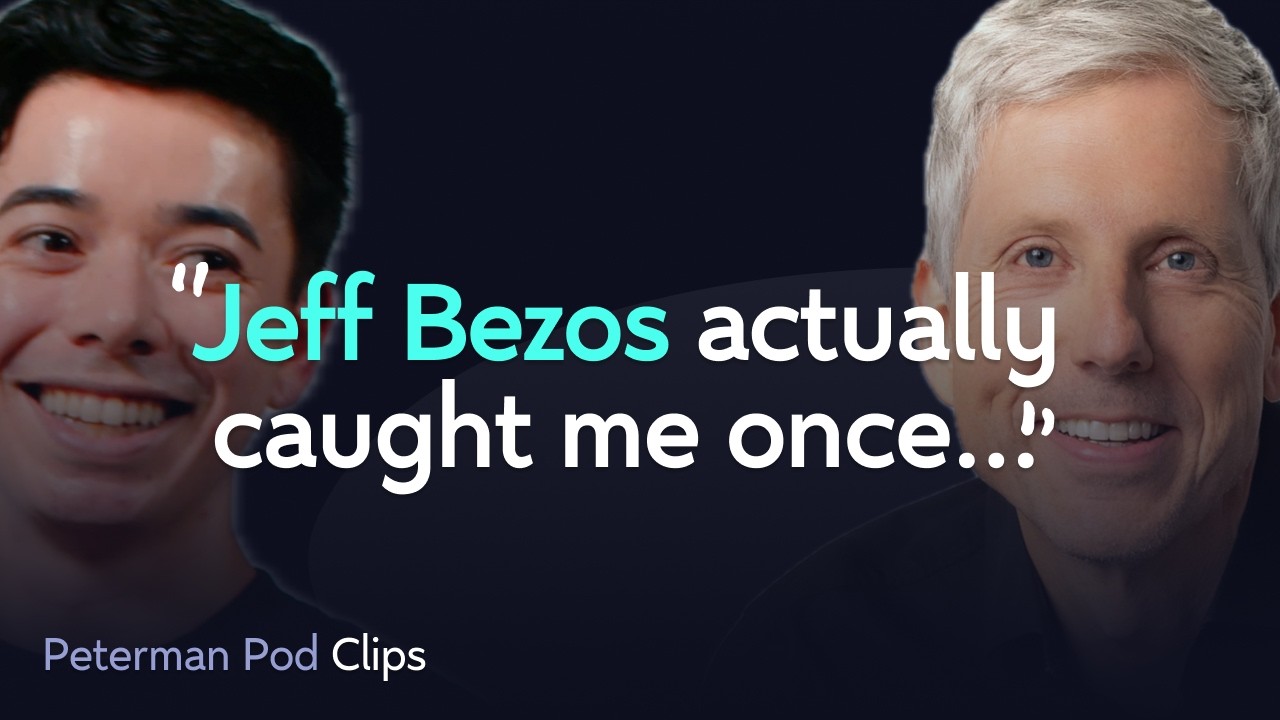
Ryan Peterman
Corporate empire builders preserve power by rapidly filling open roles before company freezes take effect, redeploying staff from failed bets, and shipping imperfect products to defend resource claims.
AI-assisted summary of Amazon VP: How Jeff Bezos Caught Him Empire Building | Ethan Evans — original source. Check the original for full context.
Source published:
Key ideas
- Former Amazon VP Ethan Evans recalls being dressed down by Jeff Bezos for submitting an unvetted headcount proposal of 25 marketing and 5 PR personnel, prompting Bezos to institute a rule capping individual headcount requests at two to three people per bucket. (0:00)
- Evans evolved a tranche-based headcount acquisition model, securing 100 headcount approvals released in batches of 20 contingent on rapid hiring and high-caliber execution. (3:40)
- Merch by Amazon originated as a developer-retention tool against Apple and Google that failed its initial goal, but Evans saved the headcount by pivoting it into a consumer print-on-demand platform generating over $1 billion in annual sales. (3:40)
- To prevent headcount clawbacks under Amazon's over-allocation hiring caps, Evans systematically captured 'loaned' requisitions from slower-hiring peers and permanently filled them before company-wide freezes took effect. (8:16)
Detailed notes
## Background Published on YouTube by Ryan Peterman on October 9, 2026, this video features former Amazon Vice President Ethan Evans discussing corporate power dynamics. According to the page description, the episode poses questions about common corporate political maneuvers that gradually delve into darker, more cutthroat territory.
## TL;DR Ethan Evans recounts being publicly disciplined by Jeff Bezos after submitting a bloated, unvetted headcount request during the launch of the Amazon Appstore, forcing him to learn the rigorous math of resource justification. He evolved this hard lesson into an aggressive organizational playbook, using tranche-based hiring and swift operational pivots—such as turning a failing developer swag initiative into the billion-dollar 'Merch by Amazon' business—to protect his headcounts. Evans explains how he routinely out-recruited slower peers, captured unused corporate requisitions, and redeployed talent across failing initiatives before leadership could claw back budgets. Ultimately, he argues that aggressive empire building and corporate land grabs are politically defensible only if teams outpace rivals by shipping tangible, revenue-generating software rather than chasing perfection.
## Atmosphere & style The discussion carries a remarkably candid, tactical, and unsentimental tone, feeling like an unvarnished masterclass in big-tech political survival. Evans speaks with pragmatic self-awareness, openly owning labels like 'slippery' and 'malicious' without offering hollow apologies for his cutthroat maneuvering. The narrative arc moves from early humiliation under Bezos's merciless red pen to calculated corporate mastery, giving listeners a gritty, behind-the-scenes look at how executive power is quietly seized and defended.
## Bulletin - [00:00](https://www.youtube.com/watch?v=--PRWL8FU8I&t=0s) Former Amazon VP Ethan Evans recalls being dressed down by Jeff Bezos for submitting an unvetted headcount proposal of 25 marketing and 5 PR personnel, prompting Bezos to institute a rule capping individual headcount requests at two to three people per bucket. - [03:40](https://www.youtube.com/watch?v=--PRWL8FU8I&t=220s) Evans evolved a tranche-based headcount acquisition model, securing 100 headcount approvals released in batches of 20 contingent on rapid hiring and high-caliber execution. - [03:40](https://www.youtube.com/watch?v=--PRWL8FU8I&t=220s) Merch by Amazon originated as a developer-retention tool against Apple and Google that failed its initial goal, but Evans saved the headcount by pivoting it into a consumer print-on-demand platform generating over $1 billion in annual sales. - [08:16](https://www.youtube.com/watch?v=--PRWL8FU8I&t=496s) To prevent headcount clawbacks under Amazon's over-allocation hiring caps, Evans systematically captured 'loaned' requisitions from slower-hiring peers and permanently filled them before company-wide freezes took effect.
## Key takeaways - [00:00](https://www.youtube.com/watch?v=--PRWL8FU8I&t=0s) Managers routinely rationalize empire building as visionary ambition because corporate headcount does not come out of their personal bank accounts. - [00:00](https://www.youtube.com/watch?v=--PRWL8FU8I&t=0s) Jeff Bezos shut down the Amazon Appstore's 30-person headcount proposal after two shallow answers, declaring he would not believe any subsequent figures without granular justifications. - [00:00](https://www.youtube.com/watch?v=--PRWL8FU8I&t=0s) Bezos enforced a rule limiting resource requests to two or three people per line item, personally reviewing and slashing proposals with a red pen before his executive team. - [03:40](https://www.youtube.com/watch?v=--PRWL8FU8I&t=220s) Sustainable empire building requires pitching concrete business ideas that senior leadership actively wants to fund due to clear financial or customer return. - [03:40](https://www.youtube.com/watch?v=--PRWL8FU8I&t=220s) Negotiating headcount in tranches—such as 100 total heads unlocked in groups of 20—reduces executive risk and establishes credibility through high hiring velocity. - [03:40](https://www.youtube.com/watch?v=--PRWL8FU8I&t=220s) Merch by Amazon was launched to provide physical merchandise for mobile game developers, but pivoted to consumer apparel and slogans when game studios showed little interest. - [03:40](https://www.youtube.com/watch?v=--PRWL8FU8I&t=220s) Pivoting failing initiatives toward emergent revenue streams prevents central leadership from clawing back team headcount. - [06:40](https://www.youtube.com/watch?v=--PRWL8FU8I&t=400s) Rather than returning headcount when an initiative failed, Evans immediately redeployed staff to double down on projects that were already succeeding. - [06:40](https://www.youtube.com/watch?v=--PRWL8FU8I&t=400s) Evans neutralized peer criticism of his aggressive resource maneuvering by delivering undeniable business results, corporate targets, and cold hard cash. - [08:16](https://www.youtube.com/watch?v=--PRWL8FU8I&t=496s) Amazon enforced hard budget caps by issuing more open requisitions than authorized hires, suddenly freezing and wiping out all unfilled requisitions once the corporate target was hit. - [08:16](https://www.youtube.com/watch?v=--PRWL8FU8I&t=496s) Engineering managers who treated recruiting as secondary routinely lost their open requisitions by year-end to managers who prioritized rapid hiring. - [10:02](https://www.youtube.com/watch?v=--PRWL8FU8I&t=602s) The 'ship has left the dock' strategy involves deploying projects and locking down assets so fast that leadership cannot easily recall the resources. - [10:02](https://www.youtube.com/watch?v=--PRWL8FU8I&t=602s) Evans exploited slow-moving peers by convincing leadership to 'loan' their lagging hiring quotas to his organization, permanently capturing the headcount. - [11:25](https://www.youtube.com/watch?v=--PRWL8FU8I&t=685s) Shipping imperfect, functional software in public provides far more political leverage and organizational defense than theoretical, multi-year plans that remain unseen.
## Detailed walkthrough ### [00:00](https://www.youtube.com/watch?v=--PRWL8FU8I&t=0s) "I Don't Believe Any of Your Numbers": Caught Empire Building by Jeff Bezos
When asked whether he engaged in corporate empire building during his rapid ascent to Vice President at Amazon, Ethan Evans candidly admits that he certainly did, noting that the human mind possesses an extraordinary ability to rationalize self-serving motives. In the moment, managers never tell themselves they are empire building; instead, they frame bloated staffing requests as visionary ambition: "With all these people I could do so much more. Man, I have all these great ideas. We've got a big backlog. If only I had 375 more people, imagine what we could do." Because headcount does not come directly out of the manager's personal bank account, the temptation is always to ask for the world.
That rationalization blew up dramatically when Ethan's team launched the Amazon Appstore. Operating on a lean original crew with zero dedicated marketing staff, Ethan and a fellow newer manager prepared their annual headcount review for Jeff Bezos. Spurred by their initial launch success, they walked into the executive review with an enormous wish list, including an arbitrary request for 25 marketing personnel and five PR leads under the loose logic that operating in five countries justified one dedicated PR person per country. The ask was driven by daydreaming and laziness rather than rigorous analysis. When Bezos began interrogating the proposal, asking what those 25 people would actually be doing all day, their vague responses ("Well, they're going to do marketing... that's why they're called marketing people") immediately unraveled.
Bezos tore into them without hesitation. After Ethan's team gave two consecutive shallow answers, Bezos cut the meeting short, bluntly declaring: "Okay, I don't believe any of your numbers from here on. I've asked you two questions. They were both nonsense. I'm not going to go through everything else. I don't believe any of it." He ordered them to return with a revised document where no single bucket could exceed two or three people, accompanied by an exhaustive, line-by-line breakdown of duties. In the follow-up meeting, seated in front of his entire senior leadership council, Bezos took out a literal red pen and grilled them publicly—approving two people here, zeroing out another line item, and reducing a team of five down to one. While brutal, Ethan acknowledges that Bezos was entirely justified: the team had let their eyes get bigger than their operational rigor.
- **The Initial Bloated Request:** A massive headcount package featuring 25 marketing personnel and 5 PR specialists (rationalized as one per launch country) without a concrete operational plan. - **The Bezos Rule of 2–3:** A strict mandate requiring Ethan to cap any single resource request at two or three people per line item, with granular justifications for each role. - **Executive Scrutiny:** Bezos systematically audited and slashed the revised proposal with a red pen in full view of his executive direct reports.
---
[03:40](https://www.youtube.com/watch?v=--PRWL8FU8I&t=220s) "Merch by Amazon" and Transforming Headcount into Cold, Hard Cash
After getting burned by Bezos, Ethan adapted his strategy. Legitimate, effective empire building was not about asking for phantom resources without regard for the broader organization's budget constraints; it was about pitching concrete growth ideas that leadership actively wanted to fund because of clear financial or customer return. To overcome executive hesitation regarding rapid scaling, Ethan developed a phased release model. He would tell leadership to reserve a block of 100 heads, releasing them in tranches of 20 on the condition that if his team failed to fill the initial 20 with high-caliber talent, the remaining tranches would be revoked. By aggressively filling those requisitions with top performers and translating that talent into tangible output, he earned the credibility to continuously pitch new ventures.
```mermaid flowchart TD accTitle: Ethan Evans Headcount Strategy accDescr: Flowchart illustrating Ethan Evans method for securing, filling, and preserving headcount through tranches and project pivots.
subgraph Allocation ["Headcount Acquisition"] A["Pitch High-Growth Business Idea"] --> B["Agree on 100-Head Tranches"] B --> C["Unlock Headcount in Batches of 20"] end
subgraph Execution ["Execution & Pivoting"] C --> D{"Project Delivering?"} D -- "Yes" --> E["Expand Business & Deliver Cash"] D -- "No" --> F["Discover Unintended Demand (e.g., Slogans/Merch)"] F --> G["Pivot Entire Mandate to Monetize New Revenue"] end
subgraph Retention ["Headcount Defense"] G --> H["Redeploy Talent Before Leadership Notices"] H --> I["Deliver Undeniable Cold Hard Cash"] end ```
The quintessential example of this playbook occurred within the Amazon Appstore. Tasked with competing against entrenched ecosystem monopolies run by Apple and Google, Ethan’s team devised an unconventional strategy: physical merchandise. Realizing that Apple and Google did not manufacture physical goods, the team proposed operating as a dedicated merchandise and swag provider for mobile game developers, printing promotional T-shirts and coffee mugs to entice studios onto Amazon's platform. They formed a venture called Merch by Amazon. Senior executives were skeptical, asking why an app store organization was deploying staff to print T-shirts.
While mobile game makers showed little interest in custom merchandise, Ethan discovered a different, massive revenue stream: print-on-demand party T-shirts, political campaign apparel, and viral slogans. Recognizing where the actual money was, Ethan immediately abandoned the original app-store synergy hypothesis, pivoted the operation, and expanded the business line into a multi-million-dollar empire that eventually generated more than $1 billion in annual T-shirt sales before being spun out into its own corporate division.
- **Tranche-Based Headcount Negotiations:** Securing 100 headcount allocations by agreeing to unlock them in strict groups of 20 based on hiring velocity and quality. - **The Merch by Amazon Pivot:** Initiated as a developer-retention tool against iOS and Android, the project failed its initial goal but pivoted into print-on-demand consumer merchandise, scaling into a $1B+ annual business. - **Flexibility as Empire Preservation:** When the core theory fails, pivoting immediately toward emergent revenue streams prevents headcount clawbacks.
---
[06:40](https://www.youtube.com/watch?v=--PRWL8FU8I&t=400s) Redeploying Resources and Surviving Peer Skepticism
Ethan argues that surviving in senior leadership requires knowing how to shift capital and people the second a project tanks. Instead of reporting failure and volunteering headcount back to central leadership, Ethan took an aggressive approach: "That project tanked, but you know what? Great news. I've put those heads on this thing that's working and now it's going twice as fast." By constantly running multiple initiatives simultaneously, he could absorb failures by reallocating teams to double down on winning bets before anyone had the opportunity to reclaim the budget.
He readily admits that this tactic exposed him to peer criticism. When reflecting on whether he was truly an empire builder, Ethan acknowledges that former peers listening to his explanations might dismiss his rationale: "'Bullshit, Ethan. You were just really slippery.'" While he dislikes hearing that critique, Ethan maintains that his empire building produced undeniable, objective results. His ultimate defense was that he delivered massive value, hit corporate goals, and generated significant cold, hard cash for Amazon.
---
[08:16](https://www.youtube.com/watch?v=--PRWL8FU8I&t=496s) Defending Headcount: Playing Offense in Amazon's Hiring Race
When asked whether he ever had headcount clawed back by executive leadership, Ethan explains that during Amazon's hyper-growth era, pure clawbacks were rare, but protecting allocated roles required playing constant offense. Because he had already redeployed people from failing projects onto higher-priority initiatives, executives could not easily repossess roles without actively pulling people off high-performing, valuable work.
Ethan’s cardinal rule was never to leave open requisitions unfilled by year-end, which was leadership's primary target for clawbacks. Amazon frequently operated on a competitive "over-allocation" hiring mechanism:
| Headcount Mechanism | Corporate Target Example | Execution Reality | |:--- |:--- |:--- | | **Budgeted Headcount Cap** | 1,000 corporate heads | The hard limit of headcount Amazon intends to fund. | | **Authorized Requisitions** | 1,500 open job requisitions | Open recs granted company-wide on a first-come, first-served basis. | | **The Freeze Trigger** | Cutoff enforced at 1,000 | Once the 1,000-hire cap is reached, all remaining open requisitions are canceled. |
By prioritizing recruiting as an operational imperative, Ethan filled every single one of his requisitions before the corporate freeze went into effect year after year. Slower engineering managers who focused exclusively on day-to-day project tasks found themselves stranded by November with open requisitions abruptly wiped out, losing their headcount allocations entirely.
[10:02](https://www.youtube.com/watch?v=--PRWL8FU8I&t=602s) Seizing Resources and the "Ship Has Left the Dock" Strategy
Ethan Evans explains that winning internal corporate competition requires aggressively seizing resources and creating situations where it is either impossible to push back or simply too late for anyone to undo what was done. He compares this maneuver to sailing a vessel out to sea: once the ship has cleared the harbor, nobody can easily recall it. Evans mastered the art of launching projects and locking down assets so quickly that by the time leadership or rival peers came around saying, "Hey, we needed that ship," his response was simply, "Well, I'll give it to you when I get back." By then, the debate was effectively over.
Admitting that this approach crossed into what could be called malicious empire building, Evans highlights that he deeply understood the mechanics of corporate headcount. Most managers move slowly, but Evans made sure his organization was always the first to interview, offer, and fill open roles. He became so adept at accelerating the talent pipeline that he even taught an internal class on how to hire quickly. Whenever upper management announced that there was no remaining headcount left to distribute for the fiscal year, Evans would exploit his peers' lethargy. He would point across the broader organization and argue that numerous competing teams were far behind on their hiring targets and unlikely to ever meet them. He would pitch leadership to "loan" those unused heads to his team instead. Knowing full well that those teams would never catch up, he permanently captured other people's headcount before they even realized what they had lost.
```mermaid flowchart LR accTitle: Headcount Capture Mechanism accDescr: Flowchart showing how Ethan Evans identified lagging teams, borrowed their headcount, hired fast, and locked down the resources. subgraph HeadcountCapture ["Headcount Capture"] A["Identify peers lagging on hiring"] --> B["Pitch leadership to loan unallocated heads"] B --> C["Rapid recruiting & instant hiring"] C --> D["Lock in headcount permanently"] end ```
[11:25](https://www.youtube.com/watch?v=--PRWL8FU8I&t=685s) Justifying Land Grabs Through Speed and Shipping Imperfect Software
This level of aggressive resource extraction only works if the team consistently delivers high performance. Evans emphasizes that he was never vulnerable to leaders asking why they should give him anything because his "shit's all broken." His teams unfailingly delivered on their core commitments. To maintain that momentum, however, Evans was unabashedly willing to hack solutions together and ship products that were undeniably raw.
His governing operating philosophy was that sustained velocity and visible progress trump perfection. If an initiative cannot be seen or touched by stakeholders, it simply does not exist. Evans preferred to release an imperfect product out into the wild and iterate in public over letting a project languish behind closed doors waiting to be polished. When peers questioned the flaws in his releases, his attitude was unapologetic: "Yeah, but it's there." That concrete existence gave him immense leverage against rivals who spent years perfecting vaporware, allowing him to shoot back at over-deliberative peers with a simple reality check: "Yeah, maybe their project's perfect. You know, they've been telling us that for two years. Where is it?"
- **Speed over polish:** Evans prioritized keeping the team moving fast at the front of the pack rather than getting bogged down in idealized roadmaps. - **Visible output as political defense:** A flawed product running in production protects an empire far better than an unseen, theoretical masterpiece.
## Notable quotes > [00:00](https://www.youtube.com/watch?v=--PRWL8FU8I&t=0s) With all these people I could do so much more. Man, I have all these great ideas. We've got a big backlog. If only I had 375 more people, imagine what we could do. — Ethan Evans
> [00:00](https://www.youtube.com/watch?v=--PRWL8FU8I&t=0s) Well, they're going to do marketing... that's why they're called marketing people — Ethan Evans
> [00:00](https://www.youtube.com/watch?v=--PRWL8FU8I&t=0s) Okay, I don't believe any of your numbers from here on. I've asked you two questions. They were both nonsense. I'm not going to go through everything else. I don't believe any of it. — Jeff Bezos
> [06:40](https://www.youtube.com/watch?v=--PRWL8FU8I&t=400s) That project tanked, but you know what? Great news. I've put those heads on this thing that's working and now it's going twice as fast. — Ethan Evans
> [06:40](https://www.youtube.com/watch?v=--PRWL8FU8I&t=400s) Bullshit, Ethan. You were just really slippery.
> [10:02](https://www.youtube.com/watch?v=--PRWL8FU8I&t=602s) Hey, we needed that ship
> [10:02](https://www.youtube.com/watch?v=--PRWL8FU8I&t=602s) Well, I'll give it to you when I get back. — Ethan Evans
> [11:25](https://www.youtube.com/watch?v=--PRWL8FU8I&t=685s) Yeah, but it's there. — Ethan Evans
> [11:25](https://www.youtube.com/watch?v=--PRWL8FU8I&t=685s) Yeah, maybe their project's perfect. You know, they've been telling us that for two years. Where is it? — Ethan Evans
## Mentioned Ethan Evans, Jeff Bezos, Ryan Peterman, Amazon, Amazon Appstore, Merch by Amazon, Apple, Google, iOS, Android
## Video description In this episode, I asked Ethan Evans (ex-Amazon VP) question about common situations in corporate politics but they get increasingly darker.
Watch the full conversation: https://www.youtube.com/watch?v=KhjhRRz3VJw
[Source](https://www.youtube.com/watch?v=--PRWL8FU8I)