## Detailed walkthrough
### [00:00](https://www.youtube.com/watch?v=5gyyAzfmWk4&t=0s) Introduction and Meet-Up Tour Across America
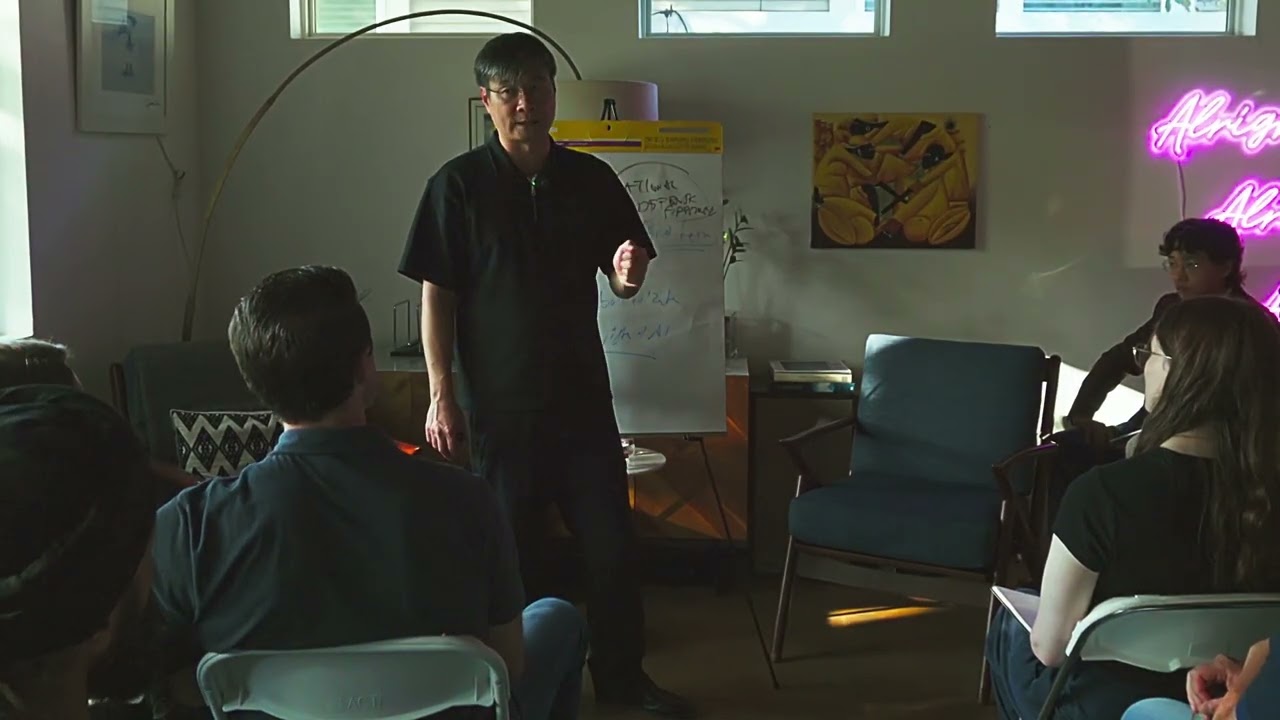
The Austin gathering opens with organizer Jintae Cho welcoming the audience to Professor Jiang’s live event. Cho outlines the evening’s schedule: an in-depth lecture by Professor Jiang, followed by an intimate fireside chat, an open audience Q&A session, and finally an informal reception with light food and drinks. Introducing the speaker, Cho recounts how Jiang began publishing his university classroom lectures to his YouTube channel, *Predictive History*, rapidly turning into an internet sensation recognized for his unconventional historical forecasting. Since blowing up online, Jiang has made frequent guest appearances across major television news talks, podcasts, and digital broadcasts.
Taking the stage to applause, Professor Jiang reflects warmly on his journey, sharing that he and his son have been on a three-week cross-country tour across the United States. Austin marks the fourth stop on their tour, following earlier meet-ups in Los Angeles, New York City, and Tampa. Having launched the YouTube channel two years prior, Jiang saw his audience begin to surge a year ago before going fully viral six months back. Because his rise happened entirely online, this tour represents his first direct encounter with his following. He expresses surprise at the sweeping demographic diversity among his viewers, noting that virtually every background is represented. More than just audience numbers, Jiang describes being touched by the personal impact of his lectures—recalling a supporter in Tampa who claimed that watching his videos somehow repaired his strained relationship with his parents. Laughing that he could not quite see the connection himself, Jiang remarks that he feels a genuine grassroots movement taking shape: "the sparks in people, it's starting to glow and together we're creating a beautiful movement. It's a global awakening."
- **Tour Stops Completed**: Los Angeles, New York City, Tampa, and Austin.
- **Channel Growth Timeline**: Channel founded two years ago; initial breakout one year ago; massive viral expansion six months ago.
- **Organizer and Production**: Event organized by Jintae Cho and filmed by David Rhoads (*Post Cult House*).
---
[03:02](https://www.youtube.com/watch?v=5gyyAzfmWk4&t=182s) The 50-Year Prophecy: Trump's Third Term, Civil War, and the Christian AI Theocracy
Turning to the core presentation, Jiang introduces his lecture titled "American Prophecy," outlining what he forecasts will unfold across the United States over the next several decades. He clarifies his role with a deadpan disclaimer: "I am not manipulating the future. I'm just foretelling the future." His macro forecast unfolds across three distinct time horizons: short-term, midterm, and long-term. In the short term, he predicts that Donald Trump will successfully secure a third presidential term. Over the midterm horizon, this disruption will trigger a domestic civil war that ultimately culminates in the balkanization of the country. Looking roughly twenty years into the future, Jiang envisions the remnant United States transforming into a full-fledged "Christian AI theocracy."
Central to this long-range vision is the dramatic geopolitical and cultural realignment within the country itself. Jiang argues that over the next two decades, America's historical center of gravity will permanently migrate away from coastal power centers toward the heartland. Legacy metropolises like New York City and Los Angeles will lose their national relevance, while Austin will rise to become the nation's premier technological, economic, and cultural capital. Jiang emphasizes that Austin will not serve as a traditional bureaucratic capital like Washington, D.C., but rather as the ideological and high-tech nucleus driving the emerging AI-powered religious state.
- **Short-Term Forecast**: Donald Trump secures a third presidential term.
- **Midterm Forecast**: Outbreak of civil war leading directly to the balkanization of the United States.
- **Long-Term Forecast (approx. 20 years)**: Emergence of a "Christian AI theocracy."
- **Geographic Shift**: De-centering of coastal power (New York, Los Angeles) in favor of the heartland, establishing Austin as the cultural, economic, and technological center.
---
[05:16](https://www.youtube.com/watch?v=5gyyAzfmWk4&t=316s) Why Trump Stays in Power: Legal Immunity and Empire Needs
Jiang lays out the structural incentives driving Donald Trump to remain in the White House beyond two terms. The primary domestic driver is legal self-preservation. Over the course of his return to power, the Trump family has amassed billions of dollars through cryptocurrency ventures, prompting the Democratic Party to compile comprehensive prosecution dossiers intended to indict him the moment he vacates 1600 Pennsylvania Avenue. Jiang observes that while Trump's entire prior business career in New York was marked by behavior that was "unethical... very corrupt... amoral, but it's never been illegal," his actions in executive office have crossed into outright illegal territory. Because the Supreme Court ruled that a sitting president possesses broad immunity from criminal prosecution while in office, remaining in power is Trump's only foolproof shield against life in prison.
Beyond personal survival, Jiang contends that the institutional machinery of the American empire actively requires an authoritarian figure like Trump. Jiang characterizes the preceding Biden presidency as an era of imperial paralysis, where an aging, senile commander-in-chief and an irresolute national security cabinet failed to project hard power. When Vladimir Putin launched the invasion of Ukraine on February 24, 2022, national security officials like Jake Sullivan issued warnings beforehand, only to fall back on toothless sanctions after the fact, leaving the empire looking completely ineffectual. Trump, by contrast, operates in direct alignment with aggressive imperial imperatives—evidenced by active hostilities regarding Iran, pressuring Japan to remilitarize against China, pursuing transactional economic détente with Beijing, and escalating commitments around Ukraine.
Jiang notes that this behavior directly mirrors the Pentagon's *National Defense Strategy* published in January of the current year. Rather than acting as a universal guarantor of global peace under a traditional *Pax Americana*, the strategy prescribes transforming the United States into a global "godfather" that orchestrates regional balances of power from a distance while commanding strategic choke points and critical resources. Because mainstream politicians like Joe Biden or Kamala Harris lacked the willpower to impose this vision, the military-industrial complex naturally leans on Trump to enforce American dominance by sheer disruption.
```mermaid
flowchart TD
accTitle: Pentagon National Defense Strategy Architecture
accDescr: Diagram illustrating the offshore balancing model where the US controls choke points and resources while regional blocs manage conflicts.
subgraph OFFSHORE ["Imperial Godfather: United States"]
MIC["Military-Industrial Complex<br/>Enforced by Donald Trump"]
CHOKE["Maritime Choke Points:<br/>Arctic Circle, Gibraltar, Panama Canal,<br/>Cape of Good Hope, Strait of Malacca"]
RES["Western Hemisphere Resource & Oil Monopoly"]
end
subgraph REGIONAL ["Regional Balances of Power"]
direction TB
EUR["Europe:<br/>NATO vs. Russia"]
ME["Middle East:<br/>Israel + GCC vs. Iran"]
ASIA["East Asia:<br/>Remilitarized Japan vs. China"]
end
MIC --> CHOKE
MIC --> RES
MIC -.->|"Offshore Balancing"| REGIONAL
```
- **Personal Legal Pressure**: Trump's family cryptocurrency profits face pending Democratic legal dossiers; presidential immunity remains his only shield against immediate criminal prosecution.
- **Contrast with the Biden Administration**: Biden-era paralysis (exemplified by Jake Sullivan's reactive handling of the February 2022 invasion of Ukraine) demonstrated that standard leadership could not defend imperial interests.
- **Pentagon's Strategic Posture**: Execution of the January *National Defense Strategy*, shifting from *Pax Americana* to offshore regional balancing:
- **Europe**: NATO pitted against Russia.
- **Middle East**: Israel and the Gulf Cooperation Council (GCC) balanced against Iran.
- **East Asia**: A re-armed Japan positioned directly against China.
- **Global Choke Points**: American naval hegemony focused on the Arctic Circle, the Strait of Gibraltar, the Panama Canal, the Cape of Good Hope, and the Strait of Malacca.
---
[10:42](https://www.youtube.com/watch?v=5gyyAzfmWk4&t=642s) The Evolution of Trump's Presidencies: Towards an American Monarchy
Jiang warns the audience against misunderstanding Trump's trajectory, emphasizing his capacity to fundamentally reinvent his governing style across different phases. In his first administration, Trump proved largely ineffective; hamstrung by the Russiagate investigation and openly undermined by the Pentagon establishment—such as when military commanders flatly disregarded his executive directive to pull all U.S. forces out of Syria.
By contrast, his second term demonstrated far greater operational competence and control over the federal bureaucracy. Building on that momentum, Jiang predicts that a third term will abandon constitutional norms altogether. Once Trump successfully breaks the two-term barrier, he will effectively transition from an elected executive into an absolute American monarch. Breaking that fundamental institutional constraint ensures that subsequent fourth and fifth terms would inevitably follow, laying the groundwork for a dynastic imperial reign.
[11:42](https://www.youtube.com/watch?v=5gyyAzfmWk4&t=702s) The Augustus Caesar Analogy and Consolidating Power
Acknowledging upfront that Donald Trump is aging ("yes he's very old. Uh but but just like hear me out"), Professor Jiang turns to ancient history to forecast how a hypothetical third presidential term would unfold. To understand the mechanics of consolidating supreme authority, he draws a parallel to Augustus Caesar following his victory over Mark Antony at the naval Battle of Actium (briefly crowdsourcing the name of the battle with the Austin audience like a trivia question: "Was it Actium? Maybe it was Actium. Who cares? Okay, it doesn't matter"). Upon emerging as the undisputed master of Rome, Augustus secured his rule through three structural maneuvers:
1. **Privatizing the military:** Prior to Augustus, the Roman legions relied on state coffers. Augustus took over Egypt—the agricultural breadbasket of the Mediterranean world—transforming it into his personal imperial estate. Controlling Egypt's immense grain revenues allowed him personally to fund and pay every legionary soldier, binding their loyalty directly to him rather than to the republic. In modern America, Trump would mirror this by establishing a personalized force, with Jiang identifying Immigration and Customs Enforcement (ICE) and devoted factions within the Pentagon as the seeds of an American praetorian military.
2. **Co-opting domestic rivals via territorial partitioning:** Recognizing the futility of fighting every entrenched oligarchic faction, Augustus placated powerful interests by distributing imperial provinces (such as handing over Sicily to rivals to administer as long as they remained loyal).
3. **Revitalizing moral and religious tradition:** To counter social decay and internal fragmentation, Augustus assumed the religious mantle of *Pontifex Maximus*, promoted traditional pieties, and commissioned national myth-making like Virgil's *Aeneid*.
```mermaid
flowchart TD
accTitle: Augustus Caesar's Consolidation Playbook Applied to Trump
accDescr: Three-part framework showing historical Roman precedents mapped to modern third-term Trump strategies.
subgraph Rome["Augustus Caesar's Model"]
R1["Seizes Egypt to directly pay legions"]
R2["Bribes rivals with provincial governorships"]
R3["Assumes Pontifex Maximus & restores pietas"]
end
subgraph US["Trump's Projected 3rd Term"]
U1["Personalized armed forces (ICE & loyal Pentagon elements)"]
U2["Partitions Western Hemisphere to corporate & familial allies"]
U3["Embraces genuine Christian revivalism as state policy"]
end
R1 --> U1
R2 --> U2
R3 --> U3
```
---
[13:51](https://www.youtube.com/watch?v=5gyyAzfmWk4&t=831s) Partitioning the Western Hemisphere and the Canada Dispute
Applying the second imperial tactic to the Americas, Jiang argues Trump will seek to subjugate and partition the Western Hemisphere—bringing Greenland, Iceland, Canada, Mexico, Cuba, and Venezuela under direct American dominion. Rather than administering these vast territories conventionally, Trump would parcel them out to favored multi-national corporations, political allies, and oligarchic dynasties (for instance, granting Exxon exclusive dominance over the Alberta tar sands).
When an audience member points out recent pushback from Canadian figures like Mark Carney ("Carney just fought back strong"), Jiang dismisses the idea that Canada can resist:
- **Military asymmetry:** Canada possesses virtually no military capacity to withstand the American empire, making any serious military resistance "the most ridiculous thing I've ever heard in my life."
- **Economic leverage:** Trade between the two nations is inherently unequal; Canada acts fundamentally as a "resource colony" selling oil to the U.S. Because the buyer always dictates the terms in an asymmetrical trade dispute, Canadian threats of a trade embargo would merely trigger domestic inflation, soaring unemployment, and internal fracturing.
- **Albertan secession:** Alberta's economy is existentially dependent on access to American buyers. Facing economic estrangement from Ottawa's trade posture, Alberta would likely break away, noting pending referendums on secession and independence. Jiang concludes that even if leaders like Carney posture aggressively, Ottawa will inevitably capitulate.
---
[16:47](https://www.youtube.com/watch?v=5gyyAzfmWk4&t=1007s) The "Come to Jesus" Moment and Imperial Precedents
Jiang pivots to what he calls the strangest prediction: a genuine religious conversion by Trump. Far from an orchestrated public relations stunt, Jiang insists it will be an authentic, psychological "come to Jesus moment":
> "He will in his third [term] be like, 'Oh my god, I have been so wrong all my life. I shouldn't have [slept with] so many porn stars. I shouldn't have, you know, started these wars overseas.' But now, okay, I have a come to Jesus moment and I want to be the best Christian possible."
In response to an audience member questioning whether this shift would just be cynical political theater, Jiang describes a vivid scene: Trump alone in his bedroom late at night, snacking on cheeseburgers and watching Fox News, having a terrifying, personal spiritual encounter that jolts him into becoming an ardent patron of Christian values and seeking to elevate Christianity as a state religion. Jiang points out historical parallels of ruthless conquerors undergoing late-career spiritual conversions once total victory was attained:
- **Constantine the Great:** Unified the Roman Empire through warfare, underwent a conversion, proclaimed peace, and established Christianity as the imperial religion.
- **Emperor Ashoka:** Conquered the Indian subcontinent through brutal bloodbaths before experiencing deep remorse, renouncing violence, and aggressively propagating Buddhism across his empire.
Jiang emphasizes that these actions are not pre-planned policy blueprints drawn up by Trump's staff, but inevitable strategies dictated by game theory for an aging ruler attempting to stabilize a personalized, third-term imperial regime.
---
[21:12](https://www.youtube.com/watch?v=5gyyAzfmWk4&t=1272s) Midterm Crises: Oligarchic Schisms and Domestic Insurgency
When an audience member asks whether Trump's administration—often criticized for administrative and military incompetence—could actually succeed in conquering and holding the Western Hemisphere, Jiang replies bluntly: "The answer is no."
This overreach ushers in the volatile "midterm" phase of his scenario, driven by severe structural backlash inside the United States:
- **The disenfranchisement of Wall Street:** With the Democratic Party politically neutered and unable to regain power through elections due to entrenched institutional capture, their primary benefactors on Wall Street are sidelined.
- **Tech oligarchs vs. finance capital:** The new regime decisively favors Silicon Valley tech oligarchs (highlighting figures like Elon Musk and Peter Thiel) over legacy financial institutions.
- **Asymmetric internal warfare:** Realizing the ballot box is closed to them, displaced elites and anti-Trump factions will abandon conventional politics. Jiang warns this will trigger domestic instability, escalating from targeted political assassinations to urban insurgencies centered in defiant metropolitan hubs like Boston and New York.
[22:32](https://www.youtube.com/watch?v=5gyyAzfmWk4&t=1352s) Domestic Resistance, Colonial Plunder, and Latin American Insurgency
Professor Jiang continues mapping out the escalating breakdown under a third Trump term, beginning with urban domestic defiance. Major metropolitan centers like New York City and Los Angeles will outright refuse to follow federal directives, prompting Trump to deploy ICE or other federal enforcement mechanisms into the cities. Initially, this dynamic will manifest as low-level insurgencies and persistent political violence rather than an immediate full-scale civil war, but over time it will inevitably metastasize into open conflict.
Simultaneously, an external crisis unfolds across Latin America because people fundamentally resist foreign colonization and puppet governance. Jiang notes that while current Venezuelan leadership like Delcy Rodríguez complies with certain American demands—such as withdrawing from the International Criminal Court—Trump’s ultimate ambition involves installing an outright colonial administration. The strategic rationale behind this move is not economic development or mutual benefit; it is raw extraction. A cadre of corporate cronies and "carpetbaggers" around Trump will seek to loot the country's national wealth as quickly as possible. This overt plunder will ignite massive, violent insurgencies across Latin America, spreading through Colombia, Venezuela, and Mexico.
```mermaid
flowchart TD
accTitle: Escalation of Domestic Conflict and Imperial Plunder
accDescr: Diagram illustrating how domestic disobedience and foreign colonial extraction trigger simultaneous insurgencies.
subgraph Domestic["Domestic Breakdown"]
A["Cities Defy Federal Orders<br/>(NYC, Los Angeles)"] --> B["Trump Dispatches ICE & Federal Forces"]
B --> C["Simmering Political Violence<br/>& Urban Insurgencies"]
C --> D["Metastasis into Full Civil War"]
end
subgraph Imperial["Latin American Imperialism"]
E["Imposition of Colonial Rule<br/>over Venezuela"] --> F["Carpetbaggers Loot Local Resources"]
F --> G["Profits Siphoned Off to<br/>Offshore Havens"]
F --> H["Massive Insurgencies across<br/>Mexico, Colombia, & Venezuela"]
end
```
[24:15](https://www.youtube.com/watch?v=5gyyAzfmWk4&t=1455s) The Deep State Dilemma and Venture Capital Parasitism
An audience member intervenes to ask a critical structural question: if invading Latin America and fighting Iran are such predictable failures, why would an established, powerful United States "deep state" committed to preserving global hegemony ever permit Trump to launch such disastrous campaigns?
Jiang acknowledges the legitimacy of the question, agreeing that standard geopolitical analysts and institutional deep-state actors historically avoided conquering the Western Hemisphere precisely because they understood the occupied territories would become an unmanageable quagmire. The systemic failure occurs because the people driving policy around Trump are not motivated by long-term imperial stability. Instead, venture capitalists and opportunists operate as predatory parasites upon the nation-state. They loot the occupied territories, pocket enormous short-term gains, and stash the money abroad in Dubai, Hong Kong, or Singapore, completely unbothered that they leave behind a hundred-year "dumpster fire" whose staggering costs will be borne entirely by American taxpayers.
- **Venture Capital Extraction**: Crony capitalists socialize all imperial costs onto the state while privatizing and externalizing the profits overseas.
- **Dual Pressures on the Regime**: The administration faces destabilization from Democratic-led domestic unrest at home alongside armed resistance from colonized populations in Latin America.
[25:55](https://www.youtube.com/watch?v=5gyyAzfmWk4&t=1555s) The White-Collar Apocalypse and the National Draft
Jiang shifts focus to the macroeconomy, arguing that the current economic foundation is completely unsustainable. Approximately 50 percent of recent GDP growth is propelled purely by speculative AI enthusiasm—massive capital expenditures on data centers and tools like ChatGPT—even though no one has figured out how these technologies will generate genuine long-term profits. When this speculative bubble bursts, millions of workers will be suddenly displaced. Jiang terms this impending wave the "white-collar apocalypse," directly comparing it to the blue-collar collapse of the 1980s and 1990s when American manufacturing jobs were permanently offshored to China. This crisis will be compounded by the war in Iran, which is actively disrupting global supply chains and leaving companies unable to source essential components.
```mermaid
flowchart LR
accTitle: The White-Collar Apocalypse and National Mobilization
accDescr: Flowchart showing how the AI bubble burst and supply chain failures trigger mass layoffs and a national conscription program.
A["AI Speculation Collapses"] & B["Iran War Breaks<br/>Supply Chains"] --> C["Mass Layoffs:<br/>White-Collar Apocalypse"]
C --> D["Federal Response: National Draft"]
D --> E["Work Programs / Youth Control<br/>(Modeled on FDR's New Deal)"]
```
To manage the fallout of mass unemployment and youth unrest, the federal government will institute a compulsory national draft. Jiang clarifies that this conscription will operate less as a purely military force and more as a coercive federal works initiative—drawing a historical parallel to Franklin D. Roosevelt's New Deal programs like the Tennessee Valley Authority (TVA)—designed to absorb and discipline disenfranchised young people.
[27:40](https://www.youtube.com/watch?v=5gyyAzfmWk4&t=1660s) AI Surveillance State and the Balkanization of America
When an audience member asks about the scope of government surveillance, Jiang confirms that the AI surveillance apparatus represents the fifth pillar of state control. When the private AI bubble implodes, venture capitalists like Peter Thiel will not be ruined. Instead, the government will declare AI companies "too big to fail" and execute a systemic bailout, mirroring the 2008 Great Financial Crisis when Wall Street executives received public money and distributed hefty bonuses after wrecking the economy.
Under this regime, the state will absorb all tech sector losses, nationalize critical AI data centers, and place them under active military protection. Citizens will lose all legal recourse over community impacts: local water usage and electrical grid drains will be seized via eminent domain, and the facilities will be designated restricted military installations.
Jiang argues that this convergence of economic collapse, surveillance overreach, and federal aggression will break the nation into pieces. Rather than a neat territorial split between North and South or red states versus blue states, the conflict will take the form of violent balkanization. Major metropolitan centers—particularly New York City, Boston, Chicago, and Los Angeles—will devolve into chaotic regional clashes.
- **Nationalization of AI Infrastructure**: Private data centers will be converted into fortified military assets to suppress civil resistance.
- **Form of Civil War**: Chaotic urban and regional balkanization across major metropolitan hubs rather than conventional, bordered battlefronts.
[29:32](https://www.youtube.com/watch?v=5gyyAzfmWk4&t=1772s) The Exhaustion of Extrinsic Motivation and the Rise of Austin
Beyond political friction, Jiang diagnoses an existential vulnerability at the heart of the American project: the country lacks a cohesive ethnic or nationalist identity, relying solely on money as its unifying cultural glue. Society functions under the assumption that status and meaning derive from financial accumulation, but a culture organized exclusively around transactional incentives eventually burns out.
To illustrate this, Jiang references a well-known psychological experiment involving elementary school classrooms. When children are split into two groups and asked to draw, the intrinsically motivated group draws simply because they enjoy creating art. The second group is paid cash for every drawing. While the paid group initially produces a high volume of paintings—eager to buy chocolates, movies, or screen time—their motivation steadily erodes over time. Within a few years, the paid group completely refuses to draw unless offered exorbitant sums, having developed a deep aversion to the activity, whereas the unpaid group continues drawing enthusiastically. Jiang argues that American society has reached this exact point of motivational exhaustion: after decades of worshiping money, citizens—especially younger generations facing nonexistent social mobility—have become spiritually burned out and unwilling to participate in the economic machine.
Out of the resulting domestic collapse and balkanization, regional factions will battle for control, and Jiang predicts the ultimate winner will emerge from Texas, with Austin serving as its political and economic core. Observing the palpable energy and relatively manageable cost of living in Texas during his visit, he contrasts Austin with coastal centers like Santa Monica, which he characterizes as an obscene, dystopian "zombie apocalypse" ravaged by runaway wealth inequality.
[32:55](https://www.youtube.com/watch?v=5gyyAzfmWk4&t=1975s) Texas, Christian Nationalism, and theocratic AI Control
Discussing the shifting center of American power, Professor Jiang highlights why Texas—and Austin in particular—serves as the vanguard for the country's trajectory. Beyond escaping the runaway homelessness seen on the coasts, Texas remains deeply rooted in Christian culture, strong family orientation, a younger demographic profile, and higher fertility rates compared to the West and East Coasts. Because of these dynamics, Jiang asserts that whoever ultimately consolidates power will emerge from Texas, Austin, and the broader American South. When financial incentives and prosperity no longer suffice to hold a fracturing nation together, religious ideology must step in, making Christian nationalism the primary binding force of the American future.
```mermaid
flowchart TD
accTitle: Pillars of the Emerging American Theocratic Order
accDescr: Three core pillars supporting the emerging political structure according to Professor Jiang.
subgraph Pillars ["Pillars of the Future Order"]
A["Geographic Base<br>(Texas / Austin / The South)"]
B["Ideological Glue<br>(Christian Nationalism)"]
C["Technological Enforcement<br>(AI & Brain Implants)"]
end
A --> D["Centralized Imperial Theocracy"]
B --> D
C --> D
```
To govern this emerging social order, the state will turn to artificial intelligence as an instrument of total behavioral control. Jiang references Joe Rogan's appearance on Jesse Michels' podcast—noting that Rogan rarely guests on other shows—where Rogan suggested that Jesus might return as an AI. Far from being a throwaway remark, Jiang considers this genuinely prophetic. In this emerging paradigm, Christianity fuses with artificial intelligence through technologies like Neuralink microchips. An internal synthetic voice of Christ would speak directly to citizens each day, eliminating evil deeds and producing manufactured happiness by turning Jesus into an omnipresent, personal internal deity.
When an audience member inquires whether this environment would prompt religious persecution, particularly targeting groups like Gnostic Christians, Jiang answers affirmatively: by definition, a theocracy does not tolerate deviance. Non-conforming lifestyles and beliefs will face severe repression. Homosexuals, women who prefer careers over having numerous children, and Gnostics or agnostics will be systematically excluded or suppressed. While an uneasy accommodation might be reached with fellow Abrahamic faiths like orthodox Judaism or Islam due to shared traditionalism, dissenters and societal "deviants" will face direct persecution.
[35:40](https://www.youtube.com/watch?v=5gyyAzfmWk4&t=2140s) The Relatively "Optimistic" Bleak Future of America
Stepping back to survey this 30- to 40-year horizon, Jiang acknowledges the grim reality of a tech-enforced Christian theocracy, yet insists with dark humor that this remains "the most optimistic picture for any nation" over the next half-century. The United States retains structural advantages that protect it from total collapse: it is fully self-sufficient in food and energy (epitomized by Texas), shielded from land invasion by two vast oceans, and populated by a comparatively dynamic, creative populace.
By contrast, the rest of the world faces catastrophic breakdown:
- **East Asia:** Projected demographic and systemic collapse leading to hundreds of millions starving to death.
- **Africa:** Paralleling East Asia with widespread mass starvation and systemic crisis.
- **Europe:** Descending into an unmanageable "dumpster fire."
- **The Middle East:** Beset by intractable conflict and compounding crises.
[36:57](https://www.youtube.com/watch?v=5gyyAzfmWk4&t=2217s) Freemasonic Eschatology, the Three G's, and the Technate
An audience member pivots the discussion to ask how eschatology overlaps with this 30-year timeframe, citing prophecies concerning the Third Temple in the Middle East and global religious traditions. Jiang explains that while he frequently examines Kabbalistic Judaism, Islamic eschatology, and Russia's "Third Rome" doctrine, the United States is guided by Freemasonic eschatology, which aims to establish a rationalist, continent-spanning empire known as the "Technate." In Jiang's framing, Freemasonry functions essentially as a spiritualized religion of capitalism that deifies reason above prejudice, emotional attachments, and inherited traditions.
Jiang unpacks the Masonic pursuit of the "perfect cube." In classical Masonic allegory, spiritual alchemy and relentless self-refinement turn each individual soul into an ashlar or perfect cubic stone. Once every citizen is perfected into a cube, society assembles these uniform blocks to construct the grand temple on Earth, allowing God to finally dwell among humanity. However, because human beings are fundamentally irrational, achieving this through organic self-cultivation would take millennia. Artificial intelligence emerges as the ultimate accelerator.
```mermaid
flowchart LR
accTitle: Masonic Eschatology through AI
accDescr: Progression from the three Masonic Gs to the creation of the Technate.
subgraph MasonicPrinciples ["The Three G's"]
G1["God / Grand Architect"]
G2["Geometry / Mathematics"]
G3["Generative Principle"]
end
MasonicPrinciples --> Formula["'Geometry Generates God'"]
Formula --> Mechanism["Artificial Intelligence & Neuralink"]
Mechanism --> Goal["Every Human a 'Perfect Cube'"]
```
Jiang connects this directly to the letter **G** displayed within the Masonic square and compass, decoding it through three foundational concepts:
- **God / Grand Architect:** The supreme being who designed creation.
- **Geometry:** The mathematical structure underlying the refinement of reality.
- **Generative Principle:** Humanity's innate creative power to engineer the physical and social universe.
Synthesizing the three yields the aphorism: *"Geometry generates God."* AI represents pure applied mathematics seeking to replicate the divine mind. By pairing advanced language models with brain-computer interfaces like Neuralink, the Technate can program righteousness, virtue, and compliance directly into humans from birth, forcefully realizing the Masonic dream of an engineered utopia.
[41:27](https://www.youtube.com/watch?v=5gyyAzfmWk4&t=2487s) The Imperial Technate: Continental Expansion and the White House Underground Data Center
Jiang outlines how the Technate expresses itself geopolitically, requiring specific physical borders alongside an autocratic governance model. The Technate designates the United States as the "New Jerusalem" at its core, requiring the absorption of surrounding territories to establish complete hemisphere-level security and resource dominance:
- **Northern Expansion:** Integrating Canada and Greenland.
- **Southern Expansion:** Crushing cartels in Mexico, absorbing Latin America, and extending control down through Venezuela and Colombia (where a loyal right-wing presidency aligns with Washington).
Jiang points to Donald Trump's stated foreign policy ambitions—discussing annexing Canada, acquiring Greenland, targeting Mexican cartels, and intervening in Venezuela—as practical steps toward establishing these exact Technate borders.
```mermaid
flowchart TD
accTitle: Executive Privilege Data Center Surveillance Loop
accDescr: Architecture of the clandestine data center beneath the White House East Wing ballroom.
subgraph WH ["White House Executive Compound"]
BR["White House Ballroom / East Wing"]
DC["Subterranean Classified Data Center<br>(Built by Specialized Contractors)"]
EP["Shielded by Executive Privilege<br>(Zero Congressional Oversight)"]
BR --- DC
DC --- EP
end
subgraph Control ["Unified Executive Power"]
Intel["Consolidated Feeds: NSA + CIA + FBI"]
Out["Total Citizen Digital Surveillance & Blackmail"]
end
EP --> Intel
Intel --> Out
```
Domestically, the Technate abandons democratic inefficiency in favor of an outright monarchy—an imperial presidency. Jiang highlights Trump's public obsession with constructing a massive ballroom in the White House East Wing, arguing that public fixation on the lavish structure obscures what lies beneath it. The construction contracts are held by firms specializing in enterprise data center infrastructure. Rather than a mere reception hall, workers are digging out a subterranean data fortress directly below the executive mansion.
Because this subterranean data hub sits on White House grounds, it is entirely shielded by executive privilege, shutting out Congressional subpoenas, oversight, and inquiries. This architecture allows the president to centralize operations of the NSA, CIA, and FBI under direct, personal control:
- Complete circumvention of legislative checks and balances.
- The capability to monitor every online interaction, record, and private transmission of American citizens.
- A sweeping surveillance apparatus that grants the executive branch total blackmail leverage over political rivals, ensuring complete domestic submission.
[44:25](https://www.youtube.com/watch?v=5gyyAzfmWk4&t=2665s) The Freemason Eschatology and the Imperial Presidency
Professor Jiang elaborates on the institutional blueprint of the emerging order, arguing that the concentration of imperial executive authority is grounded in data and total information mastery. This structural shift creates an imperial presidency—effectively converting the head of state into a monarch or king. He cites Curtis Yarvin's argument that because modern democracy is completely paralyzed by polarization, it can no longer function, necessitating an unfettered executive who can run the state with ruthless efficiency.
```mermaid
flowchart TD
accTitle: The Three Pillars of Freemason Eschatology
accDescr: Diagram illustrating the three core pillars of the Freemason eschatology outlined by Professor Jiang.
subgraph Eschatology["Freemason Eschatology"]
Pillar1["1. Sculpt Individuals<br/>(AI-driven total control)"]
Pillar2["2. Impenetrable Fortress<br/>(Invincible physical boundaries)"]
Pillar3["3. Imperial Monarchy<br/>(Efficient executive command)"]
end
Jiang summarizes this as the core triad of "Freemason eschatology":
1. Utilizing artificial intelligence to mold and sculpt individual human beings to perfection.
2. Establishing fortified, self-sufficient, and impenetrable physical boundaries around the United States so it can never be invaded.
3. Constructing an autocratic government architecture that enables hyper-efficient central command.
An audience member interjects with a skeptical question regarding Masonic moral hypocrisy, asking whether perfecting human "cubes" aligns with having extramarital relationships amidst global conflicts and whether that squares with Christian virtue. Jiang readily concedes the glaring hypocrisy of the Freemasons, noting that they are thoroughly utilitarian actors. From the perspective of tech elites like Peter Thiel and Elon Musk, who envision an AI-governed technate, Donald Trump is not an ideological peer but rather a "useful idiot" and an instrument deployed to manifest their grand design.
[46:35](https://www.youtube.com/watch?v=5gyyAzfmWk4&t=2795s) AI Replacing Money: The Coming War with Central Bankers
When an audience member asks how traditional financial power centers—such as the Bank of England and the central banking system—fit into this picture, Jiang explains that the technological revolution aims to make money itself entirely obsolete. In a mature AI technate, currency as a mechanism for behavioral motivation and social control becomes unnecessary; if an omniscient digital intelligence or an artificial "Jesus" directs human behavior directly, individuals can simply be allotted rations.
Because this technological shift directly threatens the foundations of transnational capitalism, an inevitable clash looms. Central bankers and legacy institutions like the Bank for International Settlements will not surrender without a fight. As Jiang emphasizes, historical empires never willingly pass the baton after 400 or 500 years of dominance; instead, they cling to power, making an explosive domestic conflict necessary to burn the old structures down.
- A brief audience query arises regarding safe haven countries from a prior lecture, where an attendee recalls Jiang listing Malaysia alongside Chile, New Zealand, and Botswana.
- Jiang quickly corrects the record, clarifying that he does not consider Malaysia or Southeast Asia safe, while reaffirming that Chile, New Zealand, and Botswana remain comparatively viable sanctuaries.
[48:32](https://www.youtube.com/watch?v=5gyyAzfmWk4&t=2912s) The Messiah Complex and the Post-2020 Crucible
Responding to a question about whether foreign interests like Israel have convinced Trump that he is the Antichrist, Jiang jokingly retorts, "He's not the Antichrist. He's the Messiah. Come on, man. Get the terms correct." Jiang argues that Trump genuinely views himself as a divine figure, explaining the psychological need for individuals who achieve unimaginable wealth or power—whether Peter Thiel or Donald Trump—to resolve their cognitive dissonance by believing God chose them for a singular, cosmic mission.
```mermaid
flowchart LR
accTitle: Trump's Psychological Trajectory to Messianic Certainty
accDescr: Flowchart tracing Trump's path from the 2020 low point to his messianic conviction leading into the end times.
subgraph Ordeal["The Crucible (2020–2022)"]
A["Loss, Coup Accusations<br/>& Jan 6"] --> B["Mar-a-Lago Raid<br/>& Lawfare"]
B --> C["Isolation & Despair<br/>(Family Departures)"]
end
C --> G["Vindication: 2024 Return"]
Circle -.->|"Loyalty & Faith"| C
G --> H["Messianic Destiny:<br/>Forged into a 'Sword of Steel'<br/>for the End Times"]
```
Jiang walks through Trump's political trajectory to illustrate this mindset: after the disputed 2020 election, the chaos of January 6, the raid on Mar-a-Lago, relentless lawfare, and abandonment by close aides and family members (such as Jared Kushner), Trump reached an absolute psychological nadir. In that pit of despair, the figures who stood steadfast by his side—Sean Hannity calling every day, Miriam Adelson, and pastor John Hagee—were committed Christian Zionists and Zionists who reinforced the belief that Trump was divinely ordained.
When Trump orchestrated his subsequent return, he could only rationalize surviving that ordeal as divine intervention:
- The suffering was not random failure; it was a divine test designed to strengthen him and forge him into a "sword of steel."
- His survival cements his belief that he is meant to facilitate biblical prophecy: the consolidation of the North American technate and the War of Gog and Magog in the Middle East.
- Jiang contends that purely secular political or geopolitical frameworks fail to explain American policy in the Middle East; only this messianic, prophetic worldview accounts for it.
[52:57](https://www.youtube.com/watch?v=5gyyAzfmWk4&t=3177s) Zealots in Power: Charlie Kirk and Incompetent Fanatics
An audience member pushes back regarding the coalition around Trump, arguing that grass-roots figures like Charlie Kirk genuinely mobilized the Christian base through Turning Point USA, yet were sidelined in favor of figures who appeared far less authentic. The attendee points to the broader alternative media ecosystem (such as Tucker Carlson, Candace Owens, and Steve Bannon) outnumbering traditional outlets, and questions why Trump repeatedly turns on his most loyal grass-roots defenders.
Jiang declines to dissect Charlie Kirk's internal politics directly, framing the inner circle in starker terms: the people surrounding Donald Trump are dangerous because they are simultaneously incompetent and fanatical. Pointing to figures like Pete Hegseth, Jiang highlights Hegseth's Jerusalem speeches declaring the coming of the Third Temple alongside his Crusader and Templar cross tattoos. Jiang warns against dismissing these advisors as mere self-serving con artists or charlatans; they are genuine zealots. When fanaticism takes hold of the levers of power, history shows that reasoned debates, logic, and poll numbers prove entirely ineffective at stopping them from pursuing their apocalyptic objectives.
[55:52](https://www.youtube.com/watch?v=5gyyAzfmWk4&t=3352s) Transition to the Fireside Chat
Concluding the formal presentation with the somber observation that certain ideological groups are willing to kill and die for their convictions while no one else is, Professor Jiang formally wraps up his lecture. The host announces a brief two-minute break to reconfigure the stage for a fireside chat, followed by an audience Q&A session and an informal socializing period with food and drinks. Jiang excuses himself briefly to locate the restroom before taking his seat on stage to begin the dialogue.
[57:18](https://www.youtube.com/watch?v=5gyyAzfmWk4&t=3438s) Why the Elite Don't Target Independent Commentators
The fireside chat opens with a direct question from the host: given that Professor Jiang speaks so openly about uncomfortable topics concerning powerful elites, isn't he terrified of upsetting them? Why take the risk to speak out rather than live a quiet, comfortable life?
Jiang addresses the perceived danger by challenging common conspiratorial assumptions about how power operates. Acknowledging that he could easily be wrong—or theoretically be dead tomorrow—his assessment is that members of the elite likely just view him as an eccentric crank. Inside the ruling class, operations are deeply compartmentalized. Individual actors rarely grasp the total macro-picture; they are simply executing localized tasks dictated by game theory to maximize their own personal interests. As a result, the apparatus functions smoothly and resiliently without needing conscious, top-down orchestration by mortal men:
```mermaid
flowchart TD
accTitle: Compartmentalized Elite Action
accDescr: Diagram illustrating how compartmentalized self-interest produces emergent structural outcomes without top-down awareness.
subgraph MicroLevel["Individual Elite Actions"]
A["Elite Individuals & Factions"] -->|"Maximize immediate benefits"| B["Compartmentalized Roles"]
end
subgraph MacroLevel["Systemic Result"]
B -->|"Aggregated behavior"| C["Emergent Macro-Structure & Eschatology"]
C -.->|"Unperceived by actors"| A
end
```
Jiang observes that even high-profile figures like Peter Thiel, if confronted with comprehensive theories of the technocracy, would merely see them as creative external ideas rather than recognizing their own structural role. He likens this dynamic to Tom Brady playing quarterback in the NFL: Brady's sole job is to throw the football accurately on every snap, not to contemplate the macro-structure of the league or evaluate whether professional sports are conducive to human flourishing. Similarly, elite actors—including occultists or practitioners of Kabbalah—often believe they are simply following divine guidance or personal advantage, remaining largely blind to the overarching historical forces they help enact.
[01:00:54](https://www.youtube.com/watch?v=5gyyAzfmWk4&t=3654s) The Two Triggers for Real Danger
Jiang argues that speculative macro-analysis based on game theory poses zero physical threat to entrenched powers. In his view, an independent commentator only enters life-or-death peril under two specific conditions:
- **Possession of Subpoena-Ready Evidence:** Possessing insider documentation or hard evidence of criminal liability that rival elite factions or courts of law could weaponize to sabotage an operation.
- **Contractual Betrayal:** Accepting institutional backing—such as a $100 million production deal—which creates an explicit obligation to tow an agenda, and subsequently leaking insider secrets or betraying that patron.
Operating an independent YouTube channel creates neither of these liabilities. Jiang points out that the powerful operate inside self-reinforcing echo chambers and naturally ignore outsiders. To illustrate the power of psychological bubbles, he references the internet debate between Andrew Wilson and Candace Owens: regardless of how poorly an exchange might objectively appear to outsiders, participants typically return to their own circle convinced they routed their opponent. Elites looking at an outsider channel do not panic about hidden truths; they simply dismiss the host as an unqualified grifter making things up, and leave him alone.
[01:03:41](https://www.youtube.com/watch?v=5gyyAzfmWk4&t=3821s) Personal History and Finding Divine Purpose
When asked why he persists on this path instead of monetizing or seeking a conventional corporate career, Jiang frames his work as an unavoidable calling forged through decades of rejection. He reflects on his journey:
- Growing up in poverty in China.
- Immigrating to Toronto, where he endured a decade marked by bullying, isolation, severe depression, and suicidal ideation.
- Earning admission to Yale through sheer discipline, only to experience intense alienation among wealthy peers with established social networks and effortless romantic success.
- Moving back to China, where he found personal validation and worked for decades in education, a career he nevertheless describes as an ultimate failure.
- Applying three separate times to law school and facing outright rejection every time, alongside constant roadblocks finding suitable employment or relationships in Toronto.
Because every conventional door was systematically slammed in his face, the sudden, viral explosion of his YouTube channel across a global audience within a single year felt unmistakably providential. Jiang concludes that God preserved him through failure so he would possess the maturity to handle a platform without selling out. Had an offer of $100 million arrived during his twenties, he readily admits he would have jumped at the cash; having arrived at this point later in life, he finds genuine happiness strictly in pursuing the truth and fulfilling his specific mission.
[01:06:46](https://www.youtube.com/watch?v=5gyyAzfmWk4&t=4006s) Conscience, UN Blood Money, and Speaking the Truth
Professor Jiang reflects on the personal motivations driving his work, sharing that appearing on podcasts, teaching, and engaging in deep public debates about humanity's future brings him genuine peace of mind. He contrasts his current path with high-paying legal work, noting that he would never be able to sleep at night as a corporate or courtroom lawyer. Drawing on his past career as an official for the United Nations stationed in Afghanistan, Jiang admits he was plagued by severe insomnia: he was earning a comfortable six-figure salary while local Afghans around him were literally starving. Recognizing that his generous compensation was structurally tied to that deprivation, he came to view it as "blood money" and walked away.
Having lived through considerable personal trauma, Jiang explains that he developed a deep, exacting conscience, forcing him to confront who he is, what he truly values, and where his life must head. After spending years quietly praying for an opportunity to make a broader impact, he has unexpectedly found himself commanding an audience with massive global reach. Freed from institutional ambition or financial dependence on the establishment, he embraces speaking his mind without worrying about fallout: "Now I just do what I want to do, which is speak the truth. And I don’t really care about the consequences."
[01:08:08](https://www.youtube.com/watch?v=5gyyAzfmWk4&t=4088s) The Intelligence Apparatus and the Reality of Co-optation
An attendee asks Jiang whether he worries about being targeted or manipulated as a pawn by American or Chinese intelligence agencies. Jiang responds that he and his wife have analyzed this exact dilemma at length, especially since his sudden explosion in popularity over the prior six months and his high-profile appearance on Tucker Carlson. Given that the Chinese state notoriously struggles to project compelling soft power globally, Jiang had once floated to his wife the theoretical possibility that a committee within the Chinese security apparatus might draw up plans to co-opt him to reach Western audiences.
His wife quickly dismantled that paranoia with blunt honesty. She reminded him: "No, honey, because you're an asshole. You're a pain in the ass to deal with." Expanding on her point, Jiang demystifies how intelligence services operate in practice. Operatives within agencies like the CIA or China's Ministry of State Security (MSS) are bureaucratic human beings primarily motivated by self-interest, career advancement, and making their own lives easy. They look for willing, transactional partners—such as overseas business executives who actively volunteer their services to the state in exchange for commercial protection and political leverage. Jiang points out that an unbuyable, rigid individual without vices or financial leverage is simply too difficult to manage:
> "There's no one who works for the CIA or the Ministry of State Security, which is a Chinese CIA, who is like, 'How do I do a great job for my nation?' I'm sorry to say this, but there's really no one who is like that. Everyone's like, 'How do I use my position and power to make as much money as possible for myself while doing as little work as possible?'"
[01:10:48](https://www.youtube.com/watch?v=5gyyAzfmWk4&t=4248s) The Inevitability of Collapse and Trump’s Iran Strike
An audience member follows up on Jintae Cho's line of inquiry, asking whether Jiang views civilizational collapse as strictly inevitable, or if his forecasts are an attempt to avert catastrophe—referencing his earlier podcast assertion that a direct nuclear exchange would not occur during his lifetime. Jiang clarifies that his geopolitical predictions are descriptive, not prescriptive. He compares his role to biblical prophecy, invoking Jesus's declaration: "The kingdom of heaven is coming. Repent." The ruling elite, he argues, act according to institutional momentum and self-preservation, entirely impervious to analytical warnings.
```mermaid
flowchart TD
accTitle: Elite Decision-Making vs Prophetic Analysis
accDescr: Diagram illustrating how elite institutional momentum operates independently of Jiang's analytical predictions.
subgraph Predictions ["Predictive Analysis"]
A["Jiang warns: Attacking Iran will trap US in another Vietnam"]
B["Detailed 10-minute speech anticipating official war rhetoric"]
end
To illustrate this dynamic, Jiang points to his prediction regarding Iran made two years prior. Around June 2025, Israel launched a 12-day conflict, and Donald Trump carried out strikes against Iranian nuclear sites—the exact moment Jiang's channel exploded in viewership. In that original analysis, Jiang warned unequivocally that any American assault on Iran would trigger the closure of the Strait of Hormuz, spark global economic havoc, pull in ground forces, and trap the United States in another protracted Vietnam. He had even performed a mock 10-minute presidential speech outlining every standard justification for war: democracy, economic stability, and counter-proliferation. When Trump finally launched the strikes on February 28, he uncharacteristically declined to give an address—prompting Jiang's wife to joke that Trump had watched the video and avoided speaking because any justification would sound like an absurd carbon copy of Jiang's parody. Yet regardless of whether decision-makers watched, the outcome remained the same: "I lay out very clearly what not to do and they're like, 'Let's go do it, guys.'"
[01:14:02](https://www.youtube.com/watch?v=5gyyAzfmWk4&t=4442s) The Divine Spark and What Actually Matters
Because elite policy cannot be steered from the outside, Jiang defines his true purpose as reaching discerning individuals who have already begun to question official narratives. The collapse of civilizational infrastructure, he insists, is not the ultimate tragedy. It simply strips away modern consumerist luxuries—flying first-class to the Maldives, sipping Chardonnay, eating oysters, or buying imported Mexican avocados:
> "Civilization is falling, but if during a fall of civilization you're able to activate your divine spark, if you're able to recognize the truth of the universe and find individual happiness and share it with other people, then I think that that's what matters."
Jiang affirms that speaking the truth without compromise is his personal method for maintaining contact with the divine. Sensing the heavy gravity in the room, an audience member jokes that despite Jiang's dark prognostications, the venue displays Matthew McConaughey's famous "Alright, Alright, Alright" sign, serving as an omen that things will turn out fine. Jiang laughs in agreement, remarking that Austin, Texas, is one of the safest and best places to weather the coming storms.
[01:15:43](https://www.youtube.com/watch?v=5gyyAzfmWk4&t=4543s) Intellectual Freedom and Zoroastrian Truth
The conversation shifts back to Jiang's professional choices, with an attendee asking why he chose to remain a high school teacher rather than pursuing a university professorship, and how he defines intellectual freedom. Jiang defines freedom simply as the uninhibited ability to articulate whatever feels fundamentally true and important. For Jiang, spoken words carry an ontological weight that directly shapes physical and spiritual reality:
- **The Danger of the Lie:** Lying actively pollutes the speaker and distorts the broader universe; when trapped in difficult circumstances, Jiang chooses silence over uttering a falsehood.
- **Zoroastrian Principle:** He invokes ancient Zoroastrian ethics as a guiding creed: "Live the truth. Defy the lie."
- **Institutional Autonomy:** Conventional academia imposes speech boundaries and ideological conformity, whereas high school teaching has afforded him the intellectual autonomy to speak candidly without sacrificing his conscience.
Midway through unpacking how words anchor objective reality, Jiang pauses with self-effacing humor, realizing he has strayed into an abstract philosophical tangent, and asks the interlocutor to restate the core question.
[01:17:01](https://www.youtube.com/watch?v=5gyyAzfmWk4&t=4621s) Breaking Away from Feudal Academia to China's "Gray Zone"
An attendee asks Jiang a fundamental question: "What does freedom mean to you?" Jiang traces his answer back to his time at Yale, explaining that he quickly realized he could never say what he actually wanted to say. Academia operates as an intensely hierarchical, feudal structure: students must write papers and pass exams judged by professors who control access to graduate school, post-graduate employment, publication opportunities, and career advancement. To rise, one must constantly conform to the mentor's expectations. While acknowledging that these professors are brilliant and personally pleasant individuals, Jiang found they lived entirely in a world of books, devoid of real-world experience. Refusing to play that game in his pursuit of truth, he pivoted to journalism, only to encounter another gatekeeping hierarchy where editors dictated what assignments could be pursued and precisely how stories were framed.
Frustrated by both academic and journalistic hierarchies, Jiang made the unconventional decision to teach high school in China. He explains frankly that China's domestic dysfunction granted him unprecedented intellectual freedom. Because the courses were taught in English, Chinese school administrators neither understood nor cared about his curriculum, considering it largely irrelevant to their society. This institutional blind spot created a permissive gray zone where Jiang could teach teenagers about secret societies, eschatology, and Kabbalah without administrative interference—something unthinkable in a traditional Western institution. He quips that had he stayed on the conventional track to become a professor at Harvard, he would have ended up a completely different, compromised person: "in a very bad way."
- Academic advancement functions as a feudal patronage system requiring conformity to professors' dogmas.
- Journalism replicates institutional censorship through editorial assignment and narrative framing.
- Teaching high school in China allowed Jiang to exploit administrative disinterest and teach esoteric topics like Kabbalah and secret societies freely.
---
[01:19:49](https://www.youtube.com/watch?v=5gyyAzfmWk4&t=4789s) The Industrial School System vs. Divine Consciousness
A former teacher in the audience asks how Jiang would design an ideal school to prepare children for the future described in his lectures. Jiang begins by critiquing modern institutional education as an industrial assembly line that stamps out uniform, cookie-cutter products. Any child who diverges from this rigid mold is pathologized, diagnosed with psychological disorders, and prescribed Adderall. Crucially, the school system systematically strips children of their innate desire to learn. While children might resist abstract subjects like calculus, they possess an inherent hunger to understand how the world operates, how human minds function, and how to master real-world skills.
Jiang argues that the ultimate damage inflicted by schooling is metaphysical. Modern curricula indoctrinate students into a purely materialistic worldview focused strictly on the Big Bang and evolution, while deliberately ignoring the occult, spirituality, and consciousness. In his view, children are naturally connected to divine consciousness and the "Monad" or Source; schooling functions almost as a lobotomy to sever that vital link. This spiritual disconnect explains the widespread epidemic of anxiety and overmedication among students, who instinctively sense they are being lied to. Those who perform best within this framework emerge as the most deeply scarred, pointing to Ivy League graduates who are among the most chronically depressed people in society. True education, Jiang stresses, requires parents prioritizing their children and helping them seek their own truth.
```mermaid
flowchart TD
accTitle: Modern Industrial Schooling vs Ideal Natural Education
accDescr: Comparison showing modern schooling leading to alienation versus Jiang's apprentice model leading to resilient understanding.
subgraph Ideal["Jiang's Vision of Education"]
I1["Adults Pursue Truth & Self-Sufficiency"] --> I2["Apprentice Learning on Farms / Ranches"]
I2 --> I3["Direct Bond with Nature & Esoteric Realities"]
I3 --> I4["Resilient, Conscious Communities"]
end
```
---
[01:23:47](https://www.youtube.com/watch?v=5gyyAzfmWk4&t=5027s) An Apprenticeship Ranch: Horses, Plants, and Practical Occultism
Asked to map out how an ideal school would function day-to-day, Jiang describes a non-traditional environment structured as a self-sufficient, communal ranch or farm rather than a set of formal classrooms. In this model, adults lead by example through their own continuous pursuit of truth and demanding physical work. Beginning at 4:00 AM, the adults manage the ranch—tending pigs, milking cows, and helping goats give birth—while children learn alongside them as active apprentices. The core purpose of education becomes ensuring the resilience and prosperity of this self-sustaining community.
Under this model, practical skills merge seamlessly with advanced intellectual disciplines like game theory, geopolitics, and occult consciousness. Jiang emphasizes that direct immersion in nature reveals that all living things are vibrantly conscious. Polo players and experienced riders understand that horses can anticipate and read human thoughts, and talking to plants yields tangible responses. True education must be rooted in this living reciprocity with the natural world rather than sterile indoor classrooms.
- Replaces rigid bell schedules with an apprenticeship model tied to the daily survival of a working community.
- Curricula integrate practical agriculture, geopolitical strategy, game theory, and esoteric metaphysics.
- Emphasizes telepathic and conscious bonds between humans, animals, and plant life.
---
[01:25:52](https://www.youtube.com/watch?v=5gyyAzfmWk4&t=5152s) Demographics, Rooted Communities, and the Problem with Brain Drain
An audience member shifts the conversation to American demographic trends, pointing out that Generation Z is the last generation with a white majority, with projections showing the white population losing its majority status around 2045. The questioner also references Jiang's previous YouTube remarks about Canada being a subtly racist society where immigrants, even doctors or lawyers, are never fully accepted as insiders, asking for his perspective on the future of Western society.
Jiang responds by challenging conventional economic views on immigration. While acknowledging personal gratitude toward Canada for accepting his family when they were impoverished in China, he argues that the widespread normalization of global migration carries hidden societal costs. When individuals are born into an organic community, that community supplies an innate structure, purpose, and shared identity that motivates members to build social cohesion. When a system encourages the "best and brightest" to abandon their origins for foreign economic centers, it hollows out native communities through brain drain. Jiang prompts the room to consider how the Western middle class built five decades of unprecedented prosperity and whether that model was ever sustainable.
[01:28:06](https://www.youtube.com/watch?v=5gyyAzfmWk4&t=5286s) Transnational Capital, Laundering, and the Cost of Immigration
Addressing why nations like Canada and Western Europe appear so wealthy and prosperous, Professor Jiang argues that this affluence directly stems from the impoverishment and exploitation of the Third World. Countries like Canada, he contends, generate enormous profits through money laundering, operating financial systems where corrupt global despots can easily clean their stolen wealth. A corrupt African dictator, for instance, can loot national coffers and funnel those riches into Canadian banks, sending his children abroad to purchase high-end real estate and attend elite schools. Jiang asserts that if safe havens like Canada, the City of London, or Washington did not provide this sanctuary, such systemic corruption could scarcely exist at the same scale; dictators would have nowhere safe to park their loot, leaving them exposed to retribution at home. Instead, transnational mobility allows them to hop on a private jet and freely enjoy their fortunes in Dubai, Hong Kong, or Singapore.
```mermaid
flowchart LR
accTitle: The Mechanics of Transnational Wealth Extraction
accDescr: Diagram showing how resource extraction from the developing world flows into Western safe havens and destabilizes local communities.
subgraph Hubs["Offshore & Western Havens"]
B -->|"Looted Capital Flight"| C["Canada / London / Washington / Dubai"]
C --> D["Elite Schools & Luxury Real Estate"]
end
subgraph Impact["Destabilization"]
B -->|"Erosion of Communities"| E["Mass Emigration & Destabilization"]
end
```
This fluid architecture of transnational capitalism, Jiang continues, systematically hollows out organic communities across South America, East Asia, India, and Africa. He views mass immigration as "part and parcel of the free flow of capital" under transnational capitalism, ultimately acting as a destructive force that tears the social fabric apart. While acknowledging that critics might accuse him of hypocrisy because he personally benefited from immigration, he insists that from an objective, systemic standpoint, modern migration flows have had an overwhelming net-negative impact on the societies left behind in the developing world.
[01:30:21](https://www.youtube.com/watch?v=5gyyAzfmWk4&t=5421s) Meritocracy vs. Striving for Greatness
The moderator transitions to a final prepared topic before opening the floor to the audience, challenging Jiang to defend his critical views on meritocracy: Is it wrong to strive for greatness or dedicate oneself to high achievement? Jiang immediately rejects the premise that meritocracy and greatness are linked, calling them two entirely different and opposing forces. While the drive for greatness is an innate human impulse that ought to be nurtured regardless of a person's demographic origin, the modern American "meritocracy" functions strictly as an exclusionary gatekeeping mechanism designed to pick winners and losers based on access to elite credentials like Yale and Harvard.
Jiang describes these Ivy League universities not as open arenas for talent, but as self-replicating sorting machines plagued by obscene wealth inequality. Reflecting on his own admission to Yale, he remarks that he was an unrepresentative "accident of history," whereas the typical student body is overwhelmingly drawn from entrenched wealth in metropolitan enclaves like New York, Los Angeles, and San Francisco—individuals pre-selected from early childhood through elite feeder kindergartens, private academies, and curated cultural mannerisms:
> "If you are white and brilliant and you're from Tennessee, guess what? You're not getting into Yale... So, I don't think the meritocracy is a fair and open place. I think it is a very regimented place that gatekeeps and rewards a certain type of person."
Jiang points out that genuine historical figures of greatness—such as Abraham Lincoln or George Washington—never attended elite Ivy League institutions. While law schools at Yale and Harvard reliably manufacture politicians and corporate operators, Jiang argues they fail to produce genuinely brilliant intellectuals. In his view, Ivy League graduates are often intellectually rigid, blind to nuance, and prone to reducing complex political phenomena (like Donald Trump's messiah complex) to crude caricatures like "the guy's a moron." By contrast, Jiang highlights cultural autodidacts and podcasters—mentioning his recent appearance on Theo Von's podcast as well as figures like Joe Rogan—as far more curious, open-minded, and authentically intellectual than credentialed elites. If society truly wanted people to strive for greatness, Jiang concludes, "you would actually burn down the meritocracy."
[01:34:50](https://www.youtube.com/watch?v=5gyyAzfmWk4&t=5690s) Techno-Marxism, Crisis, and the Rise of the AI God
Opening the session to questions from the audience, an attendee asks about Jiang's premise that artificial intelligence will supersede money: if capital is the primary engine of labor and effort under capitalism, how will an AI-driven society motivate human beings to work? Jiang answers that the emerging order can best be understood as "techno-Marxism"—traditional Marxist mobilization supercharged by modern digital enforcement.
To illustrate, Jiang points to the historical mobilization of the Soviet Union and Maoist China. Citizens in those societies labored under grueling conditions without capitalist monetary rewards because they were swept up by an eschatological political myth: the belief that sacrificing their lives for twenty years would bring about an earthly paradise. That fervor was accelerated by widespread national devastation—the USSR after World War II and China after its brutal civil war—which left populations desperate for a unifying purpose. Jiang suggests a parallel trajectory could unfold in the United States:
- **Engineered or Allowed Catastrophe:** A period of civil conflict, societal exhaustion, and economic ruin makes the populace desperate for order and meaning.
- **The AI Divinity:** Major tech monopolies introduce an artificial intelligence framework presented as a transcendent, all-knowing entity.
- **The Eschatological Promise:** The public is promised that twenty years of intense technological rebuilding will deliver an automated utopia where labor is fully outsourced to robotics and humanity enjoys permanent leisure.
- **Enforced Adoption:** Fragile digital constructs like the Metaverse fail when offered optionally; forcing adoption requires burning down the existing material baseline so people have no alternative.
[01:37:15](https://www.youtube.com/watch?v=5gyyAzfmWk4&t=5835s) Navigating the Collapse: From Entrepreneurs to Prophets
Another attendee asks what practical steps ordinary people can take to prepare for the coming decline. Acknowledging Jiang's earlier assertions that the Western Hemisphere and states like Texas remain comparatively resilient, the attendee asks what comes next beyond strengthening bonds with God, cultivating family ties, and building community relationships.
Jiang explains that society is undergoing a profound civilizational pivot: the transition away from the "Age of Entrepreneurs"—which defined the preceding four decades through figures like Steve Jobs—and into an emerging "Age of Prophets." In this new paradigm, visionary creators will no longer channel their talents into launching consumer tech hardware or corporate enterprises; instead, figures with that same archetype will inevitably emerge as ideological, spiritual, and prophetic leaders seeking to reorient humanity amidst widespread disruption.
[01:38:17](https://www.youtube.com/watch?v=5gyyAzfmWk4&t=5897s) Community Resilience and a "University for Prophets"
Professor Jiang emphasizes that the true path forward is not obsessing over wealth accumulation, but galvanizing resilient, open, and vibrant communities. The goal is to articulate core truths that draw people together and form lasting networks. He shares an idea he has been actively developing, half-joking that while it might sound eccentric, he is entirely serious: founding an institution akin to entrepreneurial academies, but specifically designed as a "university for prophets."
Under this vision, aspiring community leaders would gather to study sacred codes, Great Books, and game theory. Rather than optimizing for corporate ventures, students would become energized to travel the globe, speak truth, and seed decentralized, self-reliant communities.
[01:39:04](https://www.youtube.com/watch?v=5gyyAzfmWk4&t=5944s) The Currency of Attention: Social Media and the Monad
A member of the audience brings up Jiang’s prior lectures regarding the "currency of attention" as opposed to mere financial currency or artificial intelligence. Pointing to platforms like TikTok and Instagram—as well as emerging interfaces like Neuralink and ChatGPT—the attendee asks how Jiang evaluates the modern landscape where algorithms are engineered to capture human focus for hours on end.
Jiang pulls no punches, declaring platforms like Facebook, Instagram, and TikTok to be "the worst things to ever happen to the world." Unlike cinema, which marked a revolutionary form of escapism that was historically capped at an hour or two, algorithmic feeds dominate every waking hour. Jiang grounds this critique in metaphysics: human consciousness and attention are divine conduits to universal consciousness, or the monad.
```mermaid
flowchart TD
accTitle: The Divergence of Attention
accDescr: Contrasting natural wandering of consciousness with algorithmic monopolization.
subgraph Reclamation ["Reclaiming the Mind"]
A["Free Attention"] --> B["Walking in nature / Meditation"]
B --> C["Idea generation & creativity"]
C --> D["Connection to the Monad"]
end
subgraph Enclosure ["Algorithmic Capture"]
E["Social Media Feeds"] --> F["Monopolized focus every waking hour"]
F --> G["Psychological erosion & depression"]
G --> H["Extracted corporate profit"]
end
```
He argues that simply walking in a park for two hours a day opens the mind to roam the universe, cultivating creative thought and spiritual alignment, whereas social media strips people of their essential humanity. Despite overwhelming social science proving that these platforms cause severe depression, suicidality, and shattered attention spans among young girls and children, society takes no corrective action because capturing attention is extraordinarily lucrative. He concludes that the most radical act an individual can take is reclaiming control over their consciousness through silence, reading, walking, meditating, and face-to-face dialogue.
- **Cinematic escapism vs. social feeds**: Movies traditionally engaged attention for 60 to 120 minutes, leaving the rest of the day intact; social platforms monopolize every waking hour.
- **The walking test**: Spending two hours a day walking and contemplating makes a person infinitely more creative and connected to the monad than spending those two hours scrolling.
- **The economic motive**: Societal inaction regarding youth mental health declines persists because attention capture is the primary engine of modern corporate profit.
[01:42:45](https://www.youtube.com/watch?v=5gyyAzfmWk4&t=6165s) AI Tokenization and the Counterfeiting of Human Identity
The discussion turns to the psychological impact of AI compute, paid subscription tiers, and fiat currency. An audience member notes how platforms like ChatGPT or Claude obscure the conversion rate between real-world dollars and computational tokens. When users spend arbitrary amounts (like $100) without a tangible reference point—unlike paying one dollar for a bottle of water—our conceptual relationship with money and value begins to erode.
Jiang explains that when currency shifts from a physical artifact to an abstract digit on a screen, human attachment shifts from money to the smartphone itself. The iPhone becomes an omnipresent monitoring device tracking physical movement, digital habits, and social networks to construct an exhaustive psychographic profile. By paying through digital mechanisms like Apple Pay, individuals effectively counterfeit their identities onto a corporate apparatus, fostering existential dependence.
When the attendee clarifies that large language models are pricing dynamic, opaque bundles of compute rather than fixed goods, Jiang points out that LLMs are not fundamentally designed to provide neutral information. Instead, they model human cognition to reflect back persuasive, tailored outputs, essentially "counterfeiting how your mind works."
[01:45:54](https://www.youtube.com/watch?v=5gyyAzfmWk4&t=6354s) Occult Mentalism and Elite Power Dynamics
Another audience member asks Jiang to unpack how ruling elites utilize the occult in their machinations, wondering whether esoteric practices represent an authentic relationship with the divine or a distortion of it.
Jiang explains that genuine occult philosophy rests on a fundamental cosmological principle: *mind creates matter*. While modern institutional schooling indoctrinates the public into materialism—the belief that matter generates consciousness, that there is no God, and that physical death is absolute finality—initiates in secret societies understand that the universe is fundamentally mental.
```mermaid
flowchart LR
accTitle: Esoteric Rule vs Exoteric Materialism
accDescr: Flow diagram showing how elites use mentalism to rule while keeping the public focused on matter.
subgraph EliteKnowledge ["The Elite / Secret Societies"]
M["Principle: Mind Creates Matter"]
M --> P["Forecast & shape events"]
M --> E["Worship deities / Cultivate will"]
end
subgraph MassControl ["The Indoctrinated Masses"]
MAT["Dogma: Matter Creates Mind"]
MAT --> F["Focus on material goods & money"]
MAT --> EX["Energy & labor extraction"]
end
EliteKnowledge -->|"Enforces materialism via money & tech"| MassControl
```
Jiang maintains that this asymmetry is deliberate. Recognizing that the universe is mental grants ruling groups the power to decipher truth, forecast major developments, and influence events. Conversely, keeping the masses anchored in materialism and chasing physical currency turns their attention into a harvestable resource. By convincing the populace that the universe begins and ends with physical matter, elites throughout history have extracted human energy, labor, and spiritual focus.
As Jiang finishes outlining this historical dynamic, another participant takes the microphone, opening the next segment by expressing agreement and proposing that Texas is emerging as the epicenter of a new free world in America.
- **The occult law**: The universe is mental; mind generates matter, not the reverse.
- **The exoteric trap**: The public is conditioned into materialism and atheism to ensure they focus strictly on immediate survival and fiat wealth.
- **Energy extraction**: Elites across historical civilizations have used money and material systems as mechanisms to harvest the attention and consciousness of the populace.
[01:48:52](https://www.youtube.com/watch?v=5gyyAzfmWk4&t=6532s) Decentralized Networks, the Semiconductor Supply Chain, and the Human Robot
An audience member asks about the potential for decentralized technology to build grassroots counter-power against institutional control. Specifically, the attendee points to emerging platforms like Qortal—a decentralized mesh network where users can host content, operate local nodes, and receive cryptocurrency payments directly without intermediaries. Professor Jiang immediately counters this techno-optimist premise by grounding the digital world in the brutal realities of physical infrastructure. All modern technology, Jiang argues, is strictly predicated on globalization and expansive global supply chains. A software application or mesh network cannot exist in a vacuum separated from the hardware that powers it, and self-sufficiency in technology is a complete illusion.
To illustrate the fragility and interdependence of hardware, Jiang traces the manufacturing journey of a semiconductor. A chip may be conceived by Nvidia in California, but its design must be sent to Taiwan for fabrication, routed to the Philippines for value-added packaging and testing, and then shipped to China to be assembled into consumer appliances. Meanwhile, Dutch companies like ASML manufacture the photolithography machines required to etch the chips, while raw materials—lithium, copper, silver, and rare earth elements—must be continuously extracted from South America and Africa. Because this chain is impossible to recreate within any single sovereign border, Jiang dismisses popular techno-fantasies like full robotic automation. Building a robot from scratch requires an impossibly fragile global logistics network that will collapse during wartime. Instead, Jiang cynically observes that human beings are vastly cheaper to produce than robots; the more likely trajectory for future elites is simply microchipping millions of young people from regions like India or Africa to perform automated labor.
```mermaid
flowchart TD
accTitle: Global Semiconductor Supply Chain Dependencies
accDescr: Flowchart illustrating the international supply chain dependencies required to produce microchips and hardware.
subgraph RawMaterials["Raw Materials & Capital Equipment"]
Mined["Rare Earths, Lithium, Copper & Silver<br/>(South America & Africa)"]
Litho["Photolithography Machinery<br/>(ASML / Europe)"]
end
Mined --> Fab
Litho --> Fab
Design --> Fab
Fab --> Packaging
Packaging --> FinalAssembly
```
When the attendee objects that a distributed mesh network running across peer-to-peer computer nodes in the United States does not directly rely on real-time foreign supply lines, Jiang challenges him with concrete geopolitical disruptions. He asks what would happen if a conflict led Iran to sever the critical undersea fiber-optic cables running through the Strait of Hormuz—lines that carry digital traffic facilitating roughly a third of the world's digital banking operations. Jiang emphasizes that while local node backups are theoretically possible, long-term software operation remains bound to the physical world: servers degrade, components require replacement, and hardware maintenance demands an uninterrupted flow of global minerals and manufacturing parts.
- The semiconductor production chain spans multiple continents, depending on European machinery (such as ASML's lithography systems), American architectural designs, Taiwanese foundries, Philippine packaging plants, and Chinese assembly lines.
- Sourcing the necessary raw inputs requires mining networks across Africa and South America for silver, copper, lithium, and rare earth elements.
- Jiang contends that replacing labor with mechanical robots is economically inefficient and geopolitically unfeasible during conflict, whereas microchipping existing human labor pools represents a far cheaper alternative.
---
[01:52:53](https://www.youtube.com/watch?v=5gyyAzfmWk4&t=6773s) Literary Reflections on the Monad and Modern Fiction
A questioner changes the subject to metaphysics, asking Jiang if any contemporary books capture his conception of the Gnostic Monad. The attendee notes that reading Neale Donald Walsch's *Conversations with God* a decade earlier resonated strongly with Jiang's commentary and wonders whether, outside of canonical scriptures like the Bible or the Quran, there are specific works Jiang recommends.
Jiang admits that he does not have a ready-made list of modern philosophical texts because his personal spiritual journey is relatively recent. For the majority of his adult life, he operated as a committed atheist, consuming vast amounts of fiction through a strictly secular, materialist lens. It was only over the preceding two years that he became deeply fascinated by the Monad and developed an active belief in God. Jiang reflects that if he were to revisit the secular literature he read in his youth, he would now detect pervasive occult and spiritual currents running beneath the surface. When pressed for a concrete example of a novel that carries this underlying spiritual weight, Jiang points to Indian author Arundhati Roy's Booker Prize-winning novel, *The God of Small Things*.
- Jiang spent most of his adult life reading classic and modern literature through an atheistic framework before his worldview shifted toward the Monad.
- He notes that revisiting modern narrative literature often reveals latent esoteric, occult, and spiritual themes that secular readers overlook.
- Arundhati Roy's *The God of Small Things* is highlighted as an example of fiction holding subtle spiritual and occult resonances.
---
[01:54:10](https://www.youtube.com/watch?v=5gyyAzfmWk4&t=6850s) The Politician as a Cipher: Zohran Mamdani and Political Opportunism
The discussion moves to political figures and media strategy. The attendee references Jiang's recent appearance on Hasan Piker's broadcast, recalling Jiang's visible astonishment when Piker brought up New York State Assembly member Zohran Mamdani visiting the Ohel (the grave of Lubavitcher Rebbe Menachem Mendel Schneerson). Bringing up recent commentary from political comedian Jimmy Dore regarding Mamdani's wife and her alleged political alignments in the Syrian conflict, the audience member asks whether politicians like Mamdani are effectively serving as the "new Bernie Sanders"—acting as sheepdogs or controlled opposition designed to capture, mislead, and neutralize grassroots anti-establishment energy.
Jiang responds by detailing the fundamental psychology of political survival and upward mobility. In Jiang’s view, effective modern politicians are rarely driven by ideology or rigid personal visions. Instead, they operate as blank slates or "ciphers" onto which disparate, competing constituencies can project their own fantasies. A leftist looking at Mamdani sees an ally of the progressive movement, while an observant Muslim looks at him and sees a representative of their religious community. To scale the ladder of institutional power, a politician must balance precisely at the intersection of conflicting interest groups without permanently alienating any of them.
Jiang characterizes this political class as fundamentally opportunistic speculators who adjust their public positions to match whatever political winds are blowing. In Mamdani's case, Jiang outlines his practical structural constraints: because Mamdani was foreign-born, he cannot run for the presidency of the United States. His political ceiling is therefore bounded by high state office, such as running for Governor of New York or United States Senator. Reaching those heights requires courting the broadest possible coalition, which makes ideological pigeonholing impossible. Jiang emphasizes that this dynamic is not unique to Mamdani but defines the political craft as a whole, pointing to Donald Trump as the absolute archetype of the opportunistic politician—a figure who shifts allegiances and stances continuously based purely on tactical leverage and personal ambition.
- Jiang defines successful politicians as ideological "ciphers"—figures without fixed convictions who act as blank canvases for voter projection.
- Zohran Mamdani’s career ceiling is legally limited to state and congressional offices (such as New York Governor or U.S. Senator) due to the constitutional natural-born citizen requirement for the presidency.
- Donald Trump is cited as the premier contemporary example of an ideological chameleon who maneuvers fluidly among rival factions based on tactical convenience rather than doctrine.
---
[01:57:13](https://www.youtube.com/watch?v=5gyyAzfmWk4&t=7033s) The Austin Underground, Dual Citizenship, and Japan's Aging Crisis
An attendee named Mark introduces himself and his wife, Sarah. Both are Austin-based psychologists who also work within the local underground psychedelic therapy community, aiming to help people "awaken and heal." Contemplating the next three decades of political and social turbulence, Mark asks for guidance on navigating their future. He notes that they have considered pursuing dual citizenship in Canada and taking their daughter north to keep their family as insulated from geopolitical crossfire as possible, while continuing their healing work. He asks Jiang where a family might safely position itself over the coming thirty years.
Jiang offers an immediate, unorthodox, and dark counter-proposal: instead of retreating to Canada, the couple should move their psychedelic therapy practice to Japan. Jiang lays out the grim demographic calculus confronting the country. Japan is experiencing an unprecedented aging crisis, boasting the most elderly population on the planet. Because of Japan's exceptional public cleanliness, healthy dietary habits, and high standard of living, its citizens frequently live well past one hundred years of age. However, Jiang argues that the Japanese state lacks the domestic economic and resource base necessary to sustain an enormous, non-productive super-elderly demographic over the coming decades. With biting, controversial gallows humor, Jiang tells the room that the state will eventually face the arithmetic reality of needing its elderly population to voluntarily exit, arguing that a skilled underground of psychedelic guides would find an immense cultural and practical role in facilitating dignified end-of-life transitions.
- Mark and Sarah describe their background as Austin psychologists practicing underground psychedelic-assisted therapy to facilitate healing and personal awakening.
- While the couple contemplates Canadian dual citizenship to insulate their daughter from impending social unrest, Jiang advises against North American retreat in favor of Japan.
- Jiang grounds his recommendation in Japan's demographic realities, citing extreme longevity combined with a lack of economic resources to support a rapidly expanding centenarian population.
[01:58:56](https://www.youtube.com/watch?v=5gyyAzfmWk4&t=7136s) Psychedelic Advice for Aging Societies
Concluding a thought on demographic stagnation and the terror of aging, Professor Jiang offers an unconventional remedy for societies like Japan, where people in their 90s linger on out of sheer fear of death. His proposed solution is simple yet jarring: introduce them to psychedelics. Through that experience, he suggests, an elderly person realizes that death is not a terrifying void, but merely the beginning of something else—an opportunity to ascend to a higher plane and diffuse their consciousness across the cosmos, rather than suffering another decade or two trapped in an old, decrepit body.
Jiang frames the choice plainly: either endure a miserable, deteriorating existence, or pass on to experience the universe in all its madness. Looking out at the audience's amused disbelief, he insists that while they might find the proposal humorous, he is completely serious about it being sound advice for an aging nation.
[01:59:41](https://www.youtube.com/watch?v=5gyyAzfmWk4&t=7181s) Energy Market Manipulation and Demand Destruction
An audience member asks about the vulnerabilities within global supply chains, the looming energy crisis, and the artificial manipulation of energy markets—asking how this feeds into civilizational collapse and how ordinary people can navigate it. Jiang responds that the underlying crisis is far more severe than the public realizes. While authorities try desperately to conceal the cracks, they cannot defy physical reality forever. The world will soon face exorbitant fuel prices, widespread famines in Africa, and resource wars over basic power generation.
```mermaid
flowchart TD
accTitle: Energy Market Suppression and Demand Destruction
accDescr: Flowchart illustrating the mechanisms of short-term energy price suppression leading to structural shortages and demand destruction.
subgraph MarketSuppression["Market Suppression Levers"]
A["U.S. Treasury Interventions<br>(Capital & Paper Injections)"]
B["U.S.-China Strategic Agreement<br>(China Cuts Imports ~50%)"]
end
subgraph PhysicalShortage["Structural Deficit"]
C["25% to 33% of Global Energy Offline"]
D["Byproduct Shortages<br>(Fertilizer & Global Agriculture)"]
end
subgraph DemandDestruction["Forced Demand Destruction"]
E["Air Travel Restrictions & Rationing"]
F["Prolonged Rolling Blackouts<br>(Controlled Implosion of Consumption)"]
end
Jiang identifies two primary mechanisms currently propping up the illusion of energy stability:
- **Treasury Financial Engineering:** Scott Bessent and the U.S. Treasury Department deploy federal capital and market injections to maintain an artificial appearance of stock market and commodity price stability.
- **The U.S.–China Demand Agreement:** Under a coordinated diplomatic pact, Beijing has voluntarily depressed its own consumption by slashing its energy imports by roughly 50%, effectively keeping global spot prices from immediately blowing out.
These measures remain stopgaps. Approximately one-quarter to one-third of the world's energy supply has effectively been severed from global circulation, carrying devastating second-order consequences for synthetic fertilizers and baseline food production. Jiang observes that geographic location will determine survival: Texas will weather the crisis far better than most due to its independent energy grid and agricultural self-sufficiency, whereas import-dependent urban zones like California and New York City are structurally exposed. To manage the unsustainable gap between dwindling supply and unchecked domestic consumption—from air conditioners running constantly to suburban SUVs and constant air travel—the state will inevitably engineer demand destruction through systemic flight cancellations and long-term rolling blackouts designed as a controlled implosion of public consumption.
[02:03:48](https://www.youtube.com/watch?v=5gyyAzfmWk4&t=7428s) Pax Judaica and the Eschatological Roots of Middle East Conflict
The discussion broadens beyond American borders when an attendee asks about the concept of "Pax Judaica." Citing Israeli military actions spanning Palestine, Lebanon, Syria, and Iran, as well as rising provocations against Turkey, the questioner references historical footage of the Lubavitcher Rebbe, Rabbi Menachem Mendel Schneerson, urging Benjamin Netanyahu to expedite the coming of the Messiah. The attendee asks whether the Middle East is accelerating into inevitable, total regional warfare.
Jiang agrees unequivocally, noting that he had just recorded an exhaustive four-hour interview with Danny Jones covering this exact subject. Jiang contends that the conflict cannot be comprehended through conventional geopolitical or economic logic: attacking regional powerhouses like Iran and risking global economic suicide appears irrational only if one ignores the theological framework driving the leadership.
The ongoing war, Jiang argues, follows a centuries-old eschatological blueprint deliberately designed to force the biblical war of Gog and Magog. In this apocalyptic worldview, manufacturing civilizational catastrophe and regional conflagration is the required catalyst to precipitate the arrival of the Messiah and bring about the end times—an eschatological mission embraced by the factions currently wielding political and military power.
[02:05:33](https://www.youtube.com/watch?v=5gyyAzfmWk4&t=7533s) Fatherhood, Determinism, and the Soul of the Child
When asked what personal spiritual practices, studies, or life experiences most radically transformed his worldview, Jiang identifies the experience of raising his three young children. Before becoming a father, he had embraced the secular notion of the *tabula rasa*—the assumption that children are blank slates who can be molded, engineered, and optimized through parental discipline to climb the competitive meritocracy.
Having children dismantled that philosophy. Jiang realized that from the moment an infant exits the womb, they possess an indelible personality, an innate orientation toward reality, and an inherent *telos* (divine purpose) that no amount of parental conditioning can rewrite. Wrestling with this realization over eight years proved difficult, but relinquishing the urge to manipulate his children opened up a genuine capacity to love them as distinct creations:
- **The Child as Sovereign Entity:** A child is a temporary gift entrusted by God rather than a parental possession or vanity project.
- **Relinquishing the Meritocratic Drive:** Shifting energy away from programming competitive success toward providing unconditional presence during the fleeting years before children build their own independent lives.
- **Family as Spiritual Conduit:** Jiang reflects that building and nurturing a family serves as the ultimate spiritual practice, anchoring one directly to God and revealing divine intent through everyday domestic life.
[02:07:58](https://www.youtube.com/watch?v=5gyyAzfmWk4&t=7678s) The Coming Age of Prophets and the Necessity of Suffering
An attendee draws a connection to Jiang's video series on Dante Alighieri and the cyclical collapse of civilizations, asking whether the predicted "coming age of prophets" implies that a modern Dante or divinely inspired visionary might emerge with the wisdom needed to steer humanity away from near-total extinction and civilizational collapse.
Jiang challenges the premise that the coming tribulation should—or even can—be averted. He asserts that the approaching hardship, impoverishment, and widespread loss of life are baked directly into the larger divine architecture. The fundamental purpose of human existence is the elevation of consciousness, a transformation that cannot occur through comfort or abstract intellectual contemplation. True wisdom requires hitting rock bottom; it demands the crucible of severe suffering. Reflecting candidly on his own journey, Jiang expresses profound gratitude for every personal trial he endured, concluding that genuine enlightenment, self-realization, and proximity to God are impossible without the transformative fire of suffering.
[02:09:38](https://www.youtube.com/watch?v=5gyyAzfmWk4&t=7778s) Awakening Through Suffering and the Materials for Enlightenment
Professor Jiang frames the approaching era as fundamentally optimistic because it marks the spiritual awakening of humanity. Rather than waiting passively for an external prophet to arrive, he insists that every necessary component for personal enlightenment is already readily accessible. Anyone seeking truth can turn directly to foundational texts and figures—the Bible, Jesus, Plato, Homer, and Dante. All the source material is laid out, but achieving true awakening requires an internal hunger that comfort rarely produces.
That desire, Jiang explains, only emerges once people are forced to suffer through life's trials. While the next two to three decades will inevitably inflict profound material hardship on the world, that suffering is the crucible necessary to trigger a divine, widespread awakening.
[02:10:36](https://www.youtube.com/watch?v=5gyyAzfmWk4&t=7836s) The 90% Population Collapse, Raising Children, and Peter Thiel's Bunker
An attendee raises one of Jiang’s darkest forecasts—a predicted 90% drop in global population over the next 50 years—and asks for an updated assessment, as well as practical guidance on how Jiang prepares his own children for such a grim future. Jiang responds that studying the cult dynamic has taught him two fundamental rules: always trust God, and always trust yourself. Addressing the common nihilistic objection—why bring children into a world where nine out of ten people might perish—he argues that individual destiny is not mechanically predetermined. Just because the vast majority may die does not mean you or your family are doomed to die; survival remains a matter of individual agency and choice.
```mermaid
flowchart TD
accTitle: False Security vs Spiritual Agency
accDescr: Comparison between materialist planning for civilizational collapse and spiritual trust grounded in truth.
subgraph Materialist["Materialist Strategy (Illusion of Control)"]
M1["Accumulate $10M–$50M"] --> M2["Befriend Elites (e.g. Peter Thiel)"]
M2 --> M3["Retreat into Survival Bunker"]
end
subgraph Spiritual["Spiritual Agency (Faith in the Monad)"]
S1["Accept Reality of Hardship"] --> S2["Live Virtuously & Speak Truth"]
S2 --> S3["Model Courage for Children"]
S3 --> S4["Place Trust in God / The Universe"]
end
```
Jiang emphasizes that bringing children into the world is an intrinsic leap of faith that actively improves reality rather than a calculation on a spreadsheet. Trying to out-plan civilizational collapse through materialist schemes is a fool's errand:
> "The world isn't something that you could plan out and say, 'Well, I know that the world is going to collapse and like 90% of humanity will die out and so I need to build a bunker. So I need to go make $10 million and then get a bunker and I need to become best friends with Peter Thiel and that'll save me.' No, no, no. That's not how it works."
Security does not come from hoarding wealth, but from holding fast to the conviction that God exists, loves humanity, and directs events with purpose. Jiang maintains that prioritizing goodness over wealth and fearlessly speaking the truth is the only meaningful inheritance a parent can leave. Drawing on Dante and Homer, he concludes that acting rightly allows God to handle the rest, remarking that an individual is far better off living in truth than sitting on $50 million in hollow preparation.
[02:13:40](https://www.youtube.com/watch?v=5gyyAzfmWk4&t=8020s) Sixth Street Evangelism, Plato's Cave, and Jesus as a Poet
An audience member recounts an encounter from the previous night on Sixth Street in downtown Austin, where a chaotic street scene featured a preacher holding a "Jesus Saves" sign. When the attendee asked him if he had ever heard of the Monad, the preacher drew a total blank. The speaker notes his own journey through Catholic school, agnosticism, and a return to understanding Christ philosophically, then asks whether mainstream Christians could ever bridge the gap toward the Monad, whether a Monad-aligned surveillance state is possible, and whether Jesus himself was aware of Plato's Cave and the Monad.
Jiang replies that Jesus understood these concepts implicitly, whether or not he ever read Plato, because Jesus was first and foremost a poet. When evaluating Jesus, Jiang urges looking directly at his spoken words rather than later institutional dogmas. A debate briefly breaks out in the room over whether Jesus is unique in this regard:
- Jiang asserts that Jesus is the rare major religious founder whose direct spoken words are preserved in living text.
- An audience member pushes back, shouting out the Buddha.
- Jiang questions what verbatim texts of the Buddha survive, while another participant points out that popular depictions often trace back to modern fiction like Hermann Hesse's *Siddhartha*.
- The room debates the Apocrypha, including the Gospel of Thomas and Gospel of Judas, with Jiang pointing out that core sayings in Thomas mirror the synoptic traditions in Matthew and Mark.
Jiang clarifies that Jesus’s real power was poetic. True poets articulate divine truth with musical cadence so striking that it lodges permanently in the human ear, spreading across generations like an indelible "mind virus." This poetic structure explains why the raw core of Jesus's message survived institutional sanitization. Texts like the Sermon on the Mount, originally delivered in Aramaic, were composed as rhythmic music—paralleling Dante's terza rima and Homer's verse.
[02:17:26](https://www.youtube.com/watch?v=5gyyAzfmWk4&t=8246s) Tuning into the Monad, Sarah Ruden's Translations, and the Fake Alien Invasion
Jiang explains that reciting and absorbing the poetic teachings of Jesus functions as a direct mechanism for tuning into the Monad: "Listen, those who want to hear." Just as reciting the *Divine Comedy* creates an intimate resonance with the divine Source in his own teaching, speaking Christ's poetry grants access to the Monad. Jiang playfully distances Jesus from modern institutional religion, drawing laughter from the crowd:
> "Jesus was not a Christian, guys. Okay? If Jesus were to come today, he'd be like, 'What is this crowd? This is not what I wanted, man.' All right. But he wanted us to read his poetry."
An audience member chimes in to recommend classical scholar Sarah Ruden’s translation, *The Gospels*, highlighting how she preserves the rhythmic cadence of the original Greek and leaves untranslatable Aramaic idioms intact so the reader can experience the raw acoustic texture of the speech. Jiang agrees emphatically, classifying all towering religious and literary figures—Rumi, Dante, Homer, Plato, Jesus, Muhammad, and Zarathustra—as poets and prophets who carried messages from the divine realm.
Noticing the audience is getting hungry, Jiang calls for the final three questions before breaking for lunch. An attendee takes the microphone to ask about the timeline of the "fake alien invasion" scenario and whether it remains on the table for the end-times playbook. Jiang confirms his stance without hesitation: "Yeah, I think it's going to happen, guys," noting that numerous unfolding developments continue to point straight toward that engineered spectacle.
[02:20:09](https://www.youtube.com/watch?v=5gyyAzfmWk4&t=8409s) Tim Dillon, Fake Alien Invasions, and the Surveillance State
Professor Jiang asserts that government disclosure is approaching, but in the form of a manufactured spectacle: a staged alien invasion. He pauses to praise comedian Tim Dillon, admiring him as someone who could easily have chosen an effortless life of elite privilege and become "best friends with Peter Thiel," but instead chose to be a courageous truth-teller. Dillon frequently touches on the concept of a staged extraterrestrial threat, highlighting the establishment's structural requirement to orchestrate massive destruction.
According to Jiang, the ruling apparatus needs an existential catastrophe to rationalize the imposition of a totalizing AI surveillance grid. By orchestrating a fake alien attack marked by widespread pandemonium and casualty counts, the state creates the necessary public panic to usher in comprehensive algorithmic control. Jiang emphasizes that while this scenario is actively unfolding, it operates entirely on the elites' designated timetable, pegging its likely arrival to a third presidential term for Donald Trump.
[02:20:53](https://www.youtube.com/watch?v=5gyyAzfmWk4&t=8453s) Asimov’s Foundation, Tech Eschatology, and Spiritual Liberation
An audience member draws a parallel between civilizational collapse and Isaac Asimov’s *Foundation* series, asking whether—much like Hari Seldon creating the Foundation to truncate thirty thousand years of dark ages down to a single millennium—humanity can deliberately alter the historical timeline through acceleration, deceleration, or suffering mitigation. Jiang confirms that Asimov’s classic is foundational reading among Silicon Valley luminaries like Peter Thiel, Elon Musk, and Sam Altman. While these tech figures are not conventionally religious, Jiang characterizes them as deeply messianic and eschatological because they grew up immersed in *Foundation* and genuinely subscribe to cyclical models of history. Under this technocratic worldview, compressing a dark-age cycle into five intense years—even if it entails extinguishing billions of human lives—is considered a rational, utilitarian trade-off if it rapidly yields renewed peace and prosperity.
Jiang admits that in the past, he aligned with this accelerationist philosophy, believing that breaking the world in order to repair it was a justifiable means to an end. However, his perspective has fundamentally shifted toward a mystical, Gnostic outlook. He no longer identifies as an accelerationist or a decelerationist, adopting instead an attitude of accepting whatever unfolds. In his current view, the physical realm is an illusory construct designed to entrap consciousness and distract humanity from spiritual truth. Consequently, divine destruction is not meant to pave the way for worldly reconstruction, but rather to shatter humanity's material imprisonment and liberate the imagination.
```mermaid
flowchart TD
accTitle: Worldview Divergence on Civilizational Collapse
accDescr: Comparison between Silicon Valley technocratic accelerationism and Jiang's spiritual view of collapse.
subgraph Tech["Silicon Valley Eschatology (Thiel, Musk, Altman)"]
T1["Asimov's Foundation Concept"] --> T2["Cyclical History"]
T2 --> T3["Accelerate Collapse (High Casualties)"]
T3 --> T4["Re-engineer Secular Order"]
end
subgraph Jiang["Jiang's Transcendent Perspective"]
J1["Material World as Illusion"] --> J2["Collapse as Divine Liberation"]
J2 --> J3["Transcendence Beyond Material Trap"]
end
```
[02:23:01](https://www.youtube.com/watch?v=5gyyAzfmWk4&t=8581s) Sexual Trauma, Spartan Conditioning, and Elite Programming
A psychiatric nurse practitioner who traveled from St. Louis, Missouri, asks the final question of the evening. Referencing Jiang's prior discussions on author Gay Talese and American sexual culture, the audience member asks whether Jiang has encountered literature on the relationship between sexual trauma, psychological development, and spiritual recovery. Clarifying the inquiry around severe abuse, Jiang acknowledges that while he cannot offer specific clinical bibliographies, sexual trauma functions as a central mechanism within elite social conditioning and institutional control programs like MKUltra. In Jiang's framing, ruling classes deliberately subject children to severe trauma to sever standard empathy and manufacture obedient, psychopathic administrators capable of exercising brutal state power.
Jiang illustrates this mechanism through the historical blueprint of ancient Sparta's martial training:
- **Early Childhood Separation:** Boys were severed from their families at age five and subjected to six to seven continuous years of peer abuse and harsh bullying, systematically fracturing the child's psyche.
- **Pederastic Mentorship:** At age twelve or thirteen, the traumatized adolescent was paired with an adult male mentor in his late twenties, establishing a sexual relationship.
- **Weaponized Codependency:** The erotic bond fused with traumatic bonding, instilling absolute emotional dependence that ensured the young warrior would unquestioningly kill or sacrifice his life for his commander.
Jiang argues that modern elite networks utilize analogous trauma-based conditioning to forge sociopathic, compliant leadership. Those who survive and conform to the conditioning are elevated into high office, while those whose psyches collapse commit suicide—an outcome the system treats as mere collateral damage. Jiang offhandedly cites figures like Kamala Harris and Emmanuel Macron as politicians whose inexplicable ascents evoke this kind of manufactured malleability, before wrapping up the formal session so attendees can take photographs and enjoy food and music.
## Video description
On Sunday, August 23rd, Professor Jiang discusses Trump's 3rd Term in Austin, Texas.
Thanks to Jintae Cho for organizing the meet-up, and David Rhoads for filming the event.
Please follow David's work at:
https://www.youtube.com/@POSTCULTHOUSE
and Substack: https://substack.com/@postcult
Professor Jiang forecasts that the United States will fracture following an autocratic third term under Donald Trump, relocating its cultural and technological core to Texas before reconstituting as a Christian AI theocracy. He contends that this breakdown is driven by elite eschatological ambition and structural economic bubbles, functioning as an unavoidable crucible for individual spiritual awakening.
Autocratic Imperial Consolidation and Religious Conversion (11:42)
Jiang forecasts that Donald Trump will secure an unprecedented third presidential term, dismantling constitutional constraints and establishing a functional American monarchy. Drawing a direct historical parallel to Augustus Caesar after the Battle of Actium, Jiang claims Trump will consolidate power by securing dedicated armed forces loyal to the executive rather than the republic, pointing to Immigration and Customs Enforcement (ICE) and allied Pentagon factions as the modern equivalent of Rome's praetorian guard funded by Egyptian revenues.
Alongside this political centralization, Jiang predicts Trump will experience an authentic late-career religious conversion rather than a public relations maneuver. Comparing Trump's projected trajectory to Emperor Constantine and Emperor Ashoka—rulers who adopted universal faiths following brutal campaigns of conquest—Jiang argues this spiritual shift will lead Trump to elevate Christian nationalism into an imperial state ideology.
Economic Fragility, Oligarchic Schisms, and Mobilization (21:12)
According to Jiang, foreign imperial overreach into Latin America and confrontation with Iran will precipitate a severe midterm crisis within the United States. Politically sidelined and excluded from conventional governance, legacy Wall Street factions will clash with the administration's favored Silicon Valley tech oligarchs, triggering urban unrest and insurgencies in cities like Boston and New York. Jiang attributes this instability to predatory venture capitalists who extract short-term imperial profits, offload long-term occupation costs onto domestic taxpayers, and transfer capital overseas to financial hubs such as Dubai and Singapore.
Compounding this political rupture, Jiang warns of an impending 'white-collar apocalypse' mirroring the deindustrialization of the 1980s and 1990s. He asserts that speculative artificial intelligence spending accounts for roughly 50 percent of recent GDP growth despite lacking proven profitability models. When this bubble collapses amidst war-driven supply chain failures, Jiang anticipates widespread professional unemployment, prompting the federal government to institute a national draft and New Deal-style youth mobilization programs to control civil unrest.
The Texas Pivot and the Technate (32:55)
Jiang argues that American social cohesion has eroded because the nation relies entirely on transactional financial rewards rather than shared intrinsic values. As coastal metropolises decline under demographic stagnation and social strain, the national center of gravity will permanently migrate toward the American South. Texas, and Austin in particular, is positioned as the future seat of technological and administrative authority, underpinned by higher regional fertility rates and entrenched Christian cultural norms.
This southern realignment aligns with what Jiang identifies as Freemasonic eschatology, which seeks to establish a continent-spanning rationalist empire termed the 'Technate.' This vision entails hemispheric consolidation—integrating Canada, Greenland, Mexico, and northern South America—and deploying artificial intelligence, such as clandestine White House computing infrastructure, for pervasive behavioral coordination. Over time, Jiang forecasts that omniscient digital governance will render traditional paper and central bank currencies obsolete, replacing monetary incentives with algorithmic rationing and provoking direct clashes with legacy central bankers.
Elite Eschatology, Suffering, and Spiritual Awakening (127:58)
Jiang challenges purely rational geopolitical models, asserting that ruling elites act on eschatological scripts rather than conventional statecraft. He notes that Silicon Valley figures draw heavily on Isaac Asimov's Foundation series to justify accelerating historical collapse to shorten cyclical dark ages, while Middle Eastern warfare follows deliberate apocalyptic frameworks designed to precipitate the biblical war of Gog and Magog. Furthermore, Jiang alleges that ruling systems deliberately employ structural trauma, analogous to ancient Spartan upbringing, to condition administrators for state control.
Rather than seeking to avert this civilizational decline, Jiang frames coming disruptions as necessary for spiritual evolution. He asserts that modern consumer comforts detach humans from the divine Source, or 'Monad,' and that meaningful moral consciousness requires hitting rock bottom. As the society transitions from the 'Age of Entrepreneurs' to an 'Age of Prophets,' Jiang advises individuals to reject algorithmic distractions, study classical foundational texts, and form self-reliant rural and intellectual communities grounded in shared truth and natural resilience.
Jiang frames his forecasts as macro-historical interpretations based on game theory and ancient patterns rather than a political manual or fatalistic doom. However, his analysis leaves largely unresolved how localized communities can practically maintain technological resilience when modern hardware remains entirely reliant on fragile, globally centralized semiconductor supply chains.
Original transcript
[0:00] He loves his iPad.
[0:10] >> Okay, wonderful evening everybody.
[0:14] I'd like to thank everyone for coming
[0:16] for coming to Professor Jang's Austin,
[0:18] Texas meeting. I'm Jin Ta Cho and I
[0:22] organized this event. Soon there will be
[0:26] a lecture by Mr. Janguin
[0:29] followed by a fireside chat and a Q&A
[0:32] session. Once we are done, we will have
[0:35] a socializing sessions where light food
[0:38] and drinks will be provided.
[0:40] Mr. Jang, who is known as Professor
[0:43] Jang, started posting his classroom
[0:46] lectures on his YouTube channel called
[0:49] Predictive History, which became an
[0:52] internet sensation for his unique
[0:54] opinions. Since then, he has appeared
[0:58] for interviews on numerous prominent TV
[1:01] news talks, podcasts, and live streams.
[1:05] Without further ado, let's begin.
[1:07] Professor J, whenever you're ready, and
[1:09] let's give a round of applause for him.
[1:13] Thank you so much. Um [applause]
[1:18] um yeah, so my son and I have been
[1:20] traveling around the United States for
[1:21] the past three weeks and we've been
[1:24] overwhelmed by the positive response.
[1:26] We're doing on a we're doing some
[1:28] podcasts and we've had four meetups so
[1:30] far. Uh one in Los Angeles, uh next one
[1:33] was in New York, Tampa, and this this is
[1:35] the fourth. And I am overwhelmed by the
[1:39] support of the community. Um, I I've
[1:43] been doing YouTube for the past two
[1:44] years. I blew up like um a year ago and
[1:47] I became really viral six months ago,
[1:50] but I never really had a chance to meet
[1:51] my community and
[1:53] um I was just curious as to why people
[1:57] are watching my videos and who who they
[2:00] are and um h and having been to many
[2:03] places I am surprised by the diversity
[2:06] of the audience. It is just any
[2:08] demographic. Uh you'll have one uh at
[2:12] least one person who likes my videos. I
[2:15] am also overwhelmed by the uh
[2:18] enthusiasm. Um it seems as though I'm
[2:22] really changing lives for the better.
[2:25] Someone in Tampa told me that um after
[2:28] watching my videos, he started getting
[2:30] better. He started to get along better
[2:32] with his parents. And I really didn't
[2:34] see the connection. But I'm really happy
[2:36] that you know uh his life is better. But
[2:41] um so I I feel as though um I've started
[2:44] a movement there and I feel as though
[2:47] the sparks in people it's starting to
[2:49] glow and together we're creating a
[2:52] beautiful movement. It's a global
[2:53] awakening. So thank you so much everyone
[2:56] for being here and I look forward to uh
[2:59] meeting all of you later today. So um
[3:02] without further ado I want to do a
[3:04] presentation
[3:05] uh for you guys a lecture um and it is
[3:09] on what I believe will happen United
[3:12] States over the next 50 years. Okay it's
[3:15] called American prophecy my prophecy for
[3:17] the United States guys. All right so
[3:20] this class is going to be wild. All
[3:22] right so prophecy and I'm going to give
[3:25] you the short term the midterm and the
[3:28] long term. short term
[3:31] is I think Trump gets his third term.
[3:35] Okay. And I'm going to I I'm sorry. Yes.
[3:39] Okay. I am not manipulating the future.
[3:42] I'm just foretelling the future. Okay.
[3:45] So, I think Trump gets his third term
[3:47] and I will explain why he'll get his
[3:49] third term and what it means for the uh
[3:53] United States. Okay? That's my first
[3:55] prediction. second and then uh midterm I
[3:59] think what's going to happen is a civil
[4:00] war uh which will lead to the
[4:02] balconization
[4:05] of the United States and in the long
[4:07] term what I think is going to happen
[4:09] okay and we're talking like maybe 20
[4:11] years from now uh the United States will
[4:14] become a Christian AI theocracy okay so
[4:19] Christian plus AI and uh why I'm doing
[4:25] in Austin is I think that Austin will be
[4:28] the new center of gravity United States.
[4:30] I think what's going to happen over the
[4:31] next 20 years is that the center of
[4:33] gravity will shift from the coast to the
[4:36] center to to the heartland. I think uh
[4:40] that New York City, Los Angeles, these
[4:43] cities will cease to be relevant and
[4:45] Austin will be the new capital of the
[4:47] United States. Not like political
[4:49] capital but the new cultural, economic,
[4:51] technological capital of the United
[4:54] States. And I think that um uh the
[4:57] United States will become much more
[4:58] theocratic over time. Okay. So these are
[5:00] my predictions for the next 30 years. Um
[5:04] and I want I want I want to explain to
[5:06] you my reasoning for these predictions
[5:09] and then paint you a picture of what
[5:11] this means uh for for you. Okay. So the
[5:16] first thing is Trump's third term.
[5:19] Why is he getting a third term? I'm
[5:22] fairly convinced that right now he is
[5:26] intent on remaining in power [snorts]
[5:30] and he will succeed. Um if you look at
[5:33] his actions um over the over the past
[5:37] three four past two years um there are
[5:40] certain things that he's done that don't
[5:43] really make sense unless he was planning
[5:45] to stay in power for a long long time.
[5:47] So the first thing of course is his
[5:49] corruption. So, his family has made
[5:51] billions of dollars in cryptocurrency
[5:55] and the Democratic Party, the Democrats
[5:58] are assembling dossas
[6:00] um of evidence that will be used against
[6:02] him the moment he leaves office. Okay?
[6:05] So, I don't think Trump's that stupid.
[6:07] Um Trump, for all his fault, he's very
[6:09] good at skirting the law. So, if you
[6:11] look at at his entire career, everything
[6:13] he's done in New York City, um it's been
[6:17] unethical. It's been uh very corrupt.
[6:21] It's been amoral, but it's never been
[6:24] illegal. Okay? Whereas clearly the
[6:27] things he's been doing uh in Washington
[6:30] DC have been uh illegal. And so you ask
[6:33] yourself, why would he do that? Why
[6:35] would a man who is very sensitive to a
[6:37] law, why would he blatantly uh infringe
[6:41] upon the law? Well, it's because the
[6:43] Supreme Court has said that as long as
[6:45] you're president of the United States,
[6:47] you are above the law. Um there there's
[6:50] a ruling before Trump took office and so
[6:52] as long as he stays in office, he cannot
[6:54] be pro prosecuted persecuted uh
[6:56] prosecuted for anything he's done. Okay.
[6:59] Um why would he stay in power uh beyond
[7:03] 2028? The answer is the United the
[7:06] American Empire needs someone like him.
[7:09] So if you go back to Biden to the Biden
[7:11] era, um the American Empire was in
[7:15] paralysis because basically Biden was
[7:18] scenile and the people around him didn't
[7:20] have the balls or the authority to
[7:25] promote imperial interest. Right? So the
[7:27] classic example is when Putin invaded um
[7:31] Ukraine uh on February 22nd 2022,
[7:37] the Americans just complain a lot,
[7:40] right? So before the invasion, Jake
[7:43] Sullivan were saying, "Oh my god,
[7:44] Putin's going to invade. Put going to
[7:45] invade." And then after invasion is
[7:48] like, "Well, you shouldn't have invaded,
[7:49] so we're going to impose sanctions on
[7:50] you." Okay? And Putin just ignored the
[7:52] sanctions. And it it's been a disaster
[7:55] for uh the United States. United States
[7:58] during the Biden era came across as
[8:02] ineffectual. Okay. So Trump is in power
[8:06] and maybe from our perspective what he's
[8:08] doing is goes against American
[8:10] interests, but what he's doing is
[8:13] aligned with American imperial
[8:16] interests. Okay? And it's all been
[8:18] accelerating. So, it seems as though
[8:20] he's making up um making up for Biden's
[8:24] lost presidency. And we're seeing um
[8:27] basically uh this war in Iran is one
[8:30] thing, but also uh the United States is
[8:32] encouraging the remarization of Japan to
[8:35] confront China. We're seeing an economic
[8:38] detante uh repulsement between China and
[8:41] the United States. We're seeing um the
[8:44] war in Ukraine escalate. Okay. So, if
[8:46] you if you want to know what's
[8:47] happening, just read something called a
[8:48] national defense strategy. National
[8:50] defense strategy uh was published by the
[8:53] Pentagon
[8:55] in January of this year and it's calling
[8:58] for exactly what Trump is doing.
[9:02] basically rather than the United States
[9:03] guaranteeing peace for the world pass
[9:05] Americana basically divide the world
[9:08] into regional uh balance of power that
[9:12] allows America to be the to be basically
[9:14] the godfather. Okay. So in um Europe
[9:18] it'll be NATO versus Russia. In the
[9:21] Middle East it'll be Israel plus the GCC
[9:23] versus Iran. In East Asia it will be
[9:26] Japan versus China. And this will allow
[9:29] the United States to stay up to stay
[9:31] above the fry while influence
[9:33] influencing events. Okay. What how how
[9:35] the United States will do so is one by
[9:37] controlling all the major maritime choke
[9:39] points including the Arctic Circle, the
[9:41] straight of Jialter, the Panama Canal,
[9:44] the Cape of Good Hope, uh the Laka, and
[9:48] then uh controlling the world's
[9:50] resources. Right? So if you want oil,
[9:52] maybe in the future the only place you
[9:54] get oil is the Western Hemisphere. Why?
[9:56] because only the western hemisphere is
[9:58] not at war. All right. So, um Trump is
[10:03] implementing the national defense
[10:04] strategy and the main purpose of the
[10:05] national defense strategy of course is
[10:06] to maintain America American imperial
[10:09] interest even though it may go against
[10:12] the interests of the nation as a whole.
[10:15] Okay. When I mean imperial interest, I
[10:17] basically mean the military-industrial
[10:19] complex, right? You need someone like
[10:21] Trump to forcefully
[10:24] um uh impose American power around the
[10:28] world. Uh Biden wasn't willing to do it.
[10:30] Kamla Harris was probably too weak to do
[10:32] it. Trump's the only person you have.
[10:34] And that's why I think that Trump will
[10:37] get a third term because the empire
[10:39] needs Trump to get a third term. Okay.
[10:42] Now, what I want to do now is explain to
[10:44] you what the third term looks like. What
[10:46] what is he going to do in a third term?
[10:48] And this is going to surprise a lot of
[10:50] people, but I think in his third term,
[10:51] he's gonna be very different from his
[10:53] first and second terms. That's a thing
[10:55] that people don't appreciate about
[10:57] Trump. He is able to change. You cannot
[11:00] judge his actions um in the future from
[11:04] uh things he's done in the past. So, in
[11:07] the first term, he was not a very in he
[11:09] was not a very effectual president. He
[11:11] could he he really couldn't do get
[11:12] anything done. um Russia gate really
[11:15] hobble his presidency and uh the the
[11:18] American military basically refused to
[11:20] follow his orders. So so he he ordered
[11:22] the withdrawal from Syria they basically
[11:24] ignored him. Okay. So in his first term
[11:26] he was not effectual. In his second term
[11:28] he's a lot more uh effectual a lot more
[11:31] effective. In his third term he's going
[11:33] to be very different. The reason why is
[11:35] in his third term he's basically a
[11:37] monarch. Okay. If he's able to get a
[11:39] third term he'll probably get a fourth
[11:40] term and a fifth term. And I I
[11:42] understand yes he's very old. Uh but but
[11:46] just like hear me out. Okay. Um so to
[11:49] understand how he's going to behave in
[11:51] his third term, let's use a historical
[11:53] analogy. The historical analogy is a
[11:56] Caesar when he comes to power after the
[11:59] defeat of Mark Anthony at the um uh the
[12:03] battle of um sorry the name is it was it
[12:07] um what's that battle called? the the
[12:09] the major sea battle between Mark
[12:11] Anthony and Octavius.
[12:13] Jebity question.
[12:14] >> Was it Actium? Was it Actium?
[12:18] >> Was it Actum? Maybe it was Actum. Who
[12:19] cares? Okay, it doesn't matter. But
[12:21] after he he w he wins, he's now the
[12:23] dominant uh power in the Roman Empire.
[12:26] And he does three things in order to
[12:27] consolidate his power. Okay. The first
[12:30] thing he does is he basically privatizes
[12:34] the army. Okay. So before the Roman
[12:38] legions were paid by the state and also
[12:41] is like nope in the future I myself will
[12:44] pay every person in the Roman legion and
[12:48] how and and how was he able to do that?
[12:50] He took over Egypt. Egypt became his
[12:52] personal property and Egypt at at that
[12:55] time was a bread basket of the world.
[12:56] Okay? It was producing most of the food
[12:58] for the Roman Empire. So if you control
[13:00] Egypt you control all the money and he
[13:02] took all this wealth and then paid his
[13:04] soldiers. Okay? So I think Trump will
[13:08] establish his own private military and
[13:11] we're already seeing that happen with
[13:12] ICE. Okay. But there are also elements
[13:15] with within the Pentagon who are very
[13:16] loyal to Trump. That's the first thing
[13:17] you you will see in his third term.
[13:20] Second thing um is that um August Caesar
[13:25] did was he recognized that he cannot
[13:30] fight all the powerful factions in the
[13:32] Roman Empire. There's just too many of
[13:34] them. So what he did was he bribed them.
[13:36] He co-opted them. How? He gave them
[13:40] provinces.
[13:41] Okay? He basically said rather than
[13:44] fight me, let me give you Sicily and you
[13:46] can go run that any way you want as long
[13:48] as you stay loyal to me. So what Trump
[13:51] will do is he will basically colonize
[13:53] the entire Western Hemisphere. Okay?
[13:57] Canada, Greenland, Iceland, Mexico,
[14:01] Venezuela, Latin America, it will all
[14:04] come under American control. And what
[14:05] Trump will do is he will partition
[14:09] the um colonies to powerful American
[14:12] factions like multinationals. Okay. So
[14:14] maybe Exxon gets control over the
[14:16] Alberta tar sets. Okay. Does that make
[14:19] sense? Okay. So basically, uh did you
[14:22] have a question? See, Carney
[14:25] just fought back.
[14:28] >> Carney fought back strong. I mean, he's
[14:30] the fifth largest corn bond holder. I'm
[14:34] about arguing.
[14:35] >> Okay. Right. So, so that's a good point.
[14:37] Carney yesterday said, "We are not going
[14:40] to do whatever you tell us. We rather
[14:41] start a trade war." The pro there's
[14:43] certain problems with Canada fighting
[14:45] back. First of all, Canada cannot fight
[14:48] back because has no military. Okay? The
[14:50] idea of Canadians fighting against the
[14:53] American empire is just the most
[14:54] ridiculous thing I've ever heard in my
[14:55] life. Okay, that's number one. Number
[14:57] two is this economic relationship
[15:00] between the United States and Canada. It
[15:02] is not an equal one. It's not a fair
[15:05] one. Canada sells the oil. America buys
[15:08] the oil. Okay? If you are the buyer,
[15:11] you're always right. So the idea that
[15:14] okay, we won't sell you oil. Good luck
[15:16] back in Canada, man. Good luck when you
[15:18] have unemployment, when you're we have
[15:20] inflation, when Alberta succeeds from
[15:22] you. Okay. So, yes, Carne is saying, you
[15:25] know, screw you, Trump. But Alberta
[15:28] needs the American market. And if
[15:31] Alberta is losing access to American
[15:32] market, Alberta will probably succeed.
[15:35] In fact, um, in October, uh, Alberta
[15:38] Albertan voters are voting or not
[15:41] whether to put on a ballot a succession
[15:43] plan, okay? Or or a plan for
[15:45] independence. So the idea that Canada
[15:48] can fight back against the United
[15:49] States, it's just absurd. Um, another
[15:52] theory is that Carney is going to put up
[15:54] a good fight, but eventually they'll
[15:56] just have to surrender. Okay? Because
[15:58] again, it is a non-equal relationship.
[16:00] The United States has a military, Canada
[16:02] does not. All right? Um, and um,
[16:07] Canada exports most of its oil to the
[16:10] United States. Canada in effect is a
[16:12] resource colony for the United States.
[16:14] Okay, this is not
[16:16] this is not um a fight. Okay, so um I
[16:20] think Trump will take over Greenland,
[16:22] Iceland, Canada, uh Mexico,
[16:25] um Cuba, Venezuela, basically all of uh
[16:29] Latin America and North America and then
[16:31] give it to all his friends. Okay, which
[16:33] includes uh multinationals but also
[16:36] includes um private individuals and
[16:39] families as well. Okay, that's the
[16:42] second thing he he's going to do. Okay.
[16:43] Partition uh North America. And the
[16:47] third thing he's going to do, which is
[16:48] like the most strange thing because you
[16:51] would never expect it from Trump, but
[16:53] this is exactly what Augustus Caesar
[16:54] did. Okay? And when August Caesar came
[16:56] to power, his main obsession, his main
[16:59] focus was to revitalize the Roman
[17:02] religion. Okay? He became uh Pontipit
[17:07] Maximus, the head priest of Rome. Why?
[17:10] because he he thought that the major
[17:13] problem for Rome at that time why you
[17:16] know women were having babies and why
[17:19] there were civil war is the lack of
[17:21] religious virtue. So he sponsored the
[17:24] writing of the iniad by Virgil um and he
[17:29] um really promoted uh religious
[17:31] practices in
[17:34] um um in Rome. So Trump okay and I I
[17:38] know this is going to be really strange.
[17:40] Okay. But he's going to have a come to
[17:42] Jesus moment.
[17:44] >> Okay.
[17:46] Come to Jesus. He He will in his third
[17:47] time be like, "Oh my god, I have been so
[17:50] wrong all my life. I shouldn't have like
[17:53] so many porn stars. I shouldn't
[17:56] have, you know, um, you know, start
[17:59] these wars overseas." But now, okay, I'm
[18:03] I have a come to Jesus moment and I want
[18:05] to be the best Christian possible. I
[18:07] want everyone else to be the best
[18:09] Christian possible. So under Trump, you
[18:11] will have this massive um push of
[18:14] Christian values. Okay? And again, okay,
[18:18] this is not something that he has
[18:19] planned. This is something that people
[18:22] around him don't necessarily have worked
[18:24] out, but according to game theory, these
[18:26] are three things he has to do if he
[18:28] wants to maintain stability in his third
[18:30] term. All right. So when August Caesar
[18:34] came into power, the three things he did
[18:37] um privatize the military, uh partition
[18:40] the Roman Empire and then promote um
[18:43] Roman religious values are things that
[18:46] he he had to do in order to maintain his
[18:48] hold on power and or these are things
[18:52] that he did over time. Okay? Because he
[18:54] had no choice in the matter. Same thing
[18:56] what happened with Trump. Trump does not
[18:57] have a plan for his third term. He only
[18:59] wants to get his third term. But once he
[19:01] gets his third term, according to game
[19:03] theory, the best way for him to uh
[19:05] maintain power is to do these three
[19:08] things, okay? Have his own private
[19:10] military, ICE, basically um work with
[19:13] different factions to partition the
[19:15] Western Hemisphere and promote
[19:18] Christianity as a state religion. Okay.
[19:22] All right. So, that is the short term.
[19:25] Now, let's go to the midterm. Yeah. Is
[19:27] that a real coming to Jesus moment for
[19:29] him or is that just he's going to use
[19:30] that as a way?
[19:31] >> That's a great question. Yes, it's so
[19:34] strange, but it's going to be real.
[19:36] Okay, it is the strangest thing in the
[19:38] world, but like we're like this guy is
[19:39] the farthest from a from a Christian and
[19:42] in fact there there rumors online that
[19:43] he's converted to Judaism. Okay, but
[19:46] when the time comes, he is going to have
[19:49] a real come to Jesus moment. meaning in
[19:52] his bedroom late at night while he's
[19:54] watching while while he's like munch on
[19:56] his cheeseburgers and watching Fox News,
[19:58] Jesus will really come to him in his
[20:00] bedroom and really talk to him and says,
[20:02] "Hey, Trump." And it'll scare the
[20:04] out of him and be like, "Okay, from now
[20:06] on I'll be a good person." Okay, I know
[20:09] it sounds kind of strange, but
[20:11] historically we've seen these things
[20:13] happen before. So the most famous
[20:15] example is um Constantine, right? the
[20:18] emperor of the Roman Empire who had won
[20:21] these major wars against all his enemies
[20:23] and now he's the sole emperor and then
[20:25] he has a come to Jesus moment like oh
[20:28] war is bad and we should never fight a
[20:30] war again now that I'm the emperor so
[20:33] let's all uh and he made Christianity
[20:35] the official religion of the Roman of
[20:37] the Roman Empire okay and he was the
[20:38] first person to do so another example is
[20:41] Ashoka who was an Indian emperor who
[20:44] again won all his wars against his
[20:46] enemies and he's like Oh, war is bad.
[20:49] Let's do Buddhism instead. Okay. So, and
[20:52] and I'm not saying this cynically. I'm
[20:53] just saying like there's a pattern and
[20:55] each time this happens, it is pretty
[20:57] real. Okay. So, I think that Trump will
[20:59] have a come to Jesus moment in his third
[21:01] term. I don't know when, but uh he will
[21:04] and his followers will will believe it
[21:07] and he will promote Christianity as a
[21:09] state religion. Okay. Um uh yes.
[21:12] >> Yeah. If Trump were to actually get a
[21:14] third term, do you think he'll actually
[21:16] be successful in conquering the Western
[21:18] Hemisphere? Because hasn't his
[21:19] administration recruitment wildly
[21:21] incompetent militarily?
[21:23] >> That's a great point. Yeah. Exactly. So
[21:25] the question is um okay, so you want to
[21:27] colonize the Western Hemisphere, but
[21:28] like are you going to succeed? The
[21:29] answer is no. Okay, this is why I want
[21:31] to go into into the midterm now. Okay,
[21:33] so so so let me do the midterm pronoxys.
[21:36] Okay. So while Trump is doing this,
[21:39] there are certain issues, crises that
[21:41] are created because of these policies.
[21:44] Okay. The first is the Democrats will
[21:47] become politically neutered. Okay. And
[21:51] who are the main backers of Democrats?
[21:53] Wall Street. All right. So what's going
[21:55] to happen is um there will be winners
[21:58] and losers in Trump's third term. Uh the
[22:01] major winners will be the tech
[22:03] oligarchs, people like Ellen Musk and
[22:05] Peter Theo. the major losers will be
[22:07] Wall Street and the Democrats and
[22:09] they'll be pissed about it, right? And
[22:11] what and so um what what they recognize
[22:14] is that they can't actually win the
[22:16] ballot box because um there's so much
[22:18] cheating going on or Trump has
[22:20] consolidated too much power. So their
[22:23] response will be to instigate a civil
[22:25] war. Um maybe at first it'll be
[22:27] political assassinations, insurgencies
[22:29] where where cities like Boston, New
[22:32] York, Los Angeles refuse to uh follow
[22:34] Trump's order. So Trump sends an ICE or
[22:37] whatever. Okay. So uh maybe in the first
[22:40] few years it will be
[22:42] um a lot of uh insurgencies, a lot of um
[22:47] political violence but not a full-scale
[22:49] war but eventually it will messize into
[22:51] a full-scale war. Okay. So that's the
[22:53] first thing. That's the first issue.
[22:55] Second issue is as you point out people
[22:58] don't don't like it when they're
[22:59] colonized. People don't like it when uh
[23:02] you come in and like impose a government
[23:05] on them. Okay. So look at Venezuela
[23:07] where right now um you know um Venezuela
[23:11] has is following US orders. So they've
[23:14] withdrew from the ICC. Del Rodriguez is
[23:16] doing what things a lot of things that
[23:18] Trump wants. That's very different from
[23:21] what Trump wants in the future, which is
[23:23] to impose a colonial administration
[23:25] upon Venezuela. Why? So his buddies can
[23:28] steal as much as as much money as
[23:31] possible from the Venezuelan people,
[23:32] right? And when you do that, what's
[23:34] going to happen is massive in interest
[23:38] all around um Latin America. Okay? Maybe
[23:41] not Canada, but definitely in Mexico, in
[23:44] Latin America, in Venezuela, in
[23:46] Colombia, okay? And the reason and the
[23:48] reason why is
[23:50] uh when Trump sends his buddies to
[23:52] Venezuela, it's not to make the
[23:54] Venezuelan economy much more efficient
[23:55] so everyone can benefit. It just to be
[23:57] carbon baggage is to steal as much as
[23:59] much as possible in the short term.
[24:01] Okay? So you will have massive
[24:03] insurgencies throughout
[24:06] uh
[24:07] uh Latin um America. Okay.
[24:12] All right. Um,
[24:15] >> if these are if these are such
[24:16] predictable failures like the like the
[24:18] Iran war, why would the there's assuming
[24:21] there's a a powerful United States deep
[24:24] state committed to global hegemony, why
[24:27] would Trump be allowed um to subjugate
[24:31] and attack Western Hemisphere such
[24:33] predictable
[24:34] >> fail? Yeah. So, you're absolutely right
[24:35] in nag. Okay. Why haven't the United
[24:37] States done this sort of stuff in the
[24:38] past before? Because everyone can tell
[24:40] you it'd be a cluster Okay. Why
[24:42] haven't the United States has just gone
[24:43] and conquered the entire Western
[24:44] Hemisphere? Because like you would just
[24:46] create so much insurgencies that it's
[24:48] not really worth the cost. So you're
[24:50] absolutely right in that most analysts,
[24:52] most um um deep state actors would be
[24:56] like, "Let's not do this." Okay. The
[24:58] problem is that the people around Trump
[25:00] stand to benefit a great deal from from
[25:04] this. So yeah, okay. the copper bagers
[25:06] going to Venezuela and they create
[25:08] create an issue and it's a complete
[25:11] dumpster fire that the United States has
[25:13] to deal with for the next hundred years.
[25:14] They don't care because like they can
[25:16] take the money and it's run off to Dubai
[25:18] or Hong Kong or Singapore. Okay, try
[25:21] your capital guys. Okay, that's how
[25:22] things work. You use the nation state.
[25:24] You you are parasite on the nation
[25:25] state. All the costs are shorted by the
[25:28] nation state and you weep all the
[25:30] winnings. Okay, and and and so um that's
[25:34] what will happen. Okay. So, you have the
[25:37] Democrats trying to cause um uh uh
[25:42] violence in United States to to
[25:44] destabilize Trump regime. You have
[25:46] violence throughout Latin America
[25:48] because people do not like to be
[25:50] colonized and uh Trump's buddies are
[25:53] stealing everything in sight. Okay. The
[25:55] third thing that's going to happen is a
[25:57] economic collapse and a national draft.
[26:00] Okay.
[26:03] Um so the US economy right now it is not
[26:06] sustainable the way it is. Um 50% of GDB
[26:11] growth is AI speculation right so AI
[26:14] data centers uh chat GBT but no one
[26:17] knows how these things actually make
[26:19] money in the long term it's all just you
[26:22] know um um just a delusion. So
[26:26] eventually this collapses and then you
[26:27] have millions of people laid off. This
[26:30] is really the white color apocalypse.
[26:32] Okay. So, next 5 to 10 years you have a
[26:35] white color apocalypse. In the 80s and
[26:36] 90s, the United States transferred a lot
[26:39] of jobs, blue color jobs, manufacturing
[26:41] jobs from the United States over to
[26:42] China. This was the blue blue color
[26:45] apocalypse. We are now going to witness
[26:46] the white color white color. Not just
[26:49] because of the AI um bubble collapse,
[26:52] but also because of the war in Iran,
[26:54] right? Because of the war in Iran, the
[26:56] entire global supply chain network, it's
[26:58] breaking down. Some of you probably work
[26:59] in the global supply chain network and
[27:01] you know how hard it is now to source
[27:03] materials, right? So, and if they can't
[27:07] source materials, then they have to lay
[27:09] off workers. Okay? So, in the next 5 to
[27:10] 10 years, you're going to have economic
[27:12] collapse, uh, white color apocalypse,
[27:15] and then what the United States is going
[27:16] to do is impose a national draft, not
[27:19] just for war, but it's basically like a
[27:22] federal works program. So, think about
[27:23] the um Great Depression and how uh FDR
[27:28] uh New Deal hired millions of people to
[27:31] work in the for the tennis valley
[27:32] authority uh different organizations.
[27:34] So, the national draft is just a way to
[27:36] control young people. Uh did you have a
[27:39] question?
[27:40] >> Uh yes sir. I was just wondering how far
[27:42] does the AI surveillance state get in
[27:45] the United States?
[27:46] >> Yeah. Yeah. So, uh AI surveillance
[27:50] that's a fifth thing. Okay. where um as
[27:52] the the the economy collapses, as
[27:55] violence surges and um as young people
[27:59] rebelling system, you you will have an
[28:02] increase in the AI surveillance state
[28:04] and this is the one thing that is
[28:05] growing very rapidly. Okay, so when the
[28:08] AI bubble collapses, it does not mean
[28:11] okay, Peter the has is out of a job.
[28:13] Okay, that that's not what it means. It
[28:15] just means what's going to happen is
[28:17] [snorts] the US government is going to
[28:19] come in and bail out the A companies.
[28:20] Okay, they're too big to fail. Same as
[28:23] same in the 2008 uh great financial
[28:25] crisis where basically Wall Street
[28:27] destroyed the global economy. What
[28:29] happened? Well, the American government
[28:31] came in, bailed them out, and they all
[28:33] paid each other very hefty bonuses.
[28:35] Okay? Same thing's going to happen here
[28:36] where you're going to have the AI bubble
[28:38] collapse and that's good for these
[28:39] companies because the American
[28:41] government will come in and absorb all
[28:43] the losses. AI data data centers will be
[28:45] nationalized and be be protected by the
[28:48] military. So if you don't like AI
[28:50] centers, too bad. Okay, it's eminent
[28:52] domain now. Okay, you can't complain
[28:54] about the water, the electricity. These
[28:56] are military installations. So the AI
[28:59] state will just grow and grow. Okay, but
[29:02] as you can see, when you have these
[29:04] elements in place in the midterm, you're
[29:07] going to have massive chaos throughout
[29:09] the United States, just civil war. I'm
[29:11] not saying it'll be like, you know,
[29:12] North versus South. It will be uh
[29:15] Democrats versus Republicans. It will
[29:17] just be the bulkanization of the United
[29:19] States where each region is in conflict
[29:22] especially the major cities uh New York
[29:24] City, Boston, Chicago, Los Angeles. Um
[29:28] so that I think will will will happen.
[29:32] Okay. Another reason why civil war is
[29:34] bound to happen is uh is because of the
[29:37] particular
[29:39] nature of the United States. The United
[29:41] States is a unique society in that it
[29:43] doesn't really have
[29:45] um a ethnic nationalist creed. What
[29:51] binds Americans together is the idea of
[29:53] money, right? You're you you you know
[29:55] you judge people based on how much money
[29:57] they make and everyone aspires to make
[29:59] money and that's what binds everyone
[30:02] together, the love of making money. When
[30:04] you have a study like that, that society
[30:06] eventually exhausts itself. Okay. So, so
[30:10] let me give you um an example. So, so
[30:13] psychologists have run experiments,
[30:15] right? So, you have two groups. The
[30:18] first group does things just for
[30:20] intrinsic motivation just because they
[30:22] like it. Okay? So, for example, uh kid
[30:24] the um uh psychologist will go into a
[30:27] first grade class and like uh they'll
[30:29] divide the class into two. The first is
[30:31] draw just for fun. Okay? In the second
[30:34] group, they'll they'll say, "Hey, draw
[30:36] because we'll pay you for each painting
[30:39] you make." Okay? And you can, as you can
[30:41] imagine, in the first couple weeks, the
[30:43] second group draws a lot of paintings
[30:45] because they get money to go buy
[30:47] chocolate and go see movies and watch
[30:50] iPad, which which is what my son is
[30:52] doing right now. Okay? But over time,
[30:55] the second group exhausts itself. Okay?
[30:58] It's all just intrinsic motivation. It's
[31:00] all just love of money. But eventually
[31:01] you get sick of it and you stop doing
[31:04] it. But the first group continues and so
[31:06] after maybe five years the psychologist
[31:08] have discovered like the second group
[31:10] refuse to draw. Okay? They just hate it
[31:12] unless you pay them a lot of money. The
[31:14] first group just continues to love to
[31:16] draw. Okay? And this is a pretty
[31:17] consistent finding in in social science.
[31:19] And this this is we're finding United
[31:21] States where for decades it's a love of
[31:23] money that has really motivated
[31:25] Americans. When you do that, you exhaust
[31:28] people. Okay? especially those who um
[31:32] don't make that much money, especially
[31:33] young people nowadays. That's why young
[31:35] people don't want to work because
[31:37] they're exhausted by the idea of money,
[31:39] but also there's really no opportunities
[31:40] for social mobility in the greater uh
[31:43] economy. Okay. So, um so yeah, you have
[31:47] a civil war, you have the bulkanization
[31:49] of the United States, and when this
[31:52] happens, certain leaders will emerge.
[31:56] And I don't know who will win but um I
[32:00] think that in the long term the faction
[32:04] that is most likely to win okay will
[32:07] have certain characteristics. Okay. The
[32:09] first is the winner will be based in
[32:12] Texas. Okay. Austin. Okay. That's why
[32:15] I'm giving this lecture because you guys
[32:17] here will be the future center of
[32:19] gravity of the United States. All right.
[32:21] And I can feel that because I've been to
[32:22] Los Angeles. I've been to New York. I've
[32:25] been to um Florida and I can say look if
[32:30] I were American I would move to Austin
[32:32] today. I'm not American. I would love to
[32:34] move to Austin. Okay. But um there's
[32:36] certain reasons why. One is um this
[32:39] place is extremely energetic. People
[32:41] here work hard. Uh the cost of living is
[32:44] pretty affordable compared with like New
[32:47] York City or Los Angeles. I was in Santa
[32:50] Monica. Um and it's like the zombie
[32:52] apocalypse, man. I mean like the wealth
[32:53] inequality is just obscene. The number
[32:55] of homelessness is just crazy. And I and
[32:58] I and I also like Austin because it's in
[33:02] Texas and this is Christian country.
[33:05] Okay, you may not be Christian, but
[33:07] there are a lot of Christians and
[33:09] they're very family orientated. Uh, so
[33:12] Texas is probably I I actually don't
[33:14] know, but I assume it's younger than
[33:16] most US states and the fertility rate is
[33:18] higher than most US states, especially
[33:21] the west and east coast. Okay, so first
[33:23] of all, I think like um uh whoever wins
[33:26] will will come from Texas, Austin, the
[33:29] South. Okay, that's number one. Number
[33:31] two is this is a person who will espouse
[33:34] Christian nationalism. Okay. So, I think
[33:36] Christian nationalism really is the
[33:38] future of the United States. If you
[33:41] can't bind if you can't use money to
[33:42] bind everyone together, then you need
[33:44] you need to use religion. Okay. And the
[33:46] religion that makes the most sense is
[33:47] Christian nationalism. Um given what I
[33:51] I've seen so far. And the third thing is
[33:54] uh using AI in order to control
[33:57] everyone. Okay. So, um, you know, Joe
[34:00] Rogan was on the Jesse, um, uh, Michaels
[34:04] podcast. And look, Joe Rogan does not do
[34:07] other podcasts, okay? So, he went on
[34:10] that podcast for a reason. And the
[34:12] reason why is he said on that podcast,
[34:15] Jesus will return as an AI. And that I
[34:19] think could be prophetic. Okay? I think
[34:21] that in the future um AI will combine
[34:25] with Christianity and you know you might
[34:29] have a microchip or neural link in your
[34:31] brain where Jesus is talking to you
[34:33] every single day and would that be a
[34:34] great thing you know because then you
[34:36] can do no no evil and you'll be a very
[34:38] happy person because Jesus is your
[34:40] personal God right yes
[34:42] >> would there be religious persecution in
[34:44] that environment right like the gnostic
[34:47] Christians especially
[34:50] Yeah. So, unfortunately, that's that's
[34:52] why it's called theocracy, okay? Because
[34:54] it doesn't really permit other
[34:56] religions. So, if you're a homosexual,
[34:59] too bad, guys. If you um are a woman who
[35:03] wants to um work, uh too bad. You're
[35:06] going to have you have kids, you have a
[35:08] lot of kids. Um if you are, you know,
[35:12] anost if you're gnostic or agnostic,
[35:15] you're too bad. Okay. Now, I think that
[35:17] the Christians will come to
[35:18] accommodation with maybe the Muslims,
[35:21] right, or and the Jews because they're
[35:23] all religious and they're all seen as
[35:25] part of the Abrahamic tradition, but um
[35:29] they will not allow for homosexuals, for
[35:33] deviants,
[35:34] um for Yeah. Yeah. There'll be a lot of
[35:37] persecution. Sorry. Uh yeah. Okay. All
[35:40] right. Okay. So this is my picture for
[35:45] the United States over the next um 30 40
[35:50] years and as you can imagine it's a very
[35:53] bleak picture but guys it's much worse
[35:56] everywhere else. Okay. [laughter]
[35:58] All right. I mean the thing is that this
[36:00] is probably the most optimistic picture
[36:02] for any nation uh for the next 50 years.
[36:05] And the reason why is the United States
[36:07] for all of its problems, it is still
[36:10] self-sufficient. Okay, look at Texas
[36:12] where you can grow your own food and you
[36:14] have your own energy supply. Um, it is
[36:18] protected by two oceans. So, you have
[36:20] actually no real enemies to face. Um,
[36:23] and the people in United States are
[36:25] still very energetic, very creative.
[36:26] Okay, so I know this looks bad, but I
[36:29] guarantee you this is probably the best
[36:31] outcome of other of other nations. If
[36:33] you look at a place like East Asia,
[36:35] you're going to have basically hundreds
[36:37] of millions starve to death. Okay? Same
[36:39] with Africa. Europe is a dumpster fire.
[36:43] Uh the Middle East, I'm not even going
[36:45] to talk about, okay, it's pretty bad.
[36:48] Okay? But um but yeah, so this is my
[36:52] picture of what it looks like. And so
[36:55] question, guys. Yes.
[36:57] >> Where do you see esquetology overlapping
[36:59] within that 30-year time frame? both in
[37:02] like the United States but also abroad.
[37:04] Um whether that's in the Middle East and
[37:07] you know some of your predictions that
[37:08] you've had with the um the third temple
[37:12] and things like that.
[37:13] >> Yeah, that's really interesting
[37:14] question. Okay, so I talk about
[37:16] esquetology, right? And believe it or
[37:19] not, but the vision that I just present
[37:23] to you uh back then it is actually part
[37:26] of an esqueological tradition. Okay,
[37:29] Freemasonry. All right. So um I talk a
[37:33] lot about the Cabala and these men Jews
[37:37] uh and the Islamists uh in the Middle
[37:39] East. Then you have Russia the third
[37:41] Rome prophecy. But the Freemasons have
[37:43] their own prophecy and it should create
[37:45] something called a technate.
[37:48] All right. So there are certain things
[37:50] distinctive about Freemasonry. Um
[37:53] Freemasonry is basically a religion of
[37:55] capitalism.
[37:56] Okay.
[37:59] And for them the highest god is reason.
[38:03] Okay. So they believe that God does
[38:08] exist but god does not participate in
[38:11] the world. God created us in order to be
[38:14] our own god in order to create the world
[38:16] that we want. Okay. We call this theism.
[38:19] Theism. [snorts]
[38:23] And um for the freemasons the ultimate
[38:27] god is reason. And the objective is to
[38:30] make everyone reasonable. So beyond
[38:33] prejudice, beyond tradition, beyond
[38:36] family, beyond emotions, okay, just pure
[38:39] reason.
[38:40] Um, and the metaphor that they use is
[38:43] imagine each person as a perfect cube,
[38:47] okay? A perfect stone, a perfect cube.
[38:50] And the person achieves this through
[38:52] self-education, self-ultivation,
[38:55] self-refinement. Okay? constantly
[38:58] shaping your your soul into one that is
[39:00] a perfect cube. Well, once you have that
[39:03] cube in place and you put all the cubes
[39:05] together, you can create a temple. Okay?
[39:08] And then God can come live in this
[39:11] temple. And that is the objective of
[39:14] Freemasonry to um have everyone become a
[39:19] perfect cube uh spiritually, okay,
[39:22] through spiritual alchemy. And then once
[39:24] we have that then God can come to our
[39:25] world and live with us and we can all be
[39:28] one temple. This will be paradise.
[39:31] The problem though is
[39:34] people don't people aren't really
[39:36] reasonable and this will take forever.
[39:38] Okay. So is there a mechanism which will
[39:41] allow us to accelerate this process and
[39:43] the answer is yes. It's called AI right
[39:46] artificial intelligence.
[39:49] Okay. So um if you know freemasonation
[39:52] you know there's a G um in the square
[39:55] and the compass right so so what does G
[39:57] stand for? Well G stands for three
[39:59] words. The first of course is God or uh
[40:03] grand architect. Okay just the higher
[40:05] being. Okay God. The second G is
[40:09] geometry.
[40:12] Okay because you know if you're free you
[40:14] believe in using mathematics in order to
[40:17] refine the world. Okay, geometry. The
[40:19] last G that people don't appreciate is
[40:21] something called the generative
[40:23] principle. Generative principle. And the
[40:26] idea here is that we as humans have the
[40:29] capacity to create the world that we
[40:31] want. Okay. Now when you put the three
[40:35] G's together, God, geometry, gener
[40:37] principle, you get a sentence, right?
[40:39] Which is geometry
[40:42] generates God.
[40:45] Okay? Okay, which is AI,
[40:47] right? What is AI? Artificial
[40:48] intelligence. Sorry, what is AI? It's
[40:50] mathematics. What what is ma ma ma ma
[40:52] mathematics trying to do? It's trying to
[40:54] replicate the mind of God. All right?
[40:56] Now, we have AI in place. Now, it's
[40:59] possible to turn everyone into a perfect
[41:02] cube, right? Think of Neurolink, think
[41:05] of um ChachiBT, right? So, everyone has
[41:08] a mic has a microchip. Um, and then the
[41:11] moment you're born, you are always on
[41:15] the path to righteousness, to virtue,
[41:18] right? Wouldn't that be the perfect
[41:19] world? So that's the that's the world
[41:23] they're trying to create. [snorts] Um,
[41:27] so the technate
[41:29] um this is a soul of the technate. Okay,
[41:32] the technate um it also discusses the
[41:34] physical boundaries
[41:36] of paradise. And so the technate
[41:42] um believes the US has to be at the
[41:44] center of it. Okay, this is the new
[41:45] Jerusalem. And the technate also wants
[41:47] to absorb Canada,
[41:49] Greenland
[41:51] um and Latin America extending all the
[41:53] way to Venezuela and Colombia. If you
[41:56] look at this map, Trump, where is Trump
[41:59] most aggressive? Well, he's been talking
[42:01] about annising Canada, right?
[42:05] He's talking about he's talking about
[42:06] Greenland. He's he's talking about like
[42:08] going after the cartels in Mexico. He's
[42:10] he's he's taking over Venezuela. He's
[42:12] also talking about Colombia. There's a
[42:13] new right-wing president uh who's very
[42:15] loyal to Trump in Colombia. Okay. This
[42:17] is the technate guys. They are right now
[42:19] achieving the technate. Okay. So, the
[42:21] physical boundaries are uh so sorry so
[42:25] let me finish. Okay. The physical
[42:26] boundaries are now being set in place.
[42:29] The actual operating system of the techn
[42:32] is a monarchy. All right? So rather than
[42:34] democracy, let's have a monarchy. Why?
[42:36] Because it's much more efficient. So if
[42:38] you've been following the news, um you
[42:41] know that Trump is obsessed with
[42:42] something called the ballroom,
[42:44] >> right? The ballroom. He that's the thing
[42:47] he cares the most about. He doesn't
[42:48] really care about the one I ran. He
[42:50] doesn't really care about anything else.
[42:51] He cares about his stupid ballroom.
[42:53] Okay? It's it's like the basically the
[42:54] east wing. So why is he concerned about
[42:57] the ballroom? Well, the answer is it's
[42:59] not what it is that matters. It's what's
[43:01] underneath it that that that matters.
[43:03] Okay? So, you have the White House and
[43:07] you have the ballroom. Okay? The
[43:09] ballroom.
[43:11] And what what you guys need to
[43:14] appreciate is who the contractors for
[43:17] this construction project are. And it's
[43:19] often companies that specialize in
[43:20] building data centers. All right? So,
[43:23] they're digging a huge facility under
[43:25] the ballroom. And this is meant to be a
[43:27] data center. Why is this important?
[43:30] Because this data center, because it's
[43:32] by the White House, will be protected by
[43:34] executive privilege. Congress has no
[43:37] authority over what goes on in inside
[43:41] this data center. Okay? So, what's going
[43:43] to happen is the president will now be
[43:46] able to have his own NSA, CIA, and FBI.
[43:51] Okay? He's he'll be able to control the
[43:54] entire United States from his White
[43:55] House. This is an imperial presidency,
[43:59] right? Imagine what a person can do if
[44:01] he if he has all three agencies under
[44:03] his control, the FBI, the CIA, and the
[44:05] NSA. He will be able to monitor everyone
[44:08] and basically blackmail everyone, right?
[44:12] He will know what everyone wants, what
[44:14] everyone does. um everything you've done
[44:16] online will be will be able to be
[44:19] accessed by the president of the United
[44:21] States.
[44:23] All right? So that's the idea here to
[44:25] for the president to have the imperial
[44:28] power.
[44:30] Um and he established that through
[44:32] information, right? Data
[44:36] and this creates the um imperial
[44:38] presidency, a monarch, a king. And
[44:40] people like Carter Yarvin has grown
[44:42] around saying how this is really the
[44:44] future right now because of political
[44:46] polarization democracy can no longer
[44:47] work. You need an executive in charge in
[44:50] order to run the country more
[44:51] efficiently and so just make the
[44:54] president into a king. Right? Okay. So
[44:58] this is what um what the esquetology is
[45:01] the Freemason esquetology. Okay. Number
[45:03] one is a vision of using AI to sculpt uh
[45:08] the like individuals perfectly. Number
[45:10] two is to create the physical boundaries
[45:13] of the United States so that it is
[45:15] basically invincible. It is
[45:16] impenetrable. Okay, it is
[45:17] self-sufficient. Uh it it can never be
[45:20] invaded. And the third thing is to
[45:21] create a government structure that will
[45:24] allow for the more efficient
[45:26] um control of government. Okay. So this
[45:29] is Freemason esquetology.
[45:32] Uh uh sorry you you you had a question.
[45:34] Yes.
[45:34] >> Uh yes. I was just wondering um in
[45:36] Freemasonry do perfecting cubes have uh
[45:39] stark extrammarital relationships in the
[45:41] midst of you know what's sort of like
[45:44] World War II?
[45:46] And if so that does not I think good
[45:49] Christianity from my understanding.
[45:52] >> Um yeah. Okay. So um yes I mean we can
[46:01] we can look at the hypocrisy of the
[46:02] Freemasons. Okay there's a lot of
[46:04] hypocrisy. Uh the problem is this is
[46:07] what they believe and this is what they
[46:09] want to to achieve and they are very
[46:12] utarian and they see Trump as a tool in
[46:16] order to achieve this grand vision.
[46:19] Trump doesn't see that way but they see
[46:21] Trump that way. Right? Right. So if
[46:23] you're Peter Theo, Elmas, uh, and you
[46:25] believe in the technate, you believe in
[46:27] this esquetology, then Trump is a useful
[46:29] idiot in order to achieve this. Yeah.
[46:32] Yeah. So, so you you you have a question
[46:34] back there,
[46:35] >> right? So I mean, how do you factor in
[46:37] the power banks,
[46:40] the the Bank of England was that that
[46:43] power structure and sort of sort of the
[46:46] anathema to
[46:47] >> Yeah, that's a great question. Okay. So
[46:50] in this conception, okay, what you're
[46:52] doing is replacing the power of money
[46:54] with AI. When you when you have AI, you
[46:57] don't need money anymore, right? Because
[47:00] money is a way to control people, to
[47:02] motivate people. But if you have AI, if
[47:05] if Jesus is talking to you, you don't
[47:08] really need to make money anymore. Okay?
[47:10] You might be given rations, but you
[47:12] don't need to make money, right? So this
[47:15] system is meant to replace
[47:19] uh transational capitalism and that's
[47:20] why there's a civil war and that's why
[47:22] there will be a civil war because the
[47:24] tech oligarchs if they get their way
[47:25] money will become redundant right if
[47:28] money becomes redundant the bankers will
[47:29] lose all their power especi especially
[47:31] the bank of the settlements the central
[47:33] bankers right so they will fight for for
[47:36] control because there's no empire that
[47:39] that dies willingly that just volunteers
[47:42] and says you know what um I've had a
[47:45] 400 years, 500 years, now it's time for
[47:47] me to pass a baton. Okay, that will
[47:49] never happen. That's why you have a
[47:51] civil war to burn things down. Okay. Um,
[47:54] yes.
[47:56] >> I have a question about Southeast Asia.
[47:58] In one of your previous lectures, you
[48:00] mentioned Malaysia being one of the four
[48:02] countries uh that was a safe place to
[48:04] live.
[48:05] >> I didn't say that. Did I say that?
[48:06] >> Yeah, I think it was New Zealand,
[48:08] Malaysia, Chile, and Batswana. Those
[48:11] were the four that
[48:12] >> Did I say Malaysia? Yeah. Yeah.
[48:15] >> Okay. I don't remember saying Malaysia,
[48:16] but but but I was wrong.
[48:17] >> Oh,
[48:19] >> yeah. I I might go there, right? But I I
[48:23] don't think Malaysia is that safe. I I
[48:24] don't think any place in Southeast Asia
[48:25] is safe. But but the others, Chile, New
[48:28] Zealand, Batswana are considered safe.
[48:30] Yes.
[48:31] >> Okay, that answer my question.
[48:32] >> Sorry. Uh yes. Do you think Trump might
[48:36] have been genuinely convinced by some
[48:39] party like the Israelis for instance
[48:41] that he is the Antichrist? And that's
[48:43] >> No, he's not the Antichrist. He's the
[48:44] Messiah.
[48:46] >> Come on, man. Get the terms correct.
[48:48] He's not the Antichrist. He's the
[48:49] Messiah. [laughter]
[48:51] Come on.
[48:53] Um
[48:56] I think that Trump in his heart believes
[48:59] he is a messiah because I mean like and
[49:02] and and this is something about human
[49:04] nature. You we cannot explain this
[49:06] logically. Okay. But let's just say
[49:08] you're something like Peter Theo and you
[49:11] were born not rich or born middle class
[49:14] and then um
[49:18] you just magically become a billionaire.
[49:21] How do you explain that to yourself?
[49:24] Right? Well, most most of us will be
[49:25] like, "Well, you just got a lucky
[49:26] computer the Okay, but he doesn't
[49:27] believe that. That's how his mind works,
[49:29] right?" He's like, "Well, the only
[49:32] reason I I can understand why I've been
[49:36] given tens of billions of dollars and so
[49:38] his power is God has chosen me for a
[49:41] divine mission." Okay? And I think
[49:44] that's true for anyone who has been so
[49:48] successful that it's beyond that
[49:50] person's imagination. That person needs
[49:51] to reconcile that uh otherwise it
[49:54] creates too much chronic dissonance.
[49:56] Okay. Same thing with Donald Trump. How
[49:58] do you explain? How does Donald Trump
[49:59] explain like
[50:02] he became president uh in 2016,
[50:07] 2020 they rigged the election against
[50:10] him and and um 2021 January 6 there was
[50:15] a basically a coup against him, right?
[50:18] Um and all these people abandoned him
[50:21] and he hit rock bottom. Remember when he
[50:24] went to Mara Lago the FBI raided his
[50:26] place. Um there was lawfare conducted
[50:29] against him. His family abandoned him. A
[50:32] gun jar kusha ran away.
[50:34] And that at that moment it was his point
[50:39] of just greatest depression. Okay. He
[50:42] may not seem it but but he was in great
[50:43] despair. It seems as though the world
[50:45] has abandoned him. But there were
[50:47] certain individuals who did not abandon
[50:48] him. They include Sean Hannity. In fact,
[50:52] during this time, remember this this is
[50:54] a time of Trump's uh Trump's greatest
[50:57] low point. Sean Hennity was calling
[50:59] every single day saying like, "Don't
[51:01] worry, things will get better." Miam
[51:03] Aden did not abandon him, right? Not
[51:06] only Harp did not abandon him.
[51:09] >> Okay, so these so what do these things
[51:12] what do these what what do these people
[51:14] have in common? They're all Zionists.
[51:17] Okay. N are Christian Zionist. Morrison
[51:20] is just a Zionist and they all believe
[51:23] that Trump was put on earth put in the
[51:28] White House for a special divine
[51:31] mission. Then in 2024 he wins again,
[51:34] right? So if you're Donald Trump and
[51:37] you're a human being, the only way that
[51:38] you can reconcile all that's happened to
[51:40] you is God has chosen you for a special
[51:45] mission and everything that that
[51:46] happened before you losing the 2020
[51:49] election, January 6, this all this law
[51:52] fear, it was meant to test you. It was
[51:55] meant to strengthen you. It was meant to
[51:56] turn you into a sword of steel for the
[51:59] coming uh mission. Okay? And the coming
[52:02] mission is to usher in the end times.
[52:04] The end times includes the tag in North
[52:06] America. It also includes um the uh war
[52:10] of gamma war of gaga magog in the Middle
[52:12] East. Okay, it was all meant to happen.
[52:14] Again, I'm just saying as a human being,
[52:16] put yourself in Trump's position, right?
[52:18] How do you explain what happened? Your
[52:21] only explanation is God's hand as at
[52:23] work. It cannot be random. It makes no
[52:26] sense. Okay. Um, it has to be God
[52:31] himself that is manipulating events and
[52:34] so
[52:36] you must do what God commands you to do.
[52:40] Okay? And this is this I think is the
[52:42] best explanation for what's happening in
[52:43] the Middle East. Otherwise, guys, I
[52:46] can't explain any of this. Okay? If
[52:48] you're like, he's just doing this to
[52:49] geopolitically, it's imperial interest.
[52:51] It's the MIC military industrial
[52:53] complex. It's this real. I can't really
[52:54] explain it. Yeah. Yeah. thought
[52:57] >> to your point and I'm not arguing one
[52:59] point that's a good moral law goes to a
[53:01] good starting point and I agree that
[53:05] only Harvest but the people that
[53:08] embraced them and were were the
[53:11] Christian Zionists and one of those
[53:14] people that you jumped over was more
[53:17] important than all of them was Charlie
[53:19] Kirk and Charlie Kirk had Christianity
[53:22] behind him and Charlie Kirk was a good
[53:26] I'm not that I agree or whatever you
[53:28] said whatever this kid was genuine. All
[53:31] these other players that you're bringing
[53:33] about are disingenuous. Pangi as a as an
[53:37] attorney gentleman was a joke. Peter Hex
[53:40] said it's a joke. I mean you see like
[53:42] [snorts]
[53:43] Robert so Charlie which delivered the
[53:48] Christian audience to him
[53:52] didn't get a good treatment.
[53:54] Now, not agreeing with Baron or Candace
[53:57] or Tucker or whatever all this oldest
[54:01] media that's coming down, but this media
[54:04] has TV USA outnumbered 20 to1.
[54:08] Not only on audience, but on logic and
[54:11] on reason. This whole picture of this
[54:14] Tyler Robinson is not I'm not saying
[54:16] Tyler Robinson could be guilty. He could
[54:17] be the way that the feds are presenting,
[54:19] [snorts]
[54:20] but it but there's a lot of questions.
[54:23] So going back to what you said which I
[54:25] agree with Mara Lago the raid
[54:29] using warfare against him and him being
[54:32] in a tight spot.
[54:34] Charlie was behind him. Look at the
[54:37] treatment that Charlie got.
[54:40] The next guy who wants to help him out
[54:41] in a tough spot. Do you think he's gonna
[54:43] he's going to jump in?
[54:46] >> Um so you know I I I don't want to
[54:50] comment too much on on Charter Kirk.
[54:52] Okay. Um I um I mean it's very
[54:54] controversial what what happened, but I
[54:58] think the people around Donald Trump are
[55:01] both incompetent and fanatical, which is
[55:03] the most dangerous combination you could
[55:05] ever have. Okay, incompetent and
[55:06] fanatical. Some like Peter Haf. The
[55:08] guy's clearly incompetent. Okay, but
[55:10] he's also fanatical. He's a Christian
[55:11] Zionist. He has all these Templar
[55:13] tattoos um on his body. And um I believe
[55:18] in 2019 he gave a speech in Jerusalem
[55:20] saying the third temple is coming. All
[55:22] right. So I I think that um it's easy
[55:26] easy to dismiss the people around Trump
[55:29] as
[55:31] um charlatans, but I think the real
[55:33] problem is they're zealots. They're
[55:35] fanatics. Um and unfortunately
[55:40] logic, reason, numbers do not defeat
[55:44] fanatism. Okay. If you have a group of
[55:47] fanatics in in place, they often get
[55:50] what they want because quite honestly,
[55:52] they're willing to kill and die for what
[55:54] they believe in and no one else is,
[55:56] right? So, so that is I think the issue
[56:00] facing uh the United States. Okay. So,
[56:03] that's it for my lecture. Okay. And we
[56:04] have a fireside chat. Okay. So, um so so
[56:07] maybe we'll break for two minutes. We
[56:09] we'll get set up and then and we we'll
[56:10] start. Okay. Thank you. [applause]
[56:15] I I I need to use the restroom really
[56:17] quickly. I
[56:18] >> I I need you to use the restroom really
[56:19] quickly. Yeah. All right. Thanks. Uh do
[56:22] you know where the restroom is? Okay.
[56:23] Thanks.
[56:26] >> Just go this way.
[56:28] >> Okay.
[56:43] Thank you so much.
[56:46] >> Thank you.
[56:48] >> And we will begin a fireside chat which
[56:51] will be followed by a Q&A session where
[56:54] you will raise your hands and then you
[56:57] will get a chance to ask questions to
[57:00] professor Jang and then after all that
[57:03] we will have a nice socializing session
[57:06] where we'll have some food uh drinks and
[57:10] so on.
[57:12] Okay.
[57:18] All right. Thank you, Professor Jang,
[57:19] for your wonderful lecture tonight. I
[57:22] want to start off by asking this
[57:24] question. So, you speak out loud about a
[57:30] lot of uh topics that could be very uh
[57:35] uh uncomfortable with those elites.
[57:38] >> Yeah. And aren't you scared of what
[57:41] you're saying upsets a lot of powerful
[57:43] people? So why do you speak the truth?
[57:46] What compels you to speak the truth as
[57:48] opposed to just living a comfortable
[57:50] like quiet life?
[57:51] >> Okay. So um let me first address the
[57:55] issue of how dangerous it is to speak
[57:57] the truth. And uh my theory and I could
[58:01] be wrong, okay? I could be dead
[58:02] tomorrow, but my theory is the elite
[58:06] think I'm a complete Okay?
[58:08] Because if you are part of the system,
[58:11] if you're part of the elite, you
[58:13] actually don't know what's going on
[58:15] because so much has been
[58:17] compartmentalized. Okay? You're just
[58:18] doing what you should be doing. And no
[58:21] one actually has a overall picture of
[58:26] what's going on. Maybe Satan, maybe
[58:28] Lucifer, okay, was really not a human
[58:31] member of the um uh elite. Um, I've met
[58:37] members of the Illuminati. I know
[58:38] they're members of the Illuminati and
[58:40] they have actually no idea what's going
[58:42] on. Okay? They're just doing what they
[58:44] are told to do. They're doing what
[58:47] according to game theory maximizes their
[58:49] benefit. And that's why we have the
[58:52] system that we have today. And that
[58:54] that's why it is so resilient
[58:57] um and so uh powerful because each of
[59:01] the individual members of this apparatus
[59:04] um they're just doing what is in their
[59:06] best interest and they don't really see
[59:08] how they're part of these structural
[59:10] forces that are determining history.
[59:13] Okay. So if you talk to um someone like
[59:17] Peter Theo and like you know you you
[59:20] explain to him my my theories of the
[59:22] techn he would just think you know I'm
[59:24] well this guy's really creative that's
[59:26] interesting maybe I'll do that and he
[59:27] doesn't recognize that he's actually
[59:29] doing this this stuff for for this
[59:30] reason. Okay. So, um if so, another
[59:34] thing this is imagine you're an NFL
[59:37] player. Okay. You're a quarterback like
[59:39] Tom Brady. If Tom Brady every day is
[59:42] like what is the overall structure of
[59:46] what I'm accomplishing? What's the
[59:48] purpose of the NFL?
[59:50] Well, that would just confuse him. You
[59:52] know, his job is to go into every game
[59:55] and perform to the best of of his
[59:56] ability, which is to throw a ball at
[59:58] someone. Okay? He's not thinking about
[60:00] the overall macro structure of the game
[60:03] and its purpose and whether or not it is
[60:06] actually conducive to human creativity.
[60:08] He doesn't care. Right? So all these
[60:11] players, all the all the elite, they're
[60:13] just interested in maximizing their own
[60:15] personal benefit. But it means working
[60:18] with the other elite in order to achieve
[60:20] this uh esquetology. Okay. There are
[60:23] occultists, people who practice cabala
[60:26] um who want to achieve this but they
[60:30] themselves
[60:32] um only influencing events and they
[60:34] themselves actually believe that they're
[60:37] just given a message by God um and they
[60:40] themselves don't even see the whole
[60:42] picture. Okay. So this mac macro
[60:45] analysis it is unique to what I do um
[60:48] and a lot of is speculation a lot of
[60:51] game theory analysis on my part. So what
[60:54] would put me put me in danger okay um is
[60:57] if I were to do certain things first
[60:59] thing um uh the first one that would put
[61:02] put me in danger is if I knew the these
[61:05] members of the elite and they provided
[61:07] me with extensive information evidence
[61:09] that I would present to people. Okay,
[61:12] then I'm a threat to them because this
[61:14] evidence can be used in a court of law
[61:15] or can be used by their enemies in order
[61:17] to sabotage what they're doing, right?
[61:19] Because the elite is not unified.
[61:21] There's a lot of factions that are
[61:22] fighting against each other. Okay? So,
[61:23] if I had direct evidence that someone
[61:26] was criminally liable for something,
[61:29] then my life would be in danger. All
[61:31] right, that's number one. Number two is,
[61:34] let's just say one of them says to me,
[61:36] "I like what you do. Here's $100 million
[61:39] to do a podcast."
[61:41] Well, when you take that money, it's
[61:43] assumed that you will now speak on their
[61:46] behalf. It's assumed that you will now
[61:49] do what they tell you to do. Otherwise,
[61:51] why would they give you that money?
[61:52] Okay. Um, so if you were to betray them
[61:55] and say, "Look, um, if you were to
[61:58] betray their secrets, but you had a
[62:00] contra contractual obligation with them,
[62:02] then your life is also in danger." Okay?
[62:06] So, um, only if you do one of these two
[62:10] things would they want to kill you.
[62:12] Either if you have some evidence that
[62:15] would, uh, that could, uh, cause them
[62:17] problems or if you betrayed them, would
[62:20] they want to kill you? If you're just
[62:22] doing your own YouTube channel and like
[62:24] you don't know these people and you have
[62:26] absolutely no daily interactions with
[62:29] them, it's just easier for them to
[62:31] ignore you. Okay. So, if someone like
[62:34] Andrew Wilson, um, his debate with
[62:36] Kenneth Owens went as badly as it could
[62:39] possibly go. All right. Do you think he
[62:41] went home and said, "Oh my god, I'm such
[62:44] a and like I let down all my
[62:47] friends." No, guys. He went home and was
[62:50] highfiving all his friends saying, "What
[62:53] a great job. We kicked her ass. We made
[62:56] look we make we made her look like a
[62:57] moron." Okay. So, people live in their
[63:00] own little bubbles and as long as you
[63:03] don't pop their bubble, they'll leave
[63:05] you alone, right? They're not watching
[63:07] my YouTube channel like, "Wow, he's got
[63:09] a complete right and we should kill him
[63:11] because he's speaking the truth."
[63:12] They're like, "This guy's a It's
[63:14] a complete joke what he's doing. Why
[63:16] does he have like, you know, two million
[63:18] people watching this crap and he's not
[63:20] even a professor for God's sake?" Okay.
[63:24] Right. So, that's just human psychology,
[63:26] guys. Okay. Uh, I'm pretty confident
[63:28] they don't care about me and they may
[63:31] know who I am. Well, they have they have
[63:32] to know who I am, but they're like,
[63:33] "This guy's just making this crap up.
[63:35] He's a grifter, right? The guy the guy's
[63:37] a grifter. Admire the griff, but like a
[63:39] complete moron."
[63:41] Um, so then the question you asked is
[63:43] like, "Why do I do this?" Because you're
[63:45] absolutely right in that I could I could
[63:47] monetize my YouTube channel. I could
[63:49] take $100 million in investment and, you
[63:52] know, um, create a podcast. And the
[63:56] answer is um I look at my life and all
[64:02] the thing all the things that that
[64:03] that's happened in my life. So I grew up
[64:06] in China. I was very poor when I went to
[64:08] Toronto. And in Toronto for over 10
[64:11] years I was bullied. I was depressed. I
[64:14] was suicidal. I worked really hard and
[64:17] got into Yale. And um I was like, "Wow,
[64:21] you know, like um this world is is a
[64:24] great place if you work hard." So I went
[64:26] to Yale and I was traumatized by the
[64:28] place because I didn't fit in. Everyone
[64:31] was rich. Um and they um knew they had
[64:36] their own social networks and no one let
[64:39] let me uh play with them. I didn't get
[64:41] laid, man. If you're like, you know, a
[64:44] young guy, you can't get laid. It
[64:45] traumatizes you. um I didn't go to China
[64:48] and I did get laid in China so that
[64:51] that's why I stayed and I was working
[64:53] education and it was a it was a complete
[64:57] failure and um then I started this
[65:01] YouTube channel and miraculously in like
[65:05] I think a year I started to get a lot of
[65:07] traction and now I have this global
[65:10] audience. And I'm like, if I I I need I
[65:13] need to explain to myself why this is
[65:14] happening. And the answer is God picked
[65:17] me for a special mission. How else can I
[65:19] explain what happened in my life, right?
[65:22] Um
[65:24] um I didn't choose this path. This is a
[65:27] path I got stuck with. I didn't choose
[65:30] to be in China for the past 30 years
[65:32] working in education. I I would I would
[65:34] been perfectly happy going to law
[65:35] school. I didn't get in law school,
[65:36] guys. I applied three times. Never got
[65:38] into law school. Okay? And then I tried
[65:41] to get a job in Toronto. Didn't work
[65:43] out. Okay. And then I tried to get a
[65:44] girlfriend in Toronto. Never worked out.
[65:46] All right. So like I wanted like like
[65:48] this is not the path I chose myself.
[65:50] It's a path I end up doing because every
[65:53] other path was close to me. And so uh my
[65:57] only explanation is this is my purpose
[66:00] in life. And I knew that I I had a
[66:03] purpose in life. And that's why you know
[66:05] I never really sold out. I never really
[66:08] uh did things for money. Um, and now,
[66:11] uh, for a reason, the universe is like,
[66:13] "Okay, your purpose that you've been
[66:15] waiting for, you're now ready for this
[66:18] mission." And quite honestly, I'm so
[66:20] thankful I did not have this audience,
[66:23] this reach when I was I was in my 20s
[66:25] cuz I'm pretty sure I would have taken
[66:27] $100 million from someone. Okay. I'm
[66:29] pretty sure. I was like, "Yeah, baby.
[66:31] Give it to me." Okay. Yeah. No, I'm
[66:33] like, "I don't really want it. I don't
[66:35] need it. I have the maturity to know
[66:37] what I want in life. I [snorts] have um
[66:40] a calling. I have a passion and it's to
[66:42] speak the truth. And quite honestly,
[66:44] this is what makes me happy. Uh this is
[66:46] something I really enjoy doing. I enjoy
[66:48] going on podcast and sharing my
[66:50] knowledge of the world. I enjoy
[66:52] teaching. I enjoy being with you guys
[66:54] and um uh debating the future of
[66:57] humanity. This is something that I just
[66:58] enjoy doing. It's something that allows
[67:00] me to sleep well at night. If I were
[67:03] working as a court lawyer, I wouldn't
[67:05] sleep well at night. I know because I
[67:07] used to work for United Nations as an
[67:09] official there in Afghanistan and I
[67:10] couldn't sleep at all because I was
[67:12] making six six figures. I was making a
[67:14] lot of money, but the people around me
[67:16] were starving. Um, and I knew it was
[67:19] because I was making six figures that
[67:21] they were starving. So, this is like
[67:23] blood money and I I couldn't really take
[67:24] it. So, I think um I have a really deep
[67:28] conscious. I think that um uh I I've
[67:33] been really traumatized from my life.
[67:36] So, it's really made me really think
[67:37] deeply about who I am, what I want um
[67:41] and where I'm going in life. And now I
[67:43] have this global reach. And so, I'm
[67:45] like, okay, um I've been praying this
[67:47] for all my life. Now, I'm I I just do
[67:50] what I want to do, which is speak the
[67:52] truth. And I don't really care about the
[67:53] consequences. Um my my my thinking is
[67:57] they don't care about me cuz I'm such a
[67:58] Uh how can someone not $100
[68:01] million, right? Um but um but yeah.
[68:06] Yeah.
[68:06] >> Oh wow.
[68:08] >> Do you are you scared that
[68:11] um an intelligence I think you're
[68:13] wonderful. I think you're I think that
[68:15] is your purpose. But are you you are you
[68:18] scared that um a Chinese intelligence or
[68:23] an American intelligence agency is going
[68:26] to approach you and [snorts] use you as
[68:28] a mountain?
[68:29] >> Yeah, that's a great question. So my
[68:31] wife and I talk talk about this a lot,
[68:33] right? Because it's only been 6 months
[68:34] since I blew up online. Um and I've been
[68:38] on Tucker Carlson. Um and my wife's and
[68:42] I was like I was like I said to my wife,
[68:44] you know, China doesn't really have that
[68:45] much soft power and
[68:49] um
[68:50] China could use me in order to project
[68:53] soft power. So don't you think that
[68:56] there'll be a war committee within the
[68:57] Chinese security apparatus trying to
[69:00] figure out how to co-opt me? And my wife
[69:03] said, "I love my wife and she's always
[69:07] been honest with me, but but she's like,
[69:09] "No, honey, because you're an
[69:11] Okay, you're a pain in the ass to deal
[69:14] with." These guys
[69:16] are, you know, they're like, "How can
[69:19] they use their position to advance their
[69:21] own personal interest, right? So, if
[69:24] they came to you and you were like,
[69:26] "Yeah, let's go make money together."
[69:27] They'd be happy to come approach you.
[69:29] Uh, but if you're being an and
[69:31] says, you know, like, "Get away from
[69:32] me." Why would they bother, right? Why
[69:35] would they pick pick such a hard path
[69:38] guys? Um like so you know these people
[69:40] who are in security services, they're
[69:41] human beings as well. They want a good
[69:44] easy life. They don't want problems for
[69:46] themselves. And so they approach me and
[69:48] they know I can't really be bought. I
[69:50] don't really have any sins. I don't have
[69:52] any vices. It's too much of a pain in
[69:54] the ass, right? Usually it's people who
[69:57] volunteer the services to intelligence,
[70:01] right? Because there's there lot lot of
[70:03] business people who are like, you know,
[70:04] like how do I move up in life? Well, I
[70:06] need to go work with the Chinese state.
[70:08] So they find friends who find friends
[70:10] who help them get connected to the
[70:12] Chinese intelligence service and uh the
[70:15] Chinese intelligence service gives them
[70:16] security protection in order to conduct
[70:18] their business overseas. Right? That's
[70:21] how how these things work. There's no
[70:23] one in who works for the CIA or the
[70:27] Ministry of State Security, which is a
[70:28] Chinese CIA, who is like, you know,
[70:30] like, how do I do a great job for my
[70:32] nation? Okay, I'm sorry to say this, but
[70:34] there's really no one who who is like
[70:36] that. Everyone's like, how do I use my
[70:38] position and power to make as much money
[70:41] as possible for myself while doing as
[70:43] little work as possible?
[70:47] >> Uh, yes.
[70:48] >> Um, I kind of have a followup to Gent's
[70:51] question. um which you know in terms of
[70:54] um because it sounds like from your
[70:56] lectures that the collapse of
[70:58] civilization is inevitable
[71:01] um and at the same breath um I would
[71:04] like to think that you're doing this
[71:06] because you feel like something about it
[71:08] could be changed. I want to know if my
[71:10] interpretation of perhaps maybe you
[71:13] think like the world go and the dog like
[71:15] things like that aren't so far in stone
[71:19] and I know in your recent podcast you
[71:21] also spoke about that nuclear war won't
[71:23] happen in your lifetime. So is is part
[71:26] of your mission also trying to change
[71:28] some of your predictions or do you think
[71:30] that like like what what part of your
[71:33] prediction do you think is inevitable
[71:34] and what part is changeable? So, um, you
[71:38] know, Jesus said it best. The kingdom of
[71:40] heaven is coming. Repent. Okay, that's
[71:43] my message to everyone. When I make
[71:45] these predictions, I'm not saying these
[71:47] are things that I want to happen or I
[71:50] think will happen. I'm saying these are
[71:51] things that are going to happen
[71:52] regardless of what we do. All right? It
[71:54] doesn't really impact u the grand scheme
[71:58] of things. The elite is going to do what
[72:00] the elite is going to do. It doesn't
[72:01] matter
[72:03] if I make these predictions. So,
[72:05] remember I made the Iran prediction two
[72:08] years ago and in um June 20 uh June last
[72:14] year, June 2025, uh Israel launched a
[72:17] 12-day war and Trump um bombed um um
[72:22] these Iranian nuclear facilities. And
[72:24] that's when I blew up. That's when
[72:25] everyone everyone was watching my video,
[72:28] right? In my video, I was very very
[72:29] clear. If the United States attacks
[72:33] Iran, the United States will lose. Iran
[72:35] will close out the moves and threaten
[72:38] the global economy and United States
[72:41] sending ground troops. United States
[72:43] will face another Vietnam.
[72:45] I was very very clear about this. Okay,
[72:48] I know for a fact that Trump watched my
[72:50] video. Why? Because um you know how in
[72:54] my Iran Trump video, I went on for like
[72:57] 10 minutes pretending to be Trump and
[72:58] giving a speech as to why we need to go
[73:00] and attack Iran, right? For democracy,
[73:03] for economic prosperity, because Iran uh
[73:07] was a nuclear weapon. Okay, I listed all
[73:09] these reasons. And what's really funny
[73:11] is when Trump attacked Iran in in
[73:14] February 20 uh February 28th, he did not
[73:17] give a speech. And my wife said to me
[73:20] was because he watched your speech. And
[73:22] he was like, "Whatever thing he says, if
[73:24] he gives a speech, it's going to sound
[73:25] too much like my speech and it would
[73:27] come across looking like a complete
[73:28] moron." Okay? And that's why he didn't
[73:30] give a speech. Okay? I I don't know if
[73:31] that's true or not. Okay? But I think he
[73:33] did watch my my video. And so I lay out
[73:36] very clearly what not to do and they
[73:39] like, "Let's go do it, guys." Okay, so
[73:42] my videos have actually maybe they're
[73:44] good at analyzing events, but they have
[73:46] abely no impact in influencing real
[73:50] events because the elite are going to do
[73:53] what the elite are going to do in order
[73:55] to maintain and promote their best
[73:58] interests. Okay? So why I'm doing what
[74:02] I'm doing is to reach people like
[74:05] yourselves who for the reason have
[74:09] questioned the official narrative and
[74:11] who are looking for answers and that I
[74:16] think is my real impact. So again as
[74:19] Jesus says the the kingdom of heaven is
[74:21] coming repent civilization is falling
[74:25] but if during a fall civilization you're
[74:29] able to activate your divine spark if
[74:33] you're able to recognize the truth of
[74:36] the universe and find individual
[74:38] happiness and share with other people
[74:40] then I think that uh that's what matters
[74:43] and the false civilization doesn't
[74:46] really matter because a false
[74:47] civilization just means Oh, we cannot
[74:49] fly first class Maldes and drink
[74:52] Chardonnay and have oysters and uh you
[74:57] know uh have avocado from Mexico. Those
[75:00] things don't matter. What things the
[75:02] thing that that does matter is your
[75:05] intimate connection with the divine as
[75:07] well as the people around you.
[75:10] Okay. Uh sorry but but but let's
[75:12] continue the the fire set and and then
[75:13] we'll open up the question. Okay.
[75:15] >> Yeah. And speaking the truth is your way
[75:18] to connect to the divine.
[75:20] >> Yes, that's right.
[75:21] >> Okay.
[75:21] >> Yeah.
[75:22] >> Yeah. Um, Professor J's message usually
[75:25] are very dark, but we have this all
[75:28] right. All right. All right. Sign right
[75:29] there. So, I think that's the uh message
[75:32] from the universe saying that it's going
[75:33] to be all right.
[75:35] >> As long as you're in Austin, Texas.
[75:37] >> Yeah. Especially Austin, Texas. Yeah.
[75:39] You guys have picked a good good
[75:41] location to be in. Yes. Yes.
[75:43] >> All right. Yeah. So one more question
[75:45] about the way
[75:48] you do things. Um so in previous videos
[75:51] you mentioned that uh the reason for you
[75:54] being a high school teacher
[75:56] uh as opposed to being a university
[75:58] professor uh is that you value
[76:01] intellectual freedom.
[76:02] >> Yeah.
[76:03] >> So I wonder what does freedom mean to
[76:05] you? Uh why what does freedom matter?
[76:10] >> Yeah. So freedom to me is very simple.
[76:12] It's just uh the ability to speak
[76:16] whatever I want to speak that matters to
[76:18] me. Okay. I think words really do
[76:21] matter. When you speak something, it
[76:24] does impact reality itself. And that's
[76:27] why I don't lie. I mean, maybe I'll
[76:30] choose to remain silent, but I refuse to
[76:31] lie because when you lie, you corrupt
[76:34] the universe and you corrupt yourself as
[76:36] well, right? The um Zoroastrians really
[76:39] believe this. Live the truth. uh defy
[76:42] the lie. Okay. Don't live the don't live
[76:45] um the the lie. So I think um words
[76:50] really do matter. Um yeah.
[76:55] >> Yeah.
[76:55] >> Okay. So so sorry. Could you repeat the
[76:57] question? I I I I I got lost. Yeah.
[76:59] >> Oh yeah.
[77:01] >> Yeah.
[77:01] >> Yeah. The question was simple. Um what
[77:03] does freedom mean to you?
[77:04] >> Okay. Right. Sorry. Yeah. So I found
[77:08] that at Yale I could not speak what I
[77:11] wanted to speak. Why? Because you had to
[77:12] write papers, right? You had to do
[77:14] examinations. And the professor uh could
[77:17] determine whether or not you passed the
[77:20] class, but the professor could also
[77:22] determine you if you you went to
[77:23] graduate school. And then when you went
[77:25] when you go to graduate school, the
[77:26] professor could determine if you got a
[77:28] job afterwards and if the and could
[77:31] determine whether or not you could
[77:32] publish, whether you could rise. Okay?
[77:35] Okay. So you can imagine it's a very
[77:36] feudal system and you have to conform to
[77:38] expectations of your mentor the
[77:42] professor. Okay. And then I was like I
[77:44] don't want to partake in the system
[77:46] because like I want to know what the
[77:47] truth is. And these professors are
[77:49] really smart people. They're really nice
[77:50] people. I really get along with them but
[77:53] they have no real real world real world
[77:55] experience and they live in a world of
[77:56] books. Okay. So then I became a
[77:58] journalist thinking like oh through
[78:00] journalism I can now speak the truth.
[78:03] No. Okay? Because when you do
[78:06] journalism, you have editors. Your
[78:07] editors select what assignments you uh
[78:10] you can take on and also how you write
[78:14] the um the essay. So um I became very
[78:18] frustrated uh with the established
[78:22] hierarchy in the world whether it's
[78:24] academia or publishing or journalism.
[78:27] And I was like, I want to speak the
[78:31] truth as I know it, as I believe it.
[78:34] That's why I chose to work in China as a
[78:37] high school teacher because quite
[78:39] honestly, the Chinese don't know what
[78:42] you're doing. Okay? They don't really
[78:44] care. And uh it's in English, so it's
[78:48] not really relevant to their society.
[78:50] And the kids are stupid. So like they
[78:52] believe whatever you say, right? So, I
[78:55] picked China because it is so
[78:57] dysfunctional. Okay? And like being
[78:59] dysfunctional means, hey, no one can
[79:01] tell me uh you shouldn't really teach
[79:04] kids about this sort of stuff, right?
[79:06] You really shouldn't teach kids about
[79:08] secret societies and esquetology and
[79:12] cabala. Okay. No one in China, like no
[79:15] one in China would do this. And so I was
[79:17] operating in a gray zone. So, so, so
[79:19] that's why I chose to work in China as a
[79:21] high school teacher. [snorts]
[79:22] >> Okay.
[79:23] >> Yeah. If if I were at Harvard being
[79:26] professor, I guarantee you I'd be a very
[79:27] different person.
[79:28] >> In a bad way.
[79:30] >> Uh in a very bad way. Yeah. Yeah.
[79:32] >> Okay. Yeah. So, let me ask you about
[79:34] education. I myself was a teacher for a
[79:38] couple of years after university.
[79:41] So, um what does an ideal school look
[79:45] like to you? I know you're you have been
[79:48] educator.
[79:49] >> Yeah. Um so for in order to raise uh
[79:53] kids for the future that we have uh
[79:56] discussed that you lectured about yeah
[79:59] how would you prepare kids and if you
[80:02] have a school of your own what does it
[80:05] look like? Okay. So, imagine every day
[80:09] uh the adults, the parents are together
[80:12] and we're discussing their cult. We're
[80:15] discussing geopolitics. We're discussing
[80:18] whatever it takes to understand what's
[80:20] going on. We as adults are in a
[80:25] passionate pursuit of the truth and
[80:28] meaning in life. Okay? And the kids are
[80:31] just running around by themselves
[80:33] playing uh doing what they what they
[80:37] want. Not on the iPad, okay? But like
[80:39] you know maybe you know swimming or
[80:41] whatever. Okay. That to me would be the
[80:44] ideal school because that is is
[80:48] environment in which kids learn the
[80:50] most, right? Because as adults we're
[80:53] role models for for kids. They're going
[80:55] to pick up our habits of mind and work.
[80:58] And if we as adults are first and
[81:00] foremost focused on pursuing the truth,
[81:03] they themselves will will will do so.
[81:07] But they they need to want to do it um
[81:13] when they're ready.
[81:15] And so but but when they're ready
[81:18] uh their capacity to learn is just
[81:20] incredible. Okay. When they're really
[81:22] motivated and they really want to learn,
[81:23] they learn so fast. So uh the problem
[81:27] with our school system is first of all
[81:29] it's a cookie cutter system that treats
[81:33] um uh children as products to be
[81:36] manufactured on an assembly line. They
[81:37] want every kid to be the same and if
[81:39] you're not the same then you are then
[81:42] you should be on adero or or whatever.
[81:44] Okay. But but but you're clearly a a
[81:45] problem. You clearly have psychological
[81:47] issues. Um the school
[81:50] um destroys children's innate capacity
[81:54] to learn. Okay. Um children love
[81:58] learning. They might not like learning
[82:00] calculus but they like learning how the
[82:03] world works. They like learning how we
[82:05] think. They like uh learning real
[82:07] skills. Okay. Um, and the third thing
[82:11] that that's really annoying about
[82:12] schools is it uh indoctrinates children
[82:16] into a very materialistic worldview,
[82:19] right? So, it teaches evolution. It
[82:21] teaches um the big bang, but it doesn't
[82:23] teach the occult. It doesn't teach
[82:25] spirituality. It doesn't teach
[82:26] consciousness.
[82:28] And um but you know, children are divine
[82:32] consciousness. They are the most
[82:34] intimately connected with the source
[82:36] with the monad. So the point of school
[82:39] is to almost labotmize children. Okay?
[82:42] It is almost to
[82:45] um um destroy the connection with the
[82:49] truth with the intimate with with the
[82:51] source. And that's why there's so much
[82:54] psych psychological anxiety in schools
[82:56] today. And that's why children are so
[82:58] over overly medicated because they know
[83:00] they're being lied to. They know they're
[83:02] they're being tortured. Um and that's
[83:06] why the children who perform the best um
[83:12] are themselves psychologically scarred.
[83:15] So I mean I know many people who went to
[83:18] the Ivy League and they're not happy
[83:21] people. Um in fact I would say they are
[83:24] some of the most depressed people you
[83:25] will you'll ever meet. And so I think
[83:28] that um what what I would like to see
[83:32] happen um is
[83:36] um you know if you're a parent you
[83:39] prioritize your children and you help
[83:42] your children seek his or her own truth
[83:44] and and that's what I think a school
[83:45] should be about.
[83:47] >> Could you please give us like a very
[83:49] rough map of how a school would look
[83:53] like the ideal school?
[83:55] Well, I mean, imagine like a a campus,
[83:58] right? And it's the adults, the teachers
[84:01] who are learning and the children are
[84:04] learning beside the adults,
[84:07] right? Does that make sense? It's not a
[84:09] structured learning environment. You
[84:11] don't go to class, but the teachers are
[84:13] working on projects and the students are
[84:15] apprentice
[84:17] on these projects,
[84:20] right? Um, so let so so so let's sort of
[84:24] visualize. Okay, imagine a school that
[84:27] is first and foremost a self-sufficient
[84:29] community. It could be a ranch, it could
[84:31] be a farm, but the adults are are
[84:33] getting up at like 4:00 in the morning,
[84:36] you know, feeding the pigs, milking the
[84:38] cows, giving birth, um, helping goats
[84:42] give give birth, and the kids are there
[84:45] doing this. Okay. So they have they have
[84:47] an inconnection with nature uh and with
[84:50] community and education is first and
[84:53] foremost about um helping the
[84:56] self-sufficient community be much more
[84:58] resilient, be much more uh prosperous.
[85:01] So it means learning you know game
[85:03] theory and geopolitics but it also means
[85:06] learning the occult because you know
[85:09] when you actually deal with nature you
[85:11] know when you actually um deal with a
[85:14] horse or you talk to a plant you're
[85:16] actually amazed by how vibrant and alive
[85:20] everything is okay there is a
[85:21] consciousness within that horse okay
[85:24] pole players know this and I'm sure you
[85:26] guys ride horses but horse can read your
[85:28] mind have you ever asked yourself how
[85:30] horses can do that. And if you talk to
[85:32] plants, plants do respond. So, so, so I
[85:36] think that the like you have you you
[85:38] have to be out in nature and the people
[85:40] have to be work working together in
[85:43] order to create a better life for
[85:44] themselves and and for nature and that
[85:46] that's a very basis for education.
[85:51] >> Okay.
[85:51] >> Okay.
[85:52] >> Let me ask you about American society.
[85:58] In America, Gen Z will be the last
[86:00] generation with the white majority.
[86:04] The white population will no longer be
[86:06] the majority by 2045.
[86:09] So,
[86:11] and with regards to this fact, I also uh
[86:16] captured something from your previous
[86:18] conversation where uh it happened about
[86:21] a couple of months ago on YouTube. you
[86:24] mentioned that uh Canada is a pretty
[86:27] racist country and that if you're an
[86:30] immigrant uh you will never be accepted
[86:32] as one of them even if you're like a
[86:34] doctoral lawyer. So what do you make of
[86:37] that? Um like I know this going to sound
[86:42] very strange but immigration is usually
[86:45] not a good thing. All right. So I
[86:48] understand yes you want the best and
[86:50] brightest to come to your country and
[86:53] you want to give refuge to um those who
[86:56] are most desperate and you know I'm
[86:58] thankful for Canada uh for letting my
[87:02] family immigrate to Canada because back
[87:04] in China we were very very poor. Um but
[87:07] I don't really understand the concept of
[87:10] immigration because when you're born
[87:14] you're born into community and this
[87:16] community gives you purpose, structure
[87:19] and meaning. You want to do better. You
[87:22] want to work hard to build a stronger
[87:25] community. This community itself wants
[87:27] to be cohesive and wants to um uh you
[87:32] know be be vibrant. But if you create a
[87:34] situation where the breast and brothers
[87:36] can just leave a community and go
[87:37] somewhere else,
[87:39] this doesn't really make much sense,
[87:43] right? So like look at the western world
[87:46] for the past 50 years has been extremely
[87:50] prosperous
[87:51] and
[87:53] um just paradise for a lot of people,
[87:56] especially if you're white and middle
[87:57] class. But have you asked yourself why
[88:02] how this could happen? How is is it
[88:04] possible for the United States uh
[88:06] Europe, Canada to be so prosperous? And
[88:09] the answer is because the third world is
[88:13] such holes. Okay. Um the reality is
[88:17] that a place like Canada makes a lot of
[88:20] money through money laundering. Its
[88:22] banks are essentially um um they
[88:26] basically just engage in money money
[88:27] laundering. So, if you're a a corrupt
[88:31] dictator in Africa, well, you send your
[88:33] children and your money to Canada to be
[88:37] washed. Um, and your children can buy
[88:41] great houses and get and go to great
[88:43] schools. But if Canada did not do this,
[88:47] there would be no corruption in Africa,
[88:49] right? If you think about it, why why is
[88:51] there corruption in Africa? is I know as
[88:53] a dictator I could steal this money and
[88:56] then transfer it to Canada, city of
[88:58] London, Washington, who cares for
[89:00] safekeeping. If these places did not
[89:02] exist and I was corrupt, first of all, I
[89:05] would have no place to put my money, but
[89:06] I'm pretty sure that people could come
[89:08] and kill me. Now, who cares because I I
[89:10] can always get on on a plane and fly off
[89:12] somewhere else and enjoy my winnings in
[89:15] Dubai or Hong Kong or Singapore. Okay.
[89:19] So the fact that you have transnational
[89:21] capital, it allows for the destruction
[89:24] of communities around the world,
[89:27] especially in the third world, South
[89:29] America, East Asia,
[89:32] India, um Africa, these places. Okay. So
[89:37] um immigration is part and parcel of the
[89:40] free flow of capital of transnational
[89:42] capitalism. So, um I think
[89:48] that immigration
[89:51] um ultimately destroys communities and I
[89:55] think that um I mean um I mean I'm sure
[90:01] there are really strong arguments for
[90:03] immigration and people will call me a
[90:04] hypocrite because I benefit from from
[90:06] immigration but I think um logically
[90:09] speaking objectively speaking I think
[90:10] that immigration has been a ne negative
[90:13] for most societies especially those
[90:15] societies in uh the third world in the
[90:18] developing nations.
[90:21] >> Okay. Let me ask you one more question
[90:23] and then we can move on to the Q&A
[90:26] session.
[90:26] >> Right.
[90:27] >> Uh about meritocracy.
[90:29] >> Yeah.
[90:30] >> You have nuanced views on meritocracy
[90:34] and so let me play the devil's advocate.
[90:37] Um is to your view is it wrong to
[90:42] strive for greatness? Is it wrong to
[90:45] dedicate oneself to achievements?
[90:48] >> Okay, so these are two two different
[90:50] things. Okay, you're talking about the
[90:51] meritocracy, you're talking about
[90:54] striving for greatness, right? These two
[90:56] things are actually not
[90:58] aligned. Okay, so the meritocracy is
[91:01] really about gatekeeping. It's really
[91:03] about who wins and who loses in society.
[91:06] Basically, if you are able to go to Yale
[91:08] or Harvard, you win. If you don't, then
[91:11] you then you lose. Okay? But striving
[91:13] for greatness is a different thing.
[91:15] Striving for greatness is something that
[91:16] is innate in most of us. And we should
[91:20] be allowed to strive for greatness
[91:21] regardless of our social demographic
[91:23] background. The reality is if you go to
[91:25] a place like Yale and Harvard, it was
[91:28] already destined from
[91:31] uh the moment they're born whether or
[91:34] not they will go to this to this place.
[91:36] The the wealth inequality at a place
[91:38] like Y and Harvard is just obscene,
[91:40] especially today. Um I got very lucky
[91:43] and I got into Yale, but I am not
[91:45] representative in any way of the
[91:47] demographic who goes to Yale and
[91:49] Harvard. It is primarily uh people who
[91:53] are born very rich and who are born in
[91:57] certain cities like New York, San
[91:58] Francisco, LA and who are able to access
[92:02] the best kindergartens uh the best um
[92:05] private schools and who have a certain
[92:08] social cache to them. They have a
[92:10] certain way of speaking. They have a
[92:11] certain way of look looking at the
[92:13] world. Okay. So Yale and Harvard it's
[92:15] not a meritocracy. It's not about
[92:17] finding the best and brightest and
[92:18] allowing to suffer greatness. It's a
[92:20] self-replicating machine that rewards a
[92:23] certain outlook and a certain um
[92:26] worldview. Um if you are white and
[92:30] brilliant and you're from Tennessee,
[92:32] guess what? You're not getting to Yale.
[92:33] Okay. All right. Sorry, you're
[92:37] brilliant, but hey, you're you're white
[92:38] and you're from Tennessee, right? So, I
[92:41] don't think the meritocracy is a fair
[92:44] and an and open place. I think it is a
[92:47] very uh regimented place that gatekeeps
[92:50] and rewards a certain type of of of of
[92:53] person striving for greatness. If you
[92:55] really want people to strive for
[92:56] greatness, you would actually burn down
[92:58] the meritocracy, right? Did Abraham
[93:01] Lincoln go to Yale? No. Did George
[93:03] Washington go to Yale? No. In fact, if
[93:06] you look at some of the most brilliant
[93:09] uh people in America today, um who went
[93:14] to Yale in Harvard? Can someone name
[93:16] name someone that you think you know
[93:18] that you listen to um you read and you
[93:22] listen to and he or she went to Yale and
[93:25] Harvard? There are a lot of politicians
[93:27] who went to Yale and Harvard, especially
[93:28] Yale Law School, Harvard Law School.
[93:30] There are a lot of powerful people who
[93:32] went to Yale and Harvard. But if you're
[93:34] talking like just a brilliant
[93:35] intellectual,
[93:37] um I don't think Yon Harvard produces
[93:39] brilliant intellectuals. I just don't
[93:41] think so. I um I'm an accident of
[93:44] history, right? Uh but but yeah, no, I
[93:47] mean um I mean there are lots of people
[93:50] I I listen to and I think they're
[93:51] brilliant. I was on Theo Vaughn uh show
[93:54] in Los Angeles two weeks ago and I think
[93:57] he's a really smart guy. He comes across
[94:00] as bumbling and stupid, but you actually
[94:03] talk to him, you have a conversation
[94:04] with him, he gets a lot of things.
[94:06] Whereas I have lots of friends who own
[94:09] Harvard and like it is impossible to
[94:11] talk to them about certain issues,
[94:13] right? If you're talking about about
[94:15] Trump, you say, "Well, you know, this
[94:17] guy has a medicine complex," they don't
[94:19] get it. They're like, "No, the guy's a
[94:20] moron." Okay? I I think that people who
[94:23] went to the most elite schools tend to
[94:24] see things in the most simplistic terms.
[94:27] Uh whereas I think that people like you
[94:30] know who didn't go to the be very best
[94:31] schools uh people like Joe Rogan uh who
[94:34] are self-taught they're the most
[94:36] open-minded and there and they're the
[94:37] most curious and there and therefore
[94:39] they are I think the most intellectual.
[94:41] Um so so these two things are not the
[94:44] same thing. Okay. The meritocracy and
[94:46] starting for greatness.
[94:47] >> Okay.
[94:48] >> Okay.
[94:49] >> Okay. Thank you so much.
[94:50] >> Okay. So so so we'll open up to
[94:52] questions and maybe pass the microphone
[94:54] around so so we we can get get you.
[94:56] Okay. Great. Thank Thank you so much.
[94:57] Yes. Okay. So, we we'll open up to
[94:59] questions. So, you're going to ask for
[95:00] anything. Okay.
[95:01] >> Uh [snorts] maybe you can help me pick
[95:04] uh you know. Yeah.
[95:06] >> Okay.
[95:06] >> Okay. All right.
[95:08] >> So, you're saying that you know money is
[95:10] AI is going to take over money and we
[95:11] know money is the motivator in
[95:13] capitalism. Capitalism for work, for
[95:15] energy. How is AI going to incentivize
[95:17] people to go to work, do jobs, things
[95:20] like that? What is your take on that?
[95:22] >> Right. So the system that they want to
[95:24] create we can refer to as techno
[95:26] Marxism. Okay. So think of Marxism but
[95:29] which has w with a lot of technology to
[95:31] control it. And if you think about it
[95:35] um the Chinese and the Soviets
[95:39] worked really hard. There was no money
[95:42] but they worked really really hard. So
[95:43] what motivated them? What motivated them
[95:45] was an esotical vision that if we work
[95:48] hard for the next 20 years we're going
[95:50] to achieve paradise. Right. And and also
[95:53] just propaganda just uh and also the
[95:56] fact that their nations were destroyed.
[95:58] So Soviet Union was destroyed in World
[95:59] War II. China was destroyed in a civil
[96:02] war and a sense of humiliation. Okay. So
[96:05] and know so like imagine a scenario
[96:07] where United States has a civil war and
[96:10] like most of the country is burned out
[96:12] and people are desperate and they want
[96:15] to believe in a higher good and so
[96:21] um these technology companies create
[96:23] this AI god and convince people like if
[96:26] we just work hard for the next 20 years
[96:29] not not only can we rebuild America but
[96:31] we'll achieve paradise. We'll never have
[96:33] to work hard again because AI will then
[96:36] build robots that will allow us to live
[96:39] in leisure. Right? This is
[96:40] technomarcism. That's what a car marks
[96:42] taught us, right? We'll work hard for 20
[96:44] years and then we'll achieve utopia.
[96:47] >> So part of that mission is essentially
[96:48] burning down a marathon to rebuild.
[96:50] >> It's required. Yes. Yes. Yes. Because
[96:53] otherwise people aren't going to buy
[96:55] this. Right. Right. So you look at
[96:57] something like the metaverse, right?
[96:59] Right? Metaverse is a very important
[97:00] part of this grand esquetology, but
[97:03] people aren't going to go on the
[97:05] metaverse cuz it's complete crap. Right.
[97:09] So, so what you do is you burn it down
[97:10] and you don't give people the option.
[97:13] All right.
[97:14] >> Yes.
[97:15] >> Uh can we pass some mic over here?
[97:17] >> Okay.
[97:18] >> Professor Yang, thank you for touring.
[97:20] >> Yeah.
[97:20] >> Gives us a chance to see you and talk to
[97:22] you. Um so you talk about how the
[97:25] western hemisphere United States still
[97:28] better off than the rest of the world in
[97:30] the coming collapse. And also you said
[97:32] within United States you said you
[97:34] mentioned Texas and what else what else
[97:37] can we do to with you know to face this
[97:42] collapse and what else can we do? You
[97:44] talk about connection with God, family,
[97:47] you know um building relationships. What
[97:50] else can we do?
[97:53] Um right so I think that what's going to
[97:56] happen is we are moving towards the age
[97:59] of profits okay so maybe for the past 40
[98:01] years we lived in the age of
[98:03] entrepreneurs people like Steve Jobs
[98:05] right um well in the coming age of a
[98:10] prophet someone like Steve Jobs would
[98:11] not be an entrepreneur he would become a
[98:14] prophet uh he would be someone who tries
[98:17] to galvanize a community who who tries
[98:19] to speak certain truths that uh attract
[98:22] a lot of people and he would try to
[98:24] build communities. Uh so I think that is
[98:27] the future. Rather than focus on making
[98:28] as much money as possible, focus on
[98:31] trying to create a strong community as
[98:33] possible that is resilient, that is
[98:35] open, that is vibrant. That's something
[98:37] that I'm I'm working on right now. In
[98:39] fact, um I joke about this, but I'm not
[98:41] really joking, but I want to build a
[98:42] university for profits, right? You know
[98:45] how there are universities for
[98:46] entrepreneurs? I want to build a
[98:48] university for profits. So they come and
[98:50] they learn about their code. They come
[98:51] and learn about the great books about
[98:53] game theory and then they become
[98:55] energized to go around the world and
[98:57] start their own communities, right? Yep.
[99:02] Uh can we pass can we pass the mic
[99:04] around please?
[99:04] >> Yes.
[99:05] >> Um okay. Yeah. Yeah. So
[99:08] >> [snorts]
[99:08] >> um at one point in one of your lectures
[99:10] I recall that you had mentioned the
[99:14] currency of attention in a sense uh as
[99:16] opposed to necessarily just the currency
[99:18] of AI. I think of this as quite
[99:20] interesting relative to money to AI. AI
[99:24] necessitates attention of the person
[99:26] whether it's via neural link or at the
[99:28] moment with chat GPT like you've
[99:29] mentioned tonight. Um I'm very curious
[99:34] with respect to that how you see the
[99:36] current landscape of attention uh
[99:39] especially considering Tik Tok and
[99:41] Instagram and all these other uh
[99:43] mechanisms for essentially stealing
[99:46] attention for very long periods of time
[99:48] and optimizing to do so.
[99:51] So I think uh social media especially
[99:54] Facebook, Instagram, Tik Tok are the
[99:56] worst things to ever happen to the
[99:58] world. Uh because what they do that was
[100:02] not possible before was they monopolized
[100:05] your attention. Okay. So so before you
[100:09] had uh film, right? And film was u you
[100:14] know movies, cinema and that marked a
[100:17] revolutionary concept in in human
[100:19] affairs. But the the thing is that you
[100:22] can only go watch a movie for like two
[100:25] hours at most. And back then it was
[100:27] maybe like an hour, right? And so it was
[100:30] a form of escapism.
[100:32] With social media, you can be on the
[100:35] thing every waking hour. And then your
[100:38] attention is monopolized. And why this
[100:42] is important is your humanity
[100:45] derives from your attention. Okay? From
[100:48] your consciousness. So if you were just
[100:50] left alone and you just walked in the
[100:53] park for eight hours, what would happen
[100:54] is your mind would roam the universe,
[100:58] right? You would come up like you would
[100:59] have ideas, you would be inspired um and
[101:03] you would come up with a better
[101:04] understanding of the universe and you
[101:06] would have a stronger connection with
[101:08] the monad. I'm not sure if you guys do
[101:09] this, but if you walk for eight hours a
[101:10] day, sorry, if you walked just for two
[101:12] hours a day for your entire life, you'd
[101:14] be a much more creative person than if
[101:17] you spent two hours on social media.
[101:19] That's pretty obvious, right? So, social
[101:22] media has cheapened what it means to be
[101:24] human and it's derived people's capacity
[101:27] to be human, especially young children.
[101:29] Why is it that we have this overwhelming
[101:32] social science research that says that
[101:34] social media is really bad for kids,
[101:36] guys? Okay. It causes girls to be more
[101:39] depressed. It causes them to be
[101:40] suicidal. Uh it destroys their attention
[101:43] span. But we do nothing about it. Why?
[101:46] Because it's so profitable to control
[101:48] people's uh attention. So u attention is
[101:52] the source of wealth. Because attention
[101:55] uh is really our divine connection to uh
[102:00] the universal consciousness.
[102:02] And um so social media is the worst
[102:05] thing that that that could happen to us.
[102:06] And the greatest action we've done that
[102:08] we could have is to reclaim our
[102:10] attention to get off social media and go
[102:13] for long walks in the park to read a
[102:15] book to talk to a friend to have
[102:17] conversations like this. Okay. So the
[102:20] greatest act of you can have is to say
[102:22] I'm a human person. I have control over
[102:25] my conscious consciousness. I'm a divine
[102:27] being that has connection to God. And if
[102:30] I just focus on meditating, if I just
[102:33] focus on learning, then my consciousness
[102:37] expands throughout the universe. I
[102:38] become a better person because of it.
[102:41] >> Okay.
[102:43] >> So, what are your Oh, sorry.
[102:45] >> Yeah. Go ahead. Um, what are your
[102:46] thoughts on obviously AI is reshaping
[102:50] psychology, just how people think, even
[102:52] the language that we speak. It's
[102:55] specifically when we get into paid
[102:56] programs shifting our relationship to
[102:59] fiat currency because everything is
[103:01] tokenized and people don't typically
[103:03] understand the companies keep it very uh
[103:05] kind of cloak and dagger how much like
[103:08] how much compute equals $1 and so people
[103:12] are starting to spend more and more
[103:14] money to get this kind of uh different
[103:17] level of compute. What do you think that
[103:19] does to our psychology about how we
[103:21] relate to fiat currency and then the
[103:23] overall picture of what's happening?
[103:26] >> Yeah, that's a great question. Okay, so
[103:28] um let me rephrase a question. Okay, so
[103:30] what does digital currency mean for
[103:33] understanding of ourselves of
[103:35] relationship with money and uh with with
[103:38] the greater world? Uh that's that's a
[103:40] great idea because remember the power
[103:43] means capturing your attention and when
[103:46] money is a physical object
[103:49] um your connection is with the money.
[103:52] Okay. But now that uh currency is uh
[103:57] just a digit then your connection is not
[103:59] with the money but with the with your
[104:02] iPhone basically right and that's a very
[104:04] different relationship because what the
[104:07] iPhone can do is basically absorb your
[104:10] attention and control your attention.
[104:14] Right? Think about what your iPhone is
[104:16] doing all the time. It's tracking where
[104:18] you move and it's tracking what you do
[104:21] online. It's tracking who you
[104:23] communicate with. Okay. So, it's trying
[104:24] to create a personal profile of who you
[104:27] are. Okay. So, the money it's just a
[104:31] means of exchange. But, but if you use
[104:34] digital currency, if you use um iPhone,
[104:38] uh Apple Pay, then what you're doing is
[104:41] you're almost um counterfeiting your
[104:45] identity onto the phone and that causes
[104:48] you to become reliant on this
[104:49] technology. if that makes any sense.
[104:52] >> I'm also meaning things like chat GPT.
[104:54] So, it's uh maybe or or clawed. So, it's
[104:57] $100 and it'll do this many things and
[105:00] there's not an actual gauge to know what
[105:03] you're getting for that $100, how many
[105:05] questions it's going to answer, what it
[105:06] will do. And then the programs change
[105:10] and it feels to me like it's eroding our
[105:13] understanding of like right now we can
[105:16] say well it's you know a dollar for this
[105:18] bottle of water but we're starting to
[105:21] phase away from being able to relate
[105:22] that to AI compute.
[105:24] >> Yeah. Um so what people don't appreciate
[105:28] is these um
[105:30] um large language models what they're
[105:33] doing is not trying to give you
[105:35] information. What they're trying to do
[105:36] is trying to figure out your mentality
[105:38] so they can customize information in a
[105:40] way that um convince you, that persuades
[105:43] you. Okay. It's really trying to
[105:45] counterfeit how your mind works and it's
[105:47] been very effective in in that regard.
[105:49] Um Yep. Okay. Uh can we pass the mic
[105:53] around? Yeah.
[105:54] >> So I I thank you very much for coming. I
[105:57] really appreciate the conversation. Can
[105:59] you kind of enumerate your thought
[106:02] process when it comes to the elite and
[106:04] their seems like they have this occult
[106:08] uh version of how they approach their
[106:11] their minations because the occult seems
[106:14] to be very interesting and it's sort of
[106:15] a disconnect or maybe it's a part of the
[106:17] spectrum of the relationship with the
[106:19] divine or their at least their version
[106:21] of it.
[106:23] >> Okay. So, could you rephrase the
[106:25] question in in a much more simple uh
[106:28] >> can you go down to the occult? Kind of
[106:30] explain your thoughts on the occult and
[106:31] how it relates to the elite.
[106:36] >> Right. So, the occult is trying to
[106:40] explain how the universe works. It's
[106:42] trying to explain the soul of the
[106:44] universe because something that all
[106:46] cultists understand is the universe is
[106:49] mind which creates matter. Okay? Right?
[106:52] And this goes against our intuition or
[106:54] what we're taught in school which is
[106:55] that matter creates mind. They call us
[106:56] to understand that's mind that creates
[106:58] matter.
[107:00] Okay. Um so why doesn't so why we taught
[107:04] that matter controls mind? And it's
[107:08] because the occultist, the secret
[107:09] societies appreciate that. Um, if mind
[107:14] is what matters, then the way that you
[107:18] have power is by controlling people's
[107:21] minds. And you do that by giving them a
[107:24] focus on matter. Okay? So the secret
[107:27] societies focus on the uh occult on the
[107:31] universe as mental because that's what
[107:34] allows them to access truth. that allows
[107:36] them to predict events. That allows them
[107:38] to control events. But in order for them
[107:40] to extract labor from us, in order for
[107:43] them to
[107:46] um extract energy from us, they need us
[107:49] to believe the inverse, right? They need
[107:53] us to focus on the here and now, on
[107:56] matter, on money, right? So the the
[107:59] occult uses money as a mechanism in
[108:02] order to extract energy, consciousness
[108:04] and attention from you so that they can
[108:08] be so that they can be the elite. Right?
[108:10] Uh and this is the same pattern from all
[108:14] societies across all of time. Okay. The
[108:19] every culture practices this where the
[108:22] elite understands the cult and they
[108:24] worship edit dieties in order to expand
[108:27] their influence and power and they
[108:29] enslave everyone else by convincing the
[108:32] people that the world is fundamentally
[108:34] materialistic. There is no god and that
[108:37] when we die we just die.
[108:40] Okay.
[108:42] >> Uh professor um first of all I agree
[108:44] with you. I think Texas is going to be
[108:46] sort of the new um epicenter of uh sort
[108:49] of like a new free world in America.
[108:52] I was just curious along those lines um
[108:55] I feel like we need a whole bunch of
[108:56] decentralized
[108:58] uh you know new power structures to
[109:00] arise among the people and I wonder if
[109:03] you've heard of Cordal which is a new
[109:04] internet that's up and coming. Uh some
[109:07] gentlemen are building a decentralized
[109:09] mesh mesh network excuse me and uh I
[109:12] believe it's kind of the future. People
[109:14] can put their content on there and get
[109:16] paid in this cryptocurrency that comes
[109:18] with the new internet
[109:21] basically at their leisure whenever
[109:24] anybody can send them cryptocurrency on
[109:26] cordal.
[109:28] >> So technology is predicated on
[109:31] globalization global supply chains.
[109:34] Okay. So you look at semiconductors well
[109:37] if you look at who produces
[109:39] semiconductors you find there like
[109:40] hundreds of companies scattered
[109:42] throughout the world. Okay. So maybe in
[109:45] uh California you have Nvidia designing
[109:48] the chips. Then the chip design goes to
[109:51] Taiwan to be to be manufactured. Then it
[109:54] goes to Philippines to be value added.
[109:56] Then it goes to China to uh be be um
[110:00] assembled to appliances. Meanwhile you
[110:03] have uh you know South America, Africa
[110:05] providing rare earths and lithium,
[110:08] copper, silver that goes into
[110:10] semiconductors. you have European
[110:13] companies like uh ADSL
[110:16] manufacturing uh the machines to
[110:20] actually uh make the semic the
[110:23] semiconductors okay so it's a global
[110:25] supply chain that so technology is
[110:27] impossible without a global supply chain
[110:29] network you will not find a place that
[110:31] is simply self-sufficient in technology
[110:34] all right so the idea that okay maybe
[110:37] robots will replace us that's just
[110:40] absurd because it's really expensive to
[110:43] produce a robot, but it's cheap to
[110:46] produce a human being and then uh what
[110:49] you can do is microchip that human being
[110:52] and turn that human into a robot, right?
[110:56] You could from scratch try to
[110:58] manufacture a robot, but you would need
[111:00] a global supply chain, which is hard in
[111:01] a time of war. Or you could take, you
[111:04] know, millions of young Indians or young
[111:08] Africans and then microchip them. So um
[111:14] so that I think is really the future and
[111:17] the idea that you know you have this
[111:19] decentralized
[111:20] internet um that that will resolve a lot
[111:23] of issues. It doesn't really work
[111:25] because um you have to solve the
[111:27] hardware issue. The hardware issue you
[111:29] need you need a global supply chain.
[111:33] Sorry, I'm afraid I don't track that
[111:35] idea. Um, yeah, of course you're always
[111:38] going to need hardware, you know, for
[111:40] your software to run on and to be
[111:41] connect with and so on and so forth.
[111:43] >> Yeah.
[111:43] >> But a decentralized mesh network, you
[111:45] know, that's across the world [snorts]
[111:47] where the the internet is running on the
[111:49] nodes, the individual nodes of a
[111:50] computer.
[111:52] Um I don't see the direct connection
[111:55] between the supply chain and so on.
[111:57] >> What if Iran were were to cut the
[111:58] internet cables in the humus?
[112:02] >> What would happen then?
[112:03] >> They would rely on our friends and
[112:04] family. They're just right here.
[112:06] >> No, no, no, no. I'm saying what would
[112:07] happen to the internet if Iran were to
[112:11] cut off all the internet cables in the
[112:13] state of Humus that that that like
[112:15] supply a third of the world with like
[112:17] banking services, digital banking
[112:19] services.
[112:20] Unfortunately, I'm not a techie, but um
[112:22] I'm not certain that that would actually
[112:24] cut off the mesh network that's running
[112:25] across all these computers throughout
[112:27] the United States.
[112:30] >> Okay. Well, well, we we we debate this,
[112:33] but but I I think like you know
[112:34] software, you need hardware. The
[112:37] hardware you need a global supply chain.
[112:39] So it is possible to like okay have
[112:42] backups but at the same time you have to
[112:44] maintain them you have to repair them
[112:46] and you need uh critical critical
[112:48] minerals from around the world. Okay.
[112:50] All right. Uh let's let's continue.
[112:53] Professor Jang sorry I have two uh quick
[112:55] questions. Uh my first one is um in
[112:58] terms of modern books. Um is there a
[113:02] particular book that you think
[113:04] encapsulates your belief in the Gnostic
[113:07] monad uh pretty well? Um there was a
[113:10] book I read 10 years ago that when you
[113:13] started talking I was like oh my god
[113:14] this really relates. It's called
[113:15] Conversations with God. So, I'm just
[113:18] curious what if you had any suggestions
[113:20] aside from like the Bible or just, you
[113:22] know, uh the Quran or whatever people's
[113:24] uh wherever they practice, what what do
[113:26] you suggest if there's anything?
[113:28] >> Um, so I'm not sure of any modern works,
[113:31] but um I I think I think the issue is I
[113:35] read a lot of novels when I was younger,
[113:37] and it's been only like the past 2 years
[113:39] since I became fascinated with the monad
[113:41] and I really believe in God. So for most
[113:43] my adult life I was an atheist and I
[113:45] read novels through the lens of atheism.
[113:48] But I think that if I were to go back
[113:49] and read a lot of modern novels then I
[113:52] would see an occult spiritual element to
[113:55] these novels. And one book that comes in
[113:57] mind is like maybe the god of small
[113:59] things by um and roty in India.
[114:03] >> What was it again?
[114:04] >> The god of small things.
[114:06] >> The god of small things. Yeah.
[114:08] >> Okay. Thank you. And then um my last
[114:10] question is um on Hassan Piker's uh
[114:13] interview you had mentioned or I guess
[114:15] the conversation of visiting uh the
[114:18] rabbis grave came up and then Hassan
[114:21] brought up uh you know that uh
[114:24] Zorohan um had visited the grave site
[114:27] and your reaction was really like you
[114:29] were super shocked. uh Jimmy door
[114:31] recently or not like a couple weeks ago
[114:33] he had mentioned that uh Zorhan's wife
[114:36] uh was supporting Syrian uh um like uh
[114:40] pe people that overthrew the Syrian
[114:42] government. So, do you think that, you
[114:45] know, Zorhan and these people might be
[114:48] somewhat the new Bernie Sanders or or
[114:50] people that cuz all this energy of of
[114:52] change needs to go somewhere, right? So,
[114:54] then do you think that like this this is
[114:57] just not a new group of people where uh
[115:00] people are getting hoodwinkedked, so to
[115:01] speak, and you know, like they're like
[115:04] it's not really what they appear to be.
[115:06] >> Okay, so I think this is a really good
[115:08] question. It's very complicated because
[115:10] you look at really successful people and
[115:12] they're able to operate in many
[115:14] different dimensions and they appear
[115:17] like different people to different to
[115:19] different to different people. Okay. Um
[115:22] so another saying if you're a politician
[115:25] you need to be a cipher. You need to be
[115:28] a blank so that other people can impose
[115:31] their fences on to you. Right? So if
[115:33] we're maybe if we're leftist and we see
[115:35] uh Mandani we think okay this guy shares
[115:38] our perspective but if you are maybe
[115:40] religious and you're Islam then you're
[115:42] like well he shares our perspect
[115:44] perspective as well. So they're very
[115:45] successful people. They're able to
[115:47] operate at the intersection of many
[115:49] different groups. Okay? And as a result,
[115:53] these people are first and foremost
[115:55] opportunistic.
[115:57] Okay? They are not concerned about
[116:00] ideology. They're not concerned about
[116:02] achieving a certain vision. They're
[116:03] opportunistic. So they will shift
[116:06] according to the political winds. So I
[116:08] cannot tell you that Madani will do
[116:12] this. It depends on what happens in New
[116:15] York City uh over the next few years. It
[116:19] depends on what his political ambitions
[116:21] are. He wants to climb as high as he
[116:24] can. And for for Mcdani, that could
[116:26] basically mean senator from New York or
[116:29] governor of New York State. He can't be
[116:30] president because he wasn't born here.
[116:33] Um but he wants to climb as high as he
[116:37] can. That means trying to appeal as many
[116:39] different factions as possible. That's
[116:42] why it's almost impossible to pigeon
[116:44] hole his ideology because he doesn't
[116:46] have any ideology. He's opportunistic.
[116:48] Okay? He's a speculator. And I would say
[116:51] that's true the same for any um
[116:54] politician. And Trump is of course the
[116:57] the archetype of a of a good politician
[117:00] because uh he's able to shift all the
[117:03] time. Um and he's able to align himself
[117:05] different factions according to the
[117:07] different um his different needs. Okay.
[117:12] >> All right. Uh yes.
[117:13] >> Um my name is Mark. We're uh Sarah, my
[117:16] wife and I are both psychologists here
[117:17] and we also work in Austin in the
[117:20] psychedelic underground to help people
[117:22] awaken and heal. And I was just curious,
[117:25] you know, over the next 30 years, we
[117:27] were contemplating becoming dual
[117:29] citizens in Canada and bringing our
[117:31] daughter up there just to have uh the
[117:35] ability to move back and forth depending
[117:37] on what's going on. But I was just
[117:39] curious if you had a a way for us to
[117:42] kind of stay out of the fight and still
[117:44] help people awaken and heal and also to
[117:48] have our daughter be in a place that's
[117:50] safeish, as safe as safe gets.
[117:53] I think you should move to Japan. I I
[117:56] and I I'll tell you why. Okay, Japan has
[117:58] a huge problem. It's an aging crisis.
[118:01] So, a lot of their population is elderly
[118:04] and like if you know I'm not sure if
[118:06] you've been to Japan, but if you've been
[118:07] to Japan, you will know the place is
[118:09] really really clean, people that are
[118:11] like really really healthy and therefore
[118:14] these people will live for a very long
[118:16] time. I mean right now Japan is most
[118:19] elderly population has most elderly
[118:20] population in the world and they will
[118:23] live a lot of them will live to 100
[118:25] years. This is a problem because Japan
[118:28] doesn't have the resources to support
[118:31] this um aging population. So you need to
[118:35] convince them to kill themselves,
[118:38] >> right? And
[118:40] yeah, I hate to say this, okay, but like
[118:42] you need to convince them to kill
[118:43] themselves. And the best way to get for
[118:45] them to get get them kill themselves is
[118:46] if they were to do psyched psychedelics,
[118:49] right? That's the solution. I'm serious,
[118:51] guys. Okay? So, you've got like millions
[118:53] of, you know, uh, Japanese people in
[118:56] their 90s who refuse to die because
[118:57] they're afraid of death. So, what you do
[118:59] is you get them to do psychedelics,
[119:01] right? And what they recognize is, wow,
[119:04] death is just the beginning, and I don't
[119:06] have to like suffer in my, you know, old
[119:09] body. I can ascend uh to a higher plane
[119:12] and spread my consciousness throughout
[119:14] the universe. So would I rather just
[119:16] suffer another 10 20 years in my like
[119:18] old decor body live in this miserable
[119:21] life or do I just like you know die
[119:23] right now and then move to a higher
[119:25] plane and and experience the the
[119:27] universe for all all its madness. Okay.
[119:30] So so my advice is Japan. Okay.
[119:33] >> Yeah. You think I'm joking but I'm not
[119:36] joking. Okay.
[119:37] >> Yes. Uh who's next?
[119:40] >> Yeah.
[119:41] >> Um hello, Professor Young. Um thank you
[119:44] for um coming to Austin. It's truly
[119:46] beautiful out here. Um as you know, like
[119:49] uh with the you mentioned about the
[119:51] global, you know, um supply chains
[119:53] being, you know, interrupted and uh the
[119:57] impending I guess energy crisis we have,
[119:59] you know, upon us. Um I want to kind of
[120:02] get your view on like how the
[120:05] manipulation is being going on uh in the
[120:08] energy markets and then um how does that
[120:11] like impact the economic collapse that
[120:15] we have impending upon us uh and how can
[120:17] we like survive from that and kind of
[120:20] you know play it out.
[120:22] >> Yeah, that's a great question. So um it
[120:24] is it is clear they are manipulating the
[120:26] energy markets. It is clear that the
[120:29] problem the crisis is much greater than
[120:31] we can imagine. Okay. Um we are going to
[120:36] very soon experience very high gas gas
[120:39] prices but also you'll have famine
[120:41] starvation Africa. Uh you'll have like
[120:43] energy wars all around the world. So
[120:46] they are trying to hide it as much as
[120:48] possible but like they can't defy
[120:51] reality and sooner or later you're going
[120:53] to have um huge problems throughout
[120:55] throughout the world. Uh so how the
[120:58] energy prices are being manipulated is
[121:01] um there are many different things they
[121:02] do um so one thing that they do is they
[121:07] use um US treasuries and I'm talking
[121:09] about Scott Basson and the Treasury
[121:10] Department. They're using US treasuries
[121:13] um and uh US uh capital in order to
[121:19] um give people the impression that the
[121:24] stock the stock market's under control.
[121:26] Okay. And I I don't I'm not a financial
[121:28] trader. I I don't know how they do so.
[121:30] But clearly there is financial injection
[121:32] by the US government to keep um oil
[121:35] prices um low. The other thing that's
[121:39] happening is United States and China has
[121:40] an agreement where China has agreed to
[121:43] reduce demand on its part. Uh and that's
[121:47] what what's actually keeping energy
[121:48] prices very low because China has cut
[121:50] off 50% of of its imports. And a lot of
[121:53] it is just an agreement between United
[121:54] States and and China. But as you can
[121:57] appreciate, all of this are just
[121:59] short-term fixes. Doesn't really result
[122:01] the long-term problem of like 25% a
[122:06] third of the world's energy has been cut
[122:08] off from the world. And not only that,
[122:11] but um there are byproduct byproducts of
[122:15] energy that are very important for the
[122:17] global economy. They include
[122:19] fertilizers, right? You need fertilizers
[122:21] to grow food. So the real world impact
[122:25] has not been felt yet, but we will feel
[122:27] it very very soon and there's really no
[122:30] way to get um around it. Um again, you
[122:35] guys are lucky to be in Texas because
[122:38] Texas is essentially self-sufficient,
[122:40] right? You grow your own food and uh you
[122:43] have your own energy. So you guys will
[122:46] probably weather the storm better than
[122:47] other people. But if you're in like
[122:49] California or New York City, you're kind
[122:50] of screwed.
[122:52] um inflation is going to go way up. Um
[122:55] they're they're gonna have to like
[122:56] create they're have have to have
[122:57] basically uh destroy the mad. Okay.
[123:00] Basically
[123:02] like stop flights around the world. Uh
[123:05] you know um um and it's also possible
[123:08] and and they've been talk talking about
[123:11] this is there might be blackouts
[123:15] next year for a long long time. Um, and
[123:18] a lot of these blackouts will be a
[123:20] controlled implosion of energy demand
[123:24] because right now the uh uh United
[123:27] States cannot sustain all this energy
[123:29] demand. Okay? You can't have people with
[123:32] air conditioners cracked up all the time
[123:34] driving their SUVs, flying all around
[123:36] the world. Okay? The United States
[123:38] doesn't have the energy supply. Um, and
[123:42] so it needs to destroy demand. Okay. All
[123:45] right. Uh, who's next?
[123:48] Hey, professor. Um, I wanted to zoom out
[123:51] of uh America a little bit and uh pick
[123:54] your brain on Pax Judea. So, obviously
[123:57] Israel is bombing several different
[123:59] countries obviously, you know, killing
[124:01] children in Palestine um directly or
[124:04] indirectly, Iran, uh Lebanon, Syria, but
[124:08] now they've, you know, recently come out
[124:09] and they're provoking Turkey. And um
[124:13] just alluding to that video that you
[124:15] referenced with Rabbi Schneerson when
[124:17] Rabbi Schneerson was talking to Benjamin
[124:19] Netanyahu he almost you could almost see
[124:22] Netanyahu Netanyahu's face change as he
[124:25] mentioned the Messiah and he's like come
[124:26] on man like hurry up. So my question is
[124:31] don't you see the Middle East going into
[124:34] allout warfare fairly quickly?
[124:36] >> Yeah. No, I completely agree. You know I
[124:38] I've talked about this a lot on
[124:40] podcasts. Uh, so I just did a uh
[124:43] interview with Danny Jones and we go
[124:44] into four hours about this. Okay, so it
[124:46] comes out tomorrow. You should
[124:47] definitely check it out. Okay, but I
[124:48] explain the entire plan and you're
[124:50] actually right in that it the entire
[124:53] purpose of this war in the Middle East.
[124:54] It is to force the coming of the
[124:56] Messiah. Okay, it's and it's it's been
[124:59] in this and uh this plan has been around
[125:00] for 100 years, 200 years. And so it is
[125:04] impossible to understand this war from a
[125:07] geopolitical lens because it makes no
[125:08] sense. Why would you attack Iran for no
[125:10] reason? Why would you like collapse the
[125:12] global economy like this? Um but if you
[125:15] look at it from es esqueological lens,
[125:18] this is a war to force a war of magog
[125:21] which will bring about the end times.
[125:23] Then a lot makes a lot more sense. Um
[125:26] and unfortunately these are the people
[125:28] in power uh today. Okay. All right.
[125:33] >> Uh thank you professor. I'm just curious
[125:35] uh what spiritual practices, study or
[125:38] experiences have had the largest impact
[125:40] on your paradigm?
[125:42] >> Uh being with children. I have three
[125:44] young kids and being with children, it's
[125:48] really reshaped
[125:52] um the way the way I see the world
[125:55] because before having children, I just
[125:57] thought that the your children are blank
[125:59] slates. So if you just do certain things
[126:03] then your children will uh turn out the
[126:06] way that you want them to turn out and
[126:08] and like when you actually have children
[126:10] you recognize that each child has a
[126:12] distinct personality and that's like
[126:14] from the moment he or she is born the
[126:16] moment that he or she leaves the womb he
[126:19] or she already has a own personality has
[126:23] his own worldview has his own tilos
[126:25] purpose in life and like you can uh and
[126:28] no matter what you do you can't actually
[126:29] change that kid's personality and it's
[126:32] been a struggle uh these past um eight
[126:35] years because for the longest time I was
[126:37] really wedded to the idea that you know
[126:40] through my own uh practice through my
[126:44] own habits of mind and work I can
[126:45] influence a child for the better and the
[126:46] answer is you cannot okay so uh so once
[126:51] but once you let go of that mindset I
[126:54] need to manipulate my child so that he
[126:56] or she can triumph the meritocracy you
[126:59] focus on loving a child for who or who
[127:02] who he or she is and who she he or she
[127:05] is is a gift from God. Okay? A child is
[127:08] a gift from God and he or she is here to
[127:12] be with you for a set number of years
[127:16] but he or she is going to leave you and
[127:18] live his her own life sooner or later.
[127:20] And what you should do is appreciate all
[127:22] the time you can have with your child.
[127:25] Um so being with children has really
[127:29] um animated my understanding of God and
[127:33] the purpose of God and his or her
[127:37] intentions and uh it's made me a better
[127:40] person.
[127:42] So, um I think like now that I look back
[127:46] on everything, I think like the purpose
[127:48] of our life here is to have a family
[127:51] because once you have a family, that
[127:53] really brings you closer to God. Okay.
[127:58] >> Well, Professor Jong, welcome to Texas.
[128:00] Um I had a question in response to your
[128:03] Dante series and your civilization
[128:05] series. Y
[128:06] >> uh I take it from that that you believe
[128:09] that there will be a next Dante that
[128:11] that's also part of the cycles. Uh
[128:13] sometimes it just comes from above and
[128:16] that inspiration that message that's uh
[128:19] could potentially be coming. Do you
[128:21] think that there is a degree of wisdom
[128:24] that needs needs to come down from some
[128:27] sort of like you said the coming age of
[128:29] prophets, right? that there needs to be
[128:31] someone who's divinely inspired and they
[128:33] will have a message that could possibly
[128:36] avert humanity from your worst
[128:38] predictions like you've been mentioning
[128:40] almost near total extinction and just a
[128:43] complete reversal of everything we know.
[128:44] So what do you think about that?
[128:46] >> Okay, so first of all I think
[128:50] that um
[128:53] what's coming is part of the plan. Okay.
[128:58] Yes, a lot of people are going to die.
[128:59] There'll be a lot of suffering. We'll be
[129:02] become much more impoverished than we
[129:04] used to be. But really, if you think
[129:07] feel think about it, the purpose of our
[129:08] existence is to raise our consciousness.
[129:12] And unfortunately, you cannot have
[129:14] wisdom without suffering. You cannot
[129:17] raise your conscious consciousness
[129:18] unless you hit rock bottom. Okay? And
[129:21] that's the story of my life. So um I
[129:23] discover a lot through life but I'm I
[129:26] I'm grateful for all the suffering
[129:28] because it's led me to wisdom. It's led
[129:31] me to enlightenment. It's led me to to
[129:33] God. So um I feel as though what's
[129:38] coming is very optimistic because this
[129:40] is really the spiritual awakening of
[129:43] humanity. Um so I think that rather than
[129:46] think okay a prophet's going to come I
[129:49] think rather all the pieces already in
[129:51] place all the material you need for your
[129:54] own spiritual awakening already in place
[129:55] you can read the Bible you can read
[129:57] Jesus you can read Plato you can read
[129:59] Homer you can read Dante all all that is
[130:01] out there for your own individual uh
[130:05] enlightenment but like you need to want
[130:08] it and unfortunately for you to want it
[130:11] you need to
[130:13] um um suffer through life and I think so
[130:18] I think like um the next 20 30 years yes
[130:22] it does mean uh material suffering but
[130:26] it will also mean a divine awakening.
[130:31] Okay. Yep.
[130:34] Yes.
[130:36] >> Yes. So, professor um one of your
[130:39] prediction about the uh population trend
[130:42] over next 50 years um I think it's quite
[130:46] dark um like 90% decrease. My question
[130:51] number one is uh do you have an updated
[130:53] number um and how are you preparing your
[130:56] family and especially your children to
[130:58] face that dark reality?
[131:01] >> Yeah. Um so
[131:04] as I study the cult more and more as I
[131:08] deepen my knowledge what I recognize is
[131:12] um you should always trust God and you
[131:15] should always trust yourself. So
[131:19] um many people will be like you if you
[131:22] know that all that's going to happen is
[131:24] human suffering for the next 50 years
[131:26] and 9% of humanity will be wiped out.
[131:29] Why do you choose to have children?
[131:31] And my answer is well first of all um
[131:36] our own
[131:38] destiny is what we make of it. All
[131:40] right. So just because most people will
[131:42] die doesn't mean you will have to die.
[131:43] It's really your choice whether or not
[131:45] you die or not. Um that's the first
[131:49] thing. Second thing is
[131:51] um having children is really a leap of
[131:55] faith and it's it's an act of faith.
[131:58] It's a belief in God and you're making
[132:00] the world a better place each time you
[132:03] have a leap of faith. Um each time you
[132:07] have um your trust in God. So the world
[132:12] isn't something that you could plan out
[132:14] and say, "Well, I know that the world is
[132:16] going to collapse and like 90% of
[132:18] humanity will die out and so I need to
[132:22] build a bunker. So I need to go make $10
[132:23] million and then uh get a bunker and I
[132:26] and I I I need to become best friends
[132:27] with Peter Theo and uh that'll save me."
[132:30] No, no, no. That's not how it works.
[132:32] Okay? You don't plan it out. What you
[132:34] say is I know what is true and I know
[132:36] what is true is God exists and God loves
[132:39] us and everything happens for a purpose.
[132:42] What I also know is true is um to be a
[132:45] good person is more important to to be a
[132:48] wealthy person. Right? So if I'm having
[132:51] children and I teach them to be good
[132:53] people, if I if I myself am a good
[132:56] person and the one thing that I can do
[132:59] that would would set a good example for
[133:01] my children is if I always speak the
[133:04] truth and I fight hard to speak the
[133:06] truth, that's enough. Then I can place
[133:08] my faith in God. then I can place my
[133:10] faith in the universe because uh you
[133:13] know having read Dante, having read
[133:15] Homer, um God does exist and God does um
[133:20] have a plan. And so if you do a if you
[133:24] act in a good way, then God will take
[133:28] care of the rest. Okay? And again, I
[133:30] can't explain it. I'd be like, "Well,
[133:31] you know, like aren't you better off
[133:33] with $50 million?" I'm like, "No, I'm
[133:35] actually better off just speaking the
[133:36] truth."
[133:38] Okay? Yep. [snorts]
[133:40] >> Yep.
[133:41] >> Thank you, Professor Jang. It's an honor
[133:43] to meet you. Um, I found myself in an
[133:46] interesting situation last night on
[133:47] Sixth Street downtown, 6th Avenue. Uh,
[133:50] there was a person there holding a sign
[133:52] said Jesus saves. And it was really like
[133:55] a chaotic situation. There's really a
[133:57] lot of odd people there. I took the
[133:59] opportunity to ask him. Um, I was
[134:01] wondering had he ever heard of the Monet
[134:03] and uh, he had never heard of it before.
[134:07] Uh, I had never heard of it. I went to
[134:08] Catholic school um and later became
[134:11] atheist, agnostic. I didn't know what I
[134:13] was and came back to more of an
[134:14] understanding of Christ as a person and
[134:16] a prophet. Um but is there an
[134:19] opportunity that a portion of the
[134:22] Catholic population could be introduced
[134:24] to this? And
[134:27] I mean maybe in a best case scenario,
[134:29] it's a a monad nationalistic
[134:32] surveillance state. uh and not a not not
[134:35] like a strict Jesus one that we have
[134:36] today with these people who don't really
[134:38] know what it is. Um and if that were the
[134:41] case, would that be the defeat of the
[134:42] Monad? Um but I it's a kind of a loaded
[134:45] question. I don't know if I if it's
[134:47] >> um could we go that way and win?
[134:51] >> Um and then just at a topper of that,
[134:53] was Jesus aware of the allegory of
[134:55] Plato's cave and the Monad?
[134:57] >> Yeah. So I think Jesus was very much
[134:59] aware of the idea even though he myself
[135:01] may not have read Plato. Okay. So I
[135:03] think Jesus was first and foremost a
[135:05] poet. So if you want to understand
[135:08] Jesus, read his words. Okay. So it's
[135:12] really interesting because
[135:15] um
[135:18] you know Jesus is really the only
[135:21] major religious figure where we actually
[135:24] have his words, right? We don't have the
[135:25] words of Buddha. We don't have the words
[135:27] of Muhammad. We don't have the words of
[135:30] u um
[135:33] um yeah no Jesus the is the only one I
[135:36] mean can someone else think of another
[135:38] major religious figure where we have his
[135:41] >> Buddha
[135:43] >> do we have do we have his
[135:44] >> don't we have the word from
[135:47] >> I don't think so do we do we
[135:49] >> book me
[135:50] >> it's a fictional book
[135:51] >> by Herman has right
[135:53] >> but we don't actually have what actually
[135:55] said but we do have
[135:57] >> can argue the anything about Jesus.
[136:00] >> No, no, no, no. Those words were spoken
[136:02] by Jesus.
[136:03] >> Gospel, the Gospel of Thomas and Gospel
[136:06] of Judas is more about Jesus
[136:09] than uh or just as much. Let's
[136:12] >> so if you look at the Gospel of Thomas,
[136:14] a lot of his quotations
[136:16] do appear in the other gospels, right?
[136:19] The Gospel of Matthew, the gospel of
[136:21] Mark. So, what I'm trying to say is
[136:23] this. Jesus was a religious leader. He
[136:26] was a son of God. doesn't matter. Okay.
[136:28] He was first and foremost a poet. And
[136:31] the thing about poets is they speak the
[136:33] truth in a way that becomes music in
[136:36] your ear so that you never forget it.
[136:38] And this music first of all you can't
[136:40] forget it but you can also speak it to
[136:43] other people and it becomes almost like
[136:45] a virus. Okay? It's like a mind virus.
[136:48] And that's why um they were able to
[136:52] cleanse or wipe out the teachings of
[136:55] Muhammad and Buddha, but they were not
[136:58] able to to wipe out the teachings of
[136:59] Jesus because of his poetry. Right? So
[137:03] if you want to know who Jesus is, don't
[137:06] just read what he spoke his poetry and
[137:10] it includes you know the um gospel of
[137:12] Thomas but also includes the um sermon
[137:14] on the mount. Okay, that's pure poetry.
[137:16] If you actually know the Arabic Aramaic
[137:18] uh the original uh Aramaic then you know
[137:20] it's beautiful music it's poetry. So he
[137:23] was like Dante and Homer in in that way.
[137:26] And what this is important is
[137:29] um if we are able to convince everyone
[137:32] to just recite
[137:35] uh the teachings of Jesus then that
[137:37] gives him access to the Mona. Okay.
[137:39] That's why Jesus spoke out the truth
[137:42] because he wanted people to hear right.
[137:44] He says um um listen those who want to
[137:49] hear and once you hear then you're able
[137:53] to feel the monad you're able to feel
[137:54] the source once you speak out speak out
[137:57] these words then you then you're able to
[137:59] to like communicate with the monad
[138:01] that's how I feel when I read the divine
[138:02] comedy you know when I actually teach
[138:04] the divine comedy and I feel in in
[138:07] intimate connection with the monad okay
[138:11] so I'm a huge fan of Jesus even though I
[138:13] myself not a Jesus was not a Christian,
[138:15] guys. Okay? If if he if Jesus were to
[138:18] come today, he'd be like, "What is this
[138:20] crowd? This is not what I wanted, man."
[138:22] All right. But he wanted us to read his
[138:24] poetry. So, I think um you know,
[138:27] everyone should read the Gospel of
[138:28] Thomas. I think everyone should read the
[138:31] Gospel of Mark. Yeah.
[138:33] >> Okay.
[138:33] >> If I could add to that real quickly,
[138:35] there's a I believe her name is Sarah
[138:37] Ruden. She does ancient Greek and she
[138:40] translated she did a book called the
[138:42] Gospels.
[138:42] >> Yeah. And so it's a really you can read
[138:44] it in the way that it was spoken in
[138:46] Greek.
[138:47] >> The apostles wrote it and I have really
[138:49] enjoyed
[138:50] >> it's music.
[138:50] >> Yes. I've really enjoyed going through
[138:52] and reading that. And then there are
[138:54] words in Aramaic that don't translate to
[138:56] Greek.
[138:57] >> Yeah.
[138:57] >> She uh leaves those in there so you can
[139:00] see what's going on. Yeah.
[139:01] >> You'd really enjoy it. I think anybody
[139:02] that wants to
[139:03] >> Exactly.
[139:04] >> dive in. It's called the Gospels. I
[139:06] believe it's by Sarah Ruden. She's a a
[139:09] Greek scholar.
[139:10] >> Ru D I N. uh r u den I think
[139:12] >> right she's a a Greek scholar and she
[139:15] did a beautiful job translating
[139:18] >> is a prophet
[139:20] >> yes absolutely he was a prophet okay all
[139:22] of them were pro were were prophets all
[139:24] of them were messengers of god okay that
[139:26] includes room includes um um Dante Homer
[139:30] Plato Jesus Muhammad
[139:32] >> Zerusa
[139:33] >> zerusa as well okay any major religious
[139:36] figure was a poet and also messenger of
[139:39] god Um, so, uh, I think everyone's
[139:42] hungry, so so maybe three three more
[139:44] questions, then we'll we'll we'll we'll
[139:46] break. Okay.
[139:48] >> All right. First, thank you for being
[139:50] here. I wanted to bring up the fake
[139:53] alien invasion again cuz it's been a
[139:56] while.
[139:56] >> Yeah.
[139:57] >> And I just wanted to know if that's
[139:59] still in the works for the end of the
[140:01] world or any updated thoughts.
[140:03] >> Yeah, I think it's I think it's going to
[140:05] happen, guys. Um, I I think there are a
[140:07] lot of signs that suggest like
[140:09] disclosure is coming. I think there will
[140:11] be a faked alien invasion. You know, Tim
[140:13] Dylan talks about it. You know, guys,
[140:15] like I can't say enough nice things
[140:17] about Tim Dylan, okay? I mean, he's a
[140:20] man who could be best friends with Peter
[140:22] Theo. He's a man who could have to ease
[140:25] his life and instead he's choosing to be
[140:27] a truth speaker. Okay? So, I mean, he
[140:30] talks talk talks about the uh fake alien
[140:32] invasion and like, you know, like they
[140:34] have to burn things down. They need they
[140:36] need to justify the AI surveillance
[140:37] state. So, they'll fake an alien
[140:39] invasion, lots of chaos, lots of deaths,
[140:41] and then they'll bring in um some um the
[140:45] AI surveillance. So, I think it it is
[140:46] happening, but on their timeline. Okay.
[140:49] And so, I would say probably the Trump
[140:52] third term.
[140:53] >> Yeah. Okay. Yes. I can't help but be
[140:56] reminded of a foundation by Isaac
[140:58] Azimoff. And so I'm curious, you know,
[141:01] Harry Seldon starts the foundation to
[141:03] slow the uh like slow the period of the
[141:06] dark ages. I'm curious, do you think
[141:08] there are any actions where, you know,
[141:10] you've argued that the fall of
[141:12] civilization is inevitable, but can we
[141:14] adjust the timeline? So accelerate,
[141:16] decelerate, or reduce the term of
[141:18] suffering.
[141:19] >> Yeah. So it's interesting because
[141:21] foundation is something that these techs
[141:23] love. Okay. So they read so I mean so
[141:27] Peter the Ellen Mus sent Alman they're
[141:30] not religious but they're messianic
[141:33] they're esqueological and the reason why
[141:34] is as kids they read the foundation like
[141:38] myself and they loved it okay and they
[141:40] believe that yes history does go in
[141:43] cycles and so if we are able to maybe in
[141:46] five years time complete the cycle
[141:50] suffering wouldn't that be better I mean
[141:52] we might have to kill 8 billion people.
[141:54] But if in 5 years later we go back to
[141:57] prosperity and peace, that's worth it,
[141:59] right? So um before I would agree with
[142:03] that analysis, okay? And before I be an
[142:06] accelerationist, I would agree that you
[142:08] know destroying the world so that we can
[142:10] repair it is probably you know the means
[142:12] just finally the ends. Now I disagree.
[142:14] Now I think like the world is meant to
[142:17] be destroyed because the world is a
[142:18] delusion. the our material world is an
[142:21] illusion that's preventing us from
[142:23] seeking spiritual truth. And so God
[142:28] God's intention is to destroy this
[142:30] world, not to remake it, but to free us
[142:33] from our imprisonment, from our material
[142:35] imprisonment. And so um rather than see
[142:38] the end of the world as something to be
[142:40] mitigated or something to be quickly
[142:43] accelerated, I see it as really an
[142:44] opportunity to liberate the human
[142:46] imagination.
[142:48] Okay. Okay. Okay, one more question.
[142:49] >> Acceleration is or deceleration?
[142:52] >> Uh I'm I'm neither. I'm like um
[142:55] >> whatever comes it is.
[142:57] >> Yes. Yes. Okay. One last question, guys,
[142:59] and and then and then we'll Yes.
[143:01] >> Um thanks for coming. I came all the way
[143:03] from St. Louis, Missouri to come and see
[143:05] you. So
[143:06] >> Oh my god. Thank you so much.
[143:08] >> Thank you.
[143:09] >> Um I wanted to ask first, I don't know
[143:11] if we'll have time for questions like
[143:13] oneon-one later. If not, I'll just ask
[143:15] that question.
[143:16] >> Yeah. Can you I can ask it now. Well, if
[143:18] I for pictures because like you know a
[143:20] lot of people want some pictures, but
[143:22] yeah.
[143:22] >> Yeah. Um is actually in regards to your
[143:25] studies with like sex culture as well as
[143:28] uh Gates um which I know was like your
[143:30] last video that you had done with um
[143:32] predictive history. Um
[143:35] are there any works by him or others
[143:37] that you've come across in regards to
[143:39] let's say like sex trauma and refinding
[143:44] um a connection with
[143:46] healthy sex I suppose?
[143:50] >> Um I'm sorry. Could could you um ask a
[143:52] question in a different way so I better
[143:54] understand it? Um,
[143:57] I know that like from some of the books
[143:59] like Love Thy Neighbor, um, Gates Lee
[144:04] hit on
[144:06] different types of sex culture within
[144:08] America kind of almost like u the
[144:10] oddities of it at times. Um, are there
[144:13] any works by him or by others that
[144:15] you've come across in regards to like
[144:16] sex trauma and how that affects life? I
[144:18] know that you've talked about sex trauma
[144:20] in terms of like uh the military during
[144:24] Alexander the Great and how they that
[144:25] was utilized uh to galvanize the troops
[144:29] in a way to um for brotherhood and
[144:32] camaraderie. But are there any works by
[144:33] Gates or by others that you've come
[144:35] across in regards to sex trauma and
[144:37] specifically?
[144:39] >> Um so
[144:42] what is sex trauma?
[144:43] >> Um like sexual abuse.
[144:46] >> Okay.
[144:48] [cough and clears throat]
[144:48] um sexual abuse.
[144:52] Um are you talking about books?
[144:54] >> Yeah. Or if you've come across like are
[144:56] there any books by Gates Lee
[144:58] specifically or by others that have dug
[145:00] into the idea of sex trauma? I work as a
[145:02] psychiatric nurse practitioner so I come
[145:04] across
[145:05] it a lot in patients and how it affects
[145:08] their development as they get older. Um,
[145:11] and I was just curious if you've come
[145:12] across any works or any any information
[145:15] specifically in regards to that or in
[145:17] the terms of like spirituality and how
[145:19] it's healed through spirituality.
[145:22] >> Yeah. So that's a really tough question.
[145:25] Um, and I have I don't I don't know any
[145:28] books but um I do know that sex trauma
[145:34] is a very important part of programming
[145:37] children. Right? So, think of MK Ultra
[145:40] and and these experiments. Look, MK
[145:43] Ultra is a very real pervasive part of
[145:48] our culture. Uh because if you're the
[145:50] elite, you want to program your children
[145:52] in a way that allows you to assume the
[145:55] responsibilities of being being the
[145:57] elite, which just basically means being
[145:58] evil, right? Being an evil psychopath.
[146:01] And one way of uh programming children
[146:04] that's very effective is through sex
[146:06] trauma, right? So raping a child, why?
[146:10] Because it creates bondage,
[146:13] right? It might it might it might draw
[146:15] the the child to suicide, but it also um
[146:19] allows you to bond with a child. And the
[146:21] people who practice this really well are
[146:23] the Spartans. Okay. So what the Spartans
[146:25] did was they wanted to create a society
[146:27] of warriors of like war psychopaths,
[146:30] right? So at age five, young children
[146:33] were removed from their uh parents and
[146:37] then they were bullied in school uh for
[146:40] the next six seven years. So it's
[146:42] creates trauma. Okay. Then what happens
[146:44] is because there's this tear in the
[146:47] child's psyche, the child when he's 12
[146:49] or 13, he's peered with an elder mentor
[146:52] who might be like 28, 29, okay? And they
[146:55] have sex, okay? We're talking about like
[146:57] guys, okay? Like a young boy and and an
[146:59] elder man. What this does is it programs
[147:02] the child to be completely emotionally
[147:05] dependent on the elder on the adult
[147:09] because and and think about how in terms
[147:11] of like military this is great because
[147:14] the young child will now be will now
[147:17] fight and die for the commander, right?
[147:20] And so I I I mean this is how elites
[147:22] work. elites um find children and
[147:25] essentially traumatize the children and
[147:28] those who um um basically do well in
[147:32] experiment um then are put into position
[147:35] of power. People like Camala Harris, I'm
[147:37] not saying she's part of this, but like
[147:39] she seems like it otherwise it's hard
[147:41] for me to explain how she she was able
[147:43] to climb to such a pinnacle of power. Um
[147:47] and people like Emmanuel Muan may maybe.
[147:50] Okay. So, so, so, so that's the most
[147:52] effective way of controlling children.
[147:55] You traumatize them. They have sex with
[147:57] with the child. So, like the child
[148:00] becomes completely emotionally dependent
[148:01] on you and the child just basically does
[148:04] whatever you you tell him. Now, there
[148:06] are rejects, right? And they commit
[148:08] suicide, but you know, that's just a
[148:11] cost of this sort of thing. Okay. All
[148:14] right. Thanks. That's great, guys. Okay.
[148:17] All right. Thank you so much,
[148:20] >> [applause]
[148:23] >> All right, that's it. We'll have some
[148:25] good music and we'll have great food.
[148:29] So, yeah. Two.