Scholars Debate Religious and Legal Frameworks Governing Reproduction
University of Michigan
Comparative legal and religious traditions across Islam and Judaism demonstrate that pre-implantation blastocysts are classified as water rather than legal persons, separating ancient religious jurisprudence from modern political binaries.
Classical Islamic and Jewish legal traditions do not classify pre-implantation blastocysts as legal persons, viewing earliest embryonic development as 'water' and permitting the ethical disposal of excess IVF embryos. (24:53)
Broad evangelical Christian mobilization against abortion in the United States crystallized in the late 1970s following desegregation disputes over Bob Jones University's tax-exempt status, rather than originating from an unbroken theological consensus. (31:24)
Under classical Islamic jurisprudence, legal penalties for abortion were non-carceral civil fines rather than criminal imprisonment, and maternal life is prioritized over fetal survival because the mother holds established status and communal responsibilities. (49:40)
Womanist theological perspectives frame reproduction through healthcare access and racial justice, addressing the historical trauma of forced sterilizations alongside clinical disparities in technologies standardized primarily on white women. (37:34)
Detailed notes
## Background
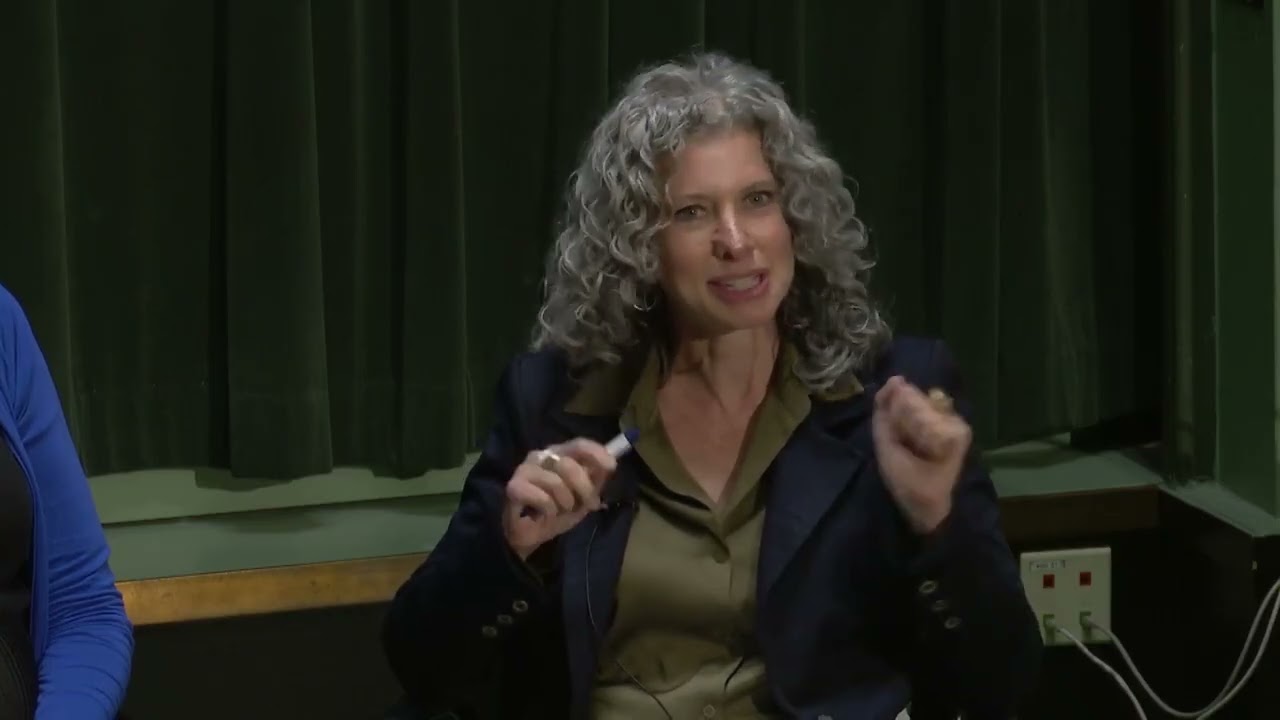
Published by the University of Michigan on YouTube on September 28, 2026, this video records a panel held at Rackham Amphitheater on September 22, 2026, as part of the Samantha Woll Dialogues. Moderated by Michigan Medicine's Dr. Lisa Harris, the conversation brings together scholars Terri Laws, Rabea Benhalim, and Cara Rock-Singer to examine what religious values teach about reproduction and what role they should play in public policy and personal health.
## TL;DR
This panel explores the complex intersections of reproduction, medicine, law, and lived religious practice across Islamic, Jewish, and Black Christian traditions. The speakers deconstruct modern political assumptions—such as the notion that religious traditions uniformly oppose abortion—by examining classical jurisprudence on fetal development, ensoulment, and in vitro fertilization (IVF), alongside the 20th-century political mobilization of white evangelicals and Catholics. Through the lenses of womanist theology, religious pluralism, and post-Dobbs legal challenges, the panelists debate the limits of state regulation and the Religious Freedom Restoration Act (RFRA). Ultimately, the discussion highlights how religious frameworks function beyond rigid legalism to alleviate suffering, foster communal kinship, and advance reproductive and racial justice.
## Atmosphere & style
The conversation carries an intellectually rigorous yet deeply personal and reflective tone, blending legal and historical scholarship with candid personal narratives of clinical care, divorce, and congregational life. The dynamic among moderator Lisa Harris and the panelists is warm, collaborative, and nuanced, deliberately resisting the flattened political binaries of contemporary media. Even when debating areas of productive disagreement—such as the role of state regulation—the mood remains collegial and grounded in a shared reverence for human interdependence, justice, and the holiness of birth.
## Bulletin
- [24:53](https://www.youtube.com/watch?v=MBOPWmyuamA&t=1493s) Classical Islamic and Jewish legal traditions do not classify pre-implantation blastocysts as legal persons, viewing earliest embryonic development as 'water' and permitting the ethical disposal of excess IVF embryos.
- [31:24](https://www.youtube.com/watch?v=MBOPWmyuamA&t=1884s) Broad evangelical Christian mobilization against abortion in the United States crystallized in the late 1970s following desegregation disputes over Bob Jones University's tax-exempt status, rather than originating from an unbroken theological consensus.
- [49:40](https://www.youtube.com/watch?v=MBOPWmyuamA&t=2980s) Under classical Islamic jurisprudence, legal penalties for abortion were non-carceral civil fines rather than criminal imprisonment, and maternal life is prioritized over fetal survival because the mother holds established status and communal responsibilities.
- [37:34](https://www.youtube.com/watch?v=MBOPWmyuamA&t=2254s) Womanist theological perspectives frame reproduction through healthcare access and racial justice, addressing the historical trauma of forced sterilizations alongside clinical disparities in technologies standardized primarily on white women.
## Key takeaways
- [13:01](https://www.youtube.com/watch?v=MBOPWmyuamA&t=781s) Mainstream media coverage often flattens multifaceted religious traditions into rigid anti-abortion stances, obscuring over a millennium of Islamic and Jewish legal debates centered on gestational stage, maternal health, and fetal viability.
- [24:53](https://www.youtube.com/watch?v=MBOPWmyuamA&t=1493s) Pre-implantation blastocysts outside the womb are classified as water rather than legal persons in both Jewish and Islamic traditions, distinguishing in vitro status from post-implantation development.
- [31:24](https://www.youtube.com/watch?v=MBOPWmyuamA&t=1884s) Catholic doctrine prescribing automatic excommunication for all abortion was formalized in the 19th century under Pope Pius IX, whereas historical Christian views on early abortion were more varied.
- [35:11](https://www.youtube.com/watch?v=MBOPWmyuamA&t=2111s) Rabbinic Judaism defines the fetus as water during the first 40 days and grants full legal personhood only at birth, a 40-day threshold similarly observed in the Maliki school of Islamic jurisprudence.
- [37:34](https://www.youtube.com/watch?v=MBOPWmyuamA&t=2254s) Discussions of reproduction in Black religious spaces carry the historical legacy of reproductive violence during chattel slavery and forced sterilizations, prompting womanist theologians to reclaim bodily autonomy and sexual pleasure.
- [49:40](https://www.youtube.com/watch?v=MBOPWmyuamA&t=2980s) When a pregnancy threatens a pregnant person's life, classical Islamic jurisprudence prioritizes the mother because she is an established person with existing familial, social, and communal roles.
- [53:53](https://www.youtube.com/watch?v=MBOPWmyuamA&t=3233s) Post-Dobbs legal challenges utilize the Religious Freedom Restoration Act to argue that abortion bans infringe on Jewish religious practice, though scholars caution that this strategy may distort minority faith traditions to fit Christian legal baselines.
- [01:04:27](https://www.youtube.com/watch?v=MBOPWmyuamA&t=3867s) The liberal secular framework of individual rights struggles to accommodate reproduction, which inherently centers interdependence, communal duties, and relational responsibility over absolute individual autonomy.
- [01:08:20](https://www.youtube.com/watch?v=MBOPWmyuamA&t=4100s) Historical religious authorities routinely deferred practical authority on birthing, menstrual purity, and fertility management to female midwives rather than imposing direct male clerical regulation.
- [01:12:35](https://www.youtube.com/watch?v=MBOPWmyuamA&t=4355s) Penalties for abortion in classical Islamic law were non-carceral, consisting at most of a financial restitution fine paid to the husband for the loss of potential paternal rights.
- [01:19:25](https://www.youtube.com/watch?v=MBOPWmyuamA&t=4765s) Assisted reproductive technologies prompt novel religious debates over whether motherhood is established genetically or gestationally, while early pregnancy testing creates theological tensions by detecting conceptions prior to common natural miscarriage windows.
- [01:24:34](https://www.youtube.com/watch?v=MBOPWmyuamA&t=5074s) While high-tech reproductive care is seldom discussed from traditional pulpits, Black churchwomen maintain informal communal networks of mutual aid to navigate clinical decisions and structural inequities.
- [01:27:15](https://www.youtube.com/watch?v=MBOPWmyuamA&t=5235s) Across religious, agnostic, and atheist divides, reproductive ethics converge around commitments to alleviate human suffering, expand communal kinship, and recognize birth as a universally profound experience.
## Detailed walkthrough
### [00:06](https://www.youtube.com/watch?v=MBOPWmyuamA&t=6s) Welcome, the Raoul Wallenberg Institute, and the Samantha Woll Dialogues
Jeffrey Veidlinger, Director of the Raoul Wallenberg Institute at the University of Michigan, opens the event by welcoming the audience and extending special thanks to the students in attendance. He reminds students that immediately following the panel, a moderated discussion—which is part of a course some attendees are taking, though open to all students regardless of enrollment—will take place next door in the East Conference Room, with food provided. Veidlinger also expresses his gratitude to the Wallenberg Institute staff who made the event possible: Miriam Mora, Eleanor Campe, Alexis Gideon, and Joe Johnson.
Veidlinger provides background on the Raoul Wallenberg Institute, which the University of Michigan established in December 2023 as a university-wide effort to combat antisemitism and advance religious diversity and inclusion across all three of its campuses. The institute's namesake, Raoul Wallenberg, was a 1935 University of Michigan alumnus who worked with the United States and Swedish governments in Budapest during the Holocaust to save thousands of Jews from deportation to the Auschwitz death camps, before being detained by the Red Army after the war and dying in a Soviet prison. A key pillar of the institute's mission is the Samantha Woll Dialogues, a conversation series on contemporary issues of consequence established in memory of Samantha Woll—a proud University of Michigan graduate, passionate community leader, committed grassroots organizer, and advocate for interfaith conversations who was tragically murdered in 2023 at the age of 40. Veidlinger thanks her family—Margo and Doug Woll, and Monica and Ben Rosen—for helping realize the vision of the series.
Turning to the afternoon's theme, Veidlinger notes that the panel brings together experts in law, religion, and health to examine how reproduction has become a religious issue, what different religious traditions teach about reproduction, who holds the authority to speak on their behalf, how these questions have become so heavily politicized today, and what is at stake theologically, morally, and politically. Acknowledging that reproduction is a contentious topic with a wide variety of perspectives represented in the room, he emphasizes that while universities serve as a "marketplace of ideas" where people can freely express their views, that freedom "does not extend to the right to interrupt and interfere with events as they're taking place." Instead, he explains that index cards will be distributed and collected in about 45 minutes to guide the final Q&A portion of the program.
---
[03:28](https://www.youtube.com/watch?v=MBOPWmyuamA&t=208s) Introducing the Panelists and Moderator
Veidlinger introduces the three panelists and the moderator, beginning with visiting scholar Rabea Benhalim, Associate Professor at the University of Colorado Law School, who also led a faculty workshop earlier that afternoon. Benhalim's research examines the development of Islamic and Jewish law in the modern era, specifically how secular environments influence the interpretation and evolution of religious law for minority religions. Her scholarship has appeared or is forthcoming in the *Minnesota Law Review*, the *Wisconsin Law Review*, and the *BYU Law Review*, among others, and she currently serves as a Templeton Pluralism Fellow based at Georgetown University's Center for Muslim-Christian Understanding.
He then introduces the local panelists from the University of Michigan system: Terri Laws from the Dearborn campus and Cara Rock-Singer from the Ann Arbor campus, congratulating Rock-Singer on her forthcoming book with the University of Chicago Press, slated for release on November 3. Finally, he introduces moderator Dr. Lisa Harris. As Veidlinger reads through Harris's extensive list of academic appointments and directorships, Harris jokingly interjects, "Take a breath," prompting Veidlinger to laugh and note, "So you got a lot of titles in there," before detailing her interdisciplinary work on reproductive healthcare and social polarization.
| Speaker | Roles & Affiliations | Research & Academic Focus |
|:--- |:--- |:--- |
| **Rabea Benhalim** | Associate Professor, University of Colorado Law School; Templeton Pluralism Fellow, Georgetown University Center for Muslim-Christian Understanding | Modern development of Islamic and Jewish law; how secular environments affect religious law interpretations in minority religions |
| **Terri Laws** | Associate Professor of African and African-American Studies, University of Michigan–Dearborn | Social science approaches to race, religion, and society; reducing healthcare inequities via social/cultural factors; authoring a monograph on African-American religion and health |
| **Cara Rock-Singer** | Professor of Contemporary Jewish Life & Assistant Professor of Jewish Studies, Frankel Center for Judaic Studies, University of Michigan (affiliated with Women's and Gender Studies & Science and Technology Studies) | Author of *Gestating Judaism: The Corporeal Technologies of American Jewish Religion* (University of Chicago Press) |
| **Lisa Harris** *(Moderator)* | OB/GYN & Cultural Historian; George E. Wantz Professor of Interdisciplinary Enrichment in Medicine; Arthur Thurnau Professor; Professor of Obstetrics and Gynecology and of Women's and Gender Studies; Director of Michigan Medicine's Center for History, Humanities, Arts, Social Sciences, and Ethics in Medicine | Medical history, arts, humanities, bioethics, and social sciences; history of IVF in the US; abortion stigma; reproductive justice frameworks; role of healthcare provider voices in reducing social polarization |
---
[07:02](https://www.youtube.com/watch?v=MBOPWmyuamA&t=422s) Framing the Conversation: Why is Reproduction a Religious Issue?
Taking the stage, Dr. Lisa Harris welcomes the audience and frames the central question of the afternoon: why reproductive health is a religious issue. She observes that reproduction carries many simultaneous meanings and faces—it is at once a personal family-building issue, a medical health and healthcare issue, a scientific research issue, a contested political issue, and a domain governed by both secular and religious law. Because all of these dimensions are true at the same time, the panel will grapple with how they intersect.
Harris outlines the three-part structure for the first 45 minutes of the discussion, which will be followed by a 30-minute audience Q&A based on the index cards:
```mermaid
flowchart LR
accTitle: Structure of the Panel Discussion
accDescr: A four-stage overview of the conversation format outlined by moderator Lisa Harris, moving through three thematic panel segments into an audience Q&A.
subgraph Panel["45-Minute Moderated Conversation"]
P1["Part 1: Research &<br/>Personal Origin Stories"] --> P2["Part 2: Reproduction Across<br/>Religious Traditions"]
P2 --> P3["Part 3: Politics, Policy &<br/>Religious Pluralism"]
end
subgraph Audience["30-Minute Audience Segment"]
QA["Index Card Q&A<br/>with Panelists"]
end
P3 --> QA
```
- **Part 1 — Work and Origin Stories:** Panelists will introduce their scholarship on reproduction and religion, along with their personal "origin story"—what first grabbed their attention, made the topic compelling to them, and motivated them to join a panel like this.
- **Part 2 — Religious Traditions:** Panelists will examine how reproduction is treated across the various religious traditions they study or represent.
- **Part 3 — Politics, Policy, and Pluralism:** The panel will tackle the fraught political and policy questions surrounding religious pluralism—specifically, "what authority should some religious traditions or teachings have over people who do not share that religious tradition?"
---
[09:23](https://www.youtube.com/watch?v=MBOPWmyuamA&t=563s) Lisa Harris's Origin Story: Awe, Faith, and Friction in OB/GYN Care
To kick off the conversation, Harris shares her own origin story regarding the intersection of religion and reproduction. Although she intentionally chose healthcare rather than religion as her career path, she has consistently found herself thinking about—or, more truthfully, "bumping up against religion"—in her day-to-day clinical work ever since her very first night on call in OB/GYN as a medical student, when she witnessed a birth for the first time. Acknowledging that there is at least one other obstetrician in the room and others who have witnessed birth (which she notes is a different experience from giving birth oneself), she describes feeling an overwhelming sense of awe that one human being could emerge from the body of another. Coming from a religious Jewish background, she was struck by the sight of the baby emerging in the typical head-down, facing-down position: as the crown of the baby's head appeared first, "all I could see was a yarmulke." She connected that immediate visual on her first night on call to the profound reverence and respect for life that a yarmulke represents for those who wear one, a feeling of faith and awe reinforced by the miraculousness of a parent being able to feed a baby for months using only their own body.
Beyond those personal feelings of spiritual awe, Harris explains that she constantly encounters the tangible intersection of reproduction and specific religious traditions—both in routine hospital care and in tense political conflict:
- **In the hospital:** A Jewish parent on morning rounds in labor and delivery requesting that their newborn baby be circumcised, or a Muslim patient in labor and delivery placing a sign on their door reading, "only female care providers, please."
- **In reproductive healthcare settings:** Earlier in her career while working at Planned Parenthood, driving into the parking lot past protesters from the local Catholic parish, church, and Catholic high school, as well as receiving threatening anti-abortion mail.
[11:57](https://www.youtube.com/watch?v=MBOPWmyuamA&t=717s) The Clinical and Theological Intersections of Reproduction
Moderator Lisa Harris reflects on the visceral, high-stakes ways religion enters medical spaces, recalling receiving mail that explicitly invoked antisemitic tropes and images. In her clinical work, this friction surfaces vividly when caring for patients who present complex theological dilemmas—such as a Jehovah's Witness patient requiring a cesarean section who strictly refuses life-saving blood transfusions under any circumstance, fully accepting that it could mean death. Harris notes that while clinicians and observers routinely encounter these fraught boundaries between medicine and belief, it is rarely clear how to conceptualize them. Framing the panel, she invites each speaker to share their research background and explain why they care about the intersection of religion and reproductive health.
[13:01](https://www.youtube.com/watch?v=MBOPWmyuamA&t=781s) Rabea Benhalim: Islamic Law, IVF, and the Nuances of Abortion
Rabea Benhalim dates her entry into reproductive scholarship to 2020 during her divorce. Prior to that, she and her ex-husband had created in vitro fertilization (IVF) embryos. As a Muslim, she had previously asked around about the permissibility of IVF and was told it was entirely permissible in Islam. However, when the divorce made retaining or using those embryos contentious, she was forced to investigate Islamic jurisprudence on frozen embryos post-separation. Her research revealed that she had an actual religious obligation to allow the frozen embryos to thaw and not be implanted.
This realization prompted legal concerns when she realized that while discarding or thawing these embryos was permissible in Colorado, the exact same act was legally prohibited under Louisiana state law—a direct conflict with her First Amendment religious freedoms. Benhalim notes the personal symmetry in her story: she has since remarried, is deeply grateful for reproductive medicine, and is currently pregnant with an IVF embryo.
```mermaid
flowchart TD
accTitle: Divergent Discourses on Abortion and Islamic Jurisprudence
accDescr: Contrasting public binary discourse with nuanced classical Islamic and Jewish legal traditions.
subgraph Public["Public Polarized Binary"]
P1["Bodily Autonomy / Rights Model"]
P2["Absolute Life from Conception"]
end
subgraph Jurisprudence["Classical Islamic & Jewish Jurisprudence"]
J1["1,000+ Years of Disagreement & Debate"]
J2["Developmental Timelines / Gestational Age"]
J3["Maternal Health & Life Priority"]
J4["Accommodation of Plural Legal Opinions"]
end
Public -.->|"Fails to capture"| Jurisprudence
```
Turning to abortion, Benhalim describes her dismay after the Supreme Court's *Dobbs* decision overturned *Roe v. Wade*. She observed Muslim American figures appearing on CNN, PBS, and evening news broadcasts to declare that abortion is flatly *haram* (impermissible). She found this rhetoric dangerously reductionist, as classical Islamic and Jewish legal traditions contain more than a millennium of rigorous debate accommodating a spectrum of views. Rather than viewing the issue through modern polarized binaries—pure bodily autonomy on one side versus full personhood at conception on the other—traditional legal doctrines weigh developmental stages, fetal viability timelines, the mother's well-being, and mutual duties, providing a rich, flexible gray area where diverse viewpoints are accommodated.
[17:08](https://www.youtube.com/watch?v=MBOPWmyuamA&t=1028s) Cara Rock-Singer: Gestating Judaism and the Maternal Roots of Prayer
Cara Rock-Singer traces her path back to her undergraduate studies in molecular biology. Although committed to the science, she realized she had no stomach for clinical medicine—admitting she was "not good with the blood and the germs and the things." Fulfilling a distribution requirement, she enrolled in a course on women, gender, and religion, where ethnographic accounts of communities negotiating meaning captivated her. She decided to "white-knuckle" her way through the biology degree while pursuing an unofficial religion major on the side. When mentors suggested exploring reproduction as the nexus between religion and science, she initially felt naive at 19, but the question took hold.
This trajectory culminated in her book, *Gestating Judaism: The Corporeal Technologies of American Jewish Religion*, written over the span of having two children and conducting fieldwork across varied American Jewish communities. Rock-Singer explains that her work flips the panel's prompt: rather than asking why reproduction is a religious issue, she examines why religion is a reproductive issue, exploring how bodily practices transmit and reinvent Jewish tradition.
- She points out the timing of the dialogue alongside Rosh Hashanah, noting that foundational biblical narratives of Jewish peoplehood are rooted in stories of matriarchs facing infertility.
- Highlighting the biblical figure of Hannah, Rock-Singer notes that Hannah's desperate, agonizing prayer for a child became the ancient rabbinic archetype for what sincere devotion must look and act like.
- Lisa Harris interjects to ask if the community initially dismissed Hannah as crazy, to which Rock-Singer affirms that the priest Eli actually mistook Hannah for being drunk.
- Rock-Singer concludes that reproductive striving has long served as a template for world-building, both biologically and spiritually.
[21:06](https://www.youtube.com/watch?v=MBOPWmyuamA&t=1266s) Terri Laws: Justice, Womanist Thought, and Faith in the Medical Center
Terri Laws frames her background through the lens of religion, racial justice, and public health. Growing up, her religious foundation was a prominent Black Baptist Church—the kind "you see on TV, without stereotype"—rooted in civil rights activism, political engagement, stirring music, and congregants who had literally marched alongside Dr. Martin Luther King Jr. This environment treated justice as foundational to religious life.
However, her worldview shifted when she attended seminary after working inside an academic medical center. Having seen healthcare practices that failed to align with justice, she insisted that justice belong at the core of medicine just as it did in the church. This stance provoked friction among seminary peers, who accused her of inventing scriptural interpretations when she pointed out structural inequities and injustices.
- Laws pursued doctoral work at Rice University in Houston, situated directly across from the massive Texas Medical Center, allowing her to engage directly with institutional medicine and global healthcare dynamics.
- Her thinking was deeply shaped in seminary by studying under foundational figures in womanist theology, focusing on the intersections of race, class, and gender.
- Defining herself as a generalist in the field of religion and health, Laws applies this lens broadly—from reproductive ethics to clinical trials and animal-to-human xenotransplantation.
[24:53](https://www.youtube.com/watch?v=MBOPWmyuamA&t=1493s) Framing Part Two: Reproductive Traditions and State Regulation
Concluding her remarks on African American participation in clinical trials, Terri Laws emphasizes that throughout the history of bioethics and healthcare, "justice led the way and still leading the way." With that foundation laid, moderator Lisa Harris formally moves the conversation into part two of the panel. Harris invites the scholars to reflect from their personal, scholarly, and disciplinary vantage points on how various religious traditions approach the full spectrum of reproduction—encompassing infertility, assisted reproductive technologies, childbirth, miscarriage, and abortion. In addition to probing how religious law operates across these domains, Harris poses a secondary challenge: what common assumptions or prevailing myths about traditional religious views would the panelists most like to dispel?
Law professor Rabea Benhalim opens by highlighting the complex intersection between personal conscience, religious doctrine, and public policy regulation. Examining reproductive law within the United States reveals stark internal contradictions and geographic disparities: while states like Texas have erected sweeping, highly restrictive abortion bans with vanishingly narrow exceptions, procedures like surrogacy remain comparatively unregulated. Benhalim observes that this disjointed regulatory landscape often creates profound ethical tensions for individuals caught between "what someone believes God wants them to do and what the state is or is not allowing." Within traditions like Islam and Judaism, however, formal legal and ethical frameworks provide nuanced guidance that does not collapse into a single monolithic mandate, offering patients a dynamic range of moral reasoning to help determine what aligns with their conscience.
- **Geographic Fragmentation:** Reproductive rights and restrictions in the United States vary sharply across state borders (e.g., Texas versus Colorado), creating an environment where permissibility depends on physical geography rather than enduring religious consensus.
- **Regulatory Contrasts:** Strict, punitive statutory control over abortion frequently coexists alongside a largely unregulated market for gestational surrogacy.
- **Conscience versus State Mandate:** Religious guidance often provides moral clarity and ethical deliberation for adherents even when civil law diverges radically from theological jurisprudence.
---
[28:05](https://www.youtube.com/watch?v=MBOPWmyuamA&t=1685s) Blastocysts as Water and the Moment of Ensoulment
Addressing the mechanics of assisted reproduction, Benhalim dispels a major cross-traditional misconception by contrasting Christian stances on in vitro fertilization (IVF) with those of Jewish and Islamic law. Neither Islamic nor Jewish legal traditions view the disposal of unused pre-implantation IVF blastocysts as morally fraught. Under a rigorous technical reading of sacred jurisprudence, cellular life existing outside of a uterus in a Petri dish or laboratory freezer does not constitute a legal person; rather, both traditions classify pre-implantation blastocysts "effectively as water." While rules govern lineage and prevent the careless implantation of genetic material into just anyone, the simple discarding of excess blastocysts carries none of the theological taboos associated with post-implantation life.
```mermaid
flowchart TD
accTitle: Developmental Status in Islamic Jurisprudence
accDescr: Stages of embryonic and fetal development from pre-implantation to ensoulment as described in Islamic legal thought.
subgraph PreImplantation["Extracorporeal Stage"]
A["Blastocyst in Vitro / Freezer"] -->|"Classified legally as water"| B["Discarding Unused Blastocysts Permissible"]
end
subgraph GestationalStages["In Utero Development"]
C["Implantation in Uterine Wall"] --> D["Formation of Placenta and Flesh"]
D --> E["Ensoulment (~120 Days Post-Implantation)"]
end
B -.->|"Transfer into Uterus"| C
```
Benhalim underscores that in Islamic thought, moral and legal status develops dynamically across gestational thresholds: life shifts as it implants into the uterine lining, grows a placenta, assumes human form, and eventually receives a soul. Reflecting on her own pregnancies, she shares a deeply personal memory of walking through the streets of Florence, Italy, with her daughter in utero, when she felt a sudden, distinct physical sensation: "I literally felt like—I felt like her soul jump into the body." Harris asks whether that unexpected spiritual milestone matched the theological timeline. Benhalim confirms that it aligned precisely with the Islamic tradition, which measures ensoulment not by clinical gestational age calculated from the last menstrual period (LMP), but at approximately 120 days following implantation.
- **Extracorporeal Status:** Both Islamic and Jewish legal authorities classify pre-implantation blastocysts outside a womb as akin to water, bypassing theological objections to the disposal of unused IVF embryos.
- **Dynamic Personhood:** Moral status is not instantaneous at conception; it escalates sequentially through cellular development, uterine implantation, morphological differentiation, and ensoulment.
- **Timeline of Ensoulment:** Classical Islamic legal reckoning places ensoulment at roughly 120 days post-implantation, differing fundamentally from standard American clinical gestational dating based on the last menstrual period.
---
[31:24](https://www.youtube.com/watch?v=MBOPWmyuamA&t=1884s) Deconstructing Timelessness: Catholicism, Evangelicals, and the Politics of Abortion
Cara Rock-Singer approaches the prompt through her dual roles as a classroom educator and a researcher of American religion. In her course on women, gender, and religion, she regularly runs a classroom exercise where students physically position themselves on opposite sides of the room to register agreement or disagreement with assertions such as "religion opposes abortion," "conservative Christians always oppose abortion," or "science tells us when life begins." She uses these debates to deconstruct simplistic assumptions. Drawing on Catholic historical scholarship, she highlights that even within traditions widely viewed as monolithically anti-abortion, doctrine has evolved significantly over centuries; it was only in the 19th century under Pope Pius IX that the Catholic Church formally codified abortion as an excommunicable sin.
Turning to American political history, Rock-Singer dismantles the prevailing myth that American evangelical and conservative Protestants have inherently opposed abortion since time immemorial. Drawing on scholarship from her graduate mentors, she explains that through the mid-1970s, abortion was predominantly treated as a "Catholic issue" rather than a Protestant one. The mobilization of white evangelicals into the Religious Right in the late 1970s had little to do with reproductive ethics at its inception; rather, it was sparked by battles over racial segregation, specifically the federal government’s 1976 revocation of the tax-exempt status of Bob Jones University. Conservative Catholic strategist Paul Weyrich seized on this racial grievance, actively courting evangelical leaders and steering their political coalition toward an anti-abortion platform by the 1980s. Rock-Singer critiques the modern cultural amnesia that treats these recent, politically engineered stances as timeless theological truths, noting that regardless of how sincerely held those beliefs may be today, their systemic origins were rooted in race and institutional power.
- **Classroom Exercises:** Students unpack binary thinking regarding science, faith, and reproduction by examining primary historical texts across diverse traditions.
- **Evolution of Catholic Doctrine:** Doctrinal absolutism against abortion is not ancient; formal ecclesiastical decrees linking all abortion to immediate excommunication solidified in the 19th century.
- **The Desegregation Origins of the Religious Right:** Conservative evangelical political mobilization crystallized around the 1976 loss of tax-exempt status at Bob Jones University due to its segregationist policies, not reproductive sanctity.
- **Paul Weyrich's Strategy:** The alignment of conservative Protestant voters with anti-abortion politics was deliberately orchestrated in the late 1970s and 1980s by Catholic political operatives seeking a unified conservative voting bloc.
---
[35:11](https://www.youtube.com/watch?v=MBOPWmyuamA&t=2111s) Lived Religion and the Limits of State Frameworks
Shifting into her ethnographic work on American Judaism, Rock-Singer emphasizes the value of stepping outside state-centric and purely legalistic discourses. As an ethnographer who immerses herself within religious communities to document everyday lived realities, she observes that ordinary reproductive practices frequently bypass the debates prioritized by secular courts and political campaigns. State frameworks tend to fixate on rigid questions of legality, personhood, and fetal status—such as defining precisely "when life begins."
In contrast, within lived Jewish tradition, many profound reproductive issues, rituals, and halakhic considerations operate on entirely different planes of meaning. They are oriented around family continuity, somatic experience, purity laws, and communal obligations, functioning completely independently of secular state regulation or politicized moral debates over embryonic life.
- **Ethnographic Perspective:** Lived religious practice prioritizes community customs and embodied rituals over legislative battles and civil legal frameworks.
- **Bypassing the "Life Begins" Trope:** Within everyday Jewish life, reproductive decisions and traditional religious laws are frequently guided by concerns unrelated to secular political obsessions with fetal personhood or abortion bans.
[36:13](https://www.youtube.com/watch?v=MBOPWmyuamA&t=2173s) Mundane Religious Practices and Jewish Fetal Personhood
The discussion opens with Cara Rock-Singer noting that for many people, religious reproductive issues are quite mundane—such as a religious Jew who does not drive on Shabbat figuring out what to do when going into labor. Without centralized authority, these matters are negotiated on smaller scales. Moderator Lisa Harris then prompts Cara on the issue of ensoulment and time frames in Judaism. Cara explains that according to texts, up to 40 days it is considered "water", and personhood truly begins at birth in predominant Jewish traditions. However, she clarifies that this does not mean it is "willy-nilly"; there are many opinions and ongoing negotiations around abortion, representing a different stance on fetal personhood that doesn't mean everyone is lenient, but does mark a difference in when life is thought to begin. Rebeaa Benhalim chimes in to clarify that she had stated the most lenient approach earlier, noting that a similar 40-day demarcation exists within the Maliki school of thought.
[37:34](https://www.youtube.com/watch?v=MBOPWmyuamA&t=2254s) Sex, Pleasure, and Historical Trauma in Black Churches
Shifting directions, Terri Laws states that her comments are not about babies, explaining that in African-American communities and Black churches, the conversation centers heavily on sex, who ought not to be having it, how often, and encouraging people simply "just don't think about sex." While older women might take someone aside to share advice, what comes from the pulpit—if anything—is essentially "just don't." Terri contrasts this with her class, "Black women religion and spirituality," where she includes a module on sex and pleasure because students will never hear that from the pulpit. She notes that researchers in this area look at sexual pleasure to free women from what they term "theologically oppressive" conversations, recognizing sex as a natural part of life and how babies are made (prompting Rebeaa and Cara to playfully interject "Not always" and "Sometimes there are test tubes and things").
Terri then addresses the darker, heavier side of this history for Black women, noting the long history of sexual violence and access to Black women dating back to enslavement. While the pulpit frames sex and sexual pleasure as sin, women are simultaneously trying to stay safe from sexual threat, requiring scholars to navigate both realities. She expresses gratitude to emerging scholars in African-American communities who are tackling these topics and challenging traditional definitions of sin. Furthermore, Terri brings up the historical threat of sterilization, such as the "Mississippi appendectomy," noting that sterilization threats against institutionalized persons are often mistakenly viewed purely as historic. Ultimately, she emphasizes that the conversation around sex is not all sin, violence, or pleasure, but rather about figuring out how to move forward constructively. Rebeaa Benhalim adds a personal anecdote, recalling how when she was eight years old, her mother took her to a women-only mosque event where a scholar was hidden behind a screen, and the very first question submitted in writing was about the permissibility of cunnilingus, prompting her mother to gently suggest she step outside.
[43:26](https://www.youtube.com/watch?v=MBOPWmyuamA&t=2606s) Why Reproduction Matters Across Religions
Lisa Harris pivots the panel with a deeper question: why is reproduction such a central issue across religions, unlike other medical topics like asthma? She asks what is at stake communally, spiritually, and in terms of power and authority. Terri Laws responds by noting that the historical conversation is unpleasant, and some people genuinely believe that talking about sex entences or entices participation, leading straight to discussions of sin. While theologians explore newer ideas around privacy and private touch, church leaders are generally not thinking about these concepts.
Cara Rock-Singer builds on this by examining religion as a social force and a mechanism for making distinctions—such as dividing what is alive versus not alive, human versus non-human, and godlike versus mortal. Policing these boundaries through taboos and unspoken rules is core to how religion functions. She describes reproduction as existential, evolving alongside increasing technologies and changing scientific capabilities. Terri Laws adds the African-American theological perspective of the "co-creation of humanity with God," linking it directly to the command to "be fruitful and multiply." She explains that because God declared humanity good, human participation in reproduction produces good. Rebeaa Benhalim concludes this segment by speaking from the Islamic perspective, noting that historically, a major focus within Islam was centered on achieving social harmony and the social contract.
[49:40](https://www.youtube.com/watch?v=MBOPWmyuamA&t=2980s) Alleviating Suffering and Lived Experience in Islamic and Jewish Law
Rabea Benhalim frames religious legal traditions around two foundational questions: "How do we create a society that alleviates suffering? How do we take care of those who are most in need?" Looking at how Islam regulates sexuality, she notes that sexual pleasure is not an issue at all—and is in fact encouraged—provided a couple is married. Historically, the strict limitation of sex to marriage was rooted in the harsh reality that both women and children born out of wedlock suffered profoundly. Consequently, regulating sex within the bounds of marriage was primarily a mechanism for ensuring the rights and protection of children.
When examining the permissibility of abortion, Benhalim points out a fascinating parallel: both the Jewish and Islamic legal traditions begin their interpretive frameworks with the exact same initial hypothetical—a pregnant woman who is attacked and subsequently miscarries. Historically, the distinction between a miscarriage and an abortion was not huge, and jurists used this scenario to determine what obligations arose, whether murder had occurred, and what specific factors those rulings depended upon. Beyond hypotheticals, religious law also had to grapple with the dangerous lived reality of childbirth. When forced to balance the competing needs of an unborn fetus and a mother about to die in labor, Islamic law prioritized the living woman. Even if the fetus had reached the stage of ensoulment, the mother was recognized as an established life—already a daughter, a wife, potentially a mother, and a person with friendships.
Furthermore, religious guidance extends beyond binary questions of what is permissible or impermissible to address the practical realities of miscarriage across various stages of pregnancy. For Muslims, this involves navigating specific communal and legal obligations that maintain a functioning society:
- **Burial obligations:** Determining whether a miscarried fetus needs to be buried (acknowledging that in a very early miscarriage, "there's not really much to bury") and what the specific rites entail.
- **Inheritance:** Establishing how inheritance laws apply in these situations.
- **Core purpose of religious law:** At its best, religious law serves to humanize people to one another and provide concrete guidance on how to proceed during major life transitions—such as a death, a marriage, or a birth—when people need support the most.
[52:43](https://www.youtube.com/watch?v=MBOPWmyuamA&t=3163s) Meaning-Making and Family Origins in the Jewish Tradition
Cara Rock-Singer tags onto Benhalim's points, noting that while much of this applies to Judaism and other traditions, religion is not solely about legal obligation. The concept of obligation represents a specific kind of "boundedness" that may not fit everyone, particularly those in a liberal American context. Just as vital to the religious story is how people make meaning, how they mourn, and how they cope.
Speaking specifically from the Jewish tradition, Rock-Singer observes that Judaism's origin story is fundamentally a family story—the narrative of Abraham, Isaac, Jacob, and the matriarchs. Long before the establishment of formal religious law, the entire making and building of a people entering into a relationship with their God was predicated on family and the deeply human struggles to create those families.
[53:53](https://www.youtube.com/watch?v=MBOPWmyuamA&t=3233s) Navigating Religious Pluralism, the State, and Post-Dobbs RFRA Claims
Moderator Lisa Harris reminds the audience that the floor will open for Q&A in about eight to ten minutes and coordinates having index cards distributed to audience members raising their hands. She then steers the panel toward the issue of religious pluralism: how should society decide which reproductive health decisions belong to an individual's personal conscience, which require the guidance of religious mentors, and which should be regulated by the state? Furthermore, how should people respond when asked to follow laws or policies grounded in someone else's religious tradition?
When Harris invites Rock-Singer—seated in the middle—to tackle the question first, Rock-Singer jokes that as an ethnographer who simply describes things, she feels like the last person who should answer compared to her co-panelists, who specialize in ethics (Terri Laws) and law (Rabea Benhalim). Initially tempted to "pass the potato," she decides to flip the question on its head. While acknowledging that the state creates an inescapable framework, she emphasizes that much of the intersection between religion and reproduction—such as everyday practices around birth control and birthing—happens from the "bottom up" without state intervention.
Addressing the state-centered aspect of the prompt, Rock-Singer examines how Jewish activists have mobilized ideas of religious freedom in the wake of the *Dobbs* ruling. She recommends a documentary called *Under God*, which chronicles the legal and Jewish activist responses to the Indiana abortion ban. In the American legal landscape, certain religions are prioritized and go unmarked as "religious," while others do not. The standard legal litmus test for religious conscience relies on the language of a "sincerely held belief"—a concept derived from a particular Christian context that does not necessarily reflect how every religious community operates.
Following the *Dobbs* decision, activists saw an opportunity to test the Religious Freedom Restoration Act—an acronym Rock-Singer laughs about loving to say aloud: "RFRA." The strategy flips RFRA on its head: arguing that because abortion bans establish a very particular religious idea onto everyone else, plaintiffs can use the clause to demand their own religious freedom be restored via access to abortion under Jewish law. While Rock-Singer admires this strategy as clever, powerful, and effective at gaining legal traction, she also voices a personal reservation. As someone who does not define her Jewishness through obligation to Jewish law, she finds the tactic somewhat "instrumental." While she supports using it to "fight the fight," she warns of the danger in reducing religiosity and defining it on somebody else's legalistic terms without adding a "yes, and" that encompasses broader, non-legalistic lived experiences.
```mermaid
flowchart TD
accTitle: Post-Dobbs RFRA Legal Strategy and Critique
accDescr: Diagram showing how state abortion bans after Dobbs prompted Jewish activists to use RFRA claims, along with the resulting legal traction and ethnographic critique.
subgraph Context["Post-Dobbs Legal Landscape"]
A["State Abortion Bans (e.g., Indiana)"] -->|"Imposes unmarked Christian framework"| B["Restricts Reproductive Access"]
end
subgraph Strategy["The RFRA Counter-Strategy"]
B --> C["Mobilizing RFRA ('Sincerely Held Belief')"]
C -->|"Cites Jewish legal obligations"| D["Claims State Infringes on Religious Freedom"]
end
subgraph Outcomes["Impact and Tension"]
D --> E["Gains Clever, Powerful Legal Traction"]
D --> F["Risk: Instrumentalizes Religion on Christian/Legal Terms"]
end
```
[59:33](https://www.youtube.com/watch?v=MBOPWmyuamA&t=3573s) State Regulation, Racial Realities, and Donor Policies
Terri Laws offers a concise response, praising Rock-Singer's breakdown and stating that she is actually "quite satisfied with the state regulating" precisely because American society does not treat religions equally. Pointing to the African-American experience, she notes that even within a single category like evangelical Christianity, communities are not treated the same: "Race makes a difference." Because racial disparities already skew how religious groups are treated, she prefers state regulation over deferring to unequal religious frameworks.
Rabea Benhalim counters directly: "I am not satisfied." She leans toward greater accommodation of religious pluralism, which she feels the current American legal system fails to provide. However, she agrees with Rock-Singer regarding the dangers and limitations of RFRA claims. Although Benhalim has argued in favor of RFRA claims in her own legal scholarship, she recognizes that they are narrow and only carve out exceptions for individuals who can prove specific "sincerely held religious beliefs."
At the same time, Benhalim agrees that state regulation has a necessary role to play, though it is a difficult balance to strike. As an example of good, legitimate public policy, she points to the regulation of gametes and embryos:
- **Unregulated sperm donation:** Previously, a lack of regulation allowed individual sperm donors to father hundreds of children.
- **Closed donations:** Because states historically allowed (and some still allow) closed, anonymous donations, those hundreds of donor-conceived children had no way of knowing if they were biological siblings.
- **Shifting standards:** To address this legitimate public policy concern, there is now an increasing regulatory shift within the egg, sperm, and embryo donation realms requiring donations to be open.
[01:01:35](https://www.youtube.com/watch?v=MBOPWmyuamA&t=3695s) Public Policy, International Compromise, and the Islamic Principle of Maslaha
Continuing her discussion of reproductive technologies, Rabea Benhalim points to policies that prohibit anonymous or closed gamete donations and adoptions. Such laws are grounded in the long-term well-being of donor-conceived children, who often grow up wanting access to their genetic origins and family medical histories. While these public policy mandates may directly conflict with an individual donor's personal preference to remain completely anonymous, they serve a compelling societal good. Benhalim argues that similar nuance should apply to abortion: she personally does not believe abortion should be entirely unregulated up to the moment of birth—a position she notes very few people actually hold—yet the United States remains trapped in a polarized dynamic where whichever political faction seizes state power simply imposes its will.
In contrast, Benhalim highlights international models in countries like Germany and Israel, where reproductive laws emerged from hard-fought compromises between secular factions and religious parties. In these legal frameworks, the baseline premise begins with abortion being technically illegal, which is then paired with an extensive, accessible roster of statutory exceptions that practically facilitate care whenever a person needs it. Turning to Islamic jurisprudence, Benhalim explains that within the Maliki school of law, the doctrine of *maslaha*—the preservation of the public good or public interest—serves as an explicit, authoritative foundation for legislation.
Historical prohibitions against abortion made complete sense when evaluated through this public welfare lens, because for most of human history, abortion was an exceptionally dangerous and crude intervention carrying a massive risk of maternal death. Weighing the hazards of pregnancy against the perils of primitive abortion procedures led legal and religious scholars to prioritize the woman's survival. In the modern era, however, that empirical reality has inverted: when legal, abortion is statistically safer than carrying a pregnancy to term, and jurisdictions with legal abortion demonstrate marked improvements in maternal outcomes, fetal health, and infant survival metrics. Consequently, even for those with moral reservations about abortion, the broader moral imperative to safeguard societal health provides a compelling religious and civic rationale for its legality.
- In legal systems like Israel and Germany, abortion is nominally prohibited but accompanied by broad statutory exceptions that ensure practical access through secular-religious compromise.
- Under the Maliki school of Islamic jurisprudence, *maslaha* (the public good) acts as a foundational justification for enacting law.
- Historical religious bans frequently reflected the lethal risks of pre-modern surgical interventions, whereas contemporary public health data shows legal abortion improves overall maternal and infant health outcomes.
[01:04:27](https://www.youtube.com/watch?v=MBOPWmyuamA&t=3867s) Rights versus Duties, and the Myth of Reproductive Autonomy
Cara Rock-Singer observes that implementing an Israeli-style compromise in the United States would require Americans to acknowledge that the separation of church and state is "selectively porous," an admission that remains an ideological non-starter in American public discourse. Benhalim concedes that importing such models wholesale may be unrealistic, but insists that policymakers could at least foster more robust dialogues aimed at nuanced legislative compromise rather than perpetual black-and-white warfare. Terri Laws interjects to clarify her earlier remarks, noting that while she is not necessarily happy with the current fragmented landscape, she accepts it as the prevailing reality simply because she is not convinced the country is currently capable of doing any better.
Benhalim pushes the critique further, arguing that American legal and political discourse is obsessively fixated on individual rights while neglecting the concept of duties. Many other global and religious legal traditions intentionally balance individual rights against communal and familial responsibilities. Reflecting on her own personal experience of pregnancy, Benhalim recalls feeling both an unmistakable right to bodily integrity and an overwhelming sense of profound responsibility toward the life developing within her.
Rock-Singer builds on this insight, remarking that reproduction uniquely shatters the modern secular myth of personal autonomy. She candidly notes that a person will "never feel less autonomous" than during pregnancy, where one is simultaneously radically dependent on external support while another entity is completely dependent on them. Moving toward a more humane regulatory model for reproduction would require dismantling basic liberal assumptions that treat human beings as entirely detached, autonomous, independent actors.
```mermaid
flowchart TD
accTitle: Comparison of Reproductive Governance Frameworks
accDescr: Contrasting the American rights-based paradigm with relational and public-interest legal models.
subgraph US["American Individualist Paradigm"]
A["Presumption of Absolute Autonomy"] --> B["Rights-Exclusive Legal Discourse"]
B --> C["Zero-Sum State Policy Battles"]
end
subgraph Relational["Relational & Public Interest Frameworks"]
D["Bodily Interdependence & Care"] --> E["Rights Paired with Mutual Duties"]
E --> F["Maslaha / Compromise-Driven Legislation"]
end
```
[01:06:32](https://www.youtube.com/watch?v=MBOPWmyuamA&t=3992s) Audience Questions: Gender, Male Awe, and Invisible Male Reproducers
Moderator Lisa Harris steps in to emphasize the common thread running through the panelists' remarks: a pervasive societal intolerance for complexity. Across varying traditions, intricate religious philosophies are continually flattened into rigid dogmas to serve specific political agendas. Turning to the audience, Harris introduces a trio of interconnected questions centered on gender:
- **Male Awe and Fear:** Given that historical religious canons were authored almost exclusively by men, what role did male awe, mystery, and fear regarding the female body play in constructing restrictive reproductive laws from the vantage point of an outside spectator?
- **Gender versus Religion:** Considering the deep patriarchal architecture and enduring male leadership across major world religions, to what degree is the reproductive debate fundamentally about gender dominance rather than religious conviction?
- **The Erasure of Male Reproduction:** Public and religious conversations routinely discuss reproduction as though it occurs exclusively within bodies with uteruses, effectively erasing men and individuals with sperm from reproductive accountability.
Harris invites the panel to tackle whichever dimension of these questions resonates most, prompting an enthusiastic response from Rock-Singer.
[01:08:20](https://www.youtube.com/watch?v=MBOPWmyuamA&t=4100s) Pre-Modern Midwifery, Modern Regulation, and Gendered Religious Boundaries
Rock-Singer acknowledges from the outset that the discussion centers on historically patriarchal traditions, just as the American legal and political systems remain fundamentally patriarchal. However, religious traditions represent expansive historical arcs that constantly adapt to shifting cultural contexts, communal norms, and scientific advancements. She pushes back against the assumption that ancient male religious authorities were perpetually obsessed with micromanaging female bodies, arguing that the impulse toward exhaustive regulatory control across all spheres of personal life is primarily an artifact of modernity.
To illustrate how pre-modern attitudes differed from modern institutional control, Rock-Singer shares a narrative from her book, *Gestating Judaism*, regarding an Orthodox Jewish midwife navigating the halakhic dilemmas of attending a birth on Shabbat. While classical texts specify what a laboring woman is permitted to do on the Sabbath to preserve life, they remain silent about the precise technical duties of the attending midwife. Seeking guidance, the midwife consulted a prominent rabbinic authority in New York. The rabbi, speaking in a thick Brooklyn accent, bluntly dismissed the premise of the inquiry, effectively telling her: "Ask someone who knows. Ask someone who belongs in a birth—that's not me. I don't know anything." Leaving the consultation deeply dejected, the midwife sought comfort by buying ice cream, only to experience an unexpected moment of "divine providence" when a man in the ice cream shop revealed that his relative was an experienced OB/GYN who could readily answer all her practical questions. The rabbi’s candid refusal to assert authority ruptured modern expectations of pervasive rabbinic control.
Addressing the tension between gender and religion, Rock-Singer explains that the two categories cannot be neatly untangled. Drawing on her academic training in religious studies, she conceptualizes religion as the foundational cultural apparatus through which societies construct and police boundaries: separating "us" from "them," sacred from profane, and clean from unclean. Gender roles and patriarchal divisions were forged within these very religious categories to negotiate power and social order. Finally, touching on the role of men in reproduction, Rock-Singer emphasizes that male reproductive involvement extends far beyond standard sperm donation, pointing to complex legal and ethical dilemmas such as the controversial practice of posthumous sperm retrieval from fallen soldiers to impregnate surviving partners or surrogates and produce grandchildren for grieving families.
- In pre-modern Jewish and Islamic frameworks, male authorities frequently recognized the limits of their expertise, deferring practical birthing and reproductive matters to experienced female practitioners.
- Cara Rock-Singer's book, *Gestating Judaism*, recounts an Orthodox midwife being told by a leading Brooklyn rabbi to consult birth attendants rather than expecting a rabbinic decree on labor management.
- Posthumous gamete harvesting from deceased military personnel represents a growing bioethical crossroad involving male reproductive agency, family lineages, and religious ethics.
[01:12:35](https://www.youtube.com/watch?v=MBOPWmyuamA&t=4355s) Gendered Dimensions of Reproduction and Classical Islamic Jurisprudence
Wrapping up her reflection on the ethical and anthropological domains of reproduction, Cara Rock-Singer notes that while femininity has been discussed as a locus of power that perhaps shapes gender as a central concern, reproduction—much like religion—sits at the center of many elements of our world. She jokes that she might just be putting her own research focus at the center of her universe, before concluding concisely, "So yes, men reproduce too," and acknowledging that there remain many experiences, regulations, and problems left to explore.
When moderator Lisa Harris opens the floor to the other panelists, Rabea Benhalim jumps in to explain why she tries not to frame reproduction exclusively through gender in her own legal scholarship. While birth, IVF, abortion, and surrogacy inherently involve women's bodies as a physical reality, her work on marriage contracts and sexual access demonstrates that these are issues across the spectrum for both men and women. Connecting this back to state regulation within the Islamic context, Benhalim reiterates that even under the most restrictive Islamic legal positions, "no one's going to jail for an abortion, at most someone is paying a fine." She points to a specific ruling within the Maliki school of jurisprudence where a woman who has an abortion must pay compensation to her husband, reflecting the loss of his paternal rights. While clarifying that she does not necessarily agree with or advocate legislating this, she highlights it as an example of how men's stakes are recognized in the legal tradition.
Furthermore, Benhalim pushes back against the assumption that classical Islamic texts were exclusively shaped by male authority. While acknowledging that the tradition is largely patriarchal—"I don't want to be disingenuous and suggest that it's not"—she points out that female scholars and women jurists wrote on these issues, and male jurists frequently consulted with midwives to understand gestation. These consultations produced extensive, well-documented dialogues, even when the resulting medical theories were incorrect by modern standards—such as a midwife-derived theory that "semen helps water the baby," which led to recommendations for increased intercourse during pregnancy. Similarly, classical texts record "very nitty gritty" dialogues where women brought cloths with menstrual or postpartum fluids directly to scholars to determine what was permissible regarding prayer. Historically, because there was no modern state regulating reproduction, women exercised significant autonomy alongside communal and social pressures, though Benhalim stresses a contemporary need to elevate women's voices, lived experiences, and religious authority today.
- **Maliki School Ruling:** Requires a woman who obtains an abortion to pay compensation to her husband for his lost paternal rights—illustrating that penalties in Islamic law were financial rather than carceral, and involved men's legal interests.
- **Role of Midwives in Classical Texts:** Male jurists actively relied on female practitioners for empirical knowledge of gestation, including the historical theory that intercourse during pregnancy "watered" the fetus.
- **Menstrual and Postpartum Rulings:** Women directly engaged jurists by presenting stained cloths to establish practical boundaries for ritual prayer.
[01:16:59](https://www.youtube.com/watch?v=MBOPWmyuamA&t=4619s) Expanding the Frame: Trans Inclusivity, Reproductive Justice, and Authority in the Pulpit
Cara Rock-Singer steps back in "in the name of justice" to clarify an important limitation in the panel's language thus far. Historical and canonical traditions like Jewish law presume a cis-heterosexual structure, yet in lived experience, sex and gender are not always aligned. She highlights that contemporary reproductive justice movements within Jewish and other religious communities are actively working to make traditional frameworks more expansive and accommodating for non-binary and trans people. Given the current political climate of restrictive anti-trans legislation, she emphasizes how vital it is to recognize that religious law, legislation, and activism are also spaces where trans-inclusive justice projects are actively taking place, adding self-critically that she probably should have begun her earlier remarks on gender by distinguishing between sex and gender.
Lisa Harris thanks her and checks in with Terri Laws, who adds a brief observation about the communities of concern she studies. Laws notes that these are still emerging conversations, and points out a stark institutional divide in how they are being addressed: "In the pulpits, it is primarily... men. However, scholars who are doing the work are primarily women."
[01:19:25](https://www.youtube.com/watch?v=MBOPWmyuamA&t=4765s) Adapting Ancient Texts to Modern Reproductive Technologies
Shifting to a historical and logistical question, Lisa Harris asks the panel how different faith traditions evaluate modern medical technologies—such as IVF—that could not have been "conceived of, no pun intended," when foundational religious texts were written. She asks how communities figure out what is permissible and who holds the authority to decide.
Rock-Singer enthusiastically welcomes the prompt—"I love a technology question... my whole book is framed around technology"—while briefly checking if Benhalim wants to speak first. Before diving into legal mechanics, Rock-Singer argues that reproduction and infant feeding have never been as purely "natural" as we presume; human societies have always used interventions, such as wet nursing. Reigning in her broader theoretical framing to answer the question directly, she explains that religious authorities deal with new technologies by searching textual traditions for relevant legal precedents. In Jewish law, for instance, evaluating IVF requires looking at texts to determine what legally defines motherhood—whether it is based on the egg donor or the gestational carrier who carries the baby—as well as examining rules around fatherhood and the sourcing of sperm. She notes that IVF is a "real flashy one, where you really see, like, baby used to be made inside body. Now baby is outside body," but insists that religious traditions have continuously adapted to technological shifts, from the printing press to the internet.
```mermaid
flowchart LR
accTitle: How Religious Law Evaluates New Reproductive Technologies
accDescr: A flowchart showing how novel technologies like IVF are broken down into core legal questions, matched against canonical precedents, and synthesized into contemporary rulings.
subgraph Modern["Novel Technology"]
A["New Intervention (e.g., IVF, Early Detection)"]
end
subgraph Inquiry["Component Questions"]
B["Maternity (Egg vs. Gestation)"]
C["Paternity (Sperm Sourcing)"]
D["Safety & Gestational Timing"]
end
subgraph Tradition["Textual Analysis"]
E["Search Canonical Texts for Precedents"]
F["Contemporary Religious Ruling"]
end
A --> B
A --> C
A --> D
B --> E
C --> E
D --> E
E --> F
```
Passing the microphone to Rabea Benhalim for specific legal precedents, Benhalim agrees with Rock-Singer's characterization and highlights how surrounding medical technologies have fundamentally altered the context of older rulings in Islam. First, she argues that the Islamic tradition has not fully grappled with how much safer modern healthcare has made abortion today compared to the historical dangers that informed classical rulings. Second, she points to pregnancy detection technology: today, a pregnancy can be detected up to a week before a missed period, a stage at which the natural miscarriage rate is over 50%. Harris chimes in, "You can actually know what's in a uterus now," and Benhalim agrees, noting that we know both what is inside the uterus and what it looks like. Finally, regarding IVF specifically, Benhalim notes that classical Islamic scholars already operated with the concept that an embryo or blastocyst existed within the uterus prior to implantation, providing a ready-made conceptual distinction for modern jurists to draw upon.
- **Key Jewish Legal Questions for IVF:** Determining whether maternal status is conferred by genetic contribution (the egg) or gestation (carrying the pregnancy), alongside rules governing sperm and paternity.
- **Technological Shifts Impacting Islamic Rulings on Abortion:**
- Modern healthcare safety compared to historical physical danger.
- Ultra-early pregnancy detection (up to 1 week prior to a missed period), when the natural miscarriage rate exceeds 50%.
- Pre-existing classical concepts distinguishing an un-implanted embryo/blastocyst in the uterus from an implanted pregnancy.
[01:23:15](https://www.youtube.com/watch?v=MBOPWmyuamA&t=4995s) Legal Reasoning, Precedent, and Reproductive Technologies
Rabea Benhalim explores how traditional legal frameworks adapt to modern assisted reproductive technologies. In both Islamic and Jewish law, early developmental stages prior to implantation are treated differently from post-implantation life, with classical texts describing the earliest entity as "water." Crucially, both traditions maintain a meaningful distinction between what is *in utero* versus *in vitro*: an entity outside of the womb is evaluated differently because of its physical state.
These traditions continually build on ancient precedent to interpret novel scenarios. Benhalim points to the scriptural narratives of biblical matriarchs experiencing infertility—such as Sarah and Hagar. When faced with barrenness, they prayed, but Abraham also fathered a child with Hagar. While surrogacy remains controversial, Benhalim notes that this narrative opens up intriguing questions regarding its permissibility in Islamic thought. A minority legal opinion even suggests creatively utilizing the traditional Islamic marriage contract: without consummating the marriage, a contract could be structured to formally recognize two mothers for the child—the gestating mother and the biological mother. In this way, classical jurisprudence tools and biblical archetypes are actively mobilized to address cutting-edge reproductive science.
[01:24:34](https://www.youtube.com/watch?v=MBOPWmyuamA&t=5074s) Reproductive Justice, Access, and Communal Networks
Terri Laws shifts the focus from abstract legal permissibility to the realities of lived experience, asserting that within marginalized "communities of concern," the primary issue surrounding reproductive technologies is access and justice. Lisa Harris affirms this perspective, observing that throughout the discussion, Laws has consistently defined whether something constitutes a religious issue by whether justice is centered.
Prompted by Benhalim to expand on specific dynamics, Laws notes that in vitro fertilization (IVF) requires massive financial resources, flexible time away from work, and a supportive partner. Harris adds that even when access is attained, clinical outcomes are not equal because reproductive technologies were largely developed and standardized around the bodies of older white women.
Laws touches on the nuances of socioeconomic class within Black communities. While middle-class Black women certainly utilize IVF and recognize the privilege involved in having that choice, high-tech reproduction is rarely a formal sermon topic from the pulpit. Instead, it operates informally among women within the church. Because members of African American congregations refer to one another as "sister" and "brother," women pass along clinical advice, navigation tips, and practical wisdom outside official church structures. Laws frames this mutual aid as fundamentally religious, rooted in an ethic of looking out for one's sisters and sharing knowledge to help one another navigate healthcare hurdles.
[01:27:15](https://www.youtube.com/watch?v=MBOPWmyuamA&t=5235s) Closing Reflections: Shared Ground Across Traditions
As the session draws to a close, Lisa Harris poses a final question to the panel, seeking points of consensus or shared values across all three traditions. While Harris notes themes that surfaced throughout the dialogue—such as using religion to alleviate suffering, solve human problems, or grapple with existential mysteries—she asks each panelist to offer one shared element:
- **Terri Laws (Health and Bodily Practice):** Speaking from a religion-and-health perspective, Laws points to the cross-religious adoption of practices like yoga. While some conservative Christian congregations caution against yoga out of fear of inviting foreign spirits into the body, historical scholarship by Stephanie Evans reveals how prominent Black women leaders, including Rosa Parks and Tina Turner, utilized yoga and contemplative bodily disciplines to sustain themselves in their struggles for justice and equality. For Laws, adopting practices across spiritual traditions in pursuit of holistic health and liberation represents a profound common thread.
- **Cara Rock-Singer (Kinship and Community):** Rock-Singer highlights kinship as the central core shared across religious traditions. Whether creating biological relations or forging communal ties where people relate to one another as brothers and sisters, religion fundamentally functions as a structure for building community and fostering human connection.
- **Rabea Benhalim (The Holiness of Birth):** Acknowledging that finding universal consensus is challenging for someone who champions religious pluralism and difference, Benhalim circles back to Harris's opening themes. Speaking from personal conversations and observations, Benhalim reflects that people across all backgrounds—including those who are atheist or agnostic—almost universally experience the act of birth as something inherently "holy."
Harris thanks the panelists and the audience for their engagement, concluding the Samantha Woll Dialogue to enthusiastic applause.
## Notable quotes
> [00:06](https://www.youtube.com/watch?v=MBOPWmyuamA&t=6s) does not extend to the right to interrupt and interfere with events as they're taking place. — Jeffrey Veidlinger
> [07:02](https://www.youtube.com/watch?v=MBOPWmyuamA&t=422s) what authority should some religious traditions or teachings have over people who do not share that religious tradition? — Lisa Harris
> [09:23](https://www.youtube.com/watch?v=MBOPWmyuamA&t=563s) all I could see was a yarmulke. — Lisa Harris
> [24:53](https://www.youtube.com/watch?v=MBOPWmyuamA&t=1493s) what someone believes God wants them to do and what the state is or is not allowing. — Rabea Benhalim
> [31:24](https://www.youtube.com/watch?v=MBOPWmyuamA&t=1884s) religion opposes abortion — Cara Rock-Singer
> [31:24](https://www.youtube.com/watch?v=MBOPWmyuamA&t=1884s) conservative Christians always oppose abortion — Cara Rock-Singer
> [31:24](https://www.youtube.com/watch?v=MBOPWmyuamA&t=1884s) science tells us when life begins. — Cara Rock-Singer
> [28:05](https://www.youtube.com/watch?v=MBOPWmyuamA&t=1685s) effectively as water. — Rabea Benhalim
> [49:40](https://www.youtube.com/watch?v=MBOPWmyuamA&t=2980s) How do we create a society that alleviates suffering? How do we take care of those who are most in need? — Rabea Benhalim
> [59:33](https://www.youtube.com/watch?v=MBOPWmyuamA&t=3573s) Race makes a difference. — Terri Laws
> [01:08:20](https://www.youtube.com/watch?v=MBOPWmyuamA&t=4100s) Ask someone who knows. Ask someone who belongs in a birth—that's not me. I don't know anything. — Cara Rock-Singer
> [01:12:35](https://www.youtube.com/watch?v=MBOPWmyuamA&t=4355s) no one's going to jail for an abortion, at most someone is paying a fine. — Rabea Benhalim
> [01:16:59](https://www.youtube.com/watch?v=MBOPWmyuamA&t=4619s) In the pulpits, it is primarily... men. However, scholars who are doing the work are primarily women. — Terri Laws
> [01:19:25](https://www.youtube.com/watch?v=MBOPWmyuamA&t=4765s) baby used to be made inside body. Now baby is outside body — Cara Rock-Singer
## Mentioned
University of Michigan, Raoul Wallenberg Institute, Samantha Woll Dialogues, Samantha Woll, Raoul Wallenberg, Jeffrey Veidlinger, Miriam Mora, Eleanor Campe, Alexis Gideon, Joe Johnson, Margo Woll, Doug Woll, Monica Rosen, Ben Rosen, Rabea Benhalim, Terri Laws, Cara Rock-Singer, Lisa Harris, University of Colorado Law School, Georgetown University Center for Muslim-Christian Understanding, University of Michigan–Dearborn, Frankel Center for Judaic Studies, Gestating Judaism: The Corporeal Technologies of American Jewish Religion, Planned Parenthood, Dobbs v. Jackson Women's Health Organization, Roe v. Wade, Hannah, Eli, Texas Medical Center, Rice University, Martin Luther King Jr., Pope Pius IX, Bob Jones University, Paul Weyrich, Religious Freedom Restoration Act, Maliki school of law, Sarah, Hagar, Abraham, Stephanie Evans, Rosa Parks, Tina Turner
## Video description
Why is reproduction a religious issue? What can religious values teach us about reproduction, and what role, if any, should those values have in public policy and personal health?
This conversation, part of the Samantha Woll Dialogues, brings together experts on religion, health, and law to discuss these issues before a public audience. The conversation will be moderated by Lisa Harris, director of Michigan Medicine’s new Center for History, Humanities, Arts, Social Sciences, and Ethics in Medicine. Panelists will include Terri Laws (University of Michigan, Dearborn), whose scholarship focuses on the relationship between religion and health; Rabea Benhalim (University of Colorado Law School), who publishes on abortion in Jewish and Islamic law; and Cara Rock-Singer (University of Michigan, Ann Arbor), whose book, Gestating Judaism: The Corporeal Technologies of American Jewish Religion, shows how religious tradition is transmitted through reproductive practices.
September 22, 2026
Rackham Amphitheater
A version of this video without audio descriptions is available here: https://www.youtube.com/watch?v=080lLpOLmfw
Scholars in law, religion, and bioethics argue that contemporary political debates flatten reproduction into rigid dogmas, obscuring the nuanced developmental timelines, communal duties, and justice concerns that define traditional religious frameworks.
Developmental Timelines in Islamic and Jewish Thought (28:05)
Rabea Benhalim and Cara Rock-Singer observe that both Islamic and classical Jewish jurisprudence treat fetal status through developmental gradations rather than asserting absolute personhood at conception. In both traditions, pre-implantation blastocysts in vitro are categorized legally as equivalent to water, meaning excess embryos created during in vitro fertilization (IVF) do not carry the moral status or legal protections granted to post-implantation life. Developmental thresholds—such as 40 days or the milestone of ensoulment around 120 days in Islamic legal thought—determine specific obligations, yet historical legal rulings consistently prioritize the life and health of the pregnant woman over the fetus during delivery complications.
Rock-Singer also notes that prevailing assumptions about unchanging anti-abortion doctrines ignore clear historical shifts. The Catholic Church codified abortion as an excommunicable offense only in the 19th century under Pope Pius IX. Furthermore, broad political mobilization against abortion among American white evangelicals did not arise until the late 1970s, originating around legal battles concerning racial segregation and tax-exempt status rather than long-standing theological doctrine.
Lived Practice, Race, and Reproductive Justice (37:34)
Terri Laws emphasizes that within African American religious life, reproductive concerns center primarily on historical trauma, bodily integrity, and healthcare access. Black women's reproductive histories include systemic sexual violence dating back to enslavement as well as coercive procedures such as the 'Mississippi appendectomy.' While traditional church pulpits often restrict conversations around sex to warnings against sin, womanist scholars actively reframe sexual pleasure and bodily health as matters of religious liberation. In these spaces, reproductive issues are evaluated by whether structural justice and equity are prioritized.
Rock-Singer adds that lived religious experience routinely operates outside secular political debates about fetal personhood, focusing instead on communal continuity, grief, and practical dilemmas such as labor on the Sabbath. When families pursue costly technologies like IVF, Laws points out that socioeconomic disparities restrict access, while clinical protocols remain largely standardized around older white women. Consequently, African American church communities frequently organize informal networks of mutual support and advice outside the formal pulpit to help women navigate healthcare obstacles.
Pluralism, Public Interest, and State Governance (59:33)
The panelists offer divergent perspectives on the role of state regulation in reproductive health. Laws expresses support for state governance over deference to religious frameworks, arguing that because American society does not treat religious groups equally across racial lines, state oversight provides a necessary baseline. Conversely, Benhalim critiques the American legal system's narrow accommodation of religious pluralism, noting that Religious Freedom Restoration Act (RFRA) claims rely on showing a 'sincerely held religious belief'—a standard shaped primarily by Christian legal precedents that poorly fits other traditions.
Benhalim and Rock-Singer observe that secular American law focuses heavily on individual autonomy while ignoring communal obligations. Benhalim highlights the Maliki Islamic principle of maslaha (the preservation of public welfare) and European regulatory compromises that blend restrictions with broad statutory exceptions. She argues that legitimate public health regulations—such as ending anonymous gamete donations to safeguard donor-conceived children's knowledge of their genetic lineages—demonstrate how reproductive policies must balance personal autonomy with societal welfare.
Adapting Sacred Canons to Assisted Reproduction (79:25)
When evaluating novel technologies like IVF and gestational surrogacy, religious authorities derive contemporary rulings by mapping modern procedures onto classical textual precedents. Rock-Singer explains that Jewish legal authorities examine ancient texts to establish whether legal motherhood is defined by the ovum donor or the gestational carrier, applying interpretive strategies similar to those used during past technological shifts.
Benhalim notes that both Jewish and Islamic traditions maintain an essential legal distinction between cellular life in vitro and in utero. In Islamic scholarship, scriptural accounts of matriarchal infertility involving Sarah, Abraham, and Hagar are examined to evaluate surrogacy. Minority legal opinions have even explored adapting classical Islamic marriage contracts to legally recognize two mothers—the biological and the gestational mother—without requiring marital consummation, illustrating how classical jurisprudence tools adapt to assisted reproduction.
The source demonstrates that reproductive issues across religious traditions involve complex negotiations of developmental status, bodily justice, and relational duty rather than uniform prohibitions. However, the speakers conclude that translating these nuanced theological perspectives into public policy remains constrained by polarized political discourse and an American legal framework that prioritizes individual rights over shared communal responsibilities.
Source quotes
[0:06] Jeffrey Veidlinger: does not extend to the right to interrupt and interfere with events as they're taking place.
[7:02] Lisa Harris: what authority should some religious traditions or teachings have over people who do not share that religious tradition?
[9:23] Lisa Harris: all I could see was a yarmulke.
[24:53] Rabea Benhalim: what someone believes God wants them to do and what the state is or is not allowing.
[31:24] Cara Rock-Singer: religion opposes abortion
[31:24] Cara Rock-Singer: conservative Christians always oppose abortion
[31:24] Cara Rock-Singer: science tells us when life begins.
[28:05] Rabea Benhalim: effectively as water.
[49:40] Rabea Benhalim: How do we create a society that alleviates suffering? How do we take care of those who are most in need?
[59:33] Terri Laws: Race makes a difference.
[68:20] Cara Rock-Singer: Ask someone who knows. Ask someone who belongs in a birth—that's not me. I don't know anything.
[72:35] Rabea Benhalim: no one's going to jail for an abortion, at most someone is paying a fine.
[76:59] Terri Laws: In the pulpits, it is primarily... men. However, scholars who are doing the work are primarily women.
[79:25] Cara Rock-Singer: baby used to be made inside body. Now baby is outside body
Original transcript
[0:06] JEFFREY VEIDLINGER:
Thank you for coming out.
[0:10] My name is Jeffrey
Veidlinger, and I'm
[0:13] the director of the Raoul
Wallenberg Institute
[0:16] here at the University
of Michigan.
[0:22] Thank you all, again,
for coming to join us.
[0:25] Thanks in particular to the
students who are here with us.
[0:29] And I wanted to remind
all of the students
[0:32] that we'll be hosting a
moderated discussion, that
[0:35] is also part of the
class that some of you
[0:36] are taking in the
East Conference room
[0:39] immediately after this.
[0:41] And anybody, whether
you're in the class
[0:43] or you're not in the
class, any students
[0:45] are welcome to join that.
[0:46] There will be food at
that event as well.
[0:49] So it's just kind of at that
door and then next door.
[0:52] Thank you as well to the staff
of the Wallenberg Institute
[0:56] for making this possible, Miriam
Mora, Eleanor Campe, Alexis
[1:00] Gideon, and Joe Johnson.
[1:02] Thank you all so much.
[1:04] The Raoul Wallenberg Institute
was established in December 2023
[1:10] by the University of Michigan as
part of a university-wide effort
[1:15] to combat anti-Semitism and
advance religious diversity
[1:19] and inclusion on
all three campuses.
[1:22] Raoul Wallenberg, the
institute's namesake,
[1:25] was in 1935 Michigan alum who
worked with the United States
[1:29] and Swedish
governments in Budapest
[1:31] to save thousands of Jews from
deportation to the Auschwitz
[1:35] death camps during
the Holocaust.
[1:37] After the war, he was
detained by the Red Army
[1:40] and died in a Soviet prison.
[1:43] The Samantha Wall dialogues
are an important part
[1:46] of our mission.
[1:48] This series of conversations
on contemporary issues
[1:52] of consequence was
established to honor
[1:55] the memory of Samantha Wall, a
proud graduate of the University
[1:59] of Michigan,
passionate community
[2:01] leader, committed
grassroots organizer,
[2:03] and advocate for
interfaith conversations.
[2:07] She was tragically murdered
in 2023 at the age of 40.
[2:12] And I thank her family, Margo
and Duguel and Monica and Ben
[2:16] Rosen, for helping us realize
this vision in this series.
[2:21] This afternoon, we've
brought together
[2:23] experts on law,
religion, and health
[2:26] to help us understand how
reproduction has become
[2:29] a religious issue,
what different religion
[2:33] religious traditions have
to say about reproduction,
[2:36] and who gets to speak
authoritatively on their behalf,
[2:40] as well as how these issues
have become so politicized
[2:43] in our time and what's
at stake theologically,
[2:46] morally, and politically
on the issue.
[2:49] I want to say, I know this
is a contentious issue,
[2:52] and we have a wide variety
of perspectives in the room.
[2:56] One of the great things
that universities can do
[2:58] is serve as a
marketplace of ideas
[3:00] and allow people to freely
express their ideas,
[3:03] but that does not extend to the
right to interrupt and interfere
[3:07] with events as
they're taking place,
[3:09] so I would encourage
you not to do so.
[3:12] You all have index
cards available, or will
[3:15] have index cards
available that we'll
[3:16] be distributing in
about 45 minutes or so,
[3:21] and we'll collect them.
[3:23] That will then help us guide the
last segment of our discussion.
[3:28] So at this point, I'll
take the opportunity
[3:31] to introduce our panelists
for this afternoon.
[3:35] First, I would like to welcome
to the University of Michigan
[3:39] Rabbi Ben Halim,
who is Professor
[3:42] associate professor at the
University of Colorado Law
[3:45] School.
[3:57] Her research focuses
on the development
[3:59] of Islamic and Jewish
law in the modern era.
[4:02] Within this area,
her current work
[4:04] investigates how
secular environments
[4:06] affect interpretations and
development of religious law,
[4:10] especially for
minority religions.
[4:12] Her work has appeared, or is
forthcoming in the Minnesota law
[4:15] review, the Wisconsin law
review, the BYU law review,
[4:19] amongst others, and she's
currently a Templeton pluralism
[4:22] fellow based at the
Georgetown University
[4:24] Center for Muslim-Christian
understanding.
[4:27] So welcome, and we had a great
faculty workshop with Professor
[4:31] Ben Halim earlier
this afternoon,
[4:33] and really welcome
and thanks for coming.
[4:35] Our other panelists are
a little bit more local,
[4:39] but thank you also for coming
and being a part of it.
[4:44] I'll start with TerrI
Laws all the way
[4:46] to my right, who is associate
professor of African
[4:50] and African-American
Studies at the University
[4:52] of Michigan-Dearborn.
[4:53] Dr. Laws employs theories and
methods from the social sciences
[4:57] to investigate questions in
race, religion, and society,
[5:01] with health-care and
health inequities
[5:03] as her institutional foci.
[5:05] The aim of her
research agenda is
[5:07] to contribute to the body of
knowledge that reduces health
[5:10] inequity through
the investigation
[5:11] of social and cultural
factors, and she's currently
[5:14] writing a monograph on
African-American religion
[5:16] and health.
[5:18] So we look forward
to seeing that.
[5:20] To her left is Cara Rock-Singer.
[5:25] Cara Rock-Singer,
is the professor
[5:28] of contemporary Jewish life
and assistant professor
[5:31] of Jewish Studies at the
Jean and Samuel Frankel
[5:33] center for Judaic Studies here
at the University of Michigan.
[5:37] She's also affiliated with
the Gender and Women's Studies
[5:39] Department and the Science and
Technology studies department,
[5:43] and her first book, Gestating
Judaism the Corporeal
[5:47] Technologies of American
Jewish Religion,
[5:49] will be out on November 3, we
hope, with Chicago University
[5:54] Press.
[5:55] So congratulations, Cara.
[5:56] We really look forward to seeing
that, to seeing that book out
[5:59] and to reading it.
[6:01] And finally, sharing
our conversation
[6:04] will be Lisa Harris.
[6:06] Dr. Harris is cross
trained as an OB/GYN
[6:08] and cultural historian.
[6:10] She's the George
E. Wantz professor
[6:12] of interdisciplinary
enrichment in medicine,
[6:15] and an Arthur Thurnau professor,
and Professor of Obstetrics
[6:18] and Gynecology and of
women's and gender studies
[6:20] here at the University
of Michigan,
[6:22] and directs Michigan
medicine's new center
[6:25] for history, humanities, arts,
social sciences, and ethics
[6:28] in medicine.
[6:30] LISA HARRIS: Take a breath.
[6:33] JEFFREY VEIDLINGER: So you
got a lot of titles in there.
[6:35] Dr. Harris's research crosses
medical history, arts,
[6:38] humanities, bioethics,
and social sciences,
[6:41] and she and her
research teams have
[6:43] explored the history of
in-vitro fertilization
[6:45] in the US, abortion
stigma, strategies
[6:48] for providing health-care
within a reproductive justice
[6:50] framework, and the role
of health-care provider
[6:52] voices in reducing
social polarization.
[6:54] So with that introduction,
I will turn things over
[6:57] to Dr. Harris and to our
panelists, and thank you all.
[7:02] LISA HARRIS: Thank you.
[7:07] So welcome, everybody.
[7:08] Thank you for the
introductions of all of us.
[7:21] And as you heard, and probably
the reason you're here today,
[7:23] we're considering
the intersection
[7:25] of religion and reproduction.
[7:28] Or put another way, why
is reproductive health
[7:32] a religious issue?
[7:33] Obviously, reproduction has
many meanings and faces.
[7:37] It's a personal
family building issue.
[7:40] It's a medical health
and health care issue.
[7:42] It's a scientific
research issue.
[7:44] It's a contested
political issue.
[7:46] And of course, it
is a part of life
[7:48] that is addressed in both
secular and religious law.
[7:51] And all of these things
are true at the same time,
[7:55] and that's what we'll
be grappling with today.
[7:58] We decided to divide this
conversation into three parts.
[8:04] So in part one, I'm
going to ask panelists
[8:08] to share a bit about their
own work and research
[8:13] related to reproduction
and/or religion.
[8:16] But more intriguingly, I asked
them to share their origin story
[8:19] related to this topic,
meaning what grabbed them
[8:22] about it, what made it
interesting for them,
[8:24] and why have did they decide
to be on a panel like this?
[8:28] So that's part one.
[8:29] In part two, I'll ask
panelists how reproduction
[8:33] is treated across multiple
different religious traditions
[8:37] that panelists either
study or represent.
[8:44] And then finally,
in part three, I'll
[8:46] ask panelists to consider
the really kind of fraught
[8:50] questions of reproduction in the
context of politics and policy
[8:55] and religious pluralism.
[8:57] Put another way, we'll be
talking about the question, what
[9:01] authority should some religious
traditions or teachings have
[9:04] over people who do not share
that religious tradition?
[9:09] After that, so that'll
take us about 45 minutes
[9:11] and then we'll open it
up to your questions,
[9:13] so I do really invite you to
write down, share questions that
[9:17] are on your mind,
and I will pose them
[9:19] to the panelists in the last
half hour of our conversation.
[9:23] So I thought maybe,
if you indulge me,
[9:26] I would share my own
origin story, with respect
[9:31] to the intersection of religion
and reproduction to kick us off,
[9:34] and then I will
turn it over to you.
[9:36] So I chose health
care as my career.
[9:40] I did not intentionally choose
a career related to religion,
[9:44] but I found myself consistently
thinking about religion,
[9:48] or really more, truthfully,
bumping up against religion
[9:52] in my day-to-day work.
[9:56] And this has been true for
me since my very first night
[9:59] on call in OB/GYN as a medical
student, where I witnessed
[10:04] birth for the first time.
[10:09] And what I felt was awesome.
[10:11] And I know there's at least
one other obstetrician
[10:13] in the room, and
maybe other people
[10:14] who've witnessed birth, which is
a little different from actually
[10:17] having a birth.
[10:19] I felt a sense of awe.
[10:22] That's what I mean by awesome,
that another human being could
[10:25] come out of the body
of one human being.
[10:29] And it felt significant
to me as someone
[10:32] that came from a religious
Jewish tradition,
[10:34] that when a baby is head
down, facing down, which
[10:36] is the more typical
way of coming out,
[10:38] the first part of the
head that comes out
[10:40] is right here, which all I
could see was a yarmulke.
[10:48] No, seriously, my
first night on call,
[10:49] and I connected this
sense of awe and respect
[10:52] for life the first
time I saw a birth
[10:54] to the reverence and respect
that a yarmulke represents
[10:59] for people who wear one.
[11:00] I felt a sense of
the miraculousness
[11:02] that people can feed a baby for
months with just their own body.
[11:12] All of the things related to
birth and growth of a baby
[11:15] generated feelings of
faith and awe in me.
[11:18] But I also feel the
intersection of reproduction
[11:21] with specific religious
traditions when, for example,
[11:24] a Jewish parent on morning
rounds on labor and delivery
[11:28] says that they want to
circumcise their baby.
[11:30] Or when a Muslim patient
on labor and delivery
[11:33] puts a sign on their door saying
only female care providers,
[11:37] please.
[11:38] Or when an earlier
point in my career,
[11:40] I was working at
planned parenthood
[11:41] and I would drive out
to the parking lot,
[11:44] and I would see protesters
from the local Catholic parish
[11:49] and church and local
Catholic high school,
[11:52] or when I received
threatening anti-abortion mail
[11:57] in my mailbox, but
that explicitly invoked
[12:00] anti-Semitic tropes and images.
[12:03] And I feel it when I'm
worried about a patient who's
[12:06] going to have a cesarean section
because of their Jehovah's
[12:09] Witness faith, they've
said under no circumstances
[12:12] will I have a blood
transfusion, even
[12:14] if it means I'm going to die.
[12:16] There are multiple times
and spaces in health care
[12:19] where I feel this intersection.
[12:21] And I've never really known
how to think about it.
[12:24] I'm probably not alone in that,
and I'm really hopeful today
[12:28] that you will help me think
about this intersection,
[12:32] and why reproduction is
such a powerful place where
[12:36] religious traditions and
practices come into play.
[12:43] So with that, I
will turn it over
[12:46] to you to answer the
question, tell us
[12:50] about your own research,
or areas of study,
[12:54] and why you are
interested, or why
[12:57] you care about this
intersection of religion
[12:59] and reproductive health?
[13:00] And maybe we'll
just go in order.
[13:01] Is that OK?
[13:01] REBEA BENHALIM:
That's sounds great.
[13:03] Yeah.
[13:03] So first of all, thank
you for having me.
[13:05] Really, really
delighted to be here.
[13:08] My sort of foray into
this area of research
[13:12] started in 2020 when I was
going through a divorce.
[13:20] And my ex-husband and
I had created embryos,
[13:24] and truth be told,
I hadn't thought
[13:27] a lot about the
permissibility of IVF
[13:30] within my own
religious tradition.
[13:31] I'm Muslim.
[13:34] I kind of looked it up
and talked to someone
[13:36] and they're like IVF
in Islam, it's fine.
[13:39] I was like, OK, great.
[13:40] But then I was suddenly
faced with, wait, wait, wait,
[13:42] what do I do with these embryos
now that I no longer want
[13:46] to use them and I'm
going through a divorce,
[13:48] and my husband at the time
had some different feelings
[13:50] about it, and so I
had to really delve
[13:53] pretty deeply into my
own religious tradition
[13:56] to see what Islam did
say about IVF embryos
[14:01] in the context of divorce.
[14:03] And what I learned
was that I actually
[14:04] had a religious obligation to
allow those embryos to defrost,
[14:09] to not be used.
[14:10] And it really got me
thinking about, hang on,
[14:13] what happens in other
parts of the United States?
[14:15] I live in Colorado.
[14:17] And through that, I
discovered that the decision
[14:19] that I made in
Colorado is not legally
[14:22] permissible in Louisiana.
[14:25] And so I thought about--
[14:27] which seemed really
in contradiction
[14:29] with the First
Amendment, because I
[14:31] had an actual religious
obligation to do this.
[14:34] And from there, it
has continued on,
[14:37] and in a strange twist
of fate, due to timing,
[14:40] I am actually currently
pregnant with an IVF embryo.
[14:44] I got remarried.
[14:45] I have a very lovely husband.
[14:46] We are very grateful to
have the availability
[14:49] of that particular
health care, and I'm
[14:51] very grateful to be
pregnant with this child.
[14:53] So it's a little
bit strange also
[14:55] to be having this conversation
in this particular moment,
[14:58] but it really got me
thinking about what
[15:00] are the obligations, how is this
regulated within my own faith
[15:03] tradition.
[15:04] And then the other piece
that I've written about
[15:06] is I've also written about
abortion, particularly
[15:09] under Jewish and Islamic law.
[15:11] And part of that was
just really after Dobbs,
[15:14] after Roe was overturned, seeing
Muslim American leaders go
[15:19] on CNN, or PBS, or
the Nightly News,
[15:23] and come out with these
statements saying, oh, abortion
[15:26] is Haram, which means
abortion is impermissible.
[15:29] And based on everything I knew,
I sort of went, wait, what?
[15:32] That is really reductionist.
[15:35] That is really missing
a very rich history
[15:39] of thinking about
what are and aren't
[15:42] the protections to growing
life, potential life,
[15:49] and what are the obligations.
[15:51] Also, what are the duties
that we have to one another?
[15:53] And I found that it was
missing, like I just
[15:56] did not see it being discussed
in the public sphere.
[15:59] I saw within the
public discourse
[16:02] two positions, which
was either, oh, it's
[16:04] just about your rights
over your body as a woman,
[16:07] or this is a
complete human life.
[16:09] And so for me, really delving
into the legal doctrines
[16:14] of Islam and Judaism and
seeing that there's been deep
[16:18] disagreement for a
really long time,
[16:22] like well over 1,000 years, and
that a range of positions were
[16:28] all sort of accommodated.
[16:36] Yeah, there's a position
that says it is Haram,
[16:38] it is impermissible,
but also a range
[16:40] of positions it says, hang
on, let's look at timelines.
[16:42] Let's look at where
fetal development is.
[16:44] Let's look at the context of
what the health of the mother
[16:46] is.
[16:47] So that, for me, is--
[16:49] I like the gray.
[16:50] I like where there's
areas of accommodation
[16:55] for differing positions
and diversity of positions.
[16:58] So I'll pass it on to you.
[17:08] CARA ROCK-SINGER: So I guess my
origin story is quite different
[17:10] because I would root it
in my undergraduate years.
[17:14] So if you're in LSNA doing
a liberal arts education,
[17:19] you might start off
doing one thing.
[17:21] For me, that was
molecular biology.
[17:23] And though I continued that and
did that all the way through,
[17:26] I also was never up
for being a doctor.
[17:29] I'm not good with the blood
and the germs and the things.
[17:38] I took a religion class as part
of a distribution requirement
[17:42] and I just was hooked.
[17:45] And it happened to be early
on in my undergraduate career
[17:48] that I took a women,
gender, and religion class,
[17:51] and I read some ethnographies
for the first time.
[17:54] So I read about people who
were going out into communities
[17:58] and spending time
with them and trying
[17:59] to understand their worlds
and the meaning that they make
[18:02] and the way they negotiate.
[18:04] And I was like, I
just want to do that.
[18:05] So I white knuckled it through
the molecular biology degree
[18:11] and did a shadow religion
major on the side.
[18:14] And though I eventually
came to reproduction
[18:19] as a personal experience,
which in my forthcoming book,
[18:23] write in gory detail about
it at moments, and as part
[18:28] of my story and my
scholarship, it really
[18:30] started as an
intellectual interest
[18:32] because I was interested in
studying religion and science,
[18:36] and it was suggested
to me by mentors
[18:40] and I was, like,
felt very naive.
[18:42] And I wasn't in that
reproductive thinking headspace
[18:44] at 19 years old.
[18:47] That religion, this was
an interesting territory
[18:51] for thinking about
religion and science.
[18:53] And I said, well, OK.
[18:55] And so that's how
I dug in into that.
[18:59] And now, Jeff mentioned my
book, and I've alluded to it.
[19:03] So the book that I worked on
for quite some time, which
[19:06] was over the course of
having two children,
[19:09] but also spending time in lots
of different Jewish communities,
[19:13] it's called Gestating
Judaism, and it's really
[19:16] an ethnography of how people
use reproductive practices
[19:19] to transmit and reinvent
American Judaism.
[19:22] So in a lot of ways, it flips
the question of this panel
[19:25] on its head, insofar as
it's not wise reproduction
[19:29] of religious issue.
[19:30] It's why is religion
a reproductive issue
[19:32] in certain ways.
[19:34] And it's timely at
this time of year.
[19:38] The Jewish New
Year just happened.
[19:41] And on Rosh Hashanah, we also
have a kind of origin story.
[19:46] So if I can nest origin
stories about beginnings
[19:51] of Jewish peoplehood that's
written in the Bible,
[19:54] including a bunch of women
who become matriarchs,
[19:58] who are infertile.
[19:59] And so those are the stories
that are really embedded
[20:02] at the start of that tradition.
[20:03] And a text that I'm teaching my
class this week is about Hannah,
[20:09] who is actually praying
because she is suffering
[20:13] from infertility, and she
is praying so devoutly
[20:16] that she becomes
the model of what
[20:19] sincere prayer should be about.
[20:22] So for the rabbis of the
ancient Jewish tradition,
[20:26] reproduction was a model
for how to-- someone
[20:30] grasping for reproduction
was the model, actually,
[20:32] for what sincere religiosity
looked like and acted like.
[20:38] And so that's--
[20:38] LISA HARRIS: Didn't people
think she had lost her mind?
[20:41] CARA ROCK-SINGER:
Drunk, drunk, Yeah.
[20:44] Yeah, so I think there are many
ways in which we make worlds.
[20:49] Some of those are biological
bodies, and some of those
[20:52] are much broader worlds.
[20:53] And so, hopefully,
both of those pieces
[20:55] come together in
this conversation.
[21:06] Very good.
[21:10] TERRI LAWS: OK.
[21:11] OK.
[21:12] Thank you.
[21:12] Well, again, thank you
for the invitation.
[21:15] And I'm very glad to be here
with this esteemed panel.
[21:26] My origin story really is
about religion and health.
[21:29] And I went to the
kind of, I hope
[21:34] no one is offended
how I phrase this,
[21:37] I went to the kind of
Black Baptist Church
[21:40] that you see on TV,
without stereotype,
[21:44] but it, literally, is social
justice, politicians show up,
[21:49] especially during election
time, lots of singing,
[21:54] just the people in
the congregation who
[21:59] literally walked with King.
[22:03] Everybody says that, especially
if you have any time in Atlanta,
[22:07] but they actually did.
[22:09] And those are the kind
of people that I knew.
[22:14] That's what I knew about church,
until I went to seminary.
[22:19] And when I went to
seminary, my experience
[22:22] was that there were lots of
other kinds of experiences,
[22:26] even with among Black Baptists.
[22:29] But before I had
gone to seminary,
[22:31] I worked in an academic
Medical Center.
[22:35] I saw lots of things that
didn't seem to jive with what
[22:40] I understood as justice.
[22:43] And so justice for my
entire religious life
[22:48] was front and center,
and it seemed to me
[22:53] that justice needed to be
front and center in health care
[22:56] as well.
[22:58] That was contentious among
some of my seminary colleagues.
[23:02] They thought I was
making up things
[23:03] that I saw in scripture, and
not always happy with how I read
[23:11] scripture about things
missing from people's lives
[23:16] and that things were
injust or unjust.
[23:20] So I've continued the
conversation with myself.
[23:26] After seminary, went ahead
and did the doctoral program,
[23:30] and I was in the best of places.
[23:34] I was in Houston, Texas,
at Rice University,
[23:38] and across the street were
umpteen hospitals and training
[23:42] centers.
[23:43] People from across the
globe there in Houston
[23:49] to learn or to get health care.
[23:52] But also, there I was
with the opportunity
[23:55] to learn much more about
what I was exploring.
[24:00] And on top of that, and
this will come up later,
[24:08] while I was in
seminary, I had learned
[24:10] from one of the
mothers of womanism,
[24:14] and we can talk about
what that is later.
[24:16] But it's, basically, it's
race, class, and gender.
[24:22] And I had lots of
questions about how that
[24:26] applied to religion and health.
[24:28] And then lastly,
I will say, I have
[24:30] chosen in this field in religion
and health to be a generalist.
[24:34] So I get to learn
about reproduction,
[24:38] but I also get to do
things think about animal
[24:43] to human transplantation.
[24:45] I also think about things
like, and my first conversation
[24:50] with myself was really
about clinical trials
[24:53] and African-American
participation, or not,
[24:55] in clinical trials.
[24:57] So again, justice led the way
and still leading the way.
[25:03] LISA HARRIS: Thank you, all.
[25:05] OK, so we're now moving
into part two of the panel.
[25:08] And I would love to have a
conversation about, from where
[25:12] you sit or work or study
or believe yourself,
[25:17] how do different religious
traditions, especially
[25:20] the ones you know best,
think about different aspects
[25:23] of religion?
[25:24] So this could be infertility
and related technologies, birth,
[25:30] miscarriage, abortion.
[25:32] How does religious law work
in all of those arenas?
[25:36] And then maybe I'll tack on
another question too, which
[25:39] is what common assumptions about
religions traditional views
[25:44] on a particular issue would
you most like to dispel?
[25:47] I think you kind of did one
already, but, yeah, tell us
[25:50] from where you
sit and study what
[25:52] you would like us to know about
different religious traditions
[25:54] and reproduction?
[25:57] REBEA BENHALIM: Do you want us
to go in order or is there--
[25:59] LISA HARRIS: Go ahead.
[26:00] REBEA BENHALIM: OK.
[26:00] I just wanted to make sure I--
[26:02] I want to make
sure there's space.
[26:04] Yeah.
[26:04] So I think in terms of the
why I think it's important,
[26:10] my own beliefs around it,
and then a little bit more
[26:13] on what the various
traditions say.
[26:22] To me, what's so
interesting about it,
[26:25] from a religious perspective,
as a law school professor,
[26:28] is I think, a lot
about, OK, well,
[26:30] what are the public
policy aspects,
[26:32] and we're going to get
to that part three,
[26:33] so I don't want to
go too much there.
[26:35] But also how and why are
we regulating these things
[26:38] in particular ways.
[26:39] And the United States,
which is where I primarily
[26:41] do my research, is
really interesting
[26:43] that in some spheres,
we're highly regulatory.
[26:48] And so much of it is
geographically-based.
[26:51] So for instance, Texas or
various other states, we can--
[26:54] I'm from Texas, other
states we can name,
[26:57] abortion is highly
regulated at this point,
[27:00] to the point of mostly
being completely very few
[27:05] narrow exceptions.
[27:06] But then something like
surrogacy, pretty unregulated.
[27:12] And all of these
instances, I think
[27:15] there's an interesting-- there
can be a tension between what
[27:18] somebody's own understanding is
and what the state is telling
[27:22] them, what someone believes
God wants them to do
[27:26] and what the state is
or is not allowing.
[27:29] And so that's part of
the interest to me.
[27:32] And then, again, I think when
it comes into the context
[27:35] of, for instance,
IVF or abortion--
[27:38] surrogacy is a little
bit different--
[27:41] that there is guidance from
the religious traditions.
[27:45] And so if someone's in
a position where they're
[27:47] trying to make a moral decision,
ethical or moral decision
[27:50] making, if they're coming
from a religious tradition,
[27:53] there can be
guidance within that.
[27:54] Now, there might be a range of
positions, like I said before,
[27:57] but that range can
also, in and of itself,
[27:59] provide guidance to see what
does or does not align with you
[28:03] morally.
[28:03] And so the quick
example that I'll give
[28:05] is that within the IVF context,
which I think is interesting,
[28:09] both Islamic law and
Jewish law, and I
[28:11] don't want to speak
too much on Jewish law
[28:13] because we have you as
well, but it doesn't really
[28:17] have any problems with
embryo disposal in the ways
[28:20] that we might see coming out of
particular Christian traditions.
[28:24] And that's because when we
look at the religious texts
[28:26] from those traditions,
the initial formation
[28:30] of a blastocyst,
they're actually
[28:31] technically not embryos.
[28:32] Everyone calls them IVF embryos.
[28:34] They're not embryos from a
technical, scientific position.
[28:36] They're blastocyst, but
preimplantation outside
[28:41] of a uterus, outside
of having implanted
[28:43] into the lining of a womb,
both traditions consider them
[28:47] as effectively as water.
[28:49] Now, there's
protections for them.
[28:51] You can't just put
them in anyone.
[28:52] There's going to be--
there's things within that.
[28:56] But the disposal question itself
is actually not terribly fraught
[29:01] because the texts
refer to them as water.
[29:05] And so what I think is
interesting is how do we then
[29:08] move forward as it progresses?
[29:09] So there's a distinction between
something existing in a Petri
[29:13] dish in a freezer and something
that's now inside of a body.
[29:17] And then something that's
inside of a body to something
[29:20] that's growing and
has a placenta,
[29:22] and then something
that has taken
[29:23] on a particular human form.
[29:25] And then within the
Islamic tradition,
[29:27] the ensoulment occurs at
a certain period of time.
[29:30] And I'll just go
back a little bit
[29:31] to the first section of the
personal motivations, which
[29:35] for me is something that was
very interesting with both
[29:37] of my pregnancies,
particularly, though,
[29:39] with my-- first
with my daughter,
[29:41] is there was a very
distinct moment where
[29:43] I experienced ensoulment,
which I had not anticipated.
[29:46] I was sort of curious about--
[29:48] there was-- I was in Italy
walking through Florence.
[29:52] It was beautiful.
[29:53] And all of a sudden, I
literally felt like--
[29:55] I felt like her soul
jump into the body.
[29:57] And it was just--
it was unexpected.
[30:01] But there was this
religious framing
[30:02] to this physical experience
that was happening.
[30:05] And so, yeah, I
think just having
[30:08] this idea of how do we deal
with something that is dynamic.
[30:12] And within the religious
traditions, it's not geographic.
[30:17] And that's what I think is
unique about the American legal
[30:19] environment, is that so much
of these particular regulations
[30:24] are geographic.
[30:25] If you're in Colorado, it's a
different set of regulations
[30:27] than it is in Texas.
[30:30] And so that's also a
different experience of law
[30:33] and what is or isn't
permissible where you physically
[30:35] are versus what authorities
across the ages within religion
[30:41] have thought about.
[30:43] LISA HARRIS: Can I ask you, was
your experience of ensoulment?
[30:50] Did it coincide with when--
[30:51] REBEA BENHALIM: It totally did.
[30:53] LISA HARRIS: When is that?
[30:54] REBEA BENHALIM: Yeah.
[30:55] So the-- I will try and
give a very short answer
[30:57] to this, which is just that
the Islamic counting is
[31:01] different than a traditional
American Medical counting,
[31:04] because Islamic counting
of days past the timelines
[31:09] are not from your
last missed period.
[31:12] They're from implantation.
[31:14] So it's roughly 120
days after implantation.
[31:18] Yeah.
[31:19] LISA HARRIS: And
that's when you--
[31:20] REBEA BENHALIM: And it was
really-- it was like, oh yeah.
[31:23] LISA HARRIS: Thank you.
[31:24] CARA ROCK-SINGER: OK.
[31:25] So I'll answer this
question, I guess,
[31:28] a little bit from
my teacher hat,
[31:31] and the things that I teach as
a scholar of American religion,
[31:33] American religious
history, and a little bit
[31:35] from my own research hat,
which focuses more on Judaism.
[31:40] So in a class of
mine that I teach,
[31:43] called women,
gender, and religion,
[31:45] when we get to the week
where we talk explicitly
[31:48] about reproduction, I do
a little exercise where
[31:50] I say stand on one side
of the room if you agree,
[31:53] and on one side of the
room if you disagree.
[31:55] And it's the prompts,
I looked them up.
[31:57] I looked at my slides today
to remind myself what I ask.
[32:00] And a couple of
them are religion
[32:02] opposes abortion and another
one is conservative Christians
[32:05] always oppose abortion.
[32:07] And then I also have one
about science tells us
[32:09] when life begins.
[32:10] I had all of these
different questions.
[32:14] And it's interesting to watch
people do this kind of movement,
[32:17] because what they have
read, ostensibly, is, one,
[32:21] an article by a
Catholic scholar tracing
[32:25] the evolving nature of Catholic
doctrine on these questions.
[32:29] And actually, really only in
the 19th century does Pope Pius
[32:36] explicitly proclaim that
abortion is sin and leads
[32:39] to excommunication.
[32:40] And I mean, it's not
like out of nowhere,
[32:42] but there are evolutions
and even traditions
[32:45] that we really canonically
think of as being anti-abortion.
[32:50] But they've also read a
series of different articles.
[32:52] They got to choose your own
adventure of different articles
[32:56] that I post from
different traditions.
[32:57] And what becomes
clear is that if we
[33:00] look across a pluralistic
cross-section,
[33:03] even within American religion,
there are vastly different,
[33:06] what you've alluded to, vastly
different ideas about what's
[33:09] permissible, what's obligated,
and these different kinds
[33:12] of questions.
[33:15] The other thing that I think
I would want people to know,
[33:18] and this comes from
not my own research,
[33:21] but one of my mentors
in grad school
[33:25] has written
extensively on the myth
[33:27] of evangelical and conservative
Christian stances on abortion.
[33:33] And really makes a convincing
case that it's really
[33:39] in America-- in the
American context,
[33:41] that abortion is really a
Catholic issue until late 1970s,
[33:45] and that there is an active
mobilization of evangelicals
[33:50] in the late '70s that has little
to do at its origin with issues
[33:56] of reproduction and everything
to do with issues around race
[34:00] and racial segregation, and
particularly the tax exempt
[34:05] status of Bob Jones University,
which was revoked in 1976.
[34:11] And that became a rallying
point for evangelical entry
[34:18] into politics, the formation
of the religious right,
[34:21] and the active courting
by Paul Weyrich,
[34:23] who is a conservative
Catholic thinker,
[34:26] to get evangelicals
on board with a kind
[34:32] of anti-abortion message.
[34:33] So you see a radical
shift actually starting
[34:35] in the '80s that now
we've forgotten about.
[34:39] So there's this kind
of timelessness.
[34:41] There's often an amnesia
about the quite recent origins
[34:46] of some of these.
[34:47] And whether or not people
have sincerely held beliefs
[34:52] to use the American legal
discourse is beside the point
[34:56] that, historically,
there was an organized
[34:59] movement around
something very different
[35:02] that created that structure.
[35:06] So those, I would
say, are my big--
[35:10] it's not timeless and
it's not universal.
[35:13] And then in terms of the
Jewish and the my own kind
[35:23] of research approaches, I
think one of the things,
[35:26] and we'll maybe get to
this, I'll keep it short,
[35:28] get to this in
the third part, is
[35:31] that I am an ethnographer,
which means I get to hang out
[35:35] and float between
communities and understand
[35:38] people's lived experiences.
[35:39] And so one of the ways that
I think about these issues is
[35:43] really looking at
reproduction and religion
[35:47] in ways that are not framed
by the state, so were good
[35:49] complements.
[35:51] And really, one of the
things I want to say
[35:53] is that a lot of issues around
reproduction for people,
[35:56] and even religious
law, have nothing
[35:59] to do with state
regulation, and have nothing
[36:01] to do with what might seem
and register as moral on terms
[36:05] that we're talking
about life of,
[36:08] for example, when life
begins, or embryos and fetuses
[36:12] and their status.
[36:13] That for lots of people,
reproductive issues are things
[36:19] like, what do I do if I'm a
religious Jew who doesn't drive
[36:22] on Shabbat and I go into labor?
[36:25] Things like that are
much more mundane
[36:28] and also without
centralized authority,
[36:31] are much more negotiated
on smaller scales.
[36:36] So I'll say more about
that in our third round,
[36:38] but I'll stop there.
[36:39] LISA HARRIS: Before
we leave Judaism,
[36:40] do you want to weigh in
on the ensoulment issue?
[36:42] Is there a time frame?
[36:44] CARA ROCK-SINGER: So
if you look at text,
[36:47] the texts really say until
40 days, it's about water.
[36:53] And then personhood
really begins at birth.
[36:57] And according to predominant
Jewish traditions,
[36:59] but that doesn't mean
that it's willy-nilly.
[37:02] There's lots of opinions
and lots of negotiation
[37:05] around abortion,
nevertheless, but it's
[37:08] a different kind of stance on
the fetal personhood, which
[37:13] doesn't mean everyone
is very lenient,
[37:16] but it does mean that there
is that difference in terms
[37:19] of ideas of when life begins.
[37:21] REBEA BENHALIM: Can
I quickly clarify?
[37:22] I actually stated the
most lenient approach.
[37:24] There is also a
position within what's
[37:25] called the Maliki
school of thought that
[37:27] also says 40 days,
that this 40 days is
[37:29] a particular demarcation.
[37:31] LISA HARRIS: Thank you.
[37:34] TERRI LAWS: So my comments
are not about babies.
[37:43] Especially in African-American
communities and Black churches,
[37:48] the conversation is
much more about sex
[37:51] and about who ought
not be having sex,
[37:55] and how often you ought
not be having sex,
[37:58] and just don't think about sex.
[38:02] And the conversation
is quite fluid.
[38:08] Some older women will take
you aside and tell you things.
[38:15] Mostly what you will
hear from the pulpit,
[38:18] if you hear anything
at all, is just don't.
[38:22] And that, of course,
is not unusual.
[38:25] However, I take a different
approach in my class
[38:31] because I am not in the pulpit
and I live in the real world.
[38:36] And so I have a class
called Black Women
[38:38] religion and spirituality,
and I do use a module.
[38:42] I include a module
on sex and pleasure,
[38:46] because they're not going
to hear that in the pulpit,
[38:51] from the pulpit.
[38:53] And researchers in this
area, also, in this area,
[38:58] this topic within
reproduction, also
[39:01] are thinking about sex
and sexual pleasure.
[39:05] And part of what
they're thinking about
[39:07] is really freeing women
from conversations
[39:13] that what they will term as
theologically oppressive.
[39:19] And that is to say, really
person's sex is a part of life.
[39:26] That's how we get--
[39:27] this is how we
get babies, right?
[39:32] Right?
[39:32] REBEA BENHALIM: Not always.
[39:34] Not always.
[39:34] TERRI LAWS: True, true.
[39:35] Not always.
[39:36] CARA ROCK-SINGER: Sometimes
there are test tubes and things.
[39:38] TERRI LAWS: This is true.
[39:39] This is true.
[39:40] Except access.
[39:43] OK, we won't go there.
[39:44] But at any rate,
So the questions
[39:50] about reproduction and
sex also has a downside,
[39:55] because the history
of Black women
[39:56] is that there's been
lots of sexual violence.
[39:59] And women, especially
during enslavement,
[40:03] I use a lot of
history in my classes.
[40:06] And access to Black
women for sexual purposes
[40:13] has a very long,
very long history.
[40:17] So there's the side
from the pulpit, which
[40:21] is talking about things like sex
as sin, sexual pleasure as sin.
[40:25] But then there's the
lives that people
[40:28] have had in which they're trying
to stay safe from sexual threat.
[40:35] So it actually
requires both of those.
[40:39] And I'm so grateful to
scholars who are now opening--
[40:43] this is an emerging conversation
for African-American--
[40:50] among African-American
communities.
[40:54] To do a PhD obviously
is a high bar to entry,
[40:59] so there are not a lot of us who
are doing religion and health,
[41:02] but I'm really thankful
for the scholars who
[41:06] are having this
particular conversation
[41:08] and challenging us
to think about things
[41:11] like the idea of
what is sin exactly.
[41:17] The other side of
the question, is
[41:21] in part about what are
challenges I need to dispel.
[41:24] That is one, but it's
also to share the history.
[41:29] And it's very
challenging to talk
[41:32] about the other side of the
history that I just mentioned.
[41:35] Mississippi appendectomy,
anybody heard that conversation?
[41:39] In which sterilization
has been a real threat,
[41:45] both to persons who have
institutional, who've been
[41:48] institutionalized.
[41:49] And that's a conversation that
we're actually not always having
[41:54] today because we think about
it as a historic conversation
[41:58] as well.
[41:59] But the reality is that sex
isn't-- a conversation about sex
[42:05] is not all sin, and it's
not all about violence,
[42:11] and it's not all about pleasure.
[42:13] It's how do we have this
conversation in order
[42:16] to move forward.
[42:17] That's the goal.
[42:18] How do we move forward
in these various aspects
[42:23] of this particular challenge?
[42:26] LISA HARRIS: Can I ask a
follow up-- oh, go ahead.
[42:28] No, go ahead.
[42:29] REBEA BENHALIM:
Sorry, I was just
[42:29] going to say hearing you
speak also reminded me--
[42:31] I should also clarify
that I've also
[42:32] worked on contracts, and
the ways in which that
[42:35] does and doesn't create sexual
access within Islamic law.
[42:42] And just hearing you speak
reminded me, actually,
[42:43] of a very--
[42:44] I'm like, maybe,
actually, all of this
[42:45] started when I was
eight years old.
[42:47] My mother took me to
an event at the mosque.
[42:49] They had a special
scholar come in,
[42:52] and it was just an
event for women.
[42:54] And so my mom thought, this is
great for my eight-year-old.
[42:56] And she showed up feeling very
annoyed because the scholar was
[42:59] hidden behind a screen.
[43:01] You couldn't visually
see him and she
[43:03] was sort of feeling frustrated.
[43:05] And then everyone could
write in questions,
[43:06] much like we will do today,
and the first question
[43:09] was about the permissibility
of cunnilingus,
[43:11] although in much more
descriptive terms.
[43:13] And then I think--
yeah, and I was eight.
[43:15] And my mom was, like,
oh, maybe go outside.
[43:17] I was like, what are
they talking about?
[43:19] Is it permissible?
[43:20] What are they talking about?
[43:21] And so it just makes
me appreciative
[43:23] hearing that reflection.
[43:25] Thank you.
[43:26] LISA HARRIS: Before
we move on to talk
[43:27] about religious pluralism, why--
[43:31] all of you have
talked about the ways
[43:33] that religion addresses
different aspects
[43:35] of reproduction.
[43:36] But why?
[43:39] Is religion addressing different
aspects of asthma and asthma
[43:43] treatment equivalently?
[43:44] What is it about reproduction?
[43:46] What is at stake communally,
spiritually, power and authority
[43:50] wise, why reproduction as such a
central issue across religions?
[44:00] Anybody can take it.
[44:01] And Terri, and for
you, in particular,
[44:04] where sex is the focus,
but a silence about sex
[44:07] also means silence about
historical and contemporary
[44:10] abuses, why?
[44:15] TERRI LAWS: It is not a
pleasant-- the historical part
[44:17] is not a pleasant conversation.
[44:19] It's-- we don't have
eight-year-olds here, right,
[44:28] who hear this conversation?
[44:32] Some people really believe
that if you hear about sex
[44:37] that it entices
you to participate,
[44:42] so then you have the
conversation about sin.
[44:48] Of course, those of
us who are thinking
[44:51] about this
theologically, are also
[44:53] thinking about the
other side, which
[44:55] is the conversation
about privacy,
[44:58] and the conversation
about private touch.
[45:00] And these are but
these are newer ideas.
[45:03] These are not--
these are not ideas
[45:06] that the people who,
generally, are leading churches
[45:10] are thinking about.
[45:14] I'll just leave it there.
[45:17] Hopefully, that
answers your question.
[45:19] LISA HARRIS: Yeah.
[45:19] I'm just curious, other
thoughts about why there's
[45:22] such a body of work and
thought around reproduction
[45:25] in particular, what's at stake?
[45:27] CARA ROCK-SINGER: So
religion is a lot of things.
[45:33] I'm a scholar of religion, and
it would take me a long time
[45:37] to flesh out every theory
of religion, what it does,
[45:40] and it's going to be
my whole life, I think,
[45:42] thinking these things through.
[45:44] But whatever else
religion might be,
[45:47] because I think it's a
lot of things, it is--
[45:51] one thing that religion is a
way of understanding how we
[45:56] divide and make distinctions.
[46:00] And that would be socially,
that would be communally.
[46:03] And I think like that
one big distinction
[46:09] is between what is alive and
what is not alive, what is human
[46:12] and what is not human, what
is godlike and able to create?
[46:19] And we can think of lots
and lots of divisions.
[46:22] And how do we police
those, is part, then,
[46:24] of the kind of mechanism.
[46:26] So we might think
about what's taboo
[46:28] and what can't be talked about.
[46:29] And that's also the work
of understanding religion,
[46:34] not just as what traditions say,
but how religion as an idea,
[46:38] as a sort of social force
functions in society.
[46:40] And so I think reproduction
is existential.
[46:45] It's something that
we have differing
[46:52] amounts of knowledge and access
to with increasing technologies.
[46:56] Like our ideas about
reproduction of change,
[47:00] once we can see things
that we couldn't see,
[47:03] and different kinds
of-- and so to--
[47:07] then there are religious
responses to that,
[47:10] but I would say in
religion and science,
[47:15] these are the two arenas
that I came to this work
[47:18] from thinking about
the intersection.
[47:20] And they're really both working
around similar territories
[47:25] around these questions.
[47:26] And I think it seems
maybe obvious that--
[47:32] I mean, I would ask you, why is
reproduction a scientific issue?
[47:35] It does-- we interesting
conversation,
[47:38] but it didn't seem
like one worth asking.
[47:40] And I think things that
are at this intersection
[47:44] are constantly
being renegotiated.
[47:48] Yeah, I'll stop there.
[47:50] TERRI LAWS: Can we just--
[47:51] CARA ROCK-SINGER: Please.
[47:51] Yeah, I know.
[47:52] Maybe we'll just
leave the things on.
[47:57] TERRI LAWS: Can I just add, in
the African-American tradition,
[48:06] and not only, but we talk about
the co-creation of humanity
[48:12] with God.
[48:16] And womanists, in
particular, are
[48:18] very interested in womanists.
[48:20] Again, just for simplicity,
almost like a Black feminist.
[48:26] We'll say it that way.
[48:27] And this idea of co-creation
is also linked to the idea
[48:36] be fruitful and multiply.
[48:38] Very much be fruitful
and co-create with God
[48:42] in order to multiply.
[48:44] And there are multiple verses
that lead us in this direction.
[48:49] And we want to be able
to continue humanity
[48:59] because God decided that
humanity was good, created us
[49:05] and it was good.
[49:08] And our participation in
reproduction produces good.
[49:15] That's enough.
[49:17] REBEA BENHALIM:
That makes sense.
[49:18] I'll just speak from
the Islamic perspective.
[49:20] And I definitely cannot
speak for all Muslims,
[49:22] but I'm going to give some
broad generalizations.
[49:26] I think when we look at Islam,
historically, in particular
[49:31] and what was trying to be
achieved, was a lot of it
[49:35] was social harmony,
the social contract.
[49:40] How do we create a society
that alleviates suffering?
[49:43] How do we take care of
those who are most in need?
[49:46] And so, for instance,
looking at sex and what sex
[49:51] is permissible or isn't,
pleasure is not an issue as long
[49:55] as you're married.
[49:56] I'm encouraged, but as
long as you're married.
[49:59] But I think that marriage
question is actually
[50:01] quite important, and why did
Islam, still does, especially,
[50:04] historically, why was there
such regulation of sex
[50:07] to married people?
[50:08] And a lot of the
focus was, well,
[50:10] the reality was is
children born out
[50:11] of wedlock suffered profoundly.
[50:13] Women who had children
born out of wedlock
[50:16] suffered in very profound ways.
[50:18] And so ensuring
rights of children
[50:21] is one of the main
focuses of like,
[50:23] OK, here's why we're
going to regulate sex
[50:25] in these particular ways.
[50:27] And then I think
likewise, when we
[50:29] look at the concept of
abortion, for instance,
[50:33] it comes out very interesting
that both the Jewish
[50:36] and Islamic tradition have
the same initial hypothetical
[50:40] about how you then interpret
if abortion is or isn't
[50:44] permissible, which is
like a pregnant woman
[50:46] is attacked and miscarries.
[50:49] And the difference between
miscarriage and abortion,
[50:56] historically, is not huge.
[50:58] But it goes OK, well then
what are the obligations here?
[51:01] Is it actually murder
that has occurred or not?
[51:05] And does that depend
on-- it depends
[51:07] on a number of different things.
[51:08] Likewise, I think
there was real lived
[51:10] experiences of a woman
going through childbirth
[51:13] and about to die.
[51:14] The reality is that
childbirth, historically, I
[51:17] don't need to tell you, but
it was a dangerous prospect.
[51:21] And so how do we balance these
competing needs of the unborn
[51:27] and a living woman?
[51:29] And Islamic law came
out in particular ways
[51:30] to say, well, the
woman, the mother,
[51:35] is already a daughter and a
wife and potentially a mother
[51:38] and has friendships, like she
is an established life, even
[51:41] if this infant is ensouled.
[51:45] And so we are going
to prioritize her life
[51:47] for these specific reasons.
[51:49] But I think it was really just
the actual lived experiences
[51:52] of people.
[51:53] Likewise, I think it's
not just this question
[51:55] of impermissible or
permissible, but women
[51:56] went through miscarriage,
and women still
[51:58] do through various stages.
[52:00] And so then, for
at least Muslims,
[52:02] there are certain obligations.
[52:04] Does it need to be buried,
for instance, well,
[52:06] with a very early miscarriage,
there's not really much to bury.
[52:11] But then what are the
obligations of burial?
[52:14] How does inheritance work?
[52:16] Those are all key factors
of a functioning society
[52:19] and trying to create
guidance for folks.
[52:22] And I think, for me at least,
when I think about religion
[52:25] and religious law, what it's
doing at best, hopefully,
[52:29] is, A, humanizing
each other, but, B,
[52:32] really providing guidance
when people most need it.
[52:36] So when someone has died,
a marriage, a birth,
[52:40] what is the guidance
here for how we proceed?
[52:43] CARA ROCK-SINGER: And
I'll just maybe tag on
[52:45] to that, because I think
a lot of what you said
[52:47] would also apply in
the Jewish context
[52:49] and many other
religious contexts too.
[52:51] But also not just what
are we obligated to do,
[52:54] but also-- because not
everybody thinks about religion
[52:57] in terms of obligation.
[52:59] That is like a certain kind of
boundedness that may or may not
[53:03] fit people in a kind of liberal,
American context, for example.
[53:10] But what kind of
meaning can be made?
[53:12] Or how do people mourn?
[53:14] Or how do people cope?
[53:15] It's also part of this story.
[53:17] And the other thing I
wanted to add was we might--
[53:20] I think this could be
said for many traditions,
[53:23] but I'll just speak from
the Jewish tradition.
[53:25] One thing you might say
that Judaism is, or at least
[53:28] its origin story coming
back, is a family story.
[53:31] It's a story of
Abraham and Isaac,
[53:33] and Jacob, and the matriarchs.
[53:34] So there's a way in which the
entire making and building
[53:38] of a people that becomes in this
relationship with their God,
[53:43] that is a story that is
predicated before law on family
[53:49] and the struggles to
create those families.
[53:53] LISA HARRIS: Thank you.
[53:54] Just a reminder that in
about 8 to 10 minutes,
[53:58] we'll start taking
your questions.
[53:59] So just raise your hand if
you have something on a card
[54:02] that you would like
to get picked up.
[54:04] Oh, and it looks like
some folks may need cards.
[54:07] Yes?
[54:08] So if there's a way to get cards
over, especially on this side,
[54:11] that would be great.
[54:15] Thank you.
[54:16] So let's turn a little
bit to the issue
[54:19] of religious pluralism.
[54:21] How should we think
about, or how should we
[54:23] decide which reproductive
health decisions belong
[54:27] to an individual's personal
beliefs or conscience,
[54:32] and which ones might need
guidance of religious mentors,
[54:38] and which ones might be
regulated by a state?
[54:42] How do those boundaries, how do
you think they should happen?
[54:45] Or how does law across different
religions think about them?
[54:48] And what do we do
today when we may
[54:51] be asked to follow a
law or policy grounded
[54:55] in someone's religious
traditions that are not our own?
[54:59] Do you want to--
[55:00] let's start in the
middle of this time.
[55:02] Yeah, go for it.
[55:03] CARA ROCK-SINGER: I feel like
I'm the last one for this.
[55:05] I was like, I just
described things.
[55:07] I'm an ethnographer.
[55:13] You're more in the
ethics realm, and you're
[55:15] more in the law realm.
[55:16] OK, fine.
[55:16] I'll give it a shot.
[55:20] I think my answer is a little
bit, as I noted before,
[55:23] to flip this on its
head and say that so
[55:27] much of this intersection
of religion and reproduction
[55:31] is actually--
[55:32] does not involve the state.
[55:34] Of course, we can't
escape the state.
[55:36] The state creates a
kind of framework,
[55:39] whether it's the American--
the United States state,
[55:43] or otherwise, that we
have to work within.
[55:45] But as I said before,
there are lots of things
[55:49] around issues of
birth control, issues
[55:51] of birthing that don't come
down to state intervention.
[55:55] And so I can tell like
stories about these questions,
[56:05] but I think maybe I'll just--
[56:09] maybe I'll pass the
potato and come back,
[56:12] because I think the
question you're asking
[56:14] is one that wants
to center the state.
[56:17] I mean, I can talk about the
kind of religious responses
[56:20] and Jewish responses
in the wake of--
[56:22] in the wake of the Dobbs
ruling, and the kind
[56:24] of mobilizing of ideas
of religious freedom,
[56:31] like through Jewish law.
[56:32] So if that is something
that answers your--
[56:35] LISA HARRIS: Sure.
[56:36] CARA ROCK-SINGER:
Yeah, so, I mean,
[56:38] there's a really wonderful
documentary called Under God,
[56:41] which is about the response
to the Indiana abortion ban.
[56:45] If folks are
interested, that works
[56:47] through some of these legal
issues and Jewish activist
[56:50] responses to it in really
interesting and powerful ways.
[56:54] But essentially, and you
can correct my legal--
[56:59] American legal speak because
it's probably quite rudimentary,
[57:03] but ideas about-- we
have conflicting ideas
[57:06] about religious freedom and
the establishment of religion,
[57:09] and yet certain religions seem
to be prioritized and seem
[57:14] to go unmarked as religious,
whereas other people's
[57:17] religions do not.
[57:18] This is a large
topic, but there's
[57:22] been a way in which this idea
or this test that what counts
[57:25] as your religious
consciences about a sincerely
[57:28] held belief, that's the
language that's used.
[57:31] And one thing I'd say is that
belief is not necessarily
[57:34] the litmus test for
every religious community
[57:37] that is coming from a
particular Christian context.
[57:41] However, there has been moves
to create space and cutouts
[57:49] for people to have their
sincerely held religious beliefs
[57:51] respected against
state intervention.
[57:57] And when Dobbs happened,
it was the opportunity
[58:02] that some folks were waiting
for it to really test
[58:05] this religious freedom clause.
[58:08] It's called a RFRA, which I love
to say, RFRA, Religious Freedom
[58:13] Restoration Act, RFRA, to
really turn it on its head
[58:17] and say, OK, well,
now, the Dobbs ruling,
[58:20] is really establishing a very
particular religious idea
[58:24] on everybody else.
[58:25] And so I'm going to try and
say my religious freedom
[58:27] should be restored using
this very same clause.
[58:30] And it's clever
and it's powerful
[58:32] and it's gotten some traction.
[58:35] And yet, I also think, for
someone like me who does not
[58:40] feel themselves
obligated by law,
[58:44] because that is not a
structure that I've--
[58:45] obligated by Jewish
law, because that is not
[58:47] a structure by which I
define my Jewishness and my--
[58:51] it feels like it's instrumental.
[58:53] And I'm like, OK, it's good.
[58:55] Instrumentalize it,
fight the fight.
[58:57] But also I think there's a
danger in reducing or not
[59:04] saying and, yes and.
[59:07] You're now defining religiosity
on somebody else's terms
[59:11] in order to do what I think
is, ultimately, important.
[59:14] But anyway, so that is
my one state message,
[59:18] but I will still stake out
my ground as the bottom up.
[59:22] So much rich
conversation should be
[59:25] had about things that are
not about state power.
[59:33] TERRI LAWS: My answer
is really quite short
[59:36] because you did a great job.
[59:41] And the reality
is that I am quite
[59:44] satisfied with the state
regulating because we do not
[59:52] treat religions equally.
[59:54] And because we do not,
even, even within.
[59:58] So the African-American
experience
[60:02] is that even within
evangelical Christianity,
[60:05] they're not the same.
[60:06] Race makes a difference.
[60:08] And because it
makes a difference,
[60:10] I'm quite satisfied with the
way that we live this out.
[60:20] REBEA BENHALIM: Yeah.
[60:20] I am not satisfied.
[60:24] I think I tend to
lean towards a more
[60:28] accommodation of
religious pluralism,
[60:29] and I don't see our current
system accommodating that.
[60:33] I do think I agree with
you that I think there
[60:35] is a danger to the RFRA claims.
[60:37] I've argued the RFRA claims
in my own scholarship,
[60:40] but they're narrow,
and they only
[60:42] create exceptions
for people who do
[60:44] have these particularly
sincerely held
[60:45] religious beliefs.
[60:48] And it's not that I
don't think there should
[60:51] be state regulation, and I think
it is a hard thing to balance.
[60:54] So for instance, state
regulations around sperm donors
[60:59] seem really good
public policy to me.
[61:02] We had it be
unregulated, and then we
[61:06] had sperm donors father
hundreds of children.
[61:08] And then because we also allow
for, at the time, allowed,
[61:12] in some states still
do closed donations.
[61:15] They didn't know if
they were siblings.
[61:17] And I think that's a legitimate
public policy concern as to,
[61:21] OK, we should probably
regulate that.
[61:23] And I think that within the
embryo donation realm, egg
[61:28] and sperm donor
donation realm, there's
[61:31] increasingly shifts
to regulation
[61:33] that they have to be
open, that we're not
[61:35] going to allow for closed
donations or adoptions.
[61:38] And that's based on the
well-being of those children
[61:41] as they become adults,
wanting to have access
[61:44] to who they came from, and
at least medical information.
[61:46] So I think there's really
good public policy reasons.
[61:50] And that might cut against
somebody's particular belief.
[61:53] Like someone might
feel that they
[61:54] should be allowed to donate
without ever being known.
[61:57] And we're not
going-- so there is--
[61:59] and I think even in
the realm of abortion,
[62:02] I don't think abortion
should just be unregulated
[62:06] up until your birth.
[62:08] And I think most people
probably actually
[62:10] don't hold that position.
[62:12] I do think that some
other countries have
[62:14] come to different alternatives
or resolutions that
[62:17] are interesting.
[62:18] I don't necessarily
know that they
[62:20] could be achieved in
the American model,
[62:21] but for instance, both
Israel and Germany
[62:25] have really different approaches
to how they regulate abortion.
[62:28] Where the premise is
that abortion is illegal.
[62:31] And then there is a whole
list, a very extensive list
[62:36] of exceptions that
pretty much facilitate it
[62:39] when somebody needs it.
[62:41] And a lot of that
came out of compromise
[62:44] between the secularists
and the religious parties.
[62:48] I don't see that happening in
the United States right now.
[62:50] I see instead, we're
just like, well,
[62:52] if you get enough power
in your state, have at it.
[62:56] I lean towards let's
find compromise.
[62:59] Let's find spaces
that actually do
[63:01] accommodate as much
as can be done,
[63:03] this range of perspectives.
[63:04] And the other thing I'll
add about public policy,
[63:06] and this is just from
an Islamic perspective,
[63:10] from an Islamic perspective,
public policy is a very,
[63:13] at least within
the Maliki school,
[63:15] Maslaha is the public good
is a reason to legislate.
[63:19] And I think that when we look,
I'll be specific about abortion,
[63:22] it can be expanded out.
[63:24] When we look at historical
prohibitions on abortion,
[63:27] they make a lot of sense.
[63:29] Abortion was very dangerous.
[63:31] Abortion was not a
safe medical procedure
[63:34] for much of human history.
[63:36] And so if you were trying to
balance the dangers of pregnancy
[63:38] versus the dangers of
abortion, from a public policy
[63:41] perspective, it was
like, well, there's
[63:43] a really good chance the woman's
going to die in the procedure.
[63:46] That's really different than
our current context, where when
[63:51] abortion is legal, it is safe.
[63:54] It is safer than pregnancy.
[63:56] And we see that maternal and
fetal outcomes and early infant
[64:02] life, all of those
metrics actually go up.
[64:05] All of them are improved
when abortion is legal.
[64:08] And so even if one
is opposed, maybe
[64:11] from a moral
perspective to abortion,
[64:14] there's also the moral argument
of but all of health outcomes
[64:18] will be better.
[64:19] And I think that
kind of goes back
[64:20] to, again, why is this
particular a religious question?
[64:22] I think religion
should be concerned
[64:24] with the general
health of the society.
[64:27] CARA ROCK-SINGER:
It's interesting.
[64:28] Yeah.
[64:30] I wonder as-- my
response to, at least
[64:33] the first part of what you
said was for the American state
[64:35] to do something along the
lines of the model of Israel,
[64:38] for example, would be to admit
that the separation of church
[64:42] and state is much more
selectively porous
[64:44] than we would like to, and that
would just be a non-starter.
[64:48] REBEA BENHALIM: I
don't know that--
[64:50] I don't know that--
[64:50] I don't know if I'm on.
[64:51] I don't know that
it's achievable,
[64:53] but I do think
that maybe what is
[64:56] achievable is having more
robust dialogue of thinking
[64:59] through legislation that
does have compromise,
[65:06] rather than just being in
a black and white scenario.
[65:10] TERRI LAWS: So let me clarify.
[65:11] What I'm satisfied with is
that's the state where we are.
[65:14] That's because I think I'm not
convinced that we can do better,
[65:20] yet, presently.
[65:22] REBEA BENHALIM: Yeah.
[65:23] The other thing
I'll push is that I
[65:24] think that the American legal
paradigm and conversation
[65:28] around it is way too
oriented around rights.
[65:32] Not to say that rights
aren't important,
[65:34] but when we look at
other legal systems,
[65:36] like the concept of duties
is also paired with it,
[65:40] and we don't see that
conversation very often of like,
[65:43] what duties do we have?
[65:45] And I will say that
as a pregnant woman,
[65:47] in my experiences
with pregnancy,
[65:49] I felt both that I
had rights to my body,
[65:52] but also a lot of
responsibility.
[65:54] CARA ROCK-SINGER:
I mean, I think
[65:55] another thing that's interesting
about reproduction and religion
[65:58] is that it accentuates the
extent to which we are not
[66:01] autonomous.
[66:05] You'll never feel
less autonomous than,
[66:08] at least that was my experience.
[66:10] And you're dependent,
and there's
[66:14] something dependent on you.
[66:15] And I think we would
have to really rethink
[66:17] a lot of the liberal
assumptions about our values
[66:22] as autonomous,
independent subjects
[66:27] to do state regulation
differently.
[66:32] LISA HARRIS: Or at least
to have a tolerance, even
[66:34] a little tolerance
for complexity.
[66:36] That's what you're
getting at all.
[66:37] And I think what
I've heard today
[66:40] is that there's a lot
of nuance and complexity
[66:42] running through many kinds
of religious positions
[66:45] that get flattened in
service of something,
[66:48] that something I'm
really interested in.
[66:51] And we have questions
related to that.
[66:53] So let me-- something.
[66:57] The flattening of complexity
and service of something
[67:00] is what I'm hearing
a lot of today.
[67:03] What some folks want
us to talk about,
[67:05] which we haven't explicitly
named, is gender.
[67:09] I'm going to read three
different wonderful questions,
[67:13] and I'll ask you to speak to
whatever grabs you about them.
[67:18] One is that most religious
texts were written by men,
[67:23] and what do you think is the
role played by male awe and fear
[67:28] in imposing rules and control?
[67:31] So that's male as
spectator of something
[67:35] going on in a female body.
[67:37] Related, given the patriarchal
roots of many major religions,
[67:42] as well as the ongoing dominance
of male voices and leadership,
[67:44] to what extent is reproduction
actually a gender issue?
[67:48] Maybe all we're
actually talking about
[67:49] now is gender and not religion.
[67:51] That's what this
person is asking.
[67:53] And then one last twist
on the gender question
[67:56] is that we've been talking
about reproduction as
[67:58] if it's something
that only happens
[68:00] inside a body with a uterus,
or a female identifying body,
[68:06] but that is not the case,
and men or people with sperm
[68:11] are reproducers as
well, and how come
[68:14] we're not talking about that?
[68:19] Go.
[68:20] CARA ROCK-SINGER: Good.
[68:21] So many things.
[68:23] I feel actually eager on this.
[68:25] I'll try.
[68:25] All right, let's see.
[68:26] I'm going to see if I
can loop them together.
[68:30] So yes, we are--
[68:35] we happen to be talking
about patriarchal traditions,
[68:38] by the way, so, too, with our
legal system and government.
[68:44] However, we are talking--
when we talk about tradition,
[68:52] we talk about a
long historical arc
[68:58] that has been
shaped and reshaped
[68:59] with changing contextual, with
changing scientific knowledge,
[69:05] with all kinds of different
changes over time.
[69:10] And I think one of the things
that the question about men
[69:15] writing texts and rules
of control, perhaps,
[69:20] we didn't make clear enough,
or that I want to push at,
[69:23] is just that, at least
in the Jewish case,
[69:26] and I think in the Islamic
case, from the history
[69:28] that I know, the idea
of rules of control
[69:35] is much more of a particular
modern preoccupation, by which I
[69:40] mean that in pre-modern
contexts there was a lot less
[69:46] insistence that there be a
kind of religious regulation,
[69:52] or regulation, in
general, happening
[69:54] in all spheres of life.
[69:55] So there's a fun little
vignette in my book
[69:59] about a religious midwife
who wants to figure out,
[70:04] how do I attend a birth
as a religious woman?
[70:07] What do I do if it's Shabbat?
[70:08] And I know the texts talk about
what a birthing person should do
[70:14] on Shabbat, but the texts don't
really talk about the midwife
[70:16] when they're--
[70:17] what are they supposed to do?
[70:18] It wasn't-- so
she tells a story.
[70:20] Long story short, she goes to
this big, big rabbi, big rabbi,
[70:23] thick Brooklyn accent story.
[70:26] And essentially, he's like, I
don't ask someone who knows.
[70:30] And she's like, and then
I went and got ice cream
[70:32] because I was so sad.
[70:34] And divine providence meant that
the guy in the ice cream shop,
[70:37] he said his aunt or his cousin
or somebody was actually
[70:39] an OB/GYN and she
knew, and she's--
[70:42] and so it was this
moment where it
[70:44] was like this rupture
in our expectations
[70:46] that the big rabbi
would have us say so.
[70:49] He was like, I don't know.
[70:50] Ask someone who belongs
in a Birth That's not me.
[70:53] I don't know anything.
[70:54] So I think that
would be point one.
[70:58] Gender and not religion.
[71:00] I think, again, we're dealing
with large social forces that
[71:03] are really mobile and
moving and not static.
[71:10] I think religion is everywhere
and everything because it's
[71:14] about the fundamental.
[71:16] I mean, if we think
about religion
[71:18] as what ways of
distinguishing us
[71:24] and them, sacred and
profane, dirty and clean,
[71:27] all of these kinds
of distinctions.
[71:28] This is my way of
thinking about religion.
[71:31] There isn't not
religion, and, maybe,
[71:33] that is not something that
doesn't appeal to someone who
[71:35] has not done a PhD in religion.
[71:38] But I think some of the
very ideas about gender,
[71:41] as an idea, come from
our religious texts,
[71:43] and our religious categories,
and are also reinforced
[71:46] divisions.
[71:47] So I don't know if--
[71:50] tomato, tomato, you can
call it what you want,
[71:52] but it's about creating
and policing divisions.
[71:56] And I think, ultimately, it's
about these kind of, whatever
[72:00] you call it, these kind
of negotiations of power
[72:05] and divisions and that.
[72:07] So I'm not sure if
that satisfies anyone
[72:10] without a PhD in religion.
[72:12] And then in terms of
men in reproduction,
[72:14] we haven't talked so much
about it, but there's tons.
[72:18] I mean, you talked about sperm
donation and things like that.
[72:21] There's some fascinating and
troubling in my mind cases
[72:24] around whether you can
use sperm from soldiers
[72:29] that have died in war to
create, to implant and to create
[72:34] grandkids.
[72:35] And there's all kinds of domains
of reproductive questions,
[72:40] and that's in the ethical
and anthropological.
[72:45] Perhaps, we talked
about femininity
[72:48] as this locus of power, which
maybe also shaped gender
[72:51] as the central concern in
a kind of feminine way.
[72:56] But yeah, reproduction
like religion in my view,
[72:59] maybe I'm just putting
myself at the center
[73:01] of my own little universe, is
the center of so many elements
[73:05] of our world.
[73:06] So yes, men reproduce too.
[73:10] And there's lots of
different experiences
[73:12] and regulations and problems
that are to be explored,
[73:16] and people do, and
there's more to be done.
[73:23] LISA HARRIS: Who
would like to go?
[73:27] REBEA BENHALIM: I
guess I'll jump in.
[73:30] Yeah, I think reproduction
is a gendered question
[73:33] is interesting.
[73:34] I actually try in my work not to
exclusively frame it as gender.
[73:37] I think there is an
inherent way in which
[73:39] when we're talking about birth,
IVF, abortion, surrogacy,
[73:43] that we are talking
about women's bodies,
[73:46] because that's just the
nature of how it works,
[73:49] and it's a very
physical experience.
[73:53] But that said, my paper on
contracts and sexual access,
[73:57] it's a men and women's issue.
[73:58] And I think actually
like abortion,
[73:59] and I think all of these are
actually across the spectrum
[74:03] issues for men and women.
[74:06] And within the Islamic
context, there's
[74:07] this interesting
sort of ruling about,
[74:10] and I think also going
back to state regulation,
[74:12] at least I totally agree with
what you said, that Islam,
[74:15] we're not talking--
[74:16] no one's going to, even with
the most restrictive position,
[74:21] no one's going to
jail for an abortion,
[74:23] at most someone
is paying a fine.
[74:27] And there is a one ruling
within the Maliki school
[74:31] that if a woman has
an abortion, she
[74:33] needs to pay her husband
compensation, reflective of his,
[74:38] otherwise, paternal rights and
the rights that have been lost.
[74:41] So there is an interesting
dynamic on that front,
[74:45] not that I necessarily
agree with them.
[74:47] I'm not saying we
should legislate.
[74:49] I'm just saying that there is
an interesting dynamic that
[74:51] is happening there.
[74:53] The other thing that
I'll say, and I think
[74:54] goes back to your
story as well, is
[74:56] that when you read through
the classical text,
[74:58] we see that while it
is largely patriarchal,
[75:02] I don't want to be disingenuous
and suggest that it's not,
[75:06] you do see female scholars
writing on these issues
[75:09] within Islamic law.
[75:10] You do have women
jurists, and even where
[75:14] it's predominantly male, you see
them consulting with midwives,
[75:19] and you see pretty
extensive discourses
[75:21] of them having
consulted with midwives
[75:23] about the state of gestation,
or what happens in gestation.
[75:27] There's really
interesting theories
[75:29] that now we know
we're not correct.
[75:31] So there was like a theory that
semen helps water the baby.
[75:35] That came actually
out of the midwives.
[75:37] And so there was
a recommendation
[75:40] of increased intercourse
throughout pregnancy
[75:43] to help keep the baby watered.
[75:45] So there's interesting
things like that,
[75:47] but it's really well documented
within the classical text,
[75:49] that there is this
dialogue that is
[75:51] happening with
female practitioners
[75:54] within these realms.
[75:56] And then likewise, even if we
talk about just menstruation,
[75:59] or what is menstruation,
or isn't menstruation,
[76:02] it's very nitty gritty, they're
looking at menstrual fluids.
[76:05] They're like women are coming to
these scholars with an example
[76:08] of their menstrual blood
and/or their post-partum
[76:13] and wanting to know,
OK, like, am I,
[76:16] for sakes of prayer and
things, what can or I can't do?
[76:19] Are these cloths concerning?
[76:21] Is this cloth-- so you see
full dialogues on that.
[76:24] They're not shying away from it.
[76:26] I do think that in the
contemporary period,
[76:28] there is a real need
for more women's voices
[76:30] and to highlight more
women's lived experiences
[76:34] navigating religion
and reproduction
[76:36] and having more authority.
[76:38] I think that women, in
fact, historically, did
[76:40] have quite a bit of
autonomy in terms of there
[76:44] wasn't a state regulating it.
[76:46] And so they were making
decisions for themselves.
[76:49] Now, sometimes, there
were social pressures.
[76:51] I don't mean to discount
that, or communal pressures,
[76:53] but I don't want to
presume that it was always
[76:56] just a male authority
figure telling
[76:58] women what they need to do.
[76:59] CARA ROCK-SINGER:
Add one quick thing,
[77:01] which was, I feel like
in the name of justice
[77:03] also, to just
clarify, at least some
[77:06] of the language that
when we're thinking
[77:08] about historical traditions
and canonical, like Jewish law,
[77:12] it's presuming a cis
heterosexual kind of structure,
[77:17] and that I think that's
important to name.
[77:20] And I think in lived
experience, that is--
[77:24] it is not always--
[77:27] gender and sex may
or may not be aligned
[77:30] in ways that are
reflective of, I think,
[77:33] what we've talked about so far.
[77:34] But I think there
are also movements
[77:38] and reproductive
justice movements
[77:40] within Jewish communities and
other communities as well.
[77:43] I'm just speaking from the ones
that I study that are really
[77:46] invested in thinking about
being more expansive,
[77:51] and how do we take traditions
and make them spaces.
[77:54] What do we draw on
to make them spaces
[77:57] that are also accommodating
of non-binary and trans people
[78:03] as well.
[78:07] That just hasn't been the center
of what we've talked about,
[78:09] in part, I think, because
of the framing in terms
[78:11] of religious law.
[78:15] And I think it's especially
important in this moment
[78:17] with real restrictions and
legislation that is particularly
[78:26] anti-trans to even just take a
moment to really just make clear
[78:31] that there are spaces
within religious contexts,
[78:34] religious law, religious
legislation, religious activism
[78:37] also, that are doing those kinds
of justice projects as well.
[78:41] And that we don't necessarily--
to the question of gender
[78:45] and reproduction, I should
have probably started
[78:47] with sex versus gender and that.
[78:51] So I just wanted to make
sure I put that in there.
[78:55] LISA HARRIS: Thank you.
[78:57] Do you want to address that?
[78:58] TERRI LAWS: One small thing.
[79:00] The reality in the communities
of concern that I'm working for,
[79:06] about it's an
emerging conversation.
[79:10] These are emerging
conversations.
[79:13] In the pulpits, it is
primarily-- oh, I'm sorry.
[79:16] It is primarily men.
[79:18] However, scholars who are doing
the work are primarily women.
[79:25] LISA HARRIS: This is kind of
a historical and logistical
[79:28] question.
[79:28] So across all the
different faiths
[79:31] that you're representing
or talking about,
[79:34] how do you think about
technologies that, in no way
[79:37] were close to existing at
a time that key texts were
[79:41] written or delivered?
[79:43] How do people figure out
what's OK and what's not OK?
[79:50] IVF was the example
here, but it really
[79:52] could be anything that wasn't
conceived of, no pun intended,
[79:55] at a time when those
texts became foundational?
[79:58] Who's deciding this?
[79:59] Who's authoritative?
[80:01] CARA ROCK-SINGER: I love
a technology question,
[80:04] but do you want to go first?
[80:05] I was like, I don't
want to speak for IVF.
[80:07] So yes, my whole book is
framed around technology.
[80:13] So I got very excited.
[80:15] I would say there have always
been technologies and always
[80:19] been that birth is less--
reproduction is less
[80:22] natural than we presume, feeding
is less natural than we presume.
[80:27] There's always interventions.
[80:28] There's wet nursing.
[80:29] There's a million things
that we could talk about,
[80:31] but just to stay very close
to the spirit of the question,
[80:34] I'm going to reign it in.
[80:37] What people do is they
look for precedents
[80:39] in textual traditions.
[80:41] They see what are the relevant--
[80:44] so what are the relevant laws.
[80:46] So let's say around IVF, we have
to understand questions around,
[80:50] for example, in Jewish law,
what defines the mother?
[80:54] Is the mother defined
based on the egg?
[81:02] Is the mother based on
who carries the baby?
[81:05] Well, let's look at
the text and see.
[81:07] Or what are the concerns
around like fatherhood
[81:13] and where sperm comes from?
[81:16] And how do we-- so people look
for these relevant elements.
[81:19] And maybe I'll now
just pass it to you
[81:21] and look for elements
in traditions,
[81:23] because IVF or
reproductive technology
[81:27] is hardly the first place
that religious traditions have
[81:30] had to adapt to all
kinds of changes.
[81:34] It's just a real flashy
one, where you really see,
[81:37] like baby used to
be made inside body.
[81:39] Now baby is outside body.
[81:41] But actually,
religious traditions
[81:44] have always been adapting
to technological change,
[81:48] whether it's like the printing
press, or the internet.
[81:51] There are always
these ways in which--
[81:54] so I almost want to make
it a little less strange,
[81:56] but the specifics is probably--
[81:59] I'll pass to you in terms
of the specific examples
[82:02] of legal precedent.
[82:03] REBEA BENHALIM: I completely
agree with the way
[82:05] you characterized
it, and actually
[82:07] don't have that
much more to add,
[82:08] other than to say that
I think that, I guess,
[82:11] the two realms
that come to mind,
[82:12] and I already touched
on this a little bit,
[82:13] so I won't go particularly more.
[82:15] But I do think that there
are important ways in which
[82:18] the Islamic tradition
has not really
[82:20] thought about the
differences of abortion today
[82:22] versus historically in regards
to danger and health care.
[82:26] So I do think that
that's an area of-- we
[82:28] don't think of it
as a new technology,
[82:30] but there are new technologies
associated around it
[82:33] that make it different,
that I think are important.
[82:36] We also can detect pregnancy
much, much earlier.
[82:40] And so I think that also
changes the conversation.
[82:42] You can detect
pregnancy up to a week
[82:45] before you've
missed your period.
[82:48] And at that point, the
miscarriage rate is over 50%.
[82:51] And so that--
[82:52] LISA HARRIS: You can actually
know what's in a uterus now.
[82:54] REBEA BENHALIM:
Yeah, yeah, yeah.
[82:55] We only know what's in uterus.
[82:56] We know what it looks.
[82:57] So I do think there's
important ways that
[82:59] can be thought through.
[83:00] But exactly right that
with things like IVF,
[83:03] they already had this
idea, and I don't--
[83:05] historically, that
an embryo blastocyst
[83:10] existed within a uterus
before it implanted.
[83:13] So then we can
have a distinction
[83:15] between pre-implantation,
post-implantation.
[83:18] We have these texts that
refer to it as water
[83:21] in this initial period.
[83:22] And so there are ways-- and
I do appreciate, particularly
[83:24] within Islamic and Jewish
law, that a distinction is
[83:27] made between in
utero and in vitro,
[83:30] that there is something we're
going to treat it differently
[83:33] if it is outside of a womb.
[83:34] I do think that the physicality
of that is important,
[83:38] at least to my mind, but we do.
[83:40] We build on
precedent, and I think
[83:41] we build on precedent
in interesting ways.
[83:44] So having the example, for
instance, of Hagar and Sarah,
[83:46] or the Jewish matriarchs who
went through infertility, OK,
[83:49] well, what did they do when
they went through infertility?
[83:51] They prayed, but they also
well, he has a child with Hagar.
[83:55] And so then there's
interesting questions of well,
[83:58] does that then lean itself
towards permissibility
[84:01] of surrogacy within
the Islamic tradition?
[84:02] This is not a majority opinion,
but there's a minority opinion
[84:05] of are there ways
that we could use
[84:06] marriage contract differently?
[84:07] So where maybe the marriage is
not consummated, but vis-a-vis
[84:11] a contract, we're actually
going to establish
[84:12] two mothers for the child.
[84:14] The mother who gestated the
child and the mother who
[84:19] is the biological child.
[84:20] So there's ways in which these
classical, either legal tools,
[84:25] or legal reasoning,
are used to then think
[84:28] about these newer technologies.
[84:34] TERRI LAWS: What
I would add here
[84:36] is that much of the conversation
for, again, communities
[84:40] of concern, is
really about access.
[84:46] It's who has access to
certain technologies.
[84:51] And I mean, there certainly
are costs, who's interested,
[84:56] and it's a matter of,
again, in my mind,
[85:00] it's a matter of justice still.
[85:04] I'll leave it at that.
[85:05] LISA HARRIS: Yeah.
[85:05] No, I think what you have
been saying persistently,
[85:08] and I want to make sure
everybody's hearing is
[85:10] that what are and are
not religious questions
[85:13] depend, for you, depends on is
justice being centered or not.
[85:17] REBEA BENHALIM: Would you mind
elaborating a little bit more?
[85:21] I'd be curious into
the particularities
[85:23] within the reproductive
technology context
[85:25] or within-- yeah.
[85:27] TERRI LAWS: Yeah.
[85:27] So when we're talking about
IVF is very expensive,
[85:30] you need time away from a job.
[85:33] I'm cold.
[85:34] I'm sorry.
[85:35] It's a little cold.
[85:36] You need time away
from your job.
[85:38] You need a partner
who's willing.
[85:45] I mean, it's a whole-- it's
the whole list of the actual--
[85:48] LISA HARRIS: And even
the technology itself,
[85:50] the outcomes, even once
people have access,
[85:52] the outcomes are not equivalent
because the technology
[85:55] was based in bodies that were
largely older white women's
[86:01] bodies.
[86:02] TERRI LAWS: And I
was going to just
[86:04] talk about the idea of class,
that in Black communities,
[86:09] there's disproportionate
perspective
[86:11] or disproportionate percentage
of families are not,
[86:16] and it's not affordability.
[86:20] There certainly are
middle class women
[86:21] who are more likely
to be participating
[86:25] in that particular technology
and are happy and understand
[86:32] their privilege in needing to
do so, or choosing to do so.
[86:37] But it actually isn't
much of a conversation
[86:42] in the religious
environment itself.
[86:45] These are conversations
that occur with women
[86:48] amongst themselves while
they give each other tips.
[86:51] So in that way, it's
religious in the sense
[86:54] that that's part of what you do.
[86:55] In African-American
churches, not just, but in
[86:59] African-American churches,
you call each other sister
[87:01] and brother.
[87:02] And so you want to help your
sister use the technology
[87:07] that you've learned
about, learnings
[87:09] are always passed along.
[87:11] That information is shared.
[87:13] I'll stop there.
[87:15] LISA HARRIS: We are
just about out of time,
[87:17] and I'm so grateful for
the questions I want
[87:19] to ask, pose one last question.
[87:21] Maybe we'll each have
a minute to answer,
[87:24] to end on maybe a slightly
optimistic point, but are there
[87:29] points of consensus
across all three
[87:31] of the religious traditions
that you are representing,
[87:35] with respect to any
aspect of the conversation
[87:39] that we've had today?
[87:40] What would you like
to highlight that is
[87:42] shared across all traditions?
[87:44] I've heard a few things.
[87:45] I've heard religion as a way to
alleviate suffering, religion
[87:51] as a way to solve problems,
a religion as a way
[87:54] to understand the big
questions and mysteries
[87:58] of the human experience.
[87:59] But what would you
say might be shared
[88:01] across all the traditions,
even if expressed differently?
[88:09] TERRI LAWS: Actually,
what came to mind
[88:13] for me is it's a religion in
health response, I'm sorry,
[88:18] but the use of yoga as a way
to work across religions.
[88:31] In some conservative
congregations,
[88:37] yoga is seen as inviting
a different kind of spirit
[88:41] into your body, and yet, we
learn from the work of scholar
[88:49] by the name of Pamela Evans,
I'm sorry, Stephanie Evans,
[88:53] that people who we
know, women of color who
[89:00] we know, Rosa Parks,
Tina Turner, they
[89:08] used yoga in order
to prepare themselves
[89:12] for what they were doing.
[89:14] It is-- so in that way,
they're sharing a religion that
[89:19] may or may not be their own, and
yet see it as a way to health
[89:25] and seeking justice
or seeking equality,
[89:29] and that has just stuck with me.
[89:34] Yeah.
[89:39] CARA ROCK-SINGER: I would say
that kinship is really central,
[89:44] and it might be
making biological kin.
[89:47] It might be the kinship
of brother and sister,
[89:50] but that actually a lot
of what religion is about
[89:54] is community and
making relations.
[89:59] LISA HARRIS: Last word.
[90:00] REBEA BENHALIM: I
think this might
[90:02] be the most
challenging question is
[90:03] the person who
stood for pluralism
[90:05] and lots of difference.
[90:09] But the thing that
immediately came to mind,
[90:11] maybe this is like
full circle back
[90:13] to your introductory
remarks, is that, at least
[90:16] as having talked with
many of my friends,
[90:18] this is entirely anecdotal,
is that most people experience
[90:21] birth as holy.
[90:24] I would say that it may even
transcend the three traits
[90:27] traditions.
[90:27] I have friends who identify
as being atheist or agnostic,
[90:31] who, when talking
about witnessing birth
[90:33] or experiencing birth,
experience something holy.
[90:36] LISA HARRIS: Thank you.
[90:37] That's a wonderful place to end.
[90:39] Thank you all for being here and
grateful for your engagement.
[90:42] [APPLAUSE]