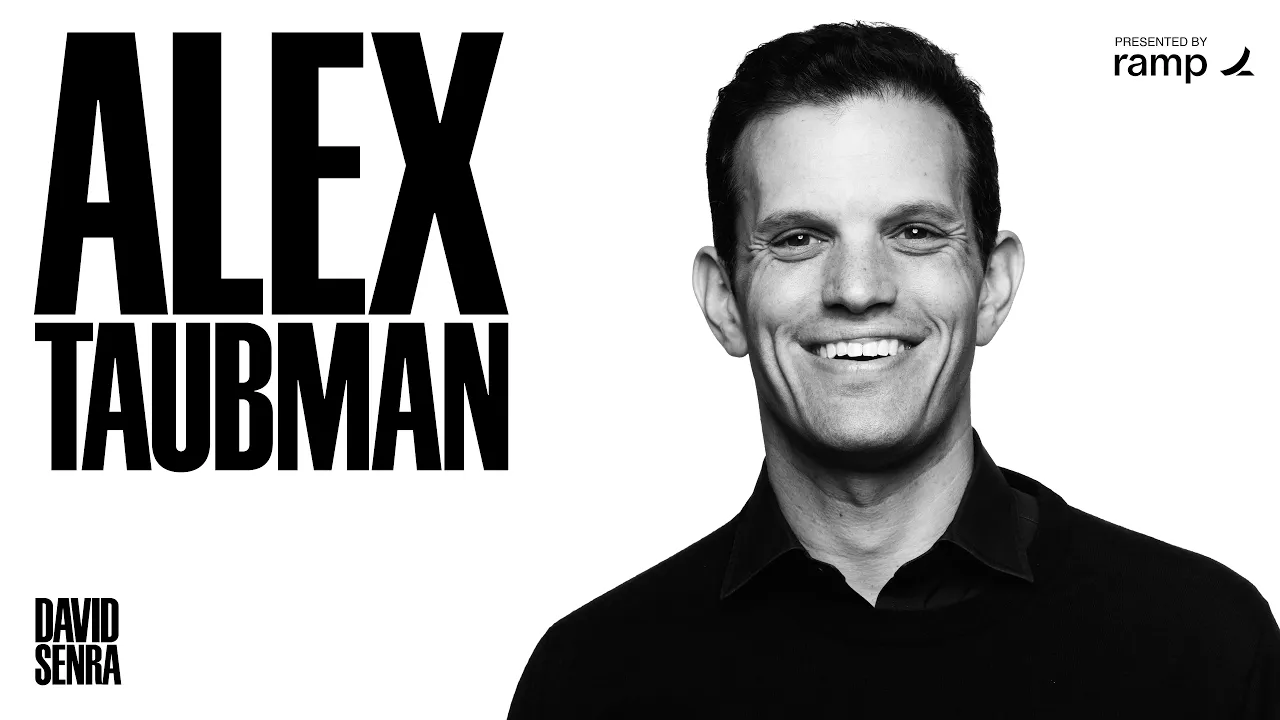
Long Lake Buys Amex GBT for $6.3B to Deploy AI Across Services
David Senra
Selling AI software fails to overcome organizational friction and legacy data silos, so capturing real-world productivity requires buying established service businesses outright and embedding engineers alongside frontline workers.
Long Lake acquired 111-year-old American Express Global Business Travel (Amex GBT) for $6.3 billion to take it private and deploy proprietary AI workflows, projecting combined revenue to exceed $4 billion in the coming year. (0:02)
Rather than selling software as a SaaS vendor, Long Lake acquires durable service businesses outright, using its proprietary Nexus platform to automate clerical toil while directly capturing compounding cash flow. (20:36)
Long Lake deploys roughly 70% of its engineering staff directly into field offices beside frontline workers, solving the last-mile AI diffusion problem and driving net headcount expansion across portfolio companies. (17:32)
Applying capital allocation frameworks from Henry Singleton, John Malone, and Danaher, Long Lake holds acquisitions permanently with an ambition to compound into a trillion-dollar company over the next 20+ years. (60:13)
Detailed notes
## Background
Published on YouTube by David Senra on September 30, 2026, this episode features an interview with Alexander Taubman, co-founder and CEO of Long Lake. The conversation covers Long Lake’s $6.3 billion take-private acquisition of American Express Global Business Travel, how its proprietary AI platform Nexus integrates frontier intelligence into legacy service businesses, and Taubman's long-term philosophy of compounding permanent capital.
## TL;DR
Alexander Taubman details Long Lake’s strategy of acquiring mission-critical service enterprises across fragmented sectors and modernizing their operations by embedding AI directly into real-world workflows rather than licensing SaaS. Using its core platform Nexus and dispatching engineers into the field alongside frontline staff, Long Lake removes administrative friction, driving higher customer retention and net headcount expansion across nearly 40 businesses. Drawing on his investing career at Goldman Sachs, Oaktree Capital, and Taubman Capital—as well as the playbooks of Henry Singleton, Danaher, and John Malone—Taubman explains how Long Lake avoids flipping assets, projects over $4 billion in revenue, and aims to compound permanently into a trillion-dollar company.
## Atmosphere & style
The conversation carries an intense, analytical, and deeply earnest energy, blending David Senra's rapid-fire historical parallels with Taubman's measured, first-principles precision. It feels like an intimate, high-conviction seminar on capital allocation and operational engineering, steeped in reverence for durable Midwestern businesses and industrial titans. The dynamic between host and guest is mutually energizing, shifting seamlessly from technical discussions on agentic AI workflows to philosophical reflections on ambition, humility, and multi-decade compounding.
## Bulletin
- [00:02](https://www.youtube.com/watch?v=w3-nMklTFjY&t=2s) Long Lake acquired 111-year-old American Express Global Business Travel (Amex GBT) for $6.3 billion to take it private and deploy proprietary AI workflows, projecting combined revenue to exceed $4 billion in the coming year.
- [20:36](https://www.youtube.com/watch?v=w3-nMklTFjY&t=1236s) Rather than selling software as a SaaS vendor, Long Lake acquires durable service businesses outright, using its proprietary Nexus platform to automate clerical toil while directly capturing compounding cash flow.
- [17:32](https://www.youtube.com/watch?v=w3-nMklTFjY&t=1052s) Long Lake deploys roughly 70% of its engineering staff directly into field offices beside frontline workers, solving the last-mile AI diffusion problem and driving net headcount expansion across portfolio companies.
- [01:00:13](https://www.youtube.com/watch?v=w3-nMklTFjY&t=3613s) Applying capital allocation frameworks from Henry Singleton, John Malone, and Danaher, Long Lake holds acquisitions permanently with an ambition to compound into a trillion-dollar company over the next 20+ years.
## Key takeaways
- [01:21](https://www.youtube.com/watch?v=w3-nMklTFjY&t=81s) The primary barrier to AI transformation in the real economy is the 'diffusion problem'—decades of fragmented legacy systems, messy data, and organizational inertia rather than model intelligence limits.
- [20:36](https://www.youtube.com/watch?v=w3-nMklTFjY&t=1236s) Long Lake acquires service businesses instead of selling software because enterprise software vendors are decoupled from customer outcomes, whereas enterprise ownership directly aligns automation with retention, margin, and employee compensation.
- [06:17](https://www.youtube.com/watch?v=w3-nMklTFjY&t=377s) Contrary to fears of automation-driven layoffs, AI productivity gains in Long Lake's longest-held verticals have led to net headcount growth by making employees more productive and freeing capacity to win market share.
- [14:46](https://www.youtube.com/watch?v=w3-nMklTFjY&t=886s) Long Lake's Nexus platform shares 70% to 80% of horizontal AI infrastructure across verticals, while the remaining 20% to 30%—integrating bespoke legacy workflows and siloed operational data—serves as the primary defensible moat.
- [17:32](https://www.youtube.com/watch?v=w3-nMklTFjY&t=1052s) Borrowing from Kelly Johnson's Lockheed Skunk Works and Danaher's operational philosophy, Long Lake places 70% of its engineers directly in the field next to frontline operators to ensure tools solve genuine friction points.
- [28:03](https://www.youtube.com/watch?v=w3-nMklTFjY&t=1683s) Inspired by shopping mall pioneer A. Alfred Taubman's concept of eliminating physical threshold resistance, Long Lake minimizes software adoption resistance by making tools so effortless that employees adopt them voluntarily within days.
- [10:57](https://www.youtube.com/watch?v=w3-nMklTFjY&t=657s) Long Lake runs a disciplined sourcing engine that evaluates 4,000 to 5,000 inbound opportunities annually against a dynamic watchlist of 15 to 20 target industries, entering only one or two platform sectors per year.
- [13:16](https://www.youtube.com/watch?v=w3-nMklTFjY&t=796s) Amex GBT represents an irreplaceable asset with high-90s logo retention, over 100% net dollar retention, and ~15-year enterprise client tenures in a sector where corporate travel failure carries catastrophic operational risk.
- [41:00](https://www.youtube.com/watch?v=w3-nMklTFjY&t=2460s) Alex Taubman validated the permanent capital thesis at Taubman Capital, completing roughly 50 founder-owned deals at an approximate 70% IRR without the artificial time horizons of traditional private equity.
- [53:32](https://www.youtube.com/watch?v=w3-nMklTFjY&t=3212s) Drawing from Teledyne founder Henry Singleton, Long Lake eschews rigid multi-year strategic roadmaps in favor of opportunistic flexibility, steering capital toward high-quality assets when market dislocations occur.
- [56:57](https://www.youtube.com/watch?v=w3-nMklTFjY&t=3417s) A post-AGI economy will produce extreme dispersion: critical, real-world service businesses will surge in value, while purely transactional intermediaries that act as economic friction will be eliminated.
- [01:00:13](https://www.youtube.com/watch?v=w3-nMklTFjY&t=3613s) Long Lake maintains a permanent holding period with no intent to sell portfolio companies, aiming to reach a trillion-dollar valuation by compounding enterprise value across a $20+ trillion service economy.
David Senra opens the conversation by addressing Long Lake's blockbuster deal: taking a 111-year-old public company private for $6.3 billion. Alexander Taubman confirms the purchase of American Express Global Business Travel (Amex GBT), describing it as an extraordinary institution with more than a century of customer excellence. The business traces its origin back to 1915, when American Express stepped in during World War I to assist stranded travelers and Travelers Cheques customers across Europe. Over the ensuing century, it scaled into an indispensable partner for global commerce, managing travel operations for roughly half of the Fortune 500, a significant share of the Global 2000, the United States military, and federal governments worldwide.
For Long Lake, the transaction represents an unprecedented platform to advance its founding mission: deploying artificial intelligence directly into the real economy. Business travel represents a multi-trillion-dollar global sector that steadily outpaces GDP growth. Rather than looking at the transaction as financial engineering, Taubman views taking Amex GBT private as an opportunity to invest aggressively in engineering talent and proprietary software, introducing AI workflows that directly touch and improve the journeys of millions of business travelers every year.
- **Deal size:** $6.3 billion to take American Express Global Business Travel (Amex GBT) private.
- **Corporate heritage:** Founded in 1915 during World War I; 111 years of continuous operating history.
- **Client base:** Nearly 50% of the Fortune 500, a large portion of the Global 2000, as well as the U.S. government and armed forces.
- **Industry profile:** Multi-trillion-dollar global travel sector compounding faster than broader GDP.
---
[01:21](https://www.youtube.com/watch?v=w3-nMklTFjY&t=81s) The AI Diffusion Problem in the Real Economy
Senra observes that despite executing multi-billion-dollar deals, Long Lake operated in near-total stealth for years, with practically no public footprint, no social presence, and Taubman lacking even a LinkedIn profile. Despite that quiet posture, competitors had begun attempting to copy Long Lake's model, albeit with inferior operational results. Taubman explains that Long Lake was formed three years prior around a core observation: while the frontier of model intelligence was advancing at breakneck speed, the real economy was barely feeling the impact.
Four years earlier, when ChatGPT first launched, frontier models struggled with basic arithmetic. Within a few short years, models were solving unsolved mathematical problems and nearing Fields Medal-caliber reasoning. Commentators like Dwarkesh Patel noted that in a world where intelligence evolved this rapidly, one might expect the entire economy to have radically transformed, doubling or tripling GDP overnight. Yet Taubman—drawing on 10 to 15 years of experience working with founder-owned companies—knew why this hadn't happened: real-world technology deployment is brutally difficult. Established firms operate on decades of fragmented legacy systems, messy datasets, entrenched human workflows, and severe organizational resistance to change management. Long Lake was built specifically to solve this "diffusion problem" by acquiring critical vertical businesses and doing the hard, unglamorous engineering required to weave frontier intelligence into their core operations.
```mermaid
flowchart TD
accTitle: The AI Diffusion Bottleneck
accDescr: Diagram contrasting rapid frontier intelligence advances with real-world adoption barriers that Long Lake aims to bridge.
subgraph Frontier["The Frontier"]
M["Frontier AI Models<br/>(Mathematical breakthroughs,<br/>reasoning leaps)"]
end
subgraph RealEconomy["The Real Economy"]
E["Service Businesses & Workforces<br/>• High customer touchpoints<br/>• Trillions in services GDP"]
end
Frontier -->|"Stalls without integration"| Bottleneck
Bottleneck -->|"Blocks value creation"| RealEconomy
M -.->|"Long Lake deploys Nexus & engineers"| RealEconomy
```
---
[03:45](https://www.youtube.com/watch?v=w3-nMklTFjY&t=225s) The Philosophy of "Talk Less, Do More" and Unsexy Businesses
Long Lake has deliberately chosen to let execution speak louder than marketing. Taubman recounts that his chief of staff, Kim, came out of a leadership program whose guiding mantra was simply "talk less, do more," a phrase that became the operating ethos of the entire company. Senra chimes in with an anecdote about old European private family dynasties whose multi-generational wealth remains invisible because their founding creed was "to be, not to be seen."
Taubman traces this sensibility back to growing up in Michigan and the broader American Midwest, where some of the most durable multi-billion-dollar fortunes were amassed in thoroughly unsexy niches such as building materials, commercial distribution, and contracting. The founders behind those empires were grounded, unassuming operators who stayed out of the press. Long Lake approaches business owners with that same posture: providing deep, permanent capital while letting the heritage brand and the operating team take center stage. With Amex GBT, Long Lake is partnering with an iconic brand that predated commercial aviation itself, acting as a long-term steward focused solely on empowering employees and elevating customer service.
---
[05:04](https://www.youtube.com/watch?v=w3-nMklTFjY&t=304s) Financing Frontier Intelligence via High-ROI Cash Flows
Taubman highlights an emerging macro tension: while the technical viability of artificial intelligence is no longer in doubt, financial markets have grown deeply anxious about how the trillions of dollars in required compute, data centers, and infrastructure will ultimately be funded. The answer cannot be circular venture financing; it must come from tangible cash flow generation produced across the broader economy. To justify trillions in capital expenditure, enterprise software must prove a direct return on investment.
Long Lake bridges this gap by targeting high-ROI use cases inside its portfolio companies. Rather than chasing speculative applications, the platform focuses on stripping away "toilsome work"—the repetitive administrative chores, manual data entry, and rigid clerical processes that frontline staff universally dislike. By offloading that cognitive drudgery to intelligent systems, companies free up massive amounts of human capacity. Employees can then redirect their time and attention toward strategic customer support, relationship building, and growth, turning operational efficiencies into immediate top-line expansion and durable cash flow.
- **Market hurdle:** Answering how trillions of dollars in AI capital expenditure and infrastructure will be paid for.
- **The solution:** Demonstrating clear, measurable cash flow returns from productivity in real-world operating companies.
- **Targeted use cases:** Automating toilsome, process-oriented burdens like manual data entry to free up employee capacity for customer-facing service and sales.
---
[06:17](https://www.youtube.com/watch?v=w3-nMklTFjY&t=377s) AI Abundance and Why Productivity Drives Job Growth
Addressing the common assumption that private equity and technology rollups simply aim to slash headcounts and gut workforces, Taubman pushes back with Long Lake's firmly contrarian, positive-sum thesis: AI abundance leads to headcount expansion, not layoffs. Historically, major technological step-changes that unlock massive productivity gains have expanded wages, benefited consumers, and broadened the labor market. Long Lake's actual operating data reflects this dynamic in real time.
Starting with homeowner association (HOA) management—where Long Lake acquired over 20 businesses—the company has expanded to nearly 40 acquisitions across five distinct service verticals, with travel serving as the fifth. In the verticals owned the longest, Long Lake has experienced significant net job growth. Taubman explains the underlying economic logic: if an employee becomes 50% more productive, successfully manages 50% more client accounts, and delivers higher customer retention through better service, that worker becomes immensely more valuable to the firm. Just as an executive who equips a salesperson to generate three times their quota would never trim the sales force by two-thirds, an enterprise whose operators generate higher output seeks to hire as many of those operators as possible to capture market share across the $20-trillion-plus U.S. services economy.
- **Acquisition footprint:** Approximately 40 businesses acquired across five operating verticals, including 20+ HOA management companies, with Amex GBT marking the fifth service line.
- **Contrarian employment thesis:** Heightened worker productivity creates stronger client retention and faster revenue growth, leading firms to accelerate hiring rather than cut staff.
- **Target market:** The $20+ trillion U.S. services economy.
[08:29](https://www.youtube.com/watch?v=w3-nMklTFjY&t=509s) Expanding Across the Real Economy and the Role of Radical Efficiency
After establishing a dominant footprint in homeowners association (HOA) management—transforming their initial platform into one of the fastest-growing and market-leading businesses in that sector—Long Lake began methodically moving into adjacent service verticals. The expansion sequence deliberately moved into human resources services, specialty tax advisory, and infrastructure services. Infrastructure, in particular, has become a core operational focus encompassing architecture and engineering firms, with the team actively evaluating complementary businesses across the broader physical asset ecosystem before orchestrating their entry into corporate travel.
David Senra connects this operational discipline to the broader ethos of generational businesses, highlighting how religious cost control unlocks aggressive top-line expansion. Referencing the operating history of SpaceX, Senra underscores how attacking every expense item from first principles creates surplus capital to pursue high-conviction opportunities that competitors cannot afford. This philosophy mirrors the advantage modern platforms like Ramp provide to high-growth leadership teams—delivering a median 5% reduction in operating expenses while driving a 16% increase in revenue—as well as the dynamic found in advertising engines like AppLovin. Drawing on a core maxim from Peter Thiel's *Zero to One*—that transformative founders discover value in unexpected places by thinking from first principles rather than relying on standard formulas—Senra notes that scale compounding depends entirely on rethinking legacy structures from the ground up.
[10:57](https://www.youtube.com/watch?v=w3-nMklTFjY&t=657s) The Prepared Mind and the 5,000-Deal Sourcing Engine
Senra reflects on his frequent dinners and office visits with the Long Lake team in New York, marveling at the audacity of a three-year-old firm acquiring an iconic, 110-year-old global institution for $6.3 billion while posting rapid, highly profitable growth. Senra compares Alexander Taubman’s operating blueprint to Warren Buffett's lifelong discipline of pre-mapping high-quality assets long before they ever become transactable: Buffett never acted surprised when a rare asset became available because he had already spent years studying its economics, patiently waiting for the precise convergence of price, timing, and distress.
Taubman confirms that Long Lake operates with the exact same architecture of a "prepared mind." Still in his thirties, Taubman jokes that their mutual friend Zach insists they will all live to 150, meaning he intends to execute this strategy for at least 50 to 100 years. Long Lake's long-term objective is to deploy artificial intelligence across broad swaths of the real economy. Today, the firm operates across sectors representing approximately $3 trillion of the $20 trillion total addressable market—roughly 15% of the United States economy—and has now expanded globally. To navigate this scale without straying from core underwriting principles, the leadership team constantly maintains and force-ranks a watchlist of 15 to 20 target industries based on real-time market dynamics and incoming deal intelligence.
```mermaid
flowchart TD
accTitle: Long Lake Sourcing and Acquisition Funnel
accDescr: Visual representation of how thousands of deals are narrowed down to one or two industry entries each year.
subgraph Sourcing ["Top of Funnel"]
A["Annual Inbound Deal Flow<br/>4,000 to 5,000 Opportunities"]
end
subgraph Evaluation ["Prepared Mind Filter"]
B["Watchlist Evaluation<br/>Top 15-20 Target Industries"]
C["Dynamic Force-Ranking<br/>Pricing, Teams, Real-World Data"]
end
subgraph Execution ["Targeted Entry"]
D["1 to 2 New Industry Platforms<br/>Acquired Per Year"]
end
A --> B
B --> C
C --> D
```
- Long Lake reviews an inbound funnel of 4,000 to 5,000 potential transactions every year across prioritized verticals.
- Despite the massive volume of deal flow, the firm exercises extreme filter discipline, entering only one or two new platform industries per year.
- Industry selection is governed by dynamic force-ranking rather than static schedules, allowing the team to strike only when market conditions yield the right team, asset quality, and valuation multiple simultaneously.
[13:16](https://www.youtube.com/watch?v=w3-nMklTFjY&t=796s) Spotting Irreplaceable Assets: The Case of Amex GBT
Explaining how Long Lake chooses when to pull the trigger on a sector, Taubman references Buffett’s classic aphorism about maximizing optionality: keeping an open aperture across both public and private markets doubles the likelihood of finding an exceptional partner. By tracking 20 attractive verticals at all times, the firm avoids forcing capital into subpar situations, preserving dry powder until an undeniable asset surfaces.
When American Express Global Business Travel (Amex GBT) emerged, it fit Long Lake's acquisition criteria perfectly:
- **Extraordinary Retention:** Customer logo retention sits in the high 90s, paired with a net dollar retention rate exceeding 100%.
- **Deeply Embedded Relationships:** Amex GBT has cultivated an average relationship tenure of roughly 15 years across its top hundreds of global enterprise clients.
- **Mission-Critical Utility:** Corporate travel represents a relatively small line-item cost relative to overall enterprise operating budgets, yet its failure poses catastrophic operational risks.
Taubman illustrates the indispensable nature of Amex GBT’s century of earned trust with acute real-world scenarios: if war breaks out in the Middle East while thousands of corporate personnel are in transit, or if a severe midnight blizzard grounds all flights through Chicago at 2:00 AM, enterprise clients cannot rely on automated consumer ticketing apps. They require a deeply entrenched, resilient operation where knowledgeable specialists answer the line and immediately orchestrate emergency logistics.
[14:46](https://www.youtube.com/watch?v=w3-nMklTFjY&t=886s) Untangling Legacy Infrastructure and Introducing Nexus
Prior to executing the transaction, Long Lake spent over a year formulating an explicit investment thesis around the travel sector, closely scrutinizing several industry assets on their internal whiteboard. The fundamental opportunity lies in deploying artificial intelligence to solve the structural headaches endemic to travel: transforming fragmented customer support into a proactive, personalized, and seamless experience.
Corporate travel sits on top of decades of accumulated legacy architecture, where supplier networks, internal customer databases, distribution engines, and third-party vendors communicate through brittle, messy data structures. Rather than seeing this fragmentation as an impediment, Long Lake views messy enterprise data as the ultimate competitive moat for applied AI—a technical challenge directly analogous to what Scott Wu pioneered with autonomous software agents like Devin.
```mermaid
flowchart LR
accTitle: Nexus AI Platform Architecture
accDescr: Diagram illustrating how Nexus bridges foundational AI models with legacy enterprise systems.
subgraph Foundation ["Model Layer"]
M1["Model Agnostic Hub<br/>Multiple Foundation LLMs"]
end
subgraph Platform ["Nexus Horizontal Core"]
N["Nexus Shared Infrastructure<br/>70% to 80% Unified Codebase"]
end
To solve these integration hurdles across all portfolio companies, Long Lake developed Nexus, its proprietary horizontal AI platform. The technical foundation was spearheaded by Long Lake co-founder Rasmus Wissmann, an Oxford computer science PhD who was awarded the departmental prize for the university's best doctoral thesis, specializing in untangling and structuring highly complex, messy datasets.
Nexus is designed to serve as a unified platform across multiple physical and service verticals rather than a single-point software tool:
- **Horizontal Scalability:** Between 70% and 80% of the platform's core infrastructure is entirely shared across Long Lake’s diverse operating verticals, from HOA management to engineering and corporate travel.
- **Compounding Capabilities:** Each new vertical integrated into Long Lake provides unique edge cases and operational workflows that immediately strengthen the underlying capabilities of Nexus across every other business in the portfolio.
- **Model Agnosticism:** Nexus operates without lock-in to any single artificial intelligence laboratory. The architecture routes tasks to different foundational models depending on the specific problem, frequently orchestrating multiple models simultaneously to complete a single enterprise workflow.
[16:59](https://www.youtube.com/watch?v=w3-nMklTFjY&t=1019s) The Architecture of Nexus and the Last 20% Challenge
Alexander Taubman breaks down the technical anatomy of Nexus, Long Lake’s proprietary AI platform. The platform is designed so that the core infrastructure—intelligent model routing, enterprise-grade security, and an agentic orchestration layer—is modular and reusable across completely different sectors. That core represents roughly 70% to 80% of the software stack. The real technical hurdle, however, lies in the remaining 20% to 30%: embedding Nexus directly into the idiosyncratic workflows of legacy enterprises, mapping their operational steps, and integrating with fragmented, legacy data silos.
Because traditional service businesses run on disparate, archaic systems, bridging that final gap requires a top-tier engineering organization. It is not an off-the-shelf implementation; it demands deep, bespoke integration so that autonomous agents can reliably execute tasks within the real economy.
```mermaid
flowchart TD
accTitle: Nexus Platform Architecture
accDescr: Diagram showing the reusable Nexus core connected to industry-specific data integrations.
subgraph Core["Reusable Nexus Engine (70-80%)"]
A["Intelligent Model Routing"]
B["Security & Permissions Layer"]
C["Agentic Orchestration"]
end
subgraph LastMile["The Last Mile Challenge (20-30%)"]
D["Workflow Mapping & Deep Integrations"]
E["Legacy Databases & Field Systems"]
end
Core --> LastMile
LastMile --> F["HOA Management Operations"]
LastMile --> G["Amex GBT Corporate Travel"]
```
---
[17:32](https://www.youtube.com/watch?v=w3-nMklTFjY&t=1052s) Putting Engineers in the Field: Kelly Johnson and Danaher's Playbook
David Senra points out a widespread misconception: critics assume Long Lake's engineers sit isolated in corporate headquarters writing code in a vacuum. Taubman clarifies that Long Lake operates across nearly every state, with roughly 70% of the engineering team deployed directly into the field across 15 to 20 states at any given moment. These engineers sit side-by-side with frontline workers to observe operational friction firsthand, identifying what works, what breaks, and where software fails to meet real-world conditions.
This operational philosophy draws direct inspiration from Kelly Johnson’s legendary Skunk Works at Lockheed, where engineers were placed right on the factory floor beside the assembly mechanics. Senra notes that Johnson’s 14 operating rules match the exact principles later adopted by Elon Musk at SpaceX. Taubman pairs this with the governing motto of Danaher founders Steven and Mitchell Rales: *"Common sense rigorously applied."* By pairing world-class AI researchers directly with frontline operators, common-sense feedback is translated into rapid software iteration.
---
[19:07](https://www.youtube.com/watch?v=w3-nMklTFjY&t=1147s) Automating Workflow Bottlenecks: From HOA Emails to Amex GBT
To illustrate how field observations translate into software capabilities, Taubman highlights HOA property management. In that industry, managers spend hours sorting through complicated email inquiries from homeowners and board members. A single request—such as securing a snow removal vendor—often demands an arduous manual process: cross-referencing vendor lists across ten other managed communities, checking historical pricing, reviewing contractor performance ratings, contacting vendors for scheduling, and formatting a board proposal. A single thoughtful response can easily take 45 to 60 minutes.
With direct access to the underlying operational systems, Nexus drafts 99% accurate replies before the manager even wakes up in the morning. The manager then spends just 5 to 10 minutes reviewing and tweaking the email. Long Lake is even personalizing Nexus so that drafts mirror the individual manager's writing voice. Crucially, solving email orchestration for property managers creates immediate leverage across other acquisitions:
- In corporate travel, 55% of inbound queries to travel agents at American Express Global Business Travel (Amex GBT)—such as booking adjustments, itinerary changes, and cancellations—arrive via email.
- The email-handling infrastructure perfected in HOA operations transfers on day one to Amex GBT, unlocking instant productivity gains.
---
[20:36](https://www.youtube.com/watch?v=w3-nMklTFjY&t=1236s) Why Own the Business Instead of Selling Software?
Despite inbound interest from investors and third parties asking to license Nexus, Long Lake refuses to become a software vendor. While pure software businesses carry attractive margins, Taubman stresses that software sellers are fundamentally disconnected from operational outcomes. They collect subscription fees regardless of whether the customer successfully transforms their organization. Long Lake insists on being an owner-operator because achieving true transformation requires aligning frontier AI breakthroughs directly with operational outcomes: accelerating organic growth, enhancing customer retention, elevating frontline employee compensation, and maximizing shareholder compounding.
Senra connects this directly to Larry Ellison’s core insight from building Oracle: technical friction is rarely a software program problem—it is a human problem. Ellison realized that selling software is pointless if people refuse to alter their daily habits. The only way to guarantee workflow adoption and overcome the human problem is to own the underlying enterprise outright.
---
[22:28](https://www.youtube.com/watch?v=w3-nMklTFjY&t=1348s) Treating 30,000 Employees as Design Partners and Talent Retention
Taubman notes a counterintuitive principle of Long Lake’s operating model: despite owning the companies, they never mandate software adoption. Forcing employees to use a platform proves that the software is inadequate. Instead, Long Lake treats its workforce—spanning roughly 30,000 global team members across its businesses—as design partners and internal customers. The engineering benchmark is to make Nexus so intuitive and magical that tools spread organically through word-of-mouth inside the organization. While onboarding cohorts once took six months to activate, new teams now adopt Nexus tools within days.
This employee-centric approach acts as an immense competitive moat for talent retention:
- Frontline staff are relieved of the routine mental friction caused by repetitive data entry, scheduling logistics, and administrative email triage.
- Employees focus on high-value human interactions, client advisory, and customer acquisition.
- Increased individual productivity directly increases employee compensation, turning Long Lake portfolio companies into industry talent magnets.
- Workers report: *"I don't feel like I'm working anymore,"* because the dullest 30% of their day has been eradicated, making it impossible for legacy competitors with outdated tools to recruit them away.
[24:52](https://www.youtube.com/watch?v=w3-nMklTFjY&t=1492s) The Positive-Sum Flywheel and a High Bar for Talent, M&A, and Tech
Once employees experience working inside a Long Lake partner company equipped with modern AI tools and setup, they are not going to leave for a competitor down the street. Even though Long Lake is only a couple of years into this journey, Alex Taubman notes they are already seeing this dynamic play out. Looking ahead, having the best people in every industry using the best tools creates a much better customer experience. That superior experience drives faster growth, stronger customer retention, higher profits, and the ability to pay employees more. For Long Lake, that is the "positive sum vision of AI deployment"—building a genuinely better mousetrap across industries.
```mermaid
flowchart LR
accTitle: Long Lake's Positive-Sum AI Flywheel
accDescr: How equipping top talent with superior tools drives customer retention, growth, and higher compensation, reinforcing talent retention.
A["Best people + best AI tools"] --> B["Better customer experience"]
B --> C["Faster growth & customer retention"]
C --> D["More profit & higher pay"]
D --> A
```
David Senra asks why Long Lake should be the one buying these companies, pointing to the unique combination of Alex's deep finance experience and his co-founder Zach's ability to recruit the best technical AI talent in the world. David mentions a moment before they started recording when Alex blew David's partner's mind by immediately spotting a missing piece in an idea the partner had been mulling over—a move David says he has seen Alex pull a million times. While everyone claims they want to do what Long Lake does, David argues competitors simply aren't Alex and Zach.
Alex credits their success to a world-class team that goes back a long way. He and Zach first met at Goldman Sachs when Alex was an analyst and Zach was a summer analyst. Zach later introduced Alex to Rasmus, Long Lake's co-founder and CTO, who attended Oxford with Zach and was the top student there. The first 20 employees were hired entirely through their personal network, drawing on people they knew deeply from both the investment/acquisition side and applied AI technology. Because Long Lake was purpose-built from the start around an ambitious vision to help change the whole economy, they have been able to attract exceptional talent that is now compounding.
- **Headcount and growth:** The core Long Lake team is still relatively small at 55 to 56 people (closer to 60), with projections to reach roughly 100 people by the end of the year.
- **Team composition:** Roughly 90% AI engineers, operations, and deployment specialists, and 10% M&A, acquisitions, and finance professionals.
- **Hiring filter:** About 75% of the team comes from in-network referrals. In the most recent quarter, Long Lake saw close to 1,000 applicants and hired only about 3%, maintaining a funnel just as tight as their deal pipeline.
- **The three pillars required to deploy AI in the real economy:**
1. **World-class M&A:** The ability to identify and buy great companies well.
2. **World-class technology:** Engineering talent capable of building technology that rivals the major AI labs and top applied AI companies.
3. **Change management and operations:** Field-level execution to actually integrate the tools.
Ultimately, Alex summarizes his biggest lesson as maintaining a "high bar in everything"—a high bar in talent, a high bar in acquisitions, and a high bar in technology.
[28:03](https://www.youtube.com/watch?v=w3-nMklTFjY&t=1683s) Threshold Resistance: Lessons from His Grandfather on Removing Friction
Asked what initially drew him to finance, Alex explains that he grew up in a family of entrepreneurs and was heavily inspired by his grandfather, A. Alfred Taubman, who started a real estate business after World War II and pioneered the modern shopping center. David brings up a book about Alex's grandfather that Alex had gifted him, titled *Threshold Resistance*—a copy of which sits in Long Lake's office—and asks him to explain the title concept.
"Threshold resistance" refers to the physical and psychological barriers that stop a shopper from walking into a store. As an early retail pioneer driven by a desire to make things better in life, Alex's grandfather noticed how poorly stores used to be designed: storefronts featured massive merchandising windows, forcing customers to walk past the glass down a dark hallway or alley, or climb up steps, just to reach a door tucked in the back. As Alex puts it, "Nobody would fucking want to go in them." His grandfather treated the storefront entrance almost like a math equation, realizing that even a half-step up at the entrance could reduce foot traffic by 20%. His solution was to bring the door flush to the front with zero physical threshold, making it completely frictionless and magical for shoppers to walk inside and spend money.
Alex connects his grandfather's continuous improvement mindset—which he compares to the Danaher Business System—directly to how Long Lake designs software today. With their AI platform, Nexus, the goal is to "minimize threshold resistance on AI adoption," making the tools so seamless and intuitive that team members naturally love using them.
David enthusiastically links this to Long Lake's earlier insight that 70% to 80% of business challenges are shared horizontally across industries. It also reminds David of a recent, multi-hour episode he recorded with Uber co-founder Travis Kalanick, who sat in the exact same chair and broke down in minute detail how he optimized a thousand tiny elements on every single page of the Uber app compared to Lyft—proving that copycats only copy what they see on the surface without grasping the underlying logic. Whether knocking six inches off a doorway to boost retail profits by 25%, tweaking websites like Amazon, or designing enterprise software, tiny reductions in friction radically alter human behavior. David jokes that he applies the exact same rule to his podcasts: *Founders* has zero intro and jumps straight into the content, and his current show has only a six-second intro, because listeners aren't tuning in for a concert or a 30-second musical melody.
[31:09](https://www.youtube.com/watch?v=w3-nMklTFjY&t=1869s) Growing Up on Long Lake Road and the Magic of Regional Champions
Returning to his roots, Alex shares that his father and uncle ran the family business for 75 years. In fact, Long Lake takes its name from Long Lake Road in Michigan, where the family business lived and operated for 40 or 50 years. David laughs, admitting that as a friend he had dismissively labeled Alex an "East Coast finance guy," completely forgetting he was actually from Michigan.
Growing up in Michigan, where there was no finance or tech scene, gave Alex a deep reverence for the classic American entrepreneur. The business leaders he looked up to in his community and met around the dinner table were people who spent 50 to 75 years bootstrapping what East Coast insiders might dismiss as "unsexy businesses," yet these companies provided unparalleled services in their local markets.
- **Example — Minnesota Architecture Firm:** Long Lake partnered with an architecture business in Minnesota that has built 50% of all K–12 schools in the state over the last 70 years—making them essentially "the McDonald's of architecture for schools."
For Alex, that is what makes America extraordinary: you can go to any region and any service line in the country and find a founder who has spent up to a hundred years obsessing over a specific product and service.
[32:45](https://www.youtube.com/watch?v=w3-nMklTFjY&t=1965s) Being the Distribution Flywheel for AI Labs in the Real Economy
Alex explains that his core mission with Long Lake is bringing the best of the intelligence revolution and the world's finest engineers to iconic American entrepreneurs across industries. By deploying AI directly into these established businesses, the goal is to make team members and customers happier, improve the bottom line, and accelerate growth. Over decades and across enough industries, this compounds into a massive contribution to the broader economy. While Alex is careful not to overstate Long Lake's role in the intelligence revolution, he points out that deploying technology in the real world to drive genuine ROI creates a crucial economic loop: it generates cash back into the ecosystem to fund the continued scaling of the AI models themselves.
```mermaid
flowchart LR
accTitle: The Real Economy AI Flywheel
A["AI Labs Scale Models"] --> B["Long Lake Deploys AI via Nexus"]
B --> C["Real-World Businesses Generate ROI"]
C -->|"Cash reinvested into system"| A
```
When Alex notes that the AI ecosystem needs distribution to sustain this flywheel, David laughs at the framing: "Oh, you're distribution for the labs. That's hilarious." Alex agrees, explaining that someone has to generate real-economy ROI on this intelligence so it can be reinvested into scaling the models. While the AI labs are beginning to dabble in deployment themselves, the global economy is far too vast for any single company to tackle alone. Because of this, Alex actively welcomes competition from others trying to replicate Long Lake's model.
David adds that this transition will naturally happen slowly because technology changes much faster than human nature and human behavior—the true bottleneck is changing what people actually do day-to-day. Beyond human behavior, Alex emphasizes that there are also deeply complex technical hurdles. He points to Long Lake's co-founders and founding engineers—such as Rasmus, Varun, Prateek, and Raz—noting that they are among the best engineers in the world. Any one of them could easily raise money from a top venture capital firm tomorrow to start their own company, or take lucrative offers at top AI labs or software companies. Instead, they choose to work at Long Lake because the technical challenges are so compelling: taking a 100-year-old global business like Amex GBT, with its tangled legacy systems, fragmented data, and bespoke customer optimization needs, and scaling it by diffusing AI across the entire stack via Long Lake's Nexus platform.
*(Note: From to, David reads a mid-roll sponsor advertisement for the global hiring platform Deel, highlighting its use by companies like Ramp, Shopify, ElevenLabs, Uber, and DoorDash.)*
[36:32](https://www.youtube.com/watch?v=w3-nMklTFjY&t=2192s) Learning Capital Allocation at Goldman Sachs
Shifting back to Alex's personal trajectory, David notes that Alex grew up surrounded by family businesses and entrepreneurs, and asks when he first started paying attention to the finance side of the world. Alex shares that his desire to understand business and capital markets led him to start his career at Goldman Sachs. It was there that he met Zach, one of Long Lake's co-founders, who later introduced him to Rasmus, setting the stage for Long Lake to eventually come together.
At Goldman, Alex worked in an internal investment unit called the Special Situations Group (SSG). While post-financial-crisis regulations mean the group no longer exists in the same form today, at the time it was an extraordinary training ground. The pitch to young graduates was that they could start investing immediately across all industries and up and down the entire capital structure, from debt all the way down to public and private equity. Working under exceptional mentors, Alex fell in love with the philosophy of capitalism and capital allocation—putting the economy's resources to their highest and best use.
Rather than merely observing from the sidelines, Alex was trusted to manage real risk in his early twenties (around age 22 or 23). A key mentor in the group, Patrick McCaney—whom Alex would later partner with at Oaktree—empowered him in his very first year to help manage a couple of hundred million dollars of invested capital under his guidance. Taking real risks so early in his career was deeply formative. For Alex, analyzing companies across disparate industries wasn't just about finance; it was an exercise in intellectual curiosity that allowed him to understand how the American economy actually functions under the hood.
[38:39](https://www.youtube.com/watch?v=w3-nMklTFjY&t=2319s) Business School, Danaher, and a Decade at Oaktree
Looking back, Alex admits he never could have predicted he would end up doing what he does today. When David asks if he always planned to found a company or an investment fund, Alex says he didn't have a specific endgame in mind; he was simply focused on continuous learning and sharpening his skills.
After leaving Goldman Sachs, Alex attended business school, where his favorite case study was Danaher. The Danaher model became a massive inspiration for Long Lake: building a long-term compounding machine with a structural advantage, operating acquired businesses better, maintaining a superior cost of capital, and attracting the best talent. (David jumps in to bookmark Danaher and Alex's other business heroes for a deeper discussion later in the episode.) Maintaining a chronological walkthrough of his career, Alex notes that for 15 years he had twin interests in holding companies and technology that wouldn't fully click together until much later:
- **Leucadia:** During business school, Alex interned at the famed holding company Leucadia, feeding his fascination with permanent capital and holding company structures.
- **Thrive Capital:** He also spent time hanging out with Josh Kushner at Thrive, keeping him connected to the technology ecosystem.
- **Oaktree Capital Management:** After graduating from business school, Alex decided to stick with investing and joined Oaktree, reuniting with his former Goldman mentor Patrick McCaney.
At Oaktree, Alex and Patrick worked directly alongside investment legends Howard Marks and Bruce Karsh to build new business lines for the firm. Together, they launched Oaktree's first equity business, got involved in several credit businesses, and rolled out multiple new investment products. While Alex had a tremendous amount of fun and learned an immense amount working closely with Marks and Karsh over nearly ten years at Oaktree, he felt a persistent underlying tug. He knew he wasn't "fully expressing" himself and that he eventually wanted to build something entrepreneurial on his own. Near the end of his decade at Oaktree, as he began brainstorming with the early co-founders of Long Lake, the "ChatGPT moment" arrived—and all the pieces finally clicked into place.
[41:00](https://www.youtube.com/watch?v=w3-nMklTFjY&t=2460s) Taubman Capital and Permanent Growth Capital
While working full-time at Oaktree Capital Management, Alex Taubman simultaneously helped build out Taubman Capital, his family's private investment vehicle funded entirely with their own balance sheet. While Oaktree concentrated primarily on large-scale public companies, Taubman Capital spent roughly a decade executing close to 50 deals partnering directly with founder-owned, mid-sized American businesses. When David Senra playfully calls out the firm’s staggering performance—noting that Alex usually avoids bragging about it, but the track record reached around a 70% IRR—Alex laughs, simply admitting, "We had a very good run." That decade-long run served as a transformative proving ground, disabusing him of the Wall Street notion that small or mid-market companies are inferior. He cites examples like a Minnesota partner company that has quietly built most of the state's schools over the course of 70 years.
Drawing on his Michigan roots, Alex found deep alignment with gritty, real-world entrepreneurs. Taubman Capital differentiated itself sharply from typical private equity playbooks by offering permanent, patient capital:
* **No artificial fund lifecycles:** Operating directly off an internal family balance sheet meant there was no mandate to flip assets within 3 to 5 years, no pressure from short-term quarterly earnings targets, and no destructive over-leveraging of company balance sheets.
* **Providing missing capabilities:** Many founders run extraordinary businesses but have never executed mergers and acquisitions. Taubman Capital brought institutional M&A expertise and growth equity to help them roll up fragmented competitors and scale their industrial logic across entire regions.
* **A decade of nights and weekends:** Alex worked on these transactions during off-hours while at Oaktree, combining hands-on capital allocation, software appreciation, and founder partnerships into the exact playbook that eventually culminated in Long Lake.
Alex credits much of Long Lake’s trajectory to world-class early backers and board partners—including Hemant Taneja at General Catalyst, Elad Gil, and mutual friend Rick—who continuously push the company's ambition. Senra notes that Rick specifically praises Alex for being exceptionally receptive to direct criticism and outside ideas, a rare trait among headstrong founders. Alex insists that "feedback's a gift," noting that he wants both himself and the company to improve daily—even making listening to a half-dozen episodes of Senra's podcast a mandatory part of Long Lake’s new-hire onboarding.
---
[44:35](https://www.youtube.com/watch?v=w3-nMklTFjY&t=2675s) Teaming Up with Zach and the Genesis of Long Lake
The foundation of Long Lake traces back to Alex's long-standing friendship with co-founder Zach, whom he first met during their early careers at Goldman Sachs. Over the years, Zach ventured into cutting-edge technology ventures while simultaneously co-investing in several Taubman Capital deals. In one notable project, the two partnered with 20 locally owned go-kart tracks across the country to create one of the largest consolidated go-kart track platforms in America. Sifting through such unglamorous Main Street businesses led them to a shared revelation: massive, highly durable cash-flow generators existed across the real economy, completely ignored by Silicon Valley.
```mermaid
flowchart TD
accTitle: Origin of Long Lake Model
accDescr: Diagram illustrating the convergence of elite tech talent and unglamorous cash-flowing businesses.
subgraph Inputs ["Foundational Roots"]
A["Oaktree & Taubman Capital<br/>(Capital Allocation & M&A)"]
B["Tech & AI Frontier<br/>(Engineers from Labs, Ramp, Cognition)"]
end
subgraph Insight ["Core Insight (9-Month Incubation)"]
C["Main Street Cash Cow Platforms<br/>(e.g., 20 Consolidated Go-Kart Tracks)"]
D["Deploy Top-Tier AI Platform<br/>Directly into Traditional Enterprise Workflows"]
end
subgraph Outcome ["Long Lake Inception"]
E["Long Lake Built & Incorporated<br/>Targeting 15% of Services TAM"]
end
A --> C
B --> D
C --> E
D --> E
```
Their overarching thesis was straightforward yet contrarian: what if they recruited the same caliber of elite AI and software talent driving companies like Ramp, Cognition, and the leading frontier AI labs, but pointed them directly at service businesses and enterprise platforms?
From their initial conversations to formally incorporating Long Lake took roughly nine months while Alex was still at Oaktree. The deciding factor was the enthusiasm from software engineers themselves; when Alex pitched the vision of applying AI to traditional enterprise operations, the excitement was immediate and tangible. Reflecting on the firm's rapid climb toward the $6.3 billion acquisition of American Express Global Business Travel (Amex GBT), Senra remarks that the scale of execution caught even close friends off guard. Alex agrees that the team’s internal standard keeps rising as their execution sharpens.
---
[47:26](https://www.youtube.com/watch?v=w3-nMklTFjY&t=2846s) Partners Who Expand Ambition and the Recruiting Engine
A defining inflection point in Long Lake's velocity came from board-level encouragement to abandon artificial constraints. Alex recalls evaluating a slate of potential acquisition targets with their early backer Rick, walking through the trade-offs of choosing asset A, B, or C. Rick cut through the deliberation with a single question: *"Why not do them all?"* Alex considers that mindset the ultimate hallmark of a great partner: "the greatest gift that you can have in a partner is someone who makes you more ambitious."
That ambition transformed Long Lake from what sounded like an abstract, lofty vision into a holding company operating across roughly 15% of the total addressable market in services, employing tens of thousands of team members across its portfolio.
Recruiting elite engineering talent into unglamorous service operations was an uphill battle in the earliest days. Alex remembers spending hours on the phone with prospective hires' parents, pleading the case for why their children should leave prestigious, high-paying jobs in big tech or drop out of elite universities to join a business buying traditional service companies. Today, social proof and tangible operational scale have made hiring significantly easier. Nevertheless, Long Lake maintains a strict hiring standard: every single incremental hire must demonstrably raise the overall average of the organization.
[48:58](https://www.youtube.com/watch?v=w3-nMklTFjY&t=2938s) The Long Lake Playbook and Projected $4B+ Revenue
Long Lake has rapidly scaled its operating footprint, acquiring close to 40 companies across five distinct industries. By codifying an acquisition playbook and redeploying its proprietary AI platform, Nexus, the organization has dramatically improved its execution speed and operational impact. Alex Taubman explains that as the team sharpened its capabilities, their internal ambition expanded to match: when an opportunity as massive as American Express Global Business Travel (Amex GBT) surfaced, the mindset became, "If it's not Long Lake that buys Amex GBT, like who should it be? It should be us." The company views this transaction not as a culminating pinnacle, but as an early milestone in a multi-decade journey intended to continue for the next 50 years.
```mermaid
flowchart TD
accTitle: Long Lake Scale and Capital Compounding
accDescr: Flow diagram showing how Long Lake leverages its acquisition playbook, Nexus platform, and high margins to self-fund long-term compounding.
subgraph CoreEngine["Operating Engine"]
A["~40 Acquisitions Across 5 Industries"] --> B["Nexus AI Platform Deployment"]
B --> C["Operational Productivity Gains"]
end
subgraph FinancialScale["Financial Model"]
C --> D["$4B+ Combined Revenue Base"]
D --> E["20–25%+ EBITDA Margins"]
E --> F["Self-Funded Organic Compounding"]
end
F -.->|"No need for outside capital"| CoreEngine
```
While Taubman does not reveal the private valuation of Long Lake, he highlights the overall scale of the underlying enterprise. Factoring in Amex GBT alongside their existing stable of compounding assets, Long Lake projects over $4 billion in combined revenue for the coming year. This revenue is backed by durable, recurring relationships characterized by near-100% net dollar retention and a sizable global workforce. Because Long Lake strictly buys mature, established service businesses that already generate 20% to 25%+ EBITDA margins, the cash generation is self-sufficient:
- **Portfolio Scale**: Close to 40 businesses acquired across five industries.
- **Combined Forward Revenue**: Projected to surpass $4 billion next year.
- **Financial Profile**: 20% to 25%+ EBITDA margins with ~100% dollar retention.
- **Capital Independence**: Organic free cash flow generation enables compounding for decades without ever being forced to raise outside capital again.
---
[50:23](https://www.youtube.com/watch?v=w3-nMklTFjY&t=3023s) Partnership Over Valuation: Choosing Who You "Do Life With"
Even though Long Lake generates sufficient cash to fund operations organically, investor demand has been intense, with outside backers actively trying to pour capital into the firm. David Senra recalls dining with Taubman's primary partners, Rick and Zach, discussing how founders frequently stumble by obsessively optimizing for the highest valuation in a transactional bidding contest rather than selecting lifelong partners. Senra notes that money is fungible and anyone can offer checks, so partnering should be about finding people who elevate your vision and who you genuinely want to "do life with." Drawing a parallel to his own podcast sponsorship with Ramp, Senra explains that competing firms constantly offer him double the money to break his exclusive contract, but he refuses to betray trusted relationships for cash.
Taubman wholeheartedly resonates with this ethos, tracing it back to the values modeled by his father and grandfather in their real estate firm, where partnerships routinely lasted 50 years. In his family, being a business partner carried a sanctified status, "almost higher than being family," demanding the highest level of loyalty and mutual respect. He points to Hemant Taneja at General Catalyst (GC), who led Long Lake's initial outside funding round with approximately $100 million three to four years earlier—a massive commitment at the time. General Catalyst believed in their AI-enabled services thesis before the founders fully grasped their own ultimate potential. While Long Lake continues to welcome select new investors who bring intellectual firepower, Taubman stresses that capital is secondary to finding partners who inspire them to think bigger, move faster, and believe in the overarching mission.
---
[53:32](https://www.youtube.com/watch?v=w3-nMklTFjY&t=3212s) The Logic of Going Public and the Legacy of Henry Singleton
When asked whether Long Lake must eventually go public, Taubman clarifies that while public markets are not mandatory for survival, an initial public offering represents the "maximally ambitious path." Public markets provide access to the deepest pools of capital and the lowest cost of capital. By methodically executing over decades, legendary holding company builders earned a prized equity currency that traded at premium valuations, unlocking the ability to acquire and transform ever-larger enterprises across the real economy.
Taubman cites Teledyne’s founder, Henry Singleton—a MIT Putnam math fellow, former Office of Strategic Services (OSS) recruit, and subject of George Roberts' book *Distant Force*—as one of Long Lake’s greatest strategic inspirations. Warren Buffett famously praised Singleton as America’s top operator and capital allocator after Singleton compounded Teledyne's earnings per share at over 40% annually for more than two decades. The central operational doctrine Taubman takes from Singleton is the virtue of staying flexible:
> "He didn't like detailed strategic plans; he preferred to stay flexible... I prefer to steer the boat a little bit every day."
Rather than locking the organization into rigid multi-year strategic roadmaps, Singleton acknowledged that companies are constantly buffeted by outside forces no single person can predict. Taubman applies this exact mindset to Long Lake’s deal pipeline. Long Lake never drafted a rigid master plan targeting corporate travel; rather, because leadership maintained an open, flexible posture toward capital allocation, they recognized the Amex GBT opportunity when it appeared—an iconic franchise with gold-plated service quality, purchased at a reasonable valuation multiple, with immense room for AI-driven operational improvement.
---
[55:57](https://www.youtube.com/watch?v=w3-nMklTFjY&t=3357s) John Malone and Root-Cause Investing in a Post-AGI World
Taubman’s philosophy of permanent capital allocation is equally informed by John Malone, the pioneering architect of Tele-Communications Inc. (TCI) whom Taubman studied closely during his tenure at Oaktree Capital Management. Malone stood out for his unmatched financial engineering, sophisticated tax and holding company structures, and rigorous first-principles thinking as detailed in Mark Robichaux’s biography *Cable Cowboy*. Malone tackled complex business challenges using the "five whys" technique to drill down to fundamental root causes.
Long Lake integrates this root-cause analysis into its evaluation of prospective acquisitions. Because Long Lake intends to hold its acquisitions permanently over multi-decade horizons, management must assess whether a target company can withstand seismic technological disruption. Taubman argues that in the contemporary market, the most urgent question facing any serious capital allocator is understanding from absolute first principles why an underlying business model will remain durable, cash-generative, and valuable in a post-Artificial General Intelligence (AGI) world.
[56:57](https://www.youtube.com/watch?v=w3-nMklTFjY&t=3417s) Dispersion in a Post-AGI World and Why Long Lake Never Plans to Sell
Looking out over the next two decades, Alexander Taubman anticipates extreme dispersion across the business landscape, describing it as an environment where the divergence between top-tier assets and mediocre businesses will become far more pronounced than in a traditional "stock picker's market." In a post-AGI economy, the gains accruing to the winners will be extraordinary. High-quality service companies that occupy critical positions in their ecosystems, protect their customer relationships, and expand their reach will see their enterprise value multiply by orders of magnitude. Conversely, lower-quality operations that exist primarily as intermediate friction or an unnecessary "tax" on transactions will be rapidly disintermediated and wiped out—an outcome Taubman views as fundamentally healthy for the broader economy because removing friction creates real economic value.
When David Senra asks whether Long Lake has ever acquired a business that turned out to be weaker than expected or if they have ever sold one of their portfolio companies, Alex answers plainly: Long Lake has never sold a business and has no intention of ever doing so. While he acknowledges the adage to "never say never," the fundamental test is whether Long Lake is actively creating value and whether the enterprise belongs under its umbrella. From his perspective, after dedicating enormous time, capital, and energy to identifying a great management team, forging deep operational partnerships, deploying engineers on the ground, and building custom Nexus workflows to establish the premier technology and service layer in an industry, turning around and selling the asset makes zero sense. The entire strategy is designed to hold those positions permanently and let the underlying cash flows compound over decades.
- **Extreme market dispersion:** In an AI-transformed economy, resilient service platforms capture outsized gains, while rent-seeking intermediaries that fail to deliver enduring value are eliminated.
- **Permanent holding philosophy:** Long Lake has never divested an acquisition, viewing selling as the antithesis of the long-term compounding enabled by custom operational technology like Nexus.
---
[58:32](https://www.youtube.com/watch?v=w3-nMklTFjY&t=3512s) The "Last Business" Mindset and Rejecting Acquisition Offers
David asks Alex whether Long Lake itself has ever received acquisition offers. Alex responds that the market understands Long Lake is simply not for sale, meaning those conversations never even get entertained: "My plan is this is what I want to be doing forever." David connects this posture to a common thread among the elite founders he interviews, noting how mission-driven operators refuse to treat their ventures as stepping stones to a payout:
* **Torsten Reil (Helsing):** Entering European defense after already becoming wealthy, building sovereignty technology on the principle that Europe must be capable of defending itself, stating flatly that the company is not for sale at any valuation.
* **Scott Wu (Cognition):** Refusing multi-billion-dollar acquisition bids, pairing an approachable exterior with a fierce "conqueror spirit," famously deflecting overtures with the maxim: *"We'd sell if it was the maximally ambitious thing to do."*
* **Karim Atiyeh & Eric Glyman (Ramp):** Committing completely to Ramp as their definitive, final business rather than an entity to flip before moving to the next venture.
* **Zach Dell:** Committing to building his enterprise over a 50-year horizon, laughing off the concept of cashing out by quipping, *"Do you think I'm doing this for a paycheck?"*
For founders operating with that level of conviction, selling out for additional liquidity that they would never end up spending anyway completely undermines the ambition of seeing how far the institution can truly go.
---
[01:00:13](https://www.youtube.com/watch?v=w3-nMklTFjY&t=3613s) The Compounding Math of a Trillion-Dollar Company
Closing the loop on Long Lake's maximum ambition, David asks directly whether the firm could ultimately build a trillion-dollar company. Alex affirms that he believes they can. The arithmetic behind that outcome rests entirely on the uninterrupted power of long-term compounding:
```mermaid
flowchart TD
accTitle: Compounding to One Trillion Dollars
accDescr: Flowchart illustrating Long Lake's model of operational improvements compounding into a trillion-dollar enterprise.
subgraph Operation ["Operational Engine"]
A["Elite Tech Talent & Nexus Platform"]
B["World-Class Customer Excellence"]
A --> C["Continuous Incremental Gains"]
B --> C
end
subgraph Compounding ["The Compounding Math"]
C --> D["Triple Enterprise Value Every ~5 Years"]
D --> E["Sustain Execution Across 20+ Years"]
end
subgraph TAM ["Scale & Outcome"]
F["Target: Entire Real Service Economy (Largest TAM)"]
E --> G["$1 Trillion Enterprise Valuation"]
F --> G
end
```
Alex stresses that while the compounding math sounds straightforward on paper, executing it across decades is exceptionally difficult. It requires continuously avoiding fatal strategic errors, consistently attracting and retaining world-class engineering talent, and never compromising on frontline customer excellence across disparate service verticals. Yet because Long Lake targets the real service economy—representing the largest total addressable market imaginable—the sheer ceiling on what they can build is staggering if they maintain disciplined execution.
David reflects on witnessing Long Lake's trajectory from its quiet stealth days—recalling the panic when the firm was first name-dropped on a podcast—to the landmark $6.3 billion American Express Global Business Travel transaction, which grabbed the immediate attention of the world's most elite entrepreneurs looking to get involved. In closing, Alex expresses his gratitude for the opportunity to document Long Lake's history and operational philosophy, while David encourages listeners to subscribe to both the show and his long-running podcast, *Founders*, where he has analyzed over 400 biographies of history's greatest business builders.
## Notable quotes
> [03:45](https://www.youtube.com/watch?v=w3-nMklTFjY&t=225s) talk less, do more — Alexander Taubman
> [17:32](https://www.youtube.com/watch?v=w3-nMklTFjY&t=1052s) Common sense rigorously applied. — Alexander Taubman
> [22:28](https://www.youtube.com/watch?v=w3-nMklTFjY&t=1348s) I don't feel like I'm working anymore — Alexander Taubman
> [24:52](https://www.youtube.com/watch?v=w3-nMklTFjY&t=1492s) high bar in everything — Alexander Taubman
> [28:03](https://www.youtube.com/watch?v=w3-nMklTFjY&t=1683s) Nobody would fucking want to go in them. — Alexander Taubman
> [28:03](https://www.youtube.com/watch?v=w3-nMklTFjY&t=1683s) minimize threshold resistance on AI adoption — Alexander Taubman
> [32:45](https://www.youtube.com/watch?v=w3-nMklTFjY&t=1965s) Oh, you're distribution for the labs. That's hilarious. — David Senra
> [41:00](https://www.youtube.com/watch?v=w3-nMklTFjY&t=2460s) We had a very good run. — Alexander Taubman
> [47:26](https://www.youtube.com/watch?v=w3-nMklTFjY&t=2846s) Why not do them all? — Rick
> [47:26](https://www.youtube.com/watch?v=w3-nMklTFjY&t=2846s) the greatest gift that you can have in a partner is someone who makes you more ambitious. — Alexander Taubman
> [48:58](https://www.youtube.com/watch?v=w3-nMklTFjY&t=2938s) If it's not Long Lake that buys Amex GBT, like who should it be? It should be us. — Alexander Taubman
> [53:32](https://www.youtube.com/watch?v=w3-nMklTFjY&t=3212s) He didn't like detailed strategic plans; he preferred to stay flexible... I prefer to steer the boat a little bit every day. — Alexander Taubman
> [58:32](https://www.youtube.com/watch?v=w3-nMklTFjY&t=3512s) My plan is this is what I want to be doing forever. — Alexander Taubman
> [58:32](https://www.youtube.com/watch?v=w3-nMklTFjY&t=3512s) We'd sell if it was the maximally ambitious thing to do. — Scott Wu
> [58:32](https://www.youtube.com/watch?v=w3-nMklTFjY&t=3512s) Do you think I'm doing this for a paycheck? — Zach Dell
## Mentioned
Alexander Taubman, David Senra, Long Lake, American Express Global Business Travel (Amex GBT), Nexus, Rasmus Wissmann, Zach, A. Alfred Taubman, Threshold Resistance, ChatGPT, Dwarkesh Patel, Kim, SpaceX, Elon Musk, Ramp, AppLovin, Peter Thiel, Zero to One, Warren Buffett, Scott Wu, Devin, Oxford University, Kelly Johnson, Lockheed Skunk Works, Danaher, Steven Rales, Mitchell Rales, Larry Ellison, Oracle, Goldman Sachs, Special Situations Group, Travis Kalanick, Uber, Lyft, Amazon, Founders, McDonald's, Varun, Prateek, Raz, Deel, Shopify, ElevenLabs, DoorDash, Patrick McCaney, Oaktree Capital Management, Leucadia, Thrive Capital, Josh Kushner, Howard Marks, Bruce Karsh, Taubman Capital, Hemant Taneja, General Catalyst, Elad Gil, Rick, Cognition, Teledyne, Henry Singleton, MIT, Office of Strategic Services, George Roberts, Distant Force, John Malone, Tele-Communications Inc. (TCI), Mark Robichaux, Cable Cowboy, Torsten Reil, Helsing, Karim Atiyeh, Eric Glyman, Zach Dell
## Video description
Alexander Taubman is the co-founder and CEO of Long Lake, a company that buys established service businesses and uses AI to improve how they operate. He explains Long Lake’s $6.3 billion deal for American Express Global Business Travel, why deploying AI in the real economy is difficult and why he sees productivity gains creating more jobs as businesses grow. Alex describes how Nexus, Long Lake’s AI platform, connects models to business data and workflows, why its engineers work alongside employees in the field and why he wants to own businesses rather than sell software. He shares how his grandfather’s idea of “threshold resistance” applies to AI adoption, what he learned at Goldman Sachs and Oaktree and how investing in founder-owned businesses through Taubman Capital prepared him to build Long Lake. Alex also discusses the influence of Danaher, Henry Singleton and John Malone, why he values partners who make him more ambitious and why Long Lake plans to hold its businesses for decades. Including Amex GBT, he expects more than $4 billion in combined revenue the following year and explains why he believes long-term compounding could eventually build a trillion-dollar company.
Show notes: https://www.davidsenra.com/episode/alexander-taubman
Made possible by
Ramp: https://ramp.com
AppLovin: https://applovin.com/senra
Deel: https://deel.com/senra
David Senra
Website: https://www.davidsenra.com
X: https://x.com/davidsenra
Instagram: https://www.instagram.com/davidsenra
LinkedIn: https://www.linkedin.com/in/davidsenra
Facebook: https://www.linkedin.com/company/senrashow
Threads: https://www.threads.com/@davidsenra
Spotify: https://spti.fi/TVrr557
Apple Podcasts: https://apple.co/4msoZtb
Alex Taubman
Long Lake: https://llmh.com
X: https://x.com/alextaubman
Chapters
00:00:00 The $6.3 billion Amex GBT deal
00:01:21 Bringing AI to the real economy
00:06:17 Why greater productivity can mean more jobs
00:11:29 A prepared mind and a tight acquisition filter
00:16:01 Nexus and the AI platform behind Long Lake
00:17:32 Put the engineers where the work happens
00:20:36 Why own the businesses instead of selling software?
00:22:28 Build tools people want to use
00:25:24 A high bar for talent, acquisitions and technology
00:28:03 What his grandfather taught him about removing friction
00:36:40 Learning capital allocation at Goldman Sachs and Oaktree
00:41:01 Buying founder-owned businesses with permanent capital
00:44:35 How the Long Lake team came together
00:47:26 The best partners make you more ambitious
00:49:28 More than $4 billion in projected revenue
00:53:32 Why going public could expand Long Lake’s ambition
00:54:23 Henry Singleton and staying flexible
00:55:57 John Malone and the businesses that will endure
00:57:57 Why Long Lake doesn’t plan to sell
01:00:13 Could Long Lake become a trillion-dollar company?
Long Lake以63亿美元收购Amex GBT,拟在各类服务中部署AI
单纯出售AI软件无法克服组织摩擦与传统数据孤岛,因此要获取现实世界的生产力,需要直接收购成熟的服务型企业,并将工程师派驻到一线员工身边。
Alexander Taubman详细阐述了Long Lake的战略:在高度分散的行业中收购关键任务型服务企业,并通过将AI直接嵌入现实工作流(而非授权SaaS模式)推动业务现代化。借助核心平台Nexus并将工程师派驻现场与一线人员并肩工作,Long Lake消除了行政摩擦,推动旗下近40家企业实现了更高的客户留存率和净员工人数增长。结合在Goldman Sachs、Oaktree Capital和Taubman Capital的投资生涯,以及借鉴Henry Singleton、Danaher和John Malone的策略体系,Taubman解释了Long Lake如何避免倒卖资产,预计合并营收将超40亿美元,并致力于长期复利成长为一家万亿美元级企业。
Long Lake以63亿美元收购了拥有111年历史的American Express Global Business Travel(Amex GBT)以推进私有化并部署专有AI工作流,预计来年合并营收将突破40亿美元。 (0:02)
Long Lake并非作为SaaS供应商出售软件,而是直接收购具有长期经营能力的服务型企业,利用其专有的Nexus平台自动化繁琐的文书工作,同时直接获取复利现金流。 (20:36)
Long Lake将约70%的工程人员直接派驻到现场办事处与一线员工协同工作,解决了AI普及的“最后一公里”问题,并推动了各投资组合公司的净员工人数增长。 (17:32)
借鉴Henry Singleton、John Malone和Danaher的资本配置框架,Long Lake选择永久持有被购企业,力求在未来20多年内通过复利增长成为一家市值达万亿美元的企业。 (60:13)
Reading summary
Long Lake co-founder Alexander Taubman argues that commercializing frontier artificial intelligence requires acquiring mature, cash-generative service companies directly, deploying bespoke operational software to eliminate administrative friction and fund infrastructure expansion.
Overcoming the Enterprise AI Diffusion Bottleneck (1:21)
Taubman observes a disconnect between the accelerating reasoning capabilities of frontier AI models and their limited penetration into the real economy. Established enterprises struggle to adopt advanced technology due to fragmented datasets, antiquated tech stacks, and organizational inertia. Long Lake rejects the traditional vendor model of selling software subscriptions, with host David Senra noting Larry Ellison's insight that technical friction is fundamentally a human adoption problem. Taubman asserts that genuine operational transformation requires acquiring the operating businesses outright to align software development directly with economic outcomes.
To bridge this integration gap, Long Lake built Nexus, a proprietary horizontal platform led by co-founder Rasmus Wissmann. Between 70% and 80% of Nexus consists of a shared core handling model routing, permissions, and agentic orchestration across industries. The remaining 20% to 30% involves engineering custom workflows into legacy enterprise systems. Rather than programming from headquarters, approximately 70% of Long Lake's engineering team is deployed on-site across 15 to 20 states, embedding directly with frontline staff to build software around observed daily friction.
Productivity Gains and Labor Expansion Flywheel (6:17)
Taubman challenges the assumption that private equity rollups and AI automation inherently trigger mass layoffs, asserting instead that operational productivity creates net job growth. Long Lake targets toilsome administrative processes, such as automating complex email inquiries that occupy hours of worker time. In homeowner association management, Nexus synthesizes vendor pricing and community data to draft responses before business hours; this exact email architecture was transferred to American Express Global Business Travel (Amex GBT), where 55% of travel queries arrive via email.
According to Taubman, liberating employees from routine administrative drudgery redirects labor toward client retention, proactive service, and new customer acquisition. In Long Lake's earliest acquisitions—spanning more than 20 homeowner association businesses—heightened worker capacity led to accelerated net hiring rather than staff reductions. Taubman's thesis holds that when operators manage 50% more client volume with superior retention, firms naturally accelerate hiring to capture additional market share across the $20-trillion-plus U.S. services economy.
Underwriting Discipline and the Amex GBT Buyout (10:57)
Long Lake evaluates an inbound pipeline of 4,000 to 5,000 transactions per year, maintaining a dynamic watchlist of 15 to 20 target industries but entering only one or two new platform sectors annually. The firm's $6.3 billion take-private acquisition of Amex GBT represents its fifth vertical, following homeowner associations, HR services, tax advisory, and infrastructure services. Taubman highlights Amex GBT's 111-year operating history, high-90s logo retention, net dollar retention above 100%, and an average 15-year relationship tenure across top enterprise clients as the underwriting rationale.
Across its portfolio of roughly 40 acquired businesses, Long Lake projects over $4 billion in combined forward revenue, supported by established 20% to 25%+ EBITDA margins. Taubman emphasizes that targeting self-funding, high-margin platforms allows the firm to compound value organically and deploy expensive technical talent without needing continual outside equity financing.
Permanent Capital Allocation in a Post-AGI Economy (53:32)
Influenced by Teledyne's Henry Singleton and TCI's John Malone, Taubman emphasizes flexible capital allocation and root-cause analysis over rigid corporate roadmaps. Long Lake operates with a permanent holding horizon, has never divested an acquired company, and declines acquisition bids for the parent firm. Taubman contends that taking mature assets public may eventually provide the maximally ambitious path by lowering the cost of capital, but operational focus remains centered on long-term cash flow compounding.
Looking ahead, Taubman forecasts extreme market dispersion in an economy shaped by Artificial General Intelligence (AGI). Resilient platforms with embedded customer relationships will see outsized gains, while rent-seeking intermediaries that merely extract transactional friction will face disintermediation. Based on compounding operational efficiencies across the vast services total addressable market, Taubman asserts that Long Lake can mathematically compound toward a one-trillion-dollar valuation over a multi-decade horizon.
While Taubman outlines a multi-decade path toward a trillion-dollar valuation, realizing that outcome depends entirely on flawless operational execution: continually navigating legacy integration bottlenecks, attracting top-tier engineering talent to unglamorous service industries, and maintaining frontline service quality across disparate corporate acquisitions.
Source quotes
[3:45] Alexander Taubman: talk less, do more
[17:32] Alexander Taubman: Common sense rigorously applied.
[22:28] Alexander Taubman: I don't feel like I'm working anymore
[24:52] Alexander Taubman: high bar in everything
[28:03] Alexander Taubman: Nobody would fucking want to go in them.
[28:03] Alexander Taubman: minimize threshold resistance on AI adoption
[32:45] David Senra: Oh, you're distribution for the labs. That's hilarious.
[41:00] Alexander Taubman: We had a very good run.
[47:26] Rick: Why not do them all?
[47:26] Alexander Taubman: the greatest gift that you can have in a partner is someone who makes you more ambitious.
[48:58] Alexander Taubman: If it's not Long Lake that buys Amex GBT, like who should it be? It should be us.
[53:32] Alexander Taubman: He didn't like detailed strategic plans; he preferred to stay flexible... I prefer to steer the boat a little bit every day.
[58:32] Alexander Taubman: My plan is this is what I want to be doing forever.
[58:32] Scott Wu: We'd sell if it was the maximally ambitious thing to do.
[58:32] Zach Dell: Do you think I'm doing this for a paycheck?
Original transcript
[0:02] I want to start with the fact that you
[0:04] just bought a public company. You took
[0:06] it private. It's over 100 years old and
[0:07] you paid what? 6.5 billion for it. Yeah.
[0:10] This is Amex Travel. Yeah. Can you tell
[0:11] the story?
[0:13] >> We announced that we're buying American
[0:14] Express Global Business Travel for $6.3
[0:17] billion. And uh you know, it's just an
[0:21] unbelievable business. We've always
[0:22] respected this business. You know, it's
[0:24] it's 111-year-old company over a century
[0:27] of customer excellence. And it was
[0:29] actually started in 1915 by American
[0:31] Express to help get their Travelers Trex
[0:33] customers out of Europe during World War
[0:34] I. I've been a customer of this
[0:36] business. Most people have. They they
[0:38] do, you know, they manage to travel for
[0:40] some of the most iconic customers and
[0:42] businesses in the world, close to half
[0:44] the Fortune 500, a huge percentage of
[0:46] the global 2000, a lot of the US
[0:49] government and military uh governments
[0:51] around the world. It's a really
[0:53] remarkable franchise and the opportunity
[0:56] to partner with them, take the company
[0:58] private, invest in growth, invest in
[1:01] technology and bring AI into the travel
[1:03] experience for millions of travelers per
[1:05] year that they're supporting. It's a big
[1:07] scale of impact for us to, you know,
[1:09] pursue the Long Lake mission, which is
[1:11] to deploy AI into the real economy. And,
[1:13] you know, travel's a huge multi-trillion
[1:16] dollar global sector growing better than
[1:18] GDP. And we just think that we can have
[1:20] a massive uh impact here. So, let let's
[1:22] step back because me and you have been
[1:23] friends for a long time. Um, Long Lake
[1:26] has always been a company that it's like
[1:28] if you know you know thing where you
[1:30] know you guys had basically no public
[1:32] profile. I don't even think you have a
[1:34] LinkedIn or anything [laughter]
[1:35] >> and true. Yeah. So, no public profile.
[1:38] you I know everybody involved actively
[1:41] were like not seeking attention yet ton
[1:44] of people were starting to copy your
[1:46] your your idea and then I've seen some
[1:48] of their financials and they're just
[1:49] like copying it way worse than you guys
[1:51] are. So like for the people that don't
[1:53] have never heard of Long Lake explain
[1:55] the thesis and explain why you think
[1:57] right now is the best opportunity to
[1:58] pursue that thesis. We formed the
[1:59] company 3 years ago with the mission of
[2:01] basically bringing AI into the real
[2:03] economy. What we saw was incredible
[2:05] revolution happening on the intelligence
[2:07] frontier and you know dating back if you
[2:09] had if we had talked to each other four
[2:10] years ago after chat launched and you
[2:12] told me that four years from now back
[2:14] then if you remember the models were
[2:16] amazing but they couldn't do addition
[2:18] and recently the last couple of weeks uh
[2:20] you know the models solved some of the
[2:22] 10 most difficult you know unknown math
[2:24] problems in history and may win a fields
[2:27] medal and if you had told me that that
[2:29] level of frontier intelligence was going
[2:30] to you know many people would have
[2:33] thought you were crazy. It couldn't
[2:34] happen that fast. But uh a lot of people
[2:36] in Dorcash was talking about this um
[2:38] recently. You know, you would have
[2:40] thought in that world everybody would be
[2:42] using AI everywhere. The economy would
[2:44] look totally different. GDP would have
[2:45] doubled or tripled. What we saw is we
[2:48] had been working a lot with small
[2:49] businesses and in the real economy prior
[2:51] to founding Long Lake. That was my
[2:52] history for 10 or 15 years working with
[2:53] founder owned businesses. And deploying
[2:56] technology innovations in the real
[2:58] economy is actually really hard. there's
[3:00] tons of legacy systems, tons of legacy
[3:02] data, workflows, change management. And
[3:05] so being able to deploy these
[3:07] innovations at scale in the economy is
[3:08] actually really hard. And so we saw that
[3:11] with with Long Lake. And the mission of
[3:12] Long Lake was really to be, you know, to
[3:14] help pioneer the, you know, bringing
[3:16] those frontier intelligence innovations
[3:18] and breakthroughs into real businesses
[3:20] and partnering with real American
[3:21] entrepreneurs and important verticals
[3:23] and important businesses where we could
[3:25] help diffuse the technology at scale. We
[3:28] never wanted much publicity. we just
[3:29] want to be known for our work. I think
[3:31] you know uh my chief of staff Kim who,
[3:34] you know, she was in a leadership
[3:35] program and the mantra of the leadership
[3:36] program was talk less, do more. And so
[3:39] that's kind of been, you know, our
[3:40] ethos. We just keep our head down and
[3:42] just focus on executing. It's a lot of
[3:44] work. It's really hard. Hold on. I got
[3:45] to tell you a funny story about that.
[3:46] So, uh I I've spent a few times with a
[3:50] lot of people that know like these
[3:51] European private family dynasties,
[3:53] right? That never had like there's the
[3:55] companies aren't public. They don't see
[3:56] publicity. Like you just they're
[3:58] essentially hidden. but they're
[3:59] extremely wealthy. And somebody who told
[4:00] me one of their family mottos was um to
[4:03] be to not be seen. [laughter] So like we
[4:05] want to be but not be seen. I just love
[4:07] that idea. Yeah. I think look I was very
[4:11] inspired, you know, um growing up in in
[4:13] in Michigan in the Midwest. Like there's
[4:15] some unbelievable entrepreneurs and
[4:17] businesses that have been built that are
[4:18] worth, you know, billions of dollars
[4:20] doing, you know, unsexy things like
[4:23] construction or distribution or or
[4:25] whatever you might. And people are very
[4:28] low-key. They're to totally normal
[4:29] people. You don't, you know, so so our
[4:31] view is we want to be the best possible
[4:33] partner to those kinds of business
[4:34] owners, you know, we want to they've
[4:36] built in many cases. I mean, MXGBT is a
[4:38] great example. It's a it's a iconic
[4:40] franchise. It predates the invention of
[4:42] the airline. That's the brand, you know,
[4:44] that that that we want to sort of
[4:45] partner with and let them shine. Long
[4:46] Lake is just here to be sort of a a deep
[4:50] long-term permanent capital partner
[4:51] who's going to help you bring AI into
[4:53] the company, make your team members uh
[4:56] faster, better, smarter, make your
[4:57] customers happier.
[4:58] >> But say specifically why you think there
[5:00] was such an opportunity even 3 years ago
[5:02] to bring AI into the real world.
[5:04] >> The sort of diffusion problem is a
[5:06] really hard hard problem. Several years
[5:08] ago there was this question of like will
[5:09] will intelligence work and obviously
[5:11] it's worked and we're seeing that now
[5:12] and to crazy levels and faster and and
[5:15] I'm super AI pill always have that's why
[5:17] I you know uh left my old job to co-ound
[5:20] the company but it's happened even
[5:22] better and faster than you know even I
[5:23] expected it's no longer a question of
[5:25] does the technology work now it's a
[5:26] question of now the markets are very
[5:27] concerned about how are we going to
[5:28] finance all this and you know I think
[5:31] the real answer is we need to
[5:33] demonstrate you know you can borrow
[5:35] against future cash flows in order to
[5:37] finance of stuff and people, you know,
[5:39] now this running into the trillions of
[5:41] dollars of investment to be able to
[5:42] scale the models to to to really where
[5:43] we want them to be in 10 or 20 years. In
[5:46] order to finance all of that, you need
[5:48] to see a return in the real economy. So
[5:50] actually one of the things Long Lake was
[5:52] formed to do is actually take those
[5:53] frontier innovations, deploy them with
[5:55] into really high ROI use cases, taking
[5:58] away toilsome work from our team
[6:00] members, you know, mundane work, data
[6:02] entry, you know, processoriented stuff
[6:05] that really a lot of people don't like
[6:06] to do. And that taking that away and and
[6:09] freeing up human capacity for, you know,
[6:11] more impactful work, dealing with the
[6:13] customers, focusing on growth, that's
[6:16] super high ROI.
[6:17] >> Focusing on growth is really important.
[6:18] People are think, oh, you take some
[6:20] technologists, match them with some PE
[6:22] guys, they're going to buy a bunch of
[6:24] existing businesses, gut it, replace all
[6:26] the humans with AI, you know,
[6:28] essentially cut costs, and that's like
[6:30] the value creation. And the that's not
[6:33] the thesis of what you guys are actually
[6:34] doing. You actually think that and you
[6:37] you're demonstrating that you're
[6:38] increasing revenue growth and you're
[6:40] actually not cutting people.
[6:42] >> Yeah, absolutely. So, this is like a
[6:44] contrarian take that we had in the
[6:45] beginning as well. for very positive
[6:47] sum. You know, we really believe in this
[6:48] concept of like AI abundance. And if you
[6:51] look throughout history, you know, most
[6:53] innovations that lead to big
[6:54] productivity gains are actually good for
[6:55] the economy, good for wages, good for
[6:57] consumers. And we think this is like,
[7:01] you know, just a sort of like a mega
[7:03] productivity gain. It's going to be good
[7:04] for everybody. And so what we're seeing
[7:05] in our companies, and we started in uh
[7:08] HOA management, and we've now bought, I
[7:10] think, 20 something companies in that
[7:12] space. Um we've bought close to 40
[7:14] companies now in total. uh across this
[7:17] will travel makes it our fifth service
[7:18] line. And what we're seeing across
[7:20] industries and in our businesses that
[7:22] we've owned for for longest like HOA
[7:24] management, what we're seeing is
[7:25] significant job growth. We're actually
[7:26] adding heads because if you think about
[7:29] it, if your people are 50% more
[7:31] productive and can handle 50% more
[7:34] clients and with better customer
[7:36] service, so you're retaining customers
[7:37] better, you're growing faster, you know,
[7:40] so the people are much more valuable. Do
[7:41] you want more of them or less of them?
[7:43] You you obviously want more of them.
[7:44] It's like a salesperson. you know, uh,
[7:46] if you have a salesperson with AI that's
[7:48] now doing 3x quota, do you want to have
[7:51] like one-third the sales people? No. You
[7:53] obviously want, you know, as many of
[7:54] those people as you can have. And so, I
[7:55] think this is all going to be very good
[7:57] for jobs and very good for US GDP and
[8:00] and the economy. And that that's a big
[8:02] part of our mission as well is basically
[8:03] bringing this positive sum, you know, AI
[8:06] revolution to the economy, 20 trillion
[8:09] plus dollar services economy in the US
[8:10] and, you know, obviously, you know,
[8:12] millions of people. Wait, so you said
[8:14] you're in five different verticals now?
[8:16] Yeah. What are they?
[8:17] >> So, we started in homeowner association
[8:19] management, which is a actually really
[8:22] big business that people, you know,
[8:24] don't pay a lot of attention to, but
[8:26] there's tens of millions of homes
[8:27] managed in association. And so, we're
[8:29] providing, you know, now market leading
[8:31] service, one of the fastest growing
[8:32] companies in that space. We then moved
[8:34] into HR services, uh, specialty tax, uh,
[8:38] infrastructure services now is a big
[8:40] area for us. So we have architecture,
[8:42] engineering, we're looking at other sort
[8:44] of uh businesses in that broader
[8:45] infrastructure space and now travel. I
[8:48] want to tell you about the presenting
[8:49] sponsor of this podcast, RAMP. I have
[8:52] been reading a lot about SpaceX lately.
[8:54] SpaceX is one of the most valuable
[8:55] businesses in the world and one of the
[8:57] main themes in the history of SpaceX is
[8:59] constantly attacking and questioning
[9:01] your cost. Ramp helps many of the most
[9:03] innovative businesses in the world do
[9:05] exactly that. The median company running
[9:07] on ramp cuts their expenses by 5%. And
[9:10] one thing SpaceX has demonstrated is
[9:12] that a religious dedication to
[9:13] controlling costs can help actually
[9:15] increase revenue because you can pursue
[9:18] opportunities you couldn't otherwise.
[9:20] And we see that in the RAMP data too.
[9:22] The median company running on ramp also
[9:24] grows their revenue by 16%. So when
[9:28] you're running your business on RAMP and
[9:29] your competitors are not, you have a
[9:31] massive competitive advantage that
[9:33] compounds over time. Ramp is the only
[9:35] platform designed to make your finance
[9:37] team faster and happier. Many of the top
[9:39] founders and CEOs I know run their
[9:41] business on RAMP. I run my business on
[9:43] RAMP and you should too. Go to ramp.com
[9:46] to learn how they can help your business
[9:47] save time, save money, and grow revenue.
[9:50] That is ramp.com.
[9:52] I found one of my all-time favorite
[9:54] quotes when I was reading the book 0ero
[9:55] to1. The quote says, "The single most
[9:57] powerful pattern I have noticed is that
[9:59] successful people find value in
[10:01] unexpected places and they do this by
[10:04] thinking about business from first
[10:05] principles instead of formulas. That is
[10:08] exactly what apploven has done with
[10:10] their advertising platform. Apploven
[10:12] connects you with over a billion
[10:13] potential new customers in mobile games.
[10:15] Apploven allows you to capture undivided
[10:17] attention. Apploven ads are full screen
[10:20] videos that are watched for an average
[10:22] of 35 seconds. That is retention that
[10:24] blows other ad platforms out of the
[10:26] water and you can launch on Apploven in
[10:29] minutes. You set the goal and Apploven
[10:31] achieves it. No complex setup, no
[10:33] expertise needed. And Apploven scales
[10:36] quickly. They can put your ads in front
[10:37] of over a billion potential customers.
[10:40] Other businesses have seen immediate
[10:42] results scale to hundreds of thousands
[10:44] of dollars of spend per day and increase
[10:46] their revenue by millions. So you want
[10:48] to get started quickly before all of
[10:50] your competitors are on Apploven. And
[10:52] you can do that by going to
[10:53] apploven.com. That's apploven.com.
[10:57] So I hang out with you guys a lot. We
[10:59] have a lot of dinners. I basically drop
[11:00] in on your office every time I'm in New
[11:02] York. I want to talk about the people
[11:03] that you've like pattern matched off of
[11:05] or that have inspired you. I know so
[11:06] there we talked about some companies in
[11:08] the past too but people are like okay
[11:10] wait this this guy found his company 3
[11:12] years ago how the hell did he just buy
[11:14] 110 year old company for $6 half billion
[11:16] uh we'll talk about like your crazy
[11:18] revenue growth you're obscenely
[11:20] profitable and I mean obscene the
[11:22] deepest love I love obscene profits what
[11:24] I understand about you just from being
[11:26] your friend is that it's like you kind
[11:29] of have like a map of all how do you
[11:31] think about this is like the same way
[11:32] that Buffett you couldn't tell him about
[11:34] an asset and he'd be like surprised
[11:35] like, "Oh, I didn't know I wanted that
[11:37] asset." He's like, "No, I kind of like
[11:38] mapped out everything. Kind of just
[11:39] waited for the right time, you know, uh
[11:42] uh if if I could buy that company or
[11:43] could buy that asset. Like, I already
[11:45] knew about I already studied it." You
[11:47] guys do the same thing, correct?
[11:48] >> We do.
[11:49] >> Okay. Why? And explain this.
[11:51] >> Yeah. So, we want to be doing this for a
[11:53] long time. I, you know, I still
[11:55] relatively young. I like to think I'm
[11:57] still young and uh, you know, our friend
[11:59] Zach tells us we're going to live to
[12:00] 150. Um, so I hopefully I could actually
[12:03] be doing this for for for you know at
[12:04] least 50 years, maybe a hundred years.
[12:06] So in the fullness of time, you know,
[12:08] we'd really we want we want to bring
[12:09] Long Lake and we want to bring AI to
[12:11] huge swats of the economy. We're now
[12:13] operating in, you know, roughly $3
[12:15] trillion of the $20 trillion TAM, so
[12:17] call it 15% of the economy in in the US
[12:20] and now we're global and we just want to
[12:22] keep adding to that. So over time, we'd
[12:23] love to be, you know, have a
[12:24] marketleading business and platform in
[12:27] in in many more industries, but you
[12:29] know, there's moments in time when you
[12:31] can find a great asset uh with a great
[12:33] team at the right price. And then
[12:35] there's other times where certain
[12:36] industries, you know, are not attractive
[12:38] for long periods of time. And so we take
[12:39] a prepared mind, you know, approach
[12:42] where there's this sort of our top 15 or
[12:44] 20 industries that we think are industry
[12:46] interesting for our strategy at any
[12:48] given time. We're constantly force
[12:50] ranking those industries based on what
[12:52] we learn, based on how, you know, market
[12:54] dynamics are evolving. And the best way
[12:55] to learn about is look at deals in the
[12:57] space. And so we've built a really
[12:59] powerful sourcing engine uh where we're
[13:01] seeing four or 5,000 deals a year uh
[13:04] across all these sectors and we'll
[13:06] literally do, you know, one or two new
[13:08] industries per year. Um so it's a a big
[13:10] fil big funnel, very tight filter and I
[13:13] can talk to you about, you know, how we
[13:14] select industries and assets.
[13:16] >> That's literally what I was saying. And
[13:16] I was like, okay, when you're select, I
[13:18] assume this is operating at the founder
[13:20] level that like you guys are the ones
[13:22] selecting, okay, this is the industry,
[13:24] the next industry we're going to to
[13:25] enter. Correct.
[13:27] >> It's more based on opportunities coming
[13:29] our way, you know, to to to go back to
[13:30] Buffett, like you know, the you better
[13:32] chance of getting a date if you're
[13:34] public and if you're bisexual, public
[13:35] and private, you know, that quote, if
[13:37] you're twice the chance of getting a
[13:39] date. Um, so we like to kind of keep an
[13:41] open mind. you know, if you if you're
[13:42] open to 20 industries, you're more
[13:44] likely to find a great business and and
[13:45] a great uh team to partner with. We just
[13:47] keep that funnel going all the time.
[13:49] We're constantly looking and we just
[13:50] when we see something, it's kind of like
[13:52] you know it when you see it. If there's
[13:53] a great business like MXGBT with high
[13:57] 90s, you know, logo ret customer logo
[13:59] retention, 100 plus% kind of dollar
[14:01] retention with uh tremendous, you know,
[14:05] customer relationships with the best
[14:07] companies in the world, built, you know,
[14:08] average of 15-year relationship with
[14:10] their top, you know, a couple hundred
[14:12] customers. Um, deep, deep embedded
[14:15] partnerships, uh, where we sort of
[14:18] manage, you know, a missionritical
[14:19] service for all these companies travel.
[14:21] I mean, it's a small cost and it's
[14:22] mission critical. You don't want to
[14:24] screw it up. We talk about that century
[14:25] of customer trust, but it really means
[14:26] something in especially in travel,
[14:28] right? If you have like thousands of
[14:30] people traveling in the Middle East and
[14:31] a war breaks out or you have like a huge
[14:33] snowstorm in Chicago and your entire
[14:35] team gets stuck in the middle of the
[14:36] night at 2:00 in the morning, like
[14:37] things have to work, somebody's got to
[14:39] be able to answer the phone and know
[14:40] what to do. This is an amazing business.
[14:42] You just kind of know when you see it.
[14:43] >> So, wait, was Amex your first entry into
[14:46] travel?
[14:46] >> Yeah.
[14:47] >> Okay. We had been building a thesis in
[14:49] that space for for like a year, meaning
[14:50] looking at several other assets. It was
[14:52] on our whiteboard of industries that we
[14:54] thought was really attractive, you know,
[14:56] for reasons, you know, I'm happy to go
[14:57] into. And
[14:58] >> yeah, I want to hear about this like
[14:58] what do you think AI is going to do to
[15:00] this business?
[15:01] >> I think it's going to make the travel
[15:03] experience much more seamless. I think
[15:05] things can be much more personalized,
[15:06] more proactive. You know, right now
[15:09] there are a lot of legacy messy data
[15:11] issues and, you know, systems issues in
[15:14] the travel space. you have like these,
[15:16] you know, supplier systems and customer
[15:17] systems and distributor systems and it's
[15:20] a long-standing industry. So over over
[15:22] many decades and so it's kind of
[15:24] complicated but what one thing as an
[15:26] example AI is really good at this is
[15:27] like you know uh our friend Scott Woo
[15:30] obviously like is you know Devon and
[15:31] things like that integrating messy
[15:33] systems and this is what we've built
[15:35] Nexus to do. So, Nexus and you know our
[15:37] our uh co-founder Rasmus Visman comes
[15:40] from like a data he's like with with uh
[15:43] was the top you know computer science
[15:45] PhD at at Oxford. He won the prize for
[15:46] the best thesis and he's like amazing at
[15:50] building uh simplifying complex you know
[15:53] messy data structures and so Nexus our
[15:55] AI platform is built specifically for
[15:58] this use case and so we think about
[16:00] >> how do we make this better move on cuz I
[16:02] know what Nexus is the person listening
[16:04] might not explain what Nexus is.
[16:06] >> Yeah. So, Nexus is our horizontal uh AI
[16:08] platform that we've been building um you
[16:12] know across verticals and so we've been
[16:13] investing and part of the reason we're
[16:15] in multiple verticals is I think scales
[16:17] you know increasingly important in an AI
[16:19] world in general you're competing for
[16:21] the best talent being able to leverage
[16:23] innovation and building a platform
[16:25] across 5 10 you know 15 different scaled
[16:29] industries allows you I think every
[16:31] single industry we go into it makes
[16:33] Nexus better. we gain we add additional
[16:35] capabilities better. So as an example
[16:38] about 70 80% of the infrastructure is
[16:40] shared across the verticals and that's
[16:42] kind of like our you know it's our uh
[16:45] platform where on one side we we
[16:46] integrate with all the models we're
[16:47] model agnostic and we kind of use
[16:49] different models for different tasks or
[16:50] even one task might be using several
[16:53] models just to complete one task on the
[16:54] other side you integrate with the data
[16:57] you know the workflows and the um
[16:59] different software systems of the
[17:00] business and you have to build that deep
[17:01] integration. So Nexus sits in the
[17:03] middle. A lot of that you know
[17:05] intelligent model routing security you
[17:08] know um sort of uh agentic orchestration
[17:11] layer things like that that's reusable
[17:13] across all the industries. That last 20
[17:14] or 30% which is embedding Nexus into the
[17:17] workflows of the business mapping the
[17:18] workflows integrating with these
[17:20] different data sources that is uh what
[17:23] takes it's a very hard technical
[17:25] challenge. It's why you need like a
[17:27] world-class AI team to be able to
[17:28] actually use AI in the real world
[17:30] because you have all these systems. Hold
[17:32] on. This is a really important part too
[17:33] because again I hear other people talk
[17:35] about Long Lake and I'm like, "Oh, they
[17:36] don't actually understand what you guys
[17:37] are actually doing." Like, how many
[17:39] different states are your engineers
[17:40] operating in right now?
[17:41] >> They're not [ __ ] just sitting in your
[17:42] >> Yeah. I mean, we're operating in
[17:44] probably almost every state at this
[17:45] point. And our engineering team will be,
[17:47] you know, I'm guessing 70% of the
[17:49] engineering team that today is probably
[17:51] sitting with a team member in the field
[17:52] across, you know, 15 or 20 states. And
[17:55] they're working on that last 20%.
[17:57] >> Exactly. Sitting with our team members,
[17:58] understanding the pain points, what's
[18:00] breaking, what's useful, what's not
[18:02] useful, and iterating. And we we we you
[18:04] know, we um to to your point about
[18:06] learning from greatest history, his
[18:08] history's greatest entrepreneurs like
[18:09] Kelly Johnson very inspiring on this.
[18:11] You know, the the skunk works like you
[18:13] want the engineer sitting in the
[18:15] factory. And that's actually kind of
[18:17] what long leg is.
[18:18] >> There's a book on the counter behind
[18:20] there that's unreleased. It's all about
[18:22] like SpaceX. was fascinating to me is I
[18:24] just did a episode of Founders on Kelly
[18:26] Johnson because in the preface of that
[18:28] unreleased book he talks about he's like
[18:30] if you just go back and read Kelly
[18:31] Johnson's like 14 points and the way he
[18:33] operated uh Skunk Works is like it reads
[18:36] exactly like what SpaceX is doing. These
[18:38] ideas are not new over and over again.
[18:41] >> The other great motto that I love is is
[18:42] is on this point is um from Danaher who
[18:45] was a big inspiration to us also the
[18:46] Rails brothers is they their motto was
[18:48] common sense rigorously applied.
[18:50] >> Yeah, it's excellent. And so if you b
[18:52] that's kind of what we do too. If you
[18:53] can take some of the world's best AI
[18:55] engineers, they can sit with your team
[18:57] members, understand the problems, and we
[18:59] can use common sense to fix them, it
[19:01] makes Nexus better. So Nexus now
[19:03] integrates better with all those various
[19:05] systems and and each different industry
[19:07] needs different things. So for example,
[19:09] in HOA management, it turns out a lot of
[19:12] the work is done in email. So you're
[19:13] you're you're taking in emails from
[19:15] homeowners and boards and responding and
[19:17] they're complex emails. It'll be like,
[19:18] you know, what's going on? Uh, we need
[19:21] to find a snow removal company. And so,
[19:23] it's not just a simple response. You
[19:25] actually have to go map out here's the
[19:26] 10 other communities we manage. Here's
[19:28] the five vendors. Here's what they
[19:29] charge you. Here's how people reviewed
[19:31] them. Here's the schedule that you might
[19:32] need to actually send an email to the
[19:33] vendor, get schedules, and then respond.
[19:35] That email could take 45 minutes, you
[19:38] know, or an hour or longer to actually
[19:40] craft a thoughtful sort of response and
[19:43] proposal. If Nexus has access to all
[19:45] that information and can draft an email
[19:47] for you before you even wake up in the
[19:48] morning, you you have a draft in your
[19:50] inbox to respond with an accurate with a
[19:52] 99% accurate and then you can just edit
[19:54] it as the manager. So now instead of
[19:56] spending an hour, you spend 5 or 10
[19:58] minutes, you know, putting it in your
[19:59] own voice. And by the way, the voices
[20:00] are getting better and better now. This
[20:02] is something we're working on to each of
[20:03] our managers now can have Nexus drafting
[20:05] emails in their own voice. And you know,
[20:07] so this is like a capability that we
[20:10] built for HR management, but is now
[20:12] applicable to every other business.
[20:13] Turns out pretty much every business
[20:14] works a lot in email. Travel, for
[20:16] example, 55% of travel agent inbound
[20:20] queries from travelers is an email. New
[20:22] bookings, changes, cancellations, it's
[20:24] all an email. So, because we solved that
[20:26] problem in HOA management, Nexus is now
[20:29] better, has this tool built in. It's
[20:31] going to day one have a huge impact in
[20:33] MXGBT. And I could give you 10 other
[20:35] examples of this. Has anybody tried to
[20:37] buy Nexus as a separate tool? You know,
[20:39] it's funny. We we do. It's, you know, we
[20:41] because we haven't been very public, not
[20:42] a lot of people really know about what
[20:43] we're doing. But a lot of our investors
[20:45] have asked us, can we can we can we
[20:47] partner to to to use Nexus and maybe for
[20:50] them we would do it. But, uh, we've
[20:51] never wanted to sell software. First of
[20:53] all, software obviously is a great
[20:54] business. We partner with tons of
[20:57] software companies in all these
[20:58] industries and with the labs, etc. But
[21:01] the the problem with selling software is
[21:03] you don't actually care about what
[21:04] happens in the outcome. So, for us,
[21:05] we're very outcomes driven. We want to
[21:07] really actually change the way these
[21:08] businesses operate. Change the way these
[21:10] industries actually function. And to do
[21:12] that, you need to be an owner. You need
[21:14] to really be an owner operator. And so
[21:16] taking Nexus, taking the AI
[21:18] breakthroughs that are happening at the
[21:19] frontier, deploying them into the
[21:21] businesses for real outcomes, i.e.
[21:23] faster growth, better customer
[21:25] experience, better team member
[21:26] experience, being able to pay your team
[21:28] members more because they're more
[21:29] productive, and then ultimately to your
[21:31] point, shareholder returns. That's what
[21:34] we're focused on. And I think the
[21:35] vertical integration of owning your own
[21:37] platform and deploying it only into your
[21:39] own companies creates a lot of
[21:40] alignment. We've talked a bunch about
[21:42] all these other founders episodes and I
[21:43] love that you're part of your uh
[21:45] onboarding and long lake is listening
[21:46] specific episodes of founders which I
[21:48] think obviously is [ __ ] genius but
[21:49] I'm biased on that. But I think this is
[21:53] because I think again especially like on
[21:55] the investor side it's like oh yeah
[21:56] let's just sell the software. It's just
[21:57] like well it's not a I go back to like
[22:00] Larry Ellison. I've done like I don't
[22:01] know six episodes on him and he has this
[22:03] great line about this. You know, he's
[22:05] the maybe the best in the world at
[22:07] understanding this. He's like it's not a
[22:08] software program problem. It's a human
[22:10] problem. It's like you can't like
[22:12] there's no point in me selling something
[22:13] if your work if the way you work doesn't
[22:15] change. It's like then I can't build a
[22:16] good business uh around that. And it's
[22:18] like okay, so how do you get over the
[22:20] human problem? Well, you own the goddamn
[22:22] company. [laughter]
[22:23] >> You control the workflow. It's
[22:25] interesting because I there a slightly
[22:28] non-obvious thing with this is we don't
[22:30] actually force anyone to use our tools.
[22:33] So owning the company is really valuable
[22:34] in a lot of ways but not because we
[22:36] force people to use the tools.
[22:37] >> That was Larry Ellis's point. You can't
[22:38] force them.
[22:39] >> If we have to force someone to use our
[22:40] Nexus platform, then the platform is not
[22:42] good enough. We take a an approach of
[22:44] our the customer are our team members.
[22:46] And we're now going to have 30,000 team
[22:48] members operating globally across all
[22:49] these sectors. And so
[22:50] >> you explain this to me. We're 30,000
[22:52] people working at you said your customer
[22:54] or your team members. Yeah. We think of
[22:55] our team members and we now have 30,000
[22:57] of them globally as our customer. And so
[22:59] the the whole idea is we want Nexus to
[23:01] be so magical.
[23:02] >> 30,000 employees in the business.
[23:05] >> That's right. Okay. And we
[23:06] >> I have to always convert I love you but
[23:08] you're like an East Coast finance guy
[23:09] and I always have to convert the way you
[23:11] talk. [laughter]
[23:12] >> We think of them as partners, you know,
[23:14] design partners and that's our customer.
[23:16] And so the whole idea is um we want it
[23:19] to be so magical that when you introduce
[23:21] the tools to them it goes viral inside
[23:23] the company and we've now seen that and
[23:25] each we are it's happening where as the
[23:27] models get better as our products get
[23:29] better and as our deployment playbooks
[23:31] get better we're seeing the cohorts of
[23:33] adoption going crazy like it used to
[23:35] take us like maybe I don't know 6 months
[23:37] or something to activate a cohort now
[23:39] it's like you give them the tools and in
[23:41] like you know days and wait a minute
[23:43] hold on am I understanding this
[23:44] correctly so you're you're targeting
[23:45] these services. So let's say HO
[23:47] management, right? And let's say I work
[23:48] there and now I'm using Nexus and all
[23:50] the other tools that you guys are
[23:52] building, right? Because you have and
[23:53] we'll talk about how you got elite
[23:54] technical talent too, right? My job is
[23:56] now [ __ ] 90% better. That also
[23:59] protects you for retention%
[24:01] >> because like another HOA service company
[24:03] doesn't have these tools. I'm going to
[24:04] go over there
[24:06] >> and 90% more.
[24:08] >> Yeah. No, you don't want to do that.
[24:09] That's this is a big part of our vision
[24:10] too is that we want we really want to be
[24:12] a talent magnet. We want to have we want
[24:14] to be the best place to work in every
[24:15] industry that we operate in. And part of
[24:17] that is you if you can build people the
[24:19] best tools, make them more productive so
[24:20] they can make more money and have a a
[24:22] better job. And by the way, we have
[24:24] these amazing quotes now from our team
[24:25] members. They're saying like, "I don't
[24:26] feel like I'm working anymore because
[24:28] there's so much mental friction that
[24:30] comes from that 30% of work that's, you
[24:32] know, this manual wrote responding to
[24:34] emails, data entry, da da da." What they
[24:36] want to do is they want to focus on
[24:38] getting more customers, understanding
[24:39] that, you know, helping the customers
[24:41] more, interacting more with them. You
[24:42] know, there there's a lot of fun parts
[24:44] of the job that keep people going. If we
[24:46] can do more of the fun parts, less of
[24:47] the of the dull parts. They love their
[24:50] job more. They can make more money. And
[24:52] so then think about having to leave a
[24:54] Long Lake partner company that has these
[24:56] tools and this setup and go to like, you
[24:58] know, a competitor down the street.
[25:00] You're not going to.
[25:01] >> It's going to become really powerful.
[25:02] We're already starting to see this.
[25:03] We're obviously only a couple of years
[25:04] in, but if you think forward and this
[25:06] flywheel then if you then have the best
[25:08] people in every industry using the best
[25:10] tools creates a much better customer
[25:12] experience and then you grow faster, you
[25:14] retain your customers better, you make
[25:16] more money, you can pay your people
[25:17] more. That's the positive sum, you know,
[25:19] vision of for us of AI deployment is you
[25:22] can really create a better mousetrap in
[25:23] all these industries. Why should you be
[25:25] the one buying these companies, right?
[25:28] So, we'll talk about that in one second.
[25:29] So the way I think about it is it's like
[25:31] you have a ton of experience, right, in
[25:33] finance. What you were just telling me
[25:36] and my partner before we started
[25:37] recording, it's just like you blew his
[25:38] mind cuz he didn't even you he was
[25:41] thinking about the same thing you were
[25:41] thinking about and you're like, "Hey,
[25:42] you didn't think about this other part,
[25:44] this missing piece, which we'll we'll we
[25:45] won't talk about, but like that's
[25:47] another example. I've seen you do this a
[25:48] million times." And then with Zach, it's
[25:50] just like he's going to be able to
[25:51] recruit the best technical AI talent in
[25:53] the world. And that's how I see the
[25:55] combination that like everybody's like,
[25:56] I want to do a long leg does. Yeah, but
[25:58] you're not Alex and you're not Zach. Am
[26:00] I wrong about this?
[26:02] >> Well, thank you for saying that. We we
[26:03] we we've got an amazing team. Uh we go
[26:06] back a long ways. Uh Zach and I first
[26:08] met at Goldman when when he was a summer
[26:10] analyst. I was an analyst. He introduced
[26:12] uh me to Rasmus our co-founder and CTO
[26:14] who he was at he was at Oxford with at
[26:15] the same time as you know I mentioned
[26:17] was top student there. the sort of team
[26:19] came together through network and so you
[26:21] know uh first 20 people I think were all
[26:23] from like you know network and people
[26:25] that we knew deeply from both an
[26:27] investment acquisition side as well as
[26:29] applied AI technology we're growing much
[26:32] faster now we're closer to 60 I mean
[26:34] we're still small at long lake level
[26:35] we're only about 55 56 people now we'll
[26:39] probably be you know closer to 100
[26:40] people by the end of the year it really
[26:42] is a world-class team it's you know it's
[26:44] I'd say 90% u AI engineers and
[26:49] operations and deployment folks and then
[26:51] 10% sort of um acquisitions, you know,
[26:54] M&A finance. But yeah, I do think you
[26:56] need you need to be able to do three
[26:58] things really world class to be able to
[27:00] to deploy this uh technology. You need
[27:02] to be able to buy great companies well.
[27:05] Uh so you need a great M&A function. You
[27:07] need to be able to build amazing
[27:09] world-class technology. So you need
[27:10] world-class technology that rivals you
[27:12] know the labs or some of the best uh you
[27:14] know applied AI companies. and then you
[27:16] need uh change management operations
[27:18] because we were purpose-built and
[27:20] because we started with the big vision
[27:22] of we want to you really kind of help
[27:24] change the whole economy. I think we're
[27:25] able to attract you know much better
[27:27] people and that's been you know that's
[27:30] been starting to compound now and you
[27:31] know we still I think 75% of our teams
[27:33] come from referrals from in network
[27:35] referrals so we have a very strong and
[27:37] it's a very tight filter as you can
[27:38] imagine I mean I think this quarter you
[27:40] know we we hired 3% of applicants
[27:43] basically and we saw I don't know close
[27:45] to thousand applicants this quarter so
[27:47] we have a very tight funnel just like we
[27:49] do for deals and you know I think one of
[27:52] my biggest learnings and is just high
[27:54] bar and Everything is really the key and
[27:56] so high bar in talent, high bar in
[27:58] acquisitions, high bar in technology and
[28:00] that's kind of what I think you need to
[28:02] make this work.
[28:03] >> What initially got you interested in
[28:04] finance to begin with?
[28:06] >> I just loved it. I grew up in a in a
[28:08] family of entrepreneurs. My grandfather
[28:10] uh who was a big inspiration to me
[28:12] started a real estate business after
[28:13] World War II.
[28:14] >> He essentially invented the strip mall.
[28:17] >> Yeah. The the shopping center. Yeah.
[28:18] Yeah. Yeah. Exactly. He didn't actually
[28:20] do strip malls. Well, he did it probably
[28:21] earlier in his career, but
[28:22] >> there's a great book that you gave me
[28:23] about him called Threshold Resistance.
[28:25] Can you talk about the idea? Why would
[28:26] it be called threshold resistance?
[28:28] >> Yeah. So, the concept uh by the way,
[28:30] it's it's a you know, it's a it's a it's
[28:32] a fun reference. Um we have it in our
[28:34] office, but basically the whole concept
[28:37] of threshold resistance is you want the
[28:38] shopper to to be more likely to go into
[28:41] the store. So, he was he was he sort of
[28:43] a early pioneer of uh of retail. He just
[28:45] thought he could make things better. And
[28:47] it was actually that was a big
[28:47] inspiration to me, try to make things
[28:49] better in life. And so one of the ideas
[28:51] was, you know, you don't the threshold
[28:53] was is the entrance to the store. And
[28:55] you the the more you had to step up
[28:58] steps or go down some dark hallway in
[29:00] order to get and that's how stores used
[29:02] to be designed. There used to be these
[29:03] big windows with big, you know, with um
[29:06] merchandising in them. And you'd have to
[29:07] go through the windows in some like dark
[29:09] alley in order to get to the door in the
[29:10] back. Nobody would [ __ ] want to go in
[29:12] them. So his idea was bring the door to
[29:14] the front, have no have no threshold,
[29:16] have it be the same, you know, like like
[29:18] that over there. You can't see but that
[29:20] that you want to walk cuz even a step he
[29:22] broke it down almost like like a math
[29:24] equation like even like half a step up
[29:26] or reduce it by like 20 people coming by
[29:28] like 20%.
[29:28] >> Exactly. He did a lot of really creative
[29:30] things that you know I can tell you more
[29:32] about is he was very innovative and he
[29:34] always brought this kind of continuous
[29:35] improvement mindset similar to like the
[29:37] Dan her continuous improvement concept
[29:39] and honestly it's all a big inspiration
[29:41] for me. You want to make it so easy and
[29:44] so magical for the shopper to go into
[29:46] the store that they'll go in and spend
[29:47] more money ultimately which is good for
[29:48] the store and all that. And actually
[29:50] some of those principles like I think
[29:52] you can apply more generally like with
[29:53] technology for example we want to make
[29:54] Nexus so magical and so easy to use that
[29:57] our team members just love it and they
[29:59] can just use it. You want to minimize
[30:00] threshold resistance on AI adoption.
[30:02] >> This is exactly what you're talking
[30:03] about. It's like hey you know seven the
[30:04] reason we can have this horizontal AI
[30:05] platform is cuz 70 80% it's like every
[30:07] business deals with the same [ __ ] Yes.
[30:09] when you were just talking about this. I
[30:10] just recorded this crazy um episode with
[30:12] Travis Kalanick from Uber. It was
[30:14] [ __ ] crazy. Sat exactly where you are
[30:16] and we we we talked for hours and he was
[30:18] breaking down in like minute detail
[30:20] about even like the the every single
[30:22] page you would see at Uber compared to
[30:24] like Lyft and just like every single
[30:25] little thing. It's like there's a
[30:27] thousand things I had to optimize that
[30:28] if you're just copying me like you copy
[30:30] what you see but you don't understand
[30:31] the thinking behind it. It's exactly
[30:33] what you're talking about. It's like
[30:34] this guy's just obsessed with shopping
[30:35] malls or shopping centers and realizing
[30:37] that, hey, I'm going to knock six inches
[30:39] off here and my bottom line, you know,
[30:41] my profit increases by 25% or whatever.
[30:43] By the way, I think it's very much the
[30:44] same with technology and and websites
[30:46] and, you know, Amazon that came later
[30:48] and things like that, which was just
[30:49] these little tweaks can really impact
[30:51] behavior. And, you know, just by making
[30:53] things both my podcasts, like founders
[30:56] has no intro. I just get right [ __ ]
[30:57] to it and this one has like a six
[30:58] sixsecond one. It's like no one wants to
[31:00] sit through that [ __ ] Like I want I'm
[31:02] listening to your podcast so I can hear
[31:03] some 30 secondond melody that you made.
[31:05] Like no this not f this not a concert
[31:08] dude. Like get right to the point.
[31:09] >> Yeah. Exactly. So I grew up in this
[31:11] family of entrepreneurs and my father
[31:12] and uncle ran that business for 75
[31:14] years. And so one of the inspiration we
[31:16] called the business Long Lake cuz that
[31:17] business was built and and and lived on
[31:19] Long Lake Road for the last 40 or 50
[31:21] years in Michigan where I grew up. And
[31:23] there's actually a funny story.
[31:24] >> I I dismissively called you an East
[31:26] Coast finance guy which you know I love
[31:28] you and we're friends. I was like,
[31:29] "Shit, I forgot he's from Michigan."
[31:31] Yeah. [laughter] I basically just really
[31:33] grew up kind of um with a tremendous
[31:36] respect for like the American
[31:38] entrepreneur and growing up in Michigan,
[31:41] you know, I mentioned earlier, but you
[31:42] know, all these incredible entrepreneurs
[31:44] that in businesses you've never heard
[31:45] of, the people in Michigan in the
[31:47] community, the business community you
[31:48] looked up to, there's no finance scene
[31:49] there. There's no tech scene there. It
[31:51] was people that built, you know, these
[31:53] these what, you know, people might
[31:55] people on the East Coast might call
[31:57] unsexy businesses, but they're amazing
[31:59] businesses that you've built, you know,
[32:00] over 50 years or 75 years in the case of
[32:03] my family. And these people that built
[32:04] them are extraordinary people, as you
[32:06] know, they're they're classic American
[32:07] founders and, you know, bootstrap their
[32:10] way in, you know, to build what could be
[32:12] a huge business over time that had pro
[32:14] provides an unparalleled service in that
[32:16] market. Like, you know, we we partnered
[32:18] with an architecture business in
[32:19] Minnesota that's built 50% of the K-
[32:22] through2 schools in Minnesota the last
[32:23] 70 years. I mean, they are like the
[32:25] McDonald's of, you know, architecture
[32:27] for schools. And this is why it's such a
[32:29] great country. You can go to any region
[32:31] in the country and any service line and
[32:33] there's someone that spent a hundred
[32:34] years obsessing over that product and
[32:38] service. And so, growing up, you know,
[32:40] seeing this and around, you know, at the
[32:42] dinner table, meeting some of these
[32:43] people and it was very inspiring to me.
[32:45] And so I think part of the reason that I
[32:48] was uniquely interested in this problem
[32:51] and mission was how do we bring the best
[32:54] of the intelligence revolution and the
[32:57] best engineers in the world to help
[32:59] these sort of iconic, you know, uh,
[33:02] American entrepreneurs across
[33:04] industries, you know, deploy AI into
[33:06] their into their business to make their
[33:08] team members, employees happier, make
[33:10] their customers happier, improve their
[33:12] bottom line. I mean, and and grow
[33:13] faster. And by the way, if you do this
[33:15] in enough industries with enough
[33:16] businesses, you're eventually going to
[33:17] add up to really contributing to the
[33:19] economy in a big way. So I think there's
[33:21] a a long-term over decades opportunity
[33:23] to make a meaningful contribution, you
[33:25] know, I don't want to I don't want to
[33:26] overstate our role in the intelligence
[33:28] uh revolution, but I think actually
[33:30] deploying the technology in the real
[33:32] world, driving real ROI, which by the
[33:34] way, and I was sort of starting to get
[33:35] this earlier, but by driving real ROI,
[33:38] we're actually generating cash back into
[33:40] the system to scale the models. And so
[33:42] you actually need this flywheel. You
[33:44] need someone you need distribution. And
[33:46] so part of the mission of Long Lake was
[33:48] >> Oh, you're distribution for the labs.
[33:49] That's hilarious.
[33:50] >> Yeah. We we we we generate ROI in the
[33:53] real economy on the intelligence to
[33:54] reinvest into scaling the models.
[33:56] >> That's funny.
[33:57] >> And someone's got to do this. And by the
[33:58] way, you're seeing the labs start to
[33:59] dabble in in the deploy codes and things
[34:01] like this. But I think somebody, you
[34:03] know, and many people, it's not going to
[34:04] be one company. You talked about, you
[34:06] know, other, you know, people. People
[34:08] often ask me about competition in the
[34:09] space. you know, people trying to do
[34:11] what Long Lake's doing. And I think it's
[34:13] great because I think to actually scale
[34:15] the models, we actually need to deploy
[34:17] this technology at scale, which is going
[34:18] to be, you know, this is a this is a big
[34:20] economy. And the glo by the way, it's a
[34:22] global economy, too.
[34:23] >> And it's going to happen slowly. Like
[34:26] the technology changes way faster than
[34:27] human nature does. Human behavior does.
[34:29] The bottleneck is changing actually what
[34:31] people do
[34:31] >> and there are real hard technical
[34:33] problems and you know like Rasmus and
[34:35] you know a bunch of our co-founders like
[34:37] Verun and founding engineers are you
[34:39] know critiqued raz these are some of the
[34:41] best engineers they all you know any one
[34:43] of them could could raise money from a
[34:44] top VC tomorrow to start their own
[34:47] company any one of them could go get
[34:48] offers at you know amazing whether it's
[34:50] the labs or some amazing software
[34:52] company you need people like that these
[34:54] are really hard technical problems and
[34:56] they what they would tell you is it's
[34:57] really interesting work because it's
[35:00] it's not easy to figure out how to, you
[35:02] know, take a 100-y old business's
[35:05] systems and data and problems that are
[35:08] global with each customer having some
[35:10] different optimization that it needs
[35:12] like in in in MXGBT for example and
[35:14] somehow scaling that with Nexus and
[35:17] diffusing AI into that whole stack. Deal
[35:20] is how the best founders turn the world
[35:22] into their talent pool. I've been
[35:24] studying how history's greatest founders
[35:25] operate for a decade. And one thing they
[35:27] all have in common is they understand
[35:28] that recruiting and hiring the very best
[35:31] talent is your most important priority.
[35:33] A players recognize other A players,
[35:35] which is why top companies like Ramp,
[35:37] Shopify, 11 Labs, Uber, and Door Dash
[35:39] all use Deal. Many of the top founders I
[35:41] know have personally invested in Deal
[35:44] after using their product. And what they
[35:46] discovered is that Deal is the best
[35:47] company in the world at building
[35:48] infrastructure for global hiring. deal
[35:50] will help your business hire, pay, and
[35:51] manage any worker anywhere in the world
[35:54] so you can retain the best talent
[35:56] anywhere and spend the rest of your time
[35:58] focusing on what you do best, delivering
[36:00] value to your customers. The founder of
[36:02] 11 Labs has a great description of the
[36:04] value Deal can give your company. He
[36:06] said, "We built 11 Labs to break down
[36:08] language and communication barriers.
[36:10] With deal enabling us to hire and
[36:12] support exceptional talent anywhere, we
[36:14] can accelerate our innovation and bring
[36:16] more voices, stories, and ideas to every
[36:19] corner of the world. Deal is trusted by
[36:21] over 40,000 companies and growing fast.
[36:24] Learn how they can help your business by
[36:26] going to deal.com/enra.
[36:29] That is deal.com/enra.
[36:32] Okay. So, you're meeting all these
[36:33] entrepreneurs. You're growing up. You
[36:34] grew up in an entrepreneurial family.
[36:35] These are family businesses. When did
[36:37] you start paying attention to finance
[36:39] though in that aspect of it?
[36:40] >> Yeah, so I knew I was really interested
[36:42] in business and I wanted to learn about
[36:44] you know capital markets and I started
[36:46] my career at Goldman. That's where I met
[36:48] one of our co-founders Zach who who uh
[36:50] you know helped introduce me to Rasmus
[36:51] and sort of all this ended up coming
[36:53] together through that. But when I was at
[36:55] Goldman, I I worked in the internal
[36:56] investment unit which was called Special
[36:58] Situations Group. And it doesn't really
[37:01] exist in the same way because of
[37:02] regulation now, but at the time it was a
[37:03] very cool group which I you know I can I
[37:05] can talk more about. But I sort of just
[37:07] fell in love with this whole idea of
[37:08] capital allocation. And I had some
[37:10] really amazing mentors there and the
[37:13] whole idea of putting resources of the
[37:15] economy into the highest and best use
[37:17] and the whole concept of capitalism. I
[37:19] just kind of fell in love with it and
[37:20] capital allocation across industries.
[37:22] That was one of the beautiful things
[37:23] about SSG at Goldman at the time was the
[37:26] pitch to young people coming out of
[37:28] school was, you know, you can you get to
[37:30] sort of invest right away. You get to
[37:32] it's we invest up and down the capital
[37:33] structure from from debt, you know, down
[37:36] to equity, public and private across all
[37:38] industries. So I just got tremendous
[37:40] exposure at a young age to all these
[37:43] different types of businesses and ended
[37:44] up with, you know, working on some
[37:46] really interesting investments there. uh
[37:48] learned a ton by sort of uh you know not
[37:50] just observing but also like getting to
[37:52] to manage risk at a young age which was
[37:54] which was a very unique
[37:55] >> young age is what early 20s
[37:57] >> yeah I think I was like 22 23
[37:58] >> okay
[37:59] >> and actually I had a great mentor there
[38:01] who I later partnered with and worked
[38:02] with at Oakree guy called Patrick McCain
[38:05] who empowered me very early I think in
[38:07] my first year to basically manage like a
[38:09] couple of hundred million of invested
[38:11] capital I mean he was helping me of
[38:13] course and you know he gave me a lot of
[38:15] guidance but he empowered me to like
[38:16] take real risks s early in my career and
[38:18] that was very formative for me and I
[38:20] realized I just I loved investing. I
[38:22] loved allocating capital and I loved
[38:24] businesses and learning about you know
[38:26] how how the world works. To me like
[38:28] understanding how these different
[38:29] businesses work and all these industries
[38:31] is sort of like really understanding how
[38:33] you know the economy in America really
[38:35] functions and so I love that the
[38:36] intellectual curiosity of just learning
[38:38] more about how different things work. So
[38:39] wait then you go to Oak Tree. It's funny
[38:41] you know people ask me about Long Lake.
[38:44] I never could have told you at any point
[38:47] in time that I was going to be doing
[38:50] what I'm doing today. But if
[38:51] >> did you think you were going to found
[38:52] your own company or you thought it was
[38:53] going to be a fund? Like what did you
[38:54] think it was going to be?
[38:54] >> I didn't know what I wanted to do. I was
[38:56] very focused on just continuing to learn
[38:57] and get better and improve my skills. So
[38:59] after Goldman I went to business school
[39:02] and I uh actually you know what I was
[39:04] going to say is my favorite case was
[39:05] Danah. I've talked about Dan her big
[39:07] inspiration for us. the idea of like
[39:09] having that long-term compounding model
[39:11] where you have a structural advantage,
[39:13] you can operate the businesses better,
[39:14] you can have a better cost of capital
[39:16] and you can have the best people and and
[39:18] all that. And
[39:18] >> hold on, let's come back to Dan here
[39:19] because I I do I want to hear about that
[39:21] Dan here which we you and I have talked
[39:23] about before, but also the other people
[39:24] that you guys look up to and you
[39:26] emulate. But
[39:28] >> you go to business school.
[39:29] >> So I went to business school. I ended up
[39:31] interning, this is like I'm just going
[39:33] chronological order, but uh I ended up
[39:35] interning at a at a holding company uh
[39:37] called Lucadia. So I was interested in
[39:39] holding companies and then I spent some
[39:41] time uh hanging out with Josh at Thrive.
[39:43] So basically I was always interested in
[39:44] technology and holding companies dating
[39:46] back 15 years. None of this clicked for
[39:48] me until much later. So I went to Oakree
[39:52] after business school graduated. decided
[39:53] I wanted to stick with investing and
[39:56] partnered with uh the guy I mentioned,
[39:58] Patrick, and we worked directly with
[40:00] Howard Marks and Bruce Kh, two legends
[40:02] of of of the investment world, to build
[40:04] kind of some new businesses for them. We
[40:06] had started Oak Tree's first equity
[40:08] business. We ended up getting involved
[40:10] in some of their uh credit businesses
[40:12] and helping out with a few things and
[40:14] doing, you know, we started several uh
[40:16] different products there and worked very
[40:17] closely with Howard and Bruce. Um and
[40:20] just had a tremendous amount of fun,
[40:21] learned a lot from them. But the whole
[40:23] time I I I knew I was not sort of um
[40:28] fully expressing myself. I I I
[40:30] eventually wanted to start something but
[40:32] I didn't know. Yeah.
[40:33] >> As a founder,
[40:34] >> even if it was going to be a fund or an
[40:36] investment company.
[40:36] >> Yeah. I think I just knew I wanted to do
[40:38] something entrepreneur. I wanted to
[40:39] build something. Um and I wanted to, you
[40:43] know, do something on my own, but I
[40:45] didn't really know what it was. But then
[40:47] you know when I started really thinking
[40:49] I after I was at Oak Tree for almost 10
[40:50] years I started really thinking and you
[40:53] know brainstorming with some of the
[40:54] early co-founders of Long Lake uh who
[40:56] we've talked about and and you know the
[40:58] chatbt moment came out and it just
[41:00] became very obvious to me like this was
[41:01] this
[41:02] >> where was the Toddman Capital when did
[41:04] that happen in your life?
[41:04] >> Yeah. So when I was at Oak Tree, um you
[41:07] know, I mentioned, you know, my dad and
[41:09] and and grandfather's business, and I
[41:11] was helping working with our family to
[41:12] build out Tobin Capital, which is our
[41:14] kind of family investment business,
[41:16] which is all our own money, and we ended
[41:18] up partnering with, you know, we did a
[41:20] bunch of these deals with investments in
[41:23] founder own companies, and we did, I
[41:24] think, close to 50 of them.
[41:26] >> So that's where you learned how to buy
[41:27] companies, do you think?
[41:29] >> Yeah, it was a combination of stuff I
[41:30] learned at Oak Tree and stuff I was
[41:31] doing with Toddman Capital. And Oak Tree
[41:33] stuff was generally larger companies,
[41:35] public companies.
[41:35] >> Yeah. But the returns you had at Tom and
[41:37] Capital, you don't like talking about
[41:38] this, but I'll just say it and we can
[41:39] cut it if you're embarrassed, but it was
[41:40] like something like 70% IR or some [ __ ]
[41:42] like that. Correct.
[41:44] >> We had a very good run. We had a very
[41:45] good run. [laughter]
[41:46] Uh, but yeah, it was an eye opening
[41:48] experience for me because what I
[41:49] realized is we, you know, um, you know,
[41:52] there's some remarkable businesses out
[41:54] there and just because something is a
[41:55] small or mid-size business doesn't mean
[41:57] it's a it's a bad business. Actually, I
[41:59] mentioned that, you know, business in
[42:00] Minnesota we partner with that's been
[42:01] building all, you know, most of the
[42:03] schools and entire state for the last
[42:05] like 70 years. It's an amazing business.
[42:07] And so, my learning was there's some
[42:09] unbelievable entrepreneurs. Going back
[42:11] to my roots in Michigan, it really
[42:12] resonated with me to be able to partner
[42:14] with some of these folks and help them
[42:15] grow their companies. And so, you know,
[42:18] to to your point, we had a a very
[42:19] successful run in bringing sort of
[42:21] permanent flexible capital, which was
[42:23] our own internal balance sheet, a
[42:26] long-term horizon, being comfortable and
[42:28] not just comfortable, very uh
[42:30] encouraging of investing in growth. We
[42:32] don't, you know, we're not focused on
[42:33] short-term quarterly earnings. We're not
[42:34] overlevering the companies, you know,
[42:36] like a lot of private equity funds do.
[42:37] We basically are a long-term growth
[42:39] investor in great American businesses,
[42:42] partner with great founders, and we can
[42:44] bring them uh things that they may not
[42:46] have. Like for us, it was helping them
[42:48] get growth resources, helping them get
[42:50] M&A resources, helping them have
[42:51] capital. You know, a lot of folks have
[42:53] built an amazing business, but they've
[42:54] never done an acquisition before. And
[42:56] they may have tons of competitors that
[42:58] they could run the business better than,
[42:59] and we can help them go and and
[43:01] consolidate that industry and become a
[43:03] bigger scale player and get get the sort
[43:05] of industrial logic of that. So we had a
[43:07] lot of fun. That was sort of nights and
[43:09] weekends for me uh over the 10 years,
[43:11] you know, when I was working at Oak
[43:12] Tree. So that was very formative
[43:13] experience as well. Long Lake, it all
[43:16] clicked, you know, it turns out I was
[43:18] always passionate about, you know,
[43:20] partnering with founders. I was always
[43:21] passionate about technology, passion
[43:22] about capital allocation.
[43:24] >> Yeah.
[43:24] >> And then now you met the right people
[43:26] where you could actually build a unique
[43:27] partnership that very few people can
[43:29] match.
[43:29] >> Yeah. Exactly. I got very lucky, super
[43:31] grateful to have incredible early
[43:33] investors. I think they've really pushed
[43:35] our our thinking and level of ambition
[43:39] and you know obviously our our mutual
[43:41] friend Rick who who who's an
[43:42] extraordinary investor and been one of
[43:43] our biggest partners and uh Hmont at
[43:45] General Catalyst and Mark and um you
[43:48] know it's it's an amazing group of
[43:50] people El Gil and you know they they
[43:51] they've basically really pushed my
[43:53] thinking in a big way since the
[43:55] beginning. What Rick tells me about you
[43:57] is that you're unusually receptive to
[44:01] both new ideas and criticism and a lot
[44:03] of founders obviously, you know, are
[44:06] more like kind of headstrong and, you
[44:08] know, less usually they'll listen, but
[44:11] they're running the ship, you know.
[44:13] Well, that's nice of him to say. I think
[44:14] feedback's a gift. We want to get better
[44:15] every day, just like, you know, we want
[44:17] our companies to get better every day.
[44:18] We want our team to get better every
[44:19] day. I want to get better every day and
[44:20] I have a tremendous amount to learn.
[44:22] It's why I love your podcast, actually.
[44:23] I learn, you know, more from you
[44:24] probably than from from almost anyone
[44:26] from from your episodes. Um, and that's
[44:29] why I make everybody I actually do. It's
[44:31] a true thing. Long Lake on boarding
[44:33] includes like half a dozen of your
[44:34] episodes. That's just smart. Um, okay.
[44:37] So, the I know you were working on a few
[44:39] deals. You and Zach were working on a
[44:40] few deals together before you found Long
[44:42] Lake. You guys are talking about this
[44:43] thesis for what, 6 months, a year? Like,
[44:45] how long does it actually take to And
[44:47] then we got to talk about the [ __ ]
[44:48] crazy growth that you've had in the last
[44:49] 3 years.
[44:50] >> Yeah. So yeah, Zach and I, you know, we
[44:52] go way back. We started, you know, in at
[44:54] Goldman, as I mentioned, and we'd stayed
[44:55] friends a long time. And, you know, he
[44:57] he he's done some amazing things in
[44:58] technology, brought me into some of
[45:00] those things. And then and then, you
[45:04] know, he uh he was very inspiring on
[45:06] that. And and then he was coming into
[45:08] some of our top capital deals. And, you
[45:10] know, we you know, buying we did a funny
[45:12] thing where we we ended up like we we
[45:14] built one of the largest go-kart track
[45:16] companies in America. We bought we we
[45:18] partnered with uh you know 20 different
[45:20] locally owned go-kart tracks and created
[45:22] a platform. And so Zach invested in that
[45:24] deal with us. And you know we we
[45:27] realized you know there's some really
[45:28] great businesses out there that people
[45:30] don't spend a lot of time thinking
[45:31] about. And what if we could bring the
[45:33] worldclass technology expertise of some
[45:36] of the you know some of the companies
[45:37] like you know ramp and and cognition and
[45:39] the labs and you could bring some of
[45:41] these that type of worldass AI team to
[45:46] you know the main street American
[45:47] businesses and enterprises and that was
[45:50] the idea was it that idea from the very
[45:52] beginning
[45:52] >> it was that idea from the very beginning
[45:54] so from that the conversation you guys
[45:56] start having about this to [ __ ] we're
[45:58] going to start the company to it's
[45:59] founded is what's the time frame
[46:01] I think it was like nine months from the
[46:04] first conversation until we actually
[46:06] incorporated the company. I was still at
[46:07] Oakree at the time. So we were spending
[46:09] a lot of time thinking about it, meeting
[46:10] some of the early engineers who ended up
[46:12] joining us. And I think the thing that
[46:14] got me really excited was when I started
[46:15] to talk about this idea with engineers,
[46:18] it was the there was a lot of palpable
[46:21] excitement. People were really excited
[46:22] to work on the project. I knew we could
[46:24] build an extraordinary team. Being able
[46:26] to build the right team at the right
[46:28] time to go and do this was unique
[46:29] opportunity. I was very bullish on the
[46:32] company and very excited, but I think we
[46:34] just continue to get more and more, you
[46:36] know, excited about what's ahead. You
[46:38] know, our bar for what we want to build
[46:40] and what we want to do keeps going up.
[46:42] >> I've been there from like the I think
[46:44] day one, but this is like when I heard
[46:47] about the AAX deal, I'm like, why am I
[46:50] not thinking like like I know these are
[46:52] my friends. I'm not even thinking like I
[46:53] I didn't even think it was a possibility
[46:55] that you would do a $6 billion value or
[46:58] $6 billion acquisition. And I was like,
[47:00] damn, these guys are really good.
[47:01] >> Our vision is really big. I mean, it
[47:03] sounded kind of crazy when we were a
[47:04] couple of years ago when we were saying,
[47:05] you know, we want to deploy. We want to
[47:08] >> It's not just your vision. Like you're
[47:09] you the way you guys are executing is
[47:11] even better now. Like you're getting
[47:14] better. You guys are getting you were
[47:15] already super impressive, but you are
[47:17] literally getting better.
[47:18] >> Yeah, I do think we're getting much
[47:19] better. This is part partly why I value
[47:20] feedback from some of our smart friends
[47:22] and and some of our investors is we want
[47:24] to get better every day. And I do think
[47:25] I do think it's true.
[47:26] >> We can we talk about the story? uh you
[47:29] guys were thinking about like a few
[47:31] acquisitions and we don't have to talk
[47:33] about the prices or whatever. It was
[47:34] just like well we could do this one over
[47:35] here or we could do this one or we do
[47:37] this one and you told me the story and
[47:38] Rick's like why not do them all.
[47:41] [laughter]
[47:42] Exactly. Sometimes we like to say you
[47:44] know I think that the the the greatest
[47:45] gift that you can have in a partner is
[47:48] someone who makes you more ambitious.
[47:50] And I think our you know our our
[47:53] partners today really make us more
[47:54] ambitious. And when we when we started
[47:57] the company, we talked a lot about how,
[47:58] you know, if we do this right, we can
[48:00] really help change a lot of industries
[48:01] and change the economy. And it sounded
[48:04] kind of lofty, but now that we're
[48:06] operating in 15% of the services TAM
[48:09] and, you know, with tens of thousands of
[48:11] of team members, you know, it's starting
[48:13] to feel like it's coming alive. And so I
[48:16] think that's really exciting, which
[48:17] means we're able to, you know, it's much
[48:19] I remember in the beginning like
[48:21] convincing uh some of our earliest, you
[48:24] know, founding partners to to leave
[48:25] their, you know, um sexy jobs in
[48:28] technology. Like I I I was like talking
[48:30] to people's parents about why they
[48:32] should like drop out of school and come
[48:33] and come work on Long Lake and stuff
[48:35] like that. And it was like, you know, it
[48:38] was like a long process cuz I had to
[48:39] like explain all of this and, you know,
[48:42] but now it's getting much much easier.
[48:43] So people have seen what we're doing.
[48:44] they're inspired by, they want to join
[48:46] and be part of uh the mission. And so I
[48:47] think the team's getting better and
[48:49] better every day. Like our rule is the
[48:51] incremental hire has to make us better,
[48:52] make the I raise the average. And we've
[48:54] been able to do that, which is really
[48:55] extraordinary. And so teams getting
[48:57] better, we're getting much more
[48:58] experienced. We've now bought close to
[49:00] 40 companies across five industries.
[49:01] Like we've built a a process, we built a
[49:04] playbook, we have the Nexus platform
[49:06] which we can redeploy. So our ability to
[49:08] drive impact is better. our team is
[49:10] getting better, you know, and so I do
[49:12] think our ambition level of like if it's
[49:14] not Long Lake that buys MXGBT, like who
[49:16] should it be? Like it it it should be
[49:17] us. That's kind of how we we we think
[49:20] about it. And frankly, you know, we're
[49:22] thinking there could be other big things
[49:24] we can do. We're not going to stop.
[49:25] Obviously, we want to keep doing this
[49:26] for the next 50 years.
[49:28] >> Give us some details about the the size
[49:29] of the business today.
[49:30] >> We haven't disclosed uh you know,
[49:32] valuations yet, but we don't need to.
[49:34] >> You'll get the first exclusive at some
[49:36] point. Um but we you know I can tell you
[49:38] that including you know MHGBT is a big
[49:40] business and the scale of our other
[49:41] businesses was is also compounding and
[49:43] and getting meaningful and so you know
[49:45] if you combine you know we're expecting
[49:47] to do over 4 billion of revenue next
[49:48] year um you know it's amazing revenue
[49:51] base it's very stable you know 100%
[49:54] dollar retention type business um you
[49:56] know I mentioned you know we have a lot
[49:57] of employees now uh globally and you
[50:00] know we're very profitable as you
[50:02] highlighted because our strategy is to
[50:04] buy established profitable businesses
[50:06] that already are making 20 25% plus, you
[50:09] know, uh, Ebida margins. And so our view
[50:12] is, you know, we actually never need to
[50:14] raise capital again, which is nice. We
[50:15] can, you know, we're going to be
[50:16] generating enough cash flow on our
[50:18] existing assets that we could compound,
[50:20] you know, just on internal reinvestment
[50:22] for for decades to come.
[50:23] >> Yeah. We have a line of people out the
[50:25] door.
[50:25] >> We've had tremendous support and and and
[50:27] interest from investors uh to help
[50:30] inspire us to do bigger and bigger
[50:31] things. I mean, one of the nice things
[50:32] about being able to access, you know,
[50:35] uh, access capital is it it it's it's
[50:37] it, you know, it allows us to think
[50:39] bigger and move faster. And I was at
[50:41] dinner last night with Rick and Zach
[50:43] and, you know, your your main partners
[50:45] and uh, they made the good point where,
[50:47] you know, a lot of founders [ __ ] up
[50:49] because they they um, optimize for
[50:51] valuation and and, you know, Zach and
[50:54] Rick made the point. It's just like,
[50:55] well, if we're going to be working
[50:56] together for 20 years, like, you should
[50:57] be this is a long-term partnership. Like
[50:59] you can't just it's not a bidding
[51:01] contest. It's just like who can you work
[51:03] with and who actually to your point like
[51:05] not only do you get along with you
[51:06] actually want to do life with all money
[51:08] we can spend anyways. So it's like who
[51:10] do you get to spend your time with? Like
[51:11] doesn't shouldn't that matter? And then
[51:12] the second part of that is like are they
[51:14] actually helping you on your mission and
[51:16] increasing the size of your ambition?
[51:18] >> No, I I listen I 100% agree. I think
[51:20] it's about having the right partners.
[51:22] And so like you know mentioned kind of
[51:25] growing up and you know in our in our
[51:26] family in the real estate business. My
[51:28] father and grandfather had partners for
[51:29] 50 years and in some of their uh real
[51:31] estate deals. And so being a partner was
[51:34] like almost higher than being family. It
[51:36] was like someone that you treat with
[51:37] like the highest respect. You guys are
[51:39] loyal guys. This is what I like about
[51:41] you. You know what I mean? Like there's
[51:42] an army like you're you're [ __ ] way
[51:44] too humble and you're always going to be
[51:45] like that. So nothing I'm going to tell
[51:46] you today is going to change that. But
[51:48] like there's an army of people trying to
[51:50] put more money into your company that
[51:52] would probably you'd get obscene terms
[51:56] and it's just like yeah but I like these
[51:57] guys. These are my already existing
[51:59] partners. My version of this is like
[52:01] every [ __ ] company comes and it's
[52:02] like do what you what you have with ramp
[52:05] we want that and we'll pay double. And
[52:07] I'm like you think this is like a
[52:08] bidding thing. It's like these are like
[52:10] some of my closest friends. They're the
[52:11] easiest people to work for with like
[52:13] [ __ ] they backed me and they did the
[52:15] what at the time it was the biggest deal
[52:16] in business podcast is the partnership
[52:18] we had. This is like just because they
[52:19] had intuition that this is [ __ ]
[52:21] valuable. You think I'm going to
[52:22] exchange and destroy that [ __ ]
[52:24] relationship for money?
[52:25] >> Yeah.
[52:25] >> Come on. Exactly. I agree. I mean the
[52:27] the it's one of the things we're super
[52:29] grateful for when we first met with uh
[52:31] with Hmont about this and he was our you
[52:32] know GC led our first round of uh
[52:35] outside capital gave us our first
[52:37] hundred million bucks basically when you
[52:38] know that was that was you know remember
[52:40] this was three or four years ago that
[52:41] was a lot of money back then and uh you
[52:43] know and by the way they've given us a
[52:44] lot more since then and been incredible
[52:46] partners you know from day one they got
[52:48] the thesis they believed in us almost in
[52:50] a way be before we even believed in
[52:52] ourselves and that's such a gift that
[52:55] we'll always be grateful for and you
[52:57] know I just want to keep working with
[52:59] these guys you know our our investors
[53:01] that we have and obviously we like
[53:02] bringing more people into the mix and
[53:04] there's been some extraordinary people
[53:05] that have come in recently like many
[53:07] great people that you know and so we
[53:09] want to keep building that I do think
[53:10] like continuing to kind of expand our
[53:13] our world a little bit is very valuable
[53:14] each time new people come in they add a
[53:16] lot of they add a lot of value to to our
[53:18] thinking and and all that but yes it's
[53:20] it's about much more than capital it's
[53:22] it's really about how do they help us
[53:25] execute and the biggest way they help us
[53:26] execute is by believing in us and you
[53:29] know inspiring us to to move faster and
[53:31] think bigger.
[53:32] >> Does long life have to be public?
[53:34] >> It doesn't have to be public. No, but I
[53:37] think the maximally ambitious path is to
[53:39] is to be public.
[53:40] >> Why why is that maximum? because because
[53:41] I think we'll have ultimately deeper and
[53:44] lower cost of capital lower cost capital
[53:46] and and and just you know public markets
[53:48] are are the biggest stage in terms of
[53:50] deepest pools of capital and and I do
[53:51] believe and one of the things about some
[53:52] of the great holding companies and you
[53:54] know people like Henry Henry Singleton
[53:55] and others and John Malone they've all
[53:57] proven this over time is that if you
[53:59] execute over a long period of time you
[54:01] earn a currency that trades at a lower
[54:04] cost of capital and then that allows you
[54:05] to do even more ambitious things and so
[54:07] by getting you know access to that over
[54:10] time we can think even way bigger. So I
[54:12] think there's some you know potentially
[54:14] to scale our impact to even larger and
[54:17] larger businesses and industries you
[54:19] know over time I think having that
[54:21] currency will be very valuable.
[54:23] >> What else did you learn from Singleton?
[54:24] You and I have talked about Teladine a
[54:25] bunch.
[54:26] >> Yeah I mean he's probably like of all
[54:28] the holding companies one of the people
[54:30] that's inspired us the most. First of
[54:32] all he was a math genius. He was on the
[54:34] Putinham team at MIT. He he was an
[54:36] office of special services. is I mean
[54:37] you you you did you know you you you've
[54:39] read you you sent me the book I think
[54:41] distant force which is a great book one
[54:43] thing that people don't understand is
[54:44] singleton compounded his earnings per
[54:46] share like over 40% a year for 20 25
[54:48] years you know people and Buffett always
[54:50] called him the best capital allocator in
[54:51] America and the best best operator and
[54:53] he was very kind of under the radar the
[54:56] biggest learning from him I think is he
[54:58] used to say stay flexible his mantra was
[55:00] he he didn't like detailed strategic
[55:02] plans he preferred to stay flexible
[55:04] >> he says he he says I prefer to steer the
[55:06] boat a little bit every It's a great
[55:07] quote. It was subject to all these
[55:08] outside forces and nobody's smart enough
[55:10] to predict them. So you just need to
[55:11] come in and steer the boat every day.
[55:13] And so I think that's part of our whole
[55:15] philosophy of staying open to different
[55:16] industries, the you know the flexible
[55:18] capital allocation mantra of, you know,
[55:20] for example, we never would have said
[55:21] when we started the company that we
[55:23] wanted to do travel. It wasn't, it just
[55:24] wasn't something I'd thought about. We
[55:26] eventually built a thesis on it, but
[55:27] that was because we had an open mind.
[55:29] And now we're doing I think it's one of
[55:31] the most exciting deals we've ever done.
[55:32] I mean it's like a unbelievable iconic
[55:34] business with a a reputation for you
[55:38] know you know goldplated customer
[55:40] excellence with one of the best you know
[55:42] AI opportunities to improve the service
[55:44] at a pretty reasonable uh multiple
[55:47] actually when you look at it and had we
[55:48] not kept an open mind and stayed
[55:50] flexible about industries we never would
[55:52] have looked at it you know I think
[55:53] that's a a very inspirational principle
[55:55] to us that that we try to embody
[55:57] >> what about John Malone anything from him
[55:59] >> yeah I mean he was amazing I was
[56:01] studying him at Oak Tree and We invested
[56:02] in a number of his his stocks over the
[56:04] years. You know, I think just creativity
[56:07] on structuring and and creativity on
[56:10] financing and things like that. He was
[56:11] kind of, you know, top of his top of his
[56:15] class. And another thing, you know, I
[56:17] read in in Cable Cowboy that he he liked
[56:19] he was a very first principal thinker,
[56:21] which, you know, he would he would do
[56:22] like ask ask why five times, get to the
[56:24] root cause, like he was a big root cause
[56:26] thinker. And that's something we try to
[56:27] also embody in our uh you know, in our
[56:30] investment process. Now capital
[56:31] allocation process. We want to always
[56:33] understand why is a business good
[56:34] business cuz we do plan on doing you
[56:36] know you talked about permanent capital.
[56:38] We want to be doing this for decades.
[56:39] And so it's actually very hard to think
[56:42] out 20 30 years on what's going to still
[56:44] be a great business especially now.
[56:46] >> Yeah. Especially now.
[56:47] >> So first principles thinking about why a
[56:50] business is going to be great post AGI
[56:53] is is really important. It's maybe the
[56:54] most important thing in capital
[56:55] allocation right now. And I think stock
[56:57] selection stock it's like a they used to
[56:59] say it's a stock picker market meaning
[57:01] there's going to be winners and losers a
[57:02] lot of dispersion. I think there's going
[57:04] to be a lot of dispersion in the next 20
[57:06] years between the best assets and
[57:08] mediocre assets in terms of you know a
[57:11] post AGI you think about how industries
[57:13] are going to shift the gains of the
[57:15] winners is going to be even more extreme
[57:16] in a post ai world. So
[57:18] >> I think yeah I think there's just going
[57:19] to be a lot of dispersion. I think the
[57:20] gains to the winners is going to be
[57:21] extraordinary and businesses that you
[57:23] know are well positioned that are
[57:25] highquality services that are going to
[57:26] preserve their place in the ecosystem
[57:28] and expand it which we think our
[57:30] businesses all fit that mold you know
[57:33] can become orders of magnitude more
[57:35] valuable but businesses that are lower
[57:38] quality easier to disintermediate aren't
[57:39] providing a sort of a enduring value
[57:43] added service and really are more of
[57:44] like a tax of those are just going to go
[57:46] away and that's good for the economy by
[57:48] the way less friction is Good. But I
[57:50] think thinking through businesses
[57:52] holistically and sort of thinking about
[57:54] what makes a business sustainable or
[57:56] not, enduring or not. Have you guys
[57:58] bought any businesses that were weaker
[58:00] than you expected? And have you sold any
[58:01] of them or No.
[58:02] >> No, we've never sold anything. And we
[58:04] don't plan to ever sell anything. You
[58:06] never say never.
[58:06] >> Yeah, of course.
[58:07] >> It's more about are we adding value to
[58:09] the business? Is it a business that Long
[58:10] Lake should be in? I think that's the
[58:12] the bigger question. You know, if you're
[58:14] if you're going to invest all this time
[58:15] and energy to get into a great business
[58:17] with a great team, you know, build that
[58:19] partnership, deploy techn build, you
[58:21] know, nexus to deploy into that space,
[58:24] create the best technology in the space,
[58:26] the best people, the best team in the
[58:27] space, and then you're going to sell
[58:29] like that. You want to let it compound
[58:31] for a long period of time.
[58:32] >> I just had a thought and I don't even
[58:34] know the answer to this question. You
[58:35] guys are acquiring businesses. Have you
[58:36] guys had any acquisition offers for Long
[58:38] Lake itself? Everybody knows we're we're
[58:40] not a seller, so we haven't really
[58:42] entertained or or had any of those
[58:43] conversations. My plan is this is what I
[58:45] want to be doing forever. Okay, I'm on a
[58:47] run right now. So Torson, there's a
[58:49] bunch of these episodes aren't even out.
[58:51] Uh Torson from housing, he sat in the
[58:53] same chair and he's just like he's
[58:54] legitimately mission driven. He's just
[58:56] like, I'm building a great European
[58:58] defense company because he's already
[58:59] rich. Like he was rich when he started
[59:01] the company and he's just like uh you
[59:03] know because like Europe has to be able
[59:04] to protect itself. So this is like this
[59:05] is a mission driven company. He's like,
[59:06] "We're not for sale for any price." You
[59:08] know, Scott, woo. I push him on this a
[59:09] lot because billions are getting thrown
[59:11] at that guy's face.
[59:13] >> And he's like, "Nope, not doing it." He
[59:15] has this great line. He's like, "Oh,
[59:16] we'd sell if it was the maximally
[59:17] ambitious thing to do." Which is
[59:18] obviously great line.
[59:19] >> Yeah, it's a great line. Which is
[59:20] obviously his way of saying no. I'm even
[59:22] going to tell you some of the
[59:23] conversations I've had with him on the
[59:24] phone, which we I was like, I can't put
[59:26] this in the podcast because he's like,
[59:28] you know, definitely like friendly UI,
[59:30] but conqueror spirit underneath that
[59:32] friendly UI. Um, and then I just talked
[59:34] to Zack Dell and I was like, "Is this
[59:36] the last business?" Because what I love
[59:37] about Kareem and Era from Ramp, I asked
[59:38] them both the question like, "This is
[59:40] our last business. It's not like I'm
[59:41] gonna [ __ ] sell this and start
[59:42] another company. Like, this is it. This
[59:43] is the last one." And Zach Dell had the
[59:46] funniest thing. Uh, cuz, you know, he
[59:48] wants to build something like you said,
[59:49] relatively young. He's like, "I want to
[59:51] work on this for 50 years and and go see
[59:53] how far I can take this thing." And he
[59:54] goes, "And do you think I'm doing this
[59:55] for a paycheck?" [laughter] He's like,
[59:57] "Thinking about my background." I was
[59:58] like, "Yeah, good point. You're not
[59:59] doing it for a paycheck." So what like
[60:00] what would the point of being you know
[60:02] selling it again for more money that
[60:04] you're never going to spend anyways. So
[60:05] I just love this idea but we never close
[60:07] the loop on your maximum ambition which
[60:10] is like you guys could be building a
[60:12] trillion dollar company. I think we can.
[60:14] Yeah. If you just think about uh the
[60:16] power of compounding and this is one of
[60:17] the reasons that long-term thinking and
[60:19] you know not being a seller is so
[60:21] valuable is that it's amazing if you
[60:23] just you know kind of can keep getting a
[60:25] little bit better every year how that
[60:27] can add up to well then you're you know
[60:29] tripling the value of these businesses
[60:31] every 5 years and if you just keep doing
[60:32] that for 20 years you know you're a
[60:34] trillion dollar company. I'm not trying
[60:35] to make that sound easy. That's really
[60:37] hard to keep executing that way over a
[60:38] long period of time over decades and you
[60:41] know avoid mistakes and continue to
[60:43] retain the best talent best technology
[60:45] talent in the world and you know deliver
[60:47] the best customer service customer
[60:49] excellence in the world across these
[60:50] service lines that's really hard to do
[60:52] but if you do it for long enough you
[60:54] know the pie here is just
[60:56] extraordinarily big. We're talking about
[60:58] the whole economy basically. This is
[60:59] like the largest TAM imaginable. And so
[61:02] if we can just keep executing and doing
[61:03] what we're doing for a long enough
[61:05] period of time, I think, you know, the
[61:06] potential is is pretty uh is is
[61:09] staggering.
[61:09] >> Well, I have to say as somebody that's
[61:11] been there like been able to see this
[61:12] from, you know, almost the very
[61:13] beginning, I remember when the first
[61:15] time Long Lake got name dropped on a
[61:17] podcast and people were like, "Oh, no."
[61:19] like you know cuz it was it was
[61:20] something relatively stealth even though
[61:22] you guys were killing and buying
[61:23] everything and you know doing everything
[61:25] for you to now you know I I know for a
[61:27] fact and firsthand knowledge that one of
[61:29] the 10 best entrepreneurs in the world
[61:31] like you got their attention when you
[61:32] did the Amex deal and they're like hey
[61:34] what what's going on with Long Lake and
[61:35] how do I get involved in this? Uh so
[61:37] just as a friend and a fan it's been
[61:38] wonderful to see you man and I really
[61:40] appreciate you trusting me with you know
[61:42] coming out and telling the history of
[61:43] Long Lake today.
[61:44] >> Thank you so much. Honored to be here.
[61:45] >> Yep.
[61:47] >> I hope you enjoyed this episode. Please
[61:48] remember to subscribe wherever you're
[61:50] listening and leave a review. And make
[61:52] sure you listen to my other podcast,
[61:53] founders. For almost a decade, I've
[61:55] obsessively read over 400 biographies of
[61:57] history's greatest entrepreneurs,
[61:59] searching for ideas that you can use in
[62:01] your work. Most of the guests you hear
[62:03] on this show first found me through
[62:05] Founders.