Does Red Light Therapy Really Work? | Dermatologist Explains
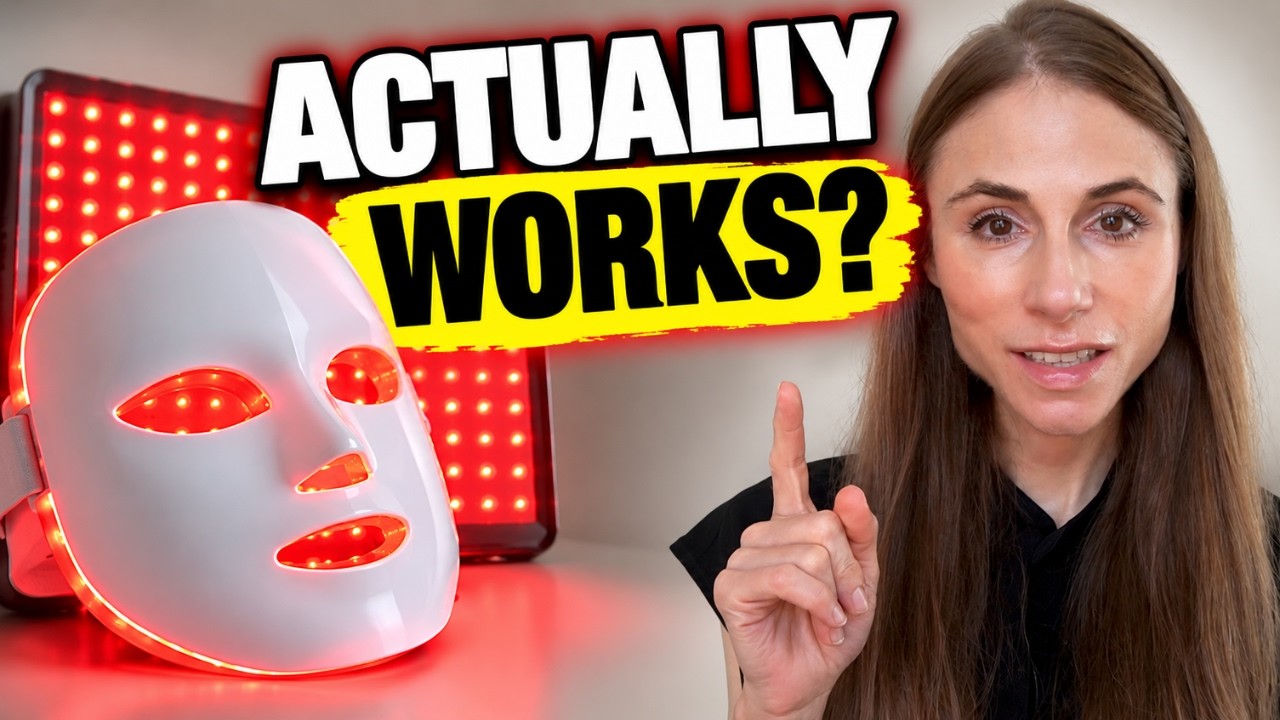
Dr Dray
AI-assisted summary of Does Red Light Therapy Really Work? | Dermatologist Explains — original source. Check the original for full context.
Source published:
Key ideas
- A 2025 JAMA Dermatology systematic review confirms that at-home dual-wavelength LED devices significantly reduce inflammatory acne lesion counts, functioning effectively as an adjunct rather than a standalone cure. (1:40)
- Low-level light therapy (LLLT) holds meta-analytic clinical support for improving hair density in androgenetic alopecia by stimulating follicular mitochondrial respiration and local microcirculation. (3:19)
- Individuals with melasma or deeper skin tones should exercise extreme caution with LED devices, as trapped heat, vasodilation, and blue light (~415 nm) can trigger opsin-mediated melanogenesis and worsen hyperpigmentation. (12:48)
- Because photobiomodulation follows a biphasic dose response curve, escalating treatment frequency or session duration beyond manufacturer protocols can overwhelm photoreceptors and eliminate therapeutic benefits. (15:43)
Detailed notes
## Background Published by dermatologist Dr. Dray on YouTube on October 1, 2026, this video investigates the evidence behind at-home LED light therapy and photobiomodulation devices. The program breaks down how wavelengths, irradiance, fluence, and treatment schedules dictate therapeutic outcomes for acne, hair loss, and photoaging. It also explores regulatory designations like FDA clearance versus registration and provides safety guidance regarding melasma, retinoids, and oral isotretinoin.
## TL;DR Dr. Dray clarifies that at-home LED therapy is a biologically active, evidence-based adjunct for mild-to-moderate acne, androgenetic alopecia, and fine wrinkles, though it cannot replace foundational skincare or established medical treatments. Efficacy is governed by specific technical variables—including targeted wavelengths, irradiance, and strict adherence to biphasic dosing schedules—rather than device form factor or exorbitant price tags. An FDA-cleared status via the 510(k) pathway provides essential proof of baseline manufacturing safety and substantial equivalence, but it does not guarantee comparative cosmetic superiority. Additionally, users must navigate specific safety considerations, such as avoiding blue light and device-trapped heat with melasma, and delaying light therapy until the skin has acclimated to topical retinoids.
## Atmosphere & style The presentation is analytical, grounded, and refreshingly skeptical, stripping away aggressive beauty gadget hype in favor of photobiological science and peer-reviewed literature. Dr. Dray delivers her insights with a calm, authoritative directness, balancing genuine clinical appreciation for phototherapy with candid warnings against unrealistic cosmetic expectations. The viewing experience feels like a transparent, one-on-one consultation with an objective dermatologist dedicated to protecting both the viewer's skin health and financial investment.
## Bulletin - [01:40](https://www.youtube.com/watch?v=VEiqy_3z06E&t=100s) A 2025 JAMA Dermatology systematic review confirms that at-home dual-wavelength LED devices significantly reduce inflammatory acne lesion counts, functioning effectively as an adjunct rather than a standalone cure. - [03:19](https://www.youtube.com/watch?v=VEiqy_3z06E&t=199s) Low-level light therapy (LLLT) holds meta-analytic clinical support for improving hair density in androgenetic alopecia by stimulating follicular mitochondrial respiration and local microcirculation. - [12:48](https://www.youtube.com/watch?v=VEiqy_3z06E&t=768s) Individuals with melasma or deeper skin tones should exercise extreme caution with LED devices, as trapped heat, vasodilation, and blue light (~415 nm) can trigger opsin-mediated melanogenesis and worsen hyperpigmentation. - [15:43](https://www.youtube.com/watch?v=VEiqy_3z06E&t=943s) Because photobiomodulation follows a biphasic dose response curve, escalating treatment frequency or session duration beyond manufacturer protocols can overwhelm photoreceptors and eliminate therapeutic benefits.
## Key takeaways - [00:00](https://www.youtube.com/watch?v=VEiqy_3z06E&t=0s) Photobiomodulation uses red (630–660 nm) and near-infrared (810–850 nm) light to target intracellular mitochondria, stimulating ATP production and downregulating inflammatory signaling pathways. - [01:40](https://www.youtube.com/watch?v=VEiqy_3z06E&t=100s) At-home acne phototherapy combines blue light to generate reactive oxygen species against Cutibacterium acnes with red light to mitigate tissue-level inflammation. - [01:40](https://www.youtube.com/watch?v=VEiqy_3z06E&t=100s) LED therapy should be treated as an adjunctive component within a multimodal routine rather than a replacement for foundational acne, anti-aging, or hair loss therapies. - [03:19](https://www.youtube.com/watch?v=VEiqy_3z06E&t=199s) In hair loss, light therapy has proven efficacy for androgenetic alopecia, but purchasing devices without an accurate medical diagnosis risks delaying targeted, follicle-saving interventions. - [05:37](https://www.youtube.com/watch?v=VEiqy_3z06E&t=337s) Red and near-infrared wavelengths stimulate dermal fibroblasts to promote de novo collagen synthesis, yielding modest, measurable improvements in peri-orbital wrinkles over 12 weeks of consistent use. - [07:16](https://www.youtube.com/watch?v=VEiqy_3z06E&t=436s) LED masks and flat panels rely on identical photobiomodulation physics; panels require much higher irradiance to overcome light dispersion over distance, while masks deliver effective energy up close. - [09:21](https://www.youtube.com/watch?v=VEiqy_3z06E&t=561s) FDA clearance via the 510(k) pathway verifies basic manufacturing controls and substantial equivalence to a predicate device, but does not indicate superior cosmetic efficacy over competitors. - [11:10](https://www.youtube.com/watch?v=VEiqy_3z06E&t=670s) Brands frequently misuse regulatory terminology: 'FDA cleared' represents legitimate device review, 'FDA registered' merely tracks manufacturing facilities, and 'FDA approved' is falsely claimed on consumer skincare devices. - [12:48](https://www.youtube.com/watch?v=VEiqy_3z06E&t=768s) Blue light should be avoided by anyone not actively managing acne, as it carries an established risk of inducing stubborn post-inflammatory hyperpigmentation in Fitzpatrick skin types III through VI. - [14:17](https://www.youtube.com/watch?v=VEiqy_3z06E&t=857s) Topical retinoids do not induce visible light phototoxicity and can be safely combined with LED masks once the skin barrier is fully acclimated to the retinization process. - [15:19](https://www.youtube.com/watch?v=VEiqy_3z06E&t=919s) Systemic medications like oral isotretinoin increase overall cutaneous light sensitivity, requiring close monitoring and physician consultation before introducing at-home light devices. - [15:43](https://www.youtube.com/watch?v=VEiqy_3z06E&t=943s) Overusing LED masks or double-stacking sessions contradicts the biphasic dose response of photobiomodulation and can actively sabotage clinical results. - [18:59](https://www.youtube.com/watch?v=VEiqy_3z06E&t=1139s) At-home LED devices are virtually the only consumer beauty gadgets Dr. Dray recommends, contingent on 510(k) clearance, clinical backing, and reputable manufacturing.
## Detailed walkthrough ### [00:00](https://www.youtube.com/watch?v=VEiqy_3z06E&t=0s) What Is LED Therapy and Photobiomodulation?
At-home red light therapy devices have exploded in popularity, leaving many to wonder whether these gadgets can actually move the needle in a meaningful way. Dr. Dray introduces LED therapy as an intervention falling under the broader medical banner of photobiomodulation. This biological mechanism uses specific wavelengths of non-ultraviolet light to influence cellular activity. Rather than acting superficially, red and near-infrared light wavelengths penetrate tissue to interact directly with intracellular structures—most notably the mitochondria. This interaction stimulates cellular respiration, alters overall adenosine triphosphate (ATP) production, modulates inflammation, and regulates downstream cell signaling cascades.
In dermatologic science, the target wavelengths are well-defined: red light is typically delivered at 630 nm and 660 nm, while near-infrared light operates at longer wavelengths such as 810 nm and 850 nm. However, Dr. Dray emphasizes that buying an effective device is not simply about matching a wavelength number. Multiple physical and clinical parameters govern whether photons deliver a therapeutic effect: irradiance, fluence (energy density), total treatment time, distance from the skin surface, and the overall treatment schedule. These combined variables dictate the precise light energy received by the target tissue. Because the at-home consumer market suffers from extreme heterogeneity, some devices function remarkably well when used consistently, while others are "probably just duds."
```mermaid flowchart TD accTitle: Photobiomodulation Cellular Mechanism accDescr: Diagram showing how red and near-infrared light affect cellular pathways and skin health. subgraph LIGHT["Light Parameters"] A["Red Light (630–660 nm)<br/>Near-Infrared (810–850 nm)"] end subgraph CELL["Mitochondrial Interaction"] B["Target: Mitochondria"] --> C["Increased ATP Production"] B --> D["Cell Signaling Modulation"] B --> E["Reduced Inflammatory Pathways"] end subgraph RESULTS["Dermatologic Outcomes"] C & D & E --> F["Collagen Synthesis, Tissue Repair & Acne Control"] end LIGHT --> CELL ```
---
[01:40](https://www.youtube.com/watch?v=VEiqy_3z06E&t=100s) Does LED Therapy Work for Acne?
Acne represents one of the most rigorously evaluated clinical indications for at-home LED-based devices. The therapy functions through a synergistic, dual-wavelength approach:
1. **Blue Light (400–500 nm):** Interacts photochemically with endogenous porphyrin compounds found inside the acne-causing bacterium *Cutibacterium acnes* (*C. acnes*). This interaction triggers the rapid formation of reactive oxygen species (ROS), which selectively damages and neutralizes the bacteria—a mechanism fundamentally similar to how topical benzoyl peroxide works. 2. **Red Light (630–660 nm):** Reaches deeper tissue layers than blue light to exert targeted anti-inflammatory effects. Because acne is fundamentally an inflammatory disorder, suppressing underlying inflammatory cascades is critical to resolving active breakouts and preventing new ones.
This biological framework is backed by clinical data. A 2025 systematic review and meta-analysis published in *JAMA Dermatology* analyzed six randomized controlled trials testing at-home LED devices for mild to moderate acne vulgaris. The findings confirmed statistically significant reductions in inflammatory lesion counts and overall acne severity compared to control groups, typically emerging after several weeks of disciplined use.
Dr. Dray cautions that while it is fully evidence-based to state that at-home LED therapy meaningfully diminishes lesion counts, it is strictly an adjunct—not a standalone or first-line cure. Patients cannot expect severe or persistent acne to clear entirely using only a consumer mask. Furthermore, just as with prescription topicals, the benefits are not permanent; discontinuing the device will lead to a loss of acne control.
---
[03:19](https://www.youtube.com/watch?v=VEiqy_3z06E&t=199s) Can LED Therapy Help Hair Loss?
The evidence supporting low-level light therapy (LLLT) for hair loss is "genuinely compelling," but Dr. Dray warns against broad consumer marketing that treats all shedding identically. LED devices are studied predominantly for androgenetic alopecia (pattern hair loss), rather than generalized hair thinning. Within hair follicle cells, photobiomodulation targets mitochondrial respiration to increase cellular energy, mitigates follicular micro-inflammation, and enhances local microcirculation. This improved blood flow delivers the oxygen, vital nutrients, and growth factors required to sustain the energetically demanding process of follicular anagen growth.
A 2025 systematic review and meta-analysis confirmed that LLLT significantly enhances hair density compared to sham or placebo devices in androgenetic alopecia. Emerging research also suggests potential off-label utility in other hair conditions: - **Telogen Effluvium:** Supporting regrowth once the primary inciting physical or emotional trigger has been identified and resolved. - **Frontal Fibrosing Alopecia:** Serving as an adjunctive anti-inflammatory measure in this scarring alopecia.
Despite these positive findings, Dr. Dray stresses that light therapy does not replace first-line medical therapies like minoxidil (Rogaine). Instead, it shines as an adjunctive component of a multimodal regimen. This is particularly relevant given minoxidil's pharmacodynamics: minoxidil is an inactive prodrug that must be converted into minoxidil sulfate in the hair follicle by the enzyme sulfotransferase. Individuals with low follicular sulfotransferase activity often fail to respond to topical minoxidil monotherapy. Combining modalities can overcome therapeutic plateaus, provided patients understand that hair regrowth demands indefinite, consistent application to maintain new follicles.
---
[05:37](https://www.youtube.com/watch?v=VEiqy_3z06E&t=337s) Can LED Therapy Reduce Wrinkles?
The anti-aging potential of LED phototherapy relies on activating dermal fibroblasts. Collagen levels naturally diminish with chronological aging, drop sharply following menopause in women, and suffer degradation from decades of ultraviolet radiation exposure. By utilizing red and near-infrared light to stimulate fibroblasts in the reticular dermis, at-home devices trigger *de novo* collagen synthesis.
- **Clinical trial validation:** A 2025 randomized, sham-controlled study using an at-home LED and infrared mask demonstrated measurable, objective improvements in peri-orbital skin and crow's feet wrinkles over a 12-week course when compared directly to a non-active fake device. - **Setting realistic expectations:** Dr. Dray advises against expecting miraculous transformations: "don't expect a complete facelift or don't expect it to turn the clock back from a 70-year-old face all the way to a 17-year-old face." - **Comparison to gold standards:** Phototherapy should never replace daily broad-spectrum sun protection, which safeguards structural collagen from ultraviolet damage. While clinical trials directly pitting at-home LED masks against topical retinoids (such as tretinoin) or pure L-ascorbic acid serums are lacking, LED therapy serves as a valuable complementary tool in a layered preventative and restorative routine.
---
[07:16](https://www.youtube.com/watch?v=VEiqy_3z06E&t=436s) Red Light Panels vs. Face Masks
Dr. Dray dismantles the viral internet claim that red light therapy masks are ineffective toys and that consumers must purchase commercial-grade flat panels to see real results. In reality, both form factors utilize identical wavelengths and rely on the exact same photobiomodulation principles. Their primary distinction lies in how they deliver optical energy over physical distance:
| Feature | LED Masks / Helmets | LED Panels | |:--- |:--- |:--- | | **Proximity to Skin** | Direct contact or millimeter proximity | Variable distance (typically inches to feet away) | | **Required Irradiance** | Lower power output required due to negligible light dispersion | High irradiance required to compensate for distance decay | | **User Convenience** | Strapped in place; maintains a fixed treatment distance automatically | Requires the user to remain completely stationary at a set distance | | **Primary Utility** | Targeted facial rejuvenation, peri-orbital aging, scalp hair loss | Large surface areas (e.g., broad back acne, chest, limbs) |
Under optical physics, the farther a light source sits from the skin, the more powerful it must be to deliver an equivalent therapeutic dose. Because a mask rests directly against the skin, it delivers sufficient energy without needing excessive power outputs. While large panels hold an advantage for treating extensive regions like back acne, they offer no inherent superiority for the face or scalp. Rather than focusing on device form factor, buyers should evaluate objective engineering metrics: verified therapeutic wavelengths, proven irradiance at the specified distance, total energy dose, and realistic treatment regimens.
---
[09:07](https://www.youtube.com/watch?v=VEiqy_3z06E&t=547s) What Does FDA Clearance Actually Mean?
Dr. Dray transitions to navigating marketing jargon, warning that consumers frequently misunderstand regulatory terminology when shopping for at-home LED equipment. Finding an "FDA cleared" label is an important baseline safeguard, indicating that the device has formally undergone the agency's premarket regulatory review process—typically through a 510(k) pathway—rather than evading federal oversight entirely.
[09:21](https://www.youtube.com/watch?v=VEiqy_3z06E&t=561s) What FDA Clearance Actually Means
When an LED device is cleared by the FDA, it has typically gone through the 510(k) pathway. Under this regulatory mechanism, the manufacturer must demonstrate to the agency that their device is "substantially equivalent" to a legally marketed predicate device. This process provides crucial insight into the device's basic safety parameters, manufacturing standards, and quality controls, while also permitting the company to market the device for its cleared indication based on data submitted to the agency. From a clinical perspective, dermatologists feel significantly more comfortable recommending FDA-cleared devices over non-cleared alternatives. With unregulated masks, consumers face immense uncertainty: the emitted wavelengths may be inaccurate, manufacturers frequently toss in extra colored lights that have zero clinical evidence, and there is no verification that fundamental safety precautions were implemented during manufacturing.
However, FDA clearance is not a magic stamp of guaranteed cosmetic results, nor does it imply superior efficacy over every competitor. The FDA does not rank cleared devices against one another. Two entirely different FDA-cleared devices can feature distinct wavelengths, irradiances, designs, and recommended treatment durations, meaning clearance alone does not mean one will produce better outcomes than the other. Conversely, an absence of FDA clearance does not automatically prove that an LED mask is inherently dangerous or harmful; rather, it simply means that prospective buyers have substantially less objective regulatory documentation to verify what they are actually buying.
- The 510(k) pathway requires demonstrating "substantial equivalence" to an existing legally marketed device. - Clearance verifies basic safety, engineering, and manufacturing parameters, but does not guarantee individual cosmetic success. - FDA clearance does not represent an agency endorsement, ranking, or qualitative score between devices.
[11:10](https://www.youtube.com/watch?v=VEiqy_3z06E&t=670s) FDA Cleared vs. Registered vs. Approved, and the Myth of Price
When evaluating an LED light device, Dr. Dray weighs several concrete technical and historical factors rather than relying on marketing claims. She looks at the specific wavelengths emitted, the irradiance (power density), the total energy dose delivered, the required treatment time, and the pedigree of the manufacturer. Brands that build clinical devices used in medical offices often have extensive, real-world experience treating large patient populations, offering far more practical insight than direct-to-consumer startups whose testing consists of informal personal trials.
Consumers must also navigate intentionally confusing regulatory terminology on product packaging:
| Regulatory Status | What It Actually Means | Relevance to LED Masks | |:--- |:--- |:--- | | **FDA Cleared** | The device was reviewed via the 510(k) pathway and proven substantially equivalent to a predicate device for safety and manufacturing. | The standard legitimate regulatory milestone for consumer LED devices. | | **FDA Registered** | The facility or manufacturer is simply registered in the FDA's establishment database. | Does *not* mean the FDA reviewed, tested, or cleared the actual device. | | **FDA Approved** | Formal premarket approval (PMA) reserved for high-risk (Class III) medical devices. | Inaccurate marketing when claimed by consumer LED skincare masks. |
Dr. Dray warns consumers against falling for lofty, unrealistic marketing claims accompanied by bargain-basement prices that seem "too good to be true." At the same time, the most expensive device on the market is not necessarily the most effective. Rigorous research, development, and navigating the formal FDA clearance process require significant capital, which inevitably drives up the retail price, meaning a high-quality mask will command a "hefty sum." However, an exorbitant price tag alone is no guarantee of superior clinical performance.
[12:48](https://www.youtube.com/watch?v=VEiqy_3z06E&t=768s) Can You Use Red Light With Melasma?
Melasma is an unpredictable and notoriously fickle pigmentary disorder, and Dr. Dray advises strong caution—recommending that individuals with melasma avoid at-home light devices altogether, particularly those with medium to deep skin tones. Melasma is readily triggered and exacerbated by heat. Large LED panels generate palpable warmth, and flexible masks sit flush against the facial skin, trapping heat and preventing the natural evaporation of sweat. This localized overheating can easily induce a flare-up. Furthermore, photobiomodulation works in part by stimulating localized microcirculation; this surge in cutaneous blood flow could potentially aggravate the vascular component that often underlies melasma lesions.
The danger escalates drastically when considering acne-targeted masks that incorporate blue light:
```mermaid flowchart TD accTitle: Melasma and Blue Light Risk Flowchart accDescr: Diagram illustrating how at-home LED masks and blue light aggravate melasma and hyperpigmentation through heat, vascular stimulation, and visible light pathways.
subgraph Triggers["Device Characteristics"] A["Panel Heat & Trapped Mask Sweat"] B["Vasodilation & Increased Blood Flow"] C["Blue Light Wavelengths (~415 nm)"] end
subgraph Mechanisms["Biological Mechanisms"] D["Thermal Inflammation"] E["Vascular Component Aggravation"] F["Opsin-3 Receptor Activation"] end
subgraph Outcomes["Clinical Outcomes"] G["Melasma Flare-ups & Deepening"] H["Post-Inflammatory Hyperpigmentation (PIH)"] end
A --> D B --> E C --> F D --> G E --> G F --> G F --> H ```
While quality devices should never emit ultraviolet radiation, visible blue light is clinically proven to induce long-lasting hyperpigmentation, especially in deeper skin tones (Fitzpatrick skin types III–VI). Anyone battling melasma or post-inflammatory hyperpigmentation (PIH) should steer clear of blue light entirely and consult their treating dermatologist before placing any light-emitting or heat-generating device on their face.
- Melasma is heat-sensitive; masks can trap sweat and heat, triggering pigmentary flares. - Improved circulation from LED therapy may exacerbate the vascular redness entwined with melasma patches. - Blue light triggers opsin-mediated melanogenesis and worsening of both melasma and post-inflammatory hyperpigmentation (PIH).
[14:17](https://www.youtube.com/watch?v=VEiqy_3z06E&t=857s) LED Therapy with Retinoids and Isotretinoin
A frequent point of confusion is whether red light therapy can be safely combined with topical vitamin A derivatives. The definitive answer for topical retinoids is yes. Over-the-counter cosmetic retinoids (such as retinol and retinaldehyde) and prescription topical medications (including tretinoin, tazarotene, trifarotene, and adapalene) do not cause true phototoxicity or photosensitivity to visible light or UV radiation.
However, timing and skin barrier tolerance are critical:
> "I would not start red light therapy while starting a topical retinoid because if you do experience the retinization process and you're putting a mask up against the skin, it's just more irritation for the skin and, you know, kind of going to blur the lines here and muddy the waters."
During the initial retinization window—characterized by peeling, erythema, dryness, and barrier disruption—strapping an occlusive mask against delicate facial tissue adds physical friction and irritant stress. Once the skin is fully acclimated and tolerating the topical retinoid without issue, red, near-infrared, and blue light can be safely incorporated.
Conversely, systemic oral retinoids require greater caution. Oral isotretinoin (commonly known as Accutane) systemically alters the skin and induces genuine light sensitivity. While red light therapy is not strictly contraindicated for patients on oral isotretinoin or photosensitizing systemic medications (such as doxycycline or other antibiotics), patients must exercise heightened vigilance, watch for adverse cutaneous reactions, and consult their prescribing physician before using light devices.
[15:43](https://www.youtube.com/watch?v=VEiqy_3z06E&t=943s) Choosing the Right Device Parameters and Treatment Schedule
Selecting an effective LED device requires aligning the exact light wavelengths with the specific condition being treated. For anti-aging, skin rejuvenation, and hair loss, the clinical evidence relies almost exclusively on red light and near-infrared (NIR) light. Blue light, on the other hand, should be considered strictly "the acne light." If a person has no active acne and is simply seeking wrinkle reduction or hair regrowth, they should avoid blue light altogether to prevent unnecessary pigmentary risks.
```mermaid flowchart LR accTitle: LED Light Wavelength Selection by Condition accDescr: Flowchart illustrating appropriate light wavelengths and precautions for specific skin and hair concerns.
subgraph Condition["Target Condition"] A["Photoaging & Wrinkles"] B["Androgenetic Alopecia"] C["Mild-to-Moderate Acne"] D["Melasma / PIH Concerns"] end
subgraph Modality["Target Wavelength"] E["Red (630–660 nm) + Near-Infrared (830–850 nm)"] F["Red Light / Low-Level Laser"] G["Blue Light (415 nm) + Red Light"] H["Avoid At-Home Light Devices"] end
A --> E B --> F C --> G D --> H ```
Adhering strictly to the manufacturer's treatment schedule is just as critical as selecting the proper wavelength. More frequent use does not translate to faster or better results. Because photobiomodulation follows a biphasic dose response curve, excessive light exposure can overwhelm cellular photoreceptors and abolish the therapeutic benefit entirely. Dr. Dray warns against common user impulses:
- If the device protocol calls for three sessions per week, use it three times per week—do not escalate to daily use. - Overusing the device can "overwhelm the system" and actively sabotage clinical outcomes. - Never "double-stack" consecutive sessions or prolong exposure past the recommended time limit in hopes of accelerating progress.
[17:01](https://www.youtube.com/watch?v=VEiqy_3z06E&t=1021s) Is LED Light Therapy Actually Worth It?
Whether an at-home LED device is "worth it" ultimately comes down to patient consistency, realistic expectations, and the specific condition being addressed. The clinical literature demonstrates varying degrees of efficacy across different dermatological issues:
- **Mild to Moderate Acne:** The combination of blue and red light serves as a valuable adjunct therapy, helping reduce inflammatory lesion counts and overall disease severity when integrated into a broader regimen. - **Androgenetic Alopecia:** Red and near-infrared low-level light therapy stimulates follicular activity and promotes hair regrowth. While it can produce modest improvements on its own, it yields substantially better outcomes when combined with established medical treatments (such as minoxidil or 5-alpha reductase inhibitors). - **Photoaging:** Consistent exposure to red and near-infrared wavelengths boosts dermal collagen synthesis, gradually improving fine lines, wrinkles, and overall skin texture over time.
Dr. Dray emphasizes that while at-home LED therapy is "legit" and biologically active, its success hinges entirely on the exact technical specifications: the chosen wavelengths, the energy dose (fluence), the device engineering, and having an accurate diagnosis of what is being treated. FDA clearance provides essential confirmation of manufacturing safety, but it offers zero guarantee of comparative clinical strength. Consumers must understand their exact diagnosis, avoid at-home devices if dealing with melasma or photosensitizing medications, and evaluate whether the realistic benefits justify the financial investment.
[18:34](https://www.youtube.com/watch?v=VEiqy_3z06E&t=1114s) The Realities of LED for Hair Loss
When approaching hair loss, context and diagnosis are everything. Dr. Dray stresses that there are many distinct types of hair loss disorders; while photobiomodulation and red light therapy can indeed help regrow hair in specific conditions, it is completely ineffective for others. Blindly purchasing an LED hair device without an accurate medical diagnosis turns the purchase into "a shot in the dark." The real danger is not merely wasting money, but squandering precious time that should be spent on clinically proven, meaningful treatments before follicle loss becomes permanent.
At the same time, at-home LED therapy has proven clinical utility when matched to the right condition. When used appropriately, it can genuinely work and deliver noticeably better outcomes for patients struggling with certain hair and skin concerns.
[18:59](https://www.youtube.com/watch?v=VEiqy_3z06E&t=1139s) Why LED Devices Are the Only At-Home Tools Dr. Dray Recommends
Dr. Dray highlights that at-home LED devices occupy a unique place in her recommendations: they are practically the only category of at-home beauty gadgets she will ever endorse or accept sponsorships from. Despite receiving sponsorship offers every single day—an opportunity for which she expresses sincere gratitude—she rejects roughly 99% of at-home devices on the market because most lack solid evidence or meaningful utility.
When evaluating which LED devices she will actually stand behind, she holds a strict, multi-point filter: - **FDA Clearance:** The device must have official clearance, confirming regulatory review and basic electrical and optical safety. - **Scientific Evidence:** It must have actual clinical data supporting its specific parameters rather than unbacked marketing claims. - **Brand Reputation:** It must originate from an established, reputable manufacturer. - **Personal Testing:** Dr. Dray personally tests the unit to directly evaluate its usability and attest to its real-world efficacy.
While consumers do not need to shell out for the most expensive mask or panel on the market, extreme bargain hunting carries major risks. Extremely cheap devices, especially those lacking FDA clearance, often fall into the category of being "too good to be true." Dr. Dray encourages viewers to weigh these factors, inviting audience members to share in the comments whether their own LED trials felt like a complete waste of time or whether they, like her, saw genuine differences and stuck with their routine. She closes out the discussion with her signature sign-off: "don't forget sunscreen and subscribe."
## Notable quotes > [00:00](https://www.youtube.com/watch?v=VEiqy_3z06E&t=0s) probably just duds — Dr. Dray
> [03:19](https://www.youtube.com/watch?v=VEiqy_3z06E&t=199s) genuinely compelling — Dr. Dray
> [05:37](https://www.youtube.com/watch?v=VEiqy_3z06E&t=337s) don't expect a complete facelift or don't expect it to turn the clock back from a 70-year-old face all the way to a 17-year-old face. — Dr. Dray
> [09:21](https://www.youtube.com/watch?v=VEiqy_3z06E&t=561s) substantially equivalent — Dr. Dray
> [11:10](https://www.youtube.com/watch?v=VEiqy_3z06E&t=670s) too good to be true — Dr. Dray
> [11:10](https://www.youtube.com/watch?v=VEiqy_3z06E&t=670s) hefty sum — Dr. Dray
> [14:17](https://www.youtube.com/watch?v=VEiqy_3z06E&t=857s) I would not start red light therapy while starting a topical retinoid because if you do experience the retinization process and you're putting a mask up against the skin, it's just more irritation for the skin and, you know, kind of going to blur the lines here and muddy the waters. — Dr. Dray
> [15:43](https://www.youtube.com/watch?v=VEiqy_3z06E&t=943s) the acne light — Dr. Dray
> [15:43](https://www.youtube.com/watch?v=VEiqy_3z06E&t=943s) overwhelm the system — Dr. Dray
> [17:01](https://www.youtube.com/watch?v=VEiqy_3z06E&t=1021s) legit — Dr. Dray
> [18:34](https://www.youtube.com/watch?v=VEiqy_3z06E&t=1114s) a shot in the dark — Dr. Dray
> [18:59](https://www.youtube.com/watch?v=VEiqy_3z06E&t=1139s) don't forget sunscreen and subscribe. — Dr. Dray
## Mentioned Dr. Dray, FDA, JAMA Dermatology, Cutibacterium acnes, Minoxidil, Rogaine, Accutane, Isotretinoin, Tretinoin, Retinol, Retinaldehyde, Tazarotene, Trifarotene, Adapalene, Benzoyl peroxide, L-ascorbic acid, Doxycycline
## Video description Red light therapy and LED devices have become extremely popular for skincare, acne, hair loss, and anti-aging. But does LED therapy actually work, and is an expensive red light mask or panel worth the money? In this video, dermatologist Dr. Dray breaks down the evidence behind LED light therapy and photobiomodulation, including red light, near-infrared light, and blue light. She explains how wavelength, irradiance, fluence, treatment time, and treatment schedule can affect the amount of light energy delivered to the skin.
The video covers the evidence for LED therapy for acne, hair loss, and photoaging, including what the research actually shows and where LED therapy should be considered an adjunct rather than a replacement for established treatments.
Dr. Dray also explains the difference between red light masks and red light panels, why a larger or more expensive device is not automatically better, and which specifications to look at when comparing LED devices.
One of the biggest topics in the video is FDA clearance. Dr. Dray explains what FDA clearance means, why it can provide useful information about a device's regulatory status and basic safety, and why FDA clearance does not mean that one LED mask will produce better cosmetic results than another. She also explains the difference between the terms FDA cleared, FDA registered, and FDA approved.
The video also addresses important safety questions, including whether LED therapy is appropriate for people with melasma, hyperpigmentation, retinol or tretinoin use, and isotretinoin treatment. Dr. Dray explains why people with melasma or pigmentary concerns may need to be more cautious with certain devices, particularly those that generate heat or include blue light.
Finally, Dr. Dray explains how to evaluate an LED device before buying it, including its wavelength, irradiance, fluence, treatment schedule, and clinical evidence. The goal is to look beyond marketing claims and determine whether a particular device has evidence for the specific condition it is being used to treat.
Timestamps 0:00 Does LED Light Therapy Actually Work? 0:27 What Is LED Therapy? 1:40 Does LED Therapy Work for Acne? 3:19 Can LED Therapy Help Hair Loss? 5:37 Can LED Therapy Reduce Wrinkles? 7:16 Red Light Panels vs. Masks 9:07 What Does FDA Clearance Actually Mean? 12:48 Can You Use Red Light With Melasma? 14:17 Red Light With Retinol or Tretinoin 15:19 What About Isotretinoin? 15:43 How to Choose an LED Device 16:59 Is LED Light Therapy Worth It?
Key Takeaway LED therapy is not simply about buying a device with lots of LEDs. The wavelength, dose, treatment schedule, device specifications, and condition being treated all matter. Dr. Dray explains why consumers should look beyond price and marketing claims when deciding whether an LED device is worth using.
For aging skin, LED therapy should complement, rather than replace, foundational treatments such as sunscreen and evidence-based topical therapies. For acne and hair loss, it may serve as an additional treatment alongside therapies with established evidence.
Keywords: red light therapy, LED light therapy, red light therapy for skin, red light therapy for acne, LED mask, red light mask, red light panel, red light therapy for hair loss, LED therapy for wrinkles, photobiomodulation, near infrared light, blue light therapy, LED skincare, red light therapy benefits, FDA cleared LED mask, dermatologist red light therapy, Dr Dray
#RedLightTherapy #LEDLightTherapy #RedLightMask #Photobiomodulation #LEDMask #Skincare #Acne #HairLoss #AntiAgingSkincare #Dermatologist #DrDray
FTC: This video is not sponsored. Links are commissionable, meaning I may earn commission from purchases made through links.
💜Shop my Amazon store https://o.bttn.io/0BwiPWFIZLG 💜Follow me on liketoknowit https://www.liketoknow.it/drdrayzday 💜Social media Instagram @drdrayzday Pinterest https://www.pinterest.com/drdrayzday/ Facebook @DrDrayzDay Twitter: @drdrayzday Tiktok: @drdrayzday
Disclaimer: This video is not intended to provide diagnosis, treatment or medical advice. Content provided on this Youtube channel is for informational purposes only. Please consult with a physician or other healthcare professional regarding any medical or health related diagnosis or treatment options. Information on this Youtube channel should not be considered as a substitute for advice from a healthcare professional. The statements made about specific products throughout this video are not to diagnose, treat, cure or prevent disease.
[Source](https://www.youtube.com/watch?v=VEiqy_3z06E)