Telehealth Clinics Skirt Isotretinoin Safety Flags, Dr Dray Warns
Dr Dray
Direct-to-consumer platforms endanger patients by rubber-stamping high-risk oral isotretinoin prescriptions past blatant medical contraindications to drive commercial sales volume.
AI-assisted summary of Glycolic Acid vs. Lactic Acid: Which Is Better for Dark Spots? — original source. Check the original for full context.
Source published:
Key ideas
- Comparing 12% glycolic acid directly to 12% lactic acid is misleading because delivery vehicle, buffering agents, and pH dictate real-world clinical efficacy more than raw percentage concentrations. (0:11)
- Sealing exfoliating moisturizers like AmLactin or actives like tretinoin with occlusive balms or petrolatum is generally redundant, as both already contain moisture-retaining vehicles and occlusion has no proven additive benefit. (2:11)
- Adding glycerin to home humidifiers poses severe mechanical and health risks, including device clogging, mold growth, and respiratory irritation or asthma attacks from inhaling aerosolized droplets. (3:58)
- Roughly 99% of reactions to adhesive bandages stem from irritant contact dermatitis rather than true latex allergies, though true contact allergies are typically caused by acrylate adhesives. (5:16)
- Direct-to-consumer telehealth platforms prescribing isotretinoin introduce serious safety risks, with mystery-shopper studies revealing instances where services overlooked major medical contraindications. (7:11)
Detailed notes
## Background Published on YouTube by dermatologist Dr Dray on October 3, 2026, this Q&A video addresses viewer questions on common skincare practices, topical actives, and medical treatments. According to the description, the video covers glycolic and lactic acids for friction-related hyperpigmentation, the necessity of occlusives over tretinoin or AmLactin, the safety of adding glycerin to humidifiers, adhesive bandage reactions, and the medical concerns surrounding direct-to-consumer telehealth prescriptions for isotretinoin.
## TL;DR Dr. Dray clarifies that evaluating 12% glycolic acid versus 12% lactic acid depends on the total formulation and pH rather than concentration alone, noting that topical AHAs help superficial epidermal discoloration but cannot clear dermal pigment. She explains that sealing tretinoin or AmLactin with occlusives like petrolatum is largely redundant given their existing moisturizing vehicles, and strongly warns against adding glycerin to humidifiers due to mechanical damage and respiratory risks. After noting that bandage rashes are almost always irritant contact dermatitis rather than latex allergies—and suggesting adhesive-free dressings like Coban or cut tube socks—she closes with a serious critique of direct-to-consumer telehealth platforms that bypass vital safety screenings when prescribing systemic isotretinoin.
## Atmosphere & style The presentation is clinical, pragmatic, and candid, delivering evidence-based dermatology advice in an accessible, no-nonsense manner. Dr. Dray uses vivid, grounded analogies—such as comparing skincare percentages to sugar in a recipe—to demystify complex dermatologic concepts and debunk online skincare trends. The tone smoothly balances resourceful, lighthearted home-care hacks like using hair scrunchies for wound dressings with stern, authoritative gravity when addressing the medical negligence and teratogenic hazards associated with mail-order isotretinoin.
## Bulletin - [00:11](https://www.youtube.com/watch?v=ionyOpS0UmA&t=11s) Comparing 12% glycolic acid directly to 12% lactic acid is misleading because delivery vehicle, buffering agents, and pH dictate real-world clinical efficacy more than raw percentage concentrations. - [02:11](https://www.youtube.com/watch?v=ionyOpS0UmA&t=131s) Sealing exfoliating moisturizers like AmLactin or actives like tretinoin with occlusive balms or petrolatum is generally redundant, as both already contain moisture-retaining vehicles and occlusion has no proven additive benefit. - [03:58](https://www.youtube.com/watch?v=ionyOpS0UmA&t=238s) Adding glycerin to home humidifiers poses severe mechanical and health risks, including device clogging, mold growth, and respiratory irritation or asthma attacks from inhaling aerosolized droplets. - [05:16](https://www.youtube.com/watch?v=ionyOpS0UmA&t=316s) Roughly 99% of reactions to adhesive bandages stem from irritant contact dermatitis rather than true latex allergies, though true contact allergies are typically caused by acrylate adhesives. - [07:11](https://www.youtube.com/watch?v=ionyOpS0UmA&t=431s) Direct-to-consumer telehealth platforms prescribing isotretinoin introduce serious safety risks, with mystery-shopper studies revealing instances where services overlooked major medical contraindications.
## Key takeaways - [00:11](https://www.youtube.com/watch?v=ionyOpS0UmA&t=11s) Evaluating skincare acids based solely on percentage is inaccurate because the overall formulation, pH, and vehicle determine their true biological potency. - [00:11](https://www.youtube.com/watch?v=ionyOpS0UmA&t=11s) Both glycolic acid and lactic acid effectively improve epidermal friction-induced hyperpigmentation, but neither can eliminate pigment situated deep within the dermis. - [00:11](https://www.youtube.com/watch?v=ionyOpS0UmA&t=11s) Targeting friction-related dark spots requires eliminating continuous mechanical rubbing and applying broad-spectrum sun protection alongside topical exfoliants. - [02:11](https://www.youtube.com/watch?v=ionyOpS0UmA&t=131s) Layering an occlusive moisturizer like petrolatum over AmLactin or tretinoin does not trap dead skin cells, as desquamated cells shed naturally during washing. - [02:11](https://www.youtube.com/watch?v=ionyOpS0UmA&t=131s) Slugging over AmLactin or tretinoin is generally redundant because both products already contain vehicles formulated with emollients and humectants to prevent transepidermal water loss. - [03:58](https://www.youtube.com/watch?v=ionyOpS0UmA&t=238s) Vegetable glycerin should never be poured into humidifiers due to risks of machine malfunction, microbial colonization, and airway irritation from aerosolized inhalation. - [03:58](https://www.youtube.com/watch?v=ionyOpS0UmA&t=238s) Applying pure vegetable glycerin directly to damp skin is a safe and highly effective method to reinforce the skin barrier and minimize water loss. - [03:58](https://www.youtube.com/watch?v=ionyOpS0UmA&t=238s) High concentrations of topically applied glycerin do not draw out internal skin moisture or cause dehydration when used properly. - [05:16](https://www.youtube.com/watch?v=ionyOpS0UmA&t=316s) Most red, itchy skin reactions underneath medical bandages are caused by irritant contact dermatitis driven by moisture trapping and maceration, not latex allergy. - [05:16](https://www.youtube.com/watch?v=ionyOpS0UmA&t=316s) True allergic reactions to modern bandages are predominantly triggered by acrylate adhesives, which frequently cross-react with artificial nail and gel manicures. - [05:16](https://www.youtube.com/watch?v=ionyOpS0UmA&t=316s) Adhesive-free wound dressing techniques—such as non-adherent gauze secured with self-adherent wraps, cut tube socks, or scrunchies—prevent contact dermatitis. - [07:11](https://www.youtube.com/watch?v=ionyOpS0UmA&t=431s) Direct-to-consumer telehealth business models create conflicting incentives by prioritizing high medication sales volume over thorough patient screening. - [07:11](https://www.youtube.com/watch?v=ionyOpS0UmA&t=431s) Prescribing systemic isotretinoin requires rigorous contraindication checks and pregnancy prevention monitoring due to its severe teratogenic risks. - [09:32](https://www.youtube.com/watch?v=ionyOpS0UmA&t=572s) Independent medical providers carry substantial personal and legal liability for prescription safety, putting their medical licenses on the line during telehealth evaluations.
## Detailed walkthrough ### [00:11](https://www.youtube.com/watch?v=ionyOpS0UmA&t=11s) 12% Glycolic Acid vs. 12% Lactic Acid for Friction Hyperpigmentation
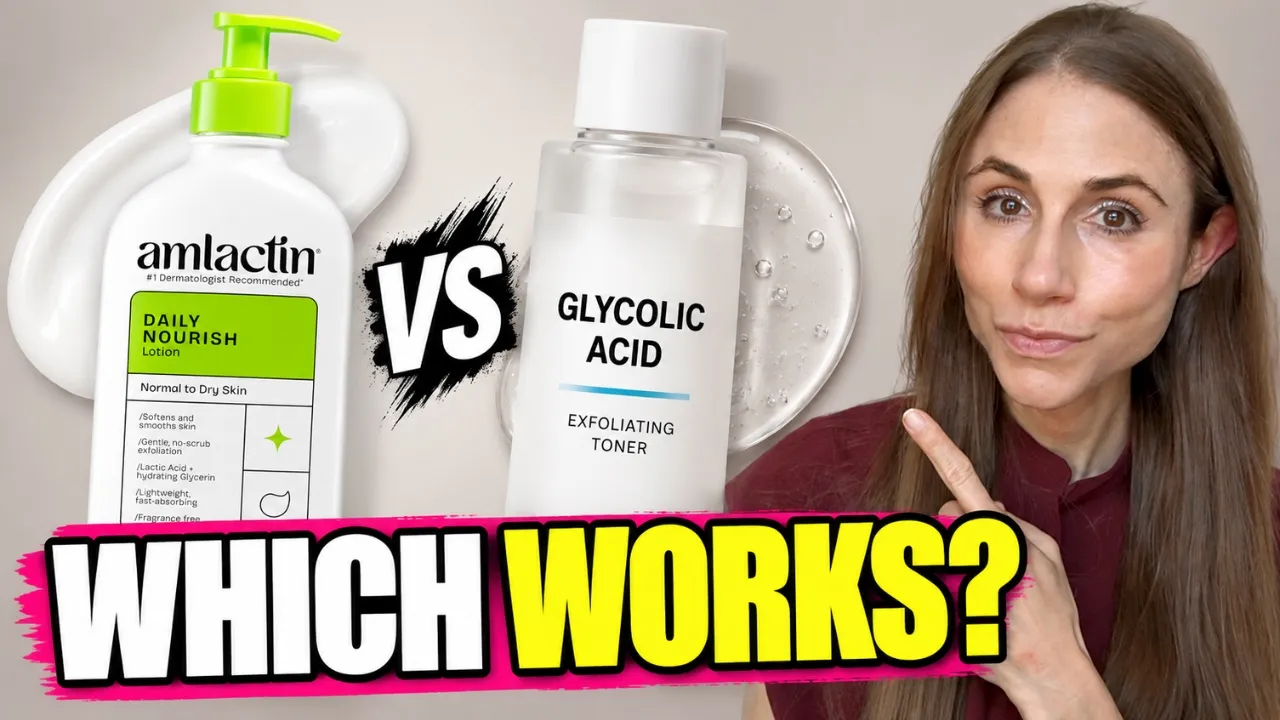
Comparing a 12% glycolic acid formula directly against a 12% lactic acid product is an apples-to-oranges comparison. A product's real-world clinical performance hinges entirely on its overarching formulation—including the vehicle, base ingredients, and pH—rather than a single isolated concentration number. Dr. Dray illustrates this with a culinary metaphor: obsessing over percentages in skincare is just like looking solely at how many teaspoons of sugar are listed in a recipe to guess how sweet the final dish will taste. A recipe loaded with sour, acidic ingredients will not taste very sweet even with several spoonfuls of sugar, whereas a recipe featuring naturally ripe fruits will taste intensely sweet with that identical measurement of sugar. When looking at different alpha hydroxy acids (AHAs), the raw percentage tells only part of the story.
Both glycolic and lactic acid can help address frictional melanosis—the dark, stubborn discoloration that frequently develops on high-rubbing areas like the elbows and knees. Both acids gently loosen dead skin cells, soften the thickened stratum corneum, and promote gradual lightening over time. Similarly, both are effective when an uneven skin tone stems from epidermal pigment alterations. However, deeper dermal pigment is another matter entirely. While 12% buffered ammonium lactate (a lactic acid salt) has scientific backing for penetrating into the dermis to enhance dermal thickness, it does not clear dermal-level pigment. In fact, topical skincare as a category cannot effectively eliminate pigment resting deep in the dermis. Furthermore, no exfoliating acid will produce meaningful results if the underlying root causes are ignored: if mechanical friction continues unabated or if the affected area receives unprotected ultraviolet radiation, improvement will be sluggish at best.
- **Formulation Over Percentage:** Ingredient strength cannot be evaluated purely by percentage; delivery vehicles, buffering agents, and pH fundamentally alter clinical potency. - **Frictional Melanosis:** Dark patches on elbows and knees improve only gradually; resolving the friction source and applying diligent sun protection are mandatory for visible progress. - **Epidermal vs. Dermal Pigment:** AHAs target epidermal discoloration effectively, but topical skincare cannot clear true dermal pigment, even if ammonium lactate can boost dermal thickness.
---
[02:11](https://www.youtube.com/watch?v=ionyOpS0UmA&t=131s) Sealing in AmLactin or Tretinoin With Occlusive Moisturizers
Patients frequently wonder whether applying an occlusive layer—such as a petrolatum ointment, a silicone barrier, or a restorative cream like Avène Cicalfate—over an exfoliating moisturizer like AmLactin or an active like tretinoin will trap shed cells against the skin. Dr. Dray dispels the fear that occlusion "seals in" sloughed skin cells; exfoliated corneocytes simply shed naturally when the skin is washed or rubbed. The larger question is whether adding a dedicated occlusive on top is even necessary or clinically advantageous.
Tretinoin is already formulated within a hydrating vehicle (whether packaged as a cream, lotion, or gel), and AmLactin is itself a full moisturizer. Both products already contain emollients and humectants engineered to curtail transepidermal water loss (TEWL). Layering a heavy balm or petroleum jelly on top essentially amounts to piling a third moisturizer over two existing ones. While formulating an active drug directly inside an ointment vehicle is well known to maximize drug penetration and cutaneous dwell time compared to lighter lotions, there is no solid performance data proving that "slugging" or sealing topical tretinoin or ammonium lactate with plain petroleum jelly provides superior clinical results.
```mermaid flowchart TD accTitle: Occlusive Layering Dynamics accDescr: Diagram illustrating the effects and redundancy of layering occlusive ointments over tretinoin and AmLactin.
subgraph Actives["Applied Products"] A["Tretinoin (in cream, lotion, or gel vehicle)"] B["AmLactin (12% ammonium lactate moisturizer)"] end
subgraph Baseline["Baseline Vehicle Function"] C["Reduces Transepidermal Water Loss (TEWL)"] D["Facilitates gradual desquamation"] end
subgraph Occlusion["Adding Heavy Occlusive (e.g., Petrolatum)"] E["Dead cells are not permanently trapped"] F["Redundant moisture barrier"] G["No clinical data proving enhanced efficacy"] end
Actives --> Baseline Baseline --> Occlusion ```
---
[03:58](https://www.youtube.com/watch?v=ionyOpS0UmA&t=238s) Can You Add Glycerin to a Humidifier for Skin Hydration?
During dry autumn and winter months, running an ambient humidifier can be a game-changer for parched skin, prompting some people to experiment by pouring vegetable glycerin into the humidifier tank. Dr. Dray strongly advises against this practice. Humidifiers are precision-engineered exclusively to aerosolize pure water vapor. Adding glycerin introduces serious mechanical and health hazards: it can coat internal components, clog the misting mechanism, and create a hospitable environment for rampant microbial and mold growth inside the reservoir.
Beyond the risk of destroying the appliance, aerosolizing glycerin poses genuine respiratory dangers. Inhaling dispersed liquid glycerin droplets into the lungs can prompt immediate airway irritation or provoke acute asthma attacks. For those who want the intense moisture-binding perks of glycerin, the safest and most effective method is direct cutaneous application. Pure vegetable glycerin can feel clumsy to work with—it lacks cosmetic emulsifiers, thickeners, and film-forming agents, making it feel "patchy" and somewhat "elusive" as it glides over the skin. However, despite being unwieldy, high-concentration vegetable glycerin is extraordinarily effective: it provides durable, long-lasting surface hydration, reinforces the skin barrier, and dramatically curtails transepidermal water loss without pulling moisture out of the dermis.
- **Humidifier Hazard:** Never add glycerin to humidifiers; it ruins the device, promotes microbial colonization, and risks aerosol-induced airway irritation or asthma flare-ups. - **Direct Application:** Straight vegetable glycerin can be smoothed directly onto damp skin; though texturally slippery and unformulated, it acts as a premier hydrator. - **Dehydration Myth:** Contrary to popular internet misconceptions, high concentrations of topically applied glycerin do not dehydrate the skin; they actively bind ambient water and inhibit TEWL.
---
[05:16](https://www.youtube.com/watch?v=ionyOpS0UmA&t=316s) Wound Care for Latex Allergies and Reactions to Bandages or Medical Tape
Patients who notice a red, raised, itchy plaque under an adhesive bandage often assume they are suffering from a latex allergy, especially when the resulting mark lingers for months. Dr. Dray points out that the overwhelming majority—roughly 99%—of cutaneous reactions to first-aid bandages and medical tapes are not true allergic reactions at all, but rather cases of irritant contact dermatitis. The combination of complete occlusion, trapped sweat, and skin maceration mechanically tears and inflames the delicate skin barrier. Furthermore, true natural rubber latex is rarely found in modern retail adhesive bandages precisely because latex hypersensitivity is so broadly recognized.
```mermaid flowchart TD accTitle: Bandage Reaction Assessment and Alternatives accDescr: Flowchart diagnosing bandage rash mechanisms and detailing adhesive-free wound care substitutes.
A["Red, raised rash from bandage/tape"] --> B{"Primary Cause Evaluation"}
B -->|"~99% of occurrences"| C["Irritant Contact Dermatitis<br/>(Occlusion, moisture trapping, maceration)"] B -->|"Occasional true allergy"| D["Acrylate Adhesive Allergy<br/>(Cross-reactive with artificial nail/gel glues)"] B -->|"Rare in modern bandages"| E["Latex Allergy<br/>(Most bandages are already latex-free)"]
C & D --> F["Adhesive-Free Wound Strategies"]
subgraph Solutions["Practical Non-Adhesive Coverings"] F --> G["Sterile non-adherent gauze pad"] G --> H["Self-adherent wrap (Coban)"] G --> I["DIY cotton sleeve (Cut toe off clean tube sock)"] G --> J["Silk or satin scrunchie (For limbs/wrists)"] end ```
When an authentic allergic contact dermatitis does arise from medical tape, the offending culprit is almost always the acrylate adhesives used to make the dressing stick. This sensitivity frequently cross-reacts in individuals who have developed acrylate allergies from artificial nail glues and gel manicure curing chemicals (a phenomenon that commonly manifests as eyelid dermatitis).
For anyone experiencing ongoing dermatitis from commercial adhesives, Dr. Dray recommends bypassing sticky dressings altogether in favor of friction-free mechanical alternatives: - Lay a sterile, non-adhesive gauze pad directly over the wound. - Secure the gauze in place using a flexible tubular net or self-adherent wrap such as Coban. - Fashion a makeshift limb sleeve by taking a clean tube sock and cutting off the toe section to slide comfortably over an arm or leg. - Anchor light dressings on extremities using soft silk or satin scrunchies to eliminate all contact with adhesive chemicals.
---
[07:11](https://www.youtube.com/watch?v=ionyOpS0UmA&t=431s) Isotretinoin Through Direct-to-Consumer Telehealth: A Dermatologist's Concerns
The rapid proliferation of direct-to-consumer (DTC) telehealth platforms dispensing prescription pharmaceuticals has raised alarm bells across clinical medicine. While remote health delivery and digital clinics expanded out of sheer necessity during lockdown-era rule relaxations, applying a retail, direct-sales business model to high-potency systemic drugs carries profound hazards. This is particularly alarming with oral isotretinoin (historically known as Accutane), one of the most tightly regulated drugs in dermatology.
While isotretinoin therapy can theoretically be monitored safely through telemedicine under the careful guidance of a patient's personal physician, DTC commercial models feature dangerous financial incentives: their primary objective is dispensing medications. Dr. Dray highlights peer-reviewed mystery-shopper studies wherein researchers submitted fake intake profiles containing blatant medical red flags. Disturbingly, multiple online prescribing services displayed "frank negligence," blowing straight past critical medical contraindications just to approve and mail the prescription.
Isotretinoin is a potent teratogen capable of causing devastating birth defects; it demands unwavering confirmation of non-pregnant status, structured pregnancy counseling, and rigorous, recurring safety checks. Unlike corporate pill-delivery platforms motivated by transaction volume, individual practicing physicians lack a direct financial incentive to push a specific prescription. Instead, a physician’s primary motivation is to methodically lay out risks, benefits, and safer alternatives—protecting the patient's well-being alongside the immense personal and financial investments they have poured into their medical careers.
[09:32](https://www.youtube.com/watch?v=ionyOpS0UmA&t=572s) Provider Accountability in Online Prescribing
Dr. Dray concludes her analysis of direct-to-consumer telehealth platforms for systemic treatments like isotretinoin by underscoring the legal and professional stakes resting on the clinician. Prescribers bear ultimate medical responsibility for patient safety, putting their extensive training, medical licenses, and livelihood on the line whenever they issue prescriptions. In driving this point home, she remarks that practitioners risk "that multi-hundred-thousand-dollar piece of paper that allows them to treat you" when evaluating and managing patients remotely.
[09:49](https://www.youtube.com/watch?v=ionyOpS0UmA&t=589s) Video Wrap-Up and Channel Reminders
Wrapping up the Q&A session, Dr. Dray thanks the audience for submitting such "fantastic questions" across the varied dermatological topics covered in the video. She encourages viewers to leave questions for upcoming videos in the comment section below and asks those who found the discussion helpful to give the video a thumbs up and share it with friends. She concludes with her signature parting advice, reminding everyone to wear sunscreen, subscribe to the channel, and tune in for the next video tomorrow.
## Notable quotes > [00:11](https://www.youtube.com/watch?v=ionyOpS0UmA&t=11s) Comparing a 12% glycolic acid formula directly against a 12% lactic acid product is an apples-to-oranges comparison. — Dr. Dray
> [00:11](https://www.youtube.com/watch?v=ionyOpS0UmA&t=11s) A product's real-world clinical performance hinges entirely on its overarching formulation—including the vehicle, base ingredients, and pH—rather than a single isolated concentration number. — Dr. Dray
> [00:11](https://www.youtube.com/watch?v=ionyOpS0UmA&t=11s) topical skincare as a category cannot effectively eliminate pigment resting deep in the dermis. — Dr. Dray
> [02:11](https://www.youtube.com/watch?v=ionyOpS0UmA&t=131s) Layering a heavy balm or petroleum jelly on top essentially amounts to piling a third moisturizer over two existing ones. — Dr. Dray
> [02:11](https://www.youtube.com/watch?v=ionyOpS0UmA&t=131s) there is no solid performance data proving that 'slugging' or sealing topical tretinoin or ammonium lactate with plain petroleum jelly provides superior clinical results. — Dr. Dray
> [03:58](https://www.youtube.com/watch?v=ionyOpS0UmA&t=238s) Humidifiers are precision-engineered exclusively to aerosolize pure water vapor. — Dr. Dray
> [05:16](https://www.youtube.com/watch?v=ionyOpS0UmA&t=316s) the overwhelming majority—roughly 99%—of cutaneous reactions to first-aid bandages and medical tapes are not true allergic reactions at all, but rather cases of irritant contact dermatitis. — Dr. Dray
> [07:11](https://www.youtube.com/watch?v=ionyOpS0UmA&t=431s) Disturbingly, multiple online prescribing services displayed 'frank negligence,' blowing straight past critical medical contraindications just to approve and mail the prescription. — Dr. Dray
> [07:11](https://www.youtube.com/watch?v=ionyOpS0UmA&t=431s) Isotretinoin is a potent teratogen capable of causing devastating birth defects; it demands unwavering confirmation of non-pregnant status, structured pregnancy counseling, and rigorous, recurring safety checks. — Dr. Dray
> [09:32](https://www.youtube.com/watch?v=ionyOpS0UmA&t=572s) that multi-hundred-thousand-dollar piece of paper that allows them to treat you — Dr. Dray
## Mentioned Dr. Dray, Glycolic acid, Lactic acid, Ammonium lactate, AmLactin, Tretinoin, Avène Cicalfate, Petrolatum, Vegetable glycerin, Coban, Isotretinoin, Accutane
## Video description In this skincare Q&A, dermatologist Dr. Dray answers questions from her followers about exfoliating acids, tretinoin, skin barrier care, wound dressings, humidifiers, and isotretinoin prescribed through direct-to-consumer telehealth services.
Can 12% glycolic acid or 12% lactic acid help with friction-related hyperpigmentation and uneven skin tone? Is it necessary to seal in AmLactin or tretinoin with an occlusive moisturizer? Can adding glycerin to a humidifier improve skin hydration? What should people with sensitive skin or suspected adhesive allergies use to cover wounds? Dr. Dray also discusses concerns surrounding online isotretinoin prescriptions, patient safety, medical screening, and the marketing of prescription skincare treatments.
This dermatologist Q&A explores practical, evidence-informed skincare advice and helps clarify common questions about skincare ingredients, skin irritation, wound care, and prescription acne treatments.
TIMESTAMPS 0:00 Intro 0:11 12% Glycolic Acid vs. 12% Lactic Acid for Friction Hyperpigmentation and Uneven Skin Tone 2:11 Should You Seal in AmLactin or Tretinoin With an Occlusive Moisturizer? 3:58 Can You Add Glycerin to a Humidifier for Skin Hydration? 5:16 Wound Care for Latex Allergies and Reactions to Bandages or Medical Tape 7:11 Isotretinoin Through Direct-to-Consumer Telehealth: A Dermatologist's Concerns 9:49 Outro
Subscribe for more dermatologist skincare Q&As, skincare ingredient explanations, product reviews, acne treatment advice, and practical tips for healthy skin.
#Dermatologist #DrDray #SkincareQandA #SkincareTips #GlycolicAcid #LacticAcid #AmLactin #Tretinoin #SkinBarrier #Hyperpigmentation #ContactDermatitis #WoundCare #Isotretinoin
FTC: This video is not sponsored. Links are commissionable, meaning I may earn commission from purchases made through links.
💜Shop my Amazon store https://o.bttn.io/0BwiPWFIZLG 💜Follow me on liketoknowit https://www.liketoknow.it/drdrayzday 💜Social media Instagram @drdrayzday Pinterest https://www.pinterest.com/drdrayzday/ Facebook @DrDrayzDay Twitter: @drdrayzday Tiktok: @drdrayzday
Disclaimer: This video is not intended to provide diagnosis, treatment or medical advice. Content provided on this Youtube channel is for informational purposes only. Please consult with a physician or other healthcare professional regarding any medical or health related diagnosis or treatment options. Information on this Youtube channel should not be considered as a substitute for advice from a healthcare professional. The statements made about specific products throughout this video are not to diagnose, treat, cure or prevent disease.
[Source](https://www.youtube.com/watch?v=ionyOpS0UmA)