GLP-1 Link to Nail Detachment Collapses in New-Onset Data
Dr Dray
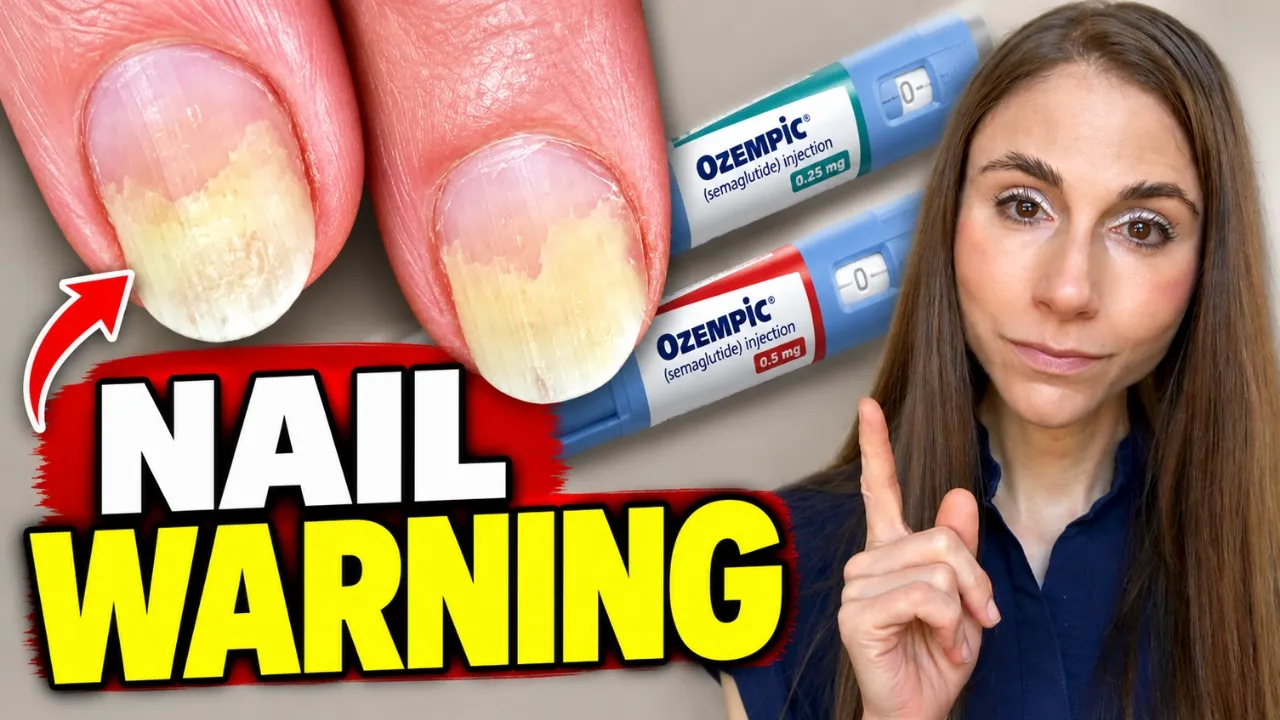
Surging reports of nail detachment among GLP-1 patients stem from preexisting medical conditions and nutritional shortfalls rather than direct drug toxicity, as the statistical association completely vanishes in new-onset cases.
AI-assisted summary of GLP-1s & Nail Detachment? New Study Reveals a Surprising Side Effect — original source. Check the original for full context.
Source published:
Key ideas
- An EADV study revealed that 39% of GLP-1 users reported onycholysis compared to 8.7% of non-users, alongside elevated rates of nail discoloration and general nail disorders. (1:28)
- The apparent association between GLP-1s and nail detachment disappears (adjusted odds ratio drops to 0.9–1.0) when researchers restrict analysis strictly to new-onset cases that began after starting the medication. (2:54)
- Onycholysis is commonly triggered by environmental factors or preexisting conditions frequent in GLP-1 candidates, including nail psoriasis, hypothyroidism, and fungal infections. (4:36)
- Reduced food and fluid intake on GLP-1s places patients at elevated risk for nutritional deficiencies, including low iron, vitamin D, and B vitamins, though nail detachment itself is not a classic deficiency symptom. (9:40)
- Patients experiencing nail lifting should consult a dermatologist rather than stopping their GLP-1 prescription, as abruptly discontinuing medication without medical supervision can carry adverse health risks. (12:45)
Detailed notes
## Background Published on YouTube by dermatologist Dr Dray on October 7, 2026, this video examines a newly presented study investigating a potential link between GLP-1 receptor agonists and nail disorders such as onycholysis. The description outlines the study's reported findings on nail detachment and discoloration, while highlighting major methodological limitations, nutritional considerations, and practical clinical guidance for patients.
## TL;DR Dr. Dray breaks down an international survey that initially reported a 39% rate of onycholysis among GLP-1 users compared to roughly 9% in non-users, cautioning that correlation does not mean causation. She demonstrates that nearly half of the affected patients had preexisting nail issues, and the statistical association completely disappeared when analyzing strictly new-onset cases after adjusting for confounders like underlying comorbidities and nutritional deficiencies. While rapid weight loss commonly triggers hair shedding, it does not typically detach nails; however, reduced appetite on GLP-1s can induce deficits in iron, B vitamins, and vitamin D. Ultimately, she advises patients not to panic or stop their medication abruptly, recommending a dermatologist visit with bare, unpolished nails for an accurate diagnosis.
## Atmosphere & style The video maintains a calm, analytical, and reassuring tone as Dr. Dray demystifies sensationalized headlines with clear dermatologic logic. Her delivery blends clinical rigor with casual, wry humor—complete with an amused snort when pointing out how the supposed risk vanishes in sub-analyses. Watching feels like sitting down for an evidence-based clinic consultation that de-escalates panic and replaces alarmism with sensible, practical medical advice.
## Bulletin - [01:28](https://www.youtube.com/watch?v=nGQggX1qajM&t=88s) An EADV study revealed that 39% of GLP-1 users reported onycholysis compared to 8.7% of non-users, alongside elevated rates of nail discoloration and general nail disorders. - [02:54](https://www.youtube.com/watch?v=nGQggX1qajM&t=174s) The apparent association between GLP-1s and nail detachment disappears (adjusted odds ratio drops to 0.9–1.0) when researchers restrict analysis strictly to new-onset cases that began after starting the medication. - [04:36](https://www.youtube.com/watch?v=nGQggX1qajM&t=276s) Onycholysis is commonly triggered by environmental factors or preexisting conditions frequent in GLP-1 candidates, including nail psoriasis, hypothyroidism, and fungal infections. - [09:40](https://www.youtube.com/watch?v=nGQggX1qajM&t=580s) Reduced food and fluid intake on GLP-1s places patients at elevated risk for nutritional deficiencies, including low iron, vitamin D, and B vitamins, though nail detachment itself is not a classic deficiency symptom. - [12:45](https://www.youtube.com/watch?v=nGQggX1qajM&t=765s) Patients experiencing nail lifting should consult a dermatologist rather than stopping their GLP-1 prescription, as abruptly discontinuing medication without medical supervision can carry adverse health risks.
## Key takeaways - [01:28](https://www.youtube.com/watch?v=nGQggX1qajM&t=88s) A multi-country cross-sectional study presented at the EADV examined nail and hair changes among 575 GLP-1 users versus 1,329 controls with obesity and/or type 2 diabetes. - [01:28](https://www.youtube.com/watch?v=nGQggX1qajM&t=88s) GLP-1 users in the study reported higher rates of onycholysis (39% vs. 8.7%) and nail discoloration (45.6% vs. 17%) compared to non-users. - [02:54](https://www.youtube.com/watch?v=nGQggX1qajM&t=174s) Nearly half of the GLP-1 users surveyed had preexisting nail conditions prior to initiating their medication, representing a critical confounding variable. - [02:54](https://www.youtube.com/watch?v=nGQggX1qajM&t=174s) Controlling for nutritional status and underlying health conditions reduced the adjusted odds ratio for onycholysis from 4.4 down to 2.9. - [02:54](https://www.youtube.com/watch?v=nGQggX1qajM&t=174s) When researchers analyzed strictly new-onset nail disorders arising after starting GLP-1 therapy, the statistical link completely vanished. - [04:36](https://www.youtube.com/watch?v=nGQggX1qajM&t=276s) Onycholysis occurs when the nail plate separates from the nail bed, creating an air pocket that appears as an opaque white patch. - [04:36](https://www.youtube.com/watch?v=nGQggX1qajM&t=276s) Routine external triggers such as aggressive manicures, moisture exposure from wet work, and fungal nail infections can cause onycholysis independently of medication. - [04:36](https://www.youtube.com/watch?v=nGQggX1qajM&t=276s) Preexisting systemic conditions strongly associated with obesity and diabetes, particularly nail psoriasis and hypothyroidism, frequently cause nail detachment and may be misattributed to GLP-1s. - [07:44](https://www.youtube.com/watch?v=nGQggX1qajM&t=464s) While rapid weight loss frequently triggers diffuse hair shedding via telogen effluvium, spontaneous nail detachment is not a recognized physiological consequence of weight loss. - [09:40](https://www.youtube.com/watch?v=nGQggX1qajM&t=580s) Marked appetite suppression and gastrointestinal side effects on GLP-1s can push individuals with poor baseline diets into frank nutritional deficiencies, such as iron, vitamin D, and B vitamins. - [11:36](https://www.youtube.com/watch?v=nGQggX1qajM&t=696s) Patients noticing nail lifting should undergo clinical evaluation by a board-certified dermatologist and must remove all nail polish before the visit to allow proper inspection of the nail plate and bed. - [12:45](https://www.youtube.com/watch?v=nGQggX1qajM&t=765s) Patients should never abruptly discontinue a GLP-1 medication due to nail changes, and they should expect recovery to take several months due to slow nail growth.
## Detailed walkthrough ### [00:00](https://www.youtube.com/watch?v=nGQggX1qajM&t=0s) GLP-1 Medications and Reported Nail Changes
Dermatologist Dr. Dray opens by welcoming viewers back and acknowledging the growing public conversation around GLP-1 receptor agonists like semaglutide and tirzepatide. Prescribed widely for type 2 diabetes and chronic weight management, these medications have already been linked in dermatology circles to various dermatologic side effects, nutritional deficiencies, and noticeable hair shedding—topics she has covered in previous deep dives. However, she turns her attention to a newly surfaced, unexpected side effect that has raised eyebrows across the clinical community: significant nail changes.
A study presented at the European Academy of Dermatology and Venereology (EADV) highlighted an unusually high frequency of nail complaints among patients taking GLP-1 receptor agonists, occurring at rates far surpassing those seen in control patients living with obesity or diabetes who were not taking the drugs. The most startling headline finding was the prevalence of onycholysis—a condition where the hard nail plate lifts and separates from the vascularized nail bed underneath. The abstract reported that 39% of GLP-1 users experienced onycholysis compared to just 9% of non-users. While such numbers sound alarming at first glance, Dr. Dray immediately urges viewers not to panic or assume that starting a GLP-1 prescription will ruin their nails.
[01:28](https://www.youtube.com/watch?v=nGQggX1qajM&t=88s) Study Findings on Onycholysis and Nail Discoloration
To put the statistics into perspective, Dr. Dray breaks down the study's design and sample size. This was an international cross-sectional survey that gathered data from patients across four countries: the United States, France, Mexico, and Brazil. The researchers evaluated 575 individuals taking GLP-1 receptor agonists and compared them against a control cohort of 1,329 individuals diagnosed with obesity, type 2 diabetes, or both, who had never used a GLP-1 drug. Patients were asked directly about changes in their hair and nails, with investigators cataloging several distinct categories of nail abnormalities.
The primary figures showed that 39% of GLP-1 users experienced onycholysis, compared to only 8.7% in the control cohort, translating to an unadjusted 4.5-fold higher likelihood of nail plate detachment. Beyond nail lifting, researchers observed elevated rates of nail dyschromia (discoloration), reported in 45.6% of GLP-1 users versus 17% of controls—a 2.7-fold increase. Other commonly cited abnormalities included pronounced nail fragility and longitudinal or transverse nail ridges. When evaluating nail health broadly, 66% of GLP-1 users reported having some form of nail disorder, compared to 53% of participants in the control group.
- **Study Scope:** 575 GLP-1 users vs. 1,329 controls across the US, France, Mexico, and Brazil. - **Onycholysis Rate:** 39% in GLP-1 users vs. 8.7% in non-users (a 4.5-fold unadjusted increase). - **Nail Discoloration:** 45.6% in GLP-1 users vs. 17% in non-users (a 2.7-fold increase). - **Any Nail Disorder:** 66% in GLP-1 users vs. 53% in non-users.
[02:54](https://www.youtube.com/watch?v=nGQggX1qajM&t=174s) Correlation vs. Causation: Key Study Limitations
Dr. Dray emphasizes that observational study data must be interpreted with extreme caution and cannot prove that GLP-1 receptor agonists directly cause nail separation. This was not a prospective, randomized controlled trial where healthy nails were observed over time following a randomized intervention. In fact, a major confounding factor was present from the start: approximately half of the GLP-1 users in the study had a documented history of nail problems before ever initiating the medication.
When the researchers performed multivariable regression analyses to account for potential underlying causes—such as existing systemic medical conditions and nutritional deficiencies—the apparent strength of the association weakened substantially. For onycholysis, the adjusted odds ratio dropped from 4.4 (when adjusting only for age, sex, and country) down to 2.9 once nutritional deficits and underlying health conditions were factored in. For nail discoloration, the adjusted odds ratio declined from 3.3 to roughly 2.2.
The most telling finding emerged when researchers restricted their analysis exclusively to *new-onset* nail disorders that developed strictly after starting the GLP-1 medication. In that sub-analysis, the statistical association completely vanished: the adjusted odds ratio for nail discoloration plummeted to between 0.9 and 1.0. Dr. Dray reacts with an amused snort, noting that when you look strictly at new-onset cases, the data reveals no actual difference between GLP-1 users and non-users. This critical nuance underscores why flashy headlines often mislead patients into assuming causation where none exists.
```mermaid flowchart TD accTitle: Statistical Association Weakening Across Analytical Models accDescr: Flowchart illustrating how the adjusted odds ratio for nail problems declines as confounders are added and disappears for new-onset cases. subgraph Baseline["Initial Baseline"] A["Unadjusted / Demographic Adjustment<br/>(Age, sex, country)"] -->|"Onycholysis aOR: 4.4"| B["Strong Apparent Association"] end subgraph Multi["Multivariable Adjustment"] B -->|"Control for nutrition & comorbidities"| C["aOR drops to 2.9 (Onycholysis)<br/>aOR drops to 2.2 (Discoloration)"] end subgraph NewOnset["New-Onset Sub-Analysis"] C -->|"Exclude preexisting nail conditions"| D["Association Disappears<br/>(aOR ~0.9 - 1.0)"] end ```
[04:36](https://www.youtube.com/watch?v=nGQggX1qajM&t=276s) Understanding Onycholysis and Common Confounders
To demystify the condition itself, Dr. Dray explains the anatomy of onycholysis. The nail plate is a dense, hard structure that normally adheres tightly to the underlying nail bed, where it receives vital nutrients and growth factors. When trauma, disease, or infection severs that bond, the nail plate lifts. Because air fills the newly formed pocket beneath the nail plate, the area reflects light and looks like an irregular, opaque "white blob" rather than healthy pink tissue.
Onycholysis has an extensive list of mundane and systemic triggers that have nothing to do with GLP-1 medications. Common mechanical and environmental causes include frequent manicures, aggressively scraping or picking under the nail margin, fungal nail infections (onychomycosis), and chronic moisture exposure from repeated hand-washing or "wet work" performed without protective gloves.
Furthermore, several major chronic illnesses are heavily linked both to onycholysis and to the patient populations who seek GLP-1 therapy: - **Psoriasis:** Nail psoriasis frequently causes onycholysis and pitting, and affected individuals face an increased risk of psoriatic arthritis in their hands. Because psoriasis is strongly linked to obesity and type 2 diabetes, these patients are naturally far more likely to be prescribed GLP-1s. Many individuals also have mild, undiagnosed psoriasis—brushing off isolated scaly patches as mere "dry skin" and ignoring occasional nail pits—meaning their nail changes predated the medication. - **Hypothyroidism:** Underactive thyroid disease frequently triggers nail brittleness, ridging, and detachment. Because thyroid dysfunction often contributes to weight management struggles and frequently coexists with type 2 diabetes, patients often receive GLP-1s while their thyroid-related nail symptoms are already underway. Dr. Dray describes these medications as simply being "guilty by association."
[07:44](https://www.youtube.com/watch?v=nGQggX1qajM&t=464s) The Role of Weight Loss and Telogen Effluvium
Dr. Dray addresses the logical follow-up question: could the rapid, profound weight loss induced by GLP-1 medications be triggering nail detachment? It is already well-documented that significant weight loss from any source—whether bariatric surgery, intense caloric restriction, crash diets, or GLP-1 therapy—can shock the body into a state of generalized hair shedding known as telogen effluvium.
In telogen effluvium, the body perceives rapid physiologic change or acute metabolic stress and triages its resources, thinking: *"Okay, we don't exactly know where things are going here, so why don't we conserve resources and not prioritize hair growth because it's not necessary for life."* Hair follicles are abruptly shifted out of their active growing phase into a resting, shedding phase, typically manifesting as heavy shedding roughly three months after the initial metabolic shock. Once body weight and metabolic demands stabilize, the follicles return to their normal growth cycle.
While it seems intuitive that the rapidly dividing matrix cells responsible for nail production might respond in the exact same way, Dr. Dray notes that nail physiology behaves differently. Unlike the hair shedding seen in telogen effluvium, dermatologists do not typically observe onycholysis (or spontaneous nail detachment) as a standard physiological consequence of acute weight loss, nor is it a standard presentation for underlying nutritional deficiencies, despite how common nutritional gaps can be in patients taking GLP-1 receptor agonists.
[09:40](https://www.youtube.com/watch?v=nGQggX1qajM&t=580s) Nutritional Deficiencies and GLP-1 Medications
Weight loss itself can impact nail appearance, but those alterations typically appear on the surface of the nail plate rather than causing separation from the bed. Dr. Dray emphasizes that people tend to blame weight loss exclusively for every physical change that arises on GLP-1 medications. However, evidence indicates that some systemic shifts are not merely downstream effects of dropping weight; these drugs alter multiple physiological processes, including lowering systemic inflammation.
Regardless of whether GLP-1 medications directly induce nail pathology, there is an established risk that demands attention: nutritional deficiencies. GLP-1 receptor agonists substantially suppress appetite and frequently trigger gastrointestinal side effects like nausea and stomach upset. As a result, patients consume substantially less food and often drink less fluid. Many individuals starting these medications were already "teetering on the edge" nutritionally; as Dr. Dray points out, it is remarkably easy to consume excess calories while eating a nutrient-poor diet. Entering treatment with borderline micronutrient reserves, followed by a dramatic drop in food intake, can easily tip someone into an overt deficiency state.
```mermaid flowchart TD accTitle: Nutritional Deficiency Risk on GLP-1 Medications accDescr: Flowchart illustrating how GLP-1 side effects combine with baseline dietary gaps to produce micronutrient deficiencies.
subgraph Baseline ["Baseline Status"] A["Caloric excess / nutrient-poor diet"] --> B["Borderline nutrient reserves"] end
subgraph GLP1Effects ["GLP-1 Medication Effects"] C["Marked appetite suppression"] D["Gastrointestinal upset & nausea"] C & D --> E["Significantly reduced food & fluid intake"] end
subgraph Outcome ["Clinical Result"] B & E --> F["Frank Nutritional Deficiencies"] F --> G["Iron deficiency"] F --> H["B vitamin deficiency (~3.2%)"] F --> I["Low vitamin D levels"] end ```
- Iron deficiency is particularly common among patients using GLP-1 therapies. - Research demonstrates that approximately 3.2% of studied patients develop a B vitamin deficiency. - Low vitamin D levels represent another prominent concern. - Many patients fail to reach the recommended daily allowances (RDAs) for key minerals and essential nutrients, placing them in an at-risk clinical category.
[11:36](https://www.youtube.com/watch?v=nGQggX1qajM&t=696s) Clinical Evaluation of Detaching Nails
For anyone noticing that their nails are lifting or separating, consulting a board-certified dermatologist is the essential next step. Dermatologists manage far more than cosmetic procedures: "We don't just do Botox and fillers. We are the specialty that has expertise and training in diagnosis and management of nail disorders." A clinical evaluation is necessary because onycholysis stems from numerous possible triggers—including nail psoriasis or fungal infections—that must be systematically identified or ruled out.
Dr. Dray offers a practical, impassioned plea for clinic visits: never show up to a hard-earned dermatology appointment wearing nail polish. Polish completely conceals the nail bed, making an accurate examination impossible and wasting precious appointment time. Patients should avoid assuming a GLP-1 agonist is the direct culprit; while recent research highlights a statistical association, the underlying numbers do not demonstrate that the medication itself causes onycholysis.
- Schedule an evaluation with a board-certified dermatologist rather than attempting self-diagnosis. - Remove all nail polish prior to the appointment so the nail plate and bed can be thoroughly inspected. - Diagnostic evaluation helps distinguish drug side effects from common culprits like fungal onychomycosis or psoriasis.
[12:45](https://www.youtube.com/watch?v=nGQggX1qajM&t=765s) Treatment Decisions and Final Takeaways
Under no circumstances should patients abruptly discontinue a GLP-1 medication due to emerging nail abnormalities. Stopping prescription therapies without physician guidance can carry negative health consequences. The appropriate course of action is to have the nail condition formally assessed and managed while continuing prescribed regimens under medical oversight. Patients must also manage their expectations regarding recovery: because nails grow slowly, resolving nail plate separation and restoring normal attachment takes months of patience even after the underlying cause is addressed.
The recent study provides intriguing signals that GLP-1 users experience elevated rates of nail findings, but it leaves open whether the culprit is the drug molecule itself, rapid weight loss, or an unaddressed micronutrient deficit. Dr. Dray encourages viewers—many of whom take these agents for weight management, diabetes, or off-label indications—to share their personal experiences with onycholysis or nail changes in the comments. She directs viewers to a follow-up video detailing cutaneous warning signs of nutritional deficiencies seen during GLP-1 therapy, before signing off with her signature reminder: "don't forget sunscreen and subscribe."
## Notable quotes > [07:44](https://www.youtube.com/watch?v=nGQggX1qajM&t=464s) Okay, we don't exactly know where things are going here, so why don't we conserve resources and not prioritize hair growth because it's not necessary for life. — Dr. Dray
> [04:36](https://www.youtube.com/watch?v=nGQggX1qajM&t=276s) guilty by association — Dr. Dray
> [04:36](https://www.youtube.com/watch?v=nGQggX1qajM&t=276s) white blob — Dr. Dray
> [09:40](https://www.youtube.com/watch?v=nGQggX1qajM&t=580s) teetering on the edge — Dr. Dray
> [11:36](https://www.youtube.com/watch?v=nGQggX1qajM&t=696s) We don't just do Botox and fillers. We are the specialty that has expertise and training in diagnosis and management of nail disorders. — Dr. Dray
> [12:45](https://www.youtube.com/watch?v=nGQggX1qajM&t=765s) don't forget sunscreen and subscribe — Dr. Dray
## Mentioned Dr. Dray, European Academy of Dermatology and Venereology, Ozempic, Wegovy, Mounjaro, Zepbound, semaglutide, tirzepatide
## Video description Could your nails be affected by GLP-1 medications such as Ozempic, Wegovy, Mounjaro, or Zepbound? Dermatologist Dr. Dray examines a new study investigating a potential link between GLP-1 receptor agonists and nail problems, including onycholysis, or separation of the nail from the nail bed. The study found that nail detachment and nail discoloration were reported more frequently among GLP-1 users than among people with obesity and/or type 2 diabetes who had never used GLP-1 medications. However, the findings do not prove that GLP-1 medications cause nail detachment. Dr. Dray explains the important limitations of the study, including the fact that nearly half of GLP-1 users reported nail problems before starting treatment and that the association disappeared when researchers looked specifically at new-onset nail abnormalities. The video also discusses GLP-1 medications, weight loss, nutritional deficiencies, and nail health, including research on vitamin D, iron, B vitamins, calcium, and overall dietary intake during GLP-1 treatment. Dr. Dray explains what onycholysis looks like, other common causes of nail separation, what to do if you notice your nails lifting from the nail bed, and whether you should stop a GLP-1 medication because of nail changes.
Related videos from Dr. Dray: Skin Benefits of GLP-1 Medications: Watch here Can Skincare Fix Ozempic Face? Watch here Nutritional Deficiencies From GLP-1 Medications: Watch here Ozempic Face & Aging Effects of GLP-1 Medications: Watch here GLP-1s and Hair Loss: Watch here Skin Benefits of GLP-1 Medications https://youtu.be/vESsyr2i6iA
Can Skincare Fix Ozempic Face? https://youtu.be/zURv_nMTUc0
Nutritional Deficiencies From GLP-1 Medications https://youtu.be/SXjwBXIZtvQ
Ozempic Face & Aging Effects of GLP-1 Medications https://youtu.be/E0V7jgubOfc
GLP-1s and Hair Loss https://youtu.be/0VW43kd63zM
TIMESTAMPS 0:00 GLP-1 medications and nail detachment 1:28 What did the study find? 2:54 Does this prove GLP-1s cause nail problems? 4:36 What is onycholysis? 7:44 Could weight loss cause nail changes? 10:07 Nutritional deficiencies and GLP-1 medications 11:36 What to do if your nail starts detaching 12:45 Should you stop your GLP-1 medication? 13:16 The bottom line
Important: This study found an association between GLP-1 receptor agonist use and reported nail disorders, but it does not establish that GLP-1 medications directly cause nail detachment. Anyone experiencing new or concerning nail changes should discuss them with a healthcare professional.
#GLP1 #Ozempic #Wegovy #Mounjaro #Zepbound #GLP1SideEffects #NailHealth #Onycholysis #NailChanges #NailDetachment #OzempicSideEffects #WegovySideEffects #MounjaroSideEffects #GLP1Medications #Dermatologist #DrDray #SkinHealth #NutritionalDeficiency
FTC: This video is not sponsored. Links are commissionable, meaning I may earn commission from purchases made through links.
💜Shop my Amazon store https://o.bttn.io/0BwiPWFIZLG 💜Follow me on liketoknowit https://www.liketoknow.it/drdrayzday 💜Social media Instagram @drdrayzday Pinterest https://www.pinterest.com/drdrayzday/ Facebook @DrDrayzDay Twitter: @drdrayzday Tiktok: @drdrayzday
Disclaimer: This video is not intended to provide diagnosis, treatment or medical advice. Content provided on this Youtube channel is for informational purposes only. Please consult with a physician or other healthcare professional regarding any medical or health related diagnosis or treatment options. Information on this Youtube channel should not be considered as a substitute for advice from a healthcare professional. The statements made about specific products throughout this video are not to diagnose, treat, cure or prevent disease.
[Source](https://www.youtube.com/watch?v=nGQggX1qajM)