Plague Is Trending: What Does Plague Look Like on the Skin?
Dr Dray
AI-assisted summary of Plague Is Trending: What Does Plague Look Like on the Skin? — original source. Check the original for full context.
Source published:
Key ideas
- Between 1,000 and 3,000 human plague cases are diagnosed globally each year, sustained by persistent wild animal reservoirs despite modern rodent control and antibiotic therapies. (0:00)
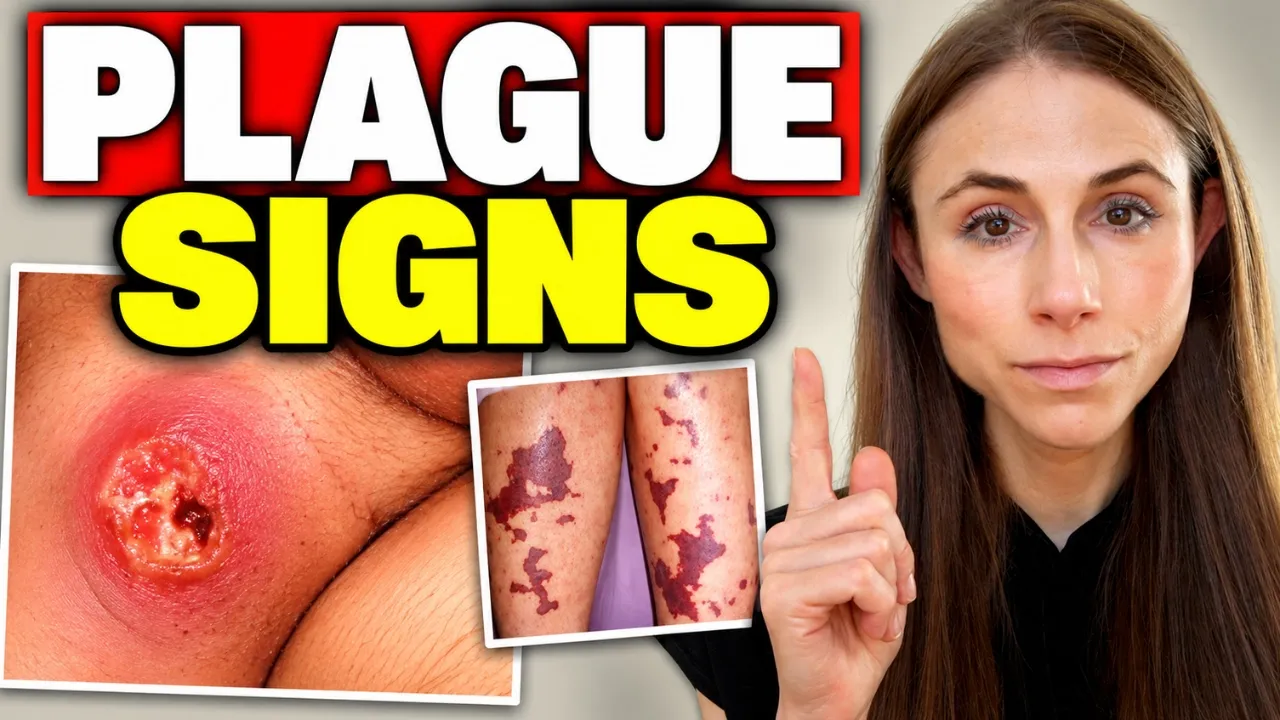
- Cutaneous presentations differ significantly across plague types, ranging from massively swollen lymph node buboes and flea-bite eschars in bubonic plague to disseminated intravascular coagulation, purpura, and extremity gangrene in septicemic plague. (1:46)
- Untreated bubonic plague carries a 50% to 60% mortality rate, while untreated septicemic and pneumonic forms are virtually 100% fatal, necessitating aggressive empiric antibiotic treatment prior to laboratory confirmation. (9:32)
- Recent media reports regarding a Siberian laboratory worker's death involve an unconfirmed suspected case rather than an active epidemic, with authorities emphasizing that robust sanitation and vector control remain effective shields against community spread. (10:58)
Detailed notes
## Background Published on YouTube by dermatologist Dr Dray on October 8, 2026, this video explores the clinical and dermatological features of plague caused by the bacterium Yersinia pestis. According to the description, the video addresses the distinguishing signs of bubonic, septicemic, and pneumonic plague, diagnostic and antibiotic strategies, and the context surrounding news reports of a laboratory worker's death in Siberia.
## TL;DR Dr Dray reviews the transmission, presentation, and management of Yersinia pestis, contrasting the localized buboes and flea-bite eschars of bubonic plague with the life-threatening disseminated intravascular coagulation, purpura, and gangrene seen in septicemic plague. She explains that pneumonic plague presents an acute respiratory crisis capable of airborne person-to-person spread, necessitating rapid isolation and aggressive intensive care. Because untreated systemic plague carries near-certain mortality, immediate empiric treatment with antibiotics such as aminoglycosides or tetracyclines is essential before diagnostic confirmation. The presentation concludes by underscoring the role of municipal rodent control and personal sanitation in disease prevention, while reassuring viewers not to panic over unconfirmed single-case headlines.
## Atmosphere & style The video carries an informative, level-headed, and clinical tone delivered with Dr Dray's signature dry wit and direct communication style. Even while detailing severe medical realities like necrotic gangrene, organ failure, and intense septic shock, the delivery avoids sensationalism, systematically defusing audience panic through practical medical facts. It feels like an engaging and candid clinical consultation, balancing sobering mortality statistics with wry observations about modern headlines and practical preventive advice.
## Bulletin - [00:00](https://www.youtube.com/watch?v=jxgKHEBt4TI&t=0s) Between 1,000 and 3,000 human plague cases are diagnosed globally each year, sustained by persistent wild animal reservoirs despite modern rodent control and antibiotic therapies. - [01:46](https://www.youtube.com/watch?v=jxgKHEBt4TI&t=106s) Cutaneous presentations differ significantly across plague types, ranging from massively swollen lymph node buboes and flea-bite eschars in bubonic plague to disseminated intravascular coagulation, purpura, and extremity gangrene in septicemic plague. - [09:32](https://www.youtube.com/watch?v=jxgKHEBt4TI&t=572s) Untreated bubonic plague carries a 50% to 60% mortality rate, while untreated septicemic and pneumonic forms are virtually 100% fatal, necessitating aggressive empiric antibiotic treatment prior to laboratory confirmation. - [10:58](https://www.youtube.com/watch?v=jxgKHEBt4TI&t=658s) Recent media reports regarding a Siberian laboratory worker's death involve an unconfirmed suspected case rather than an active epidemic, with authorities emphasizing that robust sanitation and vector control remain effective shields against community spread.
## Key takeaways - [00:00](https://www.youtube.com/watch?v=jxgKHEBt4TI&t=0s) Human plague is an active zoonosis caused by the bacterium Yersinia pestis, which continues to circulate in wild animal reservoirs worldwide. - [01:05](https://www.youtube.com/watch?v=jxgKHEBt4TI&t=65s) Transmission occurs primarily via infected flea bites, direct contact with infectious animal tissue or body fluids, or inhalation of respiratory droplets from patients with pneumonic plague. - [01:46](https://www.youtube.com/watch?v=jxgKHEBt4TI&t=106s) Bubonic plague typically develops after a 2- to 6-day incubation period, causing rapid-onset high fever, headache, malaise, nausea, and debilitating body aches. - [01:46](https://www.youtube.com/watch?v=jxgKHEBt4TI&t=106s) The classic hallmark of bubonic plague is the bubo, an intensely painful, hot, and severely enlarged lymph node draining the site of flea inoculation, commonly in the groin, axillae, or neck. - [02:20](https://www.youtube.com/watch?v=jxgKHEBt4TI&t=140s) Roughly 10% of bubonic plague patients develop a primary cutaneous lesion at the flea-bite site that can present as an erythematous papule, pustule, ulcer, or black eschar. - [03:43](https://www.youtube.com/watch?v=jxgKHEBt4TI&t=223s) Septicemic plague develops when bacteria invade the bloodstream directly or progress from untreated bubonic plague, triggering disseminated intravascular coagulation (DIC). - [03:43](https://www.youtube.com/watch?v=jxgKHEBt4TI&t=223s) The cutaneous hallmark of septicemic plague includes widespread purpura and peripheral gangrene of the digits and nose due to obstructed microcirculation, originating the historical term 'Black Death.' - [04:53](https://www.youtube.com/watch?v=jxgKHEBt4TI&t=293s) Pneumonic plague has a rapid incubation period when contracted through inhaled droplets and quickly progresses to severe dyspnea, bloody sputum, and acute respiratory failure. - [04:53](https://www.youtube.com/watch?v=jxgKHEBt4TI&t=293s) Because it spreads directly between humans via airborne respiratory droplets without requiring a flea or animal vector, pneumonic plague poses the greatest public health and epidemic threat. - [06:18](https://www.youtube.com/watch?v=jxgKHEBt4TI&t=378s) Cutaneous signs of plague mimic numerous conditions, including staphylococcal adenitis, tularemia, cutaneous anthrax, rickettsial eschars, and meningococcemia, making patient exposure and travel history vital. - [07:55](https://www.youtube.com/watch?v=jxgKHEBt4TI&t=475s) Rapid disease progression mandates immediate empiric antibiotic therapy using tetracyclines, aminoglycosides, or chloramphenicol before laboratory test results return. - [09:32](https://www.youtube.com/watch?v=jxgKHEBt4TI&t=572s) Without treatment, bubonic plague has a 50% to 60% mortality rate, while untreated septicemic and pneumonic forms are virtually 100% fatal. - [09:32](https://www.youtube.com/watch?v=jxgKHEBt4TI&t=572s) Advanced plague complications may require intensive care support, mechanical ventilation, surgical drainage of fluctuant buboes, and surgical debridement of gangrenous tissue. - [10:03](https://www.youtube.com/watch?v=jxgKHEBt4TI&t=603s) Plague prevention depends on personal precautions—such as insect repellent and avoiding wild rodents—paired with municipal environmental sanitation and rodent population management. - [10:58](https://www.youtube.com/watch?v=jxgKHEBt4TI&t=658s) Public health investigations into isolated incidents, such as the fatal pneumonia case in Siberia, should not be confused with confirmed or widespread plague outbreaks.
## Detailed walkthrough ### [00:00](https://www.youtube.com/watch?v=jxgKHEBt4TI&t=0s) Plague in the News and the Biology of Yersinia pestis
Plague has returned to public attention following reports of a laboratory worker in Siberia who died from severe pneumonia complications. While plague has not been officially confirmed in that specific case, the news has reignited curiosity and concern about what the disease actually looks like, particularly on the skin. Although modern culture widely associates plague with the Black Death and medieval history, it is far from an extinct relic. Between 1,000 and 3,000 cases of human plague are diagnosed internationally every single year. The infection remains rare in the modern era largely due to effective rodent and flea control programs paired with the availability of prompt antibiotic treatment. However, the causative bacterium, *Yersinia pestis*, continues to circulate persistently within wild animal reservoirs.
The primary transmission vector for *Yersinia pestis* is the bite of an infected flea. Once introduced into the body through the bite, the bacteria enter the lymphatic system and travel through the blood to regional lymph nodes. Inside the lymph node, the organisms multiply rapidly, resulting in an intensely painful, massively swollen lymph node known clinically as a bubo. Beyond flea bites, plague can also be contracted through direct contact when handling tissues or fluids from an infected animal, or via respiratory droplets expelled by someone suffering from pneumonic plague. Clinically, plague is categorized into three primary forms—bubonic, septicemic, and pneumonic—each displaying distinct behaviors, incubation periods, and presentations.
```mermaid flowchart TD accTitle: Pathways of Yersinia pestis Infection and Clinical Manifestations accDescr: Flowchart illustrating flea, animal, and respiratory transmission routes leading to bubonic, septicemic, and pneumonic forms of plague.
subgraph Transmission["Transmission Routes"] A["Infected Flea Bite"] B["Handling Infected Animal"] C["Inhaled Respiratory Droplets"] end
subgraph Forms["Clinical Manifestations"] D["Bubonic Plague<br/>(Buboes, Bite Eschar)"] E["Septicemic Plague<br/>(DIC, Purpura, Gangrene)"] F["Pneumonic Plague<br/>(Hemoptysis, Rapid Lung Failure)"] end
A --> D B --> D D -->|"Untreated progression"| E A -->|"Direct bloodstream invasion"| E D -->|"Hematogenous spread"| F E -->|"Hematogenous spread"| F C -->|"Direct pulmonary infection"| F ```
[01:46](https://www.youtube.com/watch?v=jxgKHEBt4TI&t=106s) Bubonic Plague: Buboes and Flea-Bite Lesions
Bubonic plague is the most common form of human infection and the one that populates historical lore. Following the bite of an infected flea, there is typically an incubation period of two to six days before symptoms appear. Patients rapidly develop systemic illness marked by high fevers, severe headache, general malaise, nausea, gastrointestinal upset, profound fatigue, and debilitating muscle and joint aches.
From a dermatological and diagnostic perspective, the hallmark physical finding is the bubo. Unlike the subtle, reactive lymph node enlargement one might casually notice under the jawline during a common cold or flu, a plague bubo is an unmistakable, dramatic mass that prompts immediate alarm. The location of the bubo directly reflects the lymphatic drainage basin nearest to where the flea bite occurred; for example, a flea bite sustained on the thigh will produce marked inguinal lymphadenopathy in the groin. The most common anatomical sites for buboes are the groin, the axillae (under the arms), and the cervical chain along the neck. The skin overlying these swollen nodes becomes bright red, hot to the touch, and severely tender, often progressing to ulceration and spontaneous drainage of foul-smelling, purulent fluid.
In roughly 10% of bubonic plague cases, a distinct cutaneous lesion is visible directly at the primary inoculation site of the flea bite. This lesion may start as a small erythematous bump, evolve into an inflammatory pustule, or transform into an ulcer covered by a thick black scab known as an eschar. As "medieval torture chamber adjacent" as the presentation feels, bubonic plague that is diagnosed and treated early with appropriate antibiotics can resolve fully, although the affected lymph nodes commonly remain enlarged and tender for a week or more following clearance. Without treatment, however, the disease progresses into far more lethal systemic states.
- **Incubation Period:** Typically 2 to 6 days after flea exposure. - **Constitutional Symptoms:** Sudden fever, chills, headache, nausea, body aches, and overwhelming fatigue. - **Classic Bubo Sites:** Groin (inguinal), armpits (axillary), and neck (cervical). - **Inoculation Site Manifestation:** Occurs in approximately 10% of cases as a red papule, pustule, ulcer, or black eschar.
[03:43](https://www.youtube.com/watch?v=jxgKHEBt4TI&t=223s) Septicemic Plague, Purpura, and Gangrene
Septicemic plague represents a catastrophic systemic emergency where *Yersinia pestis* invades and multiplies directly within the bloodstream. This condition can occur as a secondary progression of untreated bubonic plague, but it can also present primarily without any antecedent localized lymph node swelling. Once circulating in the blood, the bacterial toxins trigger disseminated intravascular coagulation (DIC), an extreme dysregulation of normal blood clotting and coagulation cascades.
The cutaneous consequences of DIC in septicemic plague are severe. Widespread microvascular clotting compromises blood flow to the skin and extremities while concurrently exhausting clotting factors, leading to widespread bleeding under the skin. Patients develop purpura—large, irregular patches of deep red and purple discoloration across the body. As blood supply to terminal tissues is completely choked off, tissue death ensues, resulting in frank gangrene of the fingers, toes, and nose. This necrotic blackening of dead tissue is precisely where the historical moniker "Black Death" originated.
Alongside the dermatological destruction, patients enter profound septic shock. Blood pressure plummets, causing vital organs to suffer severe hypoperfusion and rapid failure, accompanied by acute respiratory collapse. Septicemic plague constitutes an absolute medical emergency requiring immediate intensive care unit (ICU) admission, aggressive hemodynamic stabilization, and intravenous antimicrobial therapy to have any chance of survival.
[04:53](https://www.youtube.com/watch?v=jxgKHEBt4TI&t=293s) Pneumonic Plague and Droplet Transmission
Pneumonic plague occurs when *Yersinia pestis* infects the pulmonary tissue. This can develop secondarily when bacteria from either bubonic or primary septicemic plague seed the lungs via the bloodstream. However, pneumonic plague can also arise primarily through the direct inhalation of infectious respiratory droplets expelled by an infected person or animal.
When contracted through droplet inhalation, the disease has an exceptionally short incubation period compared to flea-borne transmission. Initial signs appear swiftly, beginning with acute fever, chills, widespread muscle aches, and extreme fatigue, which quickly cascade into severe pulmonary distress. Patients develop a relentless cough producing bloody sputum (hemoptysis) and experience intense shortness of breath. This is not mild exertion-related breathlessness, but an acute, life-threatening respiratory failure where patients rapidly require mechanical ventilation.
Because pneumonic plague can spread directly from person to person through the air without needing an intermediate insect or animal vector, it represents the most critical form of the disease from an epidemiological and public health standpoint. This droplet transmissibility is the underlying driver of international media alarm whenever a suspected case of respiratory plague is reported, including the Siberian laboratory worker incident.
[06:18](https://www.youtube.com/watch?v=jxgKHEBt4TI&t=378s) Clinical Recognition and the Urgent Differential Diagnosis
A clinician evaluating suspected plague looks for a constellation of severe, rapid-onset systemic illness coupled with distinctive physical findings: an acutely tender, fiery red, massively enlarged lymph node, or acute pulmonary collapse. The clinical suspicion is heavily weighted by an epidemiological history, including recent travel to plague-endemic regions, contact with wild rodents, or direct knowledge of flea bites. Locating a primary inoculation lesion, particularly a distinct black eschar at the site of a bite, provides strong supportive evidence.
However, none of these dermatological presentations are strictly pathognomonic or a "slam dunk" unique solely to plague: - Severe lymphadenopathy can be provoked by numerous other bacterial infections (such as staphylococcal or streptococcal adenitis), tularemia, cat-scratch disease, or malignancy. - Cutaneous ulcers and eschars can mimic diseases such as cutaneous anthrax, rickettsial infections, or necrotic spider bites. - Purpura and disseminated intravascular coagulation have an extensive differential diagnosis, encompassing meningococcemia, other forms of severe gram-negative sepsis, and life-threatening autoimmune vasculitides.
Because a patient with septicemic or pneumonic plague deteriorates on a precipitous trajectory toward death, clinical decision-making cannot afford delays for endless academic debate. Clinicians must act immediately to stabilize and treat empirical suspects before formal confirmation, as there is simply no time to "sit there on your soapbox and pontificate and wax poetically."
[07:55](https://www.youtube.com/watch?v=jxgKHEBt4TI&t=475s) Diagnostic Testing, Antibiotic Treatment, and Intensive Care
Definitive diagnosis of plague relies on collecting appropriate clinical specimens, including needle aspirates of fluctuant buboes, peripheral blood cultures, or sputum samples coughed up by patients with pulmonary involvement. In addition to conventional culture and staining techniques, modern validated rapid antigen tests can detect specific *Yersinia pestis* surface antigens, significantly accelerating time-to-diagnosis in acute settings.
```mermaid flowchart LR accTitle: Diagnostic and Treatment Protocol for Plague accDescr: Step-by-step clinical pathway from diagnostic sampling to antibiotic selection and supportive hospital care.
subgraph Diagnostics["Diagnostic Evaluation"] D1["Specimen Collection<br/>(Bubo aspirate, blood, sputum)"] D2["Rapid Antigen Testing & Cultures"] D1 --> D2 end
subgraph Therapy["Immediate Medical Treatment"] T1["Targeted Antibiotics<br/>(Tetracyclines, Aminoglycosides,<br/>Chloramphenicol)"] T2["Intensive Care & Isolation<br/>(Airborne precautions for pneumonic)"] T3["Surgical Drainage<br/>(For ulcerated, fluctuant buboes)"] end
D2 --> Therapy ```
Modern medicine radically alters the prognosis of a disease that once decimated continents. The cornerstone of management is immediate antibiotic therapy: - **Tetracyclines:** The broad antimicrobial class widely prescribed in everyday dermatology for conditions like acne vulgaris is highly effective against *Yersinia pestis*. - **Aminoglycosides:** Parenteral agents including streptomycin and gentamicin serve as frontline bactericidal treatments. - **Chloramphenicol:** Retains historical and clinical utility, particularly for crossing tissue barriers such as the blood-brain barrier if meningeal involvement occurs.
Dr. Dray emphasizes that while medical culture frequently debates the adverse effects and overutilization of antibiotics, plague is an absolute indication where patients will emphatically say: "Load me up... otherwise you're going to die." An appropriate antibiotic regimen quite literally "will save your buboed life." Beyond pharmacology, patients with suspected pneumonic plague require immediate respiratory isolation under strict airborne protocols to prevent nosocomial transmission, alongside intensive care unit support. Furthermore, buboes that become severely fluctuant, necrotic, or heavily ulcerated may ultimately require bedside surgical decompression and drainage to manage the infected tissue.
[09:32](https://www.youtube.com/watch?v=jxgKHEBt4TI&t=572s) Mortality Rates and Clinical Complications of Plague
When plague complications develop, severe tissue damage can quickly escalate into a medical crisis. In cases where blood flow is compromised and tissue dies, necrotic areas become a severe danger, requiring surgical colleagues to step in and perform debridement to remove the dead tissue. While the word "plague" immediately evokes dark images of medieval history and the Black Death, Dr. Dray emphasizes that modern medical care prevents the condition from automatically becoming the catastrophic death sentence it once was. Nevertheless, the disease remains extraordinarily dangerous if left unchecked.
The mortality statistics for untreated plague underscore just how aggressive the infection is. In patients with classic bubonic plague who do not receive treatment, approximately 50% to 60% will die. The outlook is far grimmer for the more systemic presentations: if a patient develops septicemic or pneumonic plague, Dr. Dray puts it bluntly—without prompt care, "you're going to die." Even when modern, appropriate antibiotic treatment is administered swiftly, mortality remains "pretty significant," meaning survival is never a guarantee once the bacteria take hold systemically.
- Untreated bubonic plague carries a mortality rate between 50% and 60%. - Untreated septicemic plague and pneumonic plague are virtually 100% fatal. - Gangrene and dead necrotic tissue from complications necessitate surgical debridement. - Even with timely antibiotic intervention, the risk of death remains considerable.
---
[10:03](https://www.youtube.com/watch?v=jxgKHEBt4TI&t=603s) Preventing Plague and the Role of Environmental Sanitation
While medical treatment exists, prevention is by far the superior strategy. Dr. Dray explains that avoiding plague is fundamentally straightforward: people must minimize their exposure to infected animals and fleas as much as possible. On an individual level, this means applying insect repellents, wearing appropriate protective clothing whenever outdoors in flea-prone environments, and strictly avoiding the handling of sick or dead wildlife.
On a broader scale, preventing plague requires coordinated public health and municipal infrastructure. Systemic rodent population control and rigorous environmental sanitation are the real linchpins of disease suppression. Historically and in modern times, plague flourishes when human populations live in cramped, overcrowded quarters without adequate sanitation or pest management. Remarking on the collective effort required, Dr. Dray jokes that "it takes a village to keep you from getting bubonic plague." She notes that modern sanitation has made plague something the vast majority of people never have to encounter in their daily lives, adding with a wry smile, "although it's 2026, so I don't want to jinx myself."
```mermaid flowchart TD accTitle: Layers of Plague Prevention accDescr: Flowchart showing personal protection and municipal sanitation measures combining to prevent plague transmission. subgraph Personal["Personal Precautions"] A["Insect Repellents & Flea Protection"] B["Protective Clothing in Flea Habitats"] C["Avoid Handling Sick or Dead Animals"] end subgraph Municipal["Public Health & Sanitation"] D["Rodent Population Control"] E["Curbing Overcrowded Living Conditions"] F["Environmental Sanitation Systems"] end Personal --> G["Minimized Contact with Yersinia pestis Vectors"] Municipal --> G G --> H["Plague Prevention"] ```
- **Personal protection:** Use insect repellents, wear protective gear in flea-endemic areas, and never touch sick or deceased animals. - **Environmental control:** Manage rodent populations and maintain robust municipal sanitation. - **High-risk environments:** Cramped, unhygienic living conditions lacking pest control represent the primary trigger for outbreaks.
---
[10:58](https://www.youtube.com/watch?v=jxgKHEBt4TI&t=658s) Addressing Current Outbreak Fears and Parting Advice
Addressing the anxiety spurred by recent headlines—including unverified reports regarding a laboratory worker in Siberia—Dr. Dray urges viewers to maintain perspective and avoid panic. A critical distinction must be drawn between a suspected, unconfirmed single case and an actual widespread epidemic. She cautions viewers not to leap to the catastrophic conclusion that "we're all going down" simply because plague is trending in the news cycle. The World Health Organization continues to seek and evaluate information regarding the situation, and there is no evidence of an uncontrolled plague outbreak.
Dr. Dray wraps up the discussion by expressing hope that viewers found the medical breakdown both informative and educational. Reflecting on the bizarre news cycle, she asks the audience whether having plague concerns on their radar for 2026 was ever expected, noting that "stuff is just getting weirder and weirder." She directs viewers to an end-screen video covering the dengue fever situation and the specific skin warning signs associated with dengue infection. She signs off with her customary channel reminders: give the video a thumbs up, share it with friends, and "as always, don't forget sunscreen and subscribe."
## Notable quotes > [01:46](https://www.youtube.com/watch?v=jxgKHEBt4TI&t=106s) medieval torture chamber adjacent — Dr. Dray
> [06:18](https://www.youtube.com/watch?v=jxgKHEBt4TI&t=378s) slam dunk — Dr. Dray
> [06:18](https://www.youtube.com/watch?v=jxgKHEBt4TI&t=378s) sit there on your soapbox and pontificate and wax poetically — Dr. Dray
> [07:55](https://www.youtube.com/watch?v=jxgKHEBt4TI&t=475s) Load me up... otherwise you're going to die. — Dr. Dray
> [07:55](https://www.youtube.com/watch?v=jxgKHEBt4TI&t=475s) will save your buboed life. — Dr. Dray
> [09:32](https://www.youtube.com/watch?v=jxgKHEBt4TI&t=572s) you're going to die. — Dr. Dray
> [09:32](https://www.youtube.com/watch?v=jxgKHEBt4TI&t=572s) pretty significant — Dr. Dray
> [10:03](https://www.youtube.com/watch?v=jxgKHEBt4TI&t=603s) it takes a village to keep you from getting bubonic plague. — Dr. Dray
> [10:03](https://www.youtube.com/watch?v=jxgKHEBt4TI&t=603s) although it's 2026, so I don't want to jinx myself. — Dr. Dray
> [10:58](https://www.youtube.com/watch?v=jxgKHEBt4TI&t=658s) we're all going down — Dr. Dray
> [10:58](https://www.youtube.com/watch?v=jxgKHEBt4TI&t=658s) stuff is just getting weirder and weirder. — Dr. Dray
> [10:58](https://www.youtube.com/watch?v=jxgKHEBt4TI&t=658s) as always, don't forget sunscreen and subscribe. — Dr. Dray
## Mentioned Dr. Dray, Yersinia pestis, Black Death, World Health Organization, Siberia
## Video description Plague is back in the news, but what does plague actually look like? Dermatologist Dr. Dray explains the skin signs and symptoms of plague, including the classic buboes of bubonic plague, skin lesions from flea bites, purpura and gangrene associated with septicemic plague, and the serious respiratory symptoms of pneumonic plague. Plague is an infectious disease caused by the bacterium Yersinia pestis. Although plague is often associated with the Black Death and medieval history, human cases still occur today. Dr. Dray explains how plague is transmitted, the differences between bubonic, septicemic, and pneumonic plague, how doctors diagnose and treat the infection, and what the skin can reveal about this potentially life-threatening disease. The video also discusses the recent news surrounding a laboratory worker in Siberia who died from severe pneumonia. Plague has not been confirmed as the cause, and a suspected case should not be confused with a confirmed plague outbreak. In this video, Dr. Dray discusses: • What causes plague and how Yersinia pestis spreads • How people can become infected through flea bites and animal exposure • Bubonic plague and the characteristic painful swollen lymph nodes called buboes • Skin lesions that can occur at the site of an infected flea bite • Septicemic plague, including purpura and gangrene • Pneumonic plague and its respiratory symptoms • How a dermatologist may recognize possible plague • How plague is diagnosed • Antibiotic treatment for plague • How dangerous untreated plague can be • Ways to reduce the risk of plague exposure • What the recent Siberia news does, and does not, mean Timestamps 0:00 Intro 0:26 What Is the Plague? 1:05 How Do You Get Plague? 1:46 Bubonic Plague 3:43 Septicemic Plague 4:53 Pneumonic Plague 6:18 How Would a Dermatologist Recognize Plague? 7:55 How Is Plague Diagnosed? 8:21 Can the Plague Be Treated? 9:46 How Deadly Is Plague? 10:03 Can You Prevent Plague? 10:58 Should You Be Worried About Plague Right Now? 11:17 Outro This video is for educational purposes and is not a substitute for medical evaluation or treatment.
#Plague #BubonicPlague #PlagueSymptoms #PlagueSigns #YersiniaPestis #PneumonicPlague #SepticemicPlague #Buboes #SkinSigns #InfectiousDisease #Dermatologist #DrDray #Dermatology #BlackDeath #PlagueNews
FTC: This video is not sponsored. Links are commissionable, meaning I may earn commission from purchases made through links.
💜Shop my Amazon store https://o.bttn.io/0BwiPWFIZLG 💜Follow me on liketoknowit https://www.liketoknow.it/drdrayzday 💜Social media Instagram @drdrayzday Pinterest https://www.pinterest.com/drdrayzday/ Facebook @DrDrayzDay Twitter: @drdrayzday Tiktok: @drdrayzday
Disclaimer: This video is not intended to provide diagnosis, treatment or medical advice. Content provided on this Youtube channel is for informational purposes only. Please consult with a physician or other healthcare professional regarding any medical or health related diagnosis or treatment options. Information on this Youtube channel should not be considered as a substitute for advice from a healthcare professional. The statements made about specific products throughout this video are not to diagnose, treat, cure or prevent disease.
[Source](https://www.youtube.com/watch?v=jxgKHEBt4TI)