Dr Dray Rebuffs Vitamin C 72-Hour Depot Rule Over Porcine Data Gap
Dr Dray
Claims that topical vitamin C creates a 72-hour tissue reservoir stem from pig models rather than human clinical trials, which require daily application to stimulate collagen.
AI-assisted summary of Enlarged Pores? The Best In-Office Treatments | Dermatologist Q&A — original source. Check the original for full context.
Source published:
Key ideas
- Snow mushroom provides strong topical hydration and anti-inflammatory benefits, but consumers should check current formulations before paying a premium for trendy standalone products. (0:04)
- Buffered 12% ammonium lactate uniquely increases dermal thickness in clinical trials, providing an evidence-based, low-cost option for addressing dermal atrophy. (1:36)
- Radiofrequency microneedling and fractional lasers are the premier in-office options for enlarged pores because thermal dermal injury restores the collagen scaffolding that keeps pore walls taut. (7:09)
- The persistent belief that vitamin C serums last 72 hours in human skin stems from porcine studies, while human clinical trials for collagen stimulation tested daily or twice-daily dosing. (8:25)
Detailed notes
## Background Published on YouTube by dermatologist Dr. Dray on October 10, 2026, this Q&A video addresses common skincare and dermatological questions submitted by her followers. The video covers the science behind hydrating ingredients like snow mushroom and electrolytes, compares over-the-counter chemical exfoliants, explores clinical options for spider veins and enlarged pores, reviews cartilage piercing aftercare, and clarifies proper vitamin C serum usage.
## TL;DR Dr. Dray breaks down popular skincare topics, validating snow mushroom and electrolyte-PCA complexes for surface hydration while cautioning viewers against inflated marketing claims. She highlights that 12% ammonium lactate in AmLactin uniquely stimulates dermal thickness compared to standard multi-acid peel pads, recommends sclerotherapy and compression stockings for spider veins, and points to RF microneedling and fractional lasers for restoring pore-supporting collagen. Finally, she debunks the popular belief that vitamin C only needs to be applied every 72 hours, explaining that this reservoir concept stems from pig skin studies rather than human clinical trials.
## Atmosphere & style The video delivers Dr. Dray's signature no-nonsense, evidence-based approach, blending clinical authority with dry, candid humor—most memorably when answering whether vitamin C stays active for three days with a blunt 'If you're a pig, yes.' Her delivery is methodical, relaxed, and conversational, transitioning effortlessly from personal anecdotes about cooking snow mushroom to rigorous breakdowns of percutaneous absorption. Watching the Q&A feels like an empowering, myth-busting consultation that demystifies viral cosmetic trends and replaces marketing hype with clear, practical guidance.
## Bulletin - [00:04](https://www.youtube.com/watch?v=U0cXvfQ8h60&t=4s) Snow mushroom provides strong topical hydration and anti-inflammatory benefits, but consumers should check current formulations before paying a premium for trendy standalone products. - [01:36](https://www.youtube.com/watch?v=U0cXvfQ8h60&t=96s) Buffered 12% ammonium lactate uniquely increases dermal thickness in clinical trials, providing an evidence-based, low-cost option for addressing dermal atrophy. - [07:09](https://www.youtube.com/watch?v=U0cXvfQ8h60&t=429s) Radiofrequency microneedling and fractional lasers are the premier in-office options for enlarged pores because thermal dermal injury restores the collagen scaffolding that keeps pore walls taut. - [08:25](https://www.youtube.com/watch?v=U0cXvfQ8h60&t=505s) The persistent belief that vitamin C serums last 72 hours in human skin stems from porcine studies, while human clinical trials for collagen stimulation tested daily or twice-daily dosing.
## Key takeaways - [00:04](https://www.youtube.com/watch?v=U0cXvfQ8h60&t=4s) Snow mushroom delivers significant hydration and anti-inflammatory properties, though its presence in expensive skincare lines is frequently driven by marketing rather than exclusive efficacy. - [01:36](https://www.youtube.com/watch?v=U0cXvfQ8h60&t=96s) Twelve percent buffered ammonium lactate lotion offers a distinct advantage over standard chemical exfoliants by provenly increasing dermal thickness to combat atrophy. - [02:20](https://www.youtube.com/watch?v=U0cXvfQ8h60&t=140s) The two-step multi-acid and retinol synergy found in high-end peel pads can be replicated affordably by layering an over-the-counter AHA/BHA gel with a retinol serum. - [04:58](https://www.youtube.com/watch?v=U0cXvfQ8h60&t=298s) Spider veins are treated primarily via sclerotherapy injections, followed by consistent use of graduated compression stockings to prevent vessels from refilling. - [05:57](https://www.youtube.com/watch?v=U0cXvfQ8h60&t=357s) Cartilage piercings take 6 to 12 months to heal and should be cleansed gently with saline; picking crusts or applying alcohol, peroxide, or antibiotic ointments impedes wound healing. - [07:09](https://www.youtube.com/watch?v=U0cXvfQ8h60&t=429s) Pores appear enlarged when aging and cumulative UV damage degrade surrounding collagen and elastin, allowing the structural pore lining to dilate outward. - [07:25](https://www.youtube.com/watch?v=U0cXvfQ8h60&t=445s) RF microneedling and fractional laser resurfacing reduce visible pore diameter by stimulating neocollagenesis to rebuild structural support around the pore opening. - [07:49](https://www.youtube.com/watch?v=U0cXvfQ8h60&t=469s) Topical electrolytes like calcium and magnesium bound to pyrrolidone carboxylic acid (PCA) support the skin barrier by mimicking natural moisturizing factors in the stratum corneum. - [08:25](https://www.youtube.com/watch?v=U0cXvfQ8h60&t=505s) The 72-hour vitamin C depot theory relies on pig skin models, which absorb hydrophilic molecules far more readily than human skin and synthesize vitamin C endogenously. - [09:24](https://www.youtube.com/watch?v=U0cXvfQ8h60&t=564s) Human clinical evidence confirming collagen synthesis and wrinkle reduction from topical L-ascorbic acid requires daily or twice-daily use rather than intermittent application. - [11:04](https://www.youtube.com/watch?v=U0cXvfQ8h60&t=664s) Common vitamin C derivatives provide general antioxidant defense but lack clinical validation for penetrating human skin to trigger collagen remodeling.
## Detailed walkthrough ### [00:00](https://www.youtube.com/watch?v=U0cXvfQ8h60&t=0s) Snow Mushroom for Skin Hydration and Culinary Texture
Dr. Dray kicks off the weekend Q&A by addressing whether snow mushroom (*Tremella fuciformis*) is truly effective as a hydrating skincare ingredient. She confirms that it is remarkably hydrating and naturally contains beneficial anti-inflammatory compounds. While she loves seeing it appear on ingredient lists, she warns against falling for clever marketing hype. Brands often highlight snow mushroom as a miraculous hero feature to justify an expensive price tag. Dr. Dray emphasizes the value of reading product labels carefully: if you check the formulas you already use and love, you may discover it is already in your routine, saving you from buying a costly new release just for the buzzword. She personally has used countless snow mushroom products over the years, starting with a serum from The Inkey List that she reviewed years back.
Beyond topicals, Dr. Dray shares an enthusiastic aside about eating snow mushroom. She initially encountered it in the context of traditional cold dessert soups and wondered, "what the heck is that?" After experimenting with making it at home, she fell in love with it, declaring it "delicious." Though edible snow mushrooms are somewhat expensive, preparing them is fascinating: they are sold as small, dried, white mushroom balls that bloom massively when soaked in water, completely filling the bowl. While they do not taste like anything on their own, their texture transforms dishes, imparting a thick, gelatinous consistency that she thoroughly enjoys.
[01:36](https://www.youtube.com/watch?v=U0cXvfQ8h60&t=96s) Dr. Dennis Gross Peel Pads vs. AmLactin and Affordable Alternatives
A viewer asks whether the cult-favorite Dr. Dennis Gross Peel Pads are comparable to AmLactin lotion. Dr. Dray breaks down how the two-step peel pad system functions: Step 1 uses chemical exfoliants—primarily glycolic acid, lactic acid, salicylic acid, and occasionally other alpha hydroxy acids (AHAs)—to buff away rough skin and clear comedones. Step 2 applies an antioxidant blend (including coenzyme Q10) alongside retinol, which converts to retinoic acid in the skin to support collagen synthesis and smooth fine lines. Dr. Dray notes that the universal version contains fragrance, which sensitive users should keep in mind.
When evaluating AmLactin as an alternative, Dr. Dray specifies that 12% buffered ammonium lactate offers clinical benefits that rival high-end anti-aging products. While the Dennis Gross pads primarily thicken the epidermis and speed up cell turnover, clinical studies demonstrate that 12% buffered ammonium lactate uniquely increases *dermal* thickness. This makes AmLactin a powerful, evidence-based option for dermal atrophy stemming from aging, deep wrinkles, or past topical steroid use—even outperforming popular anti-aging ingredients like copper peptides.
For those who want the exact multi-acid and retinoid synergy of the Dennis Gross pads without the roughly ninety-dollar price tag, Dr. Dray suggests an over-the-counter pairing: applying CeraVe Acne Control Gel (which contains an AHA and BHA blend like Step 1) followed by a retinol serum from the same line (matching Step 2). While pre-soaked pads provide precise, controlled application that prevents product from migrating toward delicate eyelids, they also waste product because pads are often overly soaked with liquid that gets thrown away.
| Product Option | Active Ingredients | Primary Benefits | Considerations & Pricing | |:--- |:--- |:--- |:--- | | **Dr. Dennis Gross Alpha Beta Peel Pads** | Step 1: Glycolic, Lactic, Salicylic Acids<br>Step 2: Retinol, Antioxidants (CoQ10) | Epidermal exfoliation, pigment clearance, collagen stimulation | Pre-soaked pads allow precise application but cause product waste; contains fragrance; expensive (~$90+) | | **AmLactin Daily Lotion (12% Ammonium Lactate)** | 12% Buffered Ammonium Lactate (Lactic Acid salt) | Exfoliates epidermis AND uniquely increases dermal thickness; reverses dermal atrophy | Backed by strong clinical trials; budget-friendly body/face lotion; hydrating and smoothing | | **CeraVe Routine Alternative** | Step 1: Acne Control Gel (AHA/BHA)<br>Step 2: Resurfacing Retinol Serum | Clears pores, smooths texture, promotes cellular renewal and collagen | Bottle/tube formats; identical net functionality to two-step peel pads at a fraction of the cost |
[04:58](https://www.youtube.com/watch?v=U0cXvfQ8h60&t=298s) Spider Veins: Causes, Sclerotherapy, and Prevention
Addressing a 50-year-old former athlete whose spider veins are spreading up their legs and quads, Dr. Dray explains the practical realities of managing them. The standard medical treatment is sclerotherapy, an in-office procedure where a provider uses a fine needle or cannula to inject a chemical sclerosant directly into the vessel. This solution irritates the vessel walls, causing the prominent vein to clot off, collapse, and gradually be reabsorbed by the body.
Following the procedure, patients must wear graduated compression stockings consistently to prevent the treated veins from refilling and to suppress new vein formation. Dr. Dray urges anyone dealing with spreading veins or lower leg swelling to talk with their physician about medical-grade compression stockings, especially if their daily routine involves prolonged standing or sitting. She also notes that the condition might not just be caused by a recent sedentary lifestyle: - Historical or current use of oral contraceptives and estrogen-based medications significantly increases the prevalence of lower-extremity spider veins. - Past pregnancies frequently trigger vein dilation and spider vein flare-ups due to hormonal shifts and increased pelvic vascular pressure.
[05:57](https://www.youtube.com/watch?v=U0cXvfQ8h60&t=357s) Cartilage Piercing Aftercare and What to Avoid
When caring for a new ear piercing—specifically a cartilage piercing—Dr. Dray outlines a gentle, low-intervention routine. She advises cleansing the front and back of the piercing twice daily using sterile saline solution. Crust and scabs inevitably develop around the wound, but Dr. Dray warns against peeling or picking at dry crusts, which damages healing tissue. Instead, soak the piercing thoroughly with saline until the dried crust rehydrates and softens, allowing it to be gently wiped away without force.
Patience is essential, as cartilage heals far more slowly than earlobes due to lower vascularity, routinely requiring 6 to 12 full months to heal completely. Dr. Dray outlines critical precautions to avoid infection and prolonged inflammation:
- **Do not sleep on the pierced ear**: Pressure and friction irritate the tract and can alter the angle of the piercing. - **Avoid harsh antiseptics**: Skip hydrogen peroxide, rubbing alcohol, and drying antibacterial soaps; alcohol and peroxide are cytotoxic and actively slow wound healing. - **Skip topical antibiotic ointments**: Avoid Neosporin or triple-antibiotic ointments, as ingredients like neomycin frequently induce allergic contact dermatitis. - **Keep out of natural bodies of water and pools**: Do not submerge your head in swimming pools, lakes, or the ocean ("who knows what's swimming around in there?"), though running tap water in the shower is perfectly acceptable.
[07:09](https://www.youtube.com/watch?v=U0cXvfQ8h60&t=429s) Best In-Office Treatments for Enlarged Pores
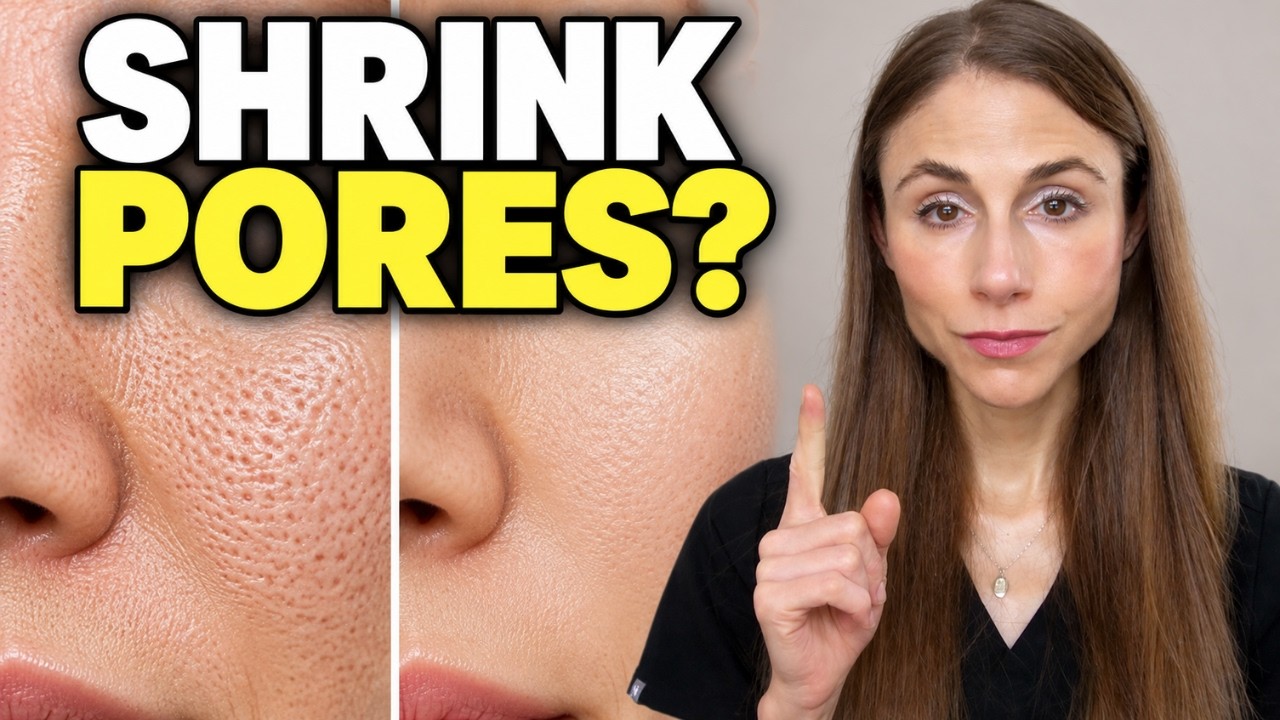
When asked for the single best in-office procedure for prominent, enlarged pores, Dr. Dray highlights radiofrequency (RF) microneedling and fractional lasers. She explains that pore size is fundamentally tethered to structural dermal integrity. As skin experiences cumulative ultraviolet sun damage and chronological aging, the collagen and elastin supporting the surrounding tissue degrade.
Without sufficient structural scaffolding, the pore wall sags and dilates outward, making the pore opening appear significantly wider and deeper. Both RF microneedling and fractional laser resurfacing deliver controlled thermal injury into the dermis, triggering robust neocollagenesis. Rebuilding this collagen matrix restores structural tension around the pore lining, pulling the pore taut and reducing its visible diameter.
[07:49](https://www.youtube.com/watch?v=U0cXvfQ8h60&t=469s) Electrolytes and PCA in Skincare Formulations
Dr. Dray addresses the trend of electrolyte-infused skincare, validating that mineral ions such as calcium and magnesium play a real role in skin health. Applied topically, these minerals deliver hydration to the surface layers of the stratum corneum, which subsequently fortifies the skin barrier.
She points out that these minerals are most commonly formulated as mineral salts bound to pyrrolidone carboxylic acid, such as magnesium PCA or calcium PCA. Pyrrolidone carboxylic acid is an integral component of the skin's natural moisturizing factor (NMF), which regulates water retention and barrier equilibrium. Formulating electrolytes with PCA enhances skin compatibility, boosts mineral absorption, and provides reliable surface hydration.
```mermaid flowchart TD accTitle: Electrolyte and PCA Skin Hydration Mechanism accDescr: Flowchart illustrating how mineral PCA complexes support the skin barrier and moisture retention.
subgraph Formulation ["Skincare Complex"] A["Electrolytes<br>(Calcium & Magnesium Ions)"] B["PCA<br>(Pyrrolidone Carboxylic Acid)"] end
subgraph BiologicalAction ["Physiological Mechanism"] C["Mimics Natural Moisturizing Factors (NMF)"] D["Optimizes Mineral Uptake in Stratum Corneum"] end
subgraph ClinicalResult ["Skin Benefits"] E["Surface Hydration"] F["Barrier Function Maintenance"] end
A --> D B --> C C --> E D --> E E --> F ```
[08:25](https://www.youtube.com/watch?v=U0cXvfQ8h60&t=505s) Vitamin C Serum Frequency and the 72-Hour Pig Skin Myth
The viewer asks whether L-ascorbic acid remains active in the skin for 72 hours post-application, suggesting that one only needs to apply vitamin C every two or three days. Dr. Dray delivers a blunt reality check: "If you're a pig, yes."
She explains that the widely cited claim that topical ascorbic acid builds a 72-hour reservoir in tissue comes directly from historical percutaneous absorption studies performed on porcine (pig) skin rather than human skin. While pig skin is a standard, reputable model for transdermal penetration testing, it has significant biological differences that distort real-world human skincare claims:
- **Hydrophilic permeability**: Pig skin is significantly more permeable to hydrophilic (water-soluble) molecules like L-ascorbic acid than human skin. As a result, pig skin models easily overestimate how deeply and extensively ascorbic acid absorbs in human tissue. - **Endogenous vitamin C synthesis**: Unlike humans—who lack the enzyme L-gulonolactone oxidase and cannot synthesize vitamin C—pigs naturally manufacture their own vitamin C internally from glucose. This difference complicates baseline tissue measurements and retention timelines.
[09:24](https://www.youtube.com/watch?v=U0cXvfQ8h60&t=564s) The Vitamin C Depot Effect: Animal Studies vs. Clinical Reality
Dr. Dray addresses the persistent theory that vitamin C serums only need to be applied every two to three days due to a biological "depot effect." She traces this idea back to porcine research, which demonstrated that topically applied ascorbic acid can remain active within pig skin for up to 72 hours, essentially forming a reservoir. While this suggests in theory that an individual could apply vitamin C every second or third day and still receive adequate protection, she cautions that there is no clinical data testing this specific dosing schedule in humans.
A major caveat when interpreting these findings is the physiological divergence between species. Humans cannot synthesize their own vitamin C and must obtain it entirely through diet, whereas pigs synthesize it endogenously. Furthermore, pig skin is considerably "more welcoming" to hydrophilic (water-soluble) compounds than human skin. While pig models were instrumental in optimizing the formulation parameters and systemic absorption requirements for ascorbic acid, human clinical trials demonstrating stimulated collagen production evaluated daily or even twice-daily applications. Dr. Dray acknowledges that applying it less frequently might still offer benefits—and admits she "wouldn't be surprised" if it works—but emphasizes that no published human citation exists to confirm its efficacy at that reduced frequency.
```mermaid flowchart TD accTitle: Vitamin C Depot Effect Comparison accDescr: Flowchart contrasting the pig study model with human clinical realities regarding topical ascorbic acid.
subgraph PigModel["Pig Model Findings"] A["Endogenous Vitamin C Synthesis"] B["Skin More Welcoming to Hydrophilic Actives"] C["72-Hour Depot Effect Observed"] A --> C B --> C end
subgraph HumanReality["Human Clinical Evidence"] D["Diet-Dependent (No Endogenous Synthesis)"] E["Tested Strictly on Daily / BID Applications"] F["Proven Collagen Production & Wrinkle Reduction"] D --> E E --> F end
C -.->|"Theoretical Extension (Unproven in Humans)"| E ```
[11:04](https://www.youtube.com/watch?v=U0cXvfQ8h60&t=664s) Pure L-Ascorbic Acid vs. Derivatives for Collagen Stimulation
Dr. Dray warns consumers about assuming that every vitamin C product on the shelf behaves like pure L-ascorbic acid. She jokingly refers to the endless derivatives flooding the market as "all the lottie dotties," pointing out magnesium ascorbyl phosphate and sodium ascorbyl phosphate as common examples. While these derivative forms are not bad ingredients, they typically only deliver surface-level antioxidant activity. In that respect, they provide little distinct advantage over any other basic antioxidant serum on the market.
The primary reason dermatologists and consumers prize true L-ascorbic acid is its dual functionality: in addition to broad antioxidant protection against oxidative stress, a properly formulated ascorbic acid serum actually penetrates the skin to stimulate dermal collagen synthesis and reduce visible fine lines and wrinkles. By contrast, everyday antioxidants like green tea and niacinamide simply do not trigger that same collagen-boosting cascade. Therefore, if collagen stimulation is the primary skincare goal, only correctly formulated ascorbic acid carries the clinical weight to achieve it.
- **Porcine vs. Human Skin Differences:** Pigs naturally synthesize vitamin C and have skin that absorbs hydrophilic substances more readily, meaning their 72-hour depot effect cannot be directly mapped onto human skin without dedicated human trials. - **Human Clinical Protocol:** The clinical studies confirming boosted collagen synthesis and wrinkle reduction required daily or twice-daily human application. - **Ascorbic Acid vs. Derivatives:** Ingredients like magnesium ascorbyl phosphate and sodium ascorbyl phosphate work as antioxidants, but they lack clinical backing for direct collagen stimulation. - **Other Common Actives:** Ingredients such as green tea and niacinamide offer antioxidant defense, but neither triggers collagen remodeling like properly formulated L-ascorbic acid.
[12:00](https://www.youtube.com/watch?v=U0cXvfQ8h60&t=720s) Video Wrap-Up and Final Reminders
Dr. Dray brings the Q&A session to a close, expressing her appreciation for the community's engaging questions. She encourages viewers to give the video a thumbs up if they found the discussion helpful, share it with friends who might benefit from the advice, and subscribe to the channel. As is her signature sign-off, she leaves her audience with a quick reminder: "don't forget sunscreen and subscribe," before signing off until the next day.
## Notable quotes > [00:00](https://www.youtube.com/watch?v=U0cXvfQ8h60&t=0s) what the heck is that? — Dr. Dray
> [00:00](https://www.youtube.com/watch?v=U0cXvfQ8h60&t=0s) delicious — Dr. Dray
> [05:57](https://www.youtube.com/watch?v=U0cXvfQ8h60&t=357s) who knows what's swimming around in there? — Dr. Dray
> [08:25](https://www.youtube.com/watch?v=U0cXvfQ8h60&t=505s) If you're a pig, yes. — Dr. Dray
> [09:24](https://www.youtube.com/watch?v=U0cXvfQ8h60&t=564s) more welcoming — Dr. Dray
> [09:24](https://www.youtube.com/watch?v=U0cXvfQ8h60&t=564s) wouldn't be surprised — Dr. Dray
> [11:04](https://www.youtube.com/watch?v=U0cXvfQ8h60&t=664s) all the lottie dotties — Dr. Dray
> [12:00](https://www.youtube.com/watch?v=U0cXvfQ8h60&t=720s) don't forget sunscreen and subscribe — Dr. Dray
## Mentioned Dr. Dray, The Inkey List, Dr. Dennis Gross Alpha Beta Peel Pads, AmLactin Daily Lotion, CeraVe Acne Control Gel, CeraVe Resurfacing Retinol Serum, Neosporin, Snow Mushroom (Tremella fuciformis), Ammonium Lactate, L-Ascorbic Acid, Coenzyme Q10, Pyrrolidone Carboxylic Acid (PCA), Magnesium Ascorbyl Phosphate, Sodium Ascorbyl Phosphate, Salicylic Acid, Glycolic Acid
## Video description Dermatologist Dr. Dray answers skincare questions from her followers in this Q&A, covering hydrating skincare ingredients, chemical exfoliants, spider veins, piercing aftercare, enlarged pores, electrolytes in skincare, and vitamin C serums.
Can snow mushroom improve skin hydration? Are Dr. Dennis Gross Peel Pads comparable to AmLactin? What is the best in-office treatment for enlarged pores? Dr. Dray discusses the science behind popular skincare ingredients and treatments, explains what to consider when choosing skincare products, and shares practical advice for maintaining healthy skin.
This video also covers how to care for new ear piercings, including cartilage piercings, treatment options for spider veins, and whether vitamin C serum needs to be applied daily to support skin rejuvenation and collagen production.
TIMESTAMPS 0:00 Intro 0:04 Snow Mushroom for Skin Hydration 1:36 Dr. Dennis Gross Peel Pads vs. AmLactin 4:58 Spider Veins: Treatment Options 5:57 How to Care for New Ear Piercings and Cartilage Piercings 7:09 Best In-Office Treatments for Enlarged Pores 7:49 Electrolytes in Skincare: Do They Help the Skin Barrier? 8:25 Vitamin C Serum: Can You Apply It Every 2 to 3 Days? 12:00 Outro
Watch for dermatologist insights on skincare ingredients, exfoliating acids, skin hydration, collagen stimulation, pore appearance, and practical skincare routines.
Subscribe to Dr. Dray for more dermatologist skincare advice, ingredient reviews, skincare Q&As, and evidence-based tips for healthy skin.
#DrDray #Dermatologist #Skincare #SkincareQandA #SnowMushroom #AmLactin #DennisGross #SpiderVeins #EarPiercingAftercare #EnlargedPores #VitaminCSerum #SkinBarrier #SkincareIngredients #skincaretips
FTC: This video is not sponsored. Links are commissionable, meaning I may earn commission from purchases made through links.
💜Shop my Amazon store https://o.bttn.io/0BwiPWFIZLG 💜Follow me on liketoknowit https://www.liketoknow.it/drdrayzday 💜Social media Instagram @drdrayzday Pinterest https://www.pinterest.com/drdrayzday/ Facebook @DrDrayzDay Twitter: @drdrayzday Tiktok: @drdrayzday
Disclaimer: This video is not intended to provide diagnosis, treatment or medical advice. Content provided on this Youtube channel is for informational purposes only. Please consult with a physician or other healthcare professional regarding any medical or health related diagnosis or treatment options. Information on this Youtube channel should not be considered as a substitute for advice from a healthcare professional. The statements made about specific products throughout this video are not to diagnose, treat, cure or prevent disease.
[Source](https://www.youtube.com/watch?v=U0cXvfQ8h60)