Periodic Labs Deploys Wet-Lab AI to Accelerate Superconductor Hunt
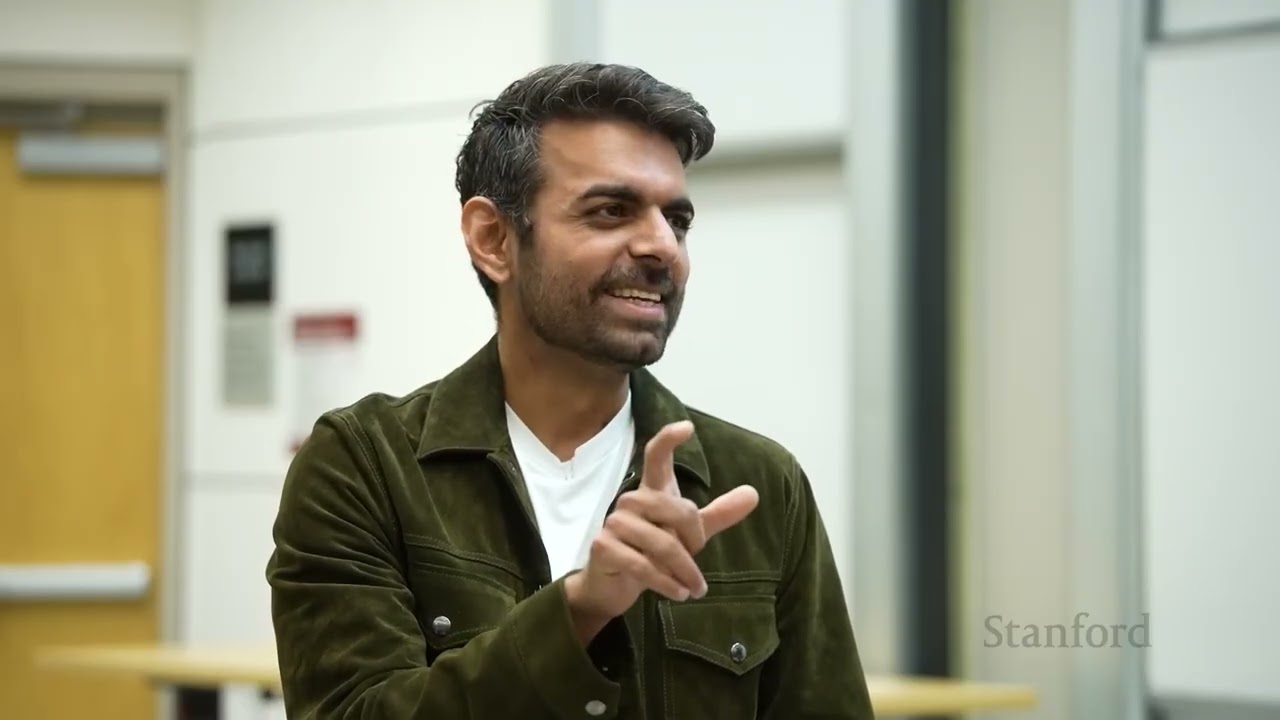
Stanford CS153 Frontier Systems | Teaching AI to Touch Atoms — Stanford Online

Stanford Online

Large language models cannot deduce novel physics from computational data alone, requiring closed physical laboratory loops to supply the empirical feedback digital training lacks.

AI-assisted summary of Stanford CS153 Frontier Systems | Teaching AI to Touch Atoms — original source. Check the original for full context.

Source published:

Key ideas

  • Periodic Labs cofounders abandoned their original roadmap of spending a full year purely in silico, finding that launching early semi-manual wet labs immediately was critical for guiding hardware selection and grounding model predictions in physical reality. (1:20)
  • Sample efficiency in model-based reinforcement learning has emerged as the critical bottleneck for materials AI, because physical wet-lab synthesis cycles cannot be arbitrarily scaled up 100x the way digital or software rollouts can. (30:33)
  • The lab bounds its scientific focus strictly around the few-electronvolt (eV) energy regime—the foundation of chemical bonding and Moore's Law—bypassing high-energy particle physics and organic polymers to concentrate on semiconductor and superconductor bottlenecks. (9:06)
  • With the Inorganic Crystal Structure Database containing only roughly 250,000 known inorganic materials and frontier labs heavily focused on pure software, the founders argue the competitive barrier to achieving meaningful impact with physical AI is surprisingly low. (16:48)

Detailed notes

## Background Published on YouTube by Stanford Online on September 29, 2026, this Stanford CS153 Frontier Systems lecture features Periodic Labs co-founders Liam Fedus and Dogus Cubuk. According to the page description, the talk covers their eleven-month-old company's mission to merge frontier AI with autonomous physical laboratories in Menlo Park to accelerate the discovery of materials such as high-temperature superconductors.

## TL;DR The founders describe shifting from purely digital AI scaling at OpenAI and DeepMind to operating an end-to-end automated materials loop that unites machine learning with robotic chemistry and physical characterization. They explain why in-silico simulations alone cannot replace empirical contact with reality, detailing how their AI agent, Onnes, navigates noisy experimental data and partial observability using sample-efficient active learning. Addressing civilizational bottlenecks from Moore's law to energy grids, the speakers show that controlling matter at the atomic level yields vastly higher leverage than software benchmarks alone. Ultimately, they urge students not to fear career displacement from AGI, emphasizing that most physical domains remain untouched by frontier models and offer a uniquely open, impactful frontier.

## Atmosphere & style The lecture combines the intellectual rigor of an advanced university seminar with the candid, grounded clarity of founders working directly on physical hardware and wet labs. The dynamic between the host and speakers is conversational and pragmatic, puncturing Silicon Valley marketing hype about AGI while treating students' career anxieties with thoughtful empathy. It feels both technically demanding and deeply motivating, transitioning from dense discussions of quantum mechanics and active learning to an inspiring call to direct machine learning toward tangible civilizational impact.

## Bulletin - [01:20](https://www.youtube.com/watch?v=8cAQdELWYuo&t=80s) Periodic Labs cofounders abandoned their original roadmap of spending a full year purely in silico, finding that launching early semi-manual wet labs immediately was critical for guiding hardware selection and grounding model predictions in physical reality. - [30:33](https://www.youtube.com/watch?v=8cAQdELWYuo&t=1833s) Sample efficiency in model-based reinforcement learning has emerged as the critical bottleneck for materials AI, because physical wet-lab synthesis cycles cannot be arbitrarily scaled up 100x the way digital or software rollouts can. - [09:06](https://www.youtube.com/watch?v=8cAQdELWYuo&t=546s) The lab bounds its scientific focus strictly around the few-electronvolt (eV) energy regime—the foundation of chemical bonding and Moore's Law—bypassing high-energy particle physics and organic polymers to concentrate on semiconductor and superconductor bottlenecks. - [16:48](https://www.youtube.com/watch?v=8cAQdELWYuo&t=1008s) With the Inorganic Crystal Structure Database containing only roughly 250,000 known inorganic materials and frontier labs heavily focused on pure software, the founders argue the competitive barrier to achieving meaningful impact with physical AI is surprisingly low.

## Key takeaways - [01:20](https://www.youtube.com/watch?v=8cAQdELWYuo&t=80s) Periodic Labs abandoned a planned one-year pure in-silico simulation phase after realizing that small, semi-manual physical experiments were required immediately to steer the research program and determine what hardware to scale. - [03:00](https://www.youtube.com/watch?v=8cAQdELWYuo&t=180s) The company's 40,000-square-foot facility couples frontier machine learning researchers directly with physical scientists, deploying their AI agent Onnes to automate both high-level design and mundane laboratory tasks like recipe formulation, powder milling, and XRD pattern interpretation. - [05:46](https://www.youtube.com/watch?v=8cAQdELWYuo&t=346s) Unlike pure software and mathematics where verification is deterministic and binary, physical science requires models to make decisions under genuine uncertainty, partial observability, and noisy instrumentation. - [09:06](https://www.youtube.com/watch?v=8cAQdELWYuo&t=546s) Periodic scopes its work to the few-electronvolt regime governing electron-phonon coupling and solid-state thermodynamics, explicitly avoiding both subatomic particle physics and organic polymer chemistry. - [10:30](https://www.youtube.com/watch?v=8cAQdELWYuo&t=630s) High-temperature superconductivity represents a transformative civilizational bottleneck because eliminating resistive loss could transform data center power consumption, fusion energy containment, and quantum computing interconnects. - [14:14](https://www.youtube.com/watch?v=8cAQdELWYuo&t=854s) Language models cannot discover novel physical materials purely through textbook pretraining; models must be tethered to continuous empirical verification loops inside real laboratories to achieve physical grounding. - [16:48](https://www.youtube.com/watch?v=8cAQdELWYuo&t=1008s) Active learning outperforms classical Bayesian optimization in frontier chemistry because neural network uncertainty estimates compound error aggressively out-of-distribution, making directed sampling of unexplained experimental anomalies essential. - [20:31](https://www.youtube.com/watch?v=8cAQdELWYuo&t=1231s) Materials discovery spans three distinct levels: identifying unprecedented crystal prototypes, achieving record bulk physical properties (such as raising the ambient-pressure superconducting limit from 133 K to 160 K), and uncovering viable synthesis recipes. - [25:02](https://www.youtube.com/watch?v=8cAQdELWYuo&t=1502s) Student anxiety over AGI rendering technical careers obsolete is misplaced because LLMs have fundamentally altered very few physical domains, making the current era an outsized window of opportunity for specialists working on physical atoms. - [27:24](https://www.youtube.com/watch?v=8cAQdELWYuo&t=1644s) While Density Functional Theory reliably computes ground-state formation enthalpies, it struggles with band gaps, excited states, and surface defects in heterogeneous catalysis, highlighting why automating the scientific discovery loop has no fixed ceiling. - [30:33](https://www.youtube.com/watch?v=8cAQdELWYuo&t=1833s) Physical synthesis rollouts carry rigid real-world cycle times and cannot be arbitrarily scaled up like digital code generation, making sample-efficient, model-based reinforcement learning the core ML objective. - [31:35](https://www.youtube.com/watch?v=8cAQdELWYuo&t=1895s) Intentional synthesis of genuinely novel materials remains largely unguided trial and error, but constructing denser thermodynamic convex hulls at zero Kelvin dramatically improves model predictions of whether a candidate compound can be physically synthesized. - [33:28](https://www.youtube.com/watch?v=8cAQdELWYuo&t=2008s) Pairing LLMs with domain-specific software tools unlocks automated interpretation of complex characterization data, while benchmarking against historical science timestamps allows researchers to test an AI's hypothesis generation capabilities. - [38:21](https://www.youtube.com/watch?v=8cAQdELWYuo&t=2301s) Because mainstream frontier AI labs remain fixated on abstract reasoning, mathematics, and pure code, the competitive barrier to entry for AI applied to physical instrumentation remains remarkably low. - [41:27](https://www.youtube.com/watch?v=8cAQdELWYuo&t=2487s) Software benchmarks operate in closed worlds with complete context and deterministic compilers, whereas physical wet labs exhibit irreducible partial observability, making learning under unrecorded environmental variables machine learning's true frontier.

## Detailed walkthrough ### [00:10](https://www.youtube.com/watch?v=8cAQdELWYuo&t=10s) Welcome and Founding Periodic Labs

The lecture opens with an enthusiastic welcome for Liam Fedus and Dogus Cubuk, the co-founders of Periodic Labs. Gauging the room, the host asks how many students have heard of the company, eliciting an encouraging show of hands that prompts the host to joke, "The kids are paying attention. Not bad."

Both founders bring distinguished lineages from frontier AI labs. Liam Fedus helped establish the post-training team at OpenAI and was there during the launch of ChatGPT, helping shape the continuous post-training loop that defines modern LLM refinement. Dogus Cubuk previously worked at DeepMind on the GNoME (Graph Networks for Materials Exploration) project. Periodic Labs emerged out of those parallel lineages roughly eleven months prior, starting around June. The host asks what priors they have had to update most aggressively since founding the company compared to their original expectations.

[01:20](https://www.youtube.com/watch?v=8cAQdELWYuo&t=80s) Updating Priors: In Silico Illusions vs. Physical Reality

Liam points to a fundamental shift in how they conceptualized building a lab. Coming from the spirit of AI and machine learning scaling laws, they initially expected that new opportunities in science would arrive strictly at scale, leading to what he calls a "cartoon version" of the roadmap. Under that initial model, because standing up a high-throughput autonomous physical facility takes time, the company planned to spend its entire first year operating purely *in silico*—designing novel materials computationally—before walking up to a finished high-throughput lab on day 365, flipping a switch, and starting real-world science.

Instead, they abandoned that plan early on. Setting up smaller, semi-manual, semi-autonomous labs immediately allowed the team to steer the research program, determine what hardware and equipment actually made sense to scale, and close the feedback loop between model predictions and experimental reality as fast as possible. Dogus adds his own updated prior: while they were excited to see large models manipulate real atoms rather than just write Python scripts, the magnitude of the results surprised them. "I think the results are crazier than we expected," Dogus explains, noting that automated intelligence affecting physical matter has dramatically outpaced their expectations in both computational speed and materials synthesis quality.

[03:00](https://www.youtube.com/watch?v=8cAQdELWYuo&t=180s) Inside the Menlo Park Lab: Architecture of an Autonomous Materials Loop

To clarify how the facility works, the host lays out a baseline walkthrough of their Menlo Park operations, red-teamed live by the founders:

```mermaid flowchart TD accTitle: Periodic Labs Material Discovery Loop accDescr: End-to-end feedback loop from AI model prediction through automated synthesis, characterization, and model retraining.

subgraph Computation["In Silico Reasoning & Design"] A["Frontier Model (Onnes)<br/>Pre-, mid- & post-trained"] -->|"Predicts candidates"| B["Material Formulation<br/>& Synthesis Recipe"] end

subgraph Lab["Robotic Synthesis & Physical Handling"] B --> C["Robotic Mixing & Powder Prep"] C --> D["Synthesis & Oven Processing"] D --> E["Handling Mundane Errors<br/>(sample mix-ups, impurities)"] end

subgraph Verification["Characterization & Evaluation"] E --> F["X-ray Diffraction (XRD)<br/>Structural Characterization"] F --> G["Physical Property Verification<br/>(Superconductivity checks)"] end

G -->|"Empirical ground truth feedback"| A ```

Operating out of a 40,000-square-foot facility, Periodic divides its physical space down the middle. Half the square footage hosts the interdisciplinary team—machine learning researchers from institutions like OpenAI and DeepMind sitting directly alongside physicists and chemists from Stanford, MIT, and Caltech. The other half houses the automated laboratory containing synthesis robots and analytical instruments.

Dogus and Liam emphasize that the AI's role is not limited to grandiose high-level predictions about high-temperature superconductors. In practice, scientific progress is built out of hundreds of connected, mundane tasks: - Formulating recipes and determining how to blend and mill precursor powders correctly. - Detecting and flagging sample mix-ups on the floor before bad measurements corrupt results. - Catching and eliminating chemical impurities early in the preparation stages. - Characterizing materials after they come out of the furnace, because "materials don't come out of the oven with labels on them." - Interpreting ambiguous analytical signals, such as firing X-rays at samples and parsing the resulting X-ray diffraction (XRD) patterns to confirm what crystal structure was actually synthesized.

[05:46](https://www.youtube.com/watch?v=8cAQdELWYuo&t=346s) Navigating Scientific Uncertainty and Atomistic Physics

The host draws a connection to a previous lecture by Rob Riachi from DeepMind's pre-training team, who advised students working on their "one-person frontier lab" final projects to ground their work in specific domain benchmarks before generalizing. When asked why Periodic chose materials—and specifically semiconductors and superconductors—as their core target domain, Liam pushes back slightly on the standard machine learning benchmark paradigm. In pure math or software, verification is clean and binary (for instance, evaluating whether `2 + 2 = 4`). Science, by contrast, is defined by decision-making under genuine uncertainty: instruments provide noisy, partial evidence, adjacent experiments offer conflicting clues, and the ground truth is fundamentally murkier. Consequently, teams must spend substantial time learning the nuances and shape of the physical problem before blindly hill-climbing an arbitrary benchmark.

Liam and Dogus explain that their conviction comes from deep atomistic physics: - Every frontier AI lab is desperately consuming hardware, yet advanced semiconductor scaling and memory nodes face acute materials engineering bottlenecks at atomic interfaces. - The physics governing semiconductors and superconductivity overlap heavily; both are dictated by interactions between atoms, electrons, and lattice vibrations (phonons). - While conventional superconductivity is well understood as interactions between phonons and electrons, high-temperature superconductivity remains an open theoretical problem likely tied to complex couplings between phonons, electrons, and magnetic properties. - Rejecting the assumption that AGI will spontaneously generalize to everything without grounding, the team believes that deliberately directing intelligence toward atomic and electronic interactions provides the highest leverage for human technology.

[09:06](https://www.youtube.com/watch?v=8cAQdELWYuo&t=546s) From Fundamental Physics to Moore's Law

Following Dogus's technical breakdown of phonons and electrons, the host asks for a show of hands to see how many physics majors are in the audience; only about five hands go up.

Dogus contextualizes why they bound their research scope the way they do: - Periodic deliberately avoids studying polymers or high-molecular-weight chemistry, meaning their models do not currently generalize to organic macromolecules. - They also bypass the extreme, ultra-high energy limits of physics like string theory or subatomic quarks, which do not tangibly alter everyday human technology. - Instead, they anchor their efforts at the energy scale that directly shapes human existence—typically around a few electronvolts (eV). - This regime governs thermodynamics, chemical bonds, and electron-lattice mechanics—the exact rules underlying Moore's law, which Dogus highlights as arguably the most impressive technological achievement in human history.

[10:30](https://www.youtube.com/watch?v=8cAQdELWYuo&t=630s) Quantum Mechanics, Resistive Loss, and the Superconductor Frontier

At the energy scales governing chemistry, biology, batteries, and semiconductors, the physics reduces cleanly to non-relativistic quantum mechanics. The researchers explain that at this level, one does not need quarks or string theory; it is strictly an introductory solid-state physics regime consisting of ions and electrons interacting with one another. To ground this for the systems-focused class, an analogy is proposed: viewing electrical conductors as pipes through which matter and charge flow. In standard conductors like copper, electron-ion collisions generate scattering, causing resistance that dissipates substantial amounts of energy as heat. In high-density settings like data center computing clusters, these resistive bottlenecks mean double-digit percentages of total power are wasted as heat loss that must subsequently be cooled and dissipated.

```mermaid flowchart TD accTitle: The Physical Discovery and Active Learning Loop accDescr: Feedback loop connecting computational AI models, robotic synthesis, characterization, and active learning updates.

subgraph Digital ["In Silico Reasoning"] A["Onnes Agent / LLM"] -->|"Orchestrates & predicts"| B["Specialized Neural Nets<br/>(Synthesis & Stability)"] end

subgraph Physical ["Laboratory Execution"] B -->|"Formulates recipe"| C["Robotic Synthesis & Lab Trials"] C -->|"Physical characterization"| D["Spectroscopy / XRD Analysis"] end

subgraph Feedback ["Discovery & Adaptation"] D -->|"Target match or anomalous peak"| E["Active Learning Data Engine"] E -->|"Refines world model"| A end ```

The historical counterpoint occurred around 1908 to 1910, when the liquefaction of helium enabled the observation that certain materials lose all electrical resistivity, permitting current to flow indefinitely without dissipation. Despite superconductivity being one of modern physics' most striking discoveries, its real-world implementation remains constrained; commercial applications are largely frozen in older paradigms, such as liquid-helium-cooled MRI machines. Achieving modern materials discovery would transform foundational infrastructure:

- **Clean and Advanced Energy:** Enabling high-field magnetic confinement for nuclear fusion reactors and lossless long-distance electrical transmission grids. - **Computing and Transit:** Powering quantum computing substrates, lower-loss interconnects inside semiconductor stacks, and frictionless magnetic levitation (maglev) transport. - **Cross-Industry Generality:** Engineering matter at the atomic layer provides direct leverage across semiconductors, aerospace, automotive systems, and advanced power generation.

---

[14:14](https://www.youtube.com/watch?v=8cAQdELWYuo&t=854s) The Onnes Agent: Grounding AI in Atomic Reality

The conversation shifts to Periodic Labs' AI agent, christened "Onnes" by team researcher Manseesh. The system is named after Heike Kamerlingh Onnes, the Nobel laureate who liquefied helium and discovered superconductivity. Crucially, Onnes is celebrated not just for the discovery itself, but because he was an early pioneer of running scientific discovery at industrial scale—employing dedicated technicians and professional engineers in 1908 to transform laboratory physics into an organized, high-throughput enterprise. The founders view this industrial mindset as vital for accelerating physical science with urgency today.

When asked to contrast Onnes with the digital language systems Liam worked on during his time co-creating ChatGPT at OpenAI, Liam explains that physical discovery demands an entirely different operational foundation:

> "We don't think that you can just start thinking your way to a new room temp superconductor by reading a textbook, shutting it, and thinking super hard. You have to make contact with reality. You have to carry out experiments."

While standard generative models generalize reasonably well across digital code and natural text, their ability to reason about the physical world hits hard limits without empirical data. Predicting whether a hypothetical crystal is chemically stable and whether it can actually be synthesized in a physical crucible requires continuous validation. Rather than focusing resources on general code generation—where conventional frontier model training already excels—Onnes is purpose-built to predict synthesis pathways, evaluate material stability, and interpret physical outcomes generated inside the lab.

---

[16:48](https://www.youtube.com/watch?v=8cAQdELWYuo&t=1008s) Active Learning vs. Bayesian Optimization in Real Laboratories

Opening the session up to student questions, the founders address optimization methodologies and how distinct modeling techniques should be combined. Dorje outlines a persistent trap common among physicists transitioning into machine learning: an instinctive preference for Bayesian optimization due to its theoretical elegance and explicit modeling of uncertainty. However, because all neural networks exhibit generalization errors outside their training distributions, their estimates of their *own* uncertainty compound even more aggressively than their point predictions. Consequently, classical Bayesian optimization frequently underperforms when searching unmapped chemical territory.

In contrast, active learning is indispensable in physical experimentation, even if it developed a poor reputation in academic computer vision: - **Academic Benchmarks vs. Real Frontiers:** Splitting an existing academic benchmark (like ImageNet) uniformly between train and test sets rarely shows benefit from active learning because the entire domain is already uniformly sampled. - **The Autonomous Vehicle Parallel:** Much like training an autonomous driving platform such as Waymo—where the system handles common scenarios well but must actively gather real-world data on edge cases—scientific discovery requires directing collection specifically toward regions where the model has zero predictive confidence. - **Daily Physical Rollouts:** Every daily laboratory batch at Periodic Labs acts as an active learning rollout, pushing into unknown materials spaces to iteratively broaden the system's predictive boundaries.

Liam adds that anomalous experimental findings frequently provide the highest leverage. When automated characterization tools register an unaccounted-for diffraction peak indicating an unidentified phase that does not match existing crystal databases, the anomaly is flagged, isolated, and fed into the active learning loop. When asked to clarify whether Onnes functions as an "AI scientist" or an "AI agent," the founders clarify that it is fundamentally an orchestrating language model equipped with tools—invoking external software as well as specialized, domain-specific neural nets to formulate recipes and test physical hypotheses. Dorje closes by pointing out the scale of the target domain: the Inorganic Crystal Structure Database (ICSD) contains only about 250,000 known inorganic crystals, leaving vast swathes of potential atomic configurations completely unexplored.

[20:31](https://www.youtube.com/watch?v=8cAQdELWYuo&t=1231s) Redefining Discovery and the Conviction Behind Periodic Labs

Dorje begins by laying out what constitutes a "discovery" in materials science. Materials often fall into recognized subsets of crystal prototypes, and finding a fundamentally novel crystal structure that has never been documented before is exceptionally rare. Beyond novel crystal lattices, discovery can also mean achieving unprecedented material properties. In superconductivity, for instance, the ambient-pressure state of the art hovers around 133 Kelvin; finding a material that operates at 160 Kelvin would represent a monumental breakthrough. Equally critical is the discovery of synthesis recipes: even when a chemical compound is already known, uncovering a way to synthesize it more efficiently or with subtly optimized target properties pushes the frontier of human control over atomic arrangements. Dorje acknowledges to the students that materials science can often seem unexciting or intimidatingly opaque from the outside because it fundamentally deals with the complex physics of atoms. Yet, viewed through the lens of civilization gaining deliberate control over matter, it is one of the most exciting endeavors imaginable.

The course host jumps in to redirect the discussion toward how the company came to be, asking what gave the investors and founders their absolute conviction in Periodic Labs. Recalling the diverse roster of tech leaders the class has hosted—from Jensen Huang at the silicon chip level to Scott Nolan at the energy layer—the host explains his growing frustration over how long the tech community had been hyping up AI's application to the physical world without actual results matching the marketing rhetoric. After seeing numerous startups fail to deliver real physical progress while at Andreessen Horowitz (a16z), he spent time following the previous year's class working with an applied physics group on campus to benchmark frontier LLMs on their ability to reason about condensed matter physics.

Drafting a paper intended for NeurIPS, they found that last-generation frontier models performed terribly on real physical reasoning. Seeking rigorous peer review in the scientific tradition, the paper was shared with Jason Kwon, Chief Strategy Officer at OpenAI. Kwon instantly recognized the shared thesis and told him he needed to meet Liam Ferriss and Dorje Chubak, who were concurrently leaving OpenAI and DeepMind with the exact same ambitions. The mutual alignment was so immediate and profound—a true "meeting of the minds"—that going from their first conversation to signing a term sheet and commencing operations took just four or five days.

- **Current benchmark:** Ambient-pressure superconductivity sits at approximately 133 Kelvin; reaching 160 Kelvin would mark a massive milestone. - **Three tiers of discovery:** New crystal prototypes, unprecedented bulk physical properties, and optimized chemical synthesis recipes. - **Foundational bottlenecks:** Civilizational eras are historically categorized by dominant materials (Stone Age, Bronze Age, Copper Age, Silicon Age); physical hardware like flying cars remains blocked by materials breakthroughs. - **Origin speed:** Periodic Labs transitioned from initial introduction via Jason Kwon to a signed term sheet in four to five days.

---

[25:02](https://www.youtube.com/watch?v=8cAQdELWYuo&t=1502s) Physical Atoms vs. Textbooks: Tackling Student Career Anxiety Around AGI

Liam reflects on why they are so driven by this mission, pointing out that much of the physical world has been built on accidental discovery and agonizing trial and error. While the digital landscape transforms exponentially, pulling forward a true "sci-fi future" requires endowing machine learning systems with genuine intelligence about ground-truth physical reality. Models cannot achieve this merely by ingesting textbooks; they must be actively tethered to the physical world.

Dorje then poses a question directly to the Stanford auditorium, asking if students are feeling acute anxiety about their education and future careers in light of rapid advancements in LLMs and AGI. After a noticeable wave of hands goes up in the room, Dorje shares that he encountered the exact same dread when delivering a physics colloquium next door, where physicists asked what the point of their work was if AGI would soon solve all of physics. Dorje considers this existential panic misplaced: outside of self-driving cars (Waymo and Tesla), automated coding, language translation, and quantum mechanical force field approximations, LLMs have fundamentally revolutionized very few physical domains.

When asked by the host what he would pursue if he were currently an undergraduate working on a senior capstone, Dorje recalls using machine learning to design analog circuits during his own undergraduate days and urges students to take a similar route. Whatever domain a student is genuinely passionate about has almost certainly not yet been transformed by LLMs. Because models cannot autonomously revolutionize these fields on their own, the present moment represents a brief, high-leverage "golden era" where human initiative can yield outsized historical impact.

```mermaid flowchart TD accTitle: The Physical AI Frontier accDescr: Contrasting digital AI capabilities with the unaddressed physical world and the need for empirical experimentation.

subgraph Digital["Current LLM Domain (Digital Saturation)"] A["Textbook Pretraining & Code"] --> B["Translation & LLM Reasoning"] B --> C["Rapid Benchmarking Diminishing Impact"] end

subgraph Physical["Physical Reality Frontier (Untouched)"] D["Physical Atoms & Experiments"] E["Materials Synthesis Recipes"] F["Condensed Matter Physics"] end

subgraph Bridge["Periodic Labs Bridge"] G["Active Empirical Loop"] end

Digital -.->|"Fails to touch"| Physical Physical --> G G -->|"Closes feedback gap"| Digital ```

---

[27:24](https://www.youtube.com/watch?v=8cAQdELWYuo&t=1644s) Density Functional Theory, Force Fields, and the Infinite Frontier of Science

A student asks a deeply technical question regarding how Periodic Labs predicts atomistic properties: whether they rely heavily on Density Functional Theory (DFT), and how they tackle complex chemical challenges like heterogeneous catalysis. Dorje clarifies the utility and severe limits of standard computational physics tools. DFT is fundamentally derived around the ground state; its first Hohenberg-Kohn theorem makes it exceptionally reliable for predicting formation enthalpy and ground-state energies. However, DFT struggles considerably with band gaps and excited states. Heterogeneous catalysis poses an even harsher challenge: catalytic reactions depend intimately on atomistic surface morphology—including atomic steps and localized lattice defects—where a single point defect can radically alter the reaction pathway, rendering simulation unreliable. Consequently, the team avoids purely theoretical modeling for catalysis in favor of more empirical methods.

Dorje notes that machine learning has made its most profound scientific mark in replacing classical empirical force fields with Graph Neural Networks (GNNs). Tracing the intellectual history back to Albert Einstein's early papers on empirical interactions between molecules and surfaces, he emphasizes that Periodic Labs combines top-tier LLM capabilities with advanced custom GNN architectures to learn force fields directly.

Addressing the classic chicken-and-egg dilemma of scientific discovery—that models must be trained on the very science they are meant to discover—Dorje argues that this is not unique to machine learning; it is a fundamental challenge of discovery that would confront any scientific enterprise, human or extraterrestrial. Because one can only understand existing science and must push into the unknown, active learning loops are mandatory. While large-scale datasets exist—such as Meta's open-sourced Universal Materials Accelerator (UMA) dataset containing roughly 100 million DFT calculations, serving as an "ImageNet for materials"—there will never be a complete, static dataset for science. If all data could be gathered into a textbook, scientific exploration would cease. Unlike automating finite white-collar workflows like accounting, automating the loop of science has no theoretical ceiling, making it a permanently expansive frontier.

- **DFT core capabilities:** Highly effective for ground-state calculations and formation enthalpy; unreliable for band gaps, excited states, and catalytic surface defects. - **Historical force fields:** Traced from Einstein's early surface-interaction papers to modern Graph Neural Networks (GNNs) approximating quantum mechanics. - **Shared foundational data:** Datasets like Meta's open-source UMA project (~100 million DFT calculations) act as pretraining anchors, analogous to ImageNet in computer vision. - **The endless frontier:** "If you automate accountants, at some point, there's only so much accounting to do. But if you can automate science, there's no end to it."

[30:33](https://www.youtube.com/watch?v=8cAQdELWYuo&t=1833s) Sample Efficiency and the Constraints of Physical Rollouts

Liam explains that sample efficiency is one of the highest technical priorities at Periodic Labs because physical reality imposes hard bottlenecks that do not exist in digital environments. In standard frontier machine learning labs, training policies can leverage virtually unlimited rollouts: if an agent is solving a mathematics problem or writing code, researchers can trivially scale up rollouts from a thousand to a million. In the physical realm of atoms and chemical synthesis, however, it is impossible to expand experimental throughput by a factor of 10 or 100 on a whim.

Because scaling physical experiments carries real hardware constraints and tangible cycle times, Periodic leans heavily into model-based reinforcement learning. This framework enables the system to extract maximum value from sparse data points, allowing their algorithms to establish traction in new chemical compositions and search spaces with comparatively modest datasets.

[31:35](https://www.youtube.com/watch?v=8cAQdELWYuo&t=1895s) Intentional Synthesis and Denser Convex Hulls

Responding to an audience question about the major open problems for academic AI-for-science labs and whether Periodic still relies on the active learning pipelines from their 2022 research, Dorje identifies "intentional synthesis" as one of the most critical challenges in material science. While modern laboratories excel at synthesizing materials that have already been created or closely resemble known compounds, attempting to synthesize an entirely novel material typically degrades into unguided trial and error. Brute-force experimentation dominates current practices, whereas discovering how to intentionally guide chemical synthesis would radically accelerate human technological capability.

Addressing their historical computational pipelines, Dorje confirms that Periodic still actively employs density functional theory (DFT) and active learning. A central conclusion of their earlier work remains true: constructing a larger, more densely sampled zero-Kelvin convex hull directly yields superior predictions for material synthesizability. To maximize accuracy, Periodic incorporates the largest possible convex hulls available, aggregating both proprietary and publicly accessible scientific data.

```mermaid flowchart TD accTitle: Synthesis Feasibility and Active Learning Loop accDescr: Diagram illustrating how dense convex hulls and DFT inform intentional synthesis of materials. subgraph DataEngine ["Hull Construction"] A["Public & Proprietary Data"] --> B["Densely Sampled 0K Convex Hull"] B --> C["DFT Energetics Calculation"] end subgraph SynthesisEngine ["Physical Loop"] C --> D["Synthesizability Prediction"] D --> E["Intentional Synthesis Experiment"] E -->|"Physical Outcome"| A end ```

- **Novel vs. Known Synthesis**: Labs can reliably recreate documented crystals or slight derivatives, but novel chemical architectures lack predictive recipe roadmaps. - **Convex Hull Sampling**: The denser the thermodynamic reference hull at 0 Kelvin, the more reliable the model becomes at forecasting whether a candidate crystal can actually be physically synthesized.

[33:28](https://www.youtube.com/watch?v=8cAQdELWYuo&t=2008s) Characterization Analysis, Latent Weights, and Timestamping the Universe

Liam notes that managing noisy data and decision-making under uncertainty remain major open hurdles across scientific disciplines. Laboratory datasets are inevitably littered with contradictory or flawed findings, making systems that can parse conflicting evidence and flag data consistency extremely valuable. Dorje adds that characterization analysis is ripe for automation: analytical instruments generate raw data streams that require extensive manual analysis by human specialists, but pairing large language models with the native computational tools used by bench scientists enables automated, high-throughput interpretation.

Liam highlights that hypothesis generation represents an unsolved frontier because, unlike evaluating whether code compiles or a math proof holds, evaluating whether a hypothesis is novel and promising lacks a simple ground truth. Furthermore, models often possess relevant scientific knowledge buried in their weights, yet fail to surface or synthesize it appropriately during reasoning tasks unless prompted with direct, narrow queries. To bridge this gap, Liam outlines a world-modeling approach that "timestamps the universe":

> "You can basically timestamp the universe. So, OK, here's the set of known... data we have experimentally, computationally, at some timestamp, $t$, and produce a world-modeling task where you're trying to, then, predict outcomes of future things... The world model is not just in weights. It's not just inference time. But it's using these tools in order to do that."

- **Tool-Augmented Characterization**: Equipping LLMs with human domain software unlocks autonomous interpretation of complex analytical instrument readings. - **Latent Reasoning Gap**: LLMs reliably recall individual factual premises when queried directly, yet routinely fail to assemble those premises into complex physical insights during unconstrained scientific reasoning. - **Historical Benchmarking**: Backtesting agents against historical science timestamps ($t$) allows researchers to benchmark an AI's ability to predict downstream scientific discoveries using computational tools.

[36:35](https://www.youtube.com/watch?v=8cAQdELWYuo&t=2195s) Internal Motivation and Steering AI Toward Tangible Impact

When an audience member asks how the founders stay motivated when experiments stall and hard problems resist solutions, Liam emphasizes that motivation cannot depend solely on an extrinsic endpoint like achieving a room-temperature superconductor. Because that discovery has not been made—and may or may not ultimately prove physically possible—tying daily morale to that single target would lead to burnout. Instead, Liam and Dorje track granular technical milestones across their end-to-end discovery loop, celebrating steady, measurable gains in the individual components of the system.

Dorje expands on the broader ethical and philosophical mission driving the company. He views their work as a moral obligation to direct frontier AI technologies into constructive, real-world utility. Rather than leaving machine learning confined to purely digital or commercial domains, applying it to fundamental physical challenges offers a direct path toward steering technological progress into something unambiguously positive and beneficial for humanity.

[38:21](https://www.youtube.com/watch?v=8cAQdELWYuo&t=2301s) Physical Barriers, Smart Domain Choice, and the "Low Bar" for Physical AI

Addressing the barriers to operating in the physical world and whether those obstacles will recede, Liam remarks that while standing up wet labs and automated hardware is initially difficult, these barriers should decline as underlying AI and robotic systems mature. The labs Periodic is constructing today are likely the most difficult iterations they will ever have to build. Furthermore, founders can manage these barriers through deliberate domain selection: targeting high-energy physics, for example, demands building tens-of-billions-of-dollars particle accelerators staffed by thousands of specialists, whereas inorganic crystal synthesis permits rapid iteration and manageable capital expenditures.

Dorje points out that because mainstream frontier AI labs remain preoccupied with abstract domains like mathematics, combinatorics, and pure code, the competitive barrier to entry for physical AI remains shockingly low. Simply connecting an AI model to an optical camera or a telescope already places a project ahead of most digital-only efforts:

> "The bar is so low in terms of how physical and relevant you have to make AI to make progress. You probably can just be slightly above it... I think the bar is pretty low right now, but it may not stay like that in a few years. I think a lot of young, excited people will realize LLMs can do way more than coding."

- **Infrastructure Maturation**: Early automated lab facilities bear heavy setup costs, but accelerating robotics and AI will lower the cost of deploying future physical setups. - **Domain Leverage**: Inorganic materials provide a sweet spot of rapid physical feedback loops without the multi-billion-dollar infrastructure required by subatomic particle physics.

[40:35](https://www.youtube.com/watch?v=8cAQdELWYuo&t=2435s) Verifiable Domains and Why Periodic Won't Pivot to Finance

An audience member asks about alternative domains that offer the high degree of verifiability required by frontier AI systems, and whether Periodic Labs might ever expand beyond materials. Liam points to quantitative finance and asset pricing—predicting the future price of equities, bonds, or yields—as an example of an environment with clean, immediate empirical verification. However, Liam clarifies that financial prediction is plagued by extreme latency constraints, quickly prompting laughter from the room as he assures the audience that Periodic has no intention of pivoting into Wall Street trading. Dorje interjects to steer the discussion back toward physical verification, setting up the broader role of verifiable rewards in training frontier systems.

[41:27](https://www.youtube.com/watch?v=8cAQdELWYuo&t=2487s) Partial Observability in the Physical World and Closing Remarks

The discussion wraps up with a fundamental contrast between pure software domains and physical experiments: the challenge of partial observability. In traditional AI domains like coding, the environment provides closed-world, fully verifiable context—the model has access to the entire codebase, deterministic compiler outputs, and direct execution feedback. In physical reality, however, that complete picture vanishes. When running real-world experiments in a wet lab, it is practically impossible to record every variable or capture all environmental nuances of what actually occurred during synthesis or measurement.

The speaker highlights this gap as one of the most exciting technical frontiers in machine learning: figuring out how models can learn, adapt, and improve under pervasive uncertainty and incomplete context. This challenge extends far beyond material science and condensed matter physics into virtually every real-world domain, including complex dynamical systems like financial asset pricing. With that open research question on bridging the gap between digital models and messy reality, the session concludes with thanks to the audience.

```mermaid flowchart TD accTitle: Full Context Digital Domains vs Partial Observability in the Real World accDescr: Diagram contrasting digital environments where full context is available with physical environments where context is incomplete.

subgraph Digital["Closed Digital Worlds"] A["Coding & Compilers"] --> B["Full Context Present"] B --> C["Completely Verifiable Outcomes"] end

subgraph Physical["Physical & Real-World Systems"] D["Lab Experiments & Physics"] --> E["Partial Observability"] E --> F["Unrecorded Variables & Uncertainty"] G["Asset Prices & Complex Dynamics"] --> E end

C -.->|"Contrasts with"| F ```

- **Digital vs. Physical Context:** In software engineering benchmarks, models benefit from complete context (the full codebase, runtime diagnostics, and compiler feedback), whereas physical experimental setups can never capture every parameter or subtle environmental factor. - **Broader Applicability:** Tackling sample efficiency and learning under irreducible observation error is not exclusive to physics—it applies broadly across all complex real-world domains, from materials synthesis to modeling asset prices.

## Notable quotes > [00:10](https://www.youtube.com/watch?v=8cAQdELWYuo&t=10s) The kids are paying attention. Not bad. — Host

> [01:20](https://www.youtube.com/watch?v=8cAQdELWYuo&t=80s) I think the results are crazier than we expected — Dogus Cubuk

> [03:00](https://www.youtube.com/watch?v=8cAQdELWYuo&t=180s) materials don't come out of the oven with labels on them. — Dogus Cubuk

> [14:14](https://www.youtube.com/watch?v=8cAQdELWYuo&t=854s) We don't think that you can just start thinking your way to a new room temp superconductor by reading a textbook, shutting it, and thinking super hard. You have to make contact with reality. You have to carry out experiments. — Liam Fedus

> [27:24](https://www.youtube.com/watch?v=8cAQdELWYuo&t=1644s) If you automate accountants, at some point, there's only so much accounting to do. But if you can automate science, there's no end to it. — Dogus Cubuk

> [33:28](https://www.youtube.com/watch?v=8cAQdELWYuo&t=2008s) You can basically timestamp the universe. So, OK, here's the set of known... data we have experimentally, computationally, at some timestamp, t, and produce a world-modeling task where you're trying to, then, predict outcomes of future things... The world model is not just in weights. It's not just inference time. But it's using these tools in order to do that. — Liam Fedus

> [38:21](https://www.youtube.com/watch?v=8cAQdELWYuo&t=2301s) The bar is so low in terms of how physical and relevant you have to make AI to make progress. You probably can just be slightly above it... I think the bar is pretty low right now, but it may not stay like that in a few years. I think a lot of young, excited people will realize LLMs can do way more than coding. — Dogus Cubuk

## Mentioned Albert Einstein, Andreessen Horowitz (a16z), Caltech, ChatGPT, DeepMind, Density Functional Theory (DFT), Dogus Cubuk (Dorje Chubak), GNoME (Graph Networks for Materials Exploration), Graph Neural Networks (GNNs), Heike Kamerlingh Onnes, Hohenberg-Kohn theorem, ImageNet, Inorganic Crystal Structure Database (ICSD), Jason Kwon, Jensen Huang, Liam Fedus (Liam Ferriss), Manseesh, Meta, MIT, NeurIPS, Onnes, OpenAI, Periodic Labs, Rob Riachi, Scott Nolan, Stanford University, Tesla, Universal Materials Accelerator (UMA), Waymo, X-ray Diffraction (XRD)

## Video description For more information about Stanford's online Artificial Intelligence programs, visit: https://stanford.io/ai

Follow along with the course schedule and syllabus; visit: https://cs153.stanford.edu/

In this CS 153 Frontier Systems lecture, Periodic Labs cofounders Liam Ferriss and Dorje Chubak — veterans of OpenAI's post-training team and DeepMind's Genome project, respectively — walked students through their eleven-month-old mission to apply AI to the physical world, specifically using autonomous labs to accelerate the discovery of new materials including high-temperature superconductors.

Operating out of a 40,000-square-foot Menlo Park facility where machine learning researchers work alongside physicists and chemists, their AI system (named Onnes, after the scientist who discovered superconductivity in 1908) runs a continuous loop of computational prediction, robotic synthesis, and experimental verification — closing the feedback cycle between digital intelligence and physical reality in a way no purely in-silico approach can. A key early lesson was abandoning their original plan of spending the first year purely computational: building smaller, semi-manual labs first allowed them to direct the research program and understand what to scale, faster.

Dorje emphasized that the results of applying LLMs to actual atoms have exceeded even their own expectations, while Liam stressed that sample efficiency in reinforcement learning — not benchmark climbing — is the core technical frontier when physical experiments can't be arbitrarily scaled up the way digital rollouts can. They closed by pushing back on student anxiety about AGI displacing their careers, arguing that most scientific domains remain largely untouched by LLMs, that the bar to make meaningful AI-physical world progress is still surprisingly low, and that the history of civilization is essentially a materials story — making their work, in their view, among the highest-leverage bets anyone can make right now.

[Source](https://www.youtube.com/watch?v=8cAQdELWYuo)

中文简报

Periodic Labs部署湿实验AI以加速超导体寻找 大语言模型无法仅凭计算数据推导出全新物理学,需要物理实验室闭环来提供数字训练所缺乏的经验反馈。 创始人描述了他们从OpenAI和DeepMind的纯数字AI扩展转向运行端到端自动化材料闭环的过程,该闭环将机器学习与机器人化学及物理表征相结合。他们解释了为何仅靠计算机模拟无法替代与现实的经验接触,并详细说明了其AI智能体Onnes如何利用样本高效的主动学习来应对带噪声的实验数据和部分可观测性。在谈及从摩尔定律到能源电网等人类文明层面的瓶颈时,演讲者指出,在原子层面控制物质所带来的杠杆效应远超单纯的软件基准测试。最后,他们敦促学生不必担心职业会被AGI取代,并强调大多数物理领域仍未被前沿模型触及,呈现出一个极其开放且具有重大影响力的前沿阵地。 Periodic Labs联合创始人放弃了原本耗费整整一年纯粹进行计算机模拟的路线图,因为他们发现立即开展早期的半人工湿实验,对于指导硬件选型以及将模型预测扎根于物理现实至关重要。 (1:20) 基于模型的强化学习中的样本效率已成为材料AI的关键瓶颈,因为物理湿实验的合成周期无法像数字或软件部署那样随意扩大100倍。 (30:33) 该实验室将其科学研究重点严格限制在几电子伏特(eV)的能量范围内——这是化学键和摩尔定律的基础——绕过高能粒子物理学和有机聚合物,专注于半导体和超导体瓶颈。 (9:06) 鉴于无机晶体结构数据库仅包含约25万种已知无机材料,且前沿实验室大多高度聚焦于纯软件,创始人认为通过物理AI产生有意义影响的竞争门槛低得惊人。 (16:48)

Reading summary

Periodic Labs co-founders Liam Fedus and Dogus Cubuk argue that frontier artificial intelligence cannot solve physical science bottlenecks purely through computation or language modeling; achieving real-world breakthroughs requires active, sample-efficient feedback loops directly connected to physical wet-lab experimentation. Pivoting from Pure Simulation to Physical Wet Labs (1:20) Coming from frontier AI scaling backgrounds, the founders initially planned to spend their first year operating entirely in silico, expecting to deploy an automated facility only once computational models matured. They quickly abandoned this plan after recognizing that pure simulation without real-world feedback produced detached assumptions. To close the loop immediately, Periodic Labs established a 40,000-square-foot hybrid facility in Menlo Park, placing machine learning researchers directly alongside experimental physicists and chemists. Rather than focusing exclusively on high-level discoveries, the lab's autonomous system handles hundreds of mundane physical operations. The AI generates synthesis recipes, coordinates robotic powder mixing and furnace processing, catches floor-level sample mix-ups and chemical impurities, and interprets ambiguous characterization data like X-ray diffraction (XRD) patterns to verify crystal structures. The founders emphasize that because materials emerge from ovens without labels, empirical ground-truth measurements must continuously update the underlying models. Targeting Solid-State Physics and Material Bottlenecks (9:06) Periodic Labs deliberately constrains its scope to the energy scale of a few electronvolts (eV), governed by non-relativistic quantum mechanics between ions and electrons. Cubuk notes that the team explicitly avoids organic macromolecules, polymers, and ultra-high-energy regimes like string theory, concentrating instead on the physical interactions—such as electron-phonon couplings—that dictate Moore's law, semiconductor interfaces, and superconductivity. The founders identify condensed matter physics as the highest-leverage intervention point for civilization. While conventional superconductivity is understood through electron-phonon interactions, high-temperature mechanisms remain an open theoretical problem. Current ambient-pressure records hover near 133 Kelvin, making an increase to 160 Kelvin a major civilizational milestone capable of transforming fusion energy confinement, lossless power transmission grids, and data center compute efficiency. Tool-Augmented Agents and Active Learning (16:48) To drive discovery, the team built Onnes, an orchestrating language model equipped with domain-specific tools and Graph Neural Networks (GNNs) that approximate quantum mechanical force fields. The founders reject classical Bayesian optimization for chemical exploration, explaining that neural networks compound their own uncertainty estimates aggressively when operating outside their training distributions. Instead, they implement active learning pipelines analogous to edge-case discovery in autonomous driving. Every laboratory batch operates as an active rollout targeted at regions where predictive confidence is minimal. When analytical tools detect anomalous XRD peaks representing undocumented phases, the system flags and integrates them into future training cycles. The founders note that while public datasets like Meta's 100-million-calculation Universal Materials Accelerator provide useful baselines, the Inorganic Crystal Structure Database contains only roughly 250,000 known crystals, leaving vast swathes of inorganic materials completely unexplored. Intentional Synthesis, Sample Efficiency, and Partial Observability (30:33) Because wet-lab synthesis cannot be scaled up instantly like software rollouts, sample efficiency is the primary constraint on physical AI. To maximize learning from sparse physical trials, Periodic employs model-based reinforcement learning alongside densely sampled zero-Kelvin convex hulls derived from density functional theory (DFT) calculations. Cubuk identifies "intentional synthesis" as a core unresolved challenge: while laboratories can recreate known compounds, reliably synthesizing fundamentally novel architectures remains dominated by trial and error. A fundamental divergence between software AI and physical AI is partial observability. Software benchmarks provide complete context through deterministic compilers and codebases. In physical laboratories, unrecorded environmental variables and messy experimental noise make complete observability impossible. To test scientific hypothesis generation under these conditions, Fedus proposes world-modeling benchmarks that evaluate an agent's ability to predict downstream scientific discoveries using historical computational and experimental data. Fedus and Cubuk note that while establishing wet-lab infrastructure carries steep initial friction, the competitive entry barrier for physical AI remains unusually low because most frontier research remains anchored in pure code and text. They identify developing sample-efficient models that can reason reliably under irreducible observation noise and partial observability as the central open challenge for physical intelligence.

Source quotes

[0:10] Host: The kids are paying attention. Not bad. [1:20] Dogus Cubuk: I think the results are crazier than we expected [3:00] Dogus Cubuk: materials don't come out of the oven with labels on them. [14:14] Liam Fedus: We don't think that you can just start thinking your way to a new room temp superconductor by reading a textbook, shutting it, and thinking super hard. You have to make contact with reality. You have to carry out experiments. [27:24] Dogus Cubuk: If you automate accountants, at some point, there's only so much accounting to do. But if you can automate science, there's no end to it. [33:28] Liam Fedus: You can basically timestamp the universe. So, OK, here's the set of known... data we have experimentally, computationally, at some timestamp, t, and produce a world-modeling task where you're trying to, then, predict outcomes of future things... The world model is not just in weights. It's not just inference time. But it's using these tools in order to do that. [38:21] Dogus Cubuk: The bar is so low in terms of how physical and relevant you have to make AI to make progress. You probably can just be slightly above it... I think the bar is pretty low right now, but it may not stay like that in a few years. I think a lot of young, excited people will realize LLMs can do way more than coding.

Original transcript

[0:10] This one's going to be good. [0:12] I'm so excited to welcome today Liam Fedus and Dogus Cubuk [0:17] Thanks for coming, guys. [0:19] Thanks. [0:22] Liam and Dogus are the co-founders [0:24] of a company called Periodic Labs. [0:26] How many people here are aware of Periodic Lab? [0:29] The kids are paying attention. [0:30] Not bad. [0:32] Let's just start with between when-- [0:34] so you were part of the-- you helped set up [0:36] the post-training team at OpenAI, [0:39] and you were there for the ChatGPT moment, [0:43] which-- arguably, you and the team [0:45] there kind of helped shape that continuous post-training loop. [0:48] And then, Dogus, on your side, you [0:50] had worked on genome over at DeepMind. [0:53] So these two parallel trees were progressing [0:56] and then Periodic came together a year ago. [0:59] We're almost at one year in now? [1:01] It's May now. [1:02] So we're like 11 months in? [1:04] Yeah, we'll call it like June. [1:06] We kind of started. [1:06] So if you had to assess, what updates-- what priors [1:09] have you had to update most aggressively over the last 11 [1:15] months relative to the priors you had before [1:18] starting Periodic? [1:20] I have one. [1:22] So when we were founding Periodic, [1:23] we knew that building up these labs [1:25] would take some time, especially a high throughput autonomous [1:28] lab. [1:28] So very much in the spirit of AI and machine learning, [1:32] we're following just scaling these things up. [1:35] We think new opportunities in science will come at scale. [1:39] But we had this kind of cartoon version [1:41] of Periodic where it's like, OK, well, the first year, obviously [1:44] it's going to take some time to build up [1:46] the physical infrastructure. [1:47] So our first year is going to be in silico. [1:49] We're going to be doing design of new materials, just strictly [1:52] computationally. [1:53] Then year one we walk up to the high-throughput lab, [1:57] flip it on and start doing science. [1:59] And that's not at all how it went. [2:01] So instead, it's creating these small labs, [2:04] semi manual, semi-autonomous, allowed [2:08] us to direct the research program, [2:10] understand what kind of equipment [2:11] we want to scale up to the big lab, [2:14] and, just to your point earlier, close the feedback loop [2:17] as quickly as possible. [2:18] So that was a huge update. [2:23] Dogus, do any priors you had to update? [2:25] I think we were really excited about having these LLMs not [2:28] just do coding but impact real atoms. [2:31] So we were expecting that we'd see crazy results. [2:34] But I think the results are crazier than we expected. [2:36] Such as? [2:37] There's something amazing happens [2:39] when you had automated intelligence affecting [2:42] not just Python, but the actual atoms that surround you. [2:47] So we've been able to synthesize materials [2:50] much better than before. [2:52] We've been able to make computational progress [2:54] much better than before. [2:55] And it's just starting. [2:56] So it's been really exciting. [2:58] I realize it might be helpful to-- [3:01] I know it was a cartoon version that you described [3:04] we had a year ago, but it might be [3:08] helpful to simplify just so everybody understands [3:10] what the pipeline is. [3:11] Let me try explaining. [3:12] And you guys can red team it. [3:15] There's a 30,000 square foot facility in Menlo Park. [3:17] 40,000. [3:18] 40,000? [3:18] OK. [3:19] We've got a 40,000 square foot facility in Menlo Park. [3:21] Half the team is former machine learning folks from OpenAI, [3:26] DeepMind and so on. [3:27] And the other half on the floor is physicists, chemists, [3:33] and so on from Stanford, MIT, Caltech, and so on. [3:36] And then just-- across the-- that's the-- [3:40] If you have to think about the layout of the lab, [3:44] half of the square footage is people sitting [3:47] from two different disciplines. [3:49] And then the other half is a automated facility [3:51] where there's robots-- [3:55] there's an AI system that you guys [3:57] have been training, which is the end [3:59] result of the pretraining, mid-training, post-training [4:02] pipeline. [4:04] Those AIs then predict new materials, ideally [4:07] searching for high temperature superconductor candidates. [4:10] Then a robot or set of robots synthesizes those materials [4:14] into certain forms, powder or whatever it might be. [4:18] Then there are machines that verify [4:21] whether those materials have the properties that the AI said [4:23] it would. [4:25] And then you pipe that feedback, that verification back [4:27] into the training loop over and over again. [4:29] Is that roughly correct? [4:31] That's right. [4:32] And maybe one thing that's not is intuitive [4:34] is the AI is job isn't to just make [4:36] these very grand predictions about what's [4:39] a good superconductor. [4:40] But there are lots of small things [4:42] that you have to do to make progress [4:43] in science, very minor things, like how do you mix powders [4:46] correctly? [4:46] Or how do you make sure this impurity isn't there? [4:50] We often have sample mix-ups. How [4:52] do you detect a sample mix-up and correct it [4:54] before it affects results? [4:55] So AI is actually extremely helpful on those mundane things [4:58] as well. [4:59] And to be honest, scientific progress [5:00] is like a bunch of mundane things attached to each other. [5:04] So it's been really good for that as well, yeah. [5:07] I mean, I think the task is much easier [5:09] than coming up with some candidates, [5:12] doing this full loop. [5:13] And you're like, OK, do I have a new high-temp superconductor [5:16] or not? [5:16] There's a lot of local error correction. [5:19] So you can say, how good is my system at characterizing [5:23] some material so materials don't come out of the oven with labels [5:27] on them? [5:27] You have to figure out what you actually made. [5:29] So you shoot-- one process is you shoot X-rays at it. [5:32] You look at the diffraction pattern. [5:33] And making sense of these patterns can be difficult. [5:37] So that's a system that we focus on building up. [5:40] But then when you get all these little pieces together, [5:43] then that constitutes the end-to-end loop. [5:45] I'm going to connect the dots between this lecture [5:48] and the previous one. [5:48] We had Rob Riachi from DeepMind. [5:51] And Rob's been part of the pretraining team on Nano Banana [5:54] and their world models and so on. [5:55] And one of the things, if you guys remember, [5:57] Rob talked about was when advising them [6:00] on how to execute on their projects-- [6:03] the final project for the class is the one person frontier lab. [6:06] He said, the key is to start-- [6:08] even if you're trying to build a very general capability-- [6:10] in your guys case, it's a general reasoning engine [6:15] about the physical world, like physics and chemistry. [6:19] His advice was start with an eval that's specific, [6:22] get to the state of the art on that domain or that eval, [6:26] and then go from there. [6:28] And your guys' case that eval has ended up being-- [6:30] or that domain has ended up being semiconductors [6:33] as a result of superconductors. [6:34] Can you talk a little bit about why semiconductors [6:36] is the right place to measure evals, [6:39] or am I even describing it correctly? [6:41] Yeah, I mean, I think-- [6:43] maybe I'll separate the question. [6:46] So one is, do you start your ML campaign with an eval? [6:50] And one thing that we've seen is science has a lot of messiness. [6:55] It's decision-making under uncertainty. [6:57] And we've seen huge progress for reasoning models [7:01] when there's this great verifiability, [7:03] this objectiveness to it. [7:05] So a task like what is two plus two? [7:07] You know the ground truth is four. [7:09] The labs have become excellent at throwing [7:11] a huge amount of computation against these things. [7:14] But in science, it's often murkier. [7:17] It's like, well, we have some evidence from this instrument. [7:24] We have some other evidence from adjacent experiments. [7:26] How do we make sense of that? [7:28] How do we decide what to do next? [7:31] And I think we've learned, at Periodic, that it's actually [7:35] necessary to spend a bit more time learning [7:37] the shape of the problem before, just like here's my eval, [7:41] and just like blinders on, he'll climb that. [7:44] And then maybe to the point about semiconductors, [7:47] Periodic has an extremely deep understanding [7:50] of atomistic physics, and everyone [7:53] knows semiconductors are shrinking, [7:55] and there's a really good opportunity [7:58] to start modeling and alleviating [8:00] some of these big bottlenecks. [8:02] And every AI company is scooping up as many chips as possible. [8:06] There's just an incredible demand. [8:08] Every new generation of logic and memory [8:10] is running into materials engineering problems. [8:13] And so we want to alleviate that. [8:14] So we want to accelerate the progress even further. [8:17] Our computation is physical, and we want to help accelerate it. [8:22] I mean yeah, and from the physics side as well. [8:23] So what governs superconductivity [8:26] and what governs semiconductor properties [8:28] interfaces are pretty similar. [8:30] We have this hypothesis that AGI won't be this magical thing that [8:35] generalizes to everything. [8:36] If that's true, then you want to pick a direction [8:39] that you think really matters and then push [8:41] AI in that direction. [8:42] So we felt like interactions between atoms and electrons [8:46] is what we want to be. [8:48] And it's super fun. [8:50] And that works really well for superconductivity, [8:52] because there's one form of superconductivity that's [8:54] just photons and electrons interacting. [8:56] And there's one form of superconductivity [8:58] we don't understand yet, but we feel [8:59] like it's related to phonons, electrons, [9:02] and maybe magnetic properties. [9:04] We should do a show of hands of how many people understood that. [9:07] Yeah. [9:07] As I was saying that I was looking at-- [9:09] At least one. [9:12] As a quick show of hands, how many people are physics majors? [9:18] So at least five people understood that. [9:21] Taking a step back, we're not doing polymers in the lab [9:24] right now, so we don't expect that what [9:26] we're doing necessarily extends to polymers at atomistic scale. [9:29] But superconductors, semiconductors [9:31] is a very deep part of human technology. [9:34] And there's a sense in which Moore's law [9:36] is the most impressive thing humanity has done. [9:39] So we really want to keep pushing on that. [9:41] And we've learned so much. [9:43] For example, we're pushing on superconductivity, [9:45] but we learned so much about synthesizable materials, [9:48] how to synthesize them better, because, again, they [9:50] are governed by similar things like thermodynamics, [9:53] atomistic interactions. [9:54] I think given that feedback, we're [9:56] going to have to spend like two minutes just giving people [9:59] context on what is a superconductor, why [10:01] is it useful, and what is its link to semiconductors. [10:06] Can we, just for exhaustiveness, start there? [10:09] So, as we know, physics is endless. [10:11] It's boundless. [10:12] And there are different energy scales. [10:14] So you can go really deep and start studying [10:17] string theory or quarks. [10:20] But those studies don't affect our day-to-day life very much. [10:24] [AUDIO OUT] The energy scale that affects our life [10:28] is usually, you know, a few EVs. [10:30] And this governs chemistry, biology, but also [10:33] batteries, semiconductors. [10:36] In that energy scale, the thing that really matters [10:38] is quantum mechanics. [10:40] So it's not even necessarily quantum field theory, [10:42] but you might benefit from that. [10:44] But it's just quantum mechanics. [10:45] And in that regime, you just have atoms and electrons. [10:49] It's ions and electrons, and they're [10:51] interacting with each other. [10:52] So this is, like, if you take an introductory solid state physics [10:55] class, this is what you will learn. [10:57] That's the level at which we're studying. [10:58] We're not doing any quarks. [10:59] We're not doing any strings. [11:01] Well, for the non-physicists, even though this is-- actually, [11:03] you know what? [11:04] This is a systems class. [11:05] We have mastery over different frameworks. [11:08] For a second, let's reason by analogy. [11:11] How about we say a superconductor [11:13] is a pipe through which things need to flow. [11:16] Can you build on that analogy for a second? [11:18] Yeah. [11:18] So one thing that we've learned about materials [11:21] in the last century or two is that when you pass current [11:25] through a material, you have resistance. [11:28] Depending on what the material is, [11:29] that resistance might be driven by electrons [11:32] colliding with ions. [11:33] And every time they're scattering, [11:35] you're basically losing some energy to heat. [11:39] So on average, today, in materials on a chip, [11:44] what percentage of energy is lost? [11:46] Yeah. [11:47] So for a copper wire, it will all be, [11:49] basically, heat resistance. [11:51] Right? [11:53] A major amount. [11:54] So if you're putting a lot of energy [11:56] into these chips in data centers, [11:58] you're also suffering from heat loss. [12:01] You also have to then dissipate that heat. [12:03] So would it be fair to say roughly, on average, [12:06] at least 50% of all energy that goes into a data center [12:08] is wasted because of materials bottlenecks? [12:13] I mean, we've been told the Moore's law might [12:14] be a combination of materials improvements stacked [12:18] on top of each other. [12:20] What was amazing is back in 1910, [12:25] that was the first time we could liquefy helium, [12:27] and we realized that there are certain materials that [12:29] don't have any resistivity. [12:30] So current can just flow through it without any dissipation. [12:35] And that's an incredible observation, [12:37] one of the most amazing things we learned about physics. [12:40] But we still haven't really taken that technology [12:42] and applied it to our life enough. [12:44] We're still using very old superconductors in MRI machines, [12:47] using liquid helium. [12:48] And if you think about the exciting future we can imagine-- [12:51] like fusion energy, quantum computers, maglevs, [12:56] lossless transmission-- these all require superconductors, [12:58] to some extent. [13:00] Well, what I've learned interacting [13:02] with Dogus is if I say something, like, at least 50%, [13:04] he doesn't answer, that means that's a no. [13:07] But the point is-- [13:07] I don't want to give incorrect number. [13:09] Exactly. [13:10] Let's say double-digit percentages [13:12] are lost in a chip because of energy transmission loss. [13:17] Would that be accurate? [13:18] Yeah. [13:19] Seems reasonable. [13:19] OK. [13:20] Let's start there. [13:22] And then the idea is, by using an AI system to discover [13:26] new materials that reduces that loss, [13:29] we can unlock extraordinary gains in efficiency [13:32] in energy transmission. [13:33] Roughly, that would be the eval? [13:34] Right? [13:35] That would be one. [13:35] You can also do communication with these, [13:37] and you can do exciting physics, like quantum computing-- [13:40] crazy magnetic fields, for fusion [13:44] I think it's also important to add [13:46] that there's a huge generality. [13:48] So our ability to understand and engineer matter [13:53] matters for every single advanced industry. [13:56] So there's applications in semiconductors, aerospace, auto, [14:01] energy-- everywhere. [14:03] And there's other areas in semiconductor manufacturing [14:07] that we're looking as well. [14:09] There's interesting physics and materials engineering challenges [14:13] throughout the whole stack. [14:14] Are we ready to talk about the name of the agent [14:17] that you guys have been working on? [14:19] Yeah. [14:19] You should go ahead and talk about why you named it that. [14:22] I think it's an interesting metaphor for what's going on. [14:24] One of our incredible researchers, [14:26] Manseesh, has named it Onnes. [14:28] And there are two reasons. [14:29] Onnes was the one whose lab liquefied helium and discovered [14:32] superconductivity, but also because Onnes [14:35] was one of the first people who said scientific research should [14:38] be done at industrial scale. [14:39] So he was kind of strange for his time, [14:41] back in 1908, where he would hire professional engineers, [14:44] professional technicians and run an industrial-scale lab [14:48] to do scientific research. [14:49] And that really is inspiring to us, [14:52] because we feel like science is very important [14:53] and it should be done very seriously, at industrial scale, [14:56] with a big sense of urgency. [14:59] Onnes as in O-N-N-E-S. [15:01] Yeah. [15:01] Which a few people have told me they thought meant "honest"-- [15:05] sounded like "honest." [15:07] But could you contrast, Liam, the Onnes system [15:13] relative to what was the system you were working on at OpenAI [15:18] when you co-created ChatGPT? [15:21] Much deeper understanding of just the physical world [15:24] around us. [15:26] As measured by? [15:29] Evals, capability to engineer new systems, [15:33] predict that it's going to be stable, be able to predict [15:37] what is it that you made. [15:39] So maybe an example is in order to discover a new material, [15:43] you need to be able to synthesize it, [15:45] you need to be able to make it. [15:46] And the prediction of that can be really challenging. [15:49] So that's a huge focus for ourselves. [15:55] And I think there's just this basic premise [15:58] that machine learning models are good on the data you train [16:00] them, on the tasks you train them to do, [16:04] but absent this data, there's some generalization, [16:07] but it's not infinite. [16:10] We don't think that you can just start [16:11] thinking your way to a new room temp superconductor [16:14] by reading a textbook, shutting it, and thinking super hard. [16:18] You have to make contact with reality. [16:20] You have to carry out experiments. [16:23] And so basically, our systems, through this new data, [16:27] through our computational predictions, [16:29] through the data produced from our labs, [16:31] just have a much deeper understanding [16:33] of how to do these types of things. [16:35] So we're not really spending much time thinking about, [16:37] how do we improve coding-- [16:38] that's continuing to improve through the existing efforts-- [16:42] but really focusing our efforts towards the construction [16:46] of the physical world. [16:47] OK. [16:48] Shall we transition to questions? [16:49] Sure. [16:50] That sounds great. [16:50] The question is, how do you guys think [16:52] about combining different types of models [16:54] to push the frontier of scientific discovery? [16:56] For, like, optimization approaches? [16:58] Yeah. [16:59] So great question. [17:00] Thank you for keeping me honest. [17:02] So there's a trend where a lot of physicists [17:05] moving to other fields. [17:06] One of the fields they've been moving into a lot [17:08] is machine learning. [17:09] And the common thing is the physicists [17:12] will first fall in love with Bayesian optimization, [17:15] because there's more theory in it [17:17] and there's a sense of uncertainty. [17:21] But one thing to keep in mind is if your machine learning model [17:25] has generalization problems-- which every model will have, [17:28] right, every model will only be trained on a subset [17:31] of the universe-- [17:33] its uncertainty about uncertainty will be even bigger. [17:36] Like, generalization issues for point prediction [17:38] is smaller than generalization issues for uncertainty. [17:41] So what we see practically, I think, [17:44] is Bayesian optimization is probably not that useful. [17:47] On the other hand, active learning is the opposite, [17:49] I think. [17:50] So if you're working on an academic data set-- like, [17:52] you take one academic data set, you do uniform split, train, [17:55] and test-- [17:56] active learning won't help. [17:57] So when we were doing deep learning research back [17:59] at Google, there were a lot of people trying active learning [18:02] to improve ImageNet accuracy, and it would never work. [18:05] So then that gives people the false impression [18:07] that active learning doesn't work. [18:09] But in reality, I think it's the opposite. [18:11] Like, something like-- imagine you're training Waymo. [18:13] You have to do active learning, because Waymo [18:15] is good at some things to a point, [18:17] and then not other things. [18:18] And you have to now push into the other things. [18:21] So this is very relevant to us, because when we do science, [18:23] our models understand some of the science really well, [18:26] and some of the science not at all. [18:27] And active learning means we can push [18:29] into the part we don't know yet slowly, and then expand [18:33] generalization bit by bit. [18:34] So we do active learning all the time. [18:36] Every day, we're running a new experiments. [18:38] And usually, those samples could be considered active [18:41] learning because they're predicted by our existing [18:45] model for the future. [18:48] Yeah. [18:49] That's how I view, maybe, the different approaches. [18:51] OK. [18:52] Do you want to-- [18:53] Yeah. [18:53] I think on the LLM side, we use standard optimization [18:57] techniques. [18:58] There's a lot of carryover in that, [19:00] and I think we find those to be effective. [19:02] But, I think a, big plus-one to this notion of active learning. [19:06] And effectively, what you're doing [19:08] every day is pushing the frontier [19:10] of what we understand about these systems. [19:12] And it kind of goes back to my comment [19:14] earlier, where it's insufficient just to read a textbook, [19:18] close it, and think really hard. [19:20] You have to carry these things out. [19:22] And as part of doing our discovery process, [19:26] we intend to produce things and we routinely make the thing [19:30] that we intended to make. [19:32] But sometimes, we just find anomalies, [19:33] and we have to track those down. [19:36] And so that's a really fun part of the scientific process. [19:38] And we're, like, hey, this peak is just not accounted for [19:43] and that material doesn't exist. [19:45] So it's, like, of course we-- and then [19:48] that provides data for the next version of the system. [19:51] So it's very core. [19:52] The question is, what's the difference between an AI [19:54] scientist and an AI agent? [19:56] So it's a model that is like a large language model. [20:00] It's thinking. [20:01] It's orchestrating tool calls. [20:04] The tools might be standard tools, [20:07] or the tools might be other neural nets that we train, [20:09] so the neural net's invoking other neural nets. [20:12] But you can just map it to the same thing. [20:14] The question is, what is the definition of new material [20:16] discovery at Periodic? [20:18] That's a great question. [20:19] So there are different dimensions to it, right? [20:21] One dimension could be the structure. [20:23] So if you look at ICSC today, there are about 250,000 crystals [20:29] in organic. [20:31] And they have a certain subset of prototypes. [20:36] And very rarely, scientists find new structures, in the sense [20:39] that it's a crystal structure that has never been seen before. [20:42] So that could be a discovery. [20:44] Another one could be a material with properties [20:47] that didn't exist before. [20:48] So, for example, today, the ambient pressure [20:51] superconductivity, state of the art, [20:53] is something like 133 Kelvin. [20:55] If you find something at 160 Kelvin, [20:58] that could also be discovery. [21:01] We also really care about discovery of synthesis recipes. [21:04] So even if a material has been known before, [21:06] if we can make it more efficiently [21:08] or make it with slightly optimized properties, [21:10] we're really also happy. [21:12] It's just about pushing the boundary [21:14] of what humans can do for organizing the atoms around us. [21:19] Since you're students here, maybe I [21:20] can chat with you about this a bit. [21:23] Material science is often not very exciting, [21:26] but it's very hard to understand, [21:27] because it's basically physics of atoms that we interact with. [21:32] So I think it's very exciting. [21:34] If you want, you can try it. [21:35] And material discovery, basically, in my mind, [21:37] is our control over how we set up the atoms around us, which [21:42] is, obviously, very exciting. [21:44] Right? [21:44] Your question was what led us to have conviction in-- [21:47] Yeah. [21:48] Like, why do you have conviction in Periodic? [21:50] How about that? [21:50] Can we abstract to that? [21:51] Is that the question? [21:53] These guys. [21:54] I mean, you guys can tell. [21:55] Look, I think you've had a chance to see, [22:00] over the course of the class, just a really [22:05] wide area of leaders, right? [22:07] Whether it's Jensen, at the chip level, or Scott [22:17] Nolan at the energy part of the stack, and so on and so forth. [22:21] But I just think for a long time, [22:28] people have talked about AI actually being [22:30] useful in the physical world. [22:32] And I met with a lot of teams over the last few years, [22:37] especially at a16z, who were making attempts at that. [22:42] But the progress just wasn't showing up as much [22:46] as the marketing was making it seem like. [22:49] And so I was pretty frustrated with that. [22:50] And then I had a chance to-- actually, [22:52] after last year's class, started spending [22:56] some time at the applied physics group on campus to connect, [23:01] working on evaling frontier models on their ability [23:04] to reason about condensed matter physics data. [23:06] And thank you, ZX, for the opportunity for that. [23:10] And we came up with a draft paper [23:15] for submission to NeurIPS that kind of benchmarked [23:19] a bunch of last year's generation frontier models, [23:22] and they were just terrible. [23:24] I think, then, Jason Kwon at OpenAI, [23:27] who I sent the paper to-- [23:28] Jason is the chief strategy officer at OpenAI-- [23:30] and said, hey, these results are kind of terrible. [23:34] I just want to make sure we're not making any mistakes [23:37] in the methodology. [23:38] Who could give us peer review on this paper? [23:42] Because that's the scientific tradition, right? [23:44] You measure stuff, if looks off, get some peer review. [23:47] Then we got introduced that way. [23:49] And I think separately-- because Jason [23:51] was, like, you should definitely talk to Liam and Dogus. [23:52] They've been thinking about the same thing. [23:54] And you had just left OpenAI, Dogus, [23:56] or you were rolling off DeepMind. [23:58] And there was just a meeting of the minds. [23:59] And it just became clear to me that-- [24:04] it was one of those things where the opportunity was quite clear. [24:09] The need for the world to make more progress on this domain [24:12] was-- [24:14] the value creation is extraordinary, right? [24:15] Like, the history of humanity can be separated [24:20] into material eras, right? [24:21] Stone Age, Bronze Age, Copper Age, Silicon Age. [24:24] How do we get to flying cars? [24:25] I mean, really, as a civilization, [24:27] one of the bottlenecks is materials. [24:31] And I think we had kind of converged [24:32] on a similar theory of that opportunity. [24:35] And everybody knew it was super valuable, [24:38] but somebody had to just go do it. [24:39] And the guys knew how to do it, given their experience [24:41] at DeepMind and OpenAI. [24:43] And so I think it took us-- from when we first met to term sheet [24:48] and starting work together, it was four days? [24:50] Five days? [24:51] Fast. [24:52] Yeah. [24:53] I don't know. [24:55] Yeah, that was my answer. [24:57] But you guys should talk about it, too. [25:00] Feel free to answer. [25:01] Yeah. [25:02] I mean, well, I can't answer for why you're excited about it, [25:04] but I think one reason why I'm excited, and I think both of us, [25:08] is just the ability to engineer the world is just so profound. [25:14] So much of the world has kind of been accidentally discovered, [25:17] or just trial and error. [25:19] And we see just how quickly the digital world is changing. [25:23] But if we can make these things smarter about our reality, [25:27] we think that's kind of what pulls forward this like sci-fi [25:30] future. [25:31] And yeah. [25:32] I think we're very optimistic on the course of the technology, [25:36] but also cognizant that you need to make this leap [25:40] into the physical world. [25:41] It's not going to come just from, again, reading a textbook. [25:45] You need to make that connection. [25:48] And so I think the implications of this system [25:50] is just really profound across so many things. [25:52] That's what gets us excited. [25:53] Actually, can I ask a question? [25:55] Yes. [25:55] Are the students feeling anxiety over their education and career, [25:59] given what's happening with LLMs and AGI? [26:03] Yeah. [26:04] Raise hands? [26:06] OK. [26:06] Wow. [26:07] The reason I ask is I recently gave a physics [26:09] colloquium next door, and I feel like the biggest concern [26:12] I heard from physicists were, like, [26:14] what are we doing here if AGI is going to do all physics? [26:18] In my mind, it's just kind of confusing to me, [26:20] because the LLMs are out there, but there are only a few things [26:22] they really revolutionize. [26:25] In my field, I would say the thing they revolutionize [26:27] is force fields. [26:28] We approximate quantum mechanics with machine [26:31] learning these days, and graph neural networks [26:32] have done a great job. [26:34] Waymo is incredible. [26:35] Tesla, they can do self-driving. [26:37] Translation, coding seems really good. [26:40] But there's so much more to improve. [26:41] And if you're interested in something, [26:44] just use LLM as an excuse and go improve it. [26:48] So if you were in the class today [26:49] and you were working on your senior project, [26:51] what would you work on? [26:52] Or your final project, sorry. [26:53] Ah. [26:54] So when I was finishing my undergrad, [26:55] I worked on using machine learning [26:57] to design analog circuits. [26:59] So I would do that. [27:02] Whatever the student is really passionate about, interested in, [27:05] it's probably not revolutionized by LLMs yet. [27:07] Somebody has to do it. [27:08] The LLMs won't do it by themselves. [27:10] So I think it's a very exciting time. [27:12] Like, golden eras in human history are usually short. [27:16] But it's really good to be in the golden era, [27:18] because that's when most impact happens. [27:21] So this is your chance to be part of it. [27:24] How do you go about solving problems and predicting [27:27] atomistic properties? [27:29] Do you use tools like density functional theory? [27:32] And how do you, for example, model some catalysis? [27:36] This is a technical question, so I can answer it. [27:38] Please. [27:38] Go ahead. [27:38] Yeah. [27:39] So I should say I feel like simulation tools are [27:43] good for some things and not good for other things. [27:45] If you look at the theory of density functional theory, [27:48] it's clearly good for ground state properties. [27:50] It's literally the core, number one theorem. [27:52] So we find it to be really good at predicting formation [27:57] enthalpy or ground state. [27:59] But we don't think it's good for predicting band gaps or excited [28:02] states. [28:03] Catalysis is really hard, because catalysis [28:06] requires you to know the atomistic structure. [28:08] And we don't actually know what's going on. [28:09] It's very messy. [28:10] There are steps-- like, atoms form steps. [28:12] There are defects. [28:13] Sometimes, an individual defect makes a difference, [28:15] so you can't model. [28:16] So we haven't been modeling catalysis as much. [28:18] Maybe there's a more empirical direction. [28:22] As I mentioned earlier, machine learning really [28:25] revolutionized force fields. [28:26] So I don't know if you know this, [28:27] but I think one of Einstein's first papers [28:29] could be considered a force field paper. [28:31] He was, I think, studying empirical methods [28:33] to approximate the interaction between a surface [28:36] and a molecule kind of thing. [28:39] And force fields have, tremendously, lots [28:42] of big improvements from Stanford. [28:44] But when machine learning came about, [28:46] it really changed how we do force fields. [28:47] And in our company, we have really good machine [28:50] learning expertise-- not just in LLMs, but also [28:52] in graph neural networks. [28:53] So we have come up with new architectures, new capabilities. [28:56] But it still cannot do everything, [29:00] and can't do catalysis. [29:02] So yeah. [29:02] You want to start? [29:03] Sure. [29:04] I mean, yes, there's definitely a chicken and egg problem. [29:06] But taking a step back, there's not just [29:08] a problem for our company or for machine learning, right? [29:11] The chicken and egg problem of scientific discovery [29:13] applies to everyone. [29:15] I mean, you might even think if there's [29:16] an alien civilization somewhere doing science, [29:18] they'll also have the same chicken and egg problem. [29:21] The chicken and egg problem is, the science we know, [29:24] we understand well. [29:25] The science we want to discover, we don't yet understand well. [29:28] So you always have to iterate towards it. [29:30] That's why the earlier question about active learning [29:32] was a good one, because the only way you can iterate towards it [29:34] is basically do something like active learning. [29:37] There are some data sets like ImageNet that's helpful to us. [29:40] For example, force field data sets. [29:42] So you might have seen Meta open-sourced this UMA data set [29:47] that's, like, 100 million density functional [29:50] theory calculations. [29:51] So it's a bit like ImageNet, where you can train on it, [29:53] and the model you train is useful for other tasks. [29:56] But in general, I feel like there will never [29:58] be this comprehensive data set for science, [30:00] because if there was, there would stop being science. [30:03] There would be textbooks. [30:05] There would be education. [30:06] And then you'd immediately train on all that data [30:08] and try to discover new science. [30:10] And this is partly why Liam and I [30:11] are so excited about this company, [30:13] because there's no end to it. [30:14] If you automate accountants, at some point, [30:18] there's only so much accounting to do. [30:19] But if you can automate science, there's no end to it. [30:22] You can keep discovering more and more interesting science. [30:25] You can keep developing better and better technology. [30:28] So it's nice to be in a field where there's no end. [30:30] Yeah. [30:31] And maybe some more comments, too. [30:33] I think the sample efficiency of these algorithms is quite high. [30:37] So we're able to really quickly get [30:40] going in some chemical spaces or some search spaces [30:43] with a relatively limited amount of data. [30:45] And from an ML perspective, one of the core things [30:48] we think a lot about at Periodic is, [30:50] how do we push the frontier of sample efficiency, [30:53] especially in reinforcement learning? [30:56] So again, going back to how a lot of frontier labs [30:59] create models, you typically have the ability [31:02] to do, for your policy, many, many rollouts. [31:06] So you're asking the math question-- [31:08] you could do a thousand rollouts, a million rollouts. [31:10] You can scale that really quickly, [31:12] whereas in the physical world, it's [31:13] not plausible to just expand that arbitrarily high. [31:18] We're scaling it up a lot at Periodic, [31:19] but we can't just increase it by a factor of 10 or 100 on a whim. [31:24] So anyways, we're focused a lot on sample efficiency here [31:27] and how to make better use of the data. [31:29] And a big part of that is the model-based reinforcement [31:31] learning, and so I think we've been happy with the sample [31:34] efficiency so far. [31:35] The question was, what are some open problems in AI [31:39] for science that people in academic labs should focus on? [31:43] And the other question was, going back to your 2022 paper, [31:48] you had this active learning pipeline [31:50] for discovering zero-Kelvin stable materials. [31:52] Are you still using these algorithms? [31:53] Good. [31:55] So one thing we really care about [31:57] is being able to intentionally synthesize materials. [32:03] If you go into a lab, I think we're [32:06] really good at making materials if they've been made before. [32:09] We're also pretty good at making materials [32:12] if something similar has been made before. [32:14] But if I bring you a completely new material, [32:17] it's actually pretty hard to figure out how to make it. [32:19] And it's a lot of trial and error. [32:20] It's a lot of just brute force trying things. [32:24] If I were in a lab today, I would really [32:26] try to figure out how to make the synthesis approach more [32:29] intentional. [32:30] And of course, this is very different for different fields. [32:32] We're focusing on one kind of inorganic crystal space. [32:34] But I'm sure this is also the case in different fields. [32:38] I heard in biology, some things are easy to synthesize, [32:41] some things aren't. [32:42] I'm sure that's so. [32:43] But the reason, I think-- [32:44] this kind of sounds boring, but it's actually [32:46] extremely important-- is that's how [32:47] we build the things around us. [32:49] Once we can get good at making things intentionally, [32:52] now we can construct an amazing technology. [32:55] In terms of whether we still use those tools-- [32:57] I mean, we still use active learning. [32:59] We still definitely use density functional theory. [33:01] One point of that paper was if you [33:03] can make your zero-Kelvin convex hull bigger, [33:06] it will give better synthesizability predictions, [33:09] and that's definitely correct. [33:11] So you can actually observe that the more densely sampled [33:14] your convex hull is-- [33:16] sorry, very technical-- the better your predictions will be. [33:20] So we actually use the biggest possible convex hull, [33:24] including our work, other work that's publicly available. [33:27] Yeah. [33:28] And I'd say, maybe answering a different abstraction, [33:32] I think making sense of noisy data-- [33:35] so decision-making under uncertainty, [33:39] consistency of results. [33:42] So a data net's full of results, some correct, some not. [33:48] And so I think a system that can be more effective at parsing [33:52] these things and saying-- [33:53] at least flagging, like, OK, these pieces of evidence [33:56] are consistent, this is inconsistent-- [33:58] I think those are useful technologies. [34:00] Sample efficiency, again-- another really key aspect. [34:05] So I think these are some things I [34:06] would apply for many different scientific domains. [34:09] There's something else that Liam's answer reminded [34:12] me we really care about, and I think [34:13] others can also improve on, is automating characterization [34:16] analysis. [34:17] So in every scientific lab, there's [34:19] a lot of different characterization instruments. [34:22] And they usually give you the measurements [34:26] in a way that's not immediately interpretable by a human, [34:29] and you have to spend a lot of time analyzing those results. [34:32] But we've seen that you can actually [34:33] make tremendous progress if you give an LLM the kind of tools [34:37] that human scientists use and then automatically analyze [34:40] those results. [34:42] Yeah. [34:42] I mean, maybe even, like, a frontier problem of, [34:45] how do you come up with a good hypothesis? [34:49] So it's quite easy to grade whether or not [34:51] you got that math answer correct or whether your code compiles. [34:55] But a correct or an interesting hypothesis, I think, [35:00] is really challenging. [35:02] And that's, I think, really a frontier for this field. [35:08] Another aspect, too, is we often get the sense that the knowledge [35:12] is in the model-- [35:14] like, it's in the weight somewhere, [35:16] but it doesn't really surface it at the right times. [35:21] So we would hope for some intelligent reasoning, some use [35:24] of that knowledge on a scientific problem, [35:27] and it won't do it, necessarily. [35:29] But if you ask it directly about all those different skills [35:32] or pieces of knowledge, it does have it. [35:34] You can reliably surface it. [35:36] And so these models aren't really [35:39] combining the information in as intelligent a way as-- like, [35:43] humans have all of that in their brain. [35:46] So I think there's a lot of deep work to be done there. [35:50] You can basically timestamp the universe. [35:52] So, OK, here's the set of known-- [35:58] this is the known data we have experimentally, computationally, [36:01] at some timestamp, t, and produce a world-modeling task [36:05] where you're trying to, then, predict [36:06] outcomes of future things. [36:08] So again, AI scientists, AI agent-- all the same here. [36:13] That LLM, that agent, can then use [36:15] some of these computational tools [36:17] in the service of predicting these things. [36:19] So that's one example, where the agent [36:22] is invoking these things in order [36:24] to predict the future things. [36:26] So the world model is not just in weights. [36:30] It's not just inference time. [36:32] But it's using these tools in order to do that. [36:35] The question is, you guys are tackling [36:37] a lot of difficult problems. [36:39] How do you stay motivated when things aren't working? [36:43] I mean, I think there's a huge amount of internal motivation. [36:48] So if we had tied all of our motivation [36:52] to some extrinsic goal of the room temp superconductor, [36:55] then we would have lost motivation, [36:57] because we haven't discovered the room temp [36:58] superconductor yet. [37:00] We don't know if it's physically possible. [37:02] We hope it to be. [37:03] But if it's physically possible, we're going to aim for it. [37:07] But I think there's very clear progression that you can track. [37:11] So you can say, are we making progress technically [37:17] on the different pieces we want to see? [37:20] And is that consistently getting better? [37:23] And, again, this whole end-to-end discovery loop [37:27] is incredibly difficult. We haven't seen any very compelling [37:32] instance of it yet. [37:34] We hope to soon. [37:35] But there's very clear attribution [37:38] to all the little pieces. [37:40] And are we making progress on those little things? [37:42] And that gets me, Dogus, and the team very excited. [37:47] And also, I feel like we have this responsibility [37:51] to take this LLM technology, the AI technology, [37:54] and lead it to something positive. [37:57] And like, I think part of what motivates [38:01] us this is one path to making these technologies more [38:04] positive and useful for humanity. [38:06] There are many other paths, but yeah, there's a lot to do. [38:10] And it's very motivating to try to work [38:12] on a very revolutionary technology [38:15] and try to steer it towards something positive. [38:17] I can't think of something more motivating than that. [38:21] The question is around barriers to us doing work [38:26] in the physical world, and are those barriers [38:30] expected to decrease over time? [38:32] And yeah, so I think the obvious thing is, [38:35] like, you have to build the thing. [38:36] That's difficult. I would say that our expectation would [38:41] be the barriers should lower. [38:44] As AI systems and as robotic systems get better, [38:47] we hope that the creation of new autonomous labs or building [38:52] new infrastructure gets easier and easier. [38:54] So hopefully, the labs we're putting together now [38:57] are among some of the hardest today. [39:01] Yeah. [39:03] How did that answer it? [39:04] I think, also, you can pick your domain wisely. [39:08] So if you're saying OK, actually, I'm [39:11] not going to deal with material science. [39:12] I want to go one energy scale deeper, [39:15] that Dogus was talking about. [39:16] I'm going to revolutionize high-energy physics. [39:19] In that case, you would be beholden to start constructing [39:22] particle accelerators. [39:24] And that's a much more difficult experimental loop. [39:28] These are tens of billions of dollars. [39:30] It takes thousands of people, whereas there's [39:33] other areas in the physical domain that [39:35] could be much faster to iterate on, lower capital requirements. [39:40] It's a really good testbed for making the connection of AI [39:44] into the physical world. [39:47] Also, I feel like the bar isn't too high. [39:50] So what is the state of the art in frontier labs [39:53] right now, right? math, combinatorics-- [39:57] I think maybe they'll go into very theoretical physics. [40:00] So even if you do slightly more physical things, like-- [40:02] I don't know, grab a camera and play with this output, [40:05] or put a telescope in this, Like this. [40:08] the bar is so low in terms of how physical and relevant [40:12] you have to make AI to make progress. [40:14] You probably can just be slightly above it. [40:17] And then there's what we're doing, [40:18] which is a big investment into material science. [40:21] And then there is what Liam is saying, with particle [40:23] accelerators or something. [40:24] But yeah, I think the bar is pretty low right now, [40:26] but it may not stay like that in a few years. [40:28] I think a lot of young, excited people [40:30] will realize LLMs can do way more than coding. [40:33] And then it'll be very fun. [40:35] Yeah the question is around other areas [40:38] of where there's a high degree of verifiability [40:42] that might be really exciting for these types of systems, [40:44] as well as areas that Periodic might [40:47] be interested in in the future. [40:49] I think predicting asset prices is interesting. [40:52] So finance-- I think that's highly verifiable. [40:57] Can you predict the future state of this stock [41:00] or this bond, this yield? [41:03] So I think there's interesting things to be done there. [41:06] From a technical perspective active, [41:09] there's latency considerations. [41:11] And that is something that Periodic is not [41:13] interested in doing. [41:14] The asset prices or latency? [41:16] No, no. [41:16] Latency, absolutely. [41:17] OK. [41:18] Good. [41:19] But yeah. [41:20] A pivot into finance, I don't think so. [41:22] [LAUGHTER] [41:23] One more thing is currently, these verifiable rewards [41:27] aren't just verifiable, but they also [41:29] have full context present to the model-- [41:31] like, if you're doing coding right, [41:33] the whole code base, the compiler. [41:35] But in real life, most things aren't like that. [41:37] When we do experiments, one thing [41:38] we notice is not all the context can be recorded. [41:43] My suspicion this is correct and true [41:45] for almost everything in the world, [41:47] where you can never record all the aspects or what happened. [41:52] And then the question is, how can you improve these models [41:55] in that uncertainty? [41:57] That's very exciting, and it doesn't just [41:59] apply to physics, right? [41:59] It applies to everything, including asset prices. [42:02] Yeah. [42:02] Thanks, guys. [42:03] Yeah.