Dr Dray Warns Powder Sunscreens Fail as Standalone UV Defense
Dr Dray
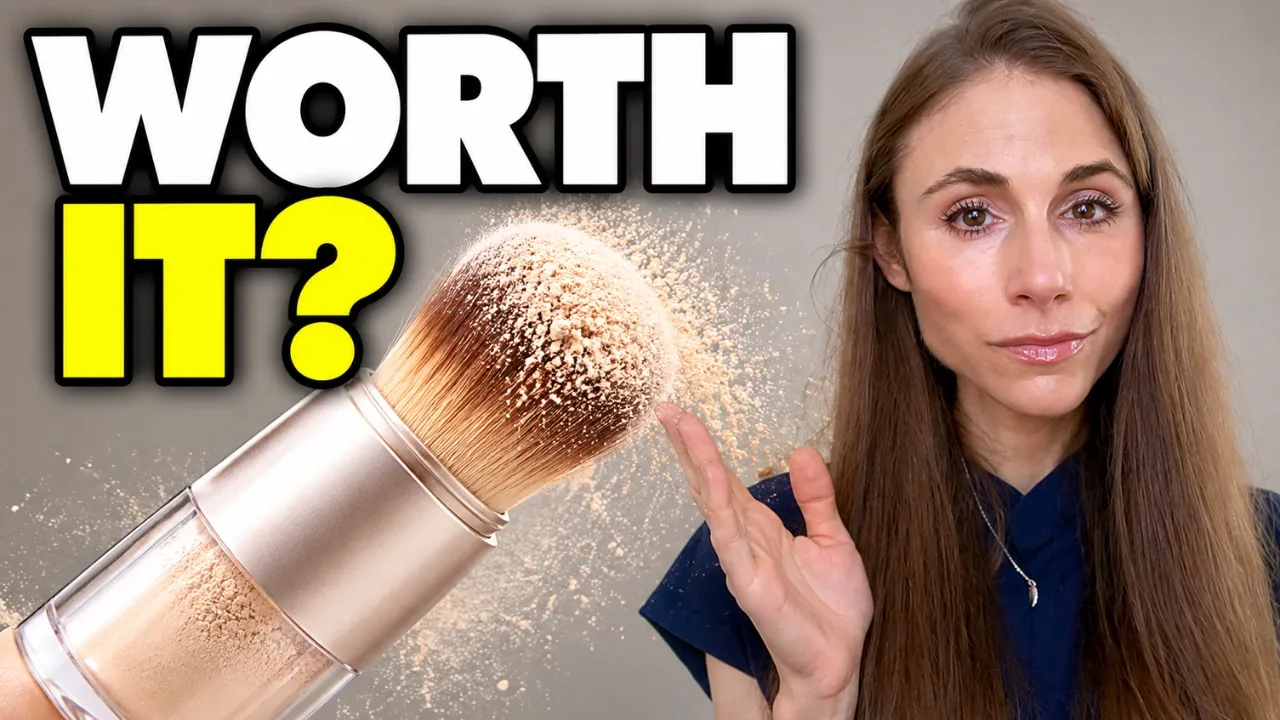
Powder formulations cannot achieve the density required to match labeled SPF ratings, restricting their effective use to setting liquid sunscreens and absorbing surface shine.
AI-assisted summary of Can Powder Sunscreen Really Protect Your Skin? | Dermatologist — original source. Check the original for full context.
Source published:
Key ideas
- Facial exercises cannot eliminate a double chin because spot fat reduction is physiologically impossible, leaving procedural treatments like deoxycholic acid, cryolipolysis, or liposuction as the only clinically proven solutions. (0:08)
- Powder sunscreens are unreliable as standalone photoprotection due to the impracticality of applying the required 2 mg/cm² density, but they work effectively as cosmetic mattifiers to set liquid sunscreen. (1:32)
- Routine potassium monitoring is no longer considered necessary for young, healthy patients taking oral spironolactone with normal kidney function. (2:41)
- Dedicated UV-blocking umbrellas block 99% of direct overhead radiation, yet users can still burn due to diffuse UV rays reflecting off surfaces like concrete, sand, and water. (4:00)
Detailed notes
## Background Published on YouTube by dermatologist Dr Dray on October 11, 2026, this Q&A video addresses common skincare questions submitted by her followers. The video description outlines discussions covering double chin interventions, the effectiveness and limitations of powder sunscreens, side effects and potassium testing associated with spironolactone, copper peptide irritation, UV-blocking umbrellas, and the emerging hyperpigmentation ingredient KT-939.
## TL;DR Dr. Dray debunks the myth that facial exercises can reduce a double chin, clarifying that submental fat is genetically influenced and requires targeted clinical procedures or systemic fat loss. She explains that powder sunscreens are inadequate as standalone sun protection due to application density issues, though they serve well as mattifying cosmetic powders to lock in liquid sunscreens. Addressing dermatological medications and topicals, she notes that routine potassium testing is unnecessary for healthy patients on oral spironolactone, details the recent reformulation of CeraVe Healing Ointment, and attributes copper peptide irritation to overall formulation vehicles rather than the molecule itself. Finally, she examines the physics of UV-blocking umbrellas, noting that diffuse ground radiation still necessitates sunscreen, and reviews preliminary research on the novel tyrosinase inhibitor KT-939.
## Atmosphere & style The video maintains Dr. Dray's characteristic clinical, no-nonsense, and evidence-based demeanor, delivering practical medical advice with matter-of-fact transparency. The presentation feels intimate and casual yet deeply informative, reminiscent of an unhurried consultation interspersed with relatable personal anecdotes, such as her own trials with irritating skincare serums. It closes on a lighthearted, self-deprecating note when a glitch in her phone's Notes app disrupts her filming outline, humanizing the polished dermatological guidance.
## Bulletin - [00:08](https://www.youtube.com/watch?v=2bB4rw_Wy2A&t=8s) Facial exercises cannot eliminate a double chin because spot fat reduction is physiologically impossible, leaving procedural treatments like deoxycholic acid, cryolipolysis, or liposuction as the only clinically proven solutions. - [01:32](https://www.youtube.com/watch?v=2bB4rw_Wy2A&t=92s) Powder sunscreens are unreliable as standalone photoprotection due to the impracticality of applying the required 2 mg/cm² density, but they work effectively as cosmetic mattifiers to set liquid sunscreen. - [02:41](https://www.youtube.com/watch?v=2bB4rw_Wy2A&t=161s) Routine potassium monitoring is no longer considered necessary for young, healthy patients taking oral spironolactone with normal kidney function. - [04:00](https://www.youtube.com/watch?v=2bB4rw_Wy2A&t=240s) Dedicated UV-blocking umbrellas block 99% of direct overhead radiation, yet users can still burn due to diffuse UV rays reflecting off surfaces like concrete, sand, and water.
## Key takeaways - [00:08](https://www.youtube.com/watch?v=2bB4rw_Wy2A&t=8s) Facial exercises are completely ineffective for reducing submental fullness because localized muscle activity does not mobilize adjacent fat stores. - [00:08](https://www.youtube.com/watch?v=2bB4rw_Wy2A&t=8s) Submental fat distribution is heavily dictated by genetics and anatomy, often persisting even when an individual loses weight elsewhere. - [00:08](https://www.youtube.com/watch?v=2bB4rw_Wy2A&t=8s) Clinically proven options for reducing submental adipose tissue are limited to procedures such as deoxycholic acid injections, cryolipolysis, and surgical liposuction. - [01:32](https://www.youtube.com/watch?v=2bB4rw_Wy2A&t=92s) Powder sunscreens should not be relied upon as primary sun protection because achieving the labeled SPF requires an impractically heavy application of two milligrams per square centimeter. - [01:32](https://www.youtube.com/watch?v=2bB4rw_Wy2A&t=92s) Powder sunscreens serve a functional cosmetic role by absorbing excess shine and physically anchoring emollient liquid sunscreens to prevent migration into the eyes. - [02:27](https://www.youtube.com/watch?v=2bB4rw_Wy2A&t=147s) Topical spironolactone carries a small risk of breast tenderness in clinical practice due to potential low-level systemic absorption, though at far lower rates than the oral formulation. - [02:41](https://www.youtube.com/watch?v=2bB4rw_Wy2A&t=161s) Healthy patients with normal baseline renal function taking oral spironolactone for acne do not require periodic laboratory monitoring of potassium levels. - [02:57](https://www.youtube.com/watch?v=2bB4rw_Wy2A&t=177s) The reformulated CeraVe Healing Ointment increased its petrolatum concentration to 49.5% and introduced glycerin and hyaluronic acid while phasing out dimethicone and ozokerite. - [03:25](https://www.youtube.com/watch?v=2bB4rw_Wy2A&t=205s) Irritation or peeling from copper peptide serums in retinoid-tolerant skin is typically driven by vehicle components, preservatives, or penetration enhancers rather than the peptide molecule alone. - [04:00](https://www.youtube.com/watch?v=2bB4rw_Wy2A&t=240s) Dedicated sun umbrellas block up to 99% of overhead UV rays and reflect infrared heat, whereas standard dark rain umbrellas block 70% to 90% but trap radiant heat underneath. - [04:00](https://www.youtube.com/watch?v=2bB4rw_Wy2A&t=240s) Overhead umbrellas do not protect against diffuse, scattered UV radiation reflecting upward from ground surfaces, necessitating sunscreen and UPF apparel. - [05:18](https://www.youtube.com/watch?v=2bB4rw_Wy2A&t=318s) Methyloxetanecarbamido thiazolyl resorcinol (KT-939) is an emerging tyrosinase inhibitor chemically related to Thiamidol being investigated for hyperpigmentation. - [05:18](https://www.youtube.com/watch?v=2bB4rw_Wy2A&t=318s) While in vitro studies show strong tyrosinase inhibition for KT-939, comprehensive human clinical data and direct head-to-head comparisons against Thiamidol remain lacking.
## Detailed walkthrough ### [00:08](https://www.youtube.com/watch?v=2bB4rw_Wy2A&t=8s) Double Chin Treatments and the Myth of Spot Reduction
Dr. Dray kicks off the Q&A by addressing a common postpartum cosmetic concern: whether facial exercises can effectively banish a double chin that developed after childbirth, or if invasive interventions like plastic surgery or Botox are the only true options. Her response is direct and uncompromising: "facial exercises are not going to get rid of a double chin." She explains that fullness under the chin is driven by submental adipose tissue. While some individuals can decrease this fat through overall weight loss and lifestyle management, genetics and individual anatomy play a decisive role. Many people naturally accumulate stubborn fat deposits under the jawline, meaning that even if they diet, exercise, and lean out everywhere else, they still retain prominent submental fat.
When genetics keep that tissue in place, non-invasive exercises remain useless, leaving cosmetic interventions as the only clinically proven pathways. Dr. Dray highlights established dermatological procedures, such as deoxycholic acid injections (widely known under the brand name Kybella), cryolipolysis (fat freezing), and surgical liposuction.
She also dismantles the enduring fitness myth of targeted fat loss. Just as countless crunches will not selectively burn visceral or subcutaneous abdominal fat, grimacing or working facial muscles will not selectively melt away neck fat. Weight loss occurs systemically rather than locally. She notes the frustrating reality many people face when trying to diet down: fat often vanishes fastest from areas where they want to retain fullness, such as the face, while stubborn pockets persist.
- **Non-Surgical & Surgical Alternatives for Submental Fat:** - Deoxycholic acid injections (Kybella) to chemically break down fat cells. - Cryolipolysis to freeze and eliminate localized adipose tissue. - Surgical submental liposuction for mechanical fat removal. - **Key Takeaway on Spot Reduction:** Fat distribution and loss patterns are biologically and genetically predetermined; working specific localized muscle groups has zero correlation with localized fat mobilization.
---
[01:32](https://www.youtube.com/watch?v=2bB4rw_Wy2A&t=92s) Efficacy and Practical Uses of Powder Sunscreens
When asked to review powder sunscreens, Dr. Dray cautions against using them as primary photoprotection. She categorizes powder sunscreens as "very unreliable" when relied upon for standalone UV defense. The primary issue stems from physics and dosing: achieving the labeled SPF value requires a standardized density of two milligrams of product per square centimeter of skin. With powders, it is virtually impossible to deposit an even, contiguous, and sufficiently thick film across the face without caking on an absurd, impractical amount of powder.
Despite their inadequacy as standalone sunscreens, Dr. Dray does not write them off entirely; she finds immense value in using them as functional cosmetic adjuncts. In her own routine, she utilizes SPF powder primarily for "camouflaging the shine" and mattifying the heavy, greasy residue left behind by emollient chemical or mineral liquid sunscreens.
Beyond cosmetic de-shining, she notes that dusting powder acts much like a makeup setting powder, physically locking the underlying liquid sunscreen in place. This technique proves especially handy around the forehead to prevent sunscreen from migrating, sweating off, and burning the eyes during warm weather.
---
[02:27](https://www.youtube.com/watch?v=2bB4rw_Wy2A&t=147s) Spironolactone: Topical Side Effects and Potassium Monitoring
Turning to prescription dermatological therapies, Dr. Dray fields a pair of targeted questions regarding the anti-androgen medication spironolactone. First, addressing whether topical spironolactone can trigger breast tenderness, she confirms that while formal clinical literature on topical spironolactone remains relatively sparse, breast tenderness has indeed been observed in clinical practice. Because topical formulations still carry a slight risk of low-level systemic absorption, side effects can happen, although they occur at a significantly lower frequency compared to the oral route.
She then tackles the enduring clinical question of laboratory monitoring: do patients taking oral spironolactone need routine, periodic blood draws to monitor potassium levels? For an otherwise healthy individual, the short answer is no. While dermatologists routinely ordered frequent potassium panels in past decades out of concern for spironolactone's potassium-sparing diuretic effects, modern clinical studies have consistently demonstrated that routine monitoring is unnecessary in young, healthy populations with normal baseline kidney function and no concurrent potassium-elevating medications.
---
[02:57](https://www.youtube.com/watch?v=2bB4rw_Wy2A&t=177s) CeraVe Healing Ointment Reformulation Breakdown
Responding to curiosity surrounding the "new and improved" packaging for CeraVe Healing Ointment, Dr. Dray details the formula tweaks made by the manufacturer. The core occlusive engine remains petrolatum, but its overall concentration was bumped up slightly from roughly 46.5% in the legacy version to 49.5% in the revised formula.
She rattles off the specific additions and deletions that constitute the rest of the reformulation, pointing out several newly incorporated humectants, emollient waxes, and preservatives, alongside ingredients that were phased out:
| Status in Formula | Ingredients | |:--- |:--- | | **Increased** | Petrolatum (raised from ~46.5% to 49.5%) | | **Newly Added** | Glycerin, microcrystalline wax, synthetic wax, triethyl citrate, sodium hyaluronate, caprylyl glycol, benzoic acid | | **Removed** | Ozokerite, dimethicone, proline, phenoxyethanol, pantolactone (panthenol precursor) |
---
[03:25](https://www.youtube.com/watch?v=2bB4rw_Wy2A&t=205s) Retinoid Tolerance vs. Copper Peptide Irritation
Dr. Dray reads an inquiry from a follower whose skin handles high-strength prescription retinoids (tretinoin 0.1%) without issue, yet inexplicably becomes dry, flaky, and irritated when applying copper peptides. Dr. Dray completely validates this confusing paradox, confessing that she recently had the exact same frustrating reaction while testing the Remedy copper peptide serum: "I have no explanations here because, you know, a lot of people will say that."
Having previously used other copper peptide products without experiencing flaking, and maintaining excellent tolerance to prescription topical tretinoin herself, Dr. Dray suspects the culprit is rarely the copper peptide molecule in isolation. Instead, unexplained irritation of this nature almost always stems from the overall formulation architecture—such as penetration enhancers, preservatives, solvents, or secondary active ingredients within that specific brand's vehicle.
---
[04:00](https://www.youtube.com/watch?v=2bB4rw_Wy2A&t=240s) UV-Blocking Umbrellas and Diffuse Radiation
Analyzing the real-world utility of sun umbrellas, Dr. Dray clarifies what they can and cannot accomplish. A dedicated, lab-tested UV umbrella does indeed offer exceptional direct shielding, blocking upwards of 99% of overhead ultraviolet radiation. Furthermore, specialized sun umbrellas often incorporate specialized heat-blocking fabric treatments that actively reflect infrared energy to keep the user cool underneath—a feature standard dark rain umbrellas lack. While standard dark rain umbrellas (such as a basic black umbrella picked up at a gas station) can physically block a respectable 70% to 90% of UV rays, they absorb radiant heat rapidly, turning the canopy into a sweltering heat trap. Clear plastic rain umbrellas, conversely, offer almost no UV defense.
However, Dr. Dray emphasizes the critical limitation of any overhead canopy: umbrellas do not provide comprehensive protection because they do not account for diffuse and scattered UV radiation. Sun rays bounce off surrounding environmental surfaces—such as concrete sidewalks, sand, and water—and strike the skin from the sides and below. As a result, an individual can easily sustain a sunburn while sitting directly beneath an umbrella if they do not wear broad-spectrum sunscreen and UPF-rated protective clothing.
```mermaid flowchart TD accTitle: UV Radiation Exposure Under an Umbrella accDescr: Diagram illustrating direct overhead UV radiation being blocked by an umbrella while diffuse scattered UV reflects from ground surfaces onto the skin.
subgraph Sun["Solar Radiation Source"] UV["Incoming UV & Infrared Radiation"] end
subgraph Canopy["Dedicated UV Umbrella Canopy"] Direct["Direct Overhead UV (99% Blocked)"] HeatCoat["Heat-Reflective Coating (Reduces Trapped Heat)"] end
subgraph Environment["Ground & Surrounding Surfaces"] Surfaces["Pavement, Sand, Water, Concrete"] Reflected["Scattered / Diffuse UV Rays"] end
subgraph ExposedSkin["Skin Surface"] Skin["Face & Body (Requires Sunscreen & UPF Clothing)"] end
UV --> Direct UV --> HeatCoat UV --> Surfaces Surfaces --> Reflected Reflected -->|"Reflects upward & sideways"| Skin Direct -.->|"Blocked from overhead"| Skin ```
---
[05:18](https://www.youtube.com/watch?v=2bB4rw_Wy2A&t=318s) Methyloxetanecarbamido Thiazolyl Resorcinol (KT-939) for Hyperpigmentation
Dr. Dray takes a close look at an emerging cosmetic ingredient being investigated for uneven skin tone and hyperpigmentation: methyloxetanecarbamido thiazolyl resorcinol, commonly referenced by its developmental code KT-939. She categorizes it as a novel resorcinol derivative designed to inhibit tyrosinase, the foundational rate-limiting enzyme responsible for skin melanin synthesis.
To give viewers a familiar benchmark, Dr. Dray likens KT-939 to Thiamidol (isobutylamido thiazolyl resorcinol)—the patented tyrosinase inhibitor popularized by Eucerin in their anti-pigment line. She characterizes KT-939 as essentially another chemical sibling in that same functional resorcinol family.
Evaluating the current scientific backing, she notes that the data is largely preliminary. Early in vitro bench research on cultured cells in Petri dishes suggests KT-939 might exhibit even higher inhibitory potency than Thiamidol. However, robust in vivo clinical trials are scarce. While early human testing indicates the ingredient is cosmetically well-tolerated and visually improves skin discoloration, there are currently no robust head-to-head clinical trials pitting KT-939 directly against Thiamidol. Given the early stage of the science, Dr. Dray advises against rushing out to spend premium prices on products boasting the ingredient until more clinical data emerges.
---
[06:21](https://www.youtube.com/watch?v=2bB4rw_Wy2A&t=381s) Scripting Notes Mishaps and Video Wrap-Up
Wrapping up the session, Dr. Dray shares a humorous, self-deprecating behind-the-scenes tangent about her recording workflow. She explains that she collects viewer questions and scripts out detailed reference notes inside her phone's Notes app beforehand to avoid the agony of editing video footage and realizing she missed critical context that viewers will subsequently ask about.
Despite leaning on this system for several years to keep her thoughts structured, technology still trips her up: while filming, her Notes app abruptly jumped across the screen, unexpectedly bringing her prepared answer list to an end. Laughing off the glitch, she draws the weekend Q&A to a close, encouraging viewers to like, share, subscribe, and offering her signature parting reminder: "don't forget sunscreen."
## Notable quotes > [00:08](https://www.youtube.com/watch?v=2bB4rw_Wy2A&t=8s) facial exercises are not going to get rid of a double chin. — Dr Dray
> [00:08](https://www.youtube.com/watch?v=2bB4rw_Wy2A&t=8s) Weight loss occurs systemically rather than locally. — Dr Dray
> [01:32](https://www.youtube.com/watch?v=2bB4rw_Wy2A&t=92s) very unreliable — Dr Dray
> [01:32](https://www.youtube.com/watch?v=2bB4rw_Wy2A&t=92s) camouflaging the shine — Dr Dray
> [02:41](https://www.youtube.com/watch?v=2bB4rw_Wy2A&t=161s) For an otherwise healthy individual, the short answer is no. — Dr Dray
> [02:57](https://www.youtube.com/watch?v=2bB4rw_Wy2A&t=177s) new and improved
> [03:25](https://www.youtube.com/watch?v=2bB4rw_Wy2A&t=205s) I have no explanations here because, you know, a lot of people will say that. — Dr Dray
> [04:00](https://www.youtube.com/watch?v=2bB4rw_Wy2A&t=240s) umbrellas do not provide comprehensive protection because they do not account for diffuse and scattered UV radiation. — Dr Dray
> [05:18](https://www.youtube.com/watch?v=2bB4rw_Wy2A&t=318s) there are currently no robust head-to-head clinical trials pitting KT-939 directly against Thiamidol. — Dr Dray
> [06:21](https://www.youtube.com/watch?v=2bB4rw_Wy2A&t=381s) don't forget sunscreen. — Dr Dray
## Mentioned Dr Dray, Kybella, Botox, Spironolactone, CeraVe, CeraVe Healing Ointment, Tretinoin, Remedy, Remedy copper peptide serum, Eucerin, Thiamidol, Methyloxetanecarbamido thiazolyl resorcinol (KT-939), Petrolatum, Notes app
## Video description Dermatologist Dr. Dray answers skincare questions from her followers in this Q&A video, covering double chin treatments, powder sunscreen, spironolactone side effects, tretinoin and copper peptides, UV-blocking umbrellas, and a new ingredient for treating hyperpigmentation.
Can facial exercises reduce a double chin? Are powder sunscreens effective enough to protect your skin from UV radiation? Dr. Dray discusses treatment options for submental fat, explains the limitations of powder sunscreens, and answers questions about breast tenderness with topical spironolactone and potassium monitoring with oral spironolactone.
She also shares her experience with copper peptide serums, explains how UV-blocking umbrellas can help protect your skin from the sun, and reviews the emerging evidence for methyloxetanecarbamido thiazolyl resorcinol (KT-939), a topical ingredient being investigated for skin brightening and hyperpigmentation.
Watch for evidence-based skincare advice from a dermatologist, practical sun protection tips, and insights into ingredients and treatments for common skin concerns.
TIMESTAMPS
0:00 Intro 0:08 Can Facial Exercises Reduce a Double Chin? 1:32 Are Powder Sunscreens Effective for Sun Protection? 2:27 Can Topical Spironolactone Cause Breast Tenderness? 2:41 Do You Need Regular Potassium Testing With Oral Spironolactone? 3:25 Why Can Copper Peptides Cause Dryness When Tretinoin Doesn't? 4:00 Do UV-Blocking Umbrellas Protect Your Skin From the Sun? 5:18 Methyloxetanecarbamido Thiazolyl Resorcinol (KT-939) for Hyperpigmentation 6:51 Outro
#DrDray #Dermatologist #SkincareQandA #SkincareTips #DoubleChin #PowderSunscreen #Spironolactone #Tretinoin #CopperPeptides #SunProtection #UVProtection #Hyperpigmentation #SkinBrightening #KT939 #skincareingredients
FTC: This video is not sponsored. Links are commissionable, meaning I may earn commission from purchases made through links.
💜Shop my Amazon store https://o.bttn.io/0BwiPWFIZLG 💜Follow me on liketoknowit https://www.liketoknow.it/drdrayzday 💜Social media Instagram @drdrayzday Pinterest https://www.pinterest.com/drdrayzday/ Facebook @DrDrayzDay Twitter: @drdrayzday Tiktok: @drdrayzday
Disclaimer: This video is not intended to provide diagnosis, treatment or medical advice. Content provided on this Youtube channel is for informational purposes only. Please consult with a physician or other healthcare professional regarding any medical or health related diagnosis or treatment options. Information on this Youtube channel should not be considered as a substitute for advice from a healthcare professional. The statements made about specific products throughout this video are not to diagnose, treat, cure or prevent disease.
[Source](https://www.youtube.com/watch?v=2bB4rw_Wy2A)