Skinbetter AlphaRet Review: Is It Really Better Than Tretinoin?
Dr Dray
AI-assisted summary of Skinbetter AlphaRet Review: Is It Really Better Than Tretinoin? — original source. Check the original for full context.
Source published:
Key ideas
- Skinbetter Science markets AlphaRet around ethyl lactyl retinoate—a conjugate of lactic acid and retinoic acid—yet clinical research has yet to confirm through pharmacodynamic testing that the molecule successfully cleaves into active retinoic acid in human tissue. (3:58)
- While a 12-week split-face clinical trial found AlphaRet improved fine lines and pigmentation with higher tolerability than 0.025% tretinoin or 1% retinol, the study lacked a vehicle control and biopsy data to verify dermal collagen synthesis. (5:39)
- AlphaRet's formulation includes established actives like niacinamide, glycolic acid, squalane, and ceramides, which provide epidermal plumping, barrier repair, and hyperpigmentation reduction independently of the proprietary retinoid conjugate. (7:36)
- For patients seeking retinoid efficacy with minimal irritation, Dr. Dray recommends over-the-counter 0.1% adapalene or cosmetic retinol/retinaldehyde as cost-effective options with standardized, biopsy-proven collagen benefits. (11:13)
Detailed notes
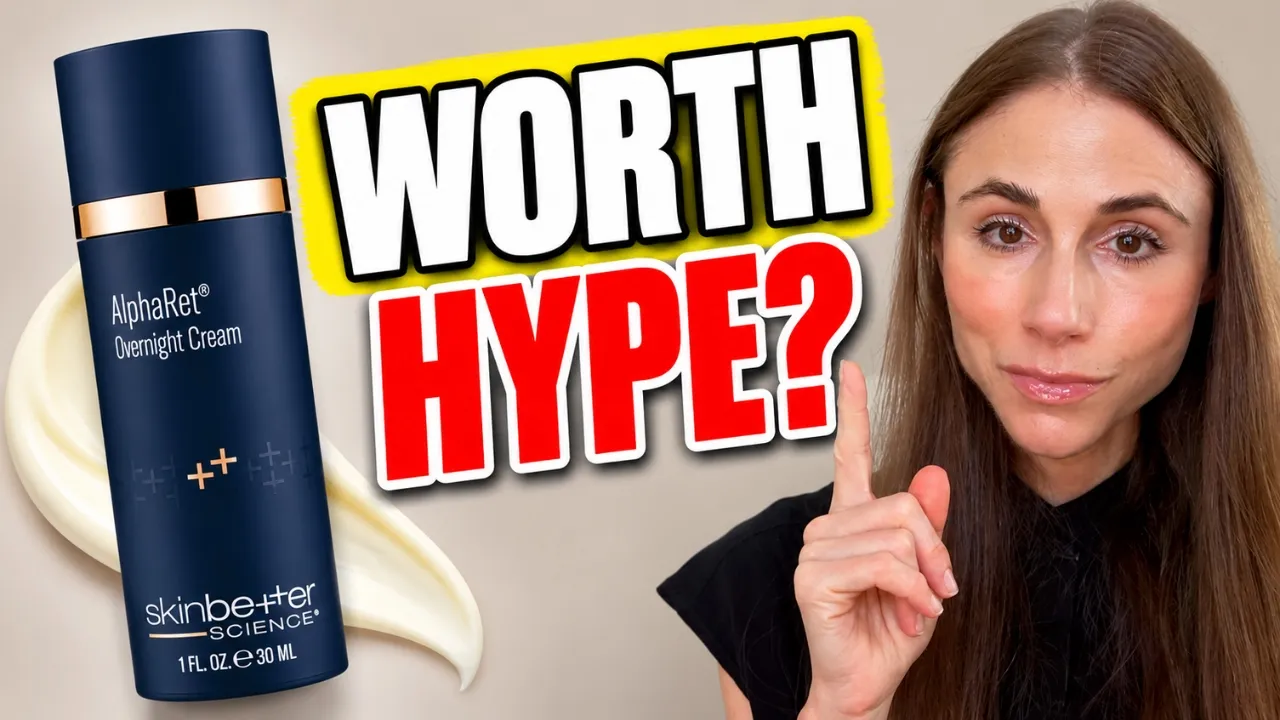
## Background Published on YouTube by dermatologist Dr Dray on October 12, 2026, this video reviews Skinbetter Science's AlphaRet Overnight Cream to determine if it is worth the hype. According to the page description, Dr Dray evaluates the clinical research behind the proprietary retinoid ethyl lactyl retinoate, examining whether it truly matches the anti-aging benefits of tretinoin with less irritation or if its marketing outpaces the scientific evidence.
## TL;DR Dr. Dray critically analyzes the science behind Skinbetter Science's AlphaRet Overnight Cream and its proprietary active, ethyl lactyl retinoate. She evaluates the published clinical trials, noting critical methodological flaws such as the lack of vehicle controls and an absence of histological biopsy data demonstrating actual collagen stimulation. Furthermore, she explains that the product's visible cosmetic benefits can easily be attributed to supporting ingredients like glycolic acid, niacinamide, and rich hydrators rather than the retinoid conjugate itself. While clarifying that AlphaRet is not a scam and functions as an effective hydrating moisturizer, she concludes that its premium price tag is difficult to justify over proven, cost-effective options like over-the-counter adapalene, retinaldehyde, or retinol.
## Atmosphere & style The presentation carries Dr. Dray's signature no-nonsense, pragmatic clinical approach, laced with dry wit and grounded skepticism toward cosmetic industry marketing. It feels like an intimate, evidence-based dermatological consultation that methodically strips away technical jargon and luxury mystique to focus strictly on study design and pharmacodynamics. The tone is measured, informative, and consumer-advocacy driven, ensuring viewers feel educated rather than swayed by aesthetic hype.
## Bulletin - [03:58](https://www.youtube.com/watch?v=xvM8ZhrSa7A&t=238s) Skinbetter Science markets AlphaRet around ethyl lactyl retinoate—a conjugate of lactic acid and retinoic acid—yet clinical research has yet to confirm through pharmacodynamic testing that the molecule successfully cleaves into active retinoic acid in human tissue. - [05:39](https://www.youtube.com/watch?v=xvM8ZhrSa7A&t=339s) While a 12-week split-face clinical trial found AlphaRet improved fine lines and pigmentation with higher tolerability than 0.025% tretinoin or 1% retinol, the study lacked a vehicle control and biopsy data to verify dermal collagen synthesis. - [07:36](https://www.youtube.com/watch?v=xvM8ZhrSa7A&t=456s) AlphaRet's formulation includes established actives like niacinamide, glycolic acid, squalane, and ceramides, which provide epidermal plumping, barrier repair, and hyperpigmentation reduction independently of the proprietary retinoid conjugate. - [11:13](https://www.youtube.com/watch?v=xvM8ZhrSa7A&t=673s) For patients seeking retinoid efficacy with minimal irritation, Dr. Dray recommends over-the-counter 0.1% adapalene or cosmetic retinol/retinaldehyde as cost-effective options with standardized, biopsy-proven collagen benefits.
## Key takeaways - [00:00](https://www.youtube.com/watch?v=xvM8ZhrSa7A&t=0s) Skinbetter Science AlphaRet Overnight Cream features ethyl lactyl retinoate, a proprietary hybrid molecule chemically bonding lactic acid with retinoic acid. - [00:52](https://www.youtube.com/watch?v=xvM8ZhrSa7A&t=52s) The proposed mechanism of ethyl lactyl retinoate—gradual enzymatic hydrolysis releasing free lactic acid and retinoic acid to reduce irritation—remains an unverified hypothesis in living human skin. - [02:23](https://www.youtube.com/watch?v=xvM8ZhrSa7A&t=143s) Prescription tretinoin acts directly on cellular retinoic acid receptors without requiring conversion, whereas cosmetic prodrugs like retinol and retinaldehyde convert gradually, trading speed for lower irritation. - [03:58](https://www.youtube.com/watch?v=xvM8ZhrSa7A&t=238s) The foundational 2015 study on the conjugate evaluated an entire three-product regimen featuring an exfoliating cleanser and SPF 50+ sunscreen, making it impossible to attribute improvements directly to ethyl lactyl retinoate. - [05:39](https://www.youtube.com/watch?v=xvM8ZhrSa7A&t=339s) A 12-week randomized split-face study found AlphaRet improved fine lines, wrinkles, dyschromia, and erythema with superior tolerability over 0.025% tretinoin cream and 1% retinol. - [05:39](https://www.youtube.com/watch?v=xvM8ZhrSa7A&t=339s) The AlphaRet split-face study lacked an identical vehicle control formulated without ethyl lactyl retinoate, preventing researchers from distinguishing the active's effects from the base cream. - [05:39](https://www.youtube.com/watch?v=xvM8ZhrSa7A&t=339s) Unlike classic tretinoin research, the clinical evidence for AlphaRet relies entirely on surface visual grading and lacks punch biopsy data demonstrating dermal fibroblast stimulation or new collagen formation. - [07:36](https://www.youtube.com/watch?v=xvM8ZhrSa7A&t=456s) Deeply hydrating base ingredients such as hyaluronic acid, squalane, and ceramides plump dehydrated epidermis, creating an optical smoothing of fine lines that does not represent structural collagen synthesis. - [07:36](https://www.youtube.com/watch?v=xvM8ZhrSa7A&t=456s) Supporting active ingredients in the formula—including glycolic acid for exfoliation and niacinamide for redness, pore appearance, and hyperpigmentation—can fully explain the clinical results. - [09:49](https://www.youtube.com/watch?v=xvM8ZhrSa7A&t=589s) To scientifically validate AlphaRet, Dr. Dray requires vehicle-controlled trials, histological proof of collagen induction, and head-to-head tolerability tests against low-irritation retinoids like adapalene. - [10:42](https://www.youtube.com/watch?v=xvM8ZhrSa7A&t=642s) While AlphaRet is not an ineffective product or a scam, existing literature fails to substantiate that its clinical benefits justify a luxury price point over standard skincare formulas. - [11:13](https://www.youtube.com/watch?v=xvM8ZhrSa7A&t=673s) Over-the-counter 0.1% adapalene serves as an affordable, standardized retinoid backed by histological collagen data, avoiding confounding multi-ingredient blends when assessing skin tolerance. - [12:47](https://www.youtube.com/watch?v=xvM8ZhrSa7A&t=767s) Marketing claims asserting that AlphaRet is inherently less irritating than other retinoids remain unproven because the product was never tested against gentle, accessible options like adapalene.
## Detailed walkthrough ### [00:00](https://www.youtube.com/watch?v=xvM8ZhrSa7A&t=0s) Introduction to AlphaRet and the Ethyl Lactyl Retinoate Hypothesis
For anyone seeking an anti-aging topical that delivers the visible results of prescription tretinoin without the dreaded irritation and peeling, Skinbetter Science’s AlphaRet Overnight Cream has likely appeared on the radar. The product centers around a proprietary topical vitamin A molecule called ethyl lactyl retinoate. This ingredient chemically links retinoic acid with lactic acid, an alpha hydroxy acid (AHA). The marketing pitch claims that this hybrid conjugate provides the full clinical power of a standard retinoid while sidestepping the uncomfortable side effects. However, the core question is whether sufficient clinical evidence proves that ethyl lactyl retinoate truly matches what established retinoids, cosmetic retinol, or retinaldehyde can do—especially when it comes to stimulating collagen synthesis deep within the skin.
Beyond its featured retinoid conjugate, AlphaRet Overnight Cream is packed with an extensive supporting cast of well-known skincare actives, including glycolic acid, niacinamide, squalane, ceramides, hyaluronic acid, and peptides. Despite this complex cocktail, the entire product is marketed around the specific actions credited to ethyl lactyl retinoate. The theoretical rationale behind the molecule, originally detailed in a 2015 paper, proposes that once the conjugate penetrates the skin barrier, natural hydrolysis cleaves the chemical bond over time. This slow release is designed to gradually supply both free lactic acid and active retinoic acid directly to the tissue.
Conceptually, the idea is brilliant: take a retinoid, pair it with an evidence-based exfoliating AHA, and slowly meter their release into the skin to circumvent dryness and peeling while maximizing anti-aging efficacy. As Dr. Dray dryly points out, "Who wouldn't want that? I'm sure you'd pay well over $100 for an ounce." Yet, she emphasizes that this concept remains fundamentally a hypothesis. It sounds compelling on paper, but the real test is not what happens in a petri dish or with "Bunsen burner type stuff"—it is what rigorous human trials demonstrate on living patients.
```mermaid flowchart TD accTitle: Proposed Mechanism of Ethyl Lactyl Retinoate accDescr: Conceptual diagram showing how ethyl lactyl retinoate penetrates skin and is hypothesized to hydrolyze into lactic acid and retinoic acid.
subgraph Conjugate["Proprietary Molecule"] ELR["Ethyl Lactyl Retinoate<br/>(Lactic Acid + Retinoic Acid)"] end
subgraph Penetration["Skin Barrier"] ELR -->|"Penetrates Stratum Corneum"| Hydrolysis["Proposed Enzymatic Hydrolysis"] end
subgraph DualRelease["Hypothesized Time-Release Actives"] Hydrolysis -->|"Releases AHA"| LA["Lactic Acid<br/>(Hydration & Exfoliation)"] Hydrolysis -->|"Releases Retinoid"| RA["Retinoic Acid<br/>(Cell Turnover & Collagen)"] end ```
[02:23](https://www.youtube.com/watch?v=xvM8ZhrSa7A&t=143s) Why Retinoids Work: Active Retinoids vs. Prodrugs
To evaluate ethyl lactyl retinoate fairly, one must first look at why dermatologists value topical vitamin A in the first place. Retinoids represent some of the most thoroughly investigated topical compounds for addressing photoaging. Prescription tretinoin remains the historical gold standard for clearing sunspots, smoothing fine lines and wrinkles, and kickstarting collagen production. The catch is that tretinoin is notoriously drying and irritating, leaving a substantial number of patients unable to tolerate routine application. Tretinoin operates directly in its active biological form; because it is not a prodrug, the skin does not need to convert or metabolize it before it binds to cellular receptors.
Other prescription retinoid generations carry solid evidence for treating signs of aging as well, such as tazarotene and adapalene. While the newest generation retinoid trifarotene likely provides comparable anti-aging perks, its novelty means robust clinical trials specifically testing it for photoaging have yet to be conducted. Across the board, however, these potent prescription options frequently trigger irritation.
This tolerability barrier explains the massive popularity of over-the-counter cosmetic alternatives like retinol and retinaldehyde. These cosmetic variants boast objective evidence demonstrating that they can deliver meaningful, comparable improvements in aged skin with significantly less irritation. Their gentle profile stems from their nature as prodrugs: the skin must systematically convert them through metabolic steps before they reach active retinoic acid. Although this enzymatic conversion means visible transformations take slightly longer to manifest, the results remain clinically significant. Given this established track record for cosmetic prodrugs, the prospect of introducing an entirely new, gentle retinoic acid prodrug conjugate is inherently attractive.
- **Prescription Retinoids (Active Forms / Direct Receptor Binding):** Tretinoin (first generation), adapalene and tazarotene (newer generations), and trifarotene (fourth generation, but currently lacking dedicated photoaging trials). - **Cosmetic Retinoids (Prodrugs requiring enzymatic conversion):** Retinaldehyde (requires one conversion step) and retinol (requires two conversion steps).
[03:58](https://www.youtube.com/watch?v=xvM8ZhrSa7A&t=238s) Examining the 2015 Clinical Evidence for the Conjugate
The foundational research evaluating this alpha hydroxy acid-retinoic acid conjugate dates back to a 2015 clinical paper studying 25 female participants displaying moderate sun damage. Rather than testing the conjugate as an isolated, standalone active, the study evaluated an entire three-product daily regimen over an 8-week period. Participants were instructed to use: - A daily facial cleanser containing lactic acid and salicylic acid. - A targeted serum containing 0.1% of the lactic acid-retinoic acid conjugate. - A broad-spectrum SPF 50+ sunscreen.
At the conclusion of the 8 weeks, the study investigators reported visible improvements in overall photodamage, skin dryness, surface flaking, dyschromia (uneven pigmentation), and general skin appearance, all alongside favorable tolerability scores. While these findings initially appear promising, Dr. Dray underscores a critical scientific flaw: the study design completely fails to isolate ethyl lactyl retinoate from the confounding variables. There is no way to know whether the clinical improvements stemmed from the proprietary conjugate, the exfoliating acids in the cleanser, or the strict daily use of an SPF 50+ sunscreen—an intervention proven all on its own to reverse visible signs of photoaging.
Furthermore, the authors of the 2015 paper themselves framed the slow, hydrolysis-based release of lactic acid and retinoic acid as a *proposed* mechanism rather than a verified biological fact. A proposed mechanism is simply a theoretical model until confirmed by rigorous pharmacodynamic testing. Without concrete proof showing that the conjugate is reliably cleaving inside human tissue, much of the marketing excitement surrounding the active remains scientifically unvalidated.
[05:39](https://www.youtube.com/watch?v=xvM8ZhrSa7A&t=339s) The 12-Week AlphaRet Split-Face Study and Study Design Limitations
A second clinical trial offers data directly relevant to AlphaRet Overnight Cream itself: a 12-week, randomized split-face comparative trial. The study enrolled 48 women ranging from 30 to 65 years of age—a broad demographic bracket representing vastly different degrees of cumulative lifetime ultraviolet damage. Ultimately, 47 subjects completed the protocol, applying AlphaRet to one side of the face while treating the opposite side with either a cosmetic 1% retinol or prescription 0.025% tretinoin cream.
The reported outcomes seemed to validate the product's premium status: - AlphaRet visibly improved fine lines, deep wrinkles, dyschromia, overall skin tone, erythema (redness), and pore size (which Dr. Dray playfully summarizes as skincare "Goals"). - AlphaRet was significantly better tolerated than both the 1% retinol and the 0.025% tretinoin cream.
| Comparative Study Feature | AlphaRet Overnight Cream Study Setup | Scientific Limitation Identified by Dr. Dray | |:--- |:--- |:--- | | **Study Design** | 12-week randomized split-face trial ($n=48$ enrolled, $47$ completed). | Evaluated finished cosmetic formulations rather than an isolated active molecule. | | **Tested Comparators** | AlphaRet applied to one side; 1% retinol OR 0.025% tretinoin applied to the other side. | Lacked an identical vehicle control (AlphaRet base formula minus ethyl lactyl retinoate). | | **Outcomes Reported** | Reductions in fine lines, wrinkles, dyschromia, redness, and pore size with superior tolerability. | No punch biopsies performed to assess cellular retinoid receptor binding, dermal thickness, or collagen synthesis. |
While a consumer might look at these results and conclude that AlphaRet is an undisputed upgrade over tretinoin, Dr. Dray urges a closer examination of the trial methodology. Most critically, the study lacked a true vehicle control group—meaning researchers did not test an identical AlphaRet cream formulated without the ethyl lactyl retinoate. Without a vehicle blank, it is impossible to determine how much of the cosmetic improvement came from the conjugate versus the rich moisturizing base.
Furthermore, the study relied entirely on surface visual scoring without histological or biopsy evaluations. Established retinoids like tretinoin possess extensive biopsy data proving that they enter dermal cells, engage retinoic acid receptors, and physically stimulate fibroblasts to manufacture new collagen. The AlphaRet trial demonstrates that the finished cream moisturizes effectively and improves surface appearance, but it provides zero biopsy evidence that ethyl lactyl retinoate penetrates tissue to stimulate new structural collagen.
[07:36](https://www.youtube.com/watch?v=xvM8ZhrSa7A&t=456s) Why the Supporting Ingredients Complicate the Anti-Aging Claims
The inability to isolate the effects of ethyl lactyl retinoate becomes even more glaring when examining the remainder of AlphaRet's ingredient list. The formulation includes glycolic acid, niacinamide, hyaluronic acid, squalane, ceramides, peptides, and ubiquinone (CoQ10). Dr. Dray jokes that these are staple compounds she highlights in "99.9% of any video" she produces because they are ubiquitous across modern cosmetic formulations. While not rare or proprietary, these ingredients are biologically potent in their own right and can easily account for the clinical improvements seen in the study.
A deeply hydrating formulation rich in humectants, emollient squalane, and barrier-replenishing ceramides rapidly increases the water content of the epidermis. Plumping dehydrated skin immediately blurs fine lines and reduces the visibility of surface wrinkles—giving the optical illusion of structural rejuvenation without inducing a single strand of new collagen synthesis. Moreover, individual actives in the blend address photoaging independently: - **Glycolic Acid:** Gently dissolves desmosomes to resurface rough skin texture and accelerate exfoliation. - **Niacinamide:** Well-documented to fade hyperpigmented dark spots, soothe cutaneous redness, optimize the epidermal moisture barrier, and visibly minimize enlarged pores. - **Ubiquinone (CoQ10):** Delivers antioxidant defense against ongoing oxidative environmental stress.
Because every single one of these observed improvements can be explained by the supporting ingredients, one cannot scientifically credit ethyl lactyl retinoate with the results. There is no published proof confirming that the expected hydrolysis reaction actually occurred in the skin, that free retinoic acid reached dermal fibroblasts, or that the treatment measurably thickened dermal collagen as assessed by biopsy. Conflating the surface hydration benefits of a high-end cosmetic cream with the biological collagen-building power of a verified retinoid is a completely unwarranted leap.
[09:22](https://www.youtube.com/watch?v=xvM8ZhrSa7A&t=562s) The Problem with Multi-Ingredient Formulas and What Evidence Is Missing
The supporting ingredients in Skinbetter Science AlphaRet Overnight Cream can certainly improve the visible signs of sun damage, but these same ingredients are widely available across thousands of products already on the market. Looking at the finished cosmetic formula, Dr. Dray questions how AlphaRet can claim to offer anything truly unique compared to a "run-of-the-mill garden variety niacinamide-containing moisturizer." She remains unconvinced that the formulation delivers results above and beyond what a consumer can achieve with a basic, well-formulated facial moisturizer.
To prove that AlphaRet’s proprietary conjugate, ethyl lactyl retinoate, is truly special, Dr. Dray explains what clinical evidence she would need to see: - **Mechanistic and histological proof:** Clear data demonstrating that ethyl lactyl retinoate is as mechanistically effective as established forms of topical vitamin A, including dermal studies showing improvements in collagen at the histological level. - **Vehicle-controlled trials:** A split study testing the finished cream formula *with* ethyl lactyl retinoate against the exact same cream *without* it, isolating whether the retinoic acid conjugate is penetrating the skin and driving clinical improvement independently of the moisturizing base and co-actives. - **Tolerability benchmarking:** Rigorous head-to-head testing against established, low-irritation retinoids like adapalene to substantiate claims of superior tolerability.
[10:42](https://www.youtube.com/watch?v=xvM8ZhrSa7A&t=642s) Does That Mean AlphaRet Is a Scam?
Dr. Dray clarifies that pointing out these gaps in the literature does not mean she believes AlphaRet is an ineffective product or a scam. As a dermatologist who tests skincare products firsthand—noting that she has tried AlphaRet herself—her responsibility is evaluating whether a product justifies asking consumers to spend their hard-earned money.
In the case of AlphaRet, the existing evidence simply does not demonstrate that the product delivers unique clinical benefits that justify its premium luxury price tag over standard, accessible alternatives.
[11:13](https://www.youtube.com/watch?v=xvM8ZhrSa7A&t=673s) Proven, Cost-Effective Alternatives for Sun Damage and Anti-Aging
For someone seeking the visible anti-aging and photodamage benefits of topical vitamin A without the severe irritation associated with prescription tretinoin, Dr. Dray outlines far more sensible starting points:
```mermaid flowchart TD accTitle: Recommended Low-Irritation Vitamin A Pathways accDescr: Flowchart showing over-the-counter options for photodamage with less irritation than tretinoin.
Start["Goal: Treat Sun Damage with Minimal Irritation"] --> Med["Standardized Medication Route"] Start --> Cosm["Cosmetic Retinoid Route"]
Med --> Adap["Adapalene (0.1% OTC)"] Adap --> AdapPros["• Inexpensive generic options<br>• Established collagen data<br>• Single active: predictable tolerance"]
Cosm --> Ret["Retinol or Retinaldehyde"] Ret --> RetPros["• Slower conversion pathway<br>• Significantly less irritation<br>• Wide variety of price points"] ```
Dr. Dray’s primary recommendation is over-the-counter adapalene. Although primarily sold as an acne medication (such as branded Differin gel or generic store equivalents), adapalene is a genuine retinoid with robust scientific literature confirming that it stimulates collagen synthesis at the histological level. Because adapalene is a regulated drug rather than a cosmetic, its formulations are standardized without distracting proprietary blends. If a patient experiences peeling or redness with adapalene, they know the reaction is caused directly by the retinoid itself, rather than an ambiguous blend of botanical extracts, alpha hydroxy acids, or niacinamide.
For those preferring cosmetic alternatives, retinol and retinaldehyde represent logical choices. Although they convert more slowly to retinoic acid and take longer to show visible results, they are notoriously gentle and available at a fraction of AlphaRet's cost (despite some high-end cosmetic serums also carrying inflated prices).
[12:47](https://www.youtube.com/watch?v=xvM8ZhrSa7A&t=767s) Scrutinizing the "Less Irritation" Claim and Final Verdict
Dr. Dray remains skeptical of marketing claims asserting that AlphaRet is inherently less irritating than alternative retinoids. The manufacturer's research did not test the formula across the broader landscape of retinoid options, including various formulations of tretinoin, tazarotene, adapalene, or over-the-counter retinols and retinaldehydes.
While Dr. Dray acknowledges that it would be completely unreasonable to expect a company to test against every single cosmetic retinol product launched onto the market, the claim of superior gentleness remains unproven when compared to accessible options like adapalene. In closing, she invites viewers to share whether AlphaRet has served as a "holy grail" staple in their personal routines or if other forms of topical vitamin A have produced better outcomes, before signing off with her trademark reminder to wear sunscreen and subscribe.
## Notable quotes > [00:00](https://www.youtube.com/watch?v=xvM8ZhrSa7A&t=0s) Who wouldn't want that? I'm sure you'd pay well over $100 for an ounce. — Dr. Dray
> [00:00](https://www.youtube.com/watch?v=xvM8ZhrSa7A&t=0s) the real test is not what happens in a petri dish or with "Bunsen burner type stuff"—it is what rigorous human trials demonstrate on living patients. — Dr. Dray
> [02:23](https://www.youtube.com/watch?v=xvM8ZhrSa7A&t=143s) Prescription tretinoin remains the historical gold standard for clearing sunspots, smoothing fine lines and wrinkles, and kickstarting collagen production. — Dr. Dray
> [03:58](https://www.youtube.com/watch?v=xvM8ZhrSa7A&t=238s) There is no way to know whether the clinical improvements stemmed from the proprietary conjugate, the exfoliating acids in the cleanser, or the strict daily use of an SPF 50+ sunscreen—an intervention proven all on its own to reverse visible signs of photoaging. — Dr. Dray
> [05:39](https://www.youtube.com/watch?v=xvM8ZhrSa7A&t=339s) Without a vehicle blank, it is impossible to determine how much of the cosmetic improvement came from the conjugate versus the rich moisturizing base. — Dr. Dray
> [05:39](https://www.youtube.com/watch?v=xvM8ZhrSa7A&t=339s) The AlphaRet trial demonstrates that the finished cream moisturizes effectively and improves surface appearance, but it provides zero biopsy evidence that ethyl lactyl retinoate penetrates tissue to stimulate new structural collagen. — Dr. Dray
> [07:36](https://www.youtube.com/watch?v=xvM8ZhrSa7A&t=456s) Plumping dehydrated skin immediately blurs fine lines and reduces the visibility of surface wrinkles—giving the optical illusion of structural rejuvenation without inducing a single strand of new collagen synthesis. — Dr. Dray
> [07:36](https://www.youtube.com/watch?v=xvM8ZhrSa7A&t=456s) Conflating the surface hydration benefits of a high-end cosmetic cream with the biological collagen-building power of a verified retinoid is a completely unwarranted leap. — Dr. Dray
> [09:22](https://www.youtube.com/watch?v=xvM8ZhrSa7A&t=562s) run-of-the-mill garden variety niacinamide-containing moisturizer — Dr. Dray
> [10:42](https://www.youtube.com/watch?v=xvM8ZhrSa7A&t=642s) In the case of AlphaRet, the existing evidence simply does not demonstrate that the product delivers unique clinical benefits that justify its premium luxury price tag over standard, accessible alternatives. — Dr. Dray
> [11:13](https://www.youtube.com/watch?v=xvM8ZhrSa7A&t=673s) Because adapalene is a regulated drug rather than a cosmetic, its formulations are standardized without distracting proprietary blends. — Dr. Dray
## Mentioned Dr. Dray, Skinbetter Science, Skinbetter Science AlphaRet Overnight Cream, Ethyl lactyl retinoate, Tretinoin, Adapalene, Tazarotene, Trifarotene, Retinol, Retinaldehyde, Differin, Lactic acid, Glycolic acid, Niacinamide, Hyaluronic acid, Squalane, Ceramides, Peptides, Ubiquinone (CoQ10), Salicylic acid
## Video description Is Skinbetter Science AlphaRet Overnight Cream worth the hype? In this video, dermatologist Dr. Dray reviews AlphaRet and examines the science behind its proprietary retinoid, ethyl lactyl retinoate. Does this innovative retinoid actually deliver the anti-aging benefits of tretinoin with less irritation, or is the evidence less convincing than the marketing suggests?
Dr. Dray breaks down the clinical research on AlphaRet, including studies evaluating its effects on fine lines, wrinkles, skin texture, pigmentation, and tolerability. She explains how ethyl lactyl retinoate is thought to work, what the published research actually demonstrates, and why improvements from a finished skincare product do not necessarily prove that its featured active ingredient is responsible.
This review also compares the evidence for ethyl lactyl retinoate with established retinoids, including tretinoin, tazarotene, adapalene, retinol, and retinaldehyde. Learn what the research tells us about retinoid effectiveness, collagen stimulation, photoaging, and irritation, and what additional studies would help establish the benefits of AlphaRet's proprietary ingredient.
Is AlphaRet a proven alternative to tretinoin? Find out what the science supports and what remains uncertain in this dermatologist's evidence-based review.
TIMESTAMPS
0:00 Introduction 0:52 What Is AlphaRet? 2:23 Why Retinoids Are So Interesting for Anti-Aging 3:58 What Is the Evidence for Ethyl Lactyl Retinoate? 5:39 The AlphaRet Overnight Cream Study 7:36 Why the Other Ingredients Matter 9:49 What Would Convince Me? 10:42 Does That Mean AlphaRet Doesn't Work? 11:13 What Would I Choose for Anti-Aging? 12:47 What About the Irritation Claim? 13:19 My Bottom Line
#AlphaRet #SkinbetterScience #Retinoids #Tretinoin #Retinol #AntiAgingSkincare #Dermatologist #SkincareReview #Photoaging #Drdray
FTC: This video is not sponsored. Links are commissionable, meaning I may earn commission from purchases made through links.
💜Shop my Amazon store https://o.bttn.io/0BwiPWFIZLG 💜Follow me on liketoknowit https://www.liketoknow.it/drdrayzday 💜Social media Instagram @drdrayzday Pinterest https://www.pinterest.com/drdrayzday/ Facebook @DrDrayzDay Twitter: @drdrayzday Tiktok: @drdrayzday
Disclaimer: This video is not intended to provide diagnosis, treatment or medical advice. Content provided on this Youtube channel is for informational purposes only. Please consult with a physician or other healthcare professional regarding any medical or health related diagnosis or treatment options. Information on this Youtube channel should not be considered as a substitute for advice from a healthcare professional. The statements made about specific products throughout this video are not to diagnose, treat, cure or prevent disease.
[Source](https://www.youtube.com/watch?v=xvM8ZhrSa7A)