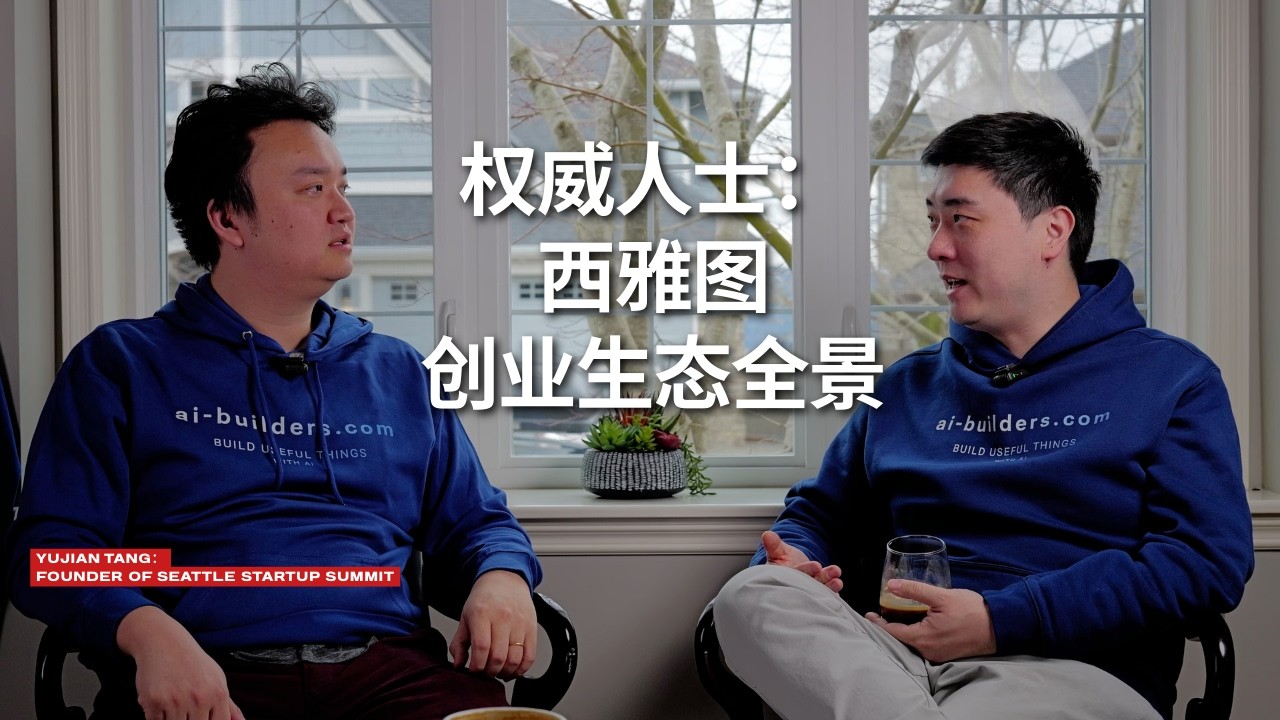
## Detailed walkthrough
### [00:00](https://www.youtube.com/watch?v=hCh6-lAiabI&t=0s) The Seattle vs. Bay Area Startup Divide
The conversation kicks off with a blunt assessment of the stark contrast between the Seattle tech landscape and the San Francisco Bay Area. While Seattle boasts an incredible volume of technical talent, its startup ecosystem is a mere fraction of its neighbor to the south. Citing a striking metric from Ben Gilbert of the *Acquired* podcast, the host points out that Seattle's capital and number of companies represent roughly 1% of what is found in the Bay Area. The environment in Seattle is heavily dominated by big tech, creating a corporate mindset that can be counter-productive to entrepreneurial success. As they joke, if someone is exceptionally good at climbing the ladder at a major tech company, they are "probably not going to be very good" at thriving in a scrappy startup environment due to a form of anti-selection.
- **The 1% Metric:** Seattle possesses only about 1% of the venture capital and startup density found in the Bay Area, despite having a massive tech workforce.
- **Big Tech Culture:** The corporate stability and structure of big tech companies can actively desensitize employees to the realities and risks of startup life.
---
[00:27](https://www.youtube.com/watch?v=hCh6-lAiabI&t=27s) The Scale of Eugene's AI and Startup Conference
The host formally introduces Eugene, a prominent community builder who transitioned from a technical background to launch one of Seattle's largest artificial intelligence and startup conferences. Reflecting on the previous year's event, Eugene shares the metrics of its success, revealing that out of roughly 900 people who registered, around 600 attendees actually showed up. Tickets were priced between $250 and $300. The host recalls the exhibition hall feeling incredibly packed and lively, which Eugene confirms by noting there were about 50 individual tables set up for companies to showcase their work.
The crowd was uniquely distributed, drawing attendees from 467 distinct companies. Because only 50 to 60 of those companies were formally exhibiting or presenting, the data indicated that the vast majority of participating organizations simply sent a single representative to observe and network. Eugene expresses great satisfaction with how the community turned out, calling it a "big outing" for the local tech scene.
- **Attendance:** ~900 sign-ups translated to roughly 600 in-person attendees.
- **Ticket Pricing:** Tickets were sold for approximately $250 to $300 each.
- **Corporate Footprint:** Attendees represented 467 different companies, meaning most organizations sent just one person.
- **Exhibitors:** Between 50 and 50 companies hosted tables or presented in the main hall.
---
[01:30](https://www.youtube.com/watch?v=hCh6-lAiabI&t=90s) High-Profile Guests and the Pivot to Events
The discussion shifts to the caliber of talent the conference attracts. In its previous iteration, the event drew prominent leaders including a Vice President from Amazon, an Executive Director from JPMorgan Chase, several senior vice presidents, and founders from rising companies like StatMuse, Ingest, GMI, and Arise. Looking ahead to the upcoming event, Eugene teases an even heavier hitting lineup, including the CVP (Corporate Vice President) of AI from Microsoft and Dan Lewis, the founder of Convoy—a notable Seattle startup that reached a $3.7 billion valuation before its assets were acquired and Lewis joined Microsoft.
The host is fascinated by Eugene's career trajectory, noting that he comes from a deep machine learning and software engineering background. This prompts two core questions for the interview: First, why would someone with such a strong technical pedigree choose to do events full-time? Second, why is Seattle’s startup output so small compared to its talent pool, especially when an event like Eugene's has virtually no competition in the region, whereas Silicon Valley has countless overlapping conferences?
- **Past Speakers:** Executive Director from JPMorgan, VP from Amazon, and founders from StatMuse, Ingest, GMI, and Arise.
- **Upcoming Speakers:** CVP of AI at Microsoft and Dan Lewis, former CEO of Convoy ($3.7B valuation).
- **The Seattle Monopoly:** Unlike the crowded Silicon Valley ecosystem, Eugene's event stands alone in scale within Seattle, where other local tech meetups often draw only 15 or so people.
---
[03:13](https://www.youtube.com/watch?v=hCh6-lAiabI&t=193s) From Teen Innovator to Amazon Software Engineer
Answering the first question, Eugene charts his unconventional journey into the tech world. He started early, landing a software development role at IBM when he was just 16 years old during high school. He stayed there for a few years before heading to college, where his research pivoted toward machine learning, computer vision, and big data. Publishing academic papers granted him the opportunity to speak at major international conferences, including IEEE events. He quickly fell in love with the atmosphere, the thrill of presenting, and the opportunity to meet people doing cutting-edge work.
In fact, public speaking became his golden ticket into big tech. Finding IBM "pretty boring to work at," Eugene used a connection from one of his conference talks to land an interview at Amazon in 2018. While his peers often complained about Amazon's grueling and annoying multi-stage interview loops, Eugene recalls his process being incredibly short—consisting of a single 45-minute chat where the interviewer essentially shrugged and said, "Yeah, okay, whatever, man." He attributes this entirely to the credibility he built on stage. At Amazon, he joined the engineering side of the Auto ML team, building the core infrastructure designed to keep machine learning models accurate over time.
- **Early Start:** Began working at IBM at age 16 during high school.
- **Academic Research:** Focused on computer vision, big data, and machine learning, leading to IEEE conference presentations.
- **The Amazon Shortcut:** Hired by Amazon in 2018 after an Amazon employee saw him speak at a conference, bypassing the standard grueling interview loop for a single 45-minute conversation.
---
[04:42](https://www.youtube.com/watch?v=hCh6-lAiabI&t=282s) The Genesis of a Developer Community
When the pandemic hit, corporate life slowed down, and Eugene found himself bored. Seeking a creative outlet, he began writing tutorials centered around natural language processing (NLP). Despite his formal academic background being in computer vision, language fascinated him because of his personal history—he spoke Chinese as a child, transitioned entirely to English as he grew older, and found the mechanics of shifting languages to be "a really weird thing." He built a variety of side projects, shared them online, and watched his personal website explode to a peak of a couple hundred thousand views per month.
During this time, aspiring developers constantly asked him, "How do I start a career as a software developer?" Because his own path was so unique, he struggled to give a standard answer, but always advised people to build projects and participate in hackathons. When people asked where they could find hackathons in Seattle, Eugene realized the local ecosystem was entirely barren. Driven by this void, he started running small events for fun in 2022, eventually joining AI Camp to assist with their tech gatherings. His online success caught the attention of Zilliz, a vector database company experiencing massive hype in the 2022-2023 market. They hired Eugene for a Developer Relations (DevRel) role, where he successfully scaled their developer community from zero to roughly 5,000 members.
- **Web Traffic:** Eugene's personal technical blog reached a peak volume of a couple hundred thousand monthly views.
- **Community Growth:** Scaled the Zilliz developer ecosystem from 0 to 5,000 members during the height of the vector database boom.
- **The Seattle Void:** Discovered a total lack of hackathons and structured tech community events in the Seattle area in 2022.
---
[07:35](https://www.youtube.com/watch?v=hCh6-lAiabI&t=455s) Turning Meetups into a Million-Dollar Business
Eugene’s early external events grew so popular that they began packing out venues, even in competitive markets like San Francisco. He fondly recalls getting into trouble with venue management for exceeding capacity limits, while simultaneously dealing with frustrated attendees locked outside the doors. Recognizing a clear business demand when multiple corporations approached him for event curation, Eugene officially launched his event production business in 2024. In their inaugural year, they served just under 7,000 people across various online formats and 23 in-person events. They scaled up to roughly 30 live events the following year.
Through trial and error, Eugene realized that open-to-the-public gatherings were less valuable than highly curated, selective experiences. When events were restricted to senior engineers, staff engineers, and engineering directors, the peer-to-peer value skyrocketed. Counterintuitively, limiting access drove *more* demand, with selective mini-conferences pulling in 600 to 700 sign-ups. "By being selective, you actually get more interest," Eugene notes, admitting he found the phenomenon fascinating. Today, the business focuses on "AI builders"—connecting experienced engineers implementing AI with early-stage pre-seed and seed startups, growth-stage tech firms, and enterprise giants like Databricks and AWS.
- **Business Launch:** Formally founded the events business in 2024.
- **Event Volume:** Hosted 23 in-person events in year one (under 7,000 total attendees) and roughly 30 in-person events in year two.
- **The Selectivity Paradox:** Moving away from open events to gated, high-level mini-conferences raised sign-ups to 600–700 per event.
---
[09:55](https://www.youtube.com/watch?v=hCh6-lAiabI&t=595s) The Economics of Live Events
When pressed on whether event production is a viable long-term business, Eugene describes it as an excellent lifestyle business. While it may not possess the infinite scalability of a software-as-a-service (SaaS) startup, a small business owner can comfortably net a great living. He points out that massive entities like the Linux Foundation generate astronomical revenues—hitting $190 million recently—though they operate in a different tier, charging $1,500 to $2,000 per ticket compared to Eugene's $500 price point.
Eugene shares a rare peek into his own financials, projecting that his ecosystem will bring in anywhere from $1.5 million to $2 million this year. This revenue is diversified across the live events—which can easily net $500,000 on their own if backed by strong corporate sponsors—alongside a Reddit community and a paid premium community that offers public relations assistance and career development resources.
- **Projected Revenue:** Expected to reach $1.5 million to $2 million across all properties this fiscal year.
- **Ticket Economics:** Positions his events at a accessible $500 price point, compared to enterprise tech conferences charging up to $2,000.
- **Sponsorship Value:** High-quality corporate sponsorships allow individual event tracks to bring in up to $500,000.
- **The Linux Foundation Benchmark:** Noted the enterprise organization brought in $190 million in a single year, highlighting the extreme ceiling of the industry.
---
[11:02](https://www.youtube.com/watch?v=hCh6-lAiabI&t=662s) A Carnival for Tech People
The conversation takes a philosophical turn as the host tries to pinpoint the intangible magic of offline, face-to-face gatherings. Eugene explains that while online hackathons work well when participants are given explicit tools and a clear objective, they lack raw human energy. Live events naturally filter for people who possess identical mindsets and hyper-specific shared interests. "Who's going to go to these events?" Eugene asks. "It's people who read the title... read the description... and want to hear somebody talk about AI for an hour or a day."
The host compares the experience to an essay he once read, where an author attended a seminar simply to view his own life via a parallel lens, tracking ten different career paths of peers to experience alternative realities. He then offers a brilliant cultural analogy to explain the high price tag of live cohorts over self-paced courses: it is the difference between buying a studio record and purchasing a ticket to a live concert. The concert is immersive, yields higher completion rates, and simply makes you feel better. Eugene enthusiastically agrees, laughing that these gatherings are ultimately a "carnival for tech people." They reminisce about a massive, legendary Amazon offsite event they both attended that featured a surprise appearance by Katy Perry and a walk-on by Jeff Bezos, noting that seeing elite AI pioneers on stage evokes that exact same rockstar energy for developers.
- **The Concert Analogy:** Live events are to online courses what live concerts are to vinyl records—an immersive, high-fidelity experience valued for how it makes attendees feel.
- **The Filter Effect:** In-person attendance acts as a natural filtering mechanism, gathering rare, highly aligned peers into a single room.
- **The Amazon Outing:** Both speakers laugh about an exclusive Amazon company party that featured Jeff Bezos and a live performance by pop star Katy Perry.
---
[13:45](https://www.youtube.com/watch?v=hCh6-lAiabI&t=825s) Addressing the Frustration in Seattle's Ecosystem
As the segment draws to a close, the host bridges back to the core frustration plaguing the local Pacific Northwest community. A massive contingent of tech employees in Seattle are deeply frustrated with big tech bureaucracy and want to leave to start something of their own. However, they struggle immensely to find local capital, get an entrepreneurial education, or find co-founders who share a startup risk tolerance.
Reiterating the heavy statistics from the top of the hour, the host reminds Eugene that despite Seattle housing roughly a third of the density of total tech employees compared to the Bay Area, its actual startup capital footprint remains pinned at a measly 1%. Eugene reveals that he has spent an immense amount of time contemplating this exact disparity, drawing from his constant travels to the Bay Area and a cross-country trip he took in 2021 to evaluate where tech culture thrives.
- **Talent Disparity:** Seattle holds an estimated 1:2 or 1:3 ratio of tech employees relative to the Bay Area, making its 1% startup capital ratio an extreme anomaly.
- **The Entrepreneur's Hurdle:** Local builders face a structural lack of education, institutional capital, and community infrastructure compared to Silicon Valley.
The Seattle vs. Bay Area Tech Ecosystem
The speaker explains that they chose to live in Seattle because it offers a greater opportunity to make a tangible difference compared to the oversaturated Bay Area. Mentioning Madrona Venture Group's recent $750 million fund raise, the speaker hopes this capital translates into more local startups and funding within the Pacific Northwest (PNW). However, a key structural difference exists between the two regions: Seattle's tech workforce is heavily composed of immigrants and individuals whose primary experience is tied strictly to big tech companies. In contrast, the Bay Area benefits from a compounding historical advantage where a much higher percentage of engineers possess direct startup experience.
The speakers debate the "anti-selective" nature of big tech success. If an engineer is exceptionally skilled at navigating a massive corporation, those traits often act as an "anti-factor" for a startup environment. The exception lies in corporate "intrapreneurs"—highly technical project managers who excel at identifying a problem, pitching a solution, and assembling the necessary resources.
- Madrona Venture Group recently raised a $750 million fund to invest primarily in the PNW and the Bay Area.
- Big tech traits are often viewed as an anti-factor or anti-selective for startup success.
- Key requirements for an entrepreneur include knowing the problem being solved, identifying the target customer, and securing resources.
Mindset Shifts and the Transition in the Age of AI
The conversation shifts to how the day-to-day reality of big tech fails to prepare workers for entrepreneurship. In a large company like IBM or Amazon, a manager typically hands an employee a predefined team goal with explicit parts to build, leaving the engineer to simply pick a component. Conversely, working at a startup requires facing a goal with absolutely no clear mechanisms or instructions, forcing the individual to "go figure it out."
The speaker notes that the ongoing AI boom is shifting this dynamic by lowering the cost of experimentation, allowing people to take higher risks. As a personal anecdote, the speaker shares how they built the Seattle Startup Summit website over a single weekend for just $20 using AI, despite having written fewer than 100 lines of JavaScript in their life. In a pre-AI era, this would have required hiring a developer and enduring a lengthy, back-and-forth design process. This technological shift makes building Minimum Viable Products (MVPs) and maintaining side hustles far more accessible.
- The speaker built the Seattle Startup Summit website in a few hours over a weekend for $20 using AI.
- Big tech environments focus on execution of pre-defined parts, while startups require navigating total ambiguity.
- AI lowers the cost of taking risks by making prototyping and MVP creation much easier.
The Reality of Capital and Risk in Seattle
The speakers clarify that Seattle's challenge isn't a lack of talent or competence—which is abundant at senior, staff, and director levels—but rather the specific composition of that talent and their exposure to startup thinking. Furthermore, while Seattle is home to immense wealth from retired Microsoft, Amazon, and Boeing employees, much of this capital remains risk-averse. Local investors prefer stable investments, often funneling small amounts into angel groups like Keiretsu, which the speaker critically describes as "typically bad" with returns that trail VCs or even the general stock market 99% of the time.
Compounding the funding issue, it is incredibly difficult for individual local investors to back major VCs. For instance, Madrona only accepted three new Limited Partners (LPs) in their last fund, requiring check sizes in the tens of millions of dollars. Fuse is noted as one of the few large local firms that actively accepts investments from tech workers, alongside smaller firms like Ascend, Anthos, and Voyager. The speaker, who is currently raising a venture fund, aims to bring the Bay Area's risk-tolerant investment philosophy to Seattle—where investors accept a 90% corporate failure rate in exchange for the 10% that return the entire fund.
- Keiretsu is cited as an angel group that charges thousands in annual membership fees but struggles to beat stock market returns.
- Madrona accepted only 3 new LPs in their latest fund, requiring tens of millions of dollars per commitment.
- Key Seattle venture firms mentioned include Madrona, Fuse, Ascend, Anthos, and Voyager.
- The speaker is currently raising a venture fund to introduce a more aggressive, Bay Area-style investment thesis to Seattle.
Risk Tolerance, Golden Handcuffs, and "Shots on Goal"
The immense financial comfort of big tech jobs in Seattle serves as a major deterrent to startup creation. A typical software engineer or Product Manager (PM) at Microsoft or Amazon makes $300,000 to $400,000 a year. The speaker points out a running joke that Microsoft employees enjoy an incredibly light 10-hour workweek. Given those conditions, it is highly unlikely for someone in their 30s or 40s with a family to leave that stability to work 80 hours a week at a startup for $100,000, on the mere 1% chance of making $100 million.
When discussing the average quality of startups, the speaker notes that Seattle's financial return per dollar is slightly lower than the Bay Area's—yielding a 5-point-something return compared to the Bay's 7-point-something. However, this is largely a numbers game. The Bay Area skews its average through massive, long-tail successes like OpenAI and Anthropic because it simply takes more "shots on goal." Seattle has notable standouts like Mother Duck and Statsig (the latter now part of OpenAI), but many local attempts fail because founders try to balance them as 15-hour-a-week side hustles after their day jobs. Additionally, strict immigration rules like the H-1B visa legally prevent a massive portion of Seattle's tech talent from quitting to launch a company.
- Seattle's startup return per dollar is around 5.x, compared to the Bay Area's 7.x (which is heavily skewed by outliers like OpenAI).
- Statsig and Mother Duck are highlighted as examples of high-quality Seattle startups.
- Many Seattle startups fail because founders treat them as part-time side hustles, which restricts sales execution and networking.
- H-1B visa restrictions act as a major legal barrier preventing talented local immigrants from entering entrepreneurship.
Startups vs. Small Businesses and Advice for Tech Workers
The conversation draws a hard line between a traditional small business and a venture-backed startup. The co-host acknowledges that their own side project is a business, not a startup, specifically because they do not take venture capital. The speaker emphasizes this distinction, noting that "startups are a business, but not all businesses are startups." The moment a founder accepts VC money, they are locked into pursuing exponential growth at all costs.
For a Seattle-based tech employee (PM, engineer, data scientist, or designer) wanting to experience the startup ecosystem for a two-year stint, the speaker insists they do not need to move to the Bay Area. While finding customers is universally difficult, finding early employees in Seattle has actually become easier due to recent tech layoffs. Early-stage founders are advised to focus entirely on gaining initial traction, noting that finding three customers in a single week is enough to validate an idea. To get plugged in, professionals should utilize local community programs, co-working spaces, and early-stage investors to build long-term relationships before asking for capital.
- A business relies on standard operations, whereas a startup taking VC money is structurally required to chase exponential growth.
- Gaining 3 customers in a single week is proposed as a benchmark for early idea validation.
- **AI House:** Offers an Entrepreneur-in-Residence (EIR) program in Seattle.
- **Annie (Breakers):** Invests early-stage checks of a quarter-million ($250,000) into unusual companies.
- **Foundations:** A co-working space in Capitol Hill featuring an EIR program to help founders raise money, run by AVL (a partner at the Seattle-based firm Founders Co-op).
[28:27](https://www.youtube.com/watch?v=hCh6-lAiabI&t=1707s) The Startup Landscape in Seattle and Raising Capital
The conversation highlights that Seattle offers significantly fewer options for tech workers looking to join a startup compared to the bustling ecosystem of the Bay Area. While the choices are limited, there are still notable local companies actively hiring, specifically mentioning Series B startups like Read AI, Edge Delta, and Mother Duck. The speakers point out that if you are coming from a traditional big tech background, these Series B companies represent the closest available approximation to the classic startup experience. However, tracking down early-stage Series A companies in the region proves much more difficult.
A major bottleneck in the local tech scene occurs during the transition from seed funding to Series A or Series B, which typically requires raising upwards of $10 million. While the general industry drop-off rate for companies moving from seed to Series A hovers around 50%, the speakers note that the rate is likely higher in Seattle. Crucially, this doesn't mean local companies are failing at a higher rate; rather, it indicates a structural pattern where Seattle-based founders are forced to travel to the Bay Area to successfully secure their larger venture capital rounds.
- **Startups currently hiring:** Read AI (Series B), Edge Delta (Series B), and Mother Duck (Series B).
- **Funding threshold:** Series A and B rounds typically require raising more than $10 million.
- **The Seattle drop-off:** The standard 50% drop-off rate from seed to Series A is higher locally because companies must pivot to Bay Area investors for growth capital.
[29:21](https://www.youtube.com/watch?v=hCh6-lAiabI&t=1761s) The Seattle Startup Summit and Community Innovation
The discussion shifts enthusiastically to an upcoming marquee event: the Seattle Startup Summit. Designed as a massive gathering for the local ecosystem, the summit is set to feature over 1,000 tech leaders and more than 100 startups. Crucially, the event is not localized to Seattle businesses alone; participating startups will be arriving from the Bay Area, New York, and all over the country. The summit aims to serve as a comprehensive crossroads, bringing together a vast array of local venture capitalists alongside major enterprise tech giants who support the startup ecosystem.
The underlying mission of the conference is to build a bridge for the local Seattle community to break into the world of startups and cutting-edge innovation. The speakers reflect on how startups represent "the edge of innovation," creating a dynamic where large enterprises are constantly eager to learn from agile startups, while startups simultaneously try to penetrate enterprise markets. The summit provides a high-value venue for job seekers to find hiring teams, founders to pitch to a heavily represented VC presence, and industry giants to network. The episode wraps up with mutual appreciation as the host thanks the guest for sharing these insights with the channel.
- **Event scale:** Features over 1,000 tech leaders and more than 100 startups from Seattle, the Bay Area, and New York.
- **Big tech presence:** Representatives from Microsoft, AWS, Google, and likely Oracle will be in attendance.
- **Venture capital presence:** Local and national VCs like Madrona, Anthos, Fuse, Ascend, and Trilogy will be running events and networking.
Despite housing roughly one-third of the technical workforce of the San Francisco Bay Area, Seattle accounts for only about 1% of its venture capital and startup density. Event organizer and former engineer Eugene argues that corporate golden handcuffs, risk-averse regional capital, and big-tech skill sets create structural disadvantages that emerging community initiatives and AI tools are trying to bridge.
The Corporate Talent Trap and Cultural Anti-Selection (0:00)
Citing a metric from Ben Gilbert of the Acquired podcast, the discussion emphasizes that Seattle holds roughly a 1:2 or 1:3 ratio of tech employees relative to the Bay Area, yet retains only about 1% of its startup capital and company density. This imbalance is reinforced by the dominant presence of enterprise employers like Amazon and Microsoft, where day-to-day work focuses on executing well-defined, modular tasks rather than navigating undefined problems.
The speakers observe that excelling within a corporate hierarchy often operates as an 'anti-factor' for startup success. While corporate intrapreneurs can occasionally translate project pitching skills to new ventures, standard big-tech tenure conditions employees to expect predefined instructions, making the total ambiguity of early-stage entrepreneurship jarring and counterproductive for ladder-climbers.
Golden Handcuffs, Immigration Barriers, and Conservative Capital
Financial security acts as a severe deterrent to startup formation in the Pacific Northwest. Experienced software engineers and product managers earn between $300,000 and $400,000 annually in corporate roles with manageable hours, making an 80-hour workweek for a $100,000 startup salary an unattractive risk. Additionally, a large share of local talent is composed of immigrants on H-1B visas who are legally restricted from quitting their jobs to found companies, which reduces full-time founder commitment to part-time side hustles.
Local capital compounds the problem. While retired employees from Microsoft, Amazon, and Boeing possess substantial wealth, Eugene notes they often allocate money to conservative angel syndicates like Keiretsu, whose returns frequently trail standard market indexes. Institutional venture firms such as Madrona recently raised $750 million but accepted only three new Limited Partners at eight-figure minimum commitments. As a result, Seattle startups experience a steeper drop-off transitioning from seed funding to Series A and B rounds, forcing founders to travel to the Bay Area for checks exceeding $10 million.
The Business Model of Curated Technical Gatherings (7:35)
Eugene transitioned from early software development at IBM and machine learning infrastructure at Amazon into developer relations at Zilliz, where he expanded the vector database developer community to 5,000 members. Recognizing that Seattle had virtually no structured hackathons or independent AI summits in 2022, he launched a full-time event production business in 2024. In its inaugural year, the enterprise ran 23 in-person events serving just under 7,000 attendees, scaling to approximately 30 live events the following year.
The business projects $1.5 million to $2 million in revenue across live summits, a Reddit community, and paid career resources. Eugene discovered a selectivity paradox: gating mini-conferences strictly to senior engineers, staff engineers, and directors increased registrations to 600–700 per event rather than reducing them. By pricing tickets at $250 to $500—far below large enterprise conferences like the Linux Foundation that charge up to $2,000—and securing high-value corporate sponsorships of up to $500,000 per track, curated gatherings serve as targeted networking hubs for vetted builders.
AI Acceleration and Grassroots Ecosystem Infrastructure (28:27)
Generative AI is shifting startup economics by dramatically lowering the cost and technical overhead of prototyping. As an example, Eugene created the Seattle Startup Summit website over a weekend for $20 using AI tools, despite having written fewer than 100 lines of JavaScript in his career. This efficiency allows prospective founders to test minimum viable products and validate customer interest without significant upfront capital.
Local infrastructure is expanding to support this transition through programs like AI House's Entrepreneur-in-Residence (EIR) track, the Foundations co-working space in Capitol Hill run by Founders Co-op's AVL, and early-stage capital from firms like Fuse and Annie at Breakers. Concurrently, hiring Series B companies such as Read AI, Edge Delta, and Mother Duck provide landing spots for big-tech workers seeking startup exposure, while broader summits bring national VCs and regional enterprise giants together to connect job seekers and founders.
While AI tooling and curated summits lower the barriers to entry, Seattle's startup volume remains constrained by high corporate retention incentives and a venture ecosystem that still relies heavily on Bay Area capital for growth-stage funding.
Detailed notes — zh
## Background
该视频由 YouTube 频道“课代表立正”于 2026 年 3 月 25 日发布。内容为频道主立正与 Seattle Startup Summit 创始人 Yujian 的深度对谈,围绕西雅图拥有顶尖大厂人才却未能形成湾区般密集创业生态的现象,探讨大厂能力与创业要求的错位、城市创投资本风格及 AI 对降低试错成本的影响。
## TL;DR
访谈从 Yujian 由大厂技术人员转型为西雅图最大创业峰会主办方的个人经历切入,深入剖析了西雅图创投生态资本规模仅为湾区 1% 的深层原因。两人指出大厂擅长“解题”的分工机制与创业必须“定义问题”的要求存在反向筛选,且西雅图受移民身份限制、保守的资本习惯与舒适的大厂待遇影响,导致创业复利严重缺失。对话还探讨了利用 AI 编程工具快速验证 MVP 的低成本路径,并为有意创业的大厂人梳理了本地 EIR 孵化资源、天使资本对接方式及 Seattle Startup Summit 的桥梁价值。
## Atmosphere & style
对谈整体呈现出极度务实、清醒且直言不讳的行业内行交流氛围。两位有大厂技术背景的对话者毫无客套吹捧,而是用尖锐的数据和切身体会层层解构大厂舒适圈与创业现实的落差;伴随着关于贝佐斯出场狂欢与兼职创业深夜困局的生动比喻,整场对话在理性冷峻的痛点拆解中透出对构建本土创新生态的真诚热忱,听感如同一次深度且干货密集的闭门行业复盘。
## Bulletin
- [00:13](https://www.youtube.com/watch?v=hCh6-lAiabI&t=13s) 西雅图汇集了硅谷湾区二分之一至三分之一的科技从业者,但其创业公司数量与创投资本规模仅相当于湾区的约 1%。
- [15:46](https://www.youtube.com/watch?v=hCh6-lAiabI&t=946s) 大厂精细化分工训练出的是被动解题能力,而创业的核心门槛是定义问题、寻找客户并整合早期资源,导致大厂人才体系与创业能力出现反向筛选。
- [21:32](https://www.youtube.com/watch?v=hCh6-lAiabI&t=1292s) 生成式 AI 工具大幅压缩了原型开发成本,使独立开发者能在数小时内花几十美元完成 MVP 验证,极大降低了试错门槛。
- [28:27](https://www.youtube.com/watch?v=hCh6-lAiabI&t=1707s) 西雅图创业生态在种子轮到 A 轮阶段存在明显断崖,由于本地千万美元级资金池匮乏,成长型团队通常不得不南下湾区寻求融资。
## Key takeaways
- [00:00](https://www.youtube.com/watch?v=hCh6-lAiabI&t=0s) 西雅图创业生态规模与湾区差距悬殊,资本与初创企业数量仅为湾区的约 1%,形成了明显的人才与创投生态反差。
- [08:34](https://www.youtube.com/watch?v=hCh6-lAiabI&t=514s) 技术活动的筛选门槛能提高关注度,针对资深工程师与总监级从业者的闭门精筛活动比无门槛活动更受欢迎且商业价值更高。
- [11:16](https://www.youtube.com/watch?v=hCh6-lAiabI&t=676s) 线下技术会议的价值在于提供沉浸式体验与高阶交流,类似科技圈的嘉年华,能让工程师观察到同行的不同职业路径。
- [15:46](https://www.youtube.com/watch?v=hCh6-lAiabI&t=946s) 大厂训练出的解题能力与创业所需能力存在脱节,创业最稀缺的能力是主动定义真实痛点、明确目标受众以及整合外部资源。
- [17:23](https://www.youtube.com/watch?v=hCh6-lAiabI&t=1043s) 西雅图坐拥大量退休高净值人群,但由于背负家庭责任、投资风格保守,传统天使投资联盟的历史回报率甚至跑输公开股市大盘。
- [19:53](https://www.youtube.com/watch?v=hCh6-lAiabI&t=1193s) 湾区风投深谙幂次法则,愿意承受 90% 项目归零的高失败率来博取超级赢家,而西雅图资方与大厂工程师普遍缺乏高风险胃口。
- [21:32](https://www.youtube.com/watch?v=hCh6-lAiabI&t=1292s) 生成式 AI 工具重塑了创业的试错成本,创始人借助 AI 编程工具仅需数小时和极低资金就能搭建上线官方网站并验证原型。
- [22:46](https://www.youtube.com/watch?v=hCh6-lAiabI&t=1366s) 西雅图在产出超级独角兽上受限于大数法则,创业基数远不及湾区,导致长尾效应跑出顶级赢家的绝对概率较低。
- [22:46](https://www.youtube.com/watch?v=hCh6-lAiabI&t=1366s) 大厂员工下班后每周 15 小时的兼职创业极难成功,不仅面临精力脱节,更难以在工作时间开展企业级销售与商务拓展。
- [25:42](https://www.youtube.com/watch?v=hCh6-lAiabI&t=1542s) 一门自负盈亏的传统生意(Business)与追求指数级扩张并引入风投的初创企业(Startup)在商业逻辑与目标模型上有着本质不同。
- [26:07](https://www.youtube.com/watch?v=hCh6-lAiabI&t=1567s) 初创企业早期产品验证的关键标准在于能否在短时间内(例如一周内)找到 3 个真实的付费客户。
- [28:27](https://www.youtube.com/watch?v=hCh6-lAiabI&t=1707s) 西雅图创业项目在种子轮到 A 轮阶段面临断崖,因本地承接千万美元以上大额支票的基金较少,成熟团队大多需要前往湾区寻求后续资本。
- [29:21](https://www.youtube.com/watch?v=hCh6-lAiabI&t=1761s) Seattle Startup Summit 旨在连接大厂高管、初创公司与本土顶级 VC,打破西雅图本地生态在信息与资本上的孤岛状态。
## Detailed walkthrough
### [00:00](https://www.youtube.com/watch?v=hCh6-lAiabI&t=0s) 西雅图创业峰会:规模、嘉宾与被颠覆的刻板印象
在访谈开头的一段预热中,Yujian 抛出了一些极其尖锐且发人深省的观察。对比湾区,西雅图无论在资本总量还是创业公司数量上,都“仅仅只有湾区的 1% 左右”。不仅如此,大厂与创业之间甚至存在某种反向筛选机制:“如果你非常擅长在大厂工作,那么你大概率在创业上不会太灵光。”他甚至半开玩笑地给天使投资群体打预防针,直言大多数天使投资组织往往效率低下、水准参差不齐。
随着对话正式展开,主持人立正介绍了这位在西雅图创办了最大规模 AI 与创业峰会的特邀嘉宾——Yujian。立正提到自己去年就参加了这一峰会,现场的火爆程度令人印象深刻。Yujian 披露了上一届大会的具体数据:共有约 900 人报名,实际到场近 600 人;门票价格在 250 至 300 美元之间。更为亮眼的是参会者的多元背景——这近 600 名观众来自整整 467 家不同的公司,这意味着绝大多数机构都只是派出了单一代表前来参会,展厅内 50 多个展位被挤得水泄不通。
大厂高管与知名创业者的背书进一步奠定了峰会的含金量。往届嘉宾包括亚马逊的副总裁(VP)、摩根大通(J.P. Morgan)的高级董事总经理与执行总监,以及 StatMuse、Ingest、GMI、Arize 等知名初创企业的创始人。而在即将到来的新一届峰会中,嘉宾阵容更加豪华,包括微软的 AI 企业副总裁(CVP of AI),以及西雅图曾经估值达 37 亿美元的独角兽企业 Convoy 创始人 Dan Lewis。
- **峰会核心数据**:约 900 人注册报名,近 600 人现场参会;展厅设有约 50 个展位,参会者覆盖 467 家不同企业。
- **门票定位**:单人票价约 250 至 300 美元。
- **重磅嘉宾背景**:涵盖亚马逊 VP、摩根大通高管、微软 AI 负责人及前估值数十亿美金独角兽 Convoy 创始人 Dan Lewis 等。
---
### [02:17](https://www.youtube.com/watch?v=hCh6-lAiabI&t=137s) 核心追问:技术人为何转型办活动?西雅图为何沦为“创业荒漠”?
面对峰会的巨大影响力,主持人立正抛出了贯穿整期节目的两个核心问题:
1. **职业路径的急转弯**:Yujian 本身拥有纯正的技术背景,从软件开发一路做到机器学习,为何会毅然转型,将“办活动”作为自己的全职事业?
2. **西雅图创业生态的悖论**:如果将这场峰会放在硅谷,几百人的规模可能算不上顶流;但在西雅图,这不仅是全城最大,甚至可以说是断层式领先——第二名的活动往往只有 15 人左右参加。为什么西雅图坐拥海量顶尖技术人才,被誉为全球科技枢纽,其资本规模和创业公司密度却仅有湾区的 1%?
```mermaid
flowchart TD
accTitle: 访谈的核心议题框架
accDescr: 展示主持人提出的个人转型与城市生态两个核心维度
subgraph Q1["问题一:个人成长路径"]
A["技术底色:IBM / 机器学习 / 大厂工程师"] --> B["破局转型:全职创办高规格科技与创业峰会"]
end
subgraph Q2["问题二:城市生态反差"]
C["顶尖人才密集:亚马逊、微软等大厂汇聚"] --> D["生态极度反差:创投资本与 Startup 数量仅为湾区 1%"]
end
```
---
### [03:13](https://www.youtube.com/watch?v=hCh6-lAiabI&t=193s) 从 IBM、学术研究到亚马逊:一场因演讲而免试的职场之旅
针对第一个问题,Yujian 梳理了自己独特且非典型的发展轨迹。他的技术生涯起步极早,16 岁还在读高中时就进入了 IBM 实习,并在那里工作了数年。进入大学后,他主攻计算机视觉(Computer Vision)、机器学习和大数据研究,发表了多篇学术论文。论文的发表让他频繁登上各类学术会议的讲台(如 IEEE 大数据会议等)。在此过程中,他发现自己非常热爱参加会议、在台上演讲以及结识同行前沿学者与开发者。
大学毕业之际,因为觉得“在 IBM 工作实在有点无聊”,他开始寻觅新工作。一次偶然的机缘彻底改变了他的求职逻辑:2018 年,一位亚马逊的员工在学术会议上听了他的演讲,随后便为他提供了一个面试机会。与大多数软件工程师经历的冗长、残酷的轮番轰炸面试不同,Yujian 仅经历了一轮 45 分钟的简单沟通便拿到了 Offer,对方面试官的态度极其轻松:“行吧,没问题。”这很大程度上得益于他在技术会议上展现的真实能力。
进入亚马逊后,Yujian 专注于 AutoML(自动化机器学习)的基础设施工程,致力于解决如何长期维持机器学习模型预测准确性的工程挑战。工作之余,为了结交新朋友,他不仅活跃在亚马逊内部的员工社群(Affinity Groups)负责组织活动,还频繁在外部的 Meetup 平台上寻找各种科技聚会。
---
### [05:20](https://www.youtube.com/watch?v=hCh6-lAiabI&t=320s) 从教程博主到 Zilliz 开发者关系:活动生意的萌芽
2020 年疫情爆发,西雅图所有的线下专业活动几乎瞬间归零,转入线上后气氛变得枯燥沉闷。在此期间,许多人常向 Yujian 请教:“如何开始自己的软件工程师职业生涯?”由于自己的成长路径过于特殊,Yujian 很难直接复制经验,便总是建议对方:“多做 Side Project,多去打 Hackathon(黑客松),然后把项目公开发布出去。”然而提问者的反馈却让他大吃一惊——西雅图本地根本没有像样的黑客松,连科技交流活动都屈指可数。既然大家都需要且自己也乐在其中,Yujian 在 2022 年开始尝试纯粹出于兴趣组织了几场小型活动,随后加入 AI Camp 协助运营技术聚会。
在此前后,Yujian 深入钻研自然语言处理(NLP),并开始在个人网站上大量撰写技术教程。虽然大学主攻计算机视觉,但他对人类语言有着浓厚的好奇心,这也源于他的个人成长经历:“我小时候讲中文,后来长大学了英文,到现在中文都不太会说了,语言对我来说是一件非常神奇的事。”他将构建的大量 NLP 项目与教程开源分享,个人网站的月访问量一度飙升到几十万次。
这一声量吸引了向量数据库企业 Zilliz 的注意。正逢 2022 至 2023 年向量数据库概念大火,Zilliz 急需开拓在开发者心智中的影响力,便聘请 Yujian 担任开发者关系(DevRel)负责人。在此期间,他硬生生将该团队的开发者社群从 0 做到了约 5,000 人。随着活动影响力向旧金山湾区扩张,他组织的线下沙龙甚至常态化达到 150 人的规模,场地频频爆满,甚至因安全限流导致门外排长队而引来场地与参会者的双重抱怨。
大量企业开始主动找上门来,寻求委托他代办技术活动。Yujian 意识到这是一个真正的商业机会,便在 2024 年正式将其转型为全职活动公司:
- **首年战绩**:2024 年全年活动触达总人数略低于 7,000 人,举办了大量线上活动及约 23 场线下活动。
- **次年提速**:随后一年线下活动突破 30 场,平均每月超过两场。
- **战略认知升级**:在密集的办会实践中,Yujian 洞察到,真正能产生最高商业价值与连接效率的,并不是全盘公开的大众聚会,而是对准入门槛有着严苛筛选的“精筛活动”(Curated Events)。这一认知也促使他在 2026 年缩减常规场次,全力聚焦于高质量的峰会运作。
### [08:34](https://www.youtube.com/watch?v=hCh6-lAiabI&t=514s) 为什么“精筛与门槛”反而带来更高的活动关注度
Yujian 聊到做技术活动的筛选机制时指出,针对特定层级的闭门与精筛活动往往能产生极高的价值。对于资深工程师(Senior Engineer)、Staff 工程师或是工程总监(Director of Engineering)而言,参加一场全场都是同级别从业者的活动,其社交与交流价值远远高过那些鱼龙混杂、充斥着完全没有行业经验初学者的开放式活动。
在过去一年的摸索中,团队举办了几场小规模的垂直研讨会(Mini Conferences)进行测试,结果出现了一个非常反直觉的现象:这些设置了筛选门槛的活动,报名人数反而远超无门槛的开放式活动,单场往往能吸引 600 到 700 人报名。这种“越挑剔越受欢迎”的机制促使他们进一步聚焦,将目标人群锁定在有实际经验、正在公司内探索落地 AI 的资深建设者(AI Builders),同时邀请从 Pre-seed、Seed 轮的早期创新团队,到具备一定规模的 Growth 阶段公司,再到 Databricks、AWS 这样的大厂团队同台交流。对于为什么一路深耕做活动,Yujian 坦言:“长篇大论的解释是这些,但短篇答案其实纯属意外——我就是喜欢做这件事,然后就一直做下去了。”
### [09:56](https://www.youtube.com/watch?v=hCh6-lAiabI&t=596s) 办活动的商业账本:不能无限扩张,但能活得很舒服
当被问及“办活动到底算不算一门好生意”时,Yujian 给出了很坦诚的回答:活动业务的规模化(Scalable)天花板很明显,但它绝对是一门可以活得非常滋润的小生意(Viable Business)。虽然很难靠单纯办活动赚到几千万甚至上亿美元,但对于小团队或独立创业者来说,不仅足够维持体面的生活,过程也充满乐趣。
与 Linux Foundation 这种年营收达 1.9 亿美元、依靠巨额捐赠并能将单张门票卖到 1500 至 2000 美元的行业巨头相比,商业化路径完全不同。Yujian 目前单张门票定价约为 500 美元左右。活动本身如果能吸引到优质赞助商并保持一定频次,单靠门票和赞助能创造约 50 万美元的收入。此外,他还运营着付费社群,为会员提供公关传播(PR)支持、职业发展咨询等综合服务。将社群与活动打包计算,全年的整体营收预计能达到 150 万到 200 万美元之间。
- **活动门票定价对比**:Linux Foundation 等大型行业峰会门票在 1500 - 2000 美元,Yujian 的活动门票定价约为 500 美元。
- **业务营收结构**:纯活动(赞助商+门票)年收入可达约 50 万美元;叠加付费社群、PR 传播服务及职业咨询后,整体年营收预期在 150 万至 200 万美元左右。
### [11:16](https://www.youtube.com/watch?v=hCh6-lAiabI&t=676s) 线下体验的不可替代性:“科技人的演唱会与平行人生”
线上活动和线下聚会的能量场截然不同。线上黑客松固然有效,但前提是必须给参与者极其明确的开发目标、开发工具和参赛理由;而线下活动的核心魅力在于“在场感”和气场共鸣。能读完活动长文案、看懂技术背景并专程赶来的人,本质上都是同一类带着求知欲的同路人。
对技术人来说,线下大会不仅仅是听报告,更是“观察自己在平行宇宙中的另一种可能”。曾有参会者提到,去现场能一次性看到十几个背景相似的人走出了截然不同的职业路径,就像在体验各种版本的人生。主播也分享了一个深有感触的比喻:在线教育中,很难向学员解释为什么“实时训练营(Live Cohort)”要比“录播自学课(Self-paced Workshop)”贵得多,直到找到了“卖黑胶唱片与卖演唱会门票”的类比——现场体验带来的沉浸感、完课率和情绪价值是数字化复制品无法给予的。线下大会就像是“科技人的嘉年华(Carnival for tech people)”。两人还幽默地回忆起以前在亚马逊(Amazon)内部的大型活动:当时流行天后凯蒂·佩里(Katy Perry)登台献唱时,台下工程师们只是例行公事地鼓掌欢呼;而当创始人杰夫·贝佐斯(Jeff Bezos)现身走上台时,全场技术人员瞬间陷入疯狂尖叫——这正是技术圈独特的狂欢逻辑。
### [13:46](https://www.youtube.com/watch?v=hCh6-lAiabI&t=826s) 西雅图创业生态之困:资本仅占湾区 1%,大厂能力反成创业包袱
话题随之切入西雅图本地的创投痛点:许多在亚马逊、微软等大厂工作的技术人才感到厌倦,渴望跳出来创业或加入初创公司,却常常找不到资本、缺乏认知且圈子封闭。知名商业播客《Acquired》的主持人 Ben Gilbert 曾指出一个惊人的反差:如果对比西雅图与旧金山湾区(Bay Area),西雅图拥有的科技从业人员数量能达到湾区的二分之一到三分之一,但其创业投资资本和初创公司的数量却只有湾区的 1% 左右。
Yujian 在 2021 年环美考察后最终定居西雅图,正是看中了这里的“生态真空”能给人创造更大的影响力空间。虽然本地老牌风投 Madrona 刚刚募集了 7.5 亿美元的新基金并重仓太平洋西北区(PNW),但两地的生态断层依然深刻:
1. **人口结构差异**:西雅图的科技从业者中移民占比极高,大部分人的职业轨迹是从学校直接进入大厂并长期留在大厂,风险偏好较低。
2. **创业复利效应**:湾区受益于数十年如一日的“创业人才复利”,大量工程师本身就拥有早中期初创公司的摸爬滚打经验;而西雅图严重缺乏这种经验传承。
3. **能力反向淘汰(Anti-selective)**:在大厂内部如鱼得水、极其适应大企业系统运作的人,创业时往往水土不服。
```mermaid
flowchart LR
accTitle: 湾区与西雅图科技生态的演进机制对比
accDescr: 展现湾区创业人才复利与西雅图大厂人才锁定在资本与创业产出上的分化。
subgraph BayArea["湾区创业飞轮"]
B1["创业文化积淀"] --> B2["高密度初创经历工程师"]
B2 --> B3["高风险偏好与充沛资本"]
B3 --> B1
end
subgraph Seattle["西雅图大厂生态"]
S1["高密度大厂技术移民"] --> S2["精细化分工与解题思维"]
S2 --> S3["创业经验复利不足"]
S3 -->|"资本规模仅占湾区约 1%"| S1
end
```
### [15:46](https://www.youtube.com/watch?v=hCh6-lAiabI&t=946s) 从“解题者”到“定义问题者”:大厂分工与创业开拓的本质冲突
大厂培养出的能力模型与创业所需要的能力往往是“反向挂钩”的。大厂内部真正具备创业潜力的人,通常是那些极具开拓精神的技术项目经理(Technical Project Manager)或“内部创业者(Intrapreneurs)”:他们能主动提出“我们要做什么项目、为什么必须做、需要调动哪些资源来完成”。
创业的本质并非单纯拥有技术实现能力。面对一个具体的技术难题,绝大多数优秀的软件工程师都能凭借代码能力将其攻破;甚至在以往,创始人只要搞懂商业逻辑,完全可以出钱雇佣工程师来解题。创业最稀缺、最致命的门槛在于:
- **定义问题**:清楚到底要解决什么真实的痛点;
- **定位受众**:明确产品最终卖给谁;
- **整合资源**:知道通过什么途径拿到起步所需的人才与资本。
在大厂(例如 IBM 或亚马逊),技术人员的日常是被层层分工包裹的,主管通常会把业务拆解成若干功能模块,工程师只需“挑选其中一块并把它做出来”;但在初创公司,现实是“摆在面前的只有一个抽象目标,谁都不知道该怎么做、机制是什么,完全需要自己从零摸索出路”。这种从被动“解题者”到主动“定义问题者”的角色转变,正是大厂员工走向创业时最难跨越的鸿沟。
### [17:23](https://www.youtube.com/watch?v=hCh6-lAiabI&t=1043s) 西雅图的人才结构与天使投资生态的困局
在探讨西雅图与硅谷湾区的创业生态差异时,核心问题往往并不在于个人的“聪明才智”或技术水平。西雅图汇集了极其顶尖的科技人才,能做到资深工程师(Senior Engineer)、主任工程师(Staff Engineer)甚至总监(Director)的人无一不具备过硬的技能。真正拉开差距的是“思维模式”(Mindset)与“人才构成”(Composition of talent)。在大厂体系下成长起来的人,很少有机会接触到创业所必备的从 0 到 1 的思维方式;而西雅图暴露在这种创新思维模式下的人口比例,明显远低于湾区。
除了思维模式,创业必不可少的另一大支柱是“资本”。西雅图并不缺钱——这里坐拥大量从微软、亚马逊、波音退休或持股的高净值人群,财富规模庞大。然而,坐拥财富并不等于懂得风险投资。西雅图的大多数高净值人群由于处于不同的人生阶段、背负家庭责任,投资偏好高度保守,偏爱稳健资产,通常只拿极少量的资金参与天使投资群体(Angel Investing Groups)。
更尖锐的现实是当地天使投资组织的表现。以 Keiretsu Forum 等传统天使投资联盟为例,会员每年要缴纳数千美元的会费,但整体投资回报率却相当糟糕,其历史回报不仅跑输成熟 VC,在 99% 的情况下甚至跑输公开股市大盘。天使投资人在绝大多数时候难以获得可观回报,而散户或高净值个人想以个人身份成为本土头部 VC 的出资人(LP)又极其困难:
- **Madrona Venture Group**:作为西雅图老牌头部风投,几乎不接受新 LP;其最近一期基金仅引入了 3 位新 LP,且单笔投资门槛高达数千万美元。
- **Fuse Venture Partners**:相对更开放,愿意吸纳科技行业从业者作为出资人。
- **其他本土机构**:如 Ascend、Anthos Capital、Voyager Capital 等规模相对较小,难以改变整体风投生态的供应格局。
---
### [19:53](https://www.youtube.com/watch?v=hCh6-lAiabI&t=1193s) 湾区与西雅图的风险胃口差异
湾区风投体系的成熟在于其对“幂次法则”(Power Law)和风险周期的透彻理解。那里的投资人和机构早已习惯了创业投资的高损耗率规律:90% 的项目最终会归零,但剩下 10% 的赢家会带来超高倍数的回报,从而赚回整个基金的本金与利润。正因熟谙这一游戏规则,湾区资本在决策时不会纠结于单个项目的确定性,出资意愿更果断,试错次数更多。
反观西雅图,投资人普遍更谨慎、纠结于“这个项目到底能不能成”,缺乏承受高失败率的心理机制和资本习惯。这种对风险的极度厌恶不仅体现在资方,更深植于工程师群体的心态中。在大厂体系下,工程师的生活极度舒适:
- 微软员工年薪可达 30 万至 40 万美元,且享有极高的工作与生活平衡(WLB),甚至被调侃为“每周仅需工作 10 小时”;
- 相比之下,全职创业意味着每周疯狂工作 80 小时,拿 10 万美元的微薄薪水,换取仅有 1% 几率博取 1 亿美元退出的机会。
对于二三十岁、成家立业且收入丰厚的大厂技术人才而言,放弃安逸的生活投身创业,在纯粹的“期望收益”计算上缺乏足够的吸引力。
---
### [21:32](https://www.youtube.com/watch?v=hCh6-lAiabI&t=1292s) AI 浪潮对试错成本的重塑
伴随着生成式 AI 工具的爆发,创业与验证创意的门槛正在发生结构性改变。AI 的核心价值在于大幅降低了试错成本,让个人能够以极低的代价承担更多创新风险。这种变化甚至直接体现在非全职的项目启动阶段。
Seattle Startup Summit 创始人 Yujian 以自身经历举例:
- 他本人并不擅长前端开发,过去人生中写过的 JavaScript 代码加起来不到 100 行;
- 在生成式 AI 辅助编程出现之前,要搭建一个峰会官方网站,他必须经历物色外包工程师、来回反复沟通设计稿与功能等漫长流程,耗费大量时间与沟通成本;
- 如今,借助 AI 编程工具,他仅用一个周末、花 20 美元成本,就在几个小时内独立完成了 Seattle Startup Summit 官网的构建。
这种生产力跃迁使得大厂人或独立开发者能够在极短时间内将想法转化为 MVP(最小可行产品)与原型,极大地促进了个人探索 Side Hustle(副业探索)的可行性。
---
### [22:46](https://www.youtube.com/watch?v=hCh6-lAiabI&t=1366s) 西雅图创业的现实阻碍:大数法则与兼职创业的陷阱
在比较两地创业质量时,西雅图的总体现金回报率(Return per dollar)略低于湾区。若将 OpenAI、Anthropic 这类超级独角兽计算在内,湾区的平均回报乘数在 7 倍以上,而西雅图在 5 倍左右。但造成这种差距的关键并非西雅图缺乏优质公司,而纯粹是**“大数法则”**(Numbers game):
- 湾区创业基数庞大,拥有无数次“挥棒机会”(Swings of the ball / Shots on goal),只要基数达到上千家,长尾效应(Long-tail distribution)中跑出超级赢家的几率就远高于基数较小的市场;
- 西雅图同样诞生过极为优秀的公司,例如数据实验平台 Statsig(已被广泛认可)和 MotherDuck(创始人之一位于西雅图),更不用说历史上孕育出的亚马逊与微软。
```mermaid
flowchart TD
accTitle: 兼职创业失败原因分析
accDescr: 展示西雅图大厂员工下班后兼职创业时面临的精力和时间分配困境
subgraph WorkDay["大厂本职工作"]
Job["白天全职工作<br/>消耗绝大多数精力与认知带宽"]
end
subgraph PartTimeStartup["下班后兼职创业 (每周约15小时)"]
Energy["夜间疲劳工作<br/>进度缓慢、反馈周期长"]
SalesBlock["商业销售与业务拓展受阻<br/>难以在深夜与外部客户/高管会面"]
end
subgraph FailureLoop["最终结果"]
HighFailure["难以快速验证 PMF<br/>项目无疾而终"]
end
Job --> Energy
Energy --> SalesBlock
SalesBlock --> HighFailure
```
西雅图许多大厂员工出于对现状的不满萌生创业念头,但缺乏基础的创业认知与商业教育。他们往往选择在下班后每周抽出 15 个小时作为“兼职创业”。这种模式的失败率极高:
1. **精力与反馈周期脱节**:白天经历大厂工作后,夜晚可调动的认知资源有限,开发进度极度缓慢,难以快速感知正向反馈;
2. **销售与外部拓展受阻**:企业级销售与商务拓展必须在正常工作时间开展,深夜闭门造车根本无法推进外部合作,除非具备顶级的社交组织能力;
3. **沉重的生活与身份包袱**:成熟家庭的双职工结构让一人辞职的风险倍增;同时,西雅图庞大的移民工程师群体持有 H-1B 工作签证,在法律身份受限的情况下根本无法直接成立公司或为初创企业全职工作。
因此,在西雅图谈论创业,并非盲目鼓吹“立即裸辞”,而是必须认清真实的市场规律与个人约束,寻找更理性的渐进式切入方式。
### [25:42](https://www.youtube.com/watch?v=hCh6-lAiabI&t=1542s) 商业(Business)与创业(Startup)的本质区别
访谈由对嘉宾自身项目的定性切入,展开了一场关于商业逻辑的辨析。很多在大厂工作的人做副业,往往以为自己是在创业,但实际上经营的是一门“生意”(Business),而非真正意义上的“初创企业”(Startup)。这两者有着根本性的分水岭:所有的 Startup 都是商业组织,但绝非所有生意都是 Startup。
嘉宾坦言自己的活动业务就是一门生意,自始至终不拿任何风险投资(VC money)。而初创企业则完全处于另一套逻辑之中——一旦接受了风险资本的资金注入,就必须承担并追求指数级的高速增长("hit exponential growth")。因此,两者的目标模型、心理预期和风险机制完全不可同日而语。
### [26:07](https://www.youtube.com/watch?v=hCh6-lAiabI&t=1567s) 大厂人体验创业的两年生涯规划:西雅图的启动路径与孵化资源
面对大厂中渴望用两年时间体验创业的典型科技从业者(产品经理、工程师、数据科学家或设计师),两人探讨了在西雅图本地寻找最初 10 个客户、10 名员工或早期支持者的具体路径。由于西雅图大厂经历了一轮密集裁员,现在招募员工反而不算太难;然而,“寻找客户”(PMF 验证)无论在何时都是最致命的难关。即便很多项目已经完成首轮融资,或是刚从 Y Combinator(YC)、South Park Commons 等顶级孵化器走出来,依然在痛苦地摸索市场契合点。面对早期验证,嘉宾给出了一个极其务实且硬核的标准:“如果你能在一个星期内找到 3 个付费客户,你的想法就算立住了('If you can find three customers in a week, you have a valid idea')。”
如果想在西雅图本地启动,虽然资源没有湾区那么密集,但依然有几条清晰的抓手:
- **AI House 的 EIR(驻场企业家)项目**:为技术和产品人才提供早期探索平台(注:老牌风投旗下的 Madrona Venture Labs 目前已不复存在)。
- **Foundations 共享办公社区**:位于西雅图国会山(Capitol Hill),由西雅图本地风投 Founders' Co-op 的合伙人 Aviel Ginzburg(AVL)主导,设有 EIR 计划并能协助团队对接融资。
- **极早期天使与微型基金**:例如 Breakers 的投资人 Annie,专注于为非共识、与众不同(unusual)的极早期项目开出约 25 万美元(quarter million)的支票。
嘉宾特别强调,融资绝非初次见面就能敲定的买卖,而是一个长达数月乃至数年的信任积累过程。他分享了自己最近投资一家公司的经历:正是因为他在自己的活动舞台上持续观察了该创始团队整整两年,深入了解他们做事的韧劲与方向,才最终决定以投资人的身份更深层次地深度绑定。
```mermaid
flowchart TD
accTitle: 西雅图大厂人才早期创业与资源对接路径
accDescr: 展示西雅图大厂从业者从寻找验证到对接本地孵化机构及投资机构的闭环流程
subgraph 验证阶段
A["大厂技术/产品人才"] --> B["早期概念验证<br/>(一周验证 3 个种子客户)"]
end
subgraph 西雅图本地生态支持
B --> C["EIR 驻场企业家计划<br/>(AI House / Foundations)"]
B --> D["极早期天使资本<br/>(如 Breakers / Annie:约 25 万美元)"]
C --> E["本地创投圈建立长期关系<br/>(Founders' Co-op / Madrona 等)"]
end
subgraph 资本进阶
D --> F["持续展示与社区互动<br/>(耗时 1~2 年积累投资人信任)"]
E --> F
end
```
### [28:27](https://www.youtube.com/watch?v=hCh6-lAiabI&t=1707s) 西雅图创业生态的断层:从种子轮到 A 轮的融资壁垒
如果不打算自己从零造轮子,而是选择跳槽加入西雅图本地的创业公司,大厂人会明显感受到西雅图与湾区在生态丰富度上的差距。在西雅图,目前处于活跃招聘状态的知名初创公司大多已进入 B 轮阶段:
- **Read AI**:AI 会议摘要与协作工具(Series B)
- **Edge Delta**:端侧遥测与日志分析平台(Series B)
- **MotherDuck**:基于 DuckDB 的无服务器云数据分析平台(Series B)
然而,在种子轮(Seed)到 A 轮(Series A)之间,西雅图存在一个极其陡峭的“断崖式断层”(drop-off)。全美范围内从种子轮滑向 A 轮的自然淘汰率通常在 50% 左右,但在西雅图,这个断层比例更为严峻。这并不意味着西雅图的初创公司全部阵亡,而是因为后续的 A 轮和 B 轮融资金额通常在 1,000 万美元以上,西雅图本地的资金池难以承接如此规模的支票,导致最具潜力的项目在这个阶段几乎都必须亲自“南下”前往旧金山湾区寻找主流风投。
### [29:21](https://www.youtube.com/watch?v=hCh6-lAiabI&t=1761s) Seattle Startup Summit:链接大厂、资本与前沿创新的枢纽
作为串联整场讨论的重头戏,嘉宾详细介绍了即将举办的西雅图年度创投盛会——Seattle Startup Summit。该峰会的初衷并非单纯办一场活动,而是为了补足西雅图本地生态中破碎的连接点,让大厂、初创企业与资本在同一屋檐下碰撞出火花。
- **规模与覆盖面**:峰会将汇聚超过 1,000 位科技行业领袖,以及逾 100 家来自西雅图本地、旧金山湾区、纽约等全美各地的初创企业,为正在寻找创业团队机会的求职者提供了极其直观的选拔窗口。
- **顶级科技巨头出席**:来自微软(Microsoft)、亚马逊 AWS、谷歌(Google)及甲骨文(Oracle)等企业级巨头的高管与技术代表将悉数到场。
- **本地头部风投齐聚**:涵盖了 Madrona、Anthos Capital、Fuse Venture Partners、Ascend.vc、Trilogy Equity Partners 等几乎西雅图所有的本土核心 VC。
嘉宾总结道,初创企业代表着技术创新的最前线("the edge of innovation")。在当前的科技格局下,大企业极度渴望了解初创公司正在探索的新范式,而初创公司则急需拿到大企业的订单与资源支持。Seattle Startup Summit 正是为打破这一信息孤岛而生,不仅是洞察西雅图乃至全美 AI 与软件创新脉搏的窗口,也是与平时难以触及的顶级投资人面对面交流的最佳跳板。两位对话者最后在对西雅图创投未来的期许中互道感谢,圆满结束了整场对谈。
## Notable quotes
> [00:00](https://www.youtube.com/watch?v=hCh6-lAiabI&t=0s) 如果你非常擅长在大厂工作,那么你大概率在创业上不会太灵光。 — Yujian
> [08:34](https://www.youtube.com/watch?v=hCh6-lAiabI&t=514s) 长篇大论的解释是这些,但短篇答案其实纯属意外——我就是喜欢做这件事,然后就一直做下去了。 — Yujian
> [05:20](https://www.youtube.com/watch?v=hCh6-lAiabI&t=320s) 我小时候讲中文,后来长大学了英文,到现在中文都不太会说了,语言对我来说是一件非常神奇的事。 — Yujian
> [15:46](https://www.youtube.com/watch?v=hCh6-lAiabI&t=946s) 我们要做什么项目、为什么必须做、需要调动哪些资源来完成。 — Yujian
> [15:46](https://www.youtube.com/watch?v=hCh6-lAiabI&t=946s) 摆在面前的只有一个抽象目标,谁都不知道该怎么做、机制是什么,完全需要自己从零摸索出路。 — Yujian
> [19:53](https://www.youtube.com/watch?v=hCh6-lAiabI&t=1193s) 这个项目到底能不能成。 — Yujian
> [26:07](https://www.youtube.com/watch?v=hCh6-lAiabI&t=1567s) If you can find three customers in a week, you have a valid idea(如果你能在一个星期内找到 3 个付费客户,你的想法就算立住了)。 — Yujian
> [25:42](https://www.youtube.com/watch?v=hCh6-lAiabI&t=1542s) hit exponential growth(追求指数级的高速增长)。 — Yujian
> [29:21](https://www.youtube.com/watch?v=hCh6-lAiabI&t=1761s) the edge of innovation(技术创新的最前线)。 — Yujian
## Mentioned
Yujian, 课代表立正, Seattle Startup Summit, IBM, Amazon, AWS, J.P. Morgan, StatMuse, Ingest, GMI, Arize, Microsoft, Dan Lewis, Convoy, Zilliz, AI Camp, Linux Foundation, Databricks, Ben Gilbert, Acquired, Madrona Venture Group, Keiretsu Forum, Fuse Venture Partners, Ascend.vc, Anthos Capital, Voyager Capital, OpenAI, Anthropic, Statsig, MotherDuck, Y Combinator, South Park Commons, AI House, Foundations, Founders' Co-op, Aviel Ginzburg, Breakers, Read AI, Edge Delta, DuckDB, Google, Oracle, Trilogy Equity Partners, Jeff Bezos, Katy Perry
## Video description
如果想在西雅图了解创投生态,那2026年Seattle Startup Summit是肯定不能错过的。报名网站:https://www.seattlestartupsummit.com/
用折扣码AIBUILDERS买票,可以获得20%折扣
如果是课程老学员,我会专门送你一张票,在Superlinear里看我给你的私信,就能找到。
视频内容:
为什么西雅图明明聚集了大量顶级科技人才,却始终没有长出像湾区那样密集的创业生态?
这期视频,我和 Seattle Startup Summit 创始人 Yujian 聊了一个很多大厂人都关心、但很少有人讲透的话题:大厂能力、创业能力、城市生态、资本风格,为什么常常不是同一套系统。
如果你在大厂工作,想理解自己到底适不适合创业;如果你在做 side project,想知道西雅图这样的城市为什么“人才很多、创业很少”;或者你想看懂 AI 为什么正在降低创业和试错的成本,这期都会有不少值得思考的东西。
这期你会听到几个很有意思的判断:
大厂训练出来的人,往往很会解题,但不一定擅长定义问题;
创业最难的,不只是做产品,而是知道做什么、卖给谁、如何拿到资源;
西雅图不缺聪明人,缺的是创业经验的复利、资本习惯和风险偏好;
而 AI 的出现,正在让更多人第一次有机会用很低的成本验证自己的想法。
这不是一条泛泛聊“创业很难”的视频,而是一条把大厂、startup、VC、城市生态、AI 工具红利放在一起看清楚的视频。
尤其适合对职业转型、创业、科技生态感兴趣的人。
章节:
00:00 西雅图最大 AI 创业活动是什么样
01:53 为什么一个技术人会去做活动
02:47 从 IBM、Amazon 到创业活动生意
07:49 为什么“精筛活动”反而更有价值
13:19 为什么西雅图人才多,创业却不如湾区
20:58 AI 正在怎样降低创业和试错成本
25:42 大厂人想体验 startup,在西雅图怎么开始
28:53 Seattle Startup Summit 能提供什么机会
────────────────────────────────────
嘉宾 / Guest:Yujian
Founder @ Seattle Startup Summit
更多嘉宾访谈:https://www.lizheng.ai/guests
加入课代表社区:https://www.superlinear.academy
────────────────────────────────────
[Source](https://www.youtube.com/watch?v=hCh6-lAiabI)
Source quotes
[0:00] Yujian: 如果你非常擅长在大厂工作,那么你大概率在创业上不会太灵光。
[8:34] Yujian: 长篇大论的解释是这些,但短篇答案其实纯属意外——我就是喜欢做这件事,然后就一直做下去了。
[5:20] Yujian: 我小时候讲中文,后来长大学了英文,到现在中文都不太会说了,语言对我来说是一件非常神奇的事。
[15:46] Yujian: 我们要做什么项目、为什么必须做、需要调动哪些资源来完成。
[15:46] Yujian: 摆在面前的只有一个抽象目标,谁都不知道该怎么做、机制是什么,完全需要自己从零摸索出路。
[19:53] Yujian: 这个项目到底能不能成。
[26:07] Yujian: If you can find three customers in a week, you have a valid idea(如果你能在一个星期内找到 3 个付费客户,你的想法就算立住了)。
[25:42] Yujian: hit exponential growth(追求指数级的高速增长)。
[29:21] Yujian: the edge of innovation(技术创新的最前线)。
Source quotes
[0:00] 大厂能力是创业的“反向筛选器”
大厂训练出来的人,往往很会解题,但不一定擅长定义问题
创业最难的,不只是做产品,而是知道做什么、卖给谁、如何拿到资源
西雅图不缺聪明人,缺的是创业经验的复利、资本习惯和风险偏好
[7:35] Yujian: By being selective, you actually get more interest
[11:02] Yujian: carnival for tech people
Yujian: startups are a business, but not all businesses are startups
[29:21] the edge of innovation
Original transcript
[0:00] Ben from Acquired. Yeah, yeah. So,
[0:02] if you look at the capital and the
[0:03] number of companies in Seattle compared
[0:05] to Bay Area is like 1%. If you are so
[0:08] good at working at a big tech, you are
[0:09] probably not going to be very good.
[0:11] Right. Right. It's It's almost like it's
[0:13] anti-selective, right? I hope no one
[0:14] here is on one of these angel investing
[0:16] groups cuz I'm about to say some mean
[0:17] things. I'll be there. The angel
[0:19] investing groups are typically bad.
[0:27] Hi Eugene. Welcome. We have a very
[0:29] special guest here. Eugene started one
[0:32] of the biggest conference in Seattle for
[0:34] AI and for startup. I went to your event
[0:37] last year. How many people went to? Uh
[0:39] last year we had um just under 600
[0:42] people. Yeah. So, we had about 900
[0:44] people sign up and then about 600 people
[0:45] show up. And how much was the ticket? Uh
[0:48] the tickets were I think they were 250.
[0:51] Uh they might have been 300. Something
[0:53] like that. Yeah. Yeah. And how many
[0:55] companies? The attendees that came they
[0:57] were from 467 different companies, but I
[1:01] think we had only 50 to 60
[1:04] uh companies like exhibit or present or
[1:06] or like It feels more than that.
[1:08] Like the entire exhibit hall was was
[1:11] packed.
[1:11] >> Yeah, there was about 50-ish tables in
[1:14] the exhibit hall.
[1:15] Um and then
[1:17] uh the attendees like you know when when
[1:18] when people sign up when people buy
[1:19] tickets we ask them like you know what
[1:20] company are you from and so we had 467
[1:23] different responses there. So, that
[1:24] means that most companies only sent like
[1:26] one person there. It's a big outing. I
[1:28] was really happy to to kind of see it
[1:29] come out.
[1:30] >> have some like prominent uh guests.
[1:33] Yeah, so um
[1:35] last year we had one of the VPs from
[1:37] Amazon. We had an executive director
[1:39] from JP Morgan.
[1:41] Um we've had some SVPs from other these
[1:43] companies JP Morgan and then some
[1:45] founders from companies like you know
[1:48] like StatMuse
[1:49] uh and uh Ingest and GMI and Arise.
[1:53] There was a lot of different uh
[1:54] companies that were there as well. This
[1:56] year will have the CVP of AI from
[1:59] Microsoft,
[2:00] Dan Lewis, who was the founder of
[2:02] Convoy, which reached like a $3.7
[2:04] billion valuation here in Seattle. I'm
[2:06] not exactly sure how they got acquired,
[2:08] but now he's at Microsoft. And you meant
[2:09] like we'll show some videos and so
[2:11] people can get to visualize impression
[2:13] of how big it is and how lively it was.
[2:17] That is actually one of my questions. I
[2:19] have two main questions.
[2:20] >> Two main questions, okay. Yeah, the
[2:21] first main question is why did you
[2:23] choose this career or this path to do
[2:25] events? Okay. Because your background
[2:28] was technical, right?
[2:29] >> Yeah. You were software and then machine
[2:31] learning and then you were doing
[2:32] conference. Yeah. Yeah, that was a very
[2:34] strange transition. Yeah. But I'm
[2:37] curious about that and why you choose to
[2:39] do this full time. Yeah. And then the
[2:41] second question for the audience is like
[2:43] event like this is big if it's in
[2:46] Silicon Valley, but it's not the
[2:47] biggest. No. Here is like there is no
[2:51] second compared to your event. Like it's
[2:53] like 15 people and Yeah, you're right.
[2:56] My question is people consider Seattle
[2:59] as a tech hub. Like there are a lot of
[3:01] tech talents.
[3:02] But the capital and the amount of
[3:05] startup is like 1% Yeah. compared to the
[3:07] Bay Area.
[3:08] >> Yeah. And want to get your advantage
[3:10] point of why that is. Yeah. We'll start
[3:13] with the first one, right? Why do
[3:14] events? I've been working on AI and
[3:18] computer computer vision for a while,
[3:20] like software development. I started
[3:21] working at IBM when I was 16.
[3:23] >> During college or During high school. I
[3:24] worked there for a few years. I went to
[3:26] college. I did research in college on
[3:27] machine learning, on computer vision and
[3:30] big data. I mean like it was cool. It
[3:32] was interesting to see, you know, I
[3:33] published some papers, so I got to speak
[3:35] at conferences. I think I really liked
[3:37] going to the conference. I really liked
[3:38] speaking at the conference. I really
[3:40] liked meeting people who were like doing
[3:41] cool stuff there. I spoke at a
[3:42] conference, one of the I truly
[3:44] conferences, big data. I thought it was
[3:45] fun. It was interesting. It was cool to
[3:46] meet people. That was actually how I got
[3:48] my first job out of college. I I IBM was
[3:50] pretty boring to work at. Sorry if you
[3:52] work at IBM. And so, I was looking for
[3:53] another job and I was able to get an
[3:56] interview offer from someone who worked
[3:58] at Amazon who came to one of my talks.
[3:59] So, I went to Amazon.
[4:00] >> was this? 2018. 2018. So, people were
[4:03] still hiring people like right out of
[4:05] conference? Like, if you speak at a
[4:07] conference, they'll just give you an
[4:09] offer.
[4:10] I don't know if they just gave me an
[4:11] offer, but it was a very short interview
[4:12] process. Actually, this was like one of
[4:14] the things that was like really
[4:15] interesting for me when I was at Amazon
[4:16] is cuz everyone who's a software
[4:18] engineer at Amazon talks about how the
[4:20] interview process is so like annoying
[4:22] and so grueling. I was like, I had one
[4:24] 45-minute interview with this guy who
[4:25] was just like, "Yeah, okay, whatever,
[4:27] man." And I was like, "Okay."
[4:29] Probably because of the conference. It's
[4:31] probably because of the conference. But,
[4:32] I think they still hire like research
[4:33] scientists and people like that out of
[4:34] conferences. Anyway, so I I went to
[4:36] Amazon. I worked on their auto ML
[4:38] program. It's a way to keep machine
[4:40] learning models accurate over time.
[4:42] During the pandemic, I was kind of bored
[4:43] and I was like, you know, it'd be
[4:44] interesting to work in startups. Um but,
[4:46] during the pandemic, it was really bad
[4:47] cuz there was no events happening at
[4:49] all. So, I helped you some online
[4:50] events. You were working on auto ML. You
[4:52] were working on the engineering side of
[4:54] auto ML. Yeah, building the
[4:55] infrastructure. But, you are not working
[4:57] the conferences so far. Oh, so I did
[4:59] participate in events at Amazon. So,
[5:01] Amazon has what they called affinity
[5:03] groups. That's what Affinity groups.
[5:04] Yeah, so I I did some some events. I put
[5:06] some things together like
[5:07] >> Internal. Internally, right? And then, I
[5:09] started going to other events externally
[5:12] here that I could find. I went on
[5:14] Meetup. I found like a bunch of events,
[5:16] stuff like that. Mainly as a way to go
[5:17] like find friends. Mhm.
[5:19] And then,
[5:20] uh the pandemic happened. Pretty much
[5:22] all the professional events died down.
[5:23] They were all online.
[5:25] Um
[5:26] and it was just kind of boring. But, uh
[5:29] I wrote a bunch of tutorials. One of the
[5:31] questions that I got a lot when I was at
[5:33] Amazon and even after I left Amazon was
[5:36] just like, "How do I start a career as a
[5:38] software developer?" And I was really
[5:40] bad at answering this question because I
[5:42] had like a weird career. I just a very
[5:45] different unique career path. But, one
[5:47] of the things I would tell people to do
[5:48] all the time is like do projects, do
[5:50] hackathons, do these things, put them
[5:52] online. And then people would ask me,
[5:54] well where can I do hackathons?
[5:55] And what what project should I do? But
[5:58] there weren't any hackathons in Seattle.
[6:00] Um and there's not a lot of tech events
[6:02] in Seattle. And so uh I was like, well,
[6:05] I like these things. People will keep
[6:07] asking me about these things. Maybe I
[6:08] should start some. So I started doing
[6:11] some just for fun like a couple in 2022.
[6:14] And then I joined AI Camp to help them
[6:16] run some of their tech events.
[6:18] And then I was hired to do DevRel at a
[6:21] company called Zilliz, which is a a
[6:23] vector database company. So this was
[6:25] like super popular in like 2022, 2023.
[6:28] Uh they were like, oh we need someone
[6:29] who can grow our mind share among
[6:32] developers. I helped them build a
[6:33] developer community from zero to about
[6:35] like 5,000 people. Your credential of
[6:37] doing it is is just like you were just
[6:40] doing engineering job. And then you did
[6:43] some internal affinity events at Amazon.
[6:46] And you start getting interested. How do
[6:48] you learn how to do that? I I wrote a
[6:50] bunch of content around how to build
[6:51] projects. Well, I was writing mostly
[6:52] around natural language processing. So
[6:54] even though I did my research in
[6:55] computer vision, I had more much more
[6:56] interest in like natural language
[6:57] processing. I think part of that is just
[6:59] due to the fact that like language is
[7:01] like really a weird thing to me in the
[7:03] sense that when I was young, I learned
[7:05] Chinese, I spoke Chinese and then as I
[7:06] grew older, I learned English and now I
[7:08] can't really speak Chinese. So language
[7:10] is like a weird thing. And so I was
[7:11] like, oh this is kind of cool. So I did
[7:12] research in that, I built some projects
[7:14] around it. And then I shared my
[7:15] projects. I built a lot of projects, I
[7:17] put them online, they're really popular.
[7:19] At one point I think my website was
[7:20] getting like a couple hundred thousand
[7:22] views a month at one point.
[7:23] >> Wow. Uh and then I I shut it down
[7:25] because I had work and other things to
[7:27] do, but uh they found me through my
[7:29] website. And then they were like, well,
[7:30] we need someone who does this exact
[7:32] thing. And this is fun. I like doing
[7:33] this stuff. So I started doing that and
[7:35] then I did more and more events and less
[7:37] and less tutorials. I was doing events
[7:40] that were quite big even in SF, they
[7:42] were like commonly like 150 people. We
[7:45] packed out the room. We got in trouble
[7:47] with the venue because they said there
[7:48] was too many people and we got in
[7:50] trouble with the attendees because there
[7:51] were people waiting outside and they
[7:53] were like, "The venue's not letting us
[7:54] in." But anyway, they were very popular.
[7:56] Eventually, I had enough companies
[7:57] contact me. They were like, "We want you
[7:59] to help us do events." And then I was
[8:00] like, "Okay, well, maybe I'll just do an
[8:02] events business."
[8:03] And so I started that in 2024. We did a
[8:06] year of events. Uh the first year was
[8:08] like slightly under 7,000 people. We did
[8:10] a lot of online events. We did maybe 23
[8:12] in-person events. And then last year we
[8:14] did maybe like 30, so more than two a
[8:16] month. This year we're doing less. I'm
[8:18] shifting the focus.
[8:19] So, we did a lot of these events and
[8:21] then what I found is that like actually
[8:23] the highest value events are like more
[8:25] curated events. So, not just like events
[8:27] where you kind of like open it up to the
[8:28] public, but events where you are more
[8:31] selective about who goes. These events
[8:34] become very high values because for the
[8:36] people who go, like let's say you're
[8:38] like a senior engineer or you're like a
[8:40] staff engineer or like director of
[8:41] engineering, you're going to find much
[8:43] more value out of going to an event
[8:46] where everyone else is around that level
[8:49] than you will to go to an open event
[8:50] where you'll have a ton of like people
[8:52] who are inexperienced in their careers
[8:54] and things like that.
[8:55] But I started noticing that last year.
[8:57] We did a few mini conferences to test it
[8:59] out and these mini conferences even were
[9:02] getting actually more sign-ups than our
[9:04] open events. So, we were getting to the
[9:06] point where our mini conferences were
[9:07] getting like 600, 700 sign-ups. So, by
[9:10] being selective, you actually get more
[9:12] interest. Yeah, it was really weird. It
[9:14] was really interesting for me to see
[9:15] this. And so then I started to do that.
[9:17] This year, you know, our focus is mainly
[9:19] like finding like the people who are
[9:21] like pretty experienced in learning to
[9:23] implement AI in their companies. And
[9:26] then we focus on
[9:28] AI builders. There you go.
[9:30] And then we focus on getting companies
[9:33] that are building innovative technology,
[9:34] like very early stage startups, you
[9:36] know, seed stage, pre-seed, as well as
[9:39] like the growth stage companies that
[9:40] have been doing this for a while, and
[9:42] even like, you know, bigger companies
[9:44] like Databricks or AWS or whatever. Mhm.
[9:46] Um, and we focus on having these
[9:48] companies come. That's the long answer.
[9:50] The short answer is it was an accident.
[9:52] I just liked doing it and I just kept
[9:54] doing it. What do you like particularly
[9:55] about
[9:56] doing events? First, like, is it still a
[9:58] viable business? It's okay. Like, it's
[10:00] not scalable, but it's viable. Like, you
[10:03] can be a small business owner and live a
[10:05] comfortable life. You won't make
[10:07] millions and millions of dollars doing
[10:08] it. But it's nice. It's fun.
[10:10] >> But so, you can make like a couple
[10:12] million from this. If you do the big
[10:14] conferences really well, you can make a
[10:16] good amount of money. Right? So, like,
[10:17] the Linux Foundation, for example, well,
[10:19] they make their money off donations, but
[10:20] they also make a lot of money off
[10:21] conferences. I mean, that's different.
[10:23] They charge like $1,500, $2,000 a
[10:24] ticket. I charge like $500 a ticket,
[10:27] right? Because I'm not as big as the
[10:28] Linux Foundation. Um, but like, if you
[10:30] get to that point, sure. Like, their
[10:32] revenue this year, last year was like
[10:34] $190 million. I think if you do well,
[10:36] you can make a couple million. I also
[10:37] run a Reddit community. I have a paid
[10:39] community. We help people do PR, help
[10:42] people with career development, all this
[10:43] kind of stuff. Uh, I think overall this
[10:45] year we'll do like maybe 1.5, maybe 2. I
[10:49] don't think we'll get up to 2. We might.
[10:50] It's like an okay as a business. Look,
[10:51] the events themselves, if you get really
[10:53] good sponsors and you do enough events,
[10:56] you can do like $500,000. Yeah.
[10:59] Not bad money-wise. Not bad. Yeah. And
[11:02] then what what do you like particularly?
[11:04] The reason I ask is I went to a lot of
[11:07] offline events and I do feel like
[11:09] they're special. I cannot articulate
[11:11] precisely why what I felt, but I do feel
[11:15] Yeah. So, here's what I think. Online
[11:17] events work for very specific things.
[11:20] Online hackathons work if you give
[11:22] people like something to build for and
[11:24] something to build with and like a
[11:26] reason to it. And but they're not like
[11:28] quite the same as like an in-person
[11:30] event. Because in person
[11:32] um, you just have more energy. For me,
[11:34] it's more like it feels nice to be there
[11:37] because you get to be around people who
[11:41] at least have a few shared interests and
[11:44] have a similar mindset because who's
[11:46] going to go to these events? It's people
[11:48] who like read the title
[11:50] >> Yeah, it's people who read the title,
[11:51] they read the description, they're just
[11:52] like you. They're like, oh, I want to go
[11:54] hear about somebody talk about AI for an
[11:57] hour or a day, whatever. So, it's like
[12:00] you find people like that and then you
[12:01] get to be around those people. Yeah.
[12:03] Reminds me of
[12:05] like someone wrote about a conference or
[12:09] seminar. Like the point for him to go to
[12:12] this event is to see himself in a
[12:14] parallel
[12:15] life. He named like 10 different people
[12:17] that he remembered their career path.
[12:19] Yeah. And it was almost like him living
[12:22] different life. And he got to experience
[12:24] that. Yeah. Yeah. And actually the I
[12:27] also think the experience is quite
[12:29] valuable.
[12:30] Maybe tech people do not think about
[12:32] that that way. We talk about
[12:34] live cohort versus self-paced workshop,
[12:36] of course, right?
[12:37] >> And I had the like a lot of trouble
[12:40] explaining why there is a price
[12:41] difference because it's the same
[12:43] content. Sure. Until I found this
[12:45] analogy, it's like selling record versus
[12:47] selling a concert. Oh, yeah.
[12:49] >> Like the concert experience is just more
[12:51] immersive. Yes.
[12:52] >> They have higher completion and you just
[12:54] feel better going to a concert. Yes,
[12:56] yeah, yeah, yeah. I think a lot of it is
[12:58] like a feeling kind of thing, which uh
[13:00] for someone who's worked in tech for so
[13:02] long, for like someone who like works on
[13:03] like computers and stuff like that,
[13:05] >> Yeah. it's so hard to explain. It's good
[13:08] because it's like a feeling that you get
[13:10] from going there.
[13:11] >> Yeah. But it's like yeah, carnival for
[13:13] tech people.
[13:14] >> carnival for tech people. I love it.
[13:15] It's a trade show, you know. I don't
[13:16] know if you went to like the Amazon
[13:18] event offsite where they invited Katy
[13:20] Perry. Oh, yes. Yes, yes. Oh, that yes,
[13:23] I was there during that. Yeah, yeah.
[13:24] >> Yeah. I I there, too. But the funny
[13:26] thing is Katy Perry showed up and people
[13:28] were yeah. And then Bezos showed up.
[13:31] People were yeah.
[13:33] It's like that. Yeah. Yeah. Yeah. Yeah.
[13:35] We got to see a lot of AI experts and
[13:37] like big name in our field. And you got
[13:40] to talk with other like people who are
[13:42] share the same interest. It's actually a
[13:44] very good experience.
[13:45] >> Nice. Thank you for doing that. Now is a
[13:47] good transition to the second question.
[13:49] So, people have trouble in Seattle like
[13:52] doing startups or like working at a
[13:54] startup. A lot of people are frustrated
[13:56] with big tech. They want to start
[13:57] something.
[13:58] >> Yeah. Yeah. They want to find capital.
[14:00] They want to get education. They want to
[14:02] know other people, meet other people who
[14:04] like to work in startups. But, then
[14:07] there is
[14:08] And this is actually from your event
[14:10] last year. Yeah. Ben from Acquired said
[14:13] if you look at the capital and number of
[14:16] companies in Seattle compared to Bay
[14:18] Area is like 1%.
[14:19] >> Yeah. Whereas like if you look at the
[14:21] total amount of tech employees is
[14:23] probably one to two. You want me to
[14:25] three, maybe? Yeah.
[14:27] Um okay. So, I I've I've given this a
[14:29] lot of thought because I go to the Bay
[14:31] Area all the time. This is a total
[14:32] aside. I took a trip around the country
[14:34] in 2021. I ended up choosing to live in
[14:36] Seattle. And part of the reason why I
[14:38] ended up choosing to live in Seattle was
[14:39] because I felt like there was more
[14:41] opportunity to make a difference here in
[14:43] Seattle as opposed to in the Bay because
[14:45] there's already so much going on there.
[14:47] >> It's like Madrona's.
[14:49] Yeah. I mean, yeah. Madrona says that.
[14:50] And it's true. Like, you know, Madrona
[14:52] has delivered great returns for their
[14:54] investors. They just raised $750 million
[14:56] fund. Hopefully, that translates into,
[14:59] you know, more startups, more money in
[15:01] Seattle. Now, of course, they also
[15:02] invest in the Bay, but primarily they do
[15:04] try to invest mostly in the PNW. I think
[15:06] part of it is this. The people who are
[15:08] tech workers in Seattle are most often
[15:11] immigrants. They are also people who
[15:14] probably have the most experience
[15:16] working at a big tech company. True.
[15:18] Whereas the Bay Area has benefited from
[15:21] this compounding over time of people
[15:24] moving there to do startups. There's a
[15:27] higher percentage of engineers in the
[15:28] Bay who have this startup experience.
[15:32] You've worked at a big tech company.
[15:33] You've worked at a startup. You know
[15:34] that they're very different. It's almost
[15:36] like anti-factor. Like if you are so
[15:39] good at working at a big tech, you are
[15:41] probably not going to be very good.
[15:43] Right. Right. It's It's almost like it's
[15:45] anti-selective, right? Now, of course,
[15:46] there are people who are at big tech
[15:48] companies who can do startups. And
[15:50] typically, we would call these people
[15:52] like intrapreneurs, right? So, these are
[15:54] like the really strong like technical
[15:56] project manager type people who can be
[15:58] like, "Here's a project. Here's why we
[15:59] should do it. And here's what we're
[16:01] going to need to do it." That's actually
[16:02] what it takes to start a startup. Is
[16:05] that you have to have an idea of what
[16:06] you want to do. You have to know what
[16:08] problem it solves. You have to know who
[16:09] you're going to sell to. And you have to
[16:11] know how to get the resources to do it.
[16:12] Unless you're one of these people in a
[16:14] big tech company, it's we're going to be
[16:16] very hard to start a startup.
[16:17] >> You didn't mention you need to know how
[16:19] to do it. Yes, you need to know how to
[16:20] do it. But but actually, I think most
[16:23] people know how to do it once they face
[16:25] a problem. Like we are so good at
[16:26] solving problems. Like engineer, like
[16:29] give a problem, okay, I know how to
[16:30] solve it. The entrepreneur needs to know
[16:33] the things. And they can always hire
[16:35] people who knows how to solve a problem.
[16:37] >> Yeah, I think actually in this age, you
[16:38] probably just need to know how to do it.
[16:40] You can't just hire people who know how
[16:41] to do it. I I don't know. We're in a
[16:43] weird transition timeline because of the
[16:44] whole AI stuff. But you need to at least
[16:46] know what problem you're solving. And I
[16:48] think that's like a unique skill that
[16:50] you don't pick up a lot in big tech.
[16:53] Like when I was like working on projects
[16:55] at, you know, IBM or Amazon, it was like
[16:57] mostly like, you know, my manager was
[16:59] like, "Here, we as a team need to build
[17:02] this. Here are the different parts.
[17:05] Pick what part you want to build." And
[17:06] so, learning the entrepreneurship
[17:08] skillset, learning like the whole
[17:10] startup thing was very different because
[17:12] when I worked in a startup, it was much
[17:13] more like, "Here's this goal we need to
[17:15] achieve. We have no idea what to do.
[17:18] We have no idea what the mechanisms are
[17:20] to achieve this goal.
[17:22] Go figure it out.
[17:23] So, that gives you a much much different
[17:25] perspective. You have to approach things
[17:27] in a different way. So, I think part of
[17:28] it is like this mindset is not something
[17:30] that people who work in big tech
[17:32] companies get a lot. Now, of course,
[17:34] there are people who are just creative
[17:36] type people who are able to do this, but
[17:37] I think there's a lower proportion of
[17:39] people that are exposed to this mindset
[17:41] and this skill set in the Seattle area.
[17:42] So, that's one.
[17:45] I wouldn't call it talent. It's just
[17:46] like whether or not you're exposed to
[17:48] this way of thinking. Yep. I think the
[17:50] talent is definitely here. Nobody makes
[17:52] it to like senior engineer, staff
[17:53] engineer, director level without having
[17:55] a lot of skill. Oh, yeah. I I think when
[17:57] I say talent is not uh competence or are
[18:00] you smart? Yeah. Is uh the composition
[18:02] of talent. Yeah, yeah, yeah. Composition
[18:04] of talent. I totally agree. Right? So,
[18:05] part of it is people just aren't exposed
[18:07] to this. They don't know if they like
[18:08] it. They don't know how to do it. And
[18:09] then, of course, there's the money
[18:10] issue. Building startups requires a lot
[18:12] of money. And there's a lot of money in
[18:14] Seattle. There's the people who are now
[18:17] retired from working at Microsoft. The
[18:18] Amazon people, the Boeing people. These
[18:20] people all have lots of money, but don't
[18:22] understand investing either. I think I
[18:24] mean, part of this is like, you know, at
[18:26] a certain stage in your life, you tend
[18:28] to want a more stable investments
[18:31] depending on how much money you have and
[18:33] what your risk tolerance is and what
[18:34] your family makeup is. Well, a lot of
[18:35] other factors. But most people here like
[18:38] to have stable investments and they put
[18:39] a small amount of money into angel
[18:41] investing. There's lots of angel
[18:42] investing groups. I hope no one here is
[18:44] on one of these angel investing groups
[18:45] cuz I'm about to say some mean things.
[18:47] Don't be mean. But angel investing
[18:49] groups are typically bad, let's say. So,
[18:52] I'll give you an example. There's like
[18:53] Keiretsu. Keiretsu charges you some
[18:56] couple thousand dollars a year to be
[18:57] part of it, blah blah blah blah. And
[18:59] then, they have not made any good
[19:02] investments. Like this angel investing
[19:05] community's returns
[19:07] compared to like a VC's returns Even
[19:09] stock market return. It's just not good.
[19:11] They're They're They're good at
[19:12] investing like a few things and some
[19:14] things they do have really good returns,
[19:15] but pretty much more than 99% of the
[19:18] time it's worse than if you were to like
[19:20] just write like a check into a VC. I
[19:22] guess part of it is also it's hard to
[19:24] write a check into VCs because how many
[19:25] VCs are in Seattle?
[19:27] Madrona, which
[19:29] doesn't take any new LPs, by the way.
[19:31] They've only taken three new LPs in
[19:33] their last fund. Um and all of these LPs
[19:35] are LPs to the tune of tens of millions.
[19:38] So, unless you have tens of millions of
[19:39] dollars to bro, you know, you can't do
[19:41] that. Uh and then Fuse Fuse actually
[19:43] does take investments from tech people.
[19:45] Um and then these are the pretty much
[19:48] the two big ones. There's like Ascend,
[19:49] there's Anthos, there's Voyager. There's
[19:50] a few others, but these are like the two
[19:52] bigger firms here. So, I think
[19:53] investment is another side of it. The
[19:54] Bay Area's investment thesis is also
[19:56] different because they're kind of more
[19:58] familiar with the risk appetite of VCs.
[20:00] There's a lot of VCs in the Bay that
[20:03] that know that your average loss rate is
[20:05] like 90% of your companies go to zero
[20:07] and then 10% go to the one. and return
[20:10] everything. And so, they know this game.
[20:11] And so, they don't think too much about
[20:14] whether or not this investment is going
[20:16] to work, which is a common thing that
[20:17] people do here in Seattle. Of course,
[20:19] you have to think about it. You can't
[20:20] just like throw money at everything. But
[20:22] uh the Bay Area tends to have more
[20:24] experience investing in this and so,
[20:26] there is much more people who have money
[20:28] and institutions that have money to
[20:30] throw at this. It's just isn't as common
[20:31] in Seattle. So, I'm also I'm raising a
[20:33] venture fund, so I'm trying to kind of
[20:36] bring this thought style of investing uh
[20:39] into Seattle. Then, I think there's just
[20:41] like the risk tolerance. Like, doing a
[20:43] startup is pretty risky in general. If
[20:45] you, you know, work at a big tech
[20:47] company, if you work at Microsoft, you
[20:49] work at Amazon, you make $300,000 a
[20:52] year, $400,000 a year. If you work at
[20:54] Microsoft, I've heard that your
[20:56] work-life balance is pretty good. 10
[20:58] hours per week? Yeah, I've heard it's
[20:59] pretty good. You make $400,000 a year.
[21:02] Are you really motivated to go do a
[21:03] startup where you're going to work 80
[21:06] hours a week and maybe make $100,000
[21:08] with the off chance that 1% chance that
[21:10] you might make 100 million? Unless
[21:12] you're like 22 years old, it's pretty
[21:14] unlikely you're going to do that. But
[21:15] most of the time, you know, once you hit
[21:17] your 30s and 40s, you're making a a good
[21:19] amount of money, don't have to work a
[21:20] lot.
[21:21] Why do it? So, I think that's part of
[21:23] it, too. Yeah, I don't think startup is
[21:25] for everyone. And uh the expected
[21:27] return, definitely, the big time is.
[21:29] But I think it's also changing. The
[21:31] balance is changing.
[21:32] >> So, I I think the AI the AI boom is
[21:35] really interesting in this sense because
[21:37] I think what it does is it kind of gives
[21:38] you the ability to take a higher number
[21:42] of risks without having the same cost.
[21:45] I'll give you an example. I built the
[21:46] Seattle Startup Summit website myself in
[21:49] like a few hours. And I suck at
[21:51] front-end code. Like, I've never written
[21:52] a single line of JavaScript in my life.
[21:54] Okay, I've written less than 100 lines
[21:55] of JavaScript in my life. I built that
[21:57] by myself. And normally, pre-AI coding,
[22:00] I would have had to find someone to do
[22:02] it, gone back and forth on the designs,
[22:04] and blah blah blah. Instead,
[22:06] yeah, it would have taken me a long
[22:07] time. Instead, I was just like, I've got
[22:09] a weekend. I have $20.
[22:12] Here you go. I think like the whole AI
[22:13] thing makes it a lot easier to build
[22:14] these MVPs, these prototypes, and you
[22:17] can kind of go and do that. The The
[22:18] startup stuff is different, but if you
[22:20] want to do like a side hustle, like
[22:21] something like that, it's it's a little
[22:22] bit easier. Yeah. You mentioned about uh
[22:24] people's risk tolerance in terms of
[22:26] investing or doing startups as a VC, you
[22:29] know, uh
[22:30] but in San Francisco or Bay Area,
[22:33] because there is so much information and
[22:35] uh the investment thesis and uh your
[22:37] friends, you probably know someone who
[22:39] are doing startups or working at a
[22:41] startup.
[22:41] >> Yeah. The level of the game is much more
[22:45] professional, I guess. Sure.
[22:46] >> Versus here, I think a lot of people,
[22:48] like I see this right here, someone is
[22:50] doing a startup. Yeah. They're all like
[22:52] big tech employees who are not happy
[22:54] with their job. They have some idea they
[22:56] want to do it, but they don't have the
[22:58] basic education or sense.
[23:00] >> Yeah. You know almost all the famous
[23:02] startups in Seattle now.
[23:03] >> Right. Yeah, yeah.
[23:05] What is the level of average quality?
[23:08] So, Seattle's actual um return per
[23:11] dollar
[23:12] is slightly less than the Bay right now.
[23:15] Slightly less? Slightly less. I think
[23:17] return per dollar in the Bay, if you're
[23:19] including companies like OpenAI and
[23:20] Anthropic, it's it's like 7.something
[23:23] and Seattle's like 5.something. But, you
[23:25] know, the Bay benefits from the long
[23:27] tail because it's a numbers game, right?
[23:29] If you have a thousand startups, 900 of
[23:31] them are going to fail,
[23:33] but if you of those out of out of the
[23:35] 100 that succeed, some of those are
[23:36] going to succeed a lot more than others.
[23:38] And so, if you have the benefit of one
[23:40] or two big successes, you really skew
[23:42] that. Mhm. Whereas, Seattle has just
[23:44] less startups, so less percentage of the
[23:46] long tails, right? It's just a numbers
[23:48] game in that sense.
[23:49] >> There's no, like for example, Seattle
[23:51] startups that are level of the game.
[23:52] There are some very good startups in
[23:54] Seattle. I mean, Statsig was a good
[23:56] startup in Seattle, right? And now
[23:57] they're part of OpenAI, but like Mother
[23:58] Duck, for example, Yeah. you know, one
[24:00] of their founders is in Seattle, they're
[24:01] great. Mhm. Can't say Amazon or
[24:03] Microsoft are startups anymore, but they
[24:05] were startups at one point. They did
[24:06] start here. There is like the sense that
[24:09] the Bay Area has just it's more I I
[24:11] honestly think more swings of the ball.
[24:13] More whatever shots on goal, whatever
[24:14] you want to call it, right? I think it's
[24:16] a numbers phenomena. I see. And of
[24:18] course, part of that is like the amount
[24:19] of investment that goes into it, the
[24:20] amount of people that are willing to
[24:21] risk things. Now, of course, there is
[24:23] like the sense that some people in
[24:25] Seattle want to start a startup, but
[24:27] they don't really understand what that
[24:29] means. Mhm. And so, now they have these
[24:31] people who are like spending 15 hours a
[24:33] week after work starting on a you know,
[24:36] starting to work on their their startup,
[24:38] their side hustle, whatever they want to
[24:39] call it. I think you have see you see a
[24:41] lot more of these that fail. Mhm. I
[24:43] think part of the reason why you see
[24:43] them fail is because it's harder to do
[24:46] something after you've already worked
[24:48] for, you know, a regular day. You don't
[24:51] see as much of a return as quickly
[24:53] because you're not working on it as
[24:54] much,
[24:56] and it's harder to meet with people, do
[24:57] sales during like the late night hours
[25:00] unless you're very good at organizing
[25:02] dinners with executives. I think there's
[25:03] like a few of these factors that go into
[25:05] it. But part of it is like I think if
[25:06] you want to go in on something, you have
[25:09] to be willing to accept the risk. Then
[25:11] you have to be able able to accept the
[25:12] risk. If you have like a family of four,
[25:14] both parents are working, it's harder to
[25:16] go from one parent working on a startup.
[25:18] >> Yeah. And it's even harder to go from
[25:19] two parents. Now, the other side of that
[25:21] is like there's a lot of immigrants and
[25:23] people who are working on like the H-1B.
[25:25] And if you have an H-1B, you can't work
[25:27] on a startup because you have to Yeah,
[25:29] not promoting like you should quit our
[25:31] job and do startups. But just like if
[25:34] you want to do it in Seattle, here is
[25:36] the the reality.
[25:37] >> I think if you want to do it like
[25:38] period, you don't have to go all in
[25:40] immediately. But you have to like go in
[25:42] enough that like so I know you worked on
[25:44] on your thing on the side for a while.
[25:45] But you're you're not doing like a
[25:46] startup startup. You're like doing like
[25:48] a business. Mhm. And I think businesses
[25:50] and startups are different. Now,
[25:51] startups are a business, but not all
[25:53] businesses are startups.
[25:54] >> Yeah. So what I'm doing is not a
[25:55] startup. What I'm doing is like a
[25:57] business. And so these are two
[25:58] completely different things, I think.
[25:59] Mhm. Yeah, I don't take VC money.
[26:01] Exactly, exactly, exactly. Startups are
[26:03] very different. Once you take VC money,
[26:05] you have to try to hit exponential
[26:07] growth. The last question is for a
[26:10] typical tech employee,
[26:12] PM,
[26:13] uh engineer, data scientist, designer
[26:16] working at a tech company who wants to
[26:19] let's suppose experience startups for 2
[26:21] years in Seattle. Like what is our
[26:23] advice? Should they just move to Bay
[26:25] Area or can they still do it in Seattle
[26:27] or where to defend their like first 10
[26:29] First 10 customers? First 10 employees?
[26:31] Yeah. First 10 believers? Yeah, sure.
[26:33] All of those. Well, right now because
[26:35] there were just a bunch of layoffs,
[26:36] finding employees in Seattle is not as
[26:37] hard. Finding customers is always hard.
[26:39] I've even talked to people who are like
[26:40] who have already raised a round, who
[26:41] have gone through YC or currently doing
[26:44] through YC or South Park or some
[26:45] accelerator. I've talked to people about
[26:46] this as well. It's like even these
[26:48] people who have raised tons of money,
[26:50] they need to find a way to get market
[26:52] fit. You never know. It's very easy to
[26:54] get give advice early on. Find three
[26:57] customers.
[26:58] If you can find three customers in a
[26:59] week, you have a valid idea. I think if
[27:02] you want to go try something for two
[27:03] years, if you have a timeline of when to
[27:05] go do startups, um
[27:07] I think there's a few valid options in
[27:09] Seattle. One is AI House has an EIR,
[27:12] right? An entrepreneur-in-residence
[27:13] program. Oh, Madrona doesn't have
[27:14] Madrona Venture Labs anymore. Get find
[27:16] ways to get into the startup events,
[27:18] talk to the VCs, see if what you're
[27:20] doing is interesting, you may be able to
[27:22] raise some money. It takes time. It
[27:23] takes time. It's not going to be a first
[27:25] meeting thing. You probably, you know,
[27:26] spend like a year thinking about taking
[27:28] investment that people would probably
[27:29] don't think about this too much, but
[27:30] like taking investment money, it's like
[27:32] a way that you build a long-term
[27:33] relationship. Um so, I've invested into
[27:35] a company recently, and the reason why I
[27:38] invested in this company, and the reason
[27:39] why they took my investment, it's like a
[27:41] relationship thing. It's I've seen these
[27:42] founders work on this for 2 years. I
[27:45] like what they're doing. I want to be
[27:47] involved. And I want to be more involved
[27:48] than I'm currently involved with them.
[27:49] So, sometimes they present at my events,
[27:51] so I've seen them for a while. So, part
[27:53] of it is like the relationship building
[27:54] aspect. And then, I think like AI House
[27:56] has an EIR program. Maybe find the
[27:57] people on Madrona. Uh Breakers, there's
[27:59] a girl here named Annie. She invests
[28:01] very early stage, uh quarter million
[28:04] into companies that um are like unusual,
[28:07] basically. Mhm. And then, Foundations is
[28:10] like a co-working space in Capitol Mhm.
[28:13] And uh they have a
[28:15] entrepreneur-in-residence program, um
[28:18] and they can help you raise
[28:20] >> money. It's run by AVL. He's a partner
[28:22] at a VC firm based out of Seattle called
[28:24] Founders Co-op. But yeah, I would say
[28:25] like you don't have to move to the Bay.
[28:27] Sounds like a far fewer options than if
[28:30] you were in the Bay.
[28:31] >> There's a lot less options than if
[28:33] you're in the Bay. Like maybe join a
[28:34] startup. There are startups that are
[28:36] hiring, you know.
[28:38] Uh Read AI is hiring. Uh Edge Delta is
[28:40] hiring. These are both Series B startups
[28:42] here. Mother Duck is hiring, Series B
[28:44] startup here. If you're at at tech
[28:45] company, these are probably like the
[28:46] only ones that are close enough to
[28:47] startups. They're all series B.
[28:49] I'm trying to think if there's any
[28:50] series A companies that are here that
[28:52] are hiring. I don't know. Seed to series
[28:54] A is where one of the big drop-offs is
[28:56] in Seattle. You see a lot more
[28:57] investments in seed and then because
[28:59] like the series A, series B stuff, it
[29:01] has you have to raise certain amount of
[29:03] money, like normally more than $10
[29:05] million.
[29:06] >> Mhm. And that's where you see a lot of
[29:07] drop-off in Seattle. The drop-off rate
[29:09] from seed to series A is usually about
[29:11] 50%. 50%.
[29:12] >> But here in Seattle, it's probably a
[29:13] little bit higher. Um and I don't mean
[29:15] like the company drops off. All that
[29:16] means is the company usually has to go
[29:18] to the Bay to raise money. Oh, I see.
[29:20] Yeah, yeah. And uh the next event? My
[29:22] next event is Seattle Startup Summit. We
[29:24] are featuring over 1,000 tech leaders,
[29:27] over 100 startups there. So, if you're
[29:28] looking to get a job at a startup, maybe
[29:30] come check it out. See if any of these
[29:31] startups might be able to hire. Some of
[29:33] them are from the Bay, some of them are
[29:34] from Seattle, some of them are from New
[29:35] York. They're all from really all over
[29:36] the place. This is everywhere, right?
[29:38] All the startups almost, all the local
[29:41] VCs, and all the big companies
[29:43] supporting startups. Yeah, so we'll
[29:45] have, you know, someone from Microsoft,
[29:47] we'll have someone from AWS, we'll have
[29:48] someone from Google, all the big
[29:49] companies. Uh I think we'll probably
[29:51] have someone from Oracle, too. We'll
[29:52] have Madrona, Anthos, uh Fuse, Ascend,
[29:56] Trilogy. Yeah, basically all of the VCs
[29:58] here. My goal with this conference was
[30:00] really to build something for the
[30:03] Seattle community to be able to
[30:05] get into startups. And not only to get
[30:07] into startups, but really to get into
[30:08] innovation. Startups represent
[30:10] something, and I think what they
[30:11] represent is like the edge of
[30:13] innovation. And enterprises are often
[30:15] trying to learn about what startups are
[30:16] doing just as startups are trying to get
[30:18] into enterprises. And I think this is a
[30:20] really good way to get these people
[30:21] together, you know, for everyone who
[30:23] attends to get some good value out of
[30:24] the event.
[30:25] >> This is the opportunity to learn about
[30:27] Seattle startups. Startups in general,
[30:29] cuz there'll be a startups from all
[30:30] over. And also, if you're interested in
[30:33] meeting VCs, it's a really good place to
[30:34] meet them, cuz they will be all over
[30:36] like running things. Mhm. Yeah. Yeah.
[30:38] All right. Awesome.
[30:39] >> Thank you for coming to the channel.
[30:40] Yeah, thank you. Thank you for having
[30:42] me. Thank