## Detailed walkthrough
### [00:00](https://www.youtube.com/watch?v=YK4SxxEv8l8&t=0s) The Specialty Hospital for 2,000-Year-Old Warriors
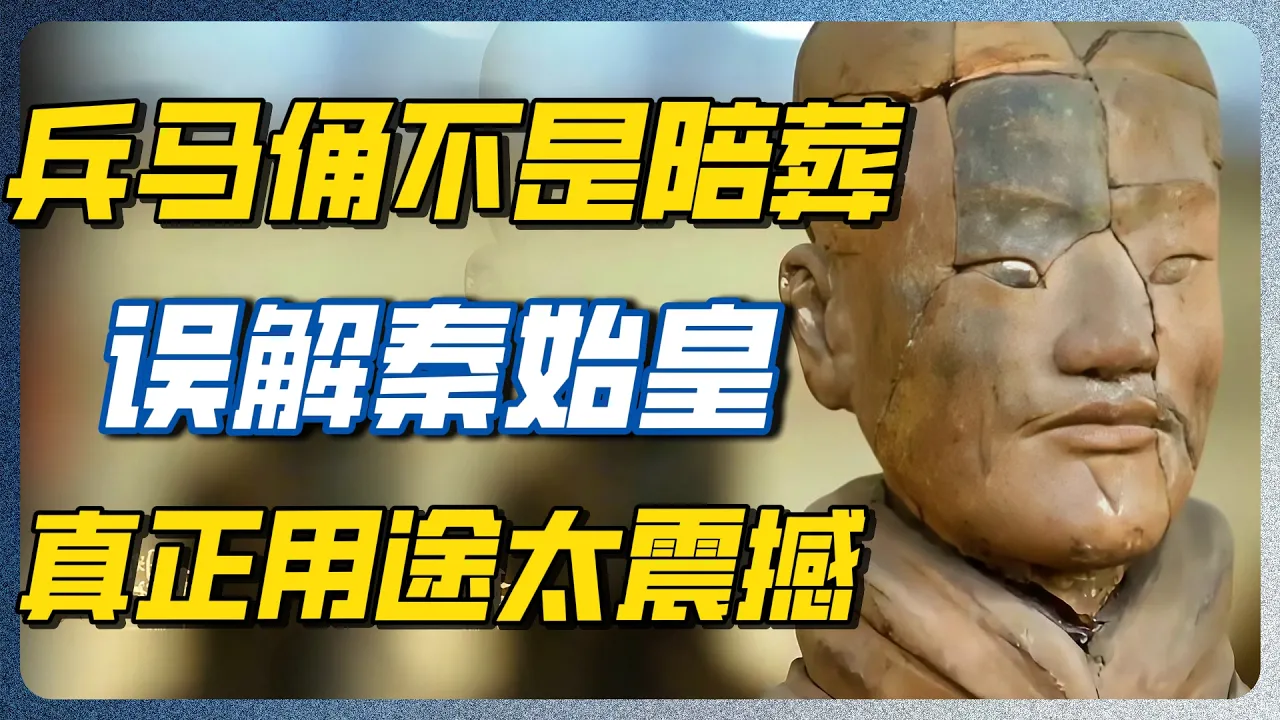
The exploration begins inside the open-to-the-public restoration laboratory of Pit 1 at the Emperor Qinshihuang's Mausoleum Site Museum. The restoration expert warmly frames their workspace as a dedicated "specialty hospital" for the Terracotta Army, where the conservators view themselves as treating physicians. Newly unearthed terracotta figures arrive shattered and mangled, resembling patients who have survived catastrophic trauma. Pointing to one battered figure with a visibly somber, weathered countenance, the restorer observes that the statue looks melancholy because he has been "injured" for over two millennia, carrying an illness that runs exceedingly deep into the ceramic fabric.
```mermaid
flowchart TD
accTitle: Terracotta Warrior Restoration Workflow
accDescr: Sequence of steps from initial sorting to diagnostic recording and multi-year reconstruction.
subgraph Diagnosis ["Triage & Diagnosis"]
A["Excavated Fragments"] --> B["Shape-Based Sorting"]
B --> C["'Medical Record' Logging"]
end
subgraph Treatment ["Surgical Reconstruction"]
C --> D["5-Person Specialist Team"]
D --> E["2 to 3 Years Assembly"]
E --> F["Restored Warrior"]
end
```
The meticulous treatment process begins with sorting through hundreds of fragments, matching and arranging the pieces according to the anatomy of the figure before any adhesive or structural work can start. Every single shard undergoes formal intake logging—recording color, dimensions, break patterns, and surface condition—a diagnostic phase the conservators literally refer to as writing a "medical record." When asked about the time investment required, the restorer reveals that restoring a single warrior demands two to three years of steady labor by a coordinated team of five specialists. This collaborative dynamic mirrors the ancient workshops themselves, where teams of five to ten artisans operated under standardized procedures. The ancient production costs were staggering: operating without modern equipment while adhering to uncompromising specifications, the Qin artisans mastered techniques that contemporary craftsmen still struggle to reproduce.
- **Restoration team size**: A dedicated team of 5 people is required to restore a single statue; an individual conservator cannot manage it alone.
- **Time per figure**: 2 to 3 full years of labor per warrior.
- **Ancient workshop size**: Estimated at 5 to 10 artisans working in standardized units.
---
[02:31](https://www.youtube.com/watch?v=YK4SxxEv8l8&t=151s) "Wu Le Gong Ming": Strict Quality Accountability in the Qin State
The peerless durability and consistency of the figures stemmed from an uncompromising administrative framework established during the Warring States period: *Wu Le Gong Ming* (物勒工名), the legal mandate that required artisans to carve or stamp their names directly onto their products. If any flaw or defect was uncovered during inspection or subsequent use, officials traced the artifact back to its exact creator and punished them accordingly. The overarching principle was simple and unbending: "trace the master, verify the product, and hold the worker responsible." While initially codified for weapons manufacturing, Emperor Qinshihuang expanded this rigorous quality-control network into every level of Qin production, including the thousands of ceramic funerary sculptures.
Standing before the ranks of figures at the close of a shift, the conservator describes being overwhelmed by profound awe. Looking into their faces is akin to reaching back across time to touch a history forged in iron and blood. Each warrior displays individualized facial features and distinct postures, capturing real soldiers of the Qin era rather than generic archetypes. Behind this discipline stood sweeping national standardizations—unifying chariot axle gauges, written scripts, weights, measures, and currency. When the Qin state finally conquered the State of Qi in 221 BC, it unified China for the first time, establishing bureaucratic and cultural templates that have endured for millennia.
- **Legal mechanism**: *Wu Le Gong Ming* ("engrave the maker's name on the implement") enforced personal liability throughout the supply chain.
- **Standardizations introduced**: Track widths for carts and chariots, the written script, weights and measures, and standardized coinage.
- **Historical milestone**: The conquest of Qi in 221 BC completed the unification of the six Warring States under Emperor Qinshihuang.
---
[06:39](https://www.youtube.com/watch?v=YK4SxxEv8l8&t=399s) The Scale of the Pits and the Meritocracy of Shang Yang
The Terracotta Army represents an astonishing engineering and military feat, encompassing over 7,000 life-sized figures with an average height of 180 centimeters, accompanied by hundreds of wooden chariots and more than 100 ceramic cavalry horses. Spanning approximately 19,120 square meters across three pits—equivalent in area to roughly 50 standard basketball courts—the deployment mirrors authentic battle formations. Southern trenches reveal an independent chariot strike force arranged across eight rows holding 64 war chariots. Adjacent trenches house mixed units of infantry, cavalry, and charioteers, while another specialized sector preserves an independent cavalry formation of 108 horses, making it the largest preserved ancient cavalry formation known to archaeology.
When asked whether this represents Qinshihuang’s actual operational army, Professor Han explains that the pits represent at least a precise microcosm of that force. The ferocity and discipline of these troops were catalyzed by the legalist reforms of Shang Yang decades earlier. Shang Yang abolished hereditary privilege in favor of strict military meritocracy: any commoner, regardless of low birth, could claim aristocratic titles, farmland, and social standing by cutting down enemies and displaying bravery on the battlefield. Soldiers were not merely fighting out of vague loyalty to a ruler; they were actively fighting to transform their own destinies, elevate their families, and escape poverty. This sustained military momentum fueled a century of relentless expansion, culminating in landmark confrontations like the devastating victory at the Battle of Changping in 260 BC.
- **Terracotta figure height**: Averages 180 cm (nearly 6 feet), standing tall and statuesque.
- **Total pit area**: Approximately 19,120 square meters across three pits (equivalent to 50 basketball courts).
- **Chariot detachment**: 8 longitudinal rows totaling 64 combat chariots in an independent formation.
- **Cavalry strength**: 108 cavalry horses form the largest ancient cavalry military formation found to date.
- **Key historical battle**: The Battle of Changping (260 BC), a watershed victory resulting from Shang Yang's meritocratic reforms.
---
[09:48](https://www.youtube.com/watch?v=YK4SxxEv8l8&t=588s) Hands-on Ballistics: Firing the Lethal Qin Crossbow
To demonstrate how the Qin army achieved tactical superiority, Professor Han introduces an authentic, functional reconstruction of a Qin crossbow (*Qin nu*), built with an exact reproduction of the bronze trigger mechanism (*nu ji*). To test its lethal penetration, the team constructs a composite ballistic target: slabs of pork ribs at the back to simulate bone and muscle tissue, wrapped in middle layers of animal fur and woven cloth to mimic uniform garments, and fronted with simulated armor plating. If an arrow can penetrate solid timber, shooting an unarmored human body would result in a clean pass-through, inflicting fatal wounds.
The guests take turns testing the weapon. Stepping forward first, the female guest places her foot firmly into the front stirrup to draw the bowstring—a feat of leverage that demands startling physical exertion. Shaken and nervous as she lines up her eyes, the bronze sight, and the target center, she releases the trigger. The bolt slams through the armor plate, punches through the textile and fur layers, shatters the ribs, and exits the back with the bronze tip protruding roughly ten centimeters.
```mermaid
flowchart LR
accTitle: Ballistic Target Penetration Test
accDescr: Crossbow bolt penetrating consecutive simulated defensive layers down to the bone.
A["Crossbow Bolt"] --> B["Layer 1: Armor Plating"]
B --> C["Layer 2: Fur & Fabric Uniform"]
C --> D["Layer 3: Pork Ribs (Bone/Muscle)"]
D --> E["Protrudes ~10 cm Out the Back"]
```
The male host steps up next, completely unable to cock the bow on his own strength. Laughing that he will never dare cross her again and dubbing her a "tough cookie," he receives guidance to anchor his stance. When he finally looses his bolt, the velocity is so extreme that the projectile blows completely through the target assembly and lodges far downrange, leaving only fletching fibers behind on the impact face. Professor Han explains the revolutionary tactical shift: while traditional composite archers required upwards of three continuous years of specialized conditioning and muscle development, a peasant could be trained into a deadly crossbowman in days. The wooden stock serves as an artificial arm while the mechanical bronze sear acts as an unyielding finger, holding massive draw weights under tension so troops could maintain loaded, aimed volleys with terrifying battlefield efficiency.
- **Simulated target construction**: Layered assembly featuring outer armor, inner fur and fabric clothing, and real pork ribs to mimic human torso anatomy.
- **Penetration depth**: The test bolt tore through all three defensive layers and jutted out approximately 10 centimeters past the bone.
- **Training differential**: Traditional war bow training took roughly 3 years; mechanical crossbowmen could be deployed almost immediately due to the bronze trigger lock.
[13:25](https://www.youtube.com/watch?v=YK4SxxEv8l8&t=805s) The Qin Crossbow: Lethal Efficiency and Mass Deployment
The standard military crossbow of the Qin army possessed an effective range between 100 and 200 meters, delivering a degree of lethality that far outmatched traditional composite bows. Yet its sheer mechanical power was only half the equation; its true tactical revolution lay in ease of operation. While training an archer to master a traditional war bow required years of muscle development and discipline, a Qin crossbow recruit could reach operational proficiency in just a few days. This technological leap slashed the training cycle of Qin infantry, giving the western state an insurmountable military advantage over its eastern rivals.
The speakers emphasize that weapon adoption reached industrialized proportions within the Qin ranks: approximately 80% of Qin soldiers were equipped with crossbows. This overwhelming equipment ratio meant that Qin battle lines could loose dense, sustained volleys before enemy infantries could even close the distance. Combined with rigorous state manufacturing, this mechanized edge reshaped the calculus of late Warring States warfare, setting the stage for Qin's rapid expansion following catastrophic engagements like the Battle of Changping.
- **Crossbow operational range:** Between 100 and 200 meters.
- **Training turnaround:** Crossbowmen could be trained to operational mastery within a few days.
- **Qin army deployment rate:** Approximately 80% of troops were armed with crossbows, drastically higher than any of the other six states.
---
[14:48](https://www.youtube.com/watch?v=YK4SxxEv8l8&t=888s) The 1.5-Kilometer Puzzle: An Imperial Army Banished from the Tomb
In the second year following the conclusion of the Battle of Changping, a Qin prince living as a political hostage in Handan, the capital of Zhao, welcomed his first son—the child who would eventually become Qin Shi Huang. In 247 BC, at merely thirteen years of age, Ying Zheng ascended the Qin throne. In accordance with ancestral state regulations, the construction of his subterranean mausoleum began that very year, initiating a colossal engineering effort that spanned decades. Archaeological consensus places the commissioning of the Terracotta Army within this broader timeline. Yet this chronology raises an immediate, glaring spatial paradox: why is the Terracotta Army stationed so far away from the imperial burial mound?
One speaker notes that when walking through the modern heritage site, the First Emperor's actual tumulus is completely invisible, obscured by distance, trees, and buildings. The Terracotta pits lie approximately 1.5 kilometers east of the central imperial mound (and up to three kilometers from the broader outer perimeter). From an elevated vantage point, the imperial burial mound rises tall and majestic, yet the warrior pits sit isolated in the landscape. If the First Emperor exhausted the empire's resources to sculpt a full-scale, elite royal vanguard to protect his spirit in the afterlife, banishing them to an underground trench 1.5 kilometers outside the core mausoleum contradicts traditional imperial mortuary layout.
```mermaid
flowchart TD
accTitle: Spatial Layout of Qin Shi Huang Mausoleum Complex
accDescr: Diagram illustrating the distance and structural relationship between the core burial mound and the Terracotta Army pits.
subgraph Core ["Core Mausoleum Complex"]
Mound["Imperial Burial Mound<br/>(Qin Shi Huang's Tumulus)"]
InnerWall["Subterranean Palace & Inner Walls"]
Mound --- InnerWall
end
subgraph Distance ["Spatial Gap"]
Buffer["1.5 to 3.0 km Distance<br/>(Far East Vanguard Line)"]
end
subgraph Vanguard ["Funerary Pit Site"]
Pits["Terracotta Army Pits 1, 2, 3<br/>(8,000+ Life-Sized Figures)"]
Armory["Unearthed Combat Arsenal<br/>(40,000+ Real Bronze/Iron Weapons)"]
Pits --- Armory
end
[16:52](https://www.youtube.com/watch?v=YK4SxxEv8l8&t=1012s) Historical Blind Spots: Real Weapons and Unwritten Legions
The discussion deepens around two fundamental anomalies regarding the Terracotta Army. The first remains the baffling 1.5-kilometer distance between the pits and the tumulus. The second anomaly is even more striking: while the thousands of terracotta warriors are man-made clay simulacra, the armaments clutched in their hands are not ceramic props—they are fully functional, lethal, battlefield-ready combat weapons. More than 40,000 real bronze and iron weapons have been unearthed from the trenches, transforming the burial pits from a symbolic ritual tableau into a functional underground armory.
What baffles the speakers most is the absolute silence of the historical record. Dynastic chronicles overflow with accounts of the First Emperor’s lavish tomb:
- Sima Qian’s *Records of the Grand Historian* (*Shiji*) meticulously details the subterranean rivers of mercury and mechanical crossbow traps protecting the tomb chamber, yet mentions not a single word about thousands of life-sized terracotta warriors standing in battle formation outside.
- The *Book of Han* (*Hanshu*) preserves the dramatic tale of a careless shepherd who, while searching for a lost sheep with a torch, accidentally ignited an underground tunnel and burned the Emperor's tomb complex—yet it too makes zero mention of the terracotta legion.
- Ban Gu's *Han Guan Yi* describes the impenetrable engineering of the First Emperor’s mausoleum, but remains utterly silent on the Terracotta Army.
The speakers question whether this erasure was an intentional state secret. In 238 BC, upon reaching the age of twenty-one and undergoing his capping ceremony, Ying Zheng seized direct imperial authority. Building upon centuries of ancestral expansion, he unleashed the campaign of total conquest that unified the Chinese world. The fact that an unprecedented project of this magnitude—involving tens of thousands of sculptors, laborers, and over 40,000 combat-grade weapons—escaped all official written history suggests either an extraordinary level of imperial secrecy or a purpose tied so intimately to the wars of unification that ordinary chroniclers were never permitted to document it.
---
[20:27](https://www.youtube.com/watch?v=YK4SxxEv8l8&t=1227s) Reverse-Engineering the Craft: Hollow Coils and Vanished Armatures
Shifting from historical speculation to artistic forensics, the conversation moves to an on-site restoration and replication workshop run by a craftsman referred to as Teacher Zhang. The atmosphere is energized, with one host jokingly bragging about drinking wellness tonics to boost his immunity before reciting a playful laundry list of traditional martial arts weaponry: "Swords, spears, blades, halberds, axes, whips, maces, hooks, and meteor hammers..." Examining a newly sculpted replica head, the team observes how the mouth contours and the bridge of the nose differ slightly from the weathered relics seen in the pits, capturing a sharper, more three-dimensional Qin aesthetic. Teacher Zhang explains that their initiative is not mere commercial imitation; it is an experimental archaeology project aiming to reverse-engineer Qin raw materials, firing regimes, and sculptural methods to uncover the technological standards of the era.
When asked about the original appearance of the statues upon excavation, Teacher Zhang explains that the drab grey clay familiar to the modern public is an illusion caused by rapid oxidation and decay. Originally, the warriors were fired ceramic statues lavishly coated with mineral pigments matching lifelike human skin tones, expressive facial features, colorful garments, and lacquered armor plates.
The most astonishing technical revelation comes from the structural construction of the figures:
- **Clay Strip Coil-Building Technique (*nitiao panzhu*):** The warriors were not carved from single blocks or pressed in whole-body molds. Starting from the base plate and heavy boots, the artisans coiled thick ribbons of clay upward, layering the legs, the skirt, the torso, and the shoulders.
- **Entirely Hollow Interior:** Unlike traditional European sculpting techniques—where life-sized clay sculptures require an internal iron or wooden armature (skeleton) to prevent the wet material from collapsing under its own weight—the Qin warriors are completely hollow from the legs up to the chest.
- **Center of Gravity Mastery:** Without an internal skeleton, the Qin sculptors had to calculate the statue's center of gravity with microscopic precision, keeping the hollow clay walls perfectly balanced during both damp shaping and high-temperature kiln firing.
- **Ancient Lineage:** This coil-building method directly inherited Neolithic pottery traditions dating back over 5,000 years, pushed to an unprecedented monumental scale.
---
[25:12](https://www.youtube.com/watch?v=YK4SxxEv8l8&t=1512s) "A Thousand Faces for a Thousand People": The Immortalized Prototypes
The conversation turns hands-on as the speakers attempt the sculptural techniques themselves, experiencing the rhythm of additive and subtractive modeling—scraping away clay, refining eye sockets, and rolling thin ribbons of clay to weave intricate topknots and hair braids. Experiencing the sheer difficulty of modeling a single head drives home the staggering reality of the site: over 8,000 individual ceramic warriors, and not a single one shares the same face.
This realization embodies the famous archaeological dictum of "a thousand faces for a thousand people" (*qian ren qian mian*). Each figure displays unique bone structure, varied ethnic features, age lines, and distinct facial expressions, all while maintaining perfect anatomical harmony from every viewing angle. Professional sculptors consulted on the project argue that achieving such individual authenticity without real-life human models would be technically impossible; purely imagined faces inevitably regress to repetitive formulas and distorted proportions.
```mermaid
flowchart TD
accTitle: Hypotheses on the Real-Life Prototypes of the Terracotta Army
accDescr: Flowchart detailing the two primary theories regarding who modeled for the 8,000 individual terracotta figures.
Archetype["The Mystery of 8,000 Unique Faces<br/>('A Thousand Faces for a Thousand People')"]
Archetype --> Theory1["Hypothesis A: Artisan Self-Referencing"]
Archetype --> Theory2["Hypothesis B: Real Imperial Army Vanguards"]
Theory1 --> Desc1["Imperial workshop craftsmen modeled faces<br/>on themselves, apprentices, and peers"]
Theory2 --> Desc2["The First Emperor ordered actual regiments<br/>to sit as live models in the workshops"]
Desc1 --> Synthesis["Immortalized Common Humanity"]
Desc2 --> Synthesis
Synthesis --> Philosophy["'Treating the Dead as if They Were Alive'<br/>(事死如事生)"]
```
The hosts contemplate the two main theories regarding who these 8,000 prototypes were:
1. **The Artisans Themselves:** The sculptors and ceramic workers referenced each other, carving the likenesses of their fellow craftsmen, apprentices, and neighbors into the clay.
2. **Actual Imperial Regiments:** The First Emperor mobilized a real, battle-hardened division of the Qin army directly to the imperial kilns to serve as living models for the subterranean vanguard.
Regardless of whether these portraits belonged to sweating kiln laborers or frontline infantrymen, their actual names have been swallowed by two millennia of history. Yet their individual expressions, jawlines, and gazes were immortalized through the hands of the Qin artisans. Rooted in the ancient ritual belief that "the afterlife is like life itself" (*shi si ru shi sheng*), these figures stand not as generic ciphers of an autocratic ruler, but as individual human souls that once burned with life, preserved in fired clay to outlast the dynasty that forged them.
[29:11](https://www.youtube.com/watch?v=YK4SxxEv8l8&t=1751s) Replicating Xianyang Palace: Acrobats, Civil Officials, and Stone Armor
The discussion investigates whether Qin Shi Huang attempted to replicate his daily living quarters and central seat of power—the Xianyang Palace—directly inside his mausoleum complex. While physical above-ground traces of the original Xianyang Palace site have nearly vanished over millennia, archaeological discoveries reveal striking, one-to-one correspondences between the royal palace and the underground pits of the mausoleum. For instance, stone armor discovered in the eastern section of the Xianyang Palace site directly parallels the massive cache of stone helmets and armor unearthed at the Qin Mausoleum.
Furthermore, historical texts such as the *Records of the Grand Historian* ("Biography of Li Si") document that palace acrobats and variety entertainers performed regularly within Xianyang Palace. This living royal entertainment was deliberately mirrored underground in Pit K9901, situated southeast of the main burial mound. Excavations there yielded more than thirty terracotta acrobat figurines (the "hundred entertainments" or *baixiyong*). Unlike the rigid, armored military warriors, these lively figures display dynamic postures, bare torsos, or distinctive tunics. The most striking among them is a muscular figure with an upturned right arm, frozen mid-motion in a traditional tripod-lifting act (*kangding*), an athletic feat celebrated during the Warring States period.
A similar administrative correspondence appears in the realm of civil governance. According to the *Book of Han* ("Treatise on Geography"), the Xianyang Palace housed the "Qutai Palace," where civil administrators carried out imperial paperwork. Directly southwest of the imperial tumulus, archaeologists discovered Pit K0006, dedicated specifically to civil official figurines. The pit yielded twelve life-sized terracotta officials: eight standing with hands respectfully tucked into their voluminous sleeves, and four with hands clasped in front of their chests. Unarmed and unarmored, these figures stand nearly 1.9 meters tall, wearing distinctive flat official caps. Suspended from their waists are whetstones and scraping knives—the quintessential tools of Qin bureaucrats used to shave and correct mistakes written on bamboo and wooden slips. Behind this civil bureau pit lay neatly arranged pits containing horses and chariots, interpreted as the reserve stables serving the palace administrative compound.
```mermaid
flowchart TD
accTitle: Correspondence Between Xianyang Palace and Qin Mausoleum
accDescr: Diagram illustrating the parallel structures found at Xianyang Palace and their corresponding excavation pits in the Qin Mausoleum.
subgraph Palace["Xianyang Palace (Living World)"]
A1["Palace Bureaucracy (Qutai Palace)"]
A2["Palace Acrobats & Variety Shows"]
A3["Armory & Stone Armor Sector"]
A4["Imperial Carriage Processions"]
end
- **Acrobat Pit (K9901):** Over 30 uniquely styled figures representing court entertainers, highlighted by a heavyweight figure performing the Warring States feat of tripod-lifting.
- **Civil Official Pit (K0006):** 12 tall civil officials (8 with sleeves joined, 4 with clasped hands) equipped with official headgear, whetstones, and scraping knives, backed by auxiliary carriage and horse stables.
- **Palace Murals:** Painted fragments unearthed at the Xianyang Palace site portray four-horse carriage processions, matching the travel arrangements of the King of Qin.
---
[32:45](https://www.youtube.com/watch?v=YK4SxxEv8l8&t=1965s) The Bronze Chariot No. 2: Pinnacle of Qin Engineering and Standardization
The discussion shifts to the imperial transport system, highlighted by the magnificent bronze chariot and horses unearthed a mere 20 meters west of the tumulus. Originally buried beneath the outer slope of the rammed-earth mound, the chariot pit remained hidden from looters for over two millennia until surface erosion and later earth removal exposed its edges. Chariot No. 2—an enclosed touring carriage modeled after the *Anche* used by Qin Shi Huang on his nationwide inspection tours—measures 3.17 meters in length, 1.062 meters in height, and weighs a staggering 1,241 kilograms.
Constructed from over 3,200 precision components, the carriage serves as the ultimate testament to the technological capabilities of the unified empire. After defeating the six rival states, Qin Shi Huang enacted comprehensive standardization across weights, measures, axle gauges, currency, and writing scripts. By concentrating the finest artisans and metalworkers from across China in Xianyang, the state attained unmatched administrative execution, enforcing micro-level quality down to individual pins and fasteners.
The technical complexity of the bronze chariot astounds modern engineers. Each bronze horse head consists of 180 to more than 200 individual pieces. Gold and silver components are joined by interlocking male-and-female joints featuring polished convex and concave contact points. Across a vertical cross-section of only four millimeters, Qin craftsmen drilled a tiny one-millimeter hole and inserted a matching one-millimeter bronze retaining pin. Similarly, the chariot's bronze canopy, spanning two square meters, mimics a draped silk roof, complete with painted geometric and cloud motifs and realistic ridges representing structural silk tension. Casting a single bronze plate spanning two square meters at a thickness varying between only one and four millimeters was nearly impossible with ancient casting methods, as molten bronze typically cooled and froze before filling such a razor-thin mold gap.
- **Chariot No. 2 Dimensions & Weight:** 3.17 meters long, 1.062 meters high, weighing 1,241 kg (over 1.2 metric tons).
- **Component Count:** More than 3,200 interlocking pieces, cast to scale from the First Emperor's actual inspection carriage.
- **Precision Fasteners:** Interlocking joints with 4 mm cross-sections drilled with 1 mm holes and secured by 1 mm bronze wire cotter pins.
- **Canopy Engineering:** A curved roof covering 2 square meters with a wall thickness of just 1 to 4 mm, replicating silk drapery in solid cast bronze.
---
[38:14](https://www.youtube.com/watch?v=YK4SxxEv8l8&t=2294s) Guarding the Eternal Empire and the Transition to the Tumulus
Reviewing the totality of these discoveries, the speakers observe that Qin Shi Huang was not merely furnishing a grave; he was replicating his entire empire to rule over it in perpetuity. Court entertainers provided amusement, civil scribes managed administrative paperwork, imperial carriages stood ready for royal inspections, and millions of sculpted soldiers stood in battle arrays to defend the borders. His lifelong pursuit of standardizing currencies, weights, laws, and scripts created a cohesive civilizational framework that has endured into modern times. In this light, the Terracotta Army does not merely protect a dead king; it stands guard over the First Emperor's grand ideal of unified civilization.
The speakers note that despite all the remarkable pits uncovered across the three-kilometer perimeter, the greatest core miracle remains untouched inside the unexcavated underground palace beneath the tumulus. Following this grand historical reflection, the speaker pauses for a brief, relaxed aside about daily wellness habits, observing that maintaining a controlled diet, regular daily routines, moderate exercise, and inner peace of mind are among life's essential priorities.
---
[41:09](https://www.youtube.com/watch?v=YK4SxxEv8l8&t=2469s) The Grand Tumulus and the Secrets of the Underground Palace
Returning to the mausoleum grounds, the discussion moves directly before the massive earthen hill with Professor Liu. Referred to in archaeology as a *fengtu* (burial tumulus), this man-made rammed-earth mound marks the vertical center above Qin Shi Huang's subterranean tomb chamber. The mound takes the traditional shape of an inverted peck measure (*fudou*), broad at the base and narrowing toward a flat top like an overturned funnel. The base spans more than 20,000 square meters, measuring approximately 350 meters in both length and width, and rises to a preserved height of roughly 55 meters.
The underground palace lies directly beneath this rammed-earth pyramid. The discussion touches upon the famous account in the *Records of the Grand Historian*, which claims that the First Emperor used mechanically circulating mercury to simulate China's rivers, the Yellow River, the Yangtze, and the vast outer oceans within his tomb chamber. While long regarded by past generations primarily as a harsh tyrant, modern archaeological research has broadened Qin Shi Huang's historical assessment. The unified bureaucratic, linguistic, and territorial foundations he instituted continue to shape contemporary Chinese civilization, securing his mausoleum's status among China's foundational World Cultural Heritage sites.
- **Tumulus Dimensions:** Rammed-earth mound roughly 55 meters high, spanning approximately 350 meters across length and width, covering a base area exceeding 20,000 square meters.
- **Architectural Shape:** Inverted peck measure (*fudou* / overturned funnel shape) standing vertically over the central underground palace.
- **Historical Records of the Chamber:** Sima Qian's accounts describe a cosmological model featuring simulated celestial bodies on the ceiling and flowing mercury replicating the great rivers and seas across the floor.
```mermaid
flowchart TD
accTitle: 秦陵不开掘的核心考量
accDescr: 解释文物保护技术瓶颈与文化伦理两大不开掘秦陵地宫的原因
subgraph Technical ["技术与保护维度"]
A["现代发掘技术"] --> B["不可逆的环境扰动与空气氧化"]
B --> C["无法完全复原原始状态"]
end
subgraph Cultural ["伦理与文明维度"]
D["祖先长眠之所"] --> E["文明巅峰的象征与寄托"]
E --> F["保护文化遗存的真实性与完整性"]
end
C --> G["保持封存:不主动开掘地宫"]
F --> G
```
[0:00] We are currently located at the
[0:02] open-to-the-public restoration lab of
[0:04] Pit 1 at the Emperor Qinshihuang's
[0:06] Mausoleum Site Museum.
[0:07] >> Oh.
[0:10] >> Which is like a specialty hospital for
[0:12] our terracotta warriors.
[0:14] >> A specialty hospital.
[0:17] >> And we, the restoration experts, are
[0:19] the doctors at this specialty hospital.
[0:22] After the terracotta warriors are
[0:24] unearthed, they are just like people
[0:26] who have suffered severe trauma. Take a
[0:36] look at this gentleman here. Doesn't he
[0:40] have a somewhat somber expression?
[0:43] >> Hmm.
[0:44] >> That's because he has been "injured"
[0:46] for over 2,000 years. He is telling us
[0:49] that his "illness" runs deep. Faced
[0:55] with so many fragments, we first
[0:57] arrange them according to the shape of
[1:00] the figure. Then, we begin the
[1:04] diagnosis.
[1:05] >> Oh, so we find the pieces first, then
[1:08] diagnose.
[1:09] >> Yes.
[1:10] >> Since there are quite a lot of
[1:11] fragments.
[1:12] >> Hmm. We need to record every detail for
[1:18] each fragment—its color, size, and
[1:20] surface condition—step by step, which
[1:23] is what we call writing a medical
[1:25] record.
[1:29] >> Hmm.
[1:34] >> How long did it take to make one such
[1:36] terracotta warrior back then?
[1:39] >> You see, for us to restore one
[1:41] terracotta warrior, it takes two to
[1:43] three years.
[1:44] >> One takes two to three years.
[1:46] >> Yes, and that's with a team of five
[1:47] people. It’s not just one person,
[1:49] because one person can't restore a
[1:50] warrior alone.
[1:51] >> Right, right, right.
[1:52] >> The craftsmen back then must have been
[1:53] just like our restoration team.
[1:55] >> A team.
[1:56] >> A team.
[1:57] >> Hmm.
[1:58] >> A team was likely at least five to ten
[2:00] people. It was a standardized operation
[2:03] .
[2:05] >> So you speculate that in that era, the
[2:07] cost of creating a single terracotta
[2:10] statue must have been even higher.
[2:14] Because under the conditions at that
[2:16] time, they didn't have the advanced
[2:18] facilities we have now.
[2:20] >> Hmm.
[2:21] >> Yet, given those conditions, the
[2:23] quality requirements could not be
[2:24] lowered. If we were asked to make
[2:26] terracotta warriors today, there are
[2:28] some techniques we still couldn't
[2:29] replicate.
[2:30] >> Wow.
[2:31] >> They probably had their own quality
[2:32] control team as well.
[2:34] >> Yes.
[2:34] >> Quality control.
[2:36] >> Yes. Quality inspection team. In the
[2:41] early Warring States period, the State
[2:44] of Qin was the first to establish a
[2:46] unified management system that far
[2:48] exceeded those of other states. This is
[2:50] the famous "Wu Le Gong Ming"(the system
[2:52] of branding products with the maker's
[2:54] name). During the era of Emperor
[2:56] Qinshihuang, this system was further
[2:59] promoted and developed. Ultimately, it
[3:02] extended far beyond weapon
[3:04] manufacturing and permeated every
[3:06] corner of production in Qin society.
[3:10] The production of terracotta warriors
[3:13] was included in this.
[3:18] >> They would carve the craftsman's name
[3:20] on it; if there were any quality issues
[3:22] later, the maker would be held
[3:24] accountable and punished—this is the
[3:27] principle of "trace the master, verify
[3:29] the product, and hold the worker
[3:31] responsible."
[3:34] >> A strict rule.
[3:36] >> Yes.
[3:37] >> Oh.
[3:39] >> It is precisely because of this "Wu Le
[3:43] Gong Ming" system. That the State of
[3:46] Qin became powerful. And was able to
[3:49] conquer the other states and finally
[3:51] unify the country. 2,000.
[3:54] >> Over two thousand years ago, this
[3:56] worker-accountability system ensured
[3:58] that no link in the social production
[4:01] chain would dare show the slightest
[4:03] negligence. Relying on advanced
[4:08] institutions and systems, the Qin State
[4:11] not only forged an army that could
[4:14] sweep across the land but also
[4:16] pioneered a new era for Chinese
[4:18] civilization amidst a time of chaos and
[4:20] division. Every. Time I'm about to
[4:28] finish my shift, gazing at so many
[4:31] Terracotta Warriors, it gives me an
[4:34] indescribable feeling. So sometimes,
[4:38] the more I look at these figures, the
[4:41] more I feel a sense of awe. Our
[4:43] ancestors were truly great; our culture
[4:46] , including many systems we have today,
[4:49] is rooted in the Qin era, such as the
[4:51] standardization of carts and gauges.
[4:59] >> The standardization of scripts, weights
[5:02] , and currency is the foundation for
[5:05] our future; looking at this massive
[5:07] army of figures, it’s like reaching
[5:18] out to touch that history of iron and
[5:21] blood from years ago. I seem to see
[5:26] once more that army with the dream of
[5:29] unifying the world.
[5:31] >> They likely represent the actual people
[5:34] of the Qin era. With their own
[5:36] expressions and their own distinct
[5:39] states of being.
[5:40] >> Behind this army lies the historical
[5:42] accumulation and development of the Qin
[5:44] people over hundreds of years.
[5:46] >> In their hands back then, they would
[5:48] have all been equipped with real,
[5:50] lethal weapons. In 221 BC, the Qin army
[5:55] conquered the State of Qi, achieving
[5:58] the first true unification in Chinese
[6:01] history. Following this, the Qin
[6:04] State's advanced production system
[6:06] would open up a brand-new landscape for
[6:09] China.
[6:09] >> The artisan-accountability system made
[6:11] the Qin State strong enough to conquer
[6:14] other nations and ultimately achieve
[6:16] unification. Our writing, our
[6:21] measurements, and our bloodlines would
[6:24] all undergo an unprecedented
[6:26] integration during that era.
[6:30] >> You can see it very clearly from his
[6:32] facial expression. It tells you the
[6:35] experiences he has gone through.
[6:38] >> Everything starts with a dream.
[6:40] >> The seven thousand plus pottery figures
[6:43] are tall and statuesque. With an
[6:45] average height of 180 centimeters.
[6:48] Buried within the pits are hundreds of
[6:50] wooden chariots and over a hundred
[6:52] pottery warhorses. The various types of
[6:55] pottery figures are arranged according
[6:57] to actual combat formations. The three
[6:59] Terracotta Warrior pits cover a total
[7:02] of about 19,120 square meters,
[7:04] equivalent to the size of 50 standard
[7:06] basketball courts.
[7:07] >> Many of the excavation squares have
[7:10] already been opened. Based on the
[7:17] opened squares, we already know what
[7:20] lies beneath. We see over there to the
[7:27] south, there are long trenches. That is
[7:31] an independent chariot formation. Each
[7:34] trench has eight rows of chariots,
[7:36] meaning there are 64 in total; right
[7:39] next to them are three trenches, a
[7:42] mixed unit of chariot soldiers,
[7:44] infantry, and cavalry. Over here are
[7:46] three trenches, which form an
[7:49] independent cavalry formation. With 108
[7:52] horses here, it is already a very
[7:54] formidable formation. We have
[7:56] discovered that this should be the
[7:58] largest cavalry military formation of
[8:00] the ancient world.
[8:01] >> So, Professor Han, do you think Qin Shi
[8:04] Huang was presenting his real army? At
[8:12] the very least, it is a microcosm of a
[8:15] real army. With over 8,000 terracotta
[8:22] figures being just a microcosm, what
[8:24] kind of army was the true prototype of
[8:27] the Terracotta Warriors?
[8:30] >> At that time, it could be said that the
[8:32] Shang Yang Reform opened up a path of
[8:34] upward mobility for all the common
[8:36] people at the bottom of society.
[8:37] Regardless of your background, if you
[8:40] fought bravely on the battlefield, you
[8:42] were granted titles and land.
[8:44] >> Therefore, for most of the soldiers,
[8:46] fighting wasn't just for the country;
[8:48] it was more about fighting for their
[8:50] families, their social status, and
[8:52] their own destinies. Since the Shang
[9:11] Yang Reform, the entire state of Qin
[9:14] began nearly a century of military
[9:17] expansion. In 260 BC, the reborn Qin
[9:24] army won a major victory in the Battle
[9:27] of Changping, a classic in ancient
[9:30] Chinese military history. Professor. Is
[9:48] this crossbow a real one?
[9:50] >> Yes, aside from the shape of the bow,
[9:53] its trigger mechanism and other aspects
[9:55] are identical to the Qin crossbow.
[9:58] >> If it can pierce such thick wood,
[10:00] wouldn't it be effortless to shoot a
[10:02] person?
[10:03] >> If it were human muscle, it would
[10:05] essentially pass right through the
[10:07] person.
[10:07] >> It would be fatal, then.
[10:09] >> Yes. This is just to imitate muscle
[10:12] tissue. In ancient times, soldiers wore
[10:16] armor and clothing, so we prepared
[10:18] something like this.
[10:21] >> Oh.
[10:22] >> For this target, look, we have pork
[10:25] ribs in the back. And in the middle
[10:27] section, there is a layer of fur and a
[10:30] layer of fabric.
[10:31] >> To imitate the clothes the soldiers
[10:33] wore.
[10:33] >> Clothing.
[10:34] >> The front part is to imitate the armor.
[10:37] In a moment, the two of you can try
[10:39] testing it yourselves.
[10:41] >> Okay, please teach us how.
[10:42] >> Alright, let's give it a try.
[10:44] >> Okay.
[10:45] >> Does it...does it have any recoil? Hmm,
[10:48] there is a little bit of recoil.
[10:49] >> Oh. Why don't you go first? Ladies
[10:52] first.
[10:53] >> I'll go first. Should I step on it?
[10:55] >> Step right here.
[10:56] >> Right, and then?
[10:58] >> Pull it up.
[10:59] >> Yes.
[10:59] >> Wow, that takes strength, that takes
[11:01] strength, that takes strength.
[11:03] >> It really does.
[11:05] >> Let's stand over here. Load the arrow.
[11:09] >> I'm nervous.
[11:12] >> Eyes, arrowhead, the center of the
[11:16] target. Ah.
[11:26] >> They succeeded. Let me go take a look.
[11:30] >> Wow, it went through the armor, through
[11:33] the clothes, through the fur, and
[11:36] through the ribs.
[11:37] >> The power is immense, and the tip is
[11:40] sticking out this far.
[11:42] >> About ten centimeters or so.
[11:45] >> Come on, come on, brother, you try it
[11:47] too. Then, Professor, please guide me.
[11:50] Oh right, step on this with your foot
[11:53] and try to aim toward the center. It's
[11:55] so heavy, I can't pull it up. How did
[11:58] you pull it up just now?
[12:00] >> I guess I must be a tough cookie.
[12:03] >> I didn't pull it up, I won't ever...
[12:05] Dare to mess with you.
[12:07] >> Is it as steady as a mountain?
[12:13] >> Great shot! Wow, did it shoot through?
[12:27] Impossible.
[12:31] >> Oh, it went past from underneath to
[12:34] over there.
[12:35] >> It must have gone through.
[12:37] >> Ah, here it is.
[12:39] >> Did you get it?
[12:40] >> The arrow went over here. Is that right
[12:45] ?
[12:45] >> This spot here, it should be here,
[12:48] there are even the feathers left by the
[12:51] arrow.
[12:52] >> I thought I missed.
[12:54] >> In ancient times, it was said that it
[12:56] took about three years to train an
[12:58] archer.
[12:59] >> But for a crossbowman, as you two
[13:02] teachers just tested. Do you think it's
[13:05] really that difficult? The part you're
[13:07] holding now is the stock of the
[13:09] crossbow. It's equivalent to a human
[13:11] arm, and this trigger mechanism is like
[13:13] the finger that pulls the bowstring.
[13:16] >> Oh.
[13:16] >> Shooting a crossbow means it can be
[13:19] kept loaded and ready to fire. It's
[13:23] estimated that the effective range of a
[13:25] standard military crossbow was roughly
[13:28] between 100 and 200 meters, with
[13:30] lethality far exceeding traditional
[13:33] bows. Not only that, the crossbow,
[13:38] despite its immense power, was actually
[13:40] far easier to operate than a
[13:42] traditional one. Training a crossbowman
[13:50] was quite fast; in just a few days, one
[13:52] could skillfully master its operation.
[13:56] A weapon of such great power can
[13:59] actually be mastered in just a few days
[14:02] ? Such advanced weaponry greatly
[14:05] reduced the time to train crossbowmen;
[14:07] this military technological progress
[14:10] was a key reason for the Qin state's
[14:12] lead over the eastern states.
[14:14] >> At that time, about 80%of the Qin army
[14:16] was equipped with them; their crossbow
[14:19] deployment rate was much higher than
[14:21] the other six states. So in terms of
[14:23] weapon equipment, they far surpassed
[14:25] their other rivals.
[14:27] >> Yes, they surpassed the other six
[14:30] states. Huge lethal power. An
[14:40] industry-leading equipment ratio
[14:43] brought about a rapid increase in Qin's
[14:45] combat capability. In the second year
[14:51] after the Battle of Changping ended,
[14:53] the Qin prince who was sent to the Zhao
[14:56] state as a political hostage welcomed
[14:58] his first son in the Zhao capital, and
[15:01] he would later become the Qin...King.
[15:09] In 247 BC, the 13-year-old Ying Zheng
[15:12] inherited the throne of Qin from his
[15:15] father. According to regulations, that
[15:17] same year, the entire Qin state began
[15:20] building a royal tomb for the young
[15:22] Ying Zheng. This is the Qin Shi Huang
[15:25] of today. It is speculated that the
[15:29] Terracotta Army also began construction
[15:31] during this period. If the Terracotta
[15:38] Army is really just funerary objects
[15:41] for the First Emperor's tomb, isn't it
[15:44] a bit too far away from the mausoleum?
[15:46] >> But I actually didn't see the First
[15:48] Emperor's mausoleum when I walked over
[15:50] just now.
[15:51] >> You probably didn't pass by it; the
[15:53] distance is a bit far, it's about 1.5
[15:56] kilometers away. There are many
[15:57] buildings and trees blocking the view
[16:00] now, but if we stand at a higher
[16:02] vantage point, we can still see it. The
[16:04] burial mound is very tall and majestic.
[16:07] >> If Qin Shi Huang used the nation's
[16:10] entire strength and spent decades
[16:12] creating an elite army to the standards
[16:15] of real soldiers. Why would he place
[16:18] them underground so far away from the
[16:21] imperial tomb? Behind such an
[16:24] unconventional layout, could it be I
[16:52] think the Terracotta Army as burial
[16:55] artifacts has two One is the distance,
[17:02] because the Terracotta Army is 1.5
[17:05] kilometers away from the tomb. As a
[17:13] burial pit, why is it so far from the
[17:16] mausoleum? Second, I feel that these
[17:22] terracotta warriors are all man-made
[17:25] decoys, but the weapons they hold are
[17:27] almost all This also has me a bit
[17:41] stumped. There are many historical
[17:47] records about the Mausoleum of Qin Shi
[17:50] Huang. Hmm.
[17:53] >> But there isn't a single text that
[17:55] records the Terracotta Army. This book
[18:02] mentions the Qin Shi Huang mausoleum,
[18:04] but doesn't mention a single word about
[18:07] the Terracotta Army. The Book of Han
[18:14] also speaks of a shepherd looking for
[18:17] lost sheep who burned the tomb of the
[18:19] Emperor. But it also never mentions the
[18:26] Terracotta Army. The Han Guan Yi also
[18:30] describes the Mausoleum of Qin Shi
[18:33] Huang. It is impenetrable, but there is
[18:35] no mention of the Terracotta Army.
[18:38] >> But you say such a huge project like
[18:41] the Terracotta Army, yet in history, it
[18:44] is surprisingly absent. Is it
[18:50] Deliberate? Huh? The Terracotta Army is
[18:58] unprecedented in scale, yet completely
[19:01] absent from historical records. Is
[19:07] someone deliberately hiding the fact
[19:10] that Qin Shi Huang valued military
[19:12] power but placed his underground army
[19:15] so far from the tomb? With so many
[19:21] questions, the Terracotta Army doesn't
[19:23] look like mere burial objects. The
[19:28] figures are so lifelike, and they all
[19:31] hold real combat weapons. Could all
[19:37] these anomalies be related to the war
[19:39] of unification launched by Qin Shi
[19:41] Huang? In 238 BC, 21-year-old Ying
[19:45] Zheng took personal control. Relying on
[19:49] the legacy built by his ancestors over
[19:51] hundreds of years, just after coming of
[19:54] age, Ying Zheng began to pursue an
[19:56] unprecedented grand ambition. The
[20:02] journey of unifying the world under the
[20:05] Qin state began. According to
[20:10] statistics, a total of more than 40,000
[20:13] various weapons have been unearthed
[20:15] from the Terracotta Army. Could the
[20:19] real purpose of building the Terracotta
[20:21] Army be hidden within these weapons?
[20:27] >> Brother, that thought of yours is very
[20:29] interesting. Recently, while resting, I
[20:33] drank some things to boost my immunity.
[20:37] I've been in great shape lately, really
[20:40] positive and very enthusiastic. Swords,
[20:43] spears, blades, halberds, axes, whips,
[20:45] maces, hooks, and meteor hammers, hmm.
[20:48] >> That's not enough.
[20:50] >> Oh, don't worry about those details.
[20:52] Anyway, where we are going now is
[20:55] >> As an emperor of China, what kind of
[20:58] army is the Terracotta Army guarding
[21:00] his tomb? What does he look like again?
[21:03] >> Teacher, is this the Terracotta Warrior
[21:05] we’re replicating?
[21:06] >> Yes, it is. His mouth contours and the
[21:11] bridge of his eyes look a bit different
[21:13] from what we saw in the pit. They feel
[21:17] closer to the more three-dimensional
[21:19] style of the Qin Dynasty.
[21:21] >> In this process, we try our best to
[21:23] perfect the structure. Oh.
[21:25] >> Teacher, you’re replicating him.
[21:27] >> You’ve made improvements.
[21:30] >> Our project mainly focuses on restoring
[21:32] and researching the manufacturing
[21:35] process and craftsmanship of the Qin
[21:37] Terracotta Warriors. Tracing back to
[21:41] the Qin. Using Qin materials and
[21:47] methods to create a piece as close as
[21:49] possible to a Qin original, so we can
[21:52] understand many of the intricate
[21:54] details. This is actually of great
[21:56] significance for us to further
[21:58] understand the artistic and scientific
[22:01] value of the Terracotta Warriors. So,
[22:03] can I understand that in the process of
[22:05] restoring and protecting the Terracotta
[22:07] Warriors, you aren't just doing a
[22:09] simple replica, but actually optimizing
[22:11] and beautifying it?
[22:12] >> Yes, yes, that’s right.
[22:14] >> Hey, Teacher Zhang, I’d like to ask,
[22:17] did the real Terracotta Warriors have
[22:19] very rich colors when they were
[22:20] unearthed?
[22:21] >> What we are seeing now is just the clay
[22:24] mold stage, the clay sculpture stage.
[22:27] After finishing, it will be fired into
[22:30] pottery. Only then will we apply paint
[22:32] based on their original, true colors.
[22:36] Just like the painted pottery figures
[22:38] we see in the pits. They would apply
[22:42] colors based on skin tone, facial
[22:45] features, clothing, and armor.
[22:49] Presenting us with a vivid, life-like
[22:53] image. So, what is this? It looks like
[22:57] a ball of cotton.
[22:58] >> Right, is this the base?
[23:00] >> That’s part of the skirt for the
[23:02] pottery figure.
[23:03] >> Oh, this is the skirt?
[23:05] >> This part is the warrior's skirt. It's
[23:08] made using the coil-building technique
[23:11] with clay strips.
[23:12] >> From the base plate to the feet and
[23:14] legs. The entire figure is built up by
[23:18] coiling clay strips. Finally, the whole
[23:21] thing is shaped. Is it completely
[23:24] hollow inside?
[23:25] >> Completely, completely hollow.
[23:27] >> How did they find the most accurate
[23:29] fulcrum? The center of gravity? How
[23:32] could their technology and
[23:34] craftsmanship reach such a high
[23:36] standard?
[23:36] >> This required the craftsmen to master
[23:39] the center of gravity; it’s actually
[23:41] the key part of making this figure.
[23:44] >> The way we were taught is entirely
[23:47] based on European training methods. For
[23:49] a figure this size, you have to build
[23:52] an entire skeleton. Oh.
[23:54] >> Without a skeleton, it wouldn't stand
[23:55] up.
[23:56] >> Hmm.
[23:57] >> This one is completely hollow.
[23:59] >> Oh.
[23:59] >> So, can I understand that compared to
[24:02] European sculpting methods, this method
[24:04] is actually much more difficult?
[24:06] >> It is indeed difficult. Sculpting them
[24:10] is truly difficult.
[24:15] >> In China, pottery making has used the
[24:18] coil-building technique since the
[24:20] Neolithic Age. Terracotta warriors are
[24:33] certainly different from regular round
[24:36] or uniform vessels. Therefore, this
[24:42] method is most suitable for this type
[24:45] of traditional sculpture.
[24:48] >> Creating with ancient methods. Yes.
[24:56] >> It comes as a surprise that the
[24:58] artisans who made the Terracotta
[25:01] Warriors used the coil-building
[25:03] technique from over 5,000 years ago.
[25:07] The difficulty is truly unimaginable.
[25:12] >> Since it's that difficult, should we
[25:14] give it a try?
[25:15] >> Okay. Roughly shape the eyes,
[25:24] >> and add this small piece here.
[25:28] >> Oh, scraping the clay.
[25:30] >> Ah, yes, that brings it out.
[25:32] >> Oh, subtractive sculpting first.
[25:34] >> Addition and subtraction, just going
[25:36] back and forth with it. Roughly sketch
[25:38] out the shape, and look at the hair
[25:40] strands. Weaving this part together is
[25:44] quite interesting. Come on, tie the
[25:47] hair. Modern techniques require a bit
[25:50] more refinement. Ah.
[25:52] >> That works.
[25:53] >> A bit firmer, feel free to do it.
[26:01] >> The feeling is right.
[26:07] >> Eight thousand pottery figures, each
[26:10] detail carefully sculpted. Even more.
[26:15] What's incredible is that among so many
[26:18] figures, there is not one—Truly, a
[26:24] thousand faces for a thousand people.
[26:28] Every figure, even though the paint has
[26:31] faded, still feels vivid and distinct
[26:33] from the others. Does each warrior
[26:40] correspond to a real-life prototype? We
[26:45] spoke with many sculptors, and they
[26:48] believe that without a prototype or
[26:50] model, it would lose its form and
[26:53] accuracy.
[26:57] >> Each pottery figure we see now displays
[26:59] a sense of beauty and naturalness from
[27:02] every angle. It also maintains the
[27:06] harmony of the facial proportions. Each
[27:10] one should correspond to a prototype,
[27:13] to a real person. It’s as if they
[27:16] replicated a real person.
[27:20] >> It must be that for over 8,000 figures,
[27:24] 8,000 real people served as models. Who
[27:30] , then, were the prototypes for the
[27:33] Terracotta Warriors? Of course, there
[27:36] are many possibilities. Perhaps the
[27:39] artisans used people around them,
[27:42] referencing one another.
[27:46] >> Another possibility is that the First
[27:48] Emperor brought an actual army to the
[27:51] site to serve as models.
[27:54] >> A real army. Regardless of whether
[28:06] these faces belonged to the
[28:08] hard-working artisans or the soldiers
[28:10] on the battlefield, their names were
[28:12] lost, but their faces were immortalized
[28:15] by the hands of the craftsmen. Behind
[28:26] every face is a soul that once burned
[28:30] with life. They survived the Qin
[28:33] Dynasty, traversing still. Following
[29:07] the traditional belief that "the
[29:09] afterlife is like life itself," since
[29:11] Qin Shi Huang replicated his real army
[29:14] through terracotta warriors in his
[29:16] mausoleum, he likely brought many
[29:18] important items he used in life into
[29:20] the tomb as well. So, is it possible he
[29:26] completely moved his living quarters,
[29:28] the Xianyang Palace, into his mausoleum
[29:31] ?
[29:34] >> Is that really possible?
[29:36] >> But I have been to the Xianyang Palace
[29:38] before. The traces of it there are
[29:42] almost gone now.
[29:44] >> Both burial mounds, right?
[29:46] >> Yes.
[29:54] >> However, I heard that stone armor was
[29:56] discovered in the eastern section of
[29:58] the Xianyang Palace.
[30:00] >> I discovered similar things at the Qin
[30:03] Mausoleum as well. Stone armor?
[30:22] Furthermore, the Biography of Li Si
[30:25] mentions that there were acrobat
[30:27] performances in Qin Shi Huang's
[30:29] Xianyang Palace.
[30:31] >> In the Qin Mausoleum, there is also...
[30:40] Pit K9901. Located southeast of the Qin
[30:45] Mausoleum’s burial mound, it yielded
[30:48] over 30 terracotta figures. These
[30:51] figures have varied postures, and their
[30:53] styles, clothing, and gear are quite
[30:56] different from the terracotta warriors,
[30:58] likely representing palace acrobats of
[31:01] the Qin Dynasty. The most robust one
[31:03] has its right hand raised, performing a
[31:06] tripod-lifting acrobatic act that was
[31:09] very popular during the Warring States
[31:11] period. Besides this, these figures
[31:16] formed a unique entertainment and
[31:19] living area within Qin Shi Huang's
[31:21] mausoleum. Also, there are records in
[31:25] the Book of Han, "Treatise on Geography
[31:27] ." It says there was a "Qutai Palace"
[31:30] in the Xianyang Palace. It was for
[31:32] civil officials to work. In the Qin
[31:37] Mausoleum, a corresponding pit, K0006,
[31:40] for civil official figures was found,
[31:43] located southwest of the tomb mound,
[31:46] yielding a total of 12 terracotta
[31:48] figures, including eight with hands
[31:51] tucked into sleeves and four with hands
[31:54] clasped. These figures wear no armor
[31:58] and carry no weapons. The figures with
[32:01] hands in sleeves wear long caps, stand
[32:04] nearly 1.9 meters tall, and have
[32:06] whetstones and knives for scraping
[32:08] documents hanging from their waists,
[32:10] which is the standard image of a Qin
[32:12] civil official. Behind this civil
[32:14] official pit, a large number of neatly
[32:17] arranged horse and carriage pits were
[32:19] also unearthed. It is inferred that
[32:21] these might have been the backup horse
[32:24] stables for the Qin palace office area.
[32:26] >> The mausoleum and the Xianyang Palace
[32:29] correspond in many ways. A mural
[32:33] fragment was also unearthed at the
[32:35] Xianyang Palace site, featuring a
[32:37] four-horse carriage illustration. It
[32:41] depicts a scene of the King of Qin
[32:44] traveling.
[32:45] >> My Qin Mausoleum Also Has What we are
[33:06] looking at now is the second of the two
[33:08] bronze carriages unearthed from Qin Shi
[33:11] Huang's tomb. It is 3.17 meters long
[33:16] and 1.062 meters high.
[33:19] >> Oh. The total weight of the entire
[33:31] carriage is 1,241 kilograms—over a
[33:35] ton. The second carriage consists of
[33:39] over 3,200 parts in total.
[33:42] >> Over 3,200 parts?
[33:45] >> This is the very carriage that Qin Shi
[33:48] Huang would ride whenever he left the
[33:50] palace. The bronze chariot and horses
[33:55] were cast in the exact image of the
[33:57] carriages used by Qin Shi Huang. What
[34:00] is the primary evidence for this? The
[34:03] bronze chariot and horses were
[34:05] unearthed 20 meters west of Qin Shi
[34:07] Huang's burial mound. Originally, the
[34:10] pit for the bronze chariot and horses
[34:13] was covered beneath the mound itself.
[34:17] >> Later, the mound was reduced in size
[34:19] due to human excavation. Only then was
[34:21] the bronze chariot and horse pit
[34:24] exposed. This is also an important
[34:28] reason why the pit was not looted by
[34:30] later generations.
[34:35] >> After the State of Qin conquered the
[34:37] six other states, it gradually expanded
[34:40] the unified systems previously limited
[34:42] to its own territory across the entire
[34:44] land of China. According to the "
[34:46] Records of the Grand Historian: Annals
[34:48] of Qin Shi Huang." Weights and measures
[34:50] were standardized, chariot axles were
[34:52] made the same length, and scripts were
[34:53] unified. The unification of "script,""
[34:56] measurements," and "chariots"
[34:58] represents the culmination of these
[35:00] reforms.
[35:01] >> We all know that Qin Shi Huang began
[35:04] building his mausoleum at the age of 13
[35:06] , but the bronze chariot and horses
[35:08] were likely crafted after the
[35:10] unification.
[35:11] >> The Qin bronze chariot and horses are a
[35:14] masterpiece of that era. After uniting
[35:17] the six states, the First Emperor
[35:19] established a unified system, enacted a
[35:22] series of uniform policies and measures
[35:24] , and was able to concentrate manpower
[35:27] and craftsmen from across the nation to
[35:29] Xianyang, incentivizing them to unleash
[35:32] their creativity; it was under these
[35:34] conditions that they were created. It
[35:37] represents the highest level of
[35:39] technology during the Qin period. So
[35:42] you mean it was precisely because of
[35:44] this great unified situation that his
[35:46] execution power was exceptionally
[35:47] strong?
[35:48] >> He was able to implement it down to
[35:50] every tiny component and every
[35:53] individual, thereby completing such a
[35:55] fine work that exhausted both wealth
[35:58] and labor.
[35:59] >> Yes. For example, a horse's head is
[36:03] made up of at least 180 parts, and at
[36:06] most over 200 parts. The horse's head
[36:10] components are connected using gold and
[36:13] silver, joined together by interlocking
[36:16] male and female fasteners. These
[36:18] fasteners had to be crafted with
[36:20] concave and convex surfaces. After
[36:24] polishing, they fit tightly together,
[36:26] and the cross-section of this vertical
[36:28] surface is only four millimeters. On
[36:32] this four-millimeter surface, we still
[36:34] have to drill a one-millimeter hole and
[36:37] thread a one-millimeter bronze wire
[36:39] through it to act as a pin. The
[36:42] craftsmanship involved is absolutely
[36:45] superb.
[36:46] >> Wow.
[36:47] >> The carriage roof of the No. 2 chariot.
[36:51] The roof we see now is made of bronze,
[36:54] but in ancient times, it was made of
[36:57] silk.
[36:59] >> Inside, we can see the embroidered
[37:02] patterns and painted designs. To
[37:13] showcase the flexibility of silk, if
[37:15] you look from the side, you can see the
[37:18] ridges and lines supported by the
[37:20] structural work. This bronze canopy is
[37:24] thin, measuring between one and four
[37:27] millimeters thick. Casting such a
[37:31] component with a thickness of one to
[37:33] four millimeters over an area of two
[37:35] square meters was extremely difficult
[37:37] back then; why was that? During the
[37:40] casting process, they used a mold where
[37:42] the molten bronze was poured into the
[37:44] interlayer.
[37:45] >> The gaps.
[37:46] >> Yes, exactly. Because these gaps were
[37:49] only one to four millimeters, the
[37:51] molten bronze would cool before it
[37:53] could fully flow, resulting in many
[37:55] holes on the surface.
[37:56] >> Ah, yes.
[38:01] >> So, the casting of such a large bronze
[38:03] structure is something we now find hard
[38:06] to imagine how they achieved. Providing
[38:14] entertainment were the acrobat
[38:16] figurines, the civil official figurines
[38:19] that kept the dynasty running, and
[38:21] those on missions. Plus the soldiers
[38:29] responsible for guarding the empire.
[38:32] Qin Shi Huang replicated the world he
[38:35] lived in almost exactly within his
[38:38] mausoleum. This first emperor of all
[38:44] ages hoped to use this method to
[38:46] preserve the great unified empire he
[38:49] created in the afterlife. The Qin
[38:57] Mausoleum and the palace? Those things
[39:00] have all been corresponded one by one.
[39:03] Looking at it this way, I think the
[39:05] Terracotta Warriors must also have a
[39:07] connection to the palace. Throughout
[39:12] this journey, I have already seen Qin
[39:14] Shi Huang’s ideals and dreams of
[39:17] unification: standardizing currency,
[39:19] weights and measures, axle lengths, and
[39:22] even the script. This unification of
[39:25] laws and culture created the
[39:27] civilization that has been passed down
[39:30] to this day. I think, aren't the
[39:33] Terracotta Warriors guarding Qin Shi
[39:35] Huang’s dream of a great unification?
[39:42] However, there is still one most
[39:44] important place we haven't explored yet
[39:47] . Great. This was Qin Shi Huang’s
[40:01] lifelong pursuit. It may also be the
[40:04] true message that the Terracotta
[40:05] Warriors and the Qin Mausoleum want to
[40:07] leave for future generations. If this
[40:11] deduction holds, then the most glorious
[40:14] miracle Qin Shi Huang left for himself
[40:17] and posterity must be in the
[40:19] underground palace beneath the tumulus.
[40:25] Now, let's enter the wellness segment.
[40:31] Hmm, lately, I’ve felt that wellness
[40:34] is very important. I’ve started
[40:36] making some changes to my lifestyle. To
[40:38] summarize, it’s about having a
[40:40] controlled diet, a regular routine,
[40:42] moderate exercise, and a constant,
[40:44] peaceful mood. Hmm, and also paying a
[40:46] little more attention to self-care in
[40:49] daily life. After all, wellness is a
[40:51] major life priority, isn't it?
[41:09] Professor Liu, on the way here just now
[41:11] , we saw that small hill over there—
[41:14] it's quite tall. Qin Shi Huang’s
[41:16] underground palace is right underneath
[41:18] that, isn't it?
[41:19] >> Yes, it is right under this man-made
[41:21] rammed-earth hill we see in front of us
[41:24] . Oh, it's so grand.
[41:27] >> In professional terms, we call this a
[41:30] tumulus. Looking at this tumulus in
[41:33] front of us, it’s smaller at the top
[41:35] and larger at the bottom, like an
[41:37] overturned peck measure; we call this a
[41:39] "funnel" shape. The base area is
[41:43] roughly over 20,000 square meters, the
[41:46] mound is about 55 meters high, and it
[41:48] measures around 350 meters in length
[41:51] and width. The tomb chamber is also
[41:54] what we call the underground palace. It
[41:57] is located right beneath this tumulus.
[41:59] The tomb chamber is essentially
[42:02] situated directly under this raised
[42:04] mound.
[42:05] >> Going down vertically, correct?
[42:07] >> Basically that sort of size. It was
[42:12] among the first in China to be listed
[42:14] as a World Cultural Heritage site.
[42:23] Historical records state that in his
[42:26] tomb chamber, mercury was used to
[42:28] simulate the rivers, seas, and oceans.
[42:34] >> So Professor, is there really a river
[42:37] and sea made of mercury in this
[42:39] underground palace? In later historical
[42:43] records, the First Emperor is often
[42:46] portrayed as a tyrant, and he is
[42:48] largely judged negatively by posterity.
[42:53] However, in recent years, as our
[42:55] research has deepened, a different
[42:57] portrait has gradually emerged. The
[43:01] systems and culture he bequeathed to
[43:03] later generations still exist in our
[43:05] culture today. They play a very
[43:08] important role in our civilization.
[43:13] First of all, there is no doubt that
[43:16] the First Emperor's Mausoleum is a very
[43:18] precious cultural heritage left to us.
[43:21] Looking at the planning of the Qin Shi
[43:23] Huang Mausoleum, it mainly consists of
[43:25] a few key points. One is that it
[43:27] reflects the ancient belief of "serving
[43:30] the dead as if they were living." We
[43:34] can see that the Qin Mausoleum was also
[43:37] built by modeling it after the capital
[43:39] of the Qin Empire. It represents the
[43:44] ideology of grand unification. The
[43:48] second is the status of imperial power
[43:51] elevated above all else. Various burial
[43:55] pits symbolize the official government
[43:58] institutions. They represent his
[44:02] garrison troops and the guards of his
[44:04] kingdom. What he left to us later
[44:10] generations is not just a tumulus. What
[44:14] he left behind is the ancients '
[44:16] understanding of society and their
[44:19] aspirations. In fact, if we look now at
[44:21] the policies implemented during the Qin
[44:23] Dynasty, such as standardizing the
[44:24] script,
[44:25] >> standardizing chariot gauges, and the
[44:27] county system.
[44:28] >> These laid the foundation for the
[44:30] concept, structure, and thought of the
[44:32] great unification of our Chinese
[44:34] civilization. Well, Professor Li, I’d
[44:39] like to ask—and many people probably
[44:41] want to ask the same thing—that as
[44:44] our technology continues to advance,
[44:46] and given that we are protecting it
[44:48] well now, when do we plan to open the
[44:50] underground palace? First, I think what
[44:52] everyone is most familiar with is the
[44:54] idea that it’s a technical issue; we
[44:56] are concerned that during the
[44:58] excavation, some precious relics might
[45:00] not be well-preserved. But I would say
[45:03] that is only one part. No matter how
[45:06] good the protective conditions are, it
[45:08] is impossible to restore them exactly
[45:10] to their original state. During the
[45:12] excavation process, various situations
[45:14] will inevitably cause damage to the
[45:16] relics. This is one. Second, I think,
[45:20] what is a tomb? It is the resting place
[45:24] of our ancestors. From this perspective
[45:29] , I think this represents the pinnacle
[45:31] of our Chinese ancestors' history; why
[45:33] must we insist on opening the
[45:35] underground palace? I think this allows
[45:40] us to better protect it and ensure its
[45:42] integrity and authenticity. Regarding
[45:46] the excavation of the First Emperor's
[45:48] underground palace, I don't think we
[45:51] will excavate it. If I really had to
[45:55] put a timeframe on it, I...Based on the
[46:14] excavated locations, the number of
[46:16] terracotta warriors and horses that
[46:18] could be unearthed is extremely large.
[46:20] >> These figures represent the warriors of
[46:22] the First Emperor, intended to protect
[46:25] ...The Qin bronze chariots and horses
[46:28] are something we find hard to imagine
[46:30] how people at that time could have
[46:32] crafted.
[46:32] >> Physical, public knowledge. It was only
[46:35] because the State of Qin was strong
[46:37] that it could conquer the various
[46:39] states and finally unify the country.
[46:41] >> The remains of the First Emperor of Qin
[46:44] lie beneath this earthen mound. What he
[46:47] left for later generations is not just
[46:50] an earthen mound; he left us...One day,
[47:00] 2,200 years ago, a bold idea was born
[47:04] in the mind of a young man, a thought
[47:07] that was quite crazy at the time. Even
[47:13] today, the characters we use for
[47:15] writing, the standards for measurements
[47:18] , the currency used for trade, and even
[47:20] the roads we walk upon...All of this
[47:28] may stem from his obsession with grand
[47:31] unification. He is a controversial
[47:36] first emperor of China, who also wrote
[47:38] a vibrant chapter in the annals of
[47:41] Chinese history. The First Emperor's
[47:44] Mausoleum and the Terracotta Warriors
[47:46] —these artifacts that have traveled
[47:49] through time to reach us seem to
[47:51] possess a life of their own. They allow
[47:54] us to engage in dialogue with the
[47:56] origins of our own culture. They allow
[48:00] us to feel the brilliance of that era.
[48:04] Besides this one, there are two more
[48:07] shipwrecks offshore. The Nanhai No. 1
[48:09] is, so far, the largest and
[48:11] best-preserved ancient ship discovered
[48:14] in China. Curator, I’d like to ask,
[48:17] was it considered a world-class large
[48:19] ship at that time?
[48:20] >> Uh, it should be considered so.
[48:22] According to historical records,
[48:24] seagoing ships varied in size. Large
[48:26] ones could reach 5,000 liao and carry
[48:29] 500 to 600 people; small ones, 2,000 to
[48:31] 1,000 liao, could carry 200 to 300
[48:33] people. A ship like ours should weigh
[48:35] no less than 300 tons, so the ironware
[48:38] recovered from the ship alone is over
[48:40] 130 tons, not counting anything else.
[48:43] How much porcelain is there?
[48:45] >> The porcelain hasn't been weighed yet,
[48:48] but the count is already in, with over
[48:51] 170,000 pieces of porcelain. Besides
[48:53] the porcelain, we have other things
[48:56] like animal remains, lacquerware, gold
[48:58] and silver wares, copper and iron
[49:01] implements, etc., totaling about 60-
[49:03] plus categories. The quantity has
[49:06] exceeded 180,000 items. This should be
[49:09] the largest maritime Silk Road cultural
[49:11] carrier in the world right now; there
[49:13] is no doubt, it is the largest. A cargo
[49:15] ship with a displacement of three to
[49:18] four hundred tons actually carried over
[49:20] 180,000 various items. The Nanhai No. 1
[49:23] can truly be called a treasure ship.
[49:28] The cargo on this ship—We have a gold
[49:35] chain here, and we call this part the
[49:38] tassel. Oh.
[49:39] >> The middle part looks a bit like
[49:41] >> a heart.
[49:43] >> That's right, a little heart. In
[49:44] ancient times, it wasn't called a heart
[49:46] ; it should have been a peach. And
[49:48] there are two small pomegranate shapes
[49:50] on both sides.
[49:51] >> Pomegranates represent many children
[49:52] and longevity. Many...
[49:54] >> Many children and many blessings.
[49:56] >> Yes. This gold chain is very unique.
[50:00] The tassel part on this type of ancient
[50:03] gold jewelry is usually worn at the
[50:05] back of the neck. The front section of
[50:07] these two gold chains...It looks like
[50:10] it has a little heart.
[50:11] >> Oh.
[50:14] >> And there are two rhinoceros horn
[50:16] shapes on the sides, which also have
[50:19] reserved spaces for setting gemstones.
[50:22] We didn't find them underneath. We
[50:25] infer that this must be a semi-finished
[50:28] product.
[50:29] >> A semi-finished product.
[50:35] >> A gold dragon ring.
[50:37] >> Wow, made of gold.
[50:39] >> Yes. It has two dragon heads inside,
[50:43] looking especially majestic and perfect
[50:46] . Many people might ask: Why is there a
[50:50] dragon head on it? Does this have
[50:55] something to do with the Emperor? In
[50:59] ancient times, the Emperor had very
[51:01] high requirements for clothing,
[51:04] architecture, and dragon motifs. It was
[51:07] not allowed to be used casually.
[51:11] >> Dragon patterns were imperial. However,
[51:17] the artifacts from this ship were
[51:19] intended to be shipped from China for
[51:22] sale abroad.
[51:24] >> So, it has a foreign style.
[51:26] >> Yes, exactly. So, was this gold dragon
[51:31] ring processed by others? Or did we
[51:34] manufacture this dragon style in China?
[51:38] These are all things that need to be...
[51:47] This gold ring has a gold disc in the
[51:50] middle. This gold disc looks very much
[51:53] like our Chinese style. In ancient
[51:57] times, our goldsmiths had superb
[52:00] craftsmanship and could shape gold into
[52:03] various forms to satisfy our...Look,
[52:12] this area has reserved spaces for
[52:14] setting gemstones.
[52:16] >> Oh, a semi-finished product.
[52:18] >> It is likely a semi-finished product.
[52:21] Yes, so we speculate that these rings
[52:23] were likely finished with gemstones
[52:25] after arriving abroad.
[52:26] >> So it is a semi-finished product.
[52:29] Teacher, I would like to ask, how many
[52:31] of these semi-finished rings were
[52:33] discovered?
[52:34] >> The gold rings we excavated are quite
[52:37] numerous. So far, we have counted over
[52:41] 107. The weight is about two to three
[52:44] kilograms. When we first discovered
[52:47] them, they were quite concentrated.
[52:49] They were inside two containers. One
[52:54] was for grain, containing a series of
[52:57] rings and jewelry; another was a bronze
[53:00] vessel, with parts concentrated
[53:02] together—over 180,000 coins and more
[53:05] than 100 artifacts stored together. A
[53:10] sunken ship loaded with such expensive
[53:13] cargo, who could the owner be? Brother,
[53:34] you know the saying, "In prosperous
[53:36] times, collect antiques; in troubled
[53:38] times, hoard gold." Gold is always a
[53:40] hard currency.
[53:42] >> Indeed.