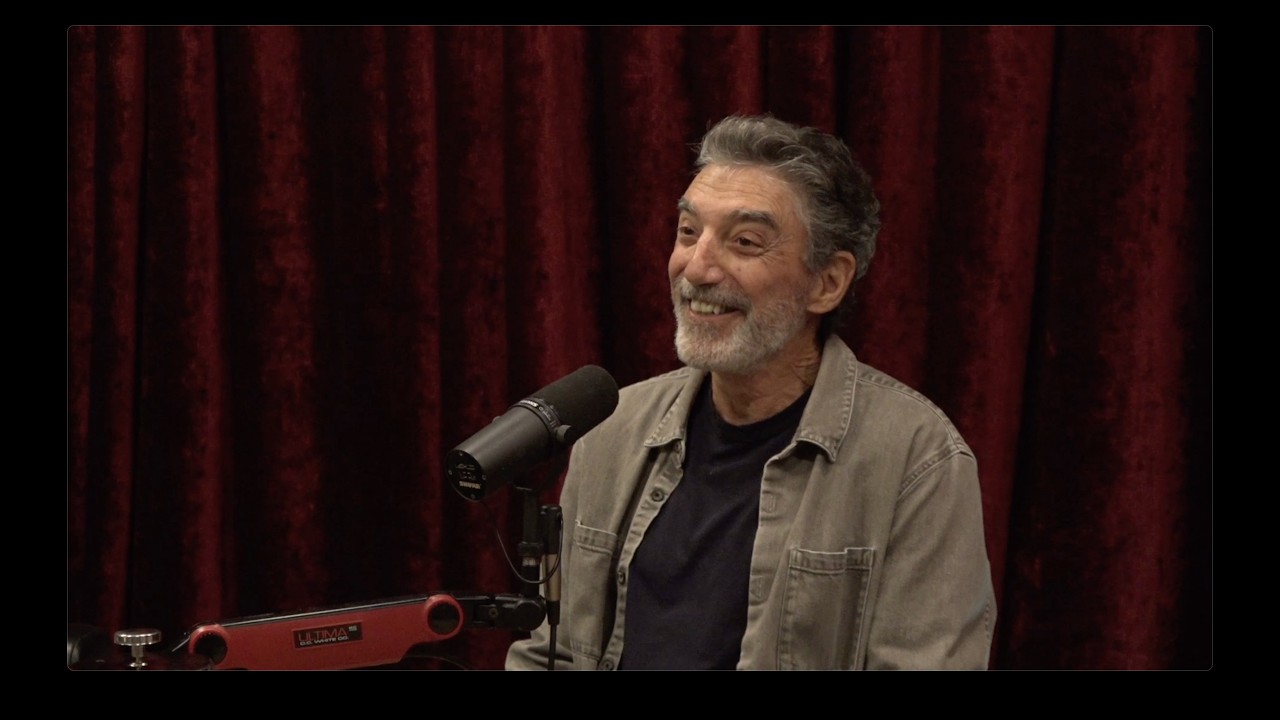
The traditional multi-camera sitcom format has nearly vanished, declining from 40 to 50 weekly network productions during its peak era to an estimated two or three shows today. (12:06)
Chuck Lorre refutes the persistent industry myth of canned laughter, clarifying that his multi-cam sitcoms operate as live theater before 200 audience members with bombing jokes rewritten on the floor in real time. (7:20)
Sitcom viewer retention is governed by the 'cockroach rule,' positing that a single low-quality episode can permanently alienate an audience much like spotting a pest in a restaurant. (36:30)
Reflecting on his past decade in Scientology and his recovery path, Lorre identifies the willingness to say 'I don't know' as a crucial leadership tool that fosters authentic collaboration rather than defensive dogma. (100:59)
Detailed notes
## Background
Published on YouTube by PowerfulJRE on October 13, 2026, this episode features television writer, producer, and director Chuck Lorre. According to the show description, Lorre discusses his prolific career behind hit sitcoms such as The Big Bang Theory, Two and a Half Men, and Young Sheldon, alongside the release of his book, Sitcom: A Memoir.
## TL;DR
Television creator Chuck Lorre joins Joe Rogan to examine the craft, history, and decline of multi-camera sitcoms, debunking the myth of canned laugh tracks while emphasizing the discipline of performing before a live studio audience. Lorre recounts candid behind-the-scenes experiences from landmark shows like The Big Bang Theory, Roseanne, and Two and a Half Men, addressing Charlie Sheen's unraveling and creative lessons drawn from figures like Bob Newhart and Norman Lear. The discussion also ventures into Lorre's personal life, including his sobriety, conceiving spirituality outside rigid dogma, and coming to terms with a decade spent in Scientology. Ultimately, Lorre reflects on the collaborative power of the writers' room, learning to say 'I don't know,' and trusting gut intuition over endless consensus.
## Atmosphere & style
The conversation carries a warm, reflective tone characterized by seasoned craft talk and mutual respect between host and guest. Lorre speaks with measured candor and self-effacing humor, transitioning smoothly between chaotic Hollywood war stories and deeply vulnerable discussions on ego, recovery, and spiritual growth. The exchange feels intimate and unhurried, offering listeners a grounded look at the humility required to survive decades under high-stakes creative pressure.
## Bulletin
- [12:06](https://www.youtube.com/watch?v=HMe3rYJi-DE&t=726s) The traditional multi-camera sitcom format has nearly vanished, declining from 40 to 50 weekly network productions during its peak era to an estimated two or three shows today.
- [07:20](https://www.youtube.com/watch?v=HMe3rYJi-DE&t=440s) Chuck Lorre refutes the persistent industry myth of canned laughter, clarifying that his multi-cam sitcoms operate as live theater before 200 audience members with bombing jokes rewritten on the floor in real time.
- [36:30](https://www.youtube.com/watch?v=HMe3rYJi-DE&t=2190s) Sitcom viewer retention is governed by the 'cockroach rule,' positing that a single low-quality episode can permanently alienate an audience much like spotting a pest in a restaurant.
- [01:40:59](https://www.youtube.com/watch?v=HMe3rYJi-DE&t=6059s) Reflecting on his past decade in Scientology and his recovery path, Lorre identifies the willingness to say 'I don't know' as a crucial leadership tool that fosters authentic collaboration rather than defensive dogma.
## Key takeaways
- [07:20](https://www.youtube.com/watch?v=HMe3rYJi-DE&t=440s) Multi-camera sitcoms operate identically to live theater, relying on immediate audience feedback rather than canned laugh tracks to test and rewrite dialogue.
- [05:44](https://www.youtube.com/watch?v=HMe3rYJi-DE&t=344s) Enduring sitcom popularity relies on long-term character affinity rather than complex episodic plotting, functioning as surrogate company for audiences.
- [12:06](https://www.youtube.com/watch?v=HMe3rYJi-DE&t=726s) The multi-camera network comedy format has suffered a steep decline, dropping from dozens of weekly series to just a handful across the entire industry.
- [17:54](https://www.youtube.com/watch?v=HMe3rYJi-DE&t=1074s) Experiencing a live joke failure on stage strips away writer ego and forces high-pressure, collaborative rewrites on the studio floor.
- [19:52](https://www.youtube.com/watch?v=HMe3rYJi-DE&t=1192s) Writers must be careful not to mistake star recognition and entrance applause for high-quality joke construction.
- [27:47](https://www.youtube.com/watch?v=HMe3rYJi-DE&t=1667s) Bob Newhart anchored comedic ensembles by acting as the sane, grounded audience surrogate reacting to absurd surrounding characters.
- [33:42](https://www.youtube.com/watch?v=HMe3rYJi-DE&t=2022s) Substance abuse struggles backstage, such as Charlie Sheen's relapse on Two and a Half Men, can derail even the most commercially dominant television productions.
- [36:30](https://www.youtube.com/watch?v=HMe3rYJi-DE&t=2190s) Sitcom spinoffs frequently fail when they isolate a single character from the core dynamic, whereas successful expansions build distinct ensembles around fresh relationships.
- [01:27:43](https://www.youtube.com/watch?v=HMe3rYJi-DE&t=5263s) Recovery programs redefine spiritual practice away from rigid institutional rules toward humility, personal interpretation, and service.
- [01:38:21](https://www.youtube.com/watch?v=HMe3rYJi-DE&t=5901s) Institutional secrecy in high-cost belief systems like Scientology leverages psychological commitment and sunk costs to enforce adherence.
- [01:40:59](https://www.youtube.com/watch?v=HMe3rYJi-DE&t=6059s) Showrunners unlock better creative solutions when they openly admit uncertainty rather than forcing unworkable material through executive authority.
- [01:45:31](https://www.youtube.com/watch?v=HMe3rYJi-DE&t=6331s) Decades of writers' room collaboration instill an internalized committee of critical voices that polishes solo writing projects.
- [01:53:52](https://www.youtube.com/watch?v=HMe3rYJi-DE&t=6832s) Norman Lear's production philosophy centered on triaging the biggest emergencies first and avoiding solo writing so colleagues could offer unvarnished feedback.
- [01:58:08](https://www.youtube.com/watch?v=HMe3rYJi-DE&t=7088s) Transitioning from paralyzing committee consensus to trusting gut intuition allows creators to take bold risks without fearing the consequences of an initial flop.
## Detailed walkthrough
### [00:01](https://www.youtube.com/watch?v=HMe3rYJi-DE&t=1s) Jimi Hendrix at the Singer Bowl and 1960s Cultural Shockwaves
Chuck Lorre recalls attending an unforgettable concert at the Singer Bowl in Queens in 1969. Jimi Hendrix was the headliner with the Jimi Hendrix Experience—coming off the heels of the Monterey Pop Festival era—and Janis Joplin with Big Brother and the Holding Company served as the warm-up act. Lorre and his friends managed to get in by bribing a security guard with two dollars each, which allowed them to walk directly up to the front of the stage. Watching Joplin take swigs between songs left a distinct impression on the young Lorre: "Oh, I guess I got to start drinking Southern Comfort cuz she's making it look pretty good."
The memory prompts Joe Rogan to share a favorite story told by the late Phil Hartman when they worked together on *NewsRadio*. Long before acting, Hartman worked as a stagehand at the Whisky a Go Go on the Sunset Strip during a Jimi Hendrix performance. Because the sound setup was precarious and there was fear Hendrix might knock the speaker stack into the audience, Hartman was assigned to stand just two feet away with his hands firmly bracing the speaker cabinet while Hendrix tore into his guitar. Lorre notes that Hendrix, much like The Who, was famous for violently thrashing amps and setting his instruments ablaze. As a fifteen- or sixteen-year-old music obsessive in the crowd, Lorre remembers watching the destruction with sheer horror: "Oh man, don't set the... Oh, give me the guitar. Don't set it on fire."
Rogan and Lorre reflect on the sheer cultural whiplash between the rigid conservatism of the 1950s and the explosive counterculture of the late 1960s. They trace the rapid, radical transformation to a potent convergence of historical catalysts: the trauma of the Vietnam War, the widespread embrace of psychedelic drugs, and the introduction of the birth control pill. The pill, as Rogan highlights, completely dismantled traditional sexual norms by granting women reproductive freedom, which simultaneously unlocked freedom for men and accelerated the era's social rebellion.
- The Singer Bowl concert featured Janis Joplin and Big Brother and the Holding Company opening for the Jimi Hendrix Experience.
- Phil Hartman worked as a stagehand at the Whisky a Go Go bracing speakers for Jimi Hendrix.
- The 1960s cultural shift was propelled by the Vietnam War, psychedelics, and the advent of oral contraceptives.
---
[03:10](https://www.youtube.com/watch?v=HMe3rYJi-DE&t=190s) The Big Bang Theory and Writing Outsiders
Rogan laments how modern streaming platforms and the rise of reality television contributed to the decline of traditional multi-camera sitcoms. He admits that during the COVID-19 pandemic, he and his family sat down to watch *The Big Bang Theory* for the first time, eventually bingeing the entire series from start to finish. Rogan observes that within the cynical Los Angeles stand-up comedy club scene, *The Big Bang Theory* was rarely discussed because it was viewed as clean, mainstream family entertainment rather than "cool" or edgy television. However, watching it closely revealed an exceptionally well-crafted, hilarious show driven by high-level joke writing.
Lorre confirms that the production operated under immense pressure, maintaining an uncompromising standard where "every episode had to kick ass." When Rogan brings up the novelty of centering a prime-time comedy around socially awkward, genius physicists, Lorre explains his personal creative entry point. As a college dropout with no background in physics or advanced mathematics, he could not relate to quantum mechanics, but he deeply related to the characters as outsiders. He recognized what it felt like to be on the outside looking in, struggling to decipher basic social cues and failing to navigate normal human interaction.
Rogan praises Lorre’s memoir (*Sitcom: A Memoir*) for capturing an archetypal American showbiz journey: grinding as a struggling musician, getting caught up in Scientology, transitioning into television writing on *Roseanne*, and ultimately steering massive cultural juggernauts. Great sitcoms, Rogan argues, hold a unique place in the American psyche alongside institutions like *All in the Family*, *Seinfeld*, and *Friends*, serving as comfort food and creating an extended surrogate family that audiences invite into their living rooms every week.
Lorre insists that when it comes to classic television, plot is entirely secondary to character affinity. While acknowledgeing that master plotters like Larry David achieved structural perfection on *Seinfeld*, Lorre believes the enduring "secret sauce" of a hit comedy is simply that audiences want to spend time with the people on screen. Viewers did not tune in for intricate story mechanics; they wanted to sit at the bar with Norm, Cliff, Woody, and Sam on *Cheers*, grab coffee with Jerry, or share an apartment with the cast of *Friends*. Flawless casting elevates that familiarity, turning fictional characters into people viewers genuinely miss between broadcasts.
```mermaid
flowchart TD
accTitle: The Anatomy of Sitcom Appeal
accDescr: Diagram contrasting secondary plot mechanics with primary character affinity in classic sitcoms.
subgraph Core["The Secret Sauce: Character Affinity"]
A["Relatable Outsiders & Archetypes"]
B["Flawless Ensemble Casting"]
C["Surrogate Living-Room Family"]
A --> C
B --> C
end
subgraph Secondary["Secondary Elements"]
D["Episodic Plot & Structure"]
E["Complex Story Twists"]
D --- E
end
C -->|"Drives 40+ Years of Syndication"| F["Long-Term Viewer Devotion"]
Secondary -.->|"Forgotten over time"| F
```
Rogan reminisces about arriving in Los Angeles in 1994, an era when landing a network sitcom deal was the holy grail for every touring stand-up comedian. Networks were constantly scouring comedy clubs to build custom vehicle shows around headliners, following the lucrative blueprints established by Bill Cosby, Roseanne Barr, Jerry Seinfeld, Tim Allen, and Brett Butler. Lorre points out that although that legacy network model has essentially vanished, he has recently returned to developing comedy around stand-up talent, partnering with comic Leanne Morgan on a new project for Netflix.
---
[07:20](https://www.youtube.com/watch?v=HMe3rYJi-DE&t=440s) The Theater of Multicam and the Myth of the Laugh Track
Discussing the transition of legacy properties to streaming, Lorre shares how *Young Sheldon* found a massive second life among younger generations on Netflix. A vast swath of its audience had never seen an episode of *The Big Bang Theory* and possessed no concept of traditional broadcast networks like CBS, proving the single-camera spinoff could stand entirely on its own creative merits. Rogan notes the stark tonal and aesthetic difference between the single-camera format and multi-camera sitcoms, the latter functioning far more like live theater.
Lorre agrees, detailing the exact mechanics of multi-camera production. A multi-cam show is essentially a live play staged before a studio audience while four cameras roll across the floor. If an actor stumbles, the scene is reset; if a joke falls flat with the crowd, the writing staff huddles on the floor to rewrite or cut it immediately. Lorre adheres to a strict rule during production: "if it stinks in front of the audience, if you put it on TV it's going to stink forever." Multi-cam comedy inherits its lineage from vaudeville, theater, and early radio plays adapted by George Burns, Phil Silvers, and Lucille Ball.
Finally, Lorre addresses the persistent cultural hostility directed at sitcom laughter. Despite facing accusations for forty years, Lorre states unequivocally that his productions have never used canned laugh tracks. To illustrate the stubborn bias within television criticism, Lorre recounts inviting an entertainment reporter to spend an evening inside the studio taping *The Big Bang Theory*. The journalist sat among two hundred spectators laughing naturally through a three-and-a-half-hour session, yet published an article complaining about the "annoying laugh track." Lorre and Rogan conclude that such critics lean on the laugh-track slur and use the label "sitcom" pejoratively simply to diminish the craft.
[10:12](https://www.youtube.com/watch?v=HMe3rYJi-DE&t=612s) The Stigma Around the Word "Sitcom"
The conversation begins with an examination of classic TV premises and how the term "situation comedy" often fails to describe what makes the best shows work. Chuck Lorre points out that high-concept premises—like marrying a witch or returning from outer space with a genie and not wanting to get laid—are literal situations. But applying that label to an iconic family show like *All in the Family* makes no sense: Archie Bunker’s racism and bigotry aren't a gimmicky "situation," they are simply life.
Joe Rogan brings up Lorre's memoir, noting that Lorre was previously so self-conscious about the format that he wouldn't even admit to writing sitcoms. Lorre readily agrees, admitting that early in his career he would tell people he wrote "TV comedy" because the word "sitcom" felt deeply embarrassing and physically hurt him. Both men reflect on how Hollywood historically treated multi-camera sitcoms with condescension, withholding the prestige and artistic respect routinely granted to feature films.
Yet, as both Rogan and Lorre emphasize, the craft of multi-cam television is astronomically harder than people realize. Producing twenty-two episodes a year and having to make an audience of two hundred people laugh on cue every single week is nearly impossible. Lorre details the sheer pressure cooker behind every tape night: writers scrambling to rewrite scenes on the fly, juggling five or more cast members, navigating network executives, studio suits, and actors' managers—all while operating without any safety net. If the studio audience doesn't laugh, there is no grace period. Lorre jokes that early on he felt obligated to say "yes sir, no sir" to executives' terrible notes, until his "testicles dropped" after achieving real success, allowing him to finally push back and assert creative control.
---
[12:06](https://www.youtube.com/watch?v=HMe3rYJi-DE&t=726s) The Dying Art of Multi-Camera Comedy
Rogan asks about Lorre’s Netflix series (*Bookie*), inquiring whether it was shot single-camera or multi-camera. Lorre confirms they had just wrapped season two as a multi-camera show filmed in front of an audience. Rogan marvels at this, noting that aside from shows like *The Ms. Pat Show*, the traditional audience-taped multi-camera sitcom has almost completely vanished from the television landscape.
Where television networks once aired forty to fifty multi-cam sitcoms in a single week during the format’s golden age, Lorre notes there are now perhaps two or three left in production. Rogan points out that Lorre's timing was immaculate, creating monster hits like *The Big Bang Theory* and *Two and a Half Men* during network television's final massive wave of cultural dominance.
While many industry observers have written eulogies for the sitcom over the past forty years, Lorre remains hesitant to declare the genre dead, noting that history proves "one great show changes everything." Rogan agrees, expressing frustration with the network mismanagement that let such an inherently comforting, half-hour communal format wither away.
---
[13:52](https://www.youtube.com/watch?v=HMe3rYJi-DE&t=832s) Cynicism, Vulnerability, and the Los Angeles "Bubble"
The debate turns to why broad, laugh-out-loud comedies have fallen out of favor. Lorre suggests that cultural tastes have shifted in a way where outright belly laughs are almost looked down upon. To Lorre, genuine laughter requires vulnerability because it cannot be forced or planned; it is a spontaneous reaction that happens *to* you when you are genuinely surprised. He contrasts classic multi-cam shows with critically acclaimed modern prestige comedies, pointing out that while shows like Mike White's *The White Lotus* are brilliant, well-acted, and beautifully produced, viewers watch them with enjoyment rather than out-loud laughter.
```mermaid
flowchart TD
accTitle: The Mechanics of Comedy Reaction
accDescr: A diagram contrasting genuine laugh-out-loud reactions with the guarded, folded-arms posture common in Los Angeles.
subgraph Openness ["Vulnerable Audience"]
A["Audience Surrender"] --> B["Genuine Surprise"]
B --> C["Spontaneous Belly Laugh"]
end
subgraph Defense ["The LA Industry Bubble"]
D["Social Status Anxiety"] --> E["Arms Folded / Guarded"]
E --> F["Intellectual Appreciation / Quiet Chuckle"]
end
```
Rogan strongly pushes back against the idea that audiences no longer want to laugh, arguing that Lorre's perception is skewed by living in the toxic bubble of Los Angeles:
- Rogan characterizes Los Angeles as a hyper-cynical, self-important industry town full of insecure people who sit with their arms crossed, looking for an excuse to dismiss others before they even open their mouths.
- He contrasts this with audiences across the rest of the country—and in cities like New York—who actively crave raw, unrestrained laughter without turning everything into a competitive status contest.
- Lorre concedes that he might indeed be living in a bubble, acknowledging that his sitcoms remain cultural juggernauts internationally, with *The Big Bang Theory* achieving massive, Beatles-level fandom in countries like Germany, Mexico, and Brazil, even if it gets looked down upon by highbrow industry circles in Brentwood.
---
[17:54](https://www.youtube.com/watch?v=HMe3rYJi-DE&t=1074s) Putting on a Play Every Week and the Humility of the Flop
Rogan recalls dating an unemployed actress during his early sitcom days who haughtily declared she would never do a sitcom because she only wanted to work in film—a sentiment that both men find absurd given the unmatched technical rigor of live multi-cam production.
Lorre describes the weekly cycle of a multi-cam show as putting on a brand-new live theatrical play every seven days under immense stress and anxiety. The ultimate test of the medium is the brutal, immediate honesty of the studio audience:
- If a joke falls flat on the Warner Bros. soundstages in Burbank, the silence is so deadening that "you can hear the 134 freeway."
- Lorre considers this immediate failure to be the ultimate teaching tool for a writer, instilling deep humility when a joke you fell in love with completely bombs in front of a live crowd.
- Rather than feeling defensive, the entire process forces writers to drop their ego on the floor and rush onto the stage to rewrite the scene in real time until it works.
---
[19:08](https://www.youtube.com/watch?v=HMe3rYJi-DE&t=1148s) Sponsor: The Terminal List Season 2
The segment closes with an advertisement read for Prime Video's *The Terminal List* Season 2, starring Chris Pratt returning as Navy SEAL Commander James Reece. The spot outlines Reece's new redemption storyline, where he is living off the grid in Mozambique battling a terminal brain tumor before being re-recruited by the CIA for a global manhunt, emphasizing the show's practical effects and real-world military advisors.
[19:52](https://www.youtube.com/watch?v=HMe3rYJi-DE&t=1192s) The Writers' Room and the Realities of Studio Audience Laughs
Chuck Lorre describes the weekly rhythm of multi-cam television production as a "wild thunderstorm of creative people getting together." The writing staff gathers, throws ideas around, and builds an episode from scratch each week, putting it on its feet day by day. The process begins with the table read, where everyone fake laughs and the writers have to discern what material genuinely works versus what is just polite support from the room.
Lorre reflects on his time writing for *Roseanne*, a period when roughly 40 million viewers tuned in simultaneously every week—an era before DVRs, when VCRs were just becoming common. On that set, the writing staff quickly noticed an illusion regarding audience reactions: whenever John Goodman walked into the kitchen set and delivered a simple entrance line like "Rosie, I'm home," the live studio audience would erupt into absolute hysterics. The writers would ironically pat themselves on the back, claiming credit for writing the line, but Lorre realized there was zero actual comedy in "Honey, I'm home." The audience was simply overjoyed to share the same physical space with Goodman as Dan Conner. Lorre explains that writers cannot afford to "hang your hat on" those easy reactions; those bursts come from a show becoming a deeply visceral part of viewers' daily lives rather than from the quality of the joke writing.
---
[21:20](https://www.youtube.com/watch?v=HMe3rYJi-DE&t=1280s) Comic-Con Tears and the Misfit Appeal of *The Big Bang Theory* and *Young Sheldon*
Lorre recounts an experience he includes in his memoir, *Sitcom*, regarding the early Comic-Con panels for *The Big Bang Theory*. Thousands of fans camped outside overnight just to make it into the room. During an autograph session, Lorre sat beside Jim Parsons as a young fan approached with a cast photo to be signed. Her hands were violently shaking, and she began weeping with sheer joy simply being inches away from Parsons. Lorre realized something unprecedented was happening that the writers had never planned: throughout his years in television, audiences had been thrilled to see stars like Jon Cryer, Charlie Sheen, or Roseanne Barr, but nobody had ever openly wept in front of them. The characters had tapped into a profound emotional nerve.
Joe Rogan and Lorre break down why that bond formed:
- **The Misfit Dynamic**: Rogan points out that the ensemble represents an endearing surrogate family—"losers in a life raft" who hold each other up. Unlike an aspirational show like *Friends*, where the characters are impossibly attractive, cool, and seemingly unapproachable to everyday outcasts, viewers saw oddballs just like themselves.
- **The Central Magic Trick of *Young Sheldon***: Lorre explains that while developing the spin-off, they discovered the series was fundamentally about the Cooper family's protective bubble around an exceptional child. Sheldon is caustic, blunt, and socially oblivious—behaviors that work for an adult played by Jim Parsons, but would make an eight-year-old come across as an unlikable brat.
- **A Family Love Story**: Instead of punishing him, his grounded family—a football coach father, a deeply devout mother, a regular twin sister, a knucklehead older brother, and Meemaw—make endless accommodations. They protect him, excuse his abrasive tendencies, and let him be himself, transforming the show into an unconventional family love story.
---
[24:56](https://www.youtube.com/watch?v=HMe3rYJi-DE&t=1496s) Working on *Roseanne*, Brain Trauma, and Writers' Credit Shenanigans
The conversation turns to Roseanne Barr herself. Rogan mentions his friendship with her and notes that she openly admits she acted like a "tyrant" during the peak of her sitcom. Lorre agrees, remarking that "tyrant" is the kindest possible word for how she behaved on set. Rogan explains the medical background that shaped her personality: at age 15, Barr was struck by a car, suffered severe traumatic brain injury, spent an extensive period hospitalized, and lived in a mental institution for nine months. Before the accident, she had been a straight-A math student; afterward, she temporarily could not even count. Rogan suggests this severe injury permanently altered her personality and fueled both her erratic, chaotic behavior and her fearless, completely filterless stand-up delivery—grounded in famous early routines like the idea that "now I know why animals eat their young." Lorre acknowledges her brilliance, emphasizing how revolutionary she and her sister were when constructing that original stand-up persona.
```mermaid
flowchart TD
accTitle: Roseanne Writing Room Friction
accDescr: Diagram illustrating the studio dynamics and forced credits on Roseanne.
A["Roseanne Barr's Groundbreaking Voice"] --> B["Massive Ratings & Cultural Clout"]
B --> C["Chaotic Production Environment"]
C --> D["Forced Writing Credits (e.g., Tom Arnold)"]
D --> E["Writers Compelled to Put Names on Scripts"]
E --> F["Industry Cynicism: High-Paying No-Show Deals"]
```
Lorre and Rogan discuss the darker backstage realities of *Roseanne*, specifically the demand that staff scripts include Tom Arnold's name as a writer regardless of whether he contributed. Rogan compares the situation to a mob-controlled "no-show" union job where people received high-paying writing credits without doing the work. Lorre recalls taking his frustrations to his agent at the time, who simply gave him blunt advice that Lorre later included in his book: "Chuck, you got to let them fuck you a few times so they know they love you."
---
[27:47](https://www.youtube.com/watch?v=HMe3rYJi-DE&t=1667s) Ego Clashes, Cybill Shepherd, and the Wisdom of Bob Newhart
Lorre addresses the friction and insecurity common on set when dealing with massive comedy leads. Rogan brings up a story from Lorre's book involving *Cybill*, where Cybill Shepherd demanded a joke be transferred to her; after taking the line, it fell flat on delivery, causing her to lash out in anger. Lorre notes that Christine Baranski, on the other hand, was an absolute virtuoso who "could read the phone book" and make it funny.
Lorre laments the unnecessary toxicity of that era:
- Despite the historic ratings, cultural impact, and staggering sums of money generated by these shows, sets were frequently infected by malice and cruelty.
- Shows that should have felt like an endless, joyful celebration were undermined by stars consumed by intoxicating power.
- Rogan notes that when a lead actor's face is plastered on a six-foot billboard and the show carries their name, an unchecked ego often warps their behavior.
By contrast, Lorre fondly recalls his friendship and collaboration with comedy legend Bob Newhart, who guest-starred on *The Big Bang Theory*. Newhart shared a foundational comedic philosophy that Lorre never forgot: "I'm not the funny guy on the show. I react to the funny guys." Newhart understood that from *The Bob Newhart Show* to *Newhart*, his power lay in being the sane surrogate for the audience. Rather than hoarding punchlines, a simple raised eyebrow in reaction to the bizarre characters around him would bring the house down.
[29:57](https://www.youtube.com/watch?v=HMe3rYJi-DE&t=1797s) Bob Newhart’s Three Demands and Phil Hartman’s Emmy Loss
Chuck Lorre recounts how he spent years begging comedy legend Bob Newhart to appear on any show he produced, purely out of immense fandom. When Newhart finally watched *The Big Bang Theory*, he agreed to come on board, but laid down three non-negotiable conditions: first, the performance had to be taped in front of a live studio audience ("I don't do anything else"); second, his character needed an actual multi-episode story arc; and third, he wanted to win an Emmy. Despite Newhart’s legendary status and decades headlining iconic television shows, he had astonishingly never won an Emmy Award. Lorre happily agreed to all three stipulations, casting him as Sheldon’s childhood hero, Arthur Jeffries (better known as Professor Proton). Newhart went on to win the Primetime Emmy Award for Outstanding Guest Actor in a Comedy Series for the role, an achievement Lorre describes as one of the genuine joys of his entire professional life.
Joe Rogan expresses utter disbelief that Newhart had never won before, which prompts him to share a tragic, darkly humorous memory from his own time attending the Emmys. Rogan had gone to the ceremony following the horrific murder of his *NewsRadio* co-star, Phil Hartman, who had received a posthumous Emmy nomination. The entire cast attended, emotionally devastated and heartbroken. When Hartman’s name was not called as the winner, fellow co-star Dave Foley leaned over to Rogan in the audience and whispered the ultimate gallows-humor line: "What the fuck does a guy have to do to win?"
Rogan and Lorre reflect on Dave Foley’s comedic brilliance and the collaborative culture on *NewsRadio*. Rogan credits show creator Paul Simms for establishing an egoless environment where the cast was encouraged to pitch alternative jokes, noting that Foley, coming straight out of *The Kids in the Hall*, was a phenomenal writer who consistently pitched superior punchlines that Simms eagerly integrated into the scripts. Hartman’s death devastated everyone on that set, and Foley’s pitch-black joke at the ceremony was so perfectly timed that Rogan felt no awards show could ever top it, deciding right then that he would never attend the Emmys again.
[32:29](https://www.youtube.com/watch?v=HMe3rYJi-DE&t=1949s) Sitting in the Dark on Iconic Sets
Rogan reiterates how surreal it is that Newhart went unrewarded for *The Bob Newhart Show* and *Newhart*, praising his gentle, lovely demeanor. Lorre agrees and reminisces about his early days in television when he worked on the same studio lot where Newhart's second sitcom—the Vermont bed-and-breakfast series *Newhart*—was produced. Whenever production wrapped and the soundstage went dark, Lorre would wander onto the deserted set of the Stratford Inn and sit quietly behind the lobby front desk where characters like Larry, Darryl, and Darryl made their entrances, soaking in the reverent feeling of standing in the exact room where great comedy was being crafted.
That ritual carried over to his later career. During the height of *Two and a Half Men*, Lorre and members of his production team would routinely sneak across the lot late at night into the darkened soundstage of *The West Wing*. They would sit inside the replica of the Oval Office, joking among themselves that it was the closest any of them would ever get to the real seat of executive power.
[33:42](https://www.youtube.com/watch?v=HMe3rYJi-DE&t=2022s) Charlie Sheen, Sobriety, and the "Exploding Bic Lighter"
The conversation shifts to the volatile personalities Lorre has managed across his career, specifically Charlie Sheen on *Two and a Half Men*. Rogan brings up Sheen's past appearance on the podcast, expressing amazement that Sheen managed to perform at such a high level on a multi-camera sitcom while living through severe substance abuse and mania. Lorre clarifies a common misconception: the show actually had roughly six or seven clean, incredibly stable years—spanning 150 to 160 episodes—before Sheen's life unraveled. Throughout that initial stretch, Lorre believed Sheen was sober, and the two shared a seamless creative partnership on an astronomically successful show.
The immense commercial dominance of *Two and a Half Men* handed Lorre unprecedented industry leverage with CBS. Network executives granted him the virtually unheard-of opportunity to scrap and reshoot the pilot of *The Big Bang Theory* after the original version missed the mark. That rare do-over transformed the series into another historic smash hit.
Lorre confirms that he and Sheen have since made peace—Sheen even provided an endorsement blurb for the back of Lorre’s memoir—but recalls the exact point where things went off the rails during Season 8. As Sheen’s behavior grew erratic and absences piled up, Sheen’s manager called Lorre to inform him that Charlie would miss that day’s rehearsal run-through because his "Bic lighter blew up and he has no eyebrows." While Lorre admits he was somewhat naive about hard-drug culture, he knew standard lighters do not spontaneously detonate unless they are being used under extreme circumstances, such as freebasing cocaine.
[36:30](https://www.youtube.com/watch?v=HMe3rYJi-DE&t=2190s) The Cockroach Rule and the Fragility of Spinoffs
Reflecting on Sheen's unraveling, Lorre confesses that his own reaction was rooted in stubborn denial. Because the show was such a ratings juggernaut and the work was so enjoyable, he chose to remain forcefully, willfully oblivious, clinging to the hope that the crisis would resolve itself. Lorre and his co-creator, Lee Aronsohn, were ruthless perfectionists who demanded that every second of every episode be sharp. Lorre explains his philosophy on audience retention using a dining metaphor: a bad sitcom episode is like seeing a cockroach crawl across your table at a restaurant—no matter how much you loved the place before, you may never step foot inside again. While devoted viewers might forgive an occasional rough patch in a classic show like *Cheers* (such as storylines focusing on Cliff Clavin moving in with his mother), repeated dips in quality or shifts in creative leadership usually cause audiences to abandon a series permanently.
```mermaid
flowchart TD
accTitle: The Cockroach Principle of Sitcom Quality
accDescr: A diagram illustrating Chuck Lorre's philosophy that a single bad sitcom episode can drive viewers away permanently, much like a cockroach ruins a restaurant experience.
subgraph RestaurantAnalogy["The Restaurant Experience"]
R1["Patron Loves the Restaurant"] --> R2["Cockroach Crawls Across Table"]
R2 --> R3["Customer Walks Out and Never Returns"]
end
subgraph SitcomStandard["The Sitcom Standard"]
S1["Viewers Devoted to the Show"] --> S2["A Subpar or Sloppy Episode Airs"]
S2 --> S3["Audience Abandons the Series Forever"]
end
RestaurantAnalogy -.->|"Informs Philosophy"| SitcomStandard
```
This delicate chemistry makes spinoffs notoriously perilous. Lorre cites *Archie Bunker's Place*, which kept Carroll O'Connor's central character in a bar setting but stripped away the essential dynamic with Edith and Meathead (Rob Reiner), causing the magic of *All in the Family* to vanish. The same fate met *Joey*, which separated Matt LeBlanc from the ensemble lightning-in-a-bottle that made *Friends* work. Characters are defined entirely by their relationships; they cannot simply be plucked out of their ecosystem and expected to survive. Rogan and Lorre note that *Young Sheldon* succeeded precisely because it avoided that trap: rather than leaning on the original cast, it established an entirely fresh ensemble with its own distinct world in East Texas, tied to *The Big Bang Theory* solely through Jim Parsons' off-screen voiceover narration.
- **Bob Newhart's Emmy**: Newhart had zero Emmy wins despite starring in *The Bob Newhart Show* and *Newhart*; he finally won for Guest Actor in a Comedy Series on *The Big Bang Theory*.
- **Phil Hartman Tribute**: Posthumously nominated for *NewsRadio*; Dave Foley's dark audience quip cemented Rogan's choice never to attend the Emmys again.
- **Charlie Sheen Timeline**: Lorre and Sheen completed 6 to 7 seasons (roughly 150–160 episodes) of *Two and a Half Men* with Sheen maintaining sobriety before his spiral in Season 8.
- **Pilot Reshoot Leeway**: The rating power of *Two and a Half Men* gave CBS the confidence to let Lorre reshoot the entire pilot of *The Big Bang Theory*.
- **Spinoff Failures Mentioned**: *Archie Bunker's Place* (lost the *All in the Family* ensemble dynamic) and *Joey* (struggled without the *Friends* cast).
[40:16](https://www.youtube.com/watch?v=HMe3rYJi-DE&t=2416s) Chemistry, TV Golden Eras, and Bochco vs. Dick Wolf
Chuck Lorre notes that if they had not found young Iain Armitage, *Young Sheldon* simply would never have been made. Joe Rogan connects this to lightning-in-a-bottle ensemble sitcoms like *Seinfeld*, where the chemistry between the core group is so tightly calibrated that substituting or removing a single person would destroy the show's entire alchemy. Lorre wholeheartedly agrees, emphasizing that viewers tune in for characters and relationships above all else. Admitting he could hardly recall a single specific plotline despite being an avid viewer, Lorre remembers Thursday night television as absolute appointment viewing: "Thursday night was gold because of *Seinfeld*."
Rogan recalls how the entire nation stayed home on Thursday nights for NBC's juggernaut lineup of *Friends* and *Seinfeld*, followed immediately at 10:00 PM by legendary drama producer Steven Bochco. Lorre highlights Bochco’s impeccable streak with sophisticated dramas like *Hill Street Blues*, *L.A. Law*, and *NYPD Blue*. Unlike Dick Wolf’s procedural "crime of the week" formula, Bochco focused on human vulnerability, the destructive weight of the badge, and the internal torments of urban police work. Rogan jokes about the inherent narrative utility of the police genre: if a writer puts an ordinary plumber into that much weekly catastrophe, viewers would ask why on earth someone is constantly surrounded by murders and armed robberies, whereas extreme chaos is simply an everyday occupational reality for a cop. Lorre strains to recall the name of a New York City police officer turned author whose gritty books heavily informed Bochco's sensibility, though neither he nor Rogan can pin it down in the moment.
```mermaid
flowchart TD
accTitle: The Two Traditions of 1990s Network TV Drama
accDescr: Flowchart contrasting the procedural focus of Dick Wolf shows with the character-driven approach of Steven Bochco shows.
subgraph DW["Dick Wolf Approach"]
direction TB
A["Procedural Plot"] --> B["Crime of the Week"]
B --> C["Focus on Solving the Case"]
end
subgraph SB["Steven Bochco Approach"]
direction TB
D["Character-Driven Drama"] --> E["Psychological Torment & Heartache"]
E --> F["Destructive Work Environment"]
end
```
[43:05](https://www.youtube.com/watch?v=HMe3rYJi-DE&t=2585s) The Vanishing Sitcom and Lorre's Journeyman Years
Reflecting on the television landscape, Rogan observes that while police procedurals endure, the sitcom footprint has collapsed by roughly 80 to 90 percent. Lorre looks back on network television's heyday, when every major network aired four half-hour sitcoms a night four or five nights a week—easily sixteen comedies across the dial each evening—capped off by prestige one-hour dramas at 10:00 PM. Rogan argues that the demise of the sitcom is not due to shifting audience tastes, but rather broadcasting blunders and the sheer difficulty of executing the format well.
Lorre reflects on how fortunate he was to spend seven or eight years as an apprentice comedy writer—a journeyman learning the craft without the crushing pressure of being the final decision-maker. Even after nearly a decade in writers' rooms, Lorre felt completely overwhelmed the first time network executives handed him the keys to run his own series.
- Back in the peak broadcast era, the three major networks collectively aired roughly sixteen half-hour sitcoms every weeknight.
- Lorre spent seven to eight formative years working up through writing staffs before ever running a show of his own.
- Both Rogan and Lorre agree that multi-camera sitcoms did not disappear because audiences lost interest, but because writing great broadcast comedy is notoriously punishing work.
[44:38](https://www.youtube.com/watch?v=HMe3rYJi-DE&t=2678s) "Frannie's Turn" and the "Noble Failure"
Following his stint on *Roseanne*, powerful Carsey-Werner producers Marcy Carsey and Tom Werner approached Lorre's then-boss, Bob Myer, to develop a new series about a heavy-set, discontented housewife navigating a domineering husband and family troubles. Myer correctly recognized the pitch as a transparent imitation of *Roseanne* and turned it down. When Carsey and Werner pitched the concept to Lorre, his instinct was the exact opposite: "This is a ripoff of *Roseanne*. I'm in." Carsey-Werner were the undisputed "800-pound gorillas" of television, producing both *The Cosby Show* and *Roseanne*, and Lorre jumped at the chance to work with industry titans.
The resulting pilot became *Frannie's Turn*, starring acclaimed British actress Miriam Margolyes as a disgruntled Staten Island housewife. Margolyes poured herself into the role, and Carsey-Werner's clout was so formidable that ABC ordered six episodes rather than passing on the project. However, the network buried the show in television's most notorious death slot: Saturday night at 8:00 PM, an hour Lorre compares to "making the show and using it for landfill." ABC pulled the plug after airing only five episodes, unable to even burn off the sixth.
Devastated, Lorre assumed his showrunning career had met an abrupt end. Days later, Tom Werner walked into his office, coined a phrase Lorre had never heard, and said, "The noble failure. Let's try again." Lorre notes how difficult it is for any sitcom writing staff to gauge their own work with objective clarity: when writers are putting in grueling eighty-hour weeks, it is emotionally impossible to admit that the end product might just be mediocre. Relieved to get a second chance, Lorre was thrilled simply to keep his office, his parking space, and the catered lunches.
- *Frannie's Turn* starred British character actress Miriam Margolyes playing an unhappy Staten Island mother.
- Carsey-Werner commanded enough industry influence that ABC picked up six episodes despite reservations.
- ABC aired five episodes on Saturday nights at 8:00 PM before cancelling the series, leaving the sixth episode unbroadcast.
- Lorre was granted an immediate second development deal when Tom Werner famously labeled the project a "noble failure."
[48:54](https://www.youtube.com/watch?v=HMe3rYJi-DE&t=2934s) Researching Single Motherhood in Elgin and Meeting Brett Butler
When Carsey-Werner offered Lorre his second chance, they informed him that ABC was seeking a comedy about a single mother. Lorre found this ironic, as he had originally argued that Frannie should leave her husband in *Frannie's Turn*, only for Carsey-Werner to insist she remain married because both *The Cosby Show* and *Roseanne* featured married couples. Wondering how he could bring authentic insight to a working-class single mother's experience, Lorre accepted Carsey-Werner’s offer to send him on a research trip to Elgin, Illinois.
Guided by the local Chamber of Commerce, Lorre toured battered women's shelters, the YWCA, and public clinics. He met mothers surviving on welfare, working two exhausting jobs, and raising children completely on their own without financial or family safety nets. At the time, the reigning pop-culture image of single motherhood was *Murphy Brown*, where a wealthy journalist raised an infant with a fleet of round-the-clock nannies. Lorre returned to Los Angeles deeply moved by the gritty reality he had witnessed, viewing these working mothers not through typical sitcom tropes, but as mythic figures enduring a genuine "hero's journey":
> "I went, 'Oh, this is Greek tragedy. These women are heroes.'... A woman raising children by herself without a safety net, that hadn't been done. And I came back from that trip going, 'Okay, I want to write this. I want to write this because this is—I get it now. It's a hero's journey.'"
Lorre wrote the pilot for *Grace Under Fire*, and producers cast stand-up comedian Brett Butler as the lead. Although the show launched as an immediate blockbuster hit—benefiting immensely from its prime pairing behind *Home Improvement*—Lorre recalls that Butler was visibly unhappy from day one, sparking an exhausting set dynamic that soon descended into open backstage turmoil.
```mermaid
flowchart LR
accTitle: Development Journey from Frannie's Turn to Grace Under Fire
accDescr: Step-by-step progression of Chuck Lorre's early showrunning career with Carsey-Werner.
subgraph Failure["The Noble Failure"]
A["Carsey-Werner Pitches 'Roseanne' Clone"] --> B["'Frannie's Turn' with Miriam Margolyes"]
B --> C["Saturday 8 PM Death Slot & Cancellation"]
end
subgraph Reinvention["The Research Phase"]
C --> D["Tom Werner: 'Noble Failure. Let's Try Again.'"]
D --> E["ABC Requests Single Mom Concept"]
E --> F["Field Research Trip to Elgin, IL Shelters"]
end
subgraph Launch["The Next Hit"]
F --> G["Lorre Reframes Concept as Hero's Journey"]
G --> H["Brett Butler Cast in 'Grace Under Fire'"]
H --> I["Instant Hit Behind 'Home Improvement'"]
end
```
[51:35](https://www.youtube.com/watch?v=HMe3rYJi-DE&t=3095s) The Illusion of Success and Brett Butler's Rise
Chuck Lorre reflects on the early days of *Grace Under Fire*, which ABC positioned in the coveted time slot right after Tim Allen's massive hit *Home Improvement*. The sitcom was an instant sensation, catapulting stand-up comic Brett Butler into the media stratosphere. She appeared on late-night talk shows and graced national magazine covers. Lorre emphasizes that Butler was not only an exceptionally sharp stand-up comic who "suffered no fools," but she also possessed a rare, innate acting ability that most novice actors spend years struggling to develop. Yet despite the sudden validation and runaway commercial success, the production quickly turned into a turbulent, agonizing experience behind the scenes.
Lorre and Joe Rogan analyze the psychological trap that ensnares many deeply troubled performers when they finally reach the pinnacle of their careers. Lorre explains that when a damaged comic or actor reaches the top, they are abruptly confronted with the devastating realization that worldly achievement cannot heal them. Growing up, Lorre had been taught that becoming a successful *mensch*—someone admired, respected, and of substance—would naturally make him feel whole. Instead, achieving success forces a person to confront a cold, 2:00 a.m. truth: "Oh fuck, I'm still the miserable fuck." When accomplishments fail to plug that internal void, artists often pivot to destructive vices like drugs, alcohol, and gambling. As Lorre observes, those behaviors only offer temporary relief before failing completely: "Nothing on the outside's going to heal the inside." It has to be an "inside job."
---
[54:37](https://www.youtube.com/watch?v=HMe3rYJi-DE&t=3277s) 1993 Fame, Grace Under Fire, and the "Perfect Murder"
Rogan frames the sheer magnitude of Butler's visibility by contextualizing the television landscape of 1993. At that time, entertainment was dominated by just four major broadcast networks, cable viewership was negligible compared to prime-time network sitcoms, and true global celebrity was confined to a relatively tiny circle of people. When *Grace Under Fire* became the number two show in the country, Butler instantly became one of the most recognizable faces in the world. For someone already struggling with internal instability, that degree of scrutiny and pressure proved completely overwhelming.
This dynamic leads Lorre to share a dark screenplay premise he has long toyed with: "The perfect murder of an actress who is malicious and destructive is to make her famous. It'll ruin her." Rogan brings up the tragic aftermath of Butler's career, noting reports that she eventually fell on hard times and struggled with homelessness after the show ended. Both men express sorrow over her trajectory, noting how deeply audiences had rooted for her. She had served as an authentic voice for working-class women—playing an oil refinery worker who held her own in a male-dominated environment—while earning the respect of male viewers with her toughness. Rogan laments the "self-sabotage gene" found in so many gifted performers, pointing out that hearing an audience roar with laughter fills the void for an hour, but the moment they go home, they are left alone in the dark with the exact same unresolved pain.
---
[57:01](https://www.youtube.com/watch?v=HMe3rYJi-DE&t=3421s) The Doors, The Who, and the Singer Bowl Riot
Connecting the conversation to his memoir *Sitcom: A Memoir*, Lorre points out that if wealth and fame were capable of curing human suffering, history would not be littered with so many dead rock stars. This prompts Lorre to recount a wild memory from when he was roughly sixteen years old, attending a concert at the Singer Bowl, an open-air arena in Flushing Meadows, Queens. The bill featured The Doors, with a then-emerging British band called The Who serving as their opening act just prior to the release of their breakthrough rock opera *Tommy*. Lorre recalls The Who being an incredible warm-up act, blistering through early anthems like "My Generation" and "I Can See for Miles."
The Doors took the stage and launched into "Light My Fire," but the show derailed almost instantly. Jim Morrison, who had already been arrested for indecent exposure during a notorious concert in Miami, attempted to pull his pants down on stage again—a stunt Rogan jokingly compares to comedian Bert Kreischer's signature habit of tearing off his shirt. Within twenty minutes, the concert was shut down as police on horseback charged through the crowd, swinging clubs and batons at patrons. Lorre recalls standing there with his teenage friends, smoking a joint, marveling at the mayhem, and thinking, "This is terrific. This is fantastic... It would have been nice to maybe hear a second song." After realizing they had only heard part of a single track, they decided it was best to flee before catching a baton to the head.
---
[58:48](https://www.youtube.com/watch?v=HMe3rYJi-DE&t=3528s) The 27 Club, Hendrix, and the Cycle of Performer Despair
The conversation expands into the legendary "27 Club"—the eerie cluster of iconic musicians including Jim Morrison, Jimi Hendrix, and Janis Joplin who all died at age twenty-seven. Rogan brings up the persistent conspiracy theories surrounding Hendrix's death, such as claims made in a memoir by Hendrix's former bodyguard alleging that his manager, Michael Jeffery, had mob ties and arranged Hendrix's drowning in wine to collect on life insurance and ongoing royalties after Hendrix attempted to fire him. Lorre takes a more skeptical view of the murder theories, noting that 1960s music industry contracts were already so predatory that managers generally retained substantial publishing rights whether an artist lived or died.
```mermaid
flowchart TD
accTitle: The Performer's Destructive Feedback Loop
accDescr: A cyclical flowchart illustrating how performers attempt to soothe internal trauma through performance, followed by temporary validation, an inevitable crash, and escalating substance abuse.
subgraph Crash ["The Aftermath"]
C --> D["Crowd departs & isolation sets in"]
D --> E["Resurfacing darkness & despair"]
end
subgraph Coping ["The Downward Spiral"]
E --> F["Escalating substance abuse & chaos"]
F --> A
end
```
Regardless of the circumstances, Lorre finds the reality of Hendrix choking to death on his own vomit an agonizing, heartbreaking conclusion for a generational talent who fundamentally altered music. Rogan points out that Hendrix's playing was so revolutionary that Eric Clapton famously contemplated quitting guitar after watching him perform live in London. They marvel at Clapton's peak years, specifically Derek and the Dominos' *Layla and Other Assorted Love Songs*, raving about the blistering guitar interplay between Clapton and Duane Allman on tracks like "Have You Ever Loved a Woman." Ultimately, Rogan and Lorre agree that the sheer brilliance of these artists was tied directly to the desperation of trying to soothe an inner wound. The louder the crowd screams, the higher the temporary high, but when the stage lights turn off, the darkness rushes right back in. As Lorre concludes, worldly adulation and luxury cars can never heal what is broken on the inside.
- **Performers discussed:** Brett Butler, Tim Allen, Jim Morrison, The Who, Jimi Hendrix, Janis Joplin, Eric Clapton, Duane Allman.
- **Venues & Historical Landmarks:** The Singer Bowl in Queens, New York.
- **Key Works Referenced:** *Grace Under Fire*, *Home Improvement*, The Who's *Tommy*, Derek and the Dominos' *Layla and Other Assorted Love Songs*, and Lorre's *Sitcom: A Memoir*.
[01:01:43](https://www.youtube.com/watch?v=HMe3rYJi-DE&t=3703s) The Search for a Spiritual Solution and Performative Faith
Chuck Lorre reflects on the deeper pursuit of meaning, remarking that worldly success is great, but ultimately "the real solution is a spiritual solution. You have to find something beyond this world." When he worries aloud that admitting this might sound like "flaky and airy-fairy and, you know, woo-woo New Age shit," Joe Rogan pushes back, asking why he would regret saying it. Lorre explains that living in Los Angeles makes one hypersensitive to those clichés, but maintains that the ongoing act of seeking a spiritual foundation—even without ever fully grasping it—carries genuine salvation.
Rogan argues that the word "spirituality" has been damaged because it was co-opted by performative figures and hucksters. He compares it to megachurch pastors preaching the gospel in sold-out arenas: while a tiny fraction might be sincere, most leave a bad impression. Similarly, many people claiming to be on a spiritual path are simply using trendy lingo while still deeply dysfunctional, turning spiritual growth into an outward performance. Rogan contrasts these with people living out genuine faith, recalling a devout Christian he knows who quietly builds small homes for unhoused people, helps them get clean, and teaches them job skills. Lorre wholeheartedly agrees, noting how rare and impactful such role models are, especially compared to the self-absorbed mindset he carried when he first moved to Los Angeles.
[01:04:39](https://www.youtube.com/watch?v=HMe3rYJi-DE&t=3879s) Confronting the Past in *Sitcom: A Memoir*
Looking back on his early career, Lorre admits he did not arrive in Hollywood as a giver; his attitude was strictly "give me." He quotes the opening thought from his book *Sitcom: A Memoir*: "If I could have been better, if I could have done better, I would have. That was the best I could do." Both men discuss the absurdity of modern culture holding people perpetually accountable for things they said or did in their youth, ignoring personal growth. Rogan points out that treating a twenty-year-old version of someone as their permanent identity is insane, as it completely denies human evolution.
For Lorre, drafting his memoir proved therapeutic precisely because it forced him to confront his former self with candid embarrassment: "Oh, what an idiot. Who is that guy? What a horrible human being." He describes looking back at moments where he walked away from relationships without even expressing gratitude, realizing in shock that he was that person. To make the reflection digestible, he leaned heavily on humor, describing himself as a "laugh whore" who knew readers would only care about his life story if he kept them laughing. Lorre also notes that he insisted on narrating the audiobook himself; while he jokingly writes in the book that he asked Idris Elba or Brian Cox to read it and they passed, having a grand baritone voice read his personal mistakes made no sense.
[01:07:07](https://www.youtube.com/watch?v=HMe3rYJi-DE&t=4027s) Scientology’s Hollywood Grip and the Promise of an "Edge"
The conversation shifts to Lorre's past flirtation with Scientology. Rogan recalls moving to Los Angeles in 1994, a period when Scientology held immense sway across the entertainment industry. High-profile stars—including Tom Cruise, Jenna Elfman, Kirstie Alley, and writer-director Paul Haggis—seemed exceptionally focused, organized, and thriving. From the outside, countless aspiring artists genuinely considered joining simply as a strategic career accelerator.
Lorre explains that this dynamic was entirely calculated by L. Ron Hubbard, who established the Scientology Celebrity Centre on Franklin Avenue specifically to leverage celebrity influence. Hubbard recognized the power of marketing and positioning: if regular people saw famous, admired figures practicing something, they would naturally follow. Lorre admits he bought into that exact premise, hoping it would give him a competitive advantage in Hollywood. Rogan mentions buying Hubbard's book *Dianetics* from a late-night television infomercial, originally assuming it was merely standard psychotherapy aimed at releasing trauma and unblocking personal energy.
```mermaid
flowchart LR
accTitle: L. Ron Hubbard Celebrity Strategy
accDescr: Flowchart illustrating how Scientology leveraged celebrity influence to attract aspirational artists.
subgraph Strategy["Positioning Strategy"]
A["Celebrity Centre on Franklin Ave"] --> B["High-Profile Stars<br>(Tom Cruise, Jenna Elfman, etc.)"]
end
subgraph Impact["Public Perception"]
B --> C["Appearance of Extreme Focus & Career Success"]
C --> D["Aspirational Artists Seek an 'Edge'"]
end
```
- **Prolific Output:** Rogan and Lorre joke about L. Ron Hubbard's background as a science-fiction writer, noting he holds the record for the most published fiction because he essentially published rough first drafts without revisions.
- **Cinematic Flops:** They briefly bond over *Battlefield Earth*, calling it an amazingly bad film that wraps around to being hilarious and entertaining in its sheer absurdity.
- **Early Vulnerability:** Lorre explains that as a terrified twenty-one or twenty-two-year-old trying to establish himself as a songwriter, he was uniquely susceptible to an organization promising a guaranteed path to success. He was first introduced to Scientology through members of a band he was playing in at the time.
[01:10:48](https://www.youtube.com/watch?v=HMe3rYJi-DE&t=4248s) Stumbling into Scientology and the TR-0 Drill
Chuck Lorre recounts the accidental way he first encountered Scientology while touring the country as a musician in a cover band, bouncing between bars and nightclubs. During a day off in Columbus, Ohio, the band's saxophone player—who was already a Scientologist—invited Lorre along to the local Scientology center. Having recently totaled his car in Iowa, Lorre was stranded with nowhere to go and figured tagging along beat sitting in a motel room. Upon arriving, he noticed attractive women in the building and was immediately sold on staying.
Lorre ended up purchasing their "communications course," which promised to sharpen his ability to communicate—an alluring pitch for an aspiring songwriter who viewed all artistic pursuits as fundamentally about communication. The core exercise of the course involved "training routines," starting with TR-0. In TR-0, two people sit directly facing each other in silence: no twitching, no laughing, no creeping each other out, and no getting lost in internal thoughts. Looking back, Lorre realizes the drill was simply a rudimentary form of meditation—learning how to sit completely still rather than getting dragged around by thoughts screaming through one's mind like "a tree full of rabid monkeys."
[01:12:48](https://www.youtube.com/watch?v=HMe3rYJi-DE&t=4368s) "Chuck Has Gone Exterior": Out-of-Body Experiences and Suggestibility
While seated across from a pretty girl during the TR-0 drill, Lorre experienced something startling. He spoke up and told the woman running the classroom that he felt as though he had drifted up into the corner of the ceiling and was looking down at himself. The instructor instantly shouted out, "Chuck has gone exterior!" Though he did not know the group's terminology, the sensation was unmistakable: he had popped out of his body in a vivid, calming out-of-body experience. The only other time he had ever felt that way was during a violent near-death accident in Iowa, when his car flipped over an embankment at 70 miles per hour and he calmly watched the crash unfold from high above in the sky. Feeling that peaceful detachment inside the classroom was powerful, and it made him want to chase the feeling further.
Joe Rogan suggests that when a young, suggestible person is placed into a heightened environment with the belief that a ritual holds cosmic significance, the brain can spontaneously produce genuine endogenous transcendent states, even if the underlying doctrine is bizarre. While Lorre acknowledges the possibility, he notes that nobody had prepped or coached him to expect an out-of-body state; he had simply been told to sit still, relax, and face another person. While Rogan wonders whether the intimate eye contact with a beautiful girl triggered it, Lorre remains comfortable leaving the memory an unexplained mystery.
[01:16:00](https://www.youtube.com/watch?v=HMe3rYJi-DE&t=4560s) The "Holy Hell" Cult and the Search for Transcendence
Rogan brings up the documentary *Holy Hell*, which chronicles a bizarre cult (Buddhafield) whose leader was a former gay adult film actor, yoga teacher, and professional hypnotist who spent time in Austin. In the cult, members anticipated a sacred ceremony known as "the knowing." When the leader decided an initiate was ready, he would place his hands on their head, inducing an overwhelming, psychedelic experience of contacting God. Rogan notes that even decades later, after leaving the cult and recognizing the leader as a manipulative fraud who exploited everyone financially and sexually, former members still looked back on that touch as the single most profound, transcendent moment of their lives.
Lorre agrees that hypnosis and mental conditioning are extraordinarily potent mechanisms. Rogan observes that whether people turn to Scientology, Mormonism, Catholicism, or vices like Jack Daniel's, cocaine, and MDMA, the universal human drive is an intense longing to escape one's baseline state of consciousness. Rogan shares his own brush with Scientology: after ordering an L. Ron Hubbard book out of curiosity—hoping it would "teach me how to kick ass" and give him an edge on the universe—he found himself inundated with daily promotional mail in his UPS box for years.
[01:18:27](https://www.youtube.com/watch?v=HMe3rYJi-DE&t=4707s) The Illusion of Power and Escaping a Ten-Year Trap
Once embedded, Lorre found his entire social world subsumed by Scientology; virtually all of his friends and peers were involved. Over time, however, the cognitive dissonance became impossible to ignore. Scientology promised that adherents would transcend ordinary mortal dilemmas and become enlightened, exalted "spiritual titans." Yet looking around, Lorre noticed that his own life was a mess, and the high-ranking members he looked up to were still crashing cars, getting messy divorces, catching common colds, and suffering through ordinary human misery.
The real hook for Lorre had been the seduction of "power." As a frightened, broke young man desperately scrambling to get a foot in any door, power was the one thing he felt completely devoid of, making the organization's promises an irresistible sell. It ultimately took him a full decade to snap out of the mindset. One night, Lorre and his first wife looked at each other in private and finally admitted aloud: "This is bullshit."
- **The Exit and Fallout:** Walking away after ten years resulted in immediate excommunication and the loss of their entire social network of friends.
- **No Harassment:** When Rogan asks if the church harassed or retaliated against them after they left, Lorre quips that they were left alone simply because he had no money: "Nobody chases you if you don't have money."
[01:20:41](https://www.youtube.com/watch?v=HMe3rYJi-DE&t=4841s) Taking Personal Responsibility and the Void of Success
Chuck Lorre reflects on the pivotal decision to walk away from seeking external saviors, gurus, or outside leverage to dictate his destiny. He realized that no one was going to rescue him, nor was anyone in those circles successful enough to genuinely miss him when he left. Making that exit marked a profound psychological turning point: taking complete ownership of his circumstances rather than projecting his insecurities or desires onto someone else. Admitting that much of his perception back then was distorted by being a frightened young man trying to navigate the world, he committed to sheer, relentless effort. For the next ten years, he worked frantically until he finally broke into television writing, eventually landing on *Roseanne*, where he found himself getting screamed at by Roseanne Barr while simultaneously achieving professional success far beyond his wildest dreams.
Yet, reaching the pinnacle of show business exposed an unexpected truth. Even after attaining a career he could never have dared imagine, the internal distress remained completely unresolved. Achieving wealth, status, and industry acclaim did not heal what he describes as "the dark hole in the soul." Outer accomplishments served as a temporary distraction rather than a cure, leaving him just as unable to communicate effectively or find peace as he had been before breaking into Hollywood.
[01:22:20](https://www.youtube.com/watch?v=HMe3rYJi-DE&t=4940s) Sobriety, Tribal Instincts, and the Human Need to Belong
Recognizing that external accolades were powerless against internal suffering, Lorre made another radical life pivot twenty-seven and a half years prior by quitting drinking. He stresses that external fixes—whether they take the form of material possessions, career triumphs, intoxicating substances, or even marriages—are merely cosmetic Band-Aids that fail to heal core wounds. Healing requires an individual spiritual reckoning, regardless of the vehicle chosen:
> "It doesn't matter if it's Christ, if it's Yahweh, if it's the Quran, if it's Latter-day Saints, or if it's Eckhart Tolle, it doesn't matter. Pick one. That's your best shot out of that darkness, as far as I can tell."
Joe Rogan points out that attempting such personal repair entirely in isolation is nearly impossible because humans are fundamentally hardwired as tribal creatures. Rogan notes that during the Pleistocene epoch or among Neanderthals, being banished from the clan was effectively a death sentence. Rogan shares an insight from comedian Whitney Cummings, who posited that stage fright and the universal fear of public speaking stem from this evolutionary reality: standing alone before the group historically meant you were on trial defending yourself against banishment. Lorre agrees, observing that this deep-seated craving for tribal safety explains why people readily surrender to cults, rigid dogmas, and irrational group identities. Belonging outweighs logic, to the point where individuals will gladly fight to the death or commit atrocities simply to defend their chosen group.
```mermaid
flowchart TD
accTitle: The Cycle of External Validation vs Spiritual Recovery
accDescr: Flowchart contrasting the pursuit of external fixes with the path of internal recovery and service.
subgraph External["The External Band-Aid Cycle"]
A["Core Wound / 'Dark Hole in Soul'"] --> B["Pursuit of External Fixes<br>(Career, Possessions, Alcohol, Relationships)"]
B --> C["Temporary Relief / Career Peak"]
C --> D["Internal Emptiness Persists<br>('More is never enough')"]
D --> E["Hitting Bottom<br>('Stop digging')"]
end
subgraph Internal["The Spiritual Path"]
E --> F["Surrender & Sobriety"]
F --> G["God of Your Understanding<br>(Nature, Ocean, Chosen Higher Power)"]
G --> H["Shift to Service & Recognition<br>('How can I be better in this world?')"]
end
```
[01:25:06](https://www.youtube.com/watch?v=HMe3rYJi-DE&t=5106s) Rules-Based Religion vs. Genuine Spiritual Connection
The conversation turns to the modern absence of an effective "operator's manual" for navigating life. Lorre recounts his upbringing in a Jewish household, noting that while the culture honored admirable societal values like education and discipline, there was never any conversation about forging a personal connection with God, discovering life's purpose, or addressing the existential dilemma of human existence. It was strictly a rules-based tradition centered on behavioral compliance:
> "No rabbis, my parents ever discussed having a connection with God, pursuing God, seeking God, what's my reason for being here? Why am I alive? How did this happen? It was never discussed. It was just do this and shut up. Right? Here are the rules. Do the rules and move it on."
Lorre explains there was no malice behind this approach; his parents simply passed down the conditioning they had inherited. Adding some levity, Lorre mentions a detail from his book *Sitcom: A Memoir*, joking that his father was "one of eleven Jewish Republicans in the country." His father ardently embraced a strict, pull-yourself-up-by-your-bootstraps ethos, convinced that personal grit and individualism were the only virtues that mattered.
[01:27:43](https://www.youtube.com/watch?v=HMe3rYJi-DE&t=5263s) "A God of Your Understanding" and Redefining Worship
When Rogan asks directly if Lorre achieved his sobriety through Alcoholics Anonymous, Lorre firmly steers the conversation away from naming the fellowship, playfully telling Rogan, "Let's focus on the word anonymous." He explains that getting sober inevitably led him to explore spirituality because recovery inherently requires acknowledging something greater than oneself. What struck him as truly profound was the freedom to adopt a "God of your understanding" rather than submitting to inherited dogma or ritualistic taboos, such as abstaining from pork or skipping meat on Fridays:
- The concept of a higher power does not require dogma; it can simply be the ocean, nature, or anything greater than the individual ego.
- Spiritual progress hinges on recognizing that human beings do not run the universe.
- For Lorre, sobriety meant shedding a lifelong "gimme, gimme" mindset where "more is never enough," acknowledging that unchecked acquisition always leads to spiritual starvation.
- Hitting the bottom is simply the moment a person finally decides to "stop digging" and tries an alternate way of living.
Rogan asks Lorre about his resistance to the word "worship." Lorre clarifies that he does not view spirituality through the lens of subservience, fear, genuflecting, or appeasing a wrathful, Old Testament deity looking to mete out punishment. Instead, he defines true spiritual awareness as humility and service—waking up each day, recognizing that he is not the center of the universe, and asking how he can be of better service to the world around him.
[01:31:20](https://www.youtube.com/watch?v=HMe3rYJi-DE&t=5480s) Conceiving a Higher Power as an Action Rather Than a Noun
Chuck Lorre reflects on his relationship with spirituality and recovery, admitting that what he has practiced over the past several decades simply works, even if it is counterintuitive and beyond his full intellectual comprehension. He acknowledges that anyone reading his memoir will quickly realize he still has serious issues to navigate, but the life he has built is vastly better than where he started. When Joe Rogan asks whether this perspective arrived as an epiphany or an arc, Lorre clarifies that it was a very slow, gradual realization.
When Rogan asks how Lorre defines or appreciates a higher power without falling into loaded concepts like traditional worship or Old Testament tropes, Lorre explains that human language is fundamentally ill-equipped for the task. Putting a name or a noun onto something inherently limits and solidifies it. Instead, Lorre views a higher power not as a static object or a "brick," but as a verb—an unfolding process and movement. Rogan agrees that this dynamic framing avoids the secular trap of picturing an absurd caricature like an old man in robes living in the clouds. Lorre points out that humans anthropomorphize everything they see, from faces on the moon to depictions of Moses and God dressed in the contemporary attire of whatever historical era painted them.
[01:34:44](https://www.youtube.com/watch?v=HMe3rYJi-DE&t=5684s) The Human Superpower of Shared Fictions and Ideological Tentpoles
The conversation shifts to early humanity gazing into the night sky, frightened by thunder and lightning, inventing pantheons and myths to make sense of the chaos. Lorre brings up the work of author Yuval Noah Harari, emphasizing that storytelling is humanity's evolutionary superpower. Unlike primates—who groom one another for mites but never invent a "monkey god"—humans can rally millions of people around a shared abstract belief. Whether true or not, these fictions provide the organizing structure required to build civilizations, as well as the power to rule or ruin the world.
Rogan and Lorre discuss how terrifying disorder is to the human psyche, which is why societies historically replaced religious orthodoxies with secular dogmas like the Communist Party or fascist dictatorships whenever God was removed. Lorre compares these organizing beliefs to a circus "tentpole": if the central pole is challenged or removed, the entire structure collapses, throwing everything the believer thinks they know into question. Consequently, people will fight to the death to defend their tentpole, regardless of whether it is true. Rogan shares an anecdote about a friend who left the Mormon church and subsequently felt vulnerable to every new-age healer and spiritual guru, having realized she spent decades uncritically accepting everything she was told. Lorre relates directly to that vulnerability, recalling how growing up in fear and chaos left him feeling like an empty vacuum, desperate for anyone to show him a way out.
```mermaid
flowchart TD
accTitle: The Tentpole Dynamic of Belief
accDescr: Flowchart illustrating how shared narrative structures provide psychological order and why challenging them creates existential crisis.
subgraph BeliefFormation["Belief & Order"]
A["Existential Chaos & Fear"] --> B["Shared Myth / Organizing Story"]
B --> C["The Tentpole: Societal & Mental Order"]
end
subgraph DefenseMechanisms["Reaction to Scrutiny"]
C --> D{"Threat / Contradiction"}
D -->|"Accept Doubt"| E["Tent Collapses: Total Vulnerability"]
D -->|"Dogmatic Resistance"| F["Fight to the Death to Preserve the Fiction"]
end
```
[01:38:21](https://www.youtube.com/watch?v=HMe3rYJi-DE&t=5901s) The Seduction and Cost of Secrecy in Scientology
Discussing how psychological fragility can make people susceptible to rigid belief systems, Rogan and Lorre focus on Scientology. Lorre remembers being fascinated by the church decades ago simply because of the roster of high-profile, successful celebrities involved, which fostered the illusion that they possessed hidden wisdom. He admits he did not grasp the reality of their doctrine until reading Lawrence Wright's investigative book *Going Clear*.
Lorre highlights that institutional secrecy functions as powerful social glue. Adherents are kept hooked by the promise of progressive revelations, coupled with dire warnings that exposing oneself to advanced spiritual material before being spiritually "ready" could literally destroy their minds or kill them. Rogan corroborates this atmosphere of intimidation and high stakes by sharing a story from 1996, when he bought his first house. His next-door neighbor, a contractor who was a Scientologist, was looking to buy an adjacent lot of land but had to put the purchase on hold because his wife was traveling to the Flag Land Base in Clearwater, Florida, to "go Clear." When Rogan asked why that delayed the real estate purchase, the neighbor explained that the auditing process cost $50,000. Lorre and Rogan observe that putting an exorbitant price tag on spiritual enlightenment is classic marketing: if access were free, people would not perceive it as life-altering or valuable.
- **Memoir perspective:** Lorre acknowledges that reading his book reveals someone with significant personal baggage, but his spiritual practices have delivered an undeniably better life.
- **Yuval Noah Harari reference:** Humanity's distinct ability to mobilize vast populations around fictional narratives and conceptual frameworks.
- **Lawrence Wright's *Going Clear*:** The investigative work that finally demystified Scientology's inner workings and theology for Lorre.
- **The Clearwater anecdote (1996):** Rogan's neighbor spent $50,000 on his wife's Scientology auditing ceremonies at Flag, forcing him to postpone buying property next to his home.
[01:40:59](https://www.youtube.com/watch?v=HMe3rYJi-DE&t=6059s) Forgiving the Past and the Power of Saying "I Don't Know"
Joe Rogan recalls watching a documentary where filmmaker Paul Haggis described the moment he was finally handed the top-secret, high-level Scientology texts, only to think, "What the fuck am I reading?", finding it to be bizarre science fiction written by L. Ron Hubbard. Chuck Lorre reflects that writing his memoir gave him a profound gift: the ability to finally forgive himself. For decades, Lorre kept quiet about spending a decade involved in Scientology, paralyzed by humiliation and the terror of being seen as foolish. Writing forced him to face the reality head-on: he was young, frightened, and made terrible choices, but he survived with the help of supportive people along the way, and he no longer needs to carry the shame of having been an impressionable young man. Rogan agrees, noting that being foolish when you are young is practically an unavoidable rite of passage.
Lorre mentions watching an interview Rogan did with Tim Robbins, where Robbins highlighted an insight that resonated deeply with him: the immense power of simply admitting, "I don't know." In his earlier years, Lorre felt compelled to pretend he had everything under control. Today, sitting in a television writers' room when a second act falls apart and the entire staff stares at him waiting for answers, he finds immense liberation in leaning back, dropping his shoulders, and telling the room plainly, "I don't know. It stinks. Anybody?" Instead of launching into an exhausting, ego-driven diatribe to prove competence, admitting ignorance opens the door to genuine collaboration. Rogan points out that many people carry the needless weight of ego because culture conditions boys—from John Wayne to Steve McQueen—to believe a leader must always project absolute certainty, mistakenly treating humility as weakness rather than strength.
[01:45:31](https://www.youtube.com/watch?v=HMe3rYJi-DE&t=6331s) The Secret Sauce of Comedy: Collaboration and the Voices in the Room
When asked in the twilight of his career what "secret sauce" links his long string of hit television shows, Lorre answers without hesitation: collaboration. Having spent twenty-five years locked in rooms with brilliant comedy writers, he insists no great sitcom is ever made alone. While writers' rooms can be intensely volatile—writers shouting, getting mean, and calling each other crazy over bad pitches or cheap puns—the shared friction elevates the material.
Lorre recalls deciding to write *The Kominsky Method* starring Michael Douglas completely solo, wanting to prove to himself that he could still write outside a room. To his surprise, he realized he wasn't alone at all: every writer he had ever argued with was sitting inside his head, vetting jokes and barking, "Really, you think that's funny? It's a fucking pun, you hack!" Rogan compares this internal check to stand-up comic Doug Stanhope, who approaches writing material like a defense attorney preparing a case for trial, aggressively interrogating every angle of a bit to ensure it can withstand scrutiny.
```mermaid
flowchart TD
accTitle: The Collaborative Comedy Writing Process
accDescr: Flowchart illustrating how collaborative writers room friction transforms into an internalized standard for solo writing.
subgraph RoomStage ["The Writers' Room Dynamic"]
A["Collaborative Writers' Room"] -->|"Pitching & arguing"| B["Heated Creative Friction"]
B -->|"Humility to say 'I don't know'"| C["Polished, Resilient Script"]
end
subgraph InternalStage ["Internalized Standards (Solo Writing)"]
C -->|"Years of shared experience"| D["Internal Critic / Advisory Board"]
D -->|"Writing The Kominsky Method solo"| E["Self-Vetting Against Internal Voices"]
end
```
[01:48:20](https://www.youtube.com/watch?v=HMe3rYJi-DE&t=6500s) Marveling at Taylor Sheridan and Billy Bob Thornton's Cameo
The conversation shifts to creative work ethic, and Lorre asks Rogan if he knows Taylor Sheridan. Lorre admits that watching Sheridan's output makes him feel like lazy "driftwood" by comparison, marveling at how Sheridan not only churns out an endless volume of material but maintains remarkable quality across projects. Lorre and Rogan tick through Sheridan's catalogue, praising:
- *Hell or High Water*
- The *Sicario* films
- *1883* and *1923* (starring Helen Mirren and Harrison Ford)
- *Special Ops: Lioness*
- *Landman*, pitched humorously around the premise of *Bad Santa* transplanted to an oil rig
Mentioning *Landman* star Billy Bob Thornton prompts Lorre to share a story from *The Big Bang Theory*. Out of the blue, Thornton’s representatives reached out to Lorre stating the Oscar-winning star of *Sling Blade* wanted a guest role on the sitcom. Baffled by why a dramatic film star would seek out a multicam comedy, Lorre asked for clarification. The agent explained that Thornton’s mother was an obsessive fan of *The Big Bang Theory*, and he wanted to appear on the series as a gift to her. The production wrote a part where Thornton played an awkward, middle-aged doctor living in his mother's basement.
When Rogan asks why Lorre continues grinding away on television shows when he could easily walk away, Lorre confesses he remains a self-described "laugh whore." The work of sitting in a room trying to crack a story is sometimes agonizing, but the pure thrill of making an audience laugh—and the simple question of "what the fuck else would I do?"—keeps him hooked.
[01:51:13](https://www.youtube.com/watch?v=HMe3rYJi-DE&t=6673s) Stepping Back from the Floor: The Danger of Being the Oxygen-Sucker
Chuck Lorre ponders what he would actually do if he chose to walk away from show business. Traveling only fills a couple of weeks, and he laughs off the idea of taking up gardening: "I don't see me in the tulips." Getting the chance to make people laugh remains, for him, one of the best ways a person could spend a day. Joe Rogan notes that for many creators, the unrelenting pressure to keep producing becomes intolerable until they just want to get off the ride. Lorre agrees completely, confessing that the stress eventually threatened to turn him into an impatient, short-tempered old curmudgeon—a version of himself he desperately did not want to become.
To counter that burnout, Lorre has deliberately transitioned into a consultant role rather than hovering over every detail on the studio floor. He noticed a chilling side effect of his seniority during rehearsals: whenever the actors wrapped a scene, the entire room would freeze, turn to him, and wait for judgment: "Is it okay?" Lorre realized his presence had become suffocating, joking that he felt like "the plastic bag from the dry cleaners" that "kills small children." Instead of empowering an extraordinary writing staff, cast, and crew to speak up, debate, and try to beat a flat joke, his stature discouraged risk-taking. People assumed he had definitive answers, whereas Lorre emphasizes that comedy is always an educated guessing game where mistakes are inevitable and simply need fixing.
- Lorre recognized that dominating the rehearsal room sucked up all the oxygen and prevented creative collaboration.
- Rather than micromanaging, he pulled back so writers and actors felt free to pitch bolder ideas without fear of failing in front of him.
---
[01:53:52](https://www.youtube.com/watch?v=HMe3rYJi-DE&t=6832s) Lessons from Norman Lear: Why Masters Refuse to Write Alone and How to Put Out Fires
Lorre shares a vivid memory of the legendary Norman Lear visiting his set. Lear was executive producing a remake of *One Day at a Time*—nearly four decades after his original 1970s heyday—and dropped by to see how modern multi-camera sitcoms were being run. Watching Lear in the audience made Lorre a nervous wreck after every single punchline. When Lorre asked Lear if he intended to write the pilot for the reboot himself, Lear immediately shot the idea down: "Are you crazy? If I write the pilot, nobody's going to give me notes. Nobody's going to give me any constructive feedback. I'm all by myself... If it says written by Norman Lear, who's going to do the punchup?" While Lorre is quick to state he would never put himself on Lear's level of television innovation, the lesson stuck: once a creator attains legendary status, an unvarnished room where peers actually challenge ideas and argue is essential to good work.
```mermaid
flowchart TD
accTitle: Norman Lear Production Management Model
accDescr: Flowchart showing how Lear triaged production emergencies across multiple television series.
subgraph Slate["Active Television Slate"]
S1["Series 1"]
S2["Series 2"]
S3["Up to 7 Shows Simultaneously"]
end
subgraph Triage["Crisis Evaluation"]
Normal["Routine Baseline / Minor Gripes"] --> Ignore["Keep Moving"]
Fire["Brightest Burning Fire:<br/>Script Breakdown, Miscasting, Missed Air Dates"] --> Intervene["Direct Personal Intervention"]
end
Slate --> Triage
```
Earlier in his career, when Lorre was already working 60-hour weeks on *Two and a Half Men* and preparing to launch *The Big Bang Theory*, he placed a cold call to Lear's office asking for guidance on how to manage multiple shows at once. Lear graciously invited him in and offered an unvarnished management truth that Lorre never forgot: "You go where the fire is burning the brightest and you try and put it out." With up to seven series in production simultaneously, Lear did not micromanage normal day-to-day friction; he simply triaged, deploying his focus wherever a total emergency threatened an air date, a cast member fell ill, or a script fell apart.
- Lear was executive producing the modern reboot of *One Day at a Time* when he visited Lorre's set to observe contemporary production workflows.
- During his peak in the 1970s, Lear managed up to seven simultaneous network series using his triage philosophy of extinguishing the biggest creative and operational fires.
---
[01:58:08](https://www.youtube.com/watch?v=HMe3rYJi-DE&t=7088s) Season Three Epiphany: Trusting Gut Intuition Over Consensus
Rogan asks if Lorre ever felt in over his head trying to juggle *Two and a Half Men* and *The Big Bang Theory* at the same time. Lorre admits that feeling was constant, but a major breakthrough occurred around the third season of *Two and a Half Men*. While sitting in a writers' room surrounded by comedy superstars yelling and bickering over how to construct a scene, a sudden wave of calm washed over him. Instead of frantically defending a pitch or submitting to endless committee consensus, he quietly realized: "I think I know how to do this scene, and we're gonna do it."
Crucially, this epiphany was accompanied by the realization that failure was not a death sentence. Lorre understood that even if his instinct flopped, nobody would die and they would not be run out of show business—they would simply rewrite the joke. That freedom allowed him to rely on gut intuition rather than endless deliberation. Rogan and Lorre agree that seasoned comedy writers possess an internal radar that knows when material is truly sharp versus when they are settling for something merely lazy or passable. For Lorre, settling for mediocrity is unacceptable: "Shoot for the moon. Settle for a low orbit."
---
[02:00:57](https://www.youtube.com/watch?v=HMe3rYJi-DE&t=7257s) Wrapping Up: Shooting for the Moon and Rogan’s Mythos
As Rogan moves to bring the episode to a close, Lorre expresses genuine astonishment at how quickly the conversation passed. Going into the interview, he had been apprehensive, worried he might only have twenty minutes of things to say before wanting to run out of the studio screaming. Instead, the two spent two hours talking with ease. Lorre pays Rogan high compliments, remarking on the unmistakable aura, mythos, and singular influence Rogan has built over his career, calling what he has achieved genuinely remarkable.
[02:01:42](https://www.youtube.com/watch?v=HMe3rYJi-DE&t=7302s) Using Powers for Good and the 10,000 Hours
As the conversation draws to an end, Chuck Lorre offers parting words of encouragement and responsibility, invoking comic book lore by telling Joe Rogan, "You know, as we say in the comic book world, use your powers for good." Rogan modestly deflects the notion of having immense power, laughing it off and remarking, "It's all an illusion. It's just it's just me talking for years," though he quickly adds that he appreciates the sentiment.
Lorre highlights the mastery behind Rogan’s craft, observing that "the 10,000 hours are clear," acknowledging the countless years and marathon conversations that have honed Rogan's interviewing ability. Rogan warmly thanks Lorre, praising his career and his newly released memoir, *Sitcom: A Memoir*, telling him, "You're awesome. Your book's great and this was a lot of fun." Rogan closes out the show with a final thank you before signing off to the audience.
## Video description
Chuck Lorre is a writer, producer, and director behind numerous hit television series, including "The Big Bang Theory," "Two and a Half Men," "Young Sheldon," and "Stuart Fails to Save the Universe." He is an inductee of the Television Academy Hall of Fame, has a Star on the Hollywood Walk of Fame, and has received multiple Golden Globe Awards, the PGA Lifetime Achievement Award in Television, several BMI Television Music Awards, and the Critics' Choice Award for Creative Achievement, among others. His new book, "Sitcom: A Memoir," is available now.
Joe Rogan 播客 #2564:Chuck Lorre
知名电视制作人 Chuck Lorre 做客 Joe Rogan 的节目,深入探讨多机位情景喜剧的创作技艺、历史与衰落,破除有关预录罐头笑声的行业误解,并强调在演播室现场观众面前表演的严苛纪律。Lorre 坦诚讲述了《生活大爆炸》(The Big Bang Theory)、《罗斯安家庭生活》(Roseanne)和《好汉两个半》(Two and a Half Men)等经典剧集的幕后经历,谈及 Charlie Sheen 的失控崩溃,以及从 Bob Newhart 和 Norman Lear 等大师身上汲取的创作经验。谈话还触及 Lorre 的个人生活,包括他的戒瘾历程、脱离死板教条的精神探索,以及正视自己在山达基教(Scientology)度过的十年岁月。最后,Lorre 反思了编剧室的协作力量、学会坦承“我不知道”的重要性,以及在无休止的群体妥协中坚持相信直觉的价值。
传统多机位情景喜剧形式几乎已不复存在,从巅峰时期各电视网每周制作40至50部,锐减至如今估计仅存两到三部。 (12:06)
Chuck Lorre 驳斥了业内长期存在的罐头笑声传言,澄清他的多机位情景喜剧运作模式宛如在200名观众面前表演的现场剧场,现场反响不佳的笑料会被实时修改重写。 (7:20)
情景喜剧的观众留存遵循“蟑螂法则”,即只要出现一集低质内容,就可能像在餐厅看到害虫一样,导致观众彻底且永久地流失。 (36:30)
回顾在山达基教度过的十年及戒瘾康复之路,Lorre 认为愿意承认“我不知道”是一项关键的领导力工具,它能促进真正的协作,而非滋生自卫性的教条。 (100:59)
Reading summary
Television creator Chuck Lorre argues that enduring comedy relies on character affinity and live collaborative friction rather than plot mechanics or prestige aesthetics. Reflecting on his career and personal history, Lorre contends that neither commercial triumph nor rigid external doctrines can resolve internal trauma, leaving vulnerability, humility, and accountability as the only durable foundations for life and art.
Character Affinity and the Demise of Multi-Camera Comedy (5:44)
Lorre maintains that the lasting appeal of classic television stems from character affinity rather than intricate plotting. Audiences returned to shows like Cheers, Seinfeld, and Friends primarily because they wanted to spend time with familiar, surrogate living-room companions. Lorre applied this outsider perspective to The Big Bang Theory, relating to socially awkward physicists as someone who understood what it felt like to be on the outside looking in. Both Lorre and Joe Rogan emphasize that the multi-camera sitcom—filmed before approximately two hundred live studio audience members—is among the most grueling formats in entertainment, requiring writers to produce twenty-two episodes a year and rewrite failing scenes in real time.
Despite its historic popularity, the multi-camera format has collapsed from forty to fifty broadcast network shows a week down to roughly two or three. Rogan blames poor network management and the technical difficulty of the format, while Lorre notes an industry shift toward cynical prestige comedies where viewers watch with detached appreciation rather than spontaneous, vulnerable belly laughs. Nevertheless, Lorre resists declaring the genre permanently dead, asserting that a single breakthrough production can revitalize the entire medium.
Fame, Backstage Toxicity, and the Performer Void (51:35)
Examining the volatile sets of past productions, Lorre and Rogan analyze how explosive fame frequently destabilizes vulnerable performers. Lorre recounts working under hostile conditions on Roseanne and Cybill, contrasting self-absorbed leads who hoarded punchlines with Bob Newhart's disciplined comedic philosophy of acting as the sane audience surrogate who reacts to eccentric characters. On Grace Under Fire, Lorre grounded the series in authentic working-class struggles after conducting field research in Elgin, Illinois shelters, only to watch star Brett Butler succumb to the pressures of overnight superstardom. Similarly, Lorre notes that Two and a Half Men enjoyed six or seven stable, productive years spanning roughly 150 to 160 episodes before Charlie Sheen's substance abuse and erratic behavior disrupted the production in Season 8.
Both men identify a destructive psychological feedback loop common in show business: troubled artists mistakenly believe that commercial success and public adoration will heal their internal void. When reaching the summit leaves an artist feeling just as hollow at 2:00 a.m., many pivot toward self-sabotage, erratic behavior, and substance abuse. Lorre observes that rather than solving internal suffering, sudden celebrity acts as an amplifier that often accelerates personal ruin.
Escaping Ideological Traps and Finding Grounded Sobriety (78:27)
Lorre details his ten-year involvement with Scientology, which began after an encounter during his touring musician days and the initial allure of communication routines like the TR-0 stare drill. Seeking competitive leverage and power in Hollywood, he bought into the organization's celebrity positioning until the cognitive dissonance became undeniable. Lorre observed that despite promises of elevated spiritual status, church members remained trapped in ordinary human distress, messy divorces, and illness. After a decade, Lorre and his first wife walked away, accepting immediate excommunication and the loss of their social circle; Lorre notes they were not harassed because he had no money to extort.
Following that departure, Lorre realized that no outside institution or guru would rescue him. Achieving historic career milestones failed to fill what he describes as "the dark hole in the soul," leading him to quit drinking twenty-seven and a half years ago. He rejected dogmatic, rules-based religions in favor of personal spiritual accountability and a non-prescriptive concept of a higher power, arguing that internal recovery requires shedding the endless appetite for external acquisition.
Collaborative Friction and Relinquishing Ego in Showrunning (105:31)
When defining the essential ingredient of his commercial run, Lorre points directly to the writers' room. He argues that no great sitcom is written in isolation, noting that even when he wrote The Kominsky Method alone, the internalized voices of every collaborator he had argued with over twenty-five years continued to scrutinize and reject lazy punchlines. A pivotal turning point occurred during Season 3 of Two and a Half Men, where Lorre stopped chasing committee consensus and learned to trust his gut intuition, realizing that an instinctual flop is not fatal and can simply be rewritten.
In his later career, Lorre deliberately stepped back from hovering over daily rehearsals to consult from a distance. He observed that his stature had begun to stifle the room, comparing his intimidating presence to a suffocating plastic bag that caused actors and writers to freeze and seek his approval. By stepping away and embracing the power of admitting "I don't know," Lorre discovered that relinquishing total control fostered a healthier environment for writers and performers to take creative risks.
While Lorre rejects claims that public interest in broad comedy has permanently vanished, he treats the decline of broadcast multi-camera television as an inevitable consequence of shifting cultural cynicism and the punishing demands of weekly live production. For Lorre, sustaining longevity in entertainment requires shedding defensive self-importance, embracing the humility of jokes that fail, and accepting that external acclaim cannot substitute for internal, personal repair.
Detailed notes — zh
## Background
本期节目由 PowerfulJRE 于 2026 年 10 月 13 日在 YouTube 平台发布,系《Joe Rogan Experience》第 2564 期对谈。节目嘉宾为传奇电视编剧、制作人兼导演查克·洛尔(Chuck Lorre),他曾打造《生活大爆炸》《好汉两个半》《小谢尔顿》等现象级美剧,此次携新回忆录《情景喜剧:回忆录》(Sitcom: A Memoir)做客节目展开深度对话。
## TL;DR
查克·洛尔与乔·罗根回顾了情景喜剧黄金时代的兴衰与幕后工业法则,洛尔深入剖析了多镜头现场录制的剧场本质,并辟谣了关于“罐头笑声”的长期误解。对话横跨洛尔传奇的职业生涯,坦诚揭开早年遭遇的恶霸明星片场乱象、查理·辛的失控危机,以及自己深陷山达基教十年后清醒脱离的荒诞往事。洛尔还真诚分享了戒酒与灵性探索的漫长蜕变,强调成名与物质无法治愈内心创伤,创作者唯有放下全知全能的领袖包袱、坦然承认“我不知道”,才能在团队协作与追求卓越中找到内心的平静。
## Atmosphere & style
整场对谈氛围真挚醇厚、松弛且充满老友夜话般的坦诚感,毫无好莱坞式客套寒暄。洛尔展现出极高的自我解剖勇气,将昔日的年少自私、创作焦虑与邪教经历以幽默自嘲的方式娓娓道来,时而引发罗根心领神会的爆笑与共鸣。随着话题从片场趣事深入到成瘾痛苦、虚无黑洞与灵性救赎,节目在笑声中悄然流淌着历经风霜后的通透与温情,让听众在窥探电视工业残酷真相的同时,深切体会到一位顶级工匠洗尽铅华后的谦逊与释怀。
## Bulletin
- [06:30](https://www.youtube.com/watch?v=HMe3rYJi-DE&t=390s) 查克·洛尔在访谈中澄清业内数十年偏见,指出其制作多镜头情景喜剧40年来坚持完全使用现场观众真实反应,从未添加过人工“罐头笑声”。
- [11:43](https://www.youtube.com/watch?v=HMe3rYJi-DE&t=703s) 情景喜剧在全美电视网遭遇断崖式萎缩,播出量从巅峰期的每周40至50部现场录制剧集暴跌至如今的全行业仅剩2到3部。
- [29:57](https://www.youtube.com/watch?v=HMe3rYJi-DE&t=1797s) 鲍勃·纽哈特加盟《生活大爆炸》客串质子教授时提出三项条件,最终凭借该角色斩获其职业生涯首座艾美奖。
- [01:17:48](https://www.youtube.com/watch?v=HMe3rYJi-DE&t=4668s) 洛尔坦承曾深陷山达基教长达十年,直到醒悟该教派宣称的超越凡俗纯属虚妄才脱离,撰写回忆录《情景喜剧:回忆录》帮助他最终达成了自我和解与原谅。
## Key takeaways
- [04:44](https://www.youtube.com/watch?v=HMe3rYJi-DE&t=284s) 情景喜剧的生命线在于角色陪伴感而非故事情节,观众往往记不住具体的精巧结构,而渴望与剧中鲜活的人物共处。
- [06:30](https://www.youtube.com/watch?v=HMe3rYJi-DE&t=390s) 多镜头情景喜剧具备严苛的话剧式即时反馈机制,现场200名观众的不笑会逼迫团队当场推翻重写,彻底打破创作者自视甚高的傲慢。
- [10:12](https://www.youtube.com/watch?v=HMe3rYJi-DE&t=612s) 好莱坞主流体系对情景喜剧存在长期偏见,但多镜头剧集在长达22周的播出季中每周逗笑现场观众的难度远超多数正剧与电影制作。
- [13:52](https://www.youtube.com/watch?v=HMe3rYJi-DE&t=832s) 现代影视审美逐渐偏向冷眼欣赏与防御姿态,导致自发爆发的放声大笑变得罕见,因为开怀大笑需要观众在心理上卸下防备并展现脆弱感。
- [21:20](https://www.youtube.com/watch?v=HMe3rYJi-DE&t=1280s) 《生活大爆炸》的全球共鸣源于其描绘了一群挤在救生艇里的社交边缘人,而衍生剧《小谢尔顿》则通过家庭成员的无私包容化解了主角性格中的尖酸刻薄。
- [51:35](https://www.youtube.com/watch?v=HMe3rYJi-DE&t=3095s) 成功的名利往往无法填补创作者内心的精神空洞,若寄希望于外界成就来治愈深层创伤,反而容易诱发药物滥用与自我毁灭的恶性循环。
- [01:01:43](https://www.youtube.com/watch?v=HMe3rYJi-DE&t=3703s) 真正的救赎并非源于物质维度的索取,而需要通过承认更高力量、践行利他服务与奉献来实现精神蜕变。
- [01:41:30](https://www.youtube.com/watch?v=HMe3rYJi-DE&t=6090s) 山达基教深谙营销心理学,通过人为封锁秘密、制造恐惧以及设立高昂门槛来强化虚假的神圣感与信徒的心理捆绑。
- [01:42:31](https://www.youtube.com/watch?v=HMe3rYJi-DE&t=6151s) 情景喜剧领导者坦率说出“我不知道”能打破全知全能的虚假面具,不仅能卸下自负包袱,更能开启真正高效的团队协作。
- [01:45:31](https://www.youtube.com/watch?v=HMe3rYJi-DE&t=6331s) 喜剧创作的本质高度依赖群体碰撞,即使单打独斗写作,合作编剧的苛刻审视也早已内化为创作者脑海中的把关人。
- [01:51:13](https://www.youtube.com/watch?v=HMe3rYJi-DE&t=6673s) 声望过高容易产生如同干洗塑料袋般的窒息效应,资深创作者需要适时退后,避免自身威严扼杀团队试错与争辩的活力。
- [01:56:02](https://www.youtube.com/watch?v=HMe3rYJi-DE&t=6962s) 多剧集并发管理的智慧在于充当消防员并执行极端的危机分级,创作者应摆脱对全员共识的执念,敢于信任直觉并瞄准极致卓越。
## Detailed walkthrough
### [00:01](https://www.youtube.com/watch?v=HMe3rYJi-DE&t=1s) 1969年辛格体育场的摇滚现场与60年代的文化裂变
节目开场,查克·洛尔(Chuck Lorre)与乔·罗根(Joe Rogan)回忆起一段震撼的青年往事。1969年,尚处于少年时期的查克在纽约法拉盛草原公园的辛格体育场(Singer Bowl)亲眼目睹了一场传奇演出:压轴的是刚在蒙特利流行音乐节(Monterey Pop Festival)一战成名的吉米·亨德里克斯体验乐队(The Jimi Hendrix Experience),而暖场嘉宾则是詹尼斯·乔普林(Janis Joplin)与大兄与控股公司乐队(Big Brother and the Holding Company)。查克笑着回忆,他和几个朋友每人掏了 2 美元买通一名保安溜进场地,直接走到了舞台正前方近距离观看。那是他第一次见到詹尼斯·乔普林在台上痛饮南方安逸利口酒(Southern Comfort),心里还忍不住嘀咕:“看来我也得开始喝这玩意儿了,她喝起来的样子简直太帅了。”
```mermaid
flowchart TD
accTitle: 1960年代文化裂变催化因素
accDescr: 展示促成1950年代至1960年代社会文化发生巨变的四大核心催化因素
subgraph Catalyst ["1960年代文化爆炸催化剂"]
A["反思1950年代保守风气"]
B["反越战社会思潮与抗议"]
C["迷幻药与药物文化蔓延"]
D["口服避孕药普及与性解放"]
end
Catalyst --> E["青年反叛浪潮与摇滚现场爆发<br/>(吉米·亨德里克斯、砸吉他、反主流文化)"]
```
乔·罗根随即分享了已故喜剧演员菲尔·哈特曼(Phil Hartman)在共同出演《新闻广播台》(NewsRadio)时讲过的故事。哈特曼年轻时曾在著名的“威士忌开花”(Whisky a Go Go)酒吧做舞台工作人员,当时他的工作是整场用双手扶稳沉重的音箱——因为音箱底座不稳,场地生怕狂暴的吉米·亨德里克斯把音箱踹倒砸伤观众。哈特曼当时就站在距离亨德里克斯仅两英尺的地方,看着这位大师疯魔般演奏。查克感叹当年亨德里克斯和谁人乐队(The Who)砸音响、甚至当众焚烧吉他的行为,在十五六岁的少年眼里既震撼又心疼:“别烧啊,别砸,把那把吉他给我不好吗!”两人探讨指出,从压抑刻板的 1950 年代骤然转入 1960 年代末,是人类文化史上最极端的断层与质变,越战的阴影、迷幻药的流行以及口服避孕药带来的女性性解放与自由,共同汇聚成了这场剧烈反叛的时代风暴。
- 辛格体育场(Singer Bowl)演出阵容:吉米·亨德里克斯体验乐队(压轴)、詹尼斯·乔普林与大兄与控股公司乐队(暖场)。
- 查克与朋友当年每人仅花费 2 美元贿赂保安,便得以直面舞台。
- 菲尔·哈特曼曾在“威士忌开花”酒吧担任舞台工,近在两英尺内护住音箱防止被亨德里克斯撞倒。
---
### [02:54](https://www.youtube.com/watch?v=HMe3rYJi-DE&t=174s) 告别多镜头情景喜剧:《生活大爆炸》与流媒体时代的“边缘人”
乔·罗根盛赞了查克·洛尔的新回忆录《情景喜剧:回忆录》(Sitcom: A Memoir),并对互联网和流媒体平台导致多镜头情景喜剧(multi-cam sitcoms)几乎消亡表达了深切惋惜。罗根提到,真人秀节目的崛起最先剥夺了情景喜剧的生存空间;而在疫情隔离期间,罗根与家人从第一集开始一口气刷完了《生活大爆炸》(The Big Bang Theory),彻底被该剧的精良剧作折服。罗根回忆,在洛杉矶的脱口秀俱乐部里,许多年轻演员总觉得必须追随小众前卫的剧目才算“酷”,因而对合家欢式的《生活大爆炸》颇有微词,但它展现的高水准幽默与扎实功力毋庸置疑。查克回应道:“我们全团队当时只有一个信条,那就是每一集都必须是王炸(kick ass)。”
面对罗根提到主角谢尔顿(Sheldon)是具有自闭症天才特质角色的看法,查克坦诚阐述了自己的创作切入点。作为一个大学肄业生,他既不懂高深理论物理,也算不上天才,但他骨子里极度懂得“局外人(outliers)”的心境。那些在学术世界呼风唤雨、却在现实社交中寸步难行、手足无措的边缘人,正是他能够深刻共情的群体。查克并非在写量子物理学,而是借科学家的外壳描绘一群无法融入主流社会的局外人,这种“从外往里看”的孤独感构成了该剧最深层的情感共鸣。
---
### [04:44](https://www.youtube.com/watch?v=HMe3rYJi-DE&t=284s) 情景喜剧的黄金时代与“人物至上”法则
罗根感慨查克的人生经历是一出地道的好莱坞“美国梦”:从早年的音乐人梦想到接触山达基教的荒诞曲折,再到进入大牌情景喜剧编剧室,与罗珊妮·巴尔(Roseanne Barr)等性格强烈的女演员打交道,查克的履历构成了美国电视史的核心切片。罗根指出,无论是《一家子》(All in the Family)、《宋飞正传》(Seinfeld)还是《老友记》(Friends),这些在每周四晚准时陪伴观众的经典情景喜剧,早已化作美国家庭的“编外亲人”,带来无可替代的抚慰。
查克对此深有同感,并抛出了自己对喜剧创作的核心见解:“情景喜剧里,观众根本记不住情节,他们记住的只有人物。”哪怕拉里·戴维(Larry David)在《宋飞正传》中的结构搭建无人能敌,但喜剧的真正秘方在于观众对角色陪伴感的渴望——观众想和诺姆(Norm)、克利夫(Cliff)、伍迪(Woody)及萨姆(Sam)坐在《干杯吧》(Cheers)的吧台里喝酒,想去咖啡馆和杰瑞(Jerry)闲扯,想把《老友记》里的那群人当作自己在生活中的替代家庭。正因如此,精准到极致的角色塑造与演员选角,永远是情景喜剧的生命线,精巧的故事情节在强大的角色魅力面前往往退居次席。
---
### [06:30](https://www.youtube.com/watch?v=HMe3rYJi-DE&t=390s) 单镜头与多镜头的剧场博弈,以及从未存在的罐头笑声
两人回忆起 1990 年代好莱坞的盛况。1994 年罗根刚到洛杉矶时,情景喜剧是每个单口脱口秀演员的终极归宿,所有人都渴望电视台能围绕自己开发量身定做的情景喜剧,就像当年的罗珊妮、杰瑞·宋飞、蒂姆·艾伦(Tim Allen)、布雷特·巴特勒(Brett Butler)以至比尔·考斯比(Bill Cosby)一样。查克谈到他目前正在尝试与脱口秀演员莉安·摩根(Leanne Morgan)在 Netflix 合作全新项目,并提到《小谢尔顿》(Young Sheldon)在 Netflix 上的意外成功——整整一代新年轻观众追看这部单镜头衍生剧,却从未看过母剧《生活大爆炸》,甚至完全不知道哥伦比亚广播公司(CBS)是什么传统电视台。
查克进一步剖析了多镜头(Multi-camera)情景喜剧的剧场本质。在四个移动机位与几百名现场观众面前,表演本身就是一场话剧:“如果观众现场不笑,这句台词或桥段就必须当场推翻重写,或者直接砍掉;如果你把它硬塞上电视,它就会在电视上永远发臭。”此外,查克澄清了外界持续数十年的巨大偏见:业内媒体总爱指责多镜头情景喜剧使用“罐头笑声(laugh track)”,但他做剧 40 年来从未加过合成音轨。《生活大爆炸》每期在 200 名观众面前实拍长达三个半小时,曾有记者坐在观众席里全程见证大家的真实大笑,转头却在报纸上发文抨击“罐头笑声太吵”。查克指出,部分主流媒体之所以执着于炮制笑轨谣言,本质上是为了贬低情景喜剧这一艺术形式的价值与技术含量。
- 1990 年代喜剧生态:几乎所有前往洛杉矶的脱口秀演员都将“电视台定制情景喜剧合约”视为职业终点。
- 《小谢尔顿》作为单镜头喜剧在流媒体平台独立出圈,许多新生代观众完全脱离母剧《生活大爆炸》的语境。
- 辟谣罐头笑声:查克制作多镜头情景喜剧 40 年坚持完全采用现场观众真实笑声,单集录制时间通常耗时 3 至 3.5 小时。
### [10:12](https://www.youtube.com/watch?v=HMe3rYJi-DE&t=612s) 情景喜剧的“污名”与好莱坞的等级偏见
对话从传统情景喜剧(Sitcom / Situation Comedy)的概念切入。像娶了一个会魔法的巫婆,或是从外太空带回一个神仙精灵却不能同房,这种设定才叫“情景”;但像经典家庭喜剧《全家福》(*All in the Family*)中的阿奇·邦克(Archie Bunker),他是一个顽固狭隘、缺乏种族敏感度的人,这根本不是什么特定“情景”,这就是现实生活。查克·罗瑞(Chuck Lorre)在自己的回忆录中提到,很长一段时间里他甚至羞于承认自己在写情景喜剧,对外只含糊其辞地说自己是写“电视喜剧”(TV comedy)。他承认自己当时非常缺乏安全感,“Sitcom”这个词在物理层面上都会让他感到被刺痛。
在好莱坞森严的等级观念中,情景喜剧根本得不到电影哪怕一丁点的尊重,在主流精英眼里甚至是不入流的边缘工种。但乔·罗根(Joe Rogan)指出,从创作难度上讲,情景喜剧在很多方面其实要难得多——编剧团队必须在长达 22 周的播映季里,每周设法让现场的 200 名观众真真切切地笑出来,这几乎是一项不可能完成的任务。
- 编剧面临的每周高压:每一周都必须构思出全新的情景,还要妥善平衡和调度至少五位核心演员的戏份与场次。
- 外部干扰的多重夹击:电视网高管、制片公司主管、演员及其经纪人全都盯着剧组,所有人都清醒地意识到,作品的生死完全取决于现场观众在那一刻是否发笑,中间没有任何缓冲和宽限期。
---
### [11:43](https://www.youtube.com/watch?v=HMe3rYJi-DE&t=703s) 电视台高管的干涉与多机位喜剧的濒危
编剧不仅要应对现场反应,在剧集尚未取得成功之前,还不得不硬着头皮听取电视台高管各种糟糕的指导意见。查克·罗瑞回忆道,直到职业生涯的某个转折点,他的“胆子彻底长硬了”,才终于停止唯唯诺诺地说“是的长官、好的长官”,敢于直接当面拒绝并坚持自己的创作路线——但这种底气完全建立在作品已经斩获巨大商业成功的基础之上。
谈到拍摄形式,查克证实他在 Netflix 制作的新喜剧同样坚持采用传统的多机位(Multi-cam)现场录制,目前刚刚完成第二季的拍摄。罗根感叹多机位情景喜剧曾是一个极其辉煌的流派,如今除了帕特女士(Ms. Pat)的节目等极少数作品外,几乎难觅踪影。查克给出了令人唏嘘的行业对比:在鼎盛时期,全美各大电视网每周同时播出的多机位剧集多达 40 到 50 部;而如今在现场观众面前录制的同类剧集,全行业加起来大概只剩两到三部。罗根认为查克的时机赶得极好,在电视网黄金时代退场前收获了最巨大的成功,但也痛惜电视管理层的决策失误导致这样一种让人感到无比温馨放松的艺术形式几近消亡。
```mermaid
flowchart TD
accTitle: 电视情景喜剧创作与生存环境演变
accDescr: 对比黄金时代多机位情景喜剧的高压运作机制与当今市场的边缘化现状
subgraph GoldenEra ["黄金时代运作机制"]
A["每周构思全新剧情场景"] --> B["现场200名观众即时反馈"]
C["电视网与制片高管干涉"] --> D["成败完全取决于当场笑声"]
B --> D
end
subgraph IndustryShift ["行业现状对比"]
E["巅峰期:每周 40-50 部多机位剧集"]
F["当前:全美仅存 2-3 部现场录制剧集"]
E -.->|"收视习惯与产业变革"| F
end
```
---
### [13:52](https://www.youtube.com/watch?v=HMe3rYJi-DE&t=832s) 消失的“放声大笑”与笑声背后的心理脆弱感
尽管多机位喜剧常年被唱衰,查克表示自己在过去 40 多年里听过无数次关于该流派的“悼词”,但他始终不愿完全认同它已彻底死亡,因为往往只要出现一部现象级的优秀作品,整个局面就会被彻底改写。但他也观察到,现代社会的喜剧形态和大众审美发生了深层转变,“放声大笑”(laughing out loud)似乎变成了一件不受推崇的事情。
查克分析道,笑本身并不是主观意志刻意制造出来的行为,而是一种“降临在你身上”的生理反应,它本质上源于意外与惊喜。要想大笑,人必须卸下防备,展现出一定的心理脆弱性(vulnerability)。而当今备受赞誉的高口碑剧集——例如迈克·怀特(Mike White)执导的《白莲花度假村》(*The White Lotus*),虽然剧本绝妙、制作顶级且表演无可挑剔,但观众在观看时是处于沉浸与欣赏状态,根本不会像看情景喜剧那样爆发式地大笑。现代观众在看喜剧时常常双臂环抱胸前,甚至在演员开口说话之前就已经摆出了防御和排斥的姿态。
---
### [15:27](https://www.youtube.com/watch?v=HMe3rYJi-DE&t=927s) 洛杉矶的虚荣名利场与《生活大爆炸》的全球狂潮
对于查克对观众心理的观察,乔·罗根提出了针锋相对的看法。罗根指出,那种双臂环抱、抵触发笑的冷漠姿态绝大部分只集中在洛杉矶。洛杉矶是一个极度自命不凡的名利场,圈内人时刻都在打量彼此的社会地位,甚至把贬低和否定他人当成某种优越感的来源。无数怀揣心灵空洞的人涌入好莱坞试图填补自己,导致日常社交充斥着令人疲惫的攀比与明争暗斗。在纽约或其他城市,大众并没有被这种畸形的演艺圈心态所污染,普通人依然无比热爱开怀大笑。
查克承认自己生活在洛杉矶布伦特伍德(Brentwood)这样的精英圈子中,确实难免深陷“信息茧房”。事实上,他亲历的全球反响完全打破了这种封闭视角:
- 《生活大爆炸》(*The Big Bang Theory*)在德国引发了不可思议的收视狂潮。
- 在墨西哥和巴西,该剧的主创和演员受到的追捧堪比当年的披头士乐队(The Beatles)。
- 形成荒诞反差的是,洛杉矶本地的从业者却依然对其嗤之以鼻。罗根回忆自己当年在情景喜剧工作时,交往的一位处于失业状态的女演员甚至傲慢地直言“我绝不接情景喜剧,我只想演电影”。
---
### [18:16](https://www.youtube.com/watch?v=HMe3rYJi-DE&t=1096s) 伯班克片场的即时残酷反馈与高压谦逊课
每周在演播厅当众录制一部 20 多分钟的情景喜剧,本质上就像每周排演并公开展演一部全新的话剧,整个过程充满了神经紧绷与极度焦虑。现场观众的即时反应是一面毫不留情的镜子:当一个自以为写得天衣无缝的笑话在华纳兄弟伯班克片场(Burbank Warner Brothers lot)讲出来却毫无反响时,棚内会瞬间陷入死一般的沉寂,甚至能听见旁边 134 号高速公路上传来的汽车呼啸声。
这种当场冷场的残酷体验,在查克看来却是一种无与伦比的教学工具。它逼着创作者学会谦逊,瞬间打碎“自视聪明”的傲慢——当你原本认为绝妙的包袱彻底死在台上时,没有借口可找,整个团队必须在幕后争分夺秒地当场改写台词、重修场景。查克感慨道,自己在过去几十年里的大部分职业生涯,其实就是在这种争分夺秒的慌乱补救中度过的。
---
### [19:08](https://www.youtube.com/watch?v=HMe3rYJi-DE&t=1148s) 赞助口播:《终极名单》第二季
节目穿插了 Prime Video 动作惊悚剧集《终极名单》第二季(*The Terminal List Season 2*)的赞助口播。克里斯·帕拉特(Chris Pratt)回归饰演前海豹突击队指挥官詹姆斯·里斯(James Reece)。故事设定在里斯完成复仇名单的九个月后,身患脑部绝症的他隐匿在莫桑比克,却被中央情报局(CIA)征召执行最后一项跨国追缉任务,猎杀针对西方世界策划连环袭击的恐怖分子,并在实战特技与真实军事经验的加持下展开全球生死存亡之战。
### [19:52](https://www.youtube.com/watch?v=HMe3rYJi-DE&t=1192s) 编剧室的创作风暴与情景喜剧的现场假笑
情景喜剧的幕后创作被查克·洛尔(Chuck Lorre)形容为一场“狂暴的创意雷暴”(a wild thunderstorm of creative people)。一群人聚在狭小的房间里互相碰撞点子,那种高强度与兴奋感是无与伦比的。每一周,团队都在从零开始搭建一台戏,并在一周的排练中逐渐把它推上舞台。
然而,剧本围读会(table read)往往充斥着虚假的试金石。所有人围坐在一起,演员和工作人员会礼貌性地发出“假笑”,编剧必须在刺耳的恭维中拼命分辨哪些包袱才是真正奏效的。洛尔回忆起早年参与《罗斯安家庭生活》(Roseanne)时的盛况:那时还没有 DVR 录像功能,录像机(VCR)才刚刚普及,全美每周有将近 4000 万人准时守在电视机前同步收看。
在那样庞大的受众基数下,编剧极易产生自我膨胀的错觉。洛尔回忆道,当时约翰·古德曼(John Goodman)饰演的丹·康纳(Dan Conner)只要走进厨房随口说一句“罗西,我到家了”(Rosie, I'm home),台下的现场观众就会瞬间陷入疯狂。年轻编剧们会忍不住暗喜:“看,那句词是我写的!”但大家很快就清醒地意识到,那句台词本身根本没有任何喜剧成分,观众发疯纯粹是因为深爱约翰·古德曼本人,渴望与他身处同一个空间。洛尔指出,编剧绝不能把这类依靠角色光环获得的反应当作自己的功劳,真正的幽默必须经得起推敲,而这种近乎本能的观众共鸣,标志着剧集已经彻底融入了大众的生活血脉之中。
---
### [21:20](https://www.youtube.com/watch?v=HMe3rYJi-DE&t=1280s) 圣迭戈漫展上的眼泪与边缘人群的“救生艇”
这种深刻的情感投射在《生活大爆炸》(The Big Bang Theory)上达到了前所未有的顶峰。洛尔在他的回忆录中记录了早期参加圣地亚哥国际漫画展(San Diego Comic-Con)的一幕:成千上万的粉丝在场馆外通宵搭帐篷排队,只为了能挤进主创见面会。
在签名台上,洛尔坐在饰演谢尔顿·库珀(Sheldon Cooper)的吉姆·帕森斯(Jim Parsons)身旁。一名年轻女孩走上前递过剧照,双手不受控制地剧烈颤抖,眼中满是喜极而泣的泪水。洛尔在行业里打拼多年,见过观众对约翰·克莱尔(Jon Cryer)或查理·辛(Charlie Sheen)的狂热喜爱,但从未有人在见到罗斯安或查理时当场痛哭失声。那一刻洛尔深刻意识到,这群角色已经触碰到了某种无法被刻意策划的深层共鸣。
乔·罗根(Joe Rogan)分析指出,这种魔力源于剧中的“边缘人/怪咖”(misfits)属性。相比《老友记》(Friends)里那些光鲜亮丽、普通人永远融不进去的“酷孩子”,《生活大爆炸》的四人组就像是一群“挤在救生艇里的失败者”(losers in a life raft),用各自奇特的方式彼此搀扶。对于感到格格不入的普通观众来说,他们是一群让人感同身受的同类。
```mermaid
flowchart TD
accTitle: 情景喜剧角色设定与观众心理投射对比
accDescr: 对比《老友记》光鲜圈子与《生活大爆炸》边缘人救生艇给观众带来的不同心理距离
subgraph CoolKids ["《老友记》模式"]
A["光鲜帅气的主角群"] --> B["门槛过高、过于时髦"]
B --> C["观众产生距离感:'他们绝不会和我做朋友'"]
end
subgraph Misfits ["《生活大爆炸》模式"]
D["科学怪咖与社交边缘人"] --> E["救生艇互助家庭"]
E --> F["观众获得情感代入:'他们和我一样古怪'"]
end
```
---
### [23:06](https://www.youtube.com/watch?v=HMe3rYJi-DE&t=1386s) 《小谢尔顿》的创作转向:将尖酸苛薄化为家庭之爱
在衍生剧《小谢尔顿》(Young Sheldon)的制作过程中,主创团队逐渐摸索出剧集的核心命题:它本质上不是关于神童的独角戏,而是关于一个普通家庭如何包容一个“异类”的温情故事。
洛尔直言不讳地指出,谢尔顿这个角色无论在成年还是童年,骨子里都是个极其尖酸刻薄、甚至有些混蛋(dick)的家伙,他对朋友的态度有时非常恶劣。这一设定在成年人身上尚能奏效:
- 成年谢尔顿(吉姆·帕森斯饰)的尖刻可以转化为喜剧的反差与讽刺;
- 但如果让一个 8 岁的小孩在荧幕上表现得肆无忌惮、尖酸刻薄,观众会感到极度不适与反感。
为了化解这种攻击性,《小谢尔顿》完成了一次巧妙的叙事魔术:将叙事焦点转向他周围的家人。橄榄球教练父亲、虔诚的基督教母亲、古灵精怪的双胞胎妹妹 Missy,以及有点笨拙但心怀善意的大哥 Georgie,全家人甚至外婆都展现出了非凡的爱意与保护欲。他们心甘情愿地迁就谢尔顿的怪癖,原谅他的无知冒犯,并为他撑起一片安全的天地。正因如此,《小谢尔顿》演变成了一部彻底有别于《生活大爆炸》的“家庭情书”。
---
### [24:56](https://www.youtube.com/watch?v=HMe3rYJi-DE&t=1496s) 罗斯安的脑外伤往事与好莱坞片场的恶霸行径
两人的对话随后转回了情景喜剧早期的阴暗面。罗根提到了自己的好友罗斯安·巴尔(Roseanne Barr),坦承她性格乖戾、行事疯狂。罗斯安后来曾在节目中向罗根承认,自己在《罗斯安家庭生活》的片场就是一个不折不扣的“暴君”(tyrant)。洛尔对此笑称,用“暴君”来形容她已经是极尽委婉了。
罗根为她当年的失控提供了一层鲜为人知的生理背景:
- 罗斯安在 15 岁时曾遭遇严重车祸,头部受到重创。
- 她在医院接受了漫长的治疗,随后在精神卫生机构待了整整 9 个月。
- 车祸前她是全优数学尖子生,事故后甚至一度连基本的数数都做不到。
严重的脑损伤彻底改变了罗斯安的人格,不仅催生了她后续难以捉摸的狂躁举止,却也阴差阳错赋予了她一种不管不顾、前无古人的喜剧风格。洛尔认同她的才华极其颠覆,她与妹妹早年创作的独角喜剧彻底打破了女性脱口秀的传统边界,其核心名句便是:“我现在终于明白为什么动物会吃掉自己的幼崽了。”
然而,伴随巨大商业成功的往往是令人窒息的恶意与特权滥用:
- 当时剧组被迫将罗斯安当时的丈夫汤姆·阿诺德(Tom Arnold)的名字强行加进编剧署名栏,而他根本不写剧本;
- 这种行为就像黑手党控制的工会幽灵职位(no-show gigs),即便不干活也能白白卷走大笔版税;
- 当洛尔向经纪人抱怨这些不公时,经纪人却轻描淡写地告诫他:“查克,你得让他们多操你几次,这样他们才会觉得他们爱你。”
在主演塞比尔·谢泼德(Cybill Shepherd)的同名剧集《塞比尔》(Cybill)中,洛尔遭遇了同样的偏执:主演因为配角克里斯汀·芭伦斯基(Christine Baranski)表现太抢眼、笑声太热烈而嫉妒发飙,强行要求改换笑点,改完之后包袱失灵,却又回过头来归咎于编剧。洛尔感叹,在那些每周狂揽数千万美金的成功剧组里,充斥着毫无必要的残忍与恶意,原本应该值得所有人开香槟庆祝的胜利,硬生生被少数特权明星的权力膨胀变成了地狱。
---
### [29:17](https://www.youtube.com/watch?v=HMe3rYJi-DE&t=1757s) 鲍勃·纽哈特的表演智慧:不做搞笑者,只做反应者
面对片场里那些因为巨幅海报挂在街头就膨胀失控的巨星们,洛尔引出了传奇喜剧大师鲍勃·纽哈特(Bob Newhart)作为鲜明对照。纽哈特晚年曾在《生活大爆炸》中多次客串(饰演质子教授),并与洛尔结为挚友。
纽哈特曾向洛尔分享过一套贯穿其整个职业生涯的顶级喜剧法则:
> “我在剧里不是负责搞笑的那个人,我只负责对那些搞笑的家伙做出反应。”
无论是面对那些荒诞怪异的配角,还是早年情景喜剧中精神诊所里形形色色的疯癫患者,纽哈特从不主动去争抢包袱。在舞台上,他只需要恰到好处地挑一下眉毛,或是给出一个无可奈何的眼神,全场观众就会爆发出雷鸣般的笑声——因为在那一刻,他的反应代表了荧幕前最真实的观众。这种收敛克制、甘当画布的智慧,与那些在片场争风吃醋、抢占台词的自大狂形成了最强烈的反讽。
### [29:57](https://www.youtube.com/watch?v=HMe3rYJi-DE&t=1797s) 鲍勃·纽哈特加盟《生活大爆炸》与三个严苛条件
查克·洛尔(Chuck Lorre)深情回忆起喜剧传奇鲍勃·纽哈特(Bob Newhart)。作为纽哈特的忠实粉丝,查克多年来一直苦苦恳求他来客串自己的剧集。直到后来纽哈特看了《生活大爆炸》(The Big Bang Theory),才终于松口答应出演,但他当场开出了三个毫不妥协的条件:第一,演出必须在现场观众面前录制,“我从不演没有现场观众的喜剧”;查克立刻表示这完全没问题,因为他们一直都是现场录制。第二,角色必须拥有完整的成长弧线,戏份要贯穿多集,查克同样一口答应。第三,纽哈特直截了当地提出:“我想拿一座艾美奖。”
令人难以置信的是,作为情景喜剧史上的宗师级人物,纽哈特此前凭借自己的经典作品竟然从未赢得过任何一座艾美奖。查克与团队最终完美兑现了这三项承诺,纽哈特凭借在《生活大爆炸》中饰演的“质子教授”(Professor Proton)一角,斩获了艾美奖喜剧类最佳客串男演员奖。查克感慨道,能帮纽哈特拿到这座迟到了数十年的奖杯,是他人生中最纯粹、最真挚的快乐之一。
- 鲍勃·纽哈特开出的三个条件:现场观众录制、多集角色弧线、赢得艾美奖。
- 纽哈特凭借《生活大爆炸》斩获艾美奖喜剧类最佳客串男演员奖,这是他职业生涯中获得的首座艾美奖。
---
### [31:06](https://www.youtube.com/watch?v=HMe3rYJi-DE&t=1866s) 戴夫·弗利的艾美奖神级吐槽与暗夜片场的朝圣情怀
乔·罗根(Joe Rogan)顺着艾美奖的话题分享了一段心酸又荒诞的往事。当年《新闻广播》(NewsRadio)的演员菲尔·哈特曼(Phil Hartman)不幸遇害后获得艾美奖提名,罗根和剧组全员怀着无比悲痛的心情出席了颁奖典礼。当奖项揭晓、哈特曼并未获奖时,整个剧组都心碎了,此时同剧组的戴夫·弗利(Dave Foley)转过头看着罗根,冒出了一句石破天惊的神级吐槽:“一个家伙到底他妈要怎样才能拿奖?(被杀了还不够吗?)”罗根赞叹戴夫·弗利才华横溢,作为喜剧团体 The Kids in the Hall 的一员,他不仅表演搞笑,还是幕后极其优秀的写手,常常在现场提出更好的台词,与主创保罗·西姆斯(Paul Simms)毫无私心、毫无包袱地通力合作。
查克也对纽哈特此前从未因《鲍勃·纽哈特秀》(The Bob Newhart Show)或《纽哈特》(Newhart)获奖感到不可思议。查克回忆起自己早年刚入行时,在同一个摄影棚片区工作,每当《纽哈特》剧组收工、摄影棚陷入黑暗时,他总会偷偷溜进去,独自坐在那间极小的前台大堂布景里。他坐在黑暗中细细品味眼前的空间——这里正是剧中拉里(Larry)和两个达里尔(Darryl and Darryl)推门而入的场景,内心震撼于传世名作就是在这个小小的地方诞生的。多年后拍摄《好汉两个半》(Two and a Half Men)时,查克和伙伴们依然保留着这份童心,深夜偷偷潜入隔壁《白宫风云》(The West Wing)的摄影棚,坐在仿真椭圆形办公室的总统座椅上,调侃这是他们这辈子距离白宫最近的一刻。
---
### [33:41](https://www.youtube.com/watch?v=HMe3rYJi-DE&t=2021s) 查理·辛的清醒岁月与《好汉两个半》带来的特权
谈及查克合作过的各路个性演员,罗根提到了查理·辛(Charlie Sheen)。罗根好奇查理当年过着荒唐狂暴的私生活,究竟是如何维持状态在情景喜剧里正常演戏的,并认为查理即便神志恍惚还能奉献精彩表演确实有其过人之处。然而查克澄清了一个外界普遍的误解:在彻底失控之前,《好汉两个半》平稳顺利地拍了整整六到七年,大约150到160集。在那漫长的时间里,据查克所知,查理一直保持着清醒和戒断状态(sober),两人之间拥有极佳的合作默契,彼此都以为大家在同一条轨道上保持自律。
《好汉两个半》在商业上取得了现象级的巨大成功,而正是这部剧的辉煌战绩,为查克赢得了 CBS 高层的绝对信任与前所未有的特权。这种宽容直接反哺了《生活大爆炸》的诞生——该剧最初的试播集(pilot)其实相当失败,犯了许多错误。在好莱坞残酷的工业体系中,没有任何人能获得推倒重来的机会,但由于查克在《好汉两个半》上的巨大声望,CBS 破天荒地允许他重新拍摄试播集,从而铸就了后来的收视奇迹。如今查理与查克也早已冰释前嫌,查理甚至为查克的新回忆录撰写了推荐语。
---
### [36:01](https://www.youtube.com/watch?v=HMe3rYJi-DE&t=2161s) 爆炸的打火机、“餐桌上的蟑螂”与对品质的冷酷追求
直到第八季,《好汉两个半》的危机才彻底浮出水面。查克回忆道,当时查理的经纪人打电话请假,称查理无法参加当天的排练走位,理由是“他的大号比克(Bic)打火机爆炸了,把他的眉毛全都烧光了”。查克直言自己虽然对某些涉毒细节有些迟钝,但也深知打火机绝不可能无缘无故爆炸(罗根打趣补充道:“除非你正用它来加热提炼可卡因”)。此后,查理的缺席和失控行为愈发频繁。查克痛心地反思,自己当时深陷于强烈的心理否认之中,为了维持剧集的火爆与顺畅,他在主观上刻意视而不见,强迫自己相信一切都会好起来。
查克与联合创作者李·阿伦森(Lee Aronson)在打磨剧本上极其严酷,他们绝不容许任何平庸的内容流出。查克将一部糟糕的情景喜剧比喻为餐馆里的致命事故:“在电视上做出一集烂剧,就像你去一家餐馆吃饭,突然看到一只蟑螂从你的餐桌上爬过——你这辈子都绝对不会再踏进那家餐馆半步。”观众对电视剧的忠诚度同样如此脆弱,即便像《欢乐酒店》(Cheers)这样伟大的神剧,如果连续几集水准下跌,观众也会迅速流失,转台弃剧。
---
### [38:34](https://www.youtube.com/watch?v=HMe3rYJi-DE&t=2314s) 角色之间微妙的化学反应与《小谢尔顿》的豪赌
查克与罗根深入探讨了爆款喜剧中极其微妙的“群体化学反应”。很多制作团队误以为单个角色的火爆可以随意移植,从而盲目开发衍生剧,但往往以惨败告终。比如当年从《全家福》(All in the Family)中剥离主角阿奇·邦克打造的《阿奇·邦克的地方》(Archie Bunker's Place),失去了原剧中肉头(Meathead)和伊迪丝(Edith)的互动对抗,原本神奇的化学反应瞬间荡然无存;类似的情况也发生在《老友记》(Friends)的衍生剧《乔伊》(Joey)身上。查克强调,鲜活的人物以及他们彼此之间的关系网才是喜剧的灵魂,绝不可能单单抽离出一个角色就妄图在别处复制成功。
正因如此,罗根指出《小谢尔顿》(Young Sheldon)的成功才显得尤为不可思议。该剧虽然名义上是《生活大爆炸》的衍生剧,但采用了完全不同的全新单镜头形式和全新演员阵容,原剧唯一的残留印记仅仅是吉姆·帕森斯(Jim Parsons)在幕后的成年谢尔顿旁白,讲述自己在东得克萨斯州度过的童年。查克坦言,在完全不同的时空和家庭环境中为同一个角色重构出全新的化学反应,这在当时确实是一场胜负难料的巨大豪赌,但最终他们成功赢下了这一局。
### [40:16](https://www.youtube.com/watch?v=HMe3rYJi-DE&t=2416s) 情景喜剧的角色魔力与博奇科的警匪剧黄金期
查克·洛尔和乔·罗根从选角的重要性切入,洛尔直言如果当年没有找到伊恩·阿米蒂奇(Iain Armitage),《小谢尔顿》根本就不会开拍。罗根对此深表认同,并指出像《宋飞正传》(Seinfeld)这样的经典情景喜剧之所以伟大,是因为核心卡司之间有一种不可替代的化学反应——哪怕换掉一个人或者强行塞进一个新人,整部剧的气韵就会荡然无存。洛尔感慨,观众之所以年复一年地守在电视机前,看的就是角色本身以及他们之间鲜活的关系;他自己甚至记不清任何一集的具体情节,但在当年却从未错过任何一集。《宋飞正传》和《老友记》(Friends)统治了周四晚间的黄金档,把全美的观众死死按在荧幕前,而随后在晚上十点登场的则是史蒂文·博奇科(Steven Bochco)打造的一系列无可挑剔的剧集。
博奇科接连推出了《希尔街的布鲁斯》(Hill Street Blues)、《洛城法网》(L.A. Law)和《纽约重案组》(NYPD Blue),开创了精密成熟的警察剧时代。罗根感叹美国观众对警察题材有着无穷的胃口,洛尔则一针见血地指出,博奇科的作品本质上也是“角色驱动剧”,而非迪克·沃尔夫(Dick Wolf)那种以“每周一案”为核心的探案剧模式;博奇科聚焦于警察本身的伤痛,以及在洛杉矶当警察所承受的内心折磨。罗根补充道,警察是绝佳的戏剧载体,因为他们的日常生活中充斥着真实的混乱,编剧可以合情合理地写进任何危机;如果主角是一个水管工,每天身边都发生谋杀和持枪抢劫,观众就会觉得荒谬绝伦。两人还聊起一位曾深刻影响了博奇科叙事风格、将警察作为脆弱普通人来描写的纽约警察作家,虽然一时卡壳没能记起对方的名字,但都对那个时代把警察置于残酷工作环境中的严肃刻画记忆犹新。
### [43:05](https://www.youtube.com/watch?v=HMe3rYJi-DE&t=2585s) 学徒岁月的沉淀与情景喜剧的衰落
话题转到了电视版图的变迁上。罗根指出,如今警匪剧依旧长盛不衰,但情景喜剧却遭遇了断崖式下跌,产量缩减了八九成以上。洛尔回忆自己刚入行时,各大电视网每周有四到五个晚上、每晚播出四部情景喜剧,全美一个晚上就能播十六部,十点档则是雷打不动的一小时正剧。罗根认为情景喜剧的式微并非因为大众不再喜欢喜剧,而是各大电视网在广播策略上出现了严重失误;做好喜剧极其困难,好莱坞缺乏足够的耐心与容错空间。
谈及创作生涯,洛尔十分庆幸自己曾度过一段漫长的“学徒期”(journeyman period)。在那长达七八年的时间里,他在各个编剧室里如饥似渴地学习电视制作的方方面面,但头顶上有大牌制作人顶着,他不需要独自承担整部剧的成败,也不必担任拍板决策的人。洛尔坦言,即便经历了七八年的摸爬滚打,当电视台第一次把一部剧的生杀大权交到他手上、对他说“这是你的剧了”时,他依然感到惶恐不安、难以招架。
### [44:38](https://www.youtube.com/watch?v=HMe3rYJi-DE&t=2678s) 《弗兰妮的转机》与致命的周六档期
洛尔的第一部个人主创剧集诞生于他离开《罗珊》(Roseanne)剧组之后。当时制作《罗珊》和《考斯比一家》(The Cosby Show)的幕后巨头卡西-沃纳公司(Carsey-Werner Productions)产生了一个新想法,试图复刻《罗珊》的模式:讲述一个身材微胖、闷闷不乐的家庭主妇,面对霸道的大男子主义丈夫和一堆头疼的孩子。他们先找到了洛尔当时的顶头上司鲍勃·迈耶(Bob Myer),迈耶敏锐地察觉到这纯粹是对《罗珊》的拙劣山寨,果断拒绝了该项目。然而,当制作公司转头找到洛尔时,洛尔心里的想法却是:“这明摆着就是抄《罗珊》——但我干了!”
洛尔之所以义无反顾,是因为玛西·卡西(Marcy Carsey)和汤姆·沃纳(Tom Werner)是当时电视界重达“八百万磅的大猩猩”级的行业巨擘,能为他们效力是千载难逢的跳板。洛尔拼命工作,并选用了出色的英国女演员米瑞安·玛格莱斯(Miriam Margolyes)来饰演这位斯塔滕岛的苦闷主妇。碍于制作人的巨大权势,电视网高层甚至不敢直接枪毙这个项目,硬着头皮预订了六集,并将其排在了周六晚上八点的档期——在互联网普及前、人人都出门过周末的年代,这无疑是电视网上最糟糕的“垃圾填埋场档期”。最终,电视网在播完前五集后就再也播不下去了,甚至不愿播出最后一集,这部名为《弗兰妮的转机》(Frannie's Turn)的剧集草草收场,洛尔当时心灰意冷,以为自己的编剧生涯彻底完蛋了。
- **卡西-沃纳制作公司**:当时好莱坞最显赫的独立制作公司,旗下握有现象级热播剧《考斯比一家》与《罗珊》。
- **米瑞安·玛格莱斯**:英国资深演技派女演员,在剧中竭尽全力模仿美国斯塔滕岛苦闷工薪阶层家庭主妇的口音与神态。
- **播出惨状**:全剧仅预订六集,电视网硬撑着播出了五集后腰斩,第六集被彻底封存雪藏。
### [47:30](https://www.youtube.com/watch?v=HMe3rYJi-DE&t=2850s) “高尚的失败”与制作人视角的盲区
剧集被砍几天后,制片巨头汤姆·沃纳走进洛尔的办公室,平静地对他说了一句:“这是一次高尚的失败(The noble failure)。让我们重整旗鼓再来一次。”洛尔此前从未听过有人把“高尚”和“失败”拼在同一个句子里,这句话给了他极大的震动与解脱。当罗根问洛尔当时是否觉得那部剧本身质量过硬、只是缺少时间磨合时,洛尔给出了极其诚恳的回答:置身于情景喜剧的高压制作中,主创往往会彻底丧失大局观和客观审视的视角。
在编剧室里,所有人都在没日没夜地连轴转,耗尽心血,因此当被问及成片效果时,几乎每一个剧组的人都会坚称“我们做出了伟大的作品”。洛尔直言,在付出了如此巨大的心力之后,人性的弱点让人无法坦然承认自己做出来的东西可能极其平庸。尽管他并不能客观评价那部戏是否配得上继续播出的质量,但项目的夭折依然让他心碎。然而汤姆·沃纳的一句“高尚的失败”,让洛尔获得了宝贵的重来机会;在好莱坞能够继续待在室内工作、有人按时送午餐、甚至在制片厂拥有自己的专属停车位,对他而言已经是莫大的幸运。
### [48:54](https://www.youtube.com/watch?v=HMe3rYJi-DE&t=2934s) 埃尔金市的顿悟:《格蕾丝的烦恼》与单亲妈妈的英雄之旅
得到第二次机会后,制片方提出想要制作一部关于单亲妈妈的情景喜剧。洛尔起初十分困惑:在之前的《弗兰妮的转机》中,他曾极力主张让女主角离开丈夫、独自抚养女儿,但当时制片方以考斯比和罗珊都有美满或稳定的婚姻为由,严厉驳回并坚持主角必须已婚;而现在,ABC电视网正好需要一部单亲妈妈题材,制片方立马见风使舵。洛尔质问自己,一个男人究竟能为单亲妈妈的题材注入怎样的感知力?为了解决这一疑问,制片方把他送到了伊利诺伊州的埃尔金市(Elgin, Illinois)采风。
当地商会带着洛尔走访了妇女庇护所、基督教女青年会(YWCA)以及收治贫困妇女的医院。洛尔亲眼目睹了靠社会救济勉强糊口、为了拉扯孩子拼命打两份工、在没有社会安全网的绝境中几乎累垮自己的底层母亲们。洛尔深受触动,将其视作现代的“希腊悲剧”:
- 当时荧幕上的典型单亲妈妈是《风云女郎》(Murphy Brown)中的墨菲·布朗,身边保姆成群,生活体面无忧;
- 底层妇女在没有任何依靠的情况下独自抚养子女的真实困境,在当时的多镜头情景喜剧中是完全缺失的空白;
- 洛尔意识到这绝非嘻嘻哈哈的平庸段子,而是一场真正的“英雄之旅”(Hero's Journey):一个女人历经糟糕的离婚后,排除万难用血汗喂饱孩子。
采风归来后,洛尔满怀激情地投入创作。随后,他们找到了最完美的女主角人选——脱口秀演员布雷特·巴特勒(Brett Butler),这部剧就是后来大火的《格蕾丝的烦恼》(Grace Under Fire)。然而,正如罗根所指出的,很多人一旦大权在握就会沦为暴君;巴特勒从进组第一天起就极度不快、充满负能量。尽管该剧背靠现象级热剧《小工大当家》(Home Improvement)瞬间爆红,幕后的创作氛围却迅速滑向了失控的深渊。
### [51:35](https://www.youtube.com/watch?v=HMe3rYJi-DE&t=3095s) 成功无法填补的内心黑洞与布雷特·巴特勒的崛起
查克·洛尔与乔·罗根回顾了情景喜剧《优雅从容》(Grace Under Fire)的诞生与辉煌。该剧紧随蒂姆·艾伦(Tim Allen)主演的热门剧《家居装潢》(Home Improvement)之后播出,收视表现极为亮眼。女主角布雷特·巴特勒(Brett Butler)迅速登上各大杂志封面,频频亮相脱口秀节目。洛尔称赞她是一位极具天赋的脱口秀演员,且展现出罕见的表演悟性;洛尔见过许多人尝试转型演戏却惨遭失败,但巴特勒却能无缝衔接。然而,这段辉煌在幕后却演变成了一场混乱与灾难。罗根感到不可思议:对于一名单口喜剧演员来说,拥有以自己为中心的情景喜剧几乎是职业生涯的终极梦想,为何有人得到如此机遇却依旧痛苦不堪?
洛尔深入剖析了喜剧演员和演员群体中普遍存在的心理创伤。他指出,许多创伤深重的人拼尽全力追求成功,但在登顶的那一刻,往往会在“凌晨两点迎来那个可怕的真相”——他们会惊恐地发现:“我依然不快乐,我依然支离破碎。这本该让我感到完整和幸福。”洛尔坦言,自己从小接受的教育也是如此:只要你出人头地,别人就会尊重你、钦佩你,你就会成为一个在犹太文化中被称为“Mensch”(有担当的正派体面人)的人物。然而,残酷的现实在于:“操,我依然是那个痛苦可悲的混蛋。”
这种内心的巨大落差往往是灾难的开端。成功非但没有填补内心的空洞,反而剥夺了人们最后的心理寄托。罗根与洛尔一致指出,正是从这个阶段开始,毒品、酗酒、赌博等恶习开始趁虚而入,摇滚巨星和好莱坞名伶屡屡重蹈覆辙。正如洛尔所总结的,这些外在手段只能带来极短暂的逃避,一旦失效,人便彻底陷入绝境,“外界的任何东西都无法治愈内在的创伤,想要好起来,必须是一场从内心发起的自我救赎”。
```mermaid
flowchart TD
accTitle: 创伤型表演者的恶性循环模型
accDescr: 展示成名无法解决心理创伤,反而加剧药物滥用与自我毁灭的恶性循环机制
subgraph InternalVoid ["心理根源与误区"]
A["童年/内在创伤与虚无感"] --> B["追求世俗成功与成名<br/>(寄希望于外界认可来治愈内心)"]
end
subgraph TheShock ["成名后的幻灭"]
B --> C["登顶成功与巨大名利"]
C --> D["凌晨两点的残酷真相:<br/>'我依然破碎且痛苦'"]
end
subgraph DestructiveLoop ["成瘾与自我毁灭循环"]
D --> E["借由酒精、毒品、滥交与赌博<br/>逃避绝望"]
E --> F["舞台瞬间的掌声与多巴胺<br/>(短暂填补内心黑洞)"]
F --> G["聚光灯熄灭后的虚无与孤立"]
G --> E
end
```
---
### [54:37](https://www.youtube.com/watch?v=HMe3rYJi-DE&t=3277s) 1990年代的名气重压与自我毁灭的悲剧
罗根指出,理解布雷特·巴特勒当时的境遇必须结合时代背景。《优雅从容》于1993年首播,当时全美基本只有四大主流广播电视网,有线电视尚未形成如今的规模,全球公认的超级巨星数量屈指可数。当该剧一路冲上全美收视榜第二名时,巴特勒瞬间成为了全球曝光度最高的人之一。对于一个本就挣扎于精神内耗、勉强维系理智的人来说,这种突如其来的全球瞩目和聚光灯压力足以造成毁灭性打击。
洛尔对此深有感触,并半开玩笑地提到自己常说想写的一个剧本构想:“要完美谋杀一个怀有恶意且具有破坏倾向的女演员,最好的办法就是让她成名。成名会彻底摧毁她。”罗根提及后来巴特勒遭遇了严重的心理崩溃,坊间甚至一度传闻她沦落到无家可归的地步。洛尔表示自己也听过这些传闻,但无法证实真伪。
两人为巴特勒的际遇深感惋惜。罗根提到,观众曾无比真挚地喜爱她、支持她:她在剧中饰演一名炼油厂女工,展现出不向任何人妥协的泼辣与刚毅,这让她成为了数百万普通女性乃至广大男性观众心中的平民代言人。然而,许多极具才华的艺术家似乎生来就带有一种无法遏制的“自我毁灭基因”。用笑声取悦观众虽然能短暂填补内心的空虚,但当深夜独处时,那个千疮百孔的自我依旧无法摆脱。
- **时代媒介反差**:1993年电视行业处于三大/四大网络垄断期,头部情景喜剧的影响力远非流媒体碎片化时代的明星可比。
- **角色定位**:巴特勒在剧中的蓝领炼油工人形象深入人心,因敢说敢做、“不忍受任何蠢人”而赢得广泛跨阶层共鸣。
- **名气悖论**:极度的公众关注往往加速了脆弱艺术家的精神崩溃与沉沦。
---
### [57:01](https://www.youtube.com/watch?v=HMe3rYJi-DE&t=3421s) 摇滚乐坛的自我放逐:大门乐队的骚乱与27岁俱乐部
罗根谈到了洛尔在回忆录《情景喜剧》(Sitcom: A Memoir)中写到的核心观点:如果财富与名利真能治愈心灵,世上就不会有那么多早夭的摇滚巨星。对话随即转向了摇滚史上的传奇插曲。洛尔分享了自己16岁时亲历的大门乐队(The Doors)演唱会。那场演出在纽约皇后区法拉盛的辛格体育场(Singer Bowl)露天场地举行,为他们暖场的居然是尚未发行摇滚歌剧《Tommy》时期的谁人乐队(The Who)。
大门乐队登台后仅仅演了约二十分钟。主唱吉姆·莫里森(Jim Morrison)刚开始唱开场曲《Light My Fire》,便做出了他在迈阿密演唱会上导致被捕的标志性荒诞举动——试图当众解开裤子露出下体。现场瞬间爆发骚乱,骑警挥舞着警棍冲进人群制止骚动,演出戛然而止,第一首歌甚至都没能唱完。年仅16岁的洛尔和朋友们站在观众席中抽着大麻,看着眼前的混乱场面直呼过瘾:“这太棒了!不过咱们还是在挨警棍之前赶紧溜吧。”
这段回忆引出了音乐史上著名的“27岁俱乐部”(27 Club)——吉姆·莫里森、吉米·亨德里克斯(Jimi Hendrix)、珍妮丝·乔普林(Janis Joplin)均在27岁英年早逝。罗根提到了关于亨德里克斯死因的各种疑云,包括其前保镖出书指控具有黑帮背景的经纪人迈克尔·杰弗里(Michael Jeffery)涉嫌谋杀,因为当时亨德里克斯正准备解约,而一旦他离世,经纪人便能永远独占庞大的歌曲版税。洛尔认为,当时的行业合同极其残酷剥削,经纪人无论艺人生死通常都能分得版权;但这位划时代的音乐天才最终因呕吐物窒息而死,其悲剧结局令人无比心碎。
- **辛格体育场演出**:谁人乐队作为暖场嘉宾登台;随后大门乐队因莫里森当众暴露私处的行为引发警方骑警介入,演出开场仅20分钟便被腰斩。
- **27岁俱乐部现象**:众多音乐天才在职业生涯巅峰以几乎相同的方式滑向毁灭深渊。
- **亨德里克斯之死**:伴随着解约纠纷、黑帮经纪人操纵及日后伴侣离奇坠楼身亡等诸多历史阴谋论。
---
### [01:00:40](https://www.youtube.com/watch?v=HMe3rYJi-DE&t=3640s) 舞台高潮与落幕后的虚无:外部荣耀无法治愈内心创伤
吉米·亨德里克斯的开创性吉他技艺对后世音乐人产生了震动。罗根提到埃里克·克莱普顿(Eric Clapton)在第一次亲眼目睹亨德里克斯演奏后,甚至一度绝望得想要彻底放弃弹吉他。洛尔则对克莱普顿在德雷克与多米诺乐队(Derek and the Dominos)时期的巅峰造诣推崇备至,特别是专辑《Layla and Other Assorted Love Songs》中克莱普顿与杜安·奥尔曼(Duane Allman)神乎其神的双吉他对话,以及他在《Have You Ever Loved a Woman》中那种融合了可卡因亢奋与布鲁斯灵魂的极致演奏。
然而,无论这些传奇乐手在舞台上达到多么令人高山仰止的艺术境地,他们始终被同一种精神梦魇所困扰。罗根精准地描述了这种表演者的致命怪圈:正因为内在存在着无法抚平的巨大创伤,他们才发展出惊人的舞台爆发力,试图用超凡的才华去博取观众排山倒海般的爱意。在舞台上的那一两个小时里,狂热的呼喊和多巴胺的狂飙能够暂时填满那个黑洞。
然而,一旦巡演散场,掌声退去,他们独自回到冰冷的酒店房间,重重黑暗与孤寂再度袭来。为了重温那种巅峰快感或仅仅是为了忍受剧烈的心理落差,他们只能依赖毒品、酒精和彻底的混乱来麻痹自我。随后,下一场演出带来新一轮短暂的狂喜,周而复始,直至整个生命被撕裂殆尽。洛尔赞同地总结道,外界的一切掌声、豪车、财富和光环看似无比辉煌,但它们从未真正具备治愈内心创伤的力量。
### [01:01:43](https://www.youtube.com/watch?v=HMe3rYJi-DE&t=3703s) 灵性追求的污名化与“给予”的真正力量
查克·洛尔(Chuck Lorre)谈到了他对生命困境的根本理解,他直言外在的成就固然美妙且不应被贬低,但这绝非人生的真正解药。他坦言自己接下来要说的话可能会让自己后悔,但他依然坚信:“真正的解药是一种灵性的解药,你必须在超越这个物质世界的维度里寻找到某种东西。”当乔·罗根(Joe Rogan)询问他为何会后悔说出这番话时,洛尔自嘲道,身处洛杉矶这种充满新时代(New Age)思潮的环境里,把“灵性”挂在嘴边很容易显得浮夸不实、古怪且像是“神神叨叨的废话”(woo-woo new age shit)。然而就他个人而言,虽然寻觅灵性解脱的过程往往伴随着幻灭,并未真正彻底“找到”,但单是持续追寻这一行为本身,就已经蕴含了某种救赎的力量。
罗根对此深表赞同,并指出“灵性”(spirituality)这个词本身并没有错,问题在于它被太多伪善者和作秀者给玷污了。就像体育场里那些面对成千上万观众布道的电视布道家一样,虽然理论上存在真心诚意的讲道者,但巨型舞台上真正纯粹的人只是极少数。许多人只是为了包装自己而使用各种宗教或灵性术语,实际上内心依然一团糟,这种“表演式的灵性”(performatively being spiritual)败坏了这个词的声誉。相反,罗根分享了他认识的一位真正的基督徒朋友——那人日复一日为无家可归者建造微型房屋,教他们谋生技能,帮他们找工作并摆脱毒瘾。洛尔听后连连点头,称这种榜样正是自己渴望成为的人;洛尔感慨道,自己早年刚来洛杉矶时根本不是一个“给予者”(giver),骨子里完全是个自私自利、只想着“快给我”(give me)的索取者。
- 洛尔坦承追求灵性虽然常被洛杉矶的主流文化贴上“虚浮”的标签,但寻求超越物质世界之物的过程本身能带来心理救赎。
- 罗根指出“灵性”一词被滥用,导致大众将其与那些借机立人设、进行“表演性灵性”的人捆绑在一起。
- 两人一致认为,真正有灵性的人并不靠空洞的词汇,而是通过利他行为(如为流浪者建房、提供戒毒技能支持)来践行“给予而非索取”。
---
### [01:04:14](https://www.youtube.com/watch?v=HMe3rYJi-DE&t=3854s) 审视年轻时的自私与撰写《情景喜剧:回忆录》的宣泄感
谈到从过去的“索取者”心态中蜕变,洛尔提到了自己在最新回忆录《情景喜剧:回忆录》(*Sitcom: A Memoir*)扉页上写下的一句话:“如果我当时能够做得更好、成为更好的人,我早就那么做了;但那已经是我当时能做到的极致了。”早期的他极度自私、以自我为中心,像个十足的混蛋,而改变需要漫长的时间。罗根对此深有感触地表示,每个人都是一个“进行中的作品”(work in progress),如果一个人在20岁时说过的蠢话必须成为伴随其一生的道德枷锁,那简直荒谬透顶,因为这种审判彻底否定了人类具有成长和改变的能力。
在撰写这本回忆录的过程中,洛尔体会到了一种深刻的宣泄感与心理疗愈。他回顾过去的生活细节时,常会忍不住对自己惊呼:“天啊,那家伙到底是谁?怎么会是这么可怕的一个人!你居然就那么甩下她走了?你甚至连句谢谢都没说!那男人到底有什么毛病?”而那个让他鄙视的混蛋正是年轻时的自己。洛尔自嘲自己是个极度迷恋笑声的人(laugh whore),为了不让自传变成乏味的个人流水账,他在书中竭尽全力加入幽默元素,“如果不能把读者逗笑,谁在乎你查克·洛尔的人生过得怎么样呢?”谈及有声书的录制,洛尔开玩笑说自己曾想邀请伊德瑞斯·艾尔巴(Idris Elba)或布莱恩·考克斯(Brian Cox)用他们浑厚迷人的男中音来朗读,但转念一想,由别人来读自己的人生回忆录根本说不通,唯有亲自献声才能传递最真实的情感。
- 洛尔在新书《情景喜剧:回忆录》中直面年轻时那个自私、冷漠且不成熟的自己,撰写过程具有强烈的心理治疗与宣泄效果。
- 罗根批评了用青年时期的言行终身定罪一个人的文化现象,强调人是不断进化的有机体。
- 洛尔幽默地调侃自己曾幻想让布莱恩·考克斯或伊德瑞斯·艾尔巴来录制他的有声书,但最终还是决定亲自录制这本充满自嘲与反思的回忆录。
---
### [01:07:08](https://www.youtube.com/watch?v=HMe3rYJi-DE&t=4028s) 90年代好莱坞的山达基狂热与年轻创作者的脆弱
对话随后转向了洛尔在书中提及的一段关于山达基教(Scientology)的过往。罗根回忆道,当他1994年初到好莱坞时,山达基教的影响力几乎无处不在。当时好莱坞有大批极为成功的明星和幕后推手都是信徒——比如汤姆·克鲁斯(Tom Cruise)、出演洛尔联合开创的情景喜剧《达尔玛与格雷格》(*Dharma & Greg*)的珍娜·艾夫曼(Jenna Elfman)、柯斯蒂·艾利(Kirstie Alley)以及导演兼编剧保罗·哈吉斯(Paul Haggis)。这些信徒在外人看来状态极佳、生活井井有条且在事业上极度专注,以至于当时许多在圈子边缘挣扎的外来者甚至将“加入山达基”视为推动个人演艺事业的一种战略手段。
洛尔解释说,山达基教在富兰克林大道(Franklin Avenue)设立“名人中心”(Celebrity Centre)并非偶然,其创始人L·罗恩·贺伯特(L. Ron Hubbard)甚至在著作中直言不讳地指出:大众崇拜名人,大众会模仿名人的行为,因此必须打造一个能吸引名人的环境。洛尔将这比作现代营销中的“定位”(positioning)策略——就像大家因为佩顿·曼宁(Peyton Manning)是顶尖四分卫,就会相信他代言的盖可汽车保险(GEICO)一样,贺伯特极早就洞悉了名人效应的拉动作用。罗根也补充道,他早年甚至通过深夜电视广告邮购过贺伯特的《戴尼提》(*Dianetics*),当时完全不知道那是山达基教的核心书籍,只以为是一本消除创伤记忆的自我提升心理学读物。两人调侃贺伯特作为一个高产却劣质的科幻作家,写出了像电影《地球战场》(*Battlefield Earth*)原著这样烂得令人发笑的作品。洛尔最后坦白,当自己二十一二岁、怀揣着成为词曲作家的梦想面对这个巨大而充满威胁的世界时,内心充满了恐惧与无助;而当时山达基教信徒信誓旦旦地向他承诺能为他指出一条成功的捷径,在那份巨大的脆弱面前,他几乎毫无防备地动了心。
- 1994年前后的洛杉矶,山达基教在影视圈极具渗透力,许多新人将其视为打通人脉与获得事业成功的重要跳板。
- 山达基教位于富兰克林大道的“名人中心”是贺伯特精心设计的公关营销产物,意在利用明星光环吸引大众加入。
- 罗根曾误把《戴尼提》当作普通心理自助书购买;洛尔则在21、22岁极度渴望音乐事业却迷茫恐惧时,险些被该教派声称的“成功捷径”所俘获。
### [01:10:48](https://www.youtube.com/watch?v=HMe3rYJi-DE&t=4248s) 哥伦布市的邂逅与山达基入门
查克·洛尔(Chuck Lorre)回忆起年轻时在全国巡回演出翻唱乐队(cover band)的经历,当时他们辗转于各地的酒吧与夜总会。乐队里的萨克斯风乐手恰好是一名山达基教(Scientology)信徒。巡演至俄亥俄州哥伦布市时,恰逢演出轮休日,萨克斯手邀请他一起去当地的山达基中心看看。洛尔当时完全不知道山达基是什么,而且刚在爱荷华州把车给撞报废了(totaled),无处可去,只能干坐在旅馆房间里,于是抱着“去就去吧,无所谓”的心态欣然前往。
到了中心后,洛尔眼前一亮——里面居然有漂亮的年轻女孩。乔·罗根(Joe Rogan)打趣说山达基在吸引人方面向来非常精明,洛尔对此表示赞同。为了搭讪和融入,洛尔买了一门名为“沟通课程”(Communications Course)的培训班。作为一名拼命想成为词曲作者的年轻音乐人,他心想:“艺术本质上就是沟通,这能有什么坏处?能提升自己的沟通能力何乐而不为?”
- 巡演契机:在俄亥俄州哥伦布市轮休,车子在爱荷华州报废后闲极无聊。
- 吸引因素:萨克斯手引荐、现场有漂亮的年轻女孩。
- 购买项目:山达基的入门“沟通课程”(Communications Course)。
---
### [01:12:02](https://www.youtube.com/watch?v=HMe3rYJi-DE&t=4322s) “外化”体验与濒死记忆的对照
在沟通课程中,洛尔接触到了名为“训练日常”(Training Routines)的练习,其中最初级的叫“TR0”(Training Routine 0)。练习规则非常简单:两人面对面坐着,互相注视,不能抽动、不能笑场、不能露出猥琐神态、不能神游,只能静静地坐着。洛尔事后意识到,这本质上就是冥想——学会静止,不被脑海中“像一树暴躁狂犬病猴子般尖叫”的杂念所裹挟。当时洛尔对面坐着一个漂亮的女孩,练习进行到一半时,他突然感受到了一种异样的体验,便对主持课堂的女士说:“我觉得自己好像飘到了天花板的角落,正俯视着下方的自己。”
那位负责人随即当场大喊:“查克外化了!”(Chuck has gone exterior!)。洛尔当时并不理解这个山达基专业术语的含义,但那是极其逼真的灵魂出窍体验(out-of-body experience)。洛尔坦承,这种感觉非常好;在他一生中,唯有另一次类似体验——那是在爱荷华州以时速70英里翻车跌落路堤时,他曾在半空中以极其平静的视角俯视着翻滚的车辆。尽管罗根指出翻车更接近“濒死体验”(near-death experience),但洛尔觉得两次抽离出躯体的震撼程度如出一辙,让他产生了强烈的追寻欲望。
```mermaid
flowchart TD
accTitle: TR0 练习与外化体验流程
accDescr: 展示洛尔从练习TR0到产生灵魂出窍感并被认定为外化的过程
subgraph Drill["训练机制"]
A["TR0 练习:双人面对面静坐"] --> B["屏蔽杂念、保持全然静止"]
end
subgraph Phenomenon["意识转变"]
B --> C["意识脱离肉体:飘至天花板角落"]
C --> D["俯视下方的自己与女孩"]
end
subgraph Reaction["反馈与对照"]
D --> E["导师宣布:查克'外化'(Exterior)"]
D --> F["相似体验对照:70英里时速翻车的濒死抽离感"]
end
```
- 训练核心:TR0 本质上是深层冥想,训练控制注意力与精神静止。
- 词汇概念:“外化”(Exterior)在山达基教义中指意识/灵魂(Thetan)脱离肉体独立存在。
- 体验对比:平静的灵魂出窍 vs 爱荷华州高速翻车时的濒死抽离。
---
### [01:14:22](https://www.youtube.com/watch?v=HMe3rYJi-DE&t=4462s) 心理暗示、催眠术与邪教纪录片《神圣地狱》
罗根分析认为,当一个年轻人处于高度易受暗示的状态(suggestible state),并深信眼前的仪式能带来重大突破时,大脑内部确实会自发诱发真实的内源性生理和心理反应。尽管教派的方法荒诞古怪,但人类大脑自身的机制确实能制造出强烈的超验体验。洛尔则表示,当时根本没人预先告诉他会灵魂出窍,他纯粹只是按照指令呆坐着,这段神秘的经历至今让他印象深刻。
罗根借此提到了纪录片《神圣地狱》(*Holy Hell*)。该片讲述了一个曾在得克萨斯州奥斯汀活动的邪教团体,教主集瑜伽老师、催眠师和前同性色情演员于一身。该教主会为准备就绪的信徒举行名为“知晓”(The Knowing)的仪式:在信徒满怀期待的狂热心理下,教主把手放在信徒头上,他们便会陷入一种极度震撼、宛如接触到上帝般的迷幻巅峰体验。罗根指出,催眠术和心理暗示具有惊人的力量,以至于这些信徒在认清教主诈骗、虐待的真面目并脱离邪教后,依然一致承认那个“接触上帝”的瞬间是他们一生中最强烈的体验。无论是山达基、摩门教、天主教,还是杰克丹尼威士忌、可卡因与摇头丸,人们都在不择手段地寻找能将自己抽离现实状态的途径。
- 推荐纪录片:《神圣地狱》(*Holy Hell*),揭露奥斯汀邪教领袖利用催眠与精神控制操纵信徒。
- 心理机制:在极度易受暗示与强烈预期下,大脑可以释放出类似神性体验的感知。
- 逃避现实的媒介:宗教邪教、烈酒(Jack Daniel's)、毒品(可卡因、摇头丸)。
---
### [01:17:48](https://www.youtube.com/watch?v=HMe3rYJi-DE&t=4668s) 十年迷梦的幻灭与脱教清算
罗根回忆起自己年轻时也曾买过 L·罗恩·贺伯特(L. Ron Hubbard)的书,原本以为那只是教人“如何变得更牛逼”的成功学指南,结果从此陷入了山达基永无止境的垃圾邮件轰炸中。洛尔共鸣道,当时他也以为这能赋予自己在宇宙中立足的竞争优势(an edge on the universe)。但当罗根问起他何时意识到这门宗教很荒唐时,洛尔坦言这个醒悟过程漫长而残酷。
当时洛尔身边的整个社交圈子全都是山达基信徒。在长达十年的时间里,洛尔的生活依旧一团糟,而那些他在教会里仰慕崇拜的高阶成员,现实中照样遭遇车祸、经历离婚、甚至染上感冒。山达基原本承诺能将信徒提升为超越凡俗烦恼的“精神泰斗”(spiritual titans)和开悟者,甚至连感冒都不会得,但现实却证明他们只是一群随波逐流的普通人。对于当年那个贫穷、害怕且缺乏掌控力的年轻男子而言,“力量”(power)是最诱人的诱饵,但整整十年后,他和当时同样入教的妻子终于在一个夜晚坦诚相对,得出结论:“这全都是扯淡(This is bullshit)。”
夫妻二人随即决定脱离教派。由于山达基的排他机制,他们一夜之间失去了所有的朋友,遭到了彻底的“绝罚”(excommunication)。罗根询问山达基事后有没有找他的麻烦,洛尔自嘲地笑答:“没有,因为我当时根本没钱——如果你没有钱,他们才懒得追着你搞。”
- 核心诱饵:向缺乏掌控力、感到恐惧的年轻男性兜售“掌控力与力量”(power)。
- 破灭现实:所谓的高阶“精神泰斗”照样生病、遭遇车祸、离婚破产。
- 脱离代价:耗时整整十年方才醒悟;退出后立刻遭遇教友集体断绝关系(excommunication)。
- 未遭报复的原因:当时身无分文,对教会没有勒索或压榨的经济价值。
### [01:20:41](https://www.youtube.com/watch?v=HMe3rYJi-DE&t=4841s) 承担个人责任与事业成功背后的内心黑洞
在回顾自己人生的关键转折点时,查克·洛尔(Chuck Lorre)谈到自己如何彻底摆脱对外界依赖的心态。在离开过去寄托希望的某个组织或关系后,他下定决心不再寻找任何外部借口或外力来帮自己达成目标,而是彻底把命运扛在自己肩上:“这一切都取决于我,而不是别人说了什么。”接下来的十年里,他拼命工作,一路摸爬滚打,虽然在《罗珊娜》(Roseanne)剧组常常被罗珊娜·巴尔(Roseanne Bar)痛骂,但他取得的职业成就远远超出了自己最疯狂的梦想。
然而,巨大的世俗成就并没有解决深层次的精神危机。查克坦言,即使拥有了梦寐以求的事业,他内心依然无法与人顺畅交流,灵魂深处的“黑暗黑洞”依然存在。这也促使他在大约27年半前做出了人生的另一个重大决定——彻底戒酒。他反复强调,外界的物质、经历、人际关系甚至是婚姻,都不过是止血的创可贴,根本无法真正治愈内在的创伤;唯有通过一条属于个人的精神之路(无论是信奉基督、雅威、古兰经、摩门教,还是埃克哈特·托利),才有可能走出那片黑暗。
---
### [01:23:26](https://www.youtube.com/watch?v=HMe3rYJi-DE&t=5006s) 部落本能与现代人的群体盲从
乔·罗根(Joe Rogan)指出,单打独斗走出内心困境极其困难,因为人类本质上是高度依赖社群的动物。查克对此深表认同,并补充说在远古时代,被部落驱逐就等于被判处死刑。罗根提到喜剧演员惠特妮·卡明斯(Whitney Cummings)曾分享过的一个观点:人类之所以对公开演讲产生巨大的恐惧(怯场),本质上源于远古部落记忆——在众人面前发言往往意味着你在为自己的生死进行抗辩,一旦失败就会被部落放逐致死。
两人探讨了这种对归属感的极度渴求如何塑造了现代社会。正是因为害怕孤立,人们极易被各种意识形态、极端宗教或狂热群体所吸引。对人类而言,群体的对错在生物本能面前变得无关紧要,只要能身处一个群体并拥有同伴,人们甚至愿意为了捍卫这个群体去犯错或发动战争。现代消费主义文化缺乏一套行之有效的人性“操作指南”,导致很多人只能在盲从与迷茫中跌跌撞撞地摸索。
---
### [01:25:44](https://www.youtube.com/watch?v=HMe3rYJi-DE&t=5144s) 规则导向的童年与缺乏精神连接的宗教教育
谈到精神追求的缺失,查克分享了自己在传统犹太家庭中成长的经历。他回忆道,童年时期无论是在家里还是在犹太会堂,父母和拉比从未与他讨论过“与上帝建立连接”、探索生命的意义或“为什么活着”。整个宗教体验完全被简化成了冷冰冰的教条:“按照规则做,然后闭嘴。”虽然这种传统尊崇教育并带来了很多社会层面的益处,但它从未试图去触碰和解决人类存在的深层困境。
查克还幽默地提到自己的父亲,称父亲是“全美仅有的11名犹太共和党人之一”。父亲骨子里深信纯粹的个人奋斗与自力更生(“靠自己的靴带把自己拉起来”)。这种只讲规则与个人打拼的环境,让查克在很长一段时间里对真正的灵性世界毫无认知。
---
### [01:27:43](https://www.youtube.com/watch?v=HMe3rYJi-DE&t=5263s) “你自己理解的上帝”与摆脱教条主义
当罗根问起查克是否是通过“匿名戒酒互助社”(Alcoholics Anonymous)实现戒酒时,查克微笑着巧妙避开了具体组织名称,提醒大家要“聚焦在‘匿名’这个词上”,但他坦承走向灵性探索是戒酒过程中必然发生的事。在这一过程中,最令他震撼的启示在于:人们被鼓励去追寻“你自己所理解的上帝”(a god of your understanding),而不是别人强加给你的定义。
这种认知彻底解放了查克。他意识到精神力量不是死板的戒律或仪式(比如周五不能吃鱼或永远不能吃猪肉),而是找到某种超越自我的存在。这种力量可以是你心中的海洋,甚至是眼前的一个门把手,关键在于承认宇宙中存在着超越个人自我的更高维度。
---
### [01:29:23](https://www.youtube.com/watch?v=HMe3rYJi-DE&t=5363s) 拒绝“崇拜”,走向认知与奉献
```mermaid
flowchart TD
accTitle: 从永不满足到灵性认知的转变
accDescr: 展示查克·洛尔从无休止索取到触底反弹,最终选择承认更高力量并转向服务奉献的心理转变过程。
subgraph S1["旧有模式:外求与空虚"]
A["无休止索取<br/>'给我更多,永远不够'"] --> B["外部成就无法填补内心"]
B --> C["精神黑洞与触底绝境"]
end
subgraph S2["灵性转折:停止下挖"]
C --> D["触底反弹<br/>'承认旧模式失效'"]
D --> E["承认更高力量<br/>'宇宙不是唯我独尊'"]
E --> F["转向利他与奉献<br/>'如何在这个世界上做得更好'"]
end
```
针对罗根关于“崇拜”(worship)的提问,查克明确表示自己并不喜欢或认同这个词。在他看来,“崇拜”往往带有旧约圣经中那种战战兢兢、屈从于惩罚性全能存在的负面色彩。他所追求的境界纯粹是一种“清醒的认知”——承认有一种超验的力量在运行,而“那个人绝不是我自己”。
查克反思了自己过去的病态心理:曾经的他永远处于一种“给我、给我、我需要更多”的贪婪状态,但“更多”永远无法带来真正的满足。当他终于认清向外抓取永远无法填补内心空虚的那一刻,他迎来了人生的谷底。而在谷底,人唯一明智的决定就是“停止继续往下挖”,转向奉献与服务(“我该如何在这个世界上变得更好”)。通过放弃对自我的执念并承认更高力量的存在,他才终于找到了内心的安宁。
- 查克·洛尔强调,外部成就、金钱和婚姻都无法治愈精神创伤,它们充其量只是“创可贴”。
- 查克在约27年半前彻底停止饮酒,将戒酒视为人生的重大转折点。
- 查克将灵性核心总结为“认知而非崇拜”,摆脱了顺从与惧怕惩罚的宗教叙事,转向对自我之外更高力量的尊重与服务。
### [01:31:20](https://www.youtube.com/watch?v=HMe3rYJi-DE&t=5480s) 戒酒与漫长的灵性摸索:更高力量是一个“动词”
查克·洛尔在谈及自己对信仰和敬拜的理解时表示,他并不认同旧约圣经中那种充满戒律和恐惧的膜拜方式。对他而言,过去这些年里他在精神上所践行的东西确实奏效了,尽管连他自己都无法真正解释其中的逻辑——许多道理在常人看来完全是反直觉的,但它确确实实改变了他的生活。洛尔坦言,如果去读他的新书就会发现,自己至今依然是一个“有着严重心理问题”的人,他绝不敢妄称自己已经跨过了人生的种种难关,但比起往日深陷泥潭的荒唐日子,现在的生命状态已经好上了千百倍。当乔·罗根询问这种顿悟是在戒酒后瞬间发生的灵光一闪,还是一个缓慢演进的心路历程时,洛尔连声强调这是一个极其漫长、步履维艰的过程。
谈及如何定义自己所感激或侍奉的“更高力量”(Higher Power)时,洛尔认为人类现有的语言根本不具备描绘它的能力。在语言中,一旦给某种东西安上名字、将其固化为一个名词,就等于在无形中限制了它。洛尔提出一个独特的视角:“我认为它是一个动词,是一个行为、一种流动的过程与行动,而不是一块静止的砖头。”它永远处于运动之中,而非静态的存在。洛尔感叹自己一生都在与文字打交道,遣词造句成就了他的事业,他无比感激语言的美妙,但语言在展现生命背后那股流动的宇宙力量时,存在着无可逾越的局限性。
罗根对此深表赞同,并指出世俗人群之所以对“上帝”(God)这个词充满抵触,正是因为人们习惯将概念具象化,一听到上帝就会联想到一个身披长袍、住在云端的老爷爷,这种形象在现代人看来荒谬可笑。洛尔调侃道,人类天生就有拟人化一切的倾向,甚至能在月球的阴影里看出人脸;只要这种到处投射自我形象的心理不引发血腥战争,倒不失为一种有趣的滑稽现象。
---
### [01:34:26](https://www.youtube.com/watch?v=HMe3rYJi-DE&t=5666s) 故事是人类的超能力:秩序的需求与信仰的支柱
罗根指出,古代画作中无论是摩西还是上帝的形象,往往都穿着作画者所处时代的服饰,反映出人类局限的认知投射。洛尔接着描绘了远古祖先的困惑:古人夜里仰望浩瀚星空时,脑子里想的无非是“这他妈到底是怎么回事?”看到电闪雷鸣,只能脑补出诸神在天上大打出手。人类必须为无法理解的自然编造出一套叙事。洛尔提到了历史学家尤瓦尔·赫拉利(Yuval Noah Harari)在著作中阐述的核心观点——虚构故事正是智人的“终极超能力”。人类编织出故事,并且打心底里坚信它们,从而能够围绕一个纯粹的虚构概念动员成百上千万人朝着同一个方向行进;相比之下,猴子绝不会因为一个“猴子上帝”而结盟,它们只会老老实实互相抓身上的虱子。正是这种围绕共同信念构建秩序的能力,让智人得以统治世界,也同时让人类拥有了毁灭世界的力量。
洛尔和罗根一致认为,人类之所以如此痴迷于秩序,是因为失序和混乱实在太令人恐惧了。为了抵御无序带来的惊慌,哪怕是自欺欺人,人类也要建立规则。罗根开玩笑说,社会绝不能允许每个人跑出来自创一套秩序,要是有人跳出来声称“上帝刚才跟我私聊了,他说吃猪肉棒极了”,整个社会结构就会瞬间瓦解。洛尔进一步剖析,那些试图在文明中剔除上帝观念的体制,往往会迅速寻找替代品——比如换成共产党组织,或是换成法西斯独裁者。其内核如出一辙:“别管我对不对,所有人围绕我团结起来。”
这种被神圣化的信仰就如同一顶巨大帐篷的中心支撑柱(tent pole)。洛尔指出,一旦这根柱子发生晃动,整座由各种派生信念支撑的帐篷就会全面坍塌。如果有人站出来指责信徒坚信不疑的核心是一派胡言,信徒所有赖以生存的世界观都会陷入危机。因此,人们宁可拼死一战也要死死护住那根支柱,这与真相本身无关,纯粹是为了保住维系精神世界的顶梁柱。
---
### [01:37:30](https://www.youtube.com/watch?v=HMe3rYJi-DE&t=5850s) 心灵真空与山达基教的“高价秘密”心理学
围绕信仰体系的操控性,罗根分享了一个朋友的亲身经历:这位女性自幼在摩门教家庭长大,脱离教会后却发现自己变得极度容易受骗。因为她前半生全盘接受了教会灌输的所有观念,完全丧失了批判性思维能力,导致她后来对各路通灵师、能量疗愈师的话言听计从。洛尔深有共鸣地回顾了自己早年的状态,坦言自己年轻时内心就像一个巨大的精神真空,脆弱、愚蠢且对外界完全敞开。当时他内心充满惶恐,总觉得“只要有人能带我逃离这个疯狂可怕的世界,我就跟着走”。幸运的是,这种内心的脆弱、混乱与充沛的情感,最终通过写作与艺术创作宣泄了出来。
谈到新兴宗教组织时,两人聊到了山达基教(科学教,Scientology)。罗根认为,该教派相比其他组织最大的优势在于汇聚了大量光鲜亮丽的好莱坞成功名流。洛尔坦承,当年看着那些成功的名流信徒,自己也曾误以为他们掌握了某种常人不知道的秘诀;直到多年后读了劳伦斯·赖特(Lawrence Wright)的调查纪实巨作《清白》(Going Clear),他才看清真相,忍不住惊呼“我的天”。山达基教深谙控制人心的手段,其核心武器就是“由机构垄断的秘密”。组织制造出层层封锁的信息壁垒,让信徒觉得只要继续留下来、不断向上进阶,就能窥探到终极秘密;他们甚至恐吓信徒,宣称如果心智尚未准备充分就强行接触高阶灵性真理,信徒的精神会崩溃发疯,甚至可能暴毙。
```mermaid
flowchart TD
accTitle: 山达基教高额定价与心理控制模型
accDescr: 展示山达基教如何通过制造秘密、恐吓机制、高额定价及沉没成本来牢牢控制信徒心理。
subgraph SECRETS["信息壁垒与精神恐吓"]
A["层层封锁的机构秘密"] --> B["承诺阶梯式揭秘"]
A --> C["恐吓:未达境界者接触将发疯或丧命"]
end
subgraph PRICING["高定价与沉没成本机制"]
D["设立巨额门槛<br/>(如1996年耗资5万美元)"] --> E["营销心理学法则:<br/>昂贵即珍贵,免费无价值"]
E --> F["信徒推迟现实资产投资<br/>(如暂缓购地,赴克利尔沃特过桥)"]
end
B --> D
C --> F
F --> G["深度心理捆绑与崇拜强化"]
```
罗根随后分享了自己的一段真实见闻:1996年他买下人生第一套房子时,隔壁邻居正是一位开建筑公司的山达基教徒。两人在门前闲聊时,邻居指着旁边的一块地皮说原本打算买下来,但现在必须推迟购地计划,因为他的妻子正准备去“过桥达到清白状态”(Going Clear)。
- 罗根当时好奇地追问这究竟是什么意思,邻居神情严肃地解释,这是一种极其神圣的仪式,完成之后妻子将彻底摆脱所有外界负面能量与杂念的影响。
- 罗根不解地问为何这会耽误买地,邻居无奈地承认:“因为这项仪式要花费整整5万美元。”
- 这类核心仪式通常集中在佛罗里达州克利尔沃特(Clearwater)的教派旗舰中心进行,罗根禁不住戏谑这是名副其实的“在克利尔沃特变清白”(Go clear in Clearwater)。
洛尔与罗根感叹,在1996年拿出5万美元对于普通做工程的人来说是一笔天文数字,放到今天折算恐怕得价值上百万美元。洛尔深刻剖析道,这种漫天要价实际上是极其精明、冷酷的商业营销法则(Marketing 101)——故意贴上令人咂舌的昂贵价格标签,反而在信徒心中凭空塑造出了神圣感与非凡价值;倘若免费向大众分发,人们绝不会觉得它有任何稀罕之处。
### [01:40:59](https://www.youtube.com/watch?v=HMe3rYJi-DE&t=6059s) 走出邪教的羞耻感与通过回忆录学会自我原谅
两人聊起保罗·哈吉斯(Paul Haggis)在山达基教纪录片中的讲述。哈吉斯当时终于接触到教会内部高度机密的上层核心信条,读完后彻底傻眼:“我这他妈读的是什么鬼东西?”那些内容纯粹就是 L·罗恩·贺伯特(L. Ron Hubbard)写出来的古怪科幻设定。乔·罗根笑着调侃,只要别人开心就好,但查克·洛尔由此谈及了自己最深刻的切身体会——撰写这本回忆录《情景喜剧:回忆录》(*Sitcom: A Memoir*)带给他最大的恩赐,就是他终于学会了原谅自己,而不是继续深陷在羞耻与窘迫中。
过去数十年里,查克·洛尔从不对外提及自己曾在一个狂热邪教团体中深陷了整整十年。在过去的他看来,承认这件事简直是奇耻大辱,会觉得自己是个彻头彻尾的蠢货;他过去太害怕承认自己犯错了。然而,在动笔撰写回忆录的过程中,他终于能平静地对自己说:“我当时确实错了。但这没关系,我认错。那时的我很年轻、很恐慌,做出了糟糕的抉择。”他感激沿途伸出援手的那些“天使”帮助自己渡过难关,如今的他不再需要为年轻时的愚蠢而感到无地自容。罗根对此深表认同,指出这正是岁月赋予人的成熟,年少轻狂与犯傻几乎是不可避免的人生必经之路。
- 保罗·哈吉斯在纪录片中接触到高层机密文本时,震惊于其荒诞的科幻小说本质。
- 查克·洛尔曾深陷狂热邪教组织长达十年,过去出于对“犯错”的极度恐惧而闭口不提。
- 撰写个人回忆录让他与年轻时恐慌迷茫的自己达成和解,彻底卸下了长年的羞耻感。
### [01:42:31](https://www.youtube.com/watch?v=HMe3rYJi-DE&t=6151s) 坦白“我不知道”的力量:放下领袖包袱与真正懂得协作
查克·洛尔提到,他在来上节目前特意看了一期乔·罗根采访蒂姆·罗宾斯(Tim Robbins)的视频。罗宾斯在节目中分享的一句话深深击中了他,虽然这个感悟在洛尔的人生中来得非常晚,但其力量极为惊人——那就是坦率说出“我不知道”的释怀感。不再打肿脸充胖子、不再伪装自己掌控全局,是一种巨大的解脱。
洛尔以情景喜剧的编剧室为例生动地描绘了这种转变:以往遇到剧本第二幕彻底垮掉、全屋子编剧都齐刷刷盯着他这个主心骨时,他会展开长篇大论试图说服所有人自己早有妙计,那种硬撑的状态令人心力交瘁。而现在,当大家再次望向他时,他会坦荡地承认:“我不知道,这部分太烂了。各位有什么主意吗?谁能想出办法拯救这糟糕的第二幕我都欢迎,但我现在确实毫无头绪。”当你说出这句话的瞬间,紧绷的双肩立刻沉了下来,长舒一口气,真正的团队协作才得以开始。罗根感叹,很多人身上都背负着被自我虚荣(ego)支撑起来的多余包袱,而洛尔补充道,传统的社会教育从未教导男性承认无知,上一代人总是被灌输要做约翰·韦恩(John Wayne)或史蒂夫·麦奎因(Steve McQueen)式的强硬硬汉,误以为谦卑意味着软弱。然而,敢于承认“我不知道,请帮帮我”,恰恰是强大内心与真诚人格的体现。
- 坦承“我不知道”打破了编剧室领导者必须全知全能的虚假面具,让身体与精神彻底卸下重担。
- 传统观念常将谦逊与软弱混为一谈,但当众示弱并寻求帮助反而是协作的起点。
- 外界能够敏锐识别出真诚面对困境与故作高深糊弄人之间的天壤之别。
### [01:45:31](https://www.youtube.com/watch?v=HMe3rYJi-DE&t=6331s) 喜剧创作的秘诀是合作:独处时脑海里的严苛批评者
随着步入职业生涯的暮年,查克·洛尔常被问及他打造多部爆款剧集的“秘诀”究竟是什么。洛尔给出的答案只有一个词——“合作”(Collaboration)。在二十五年的编剧室生涯中,他从未独自完成过任何一部剧集,喜剧编剧们围坐在一起互相碰撞、大声争辩,甚至吵到面红耳赤(“你他妈疯了吗?这怎么可能好笑?你是个白痴吗?”),过程虽然激烈,但效果远胜闭门造车。
在筹备与迈克尔·道格拉斯(Michael Douglas)合作的《柯明斯基理论》(*The Kominsky Method*)时,洛尔做出了一个大胆决定:他想独自撰写全部剧本,检验自己在告别编剧室的集体争吵后是否还具备单打独斗的能力。然而,当他真正独自坐下来敲键盘时,奇妙的事情发生了——过去二十五年里与他共事过的所有顶尖编剧,其实全都“住”进了他的脑海里。每当他写出一句俏皮话,脑海深处就会跳出一个声音痛骂:“你真觉得这好笑?这不过是个烂谐音梗,你这个行活骗子!”罗根对此深有共鸣,并借单口喜剧演员道格·斯坦霍普(Doug Stanhope)的创作习惯打比方:斯坦霍普写段子时把自己当成辩护律师,把写出来的段子当成受审案件,不断预设苛刻的法庭盘问与质证,从而让表达严丝合缝。
- 查克·洛尔职业生涯的核心法则:完全依赖团队合作,没有任何一部成功剧集是孤立创作的产物。
- 创作《柯明斯基理论》原本意在“独立独行”,却发现多年合作的编剧伙伴已内化为脑海中无处不在的严苛把关人。
- 道格·斯坦霍普写段子宛如辩护律师应对法庭审讯,提前在脑中化解挑剔批评者的质疑。
### [01:48:21](https://www.youtube.com/watch?v=HMe3rYJi-DE&t=6501s) 高产怪物泰勒·谢里丹与比利·鲍伯·松顿的客串往事
谈到“独自创作”,洛尔主动向罗根打听起好莱坞当下最不可思议的特例——泰勒·谢里丹(Taylor Sheridan)。洛尔坦言自己是谢里丹的忠实粉丝,每部作品必看,但谢里丹那变态般的创作速度让他感到自惭形秽:“看着他自己写、自己导,同时还能交出高水准的电影长片,我觉得自己他妈的就是一根懒惰的浮木。”罗根也称谢里丹是个“怪胎”,两人盛赞了《赴汤蹈火》(*Hell or High Water*)、《边境杀手》(*Sicario*)、《1883》、《1923》(由海伦·米伦与哈里森·福特主演)以及《母狮》(*Special Ops: Lioness*)等佳作。
两人随后聊到谢里丹由比利·鲍伯·松顿(Billy Bob Thornton)主演的剧集《石油巨擘》(*Landman*)。罗根透露,谢里丹最初向松顿推销该剧时的构想极其干脆粗暴:“就相当于是《圣诞坏公公》(*Bad Santa*)的主角跑去了海上钻井平台”,松顿当场兴奋答应。洛尔顺势分享了他与松顿合作的趣事:当年松顿的经纪人突然致电洛尔,称这位凭借《弹簧刀》(*Sling Blade*)斩获奥斯卡的小号电影巨星想客串《生活大爆炸》(*The Big Bang Theory*)。洛尔当时完全不敢相信,追问背后原因,经纪人才透露松顿的母亲是《生活大爆炸》的超级狂热粉丝,松顿想把这次客串当作送给母亲的孝心礼物。最终松顿在剧中客串了一名五十岁仍住在母亲地下室的古怪宅男医生,整个合作过程愉快非凡。最后,当罗根询问在功成名就后究竟是什么支撑着洛尔继续扎根片场时,洛尔笑着自嘲:“我是个对笑声上瘾的家伙(I'm a laugh whore)。逗笑观众太有趣了,在编剧室里哪怕想抓狂,但只要抓住一个绝妙的点子就无比充实——况且,不干这个,我他妈还能去干什么呢?”
- 泰勒·谢里丹以惊人的高产与全能著称,一人包办编剧与导演,作品横跨多部西部传奇与犯罪题材。
- 《石油巨擘》(*Landman*)最初以“钻井平台版《圣诞坏公公》”的核心卖点成功打动比利·鲍伯·松顿。
- 比利·鲍伯·松顿为了取悦挚爱该剧的母亲,主动客串《生活大爆炸》,饰演了一名与母亲同住的熟龄怪咖。
- 查克·洛尔继续创作的终极动力是对观众笑声的执念,以及沉浸在编剧室攻克难关时的纯粹快感。
### [01:51:13](https://www.youtube.com/watch?v=HMe3rYJi-DE&t=6673s) 创作的重压与“干洗塑料袋”效应
查克·洛尔(Chuck Lorre)与乔·罗根(Joe Rogan)探讨起退休与创作的意义。洛尔坦言,即便自己现在可以做任何想做的事,现实中也并没有太多替代选项:“我去旅行?也就玩个两周,然后呢?我去园艺种花?不,我可不觉得自己适合侍弄郁金香。归根结底,我能拥有逗笑大众的机会,这绝不是虚度光阴的坏方式。”罗根对此表示赞同,但也指出,持续创作和产出所带来的心理负荷极为沉重,很多人最终会被这种无休止的压力压垮,只想“从这趟疯狂的过山车上下来”。
洛尔深有感触地承认,创作带来的压力在某个节点上确实会变得令人难以忍受。他发现自己正在逐渐变成一个脾气暴躁、毫无耐心的“刻薄老头”(curmudgeon),而这正是他极力想要避免的形象。为了改变这种状态,洛尔近年来主动将自己后撤到顾问的角色。他解释道,在排练现场,只要自己在场,演员演完一场戏后所有人都会下意识地转头望向他,屏住呼吸试探地问:“这样行吗?”这种地位反噬了创作环境——“我的存在本身就让整个创作流程窒息。我就像干洗店套衣服的塑料袋,是会把小孩闷死的。”
在洛尔看来,即便拥有顶尖的编剧团队和出色的演职人员,他过于显赫的声望反而会压制大家的积极性,让所有人不敢主动提议“这个笑话不行,能不能换个更好的”。残酷的真相在于,大家都以为洛尔掌握着所有标准答案,但他坦言自己其实完全不知道,喜剧本质上就是一场受过训练的“猜谜游戏”:“我觉得这很好笑,结果观众没笑,那就是我猜错了。现场冷场了,我们就去改写它,这并不意味着我成了个糟糕的人,仅仅是这个笑话没响而已。”当他坐镇现场时,无形中吸走了房间里所有的氧气,导致其他人不敢冒险尝试。
### [01:53:52](https://www.youtube.com/watch?v=HMe3rYJi-DE&t=6832s) 诺曼·利尔的启示:当名望成为创意的阻碍
为了说明自身威望对创作氛围的抑制,洛尔分享了传奇电视制作人诺曼·利尔(Norman Lear)的一段往事。当年利尔准备翻拍自己70年代的经典剧集《活在当下》(One Day at a Time)并担任执行制片人,这也是他在离开一线三四十年后重返情景喜剧舞台。利尔专程来到洛尔的剧组探班,想亲眼看看现代情景喜剧的制作模式。面对这位彻底重塑了美国电视行业的泰斗,洛尔整个人神经紧绷,每个笑点抛出后都提心吊胆地偷看利尔有没有笑。
探班期间,洛尔曾好奇地问利尔是否会亲自操刀撰写新剧的试播集剧本。利尔立刻反问:“你疯了吗?如果我来写试播集,就再也不会有人敢给我提修改意见,也不会有人敢给我任何建设性的反馈了。那我就会陷入彻底的孤立。如果剧本封面上印着‘诺曼·利尔编剧’,谁还敢来帮我润色包袱(punch up)?”
这段对话让洛尔彻底醒悟。他谦逊地表示自己远无法与开创电视新纪元的利尔相提并论,自己只是行业的延续者,但在创作心理上,声望所带来的“僵化抑制效应”(stultifying effect)是完全相通的。洛尔直言,在自己当下的职业生涯阶段,他最喜欢合作的反而恰恰是那些“根本不在乎我个人意见”的创作者,因为唯有在彼此毫无顾忌的争论、交锋与质疑中,真正的喜剧碰撞与协作才能发生。
- **试播集光环诅咒**:诺曼·利尔拒绝署名主笔新剧试播集,正是为了防止后辈编剧因敬畏权威而丧失修改与润色剧本的胆量。
- **喜剧的猜测本质**:洛尔强调即便拥有几十年成功经验,创作者依然是在“基于经验去猜”,而非掌握绝对真理;权威在场往往会扼杀团队试错与争论的土壤。
### [01:56:02](https://www.youtube.com/watch?v=HMe3rYJi-DE&t=6962s) 双剧同开的求教:扑灭烧得最旺的火
谈到同时运作多部剧集的极限压力,洛尔回忆起启动《生活大爆炸》(The Big Bang Theory)时的经历。当时他仅靠一部《好汉两个半》(Two and a Half Men)就已经疲于奔命,每周工作轻松超过60个小时。当他准备接下第二部剧时,得知诺曼·利尔在巅峰时期曾同时在电视网上播出七部剧集,洛尔便硬着头皮给利尔的办公室打了一通陌生拜访电话(cold call),请求前辈传授多线作战的秘诀。
```mermaid
flowchart TD
accTitle: 诺曼·利尔的多剧集消防员管理法则
accDescr: 展示面对多部剧集突发危机时的分级响应与优先级处置逻辑
subgraph MultiShows["多剧集并发运转"]
A["多部剧集同步推进制作"] --> B{"巡视是否存在重大险情?"}
end
subgraph Evaluation["危机研判与分级"]
B -- "常规波动(剧本微调/小摩擦)" --> C["团队自主消化,主创不介入"]
B -- "恶性危机(剧本崩盘/选角失误/导演失控/停播风险)" --> D["锁定当前火势最猛烈的火场"]
end
subgraph Action["紧急灭火干预"]
D --> E["主创亲临一线集中处置"]
E --> F["火势扑灭,立即抽身"]
F --> A
end
```
利尔非常慷慨地在办公室接待了洛尔。听完洛尔“兼顾两部戏快撑不住”的困惑后,利尔直截了当地告诉他:“你可能不会喜欢这个答案——哪里火烧得最旺,你就去哪里灭火(You go where the fire is burning the brightest and you try and put it out)。”
这就是利尔掌控七部剧集帝国的管理法则:将自己定位为“消防员”。剧组里的危机层出不穷且大小不一——剧本全盘垮掉、关键角色选角失误、导演能力不达标、第二幕戏毫无笑点,抑或是主演突发重病导致剧组面临是否停工、延期甚至错过播出日期的致命危机。利尔的管理机制就是建立在极端的优先级筛选之上:对于微小的火星或平稳运转的项目概不过问,一旦某处爆发真正的毁灭性危机,便立刻赶往该项目扑灭大火。洛尔感叹利尔不仅是一位人格崇高的长辈,这份看似残酷却极其现实的生存法则也成为了他日后管理多部热门剧集的指南针。
### [01:58:08](https://www.youtube.com/watch?v=HMe3rYJi-DE&t=7088s) 摆脱从众共识:学会相信直觉与追求极致
罗根询问洛尔在双剧并发的岁月里,是否曾后悔过接下如此沉重的负担。洛尔不假思索地回答:“一直都在后悔,每一分每一秒都在后悔。”但他话锋一转,回忆起在《好汉两个半》第三季左右经历的一场醍醐灌顶般的顿悟时刻。当时洛尔正坐在坐满全美顶尖喜剧编剧的会议室里,众人正为某集剧本中的一场戏激烈争吵,各种反对意见与方案争执不休。
在全场的吵闹与抱怨声中,洛尔内心突然涌起一股前所未有的平静。他意识到自己其实已经找到了处理这场戏的答案。他没有愤怒地捍卫自己的观点,而是平静地对大家说:“不,我认为我知道这场戏该怎么拍,我们就照这个拍。”那一刻他忽然明白,自己完全可以信任自己的直觉,并且“就算我错了,我们回过头改掉就是了,没有人会死,我们也不会被踢出影视圈”。
这次顿悟成为了洛尔职业生涯的关键转折点:他依然深爱编剧室的集体智慧,但他彻底摆脱了“必须依赖全员共识”的束缚。喜剧是一种无法用逻辑完全阐释的直觉密码,随着执导剧集数量的累积,这种直觉会愈发敏锐,而创作者也更能诚实地面对自己,分清什么时候是在糊弄自己:“如果一个桥段仅仅是‘还凑合’,我们为什么还要做它?我们至少得奔着‘卓越’去尝试。如果你奔着卓越去努力却失败了,那无怨无悔;但如果你一开始就只求凑合,那干脆收拾东西回家算了。”洛尔给出的箴言是:“瞄准月球,就算失败也能落在近地轨道(Shoot for the moon. Settle for a low orbit)。”
播客在轻松融洽的气氛中走向尾声。罗根认为这句话是完美的结语,洛尔则惊讶地表示自己原本以为最多只能和罗根聊20分钟就会尖叫着逃出录音室,没想到不知不觉畅谈了整整两个小时。两人互致敬意,洛尔诚挚地称赞罗根身上散发着强大的气场与独属于他的传奇色彩(mythos),并对罗根所取得的非凡成就表达了由衷的钦佩。
### [02:01:42](https://www.youtube.com/watch?v=HMe3rYJi-DE&t=7302s) 节目尾声与告别致意
在对话接近尾声时,查克·洛尔(Chuck Lorre)对乔·罗根(Joe Rogan)表达了由衷的感谢,并借用美漫界的经典格言打趣道:“你知道的,就像我们在漫画界常说的那样,‘运用你的超能力去做好事’(use your powers for good)。”面对这份赞誉,罗根则谦逊地自我调侃,直言这一切不过是种“幻象”(illusion),自己其实只是喋喋不休地说了这么多年话而已。
洛尔对此深表赞同与敬佩,感叹罗根播客生涯中沉淀下的成果有目共睹,称赞其“一万小时定律(10,000 hours)的积累显而易见”。罗根随后向洛尔致谢,由衷夸赞洛尔本人的卓越成就及其新书《情景喜剧:回忆录》(*Sitcom: A Memoir*),表示整场对谈非常畅快有趣,并在向听众与观众道别后为本期节目画上了圆满的句号。
## Video description
Chuck Lorre is a writer, producer, and director behind numerous hit television series, including "The Big Bang Theory," "Two and a Half Men," "Young Sheldon," and "Stuart Fails to Save the Universe." He is an inductee of the Television Academy Hall of Fame, has a Star on the Hollywood Walk of Fame, and has received multiple Golden Globe Awards, the PGA Lifetime Achievement Award in Television, several BMI Television Music Awards, and the Critics' Choice Award for Creative Achievement, among others. His new book, "Sitcom: A Memoir," is available now.
https://www.harpercollins.com/products/sitcom-chuck-lorre
https://www.imdb.com/name/nm0521143/
https://chucklorre.com
Perplexity: Download the app or ask Perplexity anything at https://pplx.ai/rogan.
PRE: Watch Chris Pratt in The Terminal List Season 2, October 21 on Prime.
Pre-order and get campaign early access!
[Source](https://www.youtube.com/watch?v=HMe3rYJi-DE)
Original transcript
[0:01] Joe Rogan podcast. Check it out.
[0:04] >> The Joe Rogan Experience.
[0:06] >> TRAIN BY DAY. JOE ROGAN PODCAST BY
[0:08] NIGHT. All day.
[0:12] >> So, explain that again. Explain the show
[0:15] that you saw. It was at the Singer Bowl
[0:18] in 1969.
[0:19] Jimmyi Hendricks was the headliner. The
[0:21] experience right after Mterrey
[0:24] and
[0:27] Janice Jofflin in the holding company.
[0:29] big brother in the holding company was
[0:30] the warm-up act.
[0:32] >> Wow.
[0:34] >> What was that like?
[0:36] >> Well, for starters, we bribed a little
[0:38] security guard to get in, me and my
[0:40] friends. I think we gave him $2 a piece
[0:44] and we walked right up to the stage.
[0:46] >> Wow.
[0:48] >> And watched like right there. And and
[0:51] that was my first my first went, "Oh, I
[0:54] I guess I got to start drinking Southern
[0:56] Comfort
[0:57] cuz she's making it look pretty good."
[0:59] When I worked with Phil Hartman on news
[1:01] radio, one of his favorite stories was
[1:04] he was uh like um stage hand uh at the
[1:07] whiskey and Hendrickx performed and it
[1:11] was his job to stand with his hand on
[1:14] the speaker because he was worried that
[1:17] Hendrickx would knock the speaker into
[1:18] the crowd. And so I guess it was just
[1:21] not very stable. So he said he was
[1:22] literally standing there with his hands
[1:24] on the speaker with Hrix two feet away
[1:27] from him playing guitar early on. He he
[1:30] would destroy his equipment like the who
[1:33] would do as well. They'd tear up the
[1:35] amps. He set the guitar on fire, you
[1:38] know, and you know I'm I'm 15 16 years
[1:40] old going, "Oh man, don't don't set the
[1:42] Oh, give me the guitar. Don't set it on
[1:44] fire.
[1:45] >> Don't smash the guitar. There always
[1:47] smashing guitars back then."
[1:48] >> Yeah. Yeah. It was it was an expensive
[1:51] way to to end a show, but that's what
[1:54] was happening.
[1:55] >> It just was a I guess it was just a wild
[1:57] rock and roll thing.
[1:59] >> It was amazing.
[1:59] >> A rebellion thing.
[2:00] >> It was an amazing time to be a kid
[2:02] watching that stuff.
[2:03] >> Well, it's such a crazy time in human
[2:05] history. I mean, it was one it's one of
[2:07] the weirdest times in all of culture. If
[2:09] you take the difference in the culture
[2:11] of the 1950s to the culture of the late
[2:13] 1960s, it's like a just an insane shift.
[2:18] >> Yeah. like one of the most insane shifts
[2:20] ever. It was so radical and so big. It
[2:22] happened so fast. I
[2:24] >> It was a response to the 50s.
[2:26] >> Yeah. It was that and the Vietnam War
[2:28] and drugs. All the above. All of them.
[2:30] Psychedelic drugs, everything all
[2:32] together.
[2:32] >> And the birth control pill.
[2:34] >> Yes.
[2:34] >> That changed everything.
[2:35] >> Yes. Yes. Very good point.
[2:38] >> Very good point. Yeah. Gave women
[2:40] freedom
[2:42] >> as well. It did the same for men.
[2:45] >> Oh yeah. Yeah. Everybody could just do
[2:47] whatever the [ __ ] they wanted and and
[2:49] they're doing drugs at the same time. So
[2:50] everything just boom just all came
[2:53] together.
[2:53] >> Yep.
[2:54] >> Your story is awesome. The book is
[2:56] great. It really is. It's very
[2:58] compelling. You know, uh one of the
[3:01] things that bums me out the most about
[3:03] the the internet and streaming is that
[3:06] we've lost the multicam sitcoms.
[3:10] >> It's a very weird thing. Like first the
[3:12] first thing that killed it I think was
[3:14] reality shows right that that sort of
[3:16] took a lot of the wind out of its sales
[3:18] but a few remained and um during co me
[3:22] and my family watched Big Bang Theory. I
[3:24] had never watched it.
[3:25] >> Watched it from episode one. We we just
[3:28] binged it all the way to the end. I
[3:30] [ __ ] loved it. I felt like when I was
[3:35] like a comic in the clubs in in LA, you
[3:38] never heard about Big Bang Theory. It
[3:40] didn't get it was like there was other
[3:42] shows that people wanted to you you were
[3:45] cool if you liked
[3:46] >> and The Big Bang Theory was like, you
[3:48] know, family sitcom, you know, just like
[3:50] real clean and it's a really well-ritten
[3:53] show. It's very funny. It's a really
[3:55] good show, man.
[3:56] >> Thank you. We worked hard.
[3:58] >> I bet you did.
[3:59] >> We worked really hard. It was It was a a
[4:02] general attitude that every episode had
[4:05] a kickass. Everyone.
[4:07] >> Well, it was also so unusual. You have
[4:09] this like super autistic genius guys
[4:11] your head head character.
[4:15] >> Well, the way I entered the show because
[4:17] I'm clearly not a physicist or by any
[4:19] means a genius. They were outliers.
[4:23] >> They were guys that couldn't figure out
[4:25] how to behave in the real world, right?
[4:27] >> That I got.
[4:28] >> Yeah.
[4:29] >> You know, the physicists, quantum
[4:31] physicists, and and all that stuff, that
[4:33] was, you know, I'm college dropout. That
[4:36] was never my thing. But being on the
[4:39] outside looking in that I understood.
[4:42] >> Right.
[4:42] >> That I understood. Yeah.
[4:44] >> Your story is awesome, dude. It really
[4:46] is. It's it's it's very uh it's such an
[4:49] American story, you know, because it's
[4:52] you trying to figure out how to make it
[4:53] in show business and trying to be a
[4:55] musician and all these different things
[4:57] that happened to you and the whole
[4:59] Scientology thing and then eventually,
[5:02] you know, starting to write on big
[5:04] sitcoms and the Roseanne Story and it's
[5:06] [ __ ] great, man, because it's like
[5:09] it's such a huge part of television
[5:11] history what you've experienced.
[5:14] You really have. It's like if you think
[5:16] about television history in America, a
[5:19] big part of it is defined by its
[5:21] sitcoms, you know, because sitcoms like
[5:23] whether it's all in the family or
[5:25] Seinfeld or Friends, there's something
[5:27] about those sitcoms that like cement us
[5:30] in this place of comfort and happiness
[5:33] and like laughter. Like those are those
[5:35] are our almost like our extra family.
[5:38] These people on TV that we're we become
[5:40] attached to watching every Thursday.
[5:44] For me, it was characters. Nobody
[5:46] remembers the plot of a sitcom,
[5:48] >> right?
[5:49] >> They were great plots, especially on
[5:51] Seinfeld and stuff. Larry David, nobody
[5:54] can plot a comedy story better than Mr.
[5:57] David. But the the secret sauce was you
[6:01] wanted to hang out with you wanted to
[6:03] hang out with these people. You wanted
[6:05] to sit at the bar with Norm and Cliff.
[6:07] Yes.
[6:07] >> And Woody and Sam. you wanted to have a
[6:09] cup of coffee with Jerry, you know, and
[6:12] the and and and the same thing uh held
[6:15] true with uh friends was a sort of a
[6:17] surrogate family that you wanted to be
[6:18] part of,
[6:19] >> but you don't remember the stories. The
[6:22] stories were secondary. It was the
[6:24] characters and perfect casting on these
[6:26] shows as well.
[6:27] >> Yeah.
[6:28] >> Perfect casting.
[6:30] >> Why do you think that I mean in '94 when
[6:34] I first came to LA, sitcoms were the
[6:36] thing? That's why everybody came to LA
[6:37] in the first place. If you were a comic,
[6:39] you came to LA hoping you were going to
[6:40] get a deal so that you could be the next
[6:43] Roseanne
[6:44] >> or Jerry Seinfeld or Fill in the Blank.
[6:46] >> Tom uh Tim uh
[6:48] >> Tim Allen, Brett Butler. There was all
[6:50] all those people were like,
[6:51] >> you go back to Cosby, standup.
[6:53] >> Yeah. Uh it was all you wanted the
[6:56] network to develop a show around you and
[6:57] all these people were scrambling for
[6:59] that. Yeah.
[7:00] >> And that for the most part doesn't exist
[7:02] anymore.
[7:04] Well, we're trying with Leanne Morgan.
[7:07] You know, we, you know, Leanne's, you
[7:10] know, remarkably successful standup
[7:12] right now and the show we're doing with
[7:13] her on Netflix is doing pretty well.
[7:16] >> Netflix, you can do it.
[7:17] >> Yeah. They have the freedom.
[7:18] >> Young Sheldon worked on Netflix. That
[7:20] was great.
[7:21] >> It's amazing thing about Young Sheldon
[7:23] on Netflix was a whole generation of
[7:25] kids watched that show and had never
[7:28] seen The Big Bang, right?
[7:29] >> They didn't. And what's wonderful, too,
[7:31] is when you get to talk to them, they
[7:34] don't know what CBS is.
[7:39] >> How weird.
[7:40] >> It's It's But the show stood on its own,
[7:43] which was that was our dream come true
[7:45] that it wasn't standing on the shoulders
[7:47] of The Big Bang Theory. It was its own
[7:49] show,
[7:49] >> right? No, it definitely was. We binged
[7:52] that, too. After we binged Big Bang
[7:54] Theory, we binged Young Sheldon, which
[7:56] is a great show, too, but different,
[7:58] right? single camera.
[7:59] >> Entirely different vibe. Yeah.
[8:00] >> Yeah. The the thing about the multicam
[8:02] thing is like you're kind of in on it.
[8:04] You know, there's a crowd there watching
[8:06] this. It's like you're watching a It's
[8:08] like you're watching a play
[8:10] >> as much as you're watching a comedy.
[8:12] >> It is a play.
[8:12] >> Yeah.
[8:13] >> It is a play with four cameras rolling
[8:14] around in front of it,
[8:15] >> right?
[8:16] >> And if somebody makes a mistake, you do
[8:18] it again.
[8:18] >> Yeah.
[8:19] >> Or something stinks, you rewrite it or
[8:21] you cut it. But you don't put it on TV
[8:23] where you know as I've always said if it
[8:25] stinks in front of the audience if you
[8:26] put it on TV it's going to stink
[8:28] forever.
[8:28] >> Right.
[8:29] >> Right. Um so it is it is a little bit of
[8:32] theater. I think it started back in the
[8:34] 50s as theater. That's what they you
[8:36] know and started as radio plays.
[8:38] >> Right.
[8:39] >> You know and then television happened.
[8:41] >> What was the first sitcom on television?
[8:43] It wasn't the honeymooners was it?
[8:46] >> There had to be something probably
[8:47] before that. Well, there was always, you
[8:49] know, um, Lucy, but I think even before
[8:53] that there was Phil Silvers and
[8:56] >> and George Burns and
[8:58] >> Right.
[8:58] >> I don't I don't know. I don't know the
[9:01] deep history of it, but it all came out
[9:03] of VA and and theater. Yeah. One of the
[9:08] more interesting things about
[9:11] the this distaste for the laugh track,
[9:15] we've never used a laugh track. never
[9:18] been for 40 years been accused of it but
[9:22] never used it. And uh I remember one
[9:25] time I had a reporter on the set of The
[9:27] Big Bang Theory who went and sat in the
[9:30] audience and watched this tape of show
[9:32] in front of a live studio audience.
[9:37] Takes three, three and a half hours and
[9:39] then he writes an article complaining
[9:40] about the laugh track.
[9:44] You know, it's sort of like, okay,
[9:46] there's no getting away from this. He
[9:48] sat in the stands with 200 people
[9:50] laughing and he wrote about the annoying
[9:53] laugh track.
[9:55] >> That's interesting. Do you think they
[9:56] just do that because controversy sells
[9:58] and negativity sells and they just have
[10:00] a narrative in their head?
[10:01] >> It diminishes the show.
[10:03] >> They want to diminish it.
[10:04] >> They want to diminish it. Yeah.
[10:05] >> Yeah.
[10:05] >> I I think I made that pretty clear in
[10:07] the book.
[10:08] >> Yeah.
[10:08] >> That that the word sitcom, it made sense
[10:12] when you married a [ __ ] witch, you
[10:14] know, or you came back from outer space
[10:16] with a genie, right? and you don't want
[10:18] to get laid, you know,
[10:21] but it makes no sense when it's a family
[10:24] show like Archie, you know, All in the
[10:26] Family. That's that's about a family.
[10:28] What's the situation? He's a bigot.
[10:32] He's, you know, he's he's he's racially
[10:35] insensitive. That's not a situation.
[10:37] That's life, you know.
[10:40] Well, the whole sitcom thing, I just
[10:43] don't feel like you you talked about
[10:45] this in your in the book as well, that
[10:47] like you wouldn't even say that you
[10:49] wrote for sitcoms.
[10:50] >> I'd say I wrote a TV comedy. Yeah.
[10:52] >> Yeah. Because I'm embarrassed.
[10:53] >> Isn't that interesting? Like sitcoms
[10:55] were dismissed.
[10:55] >> I was very insecure. And uh and I The
[10:59] word hurt me. It physically hurt me.
[11:02] >> That's crazy.
[11:03] >> Yeah. Because
[11:04] >> in Hollywood, it just didn't get the
[11:06] respect that a film did.
[11:08] >> No, of course not. Not even close.
[11:09] >> Not even close. So much harder though in
[11:11] so many ways to make 200 people laugh
[11:14] every week for 22 weeks.
[11:16] >> It's It's almost impossible. It's very
[11:18] difficult.
[11:19] >> Ridiculous. And if you watch the writer
[11:21] scramble and you know every week you
[11:23] have to have some new scenario and
[11:25] you've got five cast members you have to
[11:27] juggle around at the scenes and
[11:29] >> network executives and t company
[11:31] executives and the managers of the of
[11:33] the actors and the actors and and
[11:36] everybody's you know feeling like we
[11:38] live or die we depending on whether the
[11:40] audience laughs or not. There's no grace
[11:42] period.
[11:43] >> And if you're a writer, you also have to
[11:44] listen to the executives and their ideas
[11:47] >> early on.
[11:48] >> Horri early on early on before the show
[11:50] gets successful once you begin. They
[11:51] want to tell you, you know, I started
[11:53] to, you know, my testicles dropped at a
[11:55] certain point and I stopped saying
[11:57] saying yes sir, no sir.
[11:59] >> I I just, you know, said no, this is the
[12:01] way it's going to go. But that was
[12:03] predicated on having had success. That
[12:06] was all. this uh the sitcom on Netflix
[12:08] you were talking about. Is this going to
[12:09] be multicam or single cam?
[12:11] >> It's multicam.
[12:11] >> It is multiam. Oh, that's awesome.
[12:13] >> We just finished our second season.
[12:14] >> I didn't know.
[12:15] >> Yeah.
[12:17] >> The only one that I know that's doing it
[12:18] right now is Miss Pat. She's got a very
[12:20] funny show, but it's uh it used to be
[12:24] there were so many of them and it's such
[12:25] a good genre.
[12:26] >> There were 40 or 50 a week.
[12:28] >> That's crazy.
[12:29] >> Now there's maybe three. Seriously,
[12:32] maybe three in front of an audience.
[12:34] Maybe two.
[12:35] Do you feel first of all boy did you get
[12:37] out at the right time
[12:38] >> you know like with network stuff like
[12:40] all your gigantic hits you know they
[12:43] were all like perfect at the right time
[12:44] when everybody was watching sitcoms
[12:46] >> I timing wise I've been blessed there's
[12:48] no question about it
[12:49] >> the greatest timing of all time
[12:51] >> you know and I mean I just don't
[12:53] understand why they can't come back.
[12:55] It's such a good art form. It's so fun
[12:57] to watch
[12:58] >> when it's done really really well.
[13:00] >> Yeah.
[13:01] >> It's extraordinary. And and I've I've
[13:04] I've I've seen the uh the eulogy for it
[13:07] many times over the last 40 some odd
[13:09] years. And uh I I'm I'm hard to buy into
[13:13] the eulogy because because one great
[13:15] show changes everything.
[13:16] >> Yeah. It's still fun to watch. That's
[13:18] what doesn't make sense. And this is
[13:19] what I got when we were watching Big
[13:21] Bang Theory. Like it's fun to watch
[13:23] sitcoms. It's a very different
[13:25] experience than watching anything else.
[13:26] >> You're aware that it's a half an hour.
[13:28] You know, you know all the characters.
[13:30] you know, oh, this guy's going to say
[13:31] something stupid and this guy's going to
[13:33] do it's like it's a very interesting art
[13:36] form that is very it's very people enjoy
[13:39] it. It's very comforting for people and
[13:41] it doesn't make sense. Like it just
[13:43] shows you like the mismanagement of
[13:45] television that sitcoms were allowed to
[13:48] go away. It doesn't make sense to me.
[13:52] >> I don't I don't understand it either.
[13:55] Tastes change, the culture changes.
[13:57] >> Do you think that's what it is, though?
[13:59] I don't think that's what it is. I think
[14:01] they've changed that much.
[14:02] >> I I think there's a comedy has certainly
[14:06] changed. I believe I think laughing out
[14:10] loud is frowned upon
[14:11] >> really.
[14:12] >> I think there's a vulnerability to
[14:14] laughing when you let yourself laugh.
[14:16] And uh I mean look at what look at what
[14:19] gets feded as a comedy these days. And
[14:24] they're great stuff, you know? I mean,
[14:26] they're really wonderful stuff, but
[14:27] you're not laughing out loud. You know,
[14:30] when I when I, you know, when I watch
[14:32] something like White Lotus and I talk to
[14:34] people about it, they love it and it's
[14:37] extremely well done. Mike White's
[14:38] brilliant. You don't laugh watching it.
[14:42] It It's enjoyable. You know, it's
[14:45] extraordinarily well written and well
[14:46] produced and casting is great, but it
[14:50] doesn't it doesn't cause out loud
[14:51] laughter.
[14:52] >> You think people don't want to laugh?
[14:54] I think when you laugh out loud, first
[14:56] of all, laughter is not something
[14:59] self-generated. It happens to you.
[15:01] >> Right.
[15:01] >> Right. It's surprise. It should it
[15:04] should come as a surprise when you
[15:05] laugh.
[15:06] >> Sure.
[15:06] >> Right. It's it's not, oh, I'm going to
[15:08] laugh now. Laughter happens because
[15:10] you've been somewhat you've been
[15:11] surprised by what you're watching or
[15:13] listening to.
[15:14] >> Yeah.
[15:15] >> And uh and there's a certain of vulner
[15:17] you have to be you have to be vulnerable
[15:18] enough to let yourself react. You've
[15:20] seen people watch comedy like this with
[15:22] their arms folded. They're rejecting you
[15:24] before you've opened your [ __ ] mouth.
[15:27] >> You know where that happens the most is
[15:29] Los Angeles.
[15:30] >> Yeah.
[15:31] >> Yeah. Maybe you need to move
[15:33] because you're saying all these things
[15:35] and I respect you deeply and I'm hearing
[15:37] what you're saying. I don't agree at
[15:39] all. I think people love laughing. I
[15:41] think they enjoy the [ __ ] out of it.
[15:42] It's one of their favorite things to do.
[15:44] >> Maybe I am experiencing Maybe I am a
[15:46] victim of Los Angeles. Los Angeles is an
[15:48] insanely self-important place where
[15:50] people are constantly judging each
[15:52] other's social status
[15:54] >> and um they would love to be able to
[15:56] dismiss you and they love to look
[15:58] forward to the opportunity to dismiss
[16:00] you. Not everybody, not everybody. A lot
[16:02] of cool people there, but there's a
[16:04] there's a percentage of people that come
[16:05] there with a hole in their soul that
[16:07] they're trying to fill that will never
[16:09] get filled. And so they always have this
[16:11] weird way of interacting with people.
[16:13] It's this constant dick measuring
[16:14] contest
[16:15] >> and it's exhausting. So, where would I
[16:18] go?
[16:18] >> I don't know. Somewhere else. Somewhere
[16:20] else. I mean, even New York is way
[16:21] better in that regard because it's not
[16:23] tainted by show business. You know, New
[16:25] York is insanely congested and there's
[16:28] too many people. It's just nuts. But
[16:30] other than that, like, it's a it's a
[16:32] great metropolitan city filled with
[16:34] everything. All the greatest restaurants
[16:36] and there's comedy clubs and all these.
[16:37] It's not tainted. There's a thing about
[16:40] Los Angeles where the the spirit of the
[16:42] city itself is tainted by people that
[16:45] want attention.
[16:47] and it always will be. It's it's
[16:49] impossible to avoid. They they go there
[16:52] because that's where the auditions are
[16:53] and that's where the plays and some of
[16:55] them are fantastic people, don't get me
[16:57] wrong, but there's a larger percentage
[16:59] that aren't fantastic and they are a
[17:02] mess and they're exhausting and those
[17:04] are the people that cross their arms and
[17:06] that's why you think people don't want
[17:07] to laugh because they do everywhere
[17:09] else. Well, clearly the shows the shows
[17:11] that I've been spent my whole life
[17:14] working on do really well all over the
[17:17] world, but you know, maybe, you know,
[17:20] I'm I'm But I'm in a bubble.
[17:22] >> You're in a bubble.
[17:23] >> I live in a bubble.
[17:24] >> Yeah.
[17:24] >> Yeah.
[17:24] >> That that bubble's a little bit of a
[17:26] problem.
[17:26] >> It's crazy. I mean,
[17:27] >> yeah.
[17:28] >> Sometimes you you see the Big Bang
[17:31] Theory, huge hit in Germany. in Germany,
[17:35] you know, you know, I I I I it's
[17:38] astonishing how it um Mexico, Brazil.
[17:42] >> Wow.
[17:43] >> They're the Beatles down there. It's
[17:45] remarkable,
[17:47] >> you know? Maybe not so much in
[17:49] Brentwood,
[17:52] >> right? It's like that's the thing about
[17:54] it. It's dismissed. And it was dismissed
[17:56] in Hollywood. I remember I was working
[17:58] on a sitcom and I was dating this girl
[18:00] who was an actress and she lit she was
[18:02] unemployed. She literally told me, "I
[18:03] wouldn't do a sitcom. I want to do
[18:05] film." I was like, "Okay, all right. I
[18:08] don't know what to tell you." Like,
[18:10] >> the secrets, too, the people don't know
[18:13] unless they've been there. It's really
[18:15] hard.
[18:16] >> It is hard, but it's
[18:16] >> it's really hard to put on a play every
[18:18] week.
[18:19] >> Yeah.
[18:19] >> It's really hard. And uh it's it's it's
[18:22] it's
[18:24] anxietyridden. It's it's nervousness.
[18:26] It's it's stressful. It doesn't always
[18:29] go well, right? When a joke fails at the
[18:31] Burbank at the Burbank Warner Brothers
[18:33] lot and it and the audience doesn't
[18:36] respond, you can hear the 134 freeway.
[18:40] >> I mean, it's crickets.
[18:42] >> Yeah. It's not good.
[18:42] >> And and but it's
[18:45] it's an extraordinary teaching device
[18:47] because you you learn you learn some
[18:50] humility. Oh, I'm not as smart as I
[18:53] thought I was. That thing that joke
[18:55] died. I thought it was great.
[18:57] >> Yeah,
[18:57] >> it died.
[18:59] Oh, we got to fix it, you know. And that
[19:01] that's that's how that's how I spent the
[19:03] last many decades, you know, rushing
[19:05] around trying to fix it.
[19:08] >> This episode is brought to you by The
[19:10] Terminal List season two. Chris Pratt is
[19:13] back as Navy Seal Commander James Ree,
[19:16] and this time he's fighting for
[19:18] redemption. Nine months after finishing
[19:20] his list, Ree is hiding in Mosamb beek
[19:23] with a terminal brain tumor when the CIA
[19:26] pulls him back for one final mission.
[19:29] Hunt the terrorists behind a wave of
[19:31] attacks devastating the West. But what
[19:33] starts as a manhunt turns into a globe
[19:36] spanning fight for survival. With
[19:38] practical effects and realworld military
[19:41] experience behind every scene, the
[19:43] action this season is the real deal.
[19:46] Watch The Terminal List season two on
[19:49] October 21st only on Prime.
[19:52] >> It's also often a wild thunderstorm of
[19:55] creative
[19:57] >> people getting together,
[19:58] >> working on something, trying to figure
[20:00] it out, everyone throwing ideas at
[20:02] things. It's really exciting in that
[20:03] regard. Like every week you're creating
[20:05] this thing and you're putting it on its
[20:08] feet throughout the week. You get a
[20:10] table read, you sit down, everybody fake
[20:12] laughs. You have to figure out what's
[20:14] real.
[20:14] >> What's real? You put it together.
[20:16] >> When I was on Roseanne, it was huge.
[20:20] Every week maybe 40 million people were
[20:23] watching in real time. No, no DVRs yet.
[20:26] No, basically just the start of the VCR
[20:28] stuff.
[20:29] >> And you know, great writing staff. I was
[20:33] really blessed to be part of that staff.
[20:35] But
[20:36] >> we learned very quickly John Goodman
[20:38] would walk into the kitchen and say,
[20:40] "Rosie, I'm home." The audience would go
[20:42] berserk. and we'd be going, "Yeah, that
[20:45] I wrote that line."
[20:47] >> They were just glad to see him,
[20:49] >> right?
[20:49] >> They were so they were so excited to see
[20:52] him that the response was not genuine to
[20:55] it wasn't a com it. There was no comedy
[20:57] in Honey, I'm home,
[20:58] >> right?
[20:59] >> But they were so thrilled to be in the
[21:01] same space as John Goodman, who they
[21:03] loved as Dan Connor's. And uh you know,
[21:08] you have to start learning that those
[21:10] those are not the laughs that you hang
[21:11] your hat on. Those are the laughs
[21:13] because the show's become part of
[21:16] people's lives. You know, it's become
[21:18] visceral. You know, they
[21:20] >> people respond to the Big Bang
[21:21] characters. I tell this story in the
[21:23] book um at ComicCon
[21:27] um early on.
[21:30] Thousands of people were camping out at
[21:32] night to come in and see the panel at
[21:34] Comic Con for The Big Bang Theory. And
[21:36] uh I was sitting next to Jim Parsons at
[21:38] a autograph line, you know, where people
[21:40] come up with a cast picture and they
[21:42] sign it. And this girl comes up to Jim
[21:46] and her hands are shaking and she hands
[21:49] him the picture to sign and she's crying
[21:52] out of joy to see Jim Parsons, to be
[21:56] this far away from Jim Parson.
[21:58] >> Wow.
[22:00] >> And I remember thinking, I've been doing
[22:02] this a while. People were always happy
[22:04] to see John Crier and Charlie. Nobody
[22:06] ever cried.
[22:10] Nobody ever cried when they saw
[22:11] Roseanne, you know, or anybody like
[22:13] that. They But they were She was crying
[22:16] out of sheer joy to see these guys. And
[22:19] that's that's when I went something's
[22:21] happening here that we didn't plan that
[22:24] we couldn't have planned. That these
[22:26] characters have hit a nerve, you know.
[22:29] >> Well, I think it is the misfits thing,
[22:31] you know. Yes. I think that's a giant
[22:32] part of it.
[22:33] >> And they become a surrogate family. They
[22:35] support one another. Yes. They're
[22:36] they're losers in a life raft,
[22:38] >> right?
[22:39] >> You know what I mean?
[22:40] >> And they hold each other up
[22:42] >> and all odd in their own unique way
[22:44] that's endearing.
[22:46] >> And I think for a lot of people, you
[22:48] know, you look at friends, you're like,
[22:49] "Those [ __ ] people never hang out
[22:51] with me.
[22:52] >> What's the point?" You know, they're all
[22:53] good-looking, hanging out together.
[22:56] >> They're too cool. Everybody's cool.
[22:58] >> [ __ ] I don't fit there. But they'd
[23:00] watch Young Sheldon and they'd watch
[23:02] that show and they'd think, "All right,
[23:04] well, these people are just weirdos just
[23:05] like me."
[23:06] >> One of the things I loved about Young
[23:08] Sheldon we discovered as we were doing
[23:09] it was the show really became about his
[23:13] family,
[23:15] >> right?
[23:15] >> Here's this cuckoo,
[23:17] >> right?
[23:18] >> Cuckoo's Nest. You know, this this this
[23:20] odd child,
[23:20] >> normal parents
[23:21] >> with normal parents. Dad's a football
[23:23] coach. His mom's deeply religious. He's
[23:26] got a twin sister who's just a twin,
[23:28] just a kid.
[23:29] >> Yeah. and an older brother is kind of a
[23:31] knucklehead, you know, means well, but
[23:34] you know, it's how they have to
[23:36] accommodate this remarkable human being.
[23:40] Uh, it really became watching them,
[23:44] how much love and and protectiveness
[23:48] went towards this little boy.
[23:49] >> Yeah.
[23:50] >> Who was oblivious, right,
[23:52] >> at how costic he was. He was really an
[23:54] [ __ ] you know what I mean? And so
[23:56] was the grown Sheldon. He was really a
[23:58] dick. He treated his friends horribly.
[24:02] And uh and it was one of the magic
[24:04] tricks of young Sheldon was an
[24:06] eight-year-old being a dick is not is
[24:09] not acceptable, right? You know, 25 30
[24:13] year old Jim Parsons, you can be you can
[24:16] be costic, but when when it's coming out
[24:18] of a child's mouth, not so not so
[24:20] pleasant. So it really shifted to
[24:22] becoming how his parents and his brother
[24:25] and sister and eventually and his and
[24:27] his grandmother
[24:28] took care of him. They they just they
[24:31] excused him for being the way he was and
[24:34] allowed him to be that way. That's a
[24:36] love story. It is. And it's completely
[24:39] unique to the original show. The Big
[24:42] Bang Theory, you know, obviously
[24:44] Sheldon's older, but it's just a
[24:45] different thing. This the whole story is
[24:47] a different thing. The concentration is
[24:49] a different thing. It's really about the
[24:51] family and this extraordinary kid.
[24:53] >> Yeah.
[24:54] >> But it's great.
[24:55] >> Thank you.
[24:56] >> When you talk about the Roseanne days,
[24:58] those are some of my favorite days
[24:59] because uh you know, I'm I'm friends
[25:01] with Roseanne. I know how crazy she is
[25:04] and you know, and she talks about Well,
[25:06] I bet you know better than I do. But but
[25:08] she talks about how crazy she was during
[25:10] those days.
[25:11] >> That's nice to hear.
[25:12] >> Yeah,
[25:12] >> that's nice to hear.
[25:13] >> She's like, I was a tyrant.
[25:19] Yeah, that's a good that that that's the
[25:20] nicest word I can think of.
[25:22] >> Well, you know her whole story, how she
[25:24] got hit by a car when she was young.
[25:26] >> Yeah, that's what a lot of people don't
[25:28] know. Yeah.
[25:28] >> And I thought it was really important to
[25:30] have her on after she got in trouble and
[25:32] got fired from her new show, to have her
[25:35] on and explain like her history. She had
[25:38] legitimate mental illness. Like not like
[25:40] I need attention mental illness. Hit by
[25:43] a car when she was 15 years old. was in
[25:45] the hospital for a long time, was in a
[25:47] mental health institute for nine months
[25:50] after that. She was a gradea math
[25:53] student after the accident. She could
[25:55] not count. Like she had a legitimate
[25:59] brain injury that changed her
[26:01] personality completely. And it's
[26:04] responsible for a lot of her erratic
[26:06] behavior and a lot of the chaos that you
[26:09] see. Also maybe some of the brilliance
[26:11] in her comedic absolutely
[26:13] >> timing. She was just so so didn't give a
[26:16] [ __ ] She was so different than any
[26:17] woman comic before her.
[26:19] >> Absolutely. No, she was groundbreaking.
[26:21] That that that initial act that she and
[26:23] her sister I don't know if she talked
[26:25] about her sister much, but they wrote
[26:27] that act and it was it was like nothing
[26:30] that we'd ever seen before. It was
[26:32] entirely original.
[26:33] >> Yeah. Entirely original. And
[26:35] >> now I know why children why why why why
[26:37] parents eat their young. Why why animals
[26:39] eat their young was the keystone of that
[26:43] act. Now I know why animals eat their
[26:46] young.
[26:47] >> Yeah. She was uh she was a force. But
[26:49] just hearing the story like the how the
[26:52] Tom Arnold they made you put his name as
[26:55] a writer
[26:57] on the scripts. You'd have to change the
[26:59] scripts and write his name in.
[27:02] Easy for you to laugh.
[27:05] >> That kind of [ __ ] The reason why I
[27:07] laughed is because I'd heard stories not
[27:10] about Tom Arnold, but about people doing
[27:12] that. Like that was a real thing. Like
[27:14] it was almost like a union job that you
[27:16] got with the mob where you didn't really
[27:17] have to show up.
[27:18] >> Oh yeah. You know what I mean? The no
[27:19] show gigs. Yeah.
[27:20] >> Yeah. It was almost like that. Like
[27:21] people got writer credits when they
[27:24] weren't writing at all.
[27:26] >> And it was a lot of money.
[27:27] >> A lot of money.
[27:28] >> A lot of money.
[27:29] >> A lot of money. Yeah. I know many
[27:31] stories. I remember uh complaining to a
[27:34] then agent who I I might have included
[27:38] this in the book. I don't remember. He
[27:40] said, "Chuck, you got to let them [ __ ]
[27:42] you a few times so they know they love
[27:43] you." Yeah, that's in the book. Yeah.
[27:47] It's uh it's a weird business, man. It's
[27:50] a weird business. And all your stories
[27:52] about just dealing with crazy actors and
[27:55] the civil sheeperd thing. She made you
[27:58] change the joke and then it didn't it
[28:00] didn't work and then she got mad at you
[28:02] for that
[28:02] >> and it worked for Baransky. Baransky
[28:04] could read the phone book. I mean, she
[28:06] that was a that was one of one of the
[28:08] great gifts I've ever been close to
[28:10] watching her.
[28:11] >> But that whole weirdness where people
[28:13] get upset if someone else got a joke.
[28:15] Yes.
[28:15] >> Even if it was like that person's
[28:17] character to say that line and not your
[28:19] character, people get it was all about
[28:21] who gets the lines, who gets the good
[28:23] lines.
[28:24] Given how successful those shows were
[28:27] and how much money was being generated
[28:29] by them, it's hard to defend how how
[28:32] much cruelty,
[28:34] you know, and malice went into the
[28:36] making of it. It so unnecessary. It
[28:39] should have been a constant celebration.
[28:41] It should have been an ongoing party.
[28:43] Look what we did. You know,
[28:45] >> more often than not though, in those
[28:47] situations, for whatever reason, when
[28:49] someone is the head the big star of
[28:51] those shows, you hear nightmare stories.
[28:54] When someone is like the the lead actor,
[28:56] the show is written about them. It's all
[28:58] about them. It's like there's there's
[29:00] some something about the intoxicating
[29:02] power of being the top person on the
[29:05] show. Your your picture is 6 feet high
[29:09] on a [ __ ] billboard outside the
[29:11] place. Your name's painted on the wall.
[29:13] They can't help themselves. So they just
[29:16] get crazy.
[29:17] >> It makes me think of it was my great
[29:19] good fortune
[29:21] to get to know Bob New Hart.
[29:23] >> Ah.
[29:23] >> And to and to call him a friend. And he
[29:25] did a bunch of Big Bang episodes. And um
[29:30] he taught me something I I've never
[29:32] forgotten. He goes, "I'm not the funny
[29:34] guy on the show. I react to the funny
[29:37] guys." you know, Larry Daryl and Daryl
[29:40] and Tom Post and those the crazy
[29:42] characters would come in in the show
[29:44] when he was a psychiatrist even that one
[29:47] crazy people would come in and the
[29:49] comedy was in Bob reacting a raised
[29:53] eyebrow would get an enormous laugh
[29:55] because he he becomes the audience
[29:57] reacting to the crazy people and uh
[30:02] he I was begging him for years to come
[30:05] and do any show I'd worked on as I I
[30:07] such a fan. And uh I remember
[30:12] he finally he watched The Big Bang
[30:14] Theory and he said, "All right, I'll
[30:15] I'll do this one, but I have three
[30:19] demands. Go." He goes, "It has to be in
[30:22] front of an audience. I don't do
[30:24] anything." I I said, "That's all we do.
[30:27] We only work in front of an audience."
[30:29] Done. Number two, I wanted I want my
[30:31] character to have an arc. I want it to
[30:33] be over a few episodes. Done.
[30:36] Number three, I want to win an Emmy.
[30:41] >> He'd never won an Emmy for his shows.
[30:43] >> That's crazy.
[30:44] >> Isn't that nuts?
[30:45] >> That's crazy.
[30:45] >> And he did on The Big Bang Theory. He
[30:48] won an Emmy for best supporting actor. G
[30:50] best guest actor in a in in a comedy.
[30:52] And it was one of the genuine joys of my
[30:55] life was I got him the Emmy. I mean, I
[30:58] he got he got the Emmy, but we we
[31:00] delivered on all three.
[31:01] >> That's amazing. I can't believe he never
[31:03] won an Emmy. Is
[31:03] >> that crazy?
[31:04] >> That's crazy. That's literally crazy.
[31:06] >> I went to the Emmys once and it was
[31:08] after Phil Hartman had been murdered and
[31:10] he was nominated for an Emmy. So, we all
[31:12] went
[31:13] >> and uh he didn't win. And when he didn't
[31:16] win, Dave Foley looked over at me. He
[31:18] goes, "What the [ __ ] does a guy have to
[31:20] do to win?"
[31:24] >> Oh, it's in that moment.
[31:26] >> First of all, we were so we were all so
[31:29] so broken. We were so sad. It was so not
[31:32] not that he didn't win the Emmy, just
[31:34] that he had just recently been murdered.
[31:36] It was just it was still was so hard to
[31:39] believe and so painful that Dave just
[31:41] came in with the banger.
[31:44] >> Dave Foley was like one of the secret
[31:46] producers of news radio. The news radio
[31:48] the the Paul Sims was so brilliant that
[31:51] when he created the show, he allowed all
[31:54] these creative people to come up with
[31:56] alternative lines and Dave was from Kids
[31:59] in the Hall. So he was just a fantastic
[32:01] writer on top of being very funny.
[32:04] >> And so he would come up with better
[32:05] lines all the time and Paul would always
[32:07] always use them. It was just there was
[32:09] no ego there.
[32:10] >> It was such a great place to be. And so
[32:12] when when Phil got killed it was like we
[32:15] were just broken. We were just like
[32:17] what?
[32:19] And so for Dave to say that at the Emmys
[32:21] was like I'm like okay no one's this.
[32:23] I'm never coming back to the Emmys
[32:25] again. Get out of here. No, that's a
[32:26] high note. You could come up with that.
[32:29] >> I can't believe Bob New Hart never won
[32:31] an Emmy. That's insane.
[32:32] >> He did on the Big Bang Theory.
[32:33] >> Yeah, but I mean before that for the Bob
[32:35] New Hart show. That's bananas.
[32:39] >> That's bananas. It was such a good show.
[32:41] >> It's uh he seemed like a lovely guy. I
[32:45] wish I got to
[32:46] >> meet him. He truly was. back when I uh
[32:50] when I was getting started,
[32:52] I when that when that set was I I worked
[32:55] on the on the same lot as the uh as the
[32:58] show, the bread and bread, the second
[32:59] show. And um when they were down when
[33:03] the stage was dark, I'd go sit in that
[33:06] little lobby set in the dark, just kind
[33:09] of drink it in. you know, it's a tiny
[33:11] little set where he'd stand behind the
[33:13] counter and Larry, Daryl, and Daryl
[33:15] would come in in
[33:17] >> and just sit there in the dark and just
[33:19] take it in, you know, [ __ ] this is
[33:21] where they make this show.
[33:22] >> Wow.
[33:22] >> You know,
[33:23] >> and later on we would, bunch of us on
[33:26] Two and a Half Men would sneak into the
[33:28] West Wing set and sit in the uh Oval
[33:31] Office. This is as close as we're going
[33:34] to get to the Oval Office. Yeah, we were
[33:36] sitting there, you know, late at night.
[33:40] >> That's awesome.
[33:42] Just bringing up Two and a Half Men.
[33:43] Like, you have gone through some of the
[33:46] [ __ ] craziest actors. Like, you have
[33:48] worked with some of the craziest people
[33:50] of all time.
[33:51] >> Charlie, when he was here, he did the
[33:53] podcast and he was like telling me about
[33:55] those days.
[33:56] >> When you hear about those days, like,
[33:57] how did you function? Like, how are you
[34:00] showing up and doing a sitcom when you
[34:02] were living like that? Like it's kind of
[34:05] amazing that he kept it together the way
[34:08] he did.
[34:09] >> Like that's one thing that he really
[34:11] deserves credit for. The guy did good
[34:13] work while he was out of his [ __ ]
[34:15] mind.
[34:16] >> We did six, seven years in the clear
[34:19] before it all went to hell.
[34:21] >> Ah,
[34:22] >> we had like 150 some odd 60 episodes
[34:24] before it started to go down.
[34:26] >> And did was he heavy using during those
[34:29] times?
[34:30] >> Not to my knowledge. Oh, so
[34:31] >> if he was, he was managing it and
[34:33] keeping it to himself. But as far as I
[34:35] was concerned, we had a great
[34:36] partnership.
[34:38] We were having a lot of fun. The show
[34:40] was insanely, you know, successful. Um,
[34:47] it was, you know, we had uh we had
[34:50] something in common, you know, we were
[34:51] all on the same kind of I thought we
[34:53] were all on the same road, you know,
[34:56] keeping it clean, right? Staying sober
[34:58] and stuff. And uh
[35:01] I the show was killing it. It was just
[35:04] and it actually the success of that show
[35:07] is what granted me the freedom to go you
[35:10] know and go and do a couple of tries to
[35:13] get the Big Bang Theory right. I mean we
[35:15] failed at first. You know, we made a lot
[35:17] of mistakes, but Two and a Half Men was
[35:19] so successful. CBS granted me
[35:22] unbelievable leeway to to to make make
[35:26] decisions, do [ __ ] over again. Like the
[35:29] pilot, nobody gets a doover. We got a
[35:32] doover on the Big Bang pilot.
[35:34] >> Wow.
[35:35] >> That never happens. We got one. And it
[35:37] and it worked out, you know.
[35:39] >> Boy, did it work out.
[35:40] >> Boy, did it work out. Yeah. So, I didn't
[35:42] know that Charlie was supposedly sober
[35:44] for most of that time.
[35:46] >> As far as I know, he was. And
[35:49] >> but you you're t you talk to him now,
[35:50] right? You guys are friends now.
[35:52] >> Yeah. He has a blurb on the back of the
[35:53] book.
[35:54] >> So, he says he was sober for the
[35:55] beginning and then at one and then
[35:57] eventually he just
[35:58] >> I don't know at what point it went off
[36:00] the rails.
[36:00] >> Did you notice like a change?
[36:02] >> Well, in the eighth season it was
[36:04] clearly we were in trouble. It was it
[36:06] was you know when his manager calls me
[36:10] and says Charlie can't come to run
[36:12] through today at rehearsal.
[36:14] >> His big lighter blew up and he has no
[36:16] eyebrows.
[36:21] Now I'm somewhat naive to some of this
[36:24] stuff but I know big lighters they don't
[36:26] blow up.
[36:27] >> Wow. Maybe they do when you're cooking
[36:29] coke with them.
[36:30] >> Maybe that's what happened. But there
[36:32] was a lot of the behavior became more
[36:35] and more erratic, a lot of more a lot of
[36:37] missed stuff. Um, and um, you know, and
[36:42] the sad truth about about my part of it
[36:45] was I I was determined to stay in
[36:48] denial. I just didn't want to know. I
[36:51] wanted to believe it was all okay. I was
[36:53] absolutely,
[36:55] you know, forcefully,
[36:58] you know, oblivious. I just wanted to
[37:00] believe it was all going to be okay
[37:02] >> just because the show was doing so well.
[37:03] >> It was doing so well and
[37:06] >> it was fun. I mean,
[37:08] >> right,
[37:08] >> we kick ass that we worked really hard.
[37:11] My partner on that show, Lee Aronson and
[37:13] I,
[37:14] >> we were ruthless. We every second had to
[37:17] kick ass. We were absolutely
[37:21] determined to make it the best possible
[37:23] show we could uh every week. No bad
[37:26] shows. You know, I liken a bad show on
[37:29] television to going to a restaurant and
[37:31] having a cockroach come across your
[37:32] table. You don't go back to that ta
[37:35] restaurant ever again. Ever again. And
[37:38] that's how I felt about situation
[37:40] comedies. You make a bad show, you
[37:43] people are going to maybe never come
[37:45] back.
[37:46] >> You're going to lose a bunch for sure.
[37:47] >> You're gonna lose a bunch. You know, I
[37:49] just my own experience. I love Cheers. I
[37:52] was devoted to Cheers. It was a couple
[37:54] of years there where, you know, you had
[37:57] to get through Cliff going home to his
[37:58] mother.
[38:00] I wanted to be in the bar with, you
[38:02] know, Woody and Sam and and he would
[38:05] tolerate, you know, some of the dips,
[38:07] but then they'd come roaring back with
[38:09] great writing and, you know, stuff. But
[38:12] more often than not, if a show fails on
[38:14] a few a few occasions, even a show you
[38:16] love,
[38:16] >> Yeah.
[38:17] >> there's a likelihood you may move on.
[38:20] And it's usually something happens
[38:21] behind the scenes like a headwriter
[38:23] leaves or someone new gets hired and
[38:27] they have new ideas about stuff and
[38:30] >> that's generally how it goes, right?
[38:34] >> There's a weird delicate chemistry to
[38:36] all of these things when they work.
[38:37] >> Yes.
[38:38] >> You know, um and and it uh you know,
[38:41] it's really obvious when you think you
[38:44] can spin something off.
[38:47] Do you remember Archie's place?
[38:49] No, I don't.
[38:50] >> And they tried to spin off Archie
[38:51] Bunker.
[38:52] >> I remember the the name now that you
[38:53] brought it up, but I don't remember it
[38:55] at all.
[38:55] >> I think he ran a bar.
[38:57] >> Wow.
[38:57] >> And it was a new show with Archie
[38:59] Bunker, but without Meatthead.
[39:02] >> Yeah.
[39:02] >> And you know, and Edith and
[39:04] >> I remember he went on to do a cop show
[39:06] and I was very upset. I was like, how is
[39:08] he playing a cop on TV?
[39:09] >> The miraculous chemistry of all in the
[39:11] family was gone.
[39:13] >> Yeah,
[39:13] >> it was gone. And same thing happened,
[39:15] you know, with uh Joey Off of Friends.
[39:19] >> The miraculous chemistry of that cast,
[39:22] >> right?
[39:22] >> You just can't just,
[39:25] >> you know, right?
[39:25] >> I think I learned a lesson watching
[39:27] those things going, don't
[39:30] >> don't think this thing travels,
[39:33] >> right?
[39:33] >> You know,
[39:34] >> right?
[39:34] >> It characters and their relationships
[39:37] with the other characters are the heart
[39:38] and soul of this thing. It's, you know,
[39:40] you can't just pluck something out and
[39:42] go here, be successful over here.
[39:44] >> Well, that's why Young Sheldon is so
[39:46] impressive cuz you didn't It's It is
[39:49] kind of a spin-off, but it's not. And
[39:51] everyone's new.
[39:51] >> The only inkling of the Big Bang Theory
[39:53] is Jim Parson's narration,
[39:55] >> right?
[39:56] >> You never see him,
[39:57] >> right?
[39:57] >> Is off him telling the story of being a
[40:01] child in East Texas.
[40:02] >> That was the only link.
[40:04] >> Yeah.
[40:05] >> Yeah. It's just amazing that you pulled
[40:07] off that chemistry in two completely
[40:09] different environments about the same
[40:10] character.
[40:12] >> Yeah, that was that was that was a roll
[40:14] of the dice, wasn't it? Yeah.
[40:15] >> Oh, yeah.
[40:16] >> If we didn't find Ian, then we would not
[40:19] have made the show.
[40:20] >> Yeah. There's things about certain
[40:22] sitcoms like Seinfeld's a great example
[40:24] where those people just work together so
[40:27] well.
[40:27] >> Yeah.
[40:28] >> You couldn't imagine a new person being
[40:30] put in the mix or someone going away
[40:32] like what? You would ruin the whole
[40:34] thing.
[40:36] >> Absolutely. And and again,
[40:39] the characters and their relationships
[40:40] with each other are why you watch.
[40:42] >> Yeah.
[40:42] >> You know, you know,
[40:45] I can't tell you one plot, but I never
[40:48] missed an episode,
[40:49] >> right?
[40:49] >> I you know, I never missed an EP.
[40:52] Thursday night was gold because of
[40:54] Seinfeld.
[40:56] >> Yeah. I mean the entire country was
[40:59] watching because of Seinfeld and because
[41:02] of friends on Thursday night on NBC.
[41:04] That was the night.
[41:05] >> Yeah. And then Botkow shows at 10. The
[41:07] Botko shows were impeccable.
[41:09] >> Right. Right.
[41:10] >> I mean, one after the other,
[41:12] >> you know, Hill Street, LA Law.
[41:14] >> Yep.
[41:14] >> You know, um um NYPD Blue.
[41:19] >> It was an incredible run of
[41:21] sophisticated cop shows.
[41:23] >> It really was. It's like it's amazing
[41:25] how many cop shows there have been. It's
[41:27] like boy do we like watching cop shows.
[41:31] >> Again, they were character shows. I mean
[41:33] Botko understood that as well that you
[41:35] know the
[41:37] >> it wasn't the crime of the week,
[41:38] >> right?
[41:39] >> Which is the you know solving the crime
[41:42] is more the the Dick Wolf approach to
[41:45] dramas.
[41:47] Botchko was was about the characters
[41:49] about the cops about their
[41:51] >> their their their heartaches and you
[41:54] know the torments of being a cop in Los
[41:56] Angeles. And
[41:58] >> also if you're going to write a show
[41:59] about drama who experiences more drama
[42:01] than cops
[42:02] >> every day.
[42:02] >> It's it's the perfect genre. Yeah.
[42:05] >> Because you're always going to have
[42:06] chaos. You could write in any kind of
[42:08] chaos. Whereas if it's one person who's
[42:10] a plumber who's experiencing that much
[42:11] chaos in his life be like, "What the
[42:13] [ __ ] are you doing with your life, man?
[42:14] How are you involved in so many murders?
[42:18] How are there so many armed robberies
[42:19] when you're around? But if you're a cop,
[42:22] it makes sense to write it in like that.
[42:23] >> What was the There was I can't remember
[42:25] the name of the guy who he was a New
[42:28] York City cop who wrote a whole bunch of
[42:30] books that I think were a big factor in
[42:33] in the Botchko lore. Um I can't remember
[42:37] his name. He he wrote um
[42:41] gosh damn it, I can't remember his name.
[42:45] I'll remember it tonight when we're
[42:47] done.
[42:49] But he wrote he wrote about cops as
[42:51] people
[42:52] >> people in untenable
[42:56] >> work was, you know, incredibly
[42:59] destructive work environment
[43:01] >> and um starts with an M.
[43:05] >> Yeah. cop genres, sitcoms, it's uh it's
[43:08] just to me it's the cop genres are still
[43:10] around whereas the sitcoms have I mean
[43:13] what they've been reduced by 80%
[43:17] >> more
[43:17] >> 90 yeah
[43:18] >> yeah again back back when I got started
[43:21] there were four sitcoms on every network
[43:24] five nights a week or four nights a week
[43:26] so what is that that's you know 16 a
[43:29] night
[43:31] >> and then the hour dramas were at 10
[43:33] o'clock every night for years.
[43:36] >> For years.
[43:37] >> Yeah. I don't believe that's because
[43:39] people don't like them. I really don't.
[43:41] I think it's just a mistake in
[43:43] broadcasting. I think they [ __ ] up.
[43:46] And I think if they came back with some
[43:47] good ones. The problem is it's a hard
[43:49] job.
[43:50] >> It's a hard job. And the and I was one
[43:52] of the blessings of of my career was I
[43:55] got to have a journeyman
[43:58] uh period where I was on the I was
[44:00] learning, but I wasn't in charge. I
[44:03] wasn't the guy. I didn't have to, you
[44:06] know, say that way,
[44:08] >> right?
[44:08] >> I I had maybe seven, eight years before
[44:12] they said, "Here, your show."
[44:16] And I wasn't ready. I still was
[44:18] overwhelmed.
[44:20] Merl Miller.
[44:21] >> No.
[44:22] >> Nope.
[44:22] >> All right.
[44:23] >> All right. We give up.
[44:25] >> We can't figure it out. It is. Um
[44:28] um but um
[44:32] that first show
[44:35] I got I was the keys to the kingdom. I
[44:36] got a show on TV.
[44:38] >> Right. And so this is a show after you
[44:40] leave Roseanne
[44:41] >> and now you're working on your own show,
[44:44] but they put it on like Saturday night.
[44:47] >> The the owners of the Roseanne show had
[44:50] an idea for a show that was strangely
[44:53] like Roseanne.
[44:56] uh you know this heavy set unhappy
[44:59] housewife
[45:00] with a doineering husband and
[45:04] problems with their kids. And they went
[45:06] to my then boss uh Bob Meyer and asked
[45:09] him if he wanted to develop that into a
[45:12] series. And Bob quite rightly saw that
[45:15] they were just trying to you know rip
[45:18] off Roseanne and do it again, have
[45:20] another hit show with an unhappy
[45:22] housewife. and he very wisely or
[45:25] whatever said, "No, I don't think so. I
[45:27] don't like this idea."
[45:29] So, they went, "All right." They came to
[45:31] me and I thought, "This is a ripoff of
[45:34] Roseanne. I'm in."
[45:38] Because what I was thinking is these two
[45:40] people owned
[45:43] The Cosby Show and Roseanne.
[45:46] They were gigantic 8 million pound
[45:48] gorillas in television back then. I want
[45:51] to work for them.
[45:53] I somehow I'm not saying no even though
[45:56] I I see what see it for what it is and I
[45:59] worked my ass off on it and we this
[46:02] lovely lady a British actress named
[46:04] Miriam Margalles
[46:06] Margolles Margles and she was a terrific
[46:09] actress um and she tried so hard she so
[46:15] hard to to be an unhappy American Staten
[46:18] Island housewife
[46:21] and the So,
[46:23] you know, to credit how powerful Marcy
[46:26] uh Cary and Tom Werder were
[46:29] the network couldn't bring themselves to
[46:31] say pass. They couldn't say pass and
[46:34] they ordered six episodes and they put
[46:37] it on the coveted time slot of 8:00
[46:39] Saturday nights.
[46:40] >> For people who don't know, that's the
[46:42] worst time slot you could ever get on
[46:43] network television.
[46:44] >> It's like making the show and using it
[46:46] for landfill.
[46:47] >> Yeah. Everybody's out. Everybody goes
[46:49] out. In the old days before the
[46:50] internet, people would just leave the
[46:52] house on Saturday night.
[46:54] >> If you go back far enough, Saturday
[46:55] night had some huge stuff.
[46:59] >> How far you got to go back?
[47:00] >> Back into the 60s.
[47:02] >> Really? Saturday night was a big night.
[47:03] >> Yeah.
[47:04] >> Interesting.
[47:04] >> And it went away.
[47:05] >> Was that because television was fairly
[47:07] new? It was like a crazy thing
[47:08] >> to stay home and watch TV. That makes
[47:11] sense.
[47:11] >> But anyway, they ordered six episodes.
[47:14] They couldn't they they aired five.
[47:16] Couldn't bring themselves to air the
[47:18] sixth one.
[47:20] you know, like it, you know, like it
[47:21] would have hurt. And I thought, you
[47:24] know, okay, that's the end of my career.
[47:26] I'm done. I had my shot. I blew it. And
[47:30] Tom Warner
[47:33] came in my office a few days after they
[47:36] canled the show and said, "Uh, the noble
[47:39] failure. Let's try again."
[47:42] I had never put noble and failure
[47:43] together in the same sentence, you know.
[47:45] Did you think the show was good or did
[47:48] you think it didn't have enough time to
[47:50] get good?
[47:52] >> Here's the problem with writing a TV and
[47:54] producing a TV comedy is uh you don't
[47:58] you don't have perspective. You lose
[48:00] perspect you're working so hard,
[48:02] >> right?
[48:02] >> You don't really have the big picture as
[48:04] to whether you think it's working. You
[48:07] ask anybody on any staff on any sitcom
[48:10] back in the day, we're doing great work,
[48:13] >> right?
[48:14] I I think it's it's it's just in
[48:17] impossible to own the fact that it might
[48:19] be mediocre given how hard we're
[48:21] working, right? So, I don't know that I
[48:23] really had a clean perspective on
[48:25] whether it was quality television or
[48:28] deserved to go on or not. I just know I
[48:31] worked really hard and I was heartbroken
[48:33] that it it had failed.
[48:34] >> That's a very honest perspective. I
[48:36] appreciate that.
[48:37] >> And then he said, "Noble failure. Let's
[48:39] try again." And I was like,
[48:41] >> I get another I get a doover. I get to
[48:43] try again. Great. You know, cuz when
[48:46] you're indoors, they bring you lunch,
[48:48] you know, they feed you, you know, you
[48:51] have a parking spot. It's pretty cool.
[48:53] >> It's pretty cool.
[48:54] >> And uh that's that led to them we saying
[48:57] uh
[48:58] um we want to do a show about a a single
[49:01] mom.
[49:03] And I was like, wait a minute. I wanted
[49:05] the Franny's turn, the character, the
[49:07] thing that just fails. I wanted her to
[49:09] leave her husband and and and try and
[49:12] be, you know, single and live with her
[49:14] daughter. And you said, "No, she has to
[49:16] be married." Because Cosby's married,
[49:18] Roseanne's married. They wanted another
[49:20] married show. But what it turned out was
[49:22] ABC was looking for a single mom show.
[49:25] So now they wanted a single mom show.
[49:28] And I said, "Where
[49:30] do I come in to? What sensibility can I
[49:34] bring to a single mom show?" And to
[49:37] their credit, they sent me to Elgen,
[49:38] Illinois
[49:40] to spend a few days. The Chamber of
[49:43] Commerce took me to a women's shelter,
[49:47] um YW.CA,
[49:50] um hospitals where women were either on
[49:54] welfare, working two jobs, you know, um
[49:58] killing themselves to support themselves
[50:00] while raising children.
[50:03] And I got this walkth through
[50:06] what I I went, "Oh, this is this is
[50:10] Greek tragedy. These women are they're
[50:14] they're heroes." I mean, at the time,
[50:18] the single mom was uh Murphy Brown.
[50:20] Murphy Brown had endless nannies,
[50:24] >> right?
[50:24] >> She just went about her life and there
[50:26] was a kid. But a woman raising children
[50:29] by herself without a safety net, that
[50:32] hadn't been done. And I came back from
[50:34] that trip going, "Okay, I want to write
[50:36] this. I want to write this because this
[50:38] is I get it now. It's it's a hero's
[50:41] journey. It's it's
[50:43] you wouldn't think it it's a sitcom.
[50:46] It's four cameras in front of a live
[50:48] audience, but for me, it was the hero's
[50:52] journey. It was this woman against all
[50:54] odds caring for her children after a
[50:57] horrible divorce and having to work her
[51:00] ass off to just to feed them. And uh and
[51:04] then it and then it went a little south
[51:07] when they said, "Okay." And we found the
[51:09] perfect actress to play that part. And
[51:13] that's how I met Brett Butler.
[51:17] >> Sure. You laugh. Well, that's a a
[51:19] similar situation to what we were
[51:21] talking about before where people would
[51:22] just become tyrants when they have their
[51:24] own show.
[51:24] >> She was very unhappy.
[51:26] >> Yeah.
[51:27] >> Out of the gate day one.
[51:28] >> Seems crazy.
[51:30] >> You'd think we should have been
[51:31] celebrating because the show was an
[51:32] instant hit. I There it was Home
[51:35] Improvement with Tim Allen and then they
[51:39] put it on right after it and it did
[51:40] great and she was on the cover of
[51:43] magazines and she was on all the talk
[51:44] shows and she's truly funny woman. She
[51:46] had a great stand-up act.
[51:48] >> Oh, she was hilarious.
[51:49] >> Yeah. Uh, no questioning. And she took
[51:51] to acting immediately. You know, I I've
[51:54] watched people try and do this. Not
[51:57] everybody can do it. Brett could do it.
[51:59] Brett could do it. But it didn't go well
[52:02] for me. It just seems so insane that
[52:04] someone would get an opportunity that if
[52:08] you're a comic, that's the opportunity.
[52:10] That's it. You're It's your own sitcom.
[52:13] >> How could you be upset? It's weird.
[52:16] I I think
[52:19] if you're damaged in this certain kind
[52:21] of way that
[52:22] >> right
[52:22] >> that actors and comics can be damaged
[52:26] and you succeed
[52:28] and you learn that horrible horrible
[52:32] 2:00 in the morning horrible truth.
[52:36] I'm still unhappy,
[52:37] >> right?
[52:38] >> I'm still not whole. This was supposed
[52:40] to make me happy and whole.
[52:43] success was supposed to solve my
[52:44] problems. That's certainly what I was
[52:46] taught
[52:46] >> right
[52:46] >> when I was a boy. You know, if you make
[52:49] something of yourself,
[52:52] you'll feel you'll be good. People will
[52:55] like you and admire you and you'll you
[52:58] know, you'll be a man of substance. And
[52:59] Yiddish was a mench, right? And um and
[53:04] then you learn that horrible truth. Only
[53:06] can happen with success, which is, "Oh
[53:08] [ __ ] I'm still the miserable [ __ ]
[53:13] >> Now what? Now what? That's not going to
[53:16] solve that
[53:18] >> that hole inside that."
[53:20] >> And generally that's where the drugs
[53:21] come in.
[53:22] >> That's where the drugs come in
[53:23] >> with rock stars.
[53:24] >> Rock stars and gambling. And you can't
[53:27] [ __ ] your drink your way, drug your way,
[53:29] gamble your way out of that. That [ __ ]
[53:32] works temporarily and then it doesn't
[53:34] work. And when it stops working, you're
[53:36] truly [ __ ]
[53:38] >> Yeah,
[53:38] >> you're truly [ __ ] You're trying to
[53:40] find a solution that um the best I
[53:44] understand it,
[53:46] nothing on the outside's going to heal
[53:48] the inside. This episode is brought to
[53:50] you by Call of Duty. Modern Warfare 4 is
[53:54] coming and they're going allin on this
[53:57] one. The kind of missions that make you
[53:59] go, "Dude, did they really just do
[54:01] that?"
[54:03] Set during a full-scale North Korean
[54:05] invasion of South Korea expect a real
[54:08] boots on the ground experience as young
[54:10] South Korean recruits fighting to
[54:12] protect their homeland and North Korean
[54:14] forces, hunting traders, interrogating
[54:17] civilians, and more. Modern Warfare 4
[54:20] launches October 23rd. Pre-order
[54:22] digitally for early access to the
[54:24] campaign or pick up your physical disc
[54:27] on day one. Visit call ofduty.com for
[54:30] more. Rated M for mature.
[54:33] >> You it has to be an inside job to get
[54:36] well from that stuff.
[54:37] >> It's also for for people's perspective.
[54:40] If you're talking about what was Brett
[54:42] Grace under fire was 93.
[54:45] >> In 1993 there was only four channels.
[54:48] Okay. And then cable and nobody was
[54:50] watching cable. Not like that. Not like
[54:52] sitcoms. And there was maybe a hundred
[54:54] famous people on Earth.
[54:55] >> There was nobody was famous back then.
[54:58] There's way more famous people. So if
[55:00] you're a damaged person and then all a
[55:02] sudden you're one of the most
[55:03] recognizable people in the world who
[55:05] Brett Butler was when that show was
[55:06] number two.
[55:08] >> I mean it was a huge show. She was on
[55:09] every magazine. You saw her everywhere.
[55:11] Like that kind of pressure and that kind
[55:13] of for a person who's already like
[55:15] struggling to keep it together that can
[55:17] be devastating.
[55:19] >> Yeah. I I I I often threaten to write a
[55:21] screenplay. The perfect murder, the
[55:24] perfect murder of an actress who is
[55:27] malicious and and destructive is to make
[55:30] her famous.
[55:32] It'll ruin her.
[55:35] No, I I've yet to write that story yet.
[55:39] But you want to do something harmful to
[55:42] somebody who's, you know, damaged in
[55:45] that way, make them famous. It'll
[55:47] absolutely destroy them. Isn't that
[55:48] nuts?
[55:49] >> Yeah,
[55:50] >> it's nuts. Did she afterwards I think
[55:53] she really fell apart after that show
[55:55] was over. I'd heard at one point in time
[55:56] she was homeless. I don't think she was
[55:58] anymore.
[55:58] >> I've heard those stories as well. I
[56:00] don't know. I don't know.
[56:01] >> It's such a sad turn of events, you
[56:05] know, because people wanted to love her,
[56:07] especially when she was on that show.
[56:09] >> They were rooting for her. Yeah.
[56:10] >> Yeah. She was the spokesman for the
[56:13] spokeswoman for,
[56:15] you know, millions of women. Yeah.
[56:18] >> And men loved her too because she had
[56:20] balls. You know, she suffered no fools.
[56:23] >> Yeah.
[56:23] >> And she worked in an oil refinery.
[56:26] >> Yeah.
[56:27] >> On the show.
[56:29] >> It just sucks that so many talented
[56:31] people have that whatever the [ __ ] it
[56:34] is. That self-sabotage gene, you know,
[56:37] that makes them not be able to ever
[56:40] change course and enjoy this fortune
[56:44] that they've been get given. Making an
[56:46] audience laugh temporarily fills the
[56:49] hole.
[56:50] >> Temporarily,
[56:50] >> right?
[56:51] >> Yeah.
[56:51] >> And you go home and you're you're the
[56:53] still that guy.
[56:54] >> Yeah.
[56:56] >> Yeah. That's the problem.
[56:57] >> Yep.
[56:58] >> Yeah.
[56:59] >> Okay. What are we going to do about
[57:00] this,
[57:01] >> right? I don't think there's anything
[57:02] you can do about it. I mean, it's just a
[57:04] it's a tale as old as time, you know?
[57:06] And you talk about it in your book about
[57:08] if if happiness and success cured you of
[57:12] all your problems, you would see so many
[57:13] dead rock stars, you know, and I think
[57:16] you you're dead on. I mean, that's they
[57:18] were all drugged out of their [ __ ]
[57:19] mind and they're all like we were
[57:21] talking earlier, had you had seen at one
[57:23] point in time uh you saw Morrison, you
[57:26] saw the Doors play for like 20 minutes
[57:27] before he tried to pull his dick out.
[57:30] >> That was the shortest concert I've ever
[57:31] been to. Lit. It was an outdoor It was a
[57:34] singer bowl. It was an outdoor kind of
[57:36] arena and
[57:38] >> cops came in on horses hitting people
[57:40] over the head with sticks,
[57:42] >> right?
[57:43] >> Because he pulled his dick out
[57:44] >> and they to stop the show. He'd already
[57:47] I think it was after he did it in Miami
[57:49] and he got arrested in Miami.
[57:51] >> That was his new move. It was like Bryer
[57:52] taking his shirt off.
[57:53] >> 16 years old or something like that.
[57:55] >> And I'm standing there with my friends
[57:58] smoking a joint going, "This is
[57:59] terrific.
[58:01] This is fantastic." We watching these
[58:03] horses go by. This is fantastic. We were
[58:06] h we thought, well, yeah, okay. It would
[58:09] have been nice to maybe hear a second
[58:11] song. He They opened with Light My Fire.
[58:13] Never finished it.
[58:14] >> Really?
[58:15] >> End of show.
[58:16] >> Oh my god.
[58:18] >> That's crazy.
[58:19] >> This is cool, man. This is a great show.
[58:22] Let's get out of here before we get hit.
[58:24] >> Who did you say he was performing with
[58:26] again?
[58:26] >> Uh, the warm-up act was the Who?
[58:28] >> Wow.
[58:29] >> You know, before Tommy, they were a
[58:32] warm-up act. Wow.
[58:33] >> Great. like my generation. I can see
[58:35] from Miles had great stuff
[58:37] >> before Tommy. Once the Tommy hit,
[58:40] >> they were they never wore a Wama packact
[58:42] again. But this was just prior to Tommy.
[58:45] >> Wow,
[58:47] dude. That's But again, I mean, how many
[58:50] of them died at 27? Morrison, Hrix,
[58:53] Joplain. Although the Hendrickx one's
[58:55] very weird. There's a lot of very
[58:57] interesting conspiracy theories about
[58:58] the Hendricks murder or the Hendrick's
[59:00] death rather that it was perhaps a
[59:02] murder. He was leaving his manager. His
[59:04] manager was a shady mob character. His
[59:07] girlfriend after the murder or after his
[59:09] death rather. Uh she gets thrown off of
[59:12] a roof. Uh they said it was a suicide.
[59:15] It doesn't seems a little sketchy, but
[59:17] his uh former bodyguard wrote a book
[59:19] about it. And apparently, you know, if
[59:22] Hrix left, you know, his manager uh
[59:26] would lose out on all that money. But if
[59:28] Hendrickx was dead, then he would get
[59:30] royalties from all those songs forever.
[59:34] >> He he would he probably contractually
[59:36] would have had them anyway.
[59:37] >> I mean, most managers those back in
[59:39] those days, it was very predatory.
[59:42] >> It was really predatory and corrupt. He
[59:44] would have had a piece of his publishing
[59:45] no matter what, right?
[59:47] >> Live or dead,
[59:48] >> you know. I listen I
[59:49] >> But he wouldn't have anything. The idea
[59:51] of his fixiating on on his own vomit
[59:55] >> is a heartbreaking end to you know a
[59:57] generational superstar. I mean
[60:00] >> there was he had a big impact on me.
[60:02] >> Oh my god. He was like unlike anyone
[60:04] before him. His sound was so completely
[60:07] unique that I mean Eric Clapton famously
[60:11] said like he felt like he wanted to quit
[60:13] playing guitar when he saw him just like
[60:15] and Eric Clapton was insanely good.
[60:17] >> Yes. for a guy like Eric Clapton, you
[60:20] know, listen, go listen to the Derek and
[60:21] the Dominoes. Leila
[60:23] >> Jesman.
[60:25] >> Oh my god.
[60:26] >> That passing how
[60:30] that back and forth with him and Dwayne.
[60:32] >> Yeah. And Have you ever loved a woman?
[60:35] My god. Eric Clapton and cocaine. Just
[60:37] that. Oh my god.
[60:40] >> That Yeah. But that uh that story is
[60:42] just the story of his death is like oh
[60:45] it's really it's a weird one. whereas
[60:47] some of them do seem like normal drug
[60:48] overdoses, but the Hendrickx one,
[60:50] there's a lot of weird stuff to that one
[60:52] where it does seem like it's possible
[60:54] that he was murdered, unfortunately. But
[60:57] there's just a huge number of those guys
[60:59] died so young. And it's because of what
[61:01] you're what you're talking about that
[61:03] whatever [ __ ] up thing that makes them
[61:05] so brilliant at performing. And it's
[61:08] like almost an attempt to the more
[61:10] brilliant you get. It's the more you can
[61:12] fill that hole temporarily, the more
[61:14] love you get in these big bursts and
[61:16] then the crowd goes away and then you're
[61:18] by yourself and it's just back to the
[61:20] darkness and then the drugs and then the
[61:22] alcohol and then the chaos and then
[61:24] falling ripping your life apart and then
[61:25] there's another show and there's another
[61:27] burst and you're feeling good when
[61:29] you're on stage. Then you get off stage
[61:30] it's the same [ __ ] thing and it never
[61:32] heals.
[61:34] >> It never heals from the outside. The
[61:36] outside stuff, as glorious as it is, and
[61:39] fame and agilation and and fancy cars,
[61:42] >> yeah,
[61:43] >> is great. It's wonderful. There's no
[61:46] reason to denigrate it. It's just
[61:50] it's not the real solution. The real
[61:52] solution, you know, I'm going to say it
[61:55] and then regret it, but the real
[61:56] solution is a spiritual solution. You
[61:58] have to find something beyond this
[62:01] world.
[62:01] >> Why would you regret that? Because you
[62:03] live in LA. cuz you're in your bubble.
[62:06] >> Because because it's part of it's part
[62:08] of my life,
[62:09] >> right? But why would you regret saying
[62:10] that?
[62:11] >> Because it might seem like flaky and
[62:13] hairy fairy and and you know, woo woo
[62:16] new age [ __ ]
[62:18] >> Yeah.
[62:18] >> But I don't know any other way. I just
[62:20] don't know. And I I I do know that um in
[62:23] my own life um
[62:27] seeking
[62:28] a spiritual illusion, not finding it,
[62:30] but the act of seeking it is there's
[62:33] some salvation in that, you know.
[62:36] >> No, I think there is as well. I don't
[62:38] think there's anything silly about it.
[62:39] And I think uh the problem is the term
[62:42] has been co-opted. The term spirituality
[62:45] has been co-opted by people that you do
[62:47] consider to be flaky. That's the
[62:50] problem, you know.
[62:51] >> Yeah.
[62:52] >> It's like, is it possible that you could
[62:54] preach the word of Jesus in front of a
[62:56] soldout stadium and really be sincere?
[62:59] Yeah, sure. It's possible. Absolutely.
[63:01] But how many people are who are
[63:03] preaching in front of soldout stadiums
[63:06] and giant arenas? How many of those are
[63:08] actually sincere? Well, it's a small
[63:09] percentage.
[63:10] >> It's not the same thing. You know, it
[63:12] doesn't mean it's not possible.
[63:14] >> No, it just has a bad name.
[63:15] >> It has a bad name. And spirituality has
[63:17] a bad name because it's just it's
[63:19] attached to a lot of people that, you
[63:21] know,
[63:22] >> through no fault of their own, they're
[63:24] trying to find their own way and they're
[63:26] using that kind of lingo and maybe some
[63:29] of them are just still really [ __ ] up.
[63:31] And that word now gets attached to
[63:33] people that are claiming to be on a path
[63:36] to try to fix themselves, but are you
[63:38] you just associate it with people who
[63:40] are unsuccessful in the act and you're
[63:42] just like it's like performative.
[63:45] they're like performatively
[63:47] being spiritual. Whereas I know some
[63:49] people that are like legitimately
[63:50] spiritual. Some of the nicest people
[63:53] that I know that are like I I know this
[63:55] guy who's a a Christian and all he does
[63:57] is build houses like small homes for
[64:00] homeless people and help them and get
[64:01] them jobs and get them get teach them
[64:03] skills and help them get clean. It's
[64:05] like
[64:05] >> I know people like that too.
[64:07] >> They're real.
[64:07] >> Yeah. They're real and they're role
[64:09] models.
[64:10] >> Yes.
[64:10] >> I want to be like that guy.
[64:12] >> Yeah.
[64:12] >> Yeah.
[64:13] >> They exist.
[64:13] >> Yeah. I I've been fortunate enough to
[64:15] know a few in my life and they've had a
[64:18] deep impact. Um
[64:21] giving rather than taking
[64:23] >> Yes.
[64:23] >> And um Yeah. Yeah. No question about it.
[64:27] That that's uh that was not my nature. I
[64:30] didn't I didn't I didn't go out to Los
[64:32] Angeles a giver.
[64:35] >> No,
[64:35] >> I wanted give me.
[64:36] >> Well, it was also the culture back then,
[64:38] right?
[64:39] >> It was all I knew. You know, I think,
[64:41] you know, I said the first page of the
[64:44] book was if I could have been better, if
[64:47] I could have done better, I would have.
[64:49] That was the best I could do,
[64:51] >> you know,
[64:51] >> which is real.
[64:52] >> Yeah. The selfish, self-centered,
[64:55] >> you know, dick.
[64:57] That was the best I could. That's the
[64:59] best I had early on. It took a while.
[65:01] >> Yeah. Well, it's a work in progress,
[65:04] basically.
[65:05] >> We all are. That's part of being a human
[65:07] being. You're a work in progress. If
[65:09] everybody's held to the the thing that
[65:11] they said when they were young and
[65:12] stupid, oh my god, if that's who you are
[65:15] forever, some [ __ ] you said when you
[65:16] were 20 years old, like good lord,
[65:19] >> that's insane.
[65:20] >> It's insane.
[65:20] >> It's insane. It denies the fact that we
[65:22] change. Of course,
[65:23] >> we do change. Yeah.
[65:25] >> You know, I I you know, one of the
[65:27] coolest things about this book was me
[65:30] going, "Oh, what an idiot. Who is that
[65:33] guy? Who is that guy? What a horrible
[65:36] human being." Yeah,
[65:38] >> what a selfish, self-centered Jesus
[65:41] Christ, you just left her. You didn't
[65:43] say thank you. What is wrong with that
[65:46] man? And that man was me. You know,
[65:49] >> it's wild.
[65:50] >> And uh yeah, there's a therapeutic kind
[65:54] of cathartic
[65:56] quality to doing something like this to
[65:57] try and write about your life. and and I
[66:01] I'm I'm an absolute laugh horse, so I
[66:04] wanted to make it as funny as I could
[66:05] because otherwise it's just boring. Who
[66:07] gives a [ __ ] about your life, Chuck? But
[66:09] if I can make you laugh, then maybe it's
[66:11] worth reading. Um but um
[66:19] beginning with my childhood, you know,
[66:22] when I was a kid working for my dad, you
[66:24] know, those things,
[66:27] that's that's me. But it's if I were to
[66:30] be held to what I said in 1969,
[66:34] it wouldn't go well for me.
[66:36] >> For anybody.
[66:37] >> Yeah.
[66:38] >> Yeah. Um it's great that you're reading
[66:39] the audio book, too.
[66:41] >> Was there, you know, I jokingly said in
[66:43] the book that I'd asked Idris Elba
[66:47] or Brian Cox to read it and they passed.
[66:49] >> Brian Cox would be
[66:50] >> it would be great to have some sonorous
[66:52] kind of really a barone and a beautiful,
[66:55] you know, that didn't happen. And I I
[66:57] made that up, but I I didn't really see
[66:59] how someone else could read my memoir.
[67:02] It didn't make sense to me. I How do you
[67:04] How does that make sense?
[67:05] >> No, it makes no sense.
[67:06] >> No.
[67:07] >> Um, one of the things that you talked
[67:08] about that I think is very interesting
[67:10] is the Scientology angle. Um, and the
[67:14] reason it's interesting is because when
[67:15] I was when I first came to Hollywood in
[67:18] '94, Scientology was everywhere. There
[67:20] was so many successful Scientologists
[67:22] that a lot of people were thinking about
[67:24] joining Scientology as a strategy to
[67:26] further their career.
[67:27] >> Absolutely.
[67:28] >> Like people need to understand that like
[67:31] it's hard for people of 2026 to wrap
[67:33] their head around the environment of
[67:35] California, Los Angeles, 1994 and the
[67:38] impact that Scientology had because you
[67:40] had Tom Cruz, you had Jenna Elfman. Was
[67:43] that around that time? Darm Greg.
[67:45] >> Yeah.
[67:46] >> You had uh I mean there was a ton of
[67:48] people. Kirsty Alli, a ton of people.
[67:51] >> Paul Haggus,
[67:52] >> super successful Scientologist who
[67:55] always seemed to have their [ __ ]
[67:56] together and they were like really
[67:58] focused and they were real career
[67:59] oriented and there were so many of us on
[68:01] the outside like wow maybe I should be a
[68:03] [ __ ] Scientologist. Seems like that
[68:05] would help.
[68:06] >> That was they listen they built that
[68:08] thing called the celebrity center on
[68:10] Franklin.
[68:10] >> Yeah.
[68:12] >> For the very purpose of uh Hubbert even
[68:15] wrote about it. People admire
[68:17] celebrities, they'll want to do what
[68:19] celebrities do. Let's make an
[68:22] environment that attracts celebrities.
[68:24] It was a PR gesture. He understood
[68:27] positioning, which is, I think, a
[68:29] marketing term where, you know, that's
[68:31] why famous people do TV commercials, you
[68:34] know.
[68:35] >> Yeah.
[68:36] >> You know, Pton Manning says buy this,
[68:38] buy Geico. Payton must know he's a
[68:41] quarterback,
[68:41] >> right? No, he doesn't know anything
[68:43] about but but you're paying attention
[68:45] because he's famous and he's really good
[68:48] at what he does and now he's telling me
[68:50] how I should insure my car. Makes
[68:52] perfect sense, right? Um and Hubard
[68:56] understood that early on that
[68:58] celebrities
[68:59] position Scientology in a way that will
[69:01] draw people in. And he was right. You
[69:04] know, I thought it would give me an
[69:06] edge. I thought that if I went down this
[69:10] road, it would give me an edge into the
[69:14] career that I wanted.
[69:15] >> What was it about it that you felt was
[69:18] going to give you an edge? Was it the
[69:19] philosophy behind it? Like the the way
[69:21] they structure their lives? Because I I
[69:23] bought Dionetics on uh a late night
[69:26] television commercial. I didn't even
[69:28] know what it was. Right.
[69:29] >> I I didn't understand that that was
[69:30] Scientology.
[69:31] >> Kind of a psychotherapy.
[69:32] >> Yeah. I thought it was just a self-help
[69:34] book.
[69:34] >> Yeah. digging up um past trauma and and
[69:38] releasing the trauma, freeing up, you
[69:41] know, your life force because you're
[69:42] releasing the trauma of past
[69:44] experiences. Yeah,
[69:45] >> it it wasn't that far off the charts.
[69:47] >> Well, that was what Elron Hubard did for
[69:50] the most part. He borrowed from
[69:51] >> But he was a science fiction writer.
[69:53] >> He was a science fiction writer. Not
[69:54] only that, he wrote more fiction than
[69:55] any human being that's ever lived ever.
[69:57] >> Right up there.
[69:58] >> He did. He wrote the most Stephen King.
[70:00] >> He wrote more than anybody. Anybody
[70:02] because he never wrote a second draft.
[70:03] Everything was like a first draft. It
[70:04] was all horrible.
[70:05] >> It was pretty shitty.
[70:06] >> It was the worst.
[70:06] >> Yeah.
[70:07] >> Uh but funny in that regard. Like that
[70:09] Battlefield Earth movie is [ __ ]
[70:11] fantastic just because it's so goofy.
[70:13] Have you seen it?
[70:13] >> I have. It's terrible.
[70:14] >> It's amazingly bad.
[70:15] >> Yeah. Yeah.
[70:17] >> But it's but it's good bad. It's It's
[70:19] bad to the point where it's like what
[70:20] the [ __ ] am I watching? Like oh my god.
[70:23] >> When you're 21 22 year old me and you're
[70:27] scared to death. The world is big. The
[70:29] world is threatening.
[70:30] >> Yeah.
[70:30] >> I don't know what's going on. I want to
[70:33] be in music. I want to have a career in
[70:35] music as a songwriter.
[70:39] These people promised me they knew a way
[70:40] for me to do that. And I was so
[70:42] vulnerable to that promise.
[70:44] >> How did you get introduced to it?
[70:46] >> I was playing in a band that was
[70:48] traveling around the country, cover
[70:49] band, and playing bars, nightclubs
[70:53] around the country. And the sax player
[70:55] was a Scientologist. And um we were in
[70:59] Columbus, Ohio.
[71:02] and uh we had a day off from the gig and
[71:05] he said, "I'm going to the to the
[71:07] Scientology uh center in Columbus, Ohio.
[71:11] You want to come with me?" I didn't know
[71:13] what Scientology was. I had just toilet
[71:16] my car in Iowa. So, I had nowhere to go.
[71:21] I was going to be sitting in my room.
[71:22] So, I said, "Yeah, [ __ ] it. Sure. I'll
[71:24] go." And uh wouldn't you know, there
[71:27] were pretty girls there. So, I'm in.
[71:30] There's pretty girls here.
[71:32] >> Oh, they're very smart how they
[71:33] >> very smart about that. And uh I bought a
[71:36] thing called the communications course
[71:39] which promised to improve my ability to
[71:41] communicate.
[71:43] >> What can go wrong with that?
[71:44] >> What could go wrong with that?
[71:46] >> Obviously, I'm an I'm a musician and I'm
[71:48] trying to, you know, become a
[71:50] songwriter. That's that's a
[71:52] communication issue.
[71:55] you know, anything in the arts is
[71:57] communicating. I could get better at
[71:59] that. Why wouldn't I do that?
[72:02] >> And uh and what he was doing, he had
[72:06] these drills called training routines.
[72:10] And the first one, TR0,
[72:13] was you would sit like we're sitting
[72:14] right now in front of each other
[72:17] and just be in front of each other. No
[72:20] twitching, no laughing, no giggling, no
[72:23] uh no getting creepy, no no no getting
[72:25] lost in thought. Just just sit there.
[72:28] What I didn't know, I got really good at
[72:31] it, too. What I didn't know was it's
[72:34] just meditation.
[72:36] It was just meditation. It was just
[72:38] learning to be still, which is
[72:39] meditation. Just learning to be still
[72:41] and not being tossed around by every
[72:43] [ __ ] thought that comes screaming
[72:45] through your head like, you know, a tree
[72:46] full of rabid monkeys.
[72:48] And that first time I did it opposite a
[72:52] pretty girl,
[72:57] the the the it was a woman who was
[73:00] running the classroom, the
[73:02] communications course.
[73:04] I said, "I have this feeling like I'm up
[73:08] in the corner of the ceiling looking
[73:09] down at me."
[73:12] And she yelled out, "Chuck has gone
[73:14] exterior."
[73:17] I didn't know what that meant, but it
[73:19] was an extraordinary experience. I I I I
[73:23] have a very vivid memory of being up
[73:25] near the ceiling, looking down on me,
[73:27] sitting in front of this this woman
[73:30] doing training routine zero. So, it
[73:33] worked.
[73:33] >> It worked. I had I popped out of my head
[73:37] and I had an outof body experience. I
[73:39] didn't know what was happening. I didn't
[73:41] understand what exterior I know what the
[73:43] word meant but I didn't know understand
[73:44] this as as but it felt good. The only
[73:48] other time that happened to me having
[73:50] that experience was when I flipped my
[73:52] car over at 70 m an hour in Iowa and I
[73:58] remember seeing the accident from up in
[73:59] the sky looking down at it as the car
[74:02] >> that was more like a near-death
[74:03] experience.
[74:03] >> That was a near-death experience but it
[74:05] was also a very calm
[74:08] >> Huh.
[74:09] >> Wow. as the car is flipping over down in
[74:11] this embankment and uh and so the
[74:16] experience that's that's a powerful
[74:18] experience and I wanted to pursue it. I
[74:21] wanted more of that.
[74:22] >> Well, that makes sense. I mean, if
[74:24] what's interesting is if you get a kid,
[74:26] a young guy or a young woman in uh a
[74:30] very suggestible state. Yep. and this uh
[74:34] heightened moment where they really
[74:36] believe there's some real significance
[74:38] to them sitting there and doing this
[74:39] exercise and that something big is going
[74:41] to happen. Your brain can trigger
[74:44] indogenous states that that actually are
[74:47] real. So it's like what they're saying
[74:49] is kind of true even though it's kooky
[74:52] like a lot of it is very kooky like some
[74:54] of these methods
[74:55] >> of just doing that kind of stuff can
[74:58] have powerful transcendent results.
[75:01] Nobody told me this was going to happen.
[75:02] It just happened.
[75:03] >> Yeah.
[75:04] >> You know, I was just told to sit there
[75:06] and just be relaxed and just be there in
[75:09] front of another human being without,
[75:12] you know, getting uncomfortable or if
[75:14] you get uncomfortable, just deal with
[75:15] it. Just sit there. That's all I was
[75:17] told. That was the entire instruction.
[75:18] Nobody said you're going to be up near
[75:20] the ceiling watching.
[75:21] >> Did you try to recreate that experience
[75:24] and it never happened again?
[75:26] >> On occasion. Did Did you ever try to
[75:28] recreate it with with the same woman?
[75:31] >> No.
[75:31] >> Maybe it's her.
[75:33] >> Maybe that's it. Maybe it's like being
[75:35] there with a beautiful girl and her
[75:38] looking in your eyes, you're looking at
[75:39] hers. Maybe that triggers the thing.
[75:42] >> I don't think it had anything to do with
[75:43] her.
[75:44] >> No.
[75:44] >> No.
[75:45] >> It was just you were in that suggestible
[75:47] moment.
[75:47] >> I just But who was suggesting what? No
[75:50] one suggested anything. It remains a
[75:53] mystery and I'm okay with it being a
[75:55] mystery,
[75:56] >> but it certainly it certainly was it's
[75:59] not one that I've forgotten.
[76:00] >> There's a documentary called Holy Hell
[76:03] and it's about this um cult leader that
[76:06] used to live in Austin for a while and
[76:08] um one of the weird things this guy did,
[76:10] he was a yoga teacher and also he was a
[76:13] hypnotist and a gay porn star. So the
[76:16] the documentary is crazy, right? But in
[76:18] one of the things uh that he would do
[76:20] with this cult is he would do a thing
[76:22] called the knowing. And they had to be
[76:24] ready for it. He had to decide they were
[76:26] ready for it. And they'd have the
[76:27] ceremony. And when they had the
[76:28] ceremony, he would touch their their
[76:30] head. He would put his hands on their
[76:31] head and they would experience this
[76:33] unbelievable like psychedelic moment
[76:36] where they contacted God and they all
[76:38] talked about it like because the
[76:40] anticipation of this moment was so
[76:42] heightened and there they were so
[76:44] suggestible that he was,
[76:46] >> you know, an actual professional
[76:48] hypnotist. And when he would put his
[76:49] hands on them, whatever it was inside
[76:52] their brain, they would just release.
[76:54] And even after they talked about him
[76:56] being a fraud, after they all left the
[76:57] the cult and they said all these
[76:59] terrible things that he did, they still
[77:01] said that moment was the most powerful
[77:03] moment of their life.
[77:04] >> Hypnotism is a powerful mechanism.
[77:07] >> Yeah.
[77:07] >> It really is. Yeah. I think that that's
[77:10] I don't know. I've not heard of this,
[77:11] but that's that's a story of a
[77:13] hypnotist.
[77:14] >> Yes.
[77:14] >> Yes.
[77:15] >> Yes. A hypnotist that really can give
[77:17] you the greatest moment of your life,
[77:19] even though everything else he's done is
[77:20] terrible.
[77:21] >> Yeah. Like even though he's taking
[77:23] everybody's money and [ __ ] everybody
[77:24] and it's always the same story, he did
[77:27] make them see God.
[77:30] That's what's weird about it. And so
[77:31] many people are are looking for
[77:33] something to take them out of their
[77:35] state, the state they're in now. And if
[77:38] it's Scientology, if it's being a
[77:40] Mormon, if it's cath Catholicism,
[77:41] whatever it is, like people are trying
[77:43] to find something that gets them. Jack
[77:45] Daniels, cocaine,
[77:47] >> ecstasy. Yeah,
[77:48] >> but for you, uh, so I, um, I never
[77:51] actually went to a Scientology meeting
[77:53] or anything like that. I just got the
[77:55] book, but they never stopped emailing me
[77:57] or mailing me, rather. Uh, every day I
[77:59] had a one of those UPS boxes, and every
[78:02] day it would be some new invitation to
[78:05] some Scientology event.
[78:06] >> Yeah. You got on the mailing list.
[78:07] >> I didn't realize it was even Scientology
[78:09] when I bought the book. Sure.
[78:11] >> I thought it was just Elron Hover's
[78:12] going to teach me how to kick ass.
[78:14] >> Yes, absolutely. I always call it, you
[78:16] know, this is going to give me an edge
[78:18] on the universe.
[78:19] >> So, when you first started doing it,
[78:22] when did you start thinking maybe this
[78:23] is a little wacky?
[78:27] >> My entire community of friends were
[78:30] everybody was in was in
[78:31] >> Wow.
[78:32] >> Everybody. And uh I couldn't help notice
[78:37] my life was [ __ ]
[78:40] and and these other people who I admired
[78:42] and I looked up to, they were getting in
[78:46] car accidents, getting divorced,
[78:47] catching colds, basically being just
[78:51] human beings dealing with whatever [ __ ]
[78:54] was coming down the road. Not the
[78:56] evolved,
[78:58] you know, spiritual titans that were
[79:00] that they were what Scientology was
[79:02] promising, you know, the exalted, you
[79:05] know, spiritual enlightened beings.
[79:08] people, you know, you know,
[79:12] haven't you got a I got a you weren't
[79:14] supposed to get a cold. You were
[79:16] supposed to be, you know, you you the
[79:19] promise was you were going to rise up
[79:20] above all these human,
[79:22] >> right?
[79:23] minutia, you know, dilemmas and problems
[79:27] and whatnot. And and you were going to
[79:28] have this remarkable insight into the
[79:30] world and you have power power being a
[79:34] very powerful power being powerful being
[79:37] a real hook.
[79:39] Because if you're a young scared guy
[79:42] like I was,
[79:44] power was missing, right?
[79:46] >> There was no power. I was just
[79:48] scrambling to try and get my foot in any
[79:51] door that would open. And so here these
[79:53] people come in promise you the one thing
[79:56] you don't have as a young stupid man is
[79:59] power. And it was an easy cell. And I
[80:02] you know and I uh it it took uh it took
[80:06] me 10 years to realize wait this isn't
[80:08] working.
[80:09] >> It took 10 years.
[80:10] >> Yeah. This isn't working. And my wife at
[80:12] the time she was in in in the pro in
[80:14] Scientology as well. We both kind of
[80:17] went had a moment alone one night going,
[80:21] "This is bullshit."
[80:25] You know, 10 10 years 10 years it took
[80:28] to wake the [ __ ] up and we bailed out
[80:32] and we lost all our friends. We were
[80:34] excommunicated.
[80:36] >> Did they [ __ ] with you at all?
[80:37] >> No, because I had no money.
[80:38] >> Oh,
[80:39] >> nobody chases you if you have money,
[80:41] >> right? You weren't successful enough for
[80:42] them to miss you when you left.
[80:44] >> Goodbye.
[80:44] >> Yeah. see you. And uh and it really
[80:48] began the the the turn into my life that
[80:52] we're talking about here, which was I
[80:54] decided that I'm not going to look for
[80:57] some outside element to help me go where
[81:02] I want to go. I'm just going to work my
[81:04] ass off. And for the next 10 years, I
[81:08] worked like a dog till I scrambled in
[81:10] and eventually, you know, got on a show
[81:12] where I'm, you know, getting yelled at
[81:14] by Rosenne Bar. But I, but I succeeded
[81:18] beyond my wildest dreams.
[81:20] >> So, it didn't hurt you to leave.
[81:23] >> It hurt. It hurt you in terms of
[81:25] >> It was imperative for me to leave
[81:26] because I finally took responsibility
[81:28] for my life.
[81:29] >> It's on me. It's not on what this guy
[81:32] says. It's on me. It's what I believe,
[81:35] what I perceive. And a lot of that
[81:37] perception and belief was [ __ ] I
[81:39] was still, you know, a frightened young
[81:41] guy trying to find his way in the world.
[81:43] But it was on me. I wasn't going to I
[81:46] wasn't looking for some outside wisdom
[81:48] to give me leverage. I was just going to
[81:51] I was going to work until I dropped to
[81:53] get where I needed to go. And you know,
[81:57] the the funny uh ending of that story
[82:00] was I succeeded. I succeeded. I had the
[82:03] career I I couldn't have dreamed of and
[82:06] I still couldn't talk and and still
[82:07] didn't solve the hole
[82:09] >> the dark hole in the soul that we were
[82:13] talking about
[82:14] >> right
[82:14] >> you know which uh which you know led to
[82:17] the other change in my life which is was
[82:20] it 27 and a half years ago I stopped
[82:23] drinking
[82:25] so um and that's been a massive change
[82:29] you know
[82:30] >> so because again you know what I keep
[82:32] saying over and over again. I'm not sure
[82:33] I'm saying it clearly.
[82:37] The one thing that is clear is the
[82:38] outside.
[82:40] The outside stuff, whether they be
[82:42] experiences or stuff or rel
[82:46] relationships or in my case marriages,
[82:49] it it doesn't it's a band-aid. It
[82:52] doesn't it doesn't heal the wound. The
[82:55] wound has to be dealt with in in some
[82:57] other way that's personal.
[83:02] the spiritual path of your own, you
[83:05] know, your choice. You call it doesn't
[83:07] matter if it's Christ, if it's Yahweh,
[83:10] if it's the Quran, if it's Latter-day
[83:14] Saints, or if it's Echart Tol, it
[83:17] doesn't matter. Pick one. Pick one.
[83:20] That's your best shot out of that out of
[83:22] that darkness, as far as I can tell.
[83:26] >> Uh, I think you're probably very
[83:27] accurate. Uh I I think you could
[83:30] probably do it on your own, but uh I
[83:32] don't know very many people who have.
[83:33] You know,
[83:34] >> it's really hard. It's hard.
[83:35] >> We're community animals,
[83:37] >> you know. I think we thrive.
[83:38] >> Yeah.
[83:39] >> In groups. I I think that's how we're
[83:41] wired. I think
[83:42] >> the worst thing that could have happened
[83:44] a million years ago and a tribe was to
[83:46] be thrown out of the tribe, you're going
[83:48] to die,
[83:48] >> right?
[83:49] >> You get kicked out of the tribe because
[83:51] of misbehavior.
[83:52] >> I don't know what misbehavior is in in
[83:55] uh the play place the scene error. the
[83:57] Neanderthalss, but if you got kicked
[83:59] out, you're dead.
[84:00] >> Whitney Cummings told me that's why
[84:02] people have stage fright. That's why
[84:03] they have a fear of public speaking. She
[84:05] see she said because when we were in
[84:07] tribes, if you had to speak in front of
[84:08] the public, you were defending yourself.
[84:10] >> That's probably very true.
[84:12] >> And you probably were going to get
[84:13] kicked out of the tribe.
[84:14] >> Kicking out was a sentence of death.
[84:15] >> Yeah.
[84:16] >> And so, we're desperately in need of one
[84:18] another. And that's not good, bad, or
[84:20] indifferent. It's just the way we are.
[84:22] >> Right.
[84:22] >> Right. which is what makes people so
[84:24] prone to ideologies, to religious cults,
[84:27] to to all sorts of different things.
[84:28] >> We want to be part of a group.
[84:29] >> Want to be part of a group.
[84:30] >> Yeah. Even if the group is wrong, it's a
[84:32] group, right?
[84:32] >> It doesn't matter. Right or wrong is
[84:34] irrelevant. I'm in this group.
[84:36] >> Yeah.
[84:37] >> Look at I got friends
[84:38] >> and people will do wrong things to
[84:40] defend the group. They
[84:41] >> We'll fight to the death. We go to war
[84:44] over over these groups.
[84:45] >> Yeah.
[84:46] >> Yeah.
[84:46] >> It's it's a weird thing. It's just uh
[84:49] for a lot of people it's finding a good
[84:51] one. Just find find one that works. Find
[84:55] some sort of a some sort of a spiritual
[84:58] path that gives you some sort of peace
[85:00] of mind
[85:01] >> and it doesn't hurt others.
[85:02] >> And doesn't hurt others.
[85:03] >> Yeah. That's it. It's not really
[85:05] complicated.
[85:06] >> Yeah.
[85:06] >> Yeah. You know, but we don't live in a
[85:08] culture that that that pursues that. We
[85:11] live in a culture of consumption,
[85:14] >> you know.
[85:14] >> Yeah. I think there's more people aware
[85:17] of that now today. Um, but it's just
[85:20] there's no guide book. There's no
[85:23] operator manual on how to be a person.
[85:25] That's very effective. And even
[85:27] religions, like you're kind of figuring
[85:29] it out on your own. It's not it's not as
[85:31] laid out as I'd like it to be, you know,
[85:33] like very clearly from the beginning to
[85:35] the end. This is how you're supposed to
[85:36] behave. This is what's wrong. This is
[85:37] what the like this is what the the the
[85:40] greater spiritual path. This is why it
[85:43] exists.
[85:44] >> I was raised in a Jewish household.
[85:48] No one ever talked ever. No rabbis, my
[85:52] parents ever discussed
[85:55] having a connection with God,
[85:57] pursuing God, seeking God,
[86:02] what's my reason for being here? Why am
[86:04] I alive?
[86:06] How did this happen? It was never
[86:08] discussed. It was just do this and shut
[86:10] up. Right? Here are the rules. Do the
[86:13] rules and move it on. Right? And that
[86:15] was that was how they were raised, too.
[86:17] So, you know, it's not like there was no
[86:19] malice. It was just here are the rules
[86:22] of our of our of our tribe. Do the
[86:25] rules. And and uh at no point was there
[86:31] a connection made with this could be the
[86:33] most important thing in your life.
[86:36] This could actually solve
[86:39] the whole dilemma of being a human
[86:41] being. It had nothing to do with that.
[86:43] It was it was a rules-based religion. It
[86:46] was it honored some wonderful things
[86:48] like education, you know, and and there
[86:51] was a great deal of uh of goodness to
[86:54] it, societal goodness, you know. I I
[86:58] think I mentioned in my book that my
[87:00] father was
[87:03] one of 11 Republicans in the country.
[87:07] >> 11 Jewish Republicans.
[87:09] >> 11 Jewish Republicans in the country. I
[87:11] I left out the the key word because he
[87:14] you know he believed in his heart each
[87:16] man for himself you know pull yourself
[87:19] up by the bootstraps and stuff and he
[87:21] believed that dearly but um
[87:28] I lost my train of thought.
[87:29] >> Well, we were just talking about having
[87:31] some sort of a a connection with God and
[87:34] uh a spiritual connection and that this
[87:36] is what helped you become sober and get
[87:38] out of the darkness. Um, this is the
[87:41] roundabout way of it. Um,
[87:43] >> what So, did you do Alcoholics
[87:45] Anonymous? Like, is that what
[87:47] >> Let's not talk about that.
[87:48] >> Okay. Yeah.
[87:49] >> But I just wanted to know like what what
[87:51] >> Let's Let's focus on the word anonymous.
[87:53] >> Okay.
[87:54] >> Okay. Just I got sober.
[87:56] >> You got sober.
[87:56] >> Yeah.
[87:57] >> But through that, you started exploring
[88:00] spirituality.
[88:04] >> It was inevitable.
[88:05] >> It was a part of it.
[88:05] >> It's inevitable. it it you know and you
[88:09] know the the most extraordinary thing
[88:13] it's hard to do this and retain anything
[88:16] like anonymity but
[88:22] there is the encouragement to pursue a
[88:24] god of your understanding
[88:26] not someone else's
[88:29] >> yours
[88:33] that was a remarkable that's a
[88:34] remarkable insight for
[88:36] Really? I get to choose. Huh?
[88:41] Wow.
[88:43] Wow. This doesn't This is not a
[88:46] ritualistic
[88:47] here, do this, do that. You know,
[88:50] >> it's not about don't eat fish on Friday
[88:52] or pork ever. It's about
[88:56] finding something
[88:58] greater than yourself.
[89:02] It's not that hard to do given of your
[89:06] understanding. That could be the ocean.
[89:10] It could be whatever you choose it to
[89:12] be. Could be the [ __ ] doornob,
[89:16] but it's
[89:18] it's critical.
[89:20] It's critical.
[89:23] What was the path like? So you you go
[89:27] from becoming sober and this idea of
[89:30] worshiping something or no looking at
[89:32] something. Okay. What's the word?
[89:34] >> The word is
[89:35] >> respecting something as a higher power.
[89:37] >> The word worship is uh I don't
[89:39] understand that word. Um no it's just
[89:42] recognizing. It's just recognizing okay
[89:44] that there's something else going on
[89:46] here and it ain't me. That's it. There's
[89:49] no worship involved. There's no
[89:51] genulecting or you know um
[89:57] there's service how can I be better in
[90:00] this world
[90:02] there there is that there is that you
[90:06] know um and for somebody like me who was
[90:09] gimme all the time was always gimme
[90:13] gimme I need I need more is not enough
[90:17] >> right I need more and when that ceases
[90:20] is to work. When you finally wake up
[90:22] then going there is no more. More is
[90:24] never enough. Um when you when you
[90:28] finally
[90:30] give in to the reality is that that will
[90:32] never do the job. I will always be
[90:35] empty. If that's the way I'm trying to
[90:37] go about it, then you then there's a
[90:42] possibility that's the bottom.
[90:45] And that the bottom is where you decide
[90:48] to stop digging. And the bottom is where
[90:50] you go, okay, let's try something else.
[90:53] >> Do you do you have a negative
[90:54] connotation
[90:56] with the word worship?
[90:59] >> Not really. It's just it's not it's not
[91:00] what I recognize.
[91:02] >> What do you think worship is like in in
[91:04] your mind? What do you is that being,
[91:06] you know, being subservient, you know,
[91:08] uh the punishing,
[91:10] >> you know, all powerful,
[91:13] >> you know, thing that's going to, you
[91:14] know, punish and whatever, you know,
[91:17] >> right? the the Old Testament stuff.
[91:20] >> Okay. You know, I don't know if they
[91:22] have to be connected though. I don't
[91:23] think of worship in that way. I think um
[91:26] I think a lot of people do though. And I
[91:28] I especially when you get into the Old
[91:29] Testament stuff.
[91:30] >> Yeah.
[91:31] >> Yeah.
[91:32] >> Yeah. I I just for me
[91:39] what I've been doing for the last many
[91:42] years,
[91:44] it worked. What can I tell you?
[91:46] >> Right. I don't truly understand it. I
[91:49] really don't. It so much of it is
[91:52] counterintuitive,
[91:54] but it worked. You know, now I'm by all
[91:58] means, if you read the book, this is a
[92:00] guy who's got some serious issues.
[92:03] I haven't I haven't, you know, I haven't
[92:04] cleared that hurdle by any means, but
[92:07] it's better. It's a better life than the
[92:09] one I had.
[92:12] And is this an was this an arc for you
[92:15] or was this a a quick realization upon
[92:18] getting sober?
[92:18] >> Oh, slow.
[92:19] >> Was a slow
[92:20] >> slow bridey
[92:21] >> process to get to where you are now?
[92:23] >> Yeah. Slow. Slow.
[92:24] >> And do you define it like what you're
[92:26] serving or what you're what you worship?
[92:29] Not bad not bad words. Sorry. What you
[92:31] appreciate about
[92:33] the higher power. Oh, you don't have to
[92:36] define it.
[92:36] >> I don't think language is really
[92:37] equipped for it.
[92:39] >> Right. I think language the very act of
[92:42] putting a word on it limits it. The very
[92:45] act of saying this is a thing, a noun.
[92:49] I don't know if this going to sound
[92:51] strange, but um
[92:55] I think it's a verb. I think it's an
[92:57] act. It's it's a process. It's it's a
[93:01] it's action. It's not it's not a it's
[93:04] not a brick,
[93:07] >> right?
[93:09] It's it's moving. Whatever it is,
[93:13] >> whatever greater power it is,
[93:15] >> whatever that is, it's not a static
[93:17] thing.
[93:18] >> I think that's a better way to describe
[93:20] it.
[93:20] >> Yeah.
[93:21] >> Yeah.
[93:21] >> And and again, language wants to
[93:24] solidify it. Language wants to name it.
[93:27] This is a this is this,
[93:29] >> right?
[93:30] >> And language is a beautiful thing. I
[93:32] love language is one of my favorite
[93:34] things. Words have been good to me.
[93:37] Making up words and putting them
[93:38] together in sentences has been terrific
[93:40] for me. I'm really grateful for words
[93:43] and language, but there's a limitation
[93:45] to what words can show you
[93:48] >> about about about what's going on.
[93:51] >> Yeah, most certainly. And
[93:54] that's uh I think that's an important
[93:56] point like what you're saying is that
[93:58] it's it's moving and that it's alive and
[94:01] this is not a you know that's I think
[94:03] one of the problems that secular people
[94:05] have with the term God. They think of a
[94:07] guy in a robe that lives in the clouds
[94:08] and it's ridiculous. Instantaneously,
[94:10] >> we see a man in the [ __ ] moon. Yeah.
[94:12] I mean, we anthropomorph
[94:14] anthropomorphicize everything. We see
[94:17] our images everywhere we look. Yeah.
[94:19] >> Right. And it's it's kind of a
[94:22] >> it's amusing when it's not doesn't cause
[94:25] war.
[94:26] >> Right. Good point. It's also connected
[94:29] to
[94:30] a lot of the ancient depictions of it.
[94:32] Unfortunately, you have to think about
[94:34] like ancient depictions of God and Moses
[94:37] and all these biblical figures who
[94:39] figures who are painted in the garb of
[94:42] the day in which that painting was made.
[94:44] >> Remember these people were looking up at
[94:46] the night sky going, "What the fuck?"
[94:48] >> Yeah. Exactly.
[94:49] >> What the [ __ ]
[94:52] >> Who's making the lightning?
[94:53] >> What's happening? The gods are fighting.
[94:55] >> Yeah. No, they had they had to come up
[94:56] with a story. We are, you know, I mean,
[95:00] have you ever read any of the
[95:02] >> Yoval Harrari books?
[95:04] >> Yes.
[95:05] >> He makes it really clear that's our
[95:08] superpower. We tell ourselves stories
[95:12] >> and we believe them,
[95:13] >> right?
[95:14] >> And we congregate around them and we
[95:16] were able to mobilize millions and
[95:18] millions of people around a fiction.
[95:21] >> Yeah.
[95:21] >> It doesn't even have to be true. We just
[95:23] need to believe it and we're all moving
[95:25] in we're all marching in the same
[95:26] direction. It's it's monkeys don't do
[95:29] that, right?
[95:30] >> Monkeys don't have a monkey god,
[95:31] >> right?
[95:32] >> They're just monkeys. Hey, pick these
[95:34] mites off of me. Thank you very much.
[95:37] You know, but they don't they don't
[95:39] organize around what is essentially a
[95:42] belief. It's not true. Neither you want
[95:44] to call it true or not. It's an
[95:46] organizing uh element that uh no other
[95:49] animal does. It's, you know, so we get
[95:52] to uh
[95:55] we get to rule or and or ruin the world
[95:58] >> and we want to define the structure of
[96:01] whatever that thing is that we want to
[96:04] we want to even if we're pretending, we
[96:07] want to give order to it.
[96:08] >> Absolutely. We disorder is is
[96:11] >> too scary.
[96:12] >> Too scary.
[96:12] >> Too scary. Too crazy.
[96:13] >> It's [ __ ] Look at this.
[96:16] >> You know,
[96:17] >> also you can't have people running
[96:18] around making up their own order.
[96:20] That'll [ __ ] everything up. You can't
[96:22] have a bunch of people, Rob. Well, God's
[96:23] been talking to me. You know what he
[96:24] tells me? Pork is awesome.
[96:28] >> You can't have that guy.
[96:29] >> Yeah. And and listen, you know, in you
[96:32] can see where uh
[96:35] when civilizations or cultures that took
[96:38] God out of the picture, they replaced
[96:40] it. Yes.
[96:41] >> With with a communist party.
[96:43] >> Yeah.
[96:43] >> Right. With a fascist dictator. Yeah.
[96:45] >> You know,
[96:47] >> it's same idea. Mhm.
[96:49] >> Organize around me.
[96:51] >> Sure.
[96:51] >> Right. Doesn't matter if I'm right or
[96:53] not. Organize around me. And people
[96:56] will. And if you take that away from
[96:57] them, they get angry.
[96:59] >> Yeah.
[96:59] >> It freaks them out because
[97:02] it's like the tent pole. That tent pole
[97:06] moves, the tent comes down and
[97:08] everything, you know,
[97:11] if you believe that this is the truth
[97:14] and someone says, "No, it's not. It's
[97:16] bullshit." Everything else you believe
[97:18] is in mo is in fair play. Everything.
[97:21] Right.
[97:21] >> Right. The tent collapses. So people
[97:24] will fight to the death to keep the tent
[97:26] pole up. Doesn't matter if it's true or
[97:28] not. It's the tentpole.
[97:29] >> I have a friend of mine who grew up
[97:31] Mormon. And she left the Mormon church.
[97:33] And when she left the Mormon church, she
[97:34] said, "I'm so susceptible to believing
[97:37] anything
[97:38] >> because I believed everything they told
[97:40] me for so long that I didn't critically
[97:42] think about anything." So she's like,
[97:44] "Any spiritual people, healers, all that
[97:47] stuff." She goes, "I'm so susceptible. I
[97:49] believe everything."
[97:50] >> Yeah. I I think I think growing up, the
[97:53] way I grew up, I was a vacuum. I was
[97:56] wide open. You got You've got You know
[97:58] how to get out of this this madness,
[98:00] this world that's so frightening,
[98:02] >> right?
[98:02] >> Show me.
[98:03] >> Yeah.
[98:03] >> I got nothing. I got nothing. I'll go.
[98:06] You know, I was I was uh absolutely uh
[98:10] fragile.
[98:12] Stupid, fragile,
[98:13] >> like most people.
[98:14] >> Yeah. And uh you know, that's I got to
[98:17] write I got to write it down.
[98:19] >> Yeah. Well, that's the beauty of it.
[98:21] That fragility and that emotion and all
[98:23] that chaos, it comes out in creativity.
[98:26] And the the the added benefit that
[98:28] Scientology has over everybody is that
[98:30] they've got all these successful
[98:31] celebrities.
[98:33] >> That was the big one back in the day. Oh
[98:36] my god, that was the big one. I was like
[98:37] I felt like they knew something I didn't
[98:39] know.
[98:40] >> Like whatever they're on. I And I didn't
[98:42] really know the whole story.
[98:44] >> I didn't really know the whole story
[98:46] until much much much later. I had heard
[98:49] versions of what they believe. And it
[98:51] wasn't until uh Going Clear, Lawrence
[98:55] Writberg book. Great book.
[98:57] >> Great book.
[98:58] >> Great book.
[98:58] >> I was like, "Holy shit."
[99:01] >> Yeah. Once wasn't until that until I
[99:03] really kind of got the grip of what it's
[99:05] all about and how
[99:08] >> big part of it was secrets.
[99:10] >> Yeah.
[99:10] >> You know, institutionally held secrets.
[99:13] They glue you. Oh, I want to know the
[99:16] secret.
[99:16] >> If I stick around, I'll find out the
[99:18] secret because we're all looking for,
[99:20] you know, we're all looking for a
[99:22] secret. What the knowing?
[99:25] >> Yes. And and keeping that stuff secret,
[99:28] >> purposefully secret. And we were told
[99:30] that some of this higher level stuff
[99:32] >> could conceivably kill you if you're not
[99:34] ready.
[99:35] >> I'm not kidding.
[99:36] >> I'm not kidding either.
[99:37] >> It was that those words were used. If
[99:39] you're not ready for these higher level
[99:42] spiritual things, it will destroy you,
[99:46] drive you mad. When I bought my first
[99:48] house in uh 96, my next door neighbor
[99:51] was a Scientologist
[99:52] >> and uh there was a piece of land. We
[99:54] were just talking in front of the house
[99:55] and there was a piece of land next to
[99:57] his house that he was going to buy, but
[99:59] he had to put it off because his wife
[100:02] was going clear. And I go, "What does
[100:04] that mean?" He goes, "Well, it's this uh
[100:06] ceremony that she undergoes and uh
[100:09] afterwards she will no longer be
[100:11] affected by outside influences." I was
[100:14] like, "Whoa, how are they going to do
[100:16] that?" And he explained to me, I go,
[100:17] "Why do you have to put off the sale?"
[100:19] He goes, "Because it cost $50,000."
[100:21] >> They centered a flag in Florida. Is that
[100:23] what it is?
[100:23] >> Yeah. Yeah. There's a there's this own
[100:26] thing in I guess in Clear Water. It's
[100:28] incredibly expensive.
[100:29] >> Go clear in Clear Water.
[100:30] >> Incred incredibly expensive.
[100:32] >> 50 grand. This guy was a construction
[100:35] guy. He had a construction business.
[100:37] >> He's probably a million dollars now.
[100:38] >> Oo. Yeah. 96.
[100:40] >> I don't know. But um and there was a
[100:44] very purposeful thing. Putting a high
[100:45] price tag on it made it important.
[100:48] >> Ah,
[100:49] >> it's smart.
[100:50] >> Yeah,
[100:50] >> it's smart. It's, you know, it's
[100:52] marketing 101. If you give it away, it
[100:55] doesn't have as much value as if you say
[100:56] it's worth $50,000.
[100:59] >> I think Paul Haggus was the one in the
[101:01] documentary who was discussing when he
[101:03] first got a hold of like one of the
[101:05] ancient stories that is like super
[101:07] secret and he read it was like, "What
[101:09] the [ __ ] am I reading?"
[101:11] >> Right.
[101:13] Cuz it was just kooky Elron Hubard.
[101:16] >> It was science fiction stuff.
[101:18] >> Yeah.
[101:19] >> Oh, yeah. But you know, I mean,
[101:22] >> hey, whatever floats your boat.
[101:24] >> One of the gifts of this of of writing a
[101:28] memoir was uh
[101:31] I found my way to able to forgive
[101:34] myself,
[101:35] >> you know,
[101:36] >> rather than be embarrassed. Used to be I
[101:39] would never tell people that I spent 10
[101:41] years in a cult. It's humiliating. What
[101:44] a dope, right? I I would, you know, I I
[101:48] was so frightened of being wrong, right?
[101:51] Um and in writing this thing.
[101:54] I was wrong.
[101:56] It's okay. It's okay. I was wrong. I was
[101:59] young. I was frightened. I made some bad
[102:02] choices.
[102:04] I got I got through it. I was
[102:08] blessed to have some angels come along
[102:10] along the way to help me through it. A
[102:12] lot of that stuff, but I got through it.
[102:15] and and I don't have to be humiliated by
[102:18] being a foolish young man anymore, you
[102:20] know.
[102:20] >> Well, that's part of the maturity of
[102:22] age. You realize being a foolish young
[102:25] man is almost inevitable. There's no
[102:27] getting around it.
[102:29] >> Agreed.
[102:30] >> We're all foolish.
[102:31] >> Agreed. And that's uh I you know I was I
[102:36] was watching an interview he did the
[102:38] other day because I wanted to learn
[102:39] about what I was sitting down in with
[102:41] Tim Robbins
[102:43] and he said something that struck me as
[102:46] worth repeating which is um a remarkable
[102:49] insight I thought and it was it was a
[102:51] remarkable insight for me. It came very
[102:53] late in life but it was simply the power
[102:57] of saying I don't know.
[103:00] >> What a relief.
[103:01] >> Yeah. to not pretend I know,
[103:04] >> right? What a relief to not, you know,
[103:06] to not act as if I I have I have a
[103:09] handle on this,
[103:10] >> right?
[103:10] >> I don't. And what's great is when you're
[103:13] sitting in a room full of people making
[103:15] a TV comedy, a sitcom
[103:18] >> and they all look at you,
[103:21] you know, because second act doesn't
[103:22] work and everybody looks at you and it's
[103:25] a great feeling. You go, I don't know.
[103:28] It stinks. Anybody? anybody, you know,
[103:32] I'm I'm open to anybody having a
[103:34] solution to this shitty second act, but
[103:37] I I actually don't know and I'm okay
[103:39] with that. In the past, I would have
[103:43] gone on some long diet tribe trying to
[103:45] convince everybody I knew what I was
[103:46] doing. It's exhausting.
[103:49] >> I don't, you know, I don't I'm doing the
[103:51] best I can. And when I don't know,
[103:55] it's freedom to say I don't know. It's
[103:58] freedom. Oh, your shoulders go down, you
[104:01] exhale,
[104:03] and you seek to collaborate.
[104:05] >> So many people need to learn that lesson
[104:07] cuz it's a burden that you don't have to
[104:11] carry. You're you're carrying around an
[104:13] unnecessary burden
[104:15] >> that's propped up by your own ego and
[104:17] it's it [ __ ] with your consciousness.
[104:19] >> I think it's how we're raised, too. You
[104:21] know, I don't think, you know, we're not
[104:24] taught as children
[104:26] to admit to ignorance,
[104:29] >> right?
[104:30] >> You know, it's just it's not how we're
[104:32] ra. It's not it's, you know, man,
[104:36] >> right,
[104:36] >> does the right thing. He knows what to
[104:38] do. He's he's he's a leader. He's he's
[104:40] John Wayne in my generation. You know, I
[104:43] was more Steve McQueen, but okay. Little
[104:45] later.
[104:46] >> Yeah.
[104:48] But you're certainly not taught to say
[104:50] to have humility and say, "I don't
[104:52] know." And humility has a bad taint to
[104:54] it because
[104:56] it it's it's it's it smells of weakness.
[104:59] But it's not it's the opposite of
[105:02] weakness,
[105:02] >> right?
[105:03] >> Oh my god. You know, to be able to say,
[105:06] "I don't know. Help me." is is actually
[105:10] an incredible strength.
[105:12] >> And it's much more admirable. It's uh
[105:15] for for people on the outside watching,
[105:17] they they recognize it as being true.
[105:20] >> It's a this is a
[105:21] >> authentic moment rather than someone
[105:24] bullshitting you when you know they're
[105:26] bullshitting you and they know that you
[105:28] know and everybody just goes through
[105:29] this stupid [ __ ] dance.
[105:31] >> One of the questions I get asked all the
[105:33] time now that I'm in the twilight of my
[105:35] career is what's the secret sauce? you
[105:38] know what's what's you know what if
[105:41] anything carries through all the
[105:43] different TV shows and whatnot and the
[105:46] word that comes to mind is collaboration
[105:48] I I I didn't do anything alone you know
[105:53] I you know you come out of the comedy
[105:56] world you know that writing comedy with
[105:59] others is really a gas and it's far more
[106:04] effective
[106:05] >> 100%
[106:06] >> I learned so much by being in a room for
[106:09] 25 years with great writers. And one of
[106:13] the things I talk about in the book,
[106:16] which is really meaningful to me, was
[106:18] when I got the chance to do the Kaminsky
[106:21] method with Michael Douglas, I decided I
[106:23] wanted to write it alone to see if I
[106:25] still could write alone because I'd been
[106:27] in a room with people yelling at each
[106:29] other for years. No, this is funny. This
[106:32] is funny. No, do it this way. And it
[106:34] would get volatile. you know, comedy
[106:36] writers, you [ __ ] nuts. What are you
[106:39] stupid? It got mean, right? But
[106:42] >> when I sat down and write wrote those
[106:43] scripts by myself, I realized all those
[106:46] guys were in the room with me. They're
[106:49] in my head.
[106:51] You know, really, you think that's
[106:53] funny?
[106:54] It's, you know, it's a [ __ ] pun, you
[106:56] [ __ ] You know, you know that guy's
[107:00] that guy is in my head. He was part of
[107:02] me now. And I wasn't I was writing
[107:04] alone, but I wasn't alone. All those
[107:07] guys and you know when when you watch a
[107:09] great standup, it gets in your head. You
[107:12] don't copy Yeah.
[107:13] >> that guy,
[107:16] >> but his insight can change the way you
[107:19] perceive things,
[107:20] >> you know.
[107:21] >> 100%.
[107:21] >> Yeah.
[107:22] >> Yeah.
[107:23] >> Stanho always says that he writes uh in
[107:26] he thinks about himself as a defense
[107:28] attorney defending the bit as he's
[107:31] writing it. Like
[107:31] >> who is this? Doug Stanh Hope.
[107:33] >> I don't know.
[107:34] >> Hilarious. Great standup.
[107:35] >> Hilarious guy.
[107:37] >> But he he looks at it like he's uh like
[107:41] that bit is uh being tried. How does he
[107:44] defend this bit? And he makes sure that
[107:46] he lays it out in that way.
[107:47] >> That's great.
[107:48] >> Yeah,
[107:48] >> that's great.
[107:49] >> But it's the same thing like having
[107:50] someone in your head that's like a
[107:51] critic that's going to look at it and
[107:52] go, "Hey, what the [ __ ] is this part?"
[107:54] You know, and you're like,
[107:55] >> "A [ __ ] The scene isn't that's
[107:57] not how you're in the scene.
[107:58] >> All right, let's [ __ ] work together
[108:00] here and fix it."
[108:01] >> Right. Yeah,
[108:02] >> you know, and and uh what a gift, you
[108:04] know, and so you know,
[108:10] again, going back to that word, humility
[108:13] is a strength. I I I I
[108:18] succeeded because I counted on other
[108:19] people.
[108:20] >> 100%. There's no If you've been on a set
[108:22] of a sitcom in particular, there's no
[108:24] way to do it on your own. It's like
[108:26] every you need to have a lot of
[108:28] brilliant people working together for it
[108:29] to work out well. Have you interviewed
[108:31] this guy uh Taylor Sheridan?
[108:33] >> Yeah, he's a good friend of mine.
[108:35] >> Wow.
[108:35] >> Yeah.
[108:36] >> Okay. That's that might be the uh the
[108:38] anomaly because you know I I I love that
[108:42] stuff. I love all that stuff. I watch
[108:45] everything. I you know I'm just
[108:47] >> He's a freak.
[108:48] >> He just turns them out.
[108:49] >> I feel so [ __ ] lazy when
[108:52] >> Me too.
[108:53] >> I'm such a just a just I'm Driftwood.
[108:57] He wrote it and directed it and then he
[108:59] had time to write that great feature and
[109:01] holy [ __ ]
[109:03] >> Yeah. He turns them out.
[109:04] >> I just And it's good. It's one thing to
[109:07] turn it out and it's one thing to turn
[109:09] out quality.
[109:10] >> You seen Hell in High Country?
[109:12] >> Hell High Water Rena. Is that what it
[109:13] is? Hell in High Water.
[109:14] >> Yeah. That's a [ __ ] great movie.
[109:16] >> And u I just
[109:19] the Sicario stuff.
[109:20] >> Yes.
[109:21] >> And then 1883 and 1923 with Helen Mirren
[109:24] and Harrison Ford.
[109:27] Wow.
[109:28] >> No, he's he creates banger after banger.
[109:30] Lioness. I haven't watched Lioness, but
[109:32] everybody tells me that's incredible.
[109:34] >> It's fantastic.
[109:35] >> Land Man.
[109:36] >> Landman's,
[109:37] you know, um, Billy Joe Thornton. Um,
[109:41] >> Billy Bob.
[109:41] >> Billy Bob.
[109:42] >> Yeah.
[109:43] >> Unbelievable. Great stuff.
[109:45] >> Yeah, man. It's like,
[109:46] >> it was funny. The pitch for that show
[109:48] was he was going to do Bad Santa, but on
[109:50] an oil rig, and he was like, "Fuck yeah,
[109:52] I'm in."
[109:56] bagged Santa as an oil man.
[109:58] >> I got to work with him once. Billy Bob,
[110:01] he his people, his representatives
[110:03] called me and said, "Billy Bob wants to
[110:05] be on the Big Bang Theory."
[110:07] I'm sorry, what? This is an
[110:10] Oscar-winning, you know, sling blade guy
[110:13] wants to be on The Big Bang Theory. I
[110:15] said, "I'm sorry. You're going to have
[110:17] to give me more." He goes, his mother
[110:20] loves the show and as a gift to his
[110:22] mother, he wants to be on the show. Oh,
[110:25] wow.
[110:26] >> And we did it.
[110:27] >> That's awesome.
[110:28] >> And we loved it. We had a great time.
[110:30] >> That's so cool.
[110:31] >> He played a 50-year-old version of them
[110:34] >> who lived in his mother's basement.
[110:38] >> After all these years and all these
[110:39] shows, um, what look, what keeps you
[110:42] doing it now? Like, what do you enjoy
[110:44] about the process now?
[110:46] >> I'm a laugh [ __ ] Making people laugh
[110:49] is fun, you know, and and sitting in a
[110:52] writer room is fun. Sometimes it's want
[110:54] to tear your hair out because it's hard.
[110:57] But every once in a while, you know, you
[110:59] hit something and you go, "Oh, this is
[111:01] good. This is really good." And uh
[111:08] what the [ __ ] else would I do?
[111:11] >> Well, you could kind of do whatever you
[111:12] want. That's why I'm asking.
[111:13] >> Okay. So, I'm asking you. I could do
[111:15] whatever I want. What am I doing? I can
[111:18] travel. That's a couple of weeks. Now,
[111:21] what?
[111:21] >> Right.
[111:22] >> Okay. Um,
[111:24] I'm gonna garden. Uh, no. I don't see me
[111:29] in the I don't see me in the tulips.
[111:31] Keep going. What am I doing?
[111:35] I get a chance to make people laugh.
[111:39] That's not a bad way to spend the day,
[111:41] you know. So,
[111:43] >> no, it's an awesome way to spend the
[111:44] day, but
[111:45] >> some people the the stress of continuing
[111:49] continuing to create and continuing to
[111:52] produce things like it eventually gets
[111:54] to them where they just like I want off
[111:56] the ride.
[111:56] >> What I've done, and you really hit on
[111:59] something there, is the stress of it at
[112:01] a certain point is intolerable.
[112:04] It's just intolerable. I just I find
[112:07] myself becoming the the short-tempered
[112:09] kermagin,
[112:10] >> right? the old guy who has no patience.
[112:13] I don't want to be that guy. So, I'm
[112:17] I've been gradually pulling myself back
[112:20] into more of a consultant role where I'm
[112:24] not
[112:27] if I'm on the stage at a rehearsal and
[112:30] the actors play out a scene
[112:33] and the scene ends, everybody looks and
[112:36] says looks at me and goes,
[112:40] "Is it okay?"
[112:43] So my very presence
[112:47] suffocates the process. I am the plastic
[112:50] bag from the dry cleaners, right? I kill
[112:53] small children.
[112:56] So, I have this extraordinary writing
[112:59] staff, wonderful cast and crew, and
[113:02] sometimes my presence can be um
[113:08] I don't want to say destructive, but it
[113:10] doesn't encourage people to step up and
[113:12] go, "What about how about if right?
[113:15] >> I think this joke doesn't work. Can we
[113:18] beat it?" You know, it doesn't it
[113:20] doesn't invite collaboration. Um, and
[113:24] the sad truth is they think I know. I
[113:27] don't know. I'm guessing. We're all, you
[113:29] know, you in the comedy business, it's a
[113:32] game of guessing. I think this is funny.
[113:35] Uh, I guessed wrong, right? When it
[113:37] does, when it dies,
[113:38] >> right?
[113:39] >> Let's fix it. No harm, no foul. I'm not
[113:42] a horrible person because it died. I'm
[113:44] just It just died.
[113:45] >> They just feel less likely to take
[113:46] chances when you're around.
[113:47] >> I think I suck up a lot of oxygen now at
[113:50] this time in my career. makes sense.
[113:52] >> You know, I remember one time Norman
[113:54] Lear
[113:55] >> came to the set because he was going to
[113:58] go back into he made a a uh a a version
[114:03] of One Day at a Time and he was
[114:06] executive producing a remake of one of
[114:08] his shows from the 70s and he asked,
[114:10] "Can I come and watch you guys work to
[114:12] uh see how it's being done now?" This is
[114:16] 35 40 years after his day. Of course,
[114:21] you know, geez, Norman Le's going to
[114:22] come watch us work, which I was a
[114:24] nervous wreck after every joke. I'm
[114:27] looking, is is Norman laughing? Is
[114:28] Norman laughing? But I asked him, I
[114:33] remember this really vivid moment when I
[114:35] said, "Are you going to write the pilot
[114:36] for this new sitcom you're going to
[114:39] make?" And he went, "Are you crazy?
[114:42] If I give if I write the pilot, nobody's
[114:45] going to give me notes. Nobody's going
[114:47] to give me any constructive feedback.
[114:49] I'm all by myself. I'm not going to
[114:50] write it. If it says written by Norman
[114:52] Leer, who's going to do the punchup?
[114:54] >> Right.
[114:55] >> Right. Now, I'm not saying I'm Norman
[114:56] Lear. He reinvented television. I
[114:59] carried on. You know, I I've been
[115:01] keeping it going, but he really changed
[115:03] the game. So, I don't want the same
[115:05] effect. I I It's the same effect. At a
[115:07] certain point in my career, I've noticed
[115:10] I have a The word staltifying comes to
[115:13] mind effect on the process. And the
[115:15] people I love working with could give a
[115:18] [ __ ] about my opinion. And I love that
[115:20] because then there's back and forth.
[115:23] Then there then there's arguments.
[115:25] There's, you know, there's uh there's
[115:28] collaboration, you know.
[115:29] >> Yeah. That and it has to happen that way
[115:31] to do it right. That's fun. That Well,
[115:33] it's it's also great that you recognize
[115:35] that your presence it can make them
[115:37] nervous and [ __ ] it up.
[115:38] >> Yeah. And you want to go, "No, no, you
[115:41] don't understand. I actually don't know
[115:43] what I'm doing, right? I'm just
[115:44] guessing. I'm guessing based on a lot of
[115:47] experience, but I'm still guessing. And
[115:50] uh and uh
[115:51] >> that's just your reputation precedes
[115:53] you. You've had too many hits. You
[115:54] you've you know,
[115:56] >> it's a beautiful problem.
[115:58] >> Yeah, it's the best problem. Better than
[116:01] certainly better than the opposite
[116:02] problem.
[116:02] >> When I started The Big Bang Theory, I I
[116:06] could barely do one show, Two and a Half
[116:08] Men. It was It was 60 hours a week,
[116:11] easy. And when I studied the Big Bang
[116:13] Theory, I called Norman's office, cold
[116:17] call, said, "I'm Chuck Lori. I I got a
[116:21] show on CBS. I'm about to have a second
[116:23] show." At one point, he had seven shows
[116:26] on television
[116:28] >> simultaneously.
[116:29] >> Simultaneously, I said,
[116:32] "Would he be available to talk to me,
[116:34] maybe give me some tips?" And he very
[116:38] graciously invited me over to his
[116:39] office. And I sat down and I said, "I'm
[116:42] about to start production on a second
[116:44] show. I can barely do the one and now
[116:47] I'm gonna do two.
[116:50] What can you tell me?" And he said,
[116:53] "You're not going to like the answer."
[116:58] And it boiled down to, he said,
[117:02] "You go where the fire is burning the
[117:04] brightest and you try and put it out."
[117:09] That was his management technique.
[117:12] >> That was it.
[117:13] >> The fire of chaos or the fire of
[117:15] creativity.
[117:16] >> He had seven shows in production. Either
[117:18] the script didn't work, they miscast,
[117:20] the bad fire, put out fire, the director
[117:22] wasn't working. Um the the second act
[117:25] didn't work. The uh you know, some of
[117:29] them are small, some other huge
[117:31] problems, right?
[117:32] >> You know, so and so's you know, ill.
[117:35] Should we shut down? you know, uh, you
[117:37] know, do we wait a week? Do we push a
[117:38] week? What if we miss an air date? Oh my
[117:40] god, what if you miss an air date? The
[117:43] problems could be big or small? But his
[117:45] solution was
[117:47] gauging his response basically, you
[117:51] know, nothing, nothing, nothing. Oh,
[117:53] that's a crisis. I'll go there.
[117:55] >> How did that guy have time for anything
[117:58] in life?
[117:59] >> I don't know. He was a good man, though.
[118:00] He was really, he was a generous and
[118:03] good man. That was very It was a real
[118:05] privilege to spend a little bit of time.
[118:07] >> That's amazing.
[118:08] >> Yeah.
[118:08] >> Was there ever any time ever any time
[118:10] when you were doing both shows
[118:11] simultaneously where you went, I don't
[118:14] think I should have done this. This is
[118:16] too much.
[118:17] >> Always,
[118:21] >> the entire time,
[118:22] >> always. But there was a moment around
[118:24] the third season of Two and a Half Men,
[118:27] and I know I wrote about this where I
[118:28] had a weird epiphany. I was sitting in a
[118:30] room full of comedy writers, great
[118:32] writers, superstar comedy writers, and
[118:35] we were arguing about something. I don't
[118:37] remember what it was, some scene in an
[118:40] episode that we were working on.
[118:43] And it dawned on me that um I could
[118:48] trust myself.
[118:51] And it was a really striking experience.
[118:53] Everybody was yelling and complaining
[118:55] and no about this, do that, do this. And
[118:57] I just thought, I I I think I know how
[118:59] to do this scene. And everybody's going,
[119:02] "No, blah blah blah." I went, "No, I I
[119:04] think I know how to do this scene and
[119:06] and we're gonna do it." Not angrily
[119:08] defending it. Just I felt calm, you
[119:12] know. I felt this calmness going, I I
[119:15] think this can work. Let's do this. And
[119:17] I also there was a moment in that
[119:20] calmness where I went, if I'm wrong,
[119:22] we'll fix it. Nobody's going to die. you
[119:26] know, we're not going to get drumed out
[119:27] of show business. It's a joke in a
[119:29] scene,
[119:30] >> right?
[119:30] >> And I realized that I could be wrong and
[119:33] survive
[119:34] >> being wrong.
[119:35] >> Well, that's the benefit of being very
[119:36] successful, too.
[119:37] >> And that's that's also but it also goes
[119:39] back to the I don't know thing. I don't
[119:41] have to know, but we did it. And
[119:47] and it was a turning point for me, you
[119:50] know, where I I loved working in a room
[119:52] full of writers,
[119:54] but I wasn't bound by consensus anymore.
[119:58] I I was I was able to to have in trust
[120:02] intuition, which is a weird thing. It's
[120:04] not thinking. You know this,
[120:06] >> right?
[120:07] >> Comedy, you just you have this feeling.
[120:09] It's an int it's it's it's in code. It's
[120:11] not it's not something you could express
[120:14] in words. You just know I think this is
[120:16] going to work.
[120:17] >> And that feeling grows. That feeling the
[120:19] episodes you've done.
[120:20] >> Yes. And you also know when you're
[120:21] bullshitting yourself.
[120:23] >> This is lazy. We can do better.
[120:25] >> I know.
[120:26] >> I know. Yeah. This will work, but it's
[120:29] is it is it's not great. It's okay. And
[120:32] okay, why are we doing this if it's just
[120:35] okay? Let's let's at least try for
[120:37] great, right?
[120:38] >> If we fail, we tried for great. But if
[120:40] you fail for if you fail trying to do
[120:42] okay, you you know, go home. Go home.
[120:46] It's you know, you're you're done. So,
[120:49] you know, that's about
[120:53] shoot for the moon. Settle for a low
[120:55] orbit.
[120:57] >> That's a great message. I think it's a
[120:58] good way to wrap this up. Um, thank you.
[121:01] I really appreciate it. It was fun.
[121:02] >> I'm stunned. I thought for sure I maybe
[121:05] I could talk to you for 20 minutes and
[121:06] I'm going to go two hours screaming out
[121:08] of the room going this
[121:10] >> I know you were saying that at the
[121:11] beginning you're going to be fine.
[121:13] >> Well, you're a delight to talk to and
[121:14] you are too.
[121:15] >> Thank you very much.
[121:16] >> Thank you. I really enjoyed it.
[121:17] >> I get it. I I I get it. You you you have
[121:22] you have as you I'm sure you well know,
[121:24] you know, you have a uh an aura about
[121:27] you, a uh myth, a mythos.
[121:31] >> And
[121:31] >> what's the myth?
[121:33] You're powerful. You're a powerful man
[121:36] and uh and what you've achieved is it's
[121:40] it's remarkable.
[121:42] >> Oh, thank you.
[121:43] >> You know, as we say in the comic book
[121:44] world, use your powers for good.
[121:46] >> It's all an illusion. It's just it's
[121:48] just me talking for years.
[121:52] >> But I appreciate it.
[121:53] >> The 10,000 hours are are clear.
[121:56] >> Well, thank you very much. Um you're
[121:59] awesome. Your book's great and this was
[122:01] a lot of fun. Thank you very much. All
[122:02] right. Bye everybody.