贾扬清与硅谷独角兽高管:生成式AI因边际成本与不确定性解构巨头垄断
课代表立正
大模型本质是具有随机性的统计学黑盒,传统软件的确定性API已被打破,应用层企业必须通过工程手段控制高昂的线性算力成本并重构QA标准才能生存。
AI-assisted summary of GenAI全明星:硅谷徐老师,贾扬清,Martian,吴中杰|成本、问题、市场、现状、发展|会员视频转公开 — original source. Check the original for full context.
Source published:
Detailed notes
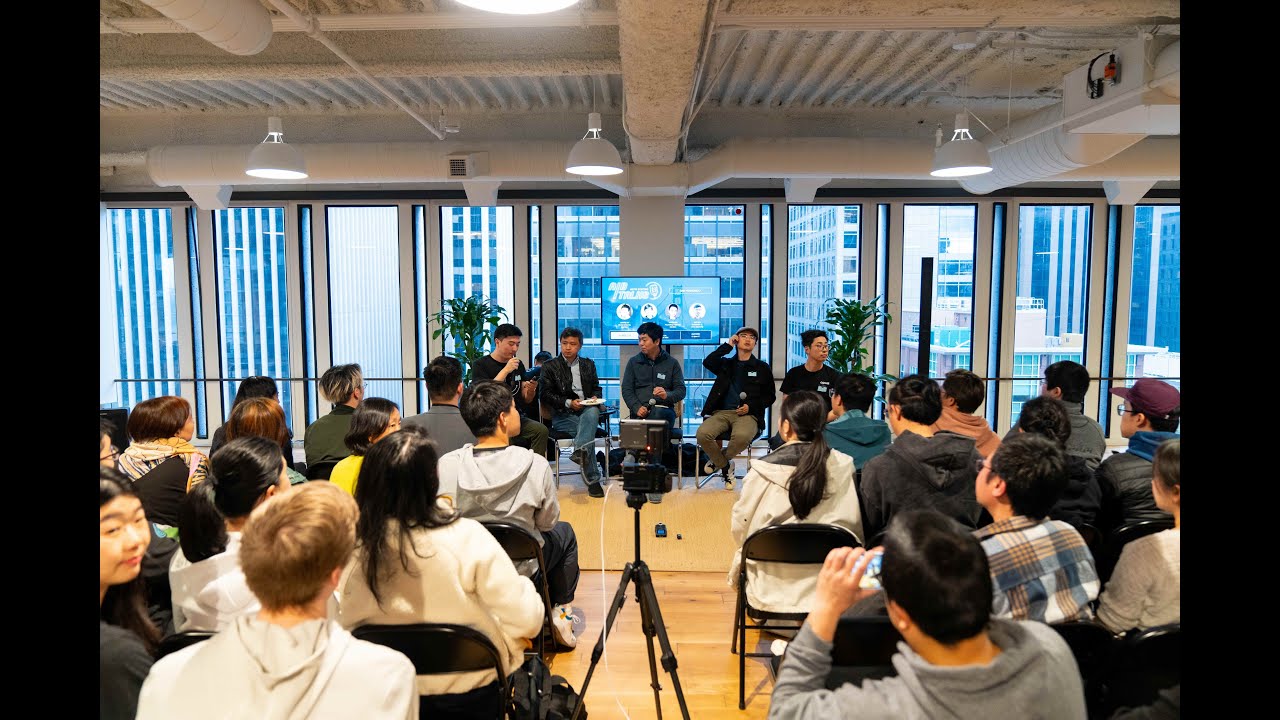
## Background 该视频由YouTube频道“课代表立正”于2026年4月21日发布,内容源自一场关于生成式AI产品开发的公开会员视频。根据页面简介,视频邀请了硅谷科技老兵徐老师(Howie Xu)、Lepton.ai创始人贾扬清、OpusClip联合创始人吴中杰(Jay)以及Martian创始工程师Jason Hu,共同探讨GenAI产品的成本、市场现状、面临的挑战及未来发展。
## TL;DR 本视频围绕生成式AI时代的产品开发展开了深度对谈。嘉宾们指出,GenAI产品正经历从传统软件的确定性API向“模糊输入与模糊输出”的范式转变,这使得质量控制(QA)和评估成为核心挑战。同时,讨论深入分析了AI软件高昂且呈线性的边际成本结构,分享了通过供应链思维、智能路由调度(如Martian)以及底层工程优化(如OpusClip)来降低算力开销的实用策略。此外,基于开源模型(如Llama 3)的崛起和边际收益递减规律,嘉宾们预测企业级AI市场将走向去中心化,而初创公司的长期护城河将依赖于深度的行业纵深数据与复合AI系统设计。
## Atmosphere & style 整个沙龙对谈洋溢着硅谷技术圈特有的极客活力与务实精神,气氛既专业硬核又轻松幽默。主持人与四位顶尖业内大咖就像老友深夜围炉促膝长谈,席间金句频出、充满欢声笑语,比如贾扬清调侃AI圈像“被宠坏的孩子”、嘉宾们用“五杯星巴克咖啡”或“草莓农场筛果子”等接地气的比喻来拆解高深的工程痛点。整场讨论在理性克制的技术思辨中穿插着创业者在算力重压下的真实焦虑与破局智慧,让听众能极其真切地感受到处于AI巨变风暴中心那种既兴奋又紧迫的真实律动。
## Key takeaways - [13:57](https://www.youtube.com/watch?v=Lt-lVe957hc&t=837s) 在生成式AI产品的开发中,核心产品基本功(如通过“任务模型”理解用户需求、卓越的设计与市场能力)依然保持不变,但其运营动态和协作模式发生了根本性改变,提示词工程使产品经理和运营团队得以深度参与模型调优。 - [17:58](https://www.youtube.com/watch?v=Lt-lVe957hc&t=1078s) 传统的软件开发注重精确性、可预测性和可复现性,而生成式AI产品由于底层黑盒模型的不可复现性,迫使开发者必须通过限制输入输出空间来提升其可预测性,并对传统的QA测试方法进行彻底重构。 - [23:23](https://www.youtube.com/watch?v=Lt-lVe957hc&t=1403s) 传统计算机科学将混乱的需求转化为高度结构化的固定API输出,而生成式AI则颠倒了这一范式,呈现出“模糊输入、模糊输出”的特征,促使行业积极构建JSON格式和原生函数调用等结构化护栏。 - [27:15](https://www.youtube.com/watch?v=Lt-lVe957hc&t=1635s) 相较于传统云服务随用户量增长带来的亚线性低成本,大语言模型的计算成本与调用量呈刚性线性正相关,迫使AI产品开发者必须对底层基础设施成本和边际成本保持极高敏感度。 - [29:15](https://www.youtube.com/watch?v=Lt-lVe957hc&t=1755s) 企业可以通过类似特斯拉的供应链优化策略来降低基础设施开销,如利用OpenAI的预留吞吐量协议、云服务器竞价实例(Spot Instances)以及重写底层渲染管线代码来实现高达60%至80%的算力节省。 - [33:05](https://www.youtube.com/watch?v=Lt-lVe957hc&t=1985s) Martian等创业公司通过类似供应链管理的方式,将零散、不可预测的零售API流量聚合成大宗、可预测的采购,并运用智能路由逻辑在入口处分流,把简单查询导向更便宜的模型,从而大幅削减成本。 - [38:22](https://www.youtube.com/watch?v=Lt-lVe957hc&t=2302s) 计算历史呈现出集中式与分布式交替的“钟摆效应”,当前生成式AI也面临同样的哲学思辩:是以Sam Altman为代表的插拔单一家大模型API的集中式生态,还是由于企业隐私数据合规需求催生的分布式本地边缘模型。 - [43:22](https://www.youtube.com/watch?v=Lt-lVe957hc&t=2602s) 与完全走向集中化的消费级大模型(如ChatGPT)不同,企业级(ToB)AI市场由于底层数据碎片化及各大巨头的激烈竞争,更趋向于高度去中心化,依赖定制化的内部模型和专业的基础设施工具。 - [45:52](https://www.youtube.com/watch?v=Lt-lVe957hc&t=2752s) 行业的最终格局由规模经济决定:早期互联网依靠用户行为点击反馈形成了谷歌在搜索领域的绝对垄断,但在AI领域,以Meta Llama 3为代表的开源权重的崛起,以及训练基座模型所面临的边际效益递减,打破了传统超巨头的垄断神话。 - [49:46](https://www.youtube.com/watch?v=Lt-lVe957hc&t=2986s) 真正的AGI必须结合本地上下文和特定行业知识才能发挥经济价值,正如UC伯克利和Databricks提出的“复合AI系统(Compound AI Systems)”所言,结合了Agent、思维链和外部应用的复杂系统设计比单纯堆砌基座模型 size 更重要。 - [01:02:29](https://www.youtube.com/watch?v=Lt-lVe957hc&t=3749s) 在企业落地生成式AI应用的过程中,评估(Evaluation)是首要且最难解决的核心挑战,因为对大模型的评估如同评估人类智力一样复杂,目前工具矩阵涵盖了从静态基准(MMLU、GSM8K)到动态的机器与人工混合评测体系。 - [01:05:09](https://www.youtube.com/watch?v=Lt-lVe957hc&t=3909s) 面对非确定性的模型输出,可以通过“用AI评估AI”的工业化流程解决:使用更廉价的模型批量生成海量候选结果,再利用另一套评估提示词进行多维度打分和筛选,实现大批量生产中的优胜劣汰。 - [01:08:25](https://www.youtube.com/watch?v=Lt-lVe957hc&t=4105s) 在分布式机器学习训练中,固定输入数据和固定权重仍会因为浮点数聚合累加等原因产生非确定性的数值偏差,解决该问题需要运用高性能计算(HPC)中的数值稳定性原则,建立安全的统计边界,而非一味追求学界执着的模型可解释性。
## Detailed walkthrough ### [07:06](https://www.youtube.com/watch?v=Lt-lVe957hc&t=426s) Welcome to AB Talk and Speaker Introductions
The event begins with a brief house-cleaning announcement from the host, welcoming everyone to "AB talk" during the Social Hour. The host explains that the event is sponsored by Stasik, a modern data platform for product development providing feature gates, experimentation, and analytics. Stasik hosts this event to learn from the community, especially given their role serving major AI players like OpenAI, Anthropic, and Character.AI. After introducing the event staff—Morgan the event manager, Jesse the head of recruiting, and Brock—the host transitions into honoring the guest speakers for the night with prepared introductions.
The speaker lineup covers individuals spanning AI product, middleware, and infrastructure. First is Ho, a Silicon Valley technology veteran who originally founded Wiw’s Network division, which has since grown into a multi-billion dollar revenue business. Ho has held executive positions, served as an entrepreneur in residence at Greylock Partners, and taught at Stanford and the Alchemist accelerator. He is also plugging his new YouTube channel, "Bite into Future," which will feature live streams from the New York Stock Exchange floor. Next is Yangqing, the founder and CEO of Leap AI (Lepton AI), who famously built a large language model-based search engine in less than a week using just 500 lines of code, sparking a "friendly conversation" on Twitter with the CEO of Perplexity. Yangqing's stellar background includes being a Vice President at Alibaba and Director of AI Infrastructure at Facebook, where he created Caffe, Caffe2, ONNX, and co-led the development of PyTorch. Yangqing takes a moment to advertise "Elmo Chat" (elmo.chat), a free Chrome extension built on the Lepton platform that summarizes web pages, videos, and PDFs.
The introduction continues with Jason, a founding engineer at Martian, which is a fast-growing LLM router adopted by developers at over 300 companies, including OpenAI and Amazon. Jason previously conducted research at the Chicago Human + AI Lab and ByteDance, and he leads a large Bay Area AI community called AIGents.co. Lastly, the host introduces Jay, the co-founder and CTO of Opus Clip. Jay's startup pivoted from streaming to AI video clipping in 2023, and in less than a year, it achieved an extraordinary milestone by reaching 15 million dollars in annual recurring revenue. The host admits to being a heavy paying user of Opus Clip, and Ho chimes in to reveal that he recently became a paying user too to support his new YouTube channel.
- Stasik provides essential tools like feature gates, experimentation, and analytics to companies like OpenAI, Anthropic, and Character.AI. - Ho's new YouTube channel is titled "Bite into Future" and will stream from the NYSE floor in two weeks. - Yangqing's open-source search engine was written in under 500 lines of code. - Martian's LLM router is utilized by over 300 companies. - Opus Clip reached $15 million in ARR (Annual Recurring Revenue) in less than a year after its June 2023 launch.
[13:57](https://www.youtube.com/watch?v=Lt-lVe957hc&t=837s) Is Building GenAI Products Fundamentally Different?
The panel kicks off with a core question directed at Jay regarding whether building generative AI products is fundamentally different from traditional software development. Jay points out that while many elements change, core product fundamentals remain the same. Builders must still deeply understand user needs through frameworks like "jobs to be done," and disciplines like design and marketing remain critical. He counters the misconception that AI apps just need a simple chat interface like ChatGPT, emphasizing that Opus Clip succeeded because they built a beautiful, easy-to-use product and leveraged relationships with influencers established during a previous, less successful venture.
However, Jay highlights massive shifts in operational dynamics. On the positive side, user tolerance is currently much higher; because the AI offers massive productivity leaps, customers are willing to overlook early bugs. The primary headache is managing the extreme cost of processing power. Jay notes that their initial infrastructure costs were five to ten times higher per unit of processing power delivered to the user, requiring rigorous engineering to bring costs down to reach cash-positive operations. Without this cost efficiency, startups risk simply "working for OpenAI." Furthermore, collaboration models have fundamentally shifted due to prompt engineering. Instead of relying solely on hardcore research engineers to train models, product managers and operation teams now actively write and tune prompts alongside AI engineers.
[17:58](https://www.youtube.com/watch?v=Lt-lVe957hc&t=1078s) The Enterprise Shift and the Challenge of QA
Ho takes the microphone to build on Jay's points, emphasizing that generative AI represents a radical departure from traditional software paradigms, particularly within the enterprise space. In conventional enterprise software, preciseness, correctness, predictability, and reproducibility are absolute requirements. Enterprise applications cannot afford to be wrong once in a million times, yet with GenAI applications, "there's no reproducibility." To mitigate this, developers must consciously limit the input and output spaces to make the underlying black-box models act more predictably than a standard raw API allows.
Quality assurance (QA) must also be completely reinvented. Traditional software QA relies on navigating a "happy path" and testing specific corner cases—such as zero, negative numbers, or infinitely large variables. If the code works for standard numbers, it likely works for others. In generative AI, however, simply altering a single character in a prompt can fundamentally disrupt the output for entirely unexpected reasons. Ho cites a December 2023 CNBC article titled "2023 is a year that Hefty profits for NVIDIA and lofty experiments for the rest," noting that this captured why so few enterprise GenAI apps are in production. While consumer software enjoys more leeway because there is often "no correct answer" for creative outputs like a video clip length, keeping users satisfied remains difficult because the underlying feedback loop is inherently fuzzy.
[23:23](https://www.youtube.com/watch?v=Lt-lVe957hc&t=1403s) Shifting from Logical APIs to Sloppy Inputs and Outputs
Yangqing rounds out the opening discussion by framing the generational shift through a mathematical lens. He explains that traditional computer science focused entirely on translating a user's abstract, messy needs into a highly structured, logical world controlled by pieces of code, JSON formatting, and rigid APIs. This old paradigm took a sloppy input and forced it into a perfectly fixed output so computers could predictably talk to each other.
With the emergence of ChatGPT and similar models, this framework has flipped completely. The AI behaves like a black box that yields a "sloppy random output," creating an entirely new challenge for developers trying to connect that unpredictable text back to a structured ecosystem like a database query. Consequently, a new wave of application design is appearing that is entirely native to this "sloppy input sloppy output kind of situation," driving product managers to invent completely new user experiences, chatbots, and search tools.
[25:04](https://www.youtube.com/watch?v=Lt-lVe957hc&t=1504s) From "Sloppy" Inputs to Fixed Logical Worlds
The speakers map out the evolving landscape of AI-driven computation, contrasting traditional deterministic systems with the fuzzy nature of Large Language Models (LLMs). The industry is currently working to integrate these new models into existing workflows by building a bridge from "sloppy inputs" to structured, predictable worlds. This push toward structural rigidity is evident in the rise of specialized tooling designed to place "handcuffs" or "shackles" on raw text outputs.
Technologies like JSON formatting and native function calling are highlighted as structural guardrails that defend the old model of deterministic computing while maximizing the utility of unpredictable inputs. This dual reality splits software into two distinct fronts: completely new applications built entirely on variable input-and-output pipelines enabled by Artificial General Intelligence Content (AIGC), and the peripheral tools being engineered to anchor these models firmly within current corporate pipelines.
- **Fuzzy vs. Deterministic:** The industry oscillates between absolute determinism (traditional code), semi-structured text computation frameworks like Stanford NLP's DSP project, and purely creative, high-entropy interactions like ChatGPT. - **Terminology Debate:** A speaker notes an earlier podcast conversation with a colleague named Jason where the phrase "fuzzy input, fuzzy output" was used, jokingly clarifying that while "sloppy input" is a popular descriptor, it is far from an official industry standard.
---
[27:15](https://www.youtube.com/watch?v=Lt-lVe957hc&t=1635s) The Reality of AI Marginal Costs and Network Effects
A sharp divergence emerges when comparing the underlying unit economics of AI software against traditional cloud or SaaS platforms. In traditional software engineering, scaling user traffic follows a sublinear cost function. A developer can purchase a single $100 server that incurs the exact same infrastructure overhead whether it serves 100, 1,000, or 10,000 users. LLM computation completely flips this paradigm on its head, scaling linearly with volume. Every single API call carries a concrete, unavoidable marginal cost—such as paying roughly 10 cents for a single GPT-4 query and 20 cents for two. This direct correlation makes application developers significantly more sensitive to infrastructure costs than they ever were with standard cloud utilities.
- **Data Moats and Network Effects:** Traditional platforms like Google or Facebook enjoy powerful network effects where user data directly feeds and improves recommendation engines. By contrast, building apps on top of third-party APIs makes it structurally difficult for developers to use proprietary data to improve the base model's intrinsic performance. - **Long-Term Enterprise Strategy:** The lack of built-in data flywheels forces application companies to deeply reconsider what their long-term competitive advantages and economic moats will actually be.
---
[29:15](https://www.youtube.com/watch?v=Lt-lVe957hc&t=1755s) Driving Down Infrastructure Overhead: The Tesla Model
To explain how infrastructure companies can bend the linear cost curve toward sublinear efficiency, a speaker introduces an analogy using Tesla's manufacturing trajectory. Tesla did not scale by immediately offering cheap vehicles; they proved the concept with the premium Model S priced well north of $100,000 before aggressively optimizing their supply chains and production techniques to unlock the mass-market Model 3. AI application development requires a similar financial strategy. Startups launch with high initial expense structures and minimal vendor leverage, operating at a temporary loss while projecting an eventual 80% reduction in overall operational costs through future engineering and bulk optimizations.
- **Commitment Discounts:** OpenAI offers "provisioned throughput" agreements where committing to a set token-per-minute volume over a one-to-three-month window yields price cuts ranging from 5% to 50%. - **Cloud Infrastructure Savings:** Moving away from standard on-demand cloud instances to heavily discounted spot instances or long-term compute commitment programs can slash traditional hosting costs by up to 70%, with an extra 20% squeezed out via strict cluster management. - **Custom Pipeline Optimization:** One speaker shares a concrete engineering win where hiring an audio-video "superstar" to rewrite massive legacy FFmpeg code saved between 60% to 80% of compute spent during their core rendering pipeline.
---
[33:05](https://www.youtube.com/watch?v=Lt-lVe957hc&t=1985s) Supply Chain Wisdom and Smart Routing Logic
The conversation pivots to a fundamental law of traditional supply chain management: predictability is always rewarded with lower pricing. In the early stages of the market, AI application traffic behaves like retail commerce—erratic, unpredictable, and expensive. Using a coffee shop analogy, a speaker explains that a casual customer walks into Starbucks and pays $5 for a single latte. If that same customer unexpectedly demands 100 lattes on the spot, the retail price remains $5, but the system strains under the sudden load. However, if an enterprise contracts with Starbucks to deliver exactly 100 lattes every single morning at 9:00 AM for a year, they secure steep commercial discounts and flawless delivery windows due to perfect predictability.
``` [ Raw User Prompt ] │ ▼ ┌────────────────────┐ │ Martian AI │ │ Classifier Router │ └──────────┬─────────┘ │ Is the problem hard or easy? │ ┌────────────────┴────────────────┐ ▼ ▼ 〔 Easy Prompt 〕 〔 Hard Prompt 〕 │ │ ▼ ▼ ┌──────────────────┐ ┌──────────────────┐ │ GPT-3.5 Turbo │ │ GPT-4 │ │ (Budget Friendly)│ │ (30x Costlier) │ └──────────────────┘ └──────────────────┘ ```
- **Aggregating Demand:** Startups like Martian act as traffic aggregators, consolidating erratic retail API traffic into massive, predictable bulk purchases to negotiate institutional discounts from foundational providers. - **The Medical Triage Analogy:** Algorithmic routing is compared to modern healthcare systems. A patient does not visit an incredibly expensive specialist for a minor ailment; they see a family doctor who handles initial analysis and routes them to a specialist only if necessary. - **Smart Routing Math:** Advanced routers analyze prompts at ingestion. For an educational app, roughly 90% of basic math queries are automatically deflected to cheaper models like GPT-3.5 Turbo, reserving the 30x more expensive GPT-4 exclusively for the 10% of highly complex problems, preserving user experience while cutting aggregate costs by 85%.
---
[38:22](https://www.youtube.com/watch?v=Lt-lVe957hc&t=2302s) The Centralization Pendulum and the Innovation Bottleneck
Reflecting on the last 60 years of computing history, the panel tracks a recurring "pendulum swing" between centralized and decentralized architectures. The industry began with centralized IBM mainframes, shifted to distributed client-server personal computers (PCs), and swung back to centralized computing via modern cloud giants like AWS, Azure, and GCP. When Bill Gates famously declared his vision in the 1970s to place a PC in every home, mainstream mainframe executives openly laughed at the idea. Today, the cycle is repeating within generative AI, manifesting as a fierce philosophical debate over model architecture and data ownership.
- **The Monolith View:** Founders like Sam Altman champion a highly centralized ecosystem, arguing that developers should simply plug into a single dominant API (like OpenAI), apply basic prompt engineering, and avoid the unnecessary complexity of training independent models. - **The Decentralized Counter-Argument:** Enterprise realities break the centralized model because strict privacy demands prevent companies from exporting sensitive proprietary data to external APIs, forcing the development of localized edge models. - **The Innovation Bottleneck:** Centralization collapses when dominant monopolies become bloated and stagnant. The rigid usability of late-stage mainframes triggered the explosion of personal computing innovation; similarly, the limitations of monolithic AI APIs will inevitably push computation back out to distributed models running on the edge.
[43:22](https://www.youtube.com/watch?v=Lt-lVe957hc&t=2602s) The Decentralized Future of Enterprise Search and AI
The speakers explore how information retrieval differs vastly between individual consumers and business environments. While consumer search is heavily centralized around Google, the business-to-business (ToB) world is "massively decentralized." In a typical corporate setting, workers utilize localized search functions embedded within specific platforms like Notion or Quip—even if the latter is jokingly referred to as "such an old thing" with sub-optimal search capabilities. Rather than relying on a single dominant player, enterprises depend on a fragmented ecosystem of internal search tools and back-end infrastructure providers like Elastic and MongoDB.
A similar dynamic is projected for the future of AI and chatbots. Consumers are generally "lazy" and prefer the convenience of a single, centralized option, leading to a massive convergence onto ChatGPT. Paying $20 a month—equated to the price of just five cups of Starbucks coffee—is a negligible cost for the average consumer. In contrast, the enterprise landscape is characterized by a fierce, ongoing competition between OpenAI's GPT-4, Anthropic's Claude, and Google's suite of solutions. This corporate market will likely become even more decentralized, populated by custom in-house models, unique applications, and niche providers. Just as the rise of web infrastructure paved the way for massive data companies like Snowflake, this decentralized AI landscape will require specialized foundational tools, a role that certain speakers actively aspire to fill.
- **ToC vs. ToB Dynamics:** Consumer AI trends toward centralization (ChatGPT), while corporate AI mirrors the decentralized nature of enterprise search. - **Economic Relativity:** The $20 monthly fee for ChatGPT is compared to five cups of Starbucks coffee to highlight consumer willingness to pay for convenience. - **Enterprise Competitors:** Major players actively fighting for market share include OpenAI (GPT-4), Anthropic (Claude), and Google.
[45:52](https://www.youtube.com/watch?v=Lt-lVe957hc&t=2752s) First Principles, Economies of Scale, and Why OpenAI Won't Monopolize the World
A new perspective is introduced based on first-principles thinking: the ultimate structure of any industry is dictated entirely by its economies of scale. In the consumer internet era, search engines and social media networks became extreme monopolies because their value directly scaled with user volume. For instance, an early team leader at Microsoft described the sheer desperation of trying to make Bing catch up to Google; despite working "7/24" and pouring massive resources into the project, they could not bridge the gap.
A technical explanation reveals that deep learning was only ever publicly cited by Google Brain as the third most important signal for ranking search results. The primary signal has always been human feedback—the collective data of billions of users clicking on links. Because Google controls over 90% of web traffic, its network effect creates an insurmountable advantage that has nothing to do with AI sophistication.
While there was widespread fear a year ago that OpenAI might capture "95% of world GDP" due to massive data and compute advantages, the emergence of highly efficient open-weights models like Meta's Llama 3 has proven otherwise. Internal benchmarking of Llama 3’s 8-billion-parameter model demonstrates that it easily outperforms much larger, older models while remaining remarkably efficient. Furthermore, training foundation models yields a "declining marginal return." Spending $2 billion to train a model does not make it two times smarter than one trained for $1 billion, breaking the traditional hyper-monopolistic economy of scale.
- **The Core Search Signal:** Human clicks and feedback—not AI—constitute the number one ranking signal for Google Search. - **Google Traffic Dominance:** Google occupies more than 90% of global web search traffic. - **Llama 3 Performance:** The 8B parameter model serves as a primary example of rapid architectural innovation occurring outside of OpenAI. - **Diminishing Returns:** Doubling compute budgets from $1 billion to $2 billion fails to yield a linear 2x increase in model intelligence.
[49:46](https://www.youtube.com/watch?v=Lt-lVe957hc&t=2986s) Context, Compound AI Systems, and Startup Moats
True Artificial General Intelligence (AGI) cannot be built in a vacuum because utility requires localized context and domain-specific knowledge. The world's smartest foundation model is compared to an "18-year-old genius college graduate like Einstein"—brilliant and fast to learn, but completely useless on day one at a company like Google or Martian without an intensive onboarding process to learn internal rules, data, and subtle interpersonal dynamics. Consequently, a vast decentralized network of third-party SaaS applications is required to transform general intelligence into economically useful domain intelligence. This aligns with a foundational paper on "compound AI systems" written by researchers at UC Berkeley and the co-founders of Databricks, which argues that the best real-world results come from complex systems utilizing agents, Chain-of-Thought prompting, and external applications wrapped around a model, rather than just the raw model itself.
From a startup perspective, founders are frequently pressured by venture capitalists regarding their "moat" and how they plan to avoid being crushed by tech giants. This fear was epitomized by the rapid decline of companies like Jasper after ChatGPT was released. The consensus is that deep, proprietary domain knowledge acts as a vital survival mechanism. For a video editing startup, understanding the nuanced art of how to "clip a good video" is a proprietary asset that cannot be easily scraped from the open internet. This data is refined through continuous user interaction and extensive AB testing, which buys startups valuable time to build deeper structural moats.
- **The "Einstein" Analogy:** A raw foundation model is like an 18-year-old Einstein—highly capable but lacking the organizational context to do specialized work immediately. - **Academic Framework:** The "Compound AI Systems" paper by UC Berkeley and Databricks authors posits that system design matters more than the underlying model size. - **The Jasper Cautionary Tale:** Jasper is cited as a prime example of an AI application startup losing its competitive edge when foundation model providers deploy native chat interfaces.
[53:07](https://www.youtube.com/watch?v=Lt-lVe957hc&t=3187s) Moving to Audience Q&A: Navigating the Information Noise
As the technical discussion runs over time, the moderator notes that they only covered two of their six pre-arranged questions, leaving topics like Total Addressable Market (TAM), proprietary data acquisition, and implementation tricks for future content. Before opening the floor, attendees are playfully urged to subscribe to the *Stasic* platform and buy *The Future BT*.
The first audience question shifts away from technical engineering, asking how average tech workers can effectively track and forecast the rapid velocity of AI developments without getting overwhelmed.
The speakers agree that the modern internet suffers from an incredibly low signal-to-noise ratio. While Google made accessing information effortless in the early 2000s, the modern web has made it difficult to filter out bad data. The panel challenges the conventional wisdom that reading more books is inherently better, suggesting instead that it is far more valuable to "read a good book three times rather than read three books." High-quality data curation matters just as much for human learning as it did for training Llama 3. The ultimate goal for educational content should be creating media that a person can listen to ten times while still extracting new insights.
- **Omitted Discussion Topics:** Total Addressable Market (TAM) of generative AI, proprietary data ownership, and practical engineering tricks. - **The Information Paradox:** The ease of acquiring information via the internet has paradoxically degraded the overall signal-to-noise ratio for general populations.
[57:43](https://www.youtube.com/watch?v=Lt-lVe957hc&t=3463s) Platform Biases and Implementing Generative AI in Business
To provide a practical framework for information gathering, the speakers break down how they leverage different digital platforms based on their native strengths, noting that "people and platform co-evolve." They also discuss how to filter through these distinct channels systematically:
| Platform | Primary Use Case | Inherent Bias / Style | |:--- |:--- |:--- | | **Twitter (X)** | Discovering cool technology & tracking industry drama | "Outrageous" content; Andrej Karpathy compared downloading a tweet to running an executable file that might contain malware. | | **Hacker News** | Hard technical deep-dives & nerdy community discussions | High-density technical discourse. | | **LinkedIn** | Identifying serious business opportunities | Highly polished, corporate "dressed up" presentations. | | **Podcasts** | Deep, long-form information collection | Nuanced and contextual conversations. |
The final segment introduces a second audience question focused on corporate deployment. The attendee describes a common enterprise scenario: a company has successfully built out a few high-potential generative AI proof-of-concepts (PoCs), but a significant gap remains before reaching true business monetization. As they attempt to build a horizontal team to scale these products, they seek guidance on the critical infrastructure and evaluation components required to successfully transition from traditional machine learning to large language model architecture. A product builder on the panel begins the response by clarifying that executing this transition successfully does not require a startup to own tens of thousands of GPUs or train massive models from scratch.
[01:01:17](https://www.youtube.com/watch?v=Lt-lVe957hc&t=3677s) Finding the Right Nails for Your AI Hammer
The discussion highlights the vital importance of understanding actual customer needs before building an AI product. Jay explains that for an AI product to be useful, creators must identify real pain points; otherwise, they are merely "trying to find a nail using a flashy new powerful Hammer" without making any true impact. For individuals with technical backgrounds, it is even more critical to cultivate a strong "product sense." He urges developers and engineers to study classic business frameworks by reading foundational literature to gain essential business knowledge. Ultimately, technology should serve as the means to build a "shiny new hammer," but the real challenge lies in discovering the unique opportunities and underserved customer problems that older, inferior tools have failed to address.
- **Recommended Reading:** *The Innovator's Dilemma* and *Jobs to Be Done*. - **Core Concept:** Technical creators must bridge the gap between engineering and business knowledge to effectively understand customers and find market opportunities.
[01:02:29](https://www.youtube.com/watch?v=Lt-lVe957hc&t=3749s) The Core Challenge of AI Evaluation
Building upon the product discussion, Shway introduces a practical perspective, asserting that evaluation is "the first and the foremost the most important thing" when developing generative AI use cases. Working alongside numerous application-side companies, Shway observes a widespread flaw: many organizations do not understand how to evaluate their generative AI systems, yet they immediately dive into implementing complex, fancy techniques. Evaluating Large Language Models (LLMs) is incredibly difficult because it mirrors the nuance of evaluating human intelligence. Without consistent, robust metrics, teams cannot reliably determine if their technical changes are genuinely improving or deteriorating performance from their initial starting point.
[01:03:33](https://www.youtube.com/watch?v=Lt-lVe957hc&t=3813s) Benchmarks and Frameworks from Static to Dynamic
When asked about specific evaluation vendors or tools, Shway describes evaluation as a very long pipeline where tools like Stastic serve as strong individual components. Because of the innate complexity of LLMs, there is no single answer. The landscape of evaluation spans a spectrum from highly static benchmarks to dynamic, adaptive frameworks. On the static end, benchmarks like MMLU utilize multiple-choice questions, which are straightforward and easy to score.
Moving toward more nuanced scenarios, benchmarks like GSM8K challenge LLMs with math problems. However, math solutions often present an entire reasoning process rather than a single, easily parsed number, requiring other humans or specialized AI systems to evaluate the steps. The ultimate complexity lies in evaluating general chatbots—like ChatGPT—which requires automated frameworks, human annotations, and machine-assisted checks to handle highly conversational outputs.
- **MMLU:** A static benchmark that uses multiple-choice questions for straightforward testing. - **GSM8K:** A math-oriented benchmark requiring evaluation of the entire reasoning chain rather than just a final numeric output. - **Martian's Evaluation Suite:** A comprehensive framework combining human annotation, machine-assisted annotation, and automated evaluation to grade complex chatbot interactions.
[01:05:09](https://www.youtube.com/watch?v=Lt-lVe957hc&t=3909s) Using AI to Evaluate AI: The Strawberry Farm Analogy
Jay shares firsthand experiences with managing fuzzy model outputs, explaining that his team successfully outpacing competitors in generating high-quality, engaging video clips is not due to "magical prompts." Instead, they deliberately use GPT-3.5—which Jay describes as a "pretty stupid model" but highly appealing because it is cheap and offers an approximate 95% discount compared to GPT-4. To find the best results, they generate at least four variations per attempt using different prompts, resulting in a pool of roughly 100 candidate clips for every video.
To filter this massive pool, they employ a separate set of evaluation prompts to score the clips across multiple dimensions. Jay compares this industrial process to working on a strawberry farm: when you harvest the produce, you sort the high-quality strawberries to sell to Safeway, throw away the bad ones, and send the mediocre yield to a lower-tier grocery store. Product creators should similarly make their systems try harder, generate high volumes, and then leverage AI grading to filter out the top 20% of the results.
- **Quality Dimensions Searched:** Hook intrigue, overall storytelling, presence of defects (e.g., sudden endings), and the detection of sponsor messages. - **The Visual Blind Spot:** Jay notes a caveat where leading models fail to catch blatant visual errors. He shares an anecdote from his Twitter account (@J_of_Opus) featuring an AI-generated image of a craftsman whose head and neck are clearly disconnected. When tested, GPT-4, Gemini, and Claude all insisted the image looked perfectly normal and error-free, proving that AI evaluation is helpful but cannot be 100% relied upon.
[01:08:25](https://www.youtube.com/watch?v=Lt-lVe957hc&t=4105s) The Non-Deterministic Reality of Distributed Training and AI
An audience member introduces a technical question regarding reliability and observability within distributed machine learning training systems, referencing research conducted alongside Amazon Web Services (AWS) developers. The question addresses a major friction point: when utilizing distributed training strategies like tensor parallelism or pipeline parallelism, a fixed input data set with fixed model weights can still produce vastly different, non-deterministic outputs. This numerical variance accumulates throughout the process, leaving developers frustrated and unable to efficiently locate system failures.
Shway responds enthusiastically, noting that this is not a new problem at all, but rather an issue known since the 1970s within high-performance computing (HPC) and scientific computation. He jokingly notes that the AI community behaves a bit like a "spoiled child" by ignoring established mathematical solutions. To fix it, engineers must actively implement numerical stability principles, such as auditing how float numbers are aggregated, to statistically measure stability. Furthermore, Shway dismisses the heavy academic obsession with model interpretability, using the example that humans cannot even explain what a cat looks like down to the exact pixel level.
> "AI is naturally just statistical. It's not like if you call a function, it has a defined API, a fixed input, a fixed output. No longer—this world has changed and we just need to accept it."
Ultimately, Shway emphasizes that because the era of AI is inherently statistical rather than deterministic, creators must stop expecting rigid input-output predictability. Instead, developers must accept this paradigm shift and focus on building robust security fences and statistical bounds to guarantee systems operate safely. The session concludes with warm closing remarks from the host, inviting attendees to utilize the room for networking before the venue closes.
## Notable quotes > [17:58](https://www.youtube.com/watch?v=Lt-lVe957hc&t=1078s) 2023 is a year that Hefty profits for NVIDIA and lofty experiments for the rest — Ho
> [23:23](https://www.youtube.com/watch?v=Lt-lVe957hc&t=1403s) sloppy input sloppy output kind of situation — Yangqing
> [53:42](https://www.youtube.com/watch?v=Lt-lVe957hc&t=3222s) read a good book three times rather than read three books
> [01:01:17](https://www.youtube.com/watch?v=Lt-lVe957hc&t=3677s) trying to find a nail using a flashy new powerful Hammer — Jay
> [01:08:25](https://www.youtube.com/watch?v=Lt-lVe957hc&t=4105s) AI is naturally just statistical. It's not like if you call a function, it has a defined API, a fixed input, a fixed output. No longer—this world has changed and we just need to accept it. — Shway
## Mentioned Howie Xu, Yangqing Jia, Zhongjie(Jay) Wu, Jason Hu, Stanford University, Alchemist, VMware, Lepton.ai, Alibaba, Facebook, Caffe, Caffe2, PyTorch, ONNX, Perplexity.ai, OpusClip, Airbnb, Linkedin, Martian, OpenAI, Amazon, Chicago Human+AI Lab, ByteDance, aligns.ai, AIGents.co, Stasik, Anthropic, Character.AI, CNBC, NVIDIA, Google, DSP, Tesla, Starbucks, IBM, AWS, Azure, GCP, Bill Gates, Sam Altman, Notion, Quip, Elastic, MongoDB, Claude, Snowflake, Bing, Google Brain, Meta, Llama 3, Einstein, UC Berkeley, Databricks, Jasper, Twitter, Hacker News, Andrej Karpathy, The Innovator's Dilemma, Jobs to Be Done, MMLU, GSM8K, Gemini, Safeway
[Source](https://www.youtube.com/watch?v=Lt-lVe957hc)