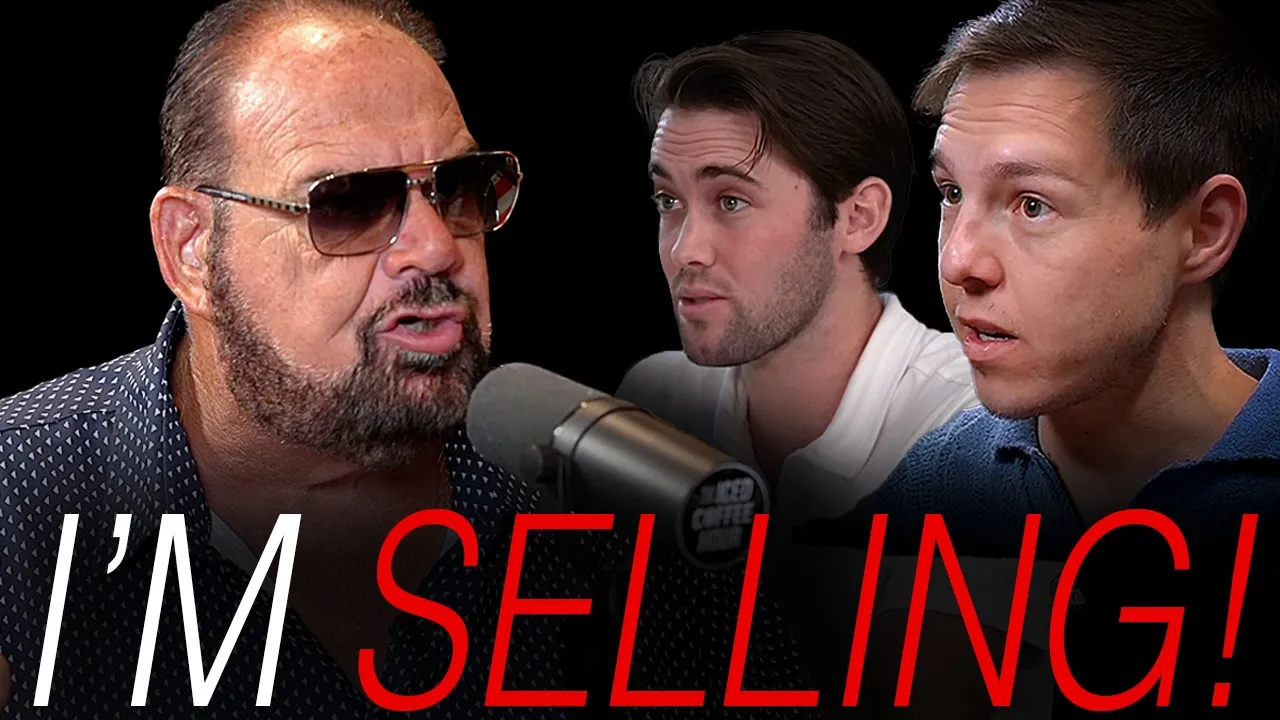
Ben Mallah Deploys $60 Million Into Distressed Commercial Assets
The Iced Coffee Hour
Real estate investor Ben Mallah avoids single-family homes and public equities to pile capital into tax-free municipal bonds and distressed commercial real estate while banks artificially delay loan write-downs.
Ben Mallah reports deploying a $60M–$70M capital pipeline into assets like a $22M Tesla showroom generating $1.3M annually, noting commercial loan distress is being artificially delayed as banks stall short sales to avoid balance-sheet write-downs. (0:57)
With mortgage rates hovering around 6.5% alongside elevated property taxes and insurance, Mallah warns that renting is currently financially superior to buying a single-family home, which he considers a personal lifestyle expense rather than an effective cash flow vehicle. (66:30)
For liquid capital preservation, Mallah prioritizes federally tax-free municipal bonds yielding roughly 5%, utilizing up to 90% margin borrowing power at favorable interest rates to maintain dry powder for distressed acquisitions. (111:53)
Underwriting mega-mansions requires substantial cash reserves: carrying a $30M estate with a $20M mortgage costs approximately $1.2M annually in debt service alone, requiring at least $3M in annual income, a $60M–$100M net worth, and hundreds of thousands in yearly operational costs. (37:20)
Detailed notes
## Background
This video was published on YouTube by The Iced Coffee Hour on August 2, 2026, hosted by Graham Stephan and Jack Selby. In the episode, titled "'Don't Buy A Home!' Ben Mallah's Final Warning For The 2026 Real Estate Market," real estate mogul Ben Mallah discusses deploying tens of millions in capital, navigating banking distress, why he advises against purchasing single-family homes for cash flow, and his approach to wealth preservation.
## TL;DR
Commercial real estate investor Ben Mallah joins hosts Graham Stephan and Jack Selby to unpack the state of the property market, detailing how high interest rates, lender delays, and distress have created substantial acquisition targets. Mallah explains why he favors large value-add multifamily and prime triple-net leased commercial assets over single-family rentals, which he argues fail to generate viable cash flow under current financing costs. He outlines his rigorous, lowball underwriting framework, the mechanics of managing contractors, and his reliance on tight institutional banking relationships. Transitioning toward multi-generational estate planning and capital preservation, Mallah reveals why he avoids the volatile public stock market in favor of tax-free municipal bonds to maintain liquidity and dry powder for distressed deals.
## Atmosphere & style
The conversation carries an energetic, street-smart, and candid tone driven by Ben Mallah’s no-nonsense New York demeanor, paired with the analytical curiosity of hosts Graham Stephan and Jack Selby. Mallah's pragmatic, battle-tested stories—ranging from sight-unseen multimillion-dollar offers to dissecting contractor markups—create a raw and entertaining masterclass in real-world dealmaking. The dynamic balances intense tactical discussions about commercial debt and underwriting with humorous, vulnerable reflections on lifestyle creep, personal health, and Graham's lingering frugality anxiety.
## Bulletin
- [00:57](https://www.youtube.com/watch?v=79KCekFymxQ&t=57s) Ben Mallah reports deploying a $60M–$70M capital pipeline into assets like a $22M Tesla showroom generating $1.3M annually, noting commercial loan distress is being artificially delayed as banks stall short sales to avoid balance-sheet write-downs.
- [01:06:30](https://www.youtube.com/watch?v=79KCekFymxQ&t=3990s) With mortgage rates hovering around 6.5% alongside elevated property taxes and insurance, Mallah warns that renting is currently financially superior to buying a single-family home, which he considers a personal lifestyle expense rather than an effective cash flow vehicle.
- [01:51:53](https://www.youtube.com/watch?v=79KCekFymxQ&t=6713s) For liquid capital preservation, Mallah prioritizes federally tax-free municipal bonds yielding roughly 5%, utilizing up to 90% margin borrowing power at favorable interest rates to maintain dry powder for distressed acquisitions.
- [37:20](https://www.youtube.com/watch?v=79KCekFymxQ&t=2240s) Underwriting mega-mansions requires substantial cash reserves: carrying a $30M estate with a $20M mortgage costs approximately $1.2M annually in debt service alone, requiring at least $3M in annual income, a $60M–$100M net worth, and hundreds of thousands in yearly operational costs.
## Key takeaways
- [00:57](https://www.youtube.com/watch?v=79KCekFymxQ&t=57s) Commercial banks are prolonging market distress by extending delinquent syndicator debt to avoid recognizing balance-sheet write-downs.
- [14:26](https://www.youtube.com/watch?v=79KCekFymxQ&t=866s) 1031 exchanges should not be executed blindly; paying capital gains taxes is preferable to acquiring overpriced or poorly structured deals simply to defer liabilities.
- [01:03:59](https://www.youtube.com/watch?v=79KCekFymxQ&t=3839s) Single-family homes lack the cash flow reliability needed for long-term hold investments and are better suited for fix-and-flip strategies.
- [01:03:59](https://www.youtube.com/watch?v=79KCekFymxQ&t=3839s) The 50% rule remains an essential baseline for multifamily underwriting, assuming half of gross rental revenue covers operations before servicing debt.
- [01:06:30](https://www.youtube.com/watch?v=79KCekFymxQ&t=3990s) Current economic realities—including ~6.5% mortgage rates, rising insurance premiums, and high property taxes—make renting far more financially advantageous than buying a primary residence.
- [01:10:17](https://www.youtube.com/watch?v=79KCekFymxQ&t=4217s) Prioritizing deep institutional banking relationships is essential for scaling investors, as integrated wealth management teams can advocate internally for commercial loan approvals.
- [49:06](https://www.youtube.com/watch?v=79KCekFymxQ&t=2946s) Self-managing commercial and residential assets significantly outperforms hiring third-party management companies that lack downside risk and operational discipline.
- [42:07](https://www.youtube.com/watch?v=79KCekFymxQ&t=2527s) Contractor quotes must be dissected into labor time, wholesale materials, overhead, and reasonable profit to prevent systematic overcharging.
- [33:40](https://www.youtube.com/watch?v=79KCekFymxQ&t=2020s) Sellers offering owner financing should be approached with caution, as it frequently signals an inability to secure traditional institutional financing or underlying property flaws.
- [31:03](https://www.youtube.com/watch?v=79KCekFymxQ&t=1863s) Aspiring real estate investors should prioritize acquiring fourplexes using residential FHA or VA financing rather than relying on house-hacking with roommates.
- [01:51:53](https://www.youtube.com/watch?v=79KCekFymxQ&t=6713s) Tax-free municipal bonds provide a stable liquid war chest, offering reliable passive yields and margin borrowing capabilities to execute quickly on distressed deals.
- [01:20:03](https://www.youtube.com/watch?v=79KCekFymxQ&t=4803s) College students interested in real estate should earn their sales license while in school to gain brokerage exposure and learn deal dynamics from the ground up.
## Detailed walkthrough
### [00:00](https://www.youtube.com/watch?v=79KCekFymxQ&t=0s) Intro: The Brutal Truth About Wealth and Real Estate
Ben Mallah opens with blunt reality checks about money, ambition, and the harsh mechanics of real estate investing. He insists that accumulating serious wealth requires an innate hunger that most people simply lack: “You got to have that burning desire inside of you.” Contrasting himself with social media commentators, he emphasizes that his views come straight from executing massive transactions on the ground—such as paying $43 million for a property.
When Jack Selby and Graham Stephan ask why banking sits at the absolute core of building wealth, Mallah points out the simple arithmetic of commercial deals: the average person does not have the personal capital to buy large real estate outright. In Mallah’s world, maintaining institutional lending access takes priority over everything else, famously joking, “Your banker comes before your wife.” He cautions viewers against buying single-family homes under the mistaken belief that they will reliably produce cash flow, calls into question why anyone would buy a Tesla dealership if they did not trust Elon Musk to make the rent payments—noting that $100,000 a month to Musk is equivalent to an ordinary person buying a soda—and shrugs off whether it has become easier or harder to become rich by declaring, “Well, don't worry, you know, the world needs dishwashers.”
[00:57](https://www.youtube.com/watch?v=79KCekFymxQ&t=57s) The $70 Million Allocation and Why the Banks Won't Budge
Graham Stephan presses Ben Mallah on the headline challenge: having roughly $70 million in capital that must be deployed into the market within a tight timeframe. Mallah explains that deploying massive capital quickly is easy if you are willing to make careless purchases, but extremely difficult if you intend to buy intelligently. He details his current pipeline—recently closing on a Tesla dealership, acquiring a private university, entering into contract on a brand-new gym, and overseeing his sons as they tackle separate, heavy-rehabilitation apartment projects. Mallah admits second-guessing his aggressive disposition of assets: “I mean, yeah, we sold quite a bit of real estate. Maybe I shouldn't have.” He explains that he sold on the assumption that the commercial property market was poised for a rapid valuation collapse, but the banking sector stepped in to artificially stall the decline.
```mermaid
flowchart TD
accTitle: The Commercial Debt and Distress Cycle
accDescr: Visualizing how low pandemic rates turned into distress and bank deadlock.
subgraph Acquisition ["2020-2023 Syndications"]
A["Low Rate Debt (approx. 3% Fixed)"] --> B["Syndicators Overpay for Portfolios"]
end
subgraph Maturity ["Maturity & Refinance"]
B --> C["5-Year Fixed Period Expires"]
C --> D["Rates Double to Market Levels"]
D --> E["Debt Service Surpasses Property Cash Flow"]
end
subgraph Paralysis ["Stalemate"]
E --> F["Borrowers Abandon Equity & Throw Keys"]
F --> G["Banks 'Pray and Delay' to Protect Balance Sheets"]
end
```
Mallah pulls no punches regarding the syndicators and operators who bought heavily between 2020 and 2023. These buyers utilized short-term debt, typically locking in around 3% for three to five years without securing long-term fixed financing. Now that those fixed periods are expiring, refinancing at double the previous interest rates destroys any positive cash flow. Because the income can no longer support the debt service, the underlying property values have plunged below the original loan balances:
- Inexperienced operators pooled outside money through syndicates, promising returns they cannot deliver now that floating rates have escalated.
- Lacking construction and operational know-how, these owners underbudgeted necessary capital expenditures.
- When properties began bleeding cash, operators handed them over to third-party management firms that held zero equity and had no incentive to turn them around.
- As a consequence, physical assets have deteriorated, leading to widespread structural and operational distress across thousands of apartment units.
Mallah argues that the banks are deep in an unsustainable strategy of “praying and delaying”—hoping for rate cuts rather than recognizing reality: “They're on the fence. They need to get off the fence and realize this loan is not worth what we loaned on it. But, they don't want to do that. They don't want to admit it.” If a bank marks down a bad loan or sanctions a short sale, that write-down immediately impairs the institution's balance sheet and knocks down its stock price. As a result, lenders stall, even as owners stop making payments, walk away from millions in unrecoverable equity, and leave properties to rot.
[06:07](https://www.youtube.com/watch?v=79KCekFymxQ&t=367s) Compounding Distress: Severe Storms, Vacancies, and the Short Sale Standoff
The distress across the market is not confined to debt math; physical catastrophes have accelerated the bleeding. Mallah observes that in Florida, recent hurricanes and severe storms devastated coastal and low-lying assets. Many owners either lacked flood insurance entirely or carried policies with inadequate coverage limits. Mallah notes he recently toured a red-tagged, completely shuttered 16-story building located only twenty minutes from his location, multiple oceanfront hotels forced to close by municipal authorities, and a 200-unit residential property sitting entirely vacant. Another owner approached him offering a self-storage facility in an office building that was limping along at just 20% occupancy.
Fixing these battered assets demands millions in immediate cash, meaning an incoming buyer must acquire them at an extremely discounted basis to justify the risk. While distressed owners are completely resigned to walking away, the lending institutions continue to balk at approving the required haircuts. Mallah outlines the only viable path forward:
“I'm getting a lot of deals where the sellers are cooperating. They're willing to walk. But now we have to go to the bank. We got to go to the bank and say, 'Listen, you got to do a short sale. You got to do a short sale or, you know, you got to get you got you got to take a loss. If you don't take a loss, you're going to be sitting here with a property that's going to keep deteriorating and there's no future except going down the toilet.'”
When asked how his thesis of an inevitable wave of foreclosures and bank write-offs could be wrong, Mallah dismisses any alternative outcome. The math dictates that an incoming investor cannot overpay for vacant, broken buildings that carry massive rehabilitation budgets: the purchase price must come down to establish a working cost basis.
Graham clarifies the exact amount Mallah currently needs to place under 1031 tax-deferred exchange rules. Mallah tallies his recent transactions: having just sold a Harley-Davidson dealership the day before, alongside closing on the private university and the Tesla dealership, his outstanding 1031 exchange liability sits closer to $60 million. Mallah concedes that had he known lenders would successfully drag their feet and delay market capitulation this long, he might have held onto his stabilized cash-flowing assets rather than selling out in anticipation of immediate distressed buying opportunities.
[09:25](https://www.youtube.com/watch?v=79KCekFymxQ&t=565s) Selling the Harley Dealership, Buying a Tesla Dealership
Ben Mallah explains the thought process behind offloading several high-profile commercial assets, including a newly built Harley-Davidson dealership, a Home Depot, and a BJ's Wholesale Club. While the Harley property was pristine with an excellent operator, Mallah concluded that the underlying demographic trends pointed toward long-term decline. In his view, Harleys cater predominantly to an aging demographic of men now in their 50s and 60s who will soon age out of riding, whereas younger generations and new money prefer fast sportbikes. Rather than hold through that transition, he opted to de-risk while the lease still had healthy term remaining, letting the next buyer take on the future. He applied the same logic to his Home Depot and BJ's locations, where the surrounding shopping corridors and malls were visibly deteriorating.
```mermaid
flowchart TD
accTitle: Ben Mallah Asset Rotation Strategy
accDescr: Diagram showing how Ben Mallah rotated out of legacy retail and Harley into a Tesla dealership using a 1031 exchange to defer capital gains tax.
subgraph Divestments["Assets Sold"]
A["Harley-Davidson Dealership<br>(Aging demographic, declining sales)"]
B["Home Depot & BJ's Wholesale<br>(Surrounding retail area declining)"]
end
subgraph CapitalAllocation["1031 Exchange Decision"]
C{"$22M Reinvestment Dilemma"}
D["Option 1: Pay Uncle Sam<br>~$4M in Capital Gains Tax"]
E["Option 2: Reinvest in Single-Tenant Retail<br>Tesla Dealership ($22M, ~6% Cap)"]
end
subgraph Outcome["Acquisition Mechanics"]
F["Debt: 80% LTV at ~5% Interest"]
G["Tenant: Tesla pays ~$100K/mo ($1.3M/yr)"]
H["Positive Spread: 100 bps on Debt + 6% on Equity"]
end
A --> C
B --> C
C -->|Avoid Tax| E
C -.->|Tax Cost| D
E --> F
E --> G
F --> H
```
In contrast, Mallah deployed capital into a brand-new Tesla dealership acquired for roughly $22 million on a cap rate just under 6%. When asked why he trusted the asset, he posed a simple question: “Would you trust Elon Musk to pay you rent?” The location, positioned strategically with the next closest Tesla showroom an hour away in Orlando, generates around $1.3 million a year—roughly $100,000 per month. Graham Stephan and Jack Selby joke that $100,000 is pocket change to Musk, akin to buying a soda. Beyond the current cash flow, Mallah views Tesla as the vanguard of autonomous vehicles, cutting-edge tech, and broader ecosystem ties to SpaceX. Moreover, by rolling his funds through a 1031 exchange into the $22 million purchase, Mallah directly avoided cutting a roughly $4 million tax check to Uncle Sam.
- **Dealership purchase price:** Approximately $22 million.
- **Tesla lease revenue:** Roughly $1.3 million per year (~$100,000/month).
- **Dealership cap rate:** Hair under 6%.
- **Distance to nearest competitor showroom:** 1 hour away (Orlando).
- **Tax liability avoided via 1031 exchange:** Approximately $4 million.
A brief programmatic sponsorship break for Northwest Registered Agent, highlighting how they streamline business formation for $39 plus state fees, providing registered agent services, operating agreements, corporate resolutions, and privacy protection by keeping personal home addresses off the public record.
[14:26](https://www.youtube.com/watch?v=79KCekFymxQ&t=866s) When It Makes Sense to Just Pay the Tax
Mallah addresses whether it ever makes financial sense to skip a 1031 exchange and simply swallow the tax hit. He admits that if a market offers no compelling buys, or if an investor is deliberately downsizing to prepare an estate for heirs who prefer simpler asset classes like multifamily, paying the tax can be justified. However, experiencing the reality of that decision left a bitter taste. The prior April, Mallah flirted with retirement and sold off non-core commercial assets with no intention of buying replacements, aiming to travel and enjoy life. When his CPA delivered the final tax bill, he had to write an IRS check of nearly $10 million.
The experience reaffirmed his commitment to avoid writing such checks whenever possible, though he emphasizes that avoiding taxes should never coerce someone into acquiring a bad investment. “I'm not going to buy a deal just based on the tax savings,” Mallah states, noting that buying the wrong property can easily wipe out more money than the tax bill would have cost. When Graham jokes that at least the tax dollars go toward a good cause, Mallah sarcastically quips, “Absolutely. We're building a new wing on the White House.”
At this stage in his career, his focus has shifted toward setting up his sons and managing his wealth cleanly. While in the past he hunted for 8% to 10% cap rates, he is satisfied taking a 6% cap on prime credit assets like Tesla because his institutional borrowing power enables him to secure financing around 5%. By putting down 20% on an 80% loan-to-value structure, he captures a 100-basis-point spread on bank money while earning 6% on his equity. His ability to borrow at 5% stems entirely from his pristine 30-year track record and deep banking relationships; because he presents zero default risk and houses major liquidity across lenders' commercial and brokerage arms, banks view lending to him as a privilege rather than a gamble.
- **Tax payment in previous tax cycle:** Just under $10 million paid out of pocket.
- **Typical financing structure:** 80% LTV conventional loans or lines of credit at approximately 5% interest.
[17:48](https://www.youtube.com/watch?v=79KCekFymxQ&t=1068s) A $10 Million Offer Sight Unseen
Jack points out that right before walking into the studio, Mallah demonstrated his encyclopedic market knowledge in real time. A broker had called him about a distressed seller with a troubled asset. Without reviewing a single marketing flyer, photograph, or financial package, Mallah simply asked which side of the street the building sat on. Upon hearing it was on the south side, he instantly groaned in recognition, weighed the deferred maintenance, and barked into the phone: “Tell him I'll give him 10 million bucks.”
Mallah explains that after twenty years operating in the exact same geographic pocket, he already knows the physical inventory, the pitfalls of the location, and what it costs to renovate the property. He also points out the sheer recklessness of the debt previously placed on the building, noting that the seller’s lender had foolishly issued a $30 million loan on an asset Mallah values at a third of that amount. Even with his rapid-fire offer, Mallah notes that an acquisition contract always leaves room to conduct physical inspections before fully committing to closing.
[18:39](https://www.youtube.com/watch?v=79KCekFymxQ&t=1119s) Experience, Aging Out of the Thrill, and the Small Deals
Ben Mallah explains his dealmaking process: getting an accepted offer is merely the first step. He will still travel to the site, put boots on the ground, inspect the real estate, and calculate every single risk. He protects himself on the downside by putting in a low offer that makes financial sense—often estimating that the underlying land value alone is worth roughly $30,000 per unit door. When asked whether he feels sharper or more knowledgeable about real estate today than he was a decade or two ago, Ben confirms that his experience makes him smarter, but confesses that aging has changed his psychological appetite. “I'm sharper now or smarter now cuz of the experience, but I'm older, so I don't have the drive I used to have,” Ben admits, adding that after more than 35 years in the game, he no longer gets an adrenaline rush from buying property. Instead, his children have inherited that hunger, and he takes pride in financing, finding, and structuring the transactions before handing them over to be operated.
When pressed on his best deals of the past year, Ben notes that he has not chased massive home runs recently, though he has flipped properties with $10 million upsides. Instead, he has focused on smaller, high-yield opportunities, including a 70-something-unit senior affordable housing project currently listed for sale, which he expects will double his capital. His broader portfolio remains spread across hotels, resales, and multi-family units without relying on a single blockbuster win.
- Underwrites multi-family land value as a floor (e.g., $30,000 per door in raw dirt).
- Over 35 years of operating experience in commercial real estate.
- Current active flip: A senior affordable housing complex of approximately 70 units expected to yield a 100% return on equity.
- Recent portfolio activity includes transactions with roughly $10 million in upside.
---
[20:32](https://www.youtube.com/watch?v=79KCekFymxQ&t=1232s) Consulting for Pennies on the Dollar
Addressing beginners who hesitate to purchase property because they feel they lack expertise, Ben advises them to book a consultation at benmallah.com. When Graham Stephan and Jack Selby question why his consulting rate is so inexpensive compared to his net worth—about $350 for a 15-minute slot—Ben emphasizes that he does not do it for revenue. While the fee covers the administrative time and costs incurred by the team managing his bookings and channel, Ben views mentoring as a personal calling. He regularly takes calls from wildly different demographics, ranging from an entrepreneur who recently exited a company for half a billion dollars down to first-time buyers trying to scrape together their very first transaction.
Ben admits that working with the smaller buyers gives him far greater satisfaction than talking to ultra-wealthy clients. He walks them step-by-step through their personal finances, asking whether they have explored FHA financing, looking at their credit scores, household income, and familial situation. He places himself in their shoes to formulate a concrete strategy, noting that helping everyday people build a real estate foundation leads directly to life-changing results.
“I can know somebody's whole life story in 15 minutes. And all I do is I tell them—I put myself in their shoes, and I tell them, 'What would I do if I was in your shoes?'” Ben says. He draws a sharp contrast between himself and traditional entertainers, athletes, or actors: while society needs entertainment, he finds meaning in having people call him back years later to report that his blueprint altered their family's trajectory.
---
[23:00](https://www.youtube.com/watch?v=79KCekFymxQ&t=1380s) Real Estate Retirement and Diversification
Reflecting on their prior podcast conversations about retirement, Jack asks Ben if he intends to step away from real estate entirely. Ben firmly rejects the concept of a total exit, clarifying that as long as his mind functions, he will be fielding calls from his children, advising on capital allocations, and making executive decisions from his boat or abroad. For Ben, true retirement is transitioning from daily operations into advisory oversight while retaining portfolio ownership.
```mermaid
flowchart TD
accTitle: Mallah Family Real Estate Portfolio Structure
accDescr: High-level overview of Ben Mallah's portfolio diversification and operational roles between family members.
subgraph Capital ["Capital Strategy"]
D["Portfolio Diversification"]
D --> ST["Stability & Income"]
D --> VA["Value-Add Growth"]
end
subgraph Assets ["Holdings"]
ST --> TNN["Triple-Net Leases<br>(Tesla Dealership)"]
VA --> MF1["$43M Multi-Family Rebuild<br>(Hands-On Operations)"]
VA --> MF2["Tallahassee Student Housing<br>(Campus Rehab)"]
end
Ben pushes back against committing to only one asset class, emphasizing that longevity requires balancing triple-net, hands-off assets with heavy-lift, value-add projects. “In my position, you have to be diversified. You can't just focus in on one type of assets. You know, you've got to be diversified so that gives you stability,” Ben notes, poking fun at Graham's personal living arrangement of having multiple roommates and house hackers in his residence. While Ben holds passive, low-maintenance properties like the newly acquired Tesla dealership, the family simultaneously executes aggressive value-add projects:
- **The $43 Million Apartment Deal:** Ben's son Ben Jr. partnered on a massive apartment complex requiring heavy construction. Rather than supervising remotely or hiring a third-party management firm, Ben Jr. temporarily moved his family out of his million-dollar home to live inside a unit in the building. He handles day-to-day maintenance tickets, rent collections, leasing, and the reconstruction of 50 shell apartments from scratch to eliminate a four-hour daily round-trip commute.
- **Tallahassee Student Housing:** Ben's other son is on the ground directly adjacent to the university campus, executing a hands-on rehabilitation of a multi-family property in which he holds an equity stake.
---
[26:29](https://www.youtube.com/watch?v=79KCekFymxQ&t=1589s) Bringing Corporate Rigor to Street Knowledge
While Ben's sons excel at hands-on construction, tenant management, and street-level problem-solving, Ben identifies a missing link in their organizational hierarchy: high-level financial engineering. He discusses his plan to hire a sharp operator in his late twenties who was trained in corporate real estate in New York City. Ben explains that the family business needs an institutional layer to handle complex financial modeling.
When Jack jokes that the analyst is probably just using the AI tool Claude to do the math, Ben explains that he values human domain expertise. The candidate can build advanced financial models, assemble spreadsheets, and execute complex return projections in two hours that would otherwise take Ben days to formulate manually. Above all, Ben values the ability to have rigorous, high-level discussions about tax basis, capital returns, and debt leverage—marrying institutional finance with the family's boots-on-the-ground execution.
[27:46](https://www.youtube.com/watch?v=79KCekFymxQ&t=1666s) AI Reality and Sponsor Break: Even Realities and ZipRecruiter
The conversation briefly touches on AI models like Claude, with Ben Mallah pointing out that despite being smart, it is artificial rather than reality. Jack Selby attempts to ask whether managing a single massive deal requires a fundamentally different skill set than handling bank relationships across a massive multi-hundred-million-dollar portfolio, before Graham Stephan interrupts to showcase his smart glasses.
Graham demos the Even G2 smart glasses by Even Realities, explaining that he is actively reading the podcast ad script directly through the heads-up display without holding anything. He highlights that the glasses look like standard premium designer frames, lack any visible cameras so they can be worn comfortably anywhere (even into restrooms), and feature real-time live copilot prompts and instant translation. He shares an anecdote about testing them while listening to a Japanese podcast and being able to follow along seamlessly, imagining a future where traveling abroad involves simply handing a second pair to a local to converse across languages. Following this, Graham shares a personal travel story from flying to Japan the previous October, where helpful flight attendants relocated him and his friends to the front of the plane and notified connecting gates so they could sprint through the airport to catch their flight. He connects this proactive effort to how employers find standout candidates on ZipRecruiter using their matching technology and candidate prioritization features.
[31:03](https://www.youtube.com/watch?v=79KCekFymxQ&t=1863s) Big Deals vs. Portfolios, Starting with a Fourplex, and Running Your Own Real Estate
Returning to Jack's question regarding whether managing a massive single deal differs fundamentally from juggling a half-billion-dollar portfolio, Ben simplifies the entire premise down to basic math and bookkeeping: “Zeros. It's all about money in, money out.” While larger commercial assets bring additional expense lines, complex income streams, and larger stakes, the core discipline remains identical. For anyone entering the space, Ben adamantly advises against relying on third parties early on: “If you want to buy real estate, you want to own real estate, I highly recommend you run it yourself. Get your hands dirty. That's the best experience you will ever get.”
He specifically targets popular beginner trends like house hacking, expressing distaste for living with roommates: “If you wanted to go out tomorrow and stop being a house hacker where all these strangers walk around in their underwear every morning in your house, go out, buy yourself a fourplex.” To Ben, a fourplex is the ideal entry vehicle because four distinct rental checks provide solid, dependable cash flow if acquired correctly. Managing it yourself is straightforward: you collect the rent, dispatch a handyman when repairs arise, and cover minimal recurring overhead—the property tax bill, hazard insurance, and the mortgage.
Graham admits he grew burned out by active landlord duties, noting that he prefers waking up without constant tenant issues and recently sold two of his Los Angeles multifamily properties to free up mental bandwidth. Ben playfully chides Graham's desire for an easy California lifestyle, but acknowledges that selling was a mature portfolio management choice for Graham since he lives out of state and made an educated calculation on the numbers versus the tax consequences. In contrast, Ben emphasizes that a seasoned investor evaluates whether a property is an unnecessary headache, whether the numbers justify keeping, refinancing, or selling it, and leverages staff to execute. However, for beginners, getting your hands dirty and doing the actual work yourself is non-negotiable because it determines whether you truly have the stomach to scale.
[33:40](https://www.youtube.com/watch?v=79KCekFymxQ&t=2020s) Inside the $31 Million Mansion and the Trap of Seller Financing
The discussion shifts to Ben's palatial 20,000-square-foot estate situated in a private beach community in Florida. Ben explains that he originally listed the home for $35 million before trimming the asking price to $31 million. He breaks down the valuation based on underlying land and soaring construction costs:
```mermaid
flowchart TD
accTitle: Mansion Valuation Breakdown
accDescr: Flowchart illustrating the replacement cost calculation for Ben Mallah's waterfront mansion.
subgraph LandValue ["Land Assessment"]
A["Single lot on private beach<br/>$8M - $10M (tear-down)"]
B["Estate parcel land value<br/>$20M - $24M"]
A --> B
end
subgraph BuildCost ["Replacement Costs"]
C["High-end finishes, bowling alley,<br/>lazy river, contractors bills"]
D["Minimum construction spend<br/>$25M + 4 to 5 year build time"]
C --> D
end
subgraph Combined ["Total Market Replacement"]
B --> E["Total Replacement Value<br/>$45M+"]
D --> E
E --> F["Current Asking Price<br/>$31M (Discount to build)"]
end
```
Despite having roughly half a dozen private showings with thoroughly pre-qualified wealthy buyers, Ben has not received an offer he would entertain. He notes that the buyer pool at this elite price point locally is razor-thin, whereas the exact same mansion located in prime South Florida would readily command $100 million. Many prospective buyers present unconventional structures or ask for owner financing, which Ben flatly rejects: “I always say to myself, when people offer seller financing, beware. There's a reason why.” If a buyer cannot get underwritten by an institutional lender, Ben sees no reason why he should take on that counterparty risk himself. If the mansion fails to sell, he is completely content holding onto it. Graham observes that Ben is in an enviable debt position, having locked in an interest-only mortgage on the home at roughly 2% to 2.5% fixed for 15 years, with about 9 years still remaining on the term, meaning Ben could theoretically arbitrage the spread by seller financing at 3.5% or 4% if he chose to.
- **Current Asking Price:** Reduced from $35 million down to $31 million.
- **Land Value:** Valued between $20 million and $24 million based on neighboring tear-down lots selling for $8 million to $10 million.
- **Replacement Cost:** Upwards of $25 million to replicate (featuring commercial-grade amenities including bowling alleys and lazy rivers), with an estimated 4-to-5-year construction timeline.
- **Financing on the Mansion:** 15-year fixed loan, interest-only, at approximately 2% to 2.5%, with roughly 9 years remaining on the term.
[36:37](https://www.youtube.com/watch?v=79KCekFymxQ&t=2197s) Why Ben Refuses to Be the Bank
The conversation turns to seller financing and acting as a lender, an idea Ben Mallah immediately rejects. When asked why he would not hold paper or lend money across a multi-year term, Ben makes his position unequivocal:
> “Listen, I don't want to be the bank. I don't like loaning people money. That's not what I do.”
Jack points out that in some debt structures, an investor is essentially playing with the bank’s capital, and if the borrower defaults, the lender simply forecloses and reclaims the real estate. Ben despises that mindset. He explains that he has zero interest in chasing people down, initiating foreclosures, or dragging himself into hostile conflicts. He takes on massive amounts of debt himself because it allows him to generate returns using institutional capital while spreading his own liquidity across more acquisitions, but he insists on staying exclusively on the borrowing side. Because he pays every bill on time, nobody comes after him, and he refuses to invert that dynamic by turning into a debt collector.
---
[37:20](https://www.youtube.com/watch?v=79KCekFymxQ&t=2240s) The True Financial Requirements for an Ultra-Luxury Mansion
Jack asks how much money a buyer realistically needs to purchase a $30 million estate like Ben’s. Ben breaks down the underwriting reality: a buyer seeking a jumbo loan on a $30 million asset would need to put down at least 25%, translating to roughly $7.5 million to $8 million in cash upfront before accounting for transaction fees, property taxes, and insurance. On a hypothetical $20 million mortgage at a 6% interest rate, the debt service alone amounts to $1.2 million per year, or $100,000 a month. Applying standard banking guidelines where housing costs should not exceed roughly one-third of gross income, a borrower would need to document over $3 million in annual income just to qualify for the note.
```mermaid
flowchart TD
accTitle: Underwriting Math for a 30 Million Dollar Mansion
accDescr: Step by step breakdown of down payment debt service and income requirements for a 30 million dollar home purchase
subgraph CapitalDown["Upfront Equity"]
A["$30 Million Purchase Price"] --> B["25% Jumbo Down Payment<br/>($7.5M - $8M Cash)"]
end
subgraph DebtService["Financing Costs"]
B --> C["$20M Mortgage Balance<br/>@ ~6% Interest Rate"]
C --> D["Annual Debt Service:<br/>$1.2M / Year ($100k / Month)"]
end
subgraph Qualification["Borrower Profile"]
D --> E["3x Debt-to-Income Rule"]
E --> F["Required Annual Income:<br/>Minimum $3M+ / Year"]
F --> G["Required Net Worth:<br/>$60M - $100M+"]
end
```
The hosts question whether high-net-worth buyers actually adhere to standard debt-to-income ratios, noting that once home prices cross the $15 million mark, buyers often structure their wealth entirely differently. Jack suggests that someone would need roughly $100 million in net worth to justify a $30 million residence. While Ben notes that a bank will lend to anyone with verified, durable income capable of servicing the note, he concedes the practical reality of who actually buys these trophy assets:
> “It's got to be somebody worth probably like you said 60, 70, 80, or 100 million.”
When asked about the benchmark for a $10 million home, Ben estimates that a buyer should have a absolute floor net worth of $20 million, though he stresses that balance sheet net worth alone is meaningless without strong, recurring cash flow:
- A $20 million mortgage at 6% requires $1,200,000 per year ($100,000 monthly) in pure principal and interest.
- Purchasing a $10 million home at a $20 million net worth is only viable if underlying investment yields and personal earnings comfortably support the ongoing carrying costs.
- Following a brief warning from Graham about Ben hitting the table and disturbing the microphone audio, Ben jokes about hitting Jack instead, then steps away for a quick cigarette break, reminiscing about his recent trip to Scotland.
---
[40:21](https://www.youtube.com/watch?v=79KCekFymxQ&t=2421s) Running Costs, Turf Lawns, and the Crestron System
Ben details what it actually takes to maintain a 20,000-square-foot mega-mansion on a daily basis. The primary operational requirement is domestic labor. Ben has employed two full-time housekeepers for more than two decades, noting that a home of this scale cannot function without staff cleaning bathrooms, changing linens, handling endless laundry, and inspecting every room daily, an expense that quickly approaches $100,000 per year. To control recurring maintenance, Ben eliminated his turfgrass entirely, replacing the lawns with artificial turf to drive routine landscaping costs to virtually zero. Aside from annual tree-trimming bills running a few thousand dollars, groundskeeping is handled informally by his commercial property crews.
Fixed carrying costs remain steep regardless of operational efficiency:
- **Property Taxes:** Approximately $250,000 a quarter million dollars every single year.
- **Homeowners Insurance:** Between $25,000 and $40,000 annually, keeping coverage relatively lean compared to what typical luxury homeowners carry.
- **Smart-Home Technology:** The residence is fully automated on a Crestron computer system, which Ben highlights as an example of vendor gouging, pointing out that tech contractors attempt to bill a $100 minimum charge just to pick up the phone and answer a simple troubleshooting question.
---
[42:07](https://www.youtube.com/watch?v=79KCekFymxQ&t=2527s) Deconstructing Contractor Quotes: The LA Fitness Roof Project
Ben warns that living in a wealthy neighborhood or owning a prominent property inevitably causes tradespeople to inflate their bids. To avoid getting exploited, owners must understand baseline industry labor and material costs. Ben evaluates every quote through a strict, transparent breakdown:
> “Basically, whenever I hire anybody in any aspect, I think about time, how long it takes to do the job, materials, overhead and profit.”
```mermaid
flowchart LR
accTitle: Ben Mallahs Contractor Cost Formula
accDescr: The four core components Ben uses to calculate fair repair prices
A["Estimated Time<br/>(Hours / Days)"] --> E["Fair Market Bid"]
B["Wholesale Materials<br/>(Raw Cost)"] --> E
C["Legitimate Overhead<br/>(Equipment Rental)"] --> E
D["Reasonable Profit Margin<br/>(Contractor Spread)"] --> E
```
When Jack observes that homeowners are often terrified to interrogate contractors on their actual expenses and markups, Ben counters that a refusal to break down pricing is an immediate red flag:
> “Listen, if a contractor is not willing to be transparent with you, nine times out of 10 he's ripping you off.”
Ben illustrates this with a recent commercial repair involving an ornamental metal crown sitting atop an LA Fitness building down the street from his house. When the vendor presented an exorbitant paint estimate, Ben refused to accept the blanket number and walked through the math on the phone:
- **Equipment Overhead:** The contractor claimed he required an aerial lift for two days. Ben verified the local rental rates, pricing the drop-off, pick-up, and two-day rental at roughly $1,000.
- **Materials:** Identifying the specific industrial coating required to prevent metal corrosion and prep the surface properly.
- **Labor:** Calculating that the job called for two skilled commercial painters across two full working days at roughly $300 per day per worker ($1,200 total), which Ben generously rounded up to $1,500 to ensure fair contractor compensation while eliminating unjustified markups.
[45:27](https://www.youtube.com/watch?v=79KCekFymxQ&t=2727s) The $40,000 Rolls-Royce Repair He Did for $4,000
Ben breaks down how he audits contractor invoices to avoid being overcharged, walking through a specific repair example: $1,500 for labor, $1,000 for a lift rental, and $200 to $300 for paint, which brings the direct cost to around $2,000. Factoring in a fair 20% contractor profit margin ($500), the entire job should cost $2,500. Yet the contractor initially quoted him $5,000, and after Ben itemized the real expenses line by line, they settled at $3,000. He points out that information asymmetry no longer exists because pricing for materials and parts is publicly available online. While he admits you cannot negotiate with airplane mechanics and must be extremely careful around boats, he applies this aggressive price scrutiny to automobiles and construction projects alike.
To illustrate, Ben recounts a story about his late real estate partner, Vincent, who raised him in the business and willed his black Rolls-Royce to Ben's son. When the car began experiencing issues with its turbo injectors, his son took it to the dealership and received a staggering $40,000 estimate. Unwilling to pay retail, Ben contacted an auto-dealer friend in Orlando who put him in touch with a former dealership mechanic running an independent repair shop. They shipped the car on a flatbed to Orlando, where the mechanic rebuilt the parts instead of replacing them wholesale, cutting the final bill to just $4,000. After the repair, Ben traded his own Bentley to his son in exchange for the Rolls-Royce and immediately sold it off to avoid future maintenance nightmares.
“Before you part with a penny, do your homework. Make sure you're not getting ripped off,” Ben warns, emphasizing that spending money wisely is non-negotiable across every industry. Within his own companies, he enforces a strict rule requiring at least three competitive bids on any substantial capital outlay, such as a pending $1 million air conditioning project across a university property he recently acquired. When Jack asks how an investor protects against contractors lowballing a bid only to inflate the cost midway, Ben points to ironclad, written contracts: once signed, a contractor is legally bound to their quoted figure for labor and materials, and prices can only climb if the owner initiates formal change orders.
- **Sample paint job cost audit:** $1,500 (labor) + $1,000 (lift) + $300 (paint) + $500 (20% margin) = $2,500 estimated true cost; quoted $5,000; negotiated settlement $3,000.
- **Rolls-Royce repair arbitrage:** Dealership quote was $40,000; independent mechanic rebuild in Orlando cost $4,000.
- **Corporate standard:** Minimum of three bids required for commercial jobs; his son gathered seven independent contractor bids on a single construction project.
- **Contract protection:** Fixed-price written agreements protect owners against mid-project material and labor surges unless the owner requests scope changes.
---
[49:06](https://www.youtube.com/watch?v=79KCekFymxQ&t=2946s) Best Sectors Right Now, and Why Owners Beat Management Companies
Turning to the current state of commercial real estate, Ben describes the market as being in a "weird zone" where success hinges almost entirely on acquisition discipline. He stresses that making money in real estate requires coming in with an aggressive lowball offer, setting a firm ceiling price, and walking away if the math does not pencil out: “If you want to make money in real estate, it's all about 99.9% of it is finding a deal.” When Graham and Jack ask where the best opportunities lie, Ben bluntly warns investors to run away from commercial office space, labeling the sector an unmitigated "bloodbath." Conversions into multifamily apartments or self-storage rarely make economic sense due to high construction costs and floor plate logistics, leaving office landlords stranded without viable tenant demand.
Instead, Ben favors multifamily housing because its business model is fundamentally predictable: tenants pay rent, the landlord maintains the structure and pays the bills, and commercial lenders consistently provide favorable financing. However, he cautions investors against underwriting deals using aggressive rent-growth projections. In markets like Fort Myers, Florida, where Ben recently purchased property, rent rates are dropping and competing apartment complexes are offering concessions like two months of free rent. To outperform the market, Ben targets assets originally developed as luxury condominiums—featuring high-end square footage, private elevators, and garages—which can be rented out to institutional tenants and corporate relocations at premium rates that standard apartment complexes cannot match.
Furthermore, Ben argues that self-managing gives active owners an unbeatable edge over third-party property management firms. Standard management companies collect their flat percentage fee off gross receipts and stick to bare-minimum industry routines without any personal risk. In contrast, an owner suffers direct financial pain from vacancies. Ben shares an example of an employee named Paul who turned around an underperforming senior housing property in a rural market by driving a 15- to 20-mile radius, planting budget bandit signs along grocery stores and high-traffic corridors, and personally lobbying community programs. He notes that entry-level investors should pursue fourplexes, which qualify for favorable 1- to 4-unit residential financing (such as FHA or VA loans), whereas retail investments only make sense when acquired with high vacancy that provides immediate value-add upside.
```mermaid
flowchart TD
accTitle: Real Estate Sector Viability and Strategy
accDescr: Ben Mallah compares office, retail, multifamily, and hospitality sectors.
subgraph Sectors["Sector Playbook"]
Office["Office Space<br/>(Avoid: Zero demand, impossible conversions)"]
Retail["Retail Centers<br/>(Buy only with vacancy upside, not flat cap rates)"]
Hospitality["Hotels & Storage<br/>(Pure operating businesses driven strictly by supply/demand)"]
Multifamily["Multifamily<br/>(Top choice: Banks favor it, simple operations)"]
end
- **Office market stance:** Complete avoidance; tenant demand has evaporated, and residential/storage retrofits are cost-prohibitive.
- **Multifamily advantages:** Simple operational blueprint, stable debt access, and reliable tenant demand if purchased without fantasy rent escalations.
- **Fort Myers market realities:** Competing landlords offering two months of free rent due to oversupply and softening market rents.
- **Management companies vs. owners:** Third-party managers take fees off gross rent without downside exposure, whereas owners actively out-market competitors to protect cash flow.
- **Retail investment rule:** Avoid stabilized low-cap-rate assets with flat annual bumps; only buy retail centers with existing vacancy that can be proactively leased.
- **Due diligence checklist:** Scrutinize the remaining useful life of building components (27.5-year depreciation cycle for residential; 39–40 years for commercial), checking roofs, appliances, and air conditioning units across every unit before signing.
[55:19](https://www.youtube.com/watch?v=79KCekFymxQ&t=3319s) Due Diligence and Looking Ahead
Ben emphasizes the critical need for exhaustive due diligence before purchasing any real estate asset. Buyers must meticulously examine the fundamental physical infrastructure: plumbing, electrical systems, and major equipment.
> "You got to take all these things into consideration when you buy a piece of property. You got to look at the future. You got to protect your [self] for what could and will eventually happen. We all know nothing lasts forever." — Ben Mallah
[57:10](https://www.youtube.com/watch?v=79KCekFymxQ&t=3430s) Spotting a Motivated Seller and Lowballing Deals
Graham asks how quickly Ben can tell if a seller is genuinely motivated and whether specific signs reveal it. Ben rejects the popular hype around finding unlisted real estate off-market:
> "I don't believe in all that off-market. Off-market, off-market. Please, I ain't got time for off-market. I want something on the market. The seller is ready to sell." — Ben Mallah
For Ben, every transaction carries a backstory that dictates how aggressive a buyer can be. When a property hits the market, the very first thing he wants to know from the broker is the underlying situation:
- Is a partnership breaking up and fighting?
- Did an owner pass away, leaving behind heirs who have zero interest in holding real estate?
- Is the asset run-down, deferred on maintenance, and the owner lacks the capital or desire to renovate?
- Does the landlord have major property management headaches?
Once the motivation is uncovered, Ben's strategy is straightforward: come in, aggressively lowball the deal, and push for the absolute lowest price. Graham asks whether walking away to make the seller chase him actually works. Ben confirms it happens frequently because sellers often enter the market with delusional expectations. For example, an owner collecting $1,200 or $1,300 per month in unit rent might demand $150,000 per unit:
> "He thinks he created his own lottery. It don't work that way. It's all numbers. It's all underwriting. So, I'm going to say, 'Listen, I can't pay you more than a hundred a door.' Simple as that." — Ben Mallah
After sitting through a broker's marketing cycle with zero viable offers, the owner either wastes time switching brokers or faces reality. Often, the broker circles back to Ben, saying the owner will compromise at $110,000 per unit if Ben can move immediately with non-refundable hard money. Ben wins these opportunities because he has an internal bridge line of credit, conducts inspections immediately, and does not depend on traditional bank approvals to close.
[59:12](https://www.youtube.com/watch?v=79KCekFymxQ&t=3552s) The 16-Story Flood Building and Sticking to Your Number
Graham asks Ben to share the most insulting offer he has ever put in that was ultimately accepted. Ben clarifies that in real estate, numbers are never emotional or offensive—they simply reflect financial safety:
> "I always determine this is the maximum I can pay for property to keep me in a safety zone that I feel safe in." — Ben Mallah
Ben illustrates this discipline with a recent deal on a flood-damaged, vacant 16-story apartment building nearby. While the listing broker claimed institutional buyers were offering $6 million to $8 million, Ben offered only $4.5 million. He stood firm because his son had physically climbed the darkened 16 flights of stairs to the roof after the flood destroyed the power, allowing them to calculate real repair costs:
- Replacement of all electrical infrastructure and panels
- Complete re-plumbing and hot water systems
- Brand-new elevators
- Full interior unit renovations
- Exterior improvements, including new parking lots, lighting, and landscaping
Ben calculated that the rehab alone would demand $10 million. At a $4.5 million acquisition price, he would already be into the building for $14.5 million across just 180 small units. Paying any higher would destroy the risk-adjusted return.
Jack asks if Ben ever buys an asset he dislikes purely because the price is cheap. Ben notes that buying below market value always preserves the option to wholesale or flip the asset. However, he warns against buying anything that does not feel right at the closing table:
> "If you're not happy the day of closing and you feel like you made a smart decision, you shouldn't be closing that deal." — Ben Mallah
```mermaid
flowchart TD
accTitle: Flood Property Underwriting Breakdown
accDescr: Visual breakdown of Ben Mallah's cost assessment on a flood-damaged 16-story building.
subgraph Valuation["Acquisition Underwriting (180 Units)"]
A["Lowball Offer: $4.5M"]
B["Estimated Rehab: $10.0M<br/>(Power, Plumbing, Elevators, Units)"]
C["Total Capital Basis: $14.5M"]
end
subgraph MarketReality["Broker Feedback vs Reality"]
D["Competitor Bids: $6M - $8M"]
E{"Meets Margin of Safety?"}
F["Walk Away from Deal"]
end
A --> C
B --> C
C --> E
D -.-> E
E -->|"Too High for Small Units"| F
```
[01:01:17](https://www.youtube.com/watch?v=79KCekFymxQ&t=3677s) Fast Flips: The Courthouse Steps and Wholesaling Packages
When Graham asks about his fastest turnaround on a property, Ben points out that he has flipped deals before officially taking title.
In one instance, he acquired a five-property portfolio where another buyer wanted a specific piece of the package. Ben structured the closing so that he purchased at his negotiated rate and immediately reassigned that single piece to the second buyer at an immediate markup:
- $30,000 spread per door
- 20 doors in the package
- Roughly $600,000 net profit at the closing table
Ben also recounts his early days bidding at California foreclosure sales directly on the courthouse steps. Crowds gathered as county officials called auctions in real time. On multiple occasions, after winning a property, a rival bidder who regretted not bidding higher approached Ben immediately:
> "And I would win properties in California and as soon as the auction's over the guy comes up to me says you know I should have overbidded you. I really wanted that place. I was willing to pay X amount of dollars more. Here you win the money. I wouldn't even take title to it. Give me the money. I'd tell the guy put it in his name." — Ben Mallah
When Graham summarizes that the entry price dictates everything in real estate, Ben agrees unconditionally:
> "Most important thing. How much are you paying for that property? That's all that matters." — Ben Mallah
[01:02:40](https://www.youtube.com/watch?v=79KCekFymxQ&t=3760s) "Ben's Intelligence" and Old-School Underwriting
Graham brings up whether modern investors should rely on artificial intelligence tools to evaluate property values, comps, and cash flows. Ben jokes that the only AI he believes in is "BI"—Ben's Intelligence:
> "It'd be AI—Ben's Intelligence. And you go to benmallah.com and get me on the phone and you can get some of Ben's AI." — Ben Mallah
Graham and Jack suggest training an AI model on Ben's thousands of hours of YouTube videos and consultation sessions so users could chat directly with a virtual Ben. Ben notes that his son already uses AI regularly to draft contracts and parse leases, observing that modern language models are drastically trimming legal bills by cutting down billable attorney hours.
However, when Jack asks whether Ben trusts algorithms to estimate comps and verify net cash flow, Ben draws a hard line against automated underwriting:
> "When it comes to cash and money, I don't trust anybody but my own self and a calculator and a pen." — Ben Mallah
Ben prefers the old-school routine of sitting down with a pen and notepad to calculate realistic monthly gross rents against actual operational overhead, contrasting his intuitive calculations with his son's preference for complex software modeling.
[01:03:59](https://www.youtube.com/watch?v=79KCekFymxQ&t=3839s) The 50% Rule and Why Single-Family Homes Don't Cash Flow
Ben Mallah explains that while analysts like to use complex spreadsheets to calculate returns down to the penny, he relies on a straightforward, conservative rule of thumb when evaluating large multi-family properties with 100 or more units. If a complex generates $1,000,000 in gross annual rent, he automatically assumes 50% will be eaten up by operational overhead—including property management, payroll, regular maintenance, groundskeeping, property taxes, and insurance. From the remaining $500,000 in net operating income, you subtract the annual debt service (principal and interest). Whatever is left over represents the actual return, a calculation he notes is consistently accurate.
```mermaid
flowchart TD
accTitle: Ben Mallah 50% Rule for 100+ Unit Properties
accDescr: Diagram illustrating how gross rent is split to determine cash flow and returns.
subgraph Revenue["Gross Revenue"]
A["Gross Rental Income<br>(e.g., $1,000,000/yr)"]
end
subgraph Operations["50% Operating Expenses"]
B["Operating Expenses (50%)<br>Taxes, Insurance, Payroll, Maintenance"]
C["Net Operating Income (50%)"]
end
subgraph DebtReturn["Financing & Profit"]
D["Debt Service<br>Principal & Interest"]
E["Net Cash Flow / Return"]
end
A --> B
A --> C
C --> D
D --> E
```
When Graham points out that single-family rental expenses typically hover closer to 15%, Ben clarifies that the 50% rule does not apply to single-family houses or small properties because they lack large on-site payrolls, grounds crews, and shared utility overheads. In single-family rentals, the tenant typically covers lawn maintenance and utilities, leaving the landlord responsible only for the occasional clogged toilet. Despite those lower operational expenses, Ben forcefully warns against holding single-family houses as rental investments, arguing they simply do not cash flow—especially with financing attached—and are difficult to package and sell off later in bulk:
> “Don't ever buy a house for cash flow. It's stupid.”
- Large multi-family (100+ units) requires factoring in full-time management, staff payroll, and extensive maintenance costs.
- Single-family homes should be purchased to fix and flip, not held long-term for rental cash flow.
- Liquidating a large portfolio of single-family homes is difficult because buyers rarely purchase them as an entire package at full value; they almost always have to be sold off one by one.
---
[01:06:30](https://www.youtube.com/watch?v=79KCekFymxQ&t=3990s) Buying vs. Renting, Renovation Traps, and the Housing Market
Addressing the current state of the housing market, Graham brings up the apparent paradox of an alleged housing shortage existing alongside rising inventory. Ben points directly to affordability: prospective homebuyers are priced out when facing 6.5% interest rates on top of mortgage principal, escalating property insurance, and property taxes, making renting the superior financial move right now. If someone asks whether they should buy a primary residence, Ben views it strictly as a lifestyle choice and personal necessity rather than a financial investment:
> “Houses are personal purchase.”
He notes the standard benefits—living in a home for a few years, building equity, and capturing the IRS capital gains exclusion of up to $250,000 for single filers or $500,000 for married couples after two years—but insists that real profit only comes from finding flawed properties below market value, fixing the underlying issue (such as adding square footage or missing bathrooms), and selling quickly.
Graham observes that for the first time in his career, flippers are losing money because skyrocketing labor and material costs mean someone might inject $500,000 into a remodel and only get $375,000 to $400,000 of value back. Ben attributes this cost explosion to macroeconomic shocks, explaining that when fuel spikes to $5 a gallon, the ripple effect inflates manufacturing, shipping, and supply costs across the entire economy. Graham then pitches an incentive idea: what if the government made all profits completely tax-free for homebuilders over the next decade to stimulate construction and lower prices? Ben rejects the premise, asking how that helps everyday buyers rather than just enriching corporate homebuilders. He argues that high building costs remain the core problem, pointing out that national builders like Lennar already have developments sitting with finished homes and approved plans they cannot sell.
---
[01:09:48](https://www.youtube.com/watch?v=79KCekFymxQ&t=4188s) A Quick Lunch Interlude
The discussion halts abruptly when Ben calls out Jack under the table:
> “Stop kicking me.”
Jack quickly apologizes, sheepishly admitting he did not realize he was nudging Ben's foot. Sensing the break, Ben asks if the crew is ready to pause for a meal. Graham and Jack agree, offering to take a quick lunch break before knocking out the remainder of the episode, confirming that their schedule is entirely cleared out for Ben for the rest of the day.
---
[01:10:17](https://www.youtube.com/watch?v=79KCekFymxQ&t=4217s) "Your Banker Comes Before Your Wife" and Choosing Bank of America
Returning from the break, Graham asks why banking relationships are the single most critical factor in building real estate wealth. Ben responds plainly that the average person never has enough personal liquidity to acquire substantial real estate on their own, meaning commercial lenders control your access to deals. For a real estate investor, that relationship must take absolute priority over everything else:
> “Your bank comes before your wife.”
When Graham jokingly asks who Ben answers if his banker and his wife call at the exact same moment, Ben does not hesitate: he answers the banker every single time, noting that his wife already knows and respects that hierarchy. When asked about potential Saturday night dinner invites from a banker, Ben clarifies that banking relationships operate on weekday business lunches rather than evening dates, but the underlying rule stands firm.
Turning to banking strategy, Ben explains that early in an investor's career, you have to shop every deal across multiple lenders to locate the best interest rates, terms, and highest loan-to-value (LTV) ratios. Over time, as transaction volume grows and relationships mature, shopping around becomes unnecessary. While he once juggled accounts across 10 different commercial institutions, Ben now works exclusively with Bank of America. He explains that at his net worth and operating scale, Chase and Wells Fargo do not offer the seamless synergy he needs. Bank of America acts as the parent umbrella for Merrill Lynch, allowing him to house his extensive wealth management brokerage and his high-volume commercial banking under one roof.
[01:12:50](https://www.youtube.com/watch?v=79KCekFymxQ&t=4370s) Private Banking Relationships and Jack's Mortgage Approval
Ben Mallah explains the mechanics of his banking setup through Merrill Lynch, which operates under Bank of America. His dedicated broker functions as an internal champion who goes directly to bat for him to secure financing. The incentive structure is aligned: as Mallah makes more money, more assets flow into the brokerage, enhancing the broker's own stature and book of business while earning the brokerage credit for originations channeled back to Bank of America. Mallah reflects that having dealt with nearly every major financial institution, this tier of relationship-driven private wealth management offers the highest level of personal attention: “They care. They have to care. Because your well-being is their well-being.”
```mermaid
flowchart TD
accTitle: Brokerage Relationship Architecture
accDescr: Flowchart illustrating how client wealth aligns with broker advocacy at Merrill Lynch and Bank of America.
subgraph ClientLevel["Client Level"]
C["Ben Mallah"]
end
subgraph WealthManagement["Merrill Lynch Brokerage"]
B["Wealth Broker / Manager"]
A["Broker advocates for client loans"]
end
subgraph CorporateLending["Lending Division"]
BOA["Bank of America"]
L["Approved Commercial Loans & Better Terms"]
end
C -->|"Deposits assets & grows wealth"| B
B --> A
A -->|"Pushes loan approvals"| BOA
BOA -->|"Issues capital back"| L
L -->|"Funds deals"| C
```
Jack Selby shares a parallel experience regarding his recent home purchases. During COVID, he shopped around across ten different institutions to secure an initial loan at 2.875%. However, when buying another property the prior year, qualifying as an entrepreneur with erratic YouTube revenue streams proved difficult; conventional underwriting was skeptical of his cash flow routing and quoted him rates between 6.5% and 6.75%. Ultimately, Selby obtained his most competitive terms by leveraging his relationship with Charles Schwab, whose mortgage arm operates via Rocket Mortgage. While he was not required to pledge or permanently lock up his funds, simply having substantial assets documented with the parent brokerage provided the leverage needed to secure underwriting approval.
- Mallah stresses that wealth management teams actively protect high-net-worth clients because portfolio expansion directly benefits the bank's bottom line.
- Conventional bank underwriters often struggle to assess self-employment and creator income flows without the backing of an asset-rich brokerage arm.
[01:15:07](https://www.youtube.com/watch?v=79KCekFymxQ&t=4507s) Climbing the Lending Ladder from Hard Money to A-Paper
When asked where complete novices should seek financing, Ben Mallah warns that beginners cannot expect elite private-banking treatment right away: “Listen, when you first start it's a whole different picture. You go wherever you can get in.” He emphasizes that lending is entirely driven by perceived risk. For first-time buyers pursuing properties with one to four units, he advises utilizing low-down-payment FHA financing backed by the federal government.
Mallah recounts his own humble beginnings in his twenties, when mainstream lenders refused him entirely, forcing him to fund projects through expensive hard money lenders. As he completed projects, built capital, and established a verifiable track record, he slowly ascended through the underwriting tiers:
- **Hard Money:** High interest, strict terms, and the only viable choice for unproven investors with no banking track record.
- **D-Paper & C-Paper:** Subprime and secondary lending tiers obtained once basic capital and property experience are demonstrated.
- **B-Paper:** Mid-tier commercial and portfolio lenders offering substantially lower rates and improved debt terms.
- **A-Paper:** Elite institutional capital (such as Bank of America / Merrill Lynch), where established borrowers receive custom pricing and premier service.
[01:16:16](https://www.youtube.com/watch?v=79KCekFymxQ&t=4576s) Why Ben Mallah Passionately Consults
The conversation shifts to Mallah's passion for personal consulting calls. While some might assume consulting is merely another revenue stream, Mallah explains that the emotional reward far outweighs the monetary return. Stepping away from a call knowing he altered someone's life trajectory provides an internal fulfillment that cannot be bought: “I get a great feeling by knowing that I helped people while I was here.” He contrasts this impact with professional athletes, recounting how sports figures have told him that while they merely entertain stadium crowds, Mallah provides real, life-altering guidance.
Reflecting on his upbringing in dangerous New York neighborhoods throughout the 1970s and 1980s, Mallah acknowledges that without the U.S. Army saving him from death or prison, he never would have survived to achieve success. Consequently, he views showing others how to build their own independence as a moral duty: “Give a man a fish, eats for a day. Give the man a fishing pole, eats for life.” When Graham Stephan suggests turning these life lessons into a definitive real estate book via a ghostwriter, Mallah agrees the idea has merit, noting that if he retired tomorrow, he could spend his days consulting remotely from anywhere in the world.
[01:20:03](https://www.youtube.com/watch?v=79KCekFymxQ&t=4803s) Advising Callers and Why College Students Need a Real Estate License
Mallah explains how he structures his consulting sessions. Instead of telling clients what to do, he reviews their specific balance sheet—marital status, dependents, cash reserves, primary homeownership, and baseline income—to outline actionable options. He focuses heavily on younger callers, noting that a massive segment of his following consists of college students.
His primary directive to any young person currently in college is straightforward: earn a real estate license while still pursuing a degree. Mallah argues that since students are already accustomed to coursework and studying, adding an online real estate class and sitting for the 4-hour state exam is an easy lift. More than just a credential, holding an active license gives young individuals instant entry into productive professional networks. A licensed student can hang their license at an active brokerage, align themselves with experienced producing teams, observe transactions from the ground level, and firmly immerse themselves in the market early in their career.
- Mallah tells students: “Get your real estate license while you're in college.”
- Real estate licensing serves as both an immediate income-generating tool and an entrée into established local property networks.
- Learning within a high-volume brokerage exposes novices to seasoned professionals who teach deal mechanics from the ground up.
[01:21:30](https://www.youtube.com/watch?v=79KCekFymxQ&t=4890s) Entering Real Estate Through Property Management and the Cost of Living
Ben Mallah explains that learning the operational side of real estate puts aspiring investors right in the middle of where the action happens. While many people choose the brokerage route, Mallah began his career through property management. He argues that if you can successfully manage properties for other people and get paid for it, transitioning into buying and managing your own portfolio is a natural step once capital is secured. For him, giving people the initial push or providing "gas in the car" so they can begin accumulating real estate assets is critical, because struggling financially takes a heavy toll. As Mallah puts it: “Listen, going through life without money sucks. Let's face it.”
```mermaid
flowchart LR
accTitle: Mallah's Path to Real Estate Wealth
accDescr: A two-stage progression from third-party property management to personal asset accumulation.
subgraph Stage1["1. Entry via Operations"]
A["Manage Other People's Properties"]
B["Gain Hands-On Experience & Cash Flow"]
end
subgraph Stage2["2. Direct Ownership"]
C["Acquire Personal Assets"]
D["Self-Manage & Build Wealth"]
end
A --> B
B --> C
C --> D
```
Mallah reflects on the crushing reality everyday people face when worrying about how to pay their bills, noting that modern life is brutally expensive. He shares his own substantial household expenses, revealing that he pays for eight kids to attend private school, with each child costing upwards of $30,000 per year. For those attending college, factoring in room and board jacks the cost up to $50,000 or $60,000 annually per kid. Mallah expresses disbelief at how his own employees manage to cover their living costs in today's economy, where rent, utilities, cars, clothing, and food add up to a fortune. He emphasizes that money is a practical necessity in modern civilized society, and helping people generate wealth is the best way to improve their lives, provided they possess genuine drive and ambition.
- Tuition for eight kids in private school: over $30,000 per child per year.
- College tuition with room and board: $50,000 to $60,000 per student per year.
---
[01:24:14](https://www.youtube.com/watch?v=79KCekFymxQ&t=5054s) Taxes, Bureaucracy, and Why Business Leaders Avoid Politics
When asked how he views demands for higher taxes on the wealthy, Mallah states that governance should be handled like running a company, remarking: “We need leaders in charge that are more like accountants. That's what we need.” He points out that Florida Governor Ron DeSantis talks about offering property tax relief, and while local counties with budget surpluses could handle collecting less, politics is largely plagued by leaders who lack practical business acumen. Mallah pays a top marginal tax rate of 37% on his earnings, which he considers excessively high, arguing that the government should first audit where funds are wasted and establish an actual functional budget before asking for more money.
Mallah argues that competent corporate CEOs refuse to touch political office with a ten-foot pole because the system is bogged down by bureaucracy and unqualified individuals pushing impractical agendas. In his view, anyone who has never successfully founded a business, generated revenue, or managed employees has no business holding public office. He frames the country as being divided between productive doers and dependent takers who simply want to ride along on the system. While acknowledging that taxes are strictly necessary to maintain critical services like police, fire departments, roads, and schools, Mallah insists that government has grown bloated with unnecessary bureaucratic roles that could be streamlined through technology, shifting labor into the wealth-generating private sector.
---
[01:26:23](https://www.youtube.com/watch?v=79KCekFymxQ&t=5183s) The Clearwater Waterfront and Failed Ferris Wheel Proposal
When asked whether he would ever run for office, Mallah gives a flat "Never," citing excessive political incompetence and sharing a direct experience with municipal government in Clearwater, Florida. He explains that downtown Clearwater is heavily occupied and owned by the Church of Scientology, leaving the bay side devoid of tourism while local residents constantly complain about downtown being dead. Hoping to revitalize the waterfront, Mallah approached the mayor with complete architectural designs to build an all-weather, air-conditioned Ferris wheel, modeled after the successful attraction in Orlando. Mallah offered to fund the entire project out of his own pocket and enter into a profit-sharing agreement with the city in exchange for leasing a parcel of waterfront land.
The initiative stalled immediately because Clearwater operates under a weak-mayor system. The mayor confessed he lacked the legal authority to approve the deal and would have to present the proposal to a seven- or eight-member board. Mallah was deeply frustrated by the process, observing: “These people aren't qualified to run an ice cream store. I've seen them.” He criticizes local officials for having spent entire careers inside government without vision, business knowledge, or an understanding of economic development. To Mallah, the experience proved why the private sector must drive the economy, as government revenues and civil service employment depend entirely on the enterprise and tax dollars created by private businesses.
---
[01:29:46](https://www.youtube.com/watch?v=79KCekFymxQ&t=5386s) Building Wealth Through Focus and Planning
Addressing whether acquiring wealth is easier today than in previous eras, Mallah contends that building wealth is always attainable under the right conditions. Success hinges on finding an endeavor for which one has a genuine passion, matching that drive with a clear, realistic execution plan, and applying consistent effort rather than drifting through bureaucratic systems.
[01:30:27](https://www.youtube.com/watch?v=79KCekFymxQ&t=5427s) Is It Easier Than Ever to Get Rich?
Ben Mallah observes that building wealth today might actually be easier than ever before because of modern technology. He mentions receiving calls from kids in their twenties who are making millions of dollars through e-commerce without ever physically touching a product. When asked what prevents the average person from achieving that kind of success, Ben clarifies that while plenty of people are succeeding, many simply lack drive and prefer to waste time sitting on their phones. He harbors no ill will toward them, recalling a lesson from an old boss after failing at an early job: “Don't worry, you know, the world needs dish washers.” Ben notes that while honest labor is essential, staying at the bottom is a choice: a dishwasher can work up to sous chef and eventually executive chef, but it takes an internal hunger.
Ben points directly at Graham Stephan as someone with that rare fire, noting that Graham wakes up every single morning driven to create, grow, and become wealthier. Wealth is simply the byproduct of sustained effort: “Getting rich is the reward for hard work.” Achieving financial success boils down to having a logical mindset rather than an emotional or distracted one. Rather than daydreaming or searching aimlessly, aspiring investors need to put professionals to work. Ben urges anyone serious about real estate to recruit a dedicated agent, clearly communicate their targets, draw a tight radius on a map within their budget, and comb the market relentlessly. Surrounding oneself with aligned attorneys, accountants, wealth managers, and lenders is the foundational step toward executing real deals.
- Kids in their 20s are pulling in millions purely through online e-commerce setups without handling inventory.
- Getting rich requires an internal drive: knowing what to do step-by-step and cutting out daily nonsense.
- A buyer should draw a circle on a local map within their specific price range and partner with an aggressive agent to review every available listing.
```mermaid
flowchart TD
accTitle: Practical Steps to Real Estate Acquisition
accDescr: A straightforward progression from setting the proper mindset to closing deals with professional support.
subgraph Mindset["1. Mindset & Drive"]
A["Cultivate Inner Drive"] --> B["Adopt a Logical Frame of Mind"]
end
subgraph Assembly["2. Assemble the Team"]
B --> C["Hire Motivated Real Estate Agent"]
C --> D["Align Bankers, CPAs & Attorneys"]
end
subgraph Execution["3. Market Execution"]
D --> E["Draw Search Radius on Map"]
E --> F["Analyze Every In-Budget Deal"]
end
```
[01:34:00](https://www.youtube.com/watch?v=79KCekFymxQ&t=5640s) Car Pool Tables and Ben's Daily Grind
Ben admits that real estate is the only vehicle he has ever truly understood and mastered, but his ultimate creative passion was building custom pool tables out of classic muscle cars. The idea struck him while staring at a boxy Ford Mustang: cut off the roof, drop in a regulation slate, and turn it into the ultimate man cave centerpiece. He secured official licensing agreements from General Motors and Ford, incorporating authentic chrome bumpers, genuine emblems, and working lights into real fiberglass car bodies. He built models from Mustangs to Chevrolet Camaros and shipped them globally, even selling one to fashion mogul Tommy Hilfiger. Starting at around $15,000, the tables were bargains for the craftsmanship involved, but Ben never took them on the car-auction circuit like Mecum or Barrett-Jackson because his primary attention belonged to high-stakes real estate deals where he can turn $10 million into $15 million in a single move.
```mermaid
flowchart LR
accTitle: Custom Car Pool Table Creation Process
accDescr: How Ben Mallah transforms a classic muscle car concept into a finished luxury collectible.
A["Concept:<br/>Chop roof off classic car"] --> B["Licensing:<br/>Secure Ford & GM rights"]
B --> C["Fabrication:<br/>Real car parts, paint & slate"]
C --> D["Global Delivery:<br/>$15,000+ luxury man cave item"]
```
When asked what his day-to-day schedule looks like, Ben explains that it is a nonstop whirlwind of asset management starting the moment his phone rings at 8:00 AM. Between handling three or four concurrent refinances, fielding pitches from commercial brokers, and coordinating 1031 exchanges with his lawyers, his attention is split across dozens of large properties. On a recently acquired university campus, he negotiated a repair credit from the seller and is actively bidding out a major roof replacement and $1 million worth of promised tenant HVAC upgrades. He and his son Aaron frequently tour the portfolio to inspect maintenance, snapping photos, compiling punch-list reports, and tracking contractor bids and city permits for new hotel additions. Ben finds unproductive days deeply depressing: “I like at the end of the day to think back and say, 'Okay, what did I get done today?'” When Jack jokingly asks what his greatest accomplishment in life has been, Ben cracks a grin and quips that sitting across from Jack Selby in his own home to record an episode of *The Iced Coffee Hour* takes the crown, adding that if he dropped dead tomorrow, he could rest easy knowing he had accomplished it.
- Car pool tables are fully licensed by Ford and GM, built using authentic automotive lights, emblems, and trim, with entry-level pricing starting at $15,000.
- Celebrity clients include designer Tommy Hilfiger; units have been crated and exported internationally to destinations including Dubai.
- Ben's daily asset management includes overseeing a $1,000,000 HVAC overhaul and an entire re-roofing project on a recently acquired college property.
- Ben relies on his son Aaron to inspect facilities, compile property condition reports, and hold onsite contractors and managers accountable.
[01:38:36](https://www.youtube.com/watch?v=79KCekFymxQ&t=5916s) Maintaining the New Boat
Shifting from commercial real estate management to leisure toys, Jack asks Ben how he has been enjoying his new boat. While Ben loves having it, he quickly points out that luxury vessels bring their own demanding tier of property management. Operating a vessel of that scale requires employing a full-time captain, frequently bringing on an assistant mate, and staying on top of endless mechanical repairs and ongoing preventative maintenance. Ben points out that every high-end luxury asset, whether it is a multifamily complex or an offshore yacht, is fundamentally a business of managing people, schedules, and upkeep.
[01:39:18](https://www.youtube.com/watch?v=79KCekFymxQ&t=5958s) Yacht Management and Knowing Your Comfort Zone
Even with a full-time captain handling day-to-day operations, Ben Mallah insists on closely managing his boat. From hiring stewards and provisioning supplies to arranging dockage, scheduling fuel deliveries, and deciding whether broken components should be repaired or replaced, he maintains hands-on control over every expense. He acknowledges that handling such logistics brings stress and that he could easily afford to hire a management company to run the entire operation, but he refuses to relinquish oversight. In his view, third parties inevitably make careless mistakes when their own money is not at stake, pointing back to his Rolls-Royce repair: had an assistant handled it, the car would have been towed to the dealership for a $40,000 fix, whereas his direct intervention brought the bill down to $4,000. As Ben puts it, “Saving money is making money.”
When asked whether upgrading to an even larger yacht is worth the trouble, Ben explains that his current 92-foot vessel fits his needs far better than previous boats because of practical layout features. It includes dedicated bow seating with tables at the front, a wide-open top deck, and crucially, an on-deck master suite that spares his bad knees from navigating steep stairs. However, he draws a strict line against stepping up to a mega-yacht in the $20 million to $30 million bracket. Vessels of that scale demand massive permanent crews and generate staggering ongoing overhead that simply does not fit his lifestyle. Ben summarizes his approach to luxury assets: “My lifestyle is where you basically what I got now, 92, maybe pushing to 100 one day, and that's good enough for me.”
- **Hands-on boat management:** Ben oversees fuel deliveries, itineraries, docking permits, and maintenance evaluations alongside his captain to keep vendors from overcharging.
- **Rolls-Royce comparison:** A delegated dealer repair would have cost $40,000, while Ben sourced parts and labor to fix it for $4,000.
- **Vessel preferences:** Ben's current 92-foot yacht features an on-deck master suite to protect his knees, distinct bow seating, and an expansive flybridge deck.
- **Upper limit on scale:** Ben avoids $20 million to $30 million vessels to prevent the exorbitant payroll, crew staffing, and maintenance headaches they require.
---
[01:41:23](https://www.youtube.com/watch?v=79KCekFymxQ&t=6083s) Self-Improvement and Graham's Spending Anxiety
The conversation shifts into lighthearted banter when Jack and Graham ask Ben what they could improve about themselves. Ben quickly ribs Graham by suggesting high platform shoes, joking that an extra few inches in height would make a massive difference in his life. Turning serious, Ben points out that deep down, everybody already knows their own shortcomings without needing someone else to list them. In his own case, he openly admits that his weight and his heavy smoking habit are serious liabilities, acknowledging bluntly, “Health and smoking? Those are two things that are going to kill me quicker.” The challenge is never identifying personal flaws, but actually muster the discipline to change them.
When Ben turns the question back on Graham, Graham admits that his single biggest psychological hurdle is severe anxiety around spending money. As an example of how irrational his frugality can be, Graham describes recently losing an online auction for a rare first-season *SpongeBob SquarePants* production master key animation cel. He had set a strict maximum bid for himself and let the auction slip away over a mere $150 difference. When Ben asks if he would hand over an extra $300 right now to possess the cel, Graham immediately concedes that he would, highlighting how his rigid self-imposed limits cause regret over trivial sums.
---
[01:43:08](https://www.youtube.com/watch?v=79KCekFymxQ&t=6188s) Putting Money in Perspective: Fluctuating Accounts and Quality of Life
Ben relates to Graham's struggle, admitting that throughout most of his earlier career he suffered from the exact same cheapness, always obsessing over buying everything at absolute rock bottom. However, achieving substantial financial freedom forced him to reevaluate his relationship with capital. He explains that once an investor reaches a certain tier of wealth, hoarding pennies at the expense of life experiences makes zero financial sense. While riding in the car with his wife and son, he realized that despite all their travels, they had never visited Monaco, and he decided they should go regardless of cost.
To illustrate why worrying over discrete purchases is pointless at his level, Ben describes checking his wealth management accounts. Depending on daily bond price fluctuations and stock swings, his portfolio balance frequently moves up or down by multiple millions of dollars in a single day without altering his lifestyle in the slightest. Given that reality, spending $50,000 to give his family a first-class trip to Europe is completely negligible to his net worth while creating irreplaceable memories. Ben explains the broader principle: “So, you got to spend money when it comes to quality of life and if it's not going to hurt you.”
```mermaid
flowchart TD
accTitle: Ben Mallah Spending Mindset
accDescr: Flowchart illustrating the decision framework between portfolio volatility and quality of life spending.
subgraph Portfolio["Liquid Wealth Perspective"]
A["Total Portfolio Balance"] --> B["Daily Market Swings:\n+/- Millions of Dollars"]
B --> C["Zero Material Impact\non Everyday Life"]
end
subgraph Decision["Experiential Spending"]
D["$50,000 Monaco Trip"] --> E["Account Balance Drops by $50,000"]
E --> F["Negligible Relative to Volatility"]
F --> G["Lifetime Family Memories\n& High Quality of Life"]
end
C -.->|"Contextualizes"| F
```
---
[01:44:40](https://www.youtube.com/watch?v=79KCekFymxQ&t=6280s) The Ford GT and Investing with Merrill Lynch
The hosts turn to automotive purchases, bringing up Graham's acquisition of a Ford GT supercar. Graham reveals that he purchased the vehicle for $306,000, pointing out that market values have since appreciated past $500,000. When Ben jokingly tells him to sell it while the market is high, Graham insists the car will continue appreciating and defends it as a genuine investment. Ben recalls visiting the dealership with Graham and noticing an equivalent spec available for $50,000 less, though Ben could never consider buying one for personal use: “I fit in it. I was too fat.”
The discussion moves into broader asset allocation and how Ben structures his wealth outside of physical real estate. Ben recounts that during his younger years, he tried day trading stocks, only to suffer massive losses during an early market crash. That painful experience taught him that an individual cannot master every discipline, and that the key to sustained wealth is staying laser-focused on one primary craft while outsourcing the rest to established institutional professionals.
```mermaid
flowchart LR
accTitle: Ben Mallah Asset Allocation Model
accDescr: High-level overview of Ben Mallah's non-real estate liquid asset management strategy.
subgraph Core["Core Safe Capital"]
direction TB
Muni["Tax-Free Municipal Bonds"]
Muni -->|"~5% Tax-Free Yield\n(8-9% Taxable Equivalent)"| Safety["Low-Risk Capital Preservation"]
Muni -->|"Collateral"| Borrow["Available Credit Line / Leverage"]
end
subgraph Discretionary["Managed Equities"]
direction TB
Merrill["Merrill Lynch Advisory Team"]
Merrill -->|"12-Person Strategy Committee"| Equities["Managed Stock Portfolio\n($10M-$15M grew to $25M-$30M)"]
end
```
To manage his liquid capital, Ben maintains a primary banking relationship with Merrill Lynch:
- **Tax-free municipal bonds:** The vast majority of his liquid wealth is parked in municipal bonds paying roughly 5% tax-free interest, which equates to an effective 8% to 9% return against his taxable bracket, while providing a safe asset base he can borrow against.
- **Managed equity portfolios:** Rather than picking individual stocks or indexing directly, Ben allocates a $20 million to $30 million sleeve to Merrill Lynch's institutional money managers, who run proprietary strategy models through an internal advisory committee of around a dozen market specialists.
- **Portfolio returns:** Ben credits the Merrill Lynch team with exceptionally strong recent performance, noting that an initial allocation of roughly $10 million to $15 million roughly doubled to between $25 million and $30 million over the preceding few years.
---
[01:47:35](https://www.youtube.com/watch?v=79KCekFymxQ&t=6455s) Stock Trading vs. Real Estate Focus and the Missed SpaceX Deal
Graham questions whether paying management fees to Merrill Lynch makes sense when an investor could achieve similar broad-market returns through passive, low-cost index funds. Ben counters that he deliberately pays those advisory fees to eliminate mental overhead, preserving all of his focus and energy for commercial real estate deals where his core edge lies. In his experience, attempting to micro-manage stocks distracts from high-margin real estate transactions. Ben explains: “I ain't got time to worry about any of that because the reason why I'm as successful in real estate is because I'm focused on what I know I can do.”
Ben notes that while he avoids self-directed trading, his son has developed an interest in public markets, so Ben lets him experiment with a self-directed Merrill Edge trading account. However, Ben emphasizes the difference between serious fundamental analysis and pure gambling, stressing that public market success demands constant research, monitoring news cycles, and disciplined execution. He shares an example of the trade-offs of his single-minded real estate focus: Merrill Lynch offered him pre-IPO shares of SpaceX at an entry price of $135. Because he was consumed with closing a real estate transaction that day, he failed to execute the order, only to watch the shares quickly climb past $200.
[01:48:00](https://www.youtube.com/watch?v=79KCekFymxQ&t=6480s) Debate Over Stock Prices, IPO Volatility, and Market Speculation
The conversation begins with a rapid-fire argument between Graham Stephan and Ben Mallah over real-time stock pricing and recent IPO behavior. Ben mentions that a recent high-profile offering ran up to $155 and then crashed back down, lamenting that IPOs have become increasingly rare and far too volatile for his taste. Graham looks at his screen and insists the price was $137 yesterday, but Ben pushes back immediately, telling him to look further back because it hit $155 before dropping. Graham checks the dates on his chart and realizes his data point was actually from July 9th rather than the current date of July 15th, discovering the stock is currently sitting at $135—right back at its IPO level. Ben chides him for casually dismissing his claims without looking closely at intraday movements, arguing that he simply does not have the patience for that kind of rollercoaster.
```mermaid
flowchart TD
accTitle: Ben Mallah's Stock Market Critique
accDescr: Diagram illustrating Ben Mallah's view of how stock speculation diverges from logic-based real estate investing.
subgraph WallStreetSpeculation["Wall Street / Speculative Stocks"]
A["Hype & Emotion (IPOs, Tech, SpaceX)"] --> B["Smart Money / Brokers Drive Price Up"]
B --> C["Insiders Sell & Take Profits"]
C --> D["Retail Left Holding Volatile Assets"]
end
subgraph BenPhilosophy["Ben Mallah's Value Standard"]
E["Real Cash Flow & Tangible Assets"] --> F["Predictable Underwriting"]
F --> G["Zero Daily Stress / No Rollercoaster"]
end
```
Ben outlines his broader skepticism of the equity markets, framing it as an insider's game where institutional players drive up prices on pure hype before dumping shares onto emotional retail investors. To Ben, the fundamental flaw of the stock market is that price action often completely detaches from current balance sheets and actual corporate earnings. He points to companies that generate zero net income yet see their market valuations explode purely on future speculation. He insists that active trading would completely derail his life, requiring him to sit glued to CNBC all day doing endless research instead of running his physical properties.
- July 9th price check versus July 15th recording date showed the debated stock had fallen from $155 back down to its $135 IPO baseline.
- Ben expresses deep frustration with companies trading at stratospheric valuations without generating real profit, contrasting it with real estate fundamentals.
- “The problem I have with the stock market is it's not logic based,” Ben Mallah said.
[01:50:35](https://www.youtube.com/watch?v=79KCekFymxQ&t=6635s) Index Funds vs. Municipal Bonds and Capital Preservation
Graham counters Ben’s critique by explaining that individual stock picking is entirely unnecessary for the average investor. He advocates for broad market index funds such as Vanguard’s VT (Total World Stock ETF), VTI (Total Stock Market ETF), and VOO (S&P 500 ETF), which have historically averaged 6% to 8% annually over 20-year horizons. When Ben objects that index funds can tank—pointing out that the airline industry is currently getting battered by crushing jet fuel costs—Graham explains that a total-market fund automatically self-cleans, letting rising sectors replace declining ones. Ben acknowledges that massive institutions like BlackRock have teams of top experts, but he reiterates that he wants nothing to do with volatile daily equity movements, warning that obsessing over equities would ruin his real estate focus.
Instead, Ben champions municipal bond funds managed by dedicated bond specialists. While Graham points out that a municipal bond fund is structurally identical to an equity index fund—a diversified pool of underlying debt rather than stocks—Ben argues that the credit risk profile is fundamentally different. Aside from rare historical anomalies like Puerto Rico, municipalities almost never default, meaning the principal remains secure and tracks interest rates until maturity. For Ben, earning a guaranteed 5% federally tax-free yield while retaining borrowing power against the asset offers peace of mind that volatile equities can never provide.
- Vanguard index funds referenced by Graham: VT, VTI, and VOO.
- Ben notes that while municipal bonds yielded around 3% during the ultra-low interest rate environment, current yields offer around 5% completely tax-free.
- Ben reveals he purchased a $1,000,000 municipal bond the previous day, securing $50,000 per year in tax-free passive income.
- Against that municipal bond position, Ben can immediately borrow up to $900,000 on margin at low interest rates (roughly 3% to 3.5%) to deploy into fast deals.
- Ben recounts the emotional toll of his earlier stock trading days, where waking up to multimillion-dollar portfolio swings crushed his mental state.
- “Muni bonds, and I know somebody's going to say I'm wrong, cuz there've been very, very, very minuscule occasions, don't fail,” Ben Mallah said.
[01:54:09](https://www.youtube.com/watch?v=79KCekFymxQ&t=6849s) Building a Liquid War Chest for Downside Protection and Big Opportunities
When Jack Selby asks what practical life advice Ben has for him and Graham, Ben zeroes in on the vital necessity of maintaining a substantial, liquid "war chest." He warns that the absolute worst position in life is discovering a life-changing, dirt-cheap deal or encountering an unforeseen catastrophe like the COVID-19 pandemic shutting down an entire hotel portfolio, only to realize you do not have the liquidity to capitalize or survive. He recalls missing out on spectacular deals in his younger years simply because he lacked the capital muscle to pull the trigger.
Graham presses Ben on the exact percentage an investor should allocate to this war chest, questioning whether accessible margin credit lines can substitute for cash equivalents. Ben replies that an investor should stash as much cash and liquid assets as humanly possible beyond their day-to-day living and operating expenses. While Ben holds hundreds of millions across physical real estate, he keeps significant sums deployed into tax-free municipal bonds and easily accessible liquidity. When Graham summarizes by suggesting an allocation of roughly 20% to 25% in tax-free municipal bonds with the remainder distributed across real estate and broad equities, Ben agrees that asset allocation ultimately boils down to individual sleep-at-night risk tolerance.
- Ben emphasizes that a war chest serves dual purposes: surviving worst-case black swan events and aggressively seizing rare, deeply discounted opportunities.
- Ben stresses that money should never sit in dead zero-yield checking cash; it should reside in highly liquid cash equivalents or yield-generating municipal bond funds that can be accessed instantly.
- “See, the biggest problem in life is that a lot of people get opportunities but they can't execute it,” Ben Mallah said.
[01:56:32](https://www.youtube.com/watch?v=79KCekFymxQ&t=6992s) Capital Preservation, Municipal Bonds, and Liquid War Chests
Ben explains his investment philosophy at this stage of life: he has already acquired enough wealth to last several lifetimes, so his focus has pivoted completely from capital accumulation to wealth preservation and estate planning for future generations. For this reason, he avoids high-risk assets and keeps his liquidity parked heavily in municipal bonds and municipal bond funds. In his view, even in an extreme market crash, municipal bonds are unlikely to suffer more than a 10% decline because they are backed by government entities, states, counties, cities, or essential infrastructure like public hospitals that will continue repaying their debt.
While he allows Merrill Lynch to manage a small, somewhat riskier allocation that has performed well, his core strategy remains ultra-conservative outside of commercial property. He stresses that the entire objective of building wealth is to stash excess capital into safe, low-volatility holdings so that when an exceptional commercial deal surfaces, an investor has immediate liquidity to act without friction. As Ben puts it: “The point is, make as much money as you can and stash it away in things that aren't risky or too risky.”
- Municipal bonds provide downside protection, rarely fluctuating down more than roughly 10% even during severe financial downturns.
- Ben’s primary financial objective has shifted from aggressively chasing portfolio growth to passing on multi-generational wealth securely.
- Maintaining cash reserves in municipal bonds preserves dry powder, allowing him to quickly withdraw capital and buy distressed or high-return commercial real estate on short notice.
[01:58:02](https://www.youtube.com/watch?v=79KCekFymxQ&t=7082s) Teaching Real-World Real Estate, Consulting, and Signing Off
When asked about his media presence and consulting work, Ben emphasizes that his primary motivation is producing candid, transparent education that reflects how large-scale commercial real estate actually works. He contrasts his content with typical single-family house-flipping creators, noting that while single-family houses work for some, his domain is commercial underwriting, site analysis, and asset operations. He laments that basic financial literacy is entirely absent from modern school curriculums, pointing out that many students graduate high school at 18 without knowing how a bank account works or having ever deposited money in a branch.
```mermaid
flowchart TD
accTitle: Ben Mallah Wealth and Content Pipeline
accDescr: Flow diagram showing capital flow from real estate to safe bonds and educational consulting.
subgraph Capital ["Capital Strategy"]
A["Commercial Real Estate Profits"] --> B["Low-Risk Municipal Bonds"]
B -->|"Liquidity deployed on demand"| C["New Real Estate Acquisitions"]
end
subgraph Education ["Public Education & Media"]
D["Video Content: Analysis & Underwriting"]
E["One-on-One Consulting via benmallah.com"]
end
```
Graham and Jack highlight Ben's consulting services, noting that he drastically undercharges for his direct time given his level of real estate experience. Ben confirms clients can book sessions through benmallah.com, noting that he genuinely loves helping people navigate property deals before wrapping up the episode with a summary: “It's all about finding a deal, baby. Finding a deal.” The hosts conclude by reminding listeners about the channel's membership perks, which include uncensored extra footage and direct comment replies, before joking about haircut styles and closing out the interview.
- Consulting bookings can be found on Ben's official website at `benmallah.com`.
- Ben personally had to teach his own children fundamental banking skills because secondary education fails to cover personal finance mechanics.
- The hosts reiterate that membership tiers provide early access, exclusive uncensored cuts, and direct interactions with the hosts.
## Notable quotes
> [01:03:59](https://www.youtube.com/watch?v=79KCekFymxQ&t=3839s) Don't ever buy a house for cash flow. It's stupid. — Ben Mallah
> [00:00](https://www.youtube.com/watch?v=79KCekFymxQ&t=0s) Your banker comes before your wife. — Ben Mallah
> [42:07](https://www.youtube.com/watch?v=79KCekFymxQ&t=2527s) If a contractor is not willing to be transparent with you, nine times out of 10 he's ripping you off. — Ben Mallah
> [01:02:40](https://www.youtube.com/watch?v=79KCekFymxQ&t=3760s) When it comes to cash and money, I don't trust anybody but my own self and a calculator and a pen. — Ben Mallah
> [31:03](https://www.youtube.com/watch?v=79KCekFymxQ&t=1863s) If you want to buy real estate, you want to own real estate, I highly recommend you run it yourself. Get your hands dirty. That's the best experience you will ever get. — Ben Mallah
> [14:26](https://www.youtube.com/watch?v=79KCekFymxQ&t=866s) I'm not going to buy a deal just based on the tax savings. — Ben Mallah
> [33:40](https://www.youtube.com/watch?v=79KCekFymxQ&t=2020s) When people offer seller financing, beware. There's a reason why. — Ben Mallah
## Mentioned
Ben Mallah, Ben Mallah Jr., Aaron Mallah, Graham Stephan, Jack Selby, Elon Musk, Tesla, SpaceX, Harley-Davidson, Home Depot, BJ's Wholesale Club, Northwest Registered Agent, Even Realities, Even G2, ZipRecruiter, Internal Revenue Service, Crestron, LA Fitness, Rolls-Royce, Bentley, FHA, VA, Lennar, Bank of America, Merrill Lynch, Merrill Edge, Chase, Wells Fargo, Charles Schwab, Rocket Mortgage, Ron DeSantis, Church of Scientology, Tommy Hilfiger, General Motors, Ford, Ford Mustang, Ford GT, Chevrolet Camaro, Barrett-Jackson, Mecum, SpongeBob SquarePants, The Iced Coffee Hour, U.S. Army, BlackRock, Vanguard, VT, VTI, VOO, benmallah.com
## Video description
Northwest Registered Agent: Start Your LLC Today at https://www.northwestregisteredagent.com/ich
Even Realities: Go to https://evenrealities.bio/icedcoffee and use code ICEDCOFFEE for 10% off Even R1 and/or Even Clip when you add them to your Even G2 order
ZipRecruiter: Post jobs for free at https://ziprecruiter.com/ICH
FanDuel: Join All the Action at https://fanduel.com
For sponsorships or business inquiries reach out to: icedcoffeehourpartnerships@gmail.com
Apply for The Index Membership: https://entertheindex.com/
For Podcast Inquiries, please DM @icedcoffeehour on Instagram!
Timestamps:
00:00:00 - Intro
00:00:57 - $70 Million To Spend And Why The Banks Won't Budge
00:08:46 - Selling The Harley Dealership, Buying A Tesla Dealership
00:13:20 - Sponsor: Northwest Registered Agent
00:14:26 - When It Makes Sense To Just Pay The Tax
00:17:48 - A $10 Million Offer Sight Unseen, And Why He Consults So Cheap
00:23:00 - Diversification And Why His Son Moved Into The Building
00:28:03 - Sponsor: Even Realities & ZipRecruiter
00:31:03 - Big Deals vs Portfolios, And Starting With A Fourplex
00:33:40 - Inside The $31 Million Mansion He's Trying To Sell
00:37:20 - How Much You Need To Buy A $30 Million House
00:40:21 - What The House Costs Yearly, And How Contractors Rip You Off
00:46:11 - The $40,000 Rolls-Royce Repair He Did For $4,000
00:49:06 - Best Sectors Right Now, And Why Owners Beat Management Companies
00:55:36 - Sponsor: FanDuel
00:57:10 - Spotting A Motivated Seller And Lowballing The Deal
00:59:12 - The 16-Story Flood Building And His Fastest Ever Flip
01:02:40 - AI, The 50% Rule, And Why Single Family Doesn't Cash Flow
01:06:30 - Should You Buy A House Right Now?
01:10:17 - Your Banker Comes Before Your Wife
01:15:07 - Where Beginners Start And Climbing The Lending Ladder
01:18:39 - Get Your Real Estate License In College
01:24:14 - Taxes, Politics, And The Clearwater Ferris Wheel
01:29:46 - Is It Easier Than Ever To Get Rich?
01:34:00 - Car Pool Tables And What He Does All Day
01:38:36 - The Boat, His Health, And Graham's Spending Anxiety
01:45:07 - Why He Lets Merrill Manage His Money
01:47:39 - The SpaceX IPO He Missed
01:51:53 - Muni Bonds And Building A War Chest
*Some of the links and other products that appear on this video are from companies which Graham Stephan & Jack Selby will earn an affiliate commission or referral bonus. Graham Stephan & Jack Selby are part of an affiliate network and receives compensation for sending traffic to partner sites. The content in this video is accurate as of the posting date. Some of the offers mentioned may no longer be available.
Ben Mallah投入6000万美元抄底困境商业地产
房地产投资者Ben Mallah避开单户住宅和公开市场股票,在银行人为推迟贷款减记之际,将资金大举投入免税市政债券和陷入困境的商业地产。
商业地产投资者Ben Mallah与主持人Graham Stephan及Jack Selby深入探讨了房地产市场现状,详细阐述了高利率、贷方延期以及困境资产如何创造了可观的收购目标。Mallah解释了他为何青睐大型增值型多户住宅及优质绝对净租赁商业资产,而非单户出租房,他认为在当前的融资成本下,后者无法产生可行的现金流。他概述了自己严苛且低价竞标的承保框架、管理承包商的机制,以及对紧密机构银行关系的依赖。随着转向跨代遗产规划和资本保全,Mallah透露了他为何避开波动的公开股票市场,转而选择免税市政债券,以此保持流动性并为困境交易储备“干火药”。
Ben Mallah称其正在将6000万至7000万美元的储备资金投入诸如年收益130万美元的2200万美元Tesla展厅等资产中,并指出由于银行推迟折价出售以避免资产负债表减记,商业贷款困境正在被人为延后。 (0:57)
在抵押贷款利率徘徊在6.5%左右,且房产税和保险费用高企的背景下,Mallah警告称,目前租房在财务上优于购买单户住宅,他认为买房属于个人生活方式支出,而非有效的现金流工具。 (66:30)
为了保持流动性资本,Mallah优先考虑收益率约为5%的联邦免税市政债券,并以优惠利率利用高达90%的保证金借贷额度,为收购困境资产储备资金。 (111:53)
承保超级豪宅需要大量的现金储备:持有带2000万美元贷款的3000万美元庄园,仅债务偿付每年就需耗费约120万美元,这需要至少300万美元的年收入、6000万至1亿美元的净资产,以及每年数十万美元的运营成本。 (37:20)
Reading summary
Commercial real estate investor Ben Mallah argues that real estate success depends on strict entry-price discipline, institutional bank relationships, and hands-on operational control rather than speculation or passive equity investing. Drawing on decades of deal-making, Mallah cautions against residential homeownership as an investment, warns of commercial office distress, and outlines his transition toward capital preservation.
Underwriting Realities and the Residential Housing Trap (63:59)
Mallah emphasizes that acquisition discipline accounts for virtually all success in real estate, warning investors away from commercial office space, which he characterizes as an unmitigated bloodbath plagued by impractical residential conversion economics. For large multifamily properties of 100 units or more, he applies an operational rule of thumb: assuming 50% of gross rental income will be absorbed by operating expenses—such as taxes, insurance, payroll, and maintenance—before debt service. He cautions against underwriting optimistic rent growth, citing markets like Fort Myers where rents are softening and complexes are offering two-month concessions.
In contrast to multifamily scale, Mallah advises against viewing single-family homes as cash-flowing investments. With mortgage rates hovering near 6.5% alongside elevated insurance and property taxes, Mallah contends that renting is currently the superior financial choice for many households. He views single-family homes primarily as personal lifestyle expenditures, noting that flippers increasingly lose capital when renovation and material inflation outpace final appraisal values.
Lending Hierarchies and Institutional Banking Leverage (70:17)
Because individual investors rarely possess the liquid capital to acquire large commercial assets outright, Mallah insists that maintaining bank relationships takes priority over almost every other business commitment. Borrowers must systematically ascend the financing ladder, beginning with expensive hard money or subprime paper before establishing the track record required to secure prime institutional terms.
At his current scale, Mallah centralizes his business through Bank of America and Merrill Lynch private wealth management. Under this structure, dedicated wealth managers advocate for commercial debt approvals because client asset growth directly enhances the brokerage's deposits and fee revenue. Despite the leverage debt provides, Mallah strictly refuses to act as a private lender or offer seller financing on assets like his $31 million mansion, arguing that enforcing defaults and foreclosures introduces unnecessary operational conflict.
Motivated Sellers and Strategic Tax Rotations (9:25)
Rather than chasing unlisted off-market transactions, Mallah targets publicly listed properties with verifiable seller distress, such as partner disputes, inherited estates, deferred maintenance, or tenant fatigue. Deep local market familiarity allows him to make immediate, discounted offers—such as a $10 million bid delivered sight unseen on a property burdened by a reckless $30 million prior loan—while preserving inspection contingencies.
Mallah also stresses the strategic importance of de-risking commercial portfolios. He offloaded a Harley-Davidson dealership due to an aging demographic profile, as well as big-box retail facing local corridor decline, rotating capital into corporate-backed assets like a Tesla dealership. While he utilizes 1031 exchanges to defer tax liabilities, Mallah cautions against buying inferior properties solely for tax advantages; he once absorbed an IRS payment of nearly $10 million when attractive replacement deals were absent.
Micro-Auditing Overhead and Capital Preservation in Bonds (45:27)
Controlling operational expenses is foundational to Mallah's operating philosophy, which he summarizes as "saving money is making money." He rejects delegating oversight to third-party management, arguing that unaligned intermediaries regularly overpay for repairs and services. Mallah audits contractor invoices by pricing materials online and capping contractor margins at 20%, an approach illustrated by renegotiating a quoted $40,000 Rolls-Royce repair down to $4,000 by working directly with an independent specialist.
Outside real estate, Mallah avoids volatile equity markets and individual stocks, noting that previous trading losses taught him to concentrate on his core competency. Rather than utilizing broad equity index funds, he directs excess liquidity into municipal bond funds yielding roughly 5% federally tax-free. He views municipal debt as a secure repository backed by essential infrastructure, preserving principal with low volatility while maintaining liquid reserves ready for deployment into opportunistic commercial acquisitions.
Mallah's framework pairs aggressive, street-level real estate acquisition with institutional debt access and conservative capital preservation. While his operational methods have generated substantial personal wealth, his heavy reliance on hands-on oversight and established private-banking relationships poses an unresolved challenge for smaller, passive, or novice investors attempting to replicate his model without comparable scale or market access.
精炼阅读摘要
资深商业地产投资人Ben Mallah在节目中阐述其核心投资策略,指出当前高利率环境下单户住宅并不产生稳定现金流,投资者应将重心转向以严格低价买入的商业地产、与银行建立核心借贷关系,并利用免税市政债券进行资产保全。
商业地产买入逻辑与行业分化 (9:25)
Ben Mallah强调,地产投资99.9%的成败取决于能否以极具进攻性的低价进场,必须设定严格的买入上限并在算不过账时果断放弃。他直言商业办公楼市场是一场“大屠杀”,且因建筑结构和高昂改造成本极难转向多户公寓或仓储设施,投资者应远离该板块。相比之下,他更青睐多户住宅,因其现金流模式清晰可测,但警告在佛罗里达州迈尔斯堡等租金走低、竞争对手赠送免租期的市场中,绝不能采用激进的租金增长预期来核算投资回报。
在商业租户选择上,人口结构与资产未来流动性是关键考量。Mallah出售了刚建成的Harley-Davidson车行,原因是其客群主要集中在50至60岁且逐渐老化的男性,年轻人更青睐竞速跑车;同时他也剥离了周边商业环境老化的Home Depot与BJ's Wholesale资产,转而通过1031置换购入由特斯拉承租的网点。他评估大型多户住宅(100套以上)时采用保守的“50%经验法则”,即总租金收入的一半将被运营成本、管理薪资、维护及税费吞噬,扣除债务本息后的剩余才是真实回报。
单户住宅误区与高息承压现状 (66:30)
针对普通公众热衷的单户住宅,Ben Mallah明确指出购房自住本质上是一项生活方式选择与个人消费,而非可靠的现金流投资工具。在目前房贷利率高达6.5%、叠加房产税与房屋保险飙升的背景下,租房在财务上是比买房更优的选择。他指出,唯有通过低于市场价捡漏存在缺陷的房产,通过扩建面积或增建卫生间等手段修复价值并快速转手,才具备实际套利空间。
目前翻修转售(flipping)市场正面临严重挤压。由于燃料价格暴涨引发连锁反应,建材与人工成本剧增,甚至出现投入50万美元翻新却仅回收37.5万至40万美元价值的亏损案例。针对超豪宅市场,Mallah以其挂牌3100万美元、建造成本逾2500万美元的海滨庄园为例,指出购买此类资产仅首付就需要750万至800万美元现金,若按2000万美元贷款与6%利率计算,年还本付息达120万美元,加之每年约25万美元的地税与高昂人工,买家年收入需达300万美元以上才符合资质,导致接盘客群极其狭窄。
银行借贷层级与运营实操监督 (70:17)
在Mallah的商业逻辑中,借贷关系高于一切,甚至戏称“银行家排在妻子前面”,因为大宗商业收购无法仅凭个人自有流动资金完成。他回忆自己20多岁时曾被主流机构拒之门外,只能依靠高息过桥贷款(hard money),随后凭借落地项目和履约记录逐步晋级到次级贷、中端商业贷,最终进入Bank of America与Merrill Lynch等顶层机构享受定制优惠利率与专属倡导。他严格拒绝扮演放贷方提供卖家融资,坚持只作为借款人利用机构杠杆分散流动性。
在运营层面,Mallah高度推崇自身一线经验(他称之为“BI”即Ben's Intelligence),拒绝将现金流预测完全交给算法或AI模型,坚持用计算器与纸笔推算。他指出第三方管理机构在非自有资金的情况下往往敷衍了事,因此始终亲自审核账单。例如其儿子继承的劳斯莱斯因涡轮喷油嘴故障被4S店报价4万美元,他通过人脉找到独立技师重修部件,将最终开销压低至4000美元。他认为管理游艇、豪宅与公寓本质相同,“省钱就是赚钱”。
流动性保全与退出期资本配置 (110:35)
随着步入财富保全阶段,Mallah的资产配置彻底转向防御。他回忆早年日内交易股票遭遇崩盘的惨痛教训,认为投资者精力有限,必须专注自身核心领域。他拒绝在公开股市中频繁投机,虽然曾因忙于关闭地产交易而错过SpaceX一级市场从135美元涨超200美元的机会,但他毫不后悔,主张将富余流动性托付给机构,以消除心理负担。
面对股市指数基金的日常波动,Mallah更倾向于配置由专业团队管理的免税市政债券基金。他指出除极罕见违约外,政府与公立医疗机构背书的市政债本金安全性极高,即便在极端市场暴跌中回撤通常也不超过10%,并能提供约5%的联邦免税收益率(相当于8%至9%的应税收益率)。这种低波动资产组合既能为家族信托筑牢防线,又能保持充裕的流动性弹药,以便在优质商业地产捡漏机会出现时迅速全款调动。
Ben Mallah的投资框架建立在高杠杆商业收购与极端成本控制之上,其对公开股市和单户住宅的保守态度体现了特定周期的避险诉求。然而,该策略高度依赖投资者深耕特定区域的实操经验、个人信用背书及对承包商账单的微观审查能力,对于缺乏大额信贷通道与工料知识的普通个人投资者而言,复制门槛极高。
Source quotes
[63:59] Ben Mallah: Don't ever buy a house for cash flow. It's stupid.
[0:00] Ben Mallah: Your banker comes before your wife.
[42:07] Ben Mallah: If a contractor is not willing to be transparent with you, nine times out of 10 he's ripping you off.
[62:40] Ben Mallah: When it comes to cash and money, I don't trust anybody but my own self and a calculator and a pen.
[31:03] Ben Mallah: If you want to buy real estate, you want to own real estate, I highly recommend you run it yourself. Get your hands dirty. That's the best experience you will ever get.
[14:26] Ben Mallah: I'm not going to buy a deal just based on the tax savings.
[33:40] Ben Mallah: When people offer seller financing, beware. There's a reason why.
Original transcript
[0:00] Not everybody's cut out to be rich.
[0:01] [music] That's a fact.
[0:02] You got to have that burning desire
[0:04] inside of you.
[0:05] >> We paid $43 million for this place.
[0:08] [music] I'm not just talking out of my
[0:10] ass like a lot of people.
[0:12] I'm out there doing it.
[0:13] >> Class is back in session.
[0:16] >> If you're in real estate, the most
[0:17] important person in your life is your
[0:19] banker.
[0:20] >> Why is banking the most important thing
[0:21] if you're trying to build wealth then?
[0:23] >> You got enough money to buy a piece of
[0:24] real estate? No, average person don't.
[0:26] Your bank comes before your wife.
[0:28] >> What
[0:29] do you get the money for you want?
[0:30] >> Don't ever buy a house for cash flow.
[0:33] It's stupid. We've identified this
[0:35] property. We're going to thinking about
[0:37] buying it.
[0:38] >> Why did you buy [music] a Tesla
[0:39] dealership?
[0:40] >> Would you trust Elon Musk to pay you
[0:42] rent? But you know what 100 grand a
[0:43] month to him is? It's like you going to
[0:44] the store and buying a soda.
[0:46] >> Do you think it's easier than ever right
[0:48] now to get rich?
[0:49] >> Well, don't worry, you know, the world
[0:50] needs dishwashers. [music]
[0:53] >> It's true.
[0:57] Ben Mallah, you have to spend $70
[1:00] million in the next few months. How
[1:02] difficult is it to spend 70 million?
[1:04] >> It depends.
[1:06] Whether you want to buy smart or you
[1:08] want to buy
[1:11] I mean, it depends. You got to I'm out
[1:13] looking for deals every day. You know,
[1:14] we just closed on a Tesla dealership. We
[1:17] just closed on a private university.
[1:20] We're in going to contract on a brand
[1:23] new gym.
[1:25] Uh my son's working on apartment
[1:26] building, and you know, that's a major
[1:28] rehab. My other son's working on another
[1:29] rehab. I mean, you got to you got to
[1:31] look. You got to find deals that make
[1:33] sense.
[1:34] >> So, explain why you're in this position.
[1:37] What did you sell to have the $70
[1:39] million you now need to spend?
[1:41] >> I mean, yeah, we sold um quite a bit of
[1:43] real estate. Maybe I shouldn't have.
[1:46] Maybe I shouldn't have sold.
[1:47] >> What makes you say that?
[1:48] >> thought
[1:50] that the market
[1:52] was going to turn
[1:55] and the banks are
[1:57] >> [snorts]
[1:57] >> keeping it from turning.
[1:59] That's what's going on right
[2:00] >> What are they doing?
[2:01] >> I mean, listen, I'm I'm out there on the
[2:04] street. I'm dealing with brokers. I'm at
[2:06] properties. I know I I really know. I'm
[2:08] not just talking out of my like a lot of
[2:11] people.
[2:12] I'm out there doing it.
[2:14] And all the big shots and all the people
[2:16] that thought they were so brilliant that
[2:19] overpaid
[2:20] during COVID in '20, '21, '22, '23,
[2:25] they're getting screwed up because they
[2:26] didn't know what they were doing.
[2:28] Okay? Typically, you know, these types
[2:30] of properties don't have long-term
[2:32] financing on them.
[2:34] So, they're all locked in at their
[2:35] little 3% rate. They locked it in for 5
[2:38] years.
[2:40] And now the rate's doubled. They got to
[2:42] refinance. They got to pay the bank
[2:43] back. They're going to not going to cash
[2:45] flow. What does that mean?
[2:48] That means that the loans that the bank
[2:50] made
[2:51] are no longer
[2:53] at the same value they were when they
[2:55] made a loan. Why? Cuz the property can't
[2:57] cash flow a double interest rate. It's
[2:59] simple.
[3:00] And all I Listen, I deal with sellers
[3:02] every day
[3:04] that are just ready to throw the keys
[3:06] and walk away from millions of dollars
[3:09] in equity investment that they had.
[3:11] And a lot of them pooled people
[3:13] together.
[3:14] Okay, with your syndicates and raising
[3:17] money and all that. So, you know, a lot
[3:20] of people going to lose their shirt.
[3:22] But the banks loaned too much money. Not
[3:25] only the buyer does uh the own people
[3:27] that bought property are going to lose,
[3:29] the banks have to lose. Why? Because the
[3:31] property ain't worth it. And a lot of
[3:33] these places, these people shouldn't
[3:35] have bought real estate to begin with.
[3:37] Because when I go out there,
[3:39] because they were bleeding,
[3:41] they're they're not operating properly.
[3:43] So, therefore, the property
[3:45] um deteriorates. It's not being managed
[3:47] properly cuz they don't have the
[3:48] experience. So, they hired a management
[3:49] company and the management company don't
[3:51] care. They have no skin in the game.
[3:53] So, there's a lot of distress out there
[3:55] right now. I've looked at thousands of
[3:57] apartments and multi-family and there's
[4:00] a ton of distress out there.
[4:02] >> So, what are the banks doing right now
[4:04] to prevent the collapse from happening
[4:05] then?
[4:06] >> They're on the fence. They need to get
[4:07] off the fence and realize this loan is
[4:11] not worth what we loaned on it. But,
[4:14] they don't want to do that. They don't
[4:15] want to admit it. They don't want to
[4:16] realize it. They've all been praying and
[4:19] delaying. Praying rates are going to
[4:20] come down.
[4:22] Okay, keep delaying. But, now it's at
[4:24] the point where the sellers
[4:28] or the owners
[4:29] have let the properties go cuz they
[4:31] don't really know what they're doing.
[4:32] >> So, you're you're they're just letting
[4:33] it go to the
[4:34] >> Interest rates have now uh
[4:37] What happens is when your time runs out
[4:39] on a loan,
[4:41] you have a fixed rate for so many years.
[4:43] All right, well, when the fixed rate
[4:44] period is up, it goes to the today's
[4:46] rate.
[4:47] They can't handle that.
[4:49] Okay, so the banks are just trying to
[4:51] work with them. But, there's nothing to
[4:52] work with.
[4:53] >> Couldn't they just delay a little bit?
[4:56] >> Delay? They've been delaying. They've
[4:57] been delaying for years now.
[4:58] >> like they're still delaying. It sounds
[5:00] like they're just delaying another 6
[5:01] months, another year.
[5:02] >> even paying now. They just They just
[5:04] threw their hands up. Cuz a lot of them
[5:06] they bought these properties, they
[5:08] realized that they're not uh equipped to
[5:10] to to rehab it. They don't do a proper
[5:13] budget. They don't know what they're
[5:14] doing. Too many people have gotten into
[5:16] real estate now that don't know what
[5:18] they're doing. And then what they're
[5:20] doing is they're pulling a bunch of
[5:21] money together,
[5:23] okay, which is even worse because now
[5:25] you got, you know, all these investors
[5:28] and 10 different owners and it's a mess.
[5:30] So, there's a lot of real estate in the
[5:33] market right now that's distressed. And
[5:36] the sellers are ready to just walk away.
[5:38] Hopefully, you know, a lot of them are
[5:39] personally guaranteed. That's not good.
[5:42] The ones that are not personally
[5:43] guaranteed they just walk away.
[5:45] But, the banks have to get it in their
[5:47] head,
[5:48] get this off our books.
[5:50] But they don't want to do that. You know
[5:51] why? Cuz if it gets out,
[5:53] then the value in the stock will go down
[5:56] in that bank. Why? Because the bank is
[5:58] only worth the value of the loans.
[6:01] >> saying a lot of these properties are
[6:02] completely underwater. It's not like
[6:04] they just wiped out the equity. They owe
[6:06] more.
[6:07] >> all over the board. I've looked at
[6:08] properties that are barely keeping their
[6:11] head above water. I've looked at
[6:13] properties underwater. I've looked at
[6:15] properties that have drowned. I looked
[6:17] at 200 apartments the other day, empty.
[6:21] The guy just called me on the phone, you
[6:22] witnessed it. He just told me, "Oh, I
[6:24] got the storage for you in the building
[6:26] for you. It's 20% occupied." Oh, and
[6:29] then in Florida, a lot of people got hit
[6:32] by the last storm. Flood coverage is not
[6:35] much if they had flood coverage. So now
[6:37] they're sitting here. I've I looked at a
[6:40] a 16-story building the other day, shut
[6:42] down.
[6:43] Right here, 10 minutes 20 minutes from
[6:45] here. I looked at hotels on the beach,
[6:47] shut down. Why? Because the flood kicked
[6:51] their ass,
[6:52] and now they need all this money pumped
[6:54] back into it. Some of them are shut down
[6:56] by the city. They got red tags on them.
[6:59] And somebody needs to come in with major
[7:01] capital and put the place back in shape.
[7:04] But in order to do that, you have to buy
[7:06] it right. And the banks have to realize,
[7:09] "Listen,
[7:10] we screwed up. Things happen in life.
[7:13] Okay, the flood came, interest rates are
[7:15] up. These are all things that caused
[7:17] major distress. They got to realize it.
[7:20] They got to just cut their losses and
[7:22] move on." And then we're just waiting
[7:24] for them to finally do it. We're
[7:26] starting to see a little, but not a lot.
[7:28] >> So are you getting good deals now?
[7:30] >> I'm getting a lot of deals where the
[7:33] sellers are cooperating.
[7:35] They're willing to walk.
[7:37] But now we have to go to the bank. We
[7:39] got to go to the bank and say, "Listen,
[7:42] you got to do a short sale.
[7:43] You got to do a short sale or, you know,
[7:47] you got to get you got you got to take a
[7:48] loss. If you don't take a loss, you're
[7:49] going to be sitting here with a property
[7:51] that's going to keep deteriorating and
[7:53] there's no future except going down the
[7:55] toilet.
[7:56] >> So, what are your predictions then? How
[7:57] will this sort itself out?
[7:59] >> I mean, sooner or later, the only
[8:01] solution is the banks have to say,
[8:04] "Okay, these are our troubled assets.
[8:07] Let's get them off our books
[8:10] and move on." [clears throat]
[8:11] >> How could you be wrong? Like, what would
[8:12] need to happen?
[8:13] >> Many times in in in in in in
[8:15] >> So, there's no way that there is any
[8:16] other alternative solution?
[8:18] >> I can't think of any other possible way
[8:20] except it's all about cost basis.
[8:24] Okay, you got to have a good cost basis
[8:27] when you're going to a deal
[8:29] and then prepare for all the rehab that
[8:30] needed and you got to bring up the
[8:33] operating
[8:35] Okay, especially the place is heavily
[8:36] vacated. I mean, you know, the numbers
[8:39] got to work for an investor. Why would
[8:40] an investor go in and and overpay for
[8:43] something and not make any money? It
[8:44] makes no sense.
[8:45] >> So, the reason that you have this $70
[8:46] million right now that you have to spend
[8:48] is because of the 1031
[8:49] >> have $70 million to spend. I only got
[8:51] >> Well, I guess now because yeah, you
[8:52] bought the Tesla dealership, the private
[8:54] school.
[8:55] >> I just sold the Harley-Davidson
[8:56] dealership yesterday. 47 5760, all
[8:59] right? Close.
[9:01] >> So, you have $60 millionish to spend?
[9:02] >> That's correct.
[9:03] >> And the reason you have this is because
[9:04] you sold a bunch of properties.
[9:06] >> assets that I didn't see
[9:08] I felt like I I got to the point where I
[9:10] could I did, you know, it was the best
[9:12] that I could do with these properties
[9:14] and I thought, which I was wrong,
[9:17] that the banks would be more and and and
[9:20] encouraged to play ball right now and
[9:22] they haven't.
[9:24] >> So, do you think that it was a mistake
[9:25] then to sell the properties?
[9:27] >> Um some of them, yeah, some of them I
[9:29] should have held.
[9:31] But, I was also kind of worried about
[9:32] the future of some of those properties.
[9:34] Okay?
[9:36] Why did I sell a Harley Davidson's new
[9:37] dealership yesterday? Why?
[9:39] >> Sales are down, right?
[9:41] >> I believe so. And also, I felt like
[9:43] this. I try to use common sense.
[9:47] In my growing up, Harleys were really a
[9:50] big thing with guys that are now today
[9:54] 50s, 60s.
[9:57] You know, after 60, you ain't riding no
[9:58] bike much anymore.
[10:00] And I felt like all the new generation,
[10:02] the new money, wants the, you know,
[10:05] >> fast fast race rockets.
[10:07] >> You know, they want a different type of
[10:09] bike. I think the old Harley style,
[10:11] except the police still use them, I
[10:13] think.
[10:14] Um, I think it was just, you know, it's
[10:16] a it's it's going away.
[10:18] I mean, that's what I felt like. But, it
[10:19] was a beautiful property. It was a great
[10:21] operator.
[10:22] Um, I just felt like, you know what? Why
[10:24] take the risk? You know, I sold a Home
[10:27] Depot. I sold a BJ's. Why?
[10:30] Cuz I felt like the area was declining.
[10:33] The shopping mall right near it was
[10:35] doing pretty pretty bad. So, I felt
[10:37] like, you know what? I've been with
[10:38] these assets, they've been good. Let's
[10:40] move on while I still got some term on
[10:42] the lease. Let the next guy, maybe he
[10:44] sees a different future than I do.
[10:46] >> Why'd you buy a Tesla dealership?
[10:48] >> Would you trust uh
[10:51] Elon Musk to pay you rent?
[10:52] >> Absolutely.
[10:53] >> Well, there you go.
[10:54] >> What's the cap rate on that?
[10:56] >> Close to six.
[10:57] Yeah, a hair on the six. So, I was
[10:59] pretty happy with that. I know it was
[11:01] brand new and it was a very good
[11:03] thriving area.
[11:05] And um, I felt good about it. When I got
[11:08] there, I looked around, I checked it
[11:09] out. Then you got all this stuff going
[11:11] on with SpaceX and all this
[11:14] uh autonomous stuff and listen, you
[11:16] know, I mean, it's definitely the
[11:18] future. We all know that. It's not just
[11:19] the electric car, it's it's, you know,
[11:22] it's it's the cutting edge of
[11:23] technology, you know, with him and that
[11:25] company.
[11:26] >> So, Elon Musk rents your real estate.
[11:28] How much does he pay you?
[11:29] >> I don't know, about a million three a
[11:30] year or something. So, 100 grand a month
[11:32] roughly.
[11:34] >> And what's the
[11:34] >> You know what 100 grand a month to him
[11:36] is?
[11:37] >> Nothing.
[11:37] >> It's like you going to the store and
[11:38] buying a soda probably.
[11:40] >> It's actually probably
[11:41] even less.
[11:42] >> place is making money, you know. I'm
[11:44] sure it's
[11:44] >> He probably makes that
[11:46] a minute.
[11:47] >> Tesla decided to commit to leasing that
[11:51] place from the developer,
[11:53] I'm sure they did their homework. The
[11:55] next Tesla's an hour away in Orlando.
[11:58] Okay, and I'm sure they did a lot of
[12:00] thought process in in into that location
[12:04] and and you know, having a plan for it.
[12:07] So, you know, I'm sure they did not just
[12:09] open up dealerships just to hell of it.
[12:11] They're doing it strategically.
[12:13] >> So, how much does it cost you then per
[12:14] month on the debt service on that
[12:16] property? Like how much are you netting
[12:18] of this 100 grand a month?
[12:20] >> Okay, I don't, but let's say I
[12:24] leveraged it all.
[12:25] Maybe I did 100%. I could do that.
[12:28] I could do it between a
[12:29] uh a line of credit and a conventional
[12:32] loan. I could do whatever I want, but
[12:34] you know, if they're paying me six and
[12:35] my debt's costing me five, I make a
[12:37] point on I don't remember what I paid
[12:40] for it. What I paid for it?
[12:41] >> 22 million.
[12:42] >> How much?
[12:43] >> 22, I believe.
[12:44] >> 22?
[12:45] I mean, the point is this. The reason
[12:47] why I bought it
[12:48] was because if I go out and buy
[12:50] something for 22 million while I'm in a
[12:52] 1031,
[12:54] I have a choice. I could buy that, get a
[12:55] return, or I could write Uncle Sam a
[12:58] check for probably in the neighborhood
[13:00] of
[13:04] close to $4 million.
[13:05] >> Instead of buying a Tesla dealership.
[13:07] So, you got basically $4 million
[13:08] discount.
[13:09] >> dealership for 20-something million
[13:10] bucks or write Uncle Sam a check for $4
[13:13] million.
[13:14] >> So, you have the $60 million in gains
[13:16] that you kind of do need to spend.
[13:20] I'm curious, does it ever make sense
[13:21] just to pay the tax? And really quick, I
[13:23] just want to say that most people know
[13:25] that they should have an LLC, but they
[13:27] keep pushing it off because it sounds
[13:29] super complicated. Well, that's why we
[13:31] partnered with Northwest Registered
[13:33] Agent. They make the entire process so
[13:35] simple that you could just get it done
[13:37] today. For $39 plus state fees,
[13:39] Northwest forms your LLC and handles the
[13:41] state filings for you. You get your
[13:43] operating agreement, member
[13:44] certificates, and banking resolutions,
[13:46] which is all the paperwork that actually
[13:48] makes it official. And that's all that
[13:50] plus a free domain, email, phone line,
[13:52] brand protection, and mail forwarding
[13:54] are bundled in so your business is ready
[13:56] to operate in the same day. And your
[13:57] home address never goes in the public
[13:58] record. Northwest uses their own address
[14:01] in your filings instead of yours. So, if
[14:03] forming an LLC has been sitting on your
[14:04] to-do list for long enough, today is the
[14:06] day. Just go to
[14:07] northwestregisteredagent.com
[14:09] to get started. That's
[14:10] northwestregisteredagent.com
[14:12] or click the link down below in the
[14:13] description to get your LLC filed. Thank
[14:15] you to Northwest Registered Agent for
[14:17] sponsoring this episode and back to the
[14:19] podcast. So, you have the $60 million in
[14:22] gains that you kind of do need to spend.
[14:26] I'm curious, does it ever make sense
[14:27] just to pay the tax?
[14:29] >> You know, it could.
[14:30] You know, depends on the market. If
[14:32] there's nothing that I'm thrilled about
[14:33] buying, or if I want to start, you know,
[14:36] scaling down a portfolio and think about
[14:38] retirement, and maybe it's not the right
[14:39] assets to leave my kids. Yeah, I could
[14:42] see paying I paid the tax on a couple of
[14:44] items. That was a problem. Last April,
[14:47] I said, "You know what? I'm retiring.
[14:50] I'm going to start living life. I'm
[14:51] going to travel. I'm going to enjoy my
[14:52] life. And these assets, they're really
[14:54] not for my kids. They like multi-family.
[14:57] I'm going to sell some, and I'm not even
[14:59] going to replace them." And when it came
[15:01] time to write that check in April, that
[15:03] number was so big from my CPA,
[15:06] I did it, but I I don't think I could do
[15:08] it again. At least I'm going to try not
[15:09] to do it again.
[15:10] >> How much was the check?
[15:12] >> Um big.
[15:14] Big. Under 10.
[15:15] >> Okay.
[15:16] >> Million.
[15:17] >> What did that feel like to pay $10
[15:18] million to the IRS?
[15:20] >> I mean, know, you got to look at it
[15:21] every different way. You know, listen,
[15:22] I've had 30 plus years of success and,
[15:26] you know, uh deferring tax. I mean, you
[15:29] know, it's either listen
[15:31] you got a choice. Either pay the tax or,
[15:34] you know, I die and then you don't have
[15:35] to pay the tax. Well, if I die, I'm not
[15:37] going to really enjoy not paying the
[15:39] tax, so
[15:40] >> Yeah.
[15:40] >> I mean, you know, listen, that's life.
[15:41] You can't have everything perfect and,
[15:44] you know, it's it's um
[15:46] you know, it's a balance. It's you know,
[15:47] sometimes you're paying the tax,
[15:49] sometimes you won't. But I'm not going
[15:50] to buy a deal
[15:53] just based on the tax savings.
[15:56] It has to be a good deal, a solid deal.
[15:59] >> Well, at least the taxes
[16:01] >> lose the amount of tax
[16:03] that I would have to pay in that deal,
[16:05] if it's a bad deal.
[16:06] >> At least the taxes though go to a good
[16:08] cause.
[16:09] >> Absolutely. We're building a new wing on
[16:11] the White House.
[16:13] I mean, listen, it's life. You know,
[16:14] what are you going to do? I'm only one
[16:15] schmuck doing the best I can, managing a
[16:18] big portfolio, you know, and trying to
[16:20] prepare my kids for their future. Now,
[16:22] that's basically my main concern.
[16:24] >> So, are you becoming more conservative
[16:26] as an investor to be able to buy a Tesla
[16:28] like that at a six cap? Because before
[16:30] it seems like you'd always be buying
[16:31] eight to tens.
[16:32] >> Yeah, but I'm only borrowing at five cuz
[16:33] I got big power to borrow money.
[16:36] So, you know,
[16:38] uh
[16:38] you do the numbers. All right, if I take
[16:40] a loan on that thing for 80% 22 million,
[16:45] um
[16:46] let's see
[16:48] uh what's that? A 20 million dollar loan
[16:49] or something like that or a 18 million
[16:51] dollar loan. So, I'll get the spread of
[16:53] the four million
[16:55] making a point off the bank. Plus I got
[16:57] my four million that's getting me the
[16:59] 6%. It works out to be a good return.
[17:03] >> How do you borrow at 5%?
[17:05] >> Because I have relationships and I have
[17:07] I'm no risk.
[17:09] Once you show the bank you no risk,
[17:11] okay,
[17:12] you're doing them a favor. I'm doing
[17:14] them a favor by borrowing them money.
[17:16] Cuz I'm no risk.
[17:18] So, of course they got to give me the
[17:19] best rate, the best terms.
[17:21] >> How much do you have to put down?
[17:23] >> I mean, typically I can easily do loans
[17:25] at 80%.
[17:26] But, you know, that's cuz it's me. Plus,
[17:28] the bank, you know, sees my assets. They
[17:30] might have my assets within their bank,
[17:33] within their brokerage arms. There's
[17:34] there's there's a lot of, you know,
[17:36] strings attached to that. You know, but
[17:38] it's about relationship and proving to
[17:40] the bank that they can there's no
[17:43] there's no question uh
[17:45] of any risk in giving me a loan.
[17:48] >> You know what's funny? You were actually
[17:49] on a phone call right before this
[17:51] episode. You're walking down and you get
[17:53] a call, you take it. This guy tells you
[17:55] this whole situation. This guy's a
[17:57] distressed seller. And you're just like,
[18:00] "Tell him I'll give him 10 million
[18:01] bucks." And then he was like, "All
[18:03] right, yeah. I don't know like you
[18:04] didn't even see it. You you just you
[18:06] knew the area." He said, "Hey, it's this
[18:08] property." Like, "Is it the north or the
[18:09] south side of the street?" He's on the
[18:11] south. And you went and you're like, "Oh
[18:12] man. Oh god. All right, yeah. Just tell
[18:13] him I'll give him 10 million bucks."
[18:15] >> You know the property.
[18:15] >> I mean, I've been there 20 years. I know
[18:17] the property. I know where it's at, you
[18:18] know, and I can think about all the
[18:20] things I could possibly have to do to
[18:21] fix the property up. Uh you know, so I
[18:24] offered him 10 million. The bank already
[18:26] loaned 30, which was stupid.
[18:28] >> See, to me it's just crazy that that you
[18:31] have that level of expertise to not look
[18:34] at a picture, to not look at like any of
[18:36] the details.
[18:37] >> He's going to do all the inspections to
[18:38] get back to
[18:39] >> It's only it's only opening the door.
[18:41] >> Yeah.
[18:42] >> You know, I'm still going to go out
[18:43] there. I'm still going to put my boots
[18:44] on the ground. I'm still going to
[18:45] inspect the place. I'm still going to
[18:46] factor in everything, you know, but I
[18:48] make a low offer that I know I can do.
[18:51] Okay? Well, I guess the land alone is
[18:53] probably worth
[18:55] 30 a door.
[18:56] >> Do you think that you're sharper in real
[18:58] estate knowledge now and expertise now
[19:00] than you were, say, 15, 20 years ago, 10
[19:03] years ago even?
[19:04] >> I mean, I'm sharper now or smarter now
[19:06] cuz of the experience,
[19:08] but I'm older,
[19:10] so I don't have the drive I used to
[19:12] have.
[19:13] And I don't have the passion I used to
[19:15] have.
[19:15] >> So, you think that you'd be more bullish
[19:17] >> Now I don't get a I don't get a thrill
[19:19] out of it anymore.
[19:20] I've done it for over
[19:22] 35 years.
[19:24] Okay, or more. And I don't have the
[19:26] passion like I used to cuz it's age.
[19:28] It's normal. It's a human
[19:30] evolution. But my kids do and you know,
[19:33] so I support them. And I'm always
[19:35] looking for a deal. But you know, I go
[19:37] in, I find a deal, I close the deal and
[19:39] I just say here take care of this deal.
[19:40] >> What's the best deal you've gotten
[19:42] in the last year?
[19:43] >> lot of deals
[19:44] >> In the last year? In the last year,
[19:46] what's the best deal you've gotten?
[19:51] >> I mean, I've had some really good small
[19:52] ones. You know, I got one for sale right
[19:54] now out in a senior affordable housing
[19:57] deal. I'll probably double my money on.
[19:59] It's about 70-something apartments.
[20:01] Um you know,
[20:03] lately I mean, I don't I don't know.
[20:05] I've sold some deals that I've had for
[20:07] many years. But as far as a I mean,
[20:10] let's see. Badabing, badaboom, badabing.
[20:12] I don't know. It's all over the board. I
[20:14] got hotels, I got resale, I got
[20:16] apartments. I mean, everyone's a oh good
[20:19] deal, but
[20:20] you know, I don't have any big home runs
[20:22] that stick out since I've done some
[20:25] I mean, you know, I've I've flipped some
[20:26] properties recently that you know, there
[20:29] was 10 million upside.
[20:31] You know, stuff like that.
[20:32] >> One thing I want to talk about is a lot
[20:34] of people that are getting started, they
[20:35] feel like they need to build their
[20:36] knowledge and their expertise before
[20:38] they move. How do they know they have
[20:40] enough expertise or knowledge in the
[20:42] field before getting into their first
[20:44] deal? Because now, I mean, you are like
[20:46] one of the leading experts I feel like
[20:49] that we know
[20:49] >> They should go to benmallah.com,
[20:52] consult with Ben for pennies on a
[20:54] dollar.
[20:54] >> Why is it so cheap? And I'm not trying
[20:56] >> Because I'm not doing it for the money.
[20:58] All right, he's got to make money, the
[20:59] guy that runs the channel, the bookings,
[21:02] the time, you know, people's time is
[21:04] valuable. But I I truly enjoy helping
[21:07] people.
[21:09] Okay? That just gives me a very
[21:12] big personal satisfaction. Okay? And I'm
[21:15] not knocking, you know, other people.
[21:17] Um you know,
[21:19] listen, I do consulting with guys from
[21:21] nothing all the way up. Yesterday I
[21:23] actually had a call with a guy, he just
[21:25] sold his company. He's probably worth a
[21:27] half a billion.
[21:29] And doesn't know what to do, but he
[21:30] wants to be in real estate.
[21:31] Okay? I don't care. You know, but I
[21:34] really like helping a small guy. I like
[21:36] to help the people that are just get
[21:37] their first deal done. Okay? Whatever
[21:40] they can afford, whatever they qualified
[21:41] for, finding a good deal. Cuz that once
[21:45] you get in the door, then it leads to a
[21:47] lot of other doors.
[21:49] >> Yeah, I actually booked you for an hour
[21:51] Zoom call for the group I run, the
[21:53] Index, link in the description. So, it's
[21:55] a group of entrepreneurs who booked you
[21:57] for an hour.
[21:57] >> nice to you that day.
[21:58] >> You do.
[22:00] >> Not him.
[22:00] >> Not Jack. But it's only what, like $350
[22:03] for 15 minutes?
[22:04] >> Yeah, I mean, you know, but you'd be
[22:05] surprised you can cover 15 minutes. I
[22:07] can I can know somebody's whole life
[22:08] story in 15 minutes. And all I do is I
[22:11] tell them
[22:13] I put myself in their shoes, and I tell
[22:16] them, "What would I do if I was in
[22:18] issues?" They're married, they got a
[22:19] kid, they live here, they make this,
[22:22] uh their credit is this, uh they never
[22:25] bought a house before, did they apply
[22:26] for FHA financing? And we go through the
[22:28] whole thing. I mean, you know, and and
[22:31] and I've had so many people call me back
[22:33] and say, "Listen, I took your advice, it
[22:34] worked out. We're doing great." I mean,
[22:37] listen, helping people is is a great
[22:40] thing. You know, really helping them,
[22:42] affecting their life.
[22:44] You know, all these Listen, I don't
[22:45] knock actors and sports guys and all
[22:49] these people that entertain people,
[22:51] which is fine. Every We need
[22:53] entertainment in life, it's a human
[22:54] thing.
[22:56] Okay?
[22:57] But I like actually helping people
[23:00] improve their life.
[23:02] >> A big point of our last discussion was
[23:04] that you're trying to lean into
[23:05] retirement, but by retirement you mostly
[23:07] mean being done with real estate. It's
[23:09] It's
[23:10] >> Not done. I'm always going to be around
[23:11] till the day I die, as long as my
[23:12] brain's working. My kids are going to
[23:14] get on a phone with me. They're going to
[23:15] ask me questions. We're going to make
[23:17] decisions. You don't really ever retire
[23:20] when you have a real estate portfolio
[23:22] and you plan on turning it over to your
[23:24] family. You don't retire. But I could be
[23:26] on my boat anywhere or I could be in any
[23:29] country on the phone and I can consult
[23:31] from anywhere. I enjoy doing the
[23:32] consulting. Consulting is going to be a
[23:34] big part of my retirement, helping
[23:36] people.
[23:37] >> Are you trying to lean away from value
[23:40] add like distressed assets with high
[23:42] operational carry or you and lean more
[23:45] into like triple net safer like the
[23:46] Tesla
[23:47] >> It's It's It's a combination of both.
[23:50] In In In my position, and this is not
[23:52] for everybody, in my position, you have
[23:55] to be diversified.
[23:57] You can't just focus in on one type of
[23:59] assets. You know, you've got to be
[24:01] diversified so that gives you stability.
[24:06] Okay, something you need to learn about,
[24:08] stability. You're very
[24:10] >> Unstable.
[24:11] >> Mentally, maybe not physically, but
[24:14] financially, how many house hacks do you
[24:16] How many people you got living in your
[24:17] freaking house? You wake up in the
[24:19] morning and you got people straight in
[24:21] your goddamn house.
[24:22] >> I got four people living in my house.
[24:24] >> Five cuz one of them is my girlfriend.
[24:26] One's moving out though.
[24:27] >> So I I am I'm also going to be moving
[24:29] out and maybe selling my property, too.
[24:31] So if you want to sub two a sub 3% deal
[24:34] in Las Vegas, let me know. Michael
[24:36] Jordan is not worth his time to be sub
[24:37] twoing a deal like
[24:38] >> I want is a turkey sub.
[24:41] What are you buying me for lunch today?
[24:43] >> I'll buy you a turkey sub.
[24:44] >> Turkey sub?
[24:44] >> Yeah.
[24:45] >> So basically, listen, I like
[24:46] diversification. I feel like I'm stable.
[24:49] I've got money in triple nets like the
[24:52] Tesla dealership. We just closed a $43
[24:55] million apartment building where my
[24:57] son's a partner.
[24:59] All right, he's rehabbing it. He's
[25:00] getting it all going. He's actually
[25:02] physically there being the manager. He
[25:05] hasn't done that in years. He normally
[25:06] has a property manager. He supervises
[25:08] them. But this project, he's moved into
[25:10] the apartment building. My son lives in
[25:12] a million dollar home. He's a
[25:13] multi-millionaire. He packs his family
[25:15] up and he moves into the building.
[25:18] >> Does that make you proud?
[25:19] >> maintenance requests. He's collecting
[25:21] rents. He's doing marketing. He's got a
[25:23] construction project going on. I mean,
[25:25] listen, when your kids act like that,
[25:28] you know, you got to keep backing them
[25:30] and you got to keep supporting them. And
[25:31] then the other son is in the Tallahassee
[25:34] on a project he's a partner in,
[25:36] rehabbing it right next to the
[25:37] university.
[25:38] >> I saw that video video that Ben Jr. did.
[25:40] I I was really impressed by Yeah. He's
[25:43] >> And it's real.
[25:44] >> Yeah.
[25:44] >> And I was out there the other day with
[25:45] him. It's real. He It's not
[25:47] >> So he's living in the apartment house.
[25:49] >> in the apartment. And why? Cuz he's got
[25:50] his hands on it. He He's got control.
[25:53] He's going to get that place running
[25:54] right, stabilized. Of course, eventually
[25:57] he'll bring a manager in, but he's going
[25:59] to make sure that it's in the right uh
[26:02] stage to bring a manager. Plus he's got
[26:04] major construction to do there. He's got
[26:06] about 50 apartments he's got to build
[26:07] from a shell.
[26:08] >> Do you think that always makes sense if
[26:10] you're getting started in Not that he's
[26:11] getting started, but for those that
[26:13] aren't experts in the field, if you want
[26:14] to get into your first deal, especially
[26:16] if it's multi-family, it makes sense to
[26:17] actually live in the property.
[26:19] >> know, you you don't necessarily have to
[26:20] live in there. It depends on the size of
[26:21] it. It was such a big project. He said,
[26:23] "I'm not traveling. I'm going to stay
[26:25] here."
[26:26] Otherwise, he had to drive 2 hours each
[26:28] way.
[26:29] >> So you don't think that you'll ever
[26:30] fully like be mostly done? Like you're
[26:33] always going to be working because it
[26:34] seems like
[26:35] >> contemplating
[26:37] and thinking about hiring a sharp kid
[26:40] that I met,
[26:41] um trained in New York, um on a
[26:45] corporate level to help me manage the
[26:48] portfolio
[26:49] because he has a lot of the skills that
[26:52] See, my kids have been in the in the in
[26:53] the trenches.
[26:55] And uh we need to add a little more
[26:58] corporate type uh
[27:00] structure structure to the
[27:01] >> What would that What would that
[27:03] >> department.
[27:03] >> What would that do for you?
[27:04] >> a kid that, you know, I call him a kid.
[27:06] He's no kid. He's probably I don't know.
[27:07] Well, he's not even 30 yet. Anyway, you
[27:10] know, so I'm trying to get him aboard
[27:11] cuz he I like what he can do. What he
[27:14] What I've seen him I have him come down
[27:15] here sometimes. What he can do in a
[27:18] matter of a couple of hours
[27:20] on a computer, a spreadsheet, and all
[27:22] this stuff, and formulating things takes
[27:24] me days.
[27:26] >> Well, he's just using Claude, most
[27:27] likely.
[27:27] >> Huh?
[27:28] >> He's using Claude, most likely. And he's
[27:30] just typing in the key numbers and
[27:31] >> I like
[27:32] I can have a conversation with him about
[27:34] basis,
[27:35] taxes,
[27:37] returns, leverage.
[27:40] I can have a conversation and we can
[27:41] have a a serious discussion
[27:43] >> could [clears throat] do the same thing.
[27:44] You just talk to Claude. It's going to
[27:46] >> Claude's smart.
[27:47] >> It seems
[27:47] >> It's not the same. It's not reality.
[27:49] It's It's It's It's um
[27:52] artificial.
[27:52] >> Would you say that doing one individual
[27:55] big deal requires a completely different
[27:57] skill set than managing a bunch of
[27:59] different portfolios and relationships
[28:01] with the bank and this and that? Like,
[28:02] what is the main differentiating factor
[28:04] between half a billion-dollar portfolio?
[28:07] >> I really quick, I just got to say I've
[28:08] not had a piece of technology blow my
[28:10] mind in a long time, but these glasses
[28:13] that I'm wearing right now are actually
[28:15] insane. For those unaware, we partnered
[28:17] with Even Realities. They sent Jack and
[28:18] I each a pair of Even G2 and it
[28:21] genuinely feels like the next evolution
[28:23] of technology and AI. Even G2 is a
[28:26] real-time copilot for the conversations
[28:28] that matter. It keeps deal context, live
[28:30] prompts, and real-time translation right
[28:32] in your view so you can stay present,
[28:34] prepared, and effective from the first
[28:35] call to the close. And unlike most smart
[28:37] glasses, they look and feel like premium
[28:39] eyewear. They're comfortable enough to
[28:41] wear all day, and they really just feel
[28:42] like a pair of prescription glasses. I'm
[28:44] actually reading the script right off my
[28:45] glasses right now looking straight at
[28:47] you with nothing in my hands. There's
[28:49] also not a camera in these, so no one's
[28:50] ever filming anybody. You could wear
[28:52] them anywhere, even walking into a
[28:54] restroom, and it's never a concern. And
[28:56] the videos playing are actually how it
[28:58] looks and works in real life. I messed
[29:00] around with the translation for about an
[29:01] hour the other day. I put on a Japanese
[29:03] podcast, and I kid you not, I understood
[29:06] every single thing that they were
[29:07] saying, and I kept up the whole time.
[29:08] I'm genuinely so excited. Next time I go
[29:10] out of the country, I'm going to bring a
[29:11] second pair of these glasses and hand it
[29:13] to a local, and then we can have a
[29:14] full-on conversation while speaking
[29:17] completely different languages. To me,
[29:18] this really just feels like when flip
[29:20] phones changed over to smartphones. It's
[29:22] one of those things you just know you're
[29:24] early to it. So, if you want to get
[29:26] yourself a pair, just head to
[29:27] evenrealities.bio/icedcoffee
[29:29] and use the code icedcoffee for 10% off
[29:32] even R1 and or even clip when you add
[29:35] them to your even G2 order. Once again,
[29:37] that is evenrealities.bio/icedcoffee
[29:40] or scan the QR code on the screen right
[29:42] here, or also click the link down below
[29:44] in the description, and make sure to use
[29:46] promo code icedcoffee.
[29:48] Last October, I was flying to Japan with
[29:49] a couple of friends, and after a delay,
[29:51] I was positive that we were going to
[29:52] miss our connection. But, the flight
[29:54] attendants moved us up to the front of
[29:55] the plane when we were deboarding to get
[29:57] off quickly. They called the other gate
[29:58] to let them know that we were coming,
[30:00] and they even gave us a pep talk because
[30:02] we had to sprint, I kid you not, across
[30:04] the entire airport. We made it. It may
[30:06] not seem like much, but when someone
[30:08] goes the extra step, it makes a positive
[30:10] impression. And if you're hiring, great
[30:11] candidates can also go the extra step
[30:14] and tell you why they're interested in
[30:15] your job on ZipRecruiter as a way to
[30:17] stand out from the others. And right
[30:19] now, you can try it for free at
[30:20] ziprecruiter.com/ich.
[30:23] ZipRecruiter's powerful matching
[30:24] technology does the searching for you.
[30:26] It pulls in the people who actually fit
[30:28] the job. And ZipRecruiter has a new
[30:30] feature that shows you the most
[30:32] interested, qualified candidates first,
[30:34] so you meet the right people faster.
[30:36] It's no wonder why ZipRecruiter is the
[30:38] number one rated hiring site based on
[30:40] G2. Try ZipRecruiter and meet great
[30:42] candidates who will go the extra step
[30:44] for you. Four out of five employers who
[30:46] post on ZipRecruiter get a quality
[30:47] candidate within the first day. Try for
[30:49] free today at ziprecruiter.com/ich. That
[30:52] is ziprecruiter.com/ich.
[30:54] ZipRecruiter, meet your match on
[30:56] ZipRecruiter.
[30:57] >> Would you say that doing one individual
[31:00] big deal requires a completely different
[31:02] skill set than managing a bunch of
[31:04] different portfolios, relationships with
[31:06] the bank and this and that? Like, what
[31:07] is the main differentiating factor
[31:09] between half a billion-dollar portfolio
[31:11] and doing that?
[31:12] >> Zeros. It's all about money in, money
[31:13] out.
[31:14] >> So, it's the same skills, same
[31:16] >> Whether you, you know, you just got to
[31:17] add zeros and add more, you know,
[31:19] there's more things to add on a bigger
[31:20] property. You got more expenses. You got
[31:22] more income streams. You got different
[31:25] things that come up, you know, with the
[31:27] property. But, basically, if you want to
[31:30] buy real estate, you want to own real
[31:32] estate,
[31:33] I highly recommend
[31:35] you run it yourself. Get your hands
[31:38] dirty. That's the best experience you
[31:40] will ever get.
[31:42] If you wanted to go out tomorrow and
[31:43] stop being a house hacker where all
[31:45] these strangers walk around in their
[31:46] underwear every morning in your house,
[31:49] go out, buy yourself a fourplex. I don't
[31:52] believe in less than a fourplex.
[31:54] You got four tenants paying your rent.
[31:56] Okay, and you should cash flow fairly
[31:58] well if you buy it right. And it's not a
[32:00] lot of management. But, manage it
[32:02] yourself. You collect the rents. If
[32:04] there's a problem, send a handyman over
[32:06] to fix it. There's not much else to it
[32:08] in paying the bills on a There aren't
[32:10] any bills on a fourplex. Your tax bill,
[32:12] your insurance bill, your mortgage bill.
[32:14] And then, you got some maintenance.
[32:15] That's about it.
[32:16] >> I got so tired of doing that, though.
[32:19] It was just exhausting. It's It's just
[32:21] It's just
[32:23] It's
[32:24] >> This guy ain't going to work.
[32:25] >> I like to wake up and not have a single
[32:28] care other than just here's a task I got
[32:30] to do and that's it.
[32:32] >> California.
[32:34] You want everything easy.
[32:36] >> I got to say, I just sold two of my
[32:39] multi-family in Los Angeles and every
[32:42] day I wake up that I think I don't own
[32:44] that anymore.
[32:45] >> Well, that's because you've experienced
[32:47] it.
[32:48] But we're talking about somebody
[32:49] starting out.
[32:50] You've experienced it. You looked at the
[32:52] situation. You said, "You know what?
[32:54] These things are a pain in the neck. I
[32:55] live far away in another state. I've
[32:57] already If I sell it now,
[33:00] the numbers probably made a lot of sense
[33:01] even with the tax ramifications."
[33:03] And you do you made a decision. You
[33:05] managed your portfolio. That's what I do
[33:07] all the time. I look at a property and I
[33:09] say, "Okay, is this property a pain in
[33:10] the ass?" Well,
[33:12] whether whether it is or not, it's not
[33:14] going to be a pain in the ass to me, you
[33:15] know, too much cuz, you know, I got
[33:18] people to run it. But do the numbers
[33:19] make sense? Is it best to keep it? Is it
[33:22] best to refinance it? Is it best to sell
[33:24] it? You got to make decisions when
[33:25] you're managing a portfolio. But if
[33:27] you're just getting into real estate,
[33:29] you got to get your hands dirty and run
[33:32] your own stuff. You have to. That's the
[33:35] way you'll know whether you want to grow
[33:36] in real estate or you don't. A lot of
[33:39] people don't.
[33:39] >> Well, one thing that's pretty clear is
[33:41] that you have a beautiful home here,
[33:43] 20,000 square feet that you're selling.
[33:46] What's the asking price?
[33:47] >> It was
[33:49] asking $35 million.
[33:52] Why?
[33:54] Cuz if you go anywhere on this We're in
[33:55] a special little city here on a private
[33:57] beach. You go anywhere in our area on
[33:59] this beach,
[34:00] people are paying 8 to 10 million
[34:03] dollars
[34:04] for a lot a single lot and knocking down
[34:07] a house.
[34:08] This house the land alone is a value of
[34:11] 20 to 24 million.
[34:14] Okay? It's It's just I can prove it.
[34:16] To build this house with the qualities
[34:18] that this house has,
[34:20] I have you have the contractors bills
[34:22] that built it.
[34:23] Okay? You're going to spend minimum
[34:27] 25 million.
[34:28] You have to. With the bowling alleys and
[34:30] the lazy rivers and and and the quality
[34:33] of all this stuff. Okay, so here you
[34:35] are. You're somewhere in the
[34:36] neighborhood of 45 plus million.
[34:40] So, I put it on the market for 35 and
[34:42] you'd have to wait 4 to 5 years to build
[34:43] it.
[34:43] >> Mhm.
[34:44] >> So, here we go. You could turn key, walk
[34:46] into this house
[34:47] less than what the replacement cost is.
[34:50] Okay, right now we lowered the price to
[34:52] 31.
[34:53] >> Have you had any offers?
[34:55] >> I've had about a half a dozen showings.
[34:58] But, honestly, nobody has made me a
[35:00] realistic, legitimate offer that I would
[35:03] even consider.
[35:04] >> Why?
[35:05] >> Cuz people want you to carry or, you
[35:07] know, people want to do some creative
[35:09] stuff. They all had the money to buy the
[35:11] house cuz we pre-qualified them before
[35:13] we let them look at the house.
[35:15] But, listen, it takes time and the
[35:16] market is so small for in this price
[35:19] range and in this area. Now, if this
[35:21] area was in South Florida, I mean, if
[35:24] this house is in South Florida, forget
[35:25] about it. It'd be worth 100 million.
[35:27] >> Mhm.
[35:28] >> In certain areas, like the area you're
[35:29] talking about earlier.
[35:31] Okay.
[35:32] >> I mean, what
[35:32] >> It is what it is.
[35:34] It's a great house. It's going to be
[35:35] You've just got to find the right buyer
[35:37] for it.
[35:37] >> What happens if you can't sell it?
[35:40] >> I just keep it. You know, what am I
[35:41] going to do? I can't sell it, you know,
[35:44] I keep it.
[35:45] >> Would you seller finance it?
[35:47] >> No, I'm not like I don't like it.
[35:48] Listen, why would I have to seller
[35:50] finance? I always say to myself, when
[35:51] people offer seller financing,
[35:54] beware. There's a reason why.
[35:57] Maybe it's helping them tax-wise, maybe.
[36:01] But, typically, let him go to a bank.
[36:03] Why do I need to be the bank? Why can't
[36:05] he just take the money the down payment
[36:07] and go to a bank? If the bank Maybe the
[36:09] bank won't qualify him. Well, if the
[36:10] bank won't qualify him, why the hell
[36:11] would I qualify
[36:12] >> What's your interest rate on this
[36:13] property?
[36:15] >> Well, I locked in a good rate on this
[36:16] deal.
[36:16] >> 2% interest only, right?
[36:20] >> Yeah.
[36:20] >> So, you could sell it seller finance at
[36:22] 3 and 1/2
[36:23] >> for 15 years.
[36:24] >> That's incredible.
[36:25] >> 7 years have gone by for 15 years now.
[36:27] >> 7
[36:27] >> years at 2 and 1/2%.
[36:29] >> I got about 9 years left at a fixed rate
[36:31] loan, interest only on this house. So,
[36:33] I'm sorry about that.
[36:34] >> a percent or a percent and a half if you
[36:35] seller financed it at 4% and 3 and 1/2%.
[36:37] >> For 7 years, yeah.
[36:39] >> Yeah, but I wouldn't do it. Listen, I
[36:40] don't want to be the bank. I don't like
[36:42] loaning people money.
[36:43] That's not what I do.
[36:45] >> Yeah, but you're loaning the bank's
[36:46] money. It's not really your money.
[36:48] >> then what?
[36:49] Then you take back and foreclose on
[36:50] them?
[36:51] >> Then you take back the property.
[36:53] >> doing that. I don't want to go after
[36:54] people. I don't want to be in a bad
[36:55] situation. I don't like to be in a You
[36:57] want people going after you?
[36:59] You want people going after me?
[37:00] >> Yeah.
[37:01] >> What do you mean, people going after me?
[37:03] I don't I pay all my bills, so nobody
[37:04] goes after me.
[37:05] >> All right, you'll you'll take on debt,
[37:07] but you will not release the debt. Like
[37:09] you don't want to
[37:09] >> all day long cuz that makes sense for
[37:11] me.
[37:12] I make money on the bank's money. Plus,
[37:14] I'm able to spread my money out,
[37:17] you [clears throat] know, much more by
[37:18] using the bank's money.
[37:20] >> How much money do you have to have to
[37:22] buy a $30 million mansion?
[37:24] >> I mean, typically, you have to qualify,
[37:26] but if you're if you're going to buy a
[37:27] $30 million mansion, you're probably
[37:29] going to have to go out and get a jumbo
[37:30] loan. A jumbo loan is probably going to
[37:31] be at least 25%.
[37:33] Okay, 25% of 30 million, 10% is three,
[37:37] three, six, seven, eight million down.
[37:40] And you have to qualify for the loan.
[37:41] You have to prove how am I going to pay
[37:43] the loan?
[37:44] And then you got the taxes, and then you
[37:45] got the insurance. You got to make a
[37:47] substantial
[37:48] income to be able to buy a house like
[37:49] this. Or,
[37:51] a lot of people who own houses that
[37:52] would buy a house like this, typically,
[37:55] you know, have that kind of cash that
[37:56] they want to just buy it or put a lot
[37:59] down, have a very little mortgage.
[38:01] >> So, you're selling a $30 million
[38:02] mansion. You've had a handful of
[38:03] showings. On average, the people that
[38:05] come see the property want to buy it,
[38:06] how much money do they have?
[38:08] >> I mean, typically, I would think that
[38:10] the rule of thumb in banking is if you
[38:13] buy a if you if your mortgage, let's
[38:15] figure it out. If your mortgage is going
[38:17] to be, let's say, 20 million,
[38:19] right?
[38:20] 20 million, today's rate is probably
[38:22] about 6%
[38:23] okay so that's going to put you at a
[38:25] million two a year correct?
[38:28] Am I right?
[38:28] >> Yeah.
[38:29] >> 20 million is a million two a year is
[38:30] 100 grand a month.
[38:31] >> Multiply by three.
[38:33] >> if you're if you got to pay a mortgage
[38:34] of a million two a year you probably got
[38:36] to be making over 3 million a year to
[38:38] qualify.
[38:38] >> But even so I heard that if you're
[38:40] buying like anything over 15 million you
[38:42] don't really fit the 33% rule cuz those
[38:45] people kind of spread their money out a
[38:46] little bit more.
[38:46] >> And what are your assets?
[38:47] >> So realistically like wouldn't they like
[38:49] you have to have like a 100 million
[38:50] bucks like to to justify a 30 million?
[38:53] >> No you wouldn't need 100 million. Listen
[38:55] if you have a if you have a
[38:57] you can prove you have stable income
[38:58] coming in or a few million a year the
[39:00] bank will loan you you know
[39:02] >> I don't think someone who's worth 20
[39:04] million dollars is buying a 30 million
[39:06] dollar house. Even if they have the
[39:07] income to do that.
[39:09] >> know I mean but no. Listen yeah you got
[39:11] to be somebody that it's not going to
[39:12] hurt you and and you know to buy this
[39:14] house. It's got to be somebody worth
[39:16] probably like you said 60 70 80 or 100
[39:18] million.
[39:19] >> What about buying a 10 million dollar
[39:21] house? How much do you have to be worth?
[39:24] >> I mean a 10 million dollar house I mean
[39:26] I would think you had to be worth max
[39:28] minimum 20 million.
[39:30] >> You think that's responsible if you're
[39:31] worth 20 million dollars to spend 10 on
[39:33] a house?
[39:34] >> Depends on what your income is too.
[39:36] It's not just a question of your worth.
[39:38] Okay you can be worth a lot of money but
[39:40] you know what's your income what's your
[39:42] returns what's your investments you know
[39:44] the bank looks at the whole picture.
[39:47] >> Also I'll caution you again to
[39:49] the hitting the
[39:50] >> Hit Jack
[39:51] >> I know our editor is going to be like yo
[39:53] just like
[39:56] Just hit Jack instead.
[39:59] So
[39:59] >> How much time do you guys have? I need a
[40:01] cigarette. I didn't even smoke
[40:02] >> yeah if you need to take a break we'll
[40:04] just
[40:05] we can pause whenever.
[40:05] >> I'm going to go have a cigarette man.
[40:08] In Scotland I just came back from
[40:09] Scotland you know what they call
[40:10] cigarettes there?
[40:21] >> So in owning a $30 million
[40:24] 20,000 square foot house, how much does
[40:27] this cost you per year for random
[40:29] things?
[40:30] >> I mean, you know, number one a house
[40:33] like this
[40:35] pretty much requires two full-time
[40:37] housekeepers.
[40:38] >> So you have two full-time staff members
[40:40] here that
[40:41] >> had two full-time housekeepers for 20
[40:42] something years, but yeah, this house
[40:44] definitely you need it, you know,
[40:45] because you got to maintain everything.
[40:47] >> What's the cost of that?
[40:49] >> all that much.
[40:50] >> What does a housekeeper do?
[40:51] >> you know, what do you mean? Every day
[40:52] they they got to work all
[40:53] >> Cleanings, okay.
[40:54] >> clean the bathrooms, they got to make
[40:55] beds, laundry. I mean, you know,
[40:58] everything. Go through the whole house,
[41:00] make sure everything's neat clean and
[41:02] and kept up, you know.
[41:03] >> going to be 100,000 a year just in
[41:05] cleaning the house.
[41:06] >> I mean, it could be, you know, yeah. I
[41:08] mean
[41:09] I don't know how much they make, but
[41:10] it's a significant expense. Then you
[41:13] always going to be on top of all the
[41:14] maintenance stuff, you know, have money
[41:16] for maintenance. Now, I did rip out all
[41:17] the lawns but fake lawns in, so I cut
[41:19] the landscaping down about down to zero,
[41:22] you know, and I'm lucky my guys could
[41:23] pop over here and trim whatever I need.
[41:25] Once a year you got to do the trees,
[41:27] that's going to cost you no more than a
[41:28] few grand.
[41:30] Um it's not tremendous,
[41:32] you know, but uh [clears throat] the tax
[41:34] bill is significant, so we're a quarter
[41:36] million a year.
[41:38] And then the insurance, you got to have
[41:39] insurance, you know.
[41:41] And
[41:41] >> How much is the insurance?
[41:43] >> insurance I don't think is much. You
[41:45] know, it's probably about 25 grand a
[41:47] year. I don't have much insurance.
[41:49] Typically somebody I probably spend more
[41:50] than that.
[41:50] >> Hm.
[41:52] >> Probably 40 or something like that.
[41:54] >> And what about pricing the neighborhood?
[41:55] Like different contractors when they
[41:57] give you a quote to replace a door as
[41:59] opposed to someone else, if they're
[42:00] walking into a 20,000 square foot
[42:02] massive estate, like they could jack up
[42:05] the prices a lot. Have you noticed any
[42:07] of that?
[42:07] >> You always got to know what what the
[42:09] industry
[42:10] uh cost is for anything you're fixing in
[42:13] your life.
[42:14] You know, no matter what. You You got to
[42:15] know what's the industry and what AI
[42:17] today will you tell you. But, you know,
[42:20] you got to be careful not not to get
[42:21] taken advantage of of people that want
[42:23] to over inflate your bill because you
[42:24] live in a big fancy place.
[42:26] >> What's the craziest quote you've ever
[42:27] gotten for a repair?
[42:29] >> From small or big. I've had companies
[42:30] that, you know, we have a what they call
[42:32] a Crestron system here. All houses run
[42:34] by computers.
[42:36] You know, they want to charge $100 an
[42:38] hour just to talk to you on the phone.
[42:44] So, you know,
[42:46] that seemed a little ridiculous to me. I
[42:47] got a simple question for you. You're
[42:48] going to bill me for a hundred bucks
[42:50] $100 minimum, you know, just to talk to
[42:51] you.
[42:52] Anyway, I mean, you know,
[42:55] listen, everything you do, you got to
[42:57] look at your options, what your options
[42:59] are.
[43:01] Basically, whenever I hire anybody
[43:04] in any aspect, I think about
[43:07] time, how long it takes to do the job,
[43:11] materials,
[43:12] overhead and profit.
[43:14] Okay? And I come up with
[43:16] a realistic price that should be fair
[43:18] for everybody. Okay? If it's a two-hour
[43:21] job and the guy's making whatever to be
[43:23] bills the guy out at, you know, 50 bucks
[43:26] an hour, I don't know these days with
[43:28] plumbers, electricians, I don't know.
[43:30] All right, so you got a couple of hours
[43:31] with a plumber, you know, that could be
[43:34] 100, 200 bucks.
[43:36] Then you got the materials. Is it a
[43:37] toilet? All right, well, what toilet do
[43:38] I want? Toilet could be another 200
[43:40] bucks. Then you got overhead and profit
[43:42] even though he's already making money
[43:43] over billing out the guy for what he's
[43:45] paying him. So, you come up with some
[43:47] sort of, you know, realistic uh number
[43:51] that makes sense.
[43:52] >> People are kind of scared to ask the
[43:54] contractor, like, how much did this cost
[43:57] you? How much upcharge are you having?
[43:59] Like, to to see how much you can even
[44:01] trust them.
[44:01] >> Yeah, can you even trust what they're
[44:03] >> Problem is, number one, you can do a lot
[44:04] of homework on your own.
[44:06] All right, with today's technology, you
[44:07] can figure out what it takes to fix
[44:09] almost anything. And then basically
[44:11] listen, if a contractor is not willing
[44:13] to be transparent with you, nine times
[44:16] out of 10 he's ripping you off.
[44:18] >> So you should ask.
[44:19] >> And you should be able to figure it out
[44:20] for yourself. The other day, on top of
[44:22] our LA Fitness down the road here, we
[44:24] have this giant metal crown thing that's
[44:27] like a, you know, like a design. It just
[44:29] sits on the roof.
[44:31] You know, some special design they came
[44:33] up with. All the LA Fitness have them.
[44:36] They need a paint job.
[44:38] All right, the guy throws me some crazy
[44:40] number out there.
[44:42] I said, "Listen, is because it's on top
[44:44] of an LA Fitness?" You know, anyway, the
[44:46] long story short is we sat on a phone
[44:48] and I said, "Okay." He says, "Well, I
[44:50] need a lift." I said, "Okay, how much is
[44:52] the lift going to cost you?"
[44:53] "All right, I don't need a lift for 2
[44:54] days to do that job." Fine, how much is
[44:56] the lift going to cost you for 2 days? I
[44:58] could call up and find out myself. All
[45:00] right, we figured out what that was. It
[45:01] was like, I don't know, be delivered and
[45:03] picked up, 1,000 bucks. Huh.
[45:05] Then,
[45:07] what's the paint cost? All right, we do
[45:08] need special paint so it doesn't rust
[45:11] again like it did and it might be some
[45:13] prep work. It's probably a 2-day job for
[45:15] about a couple of guys.
[45:17] All right, couple of guys, couple of
[45:19] painters, maybe they're worth 300 bucks
[45:21] a day. That's 3 6 9 12, make it 1,500
[45:26] labor. What the hell, I'm always a
[45:27] little We got 1,500 labor, we got 1,000
[45:31] bucks for the lift, it's 2,500.
[45:34] The paint is probably only couple of
[45:36] hundred 300 bucks. We're up to 2 grand.
[45:39] He's got to make, you know, 20%
[45:43] another 500 bucks. The job's cost
[45:45] $2,500.
[45:47] >> And what did he quote you?
[45:48] >> Five thousand.
[45:50] We settled at three.
[45:52] >> So you fully went on hey, itemized
[45:54] expenses. Tell me how much everything
[45:56] >> you know, everything is accessible these
[45:58] days. You know how much sub costs? You
[46:00] simply go online and figure out and I'm
[46:01] going to buy it. Even a part for my
[46:03] boat, I will look up the part number
[46:07] and see what it would cost me to buy
[46:08] that part.
[46:10] Okay? And in boats, you got to be really
[46:12] careful. Boats, planes, I can't do much
[46:14] about it. You can't argue with the plane
[46:16] guys. Cars, I do I do. My son
[46:20] my my partner that raised me in real
[46:22] estate left to my son when he passed
[46:24] away his Rolls-Royce, Vincent, the black
[46:27] one. Wow.
[46:28] He loved the car.
[46:30] But cars start to get old and you know,
[46:32] fixing an old Rolls-Royce can be very
[46:33] expensive.
[46:35] He went to the dealership cuz he needed
[46:36] some kind of turbo injectors and this
[46:38] and that. $40,000.
[46:43] That's what the dealership wanted.
[46:46] Luckily, I got a friend down in Orlando
[46:49] who
[46:51] is in the car business and he knows a
[46:53] mechanic that used to run a dealership
[46:55] that started his own
[46:58] company, his own auto repair.
[47:00] You're right? We took We had to call up
[47:02] and put it on a truck. We shipped it
[47:03] down to Orlando and the guy looks at it.
[47:05] He says, "You know what? I could rebuild
[47:07] these."
[47:09] We spent $4,000
[47:11] instead of 40.
[47:13] And then we sold the car.
[47:16] It's more going to keep it
[47:17] >> Yeah, of course.
[47:18] >> And then I gave him my Bentley. I said,
[47:20] "I'll tell you what. Sell your
[47:20] Rolls-Royce, I'll give you my Bentley.
[47:22] There you go. Done."
[47:23] Um
[47:24] So that that just goes to show you.
[47:26] 40,000
[47:28] compared to 4,000.
[47:31] That's the way it goes with everything.
[47:32] You got to Money You got to You got to
[47:34] spend your money wisely.
[47:36] You can't spend money
[47:38] you know, on anything significant unless
[47:41] you do your homework. Everything is home
[47:43] Oh, stop it.
[47:45] >> Just hit Jack instead.
[47:46] >> All right. You got to do your homework.
[47:48] All right. Anything you spend your money
[47:49] on. Before you part with a penny, do
[47:51] your homework. Make sure you're not
[47:52] getting ripped off.
[47:54] You know, in In company, we have a rule.
[47:55] We have to get three bids on everything.
[47:58] I got a million dollars worth of AC work
[47:59] I got to get done on a university I
[48:01] bought.
[48:01] >> Mhm.
[48:02] >> Well, I had contacted three different AC
[48:07] companies and see and make sure they're
[48:09] all bidding on the like when my son
[48:11] builds a building, I was impressed. He
[48:13] had seven contractors
[48:16] bid on exactly what he needed done.
[48:19] And then he compared each bid. Now, they
[48:22] played their little games where they
[48:24] they hire one thing low and another, but
[48:26] in the end, you got to pick the guy that
[48:29] you know he's not sticking it to you, at
[48:31] least not too much.
[48:32] >> How do you know that they're not going
[48:33] to quote you really low and then go in
[48:35] and say, "Well, actually." when they're
[48:37] halfway through the job?
[48:38] >> Well, those are considered change
[48:40] orders. You mean, once you got a
[48:41] contract, you got a contract. When
[48:43] you're building,
[48:45] you got a contract. Okay, this guy has
[48:47] to build it for this price. Now, if you
[48:49] start making changes, that's a different
[48:51] story.
[48:52] >> Mhm.
[48:52] >> But, he's got to bid it based on
[48:54] whatever prices are the materials at the
[48:56] time. He's got to bid it on the labor. I
[48:58] mean, you got a contract in writing. He
[49:01] can't go up in the price.
[49:03] Always get things in writing, always.
[49:06] >> So, what are you noticing then
[49:07] throughout the entire real estate market
[49:09] right now? How has it changed in the
[49:11] last 6 months?
[49:12] >> weird zone right now. Okay? We're in a
[49:15] weird zone. But, if you want to make
[49:18] money in real estate, it's all about
[49:20] 99.9%
[49:22] of it is finding a deal.
[49:26] Find a deal and make sure you bought it
[49:29] for the lowest possible price to sell it
[49:31] sell it for. You have to come in and
[49:33] lowball.
[49:35] Not saying you're going to end at that
[49:36] price and get at that price, but you got
[49:38] to play the game. You got to get in low.
[49:41] So, you're down here, he's up here, and
[49:44] then you got to set your maximum price
[49:46] you're willing to pay.
[49:47] You have to buy it right. If you You buy
[49:50] it right, you get screwed.
[49:51] >> What type of real estate has the best
[49:54] deals right now? Is it apartments,
[49:55] hotels?
[49:56] >> All right, number one, you don't want
[49:58] you want to run away from office space
[50:00] because nobody's leasing it. All right,
[50:01] it
[50:02] it's a bloodbath in offices.
[50:04] Okay, unless you have some magic wand
[50:07] that you can rent the space out, you're
[50:08] die. And you can't convert them to
[50:10] anything else. Everybody's tried
[50:12] apartments. I thought maybe storage, but
[50:14] listen, it it's far-fetched. Stay away
[50:17] from office.
[50:18] Multifamily is always a great sector of
[50:21] real estate.
[50:23] Okay, cuz it's not very difficult to
[50:24] run.
[50:25] People pay your rent, you fix something
[50:27] if it's broke, you maintain it, you pay
[50:29] your bills, you're done. And the banks
[50:31] love to loan on them.
[50:32] But you have to buy them right. Okay,
[50:35] you can't go on strictly projections. A
[50:38] lot of people buy because they say, "Oh
[50:40] yeah, uh rents are going up." Rents
[50:42] aren't always going up. Right now in
[50:44] Fort Myers, where we just bought, rents
[50:46] are going down. My competition is giving
[50:48] away 2 months free.
[50:50] >> So, how do you compete with that?
[50:51] >> We try to you know, go beyond the normal
[50:54] marketing uh leasing. Well, number one,
[50:57] the product we bought was built as
[50:59] condos. That's why I felt good about the
[51:01] property. There is not one apartment
[51:03] building
[51:05] that you can rent in Fort Myers that's
[51:07] going to give you the square footage and
[51:10] the amenities that we have because it
[51:12] was built as condos.
[51:14] You're basically renting something
[51:16] somebody typically would buy to own.
[51:17] >> Mhm.
[51:18] >> With garages, with private elevators,
[51:21] with big square footage, you know,
[51:23] things like that.
[51:25] Um so, I felt like we can market that
[51:26] property above everybody else's regular
[51:28] apartments.
[51:30] Um plus we're going to think out the
[51:31] box. We're going to go right to the big
[51:33] uh employers. We're going to do stuff
[51:35] management companies won't do cuz we're
[51:37] the owner. A management company
[51:40] and don't get me wrong, there are good
[51:41] management companies out there, but
[51:43] they're still even the best management
[51:44] companies are not going to cross the
[51:46] line and go beyond the call of duty.
[51:50] They don't care. They're going to charge
[51:52] you a fee based on the gross rents that
[51:55] they collect and they're going to do an
[51:57] average job of industry industry
[51:59] standards.
[52:01] But we as the owners, we're going to go
[52:03] beyond that. You know,
[52:05] uh yeah, there's a guy named Paul that
[52:07] works for me, right? I gave him a
[52:09] building out in the in that senior
[52:10] building I I I I have
[52:13] and and there was a problem filling the
[52:14] vacancies there. Why? Because it was in
[52:15] a very
[52:16] um rural area.
[52:18] What does he do? He buys those cheap
[52:20] bandit signs, he drives around all maybe
[52:24] a 20-mi radius or a 15-mi radius. He's
[52:27] sticking signs out in the high traffic
[52:29] areas, grocery stores. He's contacting
[52:33] senior centers and programs. We do stuff
[52:36] that nobody else going to do
[52:38] because we're the owners, all right? Um
[52:40] average people employees won't even do
[52:42] it, you know? I mean, what we we as
[52:45] owners will instruct employees to do it
[52:47] and they have to do it. But a management
[52:48] company, they're not going to they're
[52:50] not going to lose sleep. We lose sleep
[52:52] when we lose money.
[52:54] So, you know, multi-family is always the
[52:56] best smartest thing. If you're small,
[52:57] try to get into a fourplex. Why? Because
[53:00] up to four units is still considered
[53:02] residential. It's very easy to get a a
[53:04] loan for. You can get FHA. You can get
[53:07] VA if you're a veteran. Four units is a
[53:09] great place to start. Retail, the only
[53:12] way you're going to make money in
[53:13] retail, I'm telling you right now,
[53:15] you have to buy with vacancy. I mean,
[53:17] otherwise you buy it for a good cap
[53:19] rate.
[53:19] You buy at a cap rate, that's the end of
[53:21] it. You get your little increases over
[53:22] time and that's it. Retail is strictly
[53:25] about buying it with vacant space that
[53:27] you could fill. That's your upside.
[53:29] >> How much does bad management ruin a
[53:32] deal?
[53:33] >> Management [clears throat] is everything
[53:34] in real estate. Management is
[53:36] everything.
[53:37] You know, maintaining a property,
[53:40] keeping it rented, making sure you're at
[53:42] market rents, taking care of your
[53:44] tenants. I mean,
[53:46] management is is is after you buy it.
[53:49] 99% of real estate is finding a deal.
[53:52] Then 99% of it once you have to you buy
[53:55] it is managing it. And if you're doing
[53:57] rehab, you really got to make sure you
[53:59] got a good plan.
[54:01] Um, and then you talk about hotels and
[54:03] storage facilities, those are more of a
[54:04] business. That's all based on supply and
[54:07] demand. You have to buy real estate like
[54:10] that where you know there's a demand.
[54:13] Okay? Cuz I've seen plenty of places,
[54:15] hotels and storage places do well in a
[54:18] high demand area, and I've seen them go
[54:20] belly up because there was no demand.
[54:22] >> What's the worst situation you've seen
[54:24] an owner be in?
[54:25] >> I mean, typically they overpay. That's
[54:27] the biggest problem you're going to see
[54:29] in real estate. You overpaid
[54:32] and now something came up and you're
[54:34] going to be underwater.
[54:36] Okay? You didn't do your homework. You
[54:37] didn't check the roof. You didn't
[54:39] prepare for, you know, everything has a
[54:41] life expectancy. Okay? That's why the on
[54:44] your tax return everything is
[54:46] depreciated. Residential's 27.5 years.
[54:50] They depreciate your rental income. Why?
[54:52] Because they feel like these things are
[54:54] losing and so eventually they're going
[54:56] to have to be replaced or money's got to
[54:58] be pumped into them. On commercial it's
[55:00] 40 years. So basically, you know,
[55:03] everything has a life cycle. You got to
[55:05] be prepared for the end of that life
[55:07] cycle. If I walk into a 200 unit
[55:08] building and all you look at all the ACs
[55:10] and the ACs are all 20 years old, ding
[55:13] ding ding, I may have to be replacing a
[55:15] lot of ACs soon. Same with appliances.
[55:17] You got to check the roof. You got to
[55:19] make sure, you know, you got to do your
[55:20] homework. Plumbing, electrical,
[55:22] equipment.
[55:24] You got to take all these things into
[55:25] consideration when you buy a piece of
[55:27] property. You got to look at the future.
[55:29] You got to protect your
[55:31] for what could and will eventually
[55:33] happen. We all know nothing lasts
[55:35] forever.
[55:36] >> How quickly could you tell if a seller's
[55:37] motivated? Are there any signs to look
[55:39] for?
[55:40] But really quick, baseball fans, do you
[55:42] think you know who's going to hit a home
[55:43] run today? Well, FanDuel is giving you a
[55:45] chance to call your shot with daily
[55:47] dingers. Joining the action is easy,
[55:48] just make your free pick on who's
[55:50] hitting a home run in their game. If
[55:51] you're right, you'll get a profit boost
[55:52] to use on your next bet for a chance at
[55:54] extra winnings. And don't forget, you
[55:55] can make a free pick every single day
[55:57] during the MLB season. It's just another
[55:59] reason why FanDuel is the home for home
[56:00] runs. So, are you ready to play your
[56:02] game today? Join all the action at
[56:03] fanduel.com. That's f a n d u e l.com to
[56:06] play daily dingers and make your free
[56:08] pick on who's hitting a home run. Once
[56:09] again, that is f a n d u e l.com or just
[56:12] click the link down below in the
[56:13] description. Play ball and swing for the
[56:15] fences on FanDuel, an official partner
[56:16] of the MLB. And as always, just make
[56:18] sure this comes out of your
[56:18] entertainment budget. Transparently, I
[56:20] do like sports betting, but I always
[56:22] make sure that it's just a little bit of
[56:23] fun money that I put on the side. It's
[56:24] not an investment. 21+ select states for
[56:26] Kansas in affiliation with Kansas Star
[56:28] Casino. 18+ DC, KY, no purchase
[56:31] necessary. Opt-in required. Bonus issued
[56:33] as non-withdrawable profit boost tokens.
[56:35] Restrictions apply, including any token
[56:37] expiration and max wager amount. See
[56:39] terms at sportsbook.fanduel.com.
[56:41] Gambling problem, call 1-800-GAMBLER.
[56:43] 1-800-MYRESET. Call 1-888-789-7777.
[56:47] Visit ccpg.org/chat.
[56:50] Connecticut, visit mdgamblinghelp.org.
[56:52] Maryland, visit gamblinghelplinema.org.
[56:55] Call 800-327-5050.
[56:57] Massachusetts, call 1-877-8-HOPE-NY.
[57:00] Text HOPE-NY. New York, call
[57:01] 1-877-770-7867.
[57:05] Louisiana.
[57:06] >> How quickly could you tell if a seller's
[57:07] motivated? Are there any signs to look
[57:09] for?
[57:10] >> If it's on the market,
[57:12] okay? I don't believe in all that
[57:13] off-market. Off-market, off-market.
[57:16] Please, I ain't got time for off-market.
[57:18] I want something on the market. The
[57:19] seller is ready to sell.
[57:21] Okay? I mean, you got every every deal
[57:24] has a different story. The first
[57:26] question I ask a broker,
[57:28] or I don't even ask this question, they
[57:29] tell me right off the bat, "What's the
[57:31] story here? What's the story? There's a
[57:33] story behind every real estate deal.
[57:36] You know, is the partnership splitting
[57:38] up? Did the guy pass away and the family
[57:39] don't want it? Does the place need work?
[57:42] Uh he doesn't want to fix it up. Uh does
[57:44] he have a problem managing it? It could
[57:46] be a million different reasons why it's
[57:48] selling. You got to find out the story
[57:50] behind why he's selling.
[57:53] And then you have to act accordingly.
[57:55] And then you got to come in and lowball
[57:56] the out of it and make sure you're
[57:58] buying it at the lowest price possible.
[58:01] >> Do you ever walk away from a deal just
[58:03] so that they'll chase you?
[58:05] >> I walked away from plenty of deals and
[58:06] they chased me back down.
[58:08] >> Does that work?
[58:09] >> Is that a good strategy?
[58:11] >> because, you know, I know this guy is
[58:13] not getting
[58:15] a hundred fifty thousand a unit when his
[58:17] rents are only twelve or thirteen
[58:18] hundred a month.
[58:20] He's dreaming.
[58:22] Okay?
[58:23] He thinks he he created his own lottery.
[58:25] It don't work that way. It's all
[58:27] numbers. It's all underwriting.
[58:29] So, I'm going to say, "Listen, I can't
[58:30] pay you more than a hundred a door."
[58:32] Simple as that.
[58:33] You won't hear from him. He'll go
[58:34] through his marketing process. The
[58:35] broker will come up with no offers and
[58:38] he'll either move on to another broker,
[58:40] which is a waste of time,
[58:42] or he'll have to come down to reality.
[58:44] Okay? And a lot of times they'll come
[58:46] back to reality. The broker will call me
[58:47] up and say, "All right, you won't take
[58:49] your hundred, but he'll take a hundred
[58:50] ten if you want to move quick and show
[58:53] him some hard money." I get my deals
[58:55] because I know I move quick. I get in
[58:57] there. I get all my inspections done
[58:59] right away.
[59:00] All right? I I have bridge loan that I
[59:02] can do myself with a line of credit, so
[59:04] I don't need to wait on no banks.
[59:06] Okay? And I can move quick and quick
[59:09] money normally gets you the best deal.
[59:12] >> What's the most insulting offer you've
[59:13] made that's been accepted?
[59:16] >> I mean, I don't I don't think there's
[59:17] anything I mean, a lot of people say
[59:19] that, "Oh, he was insulted by your
[59:20] offer."
[59:21] This is business. This is numbers. I'm
[59:24] this is not a personal
[59:25] >> But do you ever just throw out a number
[59:27] it's
[59:28] But is this [laughter]
[59:29] >> I've lowballed the out of stuff and
[59:32] I've lost them.
[59:33] Why? Because I didn't want to pay more.
[59:36] I've gone to my max. I always determine
[59:38] this is the maximum I can pay for
[59:40] property to keep me in a in a safety
[59:44] zone that I feel safe in.
[59:46] Okay? I just offered 4 and 1/2 million
[59:48] dollars on a 16-story empty building
[59:51] over here.
[59:52] Not far from here. It was ruined by the
[59:54] flood.
[59:55] The broker said, "Listen, yeah, you're
[59:56] going to give him quick cash money, but
[59:58] I got other guys who are real players
[60:01] offering six and eight and all that."
[60:02] So, well, it's not for me.
[60:04] Place needs a $10 million rehab.
[60:07] I knew it for a fact. I already
[60:08] calculated. My son had to walk up 16
[60:11] flights to the roof cuz the power is
[60:13] totally shut down in the building cuz of
[60:14] the flood.
[60:15] And we figured it out. We need 10
[60:17] million bucks. We need all new power. We
[60:19] need all new
[60:20] uh plumbing. We need, you know, the the
[60:22] hot water heater systems. We needed new
[60:24] elevators. We needed everything. We
[60:27] needed to fix up all the units, you
[60:29] know, blah blah blah blah blah. We
[60:30] figured 10 million bucks. We needed
[60:31] parking lids, parking lots, landscaping,
[60:33] all that.
[60:34] And I said if I pay him more than 14 4.5
[60:37] and I got to throw 10 million into it,
[60:38] I'm into it for 14.5.
[60:40] Well, it's only like 180 units and
[60:42] they're small units.
[60:44] So, it don't make sense. You got to set
[60:46] your comfortable price and not exceed
[60:48] it.
[60:49] >> Do you ever buy anything you don't want
[60:50] just because it's a good price?
[60:52] >> I mean, if it was a good price, then I
[60:55] should always have the option of
[60:56] flipping it.
[60:57] If I got it for a good price, I could
[60:58] always flip it. But I mean, listen, I
[61:00] bought deals that wasn't that maybe I
[61:02] shouldn't have bought it. I did it maybe
[61:04] because of the tax reasons, but I I
[61:06] don't know. I mean, you really never
[61:08] should never buy a deal that you're
[61:09] unhappy with. If you're not happy the
[61:11] day of closing and you feel like you
[61:13] made a smart decision, you shouldn't be
[61:16] closing that deal.
[61:17] >> What's the quickest you've ever flipped
[61:19] a property?
[61:20] >> I've flipped properties. I've sold them
[61:22] before I even bought them.
[61:23] >> So you like whole sold it wholesaled it
[61:26] wholesaled it?
[61:29] >> and somebody wanted to buy one piece out
[61:31] of a five package deal.
[61:33] So when it came to closing
[61:36] I bought it at a certain price
[61:38] but then I let the other guy take over
[61:40] that piece at a higher price.
[61:42] >> How much did you make on that deal?
[61:44] >> Probably about 30 grand a door it was
[61:46] about 20 doors so I made about 600
[61:48] grand.
[61:49] I've also bought flipped deals at the I
[61:51] used to when I was young I would do
[61:53] foreclosures on the courthouse steps.
[61:55] That's the way they used to do them.
[61:57] We'd all stand on the courthouse steps
[61:59] and the property's going up for auction
[62:01] and the guy comes out from the county
[62:02] and he's taking bids and all that and
[62:04] we're all bidding against each other.
[62:06] And I would win properties in California
[62:10] and as soon as the auction's over the
[62:12] guy comes up to me says you know I
[62:14] should have overbidded you. I really
[62:16] wanted that place. I was willing to pay
[62:18] X amount of dollars more. Here you win
[62:20] the money.
[62:21] I wouldn't even take title to it. Wow.
[62:23] Give me the money. I'd tell the guy put
[62:25] it in his name.
[62:27] I mean there's always opportunities
[62:28] there.
[62:29] You know if you find the right deal.
[62:32] >> So purchase price is the most important
[62:34] thing.
[62:34] >> Most important thing. How much are you
[62:36] paying for that property?
[62:38] That's all that matters.
[62:39] >> What do you think about using AI to
[62:41] evaluate deals?
[62:42] >> AI AI
[62:43] >> What do you think?
[62:44] >> be AI Ben's Intelligence. And you go to
[62:47] benmall.com and give me on the phone and
[62:49] you can get some of Ben's Ben's AI.
[62:52] >> That would actually be interesting.
[62:54] >> Yeah. Ben's Intelligence.
[62:55] >> I like that.
[62:55] >> That that's a good idea. So people are
[62:57] making you know you have chat GPT they
[62:58] have other GPTs where you could put in
[63:01] all of your information like how you
[63:03] analyze a deal everything and record for
[63:06] 3 hours straight 5 hours however much
[63:08] you
[63:08] >> all of your videos by the way.
[63:10] >> and then chat GPT can make a BI and
[63:13] people can ask it questions and it's
[63:15] like you're getting an answer from Ben.
[63:16] >> We use AI a lot, especially with Sun now
[63:18] when it comes to contracts and leases
[63:20] and things like that. It's actually
[63:22] killing lawyers right now. It's cutting
[63:23] down lawyers' hours and their bills.
[63:26] >> What about for evaluating cash flow?
[63:28] It's like what's a good price to pay for
[63:30] this? Is it accurate in comping?
[63:31] >> don't know. When it comes to cash and
[63:34] money, I don't I don't trust anybody but
[63:36] my own self and a calculator and a pen.
[63:38] I'll sit there
[63:40] old school
[63:41] and I'll write down how much money is
[63:44] this place going to bring in a month
[63:45] realistically. What are my costs going
[63:47] to be? Okay? I'm going to tell you
[63:50] you can do all the underwriting in the
[63:52] world and I'm always right.
[63:54] And my son just doesn't He likes to do
[63:56] all the put in the numbers and do all
[63:59] the calculations and spreadsheets and
[64:01] all this stuff and it's great. He gets
[64:03] it to the penny almost. Me
[64:05] the no-fail sure way of being safe
[64:09] if you're dealing with 100-plus unit
[64:12] buildings
[64:14] okay, this really doesn't work as well.
[64:16] It's too safe for less than 100 units
[64:18] cuz less than 100 units typically don't
[64:20] have the same expenses.
[64:22] Okay? But for 100-plus units, it's real
[64:24] simple. You figure out what your gross
[64:27] rents are.
[64:28] Let's say the place is making you a
[64:29] million dollars a year gross rents,
[64:31] right?
[64:32] Okay, that's reasonable.
[64:33] Million dollars a year
[64:35] you cut it in half. Half your money is
[64:39] going to your all your expenses, include
[64:42] your property taxes and insurance.
[64:45] Half the money is going to operate.
[64:47] That's the way it typically works.
[64:49] >> Huh.
[64:49] >> Then you have to calculate your debt.
[64:53] So you got a million bucks coming in, a
[64:55] half a million dollars to run the place,
[64:57] then you got to figure out how much debt
[64:59] you're taking on and what the interest
[65:01] payments going to be to come off that
[65:03] half a million.
[65:05] Then that's you're going to be your
[65:06] return. It's always going to be so close
[65:09] it's going to blow you away.
[65:10] >> They say for single-family homes, it's
[65:12] usually about 15%.
[65:14] >> 15% is a lot. Yeah, 50% single family
[65:15] homes, smaller buildings it don't work.
[65:18] You get a much You have less expenses.
[65:19] You don't use the 50% rule.
[65:21] >> Is that what you use?
[65:22] >> use the 50% rule cuz now you got to
[65:24] understand, the 50% rule works for 100
[65:26] plus units because you have managers,
[65:28] you have maintenance, you know, you got
[65:29] a payroll, you got grounds, you got all
[65:31] these expenses that you won't have with
[65:34] a single family house. Single family
[65:35] house is really nothing. You collect the
[65:37] rent and if something fix, you you send
[65:40] somebody over on stop a toilet.
[65:42] Typically, you can make the tenant take
[65:43] care of their own grounds if it's a
[65:44] single family house. You don't pay no
[65:47] utilities, it's all on the tenant. There
[65:49] are no expenses. But single family
[65:51] houses don't cash flow. They're a worst
[65:54] investment you can ever buy for cash
[65:55] flow. You flip single family houses. You
[65:59] buy them, you fix them, sorry, you flip
[66:01] them.
[66:02] Don't ever buy a house for cash flow.
[66:05] It's stupid.
[66:07] It makes no sense.
[66:09] >> This guy
[66:10] >> I've never seen it make sense. And then
[66:11] then some people end up with a ton of
[66:13] them. Now you're sitting with all these
[66:15] single family homes, you're not going to
[66:17] be able to package them together and
[66:18] sell them. Very rare.
[66:20] Okay? Very, very rare. You have to sell
[66:21] them individually. And they're not going
[66:24] to cash flow, especially if you have
[66:25] debt on them. And if they don't cash And
[66:27] if they don't have debt on them, you're
[66:28] going to get a return.
[66:30] >> Now a lot of people say in terms of
[66:31] single family that we are in a housing
[66:32] crisis, but there does seem to be a lot
[66:36] of inventory right now on the market for
[66:38] single family homes.
[66:39] >> cuz people can't buy a house right now.
[66:40] Why? Cuz they don't they don't they
[66:43] doesn't fit their budget at 6.5%
[66:45] interest rate for the house they want.
[66:47] They got to pay 6.5% interest rate, they
[66:49] got to pay principal, they got to pay
[66:51] insurance, they got to pay taxes. It Now
[66:54] is the time to rent. So now is
[66:56] definitely the time to rent.
[66:58] >> So what do you tell people when they say
[66:59] should I buy a house right now?
[67:01] >> I mean, if your budget can handle it
[67:04] and your lifestyle requires it, you
[67:07] know, or it's a necessity would you
[67:09] know, and you can handle it then yeah,
[67:10] you always buy a house if you can afford
[67:12] it because it's a personal thing. You
[67:13] know, it's not really an investment.
[67:15] Houses are not investments. Typically,
[67:17] yeah, you buy a house and you live in it
[67:18] for 5 years, it typically appreciates,
[67:21] you make some money after 2 years, you
[67:23] don't have to pay no capital gains tax
[67:24] up to 250 or 500,000 if you're married.
[67:28] It works. It works. But it's not an
[67:30] investment really. Houses are personal
[67:34] purchase. And never buy them for
[67:36] investments unless you're flipping it. I
[67:38] mean, typically the best smartest thing
[67:40] to do is you buy a house and you improve
[67:41] it.
[67:43] Cuz the houses that There's a reason why
[67:45] a house is not selling, too.
[67:47] Okay, because there's something wrong
[67:48] with that house. Maybe it doesn't have
[67:49] enough bathrooms. Maybe it's too small
[67:51] square footage. You come in and add
[67:54] value to the house. Maybe it needs to be
[67:55] fixed up. Whatever the story is, is
[67:58] there a solution to the fix?
[68:01] You come up with the solution, do the
[68:03] numbers make sense based on what you're
[68:04] buying, based on what you're spending
[68:06] improving, and what the market will pay
[68:08] for it. This is And you want to be below
[68:10] the market so you know, you can sell it
[68:11] quick.
[68:12] >> This is the first time though that I've
[68:13] ever seen it where people are getting
[68:15] less than the price that they spent
[68:17] fixing it up. Because it seems like the
[68:19] prices right now for materials and
[68:21] labor, people are overspending. So they
[68:23] might put I've seen $500,000 into a
[68:25] property, but they might only get back
[68:28] 375, 400. So they're taking a loss to
[68:30] fix it up.
[68:31] >> Nobody knew that the price of gas was
[68:33] going to go to $5 a gallon. Okay, that
[68:35] affects every aspect of our human life.
[68:40] Everything you need is tied to oil.
[68:43] You know, because the cost of making
[68:44] stuff, the cost of shipping stuff,
[68:47] uh so now because the price of that went
[68:48] up, the price of everything goes up.
[68:51] You have to you know, nobody has a
[68:52] crystal ball.
[68:53] >> This is what I thought that would really
[68:55] help the housing market. I wish they do
[68:56] this. Imagine if they said for people
[68:59] that build a house in the next 10 years,
[69:02] If you build, your profits could be
[69:04] tax-free.
[69:05] Imagine how many people would build a
[69:08] house
[69:09] everywhere they could. It seems like
[69:11] that would completely solve the housing
[69:12] shortage. If they just
[69:14] >> for who? Somebody buying them just to
[69:15] sell it?
[69:16] >> Yes, a builder. Building adding a new
[69:19] housing unit onto the market. If you're
[69:21] able to add, if you take the risk, the
[69:23] time, the capital
[69:24] >> that going to help anybody except big
[69:25] the builders more money?
[69:27] >> Because it adds more supply into the
[69:28] market. More supply should lower the
[69:29] prices.
[69:30] >> Well, it's not so much I mean, listen,
[69:33] the cost of building is not cheap. There
[69:35] are so many developments right now. I
[69:37] bet you if we looked at it, you go to
[69:38] Lennar's or you go to all these places,
[69:41] I'm sure they got plenty of developments
[69:43] where they can't sell those houses and
[69:45] they already built them or they had
[69:46] plans to build them.
[69:48] Stop kicking me.
[69:51] >> Jack.
[69:52] >> Where do you eat some
[69:53] >> I I didn't know that was your foot.
[69:54] Yeah, yeah.
[69:54] >> I invite you to eat?
[69:55] >> Yeah.
[69:55] >> All right, is everybody to eat?
[69:57] >> Right now?
[69:58] Sure, if you're hungry. Yeah, we could
[69:59] take a
[70:00] >> I mean, we'll eat quick and then we'll
[70:01] knock it out.
[70:02] >> What time you guys got to get out of
[70:03] here or what?
[70:04] >> We don't have Today's Today's your day.
[70:17] >> What do you want to talk about?
[70:18] Banking?
[70:19] >> Why is banking the most important thing
[70:21] if you're trying to build wealth then?
[70:22] Like what did this seems like that
[70:23] >> Cuz you need their money.
[70:26] You got enough money to buy a piece of
[70:28] real estate? No, average person don't.
[70:31] You got it. The bank is your best friend
[70:33] in the world. Your bank becomes Your
[70:36] bank comes before your wife.
[70:38] >> Really?
[70:39] So, if your banker calls at the same
[70:41] time as your wife, which one do you pick
[70:44] up?
[70:45] >> The banker.
[70:46] My wife knows Well, banker calls,
[70:50] done. Nobody's more important than your
[70:52] banker.
[70:53] >> Okay, what about your wife and your
[70:55] banker both want to go out on a Saturday
[70:58] night 9:00 p.m. Who has priority?
[71:01] >> Typically, bankers you don't want to
[71:02] take out on dates.
[71:04] >> It's not a date. It's just a business
[71:05] meeting. They just say, "Hey Ben, I want
[71:07] >> Yeah,
[71:08] you don't do banking after hours. We do
[71:10] lunch meetings, stuff like that. But the
[71:11] point I hear him stating trying to make
[71:13] is
[71:14] if you're in real estate
[71:16] banking is the most important person in
[71:19] your life is your banker.
[71:21] >> So, if you're trying to develop a
[71:23] relationship with a bank, do you pick a
[71:25] specific bank or do you try to have
[71:26] relationships with multiple banks? Do
[71:28] you get to a point where you don't shop
[71:29] the rate they provide you anymore?
[71:31] >> You'll get to a point where you don't
[71:32] need to shop around. But at first, you
[71:35] got to kind of see who's giving you the
[71:36] best deals.
[71:38] And whoever gives you the best deals,
[71:40] the best rates, the most LTV, you know
[71:43] what LTV is?
[71:44] >> Loan to value.
[71:44] >> Loan to value. The people that are going
[71:46] to make your life easiest with the best
[71:48] terms, the best rates
[71:51] then you'll end up throwing more stuff
[71:52] their way. Of course, common sense. But
[71:55] and you know, I used to work with 10
[71:57] different banks. Now I only work with
[71:58] one.
[71:59] >> Who's the best bank?
[72:01] >> In my world, BofA.
[72:03] >> Bank of America?
[72:03] >> Biggest bank in the country, in the
[72:05] world, I think.
[72:06] >> Why not Chase or Wells Fargo or
[72:09] >> I've dealt with Wells Fargo. I've dealt
[72:11] with Chase. I dealt with them all. The
[72:13] problem is when you get to my level
[72:17] you need
[72:19] to have a brokerage relationship
[72:23] and a banking relationship.
[72:26] So, you need two companies or
[72:30] basically BofA is the parent company.
[72:32] BofA owns Merrill Lynch.
[72:34] Right?
[72:35] >> Mhm.
[72:36] >> So
[72:37] Merrill Lynch
[72:39] knows the brokerage.
[72:41] BofA knows the banking.
[72:44] Right?
[72:45] So, basically
[72:48] my broker
[72:50] technically works for BofA
[72:53] cuz he works for Merrill Lynch. Merrill
[72:55] Lynch is under BofA. They tell BofA they
[72:57] tell Merrill Lynch what to do and
[72:58] control everything. It's it's a
[73:00] relationship. The broker goes to bat for
[73:03] me
[73:04] to get my loans. Why? Because I'm his
[73:06] client.
[73:07] And the more money I make the more money
[73:08] goes in his brokerage.
[73:10] The bigger he is.
[73:11] It's it's it's all ties together.
[73:14] But I've actually believe I made it to
[73:16] the top level. I've been with every big
[73:18] shot bank there is.
[73:19] Okay? And I'm going to tell you
[73:22] they've been the best and easiest to me.
[73:24] Not only that, once you have a you when
[73:26] you have that kind of money to be in a
[73:28] brokerage wealth management side
[73:31] you're basically getting a lot of help.
[73:34] Cuz these people care about you.
[73:37] They care. They have to care.
[73:39] Because your well-being is their
[73:41] well-being.
[73:42] Okay? If you make more money, more money
[73:45] goes into the brokerage.
[73:46] And they get credit for all loans they
[73:48] throw BofA through the brokerage.
[73:51] Everybody's making money.
[73:52] >> That sounds very similar to my second
[73:55] loan that I got. The first loan I got I
[73:56] shopped it around with like 10 different
[73:58] places, got a really good loan at 2.875
[74:01] during COVID. And then
[74:03] now I bought last year and the problem
[74:06] was I shopped it around. First of all,
[74:07] couldn't get qualified cuz like YouTuber
[74:09] income is very hard to show, but I
[74:10] shopped it around a bunch of different
[74:11] places. I was getting 6 and 1/2% 6 and
[74:13] 3/4 and the best rate I got was actually
[74:17] through my brokerage.
[74:18] >> So you Schwab to qualify?
[74:20] >> your assets up to get the loan.
[74:22] >> I actually don't think that I did. I
[74:25] think I was able to leverage my
[74:26] relationship
[74:27] >> He got a discount because of the assets
[74:29] with Schwab.
[74:31] >> but I didn't I don't have to keep my
[74:32] assets there. It just showed because I
[74:34] was also having trouble qualifying, but
[74:36] having assets in Schwab I was able to
[74:37] use
[74:38] >> What?
[74:39] >> You need your tax returns?
[74:40] >> Tax
[74:41] >> Do you file tax returns?
[74:43] >> Oh, yeah, yeah, yeah.
[74:45] The problem but but as an entrepreneur
[74:46] you have like weird money flows and
[74:48] routing and stuff like that and this was
[74:49] confusing them and it wasn't like
[74:51] getting their seal of approval. And so I
[74:53] had to shop it with Schwab and Schwab
[74:55] has Rocket Mortgage. They're you know
[74:57] that's like their Rocket Mortgage's
[74:59] parent company is Schwab and so I was
[75:00] able to get the best deal by miles
[75:03] actually using the the brokerage.
[75:04] >> There you go. It's all about
[75:06] relationships.
[75:07] >> So if someone's just starting,
[75:09] where do they begin? Do they go to Bank
[75:11] of America? They just like
[75:12] >> Listen, when you first start it's a
[75:14] whole different picture.
[75:15] >> Yeah.
[75:15] >> You go wherever you can get in.
[75:17] Okay? You know, cuz if you're just
[75:19] starting out, you're not going to walk
[75:20] in the bank like a big shot and and and
[75:23] want to get a loan. It's not going to
[75:24] happen. Okay? Like I said, it goes back
[75:26] to risk. You know, if you're still a
[75:29] high risk person
[75:30] then you know, you're going to have to
[75:31] shop around. You should definitely if
[75:34] you're a first time buyer, you should be
[75:35] doing FHA with low money down and the
[75:37] government backing a percentage of that
[75:39] loan.
[75:41] Okay? Typically most people start with
[75:42] FHA when they want to buy one to four
[75:44] units.
[75:45] That's what I think.
[75:46] Um you know, but when you're first
[75:48] starting out, you just got to shop
[75:50] around and get the best rate like we all
[75:51] did. I used to borrow from hard money
[75:53] guys when I was in my 20s. Why? Cuz no
[75:56] bank would loan to me.
[75:57] And then once I got established and then
[76:00] I made a few bucks, then I went to the D
[76:02] paper.
[76:04] Then I moved up to the C paper. As I
[76:06] move up the ladder, the interest rate
[76:07] comes down and the terms get better.
[76:10] You know, and then I eventually went to
[76:12] B and now I'm at A.
[76:14] B of A.
[76:16] >> So why is it that you want to do so much
[76:17] consulting? I'm curious why you enjoy it
[76:20] so much.
[76:21] >> Uh to help other people, you have to do
[76:23] it to understand it.
[76:25] Okay? When I get off the phone with
[76:27] somebody knowing that I made an impact
[76:28] in their life and I helped them,
[76:31] I get a certain human feeling that
[76:35] money can't buy it. You can't buy that
[76:37] kind of feeling.
[76:38] You know, it's just like I felt that I
[76:40] really did something in life. I
[76:42] accomplished something to help other
[76:44] people while I was on this planet.
[76:46] Okay? I just I know it's the right thing
[76:48] to do.
[76:49] Okay? It's like religion. Some people
[76:51] believe, you know, in the religion's
[76:53] part of it. They get some sort of
[76:55] special religious feeling. I get a great
[76:58] feeling by knowing that I helped people
[77:01] while I was here.
[77:03] I did it and I showed them how to do it
[77:05] and helping people improve their lives.
[77:08] If the whole world acted like that, it
[77:10] would be a beautiful peaceful world.
[77:13] I mean, honestly, you know, helping
[77:15] people that generally just want to
[77:17] improve the quality of the life. I came
[77:20] from nothing, from the most dangerous
[77:22] neighborhoods in the world. I should
[77:24] have been dead or locked away in jail
[77:26] growing up in New York back in the '70s
[77:29] and '80s and luckily army saved my life.
[77:32] And I just know that helping other
[77:35] people is the right way to live in.
[77:38] That's the way humans should live.
[77:40] Always try. I'm not saying give away
[77:43] I'm not saying, you know, some I mean,
[77:45] helping people help themselves.
[77:47] That's the greatest thing in the world
[77:49] cuz then they don't need you.
[77:51] >> It's It's interesting to me because uh
[77:53] when we're taking breaks between the
[77:54] podcast, the one thing you get so
[77:56] excited about it you just want to talk
[77:57] about is the consult.
[77:59] >> I like
[77:59] >> Even when we're just hanging out, it's
[78:00] just you want to talk about the consult.
[78:03] >> and helping them resolve their problems
[78:05] or putting together a plan that they're
[78:08] going to be successful. It's I'm
[78:10] passionate about that, okay? And not a
[78:12] lot of people, like I said, I've had
[78:15] some sports guys, you know, come and
[78:17] tell me, "You know, you're really lucky.
[78:19] You know, yeah, we go out there, we
[78:20] entertain and we score and and [snorts]
[78:23] people clap and applaud, but you're
[78:25] actually helping people."
[78:27] I mean, what what greater diff is that
[78:30] in life to that to help the next person
[78:32] come up and enjoy their life and live a
[78:35] better life. It just makes everybody
[78:36] happy when everybody's doing well,
[78:38] doesn't it?
[78:39] >> Why don't you write a book?
[78:41] >> [gasps]
[78:41] >> I don't know. I never went to high
[78:42] school.
[78:43] >> You don't have to write it though. You
[78:44] could have someone else write your book.
[78:47] >> I need a ghost writer.
[78:48] >> Yeah, you could have someone who just
[78:49] follows you around for a year.
[78:51] >> But I have to find the right person and
[78:53] sit there and go through my life story.
[78:54] What am I going to find? I mean, there's
[78:56] a lot of things I could do, but you
[78:57] know, I need the right people to help
[78:58] me.
[78:59] >> I think you can do anything in life. You
[79:00] can make, I think, one of the best real
[79:02] estate money wealth books in existence.
[79:05] >> I mean, you know, listen,
[79:07] to me it's such a something that I
[79:08] really enjoy.
[79:10] You know, if I could stop even being in
[79:11] real estate tomorrow and just help other
[79:13] people, I would definitely love doing
[79:15] that.
[79:16] Plus, I could do it excuse me, from
[79:18] anywhere.
[79:19] You know, so it's just it's a great
[79:22] thing, you know? Imagine if the whole
[79:23] world just had that, you know, if all
[79:25] the successful people in the world
[79:28] helped other people. It's like the old
[79:30] saying, you know the oldest saying in
[79:31] the world?
[79:33] Give a man a fish,
[79:35] eats for a day.
[79:36] Give the man a fishing pole, eats for
[79:39] life.
[79:40] You ever heard that before?
[79:41] >> Yeah.
[79:41] >> All right, so there you go. It's perfect
[79:43] sense. Teach people how to help
[79:45] themselves.
[79:48] Get them a push to where they can help
[79:50] themselves and they can grow as big as
[79:53] they want. That's what you should do in
[79:55] life. Now, it's up to them how big they
[79:57] want to grow.
[79:58] But if you help them,
[80:00] at least they can't say nobody ever
[80:01] tried to help them.
[80:03] >> How do you know who is worth helping and
[80:04] who is not?
[80:05] >> You could tell by, you know, they
[80:07] explain their situation. You know,
[80:08] people The average guy calls me up, he
[80:11] tells me, you know, he's married, he's
[80:12] not married, he's got kids, he owns a
[80:14] house, he doesn't own a house, he's got
[80:16] this much in the bank, this is what his
[80:18] annual salary is. What do I do?
[80:21] And we sit down and we look go over your
[80:23] options. I don't tell him what to do. I
[80:26] just tell him what his options are, what
[80:28] he could do if he applied himself, and
[80:31] what I would do if I was in his shoes.
[80:33] Like all these young guys in college, I
[80:35] got I got a big audience of college
[80:38] kids. That's what a lot of my audience
[80:39] is. I've even talked to colleges, and I
[80:42] tell every one of these young guys in
[80:44] college or girls,
[80:46] "Get your real estate license while
[80:49] you're in college."
[80:50] Okay, you're already going to school.
[80:53] What's one more course online going to
[80:55] hurt?
[80:56] Take the course online, take the 4-hour
[80:59] test,
[81:01] right?
[81:02] And it's a license to make money.
[81:05] But not only is it a license to make
[81:06] money, it's going to put you in a circle
[81:10] of people
[81:11] that are in real estate.
[81:14] You got that license, you can walk into
[81:15] a busy brokerage that's doing deals, you
[81:18] can hang your license there, you latch
[81:20] onto a team or other people who are
[81:22] seasoned in real estate, you learn from
[81:25] the ground up, and and you're in it.
[81:27] You're in the mix. That's how we say it
[81:29] in the street. You got to get in the
[81:30] mix. You know, it it puts you around
[81:33] what's happening if you're serious about
[81:35] being in real estate. And once you learn
[81:37] to sell for other people, then you end
[81:39] up buying your own. Or, in my case, I
[81:43] went the management route. I didn't go
[81:44] to sales route.
[81:46] Uh I went the management route. I
[81:47] started managing other people's
[81:49] properties, and then if you can manage
[81:51] other people's properties, you sure can
[81:54] manage yourselves, your own, as long as
[81:56] you you know, you had the money to buy
[81:57] the property. So, my entrance into real
[82:00] estate was management. People would pay
[82:02] me to manage their properties, and I did
[82:04] very well. Then I just moved on to
[82:06] ownership.
[82:07] I mean, you know, it's up to the person
[82:09] to just take that ride and drive that
[82:12] car in the direction they want to go.
[82:14] But pushing people, giving them some gas
[82:17] to do it, that's what is is the great
[82:19] thing to do. Cuz once they get the gas
[82:21] in the car, and they start the car, and
[82:23] they start driving,
[82:25] and they start traveling, and and
[82:27] accumulating real estate assets and
[82:30] making money.
[82:31] I mean, that's they're on their way to a
[82:32] great life. Listen, we all know or maybe
[82:35] he doesn't know. I [clears throat] know
[82:37] you know. Listen, going through life
[82:39] without money sucks. Let's face it.
[82:42] I feel sorry for all the people that
[82:44] have to go to bed at night wondering how
[82:47] the hell you're going to pay their
[82:48] bills. Do you know what the hell I pay?
[82:51] I'm not kidding you. I pay five, six,
[82:54] seven
[82:55] eight kids.
[82:57] I pay for eight kids to go to private
[82:58] school.
[82:59] >> How much is that?
[82:59] >> Each kid is over 30 grand a year.
[83:01] >> Oof.
[83:02] >> The ones in college, oh my god, that's
[83:04] going to jack me up with room and board
[83:06] to 50 or 60.
[83:08] Okay?
[83:10] I mean, you want to making money is
[83:13] definitely it's part of our life. It's
[83:15] our system. It's part of being human and
[83:18] you know, in in in our world. Okay, we
[83:21] don't live out in the woods. We're not
[83:22] hunters. We're not killing for our food.
[83:25] You know, having money does make your
[83:27] life easier. Knowing that you got enough
[83:29] money to pay your bills, get your kids a
[83:31] good education, live in a decent house,
[83:33] not worry about your car breaking down
[83:35] you can't fix it. Insurance, you know
[83:37] how much expensive it is to live these
[83:38] days? It's crazy. I don't know how my
[83:40] employees do it.
[83:42] Okay? They got rent, they got utilities,
[83:45] they got cars, they got clothes, they
[83:47] got food. It costs a fortune to live
[83:50] these days.
[83:51] So, anything I can do to help people
[83:55] make their lives easier and better by
[83:56] making money is a great thing.
[83:59] And like I said, it just it would be so
[84:01] great if everybody thought that way and
[84:04] everybody tried to help other people get
[84:06] ahead. People that want to get ahead,
[84:08] they got to have the want. You can't
[84:10] waste your time with somebody that just
[84:11] doesn't want it or have the drive.
[84:14] >> What do you say to people that that want
[84:15] to tax you more?
[84:17] >> Listen, running a country is running a
[84:19] business.
[84:21] We need leaders in charge that are more
[84:24] like accountants. That's what we need.
[84:26] We need accountants to be politicians.
[84:31] Cuz it's all about money.
[84:33] You know, like DeSantis is talking about
[84:35] you know, giving a bunch of property tax
[84:37] relief.
[84:38] >> Mhm.
[84:39] >> Well, if the counties can handle it and
[84:41] not collect as much as they collected
[84:43] cuz they have a surplus,
[84:45] like you know, I see them doing a lot of
[84:47] stuff that I don't think that I don't
[84:48] know. I don't The problem is people in
[84:50] politics are not business people. That's
[84:52] the biggest problem we got with
[84:53] politics.
[84:55] Okay? And then when you do get a
[84:56] business person, we get someone who
[84:59] I'm going to say it, cuckoo's. You know,
[85:01] cuz you know why we we you can't find
[85:02] good leaders in politics?
[85:04] >> Why?
[85:05] >> Cuz nobody wants the job because of all
[85:07] the bureaucratic bull and all the people
[85:09] in politics that don't know about
[85:11] business and they all got their wacko
[85:13] ideas on how things should be. They
[85:15] don't just look at what is makes sense.
[85:19] Okay? What What What is it makes sense
[85:21] that we need to do here that is just
[85:24] normal and and pretty much is fair to
[85:26] everybody. Okay? Taxes, listen, I got to
[85:29] pay 37% of of all the money I make and
[85:33] earn, okay?
[85:34] I think that's a bit high. But the first
[85:36] thing we need to do is let's look and
[85:38] have a real budget. Okay? Where are we
[85:42] spending money at? Where are we wasting
[85:43] money at? But nobody wants the job
[85:45] because there's too much bull that goes
[85:47] on. All the CEOs of companies,
[85:49] successful companies, they wouldn't
[85:51] touch politics with a 10-foot pole.
[85:53] Because you got all the people that
[85:54] don't belong in politics in politics
[85:56] because they just want to have a ride
[85:58] the system job and they want to, you
[86:00] know, push their ideas on you and that's
[86:03] how they think things should go. You
[86:05] know, listen, and I'm sorry to say,
[86:07] people who are not successful do not
[86:09] belong in politics. If you've never run
[86:11] a business and you've never created
[86:13] anything and you've never had any
[86:14] experience running anything,
[86:17] you know, with employees, and then you
[86:19] shouldn't be in politics.
[86:21] >> I would vote for you. Would you ever
[86:23] run?
[86:23] >> Never. Cuz too many cuckoos. I tried to
[86:26] get a
[86:27] I I downtown Clearwater, right?
[86:30] It's occupied by the Scientologists.
[86:32] It's a fact. I'm not talking bad about
[86:33] them. It's a fact. They bought up all
[86:35] the real estate, and everybody's crying,
[86:38] "Oh, they own everything. Oh, they own
[86:39] everything." Well, you let them.
[86:41] Now, we don't have no tourism,
[86:44] and downtown is dead.
[86:46] Okay? Well, they're always crying about
[86:48] that. Everybody's bitching about it.
[86:49] Well, do something about it. Okay? I
[86:52] went to the mayor,
[86:54] and I said, "You know, we need on is the
[86:56] crossing the beach. The beach is here we
[86:58] get tourism, but on the downtown side,
[87:00] on bay side, we get no tourism."
[87:02] And we had this beautiful waterfront. I
[87:04] said, "Let me I brought in the designs
[87:06] and everything. Let me put a Ferris
[87:08] wheel right here on the waterfront. The
[87:11] kind is air-conditioned, good all year
[87:13] round. It'll be a great draw.
[87:16] And the people will come to Ferris
[87:17] wheel, just like in Orlando. They'll
[87:18] come to the restaurants, they'll come to
[87:19] the all the the stores and shops around
[87:22] there, and we'll create a buzz.
[87:25] Okay?
[87:26] Num- number one, the mayor straight out
[87:29] told me
[87:30] he doesn't have the power to approve it.
[87:31] Great idea, but he doesn't have I was
[87:33] going to pay for it.
[87:35] All he do is give me a little piece of
[87:36] land to lease.
[87:37] I would have put it there, bought it
[87:39] there. I would even done shared
[87:40] profiting with them, profit sharing with
[87:42] them. He says, "Well, I
[87:44] this city has a a no-power mayor."
[87:47] The mayor can't even make a decision. He
[87:49] has to go in front of like seven or
[87:50] eight board members.
[87:52] And these people
[87:54] these people aren't qualified to run an
[87:56] ice cream store. I've seen them.
[87:58] They've never done nothing their whole
[88:00] life, but maybe a government job, and
[88:03] and and they had no clue about business.
[88:05] They had no vision of the future. All
[88:07] they want to do is and complain
[88:09] about everything. We have the wrong
[88:11] people in politics. That's the problem.
[88:14] We don't have educated business people.
[88:17] >> Is this ever going to change?
[88:18] >> Unfortunately, the the way our society
[88:21] is, we got half the country
[88:24] that are doers and half the country that
[88:27] are just want to ride the right of ways.
[88:30] >> Takers. We have doers and takers.
[88:31] >> Democrats, you got Republicans, and then
[88:33] you have your kookoo whatever What do
[88:35] you call the other people?
[88:37] Anyway, the point is this. You know,
[88:39] everybody needs to come together and
[88:41] just do what makes sense and be fair to
[88:44] everybody.
[88:45] Of course, we need services. We need
[88:47] police. We need fire. We need the roads.
[88:49] We need everything. Schools. Takes a lot
[88:51] of money to run a place. Yes, you need
[88:53] taxes. Absolutely positively, we have to
[88:56] have taxes.
[88:57] But do it reasonable.
[88:59] You know, do it do it where you get what
[89:01] you need. All this waste that goes on.
[89:04] You know, we got people How many people
[89:06] in this country have jobs that we
[89:08] probably don't even need in politics or
[89:09] in bureau- bureaucrats.
[89:11] You know, I I
[89:13] I mean, I'm just saying it. It's just
[89:15] With technology,
[89:17] you know, these people should be more in
[89:18] private sector.
[89:20] Private sector is what makes this
[89:22] country run.
[89:24] Without private sector, you got nothing.
[89:26] You wouldn't have government without
[89:27] private sector.
[89:29] Right? Private sector employs the people
[89:32] and then gives the money to government
[89:33] and then the government employs people
[89:35] because they're getting the money from
[89:36] private sector.
[89:38] But, you know, it starts with the
[89:39] public, you know, and and we just got to
[89:42] get rid of all these people running for
[89:43] office that just don't belong there.
[89:46] >> Do you think it's easier than ever right
[89:48] now to get rich? Hey, by the way, really
[89:50] quick, if you want extra content just
[89:52] like this as well as early access and a
[89:54] bonus post show posted every single
[89:56] week, feel free to join as a channel
[89:58] member to get immediate access to all of
[90:00] that as well as early access to
[90:02] everything else that we post along with
[90:04] priority responses to all of your
[90:06] comments. So, if that sounds cool, feel
[90:08] free to join. We'd love to have you on
[90:09] board. Thanks so much. We'll get back to
[90:11] the podcast now.
[90:12] >> Do you think it's easier than ever right
[90:14] now to get rich?
[90:15] >> I think it's always easy to get rich if
[90:18] you find
[90:20] what you really have a passion for doing
[90:23] and have a good plan.
[90:25] I think, you know, listen, I get consult
[90:27] calls from kids they're in their 20s.
[90:29] >> Mhm.
[90:30] >> They're making millions.
[90:33] E-commerce.
[90:35] E-commerce. They don't even touch the
[90:37] product.
[90:38] I don't know much about e-commerce, but
[90:40] they're making millions of dollars
[90:42] online with technology. I think it's
[90:44] even easier today.
[90:46] I mean, you know, but if you have a
[90:47] passion for something you're real
[90:48] serious about it, you know, and it has
[90:50] the potential to make you rich,
[90:52] you know, I mean, the world needs
[90:54] everything.
[90:55] >> So, what do you think then is the main
[90:57] thing that's stopping people, if it's
[90:58] easier than ever to get rich right now,
[91:00] from becoming rich?
[91:01] >> lot of people getting rich, and then
[91:02] there's a lot of people that just want
[91:03] to sit on their phone, have the drive.
[91:06] And that's fine. I don't knock these
[91:07] people. Listen, you know, I was told a
[91:10] long time ago,
[91:12] you know, I think the guy he
[91:14] he told me, you know, when I failed at
[91:16] whatever shitty job I had, he says,
[91:18] "Well, don't worry, you know, the world
[91:20] needs dish washers."
[91:22] It's true.
[91:23] You know, but you have to stay a dish
[91:24] washer your whole life, no. Maybe you
[91:26] make it up to sous chef, maybe you make
[91:27] it up to chef, I don't know. Depends on
[91:29] the individual. Not everybody's cut out
[91:31] to be rich, that's a fact.
[91:33] You got to have that burning desire
[91:35] inside you. Just like, you know, I don't
[91:37] know about you, but he has it, where he
[91:39] knows he wants to get up every morning
[91:42] and he wants to create, and he wants to
[91:45] grow,
[91:46] and you want, you know, he wants to be
[91:47] wealthier. That's the reward. Getting
[91:50] rich is the reward for hard work.
[91:53] You work hard, you get rewarded.
[91:55] >> So, you think the main obstacle in
[91:58] becoming rich then is mostly just a
[91:59] motivation and like a want. How badly do
[92:01] you want
[92:02] >> mind. Okay? It's a frame of mind. If you
[92:05] have your frame of mind and and you
[92:06] don't waste your time with nonsense. If
[92:08] you have a logical,
[92:10] you know, frame of mind that says,
[92:12] "Okay.
[92:13] If I do this, this, and this,
[92:15] it's going to get me to this point here.
[92:18] You know, it's just like if I get off my
[92:19] ass, like I tell everybody calls me,
[92:22] get off your ass
[92:24] and get an agent to help you look for
[92:27] the deals that you can afford.
[92:29] Okay? Why not? Why? Sitting around
[92:32] talking about buying something or
[92:33] looking on your own? Why? Get a
[92:35] professional to help you. Find a tool
[92:38] that's going to help you. Find an agent
[92:40] and then if you don't like the agent,
[92:41] find another one that's dedicated and
[92:43] motivated to finding you the type of
[92:45] real estate that you want to buy and you
[92:47] can afford. Okay? That understands what
[92:50] you're looking for, what you're trying
[92:51] to accomplish. Okay? It's like when I
[92:53] sit down with lawyers, accountants,
[92:56] wealth managers, bankers, I got to
[92:58] really feel that when I'm talking to you
[93:01] and we're discussing my situation,
[93:03] that you understand what I'm trying to
[93:06] accomplish and you're going to be
[93:07] instrumental in helping me accomplish
[93:09] that.
[93:10] Okay? You got to get with people that
[93:11] are on the same page and then you got to
[93:13] just keep moving forward. Get your ass
[93:16] out there. Get a list through your
[93:17] realtor. Look at all the deals in your
[93:19] area. Draw a circle on a map.
[93:22] All right? In your price range.
[93:24] Understand the market and look for
[93:26] opportunity.
[93:28] >> Is real estate still one of the easiest
[93:30] ways to build wealth?
[93:32] >> I mean, it's all I know.
[93:34] I don't know how to make money doing
[93:36] anything else. Anything else I ever
[93:37] tried or really barely tried in life,
[93:39] you know, I never put forth the effort.
[93:41] Real estate's worked for me. That's why
[93:43] I like to talk to people and help them
[93:45] with real estate because I know from
[93:47] real life experience that it's helped me
[93:51] and I am more than happy to share that
[93:54] knowledge and share my experiences with
[93:56] other people so it can help them. Right
[93:59] here.
[94:00] I created that. Oh, I banged. I created
[94:04] this. It was a thought.
[94:06] I said, "You know what?" I looked at a
[94:09] Mustang one day. I said, "That's a boxy
[94:10] car. You know that would make a cool
[94:12] pool table if we just whack off the
[94:14] roof, right?"
[94:15] And we did it. I put together the right
[94:17] people that had the right skills. This
[94:20] one's a Camaro, by the way.
[94:21] And it was just something I wanted to
[94:23] have for myself. What happened? It so
[94:26] great
[94:28] that we started making them and selling
[94:30] them. I shipped these all over the
[94:31] world. I shipped these to Dubai. I
[94:34] shipped them all over, you know, and it
[94:37] has real parts from cars. This is real.
[94:39] This is real. Emblems are real. Lights
[94:41] are real. This is We make this. We use a
[94:44] good table.
[94:45] You know, we make it and we It comes in
[94:47] pieces and we have it put together in
[94:49] somebody's Tommy Hilfiger bought one
[94:51] from us. Okay?
[94:52] >> was it?
[94:53] >> How much?
[94:54] >> How much?
[94:54] >> I mean, they start at the bottom and I
[94:56] do 15 grand, which is not a lot for This
[94:59] is a real This is a real item. And this
[95:02] is quality. The paint, the table, the
[95:04] fiberglass, the parts. We have a license
[95:07] from GM and Ford to produce these.
[95:10] I didn't have the the the the the time
[95:12] to put one in a trailer,
[95:14] go to all the classic car shows, like,
[95:17] you know, Mecum,
[95:19] >> Barrett-Jackson,
[95:20] >> Barrett-Jackson's. You know, travel
[95:22] around the country. I didn't hire a
[95:23] salesman. I didn't market
[95:26] it. So, you know, we sell quite a few,
[95:28] but not nowhere near the level it could
[95:30] have been if I would have put my heart
[95:32] and soul into it, but I couldn't because
[95:35] real estate is where I need to put my
[95:37] heart and soul in because real estate is
[95:39] big numbers.
[95:41] Big numbers. It's very, [clears throat]
[95:42] very possible I could go out tomorrow. I
[95:45] could buy a deal for 10 million bucks,
[95:48] and I could turn it into 15 million
[95:49] bucks.
[95:51] In real estate, that's not hard to do if
[95:54] you apply yourself.
[95:56] So, I focused on that.
[95:58] But, my dream in life was to sell car
[96:01] pool tables. Step right up. Step right
[96:04] up. Hitting a ball at the big show.
[96:07] People flocking around. Look at that.
[96:09] It's a car and a pool table. The
[96:12] ultimate man cave toy to have.
[96:15] >> Are you good at pool?
[96:16] >> I used to be in the army. Yeah. In the
[96:18] army, I was good. Now, I am playing for
[96:20] a while.
[96:21] >> So,
[96:22] >> Practice. You got to practice. Practice.
[96:23] Practice.
[96:23] >> So, what do you do all day with your
[96:25] time these days?
[96:26] >> I wake up in the morning. My phone
[96:27] starts ringing at 8:00 in the morning.
[96:29] Brokers are calling me. I got all kinds
[96:31] of brokers calling me. What's the latest
[96:32] deal? What are we working on? What are
[96:34] we writing an offer on? I'm talking to
[96:36] bankers. I got different three, four
[96:38] different refinances going on right now.
[96:40] I'm talking to uh you know, management.
[96:43] I got to go through all my assets in my
[96:45] head. Make sure I'm on top everything
[96:47] needs to be done. The school we bought.
[96:49] When I bought this school, the
[96:50] university, part of the deal was I have
[96:53] to put on a new roof on that place.
[96:55] The seller gave me a credit for it, but
[96:57] I have to get on the phone. I got to get
[96:59] bids on the roof. I got to get a roofer
[97:00] lined up to get that done. We need a
[97:02] million dollars worth of AC work that
[97:03] was promised to the tenant to be done. I
[97:05] got to get bids on that and get that job
[97:07] cooking. I got to go through my whole
[97:09] portfolio. I'm managing
[97:11] uh you know, a whole bunch of assets and
[97:13] I got to be on top everything those
[97:14] properties need and whether it's
[97:16] financing, whether it's uh improvements,
[97:20] rehab, whatever it is, you got to be on
[97:22] top everything, you know, and um
[97:25] and then I try to you know, take a time
[97:27] out. Any books uh consulting calls,
[97:30] which I probably do better off in the
[97:31] evening time when the day is kind of
[97:33] slow down. I'm on the phone with my
[97:34] lawyer every day. I'm on the phone doing
[97:36] deal my 1031s. I'm dealing with all
[97:38] kinds of stuff.
[97:39] >> Do you enjoy that?
[97:41] >> I mean, it's my life. It's my career. I
[97:42] I mean, yeah, do I enjoy it? I enjoy it
[97:44] when I'm productive.
[97:46] I like at the end of the day to think
[97:48] back and say, "Okay, what did I get done
[97:49] today?"
[97:51] That's where I really need to have that
[97:53] feeling. I hate to the day to go by and
[97:56] I didn't really get done.
[97:58] To me, that's depressing.
[98:00] I like to, you know, time management is
[98:02] very important.
[98:03] You know, me and Aaron drove around all
[98:05] the properties. We took pictures of
[98:07] everything that we need to be done. He
[98:08] wrote up a big fancy report. We emailed
[98:11] it out to all the people that were, you
[98:12] know, pertain to. We need this done. We
[98:14] need that done. We want that fixed. We
[98:16] want that painted. You know, we need
[98:17] hotel rooms built over here. What's
[98:19] going on with the permit? Uh do we have
[98:21] all the subs lined up to build do the
[98:23] build out? I mean, it's managing a
[98:24] portfolio. That's what I do. Run a
[98:26] portfolio and make sure every asset gets
[98:29] the proper attention to maintain that
[98:32] asset and make it grow, you know, or
[98:34] maintain it.
[98:36] >> What is the greatest success in your
[98:37] life?
[98:38] >> The greatest success in my life was
[98:40] being able to sit here with Jack and do
[98:43] a podcast.
[98:45] I mean,
[98:46] >> Well, I'm glad to give you that success.
[98:47] Mine, too. You're welcome.
[98:49] >> If I dropped it tomorrow, I could say I
[98:52] sat at the table in my house, my table,
[98:56] with Jack and did a podcast.
[98:58] >> Well, I'm honored. Thank you.
[99:00] How do you like the new boat?
[99:02] >> It's a great boat. I love it. You know,
[99:05] but you know, that requires management,
[99:07] too.
[99:08] I got a captain.
[99:10] And then we need uh somebody to help him
[99:11] a lot of times, a mate. We got repairs
[99:14] that have to be done all the time. We
[99:16] got to maintain it. It needs all kinds
[99:18] of stuff done. And I have pretty much
[99:19] have to manage it. He helps me and does
[99:21] it, but I got to oversee and make sure
[99:23] everything's being taken care of. We're
[99:25] not overspending. You know, if we're
[99:26] going on a trip, we got to hire a
[99:27] steward. We got to stock the boat. We
[99:29] got to plan where we're going to go. We
[99:31] got to get uh dockage here. We got to
[99:32] get fuel delivered. I mean, you know, I
[99:34] have the captain that helps me do all
[99:36] that, but I still got to be involved. He
[99:38] has something that needs to be repaired.
[99:40] Is this the best cheapest way of
[99:41] repairing it? Or should you replace it?
[99:44] >> How much How much is it?
[99:45] >> Everything in life is stressful. If you
[99:48] want to really take it to that level.
[99:51] Could I hire somebody to handle all
[99:52] that? Yes.
[99:54] But I like to be involved.
[99:56] This way I know people do make mistakes
[99:58] when it's not their money. I don't I
[100:00] always I'm not saying I don't trust
[100:02] people with money, but I like to you
[100:04] know, monitor it.
[100:06] You know, and make sure that everything
[100:09] is right. Just like I told you about the
[100:10] Rolls-Royce story. You know, if I would
[100:12] have told somebody that worked for me,
[100:14] an assistant, "Hey, get that Rolls
[100:16] fixed." They would have took it to the
[100:17] dealer, would have cost 40 grand, and
[100:18] there you go. But no, I thought about
[100:21] other ways and other alternatives and
[100:23] options, and it cost me 4 grand.
[100:26] Saving money is making money.
[100:29] >> Is the bigger yacht worth it?
[100:31] >> I mean, the yacht that I have now is it
[100:33] has different features than the yacht
[100:35] yacht you were on. Like this one has bow
[100:38] seating, real bow seating with tables
[100:40] and in the very front. This one has the
[100:42] on-deck master, so I don't have to hurt
[100:44] my knees going down the stairs. This
[100:46] one's got a big open-top deck. I mean,
[100:49] you know, it's a it's a step up. I mean,
[100:51] yeah, I don't need
[100:53] a 20 or 30 million-dollar yacht because
[100:56] [clears throat] then you need a big
[100:56] crew, and then you have a tremendous
[100:58] amount of maintenance and expenses.
[101:00] That's not my lifestyle. My lifestyle is
[101:02] where you basically what I got now, 92,
[101:04] maybe pushing to 100 one day, and that's
[101:07] good enough for me. You know, but
[101:08] everybody has their own comfort zone. My
[101:11] comfort zone is the boat I got now.
[101:13] I did buy it right, maybe I'll sell it,
[101:15] maybe I'll get something, you know, a
[101:17] little faster, a little newer, if
[101:19] there's something out there, I don't
[101:20] know. But I mean, I like to be in my
[101:22] comfort zone.
[101:23] >> What's something that I can improve on?
[101:27] >> High platform shoes.
[101:29] >> Okay.
[101:29] >> I think the extra few inches will make a
[101:31] big difference in your life.
[101:33] >> Okay.
[101:34] What's something I can improve on?
[101:36] >> I don't think there's much hope for you.
[101:38] >> So, I'm already perfect.
[101:40] >> [laughter]
[101:41] >> Um
[101:41] >> The thing is you can't go any lower.
[101:43] >> Perfectly.
[101:44] No, I don't want to pick on you too
[101:45] much. I mean, listen, everybody really
[101:47] knows what they need to improve in their
[101:49] life. I know I'm overweight.
[101:52] I know I smoke.
[101:55] Okay.
[101:56] I mean, but am I doing anything about
[101:58] it? Am I changing? Everybody knows what
[102:01] part of their lives they need to
[102:02] improve. It's just a matter of doing it.
[102:05] >> You think those are the two main things
[102:06] for you?
[102:07] >> Me? Health and smoking? Those are two
[102:09] things that are going to kill me
[102:10] quicker.
[102:11] >> What do you think if you were to really,
[102:13] like you said earlier
[102:13] >> here for a short period of time.
[102:15] >> Your favorite phrase, gun to your head.
[102:16] >> Gun to your head.
[102:17] >> Obviously, mute the G word.
[102:18] >> Yeah.
[102:19] >> What do you think is the first thing
[102:20] that comes up that you need to improve
[102:21] on?
[102:22] >> Uh probably getting overspending
[102:25] anxiety.
[102:26] That's what it is. I get a lot of
[102:28] anxiety spending money.
[102:29] >> What is the last thing you got anxious
[102:31] spending money on?
[102:32] >> I didn't buy This sounds so bad. It
[102:35] sounds awful when I say this, but there
[102:37] was a SpongeBob animation cell that I
[102:40] really wanted to buy, and I set a price
[102:42] for myself where if it goes beyond that,
[102:43] I'm not going to bid on it. I really
[102:45] wanted the thing. And then I I lost it
[102:47] over like 150 bucks.
[102:50] This is dumb, but like
[102:51] >> do you regret it?
[102:52] >> Cuz it was a great piece of SpongeBob
[102:55] art. It's from the first season. It's a
[102:57] master key cell of SpongeBob himself.
[103:01] >> Would you pay $300 right now to have it?
[103:04] >> Plus $300 extra?
[103:05] >> Oh, yeah, extra. Yeah, I would.
[103:08] >> Listen, you know, I used to have a lot
[103:10] of problems spending money, too. I
[103:11] always had to buy something for the
[103:12] cheapest cheap cheap cheap, you know,
[103:13] everything.
[103:14] And now
[103:16] once you get to a level
[103:19] that you know you've never been at
[103:21] before,
[103:22] uh now you have to enjoy your life, too.
[103:24] I you do. Within moderation. It's like,
[103:26] you know, me and my wife and the kid
[103:28] were sitting in the car last night,
[103:30] and I said, "You know what? We've
[103:32] traveled a lot, but I've never been to
[103:34] Monaco."
[103:35] And let me tell you something.
[103:37] If I open up my wealth management
[103:39] account
[103:40] on any given day,
[103:42] it could be up or down by millions of
[103:45] dollars. Not a lot of millions, but a
[103:48] few. Depending on the market. Bonds
[103:50] fluctuate, values fluctuate. I do have
[103:53] stocks that I let them manage.
[103:56] Okay?
[103:57] So, if my account can fluctuate by
[103:59] millions of dollars a day,
[104:02] and it doesn't really change my life
[104:03] whether it does or not,
[104:05] is it really going to matter if I blow
[104:08] 50 grand
[104:11] to go to Monaco? It's not going to
[104:13] change my life. It's not going to affect
[104:15] me not one single penny. If I saw
[104:18] $50,000 less in my account tomorrow, it
[104:21] has no impact on my life. Is it going to
[104:24] make me and my wife and my kid and
[104:26] family a lifetime memorable experience?
[104:30] Yes.
[104:32] So, you got to spend money when it comes
[104:35] to quality of life and if it's not going
[104:39] to hurt you.
[104:40] >> You also went out and bought a Ford GT.
[104:42] How much did you pay for that?
[104:43] >> 306, and it's worth $500,000 now.
[104:45] >> How much did you pay for it?
[104:47] >> $306,000.
[104:48] >> Sell [snorts] it.
[104:49] >> No. Have you seen the prices of these
[104:51] things lately?
[104:52] >> you're at a height.
[104:52] >> No. No. No. No. They're only going
[104:55] higher. They're No.
[104:56] >> When you bought it, did you buy it as an
[104:58] investment, did you? You didn't buy it
[105:00] as an investment.
[105:01] >> I did buy it, sir.
[105:02] >> I know. I walked in in the dealership,
[105:04] and I could have bought the same car for
[105:05] $50,000 less.
[105:05] >> listen to my advice.
[105:07] >> Why did you
[105:07] >> fit in it. I was too fat.
[105:10] >> And Ben, where are you invested?
[105:12] >> Okay, let me explain to you what I did.
[105:14] I used to be a day trader.
[105:17] During the
[105:18] I got my ass handed to me in a crash.
[105:22] When you guys were still
[105:24] selling in the Boy Scouts.
[105:26] >> Was that I doing? Was that the 1920s
[105:28] crash?
[105:29] >> No. Anyway, the point is this, you can't
[105:31] do everything in life. All right? You
[105:34] got to pick something
[105:38] and do it the best you can. You can
[105:39] dibble and dabble a little, but you know
[105:41] what I did was goes back to
[105:43] relationships.
[105:44] Okay? I let the experts do it. So
[105:47] basically my relationship with Merrill
[105:49] Lynch is yes, I'm mostly in tax-free
[105:51] muni bonds. That's where I like to be at
[105:53] because it's safe
[105:54] and I can borrow against it and it's
[105:56] tax-free. All the interest on that 5%
[105:59] tax-free is really like 8 to 9% to me.
[106:02] But I give them a piece.
[106:04] You know, I don't know, whatever it is,
[106:06] you know, 30 20 30 million whatever it
[106:08] is and they have their models
[106:11] where they have a team that discusses
[106:14] what's going on in the market, where
[106:16] they think that they should be investing
[106:18] in, what's good, what should they sell.
[106:20] They got like a dozen people that sit
[106:22] around a table and discuss this like
[106:23] pretty often. And then they manage their
[106:27] customers money
[106:29] which they get a very, you know,
[106:30] reasonable fee for. Maybe I don't know.
[106:33] It's not much. It's probably the Yeah,
[106:34] but don't you think you could achieve
[106:36] the same thing as buying an index fund?
[106:38] I mean yes, you can do that, but I ain't
[106:40] got time to worry about any of that
[106:42] because the reason why I'm as successful
[106:44] in real estate is because I'm focused on
[106:47] what I know I can do.
[106:49] Okay? Stock market investing, leave it
[106:51] to the experts. But you got to be with
[106:53] the right experts and they going to have
[106:55] their have their ups and downs,
[106:56] but I believe they've in the past couple
[106:58] of years they've doubled my money.
[107:01] I mean I know it for a fact.
[107:03] I think I gave them 20 or 30.
[107:05] Okay? I think I gave them half of that 2
[107:07] years ago. You gave them 15 million and
[107:08] they make gave got you 30?
[107:10] I think Well, the market's up a lot
[107:12] though. I think it was like really
[107:13] really good. I think honestly to be
[107:14] honest with you they went from 10 to 25
[107:16] couple of years. Everybody's done well
[107:18] in the market recently especially with
[107:19] tech.
[107:20] So, you know, listen, everybody's got
[107:22] their own lifestyle, their own time
[107:24] management. You know, my son likes
[107:27] stocks. I let him play with my little
[107:29] edge account. They have a thing called
[107:30] edge account where I can trade myself. I
[107:32] let him play around with that cuz he
[107:34] showed an interest.
[107:35] >> Uh-huh.
[107:35] >> But, you know, it do you is does he have
[107:37] an interest or is he just like gambling?
[107:39] >> Uh-huh.
[107:39] >> That's the question when it comes to
[107:41] stocks. Are you going to do your
[107:42] homework? Are you going to look at the
[107:43] news? Listen, I was offered SpaceX by
[107:47] Merrill Lynch at its IPO 135. And I
[107:51] should have bought it, but I was busy
[107:52] that day with real estate, so I didn't
[107:54] buy it. Then I saw the thing go right up
[107:56] to
[107:57] >> 200.
[107:58] >> And I said, "Oh, I should have done
[108:00] something." But, yeah, I didn't. IPOs
[108:02] are very rare lately. And then it came
[108:04] back down. I don't know where it's at
[108:05] now. What is it?
[108:05] >> 155.
[108:06] >> 150, okay. So, whatever. It goes up and
[108:08] down. Listen, I got no time to be on a
[108:10] roller coaster.
[108:12] The only way I could trade stocks is if
[108:14] I sat in an
[108:15] office and watched CNBC all day long and
[108:18] kept doing research. [clears throat]
[108:19] >> Absolutely not. Oh my god, look at the
[108:21] price yesterday. I looked at the price
[108:22] yesterday. What was it?
[108:23] >> What was the price yesterday? It was
[108:24] 137.
[108:24] >> No, it wasn't. No, no, go back more than
[108:26] a day. Go back more than a day. It was
[108:27] 155.
[108:28] >> Yesterday it was 137. No, I'm sorry.
[108:30] That was
[108:31] That was several days ago.
[108:32] >> No, it wasn't. Right there. That's what
[108:33] I was looking at. What day is that?
[108:35] >> July 9th and today is
[108:37] July 15th. That was a week ago.
[108:39] >> There's no way.
[108:39] >> What is it now?
[108:40] >> It was a week ago. 135.
[108:42] >> Okay, so it's back to the IPO price.
[108:43] >> Holy crap.
[108:44] >> I'm just saying. How can you just write
[108:45] off what I say without having any idea
[108:47] what you're talking about?
[108:48] >> It's the last thing I looked at.
[108:50] It's It's Apparently you need to look at
[108:51] things a little bit more closely. It
[108:52] trades during the day. Last thing I
[108:53] looked at was a week ago.
[108:54] >> Tell me if you agree or disagree.
[108:56] >> not trade during the day.
[108:57] >> Okay, the people
[108:58] The people that are in the stock market,
[109:00] serious players, serious stock brokers
[109:03] that are doing all this trading,
[109:05] okay?
[109:07] Don't you think
[109:09] it's like a game you're playing when
[109:10] you're one of them, okay?
[109:13] Things go up, things go down. They drive
[109:16] I I always have this I always think I
[109:18] have I always had this conspiracy theory
[109:20] about stock market. I could be wrong.
[109:23] >> Uh-huh.
[109:23] >> But I think they all kind of know what
[109:25] they're doing. When something comes out,
[109:27] they buy the out of it, drive the price
[109:29] up, and then they
[109:32] when it goes up to the price they want,
[109:35] they sell it, take money off the table,
[109:38] and they have their own system of making
[109:41] money. Okay, I really believe that. And
[109:44] I don't think they even communicate with
[109:45] each other. They don't have to. They
[109:46] just all know
[109:48] that yes, IPO comes out, everybody's
[109:50] emotional. Ooh, it's SpaceX. It's He's a
[109:53] trillionaire now. Uh blah blah blah.
[109:55] That thing goes through the roof to 220.
[109:58] And it's all hype. There's nothing The
[110:00] problem I have with the stock market is
[110:02] it's not logic based. If you look at
[110:05] their income, they'll There are
[110:07] companies that the stocks go through the
[110:09] roof based on speculation of the future.
[110:12] Okay, I don't There's so many companies
[110:14] that don't make a dime, and their stock
[110:16] keeps going up. Am I right or wrong?
[110:18] >> Right.
[110:19] >> I don't believe in that. I mean, yes,
[110:21] it's
[110:22] it's just a whole 'nother world that I
[110:25] can't be in. If I was in that world, I'd
[110:27] be out of office every day while the
[110:29] stock market's open, trading like I
[110:32] >> You don't have to. You just buy
[110:33] >> And when the stock market's not open, I
[110:34] got to be doing research.
[110:35] >> You just buy an index fund, and you
[110:37] average 6 to 8% a year
[110:40] >> say
[110:40] >> 20 years.
[110:41] >> Well, not necessarily. Index funds go
[110:42] down.
[110:43] >> They do.
[110:43] >> airlines?
[110:45] Airlines are getting crushed right now.
[110:47] >> they're but
[110:47] >> The price of fuel, they're going out of
[110:49] business.
[110:49] >> but if you look at the global stock
[110:50] market, like a big fund that covers the
[110:53] global stock market, even if airlines go
[110:55] down, something else will take its
[110:57] place.
[110:57] >> I'm invested in.
[110:58] >> V T VTI VOO the Vanguard index funds.
[111:03] >> All right. You're happy with it? You
[111:05] recommend it? I believe it. You know,
[111:08] because but you know, they got tons of
[111:10] people behind that making the decisions.
[111:12] They're experts.
[111:14] >> They might have them invested more
[111:15] aggressively in a lot of tech.
[111:17] The mag 7. I'm just saying an index.
[111:19] Like I wouldn't even be doing that.
[111:21] >> on BlackRock.
[111:22] Or Blackstone. One of the two.
[111:24] >> Prob- probably BlackRock.
[111:25] >> Yeah, well, because they had some
[111:28] fund that, you know, was speculative,
[111:30] too speculative on startups. And
[111:32] >> Yeah, but if you owned BlackRock itself,
[111:34] the company itself has done incredibly
[111:36] well.
[111:37] >> It's true. If you You know, everybody
[111:39] should do their homework and get their
[111:41] comfort zone and invest where they want.
[111:43] But there's no way that I could sit here
[111:45] and start buying individual stocks on a
[111:47] daily basis. It would drive me nuts.
[111:49] >> But here's what you're doing.
[111:51] >> My real estate portfolio will go down.
[111:53] >> Your muni bond, because we're invested
[111:54] in the same one.
[111:55] >> Nothing. That's That's a piece of
[111:57] >> But
[111:57] >> It's a walk in the park.
[111:58] >> But I'm saying, the reason it's a walk
[112:00] in the park is because that muni bond
[112:02] that you bought is a collection of
[112:04] bonds.
[112:05] >> The fund.
[112:05] >> The fund is. So, the index fund would be
[112:07] the same thing of stocks.
[112:10] >> Yeah, but the muni bonds fund is only
[112:13] muni bonds.
[112:14] >> Correct.
[112:15] >> Muni bonds, and I know somebody's going
[112:17] to say I'm wrong, cuz there've been
[112:20] very, very, very minuscule occasions,
[112:23] don't fail. Unless you go to Puerto
[112:25] Rico.
[112:26] Uh,
[112:27] muni bonds don't fail.
[112:29] They may go down. They track the
[112:30] interest rates.
[112:31] >> Yes.
[112:32] >> But at the end, you're going to get paid
[112:34] back.
[112:35] Okay. So, I like muni bonds cuz I
[112:38] believe in the government. I believe in
[112:39] the municipalities not going to you
[112:41] know, fall you know, fault on a debt.
[112:43] And uh, 5% tax-free to me, like I said,
[112:47] it wasn't always 5%. When interest rates
[112:49] are really low, you're only getting 3%.
[112:51] Okay. So, I'm upside down in some of
[112:53] those muni bonds, but who cares? At the
[112:54] end of the day, I get my money back. And
[112:56] it's tax-free income.
[112:58] But right now, if I buy a muni bond for
[113:00] 5%. In fact, I bought a million dollar
[113:02] one yesterday. I know I'm getting 50
[113:05] grand a year
[113:07] tax-free.
[113:08] And I could borrow up to $900,000
[113:12] at like 3%
[113:14] if I want to borrow against it or three
[113:15] and a half.
[113:18] It works for me. May not work for
[113:19] everybody else.
[113:21] But everybody's got to figure out what
[113:22] works for them.
[113:25] You know, that's it. But you know, stock
[113:27] trading is is something you got to be
[113:28] totally into if you're going to do it
[113:30] with real money.
[113:32] I used to go to bed at night and
[113:34] sometimes wake up in the morning and
[113:35] lose millions and it would crush me. It
[113:38] would drive me nuts.
[113:39] I can't do it. I don't have the I don't
[113:41] have the the the the tolerance for that.
[113:43] >> That's why I stick with index funds.
[113:44] You're not going to lose millions. You
[113:46] might be down the worst in a in a day.
[113:48] The worst might be like a few percent,
[113:50] 5%.
[113:51] >> a combination of all kinds of bonds
[113:53] managed by a bond manager. That's all he
[113:55] does.
[113:56] A muni bonds, different grade levels,
[113:59] different classes.
[114:01] But they're never going to fluctuate
[114:02] more than 5%,
[114:04] you know, and then they go up and down,
[114:05] up and down, but no more than 5%. You're
[114:07] never going to lose.
[114:09] >> Do you have any real life advice for
[114:12] either Graham or I?
[114:13] >> I mean, you know, listen. If you have
[114:16] money
[114:17] that you don't
[114:19] and you want to put away like what I
[114:20] call a war chest, you got to have a war
[114:22] chest. In case the bottom falls out or
[114:26] in case some super great deal comes your
[114:28] way,
[114:29] you got to be able to tap into something
[114:32] so you don't lose the opportunity. See,
[114:34] the biggest problem in life is that a
[114:36] lot of people get opportunities
[114:39] but they can't execute it.
[114:41] That's the worst thing in the world.
[114:43] I've been in that position.
[114:44] A greatest deal in the world came up
[114:46] when I was younger, but I didn't have
[114:48] the money to do it. I didn't have the
[114:49] wherewithal to do it. You got to stash
[114:51] that money so you have the muscle, the
[114:54] strength. And it's always there to
[114:55] protect you. COVID comes, your hotel's
[114:58] empty, what do you do?
[115:00] >> Here's a question for you. What
[115:01] percentage should you have as a war
[115:03] chest? And does it matter, let's just
[115:05] say if you have margin?
[115:06] >> I think you should basically you should
[115:08] definitely stash as much cash as you
[115:10] can.
[115:12] All right, you always got to have enough
[115:13] money to pay your bills and live.
[115:15] But besides that,
[115:17] I mean, and it could be an investment
[115:19] that you like, like your index funds.
[115:21] Whatever it is, you got to have
[115:23] something liquid
[115:25] that you can access like that.
[115:28] You never know when you're going to need
[115:29] the money, whether it's an emergency,
[115:31] whether it's an opportunity. You never
[115:33] know. You got to You got to stash your
[115:35] cash.
[115:37] >> 20%, 25, 30?
[115:39] >> As much as you can.
[115:42] As much as you can. Now, me, I spend my
[115:44] money on real estate, a lot of it. So
[115:46] it's a different story. You know, I may
[115:48] have, you know, whatever, a couple
[115:50] hundred million in real estate, couple
[115:52] hundred million here, you know, couple
[115:54] hundred million, whatever. I mean, you
[115:56] know, I'm more diversified because real
[115:58] estate is my profession. But you
[116:00] Everybody needs to have something put
[116:03] away for that rainy day.
[116:05] >> Graham is saying how much in cash for
[116:07] someone like Graham who has a
[116:08] diversified portfolio in index funds and
[116:11] stuff like that.
[116:11] >> Nothing should be sitting in just cash.
[116:13] >> No, cash equivalents, muni bonds, etc.
[116:14] >> Tax-free muni bonds. If it's invested in
[116:16] something that you are comfortable with
[116:19] and you are happy with the return,
[116:21] that's good enough.
[116:22] >> So 25%, 20-25% tax-free muni bonds.
[116:26] The rest is real estate and other
[116:28] stocks.
[116:29] >> different. It's tolerance. I don't need
[116:32] to have a risk tolerance. I don't want
[116:34] risk. That's why I lean towards muni
[116:36] bonds.
[116:38] I mean, you know, I don't need to worry
[116:40] about really growing. I've made enough
[116:42] money to last me a lifetime. Now I got
[116:44] to figure out how I'm going to pass it
[116:46] down to my my family in generations, you
[116:49] know. So, you know, it's whatever you're
[116:51] comfortable with where your money's at.
[116:53] Me, I just happen to be a big believer
[116:55] in muni bond funds And muni um
[116:58] muni bonds because I like the comfort of
[117:00] the safety and knowing where I go to bed
[117:02] tomorrow, even if you look them up in
[117:05] the worst crash possible,
[117:08] they're not going to go down more than
[117:09] 10%
[117:10] in the as if the total hits the fan.
[117:13] Okay? Even when interest rates go way
[117:15] down, which they can't happen again,
[117:17] they're still not going to crash. It's
[117:19] still valuable because the government's
[117:22] going to pay back that loan or the state
[117:23] or the county or the city or hospital or
[117:25] whatever.
[117:27] Everybody's got their own, you know,
[117:28] taste.
[117:30] Me, my taste is being safe. I have a
[117:32] little risky, you know, what I let
[117:34] Merrill Lynch play with, but they turned
[117:36] out good. Main thing is my focus is real
[117:38] estate. The point is, make as much money
[117:41] as you can
[117:43] and stash it away
[117:45] in things that aren't risky
[117:47] or too risky.
[117:49] You know, but if a real estate deal does
[117:51] come your way, you want to be able to
[117:53] run that cash and snatch that real
[117:55] estate up if you know you're going to
[117:57] make money on a real estate. That's what
[117:58] I do.
[117:59] >> Is there anything else you want to
[118:00] mention like consulting or
[118:02] >> We we we try really hard to put out good
[118:05] content, you know, that's entertaining
[118:08] and helps educate people and show them
[118:10] what the real life is. Listen, I'm not
[118:13] I'm not knocking anybody.
[118:16] But how many real estate guys go out
[118:18] there?
[118:19] I mean, yeah, you got your house people,
[118:21] you know, but I don't really consider
[118:22] them my world. You know, they're doing
[118:24] houses, which is great for people that
[118:25] want to do houses. I don't do houses.
[118:28] You know, but I would I would like to,
[118:30] you know, educate more people in the
[118:32] world. So, you know, we we focus on our
[118:34] videos, we go out there and show you
[118:37] what we're doing, how we're buying, what
[118:39] we're looking for, and analyzing deals,
[118:42] underwriting deals. We try to explain
[118:44] that and teach people that cuz you know
[118:46] why? They don't teach it in school.
[118:49] They don't even don't you in school how
[118:51] to run a bank account. Do you believe
[118:52] that?
[118:54] Kids are graduating high school 18 years
[118:55] old, never walked into a bank and made a
[118:57] deposit. I had to teach my kid how to
[118:59] make a deposit. Or, you know, now it's
[119:01] online. Or they've been online. I mean,
[119:04] you know, listen.
[119:05] Educating people so the world can all be
[119:08] grow together is what I'm looking for.
[119:11] And and that's it, you know, we try to
[119:12] put out good content. You know, share
[119:14] our video.
[119:16] Uh and um the consulting, I love helping
[119:19] people. And um I'm looking for the next
[119:21] deal.
[119:22] It's all about finding a deal, baby.
[119:24] Finding a deal.
[119:26] >> We highly recommend the consulting. I
[119:28] I've been saying this for a while. I
[119:30] think you're undercharging. So, for
[119:31] anyone interested, what's the website?
[119:34] >> benmalla.com
[119:37] Consult with Ben.
[119:38] >> Link down below in the
[119:39] >> Yeah, what is the link in the
[119:40] description?
[119:41] >> All of Ben's stuff is linked down below
[119:43] in the description, guys. Thank you so
[119:45] much for listening to this podcast. We
[119:46] would not be here without you. So,
[119:48] endlessly grateful for you guys
[119:50] >> especially if you made it to the end.
[119:51] Thank you for
[119:52] >> also, for the members, there's a lot of
[119:54] content in here that we did not include
[119:57] in the main episode. So, if you want to
[119:59] see it uncensored,
[120:01] by the way, join the membership. You're
[120:03] going to get extra content, early
[120:05] access, uncensored, and I personally
[120:07] respond to all the comments. I think
[120:09] that's pretty good. That's a good deal,
[120:11] too.
[120:11] >> want to know the latest styles and
[120:13] haircuts, here you go, righty.
[120:16] >> [laughter]
[120:16] >> Thank you guys for watching.
[120:17] >> Till next time.