Putin Ally Drills 8-Km Russian Well to Prove Infinite Oil
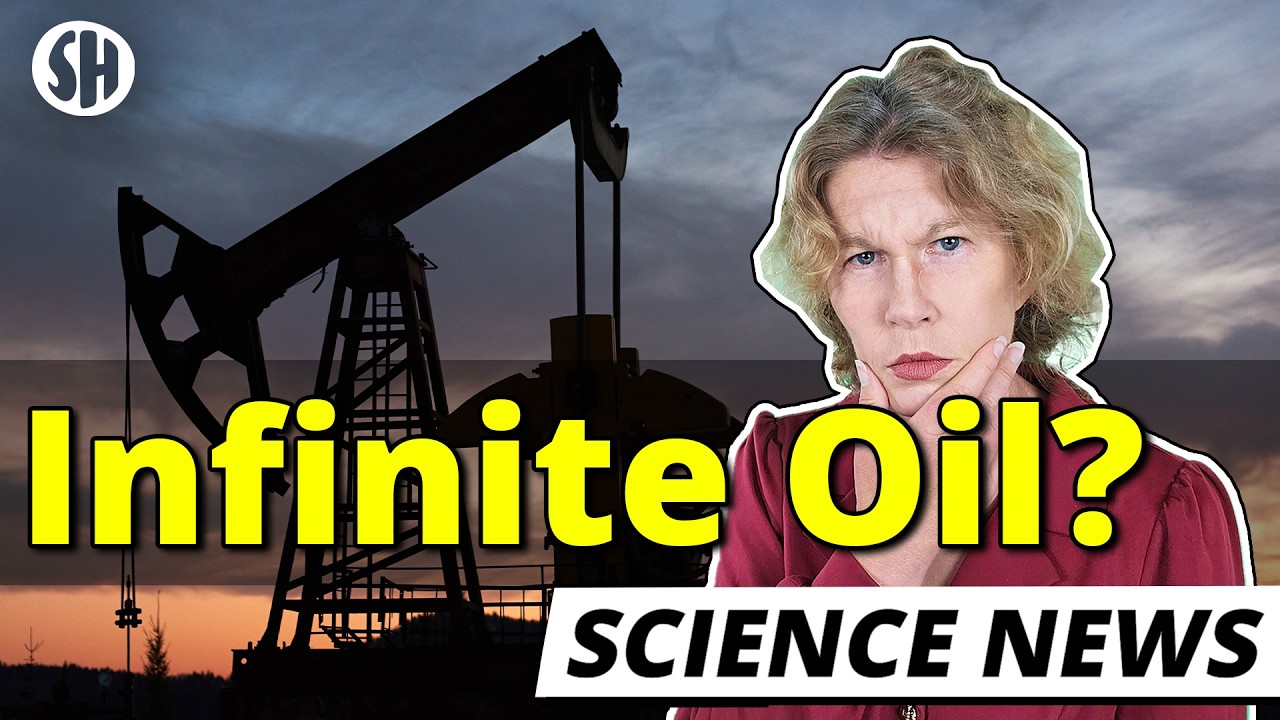
Sabine Hossenfelder
Decades of commercial exploration show deep abiogenic reserves are nonviable, making Moscow's bet on self-replenishing petroleum an expensive exercise in wishful thinking.
AI-assisted summary of Russia Is Drilling 8 km Down to Prove Oil Never Runs Out — original source. Check the original for full context.
Source published:
Key ideas
- Russia has initiated an engineering project to drill an 8-kilometer deep borehole in the Komi region to test whether petroleum fields naturally replenish from deep within the Earth. (0:00)
- The project is driven by Vladimir Litvinenko, a billionaire university head and Vladimir Putin's former dissertation supervisor, who champions the abiogenic origin of oil over the biogenic scientific consensus. (1:45)
- While inorganic synthesis of hydrocarbons like methane occurs naturally under extreme subterranean pressure, major oil companies have found no evidence of commercially viable abiogenic reservoirs. (1:45)
- Litvinenko pairs his geological claims with geopolitical conspiracy theories, asserting that Western institutions suppressed abiogenic research to justify population reduction and undermine the Russian economy. (4:05)
Detailed notes
## Background Published on YouTube by Sabine Hossenfelder on August 1, 2026, the video investigates whether Vladimir Putin's former thesis advisor is correct in claiming that petroleum fields naturally replenish themselves indefinitely. The page description questions whether Russia's massive project to drill eight kilometers into the ground will uncover infinite oil or simply result in a very expensive hole.
## TL;DR Russian billionaire and academic Vladimir Litvinenko, who supervised Vladimir Putin's economics dissertation, is driving an initiative to drill an eight-kilometer-deep borehole in the Komi region to prove the abiogenic hypothesis of oil formation. Litvinenko rejects the standard consensus that oil derives from decayed ancient biomass, arguing instead that deep mantle hydrocarbons continuously migrate upward and replenish tapped reservoirs—a position he couples with accusations of Western conspiratorial bias. While inorganic hydrocarbon synthesis is chemically possible under extreme pressure, decades of commercial exploration have failed to produce viable abiogenic reservoirs, leading Sabine Hossenfelder to dismiss the endeavor as expensive wishful thinking that will likely only bury the theory for good.
## Atmosphere & style The presentation carries Sabine Hossenfelder's trademark blend of dry, biting humor, pragmatic skepticism, and lucid scientific deconstruction. Rather than sensationalizing the premise of infinite oil, the narrative treats the project with sharp, amused incredulity, contrasting rigorous geological realities against politically motivated scientific grievance. Watching it feels like a brisk, no-nonsense reality check, moving briskly from geopolitical context to geochemistry before culminating in deadpan punchlines.
## Bulletin - [00:00](https://www.youtube.com/watch?v=oBUKzeb-c8Y&t=0s) Russia has initiated an engineering project to drill an 8-kilometer deep borehole in the Komi region to test whether petroleum fields naturally replenish from deep within the Earth. - [01:45](https://www.youtube.com/watch?v=oBUKzeb-c8Y&t=105s) The project is driven by Vladimir Litvinenko, a billionaire university head and Vladimir Putin's former dissertation supervisor, who champions the abiogenic origin of oil over the biogenic scientific consensus. - [01:45](https://www.youtube.com/watch?v=oBUKzeb-c8Y&t=105s) While inorganic synthesis of hydrocarbons like methane occurs naturally under extreme subterranean pressure, major oil companies have found no evidence of commercially viable abiogenic reservoirs. - [04:05](https://www.youtube.com/watch?v=oBUKzeb-c8Y&t=245s) Litvinenko pairs his geological claims with geopolitical conspiracy theories, asserting that Western institutions suppressed abiogenic research to justify population reduction and undermine the Russian economy.
## Key takeaways - [00:00](https://www.youtube.com/watch?v=oBUKzeb-c8Y&t=0s) Russia is drilling an 8-kilometer deep borehole to test claims that oil fields naturally refill themselves over short timescales. - [01:45](https://www.youtube.com/watch?v=oBUKzeb-c8Y&t=105s) The effort is led by Vladimir Litvinenko, rector of St. Petersburg Mining University, a billionaire with close Kremlin ties who supervised Putin's 1990s dissertation. - [01:45](https://www.youtube.com/watch?v=oBUKzeb-c8Y&t=105s) Litvinenko rejects the standard biogenic consensus that oil forms from ancient biological matter heated and compressed over millions of years. - [01:45](https://www.youtube.com/watch?v=oBUKzeb-c8Y&t=105s) The abiogenic petroleum hypothesis proposes that hydrocarbons synthesize from inorganic material deep in the mantle and crust, migrating upward through rock fractures. - [01:45](https://www.youtube.com/watch?v=oBUKzeb-c8Y&t=105s) The abiogenic framework appeals to climate change deniers because an infinite supply of replenishing underground oil challenges the need for a green energy transition. - [01:45](https://www.youtube.com/watch?v=oBUKzeb-c8Y&t=105s) Inorganic hydrocarbon formation is physically possible—such as abiotic methane bubbling from ocean floors—but the crucial unresolved question is whether it exists in meaningful quantities. - [01:45](https://www.youtube.com/watch?v=oBUKzeb-c8Y&t=105s) Litvinenko asserts that legacy oil reservoirs still producing after decades are direct proof that underground replenishment is actively occurring. - [04:05](https://www.youtube.com/watch?v=oBUKzeb-c8Y&t=245s) Litvinenko accuses mainstream science of suppressing abiogenic theory, comparing geological consensus to the Soviet persecution of geneticists and alleging Western plots by the Club of Rome. - [04:05](https://www.youtube.com/watch?v=oBUKzeb-c8Y&t=245s) The 8-kilometer test well is located in Russia's Komi region, west of the Ural Mountains, where hydrocarbons are rarely found at such depths. - [04:05](https://www.youtube.com/watch?v=oBUKzeb-c8Y&t=245s) Proving the hypothesis requires finding deep hydrocarbons, confirming the total absence of biological biomarkers, and demonstrating reservoir replenishment on human timescales. - [04:05](https://www.youtube.com/watch?v=oBUKzeb-c8Y&t=245s) Decades of exploration by commercial oil firms have failed to identify viable abiogenic reservoirs, indicating the Russian project is largely driven by wishful thinking.
## Detailed walkthrough ### [00:00](https://www.youtube.com/watch?v=oBUKzeb-c8Y&t=0s) The Billion-Dollar Bet on Infinite Oil
Vladimir Putin's former dissertation supervisor, who also shares the first name Vladimir, is completely convinced that oil fields have the ability to refill themselves naturally. To prove this radical claim, Russia has initiated a massive engineering project to drill a borehole 8 kilometers deep into the Earth's crust. The stakes for this venture could not be higher: if he turns out to be right, Russia gains a massive strategic advantage and has a clear path to becoming the dominant global superpower it strives to be. If he is mistaken, however, the country will simply end up owning an exceptionally expensive hole in the ground.
Following this setup, Sabine Hossenfelder shares a personal message regarding mental health, noting that emotional and psychological struggles frequently present in subtle or non-obvious ways—ranging from unhealthy eating patterns and severe procrastination to anger issues that impact loved ones. She introduces the sponsor, BetterHelp, an online therapy platform that matches users with credentialed therapists based on their individual needs via phone, video, or chat. Addressing past criticisms of the service, she notes that the platform addressed these concerns and currently maintains a 4.8 out of 5 rating in the App Store, offering viewers a 10% discount on their first month through her link while underscoring that mental healthcare should never be delayed.
[01:45](https://www.youtube.com/watch?v=oBUKzeb-c8Y&t=105s) Vladimir Litvinenko and the Abiogenic Hypothesis
The central figure driving the deep-drilling initiative is Vladimir Litvinenko, the powerful director of St. Petersburg Mining University. Litvinenko has deep ties to the Kremlin: he supervised Vladimir Putin’s economics dissertation during the 1990s and subsequently ran Putin’s presidential campaigns in St. Petersburg. Beyond academia, Litvinenko is a billionaire who holds extensive connections throughout Russia’s mineral and extraction industries. For decades, he has rejected the standard geological consensus that oil and natural gas originate exclusively from ancient biological matter—such as decaying marine organisms buried under sediment, heated, and compressed over millions of years.
```mermaid flowchart TD accTitle: Biogenic versus Abiogenic Oil Formation accDescr: Diagram contrasting conventional fossil fuel formation with the abiogenic hypothesis promoted by Litvinenko.
subgraph Biogenic["Standard Biogenic Theory"] B1["Ancient Biological Matter"] --> B2["Burial in Sediment"] B2 --> B3["Heat & Pressure over Millions of Years"] B3 --> B4["Finite Fossil Fuel Reserves"] end
subgraph Abiogenic["Litvinenko's Abiogenic Theory"] A1["Deep Inorganic Material"] --> A2["Extreme Mantle Pressures"] A2 --> A3["Hydrocarbons Rise via Crustal Cracks"] A3 --> A4["Replenishing / Infinite Oil Fields"] end ```
Instead, Litvinenko champions the abiogenic petroleum hypothesis. This framework posits that hydrocarbons are synthesized from inorganic matter situated much deeper within the mantle and crust under intense pressure, which then migrate upward toward the surface through fractures and faults. The defining feature of this hypothesis is that abiogenic oil could theoretically replenish itself on human or semi-human timescales, directly contradicting the notion of finite fossil fuels. Sabine points out that this hypothesis has long enjoyed popularity among climate change deniers, as the prospect of endless underground oil allows them to dispute the urgency of transitioning toward renewable energy.
- While standard crude oil unquestionably contains identifiable organic residues and biomarkers linked to ancient organisms, purely abiogenic production of hydrocarbons is physically possible. - Methane and certain hydrocarbon chains are known to form under intense subterranean pressures without biology, as demonstrated by inorganic methane bubbling beneath specific ocean floors. - “The relevant question is how much and where.” - At a 2023 industry conference, Litvinenko insisted that numerous legacy reservoirs that should have dried up decades ago remain operational, claiming production continues “precisely because the reserves are being replenished.”
[04:05](https://www.youtube.com/watch?v=oBUKzeb-c8Y&t=245s) Conspiracies, Politics, and the 8-Kilometer Borehole
Litvinenko’s advocacy for abiogenic oil is heavily wrapped in conspiratorial and geopolitical grievances. In a published opinion piece, he alleged that mainstream geology had systematically silenced alternative theories to serve Western political objectives. Sabine quotes him directly:
> “By the end of the 20th century, the theory of the abiogenic origin of hydrocarbons was unreasonably marginalized. The situation was reminiscent of the persecution of geneticists in the Soviet Union from the 1930s to the 1960s. Reasoned scientific debate gave way to dogmatism. It's possible that the Club of Rome itself needed an apocalyptic forecast for energy resources to justify its policy of global population reduction.”
Litvinenko has also targeted the environmental movement in interviews, attacking what he terms “pseudo-ecologists” dedicated to green energy alongside “hysterical voices” warning that global petroleum reserves will be depleted within 20 to 30 years. He insists these warnings are weaponized narratives designed to paint Russia as standing on the precipice of economic collapse, while simultaneously using them to explain industrial declines in Germany. In short, his effort to unearth infinite oil is explicitly tied to securing Russia’s position as a global leader.
```mermaid flowchart LR accTitle: Validation Requirements for Abiogenic Oil accDescr: Steps required to verify whether deep-well petroleum is genuine abiogenic replenishing oil.
D["Drill 8 km Well in Komi"] --> Ext["Extract Deep Hydrocarbons"] Ext --> Lab["Test for Absence of Biomarkers"] Lab --> Rep["Monitor Reservoir for Rapid Replenishment"] ```
Now, Litvinenko is putting his concepts to an empirical test. St. Petersburg Mining University is executing an 8-kilometer deep well in Komi, an oil-producing region situated west of the Ural Mountains. Standard fossil reserves are rarely found at such depths—though exceptional ultradeep reservoirs do exist, such as in China. If hydrocarbons are encountered 8 kilometers down, researchers will need to analyze them for organic traces and establish whether the reservoir refills in a timeframe shorter than several billion years.
Sabine observes that major commercial oil companies have spent decades hunting for giant abiogenic reservoirs without finding any viable sites, calling the premise “a bad case of wishful thinking.” She quips that she would far prefer Russia spend its resources drilling holes in the earth rather than threatening to assimilate its neighbors, concluding with a final jab: once the negative results are finalized, Russia can use its brand-new 8-kilometer hole to bury the abiogenic theory once and for all.
## Notable quotes > [04:05](https://www.youtube.com/watch?v=oBUKzeb-c8Y&t=245s) By the end of the 20th century, the theory of the abiogenic origin of hydrocarbons was unreasonably marginalized. The situation was reminiscent of the persecution of geneticists in the Soviet Union from the 1930s to the 1960s. — Vladimir Litvinenko
> [04:05](https://www.youtube.com/watch?v=oBUKzeb-c8Y&t=245s) It's possible that the Club of Rome itself needed an apocalyptic forecast for energy resources to justify its policy of global population reduction. — Vladimir Litvinenko
## Mentioned Sabine Hossenfelder, Vladimir Putin, Vladimir Litvinenko, BetterHelp, St. Petersburg Mining University, Club of Rome, Komi, Ural Mountains, Soviet Union, Germany, China
## Video description Head to https://betterhelp.com/sabinehossenfelder to get 10% off your first month with our paid partner, BetterHelp. Therapy can be a meaningful space to reflect, grow, and create positive change in your life.
Putin's former thesis advisor is convinced that oil never runs out, and Russia is now drilling 8 kilometres into the ground to prove him right. Is there really infinite oil down there, or is Russia about to end up with a very expensive hole? Let's take a look.
#science #physics #russia #oil #sciencenews #energy
Previous video about the abiogenic oil: https://www.youtube.com/watch?v=uNsGzDmSjD0
👕T-shirts, mugs, posters and more: ➜ https://sabines-store.dashery.com/ 💌 Support me on Donorbox ➜ https://donorbox.org/swtg 👉 Transcript with links to references on Patreon ➜ https://www.patreon.com/Sabine 📝 Transcripts and written news on Substack ➜ https://sciencewtg.substack.com/ 📩 Free weekly science newsletter ➜ https://sabinehossenfelder.com/newsletter/ 👂 Audio only podcast ➜ https://open.spotify.com/show/0MkNfXlKnMPEUMEeKQYmYC 🔗 Join this channel to get access to perks ➜ https://www.youtube.com/channel/UC1yNl2E66ZzKApQdRuTQ4tw/join 📚 Buy my book ➜ https://amzn.to/3HSAWJW
[Source](https://www.youtube.com/watch?v=oBUKzeb-c8Y)