NIH Montana Lab Accidents Expose Protocol Gaps for Lethal Viruses
Sabine Hossenfelder
While public anxiety centers on AI-engineered bioweapons, sheer human incompetence and absent emergency protocols inside government containment facilities pose the most immediate biological threat.
AI-assisted summary of Monkey With Deadly Virus Bites Worker at US Government Lab — original source. Check the original for full context.
Source published:
Key ideas
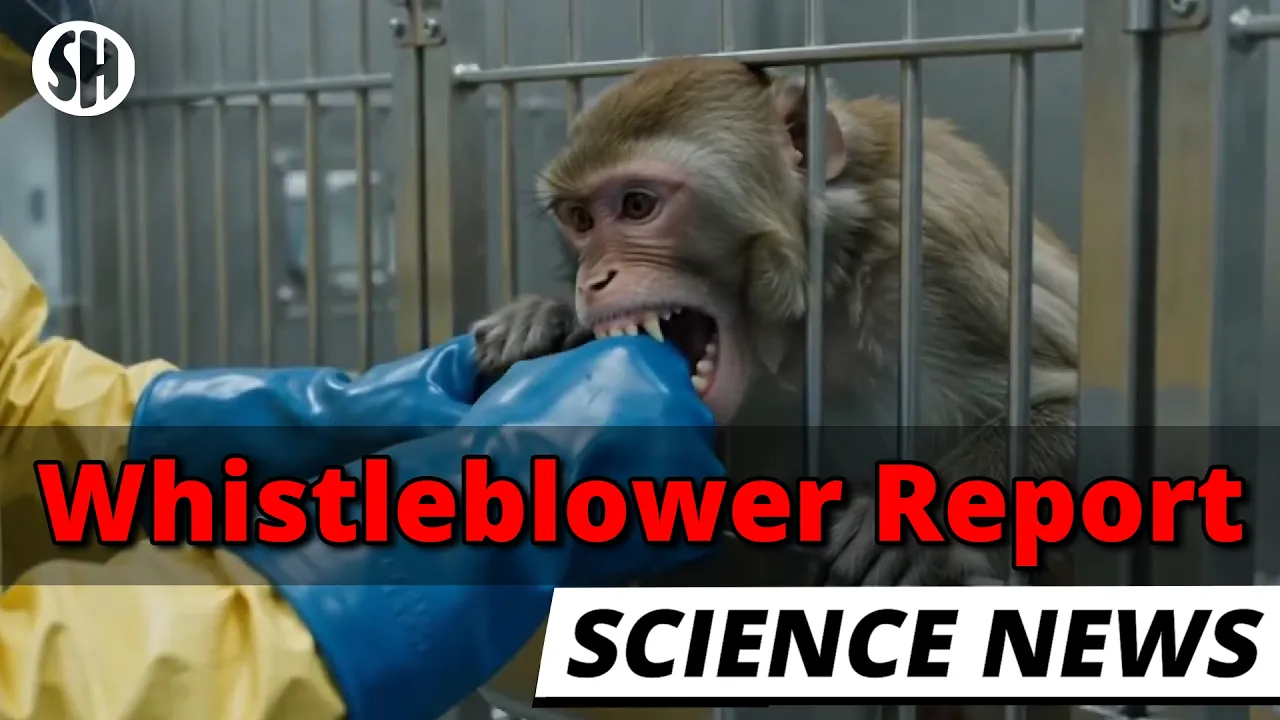
- A laboratory monkey infected with Crimean-Congo hemorrhagic fever bit through a technician's protective gear at an NIH Biosafety Level 4 facility in Montana, revealing that administrators lacked standard operating protocols to manage the emergency. (3:00)
- Following the exposure incident, the chief of the same Montana lab's virus ecology section was caught attempting to smuggle over 100 biological vials containing deactivated Mpox specimens through US customs. (4:31)
- Sabine Hossenfelder argues that while AI-assisted bio-engineered pathogens pose humanity's highest extinction risk, everyday human incompetence in institutional research labs represents the far more immediate hazard. (1:58)
- Partisan gridlock over federal science funding—ranging from conservative calls to abolish the NIH to defenders who dismiss administrative failures—leaves critical laboratory biosafety vulnerabilities unaddressed. (4:31)
Detailed notes
## Background Published on YouTube by Sabine Hossenfelder on August 7, 2026, this video investigates serious safety breaches at a United States government laboratory. The video description highlights an incident where a lab worker was bitten by a monkey carrying a deadly virus without any protocols in place to handle it, alongside an attempt by lab personnel to smuggle outbreak samples into the country while public attention remains fixated on AI bioweapons.
## TL;DR Sabine examines the stark contrast between public panic over AI-engineered bioweapons and the reality of basic human incompetence within high-containment biosafety facilities. She details a November 2025 incident at an NIH-operated BSL-4 facility in Montana, where a worker bitten by a monkey infected with Crimean-Congo hemorrhagic fever faced severe bureaucratic delays in medical transfer and diagnostic sample testing due to an absence of standard operating protocols. Compounding these failures, the laboratory's virus ecology section chief was subsequently caught attempting to smuggle over 100 biological vials—including deactivated Mpox specimens—through customs. Contextualizing these events with historical laboratory leaks from the UK, China, and the Soviet Union, Sabine cautions that neither partisan denial of institutional dysfunction nor calls to abolish research bodies solve the underlying management crisis.
## Atmosphere & style The presentation blends Sabine's signature sardonic, matter-of-fact skepticism with a chilling, urgent examination of catastrophic biological risks. The pacing transitions smoothly from a relaxed, personal sponsored segment into an alarming, forensic breakdown of administrative paralysis and logistical farce. It feels soberingly pragmatic and unsettling, exposing how fragile global biosecurity truly is when undermined by mundane bureaucratic blunders.
## Bulletin - [03:00](https://www.youtube.com/watch?v=3KO9niSQtlQ&t=180s) A laboratory monkey infected with Crimean-Congo hemorrhagic fever bit through a technician's protective gear at an NIH Biosafety Level 4 facility in Montana, revealing that administrators lacked standard operating protocols to manage the emergency. - [04:31](https://www.youtube.com/watch?v=3KO9niSQtlQ&t=271s) Following the exposure incident, the chief of the same Montana lab's virus ecology section was caught attempting to smuggle over 100 biological vials containing deactivated Mpox specimens through US customs. - [01:58](https://www.youtube.com/watch?v=3KO9niSQtlQ&t=118s) Sabine Hossenfelder argues that while AI-assisted bio-engineered pathogens pose humanity's highest extinction risk, everyday human incompetence in institutional research labs represents the far more immediate hazard. - [04:31](https://www.youtube.com/watch?v=3KO9niSQtlQ&t=271s) Partisan gridlock over federal science funding—ranging from conservative calls to abolish the NIH to defenders who dismiss administrative failures—leaves critical laboratory biosafety vulnerabilities unaddressed.
## Key takeaways - [01:58](https://www.youtube.com/watch?v=3KO9niSQtlQ&t=118s) A bio-engineered pathogen that combines high infectivity with lethality currently represents the highest existential risk to human civilization. - [01:58](https://www.youtube.com/watch?v=3KO9niSQtlQ&t=118s) The tools required to assemble lethal biological agents are widely accessible, and artificial intelligence is rapidly lowering the technical barrier to utilizing them. - [01:58](https://www.youtube.com/watch?v=3KO9niSQtlQ&t=118s) Frontier AI models like Claude 3.5 Sonnet feature intense guardrails on biology queries, yet public concern over AI bioweapons often ignores the more urgent threat of routine human error. - [03:00](https://www.youtube.com/watch?v=3KO9niSQtlQ&t=180s) An NIH BSL-4 facility worker in Montana was bitten by a monkey infected with Crimean-Congo hemorrhagic fever, which carries a human fatality rate of 10% to 40%. - [03:00](https://www.youtube.com/watch?v=3KO9niSQtlQ&t=180s) A separate exposure risk occurred at the same facility just three months later when a second technician changed cages housing infected mice. - [03:00](https://www.youtube.com/watch?v=3KO9niSQtlQ&t=180s) Emergency response to the monkey bite devolved into administrative chaos, requiring ad-hoc travel approvals from multiple state governors to move the patient by ambulance. - [03:00](https://www.youtube.com/watch?v=3KO9niSQtlQ&t=180s) Attempts to send patient diagnostic blood samples out of state were stalled because officials struggled to find an authorized airplane to fly the cargo. - [03:00](https://www.youtube.com/watch?v=3KO9niSQtlQ&t=180s) Internal whistleblower reports revealed that the NIH facility still lacked standardized emergency protocols seven months after the bite occurred. - [04:31](https://www.youtube.com/watch?v=3KO9niSQtlQ&t=271s) The head of the facility's virus ecology section misled customs agents by claiming a transport case contained only diagnostic hardware, despite holding over 100 Mpox vials. - [04:31](https://www.youtube.com/watch?v=3KO9niSQtlQ&t=271s) Political polarization impedes lab oversight: critics demand deep budget cuts or abolition of the NIH, while defenders refuse to acknowledge mismanagement and waste. - [04:31](https://www.youtube.com/watch?v=3KO9niSQtlQ&t=271s) Historical precedents—including anthrax in the USSR, smallpox in Birmingham, SARS in China, and foot-and-mouth disease in the UK—demonstrate that institutional lab leaks are recurring real-world events. - [04:31](https://www.youtube.com/watch?v=3KO9niSQtlQ&t=271s) Dismantling scientific agencies is counterproductive because society cannot afford the resulting research vacuum, yet institutional mismanagement must be actively reformed across both the US and Europe.
## Detailed walkthrough ### [00:00](https://www.youtube.com/watch?v=3KO9niSQtlQ&t=0s) Introduction and Personal DNA Discovery
A worker inside a United States government high-containment facility was recently bitten by a monkey carrying a deadly virus, exposing the fact that the administration had no routine protocols ready to manage such an emergency. Around the same time, another individual from that exact same lab was caught attempting to smuggle biological outbreak samples into the country. These incidents surface at a fraught cultural moment: concerns over AI-engineered bioweapons are peaking, while political leaders in the US push to slash budgets for the National Institutes of Health (NIH).
Before diving into the lab failures, Sabine shares her experience testing her genetics with video sponsor MyHeritage for €19. The cheek-swab kit revealed that while her ancestry is predominantly Eastern European, it unexpectedly includes 2.8% English lineage along with Dutch roots she was unaware of. Because her parents separated when she was young and her father passed away shortly thereafter, she had had virtually no connection with her paternal relatives. To her surprise, she discovered that an aunt had built out a family tree on the platform, uncovering ancient lineage tracing even further east. She notes that the service also provides trait reports on characteristics like introversion, creativity, and caffeine sensitivity, while maintaining strict privacy policies that prohibit selling or licensing genetic profiles.
[01:58](https://www.youtube.com/watch?v=3KO9niSQtlQ&t=118s) The Existential Threat of Engineered Pathogens vs. Human Incompetence
Looking at catastrophic threats facing humanity, the greatest danger does not necessarily stem from conventional conflict. As Sabine warns, “A bio-engineered pathogen that's both highly infectious and lethal is currently the highest risk for human extinction.” A pathogen of that caliber could realistically decimate most of global civilization, and modern responses to the COVID-19 pandemic demonstrate that institutions simply cannot move fast enough to neutralize a fast-moving biological threat. The foundational tools to create such organisms are already accessible and functionally impossible to police. The primary constraint has long been the technical know-how required for assembly, but artificial intelligence is rapidly dissolving that barrier.
This tension is apparent in frontier AI development. Anthropic’s model, Claude 3.5 Sonnet (referred to in development as "Fable"), was rolled out with guardrails so strict that the system refused to answer routine, benign biological inquiries. Yet hyper-cautious safeguards merely underscore the core dilemma: the foundational knowledge is publicly available, requiring only sufficient processing power and intelligence to assemble it. However, focusing exclusively on rogue actors or AI-assisted bio-terror overlooks the far more pervasive and immediate hazard: sheer human incompetence inside institutional laboratories.
[03:00](https://www.youtube.com/watch?v=3KO9niSQtlQ&t=180s) Chaos at the Montana BSL-4 Facility
On November 13, 2025, an accident occurred inside an NIH-operated Biosafety Level 4 (BSL-4) facility in Montana. A laboratory monkey infected with Crimean-Congo hemorrhagic fever—a severe tick-borne pathogen carrying a human case fatality rate of 10% to 40% according to the World Health Organization—bit through a laboratory worker's personal protective gear. Just three months later, a second technician was potentially exposed to the same lethal virus while swapping out cages housing laboratory mice.
```mermaid flowchart TD accTitle: Montana BSL-4 Exposure Response Breakdown accDescr: Flowchart illustrating the chain of logistical failures after a worker was bitten by an infected monkey.
subgraph Incident["Laboratory Incident"] A["Worker bitten through PPE by infected monkey"] B["Sent to local Montana hospital"] end
subgraph LogisticsFailures["Bureaucratic & Logistical Hurdles"] C["Attempted ambulance transfer to Washington"] D["Delayed: Required approval from multiple state governors"] E["Attempted blood specimen shipment"] F["Delayed: Difficulty securing an air transport plane"] end
subgraph Outcome["Aftermath"] G["Worker miraculously avoided infection"] H["Whistleblower reveals lack of established protocols 7 months later"] end
A --> B B --> C C --> D B --> E E --> F D --> G F --> G G --> H ```
Although the exposed employees ultimately tested negative and escaped infection, internal NIH records leaked by a whistleblower revealed an alarming lack of institutional preparation. Rather than executing a pre-planned emergency procedure, the administration improvised at every turn:
- The bitten employee was initially brought to a local Montana hospital before administrators decided a transfer to specialized care in Washington state was required. - Arranging that ground ambulance transfer ground to a halt because staff had to obtain extraordinary, ad-hoc travel permissions from multiple state governors. - When the facility attempted to fly urgent patient blood samples to an outside diagnostic lab, officials struggled simply to track down an available airplane willing and authorized to transport the cargo. - Seven months following the monkey bite, the whistleblower confirmed that the NIH facility had still failed to formalize a standard operating protocol for similar future exposures, even as leadership publicly maintained that established guidelines had been observed.
[04:31](https://www.youtube.com/watch?v=3KO9niSQtlQ&t=271s) Smuggled Mpox Vials and the Lab Leak Reality
Institutional carelessness escalated further when the chief of the Montana laboratory's virus ecology section returned from a field assignment in the Republic of the Congo. Arriving with research samples collected during an active Mpox outbreak, the scientist and an accompanying colleague claimed to customs agents that their travel case held nothing more than diagnostic hardware. Federal customs inspectors intervened, inspected the container, and uncovered over 100 biological vials, a portion of which held deactivated Mpox virus specimens.
These scandals have broken amidst fierce US political debates over whether to defund or overhaul scientific institutions. Conservatives and public health critics, such as Scott Atlas, have advocated for deep budget cuts or even abolishing the NIH entirely. Conversely, political defenders frequently refuse to acknowledge systemic administrative dysfunction and financial waste within federal agencies, dismissing all conservative critiques as purely anti-science. While both sides remain locked in partisan posturing, institutional vulnerabilities persist unaddressed.
Lab escapes are historical reality rather than fringe speculation: - In the 1970s, an accidental aerosol release of anthrax spores from a Soviet military biology facility killed at least 66 people. - In 1978, a smallpox leak from a medical school laboratory in Birmingham, UK, infected two individuals and killed one. - In 2004, the SARS coronavirus escaped from a Chinese containment laboratory, resulting in multiple infections and one fatality. - In 2007, an environmental leak of foot-and-mouth disease virus from an animal health research center in Pirbright, UK, reached livestock on nearby commercial farms.
Sabine explains that while the impulse to dismantle dysfunctional organizations and rebuild them from the ground up is understandable, society cannot afford the research vacuum that would follow. Furthermore, these management problems are not uniquely American; European institutions suffer from identical oversights, though they receive far less open discussion. Summarizing the stakes facing biotechnology and safety culture, Sabine emphasizes: “When it comes to AI, as much as when it comes to the missing safety procedures in labs, refusing to address problems doesn't prevent them from happening.”
## Notable quotes > [01:58](https://www.youtube.com/watch?v=3KO9niSQtlQ&t=118s) A bio-engineered pathogen that's both highly infectious and lethal is currently the highest risk for human extinction. — Sabine Hossenfelder
> [04:31](https://www.youtube.com/watch?v=3KO9niSQtlQ&t=271s) When it comes to AI, as much as when it comes to the missing safety procedures in labs, refusing to address problems doesn't prevent them from happening. — Sabine Hossenfelder
## Mentioned MyHeritage, National Institutes of Health, Anthropic, Claude 3.5 Sonnet, World Health Organization, Scott Atlas, Crimean-Congo hemorrhagic fever, Mpox, SARS coronavirus
## Video description MyHeritage is running a special promotion right now! Click👉 https://bit.ly/SabineHossenfelder Use the Coupon Code: SABINE to get your DNA kit for just $19!
A worker at a US government lab got bitten by a monkey carrying a deadly virus, and it turned out nobody knew what to do about it. Around the same time, someone from the same lab tried to smuggle outbreak samples into the country. All of this while everyone's worried about AI making bioweapons. Let's take a look.
#science #sciencenews #virus #physics #health
👕T-shirts, mugs, posters and more: ➜ https://sabines-store.dashery.com/ 💌 Support me on Donorbox ➜ https://donorbox.org/swtg 👉 Transcript with links to references on Patreon ➜ https://www.patreon.com/Sabine 📝 Transcripts and written news on Substack ➜ https://sciencewtg.substack.com/ 📩 Free weekly science newsletter ➜ https://sabinehossenfelder.com/newsletter/ 👂 Audio only podcast ➜ https://open.spotify.com/show/0MkNfXlKnMPEUMEeKQYmYC 🔗 Join this channel to get access to perks ➜ https://www.youtube.com/channel/UC1yNl2E66ZzKApQdRuTQ4tw/join 📚 Buy my book ➜ https://amzn.to/3HSAWJW
[Source](https://www.youtube.com/watch?v=3KO9niSQtlQ)