Gaethje Rejects Topuria Rematch, Demands UFC Corporate Equity After Title Win
PowerfulJRE
UFC Lightweight Champion Justin Gaethje rules out a rematch with Ilia Topuria following a fourth-round stoppage and argues the promotion must award him company equity to secure sustainable passive income.
## Background
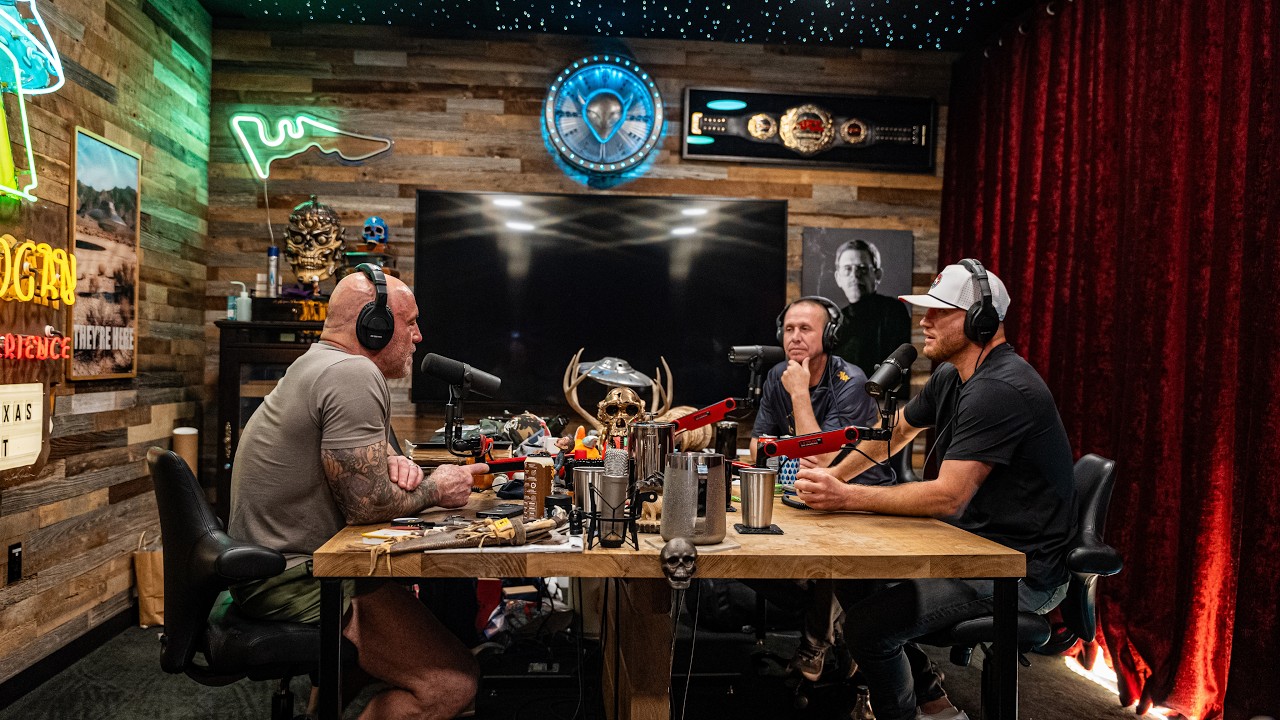
This video was published on YouTube by the channel PowerfulJRE on June 20, 2026. According to the show description, host Joe Rogan is joined by UFC Lightweight Champion Justin Gaethje and renowned boxing and MMA trainer Trevor Wittman.
## TL;DR
The conversation centers around Justin Gaethje's historic championship victory and his evolving tactical approach under coach Trevor Wittman, moving from a purely violent style to strategic 'spot fighting.' They analyze recent fights, including insights into Gaethje's mindset, surviving severe injuries, and managing pre-fight expectations. The group also breaks down other major UFC matches, critiques modern weight-cutting dangers, and explores Wittman's ongoing effort to revolutionize combat sports through innovative glove designs.
## Atmosphere & style
The atmosphere is raw, grounded, and deeply authentic, blending intense fighter mentality with lighthearted locker room humor. There is a strong sense of mutual respect and camaraderie between Rogan, Gaethje, and Wittman, making the detailed technical breakdowns feel like an intimate conversation among peers. The emotional arc ranges from vulnerable reflections on near-death experiences and brutal knockouts to a gritty, defiant pride in overcoming adversity.
## Key takeaways
- [00:00](https://www.youtube.com/watch?v=Ag7GEsPQhFo&t=0s) Joe Rogan calls Justin Gaethje's championship win in Washington, D.C., directly in front of the White House, one of the most epic accomplishments in combat sports history, overcoming 6-to-1 underdog betting odds.
- [02:41](https://www.youtube.com/watch?v=Ag7GEsPQhFo&t=161s) Trevor Wittman views his coaching role as a father figure who must provide brutal honesty, contrasting Gaethje's reality-grounded mental approach with Ilia Topuria's rigid manifestation techniques.
- [06:59](https://www.youtube.com/watch?v=Ag7GEsPQhFo&t=419s) Gaethje intentionally operates without expectations during bouts to avoid getting thrown off, using this approach to leave opponents mentally stranded when things fail to go as planned.
- [10:44](https://www.youtube.com/watch?v=Ag7GEsPQhFo&t=644s) Gaethje credits his mental shield and complete lack of fear during grueling sequences to previously being knocked out in the final second of his high-stakes fight against Max Holloway.
- [20:12](https://www.youtube.com/watch?v=Ag7GEsPQhFo&t=1212s) Active fighters often refuse the necessary full year of zero physical contact required to properly correct severe nasal fractures, leading to long-term breathing workarounds.
- [21:58](https://www.youtube.com/watch?v=Ag7GEsPQhFo&t=1318s) Gaethje treats his past loss to Max Holloway as an exhibition-like mistake where he was mentally checked out, while his corner takes responsibility for pushing him into a fight where he lacked typical anxiety.
- [34:26](https://www.youtube.com/watch?v=Ag7GEsPQhFo&t=2066s) A major strategic turning point for Gaethje came after back-to-back losses to Eddie Alvarez and Dustin Poirier, when Wittman transitioned him into a 'spot fighter' who fights in sharp bursts rather than constantly redlining.
- [01:10:13](https://www.youtube.com/watch?v=Ag7GEsPQhFo&t=4213s) Joe Rogan targets extreme weight cutting and rigid glove designs as the two major elements that most desperately need structural reform in modern mixed martial arts.
- [01:13:10](https://www.youtube.com/watch?v=Ag7GEsPQhFo&t=4390s) A medical professional confirmed that almost every boxing death in the last 10 to 15 years occurs past the ninth round, showing a direct correlation to severe brain dehydration caused by weight cutting.
- [01:20:22](https://www.youtube.com/watch?v=Ag7GEsPQhFo&t=4822s) The team strictly banned any video footage of Gaethje hitting mitts or sparring from his YouTube channel during his entire camp to fully conceal their revamped game plan of tight, compact punches.
- [01:30:03](https://www.youtube.com/watch?v=Ag7GEsPQhFo&t=5403s) Gaethje completely shuts down the possibility of a rematch with Elie, stating that a fighter who quit on their stool and was stopped twice does not deserve an immediate second chance.
- [01:30:03](https://www.youtube.com/watch?v=Ag7GEsPQhFo&t=5403s) Gaethje outlines a highly successful career trajectory consisting of 17 total UFC fights, approximately 12 main event appearances, 9 performance bonuses in his first 7 fights, and 3 total championship belts.
- [01:31:52](https://www.youtube.com/watch?v=Ag7GEsPQhFo&t=5512s) The hosts attribute heavyweight Ciryl Gane's middleweight-like mobility and elite plyometrics during his victory over Alex Pereira to his deep competitive background in basketball.
- [01:37:20](https://www.youtube.com/watch?v=Ag7GEsPQhFo&t=5840s) Gaethje remains highly critical of referee Mike Beltran's handling of a severe eye poke committed by Michael Chandler, arguing the referee failed to follow proper regulatory safety protocols.
- [01:47:19](https://www.youtube.com/watch?v=Ag7GEsPQhFo&t=6439s) Gaethje details his plan to take the remainder of 2026 completely off to allow his body to heal after already competing twice in a span of less than six months.
- [01:48:37](https://www.youtube.com/watch?v=Ag7GEsPQhFo&t=6517s) Gaethje pushed through his entire recent training camp and fight with Paddy Pimblett while managing severe bone edema in the marrow of his fibula, sustained on Christmas Day.
- [01:51:04](https://www.youtube.com/watch?v=Ag7GEsPQhFo&t=6664s) Wrestling is highlighted as the single biggest variable in Gaethje's athletic success due to the sport's baseline requirement for individual accountability and discipline.
- [02:00:14](https://www.youtube.com/watch?v=Ag7GEsPQhFo&t=7214s) Standard UFC gloves force a fighter's fingers to extend naturally outward, causing continuous forearm exhaustion to form a fist and directly leading to accidental eye pokes when defending.
- [02:03:29](https://www.youtube.com/watch?v=Ag7GEsPQhFo&t=7409s) Trevor Wittman's curved glove design forces a relaxed hand into a closed fist to maximize wrist control and prevent hand fractures, allowing Gaethje to train without hand wraps since 2015.
- [02:07:50](https://www.youtube.com/watch?v=Ag7GEsPQhFo&t=7670s) The UFC reportedly spent a massive budget on an outside engineering company specializing in football gear for a glove redesign, only to discard the prototypes after three months of use.
## Detailed walkthrough
### [00:01](https://www.youtube.com/watch?v=Ag7GEsPQhFo&t=1s) An Epic Victory and the Sensation of Being Champion
Joe Rogan opens the conversation by thanking newly crowned champion Justin Gaethje and his coach, Trevor Wittman, celebrating what he considers "one of the most epic accomplishments in the history of combat sports." Rogan expresses his sheer amazement at the fight night, calling it one of the greatest viewing experiences of his life. He highlights the magnitude of Gaethje winning the title against an opponent widely considered the number two pound-for-pound fighter in the world, alongside Islam Makhachev. Rogan calls out the "very disrespectful" 6-to-1 betting odds that were stacked against Gaethje before the bout, noting how crazy it was given Gaethje's elite skill level, and marvels at the fact that he pulled off the win right in front of the White House.
When asked how it feels to hold the belt, Gaethje admits that the reality has "really not real yet." He explains that he anticipated a massive, natural release of internal pressure and a sense of relief once he finally caught the belt he had been chasing for so many years, but that feeling has only been trickling in slowly day by day. He shares a humorous anecdote about his dad asking him what it felt like to wake up as the champion; Gaethje hadn't even processed it until about ten minutes later while "on the shitter," when the weight of the achievement finally hit him: "Wow, I'm the [ __ ] champion. Like, it's [ __ ] crazy." Reflecting on his 19-year journey since his father first dropped him off in Colorado to wrestle as a total stranger, Gaethje feels incredibly humbled and attributes his longevity to his hard work, his ability to correct his mistakes, and the unwavering support of his coaches and team.
* Gaethje's pre-fight betting odds were as wide as 6-to-1.
* The championship victory took place in Washington, D.C., in front of the White House.
* Gaethje has been on the wrestling and fighting grind for 19 years since moving to Colorado.
---
[02:41](https://www.youtube.com/watch?v=Ag7GEsPQhFo&t=161s) The Father-Coach Dynamic and the Mint Chocolate Chip Analogy
Rogan pivots to the unique bond between Gaethje and his coach, Trevor Wittman, praising their YouTube series *The Art of Violence* and pointing out how crucial it is for a coach to know exactly when to pull a fighter back or push them forward. Wittman agrees, stating that knowing your athlete is a massive advantage. While many trainers view their fighters purely as friends, Wittman views his role more like a father figure who must be "dead honest" for the sake of their careers, even if telling the brutal truth occasionally results in a temporary fallout where he has to let them go "like a child" until they return. Wittman recalls that at the start of Gaethje's career, Justin's sole goal was simply to be "the most violent guy out there" and to guarantee that every ticket buyer remembered his name. Eventually, that goal shifted toward winning the championship belt. Despite falling short in two previous title opportunities, Wittman emphasizes that life requires you to keep adjusting your plans and climbing the stairs, culminating in Gaethje writing a story that "will never be forgotten."
Wittman transitions to discussing the mental game, contrasting Gaethje's mindset with that of top-tier fighters like Ilia Topuria, who utilize manifestation techniques similar to *The Secret*. Wittman uses a vivid ice cream aisle analogy to explain this mindset: some people stand around undecided, but individuals like Ilia know exactly what they want, saying, "I want mint chocolate chip," grabbing it, and walking out. Wittman notes this unwavering confidence carried Ilia through his last three fights, but warns that the mental game gets incredibly difficult when you suddenly get served "stale, nasty rotten milk [ __ ] mint chocolate chip" and things stop going according to plan. Wittman credits his deep, familial love for Gaethje and his family as the bedrock of their coaching relationship, adding that he is constantly humbled because Gaethje—whom he has never explicitly done mental training with—teaches him new perspectives on the psychological side of fighting every single day.
---
[06:59](https://www.youtube.com/watch?v=Ag7GEsPQhFo&t=419s) Operating Without Expectations and Turning the Brutal Truth into an Asset
Gaethje elaborates on his mental approach, explaining that he deliberately fights without expectations so he never gets thrown off during a bout. While he expects his body to perform based on his rigorous training, and freely admits that the "narcissistic tendencies" in him love the thrill of performing and showing off in front of thousands of people, he refuses to lie to himself. Remarkably, Gaethje notes that since he started wrestling at four years old, no coach has ever had to pull him aside to fix his mental approach because competing has always felt completely natural and comfortable to him. He describes himself as intensely competitive, petty, and prone to taking things personally. Before the fight, Gaethje intentionally fed his opponent what he calls the "brutal truth" regarding the danger of entering a fight with rigid expectations, knowing that when the fight inevitably dragged into the second and third rounds contrary to his opponent's predictions, it would leave him mentally stranded.
Rogan notes that the opponent seemed desperate to prove Gaethje wrong, but Gaethje clarifies that the fighter ultimately just wanted to "prove himself right" and was entirely closed off to outside opinions. Gaethje attributes his own success to being deeply coachable and a good listener, noting that "every person, place or thing" in his life has molded him to handle the pressure. He actively draws from all of his past experiences—including his losses, wins, setbacks, and accomplishments—to continuously learn. He notes that while wanting to be the most exciting fighter ever sounded cool, he was ultimately just being true to himself, backed by unwavering support from his hometown, family, friends, and teachers.
---
[10:44](https://www.youtube.com/watch?v=Ag7GEsPQhFo&t=644s) Surviving the Liver Shot: How a Mistake on the Ground Decided the Fight
Rogan points out a massive stylistic factor in the fight: Gaethje is a veteran of absolute "wars" and down-and-dirty brawls, making him deeply comfortable with enduring punishment, whereas his opponent had never truly been broken or tested in that manner before. Rogan brings up Gaethje's post-fight comment that the opponent made a critical mistake by taking the fight to the ground after hurting Gaethje with a body shot. Gaethje agrees completely, revealing that the shot that dropped him was actually the fourth or fifth clean body shot he had absorbed. Sensing that Gaethje was in deep trouble, the opponent "dumped everything" in a desperate bid to secure a finish. Gaethje admits that while hindsight is easy, the opponent—who possesses far more submission victories than knockouts—was acting on the heavy criticism surrounding Gaethje's grappling. Gaethje states that if the opponent hadn't followed him down, Gaethje would have stood back up, pulled guard, or front-rolled into a grappling sequence anyway to force a cover rather than trading strikes while compromised. Ultimately, the flurry caused the opponent to completely "blow his tank" in a manner reminiscent of heavy hitter Shane Carwin.
Wittman chimes in to analyze the sequence, recalling the "crazy" sound of the left hook to the body. He notes that while the pressure the opponent put on himself forced him to take big risks and land precise shots, it was a tactical error because a fighter must always pace themselves for a five-round war. Wittman explains that a primary coaching strategy of theirs is to tire an opponent out, force them into making poor decisions, and then capitalize on those mistakes. He praises Gaethje's extraordinary composure on the ground after taking a devastating liver shot, explaining that "a head shot is like taking a shot with your buddies at the bar," but a body shot makes a fighter feel like they are dying. Despite the physical agony, Gaethje made flawless defensive decisions on the ground regarding the triangle, the armbar, and avoiding getting flattened out. Wittman concludes that Gaethje's mindset was completely bulletproof going in because he had already accepted the absolute worst-case scenario: "I've already been knocked out the last second of a freaking huge fight by Max [Holloway]. Like, you can't do nothing worse to me." Wittman asserts that fighters must always expect a war, because preparing for an easy fight that turns brutal leaves an athlete mentally trapped with no way out.
* Gaethje acknowledges that his opponent had historically secured more submissions than knockouts.
* Wittman compares the opponent's cardiovascular exhaustion to the famous fatigue of former UFC heavyweight Shane Carwin.
* Gaethje references his dramatic, last-second knockout loss to Max Holloway as the ultimate mental shield that removed his fear of failure.
[15:38](https://www.youtube.com/watch?v=Ag7GEsPQhFo&t=938s) The Art of Getting Back Up
The speaker passionately explains that what truly inspires people—such as someone fighting cancer—is not the technical precision of a martial artist, but the sheer will to stand back up after being knocked down. They admit a profound love for watching people get knocked down precisely because the act of rising again is the most compelling part of the sport. The conversation shifts to a specific second round where the fighter managed to endure and survive a massive, full-power onslaught from their opponent, Ilia. This exhausting effort dramatically altered the tempo of the third round. Chael Sonnen is quoted as saying, "if you try to win by knockout and fail you won't win by submission," emphasizing how a failed sprint utterly drains an athlete's energy reserves.
In preparation for elite fights, training typically consists of short 20- to 40-second sprints. In contrast, Ilia engaged in a relentless, two-minute full-power sprint, throwing every single punch with absolute maximum power. The speakers note that you cannot even train for that level of sustained exertion without pacing yourself. Ilia’s willingness to empty his tank is attributed to the supreme confidence of a young, 28-year-old two-division world champion who believes he is destined to be the greatest of all time. While that loss severely hurts his immediate odds, the speakers express genuine hope and confidence that he possesses the skills to become a champion again.
- Fighter survival in the second round forced a major tempo change in the third.
- Normal fight preparation involves maximum sprints of only 20 to 40 seconds.
- Ilia threw full-power strikes continuously for roughly two minutes.
[17:31](https://www.youtube.com/watch?v=Ag7GEsPQhFo&t=1051s) Shifting Perceptions and Severe Injuries
The discussion turns to the psychological impact of a high-profile defeat, drawing a parallel to a past fight with Tony Ferguson. The speaker clarifies that they didn't necessarily break Ferguson's inner confidence, but they permanently altered how future opponents perceived him. Before that performance, Ferguson was viewed as an unstoppable force that no one could survive against; once the blueprint was out on how to weather the storm, the aura of invincibility vanished. This phenomenon is compared to the primes of Mike Tyson and Anderson Silva, where opponents would psychologically lose the bout "before they even got in there." Now, future opponents will face Ilia without that paralyzing fear, which presents a massive new hurdle for his career.
Physically, reports indicate that Ilia suffered severe damage, specifically two fractured orbitals and a broken nose. While Justin notes that "broken bones make stronger bones" upon healing, another speaker cautions that orbital fractures can have erratic, long-term psychological and physical consequences depending on the exact location. Sharing a personal injury story, a speaker describes how breaking their orbital bone near the sinus cavity caused their tooth to move whenever they pressed on their cheek—an injury sustained from a spinning elbow.
- The victory over Tony Ferguson shifted the "perception of his opponents of him" rather than destroying his personal confidence.
- Rumored post-fight medical reports for Ilia include two fractured orbital bones and a broken nose.
- A past orbital fracture near the sinus cavity caused a speaker's tooth to shift upon pressing the cheek for six months.
[20:12](https://www.youtube.com/watch?v=Ag7GEsPQhFo&t=1212s) The Reality of Broken Noses and Fighting Hurt
The physical toll of the sport is highlighted by a discussion of Merab Dvalishvili's nose. An X-ray of Merab's nose is described as looking like a twisted spine or the aftermath of getting "hit with a sledgehammer," with the entire left side completely taken out. The speakers joke that it resembles the damage from a long cocaine binge. Fixing such extensive structural damage would require a fighter to completely avoid contact for an entire year, a timeline most active fighters refuse to accept, opting instead to simply live with the injury.
A speaker details how getting their own nose and eyes surgically repaired vastly improved their overall quality of life. Living with a severely broken nose introduces daily misery; during routine activities like getting a haircut, a person cannot breathe through their nose, forcing them to keep their mouth open and constantly inhale stray hairs. Eating becomes uncomfortable, and sleeping requires wearing nasal strips for a decade, to the point of developing a permanent scab from peeling them off. A speaker recalls having their nose fixed right before fighting Max Holloway, which allowed perfect breathing, noting that a subsequent fracture only damaged the upper bone rather than the cartilage.
- Merab Dvalishvili's nasal X-ray reveals severe, spine-like bone deviation.
- Correcting severe nasal fractures can require up to a full year of zero physical contact.
- One speaker wore a nasal strip to bed for 10 years, resulting in a permanent scab on the bridge of the nose.
[21:58](https://www.youtube.com/watch?v=Ag7GEsPQhFo&t=1318s) Mental Unpreparedness and the Max Holloway Fight
Reflecting on past matchups, the speakers analyze the tactical shifts in the Max Holloway fight. Holloway changed the entire tone of the first round by landing a flawlessly timed, dead-on "jump spinning back kick to the [ __ ] face." Beyond the physical strike, the speaker candidly admits to being completely mentally checked out for that bout, describing it as a unique and bizarre experience where they simply were not in a "fight or flight, real life or death situation." Because the opponent was outside their usual weight class and someone they had never anticipated fighting, the bout was treated more like a fun exhibition than a high-stakes war.
The fighter's corner takes 100% responsibility for the blunder, admitting they pushed him to take the fight despite his initial reluctance, reassuring him that his title contention status was safely promised by the promotion. The coach expresses frustration at missing the warning flags, recalling how the fighter confessed afterward that he "just didn't respect" Holloway because he looked like a smaller guy. This lack of fear backfired entirely; the fighter was so relaxed that they could clearly hear the crowd and process internal thoughts during the action—a complete anomaly for a characteristically intuitive, reactionary fighter who requires a healthy sense of danger to perform.
- Max Holloway altered the momentum with a perfect jumping spinning back kick at the end of round one.
- The corner accepts full accountability for misreading the fighter's lack of pre-fight anxiety and respect for Holloway.
- The fighter was so detached from typical combat urgency that they could clearly hear the arena crowd and internal monologue during the bout.
[25:09](https://www.youtube.com/watch?v=Ag7GEsPQhFo&t=1509s) Career Lessons, Mistakes, and Early Inspirations
The speaker inventories the pivotal learning experiences of their career, beginning with the Charles Oliveira fight, where they wanted the victory so desperately that they artificially inflated the magnitude of the moment. They recount a chaotic locker room scene on that same night, where Rose Namajunas had just performed terribly in her fight against Carla Esparza. Right before walking out, amidst a tense environment exacerbated by Pat Barry being "weird," the speaker tried to reassure their angry coach by saying, "Don't worry, coach. I never let you down like that." They ultimately allowed the surrounding locker room drama and the pressure to impress fans to dictate their tactical decisions instead of fighting naturally.
Another recurring mistake was falling into complacency after compiling three- or four-fight winning streaks. Victories against top competition like Eddie Alvarez and Dustin Poirier led to a mindset of invincibility, causing them to neglect the "extra credit" work like home sauna sessions. They stress that the fight game involves an immense amount of luck and chance every night. Despite these missteps, the speaker insists they would not alter a single detail of their journey, believing that their discipline, willingness to call their own shots, and threats of retirement to secure title opportunities make their legacy uniquely special. Their obsession with the sport dates back to 1992, when, as a four-year-old in their father's bedroom, they were completely enthralled by the very first viewing of mixed martial arts.
- The chaotic locker room environment involved Rose Namajunas's loss to Carla Esparza and tension with Pat Barry.
- Complacency slipped into the fighter's routine following win streaks around the Eddie Alvarez and Dustin Poirier eras.
- The speaker's lifelong passion for MMA began in 1992 at four years old alongside their father.
- In college, the fighter and a friend named Cole would sit at Buffalo Wild Wings for up to eight hours while spending only $5.
[28:31](https://www.youtube.com/watch?v=Ag7GEsPQhFo&t=1711s) The Wild UFC Debut and Cage Backflips
The conversation turns to the fighter's explosive introduction to the UFC against Michael Johnson, a highly anticipated matchup after their run in the World Series of Fighting. The fight was a famously chaotic "coming out party" that lived up to all expectations. The speaker's corner recalls giggling during the madness of the bout, particularly when the fighter leaned against the cage, casually checked for an opening, and repeatedly absorbed and returned heavy right hooks. Even when Johnson landed his notoriously fast and powerful left hand—the same punch he used to knock out Dustin Poirier—there was no panic because everyone knew it was bound to be an unforgettable, all-out war.
The trademark post-fight celebration also provided plenty of drama, taking three separate attempts as the fighter repeatedly slipped off the cage before successfully sticking the backflip. The corner confesses to always being terrified for the fighter's knees during these stunts. They share an anecdote from high-altitude training preparation for Khabib Nurmagomedov, where the coach yelled at him to stop practicing cage backflips before the actual fight. The fighter jokingly replied, "Today's the day I become a bitch," forcing the coach to turn his head in resignation. They conclude that trying to over-protect your uniqueness ultimately strips away what makes you special, noting that the fighter brings this same wildly entertaining, highlight-reel energy to everything they do, including regular rounds of golf.
- The fighter transitioned to the UFC from the World Series of Fighting to debut against Michael Johnson.
- Michael Johnson landed the same signature fast left hand that he previously used to defeat Dustin Poirier.
- During high-altitude training for Khabib Nurmagomedov, the fighter defied coaches to practice cage backflips.
[30:51](https://www.youtube.com/watch?v=Ag7GEsPQhFo&t=1851s) "All of Them": Drug Addiction and the Passion to Live
When reflecting on whether his unwavering mindset was something he inherently possessed, Justin Gaethje notes that people often overcomplicate life. For him, it comes down to realizing that while you cannot control everything, you can control your perception, your reactions, your hard work, and your preparation. He admits that no matter how far he veered off the road, he always knew something bigger was coming. This prompts a surprising admission: while he thankfully was never an alcoholic, he considers himself to be a drug addict at one point in his life. When asked what drugs he used, he hesitates, noting he has never told his parents, before confessing with a laugh, "All of them. All of them."
Gaethje explains that he went to school for human services because he wanted to help people, specifically those trying to overcome drug addiction. Coming from an area close to the Mexican border, he lost a handful of really close friends to drugs. Because his hometown was incredibly boring, he explains that people in this country often "create chaos in order to feel something," which is what he was doing. In college, he rationalized his experimentation by wondering how he could ever truly understand what addicts were chasing if he didn't experience it himself. Ultimately, he realized he had a higher purpose, and drugs never became a crutch. He credits this resilience to his faith and his parents forcing him to go to church every single Sunday to build a relationship with God. Living a lifestyle on drugs is the "easy way to live" because there are no expectations or pressure, but his passion to live through faith always outweighed his desire to just feel good.
- Gaethje studied Human Services in college with the intent of helping people recover from drug addiction.
- His hometown's proximity to the Mexican border meant they had access to high-quality, uncut drugs.
- He views the drug lifestyle as an escape from pressure where "nobody expects anything from you."
---
[34:26](https://www.youtube.com/watch?v=Ag7GEsPQhFo&t=2066s) The Mindset Shift and the Art of "Spot Fighting"
The conversation shifts to the distinct turning point in Gaethje's career, moving from merely wanting to be the most exciting performer in the world to focusing strictly on winning the championship belt. Gaethje recalls that there wasn't a single, specific day he made the change, but rather a technical realization: "I'm not going to get hit." In his losses to Dustin Poirier and Eddie Alvarez, he felt he had absolutely broken his opponents for the first two or three rounds, but they withstood the ferocity of his actions and caught him with shots that took him out of the fight. Previously, he never cared about getting hit because nothing hurts while inside the Octagon, but those consecutive losses made him realize he had to avoid dangerous predicaments.
His coach, Trevor Wittman, elaborates on this transition from an outside perspective. After the consecutive losses to Alvarez and Poirier, Wittman sat down with Gaethje to fix his technical mistakes, such as leaning his shoulders lazy over his hips during a low kick against Poirier. Wittman introduced the concept of becoming a "spot fighter," teaching Gaethje to fight in sharp bursts rather than constantly redlining his output. This adjustment led to a dominant three-fight win streak against James Vick, Edson Barbosa, and Donald "Cowboy" Cerrone. Wittman recalls asking Gaethje if he wanted to be a champion, explaining that being smart was the only path to the belt. Even though Gaethje never stopped being an inherently thrilling fighter, Wittman's job became managing his pacing: "How do we get you to sprint 50 yards, pull back for 100 yards, and jog and then sprint for 50 yards and like be able to know your red line."
- Gaethje's mindset changed after back-to-back losses to Eddie Alvarez and Dustin Poirier.
- Coach Trevor Wittman transitioned Gaethje into a "spot fighter" to curb costly technical mistakes.
- The adjustments sparked a three-fight winning streak over James Vick, Edson Barbosa, and Donald "Cowboy" Cerrone.
---
[37:21](https://www.youtube.com/watch?v=Ag7GEsPQhFo&t=2241s) Defensive Nuances and the Hardest Bones in the UFC
Gaethje addresses the statistics of his fights, disputing the perception that he takes too much damage. He brings up a round where stats claimed his opponent out-struck him 39 to 32, arguing that pointing to a screen like amateur boxing judging—where any touch of a white glove counts—is misleading. Gaethje explains that while he doesn't have "special skin," he is highly adept at seeing punches, rolling with them, and moving with the impact. Wittman agrees, emphasizing that Gaethje fades off and deflects blows so they don't go through his skull, while delivering devastatingly different, hip-driven power in return.
The conversation takes a humorous turn when Wittman reveals that the UFC previously conducted a test concluding Gaethje had the hardest bones in the organization. Wittman jokes that he feels terrible for their training partner, Luke Caudillo, whom Gaethje refuses to let kick him during practice. Caudillo joins in, hilariously complaining about the excruciating pain of holding pads for Gaethje's leg kicks. Caudillo recalls going home to his wife and complaining of getting "blue balls" from the sheer shockwave hitting a nerve on the inside of his leg, prompting his wife to ask in confusion, "The [f***] you got blue balls from Justin for?" Joe Rogan adds that early in his career, Gaethje's technique of throwing whipping leg kicks from a tight collar tie in the clinch was incredibly unique, made possible by his highly flexible hips.
- A UFC test allegedly concluded that Justin Gaethje possesses the hardest bones in the organization.
- Luke Caudillo jokes about getting "blue balls" from a nerve reaction caused by holding pads for Gaethje's powerful kicks.
- Rogan highlights Gaethje's rare historical ability to effectively throw devastating leg kicks from the clinch.
---
[40:04](https://www.youtube.com/watch?v=Ag7GEsPQhFo&t=2404s) The Legend of Luke Caudillo and the Sunday Golf Prank
Gaethje and Wittman express deep appreciation for Luke Caudillo, describing him as one of the best human beings on earth. Gaethje shares that before Wittman joined his corner, Caudillo would travel to Arizona with him between wrestling seasons when he had no formal coaches, just to wrap his hands and support him. Wittman then shares a hilarious anecdote from the Sunday before a fight week. While out golfing on their usual rest day, Caudillo and another coach, Ben, got "pickled" on the golf course after taking advantage of a "everything's on the president" open bar, drinking multiple stiff Bloody Marys and a dozen beers.
Seeing them drunk, Wittman and Gaethje decided to play a prank, telling the intoxicated coaches that they had an intense workout scheduled later that day. Wittman laid out a fake schedule: Caudillo had to go three rounds of full-on sparring with Gaethje, and Ben had to endure 40 minutes of straight grappling. On the drive home, a drunk Ben confidently claimed he could take Gaethje down as many times as he wanted. In reality, Gaethje took a two-hour nap while the coaches kept drinking and talking trash on camera. When they finally hit the mats, Gaethje completely handled them, forcing Ben into seven submissions and dragging him back onto the mat while a panicked Caudillo screamed for Ben to jump in and help him.
- Luke Caudillo cornered Gaethje early in his career in Arizona before Trevor Wittman took over.
- Wittman and Gaethje pranked their drunk coaches by inventing a grueling, immediate training session on a Sunday.
- Gaethje easily dominated both coaches on the mat, securing seven submissions on his coach Ben.
---
[43:38](https://www.youtube.com/watch?v=Ag7GEsPQhFo&t=2618s) Alien Environments: Fighting Outdoors in Abu Dhabi
The team transitions to discussing the grueling conditions of fighting in an outdoor stadium. While Wittman initially thought the conditions were perfect, Gaethje firmly disagrees, calling the extreme humidity detrimental to their performances. Gaethje vividly remembers sitting down after the first round thinking, "Oh, [f***] I am so tired right now. How is this possible?" Despite the temperature being in the 70s with a deceptive, cool breeze, the heavy air caused Gaethje to sweat out an astonishing 15 pounds of fluid. Still, as a "country boy" raised in the Arizona desert, Gaethje hoped the heat would negatively affect his opponent, whom he assumes is a "city boy." Wittman recalls looking at Gaethje on the stool and seeing him visibly trembling from the exhaustion of the outdoor environment.
Rogan points out that it is crazy to ask athletes to defend world titles in completely alien outdoor environments where fights rarely happen. The group reminisces about the few times the UFC has held events outside, specifically referencing the events in Abu Dhabi. They recall Anderson Silva fighting Demian Maia, and the historic event where Frankie Edgar defeated BJ Penn in a massive, open-air arena.
- The deceptive 70-degree outdoor environment with high humidity caused Gaethje to lose roughly 15 pounds of fluid.
- Wittman notes that Gaethje was visibly shaking and trembling on his stool after the opening round.
- The outdoor setting is compared to historical UFC events in Abu Dhabi, such as BJ Penn vs. Frankie Edgar and Anderson Silva vs. Demian Maia.
[45:34](https://www.youtube.com/watch?v=Ag7GEsPQhFo&t=2734s) Fighting the Elements and Custom Heat Training
The conversation shifts to past fights held in extreme climates and outdoor venues. The speakers recall a fight in Morocco where a fighter confessed he was completely "done" after the first round, merely fighting to survive because of the oppressive heat. They reminisce about Bodog fights held outdoors on a beach in the sun, past boxing events at Caesar's Palace in Las Vegas featuring Verno Phillips, and the historic Duran versus Hearns outdoor bout. Joe remarks that at least Vegas provides a dry heat compared to more humid climates. To combat extreme conditions during training, the coach explains that they intentionally simulated "heat stroke" in the gym by turning the temperature up so the fighter could adapt to heavy, unbreathable air.
The fighter describes a grueling training routine where his team would spike his heart rate before sending him into a sauna for 15 minutes. Upon exiting, he would immediately complete eight to ten rounds of sparring. Joe praises this method as "very smart" because an outdoor environment is completely different from a standard, controlled arena. While a controlled environment is ideal for a fight, they agree that preparing for these massive environmental unknowns was crucial.
- The training regimen required spiking the fighter's heart rate, spending 15 minutes in a sauna, and immediately following it with 8 to 10 rounds of work.
- Extreme climate fight references included Abu Dhabi, a Bodog beach fight, and historic outdoor events at Caesar's Palace and NASCAR tracks.
[47:18](https://www.youtube.com/watch?v=Ag7GEsPQhFo&t=2838s) The Chaos of the White House Walkout and Rain Delays
The team recounts the surreal experience of preparing for a fight hosted on the grounds of the White House. The fighter initially questioned the necessity of a walkthrough rehearsal, joking, "this ain't a freaking wedding." However, the rehearsal proved invaluable when a sudden storm forced them to wait in a locker room for an hour and a half to two hours. This unexpected delay shattered their ability to visually map out the arena beforehand. The coaches note that they were incredibly nervous due to the complete lack of a predictable pattern or routine to rely on.
The unpredictable weather threatened to push the fight to 10:30 p.m., disrupting their original plan to fight at 2:00 in the morning. Consequently, the fighter adjusted his schedule to stay up until 3:00 a.m. dynamically. Despite the immense pressure of representing America at the White House as a six-to-one underdog, they emphasize how cool the actual walkout was, describing the intense feeling of marching directly through lines of soldiers. The sheer magnitude of the stage left the coach too stunned to even smile when it concluded.
- The team was stuck in a locker room for 1.5 to 2 hours due to rain.
- The fighter adjusted his sleep schedule to stay awake until 3:00 a.m. based on shifting timelines.
- The American fighter entered the bout labeled as a 6-to-1 betting underdog on multiple books.
[49:18](https://www.youtube.com/watch?v=Ag7GEsPQhFo&t=2958s) Donald Trump's Oval Office Decor and a Historic Finish
Reviewing video footage, the speakers notice Donald Trump reading the Declaration of Independence in the Oval Office right before stepping out alongside soldiers. Joe addresses critics of the event, stating, "Life is a fight. World is a fight," and dismisses anyone complaining about the venue. The team jokes about Trump's extensive use of gold decorations, noting that the Oval Office felt surprisingly small in person, but the gold pieces on the wall were meticulously clean. Joe explains that Trump personally added the gold accents, including a solid gold cherub above a door, joking about it falling on Vladimir Putin's head.
The commentators declare this fight more historic than the "Rumble in the Jungle" due to the spectacular back-and-forth nature of the bout and the legendary venue. They recall the terrifying tension of the second round when the corner feared a stoppage. The coach recalls praying out loud for a definitive ending, a wish granted by veteran referee Mark Goddard's decision to let the action continue. They credit Goddard's experience for saving the fight, contrasting him with less experienced refs who might have stopped the bout when the opposing fighter internally wanted an out.
- Donald Trump personally added the gold designs and a solid gold cherub above an Oval Office doorway.
- The fighter's corner credit referee Mark Goddard for allowing the fight to continue during a chaotic second round.
[52:34](https://www.youtube.com/watch?v=Ag7GEsPQhFo&t=3154s) Ad Break: OnX Off-Road
Joe introduces a sponsor break for OnX Off-Road, an application designed for navigating remote off-road trails and finding dispersed campsites. The app features guided trails mapped by real off-roaders, complete with photographs, terrain descriptions, and difficulty ratings. Unlike competitors, it offers turn-by-turn trail directions, a dedicated dispersed camping layer showing legal boundaries, and public/private land overlays that can be downloaded for offline use.
[53:32](https://www.youtube.com/watch?v=Ag7GEsPQhFo&t=3212s) The Climactic Fourth Round and Woodstock-Level Crowds
The conversation returns to the fight's epic fourth round, which culminated in a devastating heavy knee to the opponent's body, followed by a sequence of chopping elbows that forced the opponent to quit on his stool. The fighter admits that while fans experienced an incredible show, his own mind was completely locked into internal "swing thoughts," much like a golfer. As he walked out past the Declaration of Independence, he wasn't processing the theatricality; he was strictly focused on footwork, staying off the fence, and moving left. Joe highlights how spectacular it looked watching the fighter shadow box while draped in the American flag.
They marvel at the energy of the crowd, noting that although only 4,000 people were inside the immediate grounds, it felt like 100,000 because of the intense support. Outside, a massive crowd of over 85,000 people watched the action unfold on giant screens. The fighter compares the energy at the weigh-ins to what he imagines Woodstock felt like, recalling an endless sea of people. Joe commends the UFC production team for knocking the event out of the park.
- The fight officially ended when the opponent quit on his stool after taking a heavy knee to the body and follow-up elbows in the fourth round.
- The live event hosted an inner crowd of 4,000 people, while an external crowd of over 85,000 people watched via giant screens.
[57:02](https://www.youtube.com/watch?v=Ag7GEsPQhFo&t=3422s) Mastering Fight Strategy: From Patty to Ilia
The fighter credits his coach's genius for designing a perfect tactical game plan against an elite, sharp-shooting boxer who was widely considered the number one pound-for-pound fighter in the world. The strategy relied on subtle, counter-intuitive movements; while the opponent likely believed the fighter was moving right because of his heavy head movement and leaning posture, the fighter was actually moving left the entire time. This constant readjustment forced the front-heavy opponent to stop, gather himself, reset, and point before he could sprint or explode forward. The fighter asserts that his explosive, "herky-jerky, twitchy" athleticism remains his biggest asset, often surprising opponents who misjudge his style based on past tape.
The coach clarifies that critics frequently misjudged the fighter's age and speed by over-analyzing his previous fight against Patty. In the Patty fight, the strategy required a chaotic approach to "wrangle him in," throwing wild shots and long uppercuts from the outside to avoid Patty's fast blitzes and dangerous incoming knees. In contrast, the strategy for this fight against Ilia required keeping the elbows tight, stepping directly into the opponent's center, and targeting his rear shoulder line to disrupt his front-heavy bounce and set up the jab.
- The fighting strategy relied on a continuous, subtle movement to the left to neutralize the opponent's linear power.
- The technical game plan against Ilia required tight elbow positioning, stepping outside the opponent's back foot line, and sticking jabs at the rear shoulder.
[01:00:15](https://www.youtube.com/watch?v=Ag7GEsPQhFo&t=3615s) Analyzing Footwork and Right-Hand Counters
The speakers break down the precise mechanics of a pivotal sequence where a jab was successfully landed from the outside. Instead of coming underneath with an inside jab, the strike was thrown from outside the shoulder, which effectively forced the opponent onto his rear foot. As the pressure built, the sequence evolved into a "jab, pause, right hand" combination. A critical element of this adjustment was the positioning of Justin's lead foot; his left foot had to step completely outside of his opponent's rear foot to create the angle and protect against a right-hand counter.
This adjustment paved the way for a massive right hand that shifted the momentum of the entire fight. The sheer force of the blow resonated through the arena, with one speaker recalling, "Dude, the sound of it was crazy," while another admitted it made them want to "sub his ass." Because the opponent utilizes a tight shoulder tuck, getting the foot outside allowed the shot to loop over the defense perfectly just as the opponent dropped his right hand.
- The combination relied heavily on a "jab, pause, right hand" rhythm.
- Stepping the lead foot outside the opponent's rear foot mitigated the risk of a right-hand counter.
- The opponent's defensive habit involved a pronounced shoulder tuck that was bypassed by angling outward.
[01:01:29](https://www.youtube.com/watch?v=Ag7GEsPQhFo&t=3689s) The Danger of Moving Backward and the Topuria Fight Dinners
The discussion shifts to the tactical dangers of backing away in a specific direction, particularly when facing an elite pressure fighter like Ilia Topuria. Moving backward and to the left is identified as a critical mistake because it causes a fighter to become square. Topuria is described as exceptionally front-heavy, allowing him to attack and close distance incredibly fast. When an opponent retreats to the left, Topuria is known to seamlessly readjust his lead shoulder almost into a southpaw stance, a trait that makes him uniquely dangerous.
The conversation then takes a turn into Topuria's mindset and pre-fight habits, with the speakers wondering if he will continue having his infamous "celebration dinners" the night before a fight following a loss. While fans and media loved the ultimate confidence and self-belief required to throw a celebration dinner before even stepping into the cage, the speakers note that a lack of experience "being the nail" versus always "being the hammer" can shift expectations dramatically. They argue it is ultimately up to a fighter's coaching staff to be completely honest with them about these habits.
[01:02:31](https://www.youtube.com/watch?v=Ag7GEsPQhFo&t=3751s) Debating Athleticism and Crazy Athletic Anecdotes
Joe challenges Justin's deeply held belief that the general public and MMA experts do not view him as a natural athlete. Justin insists that his physical appearance doesn't scream "athlete" compared to fighters built like Paulo Costa who possess low body fat and highly prominent muscles. He recalls a freshman year college memory where he performed a casual cartwheel into a backflip, prompting a teammate to say they would have never guessed he was capable of such a feat. Joe completely dismisses this self-perception, telling him, "Listen, you look like an athlete. What the [__] are you talking about, dude?"
To prove Justin's freakish natural athleticism, his coach shares a couple of wild, lesser-known stories. The first involves a video Justin randomly sent from a clinic in Granby with Ben Cherington; Justin tossed a soccer ball into the air in an auditorium, executed a flawless bicycle kick, landed clean on his feet, and the ball perfectly struck his phone off the wall pads where it was recording. The coach also highlights Justin's incredible tumbling skills on a snowboard, recounting a time Justin caught an edge in a brutal mogul field, hit the snow on his back, and used the momentum to bounce off a mogul directly into a backflip, sticking the landing so smoothly that onlookers assumed it was a planned trick.
- Justin performed a cartwheel to a backflip during his freshman year of college, surprising his peers.
- A video archive shows Justin executing a clean soccer bicycle kick that knocked down his own recording phone.
- During a snowboarding trip, Justin recovered from a hard fall in the moguls by bouncing into an accidental backflip.
- The messy aesthetics of the Patty Pimblett fight were attributed to a total lack of respect for his opponent's power, turning the bout into deliberate chaos.
[01:05:22](https://www.youtube.com/watch?v=Ag7GEsPQhFo&t=3922s) The Aftermath of the Max Holloway Knockout
The devastating knockout loss to Max Holloway is credited as the exact catalyst that re-ignited Justin's hunger and drove him to his current success. Justin opens up about the traumatic emotional toll of the defeat, stating that his primary driving factor afterward was the vow to "never let my parents see me like that again." He admits to having zero memory of the actual knockout, the referee raising Max's hand, or anything that occurred for roughly forty minutes to an hour inside the Octagon. His very first hazy recollection of the entire night was waking up in the back of an ambulance and looking up at his mother's face.
The coach steps in to narrate the full ambulance story, painting a vivid picture of Justin's subconscious character. While waiting for the driver, Justin was lying down coolly but was trapped in a classic post-concussion loop, asking the exact same questions every forty seconds to two minutes. He would look at his coach, ask if he got knocked out, ask what round it happened, and upon hearing it was the literal last second of the fight, he would sincerely reply, "good for him, dude." This selfless loop repeated six or seven times, demonstrating a profound lack of ego that Joe and the coach agree is the truest test of a man's character in front of the whole world.
[01:08:31](https://www.youtube.com/watch?v=Ag7GEsPQhFo&t=4111s) A Coach's Proudest Moments and Fighting Spirit
The coach explains that these moments of raw vulnerability and adversity are actually his proudest as a trainer, even surpassing the joy of winning massive fights. He confesses to being caught on camera smiling when his fighters are brutally stopped—such as standing next to Kamaru Usman with a massive grin after he was head-kicked—simply because he is filled with pride that his athlete went out on their shield and showed the world how a true warrior stands back up.
Another example of this unbreakable subconscious fighting spirit occurred when Justin Sales fought Tim Means. Sales took a devastating knee, fought through it, took another knee that knocked him out cold, yet as he lay unconscious on the canvas, his right leg was still frantically moving and his arms were trying to throw punches. The coach notes that instead of shelling up in fear, the body's natural, unteachable instinct was to keep fighting. This deep respect for the martial arts spirit is why the coach immediately rushes across the Octagon to check on the opposing fighter whenever his own team scores a stoppage.
[01:10:13](https://www.youtube.com/watch?v=Ag7GEsPQhFo&t=4213s) Weight Cutting, Hydration, and the Fight Game Future
The conversation transitions into the physical realities of modern weight cutting and how size discrepancies alter fight dynamics. The speakers analyze Ilia Topuria's frame, noting that he possesses a smaller body naturally suited for 145 pounds, where his speed gives him a massive advantage. When fighters move up to 155 pounds, retaining that speed is rare, though Max Holloway managed to do it successfully. The coach expresses deep concern over Topuria moving back down, warning that extreme, brutal weight cuts severely impact a fighter's longevity and ability to take a punch, noting he has seen elite fighters get dropped by simple jabs purely due to dehydration.
Justin reveals the astonishing numbers behind his own weight fluctuations, explaining how he heavily focused on gaining size over his last few fights. During the drug testing process for his recent bout, Justin was actually so hyper-hydrated that his urine sample was deemed too diluted, forcing him to take the test three separate times without being allowed to drink water. Joe points out the historical difficulty of post-fight drug testing, where soaring adrenaline levels prevent fighters from peeing, often stranding them in locker rooms for hours. Despite the misery of extreme weight cuts, Justin strongly opposes adding new weight classes, stating firmly that fighters are grown men and women making their own choices.
- Justin weighed 183 pounds on the day of the weigh-ins for the Patty Pimblett fight.
- For his most recent fight, Justin touched the 180s, weighing 184 pounds when he went to bed on Saturday night before waking up at 176 pounds due to natural fluid floating.
- Drug testers will reject a urine sample and demand a retest if the fluid is too diluted from aggressive rehydration.
- Joe targets weight cutting and the design of the gloves as the two major elements that desperately need to be reformed in modern MMA.
[01:13:10](https://www.youtube.com/watch?v=Ag7GEsPQhFo&t=4390s) The Dangers of Weight Cutting and Brain Dehydration
The speakers analyze how expanding weight classes can end up watering down competition, specifically looking at how massive the gaps are in boxing compared to MMA. The conversation shifts to a dark and serious tone as they discuss research done with a medical expert, Dr. D, regarding the high number of deaths in boxing. They note a terrifying pattern: almost every boxing death in the last 10 to 15 years occurs past the ninth round. Rather than coming from a single devastating knockout punch that causes immediate hemorrhaging, these fighters often look exhausted, take a knee, and simply lie down, even when they are winning the fight and haven't taken excessive damage.
This phenomenon is tied directly to the extreme nature of cutting weight the day before a bout, which effectively teaches the body to continuously purge fluid. One speaker shares a frightening personal anecdote about a fighter named Kamar, who experienced such severe cramping during his last fight that the team came within minutes of calling off the match entirely. They describe the physical mechanism using a vivid analogy: just like dry lips crack when a person smiles, a severely dehydrated brain becomes incredibly vulnerable to trauma. The speaker expresses deep anxiety over the way fighters train their bodies to drop weight in repetitive patterns, stripping away essential nutrients before pushing themselves to the absolute limit in a high-intensity fight.
- Most boxing deaths in the last 10 to 15 years occur past the ninth round.
- Dr. D confirmed that dehydrating the brain directly correlates to severe trauma and fight-related deaths.
- The team was within minutes of calling off Kamar's last fight due to terrifyingly severe cramps.
[01:15:08](https://www.youtube.com/watch?v=Ag7GEsPQhFo&t=4508s) Training Without Water and Mental Toughness
The mood lightens slightly as the conversation turns to a bizarre and funny anecdote from the Tony Ferguson fight, where the trainer completely forgot to give his fighter water for the entire five-round bout because they were so "locked in." The fighter explains that this didn't bother him because he fundamentally does not drink water during practice, jokingly declaring that "water's for pussies." He ensures he is completely hydrated before stepping into the gym and drinks heavily afterward, but refuses to touch a drop during strength, conditioning, or sparring sessions.
The hosts discuss the sheer insanity and psychological mindset required for this type of deprivation, drawing parallels to Muslim fighters like Belal who undergo brutal training sessions while fasting during Ramadan with no water during the day. While rehydrating could theoretically allow an athlete to get more reps and rounds in, the speaker argues that water can act as a mental "crutch." They conclude that this extreme level of mental toughness is precisely what won the fight, noting that a vast majority of top-level human beings in the sport would have completely folded under the immense pressure of the second round.
[01:16:54](https://www.youtube.com/watch?v=Ag7GEsPQhFo&t=4614s) The Stakes of the Ferguson Fight and Internet Haters
Reflecting on the actual fight, the speaker recalls feeling incredibly happy and entirely resolute, never once contemplating giving up even after taking a massive blow. Sitting in the corner between rounds, the fighter casually told his team, "Yeah, that was a sweet body shot," prompting his coaches to marvel at his bizarrely calm composure. The fighter emphasizes just how much was on the line for him that night, noting how unbearably "disrespectful" and pompous his opponent would have been to the world had he won. He was fighting to protect the special legacy he had built, refusing to let a single loss strip it all away.
The conversation shifts to the absurdity of online rumors, specifically internet trolls claiming the opponent used "loaded gloves" or had rocks and bricks hidden in his hands. The fighter laughs these theories off as massive compliments, comparing them to accusations that he is "juiced." Though his team advises him to stay off the internet because reading comments can make a person's mind go crazy, the fighter admits he is deeply petty and intentionally reads the negativity to fuel his fire. They contrast this with David Goggins, who famously loops recordings of his haters while running, though the speaker notes he doesn't need a video reminder because he knows exactly what people are saying every single day.
- The fighter praised his opponent's skill in the corner, calling a strike a "sweet body shot."
- Rumors on the internet claimed the opponent had rocks or bricks in his gloves based on viral images.
- David Goggins records his haters on a loop to listen to while running, whereas the speaker relies on his own memory of the criticism for fuel.
[01:20:22](https://www.youtube.com/watch?v=Ag7GEsPQhFo&t=4822s) Defying Expectations and Secret Camp Strategy
The speakers discuss the famous Teddy Roosevelt "man in the arena" quote, acknowledging that it is impossible to please everyone when competing at such a high level, and that success often steals the personal joy of mentally unhealthy people who constantly compare themselves to champions. The fighter contrasts this toxic mindset with his own genuine happiness for others, noting that when Max knocked him out, his immediate thought was, "Good for him," because he understood the beauty of maximizing one's potential. Achieving this latest victory allowed him to drastically exceed his own expectations from 2017, as well as expectations stretching all the way back to 2011.
They take aim at a specific podcaster and rival, Ilia, who confidently claimed the fighter had zero chance and baselessly speculated that he parties too much and sleeps all day. The fighter blasts these comments as completely insane, explaining that his actual life is incredibly boring; he avoids bars entirely and maintains a strict sleep schedule of eight to ten hours a night. In fact, during fight week, he was blissfully sleeping 12 hours every single night. To completely dismantle his opponent's expectations, the fighter reveals a deliberate operational security strategy: his team purposefully banned any footage of him hitting mitts or sparring from his YouTube channel during the entire camp to completely hide their revamped game plan of tight, compact punches.
- The fighter slept 12 hours every night during fight week to prepare for the bout.
- Operational security during the camp involved completely hiding all sparring and mitt-work footage from social media and YouTube.
- The fighter's strict routine involves avoiding bars and getting a consistent 8 to 10 hours of sleep per night.
[01:22:43](https://www.youtube.com/watch?v=Ag7GEsPQhFo&t=4963s) Mental Warfare and Psychological Adjustments
The fighter addresses a controversial past comment he made about his opponent's wife during a casual, joking interview. He defends his statement as his literal, honest take rather than a malicious personal dig, explaining that his opponent's pompous, rationalization-defying attitude is so annoying that he couldn't imagine sharing a room with him without losing his mind. He jokes that he broke up with past girlfriends for exhibiting similar attention-stealing behavior. For him, telling the raw truth is just part of being an inherently honest guy who speaks exactly what he feels.
This unvarnished honesty extended directly into the cage, where the fighter told his opponent directly that he would crumble by the second and third rounds. He argues that it is psychologically impossible to hold delusional, narcissistic expectations, face true adversity in the cage, and still come out with a positive mindset. This fight was 90% mental, and the loss was fundamentally detrimental to his opponent's psyche. The hosts note that while many fighters erroneously think they can just blindly "hit the gas" to win, true longevity requires making profound, calculated strategic adjustments.
[01:24:40](https://www.youtube.com/watch?v=Ag7GEsPQhFo&t=5080s) Overcoming Loss with Golf and Life as a Champion
To illustrate how a truly elite mindset handles failure, the team shares how the fighter overcame his devastating loss to Max: by completely stepping away and playing golf every single day for six months straight. He became incredibly proficient at the sport, earning glowing praise from DC, who remarked that he played like someone who had been practicing for years. The hosts point out that this competitive, objective, and deeply self-critical mindset is highly coachable, unlike the delusion that prevents most people from ever improving at anything.
The conversation concludes with a look at the fighter's grounded perspective on his newfound status as champion. Even after winning the biggest fight of his life, there was absolutely no rowdy celebration at the airport, despite the hosts arguing there "should have been a [ __ ] parade." The fighter values internal peace over fleeting highs, though he acknowledges he needs to learn to look in the mirror, sit back, and enjoy the bliss of being the champion. When asked about his future, he confirms he fully plans to continue fighting, stating that there is nothing natural inside him suggesting his career is over, especially after capitalizing on such a financially rewarding and dominant performance.
- The fighter coped with his loss to Max by playing golf every single day for six months straight.
- Daniel Cormier (DC) raved about the fighter's rapid progression and high skill level in golf.
- The fighter explicitly confirmed his intention to continue his fighting career rather than retiring.
[01:26:52](https://www.youtube.com/watch?v=Ag7GEsPQhFo&t=5212s) Financial Recognition and Corporate Equity
The conversation shifts to long-term career compensation and fighters getting their proper due. One speaker emphasizes that they are at a point in their career where they deserve to be compensated "for what I have done," rather than for future promises. Reflecting on past high-stakes events like UFC 300 and UFC 324, they note that whenever the organization needed someone to do something phenomenal on the biggest stages, they were chosen and consistently delivered. Even when they did not main event—such as at UFC 300 where their co-main event "stole the show" despite a loss—their impact was undeniable.
When asked if this means renegotiating for the next fight, the speaker clarifies that they are looking beyond standard fight contracts. They propose a deeper level of corporate partnership: "the UFC should make a company and give me equity in that company" to build sustainable passive income. Despite holding these strong convictions, they admit they have never explicitly asked the UFC for equity. They joke that they now have a personal assistant to request things on their behalf, expressing a wistful desire to be gifted things naturally without having to ask, unlike other fighters who aggressively demand rewards.
- **Key Events Cited:** UFC 300, UFC 324
- **Financial Goal:** Corporate equity and passive income rather than simple fight-by-fight contract renegotiation.
---
[01:28:13](https://www.youtube.com/watch?v=Ag7GEsPQhFo&t=5293s) The Arman Tsarukyan Truck Bet and Lightweight Contenders
The dialogue turns to a humorous but firm refusal of an extravagant gift. The speaker explains that Arman Tsarukyan bet a million dollars on Justin Gaethje and won an astronomical payout, which they estimate to be around \$5.7 million. Although Tsarukyan talked about buying them a truck as a token of appreciation, the speaker adamantly refuses to accept it because they "didn't shake on it" and Tsarukyan never shook their hand. The hosts playfully press the issue, noting that the truck in question is a highly desirable Hennessy-wrapped Shelby Raptor featuring a USA-themed side wrap. Despite their peers telling them to "take the goddamn truck," the speaker stays firm, citing personal pride and the fact that Tsarukyan cannot "own" the gesture without a proper handshake agreement.
The banter quickly transitions into tactical realities, as the hosts point out that Tsarukyan is highly likely to be the speaker's next opponent. With Islam Makhachev moving up to the 170-pound welterweight division, Tsarukyan is universally recognized as the clear top contender in the lightweight division. The division remains incredibly chaotic and exciting, especially with Charles Oliveira voicing a desire for a high-stakes matchup with the BMF title and the lightweight championship both on the line. When asked who they think they will compete against next, the speaker remains neutral, stating they do not have a specific name locked in mind yet.
- **Estimated Bet Winnings:** Arman Tsarukyan won approximately \$5.7 million after betting a million dollars.
- **Vehicle Details:** A Shelby Raptor with a Hennessy wrap and USA branding on the side.
- **Lightweight Division Status:** Islam Makhachev is up at 170 lbs; Charles Oliveira is pushing for a BMF and lightweight title fight.
---
[01:30:03](https://www.youtube.com/watch?v=Ag7GEsPQhFo&t=5403s) Rematch Defiance and Legacy Achievements
The hosts bring up the possibility of a rematch with an opponent named Elie, but the speaker shuts it down immediately, asserting, "he doesn't get a rematch. He can try, but he doesn't get one." Giving a blunt assessment of Elie's performance, the speaker points out that Elie "quit on the stool" and was stopped twice, meaning there is nothing left to prove. Instead, they suggest Elie needs to face someone lower in the rankings, such as Paddy Pimblett, who is currently scheduled to face Bobby Green (King Green) in what promises to be a very tough fight.
Reflecting on the dramatic highs and lows of the fight game, the speaker notes how crazy it is to look back at where they were after losing to Max Holloway compared to their status now, where the BMF champion wants to fight them. They proudly state that they hold "three real belts"—counting a major title, the BMF belt, and the uniquely heavy UFC 250 belt. As a self-proclaimed fan of the sport, the speaker feels an immense sense of accomplishment from achieving the seemingly impossible, boasting an incredible track record of securing nine performance bonuses in their first seven UFC fights, alongside headlining roughly 12 main events out of 17 total appearances.
- **Fight Record & Accomplishments:** 17 total UFC fights with approximately 12 main event appearances; earned 9 performance bonuses in their first 7 fights.
- **Belts Held:** Three belts total, including the BMF belt and the heavy UFC 250 commemorative belt.
---
[01:31:52](https://www.youtube.com/watch?v=Ag7GEsPQhFo&t=5512s) Analyzing the Ciryl Gane vs. Alex Pereira Heavyweight Stoppage
The discussion shifts to a detailed breakdown of a recent heavyweight clash involving Ciryl Gane. The speaker recalls missing the live action because they were sequestered in a staging room with no TV screens right as Bruce Buffer began introductions. Housed in the back for 30 minutes—where video captured them shadowboxing with a flag—they could only decipher the fight by listening to the faint arena horn signaling the end of round one, followed by absolute silence, and eventually hearing the announcer declare "and new" for Gane. The hosts marvel at Gane's spectacular mobility, comparing his fluid, cat-like footwork to the classic Mike Tyson era when heavyweights were incredibly agile and jumped rope routinely. They attribute Gane's elite plyometrics and direction-changing agility to his background as a basketball player, allowing him to move like a middleweight or welterweight despite weighing 248 pounds.
Watching the replay together, they analyze how Gane dismantled Alex Pereira on his feet, dropping him with a perfectly timed jab. They debate whether Pereira made a mistake by bulking up to 251 pounds, concluding that carrying the extra weight slowed him down against gravity, whereas Gane looked exceptionally light, loose, and light on his toes. A major point of contention arises regarding Pereira's post-fight complaints that Gane landed illegal hammer fists to the back of his head. The hosts examine the stoppage, noting that while a 2-inch mohawk strip down the back of the head defines the illegal zone, the chaotic movement of the fighters makes accidental fouls common. While Pereira was furious with referee Herb Dean and argued he should never referee again, the speaker feels the stoppage was a justified, cumulative finish to a competitive first round.
- **Ciryl Gane Weight:** 248 lbs
- **Alex Pereira Weight:** 251 lbs
- **Foul Rules Mentioned:** The illegal striking zone at the back of the head is defined as a 2-inch wide line resembling a mohawk.
---
[01:37:20](https://www.youtube.com/watch?v=Ag7GEsPQhFo&t=5840s) Referee Criticisms and the Mike Beltran Eye-Poke Incident
The talk about Herb Dean prompts the speaker to share their own notorious frustrations with MMA referees. Acknowledging that officiating is an incredibly difficult job, they argue that fighters still demand perfection because a referee's primary duty is fighter protection. The speaker vividly recalls their past war with Michael Chandler, which was marred by an officiating blunder by referee Mike Beltran. During the bout, Chandler committed a severe eye poke, but instead of stepping in to halt the action and protect the speaker, Beltran allowed Chandler to immediately land a massive follow-up shot.
The speaker recounts the frustrating exchange that followed on the stool: Beltran repeatedly asked, "Are you good?" to which the speaker replied, "No, I'm not good. He just poked me in the [__] eye." Beltran simply reiterated, "Okay, but are you good?" forcing the speaker to just say yes so they could continue fighting. The hosts agree that "Are you good?" is entirely the wrong protocol, explaining that a fighter is legally entitled to five full minutes to blink, recover their vision, and have a doctor step in. The speaker remains bitter about the incident, explaining that Beltran was likely too intimidated by the high-velocity "heat" both fighters were throwing to jump between them. They reveal that they confronted Beltran right after the round ended, telling him to get his head out of his ass, and remain upset because the referee has never acknowledged the mistake or offered a retraction.
- **Referee Involved:** Mike Beltran
- **Opponent Mentioned:** Michael Chandler
- **Medical Regulation:** A fighter is legally allotted up to 5 minutes of recovery time following an accidental eye poke.
[01:40:15](https://www.youtube.com/watch?v=Ag7GEsPQhFo&t=6015s) The Reality of Tapping Out
The speaker recounts a heated moment with a referee who let him take a massive shot during a fight. Pissed off, he confronted the ref, shouting, "No, what the [__] are you doing? like your job is to protect me." The referee repeatedly deflected, simply ordering him to go back to his stool. While the speaker eventually sat down and let it go, the lingering frustration from that mistake remains.
The conversation then shifts to a surreal post-fight encounter after a loss to Khabib. The referee cornered him in the hallway, adamantly insisting, "I know you would never tap." Despite the speaker telling him directly, "from the horse's mouth, I'm telling you, I tapped," the referee refused to believe it. The speaker recalls the absurdity of trying to convince the official that he had tapped three times and subsequently went to sleep, a moment that was highly visible to everyone else.
* **Referee Confronted:** Identified as Herzog, though the speaker notes his intentions were good because he wanted to give him a chance.
* **Health Impact:** The speaker points out that getting choked out did not result in a concussion, TBI, or chronic, long-lasting problems: "As long as I wake up, I'm good."
* **Public Perception:** Critics criticized him for tapping, asking why he wouldn't act like "Superman," to which he responds, "When your life is ending, you know, you're a fool if you don't understand that. Like, I knew I was dying."
---
[01:42:42](https://www.youtube.com/watch?v=Ag7GEsPQhFo&t=6162s) Intelligence and the Cage Persona
The speaker notes that people rarely give him credit for his intellectual abilities, a misconception he has purposefully leaned into because treating him like an unthinking animal is "a big asset" in competition. The hosts agree, explaining that society often struggles to categorize "savages" as intelligent. People assume that a smart person would be too aware of the consequences to fight with such wild courage, and they dismiss martial artists to make themselves feel better. The host draws a parallel to a highly attractive woman being stereotyped as unintelligent: "The world is confusing and you can't categorize people and put them into... little [__] boxes just to make you feel better."
The speaker opens up about the immense pressure of public speaking, admitting he never signed up for it when he began his fighting career. He recalls walking out to a press conference with 12,000 to 15,000 people and thinking, "What the [__] are we doing here?" Every single word he utters is analyzed globally, leading to intense scrutiny whenever he gets tongue-tied, such as famously phrasing a statement as "my father is my dad."
* **Media Dynamic:** The hosts point out that the media's job is simply to create content out of nothing, even if it means blowing minor verbal slips out of proportion.
* **Public Speaking Comfort:** The speaker notes that public speaking comfort comes down to repetition, just like fighting, unless you possess the natural charisma of someone like Conor McGregor, whom he calls "fantastic at that [__]."
---
[01:45:37](https://www.youtube.com/watch?v=Ag7GEsPQhFo&t=6337s) Navigating Internet Haters and Fan Perceptions
The hosts jokingly compare the speaker to Tom Petty, urging him to ignore outside critics because his real-world impact is undeniable. The speaker admits he likes to check online comments to gauge the public's perception of his interviews, hoping to see that he is inspiring people. The host counters that the individuals leaving negative comments are usually those who don't have their lives together, noting that highly disciplined, successful figures like Michael Jordan aren't spending their time writing YouTube comments.
* **Airport Experience:** The hosts highlight how loved the speaker is in person, mentioning that even online haters turn into massive fans saying, "Bro, I'm a big fan," the moment they meet him at an airport.
* **The Brand:** The speaker has earned a highly unique reputation in the MMA community as "your favorite fighter's favorite fighter," a title he is deeply proud of.
---
[01:47:19](https://www.youtube.com/watch?v=Ag7GEsPQhFo&t=6439s) Future Plans and the Fight Against Topuria
The timeline turns to the speaker's future in the sport. Five days after a major Sunday fight, the group discusses the possibility of retirement versus fighting again. The speaker reveals he promised his mother he wouldn't make any hasty decisions right after the bout. While going out at the absolute top would be an amazing cap to his career, the lure of having "at least one more" remains strong, even though it is hard for outsiders to comprehend the extreme danger of controlled chaos at the highest level.
* **2026 Fighting Frequency:** The speaker has already fought twice this year in a span of less than six months.
* **The Remainder of 2026:** He plans to take the rest of the year off to allow his body to properly heal.
---
[01:48:37](https://www.youtube.com/watch?v=Ag7GEsPQhFo&t=6517s) Dealing with Severe Bone Edema
The speaker details a severe bone edema in the marrow at the tip of his fibula, an injury sustained on Christmas Day when the tip of his tibia clacked against his femur. The deep bruise refused to heal because he pushed through a full training camp and fought Paddy, which left him in severe pain. He details his extreme recovery measures, including traveling to Las Vegas for multiple rounds of stem cells and Platelet-Rich Plasma (PRP) therapy, the latter of which actually put him on crutches. Right before leaving for his last fight, he resorted to a cortisone shot just to manage the injury.
The discussion highlights the stark contrast between his gritty, minimalist approach and the high-tech training camps of modern fighters. While opponents like Ilia Topuria document themselves using neuro-stimulation headgear and cutting-edge sports science on YouTube, the speaker's camp consists of basic physical grit. He laughs about an online video comparing Topuria's high-tech setup to a clip of himself simply taking a "420 dab."
* **Minimalist Recovery:** The speaker reveals he only received two massages during his entire training camp, entirely bypassing tools like hyperbaric chambers.
* **Camp Training Methods:** Rather than advanced neuro-stimulation, his team joked that they "covered our eyes and threw balls at each other trying to tap into those intuitive abilities."
* **Upbringing:** The speaker attributes his toughness to his roots: "I come from the [__] dirt... My parents [__] up. They didn't put a golf club in my hand at four years old. They threw me in the dirt and... I became comfortable with the uncomfortable."
---
[01:51:04](https://www.youtube.com/watch?v=Ag7GEsPQhFo&t=6664s) The Accountability of Wrestling
The speaker credits his wrestling background as the single biggest variable in his athletic success, particularly the mental side of the sport. Wrestling offers zero excuses; unlike team sports like football, baseball, or soccer where a loss can be blamed on a teammate, wrestling forces total individual accountability. The host emphasizes that wrestling serves as a brutal reality check in high school, quickly stripping away any delusions a kid might have about being special.
* **The Reality of the Mat:** Getting pinned or lateral-dropped in front of a class by an opponent who is simply stronger and harder-working forces a kid to either get better or suffer continuously.
* **The Wrestling Foundation:** The grinding environment, combined with cutting weight at an early age, breeds an undeniable mental toughness that explains why so many elite wrestlers become MMA champions and successful business professionals.
* **Parental Guidance:** The coach praises the speaker’s parents for raising him with a strict sense of accountability, noting that as a hyperactive kid who made poor decisions, being consistently grounded and disciplined shaped him into an incredibly accountable, low-maintenance athlete to train.
[01:54:00](https://www.youtube.com/watch?v=Ag7GEsPQhFo&t=6840s) Finding Good in Online Comments and the Power of Parental Example
The speaker explains that from a young age, their mindset has always been rooted in accountability and looking for the good in others. They give every single person they interact with, including complete strangers online, the benefit of the doubt. This unique perspective heavily shapes how they read internet commentary. Even though they recognize that many online commenters are likely 13- or 14-year-old kids, they approach the text as if it were written by a 50-year-old man with rich life experience. This allows them to absorb readily available information, words, and actions from a place of humility, admitting, "I feel like a child in a sense when it comes to like interacting with people." This outlook prevents them from feeling bitter or overly disappointed when someone proves not to be helpful or good; instead, they simply note the experience and choose not to repeat it. Joe Rogan points out that this ability to read comments without becoming mentally ill is a rare and impressive trait.
The speaker attributes much of their outlook to their background in human services, their personal faith, and the exceptional example set by their parents. They describe the immense joy they feel when lifting someone's spirit or assisting others, which makes them feel truly alive. Reflecting deeply on their relationship with their parents, whom they describe as incredibly "good" and "naive" in the best possible way, the speaker shares a vulnerable moment about failing them in the past. They recall the final time they ever did drugs around 2016, waking up in an ambulance and believing they had temporarily died. That terrifying incident served as a massive turning point. Out of absolute respect for their parents, who did "not deserve that," they swore off drugs forever and have remained completely clean since. Rogan commends this transformation, noting how incredibly freeing and positive this mindset is.
[01:57:46](https://www.youtube.com/watch?v=Ag7GEsPQhFo&t=7066s) The Evolution of Fight Gloves and the UFC Glove Debate
The conversation abruptly shifts topics to sports equipment when a speaker brings out a pair of specialized gloves engineered by Trevor. Rogan passionately asks what needs to happen to get Trevor's gloves into the UFC, criticizing the promotion's current gear as vastly inferior. One of the fighters on the podcast notes that the gloves they fought in earlier that week felt slightly different—the leather was thicker and softer. Usually, fighting causes them "excruciating pain" in the spaces between their fingers, but the slightly looser, thicker material of the recent glove completely eliminated that discomfort. They note that everyday fans have no idea how uncomfortable standard gloves are, as fighters are constantly pulling at the material or dealing with extreme tightness that mimics a poorly wrapped hand.
Trevor shares an update on his business dealings, revealing that Hunter Campbell from the UFC reached out to him three or four weeks prior to reignite production conversations. Trevor notes that "timing is everything." Although the UFC previously shortened a proposed five-year deal down to a two-year agreement and utilized many of his patented ideas without fully executing them to his standard, he remains grateful. During UFC 300, Trevor even brought a brand-new, separate patent he had been working on featuring an optimized internal strapping system. Ali Abdelaziz informed him that the UFC was releasing a new glove of their own, meaning Trevor now has two distinct versions prepared for the market.
- Hunter Campbell contacted Trevor 3 to 4 weeks ago to reopen glove design discussions.
- The previous negotiation involved an NDA and a shift from a 5-year timeline down to a 2-year timeline.
- Trevor developed a new, separate patent featuring specialized internal strapping tailored for a fight glove around the time of UFC 300.
[02:00:14](https://www.youtube.com/watch?v=Ag7GEsPQhFo&t=7214s) Analyzing Eye Pokes and Hand Mechanics in MMA
Joe Rogan asks what specific problem Trevor is trying to fix, to which Trevor immediately answers, "Eye pokes." While Rogan thinks eye pokes can be reduced but never completely stopped because the fingers remain exposed, the fighter argues that the real design focus must be athlete comfort and performance. They complain that the current UFC gloves are "terrible" because it requires the full muscular effort of the arm just to form a fist, leaving a fighter's forearm completely exhausted before the bout even starts. Rogan proposes an alternative design: a mitten-style glove covering the fingertips, predicting it would result in "80% less eye pokes." Trevor admits that while it could work eventually, major changes are resisted by grapplers who worry it might disrupt their locks or make sliding a hand behind the head for a rear-naked choke too bulky.
The fighter strongly objects to covering the fingertips, explaining that losing direct touch would severely compromise their "intuitive abilities." They describe how the fingertips allow them to intuitively read an opponent's subtle movements and direction changes when grappling. Furthermore, they explain that when a fighter relaxes their hand in a standard glove, the stiff material naturally forces the fingers to extend outward into an open position. Because you can never strip away a human's natural self-defense instinct to put their hands up to protect their chin, this rigid glove design directly causes accidental eye pokes.
[02:03:29](https://www.youtube.com/watch?v=Ag7GEsPQhFo&t=7409s) Demonstrating Trevor's Superior Curved Glove Design
Rogan physically examines Trevor’s gloves on camera, marvelling at how they are naturally curved to mirror the shape of a human hand, unlike the completely straight, rigid gloves currently used by the UFC. Rogan notes that Trevor's design promotes a perfect, natural punching position and forces a dead-relaxed hand into a closed fist. Trevor demonstrates the internal strapping mechanism, explaining how the strap pulls across to securely seal the hand in while providing dedicated padding over the side to protect individual knuckles. The design is so structurally sound that Rogan exclaims, "You don't even need hand wraps!" The fighter confirms this, stating they have not wrapped their hands for training since 2015 and routinely hit pads and heavy bags without any wraps or hand breaks.
Reflecting on past business missteps, Trevor admits he has stepped away from the logistical side of the company to serve strictly as the "visionary," leaving the deal-making to professionals. He jokingly takes responsibility for older failed negotiations around the time of the Khabib Nurmagomedov era, confessing he simply didn't understand the complexities of corporate deal structures back then. Rogan punches the glove into his own palm, stating the superior design makes him instantly "want to hit something." They conclude by showcasing how the glove protects the crucial pointer knuckle and prevents the hand from forcefully extending straight out, all while perfectly preserving a fighter's ability to open their hand and securely grip an opponent.
[02:07:50](https://www.youtube.com/watch?v=Ag7GEsPQhFo&t=7670s) The UFC Glove Dilemma and Fighter-First Design
The conversation shifts to custom fight gear, starting with a discussion about gloves that "hardened chokes" and protect the knuckles. Joe Rogan expresses deep satisfaction that Trevor Wittman's specialized glove designs are finally getting traction, noting how hard he personally pushed for them behind the scenes. Rogan vents his frustration at the UFC's management, recalling how he confronted Dana White and others about throwing away "a million billion dollars trying to make these new gloves" only to scrap them after a mere three months. Wittman offers a blunt explanation for the failure, suggesting the corporate designers never truly considered the fighter.
While Rogan notes that the organization did try and spent massive amounts of money, he admits they made a critical error by hiring an outside company whose expertise was in football, leaving them clueless about the nuances of combat sports. Rogan recalls testing the UFC's prototype gloves himself and immediately thinking, "These suck. These are not as good." He remembers questioning why they didn’t simply adopt Wittman's existing, superior design. Wittman explains that his passion lies in evolving with the sport to protect athlete performance, eliminating issues like broken hands that derail pay-per-views and ruin careers, while simultaneously providing better grip strength for grapplers.
- UFC spent a massive budget on a glove redesign that was discarded after three months.
- The company hired to design the UFC prototypes specialized in football gear rather than MMA.
- Wittman's design focuses heavily on preventing hand fractures and maximizing wrist control for wrestling and grappling.
---
[02:10:25](https://www.youtube.com/watch?v=Ag7GEsPQhFo&t=7825s) Onyx Sports Gear and Extreme Durability Testing
Rogan enthusiastically directs the audience to Wittman’s gear website, Onyx Sports (onxsports.com), declaring his products to be at the absolute "top of the food chain." Wittman jokingly credits his high-quality standard to having Justin Gaethje as his chief product tester, calling him "the best tester in the world" because he breaks absolutely everything. Gaethje agrees, noting that while he cannot break the structure of Wittman's gloves, he has to swap them out every six months simply because he trains two to three times a day and completely wears down the protective foam.
The durability of the gear is highlighted by anecdotes of other fighters. Wittman mentions that UFC bantamweight Cory Sandhagen used the same pair of Onyx shin guards for four years, while Gaethje used his for three. Rogan points out that surviving three to four years of constant sweat, moisture breakdown, and drying cycles is "pretty [ __ ] incredible for pieces of leather and foam." Wittman also highlights a unique feature of their gear bags, which include specialized external connectors for shin guards and knee pads, allowing wet equipment to dry efficiently on the outside of the bag rather than rotting inside. The section wraps up with a quick joke about gym hygiene, with Rogan and Wittman bonding over their mutual disgust for training partners who do not wash their jiu-jitsu gis and spread "cooties" around the gym.
- **Website mentioned:** onxsports.com (Onyx Sports).
- Cory Sandhagen wore his Onyx shin guards for four years; Justin Gaethje used his for three years.
- Onyx gear bags feature external mounting points so sweat-soaked gear can dry safely in the air.
---
[02:12:11](https://www.youtube.com/watch?v=Ag7GEsPQhFo&t=7931s) Reflecting on a Historic Night and Trump’s Dark Humor
Rogan takes a moment to commend Gaethje on his recent fight, calling it a "masterpiece" and expressing his immense pride at witnessing it live. Gaethje shares the profound emotional weight of the moment, explaining how intensely patriotic he felt while representing the United States. He describes America as a great melting pot and notes how proud he is to have successfully achieved that representation on such a massive stage. Rogan goes even further, elevating the occasion by calling it "maybe the greatest sporting event in the history of the world," which prompts Wittman to compare the atmosphere to the legendary "Miracle on Ice."
The talk turns to the immense tension surrounding the event, particularly regarding security and high-profile attendees like Donald Trump. Wittman admits he was incredibly nervous being around the massive crowd, citing concerns about stopped drones and unexpected security threats. Gaethje takes a more fatalistic approach, joking that he figured if he got "taken out in the middle of the cage, how [ __ ] legendary would that be?" Rogan then shares a humorous, dark exchange he had with Trump at the event. Rogan told Trump, "I hope we don't die in a terrorist attack," to which Trump casually responded, "We got to go somehow," adding that everyone would remember it for eternity. Rogan laughs it off, concluding that the actual outcome was "way better."
---
[02:14:01](https://www.youtube.com/watch?v=Ag7GEsPQhFo&t=8041s) Pronghorn Hunting, Prehistoric Evolution, and Bow Hunting Philosophy
As the episode winds down, Gaethje expresses his eagerness to go hunting next, prompting Rogan to recall seeing Gaethje's recent antelope hunting trip featured on the Go Hunt website. Gaethje laughs about the trip, admitting they "missed our ass off" due to high winds and the flat terrain of the prairies, which made it impossible to get into a stable prone shooting position. Instead, they had to manipulate shooting sticks on the fly. He shares a wild story about a companion named Luke who missed an easy shot from 140 yards, only to later drop a pronghorn cleanly with a miraculous 1,093-yard shot to the neck, leaving the group completely stunned.
This triggers Rogan's passion for evolutionary biology. He explains that pronghorns are incredibly difficult to stalk because they evolved to outrun extinct North American cheetahs prior to the Younger Dryas extinction event roughly 11,800 years ago, when 65% of all North American megafauna went extinct. Rogan describes their prehistoric features, noting how their eyes protrude wildly to give them a massive field of view. When Rogan asks Gaethje if he ever bow hunts, Gaethje says no. He reveals a personal rule: after wounding an elk with a bow years ago and failing to recover it, he swore he would never archery hunt again unless he had the dedicated time and effort to guarantee a 100% clean shot. For now, he sticks to rifle hunting, naming Arizona's elusive Coues whitetail deer—the "gray ghost"—as his absolute favorite target. Rogan wraps up the podcast with final congratulations, cementing the night as one for the history books and giving a final shout-out to Onyx Sports.
- **Luke's long-range shot:** 1,093 yards, hitting the antelope in the neck after missing a 140-yard shot.
- **Historical Timeline:** Rogan notes that North American cheetahs and lions went extinct around the Younger Dryas period, roughly 11,800 years ago.
- Antelopes can run up to 55 miles per hour due to these ancient evolutionary pressures.
- Gaethje's favorite hunt is looking for Coues whitetail deer (the "gray ghost") in his home state of Arizona.
> [02:41](https://www.youtube.com/watch?v=Ag7GEsPQhFo&t=161s) I want mint chocolate chip — Ilia Topuria
> [28:31](https://www.youtube.com/watch?v=Ag7GEsPQhFo&t=1711s) Today's the day I become a bitch — Justin Gaethje
> [01:15:08](https://www.youtube.com/watch?v=Ag7GEsPQhFo&t=4508s) water's for pussies
> [01:16:54](https://www.youtube.com/watch?v=Ag7GEsPQhFo&t=4614s) Yeah, that was a sweet body shot
> [01:26:52](https://www.youtube.com/watch?v=Ag7GEsPQhFo&t=5212s) the UFC should make a company and give me equity in that company
> [01:30:03](https://www.youtube.com/watch?v=Ag7GEsPQhFo&t=5403s) he doesn't get a rematch. He can try, but he doesn't get one.
> [01:40:15](https://www.youtube.com/watch?v=Ag7GEsPQhFo&t=6015s) from the horse's mouth, I'm telling you, I tapped
> [01:40:15](https://www.youtube.com/watch?v=Ag7GEsPQhFo&t=6015s) When your life is ending, you know, you're a fool if you don't understand that. Like, I knew I was dying.
> [01:42:42](https://www.youtube.com/watch?v=Ag7GEsPQhFo&t=6162s) my father is my dad
> [01:45:37](https://www.youtube.com/watch?v=Ag7GEsPQhFo&t=6337s) your favorite fighter's favorite fighter
> [02:03:29](https://www.youtube.com/watch?v=Ag7GEsPQhFo&t=7409s) You don't even need hand wraps! — Joe Rogan
> [02:12:11](https://www.youtube.com/watch?v=Ag7GEsPQhFo&t=7931s) I hope we don't die in a terrorist attack, — Joe Rogan
> [02:12:11](https://www.youtube.com/watch?v=Ag7GEsPQhFo&t=7931s) We got to go somehow, — Donald Trump
## Mentioned
Joe Rogan, Justin Gaethje, Trevor Wittman, The Art of Violence, Islam Makhachev, Ilia Topuria, The Secret, Shane Carwin, Max Holloway, Chael Sonnen, Tony Ferguson, Mike Tyson, Anderson Silva, Merab Dvalishvili, Charles Oliveira, Rose Namajunas, Carla Esparza, Pat Barry, Eddie Alvarez, Dustin Poirier, Cole, Buffalo Wild Wings, Michael Johnson, World Series of Fighting, Khabib Nurmagomedov, James Vick, Edson Barbosa, Donald "Cowboy" Cerrone, Luke Caudillo, Ben, Demian Maia, Frankie Edgar, BJ Penn, Verno Phillips, Caesar's Palace, Duran, Hearns, Bodog, Donald Trump, Vladimir Putin, Mark Goddard, OnX Off-Road, Patty Pimblett, Paulo Costa, Ben Cherington, Kamaru Usman, Justin Sales, Tim Means, Dr. D, Kamar, Belal Muhammad, David Goggins, Teddy Roosevelt, Daniel Cormier, UFC 300, UFC 324, Arman Tsarukyan, Shelby Raptor, Elie, Bobby Green, King Green, Ciryl Gane, Alex Pereira, Bruce Buffer, Herb Dean, Mike Beltran, Michael Chandler, Herzog, Conor McGregor, Tom Petty, Michael Jordan, Paddy, Hunter Campbell, Ali Abdelaziz, Onyx Sports, onxsports.com, Cory Sandhagen, Go Hunt, Luke
Following a historic championship victory as a 6-to-1 underdog, Justin Gaethje and head coach Trevor Wittman break down the tactical execution, extreme physical resilience, and career philosophy that culminated in the title win. They also address systemic fight-game issues, including weight cutting dangers, officiating flaws, and obsolete glove designs.
Tactical Execution and Exploiting Opponent Errors (57:02)
Gaethje entered his title bout facing an elite boxer regarded as the number two pound-for-pound fighter in the world. Wittman's strategy relied on subtle leftward movement that forced the front-heavy opponent to constantly reset before launching attacks, rather than trading linearly. Offensively, Gaethje adjusted his footwork by placing his lead left foot outside his opponent's rear foot to set up an outside jab followed by a looping right hand over a tight shoulder tuck, effectively bypassing counter-threats.
Surviving Punishment and In-Fight Attrition (10:44)
The bout turned decisively in the second round after Gaethje absorbed multiple clean body shots. When dropped by a heavy liver strike, Gaethje capitalized on the opponent's tactical misjudgment of following him to the mat. Rather than methodically working on the ground, the opponent unleashed a two-minute, full-power flurry that completely emptied his energy reserves in pursuit of a finish. Gaethje's established comfort with enduring heavy punishment allowed him to survive until the third round, where the opponent was exhausted and subsequently sustained major facial injuries, including two fractured orbitals and a broken nose.
Mindset Shifts, Rebuilding After Knockouts, and Legacy (65:22)
Gaethje credits his devastating knockout loss to Max Holloway as the catalyst for his resurgence, emphasizing that his subconscious lack of ego and a vow never to put his parents through that trauma again re-ignited his discipline. In contrast to opponents who rely on neuro-stimulation and cutting-edge sports science, Gaethje approaches preparation through fundamental wrestling accountability and grit. At this stage of his career—boasting nine performance bonuses in his first seven UFC bouts and holding three belts—Gaethje is considering future matchups while demanding structural compensation, including potential corporate equity from the UFC rather than simple bout-to-bout contract negotiations.
Physiological Risks of Dehydration and Extreme Cutting (43:38)
The discussion highlights the severe physiological threats posed by weight cutting and harsh environments. Recounting fights in high-humidity outdoor venues like Abu Dhabi, Gaethje noted losing 15 pounds of fluid in conditions that left him visibly trembling. The group linked severe pre-fight dehydration to catastrophic brain trauma, citing observations that late-round boxing deaths typically stem from dehydrated brains cracking under trauma like dry lips, rather than single early blows. Wittman noted that extreme dehydration compromises punch resistance to the point where fighters can be dropped by simple jabs.
Officiating Protocol and Combat Equipment Reform (97:20)
Gaethje and Wittman voiced sharp frustration with MMA officiating and equipment standards. Gaethje criticized referees who allow follow-up strikes after blatant fouls or fail to enforce mandatory recovery periods, citing an incident where referee Mike Beltran pushed him to continue fighting immediately after an eye poke. Wittman also demonstrated his patented curved glove design, created to eliminate eye pokes and prevent hand fractures by forcing a relaxed hand into a natural fist, criticizing the UFC for spending heavily on outside corporate designs that make closing the hand exhausting.
Gaethje plans to take the remainder of 2026 off to heal chronic injuries, including a severe bone edema in his fibula, before deciding whether to defend his title against clear lightweight contenders like Arman Tsarukyan or retire at the peak of his career.
[0:01] Justin Gaethje: Wow, I'm the [ __ ] champion. Like, it's [ __ ] crazy.
[2:41] Ilia Topuria: I want mint chocolate chip
[28:31] Justin Gaethje: Today's the day I become a bitch
[75:08] water's for pussies
[76:54] Yeah, that was a sweet body shot
[86:52] the UFC should make a company and give me equity in that company
[90:03] he doesn't get a rematch. He can try, but he doesn't get one.
[100:15] from the horse's mouth, I'm telling you, I tapped
[100:15] When your life is ending, you know, you're a fool if you don't understand that. Like, I knew I was dying.
[102:42] my father is my dad
[105:37] your favorite fighter's favorite fighter
[123:29] Joe Rogan: You don't even need hand wraps!
[132:11] Joe Rogan: I hope we don't die in a terrorist attack,
[132:11] Donald Trump: We got to go somehow,
Original transcript
[0:01] Joe Rogan podcast. Check it out.
[0:04] >> The Joe Rogan Experience.
[0:06] >> TRAIN BY DAY. JOE ROGAN PODCAST BY
[0:08] NIGHT. All day.
[0:12] >> Gentlemen, first of all, thank you for
[0:14] being here. I couldn't wait to talk to
[0:15] you. Congratulations on one of the most
[0:18] epic accomplishments in the history of
[0:19] combat sports. And that's not an
[0:21] understatement. I mean, it might be an
[0:23] understatement. I may It's not an
[0:24] overstatement. It's perfect. That was
[0:26] one of the greatest nights I've ever
[0:28] experienced of watching anything in my
[0:30] life. It was amazing. And to have you
[0:33] cap it off and win the title when you're
[0:36] facing a guy that everybody thought was
[0:38] at least number two pound-for-pound. It
[0:40] was like him and Islam or number one and
[0:42] number two
[0:44] >> and some odds had you at six to one,
[0:47] which I thought was very disrespectful.
[0:49] I thought I thought like
[0:52] this is crazy. Like six to1's crazy.
[0:54] Like Ilia is really good, but so is
[0:56] Justin. This is kind of nuts. Like the
[0:59] to have you win the way you won in front
[1:02] of the [ __ ] White House.
[1:04] >> Yeah.
[1:05] >> How's it feel?
[1:07] You know, it's really not real yet. Um,
[1:10] I was expecting to have like um an
[1:13] internal sense of relief that like I
[1:16] don't have something to chase cuz I was
[1:18] always chasing this belt and I was
[1:20] expecting to wake up with like some kind
[1:22] of natural
[1:25] release of pressure. But I don't know. I
[1:28] I don't feel that. I as the days go by
[1:30] every day I feel a little bit more a
[1:32] little bit more. Two days ago my dad was
[1:34] like, you know, what is what was it like
[1:36] waking up being the champion? And I like
[1:38] I was like, I haven't even thought about
[1:39] that. And then I was, you know, on the
[1:42] shitterter like 10 minutes later and I
[1:43] was sitting there thinking about it. I
[1:44] was like, wow, I'm the [ __ ] champion.
[1:48] Like, it's [ __ ] crazy. And yeah, it's
[1:51] just I mean, I've just been on the grind
[1:54] for so many years now. My dad dropped me
[1:56] off 19 years ago in Colorado. I knew
[1:59] nobody uh to wrestle. And yeah, to see
[2:04] to see where I'm at now is just
[2:05] absolutely incredible. I mean, there's
[2:06] really no way to explain how or why, you
[2:10] know, or like why I deserve it or I
[2:12] mean, I've worked my ass off. I have
[2:15] made mistakes, you know, I've done
[2:16] things the wrong way, but I've always
[2:18] corrected and got back on the path. And
[2:21] you know, I think the the coaches, the
[2:23] mentors, but mostly the coaches that
[2:25] I've been, you know, and the team that I
[2:27] have around me is is a huge reason why I
[2:30] was able to stay on track and and just
[2:32] keep keep moving forward and keep
[2:34] trusting that,
[2:36] you know, I I belong in in the top of
[2:39] the league.
[2:41] >> Well, you you've clearly shown it
[2:42] throughout your career and having a
[2:45] great coach like Trevor. And one of the
[2:46] reasons why I wanted to bring in Trevor
[2:48] is because you guys have a very unique
[2:49] relationship.
[2:50] >> First of all, I love the YouTube series,
[2:52] The Art of Violence. Fantastic.
[2:54] >> And what's great is watching you two
[2:58] guys work together. And Trevor, you
[3:00] being like very acutely aware of when to
[3:02] pull them back, when to ramp it up, when
[3:05] to push. Like you're you guys having a
[3:07] relationship like that is so critical
[3:10] because you guys know each other so
[3:12] well. You've seen him perform so many
[3:14] times. you've seen him fight and perform
[3:16] in the gym that you know where he's at
[3:18] all the time. And having that sense of
[3:22] where your fighter is at any given time
[3:24] in camp because you know him so well,
[3:26] boy, that's a giant advantage.
[3:28] >> It is. Uh
[3:30] >> hold on.
[3:35] >> Testies.
[3:38] >> Yeah, I think uh uh that's a huge
[3:39] advantage is is knowing your athlete.
[3:41] And uh you know, I been doing this for a
[3:43] long period of time, but there's lots of
[3:45] coaches out there that consider their
[3:46] fighters their friends. I do consider
[3:48] them one of my best friends, but I I put
[3:50] myself more in like a father position of
[3:53] I need to know when to tell them the
[3:54] truth. And I've got myself in trouble
[3:57] with that uh with fighters where you
[3:59] tell them the truth so hard that you
[4:01] have to let them go like a child. Like,
[4:03] hey, if we we're not in the same
[4:04] beliefs, go live life and see how it is.
[4:05] And then when you return, I'm still
[4:07] going to love you. uh having that type
[4:09] of thing where I have to be dead honest
[4:11] for your career. Not because it it helps
[4:13] us now and it feels good right now at
[4:15] the moment. I have to look at that from
[4:17] from
[4:18] >> the time that we start and we talk about
[4:20] you know what are his goals and then my
[4:23] job is to be an adviser, be a mentor to
[4:27] get him to that place as best as I can
[4:29] because these are his goals and I want
[4:31] to support those. And in the beginning
[4:32] of his career, his goals were to be the
[4:34] the the the most violent guy out there,
[4:37] the most remembered, the guy that every
[4:39] time someone bought a a ticket, they
[4:41] remembered Justin Gachi selling that
[4:43] show. And uh then it turned into no, I
[4:46] want to have this belt. And that was
[4:47] hard because we did go and uh not get
[4:50] the belt twice. And you you know, it's
[4:52] so cool to be in kind of those scenarios
[4:54] where it's like, damn, you had two
[4:56] opportunities, now it's never going to
[4:58] happen. And that's what life is. Life is
[5:00] one of those things that you keep
[5:02] getting up and chase your goals. You
[5:03] never know how it's going to happen. And
[5:05] yes, you want to dream and you want to
[5:07] have a a a you want to have a plan. But
[5:10] I'll tell you right now, through all the
[5:12] the times that I've had championship
[5:13] fighters in business and in in life, the
[5:16] plans never work. You always have to
[5:18] adjust them. But it's that dream and
[5:20] that vision to get you to the top of the
[5:21] stairs. You have to get up each one of
[5:23] those steps. So, you know, Justin went
[5:25] out there and wrote a story that I don't
[5:27] think will ever be forgotten. and he did
[5:29] it one round at a time. And that's what
[5:30] impresses me because his mindset, I love
[5:33] the mental game. I love to to talk about
[5:36] the mental game. Even like Ilia, Ilia is
[5:38] a special guy with how he uses his
[5:40] mental, the secret, the the if I see it,
[5:42] I believe it, it'll happen
[5:45] to a point, you know? It's like I always
[5:48] tell people like if you want if you go
[5:49] down the ice cream aisle and you're
[5:50] like, "Hey, I don't know what ice cream
[5:52] I want." You're going to stand there and
[5:53] go, "That one looks good. That one looks
[5:54] good. That one looks the people that are
[5:55] like, "I want mint chocolate chip." You
[5:57] get in there, you get it done. You grab
[5:58] that mint chocolate chip and you walk
[5:59] out. Very similar to Ilya's last three
[6:01] fights. He went out there and he he he
[6:04] demanded what he wanted. His confidence
[6:06] got him through that. But it makes it
[6:08] very hard when you get that stale, nasty
[6:10] rotten milk [ __ ] mint chocolate chip
[6:12] that you start to go, "Oh [ __ ] what is
[6:14] going to happen now?" So, I think uh the
[6:16] relationship that we have is me guiding
[6:18] him, me pulling him back at the strictly
[6:21] situation. Hey, let's pull back a little
[6:22] bit. Let's let's focus on what's going
[6:24] on. I don't want no distractions. and
[6:26] having someone and he trusts that I care
[6:29] about him. I I love him to death. I love
[6:31] his family. Like our relationship is so
[6:33] strong and I need that with my athletes.
[6:34] And uh I'm just blessed and
[6:38] 100, you know, I say honored, but more
[6:40] more importantly humbled by someone who
[6:43] I've never worked mental with who shows
[6:46] me different ways to the mental game of
[6:48] fighting, which I feel I'm very high
[6:50] level with. is it's something that if
[6:53] you put some put yourself around people
[6:54] that make you better this guy makes me
[6:57] better daily and I'm very grateful for
[6:58] that.
[6:59] >> You said something about Ilia about the
[7:02] fight about having expectations and you
[7:05] said you don't have any expectations
[7:07] when you fight that way you don't you
[7:09] don't get thrown off.
[7:11] >> Yeah. I mean it's I think it's huge. I
[7:13] mean my expectations come from my hard
[7:16] work. Obviously I expect my body to
[7:19] perform. Um, I understand
[7:22] that I've trained my mind to and you
[7:26] know, maybe the narcissistic tendencies
[7:27] in me love
[7:29] showing off and performing in front of,
[7:33] you know, thousands of people on that
[7:35] stage. That's um that's what I love the
[7:38] most about about this and that's what my
[7:40] personality like I'm very competitive. I
[7:42] want to win. Um, but I'm never going to
[7:45] lie to myself. And that's how I've got
[7:46] I've I've never had a coach in my entire
[7:50] career since four years old of wrestling
[7:51] have to pull me aside and talk about the
[7:54] mental aspect of com competition because
[7:58] it's always been so natural to me. I'm
[8:00] not sure if
[8:02] I'm not sure if it's because they they
[8:05] see that I'm doing good and that they
[8:08] agree with my approach mentally or they
[8:12] don't they don't understand what's going
[8:14] on or but I've just always been so
[8:16] comfortable and so content with my
[8:19] situation of you know this is a
[8:22] competition it's a game you know um I'm
[8:24] very competitive I'm very petty I take
[8:26] everything personal and yeah when I go
[8:29] in there with ex when I have gone in
[8:31] with expectations. Um, and it's I said
[8:35] it before the fight, you know, Alia like
[8:38] I I said so many true things to him and
[8:40] I think it was such a it's such an asset
[8:42] to tell someone the brutal truth,
[8:44] especially someone like him because it
[8:46] pushes them farther away from the truth.
[8:48] you know, he re even if I tell him the
[8:50] the exact truth and exactly what's going
[8:52] to happen and you know, you're making a
[8:54] mistake by having all these expectations
[8:56] and when we go to round two and when we
[8:57] go to round three and it's not going as
[8:59] you predicted it or wanted it to or
[9:01] expected it to, then where do you go
[9:03] from there? And you know, I said that
[9:05] exact thing to him and then that pushed
[9:07] him farther away from it and you know, I
[9:10] >> it's almost like he wanted to prove you
[9:11] wrong.
[9:12] >> Yeah. He wanted to prove he wanted to
[9:13] prove himself right. Yeah. you know, and
[9:15] he was unwilling to be open to opinions
[9:19] and because obviously I don't know him.
[9:20] He knows him better than himself. But,
[9:22] you know, I uh I got here cuz I am
[9:25] coachable. I got here cuz I listen. I
[9:27] use every every like I I posted
[9:29] yesterday, every person, place or thing
[9:31] that has happened to me or for me has
[9:34] ultimately molded my mind and my body to
[9:37] be able to deal with the situation that
[9:40] happened on Sunday night. And you know I
[9:43] can I can pull so much experience from
[9:45] the past. My losses, my wins, um
[9:48] setbacks, failures, accomplishments. I
[9:51] mean there is so much to learn from it.
[9:52] You know, every day is a learning
[9:54] experience. And I
[9:57] constantly try to learn and be better.
[9:58] And I don't know why I'm able to perform
[10:03] like that. I think um I just think it's
[10:05] who I am, you know. Um, when I when I
[10:07] say I wanted to be the most exciting
[10:09] fighter ever, it's not that I wanted to
[10:11] be the most exciting fighter ever, the
[10:13] the thought of that was [ __ ] cool to
[10:15] me, you know, but I was just
[10:18] being me. And um I've been blessed to be
[10:22] able to you know through my through my
[10:23] childhood through coming from a small
[10:25] town through having um you know
[10:30] unwavering support from my my family and
[10:32] my friends and my coaches and my
[10:34] teachers
[10:36] and everybody from you know from it's
[10:38] just crazy to to be able to come out on
[10:41] top. I mean it's just crazy.
[10:44] One of the things I think was a giant
[10:46] factor in the fight is that you have
[10:48] been in wars. You've been in a bunch of
[10:51] wars. Yeah.
[10:52] >> And Ilia really had only had some rough
[10:54] moments against Jai Herbert. You know,
[10:57] Ysef Zalo gave him some problems, but it
[11:00] was nothing serious. The the wars that
[11:04] you've been in, these just down and
[11:06] dirty brawls that you've been in, you
[11:10] you're comfortable with the back and
[11:12] forth. you're comfortable with enduring.
[11:14] You you know that you're not going to
[11:16] break. You know, if your body holds up,
[11:19] you're going to keep fighting and you
[11:20] can endure. I don't think he ever
[11:22] experienced that before.
[11:23] >> So, when you didn't break in the second
[11:26] round and I think he made a mistake and
[11:28] I think you're correct about that. You
[11:29] said he made a mistake by going to the
[11:31] ground. Absolutely.
[11:32] >> And that he hurt you to the body.
[11:33] >> I told Trevor yesterday I think you know
[11:36] um him hurting to my body was the reason
[11:39] one of the main reasons I won. You know,
[11:42] when he when he hit me, it when I
[11:44] dropped, it wasn't the first time he hit
[11:45] me in the body. That was probably like
[11:46] the fourth or fifth one. And he had
[11:48] landed some really clean shots and he
[11:49] could probably sense that I was in
[11:52] trouble and hurt. And I think that fact
[11:56] made him dump everything because it was
[11:59] his last chance to take me out. And he
[12:01] almost did take me out. But when I went
[12:03] down
[12:05] in hinds, it's always easy to make these
[12:07] decisions in hindsight, but when I went
[12:08] down, you know, he would he's had way
[12:11] more more submissions than he has
[12:13] knockouts. And so for him not to have
[12:15] that belief that he's going to be able
[12:16] to go down there, especially with the
[12:18] Khabib fight, especially with the
[12:19] Charles Oliver fight, especially with
[12:20] all the negativity around my grappling,
[12:23] you know, I think he would have been
[12:24] foolish not to cuz I would have stood
[12:26] back up. I would have stood back up and
[12:28] he would have charged forward trying to
[12:30] finish me. I would have jumped on his
[12:31] legs. because I would have pulled guard.
[12:33] He was going to end up on top of me no
[12:34] matter what. I wasn't going to sit there
[12:35] and trade with him again. Like I would
[12:37] have, you know, front rolled into into
[12:39] grappling situations or what I would
[12:41] have made him cover me. And but I think
[12:45] me getting hit is what made him
[12:48] completely blow his, you know, Shane
[12:49] Carwesque,
[12:50] >> you know, blow his tank.
[12:52] >> Yeah.
[12:52] >> And, you know, go for the win. And I
[12:55] think that was the choice he had to make
[12:57] because it was going to continue to get
[12:58] worse. I beat his ass in the first
[13:00] round. Like, it might have been close on
[13:02] the scorecards. I absolutely took the
[13:04] first round, but the amount of damage
[13:05] that I inflicted in the first round set
[13:08] up the rest of the fight.
[13:10] >> I I do think it was a mistake. And and
[13:12] and you're you're saying what you're
[13:13] saying is so correct. But what I'm
[13:15] saying is from a standpoint of him
[13:17] demanding it, he's going to finish you
[13:19] in the first two. Understanding the
[13:21] damage that he was taking, he took big
[13:23] risks. He got in there. He kept his
[13:25] hands on your collar bones. He was
[13:26] landing really good shots. Yeah. the the
[13:27] the the two body shots before that that
[13:30] left hook to deliver that the sound it
[13:32] made was crazy. That last one was clean.
[13:35] It was precise and deep, but you could
[13:38] tell it was already there. But if he
[13:40] didn't put that pressure on himself, and
[13:41] this is what I mean by mistake is like
[13:43] when you come out, you have to know that
[13:44] you're going five rounds. And he knew
[13:47] that he had to unleash everything right
[13:49] there. If if he would have been smart in
[13:51] that scenario saying, "Hey, we got five
[13:53] rounds. Let me step back a little bit.
[13:55] Let me do some damage." But also, he's
[13:56] like, "Hey, let me get you out of there
[13:58] quick. Justin, you know, can't grapple,
[14:00] can't do all these things what a lot of
[14:01] people think, which Justin's a great
[14:03] grappler." And what was so smart about
[14:05] you is when you get tired, that's where
[14:09] the worst decisions happen is that's one
[14:11] of my big things as coaching is we get
[14:13] someone tired and then we make them make
[14:14] bad decisions and then then we
[14:15] capitalize on that on those mistakes.
[14:18] Justin was able to stay so composed here
[14:21] with being speared to the body. And when
[14:24] you take a liver shot, it is way
[14:25] different than the head shot. A head
[14:26] shot is like taking a shot with your
[14:27] buddies at the bar. It's like, "Hey,
[14:29] let's go." You know, but you take a body
[14:31] shot, you're dying. Like your liver
[14:33] shot, you feel like you're dying. And
[14:34] Justin, all the decisions he made on the
[14:37] ground from the triangle, from the
[14:38] armbar, from not being flat. So many
[14:41] good decisions were made in that
[14:43] scenario. And I do think it was a
[14:45] mistake. Obviously, there's so many
[14:47] different ways it could go, but those
[14:49] those type of moments in fights are what
[14:50] make fights great is overcoming
[14:53] obstacles. And he had set that up. He
[14:54] had said it. He's like, "Hey, I'm going
[14:56] to overcome anything. I'm going out
[14:58] there putting the worst thing out there.
[14:59] Like, what are you going to do to me?
[15:00] I've already been knocked out the last
[15:01] second of a freaking huge fight by Max.
[15:04] Like, you can't do nothing worse to me."
[15:06] And that mindset, I think, is, you know,
[15:08] something to take away for all the
[15:09] fighters out there that always, I love
[15:12] how you say it, expect a war. Always.
[15:15] Some of the biggest mistakes that I've
[15:17] made with fighters that I had is
[15:19] allowing them to think that they're
[15:20] going to go through this fight easy, and
[15:21] then that fight becomes super hard. You
[15:23] think it's going to be a war, then
[15:24] you're like, "Hey, it wasn't as bad as I
[15:25] was expecting." Even if it was a little
[15:26] bit of a war,
[15:27] >> they're not going to help them in that
[15:28] moment. There's no pulling them out.
[15:30] >> That's fighting. Fighting like fighting
[15:31] is is mentality. I look at this like
[15:33] there's techniques out there and there's
[15:34] things like that. What makes this sport
[15:36] inspirational and makes someone want to
[15:38] go out there and beat cancer because
[15:39] they were inspired by a fighter? It's
[15:41] not the technical piece. It's getting
[15:44] back up. And it's okay to get knocked
[15:46] down. I love I love watching people get
[15:48] knocked down because my favorite part is
[15:49] seeing how they get up. And that to me
[15:52] is why I love fighting is how people get
[15:55] up.
[15:56] >> Yeah. How they endure. And that was the
[15:58] big story of that second round that you
[16:00] figured out a way to get through it. And
[16:02] the change in tempo in the third round
[16:04] was very obvious because the sprint that
[16:07] you have to make like what Ilia did when
[16:09] he was trying to finish you that he he
[16:11] used so much [ __ ] energy and the
[16:14] great Chail Sunen once said that if you
[16:16] try to win by knockout and fail you
[16:18] won't win by submission.
[16:20] >> Yeah. And a lot of times that's the case
[16:21] because you know as good as anybody if
[16:24] you [ __ ] sprint it hard you whail in
[16:27] the bag with [ __ ] everything you got
[16:29] for two minutes and then they go time
[16:33] one minute's not enough.
[16:34] >> It's not enough.
[16:35] >> Even in preparation
[16:37] >> even two minutes tired after they did
[16:39] that.
[16:40] >> That was crazy too. That was crazy too.
[16:42] We'll talk about
[16:42] >> preparation for these fights. Like I'm
[16:44] doing 20 30 40 second sprints at most. I
[16:49] mean, that was that was a two-minute
[16:51] sprint for him.
[16:52] >> Yes. Full out. Full out. Full power.
[16:56] Everything. Full power. Every punch.
[16:57] Full power.
[16:58] >> You can't even train for that.
[16:59] >> Can't. You got to have spots,
[17:00] >> right? And he didn't. He was just
[17:03] unloading. I mean, that's a young man
[17:05] with a tremendous amount of confidence
[17:07] because he's a two division world
[17:08] champion and he thinks he's going to go
[17:09] down as the greatest of all time. And
[17:11] hey, he might still he might still What
[17:14] is he? 28. The odds the odds are [ __ ]
[17:17] great against that right now
[17:19] >> because of that loss.
[17:20] >> I hope he does.
[17:21] >> It's I hope he does too. I hope he does
[17:23] and I know that he has the skill.
[17:25] >> I know that he has the skill to be a
[17:28] champion again. However, I same thing
[17:31] with Tony Ferguson. I didn't break Tony
[17:33] Ferguson's confidence. I changed the
[17:36] perception of his opponents of him. And
[17:41] that is a huge factor when you go in
[17:43] there. Like who are you fighting? What
[17:44] do you figure? You know, before this, he
[17:46] was a guy that would that you couldn't
[17:48] get through, that you couldn't push
[17:50] through, you couldn't survive with. And
[17:52] once I showed people that all you got to
[17:54] do is get through that, then nobody's
[17:57] ever going to go in there with thinking
[17:58] that he's unbeatable now,
[18:00] >> you know, and that that was his that was
[18:03] his
[18:04] identity. And, you know, that's going to
[18:07] be such a tough task for him to fight
[18:09] people that aren't scared of him.
[18:12] >> That's interesting. That's Mike Tyson in
[18:14] his prime. That's Anderson Silva in his
[18:16] prime where the fight was lost before
[18:18] got in there. Yeah.
[18:20] >> The fight was lost before he got even
[18:21] got in there. Um physically, uh now I
[18:25] don't know what the truth is, but all
[18:27] these reports are that he has two
[18:29] fractured orbitals and a broken nose.
[18:33] Um, just that alone, just the orbitals
[18:36] alone, like anytime you've got eye
[18:37] injuries, like anything severe with your
[18:39] eyes, long-term consequences vary, you
[18:43] know,
[18:43] >> it's psychological.
[18:44] >> Absolutely. And your body heals and
[18:46] physical. The body is resilient. I'm
[18:49] telling you, I
[18:49] >> broken bones make stronger bones. Like
[18:51] that is his his his orbital bones will
[18:54] be stronger. It depends on where though
[18:56] Justin the orbital bone I had my orbital
[18:58] broken and
[19:00] >> for 6 months I would do this and my
[19:02] tooth would move and it's right where my
[19:03] sinus cavity is. You remember when you
[19:05] hit me with a spinning elbow?
[19:06] >> Your tooth would move when you push your
[19:08] cheek
[19:08] >> and my tooth would move.
[19:10] >> Oh, summer is great but it also comes
[19:12] with a lot of chaos travel and
[19:14] spontaneous plans. So make sure you're
[19:17] taking extra care of yourself with AG1.
[19:20] It's a simple daily health drink that
[19:22] replaces your daily multivitamins,
[19:25] probiotics, prebiotics, adaptogens, and
[19:28] more. Plus, AG1's ingredients are
[19:30] sourced from quality partners for
[19:33] potency, purity, and nutrient density.
[19:36] AG1 is clinically shown to close common
[19:39] nutrient gaps and support gut health to
[19:42] keep you going all summer long. Wherever
[19:45] this summer takes you, stay on top of
[19:47] your health with AG1. Visit
[19:49] drinkagg1.com/joan
[19:52] and for a limited time get a free
[19:55] morning person hat and an AG1 flavor
[19:58] sampler for free in your welcome kit
[20:01] with your first subscription. That's
[20:03] drinkagg.com/joen.
[20:06] >> I still feel the soft spot, but this is
[20:08] a very weak area where your sinus cavity
[20:10] is. That's a And you you broke both
[20:12] orbitals and the nose. Like I do believe
[20:14] the body is you ever seen Rob's nose?
[20:17] You ever seen the X-ray of Morab's nose?
[20:19] No.
[20:20] >> Did I send it to you?
[20:21] >> It looks like a spine cuz it's been
[20:23] broke. Dude,
[20:24] >> you've got 33 vertebrae.
[20:26] >> It's literally [ __ ] crazy.
[20:28] >> I've had three broken noses. I've had it
[20:30] fixed twice.
[20:32] >> Yeah, I know. You had it fixed. You
[20:34] know, this is one. There it is. That's
[20:36] Morab's nose.
[20:38] >> Oh my god.
[20:39] >> Oh my god.
[20:41] >> I mean, that's that looks like a long
[20:43] cocaine binge right there. It took out
[20:45] the whole [ __ ] left side of his nose.
[20:46] Looks like he got hit with a
[20:47] sledgehammer. I mean, that nose is
[20:50] crazy.
[20:50] >> That is crazy.
[20:51] >> That is like And to fix it, he's going
[20:54] to have to have no contact for like a
[20:56] year.
[20:56] >> Yeah, that's
[20:57] >> And so, he's not going to fix it. He's
[20:58] just going to deal. Look how turned it
[21:00] is. Like, that the bone
[21:02] >> I've had my eyes fixed and my nose fixed
[21:04] and my nose was better for for quality
[21:07] of life.
[21:08] >> Obviously, being able to see was huge,
[21:10] but when your nose is broken, like you
[21:13] have to understand like getting a
[21:14] haircut [ __ ] sucks. You can't breathe
[21:16] through your nose, your mouth open the
[21:18] whole time. You're constantly breathing
[21:19] in [ __ ] hair.
[21:21] >> Like there's there's so much they can't
[21:24] use the [ __ ] thing you're choking.
[21:25] >> Every time you eat food, like you just
[21:28] there's something missing.
[21:29] >> Yeah.
[21:29] >> Uh sleep. I wore a nose strip to bed for
[21:32] 10 years now,
[21:33] >> you know? Now you
[21:34] >> used to have a scab, a permanent scab
[21:35] because I peeled that thing off all the
[21:37] time.
[21:37] >> Yeah, my nose are used to it now. But
[21:39] yeah, when you got it fixed was insane.
[21:42] >> Uh, when you got it fixed, which fight
[21:44] was it before the Max fight?
[21:46] >> Yeah, right before the Max fight
[21:47] >> and then you could breathe out of it
[21:49] perfectly.
[21:49] >> Yeah.
[21:50] >> Is it still good now?
[21:51] >> Yeah, he he broke it, but he didn't
[21:53] break he didn't [ __ ] with the cartilage.
[21:54] He broke he actually fractured the bone
[21:56] up top so I didn't have to get a fix.
[21:58] It's another factor that we when we were
[22:00] talking about the fight and you know
[22:02] people were talking about um this
[22:04] matchup with Ilia I said you have to
[22:07] think about what he did to Phys. Phys is
[22:10] a super talented striker and then you
[22:12] also have to think about the Max
[22:14] Holloway fight because he was pressing
[22:15] in the first round but he got caught
[22:17] with a jump spinning back kick to the
[22:18] [ __ ] face. And when that was that's a
[22:21] that's a game changer and it happened at
[22:24] the end of the first round and from that
[22:26] it changed the tone of the fight because
[22:28] it was just dead on. It was perfect.
[22:30] Couldn't have landed any better. And
[22:32] >> the truth of the matter is is
[22:33] psychologically I was not I was not
[22:36] there. I was not prepared mentally for
[22:39] the fight when I fought Max Holloway. It
[22:41] was such a different circumstance. It
[22:42] was you know a guy that wasn't in my
[22:44] weight class. It was a guy that I had
[22:46] never thought about fighting. Um, it was
[22:48] for fun and that whole the whole
[22:52] experience was so different than any
[22:54] other fight I've ever had when it comes
[22:56] to like being mentally prepared for for
[22:58] a fight.
[22:59] >> What do you attribute that to? Like what
[23:01] >> myself my my
[23:03] >> and us like we took we we told him to
[23:05] take the fight. He didn't want he didn't
[23:06] want to take the fight and we told him
[23:08] that you're going to keep the the title
[23:09] contention fight because that's what
[23:11] they promised us. That's why he was very
[23:12] in very
[23:13] >> Well, every one of you guys every one of
[23:15] you was like oh something was different.
[23:16] It was like, "Well, why didn't you guys
[23:17] [ __ ] say something?"
[23:18] >> Well, you told you told me tell me after
[23:20] the fight like something was different,
[23:22] but like I needed to know.
[23:23] >> He tells me after
[23:25] >> he's like this. He's like, "I just
[23:26] didn't respect him." And I'm like, "How
[23:28] could you not respect Max?" And I didn't
[23:29] catch on to it. So, it's like I'm always
[23:30] looking for flags and things like that.
[23:32] And 100% I take 100% responsibility
[23:35] because that's how we learn. Everybody
[23:36] makes mistakes. I remember the Tony
[23:38] Ferguson fight. I didn't give any
[23:39] [ __ ] water, you know? Like there's
[23:41] like things that we all learn from. But
[23:43] the thing when he had told me that I'm
[23:44] like how did I not catch that uh from
[23:47] you cuz he's like dude he was a smaller
[23:48] guy just didn't and and I was like dude
[23:50] Max is like one of the guys that I look
[23:53] up to from the outside like he is
[23:54] talented.
[23:55] >> I remember thinking what what am I
[23:57] looking for? Like what am I afraid of? I
[24:00] kept trying to convince myself that I
[24:01] need to be I need to find what I was to
[24:04] be worried about and I couldn't find it.
[24:07] >> So you always need that before a fight.
[24:09] >> Yeah. Yeah. Absolutely. no matter who it
[24:11] is, you're fighting,
[24:12] >> you know?
[24:13] >> Yeah. And so, like, I was I've never
[24:15] been as present and like um
[24:18] >> I've never been able to retain a fight
[24:20] and I, you know, before the knockout, I
[24:22] I was there like I was I was in the I
[24:24] was in the in the arena. I saw the
[24:28] lights. I saw the people. I heard the
[24:29] people. Like, I've never been there in
[24:31] my life. And I think that I can
[24:33] attribute that to me not being scared
[24:36] and so me not, you know, me not being in
[24:38] a real fight or flight,
[24:41] >> real life or death situation. So you
[24:44] weren't fully focused. You could
[24:45] actually hear the crowd.
[24:46] >> Yeah.
[24:47] >> I could I could hear my thoughts, you
[24:49] know? I had thoughts. I've never had
[24:51] thoughts in a fight because I'm so
[24:53] intuitive and reactionary. And that one
[24:55] was just so dear. There was so much. And
[24:58] so sure, the kicks, the eye pokes. No, I
[25:00] think I was not I couldn't have beat him
[25:03] that night with the mentality that I had
[25:06] >> and that was my last lesson to learn.
[25:09] >> I I had made my less, you know, my
[25:11] lessons with um Olive Vera was like I
[25:14] wanted it so much.
[25:16] >> I wanted it so bad and I wanted to
[25:18] perform and I wanted to impress uh my
[25:20] fans. You know, Rose had a fight that
[25:23] night and she fought like absolute
[25:24] garbage and I, you know, and I told my
[25:27] coach, I said, "Coach, don't worry. I I
[25:29] I won't do that to you.
[25:30] >> He said that right before about
[25:32] >> right before we're about to walk. I was
[25:33] like, "Don't worry, coach. I never let
[25:34] you down like that."
[25:35] >> And coach is pissed and everyone's, you
[25:37] know, my the locker room's all [ __ ] up
[25:39] cuz Pat's [ __ ] weird.
[25:40] >> Is that the Carlos Sparza fight? Was
[25:42] that the same night?
[25:43] >> Yeah. Yeah. Yeah. And I was at home and
[25:44] so there was just and that was again
[25:46] that was my fault. I allowed those
[25:48] things to affect me,
[25:49] >> right?
[25:49] >> And to, you know, um affect my fighting
[25:54] decisions rather than just being myself.
[25:58] Um, and so that was a huge mistake. Um,
[26:01] another mistake was,
[26:06] uh, you know, winning two or three times
[26:07] in a row and just kind of becoming
[26:10] complacent with how serious what we do
[26:13] is and how dangerous this game is and
[26:15] how much luck and chance are a factor
[26:17] every single night. And so, you know, I
[26:21] wasn't doing the extra credit. I wasn't
[26:23] sitting in the sauna at home, you know,
[26:25] and I don't know. I don't know why. It's
[26:27] just and then I made that mistake um
[26:30] probably into the Eddie Alvarez Dustin
[26:32] Porier fights, lost and then I won three
[26:35] or four in a row and then I completely
[26:36] went back to the same mindset of I'm the
[26:39] best in the world. Nobody can beat me
[26:41] and I paid for it. And those two
[26:44] mistakes were huge, very very big
[26:45] learning lessons. And then the uh the
[26:49] Charles Oliver fight, you know, I was
[26:51] like I wanted it so bad and then I made
[26:53] the moment so much bigger than it
[26:54] actually was because it's just 25
[26:57] minutes in time and I it's all I can
[27:00] control is being perfect. My preparation
[27:01] for it, but then ultimately being there
[27:04] for 25 minutes and being perfect. And
[27:06] yeah, those are the mistakes that I
[27:08] made. I had to learn. I had to make
[27:09] those mistakes. I would not change
[27:11] anything about my career. I think the
[27:12] farther back into my career you go, the
[27:14] more special this moment is. And you
[27:17] know, I think um in time again I I've
[27:20] this is going to age like my my career
[27:21] is something special. The way that I did
[27:24] it, the way that I that I lost, the way
[27:26] that I stayed on track, the way that I,
[27:28] you know, threatened retirement if I
[27:30] wasn't going to get a title champ, a
[27:32] title shot, um the way I called my shots
[27:35] along the way, then the the discipline I
[27:37] had, I mean, it's second to none. I've
[27:41] watched this sport my whole life since
[27:43] 1992. my dad showed me. I remember as a
[27:45] four-year-old seeing it. I don't have a
[27:47] lot of, you know,
[27:50] great memories. I I remember my
[27:51] childhood, but it's not like you have
[27:52] specifics, but I remember seeing it for
[27:55] my first time in my dad's bedroom. We
[27:58] were sitting there watching it together
[27:59] and I was and I was enthralled. I was
[28:01] like, "This is this is amazing. I love
[28:03] this shit."
[28:04] >> Can you picture that? Him with like a
[28:05] baby bottle just squeezing it.
[28:08] >> Yeah. And I was like,
[28:10] and then I watched it and then I was a
[28:12] diehard fan. I've been a dieh hard fan
[28:14] ever since then and especially in 2001
[28:16] when it came along I was you know
[28:18] probably in seventh or eighth grade
[28:19] sixth or seventh grade and just fell in
[28:21] love with it and then you know me and
[28:22] call going into college we'd go and sit
[28:24] at Buffalo Wild Wow Wings for six seven
[28:26] eight hours spend $5 those poor service
[28:29] people
[28:31] >> it's just amazing that you've been able
[28:33] to keep this ferocious mentality for so
[28:36] long because I remember when you first
[28:38] entered into the UFC the Michael Johnson
[28:40] fight I was so pumped for it cuz I was
[28:43] Get ready cuz this is going to be
[28:44] [ __ ] wild. Cuz I had been a fan of
[28:45] yours when you were fighting in what was
[28:46] it? World Series of Fighting
[28:48] >> and then uh that Michael Johnson fight
[28:50] was everything that I thought it would
[28:51] be. [ __ ] crazy. Just a wild ass
[28:54] fight.
[28:54] >> Crazy coming out party.
[28:55] >> Dude, I giggled so many times in that
[28:57] fight. Dude, when you went against the
[28:59] cage and you were like this, you like
[29:00] look back and you were like, "Oh, I'm
[29:02] looking for the shot." And you're like,
[29:03] "Block it off the thing." And then you
[29:05] come back with the right hook and then
[29:06] you let him back in again and you hit
[29:07] him with the right hook again off the
[29:08] cage. Dude, there's so many giggle
[29:10] sessions in there. Uh, I wasn't nervous
[29:12] because just again that's the way he
[29:13] fights and I'm like he's no one's gonna
[29:15] forget this fight.
[29:15] >> Michael Johnson was swinging and caught
[29:18] him with that left hand a few times.
[29:20] >> Well, that's the same left hand he
[29:22] knocked out Dustin with.
[29:22] >> His left hand is so fast.
[29:25] >> And Michael has power.
[29:26] >> Yeah, he does.
[29:27] >> Yeah, dude. And and he was trying to
[29:30] win. I mean, he was going all out that
[29:33] you guys just emptied out in that fight.
[29:35] It was fantastic. And I was like, there
[29:37] it is. the the three rounder to get off
[29:39] the the back flip. Took three rounds. He
[29:42] got up there, fell off. Got up there,
[29:43] fell off. I was like, "You can do it.
[29:45] You I'm out there motivating." I
[29:47] >> always get so scared for your knees when
[29:49] you do that. I'm like, "Please don't
[29:50] hurt your knees after you won the
[29:51] title."
[29:52] >> I'm 100% baby. Yeah.
[29:54] >> We're training for Kabib. We're over at
[29:56] high altitude. He's doing back flips off
[29:58] the off the the cage. And I was like,
[30:01] "Stop. Do this after the fight."
[30:03] >> Yeah. He's like, "Hey, no more back." I
[30:05] was like, "Today, today's the day.
[30:07] Today's the day I become a bitch." Like,
[30:10] "Today the day."
[30:10] >> I'll never forget that moment. I was
[30:12] like, "You know what?"
[30:12] >> I turned my head. I was like, "Stop."
[30:14] Go. Go ahead.
[30:15] >> That is kind of true, right? When when
[30:17] you get something and all of a sudden
[30:19] you're special. Then you start
[30:21] protecting it and then you won't be
[30:22] special anymore.
[30:24] >> What makes I told him I was like, "So
[30:26] today today is the day, huh?
[30:27] >> He's [ __ ] crazy." Like I never want
[30:29] him to stop being [ __ ] crazy. Like
[30:31] everything about him in life when you
[30:33] play golf with him, he's the highlight.
[30:35] He does [ __ ] that like you'll never
[30:37] [ __ ] see. Like it's like everything
[30:38] you do is the highlight. Like his life
[30:40] is like his fighting. He's [ __ ] wild.
[30:42] >> So your mentality, you've never had to
[30:45] work on I mean obviously you've learned
[30:46] lessons along the way, but you've never
[30:48] had to like sit down and work on this
[30:51] mindset. It's always been something you
[30:53] inherently possessed.
[30:54] >> Yeah. Yeah. I think um
[30:56] >> it's crazy. I think I think people just
[30:59] complicate things so much. Like when you
[31:01] can truly
[31:03] >> understand that there's there's there is
[31:05] things you can't control, but it's not
[31:07] everything.
[31:08] >> You can only control what's inside of
[31:09] you. You know, you can only control how
[31:11] you perceive things, how you react to
[31:13] things,
[31:14] >> the work you put in,
[31:15] >> the the obviously the preparation.
[31:17] >> Yeah. But it's um I mean there's so
[31:19] much, you know, and I I guess I always
[31:23] knew that something was coming because
[31:27] no matter how far off the the road, you
[31:30] know, like I've made mistakes, you know,
[31:34] I've
[31:35] done I was never an al thank God I was
[31:38] never an alcoholic and never but I was I
[31:40] could say I was I was probably a drug
[31:42] addict at you know one time in my life.
[31:44] And
[31:45] >> what drugs?
[31:48] >> I don't know. I have never told my
[31:49] parents about this, so I don't know.
[31:51] >> You don't have to.
[31:51] >> All of them. All of them. I want So, but
[31:54] it's going to can and and I know this is
[31:56] going to sound stupid, but so I went to
[31:57] school for human services. I wanted to
[31:59] help people.
[32:01] A big part of that is helping people
[32:02] come off drugs. And I lost many over a
[32:06] handful of friends, really close friends
[32:08] from drugs where I come from. We're not
[32:10] far from Mexico. And we had the best we
[32:12] had the best [ __ ] coming right across
[32:15] the border before it ever got cut up.
[32:18] And it was um it was my life, you know,
[32:22] where I'm from is very boring. And so
[32:23] like you chase again, you know, we have
[32:25] it so good in this country. We're always
[32:27] trying to create chaos in order to feel
[32:29] something. And I guess that's what I was
[32:31] probably doing.
[32:34] And in college is when I really, you
[32:36] know, I was like, I if I'm going to help
[32:37] people come off of drugs, then how can I
[32:40] ever even try to
[32:44] understand if I don't know what they're
[32:45] chasing? And so that was a part of it.
[32:49] you know also a part was it felt good
[32:52] you know and so
[32:55] you know once I did
[32:58] uh certain things I knew what people
[33:01] were chasing but then I always knew that
[33:03] something was bigger for me and better
[33:04] for me and I had something to do and so
[33:07] that was always it was never a a crutch
[33:09] for me I was always like that was
[33:10] awesome you know I'm not doing it again
[33:13] >> what is it in your head that where you
[33:15] always knew that you had something
[33:16] bigger
[33:18] >> uh Uh, well, probably my faith. I mean,
[33:21] I I I've been my my parents, the best
[33:24] thing they ever did for me was make me
[33:26] go to church every single Sunday and
[33:29] create a relationship with with God
[33:32] through the word of Jesus Christ and
[33:36] just trying to live up to those
[33:38] expectations.
[33:39] Um, I knew, not that I was going to be a
[33:42] champion or anything, I just knew that
[33:45] I couldn't take the easy way out, you
[33:48] know. um when you're on drugs or when
[33:51] you're when you're living a lifestyle
[33:52] like that, then nobody expects anything
[33:54] from you. Nobody wants anything from
[33:55] you. And that's an easy way to live. You
[33:58] know, those uh
[34:00] >> right,
[34:00] >> there's no pressure.
[34:01] >> No expectations.
[34:02] >> No expectations. No pressure. And I
[34:04] mean, it really is I can understand how
[34:08] you can let that overcome the the
[34:10] passion to live, you know, and um I
[34:14] don't know. I just think the passion to
[34:16] live because of my faith has never
[34:19] outweighed
[34:20] my
[34:23] desire to feel good.
[34:26] >> I want to talk about the shift that you
[34:28] made in your career from being the most
[34:30] exciting guy in the world, wanting to be
[34:33] the most exciting guy in the world,
[34:34] being happy with performing to the best
[34:36] of your ability, whether you win or
[34:38] lose, to wanting to get the belt. What
[34:41] what was what what started that
[34:44] decision?
[34:46] >> It's weird because I don't remember a
[34:50] time or a day where I made a change
[34:53] other than
[34:55] I'm not going to get hit. You know, in
[34:57] the Dustin Porier fight and the Eddie
[34:59] Alvarez fight, I I absolutely almost
[35:02] broke them.
[35:04] And it was no different than any of my
[35:06] other fights. Nobody had just ever Same
[35:08] with Elia, you know, like nobody had
[35:10] ever got past it. Nobody had ever been
[35:11] able to withstand the ferocity of my
[35:15] actions for two or three rounds and then
[35:17] those guys did
[35:19] and
[35:21] I was like, what happened? You know, and
[35:24] ultimately I put myself in a position
[35:26] and I got hit with a shot that
[35:29] um took me out of the fight. And so
[35:33] after those fights, I was like, I have
[35:35] to not take these shots. And that was
[35:39] ultimately all I can say that I that I
[35:42] changed mentally is I'm going to I don't
[35:44] want to get hit. I used to never care
[35:46] about getting hit cuz it's like doesn't
[35:48] hurt. Nothing hurts in there. You don't
[35:50] feel nothing. It's never hurt. And so
[35:53] that was really just the mindset. I just
[35:55] need to not let them get me in a
[35:58] predicament where I'm not able to where
[36:01] they have to stop the fight. So the
[36:02] shift uh
[36:03] >> but he he probably from the outside
[36:05] outside torsion.
[36:06] >> Yeah, it's it's definitely there there
[36:08] was a shift and it wasn't just like an
[36:09] instant shift. It was the two losses in
[36:12] a row with Eddie and Porier uh where
[36:15] he's like I'm winning these fights and I
[36:17] need to be able to get to the distance
[36:19] and I was like all right we got to
[36:20] become a spot fighter cuz you just drown
[36:22] people and you're what's happening is
[36:24] you're making mistakes. We threw a low
[36:25] kick against poor he got caught because
[36:27] he based back lazy with his shoulders
[36:29] above his his hips. So, I was like, "All
[36:31] right, let's be sharp. Let's fight in
[36:33] spots." Then he goes on a three-ight win
[36:35] streak where he's finding the right
[36:36] spots and putting people out from from
[36:38] Vic to uh uh Barbosa into Cowboy
[36:41] Cerrone. And that's where he's like, and
[36:44] then I I sat down with him and I was
[36:45] like, "Do you want to be a champion?"
[36:47] And I was like, "This is how you have to
[36:49] fight to be a champion is be smart." And
[36:52] he never said he he never said he didn't
[36:54] want to be the most excited fighter in
[36:55] the world. He would tell me after
[36:57] fights, he's like, "I'm not even trying
[36:58] to fight excited, but look at me." And
[37:00] it's like [ __ ] like it's so amazing.
[37:02] Like it's in him. It's just how do we
[37:04] how do we get you to sprint 50 yards,
[37:07] pull back for 100 yards, and jog and
[37:09] then sprint for 50 yards and like be
[37:10] able to know your your your your red
[37:12] line. Don't don't cross over that red
[37:14] line. Don't hold red line.
[37:15] >> Well, that that is again the experience
[37:17] that you found in wars. It's such was so
[37:19] critical in the White House.
[37:21] >> Yeah. You don't want to make mistakes
[37:22] >> and it is I think it's crazy. I think um
[37:25] again the fact that they said that he
[37:26] had out struck me in the first round 39
[37:28] to 32 or something.
[37:29] >> You landed some hard jabs in that.
[37:32] >> Yeah, there's yours were devastating.
[37:34] >> He might have touched and
[37:35] >> but I'm talking about the perception.
[37:39] >> It looks like I'm getting hit. It looks
[37:41] like it's but I mean my I don't have
[37:43] special skin. I am able to see punches
[37:48] >> and
[37:49] >> and roll with them
[37:49] >> and roll with punches. If you watch my,
[37:51] you know, fights frame by frame, I'm not
[37:54] getting hit for the most part.
[37:55] >> You're moving with the punches.
[37:57] >> Yeah. Yeah. It's be like water. Like I'm
[37:59] I'm constantly,
[38:01] >> you know, and and intuitively making
[38:03] these
[38:05] >> calculations.
[38:06] >> That's the scoring that when you see
[38:08] that and I don't know who's counting
[38:10] that, but that's like amateur boxing.
[38:11] Amateur boxing. If the white glove
[38:13] touches you in the face, even if it's
[38:14] not a clean blow, that's considered
[38:16] that's how you judge.
[38:17] >> Yes. And that that's where Justin I
[38:19] think where you look at it from a point
[38:21] system. You can't just look at the the
[38:23] screen and that's why you know judges
[38:25] can't look at a screen and go oh this
[38:27] guy landed more. This is who won. You
[38:29] had the damaging blows. I think
[38:30] everybody knows that. Like I get it.
[38:32] Like I see the way you roll a shot. I
[38:34] see the way that you fade off and allow
[38:36] the shot not to go through your skull
[38:38] >> and deflect it. You're it still gets
[38:40] touched to you. So it's considered that
[38:41] they landed that shot. But the damage is
[38:43] like what you do to people by the way
[38:46] that you hip through that you drive
[38:48] through people is so different. Like
[38:49] like Justin hits unlike any he still I
[38:53] still think to this day we got to ask
[38:54] the UFC. But they did a test on him to
[38:56] see who has the hardest bones in the
[38:57] UFC. He he had the hardest bone dude. He
[38:59] kicks me and I'm just like dude I I'm so
[39:01] glad I feel so bad for Luke.
[39:02] >> He didn't let he don't let me kick God.
[39:04] Dude, Luke Cadill
[39:07] on. He has his pad on. I kick him and
[39:09] his his nuts swell up.
[39:10] >> Dude, I get blue balls, bro. And so I
[39:12] can't there's a nerve on the inside of
[39:13] your leg. I talked to a doctor about it
[39:15] cuz I'm like bro like he kicks people
[39:16] and they bruise on the inside of their
[39:17] leg and it's cuz the shock through but
[39:19] there's a nerve on the inside of the
[39:20] leg. I'd go home and I'd tell my wife
[39:22] I'm like babe I got [ __ ] blue balls.
[39:24] She's like from who? And I'm like
[39:25] Justin. She looks at me like
[39:28] >> the [ __ ] you got blue balls from Justin
[39:29] for?
[39:30] >> One of the things you were doing early
[39:31] in your career that I always thought was
[39:32] so wild was you were leg kicking people
[39:34] from a collar tie.
[39:36] >> Like you were a leg kick guy. I was like
[39:37] oh my goodness. Like how come no one's
[39:40] doing that? like you were one of the
[39:42] only guys that I saw that was doing that
[39:43] that was from the clinch was leg
[39:45] kicking.
[39:46] >> You've got some [ __ ] flexible hips,
[39:48] man. Because the way you were able to do
[39:50] that from like right in tight like this
[39:52] and then and not just throw the leg out.
[39:55] You're whipping into it.
[39:56] >> Yeah. He he pulls them to their lead
[39:58] leg. So, he's making a base on that knee
[39:59] and then it's just like you got a stump
[40:01] in the ground. You're just trying to
[40:02] bend that tree,
[40:03] >> you know? And man, he's very good at Let
[40:05] me tell you something about Luke cuz I
[40:06] got into the octagon at right after you
[40:08] won and Luke and I looked at each other.
[40:11] He was like
[40:13] dude like dude
[40:15] >> Joe was so he's like Joe was so pumped.
[40:17] He hugged me so hard.
[40:18] >> He was so happy. He was it was amazing
[40:21] cuz seeing all those videos and knowing
[40:23] he's in camp with you all the time and
[40:25] knowing how much he loves you. Watching
[40:27] the happiness that he had when you won
[40:29] was [ __ ] incredible.
[40:30] >> No, Luke is one of my really really good
[40:32] friends. He
[40:32] >> pukes every time before a fight. every
[40:34] time
[40:34] >> before Trevor was in my corner, Luke
[40:36] cornered me, he used to go uh to Arizona
[40:38] with me. I had no coaches.
[40:40] >> I would just do it in between, you know,
[40:41] in between wrestling seasons and yeah,
[40:43] he would go down there with me and just
[40:45] wrap my hands and he would just be
[40:46] there.
[40:47] >> Wow. He's amazing. One of the best human
[40:48] beings on earth.
[40:49] >> Yeah, I love that, man.
[40:50] >> Hey, can you tell them about the the the
[40:52] Sunday? So, the Sunday before
[40:54] >> the fight. [ __ ] So, so there was one
[40:56] time, I think it was in the the cowboy
[40:58] fight where you were you were pummeling
[41:00] with Ben
[41:01] >> and he'd finish with a low kick on Ben
[41:03] every time and I'm like, "Stop kicking
[41:04] your coach." And he looks at me, he's
[41:05] like he's like, "Trevor," he used to
[41:07] drag me back on the mats. He's like,
[41:08] "I'm going to kick." I was like, "Just
[41:11] give me this [ __ ] give me this
[41:12] opportunity to beat his ass."
[41:13] >> So, we go golfing, Joe. And I'm
[41:15] >> Sunday we go golfing the Sunday before
[41:17] the fight. We get there Saturday. We go
[41:19] golfing Sunday. And, you know, it's a
[41:21] Sunday. We never work out on Sundays.
[41:23] and Trevor, not Trevor, Luke and Ben got
[41:27] [ __ ] pickled
[41:28] >> on the golf course. They they each had
[41:29] like three very very very stiff um
[41:33] >> uh
[41:34] >> Bloody Mary's Luke bought like 12 beers
[41:37] cuz we got there and they're like, "Hey,
[41:38] everything's on the president." And he's
[41:40] like, "Fuck yeah, I've never heard that
[41:41] before. Everything's on the president.
[41:43] I'm going to drink." And so like whole
[41:45] 10 or 11, Trevor's like, "Let's [ __ ]
[41:46] with them. Let's tell them that we're
[41:47] going to work out later." So,
[41:48] >> well, we're going to work out, but I'm
[41:49] telling they're they're going to be the
[41:51] workout. I didn't know we were working
[41:52] out. Put it this I had no [ __ ] out
[41:54] Sunday. We're definitely working.
[41:55] >> I thought he was [ __ ] with me. We're
[41:56] out there golfing. It's hot as [ __ ] I'm
[41:58] sweating my ass off. I had no idea we
[42:00] were working out that day. And he's
[42:01] like, "Let's [ __ ] with him. Let's tell
[42:02] him that we're going to work out." I was
[42:03] like, "All right, cool."
[42:04] >> So, I told him I was going to text him
[42:05] and give the workout cuz I'll get I'll
[42:06] lay out the workout for everybody. And
[42:08] uh I told Luke he was going to go three
[42:10] rounds of sparring, full-on sparring,
[42:12] and then Ben's got to go 40 minutes
[42:14] straight. No breaks, just grappling. Not
[42:17] wrestling, just grappling.
[42:18] >> And they're [ __ ] up.
[42:18] >> Dude, I told Justin, I was like, "All
[42:20] right, let's [ __ ] with see how he is.
[42:21] And dude, instantly, I didn't text it.
[42:23] We just started talking about it. So,
[42:24] we're on the way home driving home. And
[42:26] dude, Ben is like, "Dude, he's like he's
[42:29] like, "Uh, I'll I'll just take you
[42:31] down." And and he's like I I asked him,
[42:32] "How many times you going to take him
[42:33] down?" "As many as I want.
[42:34] >> Many times as I want,
[42:35] >> dude."
[42:35] >> He's like, "4 minutes. Let's go see."
[42:38] >> So, they went 20. Dude, you got what?
[42:39] Seven submissions on your coach. He
[42:41] drugg him back on the mat. It was so
[42:42] funny cuz I was like, "Dude, you got to
[42:43] drag him back on the mat cuz I got to
[42:45] witness this."
[42:45] >> It's funny cuz I got a video. Uh,
[42:47] >> dude, we get home. home. I go home. I go
[42:49] down and take a nap for like two hours
[42:51] and they just stay drinking up talking
[42:54] [ __ ] while they're drinking.
[42:55] >> My YouTube guy filmed everything and
[42:56] they're just talking so much [ __ ] how
[42:58] they're going to [ __ ] me up.
[42:59] >> Luke was good though. Luke was like he
[43:01] was trying to say
[43:01] >> Luke's been through it, man.
[43:02] >> Like you're really going to say that
[43:03] like Luke's
[43:04] >> Yeah. Luke's like, "Hey, I ain't saying
[43:05] any of this. Not me. It's him."
[43:07] >> But they're making a plan how they're
[43:08] going to team up on me.
[43:10] >> And so you It's funny. Then he got that
[43:12] video there and I'm beating Ben's ass.
[43:15] >> Oh, no. Actually, I went with Luke first
[43:16] and I was [ __ ] him up. And Luke's
[43:18] punching Ben because Ben won't jump in.
[43:21] >> Ben's like, he's like, "What the [ __ ]
[43:22] Ben? What the [ __ ] Ben? Now's the
[43:24] time."
[43:25] >> And he's asking for help. Asking for
[43:27] help. I beat his ass. And I did.
[43:29] >> We have fun. For sure.
[43:31] >> Great coaches. Our whole team is just
[43:33] everybody's so dialed in.
[43:34] >> Yeah, that whole week is one of my Every
[43:35] time we go, that whole week is one of my
[43:37] favorite experiences.
[43:38] >> You were using the sauna in between
[43:40] workouts as well
[43:41] >> and before. So, we were
[43:42] >> nothing. That [ __ ] sucked. I say it was
[43:44] perfect. You say it was perfect. It was
[43:46] not. It was detrimental to our
[43:48] performances. Yes. The humidity was
[43:50] there. I didn't realize it because
[43:52] obviously it's not, you know, it's not
[43:53] something I can worry about right now.
[43:55] But after round one, I just remember
[43:57] thinking,
[43:58] >> "Oh, [ __ ] I am so tired right now. How
[44:01] how is this possible?" And the amount of
[44:03] the amount of fluid I lost was probably
[44:06] lost like 15 pounds.
[44:06] >> Yeah. Because it was in the 70s,
[44:08] >> dude.
[44:08] >> Yeah. 70s with the cool breeze. You
[44:10] know, when you go out there, what you
[44:11] feel is the cool breeze, but
[44:12] >> heavy in the fight, man. It was It was
[44:15] different.
[44:15] >> Yeah. I hated the fact that it was going
[44:17] to happen, but I'm glad it did.
[44:19] >> I'm again I I would not change. Again, I
[44:21] think
[44:21] >> how could you change it?
[44:22] >> It affects me. It affects him, you know.
[44:24] Again, I grew up in the country. He's
[44:26] >> he's a city boy. There's no way he's not
[44:28] a city boy. I don't know him personally,
[44:29] but there's no way he's not a city boy,
[44:31] you know? And so, as a country country
[44:33] boy from
[44:34] >> the desert in Arizona, like I was hoping
[44:37] that it would be
[44:38] >> hot as [ __ ]
[44:39] >> Hot as [ __ ] Like
[44:41] >> when he sat down on the stool, I was
[44:42] like, "Oh god, these outside fights kill
[44:44] me."
[44:44] >> Yeah. You know, he was dude like, "Dude,
[44:47] you were shaking,
[44:48] >> dude." He was like trembling. I was
[44:49] like, "Holy shit."
[44:51] >> Well, it is crazy to ask people to
[44:53] defend a world title in a completely
[44:55] alien environment that you never have
[44:56] fights in. We've had
[44:58] >> How many fights outside? We've had the
[45:00] Abu Dhabi fight in like what was that
[45:02] 200 [ __ ] nine or something like that?
[45:06] >> Oh, they did didn't the What was the
[45:08] setting? I wasn't there. It was it was
[45:10] >> when Adosa did his famous walk out in
[45:13] like a it was covered but it was
[45:15] >> it seemed like the environment was
[45:17] outside
[45:18] >> poorer against Abu Dhabi
[45:21] Abu Dhabi. Well, we did one in Abu Dhabi
[45:24] when BJ
[45:26] >> the big arena
[45:27] >> lost to Frankie Edgar. That was outside
[45:29] in Abu Dhabi.
[45:31] >> Um and that was when Anderson Silva
[45:33] fought Damen Maya.
[45:34] >> Is that was it with that Ferrari
[45:36] building? The Ferrari building was
[45:38] there, but it I don't know if it was in
[45:40] the same place.
[45:41] >> They had a Did they have a fight in the
[45:42] Ferrari building?
[45:43] >> I think they did, but I wasn't there for
[45:45] that one. I only went to one of the Abu
[45:46] Dhabi fights.
[45:47] >> Yeah. It wasn't It wasn't that long ago.
[45:49] >> Remember we were talking the last seven
[45:51] years?
[45:52] >> Remember the dude in Morocco said after
[45:54] the first round he was done. He was just
[45:55] trying to survive. He said it was so
[45:56] hot. Remember?
[45:57] >> Yeah. No, I mean that's what I remember
[46:00] >> it being over there and then you know
[46:01] once you realize the climate over there
[46:03] and the humidity it's like
[46:05] >> [ __ ] bow dog. Remember Bodog fights?
[46:07] Bowdog fights. They had they had a fight
[46:09] outside in the sun.
[46:11] >> Yeah.
[46:12] >> On the beach.
[46:13] >> Caesar Palace in Vegas. Remember
[46:16] Caesar's Palace? They had a boxing I we
[46:18] got to fight there. Verno Phillips
[46:19] against.
[46:20] >> That's right. They used to always do it
[46:21] outside.
[46:22] >> World was a fighting around that NASCAR
[46:25] event.
[46:25] >> Yeah, that's that was crazy.
[46:27] >> During
[46:28] Duran versus Hearns was outside.
[46:30] >> They were they were great. Yeah.
[46:31] >> Yeah, that's true. That's right.
[46:34] At least Vegas is dry.
[46:36] >> Yeah.
[46:36] >> Yeah. Yeah. Totally.
[46:37] >> Arizona, Vegas, Colorado.
[46:39] >> Yeah. Humidity was what I was training
[46:40] for with him was heat stroke. Like
[46:42] dealing with it where you can't breathe.
[46:43] It's heavy air like like
[46:45] >> So you putting water on the rocks in the
[46:46] sauna as well. And so what was
[46:49] >> And we trained in a hotter gym. I I'd
[46:50] turn the temperature up in the gyms just
[46:51] so he's getting used to dealing with a
[46:53] little bit more heat stroke.
[46:54] >> We would spike my heart rate and then I
[46:56] would go in the sauna 15 minutes and
[46:57] then I would come out and do eight to 10
[46:59] rounds.
[47:01] >> It was great. I I'm so glad we did it.
[47:03] >> Very smart. Very smart. Cuz that
[47:05] environment is I mean it's so completely
[47:08] different. I I just
[47:10] >> ultimately I think the best way to fight
[47:12] is obviously the way you usually fight.
[47:14] Controlled environment. That's how it
[47:15] should be.
[47:15] >> It was cool though, Joe. You know why?
[47:17] >> So cool.
[47:18] >> So we we went did we went and did a
[47:19] rehearsal. Okay. And I'm like, why are
[47:21] we rehearsing a walkthrough? Like this
[47:23] ain't a freaking wedding. Like just tell
[47:24] us where to go. The camera guys are
[47:26] always like, "All right, your mark
[47:27] here."
[47:28] >> So why are we doing this? And then we go
[47:30] there and we get stuck in this locker
[47:32] room for two hours,
[47:33] >> hour, hour and a half
[47:34] >> because of rain. And thank God that
[47:36] happened because then I started to go,
[47:38] "Oh, because it's all unexpected. You
[47:40] and how I said, "Hey, I'm a visualizer.
[47:43] I can't visualize this this arena." And
[47:45] I visualize a lot, too. So, I was like,
[47:46] I felt the exact same thing when he said
[47:48] that. And uh that's when I knew, hey,
[47:51] these are going to be some huge
[47:52] unknowns. And I had told him that night
[47:54] cuz the rain was coming. Like, it was
[47:56] crazy how the storm split around cuz it
[47:58] was all bright red. And I was like,
[47:59] "This is thunderstorms. This ain't just"
[48:01] And
[48:02] >> they were talking about pushing the
[48:03] fight till 10:30 p.m.
[48:04] >> We had planned on fighting at the start
[48:05] of the night at 2:00 in the morning.
[48:07] >> I started staying up till like 3:00 a.m.
[48:08] after the rehearsal. I was like, "It
[48:10] could be 3:00 a.m. when we fight.
[48:11] >> I'm going to just start staying up."
[48:12] >> But that's what was cool. Like the walk
[48:14] out like having the soldiers like just
[48:16] walking through the soldiers. There was
[48:18] that
[48:19] >> we weren't able to take any of this in.
[48:21] Joe, uh, and I can't really speak for
[48:23] him. I know where his mindset. I
[48:24] couldn't from a coach's standpoint. I
[48:27] was nervous as [ __ ] cuz you don't know.
[48:28] There's no pattern I could take on right
[48:30] now and kind of put myself and breathe
[48:32] to it. It was very unique. And at the
[48:35] end, I couldn't even really smile. It
[48:36] was just like, dude, I'm just like blown
[48:39] away. Now I can kind of just look around
[48:41] slowly and just try to take in
[48:43] everything because it was very very hard
[48:45] to to go through that scenario with the
[48:49] pressure of us fighting on on this stage
[48:51] at the White House. We're the Americans.
[48:55] We're a six to1 underdog. That gets to
[48:57] you that that you know when you hear
[48:58] that over and over and over and over,
[49:00] it's you know your phone, dude. You you
[49:04] >> caught a Marlin.
[49:06] >> But uh having uh uh
[49:08] >> take a left.
[49:09] >> Just that scenario was so unique. And
[49:12] then once it was over, then it was like
[49:13] now I get to enjoy the White House and
[49:16] just being here in this this this great
[49:18] environment.
[49:18] >> There you can see it. What is he reading
[49:20] there? Is that the Declaration of
[49:21] Independence?
[49:22] >> Yep. So we weren't in the room with him
[49:23] right there. We through the the
[49:24] rehearsal. Yeah. How crazy was that?
[49:27] He's in the Oval Office stepping out
[49:30] >> and then all the soldiers walking
[49:31] through. So cool. Like having the two
[49:33] guys next to him
[49:34] >> and a lot of people complained about
[49:36] this happening at the White House. And
[49:39] but
[49:40] >> do you don't think this is cool?
[49:41] >> This is how could you not like this? How
[49:44] could anyone not This shouldn't be
[49:46] taking place. Shut the [ __ ] up,
[49:48] >> dude. Life is a fight. World is a fight.
[49:50] >> It's incredible to watch.
[49:51] >> Inspirational. It's a wild thing to
[49:54] watch. By the way, how much gold did
[49:55] Trump put on those walls? Look, he's got
[49:57] gold everywhere. Look at these [ __ ]
[49:58] gold designs.
[49:59] >> When we were at the the the Oval Office,
[50:01] first thing I said is I was like, "This
[50:02] thing is small as hell." Like when I see
[50:04] it on pictures, it like seems so big and
[50:06] I was like, "But the gold pieces on the
[50:07] wall is the first thing I was like, they
[50:09] dust that [ __ ] every day cuz dude, it
[50:11] was so clean."
[50:12] >> Well, he put that up there. None of that
[50:13] was there. None of that was there. He
[50:15] was explaining to me there was no gold.
[50:17] I wanted to have gold. He's got a gold
[50:19] cherub, like a solid gold cherub that's
[50:21] above like one of the doors. He goes,
[50:23] "If Putin comes, hopefully it doesn't
[50:24] fall in his head. It's like he's got
[50:27] gold everywhere. It's all him." He
[50:28] redesigned a bunch of the things there.
[50:30] You know, he's a builder, right? So
[50:31] that's why he wanted to do the ballroom.
[50:33] That's why he wanted to keep it, you
[50:34] know,
[50:35] >> he likes everything in gold. He's a gold
[50:38] guy.
[50:39] >> Was that Austin Powers,
[50:41] >> bro? Watch. We were just watching you
[50:43] look at the Declaration of Independence
[50:45] before you walked out, which is also
[50:47] wild. Like, this is never going to
[50:49] happen again. This is more historic than
[50:52] Rumble in the Jungle, more historic than
[50:55] I mean, think about all the great fights
[50:57] that we've all watched as kids that were
[50:59] like, remember that? This tops
[51:01] everything because of the scene, because
[51:04] of the fact that not only is it at the
[51:06] White House, but the American, who's a
[51:09] six to one on some books underdog, pulls
[51:12] it off in spectacular fashion
[51:14] >> and just the seessaw of the fight,
[51:16] >> the back and forth,
[51:17] >> the back and forth of the fight was
[51:19] [ __ ] huge because the second round
[51:20] was crazy. It was like, "Oh, no."
[51:23] >> And letting it go on again when when so
[51:25] our corner, all the coaches were like,
[51:26] "Dude, they're going to stop it." And I
[51:27] was said out loud, I was like, "Please
[51:29] let it go on. And I just wanted a like a
[51:32] like
[51:33] >> definitive ending,
[51:34] >> dude. Cuz that would have been a point
[51:35] where it's like especially with him
[51:37] going, "Hey, I want to go and continue."
[51:38] And then we have Goddard come out and
[51:40] say, "Hey, you are
[51:41] >> God for Mark Goddard." Okay. Cuz if it
[51:43] wasn't for Mark Godard, if another less
[51:45] experienced referee,
[51:47] >> you think he did?
[51:48] >> He wanted it out.
[51:49] >> Yeah.
[51:50] >> You don't you don't you know for a fact
[51:52] you do not ever as a fighter say, "I
[51:54] cannot see. It's over."
[51:56] >> And he was counting on that. He said he
[51:57] had already stated it. He didn't need to
[51:59] say it again. He did not think they were
[52:00] I don't think he thought they were going
[52:01] to.
[52:02] >> So you think that he called Godard a
[52:03] turkey internally? He was like when he
[52:05] said, "Oh, you're going to go fight."
[52:07] Hey, I was playing
[52:08] >> in that moment. He just like I've done,
[52:10] you know, I'm I've tried and it might
[52:12] have been like, you know, the little
[52:13] devil on his shoulder trying to get him
[52:14] out and then he re-evaluated and rethunk
[52:17] it and understood that he had to keep
[52:19] fighting.
[52:20] >> Did you say thunk?
[52:21] >> Thunk it.
[52:21] >> Rethunk it.
[52:22] >> Dude, that's
[52:24] a real word.
[52:25] >> I stopped. I
[52:27] >> I stopped. I stopped. I stopped him
[52:29] twice. I stopped him twice that night.
[52:32] There's no doubt about it.
[52:33] >> I loved it. I loved it.
[52:34] >> This episode is brought to you by OnX
[52:36] Off-Road. Ever wonder how to reach these
[52:39] epic mountain lakes? They're tucked away
[52:42] dispersed campsites. With OnX Off-Road,
[52:45] you'll find legal open trails around you
[52:48] and even better guided trails mapped by
[52:50] real off-roaders. Each one includes
[52:53] photos, terrain descriptions, and
[52:55] difficulty ratings so you'll know if
[52:57] your vehicle is capable before you go.
[52:59] Unlike other apps, OnX gives you
[53:02] turnbyturn directions on the trail, and
[53:04] their new disperse camping layer shows
[53:07] where you can legally set up camp.
[53:09] You'll also get private land boundaries,
[53:11] public land overlays, and the ability to
[53:14] download maps for offline use so that
[53:17] you're never guessing, even when you're
[53:19] off the grid. It's a powerful tool built
[53:22] for serious off-roaders. Try OnX
[53:25] Off-Road for 50% off. Go to
[53:28] onxmaps.com/jo.
[53:32] Well, it was um it was a big factor that
[53:35] Goddard let it go on because then we got
[53:37] to see that epic fourth round which is
[53:39] [ __ ] crazy which was just in the end
[53:42] when you landed that knee to the body
[53:44] that was like the final
[53:46] >> that was right where he landed that
[53:48] heavy knee that he just starts chopping
[53:50] it where he got the elbow in.
[53:51] >> Yeah. And then then he has to quit on a
[53:54] stool. And if GodDard had just given to
[53:58] that referee or that judges or the the
[54:00] doctors rather desires. Here it is.
[54:03] >> I love how you punch right here. Right
[54:04] on the spot.
[54:05] >> Yeah.
[54:06] >> Oh, right there. Oh, right where I just
[54:08] Oh.
[54:09] >> Yeah. He did not like that.
[54:10] >> And that was the end.
[54:15] >> Crazy fight. I mean,
[54:16] >> it's crazy how different. So again,
[54:18] being a fan of this sport, I've got to
[54:19] watch, you know, I would have usually
[54:21] watched this from and yeah, it would
[54:22] have been the most [ __ ] incredible
[54:24] thing ever. Being the fighter, you know,
[54:26] you're really not appreciating any of
[54:29] that because you're so locked in to
[54:32] >> it's like golfing, like you don't know,
[54:33] but golfing, it's like certain swing
[54:35] thoughts, you know, and nothing else can
[54:37] come in, nothing can creep in. And so me
[54:41] looking at the Declaration of
[54:42] Independence, I was looking at it, but I
[54:44] I didn't I didn't take it in as as this
[54:48] being the Declaration. I was sitting
[54:49] there. I was like, "Okay, got to reset
[54:51] his feet. Got to control. Got to move
[54:53] left. Got to move left. Can't get
[54:55] against the fence." You know, and then
[54:57] those are the thoughts I'm having as the
[54:58] through the whole walk out. And so I'm
[55:00] really not taking any of it in as it as
[55:02] it, you know, as the show or as the
[55:04] theatrics of it.
[55:06] >> Of course not. Watching it in hindsight
[55:08] obviously is is [ __ ] awesome.
[55:10] >> There was something special about you
[55:11] warming up with the American flag around
[55:13] your shoulder, too. We were watching
[55:15] that. There was something special about
[55:16] watching you shadow box before all this
[55:18] with the American flag on. I was like,
[55:21] if he wins, good lord, if he wins
[55:24] tonight, it's going to be [ __ ]
[55:26] insane. And it was is the the the
[55:29] feeling of like joy throughout the
[55:32] building, throughout the grounds, like
[55:34] the happiness that everybody had seen
[55:36] had been there to see such an incredible
[55:38] event and such an amazing cap to that
[55:40] event with your fight.
[55:42] >> It was just nuts.
[55:43] >> It felt like a whole arena to me. It was
[55:45] crazy for the amount of people that you
[55:47] could see.
[55:47] >> Here it is to back flip in front of the
[55:49] [ __ ] White House.
[55:52] >> Dude, he flag you flag. That's a sick
[55:56] picture. I rolled out of it.
[55:57] >> It was Hey, hey, tell me tell me what
[55:59] was it? Tell me that what' you use
[56:02] Newton's law.
[56:02] >> Newton's first law. Object in motion
[56:04] needs to stay. I just stayed in motion.
[56:06] >> Stay in motion. That's all it is.
[56:08] >> Look at the size of that [ __ ] crowd
[56:09] that was outside.
[56:10] >> So, you couldn't see this crowd. Like, I
[56:12] couldn't see this crowd, but
[56:14] >> you could hear them and you could feel
[56:16] them. You could feel the energy. I mean,
[56:19] even though there was only 4,000 people,
[56:21] did not did not feel like 4,000 people.
[56:24] It felt like a h 100,000 people because
[56:25] all those people were behind us,
[56:27] >> you know. It was different.
[56:28] >> How many people were in that?
[56:29] >> 85,000 plus. Yeah.
[56:32] >> It happened so fast.
[56:33] >> The the the size of the group outside
[56:35] was insane.
[56:37] >> I mean, and they're watching on these
[56:38] giant screens and freaking out
[56:40] >> like a concert. When we were at the
[56:42] weigh-ins, it was like, dude, that's
[56:43] what I picture like Woodstock being
[56:45] like, dude, I looked and I could not see
[56:47] the end of the people.
[56:47] >> Yeah. No, it was nut. The weigh-ins were
[56:49] nuts. When we first walked out, I was
[56:51] like, "Holy [ __ ] this is crazy." But it
[56:54] just shows how hyped people were for
[56:56] this event,
[56:57] >> you know? I mean, it was an incredible
[56:58] event. I mean, the UFC production team,
[57:01] they just knocked it out of the park.
[57:02] And then more importantly, you knocked
[57:04] it out of the park. The cap, it couldn't
[57:07] have gone better. And the the most
[57:09] important thing was that you did have to
[57:10] overcome that. We did see a real back
[57:13] and forth and we did see the skills that
[57:15] led people to believe that this guy is
[57:17] the number one pound-for-pound fighter
[57:18] in the world. I mean, his [ __ ] boxing
[57:20] is elite. It is sharp shooter and
[57:23] >> but I mean my coach is a [ __ ] genius.
[57:27] I mean when it comes to like again it's
[57:29] really hard to you always sound right in
[57:32] hindsight but the strategy we had was so
[57:36] perfect to fight a guy like that. I mean
[57:39] if I think if you ask him right now
[57:41] which way was Justin moving, he's going
[57:44] to think I was moving right the whole
[57:46] time because my head is so so heavy and
[57:49] I lean over to that side. But I was
[57:51] moving left the entire time. And he's so
[57:55] pointed that, you know, he he's powerful
[57:57] here. But when you when you put him
[58:00] here, like nobody can push and sprint.
[58:03] Like he's not ever going to take off
[58:04] sprinting that way as fast as he can.
[58:06] He's going to have to gather and reset
[58:08] and then and then point and then go. And
[58:11] I constantly kept readjusting him. And
[58:15] it was so subtle. And that's what
[58:18] fighting is. his subtle subtle
[58:19] movements, but I mean his game plan was
[58:22] was and then his game plan, his mind, my
[58:28] u ability, but really it's my athletic
[58:31] ability. Like if people don't understand
[58:33] how athletic I am and I think that is
[58:36] what surprises every opponent I've ever
[58:39] fought is how, you know, herkyjerky,
[58:42] twitchy, how explosive and how athletic
[58:45] I am. And I think that's the biggest
[58:47] asset that I have.
[58:48] >> Why do you think anybody be surprised by
[58:50] that at this stage? Why do you think
[58:51] they're surprised?
[58:52] >> Because the human because it doesn't
[58:54] look like that.
[58:54] >> No, you're I I Justin, I think you're
[58:56] looking into the Patty fight. I feel
[58:58] like uh the Patty fight you you cuz a
[59:00] lot of people were like, "Oh, you look
[59:02] older. You look this." Cuz the way we
[59:03] fought like our sty our game patty
[59:05] fight.
[59:05] >> How sweet is that? Now, I mean, if you
[59:07] watch the Patty fight, you would never
[59:09] expect you would only expect punches
[59:10] coming from here. That's all I because
[59:13] he would pull
[59:14] >> I had to like wrangle him in.
[59:15] >> Wrangle him in.
[59:16] >> And this guy, no shot,
[59:18] >> palm strikes. Like we need to palm
[59:19] strike him. We need to keep him inside
[59:21] of our loop. And uh if if you're
[59:23] throwing straight shots at Patty, Patty
[59:24] will disengage very long with his his
[59:27] upper body. So he was throwing wild
[59:29] shots and then long uppercuts like stay
[59:31] on the outside when you're throwing up
[59:33] cuz Patty's got very good knees coming
[59:34] in. So we can't get too deep with the
[59:35] head. very simple plan, but also it was
[59:38] like make it chaotic as most chaotic as
[59:41] you could be uh to be able to do that
[59:43] because Patty his blitzing was very
[59:44] fast. He's a very good blitzer. He'll
[59:46] he'll blitz past you and almost like
[59:47] running type of punches like old Vtor
[59:50] Belffort. But this fight is a lot
[59:52] different where it's now elbows in. We
[59:55] have to be tight in these types of
[59:56] positions and we need to step to his
[59:59] center and get on his back foot line or
[60:01] outside of his back foot line. And that
[60:02] was like a key factor to this one is
[60:04] because Ilia is very front heavy and
[60:06] we'll bounce back and forth. So once he
[60:08] goes to this angle, we need to attack
[60:10] the rear shoulder and once he starts to
[60:11] reset now, we're going to be able to jab
[60:13] and stick the jab at the rear shoulder
[60:15] where your jab was landing. That's my
[60:17] favorite part is the jab wasn't landing
[60:18] here where I got a very good slide.
[60:20] We're jabbing outside. So you're not
[60:22] doing inside jab coming under. You're
[60:24] jabbing from outside your shoulder which
[60:25] is pushing him on his rear foot. And
[60:27] then once we started to pressure, my
[60:29] favorite part is the the jab, pause,
[60:31] right hand,
[60:32] >> his left foot, Justin's left foot when
[60:35] we go has to be has to be outside his
[60:37] rear foot like right there.
[60:39] >> He opened his lead foot and he got his
[60:40] foot outside. And that's also so in case
[60:42] the right hand counter.
[60:43] >> That was a giant moment in the fight
[60:45] when he landed that right.
[60:46] >> Dude, the sound of it was crazy.
[60:47] >> I wanted to sub his ass.
[60:49] >> Oh, that was such a hard shot.
[60:50] >> Do Do that one more time, Jamie. Watch
[60:52] his lead foot after the jab. Now watch
[60:54] his left foot after the jab outside the
[60:56] rear foot. Boom.
[60:58] >> And that because he's got a high
[60:59] shoulder. If if I'm throwing a right
[61:01] hand down this point, if you were
[61:02] looking at me, Joe, if you're if if I'm
[61:05] here, if he gets his foot out now, the
[61:07] shot is coming from here. So, we were
[61:08] able to put him on the back foot and
[61:10] find that over because Ali's got a very
[61:11] good shoulder tuck.
[61:12] >> He also dropped that right hand down.
[61:14] >> Yeah,
[61:15] >> it was beautiful. It was beautiful. And
[61:17] it was such a giant moment in the fight.
[61:19] >> Like, look where I started. I started
[61:21] with my back to us and look left, left.
[61:25] >> Mhm. left, left, left.
[61:29] But if you go out to the left backwards
[61:32] where that's where uh Ilia to me is the
[61:34] best. How we stop Vulk where he'll throw
[61:37] at you and then you go and then then he
[61:38] readjusts his lead shoulder almost to a
[61:40] salpa. Super dangerous there. That was
[61:42] one thing we tal about we cannot go
[61:43] backwards to the left cuz that's where
[61:45] we get square and Ilia dude he's he's
[61:47] very front heavy so he will attack you
[61:49] quick and he gets there fast.
[61:51] >> Well, if he can recover from this it's
[61:53] going to be a big lesson. a big lesson
[61:55] learned. And
[61:56] >> you know, I wonder if he'll still have
[61:58] those celebration dinners the night
[61:59] before.
[62:01] >> There's no way
[62:02] >> he better not, dude. His co his team
[62:04] that's that's up to his coaches to be
[62:05] honest with you.
[62:05] >> It's it's amazing
[62:07] thing. Like it it people love that kind
[62:10] of confidence. They love that belief in
[62:11] themselves. And when someone pulls it
[62:13] off, people were talking for days about
[62:16] the all of you know, he celebrated the
[62:18] night before. Isn't that crazy?
[62:19] >> And it and it worked that time and it it
[62:21] played out great for him. But the lack
[62:23] of experience being the nail,
[62:26] >> so much experience being the hammer and
[62:28] also
[62:28] >> expectations. He never thought he would
[62:30] had to be here.
[62:31] >> But you keep say I wanted to go back to
[62:33] this thing that you said that the people
[62:34] don't think you're athletic. And I don't
[62:35] agree with that. I don't understand why
[62:37] you think that.
[62:40] >> I mean,
[62:40] >> and maybe watches the Michael Johnson
[62:42] fight doesn't think you're athletic. I
[62:45] got to college, you know, my freshman
[62:46] year of college and I did a a cartwheel
[62:50] to a back flip and these guy two one guy
[62:52] was like,
[62:54] I would have never [ __ ] guessed you
[62:56] could do some [ __ ] like that. Like I
[62:57] just don't understand, you know? If you
[62:59] look at me, I don't look like an
[63:00] athlete, but
[63:01] >> dude, you want a Ferrari?
[63:02] >> No, I I know a Ferrari.
[63:05] >> I know how athletic I am. I just The
[63:07] perception
[63:08] >> No, no, no. Your perception's crazy.
[63:10] Listen, you look like an athlete. What
[63:12] the [ __ ] are you talking about,
[63:13] >> dude? He say, dude, he sent me this
[63:14] picture when I first met him from he
[63:16] went up to do a a clinic with his coach
[63:19] up in Granby with Ben Cherington and uh
[63:22] he sends me this video out of nowhere. I
[63:24] open it up and he's got a soccer ball
[63:26] and he's in this auditorium with the
[63:28] pads down on the ground and he's got his
[63:29] phone set up on the the pads that are
[63:31] against the wall. He throws a soccer
[63:33] ball up in the air and he does one of
[63:34] those bicycle kicks. Never he played
[63:36] just like one or two years of soccer. He
[63:38] did a bicycle kick, landed on his feet,
[63:40] and the ball knocked the phone off the
[63:42] freaking thing, dude. He hit the
[63:44] freaking phone. It was the coolest thing
[63:46] I've ever seen. I was like, "Bro, you
[63:47] are nuts." This guy snowboarding when we
[63:49] snowboard cuz I rode professional when I
[63:51] was younger. He got taken out of out of
[63:53] high school for it and he
[63:56] this dude, he he would catch things so
[63:58] fast and his tumbling. There was one
[63:59] time we were watching him and he was in
[64:01] mogul and mogul suck on a snowboard. He
[64:03] does this 360, catches his edge, falls
[64:06] to his back, and bounces off one of the
[64:08] moguls to a backflip right back into the
[64:10] mogul. And dude, these people on the
[64:11] side thought he meant to do that [ __ ]
[64:13] They're like, dude, I was like, bro, his
[64:15] tumbling skills, dude, you're freaking
[64:17] nuts. You are an athlete. I think
[64:18] everybody knows you're an athlete.
[64:19] >> Well, you're not built like Paulo Costa,
[64:21] if that's what you mean. Yeah.
[64:22] >> You know, it's like you're not, you
[64:24] know, there's there's guys that have
[64:26] less body fat than you and guys have
[64:28] more prominent muscles than you, but
[64:29] nobody looks at you fighting and doesn't
[64:31] think you're athletic. That's crazy.
[64:33] >> I think it's the experts after the Patty
[64:35] fight saying, "Oh, you look sloppy." And
[64:37] those fights got to be sloppy.
[64:38] >> Those people are [ __ ] That fight
[64:41] looked like like chaos. Looked like you
[64:43] were going to press him and you you it
[64:45] also looked like you were kind of
[64:46] disdainful
[64:47] >> of his his ability to hurt you.
[64:50] >> Yeah. You know exactly.
[64:51] >> Yeah. Once once I didn't respect his
[64:53] power, I was like, I'm [ __ ] walking
[64:55] through.
[64:55] >> Yeah. And that's what it looked like. It
[64:56] looked like you were just just trying to
[64:59] make it as chaotic as possible.
[65:00] >> You make it sound like you had like a
[65:01] water boy. Like someone was like, "The
[65:04] water sucks."
[65:06] >> He's like making the noises. Dude,
[65:09] >> no.
[65:09] >> You don't. But that's also probably a
[65:13] good thing that you think about yourself
[65:14] that way, you know, because it forces
[65:17] you to rise above and beyond anybody's
[65:20] expectations of you, you know. And I
[65:22] think one of the things about this fight
[65:24] that makes it so important is because
[65:26] Ilia was so dangerous, you had to get
[65:29] like deep in the zone. You couldn't have
[65:31] a moment like the Max fight. You could
[65:33] >> Well, it was the Max fight got me here.
[65:36] Without that, I would have never
[65:39] been as hungry. I said it was going to
[65:41] happen and it didn't happen. Didn't
[65:42] happen. Didn't happen. Then it happened
[65:44] and it's like, okay, now I can I can
[65:47] never let my parents see me like that
[65:48] again. That was that was a driving
[65:50] factor. Like I can never let my mom I
[65:52] remember getting knocked out. I don't
[65:54] remember getting knocked out. I got
[65:55] knocked out. I don't remember anything.
[65:57] I don't remember him getting his hand
[65:58] raised and it had to have been 40
[66:01] minutes to an hour and then I just my
[66:04] first recollection is being in the
[66:06] ambulance and seeing my mom's face.
[66:07] >> Can I tell you that? Can I tell that
[66:08] story?
[66:09] >> Yeah. Yeah. Tell me what I did cuz I
[66:10] still don't know.
[66:11] >> So we're in the ambulance. Okay. And
[66:13] >> you never know how you I was you were
[66:16] there when I came back.
[66:17] >> Your mom's standing outside the back
[66:18] doors and we're waiting for the driver
[66:20] that that there's a medic in there with
[66:21] us, but he's he's good. But he keeps
[66:23] asking the same question over and over.
[66:25] >> I still don't remember any of this.
[66:26] >> And I'm worried about like, you know,
[66:27] everybody's parents are different on how
[66:29] they react, you know, and uh his mom was
[66:31] just cool. Just like I was so impressed.
[66:33] I was so impressed with her just spirit
[66:35] of seeing that happen. But Jess is
[66:37] laying there and he's like he's cool in
[66:39] everything he does. So he's got like
[66:41] this cool like lay like he's like you
[66:43] know just got stopped and he's laying
[66:45] there and he's like he'll look at me and
[66:47] he gets like his head he's like I got
[66:50] knocked out and I was like yeah
[66:51] >> it's like 40 this like 40 seconds.
[66:52] >> He's like what round? What round? And I
[66:55] said last second of the fight and he
[66:56] goes
[66:58] >> good for him dude. Then it would like
[67:01] dude I'm telling you like 2 minutes
[67:02] would go by and we'd just be having
[67:03] normal conversation and he look at me I
[67:06] get knocked out and I was like yep dude
[67:09] it happened over and over and over
[67:10] >> happened with fighters.
[67:11] >> Yes. But him saying good for him the way
[67:14] he said it every time that he came back
[67:16] to it like that's the type of person
[67:19] Justin is like if if he lose in
[67:21] competition the better man won that
[67:23] night. And that to me is something that
[67:25] stands out to me. That's character.
[67:27] >> Character of him saying when he does it
[67:28] that that's subconscious traits that you
[67:30] have.
[67:31] >> That character is also the character
[67:32] that allows you to reach your full
[67:33] potential.
[67:34] >> Absolutely.
[67:35] >> Cuz you're not being held back by any
[67:36] [ __ ] ego things.
[67:38] >> Not fake.
[67:38] >> Cuz there's a lot of people that are
[67:39] held back as good as they are. They
[67:42] don't ever reach their full potential
[67:43] because they have some [ __ ] ego
[67:45] problems.
[67:45] >> Absolutely. They care of what everybody
[67:47] thinks. And that in that situation,
[67:49] losing that fight in the last second of
[67:51] the last round and having that reaction,
[67:53] that is the truest test of character
[67:56] that a man is ever going to go through.
[67:57] >> Yeah,
[67:58] >> that is as true a test of character ever
[68:00] in front of the whole world.
[68:01] >> What I remember first is seeing my mom's
[68:03] face though. Saw her face and I saw no
[68:05] concern. I just She was worried about
[68:08] me, but she was not concerned.
[68:10] >> She wasn't freaked out.
[68:12] >> No, she wasn't freaked out at all. I was
[68:13] like,
[68:14] >> and that's when I I never I never reset
[68:17] and asked if I had got knocked out again
[68:19] after that moment, I don't think.
[68:20] >> No, no. Once it it happened for probably
[68:23] I'd say you probably asked it six or
[68:24] seven times and then once that then we
[68:26] were cool for probably five minutes
[68:27] before we went to the hospital. Then
[68:28] you're totally cool. The the cool part
[68:31] about this, Joe, is those are some of my
[68:34] and it sucks because he's he's taken a
[68:36] shot like this, but me as a coach and as
[68:38] as someone that just loves fighting and
[68:40] loves the inspiration and and what these
[68:42] guys do is those are my proudest
[68:44] moments. Winning a fight like this, it
[68:46] was proud and and and you know, take it
[68:48] in, you're going, "Wow, this is a cool
[68:50] spot to be in." And you have to be
[68:51] grateful for it. But there's times where
[68:54] I'm caught smiling when my fighters are
[68:57] down. Like when when Camaro got got
[68:59] kicked and I stood next to him with the
[69:02] biggest smile just because I'm like,
[69:03] "Dude, you went out on your shield. You
[69:04] were looking so good." And this is the
[69:06] way you stand up again. So important to
[69:08] me. Justin Sales one time with Tim
[69:11] Means. It was one of my proudest moments
[69:13] just to see his his subconscious. Like I
[69:16] love the mindset,
[69:17] >> dude. Tim Means hits him with a knee and
[69:20] he fights through it a little bit and
[69:21] takes another knee and he goes down and
[69:23] he's on the ground and his right leg is
[69:25] still like moving and he's like still
[69:27] punching and he's out and I'm like dude
[69:30] that's a fighting spirit like there is
[69:32] no quitted like you're you're fighting
[69:33] through being knocked out and
[69:35] subconsciously he's still in the fight
[69:37] and his body is still reacting that way
[69:39] instead of shelling up and being like I
[69:41] just got rocked. I'm going to shell up.
[69:42] >> I could not wait to get in the octagon
[69:44] and they're like not trying to let me
[69:45] in. I'm like, let me just get over to
[69:46] him and sit next to him and put some ice
[69:47] on the back. When we stop guys, I'm
[69:49] always over to the other opponent first.
[69:51] To me, that's that's the coolest part is
[69:54] being able to see someone go out there
[69:55] and do their best and then to watch them
[69:57] come back. And that's why I'm I'm very
[69:59] excited to kind of see what happens with
[70:01] Ilia. This is going to be a hard one to
[70:02] overcome, but I hope he does cuz he's
[70:04] he's he's that talented. If he takes the
[70:07] right lessons, that's going to be a
[70:08] super inspirational thing to overcome.
[70:10] It's going to be hard, but I I I sure
[70:13] hope we get to witness that. I wonder if
[70:15] he's going to stay at 155. There are big
[70:18] guys at 155 and he's he wasn't that big
[70:22] for 45.
[70:24] >> You know, when you think about weight
[70:25] cutting in the modern era, like you were
[70:27] you're considerably bigger than him when
[70:29] you guys were standing next to each
[70:30] other. I'm like, this is there's a a big
[70:32] difference.
[70:32] >> I've also really focused on getting
[70:35] bigger last three or four fights.
[70:36] >> Yeah.
[70:37] >> Yeah. I mean, I
[70:38] >> You were 83 in a patty fight of Wayne.
[70:40] Yeah. I was 83 in a patty fight. So he
[70:42] was
[70:43] >> I touched 80s this fight.
[70:46] >> Uh we weighed on Saturday at 11.
[70:48] Saturday when I went to bed I think I
[70:50] was 184.
[70:51] >> Oh wow.
[70:52] >> And then I think when I woke up I was
[70:53] like 176. That's how much we're
[70:56] floating. It's crazy. Our bodies are
[70:58] crazy,
[70:59] >> right? Especially because all the weight
[71:00] cutting.
[71:01] >> But I think when I got there I was
[71:02] pissing so much. I was actually too
[71:05] hydrated for the drug test. So I had to
[71:06] piss three three times. I couldn't drink
[71:08] water.
[71:09] >> You were too hydrated for a drug test.
[71:11] How's that work?
[71:12] >> Yeah. So, if if the piss is too diluted,
[71:14] then they make you do it again.
[71:16] >> Really?
[71:17] >> Yeah.
[71:17] >> That's that's why, you know, doing it
[71:19] after a fight. They used to do it after
[71:20] the fight all the time, but
[71:22] >> your adrenaline's going so you don't
[71:24] pee, so it takes a long time. Like,
[71:25] we've sat in locker rooms for hours
[71:27] waiting for the piss test. But when
[71:28] you're doing it after like rehydration,
[71:30] that's a shitty thing because these guys
[71:31] have to hydrate. Everybody's [ __ ]
[71:32] taking as much fluids as they can. So,
[71:34] that makes it tough. But with the weight
[71:36] cutting uh piece with him going back
[71:37] down,
[71:38] >> I agree with I think Ilia is a smaller
[71:40] body, but he's also
[71:42] >> a big advantage for Ilia's speed. And
[71:44] when you go up in weight, that speed is
[71:46] a huge factor. And if you see a lot of
[71:48] guys go up like with Max, Max kept it
[71:50] kept his speed when he came up. He when
[71:52] he went back down, I think, you know,
[71:53] everybody was like, "Oh, he beat Max. He
[71:55] beat a drained Max."
[71:56] >> Yeah. I think that weight cut down to 45
[71:58] for him was brutal.
[72:00] >> That's And this is where from like a
[72:03] coaching standpoint, if it is hard for
[72:04] you to make it at that weight, I care
[72:06] about the longevity of of a person. And
[72:09] I've seen guys get dropped with jabs
[72:11] because of bad weight cuts.
[72:12] >> Yes.
[72:13] >> And that going back down and and and
[72:15] that's to me the scariest part in this
[72:17] in this this fight game.
[72:19] >> Well, I think there's two things we have
[72:20] to change in the fight game. One of them
[72:21] is weight cutting and two of them is
[72:23] your gloves. You got to bring your
[72:25] [ __ ] gloves in. But the weight
[72:26] cutting thing, don't you think that we
[72:28] need more weight classes?
[72:30] >> Uh,
[72:31] >> or I shouldn't say that. I should say do
[72:33] you think we need more weight classes? I
[72:34] think there's there's there's many ways
[72:36] like I think you're going to have to
[72:37] have some type of a a weight class and
[72:40] there's different ways to do it. Like
[72:42] maybe you you have where you can't go
[72:44] over a certain amount of weight after
[72:45] you make weight and you weigh in a week
[72:47] out where you can really recover because
[72:49] >> I think guys are going to do it anyway
[72:51] and you're just going to have bad
[72:52] performance.
[72:52] >> I think I think for me I want nothing to
[72:55] change. I mean we are grown ass men and
[72:57] women and we're making these choices,
[73:00] >> right? But you can make 55 and it's good
[73:02] for your frame. Now imagine these guys
[73:04] understand how hard it is for me to make
[73:05] 55.
[73:06] >> I'm sure it's hard. No, no, no. I'm not
[73:07] thinking it's easy, but you can make it.
[73:09] You've made it over and over and over
[73:10] again,
[73:10] >> but like think about guys that are in
[73:13] between like 60 or or 65 or like in
[73:16] boxing
[73:17] >> 70 to 85 is crazy. 85 to 205 is bananas.
[73:21] And then 205 to 265 that's
[73:23] >> those weight classes are already watered
[73:25] down in a way and so you're just going
[73:28] to water it down more. So the these are
[73:30] my thoughts and my uh research that I've
[73:32] done that that it's it's I've talked to
[73:35] Dr. D about it. Uh
[73:37] >> and I I want to get some expert some
[73:40] doctor who can actually talk to me about
[73:42] this because when I started researching
[73:43] boxing and why is there so many deaths
[73:45] in boxing? What stood out to me was
[73:48] almost every death in boxing in the last
[73:51] 10 to 15 years
[73:53] >> comes after there's every once in a
[73:55] while it's from a punch where they get
[73:56] dropped and they don't get up. and uh uh
[73:58] they get hemorrhaging.
[74:00] Almost all of them are past the ninth
[74:03] round, especially the ones I'm talking
[74:04] about that don't take a punch. They're
[74:06] past the ninth round and it looks like
[74:08] they start to get tired and they're just
[74:09] like, "Hey, I need to take a knee and
[74:11] lay down." A lot of these guys are
[74:12] winning the fight and not even taking a
[74:15] lot of damage. And if we're cutting
[74:17] weight the day before, you're teaching
[74:18] your body to sweat and sweat and sweat.
[74:22] to me. I believe because I've had a
[74:24] fighter uh where you know Kamar and his
[74:26] last uh fight we were crapping so bad.
[74:29] So scary. So freaking scary. Like I
[74:30] almost dude I was within like like
[74:34] minutes of calling. I talked to the
[74:35] whole team about it.
[74:36] >> But if you de dehydrate yourself, think
[74:38] of my lips. If they get dehydrated, they
[74:40] crack when I smile. And if you dehydrate
[74:43] your brain, and I had talked to Dr. D. I
[74:44] was like, is could that be something? If
[74:46] you dehydrate your brain, would we cause
[74:47] something? He's like, absolutely. And
[74:49] then I started to research that. But if
[74:50] you go back and look at all the boxers
[74:52] and if we can get someone that could do
[74:53] their true research that understands
[74:55] this stuff, that to me is like what
[74:57] scares me about weight cutting because
[74:58] you're training your body to lose that
[75:00] amount of weight and when you start to
[75:01] do things in patterns, you just de took
[75:04] all the nutrients out of your body and
[75:06] then you're going hard in a fight like
[75:07] that. That was like the big thing with
[75:08] the Tony Ferguson fight that's kind of
[75:10] funny now, but it wasn't funny to me. I
[75:11] didn't give no [ __ ] water for five
[75:13] round fight. That is crazy. And the the
[75:16] longer you take your brain to that point
[75:17] of dehydration,
[75:18] >> why didn't you give him water? You just
[75:20] forgot,
[75:20] >> dude.
[75:20] >> Yeah, we were locked in.
[75:21] >> This guy don't train with water. So,
[75:22] it's like, dude,
[75:23] >> I don't drink water practice cuz
[75:25] everyone's like, "You want water? I'm
[75:26] like, water's for pussies."
[75:28] >> No, I don't want water.
[75:30] >> Talk about the mindset.
[75:30] >> You don't drink any water in training at
[75:32] all?
[75:33] >> He'll drink afterwards like we did this
[75:34] fight.
[75:35] >> They made me this fight.
[75:36] >> Okay. So, do you think that that that
[75:41] >> No, because I it doesn't it can't cuz
[75:43] I'm [ __ ] working right now. I'm
[75:45] locked in. Like I might not get water
[75:49] one day, you know? There might I might
[75:50] want water.
[75:51] >> Even when you're doing strength and
[75:52] conditioning, everything.
[75:53] >> Nothing. I never drink water during
[75:54] practice.
[75:55] >> Wow. So, you make sure you're hydrated
[75:56] before you get in there.
[75:57] >> Yeah. I drink a lot after and
[75:59] >> but once you're in there, you just going
[76:02] this fight was different. But
[76:03] >> that's crazy. That's crazy.
[76:05] >> That's just me. That's just hear about
[76:06] those guys that go through Ramadan
[76:08] [ __ ]
[76:08] >> You know, Ramadan's nuts. Like, uh, you
[76:10] know, I know Bal was training with no
[76:13] water and, you know, drinking no water
[76:15] during the day and then training again
[76:18] at night time and, you know, that's
[76:20] that's got to be so hard. But
[76:22] >> going through hard training sessions and
[76:25] no water. So, you're doing But so
[76:28] there's two things going on. One one I
[76:30] would think maybe you could do more work
[76:32] and get more round more reps in more of
[76:34] this if you're rehydrating
[76:36] >> but then the other thing is like
[76:39] >> would you and how much mental toughness
[76:41] are you getting by not water right it's
[76:44] a crutch
[76:44] >> and the mental toughness thing
[76:47] ultimately won you this fight there is a
[76:49] lot of [ __ ] human beings at the top
[76:51] top level of the sport that would have
[76:53] folded in that second round
[76:54] >> you did look the happiest at the Tony
[76:55] Ferguson fight that look you gave me not
[76:58] once not for one Did I contemplate that
[77:00] I was done?
[77:01] >> No, I mean you that's that's how you
[77:03] felt.
[77:04] >> He hit me. I was like, "Oh, fuck."
[77:09] >> Hey, did you get to hear him in the
[77:11] corner, dude? He goes He goes, "Dude,
[77:13] that was a good body shot." I was like,
[77:14] "Yeah, that was a sweet body shot."
[77:15] Dude, who does that?
[77:17] >> Who sits down is like, "Dude, the look
[77:18] on his face wasn't like like eyebrows
[77:20] like a like a A-frame cabin."
[77:22] >> Well, even after the fight, you were
[77:23] talking about how skilled he was. you
[77:25] were you were talking about.
[77:26] >> I mean,
[77:29] >> I could go I could go so many different
[77:31] ways with how I react to this fight. I
[77:34] just want it to be known how
[77:37] disrespectful he would have been if he
[77:39] beat me. If he put me to sleep, if his I
[77:42] mean, can you imagine how shitty he
[77:44] would have been? And
[77:47] >> I mean, it would have it would have it
[77:49] was persona and the world the world
[77:51] would have been [ __ ] shitty. I was
[77:53] fighting for so much.
[77:54] >> I was fighting for so much that night.
[77:56] >> You know, I'm never going to let people.
[77:59] >> For one, I know how special what I've
[78:01] done is and it would have taken all of
[78:03] it away with the loss and I wasn't going
[78:06] to let that happen.
[78:07] >> How about the people calling his loaded
[78:08] gloves? Do you see the picture the the
[78:10] the image? There's like rocks in his
[78:12] hands.
[78:12] >> People are so stupid,
[78:13] >> dude. So stupid.
[78:15] >> What a compliment.
[78:15] >> Have they not watched any of his fights?
[78:17] >> Yeah.
[78:17] >> What a people saying I'm juice. What a
[78:19] compliment. People saying I got bricks
[78:21] in my [ __ ] gloves. What a compliment.
[78:25] >> People are silly. You can't read the
[78:27] internet. There's always going to be
[78:28] someone saying something.
[78:29] >> I know. But again, you go I got here cuz
[78:31] I was petty. I I I read comments. I read
[78:34] comments. Um
[78:36] >> they fuel you.
[78:37] >> They do.
[78:37] >> They do. I've I've talked to him. I've
[78:39] told him not to do it because it I'm
[78:40] like, "Bro, this [ __ ] with so many
[78:42] people." We had a conversation outside.
[78:44] Like it it'll cause your mind to go
[78:46] crazy. And he's like, I love it so much.
[78:49] >> David Gogggins takes haters and he
[78:52] records them on a loop and then plays it
[78:54] to himself while he runs.
[78:56] >> Yeah. I mean, that's crazy.
[78:58] >> I don't I don't need to have it on I
[78:59] don't need to have it on video. I know,
[79:02] >> right?
[79:02] >> I know what they're saying. I knew what
[79:03] they were saying every [ __ ] day,
[79:05] >> right?
[79:05] >> And that's, you know, partly why I won.
[79:09] >> Well, it's, you know, that Teddy
[79:11] Roosevelt quote about the man in the
[79:12] arena, you know.
[79:13] >> Yep.
[79:14] >> That's what it is. It's like there's
[79:15] always going to be people on the
[79:16] sidelines that are talking.
[79:17] >> You're never going to make it's
[79:18] impossible,
[79:19] >> especially at the level that you're
[79:20] fighting.
[79:20] >> As ambitious as you are, you can never
[79:22] make everybody happy.
[79:23] >> No, that's why it's hard to be a
[79:24] champion sucks.
[79:25] >> The pressure,
[79:26] >> you know, it really is detrimental to
[79:28] like overall like what you're trying to
[79:31] achieve
[79:32] >> and it's just it's so hard.
[79:35] >> Well, you can't make everybody happy
[79:36] because some people are just not happy
[79:38] period. It's like you being awesome is
[79:40] going to make happy.
[79:42] >> Yeah, but some people are not. They're
[79:44] not healthy. They're not mentally
[79:46] healthy. Their brain isn't right. They
[79:48] they haven't done the right things in
[79:49] their life. And they see success as
[79:52] being somehow or another uh it steals
[79:54] their own personal joy. Other people's
[79:57] success is bad because they compare
[79:58] themselves to other people and they
[80:00] realize that they suck.
[80:01] >> And I love seeing things h good things
[80:02] happen for people. Like when Max knocked
[80:06] me out, I was like, "Good for him." Like
[80:07] [ __ ] imagine what he's feeling right
[80:09] now.
[80:10] >> Yeah. But because you have given
[80:12] everything you have. you you've truly
[80:15] maximized your potential. You've made
[80:17] mistakes. You've made great decisions.
[80:19] And ultimately, you wound up winning the
[80:21] biggest fight of all time.
[80:22] >> No. To exceed
[80:23] >> But that's that's why you can be happy
[80:25] for other people.
[80:26] >> To exceed your expectations from 2017,
[80:30] to exceed his expectations from 2011, to
[80:33] exceed my own expectations
[80:36] >> is I mean, I cannot describe how special
[80:39] and how good that makes me feel, you
[80:41] know, in general. Like that was my goal.
[80:45] >> You didn't exceed a man. You You I
[80:48] always had a feeling that you were going
[80:49] to do some wild [ __ ] And after the Tony
[80:51] Ferguson,
[80:51] >> you couldn't have said I was going to do
[80:52] this.
[80:54] >> No one could listen.
[80:55] >> There was a lot of conversations that I
[80:57] had with people that were counting you
[80:58] out that was like, I don't think I think
[80:59] he can win this fight 100%. I mean, I
[81:02] said it on the podcast. I even said it
[81:04] to Ilia. Like Ilia was saying it was
[81:06] >> I was I've seen that podcast and he was
[81:08] so wrong so many times, you know, not
[81:10] just the whole he has zero chance
[81:12] against Patty. He said something about
[81:14] how I probably sleep during the day more
[81:18] than I do at night because I party too
[81:20] much. And it's like you were so you
[81:23] don't remember him saying that.
[81:24] >> He said he said something about weed and
[81:26] you're like I don't care about weed.
[81:27] >> But
[81:28] >> for him to think that that's true is
[81:30] [ __ ] insane.
[81:31] >> And you have five looses.
[81:34] That's just
[81:35] >> dude. Now he's got one lucid. He's going
[81:36] to have to learn how to
[81:37] >> I was like, "Wow." I was like, "Wow,
[81:39] what a [ __ ] idiot."
[81:40] >> You know, like to to think that I got
[81:43] here by just being a a a guy that drinks
[81:47] and, you know, has fun all the time.
[81:50] Like, that's [ __ ] crazy. My life is
[81:52] so boring. I don't go to bars. I I mean,
[81:54] I don't do any of that. I sleep I sleep
[81:57] eight to 10 hours every single night. I
[82:00] was sleeping 10, but it's too much. So,
[82:02] now I have to sleep eight. But for this
[82:04] whole week, I was sleeping 12 hours
[82:07] every single night of the of the fight
[82:08] week.
[82:09] >> That's nice.
[82:10] >> It was so [ __ ] nice.
[82:11] >> That is nice. You know, it's just one of
[82:13] those things if he wanted to watch your
[82:15] You have a YouTube channel. He could
[82:16] watch
[82:17] >> Well, I mean, also something to be said
[82:19] about how I knew he was watching. If you
[82:22] go back to my other like we'll always
[82:24] show sparring. We'll always show me
[82:25] hitting mits. I didn't show myself
[82:26] hitting mits one time this camp. But I
[82:28] didn't show myself sparring one time
[82:29] this camp
[82:30] >> purposely cuz we were switching up the
[82:32] game plan big time like the tight
[82:33] punches.
[82:34] >> He had no he had he had expectations but
[82:37] they were none of them were based in
[82:38] reality and I controlled that.
[82:42] >> That's awesome.
[82:43] >> Yeah. And then you know when I did make
[82:45] the when I did make the um comment about
[82:48] his wife you know it was in a um
[82:52] in an interview like this where we're
[82:53] just [ __ ] around and I said it in
[82:55] just I didn't Yeah. I it was 100% true.
[82:59] I was like, he's so [ __ ] annoying. I
[83:00] couldn't imagine being in the same room
[83:03] with him, you know, with his pompous
[83:06] attitude, you know, and you just trying
[83:08] to like hang out with the guy, but he's
[83:11] like constantly stealing all the thunder
[83:14] and it's irrational. And it's like I
[83:16] would leave him too. Like
[83:19] I mean, if that's my part, like that's
[83:21] why I broke up with my girlfriends is
[83:22] cuz they were somewhat like that. I
[83:25] mean, and so I I didn't mean it in a
[83:28] mean way like I I would never dig at
[83:30] somebody and I would never make fun of
[83:32] someone's personal experience, but that
[83:34] was like hon that was just my honest
[83:36] take.
[83:36] >> You are the honest guy.
[83:37] >> And I was joking, but
[83:40] >> but it was true.
[83:40] >> You just say what you feel.
[83:41] >> I said so many two things to him. I said
[83:44] the so many I told him that he's going
[83:45] to go to the second round, go to the
[83:47] third round. You're going to be [ __ ]
[83:48] because you're not going to be able to
[83:50] pull yourself out of this. you know,
[83:51] with the way that you're thinking,
[83:52] there's no possible way you can have
[83:54] these expectations, face adversity, and
[83:56] then come out in a positive way. There's
[83:59] no way it could happen. You're you could
[84:01] dig deep and you could be even more of a
[84:03] narcissist, and it might work, but you,
[84:07] you know, you're going to you're going
[84:08] to walk yourself into a situation that
[84:10] is going to [ __ ] be detrimental to
[84:12] you. And this is detrimental to his
[84:15] psyche. And this is 90% mental.
[84:18] >> Well,
[84:19] >> so again, I want to see him go. We'll
[84:20] see how he adjusts to the loss. But,
[84:24] >> you know,
[84:25] >> we'll see how honest he will be with
[84:26] himself.
[84:26] >> The strategy has to change that. You You
[84:29] can't just hit the gas like that. And
[84:31] we've seen that with boxers. We've seen
[84:33] that with all kinds of fighters. They
[84:35] just think they can just hit the gas.
[84:37] Well, obviously, you had to make your
[84:38] own adjustments.
[84:39] >> Yeah.
[84:40] >> You know how he overcame the the Max
[84:41] fight?
[84:42] >> How?
[84:42] >> He adjusted.
[84:46] >> Sorry.
[84:47] >> Breaking you guys. Didn't you play golf
[84:49] every day for a year? That's how you
[84:50] >> Six months straight.
[84:51] >> Wow.
[84:52] >> Every day, dude. This guy got really
[84:54] good. Yeah. DC was just raving about it.
[84:57] He's like, I never seen anything like
[84:59] it. He goes, "This guy's playing golf
[85:00] like he's been playing for years."
[85:01] >> That's crazy.
[85:02] >> It's really funny.
[85:04] >> It's Well, you know, that's the mindset
[85:07] that's coachable. That's a coachable
[85:09] mindset. Competitive and also
[85:12] >> objective. You know, it's the same
[85:13] reason why you think you're not
[85:14] athletic. It's like you you can look at
[85:16] yourself in a critical way and then see
[85:18] what adjustments you have to make where
[85:20] a lot of people are delusional.
[85:21] >> Yeah.
[85:22] >> And that delusional keeps you from
[85:24] getting good at everything what you
[85:26] perceive. Dude, you got to perspective
[85:28] is everything. Like how are you seeing
[85:29] things? And you always got to see it
[85:31] from the internal not peaks and valleys
[85:33] like this right here. Like we come home
[85:35] and even through the airport like
[85:36] there's no celebration like it is what
[85:38] it is. I mean afterwards like peak no
[85:41] celebration at the airport. And see what
[85:43] we did. Someone was buying us drinks.
[85:45] Like we got there. We got there a little
[85:46] bit early.
[85:46] >> Should have been a [ __ ] parade.
[85:48] >> No.
[85:49] >> I know. But I don't want that.
[85:50] >> I know. I know you don't. I don't want
[85:53] you. But I have to do it because I do
[85:57] need to take advantage. Like I am the
[85:59] champion. It's crazy. Still can't fathom
[86:01] it. But I am the champion and I need to
[86:04] I need to be the champion.
[86:06] >> And be the champ enjoy being the
[86:07] champion
[86:08] >> for a little bit. And you need you to
[86:10] look at yourself in the mirror and be
[86:12] like there's times to sit back and have
[86:14] bliss where you're like, "Man, I
[86:15] freaking did it." Like there's times to
[86:17] really
[86:18] >> I thought it I thought that would come
[86:19] down.
[86:19] >> Doesn't mean you run down [ __ ]
[86:20] yelling out different brands of
[86:21] mayonnaise with no [ __ ] clothes
[86:22] on and make bad decisions. You're like,
[86:24] "What was that from?" Oh [ __ ] dude. We
[86:25] did [ __ ] three fifths of [ __ ]
[86:27] vodka.
[86:29] >> Um, are you going to continue fighting
[86:33] >> right now? I am planning on it. Yeah.
[86:34] every
[86:34] >> cuz you were talking about I don't have
[86:37] again there's not
[86:38] >> there's not something natural in me that
[86:39] feels like it's over
[86:42] >> so that's all I can say
[86:43] >> also after a performance like that
[86:46] >> yeah I mean I'm obviously perform
[86:50] capitalized cuz the financial reward
[86:52] >> financial capital but I'm in a I'm in a
[86:54] place where it's like I deserve to be
[86:57] compensated for what I have done
[86:59] >> 100%
[87:00] >> not for what I'm going to do or I don't
[87:02] I shouldn't have to fight next to
[87:04] like UFC 300, UFC 324, and now this.
[87:09] Those are the biggest stages that the
[87:11] UFC needed somebody to
[87:14] to do something phenomenal. And they
[87:16] picked me every single time. And and I
[87:18] delivered. I wasn't the main event of
[87:20] UFC 300, but co-main event still stole
[87:22] the show even though I lost.
[87:25] And so I think I I need to be
[87:27] compensated for for what I've done.
[87:30] >> That's where I'm at. So, you're talking
[87:31] about in the future for like a next
[87:32] fight
[87:33] >> like
[87:34] >> Yeah. Renegotiate.
[87:35] >> No, no, no, no. I'm not talking about
[87:37] for the next fight. I'm talking about
[87:39] the UFC should make a company and give
[87:42] me equity in that company and, you know,
[87:44] so I can build
[87:46] passive income like that. Like, I'm not
[87:48] saying that's what that's
[87:49] >> Have you talked to them about something?
[87:50] >> No. No. I would I would I've never
[87:52] asked. Luckily, I have a personal
[87:53] assistant now, so she asks for things
[87:55] for me, but I've never been the guy that
[87:57] asks for things. I wish I wish people
[88:00] that were opposite of me that ask for
[88:01] things and get all kind of things. I
[88:03] wish I was given those things without
[88:05] asking because obviously people know
[88:08] that it's appreciated and I like it, but
[88:10] I'm not ever going to like I'm not
[88:12] taking this truck from [ __ ] Armen.
[88:13] There's absolutely no way I would take a
[88:15] truck. He never shook my hand.
[88:17] >> Oh, this is Armen Sarukin. We should
[88:18] explain that. So Armen Sarukian he
[88:22] he bet a million dollars on Justin
[88:25] >> his friend
[88:26] >> and won he won like 53 I believe
[88:29] >> 57
[88:29] >> 57 what I heard 57
[88:32] >> say he's going to buy me a truck but I
[88:33] mean I would kind of truck
[88:35] >> well now I just saw yours
[88:37] >> get a Raptor
[88:38] >> I have a Shelby I have a Shelby Raptor
[88:41] pretty dope but I I think now that I've
[88:43] seen your truck that will be my next
[88:45] truck
[88:45] >> also it has USA on the side
[88:47] >> you see the wrap I love that. You didn't
[88:49] do that rap.
[88:50] >> Tennessee does that rap. Hennessy is the
[88:52] [ __ ]
[88:52] >> I want that truck.
[88:53] >> Oh, you need that truck.
[88:54] >> Tell Arman to buy you that [ __ ]
[88:56] truck.
[88:56] >> No, I'm not taking the truck.
[88:57] >> What the [ __ ] If I was Armen, I would
[88:59] force it down your throat. I would I
[89:00] would deliver it to your house and give
[89:01] you a hug.
[89:02] >> No way.
[89:02] >> You won 5,700
[89:05] to ride around in a [ __ ] truck that a
[89:07] dude bought from me every day. I don't
[89:09] know. I just can't go that truck. You
[89:11] won that truck.
[89:11] >> We didn't shake on it. He does not own
[89:13] it.
[89:14] >> I don't give a [ __ ] Take that goddamn
[89:15] truck with you, Joe. Yeah, take the
[89:17] truck, dude. It's first of all, it's
[89:19] cool.
[89:20] >> Yeah.
[89:21] >> And he might also be your next opponent.
[89:22] >> Yeah.
[89:24] >> I mean, that's possible.
[89:25] >> That's
[89:25] >> That's the guy. I mean, he's the guy.
[89:27] >> Definitely the guy that's up.
[89:28] >> That's the guy. I mean, if there's
[89:30] anybody else in the division, that that
[89:31] is the guy.
[89:32] >> I mean, now that Islam is up at 170, who
[89:35] else is there? That's the guy.
[89:36] >> I agree.
[89:37] >> Yeah. And what a division. I mean, holy
[89:41] [ __ ] And now Charles is saying he wants
[89:42] to
[89:43] >> he wants to fight you BMFision BMF and
[89:46] and the lightweight title on the line.
[89:48] That would be crazy.
[89:49] >> So there's fights available.
[89:51] >> Yes, there is
[89:52] >> big big. What do you What are your
[89:53] thoughts like when you're thinking about
[89:55] competing? Who do you think it will be?
[89:56] You think it'll be Armen?
[89:59] >> No, I I I can't say that I have a name.
[90:03] >> Do you think Elie is going to try for a
[90:04] rematch?
[90:05] >> No, he doesn't get a rematch. He can
[90:07] try, but he doesn't get one.
[90:08] >> Wow.
[90:09] >> He quit on the stool. He quit twice. I
[90:10] stopped him twice. What else do I have
[90:12] to [ __ ] do? Plus, his next challenge
[90:16] can't be me. He needs to fight Patty or
[90:19] someone like that.
[90:20] >> Is Does Patty have a fight scheduled?
[90:22] >> I think he's fighting
[90:23] >> St. Sen.
[90:24] >> Yeah. That's tough fight.
[90:25] >> It is.
[90:26] >> Yeah.
[90:26] >> Ben tough game. It's a [ __ ] crazy
[90:29] game, dude.
[90:29] >> It's a crazy game. It's the craziest
[90:31] game. I mean, think about where you were
[90:34] when you lost to Max and then where you
[90:36] are now. Just like think of the highs
[90:38] and lows.
[90:38] >> Wasn't that long ago either. was not
[90:40] that long ago.
[90:41] >> Now you got the the the the BMF champ
[90:44] wanting to fight you.
[90:45] >> I have every belt.
[90:46] >> Like
[90:47] >> I have three three belts. Three real
[90:49] belts. Two ins. But those are [ __ ]
[90:51] real belts.
[90:52] >> Mhm.
[90:53] >> A real belt, the BMF belt, and then the
[90:55] UFC 250 belt.
[90:57] >> Yeah, the UFC 250 belt. So cool, dude.
[90:59] There's only two of those. So heavy.
[91:00] It's heavy. That [ __ ] is freaking
[91:03] >> Being a fan of this sport, like what?
[91:04] You want to come in here and do things
[91:06] that are not
[91:08] easily attainable. And I've done a few
[91:10] things that are impossible to obtain
[91:12] attain.
[91:14] >> Nine bonuses my first seven fights.
[91:17] >> 16 fights in the UFC, I probably what,
[91:18] like 12 main events.
[91:21] >> Yeah. 17 fights.
[91:23] >> And to be put in the main event of a UFC
[91:25] fight is [ __ ] huge. Like, you know,
[91:27] you go on the poster. Not many people
[91:29] get to experience that. And I've done it
[91:32] almost every single time. And so I mean,
[91:35] yeah. I mean, it's I've done something
[91:37] unattainable.
[91:38] >> It's got to feel good.
[91:39] >> It feels great.
[91:40] >> It feels great.
[91:42] >> It should as a fan
[91:45] like you as a fan. It feels good,
[91:47] >> right? As a fan of yourself.
[91:48] >> As a fan of the sport.
[91:49] >> As a fan of the sport, getting to see
[91:51] what you've done.
[91:52] >> Yeah.
[91:52] >> What do you think about zero gone?
[91:54] >> We didn't do so good to see it. Didn't
[91:56] see it. We were
[91:57] >> We were in the locker room like, "All
[91:58] right, you guys are going to go to a
[91:59] different staging room as soon as Bruce
[92:01] Buffer starts announcing." So they took
[92:03] us into a room with no screens. That's
[92:06] probably where the video of me shadow
[92:08] boxing with the flag.
[92:09] >> Yeah, that's where So we were in that we
[92:11] were in there for like 30 minutes before
[92:13] I walked
[92:14] >> and we could hear,
[92:15] >> you know, a little bit
[92:16] >> you hear the I heard the ding of the,
[92:18] you know, the end of the round, the
[92:19] horn. I was like, "Okay, was that round
[92:21] one?" Yes. And then you hear nothing.
[92:23] And then I didn't even hear the finish.
[92:25] Like I didn't hear the crowd roar or
[92:26] anything. And then I heard
[92:29] >> and
[92:30] still
[92:31] >> Yep.
[92:32] >> Right.
[92:32] >> Yep. because he was he was
[92:33] >> no no it said and new because they were
[92:35] both gonna be new but then they said no
[92:38] we heard gone we heard gone
[92:40] >> yeah they heard gone I was like oh [ __ ]
[92:42] he won
[92:43] >> bro that guy moves like a cat
[92:44] >> it's it's crazy he for a heavyweight I
[92:47] love watching heavyweights that can move
[92:48] like they remember the Mike Tyson era
[92:50] just watching I was I love Mike watching
[92:52] Mike Tyson and just watching all the
[92:54] guys he fought
[92:55] >> heavyweight boxing was so good at that
[92:57] time people used to jump rope now it's
[92:59] like like I'm not going to say that that
[93:00] all heavyweights are are are lazy, but
[93:03] you know, my knees are bad. I'm a big
[93:05] person. Like, those guys can move. And
[93:06] Serial Gan is one of those guys.
[93:08] >> Well, he's the most so fast.
[93:10] >> Well, think about him is he started out
[93:12] as a basketball player.
[93:14] >> So, think about basketball. It's all
[93:15] these plyometrics. You're constantly
[93:17] changing direction and moving and
[93:18] jumping.
[93:19] >> Yeah. Agility.
[93:20] >> Yes. It's all agility. And that
[93:21] translates so brilliantly to his
[93:23] striking style because
[93:25] >> you got a guy who's 248 lbs who moves
[93:27] like a middleweight or moves like even
[93:29] lighter than that. I mean, he really
[93:31] moves like a welterweight almost. He's
[93:32] fast.
[93:33] >> Yeah.
[93:33] >> And just very agile. And when you notice
[93:36] it is like cuz you know how good Pereira
[93:38] is and Pereira getting lit up on his
[93:40] feet like that and then drop with a jab.
[93:42] >> It's like woo.
[93:43] >> Yeah.
[93:44] >> Perfect time.
[93:44] >> And it's heavyweights. Like those are
[93:45] big dudes. Like like obviously Pereira's
[93:48] put on some weight, but it's frame size.
[93:51] >> Yeah.
[93:51] >> It's you know and Pereira's got a big
[93:53] frame, but it's
[93:55] >> there's levels.
[93:56] >> Your body's been that weight for a long
[93:57] period of time. Like it's again that
[93:59] consistency. It's a it's it's MMA guy
[94:01] going into boxing. Yeah, there's shorter
[94:03] rounds, but you're hitting sprints every
[94:05] round. Like it's a different like
[94:06] there's there's you have to do it for a
[94:08] period of time to be able to adjust to
[94:09] that. That's a different
[94:10] >> it's everything that you do, you have to
[94:12] slowly go into those positions. You
[94:14] can't just jump into it.
[94:15] >> And when you think about how big he was
[94:16] at 205, it maybe would have even been
[94:19] better for him to not really put on much
[94:22] weight.
[94:22] >> I agree 100% agree.
[94:24] >> It's not like Sugro's a grappler
[94:26] >> and you got to be fast.
[94:27] >> Yeah, you got to be fast.
[94:28] >> Like your speed's a factor. It's a giant
[94:29] factor. And he's got insane power. I
[94:32] mean, his power has always been
[94:33] heavyweight power.
[94:34] >> Absolutely. He's not going to lose his
[94:36] power
[94:36] >> because he was so big. He was 251. And I
[94:38] was thinking, man, now it's like even
[94:41] though you have more power, you're also
[94:43] moving around with extra weight on your
[94:45] body. Like you're you're weighed down
[94:47] more by gravity.
[94:50] >> I mean, Gan looked so light and so
[94:52] loose. He's just like that style for a
[94:55] heavyweight light on the toes like that
[94:57] is so unusual.
[94:58] >> And not allowing Pereira to set his
[95:00] feet.
[95:01] >> No, never.
[95:02] >> Like that's very smart.
[95:03] >> And even like figning takedowns. It's
[95:05] not like he committed to those, but he's
[95:06] got him thinking about. Look at how he
[95:07] drops him with the Now here's the
[95:09] question because one of the things that
[95:12] Pereira is saying is a lot of there's a
[95:14] illegal shot. A lot of the shots were
[95:16] illegal into the back of the head,
[95:17] >> but a lot of them were to the side of
[95:19] the head. They're close.
[95:20] >> They're close cuz it can also
[95:22] >> when they when they explain it to you,
[95:24] it's
[95:26] >> it's a 2 in line down like a mohawk.
[95:30] >> This this whole this whole apron right
[95:32] here.
[95:32] >> But it's like this is legal. This is
[95:35] legal. This is legal. This is illegal.
[95:38] Legal. Illegal. A couple of those shots
[95:40] definitely landed illegally. But there's
[95:43] hammer fist. Hammer fist. That first
[95:44] one. Did you see him drop his head down
[95:46] to the hips? So you're moving. That's
[95:49] legal. That's illegal.
[95:50] >> Yeah, there's a couple illegal ones.
[95:52] >> There's probably three or four,
[95:54] >> right? But it it's also movement and
[95:56] chaos. It's not like he's trying to
[95:58] deliberately
[95:59] >> That's like poking someone in the eye on
[96:00] purpose. Like if I was that good, I
[96:02] would touch their chin,
[96:03] >> right? How that's a lot smaller target.
[96:06] >> Was the fight stopped there on the
[96:08] ground?
[96:08] >> No. No, it kept going. This is This is
[96:10] actually the finish of the fight right
[96:11] here. He caught him with a big elbow
[96:13] right here and rocked him. I mean,
[96:15] Pereira was in real trouble. I mean it
[96:17] was he got [ __ ] up.
[96:19] >> Yeah.
[96:19] >> And Sirro Gan did a fantastic job. He
[96:22] really put it on him.
[96:23] >> Should you ever stop a championship
[96:26] fight?
[96:28] >> That was it right there.
[96:29] >> I would have
[96:30] >> at that point.
[96:31] >> Stop it. I'm not saying it wasn't. I
[96:33] haven't watched the fight. So
[96:34] >> here here's the stoppage right here. You
[96:35] can see it.
[96:35] >> I haven't either and I'm just watching
[96:37] this. Yeah, that's like he fell.
[96:39] >> It was cumulative. It was so many blows.
[96:42] Maybe he could have taken one or two
[96:43] more after that for sure. But Pereira is
[96:47] pissed off at Herb Dean and he's saying
[96:49] Herb Dean should never referee again
[96:50] because he allowed those shots to the
[96:52] back of the head.
[96:53] >> I mean you're in the moment. I mean
[96:54] fight but that's natural for a fighter
[96:56] to do like like well if a situation you
[96:59] want to first off you got to bring
[97:00] awareness to it so they're not you know
[97:01] they're you have to
[97:03] >> always be aware of hey I could have did
[97:05] better here because that's how we all
[97:06] grow. So we need to need to talk about
[97:08] it.
[97:09] >> But from what I just watched there and I
[97:10] haven't watched the whole fight. Was the
[97:11] fight competitive at all?
[97:13] >> Yes.
[97:13] >> Okay. The first round was very good.
[97:14] >> Okay, so that would change a little
[97:15] thing, but from what I just watched
[97:17] right there at the end, that was uh
[97:18] >> that looked like a good finish to me.
[97:20] The first
[97:20] >> the refs the refs have such a tough job.
[97:22] I've been I'm notorious for being
[97:24] >> really hard on these refs
[97:26] >> because
[97:29] I mean it's they you expect them to be
[97:31] you you need them to be perfect. Their
[97:33] their main job is to protect you. uh
[97:36] when I fought Michael Chandler. I'm
[97:38] still and again I only speak about it
[97:41] now because I've never had a retraction
[97:45] from the referee whenever he poked me in
[97:47] the eye and then he
[97:51] didn't get in between us and he let him
[97:53] hit me with a huge shot and then he
[97:56] doesn't give me my time to rest. not
[97:59] rest to recover. And there was only five
[98:01] seconds left in the round. So it turned
[98:02] out that I got a break anyways. But he
[98:05] goes in there, he says, "Are you good?"
[98:07] I said, "No, I'm not good." He just
[98:09] poked me in the [ __ ] eye and he says,
[98:11] "Okay, but are you good?" And so then
[98:12] it's like, "Can I still fight?" So I
[98:15] said, "Yeah, I'm good." And he says,
[98:17] "Okay, go."
[98:18] >> Who what referee was this?
[98:19] >> The guy with a braid that he puts in his
[98:21] thing.
[98:21] >> Oh, Mike Beltron.
[98:22] >> Yeah, Mike Beltron. And so I was very
[98:24] upset that he let Michael Taylor land
[98:26] that that shot. And I I know why he was
[98:29] so scared of the [ __ ] heat we were
[98:31] throwing that he didn't want to jump in
[98:34] there and get in the middle of it. But
[98:35] his job is to protect me. And he failed.
[98:38] He failed so bad right there. And so
[98:40] like after the fact, I was like, I need
[98:42] you to acknowledge this so that you do
[98:44] not ever let that happen to another
[98:46] athlete in there because you [ __ ] up
[98:47] so bad. And you know, he's trying to
[98:51] justify it. And it's like, what the [ __ ]
[98:53] are you doing? How can you justify this?
[98:55] Mhm.
[98:56] >> And so that for me that that that pisses
[98:58] me off and then the the decision not to
[99:01] give me my time like
[99:02] >> I need an explanation,
[99:05] >> you know, and cuz I need to know that
[99:06] you are going to learn from this
[99:08] experience and for right now I still
[99:10] believe that he doesn't think he did
[99:12] anything wrong and so I'm still upset
[99:14] about that.
[99:15] >> Well, once you say to someone
[99:16] >> because we're petty. We're petty, you
[99:17] know.
[99:18] >> Well, you should be in that situation
[99:19] because when you say to someone you got
[99:21] poked in the eye, are you good? And
[99:23] you're like, "Yeah, I'm good, but I got
[99:25] poked in the [ __ ] eye." And then
[99:27] you're supposed to say five minutes.
[99:29] >> One or two seconds, but are you good? I
[99:31] said, "Well, yes,
[99:32] >> you're supposed you're
[99:34] good is not the right question.
[99:36] >> You have five minutes.
[99:38] >> Are you ready to fight? Can you see? Do
[99:40] you need to bring in a doctor?" There's
[99:41] a a series of questions, but the you
[99:44] have five minutes is very important for
[99:47] a fighter getting poked in the eye. You
[99:49] have five minutes to recover.
[99:50] >> Yeah. I didn't feel like I I didn't
[99:51] know. I didn't know what the point. I
[99:53] was I feel pressure in my face right
[99:54] now. Like I don't this feels
[99:56] >> you're not going to know for a couple
[99:57] seconds and you're going to you're going
[99:59] to blink a little bit, move around a
[100:01] little bit. All right, I'm good. And
[100:03] that's when you're it's supposed to be
[100:04] very clear. That's when you're ready to
[100:06] re-engage.
[100:07] >> And that's what I'm saying. That's the
[100:08] mistake he has to learn from cuz it was
[100:10] such a And after the the round ends, I
[100:12] walk over to him like, "Dude, get your
[100:14] [ __ ] head out of your ass. What the
[100:15] [ __ ] are you doing?" He's like, "Go to
[100:17] your stool." I was like, "No, what the
[100:18] [ __ ] are you doing? like your job is to
[100:20] protect me. You just let me get hit with
[100:22] a huge [ __ ] shot. What is going on?
[100:24] And he's like, "Go to your stool. Go to
[100:26] your stool." And I sit down and then
[100:28] boom. Never thought about it again. But
[100:30] still pissed off about that one.
[100:32] >> You should be. I mean, that's uh that
[100:33] makes sense. I mean, that's a mistake.
[100:35] >> Um
[100:37] who's the ref that against Khabib?
[100:40] After the fight, he corners me in the
[100:42] hallway and he's like, "Uh, you know, I
[100:44] know you I know you would never
[100:47] >> never tap." I was like, "I tapped three
[100:50] times." He's like, "No, you would never
[100:52] tap." I'm like, I'm like, "Dude, from
[100:54] the horse's mouth, I'm telling you, I
[100:57] tapped." And he still was like, "No, no,
[100:59] you wouldn't tap." I was like, "What the
[101:01] [ __ ] How can we get through this?"
[101:03] >> Like, I tapped three times. I went to
[101:05] sleep.
[101:05] >> Tapped and you went to sleep. I've seen
[101:07] that.
[101:07] >> Yeah. I tapped three times.
[101:08] >> 100% you tapped.
[101:10] >> 100%. And then he's like, "No, you
[101:11] would, you know, I know that you with
[101:12] your the way that you compete."
[101:14] >> Who's the referee? What's that guy's
[101:16] name? I hate to throw I don't even want
[101:17] to throw Herszog I don't even want to
[101:19] throw him under the bus you know because
[101:20] it's like
[101:21] >> his intent his intentions were good for
[101:24] me you know he believed I was
[101:26] >> he gave you a chance
[101:27] >> gave me a chance but like I [ __ ]
[101:29] tapped man like I did the fight should
[101:31] have been
[101:31] >> and I went to sleep because of it and
[101:32] luckily there's no detrimental and
[101:34] chronic
[101:36] >> you know long lasting problems because
[101:39] of getting choked out
[101:41] >> so I mean there's no repercussions yeah
[101:43] there's no concussion there's no TBI
[101:45] >> like it really is not detrimental at
[101:47] all. As long as you don't hold it too
[101:48] long and I die. As long as I wake up,
[101:50] I'm good.
[101:50] >> Right?
[101:51] >> And so I was like, "Okay, like the
[101:53] repercussions aren't as severe." And so
[101:55] like whatever, I'll just let this go.
[101:57] But ultimately, he
[102:01] did. I mean, I was even when I told him
[102:03] he didn't believe me.
[102:03] >> That was the first thing you said when
[102:04] you jumped up. You went over to him and
[102:06] then you guys had the conversation
[102:07] afterwards, but you went over to him
[102:09] saying, "Dude, what the [ __ ] I tapped."
[102:11] >> And then he's like, "No, you didn't."
[102:12] And then then we seen him later. But
[102:13] that was
[102:14] >> No, you didn't. was like, "Dude, I
[102:15] tapped three times. I tapped three
[102:17] [ __ ] times."
[102:18] >> Yeah, it was pretty obvious.
[102:20] >> People make mistakes and they don't see.
[102:21] >> And everyone was like, "Oh, you said,
[102:23] you know, you're some kind of [ __ ]
[102:24] you think you're some kind of Superman.
[102:26] Why would you tap?" It's like when your
[102:27] life is ending,
[102:29] you know, you're a fool if you don't
[102:31] understand that. Like, I knew I was
[102:33] dying
[102:34] >> and that's just where I was.
[102:35] >> Yeah.
[102:35] >> So, that's how crazy you are to
[102:37] everybody. He's in their eyes are like,
[102:38] "No, dude. Like, I know you better than
[102:40] you do. You never tap." Like,
[102:42] >> you kind of fight like that. That's what
[102:44] I mean. People think the best
[102:46] >> that's how he
[102:46] >> the best thing up to this moment is
[102:49] people
[102:51] >> people don't give me credit for my
[102:53] intellectual abilities. And I've also
[102:56] played into that. And I've also
[102:58] understood how big of an asset it is for
[103:01] people to approach me like that. You
[103:03] know, thinking that I'm just some animal
[103:05] that doesn't
[103:06] think or feel or whatever whatever
[103:08] people think or think I'm [ __ ]
[103:10] Well, I think what it is is when you are
[103:12] such an animal, people think you can't
[103:14] be smart because a smart person would be
[103:16] aware of the consequences and wouldn't
[103:18] have the courage to fight the way you
[103:19] fight. That's all it is. And they and
[103:22] people who don't have that kind of
[103:23] courage, they like to dismiss people
[103:25] that fight like savages because they go,
[103:27] "Well, savages can't be smart." That's
[103:29] not right. That's not correct. People,
[103:32] it's like you see a really hot woman,
[103:34] you go, she's got to be a [ __ ] Like,
[103:36] no. Some of them are really [ __ ]
[103:37] smart and also hot, you know, like like
[103:40] the world is confusing and you can't
[103:42] categorize people and put them into
[103:44] things little little u you know, little
[103:46] [ __ ] boxes just to make you feel
[103:48] better.
[103:48] >> Yeah,
[103:49] >> that's all it is, you know, and you're
[103:52] >> and the thing is I never signed up like
[103:54] when we were walking out to the the
[103:56] press conference, there's like 12 15,000
[103:59] people out there. I look at the guy, I
[104:01] was like, "Dude, I never ever signed up
[104:03] to be a public speaker. What the [ __ ]
[104:05] are we doing here? Like I never wanted
[104:07] to be in this where I talk in front of
[104:09] this many people. Like that's not what I
[104:11] prepared myself for ever. And now I'm in
[104:13] this situation where I have to, you
[104:15] know, every single word I get I say
[104:17] before these fights is analyzed by the
[104:19] world. Like the whole, you know, my
[104:21] father is my dad. Like
[104:24] sometimes I get tongue tied.
[104:26] >> Sometimes I miss I do too and I talk for
[104:29] a living.
[104:30] >> That's what I mean. But but nobody if
[104:32] people unders if had to listen to
[104:34] themselves, they would understand that
[104:35] they also make mistakes. And so it's
[104:37] like,
[104:38] >> [ __ ] man. Like I can't be perfect. I'm
[104:40] sorry. I I really wish I didn't meet my
[104:42] dad as my father. Even though,
[104:44] >> you know, it [ __ ] makes sense. And
[104:47] it's true.
[104:49] >> Listen, you you're dealing with a bunch
[104:51] of people that have to write stories.
[104:52] They have to.
[104:53] >> It's not It's not about writing a story
[104:55] because something's interesting. They
[104:56] have to make a story. No matter what it
[104:59] is, there
[105:00] is to create content. And when you your
[105:03] job is to create content, you make
[105:04] content out of nothing. And it's not
[105:07] usually it's usually not good.
[105:09] >> And that's what they're doing. They're
[105:10] making great deals out of nothing.
[105:11] >> If I could have been mentally coached,
[105:13] it would have been in that aspect.
[105:15] >> Public speaking
[105:16] >> just like
[105:17] >> I think you speak very well.
[105:19] >> No, no, it's like uh I there's just I
[105:21] guess there's no lesson to learn like
[105:23] you just have to do it. It's through
[105:25] experience.
[105:25] >> It's like fighting. You just do it a
[105:26] bunch of times and you get comfortable
[105:27] with it. Or you're naturally talented
[105:29] like Connor.
[105:30] >> You know who the [ __ ] is that guy?
[105:32] >> Smart guy.
[105:32] >> Yeah,
[105:33] >> he's great at that. Like he's fantastic
[105:35] at that [ __ ] I mean that's where he
[105:36] shines.
[105:37] >> You ain't lying. You are like Tom Petty.
[105:40] >> Tom Petty and Heartbreakers. You are
[105:42] Petty, dude. Who cares what people
[105:44] think?
[105:44] >> I think he speaks great, right?
[105:46] >> I like, you know, I like to see what
[105:48] people are saying about my our interview
[105:50] and, you know, because I want to see the
[105:52] perception. I want to
[105:54] >> just keep inspiring.
[105:55] >> Yeah. The thing is, you're asking for
[105:57] the perceptions from people that you
[105:58] would probably never [ __ ] talk to in
[106:00] real life because they're dumb and
[106:02] annoying. And those are the people that
[106:05] are most likely going to comment. The
[106:07] people that are most likely going to You
[106:08] think Michael Jordan's out there leaving
[106:09] YouTube comments? No. Right. It's not
[106:11] people that have their [ __ ] [ __ ]
[106:12] together and have big goals. People who
[106:14] are really dialed in and really [ __ ]
[106:17] disciplined and the people whose
[106:18] opinions you'd respect, they're not
[106:20] leaving comments.
[106:22] >> They're certainly not leaving shitty
[106:24] comments. You nailed that. That's
[106:25] >> It's just the reality. And I'm not
[106:27] hating on these people. I'm just saying
[106:28] like I would have been one of them. If
[106:30] you if somebody gave me a [ __ ]
[106:32] YouTube account when I was 17, I'd be
[106:34] posting the most horrible [ __ ] about
[106:36] everybody,
[106:37] >> right? Everybody would. You're a kid.
[106:38] You're or you're a dumbass. You don't
[106:40] have your life together yet. But that's
[106:41] the type you can't listen to them and
[106:43] take that as gospel cuz it's just not.
[106:46] >> Just seeing him walk through the airport
[106:47] and just everybody's perception when
[106:49] they see you and meet you is so great,
[106:51] dude. Like it's like people that like
[106:54] like
[106:55] >> bro the haters if the haters met you
[106:58] they're like bro I'm a big fan.
[106:59] >> Yeah. But still but it's but one of
[107:00] those things is like the inspiration on
[107:02] people like the everybody comes up and
[107:04] they're your favorite fighter. Like to
[107:05] have the brand that you're the the your
[107:07] favorite fighter favorite fighter like
[107:10] that is unique.
[107:11] >> Yeah.
[107:11] >> That is like such a cool thing. Like you
[107:14] just keep inspiring and
[107:15] >> very proud of it.
[107:15] >> Be you.
[107:16] >> You should be
[107:18] >> should be so proud. You should be.
[107:19] >> Yeah. So, um, I asked you after the
[107:22] fight if you were going to fight again.
[107:23] You said you promised your mom you
[107:25] weren't going to make a decision. And
[107:27] so, it just settled in. I mean, we're
[107:29] today we're here. It's Friday. The fight
[107:31] was just Sunday, so it was five days
[107:32] ago.
[107:33] >> So, now you're just like, [ __ ] you
[107:35] can't. How do you not after that? I
[107:36] mean, you're the [ __ ] champ. It would
[107:37] be great to go out like that. It'd be
[107:39] the an amazing cap, but also
[107:44] great to have at least one more.
[107:46] >> Yeah,
[107:48] we'll see. People like to watch chaos at
[107:51] the highest level controlled chaos.
[107:54] >> You know, it'll never be that chaos
[107:56] again because it'll never be like
[107:58] >> It's hard to understand
[107:59] >> fighter jet flyovers. And
[108:00] >> it's hard to understand how dangerous
[108:01] this game is if you don't do it
[108:03] >> right.
[108:04] >> And so
[108:05] >> is it impossible?
[108:06] >> Yeah.
[108:07] >> Yeah.
[108:07] >> So that'll be a huge
[108:09] >> that's a huge factor. There's a lot
[108:10] there's a lot of variables that I have
[108:13] to contemplate when it comes to that
[108:15] decision.
[108:17] Do you have a timeline in your head?
[108:19] >> I do know. So, you can't remember a time
[108:23] I've fought two times in six months in
[108:24] the UFC. I fought two times this year
[108:27] already in less than six months. And so,
[108:31] I'm going to take the rest of the year.
[108:32] I need my body to heal that. I I mean, I
[108:35] have
[108:37] what's the [ __ ] diagnosis? I have a
[108:40] severe
[108:42] bone edema in the tip of my fibula. That
[108:45] happened on Christmas and I have been
[108:47] dealing with that since Christmas day.
[108:49] >> So a bone ble bleed like a bruised
[108:52] bruise. Yeah, it's in the bone marrow of
[108:53] the tip of my fibula. Tip of my tibula
[108:56] clacked against my femur
[108:58] >> and it caused a hu a deep deep bruise
[109:01] and I cannot get it to heal because I
[109:02] went, you know, I was going through
[109:04] training camp. It really hurt after the
[109:05] Patty fight.
[109:07] >> When are you leaving? When when are you
[109:09] leaving today?
[109:10] >> Will you fly out at like 6:30?
[109:12] >> It's 3:00. I got I want to see if I can
[109:14] get you into waste. Well, let me text
[109:16] Brighgum and see if they could
[109:18] >> jab some [ __ ] stem cells in there
[109:20] before you
[109:20] >> I mean I've got I I've gone to Vegas.
[109:22] I've got stem cells multiple times PRP
[109:25] special place.
[109:26] >> PRP put me on crutches. It was crazy.
[109:28] And then I did a cortisone shot um the
[109:31] Friday before I left.
[109:33] >> Wow.
[109:33] >> And that that helped a lot.
[109:35] >> Well, not training is really what it
[109:37] needs, right? And have you been doing
[109:39] any hyperbaric train chamber stuff?
[109:41] >> No. That's huge for recovery.
[109:43] >> You have no idea how against my process
[109:47] you guys would be. I mean, I think I got
[109:49] two I probably had two
[109:51] >> massages this camp.
[109:56] >> That's amazing. Well, it's really funny
[109:58] if you look at the difference between
[110:00] Ilia has a u YouTube channel as well
[110:04] where it's fantastic really goes into
[110:07] depth, but they're using like all this
[110:10] high techch neuro stimulation head gear
[110:12] and he's doing all these different
[110:14] things and it's all
[110:15] >> You seen the video? It's got him doing
[110:17] that and then me taking a 420
[110:18] >> dab. Exactly. Did you see our video
[110:22] where he had the the the dog chocker on
[110:25] his forehead? Every time he got straight
[110:26] with his legs, it got flat. I hit the
[110:28] button.
[110:29] Bent his legs again.
[110:31] >> No, we uh
[110:33] covered our eyes and threw balls at each
[110:35] other
[110:36] >> trying to tap into those intuitive
[110:37] abilities.
[110:38] >> Yeah, right. Yeah. With your eyes
[110:39] closed.
[110:39] >> But I mean, dude, like
[110:41] >> you're funny.
[110:43] >> I come from the [ __ ] dirt, you know?
[110:45] My parents [ __ ] up. They didn't put a
[110:47] golf club in my hand at four years old.
[110:48] They threw me in the dirt and you know I
[110:51] became comfortable with the
[110:53] uncomfortable.
[110:54] >> That's a giant factor though. Being
[110:57] comfortable with being uncomfortable is
[110:59] a huge asset.
[111:00] >> Yeah.
[111:01] >> It's such a
[111:02] >> It is
[111:02] >> with everything in life. With everything
[111:04] in life.
[111:04] >> I think wrestling is definitely
[111:07] definitely has the biggest variable when
[111:09] it comes to my success. I mean the
[111:11] mental the mental side of it like
[111:15] nobody can it's very similar to fighting
[111:18] in the fact that nobody can help you you
[111:20] know it is against you all the blame is
[111:22] on you all the success goes to you and
[111:26] you can never
[111:28] use somebody else as an excuse any team
[111:30] setting I played football I played
[111:31] baseball soccer swim team swim team's a
[111:34] little different but you know there's
[111:36] always a justification for why you
[111:39] failed or why you lost when it comes to
[111:42] those and you could always
[111:45] point to somewhere else or at least a
[111:47] piece even if it's one or two% somebody
[111:49] else's fault then it then you can
[111:51] justify it the loss
[111:53] >> in in wrestling that's never the case
[111:55] >> not only that it's a combat sport that's
[111:57] acceptable in high school like it's a
[111:59] combat sport that you take in junior
[112:01] high school you take in high school and
[112:03] kids learn like there's there's guys out
[112:05] there that are different they're working
[112:07] harder than you more aggressive than you
[112:09] They want it more than you. They put in
[112:12] more time than you.
[112:13] >> And that's a learn that's a lesson
[112:15] that's very valuable when a kid cuz kids
[112:18] get delusional about what their
[112:20] abilities are, how special they are, who
[112:21] they are. When you get [ __ ] flatlined
[112:24] by some dude who just [ __ ] picks you
[112:25] up and slams you on your back and pins
[112:27] you and you're like, and he could do it
[112:29] anytime he wants. And this is the
[112:30] reality of training with this guy. Like
[112:32] over and over and over again. You're
[112:33] like, "Oh, great. He lateral drops you
[112:35] in front of the whole class. Oh great."
[112:37] like this is this is reality now. You
[112:40] either going to get better
[112:41] >> or this is going to keep happening to
[112:43] you over and over and over again. And
[112:44] the mental toughness that comes out of
[112:46] kids that grind it out in wrestling and
[112:48] learn how to wrestle uncomfortable,
[112:50] learn how to cut weight at an early age,
[112:53] >> all that shit's terrible for you, but
[112:55] the mental aspect of it is [ __ ]
[112:57] undeniable. Think about how many great
[113:00] wrestlers have become great MMA
[113:02] champions. Absolutely.
[113:03] >> It's the most important foundation.
[113:04] great business people like they I
[113:06] watched a study a long time ago. They
[113:08] said that the boxing and wrestling uh
[113:10] created the best employees because
[113:12] accountability.
[113:13] >> Yes. you know, and again, the cutting
[113:15] the weight like you're responsible. Like
[113:16] that's this that's this what I love
[113:17] about Justin is
[113:19] >> what makes it so nice to train him is
[113:22] and highle people like I've had the luck
[113:24] to be able to train some highle guys
[113:26] lately and I don't have to deal with any
[113:28] [ __ ] like you know and it's if I hold
[113:30] myself accountable then there's we don't
[113:32] have to have these deep conversations or
[113:34] get our feelings hurt that we're just
[113:35] true to it. His accountability for
[113:37] everything is just there's there's
[113:39] nothing like it and I I credit that to
[113:41] his parents. His parents are just such
[113:43] amazing people and the way that they had
[113:45] raised him to hold, you know, cuz he
[113:47] screwed up a lot as a kid. I I told him
[113:48] if we were hanging out when we were
[113:49] younger, we got a lot of trouble cuz he
[113:51] reminded me of myself, super hyper like
[113:53] like making super bad decisions, but
[113:55] getting punished, getting grounded,
[113:56] getting not not being able to go out
[113:58] late at night, like strict parents and
[114:00] that being able to understand that there
[114:03] is rules in life and you have to be
[114:04] accountable. If you screw up, you got to
[114:06] deal with the punishment and that is it
[114:08] comes from your parents and I agree.
[114:10] parents being such good people. Um,
[114:15] so my mindset has always since I was a
[114:17] kid, I have looked up, so the reason I
[114:19] take comments online
[114:22] and I read them, I've always looked up
[114:25] and given every single person I've ever
[114:27] interacted with the benefit of the doubt
[114:29] of being good. And whether it's what
[114:34] they're saying, what they're doing,
[114:35] their actions, everybody's been my role
[114:37] model. I've never never looked at myself
[114:40] as a role model. I've always looked at
[114:42] whether no matter what I even strangers
[114:45] like I trust that they're going to that
[114:48] they're good and that's where I start my
[114:51] that's where I start everywhere from and
[114:54] um so reading comments online like I I
[114:57] truly take into account what what I'm
[114:59] reading you know and I don't know why
[115:02] cuz I know it doesn't matter a lot of
[115:04] the times a lot of these probably
[115:05] [ __ ] 13 14 year old kids but I in my
[115:08] mind they're 50-year-old you know men
[115:10] with the experience and I just try to
[115:12] use as much and as much of the readily
[115:16] available information, comments, words,
[115:19] action as I can from a place of like I
[115:23] feel like a child in a sense when it
[115:26] comes to like interacting with people.
[115:28] And I don't know, I don't know why
[115:29] that's how I take it or that's how I do
[115:31] it, but it makes everything, you know, a
[115:33] little bit better and I'm not as
[115:35] disappointed as much because like once I
[115:37] learn that they're not that or they're
[115:40] not good and they can't help me, then I
[115:42] don't be like, "Oh, that's a bad
[115:43] person." I'm just like, "Okay, I'm not
[115:45] going to have that experience again."
[115:48] >> Well, that's a good perspective. It
[115:49] sounds like you use it then. And that's
[115:51] listen, everyone's different and if you
[115:53] can handle it and you don't get mentally
[115:54] ill from reading comments,
[115:56] >> that's a rare you're a rare person.
[115:58] >> We had many conversations.
[116:01] That's what my
[116:03] >> I went to school for human service. I
[116:05] love to help people. You have no idea
[116:06] how much joy it brings me to assist
[116:10] people to make people's life better to
[116:12] lift someone's spirit. I mean those that
[116:15] is what makes me feel alive and that
[116:18] comes through my faith um and through my
[116:20] parents. You know my parents are such
[116:21] good people. They deserve so much more
[116:24] than than most parents because of their
[116:27] actions and their example that they
[116:28] showed for me. And yeah, I'm just so
[116:31] grateful to be the person that I am
[116:35] because, you know, it makes life easier.
[116:37] Life is easy. Life is so easy when
[116:39] you're not concerned about what people
[116:41] think, when you're not worried about
[116:43] things that you can't control.
[116:45] >> Well, it's also easy if you're a good
[116:46] person.
[116:47] >> Well, but I couldn't be a good person
[116:49] without the example of my parents. You
[116:51] have no idea how good
[116:53] >> and naive my parents are. And when I say
[116:56] naive, it's in such a good way
[116:58] >> because they haven't
[117:00] done the bad things that most of us have
[117:03] done. And I and I failed him. And the
[117:07] last time I ever did drugs, I woke up in
[117:11] an ambulance and I'm pretty sure I died.
[117:14] And I was like, I will never [ __ ] do
[117:15] that again. My parents do not deserve
[117:17] that. And that was probably 2016.
[117:21] >> Wow.
[117:21] >> And I was like, I will never touch that
[117:23] again ever. My parents do not deserve
[117:25] that. And that was that's why I'm here.
[117:29] >> Well, good for you, dude.
[117:31] That's awesome. And it's great that you
[117:33] have such an awesome relationship with
[117:34] your parents and it really does seem
[117:36] like that attitude that you have is very
[117:38] freeing
[117:39] >> in a lot of ways.
[117:40] >> It is. It really is.
[117:42] >> Yeah.
[117:42] >> Golf,
[117:44] >> weed.
[117:46] >> Trevor, let's talk about those gloves.
[117:48] What the [ __ ] do we have to do to get
[117:50] your gloves into the UFC? It doesn't
[117:52] make any sense that we're using inferior
[117:54] gloves.
[117:55] >> Wait, I want Obviously, I want to talk
[117:57] about this, but the gloves I fought in
[117:59] this week were different. They are
[118:02] >> they felt they it was a different it was
[118:05] the same same glove the leather was
[118:07] different. It was a little bit thicker I
[118:09] think and so it was softer and so every
[118:13] time I've ever fought I've had the most
[118:14] excruciating pain in between my hands
[118:17] right here and I didn't feel that at all
[118:18] this fight
[118:20] >> because they were thicker. So it's like
[118:21] if you have like a thinner material
[118:23] going through it's going to cut through
[118:24] the skin a little easier tighter
[118:26] material. This was looser
[118:28] >> because it was thicker. It was weird. So
[118:31] it was better
[118:32] >> better
[118:32] >> better for that feeling that all
[118:34] fighters
[118:34] >> better for comfortability. Yeah. Like
[118:36] you guys have no idea how uncomfortable
[118:37] we are when we
[118:38] >> you're always like pulling on the glove
[118:39] to pull it back. It's like getting a
[118:40] hand wrap too tight and you get those
[118:42] little things between
[118:43] >> pulling on the tongue here.
[118:44] >> So you make a fist squeezes harder.
[118:46] >> Mhm.
[118:48] >> But he this guy's a genius. He can
[118:49] [ __ ] make anything.
[118:50] >> Uh so Hunter reached out to me three
[118:53] weeks ago, four weeks ago and said he
[118:55] wanted to ignite the conversation again.
[118:57] So we'll see where that goes. But uh you
[118:59] know uh from that first position that we
[119:00] were in uh a lot of things happened uh
[119:03] in a great thing. I always told you it
[119:05] was going to be timing. Timing is
[119:06] everything. And uh they did the right
[119:08] thing and tried to make what we had
[119:10] spoke about. You know we had NDA and uh
[119:12] uh we had a 5-year and they moved it to
[119:14] a two-year. Took a lot of great notes
[119:16] and I'm very grateful to be a part of
[119:18] those because they did go out there and
[119:19] use a lot of the ideas that I had. Uh
[119:22] but they just couldn't do it uh to the
[119:24] level that I could do it. and uh I I
[119:26] thought it was super cool that they were
[119:27] trying cuz uh it was a it's a problem
[119:29] that they don't really see and
[119:30] understand. So I think they're they're
[119:32] in the right mindset and you know them
[119:34] helping the athletes I thought was a
[119:36] great great thing to do. Uh but during
[119:39] that time when I was going to talk to I
[119:40] actually brought the gloves and it was
[119:42] when you were fighting on 300 uh we were
[119:45] out there and I I had a new patent that
[119:47] I had been working on so we could go
[119:49] opposite direction if they want to own
[119:50] it. It's a separate patent from the
[119:52] patent that I had that goes in all of
[119:53] our products, the internal strapping.
[119:55] This was a new patent still with
[119:57] internal strapping, but a a more dialed
[119:59] in for it fight glove. And then we had
[120:01] those two options. And then when we got
[120:03] there, Ali had told me that uh they're
[120:05] releasing a new glove. And uh so we
[120:08] have, you know, two versions now, which
[120:10] is super cool. And uh yeah, I think
[120:12] it'll go great.
[120:14] >> Here's the conversation, though. Like
[120:16] what are you trying to fix?
[120:18] >> Eye pokes.
[120:19] >> Okay. Eye pokes are big.
[120:20] >> That is not possible.
[120:22] >> You don't think it's possible to make
[120:23] less eye pokes?
[120:24] >> You can make less.
[120:25] >> You can make less, but you'll never
[120:27] stop.
[120:27] >> You're never going to stop. Well, of
[120:28] course, you're not going to stop it
[120:29] because the fingers are out.
[120:30] >> The issue is the athlete. The issue is
[120:34] the comfortability of the athlete and
[120:36] the performance of the athlete. That is
[120:38] where your um ambition has to lie when
[120:43] it comes to making the glove better
[120:45] because the thing the gloves we're
[120:48] fighting in now are [ __ ] terrible.
[120:50] You have no they uh it's hard to make a
[120:53] fist. You have to use your entire muscle
[120:55] of your arm to make a fist. And so by
[120:57] the time we get to the fight, this is
[120:58] already
[120:59] >> um your
[121:00] >> exhausted exhausted. And then the
[121:03] pressure in between your fingers is like
[121:06] something you can't replicate.
[121:08] >> Let me ask you this. Do you think it's
[121:10] possible to make something that's like a
[121:11] mitten? Something that covers over the
[121:13] tips of the fingers. You would have
[121:15] [ __ ] 80% less eye pokes.
[121:18] >> I do think you could do that in time. I
[121:20] don't think that's that change is hard
[121:22] for everybody, Joe. And that's a huge
[121:24] change for grapplers and things like
[121:26] that. But but so you're a grappler. So
[121:28] you're a grappler. Most people are going
[121:30] to say, "Well, that's going to affect
[121:31] this or my certain lock or uh you know,
[121:34] they try it, but again, it's it's
[121:36] >> it would enhance it." The only the
[121:38] problem would be like rear naked chokes
[121:40] like getting the hand behind the head.
[121:41] You have more thickness like it's
[121:42] regular gloves are a problem already.
[121:44] But is it more of a problem just to have
[121:46] the fingers covered with the regular
[121:48] glove? I think it's the same. It might
[121:49] actually
[121:50] >> it might actually even slip in better.
[121:52] But the thing is it's like covering the
[121:54] tips with like a mitten like those old
[121:57] school Everlast bag gloves. I just don't
[121:59] I think it's a different sport now.
[122:00] >> But why? You can still clinch. You can
[122:02] still do everything. That's what I'm
[122:03] talking about. You take guys to the
[122:04] ground, everything's the same. You can
[122:06] still grapple.
[122:06] >> This is telling me so much right now.
[122:08] Like, and if you take that away from me.
[122:10] Yeah.
[122:10] >> Right.
[122:11] >> Like that is a that's a huge factor when
[122:13] it comes to intuitive abilities.
[122:15] >> Okay. Like explain that to me. Like what
[122:17] are you feeling with your fingertips
[122:19] that you think would be missing?
[122:20] >> Well, it's not the fingert It's when you
[122:23] It's my hand. Like he moves away. He he
[122:25] moves any direction. like I can make
[122:27] that read and now he's farther and now
[122:29] he's there.
[122:30] >> Right.
[122:30] >> And I think if you're going to take
[122:32] touch away from us that would deter our
[122:35] intuitive abilities.
[122:37] >> I wonder I wonder how much
[122:39] >> but I also think you have to understand
[122:42] where as a fighter for me it's like when
[122:45] I am relaxed when I'm relaxed and if my
[122:48] hand can be in this position when I'm
[122:49] relaxed then I'm okay then then then
[122:52] there's not going to be as many eye
[122:54] pokes. But when I relax and it goes like
[122:56] this,
[122:56] >> right?
[122:57] >> Like and now I have the gloves force
[122:59] your hand. Now I have to do this. I'm
[123:01] naturally You're never going to take the
[123:02] human reaction and instinct away to
[123:04] protect yourself. And the instinct to
[123:06] protect yourself is
[123:08] >> no, right? Like
[123:09] >> that is the instinct. It's natural. It's
[123:12] intuitive and it has to be that because
[123:14] >> you're trying to get your your chin
[123:16] tucked behind your shoulders so that you
[123:19] don't get hit. But the uncomfortability
[123:22] and like the strenuous
[123:25] >> effort it takes to make a fist is
[123:28] [ __ ] stupid.
[123:29] >> It's stupid. And this is the difference
[123:30] between your gloves and the current UFC
[123:32] gloves.
[123:33] >> My gloves your hand. My My gloves are
[123:35] are one of those things that
[123:36] >> it promotes a natural hand.
[123:38] >> Natural position, a better grip, better
[123:41] fist position where I'm not when I
[123:42] squeeze my fist and I have the wrap on,
[123:44] it doesn't pull my hand up like this.
[123:45] And when you see guys touch gloves,
[123:47] they're usually like this.
[123:49] >> Uhhuh. Not like this, right? And it's
[123:51] lining the bones up for, you know,
[123:52] again, they they said that the last
[123:54] gloves were causing less knockouts. Our
[123:56] gloves were going to cause more
[123:57] knockouts because of better hand
[123:58] position, better grip strength. I'm
[124:00] being able to have holds like if I'm
[124:01] holding someone's
[124:02] >> protection for your hands, less broken
[124:04] hands and internal strapping. Like that
[124:06] is a huge thing. Like my goal at a
[124:08] certain point would to have where you
[124:10] can't have hand wraps on.
[124:12] >> Like if you have a glove that's actually
[124:13] protecting your hand,
[124:15] >> but you have the gloves on that now it's
[124:17] equal 100%. Because if you got one
[124:19] person that adds more more padding or
[124:22] less padding or double layers tape, like
[124:24] there's many different things that you
[124:25] can do. And that to me, it's like if if
[124:29] I if one fighter has tape wrapping their
[124:31] hands and then the other one has house
[124:33] wrapping their hands, they're wrapping
[124:34] differently. Which one's better for
[124:36] breaks? Which one's better for punching?
[124:37] Like
[124:38] >> like so having that that's would be
[124:40] really cool. And that's that's the
[124:42] difference with like like our gloves.
[124:43] I'll show you. I've never broke my hand
[124:45] when he's ever taped my hands.
[124:47] >> Like his tape job is I I can't wait to
[124:51] show it off to the commission. Every
[124:52] single time I'm like, "Look at that.
[124:55] >> Tell me you've seen a better one than
[124:56] that tonight." And every time they're
[124:58] like, "I don't think so."
[125:00] >> You got gloves.
[125:02] >> Of course you did. Of course you did.
[125:05] They're my favorite by far. And ladies
[125:07] and gentlemen at home, if you're just
[125:09] listening, the difference between
[125:11] Trevor's gloves and everybody else's
[125:12] gloves. One of the big differences is
[125:14] that you could see if you're looking at
[125:16] on see how they're curved, folks. Looks
[125:18] like a hand.
[125:18] >> The regular gloves from the UFC are not.
[125:20] They're straight just like this. So
[125:22] these gloves promote a natural punching
[125:25] position. Look, without even putting
[125:27] them on, they're already in that
[125:28] position. And then when you put them on,
[125:30] they're damn near perfect. The padding
[125:32] is amazing. They're fantastic to hit the
[125:34] bag with. They're just [ __ ] awesome.
[125:37] And they and more importantly, look how
[125:39] what they promote. So my hand is totally
[125:41] dead relaxed and it promotes a closed
[125:44] fist position.
[125:45] >> The cool part, Joe, is this. This is
[125:46] what I was talking about.
[125:47] >> So this is a he's doing the internal
[125:49] strapping right now.
[125:50] >> This strap is coming from over here. So
[125:52] that's going to pull this in. As you
[125:53] notice, we got pad on the side. So
[125:54] there's no like the all the other
[125:56] gloves, the padding
[125:58] coming down on a single knuckle. But
[125:59] again, this strap is going to really
[126:01] seal you in.
[126:02] >> Oh, yeah. Uh, and then this one. So,
[126:06] >> Oh, so these are better than the last
[126:07] ones you brought here. Oh, this is
[126:08] [ __ ] fantastic.
[126:09] >> Listen, I've been dialing in finding the
[126:11] right product.
[126:12] >> Oh my god. You don't even need hand
[126:13] wraps. Well, you had told me before that
[126:15] when you hit the bag with his gloves,
[126:17] his bag gloves.
[126:17] >> I haven't used I haven't wrapped my
[126:19] hands since 2015.
[126:20] >> Piper doesn't fight with hand wraps on,
[126:22] which is crazy. You guys don't.
[126:24] >> And it can get to the point if we have
[126:26] the right protection. It's awesome.
[126:28] >> This is so superior to the UFC gloves. I
[126:31] mean, the fact that this isn't being
[126:32] used
[126:33] >> by the UFC right now is [ __ ] crazy.
[126:35] >> We're going to get it done.
[126:36] >> I hope so. Hey, you know what? I've been
[126:38] trying so hard.
[126:38] >> I stepped away from like the business
[126:40] this part. I'm the visionary now. So, I
[126:42] got right people that know how to make
[126:43] deals. So, it's it's right and that the
[126:45] UFC is going to be happy because
[126:46] >> we were ready.
[126:47] >> Yeah, dude. I'm They're like, "Dude, you
[126:49] know, I don't think
[126:50] >> that was me versus Kabib.
[126:52] >> I take full responsibility."
[126:53] >> Oh, I believe it
[126:54] >> that I didn't know that you could do
[126:56] deals all these different ways. You
[126:57] know, when they'd say what they wanted
[126:58] to do, I was like, "Yeah, that's not
[126:59] healthy."
[127:00] >> This feels so good. It's so better.
[127:02] >> So better.
[127:02] >> It's just much better. It's like
[127:04] >> when you put it on the back, I want to
[127:06] hit something.
[127:06] >> Well, this is one of the things that I
[127:08] love about you is that you're so [ __ ]
[127:10] creative with stuff and you're you're
[127:12] constantly trying to
[127:13] >> Every single piece of equipment I have
[127:15] trained with for the last
[127:16] >> Dude, these So, we see so many.
[127:19] >> So, this is your training bag, your
[127:20] training.
[127:21] >> Yeah, that's that's what I train in.
[127:22] Yep.
[127:22] >> Nice.
[127:23] >> I hit pads in that. Never. I've never
[127:25] wore hand wraps once.
[127:27] >> Oh, that's fantastic.
[127:28] >> Thumb in there. But watch how you can't
[127:29] open uh your hand to to go straight out.
[127:33] >> Mhm.
[127:33] >> And then the pointer knuckle protecting
[127:35] that pointer knuckle is so big.
[127:40] >> Yeah.
[127:42] >> Yeah. That's it, right? Nice. Oh, it's
[127:45] so nice.
[127:45] >> Yeah. Then you you open you can still
[127:47] grip,
[127:48] >> right? You can still grip grab things.
[127:50] It hardened chokes.
[127:51] >> And the and the door knocking knuckles.
[127:52] This is what lands a lot. people with
[127:54] those.
[127:54] >> I bet you do.
[127:55] >> You got to go palm to palm, right? But
[127:57] still, it's just
[127:58] >> Those are yours, too.
[127:59] >> Fantastic. Oh, thank you.
[128:00] >> Yeah. And then I got you another pair of
[128:01] X Factors, too, cuz
[128:03] >> you got big hands. So, I remember I gave
[128:05] you the 60s. You're like, "Bro, things
[128:06] ain't going to work for me."
[128:08] >> Yeah. I got big hands for a little dude.
[128:10] Unusual.
[128:11] >> Yeah, we'll we'll get it done. But, uh I
[128:13] mean,
[128:14] >> anytime you want to.
[128:15] >> I'm so happy. I'm so happy you're going
[128:16] to get it done cuz I pushed for it so
[128:18] many times. I brought it up to Dana. I
[128:20] brought it up to everybody. I was like,
[128:21] "Listen, what the [ __ ] are we doing? You
[128:23] guys spent a million billion dollars
[128:25] trying to make these new gloves. You got
[128:26] rid of them in 3 months."
[128:27] >> That's cuz And this
[128:30] >> could sound bad. That's cuz they've
[128:32] never
[128:34] thought about the fighter.
[128:35] >> But they did. They tried. They tried to
[128:37] make me. They tried. They tried.
[128:39] >> They didn't [ __ ] try.
[128:40] >> Yeah, they did, dude. They You know how
[128:41] much money? I'm not going to tell you
[128:42] how much money they put. They put They
[128:44] did, dude.
[128:45] >> To do what? To give me the same exact
[128:46] [ __ ] product.
[128:47] >> They thought they were making a bet.
[128:48] They hired people that people don't know
[128:50] what the [ __ ] they're doing.
[128:51] >> They hired a company that works on
[128:52] football.
[128:53] >> What did they change in their glove?
[128:54] >> But they don't know. They They took the
[128:56] ideas. At least they tried. They did. I
[128:58] will give them 100% correct.
[128:59] >> They did try. But I remember seeing the
[129:01] gloves when they tried and going, "These
[129:03] suck. These are not as good." I'm like,
[129:05] right away I was still uncomfortable.
[129:07] Still hurt my hand. I said to him right
[129:08] away, "Why don't you just get Trevor's
[129:09] gloves? What the [ __ ] are we doing
[129:10] here?" No, these are good. These are
[129:11] good.
[129:12] >> Get the [ __ ]
[129:14] The best gloves exist. They're already
[129:16] made. Like there's only a few people out
[129:18] there that are willing to like really
[129:20] get creative and redesign and engineer
[129:24] gloves. And when someone does it to the
[129:26] extent that you've done it, like God.
[129:28] >> So Joe, when you think about that,
[129:30] >> that's that's where I think I fit in
[129:32] well with this because I want to evolve
[129:34] with the company. And if we change one
[129:36] thing, like my first thing I want to do
[129:38] is help a performance. I don't want
[129:39] someone to hurt their hand where all a
[129:40] sudden I hurt my hand on the top of your
[129:42] head and I just left-handed now and
[129:44] everybody just, you know, there's no
[129:45] pay-per-view now, but I pay to watch
[129:47] these fights. And now the guy that I
[129:49] wanted to see fight can't continue
[129:50] because he hurt his hand. So, we fixed
[129:52] that problem. We fixed longer, better
[129:54] grip strength for the the grapplers who
[129:56] are going to need to have wrist control
[129:57] when throwing shots. I want to help
[129:59] athletes perform. And as we go, let's
[130:01] slowly develop and test with the
[130:03] athletes and find out what because it's
[130:05] about the athlete. It's what works for
[130:06] them. And when we can get gloves on
[130:08] people and try something like you were
[130:10] talking about, that'll take time. You
[130:11] have to train it and go, "Oh, I actually
[130:13] like this better." And there's the pros
[130:14] and cons. There's pros and cons to
[130:15] everything, right? So,
[130:17] >> it would take time. And that's where
[130:19] where I'm passionate about is let's find
[130:21] a problem and let me think through
[130:23] solving it. But I need to know what that
[130:24] >> problem gear. And we should send
[130:26] everybody to your website. It's is it
[130:27] Onyx?
[130:28] >> Yeah. Oxports. Onyx.com. Yep. A lot of
[130:31] people spell it with a gloves. The best
[130:34] shin pads.
[130:35] >> You have the best equipment. And it's
[130:36] [ __ ] phenomenal. There it is right
[130:38] there. That's the website. Onyx Sports.
[130:41] It's [ __ ] fantastic stuff. I mean,
[130:43] it's really obvious that it's a highle
[130:45] coach who's developed all this [ __ ] I
[130:47] mean, everything you make is top of the
[130:49] food chain.
[130:49] >> Got the best tester in the world, baby.
[130:52] My heart, dude.
[130:53] >> I [ __ ] break everything.
[130:54] >> I'm sure.
[130:55] >> And I can't I cannot I cannot break
[130:56] these gloves. I cannot break these
[130:58] gloves. I have to switch every like six
[131:00] months because
[131:02] >> I wear the foam out so much. So, I don't
[131:04] ever want to hurt my
[131:05] >> But you got two or three sessions of
[131:06] training every day. Like that's for a
[131:08] typical person, these gloves are going
[131:09] to last well over I uh Cory had his
[131:12] shinuards for four years.
[131:14] >> I had my shin guards for like three
[131:15] years.
[131:15] >> Yeah.
[131:16] >> And when you think about the amount of
[131:17] damage that that three years entails,
[131:20] that's pretty [ __ ] incredible for
[131:21] pieces of leather and foam. Yeah. You're
[131:24] so much [ __ ]
[131:25] >> soaked with sweat. Everything's getting
[131:26] broken down and moisturized and then
[131:29] drying out again and crap.
[131:31] >> Hey, that's the our bags that were up
[131:32] there. Mhm.
[131:33] >> Dude, we got connectors for the shin
[131:35] guards and the knee pads on the outside.
[131:36] So, all your equipment is on the outside
[131:38] of the bag to dry.
[131:39] >> Yeah. So, that's that's really cool,
[131:41] too. So, just trying to rethink uh how
[131:43] things work. So,
[131:44] >> that's what I love about the way you
[131:45] approach things. You're always like
[131:46] fixing the problem.
[131:47] >> I can't stand when we're not even
[131:49] working on kickboxing and someone's
[131:50] kicking and it's because they're [ __ ]
[131:52] gear. You know,
[131:52] >> that was the worst thing about fixing my
[131:54] nose [ __ ] smelling people. I was
[131:56] like, "Oh my god, people."
[131:59] >> You know how the gym is, especially with
[132:00] geese, right? Like you get that bro like
[132:02] >> the dudes who don't wash their geese.
[132:04] Those guys are That's That's a real
[132:06] problem.
[132:06] >> It's a real problem.
[132:07] >> And those are the ones who always give
[132:08] you [ __ ] cooties, too,
[132:09] >> dude. Oh,
[132:10] >> right.
[132:10] >> So nasty.
[132:11] >> Yeah, it's nasty. Listen, Justin. Uh I
[132:14] just want I'm so glad you're not going
[132:15] to fight to the end of the year like for
[132:18] whenever. Just enjoy that cuz that was a
[132:20] [ __ ] masterpiece. Yes,
[132:22] >> sir.
[132:22] >> It was beautiful to be there.
[132:24] >> And I I felt so
[132:28] >> American. I felt so hard to represent
[132:31] this country because we're such a
[132:32] melting pot
[132:33] >> and I think I have done it. I think I
[132:35] achieved that and so I'm very very proud
[132:37] of that.
[132:37] >> Dude, you did it in spades. I mean, you
[132:39] did it five stars. It was [ __ ]
[132:41] phenomenal. It was one of the greatest
[132:43] events that any sporting event has ever
[132:46] put on. I mean, maybe the greatest
[132:48] sporting event in the history of the
[132:49] world.
[132:49] >> I said it before, this is going to be
[132:50] like some Miracle on Ice [ __ ]
[132:52] >> It was, man. It really was.
[132:54] >> I knew I knew I knew I had the
[132:55] opportunity to do something special.
[132:56] >> He did it and then he come down
[133:00] Yeah, I want to see my family.
[133:02] >> It was incredible. That was so cool.
[133:05] >> Look how cool that is.
[133:06] >> Look how cool that is. That is so
[133:08] amazing. That's so [ __ ] amazing.
[133:10] >> It was an amazing night, dude. I'm so
[133:12] happy I went. I'm so happy I was there
[133:14] to see it live. It was a real
[133:16] >> I was I was honestly really nervous,
[133:17] Joe. I was like, "Dude, there's like
[133:19] just again being around everybody and
[133:21] something could happen. The drones that
[133:23] could, you know, that they stopped."
[133:24] Like
[133:25] >> again, I wasn't knowing what to expect
[133:27] and then tell after the fight cuz again,
[133:29] we couldn't take it in. It was a
[133:30] beautiful thing. And Justin,
[133:31] >> I was like, "Fuck it. If I get taken out
[133:32] in the middle of the cage, how [ __ ]
[133:34] legendary would that be?"
[133:35] >> I said to Trump, I go, "I hope we don't
[133:37] die in a terrorist attack." I said to
[133:39] Trump, "I hope we don't die in a
[133:40] terrorist attack." He goes, "We got to
[133:41] go somehow."
[133:43] >> I go,
[133:43] >> that's funny. Yeah. Like this everyone
[133:46] will remember it for the rest of
[133:47] eternity.
[133:48] >> But no, I'll pass.
[133:49] >> Sign me up.
[133:51] >> Better the way it went. The way it went.
[133:53] Way better. That's a way better outcome.
[133:55] >> Way better. Well, hey, brother. Thank
[133:56] you for coming here. Congratulations.
[133:59] >> Masterpiece. Both of you.
[134:01] >> Let's go hunting. I want to go hunting.
[134:02] I just got uh I'm going to shoot.
[134:04] >> I saw this on the Go Hunt website. You
[134:07] went analopee hunting.
[134:08] >> Yeah, that's awesome. Do you see
[134:11] thousand yard shot,
[134:12] >> dude? Check it out. Check it out.
[134:14] We [ __ ] missed our ass off. We were
[134:16] in the It was windy. These things do not
[134:18] stop moving. They could see us forever.
[134:20] And they just kept going. And we were on
[134:23] shoot. We couldn't get prone. So, we had
[134:24] to, you know, you you're every hunt
[134:26] you're like, I'm going to have a prone
[134:28] position. I'm going to shoot from
[134:29] >> We cannot get in a prone position. So,
[134:31] we're on shooting sticks trying to
[134:32] manipulate the sticks and take shots.
[134:36] >> We were prehistoric.
[134:38] >> So, Luke Luke misses from 140 yards.
[134:41] >> Dude, the story was so
[134:43] Luke 1,093 yards and
[134:47] >> hits it in the head, drops it
[134:49] >> and we're just like, "What the [ __ ]
[134:52] Luke? How
[134:53] >> How do you hit that shot and miss 100?"
[134:56] This is uh Yeah. Look at this.
[134:57] >> Wow. That's crazy.
[134:59] >> 1922.
[134:59] >> Was he shooting for the head?
[135:01] >> No, I don't even know if he hit it. I
[135:03] mean, it was shot in the neck. Yeah. He
[135:06] got her in the neck. It was Well, 1,000
[135:08] yards. Who knows how much
[135:10] >> you're just trying to hit the center of
[135:11] the [ __ ] target. Boy, and these crazy
[135:13] prairies, too. The kind of wind drift
[135:14] you're dealing with,
[135:14] >> dude. And they they don't they can see
[135:16] for miles. These things do not stop
[135:18] moving.
[135:18] >> No, they're they evolved to get away
[135:20] from cheetahs. They used to be North
[135:22] American cheetahs.
[135:23] >> And so, North America, this is all
[135:24] before the younger dest. So, it was like
[135:28] when somewhere around 11,800 years ago,
[135:31] 65% of all North American mammals went
[135:34] extinct. And there was American lion
[135:36] that was bigger than the African lion.
[135:38] And then there was a cheetah. And these
[135:40] [ __ ] these guys evolved to get away
[135:42] from cheetahs. So they can run like 55
[135:44] miles an hour for [ __ ] [ __ ] crazy
[135:48] though. Evolution. Wow. When you look at
[135:50] them, they look prehistoric. Their
[135:51] eyeballs are like way out here.
[135:53] >> It's crazy how good a decoy works with
[135:54] them though.
[135:55] >> Oh, horses too. Guys walk right up on
[135:57] them on horses.
[135:58] >> Get a muk thing. Just walk right behind
[136:01] that.
[136:02] >> Walk right behind them and then you can
[136:03] That's how archery hunters do it a lot
[136:05] >> cuz you have to get Yeah.
[136:06] >> Very tough to sneak sneak up on them.
[136:08] Do you do bow hunt? Do you ever bow
[136:10] hunt?
[136:12] >> No.
[136:12] >> No. Would you want to learn? You would
[136:14] love it. Fall in love with it. Just like
[136:17] I have a bow.
[136:17] >> Just hasn't hunted.
[136:18] >> I shot an elk and did not recover it.
[136:21] And I've told myself that I will never
[136:24] go
[136:25] >> archery hunting unless I have the time
[136:26] and effort
[136:28] >> to be 100% ready to make that shot.
[136:31] Right.
[136:31] >> And so right now it's just rifle.
[136:33] >> Well, rifle is always going to be the
[136:35] most effective way. It's still an
[136:36] awesome way. Who's white tail in Arizona
[136:38] is my favorite hunt.
[136:39] >> Oh, really?
[136:40] >> You should go on that with me one of
[136:41] these days.
[136:42] >> That's a fun hunt. Those are tiny little
[136:44] guys. The little gray ghost.
[136:45] >> I grew up there, so my my buddies their
[136:47] whole life have looked We could go out
[136:49] there. We wouldn't find [ __ ] right?
[136:51] >> They're [ __ ] everywhere, but find
[136:53] them.
[136:54] >> They call them the gray ghost, and my
[136:55] buddies can find them. And it's such a
[136:57] fun hunt.
[136:58] >> Yeah, it's a great hunt. Well, Arizona
[136:59] is a great hunting state, too. You have
[137:00] some of the best elk in the country.
[137:02] >> Yep.
[137:02] >> Yeah. Gentlemen, again, congratulations.
[137:06] Absolute masterpiece Sunday night one
[137:08] for history. One of maybe the greatest
[137:11] event in the history of the sport.
[137:13] >> I mean Joe Rogan again, baby.
[137:15] >> Anytime. Let's do it one more time.
[137:17] Let's do it one more time when you do
[137:18] decide to wrap it up. Thank you guys.
[137:20] Thank you. And onyxports.com. Get the
[137:22] best clubs in the world.
[137:23] >> My brother. Thank you. All right. Bye.