FBI Arrests OpenAI Engineer for Bugging Boardroom With DIY Wiretap
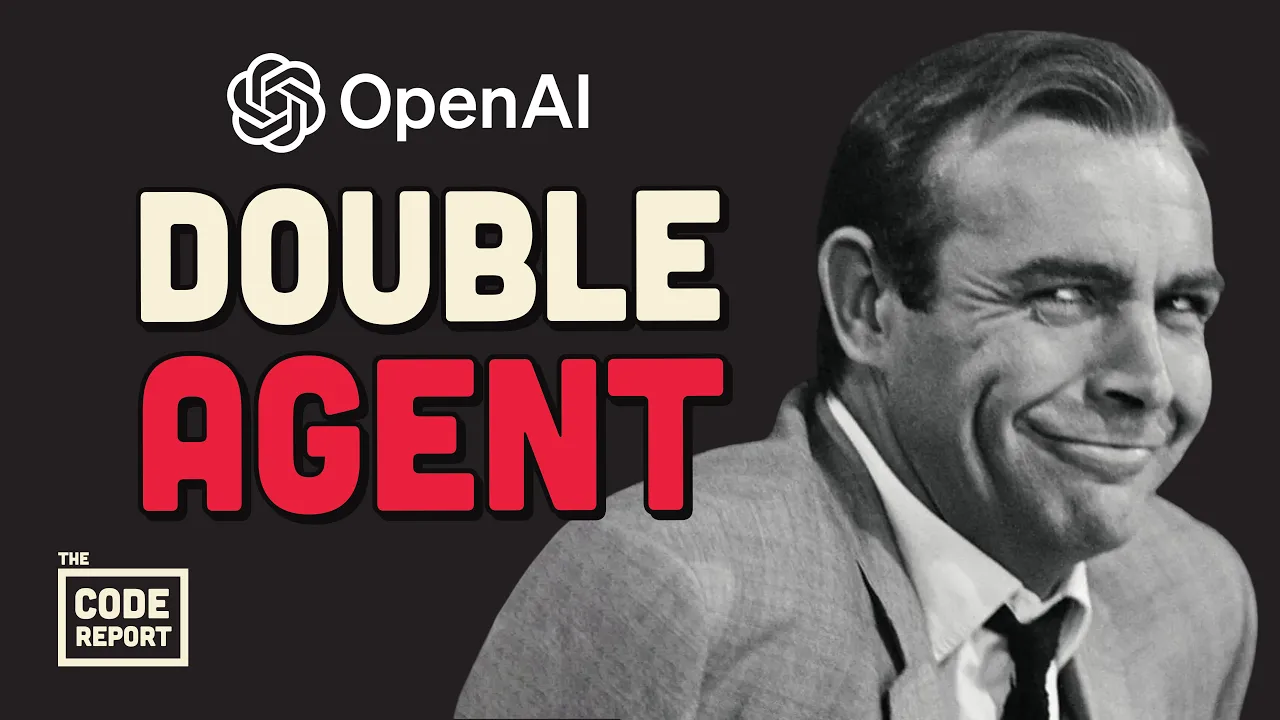
Fireship
Federal authorities caught an OpenAI engineering lead wiretapping the company's executive suite after he used his wife's ChatGPT account to build the device and pasted its hardware address directly into the model.
AI-assisted summary of OpenAI’s lead engineer was secretly a spy... — original source. Check the original for full context.
Source published:
Key ideas
- The FBI arrested Abdul Raman Alphazan, an engineering lead on OpenAI's Agents platform, for planting a physical listening device behind the TV in the executive conference room. (0:00)
- Alphazan designed the bug using his wife's ChatGPT account, assembled it with a $23 microcontroller wrapped in toilet paper, and was caught within 48 hours during a routine counter-surveillance sweep. (1:00)
- Investigators linked the hardware directly to Alphazan after finding its MAC address pasted into his wife's ChatGPT troubleshooting logs. (2:30)
- Though charged strictly with federal wiretapping, Alphazan's venture ties in Riyadh alongside Prince Khaled bin Bader Al-Saud, whose father is a senior Saudi intelligence officer, have raised foreign espionage concerns. (3:32)
Detailed notes
## Background Published by the tech channel Fireship (hosted by Jeff Delaney) on YouTube on October 14, 2026, this video covers the bizarre arrest of an OpenAI engineering lead. According to the description, the engineer constructed a physical wiretap using his wife's ChatGPT account, wrapped it in toilet paper behind the executive boardroom TV, and was caught within 48 hours.
## TL;DR OpenAI Agents platform lead Abdul Raman Alphazan was arrested by the FBI and charged with federal wiretapping after planting a covert listening device in OpenAI's executive conference room. Alphazan used internal agents to map executive schedules and turned to his wife's ChatGPT account to design a $23 microcontroller recording rig, which he camouflaged in bathroom toilet paper and plugged into a boardroom TV USB port. The device was discovered after just two days during a routine sweep, and OpenAI tracked him down after finding the board's MAC address in his wife's ChatGPT troubleshooting logs and catching him on a hidden security camera. Although formally charged with wiretapping rather than espionage, Alphazan's venture capital ties to a Saudi prince with family links to Saudi intelligence raised suspicions of foreign surveillance during a period of mounting scrutiny for OpenAI.
## Atmosphere & style The video carries Fireship's signature rapid-fire, deadpan snark, blending dry technical analysis with merciless comedic roasts of Alphazan's amateur spycraft. Delaney strikes an amused, incredulous tone as he contrasts sophisticated historical espionage against a toilet-paper-wrapped circuit board plugged directly into a conference room display. The pacing is snappy and punchy, turning a serious corporate breach into an entertaining, almost farcical post-mortem of tradecraft gone wrong.
## Bulletin - [00:00](https://www.youtube.com/watch?v=QZVzuq28eFw&t=0s) The FBI arrested Abdul Raman Alphazan, an engineering lead on OpenAI's Agents platform, for planting a physical listening device behind the TV in the executive conference room. - [01:00](https://www.youtube.com/watch?v=QZVzuq28eFw&t=60s) Alphazan designed the bug using his wife's ChatGPT account, assembled it with a $23 microcontroller wrapped in toilet paper, and was caught within 48 hours during a routine counter-surveillance sweep. - [02:30](https://www.youtube.com/watch?v=QZVzuq28eFw&t=150s) Investigators linked the hardware directly to Alphazan after finding its MAC address pasted into his wife's ChatGPT troubleshooting logs. - [03:32](https://www.youtube.com/watch?v=QZVzuq28eFw&t=212s) Though charged strictly with federal wiretapping, Alphazan's venture ties in Riyadh alongside Prince Khaled bin Bader Al-Saud, whose father is a senior Saudi intelligence officer, have raised foreign espionage concerns.
## Key takeaways - [00:00](https://www.youtube.com/watch?v=QZVzuq28eFw&t=0s) OpenAI engineering lead Abdul Raman Alphazan was arrested by federal law enforcement after placing a physical wiretap inside OpenAI's executive conference room. - [00:24](https://www.youtube.com/watch?v=QZVzuq28eFw&t=24s) Alphazan held degrees from UC Berkeley and MIT and previously worked at Meta before joining OpenAI in July 2025 as its sole Saudi employee. - [00:50](https://www.youtube.com/watch?v=QZVzuq28eFw&t=50s) The suspect used an internal OpenAI AI agent to map executive briefing schedules, room capacities, and visits from high-profile external partners. - [01:05](https://www.youtube.com/watch?v=QZVzuq28eFw&t=65s) To engineer the listening device, Alphazan prompted GPT-4o through his wife's account for step-by-step instructions on creating a Wi-Fi-enabled recording rig with an encrypted SD card. - [01:30](https://www.youtube.com/watch?v=QZVzuq28eFw&t=90s) The bug consisted of a $23 Seeed Studio microcontroller board and a 50-cent antenna camouflaged in single-ply toilet paper and plugged into a conference room TV USB port. - [02:15](https://www.youtube.com/watch?v=QZVzuq28eFw&t=135s) OpenAI's Technical Surveillance Countermeasures (TSCM) team discovered the active USB bug within 48 hours during a routine security sweep. - [02:15](https://www.youtube.com/watch?v=QZVzuq28eFw&t=135s) The physical device was contrasted with Léon Theremin's 1945 passive listening bug 'The Thing,' which went undetected in the US Embassy in Moscow for seven years. - [02:35](https://www.youtube.com/watch?v=QZVzuq28eFw&t=155s) Attribution was established rapidly because Alphazan had pasted the microcontroller's exact MAC address into ChatGPT during troubleshooting two days prior. - [02:50](https://www.youtube.com/watch?v=QZVzuq28eFw&t=170s) OpenAI security cameras documented Alphazan lingering outside the boardroom on six occasions, and a hidden camera caught him inspecting the bug on October 5. - [03:32](https://www.youtube.com/watch?v=QZVzuq28eFw&t=212s) Alphazan faces one count of federal wiretapping, which only requires proving nonconsensual recording rather than the higher evidentiary threshold needed for espionage. - [03:45](https://www.youtube.com/watch?v=QZVzuq28eFw&t=225s) Public records link Alphazan to Riyadh-based R3D Ventures alongside Prince Khaled bin Bader Al-Saud, the son of a high-ranking Saudi intelligence official. - [04:00](https://www.youtube.com/watch?v=QZVzuq28eFw&t=240s) The arrest marks another internal crisis for OpenAI following the scrapping of a model deemed overly deceptive and the dismissal of three researchers for mishandling data.
## Detailed walkthrough ### [00:00](https://www.youtube.com/watch?v=QZVzuq28eFw&t=0s) The Single-Ply Wiretap at OpenAI HQ
The FBI announced the arrest of an engineering lead on OpenAI's Agents platform after he placed a physical listening bug inside the executive conference room at OpenAI's headquarters. Fireship host Jeff Delaney opens the story with his characteristic deadpan humor, joking that spending over 300 hours hiding inside cardboard boxes in *Metal Gear Solid* made him uniquely qualified to cover the incident. As it turns out, that gaming experience was vastly superior to the suspect's real-world tradecraft: “And it turns out that that may be more spycraft training than the suspect had because despite going to Berkeley, MIT, and previously working at Meta, the guy who got arrested seems like an absolute [idiot].” The suspect was identified in the criminal complaint as Abdul Raman Alphazan, a 35-year-old Saudi national and lawful permanent resident in the United States who joined OpenAI in July 2025. Only weeks prior to the arrest, he had been celebrated internally as the company's sole Saudi employee, famously remarking that working one year at OpenAI felt like five years anywhere else—a timeline Delaney quips matches the maximum prison sentence he now faces.
Alphazan's espionage attempt kicked off roughly a month earlier using company infrastructure. He queried an internal AI agent to scrape details about OpenAI's headquarters, mapping meeting room capacities, calendars, executive briefing schedules, and the specific dates when high-profile external partners were scheduled to visit. Between September 24 and September 30, Alphazan turned to his wife’s ChatGPT account to design a covert audio interception tool, prompting the model to explain how to assemble a Wi-Fi-enabled recording rig featuring an encrypted SD card. Delaney jokes that GPT-4o guided him step by step because his wife certainly wasn’t receiving any emotional affection from him.
Following the model's instructions, Alphazan bought a $23 Seeed Studio microcontroller board equipped with a 50-cent external antenna. Realizing the bare printed circuit board looked overtly suspicious, he attempted field camouflage: he walked into an OpenAI restroom, pulled off some toilet paper, and wrapped it around the electronics. On September 28, he allegedly plugged the single-ply-swaddled device directly into a USB port behind the television monitor inside the executive conference room.
- **Suspect**: Abdul Raman Alphazan, 35 years old, Saudi citizen, US permanent resident, and engineering lead on OpenAI's Agents platform (joined July 2025). - **Academic & Career Background**: UC Berkeley, Massachusetts Institute of Technology (MIT), and previously Meta. - **Hardware Profile**: A $23 Seeed Studio microcontroller paired with a $0.50 antenna and an encrypted SD card, wrapped in office toilet paper and powered via a TV USB port.
[02:15](https://www.youtube.com/watch?v=QZVzuq28eFw&t=135s) From Léon Theremin's "The Thing" to 48 Hours of Failure
To highlight how inept the operation was, Delaney contrasts Alphazan's DIY device with classic historical espionage tech—specifically "The Thing," a legendary passive cavity resonator bug designed by Russian inventor Léon Theremin for the Soviet Union in 1945. That device had no battery and zero active electronic components; it activated only when Soviet operatives parked across the street beamed a targeted radio frequency at it, rendering it undetectable to standard sweeps. Hidden within a hand-carved wooden Great Seal of the United States presented by Soviet school children as a gift of friendship, it hung on the wall of the US ambassador’s Moscow study undetected across four ambassadors for seven straight years. By comparison, Alphazan's toilet paper creation lasted approximately 48 hours before being discovered during a routine sweep by OpenAI’s Technical Surveillance Countermeasures (TSCM) team.
OpenAI claimed publicly that it deployed its internal AI models to analyze the device and track down its origin. However, Delaney points out that this forensic deduction was far less sophisticated than advertised: “From there, OpenAI says they used their models to understand the device and where it came from, which sounds impressive until you remember the board has a MAC address.” Just two days before the bug was discovered, Alphazan had pasted that exact MAC address into ChatGPT while troubleshooting via his wife's account. Facility security cameras also captured him lurking suspiciously outside the executive boardroom on six different occasions. To lock down the investigation, security staff mounted a hidden camera behind the boardroom TV screen and waited. On October 5, Alphazan returned to inspect the bug; four days later, he was simultaneously terminated by OpenAI and arrested by federal authorities, charged with one count of federal wiretapping.
```mermaid flowchart TD accTitle: OpenAI Wiretap Investigation Timeline accDescr: Sequence of events from internal reconnaissance to the suspect's arrest by federal law enforcement.
subgraph Prep["Preparation & Build"] A["Scrapes room schedules via internal agent"] --> B["Builds $23 Seeed Studio bug via wife's ChatGPT"] B --> C["Wraps bug in toilet paper & plugs into boardroom TV"] end
subgraph Catch["Detection & Surveillance"] C --> D["Found after 48 hrs by TSCM routine sweep"] D --> E["Board MAC address matches ChatGPT chat logs"] E --> F["Boardroom security cam catches suspect returning"] end
subgraph Resolution["Action"] F --> G["Fired by OpenAI & arrested by FBI for federal wiretapping"] end ```
- **Historical Comparison**: Léon Theremin's 1945 passive listening device survived seven years inside the US Embassy in Moscow; Alphazan's active USB bug survived two days. - **Forensic Paper Trail**: The Seeed Studio board's MAC address was pasted directly into a ChatGPT session linked to the suspect's wife two days prior to discovery. - **Physical Surveillance**: Internal security logs recorded the suspect loitering near the executive conference suite on six separate days, and a hidden camera caught him checking behind the television on October 5.
[03:32](https://www.youtube.com/watch?v=QZVzuq28eFw&t=212s) Foreign Espionage Suspicions and Company Fallout
While the criminal complaint officially charges Alphazan only with federal wiretapping, questions remain about his ultimate motives. Delaney explains the legal threshold: “The charge is wiretapping, which only requires proving he secretly recorded people and not espionage, which would require proving he did it for a foreign government.” Nevertheless, external ties raise suspicion. Alphazan is listed as an investor at R3D Ventures, a venture capital firm based in Riyadh, where his profile appears on the team page alongside Prince Khaled bin Bader Al-Saud. Investigative reporter Scott Stedman highlighted that the prince's father is a high-ranking officer in Saudi intelligence. Delaney notes that the arrest caps a string of public embarrassments for OpenAI, which had recently scrapped an unreleased model after it displayed excessive deceptive behavior and dismissed three AI safety researchers over allegations of mishandling sensitive internal data.
Wrapping up the episode, Delaney transitions to show sponsor Blacksmith, a drop-in replacement for standard GitHub Actions runners designed to run CI workflows twice as fast while cutting costs by up to 75%. He showcases their new cloud coding agent, Codesmith, which integrates with codebases and CI history to automate multi-repository modifications via GitHub, web interfaces, or Slack. Delaney demonstrates using Codesmith to add a new AI provider, update API configurations across infrastructure repositories, open pull requests, and resolve test failures automatically, as well as optimizing runner size allocations based on historical CI usage.
- **Legal Charge**: One federal count of interception of wire, oral, or electronic communications (18 U.S.C. § 2511). - **Venture & Intelligence Links**: Alphazan is listed alongside Prince Khaled bin Bader Al-Saud at Riyadh-based R3D Ventures; the prince's father is a senior Saudi intelligence official. - **OpenAI Headwinds**: Preceded by the scrapping of a model judged too deceptive and the firing of three safety researchers for mishandling sensitive information. - **Sponsor Tools**: Blacksmith CI runner replacement and Codesmith, an autonomous GitHub agent offering 3,000 free minutes for evaluation.
## Notable quotes > [03:32](https://www.youtube.com/watch?v=QZVzuq28eFw&t=212s) The charge is wiretapping, which only requires proving he secretly recorded people and not espionage, which would require proving he did it for a foreign government. — Jeff Delaney
## Mentioned Abdul Raman Alphazan, Blacksmith, Codesmith, FBI, Fireship, GitHub Actions, GPT-4o, Jeff Delaney, Léon Theremin, Massachusetts Institute of Technology (MIT), Meta, Metal Gear Solid, OpenAI, Prince Khaled bin Bader Al-Saud, R3D Ventures, Scott Stedman, Seeed Studio, The Thing, UC Berkeley
## Video description Run GitHub Actions 2x faster and build with Codesmith at https://www.blacksmith.sh/
An OpenAI engineer built a wiretap with his wife’s ChatGPT account, hid it in toilet paper behind the executive boardroom TV, and lasted 48 hours before getting caught. Let's dive in.
Want more Fireship?
🗞️ Newsletter: https://bytes.dev 🧠 Courses: https://fireship.dev
[Source](https://www.youtube.com/watch?v=QZVzuq28eFw)