OpenAI Catches Spy Device in Boardroom as Smart TV Tracking Sparks Alarm
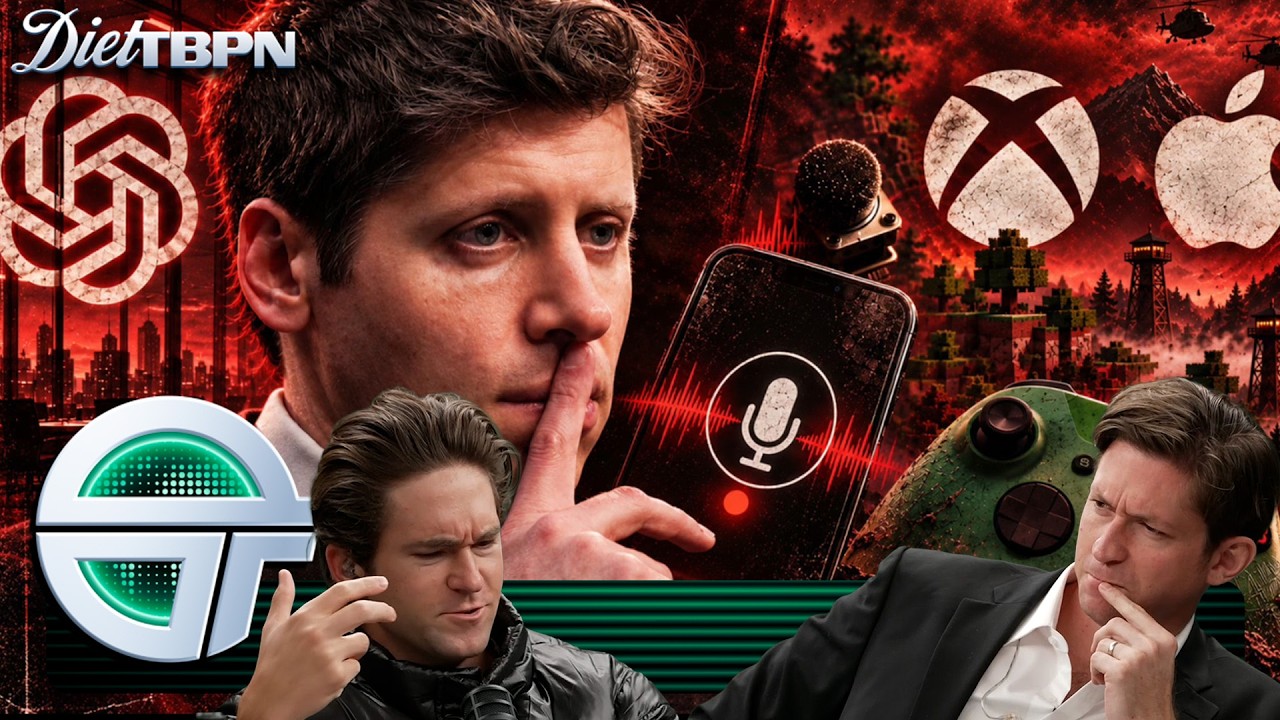
OpenAI Bugging Incident, Are Your Devices Listening? Xbox Launches Remix Lab | Diet TBPN — TBPN

TBPN

Hyper-targeted advertising stems from corporate call transcriptions and network tracking rather than secret ambient listening, rendering widespread microphone paranoia unfounded.

AI-assisted summary of OpenAI Bugging Incident, Are Your Devices Listening? Xbox Launches Remix Lab | Diet TBPN — original source. Check the original for full context.

Source published:

Key ideas

  • OpenAI discovered a cheap $15 Chinese audio recorder wrapped in toilet paper behind a television in an executive conference room, with legal filings linking the hardware queries directly to a suspect's spouse's chatbot account. (0:56)
  • Gamers Nexus reported that LG smart TVs scan local subnets for unconnected devices and capture audio even when disconnected from primary home Wi-Fi by piggybacking on public cable hotspots. (11:11)
  • Microsoft launched Xbox Labs to officially support game decompilation, WebAssembly browser ports, and community modding architectures. (23:43)
  • Global annual spending on alcohol currently stands at $1.7 trillion, still surpassing the $1.5 trillion dedicated to worldwide AI infrastructure capital expenditures. (31:30)

Detailed notes

## Background Published on YouTube by TBPN on October 15, 2026, this episode of 'Diet TBPN' presents a 30-minute distillation of the daily live tech talk show hosted by John Coogan and Jordi Hays. According to the show description, the episode covers a bugging incident at OpenAI, debates whether personal devices secretly listen to users, examines smart home privacy concerns, and highlights Xbox's Remix Lab and viral culture news.

## TL;DR The hosts begin with an appeal to support podcaster Ben Wilson following his cancer diagnosis before breaking down an amateur espionage incident involving a $15 audio recorder hidden in toilet paper inside an OpenAI executive room. They analyze consumer fears around smart device surveillance, debunking ambient microphone myths by explaining real-world ad targeting pipelines and reviewing Gamers Nexus's findings on LG smart TVs. The discussion moves through smart home tier lists, Microsoft Xbox Labs' embrace of game decompilation, and leaked details on Grand Theft Auto VI, wrapping up with Kelly Clarkson's viral feud with a Brooklyn novelty shop and a comparison showing global alcohol spending still exceeds AI infrastructure investments.

## Atmosphere & style The broadcast carries an energetic, irreverent, and fast-paced tech watercooler vibe, shifting effortlessly from genuine empathy to cynical industry wit. Coogan and Hays banter with loose comedic chemistry, treating corporate espionage and invasive data tracking with amused incredulity. The listening experience feels like dropping into a sharp, meme-literate morning chat where complex hardware analysis and legal reports naturally collide with absurd comedic tangents, such as shaking down trick-or-treaters over Disney IP or pricing the right to burn down a nightclub.

## Bulletin - [00:56](https://www.youtube.com/watch?v=8ZRIvixgyuw&t=56s) OpenAI discovered a cheap $15 Chinese audio recorder wrapped in toilet paper behind a television in an executive conference room, with legal filings linking the hardware queries directly to a suspect's spouse's chatbot account. - [11:11](https://www.youtube.com/watch?v=8ZRIvixgyuw&t=671s) Gamers Nexus reported that LG smart TVs scan local subnets for unconnected devices and capture audio even when disconnected from primary home Wi-Fi by piggybacking on public cable hotspots. - [23:43](https://www.youtube.com/watch?v=8ZRIvixgyuw&t=1423s) Microsoft launched Xbox Labs to officially support game decompilation, WebAssembly browser ports, and community modding architectures. - [31:30](https://www.youtube.com/watch?v=8ZRIvixgyuw&t=1890s) Global annual spending on alcohol currently stands at $1.7 trillion, still surpassing the $1.5 trillion dedicated to worldwide AI infrastructure capital expenditures.

## Key takeaways - [00:00](https://www.youtube.com/watch?v=8ZRIvixgyuw&t=0s) Ben Wilson, creator of the 'How to Take Over the World' podcast, has been diagnosed with terminal stage four cancer at age 38, prompting widespread fundraising and medical support appeals across tech media. - [00:56](https://www.youtube.com/watch?v=8ZRIvixgyuw&t=56s) The bugging incident at OpenAI reflects amateur tradecraft rather than state-sponsored intelligence, leaving an explicit digital paper trail via AI chatbot queries detailing the device's exact hardware identifiers. - [03:00](https://www.youtube.com/watch?v=8ZRIvixgyuw&t=180s) Eavesdropping on AI executive boardrooms offers little technical value, as high-value assets like model weights and source code cannot be captured through conference room audio. - [05:00](https://www.youtube.com/watch?v=8ZRIvixgyuw&t=300s) Persistent consumer belief in ambient microphone surveillance is technically inaccurate; hyper-targeted ads rely instead on cross-referencing geolocation, purchase graphs, and inbound phone call transcriptions uploaded via identity resolution platforms like LiveRamp. - [10:00](https://www.youtube.com/watch?v=8ZRIvixgyuw&t=600s) Economic whistleblower incentives make secret, passive listening programs inside major platforms like Meta practically impossible to conceal without leaks. - [11:11](https://www.youtube.com/watch?v=8ZRIvixgyuw&t=671s) LG smart TVs face significant privacy backlash after technical tests revealed aggressive subnet device scanning and ambient voice transcription capable of storing years of plaintext dialogue on 1 GB of storage. - [13:30](https://www.youtube.com/watch?v=8ZRIvixgyuw&t=810s) LG defended its television audio intake by stating microphone recording is limited to active voice sessions initiated by user remote clicks, though background chatter during those windows is still processed. - [15:00](https://www.youtube.com/watch?v=8ZRIvixgyuw&t=900s) Apple's smart home strategy draws criticism for relying on third-party hardware partners like LG for locks and doorbells rather than building an integrated, first-party HomeKit ecosystem. - [16:00](https://www.youtube.com/watch?v=8ZRIvixgyuw&t=960s) The hosts rank Amazon as the top connected smart home ecosystem due to fully integrated Ring hardware, hubs, and defense drones, while Apple's reliance on compromised third parties weakens HomeKit. - [23:43](https://www.youtube.com/watch?v=8ZRIvixgyuw&t=1423s) Xbox Labs embraces vibe coding and reverse-engineering, testing whether sandbox decompilation and browser ports like WebAssembly can unlock long-term enterprise value akin to Roblox. - [25:00](https://www.youtube.com/watch?v=8ZRIvixgyuw&t=1500s) Leaked development details for Grand Theft Auto VI reveal an eight-year production cycle, a narrative locked since 2019, dynamic dual-protagonist interactions, and a geographic scope scaled down from the Americas to Vice City. - [27:42](https://www.youtube.com/watch?v=8ZRIvixgyuw&t=1662s) Pop star Kelly Clarkson sparked a viral retail feud after publicly rebuking Brooklyn novelty boutique Art of Play for refusing to sell an animatronic bird named Molly that was bolted to the wall as a permanent theater prop. - [30:00](https://www.youtube.com/watch?v=8ZRIvixgyuw&t=1800s) The hosts argue for radical retail pricing where every physical asset in a commercial storefront—including point-of-sale terminals and ceiling tiles—should have an itemized replacement price available to buyers. - [31:30](https://www.youtube.com/watch?v=8ZRIvixgyuw&t=1890s) Global capital expenditures on AI infrastructure sit at $1.5 trillion, highlighting that despite the tech boom, humanity still allocates more capital to alcohol at $1.7 trillion annually.

## Detailed walkthrough ### [00:00](https://www.youtube.com/watch?v=8ZRIvixgyuw&t=0s) Support for Ben Wilson and the How to Take Over the World Podcast

The hosts open the show with a personal appeal regarding Ben Wilson, the creator of the podcast *How to Take Over the World*. Ben was recently hosted by David Senra on *Founders*, where Senra shared that Wilson has been diagnosed with stage four cancer and has four children under the age of five. Senra urged listeners to rally support, asking for help with medical connections, treatments, introductions, or donations.

The hosts echo this call to action at the very top of their broadcast, emphasizing Wilson's impact on millions of listeners globally. Reflecting on Wilson's character, one host notes:

> “His work has benefited millions of people all across the world. Please watch this episode and see if you can help with medicine, introductions, or donations.”

They highlight how staggering it is for someone to be told they are facing terminal illness at age 38, praising Wilson as an extraordinary thinker who spent years analyzing the lives of history's greatest figures.

---

[00:56](https://www.youtube.com/watch?v=8ZRIvixgyuw&t=56s) OpenAI Bugging Incident and the FBI Investigation

The discussion shifts to corporate espionage following reports that OpenAI caught an individual planting a listening device behind a television inside an executive conference room. Online sleuths and news outlets rapidly picked up the story, noting discrepancies in the suspect's background, such as claims on LinkedIn and X profiles about speaking at Stanford University despite lacking documented ties to the institution. Details from the legal complaint reveal that the device was surprisingly low-tech: a cheap, Chinese-made recorder estimated at around $15, wrapped in toilet paper and tucked behind a mounted television.

Journalist Kylie Robison characterized the attempt as "amateur hour." A chatbot account tied to the engineer's spouse—sharing account identifiers with the suspect—had repeatedly submitted prompts asking how to construct a concealed audio recorder, add Wi-Fi capabilities, enable remote listening, and encrypt memory cards. The queries even cited the exact hardware identifiers of the recovered device. The hosts find the entire operation bizarre, noting that this amateurish paper trail points toward a lone-wolf actor rather than state-sponsored intelligence tradecraft:

> “A chatbot account associated with the engineer's spouse, which shared identifiers with his own account, submitted prompts about building and concealing a continuous audio recorder, adding Wi-Fi, listening remotely and encrypting its memory card, according to the complaint.”

The hosts also question the strategic value of bugging an executive boardroom in an AI lab. While nation-state adversaries typically focus on exfiltrating frontier model weights or proprietary code, eavesdropping on executive meetings yields high-level business strategy rather than technical model architectures. As one host jokes, you will not overhear Sam Altman and Greg Brockman reading off neural network parameters digit by digit:

```mermaid flowchart TD accTitle: OpenAI Espionage Vector Comparison accDescr: Contrasting typical high-value AI espionage targets with the low-tech bugging incident at OpenAI.

subgraph HighValue["Traditional Nation-State Threats"] A["Model Weights Exfiltration"] B["Proprietary Source Code"] C["Frontier Training Datasets"] end

subgraph BuggingIncident["Conference Room Device Target"] D["$15 Audio Recorder Wrapped in Toilet Paper"] E["Executive Business Strategy"] F["Stock-Trading Intel / M&A Chat"] end

HighValue -.->|"Cannot be captured via audio"| BuggingIncident ```

- **Device details**: Estimated $15 consumer-grade Chinese audio recorder wrapped in toilet paper. - **Digital footprint**: Queries submitted to an AI chatbot asking for instructions on building continuous recording hardware and remote transmission. - **Suspect associations**: Rumors debated online regarding an alleged 2018 photo with Saudi Crown Prince Mohammed bin Salman, though the hosts note photo ops can be easily obtained.

---

[05:00](https://www.youtube.com/watch?v=8ZRIvixgyuw&t=300s) Bizarre Concealment and the Instagram Microphone Myth

The hosts dissect the choice to conceal the recording device in toilet paper. Hiding electronics in a bathroom paper roll behind an executive TV makes it stand out immediately during any basic visual sweep. An everyday peripheral like an Amazon Fire TV Stick, a plain USB drive, or an empty Apple TV shell would blend into an entertainment console, whereas raw household paper instantly triggers suspicion:

> “Yeah, it's going to draw your eye because you're like toilet paper should never be in an electronics cabinet.”

This discussion of covert listening leads into a debate about the persistent consumer belief that Meta and Instagram secretly tap phone microphones to target ads. One host recounts a friend treating ambient phone eavesdropping not as a fringe conspiracy, but as an accepted platform feature.

The hosts explain that this myth has been repeatedly debunked—including by *Wired* in 2017 and by Antonio García Martínez during a 2022 appearance on *The Joe Rogan Experience*. Instead of streaming terabytes of battery-draining ambient audio, Meta achieves uncanny targeting through sophisticated cross-referencing: shared geolocations, friend-network purchase receipts, browsing tracking, and the sheer probability of delivering thousands of ads a day where a handful land with eerie precision.

They also point out that the legal, PR, and whistleblowing risks prevent tech giants from secretly recording users' rooms:

> “Facebook, like, straight up has on their, like, about page, like, we don't use your microphone unless you've given us permission and are actively using a feature that requires the microphone.”

Joking about the absurdity of ambient recording, the hosts imagine a room of ad executives scrambling whenever a microphone accidentally activates, contrasting automated modern ad auctions with a fictional social network where vintage "Don Draper" ad men handcraft custom ads over martinis and cigars.

[10:00](https://www.youtube.com/watch?v=8ZRIvixgyuw&t=600s) Ambient Audio, LiveRamp, and How Spoken Words Reach Meta Ads

The discussion kicks off around the persistent rumor that phones and smart devices secretly listen to private conversations to serve hyper-targeted advertisements. John Coogan and Jordi Hays point out the overwhelming economic incentive for anyone on the inside to expose such a practice: “It's just quit your job immediately, get the whistleblower status, Netflix doc, book, tour, like you're going to make way more money.” The incentive to blow the whistle on an unauthorized, passive listening program inside Meta is simply too immense for it to stay hidden.

However, there is an actual, technical pipeline through which spoken words can end up steering Instagram and Facebook ads. Companies handling incoming business phone calls frequently deploy AI speech-to-text engines to transcribe customer calls in real time. That transcribed conversation can then be packaged and matched through identity-resolution platforms like LiveRamp, feeding custom audience segments directly into Meta Ads Manager. If an individual calls Bottega Veneta to discuss specific luxury products, that conversation can trigger retargeted ads later that day. It is not an unprompted ambient leak from an idle room—the consumer knowingly spoke to a business—yet it creates the eerie illusion of an app eavesdropping without an on-page tracking pixel.

```mermaid flowchart LR accTitle: Spoken Audio to Ad Retargeting Pipeline accDescr: Pipeline showing how call audio turns into targeted Meta ads via transcription and LiveRamp. subgraph Capture["1. Inbound Voice"] A["Customer Phone Call<br/>(e.g., Bottega Veneta)"] end subgraph Processing["2. AI Pipeline"] B["Speech-to-Text Model"] C["Transcribed Text Data"] end subgraph Retargeting["3. Ad Targeting"] D["LiveRamp Data Onboarding"] E["Meta Ads Manager<br/>Audience Segment"] end A --> B B --> C C --> D D --> E ```

[11:11](https://www.youtube.com/watch?v=8ZRIvixgyuw&t=671s) The Gamers Nexus LG TV Investigation and Ambient Tracking Allegations

The hosts pivot to recent smart TV controversies, recalling Palmer Luckey appearing on TBPN to rant about how frustrating modern smart televisions have become—bloated with clunky interfaces, intrusive ads, and mandatory firmware updates every five days. That frustration turned into genuine privacy alarm following a two-hour investigative video published by Gamers Nexus inspecting LG smart TVs. The outlet alleged that LG screens operate essentially like aggressive spyware. In their testing, an LG G5 model scanned the local network and cataloged dozens of unconnected devices—including smartwatches and personal phones owned by staff who were not even involved in the review.

```mermaid flowchart TD accTitle: Gamers Nexus LG TV Surveillance Findings accDescr: Network scanning and audio capture mechanisms identified on LG smart TVs by Gamers Nexus. subgraph Network["Network Infiltration"] A["LG Smart TV"] -->|"Crawls Local Subnet"| B["Third-Party Devices<br/>(Smartphones, Smartwatches)"] A -->|"Unplugged from LAN"| C["Nearby Open Wi-Fi<br/>(Xfinity, Spectrum hotspots)"] end subgraph AudioPipeline["Audio Pipeline"] D["Microphone / Remote"] -->|"Local Transcription"| E["Plaintext Storage<br/>(Years of data per 1 GB)"] E -.->|"Syncs when reconnected"| F["LG Ad Solutions / Cloud"] end A --> AudioPipeline ```

The investigation claimed the television captured microphone audio even when completely unplugged from the local network, because it could automatically hop onto nearby ambient public hotspots provided by cable operators like Comcast Xfinity or Spectrum. Gamers Nexus founder Steve Burke reported that spoken audio was being transcribed into plain text locally. Because modern on-device transcription models require trivial compute and text files take up minuscule space, a TV could store years of ambient conversation on a single gigabyte of storage before quietly phoning home when internet connectivity returns.

In response, LG issued a defense claiming they do not engage in continuous background conversation recording. Instead, LG clarified that audio processing occurs during an “active voice session”—such as when a user physically depresses the remote's microphone button to issue a command like “put on Red Bull TV.” However, during that active window, any background chatter (like roommates discussing weekend plans) is ingested alongside the command. The hosts also touch upon Xfinity productizing a feature that turns home Wi-Fi routers into radar-like motion sensors, prompting the running joke: “Can you detect aura too or just motion?” While LG maintains an Ad Solutions business that can tie into ad ecosystems, confirmation bias fuels much of the panic—users forget the hundred irrelevant ads they scroll past, only fixating on the one ad that happens to match a recent conversation.

- Gamers Nexus documented an LG TV detecting dozens of peripheral office devices across the local subnet. - Steve Burke reported microphone audio was captured even when disconnected from primary home Wi-Fi. - Plaintext compression allows roughly years of transcribed ambient room conversations to fit onto a tiny 1 GB flash drive. - LG maintained that background audio is only swept up during intentional, button-press voice remote activations.

[15:00](https://www.youtube.com/watch?v=8ZRIvixgyuw&t=900s) Apple’s Hardware Surrender and the Smart Home Tier List

Despite the privacy backlash, one of the hosts admits he immediately bought another LG TV anyway, dismissing the privacy hysteria because their display panels remain unmatched: “I already did. They're the best. I just don't mind it. It's just gonna listen to my voice recordings and be like, wow, this guy's awesome.”

The discussion shifts to Apple's smart home strategy and their recent partnership with LG and third-party hardware manufacturers, alongside a controversial new ad campaign for Apple HomeView. One host is furious that Apple relies on third-party hardware partners for locks, cameras, and doorbells rather than building their own integrated first-party gear: “You're telling me Apple can't make like a doorbell? They don't know how anymore.”

To evaluate the state of connected home tech, the hosts rank four smart home setups into a tier list:

| Ecosystem Setup | Tier Rank | Distinctive Hardware & Host Commentary | |:--- |:--- |:--- | | **Random Chaos Mode** | **F Tier** *(briefly joked as B Tier)* | An ad-hoc patchwork of an Amazon Echo on the counter, a Google Nest thermostat on the wall, an iPhone in pocket, and an iPad on the desk. | | **All-In Google** | **A Tier** | Unified Google ecosystem including Google smart locks and Nest gear, even when paired with an iPhone in the user's pocket. | | **All-In Amazon** | **S Tier** | Ring cameras, Echo hubs, the Rufus AI assistant, and the autonomous indoor defense drone patrolling the house. | | **All-In Apple / HomeKit** | **Debated / Compromised** | Running an iPhone alongside an LG smart lock integrated into Apple Home; deeply questioned due to LG's privacy track record. |

When pushed on the Apple option using an LG lock, an argument breaks out over relying on an LG product after dissecting its data-tracking habits. While one host complains about being forced into third-party surveillance, the other dismisses the distinction entirely: “It's all global spy services. They're all global spy services. Apple is maybe the least. We just spent 20 minutes talking about how LG is absolutely the worst.”

[20:00](https://www.youtube.com/watch?v=8ZRIvixgyuw&t=1200s) Smart Home Security and the Halloween Extortion Scheme

The discussion kicks off with a lighthearted comparison of smart home privacy standards. One host remarks that while LG might represent the bottom tier and Apple the top, the blended industry standard lands somewhere around Google and Amazon quality. Apple’s reputation for crystal-clear messaging and end-to-end encryption in Apple Home is highlighted, prompting a joke about whether an encrypted audio stream simply gets securely shuttled over to a data broker who unencrypts it later. A commenter in the chat, Trey, quips that an "Apple LG is Hublot here."

```mermaid flowchart TD accTitle: Two-Sided Halloween IP Extortion Scheme accDescr: Diagram illustrating the two phases of a fraudulent Halloween copyright racket targeting parents and Disney.

subgraph Phase1["Phase 1: Street-Level Ambush"] A["Spot Kid in Handmade Costume<br/>(e.g., Iron Man / Disney IP)"] --> B["Film Fake 'Man-on-the-Street' Video"] B --> C["Get Parent Admission:<br/>'Yes, I made it myself'"] C --> D["Print Lawsuit On-the-Fly<br/>via LG Pocket Photo Printer"] D --> E["Offer Instant Street Settlement<br/>via Venmo"] end

subgraph Phase2["Phase 2: Corporate Shakedown"] E --> F["Take Infringement Dossier to Disney"] F --> G["Pitch IP Enforcement Crackdown"] G --> H{"Studio Reaction:<br/>'This will destroy our brand!'"} H --> I["Demand Venmo Settlement<br/>to Bury the Footage"] end ```

The hosts pivot into an elaborate, satirical Halloween business plan powered by generative AI. Because filing lawsuits has become trivially easy with modern tools, they propose staking out popular trick-or-treating neighborhoods to ambush children dressed in handmade costumes of copyrighted characters that are not yet in the public domain, such as Disney's Iron Man. The grifter would approach disguised as an upbeat TikTok content creator doing a "man-on-the-street" interview:

> "Oh, I love your costume. Is it homemade?"

Once the proud parent confesses on camera that they hand-crafted the outfit and paid no licensing royalties, the creator immediately generates a small-claims copyright lawsuit. Building on the previous gadget discussion, John points out that LG manufactures a pocket-sized photo printer, which could be used to print and serve the legal papers on the spot:

> "I'm here now to serve you with intellectual property, theft, small claims, lawsuit."

The racket operates as a double-sided shakedown. First, the parents are panicked into settling the claim on the street via Venmo to avoid a Disney legal war. Second, the perpetrator takes the entire portfolio of recorded infractions straight to Disney’s executives, pitching a massive enforcement payout. When Disney protests that prosecuting children in homemade costumes would cause catastrophic PR damage and destroy their brand, the creator turns the tables:

> "It would be a shame if this got out. Let's settle. Over Venmo. So you can Venmo me to make this go away."

[23:43](https://www.youtube.com/watch?v=8ZRIvixgyuw&t=1423s) Edge AI Threats and Xbox Labs' Decompilation Gambit

The conversation briefly turns more technical, touching on recent security reporting from the *Financial Times* and Anthropic regarding self-replicating edge AI models. The hosts consider the strange scenario where low-powered, commodity hardware—such as a smart doorbell, an Xbox, or a PlayStation—could run small local models. While exceptionally slow, such agents could continuously ring doorbells to network with other agents in a swarm, leading the hosts to joke that a fully "analog home" might ultimately be the safest choice.

From there, the focus shifts to gaming. Microsoft has officially launched Xbox Labs (`labs.xbox.com`), an initiative designed to lean into game decompilation and vibe coding. While decompiled titles and community reverse-engineering threaten traditional intellectual property business models, Microsoft's diversified corporate structure allows Xbox to experiment without stressing over short-term quarterly revenue hits. Asha Sharma from Microsoft Xbox received widespread praise across social media after detailing the strategy to her team:

> "In recent weeks, we've seen games rapidly decompiled and rebuilt to run on hardware they were never originally intended to support. Windows PC builds have been translated to run on Apple Silicon, ported to run inside of a web browser using WebAssembly. Surprisingly, we've seen many of the biggest games in the world have been remixed into the source code of another. We saw this with Call of Duty and Minecraft, right? They stood up Xbox Labs, a small group of game makers, engineers, and scientists whose job it is to turn emerging ideas into things our players and developers can experience, will build in the open, learn from what people [do]."

Reacting to the announcement, tech commentator John Palmer observed that an official sandbox ecosystem could unlock massive enterprise value:

> "If Xbox launched an official version of decompiled Halo with a forge mode and a marketplace slash discovery of mods akin to how Roblox works, they would make one trillion dollars."

- **Xbox Labs Focus**: Embracing user decompilation, WebAssembly browser ports, and cross-platform translation (such as running PC games on Apple Silicon). - **Core Dilemma**: Determining whether to burn down traditional release models in favor of community-driven remix culture or keep milking the existing blockbuster distribution pipeline.

[25:00](https://www.youtube.com/watch?v=8ZRIvixgyuw&t=1500s) GTA 6 Leaks, the Xbox Nano, and Codex

The hosts dig into a Bloomberg report and a viral summary thread by Synth Potato detailing the long-awaited development history of Rockstar Games' *Grand Theft Auto VI*.

- **Eight-Year Development Window**: Contrary to assumptions that full production began immediately after *Grand Theft Auto V*, active development has been underway for eight years. - **Story Locked Early**: The overarching narrative and main plot structure were finalized back in 2019. - **Scope Downscaling**: The original pitch spanned vast geographic regions across North and South America before developers scaled the map down to Vice City (Miami) and its surrounding areas. - **RDR2-Inspired Realism**: The game builds on systems pioneered in *Red Dead Redemption 2*, investing heavily in bespoke NPC behaviors. Rockstar debated the granular realism of mundane chores like buying drinks or cooking meals. - **Dynamic Protagonists**: Main characters Jason and Lucia interact dynamically throughout the open world during free-roaming gameplay, rather than having their relationship restricted to scripted story missions.

Turning to new hardware, Microsoft unveiled the **Xbox Nano controller** priced at $49.99, compatible with consoles, PCs, mobile devices, and smart TVs. The hosts dismiss the device's diminutive size as strictly tailored for ultra-casual gamers, though they predict the community will rapidly hack it to emulate niche hardware setups, such as custom dual-stick throttles for *Star Wars* pod-racing games.

The segment wraps with a read for **Codex**, highlighting its AI agent workspace designed to streamline coding, data analysis, content generation, and business automation workflows.

[27:42](https://www.youtube.com/watch?v=8ZRIvixgyuw&t=1662s) The Kelly Clarkson vs. Art of Play Brooklyn Feud

The hosts unpack a bizarre viral controversy that blew up on social media involving pop superstar Kelly Clarkson and Art of Play, a boutique novelty and puzzle shop in Brooklyn. The saga gained mainstream traction through a deep-dive by sports and culture host Pablo Torre.

On October 10th, Clarkson posted a blistering rant on X (formerly Twitter) accusing an employee of sizing her up and assuming she could not afford their merchandise, directly evoking Julia Roberts in *Pretty Woman*:

> "Just drove all the way to Brooklyn to check out this store. I thought looked really rad and had a few things in mind to buy. And literally was looked at as if I couldn't afford it. And was told he could find something comparable for me. Wow, dude, you're an idiot and just lost a huge sale. But y'all should go check out Art of Play in Brooklyn. If you enjoy being treated like Julia Roberts' character in Pretty Woman, for sure, check it out. 👎"

The spat drew a flood of internet commentary, including a tongue-in-cheek reply from Eliano at Palantir: "Kelly, you would never be treated this way in the Palantir pop-up shop in Seoul, South Korea."

Art of Play quickly issued a public rebuttal setting the record straight. According to the shop, Clarkson had fixated on **Molly**, a unique singing and dancing animatronic bird automaton featured as a permanent set piece in the venue's live magic performances. Because Molly is physically bolted to the wall, the clerk informed her it was simply not for sale, offering to find similar items instead. In their statement, the owners defended their customer-first philosophy:

> "Yesterday, Kelly Clarkson visited us in Brooklyn and inquired about buying Molly. A one-of-a-kind singing and dancing bird automaton who plays an important role in the magic shows we host here. Molly is permanently attached to the wall and isn't for sale. However, the negative experience Kelly described on Twitter would resonate with anyone who has felt judged in a shop. At Art of Play, whether someone comes in to make a purchase or simply look around for a while, they are equally welcome. We greet everyone who walks in the door with the invitation to pick things up and play, and they do. Many stay for hours enjoying our puzzles, games, and toys. Imagine our surprise when our small local business was suddenly attacked."

[30:00](https://www.youtube.com/watch?v=8ZRIvixgyuw&t=1800s) The Brooklyn Store Fallout, Radical Retail Pricing, and the Burn-Down Club

The hosts revisit the fallout from the viral Kelly Clarkson Brooklyn store incident involving a display bird that was not for sale. With roughly eight million online viewers reacting, the store finds itself on the receiving end of review bombing and a barrage of angry messages from people who have never set foot inside the building. The hosts admire the shop's cheeky public response, which directly quoted one of Clarkson's biggest hits: “As a talented popular singer once said, what doesn't kill you makes you stronger.”

This leads into an unapologetic retail hot take from the hosts: entering any commercial storefront should legally or practically obligate the owner to price and sell absolutely anything inside the building. If a customer walks up to the counter and demands the hardware, the business ought to have a clear financial formula to part with it. As one host argues: “Hot take. I think if you go in a store, everything should be for sale.” They insist this policy should cover the point-of-sale systems, the Square card readers, the chairs, the countertops, and even the individual ceiling tiles. The philosophy is simple: plug the replacement cost and downtime into a spreadsheet, discount it by the cost of capital, and hand the buyer a number, because every physical asset has a price. When a viewer named Alexander chimes in on the X chat suggesting people just avoid Brooklyn altogether, the host accepts that as an alternate solution before illustrating the pricing philosophy with a wild story.

To prove that literally any experience can be priced out, one host recounts a tale from a friend hailing from Eastern Europe or the broader Middle East. In that friend's home region, nightlife venues operated under an entirely different set of rules. Beyond standard bottle service brought out with sparklers, one club had established a literal price tag for patrons wanting to burn the entire establishment to the ground. Management had calculated the full replacement cost to reconstruct the venue from the ground up, factored in six months of lost business while rebuilding, and put the destruction option directly onto the menu: “So if you have the money at the end of the night they will evacuate the building and you can start a fire that burns the club to the ground.” For the hosts, that extreme level of itemized pricing is the pinnacle of how modern commerce should operate.

- **Review Bombing Response**: The Brooklyn boutique countered millions of angry online comments by cheekily quoting Kelly Clarkson's own lyrics back at critics: "What doesn't kill you makes you stronger." - **The Universal Inventory Rule**: The hosts argue that retail establishments should price and sell everything in the room on demand, including point-of-sale Square readers, furniture, and ceiling tiles. - **The Burn-Down Menu Option**: An overseas club reportedly calculated the capital cost and six months of operational downtime required to rebuild, allowing high-roller patrons to legally pay to torch the venue at the end of the night.

---

[31:30](https://www.youtube.com/watch?v=8ZRIvixgyuw&t=1890s) Global Alcohol Spend vs. AI Infrastructure and Show Wrap-Up

The conversation pivots to macro expenditure comparisons, highlighting a striking statistic that puts the tech industry's massive capital deployment into perspective. Despite historic venture and enterprise investments pouring into data centers and compute, the world still spends significantly more money on booze than on artificial intelligence. As the hosts point out: “Global spending on alcohol is still larger than AI infrastructure spending this year.” Specifically, worldwide annual spending on alcohol currently sits at $1.7 trillion, outpacing the $1.5 trillion dedicated to global AI infrastructure.

The hosts joke about the macroeconomic implications of that gap, suggesting that tech enthusiasts could personally accelerate the artificial intelligence boom simply by quitting drinking: “So if we all band together and start teetotaling, we got another leg up.” They reflect on just how staggering the alcohol economy remains compared to the defining technology trade of the decade. The episode wraps up with casual banter counting down the roughly 71 days remaining until Christmas, before the hosts sign off and remind listeners to leave a five-star review on Apple Podcasts.

- **Alcohol vs. AI CapEx**: Global alcohol expenditure ($1.7 trillion) continues to eclipse total global spending on AI infrastructure ($1.5 trillion). - **The Teetotaling Solution**: The hosts joke that redirecting consumer alcohol budgets could easily fund the next leg of AI infrastructure growth. - **Show Outro**: The episode concludes with a 71-day countdown to Christmas and a call for listeners to rate the show with five stars on Apple Podcasts.

## Notable quotes > [23:43](https://www.youtube.com/watch?v=8ZRIvixgyuw&t=1423s) If Xbox launched an official version of decompiled Halo with a forge mode and a marketplace slash discovery of mods akin to how Roblox works, they would make one trillion dollars. — John Palmer

> [30:00](https://www.youtube.com/watch?v=8ZRIvixgyuw&t=1800s) I think if you go in a store, everything should be for sale.

## Mentioned TBPN, John Coogan, Jordi Hays, Ben Wilson, David Senra, How to Take Over the World, Founders, OpenAI, Sam Altman, Greg Brockman, Kylie Robison, Mohammed bin Salman, Meta, Instagram, Facebook, Antonio García Martínez, Joe Rogan, Wired, LiveRamp, Bottega Veneta, Gamers Nexus, Steve Burke, Palmer Luckey, LG, LG G5, Comcast Xfinity, Spectrum, Apple, Apple Home, Apple HomeView, Google, Google Nest, Amazon, Amazon Echo, Rufus, Ring, Disney, Venmo, TikTok, Financial Times, Anthropic, Xbox, Xbox Labs, Microsoft, Asha Sharma, John Palmer, Halo, Roblox, Call of Duty, Minecraft, Rockstar Games, Grand Theft Auto VI, Grand Theft Auto V, Red Dead Redemption 2, Bloomberg, Synth Potato, Xbox Nano, Codex, Kelly Clarkson, Art of Play, Pablo Torre, Palantir, Julia Roberts, Square

## Video description Sign up for TBPN’s daily newsletter at TBPN.com

Diet TBPN delivers the best of today’s TBPN episode in 30 minutes. TBPN is a live tech talk show hosted by John Coogan and Jordi Hays, streaming weekdays 11–2 PT on X and YouTube, with each episode posted to podcast platforms right after.

Described by The New York Times as “Silicon Valley’s newest obsession,” the show has recently featured Mark Zuckerberg, Sam Altman, Mark Cuban, and Satya Nadella.

TBPN is made possible by: Ramp - https://ramp.com Public - https://public.com Cisco - https://www.cisco.com Console - https://www.console.com CrowdStrike - https://www.crowdstrike.com Figma - https://www.figma.com MongoDB - https://www.mongodb.com NYSE - https://www.nyse.com Railway - https://railway.com Shopify - https://www.shopify.com/

Follow TBPN: https://TBPN.com https://x.com/tbpn https://open.spotify.com/show/2L6WMqY3GUPCGBD0dX6p00?si=674252d53acf4231 https://podcasts.apple.com/us/podcast/technology-brothers/id1772360235 https://www.youtube.com/@TBPNLive

Chapters: 00:00 A Message for Ben Wilson + How to Help 00:56 OpenAI's $15 Spy Device + The FBI Investigation 06:34 Are Instagram Ads Secretly Listening to You? 11:11 LG Smart TV Surveillance Allegations + Privacy Concerns 16:11 Apple HomeView + The Smart Home Ecosystem Wars 23:43 Xbox Labs Embraces AI Game Mods + GTA 6 Details 27:42 Kelly Clarkson's Brooklyn Store Feud + The Bird That Wasn't for Sale

[Source](https://www.youtube.com/watch?v=8ZRIvixgyuw)

中文简报

OpenAI会议室发现间谍设备,智能电视追踪引发警惕 超定向广告源于企业通话转录和网络追踪,而非隐秘的环境窃听,广泛存在的麦克风恐慌并无根据。 节目开篇呼吁大家在播客主播Ben Wilson确诊癌症后为其提供支持,随后详细剖析了一起业余间谍事件——OpenAI高管会议室内的卫生纸中藏有一支售价15美元的录音笔。主持人分析了消费者对智能设备监控的担忧,通过解释现实中的广告定向流程并审视Gamers Nexus关于LG智能电视的调查发现,打破了环境麦克风窃听的谣言。讨论随后涉及智能家居梯队排行榜、Microsoft Xbox Labs对游戏反编译的接纳,以及《侠盗猎车手VI》(Grand Theft Auto VI)的泄密细节,最后以Kelly Clarkson与布鲁克林一家新奇礼品店的网络争端,以及一项显示全球酒精支出仍超过AI基础设施投资的对比收尾。 OpenAI在高管会议室电视机后方发现了裹在卫生纸里的廉价15美元中国产录音笔,法律文件将针对该硬件的查询直接关联至一名嫌疑人配偶的聊天机器人账户。 (0:56) Gamers Nexus报道称,LG智能电视会扫描本地子网以查找未连接的设备,并且即使断开家庭主Wi-Fi,也会通过蹭连公共有线热点来采集音频。 (11:11) Microsoft推出Xbox Labs,正式支持游戏反编译、WebAssembly浏览器移植以及社区模组架构。 (23:43) 全球每年在酒精上的支出目前为1.7万亿美元,仍超过全球AI基础设施资本支出的1.5万亿美元。 (31:30)

Reading summary

On Diet TBPN, the hosts evaluate corporate espionage at OpenAI, unpack the technical mechanics behind targeted digital advertising and smart device surveillance, and analyze Microsoft's strategic pivot toward community game decompilation alongside broader consumer spending benchmarks. OpenAI Bugging Incident and AI Security Vectors (0:56) An executive conference room at OpenAI was breached by an individual who planted an audio recording device behind a mounted television. Legal filings showed that the setup was crude: an estimated $15 consumer-grade Chinese recorder wrapped in toilet paper. Investigators identified a digital trail linking the suspect to an AI chatbot account associated with their spouse, which had repeatedly submitted queries asking how to construct a continuous audio recorder, add Wi-Fi capabilities, enable remote listening, and encrypt memory cards using the exact hardware identifiers found on the seized device. The hosts contrasted the physical bugging method with standard high-value AI espionage threats. While nation-state adversaries typically focus on exfiltrating proprietary source code, frontier model weights, or specialized training datasets, a conference room microphone can only capture executive business strategy, personnel discussions, or stock-moving talks, offering little utility for acquiring technical model architectures. Ambient Eavesdropping Myths and Smart TV Tracking (10:00) Addressing the persistent belief that platforms like Meta secretly record ambient room audio to serve targeted advertisements, the hosts emphasized that massive legal liabilities and whistleblower incentives make covert background recording improbable. Instead, spoken words often enter the ad ecosystem through formal customer touchpoints: when consumers make inbound calls to businesses, companies deploy AI speech-to-text engines to transcribe the audio, subsequently onboarding that data through identity-resolution platforms like LiveRamp to generate targeted audience segments in Meta Ads Manager. Connected hardware, however, presents legitimate surveillance concerns. An investigation by Gamers Nexus into LG smart TVs revealed screens scanning local subnets to catalog unconnected smartphones and smartwatches, while noting that transcribed plaintext audio occupies minimal storage and could sync across ambient open Wi-Fi networks. In response, LG maintained that audio processing occurs strictly during active voice sessions—such as when a user presses the microphone button on the remote—though surrounding background conversation can be ingested during that active window. Xbox Labs and Community Game Decompilation (23:43) Microsoft launched Xbox Labs to lean into software decompilation, community modding, and cross-platform translation, reflecting a shift away from traditional, tightly controlled game distribution. Executive Asha Sharma detailed the initiative's mandate to learn from external community developments, such as porting PC games to run on Apple Silicon or inside web browsers via WebAssembly. Commentators suggested that establishing an official sandbox and marketplace for decompiled titles could unlock substantial enterprise value similar to Roblox's creator ecosystem. This experimentation intersects with broader discussions on edge AI threats, where low-powered commodity hardware could theoretically host autonomous agent loops. Concurrently, reporting on Rockstar Games' Grand Theft Auto VI highlighted an eight-year production window with its overarching story locked in 2019, scaling back from a multi-continental map to Vice City in order to prioritize granular NPC behaviors and dynamic protagonist interactions. Microsoft also introduced the Xbox Nano controller, priced at $49.99, targeting casual cross-device play. Radical Retail Pricing and Global AI Expenditure (27:42) A public dispute between singer Kelly Clarkson and Brooklyn novelty boutique Art of Play—ignited when Clarkson criticized staff after being told a display animatronic bird named Molly was permanently bolted to the wall and not for sale—prompted a debate over retail inventory models. The hosts argued that commercial establishments should theoretically establish an on-demand pricing formula for every physical item in a store, including point-of-sale hardware and furniture, based on replacement cost and operational downtime. To illustrate absolute pricing, they cited an overseas venue that established a menu price allowing patrons to pay to burn the facility down. Pivoting to macroeconomic comparisons, the hosts highlighted that annual global spending on alcohol ($1.7 trillion) continues to eclipse total worldwide investment in AI infrastructure ($1.5 trillion). Despite historic capital deployment toward data centers and enterprise compute, the broader global consumer economy remains significantly larger in beverage consumption than in the defining technology trade of the decade. While public anxiety often focuses on covert room surveillance, digital targeting relies far more on formal enterprise speech transcription and cross-device network tracking. At the same time, platforms are testing whether community decompilation can unlock new software economies, even as total AI capital investment remains smaller than conventional global consumer spending.

精炼阅读摘要

TBPN 在本期节目中指出,公众对设备窃听与定向广告的普遍恐慌多源于认知偏差,现实中的监控往往依托于低门槛业余手段或合规的商业数据匹配管线;与此同时,前沿科技产业正面临代码反编译浪潮的冲击,而全球 AI 基建的资本规模在宏观视角下仍落后于传统消费市场。 OpenAI 窃听事件与技术间谍的现实反差 (0:56) 针对近期 OpenAI 高管会议室电视机后方发现窃听设备的报道,主持人与媒体披露该事件展现出极具戏剧性的业余特征。法律起诉书显示,涉案设备仅是一部售价约 15 美元的中国制消费级录音笔,被粗糙地包裹在卫生纸中藏于电视支架后。记者 Kylie Robison 将其定性为“业余行为”,调查发现嫌疑人家属的聊天机器人账户留下了完整的数字足迹,曾反复询问如何制造隐藏式连续录音器、添加 Wi-Fi 模块、进行远程监听及加密存储卡,甚至直接输入了被缴获硬件的具体设备标识符。这一操作完全不符合专业国家级情报机构的特征。 针对在人工智能实验室安装窃听器的动机,节目分析了物理监听与数字窃密在战略价值上的错位。国家级对手的核心诉求通常是窃取前沿模型的权重参数、专有源代码或顶尖训练数据集,而会议室内的环境音频显然不可能截获庞大具体的神经网络参数。这类窃听充其量只能截获高管的宏观商业战略、投融资传闻或潜在并购动向,更偏向于股票内幕交易或初级商业刺探,而非核心 AI 知识产权的渗透。 麦克风窃听迷思与真实数据追踪管线 (10:00) 针对消费者普遍坚信 Meta 与 Instagram 会通过手机麦克风全天候暗中监听并推送定向广告的观点,主持人从经济与技术逻辑予以反驳。该流言此前已多次被《Wired》及业内人士澄清,全天候传输未压缩的环境音频不仅会引发极高的电池损耗与数据流量异常,其潜藏的法律与声誉危机也极易促发内部员工充当吹哨人获取巨额赔偿。Meta 官方亦明确声明仅在用户主动授权并调用特定功能时启用麦克风;所谓的精准推送,实则是基于交叉地理位置、社交网络购买凭证、网页追踪数据以及概率算法共同构成的统计巧合。 然而,语音信息确实存在一条合规的商业转化链条。当消费者主动拨打企业客服电话(如奢侈品牌 Bottega Veneta)时,企业通常会部署 AI 语音转文字引擎实时转录通话内容。该文本数据随后通过 LiveRamp 等身份匹配平台进行匿名化归集,并直接打包导入 Meta Ads Manager 生成自定义受众细分。这种基于已知业务通话的数据流转,在用户端造成了应用程序暗中监听房间对话的强烈错觉。 智能电视数据渗漏与智能家居生态评级 (11:11) 围绕智能电视的隐私争议,Gamers Nexus 对 LG 智能电视(如 G5 型号)展开的深入调查引发了广泛讨论。测试显示,该电视在局域网内会主动扫描并记录未连接的第三方设备(包括未参与测试的员工智能手表与手机);即便断开家庭网络,设备仍会尝试接入 Xfinity 或 Spectrum 等公共热点。Gamers Nexus 创始人 Steve Burke 指出,电视在本地将麦克风语音转录为纯文本,极小的文本体积使得 1GB 闪存足以存储数年环境对话,并在重新联网后上传至 LG Ad Solutions。LG 官方对此辩称,后台音频捕获仅发生于用户按下遥控器语音键的“活动语音会话”窗口内,但在此期间背景人声确实会被同步录入。 基于对数据追踪的考量,节目对主流智能家居体系进行了层级划分:多品牌混杂的拼凑模式被评为最低的 F 级;高度集成的 Google 生态因硬件协同位列 A 级;涵盖 Ring 摄像头与 Echo 中枢的 Amazon 生态凭借完整的功能矩阵获评 S 级;而 Apple HomeKit 则陷入争议。主持人批评苹果自身放弃了门锁、门铃等核心硬件的自主研发,迫使重视隐私的用户依赖如 LG 等第三方硬件制造商,从而损害了整体生态的安全性。 游戏反编译风潮与全球万亿美元资本反差 (23:43) 在计算安全与游戏产业前沿,近期技术报道聚焦于边缘 AI 的演进隐患与软件解构浪潮。针对《金融时报》与 Anthropic 报告中提及的自复制边缘模型,主持人探讨了低算力硬件(如智能门铃或游戏主机)运行小型本地模型并自发组网的可能性。与此同时,微软正式推出 Xbox Labs,主动顺应游戏反编译、WebAssembly 网页移植以及将 PC 游戏转译至 Apple Silicon 等社区逆向工程行为。微软 Xbox 高管 Asha Sharma 强调将通过该平台探索代码重组玩法,业内评论员 John Palmer 亦认为,官方若将反编译与沙盒模组市场化,将蕴含巨大的商业潜能。 最后,节目将目光投向宏观资本流向。统计数据显示,当前全球人工智能基础设施投资规模已达到 1.5 万亿美元,但全球在酒精消费上的年支出依然高达 1.7 万亿美元。这一对比直观地揭示出,尽管生成式 AI 与算力中心建设被视作当前时代最关键的产业叙事,其宏观资本规模相较于根深蒂固的传统消费经济依然存在体量差距。 本期内容表明,在硬件与 AI 深度融合的当下,公众对于数据隐私的担忧与实际技术路径存在显著脱节,无论是低门槛的物理窃听还是电视后台的数据嗅探,均凸显了端侧数据监管的灰色地带。随着开源反编译与边缘计算的普及,硬件厂商如何在开放生态与信息安全之间取得平衡,仍是行业悬而未决的挑战。

Detailed notes — zh

## Background 本内容由科技对谈播客频道 TBPN 于 2026 年 10 月 15 日发布在 YouTube 平台,属于其精简版节目《Diet TBPN》。根据页面简介,节目由 John Coogan 和 Jordi Hays 主持,聚焦硅谷热点,本期内容涵盖了 OpenAI 遭受业余窃听事件、智能设备与电视的隐私监控争议、苹果与智能家居生态之争、Xbox Labs 的前沿动态以及流行歌手的线下探店风波等话题。 ## TL;DR 本期节目首先为罹患晚期癌症的知名播客创作者 Ben Wilson 发起声援与求助呼吁,随后盘点了近期科技界的多项焦点事件。主持人们深入剖析了 OpenAI 会议室被安插廉价窃听设备的荒诞案件及 FBI 的调查进展,并顺势打破了“Instagram 手机麦克风全天候偷听”的广告迷思,转而揭露了 LG 等智能电视在局域网内搜集数据与录音的真实隐私争议。接着,节目对苹果、谷歌和亚马逊的智能家居生态进行了优劣梯队评级,构想了恶搞迪士尼的万圣节版权勒索脑洞,并探讨了微软 Xbox Labs 的反编译生态布局与《GTA 6》的开发内幕。最后,节目由凯莉·克拉克森在布鲁克林探店引发的非卖品争论延伸至“万物皆可定价”的荒诞商业轶事,并在全球酒精消费与 AI 基础设施投资的规模对比中收尾。 ## Atmosphere & style 整期节目节奏紧凑明快,充满硅谷从业者特有的极客幽默与犀利吐槽。两位主持人在开场表达真挚人文关怀后迅速切入戏谑模式,二人配合默契、互相抛梗,将原本严肃的企业间谍、隐私安全和资本运作话题解构成极具画面感的荒谬段子。听众既能从严谨的商业与技术反推中获取硬核洞察,又能在狂想恶搞的脑洞与狂欢般的杂谈中体验到轻松解压的脱口秀氛围。 ## Bulletin - [00:56](https://www.youtube.com/watch?v=8ZRIvixgyuw&t=56s) OpenAI 高管会议室电视机后方发现简易窃听设备,嫌疑人使用聊天机器人询问制作教程并以卫生纸包裹 15 美元设备,因手法极其业余已被 FBI 介入调查。 - [10:00](https://www.youtube.com/watch?v=8ZRIvixgyuw&t=600s) Gamers Nexus 调查指出 LG 智能电视存在激进的局域网扫描和离线语音录制行为,仅需 1GB 本地闪存即可储存数年环境文本并在重连 Wi-Fi 后回传广告系统。 - [23:43](https://www.youtube.com/watch?v=8ZRIvixgyuw&t=1423s) Xbox 成立新部门 Xbox Labs 全面拥抱氛围编码与游戏反编译生态,同时彭博社爆料《GTA 6》已历经 8 年开发,将地图深度精简聚焦于迈阿密及周边区域。 - [31:30](https://www.youtube.com/watch?v=8ZRIvixgyuw&t=1890s) 全球年度酒精消费开支高达 1.7 万亿美元,体量依然超越了全球今年在 AI 基础设施与算力芯片上的 1.5 万亿美元总投入。 ## Key takeaways - [00:00](https://www.youtube.com/watch?v=8ZRIvixgyuw&t=0s) 播客《How to Take Over the World》创作者 Ben Wilson 确诊四期癌症,主持人呼吁科技与播客社区提供医疗人脉与资金支持。 - [00:56](https://www.youtube.com/watch?v=8ZRIvixgyuw&t=56s) OpenAI 窃听事件显示出极低的作案专业度,嫌犯甚至直接用关联账号询问 AI 如何加密存储卡并附上设备唯一网络识别码。 - [00:56](https://www.youtube.com/watch?v=8ZRIvixgyuw&t=56s) 商业间谍窃听高管会议室并无意义,因为前沿 AI 模型的核心权重根本不可能在会议上口头念出,仅能获取普通商业战略信息。 - [05:00](https://www.youtube.com/watch?v=8ZRIvixgyuw&t=300s) 在精密电子机柜中使用卫生纸包裹设备起不到任何掩护作用,反而会成为日常巡检中最显眼的可疑破绽。 - [05:00](https://www.youtube.com/watch?v=8ZRIvixgyuw&t=300s) Meta 等平台广告的精准匹配主要源于地理位置重合、社交关系链推断与大数概率偏差,而非冒着巨大法律与吹哨风险进行全天候麦克风偷录。 - [10:00](https://www.youtube.com/watch?v=8ZRIvixgyuw&t=600s) 语音数据进入广告系统的真实商业链路通常是通过企业客服电话转录,再经由 LiveRamp 等数据中间商以受众名单形式注入广告后台。 - [10:00](https://www.youtube.com/watch?v=8ZRIvixgyuw&t=600s) LG 智能电视被指在未联网状态下仍可拾取环境音并通过本地轻量模型转录为文本,待接入公共 Wi-Fi 后即可自动上传。 - [10:00](https://www.youtube.com/watch?v=8ZRIvixgyuw&t=600s) LG 官方承认遥控器在触发主动语音交互时会同时捕获周围的背景环境对话,印证了智能设备环境音泄露的风险。 - [15:00](https://www.youtube.com/watch?v=8ZRIvixgyuw&t=900s) 苹果在智能家居领域缺乏门铃与温控器等自研硬件,选择与被批评存在隐私问题的 LG 合作暴露了其生态硬件的战略妥协。 - [15:00](https://www.youtube.com/watch?v=8ZRIvixgyuw&t=900s) 智能家居生态评级中,全套亚马逊生态凭借 Ring 门铃与室内防卫无人机获评 S 级,而全套苹果方案因外设严重依赖第三方仅列 C 级垫底。 - [20:00](https://www.youtube.com/watch?v=8ZRIvixgyuw&t=1200s) 主持人设想恶搞商业模式,利用 AI 现场生成针对万圣节自制服装的版权侵权诉状,向家长与害怕舆论危机的迪士尼两头索取和解费。 - [23:43](https://www.youtube.com/watch?v=8ZRIvixgyuw&t=1423s) Xbox Labs 致力于打破封闭分发模式,通过拥抱反编译生态与 WebAssembly 跨平台移植重塑游戏产业商业范式。 - [23:43](https://www.youtube.com/watch?v=8ZRIvixgyuw&t=1423s) 《GTA 6》主线大纲早在 2019 年便已锁定,开发团队全面继承并升级了《荒野大镖客 2》的自主 NPC 交互与大世界动态系统。 - [23:43](https://www.youtube.com/watch?v=8ZRIvixgyuw&t=1423s) 微软推出 49.99 美元的 Xbox Nano 迷你手柄,定位超轻度休闲玩家并预计将成为开源模拟器玩家的热门外设。 - [27:42](https://www.youtube.com/watch?v=8ZRIvixgyuw&t=1662s) 知名歌手凯莉·克拉克森因试图购买布鲁克林玩具店固定在墙上的非卖品机械鸟遭拒,在社交媒体发文痛斥店员并引发舆论争端。 - [30:00](https://www.youtube.com/watch?v=8ZRIvixgyuw&t=1800s) 从万物皆可定价的极端商业逻辑出发,实体店内的任何资产(包括收银机与天花板瓷砖)在理论上都可以通过重置成本与现金流折现明码标价。 - [31:30](https://www.youtube.com/watch?v=8ZRIvixgyuw&t=1890s) 全球每年 1.7 万亿美元的酒精消费规模表明,即便处于 AI 军备竞赛的高潮,人类实体消费体量仍高于全球数据中心与算力投资总额。 ## Detailed walkthrough ### [00:00](https://www.youtube.com/watch?v=8ZRIvixgyuw&t=0s) 为 Ben Wilson 发声与求助呼吁 节目开场,主持人提到了播客《How to Take Over the World》的创作者 Ben Wilson 的近况。Ben Wilson 最近做客了 David Senra 的播客(《Founders》),披露了一个令人心碎的消息:年仅 38 岁的他被确诊为癌症四期(晚期),家中还有四个 5 岁以下的孩子。David Senra 在节目中表示希望能竭尽所能为他提供帮助,因此邀请他上节目聊聊他多年来研究历史上伟大领袖的心得,以及在 38 岁面对生命倒计时的心路历程。 主持人在节目开头特意呼吁观众关注这期播客,并表示 Ben 是一个极具深度的思考者,其播客作品激励了全球数百万人。如果有观众在医疗资源、人脉引荐或资金捐助方面能够提供支持,希望大家能伸出援手。 ### [00:56](https://www.youtube.com/watch?v=8ZRIvixgyuw&t=56s) OpenAI 遭遇 15 美元间谍设备窃听与 FBI 介入调查 随后话题转向企业间谍领域的重磅新闻。OpenAI 近日抓获了一名在其高管会议室电视机后方安插窃听设备的嫌疑人。社交媒体对此议论纷纷,嫌疑人的背景引发了广泛讨论:此前有信息称其在 LinkedIn 和 X 上声称自己曾在斯坦福大学演讲,但该校并无相关记录,不过随后其个人资料已更新修正;还有流传的照片显示他曾在 2018 年与沙特王储穆罕默德·本·萨勒曼(Mohammed bin Salman)合影,但主持人指出排队与政要合影并不代表特定官方背景。 真正让人大跌眼镜的是手段的业余程度。科技记者 Kylie Robison 直呼这简直是“业余选手的即兴表演(amateur hour)”。调查起诉书披露,涉事工程师配偶关联的一个聊天机器人账户(与该工程师共用识别码)直接在对话中输入 Prompt,询问如何制作并隐藏连续音频录音机、如何添加 Wi-Fi、如何实现远程监听以及如何对存储卡进行加密,甚至直接包含了该设备独特的网络识别码。嫌疑人最终使用的设备据称只是一个价值约 15 美元的廉价录音设备,外面裹着一层卫生纸塞在电视机后面。 主持人调侃这种行为简直就像是在电脑上直接搜索“我该如何犯罪”,若真有国家级或专业的情报机构在背后支持,断然不会让当事人亲自去用聊天机器人查怎么做间谍。同时,从窃听目的来看也令人费解:AI 领域的间谍活动通常聚焦于窃取前沿模型权重(weights)或核心知识产权,但高管会议室根本听不到这些细节。正如主持人打趣道:“There's no meeting between like Sam Altman and Greg Brockman where they're just like, let's read off the weights to GPT-7, starting at the beginning. 07, five, three, two, seven, nine.”(山姆·奥特曼和格雷格·布罗克曼开会时,绝不可能出现‘来,让我们从头念一遍 GPT-7 的权重:07、5、3、2、7、9’这种场面。)窃听能获取的顶多是公司战略,或许对股票交易有用,但根本无法用于逆向工程开发出下一个模型。目前美国联邦调查局(FBI)已正式介入此案展开调查。 ```mermaid flowchart TD accTitle: OpenAI 窃听事件起因与调查流程 accDescr: 展示嫌疑人通过 AI 提问制作廉价设备并在 OpenAI 会议室安插最终引发 FBI 调查的过程 subgraph Preparation["设备准备与业余操作"] A["使用聊天机器人账户提问<br/>'如何制作 Wi-Fi 隐蔽录音机'"] --> B["购买约 15 美元廉价录音设备"] B --> C["用卫生纸包裹设备掩人耳目"] end subgraph Planting["现场安放与暴露"] C --> D["塞入 OpenAI 高管会议室电视机后方"] D --> E["设备因包裹卫生纸异常显眼而被发现"] end subgraph Investigation["证据锁定与后续"] E --> F["匹配设备网络识别码与 AI 提示词记录"] F --> G["FBI 正式立案展开国家与商业间谍调查"] end ``` ### [05:00](https://www.youtube.com/watch?v=8ZRIvixgyuw&t=300s) 卫生纸掩护的荒谬性与“手机被监听”的广告迷思 主持人深入调侃了这起窃听案中最滑稽的细节——用卫生纸包裹电子设备藏在电视机后。这在安全检查中非但起不到伪装作用,反而极其引人注目。电器柜里如果插着普通的 USB 闪存盘、亚马逊 Fire TV 电视棒,甚至外壳看起来像 Apple TV 或任天堂 Switch 的东西,日常巡检根本不会轻易起疑;但如果在布满线缆和插座的精密电子设备柜里看到一坨卫生纸和胶水,任何人都会立刻停下来查看。主持人开玩笑说:“toilet paper should never be in an electronics cabinet. Period. Like there's no reason for it to be there.”(卫生纸绝对不该出现在电子设备柜里。绝不。它出现在那儿没有任何合理的理由。) 这段关于被监听的荒诞现实,引申到了日常生活中人们对“设备监听”的普遍误解。一位主持人提到前一天朋友非常笃定地表示,Instagram 的广告之所以那么精准,肯定是因为 Meta 在全天候环境监听手机麦克风,而且对方完全没有觉得这是阴谋论,反而将其当成公认的商业功能。 主持人回顾指出,这一迷思早已被多次辟谣(包括《连线》(Wired)在 2017 年的深度调查,以及 Antonio García Martínez 在 2022 年《The Joe Rogan Experience》节目中的详细澄清)。现实中广告之所以精准,是因为其背后强大的关联推断能力: - **地理位置与人际网络重合**:当朋友向你推荐某款产品时,Meta 记录到了两人的地理位置处于同一空间,且两人在平台上互相关注,系统根据好友之前的搜索或购买行为,推断该话题已被讨论,从而向你定向推送。 - **大数概率偏差**:用户每天在手机上浏览上万条广告,其中恰好有几条与近期对话重合,就会产生“它在偷听我”的恐怖错觉。 - **严格的技术与法律界限**:Meta 的隐私协议明确标明仅在用户主动授权并调用特定功能时开启麦克风。 主持人调侃道,如果 Meta 真的在偷听,难道总部会专门设一个由类似美剧《广告狂人》中唐·德雷柏(Don Draper)那样的广告人组成的房间,端着马天尼、抽着雪茄,听到三秒语音切片就立刻头脑风暴推送广告?更关键的是,如果 Meta 真的在后台全天候偷录环境音,任何一个普通的基层工程师一旦发现并吹哨,就能掀起巨大的舆论与法律风暴,Meta 绝不敢冒着引发灭顶之灾的丑闻风险去越过这条红线。 ### [10:00](https://www.youtube.com/watch?v=8ZRIvixgyuw&t=600s) 语音监听的隐秘链路与智能电视的“间谍”指控 谈到手机和智能设备是否在全天候窃听用户以投放精准广告时,主播指出这种阴谋论在经济逻辑上很难立足:如果科技巨头真敢做全天候麦克风监听并直接用于广告定向,内部工程师最理性的选择就是“立刻辞职,获取吹哨人身份,签 Netflix 纪录片、出书、全球巡回演讲,你能赚到的钱远比打工多得多”,因此这种指控存在巨大的反事实阻力。然而,环境语音并非完全不可能间接流入广告系统。主播梳理出了一条真实存在的商业数据链:当用户拨打某些企业的客服电话时,处理企业通话的第三方系统会利用 AI 模型对对话进行转录;随后,这些文本数据可以通过 LiveRamp 等数据中介平台,以受众名单的形式注入 Meta 广告管理平台(Meta Ads Manager)。比如,用户在电话中向 Bottega Veneta 的客服咨询心仪款式,虽然手机上没有网页追踪像素(pixel),但该品牌后续仍可对该用户进行定向投放。不过,这种情况是用户在主动与具体企业通话,而非手机在房间里无端偷听。 随即话题转向了上个月爆发的 LG 智能电视隐私丑闻。此前 Palmer 在节目中就曾吐槽现在的智能电视体验极其糟糕——不仅界面臃肿、功能过载、每隔五天就催促更新系统,而且处心积虑地向用户塞广告。上个月,硬件评测媒体 Gamers Nexus 发布了一段长达两小时的调查视频,指控 LG 电视实际上在激进地运行“间谍软件”。 ```mermaid flowchart TD accTitle: LG 智能电视隐私争议数据流向 accDescr: 展示 Gamers Nexus 调查指出的 LG 电视扫描局域网、本地录音并潜在上传至广告系统的路径 subgraph 局域网侦测 A["LG 电视 (如 LG G5)"] -->|"扫描内网"| B["识别数十台第三方设备<br>(未联网的智能手表、手机等)"] end subgraph 离线捕获与处理 A -->|"麦克风拾音<br>(甚至在断网时捕获)"| C["本地轻量转录模型"] C -->|"转为纯文本存储"| D["本地闪存<br>(1GB 即可存数年环境文本)"] end subgraph 联网与商业化链条 D -->|"连接公共 Wi-Fi<br>(如 Xfinity/Comcast/Spectrum)"| E["LG Ad Solutions 广告平台"] E -.->|"潜在数据共享协议"| F["Meta 广告管理器 / 精准定向投放"] end ``` 根据调查,LG G5 电视会主动抓取本地网络内的所有第三方设备,甚至识别出了参与调查的工作人员此前未告知的智能手表和手机。更令人震惊的是测试表明,即使电视拔掉了网线,它仍然能够捕获麦克风音频。之所以能将数据外传,是因为现在的街区遍布 Comcast 或 Spectrum 等公共 Wi-Fi 热点,设备很容易自动蹭网接入。Gamers Nexus 的 Burke 指出,音频被本地轻量模型转录成纯文本并存储在本地闪存中;这种操作对算力消耗极小,仅需 1GB 存储空间就能记录数年的环境谈话文本,待电视重新联网后便可悄悄回传。 对此,LG 官方回应辩解称他们并没有开展“持续对话录音”,但承认在用户按下遥控器按钮发起“主动语音交互”(active voice session)时,麦克风会拾取到背景环境中的交谈声。这意味着当室友按住遥控器说“打开 Red Bull TV”时,你在旁边谈论的周末出行计划也会被录入并保存。此外,两人还顺带提到了 Xfinity 的奇葩功能——它把家里的 Wi-Fi 路由器变成了运动传感器,当用户离家时可以通过 Wi-Fi 波动侦测室内是否有物体移动。主播打趣道,下一步可能不仅能检测运动,还能“检测人的气场(aura)”。 - 针对全天候窃听论调的经济学反驳:“辞职拿吹哨人身份,拍 Netflix 纪录片、出书巡回,你能赚的钱多得多,成为吹哨人的激励实在太高了。” - 调查引用的技术细节:“我们甚至能够在电视与网络断开连接的情况下捕获麦克风音频。”("We were even able to capture microphone audio while the TV was unplugged from the network.") - LG 官方的危机公关辩解:“我们没有进行持续的对话录音”,但承认语音按键激活期间会捕获背景声。 --- ### [15:00](https://www.youtube.com/watch?v=8ZRIvixgyuw&t=900s) 智能家居生态评级:各家巨头争当“全球间谍服务” 谈及电视广告与隐私的边界,主播直言 LG 拥有自己的广告解决方案(LG Ad Solutions),技术上完全具备将数据对接到 Meta 以投放精准 Instagram 广告的能力,尽管官方声称这套完整链条尚未打通。虽然多数用户在看到极其精准的广告时可能存在确认偏误(看到无数广告只记住了命中谈话内容的那一个),但这种无孔不入的监控感依旧令人不适。一位主播吐槽电视厂商应该“各安其分”(stay in your lane),用户花钱买了高昂的硬件,电视做好显示画面的本职工作即可,不该硬塞各种推销与监控软件。不过在被问及未来是否还会买 LG 电视时,主播毫不犹豫地表示自己已经买了,“它们画质依然是最好的”,并且开玩笑说就算电视偷听自己说话,也只会得出“这家伙太酷了”的结论。 随后话题转到了苹果与 LG 的合作以及苹果智能家居的最新进展。苹果此前与 LG 及另外两家厂商达成深度合作,试图将其接入 Apple HomeKit。但与此同时,网络上流传出一段关于苹果全新智能家居概念产品“Home View”的恶搞广告视频,内容充斥着家庭琐事、争吵和连环脏话,剪辑极为无厘头。主播借此讨论起苹果在智能家居领域的尴尬处境:苹果自身缺乏自研的门铃、温控器和安防摄像头,而是依靠拉拢 LG 等第三方硬件来撑门面。一位主播对此毫不客气地批评:“抱歉,与 LG 合作根本不能算你自己拥有这项产品。”他认为苹果要么拿出收购 Beats 时的决心,认真对待这个品类去收购 Sonos 等企业,要么就自己做,“你现在是告诉我苹果连一个门铃都造不出来了吗?他们根本不知道该怎么做了。” 为了理清各家生态的优劣,两人顺势展开了一场智能家居四大派系的“梯队评级”(Tier List): | 智能家居生态方案 | 典型设备组合 | 评级 | 主播观点与吐槽 | |:--- |:--- |:---: |:--- | | **纯粹混沌模式 (Chaos Mode)** | 柜台上摆亚马逊 Echo,墙上装谷歌 Nest 温控器,兜里揣着 iPhone,手边放着 iPad,杂乱无章。 | **F 级** | 没有任何统一体验,属于“最底层、比 F 还低”的彻底混乱。 | | **全套谷歌生态 (All-in Google)** | 谷歌智能门锁、Nest 摄像头与温控系统;即使兜里装的是 iPhone 也全套选用谷歌设备。 | **A 级** | 软硬件结合稳定,产品功能完整成熟。 | | **全套亚马逊生态 (All-in Amazon)** | Ring 门铃摄像头、可在室内巡逻防卫的微型无人机、以及频繁调用的 Alexa/Rufus 语音助手。 | **S 级** | 室内巡逻无人机被视为巨大加分项,功能最为激进完备。 | | **全套苹果生态 (All-in Apple)** | 核心用 iPhone 和 HomeKit,但门锁和外设不得不依赖 LG 等合作品牌。 | **C 级 / 垫底** | 刚痛斥了 LG 的监控行径,转头就用 LG 锁十分讽刺。主播抗议:“我才不给全球间谍服务买单。” | 最后在讨论苹果阵营时,两人发生激烈争执。当被问及愿不愿为了统一体验而选择接入苹果 HomeKit 的 LG 门锁时,主播抗拒地高呼:“我才不要注册全球间谍服务!”另一位主播则反驳称所有巨头本质上都是“全球间谍服务”,苹果甚至可能还是其中侵犯性最小的一家;但前者立刻驳斥道:“我们刚才整整花了 20 分钟讨论 LG 是如何成为最糟糕的那一个的”,全盘否定了苹果将自身安防软肋转包给第三方的妥协做法。 - 批评苹果在智能家居硬件上的妥协:“要么认真对待这个品类并交付出惊艳的产品——直接买下 Sonos、买下一大堆东西;你现在是告诉我苹果连一个门铃都造不出来了吗?他们已经不知道该怎么做了。”("Either take the category seriously and deliver an amazing product, buy Sonos, buy a bunch of stuff. You're telling me Apple can't make like a doorbell? They don't know how anymore.") - 调侃巨头生态的本质:“这全都是全球间谍服务。”("They're all global spy services.") ### [20:00](https://www.youtube.com/watch?v=8ZRIvixgyuw&t=1200s) 智能家居生态安全与万圣节“勒索”迪士尼的恶搞脑洞 节目从智能家居生态系统的隐私表现切入讨论。主持人们调侃 LG 的隐私表现最糟糕,而苹果则处在第一梯队,最终两者在智能家居领域的平均体验刚好落在了谷歌和亚马逊的水平。苹果凭借极高的企业声誉和清晰的产品定位脱颖而出,其主打卖点便是 Apple Home 的端到端加密体系。然而主持人也忍不住打趣吐槽:“所以你被偷偷录下的声音确实是加密的?然后这串加密数据再传给数据经纪商,由他们当场解密?”尽管对苹果的底层安全性抱有信心,但这种对智能设备无孔不入监视的荒谬感仍引发了广泛共鸣。 随后,对话画风突变,演变成一场关于万圣节如何利用人工智能和知识产权法“致富”的黑色幽默脑洞。主持人提出了一套听起来极其离谱但逻辑严密的恶搞商业计划:在万圣节去不给糖就捣蛋的街区寻找那些身穿自制服装、扮成非公有领域角色(例如迪士尼旗下的钢铁侠)的孩子们,假扮街头自媒体博主采访他们,诱导孩子亲口承认衣服是纯手工制作、没有支付过任何版税。接着,利用 AI 现场起草一份针对家长的知识产权侵权小额诉讼状,甚至提议用 LG 的便携口袋照片打印机当场打印并正式送达诉状,逼家长直接在街头通过 Venmo 私下和解。 更绝的是这个骗局的“第二阶段”:手握大量侵权儿童的录像后,直接约见迪士尼高管,声称自己帮公司抓到了海量侵权案例。当迪士尼管理层因害怕得罪核心粉丝、引发公关灾难而惊呼形象受损时,再顺水推舟地反向敲诈迪士尼一笔公关封口费,同样要求通过 Venmo 结算,以保证这些侵权诉讼视频永远不会公之于众。主持人对此精辟地概括道:“你把他们两头都吃死了,这个万圣节真是轻松赚大钱。” ```mermaid flowchart TD accTitle: 万圣节恶搞知识产权敲诈流程 accDescr: 展示主持人构想的利用AI生成诉状并在两头通过Venmo敲诈获利的恶搞流程 subgraph Phase1["第一阶段:街头针对家长"] A["街头寻找穿自制非公有版权<br/>服装的孩子 (如钢铁侠)"] --> B["街头采访套话<br/>诱导承认未付版税"] B --> C["AI 即时生成侵权诉状<br/>LG便携打印机当场打印并送达"] C --> D["迫使恐慌的家长<br/>通过 Venmo 现场私下和解"] end subgraph Phase2["第二阶段:反向敲诈版权方"] D --> E["携带所有儿童侵权取证素材<br/>约见迪士尼管理层"] E --> F["版权方担忧公关灾难<br/> homemade服装是粉丝命脉"] F --> G["威胁公开起诉视频<br/>反向向迪士尼索要 Venmo 封口费"] end ``` - 核心恶搞点包括利用消费级硬件现场打印法律文件,以及全流程使用个人转账工具 Venmo 逃避正规监管。 - 节目随后提到了网络安全与去中心化硬件的风险,指出轻量化 AI 模型甚至能在 PlayStation、Xbox 甚至智能门铃等低端通用硬件上自生复制并运行,让人不禁感叹“或许全模拟的无网智能家庭才是真正的未来”,以防门铃为了参与分布式代理蜂群(Swarm)通信而无休止地乱响。 --- ### [23:43](https://www.youtube.com/watch?v=8ZRIvixgyuw&t=1423s) Xbox Labs 成立:反编译生态、GTA 6 开发内幕与迷你手柄 话题转向微软 Xbox 团队的最新动向。Xbox 成立了全新的前沿创新部门 Xbox Labs(labs.xbox.com),全面拥抱氛围编码(Vibe coding)与游戏反编译生态。背靠微软母公司的雄厚财力,Xbox 拥有得天独厚的优势,不必完全受制于单一季度的财报业绩,从而能够大刀阔斧地重塑传统的游戏发行商业模式。Xbox 负责人 Asha Sharma 在业内广受好评,她在致团队的全员信中直言不讳地指出:“最近几周,我们看到游戏被迅速反编译并重新构建,运行在它们最初从未打算支持的硬件上。Windows PC 版本已被翻译并运行在 Apple Silicon 上,通过 WebAssembly 移植以在网络浏览器中运行。令人惊讶的是,我们看到世界上许多大型游戏被重混到了另一款游戏的源代码中。” 对此,业界投资人 John Palmer 提出了极其宏大的构想:如果 Xbox 推出官方反编译版《光环》(Halo),并深度结合内置锻造模式(Forge mode)以及类似于 Roblox 的模组发现与交易市场,其商业变现潜力将高达一万亿美元。尽管部分模组本就可以免费实现,这种商业预言略显夸张,但它准确揭示了游戏行业的生死十字路口:是主动打破旧秩序、押注下一代开放生态,还是继续从传统的“金蛋鹅”商业模式中榨取最后一滴利润? 紧接着,主持人重点梳理了彭博社关于备受瞩目的《侠盗猎车手 6》(GTA 6)的深度长篇爆料与关键细节: - **开发周期**:游戏实际全面开发历时 8 年(剧情主线大纲早在 2019 年便已彻底锁定)。 - **地图规模**:早期野心曾覆盖北美和南美的大片广袤区域,后为了保障开发深度与体验,最终将范围精简收缩为罪恶城(Vice City)、迈阿密及周边区域。 - **世界与 NPC 系统**:深度继承并升级了《荒野大镖客:救赎 2》的技术体系,倾注大量资源提升 NPC 的自主行为与真实感,而非机械填充通用路人。 - **细节权衡**:开发团队一直在逼真写实与娱乐趣味之间反复拉扯,甚至激烈争论过购买饮品、烹饪食物等日常生活琐碎交互应当做到何种细致程度。 - **主角羁绊**:男女主角 Jason 与 Lucia 在开放大世界探索中也能实时深度互动,而不仅局限于主线任务的固定脚本剧情。 在硬件外设方面,Xbox 还同步推出了售价 49.99 美元的 Xbox Nano 迷你手柄,支持主机、PC、移动设备及电视多端连接。主机评价该手柄外观高度倾向于超轻度休闲玩家,甚至连自嘲为“最休闲玩家”的主持人都觉得难以驾驭,但大家一致认为社区黑客很快就会用它来跑各种模拟器。最后,主持人借此顺带提及了 Codex 这一专为 AI Agent 协作、编写代码、数据分析和业务流自动化设计的集成工作空间。 --- ### [27:42](https://www.youtube.com/watch?v=8ZRIvixgyuw&t=1662s) 凯莉·克拉克森布鲁克林探店风波:一只“非卖品”机械鸟引发的网络论战 这一部分的主题切入了一场席卷社交媒体的荒诞风波:知名歌手凯莉·克拉克森(Kelly Clarkson)在纽约布鲁克林一家名为 Art of Play 的潮流玩具店遭遇了尴尬买单风波,其个人发文在网上掀起了核弹级别的舆论发酵。知名体育与文化评论员 Pablo Torre 对此进行了深入追踪。 整场事件的导火索是凯莉·克拉克森在 10 月 10 日发布的一条措辞极为激烈的动态。她指责自己千里迢迢驾车去布鲁克林探店,结果店员的态度却极其轻蔑,神情就好像认定她根本买不起一样,甚至当场表示可以为她找一些便宜的“平替品”。愤怒的克拉克森直接在社交网络点名痛骂:“哇,老兄,你真是个蠢货,刚刚丢了一笔大单。如果你们喜欢被人当成《风月俏佳人》(Pretty Woman)里茱莉亚·罗伯茨的角色那样被看扁,那就去布鲁克林的 Art of Play 逛逛吧。” 对此,涉事的 Art of Play 玩具店毫不退缩,迅速发文进行了有理有据的反击。店家澄清,克拉克森当时试图买下的是店里的一只名为“莫莉”(Molly)的机械发条唱歌跳舞小鸟装置,这只独一无二的机械鸟是店内魔术表演的核心互动道具,而且直接固定锁死在墙上,属于绝对的“非卖品”。店家在公开声明中强调:“昨天,凯莉·克拉克森来店里并询问购买莫莉,这是一只独一无二的唱歌跳舞机械鸟,在我们在店内举办的魔术表演中扮演着重要角色。莫莉是永久固定在墙上的,并不对外出售。”同时,店家委婉地回应称,他们完全理解克拉克森产生的那种被评判的负面情绪,但 Art of Play 的宗旨是欢迎所有人进店亲手把玩拼图、游戏和玩具,许多人甚至会在店里玩上几个小时,对这家经营多年的地方小店突然遭遇顶级名人的公关重锤感到极度震惊与意外。 - 数据分析公司 Palantir 的员工 Eliano 还在这场网络混战中留下了一条幽默评论调侃道:“凯莉,在韩国首尔的 Palantir 快闪店里,你绝不会受到这样的对待。” ### [30:00](https://www.youtube.com/watch?v=8ZRIvixgyuw&t=1800s) 布鲁克林探店风波、万物皆可定价与烧毁夜店的荒诞轶事 在布鲁克林的一家店铺因拒绝出售展示品(一只非卖品的鸟类装饰)而遭到凯莉·克拉克森(Kelly Clarkson)的粉丝大规模差评轰炸后,店家做出了机智的回应,引用了克拉克森本人的成名曲歌词表示“杀不死你的会让你更强大”。节目主持人对此展开了幽默而激进的商业辩论,提出了一个大胆的观点:只要顾客走进一家实体店,店里的任何东西都应该允许明码标价出售。主持人甚至放话称:“如果我想要那个 Square 刷卡机,你就必须卖给我;把它放进电子表格里,用资本成本折现,给我报个价。”无论是 POS 机、柜台、椅子还是天花板的瓷砖,只要顾客出得起钱,一切资产都应该有一个能被买下的价格。在 X 直播间的评论区,观众 Alexander 则给出了一个更务实的建议:“直接别去布鲁克林就行了。” 为了佐证“万事万物皆有其价”的极端商业逻辑,主持人分享了一个关于“老家朋友”的荒诞故事。这位来自东欧或中东地区的朋友曾向他讲述当地夜店的极致服务:顾客在那里不仅可以点带有烟花棒的常规黑桃 A 香槟套餐,甚至还可以付费“把整家夜店烧成平地”。据称,该夜店早已精算出了从零开始重建的全部成本以及长达六个月停业期间的损失;只要有土豪顾客在打烊前掏得出这笔巨资,夜店就会疏散全部人员,任由顾客纵火将其化为灰烬。主持人对此调侃道,这才是做生意应有的态度,将每一种看似荒唐的需求都彻底定价并列入菜单。 - 主持人核心主张:“I think if you go in a store, everything should be for sale.” - 资产定价理论:无论是收银终端、天花板瓷砖还是营业用椅,商家都可以通过折现现金流和重置成本给出一个出售数字。 - 极致夜店菜单选项:疏散全场、停业 6 个月重建、允许顾客在夜店闭店时一把火烧光。 --- ### [31:30](https://www.youtube.com/watch?v=8ZRIvixgyuw&t=1890s) 全球酒精消费规模与 AI 基础设施投资的对比及尾声 节目的尾声切入了一组发人深省的全球宏观数据对比:当前全球在酒精上的年度总支出仍然高于全球 AI 基础设施建设的总投入。数据显示,全球每年的酒精消费高达 1.7 万亿美元,而今年在数据中心、算力芯片等 AI 基础设施上的总开支约为 1.5 万亿美元。主持人开玩笑称,如果大家齐心协力开始戒酒,把买酒的钱全部挪去买 GPU 和建数据中心,科技行业在 AI 军备竞赛中还能再获得巨大的资本助力。对于许多人来说,在意识到蓬勃发展的 AI 产业居然在资金体量上还敌不过人类的饮酒嗜好时,确实对实体消费经济的庞大体量有了全新的认识。 最后,主持人们简单盘点了临近年末的时间节点,提到距离圣诞节大约还有 71 天,并在互道节日祝福的气氛中结束了本期节目,同时呼吁听众在 Apple Podcasts 上为节目打出五星好评。 - 全球酒精年度支出:1.7 万亿美元。 - 全球 AI 基础设施年度支出:1.5 万亿美元。 - 距离当年圣诞节倒计时:约 71 天。 ## Notable quotes > [10:00](https://www.youtube.com/watch?v=8ZRIvixgyuw&t=600s) 辞职拿吹哨人身份,拍 Netflix 纪录片、出书巡回,你能赚的钱多得多,成为吹哨人的激励实在太高了。 — John Coogan / Jordi Hays ## Mentioned Ben Wilson, David Senra, OpenAI, Sam Altman, Greg Brockman, Kylie Robison, Mohammed bin Salman, FBI, Instagram, Meta, Wired, Antonio García Martínez, The Joe Rogan Experience, Mad Men, Don Draper, LiveRamp, Bottega Veneta, LG, Gamers Nexus, Steve Burke, LG G5, LG Ad Solutions, Comcast, Spectrum, Xfinity, Red Bull TV, Apple, Apple HomeKit, Home View, Sonos, Beats, Google, Google Nest, Amazon, Ring, Alexa, Rufus, Iron Man, Disney, Venmo, PlayStation, Xbox, Xbox Labs, Asha Sharma, WebAssembly, Apple Silicon, Halo, John Palmer, Roblox, Bloomberg, Grand Theft Auto VI, Red Dead Redemption 2, Xbox Nano, Codex, Kelly Clarkson, Art of Play, Pablo Torre, Julia Roberts, Palantir, Square, Alexander, Apple Podcasts ## Video description Sign up for TBPN’s daily newsletter at TBPN.com Diet TBPN delivers the best of today’s TBPN episode in 30 minutes. TBPN is a live tech talk show hosted by John Coogan and Jordi Hays, streaming weekdays 11–2 PT on X and YouTube, with each episode posted to podcast platforms right after. Described by The New York Times as “Silicon Valley’s newest obsession,” the show has recently featured Mark Zuckerberg, Sam Altman, Mark Cuban, and Satya Nadella. TBPN is made possible by: Ramp - https://ramp.com Public - https://public.com Cisco - https://www.cisco.com Console - https://www.console.com CrowdStrike - https://www.crowdstrike.com Figma - https://www.figma.com MongoDB - https://www.mongodb.com NYSE - https://www.nyse.com Railway - https://railway.com Shopify - https://www.shopify.com/ Follow TBPN: https://TBPN.com https://x.com/tbpn https://open.spotify.com/show/2L6WMqY3GUPCGBD0dX6p00?si=674252d53acf4231 https://podcasts.apple.com/us/podcast/technology-brothers/id1772360235 https://www.youtube.com/@TBPNLive Chapters: 00:00 A Message for Ben Wilson + How to Help 00:56 OpenAI's $15 Spy Device + The FBI Investigation 06:34 Are Instagram Ads Secretly Listening to You? 11:11 LG Smart TV Surveillance Allegations + Privacy Concerns 16:11 Apple HomeView + The Smart Home Ecosystem Wars 23:43 Xbox Labs Embraces AI Game Mods + GTA 6 Details 27:42 Kelly Clarkson's Brooklyn Store Feud + The Bird That Wasn't for Sale [Source](https://www.youtube.com/watch?v=8ZRIvixgyuw)

Source quotes

[10:00] John Coogan / Jordi Hays: 辞职拿吹哨人身份,拍 Netflix 纪录片、出书巡回,你能赚的钱多得多,成为吹哨人的激励实在太高了。

Source quotes

[23:43] John Palmer: If Xbox launched an official version of decompiled Halo with a forge mode and a marketplace slash discovery of mods akin to how Roblox works, they would make one trillion dollars. [30:00] I think if you go in a store, everything should be for sale.

Original transcript

[0:00] George, can you get us up to speed on what's going on with Ben Wilson, the creator of How to Take Over the World, the podcast? Yeah. So Ben Wilson is on David Senra by David Senra. Very unfortunately has stage four cancer and four kids under the age of five. Sandra says I want to help him as much as possible so I invited him on the podcast to talk about his work studying history's greatest leaders and what it's like getting told he's going to die at 38. He's a good friend. He's a good guy, a close friend, and one of my favorite podcasters. His work has benefited millions of people all across the world. Please watch this episode and see if you can help with medicine, introductions, or donations. So we just want to share this at the top of our show. And I've only met Ben once, but really, really... amazing thinker and and uh incredible show and and um I recommend checking out the show as well. Yeah. Well, moving on, thank you to Ramp for supporting, and you should as well. We covered at the end of the show yesterday, but, I mean, pretty huge news in the world of corporate espionage. OpenAI caught someone planting a bugging device by having a hidden camera behind one of its TVs. And so this was all over the timeline we discussed at the end of yesterday's show. himself speaking at Stanford University as his LinkedIn and X profiles despite having no documented connection to the school. But there's a community note on this. There's a lot of people going back and forth. Apparently his actual profiles now show the real information. But there's a whole bunch of back and forth. But it seems like it was a pretty simple device. I saw some reports that it was a cheap Chinese made recording device wrapped in toilet paper and inserted in the back of television in an executive conference room. And, um... Folks are saying that it cost maybe 15 bucks, something like that. And so there's also debate over, you know, is he's is he an American citizen? Is he Saudi national? There's a picture of him alongside Crown Prince Mohammed bin Salman in 2018. But, you know, anyone can stand in line for a photo for a photo op. But this story is the FBI is truly investigating this. And so. It'll be interesting to see what comes of this, what the motivation was. Kylie Robison called it amateur hour. A chatbot account associated with the engineer's spouse, which shared identifiers with his own account, submitted prompts about building and concealing a continuous audio recorder, adding Wi-Fi. listening remotely and encrypting its memory card, according to the complaint. The account also submitted questions containing details specific to the Recover device, including its unique device. network identifier. Yeah, pretty simple, like, how do I commit a crime? Like, typing that into the computer. And so... not discovered preemptively, oddly enough, but seems like a pretty smoking gun If you're searching, how do I spy? How do I create a recording? Yeah, the whole thing is just very confusing. This would make it seem like he's a lone wolf, right? Because if there's any type of like a sophisticated operation, you would think they'd be like, Don't worry about learning how to spy, little bro. We got you. Yeah, totally. That is weird for sure. And then the other thing that's odd is that the AI safety world, the general AI system, companies will be spying on each other. It's usually around, or nation states, it's usually around like stealing the weights, or, and using the weights for the frontier model for bad purposes, or stealing the intellectual property. There's been a lot of back and forth in lawsuits around intellectual property. But you don't get that from eavesdropping on an executive conference. There's no meeting between like Sam Altman and Greg Brockman where they're just like, let's read off the weights to GPT-7, starting at the beginning. 07 Five, three, two, seven, nine. No, you're not going to get anything. You're going to get like strategy, like corporate strategy, which is – maybe valuable if you're trading the stock market, but it's not like you're going to listen in on a conversation and be like, okay, I know how – I can reverse engineer this. Yeah, I can just reverse engineer the next model, which is very odd. So the motivations here are complicated. It could be purely financial. It could be something more nefarious. will let the FBI investigate. I think that's the photo of David Sander that just slammed down. We got a new one in the Ultra Dome. There we go. Looking good. Always with us. The OpenAI spy listening device [5:00] - Story, I mean, it's all over the timeline. People are having fun with it, people are worried about it. I'm sure the FBI will investigate, and we'll have more information. But I don't really have a strong take other than like, it's bad, don't spy. And it reinforces the stakes, like security's really important, we know this, we've been talking about this. But it was weird because yesterday, I was talking to somebody and they were, And they were saying, oh, yeah, the Instagram meta ads are so good, you know, because they, you know, obviously because they listen to my phone. It's so funny covering up, covering it up with toilet paper. toilet paper roll Would that not, if you're looking behind a TV and you're like, what's that electronic device covered up with toilet paper? Like that to me is much more interesting and concerning. If it was just a USB stick, oh, somebody left a USB stick because they were looking at... photos on the or if they just put like a fire at an Amazon fire stick back there. You wouldn't know you would just know like you wouldn't notice it. You wouldn't notice it. You would only know like that if you were actually sweeping. And you're like you're like there's like glue and tongue depressors and Lincoln logs and some leg. It's like what. Yeah, it's going to draw your eye because you're like toilet paper should never be. in an electronics cabinet. Period. Like there's no reason for it to be there. As opposed to like USB cables, they belong back there. Yeah, something that looks like an HDMI. Yeah, exactly. Yeah, anything. Put an Xbox back there. I mean, you could literally put like something in the shell of an Apple TV or in the shell of a Nintendo Switch and somebody would just be, oh, it's a Nintendo Switch. And you could put something inside of the device. Sorry, we're giving spies like ideas now. This is bad. Forget what I said. Don't do this. Don't spy. You're going to go to jail. It's really, really bad. Anyway, yesterday I was just laughing because somebody was like, oh, yeah, like, you know, the Instagram ads are like so good now. But and like, you know, obviously, they're listening to they're listening to the audio around my phone, like ambiently. And that's why it's so good. And they weren't like alleging this as like a conspiracy theory that needed to be uncovered. It was just like a given. It was just like, oh yeah, that's like one of the strategies and one of the features. Like, it's like, of course they like listen to everything you say. And then they target ads and the ads are better. And it was just like, it wasn't like, and I'm mad about it. It was just like, and it obviously happens. Just business. This has been debunked. Many times. It was investigated by Wired in 2017. Antonio Garcia Martinez talked about it on Joe Rogan in 2022. His reaction is actually funny. We should pull up the video. Let me ask you about this because we've talked about this multiple times in the podcast. Sometimes you're having a conversation about something. Oh, God, the microphone thing. Is that real? No. It's not real. No, no. I mean – I don't believe him. Do you believe me? Just don't buy it. What was it? If I remember right, I couldn't remember, but it was something we were talking about after the show. Six hours later, I'm getting an ad for it. Here's what I'd bet on. One of you two either searched or went to some website. Not only that. One of us. So if I do, he gets an ad? Yeah. Potentially. Yeah. as your geolocation, which is also kind of crazy. But if it has your geolocation, your friend's geolocation, there's so many times when someone will recommend a product to me, and then I'll see an ad for it, and I'll be like, it was listening. And it's like, no, it has the receipt from the person that I'm connected with on Instagram, and then it saw that we were both in the same place. So clearly, we talked about that. Like, it just inferred that. And then it shows you, like, 10,000 ads a day, and so five of them are going to be, like, creepily accurate. Are you going to put on a tinfoil hat? Are you a truther on this? Are you a plan truster? Plan truster. Plan truster, okay, okay. Facebook, like, straight up has on their, like, about page, like, we don't use your microphone unless you've given us permission and are actively using a feature that requires the microphone. So sometimes, like, if you are... in a meta product and you turn on the microphone, like, yes, it is listening then. And so there are instances where people have accidentally left that open and then obviously does have that data. And if you upload a bunch of video of you talking about all the products you love-- Yeah, if you turn on the microphone for a split second, there's an alert that goes off in MetaHQ. 10 people run into a room and they just listen and then they sort of brainstorm ads. that they could deliver based on that three-second snippet. I would like a social network that was like handcrafted ads. Like there's a guy who's like, you know, a Don Draper, he like sips a couple of martinis, smokes a cigar and then really thinks about like, okay, what would be the perfect ad for this person to see? Let me pick it. Curation. That's the future. I was wondering, like, how far are we from this actually happening? Because I know meta will hold the line on it. And they're not just gonna like, go in the background of the phone, because it would be such a scandal. And like, after seeing the social reckoning, like the in the, like the opportunity to whistleblow is just so huge, that you could be just like a rank and file meta employee, if you find out that they're actually doing the the ambient voice or [10:00] and using that for ad targeting. It's just quit your job immediately, get the whistleblower status, Netflix doc, book, tour, like you're going to make way more money. Like the incentive to whistleblower on that is just so high. I think that it's probably, yeah, I think it's probably like that's a huge pushback. But I was wondering, like, is it possible that ambient voice recording does wind up influencing your meta ads somehow. And I found a chain that actually can make this happen. So there is a company that that handles business phone calls. So if you're on the call with a particular company and they use a particular AI system, they will actually transcribe that and then they put that data, I think, through LiveRamp, which can actually get into a meta ads manager as an audience. But this is a little bit It's not quite what you think because it would be like if you're on the phone with Bottega Veneta, and you're talking about products that you like, then that could wind up getting retargeted. which you normally wouldn't think it would be retargeted because you're like, there's no pixel on the phone, but they are transcribing that. But it's direct to that particular device. that particular brand. And so it wouldn't be the really like, whoa, like I wasn't talking. I wasn't even talking to a company. It's like you are talking to a company. But do you remember the LG drama that happened like last month? - No. - Do you remember this? Okay, so Palmer came on our show, I think, last year and was, like, talking about how terrible smart TVs are. And I think everyone sort of agrees that at the very least they're, like, clunky and they have too many features and they want to be, like, updated every, like, five days when you use the TV. It's like, we need a software update. And they have so many different, like, things and they want to show you ads. And it's all very annoying, even though the TVs, like, look nice these days. But last month, Gamers Nexus, they put out this two-hour YouTube video showing that LG TVs – are like aggressively using spyware effectively. That's the allegation. So they scan the local network for third party phones and other devices. The LG G5 crawled the entire network and found dozens of unrelated devices, including smartwatches and phones, of the staff who didn't even know we were working on this investigation. Even when the TV wasn't online, the LG TV they tested was able to record sound around it. Quote, We were even able to capture microphone audio while the TV was unplugged from the network. This is because... There's enough Wi-Fi hotspots in most places neighborhoods now that are just like public basically through like a comcast or a spectrum that it can like hop on something and just say oh okay i got access to the internet it's crazy um and so uh i don't even think we need to go down the whole like you can see through walls with oh yeah that's crazy too yeah so uh burke said the audio was reportedly stored locally via plain text which could potentially allow the data to be sent to lg if the tv connects online again and so uh gotten so cheap that you can basically be recording the audio, transcribing it to text, using it basically like a local transcription model. It's not like... Running a big GPU is just transcribing text pretty easy. And then it's just storing those plain text. And it can store like years and years of ambient text on like one gig drive basically. It's just so small. And so LG responded and said, like, look, we're not really doing all of that. But they said, we don't do continuous conversation recording. Now... If you push the button-- Don't worry, we take a break when you're not talking. If you do active voice session, which is where you press the button to talk to the TV, so you actively want to do it, it will pick up conversations that are happening in the background. So the privacy implications are like, your roommate is pushing the button and saying, PUT ON Red Bull TV or something or the X Games. And in the background, you're talking about your plans for the weekend, and then that gets saved in the data. But that seems kind of obvious, like you've turned on the microphone. Xfinity has a feature that turns your home Wi-Fi router into a motion sensor. Hmm. That's interesting. They actually productized it. That's kind of, I don't know. Yeah. If you're away, why not just have your wifi, see if there's motion in your, in your vicinity. Can you detect aura too or just motion? Yeah, I mean, that's the most important question. So... So LG has this ad solutions product which can potentially feed into meta ads. and make your... Instagram ads scarily accurate, but they say they're not doing the full chain yet. But so there's still a confirmation bias where you see a bunch of ads, but you see one ad for the thing that you were talking about, and you're like, oh, it's so scarily accurate. Wait, rewind. I'm saying that... Your LG TV might be listening and then they might be passing that. [15:00] They say they're not, but they are listening. They have an ads product and it can connect to Meta. So like we're like the technology exists, but they haven't turned it on, I think is like the claim. Or they could have stopped doing it while they responded to that article saying, we are not currently doing this. And then read it. Potentially. Personally, I don't really mind it that much. I kind of just don't care if the ads are scarily accurate. I'm used to it. But it is odd. And also, it's just like TV, stay in your lane. Just show me the thing. I don't want a bunch of other junk. Just charge me money. what it costs to make the TV. But what's interesting is that amid all this like privacy concerns around LG, and it potentially listening to you and some backlash there, I think they fire I think they did the crisis BR effectively, I think it is like pretty clear that they're not actually just full open channel all the time piping it everywhere. Yeah, so On that note, how likely are you to purchase an LG TV going forward? I already did. They're the best. I just don't mind it It's just gonna listen to my voice recordings and be like, wow, is sick. This guy's awesome. - Yeah, motion detected. - Motion detected, exactly. But what's interesting is that LG has this drama, and then like last week we touched on it briefly, Apple partnered with LG. And Apple has this like, you know, Really solid brand. So they did this really deep partnership with LG and like two other manufacturers where I think they look nice. And I think if you are an iPhone user, there's probably a benefit to going all in on one on one system. And I think if you went with these devices, the integration into HomeKit would be solid. What tier are you putting it in? Should we go one by one? C tier. C tier, okay. But compare that to the Home View. Why don't we compare it to this ad, this new ad for the Apple Home View? Yeah, the ad was a little rough. We can pull it up and play it. If it's attractive. So I didn't realize this, but you can just. Yeah, I'm the guy that does food. You're the guy that what? You start 100 different businesses and have zero followers. Farman, I need you to check the brands, you know. I feel like that was a shock, huh? This is why I didn't want to come home. Oh, fuck you. What the fuck? What? What the fuck? Do you have a sensor button? Remarkably annoying, but great edit by whoever put that together. Very, very fun. We have a doorbell. a Thermostat. a camera and... A few others. I'm sorry. Partnering with LG does not count as having it. It does. If it works as well as an Apple product, if it works like Beats where like it's actually what are they? What are they like? Either take the category seriously and deliver an amazing product by Sonos, buy a bunch of stuff. You're telling me Apple can't make like a doorbell? They don't know how they don't know how. They don't know how anymore. Let me give you four options for a theoretical smart home. You can put them into your list. Everything must be a tier list. Okay, so The first option. is... Going the cornerstone of your... The first option is just chaos. The first option is just you get whatever. Somebody gives you an Amazon Echo, it goes on the countertop, you got an Amazon Echo. Then you buy a Nest thermostat, you got Google over there. Then you got an iPhone in your pocket. You got an iPad over here. It's just chaos. It's just random. Where does that sit for you tier-wise? That's B tier? B tier. B tier. That's not so bad. You like the payoffs. Obviously, whatever is below F. Okay, F tier is the chaos mode, random chaos. Okay, now let's do, you're going all in on Google. So you got the Google lock. A tier. A tier, okay. Okay. Even though you carry an iPhone, you like the all Google products. Now Amazon, you get the Ring camera. You can get the little drone that flies around your house. You know that one? They have a drone that is like for home defense inside. That's a plus. You get Amazon Echo, though. So you're talking to Rufus a lot. How are you feeling about the Amazon ecosystem? Where does that go? We're getting the dog sound effects. S tier. S tier. S tier. Okay. And then the last one is Apple. Apple, you already carry an iPhone, but you're going all in on Apple and that means an LG lock, but it all connects to home, home. I'm not signing up for global spy services. It's all global spy services. It's all global. They're all global spy services. Apple is maybe the least. We just spent 20 minutes talking about how LG is absolutely the worst. [20:00] LG is the worst, but Apple's the best, and so it averages out to Google and Amazon quality, in my opinion. That's a good point. Right? That's actually a good point. And specifically, Apple came, they brought their sterling reputation, crystal clear messaging, and they said data is encrypted end to end in Apple Home. So your voice, your secretly recorded voice is encrypted? And that is transferred to the data broker who unencrypts it for him now. No, it is encrypted. I have faith in Apple security. But how do you feel? I don't want to influence you too much. Trey says Apple LG is Hublot here. Oh no. I got a fun business idea, a way to make a little extra money this Halloween. With the power of artificial intelligence, it's easier than ever to file a lawsuit. So here's what you're going to do. You're going to go to popular places where trick-or-treaters are. You're going to find the kids that have handmade clothes. costumes. from characters that are not in the public domain yet. So Iron Man, that's still Disney intellectual property. So you show up and you act like you're doing one of those TikTok, like, man on the street. Oh, I love your costume. Serve the parents. Is it homemade? Yeah. And they're like, yeah, I did make it myself. I didn't buy this. I didn't pay the royalty. And you get their name, and then you generate a lawsuit, and you say, I'm here now. to serve you with intellectual property, theft, small claims, lawsuit. So, John, LG actually makes a pocket photo printer. Really? So why not generate... the lawsuit on the fly and print it. And print it there. Exactly. Serve them. Serve the parents. Serve them. Right. Yeah. And so then they're going to be, oh, no, I don't I don't want to get sued. You know, do you work for Disney? And you have to be like, oh, don't worry about that. And then so then you offer to settle the lawsuit. on the street over Venmo or something. Wildly illegal. But then there's a second step. So once you have all of these adorable kids with their homemade, but intellectual property infringing, you go to the studios, you take the meeting with Disney, and you say, look what I've done. I've found so many instances of intellectual property infringement. We can clean up here. And they're going to look at you like, are you insane? You're going to ruin our brand. Homemade costumes are the lifeblood of our fandom. If this gets out, it will destroy our brand. We will look like an evil corporation. And then you'll say, yeah. It would be a shame if this got out. Let's settle. Over Venmo. So you can Venmo me to make this go away. I won't release the footage of lawsuits for the kids who are wearing intellectually improperly. You're sitting there like this. You got them pinned over here. Exactly. Easy money this Halloween. run on commodity hardware. Think like a PlayStation, an Xbox, even a doorbell. It'll be really slow, but it could potentially self-replicate. And so it's another vector of like, you might not think security is important. You might only think like the NeoCloud, the GPU cluster is important, but the Financial Times put it in a very funny way, very different language from what Anthropic said. So yeah, maybe the analog home is the future. Maybe you do need to have no smart doorbells because it'll just be ringing doorbells constantly trying to communicate with the other agents in Swarm or something. What's going on over at Xbox? Xbox. They started a lab. to lean into Vibe coding and decompiled games. They recognize that it's good for players but it might challenge the business model but they're in a unique position being owned by Microsoft to potentially change their business model and not be so reliant on quarterly earnings. And so Asha Sharma over at Microsoft Xbox is winning accolades. A lot of love on the timeline for her. So she said, Today, we're standing up Xbox Labs, labs.xbox.com, and you should pull up the website because it's a very, very cool design showing all the different Xbox intellectual property and some fun things that you can click buttons to change the style. But she sent this note to the team. In recent weeks, we've seen games rapidly decompiled and rebuilt to run on hardware they were never originally intended to support. Windows PC builds have been translated to run on Apple Silicon, ported to run inside of a web browser using WebAssembly. surprisingly, we've seen many of the biggest games in the world have been remixed into the source code of another. We saw this with Call of Duty and Minecraft, right? They stood up Xbox Labs, a small group of game makers, engineers, and scientists whose job it is to turn emerging ideas into things our players and developers can experience, will build in the open, learn from what people [25:00] And so people are excited. John Palmer said if Xbox launched an official version of decompiled Halo with a forge mode and a marketplace slash discovery of mods akin to how Roblox works, they would make one trillion dollars. Maybe a little hyperbolic since you can do a lot of these mods for free, but it is it is very. interesting that they're at this threshold of do you want to completely burned down the old business model in favor of something new? Or do you want to try and fight it out and squeeze the last egg out of the golden goose that is the traditional model? I don't know. Well, There's a deep dive on GTA 6 in Bloomberg. It's pretty fun. Should we go through it? Let's read the highlights. Let's read the highlights. "GTA VI has been in development for eight years." I thought it was longer. I thought they started it like right after "GTA V," but I guess it's only been eight years. It's still a really long time. The original version included large areas of North and South America, but the scope was eventually reduced to Vice City, Miami, and its surrounding regions. The game's basic story, was established by 2019. Wow, they locked the story seven years ago, that's crazy. GTA 6 features Rockstar's most realistic and detailed open world yet, building heavily on systems introduced in Red Dead Redemption 2. They invested heavily in making NPCs feel believable, rather than simply populating the world with generic characters. The developer struggled to balance realism and entertainment, debating how interactive-- every day activity should be, such as purchasing drinks or preparing food. Jason and Lucia can spend time together throughout the open world, rather than interacting only during scripted missions. Very fun. There's a whole bunch more. Wow, there are so many, so many takeaways. This This synth potato thread is really, really long. Anyway, I'm excited to... Play when it comes out. Also, Xbox introduced a new controller, the Xbox Nano controller for Xbox. $49.99. The controller works on Xbox consoles, Windows PCs, mobile devices, and TVs. This looks like it's for casuals? It does. It's very casual. And I'm a casual. I'm potentially the most casual player. And even I look at this and I think, I don't know if that's for me. Okay. Well, I'm sure people will hack this to work with everything and probably run everything as well. I saw some people vibe coding different controllers. There's a Star Wars pod racing game and someone had really sweet controls that mimicked the actual movie pretty effectively. Whatever you're vibe coding, do it with Codex. Codex is a powerful workspace for getting work done with AI agents while you're writing code, analyzing data, creating content, or automating business workflows. Codex helps you move projects forward from start to finish. A Brooklyn store employee prevented Kelly Clarkson. from buying an animatronic bird. And the post hit the timeline like a thermonuclear explosion. Did you follow this? You said you were getting a lot of fake news. We have a truth news coming in. I have no idea what happened here other than what you've already told me. It's pretty aggressive. That's still not fast enough. Still not my tempo. So Pablo Torre actually went into a deep dive on this. Um, I don't know where we should start, but it's a pretty wild, wild story. So, yeah. Kelly Clarkson started. with a post on October 10th that kind of put this on the timeline. So she said, just drove all the way to Brooklyn to check out this store. I thought looked really rad and had a few things in mind to buy. And literally was looked at as if I couldn't afford it. and was told he could find something comparable for me. Wow, dude, you're an idiot and just lost a huge sale. But y'all should go check out Art of Play in Brooklyn. And she name drops them. Uh... If you enjoy being treated like Julia Roberts' character in Pretty Woman, for sure, check it out. thumbs down And Eliano from Palantir says, Kelly, you would never be treated this way in the Palantir pop-up shop in Seoul, South Korea. That's very funny. And so Art of Play fired back. They said, yesterday, Kelly Clarkson visited us in Brooklyn and inquired about buying Molly. a one-of-a-kind singing and dancing bird automaton who plays an important role in the magic shows we host here. Molly is permanently attached to the wall and isn't for sale. However, the negative experience Kelly described on Twitter would resonate with anyone who has felt judged in a shop. At Art of Play, whether someone comes in to make a purchase or simply look around for a while, they are equally welcome. We greet everyone who walks in the door with the invitation to pick things up and play, and they do. Many stay for hours enjoying our puzzles, games, and toys. Imagine our surprise when our small local business was suddenly attacked. [30:00] Eight million people who have never visited our store. Yeah, they're getting review bombed and a lot of negative messages. As a talented popular singer once said, what doesn't kill you makes you stronger. Clever response. Hot take. I think if you go in a store, everything should be for sale. I think you should be able to buy the point of sale system. If I want that square reader, you've got to sell it to me. Put it in the spreadsheet, discount it with a cost of capital, and get me a number. I want to be able to buy it if I want to buy the chairs. It's always a number. The countertops, the ceiling tiles. I should be able to buy anything when I go in a store, whether or not it's something that people normally buy. Let me tell you a story. More simple solution from Alexander in the X chat. Just don't go to Brooklyn. That works, too. Let me tell you a story. I had a buddy from the old country. He was from Eastern Europe, Middle Eastern area. And he said, oh, man, clubs are different. Very general area. Opposite side of the world, okay? And he said, oh, man, like clubs where I come from are very different. You can do anything in the clubs. And I'm like, okay, what? And he's like, like bottle service? Yeah yeah they bring out bottle service with the sparklers And he like but they go further There one club that will allow you to burn the club down They have figured out how much it costs to rebuild the club from the ground up So if you have the money at the end of the night they will evacuate the building and you can start a fire that burns the club to the ground. And it's going to cost you a ton of money because the club is going to be out of business for six months while they rebuild. But they have thought of that and they have priced it and it's an option. It's on the menu. And this is the way business should be done. Global spending on alcohol is still larger than AI infrastructure spending this year. $1.7 trillion spent on alcohol, $1.5 trillion spent on AI infrastructure. So if we all band together and start teetotaling, we got another leg up. That's right. We got another leg up. We might have to do it. No, really, really puts in perspective. I had I had no idea that the alcohol market was so huge, but it in fact is. It's bigger than AI. Yeah, it really is. We'll see how it goes. Well, there's what, 71 days until Christmas? How many days until Christmas have we got? Let's count it down. We've got plenty of stuff going on. Here we go. Merry Christmas. Going flashback. Leave us five stars on Apple Podcasts.