Dynasty Equity Joins Seahawks Deal as Cornwell Rebuts PE Backlash
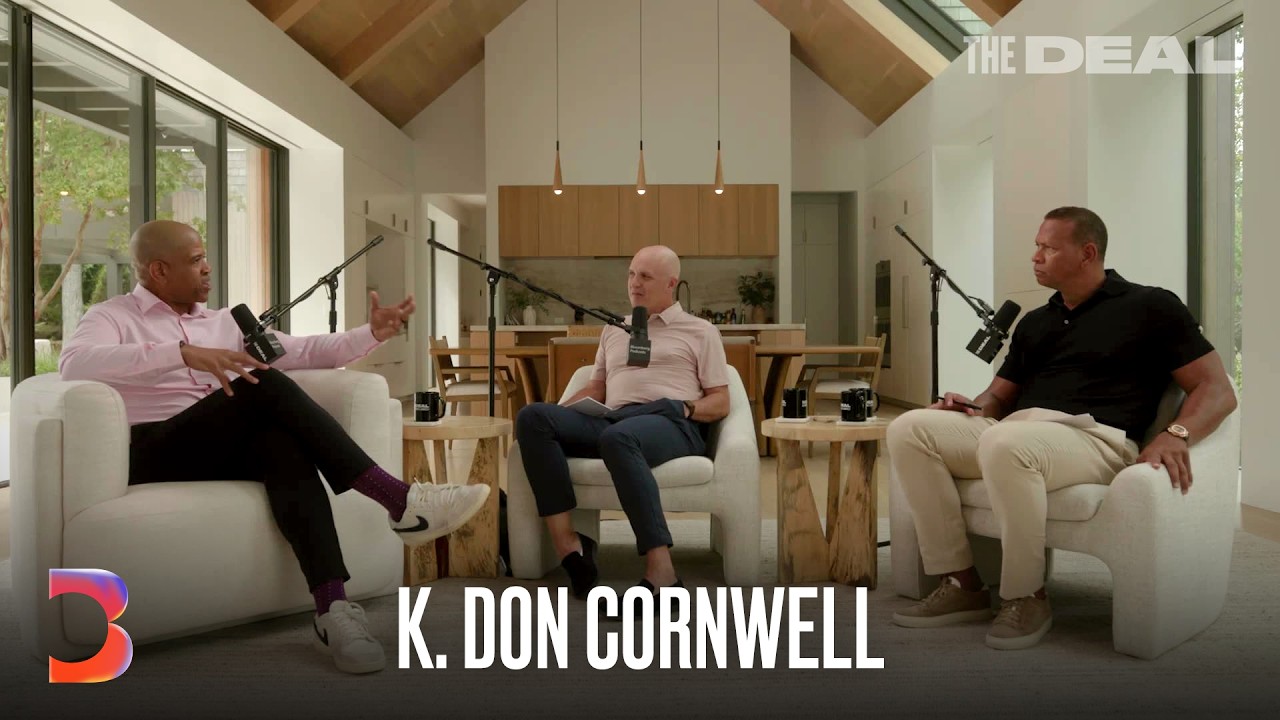
Bloomberg Originals
Institutional capital expands franchise valuations by financing tech and stadium upgrades while leaving operational control with team owners, allowing clubs to monetize premium assets without pricing out core fans.
AI-assisted summary of How K. Don Cornwell’s Private Equity Firm Is Changing the NFL | The Deal — original source. Check the original for full context.
Source published:
Key ideas
- Dynasty Equity, co-founded by Don Cornwell and Jonathan Nelson, is bringing disciplined institutional private equity to sports assets as the sector transitions from vanity hobby to mainstream institutional asset class. (0:30)
- Dynasty backed TMRW Sports parent company rather than a single golf franchise, enabling exposure to platform-level economics and an expanding multi-sport footprint including pro flag football with the NFL. (6:54)
- Dynasty invested alongside Vinod Khosla in the $9.5 billion acquisition of the Seattle Seahawks, under the NFL rule capping private equity stakes at 10% per franchise. (15:24)
- Cornwell rejects claims that private equity harms team culture, noting league rules prohibit institutional control and arguing modern monetization protects fans from steep ticket hikes. (17:51)
Detailed notes
## Background Published on YouTube by Bloomberg Originals on October 15, 2026, this episode of 'The Deal' features hosts Jason Kelly and Alex Rodriguez interviewing Don Cornwell, co-founder and CEO of Dynasty Equity. The program explores how Cornwell transitioned sports investing from a billionaire vanity hobby into a disciplined institutional asset class, detailing Dynasty's investments in the Seattle Seahawks and TMRW Sports.
## TL;DR Don Cornwell breaks down the economic forces fueling private equity's rapid expansion into professional sports, driven by streaming competition, digital fatigue, and the enduring premium of live gathering. He details Dynasty Equity's strategic investments, including backing TMRW Sports' league-level platform across golf and flag football, as well as partnering alongside Vinod Khosla in the $9.5 billion acquisition of the Seattle Seahawks. Cornwell dispels common misconceptions by clarifying that institutional investors take strictly passive minority positions that fund venue renovations and long-term infrastructure rather than usurping team operations. Addressing concerns about everyday fans being priced out, he emphasizes that sports franchises operate as public trusts, where modern monetization of premium hospitality and corporate sponsorships should subsidize accessible, affordable access for the broader community.
## Atmosphere & style The interview feels like an insider boardroom briefing between elite industry peers, balancing high-finance rigor with authentic sports enthusiasm. Alex Rodriguez's perspective as an active franchise owner creates a natural, collegial rhythm with Cornwell, fostering candid discussions about power brokers like Roger Goodell, Jonathan Nelson, and Steve Cohen. The tone shifts seamlessly from analytical deconstructions of cap tables and P&L inflections to grounded, socially conscious reflections on community access and childhood memories of attending games. It offers viewers a sophisticated, behind-the-scenes glimpse into the mechanics of multi-billion-dollar sports transactions.
## Bulletin - [00:30](https://www.youtube.com/watch?v=Lcj0KqB4-40&t=30s) Dynasty Equity, co-founded by Don Cornwell and Jonathan Nelson, is bringing disciplined institutional private equity to sports assets as the sector transitions from vanity hobby to mainstream institutional asset class. - [06:54](https://www.youtube.com/watch?v=Lcj0KqB4-40&t=414s) Dynasty backed TMRW Sports parent company rather than a single golf franchise, enabling exposure to platform-level economics and an expanding multi-sport footprint including pro flag football with the NFL. - [15:24](https://www.youtube.com/watch?v=Lcj0KqB4-40&t=924s) Dynasty invested alongside Vinod Khosla in the $9.5 billion acquisition of the Seattle Seahawks, under the NFL rule capping private equity stakes at 10% per franchise. - [17:51](https://www.youtube.com/watch?v=Lcj0KqB4-40&t=1071s) Cornwell rejects claims that private equity harms team culture, noting league rules prohibit institutional control and arguing modern monetization protects fans from steep ticket hikes.
## Key takeaways - [00:00](https://www.youtube.com/watch?v=Lcj0KqB4-40&t=0s) Sports franchises operate fundamentally as community assets and public trusts that must maintain strong grassroots connections with everyday local fans. - [00:00](https://www.youtube.com/watch?v=Lcj0KqB4-40&t=0s) Private equity's entry into sports does not usurp operational control from principal owners, serving instead as growth capital for infrastructure and long-term expansion. - [02:38](https://www.youtube.com/watch?v=Lcj0KqB4-40&t=158s) The proliferation of digital tech and AI has counterintuitively amplified consumer demand for authentic, in-person live sports gatherings. - [02:38](https://www.youtube.com/watch?v=Lcj0KqB4-40&t=158s) Institutional validation from blue-chip firms like Ares, Apollo, and KKR helped reclassify sports from billionaire vanity assets into a legitimate, investable asset class. - [05:13](https://www.youtube.com/watch?v=Lcj0KqB4-40&t=313s) Dynasty combines Cornwell's deep sports advisory network with Jonathan Nelson's decades of private equity deal structure pattern recognition and global access. - [06:54](https://www.youtube.com/watch?v=Lcj0KqB4-40&t=414s) Underwriting ventures partnered directly with established leagues like the PGA Tour and NFL significantly mitigates operational execution risk compared to unauthorized upstarts. - [10:00](https://www.youtube.com/watch?v=Lcj0KqB4-40&t=600s) The NFL leveraged flag football's low barrier to entry to secure its inclusion in the 2028 Los Angeles Olympics and partnered with TMRW Sports to professionalize the sport. - [12:01](https://www.youtube.com/watch?v=Lcj0KqB4-40&t=721s) TMRW Sports captures rare league-level economics and limits capital intensity by utilizing a single $75 million tech-focused venue rather than constructing multiple full-scale stadiums. - [13:14](https://www.youtube.com/watch?v=Lcj0KqB4-40&t=794s) Evaluating major league sports investments begins with underwriting central league leadership, which dictates up to 75% of top-line economics via broadcast rights and labor agreements. - [13:14](https://www.youtube.com/watch?v=Lcj0KqB4-40&t=794s) Dynasty targets passive minority team investments poised for specific P&L inflections, such as overdue stadium upgrades and modernized fan engagement. - [15:24](https://www.youtube.com/watch?v=Lcj0KqB4-40&t=924s) Partnering with Vinod Khosla on the Seattle Seahawks brings venture-capital and AI expertise to optimize local ticketing, sponsorship structures, and fan experiences. - [20:22](https://www.youtube.com/watch?v=Lcj0KqB4-40&t=1222s) The presence of institutional private equity serves as a secondary market liquidity backstop, providing confidence to high-net-worth families deploying capital into franchises. - [21:20](https://www.youtube.com/watch?v=Lcj0KqB4-40&t=1280s) Diversified commercial growth in corporate sponsorships and high-end hospitality enables teams to grow revenue without pricing out general-admission supporters.
## Detailed walkthrough ### [00:00](https://www.youtube.com/watch?v=Lcj0KqB4-40&t=0s) Private Equity, Team Control, and the Role of the Community
Don Cornwell emphasizes the deep emotional tie between iconic sports franchises and the cities they call home, noting that maintaining a focus on the broader public is essential for any sports organization:
> “I always say the New York Knicks are as popular as they are because the kids in the boroughs love the Knicks, right? And so it is important for these teams to make sure that they don't forget about the broader community.”
Addressing the public skepticism surrounding institutional investment entering the sports industry, Cornwell pushes back against claims that outside financiers are ruining or hijacking teams. He finds the social media backlash slightly amusing, clarifying that institutional firms do not usurp operational command from the principal owners. Instead, private equity simply injects the necessary capital to finance long-term growth and organizational infrastructure while leaving day-to-day authority exactly where it has always been.
[00:30](https://www.youtube.com/watch?v=Lcj0KqB4-40&t=30s) The Launch and Vision of Dynasty Equity
Hosts Jason Kelly and Alex Rodriguez welcome Cornwell, co-founder and CEO of Dynasty Equity, describing institutional sports capital as a defining trend in modern business. Rodriguez points out that as an owner himself, he has experienced firsthand how private capital reshapes sports organizations and views Cornwell as the clearest communicator in the sector. Cornwell previously worked as a top sports investment banker at Morgan Stanley before co-founding PJT Partners, bringing deep advisory pedigree to his partnership with Jonathan Nelson, the legendary private equity veteran from Providence Equity Partners.
Cornwell explains that he and Nelson decided to start Dynasty Equity around 2020 or 2021 after recognizing that the sports ecosystem was undergoing a profound transition. They resolved to take proven, disciplined investment principles and apply them directly to sports assets. As Cornwell articulates their early mission:
> “We got together and we said, 'Let's bring private equity in a traditional form to sports.' And that's what we've done.”
[02:38](https://www.youtube.com/watch?v=Lcj0KqB4-40&t=158s) The Acceleration of Live Sports: Tech, AI, and In-Person Connection
Looking at the industry in 2026 compared to when Dynasty Equity was conceptualized, Cornwell remarks that the market transformed at least twice as fast as initially anticipated. While early conversations touched on social media, the explosive rise of modern artificial intelligence and digital platforms has ironically sparked an intense longing among fans for physical, shared experiences. Live sports remain the premier vehicle for authentic human gathering.
```mermaid flowchart TD accTitle: Catalysts Driving the Sports Asset Class accDescr: Convergence of tech platforms, streaming giants, and consumer desire for in-person live events.
subgraph TechAndMedia["Tech & Streaming Distribution"] A["Tech Giants Enter Bidding\n(Amazon, Google, Netflix)"] B["Proliferation of AI & Social Platforms"] end
subgraph ConsumerBehavior["Fan Demand"] C["Digital Fatigue &\nCraving for In-Person Gatherings"] D["Global Spectacles\n(e.g., World Cup excitement)"] end
subgraph MarketOutcome["Private Equity Opportunity"] E["Live Sports as Ultimate Gathering Asset"] F["Institutional Validation\n(Ares, Apollo, KKR, Dynasty)"] end
A --> E B --> C C --> E D --> E E --> F ```
Cornwell notes that the entrance of dominant digital platforms such as Amazon, Google, and Netflix into live broadcasting, combined with an intense hunger for real-world interaction, has created unprecedented value for sports properties:
> “And what we're finding is that anything that's a live event is exciting for people and sports is the best backdrop for that.”
- In the early days, institutional investors often dismissed sports as an eccentric vanity hobby for wealthy billionaires rather than an investable, cash-flow-generating asset class. - The entry of blue-chip private equity behemoths—including Ares Management, Apollo Global Management, and KKR—validated sports as an authentic institutional asset class. - Cornwell positions Dynasty Equity as a dedicated, bespoke specialist that stands out from generalized mega-funds because sports is the firm's sole focus.
[05:13](https://www.youtube.com/watch?v=Lcj0KqB4-40&t=313s) The Partnership: Don Cornwell and Jonathan Nelson
Rodriguez highlights the importance of trust and personal relationships when transacting at elite levels of sports ownership. Cornwell breaks down the collaborative dynamic between himself and co-founder Jonathan Nelson, explaining how their respective backgrounds complement each other during diligence and deal evaluations.
While Cornwell maintains extensive daily contacts across teams, leagues, and agencies, Nelson brings decades of pattern recognition from Providence Equity. Cornwell describes Nelson as possessing an extraordinary mental database of past deal structures, capable of immediately spotting hidden operational risks or structural issues in the investment committee:
> “He is at a stage of his career where he still wants to work hard. He loves deals and he's trafficking in a world that's very hard to reach.”
Cornwell refers to Nelson’s high-level access as “Star Wars” level—if an exceptional call needs to be made to anyone across the global business landscape, Nelson has the stature to make it happen. This blend of day-to-day advisory hustle and elite, high-altitude perspective allows the partners to debate investments candidly, finish each other’s sentences, and move decisively.
[06:54](https://www.youtube.com/watch?v=Lcj0KqB4-40&t=414s) Backing TMRW Sports and League-Partnered Growth
Turning to specific portfolio investments, Kelly brings up TMRW Sports, the tech-forward sports and entertainment venture launched by Mike McCarley alongside golf icons Tiger Woods and Rory McIlroy. Cornwell shares that his relationship with McCarley developed while both were establishing their respective enterprises. McCarley initially approached Dynasty Equity about purchasing an ownership stake in the New York team in TMRW's golf league (TGL), a franchise ultimately backed by New York Mets owner Steve Cohen.
Instead of acquiring a single team, Dynasty Equity recognized the strength of the overarching enterprise and proposed buying into the parent company:
> “We called Mike and said, 'Thank you for showing us New York, but what we really want is to partner with you.' And so he said, 'Well, that's interesting because we're thinking about raising a new round of financing.' And I said, 'Say the word.' And that's how it got started.”
Cornwell explains the foundational underwriting logic of Dynasty:
- **Mitigating league execution risk:** Backing ventures aligned directly with established governing bodies—in this case, partnering formally with the PGA Tour—dramatically lowers operational risk compared to rebel or unauthorized leagues. - **Multisport scalability:** Although golf served as the launch pad across men’s and women’s formats, Dynasty underwrote TMRW as a wider operational engine whose tech and entertainment platform could be adapted by other premier leagues. - **Expansion into flag football:** The National Football League (NFL) subsequently took notice of the model as it pushed deeper into non-contact formats. Cornwell points out that the NFL has spent 25 years cultivating flag football internationally and domestically at the youth level, viewing it as the primary gateway for female athletes and an accessible alternative to tackle football.
[10:00](https://www.youtube.com/watch?v=Lcj0KqB4-40&t=600s) Flag Football's Olympic Path and TMRW Sports' NFL Partnership
The NFL views flag football as one of the most accessible sports in the world—second only to global football (soccer)—requiring merely a ball, some strips of cloth for flags, and rocks to mark out a field. That grassroots simplicity drove the NFL's extensive work with the International Olympic Committee (IOC) to secure flag football's spot in the 2028 Summer Olympic Games in Los Angeles for both men and women. However, asking elite athletes to dedicate their careers to the discipline requires a viable professional livelihood. While several upstart leagues had attempted to establish pro flag football, the NFL devised its own plan to create professional leagues for both men and women, setting out to find the right operating partner.
When the NFL met with various venture capital firms and potential partners, many pitched that they could “build the TGL for flag football.” Don Cornwell recalls sitting in a pivotal room alongside NFL Commissioner Roger Goodell, Goodell’s team, and TMRW Sports founder Mike McCarley. McCarley’s background at NBC Sports—specifically spearheading the London Olympics and *Sunday Night Football*—made him an immediate, natural cultural fit for the league. As Cornwell observed:
> “So I will never forget there was a meeting where you had Roger Goodell, his whole team, Mike McCarley, his team, we were there and a bunch of other folks, and you could just see the fit that Roger's doing his math in his head of, ‘Is this a guy that I want to partner with?’”
Although it took another six to nine months of negotiating to cross the finish line, the deal secured a major shared opportunity between TMRW Sports and the NFL.
```mermaid flowchart TD accTitle: TMRW Sports and NFL Flag Football Partnership Flow accDescr: Chart illustrating how grassroot accessibility led to the 2028 Olympics and the partnership between TMRW Sports and the NFL.
subgraph Grassroots["Olympic Momentum"] A["Low-barrier entry: ball, flags, rocks"] --> B["NFL lobbies IOC"] B --> C["2028 Los Angeles Olympics: Men's & Women's Flag Football"] end
subgraph ProLeague["Professionalization Need"] C --> D["Need sustainable athlete livelihoods"] D --> E["NFL plans men's & women's pro leagues"] end
subgraph Partner["Selecting the Partner"] E --> F["VCs pitch 'TGL for Flag Football'"] F --> G["Mike McCarley's NBC background: London Olympics & Sunday Night Football"] G --> H["TMRW Sports & NFL finalize partnership after 6–9 months"] end ```
[12:01](https://www.youtube.com/watch?v=Lcj0KqB4-40&t=721s) League-Level Economics and Low Capital Intensity
When asked by Alex Rodriguez about the specific economic characteristics that drew Dynasty Equity to TMRW Sports, Cornwell emphasized the rarity of capturing league-level economics. Major North American leagues like the NBA, MLB, and NFL operate fundamentally as pass-through entities where team owners reap the financial rewards, making league ownership nearly impossible for outside investors. TMRW Sports, by contrast, functions as an entire platform:
> “It's a platform. So any fan that is interacting with us, any corporate that's interacting with us, we get a piece of it.”
Beyond holding league-level upside, TMRW Sports solved the historical problem of high capital intensity in live sports. Rather than constructing 20 expensive stadiums across the nation, the concept relied on a single $75 million tech-infused venue, rapidly unlocking strong unit economics. Combining that streamlined model with formal partnerships alongside the PGA Tour, LPGA, and NFL represented a package that Cornwell and co-founder Jonathan Nelson felt compelled to seize immediately.
[13:14](https://www.youtube.com/watch?v=Lcj0KqB4-40&t=794s) Underwriting the League Office and Inflexion Points
Evaluating investments across the four major North American leagues (NFL, NBA, MLB, and NHL) begins with underwriting the league office leadership—such as Roger Goodell, Adam Silver, or Rob Manfred—and the executive benches beneath them. Because the central league office controls collective bargaining agreements and national media rights, it directly drives top-line revenue, accounting for up to 75% of total economics in the NFL.
When Dynasty Equity looks at team assets, they target specific situations poised for an operational or financial inflection that moves the P&L:
> “Now, when we look for specific situations where we want to deploy capital, it's ones where we feel as if our capital and the situation is when there'll be an inflexion. Something's going to happen to the P&L.”
Dynasty approaches these as passive minority stakes rather than hostile takeovers. In the case of the Seattle Seahawks, the stadium is iconic but had not received substantial capital improvements for ten years, leaving clear runway for stadium upgrades and enhanced fan engagement to drive the bottom line. Because private equity rules prohibit control ownership in major sports leagues, Cornwell stresses that relationship fit and trusting majority owners as “good shepherds of capital” are paramount.
[15:24](https://www.youtube.com/watch?v=Lcj0KqB4-40&t=924s) Investing Alongside Vinod Khosla in the Seattle Seahawks
The opportunity to invest in the Seattle Seahawks emerged during an open sales process when Vinod Khosla and his family agreed to purchase the franchise from the estate of Paul Allen for $9.5 billion. With the NFL capping private equity fund ownership at 10% per team, only five approved institutional firms were permitted to act as equity financing partners. As bidding heated up between two prospective buyers, the sell-side reached out to involve Dynasty Equity.
For Dynasty, partnering with Vinod Khosla offered an ideal alignment with their thesis of infusing cutting-edge technology into sports. Khosla brings a tier-one Silicon Valley venture capital perspective to team operations: - Leveraging artificial intelligence (AI) to optimize local ticketing strategies. - Upgrading in-stadium experiences and revamping physical venue amenities. - Modernizing local corporate sponsorship arrangements and data infrastructure. - Transforming one-to-one fan engagement compared to legacy ownership models.
Cornwell notes that while the transaction carried the excitement of an old-school M&A deal, navigating NFL approvals and transitioning from an authorized fund to an actual cap-table partner made the deal an extraordinary milestone.
[17:51](https://www.youtube.com/watch?v=Lcj0KqB4-40&t=1071s) The Role of Institutional Capital in Modern Sports
Addressing public skepticism around private equity entering professional sports leagues, Cornwell firmly pushes back on narratives that private equity funds are taking over and altering team cultures. League governance strictly prohibits institutional funds from seizing operational control or acting like traditional corporate raiders:
> “And so I laugh sometimes. I'll go on social media and I'll hear all these things like, ‘Oh my God, private equities and sports, they're changing the team.’ No, that's not what's happening. The team owners still control the asset.”
Institutional capital primarily provides the balance sheet growth financing required for costly projects like modern practice facilities or major stadium renovations that fuel long-term asset appreciation. While Dynasty stands ready to offer business insight if asked, the Khosla family retains full control of the Seahawks. Alex Rodriguez concurs, noting that institutional partners provide owners with peer data, cross-league benchmarks, and institutional knowledge while allowing operating owners to make clean, swift decisions. Cornwell concludes that the real driver of soaring team valuations is the ongoing maturation of the sports ecosystem, enabling teams to build direct, individualized connections with fans.
[20:22](https://www.youtube.com/watch?v=Lcj0KqB4-40&t=1222s) How Private Equity Provides Liquidity and Drives Valuation
Don Cornwell explains the direct economic mechanism through which institutional capital creates value inside sports franchises. By providing teams with the resources to cultivate deeper, data-driven relationships with their fan bases, franchises can design tailored products, premium merchandise, and live experiences that fans genuinely want. This optimization flows directly into the team’s profit-and-loss statement, expanding margins and raising overall franchise valuations.
```mermaid flowchart TD accTitle: Value Creation and Investor Liquidity Engine accDescr: Diagram illustrating how institutional capital builds franchise value and investor confidence.
subgraph Operations["Operational Growth"] A["Institutional Capital"] --> B["Enhanced Fan Insights"] B --> C["Tailored Products & Experiences"] C --> D["P&L Expansion & Higher Valuations"] end
subgraph Liquidity["Market Confidence"] E["PE Presence as Liquidity Backstop"] --> F["De-risks Entry for Wealthy Families"] F --> G["Increased Capital Inflow to Leagues"] G --> D end ```
Beyond operational improvements, private equity’s entry into the four major North American sports leagues has resolved a structural liquidity problem for high-net-worth investors. Historically, ultra-wealthy families hesitated to acquire minority stakes or invest in teams because there was no clear secondary market if they ever needed to unwind their positions. Cornwell points out that having institutional funds active in the asset class provides a reliable backstop: “The fact that private equity sitting there gives them some comfort. They may never sell, but the fact that we're there does give them some comfort.” As a result, more family offices and wealthy individuals are actively deploying capital into sports, driving overall market liquidity and enterprise values higher.
- Institutional capital enables teams to monetize fan engagement via customized products and experiential offerings without relying strictly on conventional revenue levers. - The presence of private equity funds provides wealthy families with reassurance regarding long-term exit and liquidity options. - Increased institutional and family office competition has led to significant upward pressure on team valuations across all major leagues.
---
[21:20](https://www.youtube.com/watch?v=Lcj0KqB4-40&t=1280s) Protecting the Fan Experience and Community Access
Alex Rodriguez pivots the discussion toward the risk of ordinary supporters being priced out as institutional and sovereign wealth flows into sports. Drawing on his childhood in Miami—recalling how his mother worked two jobs and they could not afford tickets to Miami Dolphins, Miami Hurricanes, or Miami Heat games—Rodriguez raises the concern that everyday fans could end up as the true losers while team owners, private equity firms, and sovereign wealth funds collect massive financial gains. He asks Cornwell directly how Dynasty Equity balances returns with fan accessibility.
Cornwell strongly agrees with the premise, emphasizing that sports teams must be treated as public trusts rather than cold commercial entities: “These are obviously massive assets, but in many ways they are community assets, right?” He illustrates this dynamic through the New York Knicks, stressing that their cultural dominance relies on deep grassroots support from everyday kids throughout the outer boroughs rather than exclusive pandering to affluent neighborhoods: “You can't just market to the West Village and Tribeca. You've got to market to the South Bronx and to Queens and to Brooklyn.” For Dynasty Equity, aligning with team owners who share this community-first mindset is an essential investment prerequisite.
Cornwell argues that modern sports business sophistication actually protects everyday fans because franchises can generate incremental revenue at the high end—via corporate sponsorships, high-tier hospitality, digital initiatives, and worldwide merchandise sales—instead of aggressively raising general-admission ticket prices. He points to Liverpool FC as an ideal case study in fan protection, noting that the club grew its top-line revenue elsewhere while raising ticket prices by an average of just 42 cents the prior season. Cornwell concludes that technological modernization and diversified business models can create a win-win scenario where owners generate strong returns while preserving affordable access for the core community, after which the hosts thank Cornwell and congratulate him on Dynasty Equity's recent deals.
- Alex Rodriguez highlights the personal reality of working-class families being priced out of attending live sporting events. - Don Cornwell asserts that sports franchises are fundamentally community assets that must remain rooted in places like the South Bronx, Brooklyn, and Queens, not just elite enclaves. - Franchises can subsidize affordable tickets by capturing revenue from high-end corporate sponsors, luxury experiences, and global merchandising. - Liverpool FC increased average ticket prices by only 42 cents in the previous year, demonstrating how modern teams can harvest growth outside standard ticketing.
## Notable quotes > [02:38](https://www.youtube.com/watch?v=Lcj0KqB4-40&t=158s) What we're finding is that anything that's a live event is exciting for people and sports is the best backdrop for that. — Don Cornwell
## Mentioned K. Don Cornwell, Jonathan Nelson, Alex Rodriguez, Jason Kelly, Mike McCarley, Tiger Woods, Rory McIlroy, Steve Cohen, Roger Goodell, Adam Silver, Rob Manfred, Vinod Khosla, Paul Allen, Dynasty Equity, Bloomberg Originals, Morgan Stanley, PJT Partners, Providence Equity Partners, Amazon, Google, Netflix, Ares Management, Apollo Global Management, KKR, TMRW Sports, TGL, PGA Tour, LPGA, NFL, NBA, MLB, NHL, IOC, NBC Sports, New York Knicks, Seattle Seahawks, Miami Dolphins, Miami Hurricanes, Miami Heat, Liverpool FC, 2028 Summer Olympic Games
## Video description When K. Don Cornwell co-founded Dynasty Equity with Jonathan Nelson in 2022, investing in sports was seen as more of a vanity play than real business move. In this episode of The Deal, Cornwell tells Alex Rodriguez and Jason Kelly how he knew his thesis was strong, why he decided to invest in the Seattle Seahawks and the TMRW Golf League and the impact he sees private equity having on teams and leagues.
-------- Like this video? Subscribe: http://www.youtube.com/Bloomberg?sub_confirmation=1
Get unlimited access to Bloomberg.com for just $1.99 your first month: https://www.bloomberg.com/subscriptions?in_source=YoutubeOriginals Bloomberg Originals offers bold takes for curious minds on today’s biggest topics. Hosted by experts covering stories you haven’t seen and viewpoints you haven’t heard, you’ll discover cinematic, data-led shows that investigate the intersection of business and culture. Exploring every angle of climate change, technology, finance, sports and beyond, Bloomberg Originals is business as you’ve never seen it.
Subscribe for business news, but not as you've known it: exclusive interviews, fascinating profiles, data-driven analysis, and the latest in tech innovation from around the world.
Visit our partner channel Bloomberg News for global news and insight in an instant.
[Source](https://www.youtube.com/watch?v=Lcj0KqB4-40)