Zach Wilson Uses Meta, Google Offers to Win Airbnb Staff Role
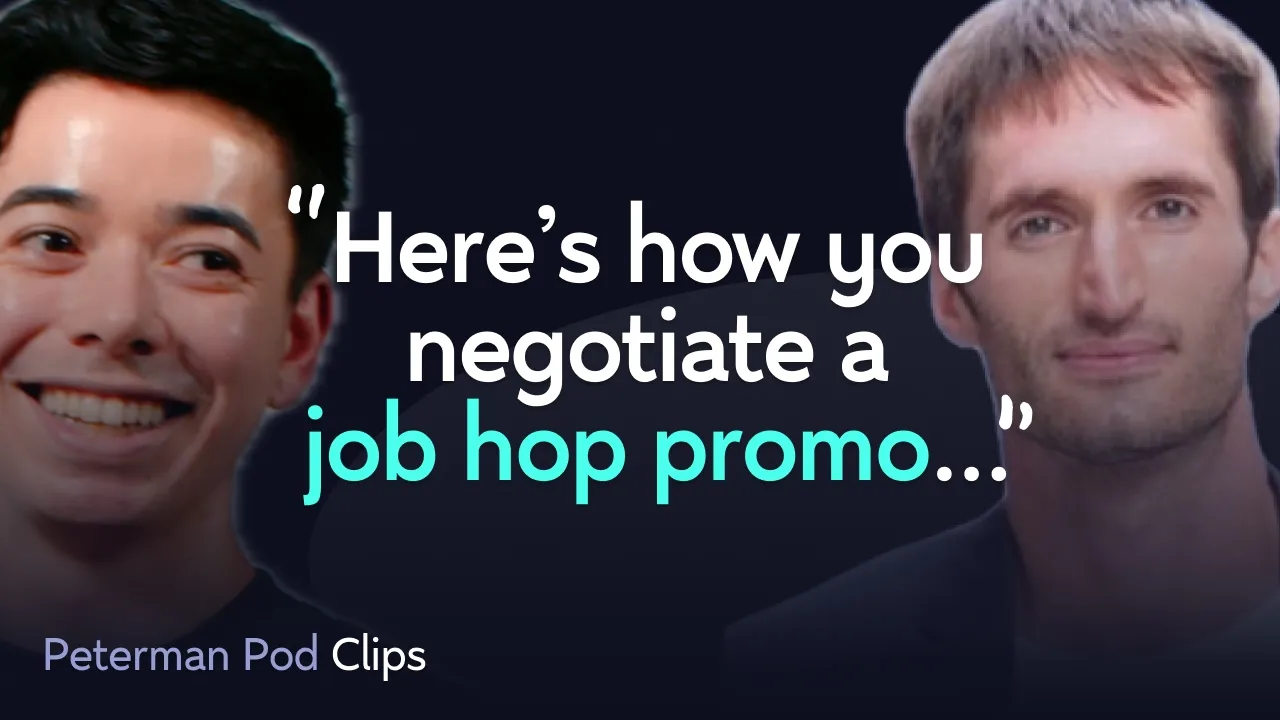
Ex-Airbnb Staff Eng: How I Negotiated A Job Hop Promo | Zach Wilson — Ryan Peterman

Ryan Peterman

Securing an accelerated promotion to Staff engineer requires leveraging rival offers to block downleveling and keeping technical specialization constant to prevent burnout.

AI-assisted summary of Ex-Airbnb Staff Eng: How I Negotiated A Job Hop Promo | Zach Wilson — original source. Check the original for full context.

Source published:

Key ideas

  • Zach Wilson secured a Staff Engineer role at Airbnb with only 6 years of experience, bypassing the job description's stated requirement of 10+ years. (0:00)
  • Simultaneous Senior-level processes at Facebook and Google provided the leverage needed to negotiate and force Airbnb to evaluate him for Staff. (2:27)
  • Wilson attributes his successful transition at Airbnb to changing only one variable: advancing in level to Staff while returning to his core domain of Data Engineering. (4:37)
  • In his first performance review cycle as a Staff Data Engineer at Airbnb, Wilson earned an 'Exceeds Expectations' rating after overhauling core pricing pipelines. (4:37)

Detailed notes

## Background Published on YouTube by Ryan Peterman on October 16, 2026, this video highlights Zach Wilson, who achieved the rank of Staff Engineer (IC6) at Airbnb by age 26. According to the description, Wilson previously worked at Meta, Netflix, and Airbnb before founding his own company, with this segment focusing on his strategies for negotiating a level promotion while switching jobs.

## TL;DR Zach Wilson breaks down how he bypassed Airbnb's standard 10-year experience requirement to secure a Staff Data Engineer offer with only six years in the industry. Rather than accepting an automatic downlevel, Wilson leaned into tangible high-impact artifacts from Netflix—including two patent filings and cross-team security initiatives—while applying the company's radical candor directly in his interviews. He then maximized his pipeline leverage by holding concurrent Senior offers at Google and Facebook, explicitly telling Airbnb he would not sign if offered only a Senior role. Once hired, he avoided the burnout he experienced at Netflix by changing only one variable at a time, anchoring himself in his core Data Engineering domain to achieve an 'Exceeds Expectations' rating in his first review.

## Atmosphere & style The discussion has a candid, pragmatic, and tactically sharp tone, feeling like an unvarnished insider strategy session between peers. Wilson balances calculated confidence with relatable vulnerability, openly discussing his past fears of burnout and the blunt feedback culture at Netflix. The dynamic is conversational and demystifying, turning opaque corporate hiring loops into actionable lessons on leverage and self-advocacy.

## Bulletin - [00:00](https://www.youtube.com/watch?v=ACeUQAkxWJ4&t=0s) Zach Wilson secured a Staff Engineer role at Airbnb with only 6 years of experience, bypassing the job description's stated requirement of 10+ years. - [02:27](https://www.youtube.com/watch?v=ACeUQAkxWJ4&t=147s) Simultaneous Senior-level processes at Facebook and Google provided the leverage needed to negotiate and force Airbnb to evaluate him for Staff. - [04:37](https://www.youtube.com/watch?v=ACeUQAkxWJ4&t=277s) Wilson attributes his successful transition at Airbnb to changing only one variable: advancing in level to Staff while returning to his core domain of Data Engineering. - [04:37](https://www.youtube.com/watch?v=ACeUQAkxWJ4&t=277s) In his first performance review cycle as a Staff Data Engineer at Airbnb, Wilson earned an 'Exceeds Expectations' rating after overhauling core pricing pipelines.

## Key takeaways - [00:00](https://www.youtube.com/watch?v=ACeUQAkxWJ4&t=0s) Airbnb's Staff Engineer role officially required 10+ years of experience, but Zach Wilson applied and interviewed with only 6 years. - [00:00](https://www.youtube.com/watch?v=ACeUQAkxWJ4&t=0s) Airbnb used a flexible interview loop that left the final leveling decision between Senior and Staff contingent on performance. - [00:00](https://www.youtube.com/watch?v=ACeUQAkxWJ4&t=0s) Wilson overcame the experience deficit by demonstrating concrete impact from Netflix, including cross-functional leadership across 11 teams and two patent filings. - [00:00](https://www.youtube.com/watch?v=ACeUQAkxWJ4&t=0s) Adapting to Netflix's radical candor culture helped Wilson communicate directly and effectively during Airbnb's interview loop. - [02:27](https://www.youtube.com/watch?v=ACeUQAkxWJ4&t=147s) Neither Facebook nor Google was willing to interview Wilson at the Staff level, keeping him capped at Senior. - [02:27](https://www.youtube.com/watch?v=ACeUQAkxWJ4&t=147s) Wilson leveraged his competing Senior offers by giving Airbnb an ultimatum: he would not accept an offer from them if it came in at the Senior level. - [02:27](https://www.youtube.com/watch?v=ACeUQAkxWJ4&t=147s) Running concurrent interview loops at top tech firms provided essential leverage to push back against default downleveling. - [02:27](https://www.youtube.com/watch?v=ACeUQAkxWJ4&t=147s) Wilson's advice to engineers seeking career growth is to actively apply for roles they do not yet feel fully ready for. - [04:37](https://www.youtube.com/watch?v=ACeUQAkxWJ4&t=277s) Transitioning to Netflix had caused severe burnout risk because Wilson changed both his job specialization (from DE to SWE) and increased his level of responsibility simultaneously. - [04:37](https://www.youtube.com/watch?v=ACeUQAkxWJ4&t=277s) Returning to Data Engineering at Airbnb adhered to the heuristic of changing only one variable at a time, making the leap to Staff manageable. - [04:37](https://www.youtube.com/watch?v=ACeUQAkxWJ4&t=277s) Anchoring in familiar domain knowledge allowed Wilson to focus on higher-level architectural designs and earn an 'Exceeds Expectations' rating in his first review.

## Detailed walkthrough ### [00:00](https://www.youtube.com/watch?v=ACeUQAkxWJ4&t=0s) The 6-Year Gap and the Netflix Impact Story

Ryan Peterman opens by asking how Zach Wilson managed to convince Airbnb to interview and hire him as a Staff Engineer when standard corporate hiring gates typically enforce rigid prerequisite years of experience (YOE). At the time, the official job description at Airbnb demanded at least 10 or more years of experience, whereas Zach had only accumulated six. Zach recalls that Airbnb approached the loop flexibly, informing him upfront that his performance would dictate whether he landed at Senior or Staff. Having already received offers from Google and Facebook that came in strictly at the Senior level, Zach was anxious that Airbnb might do the same; when Airbnb instead extended an offer at the Staff level, the decision became a no-brainer.

To overcome the four-year experience gap on paper, Zach leaned heavily into detailed, high-impact storytelling anchored in his time at Netflix. He walked interviewers through the deep technical weeds of coordinating across 11 distinct teams to resolve complex security problems, alongside the tangible credential of having two Netflix patents filed under his name. Beyond raw technical execution, Zach credits Netflix's radical candor culture with shaping how he communicated in the interview room. Adapting to Netflix’s immediate, blunt feedback loop had initially been jarring: “Everyone here's a dick. Everyone here is like, why is everyone here so mean, right?” Zach jokes, before explaining that he eventually realized, “No, everyone here really wants me to grow, right? That's what it's actually about.” Demonstrating that growth mindset and directness resonated strongly with Airbnb's hiring panel, even as Zach harbored internal doubts about whether taking the role would simply walk him back into the same high-stress environment he had just departed.

- **Experience Gap:** 6 years of actual experience versus the 10+ years listed on the Airbnb Staff job description. - **Key Portfolio Artifacts:** 2 Netflix patent filings and cross-functional leadership across 11 teams tackling security initiatives. - **Cultural Imprint:** Practical fluency in Netflix's high-velocity, radical candor feedback environment.

---

[02:27](https://www.youtube.com/watch?v=ACeUQAkxWJ4&t=147s) Playing Hardball: Using Google and Facebook Offers as Leverage

When the Airbnb recruiter initially signaled that Zach could land at either Senior or Staff depending on interview performance, Zach found the ambiguity somewhat irritating and decided to actively negotiate his footing. Because he knew he would not accept an offer that merely matched what he already had on the table elsewhere, he was completely transparent about his pipeline. He informed the Airbnb recruiter that he was actively interviewing at both Facebook and Google, laying down a clear ultimatum: “If I get an interview from all three of you and they all come in at senior, I'm not picking Airbnb.”

Zach’s aggressive posturing forced the recruiter and interviewers to evaluate him with an open mind rather than default to a safe downlevel. While Zach had attempted to land Staff interviews at Facebook and Google as well, both companies flatly refused to test him at that level. That disparity highlighted the immense tactical value of running simultaneous interview processes across desirable companies. Holding competitive alternatives gave him the leverage to walk away and demand what he needed. Zach later summarized the experience in a viral LinkedIn post encouraging engineers to test their limits, noting that his core takeaway was simple: “apply for jobs that you don't think you're ready for.”

```mermaid flowchart TD accTitle: Interview Pipeline and Leverage Flowchart accDescr: Diagram illustrating how Zach used competing offers from Facebook and Google to negotiate a Staff interview at Airbnb.

subgraph Offers["Simultaneous Job Searches"] FB["Facebook: Senior Offer Only"] GOOG["Google: Senior Offer Only"] end

subgraph Strategy["Negotiation Leverage"] LEVERAGE["Inform Airbnb Recruiter:<br/>'If all three are Senior, I'm not picking Airbnb'"] end

subgraph Outcome["Airbnb Result"] AIRBNB["Airbnb Staff Data Engineer (IC6) Offer Accepted"] end

FB --> LEVERAGE GOOG --> LEVERAGE LEVERAGE --> AIRBNB ```

- **Leverage Baseline:** Active Senior-level processes running concurrently at Facebook and Google. - **Default Preference:** Zach admitted that all else being equal at the Senior tier, he likely would have returned to Facebook. - **Market Asymmetry:** Neither Facebook nor Google was willing to interview him for Staff roles, making Airbnb's willingness to entertain the higher tier unique.

---

[04:37](https://www.youtube.com/watch?v=ACeUQAkxWJ4&t=277s) Changing One Variable at a Time: Thriving as a Staff Data Engineer

Reflecting on his transition into the Staff role at Airbnb, Zach addresses the natural concern of whether jumping into a Staff position without prior Staff title experience set him up to underperform. He realized in hindsight that his struggles at Netflix were not merely about seniority, but about shifting two major dimensions simultaneously: he had pivoted from Data Engineering to Software Engineering while also stepping into an advanced technical leadership capacity. Having worked as a professional Software Engineer for less than a year, surviving at Netflix had required grinding on weekends, side projects, and constant personal hustle. He summarizes the structural mistake: “It was like brand new like job role but also higher job title and those two things together was like burnout risk.”

By contrast, the Airbnb opportunity allowed him to return to Data Engineering, operating on the heuristic of only changing one variable at a time. While stepping up into Staff-level organizational leadership still required development, his deep domain mastery in data systems eliminated the existential dread of being completely out of his depth. Zach found that “It didn't feel like it wasn't like oh my god I have so much to learn. It was like, okay, there's things I need to learn, but I know what they are, and this is going to be doable.” The transition proved far more manageable and sustainable than he feared, culminating in an "Exceeds Expectations" rating during his first performance review after he overhauled core pricing data pipelines and led high-level architecture designs.

- **Role Comparison:** At Netflix, changing both specialization (DE to SWE) and level (Senior to Staff leadership) created unsustainable burnout risk; at Airbnb, returning to Data Engineering anchored his domain expertise. - **Professional SWE Tenure:** Zach had only roughly one year of dedicated professional SWE experience prior to taking on higher-level expectations at Netflix. - **First-Half Airbnb Performance:** Awarded an "Exceeds" rating after revamping pricing data pipelines and authoring high-level technical designs.

## Notable quotes > [02:27](https://www.youtube.com/watch?v=ACeUQAkxWJ4&t=147s) apply for jobs that you don't think you're ready for. — Zach Wilson

## Mentioned Zach Wilson, Ryan Peterman, Airbnb, Netflix, Meta, Google, LinkedIn

## Video description Zach Wilson is an engineer who grew to Staff (IC6) at Airbnb by age 26. He worked at Meta, Netflix, Airbnb and more recently has started his own company.

Watch the full conversation: https://www.youtube.com/watch?v=-ZuewJWJtCo

[Source](https://www.youtube.com/watch?v=ACeUQAkxWJ4)

中文简报

Zach Wilson利用Meta与Google录用通知斩获Airbnb Staff职位 要实现破格晋升至Staff工程师,需要利用竞对录用通知防止被降级定级,并保持技术专业方向不变以避免倦怠。 Zach Wilson详细讲述了他如何在仅有六年行业经验的情况下,打破Airbnb通常要求的十年工作经验限制,成功拿下Staff数据工程师录用通知。Wilson没有接受自动降级,而是充分利用了在Netflix取得的高影响力切实验证成果——包括两项专利申请以及跨团队安全倡议——同时在面试中直接践行了该公司的极度坦诚文化。随后,他利用手中同时持有的Google和Facebook的Senior录用通知最大化自己的谈判筹码,明确告知Airbnb如果只给Senior职位他就不会签约。入职后,他通过一次只改变一个变量的方式避免了在Netflix时经历的职业倦怠,将自己锚定在核心的数据工程领域,并在首次绩效评估中获得了“超出预期”的评级。 Zach Wilson仅凭6年经验便获得了Airbnb的Staff工程师职位,绕过了招聘要求中规定的10年以上经验限制。 (0:00) 同时在Facebook和Google进行的Senior级别面试流程为他提供了谈判筹码,促使Airbnb对其按Staff级别进行评估。 (2:27) Wilson将自己在Airbnb的成功过渡归功于一次只改变一个变量:职级晋升至Staff,同时回归自身核心的数据工程领域。 (4:37) 在重构核心定价数据管道后,Wilson在Airbnb担任Staff数据工程师的第一个绩效评估周期中获得了“超出预期”的评级。 (4:37)

Reading summary

Former Netflix engineer Zach Wilson secured a Staff Data Engineer offer at Airbnb despite having only six years of experience by pairing tangible portfolio artifacts with explicit pipeline leverage from competing offers at Google and Facebook. Overcoming Formal Experience Gates with Concrete Impact (0:00) Airbnb's official job description required a minimum of 10 years of experience, creating a four-year gap against Wilson's six years in the industry. To counter this deficit, Wilson anchored his interviews in concrete technical achievements from his time at Netflix, including two patent filings and cross-organizational leadership coordinating across 11 teams on complex security issues. Using Competing Big Tech Offers as Up-Leveling Leverage (2:27) Wilson ran parallel interview processes at Google and Facebook, though both companies declined to interview him at the Staff level and kept him strictly within Senior tracks. When Airbnb's recruiter noted that Wilson's leveling would be determined flexibly between Senior and Staff based on interview performance, Wilson laid down an explicit condition: if Airbnb merely matched the Senior level of the other two firms, he would not accept it. Mitigating Burnout by Changing One Variable (4:37) Reflecting on the risk of underperforming at the Staff tier, Wilson distinguished his Airbnb transition from his earlier struggles at Netflix. At Netflix, Wilson had simultaneously switched technical specializations from Data Engineering to Software Engineering—where he had under a year of professional experience—while taking on elevated technical leadership, which created intense burnout risk requiring weekend work. Wilson concluded that aggressive posturing and applying for roles beyond one's perceived readiness can bypass rigid hiring prerequisites, though his strategy relied heavily on Airbnb's unique willingness to test him for Staff when peer firms refused.

精炼阅读摘要

前Netflix工程师Zach Wilson在仅有6年从业经验的情况下,打破Airbnb要求10年以上经验的职级限制,成功跨级斩获Staff级(IC6)数据工程师职位。他通过具象化阐述跨团队安全治理与专利成果,并以Google和Facebook的Senior录用作为谈判底牌,同时践行“一次仅改变一个职业变量”的方法顺利适应了高阶技术领导角色。 以硬核成果与直接反馈跨越年限门槛 (0:00) 按照Airbnb当时的招聘标准,Staff工程师职位明确要求应聘者具备至少10年的工作经验,而Zach Wilson彼时仅积累了6年资历。面对4年的表面经验差距,Zach并未局限于简历年限,而是在面试中深入拆解自己在Netflix期间的实际工程影响。他详述了自己如何跨越11个独立团队协同推进复杂的安全问题治理,并以其名下已申报的2项Netflix专利作为硬核凭证,充分展示出远超普通资深工程师的组织协调与技术攻坚能力。 除技术实力外,Zach还将面试表现归功于Netflix标志性的“彻底坦诚”(Radical Candor)文化。他坦言初入Netflix时曾觉得同事之间极其严苛甚至态度恶劣,但随后体会到这种不留情面的即时反馈实质上是以个人成长为核心。在Airbnb的面试沟通中,他将这种高成长型思维与直接坦率的表达风格充分展现出来,赢得了考核团队的高度认可,促使Airbnb打破对年限的刻板筛选,为其保留评定Staff职级的空间。 借竞品Offer倒逼定级突破 (2:27) 在招聘流程初期,Airbnb招聘人员曾模糊地表示最终定级将视面试表现定为Senior或Staff。Zach因不愿接受平级调动而对这种不确定性感到不满,随后选择在谈判中主动亮出底牌。当时他正同步推进Facebook与Google的面试,并已双双进入锁定Senior职级的阶段;基于这一筹码,Zach向Airbnb招聘人员明确表态:如果三家公司最终均给出Senior级别的录取,他绝不会选择加入Airbnb。 这种强硬且透明的沟通策略对Airbnb考核方形成了倒逼效应,促使其必须以Staff维度的标准来全面评估其实力,而非习惯性地降级录用。值得注意的是,当时Facebook与Google均明确拒绝给Zach提供Staff级别的面试考核,这更加凸显出同时运行多条大厂面试管线所带来的非对称谈判优势。Zach后续指出,求职者应当勇于挑战自认为尚未完全准备好的更高职级,并利用外部竞争筹码掌控自身职业定级的主动权。 恪守单一变量原则适应高阶岗位 (4:37) 针对未曾担任过Staff职位便跨级入职可能带来的不适应,Zach提出了“一次只改变一个职业变量”的心智模型。回顾在Netflix的任职经历,他反思当时的巨大压力源于双重维度的同时切换:他不仅需要承担更高阶的技术领导职责,还从熟悉的数据工程(DE)转岗至仅有一年从业经验的软件工程(SWE)。这种双重挑战迫使他只能依靠周末持续加班和个人硬撑来应对,带来了极高的职业倦怠风险。 在加入Airbnb时,Zach吸取了教训,决定固定专业方向变量、回归自身深耕的数据工程领域,仅在组织层级和技术影响力这一单一度量上做出跃升。依托在数据系统领域的扎实功底,他无需耗费精力恶补基础业务,能够迅速锁定自身短板并从容展开进阶学习。在入职Airbnb的首个考核周期内,他成功主导并重构了核心定价数据管道,并牵头完成了高层系统架构设计,最终在首次绩效评估中斩获了“超出预期”(Exceeds Expectations)的评价。 Zach Wilson跨级晋升的案例表明,科技大厂僵化的工作年限要求可以通过过硬的技术产出、高契合度的组织沟通以及多方并行的录用杠杆来攻破。但这一策略的可持续性高度依赖于后续的平稳着陆——求职者在大幅跃升职级时,需尽可能将技术领域固定在自身优势区间内,以避免双重变量叠加导致的过载与绩效危机。

Source quotes

[2:27] Zach Wilson: apply for jobs that you don't think you're ready for.

Original transcript

[0:00] How are you able to sell them on staff? [0:02] Cuz you were senior and staff, I mean, [0:04] if you just were to go for a staff [0:06] interview, there's some requirements of, [0:08] you know, certain number of years of [0:10] experience or, you know, those types of [0:12] blocking things that you might not have [0:14] control over. So, how did you get staff [0:15] interviewed? [0:16] >> Because that was actually something that [0:17] I was really stunned by with Airbnb [0:20] because that interview they were [0:21] actually interviewing me for one or the [0:23] other. They were like, "We might give [0:24] you senior, we might give you staff." [0:26] Like, uh, they were saying like, "Based [0:27] on how you interview." And I was like [0:29] when they gave me and I was like cuz I [0:31] actually got the the the offers from uh [0:34] Facebook and Google first and then I got [0:35] the Airbnb one and like cuz I was like [0:37] ah dude cuz when those two came in at [0:39] senior I'm like like Airbnb don't do it. [0:42] Don't do don't do me don't do me like [0:44] this. Right. But then Airbnb comes in at [0:46] staff and I'm like okay well then that [0:47] makes it very easy. Uh but like so and [0:50] you're totally right. The the role the [0:51] staff role uh at least on the job [0:53] description says 10 plus right? And at [0:56] that point I had six and I'm like 10 [0:58] plus and six there that's that's that's [1:00] there's a gap there. There's like a [1:01] significant gap. Uh I think it comes [1:04] back to just like that impact story and [1:07] being able to talk about like what I did [1:08] at Netflix and like the being like well [1:11] I interfaced with these like 11 teams [1:12] and we solved all these crazy security [1:14] problems, right? And being able to like [1:16] really go into like the nitty-gritty [1:18] details of that stuff. We also filed [1:19] patents, right? I have two patents with [1:21] my name from Netflix as well. So like [1:24] like we did some crazy stuff at Netflix [1:26] and so uh being able to just talk about [1:28] all that stuff that is uh what I think [1:31] really kind of put Airbnb over the edge [1:33] because one of the things that I feel [1:35] very grateful from from Netflix that I [1:37] know impressed people at Airbnb was they [1:40] have this kind of culture of like this [1:42] feedback culture, right? The radical [1:44] cander of like just give feedback [1:46] immediately, right? It's like almost if [1:49] you come from a a kinder company or a [1:52] more chill company, when you come into [1:53] Netflix and then you start getting this [1:55] immediate feedback, you're like, [1:57] "Everyone here's a dick. Everyone here [1:58] is like, why is everyone here so mean, [2:00] right?" But then like after a while, [2:01] you're like, "Wait a minute." No, [2:02] everyone here really wants me to grow, [2:04] right? That's what it's actually about. [2:06] And like I think that that was what I [2:08] was able to learn from, right? and like [2:10] get that like but I mean I was [2:12] definitely really nervous about the role [2:14] at Airbnb because I was like am I just [2:17] walking right back into what I just left [2:19] at Netflix, right? Am I am I walking [2:21] right back into something that it was [2:23] going to be just a replica replication [2:25] of what I was doing before [2:27] >> for the the senior and the staff was the [2:29] recruiter up front or they saying, "Hey, [2:31] FYI, you're you're either going to be [2:33] senior or staff. Good luck on the [2:35] interview." They they actually did say [2:36] that like and I was I was annoyed by [2:38] that a little bit because I just felt [2:40] like I'm like I guess like because I [2:43] knew that at that moment like if like if [2:45] it was just a senior interview I wasn't [2:48] going to take it. So, I advocated for [2:50] staff uh because uh in in that interview [2:53] mostly because I told them I was like, [2:54] "Hey, like I'm interviewing at these [2:56] other companies." And so, when when I [2:58] was talking with the the Airbnb [2:59] recruiter, I was like, "Hey, I'm [3:01] interviewing at Facebook and at Google [3:03] right now as well." And uh those [3:04] companies like if and I told them I'm [3:07] like, "If I get an interview from all [3:08] three of you and they all come in at [3:10] senior, I'm not picking Airbnb." [3:12] >> Were they going to do senior and then [3:14] because you said that they were like, [3:15] "Okay, [3:16] >> I think so. I I I think that that was [3:17] well well the interview they said it was [3:19] either or right they said and and and [3:20] that's why we kind of leaned into that [3:22] kind of middle ground of like well we'll [3:23] just do the interview and like if it's [3:26] you know if you interview well enough [3:27] right because I wanted it to be like an [3:29] open-mindedness at least of like give [3:31] this guy a chance right but like yeah [3:34] because otherwise because everything [3:36] being equal right I probably would have [3:38] gone back to Facebook if it was like [3:40] senior across the board I probably would [3:42] have gone back to Facebook but like [3:44] since um it was not I was like Okay, [3:46] cool. [3:47] >> And did you try to get staff interviews [3:48] at Google on Facebook, too? [3:50] >> Uh, yeah, I did try to get those role. [3:52] They they did not give me that [3:54] interview. Yeah. Yeah, it was wild. It [3:56] was so wild. And I love that like I love [3:58] that. That's why it's so important to [4:00] have more than one like like company [4:02] that you're interviewing for that you're [4:04] excited about, right? Because then that [4:05] puts you in this position where you can [4:07] have conversations like that, right? You [4:08] can have conversations where it's like, [4:10] hey, like I this is what I need from [4:11] this company and like because otherwise [4:14] I'm gone, right? Okay. And like you can [4:16] like I'm just going to go somewhere [4:17] else. And yeah. [4:18] >> How many years of experience did you [4:19] have at that point? Six. You said [4:21] >> six. Actually though I had a viral post [4:23] on LinkedIn about this where I was like [4:25] it was like the Airbnb role said I [4:27] needed 10 and I applied it with six and [4:30] I got it. Right. Right. So like and then [4:33] my whole point on that post was like [4:35] apply for jobs that you don't think [4:36] you're ready for. [4:37] >> So your ability to negotiate and sell is [4:41] is what got you that that staff. And I [4:43] actually like after being in that role [4:46] for a little bit, I was ready for it. I [4:49] was ready for it because you want to [4:50] know what I realized? I realized more [4:52] about the Netflix role that was [4:56] more problematic than I thought it was. [4:59] Was it was that I I changed ladders, [5:04] right? Right? I went from data engineer [5:06] to software engineer, but then I went up [5:07] that ladder to staff like and so in some [5:10] ways like I was just not ready to do [5:11] that like to do software engineering at [5:13] that staff level because like it's like [5:15] honestly I'd been doing it like [5:17] professionally like one year, [laughter] [5:20] right? And it's like and the only reason [5:21] that I was able to like even like not [5:23] just get absolutely crushed was because [5:25] I'd been spending all my weekends doing [5:26] it and like doing side projects and and [5:28] hustling on the side. But like uh if you [5:31] look at the actual professional [5:32] experience, it was the combination of [5:34] those two things that I think I was like [5:35] I was like brand new like job role but [5:38] also higher job title and those two [5:40] things together was like burnout risk. [5:42] Whereas like when I uh when I got in at [5:44] Airbnb it was like staff data engineer. [5:46] I'm like okay I feel feel pretty good [5:48] about this. It was like more the [5:50] leadership was there right and I was [5:52] like okay I I needed to like grow in [5:53] there a little bit but it it was more [5:55] manageable. It didn't feel like it [5:56] wasn't like oh my god I have so much to [5:58] learn. It was like, okay, there's things [6:00] I need to learn, but I know what they [6:02] are, and this is going to be doable. [6:04] >> You went into the staff role, not coming [6:06] from a staff role. Some might wonder, [6:09] would you underperform in in that role? [6:12] You're saying that you performed fine [6:14] because it was going back to data [6:15] engineering, which you had a lot more [6:17] confidence in. Is that right? Because I [6:18] think at Netflix it was the combination [6:20] of like getting put into like this [6:22] position that of like you know high-risk [6:25] position of like and like leadership [6:28] position when I wasn't ready for it like [6:30] and but then it was the combination of [6:32] that and that I transitioned I [6:35] transitioned to software engineering [6:37] like less than a year before. And so [6:38] those two things together were I think [6:41] where there was a gap, right? Where it's [6:43] like it's kind of like you only want to [6:45] change like one variable at a time, [6:46] right? And then like so when I got in at [6:49] uh Airbnb and I was nervous about it for [6:51] sure, super nervous cuz I was like I [6:52] don't want to just like run myself right [6:54] back into the ground, right, of like [6:56] being in a position where I'm like I'm [6:58] not ready for this, right? But like it [7:00] was ended up being way more way way way [7:02] more chill for sure. [7:03] >> And then in your first half or your [7:05] first year at Airbnb, [7:07] >> how was the uh like the performance? [7:09] >> I got exceeds uh my first my first half [7:12] at Airbnb and it was uh it was good. I [7:15] kind of just upleveled a lot of like the [7:16] pricing pipelines and then I uh built a [7:20] lot of like designs. It was it was a lot [7:22] like higher level kind of stuff, right?