Harvard’s Malan Defends C as AI Automates Boilerplate Coding
Ryan Peterman
Developers must master low-level memory primitives rather than just high-level tools because first-principles knowledge separates true engineers from surface-level coders whose work can be replaced by generative artificial intelligence.
AI-assisted summary of Harvard Professor On Why You Should Learn C in 2026 | David Malan — original source. Check the original for full context.
Source published:
Key ideas
- David Malan defends starting CS50 with C, explaining that its placement just above assembly allows students to master procedural fundamentals without relying on high-level abstractions. (0:00)
- By week five of CS50, students manually build foundational data structures like hash tables and tries in C, preparing them to appreciate the single-line abstractions introduced in Python during week six. (0:00)
- Malan distinguishes between what an engineer needs to *use* daily versus what they need to *know*, arguing that deep foundational knowledge remains essential even if high-level languages dominate everyday work. (3:09)
- With generative AI capable of generating boilerplate code, Malan argues that first-principles understanding of low-level building blocks is what separates true engineers from replaceable surface-level programmers. (3:09)
Detailed notes
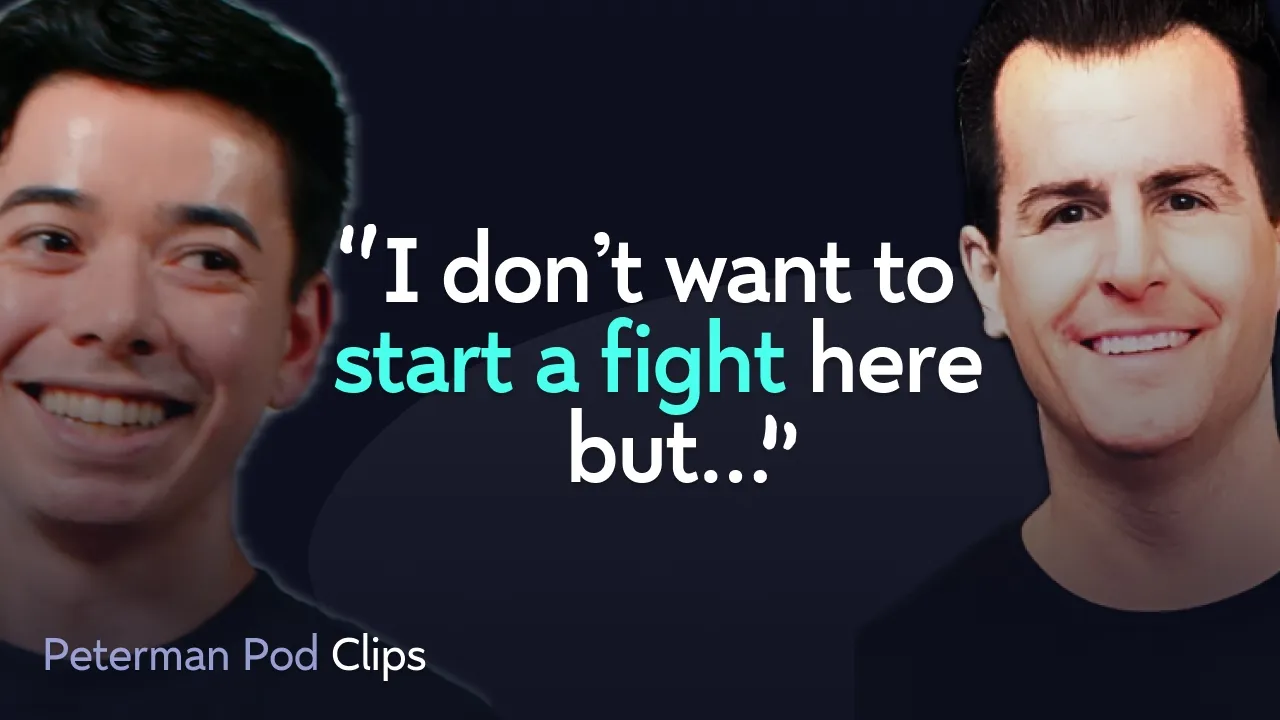
## Background Published on YouTube by Ryan Peterman on July 22, 2026, this clip comes from an extended interview with Harvard professor David Malan. The show notes explain that their broader conversation examines the story behind CS50, lecturing techniques, and how artificial intelligence is impacting computer science education and academic integrity.
## TL;DR David Malan defends CS50's choice to start students with C, explaining that building memory-managed data structures from scratch establishes an essential mental model before moving into high-level abstractions like Python. Addressing modern critiques that aspiring web developers do not need low-level knowledge, Malan draws a clear line between what an engineer routinely uses day-to-day and what they fundamentally need to know. He points out that while he rarely writes C outside of teaching, understanding how hardware and memory operate is crucial for diagnosing bugs, evaluating performance trade-offs, and truly mastering the full computing stack. Ultimately, Malan argues that as generative AI automates routine application code, first-principles comprehension is what separates genuine problem-solving engineers from surface-level programmers.
## Atmosphere & style The exchange has an articulate, reflective, and collegiate feel, driven by Ryan Peterman's conversational prompts and David Malan's polished pedagogical clarity. When Peterman brings up clickbait critique videos, Malan responds with warm, self-aware amusement before smoothly transitioning into an earnest defense of engineering rigor. Watching the clip feels like sitting in on a thoughtful mentorship session, stripping away modern industry hype to focus on the timeless educational philosophy of building software from the ground up.
## Bulletin - [00:00](https://www.youtube.com/watch?v=vhgI_F-WMwA&t=0s) David Malan defends starting CS50 with C, explaining that its placement just above assembly allows students to master procedural fundamentals without relying on high-level abstractions. - [00:00](https://www.youtube.com/watch?v=vhgI_F-WMwA&t=0s) By week five of CS50, students manually build foundational data structures like hash tables and tries in C, preparing them to appreciate the single-line abstractions introduced in Python during week six. - [03:09](https://www.youtube.com/watch?v=vhgI_F-WMwA&t=189s) Malan distinguishes between what an engineer needs to *use* daily versus what they need to *know*, arguing that deep foundational knowledge remains essential even if high-level languages dominate everyday work. - [03:09](https://www.youtube.com/watch?v=vhgI_F-WMwA&t=189s) With generative AI capable of generating boilerplate code, Malan argues that first-principles understanding of low-level building blocks is what separates true engineers from replaceable surface-level programmers.
## Key takeaways - [00:00](https://www.youtube.com/watch?v=vhgI_F-WMwA&t=0s) C serves as an ideal pedagogical stepping stone because it sits directly above intimidating assembly language while keeping abstractions thin. - [00:00](https://www.youtube.com/watch?v=vhgI_F-WMwA&t=0s) Because C has a minimal standard library, it forces learners to understand memory and pointer mechanics by implementing data structures from scratch. - [00:00](https://www.youtube.com/watch?v=vhgI_F-WMwA&t=0s) CS50 students manually implement complex data structures—including linked lists, hash tables, tries, stacks, and queues—before using pre-packaged libraries. - [00:00](https://www.youtube.com/watch?v=vhgI_F-WMwA&t=0s) The transition from week five to week six illustrates the power of abstraction, moving from multi-line C hash table code to a single-line Python dictionary. - [00:00](https://www.youtube.com/watch?v=vhgI_F-WMwA&t=0s) Introductory courses relying exclusively on Python risk leaving students without any conceptual model of what happens under the hood. - [00:00](https://www.youtube.com/watch?v=vhgI_F-WMwA&t=0s) CS50 aims to educate engineers and informed problem solvers who understand computing from first principles, rather than merely producing programmers. - [03:09](https://www.youtube.com/watch?v=vhgI_F-WMwA&t=189s) Claims that full-stack developers do not need low-level knowledge contradict the core definition of working across the entire computing stack. - [03:09](https://www.youtube.com/watch?v=vhgI_F-WMwA&t=189s) A developer does not need to write C in their day-to-day job to benefit immensely from understanding how low-level systems function. - [03:09](https://www.youtube.com/watch?v=vhgI_F-WMwA&t=189s) Malan himself primarily codes in Python, JavaScript, HTML, and CSS, using C for only five weeks a year during CS50 instruction. - [03:09](https://www.youtube.com/watch?v=vhgI_F-WMwA&t=189s) Foundational understanding enables engineers to diagnose performance bottlenecks, solve tricky bugs, and design architectures beyond boilerplate solutions. - [03:09](https://www.youtube.com/watch?v=vhgI_F-WMwA&t=189s) As AI increasingly automates routine code generation, mastery of underlying hardware and computing primitives is vital for tackling novel engineering problems.
## Detailed walkthrough ### [00:00](https://www.youtube.com/watch?v=vhgI_F-WMwA&t=0s) Why Start with C in CS50
Ryan Peterman opens the discussion by asking why anyone should begin their programming journey with C in 2026. David Malan explains that C provides an unmatched foundation for understanding both how computer hardware operates and how software gets constructed. Sitting right above assembly language—which Malan notes looks far scarier to almost everyone—and raw binary zeros and ones, C strikes a sweet pedagogical balance. It provides procedural fundamentals such as loops, conditions, functions, variables, and return values with English-like syntax, while keeping abstractions thin enough that learners are forced to reckon directly with lower-level primitives. Because C has a very small standard library and lacks high-level built-in collections unless external libraries are imported, students are pushed to build nearly everything from scratch.
By week five of CS50, students are writing their own singly and doubly linked lists, hash tables, tries, trees, stacks, and queues. Unlike modern environments in Java or C++ where one can simply pull a ready-made structure from the Standard Template Library (STL), C demands manual memory and pointer manipulation. Malan emphasizes that the goal is not that graduates will constantly rewrite hash tables in their future careers, but that understanding bottom-up data layout enables three vital capabilities: making informed design trade-offs, diagnosing tricky bugs from first principles, and appreciating what modern languages conceal. One of his favorite pedagogical transitions occurs between weeks five and six: students go from writing a lengthy, multi-line C implementation to insert and retrieve data in a custom hash table, to accomplishing the exact same thing in Python with a single line of code instantiating a dictionary.
```mermaid flowchart TD accTitle: Pedagogical Progression in CS50 accDescr: Diagram illustrating the transition from low-level C concepts to high-level abstractions in CS50.
subgraph LowLevel ["Low-Level Foundations (Weeks 1–5)"] A["Hardware Primitives & Memory"] --> B["C Procedural Syntax<br/>(Loops, Conditions, Functions)"] B --> C["Manual Data Structures<br/>(Linked Lists, Hash Tables, Tries)"] end
subgraph HighLevel ["High-Level Abstraction (Week 6+)"] C -->|"Scaffolding to Abstractions"| D["Python Dictionaries<br/>(1-line implementation)"] D --> E["Advanced Tracks<br/>(Web Dev, Data Science, AI)"] end ```
Malan points out that while many introductory classes teach exclusively in Python—and CS50 does so for specific audiences—relying solely on high-level languages leaves students without a grasp of what happens under the hood. As Malan summarizes the philosophy of the course: “And our goal in CS50 among them is not to output programmers, but engineers and educated citizens and folks who really understand from first principles how technology works.”
- **Key Data Structures Built in Week 5:** Singly linked lists, doubly linked lists, hash tables, tries, trees, stacks, and queues. - **The Week 5 to Week 6 Shift:** Moving from a full, manual C hash table implementation to a one-line Python dictionary instantiation. - **Systems vs. Applied Paths:** Students seeking deeper low-level depth can proceed to systems classes covering assembly and compilers, while those aiming for web programming, data science, or AI can comfortably build upon the dual foundations of C and Python.
---
[03:09](https://www.youtube.com/watch?v=vhgI_F-WMwA&t=189s) The "Don't Take CS50" Critique: Knowing vs. Using
Peterman brings up a popular clickbait YouTube video he encountered titled "Whatever you do, don't take CS50," which argued that aspiring full-stack engineers and web developers using JavaScript have no practical need to learn how a computer works under the hood. Malan chuckles at the clickbait strategy working on Peterman, but strongly rejects the underlying philosophy. He argues that such a view fundamentally misunderstands what it means to be an engineer, particularly when the title "full-stack" explicitly demands understanding across every layer of the computing stack.
To clarify the debate, Malan draws a crucial distinction between what a developer literally needs to *use* day-to-day versus what they need to *know*. Even though C remains consistently ranked near the top of programming language indexes due to its omnipresence and raw performance, Malan notes that he personally only writes C for five weeks out of the year during CS50, just as he only uses Scratch for a single week. Instead, his daily work involves Python, JavaScript, HTML, and CSS. Nevertheless, having deep knowledge of low-level building blocks is precisely what allows an engineer to evaluate performance bottlenecks, reason through edge cases, and design robust architectures rather than simply assembling boilerplate code.
In an era where generative AI can trivially produce boilerplate web apps, Malan argues that low-level mastery is more vital than ever if developers want to stay relevant. Highlighting the dividing line between shallow coding and deep engineering, David Malan asserts: “I think if you're going to call yourself an engineer, you should absolutely have mastery of and knowledge of those underlying building blocks if you want to not just output something that frankly AI could output nowadays, but you can understand and you can create the next thing or the solution to some other problem that we haven't even yet solved.”
- **Need to Know vs. Need to Use:** Practicing developers may not write C or Scratch daily, but the mental models developed from them inform higher-level architectural decisions and debugging. - **The Impact of AI:** With AI able to automate standard application code, the engineer's core value lies in solving novel problems from first principles rather than acting merely as a surface-level coder.
## Notable quotes > [00:00](https://www.youtube.com/watch?v=vhgI_F-WMwA&t=0s) And our goal in CS50 among them is not to output programmers, but engineers and educated citizens and folks who really understand from first principles how technology works. — David Malan
## Mentioned David Malan, Ryan Peterman, Harvard University, CS50, C, Python, JavaScript, Java, C++, Scratch, HTML, CSS
## Video description This is a clip from a longer conversation with David Malan who is a Harvard professor known for turning CS50 into a popular online computer science course.
We discussed the story behind CS50, how to lecture well, and how AI is changing CS education including in cheating/academic dishonesty.
Where to watch: • YouTube - https://youtu.be/bB2o81DnKHk • Spotify - https://open.spotify.com/episode/0ApdN6bBzzpiy4zHf9RvJA?si=ILpPmLL-TCqYMRmbhuPlDg • Apple Podcasts - https://podcasts.apple.com/us/podcast/the-peterman-pod/id1777363835 • Transcript - https://www.developing.dev/p/harvard-professor-cs50-what-matters
[Source](https://www.youtube.com/watch?v=vhgI_F-WMwA)