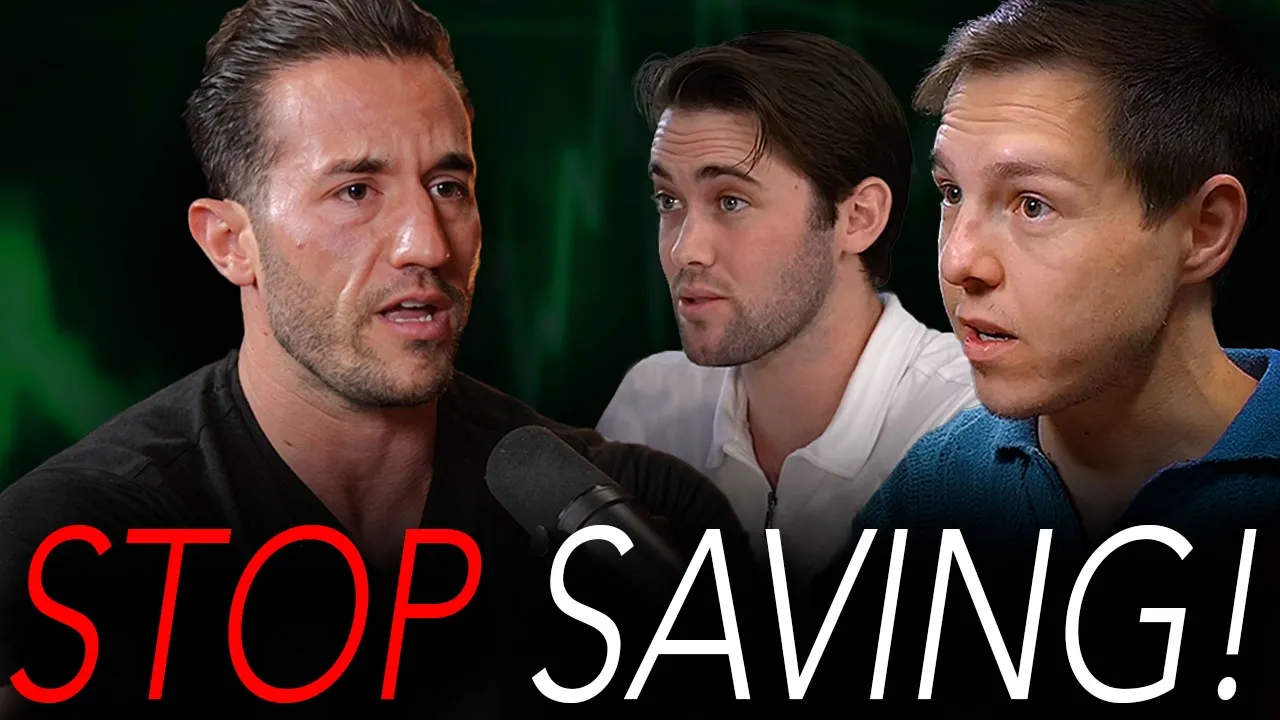
Bloom Co-Founder Greg LaVecchia Scales Beverage Brand to 575 Million Cans
The Iced Coffee Hour
Bloom Nutrition scaled to 575 million sold cans and $130 million in annual Pop revenue by funding growth through bootstrapped retail expansion rather than venture capital.
Bloom Nutrition scaled its ready-to-drink beverage line to roughly 2 million cans daily, tracking over 575 million units across distribution within two months of launch. (3:16)
Greg LaVecchia reported taking multiple nine-figure liquidity days surpassing $100 million by divesting minority stakes in Bloom while maintaining full operational focus. (11:31)
A miscalculated $20 million production run of root beer-flavored Bloom Pop forced a $10 million expired inventory write-off in 2026. (25:16)
Major celebrity posts show diminishing returns; an organic Kylie Jenner Instagram story generated zero measurable Amazon search lift or sales uptick for Bloom. (40:20)
Detailed notes
## Background
Published on YouTube on October 18, 2026, by The Iced Coffee Hour (hosted by Graham Stephan and Jack Selby), this episode features Bloom Nutrition co-founder Greg LaVecchia. The show notes outline a wide-ranging discussion detailing how LaVecchia built a nine-figure fortune, navigated massive operational blunders, scaled into major retailers like Target and Walmart, and managed his personal spending and biohacking routines.
## TL;DR
Bloom Nutrition co-founder Greg LaVecchia breaks down how he and Mari Llewellyn bootstrapped a direct-to-consumer supplement brand into an omni-channel beverage giant moving millions of cans daily across 85,000 retail doors. He details the harsh realities of physical consumer packaged goods, from paying millions in retail slotting fees and absorbing a $10 million inventory write-off to outlasting competitors like Prime through habitual retention over viral hype. LaVecchia also opens up about his high-altitude lifestyle, personal monthly burn rate of $300,000 to $500,000, and using TRT and extreme caffeine intake to harness severe ADHD. Rather than cashing out with a multi-billion-dollar exit, he argues that relentless execution and physical friction provide the core purpose needed to avoid post-wealth depression.
## Atmosphere & style
The conversation moves at an energetic, rapid-fire pace, combining casual studio banter with intense, transparent discussions about high-stakes corporate execution. Greg speaks with blunt, unapologetic conviction, treating entrepreneurship like an open-world video game while Graham and Jack anchor the dialogue with probing questions about unit economics and personal burn rates. Beneath the bravado of private aviation, exotic cars, and aggressive biohacking, an introspective current surfaces as the hosts and guest explore the alienating trade-offs of wealth, strained family traditions, and the psychological necessity of perpetual challenge.
## Bulletin
- [03:16](https://www.youtube.com/watch?v=5pk8HLcAAT0&t=196s) Bloom Nutrition scaled its ready-to-drink beverage line to roughly 2 million cans daily, tracking over 575 million units across distribution within two months of launch.
- [11:31](https://www.youtube.com/watch?v=5pk8HLcAAT0&t=691s) Greg LaVecchia reported taking multiple nine-figure liquidity days surpassing $100 million by divesting minority stakes in Bloom while maintaining full operational focus.
- [25:16](https://www.youtube.com/watch?v=5pk8HLcAAT0&t=1516s) A miscalculated $20 million production run of root beer-flavored Bloom Pop forced a $10 million expired inventory write-off in 2026.
- [40:20](https://www.youtube.com/watch?v=5pk8HLcAAT0&t=2420s) Major celebrity posts show diminishing returns; an organic Kylie Jenner Instagram story generated zero measurable Amazon search lift or sales uptick for Bloom.
## Key takeaways
- [00:00](https://www.youtube.com/watch?v=5pk8HLcAAT0&t=0s) Legacy consumer packaged goods giants struggle to innovate, allowing nimble digital-first brands to quickly capture retail shelf space and market share.
- [07:11](https://www.youtube.com/watch?v=5pk8HLcAAT0&t=431s) Academic struggles and severe ADHD served as foundational psychological fuel for Greg LaVecchia to prove his capability in business.
- [32:28](https://www.youtube.com/watch?v=5pk8HLcAAT0&t=1948s) Bloom began with a bootstrapped $20,000 co-packer minimum order quantity before scaling to a $180 million annual run rate prior to any institutional funding.
- [35:35](https://www.youtube.com/watch?v=5pk8HLcAAT0&t=2135s) Retail distribution functions like prime commercial real estate, demanding millions in slotting fees to expand into chains like Target and Walmart.
- [38:36](https://www.youtube.com/watch?v=5pk8HLcAAT0&t=2316s) Prime collapsed from a billion-dollar run rate down to tens of millions because its young consumer base lacked daily, ritualized consumption habits.
- [41:56](https://www.youtube.com/watch?v=5pk8HLcAAT0&t=2516s) Sustainable brand longevity relies on driving repeated purchases from a dedicated core customer base rather than continuously chasing viral one-off acquisition.
- [46:22](https://www.youtube.com/watch?v=5pk8HLcAAT0&t=2782s) Femme-forward packaging can effectively penetrate households through primary shoppers without alienating male consumers, unlike hyper-masculine beverage branding.
- [27:27](https://www.youtube.com/watch?v=5pk8HLcAAT0&t=1647s) Direct-to-consumer beverage economics are heavily compressed by logistics and shipping weight compared to traditional supplement powders.
- [55:56](https://www.youtube.com/watch?v=5pk8HLcAAT0&t=3356s) Over-relying on strict real-time ad attribution traps businesses in pure performance marketing and prevents authentic long-term brand equity.
- [01:09:14](https://www.youtube.com/watch?v=5pk8HLcAAT0&t=4154s) Modern consumer goods entrepreneurship can be approached like an engaging, gamified lifestyle rather than an isolated, suffering-based grindset.
- [01:14:25](https://www.youtube.com/watch?v=5pk8HLcAAT0&t=4465s) Post-exit founders often battle depression and identity crises when they abandon daily operational challenges and goal pursuit.
- [01:44:47](https://www.youtube.com/watch?v=5pk8HLcAAT0&t=6287s) Physical fitness, hormonal balance, and body composition represent modern status symbols that cannot be directly bought with capital.
- [01:30:49](https://www.youtube.com/watch?v=5pk8HLcAAT0&t=5449s) Excessive domestic outsourcing and unlimited lifestyle options can introduce decision anxiety and erode personal and household intimacy.
- [02:07:38](https://www.youtube.com/watch?v=5pk8HLcAAT0&t=7658s) Taking a company public imposes rigid quarterly earnings pressures and audit oversight that conflict with authentic entrepreneurial execution.
## Detailed walkthrough
### [00:00](https://www.youtube.com/watch?v=5pk8HLcAAT0&t=0s) The Arena Doors Are Wide Open: Making Millions in the New Economy
The conversation opens with rapid-fire reflections on wealth creation, setting the tone for how modern entrepreneurship contrasts with traditional career expectations. When asked whether it has ever been easier to make a million dollars, Greg LaVecchia immediately dismisses the idea that success is out of reach: “The arena doors are wide open.” He notes that he has personally experienced nine-figure single days and spent over $20 million on a home in Aspen, Colorado, yet he rejects the idea of cashing out to retire early. For him, stepping away is not the goal. As Greg puts it, “I am choosing a life of pursuit. I am not choosing I'm going to make $100 million and then unplug everything and lay on a beach every day.” When people describe entrepreneurship as an exhausting grind, he reframes the concept by contrasting it with traditional corporate life: “Imagine if we had to go work under like fluorescent lights in a tiny cubicle this big. That's the grind. That sucks.”
Welcomed into the studio, Greg admits he is fangirling over being on the show. Graham Stephan asks him directly whether achieving seven-figure wealth is truly more accessible now than in past decades. Greg argues that modern economic tools have radically democratized opportunity regardless of background, asserting that tough starting circumstances can actually translate into higher upside in the current landscape. Legacy consumer packaged goods (CPG) giants are struggling to innovate, creating a massive vacuum where nimble startups must fill the void. Consumers are vocal about wanting fresh options on retail shelves rather than the static offerings of corporations that have failed to evolve.
When Jack Selby asks what prevents most people from seizing these openings, Greg points to outdated advice inherited from the previous generation. For decades, the standard formula was to remain loyal to a single corporation for thirty to forty years, accumulate funds in a 401(k), and wait until age seventy to enjoy life. In Greg’s view, that playbook is completely obsolete: “It's not about like chasing this 401k and then like riding off into the sunset when you're 70 years old anymore.” Today, an individual can build an impactful, prosperous career by their early thirties, but millions remain paralyzed because they are still following the rules of an era that no longer exists.
[02:31](https://www.youtube.com/watch?v=5pk8HLcAAT0&t=151s) Action Over Dogma: Intrapreneurs, Bloom Millionaires, and Niche Scale
Addressing the practical remedy to this generational inertia, Greg emphasizes that the immediate requirement is pure execution. However, he clarifies that building wealth does not require everyone to become a standalone founder. While his social media content might give the impression that starting a brand is the sole path forward, high-performing operators inside growing enterprises can achieve comparable financial freedom without carrying founder-level risk.
Within Bloom Nutrition, non-founding executives and early employees have accumulated seven- and eight-figure net worths simply by attaching themselves to an escalating rocket ship years after its inception. Greg highlights that the internet and social media have eliminated geographic limitations. Previously, specialized products or unique skill sets were constrained by the physical borders of a zip code. Today, creators and operators can broadcast directly to global niche audiences, quickly aggregating massive, highly concentrated demand that never could have existed locally.
```mermaid
flowchart TD
accTitle: Paths to Wealth in the Modern Economy
accDescr: A comparison between the traditional career model and modern scalable paths including founders, intrapreneurs, and niche creators.
subgraph Legacy["Legacy Playbook"]
L1["Corporate Loyalty (30-40 Yrs)"] --> L2["401(k) Accumulation"] --> L3["Retirement at Age 70"]
end
subgraph Modern["Modern Playbook"]
M1["Social Media & E-Commerce Reach"]
M1 --> F["Founders: Direct-to-Consumer Brands"]
M1 --> I["Intrapreneurs: Key Hires in High-Growth Companies"]
M1 --> N["Niche Experts: Global Community Monetization"]
end
```
[03:16](https://www.youtube.com/watch?v=5pk8HLcAAT0&t=196s) Tracking 2 Million Cans a Day: The Rapid Surge of Bloom Beverage
The hosts clarify upfront that the discussion is completely unsponsored. Graham reveals that he first encountered Bloom purely by chance after moving into their new studio warehouse. With an empty kitchen, their assistant went on a Costco run and returned with a variety pack of energy drinks. Graham, who is generally selective about functional beverages, was blown away by the taste and immediately mandated that Bloom be kept permanently stocked in the studio fridge.
The conversation pivots to the staggering retail velocity of Bloom's ready-to-drink sparkling energy beverage. When Graham mentions hearing that the company moves a million cans a day, Greg corrects him: the brand is currently selling roughly two million cans every single day. The growth is compounding so quickly that forecasting future targets feels nearly impossible because demand continues to accelerate on an exponential curve.
To demonstrate, Greg pulls his phone out of airplane mode to show the studio his live sales dashboard:
- The beverage line officially launched in July 2024.
- In just over two months on the market, the dashboard reflects over 575 million cans tracked across their distribution network.
- The company projects crossing 600 million cumulative units sold before the end of October.
- The internal tracking system is audited and re-synced weekly to maintain exact precision across all retail accounts.
While Greg spent seven continuous years obsessively refreshing hourly follower counts and channel sales figures, he explains that he has dialed back the day-to-day micromanagement now that the brand operates at an enterprise scale.
[05:07](https://www.youtube.com/watch?v=5pk8HLcAAT0&t=307s) Why a Wealthy Founder Pursued YouTube: Status, Visibility, and the "11-Year Overnight Success"
Graham points out that Greg’s trajectory runs completely counter to the typical internet brand model, where an influencer gathers millions of followers first and then slaps their branding on a white-labeled product. Greg built a market-leading enterprise behind the scenes before ever putting his face in front of a camera. Graham asks how Greg views the classic adage that it is far better to be “rich and unknown” than “rich and known.”
Greg rejects that binary, stating openly that he prefers being known: “I think having wealth with some status exponentially makes that wealth more fun.” While Bloom’s beverage line experienced explosive momentum after its 2024 debut, Greg stresses that their broader enterprise is not an overnight fluke. He and his wife co-founded Bloom in 2019, but their collaboration started back in 2017 out of a college dorm room where Greg worked behind the camera to help her develop her fitness audience. In reality, their current position represents an eleven-year continuous grind.
His transition to content creation began because he felt an intense internal frustration seeing young people flounder without practical guidance. He decided to sit in his backyard with a camera and document the tactical business lessons he accumulated across his twenties so that younger entrepreneurs wouldn't have to learn them through painful trial and error. To his surprise, the videos gained rapid traction. Although he recognizes that extreme fame could eventually compromise normal life—citing how difficult it might be for a high-profile figure like Kevin O'Leary to walk through a Walmart undisturbed—he enjoys being recognized a few times a day by respectful viewers and finds that blending wealth with public credibility creates unique professional leverage.
[07:11](https://www.youtube.com/watch?v=5pk8HLcAAT0&t=431s) The Chip on the Shoulder: ADHD, Academic Failure, and Exceptional Drive
Graham asks whether personal insecurity serves as a hidden fuel for Greg and other high-performing founders. Greg readily acknowledges that extreme success rarely emerges from a well-adjusted, completely normal psyche. Outsiders often meet prominent entrepreneurs expecting standard conversationalists, only to encounter individuals with intense eccentricities, underlying frustration, or obsessive tendencies. He believes that building an enterprise of scale almost always requires an unconventional psychological makeup.
For Greg, that underlying drive originated during his childhood in Westchester, New York, an affluent community with an intense cultural focus on elite academic credentials. School was an agonizing experience:
- He suffered from severe ADHD, to the extent that he struggled to read consecutive sentences on a page without losing focus.
- He finished college with an unimpressive 2.4 GPA.
- Because he did not attend a prestigious, top-tier university, local social pressures made both him and his parents feel like second-class citizens within their neighborhood.
Carrying that constant feeling of academic inadequacy instilled an enormous chip on his shoulder, giving him an unrelenting desire to prove his capability outside the confines of the traditional educational system.
[08:29](https://www.youtube.com/watch?v=5pk8HLcAAT0&t=509s) The Drive to Want More and the Energy of Winning
Greg reflects on how having a chip on your shoulder often sparks the earliest phase of an entrepreneurial journey. While he began out of a desire to prove doubters wrong, he notes that this negative fuel has thankfully subsided. Graham asks what he would tell an ordinary viewer who does not feel damaged, weird, or aggrieved, yet still yearns for extraordinary results. Greg responds that simply desiring something bigger is an abnormal urge in itself that should be embraced rather than suppressed. He points out that older generations frequently made ambitious people feel guilty:
> “I actually think that you're ungrateful if you're not taking advantage of the opportunity to create value for society today, which rewards you with, you know, fiscal freedom and fulfillment, right?”
Greg argues that wanting more usually signals that someone has already conquered their previous objective, a natural drive especially common among ambitious young men.
Graham admits that watching Greg’s content gets him incredibly energized, sharing that he woke up at 6:00 a.m. and immediately put on Greg’s videos to get hyped before shooting. Greg explains that his high-energy state was not innate; during early, grueling chapters of Bloom Nutrition and previous ventures, nothing functioned properly. He had to audit his daily routine, drag himself out of bed, and push through without letting low moods or raw emotion dictate his behavior. Over time, racking up early wins transformed into an inexhaustible fuel source. Just like creators getting hooked on viral traction and brand partnerships, achieving milestones becomes intoxicating. Once momentum builds and the finish line continuously shifts backward, pursuing larger targets turns into an exhilarating, addictive lifestyle.
---
[11:31](https://www.youtube.com/watch?v=5pk8HLcAAT0&t=691s) Making $100 Million in a Day and the Cash in the Glove Box
Graham asks Greg to state the single highest revenue figure he has generated in twenty-four hours, both personally and through Bloom. Greg shares that Bloom maintains steady daily sales of a couple million dollars rather than relying on chaotic Black Friday spikes. On a personal level, he has experienced multiple nine-figure days—meaning north of $100 million in a single twenty-four-hour span. These windfall days occurred when he and his wife, Mari Llewellyn, closed enterprise value transactions, selling minority equity stakes in Bloom for upfront cash. The payout arrived as four separate wire transfers cleared over the course of a single day.
```mermaid
flowchart TD
accTitle: Evolution of Greg and Mari's Banking Setup
accDescr: Shows the progression from withdrawing cash at TD Bank to opening a commercial Chase account to multi-wire enterprise liquidity.
subgraph Phase1["College Era (Mari Fitness)"]
A["Instagram Booty Bands Sales"] --> B["TD Bank Student Account"]
B --> C["Daily Cash Withdrawals into Car Glove Box"]
C --> D["Account Closed by Bank Suspicion"]
end
subgraph Phase2["First Business Entity"]
D --> E["Formed LLC for Mari Fitness"]
E --> F["Deposited $40,000 Cash at Chase Bank"]
end
subgraph Phase3["Bloom Liquidity Event"]
F --> G["Enterprise Equity Stake Sale"]
G --> H["Dedicated New Account: $100M+ via 4 Wires in 24 Hours"]
end
```
Rather than depositing nine figures into a routine college account, Greg opened a dedicated bank account for the wire transfers. This prompts him to recount how naive they were about basic financial mechanics in the early days of their first brand, Mari Fitness:
- Greg used a standard TD Bank student checking account to collect PayPal earnings from selling resistance bands on Instagram.
- Unaware that money could remain safely inside the banking system, he went to the teller every single day, withdrew several hundred dollars in physical cash, and stuffed it into their car's glove box.
- Suspicious bank staff eventually asked if he was a drug dealer due to the relentless daily withdrawals and promptly shut down his student account.
- Scrambling to go legitimate, Greg and Mari formed an LLC, walked into Chase Bank to open their first commercial account, and dumped $40,000 in crumpled glove-box cash directly onto the teller's desk to fund the opening deposit.
---
[13:39](https://www.youtube.com/watch?v=5pk8HLcAAT0&t=819s) Sponsor: Claude
Jack Selby introduces sponsor Claude by Anthropic, emphasizing that managing high-stakes capital requires careful analysis. Jack explains that *The Iced Coffee Hour* team used Claude to outline this episode with Greg by ingesting performance metrics across past episodes to determine top audience interests. Their video editor, Michael, automated 95% of the podcast's manual video editing workload after seven years by training a custom model via a lapel microphone while walking around the warehouse. The team also relies on Claude for contracts, invoicing, financial tracking, and clips channel production. Jack directs listeners to claude.ai/icedcoffee and mentions the features available in Claude Pro.
---
[15:15](https://www.youtube.com/watch?v=5pk8HLcAAT0&t=915s) Buying a $20M Aspen House and Allocating Massive Wealth
Jack asks Greg what he actually chose to do after clearing over $100 million in liquidity. Greg reveals that his family’s first major milestone purchase was an Aspen, Colorado mountain home exceeding $20 million, which frequently serves as the backdrop for their YouTube content:
> “We have a son now and so we want him in the outdoors a lot growing up and that's become like our happy place for sure.”
When Jack questions whether $20 million felt like the correct amount, Greg laughs that he is already scouting upgrades. He views trophy purchases not as wasted cash, but as portfolio assets that retain or grow value. While his everyday Ford Raptor depreciates, collectible vehicles like his Ferrari and Mercedes-Benz SLS AMG have appreciated significantly.
Graham challenges this rationale from a conservative personal finance perspective. Running the rough numbers, he points out that a $100 million liquidity event leaves approximately $60 million after taxes. Spending $20 million—a full third of post-tax net proceeds—on a secondary vacation home that incurs immense recurring upkeep while sitting vacant for seven to nine months out of the year represents a massive capital allocation, prompting Graham to question whether a financial adviser stepped in to caution him.
[16:35](https://www.youtube.com/watch?v=5pk8HLcAAT0&t=995s) Cash-Out Refinancing and the Private Jet Dilemma
Greg explains the mechanics behind his massive real estate spending, noting that the final figure ended up well above $100 million once taxes were settled. He details how he structured the purchase through a cash-out refinance: after putting down $25 million in cash, he took a loan back against the property at roughly 2% to 3% interest, freeing the capital to compound in the stock market. Because that liquidity went right back to work, he jokes that according to his bank account, he hasn't even technically spent the initial $20 million.
```mermaid
flowchart LR
accTitle: Cash-Out Refinance Flow
accDescr: Diagram showing how capital is deployed into a luxury home and recycled back into investments via a low-interest bank loan.
A["$25M Cash Paid"] --> B["All-Cash Home Purchase"]
B --> C["Bank Refinance at 2-3%"]
C --> D["$25M Capital Extracted"]
D --> E["Reinvested into Portfolio"]
```
His financial advisors, however, get anxious whenever he makes massive purchases and pivots quickly afterward. With only two or three years in the home, Greg is already thinking ahead to the next property as his family expands, which frustrates his advisors because short holding periods rarely realize financial upside. A prime example arose when he wanted to buy a Gulfstream G200 private jet for $7 million to $8 million to offset heavy charter expenses, specifically wanting to customize the entire exterior in Bloom's signature green. His advisors pushed back, arguing that if his growing family would require an upgrade to a Gulfstream G4 within two or three years anyway, purchasing the G200 made little financial sense compared to continuing to charter. As Greg puts it:
> “So like those types of scenarios are trying to slow me down on and start I'm trying to think longer term.”
[18:37](https://www.youtube.com/watch?v=5pk8HLcAAT0&t=1117s) The "Toxic Abundance Mindset" and Shifting Risk Appetites
When asked whether he cares about how much money he burns through, Greg admits he has always operated with what some people call a "toxic abundance mindset," trusting that no matter the financial hurdle, he can out-earn it. In the early days of Bloom Nutrition, he and his wife Mari Llewellyn bought a $4.5 million home in Santa Monica before they actually had the money in the bank. Committing to that mortgage forced his back against the wall, creating intense urgency that fueled his best business breakthroughs. Up until age 29, he pushed all his chips into the center well over a dozen times, but becoming a father reshaped his definition of acceptable risk.
> “I have always had like a what some would consider a toxic abundance mindset.”
Having moved five times in five years—bouncing from Philadelphia to New York, Boulder, Brooklyn, Los Angeles, and finally Austin, Texas—Greg is no longer willing to uproot his family or sacrifice life milestones. He recalls spending five consecutive Thanksgivings and Christmases eating with his corporate team rather than his family, because Black Friday and the post-Christmas "New Year's resolution" fitness rush represented the brand's highest revenue periods of the entire year. While he remains comfortable risking capital, he refuses to jeopardize family stability anymore.
[21:18](https://www.youtube.com/watch?v=5pk8HLcAAT0&t=1278s) The "Build It and They Will Come" Philosophy
Graham Stephan notes his own conservative financial nature, sharing that building a new home studio makes him anxious enough to take on extra side work just to offset the cost. Greg counters that the studio expense is likely less than 0.01% of Graham's net worth and represents the primary engine generating his income. For Greg, lifestyle assets and business infrastructure are non-negotiable tools that unlock higher tiers of performance.
Early on, the Santa Monica home served as the essential production studio for Mari's creator brand. Similarly, Bloom worked out of shared co-working spaces until reaching $100 million in annual revenue, at which point top-tier executive talent refused to take the brand seriously. Investing in a prestigious company headquarters was necessary to attract elite staff. Greg reflects on that calculated projection:
> “It's like I need the big Bloom headquarters because then people will want to work here.”
[23:07](https://www.youtube.com/watch?v=5pk8HLcAAT0&t=1387s) When "All-In" Bets Fail: Meme Pages and the Amazon Suspension
Taking high-stakes risks hasn't always paid off. In Bloom's infancy, the company funneled top-of-funnel traffic toward Mari's personal Instagram account rather than a direct sales page, aiming to build an authentic audience. Holding just $15,000 in the company bank account, Greg bet the entire balance on a 24-hour blitz of Instagram meme pages. The campaign generated an immediate flood of followers, but they were low-quality bot accounts with Indian names and foreign-language comments that produced zero Shopify purchases, resulting in an absolute loss.
A far more dangerous stumble occurred around age 25 or 26. Tempted by "Miami boy" growth hacks, day traders, and aggressive Amazon tricks, Greg outsourced marketplace growth to a third-party agency without proper oversight. The agency violated platform terms of service by purchasing fake reviews, leading to Bloom getting completely banned from Amazon for 30 days—a devastating hit to distribution and cash flow that underscored the danger of chasing shortcuts over product quality.
- **Early Instagram Ad Spend**: Gambled the company's entire $15,000 treasury on meme page promotions that yielded zero revenue.
- **Amazon Account Suspension**: Locked out of Amazon for 30 days due to illicit black-hat review strategies executed by an unvetted agency.
- **Santa Monica Home Purchase**: Stretched for a $4.5 million personal property to serve as an in-house content studio during Bloom's breakout phase.
[25:16](https://www.youtube.com/watch?v=5pk8HLcAAT0&t=1516s) Diversifying Channels and the $10 Million Mistake
Reflecting on operational near-death experiences, Greg recounts the terrifying period when Bloom was temporarily taken off Amazon for 45 to 60 days. Because Amazon accounted for the vast majority of their sales at the time, the suspension nearly wiped out the company: "We were probably 24 hours out from doing massive layoffs to Bloom. Everything would have gone under." The harrowing ordeal permanently reshaped his operational philosophy. Instead of remaining beholden to a single channel, Bloom expanded aggressively into brick-and-mortar retail and now occupies 85,000 doors, insulating the business against catastrophic distributor dependency.
Addressing Graham's question about whether Bloom's trajectory is simply survivorship bias driven by uninterrupted luck, Greg readily confesses to a massive miscalculation in 2026. Believing their Bloom Pop line (which generates roughly $130 million annually) would see explosive demand for a root beer variant, Greg committed heavily: "We bought probably $20 million worth of this Bloom Pop root beer and I thought it was going to fly off the shelves." Consumers failed to adopt the flavor, forcing the company into a painful inventory write-off: “I needed to end up writing off $10 million of that root beer. Just expired.” He acknowledges that unlike unique flavors such as crisp apple or Shirley Temple, root beer is crowded with legacy contenders, and the consumer appetite simply did not match his aggressive production run.
- **Amazon suspension:** 45 to 60 days of downtime brought Bloom within 24 hours of mass layoffs.
- **Current retail footprint:** Spread across roughly 85,000 doors to eliminate single-partner dependency.
- **Bloom Pop annual run-rate:** Approximately $130 million per year.
- **Root beer write-off:** A $20 million production batch that resulted in a direct $10 million loss on expired stock in 2026.
---
[27:27](https://www.youtube.com/watch?v=5pk8HLcAAT0&t=1647s) The Economics and Logistics of Beverage Distribution
Breaking down unit economics, Greg explains that an individual can of Bloom energy drink retails at Target for approximately $2.50. While standard energy drink gross margins sit between 50% and 60%, the idea that a brand founder easily pockets a dollar of clean profit per unit is far from reality. Physical distribution entails layers of margin-eaters, from freight haulers to retail slotting fees: "Putting it onto a Target shelf, they charge me a million dollars for that shelf. So, it's so much more complicated than that."
The single biggest cost driver in physical drinks is not the aluminum can or the liquid itself, but the sheer physical weight of freight and fulfillment: “The most expensive is logistics. The most expensive is just moving this product around.” Offering free shipping on 12-pack cases shipped directly to a customer's home consumes a massive chunk of top-line revenue. By comparison, Bloom was structurally far simpler and reached peak profitability when operated as a pure direct-to-consumer brand on Shopify, prior to the logistics-heavy beverage rollout. In that era, the business ran lean with minimal staffing, low overhead, and no fleet of trucks.
```mermaid
flowchart TD
accTitle: Unit Revenue and Margin Flow of a Canned Beverage
accDescr: Diagram tracing revenue deductions from retail price to brand profit.
subgraph Retail ["Retail Sale"]
A["Retail Price ($2.50 at Target)"] --> B["Target Retailer Margin"]
end
subgraph SupplyChain ["Supply Chain & Operations"]
B --> C["Wholesale Revenue to Bloom"]
C --> D["Heavy Freight & DTC Logistics"]
C --> E["Manufacturing & Canning"]
C --> F["Retail Slotting Fees (~$1M shelf space)"]
end
subgraph Profitability ["Bottom Line"]
D & E & F --> G["Net Margin / Brand Profit"]
end
```
The hosts transition into partner messages tailored for entrepreneurs scaling their operations:
- **Clay:** A prospect research and enrichment platform that helps founders discover targeted accounts and decision-makers by scanning across 200 data sources. Listeners can claim 2,000 free credits at `clay.link/coffee`.
- **Gusto:** Full-service payroll, hiring, and HR administration software that handles automatic tax filings, onboarding, and benefits. Jack mentions having used Gusto since age 21, recently utilizing it to onboard their editor, Michael. Listeners get three months free after running their initial payroll via `gusto.com/iced`.
---
[32:28](https://www.youtube.com/watch?v=5pk8HLcAAT0&t=1948s) Bootstrapping Greens and Infiltrating Target
Before beverages transformed Bloom into a multi-category empire, the brand's rapid rise was fueled by its hero product: greens powder. Greg, his wife Mari Llewellyn, and partner Leo bootstrapped Bloom all the way to an astonishing $180 million annual run rate without taking a cent of outside institutional capital. Approximately 85% of that entire top-line figure came from their Greens & Superfoods powder, powered almost entirely by Mari's organic personal brand and an army of creator partnerships.
In July 2022, Bloom initiated its first foray into national brick-and-mortar retail by placing greens powder into a 600-door test run at Target. After several months of strong inventory turnover, Greg approached Target's corporate buyers ahead of January to demand a nationwide rollout across all 2,400 stores for New Year's resolution season. Target's retail merchandising team pushed back firmly against e-commerce-style agility: "They said, 'Whoa, whoa, you e-commerce kids, like that's not how fast retail moves. We make one decision a year. We are keeping you in 600 doors for at least the next 12 months.'" Unwilling to wait a year to seize market momentum, Greg realized he needed to put cold hard capital on the line to break through the traditional retail playbook.
- **Bootstrapped scale:** Grown to $180 million per year before introducing RTD beverages.
- **Product concentration:** Greens and Superfoods powder accounted for ~85% of company revenue.
- **Target retail rollout:** Started in July 2022 as a 600-store test before pushing for full-chain expansion across all 2,400 Target doors.
[03:35](https://www.youtube.com/watch?v=5pk8HLcAAT0&t=215s) Retail Slotting Fees and Shelf Space as Real Estate
Greg explains the reality behind securing physical retail placement, recounting how Bloom got into Target by paying a $1 million slotting fee. He made a direct offer to Target: “I will give you a million dollars to put these greens in every Target by January 1st. I don't care where it is in the store. Just find a spot to put it. Make sure it scans at the register and I will give you this $1 million.” Target agreed immediately. Greg points out that average consumers fail to grasp that major retailers are publicly traded, profit-driven businesses that treat physical shelves exactly like real estate: “Every time you talk to a retailer, there is a transaction being made from a brand like Bloom and talking to a Walmart, Costco, Sam's Club, whatever it may be. And so, yeah, we spend millions of dollars a year, tens of millions of dollars a year potentially, having the right shelf at 7-Eleven.”
Graham and Jack laugh, with Graham noting that Target accepted so quickly that Greg probably overpaid and should have started at $500,000, or that the buyer took it as an incentive. Greg clarifies that the million-dollar payment secured a premium endcap or display spot for only two to three months. In club stores like Sam's Club or Costco, the prime displays right at the front entrance require brands to pay a dedicated monthly slotting fee. Jack jokingly suggests a guerrilla marketing tactic: wearing a corporate vest into retail stores, setting up an unapproved branded display, or having a hundred people each visit three stores to move products from the back aisles to the front entrance. While Greg finds the hustle amusing and believes entrepreneurs must test boundaries, he points out that with 2,400 Target locations or 1,000 Sam's Club locations, pulling off that kind of manual stunt at meaningful scale is practically impossible.
[36:27](https://www.youtube.com/watch?v=5pk8HLcAAT0&t=2187s) Caffeine Regulations, Formulations, and Daily Consumption
The conversation shifts to caffeine regulations and international standards, sparked by past controversies surrounding Logan Paul’s drink, Prime, facing scrutiny in Canada for high caffeine levels. Greg explains that international markets require lower caffeine formulations—Bloom Energy cans in Canada contain roughly 100 milligrams of caffeine compared to higher levels in the United States. He notes that while some differences are regulatory, others stem from cultural consumption habits, as foreign consumers are often unaccustomed to 180 milligrams per serving. Greg suspects Prime ran into legal issues because of demographic targeting: “What I think happened with Prime, and this is just my POV, I have no idea if this is accurate, is that they marketed so much to kids. That's where the caffeine regulations get a little dicey.” He stresses that responsible energy drink brands must market strictly to adults aged 18 and older rather than running cartoon sponsorships: “An 8-year-old should not be having this energy drink, right?”
```mermaid
flowchart LR
accTitle: Bloom Energy Drink Formulation Architecture
accDescr: Visual breakdown of Bloom Energy's active ingredients and daily consumption timing.
subgraph INGREDIENTS["Active Ingredients"]
direction TB
A["Natural Green Tea Caffeine\n(Smooth, no jitters)"]
B["L-Theanine\n(Balances stimulation)"]
C["Prebiotics\n(Gut health focus)"]
end
subgraph CONSUMPTION["Greg's Daily Routine"]
direction TB
D["3–4 Cans Before 10:00 AM\n(Controlled urgent anxiety)"]
E["Zero Afternoon Caffeine\n(Deep sleep by 9:30 PM)"]
end
INGREDIENTS --> CONSUMPTION
```
Greg reveals his personal routine involves drinking three to four cans of Bloom Energy every day, entirely before 10:00 AM. He purposely front-loads his caffeine intake to induce a mild, urgent burst of productive anxiety for a few hours, completely cutting off stimulants in the afternoon so he can sleep soundly by 9:30 PM. He contrasts Bloom's formula with synthetic caffeine drinks, emphasizing that pairing natural green tea caffeine with L-theanine provides clean energy without harsh physical jitters.
- Bloom Sparkling Energy utilizes natural caffeine sourced from green tea combined with L-theanine and prebiotics.
- U.S. versions of energy drinks frequently contain between 180 and 300 milligrams of caffeine, while Canadian iterations often cap around 100 milligrams.
- Greg consumes three to four Bloom Energy drinks daily prior to 10:00 AM and cuts off caffeine for the rest of the day.
[38:36](https://www.youtube.com/watch?v=5pk8HLcAAT0&t=2316s) The Downfall of Prime and the Ready-to-Drink Hydration Trap
Analyzing the steep decline of Prime after its explosive debut, Greg argues that while Logan Paul claimed the business simply settled into a sustainable baseline after an unsustainable spike, a drop from a peak billion-dollar run rate down to tens of millions represents a severe contraction. Prime's parent group, Congo Brands—which also built Alani Nu before Celsius acquired Alani in a $2 billion transaction—likely shifted its focus to closing that massive sale rather than rescuing a struggling hydration SKU. Greg points out that the ready-to-drink (RTD) hydration category is notoriously unforgiving, dominated almost entirely by legacy titans Gatorade and Electrolit.
The fundamental flaw in Prime's model was its core customer base. Greg observes: “Younger consumers isn't exactly like a consumer who creates a ritual and a routine around consuming your product.” While adults in their late twenties and thirties build daily morning beverage rituals and stick loyally to specific brands, teenagers and children hop rapidly from one viral trend to the next. Once the initial hype and playground collectibility evaporated, Prime was left without the daily habitual repeat buyers required to sustain a retail beverage brand.
[40:20](https://www.youtube.com/watch?v=5pk8HLcAAT0&t=2420s) The Death of A-List Celebrity Endorsements
Greg illustrates a major shift in modern marketing: consumer fatigue has severely diminished the conversion power of traditional celebrity endorsements. He shares an experience where Kylie Jenner—one of the top five most-followed people on Instagram—posted an entirely organic, unprompted video reviewing Bloom's sparkling soda, Bloom Pop. She lined up Bloom's Shirley Temple flavor against competing brands on her Instagram story, tasted them, and named Bloom the decisive winner.
Despite reaching tens of millions of followers with an authentic, unpaid rave review from a mega-celebrity, Bloom experienced no measurable lift: “We didn't get one Amazon search. We did not see one tick up in sales from this Kylie Jenner post.” Greg reflects on how quickly consumer behavior has changed: “If this was 4 years ago, we would be sold out in 24 hours. We'd be sold out in in 12 hours, right? Like there's something going on where people are done buying things that these celebrities have told us to buy, you know, once they've told us to buy the 30th thing.” Graham and Jack contrast this celebrity fatigue with focused creator audiences, noting that when podcasts or niche creators recommend a product, audiences listen because the endorsement is grounded in genuine, everyday use rather than an obvious cash grab. While Graham suggests Bloom's baseline sales volume might now be so large that a small spike is hard to detect, Greg maintains that zero incremental Amazon searches from a top-tier Kardashian-Jenner story demonstrates that the era of blind celebrity worship driving consumer commerce is largely over.
[41:56](https://www.youtube.com/watch?v=5pk8HLcAAT0&t=2516s) Retention vs. Acquisition: What Went Wrong with Prime
The hosts and guest examine why big-budget celebrity plays often fail over the long haul compared to product-led brands. The guest reflects on how he had originally earmarked significant capital for 2027 to sign A-list celebrities as Bloom approached its billion-dollar target, but reconsidered after seeing the limits of that playbook. While Graham Stephan acknowledges that Prime managed to do billions in sales off the back of celebrity hype, and even notes that he personally enjoyed their protein shake, he points out that consumers have grown distrustful of A-list celebrities who have repeatedly cashed in on endorsements.
The guest breaks down the fundamental flaw in building an acquisition-first brand versus a retention machine. Selling to millions of people once on the back of viral marketing is not a sustainable model if customers refuse to return:
> “The only reason Bloom Sparkling Energy is the size that is today, seeing that 575 million cans number, isn't because we've sold to 575 million people. We've probably sold to a tenth of that and they've bought it 10 times.”
When asked what advice he would offer if hired as a consultant for Prime, the guest notes that his immediate focus would be diagnosing why repeat purchases stalled. He avoids disparaging the brand directly, pointing out he does not operate in the ready-to-drink hydration or protein space, but emphasizes the cold reality of consumer packaged goods:
> “If the consumer is not coming back, like that's just not a good business.”
---
[44:00](https://www.youtube.com/watch?v=5pk8HLcAAT0&t=2640s) The Evolution of the Creator Economy and Hyper-Targeted Ads
Turning to modern marketing, the guest contrasts the decline of celebrity endorsements with the explosive growth of micro-creators and algorithm-driven commerce. Bloom currently partners with thousands of content creators, capitalizing on the shift from broad demographic targeting to hyper-granular programmatic reach. The guest recalls the early days nine years prior, running ads out of his college dorm room for a booty band business where the messaging was blunt and generic, targeting any woman looking to grow her glutes. Today, AI and Meta's ad engine allow brands to generate thousands of hyper-specific variations:
> “Today I can say, are you the wife of a plumber in Kansas looking to reduce cellulite on your glutes?... His name's John and your name is Karen. And I can use AI to create 3,000 different specific versions of that. Meta's algorithm is so powerful that it will hand-deliver to Karen with husband John in Kansas and go find her specifically.”
This shift has created a unique dynamic where ordinary blue-collar workers—such as UPS drivers or plumbers in Alabama—document their daily work routines and build substantial followings. Yet it creates an ironic paradox: their content depends on their manual labor, meaning even after earning substantial income from brand deals, they must maintain their blue-collar jobs to preserve the authenticity of their channel, much like early real estate creators who lost their core audience when they stopped actively selling homes. Fueled by TikTok Shop and sophisticated targeting, the creator economy has transformed into an accessible side-income engine for everyday people across the country.
---
[46:22](https://www.youtube.com/watch?v=5pk8HLcAAT0&t=2782s) Competitors, Monster's Cult, and the Gendered Branding Debate
When asked which competing energy drink brands are executing well, the guest highlights C4 Energy, with whom Bloom is formally partnered under the umbrella of Nutrabolt in Austin, Texas, led by Doss Cunningham. Outside of praising C4 as a top-tier pre-workout drink, he playfully admits his bias:
> “Dude, I don't drink anyone else. Like I'm a little toxic.”
While he samples every new competitor that enters the market alongside his team at headquarters, he insists Bloom outperforms the competition on taste and quality. The hosts point to Red Bull’s high-production marketing stunts and Monster Energy’s intense subculture, with the guest agreeing and sharing that several truck drivers working for Bloom literally have Monster logo tattoos they got as teenagers.
The conversation turns to can aesthetics and branding demographics. The hosts challenge the guest, arguing that Bloom's slim, purple Crisp Apple can feels overtly feminine and appeals naturally to a woman coming out of a Pilates class, while making it hard to imagine a construction worker carrying one. The guest pushes back against the idea that the design limits its long-term potential:
```mermaid
flowchart TD
accTitle: Household Purchasing Dynamics and Brand Cross-Over
accDescr: Flow showing how Monster remains exclusively masculine while Bloom crosses gender lines through household shopping habits.
subgraph MonsterFlow["Monster Energy Dynamic"]
M1["Hyper-Masculine Branding"] --> M2["Husband buys for himself"]
M2 --> M3["Wife refuses to drink it"]
end
subgraph BloomFlow["Bloom Energy Dynamic"]
B1["Female-First / Clean Aesthetic"] --> B2["Wife buys during grocery run"]
B2 --> B3["Placed in household pantry/fridge"]
B3 --> B4["Husband tries it and adopts it"]
end
```
The guest explains that although Bloom was deliberately reverse-engineered for female consumers, household shopping behavior creates an asymmetrical advantage:
> “Monster is so masculine that a woman will never try it. I don't believe that Bloom is so feminine that a man will never try it.”
Because female shoppers make up the vast majority of primary household grocery buyers, products brought home naturally end up consumed by their partners, creating organic male adoption that will dilute the perception of the can being strictly feminine over time.
- Bloom's can aesthetic uses a purple and clean design intentionally formulated for women, but contains standard functional ingredients rather than gendered supplements.
- The guest personally consumes three to four cans of Bloom Sparkling Energy per day.
---
[49:26](https://www.youtube.com/watch?v=5pk8HLcAAT0&t=2966s) The Future of Energy Drinks and the Impact of GLP-1s
Looking toward industry shifts, the guest addresses whether the rise of GLP-1 weight-loss medications like Ozempic disrupted functional beverage demand. Early expectations were that every product would need supplemental protein to prevent muscle wasting and malnutrition among users. Instead, real-world consumer behavior revealed that individuals on GLP-1s do not fundamentally alter their dietary preferences; they simply consume smaller portions of the foods and drinks they already like.
The energy and functional beverage categories continue to accelerate rapidly regardless of pharmaceutical trends. In retail giants like Walmart, the energy drink category is currently pacing to overtake unflavored bottled water within the next five years:
> “The energy drink space in Walmart in the next 5 years is on track to be larger than unflavored water. Like energy drinks will sell more than the waters in Walmart in the next 5 years.”
Across all demographics, consumer interest remains overwhelmingly concentrated in two core categories: energy and hydration. That demand is now expanding beyond the traditional grocery aisle into coffee chains and fast-casual concepts like Dutch Bros, Starbucks, and Costa through energy-infused refreshers.
[50:35](https://www.youtube.com/watch?v=5pk8HLcAAT0&t=3035s) The Caffeine Boom, GLP-1s, and Human Productivity
The conversation opens with a discussion on how caffeine has completely permeated modern consumer habits, from coffee shop refreshers served at drive-thrus to gums, gummies, and functional beverages. Greg enthusiastically endorses the stimulant, joking that between ubiquitous caffeine and GLP-1 medications curbing appetite, society is transforming rapidly: “Caffeine is the best in the world, right? And it’s like I want every—I think we're just going to see more things caffeinated.” When Graham and Jack question whether there are negative long-term health consequences to having caffeine in every food product, Greg pushes back, pointing out that he knows 90-year-olds who drink seven espressos a day without issue. While acknowledging that excessive consumption might cause temporary acute anxiety or mask chronic sleep deprivation, he argues that caffeine historically accelerated civilization: once humanity discovered the coffee bean, human productivity leaped forward exponentially.
- Graham worries about tolerance creep—reaching a point where someone needs ten caffeinated products just to wake up in the morning.
- Greg notes that alongside caffeine, nicotine is also experiencing a notable cultural comeback as a cognitive tool.
---
[51:51](https://www.youtube.com/watch?v=5pk8HLcAAT0&t=3111s) The Bloom Energy 76ers Jersey Mix-Up and Corporate Sponsorships
The hosts pivot to an amusing case of mistaken corporate identity in professional sports. Bloom Energy—the clean tech company that supplies power to AI data centers—signed an estimated $30 million jersey sponsorship deal with the Philadelphia 76ers. Because Greg’s beverage company shares the name Bloom, his inbox was flooded with congratulatory messages from friends who mistakenly believed his beverage brand had just secured the jersey patch on LeBron James and the 76ers. Graham and Jack recall discussing Bloom Energy stock on a prior episode featuring investor Chris Camillo, where Camillo had recommended Bloom Energy when it traded at $57, alongside successful calls on Robinhood and Amazon at $197.
```mermaid
flowchart TD
accTitle: Accidental Brand Awareness Flow
accDescr: Diagram showing how a B2B clean power firm's sports sponsorship indirectly boosts a consumer beverage brand.
subgraph B2B["Clean Power Tech Firm"]
A["Bloom Energy (Power/AI)"] -->|"Pays ~$30M for Jersey Patch"| B["Philadelphia 76ers Jersey"]
end
subgraph Consumer["Consumer Beverage Brand"]
B -->|"Mass Public Visibility"| C["Consumer Sees 'Bloom Energy'"]
C -->|"Brand Association"| D["Bloom Nutrition Products"]
D -->|"Shopper buys in store"| E["Retail Footprint (85k-100k doors)"]
end
```
Greg reflects on whether an enterprise power company actually benefits from spending tens of millions on sports jerseys, contrasting it with why consumer brands seek massive exposure. Bloom is already in 85,000 retail doors across the United States and on pace to reach 100,000 doors. For a consumer product, repeated passive exposures build subconscious familiarity, so when a shopper stands in front of a 7-Eleven cooler, the name already feels established. In contrast, massive B2B sponsorships—such as Major League Baseball being sponsored by Zoom—often boil down to corporate inertia, executive bragging rights, or hospitality perks like luxury stadium suites for wooing institutional investors.
- Bloom has reached 85,000 retail doors across the US, targeting over 100,000 doors.
- Greg acknowledges the jersey placement is worth millions in pure awareness, even though direct sports league sponsorship is not how he allocates his marketing budget.
- Legacy corporations often default to broad TV and sports sponsorships because they remain disconnected from modern direct-response and influencer channels that actually convert.
---
[55:56](https://www.youtube.com/watch?v=5pk8HLcAAT0&t=3356s) Influencer CPMs, TikTok Shop Affiliates, and Brand vs. Direct Response
When asked how much an influencer with one million followers earns for promoting Bloom, Greg explains that their influencer marketing engine—which drives 85% of the brand’s overall marketing—is strictly reverse-engineered around target CPMs (cost per thousand impressions). Rather than writing massive vanity checks to A-list celebrities, Bloom calculates a creator’s upfront rate by assessing the average view count across their recent posts, hoping that organic virality will drive the realized CPM even lower. About 25% of their creator budget is directed into TikTok Shop affiliates. Greg highlights micro-creators and stay-at-home mothers who have earned as much as $50,000 in a single day simply by promoting Bloom’s Clear Protein via TikTok Shop.
Crucially, Greg explains that Bloom does not treat TikTok Shop as a standard profit-generating sales channel. Instead, the company operates its TikTok Shop presence at a profit-neutral baseline, using it as an engine to fuel traditional retail: approximately 30% to 40% of TikTok Shop sales volume immediately spills over into purchasing demand on Amazon, Target, and brick-and-mortar shelves. Addressing the challenge of tracking background product placement, Greg cites the classic advertising dilemma:
> “The best marketers, I don’t care how good you are, know half of their marketing isn’t working, they just don’t know which half. And if you are addicted to getting attribution and data around making sure each marketing dollar is making you sales, you are just going to be a company that runs Facebook ads and you will never build a true brand.”
- Influencer partnerships account for 85% of Bloom's overall marketing apparatus.
- TikTok Shop affiliate commissions represent approximately 25% of their total influencer spend.
- Operating TikTok Shop profit-neutral generates a 30% to 40% revenue lift across secondary retail channels such as Amazon and Target.
- Pure performance-marketing models focused strictly on immediate digital attribution prevent companies from ever constructing real brand equity.
[58:44](https://www.youtube.com/watch?v=5pk8HLcAAT0&t=3524s) The Reality of Brand Building vs. Pure Acquisition
Greg explains that building an enduring brand requires spending massive amounts of capital on community experiences and content without expecting an immediate direct-response return. He points to an upcoming Big Apple-themed activation Bloom is launching in SoHo, New York City, where they are spending roughly $1 million to give away free food and drinks with lines stretching down the block. He admits he has no idea whether that activation will spike Target sales the following morning, but he insists that is fundamentally how true brands are built. He also highlights how his wife and co-founder, Mari Llewellyn, invested over $1 million of their own money running a high-production wellness podcast called *The Pursuit of Wellness* for years (which she temporarily paused for maternity leave before relaunching). It was a straight business expense designed entirely to provide value to their community and host conversations around wellness.
According to Greg, failing brands make the mistake of obsessing solely over customer acquisition instead of retaining and delighting consumers through generosity. As Greg puts it: “And that's what building a brand is: you overdeliver value to your consumer and they join your community, which perhaps is somewhere, you know, that the brands that we were talking about went wrong—they just focused on acquisition.”
```mermaid
flowchart TD
accTitle: Brand Building vs Customer Acquisition Model
accDescr: Flowchart comparing the sustainable community-led brand approach against the short-term direct acquisition model.
subgraph CommunityModel ["Community-Led Brand Model"]
A["Invest Heavy Capital into Experiences & Content"] --> B["Free Soho Activations & $1M+ Wellness Podcast"]
B --> C["Overdeliver Massive Value to Audience"]
C --> D["Cultivate Organic Community & Retention"]
end
subgraph AcquisitionModel ["Short-Term Acquisition Model"]
E["Funnel Budget Exclusively into Ads/Hype"] --> F["Obsess Over Immediate ROAS & Conversion"]
F --> G["Struggle with Retention & Long-Term Loyalty"]
end
```
Jack and Graham introduce Upwork, contrasting the need for specialized knowledge in scaling a business with the impossible expectation that a single founder can master every operational discipline. Upwork provides direct access to vetted freelance professionals across software engineering, AI integration, design, performance marketing, and backend operations. Through their Business Plus tier, founders can access the top 1% of freelance talent and receive an AI-curated shortlist of qualified candidates tailored to their company's goals in under six hours. Upwork consolidates contracts, role milestones, and payments into a single platform so business owners can flexibly scale project support up or down without administrative friction.
[01:00:59](https://www.youtube.com/watch?v=5pk8HLcAAT0&t=3659s) The Blind Energy Drink Taste Test
The hosts present Greg with five numbered red Solo cups containing different major energy drinks, testing whether the founder of a massive beverage brand can pick out competitors and evaluate their flavor profiles blind. Greg agrees to taste them blindfolded, laughing that he does not want to give harsh commentary before knowing what cup he is holding because he might accidentally insult his own product.
- **Cup 1:** Greg takes a sip and immediately identifies it as Celsius, noting an unmistakable, heavy medicinal aftertaste that lingers on the tongue. The hosts confirm he guessed correctly on the spot.
- **Cup 2:** Greg tastes it and remarks that it is smooth and pleasant, though he cannot pinpoint the exact fruit flavor profile. He notes that between the first two, this one is clearly his favorite.
- **Cup 3:** Smelling the cup, Greg notes that it has almost no aroma. Upon sipping, he describes a distinct candy-like profile. He ranks this as his second favorite of the lineup, stating that Cup 2 remains the drink he would actively buy and drink every single day.
- **Cup 4:** Greg immediately reacts to the strong aromatic hit before sipping, calling out citrus and orange notes. He suspects it might be Bloom's Sparkling Energy Orange.
- **Cup 5:** Greg does not even need to take a sip; the moment the cup reaches his nose, he identifies it instantly: “Oh, that's a Red Bull. I don't even need to sip it.”
When the blindfold comes off, the hosts reveal the identities and order:
1. Celsius (medicinal aftertaste)
2. Bloom Sparkling Energy Strawberry Watermelon (Greg's top daily pick)
3. C4 Energy (his second favorite, candy profile)
4. Bloom Sparkling Energy Orange
5. Red Bull (identified purely by scent)
[01:04:10](https://www.youtube.com/watch?v=5pk8HLcAAT0&t=3850s) Dissecting the Energy Drink Giants: Celsius, C4, Monster, and Red Bull
With the cans revealed, Greg breaks down the entire competitive landscape of the modern energy drink category, detailing why specific brands dominate retail distribution and where product formulation has evolved. He critiques Celsius, characterizing it as an older legacy brand whose massive retail footprint stems almost entirely from their distribution partnership with PepsiCo rather than product superiority: “I think Celsius is a legacy brand that had Pepsi distribution, and that is the only reason why they are successful.” In his view, Celsius succeeded because no better alternative had equivalent nationwide shelf presence, leaving consumers attached through default habit rather than taste or modern formulation standards.
In contrast, Greg expresses immense respect for C4 and its parent team at Nutrabolt. He notes that C4 pre-workout was the first fitness supplement he ever used as a teenager, and Bloom actually shares facilities, flavor development labs, and formulation talent with them. He explains that C4 operates a dedicated scientific testing lab at their headquarters to validate their performance ingredients. He describes C4 as an “overengineered product” that offers absurdly high value for a can that retails at just $2.50.
Turning to Monster, Greg praises their unmatched global supply chain through the Coca-Cola distribution network, pointing out that an ice-cold Monster can be found virtually anywhere in the world, from local bodegas to roadside stands near the Egyptian pyramids. He calls Monster Ultra (the white can) “the goat” of zero-sugar beverages and applauds their cultural marketing, from gaming integrations like Call of Duty to extreme sports sponsorships. When Graham marvels that White Monster is actually grapefruit-flavored—a fruit Graham despises in sparkling water—Greg explains that brilliant branding masks polarizing flavor notes that consumers would otherwise reject.
Finally, Greg touches on Red Bull's colossal empire, citing their headquarters in Fuschl am See, Austria, which features its own private airport where executives and athletes land planes beside an alpine lake. While privately held and secretive about exact financial figures, Greg estimates Red Bull would command a market valuation of roughly $250 billion, placing it far beyond publicly traded competitors like Monster (trading around $100 billion). He points out that Red Bull's formulation has remained untouched for roughly 40 years. Historically, the energy drink market sat on an extreme spectrum: either medicinal-tasting tonics like Red Bull and Celsius, or cloying candy formulas like Ghost's Swedish Fish collaboration. Bloom's market opportunity, Greg explains, was formulating a clean-tasting energy drink that delivers refreshing flavor without punishing the consumer's palate with artificial chemical notes or heavy masculine branding tropes.
[01:07:54](https://www.youtube.com/watch?v=5pk8HLcAAT0&t=4074s) The Democratization of the Beverage Industry
The discussion kicks off around beverage branding and can aesthetics, contrasting aggressive designs like the classic Monster claw against softer looks. The hosts note they lack the delicate taste to care whether packaging appears feminine or masculine—what matters is if the drink tastes good. From there, the guest highlights how drastically the barrier to entry has evaporated in the beverage space compared to a decade ago. Ten years prior, launching an energy drink required enormous capital expenditure: purchasing delivery trucks, acquiring physical warehouses, and buying out entire manufacturing lines. Today, that entire logistical footprint can be outsourced seamlessly.
Bloom Energy currently relies on 11 third-party manufacturers across the United States. Just the previous week, they visited a 1.5 million-square-foot facility in Texas housing roughly six production lines, each valued at over $100 million. By utilizing third-party logistics (3PL) providers and platforms like Shopify instead of owning physical real estate or proprietary payment processors, modern founders can launch massive consumer brands on a shoestring budget. The guest launched Bloom with just $20,000, which represented the absolute minimum order quantity (MOQ) at a co-packer equipped with in-house formulators and flavor scientists. While that initial batch was far from perfect, it proves that the tooling of modern commerce has democratized startup opportunities. As the guest puts it: “And I don't give a [__] who you are. You can come up with $20,000 in 2026.”
- **Manufacturing footprint:** Bloom operates through 11 contracted U.S. co-packers rather than company-owned plants.
- **Texas plant scale:** 1.5 million square feet, containing about 6 production lines worth upwards of $100 million each.
- **Bootstrapping capital:** Started Bloom with $20,000 to cover the manufacturer's minimum order run.
[01:09:14](https://www.youtube.com/watch?v=5pk8HLcAAT0&t=4154s) Redefining the "Grindset" as Playing Grand Theft Auto
Graham brings up the guest's intense daily social media presence, where he is frequently seen awake in the gym at ungodly hours like 3:00 or 4:00 a.m. sporting sculpted abs, prompting the question of what he means by his mantra of "entering the arena." The guest explains that the arena is simply the playing field of life, likening his daily routine to playing *Grand Theft Auto* where he gets to run around and unlock new sections of the world map. Graham jumps in to showcase his own GTA-themed custom license plate in validation of the metaphor. The guest rejects the traditional trope promoted by certain prominent entrepreneurial influencers who paint building a business in your twenties as a painful sacrifice of a decade of youth. Instead, he views it as an enriching investment that took him around the globe, introduced him to his best friends, and led him to meet his wife.
```mermaid
flowchart TD
accTitle: Old Grindset vs Real Life GTA View of Entrepreneurship
accDescr: Diagram contrasting the old-school isolated grind mindset against the modern gamified entrepreneurial lifestyle.
subgraph OLD["Old-School Grindset (GaryVee Era)"]
direction TB
A["14-Hour Days"] --> B["Isolated in a windowless room"]
B --> C["Coding or staring at laptops"]
C --> D["Framed as sacrificing your 20s"]
end
subgraph NEW["Modern Gamified Entrepreneurship"]
direction TB
E["'Entering the Arena' (GTA in Real Life)"] --> F["Feet on the ground with best friends"]
F --> G["Tasting beverages & pitching retailers"]
G --> H["Framed as an adventure & long-term investment"]
end
```
When asked whether the classic "grindset"—the 14-hour days popularized by Gary Vaynerchuk—is dead, the guest clarifies that the day-to-day experience depends heavily on the chosen industry. In Gary Vee's era, grinding meant sitting at a laptop inside a windowless white closet. While isolated deep work may still be the reality for software engineers or AI developers, consumer goods entrepreneurship looks entirely different: running around New York City, taking supplier lunch meetings, and tasting beverage samples with close friends. As the guest reflects on his career: “And like every day has just been so fun playing GTA in real life, which is what to me entrepreneurship and entrepreneurship is. Like I wouldn't have even if I wasn't getting paid, I would just be playing this game.”
[01:11:42](https://www.youtube.com/watch?v=5pk8HLcAAT0&t=4302s) The Daily Routine: Balancing Family, Fitness, and Retail Giants
When asked how an average listener between 18 and 35 should structure their work and productivity habits, the guest demystifies his extreme early-morning workouts. He explains that his schedule is dictated entirely by family life: his young son wakes up at 7:00 a.m., so he hits the gym at 5:30 a.m. with an iPad propped up streaming the baby monitor feed. The moment his son stirs awake, his training session ends. The apparent discipline is not an exercise in misery; he genuinely loves lifting weights. If an entrepreneur dislikes weight training, he advises picking whatever physical activity they genuinely enjoy simply to stay active.
The guest applies the exact same enthusiasm to executive retail operations, noting that he loves boarding flights to Minneapolis to pitch Target or flying into Bentonville to pitch Walmart. Leading a 100-person team and watching their careers flourish provides immense fulfillment. He attributes the dread many feel toward fitness and business to generational baggage: the past generation treated the gym like an aggressive, gloomy *Rocky* scene where one had to wear a hood up in freezing weather and listen to angry music—even recalling how in high school he was not allowed to wear a tank top to the gym until he was an upperclassman on the football team. He firmly rejects the idea that professional life must resemble working in a Berkshire Hathaway-style corporate cubicle under buzzing fluorescent lights. As the guest points out: “So, like, you know, what looks like work to them feels like play to us. And that is why we are winning so much, right?”
- **Morning schedule:** Begins training at 5:30 a.m. to finish right when his son wakes up at 7:00 a.m., using an off-camera iPad as a baby monitor.
- **Retail travel hubs:** Routinely visits Target's headquarters in Minneapolis, Minnesota, and Walmart's headquarters in Bentonville, Arkansas.
- **Company size:** Currently manages and scales a team of roughly 100 employees.
[01:14:25](https://www.youtube.com/watch?v=5pk8HLcAAT0&t=4465s) A Life of Pursuit vs. The "Post-Exit Depression" Trap
Addressing those trapped in corporate grinds who dream of freedom, the guest warns against fixating on a specific financial finish line. Founders who set goals like cashing out for $100 million just to unplug completely and lay on a beach often suffer an identity crisis. Once they sell their companies, they find themselves profoundly depressed because their purpose vanished, prompting them to do ayahuasca retreats half a dozen times in an attempt to recover who they are. True fulfillment comes from sustained exertion: human beings in their twenties, thirties, and forties are hardwired to confront difficult obstacles and move the goalposts forward.
The guest points to this philosophical alignment as the exact reason Bloom will outcompete corporate rivals like Celsius. Corporate beverage giants are often helmed by salaried corporate executives who clock in from 9-to-5, mentally check out the moment Friday evening arrives, and live for the weekend. Because those managers treat the business as mere labor while his team treats building an empire as an integrated lifestyle, the suits inevitably get left behind. Expressing his core philosophy on long-term ambition, the guest asserts: “The reason is depressed because you stopped working. Like we're supposed to be taking on challenges if we're in our 20s, in our 30s, in our 40s. That is what we are intrinsically designed for is taking on challenges and moving the finish line forward every day.”
[01:15:48](https://www.youtube.com/watch?v=5pk8HLcAAT0&t=4548s) Blending Work and Family: Life Without Artificial Balance
The conversation turns to the myth of work-life balance during the building phase of an ambitious business. Comparing his experience to running a podcast studio out of a house, Greg explains that in the early days of Bloom Nutrition, work and personal living were completely intertwined. For years, Bloom’s headquarters was a one-bedroom, one-bathroom Airbnb in Santa Monica where seven employees reported to work every single day. Because there was only one bathroom, all seven employees had to walk into the master bedroom to use the bathroom shared by Greg and his wife, Mari Llewellyn. The couple even held Thanksgiving dinner in that exact space. Reflecting on that environment, Greg states: “There was no work life balance. It was just life. And I have fallen in love with that.”
Rather than striving to compartmentalize his routine into strict check-in and check-out periods, Greg integrates his family directly into his professional life. While he previously had to switch between business trips and returning home to enter "dad mode," he now travels with his son, who is nearly a year old. Whether traveling to Los Angeles, bringing his son into the room while his wife records her podcast, or having him watch from the audience as Greg speaks onstage at an investment event, business and family are merged. Greg finds far more fulfillment in passing down perspective through active example than in handing down trust fund assets: “I am so much more excited about passing down that knowledge to him of what he's learning through leading by example, learning through example, than what he's ever going to get from this trust that I'm potentially building for him.”
[01:17:13](https://www.youtube.com/watch?v=5pk8HLcAAT0&t=4633s) The Colorado House and Simulating Real Challenge for the Next Generation
When asked whether massive financial success and a family trust might sap his son’s ambition, Greg openly acknowledges the risk. He notes an observation made earlier: individuals raised in tough, adverse circumstances often show far more drive and success than those raised in luxury. Giving his child an unearned fortune could actually end up being a disadvantage: “I do think that I am doing more of a disservice giving him this, potentially leaving this money to him versus leaving him with no money.”
To counterbalance the insulating comforts of inherited wealth, Greg intentionally bought a house in Colorado to engineer real-world friction. The home features a punishingly steep hike right out of the backyard, anchoring a lifestyle focused on skiing, snowboarding, and mountain biking. In those environments, nature and athletics serve as equalizers: “The mountain doesn't care how much money you have. Sports don't care how much money you have. So it's like how can I make sure to replicate real challenge that where he doesn't have the comforts that come with wealth.” By reverse-engineering challenges through physical adversity, he hopes to instill the resilience that easier financial circumstances naturally strip away.
[01:18:22](https://www.youtube.com/watch?v=5pk8HLcAAT0&t=4702s) Anti-Mentors and Defining Goals by What You Don't Want
Asked who he studies to build his personal philosophy, Greg explains that he never leaned on formal mentors or apprenticeships. During the first eight years of building Bloom, his isolation and lack of outside corporate guidance actually became an advantage. He was totally ignorant of venture capital jargon, had no concept of enterprise value, and was baffled when someone first suggested selling a stake in the business; his sole focus was simply building an impressive brand. Instead of copying someone else's playbook, he learned by observing actions and lifestyles he actively disliked: “I think I've learned a lot more based off of what I don't want to be like than what I do want to be like.”
It is notoriously difficult for people in their twenties to articulate what their life should look like at age forty, but almost anyone can immediately pinpoint what they despise. By identifying negative models, Greg creates a clear binary list of what to avoid, using that list as his guiding compass. He measures his decisions by imagining whether his fourteen-year-old self would be proud, or if his seventy-year-old self would approve. When evaluating his fatherhood, he strips the role down to objective facts—noting, for instance, that spending two hours playing with his son every morning before heading to the office represents the exact kind of father he respects being.
[01:20:36](https://www.youtube.com/watch?v=5pk8HLcAAT0&t=4836s) Reverse Engineering Problems and Retail Product Design
When asked whether entrepreneurship is essentially pure problem-solving, Greg agrees: “That's all, dude. Dude, especially the early days of Bloom, it's that's really all that it is. It's it's just you are constantly putting out fires.” He regularly breaks complex challenges down through reverse engineering—starting with the final desired outcome and designing backward to solve for it:
```mermaid
flowchart TD
accTitle: Reverse Engineering Bloom Products
accDescr: Flowchart showing the backwards design process from final consumer touchpoint back to package design.
subgraph Target["1. The Target Environment"]
A["Influencer TikTok / Hand Grip"]
B["Target & Retail Store Lighting"]
C["Amazon Search Queries"]
end
subgraph Solution["2. Reverse-Engineered Solutions"]
D["Elevate logo above the palm"]
E["Test matte, gloss, satin finishes"]
F["Switch from 'B' icon to 'Bloom' wordmark"]
G["Lower center of gravity for shelf stability"]
end
A --> D
B --> E
C --> F
B --> G
```
- **Digital & Social Form Factors:** To optimize cans for social media, Greg checked where an influencer’s hand holds a beverage. Placing the branding in the middle would mean the palm covers the logo, so the graphics were pushed upward to remain completely visible on camera.
- **Retail Display Optimization:** When launching cans in retail stores, he tests prototypes under harsh commercial lighting at Target, comparing how satin, gloss, and matte finishes look, and picking the right hue among a hundred shades of purple.
- **Shelf Stability Lessons:** Bloom's first retail products were designed for direct-to-consumer e-commerce on Shopify, resulting in a top-heavy bottle that repeatedly tipped over on Target shelves. The packaging had to be completely redesigned with physical shelf stability in mind.
- **Search Intent & Branding:** The company's original packaging only featured a minimalist "B" logo. Customers discovering the product attempted to find it by searching Amazon for "the B brand," forcing the company to redesign their packaging around the clear "Bloom" wordmark.
Greg explains that early on, he lacked the intuition to anticipate these oversights. After launching over a hundred products into retail, problem-solving has transformed into running through a hard-earned mental receipt of past mistakes to ensure each issue is proactively resolved before hitting the shelves.
[01:23:40](https://www.youtube.com/watch?v=5pk8HLcAAT0&t=5020s) How Wealth Brings Happiness: Delegation and Simple Pleasures
Asked directly whether having significantly more money has made him happier, Greg explains that its true value lies in complete calendar control and the ability to eliminate undesirable tasks. At this stage of his business, he no longer sits on routine supply chain or finance calls; instead, he spends his time entirely on brand vision, commercial relationships with key retailers, and product tasting meetings. The financial resources also allow him to delegate domestic chores he fundamentally dislikes. Despite presenting a disciplined exterior, he confesses he has never run a load of laundry in his life, hates taking out the trash, and despises washing dishes.
While he loves having money, he points out that his most meaningful memories with his wife, Mari Llewellyn, do not come from luxury five-star hotels in Saint-Tropez, even though those trips are enjoyable. Instead, their best times were spent in their camper van taking road trips across the United States, buying a $50 day pass to explore Yellowstone National Park. Referencing Joe Rogan’s observation about wealth, he notes that once a person reaches the stage of ordering whatever they want from a restaurant menu without glancing at the prices, the incremental happiness derived from additional dollars begins to plateau. Even so, he openly embraces a very high burn rate and genuinely enjoys spending money.
[01:25:09](https://www.youtube.com/watch?v=5pk8HLcAAT0&t=5109s) High-Burn Spending: Private Jets, Fast Cars, and $7 Disposable T-Shirts
When asked about the best ways to deploy capital, Greg highlights private jet travel as a massive expense he gladly undertakes. Eliminating commercial flight friction, long lines, and travel discomfort for his family and team delivers enormous practical value. He also spends heavily on cars, enjoying the freedom to take sports cars to racetracks without worrying about the wear, tear, or financial fallout, as well as purchasing luxury homes.
```mermaid
flowchart TD
accTitle: Allocation of High-Net-Worth Spending
accDescr: Diagram illustrating where Greg prioritizes capital between lifestyle investments, company responsibilities, and disposable everyday spending.
subgraph Priorities["Personal Indulgences"]
A["Chartering Private Jets<br/>(Family and executive travel)"]
B["Sports Cars & Track Days"]
C["Luxury Real Estate"]
end
subgraph Everyday["Low-Friction Routine"]
D["$7 Uniqlo White T-Shirts<br/>(Worn once, then donated)"]
E["High-End Linen Shirts<br/>(Dry-cleaned for occasions)"]
end
subgraph BusinessEthics["Corporate Boundary"]
F["Private Jets Paid Personally<br/>(Protects shareholder value)"]
G["Legitimate Business Dinners<br/>(Expensed as investments)"]
end
Priorities --- Everyday
Priorities -.-> F
```
In contrast, consumable status flexes—such as dropping $30,000 at a nightclub—hold little interest for him. Although he spends tens of thousands on clothes each year, he pays virtually no attention to fashion. Instead, his daily wardrobe relies on simple convenience:
- He purchases basic $7 white crew-neck T-shirts from Uniqlo, wears them for a single day, and puts them directly into a donation pile rather than doing laundry, noting that the shirts never fit properly after going through a washing machine.
- For public appearances or business meetings, he keeps quality linen button-downs that are sent out for dry cleaning.
- When Graham playfully asks whether unwashed shirts carry a strange plasticky factory odor, Greg insists they smell fine right out of the packaging: “I don’t know. Uniqlo figured it out.”
[01:26:45](https://www.youtube.com/watch?v=5pk8HLcAAT0&t=5205s) When "Feeling Rich" Began, Spontaneity, and an Extravagant Monthly Burn
Greg reflects that his internal feeling of wealth is tied far more to social influence and the scale of Bloom Nutrition than to a specific bank balance. Seeing hundreds of thousands of people engage with the brand and entering public spaces where he is recognized creates a stronger feeling of affluence than raw net worth. Graham notes that his own perception of wealth was defined by specific financial benchmarks, such as crossing $20 million, whereas Greg defines wealth as access, freedom, and the ability to be completely spontaneous.
Because Greg lacks natural planning discipline, wealth and status act as a buffer against logistics. Having access allows him to book boutique hotels and secure reservations at fully booked restaurants at the last minute without having to develop scheduling habits. He notes that shifting from an eight-figure liquid net worth to receiving a nine-figure payout did not dramatically overhaul his daily lifestyle. Long before any massive equity event, his daily driver was already a McLaren and he lived in a $4.5 million home; the only fundamental shift that the nine-figure milestone unlocked was the ability to afford chartered private flights.
On budgeting, Greg confesses he is not naturally frugal or regimented with personal cash management:
- He consults an advisory team every two to three months to review his finances.
- He estimates his personal burn rate is easily $300,000 to $500,000 a month—and potentially higher once private aviation is factored in.
- Despite the travel being work-related, he refuses to write off charter flights as business expenses through Bloom Nutrition. He believes funding personal aviation convenience out of corporate funds directly deprives the company and its equity-holding employees of capital that should be poured into brand growth and community events: “It’s not actually a business expense, right? It’s a luxury, and so if that means that if my team, who has some scenario stock options in Bloom, can... if I am spending that on my want of having a private jet instead of allowing them to spend it on community events for Bloom and therefore grow the brand that they are dedicating, investing their lives to, I think that would be a disservice to my shareholders.” Legitimate business investments, like wining and dining partners to seal an enterprise deal, are written off, but luxury upgrades like chauffeured Cadillac Escalades over standard Uber rides are not.
[01:30:49](https://www.youtube.com/watch?v=5pk8HLcAAT0&t=5449s) The Paradox of Choice and Wealth-Induced Anxiety
Addressing the psychological downsides of immense capital, Greg compares extreme wealth to the “paradox of choice” seen at chain restaurants. Walking into The Cheesecake Factory presents a customer with a massive, overwhelming menu containing hundreds of items, sparking indecision and stress; conversely, dining at an intimate Italian bistro featuring six carefully prepared dishes makes selecting the chicken parmesan effortless.
Having limitless wealth removes constraints, which he argues is unnatural for human psychology: “When you have money, you have so many options. And so the—we’re not supposed to intrinsically have all of this ability and all of these options. And I think options create anxiety.” When people have unlimited capital, they frequently fall into the trap of using money as an escapist tool to solve internal discontent. If someone is unhappy living in Austin, Texas, their immediate impulse is to buy a house in another city and relocate, repeatedly burning cash to run away from problems that can only be resolved internally.
[01:31:54](https://www.youtube.com/watch?v=5pk8HLcAAT0&t=5514s) The Paradox of Choice and the Trap of Outsourcing Life
The conversation begins with an examination of how immense wealth can backfire by multiplying choices and creating existential anxiety. When someone has the money to relocate or buy their way out of discomfort rather than addressing their internal state, having unlimited options often delays genuine personal growth. As Jack and Greg discuss, this dynamic mirrors the classic paradox of choice, where having too many alternatives makes a person fundamentally less satisfied with whichever path they take.
Greg illustrates this through his own household experience of lifestyle inflation. After attaining major financial success, he fell into the common pattern of hiring full-time domestic help—cleaners, nannies, and a private chef—only to discover that an entourage of staff stripped away the simple, grounding intimacy of everyday life. After a couple of years with a private chef, he and his wife realized they deeply missed the ritual of preparing dinner side by side every evening and knowing exactly what went into the meals they fed their young son. They realized they had to experience the luxury firsthand just to learn they were happier without it.
> “So the anxiety that you're describing is actually the symptom of the paradox of choice, which states that like the more choices that you have, the less satisfied you are with the result.” — *Jack Selby*
> “Dude, I've walked into people's homes and I've experienced this and quickly caught on to how silly it is. You have a cleaner, you have a chef, you have a nanny for the kid, you have all of this staff in your home, and then it's like, I can't just have like a quiet one-on-one moment with my wife in my kitchen, right?” — *Greg LaVecchia*
- **The chef trap**: Having a personal chef for two years unintentionally eliminated one of their favorite domestic connection rituals—cooking together at night.
- **Trial and error of wealth**: Greg notes that having the means to try everything often forces wealthy individuals to learn the hard way which modern conveniences actually detract from their happiness.
---
[01:33:11](https://www.youtube.com/watch?v=5pk8HLcAAT0&t=5591s) Scale, Constant Lawsuits, and Corporate Big Brothers
As a brand crosses into major scale, it inevitably becomes a magnet for litigation. Greg explains that once a business reaches roughly $50 million in annual revenue, it appears on everyone’s radar. Bloom routinely receives legal notices over frivolous issues, such as whether their website is fully accessible to visually impaired users under ADA standards. While Greg previously viewed these recurring legal threats as an unavoidable cost of doing business that he lacked the bandwidth or resources to fight, the company now maintains a dedicated in-house legal team that aggressively defends the brand.
```mermaid
flowchart TD
accTitle: Transition from Scrappy Startup to Enterprise Infrastructure
accDescr: Diagram illustrating how scaling past 50 million in revenue forces brands to shift from ad-hoc operations to corporate governance.
subgraph Startup["Scrappy Startup Stage"]
A["Under $50M Revenue"] --> B["Fly Under the Radar"]
B --> C["Treat Lawsuits as 'Cost of Doing Business'"]
end
subgraph Enterprise["Enterprise Scale"]
D["$50M+ Revenue"] --> E["Constant Regulatory & Legal Scrutiny"]
E --> F["In-House Legal Counsel"]
E --> G["Strategic Partners: Keurig Dr Pepper & Nutrabolt"]
G --> H["Decades of QA, Compliance & Institutional Wisdom"]
end
Startup -->|"Scale & Growth"| Enterprise
```
Navigating that scale also explains why Greg embraced major strategic partnerships with industry titans like Keurig Dr Pepper and Nutrabolt. While some critics accused the brand of selling out, Greg highlights that century-old beverage giants bring rigorous institutional wisdom, strict compliance protocols, and elite manufacturing standards that protect the company from fatal missteps. Touring their manufacturing facilities, he was amazed by cleanliness so pristine he joked he would gladly eat spaghetti and meatballs off the warehouse floor. Furthermore, partnering with Nutrabolt was sealed by the character of its CEO, Doss Cunningham, who stood out as a grounded, family-first founder who managed to build an empire while keeping his first marriage intact and maintaining strong relationships with his children.
> “Dude, our quality assurance team and the manufacturers that we have to use now to keep up with the standards of a company like Dr. Pepper, there's a reason why every Dr. Pepper you taste tastes exactly the same.” — *Greg LaVecchia*
> “And that's one of the reasons you're partnering with them. One of the reasons I partnered with Nutrabolt, one because Doss was a family man who was actually a hyper successful entrepreneur that still had his first wife and had his and his kids talk to him, which seemed to be rare of everyone else that I was pitching.” — *Greg LaVecchia*
- **The $50M inflection point**: Reaching $50 million in revenue significantly increases outside scrutiny, regulatory pressure, and opportunistic litigation.
- **Weekly filings**: Bloom receives legal demands as frequently as once a week, ranging from website accessibility claims to packaging nuance disputes.
- **Manufacturing perfection**: Partnering with major enterprise distributors enforces standardized quality control across every co-packer and canning facility.
---
[01:35:47](https://www.youtube.com/watch?v=5pk8HLcAAT0&t=5747s) The Lonely Founder Trap and Protecting Mental Health
Jack and Greg explore why so many hyper-successful business figures end up isolated, three-times divorced, and estranged from their children. Greg observes that founders frequently pour their entire identity into building their company, leaving them emotionally hollowed out once the business is established. He points to men in their fifties who spend their weekends in Las Vegas chasing fleeting highs because they sacrificed their youth and families on the altar of commercial success without developing any core intrinsic values.
To avoid that fate, Greg prioritizes his daily gym routine and family life as non-negotiable anchors. He credits his wife, Mari Llewellyn, for instilling a mental-health-first culture inside their home—a stark contrast to the environment he grew up in. He also surrounds himself with grounding professional executives, including Bloom's president Leo, who actively mentor him on preserving psychological well-being alongside rapid business expansion.
> “I think a lot of people like just focus so much of their time on just of just the business and they're like a shell of an actual identity.” — *Greg LaVecchia*
> “I see a lot of people in their 50s who are spending a little bit too much time in Vegas trying to like go chase happiness and it's like unfortunately they they they they did sacrifice their younger years for the name of their business and they didn't focus on intrinsic values.” — *Greg LaVecchia*
- **Identity atrophy**: Over-indexing exclusively on enterprise value creates founders who lack a functional self outside of work.
- **Home culture**: Greg relies on his wife's emphasis on therapy and open communication to counteract the isolating tendencies of high-stress executive leadership.
---
[01:37:20](https://www.youtube.com/watch?v=5pk8HLcAAT0&t=5840s) Turning ADHD into an Obsessive Entrepreneurial Superpower
When asked about managing attention deficit hyperactivity disorder while operating a massive corporate schedule, Greg recounts his difficult childhood inside the public school system. Because public schools catered to a rigid, one-size-fits-all curriculum, his inability to read standardly or sit still landed him in special education alongside students with severe physical and developmental disabilities. Despite working relentlessly, he consistently received C-minuses on exams because his brain refused to absorb subjects he felt no affinity for.
By the age of nine, doctors placed him on pharmaceutical medications to suppress his symptoms. Greg continued dabbling with prescription stimulants through college before quitting them entirely upon graduation. In the business world, he discovered that his ADHD allowed him to enter states of intense hyperfocus on things he loved, turning a perceived academic handicap into a commercial superpower. Rather than medicating himself, he now relies on caffeine, nicotine, and natural nootropics, while deliberately refusing to diversify his mind share. Unlike founders who angel-invest, sit on multiple boards, or juggle disparate portfolios, Greg directs 100% of his bandwidth into Bloom, citing an acquaintance's father-in-law who amassed hundreds of millions purely by staying relentlessly focused on a single asset class—buying Montana land at scale before the pandemic.
> “So I've turned it into a superpower in the real world that clearly academia was not a real reflection of the real world.” — *Greg LaVecchia*
> “Like I know me. I can't have like a day where I'm going from Bloom to another business to what my investment portfolio looks like. Like I'm only really my mind share cannot be that diverse and I there are definitely people who can do that. I cannot do that.” — *Greg LaVecchia*
- **Academic mismatch**: Public school placed Greg in special education due to severe reading friction and an inability to focus on non-preferred tasks.
- **Medication history**: Put on pharmaceuticals around age nine; stopped all prescription ADHD medication after finishing university.
- **Current regimen**: Uses caffeine, nicotine pouches, and natural nootropic compounds to support daily concentration.
- **Extreme singular focus**: Rejects angel investing, side ventures, and board seats to keep 100% of his daily mental energy dedicated to Bloom.
[01:40:24](https://www.youtube.com/watch?v=5pk8HLcAAT0&t=6024s) Hyper-Focus and the "GOAT" Mentality
The conversation begins with an anecdote about an ultra-wealthy real estate mogul. Someone mentioned attending family gatherings and Sunday dinners with this individual, hoping to pick his brain on how to be broadly successful in life and business. However, the person was disappointed, complaining, "Bro, you don't understand. All he knows to talk about is real estate. I have nothing that I can learn from him." The guest argues that this complaint completely misses the point: “No, bro. I think that's the lesson. Like, the lesson is that the true GOATs of any industry, they only know and think about and become an expert at that one thing.”
He draws a parallel to Graham Stephan and Jack Selby, noting that they have dedicated half their lives over the last decade entirely to media and their podcast. Because they are hyper-experts in their domain, they keep the rest of their portfolio conservative and low-resource-intensive, leaving their mental energy for what actually moves the needle. Applying that same philosophy to himself, the guest declares that he is committed to staying fully focused on Bloom Nutrition for at least the next five years rather than splitting his attention across side ventures.
[01:41:31](https://www.youtube.com/watch?v=5pk8HLcAAT0&t=6091s) Biohacking, TRT, and Removing Health Volatility
Jack jokingly brings up the guest’s physique, teasing him about how often he appears shirtless on social media feeds and post-workout videos. Transitioning into how he maintains his health, the guest speaks openly about using science, peptides, and testosterone replacement therapy (TRT) to optimize performance. He views TRT as a critical tool that stabilized his ADHD, contrasting his current health regimen with the early days of his career when high stress, constant travel, and poor sleep produced wild hormonal swings:
> “It's been a massive unlock to my ADHD is having stable hormones.”
He questions the pervasive stigma around performance enhancers and biohacking, comparing it to people who irrationally worry that drinking caffeine will become a debilitating crutch. He notes that while he and his partner faced minor fertility hurdles—unsure if TRT played a role—he had no trouble retrieving sperm and keeps a supply frozen at CryoBank in New York City. Having accumulated wealth allows him to avoid sketchy underground products and instead work directly with multiple concierge doctors to monitor his blood work.
His home optimization setup includes:
- Taking approximately 150 mg per week of bioidentical testosterone.
- A $100,000 personal hyperbaric oxygen therapy chamber used three times weekly (delivering pure oxygen at pressures simulating depths of 30 feet underwater).
- Red-light therapy panels.
- A high-heat sauna run at 205°F, which he sits in for 30 minutes, five nights a week.
He rejects the idea that using bioidentical testosterone invalidates his hard work, pointing out the contradiction in society viewing an extreme 205°F barrel sauna as normal while viewing hormone optimization as cheating: “Like why does that discount anything that I've done? And if it does, okay, you go play in that arena because I don't think they test in the arena that I'm playing in.”
[01:44:47](https://www.youtube.com/watch?v=5pk8HLcAAT0&t=6287s) Fitness as the Ultimate Modern Status Symbol
When asked if there is a direct crossover between people who are ripped in the gym and high achievers in business, the guest reflects on how fitness culture has evolved. In the past, the dominant fitness archetype was the bodybuilding "meathead" chasing pure mass, exemplified by figures like Jay Cutler and Rich Piana. Graham chimes in with a humorous tangent about Jay Cutler: Cutler once sent him an all-natural peanut butter he manufactured specifically for dogs because commercial versions were unhealthy. Graham smelled it, thought it smelled just like standard peanut butter, tried it, and loved it so much that he ate the entire jar himself, giving only a single scoop to his Cavalier King Charles Spaniel, Bailey.
```mermaid
flowchart TD
accTitle: Modern Entrepreneur Status Shift
accDescr: Diagram contrasting easily bought luxury goods with fitness as the modern unpurchasable status symbol.
subgraph EasilyBought["Commoditized Luxury"]
A["Luxury Watches / Patek Philippe"]
B["Designer Clothes & Accessories"]
end
subgraph EarnedStatus["The New Status Symbol"]
C["Single-Digit Body Fat & High Fitness"]
D["Physical Discipline & Daily Routine"]
E["Grooming & Crisp Presentation"]
end
EasilyBought -->|"Can be bought by anyone with capital"| F["Diminishing Distinctiveness"]
EarnedStatus -->|"Cannot be bought or outsourced"| G["True Signal of Capability & Work Ethic"]
```
Moving back to the broader point, the guest emphasizes that the archetype of the out-of-shape, paunchy CEO is disappearing among younger founders. Nearly every nine-figure entrepreneur under 40 he meets now trains like a professional athlete and works with top-tier medical teams. He explains that material items no longer impress people at high levels:
> “We can all afford a Patek... so it's like what are the things that we can't buy? I think it's a status symbol to be lean.”
Recalling a recent convenience store expo in Las Vegas, he expresses bewilderment at seeing aspiring entrepreneurs pitch executives from retail giants like 7-Eleven while sporting wrinkled shirts, unkempt facial hair, and out-of-shape physiques. For anyone who has not yet built an impressive resume or created tangible market value, showing up lean, clean-shaven, and well-groomed is the only undeniable proof that they possess personal discipline. For him, fitness served as an emotional anchor during tough academic years and the rollercoaster of building a company: regardless of how chaotic business became, his daily workout remained the one variable entirely under his control.
[01:48:54](https://www.youtube.com/watch?v=5pk8HLcAAT0&t=6534s) Being Yourself in a World of NPCs
Greg discusses how personal presentation and communication should remain genuine rather than performative. He notes that as long as a person looks clean—even in a $7 Uniqlo t-shirt tucked into suit pants—they are completely fine. When asked whether one should filter what they say, Greg reflects on his own habit of having a "dirty mouth" and recalls the early days of seeking investors and manufacturing partners for Bloom Nutrition. At the time, Bloom was entirely bootstrapped, and walking into meetings dominated by corporate suits made him think he needed to purchase a suit to be taken seriously.
He reached out to private equity friends from high school in New York to ask where to shop and how to behave, but they advised him against conforming. Greg explains:
> “In 2026, the most valuable thing you can be is a unique person with some personality. And be yourself. And I don’t care if that means you say the f-word. I don’t care if that means that, you know, you have veins on your forearm. I don’t care if that means you want to wear a yellow gold watch. Like, just be yourself and stand out. And try not to just be like another—what do they call it?—an NPC.”
Rather than acting like a scripted character in a simulator, Greg argues that embracing authentic individuality is the ultimate competitive advantage in a sea of cookie-cutter founders.
[01:50:09](https://www.youtube.com/watch?v=5pk8HLcAAT0&t=6609s) The Hidden Sacrifices of Entrepreneurship and Long-Term Goals
When asked about his financial goals and whether becoming a billionaire is his ultimate benchmark, Greg states that he already has enough money to keep the lights on and that his real goals are much more personal. He reflects on spending five consecutive years skipping Thanksgiving and Christmas to build Bloom. Now that he has a son, he wants nothing more than large, festive family gatherings, only to discover that the family traditions he stepped away from have completely disintegrated.
```mermaid
flowchart TD
accTitle: Family Sacrifice Dynamic
accDescr: Diagram illustrating how prioritizing startup growth led to the collapse of holiday traditions.
subgraph Outcome ["Present Day Reality"]
B --> C["Son is born; Greg seeks reunion"]
C --> D["Siblings formed individual traditions"]
D --> E["Family gatherings no longer exist"]
end
```
When Greg called his mother and siblings offering to fly everyone out or rent a house, his mother gently reminded him that they had stopped celebrating those holidays together because he never showed up. Greg shares the sting of that realization:
> “And so they’ve kind of made their own individual traditions of what they do on that day, and there was no longer a family gathering. And it was a bit of a reality hit of some of the real sacrifice of what entrepreneurship is, which I don’t mean to say it’s all just fun and games, by the way. But those are my goals: putting together this beautiful, larger family.”
Even as he works to rebuild those personal ties, Greg remains relentless about business:
> “That said, I am continuing to be the biggest savage that I can possibly be in the arena of consumer packaged goods for as long as possible.”
[01:51:55](https://www.youtube.com/watch?v=5pk8HLcAAT0&t=6715s) Health as the Ultimate Leverage: Operating at 10 out of 10
When asked what could derail his ambition, Greg points directly to health. Having experienced a fertility scare, he realized that serious health issues instantly eclipse all other priorities. He advocates for concierge medicine and biomarker optimization as early as someone can afford it. When hormones and blood markers are dialed in alongside proper rest, Greg notes that the heightened focus feels akin to taking Adderall.
To maintain peak condition, Greg avoids luxury splurges in favor of strict routines, bringing Tupperware filled with diced chicken thighs and fresh fruit even when traveling by private jet. Greg emphasizes the massive disparity between feeling average and functioning at full capacity:
> “Once you know what 10 out of 10 feels like, there is no cheeseburger in the world that is worth having when you know what you’re capable of when you feel like a 10 out of 10.”
He explains that his pursuit of health is driven by cognitive performance rather than vanity. A history of aggressive dirty bulking up to 245 pounds for viral social media transformations, combined with heavy entrepreneurial stress, left him with high systemic inflammation, severe brain fog, and exacerbated ADHD:
> “I’m not that smart, right? So I need to be a 10 out of 10 to compete with the people that I want to be able to compete with. And they may be able to be a seven out of 10 when I’m competing with them, but I need to be a 10 out of 10 to compete with their seven out of 10.”
[01:56:19](https://www.youtube.com/watch?v=5pk8HLcAAT0&t=6979s) Blood Panels, Peptides, and Eliminating Physical Risk
Greg reveals that he gets extensive blood panels done quarterly to monitor his biomarkers. While Graham Stephan admits he is terrified of needles despite recognizing the value of services like Function Health, Greg explains that daily injections have become routine for him. That very morning, he injected testosterone into his glute and administered the peptide BPC-157.
When Jack mentions battling a torn hamstring for five months from soccer, Greg points out how his risk tolerance has shifted with fatherhood and business responsibilities. Carrying his 10-month-old son on hikes has made him eliminate reckless physical hobbies:
> “There’s some physical risks that I don’t take anymore that I used to take. It’s like, bro, I have a 10-month-old son now that I like to hike in a backpack. If I broke my leg, that would suck.”
He notes that this calculated approach dates back to the early growth phase of Bloom; when his wife Mari was the primary public face of the brand, they banned activities like skiing because an injury would jeopardize the entire company.
[01:57:18](https://www.youtube.com/watch?v=5pk8HLcAAT0&t=7038s) Avoiding "Multiply by Zero" Injuries and Managing Blood Thickness
The hosts and guest explore the fundamental rules of training longevity, emphasizing that true health encompasses more than just strict diet. One speaker argues: “Don’t multiply by zero. Don't go 100 miles an hour in your car on the highway. Like those are the biggest things that you can really do.” Jack explains his recent hamstring issue, admitting he skipped his warm-up despite having chronic tight hip flexors: “I lunged and then I totally felt it and then I didn't address it. Now I'm going to PT and stuff, but I really actually do want to consider BPC-157 because it's just not getting better.” The idea of taking injectable peptides leads to banter about Jack's deep aversion to needles. He recounts having his blood drawn only three times in his life, describing how medical staff have to hold him afterward because he turns ghost-white and panics. When the guys tease him about having Graham or a friend secretly jab his hamstring while he looks away, Jack insists that injecting is far more tolerable than having blood drawn, which he finds sickening.
The conversation turns to managing high hematocrit caused by living at high altitudes. At elevated altitudes, lower oxygen levels prompt the body to overproduce red blood cells, resulting in thick, viscous blood. Rather than turning to pharmaceuticals, the guest resolves this simply by donating blood once every quarter. He notes this routine keeps his blood thinner, lowers inflammation, and prevents feeling sluggish.
[01:59:10](https://www.youtube.com/watch?v=5pk8HLcAAT0&t=7150s) Peptide Therapy, Gut Health, and Clean Daytime Fuel
The guest explains his specific use case for BPC-157, tracing his digestive struggles back to an extreme past routine of bulking, binging, and subsequent crash starvation. This constant volatility wreaked havoc on his gut lining, resulting in severe brain fog when eating certain foods. To maintain mental clarity during high-performance days, he keeps his diet extremely simple until the evening. He declines heavy foods before a multi-hour conversation, opting solely for fruit to avoid lethargy. Graham relates, noting that he avoids eating before shoots or restricts his intake to night. The guest summarizes his daily protocol: eating clean fruit and lean chicken during work hours, then eating whatever he or his family wants for dinner.
```mermaid
flowchart TD
accTitle: Daily Nutrition and Performance Protocol
accDescr: Diagram illustrating the guest's daytime diet versus evening eating strategy.
subgraph Daytime["Daytime: High Performance"]
D1["Eat Clean: Fruit & Chicken"] --> D2["Oral BPC-157 for Gut Lining"]
D2 --> D3["Prevent Brain Fog & Sluggishness"]
end
subgraph Evening["Evening: Flexibility"]
E1["Dinner with Family"] --> E2["Eat Whatever Desired"]
end
Daytime --> Evening
```
[02:00:02](https://www.youtube.com/watch?v=5pk8HLcAAT0&t=7202s) Supplement Red Flags and Why "More Is Not Better"
Addressing common traps in the supplement industry, the guest warns against the seductive mindset that higher doses automatically equal better results: “I’m traditionally a more is better person, and as I’ve taken every supplement under the sun, a lot of pharmaceuticals under the sun in the name of optimization, and a lot of the time I would go about that journey thinking more was better—even with testosterone, like more is not better.” He limits his testosterone replacement therapy (TRT) to 150 milligrams per week, noting it simply mirrors normal levels for a healthy 18-year-old.
He cautions against doubling or tripling up on items like probiotics or heavy vegetable extracts without testing tolerance, observing that eating ten florets of broccoli instead of one can easily cause gastrointestinal distress. When asked about outright industry scams, he points out that anything sounding too good to be true usually is. Rather than swallowing 50 supplements a day as he once did, he emphasizes that “simplicity wins” and limits his daily stack to four or five essentials: Bloom greens powder, magnesium, oral BPC-157 for gut support, digestive enzymes to process high daily calories, and creatine.
- **Current Daily Stack**: Bloom greens powder, magnesium, oral BPC-157, digestive enzymes, and creatine.
- **Dosing Strategy**: Pay close attention to physiological feedback; start high to assess feelings or taper down, rather than assuming larger quantities provide linear benefits.
[02:02:16](https://www.youtube.com/watch?v=5pk8HLcAAT0&t=7336s) Daily Microdosing Cialis for Vascularity and Arterial Health
The conversation shifts to an unconventional daily compound when the guest mentions taking Cialis (tadalafil), prompting Jack to bring up bodybuilding coach Greg Doucette’s recent ICH podcast appearance recommending it to every man. Rather than using it for bedroom performance, the guest and hosts focus on its benefits as a vasodilator to enhance vascularity and achieve bigger pumps during workouts.
Beyond the aesthetic benefits in the gym, the guest highlights its potential cardiovascular role. Just as sauna sessions help keep arteries soft and limber to combat age-related arterial stiffness, low-dose vasodilators may help maintain arterial elasticity. He contrasts this tangible daily mechanism with overhyped anti-aging compounds, asking: “So am I supposed to know that this works when I don't die when I'm 90? Like, you know what I mean?” He avoids trendier longevity molecules like NAD boosters and glutathione, preferring compounds that deliver immediate, felt daily performance.
[02:04:24](https://www.youtube.com/watch?v=5pk8HLcAAT0&t=7464s) Rapid Fire Questions: Bloom Loyalty and Extreme Caffeine Intake
Kicking off the rapid-fire segment, Graham asks whether the guest would choose to drink only Bloom greens or coffee for the rest of his life. After a brief hesitation, he lands on Bloom, joking, “I have to drink Bloom. It's my job.” While he drinks coffee every day, he often relies on caffeine pills as a travel hack when abroad if he cannot find reliable local coffee or access his own brand. When Graham asks how many milligrams of caffeine he consumes in a day, the guest admits: “Probably up there with a gram... probably 700 to a gram.” The staggering admission leaves the hosts stunned as he notes that even Andrew Huberman recently spoke about high caffeine limits.
[02:05:14](https://www.youtube.com/watch?v=5pk8HLcAAT0&t=7514s) Rapid-Fire Opinions: Retail, GPA, and the $3 Billion Question
The conversation touches on high daily caffeine intake, with the guest explaining that his high tolerance stems from treating his extreme ADHD, using stimulants functionally like medication to help him focus. Moving into rapid-fire questions, the hosts ask what product category he would permanently wipe from store shelves if given the chance. He immediately points to seasonal and low-frequency discretionary merchandise, like Christmas trees or backyard grills inside Target, noting that because customers only buy them once, they waste prime retail footprint that could generate far higher ongoing revenue if stocked with repeat-purchase consumer goods like Bloom Nutrition drinks. Asked whether he would rather give up cigars or his own greens powder, he laughs and confesses, “I’d give up greens before before cigars.”
```mermaid
flowchart TD
accTitle: Hypothetical Bloom Buyout Dilemma
accDescr: Decision process faced by Bloom founder when considering a 3 billion dollar buyout offer
A["Hypothetical Offer: $3B Cash"] --> B{"Core Considerations"}
subgraph Factors ["Key Deliberations"]
B --> C["Personal Purpose & Son's Perception"]
B --> D["Non-Compete Restrictions (10 Years)"]
B --> E["Board of Directors & Minority Equity Stake"]
end
Factors --> F["Verdict: Deeply honored, would heavily consider, but fears losing daily purpose"]
```
When Jack Selby asks whether a college GPA matters in life, the response is an emphatic no: the founder reveals he was placed on academic probation three separate times, while his wife dropped out of school entirely. The hosts then propose a high-stakes scenario: would he sell Bloom today for $3 billion cash, or let it ride? Though Jack points out that an earlier hypothetical of $1 billion was dismissed, the founder pauses before admitting he still would not sell right now. Beyond no longer owning 100% of the equity, he admits a sudden liquidity event terrifies him regarding his identity and fatherhood: “Dude, I don’t know what I would—but like I just like don’t know what I would, but my son, what would I do every day? Like I want him to see me, and that’s, that’s very scary to me. I’m still dealing with that. Like what, what is after Bloom, if there is an after-Bloom?” Even if a deal included a 10-year non-compete barring him from carbonated energy drinks while allowing unrelated ventures, he notes that while he would be honored and forced to seriously consider it, any final sale would ultimately rest with his board.
[02:07:38](https://www.youtube.com/watch?v=5pk8HLcAAT0&t=7658s) Celebrity Brands, Public Audits, and Live Pitching Sponsorship Deals
When asked which celebrity-backed brand is heading to zero, the Bloom founder points to low-conviction licensing deals, specifically calling out Kim Kardashian's venture into energy drinks as something unlikely to succeed because consumers see through detached celebrity endorsements. Asked if he would ever take Bloom public, he recoils at the prospect of answering to Wall Street suits. He details how Bloom is already large enough to require grueling audits from Big Four accounting firms—joking that the auditors practically know his blood work—and explains that running a public company runs counter to genuine entrepreneurship: “The audits are so intense and I can’t even imagine needing to operate my business with public shareholders and needing to like perform quarterly. It’s kind of like anti-entrepreneurship to me.”
```mermaid
flowchart LR
accTitle: Show Partnership and Integration Pitches
accDescr: Brainstormed sponsorship integrations between The Iced Coffee Hour and Bloom
A["The Iced Coffee Hour"] --> B{"Brainstormed Deals"}
B --> C["Rebrand: 'The Iced Bloom Hour'<br/>$1M - $5M / yr"]
B --> D["Bloom Wrapped Cybertruck<br/>~$80K fleet branding"]
B --> E["Studio Gym / Fridge Integration<br/>Branded gym & cold stock"]
```
The hosts then shift to playfully pitching live sponsorship ideas on air:
- **Podcast Rebrand:** Graham Stephan asks how much it would cost to permanently rebrand the show across all platforms to *The Iced Bloom Hour*. The founder estimates that given their largely male demographic, it would run between $1 million and $5 million per year in perpetuity, with the caveat that every guest would be required to drink Bloom cans on set.
- **The Bloom Cybertruck:** The hosts propose Bloom purchase and gift them a Tesla Cybertruck fully wrapped in Bloom branding, which Jack and Graham promise to drive at least 8,000 to 10,000 miles a year, including airport guest pickups and trips to Los Angeles to film with creators like Jason and Nita. The founder readily agrees to consider the roughly $80,000 expense, remarking, “That’d be sick.”
- **Studio Gym Sponsorship:** Another proposal involves Bloom sponsoring *The Iced Coffee Hour* private gym, complete with custom Bloom logos and an always-stocked branded refrigerator modeled after the founder's own garage setup.
[02:10:45](https://www.youtube.com/watch?v=5pk8HLcAAT0&t=7845s) Show Wrap-Up and Next Episode Preview
Jack Selby and Graham Stephan close the interview by expressing how genuine their enthusiasm is for Bloom Energy, with Jack noting that their production team drinks them daily and that he personally drinks about one and a half cans a day. The founder thanks the hosts for their hospitality and praises their conversational media talent, admitting he is relatively new to long-form video appearances. Graham emphasizes that the conversation left him more motivated than when he arrived.
The episode finishes with an exclusive teaser clip for channel members featuring an upcoming guest discussing the macroeconomic thesis for cryptocurrency:
- The upcoming guest recounts the panic of watching Bitcoin plummet 50% in a 10-hour window, lying curled up on his couch believing his net worth was collapsing to zero.
- He lays out his core thesis: “They will never ever stop printing money. There’s two assets you need for the future we’re headed towards: Bitcoin and AI.”
- He argues that Bitcoin will inevitably rise over a lifetime because governments will continue inflating the fiat money supply, concluding with questions regarding memecoins and the true identity of Satoshi Nakamoto.
## Notable quotes
> [55:56](https://www.youtube.com/watch?v=5pk8HLcAAT0&t=3356s) If you are addicted to getting attribution and data around making sure each marketing dollar is making you sales, you are just going to be a company that runs Facebook ads and you will never build a true brand. — Greg
> [01:51:55](https://www.youtube.com/watch?v=5pk8HLcAAT0&t=6715s) Once you know what 10 out of 10 feels like, there is no cheeseburger in the world that is worth having when you know what you’re capable of when you feel like a 10 out of 10. — Greg
> [01:04:10](https://www.youtube.com/watch?v=5pk8HLcAAT0&t=3850s) I think Celsius is a legacy brand that had Pepsi distribution, and that is the only reason why they are successful. — Greg
> [05:07](https://www.youtube.com/watch?v=5pk8HLcAAT0&t=307s) I think having wealth with some status exponentially makes that wealth more fun. — Greg LaVecchia
> [01:48:54](https://www.youtube.com/watch?v=5pk8HLcAAT0&t=6534s) In 2026, the most valuable thing you can be is a unique person with some personality. And be yourself. — Greg
> [01:18:22](https://www.youtube.com/watch?v=5pk8HLcAAT0&t=4702s) I think I've learned a lot more based off of what I don't want to be like than what I do want to be like. — Greg LaVecchia
## Mentioned
7-Eleven, Alani Nu, Amazon, Andrew Huberman, Bitcoin, Bloom Energy (Clean Tech), Bloom Nutrition, Bloom Pop, Bloom Sparkling Energy, BPC-157, C4 Energy, Celsius, Chase Bank, Chris Camillo, Cialis (tadalafil), Claude, Clay, Congo Brands, Costa, Costco, CryoBank, Doss Cunningham, Dutch Bros, Electrolit, Ferrari, Ford Raptor, Function Health, Gary Vaynerchuk, Gatorade, Ghost Energy, Graham Stephan, Grand Theft Auto, Greens & Superfoods, Greg Doucette, Greg LaVecchia, Gulfstream G200, Gulfstream G4, Gusto, Jack Selby, Jay Cutler, Joe Rogan, Keurig Dr Pepper, Kevin O'Leary, Kim Kardashian, Kylie Jenner, LeBron James, Leo, Logan Paul, Major League Baseball, Mari Fitness, Mari Llewellyn, McLaren, Mercedes-Benz SLS AMG, Meta, Monster Energy, Nutrabolt, Patek Philippe, PepsiCo, Philadelphia 76ers, Prime, Red Bull, Rich Piana, Robinhood, Sam's Club, Satoshi Nakamoto, Shopify, Starbucks, Target, TD Bank, Tesla Cybertruck, The Coca-Cola Company, The Iced Coffee Hour, The Pursuit of Wellness, TikTok Shop, Uniqlo, Upwork, Walmart, Zoom
## Video description
Claude: Get started with Claude today at https://claude.ai/icedcoffee
Clay: Use our link to get 2,000 FREE Credits at https://clay.link/coffee
Gusto: Try Gusto for FREE for 3 months at https://gusto.com/ICED
Upwork: Post your job free at http://upwork.com/COFFEE and connect with top talent to grow your business.
For sponsorships or business inquiries reach out to: icedcoffeehourpartnerships@gmail.com
Apply for The Index Membership: https://entertheindex.com/
For Podcast Inquiries, please DM @icedcoffeehour on Instagram!
Timestamps:
00:00:00 - Intro
00:03:16 - How Did You Make $1 Billion Dollars
00:07:25 - The Key To Being Insanely Successful
00:13:39 - Sponsor: Claude
00:15:15 - What He Bought With $100 Million
00:23:07 - The $10 Million Dollar Mistake
00:30:24 - Sponsor: Clay
00:31:21 - Sponsor: Gusto
00:32:28 - How To Get Products In Target / Walmart
00:36:36 - What Went Wrong With Logan Paul & Prime
00:49:26 - The Future of Energy Drinks
00:54:41 - How Much Brands Pay Creators
00:59:42 - Sponsor: Upwork
01:00:59 - Blind Energy Drink Taste Test
01:09:14 - Is The Grindset Dead?
01:14:25 - Will Wealth Ruin People?
01:20:36 - How Much Money Does It Take To Be Happy
01:26:45 - How Much Money A Billionaire Spends Every Month
01:33:11 - Why Rich Founders End Up Alone
01:44:47 - How Fitness Is The New Status Symbol
01:50:09 - The Craziest Things Money Buys
01:56:32 - The Supplements To Be The Top 1%
02:04:24 - Rapid Fire Questions
02:12:02 - WATCH THE NEXT EPISODE!
*Some of the links and other products that appear on this video are from companies which Graham Stephan & Jack Selby will earn an affiliate commission or referral bonus. Graham Stephan & Jack Selby are part of an affiliate network and receives compensation for sending traffic to partner sites. The content in this video is accurate as of the posting date. Some of the offers mentioned may no longer be available.
Bloom co-founder Greg LaVecchia argues that modern digital infrastructure and retail distribution have dramatically lowered barriers to scaling consumer brands, but long-term survival depends on habit-driven repeat purchases rather than viral acquisition. Drawing on his experience bootstrapping Bloom to nine-figure liquidity events, he frames entrepreneurship as an ongoing, purpose-driven pursuit rather than a finish line to cash out and retire.
Retail Real Estate and Distribution Economics (27:27)
Transitioning from direct-to-consumer sales to national retail transforms physical shelf space into high-stakes commercial real estate. Greg notes that while Bloom's ready-to-drink energy cans sell roughly two million units daily across 85,000 doors, retail profitability is heavily squeezed by slotting fees and freight weight. Bloom originally paid Target a $1 million slotting fee to secure a nationwide rollout across all 2,400 stores within two to three months, bypassing traditional slow-moving retail cycles. Physical shipping and heavy logistics consume large portions of margin compared to running a pure DTC model on Shopify.
Retention Machines Outlasting Viral Influencer Hype (38:36)
Greg attributes sustainable beverage scale to daily consumption rituals rather than transactional celebrity promotions. Analyzing the sharp downturn of Logan Paul's Prime hydration brand, he argues that younger demographics jump between viral trends instead of establishing daily routines. Bloom's surge past 575 million cans relies on a core user base purchasing repeatedly rather than one-off novelty buyers. To drive organic reach, the brand bypasses high-priced A-list endorsements in favor of programmatic micro-creators and TikTok Shop affiliates, operating the latter at profit-neutral margins because 30% to 40% of that volume spills over into Amazon and brick-and-mortar sales.
Operational Hazards, Channel Dependency, and Scale (25:16)
Reaching enterprise scale exposes consumer brands to acute systemic vulnerabilities and legal scrutiny. Greg recounts that Bloom was within 24 hours of mass layoffs and collapse when Amazon suspended its account for 45 to 60 days, forcing the company to aggressively diversify into physical storefronts. Product miscalculations also carry severe financial consequences, exemplified by a $10 million inventory write-off when a root beer flavor variant failed to resonate with consumers. Furthermore, surpassing $50 million in annual revenue instantly made the brand a target for litigation, requiring formal corporate governance, strategic beverage partnerships, and dedicated in-house counsel.
The Psychology of Pursuit Versus Post-Exit Stagnation (74:25)
Rejecting the idea of selling a company to retire to a beach, Greg warns that cashing out often leads to an existential identity crisis and depression because individuals lose their daily friction and purpose. Despite clearing over $100 million in personal liquidity in a single day through minority equity sales, he continues actively running Bloom, comparing his high-energy schedule to exploring an open-world game. To counteract the insulating effects of vast wealth on his family, he focuses on high-friction physical environments like outdoor sports in Colorado, though he acknowledges that years of intense startup dedication permanently disrupted his extended family's holiday traditions.
While Greg maintains that building multi-million-dollar ventures is more accessible than ever through third-party logistics and algorithmic advertising, substantial operational risks, capital-intensive retail fees, and personal relationship sacrifices remain steep costs of hyper-scale growth.
[55:56] Greg: If you are addicted to getting attribution and data around making sure each marketing dollar is making you sales, you are just going to be a company that runs Facebook ads and you will never build a true brand.
[111:55] Greg: Once you know what 10 out of 10 feels like, there is no cheeseburger in the world that is worth having when you know what you’re capable of when you feel like a 10 out of 10.
[64:10] Greg: I think Celsius is a legacy brand that had Pepsi distribution, and that is the only reason why they are successful.
[5:07] Greg LaVecchia: I think having wealth with some status exponentially makes that wealth more fun.
[108:54] Greg: In 2026, the most valuable thing you can be is a unique person with some personality. And be yourself.
[78:22] Greg LaVecchia: I think I've learned a lot more based off of what I don't want to be like than what I do want to be like.
Original transcript
[0:00] Is it easier than ever to make a million
[0:02] dollars right now?
[0:02] >> The arena doors are wide open.
[0:09] >> Ahead, baby.
[0:10] >> If you guys don't know, Greg and I have
[0:11] a supplement company named Bloom.
[0:13] >> What's the most you've made in a single
[0:14] day?
[0:15] >> I've had nine figure days.
[0:18] >> So, what did you do with $100 million
[0:19] plus?
[0:20] >> We bought a house in Aston, Colorado
[0:22] that was over $20 million. If someone's
[0:24] listening to this right now and they
[0:26] want to live a life similar to the life
[0:28] that you live, what would you tell to
[0:29] this person?
[0:30] >> I am choosing a life of pursuit. I am
[0:33] not choosing I'm going to make $100
[0:35] million and then unplug everything and
[0:37] lay on a beach every day.
[0:38] >> Why do some people feel like it's a
[0:40] grind,
[0:40] >> dude? Imagine if we had to go work under
[0:42] like fluorescent lights in a tiny
[0:44] cubicle this big. That's the grind. That
[0:47] sucks. Sell Bloom for $3 billion today
[0:51] or let it ride. Um,
[0:56] >> Greg Live, thank you so much for coming
[0:58] on the ice coffee hour.
[0:59] >> I am so excited to be here. I'm I'm
[1:00] fangirling walking around this place
[1:02] right now.
[1:02] >> Thank you so much. So, I'm curious. Is
[1:04] it easier than ever to make a million
[1:06] dollars right now?
[1:07] >> Oh, dude. The opport the the arena doors
[1:10] are wide open. Like the the
[1:11] opportunities have been democratized. I
[1:13] don't give a what your circumstances
[1:15] are. If anything, it seems like there's
[1:17] a direct relationship to your
[1:19] circumstances means you have a bigger
[1:21] upside in 2026. But between everything
[1:23] happening on e-commerce and the way that
[1:25] these legacy brands and corporations
[1:27] need these new young entrepreneurs more
[1:29] than ever,
[1:30] >> they need us, we need them,
[1:33] >> the consumer is asking for new products
[1:35] on the shelves more than ever. They're
[1:37] sick of these boring legacy brands that
[1:38] are not even catering to their needs.
[1:41] And so, yes, it is easier than ever to
[1:43] make a million dollars without a doubt.
[1:45] So what's holding people back?
[1:46] >> I think a lot of what's holding people
[1:48] back is
[1:50] unfortunately the lies from the last
[1:52] generation. I think the world has
[1:54] changed so much in the last 20 years and
[1:56] we are still operating from things that
[1:58] our parents told us from their
[2:00] generation where they were like stay in
[2:01] the same career for 30 years, stay in
[2:03] the same stay the same corporation for
[2:06] 30 40 years. And it's like that's that's
[2:09] no longer the playbook. It's not about
[2:10] like chasing this 401k and then like
[2:12] riding off into the sunset when you're
[2:14] 70 years old anymore. It's like you
[2:16] could have a prosper, fulfilling life by
[2:19] the time you enter your 30s, which was
[2:21] not possible for their generation. So I
[2:23] think a lot of what's holding people
[2:25] back is just this misconception of
[2:27] what's actually these these rules that
[2:30] the last generation told us exist.
[2:31] >> So if they know that, then what's the
[2:33] next step?
[2:34] >> The step is absolutely action. And I
[2:35] think that that a lot of people probably
[2:37] watch my videos and assume that I'm
[2:38] telling them to go after
[2:39] entrepreneurship and founding their own
[2:41] business. I actually don't think that
[2:42] that's necessarily in any way the only
[2:44] case. Like there's Bloom millionaires,
[2:45] right, who are not founders whatsoever.
[2:47] There's people who are eight figure
[2:48] people who joined Bloom years into
[2:51] Bloom. And so I think there's a world
[2:52] for entrepreneurs. There's a world for
[2:54] entrepreneurs. And there's so many
[2:56] different ways to cut that cloth for
[2:58] what your skill set is. Social media has
[3:01] just removed the borders from all of
[3:02] these niche opportunities that used to
[3:05] be niche because of geographic
[3:07] constraints of like a zip code. Right
[3:08] now you can talk about it on social
[3:10] media and you can find massive
[3:11] communities of people that have demand
[3:13] for what you're willing to provide.
[3:15] Right?
[3:16] >> Speaking of Bloom, the story of how we
[3:18] know about you is pretty insane. And we
[3:19] also must disclose this is not
[3:21] sponsored. And so Graham's biggest fear
[3:23] is like I really don't want people to
[3:24] think this is sponsored. He is not
[3:25] paying us to be here. This is crazy for
[3:28] us because this is your company.
[3:30] >> Yeah.
[3:30] >> You sell a million cans of this per day
[3:34] and
[3:35] >> two
[3:36] >> two million.
[3:38] >> What did that change recently?
[3:40] >> Oh, dude, it's it's every day we check
[3:41] the numbers and it it's really tough cuz
[3:43] we're trying to make projections of like
[3:44] what 27 will look like and there's no
[3:46] way to know cuz like even the the growth
[3:48] isn't consistent. The growth is
[3:50] continuing to scale up. So, it's just
[3:52] it's a wildfire.
[3:53] >> Do you have a tracker where you see like
[3:55] every can sold? Do you really see this?
[3:56] Can I just show this on the camera
[3:57] really quick? I'll go off airplane mode.
[4:00] >> Um,
[4:00] >> is this the first thing you check when
[4:01] you wake up?
[4:02] >> No, but there was probably seven years
[4:04] of my life where every day I woke up and
[4:06] I checked the sales in every channel. I
[4:07] checked the followers on every channel.
[4:09] I, you know, and then I would like
[4:10] screenshot and see how much it changed 3
[4:12] hours later. Like I used to be obsessed
[4:14] with tracking. Now I am definitely not
[4:15] nearly as obsessed as I used to be. But
[4:17] 575 million right now and that's in 2
[4:20] and a half. We launched in July 2024.
[4:22] How accurate is this? We make sure it's
[4:24] perfect every week. So sometimes it gets
[4:27] a couple million off and then we reset
[4:28] the number to what it's supposed to be
[4:29] once a week.
[4:30] >> So over half a billion can sold.
[4:32] >> Yeah. We'll hit 600 million like
[4:33] definitely by the end of October.
[4:35] >> So from our perspective, basically we
[4:37] had just sent our assistant out when we
[4:38] first got this warehouse and we had a
[4:40] completely unstocked kitchen. We were
[4:41] like go to Costco, grab a bunch of
[4:43] stuff. She comes back with these
[4:44] >> and I drink some of them and I'm not
[4:47] like a super big energy drink
[4:49] afficionado but I'm familiar with a few
[4:51] of the brands. I was blown away by it
[4:53] and not that I just want to like shill
[4:54] your company or anything. It is truly a
[4:56] great product. I loved it and I told her
[4:59] no to these things that you restocked.
[5:01] Yes to these especially Bloom like
[5:03] continue restocking it. And then I found
[5:04] out that you you make YouTube videos
[5:06] which is so fascinating.
[5:07] >> And that's how I found you separate by
[5:08] the way from a you see a lot of people
[5:11] that actually start out as a YouTuber
[5:12] and then they create the product. But in
[5:14] this case you actually had created the
[5:16] product, you're running the company,
[5:17] you're massively successful and then you
[5:20] pursue YouTube. People claim it's better
[5:23] to be rich and unknown than rich and
[5:26] known. I'm curious, have you found this
[5:28] to be the case?
[5:29] >> You know, I think I think that there's
[5:31] not a one-sizefits-all for all of these
[5:33] say that people say, "I like being
[5:35] known, and I I I my whole career was on
[5:38] the other side of the camera, helping my
[5:40] wife build her following. My wife and I
[5:41] co-founded this company in 2019." So,
[5:43] this beverage launched in July 2024, but
[5:45] it's not some like 2-year overnight
[5:47] success. My wife and I started working
[5:48] out of the dorm room in college together
[5:50] in 2017. So, this is really an 11-year
[5:53] overnight success. And
[5:55] >> I was just like having so much intrinsic
[5:58] discomfort with like what the new
[5:59] generation was experiencing in terms of
[6:01] like confusion of where they should take
[6:03] their life. I was like, let me just sit
[6:04] down in my backyard and start filming
[6:06] some of the lessons that I learned in my
[6:07] 20s and then now I'm entering my 30s. If
[6:10] I knew these lessons earlier, I'd be
[6:12] further ahead than I am now a decade
[6:14] into my career. And then you don't need
[6:15] to learn them the hard way. and these
[6:17] videos started to kind of pop off. I'm
[6:19] I'm really happy with the views and the
[6:20] reception and the and the positive
[6:22] comments that I'm getting based off of
[6:23] them. So, I've just been doubling down
[6:25] on that. But, I I like people coming up
[6:27] to me and I like kind of people starting
[6:29] to know my name. And I think status is
[6:31] really cool. And I don't know if that's
[6:32] because I'm insecure and I need my ego
[6:34] to be juiced up a bit, but like I think
[6:37] I have experienced wealth being unknown.
[6:40] And I think having wealth with some
[6:42] status
[6:45] exponentially makes that wealth more
[6:47] fun.
[6:47] >> But the status could get to a place
[6:49] where you can't go to a store where you
[6:50] get recognized everywhere
[6:52] >> for business. It doesn't quite get that.
[6:53] >> I mean Kevin Oir might, you know, have
[6:56] some trouble going to the local Walmart.
[6:58] You
[6:58] >> maybe one day I'll have to stop. I don't
[7:00] know. I'm I'm not even close to there
[7:02] yet. Like I get recognized, you know, a
[7:03] couple times a day if I'm having a day
[7:05] out and about and like it it's always in
[7:08] a very respectful manner. But I can
[7:10] imagine it can get out of control.
[7:11] >> Yeah. You mentioned insecurity. I'm
[7:13] curious, is that like an actual
[7:15] motivating factor for you and have you
[7:17] noticed that across other successful
[7:19] entrepreneurs that they needed to have
[7:20] some sort of like thing that they felt
[7:22] like they were lacking in order to
[7:24] motivate themselves to push hard? It's
[7:25] funny like a lot of people will meet a
[7:28] very successful business entrepreneur
[7:30] and expect to meet a normal person and
[7:33] then they're surprised when you know
[7:35] they're a little they're a little
[7:36] tweaked out, they're a little messed up.
[7:37] They, you know, have a little bit of a
[7:39] anger behind their voice and it's like,
[7:41] yeah, they did something exceptional.
[7:42] Did you expect them to be normal? like
[7:45] you everyone everyone who is building
[7:47] something of great value or building
[7:48] something exceptional
[7:51] there's there's normally something a
[7:53] little funky going on in the background
[7:55] inside their head right I definitely
[7:56] have some of that I grew up in an in in
[8:00] in a society in a in a neighborhood in
[8:02] Westchester New York where it was
[8:04] academia academia academia I had ADHD to
[8:08] the point where I couldn't even read a
[8:09] couple sentences straight uh graduated
[8:11] college with a 2.4 4 GPA. And so
[8:13] basically the entire town I grew up with
[8:15] because I wasn't going to an incredible
[8:16] university made me and I think made my
[8:19] parents feel like as a result um on a
[8:22] regular basis, right? And
[8:26] >> yeah, there was definitely a chip that I
[8:27] had to chips in your shoulders, put
[8:29] chips in your pockets that that that
[8:30] fueled the initial uh start of my
[8:34] interest in entrepreneurship because I
[8:35] wanted to prove them wrong. Now that's a
[8:37] that's gone, thank God. But yes, I do
[8:39] think most entrepreneurs start with that
[8:41] chip on their shoulder. So then what do
[8:42] you tell the viewer right now that feels
[8:44] like hey I feel like I'm a normal person
[8:46] I don't think that there's any chip on
[8:47] my shoulder I think I'm exceptional or
[8:49] extraordinary or like a weird person but
[8:52] I want extraordinary results what would
[8:54] you tell that person if you just want
[8:56] greater things like that in itself is
[8:58] not normal right like you you you you
[9:01] have this this this void that you need
[9:03] to fill and I think embrace that I think
[9:04] that a lot of again talking about the
[9:06] last generation they made you feel
[9:08] guilty for wanting more they'd be like
[9:09] are you not are you not grateful for
[9:11] what you have now. And it's like I
[9:12] actually think that
[9:14] >> you're ungrateful if you're not taking
[9:16] advantage of the opportunity to create
[9:18] value for society today, which rewards
[9:21] you with, you know, fiscal freedom and
[9:23] fulfillment, right? So, I I'm a big
[9:25] believer of like wanting more is a good
[9:27] thing, especially when you're young. And
[9:29] if you want more, it normally means like
[9:30] you just actually hit a previous goal.
[9:32] Like that's just like what we're
[9:33] supposed to feel like as young
[9:35] testosterone filled, especially men,
[9:37] right? Like we we should want more. And
[9:39] I hate when people tell us that that's
[9:40] not okay.
[9:41] >> You know what's crazy? Your videos get
[9:43] me so amped up. Like I woke up this
[9:45] morning at 6 a.m. which is way earlier
[9:47] than I usually wake up. And the first
[9:49] thing I do before listening to any
[9:51] podcast, I usually put on the guests and
[9:52] I listen to them. And waking up and then
[9:54] putting on your video just got me so
[9:57] excited for the day. Like today's a
[9:58] brand new day. We got an arena. We do
[10:00] this and that. And it just gets me amped
[10:02] up. How are you always so like hyper?
[10:05] >> It it wasn't always that way. Like there
[10:07] was definitely years, I'll call them
[10:09] chapters of Bloom and the businesses we
[10:12] had previous to Bloom where there was no
[10:15] motivation cuz nothing was working
[10:16] correctly. And it was truly like I would
[10:18] get up I I I figured out getting up
[10:21] early wasn't unlocked. Like there was
[10:23] times where I wasn't getting up early
[10:24] and my whole routine had to be audited
[10:26] for sure. But like I I was the only one
[10:28] clapping for myself. I had to drag
[10:30] myself out of bed in the morning and go
[10:32] try to do these harder things and not
[10:33] let my mood dictate what I was going to
[10:35] do that day or let my emotions dictate
[10:37] what I was going to do that day. So, I
[10:39] think once you but once I started to
[10:41] have some winning, that's when it really
[10:45] becomes like this limitless energy pill.
[10:47] I mean, I'm sure you guys get addicted
[10:48] to this feeling of these these viral
[10:50] videos and the brand deals that are
[10:51] coming in as a result. Once you get a
[10:53] little bit of that initial momentum,
[10:55] dollar signs aside, like just this
[10:57] feeling of winning, it's like it's the
[10:59] most addicting and best feeling in the
[11:01] world and it happens to generally come
[11:04] with yeah this this this
[11:08] monetary reward at the end of it. But
[11:09] it's I think we're all just addicted to
[11:11] like going after bigger and bigger goals
[11:12] and allowing the finish line to move.
[11:14] And once you start attack uh uh uh
[11:17] tackling some of those finish lines like
[11:19] that's just there's nothing better.
[11:20] There's nothing better, right? That's
[11:22] what I think motivates me every day. So,
[11:24] now that I'm starting to like really
[11:25] compound on hitting some of these goals
[11:27] that I'm going after, it's like I don't
[11:29] know. I'm just addicted to it. It's so
[11:30] fun.
[11:31] >> What's the most you've made in a single
[11:32] day?
[11:34] >> Uh, Bloom, like in revenue-wise,
[11:36] >> both. Both you personally and Bloom.
[11:38] >> I've had nine figure days personally.
[11:40] I've had uh uh I've had more than one.
[11:43] And I've had uh and Bloom has definitely
[11:45] had it's not as volatile as it used to
[11:47] be. Like it's more consistent now as a
[11:49] business. It used to be like Black
[11:50] Friday would be this outrageous record
[11:52] day. Um but now like every day Bloom is
[11:56] doing a couple million dollars.
[11:57] >> So what does it mean to have a 9 figure
[11:59] day?
[12:00] >> It means 100 million.
[12:01] >> So you made $100 million in one day.
[12:03] >> Yeah. But that's because of you know an
[12:04] enterprise value transaction where you
[12:06] sell a piece of the business, right?
[12:08] Yeah. So that wasn't because I uh you
[12:10] know did I sold a piece of Bloom. My
[12:12] wife and I sold a piece p piece of Bloom
[12:14] and we we sold it for cash. And what
[12:17] does that look like when you get nine
[12:18] figures in a bank account? Does it just
[12:20] show up one day?
[12:21] >> Yeah, it's one. It It was like four wire
[12:23] transfers in a in a 24 hours.
[12:25] >> So, what was the bank account value
[12:26] before that? And then after that,
[12:27] >> I made a new bank account for it. So,
[12:30] >> it didn't just go into your college
[12:31] checking account. Uh, so dude, it's
[12:33] funny you say that because when Mario
[12:34] and I first started selling like booty
[12:35] bands on Instagram,
[12:37] >> we I was using a TD Bank student account
[12:40] because I was in college and every day I
[12:42] would tell the PayPal to move money over
[12:44] to the TD student bank account and I
[12:46] knew nothing about business. I knew
[12:47] nothing about money. I knew I didn't
[12:49] know what enterprise value was. I would
[12:50] go to the TD bank every day and withdraw
[12:53] all of the cash because I didn't know
[12:54] like that I should keep it in there. And
[12:55] so every day I would withdraw a couple
[12:57] hundred bucks and put it into our car
[12:58] glove box. And then one day TD Bank was
[13:00] like, "Are you like a dealer? Like what
[13:02] are you doing with this student bank
[13:03] account? Why are you stopping by every
[13:04] day and taking all this cash?" And then
[13:07] they kicked us out of TD Bank. And so
[13:08] then Mari and I were like, "Okay, we
[13:10] should go start one of these like LLC's
[13:11] and get a business bank account at Chase
[13:13] Bank." And so we sit down at Chase Bank
[13:15] and we're like, "We would like to open
[13:16] up a business bank account." And they
[13:17] were like, you know, we go through all
[13:18] the paperwork and everything. So they're
[13:19] like, "Do you have like any money you
[13:20] want to put in this account?" And Mari
[13:22] just puts like 40 grand on the on the
[13:23] counter in Chase Bank and cash of like,
[13:25] you know, which is all the cash that
[13:26] I've been taking out of TD Bank. And uh
[13:29] that was that was the the first business
[13:31] bank account that we made and that
[13:33] business was called Mari Fitness. But
[13:36] yeah, that was that was like the genesis
[13:37] of our bank accounts, I guess.
[13:39] >> So what did you do with $100 million
[13:40] plus from not even knowing how to handle
[13:42] a business bank account to trying to
[13:44] figure out what to do with a $100
[13:46] million is actually terrifying.
[13:48] >> Yeah. At that point, one wrong move
[13:50] could cost you big time. So you want to
[13:51] understand your options and think things
[13:53] through before making a decision. Now,
[13:55] obviously, you don't need $100 million
[13:57] for that to be true. A lot of decisions
[13:59] in business have real money riding on
[14:00] them. And that's exactly why we've been
[14:02] using our partner, Claude, to help us
[14:03] think things through. Claude is the AI
[14:05] for problem solvers. It's the
[14:07] collaborator that understands your
[14:08] entire workflow and thinks with you, not
[14:11] for you. So, whether you're debugging
[14:12] code at midnight, building a financial
[14:14] model, or strategizing your next
[14:16] business move, Claude extends your
[14:18] thinking to tackle the problems that
[14:19] matter. We actually use Claude to help
[14:21] structure this exact episode that we
[14:23] filmed with Greg. We pulled data from
[14:24] every single Ice Coffee Hour episode
[14:26] episode and used it to better understand
[14:27] which topics you guys find interesting
[14:29] and build an outline based off of that.
[14:31] Our editor, Michael, is starting to seem
[14:32] insane because he trained a model to
[14:34] edit the episodes of the Ice Coffee
[14:36] Hour. I kid you not, we've manually
[14:38] edited for 7 years. Now, Claude is doing
[14:40] 95% of the work. He attached a lav mic
[14:42] to his shirt and he walks throughout the
[14:44] warehouse and just speaks into his
[14:46] Claude to help train the model on how to
[14:48] better edit the iced coffee hour
[14:49] episodes. It's absurd. And we use it to
[14:52] help with invoicing, contracts,
[14:54] finances, even our clips channel
[14:56] editing. So, if something in your
[14:57] business is taking too much time or
[14:59] you've got a problem you're stuck on,
[15:00] give Claude the context and work through
[15:02] it. For problems worth solving, get
[15:04] started with Claude at claude.ai/iced
[15:07] coffee. That's claude.ai/iced
[15:09] coffee and check out Claude Pro, which
[15:11] includes access to all the features
[15:13] mentioned in today's episode.
[15:15] Claude.ai/ic
[15:17] coffee. So, what did you do with $100
[15:19] million plus? Uh the first big purchase
[15:22] that I made was definitely our family
[15:23] always wanted like a a large second home
[15:26] in Aspen, Colorado. So we bought a house
[15:28] in Aspen, Colorado that was over $20
[15:30] million. And so that house is which is
[15:33] in the background of a lot of our a lot
[15:35] of our YouTube videos now. But that's
[15:36] like a house in the mountains. We can
[15:38] ski the the we have a son now and so we
[15:40] want him in the outdoors a lot growing
[15:42] up and that's become like our happy
[15:43] place for sure.
[15:44] >> How did you know $20 million was the
[15:46] right amount of money to spend?
[15:47] >> Oh, I'm looking at upgrades already.
[15:48] Like it's not the right amount. Yeah.
[15:49] Like for sure, for sure. But it's been a
[15:51] great investment as well, right? Like
[15:53] there's something funny about like I'm
[15:55] not like burning money with these
[15:56] purchases. Like even the cars, like
[15:58] people see the cars online. It's not
[15:59] like I'm buying, you know, my my Ford
[16:01] Raptor I'm losing money on obviously,
[16:03] but like dude, my Ferrari, my SLS, like
[16:05] a couple of my cars I've I've made
[16:07] significant value on. I haven't cashed
[16:09] out yet. But if you buy the right
[16:11] things, it's really just an asset in
[16:12] your portfolio.
[16:13] >> Did you have a financial adviser that
[16:15] was telling you, hey, listen? Yeah, they
[16:17] I do have
[16:19] >> because I'm doing the math here. You get
[16:20] 100 after tax, it's going to be probably
[16:23] 60 and then you spend a third of that on
[16:26] one consumption purchase of a second
[16:28] home that might get used only a few
[16:31] months to maybe 5 months of the year, a
[16:33] lot of upkeep. And I'm thinking maybe we
[16:35] should have spent a little less on that
[16:38] or rented the house.
[16:39] >> So the number was larger than 100 taxes.
[16:42] And um you know, dude, it's it's you
[16:45] know, you know, refinances and mortgages
[16:48] way more than I do. You're a real estate
[16:49] expert, but I did a cash refinance, so I
[16:52] I put all of the cash down and then I'm
[16:54] only paying like 2 or 3%. And I got all
[16:57] of the money back and that's now in my
[16:59] portfolio getting invested. You know
[17:01] what I'm talking about? I mean, you
[17:02] could probably explain that better than
[17:03] me, but let's say I put I literally paid
[17:06] 25 million in cash, then told the bank,
[17:08] "Hey, now let me take a loan against
[17:10] this house, and then now all of that
[17:11] money is going to work for me in the
[17:13] market." So, I I still have the money.
[17:16] It's this really It's really odd.
[17:18] >> Yeah. Like, I'm sure this is like normal
[17:19] to you what I'm talking about. But like,
[17:21] yeah, I in my according to my bank
[17:23] account, I haven't even spent the 20.
[17:24] >> Okay. So, what does your financial
[17:25] advisor say you should have done or want
[17:28] you to do?
[17:28] >> I don't like when I make large purchases
[17:30] and then change my mind. that that's
[17:32] when they get pissed. So, it's like uh
[17:34] you know, if I because it's only been
[17:36] two or three years and they and I'm like
[17:37] already thinking about like what is the
[17:39] next house because I need something more
[17:40] if we want to have more kids or whatever
[17:41] it is. That's when they get a little
[17:43] stressed out
[17:44] >> cuz it's more paperwork for them.
[17:45] >> Dude, it's a lot of work and it's like
[17:46] you're not really actually probably
[17:49] going to to to to realize uh uh upsides
[17:54] in only two or three years, right? So,
[17:56] like for example, I wanted to buy a
[17:58] plane and I wanted to buy a G200 jet and
[18:01] it was I think it was going to be like
[18:03] seven or eight million and I was
[18:05] explaining them what my uses would be
[18:07] and you know it kind of made sense with
[18:09] how much I'm chartering right now. And
[18:10] then of course it's like I wanted the
[18:11] plane to be green so like I can't
[18:12] charter a green jet. I want everything
[18:14] green. And so they were like, well, if
[18:18] you want to upgrade to a G4 in two or
[18:20] three years because of just, you know,
[18:23] where the family is going or whatever it
[18:24] may be, we'd rather you just charter
[18:26] right now and not buy the G200 right
[18:28] now. Do you get what I'm trying to say?
[18:29] So like th those types of scenarios are
[18:31] trying to slow me down on and start I'm
[18:33] trying to think longer term. That's
[18:35] really what they're trying to get my
[18:36] head around.
[18:37] >> Do you care how much money you spend?
[18:38] Because it sounds like you really don't.
[18:40] >> I don't. I I have always had like a what
[18:44] some would consider a toxic abundance
[18:45] mindset. And I see that in a lot of very
[18:48] successful entrepreneurs. Like whenever
[18:50] even in the early days of my career, if
[18:52] I needed to come up with whatever the
[18:54] relative scary number was, at one point
[18:56] it was 100 thousand, at one point it was
[18:57] a couple million, I could figure it out.
[18:59] And so I've always had an extreme
[19:02] abundance mindset of I'll figure this
[19:05] out. And and frankly like with the
[19:07] whenever I've had to put my back up
[19:09] against the wall whether it was on a
[19:10] purchase you know we we bought a $4.5
[19:12] million house in Santa Monica when we
[19:14] first when Bloom first started to kind
[19:16] of take off and that was the first home
[19:18] that we bought and I did not have $4.5
[19:21] million but like buying that house and
[19:23] figuring it out how to at least get the
[19:26] transaction done and then realizing like
[19:28] oh I need to I need to pay this off and
[19:30] still keep up with Scaling Bloom and and
[19:32] support our lifestyle that motivated me
[19:35] more than ever to go come up with some
[19:38] great business ideas.
[19:39] >> Do you think that's a healthy way to
[19:40] look at it to go and like take on some
[19:42] huge obligation as motivation?
[19:45] >> Early on it was very much like I would
[19:47] lose sleep over the anxiety around my
[19:49] backup being being up against the wall.
[19:51] Today it's not like that. Today I have a
[19:53] nest egg, right? So it's a little bit
[19:55] different in terms of like I don't like
[19:56] need to figure it out. But dude, I still
[19:59] am super open to going allin. There's
[20:02] different types of risks, right? There's
[20:04] there's there's financial risks which
[20:06] would be like I'm literally moving all
[20:08] of my chips into the table and like
[20:10] quite literally my bank account. I've
[20:11] done that many times. I haven't in the
[20:13] last one or two years, but up until 29
[20:15] years old, I went all in well over a
[20:17] dozen times on opportunities.
[20:19] >> There's also like I'm going to move my
[20:21] family to another state to take on this
[20:24] opportunity. So Mari and I moved five
[20:26] times in 5 years. We moved Philadelphia,
[20:29] New York, Boulder, Colorado, uh, back to
[20:31] Brooklyn, New York, Los Angeles. Now
[20:34] we're in Austin, Texas. I have a son
[20:35] now. That's not a risk that I'm willing
[20:37] to take, right? So, I'm not going to
[20:39] risk uprooting my family or not spending
[20:43] as much time with the things that really
[20:44] matter, like my, you know, our family
[20:46] tree for example, for the I missed five
[20:48] Thanksgivings. I missed five Christmases
[20:51] because the day after Thanksgiving was
[20:53] Black Friday. The day after Christmas is
[20:55] when resolution season started and we
[20:56] had a fitness business and that was the
[20:58] we had a I just had Thanksgiving with my
[21:00] team and I had Christmas with my team
[21:01] because the next day was going to be the
[21:03] most high revenue day of the entire year
[21:04] for us. So those are risks that I'm no
[21:07] longer willing to to to to go all in on.
[21:10] You know this year I will try to have
[21:12] Thanksgiving. I will try to have
[21:13] Christmas. But I am still pretty open to
[21:16] taking large chips on the table risk.
[21:18] >> Are people born with an abundance
[21:20] mindset like that or can you learn it?
[21:22] Because I am naturally so conservative,
[21:24] thinking always of downside. Like I'm
[21:26] building out a new studio at my house
[21:28] and it's going to be a lot of money.
[21:30] Yeah. And mentally, I'm now taking on
[21:32] extra work just to be able to pay for
[21:34] it. So it would like net out to zero.
[21:37] >> But granted, let me just say something
[21:38] like the cost to build out this studio
[21:40] relative to your net worth is probably
[21:43] 01%. I don't know what that is. And this
[21:46] is your studio that makes you all of
[21:48] your money. And the fact that you have
[21:50] the added stress when it's such a like
[21:51] an inconsequential, it really is. Well,
[21:54] I I don't know.
[21:55] >> Well, it's funny like
[21:56] >> everything goes over budget.
[21:57] >> That home I mentioned in Santa Monica,
[21:58] like my wife was a lifestyle creator and
[22:01] like that was our studio and we needed
[22:02] to have a certain lifestyle portrayed
[22:04] online, especially when like that type
[22:06] of Los Angeles, you know, lifestyle
[22:08] mattered on social media. And so all of
[22:11] those, you know, fiscal investments that
[22:13] we've made previous to recent had that
[22:17] it was almost like a build it and they
[22:18] will come mindset. It's like I need to
[22:20] get these I need to almost like it's
[22:22] almost like a fake it till you make it
[22:23] type of situation. Like I need that I
[22:24] need the big bloom headquarters because
[22:26] then people will want to work here. And
[22:28] like that energy into the universe I
[22:30] really think matters. Like we weren't
[22:33] going to get top tier talent working out
[22:35] of a co-working space anymore. They
[22:36] would have been like what the hell is
[22:37] this startup? which we were doing up
[22:39] until we were doing $100 million in
[22:40] revenue. We were in like bulk co-working
[22:42] offices, right? And it's like once I
[22:44] realized just investing in the movement
[22:46] and build it and they will come type
[22:48] mindset and then the universe just kept
[22:50] rewarding these big investments that we
[22:52] were making because like the the the
[22:54] Greg that's speaking to you today in
[22:55] terms of like these material things
[22:57] that's new and I'm having fun with that
[22:59] now. But previous like they they all had
[23:02] this uh this like bloom was the
[23:05] epicenter of every decision that I made.
[23:07] >> You said that you took a bunch of
[23:09] massive risks like allin risks over and
[23:12] over and over again. I'm curious when
[23:14] did you take a risk like that and it
[23:15] didn't work out?
[23:16] >> Oh man I mean I could give you an
[23:17] example of early on in my career like
[23:19] early on in my career we ran a ton of
[23:21] marketing and the marketing always said
[23:23] go follow Mari Llewellyn's Instagram
[23:25] page. We never had a funnel that said go
[23:27] buy Bloom. We would say just go follow
[23:29] Mari because we wanted to build this
[23:30] large community and we knew that that
[23:32] was that was the long game. And I was
[23:35] running buying a lot of ads on meme
[23:36] pages. Do you remember meme pages?
[23:38] >> And so I was running a ton of ads on
[23:40] meme pages. And one day, let's say we
[23:41] had $15,000 in the bank account. I said,
[23:43] I'm going to go all in on a massive meme
[23:45] page campaign. And I think I just found
[23:48] like the perfect portfolio of pages to
[23:50] to invest in this 24 hours in. So I went
[23:52] all in, $15,000, bought ads on all of
[23:55] these meme pages. and all of the
[23:57] followers started to come in and they
[23:59] were all like Indian names and then all
[24:01] of the comments were like in different
[24:03] languages and then there was no Shopify
[24:05] traffic and so like there's small
[24:07] there's early on examples of going allin
[24:09] and getting zero award and then it's
[24:11] like oh my god there was a negative ROI
[24:14] to that entire you know all-in scenario
[24:16] that we just parttook in but in more
[24:19] recent years
[24:21] especially when I was like 25 26 you
[24:23] know you get you get distracted from in
[24:26] my head. I call them like the Miami
[24:27] boys, like these like day traders and
[24:29] these growth hackers and people trying
[24:31] to like manipulate on Amazon and they're
[24:33] making a quick buck. And you start to
[24:35] try to play those games and invest your
[24:37] time in growth hacks instead of just
[24:39] creating the best possible quality
[24:40] product for your consumer, whether
[24:42] that's content or whether that's
[24:43] actually the, you know, a beverage that
[24:44] they're sipping on. those scenarios I've
[24:47] gone all in in
[24:49] broke some rules that I shouldn't have
[24:51] broke and ended up
[24:54] I mean at one point we were kicked off
[24:55] of Amazon like that was disastrous to
[24:58] what happens
[24:59] >> I mean we were kicked off of Amazon for
[25:01] 30 days because I was working with an
[25:03] agency that I wasn't overseeing properly
[25:05] and I went all in on growth initiatives
[25:08] turns out they broke some rules and they
[25:10] were they bought some fake reviews on
[25:12] the account which I had no idea that
[25:13] that was going on and they ended up kick
[25:16] us off of Amazon for like 45 60 days.
[25:18] And this was by far the most stressful
[25:19] the most stressful 45 days.
[25:20] >> What did that cost you? Oh, we were
[25:22] probably 24 hours out from doing massive
[25:25] layoffs to Bloom. Everything would have
[25:27] gone under. Amazon was majority of our
[25:29] business. And so there was a ton of
[25:31] lessons that were learned for that. Now,
[25:32] when I'm looking back, which was the
[25:35] ROI, I think to the chaotic situation
[25:37] that it present that was presented to
[25:38] us, such as I'm never going to rely on
[25:41] one channel so much for our businesses
[25:43] again, which is why we're now in 85,000
[25:44] doors. I don't care if one of those
[25:46] doors kicks us out. Like we now we don't
[25:48] rely on just one customer anymore. But
[25:51] you know, at the time that was an
[25:52] example of going all in on growth
[25:54] instead of going all in on the best
[25:55] possible product for the consumer. But
[25:57] that wasn't necessarily active risk.
[25:59] That was more so being ignorant to a a
[26:02] portion of the business.
[26:03] >> So So I'm more curious like this, you
[26:05] know, could this be survivorship bias of
[26:07] like, oh, I took massive massive massive
[26:09] risk, but it does actually seem like a
[26:11] lot of these risks were really
[26:12] calculated. The first example you had
[26:13] was $15,000, which could have 100% been
[26:16] like allin and that's a massive risk.
[26:18] However, it just seems like everything
[26:20] you've done has been successful. Last
[26:21] year, actually was in 2026. This year, I
[26:25] went I thought our root beer soda
[26:28] because we also have a Bloom Pop line
[26:30] >> was going to be the biggest hit of a
[26:33] soda product that we had ever made. And
[26:35] we have a Bloom Pop line that does about
[26:36] $130 million a year. We bought probably
[26:40] $20 million worth of this Balloon Pop
[26:42] root beer and I thought it was going to
[26:44] fly off the shelves. People didn't feel
[26:46] that way when they when they when when
[26:49] we released this root beer and I needed
[26:51] to end up writing off $10 million of
[26:53] that root beer. Just expired.
[26:54] >> Why' it fail?
[26:55] >> It just we just didn't sell through
[26:56] nearly as much as we made. So, we just
[26:58] overpriced.
[26:58] >> Was it the taste or was it just like
[27:00] demand?
[27:01] >> There wasn't a demand for root beer like
[27:03] I thought there would be and that was
[27:05] just a mistake.
[27:07] >> Did you like it? I like I like root
[27:08] beer, but there's a reason why root beer
[27:10] isn't in the top five sodas of the
[27:12] country, right? I guess a lot of people
[27:13] don't like root beer. Also, there's a
[27:14] ton of root beers on the market. There's
[27:16] not a lot of crisp apples on the market.
[27:18] There's not a lot of Shirley Temples on
[27:19] the market. And so, I think we had we
[27:21] took some expensive lessons from that
[27:23] mistake, but that was a $10 million
[27:25] write- off in 2026. That really hurt.
[27:27] >> So, this is your billion dollar company.
[27:29] How much does it cost to make a can of
[27:31] this?
[27:31] >> This product at a Target, if you were to
[27:33] buy a single can, would cost about
[27:35] $2.50.
[27:37] Most energy drinks on the market, you're
[27:39] talking about a 50 to 60% gross margin,
[27:42] which means, you know, you can do the
[27:43] math watching this show, what probably
[27:45] Bloom's energy drinks gross margins are,
[27:47] but it's a profit. Like, is this a
[27:49] profitable real business with very
[27:51] healthy margins?
[27:52] >> So, you could in theory be making about
[27:54] a dollar a can.
[27:55] >> I sell it to Target for less than $2.50,
[27:58] but like in the world of people getting
[28:01] money from this energy drink, there is a
[28:03] dollar to go around in most scenarios. A
[28:05] lot of people take money from this. It's
[28:07] like, yeah, you sell it at this and they
[28:09] take this and they ship it over there
[28:11] and take that.
[28:11] >> Who takes the money? And who's the
[28:12] greediest out of all the people to put
[28:14] this can right here?
[28:15] >> Once this gets made, like it then needs
[28:17] to get shipped everywhere, right? Like
[28:18] it's not like I mean, can you imagine
[28:20] sending like I send 12 packs to
[28:22] somebody's doorstep and a lot of time
[28:23] it's with free shipping. Like moving
[28:25] this heavy product around is half the
[28:27] expense. But sure, making this can you
[28:30] may be able to say it cost you a dollar
[28:31] to make the can, but then you need to
[28:33] get it to somebody's doorstep. you need
[28:34] to get it sold into a Target, putting it
[28:37] onto a Target shelf, they charge me a
[28:38] million dollars for that shelf. So, it's
[28:41] so much more complicated than that. Um,
[28:43] so if somebody even said that they're
[28:45] making 50% profit on the or that there
[28:47] is they're buying it for 50% less than
[28:50] they sell it for,
[28:52] there's a lot more expenses involved in
[28:54] the Bloom business.
[28:55] >> Yeah, but Bloom is a profitable
[28:57] business. Could you walk us through like
[28:59] like what would be surprisingly
[29:01] expensive? Like I imagine the can itself
[29:03] is like the cheapest thing imaginable,
[29:05] right? Like
[29:06] >> the most expensive is logistics. The
[29:08] most expensive is just moving this
[29:09] product around.
[29:10] >> What's the most profitable way for you
[29:12] for someone to buy this? Is it like
[29:14] through you directly? Amazon, Target.
[29:16] >> I don't care where someone buys it. Like
[29:19] I I truly just want more people buying
[29:21] Bloom and then they end up buying in
[29:23] other places as their journey commences.
[29:25] Bloom was at its most profitable stage
[29:28] when we were a 100% Shopify business. I
[29:30] can say that. So that's prior to us
[29:32] having the beverage, but the business
[29:33] was the simplest. We required the least
[29:36] amount of overhead, the least amount of
[29:37] employees. It required the least amount
[29:39] of technology or trucks, whatever it may
[29:42] be, when we were a 100% direct to
[29:44] consumer Shopify business.
[29:46] >> What's funny is that Shopify actually
[29:47] sponsors quite a bit of our podcast.
[29:49] They're fantastic. It's how I sold
[29:50] bankroll coffee in the beginning.
[29:51] Shopify is such a blessing to again when
[29:55] I say like the opportunity is wide open
[29:57] and democratized today for 2026. It's
[30:00] because of softwares like that. It's
[30:01] because of how easy it is to get a
[30:03] YouTube video up. It's because of how
[30:04] easy it is honestly now to even go fly
[30:06] to Minneapolis and pitch Target to try
[30:08] to get your product into the store. That
[30:10] used to be so difficult to do because
[30:12] they only wanted to talk to the Proctor
[30:13] and Gambles of the world, right? So it's
[30:15] like Shopify though is one of the
[30:17] biggest reasons why it is so easy to
[30:19] literally start a business tomorrow. So,
[30:20] how much does it cost to get a shelf on
[30:22] Target, Costco? How does that even work?
[30:24] >> Well, before Greg could even pitch
[30:26] Target or Costco, he had to figure out
[30:27] who to talk to. And that's a common
[30:29] hurdle for business owners, finding the
[30:30] right contact.
[30:31] >> Yes, you got a product you want to sell.
[30:33] But which businesses need it? Who makes
[30:35] the decisions? And how do you reach
[30:36] them?
[30:37] >> Well, that's what today's sponsor, Clay,
[30:38] does. Clay finds businesses and people
[30:40] that need what you sell right now. Just
[30:42] type in your website, and Clay uses
[30:43] agents to research your business across
[30:46] over 200 different data providers. And
[30:48] it also shows you who your best
[30:49] prospects are, why they're a fit, and
[30:51] what signals you should use to find
[30:52] more.
[30:53] >> Yeah, it's really the fastest way to
[30:54] grow your business because it gives you
[30:55] all the data like emails, phone numbers,
[30:57] funding information, your website
[30:59] visitors, revenue, and so much more. The
[31:01] fastest growing companies in the world
[31:03] like Anthropic, Google, Uber, and
[31:05] Microsoft use Clay to Grow. Again, it is
[31:07] free to start with the link down below
[31:09] in the description. And when you use our
[31:11] link, you'll get 2,000 free credits.
[31:13] It's free to start. No credit card
[31:15] needed. All you got to do is use the
[31:16] link down below in the description. Just
[31:18] type in your website and see companies
[31:20] who need what you sell today. And with
[31:21] all those new customers, you need a team
[31:23] that can help take care of them, which
[31:25] means you got to take care of your
[31:26] employees, too.
[31:27] >> Exactly. Getting everyone paid on time,
[31:29] setting up new hires, handling benefits,
[31:32] that work grows right along with the
[31:34] business. It could be a real pain in the
[31:36] Caleb Hammer, but our partner Gusto can
[31:39] handle it for you. For those unaware,
[31:40] Gusto is an online payroll and benefits
[31:42] software built for small businesses.
[31:44] It's all-in-one, remote friendly, and
[31:46] incredibly easy to use. So, you could
[31:47] pay, hire, onboard, and support your
[31:49] team from anywhere. We actually use it
[31:51] ourselves. I've used it since I was 21
[31:53] years old. I just turned 28 a couple of
[31:55] days ago, and we just hired a new
[31:56] editor, Michael, and it helped us set up
[31:58] literally everything. And if you're
[32:00] already using something else, switching
[32:01] over is so simple. All you got to do is
[32:03] transfer over your existing data. You
[32:05] don't pay a single scent until you run
[32:06] your first payroll. Plus, it handles
[32:08] payroll tax filings automatically along
[32:10] with direct deposit. So, there's less
[32:11] for us to manage every time payday comes
[32:13] around. So, try Gusto today at
[32:15] gusto.com/istic
[32:17] and get 3 months free when you run your
[32:19] first payroll. So, that's 3 months of
[32:21] free payroll at gusto.com/ic.
[32:24] One more time, that is gusto.com/ic
[32:27] with the link down below in the
[32:28] description. So, how much does it cost
[32:30] to get a shelf on Target? Costco? How
[32:33] does that even work? Bloom's genesis or
[32:35] what really put us on the map was our
[32:37] greens powder. And Mari and I and Leo
[32:40] bootstrapped Bloom to $180 million a
[32:42] year, which means we took no outside of
[32:44] investment. And that's previous to the
[32:47] beverage. Probably 85% of that business
[32:50] was a greens powder, a greens and
[32:51] superfoods powder that was almost
[32:53] entirely fueled by influencer marketing
[32:55] and my wife being the face of the brand.
[32:58] We tested that product in retail for the
[33:00] first time in 600 targets. That was in
[33:03] July 2022. Let's say
[33:07] >> a couple months in, our sales were
[33:08] pretty good in the 600 Targets. And I
[33:10] said to Target, "Hey, resolution season
[33:12] is approaching. I need to be in full
[33:14] chain Target and I need to be on a
[33:15] premier shelf space by January 1st so
[33:18] that everybody can stock up on greens to
[33:19] start their resolutions." They said,
[33:21] "Whoa, whoa, you e-commerce kids, like
[33:23] that's not how fast retail moves. We
[33:25] make one decision a year. We are not we
[33:27] are keeping you in 600 doors for at
[33:28] least the next 12 months, and there's
[33:30] 2,400 targets." For context, I said,
[33:32] "Okay." I looked at the bank account.
[33:33] There was a million dollars. I said, "We
[33:35] will give you a million dollars to put
[33:38] these greens in every Target by January
[33:41] 1st. I don't care where it is in the
[33:42] store. Just find a spot to put it. Make
[33:44] sure it scans at the register and I will
[33:46] give you this $1 million." They said,
[33:48] "Okay." And that was a transaction that
[33:50] happened with Target. And I think that
[33:52] you're laughing because like I think
[33:53] that the average person doesn't realize
[33:55] that these retailers are businesses.
[33:57] Like Target is a publicly traded company
[33:59] that is trying to make profit and they
[34:01] sell just like just like real estate.
[34:03] They sell these shelves just like real
[34:04] estate. Every time you talk to a
[34:06] retailer, there is a transaction being
[34:08] made from a brand like Bloom and talking
[34:10] to a Walmart, Costco, Sam's Club,
[34:12] whatever it may be. And so, yeah, we
[34:15] spend millions of dollars a year, tens
[34:17] of millions of dollars a year
[34:18] potentially, having the right shelf at
[34:19] 7-Eleven. I'm more so laughing cuz I
[34:22] know 100% where Graham's head was at
[34:24] when he said
[34:25] >> which was a million like they just snap
[34:27] called. You should have just offered 500
[34:29] grand.
[34:29] >> I should have I Yeah,
[34:30] >> I was Okay. No, what I was thinking is
[34:32] how do we know the guy you pitched a
[34:34] million dollars to didn't basically just
[34:36] take that as a bribe?
[34:36] >> Yeah, that's also possibility.
[34:38] >> Do you think that I wired the money to
[34:40] him? That's that's what I know.
[34:41] >> Oh no, we got this Target account.
[34:43] >> So funny. Like there's like saying but
[34:46] maybe he's like getting a commission
[34:48] you got to give me
[34:49] >> because to me Target is such a big
[34:51] company that just from my perspective a
[34:53] million dollars to them would be like
[34:54] nothing. They would just care about
[34:55] >> but they had shelves
[34:57] >> and I bought one shelf. You get what I'm
[34:59] saying?
[35:00] >> Sure.
[35:00] >> Like so so and by the way that was only
[35:02] for two or three months
[35:03] >> to have that premium that premium spot.
[35:06] So that's a huge part of these retailers
[35:07] business is like selling these spots in
[35:09] the store. If I walk into a Sam's Club,
[35:11] you which is a large, it's almost like a
[35:12] Costco. And those those products that
[35:15] you see at the entrance when you first
[35:17] walk in that are like, you know, clearly
[35:18] out of the normal aisle that they're in,
[35:20] you're paying for that spot.
[35:22] >> You pay for one month to have that spot.
[35:24] That's called a This is a slotting fee.
[35:26] >> Yeah.
[35:27] >> So that that's how retail works.
[35:28] >> You know what? I feel like someone could
[35:29] do a lot of guorilla marketing walking
[35:31] in with one of those vests.
[35:32] >> Yeah.
[35:33] >> And putting their own display in the
[35:35] store. If anyone asks, say, "Oh, you
[35:36] know, we we you know, from corporate,
[35:38] put it there." see how long it stays
[35:40] there. And you could have your products
[35:41] on display. It wouldn't scan. Yeah.
[35:43] >> But it's still good marketing. You put
[35:44] it everywhere.
[35:45] >> I agree. I I I I'm not going to tell
[35:48] anyone to do that, but I agree that
[35:50] there are definitely like people need to
[35:54] >> flex some rules and try to get their
[35:56] brand out there for sure. And they need
[35:57] to be they need to be more comfortable
[35:59] pressure testing.
[36:00] >> What's to stop someone from going and
[36:01] taking their product to the back of the
[36:03] store and moving it to the front?
[36:06] Well, there's 2400 Targets or there's,
[36:09] you know, a thousand Sam's Club. So, you
[36:10] need to do that at scale to make any
[36:12] type of impact.
[36:12] >> You could find a hundred people to go to
[36:14] three stores each in one day and move
[36:16] all of the product.
[36:17] >> I I think they would be stopped. I don't
[36:20] know what's stopping them from doing
[36:21] that. I I that may work. Someone please
[36:25] try and let me know if that works. Yeah.
[36:27] >> What are the regulations about selling
[36:28] caffeine? Because I remember Prime
[36:31] >> got in trouble. I believe it was with
[36:33] you know Canada or selling to children.
[36:36] How does that work with the amount of
[36:38] caffeine in
[36:38] >> Asia? Well, our international energy
[36:40] drinks definitely have less caffeine
[36:41] than our American products. Sometime
[36:42] that's not just because of regulations,
[36:44] it's because of just like cultural
[36:45] differences in those countries. Like
[36:47] they're just not used to having 180
[36:48] milligs of caffeine. So like in Canada,
[36:50] I think we don't quote me, but I think
[36:52] we have 100 milligrams of caffeine and
[36:54] Bloom Energy in Canada. And yes, there's
[36:58] different regulations in Canada for sure
[36:59] with the amount of caffeine that you can
[37:01] have. What I think happened with Prime,
[37:03] and this is just my POV, I have no idea
[37:05] if this is accurate, is that they
[37:06] marketed so much to kids. That's where
[37:09] the caffeine regulations get a little
[37:11] dicey.
[37:12] >> I wouldn't go sponsor
[37:15] Spongebob on Nickelodeon and say Bloom
[37:18] Sparkling Energy. That's where the
[37:20] government will get a little a little
[37:21] fussy, which they probably should. An
[37:23] 8-year-old should not be having this
[37:24] energy drink, right? So, as long as
[37:26] you're keeping things above 18 years old
[37:28] and it's very clear how much caffeine is
[37:30] in your product, there's energy drinks
[37:31] that have 300 milligs of caffeine. I
[37:34] haven't seen one with more than that to
[37:36] to to the top on the top of my head. I
[37:38] don't know if there's a regulation
[37:39] saying you can't have more than 300
[37:40] milligrams, but I imagine that you just
[37:42] don't really have a lot of demand for
[37:44] that. How many blooms do you drink per
[37:45] day?
[37:46] >> Three or four most days.
[37:48] >> Are you worried about having too much
[37:50] caffeine?
[37:50] >> What would happen if I had too much? you
[37:52] just start getting jittery and maybe
[37:54] it's just
[37:55] >> you like that feeling of just kind of
[37:56] getting anxious.
[37:57] >> I will have as much as I can tolerate
[38:00] before like 10:00 a.m. in the day
[38:02] >> and then I'm like in a bit of an urgent
[38:05] anxiety panic, a tolerable amount and I
[38:08] kind of like that feeling for a couple
[38:10] hours and then I won't have any more in
[38:12] the afternoon and then I still sleep
[38:13] like a baby at 9:30 at night. This is
[38:16] this is a beautiful formula. I mean,
[38:17] it's definitely overengineered. There's
[38:18] a couple of ingredients here that like
[38:19] we actually don't even talk about
[38:20] enough, but there's also like prebiotics
[38:22] and it's all natural caffeine. There's
[38:24] some alenine to balance off, you know,
[38:26] some of the traditional feelings you'd
[38:28] get from like a synthetic caffeine. But
[38:29] I find that the caffeine from green tea
[38:31] doesn't give me that feeling of anxiety
[38:33] and jitters and whatever it may be. But
[38:35] yeah,
[38:36] >> speaking of Prime, what do you think
[38:37] went wrong with Prime? Because it seemed
[38:39] like they started so strong.
[38:42] >> I know.
[38:42] >> And then demand started to taper off and
[38:44] then you hear these stories of like, oh,
[38:46] they're being sold a little less. We
[38:48] spoke with Logan Paul about this and he
[38:49] said they just saw such a big increase
[38:52] so quickly that that's unsustainable and
[38:54] now they've returned to like a baseline
[38:57] that any company
[38:58] >> he claims they're still doing well.
[38:59] >> I guess well is relative, right? Like I
[39:02] no well is relative, right? Like a $50
[39:04] million business is awesome. It probably
[39:06] isn't awesome if you were once doing a
[39:08] billion. Um
[39:11] I don't think that they will stand the
[39:12] test of time. Unfortunately, I don't
[39:15] want any business to ever go do ever go
[39:17] under. The the owners of Prime, it's
[39:20] owned by uh a portfolio of brands called
[39:22] Congo Brands. Congo Brands owned Prime
[39:25] and owned Alani. Alani energy drink.
[39:28] They just sold Alani to Celsius, who's
[39:31] owned by a little bit by Pepsi. And I
[39:33] would imagine they're handling that $2
[39:35] billion transaction with Alani that they
[39:38] just had a little bit more than this
[39:39] business that they're not sure if it's
[39:41] going to make it or not. That would be
[39:42] my POV. I'm I'm rooting for everybody to
[39:45] win. But this hydration market is really
[39:48] hard for for ready to drink hydration
[39:50] products. It's like it seems like only
[39:52] Gatorade and Electrolit seem to do a
[39:54] good job. Hydration is a really tough
[39:56] space. Also, younger consumers isn't
[39:59] exactly like a consumer who creates a
[40:02] ritual and a routine around consuming
[40:04] your product. Like we're in our 20s,
[40:05] we're in our 30s. I'm 31. Like I kind of
[40:08] h have a routine now to my morning. when
[40:10] I was 18, when I was 14, like a prime
[40:12] consumer. It's not like I was like loyal
[40:14] to the brands that I was consuming every
[40:16] single day, right? So, there's a few
[40:18] reasons why I think that went under.
[40:20] What's also interesting is like the pull
[40:22] of the A-list celebrity in terms of
[40:24] influencing consumption. Dude, this is
[40:27] crazy. We have a we have we have a Bloom
[40:28] Pop as I was mentioning earlier. Kylie
[40:30] Jenner posted us in her story the other
[40:33] day and it was like the best story post
[40:36] that I could ever hope for. She could
[40:38] she literally took our competitor's
[40:40] Shirley Temples and our Shirley Temple,
[40:42] tried all three, said that ours is by
[40:45] far the winner and that she said, you
[40:46] know, winner winner. Bloom Shirley
[40:48] Temple is the best the best Shirley
[40:49] Temple on the market.
[40:50] >> This was just impromptu.
[40:51] >> Totally totally organic. We had never
[40:54] spoken to her team or anything like that
[40:55] before.
[40:56] >> We didn't get one Amazon search.
[40:58] >> We did not see one tick up in sales from
[41:00] this Kylie Jenner post.
[41:02] >> If this was 4 years ago, we would be
[41:04] sold out in 24 hours. we'd be sold out
[41:06] in in 12 hours, right? Like there's
[41:09] something going on where people are done
[41:12] buying things that these celebrities
[41:13] have told us to buy, you know, once
[41:15] they've told us to buy the 30th thing.
[41:17] Do you guys feel that way as
[41:19] >> unless it's the ice coffee hour if the
[41:20] ice coffee hour shouts out something or
[41:21] the brands that we work with. Oh yeah.
[41:23] >> But you guys speak through experience.
[41:25] You said I suggest Shopify because I use
[41:27] Shopify for bankroll coffee and I'm
[41:29] telling you from experience that that's
[41:31] right. There be like these celebrities
[41:32] who are just like clearly taking checks
[41:34] to talk about something.
[41:35] >> Yeah. But they weren't in the case of
[41:37] Bloom. Like
[41:38] >> she wasn't paid. But like traditionally
[41:40] we know these Kardashians and insert a
[41:42] less celebrity are just like monetizing.
[41:45] >> I tend to agree, but also you're pushing
[41:46] so much volume now that like it's going
[41:48] to be harder for something to have a
[41:50] strong effect onto the sales.
[41:51] >> Top five most followed person on
[41:53] Instagram.
[41:54] >> I would have expected to see a tick up.
[41:56] No.
[41:56] >> Yeah. A tick up for sure.
[41:58] >> Yeah.
[41:58] >> Dude, this is kind of
[41:59] >> Yeah.
[42:00] >> I don't know. I was I I was blown away.
[42:02] And to be honest, I had set aside
[42:05] quite a bit of money for 2027 to go sign
[42:08] some A-list celebrities cuz I was like,
[42:09] "Okay, we're approaching that billion
[42:11] dollar goal. It's time to bring in some
[42:13] celebrities. Talk about Bloom." I I've
[42:16] I've completely
[42:16] >> I do think A-list celebrities is very
[42:19] much different than like, you know,
[42:20] whatever influencers or something like
[42:23] that.
[42:23] >> Yeah. Because I mean I mean you could
[42:25] argue that Prime was not the best
[42:28] product. I actually happen to like Prime
[42:30] as well as their their milkshake was
[42:32] protein insane. The protein shake was
[42:34] actually a phenomenal product, but one
[42:36] could argue that their product was not
[42:38] phenomenal for like the hydration drink
[42:40] because it just didn't have the the
[42:41] retention of their customers. However,
[42:43] they were still able to build this up
[42:45] into a business that was doing billions
[42:46] of dollars based off of celebrity value
[42:50] and of course some product. But that
[42:52] it's enough to like get people familiar
[42:53] with something if you are the right
[42:54] celebrity. But I do think that A-list
[42:56] celebrities have sold out for far too
[42:58] long and way too much that like people
[43:00] just don't have the trust.
[43:01] >> I have a couple thoughts. First is it's
[43:04] very easy to get somebody to buy
[43:06] something once
[43:07] >> to build an acquisition business is a
[43:10] lot easier than building a retention
[43:13] business. The only reason Bloom Sparkly
[43:15] Energy is the size that is today, seeing
[43:17] that 575 million cans number, isn't
[43:19] because we've sold to 575 million
[43:21] people. we've probably sold to a tenth
[43:23] of that and they've bought it 10 times.
[43:26] That's what an amazing business looks
[43:27] like. To have one incredible year of
[43:29] sales where somebody bought your product
[43:31] once and then you see a massive decline,
[43:34] that means there's a fundamental issue
[43:36] with the product that you are selling.
[43:37] And that's interesting that you guys
[43:38] enjoyed the product. I'm curious if
[43:40] you're still buying it, but like that
[43:42] that there was a fundamental issue with
[43:44] the retention of the consumer because it
[43:45] was definitely available that was
[43:47] everywhere, right? And so it's like it's
[43:49] not like it was hard to get at least
[43:50] with, you know, I know there was hype
[43:51] flavors, but
[43:53] >> if if the if the consumer is not coming
[43:55] back, like that's just not a good
[43:56] business.
[43:57] >> If they were to hire you as a
[43:58] consultant, what would you tell them?
[44:00] >> I would have to understand why people
[44:01] aren't buying it again. That that'd be
[44:03] my first project.
[44:04] >> What do you suspect?
[44:05] >> Oh, I don't know. I don't I don't know
[44:06] anything about hydration. I don't sell
[44:07] hydration products. I don't sell protein
[44:08] shakes, uh, you know, in ready to drink
[44:10] form. So, I don't know. But I' I've said
[44:13] enough of my my my outside perspective
[44:16] opinions on the brand. And again, don't
[44:18] want anyone to do poorly. That said, you
[44:19] said something really important, which
[44:21] is like, all right, we're sick of these
[44:22] A-list celebrities selling out. Dude,
[44:24] Bloom has thousands of content creators
[44:26] that we work with. And I think the
[44:28] creator economy is like one of the most
[44:30] interesting topics that exists right
[44:31] now. And I'll give you an example of how
[44:34] extreme the algorithm has gotten just in
[44:36] the last 5 years. When I first started
[44:38] running Facebook ads
[44:40] 9 years ago, right out of my college
[44:42] dorm room trying to scale our Booty Band
[44:44] business, I had to run an ad. Are you a
[44:47] woman looking to grow your ass? Right?
[44:49] Let's just say that was the ad because
[44:51] everyone wanted to grow their ass in
[44:52] 2019.
[44:54] Today I can say, are you the wife of a
[44:57] plumber in Kansas looking to reduce
[45:00] cellulite on your glutes? Like something
[45:02] way more specific.
[45:03] >> And your name is John.
[45:04] >> Yeah. His name's John and your name is
[45:06] Karen. And I can use AI to create 3,000
[45:09] different specific versions of that.
[45:11] Meta's algorithm is so powerful that it
[45:14] will handel to Karen with husband John
[45:17] in Kansas and go find her specifically.
[45:20] And so what this creator economy is
[45:22] becoming is you're seeing UPS drivers,
[45:25] you're seeing
[45:28] plumbers in Alabama start to create
[45:31] content of just their day in the life.
[45:33] And maybe they're just local
[45:34] celebrities, but they're starting to get
[45:35] like thousands of views, tens of
[45:37] hundreds of thousands of views, just
[45:38] becoming content creators. But what's
[45:40] also really funny about that is like
[45:43] their their job is the content. So once
[45:46] they start making so much money from the
[45:48] brand deals, they kind of still need to
[45:49] keep that bluecollar job. Do you get
[45:51] what I'm saying? Which is very odd. And
[45:53] I'm sure you've seen that with some
[45:54] YouTubers in the past who like started
[45:55] their channel through being a real
[45:57] estate broker and then you know they
[45:58] made enough money or they were they saw
[46:00] the opportunity to go after this whole
[46:02] thing and it's like oh wait I followed
[46:04] you because you were a real estate
[46:05] broker. You know what I mean? So that
[46:07] will be interesting. But the creator
[46:09] economy
[46:10] >> and I think a lot of this is fueled by
[46:11] Tik Tok shop and again the power of the
[46:13] algorithm today is like one of the
[46:15] greatest opportunities to launch a side
[46:18] quest to launch a side gig of income for
[46:20] anyone around the country now. It's
[46:22] pretty awesome.
[46:22] >> So what other energy drinks in your
[46:24] opinion are doing it right?
[46:26] >> I mean I am formally partnered with C4
[46:29] energy drink. Uh we we we run our
[46:32] business together under the umbrella of
[46:34] Neutra Bolt out of Austin, Texas with
[46:35] Dos Cunningham. C4 energy drink is a bad
[46:38] is a badass energy drink. Like if you're
[46:40] about to go crush a workout, C4 energy
[46:42] is is badass. Um
[46:45] I cannot compliment any other energy
[46:46] drink. Sorry.
[46:48] >> You don't think that they do anything
[46:50] right? Dude, I don't drink anyone else.
[46:51] Like I'm a little toxic.
[46:53] >> Wait, why why wouldn't you drink other
[46:54] energy drinks? I feel like that could
[46:55] give you good intake.
[46:56] >> I'll try it. I'll try a sip
[46:57] >> and then spit it out afterwards.
[46:59] >> Perhaps. Perhaps. Like dude, no. Every
[47:01] single product that hits the market is
[47:02] in my is in our headquarters and our
[47:04] team tries it. like we are on top of
[47:06] everything that's entering the market.
[47:08] But dude, I just I just like I think we
[47:10] have the best energy drink.
[47:11] >> See, I think when it comes to Red Bull,
[47:13] their social media and their stunts,
[47:15] >> it's insane. I love it. Monster seems to
[47:19] have this cult following that I've never
[47:22] seen before with Monster Energy drinks.
[47:24] >> Dude, I have truck drivers that that
[47:28] work with that work for Bloom that have
[47:30] Monster Energy drink tattoos
[47:32] >> because when they were like 19 years old
[47:33] or whatever, they got a monster My only
[47:35] critique here compared to Monster seems
[47:37] like a very masculine drink.
[47:39] >> What if you had like a Bloom Max or
[47:41] Bloom Bloom masculine version that's
[47:43] like, you know,
[47:44] >> Do you think that this is feminine?
[47:45] >> Yes.
[47:46] >> I personally don't care. Yeah. Crisp
[47:48] apple and it's like purple.
[47:51] >> I do. I do think it's a little compared
[47:53] to a monster and it's just like a
[47:54] thicker can with like claw marks on the
[47:58] side of it. And I like I imagine some
[48:00] like 40some woman doing Pilates drinking
[48:03] one of these after the thing. It's
[48:05] harder to imagine some like 20some
[48:08] construction worker being like, "Yo, I
[48:09] got a Bloom."
[48:10] >> And I think that's okay. I think
[48:11] Monster's for them. You know what I
[48:13] mean? But I also think that
[48:15] >> Bloom
[48:16] admittedly was reverse engineered for
[48:18] the female consumer for sure. There's
[48:20] not estrogen in this can. I consume, you
[48:23] know, three or four of these a day. And
[48:24] it's like what I think will happen is
[48:26] that Bloom will first of all, this also
[48:28] it's beautiful. Like this is a sick
[48:29] purple. Like I think purple is less of a
[48:31] feminine color than it used to be. And I
[48:33] do think there's a world in 2027 2028
[48:35] where Bloom is getting so large that we
[48:37] see more and more men drinking it.
[48:39] What's also interesting is Do you have a
[48:40] significant other?
[48:43] >> No.
[48:43] >> You do, right? You're married.
[48:44] >> Does your wife do like the the shopping
[48:46] for the house like in the in the fridge
[48:48] and whatnot?
[48:49] >> Yeah. Yeah, she does. So I just drink
[48:51] whatever the my wife puts in the fridge
[48:53] if I'm like trying a new product cuz
[48:55] like it's because my wife put it in the
[48:56] pantry. I don't really go to the grocery
[48:58] store and stuff. That's
[49:01] generally how a lot of households work.
[49:03] If I brought home a monster, my wife
[49:05] would never touch it. If my wife bought
[49:08] home a Bloom, I would try it.
[49:10] >> You get where I'm going with that?
[49:12] >> So, I think that that monster is so
[49:14] masculine that a woman will never try
[49:16] it. I don't believe that Bloom is so
[49:18] feminine that a man will never try it.
[49:20] In fact, we're starting to see so many
[49:21] so many more men enjoy it. And I think
[49:23] that in a couple years, you won't even
[49:25] see this as a feminine can anymore.
[49:26] >> What do you think is going to be the
[49:28] future for energy drinks?
[49:30] >> You know, it's crazy because as an
[49:32] entrepreneur who's in this health and
[49:34] wellness space, the pharmaceutical
[49:36] intervention that is GLP1s,
[49:39] we thought was going to shake up all
[49:41] consumer demand so much. We were like,
[49:43] everything needs protein in it moving
[49:44] forward because we knew that people were
[49:46] going to be having malnutrition issues
[49:48] and need more protein in their diet. It
[49:50] turns out no one wants to eat different
[49:52] than they eat, regardless of what
[49:53] they're injecting themselves with.
[49:54] They're just going to eat less of the
[49:55] same. That said, the energy drink space
[49:59] in Walmart in the next 5 years is on
[50:01] track to be larger than unflavored
[50:03] water. Like energy drinks will sell more
[50:05] than the waters in Walmart in the next 5
[50:08] years. That's where we're pacing to be.
[50:10] The consumers, whether you're on GLP1s,
[50:13] whether you're a female, whether you're
[50:14] a male, are obsessed with two things
[50:16] right now and it doesn't seem to be
[50:18] slowing down. It is energy drinks and it
[50:19] is hydration. Those are the two
[50:21] categories. So I see I see energy just
[50:25] becoming just really
[50:27] >> Dude, we're even seeing like Starbucks
[50:29] and you have a Dutch Bros up the street
[50:31] and Costa and over overseas.
[50:34] >> They're doing those like refreshers.
[50:35] >> They're doing refreshers. Dude, that's
[50:36] what that is. That's just a energy drink
[50:38] that you can get through the drive-thru.
[50:39] So I think we're just going to see like
[50:41] more of this. Dude, caffeine is the best
[50:43] in the world, right? And it's
[50:44] like I want every I think we're just
[50:46] going to see more things caffeinated.
[50:48] It's awesome. And we're going to be
[50:49] eating less because the GOP ones we've
[50:51] cured obesity.
[50:51] >> Are there going to be any health
[50:52] concerns if everything you eat all of a
[50:54] sudden just has like a little caffeine
[50:56] in it? Because it does seem like we're
[50:58] getting the caffeine gums and the
[51:00] caffeine gummies and the caffeine drinks
[51:02] and
[51:03] >> everything now has caffeine in it. It
[51:05] seems like
[51:05] >> I know 90year-olds who are having, you
[51:07] know, seven espressos a day. I don't
[51:09] really know if energy I think it gives
[51:11] you some short-term anxiety perhaps if
[51:13] you have too much. But like what is the
[51:15] health concern of having too much?
[51:16] >> I always worry that I just get so used
[51:18] to it and then that I need more and more
[51:20] pretty soon. Well, because pretty soon
[51:22] you need like 10 of these to wake up in
[51:23] the morning.
[51:24] >> I like to try to be like
[51:25] >> if you need 10 of these to wake up in
[51:26] the morning, you have other Do you have
[51:27] other concerns we need to address?
[51:29] >> Like people aren't sleeping. Maybe
[51:30] productivity would just go through the
[51:32] roof.
[51:33] >> Dude, there's there's signs of like
[51:34] human development over the last couple
[51:36] hundred years or whatever. It's like
[51:38] once we discovered the coffee bean and
[51:39] found caffeine, like human production
[51:41] just went through the roof, right? But,
[51:43] you know, there's something to be said
[51:45] about nicotines come back.
[51:46] >> Interesting. By the way, this and AI
[51:48] really started to take off at the same
[51:49] time. Do you think that's maybe related?
[51:51] >> You know, dude, what's hilarious? This
[51:53] is funny. You guys follow basketball at
[51:56] all?
[51:56] >> No.
[51:57] >> Neither do I, but okay, Jack, you'll
[51:58] know more than me. LeBron just went to
[52:00] the 76ers in Philadelphia. Did you see
[52:02] the new sponsors of the 76ers? M.
[52:06] >> So
[52:06] >> wait,
[52:07] >> it's on LeBron's left left breast.
[52:09] >> Don't you Oh, or is it you or Bloom
[52:12] Energy?
[52:13] >> I am Bloom Energy, but
[52:14] >> like the Bloom Energy,
[52:16] >> but that is a different Bloom Energy.
[52:18] >> Sir is an AI company or they create the
[52:21] power.
[52:22] >> Yeah, Bloom Energy.
[52:23] >> Yeah, they got Yeah, they sponsored the
[52:25] 76ers. I
[52:26] >> It's one of the best performing stocks
[52:28] of the last couple years.
[52:29] >> Thanks, Chris Camilo. We were both
[52:30] invested in Bloom Energy. Bought it $57.
[52:33] >> Can you really? Yeah,
[52:34] >> dude. Do you want to text me?
[52:36] >> It was Chris Chris Camilo posted. We
[52:38] posted on the podcast before you listen
[52:40] to the podcast.
[52:40] >> Dude, I didn't see that podcast. And
[52:42] there was another one that he suggested.
[52:43] What was the other stock that also
[52:44] ripped?
[52:44] >> Amazon at 197.
[52:47] >> Wow. Awesome.
[52:48] >> Yeah,
[52:49] >> that was awesome. But yeah, I got to be
[52:51] tuning into this show more to getting
[52:52] some of these.
[52:52] >> You have to watch it as soon as we post,
[52:54] which by subscribe, turn on
[52:56] notifications, watch the episodes with
[52:57] Chris Camilo as soon as they post
[52:59] because we film with Chris days before
[53:01] we post because we want it to be
[53:02] relevant. I'm just saying
[53:03] >> you want you want to buy it before
[53:05] >> Robin Hood. It was Robin Hood.
[53:07] >> Oh yeah. Yeah.
[53:08] >> Okay. Bloom Energy. I think they paid
[53:10] like $30 million to sponsor the 76ers.
[53:13] >> No one other than you finance nerds.
[53:15] Just kidding. Know know what Bloom
[53:17] Energy is.
[53:18] >> Every I the amount of messages I got
[53:20] that thought I just signed the 76ers is
[53:23] the funniest thing that's ever happened
[53:24] to me.
[53:24] >> So, you know what's crazy? I literally
[53:26] saw that on I think LeBron's jersey and
[53:29] I I stopped and I was like, "Holy cow."
[53:32] And I I knew it was the actual like the
[53:35] energy energy. You're the only one that
[53:36] knew that.
[53:36] >> And then and then I thought I literally
[53:38] had this exact same thought. I'm like,
[53:41] Greg is probably so stoked.
[53:42] >> Like I literally thought that as I saw
[53:45] cracking up.
[53:46] >> What is the value of that to you?
[53:48] >> What's what's going to happen is is, you
[53:50] know, think of think of Red Bull, think
[53:52] of Coca-Cola. It's like at some point
[53:55] Bloom is going to get so large. We'll be
[53:56] in a 100,000 doors in just the United
[53:59] States. We're already at 85,000 doors.
[54:00] It's like just the more times I can have
[54:03] somebody see Bloom, like just literally
[54:05] our trademark logo, then the next thing
[54:08] they walk into a 7-Eleven and they're
[54:09] thinking about what to buy and they see
[54:11] this product, they'll be more enticed to
[54:12] buy it, right? Like I'm not going to
[54:14] have a short-term ROI or a short-term,
[54:16] you know, spike in something like that,
[54:18] but it's brand awareness.
[54:20] >> Just people saying the word Bloom Energy
[54:22] more and having that part of like, you
[54:23] know, our vernacular on a day-to-day
[54:25] basis, I think is valuable. I would not
[54:27] have paid for that spot on his jersey. I
[54:29] don't sponsor pro sports league,
[54:30] >> but there has to be like a few million
[54:32] dollars of value just to have Bloom
[54:34] Energy on
[54:35] >> Yeah,
[54:36] >> minimal.
[54:36] >> That's not how I deploy marketing
[54:38] dollars, but like that's definitely
[54:39] valuable. That's why people sponsor
[54:40] sports teams.
[54:41] >> So, how much does what is the value for
[54:43] be? That's my question. Why would they
[54:45] sponsor the 76ers?
[54:46] >> Like what are they advertising?
[54:47] >> They probably have so
[54:49] >> that's what I think it is too
[54:51] a fan of the 76ers.
[54:53] >> Yo, I want LeBron's left.
[54:54] >> Where on earth is the crossover? You're
[54:56] right with AI data centers and energy
[54:58] consumption with LeBron James. I don't
[55:01] get that.
[55:01] >> I was playing a little blackjack last
[55:02] night at the win with the guys and they
[55:04] were playing the Yankees game and the
[55:06] whole MLB is sponsored by Zoom.
[55:10] Why? Like you guys
[55:13] brand awareness.
[55:13] >> Yeah, that's all it is.
[55:14] >> Yeah. It's also older, like more
[55:16] corporate companies have no idea how to
[55:19] spend their money and they're still
[55:21] stuck in the old way of like wanting to
[55:22] buy TV commercials and like newspaper
[55:24] ads as opposed to like the things that
[55:26] convert.
[55:27] >> Oh, yeah. The magazine cover.
[55:29] >> Yeah. Like they still think the
[55:30] influences.
[55:31] >> I also think it might not be as simple
[55:32] as I'm thinking about it. Like maybe
[55:34] they work with another company that, you
[55:36] know, maybe it's Fox and they're and Fox
[55:38] said, "We'll use Zoom across our
[55:39] corporation if you do this concert." So
[55:41] it's probably more complex. Also, they
[55:43] probably get a sick suite. at like the
[55:45] World Series that they can bring like
[55:47] their biggest investors to
[55:48] >> probably also just bragging rights at a
[55:50] certain point. Like look at what I did.
[55:51] Look at that.
[55:51] >> I mean, there's definitely that's a lot
[55:53] of the things that we do as as as as
[55:55] idiots.
[55:56] >> So So in terms of marketing, how much
[55:58] does a 1 million subscribed or followed
[56:02] person make promoting a product like
[56:04] Bloom?
[56:04] >> I mean, we reverse engineer most of the
[56:06] contracts that we do around a CPM basis.
[56:07] Is that how you guys normally negotiate
[56:09] your contracts? Like this how many views
[56:10] we get?
[56:11] >> Yeah,
[56:12] >> depends. I we will we will generally
[56:13] with content creators, if we're not
[56:15] doing Tik Tok shop affiliate, uh which
[56:17] is probably 25% of our spend for
[56:19] influencer marketing, we will
[56:21] pre-negotiate a rate for a post that
[56:23] they make based off of how many views we
[56:25] think they're going to get, which is
[56:26] based off of the last couple videos they
[56:28] posted and what the average was. And
[56:30] hopefully in a perfect world, it goes
[56:31] viral and we get a lower CPM than we
[56:33] expected. CPM is cost per thousand
[56:35] views. Yeah. And so the entire
[56:37] influencer program for the last eight
[56:39] years has been reverse engineered around
[56:40] maintaining a certain CPM which has gone
[56:42] up over the years as a as an impression
[56:44] has obviously gotten more expensive. It
[56:46] could just be inflation whatever but um
[56:49] >> yeah our entire influencer marketing
[56:50] engine which by the way is 85% of the
[56:52] marketing for this product
[56:54] >> is reverse engineered around a CPM.
[56:56] >> What is the biggest check that you've
[56:57] written?
[56:58] >> Dude, we don't do like this A-list
[57:00] stuff. Like the biggest check would be
[57:02] more so like trying a whole new group of
[57:06] people that we weren't talking to
[57:08] previous. Like let's say for the first
[57:09] time we want to go after moms instead of
[57:10] just college students. And so that would
[57:12] be like you know a $5 million investment
[57:14] in a in a in a consumer we weren't going
[57:16] after before. But like we're not writing
[57:18] like million dollar content creator
[57:20] checks. I know for our Tik Tok shop
[57:21] affiliates, there have been some normal
[57:25] like, you know, stay-at-home moms like,
[57:28] and shout out to them, by the way, the
[57:29] most amazing people on Earth.
[57:32] $50,000 in one day selling like our
[57:34] Clear Protein on Tik Tok Shop. Like, Tik
[57:36] Tok Shop is awesome. U for for anyone
[57:39] like trying to do a side gig. Are you
[57:41] guys like do you guys play in that world
[57:43] at all? You should do Tik Tok.
[57:44] >> It's super interesting. I mean, it's a
[57:46] huge part of our business now. What's
[57:47] cool is Bloom and a lot of other brands,
[57:49] we we don't think of it as a sales
[57:50] channel. We operate it profit neutral
[57:53] and then we see 30 to 40% of that
[57:56] revenue,
[57:57] >> immediately translate over to Amazon and
[57:59] Target and our retailers. So, it's just
[58:01] been like a huge flywheel for working
[58:04] with micro creators, which is who we
[58:06] love working with at Bloom at scale.
[58:08] >> What's the value of just having
[58:09] something like this on a table in a
[58:11] background of a video?
[58:12] >> I don't know. But that's the best
[58:16] marketers. I don't care how good you
[58:18] are, know half of their marketing isn't
[58:20] working. They just don't know which
[58:21] half. And if you are addicted to getting
[58:24] attribution and data around making sure
[58:27] each marketing dollar is making you
[58:29] sales, you are just going to be a
[58:30] company that runs Facebook ads and you
[58:32] will never build a true brand. And
[58:34] selling a product going back to an
[58:35] acquisition model is very different than
[58:37] just building a brand. So it's like for
[58:39] example, in two weeks in New York City,
[58:40] you guys are more than welcome to come.
[58:42] We have a massive community event in
[58:44] Soho that we're probably spending a
[58:45] million dollars on and it will be free
[58:47] food, free drinks. People will line up
[58:48] down the streets, an incredible, you
[58:50] know, experience as you walk through
[58:52] this Big Apple themed apple flavor, big
[58:54] apple themed event in the Big Apple, New
[58:56] York City. And it's like that's a
[58:58] million dollars that I have no idea if
[59:00] Target sales will go up the next day,
[59:02] but it's like that's how you build a
[59:04] brand. You give experiences back to your
[59:06] community. or like Mari put over a
[59:08] million dollars, you guys know how much
[59:09] it costs into putting on a top tier
[59:12] podcast for years. It was called The
[59:13] Pursuit of Wellness and she's just
[59:14] starting it back up again and she's the
[59:16] best at this, but she went on maternity
[59:17] leave. And you know, that's like
[59:19] something that we just did for our Bloom
[59:21] community to bring on incredible people
[59:24] to have conversations about wellness.
[59:26] That was a total expense for us. And
[59:29] that's what building a brand is. you
[59:31] overd deliver value to your consumer and
[59:33] they join your community which perhaps
[59:36] is somewhere you know that the brands
[59:38] that we were talking about went wrong.
[59:40] They just focused on acquisition.
[59:42] >> We've prepared five red solo cups that
[59:44] are all labeled with different energy
[59:46] drinks. You will not know which one is
[59:49] which. I would love to hear what you
[59:51] think. Yeah. And the reason we want to
[59:52] hear Greg's opinion is because he's an
[59:54] expert in the space. He's literally
[59:56] spent years figuring out what makes a
[59:58] good product. So his opinion carries a
[60:00] lot of weight.
[60:01] >> Yeah. And when you're running a
[60:02] business, you want that same kind of
[60:03] expertise helping you. You can't know
[60:05] everything about marketing, design, or
[60:07] building a website.
[60:08] >> But you can find someone who does. All
[60:10] thanks to our partner, Upwork. Upwork
[60:12] connects you with skilled freelance
[60:13] specialists from software development
[60:15] and AI implementation to marketing,
[60:16] design, and business operations. What's
[60:18] really great about this is that you're
[60:20] able to check their profiles, review
[60:21] past work, and get help figuring out
[60:23] what the role needs. So you could hire
[60:25] with confidence. And with Business Plus,
[60:27] you can access the top 1% of talent on
[60:29] Upwork. AI powered shortlisting gives
[60:31] you a curated short list of top
[60:33] freelancers matched to your goals in
[60:35] under 6 hours. So whether you need help
[60:37] with one project or ongoing work, you
[60:39] could scale that support up or down as
[60:40] your business needs change. Plus, Upwork
[60:42] handles payments and contracts all in
[60:44] one place so you can spend more time
[60:46] running the business. So visit
[60:47] upwork.com right now and post your job
[60:50] for free. That is upwork.com to connect
[60:52] with top talent ready to help your
[60:54] business grow. Again, that is upwor.com.
[60:59] upwork.com. The link down below in the
[61:01] description. We've prepared five red
[61:03] solo cups that are all labeled with
[61:05] different energy drinks. You will not
[61:08] know which one is which. I would love to
[61:10] hear what you think.
[61:11] >> All right. You want to put one in my
[61:12] hand?
[61:13] >> Yes. Take it.
[61:14] >> This is the founder of a billion dollar
[61:15] energy drink identifying and letting us
[61:18] know their thoughts on different energy
[61:20] drinks.
[61:27] That's a Celsius.
[61:29] How confident are you?
[61:31] >> Not confident at all.
[61:33] >> Are you going to say
[61:34] >> Bingo? You got it.
[61:35] yeah. Celsius identified.
[61:38] >> All right. The reason I said that was
[61:39] because there was a major medicinal
[61:41] aftertaste.
[61:42] >> So, also let us know. Yeah. Let us know
[61:44] your your thoughts before YOU
[61:45] >> NO, I'M NOT saying it before because I'm
[61:47] gonna You're gonna give me a bloom and
[61:48] I'm going to on it.
[62:00] It's pretty good.
[62:07] I don't know what that was, but it's
[62:08] pretty good. You don't You don't want to
[62:10] identify it? I have no idea what that
[62:12] flavor is. All right, we'll tell you
[62:14] after. Okay. Okay.
[62:17] But of the two, that's my favorite. The
[62:19] sauce.
[62:22] >> That has no smell.
[62:28] That's pretty good, too.
[62:36] Has like a candy
[62:39] situation going on.
[62:41] That is my second favorite. The one I
[62:44] just tried was my favorite. Um, the one
[62:47] I had tried previously was the one that
[62:49] I would pick up every single day. This
[62:51] would be the one that I had that I would
[62:53] choose second.
[62:54] >> Okay. You don't know what it is?
[62:55] >> I don't know. I do. I don't know. I
[62:57] wouldn't know. I wouldn't know.
[63:02] >> This is the fourth.
[63:03] >> Oh, a lot of fragrance going on.
[63:10] Uh, citrus orange.
[63:12] It's possibly a bloom orange.
[63:15] >> And the final drink.
[63:21] >> Oh, that's a Red Bull. I don't even need
[63:22] to sip it.
[63:24] >> All right. So, now what we're going to
[63:26] do, you
[63:26] >> I can't believe Red Bull tastes that
[63:28] way. You can open your eyes.
[63:30] >> Red Bull.
[63:31] >> Yeah.
[63:32] >> Citrus orange.
[63:33] >> Ah, yeah. Yeah. Yeah. Yeah. Yeah.
[63:35] >> Your second favorite.
[63:37] >> C4. Pick up every day.
[63:39] >> This is my favorite. The Bloom.
[63:40] >> Yeah. Oh, that's awesome.
[63:42] >> And then yeah, Celsius.
[63:43] >> What flavor bloom was that?
[63:45] >> I don't know who poured him.
[63:48] >> All right, we have our editor just
[63:49] going. I I don't even know what kind of
[63:51] operation here. That's a really funny uh
[63:56] >> try it.
[63:57] >> I might be able to tell you actually.
[63:59] >> Yeah.
[64:01] >> Oh, it's it's watermelon.
[64:02] >> Oh, it's strawberry watermelon.
[64:03] >> Okay, that is
[64:04] >> Let me see it. I'll tell you right now.
[64:06] >> You're sipping the raspberry.
[64:10] I'll give you my feelings on all these
[64:11] brands if you want. I think Celsius is a
[64:13] legacy brand that had Pepsi distribution
[64:17] and that is the only reason why they are
[64:20] successful. There was was not a better
[64:22] and more available product that existed
[64:24] and and cultural habits just haven't
[64:27] picked up to like what's actually what's
[64:30] actually um possible in an energy drink
[64:33] today in terms of like flavor and
[64:34] efficacy. C4 is like, you know, we all
[64:38] you guys grew up having C4 pre-workout,
[64:40] right? Likewise, this is the first
[64:41] supplement I ever took. This is we use
[64:43] the same facilities and the same flavor
[64:45] lab and a lot of the same team
[64:48] formulating these products.
[64:49] >> We have in the C4 headquarters, we
[64:52] literally have a training lab to
[64:56] to do like scientific studies around the
[64:58] ingredients that we put into C4. C4 is
[65:00] an overengineered product. It doesn't
[65:02] even make sense that this is only $2.50
[65:04] a can. Monster.
[65:06] I have so much respect for this brand.
[65:09] They're on Coca-Cola trucks. They are
[65:12] They're globally available. You could be
[65:14] at the Egyptian pyramids and see a
[65:15] Monster. The White Monster all hail,
[65:19] right? Like we all like the the the the
[65:22] >> It's the goat.
[65:23] >> It's It's too just like whatever the
[65:25] hell they did with that. And you know
[65:26] the the Call of Duty contract on the
[65:28] back of that thing like they just know
[65:29] what they're doing. Like I'm a I'm an
[65:31] extreme sports guy. Like shout out to
[65:32] Monster Red Bull. Dude, have you ever
[65:35] seen their headquarters in Austria? They
[65:38] have an airport at the headquarters
[65:40] called the Red Bull airport. You could
[65:42] pull your plane into their headquarters.
[65:44] It's on a giant lake with like it looks
[65:46] like Swiss Alp Mountains behind it. Like
[65:48] Red Bull's privately owned. No one knows
[65:50] what their revenue is, but this is a
[65:52] business that without a doubt is worth a
[65:53] quarter trillion dollars. Red Bull is so
[65:57] insanely big.
[65:58] >> Do you think it's one of the biggest
[65:59] private companies then?
[66:00] >> Absolutely.
[66:02] I mean, I don't know. I'm not I'm not
[66:04] like a business. I don't know
[66:05] macroeconomics, but like guys, this is
[66:08] if Monsters trading at 100 billion.
[66:10] >> They're at least 50% larger. Here's a
[66:13] question I have for you. You only
[66:15] smelled Red Bull to be able to identify
[66:17] it as Red Bull.
[66:19] >> Smell this taste is horrible.
[66:20] >> Okay. So, so it's not a good thing that
[66:23] you were able to do that,
[66:24] >> dude. This product was made 40 years ago
[66:26] and they haven't changed it at all,
[66:27] right? It's like it's like everyone
[66:29] knows what a Red Bull tastes like,
[66:30] especially from like college days or
[66:31] whatever it is, but like no, this is
[66:34] this tastes some there's a spectrum of
[66:36] energy drinks that that were was more
[66:38] popular 5 years ago, which was like your
[66:40] either medicinal flavor, which Red Bull
[66:43] is on the extreme side of that. Celsius
[66:45] flirts with that medicinal aftertaste,
[66:47] or you're melted down Swedish fish,
[66:50] which is like,
[66:52] >> you know, shout out to to to the whole
[66:54] team over there, but like it's kind of
[66:55] like ghost, what I would explain. Like
[66:57] they quite literally have a Swedish fish
[66:58] energy drink.
[66:59] >> I think Bloom is the first brand to
[67:01] really find this nice sweet spot of like
[67:04] >> it tastes amazing, but it's not like
[67:06] destroying my pallet with flavor, right?
[67:08] But that's kind of why I was able to I'm
[67:11] actually shocked I was able to do that,
[67:12] but that's kind of why I was able to to
[67:14] to dictate all of that. If you gave me a
[67:16] white monster, I could have smelled it
[67:17] and told you, "Dude, that's grapefruit.
[67:19] A white monster is grapefruit. That's
[67:21] insane."
[67:21] >> So imagine if I called the a grapefruit
[67:23] blue energy. No one would buy it. But
[67:25] it's white monster. It's ultra whatever
[67:27] the it's called. You know,
[67:28] >> I honestly had no idea it was
[67:29] grapefruit. That is my favorite monster
[67:31] flavor. It's It's amazing taste. I hate
[67:33] grapefruit and I will pass on it every
[67:35] single time there's a sparkling water
[67:36] that's flavor. I'm like, why do you put
[67:37] this in the variety packs?
[67:39] >> Do you have a little bit of like guilt
[67:40] drinking a monster? Like, do you feel
[67:42] like it's not as good for you?
[67:43] >> I mean, yeah. Like the white monster,
[67:46] they they're low calorie, right?
[67:48] >> Yeah. But do you like do you maybe not
[67:49] want to be like associated with such a
[67:51] uh
[67:51] >> such like a demon alpha masculine brand
[67:54] like the monster claw?
[67:56] >> I don't I don't think about it like I
[67:58] for me I don't really care like even if
[68:00] this looks feminine. I have such little
[68:01] taste that I couldn't even tell you this
[68:03] looks feminine or a monster looks like
[68:04] masculine. I'm like if it tastes good it
[68:06] tastes good.
[68:06] >> Yeah I know I it'll be very interesting
[68:09] the next 5 years of beverage mostly
[68:10] because the barrier to entry is now gone
[68:13] right. Like dude, if I wanted to start a
[68:15] business 10 years ago, I would have or
[68:17] if I wanted to start an energy drink 10
[68:19] years ago, I would have needed to have
[68:20] trucks. I would need to have owned a
[68:22] warehouse. I wouldn't even need to start
[68:23] like buying manufacturing lines. Each
[68:26] line, we have 11 manufacturers around
[68:28] the country in just the United States
[68:29] for Bloom Energy. We were at a
[68:31] manufacturer that's 1.5 million square
[68:33] feet in Texas last week. There's
[68:36] probably six lines. Each line's over
[68:38] $und00 million. I don't own any of those
[68:40] lines. I've never owned a warehouse.
[68:42] I've only used 3PL's. I never owned, you
[68:45] know, a payment processor. I just used
[68:48] Shopify. Like, this is what I'm talking
[68:49] about when I say the opportunity is
[68:51] democratized. Like, you don't need I
[68:53] started Bloom with $20,000.
[68:56] It was just it was that was the minimum
[68:57] order quantity at a third party
[68:59] manufacturer. And they had the
[69:01] formulators and they had the the flavor
[69:03] scientists and the first product wasn't
[69:05] great by any means, but I was able to
[69:06] start the thing with $20,000. Like,
[69:09] that's that's what I mean when the
[69:10] opportunity is there. And I don't give a
[69:11] who you are. You can come up with
[69:13] $20,000 in 2026.
[69:14] >> So, one thing I noticed is on my
[69:16] Instagram, you're there every single
[69:18] day. You're waking up at
[69:20] >> ungodly hours. I mean, it's like 3 4
[69:22] a.m. and you're just like in the gym.
[69:24] You got these sculpted abs. You're just
[69:25] grinding like every single day. Yeah.
[69:28] You're you're entering the arena. First
[69:30] of all, I just need to know what does it
[69:32] mean to enter the arena?
[69:33] >> Dude, the arena is just like the playing
[69:34] field. Like, dude, I really feel like
[69:36] we're all just playing GTA. I really
[69:38] feel like we're all just like trying to
[69:40] rack. We're all just playing.
[69:40] >> Did you see my license plate?
[69:42] >> What is your license plate?
[69:43] >> Hold on. I got to show you this.
[69:44] >> Is it Grand Theft Auto? What is it?
[69:45] >> Uh, maybe. Look at this,
[69:47] >> dude. No way. I wish your car was here
[69:50] right now. Why is it not sitting right
[69:51] here? That's awesome. But, dude, we're
[69:54] all
[69:54] >> You got to get that same license by
[69:55] >> I do, but we're all just like unlocking
[69:57] more pieces of the map. And I feel like
[69:59] there's like no better way to dedicate a
[70:01] 10-year run of your life. And I think
[70:03] that there are certain spokespeople for
[70:06] entrepreneurship, many of which I look
[70:08] up to on a regular basis still today, we
[70:10] all know who I'm talking about, who talk
[70:12] about entrepreneurship as if it's like
[70:13] this sacrifice of your 20s or a
[70:15] sacrifice of a 10-year run. One, it's an
[70:18] investment, right? You're not like just
[70:20] getting rid of something and letting it
[70:21] die. Like, but dude, my 20s was super
[70:24] awesome because of entrepreneurship. It
[70:26] brought me around the world. It's what
[70:28] helped me meet my wife. It's what m
[70:30] helped me meet my best friends. And like
[70:32] every day has just been so fun playing
[70:35] GTA in real life, which is what to me
[70:37] entrepreneurship and entrepreneurship
[70:39] is. Like I wouldn't have even if I
[70:41] wasn't getting paid, I would just be
[70:42] playing this game. You know what I mean?
[70:45] So what are your thoughts on the general
[70:46] idea of the grindset? Like the grinding
[70:48] mindset. This is like the old Gary Vee
[70:50] like keep working, keep working harder,
[70:52] like push yourself in your 20s, supposed
[70:53] to sacrifice it. 14-hour days every day.
[70:56] Dude, for me, a 14-hour day is running
[70:58] around New York City, having lunch
[71:00] meetings, talking to suppliers of the
[71:02] energy drink, trying tons of beverages.
[71:05] Like, this sounds like an awesome day. I
[71:07] think what that grind looked like in
[71:08] Gary Ve's era, which it's changed so
[71:11] much in the last 20 years, was sitting
[71:13] on your computer in a white closet with
[71:15] no windows and just like grinding on
[71:18] your laptop all day. There's per there's
[71:20] days like that, of course, sometimes
[71:22] months like that, but like that's not
[71:24] what entrepreneurship is to me. And I
[71:26] think that if that's not the life you
[71:27] want and that's what your job is looking
[71:28] like, then you're not in the right
[71:30] industry. I'm sure that's what like AI
[71:32] coding entrepreneurship looks like or
[71:33] something like that, like you're just
[71:34] coding all day. But like, dude, my job
[71:36] is like I'm feet on the ground running
[71:38] around the world every day with my best
[71:41] friends.
[71:42] >> So, if an average viewer listening to
[71:44] this right now, if you're just thinking
[71:45] about, you know, 18 to 35year-old guy,
[71:47] they're listening and they want to apply
[71:49] your philosophy towards work
[71:52] productivity and like scheduling out a
[71:54] day. What would their life look like?
[71:56] >> Bro, I like working out. I just have a
[71:59] son who wakes up at 7 a.m. So, I start
[72:01] working out at 5:30 in the morning and
[72:02] my workout's over when he wakes up.
[72:04] Like, I have an iPad that isn't shown in
[72:06] all of these videos and I'm watching him
[72:08] sleep on the on the camera. And when he
[72:11] wakes up, my workout's over. So, I've
[72:13] just had to fit it in before he wakes
[72:15] up. So, like, you know, what looks like
[72:17] work to them feels like play to us. And
[72:19] that is why we are winning so much,
[72:21] right? It's like, I love working out. If
[72:23] you don't love working out, find a
[72:24] different morning activity that you like
[72:25] to do, but the whole point is just to
[72:26] get active. So, there's something active
[72:28] that everyone likes to do. I love
[72:31] selling energy drinks. I love energy
[72:33] drinks. I love the whole idea of going
[72:36] to Minneapolis and pitching Target,
[72:38] going to Bentonville and pitching
[72:39] Walmart. And like this, the whole
[72:41] lifestyle that comes with this. I love
[72:43] working with a hundred people and seeing
[72:45] their lives improve and the and the and
[72:46] the the the the fulfillment and
[72:48] fruitfulness that comes from providing
[72:49] value to society. Like this is awesome.
[72:51] Why do some people feel like it's a
[72:53] grind? People think that what you do is
[72:55] like that sounds awful. Is it the person
[72:57] or is it the idea? Is it the business
[72:59] they're not excited about?
[73:01] >> I think it's that last generation. I
[73:02] think it's like they passed it down to
[73:04] us that that is what it used to look
[73:05] like. Like even the gym, my fitness
[73:08] early days in New York,
[73:11] >> dude, I would be like made fun of if I
[73:12] wore a tank top. like especially if I
[73:14] was like one of the younger or newer
[73:16] guys to the gym like even in my high
[73:17] school like I wasn't allowed to wear a
[73:18] tank wasn't allowed to wear a tank top
[73:20] until I was a senior and in you know on
[73:22] the football team whatever it was and
[73:23] it's like now I just work out shirtless
[73:25] all day in the sun like I where I'm
[73:29] going with this is like these things are
[73:30] supposed it used to be like you put your
[73:32] hood up and you'd walk in on a cold day
[73:34] in New York and you'd hit the bench
[73:35] press with like angry music in your
[73:37] ears. I don't know like why this rocky
[73:41] scene has turned to like what our life
[73:43] is supposed to look like. Like these
[73:45] things are fun going we're playing
[73:48] games.
[73:49] >> Like I don't need to go to the gym in
[73:51] the morning. I I want to I don't need to
[73:53] show up to the office at 9:00 a.m. but I
[73:55] want to enter the arena and turn on the
[73:58] Xbox with this amazing team that I get
[74:00] to work with every day. Like, dude,
[74:02] imagine if we had to go work in one of
[74:04] these like, you know, Birkshshire or
[74:05] Hathaway type buildings under like
[74:08] fluorescent lights in a tiny cubicle
[74:10] this big. That's what that's the grind.
[74:12] That sucks. So, if someone's listening
[74:15] to this right now and they're in the
[74:16] grind, but they want to have financial
[74:19] success, they want to live a life
[74:21] similar to the life that you live where
[74:22] they feel like they get to choose the
[74:23] things that they want to do.
[74:24] >> Sure.
[74:25] >> What would you what would you tell to
[74:26] this person? Well, dude, if you have
[74:27] like a finish line in mind, I think
[74:30] that's where things get a little messed
[74:32] up. Like, I I am choosing a life of
[74:36] pursuit. I am not choosing I'm going to
[74:39] make $100 million and then unplug
[74:41] everything and lay on a beach every day.
[74:43] I think those are the people that kind
[74:45] of gave entrepreneurship a bad rap
[74:47] because they sold their businesses and
[74:49] then they were depressed as and had to
[74:51] go do Iaska six times to try to go find
[74:53] themselves because they didn't have an
[74:54] identity after their business.
[74:57] The reason you're depressed isn't
[74:58] because you made $100 million. The
[75:00] reason is depressed because you stopped
[75:01] working. Like we're supposed to be
[75:03] taking on challenges if we're in our
[75:05] 20s, in our 30s, in our 40s. That is
[75:08] what we are intrinsically designed for
[75:11] is taking on challenges and moving the
[75:13] finish line forward every day. So it's
[75:15] like just figure out a way to have that
[75:17] feel like fun and not work and you will
[75:20] beat everyone else who thinks that
[75:21] that's work. So when I tell you that
[75:23] we're going to beat Celsius, it's
[75:24] because those are just like hired
[75:26] employees running that company at this
[75:28] point who are suits and they are
[75:30] checking in every day from 9 to5 and
[75:32] leaving at 5:00 p.m. and saying, "All
[75:34] right, finally I can check out and go
[75:35] enjoy my Saturday and Sunday." It's like
[75:37] those are the people that just fail in
[75:39] this game because they haven't
[75:41] subscribed to what I'm talking about,
[75:43] which is like your life is all kind of
[75:45] one thing. Like we were just talking
[75:46] about some of the heydays of Iced Coffee
[75:48] Hour where you had the studio in your
[75:49] house. It's like you probably had your
[75:51] significant other in the house and it's
[75:53] like there wasn't a work life balance.
[75:54] It was all one thing. Like my office was
[75:56] my house. My studio was my house. It's
[75:58] like dude, the Bloom headquarters for
[76:00] years was our first Airbnb in Santa
[76:02] Monica. It was a onebedroom, one
[76:04] bathroom. That means that the seven
[76:05] employees in that Airbnb that came every
[76:07] day used my wife and I's personal
[76:09] bathroom in our master bathroom. You
[76:11] know what I'm saying? Cuz it was a one
[76:12] bathroom and that's where we had
[76:13] Thanksgiving for a year straight. And
[76:14] it's like that was my home. There was no
[76:16] work life balance. It was just life. And
[76:19] I have fallen in love with that. I think
[76:21] this idea of like check in and check.
[76:23] Dude, the best thing in the world has
[76:24] been like taking my son on these work
[76:26] trips now. It's like I it used to be
[76:29] obviously when he was first born, I'd go
[76:30] on a work trip and then have to go check
[76:32] into dad mode and come back home. But
[76:34] it's like now even at just almost a year
[76:35] old, I can bring him to LA when I go to
[76:38] LA and I can bring he didn't come to
[76:39] Vegas, but like you know if it makes
[76:41] sense, he comes and it's like
[76:42] >> now this is also family time. he, you
[76:45] know, he's he can come watch me speak on
[76:47] stage at this, you know, investment
[76:49] thing that I was working at or his mom,
[76:51] you know, she he can just sit in the
[76:52] room while she's doing a podcast. Like,
[76:53] that's awesome. And that's family time.
[76:56] And to be honest, I am so much more
[76:58] excited about passing down that
[77:00] knowledge to him of what he's learning
[77:02] through through through uh
[77:06] leading by example, learning through
[77:07] example, than what he's ever going to
[77:09] get from this trust that I'm potentially
[77:12] building for him. Do you worry though
[77:13] the trust and all of your success is
[77:15] going to somewhat take away from his
[77:17] ambition and motivation?
[77:18] >> It's that is one of the biggest reasons
[77:20] I bought the Colorado House. The
[77:22] Colorado House has a incredibly hard
[77:24] hike out of the backyard.
[77:26] >> It's a mountain biking, skiing,
[77:28] snowboarding, you know, adventurous
[77:30] lifestyle where like it the mountain
[77:32] doesn't care how much money you have.
[77:34] Sports don't care how much money you
[77:36] have. So it's like how can I make sure
[77:38] to replicate real challenge that where
[77:40] he doesn't have the uh the the comforts
[77:44] that come with wealth. I do think that I
[77:46] am doing more of a disservice giving him
[77:49] this potentially leaving this money to
[77:51] him versus leaving him with no money.
[77:54] Right? We talked earlier in this episode
[77:55] like I've actually noticed more
[77:57] successful people coming from
[77:58] circumstances than coming from good
[78:00] circumstances. So therefore you may be
[78:02] actually having better luck if you have
[78:04] circumstances right now. And so
[78:05] therefore in theory on paper my son has
[78:08] better circumstances. How do I try to
[78:11] replicate or reverse engineer to get the
[78:14] same outcome as what circumstances would
[78:16] have given him? And that's I think
[78:18] simulating challenges for his life which
[78:21] are probably going to be physical. Who
[78:22] do you look up to? Like who do you
[78:23] research to curate your philosophy?
[78:26] >> I'm really excited that you asked me
[78:27] that. And who do I research? I get
[78:30] questioned so often. Who are my mentors?
[78:34] Did I apprentice anybody? Dude, I would
[78:36] I didn't ask anybody anything for the
[78:37] first eight years of Bloom. It's why I
[78:39] didn't A lot of the success of Bloom was
[78:40] because my ignorance of what I could
[78:42] have done or what my other options were.
[78:44] I didn't h I didn't know anyone to talk
[78:46] to who was doing this. I was a very like
[78:49] I just knew the Bloom team and we just
[78:51] worked on Bloom all day. I didn't know
[78:52] what enterprise value was. I didn't know
[78:54] I could sell a piece of Bloom. I thought
[78:55] it was crazy when someone first brought
[78:57] that idea to me. All I wanted to do is
[78:59] build a sick as big brand, right? And
[79:03] yeah, I didn't I didn't have anyone to
[79:05] look up to, but what I did have was
[79:07] people around me that I knew I didn't
[79:09] like what they were doing. And so I
[79:11] think I've learned a lot more based off
[79:13] of what I don't want to be like than
[79:14] what I do want to be like. And I think
[79:16] that if you ask somebody, especially in
[79:18] their 20s, what do you want? I mean, I
[79:20] was even asking Graham like, you know,
[79:22] what what do you think the 40-year-old
[79:24] version of your life looks like?
[79:25] >> I think it might look like this. I'm not
[79:27] totally sure what I want when I'm 40
[79:29] years old. That's how most people would
[79:30] answer that question.
[79:31] >> But I bet I could say, "Well, do you
[79:33] want this life?" And you'd be like, "No,
[79:35] I definitely don't want that." It's
[79:36] easier to say what we don't want than
[79:38] what we do want. And so I'm constantly
[79:40] trying to grow this list of con of of on
[79:43] a binary level listing what do I not
[79:46] want. And that has been far more of an
[79:48] inspiration and therefore my mentor of
[79:50] what I do want to become. And so
[79:52] sometimes I'll even, you know, I'm a
[79:54] huge fan of thinking of like the, you
[79:56] know, I mentioned some like childhood
[79:57] stuff that maybe put a little bit of a
[79:58] chip on my shoulder. What would how do I
[80:01] make that 14-year-old version of myself
[80:02] proud? How do I make that 70-year-old
[80:04] version of myself proud? And when I just
[80:06] like explain myself, for example, as a
[80:07] father, which is like a whole new bucket
[80:09] of fulfillment that I have, I'll like
[80:11] say out loud like, "Okay, Greg spent 2
[80:14] hours with his son every morning before
[80:17] he went to work last week." And then
[80:20] I'll say to myself, "Well, that that
[80:21] sounds like a pretty good dad to me."
[80:22] Like, I think I think that means that
[80:24] I'm a good dad. Like, you get what I'm
[80:25] trying to say? Like, I just try to like
[80:27] boil everything down to like a pretty
[80:28] objective sentence of things that I
[80:31] definitely don't want. And when I
[80:32] explain what I'm doing, it's like, yeah,
[80:34] I would I I respect that action.
[80:36] >> Would you agree with the sentiment that
[80:38] a good entrepreneur is almost first and
[80:41] foremost a good problem solver?
[80:42] >> That's all, dude. Dude, especially the
[80:44] early days of Bloom, it's that's really
[80:45] all that it is. It's it's just you are
[80:47] constantly putting out fires. And so you
[80:49] consistently use the phrase reverse
[80:51] engineering. I'm curious like how do you
[80:54] use that idea of reverse engineering to
[80:57] solve problems?
[80:58] >> Yeah. So we we knew this product would
[81:00] be for retail and would be for
[81:02] influencer marketing. That's how we
[81:03] would grow the business. So if we if
[81:05] somebody if if an influencer's hand is
[81:07] holding the can and it was a you know
[81:09] similar to a monster logo right where my
[81:11] palm is, it would be covering the logo.
[81:13] So, I wanted to make sure that the Bloom
[81:15] logo was properly on top of their hand
[81:17] when they were holding the can. But, so
[81:19] that'd be like a product reverse
[81:20] engineered for good digital marketing or
[81:22] good content creation.
[81:23] >> I'm sure you guys think about that a
[81:24] lot, but like the studio that you're
[81:25] building, how do we reverse engineer the
[81:27] studio for the acoustics and what shows
[81:29] up well on camera? But yeah, like dude,
[81:31] especially now, like I'm not just
[81:33] thinking about what it looks like on a
[81:34] TikTok. I'm also thinking about what it
[81:35] looks like on a Target shelf. And so,
[81:37] it's like, okay, there's these white
[81:38] lights, they shine down. like how does
[81:40] should I have a gloss can or a matte can
[81:42] or a satin can? There's a hundred
[81:44] different types of purple like and just
[81:46] trying to bring my prototypes to the
[81:48] stores and reverse engineer it to look
[81:50] good on a target shelf. So, it's funny
[81:52] that I've used that word as a consistent
[81:54] pattern on this show, but like I guess I
[81:56] do think that way a lot about
[81:58] I think everyone thinks of problems that
[82:00] they're that they're addressing as like
[82:01] how do I reverse engineer a solution
[82:02] here,
[82:03] >> right? So, a lot of people have
[82:04] problems. They first of all don't
[82:06] necessarily identify the problems. is
[82:08] they just think that it's kind of just
[82:09] normal to have like a inconvenience or
[82:11] whatever is actually a problem uh
[82:14] sheathed in something else.
[82:16] >> Like if they're able to first identify
[82:18] the problem, then what step should they
[82:19] go about to solve the actual problem?
[82:21] Like any problem I would you would
[82:23] probably argue any problem can be
[82:24] solved.
[82:25] >> I think that the answer is
[82:29] you get better of this you get better at
[82:31] this just as your experience compounds,
[82:33] right? Like our first product in Target
[82:36] was unstable. It was a little bit of a
[82:38] topheavy product because it was a
[82:40] Shopify product and it never needed to
[82:42] be quite literally shelf stable. Not
[82:45] like you know perishable but shelf
[82:46] stable on a retail shelf. We did not
[82:49] reverse engineer it for retail. Then we
[82:51] launched a e-commerce product on Target
[82:53] shelves and it whenever I walked into
[82:55] Target it was on its side. it, you know,
[82:57] didn't look well if it was slightly
[82:58] turned. And so it's like we had to go,
[83:00] oh, so this is how like us this I I just
[83:03] learned through the issue how moving
[83:05] forward all products should be designed
[83:07] for retail. Oh, we had a logo right
[83:09] here. Actually, our initial logo was
[83:11] just the B.
[83:12] >> And then everyone started to Google on
[83:14] Amazon the B brand. It didn't say Bloom
[83:16] anywhere on this. And so we realized we
[83:18] had to change our logo from a B to a to
[83:20] a to a word mark that said Bloom. Right.
[83:22] And so it's like as a 20-year-old, I
[83:24] wasn't reverse engineering for I didn't
[83:26] have any experience in anything. But now
[83:28] it's like I've launched a 100 products
[83:30] in retail. So I have this, you know,
[83:32] receipt of issues that I've that I've
[83:35] unfortunately or fortunately encountered
[83:37] previously that I can now make sure I
[83:39] can check off so they don't happen
[83:40] again.
[83:41] >> Are you happier now that you have a lot
[83:43] more money?
[83:44] >> Because of the resources that we have, I
[83:46] am able to make sure my day looks
[83:49] exactly how I want it to look. going
[83:51] back to like I am really just doing what
[83:53] I am good at and what I enjoy doing. I
[83:56] am not on a lot of supply chain calls. I
[83:58] am not on a lot of finance calls. I'm on
[84:00] a lot of brand calls. I'm on a lot of,
[84:02] you know, commercial relationships with
[84:04] the retailers calls. And I'm on a lot of
[84:06] like, you know, tasting meetings, right?
[84:08] Like that's what I love to do. So money
[84:12] has brought me the freedom to delegate
[84:14] things that I don't like. I hate doing
[84:16] dishes. Like I truly really don't like
[84:18] doing dishes. I don't like taking out
[84:20] the trash. I I know I've come off as
[84:21] this disciplined guy, but like I've
[84:23] never made my I've never ran a load of
[84:24] laundry in my life. Like I am I'm a
[84:26] slob. So to be able to delegate all of
[84:29] these things that I kind of hated about
[84:31] myself has truly made me a happier
[84:33] person for sure. Um money's awesome.
[84:36] Money's awesome, but the best memories
[84:38] that I have with my wife are not at a
[84:41] fivestar hotel in Sanrope, although
[84:43] those are awesome. It's literally like
[84:45] in our camper van doing road trips
[84:47] across the United States going to like
[84:48] Yellowstone for a $50 day pass. So,
[84:51] >> I mean, Joe Rogan has always said this
[84:53] really well. It's like once you can kind
[84:55] of order anything on the menu at the
[84:56] restaurant, a lot of the financial
[84:58] happiness like slows down from there.
[85:01] That said, I I'm very good and really
[85:04] enjoy spending money. I have a very high
[85:06] burn rate and I enjoy having the ability
[85:08] to do that.
[85:09] >> What's the best thing to spend money on?
[85:10] >> I don't I don't like flying commercial.
[85:12] I don't like flying commercial, you
[85:13] know. I I charter jets a lot and that
[85:15] has been incredible to be able to
[85:16] experience that with my family and my
[85:18] team and uh you know the convenience
[85:19] that comes with having tra removing the
[85:23] the the uncomfortableness with traveling
[85:25] a lot. Um so that's like a huge expense
[85:27] that I take on happily. Um I love cars.
[85:31] I love you know taking our our sports
[85:33] cars to the racetrack or whatever it may
[85:35] be and not like worrying about what the
[85:36] cost of that is. The homes have been
[85:39] great.
[85:40] >> What about consumable things to spend
[85:42] money? Yeah, it would be an example of
[85:43] that.
[85:44] >> Like going out and dropping 30k at a
[85:47] club or like
[85:48] >> that stuff
[85:48] >> at a dinner buying. But what about
[85:51] expensive clothing? Like things that
[85:52] aren't really like,
[85:54] >> you know, a house, car,
[85:56] >> those are luxury things.
[85:57] >> Those buckets for me only really started
[85:59] to get burned once like it truly didn't
[86:02] matter. Like, you know, I probably spend
[86:03] tens of thousands of dollars or whatever
[86:04] it is on clothes every year, but it's
[86:06] like it's not something that I think
[86:07] about. I wouldn't care if I I most days
[86:10] I wear a $7 Unilo shirt and I throw it
[86:13] away. Or sorry, I put in a donation
[86:15] pile. I put in a donation pile at the
[86:16] end of the day and it gets donated.
[86:18] >> So you only wear clothes once.
[86:20] >> I buy a $7 Unilo white tea and then it
[86:23] just gets donated after that. So I spend
[86:24] $7 a wash,
[86:26] >> dude. It doesn't fit right after I wash
[86:27] it.
[86:28] >> Yeah.
[86:28] >> Why buy a different shirt that doesn't
[86:30] do that?
[86:31] >> Like this. This is a nicer shirt. This
[86:32] is like a linen shirt that will just get
[86:34] dry cleananed after this. Like I have
[86:35] those shirts as well, but I just like
[86:36] putting on a fresh tea most mornings
[86:38] when I head to the office.
[86:39] >> Doesn't it have that smell though? Like
[86:41] >> it it smells great to me.
[86:42] >> It's like a plasticky smell.
[86:44] >> I don't know. Unilo figured it out.
[86:45] >> At what point did you feel rich? I have
[86:48] felt more rich
[86:53] by more people knowing about Bloom and
[86:56] like the status and and and recognition
[86:59] and fun that comes with that and the
[87:02] community that I feel like I'm now part
[87:03] of that I've I've I've I've helped spawn
[87:06] more than like any any money maybe has
[87:09] brought me. But I guess I really started
[87:11] to feel rich when like yeah just like
[87:13] the restaurant experiences when you can
[87:14] just go buy whatever you want on the
[87:16] menu and like you know oh I didn't like
[87:18] that but I just want to get as a side
[87:20] dish like that type of
[87:21] >> But I don't know when like one day if I
[87:24] just like felt rich.
[87:25] >> It's interesting that you sort of define
[87:27] rich as freedom and access and then
[87:29] Graham's question like knowing it's
[87:31] 100%. He's like, "Oh, when you hit $20
[87:33] million net worth or like
[87:35] >> Yeah.
[87:35] >> Yeah. Mine is more like a dollar amount
[87:37] is like, "Oh, I hit this and I felt
[87:39] this."
[87:39] >> Dude, I I would like I like
[87:42] >> I'm not a planner, so I like to be able
[87:45] to do things spontaneously.
[87:47] And so
[87:49] that has created friction in wanting to
[87:52] do special things that generally require
[87:54] planning. And so money, but especially
[87:57] having a little bit of status has
[87:59] allowed me to not need to fix this skill
[88:02] of planning and be able to, you know,
[88:05] book a trip and get a room and get a
[88:07] reservation and like do things that I
[88:08] want to do. And that also obviously
[88:10] comes from like when Mari started to
[88:12] grow her following. Like we started like
[88:13] notice those kind of benefits of
[88:15] lifestyle. But
[88:18] there wasn't like a day when just
[88:20] because it just all happened so
[88:22] gradually. I didn't have like one large
[88:24] day where like we went from poor to
[88:25] rich. It was still
[88:26] >> have a nine figure day though.
[88:27] >> Yeah. But I was already I was already a
[88:28] millionaire like you know what I mean? I
[88:30] had and I didn't
[88:30] >> but still going from like let's say 5
[88:32] million to 100 million. Like that's
[88:34] >> dude I had like we we we were we were
[88:37] eight figures liquid. My daily driver
[88:40] was a McLaren. Like it was a $4 half
[88:42] million house. Like it wasn't like that
[88:43] substantial of a crazy lifestyle change
[88:45] after that. The really the big change
[88:47] after that was really just chartering
[88:48] jets. So that was kind of the milestone
[88:50] that needed to be hit in order for you
[88:51] to justify charging.
[88:52] >> I couldn't afford it like literally.
[88:53] Yeah. Like that. It would just be
[88:55] ridiculous to have.
[88:56] >> So at this point, how do you know what
[88:58] you can afford? Because you said that
[89:00] there's a certain amount of money that
[89:01] you're just you just write off. Ah, it
[89:03] doesn't matter. It's like, you know,
[89:04] under a certain amount. Like how do you
[89:06] approach your finances?
[89:07] >> I have a team that I talk to every two
[89:09] or three months that first of all, I'm
[89:11] not like a responsible money guy like at
[89:13] all. But um and I would love maybe you
[89:16] guys should give me some advice here. I
[89:18] uh again I have this abundance mindset
[89:20] where I know I will figure it out. I try
[89:22] to keep a like a a monthly kind of
[89:25] budget going on.
[89:26] >> What's your monthly budget?
[89:27] >> It's you know it's it's that I won't
[89:30] share publicly cuz it's grotesque. But I
[89:32] think
[89:33] >> is it 500 grand?
[89:34] >> No, I think it's going to be probably
[89:35] 300 grand a month.
[89:36] >> No, I think it's I think it's 500
[89:37] >> perhaps.
[89:38] >> I think it's actually more if we count
[89:40] chartering because some of that though
[89:42] is true. Some of that could be a
[89:43] business expense right off any of the
[89:45] flights. what even if it's a business
[89:48] >> I don't think it's the right thing to do
[89:49] it's not it's not the right thing it's
[89:51] not actually a business expense
[89:53] >> right it's it's a luxury and so if that
[89:56] if that means that if my team who has
[89:59] some scenario stock options in bloom can
[90:04] if I am spending that on my want of
[90:07] having a private jet instead of allowing
[90:09] them to spend it on community events for
[90:11] bloom and therefore grow the brand that
[90:13] they are dedicating investing their
[90:16] lives to. I think that would
[90:18] >> Oh, I see. So, you're treating this as a
[90:19] personal expense rather than a business
[90:21] expense because it's unnecessary
[90:23] >> for the for Bloom's growth. And I think
[90:25] that would be a disservice to my
[90:26] shareholders.
[90:27] >> That makes sense. What if it was
[90:28] necessary though for Bloom's growth,
[90:30] you'd be traveling to New York?
[90:32] >> Dude, if I take if I take some business
[90:34] partners out to like a very luxurious
[90:35] meal that I felt like was necessary to
[90:37] get a deal done, yeah, that's a business
[90:39] expense, of course. like that that was
[90:41] that was an investment, but like I don't
[90:43] need to, you know, be picked up in an
[90:45] Escalade instead of an Uber X. That's
[90:48] ridiculous to write off.
[90:49] >> Is there any downside to having too much
[90:52] money or a lot of money?
[90:54] >> Here's what I would align it to. You
[90:56] know when you go to the Cheesecake
[90:57] Factory and there's like a thousand
[90:58] things on the menu and you're like, I
[91:00] don't know what I want to eat because
[91:01] there's a thousand options versus if you
[91:03] go to like a nice boutique Italian
[91:05] restaurant and there's just like six
[91:06] perfect dishes and you're like, I want
[91:08] the chicken parm.
[91:11] When you have money, you have so many
[91:13] options. And so the we're not supposed
[91:16] to intrinsically have all of this
[91:17] ability and all of these options. And I
[91:20] think options create anxiety. The
[91:22] cheesecake the cheesecake menu paradox
[91:24] of choice par that sounds really smart.
[91:27] The That's great. The the paradox of
[91:30] choice creates
[91:33] anxiety because it's like let's say I'm
[91:35] not happy in Austin, Texas. Well, then
[91:39] let's move somewhere else, right? Where
[91:41] I'm not happy in Austin, Texas. Let's go
[91:43] move somewhere else. And then you keep
[91:44] moving around almost having like
[91:45] escapism trying to figure out what it
[91:47] is. But in reality, you were just
[91:49] choosing the wrong options because you
[91:51] were deploying cash to solve your
[91:53] problem when you you actually were just
[91:54] like intrinsically not happy. And so if
[91:58] you couldn't afford moving, maybe you
[92:00] would have gotten right to the point of
[92:02] fixing your intrinsic happiness. Do you
[92:04] get where I'm going with this? So it's
[92:05] almost like having so many options makes
[92:07] it more difficult to solve problems. So
[92:10] the anxiety that you're describing is
[92:12] actually the symptom of the paradox of
[92:15] choice, which states that like the more
[92:17] choices that you have, the less
[92:19] satisfied you are with the result.
[92:20] >> Dude, I've walked into people's homes
[92:22] and I' I've I've experienced this and
[92:24] quickly caught on to how silly it is.
[92:25] You have a cleaner, you have a chef, you
[92:27] have a nanny for the kid, you have all
[92:29] of this staff in your home, and then
[92:30] it's like, I can't just have like a
[92:32] quiet one-on-one moment with my wife in
[92:34] my kitchen, right? Or it's like we had a
[92:36] chef for a year or two and then we're
[92:37] like, "Wait, one of our favorite things
[92:39] to do was just cooking every night when
[92:41] we got home and then we've lost that
[92:44] experience and we didn't know what was
[92:45] missing from our life." Oh, it was us
[92:47] cooking together every night.
[92:49] >> And so
[92:51] it's like these you just like start
[92:52] doing like, "Oh, I'm rich now. I should
[92:54] have a chef." But it's like, "No, we
[92:56] love cooking dinner every night. And I
[92:58] want I want to cook my son dinner, you
[93:00] know, and know what he's eating and
[93:02] whatever it Okay. So, it's like some
[93:03] sometimes like all of these options you
[93:05] need to figure out the hard way because
[93:07] you have to go try everything because
[93:08] you have the ability to do it.
[93:11] >> What about lawsuits? Because as a brand
[93:13] starts getting bigger, you start getting
[93:14] people who say, "I had one of these and
[93:16] we didn't put this little note on the
[93:18] side."
[93:19] >> I get sued when our website isn't like
[93:22] blind person friendly.
[93:24] >> Correct.
[93:25] >> So, it's like I get I get these things
[93:26] once a week. Uh it's crazy how often we
[93:29] get served some nonsense. We have
[93:31] in-house counsel now and they're
[93:32] incredible and they don't let us get
[93:34] pushed around. In the past, we would
[93:36] call it the cost of doing business and
[93:38] like I just didn't have time to address
[93:39] these things and I definitely didn't
[93:40] have the, you know, the the legal
[93:42] arsenal that we have now and the legal
[93:45] soldiers that we have now who are
[93:46] amazing. But yeah, there's lawsuits all
[93:48] the time. We thank God we haven't had
[93:50] anything too crazy. all just, you know,
[93:52] uh, par for the course of what I hear
[93:54] everyone
[93:56] >> after 50 million after 50 million in
[93:59] revenue is when you're kind of on some
[94:01] radars. And so you can't you got to
[94:03] start playing way way more careful,
[94:05] which is funny because like a lot of
[94:07] people have a lot of like granola heads.
[94:09] I'm in the mountains a lot of the time.
[94:10] Um, you know, I I like the outdoors,
[94:13] >> which maybe which maybe based off of how
[94:15] this conversation is going is surprising
[94:16] to some people. Like I like just being
[94:18] in the mud with my son most of the time.
[94:20] They're like, "Oh, you're with Dr.
[94:21] Pepper now." Like, does that mean you've
[94:24] sold out and the product's not going to
[94:25] be as good anymore? Dude, our quality
[94:28] assurance team and the manufacturers
[94:30] that we have to use now to keep up with
[94:32] the standards of a company like Dr.
[94:34] Pepper, there's a reason why every Dr.
[94:36] Pepper you taste tastes exactly the
[94:39] same. It's because like, dude, I could I
[94:42] would I was just at a manufacturer. I
[94:44] would have literally put spaghetti and
[94:45] meatballs on the floor and eaten it off
[94:47] of the ground, right? It's like
[94:48] >> you should do that for a video.
[94:50] >> I should I I could I would I would
[94:52] happily do that. Uh that's so funny. And
[94:54] uh but yeah, it's just like as as you
[94:56] level up to some of these larger
[94:58] corporations,
[95:00] >> they they have the wisdom of everything
[95:02] that could go wrong because they're
[95:04] hundred years old. And that's one of the
[95:05] reasons you're partnering with them. One
[95:07] of the reasons I partnered with
[95:08] Neutrabolt, one because Doss was a
[95:10] family man who was actually a hyper
[95:13] successful entrepreneur that still had
[95:14] his first wife and had his and his kids
[95:16] talk to him, which seemed to be rare of
[95:18] everyone else that I was pitching. And I
[95:20] wanted that as an apprentice, but but
[95:23] it's because like they have made all of
[95:25] those mistakes that did get them sued
[95:26] already. And I am not speaking
[95:28] specifically on DOSs, but like Dr.
[95:30] Pepper has definitely had their fair
[95:31] share of lawsuits, I would guess. And
[95:33] they're not now going to make those
[95:35] mistakes again. and they can point me in
[95:36] the right direction to make sure that
[95:38] doesn't happen to us. So,
[95:41] these larger corporations have have been
[95:43] able to pass down their wisdom of how to
[95:45] make sure we follow all the rules
[95:46] correctly.
[95:47] >> Why does it seem so common that some of
[95:48] these guys like you just said are like
[95:50] three times divorced, their kids don't
[95:52] talk to them. Like, why? I don't know if
[95:54] it's the paradox of choice and like, you
[95:56] know, they think money will just solve
[95:57] all of their problems, but like one of
[95:59] the reasons I'm in the gym every day and
[96:00] one of the reasons I talk about becoming
[96:02] the man that can handle your goals is
[96:04] because a lot of people like just focus
[96:07] so much of their time on just of just
[96:09] the business and they're like a shell of
[96:13] an actual identity. And I think a lot of
[96:16] entrepreneurs are catching on that
[96:17] there's more to life than just that. But
[96:20] I don't know, man. It's it's rampant in
[96:21] this community. It's rampant in this
[96:23] community of uh
[96:26] you know I see a lot of people in their
[96:28] 50s who are spending a little bit too
[96:30] much time in Vegas trying to like go
[96:32] chase happiness and it's like
[96:34] unfortunately they they they they did
[96:37] sacrifice their younger years for the
[96:39] name of their business and they didn't
[96:40] focus on intrinsic values. Um because of
[96:44] my wife who is like very mental health
[96:46] forward. Thank god I have her. I'm sure
[96:48] I would be having a different answer for
[96:49] you right now if I didn't. I uh mental
[96:52] health is a very big topic in my home
[96:54] and so I've just which and it wasn't in
[96:57] the house that I grew up in by any means
[97:00] >> and so I think I've just had to and and
[97:03] I'm surrounded by people who are like
[97:04] very pro mental health like Leo the
[97:06] president of Bloom has been an
[97:07] incredible influence on me in terms of
[97:09] like how to take care of my head up here
[97:11] but yeah dude it's just like you need to
[97:13] you need that's a that's a top priority
[97:15] you can't just be focusing on you know
[97:17] the the business alone you mentioned
[97:20] ADHD when you were a kid.
[97:21] >> Yeah, it's bad.
[97:22] >> Do you still like have the symptoms of
[97:25] ADHD? Do you take any prescription
[97:27] medication? How did you figure out to
[97:29] live an organized, structured, probably
[97:32] pretty calendar adhering life while also
[97:35] having ADHD?
[97:36] >> I was thrown into public schools where I
[97:39] don't think because of my ADHD, I was
[97:43] put into special ed. And special ed for
[97:46] my school was you're either like truly
[97:49] having disabilities like physically or
[97:52] mentally and learning wise or you're
[97:54] just like Greg with ADHD, right? And
[97:57] because the academic system, especially
[97:59] in public schools in America, is this
[98:01] oneizefits-all for like the status quo,
[98:04] there wasn't really like a route of
[98:07] learning that made sense for me. Like I
[98:09] couldn't read. So, it was like a super
[98:12] frustrating system of me trying so hard
[98:15] but still just getting, you know, a C
[98:16] minus on a test after working so hard
[98:18] for it. And it's because my ability to
[98:21] concentrate so or on things that I don't
[98:24] like really. And it's cuz I am able to
[98:26] hyperfocus on things that I do like. And
[98:30] yeah, dude, they put me on these
[98:31] pharmaceuticals when I was like 9 years
[98:33] old, I think. Like it was crazy. Like
[98:35] they just they just, oh, this your kid
[98:36] can't focus. Take this pill and it's out
[98:39] of control. Like I don't know if that's
[98:41] still the culture for kids today. That
[98:42] definitely won't be the house that my
[98:43] son has grown up in, but uh yeah, they
[98:46] tried to medicate me for a bit. I
[98:48] dabbled with them probably through
[98:49] university. Um I have not touched them
[98:52] since university. Now it's caffeine,
[98:55] nicotine, and uh you know, I'm always
[98:58] playing with some natural neutropics and
[98:59] stuff, but again, if it's something that
[99:02] I enjoy doing, I'm able to borderline
[99:05] obsess and focus on that thing. So I'
[99:08] I've turned it into a superpower in the
[99:10] real world that clearly academia was not
[99:12] a real reflection of the real world. We
[99:14] talked about delegating like the things
[99:15] that I don't like doing. But what is
[99:17] also a common pattern in my life is all
[99:21] I do is bloom in terms of like you asked
[99:23] maybe you know you might ask what my
[99:25] portfolio looks like. Dude, I don't I
[99:26] don't focus on that. I don't invest in
[99:28] other businesses. I'm not on the board
[99:30] of other businesses. Like I know me. I
[99:33] can't have like a day where I'm going
[99:35] from bloom to another business to what
[99:37] my investment portfolio looks like. Like
[99:39] I'm only really my mind share cannot be
[99:42] that diverse and I there are definitely
[99:44] people who can do that. I cannot do
[99:46] that. And so I am like 100% in bloom.
[99:49] And something that I really try to tell
[99:51] a lot of up andcoming entrepreneurs is
[99:53] like you just go all in on one thing for
[99:55] as long as you can. And when I meet the
[99:57] It's crazy. I was just talking to this
[99:59] uh somebody that we just hired and his
[100:02] father-in-law
[100:05] probably worth a couple hundred million
[100:06] bucks all through real estate and he
[100:09] bought like you know 20,000 acres in
[100:12] Montana before COVID and it was a dollar
[100:14] per acre type of scenario and now he's
[100:16] selling a lot of land on each one
[100:18] >> and just been printing cash and I was
[100:21] like wow what an opportunity to have a
[100:23] father-in-law who's that successful that
[100:24] you could just like have a Sunday dinner
[100:26] with you know they they have gatherings
[100:27] and whatnot that you can pick his brain
[100:29] on how to be successful. And he goes,
[100:30] "Bro, you don't understand. All he knows
[100:32] to talk about is real estate. I have
[100:34] nothing that I can learn from him." I
[100:36] was like, "No, bro. I think that's the
[100:37] lesson." Like, the lesson is that the
[100:40] true goats of any industry.
[100:43] They only know and think about and
[100:46] become an expert at that one thing. You
[100:49] know where I'm going with this? It's
[100:50] like that's probably why you guys you
[100:52] guys spend half of your time over the
[100:54] last decade on media and on this podcast
[100:57] and it's like you are hyper experts on
[100:59] this thing and it's like based off of
[101:02] kind of what you say you do kind of have
[101:04] a conservative and low resource
[101:07] intensive portfolio for the rest of your
[101:09] investments. Is that fair to say?
[101:10] >> For the most part.
[101:11] >> For the most part. And it's like it's
[101:12] because like dude that stuff this is
[101:15] what matters and this is what you are
[101:17] the expert at and this is how you become
[101:19] like the best at something. So, I don't
[101:20] know. That's just been I don't know if
[101:22] that will continue for more than five
[101:23] more years, but like I'm all in on just
[101:26] doing Bloom in terms of my career stuff
[101:30] for at least the next 5 years.
[101:31] >> One thing I'm curious about, what do you
[101:33] do for your physique? Because you're
[101:35] always walking around shirtless, it
[101:37] seems.
[101:38] >> First of all, social media is a funny
[101:40] place.
[101:40] >> Why are you Why are you looking at me?
[101:42] >> I was I was just saying it's you just
[101:45] it's just it's he's always walking
[101:46] around.
[101:48] >> Yes. No, I'm on I'm sure on social
[101:50] media.
[101:50] >> On your feed.
[101:52] >> No, you just showed me your feed. I was
[101:54] sureless on your feed, too. Uh,
[101:57] >> no.
[101:57] >> No, but I see you in these videos and
[101:58] you're just like after a workout just
[102:00] sitting there like
[102:01] >> Yeah, dude. I mean, I I I I am shirtless
[102:05] a lot in my life. Obviously, I would
[102:06] never do that in a in a professional
[102:08] setting for the most part, but I think
[102:10] um
[102:10] >> what is this natural? Is this uh
[102:13] >> TRT? I mean, dude, I'm pro science. I
[102:17] mean there is no question that like if
[102:19] you I am I am pro all of these things to
[102:22] be the best version of myself.
[102:23] >> TRT I think would help with the ADHD I
[102:25] mean I
[102:25] >> doctors please excitate me if I'm wrong.
[102:28] >> What's your test scores?
[102:29] >> It's been a massive unlock to my ADHD is
[102:32] having stable hormones. In fact, earlier
[102:34] on in my career, I wasn't on TRT and
[102:36] then like, you know, not having my sleep
[102:38] optimized and and h and traveling so
[102:40] much and being so stressed.
[102:42] I had volatile hormones and so to be
[102:45] able to remove the volatility of those
[102:46] hormones, which has so much to do with
[102:49] how you feel and just have a stable uh,
[102:52] you know, test level throughout time has
[102:55] been a massive unlock. Uh, you know, I
[102:57] have in terms of fertility issues, like
[102:59] we actually did have a little bit of a
[103:00] fertility issue. I don't know if it was
[103:02] an effect of TRT, but I was I was able
[103:04] to get sperm no problem. And then now I
[103:06] have a ton frozen in Creole Bank in New
[103:08] York City. It's like I don't know why
[103:10] there's these stigmas attached to
[103:13] performance enhancers. It's funny like
[103:14] even when you were just talking about
[103:16] caffeine, I know you mentioned this
[103:18] maybe you would one day need 10 a day,
[103:19] which would be crazy and I don't think
[103:20] that that would happen, but people have
[103:22] this like feeling that caffeine, oh, I
[103:24] don't want it to become this crutch to
[103:26] my life. And I'm I'm just like why? Like
[103:29] why not use these things? like we have
[103:31] access to them and they are capable of
[103:33] making us like a way better, happier,
[103:35] more capable and I think healthier
[103:37] version of ourselves. So I am very pro
[103:41] peptides, TRT. Um, you know, I get the I
[103:45] I use doctors. That's a nice part of
[103:47] having money is I'm not using some black
[103:49] market, you know, scenario for any of
[103:51] these things. I have to I have a I have
[103:52] several concier doctors that I'm using
[103:54] on a regular basis to make sure my dude
[103:56] I'm using hyperar I have a $100,000
[103:58] hyperbaric chamber in my house which you
[104:00] know brings me down to 30 ft deep worth
[104:02] of water pure oxygen I'm breathing in I
[104:04] do that three times a week the red light
[104:05] panels I have a massive sauna like these
[104:08] are the things that I spend money on for
[104:09] optimization and to me it's like why is
[104:12] me going into a 205 degree barrel for 30
[104:15] minutes five nights a week not weirder
[104:18] than me saying I'm taking exogenous
[104:19] bioididentical testosterone
[104:21] Like why does that discount anything
[104:23] that I've done? And if it does, okay,
[104:25] you go play in that arena because I
[104:27] don't think they test in the arena that
[104:29] I'm playing in. So,
[104:32] so dude, and again, like if someone
[104:34] wants to take ADHD medicines, like
[104:35] that's that's their choice if they
[104:37] really think it's a performance
[104:38] enhancer. I don't think it is. I think
[104:39] it's I think it's a performance
[104:40] retractor. But, uh, yeah, I take I take
[104:44] I don't know I think it's 150 milligrams
[104:45] a week of bioididentical testosterone.
[104:47] Do you notice any crossover between
[104:49] people who are ripped at the gym and
[104:52] success in other areas?
[104:54] >> Growing up, I didn't notice that.
[104:56] Growing up, like the meatthead
[104:58] stereotype was definitely a real thing,
[105:00] >> but growing up the fitness trend was
[105:02] like be massive.
[105:05] >> You remember like that? Grow it was like
[105:07] these Jay Cutlers and shout out to Jay
[105:09] Cutler by the Rich Piana and like have
[105:11] you had Jay Cutler on the show? Oh man,
[105:13] I got to watch that.
[105:14] >> He's great. He's the nicest guy. except
[105:16] Okay, I'm going to admit something here.
[105:18] He created this dog peanut butter and
[105:22] it's for dogs cuz he wanted to give his
[105:23] dog peanut butter and it wasn't healthy
[105:25] and so he sent me some dog peanut
[105:27] butter.
[105:28] >> I ate all of it.
[105:30] >> I didn't know where that was going.
[105:32] >> Explained that it was like this
[105:33] allnatural peanut butter and I was like
[105:34] I was curious about it and
[105:35] >> yeah,
[105:36] >> it's really good.
[105:36] >> That's hilarious.
[105:37] >> And so I just ate all of it.
[105:39] >> I
[105:39] >> Are you kidding me? You You didn't even
[105:42] give any to your dog? I I I gave Bailey
[105:44] a scoop
[105:46] >> and Bailey was like, "Please, where's
[105:47] the rest of my
[105:48] >> I smelled it." I'm like, "There's no
[105:49] This smells like normal peanut butter."
[105:51] And then I tasted it. I was like, "Holy,
[105:53] this is good." A Cavalier King Charles.
[105:55] Those are great dogs.
[105:56] >> Did you buy more?
[105:58] >> No.
[105:59] >> Poor Jay.
[106:00] >> All right.
[106:00] >> He He sent He sent a a package and I
[106:02] used the entire bag. Dude, I am seeing
[106:05] and maybe this is just, you know, the
[106:06] people that I attract to be friends
[106:08] with,
[106:09] >> the amount of ninef figureure
[106:11] entrepreneurs who are under 40 years old
[106:13] that I have met who are training every
[106:16] day like a professional athlete and have
[106:19] the doctors that I have to make sure
[106:20] they're in tip-top shape at all times.
[106:23] It's more than not. Like even at like
[106:26] the, you know, if I'm at like a
[106:27] networking event of relatively
[106:29] successful people, I'm not like seeing
[106:31] guts like I used to see. And honestly,
[106:34] we were we were talking about watches
[106:36] before this podcast.
[106:38] We can all afford a P. Like if I walk
[106:41] into a room with this watch, like
[106:43] perhaps some people aren't impressed,
[106:44] but like anyone can afford this at a
[106:46] certain caliber if they want to.
[106:48] >> That's a replica.
[106:49] >> No. What do you mean?
[106:50] >> I'm kidding.
[106:53] I'm just kidding.
[106:54] >> But but but
[106:55] >> that's a really good rep.
[106:57] >> Yeah, for real. But but
[107:00] >> anyone can afford it. So it's like what
[107:02] are the things that we can't buy? I
[107:04] think it's a status symbol to be lean. I
[107:07] think that if you have yet to contribute
[107:08] any any value to society and you are a
[107:11] young man and you walk into a room and
[107:13] you are Dude, I was walking around this
[107:15] expo yesterday and that's why I'm in
[107:17] Vegas right now.
[107:19] They like I was like, "Did you why is
[107:21] your shirt wrinkly, bro? Why didn't you
[107:24] shave for this now? You guys look
[107:25] great."
[107:25] >> I was talking about a jacket.
[107:26] >> Why Why didn't Why didn't like you You
[107:28] could go meet a an executive at the top
[107:32] retailer at 7-Eleven that you want to
[107:33] sell your product into at this
[107:35] convenience store expo and you look like
[107:36] you haven't shaved and you're out of
[107:38] shape and like you are you you have not
[107:42] you have no status or or resume yet of
[107:45] what you have built. If you want to walk
[107:47] into a room and at least show that you
[107:49] are capable of something, be clean and
[107:51] be in shape. And so early on, I was
[107:55] trying to walk into rooms that I didn't
[107:57] deserve to be in based off of what I
[107:59] had, you know, created yet. And the way
[108:02] that I was able to kind of like, you
[108:03] know, break the ice or at least feel
[108:06] like I had something to contribute to
[108:07] the room was I had something that they
[108:09] couldn't buy, which was fitness. And
[108:13] it's been it's been like a major pillar
[108:16] of my life. Uh it's what got me through,
[108:19] you know, a tough academia
[108:21] relationship and it's been very much
[108:23] something that has brought a lot of
[108:24] stability to a bit of a chaotic
[108:26] entrepreneurship career, right? Like
[108:28] it's not like this was a smooth up and
[108:30] to the right billion dollar run. So
[108:32] having like the consistency of like,
[108:34] well, I know I can get a good workout in
[108:35] today regardless of what the happens,
[108:37] you know, tomorrow. Um, so having this
[108:40] like thing that I can control has been
[108:42] really good for my mental health.
[108:43] >> So, how do you make a really good first
[108:44] impression? 20 seconds.
[108:46] >> I mean, I'm not some looks maxer, but
[108:48] dude, it's like just have a haircut,
[108:50] have a clean shaved face, you know,
[108:52] whatever your facial hair is. And just
[108:54] have clean clothes. If you want to wear
[108:56] a $7 uniclo shirt and tuck it into some
[108:58] suit pants, like you're good to go. But
[109:00] just just just look clean.
[109:03] >> What about what you say?
[109:04] >> I've always had a dirty mouth. You know,
[109:06] it's funny. That's such a good question
[109:08] because when we first wanted to raise
[109:10] money for Bloom and I was looking for a
[109:12] partner to make this energy drink and we
[109:13] were bootstrapped and I would enter
[109:15] these rooms and they were full of suits.
[109:17] And so I was like, "Okay, I'm going to
[109:19] go buy a suit cuz I want to make sure
[109:21] they take me seriously." And I called
[109:24] some of like these private equity
[109:25] friends that I went to high school with
[109:26] that were doing decent in New York and I
[109:28] was like, "Where do I buy suits? Like
[109:31] how should I talk? Like is there
[109:32] anything that I shouldn't say?" And they
[109:33] were like, "No, dude. Be you." Like
[109:35] that's what's valuable in 2024 at the
[109:38] time. In 2026, the most valuable thing
[109:40] you can be is is a unique person with
[109:43] some personality. And be yourself. And I
[109:44] don't care if that means you say the
[109:46] f-word. I don't care if that means that
[109:47] you know you have veins on your form. I
[109:50] don't care if that means you want to
[109:50] wear a yellow gold watch. Like just be
[109:53] yourself and stand out. And try not to
[109:55] just be like this another another what
[109:57] do they call it? An NPC.
[109:59] >> Another you know what I'm saying?
[110:00] Another sim in this in this in this in
[110:02] the simulator that we're in. I I think
[110:05] just embrace being yourself in this
[110:07] world of like cookie cutter people.
[110:09] >> What are your long-term goals? Like I
[110:11] imagine that you probably based off of
[110:13] the amount of sales your company has
[110:15] achieved by now and selling off some of
[110:17] the equity. You're not a billionaire
[110:18] yet, but I is that like a a big goal of
[110:20] yours or if you already are one, like is
[110:22] that
[110:23] >> I have enough money? Um
[110:25] >> you're comfortable.
[110:27] >> I'm able to keep the lights on for sure,
[110:29] dude. I have I have weird goals, man.
[110:31] Like if if you know we It's funny. I
[110:34] mentioned Thanksgiving and how I didn't
[110:37] go to one for 5 years. I mentioned
[110:38] Christmas, how I didn't go to one for 5
[110:40] years.
[110:41] The reality is that now I have a son and
[110:45] I now want to have a large family
[110:48] gathering on Thanksgiving and Christmas.
[110:49] So, I call my mom, who's the best mom in
[110:51] the entire world, and I call my siblings
[110:54] and I'm like, "All right, I'm ready.
[110:56] Let's have Thanksgiving. Let's have
[110:58] Christmas this year. Like, I'll fly you
[111:00] out. I'll go to New York. Whatever you
[111:01] guys want. I'll get our house. Like,
[111:02] let's have Thanksgiving, Greg. We don't
[111:04] do Thanksgiving anymore. You never You
[111:06] never came, so we stopped that
[111:07] tradition. All right. Well, what about
[111:09] December 24th? Like, let's do Christmas.
[111:11] We don't even do that anymore. Like, you
[111:14] you're the I'm one of two kids. I wasn't
[111:17] coming. And so, they've kind of made
[111:18] their own individual traditions of what
[111:20] they do on that day. And there was no
[111:21] longer a family gathering. And it was a
[111:25] bit of a uh
[111:27] reality hit of some of the real
[111:30] sacrifice of what entrepreneurship is,
[111:31] which I don't mean to say it's all just
[111:33] fun and games, by the way. But those are
[111:36] my goals is is is is putting together
[111:40] this uh
[111:42] a beautiful larger family. Like that's
[111:44] really what I'm going for. Now that
[111:46] said,
[111:48] I am continuing to be the biggest savage
[111:51] that I can possibly be in the arena of
[111:53] consumer packaged goods for as long as
[111:55] possible.
[111:55] >> And what do you think would stop you
[111:57] from doing that?
[111:58] >> Health. Health would get in the way of
[112:00] any goal that anyone has. Like you need,
[112:03] dude, like the second that you can
[112:04] afford to even when you can't just eat
[112:07] well and try to stay healthy. Like if
[112:09] you've had a health scare, the one that
[112:12] really put it on the map for me was when
[112:13] we had a bit of a fertility scare scare
[112:15] and it's like nothing matters. You can't
[112:18] focus on anything until that problem is
[112:20] solved, let alone the, you know,
[112:22] physical disability that could come with
[112:24] it. So it's like health. What about a
[112:26] concierge doctor?
[112:27] >> Yeah, I have a bunch of those.
[112:29] >> You have multiple.
[112:30] >> I'm always hopping around. I have
[112:31] different ones for different things.
[112:32] >> And at what point in terms of income or
[112:34] net worth do you think it makes sense to
[112:36] actually get a concierge doctor? And
[112:37] what is it? What is life like when you
[112:39] have one?
[112:39] >> I would get it as soon as you can
[112:41] justify getting it. I think it's one of
[112:42] the best investments that you can make.
[112:43] I think that people don't realize how
[112:45] much more productive they can be if
[112:46] their hormones and biomarkers are
[112:49] optimized. Um, imagine, you know, if I
[112:52] was like, hey, are you more productive
[112:53] on 5 hours of sleep versus 8 hours of
[112:55] sleep? You would probably say 8 hours of
[112:57] sleep. Now, imagine 8 hours of sleep and
[112:59] your biomarkers are perfect and your
[113:02] hormones are perfect. Like you, it feels
[113:04] similar to being on an aderall. like you
[113:07] just feel s a true high performer. I
[113:11] think most people don't know if they
[113:12] feel like a seven out of 10 or a 10 out
[113:14] of 10, but when you're really putting
[113:15] yourself on the line every single day
[113:16] trying to make, you know, high value
[113:18] decisions, I know when I'm a 9 out of
[113:20] 10. I know when I'm a 10 out of 10. I
[113:22] know right now I'm in Vegas, you know, I
[113:24] had a crazy day yesterday. I'm an 8.5
[113:26] today. That's okay. I can go do that for
[113:28] this convention show and hopefully I'm
[113:29] not in the bed on this podcast right
[113:31] now. But most days I want to be as close
[113:33] as possible to a 10 out of 10. And
[113:35] that's only possible because I'm I'm I'm
[113:39] making sure that this is operate. I
[113:40] brought I brought meal prep on this
[113:41] trip.
[113:42] >> I posted a video. It's funny. I I just
[113:43] posted a video about Amazon Prime Day
[113:45] and I was on a private jet. Um just cuz
[113:47] we had a film and I had chicken thighs
[113:51] cut up in a Tupperware and cut fruit in
[113:53] a Tupperware and that's what I eat every
[113:55] day. And I travel so much that I'm not
[113:56] like having champagne on a private jet.
[113:58] Like that's just me getting to this this
[113:59] this this arena which is Vegas. And uh
[114:03] it's like
[114:06] once you know what 10 out of 10 feels
[114:08] like, there is no cheeseburger in the
[114:11] world that is worth having when you know
[114:13] what you're capable of when you feel
[114:15] like a 10 out of 10. And eating healthy
[114:16] for one day doesn't do it. Eating
[114:18] healthy for a month doesn't do it. It's
[114:19] like creating a routine where for a year
[114:22] straight plus your blood work is
[114:24] optimized. Dude, it would be like you
[114:28] will crush your goals if you can become
[114:30] that person. How often should someone
[114:32] get their blood work done? And when you
[114:33] did yours, what were the findings and
[114:35] what did you need to improve?
[114:36] >> I had like high inflammation.
[114:40] Um, probably from Dude, I come from a
[114:42] fitness background of bulking and
[114:44] cutting and so one of the ways that we
[114:46] would go viral on Instagram early on was
[114:48] we would intentionally get super fat in
[114:51] the winter. I would go up to like 245
[114:53] pounds, be pale, be hairy, go have an
[114:56] Indian buffet, and then go take a photo
[114:58] on Instagram, and then go shred for
[115:01] summer. Don't, that is not necessary to
[115:04] be in good shape. I don't know why that
[115:05] was the fitness culture back then, but
[115:07] that's what would go viral. And I think
[115:09] it took a major toll on my health on top
[115:11] of trying to grow this business and
[115:12] having a lot of, you know, career
[115:14] stress. Um, so stress plus being having
[115:18] a a volatile weight gain and loss is
[115:20] just very unhealthy. As a result, I had
[115:22] just like high inflammatory markers,
[115:24] which is not good. And the side effect
[115:26] that I was feeling without realizing it
[115:28] was brain fog. And so that plus ADHD was
[115:32] like, dude, I just like can't focus on
[115:34] what I want to focus on. And so most of
[115:37] my optimizations, believe it or not, are
[115:39] not for having a six-pack. They're for
[115:42] my cognitive function because I'm dude
[115:44] I'm not I'm not I don't have a great
[115:47] memory. I'm not academic academically
[115:50] charged. I'm not or gifted. I'm not uh
[115:53] you know I'm not that smart, right? So I
[115:57] need to be a 10 out of 10 to compete
[115:58] with the people that I want to be able
[116:00] to compete with. And they may be able to
[116:01] be a seven out of 10 when I'm competing
[116:02] with them, but I need to be a 10 out of
[116:04] 10 to compete with their seven out of
[116:06] 10. And I really feel that way. And so
[116:07] the only way that I've been able to
[116:08] become a legitimate competitor is is as
[116:12] the 10 out of 10 version of myself. But
[116:15] yeah, it was it was inflammation. That's
[116:17] what I had. Sorry for that super long
[116:18] answer.
[116:19] >> No, you're good. How often should you
[116:20] get your blood work done?
[116:20] >> I got it quarterly.
[116:21] >> See, I am fully on board with that. I
[116:24] would 100,000% do that right now. I'm
[116:27] scared of needles.
[116:28] >> No way.
[116:29] >> Function health is so do I. Needles.
[116:32] >> Oh, they they fully like
[116:34] >> I've injected myself twice today. Oh, I
[116:36] know.
[116:36] >> I woke up. I took testosterone in my ass
[116:39] and I took BPC57 in my
[116:41] >> I want to talk about BPC157. I had a
[116:43] torn torn hamstring for five months. But
[116:45] >> Oh, that sucks.
[116:46] >> I know. But we'll get to that cuz I
[116:47] actually would love this.
[116:48] >> Dude, that's also How did you tear it?
[116:50] >> Soccer.
[116:52] >> You know, there's something to be said.
[116:54] We talked about like keeping your health
[116:56] on point. Like there's some physical
[116:59] risks that I don't take anymore that I
[117:00] used to take. It's like, bro, I have a
[117:02] 10-month old son now that I like to hike
[117:04] in a backpack. It's I broke my leg. That
[117:07] would suck. And I realized that because
[117:10] when when we were first growing Mari's
[117:12] page and she was the face of Bloom,
[117:13] dude, we didn't ski. I was like, the
[117:16] risk of you breaking a leg and then we
[117:18] can't go film workout videos for 4
[117:19] months. I mean, this wasn't me telling
[117:21] her this. We said this. And so, it's
[117:23] like there's an element of health that
[117:26] is not just eating chicken, rice, and
[117:27] vegetables and fruit. It's like
[117:30] >> don't multiply by zero. Don't go 100
[117:32] miles an hour in your car on the
[117:34] highway. Like those are the biggest
[117:35] things that you can really do. And I
[117:37] wonder like did you not warm up that
[117:38] day? Like is there something that
[117:39] >> Yeah, I didn't warm up and like I'm
[117:41] generally pretty tight. Like my hip
[117:42] flexors are tight, you know? So like
[117:44] yeah, I just I lunged and then I totally
[117:46] felt it and then I didn't I didn't
[117:48] address it. Now I'm going to PT and
[117:49] stuff, but I'm I really actually do want
[117:51] to consider BPC157 because it's just not
[117:53] getting better.
[117:54] >> So I need to talk to a concierge doctor
[117:55] probably for that or I could just go
[117:57] talk to I have horrible insurance. But
[117:58] anyways,
[117:59] >> it's super cheap. The thing is, I'm not
[118:00] just saying that I'm scared of needles
[118:02] because I'm proud to be scared of
[118:03] needles. Like, I literally will go and
[118:05] get my blood drawn. I've done it maybe
[118:07] three times in my life and they have to
[118:08] hold me after the fact.
[118:09] >> Wow. Like, they're like they're like,
[118:10] "You can't
[118:11] >> Oh, yeah. I panic. You can't drive home.
[118:14] Your face is white. Like, you have to
[118:15] stay here.
[118:17] >> What if What if like
[118:18] >> Graham just jabbed your hamstring and
[118:20] you weren't looking?"
[118:21] >> I couldn't do it.
[118:22] >> I No, no, no. Even for me, I don't want
[118:25] to hold it because I could get poked.
[118:26] Maybe like someone one of your homies or
[118:28] someone on the team could just inject a
[118:30] hamstring and you're not looking at it.
[118:31] >> I I would be able to inject easier than
[118:33] draw blood. Injections are are fine.
[118:36] Drawing blood is disgusting.
[118:37] >> So another another health thing that I
[118:39] had especially because I I spend a lot
[118:41] of time at high altitude was I have a
[118:43] lot of red blood cells because you know
[118:44] you get more uh red blood cells at high
[118:46] altitude because it's lower oxygen.
[118:48] >> And as a result I got thick blood like
[118:50] high hemocrit. And so I donate blood
[118:53] once a quarter now and that's taking
[118:55] care of the issue. So, it wasn't even
[118:56] like a pharmaceutical intervention to
[118:57] fix that issue, but I now donate blood
[119:00] almost every quarter, which just keeps
[119:02] my blood thinner, which, you know, helps
[119:04] with inflammation and and not feeling
[119:06] sluggish.
[119:07] >> H
[119:07] >> Yeah. But yeah, I I dude, I'm I'm needle
[119:09] me up.
[119:10] >> What do you use BBC1574?
[119:13] >> I use it, dude. I because of that
[119:16] bulking aka binging lifestyle and then
[119:18] starving myself lifestyle that I used to
[119:20] live. I think my gut health had a lot of
[119:23] disruption from that volatility. And so
[119:26] it help it seems to help a lot with uh
[119:29] this this this brain fog effect of foods
[119:31] that I eat. Like even when I came here,
[119:34] you were like, "Oh, do you want a do you
[119:35] want a protein bar or something?" And I
[119:36] was like, "No, I should really just have
[119:37] fruit if I'm about to talk for 3 hours."
[119:39] Like I'm very sensitive to the foods
[119:41] that I eat.
[119:42] >> I'm the same way. If I eat before
[119:43] filming certain foods, I just feel
[119:45] sluggish. Like I'd rather just not eat
[119:47] and then eat at night.
[119:49] >> I I like fruit, I'm fine. some chicken
[119:51] and fruit, I'm fine. And then for
[119:53] dinner, I'll eat whatever the I want,
[119:54] whatever the family wants. But, uh,
[119:57] yeah, I really try to eat clean during
[119:58] the day cuz I I'm super sensitive to how
[120:00] I feel after I eat.
[120:02] >> Yeah.
[120:02] >> Since you do sell a greens powder and
[120:04] you're in the supplement industry, I'm
[120:06] curious if there are any supplements
[120:07] that you think are just completely
[120:09] pointless or what red flags should a
[120:12] consumer look out for when they're
[120:13] looking into getting into greens, powder
[120:15] supplements, etc. I'm traditionally a
[120:18] more is better person and as I've I
[120:21] takes I've taken every supplement under
[120:24] the sun a lot of pharmaceuticals under
[120:26] the sun in the name of optimization and
[120:28] a lot of the time I would go about that
[120:30] journey thinking more was better even
[120:33] with testosterone like more is not
[120:35] better uh I only take 150 milligrams a
[120:38] week which is like probably what just
[120:39] like a normal 18-year-old guy has a
[120:41] testosterone level right and that would
[120:44] be what I would say more though, like
[120:46] don't assume, okay, a probiotic, I
[120:48] should take three of these a day. It's
[120:49] like, dude, you might want to even open
[120:51] up that capsule and pour half of it out
[120:54] and take a half dose of that probiotic
[120:56] every day. And so, you really need to be
[120:59] cognizant of how you feel as you're
[121:01] starting a new supplement. And I would
[121:03] start I tend to start high and taper
[121:06] down because then I know what to to to
[121:08] look for, how I'll feel versus uh start
[121:11] low and slowly taper up. But obviously,
[121:13] that works as well. But don't just like
[121:14] assume like if one makes me feel good I
[121:16] should have three. Like don't assume
[121:18] like one fit fluorite fuate of broccoli
[121:20] is good for me therefore I should have
[121:22] 10. Well when I have 10 I my pants you
[121:24] know. So it's like therefore broccoli
[121:26] isn't good for me when I have too much
[121:27] of it. Um so like though that's like my
[121:30] biggest thing that I would say.
[121:32] >> But are there any like industry scams in
[121:34] the supplement?
[121:35] >> Yeah. And I think like just don't be a
[121:36] Like you know what I mean? Like,
[121:38] dude, we're all taking, you know,
[121:40] magnesium now and creatine now. And I
[121:43] love digestive enzymes. I think those
[121:44] are a big unlock for I I require a lot
[121:47] of calories. Um, scams. Like, dude, it's
[121:51] like anything that sounds too good to be
[121:53] true. You know what I mean? It's
[121:54] generally too good to be true. Like,
[121:56] it's a lot of the time it's like just
[121:59] simplicity wins. I used to take like 50
[122:02] supplements a day. Now I take like four
[122:03] or five a day.
[122:04] >> What supplements do you take? I take I I
[122:06] do love our greens powder. I love uh
[122:09] magnesium. I take an oral BPC57 to help
[122:12] my gut lining. I take um
[122:16] Oh, I'll take a sealis. That's a fun
[122:19] one.
[122:19] >> I was going to ask you if you took that.
[122:21] >> Why?
[122:21] >> Vascularity.
[122:23] >> Yeah, I'll take uh I'll take a micro
[122:25] dose of Seialis every day.
[122:26] >> Okay. So, we had Greg Ducet on this
[122:30] podcast like literally last week and he
[122:32] was saying every man should be taking
[122:33] sealis
[122:34] >> and not for like the bedroom
[122:36] performance.
[122:37] >> Well, that's a great reason too. Yeah,
[122:38] >> that that you know that could be a
[122:40] reason for some people, but for the
[122:41] others it is also good just for like
[122:44] general vascularity and like
[122:45] >> it's vazo dilator.
[122:47] >> Yeah, exactly. Could help you hit your
[122:48] workouts harder and get a better pump.
[122:50] >> Yeah, I I I have definitely noticed um
[122:54] better pumps. I am a little more
[122:56] vascular probably, but I've taken it for
[122:57] so long, I'm sure I've become used to
[122:59] it. I uh yeah, it wasn't like a game
[123:01] changer, but it sounds like
[123:02] >> I was thinking I was thinking about
[123:04] taking it because I'm not very vasco. I
[123:05] think it'd be kind of nice like when I'm
[123:06] going to like getting some pumps in.
[123:08] >> Take one and see if you
[123:09] >> But I didn't walk around the warehouse
[123:11] the entire time knocking things over.
[123:14] >> That's crazy.
[123:15] >> What is it? Explain the joke. I don't
[123:16] quite get
[123:16] >> like you had boner all day.
[123:18] >> I know.
[123:20] >> Dude, I'm still catching on to y'all
[123:22] since
[123:23] Yeah. Yeah. I mean, not not necessarily
[123:25] that your HR may have a problem with
[123:27] that, but I would like to mention that I
[123:29] think it would be nice to go to the gym.
[123:30] I did some research. I didn't know it
[123:32] needed to be prescribed. So, I'm like,
[123:33] okay, that's basically the only obstacle
[123:35] I needed to not do it.
[123:36] >> Yeah. I think it sounds like I don't
[123:37] know why I'm talking about this. I
[123:38] shouldn't be, but it sounds like one of
[123:39] the biggest issues with age is the uh
[123:42] hardening of your arteries, right? So,
[123:45] one of the big benefits of sauna use is
[123:48] that it seems to keep your arteries
[123:49] nice, like soft and limber as you age.
[123:52] It sounds like the visodiilator effect
[123:55] of micro doiialis also helps with just
[123:58] like keeping those arteries soft as you
[123:59] age. That's the dude that's the thing
[124:02] with like I don't really like these NAD
[124:04] supplements. I don't like all these like
[124:06] glutathione stuff like this stuff that's
[124:08] like longevity supplements and it's like
[124:10] >> so am I supposed to know that this works
[124:12] when I don't die when I'm 90? Like you
[124:15] know what I mean?
[124:16] >> I I avoid a lot of that. I really just
[124:18] try to optimize for every single day
[124:19] performance.
[124:21] I don't take any of those like crazy
[124:22] weird antioxidant type things.
[124:24] >> All right, so now before we wrap, we
[124:26] have rapid fire questions. Just give us
[124:28] the first answer that comes to your
[124:29] head.
[124:30] >> Okay.
[124:31] >> Would you rather only drink Bloom or
[124:32] coffee for the rest of your life?
[124:34] >> Bloom.
[124:35] >> Really? Took you a moment to say that.
[124:38] >> No, that is tough. I drink coffee every
[124:40] day. I drink coffee every day.
[124:41] >> And you pick Bloom,
[124:42] >> dude. I also like caffeine pills.
[124:44] Caffeine pills are a nice unlock.
[124:45] >> That's interesting. But especially if
[124:47] I'm traveling like you know and I uh and
[124:49] I don't like trust the coffee where I'm
[124:51] at and I can't get Bloom especially
[124:52] overseas. Whenever I travel overseas I
[124:54] have a bag of caffeine pills with me.
[124:56] But um
[124:58] yeah I would I have to drink Bloom. It's
[125:00] my job.
[125:01] >> How many milligrams of caffeine do you
[125:03] have per day?
[125:03] >> What probably I don't even talk
[125:05] milligrams these days. You know what I'm
[125:06] saying?
[125:06] >> Are you kidding me?
[125:07] >> Probably up there with a gram.
[125:08] >> Oh my probably 700 to a gram.
[125:12] >> Wow.
[125:12] >> Yeah. Dude Huberman just said that he
[125:14] takes 800 plus a day. I want to try one
[125:16] day just documenting what it's like to
[125:18] take like 800 milligrams of caffeine.
[125:20] >> But your 800 versus his 800 are going to
[125:22] look like you at 800 would be like 2 g.
[125:25] >> I didn't start there. You know what I
[125:26] mean? But again, I have extreme one or
[125:29] two of these a day.
[125:29] >> Extreme ADHD. Like a stimulant helps
[125:32] that. Like it's I use it as a as a as a
[125:35] medicine to help. You know what I mean?
[125:37] >> If you could delete one product category
[125:39] from the store forever, what would it
[125:40] be? The the section of the story that
[125:42] kind of for some reason disgruntles me
[125:45] is uh is like discretionary goods. Like
[125:50] Christmas trees. Like when you walk into
[125:52] a Target, I'm just like someone's just
[125:53] going to buy this once.
[125:54] >> No. I keep my Christmas trees.
[125:56] >> Exactly. That's why it's a bad thing to
[125:58] sell cuz you just buy it once.
[126:00] >> Oh, I see.
[126:01] >> So, or like a grill. And I'm just like,
[126:03] put more Bloom there. You'll make a lot
[126:04] more money if you just fill that spot
[126:05] with Bloom and people are buying a few
[126:07] every day. Which one would you rather
[126:09] give up, cigars or greens?
[126:10] >> I'd give up greens before before cigars.
[126:13] >> That's an honest one for you.
[126:16] >> Does school GPA matter? no, dude.
[126:19] My My wife I was on academic probation
[126:21] three times. My wife dropped out.
[126:23] >> Sell Bloom for $3 billion today.
[126:26] >> Do that.
[126:26] >> Or let it ride.
[126:28] >> No, that's a good number.
[126:31] >> See, that's the thing. It's like we The
[126:32] original prompt was 1 billion. We're
[126:34] like, "No, he wouldn't do that."
[126:35] And then he said too and I was like no
[126:38] it would probably have to be like a
[126:40] really cuz I know that you're also doing
[126:41] this for like reasons outside of like
[126:43] monetary. It's like it has to be you
[126:44] know also paying for that.
[126:45] >> I I I I wouldn't sell it right now for 3
[126:48] billion. No
[126:50] >> cash in hand.
[126:51] >> Well I don't own 100%. Anymore
[126:53] >> but let's just say you you had the
[126:55] decision and it's cash.
[126:56] >> Dude, I don't know what I would I but
[126:57] like I just like don't know what I would
[126:59] but my son what would I do every day?
[127:00] Like I want him to see me and that's
[127:03] that's very scary to me. I'm still
[127:04] dealing with that. Like what what is
[127:06] after Bloom if there is an Afterb Bloom?
[127:08] >> Yeah. Okay. So 3 billion but a non
[127:10] >> you're like you'll figure out
[127:11] >> 3 billion cash but a non-compete. So you
[127:14] just can't start another energy drink
[127:16] category.
[127:17] >> Yeah.
[127:17] >> For 10 years.
[127:18] >> You could you could start an iced
[127:19] coffee.
[127:20] >> Yeah.
[127:20] >> Yeah. You could do but it cannot it
[127:22] cannot be a carbonated energy drink
[127:24] >> in a category that competes with Bloom.
[127:26] >> I would be
[127:28] honored if somebody made that offer at
[127:30] Bloom and I would have to highly
[127:32] consider it.
[127:33] I also would have my my board would need
[127:36] to tell me if I could do it or not, but
[127:38] >> do you own more than 50% of Bloom?
[127:40] >> No. No. I did at one point. Yeah.
[127:42] >> Which celebrity brand is going to zero?
[127:45] >> Depends. I don't even know how much of
[127:46] them they even own when they're the face
[127:48] of them. You know what I mean? But like
[127:50] Kim Kardashian just launched an energy
[127:51] drink. Like that's not going to do well.
[127:54] >> Would you take Bloom public?
[127:56] >> Dude, I hate suits. Like I, you know,
[128:00] Bloom's big enough now. only had large
[128:01] enough transactions where we have to get
[128:03] audited by like one of the big five or
[128:04] whatever it's called like these big uh
[128:06] these big accounting firms.
[128:09] It is like they probably know my blood
[128:11] work. The the audits are so intense and
[128:14] I can't even imagine needing to operate
[128:16] my business with public shareholders and
[128:19] needing to like perform quarterly. It's
[128:21] kind of like anti- entrepreneurship to
[128:23] me
[128:23] >> to need to operate a business that way.
[128:25] I am curious how much to change our name
[128:28] from the iced coffee hour to the iced
[128:30] bloom hour.
[128:31] >> Yeah. You know, if this was a female
[128:33] demographic show,
[128:35] >> I'd be could give you a way higher a way
[128:37] higher number.
[128:37] >> Give us a number. I'm just curious,
[128:39] >> dude.
[128:39] >> If we actually permanently on all
[128:42] socials changed it to the Iced Bloom
[128:44] Hour.
[128:44] >> Yeah. I tell you like it would
[128:46] definitely be it would definitely be
[128:47] less than 5 million a year, but it would
[128:49] be it would be between 1 and 5 million a
[128:52] year
[128:52] >> in perpetuity as long as we kept the
[128:54] iced bloom hour
[128:56] >> in theory. Yeah. And like this would be
[128:58] there for everyone and then your guest
[129:00] would all be drinking them even if it
[129:02] was just filled with water. Would you
[129:05] consider
[129:07] gifting us a Cyber Truck wrapped in
[129:10] Bloom
[129:11] >> head to toe and we just drive it around
[129:13] with a minimum 8,000 to 10,000 mi a
[129:17] year?
[129:17] >> It wouldn't be in the background of the
[129:18] show.
[129:18] >> Would not be in the background, but it
[129:19] would be driven everywhere. We'd even
[129:21] pick up guests from the airport.
[129:23] >> Be associated with you all and maybe in
[129:25] some content.
[129:26] >> Yeah.
[129:26] >> Yeah. I would consider that. What is
[129:27] that like 80 grand?
[129:28] >> About 80 grand
[129:29] >> for sure.
[129:31] >> Dude, come on.
[129:31] >> What other ideas you got? I know
[129:33] Graham's head turn. He's like, he's
[129:35] like, "This guy's got money. He's got a
[129:36] company I love. We got to make that do
[129:38] that." I mean, like, you want to do
[129:39] that? You know, I was in a YouTube video
[129:41] once a month. We kind of like
[129:42] >> Because think of it, think of it this
[129:43] way. We're driving to LA next week to go
[129:46] film with Jason and Nitia Ramen. Imagine
[129:48] driving to LA in a cyber truck wrapped
[129:50] in Bloom Energy and it's parked outside
[129:53] of where we film.
[129:54] >> That'd be sick.
[129:55] >> I agree.
[129:55] >> Yeah. Let's Let's follow up.
[129:57] >> All right.
[129:57] >> Yeah.
[129:58] >> All right. Well, maybe
[129:58] >> I got I got to think of more ideas.
[130:00] >> Yeah. Maybe we'll you guys will tune in
[130:02] next week to the uh the iced bloom hour.
[130:06] >> Maybe it doesn't have to be ice. This is
[130:08] the bloom hour.
[130:08] >> Yeah,
[130:09] >> dude. I I you know, so fun. I was on a
[130:11] flight the other day and the stewartist
[130:12] poured my bloom over ice and I thought
[130:14] it looked great. I'm kind of down with
[130:16] the ice.
[130:17] >> Well, there you go.
[130:19] >> Okay, I got it. I should have been more
[130:20] prepared here. I was thinking of ideas.
[130:22] >> No, I you actually had LIKE A PRETTY
[130:23] GOOD idea there. Like we should do that.
[130:25] >> Well, I wanted to build a pickle ball
[130:27] court that we would be filming. We would
[130:28] be
[130:29] >> You mentioned the gym.
[130:31] So, you would sponsor the ice coffee.
[130:32] >> Maybe I'd sponsor the ice coffee hour
[130:33] gym.
[130:34] >> That could be good. We put the Bloom
[130:35] logo and a little Bloom fridge that has
[130:38] >> Dude, basically my garage gym at home.
[130:40] >> Yeah.
[130:41] >> Yeah. But no, but no cars. Yeah.
[130:43] >> All right. Well, we'll talk. Guys,
[130:45] >> thank you so much for watching. This is
[130:46] an episode I was truly so excited about
[130:49] because
[130:50] >> I genuinely love the product. Like, I
[130:52] like we bought this product. I told our
[130:54] assistant, "Continue buying this
[130:56] product. We drink it." Our editor just
[130:58] gets jacked up on this every single day.
[131:00] We I probably I mean I have the most
[131:03] I've had is two in a day, but usually
[131:04] I'm at probably one and a half a day.
[131:06] Phenomenal product. Super excited to see
[131:08] what else you launch and uh thank you
[131:10] for watching. Thank you for coming on
[131:11] the show. This is such an honor to have
[131:13] you.
[131:13] >> I'm new at this stuff. I'm a true early
[131:16] fan of Grahams and now Jack and Grams.
[131:18] Thank you for having me and like dealing
[131:20] with my novice media skills.
[131:22] >> No, this has got me so amped today. Like
[131:25] I am actually more motivated today after
[131:28] this podcast.
[131:29] >> I don't think you realize how good you
[131:30] guys how talented you guys are. Like
[131:32] when we were talking about the show and
[131:33] you were like I could do this all day.
[131:35] >> That's a lot of people cannot do this
[131:37] all day.
[131:38] >> Granted, you do a lot of the talking cuz
[131:40] we're prompting. So there's a bit of
[131:42] >> All we got to do is just kind of banter
[131:43] back and forth a little bit. That's
[131:45] >> charisma. Like that's a lot. That's
[131:47] hard. Anyway, thank you for having and
[131:49] by the way, for all the channel members
[131:51] out there, if you want to see next
[131:52] week's episode, here's a preview for
[131:54] you. It's a it's a doozy. So, enjoy.
[131:57] Thank you so much. We'll link to all
[131:58] your info in the description. Till next
[132:00] time. I watched Bitcoin fall 50% in a
[132:03] 10-hour period, and I was on the couch
[132:05] curled up in a ball and like saying to
[132:07] my now wife, I think our net worth might
[132:09] go to zero today.
[132:10] >> Bitcoin is a resilient asset that is
[132:11] really serving as global insurance. And
[132:13] so anytime that there's chaos in the
[132:14] world, there's going to be people who
[132:16] run to Bitcoin.
[132:16] >> In one sentence, what is your strongest
[132:19] argument for Bitcoin?
[132:20] >> They will never ever stop printing
[132:21] money. There's two assets you need for
[132:23] the future we're headed towards. Bitcoin
[132:25] and AI. Is it too late to buy Bitcoin?
[132:27] >> Bitcoin is going to continue to go up
[132:29] for the rest of our lives because the
[132:30] politicians are going to print money for
[132:32] the rest of our lives.
[132:33] >> So, do you think then memecoins are bad
[132:36] for the overall market of Bitcoin? If
[132:39] you were to take one guess at who
[132:41] Satoshi is, who would you say?