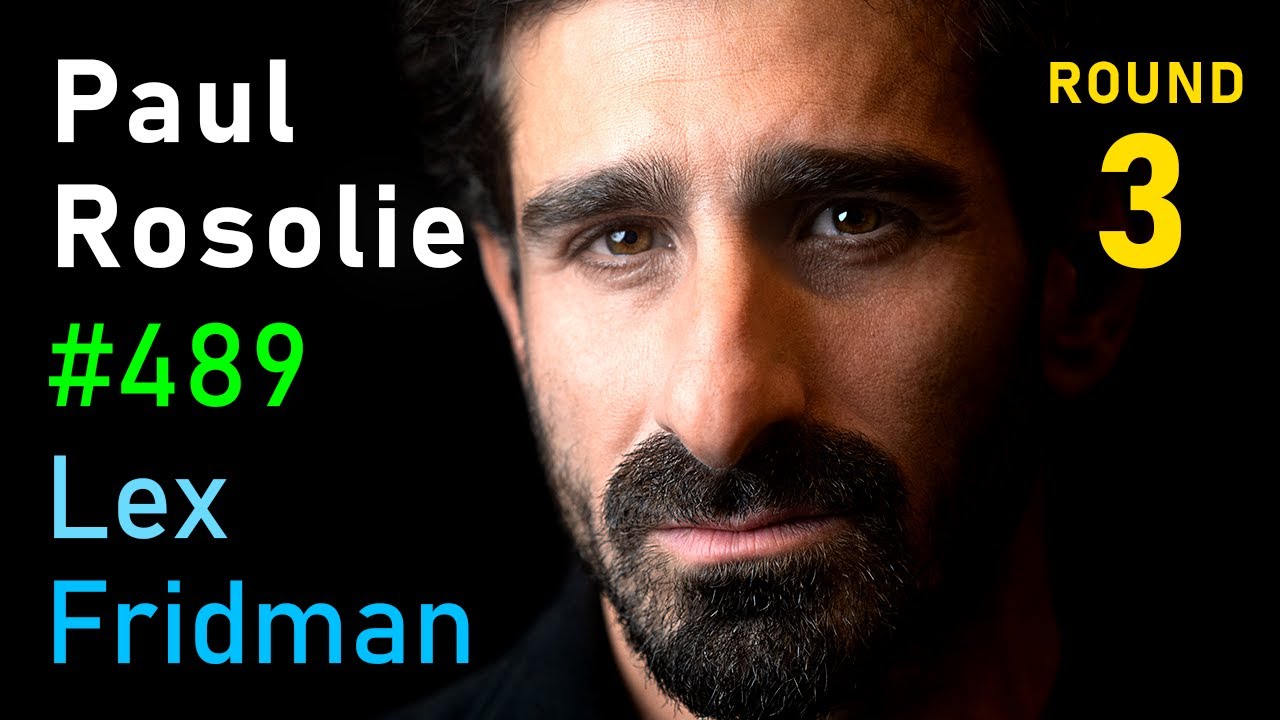
Paul Rosolie Combats Narco-Traffickers to Shield Amazon Tribes
Lex Fridman
The survival of the uncontacted Mashco Piro clan depends on securing a final 300,000-acre land corridor within the next 18 months before encroaching cartel roads and illegal logging permanently destroy their ancestral territory.
## Background
Published on YouTube by Lex Fridman on January 13, 2026, this episode features naturalist and explorer Paul Rosolie. The description highlights Rosolie's dedication to protecting the Amazon rainforest and promotes his new book, Junglekeeper.
## TL;DR
In this episode, conservationist Paul Rosolie discusses his harrowing experiences and frontline efforts to protect the Amazon rainforest through his organization, Jungle Keepers. He shares a striking first-contact encounter with the uncontacted Mashco Piro tribe, detailing their lifestyle, traditional weaponry, and their retaliation against illegal loggers. The conversation also covers the escalating dangers posed by heavily armed narco-traffickers, Rosolie's personal encounters with jungle wildlife like giant anacondas and spider monkeys, and the vital financial turning point that allowed his conservation work to scale up.
## Atmosphere & style
The podcast carries a deeply intense, raw, and atmospheric tone, balancing the existential dread of environmental destruction with the awe-inspiring beauty of the deep jungle. Rosolie speaks with a visceral, frontline urgency that evokes the heavy psychological weight of living under cartel death threats, contrasted by moments of profound reverence for nature. The dynamic between Fridman and Rosolie feels like a grounded, supportive brotherhood, shifting between quiet vulnerability, gripping survival storytelling, and a shared, solemn commitment to a high-stakes mission.
## Key takeaways
- [01:08](https://www.youtube.com/watch?v=Z-FRe5AKmCU&t=68s) Paul Rosolie returns to discuss the Jungle Keepers mission, which has successfully secured and protected over 130,000 acres of rainforest with a target goal of 200,000 to 300,000 acres.
- [03:59](https://www.youtube.com/watch?v=Z-FRe5AKmCU&t=239s) The protected Amazon region faces escalating violence and lethal retaliation due to encroachments from illegal loggers, wildcat gold miners, and narco-traffickers.
- [09:24](https://www.youtube.com/watch?v=Z-FRe5AKmCU&t=564s) The uncontacted Mashco Piro tribe lives an entirely Stone Age nomadic lifestyle, possessing zero access to modern technology, electricity, metals, or medicines.
- [19:51](https://www.youtube.com/watch?v=Z-FRe5AKmCU&t=1191s) Defensive tribal hostility from uncontacted groups historically stems from late 19th and early 20th century exploitation by colonial missionaries and rubber barons.
- [32:04](https://www.youtube.com/watch?v=Z-FRe5AKmCU&t=1924s) The Jungle Keepers team captured historic, world-first footage of a tense but peaceful encounter with a clan of approximately 50 Mashco Piro warriors.
- [01:02:35](https://www.youtube.com/watch?v=Z-FRe5AKmCU&t=3755s) Uncontacted tribes in the region primarily subsist on monkeys, turtles, turtle eggs, capybaras, and pacas, while rarely fishing or gathering fruit.
- [01:27:41](https://www.youtube.com/watch?v=Z-FRe5AKmCU&t=5261s) The logistics of the Amazon river basin have shifted from local logging to heavily armed drug cartels cultivating coca and building hidden airstrips beneath the canopy.
- [01:40:46](https://www.youtube.com/watch?v=Z-FRe5AKmCU&t=6046s) The lawless isolation of the rainforest allows cartels to operate with total impunity, targeting environmental activists and kidnapping local indigenous girls.
- [56:03](https://www.youtube.com/watch?v=Z-FRe5AKmCU&t=3363s) Jungle Keepers employs a community-inclusive conservation model by hiring and transitioning former loggers and gold miners into active park rangers.
- [01:20:58](https://www.youtube.com/watch?v=Z-FRe5AKmCU&t=4858s) The emotional and psychological toll of front-line environmental defense under constant death threats creates severe trauma, compared to carrying the ring in Lord of the Rings.
- [02:52:18](https://www.youtube.com/watch?v=Z-FRe5AKmCU&t=10338s) A critical 10-year financial commitment from Dax Dasilva and Age of Union saved Jungle Keepers from collapsing during a volatile low point for the team.
- [03:02:10](https://www.youtube.com/watch?v=Z-FRe5AKmCU&t=10930s) Paul Rosolie expresses a long-term desire to eventually step back from dangerous frontline operations to transition into an academic role, teach conservation, and raise a family.
## Detailed walkthrough
### [00:00](https://www.youtube.com/watch?v=Z-FRe5AKmCU&t=0s) The Looming Threat of the Mashco Piro
The atmosphere along the Amazonian riverbank is charged with sheer terror. A small expeditionary group stands exposed on an open beach, acutely aware that at any second, a six- or seven-foot bamboo-tipped arrow could pierce cleanly through someone's neck. Local companions stand guard with shotguns, while a diminutive indigenous anthropologist steps to the front. He calls out into the dense canopy, repeating the word *"Enimole"*—meaning "Brothers" in the Yine language—hoping to signal peace. Suddenly, chaotic screaming erupts: *"Mashco! Mashco!"* Panic takes over as women snatch up their children, fleeing into thatched huts, while domestic dogs and chickens scatter in a frenzy.
Emerging from the edge of the forest is an uncontacted clan walking hunched over down the beach, brandishing massive seven-foot bows. They eye the outsiders warily, gesturing toward the expedition and communicating in a language completely isolated from the modern world. Their lethal precision is legendary among locals; these nomadic hunters can strike a moving spider monkey out of the treetops at a distance of 40 meters. They possess an uncanny ability to stalk silently through the thickest brush without leaving a trace, meaning an individual targeted by them would only realize they had been hit a fleeting moment before collapsing.
[01:08](https://www.youtube.com/watch?v=Z-FRe5AKmCU&t=68s) Introducing Paul Rosolie and the Jungle Keepers Mission
Host Lex Fridman formally introduces his guest, Paul Rosolie, marking his third appearance on the podcast. Rosolie is an author, naturalist, and explorer who has committed his entire adult life to safeguarding the Amazon rainforest. Lex highlights Rosolie's upcoming book, *Jungle Keeper*, which details his intense, real-world experiences defending the ecosystem and culminates in an unprecedented, extended encounter with the uncontacted Mashco Piro tribe. Listeners are strongly encouraged to support Rosolie's conservation organization by visiting junglekeepers.org or attending an upcoming fundraising gala in New York on January 22nd.
Reflecting briefly on his own experiences, Lex reminisces about a past journey he took into the heart of the Amazon alongside Paul, which resulted in the recording of Episode 429 of the podcast. Lex expresses a desire to eventually compile hours of raw, chaotic video footage from that expedition into a cohesive vlog-style documentary, acknowledging the immense difficulty of editing such raw material but reiterating his deep admiration for everyday conservationists and people living along the river.
[03:59](https://www.youtube.com/watch?v=Z-FRe5AKmCU&t=239s) Escalating Dangers on the Western Edge
The conversation shifts back to the escalating stakes of Paul's work over the last year and a half. Jungle Keepers has successfully secured and protected over 130,000 acres of pristine rainforest, with an ultimate goal of expanding that footprint to 200,000 acres. This achievement, however, has placed them directly in the crosshairs of extreme danger. The region has seen a dramatic escalation in violence due to the presence of illegal loggers, wildcat gold miners, and an aggressive "Cocaine Mafia" tied to transnational narco-trafficking.
Lex reads the gripping opening passage of *Jungle Keeper*, which transports the listener to August 2024 on the westernmost edge of the Peruvian Amazon. The narrative describes two illegal loggers plunging their chainsaws into the buttressed roots of a massive, ancient ironwood tree, locally known as a *shihuahuaco*. These ecological sentinels tower up to 160 feet above the forest floor. Paul notes that these specific trees grow incredibly slowly; many are between 1,000 and 1,200 years old. The specific tree being felled in the book began its life long before European colonizers reached Peru, surviving through the global Renaissance, both World Wars, and generations of human history, only to come crashing down with earth-shaking force—an event that directly triggered a lethal retaliation by the uncontacted Mashco Piro.
- **Conservation Milestones:** 130,000 acres currently protected; active target of 200,000 additional acres.
- **Environmental Context:** Ironwood (*shihuahuaco*) trees routinely reach 160 feet in height and can live for more than 1,200 years.
- **Inciting Incident:** In August 2024, the cataclysmic felling of an ancient ironwood tree prompted Mashco Piro warriors to ambush and kill two illegal loggers.
[06:48](https://www.youtube.com/watch?v=Z-FRe5AKmCU&t=408s) The Lethal Craftsmanship of a Stone Age Civilization
Paul explains that thousands of uncontacted nomadic peoples still reside in isolated clans deep within the intact interior of the Amazon basin, fiercely choosing total isolation. In the case of the two slain loggers, local communities had explicitly warned them to avoid entering the territory. However, outsiders frequently dismiss the wild legends of the jungle, falsely believing their shotguns make them invincible against naked, indigenous populations. They fail to understand that they are crossing paths with an apex hunting culture capable of moving completely undetected over rough terrain while a chainsaw drowns out the sounds of their approach.
Examining photos from Paul’s Instagram, Lex marvels at the sheer scale of the arrows used by the tribe. Measuring roughly seven feet in length, these weapons function more like massive spears fired from giant bows. Paul details how the warriors cure the bamboo tips over open flames and shave them down until the edges are razor-sharp, allowing them to easily slice through meat. The craftsmanship is highly sophisticated; they intentionally twist the bird-feather fletching to make the heavy arrow spin aerodynamically through the air, binding the components together using intricately woven plant fibers.
[09:24](https://www.youtube.com/watch?v=Z-FRe5AKmCU&t=564s) Bending the Mind Across Millennia
Lex runs a prompt through the AI search engine Perplexity to contrast modern technological societal structures against the daily realities of the Mashco Piro. The contrast is total: the tribe possesses zero access to electricity, power grids, mass-produced metals, plastics, infrastructure, or modern synthetic medicines. Paul emphasizes that the gap is even more profound than standard definitions of a "Stone Age" society imply. A Peruvian anthropologist once pointed out to him that because these people live strictly in an alluvial rainforest environment, "they don't have stones."
The Mashco Piro live an existence so basic that they do not use clay pottery, nor do they understand that water can boil or freeze, as they have never encountered temperatures or technologies to cause either state. Their entire material culture is derived exclusively from bamboo, wild vines, and organic forest fibers. To a society living entirely outside of recorded history, a simple modern device like a handheld camera is viewed as an absolute miracle. When heavy machinery and chainsaws echo through their ancestral hunting grounds, they do not perceive them as tools, but rather as a demonic, deeply destructive force. During his face-to-face interaction with them, Paul notes that the tribe managed to communicate one overriding question across the profound linguistic divide: *"Why are you cutting down the trees?"*
[11:45](https://www.youtube.com/watch?v=Z-FRe5AKmCU&t=705s) A Midnight Dash Upriver
Paul provides geographical context for his own dramatic meeting with the tribe in October 2024. The events took place along a wild, remote high tributary of the Amazon River that has eluded heavy commercial traffic for centuries, surviving even the intensive mahogany logging booms of the 1990s. When Paul first arrived in Peru in 2006, the official position of the Peruvian government was that uncontacted tribes were a complete myth or folklore. However, remote travelers would occasionally return from deep river systems bearing severe arrow wounds, proving their existence. Today, Jungle Keepers hires former loggers and gold miners to work as conservation rangers to help preserve the buffer zones keeping these tribes isolated.
The emergency began when an indigenous community located high upriver contacted the Jungle Keepers directors via satellite phone, terrified because the uncontacted warriors had openly emerged onto the river beaches. Recognizing the historic importance of the event, Paul and his fellow directors—JJ, Mohsin, and Stéphane—immediately canceled their meetings with local officials and landowners. They gathered survival gear, dry bags, and basic rations like rice and canned tuna, then recruited their most experienced ranger, Ignacio. Ignacio had miraculously survived being shot in the head by a tribal arrow in 2019 and still carried the physical scar. Though Ignacio warned that the journey normally took two full days by boat, he agreed to pilot them through the night to reach the site by morning.
- **Historical Government Stance (2006):** The Peruvian government officially labeled uncontacted Amazonian tribes as a myth.
- **The Ranger's Injury:** Guide Ignacio survived a direct arrow strike to the head during a 2019 jungle encounter.
- **Logistics:** The team bypassed a standard two-day river journey by executing a hazardous, non-stop overnight boat run starting at 6:00 PM.
[15:47](https://www.youtube.com/watch?v=Z-FRe5AKmCU&t=947s) Surviving the Torrent
The overnight journey up the pitch-black river quickly degenerated into a grueling ordeal. The trip began under clear, starry skies, with the rare sight of a passing comet lighting up the horizon, which Paul took as an omen of the gravity of their mission. By midnight, however, massive storm clouds rolled in, bringing a torrential, apocalyptic tropical downpour and fierce lightning that lasted until 8:00 AM. Navigating at high speeds through the blinding wall of rain and swarms of flying insects, Paul stood at the bow of the boat tracking the path with a high-powered headlamp. Despite being in the tropics, the combination of high winds, soaked clothing, and an open moving boat caused Paul to begin shivering convulsively from severe hypothermia.
Because the darkness was absolute, the team relied on the glowing orange reflections of caiman eyes along the riverbanks to gauge where the shoreline was. Paul used his light to signal directions back to Ignacio, who skillfully maneuvered the vessel through hidden river channels and jumped over active waterfalls in the dark. They arrived at the indigenous village at dawn to the sounds of howling monkeys and a highly anxious community. The locals reported that members of the tribe had appeared on the beach the previous day but had since vanished back into the brush. That evening, Paul and a local tracker surveyed the muddy shoreline under an ominous, dark sky reminiscent of a Cormac McCarthy novel. They found fresh footprints left by the hidden warriors, which showed that the clan had sprinted back into the cover of the trees the exact moment the rescue boat's engine was heard.
[18:26](https://www.youtube.com/watch?v=Z-FRe5AKmCU&t=1106s) Ignacio's Warning and the Dawn of First Contact
The tension broke momentarily as calls for peace went unanswered, leading the team to retreat to the village for the night. By 5:00 AM the next morning, the urgency returned. The team was in a high-stakes "race against time" to secure land concessions and halt jungle destruction. While Stefan remained behind in town to handle legal paperwork and interview loggers, the rest of the team—including Mohsin and JJ—prepared to depart. Stefan was highly skeptical about encountering uncontacted tribes, having never seen them once in over 50 years of living in the Amazon. As the team packed their boat gear, Ignacio, a local guide, pulled the speaker aside to offer a blunt, friendly warning: "You'd be an idiot to leave right now. They're coming."
Convinced by Ignacio, they unloaded their gear. While Stefan and Mohsin began filming the local monkey-eating and fishing community, a sudden wave of panic shattered the quiet morning. Shouts of "Mashco, Mashco!" echoed through the air as terrified women grabbed their children and fled into huts, accompanied by the chaotic noise of barking dogs and squawking chickens.
- **Key Team Members:** Mohsin, JJ, Stefan, and Ignacio.
- **Stefan's Background:** 50+ years in the Amazon without ever seeing an uncontacted tribe.
- **Morning Routine:** Packing tents on the boat at 5:00 AM before Ignacio intervened.
[19:51](https://www.youtube.com/watch?v=Z-FRe5AKmCU&t=1191s) The Cycle of Isolation and Historic Violence
The sudden panic was rooted in a brutal history. Historically, every documented interaction between the outside world and these uncontacted groups has been "extremely violent." The speakers compare the tribes to the Spartans or the Comanches, groups that weaponized violence as a primary survival mechanism. This defensive hostility dates back to the late 19th and early 20th centuries, when the private armies of rubber barons subjected indigenous populations to systemic cruelty, extraction, and domination. Passed down through generations, the prevailing tribal wisdom became absolute: "When the outside world comes, you shoot first. That's the only thing that's gonna keep you alive."
This memory of violence remains incredibly fresh. The speaker notes that within his own 20 years in the Amazon, Ignacio was shot in the head, and another friend, Victor, survived a lethal encounter on a beach. The tribe has targeted loggers and even well-meaning people attempting to gift them clothes and bananas. They practice what locals call "porcupining"—riddling a body with so many heavy arrows that it remains propped up on the sand. They occasionally kill out of sheer, amoral curiosity, akin to how "Teddy Roosevelt would shoot a bird for science."
- **Historical Aggressors:** Colonial missionaries (1600s–1700s) and rubber barons (late 1800s–1900s).
- **Recent Casualties:** Ignacio suffered a gunshot wound to the head; Victor witnessed a beach murder.
- **"Porcupining":** A lethal practice leaving a victim's body bristling with arrows on the beach.
[21:56](https://www.youtube.com/watch?v=Z-FRe5AKmCU&t=1316s) Huddled in the Heat and the Standoff on the Beach
Ignacio's perspective on the tribe fluctuates wildly based on his mood. When asked what he would do if faced with the people who shot him, he once coldly replied, "I wouldn't say anything. I would kill as many of them as I could." He recalled a terrifying past encounter at a remote Ministry of Culture guard station where the tribe arrived to raid the camp. To escape certain death, Ignacio hid in the peak of a small wooden structure during the midday heat. Trapped in a greenhouse effect for two hours, he sweated so profusely he soaked through a mattress, weighing the odds that a "probably die" scenario from the heat was better than a "definitely die" scenario if discovered on the deck.
Back in the present, Ignacio's severe PTSD kicked in as the screams of "Mashco" intensified. Heavy-breathed and hyper-vigilant, he kept the speaker close, hiding behind trees while tracking a clan of roughly 50 naked men walking down the beach. The warriors carried imposing seven-foot bows, pointing toward the team and whispering remarks like "Look, there's a gun there." Swirling butterflies rose from the riverbank as the speaker wondered if they were crossing an "irreversible situation." Nearby, local community members loaded their shotguns, preparing for the worst while photographers Stefan and Mohsin frantically documented the historic event.
- **The Guard Station Incident:** Ignacio hid for two hours in intense midday heat to evade a tribal raid.
- **Stand-off Metrics:** 26 community/team members faced at least 50 visible warriors armed with seven-foot bows.
- **Weapon Range:** Arrows can easily travel 300 meters, allowing the tribe to strike accurately from across the river.
[24:18](https://www.youtube.com/watch?v=Z-FRe5AKmCU&t=1458s) The Anthropologist's Peace Offering and the Farm Raid
Amid the escalating tension, an anthropologist named Romel stepped forward. Having successfully established peaceful contact back in 2013, Romel was the only outsider who knew enough of the local dialect to communicate. Standing at the river's edge just 30 to 40 meters from the warriors, he repeatedly called out "Namole, Namole"—a word meaning "brothers" which the tribe uses to refer to themselves. To extend a peace offering, the team filled a 16-foot motorized canoe with endless green plantains. Displaying incredible bravery, Romel waded into the three-to-four-foot deep river channel and pushed the boat toward the warriors. The men rushed into the water, shouting and fighting aggressively among themselves over the bananas.
As Romel attempted a fractured dialogue to learn about their leader and origins, a sudden noise behind the team triggered absolute panic. Shotguns swung around as the speaker ran inland to investigate a potential flank attack. He discovered that the women of the tribe had silently infiltrated the farm behind them under cover of the male diversion. They were aggressively tearing yucca out of the ground and destroying banana plants, completely surrounding the outnumbered team.
- **Romel's First Contact:** Anthropologist who previously established peaceful communication in 2013.
- **Tribal Nomenclature:** Anthropologists note "Mashco" translates to "wild Piros," whereas the tribe self-identifies as "Namole" (the brothers).
- **The Diversion:** While the men engaged Romel, tribal women simultaneously raided the community farm for yucca and bananas.
[32:04](https://www.youtube.com/watch?v=Z-FRe5AKmCU&t=1924s) The Voice of the Jungle and a World-First Recording
Despite the underlying threat, the tribe utilized this encounter to ask existential questions. They demanded to know how to distinguish between "the good guys and the bad guys," noting that to them, all outsiders look identical. They expressed deep, almost religious offense at the logging industry, viewing the felling of massive trees as an existential assault akin to "killing their gods." The speaker highlights that these uncontacted people are the literal "human voice of the jungle." Between demanding more food and waving, they revealed glimpses of modern contact; many wore hand-woven reddish rope around their waists, but others wore modern nylon paracord pillaged from logging camps.
Romel noted that this specific clan—composed of males ranging from roughly 12 to a weathered 40 years old—was entirely new, representing a true "first contact" distinct from groups he previously knew. Addressing the ethics of sharing this encounter, the speaker emphasizes that while they want to protect the tribe's privacy from tourists, broadcasting their message to stop deforestation is vital to their survival. The segment wraps up with the revelation that this high-quality footage—captured using 800mm lenses, 2X teleconverters, and Canon R5 cameras—is a historic world first, moving far beyond the blurry cellphone images of the past.
- **Age Distribution:** The observed male clan consisted of individuals aged between 12 and roughly 40; no women or elderly men were visible on the beach.
- **Material Culture:** Warriors wore both traditional organic rope and stolen modern paracord belts.
- **Camera Gear Used:** Canon R5 cameras equipped with 800mm lenses and 2X teleconverters.
[36:05](https://www.youtube.com/watch?v=Z-FRe5AKmCU&t=2165s) The First Contact: A Tense Standoff on the Beach
The walkthrough begins with a look through the vines as the team anxiously anticipates the arrival of the uncontacted tribe. The mood shifts instantly to high adrenaline as someone yells, "They're out. They're coming down the beach," prompting the crew to run. Video footage reveals thousands of butterflies swarming the area, juxtaposed against the deliberate, striking movements of the tribal warriors as they approach and point their bows. The tribe appears highly alert, trying to decipher what they are looking at, entirely unaware of the hidden cameras. One of the crew members keeps watch out the back, hearing the tribal women further back in the farm area, while Paul looks in every direction, terrified and wondering, "Which way is the arrow coming from?" One tracker holds a basic farm shotgun, though Paul notes it is so rudimentary that you have to use a stick to manually bang out the spent shell if fired.
As the warriors draw closer, the immediate threat of violence begins to dissipate. They begin laying down their bows and arrows in a mutual show of understanding, transitioning from aggressive posturing to a more relaxed stance. While the interviewer wonders if they are smiling, Paul explains that smiles only came much later. The interaction is dominated by two highly imposing figures who seem to hold leadership positions, doing most of the talking and gesturing. The host observes a variety of distinct hand gestures, such as holding a hand up to the face, which Paul affirms all carry specific meanings. Some of the warriors have their faces smeared with red pigment, while others are painted yellow, emphasizing a clear cultural structure and internal hierarchy.
- The team captures the rare moment when the tribe emerges onto the beach, initially moving with a posture ready for violence.
- The warriors carry bows and arrows, while a local defender carries a faulty farm shotgun requiring a stick to clear jammed shells.
- Two dominant individuals—who looked so similar they might be brothers—take charge of the communications.
- Warriors are adorned with red and yellow facial smearings, using highly specific, untranslated hand gestures to communicate.
[39:02](https://www.youtube.com/watch?v=Z-FRe5AKmCU&t=2342s) Desperation, Bananas, and a Human Moment
The atmosphere fractures into a chaotic, desperate scramble as the tribe rushes the boats to get food. "You guys are nuts," the host reacts, observing the sheer desperation of the hungry tribe. A tracker named Liner is seen in the water handling the distribution, while the warriors openly fight over the provisions. Paul explains that their societal mindset in that moment is not about collecting food to share later; instead, it is an aggressive, individualized "I get mine, you get yours" mentality. However, after the team delivers several boatloads of bananas, sugarcane, and plantains, the tense energy finally calms down.
A local community leader named Ramo addresses the tribe, firmly drawing a boundary by saying, "Look, we've given you what we can give you." He explains to them that his crew are indigenous people themselves, adding, "We don't cut the trees here. All of us here are not tree-cutters. We're not the loggers." Once the tribe processes this distinction, the tension melts into an unexpected moment of genuine human connection. A crew member named Ignacio steps forward, trading mirroring playful gestures and dances with the warriors. Once Ignacio realizes "no one was going to die that day," the shared joking provides a comforting, if temporary, sense of security as the tribe continues interacting peacefully around the boat.
- The tribe displays intense desperation for food, fighting individually over items rather than gathering them collectively.
- The team gives the tribe multiple boatloads of bananas, sugarcane, and plantains to calm the situation.
- Ramo successfully communicates that they are fellow indigenous people and not the commercial loggers destroying the forest.
- Ignacio breaks the ice by dancing and joking with the warriors once the imminent threat of death passes.
[40:51](https://www.youtube.com/watch?v=Z-FRe5AKmCU&t=2451s) The JungleKeeper Shirt and the Warrior's Song
The profound historical weight of the interaction is not lost on the speakers, who note that this tribe lacks boats, stone tools, or any awareness of modern anomalies like ice. The host compares it to the legendary accounts of explorer Percy Fawcett, emphasizing that this is the first time this specific tribe has been filmed with their actual voices and interactions fully documented. As the warriors grow increasingly comfortable, they begin demanding the clothes off the crew's backs. One anthropologist ends up in his underwear after handing over his clothes. In a surreal twist of modern meeting ancient, Ignacio takes off his official "JungleKeeper" shirt and passes it to the anthropologist, who throws it to the tribe. The footage shows a completely naked, uncontacted warrior walking around with a branded JungleKeeper polo shirt slung over his shoulder, its logo proudly on display. "You just upgraded that guy's status in the tribe," the host jokes, picturing him as the new boss with a "dope polo."
As the encounter draws to a close, a deeply moving and spiritual exchange takes place. Ramo approaches Paul and says, "They're asking about you." Though Paul does not consider himself exceptionally tall, his broad shoulders make him stand out as a warrior to the tribe. Ramo instructs him to step forward onto the beach, show his open palms, and demonstrate that he means no harm. When Paul steps up and raises his hands, the tribe responds by raising their own hands and singing a hauntingly beautiful song back to him. The team is left in silence, watching the tribe slowly retreat off the beach and vanish back into the dense jungle, carrying away every modern item they had been gifted.
- This encounter represents the first time this uncontacted tribe's voices and interactions have been historically documented on film.
- The warriors demand clothing, resulting in an uncontacted warrior wearing a branded JungleKeeper shirt over his shoulder.
- Paul is singled out by the tribe as looking like a warrior due to his broad shoulders.
- The encounter peaks with a peaceful spiritual exchange where Paul shows his palms and the tribe sings back to him before vanishing into the brush.
[43:08](https://www.youtube.com/watch?v=Z-FRe5AKmCU&t=2588s) The Arrow Attack and the Brutality of the Jungle
The day after the encounter, the team travels downriver to a local village, where the community tells them, "Now you understand this is real. This is terrifying... You have a duty, if you're gonna protect this river, to protect us from them." The locals are eager to help the tribe find whatever future they want—whether that means learning to farm or coming out of isolation—but they desperately need security. A village local named George, who had confidently told everyone the day before, "Don't be scared. They're not going to hurt us," sets out upriver the following morning in a boat. Assuming the tribe has moved on, George rounds a bend and abruptly runs into 200 tribal warriors. The tribe immediately surrounds the boat and unleashes a barrage of arrows. Passengers dive under benches and hide behind sacks of rice while George drives at full throttle, leaning back to dodge the missiles. Tragically, a seven-foot arrow pierces straight through George, entering just above his scapula and exiting near his belly button. He survives the horrific, bloody ordeal only after Paul's team helps coordinate an emergency helicopter medevac.
> "We, in every way possible said, 'We mean peace. We want friendship with you.' And then the next day, they attacked."
This shocking turn of events leaves Paul and the host grappling with the brutal, unpredictable nature of the jungle. The host muses that violence might be so fundamentally integrated into the tribe's societal framework that they do not view an attack as a contradiction to the previous day's peace. Paul suspects they may have simply spooked the tribe defensively, noting that the loud boat motors might have triggered them, or that the tribe was fiercely protecting their hidden women. He adds that the tribe frequently conducts aggressive raids on local farms exclusively to steal machetes, viewing the sharpened metal tools like a mythical "Excalibur sword."
- George, a friendly local, is shot through the torso with a seven-foot arrow the morning after the peaceful encounter.
- Over 200 tribal members ambush George's boat, forcing passengers to hide behind rice sacks during a high-speed escape.
- Paul helps organize a critical helicopter medevac that ultimately saves George's life despite immense blood loss.
- The tribe routinely raids nearby areas for machetes, deeply understanding the immense utility and power of metal weaponry.
[46:29](https://www.youtube.com/watch?v=Z-FRe5AKmCU&t=2789s) Hidden Totems, Mimicry, and the Future of the Forest
Paul highlights a bizarre detail that has stumped Western anthropologists: two of the warriors wore identical, large, grapefruit-sized items around their necks. Made from a Brazil nut with a custom casing and lined with animal teeth, the objects are highly uncomfortable to wear. The tribe guards them fiercely, keeping them completely dry, which suggests they function as protective containers or spiritual totems. Additionally, Paul notes the tribe's uncanny mastery of the jungle's acoustic environment. They utilize complex animal calls—specifically mimicking Capuchin monkeys and Tinamou birds—to relay tactical commands through the brush. Recently, park rangers stumbled upon an active tribal trail; when Ignacio issued a secret whistle into the dense jungle, the hidden tribe immediately whistled back, signaling an ominous "out," which prompted the rangers to flee to their boats.
The conversation shifts to the profound mystery surrounding the tribe's isolated existence, such as where their elderly are kept, their marriage customs, and how they handle reproduction. Paul notes that a couple of tribal children who previously washed downriver on logs were adopted by local communities, but when asked about their early lives, they invariably reply, "I forget." The host jokes that they have an unwritten tribal "NDA" enforced by the absolute law of the jungle. Paul emphasizes that their reality is incredibly savage, defined by severe hunger, botflies, and the constant threat of women or babies being stolen by rival factions. The host invokes filmmaker Werner Herzog to describe the sheer brutality of their ecosystem, pointing out that such an intense existence must be anchored by a powerful, unifying spiritual ideology and unique origin myths. The two laugh over the fact that somewhere in the jungle, Paul's face with his "full beard and the big nose" is likely being carved into wood and sung about as a mythic monster to scare tribal children.
- Two warriors wore mysterious, grapefruit-sized containers made of Brazil nuts and animal teeth that they carefully kept dry.
- The tribe communicates tactical commands using sophisticated Capuchin monkey and Tinamou bird calls.
- Adopted children who escaped the tribe downriver consistently refuse to speak of their past, maintaining total secrecy.
- The tribal lifestyle is incredibly harsh, characterized by extreme food scarcity, rampant parasites, and inter-tribal warfare.
[51:17](https://www.youtube.com/watch?v=Z-FRe5AKmCU&t=3077s) Protecting the Last Endless Forest
The interaction has entirely redefined the mission of Paul's conservation organization, which currently manages 130,000 acres of rainforest and is actively working to acquire an additional 200,000 acres of ancestral tribal territory. Paul addresses a common criticism from outsiders who ask, "How could you buy the Amazon? That doesn't make sense." He explains the grim reality: third-generation jungle landowners who now live in cities frequently contract logging companies, narco-traffickers, or gold miners to exploit the land. When these commercial entities cross paths with the uncontacted tribes, they will ruthlessly execute them with shotguns and machine guns, if modern diseases do not wipe them out first.
For 20 years, Paul viewed this region strictly as an environmental marvel—an "Avatar on Earth" featuring ancient Shihuahuaco trees hosting thousands of species in an untouched ecosystem. However, this face-to-face encounter made him realize that they are fighting to save an ancient human culture from total extermination. By purchasing the land and keeping it strictly off-limits to narcos, loggers, and over-eager tourists looking for "the coolest commune on Earth," humanity has a rare opportunity to rewrite history. The overarching goal is simple: protect the river, give the tribe the absolute right to be left alone, and ensure they can safely maintain their way of life for another 10,000 years.
- Paul's organization protects 130,000 acres and is raising money to secure 200,000 more acres of crucial tribal territory.
- Private landowners frequently sell jungle plots to loggers, miners, and narcos who kill uncontacted natives on sight.
- A single ancient Shihuahuaco tree in this untouched ecosystem can support thousands of distinct biological species.
- Conservation efforts have shifted from purely environmental protection to preventing the violent extermination of an ancient human culture.
[56:03](https://www.youtube.com/watch?v=Z-FRe5AKmCU&t=3363s) Protecting the Earth's Crown Jewels
The conversation centers on the global and historic significance of protecting unique ecosystems like the Amazon rainforest, comparing its preservation to iconic national parks like Yellowstone and Yosemite. The speaker emphasizes that this specific watershed—encompassing 300,000 acres—is a crucial "time capsule" for nature, human culture, biodiversity, and climate services. They have already successfully secured 130,000 acres, demonstrating that the mission is highly achievable and has garnered widespread international support.
Rather than creating an isolated park that completely bars human presence, the Junglekeepers initiative focuses on an inclusive model. Local loggers are transitioning into park rangers, providing sustainable employment that alters the future for indigenous communities, such as the Nomoles. Addressing criticisms regarding low-impact eco-tourism, the speaker notes that their treehouse project only accesses an infinitesimally small portion of the vast territory—likened to "two blades of grass" on a football field—enabling people to witness and value the jungle firsthand.
- The target watershed spans a total of 300,000 acres, with 130,000 acres already successfully protected.
- Several thousand global supporters contribute monthly donations ranging from $5 to $1,000 to fund local ranger salaries.
- Protected wildlife includes local populations of spider monkeys, jaguars, giant anteaters, and ancient millennium trees.
---
[58:43](https://www.youtube.com/watch?v=Z-FRe5AKmCU&t=3523s) The Impact of Public Support and Team Execution
The host expresses deep gratitude and admiration, stating it has been the "honor of a lifetime" to witness the speaker's dedication and to help amplify the message of jungle conservation to millions of listeners. Listeners are urged to visit Junglekeepers.org to donate, share, and raise awareness, alongside an announcement for an upcoming fundraising gala in New York at the end of January. The speaker credits their previous podcast conversations for generating a massive surge in donor support, which directly empowered them to expand operations and secure more acreage based on the trust built with the audience.
However, communication alone is insufficient; successful conservation requires a highly organized and competent ground team to navigate the complex, lawless realities of the jungle. The speaker praises their operational team, highlighting a key member named Stefan. While Stefan enjoys photography, his true brilliance lies in his exceptional systems knowledge, administrative bandwidth, and ability to manage logistics with incredible speed and efficiency.
- A fundraising gala for the organization is scheduled to take place in New York at the end of January.
- Stefan manages the foundational systems, website, and supply logistics for the indigenous ranger program, ensuring rangers receive uniforms, food rations (like cans of tuna), and leadership.
- The speaker jokingly compares Stefan's high efficiency to the "most interesting man in the world" meme, remarking that "Stefan's to-do list doesn't exist because it's already done."
---
[01:02:35](https://www.youtube.com/watch?v=Z-FRe5AKmCU&t=3755s) The Diet and Lifestyle of Uncontacted Tribes
Following a brief break, the host inquires about the specific diet, protein sources, and survival habits of uncontacted tribes in the region. The speaker explains that these tribes primarily subsist on monkeys, turtles, turtle eggs, and small game like capybaras and pacas—large rodents roughly the size of a beagle. Interestingly, they rarely fish and do not gather much fruit or wild berries, as monkeys, birds, and bats aggressively consume them the moment they mature and turn red. Indigenous trackers learn these details by studying abandoned beach camps, finding leftover tapir bones and discarded turtle shells used as temporary bowls.
The discussion touches on the immense difficulty of starting fires in an ecosystem where everything is wet to its core for most of the year. Despite these conditions, the tribes successfully cook their meat, which is vital for eliminating dangerous parasites. The speaker recalls a memorable, striking encounter where they babysat a six-year-old native girl named Dira. When asked what she wanted for lunch, she produced a grilled monkey head and casually pulled at its ear, prompting the speaker to help her eat it. The host points out how eating primates can visually evoke a sense of cannibalism due to the human-like form factor, eyes, and expressions of monkeys, noting how the image looks "grilled in static agony."
- Primary protein sources for the uncontacted tribes include monkeys, turtles, turtle eggs, tapir, capybaras, and paca (a beagle-sized rodent).
- Discarded turtle shells are frequently utilized by the tribes as makeshift bowls.
- Perplexity data cited during the conversation notes that while no exact global census exists, many millions of people across Africa, Latin America, and Asia regularly or occasionally consume primate bushmeat.
---
[01:07:06](https://www.youtube.com/watch?v=Z-FRe5AKmCU&t=4026s) Technology, Human Optimism, and Jane Goodall's Legacy
Reflecting on their historic interaction with the uncontacted tribe, the speaker describes it as hearing "the voice of the jungle." The experience highlights the profound dependency of humans on nature, serving as a powerful contrast to modern civilization's reliance on technology and concrete. Both speakers discuss the dual magic of the world: the brilliant biological majesty of the natural jungle, and the equally miraculous human-created technological world of pens, computers, airplanes, and lightbulbs. Rather than adopting a cynical view of humanity as a plague, the speaker emphasizes a deep optimism, championing the "real heroes" dedicated to conservation and guarding hope.
This perspective shifts to honoring the legendary conservationist Jane Goodall, who passed away on October 1st. The speaker shares a personal childhood anecdote about growing up with severe dyslexia. Because they couldn't read for a long time, their hardworking parents read aloud to them for an hour every night, sharing stories ranging from *The Lord of the Rings* to the adventures of Jane Goodall. Years later, after beginning their own work in the Amazon, the speaker attended a lecture by Goodall at NYU. After watching her speak for an hour, the speaker waited in a massive line of hundreds of people to hand her a manila envelope containing two draft chapters of their own experiences—one about an anteater named Lulu and another about catching anacondas—boldly asking the legend to endorse a book that did not yet exist.
- Jane Goodall passed away on October 1st, leaving a lasting legacy centered on the belief that "the greatest danger to our future is apathy."
- The speaker's early childhood inspiration stemmed from parental night readings due to their struggles with dyslexia.
- The draft chapters presented to Jane Goodall at NYU detailed stories titled "Lulu the Giant Anteater" and tales of catching anacondas alongside companions JJ and Pico.
[01:14:52](https://www.youtube.com/watch?v=Z-FRe5AKmCU&t=4492s) Jane Goodall’s Spark and the Burden of Hope
The speaker reflects on the profound impact of Jane Goodall, a living legend who spent 300 days a year on the road. Despite the immense physical and emotional drain of her grueling schedule, she possessed the compassion to do something remarkably mundane: review the writing of an unknown young person. After reading the material, she returned 48 hours later offering to write a recommendation as soon as a publisher was found. This gesture was a "powerful magical wand" that altered the speaker's entire trajectory. Every major publisher in New York had already rejected the project, asking "Jane who?" when an endorsement was mentioned, but HarperCollins eventually took a chance, reasoning that if Goodall believed in it, they should too. This single breakthrough birthed *Mother of God*, which subsequently unlocked *Jungle Keepers*, Dax, and thousands of protected acres in the Amazon.
This kindness was not a unique favor; it was simply how Goodall treated everyone, scaling her global impact through individual human connections. This realization carries a heavy weight of inherited responsibility. Now, young people frequently approach the speaker on the street, sharing that they watch the conservation videos with their children or asking how to break into the field. Following Goodall's example means stopping everything to pay undivided attention, knowing that any given kid might be the next person to save or clean a river. Goodall was fundamentally in the "hope business," fiercely guarding the flame against a cultural storm of apathy, disorientation, and fear peddled by the darkness.
- Jane Goodall spent roughly 300 days a year traveling and speaking.
- Her endorsement flipped a chain of uniform rejections from New York publishers into a contract with HarperCollins.
- The breakthrough led directly to the publication of *Mother of God* and the founding of the Jungle Keepers organization.
[01:18:30](https://www.youtube.com/watch?v=Z-FRe5AKmCU&t=4710s) Breaking into the "Restaurant" of Conservation
When young people from Spain, Finland, or Georgia fill the speaker's inbox asking how to secure a dream job in conservation, the advice is direct: throw yourself headfirst into the adventure. The speaker acknowledges how hollow the phrase "if I can do it, you can do it" sounds when spoken by industry titans on talk shows. However, as someone without a PhD who failed out of high school, the speaker views themselves as the ultimate poster child for this truth. The journey began by taking unmatriculated college classes and venturing into the jungle with a friend named JJ for the sheer love of it, spending nearly a decade working before any public recognition surfaced.
There was no formal institutional path, family money, or high grades to pave the way; traditional expectations dictated that becoming a conservation biologist was impossible. Choosing a purely visceral desire to see the rainforest over academic credentials, the speaker learned directly from indigenous people. This gritty approach is compared to working in a restaurant: you might start out underqualified, simply washing dishes, but because you are physically in the room, you are eventually asked to restock, help the new hire, manage the floor, and perhaps one day open your own establishment. True conservation cannot be searched or figured out on a computer; it requires sweating, bleeding, and showing up.
[01:20:58](https://www.youtube.com/watch?v=Z-FRe5AKmCU&t=4858s) The Dark Side of Caring: Carrying the Ring
The speaker confronts the severe emotional toll, hardship, and suffering inherent in loving a dying world. In a raw social media post read aloud by the interviewer, the reality of conservation is stripped of its romanticism. It is not a clean David versus Goliath battle; there is no simple sling to halt a dragon as massive as global economic entropy and human apathy. Swimming against this current is a swift way to drown, where "every day we don't win, we lose, and when we do, worlds burn." The deeper a person's knowledge, the more intensely they bleed as entire constellations of species vanish into ghosts.
The prose captures a profound frustration with distant billionaires who claim to care but offer little real help, forcing hands to cup around a single candle in a howling darkness. While the public hungers for optimistic, winning social media updates, the stark reality is that conservationists are currently "getting slaughtered" at an endgame phase. Positive thinking and empty prayers cannot stop a chainsaw; the motor fighting the current requires hard resources—gasoline—to stay afloat. This burden changes a person permanently. Much like the character Frodo in *The Lord of the Rings*, a kid might grow up wanting to be a heroic warrior like Aragorn, but the reality of actually carrying the ring destroys something fundamental inside, leaving wounds so deep you can never truly explain to Sam why you cannot board the boats home.
- The speaker lived out of a backpack for 20 years and occasionally resorted to eating monkey faces due to a total lack of alternative food.
- Jungle Keepers has successfully scaled up to protect 130,000 acres of rainforest despite severe operational volatility.
- A quote from a close friend brought comfort regarding the harsh journey: "If it happened in any harder of a way, it would have actually killed you. And if it had happened in an easier way, it wouldn't have been so divine."
[01:27:41](https://www.youtube.com/watch?v=Z-FRe5AKmCU&t=5261s) The Shift to Narco-Trafficking and the River Chase
The logistical landscape of the river basin has drastically changed, transitioning from simple local loggers to heavily armed narco-traffickers cultivating coca for cocaine and constructing remote airstrips. Historically, managing encounters with loggers was peaceful; the speaker and JJ would sit down, share a beer or a meal, ask about their families, and often hire them. These loggers were not malicious entities; they were local fathers working brutal $30-a-day jobs with chainsaws because it was their only viable option. To monitor the area, Jungle Keepers frequently flies drones over clearings to gather intel for the local Peruvian police, whom they actively support with boats, fuel, and logistical aid due to the government's scarce resources three days deep into the wilderness.
A routine patrol in March took a terrifying turn several hours upriver from home base. While idling in the middle of the river with local team members and potential international funders, the speaker lowered a drone over a new clearing to snap photos of some small huts. Suddenly, people rushed out of the houses, sprinted to their boats, and launched a high-speed chase downriver. The team’s 60-horsepower motor struggled to outrun the pursuers' 40-horsepower boat. As the frantic funder panicked over the "Pirates of the Caribbean" style pursuit, the speaker had to crash-land the drone into a tree on the riverbank just to focus on escaping, treating it initially as just another angry encounter with loggers.
- Local loggers typically earn around $30 a day or less working in harsh jungle environments.
- The government presence requires extensive logistical support from Jungle Keepers due to being located a three-day journey from civilization.
- During the high-speed river pursuit, the team fled using a 60-horsepower motor against a 40-horsepower boat.
[01:30:55](https://www.youtube.com/watch?v=Z-FRe5AKmCU&t=5455s) A Sudden Traumatic Turn
The underlying illusion of safety shattered instantly when the team reached a familiar camp of police allies upriver. After stepping off the boat and alerting the officers to the approaching vessel, the atmosphere shifted into a combat footing. The police immediately armed themselves with guns, donned ski masks, told everyone to get down, and ordered the activation of a satellite link to call for backline reinforcements. When the pursuing boat realized they were facing armed police, they turned around and fled downriver, allowing the conservation team to be safely escorted home.
Hours later that same night, back at the station, the speaker received an urgent, demanding phone call from a colleague named Stefan, who insisted they drop their current conversation to listen. The tragedy hit with absolute, violent suddenness: the very police officers whose hands the speaker had shaken hours prior had traveled back upriver to their camp. As they unmounted from their boat to wash off in a stream, the narco-traffickers executed a brutal drive-by shooting, striking the speaker's close friend square in the chest with a shotgun. The uplifting cinematic montage of global conservation success, hope, and accumulated acres was instantly severed by a single, real-world gunshot.
[01:32:57](https://www.youtube.com/watch?v=Z-FRe5AKmCU&t=5577s) Threat Escalation and the "Gringo Volador" Hit List
The conversation intensifies as the speaker recounts the moment he learned a colleague "took a shotgun straight to the chest." Forced to maintain a brave face at a donor dinner while harboring this horror, he realizes the threat from local narcos has escalated drastically. The drug mafia moved into the vast, unpoliced wilderness and grew furious when the team began flying monitoring drones.
The speaker recounts a chilling near-miss that occurred while he was in New York pitching to donors. His colleague, JJ, was scheduled to take a pickup truck back to the city but delayed his trip by a day at the last minute. When their driver, Percy, proceeded down the single-lane jungle road alone, he encountered a tree intentionally felled across the path. Armed men ambushed the vehicle, sticking pistols through the open windows directly against Percy's head, demanding, "¿Donde está el gringo volador?"—asking for "that shithead gringo that flew the drone." Though Percy was left physically unharmed, the cartel stole his phone and issued a stark warning: "We missed you this time, but we'll get you next time." JJ later called the speaker in a state of sheer, adrenaline-fueled panic. The mission has entirely shifted from "counting butterflies" to surviving an active drug war where the narcos know their names and want them dead. The danger was further codified when Peruvian police intercepted a WhatsApp chat from an arrested cartel member explicitly stating: "If you see JJ or the gringo, anyone in our network, please kill them. You'll be rewarded."
* **The Hit List Reward:** A targeted contract has been put out by the narcos to assassinate JJ and the speaker.
* **The Ambush Site:** A remote, single-lane jungle logging road blocked by a staged fallen tree.
* **The Cartel's Target:** The drone operators tracking their illegal movements, colloquially dubbed the "flying gringos."
---
[01:37:20](https://www.youtube.com/watch?v=Z-FRe5AKmCU&t=5840s) The Psychological Weight of Being Hunted
Living under a constant death threat has taken a massive psychological toll on the speaker, who admits he is not handling it as well as he wishes he could. He relates his experience to the trauma of war zones, wondering how his friends in the military cope with deployment. Every phone call sparks immediate panic that JJ has been murdered, and his sleep is constantly plagued by nightmares of being shot. He recalls a terrifying moment of vulnerability when, while swimming in the river directly in front of the station stairs, an unidentified boat rounded the bend. Completely unarmed and with security staff too far up the stairs to help, he was paralyzed by the choice to run, dive, or hide.
This human threat is fundamentally different from the natural dangers of the jungle, like anacondas or falls. The fear is compounded by the visceral memory of seeing the body of a friend in his 20s after it had been floating in the river for three days. Even when the speaker tries to "talk himself tough" during the daylight hours by treating it as part of the adventure, the panic catches up to him in the quiet moments. Waking up sweating at 4:00 AM with a racing heart, he faces the grim reality that they never signed up for this level of extreme violence. Even on his way to the current interview, a 9:00 PM phone call from JJ caused his heart to "jackhammer," forcing him to pull his car over in fear of receiving news of another death.
---
[01:40:46](https://www.youtube.com/watch?v=Z-FRe5AKmCU&t=6046s) The Geography of the Drug War and "Endgame"
The speaker notes that the pristine, lawless isolation of the rainforest makes it the perfect haven for drug cartels to operate with total impunity. Because the conservationists are actively helping law enforcement, the cartels have adopted a "cut the head off the snake" strategy. The speaker notes that the Amazon has a staggering, endless history of assassinating environmental defenders, citing historic figures like Chico Mendes and Dorothy Stang as examples of local leaders who were systematically wiped out to collapse their movements. Despite widespread assumptions of Latin American government corruption, the speaker praises the Peruvian government and police, who are working tirelessly to protect indigenous communities from the human trafficking, forced prostitution, and heavy weaponry brought in by the cartels.
To visualize the crisis, the speaker references a map created by his colleague Stefan, which illustrates a "metastasizing network of roads" encroaching upon their 130,000-acre protected territory. The cartels have bypassed previous blockades by cutting a new road north of the ancient forest, directly threatening uncontacted tribes. This prompted the speaker to post an emergency video in the rain declaring it "endgame." While a single social media post successfully raised $150,000 in 48 hours to buy out a crucial land concession and halt that specific road, the cartels have already shifted further north to carve out new routes.
* **Chico Mendes & Dorothy Stang:** Historical precedents cited to highlight the fatal patterns faced by frontline Amazon activists.
* **Financial Lifeline:** An emergency social media appeal generated $150,000 in two days to secure a vital defensive land concession.
* **Human Trafficking:** Cartels kidnap young girls from indigenous communities to service remote drug-manufacturing camps.
---
[01:43:59](https://www.youtube.com/watch?v=Z-FRe5AKmCU&t=6239s) The Funding Mission and Invisible Airstrips
The daily reality of protecting the jungle has turned into a high-stakes balancing act akin to a *Mission: Impossible* movie, where the team is forced to pull off "psychotic missions" every month just to survive. Securing land concessions is mathematically vital: once the land is legally under Junglekeepers' ownership, the police gain immediate authority to arrest anyone stepping foot on the property. In unassigned gray areas of the Amazon, building a legal case against cartels takes months because they hiddenly intercrop a few acres of cocaine behind massive, deceptive fields of papaya. The speaker notes they are currently "begging on the side of the road" for change just to buy bullets and fuel. To permanently protect the remaining corridor and secure the northern boundary, they urgently need to expand their pool to 50,000 donors to raise $20 million—or find a single wealthy benefactor to "come in like Batman" and fund the park.
The cartels employ brilliant, highly sophisticated tactics to remain invisible. They initiate their operations by subsidizing the poorest locals with a few thousand dollars, chainsaws, and gasoline, instructing them to clear illegal farms deep in the jungle. A year later, cartel bosses return to convert these homesteads into network safe houses. Furthermore, because the jungle canopy stands 150 to 160 feet tall, cartels hollow out the interiors of landing strips while leaving the uppermost branches touching overhead. This makes their hidden airstrips completely invisible to satellites and flyover planes. Expert bush pilots duck beneath the tree canopy, land, load the cocaine, and fly out entirely undetected.
* **The $20 Million Target:** The total funding required to secure the remaining corridor and transition the land into a safe national park.
* **Intercropping Strategy:** Sacks of cocaine are masked dynamically behind acres of legitimate papaya farming.
* **Invisible Infrastructure:** Airfields are carved out *beneath* a 160-foot canopy, ensuring zero visibility from aerial or satellite surveillance.
---
[01:48:03](https://www.youtube.com/watch?v=Z-FRe5AKmCU&t=6483s) An Arms Race of Drones and Global Cartel Metrics
To counter these invisible airstrips, conservationists have entered a technological arms race. The speaker details a new partnership involving a specialized 16-foot solar-powered glider drone. This advanced drone utilizes atmospheric thermals to climb high, recharges its own batteries using wing-mounted solar panels, and can fly continuously for two weeks at a time. This system provides near-instantaneous data on canopy disturbances. However, even with real-time alerts, mobilizing the local police requires a grueling, dangerous two-day expedition by boat.
The host reads global metrics using Perplexity, emphasizing that the multi-billion dollar cocaine machine stretches across Colombia, Peru, and Bolivia before moving through the Caribbean and Atlantic to feed a consumer base of roughly 25 million users worldwide. Following a brief intermission for a bathroom break, the conversation shifts to a lighter tone, focusing on the speaker's personal history with tree climbing. The host recalls a beautiful passage from the speaker's book about conquering his fear to climb the tallest tree he had ever seen in the forest—a massive giant with a base as large as a room and a vertical trunk stretching 70 feet high before its first branch. The speaker recalls waking up with JJ at 4:00 AM as the howler monkeys began their morning calls, gripping a single vine with his climbing rope to ascend into the unknown.
[01:51:43](https://www.youtube.com/watch?v=Z-FRe5AKmCU&t=6703s) The Exhausting Ascent Up the Ironwood
Climbing the massive ironwood tree is not a feat of technical finesse, but a grueling test of pure back strength. The speaker describes "gorillaing up" a thick vine completely shirtless and shoeless, relying entirely on raw power. His partner, J.J., manages the belay device from below. Every 30 feet or so, the climber secures a piece of webbing and a carabiner, ascending blindly into the pitch black without any knowledge of what lies ahead. There are virtually no places to rest along the sheer vertical trunk. The only available rest requires painfully clinging to the tree, smearing bare feet against the rough bark, and gripping with the toes.
This style of climbing mirrors traditional rock climbing, meaning the stakes are terrifyingly high. If a climber advances 30 feet past their last piece of safety gear and slips, they will suffer a 60-foot plunge before the rope catches them, risking a catastrophic head injury against the trunk. Beyond the physical exhaustion and the threat of a fall, the darkness harbors hidden dangers like defensive wasp nests or venomous snakes. It takes over an hour of full, bone-crushing exertion just to reach the first set of branches. Upon finally arriving, the climber encounters massive limbs—each the size of a mature oak tree and as thick as a minivan—branching off a trunk as colossal as the World Trade Center. After traversing a web of vines, he finally penetrates the crown of the tree. Looking down into the void, his partner’s headlamp appears as a tiny speck of light 85 feet below.
- Time to reach the first branches: Over 1 hour
- Height of the first major tree crown checkpoint: 85 feet
- Maximum height reached on the branch: Approximately 120 feet
[01:53:42](https://www.youtube.com/watch?v=Z-FRe5AKmCU&t=6822s) Witnessing the Heavenly Mist River
As the climber sits on a high branch at 120 feet, the jungle begins to wake up in the pre-dawn light. The environment starts to "vibrate" as howler monkeys roar and the first macaws begin to chirp. When the morning sun finally crests the horizon, its first rays strike the canopy and begin lifting the dense moisture from the trees. From his high perch, with the dark jungle floor stretched out far below, the speaker suddenly witnesses a legendary phenomenon: the Mist River. He had heard stories his entire life about an invisible river of moisture flowing above the Amazon canopy containing more water than the actual river below, but he always grouped it with abstract concepts like the Earth's molten core or black holes—things you know exist but never expect to see with your own eyes.
Sweating, bleeding, and physically battered from the climb, he watches the golden morning light illuminate this legendary aerial current. Macaws take flight through the mist, and monkeys look up from the branches below, visibly confused by the human presence. The sheer scale and beauty of the sight are overwhelming, evoking a profound, spiritual sensation "like you're seeing God." Despite the immense joy, a wave of guilt follows, knowing he risked his life for a solitary view. With only J.J. at the base, any mistake or gear failure would have meant certain death, and sitting on the exposed branch felt outright suicidal due to the massive potential pendulum swing if he fell. Yet, the intense beauty sucks the air right out of his lungs, leaving him with tears in his eyes as he watches the life and breath of the Amazon flow from north to south.
- Atmospheric phenomenon observed: The Mist River, an aerial current of vapor flowing over the canopy
- Flow direction of the Mist River: From north to south along the basins of Las Piedras
- Quote on the view: "Now, in the branches of the greatest tree in the jungle, I watched as the Mist River caught the morning rays, illuminating golden currents, swirling as it rushed over the canopy like a stream from heaven."
- Quote on the jungle's presence: "The jungle itself was like a great being, a monstrous leviathan of warm green might."
[01:57:09](https://www.youtube.com/watch?v=Z-FRe5AKmCU&t=7029s) The Language and Lives of Macaws
The conversation shifts to the speaker's early days in the jungle, prompting praise from the interviewer who notes, "the thing that needs to be said is you're a great writer." The speaker modestly defers, claiming he is simply describing what happened. The topic turns to macaws, which served as the speaker's primary subject of study when he first arrived at the research station. To gain access to the field, young researchers must put in the work; the speaker agreed to conduct six hours of macaw research every single morning, waking up before dawn to sit by the riverbank and observe. Macaws are famously beautiful and strictly monogamous, but they are also incredibly loud and harsh, constantly bickering and screaming at one another as a standard form of communication.
Through thousands of hours of listening, the speaker learned to differentiate the nuances of macaw language. They use a distinct, soft sound when preening each other's feathers, sharing affection, and nuzzling, which sounds entirely different from their harsh territorial yells or their high-pitched calls signaling the flock to take flight. The interviewer jokingly asks what these nuanced screams can teach humans about successful marriages, though he quickly retracts the question. Beyond their social habits, macaws share a vital ecological relationship with ancient ironwood trees. Because these slow-growing trees must be at least 500 years old to reach the required car-sized thickness, prime nesting real estate is incredibly scarce. Hollows only form when a massive branch falls off, resulting in a highly competitive breeding environment where only a small fraction of the population can successfully reproduce each year.
- Daily research requirement: 6 hours of observation every morning before dawn
- Estimated age of nesting ironwood trees: 500 years or older
- Macaw reproduction rate: Only about 17% to 20% of the population reproduces in a given year
- Economic impact: Macaws drive local ecotourism, providing sustainable jobs for local guides, cooks, chefs, and carpenters
[02:00:42](https://www.youtube.com/watch?v=Z-FRe5AKmCU&t=7242s) Wrestling Millie: The 19-Foot Anaconda
The interviewer brings up a striking Instagram photo showing a massive anaconda wrapped around the speaker's neck, asking how he managed to survive the encounter. The snake in question is a lowland green anaconda (*Eunectes murinus*), the heaviest snake species on Earth. This specific female, named "Millie" for data entry purposes, measured just under 20 feet long and represents the largest anaconda the speaker's team has ever physically captured. Because she was actively shedding, the protective scales over her eyes had turned an opaque blue, making her a rare "blue-eyed" find. The snake's head was larger than a Great Dane's, possessing terrifying physical power. While attempting to move her out of a stream to straighten her out for standard data collection, Millie flexed her body, effortlessly tossing a team of ten men in one direction, then flexing the other way to send ten people flying the opposite way.
The speaker explains that anacondas are ambush predators. If they get a secure hold with their sharp, recurved teeth, they quickly wrap their coils around their target, crushing their prey "like a bag of chips" with enough force to pop the internal organs out. However, at this immense size, they are apex predators and rarely view humans as food or immediate threats; their primary instinct is simply to escape. The interviewer reads an online comment suggesting the speaker might be the most qualified anaconda handler alive, which the speaker downplays by emphasizing the necessity of his team. Capturing a snake of this magnitude alone in the jungle at night would be absolute suicide. Without J.J. there to immediately jump into the water and unwrap the coils, a solo handler would be easily overpowered by the snake's slow, assured strength.
- Anaconda species: Lowland green anaconda (*Eunectes murinus*)
- Snake's recorded length: Just under 20 feet (19-foot range)
- Snake's designated research name: Millie
- Total career anaconda captures by the speaker: 90+ anacondas
- Online comment highlight: "Interesting use of free will."
[02:08:47](https://www.youtube.com/watch?v=Z-FRe5AKmCU&t=7727s) The Wisdom of Santiago by the Firelight
The interviewer transitions to a magical location known as the "floating forest," reading an evocative passage from the speaker's book about an indigenous elder named Santiago. The excerpt describes a time when the speaker was still young, fresh, and somewhat skeptical of indigenous lore, leaning heavily on a traditional Western worldview rather than the deep, spiritual perspective of the jungle. Sitting around a campfire, Santiago's eyes glow in the darkness as he watches orange embers float upward into the starry night sky. His weathered, wrinkled face looks like an old map of the world, embodying vast generations of experience. The firelight frames a profound storytelling moment where Santiago's young son, Pico, asks his father to share the legendary tale of the anaconda on the blackwater stream.
- Character names: Santiago (the elder/father) and Pico (the son)
- Quote on Santiago's presence: "Vast experience whispered in the firelight, as ephemeral as the breath that spoke the words, but powerful enough to latch on and sink down into some deep part of me."
[02:09:44](https://www.youtube.com/watch?v=Z-FRe5AKmCU&t=7784s) The Trustworthiness of Indigenous Knowledge and the "Spiky" Snake
The conversation opens with a discussion about a story of a massive, horned anaconda supposedly measuring around 36 feet long. The speaker notes that while such tales initially sound like "bullshit," his extensive time in the jungle has taught him to abandon his skepticism. An old saying from the region advises that the floating forest is where one must go "to be liberated of your doubts and skepticism." Over 20 years of living alongside indigenous communities in the Amazon, the speaker has learned a definitive rule: "they're not wrong." If they report a hidden tribe or a creature with bizarre traits, they are describing an experienced reality, not a myth.
To illustrate this, the speaker shares a humorous anecdote about a worker at a tree house who claimed to find a snake in a water tank with "long, green spikes" coming completely perpendicular out of its body. The speaker initially mocked him, saying, "Congratulations, you're an idiot," confident that no known species possessed such features. However, when he finally went to investigate at night, his flashlight revealed a snake that genuinely appeared to have thousands of green spikes. The mystery resolved itself when the snake swam, causing the "spikes" to collapse smoothly against its body; it was a water snake (a *Helicops* species) that had been living in stagnant water long enough to grow a thick coat of algae. The worker wasn't wrong about what he saw—there is always a rational, biological answer behind these extraordinary claims.
- The rumored anaconda in the floating forest was described as being roughly 36 feet long.
- The speaker has spent 20 years living with indigenous people in the Amazon, building deep trust in their environmental observations.
- The "spiky" snake was identified as a water snake, likely of the genus *Helicops*, covered in stagnant-water algae.
[02:13:10](https://www.youtube.com/watch?v=Z-FRe5AKmCU&t=7990s) Isolated Weirdness in the Floating Forest
The dialogue shifts deeper into the eerie, unique ecology of the floating forest. The host brings up a recent conversation with Tufts University biologist Michael Levin, who creates synthetic life forms and studies "unconventional intelligences," comparing that complex biological "soup" to the unknown anomalies hiding in the jungle. The speaker explains that the floating forest operates as an isolated ecosystem, drawing a parallel to the *tepuis*—the steep, walled Venezuelan cliff jungles famously depicted in the movie *Up*. This isolation breeds "allopatric speciation," a process where communities geographically separate and evolve independently from the life forms below them.
Life in the floating forest thrives on floating grassy islands and in the tops of palm trees, but a "nightmare soup" exists beneath the rafts. Due to a severe lack of oxygen in the stagnant water, typical organic decay is heavily delayed or entirely absent. The speaker notes that even hydrologists and scientists he has brought to the site are left utterly baffled, asking, "How the hell did this thing form?" The environment is teeming with unidentified creatures, including unique lizards that have completely evaded formal identification.
- **Allopatric speciation**: The evolutionary process occurring on these isolated floating rafts and *tepuis*.
- The water beneath the rafts is highly hypoxic (lacking oxygen), which suppresses normal organic decay.
- Scientists and hydrologists face immense difficulty studying or even explaining the physical formation of the floating forest.
[02:15:04](https://www.youtube.com/watch?v=Z-FRe5AKmCU&t=8104s) Facing Apex Predators: The Power and Mechanics of Anacondas
When discussing the giant anacondas that rule these waters, the speakers reflect on how unbothered these apex predators are by human presence. They don't actively flex their power unless provoked. The speaker jokes that if he bit an anaconda, it would kill him "in a bored kind of way," slowly constricting him. This sparks a funny tangent about whether a snake would bother eating a human after killing them just because they "need the calories," comparing a dead human to a "perfectly good hamburger" that you might as well eat before taking a "six-month nap."
The speaker emphasizes the awe-inspiring physicality of wild anacondas, noting they are vastly different from soft, captive snakes because they are constantly working against the currents. Touching a wild one is like "hitting steel cables." Despite their terrifying strength, dealing with a massive anaconda has one advantage: their strikes are slow. The speaker compares an anaconda strike to a "fight with a big fat guy," where a telegraphed "haymaker comes from way back here." Because they open their mouths and accelerate slowly, it is usually easy to duck or catch them before impact—though if you ever mess up, "it's over."
- Wild anacondas possess incredibly dense, muscular bodies compared to captive ones due to a lifetime of constriction and swimming.
- Anacondas can go up to six months without feeding after consuming a massive meal.
- A giant anaconda's strike is heavily telegraphed, making it easier to dodge or intercept than the lightning-fast strikes of smaller snakes.
[02:16:49](https://www.youtube.com/watch?v=Z-FRe5AKmCU&t=8209s) The Highway Analogy and Understanding Animal Camaraderie
The host commends the speaker's total comfort around dangerous reptiles, observing that snakes seem to sense a total lack of fear and a feeling of "camaraderie." The speaker clarifies his perspective using a "highway analogy": handling dangerous snakes is like driving a car on a highway—it is inherently dangerous, but completely manageable if you know the rules of the road. When dealing with smaller, non-venomous snakes, he allows them to freak out initially, knowing that once they realize his hands are warm and safe, they will quickly chill out.
Crucially, the speaker dismisses the idea that snakes feel mutual camaraderie. While highly sensitive to human fear, reptiles lack the social capacity to bond. True connection and mutual understanding are reserved for highly intelligent mammals like whales, monkeys, and elephants. He explains that these species possess the cognitive ability to assess a human's intentions, recognize when someone is trying to help them (such as freeing them from a net), and actively choose to relax rather than attack.
- **The Highway Analogy**: A framework explaining that wild encounters are dangerous but safe when proper protocols and experience are applied.
- Reptiles can sense the absence of fear and respond by calming down, but they do not experience "camaraderie."
- Mammals like whales, primates, and elephants possess the advanced cognitive skills needed to recognize human assistance.
[02:18:00](https://www.youtube.com/watch?v=Z-FRe5AKmCU&t=8280s) Rescuing a Drowning Spider Monkey
The conversation pivots to a viral video from the speaker's Instagram showing him rescuing a drowning spider monkey in a rushing river at seven o'clock in the morning. While navigating a river current moving at 10 miles an hour, his companion JJ spotted the monkey in distress. Despite armchair internet critics later claiming he should have "let nature take its course," the monkey's head was repeatedly slipping underwater due to powerful whirlpools. The speaker jumped into the freezing water with a wooden paddle, intentionally avoiding grabbing her by the neck or tail to prevent a panicked, defensive bite.
Having raised many orphaned spider monkeys whose mothers were lost to poachers, the speaker relied on his knowledge of "broken spider monkey" language. When he first offered the paddle, the terrified monkey smacked it away. On the second attempt, she held on and made direct eye contact. The speaker describes this profound moment as the monkey realizing, "Oh, this is another animal with a face." By mimicking their vocalizations—making an "oh, oh, oh, oh" sound—he calmed her down. She wrapped her tail securely around the edge of the paddle, allowing him to lift her safely out of the current and ferry her to the riverbank, where she immediately ran off into the safety of the jungle.
- The rescue occurred in a river current flowing at an estimated 10 miles per hour.
- Spider monkeys targeted by poachers are often brought to animal rehabilitation experts after temporary foster care.
- The monkey used her prehensile tail to anchor herself to the rescue paddle once she trusted the speaker's vocalizations.
[02:21:58](https://www.youtube.com/watch?v=Z-FRe5AKmCU&t=8518s) The Deep Social Intelligence of Primates and Close Encounters with Big Cats
The host remarks on how striking the human-animal connection is in the rescue video, comparing it to the intense social bond felt when saving a drowning human being. Primates possess an incredibly high level of tactile, social intelligence; they deeply value physical touch and emotional connection over basic sustenance. The speaker notes that when it rains or turns cold in the canopy, spider monkeys will huddle tightly together and pull large leaves over themselves for comfort. They are profoundly loving, family-oriented creatures that are "practically us."
The conversation concludes with a chilling contrast: how apex predators like big cats interact with humans. The speaker recalls a terrifying but casual encounter where a jaguar walked right past him on a trail while he was setting a camera trap. The jaguar kicked leaves, made direct eye contact with its bottom teeth showing, essentially gave a casual "'Sup?" look, and kept walking without breaking stride. The speaker jokes that while he was having a full, sweating meltdown, the jaguar simply chose not to eat him. Conversely, a separate encounter with a wild tiger in India proved far more unnerving. The massive tiger—which felt as large as "four jaguars"—refused to make any eye contact at all. This complete lack of acknowledgement was deeply terrifying, communicating a cold, absolute dominance: "You're as important to me as a stick."
- Spider monkeys prioritize physical touch and emotional bonding, choosing bodily warmth and connection over food when orphaned.
- The speaker avoids using deodorant, shampoo, or scented laundry detergents in the bush because foreign manufactured scents smell "like a fire alarm" to animals with acute senses.
- A wild tiger's complete refusal to make eye contact mimics a psychological tactic used by fighters to project absolute superiority.
[02:26:53](https://www.youtube.com/watch?v=Z-FRe5AKmCU&t=8813s) The Terror of the Tiger and the Apex Predators of the Land
The speaker recalls a profound and disarming interaction with a tiger, explaining that the animal looked at him with an absolute sense of "profound insignificance." It was an unsettling realization that to the tiger, he mattered "as much as a sparrow." The tiger simply looked around and carried on walking its own way, leaving the speaker terrified and ready to run. He describes the tiger as a "god of an animal" with paws the size of dinner plates, knowing that if she had truly targeted him, it would have been the absolute end. The hosts agree that tigers are arguably the most terrifying and powerful land predators on Earth, operating at the top of the "rock-paper-scissors of land predators."
The conversation shifts to comparing the tiger to the polar bear, which they agree is equally terrifying. While a polar bear might not match the pure speed of a tiger, its environment on the ice offers no easy escape routes. A tiger, however, eliminates almost every defensive option: you cannot outrun it, it can climb trees better than a human, and it can easily smash through a car door. The speaker notes that if a tiger truly decides it wants you, even defending yourself with a nine-millimeter handgun is not going to stop it.
---
[02:28:08](https://www.youtube.com/watch?v=Z-FRe5AKmCU&t=8888s) The True Dangers of the Jungle: Hornets, Spikes, and a Bushmaster
When asked if he has ever felt in serious danger from animals in the jungle—setting aside human threats—the speaker clarifies that people often misunderstand where the real danger lies. While animals are sources of beauty, elegance, and grace, the small things are what truly jeopardize your life. He highlights a hornet's nest as a lethal threat. In the dense jungle, a single misplaced machete whack can disturb a nest. Trying to escape is nearly impossible because the terrain is so thick; you quickly get hung up on vines, trip, and can easily fall onto trees covered in sharp black spikes. While trapped and dealing with the physical impact, the hornets will swarm and sting, sending a body into instant, fatal anaphylactic shock.
The host points out that jungle spikes present a secondary danger by creating open wounds that slowly lead to severe infections, which is often the biggest hazard. In the Amazon region where the speaker works, he notes that he has never heard of a human-directed violent jaguar attack, as they simply prefer to avoid people. Venomous snakes similarly just want to be left alone. To illustrate, the speaker shares an anecdote about grabbing an 11-foot bushmaster snake by the tail. The snake turned around, lifted itself high off the ground, and projected an aura that translated to "Don't make me do it" or "Make my day." The speaker admits he was sufficiently scared, put the tail down, and walked away, noting that real danger only arises when you do not know what you are doing.
---
[02:30:01](https://www.youtube.com/watch?v=Z-FRe5AKmCU&t=9001s) The Rogue Elephant of India and the Tyrannosaurus Rex
The speaker shares a terrifying story from India that occurred when he was trying to be safe and responsible. He was walking along a 12-foot drop next to a stream, intending to sit in a tree, take notes in his book "like Jane Goodall," and peacefully watch a group of elephants on the far side. Suddenly, he bumped into what felt like a cement wall, only to realize it was the backside of a massive male elephant. In India, male elephants are often highly stressed due to being harassed or having fire thrown at them by humans. The elephant turned around with a look of pure outrage, smashed apart a tree, and launched a genuine, lethal charge.
The speaker threw off his backpack and began zigzagging frantically through the woods. The elephant tore through the forest behind him, creating a trail of "shrapnel and devastation" by bashing down entire trees. Facing imminent death if he tripped on a vine or bush, the speaker threw himself over the edge of a cliff and rolled down into the stream below. The elephant reached the edge, nearly fell on top of him, but managed to catch its balance on its hind feet. Frustrated, the elephant picked up a stick with its trunk, hurled it down next to the speaker in the water, and stormed off into the jungle. In a rush of adrenaline and survival relief, the speaker flipped the elephant the finger.
This leads to a lighter discussion about how elephants captivate the human imagination. The speaker mentions his excitement listening to the host's podcast episode with a dinosaur expert, noting how incredible it is that human babies learn the words for "elephant, giraffe, T-Rex" right alongside foundational concepts like "banana, water" and "sky is blue," despite the T-Rex being extinct. The speaker jokes that the expert broke his heart, however, by debunking the classic imagery of the T-Rex and Stegosaurus battling, revealing that they did not even exist during the same time period.
---
[02:32:46](https://www.youtube.com/watch?v=Z-FRe5AKmCU&t=9166s) Future Expeditions and the Amazonian "Sicario"
The host suggests that they embark on an adventure together once the current chaos settles, floating ideas of traveling to Africa or India. The speaker pitches a more relaxed, non-survival boat trip through completely protected areas of the Amazon jungle with their companion J.J. This trip would require special permits to access untouched rivers where the animals have zero concept of what a human is, allowing them to map a river from north to south and raft down with boat support. The host loves the idea, noting that rivers serve as the thread connecting the whole story of the landscape, beginning from their initial experiences together up in the mountains.
Shifting back to his writing, the speaker discusses his upcoming book projects, including *Endgame*, which details a highly volatile expedition he and J.J. took to a lawless section behind their home river right before the host came to visit. He describes this region as an Amazonian *No Country for Old Men* or *Sicario*, overrun by oil companies, missionaries, and newly contacted, small-statured indigenous people called the Nahua. The environment was so violently unstable that J.J. looked at him and flatly said, "We're not safe." Standing at a remote river port eight days up, the speaker could see the locals sizing them up, looking at their cameras, watches, and backpacks, silently calculating "how inconvenient it would be to kill us."
They decided it was too dangerous to pitch a tent there, but before they could leave, a Nahua man approached J.J. asking for food. J.J. made the mistake of trying to explain the concept of money to someone who had never seen it before, giving him a few coins and pointing toward a vendor. Once the transaction actually worked, J.J. was instantly swarmed by 60 half-naked tribals armed with bows and arrows demanding coins, forcing him to run away with the crowd chasing close behind. The speaker hilariously reveals that this wild chapter will be titled "River of the Dolphin Fuckers," because multiple locals hours apart along the river completely unprompted warned him to be careful because if you try to have sex with the local dolphins, "they'll pull you under."
---
[02:43:08](https://www.youtube.com/watch?v=Z-FRe5AKmCU&t=9788s) The Sculpting of Stories and the Power of Minimalist Prose
The host compares the speaker's gritty, vivid storytelling style to Cormac McCarthy. The speaker takes it as a massive compliment but explains that his writing style fluctuates depending on his goals. While he occasionally enjoys "flexing" by using flowery metaphors and complex words for his own satisfaction, he recognizes that modern readers generally prefer a more accessible, direct narrative. He notes that readers frequently thank him for writing in a style reminiscent of Anthony Bourdain—straightforward, engaging storytelling that drops the reader right into the action on the side of a river without unnecessary pretense, reserving beautiful linguistic "zingers" for just once every couple of pages.
The host counters that the speaker also utilizes a minimalist approach akin to Ernest Hemingway, using short, punchy words, deliberate spacing, and dramatic silences where "the unsaid is what does the driving." The speaker agrees that this style is incredibly arresting, citing Hemingway's *For Whom the Bell Tolls* as a prime example of masterful simplicity. Sentences like "The air was crisp, and the water was sweet, and the wine was good" rely on entirely uncomplicated phrasing, yet they carry an immediate, powerful resonance because every reader instantly knows exactly what those fundamental sensations feel like.
* **The Speaker's Writing & Journaling Process:**
* Journals every single day for personal accountability, tracking dreams, and preserving mundane memories like cooking with his mother or walking his dog.
* Keeps literal piles of notebooks in his room filled with written anecdotes and physical artifacts, such as leaf etchings from extinct trees.
* Never writes on a strict professional quota (like Stephen King's ten pages a day); he writes only when hit by intense inspiration, pulling details from his paper journals before typing them into a laptop.
* Views the initial writing phase as creating the "clay" by closing his eyes and getting the raw story out, while editing is where the structural details are sculpted over dozens of passes.
* Has altered his workflow to write and edit individual chapters incrementally while traveling, rather than waiting to tackle a massive 300,000-word draft all at once. He relies on his sister, an expert literature editor, to review and mark up his chapters as they are completed.
[02:44:08](https://www.youtube.com/watch?v=Z-FRe5AKmCU&t=9848s) The Missing Soul of AI and the Crystalline Accuracy of Humanity
The conversation turns to the beautiful, simple statements of human writing and the contrasting rise of Large Language Models (LLMs) like ChatGPT. While acknowledging that AI systems can generate language extremely well, the speakers note a distinct, eerie absence of soul that is incredibly difficult to define but easy to sense. One speaker points out that they can identify messages passed through ChatGPT with "stunning accuracy," comparing it to the uncanny valley of early AI images. They ponder what exactly human intuition is picking up on in a text message that gives the machine away, wondering if this distinctiveness will eventually fade.
In contrast to the sterile perfection of AI, they celebrate the way great human writers capture the texture of lived experience. A poignant example is made of F. Scott Fitzgerald, who described human moments with such "crystalline accuracy" that it makes a reader realize the immense time and observation required to string those words together. They recall a line where Fitzgerald describes a woman screaming with such total abandonment that at its highest register, her voice "wobbled and cracked"—a raw, recognizable sound that resonates deeply with human memory. While an AI can seamlessly execute a prompt like "Write me The Jungle Book, but make it sound like Cormac McCarthy wrote it," it ultimately lacks the messy, hard-earned truth of a real person studying life.
* **Fitzgerald Example:** The specific observation of a voice wobbling and cracking at its highest register during a scream of pure abandonment.
* **AI Prompt Example:** Transforming *The Jungle Book* into the dark, stern tone of Cormac McCarthy ("The jungle was dark and stern, and the boy was...").
---
[02:46:19](https://www.youtube.com/watch?v=Z-FRe5AKmCU&t=9979s) The Matrix of AI and the Value of Raw, Messy Art
One speaker shares a moment of anxiety when everyone in their circle seemed obsessed with AI, making it feel as though humanity was willfully walking into the Matrix and "asking to be hooked." Seeking reassurance, they had called the other speaker, expecting a grim forecast that everything was about to change. Instead, they received a deeply comforting counter-perspective: as the internet becomes increasingly flooded with compelling, effective bots, society will value human interaction, authenticity, and real, raw experiences more than ever. True value will shift toward physical gatherings, like viewing art in actual galleries rather than on screens.
This need for raw imperfection extends heavily into modern entertainment. The speakers lament how contemporary Hollywood movies have become overly polished, curated, and devoid of quirky risks, leading one of them to almost entirely stop watching new releases. They note that Hollywood's traditional movie-making process has steadily lost popularity because it lacks danger. Audiences are forced to look elsewhere, which is why many talented actors have seemingly "gone home" to star in episodic streaming television series on platforms like Hulu, leaving film lovers to simply re-watch older, messier movies. They eagerly anticipate a reinvention of independent film that embraces the raw, edgy, and dangerous.
---
[02:48:32](https://www.youtube.com/watch?v=Z-FRe5AKmCU&t=10112s) The Graph of Poetry vs. the Beautiful Complexity of Robin Williams
The conversation naturally invokes a famous scene from *Dead Poets Society* where Robin Williams’s character forces his students to open their textbooks to a page detailing a literal graph for measuring the quality of a poem based on its subject matter and descriptive accuracy. After letting the class sit in boredom, he orders them to rip the page entirely out of their books, stand up, and truly *describe* something by bleating and screaming it. This cinematic moment perfectly encapsulates their debate: while art can be plotted on a graph or systematized, real humanity is inherently "way messier than that."
This leads to a somber reflection on Robin Williams himself as the ultimate embodiment of a "complicated, beautiful human." One speaker admits to a lingering, deep-seated fear regarding Williams's suicide, finding it profoundly frightening that someone who brought an immense amount of joy to the world could be at the "top of the world" yet struggle so deeply within his own mind. The other speaker gently reminds them that Williams suffered from a genuine illness, prompting a shared agreement that life is an unpredictable, terrifying roller coaster.
---
[02:49:58](https://www.youtube.com/watch?v=Z-FRe5AKmCU&t=10198s) The Robin Williams Napkin and Curating Everyday Magic
To honor Robin Williams's legacy of joy, a heartwarming anecdote is shared about a close friend named Gleb. As an eleven-year-old kid in New York City, Gleb spotted Williams walking down the street with his manager and asked him for an autograph. When Williams asked if he had any paper, Gleb admitted he didn't. Despite his irate manager insisting they had no time and needed to move on, Williams refused to leave the kid empty-handed, telling his manager, "Hold on. I told the kid I'd give him a thing. He'll be back." Gleb ran desperately into a nearby diner, grabbed a napkin, and returned a few minutes later to find Williams faithfully waiting with a smile and a wink to sign it.
This story transitions into a broader reflection on a Jane Goodall philosophy: people often fail to realize the immense degree to which their daily actions matter to those around them. To your children, parents, or partners, you *are* their entire life experience. The speakers advocate for injecting extra energy and "magic" into everyday life to surprise loved ones. A final example is given of a friend named Vinnie, who stayed up to carefully curate a magical stargazing experience for his daughter—making warm tea and preparing to gently wake her with a candle in the middle of the night so they could look at a particularly brilliant night sky together.
* **Gleb's Age:** 11 years old when he met Robin Williams in NYC.
* **Vinnie's Stargazing Kit:** A candle, warm tea, and a rooftop plan mapped around a night of exceptionally clear stars.
---
[02:52:18](https://www.youtube.com/watch?v=Z-FRe5AKmCU&t=10338s) Dax Dasilva, Age of Union, and the 10-Year Miracle
The discussion shifts to Dax Dasilva, the author of *Echoes from Eden*, whom one speaker credits with literally saving his life. Dax is highlighted as the rare, ideal example of an entrepreneur who built a massively successful company, amassed an impressive fortune, and chose to use his resources entirely for the greater good of the environment. Dax's signed message to the speaker is read aloud: *"Thank you, brother, for your love of the wild. This book is about the heroes fighting on the front line for nature. Together we can protect Earth's last wild places. Speak soon, Dax."* Rather than just whining about environmental issues, Dax actively funded front-line projects like Junglekeepers and Sea Shepherd, traveling to the Amazon with Jane Goodall, protecting sea turtle eggs, and working to save Sumatran orangutans and the Congo.
The speaker recounts the bleakest moment of his life, which occurred right as COVID-19 hit. At 32 years old, he was going through a divorce, had no job, and everything around him was collapsing: his child's mother had COVID, the local shaman Don Ignacio was sick, his friend Pico's leg was severely injured, and loggers were actively tearing down the jungle because no one could travel. In a state of absolute, black depression, feeling like an embarrassed "jungle Peter Pan" who needed to finally grow up, he called his colleague Mohsin and officially quit conservation. He spent four days paralyzed in bed.
Then, out of nowhere, the phone rang. It was Dax. Unaware of the mental breakdown his friend was experiencing, Dax calmly stated that he had reviewed the spreadsheets and budgets, was officially forming his environmental alliance (Age of Union), and wanted to make a definitive 10-year financial commitment to Junglekeepers. The sudden shift from total despair to profound inspiration was so intense the speaker jokes, "You could get the bends from that." The funding was a game-changer, transforming them from a group that was simply "living in the jungle watching our bodies decay" to an organized operation that could afford basic necessities like tuna cans, gasoline, and shoes. Dax recently visited them in the Amazon, noting that while they used to look like a chaotic, messy startup, they have successfully evolved into a structured organization complete with donor programs, ranger teams, annual reports, and transparent data that successfully combats "donor fatigue."
* **Age of the Speaker at His Lowest Point:** 32 years old.
* **Dax's Financial Commitment:** A 10-year commitment to Junglekeepers via his organization, Age of Union.
* **The Basic Necessities Funded:** Tuna cans, gasoline, and shoes for the jungle rangers.
---
[02:57:31](https://www.youtube.com/watch?v=Z-FRe5AKmCU&t=10651s) Dan's Lens: Capturing the Edge of the Wild
The mood lightens as they fondly recall late-night chats and fits of giggles shared in the jungle after ayahuasca ceremonies alongside teammates Stephan and Dan. A special shout-out is given to Dan, a wildlife photographer known online as *Life with Dan*. Dan is praised as an incredibly disciplined talent who possesses the rare stamina required to follow the team directly into the pitch-black wilderness carrying two massive, heavy cameras.
Dan's journey to the team serves as an inspiring blueprint for young creatives. After listening to the speaker's very first appearance on the podcast while living as a young filmmaker in Singapore, Dan simply took a leap of faith and signed up for a Tamandua Expedition. By absolute chance, Dan’s expedition boat broke down on the river. The speaker showed up to tow the stranded boat, and Dan introduced himself as a big fan. Though initially skeptical—noting that "everybody's a good photographer today" and that they already had Stefan and Mohsin—the speaker was urged by a trusted peer to actually look at Dan's work. One look at his videos left the speaker thinking, "Holy shit."
Dan's brilliance isn't just technical competence; it is a profound display of extreme patience and physical grit. To get a single perfect shot of an emerald tree boa, Dan got up long before dawn just to wait for the ideal, crisp "sideways light." He spent days waiting at a clay lick to capture the exact split second a massive explosion of macaws took flight. Furthermore, doing high-end documentary work in the jungle means constantly battling fogging lenses while hiking at the exact same grueling pace as the rangers. The speaker expresses deep gratitude for the vibrant, clear mission that naturally attracts such top-tier talent, marveling at the formidable team they have built.
* **Dan's Instagram Handle:** Life with Dan.
* **Dan's Camera Gear Detail:** Capturing tracking shots of a white-winged sparrow over the water from a moving boat using an 800-millimeter lens.
* **The Snake Shot:** An emerald tree boa lit precisely from the side by the pre-dawn horizon light.
---
[03:01:24](https://www.youtube.com/watch?v=Z-FRe5AKmCU&t=10884s) The Endgame for the River
The section wraps up on a high-stakes, urgent note regarding the future. As the speaker looks ahead to getting older, the sheer physical intensity and danger of the work loom large. When asked where he sees himself years down the road, the response is uncompromising: "We have to protect this river in the next year and a half or else we'll lose the chance."
He views his life like a book series or a gripping movie structure. The first chapter was arriving in the Amazon when it was entirely wild; the second chapter was building an incredible organization against all odds and getting remarkably close to the goal. He compares the looming final act to the movie *Blow*, where things are legendary and amazing for a time, but the ending risks turning sour if they fail. He emphasizes that he is actively writing this real-life story as it unfolds in real time, and the definitive endgame is fast approaching.
[03:02:10](https://www.youtube.com/watch?v=Z-FRe5AKmCU&t=10930s) The Dream of a Safe Haven and the Professor Transition
The speaker reflects on the monumental, grueling effort of protecting the rainforest, noting that they have already secured 130,000 acres. If they can reach their target of 300,000 acres, they believe it will create a massive "tidal wave" of awareness, culminating in an amazing documentary about safeguarding the wildest place on Earth. Looking to the future, the speaker expresses a deep desire to step back from the intense, grueling frontline battles—which they liken to a "Blood Diamond" lifestyle—and transition into a more peaceful academic and personal life. They dream of having children, earning a PhD, and teaching global conservationists how to replicate this success.
The emotional toll of the work is heavy and deeply felt. Using a poignant *Lord of the Rings* analogy, the speaker explains that carrying the immense weight and pressure of wondering if the jungle will ultimately be okay is a burden "you can only do that for so long." The responsibility is deeply personal; they mention individual animals they have directly encountered and feel accountable for, such as a monkey rescued from a river, a returning toucan named Lucas, and a giant anteater spotted in the jungle with Dax. The ultimate goal is to know this home is permanently safe, allowing them to shift into an Indiana Jones-style "professor role," playfully joking that they just hope their life story "doesn't go supernatural at the end" because that always feels like a letdown.
* Concrete Milestones: 130,000 acres have been protected so far, with a ultimate target goal of 300,000 acres.
* Future Goals: Raising a family, completing a PhD, producing documentaries, hosting people at the treehouse, and teaching global conservation strategies.
* Animal Connections: A rescued river monkey, Lucas the visiting toucan, and a giant anteater spotted with Dax.
[03:03:58](https://www.youtube.com/watch?v=Z-FRe5AKmCU&t=11038s) A Shared Brotherhood and a Call to Action
The host expresses profound gratitude to the speaker for sacrificing "basically everything you got" for the mission, stating it has been the honor of a lifetime to call them a friend. Having spoken three times now, the host predicts they will talk at least ten more times in the future. Speaking on behalf of the audience, the host offers a heartfelt plea: "thank you and please don't die in trying to save the rainforest."
In response, the speaker emphasizes just how much their very first conversation on the podcast changed everything, dramatically shifting the narrative and bringing a massive influx of people to the cause. The speaker admits to frequently feeling weighed down and losing hope, but notes that being invited onto the "Lex fucking Fridman podcast" by someone they deeply respect acts as a massive source of validation and energy. The host closes out the episode with a direct appeal to the audience to pre-order the speaker's book, *The Jungle Keeper*, and to donate to their organization to support an ultra-competent team protecting a beautiful part of the world. With the heavy lifting done, the host brings a warm, casual end to the three-hour dialogue by saying, "now let's go eat."
* Book Title: *The Jungle Keeper* (available for pre-order).
* Donation Website: junglekeepers.org.
* Podcast Context: This episode marks the third conversation between the host and Paul Rosolie.
## Notable quotes
> [43:08](https://www.youtube.com/watch?v=Z-FRe5AKmCU&t=2588s) We, in every way possible said, 'We mean peace. We want friendship with you.' And then the next day, they attacked. — Paul Rosolie
## Mentioned
Paul Rosolie, Lex Fridman, Jungle Keepers, Jungle Keeper, shihuahuaco, Perplexity, JJ, Mohsin, Stéphane, Ignacio, Victor, Romel, Canon R5, Liner, Ramo, Percy Fawcett, George, Werner Herzog, Stefan, Dira, Jane Goodall, NYU, Lulu the Giant Anteater, Pico, HarperCollins, Mother of God, Dax, Frodo, The Lord of the Rings, Aragorn, Sam, Percy, Chico Mendes, Dorothy Stang, Santiago, Millie, Michael Levin, Tufts University, Cormac McCarthy, Anthony Bourdain, Ernest Hemingway, Stephen King, F. Scott Fitzgerald, ChatGPT, Nahua, Helicops, Eunectes murinus, Dax Dasilva, Age of Union, Sea Shepherd, Echoes from Eden, Don Ignacio, Dan, Life with Dan, Tamandua Expedition, Lucas, The Jungle Keeper, junglekeepers.org, Robin Williams, Gleb, Vinnie, Dead Poets Society, Hulu, Blow, Lord of the Rings, Indiana Jones
Naturalist Paul Rosolie argues that Amazonian conservation has escalated from ecological preservation into a dangerous, high-stakes defense of uncontacted indigenous tribes against expanding logging and narco-trafficking networks. Through direct encounters with the isolated Mashco Piro, Rosolie contends that securing legally held land corridors is the only viable mechanism to safeguard ancestral cultures and prevent catastrophic violence.
Encountering the Mashco Piro and Material Isolation (9:24)
Rosolie recounts an unprecedented, documented encounter with an uncontacted clan of roughly 50 Mashco Piro warriors along an Amazonian riverbank. Armed with seven-foot bows and razor-sharp bamboo-tipped arrows, the nomadic hunters demonstrated sophisticated craftsmanship despite having no access to metallurgy, pottery, or boiling water in their alluvial environment. Supported by indigenous anthropologist Romel, who previously initiated peaceful dialogue in 2013, the team provided boatloads of plantains while the tribe's women executed an orchestrated diversion to gather yucca and bananas inland.
Rosolie emphasizes that the tribe views heavy machinery and chainsaws not as tools, but as destructive entities felling their sacred environment. Communicating across a severe linguistic divide, tribal members questioned why outsiders were cutting down trees, viewing deforestation as an existential threat akin to killing their gods. Captured on high-definition telephoto lenses, this encounter provided unprecedented visual and audio records while underscoring the tribe's urgent demand to remain unmolested.
Cartel Infiltration and the Legal Land Defense (51:17)
The operational reality of conservation has shifted into an active conflict zone against organized crime. Rosolie details how drug cartels exploit the lawless rainforest interior, hacking new roads toward uncontacted territories, creating concealed airstrips inside dense forest canopies, and intercropping coca behind commercial papaya fields. This expansion directly endangers environmental monitors and local allies; cartel hitmen previously ambushed Rosolie's driver at gunpoint demanding the drone operator's location, while an allied police officer was struck in the chest during a drive-by shotgun ambush.
To counter this encroachment, Rosolie's organization, Junglekeepers, focuses on acquiring legal land concessions to establish contiguous protected corridors. Because building criminal cases on unassigned land can take months, legal ownership immediately grants law enforcement statutory authority to evict or arrest armed trespassers. Managing 130,000 acres and targeting a 300,000-acre threshold, Rosolie estimates that securing the entire northern boundary requires scaling their funding base to 50,000 donors or securing approximately $20 million from philanthropic benefactors.
Canopy Ecology, Apex Predators, and Indigenous Lore (113:42)
Beyond territorial defense, Rosolie grounds his conservation work in direct ecological observation, including ascending ironwood trees over 120 feet to witness the aerial "Mist River"—a massive current of atmospheric moisture generated by canopy transpiration. Prolonged fieldwork tracking monogamous macaws demonstrated the birds' reliance on these slow-growing ironwoods, which require centuries to develop suitable nesting cavities.
Rosolie argues that Western scientific skepticism often wrongly dismisses native reports, observing that two decades of field experience proved local indigenous accounts consistently describe empirical realities, such as algae-coated water snakes resembling spiky reptiles. Regarding dangerous fauna, he frames human survival around understanding behavioral boundaries—analogous to traffic laws on a highway. While apex predators like wild anacondas strike deliberately and lack social camaraderie, highly intelligent primates exhibit profound familial connection, mutual recognition, and emotional vulnerability.
The Psychological Weight and Realities of Frontline Conservation (80:58)
Rosolie rejects romanticized depictions of environmentalism, describing frontline conservation as a grueling, emotionally draining struggle against global apathy and industrial inertia. Lacking inherited wealth or advanced academic degrees, Rosolie built his career through direct field immersion, assisted early on by a pivotal book endorsement from Jane Goodall for *Mother of God* and sustained operational funding from entrepreneur Dax Dasilva's Age of Union.
Despite high-profile media outreach and successful emergency fundraising campaigns—such as raising $150,000 in 48 hours to halt a cartel road—Rosolie highlights the severe personal toll of living under constant mortal threat. He reflects that prolonged exposure to violence and environmental loss permanently alters an individual, voicing a desire to eventually transition from frontline combat into an academic role once the conservation corridor reaches long-term territorial security.
While Junglekeepers' acquisition model offers a practical blueprint for protecting intact ecosystems, Rosolie acknowledges that private concessions face escalating pressure from heavily armed criminal syndicates. The unresolved question remains whether private fundraising and under-resourced local police forces can expand territorial boundaries quickly enough to outpace cartel infrastructure before uncontacted clans suffer fatal contact or violent expulsion.
[43:08] Paul Rosolie: We, in every way possible said, 'We mean peace. We want friendship with you.' And then the next day, they attacked.
Original transcript
[0:00] - ... were standing there. Everyone is waiting,
'cause at any moment an arrow could just
[0:04] fly through your neck, and there's
people holding shotguns. And the
[0:07] anthropologist, this little guy, is standing
there in the front, and he's going,
[0:10] "Enimole." He's going, "Brothers."
And then it happened. Then you
[0:14] start hearing people screaming,
[0:17] "Mashco! Mashco!" And people
are screaming and women are
[0:21] lifting children and running into the
huts and the dogs and chickens are going
[0:25] nuts and—
[0:25] - So fear, fear.
[0:26] - Fear. He's going, "Look there. He has a
bow. He has a bow." And we're looking
[0:30] up the beach and there's just this
clan walking down the beach with
[0:34] these seven-foot bows and they're hunched over
and they're pointing at us. They're going,
[0:38] "Look at that one. Look, there's a gun
there." And you can see them communicating
[0:42] to each other and the butterflies are swirling
off the beach and they can hit a spider
[0:46] monkey out of the treetops
at 40 meters. They can sneak
[0:50] up and you will never know they're there.
And so when that arrow passes through your
[0:54] body, you'll only have a moment to
realize it before you fall over.
[0:58] In order for any of this to make sense,
I have to show you this footage.
[1:01] - And this has not been shown ever before.
[1:05] - This is a world first.
[1:08] - The following is a conversation with Paul
Rosolie, his third time on the podcast.
[1:12] Paul is a naturalist, explorer,
writer and is someone who has
[1:16] dedicated his life to protecting the
Amazon rainforest and celebrating
[1:20] the beauty of the natural world.
[1:23] He has a new book coming out in
a few days titled Jungle Keeper
[1:27] that you should definitely
go pre-order now.
[1:30] It tells some intense stories about
his time in the jungle over the
[1:34] past several years, building up to a
few epic recent events, including a new
[1:42] extended encounter with a non-contacted
tribe that we discuss in this podcast.
[1:45] Both the book and audiobook are great.
[1:49] I highly recommend it. If you would
like to support Paul and his team
[1:53] in their mission to protect the
jungle, go to junglekeepers.org.
[1:58] You can help with donations or
[2:02] by spreading the word or checking out the
gala that Paul is hosting in New York
[2:06] on January 22nd in a few days.
[2:10] They are doing all they can to help
raise funds for the mission of
[2:13] safeguarding as much of the
rainforest as possible,
[2:16] and I think it's a mission
worth fighting for.
[2:20] The Amazon jungle is one of the most
special and beautiful places on Earth.
[2:23] As an aside, allow me to look back
[2:27] briefly and mention something that
I've been struggling with a bit.
[2:31] For context, I traveled to the Amazon
rainforest with Paul a while back.
[2:35] It was an adventure of a lifetime,
with lots of crazy twists and turns.
[2:39] We did record a podcast out
there, literally in the jungle.
[2:43] Episode 429, if you want to go
check it out. It was awesome.
[2:49] And we also recorded a bunch of disparate
footage of the journey just for fun.
[2:53] And I would still love to somehow
[2:57] put all that together into a cohesive
video in case it's interesting to someone.
[3:01] But I've learned just how difficult it is
[3:05] to organize and edit a pile of
chaotically recorded footage like that.
[3:09] So, let's see if I can pull it off.
But in any case, this kind of raw
[3:17] vlog-style video is something that I
would love to be able to do more of
[3:21] as a way to celebrate amazing
human beings like Paul and others,
[3:25] including everyday people who I meet
on my travels. So, I'll keep trying,
[3:32] tinkering, learning, and I ask for your
patience and support along the way.
[3:36] Now, back to our regularly scheduled
programming. This is the Lex Fridman Podcast.
[3:44] To support it, please check out our
sponsors in the description where you
[3:48] can also find links to contact
me, ask questions, give
[3:52] feedback, and so on. And now, dear
friends, here's Paul Rosolie.
[3:59] We've survived a challenging time
out in the jungle about a year and a
[4:03] half ago, and since then, your life has
[4:06] increasingly gotten more
intense. So, you've achieved
[4:10] the incredible feat of saving now more
than 130,000 acres of rainforest.
[4:17] And the goal that you're working towards
is protecting 200,000 acres more.
[4:23] And doing so while facing
extreme danger from narcos,
[4:26] narco-traffickers, so-called
Cocaine Mafia in an escalating
[4:30] drug war. This is insane.
These are new developments.
[4:34] Illegal loggers, as we've talked
about before. Gold miners, and the
[4:38] incredible recent encounter
with an uncontacted
[4:41] tribe. And we'll talk about
all of this. So your new
[4:45] book, Jungle Keeper, opens with
the killing of two loggers
[4:49] by the warriors of an uncontacted
tribe, the Mashco Piro, in August 2024.
[4:57] And then you reveal that you had your own
dramatic encounter with the tribe two
[5:01] months later in October 2024. So if I
may, let me read the opening of the book.
[5:09] "Far out on the western edge
of the Amazon rainforest, deep
[5:13] in the Peruvian jungle, a
pair of loggers plunged their
[5:16] chainsaws into the buttressed roots of
an ancient ironwood. An ironwood, or
[5:23] shihuahuaco, of this size
is a giant among giants, an
[5:27] emergent sentinel that
reaches heights of 160 feet,
[5:31] towering over the rest of the
canopy." I've read that many are
[5:34] over 1,000 years old, by the way,
as an aside. And you've found
[5:39] ones that are 1,200 years old.
[5:41] - Incredibly old.
[5:43] - Anyway, you continue. "This particular
tree had started its life as a
[5:47] tiny sapling in the great jungle,
a story that began before the
[5:50] Spanish reached Peru, long before
the United States was even a
[5:54] dream. At a time when
Leonardo da Vinci was still
[5:58] honing his talents in a far away
part of the world, through the
[6:01] Renaissance, the First and Second
World Wars, and the birth of our
[6:05] grandparents." This tree
was out there slowly
[6:09] charging upward, anonymous, just
one pillar among the billions
[6:13] of others. But on this day, in August
2024, when the two loggers worked, this
[6:20] witness of the centuries came
crashing down to the canopy
[6:23] with such cataclysmic power
that it shook the earth.
[6:28] And then you go on to talk about
how the shaking of the earth was
[6:31] felt and heard by the uncontacted tribe.
[6:34] You go on to describe how these
particular loggers were killed
[6:39] by the uncontacted tribe of
[6:42] Mashco Piro. What do we know about these
warriors of the uncontacted tribe?
[6:48] - We know that across the Amazon basin
there's still perhaps thousands of clans of
[6:55] uncontacted peoples,
people that are living in
[6:59] nomadic isolation in what remains of the intact
Amazon basin and want to remain that way.
[7:06] And so, what happened with
these loggers was that
[7:10] local people told them,
"Don't go out there. Don't go
[7:14] into these territories." And what happens is that
people that aren't from... There's this thing with
[7:18] the jungle, people don't believe that
[7:22] it's as wild as the legends say.
And so when they say there's
[7:25] calatos out there, there's
wild people out there,
[7:29] these loggers from another region
go, "Yeah, that's just some story.
[7:33] We're fine. We'll go. We have
shotguns." They don't realize
[7:37] you're dealing with a
civilization of people that is
[7:40] still nomadic, still uses
bamboo-tipped arrows, still
[7:44] lives naked in the Amazon rainforest,
has knowledge of medicines that we've
[7:48] yet to encounter or may never
discover, and that they can
[7:52] hit a spider monkey out of the
treetops at 40 meters. And so
[7:56] while you're using a chainsaw, they
can sneak up and you will never know
[8:00] they're there. And so when that
arrow passes through your body,
[8:04] you'll only have a moment to
realize it before you fall over.
[8:07] - And we're looking at something
you posted on your Instagram-
[8:11] ... which are the arrows that they
use, which are bigger than you.
[8:15] So they're like six or seven feet.
[8:16] - Six, seven feet. More like
seven feet. And that's-
[8:19] - Look how sharp that is.
[8:19] - ... incredibly sharp. They cure it over the
fire and they have a way of sharpening it.
[8:23] That edge of bamboo becomes incredibly
knife-sharp. You can cut meat with it
[8:27] easily; I've done it. These
arrows... Look at that. I mean, I'm
[8:31] 5'9". That's easily a seven-foot arrow.
[8:34] - Yeah, so for people who are just
listening, this "arrow" is really a spear.
[8:38] Some people would think it was a spear, but
they're shooting this thing with a gigantic bow.
[8:43] That's crazy.
[8:45] - Yeah, and so to be holding that...
Look at that, they even twist the
[8:49] fletching so the arrow spins in
the air. They have incredible
[8:52] craftsmanship, and then you see all the little
string on there is plant fibers they've
[8:56] woven, and then this is them.
[9:01] - Yeah, the warriors of the tribe.
[9:03] - The warriors of the tribe. And so the
fact that we're sitting here talking
[9:07] on microphones, and that we have airplanes
and cell phones and all the things we have in
[9:11] the modern world, and there's still...
We still live in this age where there's,
[9:15] right now at this moment, people
living out in the jungle who have been
[9:19] there since before history,
is an incredible thing.
[9:24] - Let me look this up on Perplexity:
what are the technologies
[9:29] we modern humans have
that the Mashco Piro do
[9:33] not? It's just interesting
to think about the kind of
[9:36] technologies we take for
granted. Energy and power,
[9:40] obviously all the electricity generation,
grids, batteries, solar panels, and
[9:44] electric motors, metals and
materials, mass-produced steel,
[9:47] aluminum, advanced alloys,
plastics, composites, glass,
[9:51] concrete, all of those things.
[9:52] - All of those things.
[9:52] - Tools, of course, and machinery.
The infrastructure of
[9:56] roads and bridges and buildings, and the
[10:00] weapons of war—everything but the spears
and arrows that they have—and the
[10:04] medicine and biology. Of course they
probably have complicated medicines
[10:10] that they've developed for their own—
...that are available within the jungle.
[10:14] - I mean, that entire list is no.
[10:16] - No.
[10:17] - I mean, metal, I think you have to
be able to excavate into the earth
[10:21] and forge metal.
[10:23] These people don't even... As one of
the local anthropologists said to me, a
[10:27] Peruvian anthropologist, he said,
"You know, people think of them as
[10:32] Stone Age tribes." And he was like, "They
don't have stones." He's like, "They don't..."
[10:36] So they don't know that water... They
see water that they drink. They don't
[10:39] know that water freezes, because they've never
seen it. They don't know that water boils,
[10:43] because they don't even make clay pots. They
just have their bamboo and their string.
[10:48] And so they're living an
incredibly simple life. So all of
[10:52] that, I mean, even a camera is a miracle
[10:55] to them. You have to bend your mind to
even understand how far back they are.
[10:58] It's like looking into thousands
of years ago, like the Stone Age.
[11:03] - When they hear the sounds of the chainsaws,
the sounds of machinery in the distance-
[11:09] ...I wonder how they can possibly
comprehend what that is.
[11:12] - I think they view it as a demonic
destructive force. And when I show you the
[11:19] encounter that we had,
we got a few takeaways.
[11:23] We left with more questions than
answers, but one of the things they were
[11:27] able to communicate across the
language barrier was, "Why are you
[11:31] cutting down the trees?"
They don't like it.
[11:34] - Yeah. That represents to them the
[11:38] danger and destruction that
the outside world brings.
[11:42] - They see us as the destroyers of worlds.
[11:45] - So tell me about this
encounter in October of 2024.
[11:52] - So, in order to tell you about
that encounter I think we need to
[11:55] orient people into where we're talking
about. We're talking about this river that
[11:59] runs through the western edge of
the Amazon rainforest that you know
[12:03] well now, after spending time
there with me. It's a high
[12:07] tributary of the Amazon where you
have the main river channel and
[12:11] then smaller and smaller and smaller
tributaries. And the smaller
[12:15] you get, the less trafficked
they are. And so this river has
[12:18] remained wild through the centuries. And
[12:22] even during the '90s when there was a
mahogany boom where people went out for it,
[12:26] trees, there were very few
people going up this river.
[12:32] 20 years ago when I first got to the region and
people told me there were uncontacted tribes
[12:36] out there, it was always in
the realm of something...
[12:39] You know, it's like people say,
"There's Bigfoot," or, "Don't go there,
[12:43] it's haunted." It was
like a tall tale almost.
[12:47] And even the Peruvian government at the
time I first went to Peru, which was
[12:51] 2006, their official position
was that the tribes are a
[12:55] myth. There's no such thing as
the tribes. That was the official
[12:58] position. And you just... You would
hear these stories of people that got
[13:02] shot. You'd meet someone high up a
river, four days upriver, deep in the
[13:06] Amazon, that had an arrow. And you'd
look at this thing and it had this,
[13:10] you know, mega gravity. And so as we've created
Jungle Keepers and now we're protecting
[13:17] 130,000 acres of this river, we're protecting
the plants and the animals and the
[13:21] ancient trees, and trying to preserve the ecosystem,
and counting the butterflies and conducting
[13:25] ecological surveys, and what we've
inadvertently found ourselves
[13:30] the caretakers of, is the fact that
these people, in order to continue
[13:34] living, have to remain
isolated, want to remain
[13:37] isolated. That's their one mandate
as a civilization: the tribes
[13:41] of the Mashco Piro. And so, in
October, as Jungle Keepers now, we're
[13:51] working with the indigenous people. What we do
is we take loggers and gold miners and make
[13:55] them into rangers and give them better
jobs, and we try to protect the forest.
[13:58] And those people who live
up in the remote indigenous
[14:02] community, they called us on a satellite
phone and they said, "Directors,
[14:08] you've been working with us and telling us
you wanna help us. The tribes are coming out.
[14:12] What do we do?"
[14:13] - So, even they don't really know, when
the tribes emerge from the deep jungle-
[14:18] ... what to do?
[14:19] - They were terrified.
[14:20] - What was your thinking when
you got the phone call?
[14:23] - When we got the phone call, it was a mix
of... because we're over here trying
[14:27] to get land concessions and doing all this
important work, and part of me was like,
[14:30] "That can't be real, so we're
gonna keep our heads down."
[14:34] - Bigfoot is emerging- ... from the forest.
[14:35] - Like, yeah, sure. And then we
hung up and we said, "Okay, maybe
[14:39] tomorrow if they're still there or
something." And then it was crazy because
[14:43] it was probably about noon and we had an important
day of meetings. We had a meeting with the
[14:47] police, we had a meeting with the landowner, we were
trying to do all this stuff for the conservation work.
[14:52] And then I got together with the core team
of directors, JJ, Mohsin, Stéphane, and
[14:55] we said, "Wait, if this
is real, we have to get
[14:59] there now. Like now, now." And
so we dropped what we were
[15:03] doing, canceled the meetings,
and put other people on them. We
[15:08] got a boat and we called Ignacio,
our most hardcore ranger.
[15:12] - Who has been shot.
[15:14] - Who in 2019 was shot in
the head by an arrow
[15:18] and still bears the scar, and
he barely survived. And we
[15:22] said, "Look, this is going down." He said, "I
already know because the whole river knows."
[15:26] We said, "Can you get us there by
tomorrow morning?" And he said, "Look,
[15:30] it's a two-day journey by boat. So,
no." And we said, "Is there any way you
[15:34] can you get us there?" And he went,
"I'll get you there." And so we got a
[15:37] couple of sacks of rice, a couple
of cans of tuna, our dry bags, our
[15:41] tents. We got on a boat by 6:00 PM
and we started riding up the river
[15:46] - Through the night?
[15:47] - ...through the night. And so a two-day boat
journey that we're trying to flex into one
[15:51] night. And so I was at the
front with the headlamp—
[15:54] ...with the torch. And so the first
few hours it was clear, and that
[15:58] comet... Remember that comet—
[15:59] ...that was going? There was that comet in the
sky. I remember looking at it and going, "This is
[16:03] it." I knew this was it. And the
first few hours were clear and the
[16:07] stars were out and it was beautiful, and
then it clouded over and the lightning
[16:11] started, and then it just apocalypse
downpoured. And from midnight
[16:15] until 8:00 AM it was just the front of
the boat with the light, and it was just
[16:19] a Star Wars vision of raindrops and
[16:23] galaxies and moths flying
in my eye. People don't
[16:27] realize you can get hypothermia in the tropics,
but as you're going at night, even if it's
[16:31] 80 degrees outside, in the rain, in
the wind at night, in a lightning
[16:35] storm, you're freezing. And so by 2:00
AM I'm convulsively shivering, and
[16:41] we're using the caiman eyes on the
side of the river because it was
[16:45] so dark we couldn't see where we were
going, so those shine back at you. So I'm
[16:49] finding the caiman eyes and then
motioning with the light to Ignacio
[16:53] where to go, and he knew how to find
the channel and we had to jump the
[16:56] waterfalls. We did the two-day
boat ride in one night.
[17:02] And we arrive at this community
where... And it's morning now
[17:06] and the howler monkeys are calling
over the jungle, and the little naked
[17:10] children are all by the side and
everyone's scared. And we get a
[17:14] hug from this guy, Bacho, who we know, and
they're like, "Come in, come in, come in."
[17:18] And they're like, "The tribe came out yesterday.
We saw a few of them on the beach and
[17:22] they're gone now."
[17:24] And so we collapsed, we fell asleep.
Rained the whole day. That night we went
[17:28] out and we looked for them and
there was this crazy moment where
[17:32] we're standing on this beach and
their footprints were there.
[17:36] And the local indigenous anthropologist
was standing there, looking out into the
[17:44] Amazon beyond, and there's just all this
wreckage. It looked like something very
[17:48] Cormac McCarthy: just dark
sky, iron clouds, and
[17:52] we're standing there. Everyone is waiting,
'cause at any moment an arrow could
[17:55] just fly through your neck. And there's
people holding shotguns, and the
[17:59] anthropologist, this little guy, is standing
there in the front and he's going, "No
[18:03] mole." He's going, "Brothers." There's
only a few words that intersect
[18:07] between the languages and he's going,
"Brothers, we're here. We don't want to hurt
[18:11] you." He's speaking in the Yine language.
And he's saying, "Come out." And you can
[18:15] tell by their footprints—the trackers
explained this—that you could see...
[18:18] it was just the balls of their feet. So right
as we pulled up to the beach, they ran.
[18:22] So they were there listening to
us, and he's going, "Nomole, come
[18:26] out. It's okay. Lay down your arms.
We'll lay down ours. Nomole."
[18:30] He just kept saying, "Nomole." And nothing
happened. And we went back to the village and went
[18:34] to sleep. We wake up the next
morning, and it's 5:00 AM. And
[18:40] again, we're trying to save the jungle. We're
in a race against time to get these land
[18:44] concessions. And so my team, like
Mohsin and JJ—Stefan couldn't
[18:48] come because he was in town signing
paperwork and interviewing loggers
[18:51] and landowners. And also, he didn't
think there was any chance this
[18:55] was gonna be real because in his entire
50-something years in the Amazon, he's
[18:59] never seen them. And so
[19:02] we're getting ready to leave in the morning. We
had tents on the boat, and Ignacio comes up to
[19:06] me and he goes, "You're my director,
right? You're my boss?" And I went,
[19:09] "Yeah." He goes, "I need to talk
to you like a friend." I was like,
[19:13] "Yeah, shoot. Go." And he goes, "You'd
be an idiot to leave right now."
[19:17] He goes, "They're coming." And so
he convinced us to stay. We pull
[19:21] our tents off the boat. Stefan and Mohsin go
off with their cameras. They start shooting,
[19:25] you know, people. These are
monkey eaters and fishermen—the
[19:29] community that we're in. And
everything's quiet. And I opened my
[19:32] laptop, and I was working, just
writing my book. And then it
[19:38] happened. Then you start
hearing people screaming,
[19:42] "Mashco, Mashco!" And people
are screaming and women are
[19:45] lifting children and running into the
huts, and the dogs and chickens are going
[19:49] nuts. And I mean—
[19:50] - So fear. Fear.
[19:51] - Fear.
[19:52] - Because we should say, the
obvious thing is, as far as
[19:56] anyone remembers, any minimal,
small encounters with these tribes—
[20:00] ... have been violent.
[20:01] - Extremely violent. These
tribes have remained alive
[20:05] because of their violence. Like the Spartans
or the Comanches, they seem to have
[20:09] adopted violence as a
first response to contact.
[20:12] - Maybe you can correct me on this,
but I read that in the late 19th
[20:16] century, early 20th century, there was
documentation of encounters with these tribes
[20:24] by the private armies
of the rubber barons.
[20:27] And those encounters were, from the rubber
barons' armies' perspective, violent.
[20:33] And so maybe the lesson the
uncontacted tribes learned
[20:37] is that any interaction with the
outside world is gonna have to be
[20:41] violent because they have
to defend themselves.
[20:43] - Yeah. You had colonial missionaries
in the 1600s and 1700s. Then you
[20:47] had the rubber barons, late 1800s
into the 1900s, just periods of
[20:50] extraction and domination and
cruelty. And these tribes—their
[20:54] grandparents must have told them, "When
the outside world comes, you shoot
[20:57] first. That's the only thing
that's gonna keep you alive."
[21:00] - Do you think the memory of those
violent encounters is defining
[21:04] to how they think about the world?
[21:06] - Yeah. Because even in my lifetime there,
in the 20 years I've spent in the
[21:10] Amazon, Ignacio was shot
in the head. My friend
[21:14] Victor survived a violent encounter
where they murdered somebody on a
[21:18] beach. They've shot numerous people.
They've even shot people who were trying
[21:22] to help them, people who were trying
to give them clothing and bananas.
[21:26] They call it porcupining them, where they
find a body on the beach with so many
[21:30] arrows that when they fall over,
all the arrows are sticking up.
[21:33] And they'll do it out of curiosity
too. It's like, "Hey, you're wearing a
[21:37] suit. That's weird. We've never seen
anybody in a black and white suit."
[21:41] The way Teddy Roosevelt would
shoot a bird for science.
[21:44] They just want to look at
you. And so they're operating
[21:48] on a different... They don't have the
moral system that we have or understand.
[21:52] They're truly wild.
[21:56] - How does Ignacio think about them?
Because they almost killed him.
[21:59] - Yes. It depends on the mood you
get him in, because if you ask
[22:03] him... One day I asked him, "If you
could see the people who shot you
[22:07] in the head, what would you say to them?"
And he looked at me with that Ignacio look
[22:11] and said, "I wouldn't say anything. I
would kill as many of them as I could."
[22:15] He also had a time where he
was in a really remote guard
[22:19] station working for the Ministry of Culture,
and they showed up and he knew that
[22:23] they were going to kill him.
So he climbed into the peak of
[22:27] the little structure there. And
just like a dog in a car, that
[22:31] greenhouse effect in the top at midday
with the sun beating down, he was
[22:35] huddled over a mattress while
they were walking on the deck—
[22:38] ...moving pots and pans and looking
at our items and artifacts.
[22:41] And he knew that if he was
found, they'd kill him. But
[22:45] if he stayed up there, he was literally
frying. He said he was soaking the mattress.
[22:49] He could feel himself dying. For
two hours he had to stay there.
[22:53] And he was constantly making this decision:
"If I come out, I die. If I stay,
[22:57] I probably die." He's like, "Probably
die is better than definitely die."
[23:01] So he was terrified. And as they're
screaming, "Mashko," everybody's running,
[23:05] Ignacio comes and finds me. You
can see in his eyes, you can see
[23:09] when somebody has that PTSD response,
[23:12] he's breathing heavy.
He's moving behind trees.
[23:16] He's keeping me close to him and
going, "Look there. He has a bow."
[23:19] "He has a bow." And we're looking
up the beach, and there's just this
[23:23] clan of naked men walking down the
beach with these seven-foot bows,
[23:27] and they're hunched over, pointing at
us. They're going, "Look at that one."
[23:31] "Look, there's a gun there." You can
see them communicating to each other.
[23:34] The butterflies are swirling off
the beach. In these moments you go,
[23:38] "Am I entering a moment that
is— is this a one-way door?"
[23:42] "Is this an irreversible situation?"
Because there's an unfolding situation
[23:46] where they're coming towards us. Are
they going to attack? What do they want?
[23:50] Is there going to be a... I mean, I am
[23:56] soaked in chills right now talking about
it, because I remember standing there,
[24:00] going, "There's no way this is real
life." It's burned into my memory, them
[24:04] walking down the beach with the
bows. And of course, you know,
[24:07] Stefan is up there firing off pictures
and Mohsin is down getting video.
[24:11] And the community that
we're with, people had...
[24:15] You hear shotgun shells loading home.
[24:18] They're getting ready. And there's this
one guy, this anthropologist named Romel,
[24:22] who has been the only person who has
communicated with them peacefully. He did it
[24:30] in 2013, where he stood on the beach
and spoke to them. He knows enough
[24:34] of the local dialect that
overlaps with theirs that he can
[24:38] speak to them. And as they're coming down
the beach, the butterflies are flying up,
[24:41] and we're all waiting. And again,
shotgun, you're talking, you
[24:45] know, how many meters? 30, 40 meters?
I don't know accurate. For an
[24:49] arrow, you loose a seven-foot arrow that
weighs nothing, you're talking about
[24:53] 300 meters easy. They can shoot
you from across the river. So
[24:57] Ignacio was pulling me and he
was like, "Down. You go down."
[25:01] "You stay behind this tree. Watch them
from there. Watch out, he has an arrow."
[25:05] He was watching everyone because you could
see, he's like, "This is how it happens."
[25:08] - Did you think this might be the last day
you have on this earth? Were you afraid?
[25:14] - I was, yeah, of course I
was afraid. You're with-
[25:18] I'm with my two best friends and
people that I work very closely
[25:22] with. You're in the middle of nowhere,
there's no help coming, and you're with-
[25:26] ...26 people and there's
50 of the tribe that you
[25:30] can see, and you know they're surrounding
us. There are men on the other side
[25:34] of the river. And then we had
guns looking back towards the
[25:38] jungle because we knew we were being
surrounded. And so, again, this is
[25:42] always the story of someone's
uncle, brother, or cousin
[25:46] telling a story that happened, and now
it's happening. Not in the shadows,
[25:50] not in the middle of the night.
It's happening in broad daylight.
[25:53] They're walking out onto the beach.
It's like the first time they saw the
[25:57] dinosaurs in Jurassic Park.
You're going, "There's no way."
[26:02] - And you are walking on the knife's
edge. And it's funny you say this,
[26:06] about taking pictures. Because there's two
ways to think of this situation. This is
[26:11] fascinating, or this is extremely
dangerous. It's both. It's a knife's edge.
[26:16] So you could approach it one of two ways.
[26:18] "If I die, I die. I'm going
to take some good pictures."
[26:22] - But that was also our
mission. As the directors of
[26:25] Jungle Keepers, we work with this
community to ensure their lifestyle can
[26:29] continue, and they're saying,
"Hey, that's great, but as an
[26:33] indigenous community, we're dealing with
people that raid our stuff, try and
[26:37] steal our women, and kill our hunters. Now
they're coming out. We want you to see
[26:41] it." Documenting it is part
of our job. We have to
[26:45] show what happened that
day. And so those guys were
[26:49] shooting. And very
seriously, it's actually...
[26:53] Mohsin's wife and I always joked,
"If the tribe ever comes out,
[26:57] you stand in front of him, you
take the arrow. He has kids."
[27:01] And that day, we were
strategically positioning
[27:04] ourselves, being like,
"You, down. You cannot
[27:08] get killed." In those moments,
you start to go, "Okay, where
[27:12] will I be safe from arrows?
Where can I run to the
[27:16] river if they come over?" And you
start planning, "Okay, if I jump
[27:20] into the river..." I was going, "Okay, I got my
bag. I have a can of tuna. I have a flashlight."
[27:24] I was like, "If I jump into the river
and float down and I live, I'm still
[27:28] days upriver." And so you start
going through all these things.
[27:32] - And of course, the Mashco Piro people
are thinking exactly the same thing,
[27:36] probably.
[27:37] - Well, the interesting thing is that
they're initiating the contact, right?
[27:40] They are the ones coming out of
the jungle and confronting us.
[27:44] - And fundamentally, that contact is- they're
at least giving peace a chance. They're
[27:51] trying the peaceful contact
first, correct? Or was there
[27:55] a violent element? Like,
what did you sense in the
[27:59] caution of them emerging to the beach?
[28:02] - Fear. As they came out, you could
see fear on them because the way
[28:07] they were hunched over, the
way they had their bows ready,
[28:11] they were worried. And so they
came and Romel is standing there
[28:15] closer than any of us at the edge, on
one side of the river. And it was like
[28:19] shirts versus skins. It was two
tribes looking at each other
[28:23] with a thousand years of civilization
between them. And Romel's
[28:26] going, "Put down your bows.
[28:29] Put down your bows and we can talk."
And he's saying, "Namole, Namole."
[28:32] He kept saying, "Brothers,
brothers, please put down your..."
[28:35] - So Namole means brother in a language
that they might be able to understand?
[28:39] - Namole means brother in a language
that they do understand, and
[28:43] it seems like they refer to themselves
as the Namoles. The brothers.
[28:48] - So potentially, that's what they
call themselves as a tribe, Namoles?
[28:53] - Exactly. And actually, the anthropologists
that we've been speaking to post-event
[28:59] have been explaining to us
that- you know, Piro is the
[29:03] group that they're from,
these various nomadic tribes.
[29:07] And Mashco basically means "wild Piros." One
thing we know they call themselves is Namoles.
[29:12] - So we might converge towards the
name of this tribe being Namole
[29:16] versus Mashco Piro?
[29:17] - The Namoles, yeah. It seems like
the most current self-appointed
[29:21] identity is the brothers, Namole.
[29:24] - Anyway, there's these shredded warriors
on the beach. They're gigantic.
[29:29] - With seven-foot arrows, and
we're all standing there. And so
[29:32] the first thing, again,
you just think of like the
[29:36] peace pipe in the old stories.
And the first thing is,
[29:40] "Let's make them an offering of
peace." So they got a canoe with no
[29:44] motor, and we piled it
with plantains, just
[29:48] full of plantains, 16 feet
of endless green bananas.
[29:52] And then, I mean, the balls on
this guy, the anthropologist-
[29:56] he gets into the river, takes
the canoe, and it's the
[29:59] dry season, so the river's only
about three or four feet deep at the
[30:03] channel. And so he walks
this thing out, this one man
[30:07] walking in the face of all these
warriors. He takes the boat and he
[30:10] pushes it towards them. And
they rush out, and they start
[30:14] grabbing the bananas, and they're
not going, "Okay, we will unload
[30:18] these bananas and use them
later." They're my bananas.
[30:22] And they're fighting, yelling,
and they're all grabbing 'em,
[30:26] and then they push the boat back
[30:28] and he talks to them a little bit.
It's not a perfect translation,
[30:31] so he's saying, "Where have you come from?
What do you want? Who's your leader?"
[30:35] And he's trying to establish these things,
and they all sort of talk at the same
[30:39] time, like a flock of birds.
It wasn't like one man speaks.
[30:43] And there were no women.
The women were nowhere
[30:47] to be seen. And actually,
at one point as we were
[30:51] preparing, I think it was while we were
preparing the second canoe of bananas,
[30:55] there was a moment of absolute panic.
[31:00] It happened when there was a noise
behind us and you just hear shotguns
[31:04] swing behind us. And, you
know, Mohsin goes down. I go
[31:08] running away from the river because I
want to see if there's an attack coming.
[31:11] And I'm standing, me and this guy
were sharing a tree as cover,
[31:15] and he's got a shotgun and he's
looking back into the forest.
[31:20] And what was happening was the
women of the tribe had come
[31:24] silently, and they were just pulling
yucca out of the ground and taking the
[31:27] banana plants and ruining the farm
completely. They were raiding the farm
[31:31] behind us while the men were
talking up here. So again,
[31:35] were they peacefully contacting us or were
they like, "Hey, go make a diversion and
[31:40] take the food out the back"?
[31:42] - So I mean, you really were surrounded.
[31:44] - We were completely surrounded.
[31:46] - So they could have murdered
all of you, probably.
[31:51] - Easily. We were outnumbered
five to one at the least.
[31:54] - Yeah. And maybe they wanted peace,
but part of the reason is they
[31:58] didn't know how deep this goes.
They didn't know if you had backup.
[32:04] - They don't know if we have backup.
They also had questions. Some of
[32:08] their questions were incredible: "How
do we tell the difference between,
[32:12] how do we know who the good
guys and the bad guys are?"
[32:16] Because to them, all you
outsiders are the same.
[32:20] So why, who were the ones
cutting down the trees?
[32:22] - And those are the ones they
know are the bad guys.
[32:25] - Well, the big trees seemed to have
incredible significance to them.
[32:29] They're significant to us in a
different way, but to them, it's
[32:33] offensive on an almost religious
[32:37] level to cut a big tree, as
if you're killing their gods.
[32:40] - So there's a spirituality
to the trees to them.
[32:43] - It seems like that.
[32:43] - And so whoever's cutting them down
is a source of destruction on a
[32:46] spiritual, existential level.
[32:50] - spiritual, existential level. They
ask, "Why would you destroy our home?"
[32:54] - In a deep sense, the uncontacted tribes
[32:58] represent the deep
jungle. And so if they're
[33:01] threatened, that means the jungle,
the deep jungle is threatened.
[33:06] - They are the human voice of the jungle and
[33:10] they're asking questions and they're also
demanding. You know, they're clapping at
[33:14] us and they're waving and they're saying,
"Send more bananas." And so they loaded up
[33:18] another boat and they pushed another boat
out, and this time they gave them some rope.
[33:21] They all had rope tied around
their waists, penises tied up.
[33:25] But they love rope and some of them
were wearing rope that they had
[33:29] made, which is brown or reddish. And
then some of them were wearing rope
[33:33] that they had clearly pillaged from logging
camps or the communities because it was
[33:37] modern nylon paracord. And they had
this wound around their waists like
[33:41] a thick belt. And they took
the second boat and they had
[33:45] some rope and they had
some plantains on there.
[33:47] - So, some of these guys might have been
the ones that murdered the loggers.
[33:51] - Could be.
[33:51] - From a couple of months before that.
[33:54] - Absolutely, could be. But what Ramal
said as he was talking to them,
[33:57] he turned to us and he said,
"The other groups call me the
[34:01] Grandfather." He said, "This group, I don't
know any of these." He said, "This is first
[34:04] contact." He said, "This is the
first time this group is talking to
[34:08] us." And you saw people
from maybe 12 years old to
[34:13] what looks like 40-something,
like a banged-up 40.
[34:18] And no really old people and no women.
[34:22] - So this is a particular
clan of the uncontacted-
[34:24] - It's a particular clan,
[34:25] - a tribe who they've never contacted.
[34:28] Is there, just from your memory,
interesting aspects about the way they were
[34:32] trying to communicate? Like you
said, clapping. I think it's,
[34:36] from an anthropology perspective, from a human
perspective, fascinating. How do you talk to
[34:40] people from an uncontacted
tribe like this?
[34:43] So clapping, yelling. It's interesting
to know that there's not a hierarchy
[34:47] where there's a leader that represents.
Or is that something we know for sure?
[34:51] - Before even coming to talk to you
about this, we passed this through
[34:54] anthropologists and ethicists
and we said, "Look, is it
[34:57] even okay? Can we talk about this?"
Because if you talk about this,
[35:02] and you tell people there's these uncontacted
tribes, people have misconceptions.
[35:05] They go, "They're the last free
people on Earth. We need to go
[35:09] join them. We want to see them." There's
all this bad stuff that happens,
[35:13] and all these people want to be left
alone. So the last thing we want to do is
[35:18] kill the thing we're trying to protect
and tell the world. But at the same
[35:21] time, they're speaking out. They're
saying, "Stop cutting our trees. Leave
[35:25] us alone." And so if we're
not successful in the greater
[35:29] Jungle Keepers' mission of
protecting this river, they cease to
[35:32] exist. And so advocating
for these people requires
[35:36] us to have this conversation. It requires
us to have this footage and to show the
[35:39] world, and then leave them alone.
[35:43] In order for any of this to make sense,
I have to show you this footage.
[35:46] - And this has not been shown ever before.
[35:50] - This is a world first. I mean, up until now...
You know, we're sitting there this day and-
[35:53] the only thing you've ever seen are these
blurry images of them from someone's
[35:57] cellphone from 100 meters away of the
uncontacted tribes. And we're sitting there with
[36:01] 800 millimeters with a 2X
teleconverter and, you know, R5s.
[36:05] And so, this is as we're
looking through the vines,
[36:11] anticipating the tribe coming. I'll put a
little bit of volume so you can hear it.
[36:16] And then you can see, this is the moment. This
is us running when they're like, "They're
[36:20] out. They're coming down the beach."
[36:25] - Oh, wow. Oh, wow.
[36:31] - You see how many thousands of
[36:33] butterflies? But look at the
way they move. Look at the
[36:37] way they point. Look at him with his bow.
[36:39] - Wow.
[36:45] - There it is.
[36:48] - They're trying to figure out
what they're looking at.
[36:54] - And they didn't know the cameras were there.
So this was the guys looking out the back.
[36:57] So he's going, "There's
something back here." He could-
[37:00] hear the women in the farm. And I'm
looking in every direction because I'm
[37:04] going, "Which way is
the arrow coming from?"
[37:06] But see, he has his shotgun. This is just like a
farm shotgun. Even if he shot it, you have to use a
[37:10] stick to bang out the shell. But
see, as they come closer, they start
[37:14] laying down their... See, he's laying
down his bow and arrow. They understand.
[37:22] - So these are warriors, and the way
they were at first moving, it really
[37:26] looked like they're ready for violence.
And now they're all standing in a relaxed-
[37:31] And they're smiling? Are they smiling?
[37:33] - Smiles come at some point. I would say
that one of these guys seemed like
[37:40] he was in a leadership position.
He did most of the talking.
[37:43] - What's with the different
hand gestures? This,
[37:47] the holding your hand up to the
face. All of this means something.
[37:51] - All of this means something. Some had red
smeared on their faces. Some had yellow.
[37:55] - Did you have a sense of
hierarchy at all, like the boss?
[37:58] - Again, there were just these two dominant guys.
And, like, this guy and one other guy who
[38:02] looked almost like him, like his
brother. A lot of gesturing.
[38:10] - Wow. This is incredible, Paul.
[38:22] - Yeah. You see the rope?
Some of that rope is...
[38:31] - Yeah, I can kind of tell
who the bosses are.
[38:33] - Right? All right, so a few of But
see, even that, as he's pointing-
[38:44] what are you pointing at?
[39:02] - You guys are nuts. You guys are nuts.
[39:07] - You see, though, they're rushing in.
There's this desperation. They're
[39:09] hungry. They also—
[39:12] - Is that in the water, or is that
Ramo in the water in that case?
[39:15] - The, in this particular video,
it's a guy named Liner.
[39:19] But see these guys? They're fighting over it.
It's not that we're all going to share it later.
[39:23] It's, "I get mine, you get yours."
And so what does that mean?
[39:27] - Yeah. But here, they're in
peaceful mode, for sure.
[39:31] - Now, after we'd given them,
[39:33] after we'd given them several boatloads
of bananas, things did calm down.
[39:37] Ramo said to them, "Look, we've given
you what we can give you. We gave
[39:41] you sugarcane. We gave you
boatloads of plantains."
[39:47] And so then there came a time where things
were a little more relaxed. They were walking
[39:50] around. We had a great moment
[39:54] where we'd given them the
plantains. We'd given them the
[39:58] bananas. And he'd said, "Look,
that's it." He said, "We've given
[40:02] you what you asked for. You
asked for bananas. We don't—
[40:06] we don't cut the trees here. All of us here
are not tree-cutters. We're indigenous
[40:10] people." And he couldn't explain
who the hell we were, but they were
[40:14] like, "We don't cut the trees. We're not the
loggers." And they're like, "Okay." So then
[40:18] at some point, Ignacio
went out and sort of like
[40:21] started, you know, he'd go like this
and they'd go like this. And he'd dance
[40:25] a little bit, they'd dance a little bit.
And then there was this human moment of
[40:29] just joking.
[40:30] - So even Ignacio warmed up.
[40:31] - Even Ignacio warmed up. Once he realized
no one was going to die that day,
[40:36] things did calm down.
It was a false sense of
[40:39] security. Here, I'll show you.
There's a couple more things that
[40:43] are relevant here, though. Yeah, this
is just them interacting with the boat.
[40:48] - This is truly incredible, man.
[40:51] - But then they don't have boats. They
don't have stone tools. They don't...
[40:54] Imagine if you showed them ice.
You know, they wouldn't...
[40:59] - This is historic.
[41:03] - I mean, it's the... you
hear of Percy Fawcett
[41:07] encountering the tribes. We've heard of
anecdotal accounts. This is the first
[41:11] time that the tribes have been filmed,
that we can hear their voices—
[41:15] ...that there's a documented
interaction happening. I mean, look how
[41:19] comfortable he's getting. He's
so close. They asked him for his
[41:22] shirt. He gave his shirt.
[41:24] - This is incredible.
[41:25] - They asked him for his pants. He gave
his pants. He was in his underwear.
[41:29] You see this? The shirt that's over his
[41:32] shoulder? Ignacio took off his
JungleKeeper shirt and threw it
[41:36] to the anthropologist, and then the
anthropologist walked off and threw it to them.
[41:40] So over the shoulder of that
uncontacted naked warrior
[41:44] is a JungleKeeper shirt
with the logo showing.
[41:47] - That's great.
[41:47] - So their, like, their
second shirt and they're...
[41:49] - You just upgraded that guy's status in
the tribe. He's going to be the new
[41:53] boss with that shirt.
[41:54] - He's got a dope polo. And he didn't even
have to order it. But yeah, this is
[42:00] in the aftermath when things
were calm. And then my
[42:04] moment with this that really
stuck with me was when
[42:08] Ramo said to me, "You
know, they're asking about
[42:11] you." And I said, "What are they asking?"
[42:15] He goes, "Yeah, they're asking about
you." And again, I'm not tall but
[42:18] compared to the people in the village,
I was a little bit taller and had big
[42:22] shoulders. And he said, "They said you
look like a warrior. Could you come
[42:26] forward? Show them that you don't
mean any harm. Show them your
[42:30] palms." And so he pulled me up onto
the beach, right before they left.
[42:35] I hold up my hands. Listen. And
they sang back. They're singing.
[42:48] They raised their hands.
I raised my hands.
[42:50] - Wow.
[43:08] - And then we were left watching
them walk off the beach
[43:14] into the jungle with everything
that we'd given them,
[43:18] and they were gone. And so
we went downriver the next
[43:22] day and the community said to us, "Okay,
now you understand this is real. This is
[43:25] terrifying. You felt that fear. You have a
duty, if you're gonna protect this river,
[43:29] to protect us from them and to help us
[43:33] figure out what future they want. If they
want to come to us, if they want to learn
[43:37] farming, if they... whatever it is,
[43:41] that's fine." But they were like,
"We need protection from you
[43:44] guys." And then in this video in the
[43:47] beginning, I'm narrating to
the camera and walking around
[43:52] right as they're coming up the
beach. But you see this guy,
[43:58] right there in the blue shirt?
[44:00] That's George. And he was very friendly,
very confident with this. He said, "Don't be
[44:04] scared. They're not going to hurt us."
And the next day, we went back to
[44:08] town—long journey back to town.
We go to sleep, we wake up in the
[44:12] morning, and we find out
that the following early
[44:15] morning, our friends in the community
had said, "Okay, the tribe is
[44:18] gone. We gave them sugarcane,
bananas, and said, 'Please
[44:22] come back, you're welcome here
anytime.'" And George was driving a boat
[44:27] with people on board, and as they
were going upriver, 200 of the
[44:31] tribe ran out, surrounded the boat, and they
started firing arrows. Everybody else hit
[44:35] the deck and got under the
benches and hid behind
[44:39] bags of rice. George was driving
as fast as he could, leaning back
[44:43] while driving. And one arrow came
in just above his scapula and came
[44:47] out by his belly button. And so
he had that seven-foot arrow tip
[44:53] through him. They pulled
him out, and I saw the boat
[44:57] afterward, and there's just horrific
amounts of blood all over the
[45:00] boat. He had to be medevacked
out, and somehow he lived.
[45:04] And we were able to help getting
him a helicopter, getting him
[45:07] evaced, all this. But again, you just go,
[45:11] "What..." you know, these
people came out of the
[45:14] jungle and they asked for
bananas. We gave them bananas and
[45:17] we, in every way possible
said, "We mean peace. We want
[45:21] friendship with you." And then
the next day, they attacked.
[45:28] - What do you think happened? Why do
you think their mind turned? Or
[45:34] maybe this has to do with the role of
violence in their society. Maybe it's so
[45:41] integrated into how they interact with the
world that they don't even see that as a
[45:47] fundamental shift in the interaction.
[45:50] - I don't know. I don't know what to make of it.
And the only thing I can think is that the
[45:54] way they hid the women from us, you don't know
for them, maybe we're not allowed to see their
[45:58] women, you know? Because the one
thing that we got was that as George—
[46:02] George's boat and this other boat
were going upriver, which is how they
[46:06] live—it's not like they were doing anything
wrong. These people live in a community days
[46:10] into the Amazon, they were going
fishing. And so they came around
[46:14] a bend and I think they spooked the
tribe. The tribe might have just acted
[46:18] defensively and said, "We don't know who this
is." The motors could have set them off, we don't
[46:22] know. But they shot him. And then the other
thing is the thing with the necklace.
[46:29] I've asked anthropologists about
this, and their answer was that at
[46:33] this point they said, "You
know more than we do."
[46:40] Because two of them had the
exact same item around their
[46:44] necks, and it seems to be a Brazil nut
[46:48] and then some sort of casing around the
side, and it looked like animal teeth
[46:52] positioned in there. And it's like, what are
you carrying? Are you carrying medicine?
[46:55] Are you carrying some sort of a totem?
But both of them... and it's not a
[46:59] comfortable thing to wear around your neck—
you know, grapefruit-sized or bigger.
[47:03] - Do you have a sense if that's a
container or is it just like a totem?
[47:08] - It seems like a container. If they
didn't let it get wet, they cared
[47:12] for it. The guy in this picture,
he's got this... this is a piece
[47:16] of tree fiber that he has it on
him, and then he's gotten his
[47:20] hands on Brazil nut sacks, plastic
sacks from one of the farms
[47:23] across the river. And so they just
take, they take. And one of them got a
[47:27] machete and he was walking. As they were leaving,
again, during that period where they got
[47:31] friendly, he was leaving and he had the
machete, playing with it and swinging it at
[47:35] butterflies. And one of my friends,
this guy Bacho, he goes, "Oye, deja mi
[47:38] machete." He's like, "Drop the machete." And the guy just
looked at him and was like, "Yeah, come and get it."
[47:43] You know, it's like, "Yeah, you cross
the river and see what happens."
[47:46] - Do you think he figured out, or they
later figured out, how to use a machete?
[47:51] - Oh, they know the machete.
[47:52] - They understand the machete?
[47:53] - Yeah, they do raids for machetes.
[47:56] - They understand the power
of sharpened metal.
[47:59] - It's an Excalibur sword to them. But
yeah, that one has stuck with me
[48:05] because I wonder, what were
they carrying in there?
[48:08] - So what are some of the
questions? Like if you could
[48:11] know everything you'd
want to know about them—
[48:14] Maybe in the space of communication and
language, that's really interesting.
[48:17] You mentioned that there's all
kinds of calls, animal calls.
[48:21] So they obviously know
how to fake animal calls.
[48:25] - Yeah, they can use animal calls with
[48:28] enough complexity that they can
do basic commands. They can speak
[48:32] in Capuchin; they use
Tinamou calls. Some of our
[48:36] rangers were upriver a few
months ago. This is recently,
[48:40] they were upriver and they found a
Nomole trail, a Mashco-Piro trail,
[48:47] and it was Ignacio, of course.
He made a secret whistle
[48:51] out into the jungle and he's listening,
[48:57] and they whistle back. So he
and everybody on the team just
[49:00] ran back to the boat and got out of
there. But at least they answered.
[49:04] They didn't just shoot. He whistled,
they whistled, and they said, "Out,"
[49:08] and he got out. But we don't know,
[49:11] where are the old people? Do
they not survive? What are
[49:15] the marriage rituals? How
is reproduction handled?
[49:19] There are one or two
children in the Amazon that
[49:23] I know of who have washed
downriver on a log and
[49:27] been rescued by communities
and raised. They either
[49:31] learn the native dialect or Spanish, and
then, at some point, somebody will go and
[49:34] ask, "What was it like when you lived with
them?" The answer is always the same:
[49:40] "I forget." They don't talk about it.
[49:46] - So maybe we know that they value
[49:49] secrecy. I mean, when you're
afraid of the outside world,
[49:52] part of that is confidentiality.
They all sign NDAs.
[49:57] - Yeah, there are some really good NDAs.
[50:00] - It's an understood NDA. There are no
[50:04] lawyers. There's only one
way to execute the law.
[50:08] - Yeah. It's either a really
strong NDA or that it is
[50:11] savage living out there in the
jungle, where you're eating
[50:15] monkeys and turtles and you're
hungry for days on end.
[50:19] Your wife might get stolen by
another tribe. Your baby might get
[50:23] stolen—imagine the botflies and the things
[50:27] that they must put up with.
It's just... I mean, what we
[50:31] experienced in three days of living
with modern camping gear, headlamps,
[50:36] and a sense of direction—they're
doing none of that. Put us out there
[50:40] naked, a very different story.
[50:43] - Yeah, the brutality of nature—
[50:44] Werner Herzog comes to mind.
They have to live in that.
[50:49] But then there's something about the
[50:52] jungle that serves as a catalyst for
spirituality, so they must also have
[50:57] a religious component,
a spiritual component
[51:01] that probably unifies them. There must
be an ideology they operate under.
[51:06] - Oh, there must be. There's
many things they must have.
[51:09] They must have a belief system.
They probably have amazing origin
[51:13] stories. It would be
amazing to know what things
[51:16] they have accurately and
inaccurately guessed about
[51:20] us, about the outside world. I
mean, they've never heard of
[51:24] the country they live in or of World War
II or any of it. And so seeing them come
[51:30] across the beach was surreal because
it's like this aperture into history.
[51:36] - By the way, you do have a certain
look, so you realize like—
[51:40] as I'm speaking to you, your face
is carved in some wood somewhere,
[51:44] And there's a few of them gathering around
[51:47] and like still singing about
the great gringo with the—
[51:50] - The full beard and the big nose. They
probably drew this like, "He's got
[51:54] hair all over his face and a huge
nose, and they tell their children.
[51:57] - Yeah. And it could be anything. They—
[51:59] To the children, they say, "This is
the monster you should be afraid
[52:03] of," or this could be the most beautiful
[52:07] encapsulation of the outside
world. It could be everything in
[52:10] between. You don't get
to control the myths.
[52:12] - You don't get to control the
myths. Yeah, God only knows, but
[52:16] - That's so interesting.
[52:17] - So now, in that 130,000 acres
that we have, we know—and this
[52:21] is what we sort of have to come out with—
[52:25] we are now protecting
these people. And the
[52:29] only way to do that is to make sure
that they're not contacted, let
[52:33] alone that they don't get
machine guns shot at them by the
[52:37] narcos, or that crazy hippie
gringos don't go down
[52:41] there thinking they're going to
join the coolest commune on Earth.
[52:46] - So how much of the land that they move
[52:50] about is within the 130,000
acres of rainforest you've been
[52:53] able to save? And how much of it is not?
[52:57] How much of it is in the extra 200,000
acres that you're trying to save?
[53:01] - Most of the rest, most of that 200,000
that we're still trying to protect
[53:05] is territory that is theirs. And in order-
[53:09] People always ask me this. They're
like, "How could you buy the
[53:13] Amazon?" They're like, "That doesn't make
sense." And it's like, well, I have bad
[53:17] news for you. Somebody already owns it and
we have to buy it from them so that they
[53:20] don't log it. And so these
landowners are going
[53:24] to sell their forest to the
logging companies because owning
[53:28] 10,000 acres of the Amazon doesn't
help you if you're a third-generation
[53:32] jungle man. And now it's just something
that's up there and you live in the city,
[53:36] and so they're going to contract either the
narcos, the loggers, or the miners to go
[53:40] out there and use it, and they'll get a
little money. And when those people see
[53:44] these people, they will kill
them. That's for sure. And
[53:47] shotguns and machine guns in the end
will win, not to mention the germs.
[53:53] - So all the money you're trying to raise
and all the land that you're trying to
[53:56] save, it's all towards that:
protecting the deep jungle.
[54:00] So when you buy up the jungle,
you just want to let it
[54:04] be, let the natural ecosystem
come back to life in the cases
[54:08] when it was logged or just
flourish- ...if it hasn't?
[54:12] - Again, we're talking about
the last great jungle.
[54:15] I always called it the last endless
forest because this place is
[54:19] so incredibly remote. And then the other
[54:23] question I always get is, "Well, why
is this river so, so important?" And
[54:27] for my whole career, 20 years
in the Amazon, it's been
[54:31] that it's massively intact
forest. Places like the ancient
[54:35] forest where the trees have never
been cut, growing since the dawn of
[54:39] time. Thousands of species can be
on a single shihuahuaco tree, and
[54:43] it's Avatar on Earth. You
can see the sweat come off
[54:46] your skin and rain down and then drink it
out of the river, and you're part of the
[54:51] chemical physical reality there. It's
one of the last places that's untouched.
[54:58] This changed everything because
we realized that along with
[55:02] the butterflies and the monkeys and
the jaguars and the trees and the
[55:05] ecosystem—there's also
a human culture that
[55:09] will, in the next few
years, cease to exist, that
[55:13] will be exterminated if we don't
protect them. And when you look
[55:17] back at what happened to indigenous cultures
all over the world over the past few centuries,
[55:21] that they've been wiped
out, we collectively now,
[55:25] because we know this,
have a chance to undo all
[55:29] the injustices of the past
by at least doing one
[55:33] right, by saying these people
want one thing: to just be left
[55:37] alone. Imagine if we just
protected the river.
[55:41] And then it's not that they're
this thing that's vanishing from
[55:44] reality, but they get to continue living
that way. And if they want to come out and
[55:48] contact us, great, and if they want to continue
living like this for 10,000 years, they
[55:52] can. And that's what we're
working with now. It's
[55:56] become so much more important
than just, you know, trying to
[56:00] protect the environment. It's
like, no, we're trying to protect
[56:03] things like Yellowstone and
Yosemite and the sequoias that
[56:07] occur nowhere else on Earth. You
protect the things that are unique and
[56:11] special, the crown jewels, and in both a
biological way and an anthropocentric way,
[56:18] this has now become a river with global
historic significance because this story
[56:26] is going to play out
in the next 18 months.
[56:30] - You're trying to save
more and more rainforest.
[56:34] And the mission is clear because
there's just this deep jungle...
[56:40] ...that's full of this incredible life.
And now we know with uncontacted tribes,
[56:44] there's a lot of interests that don't care
about the jungle they're pushing into...
[56:49] ...and want to cut it down, want to destroy
it. And the mission is pretty clear.
[56:53] You just want this whole
territory to be preserved.
[56:56] - Yeah. And that's what makes it so beautiful
is that this is one of those crown jewels.
[57:00] This is one of those special places on earth
where it's like a time capsule for nature,
[57:04] for human culture, for biodiversity,
for climate services, for everything.
[57:11] I think people get overwhelmed when you
say, "We have to save the environment.
[57:15] We have to save the ocean."
This is one watershed.
[57:20] It's 300,000 acres, and
we're already at 130,000.
[57:24] We've shown we can do it. The loggers
are happy to turn into rangers.
[57:28] People all over the world have
become Junglekeeper supporters.
[57:32] We have several thousand people
that every month give us
[57:36] between five and a thousand dollars,
and that keeps the rangers going,
[57:39] that employs the local people. So it's
not just drawing a line and making a park
[57:43] and saying, "Everybody stay out."
It's like, no, you have the Nomoles,
[57:47] you have the indigenous people, you
have a future for the indigenous people
[57:51] where their kids don't have to worry about
eating monkeys. They can be park rangers.
[57:58] I get blowback when I say, "People can
even come see it through the treehouse."
[58:02] People go, "Oh, are you going to bring
tourists into the wildest place on earth?"
[58:06] And it's like, look at that
jungle. In those 300,000 acres,
[58:09] if you're talking about a football field,
we're talking about two blades of grass
[58:13] that we access so people can see
it, which makes a huge difference.
[58:17] The fact that we can share it with people...
I mean, the amount of people that listen,
[58:23] look, since the first time I
came here and spoke to you,
[58:29] the amount to which you've made it
possible for us to protect this place,
[58:33] the amount of spider monkeys,
jaguars, and giant anteaters,
[58:37] and those ancient millennium trees that you've
made it possible to protect is monstrous.
[58:43] - Thank you, brother.
[58:45] - No, thank you.
[58:45] - It's been an honor of a lifetime to be
able to watch you. I tell this to people,
[58:49] there's certain people I'm
glad exist in this world,
[58:55] because you've educated me and millions
of people about the beauty of the jungle,
[59:01] and how important the fight
to save the jungle is.
[59:05] So if you're listening to this, you
absolutely must go. Please donate,
[59:09] post about it, and share it with
friends: Junglekeepers.org.
[59:13] You're also doing a gala in New
York at the end of January.
[59:19] So if you can, please go and
donate to help save the jungle.
[59:25] - Yes, please do. And because our first
[59:28] conversation led to the first surge where
people realized what Junglekeepers was—
[59:34] and because we got this surge of support, we
were able to expand our work, protect more
[59:38] acres, a lot of our major donors,
a lot of our small scale donors
[59:42] came in because of that. So these are people
that went, "Wait, if Lex thinks it's a
[59:46] good idea, then we'll do it." I think based
on your trust they came in. And so...
[59:50] - I guess also I should
say it's not enough to
[59:54] speak and communicate the importance
of saving the rainforest. You
[59:58] actually have to have incredible people
there making it happen. And we have
[60:01] talked and we'll talk more about the dangers
and the complexities involved on how
[60:05] to navigate everything.
And one of the things, and
[60:10] the reason I'm really excited about what
you're doing is I just got to meet the
[60:14] team, and it brings a smile to my face—
[60:18] several of the people I know who
are extremely competent. Stefan,
[60:21] somebody we've talked about— Yes, he likes
to take pictures of stuff but primarily,
[60:29] the thing he does incredibly well is
run everything, organize everything
[60:35] to make sure that stuff happens and
happens quickly and efficiently,
[60:39] all the kind of things that are required
to make stuff like this happen in
[60:47] the complex environment that
the jungle operates in, the
[60:50] sometimes lawless environment—
[60:52] that the jungle operates in. So
the team is incredible, which
[60:56] is why when you sort of connect the money,
how does the money lead to the solution
[61:03] of the problem? It's the team
and the team makes it happen.
[61:07] - I didn't know that people
like Stefan existed.
[61:10] - Yeah, me neither.
[61:11] - You know, because I—
[61:12] - When I met him— He was a
beautiful, wonderful human being.
[61:16] - I just... I'm, you know, again, I
can use a machete to catch a fish.
[61:21] But his systems knowledge and
his ability... I mean, his
[61:25] bandwidth is the size of a
country. It has its own area code.
[61:28] It's... He's... You know,
just like JJ opened the door
[61:32] of the Amazon and gave us that local
indigenous perspective. I mean,
[61:36] yeah, okay, I told some stories about
it, but Stefan came in and went,
[61:40] "Okay, you guys have good ideas,
but you're both jungle guys."
[61:44] "You're not helping each other." And running
those systems and making the website
[61:48] and making it possible to connect the
people that care with the indigenous ranger
[61:51] program and make sure the rangers have shirts
and cans of tuna and that there's a person
[61:55] running the ranger team— I mean, these are
things I couldn't dream of organizing.
[61:59] I can't even organize my... I can't even
make my bed. I can't even get that far.
[62:06] - Caveman want fish.
[62:07] - Caveman want fish.
[62:09] - Watching you hunt for fish with a machete
[62:13] is one of the most awesome things
I've seen. You were literally able to
[62:17] catch a fish with a machete.
[62:19] That's what you're good at. And
Stefan is good at everything else.
[62:22] - Everything else. You remember the meme of
the most interesting man in the world?
[62:25] Where they say, "He once had an awkward
moment just to see how it felt."
[62:28] It's like Stefan's to-do list
doesn't exist because it's already
[62:31] done. It's just incredible.
[62:35] - Quick pause. Bathroom break.
[62:36] - Oh, 100%. Yes, sir.
[62:41] - And we're back. One thing I forgot
to ask you is about the diet
[62:44] of the uncontacted tribes. You mentioned
potentially monkeys and turtles,
[62:52] maybe eggs? So, what do we know about
what they eat? What's the source of
[62:56] protein? Do they eat monkeys?
[62:59] - Their primary sources of food would be
[63:02] monkeys, turtles, turtle
eggs, and small game
[63:06] like paca, the large rodent
that's the size of a beagle.
[63:10] Capybaras. Stuff they can
shoot. They don't really fish.
[63:14] And we know these things because
[63:17] our indigenous trackers and
rangers find their camps.
[63:21] They'll find some of those little thatch
structures they make on the beaches,
[63:26] and we see the bones. There'll be
tapir bones, there'll be turtle
[63:29] shells, which seem like
their closest thing to a
[63:32] bowl. The day that we
interacted with them,
[63:36] they did find a bowl. We saw them
walking away with it in one of
[63:40] the farms, and then days later
we found it destroyed. So they
[63:44] didn't seem like they saw
much utility in the bowl.
[63:47] - A temporary container.
[63:49] - It's temporary. They make a fire.
They must be amazing at making fire.
[63:53] I don't know how they do it out there.
[63:56] - It's very difficult
because everything is wet.
[63:59] - I don't know how they do it. And
I'm a really good firestarter.
[64:02] - And it's tough in the jungle.
[64:03] - It's almost impossible most of the year
because everything is wet to its core.
[64:09] - So you think they cook the meat?
[64:11] - They have to be cooking their
meat from a parasite standpoint,
[64:15] ...everything. We know that—
[64:16] ...they're cooking their meat. We
see it. You know, there's not a lot
[64:20] of excess berries. Things
like berries and nuts and
[64:24] fruits, that the monkeys
and the birds are—
[64:26] ...and the bats are getting to those first.
I mean, that's what fruit does, right?
[64:29] A tomato is green until
its seeds are mature,
[64:33] then it turns red to advertise,
"Eat me," so that you eat it and
[64:37] your gut transports that somewhere
else. It gets free transportation.
[64:41] In the jungle, that happens so quick
that we're never getting produce.
[64:45] - In the book, you have a picture of
a native girl on the Los Piedras...
[64:49] ...having monkey for lunch.
[64:52] - Yes.
[64:53] - It looks really strange when you
have— The monkey kind of looks—
[65:02] It looks a little bit like cannibalism
because it looks like a small human.
[65:08] I don't know what it is about
monkeys. There's a human—
[65:13] ...element to them. In their eyes, in
[65:17] their form factor, but even in the
warmth they bring to the interaction.
[65:22] - Yeah, I was babysitting her. She
was six at the time, Dira, and
[65:28] her parents went out and we were left at
camp. They said, "Keep an eye on her.
[65:32] Make sure nothing eats her." She
was like, "Hey, I want lunch."
[65:36] I said, "Great, what is there?" And
she pulls out this monkey head.
[65:39] She was like, "It's ready," and
she starts pulling at the ear.
[65:43] She's like, "Can you help me?" So I
pulled off the ear with my teeth—
[65:47] ...and then I gave it to her. We just
shared this monkey head back and forth.
[65:51] We're sitting there and I took a few
pictures of her as she's eating.
[65:54] I have this video where I go, "What's
your favorite food?" She said, "Monkey."
[65:58] I said, "Not cake?" And
she was like, "Monkey."
[66:03] She was pulling its lips
off and, like you said—
[66:04] ...you see the teeth and the eyes.
It's sort of grilled in static agony.
[66:09] It looks like a tortured human,
and she was just enjoying it.
[66:12] - Let me look it up on Perplexity.
How many people in the world eat—
[66:19] monkey? Does it taste good?
[66:24] - If it were prepared right, it would taste
good, but they just throw it over the fire.
[66:31] And even if you took a perfectly good chicken
and did that, it wouldn't taste great.
[66:33] - There's no reliable global count of
how many people eat monkey meat,
[66:37] but available data suggests many millions
regularly or occasionally consume
[66:41] primate bushmeat—
[66:45] ...especially in parts of Africa, Latin
America and Asia. I mean, she looks
[66:49] like that is her favorite meal— is monkey.
[66:53] - Yeah, we had a great time.
[66:55] - Who are we to judge?
[66:56] - Who are we to judge? I mean, have a tuna
sandwich or a monkey face, whatever.
[67:02] - She's loving it. That's awesome.
That's a good picture there.
[67:05] - And she's adorable.
[67:06] - Yeah. Now that some time has
passed, when you look back at
[67:10] that encounter, which I
really do think is historic,
[67:14] with the uncontacted tribe, what do you
think about? What lingers with you?
[67:19] - Honestly, I'm still processing it. I'll
still find myself just staring off, sort of
[67:23] remembering it or looking at
the footage. But it felt like
[67:31] the voice of the jungle was
speaking. You know, these
[67:35] people are... there's that separation
[67:39] between humans and nature where we go,
"We have to protect nature." You know?
[67:43] It's like explaining what water is to
a fish. We're part of it. We depend
[67:47] on it. And these are people that
depend on it 100%. And as we sit
[67:51] here surrounded by technology,
concrete and civilization, they're
[67:57] still out there right now. And the
[68:01] fact that we've been trying to
protect their home without even
[68:05] really knowing that they were in
it because they're so elusive,
[68:09] it gives you perspective on where we
came from and how far we've come.
[68:14] You know, I look at simple
things. You board an
[68:18] airplane or you take a picture
and you go, "This is a miracle."
[68:22] And I think having that perspective of
having interacted with them where you
[68:25] go, "How much work does
it take to make this?"
[68:32] If you and I were standing in the jungle
and somebody said, "You have to make this,"
[68:35] how many years before we
came up with this? How
[68:39] many rubber trees, and where would we get
the metal, and what would we use as dye?
[68:43] How do we make the spring mechanism
and figure out how to make it rotate?
[68:47] I don't know. And it's like they are
working with the bare essentials.
[68:51] And so it's an interesting reference point
to start at in terms of how incredibly
[68:55] at in terms of how incredibly
[68:59] privileged we are. You know,
the other thing is we have
[69:03] written text—so many different types
of text. We have code, and we have
[69:06] language, and we have music, and we can
communicate in all these different ways.
[69:10] And they have spoken word. They have oral
tradition, and that's it. And so they're
[69:18] operating the way our
ancestors did through the
[69:22] power of what operated and
is persisting in modern
[69:27] And so I think, for me, I
come back to the world and
[69:31] it moves very fast when I see
it because I'm still stuck on,
[69:38] you know, whether or not me and
you can drink out of that puddle.
[69:41] Thinking about that.
[69:42] - The big questions of life.
[69:43] - The big questions of life.
[69:45] - Yeah. I mean, you're right from the
perspective of the uncontacted tribe.
[69:51] Going from the technological
world to the jungle, you realize
[69:56] the majesty, the magic of
the biological system that
[70:00] is the jungle, that is
nature. But from their
[70:03] perspective, also there is
a majesty and magic to the
[70:06] technological world. The human-created
[70:11] technological world of
the pen and the computer,
[70:15] and the light bulb, that too
is magical. So sometimes we
[70:20] - Absolutely
[70:20] - don't give enough credit to both:
[70:25] the magic of the technological world, all
the incredible things humans have been
[70:29] able to build, and the
magic of the natural world.
[70:34] - I mean, what we've been able to achieve,
I think you and I and people that spend
[70:41] large amounts of time in the wilderness,
especially somewhere as remote and fundamental
[70:45] as the Western Amazon, have
a different perspective
[70:49] on it. Because I think that when
you're born in it, you don't
[70:51] necessarily have the framework to
appreciate how far we've come.
[70:57] You go, "Yeah, I got on the train
today. I checked my phone. I FaceTimed
[71:01] my mom," and you're like, "This is
all normal." And it's like we found
[71:05] a way to take
[71:07] things out of the ground and mix them
together into magic devices that can do
[71:10] anything. And it's mind-blowing.
[71:14] - There's a deep optimism to that. You write in
the book, which I really like, I think somewhere
[71:18] in the beginning, quote, "Given
all the death and destruction I've
[71:21] witnessed, it would be easy to
slip into the popular anti-human
[71:25] narrative that we are
a plague on the planet
[71:29] and there's nothing that can be done, but
my career in conservation has given me a
[71:33] glimpse into an alternate
narrative. I've met people who are
[71:37] proving more and more that
something can be done.
[71:41] I'm talking about real heroes, people who
have dedicated their lives to redeeming
[71:45] the evil that is capable of
being waged by the human
[71:48] soul, people who are guarding
the flame amidst the
[71:51] storm, proving every day what so many have
forgotten. There is still hope." And that
[71:58] speaks against the cynicism and apathy,
[72:04] and the view that humans are
a destructive force in the
[72:07] world. That speaks to the fact that
humans, with all the technological
[72:14] elements that we have created,
can actually do a lot of
[72:17] good. I wrote in my notes here a quote
from the great Jane Goodall: "The
[72:24] greatest danger to our
future is apathy." So
[72:28] caring about the world, having optimism
for the world, having a hope for the
[72:32] world is the way to help have an impact,
help save it. But on that, I have
[72:40] to ask you about Jane. She
passed away on October
[72:43] 1st. Some humans in this
human civilization of
[72:47] ours can open our eyes
to the beauty of the
[72:51] world, and she is one of the best of them.
And she's had an impact on your life.
[72:59] Maybe can you speak to the
impact that she's had?
[73:03] - I mean, when I grew up,
you know, my parents...
[73:07] Being dyslexic, I couldn't read for
a very long time. And so my parents
[73:11] read to us every night, which
was amazing considering
[73:15] how hard they were working. But they'd find the
time to give us an hour of reading every night,
[73:19] whether it was Lord of the Rings or
Sherlock Holmes or Jane Goodall. And
[73:23] so I grew up with Jane
being this figurehead of
[73:26] conservation and of adventure
and sort of a living
[73:30] historical figure, this
legendary person. And so then
[73:34] one time, right around the time that
I'd been going to the jungle for a few
[73:38] years, I got to go see Jane
speak, I think it was at
[73:41] NYU. And, you know, sitting in the crowd,
[73:45] watched her, completely amazed.
And I had, at the time, my
[73:49] cousins had been telling me that I should write
down my stories, the stories of taking care of an
[73:53] anteater and stories of catching anacondas.
And they're like, "Write, you know?
[73:56] These are such good stories." And so
I'd been writing them down and I just
[74:00] remember after the talk, she did
at least an hour on stage and then
[74:07] hundreds of people lined up, and
[74:13] she sat there and each of
those people wants a moment
[74:17] with this legend. And so she has to take a
picture, shake their hand, they say, "You mean so
[74:21] much to me." She says, "Thank you." And then
they move on and they say, "We'll send you
[74:25] the picture." "Okay, great." So then I got
my moment and we waited in line and I gave
[74:29] her this manila envelope with two
chapters in it. And one chapter
[74:32] was "Lulu the Giant Anteater" for Mother
of God, and the other chapter was me,
[74:36] JJ and Pico out on the river catching
anacondas, and just talking about how
[74:40] amazing the jungle was. And I said, "I'd
love it if you could endorse my book that
[74:44] doesn't exist yet." And I felt like
such a loser doing that. And I felt so
[74:48] stupid because I feel like everyone was
probably asking something of her, and I,
[74:52] you know, it's incredibly draining
to talk to that many people, even if
[74:56] it is for a good reason. And
48 hours later, she got back
[75:00] and she said, "You know, this
is incredible. I would love
[75:04] to write a recommendation for
your book as soon as you find a
[75:07] publisher." And what
happened with that is that
[75:11] Jane—the way I think of it
is, you know, she waved her
[75:15] very powerful magical wand in
my direction, and she had the
[75:19] incredible compassion and presence to
[75:22] actually—I mean, after talking to that many
people and being on the road 300 days a year
[75:26] and being Jane Goodall, this living
legend scientist, to actually
[75:33] do something so mundane as look
at some kid's writing. And
[75:37] of course, when I went to publishers, they
said, "Jane who? Who said that they would
[75:41] endorse your book?" Because
everyone had said no. Every
[75:45] publisher in New York had already said no.
And then after that, HarperCollins took
[75:49] me on and they said, "Well, if Jane Goodall thinks
it's a good idea, then we think it's a good
[75:52] idea." And it became Mother of God and
then because of that, Jungle Keepers,
[75:59] Dax, everything else stemmed
from that. So had Jane
[76:03] not been the legend that she
is truly in every moment,
[76:07] my whole career would never have happened,
which also means that those thousands
[76:11] of heartbeats and thousands of acres in the
Amazon wouldn't be protected because we
[76:14] never would've started Jungle Keepers.
[76:17] - And she did that not because you're
special; she did that to everybody.
[76:22] And now just imagine the scale, the
impact she's had because of that.
[76:27] And guess what? You have a bit
of that responsibility now as
[76:31] well. There's young people that
walk up to you in that way,
[76:35] and you have that responsibility
of seeing them, of giving them a
[76:38] chance, of seeing the potential in every
single human being that walks up to you.
[76:45] - It definitely... I would say that
with Jane, we could do four hours
[76:49] on just Jane: what she did for
humanity, for science, for
[76:53] women, for wildlife, the amount
of other people that she
[76:56] inspired and gave careers to,
[76:59] everything she did for me.
But to me, that presence of
[77:03] mind when you reach that level, to not be
worried about your own travel and your own
[77:07] schedule and busy with getting
some rest—and that she actually
[77:11] looked at it—has informed
how I operate. And
[77:15] indeed like you say, at this point,
as strange as it is, people will
[77:19] stop me on the street and say,
"Hey, I watch your videos every
[77:23] night with my kids." Or someone
will say, "How do I get your
[77:27] job? I've been watching you for years
and I'd love to help conservation."
[77:31] So it's made it so that I
follow her example where
[77:35] it's like you stop what
you're doing and you
[77:39] pay attention. Because you don't know, that
might be the next kid that's out there saving
[77:43] a river, or the next person that makes an
innovation that makes it possible to clean rivers,
[77:46] or whatever it is,
whatever their dream is.
[77:49] Jane was in the hope business.
She always said it: you know,
[77:53] that not losing hope was key to
[77:57] staying in the fight. And
that we live at a time when,
[78:03] apathy is a poison peddled
by the darkness. It's—
[78:07] they're trying to make you feel
disoriented, apathetic, and
[78:10] scared. And fighting back
against that and having
[78:14] conviction and passion and fire and hope
[78:17] are the only way that we're gonna fight that. She
understood that and spent her whole life spreading
[78:21] it, guarding the flame
against the storm, and
[78:25] tipping her candle to others to light
them. I mean, that was her whole thing.
[78:30] - What advice would you give to young people
on how to do that? Those young Pauls sitting
[78:37] there—and your life story
is just incredible in that
[78:41] way. You've taken a leap into adventure,
[78:45] into the unknown. What would
you recommend they do?
[78:49] - I think the thing that I
try to communicate to them—
[78:53] and again, my inbox is filled with people.
"I'm from Finland. I'm from Spain.
[78:56] I'm from Georgia." People saying, "How
do I get your job? How do I get out
[79:00] there and do it?" And it
really is just that: you
[79:04] throw yourself headfirst into
adventure. You just do it.
[79:08] I remember hearing people say,
"You know, if I can do it,
[79:12] you can do it." And I remember how hollow that
sounds 'cause I'm like, "Yeah, you're on a
[79:16] talk show or you just wrote a
book..." You know, these titans
[79:20] of their industries and innovators
saying, "Oh, if I can do it,
[79:24] anybody can do it." But now that
we're protecting all this rainforest,
[79:27] and that I've lived with
the animals and met
[79:31] the tribes, and it's becoming
this global movement.
[79:36] You know, I didn't have a PhD.
There's that quote that someone
[79:39] less qualified than you is living
your dream life and has your dream
[79:43] job right now, and I am the poster
child for that because I went there
[79:47] when I failed out of high school and
started taking unmatriculated college
[79:51] classes and going to the jungle with my
friend JJ and just doing it for the sheer
[79:55] love of it for years,
almost a decade before
[79:59] anything surfaced. And the
other thing is there's not
[80:03] even a path. There was no path
ahead of us. There was no,
[80:07] "Okay, you go to school. You get trained in this,
and you're gonna become a this." I went there and it
[80:11] was like, "You're never gonna be a conservation
biologist 'cause you don't have the grades.
[80:14] You don't have a PhD. You don't
have family money. You're not
[80:17] gonna be able to protect rainforests."
So I said, "All right, well then,
[80:21] selfishly, I just wanna see it." And
then I ended up getting trained by the
[80:25] indigenous people, and
like what happens so many
[80:28] times—you could use a restaurant
example as the best one,
[80:32] where you might start washing
dishes, but at least you're in the
[80:36] restaurant, you know? And then at some
point, the manager's gonna need you to help
[80:40] with restocking and so on.
And after a few years, you're
[80:44] gonna be helping the new guy, and after
a few years you might end up being
[80:48] the manager, and at some point you might
end up starting your own restaurant.
[80:51] That's the only way to do that. You
can't just search it on a computer.
[80:55] You have to go sweat and bleed and do it.
[80:58] - And that said, especially if you
fall in love with the journey,
[81:02] the path you take is full of
difficult periods. I think you
[81:06] said somewhere this just
seems to be the nature of it.
[81:11] That there's going to be pain and
suffering along the way. You have
[81:14] a really nice post...
[81:16] ...that I recommend people watch
about just this. When people ask for
[81:23] advice: that the hardship, the suffering—
[81:27] —and I've seen how much you
care. When I've seen you,
[81:31] just in your face, when you see a tree
being cut down or you see the fires,
[81:39] there's real pain there in
your heart and you have to
[81:43] carry that. And so the
post is, "How honest can
[81:47] I be? What do I tell these
kids who message me asking how
[81:51] they can do what I do? It's not
David versus Goliath. There's
[81:55] no sword or sling that can hold back
a dragon this big. You're going
[81:59] against the current of global
economic entropy and human apathy.
[82:03] Swimming against the current
is tiring, a great way to
[82:06] drown. Every day we don't win, we lose,
and when we do, worlds burn. The more you
[82:14] know, the more it bleeds. The
heartbeats all stop when the flames
[82:18] come through. Constellations
of species turn to
[82:21] ghosts, and we're the only
ones saving them. Cupped
[82:25] our hands around a candle
in the howling darkness."
[82:29] And people want to be inspired.
Keep that social media going,
[82:33] keep it up. You're doing
great. They want to know we're
[82:36] winning, and we've done a lot
of winning, but not right
[82:40] now. We're getting slaughtered.
We're at that part of the
[82:44] story. We're almost at the
end game. We can think
[82:47] positively, as positively
as we want. Thoughts and
[82:51] prayers won't stop a chainsaw,
and the motor that's carrying us
[82:55] against the current towards the
miraculous goal only works when there's
[82:59] gasoline in it. As soon as that stops,
we drown. We drown. We can take the
[83:06] warm light from all of those
who help and not let it bother
[83:10] us that there are people who could buy
a planet, claiming to care. At some
[83:14] point you realize what's
really happening."
[83:17] "As a kid you'd rather be
Aragorn. You don't want to
[83:21] actually carry the ring, not when
you learn what it's going to
[83:25] cost, even if you make
it. How can you explain
[83:29] to Sam why you can't get
on the boats? Whatever it
[83:32] takes, whatever it takes.
It's that time of year
[83:36] again. Here come the flames.
Whatever it takes, it's
[83:40] coming." And people should watch the
video that goes along with this. But that
[83:44] speaks to the pain, the difficulty,
the challenge, the suffering involved—
[83:49] when you're faced with the possibility of
[83:51] destruction. And that's the other side of
the sword of caring for something deeply.
[83:57] - Yeah, we've watched a lot of
forest burn. We've pulled a lot of
[84:01] animals out of the flames.
Yeah, I wrote that at a
[84:05] time where we were just getting
hammered. Funding wasn't
[84:08] coming in. There were miners. It was
just months and months out in the jungle
[84:12] alone, and yeah, that— it's
[84:16] a Thom Yorke track that I'd just been
listening to again and again, and it was so
[84:20] low. There was then a huge
new invasion where they just—
[84:28] burned the whole side of the river. And
you know, it's never going to come back.
[84:34] And it's part of the forest that I loved,
and I knew the animals there and it's,
[84:38] it's gone. And so we have
to live through that on a
[84:43] weekly basis, at least
a day-to-day basis. And
[84:47] when you take on responsibility
for something like this, you—
[84:51] you go to sleep thinking,
[84:54] "If we don't do it then worlds burn. If
we don't save it, then..." Every time you
[84:58] said the sadness that surrounds
a happy moment— well, it's
[85:02] like, how am I supposed to go to a
party and talk with people about
[85:06] anything, or how am I supposed
to go to sleep when if we don't
[85:12] succeed at what we're trying to do,
if we don't outrace the chainsaws and
[85:16] the roads, then those trees die,
those millennium trees, and
[85:20] we're the only ones out there protecting
them. When you see that black scorched
[85:23] earth with nothing left, it's just ashes
on the ground and the cacophony of life is
[85:31] silenced, and it's just this horrible,
violent silence. It makes you sick. And so,
[85:38] yeah, there's a lot of weight
that comes with that where
[85:43] we're not theoretically doing
[85:47] something. We're black and
white, practically doing it.
[85:51] - So that's the other side of
the advice to young people.
[85:55] - Oh, yeah.
[85:56] - It's not gonna be easy.
[85:58] - No. When they say, "How do I get
your job?" it's like, "Well, you
[86:02] don't want my job. You don't want the botflies,
and you don't want the dengue, and you
[86:05] don't want—don't even
inquire what a normal life
[86:09] looks like." I lived out
of a backpack for 20
[86:12] years. You know how many monkey
faces I had to eat because
[86:16] there was no other food? Like, seriously.
[86:20] Just that shot, being alone on
the boat in the river and how
[86:24] many days the motor didn't work. And you sleep
out there, and you get rained on because
[86:28] you don't have any protection, and you have
some leaves over your face. And then you go
[86:32] home, and everyone's got a job, and everyone's
got kids, and everyone's happy. And they're like,
[86:36] "What are you doing down there?"
"I'm trying to save the rainforest."
[86:40] They're like, "Sure." And now
we're at this point where,
[86:45] I've cared a whole lot for a long
time. We've had rises, and then
[86:49] we've had falls, and we've had wins, and then
we've had failures. And the last few years,
[86:53] we've had this rolling
success of people finding out
[86:57] about our work and coming in. And we start
to go, "Wow, if we protected 130,000 acres,
[87:01] we might actually be able to do
this." And so, there's that moment in
[87:05] 300 where they show Leonidas, and they
say, "Even the king allows himself
[87:08] a moment of hope that this might be
okay," right before they get slaughtered.
[87:13] And someone very dear to me
recently said, "In celebration
[87:19] of where we've gotten to, that if it happened
in any harder of a way, it would have
[87:23] actually killed you. And if it
had happened in an easier way, it
[87:26] wouldn't have been so divine."
[87:30] And that slapped me in the face because
it was like, "Man, it has been so
[87:34] hard, but look where we are.
We might actually do this."
[87:41] - It just has to be that way. Speaking of
which, another complexity in all of this,
[87:49] you write about in the
afterword of the book,
[87:53] about the narco-traffickers that have
moved into the river basin. They are not
[88:01] the loggers that we've spoken
about anymore. They're
[88:05] growing coca for cocaine, and
they're building airstrips. So
[88:12] tell me how this came to be.
[88:14] - Like you said, the loggers... our
whole life on this river, when
[88:18] loggers come in, JJ and I would walk
up to them and say, "Hey, what's up?"
[88:22] Sit down with them and have a
beer or share a meal and talk to
[88:25] them and ask who their father was and if we
know them and then hire them. And they're
[88:29] friendly.
[88:32] - They are, in a way, brothers,
JJ. They're the same.
[88:38] - They come from the same people. They're
simple local people. They're not evil.
[88:42] They're just people who usually have a
kid and a wife, and they're looking for
[88:46] work. And so they work with the
chainsaw because that's what they
[88:48] know. And they work for, you know, $30
a day, if that, in very challenging,
[88:56] harsh environments. And so when we see
clearings, I would always go with the drone
[88:59] and fly it over clearings. We'd get some
intel, and then we'd go bring that to the
[89:03] police. And the police, you know...
Jungle Keepers supports the
[89:07] police at this point because the Peruvian
[89:10] government has a hard time
with resources, trying to
[89:15] manage Amazonia. And when
you're three days from
[89:18] civilization, getting cops out there is not
the easiest thing. So sometimes we'll lend
[89:21] boats or gasoline or logistical support.
There was a moment in March, several hours
[89:29] upriver from, you know, home
base. And I'm with JJ on
[89:33] the boat, and I fly the drone, and there's this
big new clearing, and I flew the drone over, and
[89:37] we lower the drone. And a few times, I've had
people come out and wave at the drone or say
[89:41] like, "Get away." And
[89:44] we're out in the middle of the river just sort
of idling, staying in one place, and I lower the
[89:48] drone. And I see the, these little huts, and
we're saying, "Okay, this is a big clearing."
[89:52] I'm snapping images, snapping images. There
are people on the boat with us, these
[89:56] visitors who had flown
in, and I have my local
[89:58] team, and all of a sudden,
people come running out of the
[90:02] houses. And they run straight to their
boats, and we're already above where
[90:06] their boat is. So home is in
downriver direction. They get in
[90:10] their boats and start chasing us,
[90:13] and we start driving, and we're
going at full speed. We have a 60
[90:16] horsepower. They had a 40, and we're
driving up these... We're just
[90:20] doing this chase now, and
our guests, who are gonna
[90:24] be potential funders. At one point, the
father looked at me, and he goes, "Hey, this
[90:28] whole running from the Pirates of the Caribbean
thing," he's like, "It's getting scary.
[90:32] You're scaring us." He
was like, "Can we..."
[90:36] I'm like, "What are we doing?" He goes, "When
are you gonna put the drone down?" And I go,
[90:40] "I'm flying the drone at full speed to keep up
with the boat." And I just crash-landed the drone
[90:44] on the side of the river near a big tree. I
just said, "Forget it. We'll get it later."
[90:46] And I was like, "Fine. This happens
all the time." "They get mad. They
[90:50] chase us. It's no big deal." And I smiled
at him, and JJ's smiling. He goes, "This is
[90:54] so bad."
[90:55] And he's smiling. And JJ looked at me, and
the smile fell off him like a mask, and he
[90:59] looked at me, and he was like, "This is
not good." And we kept going upriver
[91:05] and luckily, there was a camp of
police that we've worked with quite a
[91:09] bit. And I went to a friend of mine, and
[91:13] I remember we got off the boat. I shook his hand. He
said, "What's going on?" I said, "Look downriver, and
[91:17] there's a boat tearing upriver towards
us." And he did three things. He
[91:22] got the rest of the guys, they armed up,
they got on the boat with guns. They
[91:26] put ski masks on. They got ready for
combat. They told us to get down. He also
[91:30] said, "Hey, turn on the
sat-link. Call for support back
[91:34] home." We turned our boat
around. And as soon as the
[91:37] narcos, which we didn't
even realize were narcos
[91:41] chasing us. We thought we
were looking at loggers.
[91:43] When they saw the guns and they saw us face them,
they turned their boat around, and they went back
[91:47] downriver. So we got
escorted downriver, and I
[91:51] remember shaking his hand, my
friend, and saying, "Thank you
[91:55] for saving us today." And telling
the other guys they did a good
[91:59] job. I said, "Get back upriver." We'd been
brought home safe. This is hours later.
[92:03] I said, "Good job. Thank
you so much." And they went
[92:07] and then that night, I'm sitting
at the station that you know.
[92:11] know. And I get a phone
call from Stefan. And he
[92:15] He goes, "Pick up the phone." I go,
"I'm in the middle of a conversation."
[92:19] He goes, "Pick up the phone." And my
friend, whose hand I had just shaken,
[92:26] they went back upriver, and as they were unloading
their boat and washing off in the stream,
[92:30] the narcos did a drive-by and
shotgun straight to the chest,
[92:34] shot him in the chest. And
so all of that enthusiasm,
[92:37] and "We're protecting the
biodiversity" and "This is so great,"
[92:41] there's people from around the world...
it's like that scene in the movie
[92:45] where there's a montage of success and
hope and acres and winning—gunshot.
[92:53] And I could still feel his hand in my
hand. I just shook his hand. I said, "No."
[92:57] I said, "Well, is he okay?" He said, "He
took a shotgun straight to the chest."
[93:00] And they're like, "He's
dead." I said, "Okay."
[93:04] And so I had to go out to dinner
and not show the guests anything,
[93:10] and just smile and laugh and talk to
them about whatever and keep that in,
[93:13] which felt very, very difficult to do.
[93:17] And so what happened, as you said, the threat
level escalated and we didn't know it.
[93:25] The narcos had come in and started realizing
that there's so much wilderness here
[93:29] that they can operate and there's no
police. And then when we flew the drone,
[93:32] they got mad. So we realized this.
[93:38] We communicated with the police and
they said, "Oh yeah, these are narcos."
[93:42] Now we realize this is part
of the serious drug mafia.
[93:46] And then I had gone back—with the incident
you're referring to at the end of the book,
[93:50] I had gone back to New York, again, to speak to
donors to try and get this work to continue.
[94:02] You know how it works. We're at the station,
then you go to that little logging town,
[94:06] and then there's a road. And so our
pickup truck had come in on the road,
[94:10] and JJ was supposed to come down, get in
the truck and drive back to the city.
[94:17] JJ was on the river and went, "I forgot I
was supposed to get more stuff at the city."
[94:20] He goes, "You know, I'll go tomorrow." He
went back up and sent the boat driver down,
[94:28] and told our driver, Percy, who was waiting
with the pickup truck, "JJ's not coming today."
[94:32] "Go back and come back tomorrow."
Percy starts driving down the road
[94:35] and he sees a tree across the road.
[94:39] This is a single-lane road through the
jungle; there's nowhere else you can go,
[94:43] and men with guns come and stick the
pistols in through the open windows,
[94:46] gun against his head. They pull
him out and they go, "Where's JJ?"
[94:50] And "¿Donde está el gringo volador?"
They said, "Where's that shithead gringo
[94:54] that flew the drone?" And if either
of us had been in the car that day,
[94:58] if either of us had been in the car
that day, they would have killed
[95:01] they took his phone, our driver Percy's.
Thank God, they didn't hurt him,
[95:05] driver, Percy. They, thank
God, they didn't hurt
[95:08] but they sent a message to us.
They said, "Let them know."
[95:12] They said, "We missed you this time, but we'll
get you next time. We're gonna get you."
[95:16] And so when JJ called me, he
was howling. He just had that
[95:27] adrenaline and that emotion
of that it almost happened.
[95:33] And so that was... that changed
everything. And so since then we've
[95:36] been, you know, it's not counting
butterflies and taking ecological
[95:40] surveys, it's that there's a
drug war being fought on our
[95:43] river. And now when these
roads come in, we can't just
[95:48] go out and meet these people anymore
and talk to them, 'cause they are
[95:51] actively looking to shoot us.
They know our names, and then...
[95:55] as if all these other things weren't enough
indication, the police intercepted a
[95:59] phone from someone they arrested, and
on the phone, in the WhatsApp chat, it
[96:03] said, "If you see JJ or the gringo,
anyone in our network, please
[96:07] kill them. You'll be rewarded."
So we both have a hit out on us
[96:12] and life on the river has changed.
At the moment, we don't...
[96:16] we can't... I can't just go out
walking around, swimming and
[96:20] driving my boat. You have
to be looking over your
[96:23] shoulder at all times. You can get
as trained as you want with a pistol
[96:27] and sleep with it under your
pillow, but the way these
[96:31] people work, they'll catch you when you're least
expecting it. They'll wait till you're at a cafe in
[96:35] town. They'll wait till your motor doesn't
work on the side of the river. It'll just be a
[96:39] quick one and they'll go.
And so that feeling, on
[96:43] top of the weight of- of
protecting the ecosystem and
[96:47] the animals, and the race to tell people
about it and do all this, it's like
[96:51] now we're actively being
hunted when we're there.
[96:54] - And this is very directed at you and JJ?
[96:59] So they really don't care about
the others. They understand.
[97:05] Are you afraid? What's it
been like living with this,
[97:13] with the real fear of being
murdered at any moment?
[97:20] - I wish I could say I handled it
better than I've been handling it.
[97:24] I wonder how people in war zones do it.
[97:28] I wonder how some of my soldier friends that I
have immense respect for did it when they were
[97:32] deployed, 'cause for me,
once this happened, it was,
[97:36] every phone call now I think,
"Did something happen to JJ?"
[97:40] Every time I go to sleep, my dreams
are that I'm being shot. And
[97:50] it really threw me. It really
affected me. When JJ called me, the
[97:54] way he was just shouting... I don't even
remember what he was saying. He was just
[97:58] shouting, "They almost got us!
They almost got us!" He was so,
[98:02] terrified and angry and,
[98:06] so yeah, it's... There was a day
not long ago that I was swimming
[98:09] in the river. And I was just in the river,
you know, right in front of the stairs
[98:13] at the station, and a boat came
around the bend. And I remember
[98:17] thinking, "Do I run? Do I go
underwater? Do I hide? What the
[98:21] hell do I do?" I didn't have a gun near me.
The security people were up the stairs.
[98:25] You go, "Holy shit." And it's not the
[98:29] danger of, "if I jump on an anaconda, it
might kill me," or "if I climb this, I
[98:33] might fall." These are people who want
to kill you. And on top of it, you have
[98:39] the, you know... When you see
what your friend looks like after
[98:47] three days of floating in a river, what a
body looks like of a person you used to
[98:50] know, that's very viscerally terrifying
because there's the tragedy of
[98:56] that, that person lost his life,
[99:00] who was younger than I was. He
was a kid. He was in his 20s.
[99:04] And it's just very hard,
it's very hard to do
[99:08] anything because... I mean, like
right now, my hands are sweating.
[99:12] It affects me. And even in the daylight,
if I can go, "You know, it's fine. This is
[99:16] part of the thing," you know? This is the adventure,
people deal with this all over the world.
[99:20] You can talk yourself tough
and then, in those quiet
[99:24] moments, you wake up at 4:00 AM
and you go, "Fuck." You know,
[99:28] "Why am I sweating? Why did I just have
those dreams? Why is my heart racing?"
[99:32] It sinks its way into your subconscious
and it's just not what we signed up for.
[99:40] We wanted to just protect this
beautiful place and this is this whole
[99:43] new threat. We're not trained
for this. We're not a
[99:49] police or military force and it's like
we've now seen violence on a scale that
[99:58] we were very unprepared for.
And so, just two days ago, I
[100:02] was on my way to you and my phone rang
at nine o'clock at night and it was JJ.
[100:05] And my heart was jackhammering.
I had to pull over
[100:09] because I was going, "What news
now?" You know? "Did we lose another
[100:13] bunch of acres? Is it a new road? Did
somebody die?" It really scatters you.
[100:20] - In some sense, it's a twist that
you didn't ask for and it doesn't
[100:24] necessarily have anything to do with
the fight you're fighting, which is
[100:28] protecting the rainforest.
But because of it being
[100:32] pristine and quiet and away from
civilization, it also becomes a place where,
[100:39] you can have airstrips.
It becomes lawless in a
[100:43] certain way because it's so
far away from civilization.
[100:46] - Yeah. It's the only place that
they can operate with impunity.
[100:49] There's no police out there. And
so they saw us helping the police
[100:54] and they went, "Cut the head off the snake."
And, you know, Chico Mendes, Dorothy
[101:01] Stang—the list of environmental
defenders that are assassinated in the
[101:05] Amazon every year is huge.
[101:09] There are endless examples of it.
It's staggering. I forget the
[101:14] exact numbers, but every
year we lose local
[101:18] leaders who are trying to stop an oil
company or a drug cartel, and they
[101:22] just shoot them because they know
that one person who's able to rally
[101:26] that support, who has that
voice, if you just shoot
[101:28] them, usually it ends the thing
and then they can go back to
[101:32] doing whatever the hell they
want. And so right now,
[101:35] we're working very closely with
the Peruvian government. People
[101:39] assume that, you know, a Latin
American government is automatically
[101:43] corrupt, but we found that these
are really good people that want to
[101:48] help their citizens. And the
police have been working very
[101:52] hard to stop the narcos, to
protect the local indigenous
[101:56] people because with the narcos comes
human trafficking. With a team
[102:03] of male narcos that are
out in the woods making
[102:07] drugs, they want prostitutes. And how
do they get prostitutes? They go steal
[102:11] girls from indigenous communities
that don't know any better.
[102:15] Then there's reports that the narcos
have made contact with the uncontacted
[102:18] tribes. And of course, they're gonna shoot
machine guns at them. They're not gonna have a
[102:22] shotgun where it's a fair fight. They're gonna
mow them down and the uncontacted tribes are
[102:26] gonna have no idea. That's
why I posted a video
[102:30] of me in the rain saying, "This is
endgame," because there was a new
[102:34] road that was coming off
the north of our territory
[102:38] above the ancient forest. They had jumped over
'cause we stopped it at the ancient forest.
[102:42] They've gone above the ancient forest.
Now, they're trying to cut down to a new
[102:46] area. And so it looks like this,
like that. ...Trans-Amazon...
[102:57] Stefan made this map, of course. But
you see the area that we're trying to
[103:00] protect loosely, so that we
don't give away anything...
[103:04] Loosely, the area that we are protecting.
So, the light green is the 130,000 acres—
[103:09] ...and then this metastasizing network of
roads just reaching out and trying to get
[103:12] in. And so they're trying to come in
from the north where that arrow is,
[103:17] they're trying to come down. And so the
police are fighting them along this—
[103:21] ...and it's a full-on drug
war right now. And so,
[103:25] stopping that, securing this northern
boundary. And again, just the
[103:29] power of what we have. When I posted
this, I asked Stefan to make,
[103:34] show people the road and
where it's going to go.
[103:37] We posted this video and said, "We have to
protect this 100,000 acres right now." And
[103:41] all up here is uncontacted
tribe territory.
[103:44] And just from that one post, we got
$150,000 in 48 hours and we bought this
[103:51] concession. We stopped that
road. But now they're up here—
[103:55] ...and they're trying to come
down. And this is the thing: it's
[103:59] great. Yes, you get to be an adventurer
and live in the jungle, sure.
[104:03] But it's like this Mission:
Impossible thing where
[104:07] you might get lucky enough to pull off your
psychotic mission. You know, jump your
[104:11] motorcycle off the train and parachute
down and stop the bomb before it goes
[104:15] off. Great. How many of those do you get?
And we're having to do it every month.
[104:21] These amazing people
[104:26] that are supporting the rangers allow us to patrol
and protect this because once we have this land
[104:29] protected, the interesting thing is
that the police can go into any of the
[104:33] light green areas. If anybody's
there, just arrest them.
[104:37] They're on Junglekeepers' land, they're
out. And eventually that land will
[104:41] become national park if we're successful.
The problem with the land that's
[104:45] not is it's a gray area. It's the
middle of the Amazon, are they
[104:48] allowed to be here? Do they really have
cocaine? Because they'll plant papaya
[104:52] for acres and a little bit of cocaine
behind it. You know, they'll put the
[104:56] sacks... They're sneaky. And so they have
to build a case, and it takes time, and
[105:00] then the road comes in... You know, and in
that time, they'll knock off a police officer.
[105:04] And it's like if we were just able
to get this tomorrow, the whole
[105:11] problem gets solved. We could
give the police two more
[105:14] boats, and then they could do
all the patrolling they need.
[105:17] - So the mission is clear.
[105:18] - The mission is very clear. The problem is
that right now we've been playing defense
[105:22] and sustaining losses. And either we need
[105:26] to inspire enough people that the donor
program goes through the roof, and
[105:30] instead of having several thousand
donors, we have, you know, 50,000 donors
[105:34] and we will raise... We
need $20 million to save
[105:38] the rest of the corridor. We'd raise $20
million overnight with enough people. Or
[105:44] we need one of these people that
has the resources to come in like
[105:47] Batman and just go, "I want
the park named after me
[105:51] and I'm just gonna come in and give you the
$20 million." And then we do it tomorrow,
[105:55] and then we make a documentary about how we
saved a river and the tribe and the monkeys and
[105:59] the... But right now, we're...
[106:05] you know, begging on the side of
the road for enough change to buy
[106:08] bullets so that we can stay alive.
[106:12] - So these narcos, they're...
There's a kind of distributed
[106:16] network where a bunch of them are
pretending to be farmers. So they're
[106:20] holding onto the land and then maybe
they start planting cocaine on the land-
[106:28] ...slowly, and they build the airstrips.
Are they trying to stay under the canopy
[106:33] with the airstrip?
[106:33] - It's brilliant. First what they do is they
[106:38] subsidize the poorest people and they say,
"Go up this river, turn left at the tree
[106:45] and just start there." And they're like, "Here's
a few grand." And these people are like, "I
[106:49] never had a few grand before." They're like,
"Buy gasoline. Here's a chainsaw. Go clear some
[106:53] land." They send these people up there,
and then when they show up a year later
[106:56] and these people have made an illegal farm out
in the jungle, they go, "Hey, we need a safe
[107:00] house. Remember that time we gave you
gasoline and now you live here? You're gonna
[107:04] work for us now." And so they're kind
of a friend of the people like that,
[107:08] and they have safe houses all over the
jungle. And then when the bosses come to
[107:12] collect what they're growing out
there... I mean, the police busted
[107:16] a narco operation that was
in the middle of the jungle.
[107:20] I mean, hiking to the ancient forest
[107:22] days into the jungle. These people are
going on foot with sacks and stuff.
[107:27] And the way they do their airstrips is
you think the canopy of the rainforest
[107:31] is 150 or 160 feet tall. And if you
[107:34] clear the interior of the landing
strip, the trees are still meeting
[107:38] overhead. And so you can't
fly over and see down—
[107:42] ...which is the same reason we didn't know about
the road that was going to the ancient forest,
[107:46] because overhead the trees are meeting, so
you're not going to see it on satellite
[107:49] and you're not going to see it from a plane. And
these bush pilots fly in and they'll just duck
[107:53] in under the canopy, land their
plane, load up, and then they fly
[107:57] out. I mean, expert pilots.
[108:01] - So it's impossible to detect.
[108:03] - It's almost impossible to detect.
We're working with people now. You
[108:06] know, it's this arms race. They've
been going okay. There are drone
[108:10] programs. I talked to someone that
has a different type of drone, a
[108:13] 16-foot drone that uses the
[108:17] thermals to climb up and has solar panels on
the wings and flies for two weeks at a time.
[108:21] It's like a glider-
[108:22] ...that recharges itself. And it'll
keep constant imagery, so we'll get
[108:26] almost up-to-the-moment data on
disturbances in the canopy. And it's like,
[108:30] well, that'll be a first-hand
alert system, but then we've gotta
[108:34] get the police out there which,
as you know, is a two-day
[108:37] expedition by boat, and
it's the only way. And
[108:40] so the local police force there
may be dedicated, but putting
[108:44] people on a multi-day expedition to go get
shot at in the jungle is nobody's idea of a
[108:48] good time.
[108:49] - Have you researched into
this whole other world of
[108:53] Drug trafficking, cocaine
trafficking? How big is the
[108:57] operation? Looking at Perplexity—
[109:00] ...a multi-thousand ton,
multi-billion dollar global industry?
[109:05] - I mean, globally it's a monster.
[109:07] - Colombia, Peru, Bolivia. And they move
north and east through the Americas, the
[109:13] Caribbean, and the Atlantic to reach
major consumer markets. This is a machine
[109:22] fueled by a lot of money
and a lot of brutality.
[109:27] Number of cocaine users worldwide
is about 25 million people.
[109:32] - Users.
[109:33] - Users. So there's a market.
[109:35] And when there's a market,
you're going to find the way.
[109:39] Quick pause. Bathroom break.
All right, and we're back.
[109:47] Me, as somebody who is afraid of heights,
[109:51] and I've had a chance to interact
with you a bunch, you're in
[109:55] some sense fearless and I've
watched you climb a lot
[109:59] of trees. You've helped me
climb a tree. And there's this
[110:03] wonderful part of the book where you
talk about finding the tallest tree
[110:07] in the forest you knew at the time,
and that was something that you
[110:11] passed and thought was impossible to
climb. And you talk about climbing it.
[110:15] You take us through the experience of
that. And that leads you to seeing the
[110:20] Mist River in the rainforest
as the sun rises. I was
[110:24] wondering if you could talk
through the story of that,
[110:28] both for me, but even for
you at that time, the
[110:31] terrifying process of climbing a tree like
[110:35] that for the first time
with J.J. at the bottom
[110:39] cheering you on, and what it
felt like to see the Mist River.
[110:44] - That tree, you've met that
tree. She's a good one. Her
[110:48] base is at least as big as this
room, and she's probably about
[110:54] 160-something feet tall. And
so when you're looking at
[110:58] these giant buttress roots going
up, which I'd been doing for 18
[111:02] years at that point, I always said,
"Man, if I could just climb it."
[111:06] I'd never had the rope skills, and
I'd developed as a rock climber.
[111:10] I was working on strength, and I
trained for it. It's like most things.
[111:15] You can't just do it. I'd
climb up 30 feet and go, "No
[111:18] way." The trunk of the tree goes vertical
[111:22] for about 70 feet before branches even
come out, so there's just this one
[111:26] big vine. And J.J. and I did it at,
[111:31] I want to say like 4:00 AM,
really early. The howler monkeys
[111:35] had just started. And you start
climbing with the rope up this vine,
[111:43] and you have to... It's not technical.
It's a strength climb. You gorilla up
[111:47] this vine, and it's all back
strength. And so I did it no shirt,
[111:51] no shoes, straight up, and J.J.
had the belay device. And so every
[111:55] 30 feet or so, I would put
in a piece of webbing and a
[111:58] carabiner. You go up another 30
feet, and you don't know what you're
[112:02] gonna find. And you're
going up in the dark.
[112:05] - So when you say a lot of strength
is involved, there are very few
[112:09] places to rest. You're essentially
just lifting the whole time.
[112:12] So it's extremely exhausting.
[112:13] - Extremely exhausting. I really
trained for a long time, and there is
[112:17] no rest. The only rest you
get hurts. You have to
[112:21] cling to the tree and your feet are
smeared against the bark. You're
[112:25] holding on with your toes.
And if you fall, you know, if
[112:29] you're climbing up—this is basically
trad climbing—if you're climbing up
[112:33] and you put a safety—a piece of
rope with a carabiner—and you
[112:37] put my rope through that... It's
dangerous because if you fall,
[112:41] you fall. Right before you put the next
[112:44] one, you're going to fall double. If
you climb 30 feet, you fall 60 feet.
[112:48] And your head's going to smack the
tree. As you climb, you don't know
[112:52] if you'll reach a wasp
nest or a venomous snake.
[112:56] - And there's a lot of those in those trees.
[112:58] - A lot of those. It took me over an
hour just to get to the branches
[113:02] the first time. It's full exertion,
everything I had. And then you get
[113:06] to where the branches are above you,
each the size of a mature oak tree.
[113:10] They're just these huge branches.
[113:14] Thick as a minivan. You're
climbing up this straight tree
[113:18] that's like the World Trade Center.
It's huge. Then I had to traverse
[113:22] the tree on vines, and finally I
get up into the crown of this tree.
[113:26] From there, I called down to J.J.
and I just see this little speck of
[113:31] light, 85 feet below me. Then I
climbed up to about 120 feet,
[113:35] which is up here, and I sat there.
[113:39] - And you're doing all
this still in darkness.
[113:42] - We're doing all this in the pre-dawn
light. And so when I got up
[113:45] there, now the howler monkeys are
going and the jungle's starting
[113:49] to vibrate. You can hear the first macaws
starting to chirp; everything's starting to turn
[113:53] on. And in the east, the sun is
coming over the jungle, and so the
[113:57] sun, when the first rays
[114:00] get line of sight to the canopy of the
jungle, it starts lifting the mist off the
[114:03] canopy. All of that moisture starts
coming up, and I'm sitting on this branch
[114:08] at 100-something feet above the
ground with dark jungle below
[114:11] me, and all of a sudden I see the river.
[114:15] I see the Mist River I'd always
heard about. They say that
[114:18] there's a river above the
Amazon, an invisible river that
[114:22] has more moisture and that more water is
flowing above the Amazon than is flowing in
[114:26] the Amazon. And I'd heard this my whole life
and you think, "Okay, the fact that there's a
[114:29] molten core of the Earth or that black holes
theoretically exist." It's just like the, one of
[114:33] those things, you're never going to see
it." And in this moment on this tree,
[114:37] sweating and just ripped apart and
bleeding, I was sitting up there and I
[114:41] saw the Mist River and
it was flowing over the
[114:44] canopy in the golden rays of
the morning, and the macaws
[114:48] start taking flight and there were
monkeys below me that were looking
[114:51] up. And you could tell they were confused.
They were looking at me going, "What is that?"
[114:55] And I just had this absolutely
incredible moment. I wanted
[114:58] to... You know, it felt
like you're seeing God. I
[115:02] wanted to share it with everyone.
You know, I felt, I felt guilty
[115:08] afterwards for having had a moment
like that. But it felt like I had done
[115:11] this insane risk and
[115:15] risked falling out of the tree or
getting strung up on the ropes, and of
[115:19] course it's just me and J.J., so if
something goes wrong, no one's going to help
[115:23] you. And being out there on that
branch felt suicidal because
[115:27] even then, if you fall, it's a giant
swing back to the tree. But the
[115:31] beauty that I saw up there was so
intense that it, you know, it sucked the
[115:39] air right out of my lungs. I had tears
in my eyes and I'm just watching
[115:43] this incredible process flow
over the Earth, this legendary
[115:47] thing that I'd heard about, that scientists
described, and now I'm seeing it with my
[115:51] own eyes. It was... it felt
like the gift of the tree.
[115:56] - And you write, "Now, in the branches
of the greatest tree in the jungle, I
[115:59] watched as the Mist River caught the
morning rays, illuminating golden
[116:03] currents, swirling as it rushed
over the canopy like a stream from
[116:07] heaven. In the troughs and
basins in lower areas,
[116:11] the river was deep blue. But
then, as it flowed up and
[116:15] over the taller trees, slow rapids
washing over the canopy, the
[116:19] Mist River became ignited,
electrified in the gold
[116:22] magnificence of the sunlight.
Scores of birds flew
[116:26] up, in and out of the churning currents.
[116:30] The life and breath of the Amazon was
flowing from north to south along the basins
[116:34] of Las Piedras over the jungle. My
God. My God. I thought of everyone I
[116:41] loved, of every creature
contained in the leafy
[116:44] distance. The jungle itself
was like a great being, a
[116:48] monstrous leviathan of warm green might. I
[116:52] wanted to call down to JJ and
tell him to find a way up. I
[116:56] wanted my mother to see it. I wanted
the world to see it. The light
[117:00] filled my eyes, and I
found myself wiping away
[117:03] tears." You know, I should
take the small tangent
[117:09] of saying the obvious, but the
thing that needs to be said
[117:14] is you're a great writer.
[117:15] - Thank you. I mean it, come on. I'm
just describing what happened, but...
[117:20] - All right. You mentioned macaws as part
of the process of The Jungle Waking Up.
[117:25] I read that when you first start
in the jungle, that's kind of your
[117:29] job is studying those. And me as
a fan of monogamy and birds...
[117:35] So macaws are beautiful, but
they're also monogamous creatures.
[117:39] They scream at each other quite
loudly. What are some interesting
[117:44] things about them? Among which, by
the way, you write how important
[117:47] the ironwoods are to— ...their
wellbeing, to their life.
[117:53] - Yeah, I mean, when I went
down there, like I said,
[117:57] for young people, if you want to get out there,
go do it. I agreed to stay at the station
[118:01] and do six hours of macaw
research every morning.
[118:05] So you'd wake up before dawn and go sit
and just stare at the side of the river.
[118:09] And the macaws would show up-
[118:11] ...and like you said, they all scream and
bicker at each other. It's just how they
[118:14] talk. It's very, very loud,
and very, very harsh.
[118:18] But they do love each
other. They're always...
[118:22] You can actually hear when you walk through
the forest; I know what the sound of
[118:25] macaws giving affection is. They
make a certain kind of sound when
[118:29] they're just preening each other's
feathers and taking care of each
[118:32] other and just nuzzling. And then
there's a different call altogether when
[118:36] they're yelling at other macaws or saying,
"Let's go." And you start to learn
[118:40] macaw language.
[118:42] - What have you learned about
relationships and successful marriage
[118:46] from listening to macaws screaming at
each other in nuanced different ways?
[118:52] - Well, I guess...
[118:54] - Never mind, you can skip that question.
[118:56] - Yeah. It's interesting to see two
animals sticking by each other's side
[119:00] raising a chick. And at the bottom of the
stairs at the station, there is a macaw
[119:04] nest in an ironwood. And the
relationship that you mentioned is
[119:08] that in the jungle, there's a
limited amount of macaw real estate.
[119:11] And those are all ancient ironwood
trees, at least 500 years or more.
[119:15] So they have to be thick.
Car-thickness or bigger. And
[119:23] when a branch falls off, it creates a hollow
and the macaws use that to reproduce.
[119:26] And because there's only so many
nest sites in the forest, only about
[119:30] 17 to 20% of the macaw population
reproduces in a given year.
[119:34] given year. So they have a
slow replacement rate. And
[119:37] macaws are one of the things that
people come to the jungle to
[119:41] see. And so along with gold mining
and logging and all these extractive
[119:45] things, in our region,
ecotourism has been great. It's
[119:49] given the local people jobs
as guides, cooks, and chefs
[119:53] and carpenters. And so macaws
are a huge part of that because
[119:57] it's one of the last places where you can
see these flying rainbows over the canopy.
[120:01] Or when you're on a branch from one of
these trees and the macaws fly under you.
[120:07] And again, they'll fly
by. You just hear the
[120:11] wind in their feathers. And they just look
[120:15] at you over their shoulder, like,
"What?" And just keep going.
[120:19] Just loud, and they'll just keep going. Then they'll
join up with other macaws and they fly across the
[120:23] horizon. And it gives you this
sense like you're seeing something
[120:27] from the dinosaur times.
It just looks like
[120:31] wild jungle, and there's nothing
human in sight. There's just this
[120:35] savage canopy to the horizon and just
these beautiful birds flying over.
[120:39] It's just... they're just magical.
[120:42] - You have this Instagram post
with an anaconda around
[120:46] your neck. There's a million
questions. Maybe you can talk
[120:49] about that experience, but
also, how did you not die?
[120:53] - So as you know, we've
been studying the habits
[120:57] of Eunectes murinus for quite a while.
[121:01] The lowland green anaconda is the
largest, heaviest snake on earth. And
[121:07] I've been practicing a lot for
a long time, and this is the
[121:11] biggest one we've ever physically
caught. This was just under
[121:15] 20 feet. It was 19 feet
something. And you can see
[121:19] she's in the middle of
shedding. And the other
[121:23] interesting thing with her is that she
had blue eyes because she was in the
[121:27] middle of shedding. The scale
over their eyes turns blue right
[121:30] before it comes off. And so I've never
caught a blue-eyed anaconda before.
[121:34] But if you look at the size of my head and
the size of my hands, you start to imagine
[121:39] that thing's head is bigger
than a Great Dane's.
[121:41] It's huge. And the power on that—when
[121:45] we tried to lift her to measure her, we
wanted to bring her up out of the stream and
[121:49] get her over to the side so we can
straighten her out and measure her.
[121:52] We're just trying to take some simple
data points and then release her.
[121:55] And she, at one point, just decided to
flex her body, and you just see 10 people
[121:59] fly this way, and then she's flexing the
other way and 10 people fly this way.
[122:03] And every time that mouth would
open, she would try to... she'd just
[122:06] reach back and be like,
"Just let me do it."
[122:09] And you know that if she gets purchase—
[122:11] once they get purchase, they
wrap you so quick and they'll
[122:15] just crush the life out of you
like you're a bag of chips. And if
[122:19] you've ever seen a mouse in a mousetrap, when
the trap goes down and the eyes come out?
[122:23] And when snakes—anybody that's owned
snakes and fed them mice knows
[122:27] this—that sometimes if they catch it
right, the guts will either come out the
[122:31] back end or the front end. So, I'd imagine
that the same thing will happen with a
[122:34] snake that's that big. That's
bigger than I am around.
[122:39] - So, they have a process. When you say purchase,
they want a bite just to hold and then
[122:43] they— It's good. So...
[122:44] - But again, all she wants is
to be let go. In her defense,
[122:48] this massive snake—we named her Millie for
the data entry—she just wanted to go on
[122:56] her way down the stream. The
comments on this are hysterical.
[123:01] People are like, "This is the
worst example of white people shit
[123:05] I've ever seen." I mean, Snoop
Dogg shared it. So, one guy goes,
[123:08] he goes, "Congratulations, you've
touched enough grass. Go back inside."
[123:14] - Yeah, somebody said,
"Interesting use of free will."
[123:18] Yeah, and I saw Killpopper007 commented—
[123:24] and maybe you can tell
me if this is correct:
[123:26] "Anacondas are ambush predators.
If you approach them, they will
[123:30] usually try to flee and will not
register you as food. There's
[123:34] other reasons too." This is in response to
how Paul possibly didn't die from this.
[123:39] "There's other reasons too, but this
is the main reason. They're pretty
[123:43] much apex at that size,
so their fear isn't as
[123:46] prominent. He was calm, so the
snake was calm. It's insane to do
[123:52] and still risky, but he might
actually be the most qualified
[123:56] anaconda handler on
Planet Earth. Paul is one
[124:00] interesting cat." Hugging
emoji. Is that accurate?
[124:05] - Yes. At that size, they're apex,
so they're really not thinking
[124:09] about defense. They're
just like, "Get off me."
[124:11] If I was to hurt her—like if I
was to touch you in the arm with
[124:15] a needle—you'd react. If I was to
do anything that hurt her, which
[124:19] I'm not doing, she would turn around
and bite me to say, "Go away." But
[124:23] they also don't want to bite because their
recurved teeth make it very difficult to
[124:27] detach. And also, they're putting
their head at the source of the
[124:31] danger. It's not a good
calculation. And so these giants—
[124:34] and I've had the privilege of
interacting with four or five
[124:40] anacondas in the 20 to 26-foot
range—all of them have
[124:44] been very Leviathan-like.
And they just don't
[124:47] wanna move. They just
wanna keep going. And he's
[124:51] 100% right on all of
that stuff. I've caught
[124:55] 90-something anacondas at this
point, and many of them have been
[124:59] massive. Then there's the one that JJ and I didn't
get at the Floating Forest because it was bigger
[125:02] than— bigger than we could tackle,
bigger than my hands. I couldn't touch
[125:06] fingers. But every single one
of them has chosen flight
[125:10] over fight. Only the little
babies and the smaller
[125:14] males get snappy. They'll come back at you like
a normal snake, and if you grab their tail,
[125:18] they'll try and bite you and
then go. But these big females,
[125:21] you know, they're like dragons. They're
like these big, legendary things that live
[125:25] in swamps, and the only reason they've
gotten that big is because they have a
[125:28] reliable prey source in
a secluded place away
[125:32] from humans, and they've been there
for decades just pulling things
[125:35] down to hell and eating
them. And the other
[125:39] thing... I mean, look, I have a
team with me. You know? So...
[125:43] - So, there's people holding the—
[125:44] - Yeah. Let's be real here. I would never
do this. If I was out in the jungle
[125:48] by myself at night, doing
this would be suicide,
[125:52] 100%, because for every second
that I'm going, "Oh, I'm in this
[125:56] water and she's over my neck," if JJ
wasn't there to jump in and unwrap her—
[126:01] ...then I die. 100%.
[126:03] - Because she's continuously wrapping.
[126:06] - She's on her back saying, "Come in here,"
[126:12] "and let me arm bar you. Let me squeeze
the guts out of you." She's just
[126:16] going, "Let it happen."
[126:17] - And moving slowly.
[126:18] - Moving really slow—
[126:20] - Conjuring
[126:20] - with that assurance of power where she
doesn't need to try and tap you quick.
[126:24] She's going to get you eventually.
[126:25] - Although, to push back on something
you just said, having known you long
[126:28] enough, let's be honest. You're saying
I wouldn't be insane enough to do it.
[126:33] I think you would be. I mean, there's...
[126:38] There's a line of insanity, and
you, my friend, walk that line
[126:45] masterfully so far. I think
[126:49] when you're able to sense the
animal, whether it's crocodiles,
[126:53] caiman, or anacondas, and
maybe radiate a sense of calm—
[127:00] I've seen you be able to go
into some dangerous situations,
[127:06] and make it seem like it's not
dangerous at all. And maybe when you
[127:10] become one with the ecosystem, maybe
[127:14] you're not a threat to
it, and maybe that's why
[127:17] you can survive? I haven't been
able to make sense of it, really.
[127:21] - Look, I would say this. In the case of
elephants, if we ever end up in Africa
[127:27] together, I can get incredibly close
to elephants because I've spent enough
[127:31] time with them where, time with them
where, so far, it's always been a mock
[127:38] charge. And you can be one with the
[127:41] elephant and learn their
language enough that you
[127:45] respect their boundaries and
you also show them that, this
[127:49] better be serious because you're either going to
have to kill me, or just turn around and go back to
[127:53] eating. And you can have
that exchange with them.
[127:57] With smaller snakes, I'll be
careful. I can tell you with
[128:00] this that when you have both of
your hands around an anaconda's
[128:04] neck... I truly... I mean,
I've been known to surprise
[128:07] myself with the decisions I make, but
this alone would lead to death, 100%.
[128:16] It's like laying down in front of an 18-wheeler
with it in neutral. "It's going to roll
[128:20] over you." This is going to turn into
[128:23] anaconda handcuffs with this
thickness, and then that
[128:27] is going to wrap you with this thickness, and then
six more of those are going to go around your
[128:31] body and you will get squeezed
and you will turn into goop.
[128:36] Just like that guy said, she probably is in
defense mode and not food mode, so she'll
[128:40] probably just neutralize the
threat and then go back to sleep.
[128:47] - I have to ask you about the floating
forest. And you write about Santiago,
[128:52] once again, beautifully in the
book, of the time when he told
[128:56] you the stories and when your
mind and eyes were still fresh
[129:00] and maybe skeptical and
more leaning towards the
[129:04] Western world point of view
versus the jungle point of
[129:07] view. "Santiago's eyes were glowing
in the darkness. He watched
[129:11] the orange ember spark upward
to join the celestial river of
[129:14] stars that arched across the
night sky as if the memories
[129:18] were written there. He squinted,
his face as wrinkled and
[129:22] weathered as an old map of
the world. Vast experience
[129:26] whispered in the firelight, as
ephemeral as the breath that
[129:30] spoke the words, but powerful
enough to latch on and
[129:33] sink down into some deep part of me."
This is Pico saying, "Papa, tell me about
[129:40] the anaconda on the
blackwater stream." And,
[129:44] He tells a story of that, and he talks
about it being big and having horns.
[129:50] And you write once again
masterfully about you at that
[129:54] time having doubts. It
sounds like bullshit, but
[129:58] now more and more of the things
you've seen in the jungle
[130:02] and the things you sense you have not
seen yet, all of those stories seem to be
[130:10] true. The one he was referring
to was maybe 36 feet
[130:14] long, this big. He says that, "The
[130:18] floating forest is the place
you need to go, Gringo,
[130:22] if you want to be liberated of your doubts
and skepticism." So tell me about the
[130:28] anacondas you've encountered
in the floating forest.
[130:32] - Well, the thing he's describing there is
that he's saying they found an anaconda that
[130:36] had horns.
[130:37] And in that moment, we were all hanging out
by the side of the river and I said, "That's
[130:41] enough." I stood up. I was like, "Come
on, there's no anaconda that has horns."
[130:45] And if I've learned anything
in 20 years of living with the
[130:49] indigenous people in the Amazon, it's that
they're not wrong. You know, if they say
[130:53] there's a tribe of naked
people with arrows out there,
[130:56] they're right, they're
right. And they know what an
[131:00] anaconda looks like. So if he
says he saw an anaconda with
[131:03] horns, he saw something that ain't a
normal anaconda. And a smaller version of
[131:09] this played out recently where
one of the people that works
[131:13] at the tree house, he came
and he said, "I found a
[131:17] snake and it was in the water
tank." And he goes, "And it had
[131:21] green spikes on it." And I said,
[131:24] "There's no snake that has green spikes." I
said, "Congratulations, you're an idiot."
[131:28] I made fun of him.
[131:29] And I said, "I know all the snake species
that are here. None of them have spikes.
[131:32] There's no snake that has spikes coming off of
it." And he said, "No, it had long spikes."
[131:36] He said, "The snake is this big and had spikes this
long on it." And I said, "There's no snake with
[131:40] spikes." Until finally he
came and he got me in the
[131:44] night and he goes, "The snake with spikes is
there." And I said, "Well, I'll get out of bed
[131:48] for that. Let's go." And I said, "I
guarantee it's not gonna be there."
[131:51] And we got to the water tank and
I shined my flashlight down and
[131:55] sure as shit, there's a
snake in there and it's got
[131:59] thousands of green spikes coming off
of it. And I could see the snake head
[132:05] and then the spikes are coming
completely perpendicular out from its
[132:08] body. And for a second, I really was having
this out-of-body experience. And then the
[132:12] snake saw us, got scared
and swam, and all of the
[132:16] the spikes collapsed onto
its body and became smooth.
[132:20] And then I realized the snake had been living
in the stagnant water for a while and developed
[132:24] algae that was growing off of it.
So when it was sitting still, all
[132:28] the algae would settle out.
[132:31] And so if you look straight down on it,
it's a water snake that has algae growing
[132:35] on it. And so it does look like a
snake with spikes. He's not wrong.
[132:39] It was a water snake. It
was some sort of Helicops.
[132:42] But there's always an answer like that.
[132:44] - Amazing.
[132:45] - They're not wrong. So when they tell
you something like, "There's an
[132:49] anaconda with horns," and
multiple people have seen it—
[132:52] ...you make an expedition there.
[132:54] If somebody said there's giant ground sloths in
this valley, I wouldn't be like, "They're extinct."
[132:58] I'd be like, "Where?" You start
to listen. I mean, after,
[133:02] after the tribe walked out of the
forest, you could tell me anything.
[133:05] That day, if a Tyrannosaurus rex walked out
behind them, I would've been like, "Makes
[133:09] sense."
[133:10] - Let's go to the floating forest. Do you
ever think about what creatures are in
[133:14] there? I just had a conversation with
[133:17] Michael Levin at Tufts
University. He's this biologist
[133:21] who creates biological life forms in the
[133:25] lab, but he also studies all
kinds of weird, what he calls
[133:29] unconventional intelligences
on Earth. And he speaks
[133:33] about that from a perspective
of just understanding the
[133:37] incredible intricacies and
weirdnesses of biological
[133:40] systems. So the soup of organisms that's
there in the floating forest is probably
[133:48] incredible. Do you ever think about
what kind of weirdness is there?
[133:53] - Yeah. Along with giant snakes,
there are animals existing in
[134:01] an ecosystem that's isolated,
right? And so the tepuis...
[134:05] In the movie Up, those Venezuelan
cliff jungles with the straight walls,
[134:09] like Angel Falls? Up there you
have this allopatric speciation
[134:12] occurring where these isolated communities
are departing from whatever's down there.
[134:18] So on the floating forest, you have
this very unique ecosystem where
[134:23] animals are living on grassy islands
and in the tops of palm trees.
[134:27] In that nightmare soup that exists
beneath the rafts, there are
[134:32] probably insects and, I mean,
I've seen lizards there that we
[134:36] have been unable to identify.
There are things there in the...
[134:40] I can't imagine the...
[134:43] decay is probably not happening. There's
not a lot of oxygen in that water.
[134:47] I've brought a few scientists there
and they've all just been like,
[134:51] "This is... this is..." you know.
[134:52] - Yeah. How do you even
[134:53] - "How did this form?" We've brought hydrologists
there and they're like, "How the hell did this
[134:56] thing form?" And then trying to study what
creatures live under that is amazing.
[135:04] - But the big anacondas, it's
interesting because they
[135:08] truly are the apex, so they're
unbothered. They're not really using
[135:12] their power for anything.
[135:14] - No, and I'm sure if I bit her,
she'd turn around and kill me.
[135:17] - Yeah, but in a bored kind of
way. Like, it wouldn't even...
[135:20] It would just slowly kill you.
[135:22] - I wonder though, once she killed
you, if she'd just be like-
[135:27] - Just take a bite?
[135:28] - I mean, would she bite?
They swallow, right?
[135:30] - Well-
[135:31] - Once you collapse your shoulders,
it's like if you killed
[135:34] a perfectly good hamburger and it was
like in your hands dead, you'd be like-
[135:38] "Maybe I'll try it."
[135:41] - I mean, they need the calories.
[135:43] - Yeah, and then take a six-month nap.
[135:47] - Yeah. They're truly incredible,
majestic creatures.
[135:51] - Yeah, I love this picture.
Just, again, look at the size.
[135:58] I want you one day to feel
them. And again, the wild
[136:02] ones are not like the captive ones,
which are soft from sitting in a cage.
[136:05] These guys have been flexing every day.
It's like you're hitting steel cables.
[136:11] It's just wild.
[136:12] - And even if it's just being chill, you
can probably get a hint of the power
[136:15] it's capable of, right?
[136:18] - The one good thing about those really big
ones is that when they do strike, it's like
[136:22] it's like being in a fight with
a big fat guy. It's like that,
[136:26] that haymaker comes from way
back here and you're like-
[136:28] ..."Oh, good." You're like, "I'm gonna
duck." And you get down. Because
[136:32] they open their mouth and
they start accelerating.
[136:37] And it's pretty easy to
either get out of the way or,
[136:40] you know, catch it before it hits you.
[136:43] ...usually. Again, if you ever mess that
up, just like the haymaker from the
[136:47] big guy, it's over.
[136:49] - Your level of knowledge and comfort
with snakes is incredible. I think they
[136:53] - Play with them a lot.
[136:53] - ...sense that. I mean, I've seen you with
snakes and they must sense it, because
[136:57] they must sense in you the
camaraderie. You have a way of
[137:05] speaking to animals and about
animals like there's zero danger.
[137:09] Well, from my outsider
perspective, it seems like a
[137:13] lot of them are full of danger if you're
not communicating to them correctly.
[137:18] - With snakes, I think it's more of a
[137:24] highway analogy: it's dangerous,
but you can drive safely.
[137:28] I know what I'm doing, so if I'm working
with a snake that can't envenomate
[137:31] me and is small, I can allow it to
freak out. And then if I can get it
[137:35] into my hands and it goes, "Ooh, it's
nice in here." And of course, like
[137:39] you said, I'm not scared. They are very
sensitive to that, so he's going, "Okay, this
[137:43] isn't so bad." You can chill him
out. But I don't think snakes
[137:47] have any camaraderie. I
think that whales, monkeys,
[137:51] elephants, I think they can sense. They can
say, "Okay, this person's trying to help"
[137:55] to get me out of this net. I'm
gonna relax and not kill them."
[137:59] In those cases, you have that dynamic.
[138:00] - Speaking of an animal that does
have camaraderie, there's this
[138:04] incredible video on your Instagram
that people should go watch where
[138:08] incredible video where this spider monkey
was drowning and you jumped in to rescue it.
[138:12] - Sure. So we're coming down river.
It's seven o'clock in the morning,
[138:16] so I'm cold. I'm sitting on
the boat and I'm wearing
[138:20] whatever. JJ's like, "Look,
spider monkey." And I go, "Great,
[138:23] spider monkey in the river." That's
normal. But JJ's like, "No, she's
[138:27] having trouble." And I was like,
"Why? They swim all the time."
[138:30] And he goes, "You should help."
So the boat comes around.
[138:34] Then sure enough, what you can't see in the video is
that the river was so full that there were these little
[138:38] whirlpools and currents, and she was trying to get
to the side. And again, all the animal rights people
[138:41] are very quick to be like,
[138:45] "Let nature take its course. Let the monkey drown."
Or, "She doesn't need help. You're interfering."
[138:49] Sure, sure, sure. If you were
actually there, you would know
[138:52] that she did need help and she was
drowning. Her head kept going under.
[138:56] And so I saw that JJ was
right. And so we pull around.
[139:00] I took off whatever I could in the
moment, jumped in with the paddle—
[139:04] because, now, here again, I trust monkeys,
[139:08] but I don't want her to bite me. She is going to be
scared, so I thought, there's two ways I can do this.
[139:16] I can grab her by the neck and the tail and take her
out of the river, which is going to be scary for her.
[139:23] Instead I thought, "I know spider monkeys
so well. I've raised so many of them."
[139:27] And when you raise them, they curl
up to your neck and they'll...
[139:31] If you have an orphan spider monkey whose mother
got shot by poachers and you're taking care of her
[139:34] before we bring them to the
animal rehabilitation experts,
[139:39] they'll curl up on your neck and
they'll go, "Oh, oh, oh, oh,"
[139:43] and they'll just talk to you in your ear. So I feel
like I know a little bit of broken spider monkey.
[139:50] I pull up next to her and
I give her the paddle.
[139:52] We're in this rushing river moving
at 10 miles an hour downstream,
[139:56] and I try to give her the
paddle and she smacks it away.
[140:00] She was like, "No, get away from me." Then she keeps
swimming, goes under again, and I give her the paddle again.
[140:04] She puts a hand around the paddle, and that
moment that you paused on, she looked back at me.
[140:08] She looked at me like—yeah, right there.
She registered like, "Oh, this is
[140:16] another animal with a face."
[140:18] - For people just listening, you need to go watch the
video. You guys are just looking at each other,
[140:22] and she's looking right
at you. It's so cool.
[140:26] - She looked right at me, but then she went,
"No." She was like, "Whatever you are, no."
[140:30] She was like, "I'd rather die in the
river." She was so scared and drowning,
[140:33] and she looked at me and got
scared and jumped back in.
[140:36] Then I lifted her up and I went, "Oh, oh, oh,
oh," and I started talking in spider monkey.
[140:40] And she just... then, in the next moment,
you see it. She just goes, "Sure."
[140:48] And she wraps her tail... you see her
tail is around the edge of the paddle.
[140:52] She puts her hand around it, and then I lifted her. Because
I'm taller than she is, I lifted her out of the river.
[140:56] So now, instead of manhandling her like
a raccoon you're catching by the neck
[141:02] she's holding on in her spider
monkey way to the paddle, and she
[141:06] and she looks back over her shoulder. I'm sitting there
going, "Oh, oh, oh, oh," talking to her in spider monkey.
[141:10] And she looks at me, and
you hear her. She goes...
[141:13] I can't do the sound she makes,
but she does this, "Whoa!"
[141:17] spider monkey sound like, "Guh!"
[141:19] And she goes, "Fine." And then she's looking
off the front end of the paddle as she's
[141:23] looking at the jungle, and she looks back at
me and she's like... You could just tell.
[141:26] She's like, "I have no
idea what's happening."
[141:28] But she accepted the help. And
the difference is, it's because I
[141:32] spoke her language in this case. And
I know that would be one of those
[141:35] stories that people would nail me on every
time if it wasn't on camera. You can
[141:39] see the moment that she makes direct
eye contact with me and goes, "Okay."
[141:45] And then as soon as we get to shore, she jumps
off and runs off into the forest, but it was-
[141:48] - It's so... I mean, just watching the
video, it's so amazing. She's looking at
[141:52] you. Like, real... You can see
that there's an actual connection.
[141:58] It's... that there's like communication,
like a social... You know, the way
[142:01] humans, when you're maybe
[142:05] saving a human being that's
drowning or something like this.
[142:08] There's that connection. It was
beautiful to see, man. And then I read
[142:12] a little bit that spider monkeys have...
[142:15] they're very intelligent, but they're
especially socially intelligent. So they
[142:19] have social connections with each
other. So they understand what
[142:23] that means. They understand what
another entity means. So you
[142:27] speaking it in a broken language, probably
[142:32] is really important and a powerful
way to indicate that, "Wow, you're
[142:38] in network." Like a foreigner, but like
[142:42] - It's like you're in a foreign country
and someone goes, "Helping, helping."
[142:45] - Yeah, exactly.
[142:45] - Like, "Helping." And you go, "Okay,
sure." Like, you know, "You're not
[142:49] robbing me, you're helping," right?
[142:51] But no, they're incredibly... And I'm telling
you, I've had orphan spider monkeys so many
[142:55] times. And they wrap their tail
around your neck and they hug you.
[143:01] And you realize that connection that they
have with their mothers when they hold onto
[143:05] them in the canopy... When the
loggers shoot the mother and then I'm
[143:08] taking care of this baby,
they hold onto you.
[143:11] And they need that love and that
connection more than they need food.
[143:16] If you put food or you put warmth of
a body, they'll choose the connection
[143:21] over the sustenance.
[143:22] - Yeah, they really value the
touching, that connection.
[143:26] - Very tactile. They're very loving.
[143:27] They wrap their long spider
monkey arms around each other.
[143:31] They're very much like us.
They hold their babies.
[143:35] When it rains, spider monkeys
will get together and huddle up.
[143:39] They'll pull leaves down and all
huddle up together. When it's cold-
[143:43] they get close. It's very cute.
[143:45] - Yeah, I mean, they're distant relatives,
but that's true for a lot of our
[143:49] relatives. The apes, the chimps,
all of them, they have this
[143:53] intricate... They're different. Sometimes
more violent, sometimes more loving.
[143:57] But social interactions,
it's cool that way.
[143:59] - Yeah, I mean, you expect it from
them. They're practically us.
[144:03] To me, it's when other animals
show. The times that I've
[144:07] been on a trail and a jaguar has
walked by and just been like, "'Sup?"
[144:12] Keep walking. And it's like, "It's
kind of cool of you not to eat me."
[144:15] "I appreciate it."
[144:16] - Has that happened to you?
[144:18] - Yeah. I thought somebody was walking on
the trail. I was doing a camera trap.
[144:21] And I put my finger up and I was gonna
go, "Could you walk any louder?"
[144:24] - Oh, yeah.
[144:25] - I'm crouched because I was
doing a camera trap. A jaguar
[144:29] walked by and he literally was just
like shoom, shoom, kicking leaves,
[144:32] just having fun, mouth open. And
he just walked by, looked at me,
[144:36] and went, "'Sup?" Never broke stride.
[144:39] Dead-ass eye contact with the bottom
teeth out and that jaguar look
[144:43] of just like, "Hey." I was like, "Okay."
Now I'm going to have a full meltdown.
[144:49] Your system, you start sweating.
[144:50] You're like, "Whoa." Because
they're also so beautiful.
[144:54] When you see a jaguar, it's bright
yellow and the teeth and the muscles...
[144:58] It's... You know...
[145:00] - What do you think you communicated to
the jaguar that it didn't kill you?
[145:04] - No, nothing. The jaguar was making
the decisions. I didn't do anything.
[145:08] saved my life. He was
just going somewhere.
[145:11] And because he's the king
there, he just went, "Uh."
[145:16] - Yeah, probably also not threatened.
[145:18] - Not threatened at all.
[145:18] - I think there is something to you.
You're just taking for granted
[145:22] the things that you're
putting out into the world.
[145:25] You're probably radiating calm.
Or not calm- but non-threat.
[145:31] - Certainly non-threat. I also smell
like an animal when I'm in the
[145:34] jungle, right? I shower in the
river. I don't use deodorant
[145:38] or shampoo or any of that
stuff. So I don't smell...
[145:42] Imagine to animals that have a
smell that's four times as good as
[145:46] that's four times as good as ours,
just your deodorant, your conditioner—
[145:49] ... just whatever other products,
the detergent on your clothes...
[145:54] We smell like Times Square. We
smell like a fire alarm to them.
[145:59] They're like, "What is this thing?
It smells very foreign and scary."
[146:03] Everything's scary. Speaking of scary,
the jaguar was kind of friendly.
[146:07] He was like, "'Sup?" It's almost
like he'd seen me before.
[146:10] He was like, "Oh, it's just
you." The one time I stood—
[146:14] on the forest floor in India with
a wild tiger and nobody else,
[146:18] the thing the tiger did that was so
unnerving... And again, a tiger's back
[146:22] is... they're so much bigger than
you think. It's like four jaguars.
[146:26] They're so big.
[146:29] She wouldn't look at me, and it was
terrifying. She would look over there,
[146:33] she would look like this,
she would look like that,
[146:37] and never eye contact. It was like,
"You're as important to me as a stick."
[146:41] When you see two fighters square
up, it's all about the eye contact.
[146:45] But you look through a person; you
pretend they're not even there.
[146:49] person. You pretend they're
not even there. That-
[146:53] That tiger insulted me on such
a profound and disarming level
[146:57] that I never forgot it. It was like,
"You matter as much as a sparrow."
[147:01] "You're just not one of the
things that I care about."
[147:05] She just was looking around
and carried on doing it.
[147:09] She was like, "I'm gonna walk
this way." And I was just like,
[147:13] "Holy shit, I'm gonna run."
[147:15] It's just profound insignificance
from this god of an animal
[147:19] with paws the size of dinner plates. I
was like, "Man, if she does look at me,
[147:23] if she looks at me, I'm gonna probably..."
[147:27] - That's the end.
[147:27] - You know, that's the end.
[147:28] - Yeah, it shows how much more powerful
she is. That's probably the most
[147:35] terrifying animal on earth. Tigers—
[147:37] - The rock-paper-scissors of land predators.
[147:40] I think the polar bear and tiger
have to be the most scary.
[147:44] - Yeah, polar bears.
[147:45] - Polar bear's pretty scary.
[147:46] - Yeah, you don't mess with a polar bear.
[147:47] - I don't think they're as fast as tigers,
but you're not going fast on the ice.
[147:52] With a tiger, you can't outrun it. If
you climb a tree, they climb better.
[147:56] If you get in a car, they could smash the
door. If a tiger decides it wants you,
[148:00] pretty much nothing... Even if you had a
gun, even if you had a nine millimeter,
[148:04] it isn't going to stop
a tiger that wants you.
[148:08] - In the jungle, have you ever felt
in danger? Putting humans aside,
[148:12] were there animals...?
[148:16] You've talked about how humans
are really the source of danger.
[148:19] ...how humans, they're
the source of danger.
[148:21] Is there... You often
speak about animals as
[148:26] a, you know, source of beauty and wonder—
[148:29] ...and elegance and grace and
all these things which they
[148:32] are. But I'm sure you've felt danger.
[148:38] - Yeah. I mean, I'm very aware that a hornet's
nest can kill you. They'll kill you.
[148:43] - Oh, so the little guys.
[148:45] - The little guys suck. You know, the—
[148:47] I always think like when we
were going through the jungle—
[148:49] ...one machete whack, and again, people
don't realize how dense it is. You try to
[148:53] run, you get hung up on vines, you trip,
you fall onto one of those trees with the
[148:57] black spikes. And then while you're laying there
dealing with all that, they're just stinging
[149:01] you and your body—
[149:02] ...goes into anaphylactic shock and
you die instantly. It's like you
[149:05] just... That can very
quickly just take you out.
[149:08] - You're right. I mean, speaking of spikes,
the biggest danger is not even the
[149:12] spikes. The spikes just, 'cause it creates
open wounds and then that can lead
[149:16] slowly—
[149:16] - Infection
[149:16] - ...to infection. So it's really
that—that is the biggest danger.
[149:20] - Yeah. In the Amazon, I've never heard of a
[149:24] human-directed violent jaguar in
our region. They just don't attack
[149:27] people. I'd say mosquitoes are
the thing that come after you.
[149:31] The snakes just want to be left
alone. Even the venomous snakes.
[149:35] Again, I grabbed an 11-foot
bushmaster by the tail and he turned
[149:39] around, he lifted up to about this
high off the ground. And if you
[149:43] could translate what he said,
it was just, "Don't make me
[149:47] do it." It just said,
you know, "Make my day."
[149:50] - See, but that's the thing.
You speak snake language.
[149:53] - And then I put the tail down.
[149:54] - You speak snake.
[149:54] - I went, "Okay." I was
sufficiently scared. So the
[149:58] problem happens when you don't know
what you're doing. I'll give you—
[150:01] ...an example. You want a dangerous animal
story, I'll give you one. I was walking one
[150:05] time and I was trying to be responsible. It
always happens when I'm trying to be responsible—
[150:08] ...I get into trouble. Trying
to be safe, and you fall down.
[150:13] I'm on the side of the stream and there's
elephants on the other side of the...
[150:16] I'm in India. There's a deep,
like a 12-foot thing, and then a
[150:20] stream and then on the other side there's elephants.
And I'm walking and I'm like, "I'm gonna sit in a
[150:23] tree and I'm gonna enjoy these elephants.
I'm gonna make notes in my book like Jane
[150:27] Goodall." Then I came up against a cement
wall, and it was the back of a male
[150:34] elephant. And in India, it's a male
elephant that's been harassed and had
[150:38] fire thrown at it and God knows what
else. And he... And if I translate
[150:42] what he said, he turned around and he just went,
"What the fuck?" He just looked at me like,
[150:46] how dare you? And then just... smacks
apart the tree, turns around, and then
[150:52] that elephant was trying to kill
me. That was not a mock charge.
[150:56] I threw off my backpack, zigzagged
through the woods. He broke
[151:00] apart trees. If I had a GoPro on
my back to show you what I saw,
[151:04] just the shrapnel and devastation
of this thing just bashing through
[151:08] trees. Every bush that I
encounter is a possible trip.
[151:12] Every vine is a possible hang-up.
And if they get you, he'll step
[151:16] on you and crush you. So I
threw myself off the edge of
[151:19] this cliff, rolled down into the stream,
and the elephant got to the edge and
[151:24] almost fell on me. He got to
the edge and did one of these,
[151:28] and then came back down on his hind feet.
[151:31] Picked up a stick, threw it at
me. And the stick just smacked
[151:35] down next to me in the stream. I remember
I gave him the finger because I was alive.
[151:40] And then he just stormed
off into the jungle.
[151:42] - I mean, there's nothing like an elephant.
[151:43] - There's nothing like an
elephant anywhere. There's a...
[151:45] I loved listening. I was so
excited when I put on your podcast
[151:49] with the dinosaur guy—
[151:50] because he was like, "When a baby
is born, it learns, you know,
[151:54] elephant, giraffe, T-Rex."
[151:58] And I was like, "Holy shit."
Along with like banana, water,
[152:02] sky is blue. Somehow these are initial
things in your first few months on Earth—
[152:07] these are the characters you're introduced
to. How the hell did T-Rex get there?
[152:11] They don't even exist anymore.
[152:12] It was just such a fun... I could
hear you smiling through the mic,
[152:16] and I was like, "Oh, this
is gonna be a good one."
[152:19] - Yeah. I mean, the dinosaur
world is incredible—
[152:22] - It's wild.
[152:22] - but the fact that you have such a
predator evolve with such a gigantic jaw,
[152:27] so much destructive power, is weird.
[152:30] - And then he broke my heart because he
was talking about how the T-Rex and
[152:34] Stegosaurus... he's like, "All the
books have them together," and then,
[152:37] "They're nowhere near each other."
[152:39] "They did not exist at the
same time," and I was like...
[152:42] - I want them to battle with each other.
[152:44] - Yes.
[152:46] - Speaking of elephants, I feel like we'll
be up for an adventure at some point.
[152:49] After all this chaos is over, you think
back in the jungle? Africa? India?
[152:58] - I think I would love to show you
a herd of truly wild elephants
[153:03] in the African jungle. I think that us
[153:06] going on a boat trip through
the Amazon, not a hiking one—
[153:12] where we're going through areas where
you can get permits to go through
[153:16] where no one's allowed to go.
They're completely protected areas,
[153:19] and you can just go for a week through
areas where the animals have no idea
[153:23] what a human is. So you can move through
it, and it'd be a little bit more of an
[153:29] enjoyable experience, not a survival
situation. And go with J.J. in a boat
[153:32] and just travel through the Amazon.
"Hey, maybe we protect this river."
[153:36] And then the river's mapped from north
to south, and we just raft down with
[153:43] boat support, you know?
[153:45] - It's really incredible to see how it's
all connected. I mean, the river,
[153:49] it's the thread that connects the
whole story. And so it's nice
[153:52] to see how it all is connected.
And that's why us starting in the
[153:56] mountains is also really nice to
see, you know, where it begins.
[153:59] But it keeps going. The story keeps going.
[154:01] - It keeps going. We did start in the
mountains. An epic first day together.
[154:07] - And hopefully, people get a
chance to see that video.
[154:11] So I gotta ask you about the
writing. I mentioned you're
[154:15] an incredible writer. What's
your writing process like for
[154:19] this book, Jungle Keeper, for The Mother
God, and for future books you're writing?
[154:27] Are you like a Stephen King? Do you go
to some dark places in the basement?
[154:31] Do you write every single day?
[154:36] Do you take little notes? Like, your
notebook has a bunch of doodles
[154:41] and a bunch of writing. Like,
what's your process like?
[154:44] - I try to journal every day
for a number of reasons.
[154:48] It's accountability. It helps me keep track...
It's fun to see your hopes and dreams.
[154:52] It's fun to record the mundane
moments that we all forget about,
[154:56] and that might be, like, cooking
in the kitchen with your mother.
[154:59] That might be a fun walk you had with
your dog. Like, little things that you
[155:03] think you're going to remember, but you just
don't. And so I have piles of notebooks.
[155:07] I have just piles and piles
of notebooks in my room.
[155:12] And when something happens, I write it down.
If a cool story happens, I will write it down,
[155:19] story happens, I will write
it down, or if I find a
[155:23] leaf from an extinct tree
I will make an etching
[155:27] Anything that happens that I
find remarkable in any way,
[155:33] either for my own personal
memory or for writing,
[155:37] I'll write it down. And then when I go
[155:41] back to it later, A, I have a very
good memory, and B, the facts are
[155:45] there. And so when something happens
like you rescue a spider monkey
[155:48] or something happens that's remarkable in
[155:52] life—you get to spend time with
someone that you haven't in a
[155:56] long time and you get that feeling of like, "Oh,
that's why I'm such good friends with them."
[156:00] You write these things
down, and then it's always
[156:03] there. And so I feel like whenever I
don't journal that I'm missing out
[156:07] on keeping my life and my memories.
[156:11] So yeah. I don't do the... That
Stephen King quote about how
[156:16] "Amateurs wait for inspiration, and
the professionals, we go to work every
[156:20] day." And he's like, "Ten pages a day,"
or whatever it is. I don't do that.
[156:26] I write when I feel like it. And I like
[156:29] to... You know, I'll start thinking,
"Oh, this is a perfect way
[156:33] to start this scene," because
the moment this happened, I
[156:37] felt so intensely. And if we bring
people in and out, I'll just be in a car
[156:41] or boat or something, and I'll just start
thinking about it and I'll go, "This is..."
[156:45] Just the thing is, you gotta carpe diem.
[156:46] Then I'll go, "Okay, where did that happen
again?" And I'll go to that page. And I'll go,
[156:50] "Okay, so what exactly happened?"
Then you get the laptop, and yeah.
[156:54] So it's brain to paper to
laptop, always paper in between.
[156:57] - Well, how do you go from
disparate notes to the final
[157:00] thing? Because it's difficult to
convey the experience through words,
[157:07] and you do that well. So is this like...
Do you edit a lot? Do you iterate?
[157:14] - That's where Stephen King was right.
Because I look at writing like
[157:17] sculpting. You- you have
to have something to
[157:21] sculpt. And so when you're thinking of a
[157:24] story... Again, a lot of...
I mean, I love listening to
[157:27] great storytellers. And I actually love listening to
bad stories, just like I like watching bad movies to
[157:31] see what they did wrong. When you listen to
someone that starts a story and they have you
[157:35] hooked from the second they start, and then
you're like, "Wait, but how did that happen?
[157:39] And why was that happening? What happened next?"
And they keep you going and they drop the
[157:43] information perfectly. And so every now
and then, you figure that out in that
[157:47] moment of inspiration. So then I
have my facts written down here.
[157:51] And then I'll do an outline on a page
or something. But then I have to get
[157:55] it all out of me with a pen. Then I can
move to... I'll almost close my eyes.
[158:01] I'll almost just close my eyes and write the
story out. I just need to... You're making
[158:05] the... You're literally making your
clay, and so it's like you make the
[158:09] shape of the thing before you... And
then editing is giving it details.
[158:14] - So you do take passes like—
[158:16] - Oh, my God, yes. I mean, dozens.
That's where writing sucks.
[158:22] When you're finishing a book—and I'll
never do that again. So what I'm doing now
[158:25] is... this last book, there's
so much that it covered.
[158:30] And I was in the jungle, and it'd be like
hiking for ten hours a day, you know,
[158:34] dealing with narcotraffickers, and
then I'd have to edit at night.
[158:37] It was like, "This is no way to
live." So now what I'm doing is
[158:42] I'm writing chapters as I feel like
writing chapters. When something
[158:46] something remarkable happens, I go,
"This is going to be its own chapter."
[158:50] I write it, edit it, and then I
send it to my sister who's an
[158:54] expert editor and has lived
more in literature than
[158:58] most people live in real life. She'll
let me know if it's good or bad,
[159:02] if it needs to be tweaked. When I get
it back from her, it's marked up.
[159:05] And now what I'm going to do
is I'm just going to put those
[159:08] aside. And then, the next time I
want to write a book, it's not
[159:12] starting from scratch on 300,000
words; it's just here, and it's ready.
[159:19] Much easier.
[159:20] - What kind of books do you think
you might write in the future?
[159:23] - Well, there's Mother of God, and
now Jungle Keeper. And then I'm
[159:27] already working on Endgame. Because
there is so much that has happened. I
[159:32] think I told you when you were
there, but right before you
[159:36] came, me and JJ went to the
back end, behind our river—
[159:40] to this horrible part of the
Amazon that's 10 times more
[159:43] lawless than where we are. Instead
of no people, there are people.
[159:48] If you want to talk about Amazonian
No Country for Old Men, it's the oil
[159:52] companies, the missionaries,
and the newly contacted tribes.
[159:56] There's a people called the
Nahua, and they were recently
[159:59] contacted and ripped out of the
forest. They're standing there
[160:03] with their little bows and
arrows. They're tiny people. The—
[160:07] the normales are tall. The Nahua
are small. And we just saw
[160:11] brutality in this horrific...
It's like Sicario. It's just
[160:17] absolute lawlessness. I remember the
moment JJ looked at me and said,
[160:22] and we both think of ourselves as
tough, I think, until we get in
[160:26] these situations. And he looked
at me and went, "We're not safe."
[160:30] And we looked at the people around
us at this side of the river
[160:33] port, eight days up, and you
could tell everyone looking at
[160:36] us was making a calculation
about how inconvenient it
[160:40] would be to kill us. They were like:
camera, watch, clothing, backpack.
[160:49] They were like, "That's a nice
backpack." You could tell they
[160:52] were just shopping. And JJ
and me were like, "We're
[160:56] gonna..." "Where are we putting
the tent tonight?" "We're not
[160:59] staying here." Then I was like,
"Well, maybe we should stay."
[161:03] And then one of the little Nahua
people came over to JJ asking for
[161:07] food, and he made the mistake of
explaining money. They'd never
[161:11] had money before. He gave them a
couple coins and said, "If you
[161:15] go over there, that man will sell
you something and you can eat."
[161:19] The guy was like, "Bow and arrow?"
JJ said, "No, give him this and
[161:22] he'll give you food," and it
worked. Then JJ got swarmed by
[161:27] 60 of these little tribals with
bows and arrows, hands out. JJ was
[161:31] running with all these half-naked
people behind him. That—
[161:35] that whole saga right there
is like... That chapter's
[161:39] gonna be called "River
of the Dolphin Fuckers"
[161:42] 'cause everyone we met on
the river kept telling us,
[161:45] I'd have my camera with me and I'd go,
[161:49] "Are there dolphins here?" And
they'd go, "Yeah, there's dolphins.
[161:53] And if you fuck one, be careful
'cause they'll pull you under."
[161:57] I went, "Okay, weirdo," to the first guy.
[161:59] And then we got to like eight hours further
upriver, met the next guy and I had my camera out,
[162:03] and I'm like, "Hey, are there any dolphins here?"
And he goes, "Yeah. If you fuck any, be careful."
[162:07] He's like, "'Cause they'll grab on
and pull you under." And I was like,
[162:09] "What?" And then four more people told me
the same thing. So I was like, "Okay."
[162:14] - The lesson we learned in the jungle:
horned anacondas, believe 'em.
[162:18] - Believe 'em. On that river, they were
all trying to be good Samaritans and
[162:22] warn me about the clear and present
dangers involved with amorous dolphin
[162:27] encounters.
[162:28] - So stylistically, I mean, that
is a bit Cormac McCarthy.
[162:32] - Ooh, he would've loved it.
[162:33] - There are writers you draw inspiration from
like that. I mean, you're very close to him—
[162:40] - It's too big of a compliment.
[162:40] - You plug in every once in a while. You
jump around stylistically, actually.
[162:45] - I do. It depends, because
sometimes I want to sink in and
[162:49] flex a little bit, which I don't think
people really enjoy, but I enjoy it.
[162:53] You know, talk about the... Just
use all those flowery words—
[162:57] and make these beautiful metaphors.
But what I'm finding more and more is
[163:01] that modern readers aren't really looking
for that. They want an easy read.
[163:08] And for my style of storytelling,
people really tend to
[163:12] thank me for more of an
Anthony Bourdain style,
[163:16] where you're like, "So we found ourselves
on the side of this river and we knew we
[163:20] were in danger. The reason we were in danger..."
And you just start telling the story.
[163:24] Forget the... Maybe once every two pages
you can throw in one of those beautiful
[163:28] little zingers, but nobody
wants to watch you flex.
[163:30] - But also sometimes you go even more
than... I don't think Anthony Bourdain did
[163:35] like Hemingway-like minimal, like—
word, period— word, like that.
[163:41] That's another way to flex that I really
like that you do sometimes is just—
[163:45] less, and just power in the spacing,
[163:49] the silences. The unsaid
is what does the driving.
[163:53] - I mean, that's what's so arresting.
You read like For Whom the Bell
[163:56] Tolls. And, you know, "The air
was crisp, and the water was
[164:00] sweet, and the wine was good,
and the afternoon was warm."
[164:04] And you're like, "I know what that's like."
These are not complicated sentences,
[164:08] but when he puts them together into a
paragraph, you go, "Oh, yeah. I want
[164:12] to drink wine out of leather and
lay by the side of that stream."
[164:15] It sounds so beautiful. And so sometimes,
you know, I mean, just look at that.
[164:21] Look at that fire cracking
on the horizon there.
[164:23] Sometimes the only way is
just these simple statements.
[164:27] - Writing's beautiful. I love writing, I
love reading it. Have you interacted with
[164:31] LLMs much? You know, AI systems? ChatGPT?
There's a bit of a scary and a sad
[164:39] aspect to the fact that they can
generate language extremely well.
[164:45] But something is missing, and it's
very hard to put your finger on it.
[164:50] - My question to you is: I can
pick out with stunning accuracy
[164:57] when someone sends me a message and
they've passed it through ChatGPT—
[165:02] I know. Somehow I could
tell, and I don't know how,
[165:06] but I could tell. It's one of
those things like with the images,
[165:10] where we're at the point where
we can't tell anymore, almost.
[165:13] I don't know if that's going to go away,
or if, like you said, there's something...
[165:17] Like, one of the things that F.
Scott Fitzgerald does so much
[165:22] is he describes these incredibly human
moments with such crystalline accuracy
[165:29] that you go, "It must have
taken you a month. You
[165:33] must have studied life
so much to be able to
[165:37] string those words together."
I think in a book he writes
[165:41] about someone screaming with such
abandonment that at the highest register,
[165:45] her voice wobbled and cracked. And you're
like, "Oh my God, I know that sound."
[165:48] And I wonder if... because
you can say, for example,
[165:56] "Write me The Jungle Book, but make it
sound like Cormac McCarthy wrote it."
[166:00] And it'll be like, "The jungle was dark
and stern, and the boy was..." You know?
[166:04] It'll do it, and it's amazing.
But my question to you is,
[166:08] what are we picking up on in something
as simple as a text message?
[166:12] - It is very difficult to define. But
it's important to keep thinking about,
[166:17] because: what makes us human?
[166:19] - You reassured me recently
because I called you and I said,
[166:23] of the jungle and all anybody
wants to talk about is AI."
[166:27] It's like people are walking themselves
into the Matrix and asking to
[166:31] be hooked. You know, everyone's
just obsessed with this topic.
[166:34] And you were like, "Man,
human art and human
[166:40] literature is going to actually become so
valuable as this other thing happens."
[166:44] other thing happens." And I expected
the opposite answer. I thought you were
[166:48] gonna be like, "Yeah, man, this really is.
Everything's gonna change." And you were like,
[166:51] "Man, like, real artists are going
to become more appreciated."
[166:57] - As more and more compelling and
effective bots appear on the internet—
[167:02] ... we're going to value
that less and less, I think.
[167:04] And we're going to value human
interaction more and more.
[167:07] So, you know, artists showing art at
galleries versus on the internet—
[167:13] ... meeting in person. And,
actually, it's going to
[167:17] force people to be more authentic and
real and raw with each other. That's
[167:21] going to be the valuable resource.
[167:25] - I mean, I think already, AI
aside, I think that in today's
[167:29] world, everyone's so... I
mean, movies have become so
[167:32] polished. Like, there's no weird quirky
stuff. There's no risky stuff anymore.
[167:36] It's all very, very curated. I've
almost stopped watching movies.
[167:41] And I used to love movies. But it's fun
[167:45] when they take risks, when
they're messy, when they're real.
[167:49] - I think Hollywood, the Hollywood stars,
the Hollywood movie-making process
[167:54] has become less and less popular
because of that. So I can't
[167:58] wait for movies to be reinvented-
[168:00] - Oh, I can't wait.
[168:00] - ... for independent film. Just raw,
edgy, dangerous, all that kind of stuff.
[168:03] - And all the actors we like are in TV
shows on various streaming platforms.
[168:07] It's like they've all just gone home.
[168:09] Like, they're not there. I was
literally like, "Man, I miss movies.
[168:13] What happened to movies? I'm re-watching
all the old movies that I like."
[168:17] And I was like, "Where is everybody?"
[168:21] What are they doing? It's
like they all have a TV
[168:24] series on Hulu or something,
you know? It's like, "Fuck."
[168:28] - Yeah. I think it'll come. The
raw, the dangerous, the edgy.
[168:32] - What we just described is almost perfect...
There's a scene in Dead Poets Society where Robin
[168:36] Williams makes them open their books.
And the first page of the poetry book
[168:40] is like, "How do you identify a good poem?"
He's like, "A good poem can be..." And he makes
[168:44] a graph. And he's like, "By the subject of
the poem, and then the accuracy with which
[168:48] it is described, you can tell whether
or not it's a good poem." The whole
[168:52] class is sitting there bored. And he's
like, "Now rip that page out of your
[168:55] book." And they rip the page out. And then
he's like, "Now stand up." And he's like,
[168:59] "Now describe something." And he makes
them bleat it and scream it. And
[169:02] it's almost exactly what we're describing.
It's like, yeah, you can turn it into a
[169:06] graph if you need to, but it's
something way messier than that.
[169:10] - Yeah. And Robin Williams, the person— ...
is a perfect example of a complicated,
[169:17] beautiful human. I miss him. And whenever
I see clips of him come up, it's just-
[169:24] I still to this day can't make
sense that a person like that can
[169:30] take their own life. Somebody who's
brought so much joy to the world.
[169:37] It scares me, man. It scares
me. I'm scared of my own mind
[169:41] in that way, you know? That he
could be at the top of the world...
[169:47] - But he had an illness.
[169:51] - Yeah, that's what I understand.
Dude, life is a rollercoaster.
[169:57] - I'm telling you.
[169:57] - And you're living through it.
[169:58] - As scary as that is... Since you
mentioned Robin Williams, I'll give you
[170:02] this. My very close friend
Gleb, he has a story.
[170:06] He was in New York City as a kid and
he saw Robin Williams walking down the
[170:10] street. And he went up to him
and went, "Oh my God, it's Robin
[170:14] Williams." And Robin was like, "Yeah." And he goes,
"Can I have an autograph?" He goes, "Do you have any
[170:17] paper?" And my friend was
like, "No, I'm eleven." And
[170:21] Robin Williams was like,
"Go get some paper."
[170:25] His manager was with him and he was like, "Robin,
we don't have time. We gotta get up there."
[170:29] And he was like, "Hold on. I told
the kid I'd give him a thing.
[170:32] He'll be back." And my friend heard this
as he's thinking, "Just please stay,"
[170:36] his whole life depended on this thing.
[170:39] And he ran into a diner,
grabbed a napkin, ran back
[170:43] out into the street. It took him a few minutes,
and Robin Williams was still sitting there.
[170:47] This irate manager was there,
being like, "Come on, let's go."
[170:51] Robin had waited there and
[170:53] signed the napkin for him, and actually
did it with a smile and a wink, you know.
[171:00] - Yeah, man. You can bring a lot of
joy to the world. Never forget
[171:03] that. All those little
interactions. I love it. I love it.
[171:07] - That was another one of Jane Goodall's
amazing quotes that I couldn't
[171:11] reproduce, but it's that you
don't realize the degree to which
[171:15] the things you do each day matter-
[171:18] ...even if it's just to the people
around you. And it's like you
[171:21] are, to the people around you,
their entire life experience-
[171:26] ...if they're your kids, your parents,
your partner. So yeah, the things you do.
[171:31] And if you can manage to put
that extra energy where you
[171:35] put a little magic on it, where it is
fun. You show up home with something, you
[171:39] know, play with the kids in a way that
surprises them. I had a good friend of
[171:43] mine, Vinnie. I called him and
said, "What are you doing?" He
[171:47] said, "Oh, I have a whole plan set
up. It's supposed to be really good
[171:51] stars tonight. I'm putting
my daughter to bed."
[171:55] He goes, "I'm gonna wake her up in the middle
of the night. I'm gonna have a candle."
[171:59] "I'm gonna take her up to the roof
to go stargazing." He's like, "But I
[172:03] want her to sleep. Remember when you
were a kid and you would wake up?"
[172:07] He was curating a magical
experience for her to see the
[172:11] stars, and like, making warm
tea and all this. Like,
[172:15] man, you can just make it so great.
[172:18] - Jane Goodall's the
reason you met this guy.
[172:20] - That's right.
[172:21] - You've continuously spoken
really highly of him, and he
[172:25] gave me this book that he has recently
written, Echoes from Eden. Signed it.
[172:31] - Yeah. Dax, A, saved my
life, and B, is the example
[172:35] of what everybody wishes.
Dax made an amazing
[172:38] company, amassed an amazing fortune, and
then said, "I'm gonna use it for good."
[172:43] - He's given a lot of resources, a lot of
[172:46] love, a lot of effort to
helping the Amazon rain
[172:50] forest and the environment in general.
[172:53] He's one of the only guys I know
who has a sexier beard than you.
[172:58] - Yeah, he's got me beat big time.
[173:01] - He wrote, "Thank you, brother, for your
love of the wild. This book is about
[173:05] the heroes fighting on the front
line for nature. Together we can
[173:08] protect Earth's last wild
places. Speak soon, Dax."
[173:14] - He supported all these
initiatives. He went to the Amazon
[173:18] with Jane. He supported Junglekeepers
and Sea Shepherd. And so
[173:22] he really went out and said, "Okay, what are
the environmental projects that are doing the
[173:26] most good? And where do I want to put my
resources?" It's like everyone always
[173:30] whines about that. "How come these
guys don't..." And it's like he
[173:33] did, and he got a lot done.
Then he went and visited all
[173:37] those projects: sea turtles and Indonesian
[173:41] orangutans and working with
Jane. And so then that
[173:45] book is sort of a state of the
union on where conservation is at.
[173:49] There's a lot of knowledge about how the
different strategies... It's so different
[173:53] protecting sea turtle eggs versus
trying to save a river in the Amazon
[173:56] versus Jane's global message of hope.
[174:00] And then he has a guy in there who's
trying to save a specific part
[174:04] of Sumatra, and it's just amazing stuff.
[174:07] - The Congo.
[174:08] - The Congo. And then he actually took
the time to go to these places and
[174:12] see the operations on the ground.
[174:14] - And are you still working with him?
[174:16] - Yeah. Well, that's sort
of the... The way it
[174:22] happened in my life was, the one time I
[174:25] quit conservation was right around the
time COVID hit. I was going through
[174:29] a divorce, I'm 32 years old, and I had no
job, no nothing. JJ's mom had COVID. Don
[174:40] Ignacio the shaman had COVID. Pico's
leg was coming off. Nothing was
[174:43] working. Nobody could go anywhere.
And I called Mohsin and I
[174:47] was like, "I quit." I was like,
"We're never going back to
[174:51] the jungle." The loggers just went
out and were tearing down everything.
[174:55] I just said, "I got nothing."
And in the absolute
[174:59] black depression, I called him and
I said, "I quit. I'm gonna go get a
[175:02] job. I guess I'm just..." You
know, "I guess I've been like
[175:07] jungle Peter Pan and it's time to grow
[175:09] up." And I was really embarrassed
at the time that I did
[175:13] that. And then I spent like four days just
[175:17] laying in bed, with no idea what
to do. The only thing I can do is
[175:21] this. And I had talked
to Dax months earlier,
[175:25] told him my plan for protecting the river, for
making a ranger team, and he'd been looking
[175:29] over the budgets and spreadsheets
and seeing if this was real.
[175:32] He was still forming
Age of Union. And then
[175:35] four days after I quit, the phone
rings and it's Dax. And he goes,
[175:39] "Hey, I looked over the budget. I'd
like to make a 10-year commitment
[175:43] to Jungle Keepers. Let's go." He had
no idea what I was going through,
[175:47] and he was just like,
"Let's go." I was like,
[175:51] going from that depressed to
that inspired in a single
[175:55] conversation... You could
get the bends from that.
[175:57] - Yeah, and it's not just the money- ...
it's that somebody believes in you.
[176:01] - No, it's that he believes in
us, that we can... Money, you
[176:04] know, that money means tuna
cans and gasoline and being
[176:08] able to buy shoes, you know? We never
[176:12] had those things before. We were just
living in the jungle watching our bodies
[176:16] decay. And he was like, "No, I know
how to run a company, and I can tell
[176:20] what you guys need to run
an organization." And he
[176:24] did that and then has stuck by us. And
[176:26] he came not that long ago
to the Amazon, and we...
[176:31] And we took him around, and he
just looked around and went,
[176:34] "I've never seen people..." Because he
said, "You guys remind me of a startup."
[176:38] He said, "You're a mess." And that
was right before Stephan had come
[176:43] And so now, he's seeing ranger teams and
boats going up and down. And we have
[176:46] complex systems and a donor program,
and all these things are working well.
[176:50] We're making progress and we have annual
reports and all this data. And he's like,
[176:54] "Yo, you know, people have
donor fatigue, where they
[176:58] donate money and don't know where
it's going." And he goes, "Here,
[177:02] they can see what's happening."
So having someone like
[177:06] Dax in your corner is a miracle, really.
In the book, it's gonna sound... A lot of
[177:13] the things that happened to me in my life
sound like bad writing. You know in movies,
[177:17] they have a gun to their head, and you go,
"They're not getting out of this one." And then
[177:21] someone bursts through the door and saves
them. That's just happened too many times to
[177:24] me. It sounds like bad writing,
but it's a really good life.
[177:31] - Since you mentioned Stephan one
more time- ... one of my happiest
[177:36] moments in life, and I had many
in the jungle with you, is just
[177:43] talking late at night after
ayahuasca, funny enough-
[177:47] ... chatting with Stephan and Dan
and you, giggling and talking about
[177:51] life and everything. And Dan is a guy I
have to give a shout-out to. You should
[177:55] follow him on Instagram, Life with Dan.
He's an incredible wildlife photographer.
[178:00] I've seen him; he's worked
quite a lot with you.
[178:05] He has a love of nature, a
love of the wilderness, a love
[178:09] of beauty, and is extremely good at
taking pictures, but just goes to the
[178:16] edges with you. He's
the only guy I've seen
[178:20] with the two giant cameras able
to follow you into the darkness.
[178:24] - Well, Dan... First of all, that
picture I showed you where I'm in the
[178:28] tree, because I told you the story
about with JJ where I climbed the giant
[178:31] tree. Well, this is years later,
I climbed it with Dan. Dan was
[178:35] there, and so he flew the drone
up and got me in the tree.
[178:38] But what Dan's a really good example of is,
like you were saying, what would you say
[178:42] to the kids? It's like Dan listened to our
talk, our first podcast, was living in
[178:49] Singapore, and he's
like a young filmmaker.
[178:53] Again, just get out there.
He signed himself up
[178:57] to come on a Tamandua Expedition with my
company, and he showed up on the thing. And
[179:01] sure enough, their boat broke down,
and I was off doing Junglekeepers
[179:05] stuff, and someone was like, "Yo, their
boat broke down." So we show up and I
[179:09] haul their boat and he comes up and says, "I'm
such a big fan. I just wanted to say hi."
[179:13] I said, "Well, great. Hello." I said,
"Well, let's get you back on the
[179:16] river." And then, you know,
someone came up to me and
[179:20] said, "He's a really good photographer." I
said, "Everybody's a good photographer today."
[179:24] I said, "That's great. Amazing. We have
Stefan and Mohsin. What else do we need?"
[179:29] And then someone I trust was like,
"Hey, listen, look at his stuff.
[179:33] It's not normal." And then I watched
a few of his videos and I went,
[179:37] "Holy shit." And I went,
"Would you ever think
[179:40] of coming down for a few weeks to film?"
And at the time, he was like, "No
[179:45] way." He was so amazed. And now we're
[179:48] bros. And we film together all
the time. But he put himself
[179:52] in the position where he has
the skill, the insane skill.
[179:56] I mean, some of his things—
he's doing tracking shots of a
[180:00] white-winged sparrow over the water
where he's in the boat with an
[180:04] 800 millimeter lens, getting
these insane shots. I've
[180:09] never seen a talent like him with video.
[180:12] - But wildlife photography and documentary
filmmaking in general, it's not just
[180:16] about the competence of being able
to pull off a difficult shot.
[180:20] It's like the patience required
[180:23] and the discipline to just sit
there and wait. I mean, when we
[180:28] went out into the jungle, he waited.
[180:32] - Yeah. I mean, even looking on
this page, that shot of the-
[180:35] of the emerald tree boa there; he
got up before dawn to wait for the
[180:39] sideways light. He had a vision
of lighting the snake from the
[180:43] side. And then the macaws coming
off the clay lick. How many
[180:47] days at the clay lick till he
got the explosion of macaws?
[180:50] And I'm up in the tree and he's on
the walkie-talkie. And then also
[180:54] your lenses are going to fog. You have
to be able to hike and do everything
[180:58] everybody else is doing, and
your job. I mean, the dude is...
[181:04] - You attract a lot of incredible
people because the mission is
[181:07] clear and there's just like...
[181:10] There's a vibrancy and energy to
the whole thing. It's exciting.
[181:14] That's why the best people come to work
with you, come to hang out with you.
[181:17] - It's become an amazing team.
I look around at the people
[181:21] and I go, "How did this happen?"
[181:24] - But it is getting more intense
and dangerous. I have to ask
[181:28] you the thing we've talked about. What
do you think you'll do when you're
[181:32] getting older? This is pretty intense.
Where do you see yourself years from now?
[181:39] - I want to protect this river. We have to
protect this river in the next year and
[181:43] a half or else we'll lose the chance.
[181:46] Either I'm going to have... First book, I
got to the Amazon and it was wild. Second
[181:50] book, we went, we built this amazing
organization and we got so close.
[181:53] It'll be like those movies, like
Blow, where it's like, "For a
[181:56] time it was amazing," and then
at the end... it's not so great.
[182:00] - By the way, great movie.
[182:01] - Great movie. But, you know, I'm writing
[182:05] this story as it happens and,
you know, the endgame might be
[182:10] written by somebody else. Or we
just got really close and then it
[182:13] all fell apart. But we're 130,000
acres of the way. If we make it to
[182:20] 300,000, I'm calling it now,
[182:23] I think enough people are going to learn
about this. It's going to tidal wave.
[182:27] We're going to make an amazing documentary
about how we protected the wildest place
[182:31] on Earth. And then I would love to
have a few kids, get a PhD, and teach
[182:38] conservationists around the world
how to do this to save really wild
[182:42] places, keep inspiring people,
keep writing books, keep going on
[182:46] expeditions. I don't have any
problems with that. I can tell you, I
[182:50] can't do this much longer
because the pressure of
[182:55] wondering if it's going to be okay,
I've used all of it that I can.
[182:59] My Lord of the Rings analogy of carrying
the ring; you can only do that for so
[183:03] long. And so I'm actually
very excited to... I need to
[183:07] know that it's safe. I
mean, that monkey that
[183:11] I rescued out of the river,
or the toucan, Lucas, who
[183:15] comes back to visit us. We
just saw a giant anteater not
[183:19] that long ago with Dax
in the jungle. I know
[183:23] these animals and I'm responsible for
protecting their home. It would be so
[183:26] amazing to bring people to the treehouse
and show them this amazing place
[183:30] and put out documentaries.
I have no problem
[183:34] imagining a transition period.
I'd like to transition out
[183:38] of Blood Diamond and go to more the
sort of professor role after this.
[183:45] - You mean like an Indiana
Jones type of professor?
[183:48] - Yeah. Running from the tribes.
[183:52] ...as long as it doesn't go supernatural at
the end, I'll be very happy. That always
[183:57] kind of let me down.
[183:58] - Well, thank you for giving
[184:02] basically everything you got towards
this mission that you're doing. And
[184:08] thank you for being who you are. It's been
an honor of a lifetime to be able to call
[184:12] you a friend and to have
this conversation, brother.
[184:17] This is the third time we've spoken. I
think we'll talk at least 10 more times,
[184:21] and I think I speak for everybody
in saying thank you and please
[184:25] don't die in trying to
save the rainforest.
[184:30] - I have to say thank you to you
because our first conversation
[184:37] changed everything. It really
did. In this story, it
[184:41] brought so many more people
onto the mission. And
[184:45] I think also lifted me up because, as we
[184:49] often acknowledge, this can weigh
you down. And I often do get
[184:53] weighed down and I lose hope
myself. And then I get lifted up by
[184:57] moments like that where someone
I'm a huge fan of and who I
[185:00] respect so much reaches out and goes, "Do you
wanna come to Austin and do this podcast?"
[185:04] And I respond, "The Lex fucking Fridman
podcast?" But, you know, you've
[185:12] really changed the narrative and
allowed this to be a reality, so.
[185:18] - And everybody, go pre-order
[185:22] The Jungle Keeper, the book, available
everywhere. And if you can, donate on
[185:27] junglekeepers.org. This
is an important mission,
[185:31] an ultra-competent team, and this
is such a beautiful part of the
[185:35] world that I really,
really, really hope we
[185:39] protect. So thank you for talking
today, and now let's go eat.
[185:45] - Thank you, brother.
[185:47] - Thanks for listening to this conversation with Paul
Rosolie. To support this podcast, please check out our
[185:51] sponsors in the description, or
you can also find links to contact
[185:54] me, ask questions, give feedback, and so
on. And once more, let me say thank you for
[186:01] everything. Thank you for your support.
Thank you for the love. And thank you for
[186:05] listening. And I hope
to see you next time.