懂车帝实测三台尊界V800刹车踏板全断裂 呼吁厂商召回
Dongchedi's Huawei Maextro V800 Brake Failure Test Video Deleted Domestically | News Feature 10/1... — 王志安

王志安

尊界V800踏板支架因结构偷轻与偏置力臂过大在常规急刹负荷下发生脆断,备用制动距离暴增至140米构成重大安全隐患。

AI-assisted summary of Dongchedi's Huawei Maextro V800 Brake Failure Test Video Deleted Domestically | News Feature 10/1... — original source. Check the original for full context.

Source published:

Key ideas

  • 懂车帝在对百万级豪华车尊界V800进行100–0 km/h刹车测试中,连续三台测试车辆的刹车脚踏板支架均发生断裂,第三台新车踏板仅承受1,612牛顿踏力即断裂失效。 (2:46)
  • 主刹车踏板断裂后,测试人员虽使用长按P挡应急制动将车刹停,但制动距离从正常的38米大幅延长至140米,且官方手册标明存在侧滑翻车风险。 (7:09)
  • 拆解结构对比显示,尊界V800踏板偏心距达130毫米承受极大扭矩,却在受力处严重掏空且仅有单层加强筋,并在高应力区存在注塑熔接线缺陷。 (13:42)
  • 对比同材质的竞品MPV及车型均顺利完成多次大应力刹车,测试团队呼吁厂商针对这一严重安全隐患启动全面透明调查并实施召回。 (16:44)

Detailed notes

## Background 本视频由YouTube频道的王志安于2026年10月12日发布。页面简介主要包含该频道的YouTube与Patreon会员赞助链接,以及王局新书《王志安谈治国理政第二卷电子书》的各平台购买链接。

## TL;DR 节目围绕懂车帝对华为尊界V800进行的100–0 km/h紧急制动测试展开,记录了测试团队在连续两台车发生刹车踏板断裂后,自购第三台新车进行复测的全过程。在仅承受约1612牛顿踩踏力的情况下,第三台尊界V800的刹车踏板支架再次断裂,导致主刹车完全失效,测试员只能通过长按P档紧急减速且制动距离暴增至140米。随后的结构拆解对比显示,该车踏板支架采用PP-GF40材料,但在受力最大的旋转轴区域存在严重掏空、单层筋板以及注塑熔接线等设计与制造缺陷。测试团队结合同类竞品的稳定表现,指出刹车踏板断裂严重触及汽车安全底线,强烈呼吁厂商展开彻底调查并实施召回。

## Atmosphere & style 整个测试过程充满紧张与惊险,车内视角真实记录下了踏板折断瞬间清脆的爆裂声,以及测试员面对刹车失灵时极度慌乱、双手颤抖的生理反应。叙事风格严谨专业且极具冲击力,通过大量精确的遥测数据、拆解特写和同级竞品对比,展现出客观求证的硬核技术态度。随着三台车全部折断的事实被逐一证实,现场氛围由最初的谨慎验证转为沉重与不可置信,测试人员对百万级豪车出现致命机械缺陷的痛心质问,更让整期内容充斥着强烈的严肃感与责任担当。

## Bulletin - [02:46](https://www.youtube.com/watch?v=igXYDjlW_uA&t=166s) 懂车帝在对百万级豪华车尊界V800进行100–0 km/h刹车测试中,连续三台测试车辆的刹车脚踏板支架均发生断裂,第三台新车踏板仅承受1,612牛顿踏力即断裂失效。 - [07:09](https://www.youtube.com/watch?v=igXYDjlW_uA&t=429s) 主刹车踏板断裂后,测试人员虽使用长按P挡应急制动将车刹停,但制动距离从正常的38米大幅延长至140米,且官方手册标明存在侧滑翻车风险。 - [13:42](https://www.youtube.com/watch?v=igXYDjlW_uA&t=822s) 拆解结构对比显示,尊界V800踏板偏心距达130毫米承受极大扭矩,却在受力处严重掏空且仅有单层加强筋,并在高应力区存在注塑熔接线缺陷。 - [16:44](https://www.youtube.com/watch?v=igXYDjlW_uA&t=1004s) 对比同材质的竞品MPV及车型均顺利完成多次大应力刹车,测试团队呼吁厂商针对这一严重安全隐患启动全面透明调查并实施召回。

## Key takeaways - [00:00](https://www.youtube.com/watch?v=igXYDjlW_uA&t=0s) 因前两台尊界V800刹车踏板在测试中相继断裂,懂车帝从4S店自费购买第三台仅行驶3公里的全新量产车以核实是否存在工程缺陷。 - [00:00](https://www.youtube.com/watch?v=igXYDjlW_uA&t=0s) 国家标准GB 7258明确要求机动车制动系统部件在紧急冲击载荷下必须保持结构完整性与可靠性。 - [02:46](https://www.youtube.com/watch?v=igXYDjlW_uA&t=166s) 第三台车在第二次全力制动至105 km/h时踏板彻底崩断,传感器显示断裂瞬间踏板受力仅为1,612牛顿。 - [02:46](https://www.youtube.com/watch?v=igXYDjlW_uA&t=166s) 行业基准通常要求踏板支架承受4,500牛顿极限载荷或2,000至2,700牛顿持续载荷,1,612牛顿远低于正常人体极限及安全冗余标准。 - [07:09](https://www.youtube.com/watch?v=igXYDjlW_uA&t=429s) 首台车断裂后只能在缓冲区滑行至停下,凸显普通驾驶员在公开道路突发踏板断裂时缺乏应急处置手段的致命危险。 - [07:09](https://www.youtube.com/watch?v=igXYDjlW_uA&t=429s) 车辆手册第183页说明了长按P挡进行次级紧急制动的操作,但附带明确的橙色翻车与侧滑警示,无法替代物理主刹车。 - [09:44](https://www.youtube.com/watch?v=igXYDjlW_uA&t=584s) 在相同场地与超1,600牛顿至1,700牛顿踏力下,多款采用类似复合材料支架的竞品车型均顺利完成6次刹车,未现任何损坏。 - [11:30](https://www.youtube.com/watch?v=igXYDjlW_uA&t=690s) 三台故障车踏板断裂位置和形貌高度一致,断裂材质为PP-GF40(40%短玻纤增强聚丙烯)。 - [11:30](https://www.youtube.com/watch?v=igXYDjlW_uA&t=690s) 拆解发现尊界V800支架存在严重倒挂设计:受机械扭矩最大的关键应力集中区反而被大幅掏空且壁厚最薄。 - [13:42](https://www.youtube.com/watch?v=igXYDjlW_uA&t=822s) 尊界V800踏板中心距离转轴达130毫米偏心距,产生比同类车型更大的扭矩和弯矩负荷。 - [13:42](https://www.youtube.com/watch?v=igXYDjlW_uA&t=822s) 竞品多采用两到三层垂直加强筋均摊载荷,而尊界V800转轴支承仅用单层塑料板,且高应力区存在明显的注塑熔接线。 - [15:58](https://www.youtube.com/watch?v=igXYDjlW_uA&t=958s) 刹车踏板是电子辅助及AEB失效后的最后物理底线,辅以P挡制动使制动距离从38米激增至140米,极易导致严重二次事故。 - [15:58](https://www.youtube.com/watch?v=igXYDjlW_uA&t=958s) 参照福特历史上的刹车踏板缺陷案例,机械连杆断裂等零容忍安全缺陷通常需触发强制性召回程序。 - [16:44](https://www.youtube.com/watch?v=igXYDjlW_uA&t=1004s) 测试团队证实全程一镜到底未作剪辑,强调无论踏板强度如何,车主遇险时仍必须全力踩踏制动,并敦促车企尽快发起召回。

## Detailed walkthrough ### [00:00](https://www.youtube.com/watch?v=igXYDjlW_uA&t=0s) Purchasing a Third Maextro V800 to Verify Consecutive Brake Failures

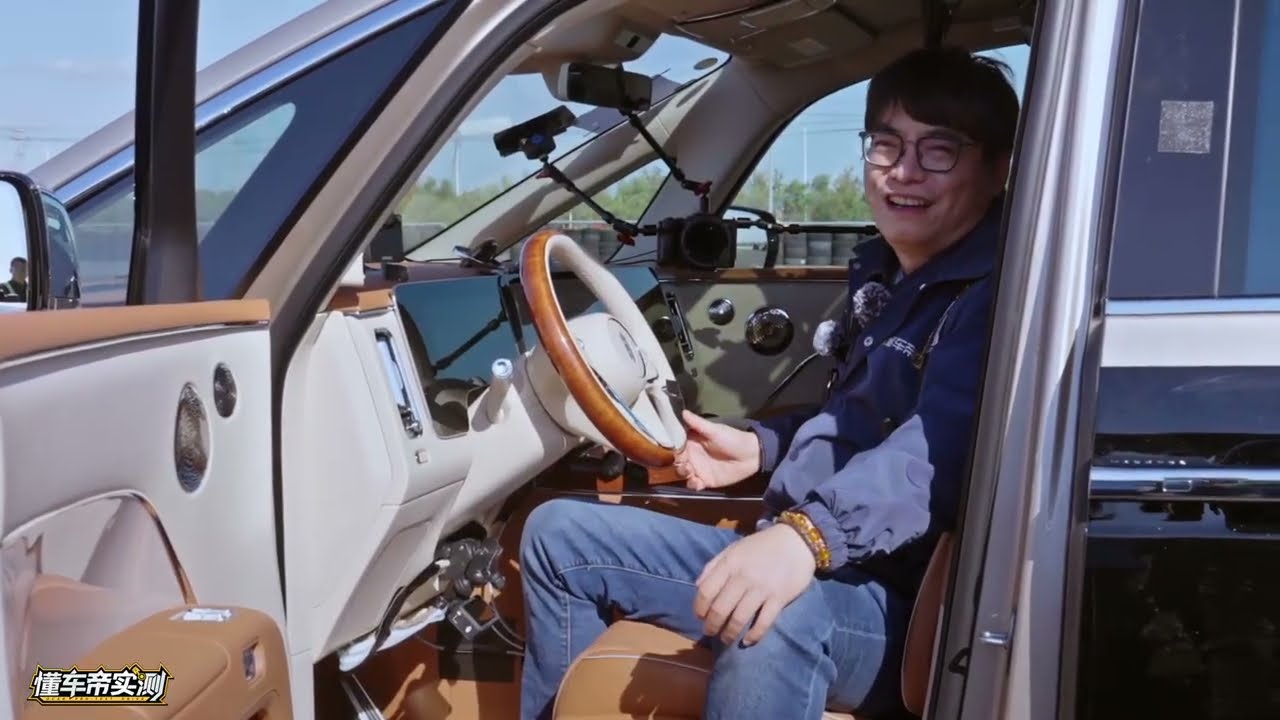
During the 2026 Dongchedi 100–0 km/h emergency braking evaluations, two separate Maextro V800 luxury vehicles suffered catastrophic brake pedal fractures the instant the drivers stomped on the pedal. Faced with the alarming possibility of an engineering defect rather than an isolated anomaly, the testing team decided to purchase a third brand-new Maextro V800 straight from a dealership to re-verify the results under strict, controlled conditions. The newly acquired vehicle had only three kilometers on the odometer when delivered to the test track. Adhering to the principle of accountability for human life, the team took the old adage to heart—something might happen once or twice, but it should never happen a third time—and set out to determine whether the brake pedal mechanism would snap again under rigorous testing.

Before launching into the formal braking trials, the testers meticulously preconditioned the vehicle, breaking in the fresh tires and brake pads while configuring the drive modes and energy regeneration settings to match Dongchedi’s standardized testing protocols. The driver admitted to feeling genuine tension behind the wheel of a million-dollar car knowing its two predecessors had suffered identical mechanical breakages. Setting off for the initial pass, the driver brought the car up to target velocity and executed the first emergency stop. The first attempt concluded without disaster: the Maextro V800 came to a halt in 38.44 meters, during which the pedal force sensor logged a peak application pressure of 1,596 Newtons. As the driver prepared for the second pass, the stakes remained exceptionally high, given that National Standard GB 7258 for motor vehicle safety technical conditions explicitly dictates that braking assemblies must withstand heavy impact loads without failure.

- Tested vehicle: Brand-new Maextro V800 with 3 km on the odometer, delivered directly from the dealership. - Context: Two prior production models had already broken their brake pedals during the same 100–0 km/h test sequence. - Run 1 telemetry: 38.44-meter stopping distance under 1,596 Newtons of applied foot force. - Regulatory reference: National Standard GB 7258 specifies that motor vehicle braking components must maintain operational integrity and durability under emergency impact loads.

The test driver highlighted the gravity of the re-test, stating: “Because braking is such an incredibly important and serious issue.”

---

[02:46](https://www.youtube.com/watch?v=igXYDjlW_uA&t=166s) The Pedal Snaps on Attempt Two: Panic, P-Gear Stopping, and Test Forces

On the very second full-force braking run, disaster struck again. As the driver accelerated toward 105 km/h and slammed down on the pedal upon sighting the marker cones, an explosive plastic snapping noise echoed through the cabin. The brake pedal snapped clean off the mounting assembly and flew away, bottoming out uselessly against the firewall and leaving the driver's foot completely suspended in empty space. In sheer panic on the closed circuit, the driver scrambled for an alternate deceleration method, desperately engaging the electronic parking gear (P-gear) switch to scrub off speed before the runaway vehicle breached the course boundaries. Trembling and holding up visibly shaking hands after bringing the car to a halt, the driver expressed absolute disbelief that an ordinary 140-pound adult male standing 1.71 meters tall could physically snap the pedal assembly of a brand-new flagship automobile under standard emergency application.

```mermaid flowchart TD accTitle: Maextro V800 Brake Pedal Failure Chain accDescr: Step-by-step progression of the brake pedal fracture and emergency deceleration attempt during Dongchedi testing. subgraph S1["Braking Attempt"] A["Driver accelerates to 105 km/h"] --> B["Full-force pedal application: 1,612 N"] end subgraph S2["Structural Failure"] B --> C["PP-GF40 bracket fractures with loud pop"] C --> D["Pedal snaps off and drops to firewall"] D --> E["Complete loss of primary hydraulic braking"] end subgraph S3["Secondary Recovery"] E --> F["Driver engages electronic P-gear switch"] F --> G["Secondary deceleration brings car to halt in ~140 m"] end ```

Sensor data captured during the fracture revealed that the pedal gave way at a force of just 1,612 Newtons—a load well within normal human physical limits and standard industry testing metrics. In established automotive engineering, premium brands engineer mechanical pedal assemblies with substantial structural safety margins to accommodate the massive surge of human adrenaline in life-or-death emergencies. For example, prominent global luxury automakers mandate that their pedal brackets withstand limit loads of up to 4,500 Newtons without fracture, and at least 2,500 Newtons under elevated ambient temperatures of 80 degrees Celsius without sustaining micro-cracks or functional impairment. Broader automotive engineering benchmarks require assemblies to endure a sustained load of 2,700 Newtons for 10 seconds, whereas the minimum national regulatory baseline mandates 2,000 Newtons sustained for 5 seconds. The fact that the V800 pedal failed at only 1,612 Newtons highlighted a shocking deficiency in a component that is supposed to be indestructible under human foot power.

- Peak fracture force: 1,612 Newtons at 105 km/h. - Driver profile: 1.71 meters height, approximately 140 pounds (63.5 kg). - Benchmark comparison: - Top luxury brand benchmark: 4,500 N limit load without fracture; 2,500 N at 80°C. - General automotive standard: 2,700 N sustained for 10 seconds. - Mandatory national standard: 2,000 N sustained for 5 seconds. - Maextro V800 failure point: 1,612 N transient spike.

The driver emphasized the absolute reliability expected of the assembly, asserting: “This thing should be impossible to break by stepping on it.”

---

[07:09](https://www.youtube.com/watch?v=igXYDjlW_uA&t=429s) The First Two Failures and the Perils of Owner's Manual Emergency Procedures

The incident on the test track was the culmination of a recurring pattern that began days earlier. The first failure occurred on October 1, 2026, during Dongchedi’s third trial out of a six-run test cycle. Upon reaching target speed and stomping on the pedal, the test driver heard a sharp snap as the pedal broke through its pivot and collapsed into the firewall, leaving the driver desperately pumping empty air. Unaware of any alternative backup mechanism, the first driver had to let the unbraked vehicle coast down across the open runoff expanse until it rolled to a standstill. Suspecting that the first vehicle might have suffered from a one-off assembly defect, the team tested a second Maextro V800 the following day, only for its brake pedal bracket to snap on the fourth braking attempt, filling the vehicle with shouts of alarm as the driver mashed a broken lever against the floor.

A review of page 183 of the Maextro V800 owner's manual uncovered a passage describing an emergency braking fallback: holding down the "P" gear button triggers secondary deceleration to slow the vehicle if the primary pedal becomes completely inoperable. However, right beneath this instruction sits a prominent orange warning label cautioning that secondary emergency braking cannot deliver full deceleration force and carries substantial risks of vehicle skidding or rolling over. While the driver of the third car was forewarned and managed to bring the vehicle to a halt in approximately 140 meters using the P-gear switch, typical drivers on public highways who have never memorized the manual would find themselves completely helpless. Under real-world traffic conditions at highway speeds, a sudden fracture would leave ordinary drivers coasting blind toward potential disaster.

- Incident 1 (October 1, 2026): Pedal fractured on pass 3 of 6; driver coasted to a stop across open track area. - Incident 2 (October 2, 2026): Second production vehicle failed on pass 4 of 6; mounting bracket sheared. - Incident 3 (October 3/4, 2026): Brand-new third vehicle failed on pass 2; stopped in 140 meters using P-gear. - Owner's manual page 183: Instructs drivers to press and hold the P-gear button for secondary braking, accompanied by an orange warning indicating high rollover/skid risk and lack of full braking force.

Reflecting on the sheer danger of an unbraked runaway on open highways, the narrator observed: “Dangerously coasting on public roads until the car rolls to a halt.”

---

[09:44](https://www.youtube.com/watch?v=igXYDjlW_uA&t=584s) Comparative Testing of Rival Models Under Identical Stress

To establish whether brake pedal bracket fracture is an industry-wide vulnerability or specific to the Maextro V800, Dongchedi conducted control tests on several other production vehicles using polymer or polyamide (PA) composite pedal brackets on the exact same track. Each test vehicle was outfitted with pedal force telemetry sensors to measure the precise impact loads delivered by the drivers across standardized 100–0 km/h emergency braking routines. The testing roster included a Stelato/Luxeed MPV alongside two other competitor platforms, designated as the A-model and the R-model.

| Vehicle Model | Bracket Base Material | Test Passes Completed | Peak / Average Pedal Force | Structural Result | |:--- |:--- |:--- |:--- |:--- | | **Maextro V800 (Car 1)** | PP-GF40 Composite | Failed on Run 3 | ~1,600 N | Bracket fractured completely | | **Maextro V800 (Car 2)** | PP-GF40 Composite | Failed on Run 4 | ~1,600 N | Bracket fractured completely | | **Maextro V800 (Car 3)** | PP-GF40 Composite | Failed on Run 2 | 1,612 N | Bracket fractured completely | | **MPV Control Model** | Composite / Polymer | 6 of 6 completed | >1,700 N average | Zero damage; normal braking | | **Competitor "A-Model"** | Composite / Polymer | 6 of 6 completed | >1,600 N average | Intact; valid stops achieved | | **Competitor "R-Model"** | Composite / Polymer | 6 of 6 completed | >1,600 N average | Intact; valid stops achieved |

During the high-stress runs on the MPV, the driver maintained pedal forces consistently exceeding 1,700 Newtons without the slightest sign of bracket deformation or fracture. Likewise, during testing on October 4th, both the A-model and R-model endured six consecutive full-force emergency stops under average loads exceeding 1,600 Newtons, achieving valid stopping distances every single time. Across all control vehicles, the composite brackets held firm without cracking or bending, proving that the fracture of all three Maextro V800 test cars was a unique and catastrophic anomaly. The snapping of the Maextro brackets had been so violent that the crack could be heard clearly from dozens of meters away outside the vehicle.

The narrator underscored the unprecedented failure rate across multiple units of the same platform, noting: “All three cars of the same model failed.”

---

[11:30](https://www.youtube.com/watch?v=igXYDjlW_uA&t=690s) Disassembly and Structural Flaws of the PP-GF40 Pedal Bracket

Following the track trials, technicians removed the fractured pedal assembly and mounting bracket from the third Maextro V800 to conduct a physical forensic examination alongside the remains from the first two cars. The fracture patterns across all three components were virtually identical—described by the team as looking like "triplets." In the Maextro assembly, the brake pedal arm acts as a metal lever pivoting against a composite bracket base. When subjected to sudden emergency foot force, the concentrated load popped the bracket housing open at the pivot and tore straight through the lower plastic ribbing.

Forensic examination revealed that the Maextro V800 bracket is molded from PP-GF40—polypropylene reinforced with 40% short glass fibers. While polypropylene is lightweight, moisture-resistant, heat-stable, and inexpensive (frequently utilized across the food packaging and automotive sectors), it demands rigorous structural engineering and generous reinforcement thickness to survive severe mechanical shear loads. The teardown exposed severe design defects in the Maextro component:

- Excessive hollowing: The bracket body features deep cutouts that drastically reduce wall thickness right at the highest stress concentrations. - Inverted strength distribution: The points subjected to maximum mechanical torque are paradoxically engineered with the thinnest edge profiles and minimal rib support. - Inadequate reinforcement geometry: The structural ribs lack the thickness and cross-bracing needed to resist lateral tearing when the driver stomps off-axis.

The team compared the broken Maextro bracket against composite pedal brackets from two competing vehicles, Brand W and Brand Z. Brand W employs PP+LGF40 (polypropylene reinforced with long glass fibers), which delivers significantly higher impact toughness, combined with substantially thicker walls and well-aligned load-bearing gussets. Even more revealing, Brand Z uses the exact same PP-GF40 material and shares the same component designer and supplier as the Maextro V800, yet Brand Z's bracket features robust, continuous structural webbing that easily survived identical impact forces. The comparison demonstrated that while lightweight composites are fully capable of serving as brake brackets, the Maextro V800 failed because its internal geometry was hollowed out beyond safe structural limits.

Examining the paper-thin fractured edges where the bracket tore open, the technician concluded: “The points under the most stress—the strongest stress points—are paradoxically the weakest.”

[13:42](https://www.youtube.com/watch?v=igXYDjlW_uA&t=822s) Structural Analysis of the Maextro V800 Brake Pedal Failure

A side-by-side structural tear-down reveals stark differences between the Maextro V800 and comparable vehicles, even when looking at components sourced from the exact same supplier with part numbers differing by only a single digit. In another MPV tested under identical conditions, the brake bracket was solid throughout, noticeably thicker, and reinforced with additional structural ribs; that vehicle endured six full-pressure brake stomps without sustaining any damage whatsoever. By contrast, the fracture surface on the Maextro V800 bracket exhibits classic signs of a brittle overload failure driven by inadequate component stiffness. While all three comparison vehicles utilize modified polyamide (PA) plastic materials, the mechanical geometry of the Maextro V800 pedal bracket places it at a severe disadvantage.

The engineering flaw begins with lateral offset: the center of the Maextro V800’s brake pedal sits 130 millimeters away from the bracket's pivot axis, representing the largest lateral distance among the tested vehicles. A greater leftward offset subjects the bracket assembly to far higher torsional and bending moments during emergency braking. Despite facing the harshest mechanical load, the Maextro V800 features the thinnest pivot support structure of the group, relying on merely a single layer of vertical plastic plate. In contrast, the competing models reinforce their pivot areas with two to three layers of vertical ribbing—one utilizing triple-layer reinforcement on both sides, and another using three layers on the right and two on the left. Compounding the structural vulnerability, the Maextro bracket displays visible weld lines directly across the high-stress pivot zone, a manufacturing flaw that plastic injection molding processes are supposed to strictly eliminate.

```mermaid flowchart TD accTitle: Brake Pedal Bracket Structural Comparison accDescr: Diagram contrasting the structural design and failure points of the Maextro V800 versus competing MPV models.

subgraph MV["Maextro V800 Bracket"] direction TB M1["130 mm Lateral Offset<br/>(Maximum Torsional Force)"] M2["Single Vertical Rib Support<br/>(Minimal Reinforcement)"] M3["Weld Lines in High-Stress Zone<br/>(Injection Molding Flaw)"] M4["Brittle Overload Fracture"] M1 --> M2 --> M3 --> M4 end

subgraph COMP["Competing MPV Models"] direction TB C1["Moderate Lateral Offset<br/>(Standard Torsion)"] C2["2 to 3 Layers of Vertical Ribs<br/>(Reinforced Pivot Walls)"] C3["Optimized Injection Tooling<br/>(No Stress-Line Seams)"] C4["Withstood Repeated Emergency Stops"] C1 --> C2 --> C3 --> C4 end ```

- Modified polyamide (PA) composite is utilized across all comparison models, demonstrating that material choice alone does not explain the fracture. - The 130 mm pedal-to-pivot offset creates an extreme lever-arm effect during panic stops. - Competitor brackets integrate multi-layered structural ribs (up to three plates per side) to disperse load forces evenly. - Visible weld lines (knit lines) in the Maextro bracket's pivot area point to inadequate process and tooling optimization during injection molding. - As the analysis sharply concludes: “Compared to the other two, the Maextro uses the weakest structure to bear the greatest force despite using similar materials for the brake pedal bracket.”

[15:58](https://www.youtube.com/watch?v=igXYDjlW_uA&t=958s) The Gravity of Brake Failure and Real-World Emergency Risks

The complete mechanical failure of a brake pedal crosses an unforgivable threshold in automotive safety. The testing team emphasizes that the physical brake pedal serves as a vehicle's absolute final line of defense when electronic assistance systems fail or reach their physical limits. Historically, mechanical defects of this magnitude have triggered sweeping international recalls, such as the major global safety recalls issued by Ford years earlier when similar pedal integrity issues arose.

The testers push back aggressively against online commentators who claim a driver can simply engage the electronic gear selector or emergency parking brake switch if the pedal fails. While an emergency stop switch can initiate deceleration, the braking efficiency is drastically inferior. Under controlled conditions, an emergency stop that normally requires roughly 38 meters ballooned to an alarming 140 meters when relying solely on auxiliary deceleration methods. Over such a vast stopping distance, the car would easily slide off a cliff or plow straight into crossing pedestrians, delivery scooters, or heavy commercial vehicles. When advanced driver assistance systems like automatic emergency braking (AEB) or antilock braking systems (ABS) cannot avert an impact, a driver’s instinctive, forceful stomp on the physical pedal is the only remaining safeguard. Having the pedal physically snap off under the driver's shoe leaves the vehicle entirely out of control.

- A standard emergency stop from 100 km/h covers approximately 38 meters. - Secondary electronic deceleration using the gear selector/handbrake extended the stopping distance to 140 meters. - Ford's historical precedent demonstrates that structural pedal failures routinely lead to massive, mandatory safety recalls. - Criticizing the online dismissal of mechanical redundancy, the tester observes: “A normal 38-meter braking distance, not even close. It took 140 meters to stop.”

[16:44](https://www.youtube.com/watch?v=igXYDjlW_uA&t=1004s) Test Results, Extreme Fear in the Cockpit, and Call for Recall

Since 2019, the testing team has evaluated at least 300 vehicle models every single year, systematically gathering dynamic performance and safety data. In standard high-speed braking runs from 100 km/h to a dead stop, factory test vehicles routinely complete repeated stops without structural distress. To their disbelief, all three separate Maextro V800 vehicles brought in for testing failed the routine multi-stop procedure. During the highlighted evaluation run, the pedal held through the first and third hard presses, but snapped clean off on the fourth depression, leaving an empty mechanical stub where the driver's foot expected solid resistance.

The onboard driver was visibly shaken by the experience. Even on a closed, flat test track surrounded by safety crews, medical personnel, and chase vehicles, experiencing a snapped brake pedal at highway speeds induced pure panic. Automotive engineering standards adhere to rigid parts-per-million (PPM) quality and zero-failure criteria for primary control linkages, making a catastrophic pedal break functionally unthinkable on a luxury vehicle commanding a price tag of roughly one million yuan.

The test team calls directly on the manufacturer to launch a transparent, comprehensive investigation and issue a full recall to safeguard owners. Despite the alarming failure caught on camera, the presenters explicitly warn drivers not to hesitate or brake softly in an actual road emergency out of fear of breaking their pedals: in life-or-death scenarios, drivers must still apply maximum downward force. Finally, the team emphasizes their absolute objectivity, confirming that the entire acquisition, pre-inspection, and dynamic testing of the Maextro V800 was continuously recorded without deceptive cuts or editorial tampering.

- More than 300 vehicle models have been rigorously tested annually by the testing platform since 2019. - Three individual Maextro V800 units were subjected to the test protocol; all three experienced fractured brake pedal assemblies. - The breakage occurred on the fourth full-force braking maneuver during the 100-to-0 km/h test run. - The tested vehicle belongs to the flagship luxury class, retailing around the one-million-yuan mark. - Stressing the core premise of automotive safety, the tester states: “The most basic function of a car is to transport humans from point A to point B. It cannot even provide the most basic level of safety. It has lost its most fundamental function, which is a very, very major and serious problem.” - Defending the authenticity of the test, the team affirms: “We guarantee there is no editing of the footage.”

## Notable quotes > [16:44](https://www.youtube.com/watch?v=igXYDjlW_uA&t=1004s) The most basic function of a car is to transport humans from point A to point B. It cannot even provide the most basic level of safety. It has lost its most fundamental function, which is a very, very major and serious problem. — 测试员

## Mentioned 懂车帝, 华为, 尊界 V800, 王志安, 国家标准 GB 7258, 福特汽车 (Ford), PP-GF40

## Video description 1. YouTube 会员平台 成为本频道的会员,即可尊享专属福利,提前观看节目,直播,专属会员节目。 点击链接了解详情并加入:https://www.youtube.com/channel/UCBKDRq35-L8xev4O7ZqBeLg/join

2. Patreon 会员平台 在 Patreon 中加入「王局」会员,您不仅可以观看会员专属视频,直播,更能参与会员社群互动,更贴心的是,Patreon 支持使用中国大陆银行卡支付!点击链接立刻加入: Patreon 会员加入链接:https://www.patreon.com/join/8734589

王局新书【王志安谈治国理政第二卷电子书】不怎么火热销售中 【PATREON购买链接】https://www.patreon.com/c/wangzhian/shop 【苹果书店购买链接】 https://books.apple.com/us/book/%E7%8E%8B%E5%BF%97%E5%AE%89%E8%B0%88%E6%B2%BB%E5%9B%BD%E7%90%86%E6%94%BF%E7%AC%AC%E4%BA%8C%E5%8D%B7/id6739830450 【亚马逊电子书购买链接】 https://www.amazon.co.jp/%E7%8E%8B%E5%BF%97%E5%AE%89%E8%B0%88%E6%B2%BB%E5%9B%BD%E7%90%86%E6%94%BF%E7%AC%AC%E4%BA%8C%E5%8D%B7-Traditional-Chinese-%E5%BF%97%E5%AE%89-%E7%8E%8B-ebook/dp/B0DRJ8R48M

[Source](https://www.youtube.com/watch?v=igXYDjlW_uA)

中文简报

懂车帝实测三台尊界V800刹车踏板全断裂 呼吁厂商召回 尊界V800踏板支架因结构偷轻与偏置力臂过大在常规急刹负荷下发生脆断,备用制动距离暴增至140米构成重大安全隐患。 节目围绕懂车帝对华为尊界V800进行的100–0 km/h紧急制动测试展开,记录了测试团队在连续两台车发生刹车踏板断裂后,自购第三台新车进行复测的全过程。在仅承受约1612牛顿踩踏力的情况下,第三台尊界V800的刹车踏板支架再次断裂,导致主刹车完全失效,测试员只能通过长按P挡紧急减速且制动距离暴增至140米。随后的结构拆解对比显示,该车踏板支架采用PP-GF40材料,但在受力最大的旋转轴区域存在严重掏空、单层筋板以及注塑熔接线等设计与制造缺陷。测试团队结合同类竞品的稳定表现,指出刹车踏板断裂严重触及汽车安全底线,强烈呼吁厂商展开彻底调查并实施召回。 懂车帝在对百万级豪华车尊界V800进行100–0 km/h刹车测试中,连续三台测试车辆的刹车脚踏板支架均发生断裂,第三台新车踏板仅承受1612牛顿踏力即断裂失效。 (2:46) 主刹车踏板断裂后,测试人员虽使用长按P挡应急制动将车刹停,但制动距离从正常的38米大幅延长至140米,且官方手册标明存在侧滑翻车风险。 (7:09) 拆解结构对比显示,尊界V800踏板偏心距达130毫米承受极大扭矩,却在受力处严重掏空且仅有单层加强筋,并在高应力区存在注塑熔接线缺陷。 (13:42) 对比同材质的竞品MPV及车型均顺利完成多次大应力刹车,测试团队呼吁厂商针对这一严重安全隐患启动全面透明调查并实施召回。 (16:44)

Detailed notes — zh

## Background 该视频由自媒体频道“王志安”于2026年10月12日发布在YouTube平台上。视频主要记录并曝光了懂车帝在对华为尊界V800进行极限制动测试时发生刹车踏板断裂的实测画面,并指出该测试视频在境内平台已被删除。 ## TL;DR 懂车帝在对百万级豪车尊界V800进行100-0 km/h刹车测试时,前两台测试车均遭遇刹车踏板断裂故障,随后自费提取表显仅3公里的第三台全新量产车进行严格复测。然而在第二脚急刹中,仅承受约1612牛顿踩踏力的踏板支架再次粉碎性折断脱落,远低于国标及行业冗余门槛,测试员只能长按P档在滑行140米后惊险停下。横向比对与工程拆解显示,该车踏板偏置距离过大导致扭矩剧增,同时转轴区仅有单层立板且存在严重熔接痕缺陷,最终测试团队呼吁厂家严肃正视设计缺陷并立即启动全面召回。 ## Atmosphere & style 整个测试过程充满令人屏息的紧张感与惊魂未定的后怕情绪,车内监控真实记录下了刹车踩空瞬间测试员的慌乱惊叫与止不住发抖的双手的特写。叙事节奏从严谨规范的测试起跑迅速滑入突发事故的惊险高潮,随后切换为客观冷峻的数据比对与零件显微级工程拆解。最终在严肃而沉重的氛围中,测试方带着对生命安全的敬畏,向车企发出了义正辞严的召回呼吁,兼具新闻调查的冲击力与实测实证的硬核质感。 ## Bulletin - [00:00](https://www.youtube.com/watch?v=igXYDjlW_uA&t=0s) 懂车帝对华为尊界V800进行100-0 km/h极限制动测试,连续三台测试车辆(包括自费购买、表显仅3公里的全新出厂车)均在全力急刹时发生刹车踏板支架粉碎性折断。 - [05:30](https://www.youtube.com/watch?v=igXYDjlW_uA&t=330s) 第三台车在踩踏力仅为1612牛顿的第二脚急刹中瞬间断裂,不仅低于GB 7258国标2000牛顿保持5秒的底线,也远逊于行业2700牛顿及豪华车企4500牛顿的安全冗余要求。 - [07:09](https://www.youtube.com/watch?v=igXYDjlW_uA&t=429s) 测试人员通过长按P档电子手刹实施紧急减速,但100 km/h初速下的制动距离被拉长至140米(常规约38米),且伴随侧滑与失控风险。 - [13:42](https://www.youtube.com/watch?v=igXYDjlW_uA&t=822s) 横向拆解表明断裂由工程结构硬伤所致:踏板向左偏置达130毫米导致扭矩过大、转轴区仅设单层立板支撑,且在高应力区存在严重削弱强度的注塑熔接痕。 - [17:55](https://www.youtube.com/watch?v=igXYDjlW_uA&t=1075s) 测试团队呼吁涉事厂商立即正视重大安全设计缺陷并启动召回,同时提醒驾驶员在日常行车遭遇险情时仍应果断全力深踩制动。 ## Key takeaways - [00:00](https://www.youtube.com/watch?v=igXYDjlW_uA&t=0s) 懂车帝在对百万级豪华车尊界V800进行极限制动测试时,前两台试驾车接连遭遇刹车踏板支架断裂的严重故障。 - [00:00](https://www.youtube.com/watch?v=igXYDjlW_uA&t=0s) 为排除小概率偶发缺陷,测试团队自费提购第三台表显仅3公里的全新尊界V800,完成标准磨合后在封闭测试场复测。 - [02:45](https://www.youtube.com/watch?v=igXYDjlW_uA&t=165s) 第三台车仅完成第一轮制动,在第二脚100-0 km/h急刹中踏板瞬间粉碎性断裂脱飞,脚刹功能彻底归零。 - [05:30](https://www.youtube.com/watch?v=igXYDjlW_uA&t=330s) 断裂瞬间传感器测得踩踏力仅为1612牛顿,属于普通驾驶员紧急避险时的正常发力区间,绝非超负荷工况。 - [05:30](https://www.youtube.com/watch?v=igXYDjlW_uA&t=330s) 现行国标要求制动踏板承受2000牛顿并维持5秒,行业通用标准为2700牛顿,一线豪华车冗余标准高达4500牛顿,尊界V800均未达标。 - [07:09](https://www.youtube.com/watch?v=igXYDjlW_uA&t=429s) 踏板断裂后依赖长按P档电子手刹制动,车辆滑行140米才停稳,手册警示该应急操作存在严重侧滑或侧翻隐患。 - [09:36](https://www.youtube.com/watch?v=igXYDjlW_uA&t=576s) 智界V9等同场采用塑料/复合材料支架的竞品车型在承受超1700牛顿连续急刹后均完好无损,证实断裂非材质本身的天然局限。 - [09:36](https://www.youtube.com/watch?v=igXYDjlW_uA&t=576s) 尊界V800支架采用PP-GF40材料,受力最集中的核心节点被设计成单薄镂空,加强筋缺乏厚度与刚性。 - [13:42](https://www.youtube.com/watch?v=igXYDjlW_uA&t=822s) 尊界V800踏板中心距支架转轴中心向左偏置达130毫米,形成了极大的偏置力矩,踩踏时产生的扭矩成倍增加。 - [13:42](https://www.youtube.com/watch?v=igXYDjlW_uA&t=822s) 对比车型普遍采用2至3层垂直立板加固,而承受更大偏置应力的尊界V800在转轴处仅采用单层立板支撑。 - [13:42](https://www.youtube.com/watch?v=igXYDjlW_uA&t=822s) 尊界V800转轴高应力关键区域存在注塑加工中本应避开的熔接痕,导致材料在极限制动下发生脆性过载断裂。 - [17:55](https://www.youtube.com/watch?v=igXYDjlW_uA&t=1075s) 刹车踏板是全车最后一道物理安全防线,测试团队强调丧失基础机械制动即失去车辆基本属性,强烈敦促车企立刻启动全量召回。 - [17:55](https://www.youtube.com/watch?v=igXYDjlW_uA&t=1075s) 测试机构声明购车、提车及测试全程保留无剪辑原始闭环记录,并提示公众遇险时依然必须果断全力踩死刹车。 ## Detailed walkthrough ### [00:00](https://www.youtube.com/watch?v=igXYDjlW_uA&t=0s) 百万豪车刹车踏板接连折断:懂车帝提第三台新车复测 测试现场的气氛一开始便笼罩在极度的紧张与难以置信之中。测试人员面对镜头忍不住发出惊呼:“百万豪车的刹车踏板直接踩断了,快快快!”“那是纯物理断裂,‘啪’的一声脆响,刹车踏板直接没了,太吓人了!”在常规的汽车机械认知中,刹车踏板是关乎全车乘员生死底线的核心部件,本应是整车上最坚固、最不可能被人力破坏的机械构件。然而,连续多台车在全力制动时出现刹车踏板断裂,这到底是偶发的制造缺陷,还是致命的设计通病?测试员形容这种脚底瞬间踩空的状况为“绝对是绝望瞬间”。 懂车帝在进行2026年100-0 km/h全力制动测试时,短短几天内,前两台尊界V800在全力踩下刹车踏板的瞬间,均遭遇了踏板支架断裂的严重故障。面对连续两台试驾车的断裂结果,测试团队秉持对生命安全负责的原则,没有立刻草率下定论,而是自费直接从交付中心提取了第三台全新的尊界V800。这台新车表显里程仅有3公里,从4S店提车后径直拖运至封闭测试场。中国有句老话叫“事不过三”,测试团队希望通过这第三台全新出厂的车辆,重新严格复测100-0 km/h刹车,以验证踏板断裂究竟是不是小概率事件。 在正式进入极限制动测试前,测试团队严格按照标准流程对全新的轮胎和刹车系统进行了磨合,并依照既往评测标准,对车辆的驾驶模式和动能回收等级进行了规范设定。测试员坐进车内,面对即将开始的测试难掩内心的忐忑:“这台车是纯全新的,已经是第三台车了,前面两台都断了,真希望这台能撑住,我这心里真的有点打鼓。”随后,车辆开始在跑道上加速、稳住车速,首轮100-0 km/h全力制动随即展开。第一次制动测试顺利完成,制动距离测得为38.44米,踏板力计记录到的峰值踩踏力为1596牛顿。测试员长舒一口气,首脚全力制动虽然撑住了,但更大的考验还在后头。 --- ### [02:45](https://www.youtube.com/watch?v=igXYDjlW_uA&t=165s) 第二脚急刹再次粉碎性折断:惊魂失控与P档紧急减速 根据中国《机动车运行安全技术条件》(GB 7258)国家标准的强制要求,机动车制动系统必须具备足够的耐久性和抗冲击能力,绝不允许在受冲击载荷时失效。然而,紧接着进行的第二脚100-0 km/h极限制动测试,却彻底击碎了测试团队的最后一丝侥幸。当测试员在高速行驶中再次全力踩向刹车踏板时,伴随着一声清脆的“啪”声,踏板瞬间断开脱落。车内监控记录下了极度惊险的一幕:测试员脚下一空,整个人慌乱大喊:“哇,断了!断了!真断了!快快快,往前走,走走走!靠,现在只能靠按P档减速一点点了,刹车完全没了,我的天哪!” 这台崭新的第三台车,仅仅抗住了两次制动测试,踏板就在第二脚时彻底粉碎失效。车停稳后,测试员惊魂未定,声音仍在发颤:“吓死我了!就是一声塑料脆响‘啪’的一声,接着整台车完全失去脚刹制动,因为整个踏板直接断掉飞出去了。”测试员特别解释了自己的身材与受力情况,证明绝非蛮力破坏:“你要知道我身高只有1米71,体重大概140斤,就是一个普普通通的成年男性,我只是施加了正常的全力制动力度。我原本以为至少能抗过第二脚,我甚至提前做好了心理预案,本能地知道去按P档电子制动,但换作普通驾驶员,谁能在那种瞬间反应过来?” 走出驾驶室时,测试员摊开仍在剧烈发抖的双手:“大家看我的手,现在还在发抖。当你的刹车踏板被踩得只剩光秃秃的底板,你怎么可能不慌?幸好我们是在全封闭的测试场地内,如果在开放道路上,你可以想象会造成怎样惨烈的后果。”测试员愤怒而严肃地强调:“无论在任何情况下,不管是谁踩下去,刹车踏板都绝不可能断裂!如果连我这体重都能把踏板踩断,难道开这台车还得限制驾驶员体重、甚至限制穿什么鞋吗?” - **初次制动数据**:制动距离38.44米,踩踏力1596牛顿。 - **二次制动故障**:车速105 km/h左右踩下刹车,峰值踏板力仅1612牛顿,踏板瞬间断裂并脱飞。 - **应急操控途径**:脚刹全失,测试员通过长按电子换挡杆上的“P”档开关实现辅助减速制动。 --- ### [05:30](https://www.youtube.com/watch?v=igXYDjlW_uA&t=330s) 踏板受力数据与行业安全冗余标准 为了准确搞清楚踏板断裂时的临界受力,测试车全程安装了专业的踏板力传感器。第二次断裂瞬间,测试员正全神贯注盯着时速表,车速达到105 km/h并看到制动标线时果断重刹,随后就听到了如同爆裂般的声响,踏板从脚掌下凭空消失。踏板力传感器数据显示,断裂瞬间的施加力度仅为1612牛顿。测试员指出,1612牛顿在常规激烈驾驶或紧急制动中是非常普遍的踩踏力度,自己日常测评踩出这种力道早已是家常便饭,绝非不可思议的超极限负荷。 ```mermaid flowchart TD accTitle: Brake Pedal Load Standard Comparison accDescr: 尊界V800断裂踩踏力与国标及豪华车企设计冗余标准的横向数值对比 subgraph Failure["实测断裂数值"] V800["尊界V800断裂受力<br/><b>1,612 N</b><br/>(直接粉碎性断裂)"] end subgraph Standards["行业与国家标准"] GB["国标最低要求 (GB 7258)<br/><b>2,000 N</b> 保持 5 秒"] GEN["行业通用标准<br/><b>2,700 N</b> 保持 10 秒"] LUX["知名一线豪华车企标准<br/><b>4,500 N</b> 极限载荷不断裂<br/>(80℃高温下 2,500 N 无裂纹)"] end V800 -.->|"未达及格线"| GB GB --> GEN GEN --> LUX ``` 在汽车工程体系中,刹车踏板属于整车最高等级的安保件,必须为人在极端恐慌状态下的极限反应预留庞大的工程安全冗余。在真实交通事故迫在眉睫的生死关头,人体肾上腺素会疯狂飙升,驾驶员会在惊恐中倾尽全身力量猛踹刹车,谁也无法预判极限踩踏力会有多大。因此,汽车制造业针对刹车踏板制定了严苛的耐受准则: - **国家标准门槛**:国家标准最低要求制动踏板组件承受2000牛顿载荷,并维持5秒不得损坏失效; - **行业通用准则**:主流汽车制造厂的标准普遍要求至少承受2700牛顿载荷,并维持10秒无结构损伤; - **一线豪华车企冗余**:知名一线豪华品牌对于机械刹车机构的冗余设计要求极其严苛,其极限承载指标高达4500牛顿且不能发生断裂;在80摄氏度的高温恶劣工况下,承受2500牛顿载荷也绝不能影响功能或产生裂纹。 测试员郑重指出:“刹车踏板是整台车上最重要、也是最应该保证可靠的部件。每一个主机厂、每一个制造车间都必须把人在紧急制动时的爆发力计算在内,这个东西在物理上就应该是人脚绝对踩不坏的部件。” --- ### [07:09](https://www.youtube.com/watch?v=igXYDjlW_uA&t=429s) 前两台车的断裂复盘与车主手册的P档应急“隐藏风险” 在第三台车彻底断裂后,测试团队详细复盘了前两台尊界V800的断裂全过程。第一起事故发生在2026年10月1日懂车帝的测试现场。当时车辆按照国标标准进行连续6次100-0 km/h刹车测试,在进行到第3次急刹时,测试员对准标线全力踩下,伴随着清脆的断裂声,踏板瞬间撞击底板防火墙。驾驶员脚下悬空,在踏板舱内反复摸索却空无一物,惊恐喊道:“我把踏板踩碎了!”当时的第一台车测试员并不知道应急操作,车辆只能在巨大的封闭缓冲区内任由惯性缓慢滑行直到自然停下。 测试团队查阅了尊界V800随车配备的《用户手册》,在第183页确实印有一项应急刹车指南:在踩踏脚刹踏板完全失效的极端状况下,长按电子挡位上的“P”档按键,可激活驻车辅助系统提供副刹车减速。然而,在该指南正文后面紧跟着一条极其显眼的橙色安全警示: > “使用P档紧急制动可能会导致车辆侧滑或侧翻,且该功能无法替代常规刹车踏板,无法提供全额制动力。” 在第三台车的夜间测试中,测试员因提前获悉该功能,在踏板踩断后迅速触发P档,即便如此,车辆仍滑行了整整140米才勉强刹停。测试员感慨道:“如果在毫无缓冲区的真实社会道路上发生这种突发状况,绝大多数没翻过用户手册的普通车主,就只能听天由命,任由车辆以极高速度失控滑行,直到猛烈撞击或停下。” 第一台车发生故障时,团队曾以为这或许是一台偶发的生产个例;次日(10月2日),团队调来第二台同款尊界V800。同样的100-0 km/h测试,这台车在撑到第4脚全力制动时,车内再次爆发出一片惊呼,伴随着机械脆响,刹车安装支架应声断裂,驾驶员脚掌踩到底依然毫无制动响应。由于前两台车的生产批次并不完全相同,测试团队才下定决心自购第三台车,结果第三台车在第2脚便彻底报销。三台相同车型的制动支架在极短时间内全军覆没,这一现象在现代汽车工程界被定义为最高级别的严重安全缺陷。 --- ### [09:36](https://www.youtube.com/watch?v=igXYDjlW_uA&t=576s) 同场竞品对比测试与断裂支架工程结构拆解 为了彻底验证刹车踏板支架断裂究竟是“塑料复合材料”的普遍物理局限,还是尊界该款车型的独立结构硬伤,测试团队在当天调来了多台同样采用塑料/聚酰胺(PA/PP)材料刹车踏板支架的竞品车型,并在踏板上加装了同样的力传感器进行横向对比验证。大型豪华MPV智界V9在连续多轮100-0 km/h急刹测试中,平均脚踩力度持续超过1700牛顿,在终段极限制动下安然无恙,未出现任何形变或断裂迹象。在随后的10月4日集中测试中,涵盖A品牌与R品牌在内的多台参测竞品,无一例外均以超过1600牛顿的强悍踏板力完整完成了连续6次极限制动,刹车踏板支架完好无损,且全部跑出了合格有效的制动成绩。测试员直言:“我们做梦也没想到,区区6次急刹,就能照出一家车企刹车踏板的真实安全底线。同款车型三台车全断,那断裂的声音在几十米外都能听得一清二楚!” 测试团队随后将断裂的踏板与支架残骸从车上拆解下来进行实物比对。三台车的断裂件并排摆放在一起,断口形态与损毁点高度重合,宛如“三胞胎”一般。工程结构解析显示: - **受力杠杆与薄弱点错位**:踏板力臂本身为金属材质,在受力点与转轴支点之间形成强大的杠杆放大效应。但承托这一巨大杠杆作用力的基座支架,其受力最核心、应力最集中的结构节点,却悖论般地被设计成了最薄弱的镂空区域; - **加强筋单薄缺乏整体性**:支架边缘厚度极其单薄,内部本应承受剪切力的加强筋结构厚度严重不足,缺乏整体刚性,大负荷冲击下一压即溃,随即发生撕裂性断损; - **材料与工艺结构设计**:该支架采用的基材为PP-GF40(即添加40%玻璃纤维增强的聚丙烯材料)。PP材料在工业中极为普遍,虽然具有耐热、尺寸稳定、吸水率极低和大幅轻量化的优势,但对结构抗拉、抗剪切的几何设计和工程冗余要求极高。 测试人员现场拿出了另外两款同样采用PP复合材料踏板基座的部件进行比对(分别来自W品牌与Z品牌)。W品牌的支架采用了PP+LGF40(长玻璃纤维增强聚丙烯),纤维更长韧性更强,且无论在材料厚度还是放射状加强筋的走向布局上都远比尊界厚实扎实得多;更引人深思的是Z品牌的支架,其所用材料牌号与尊界完全一致,甚至两者的结构设计师也存在直接关联,但两者的工程实现细节与最终承载表现却天差地别。 | 参测比对车型/部件 | 踏板支架材质 | 承受平均制动力度 | 6次极限制动表现 | 结构破坏情况 | |:--- |:--- |:--- |:--- |:--- | | **尊界V800 (第一台)** | PP-GF40 (玻纤增强聚丙烯) | 正常急踩力 | 第3脚失效中断 | 支架彻底断裂,踏板踩死贴地 | | **尊界V800 (第二台)** | PP-GF40 (玻纤增强聚丙烯) | 正常急踩力 | 第4脚失效中断 | 支架粉碎性折断,脚制动失效 | | **尊界V800 (第三台)** | PP-GF40 (玻纤增强聚丙烯) | 1596 N ~ 1612 N | 第2脚失效中断 | 支架撕裂脱落,仅靠P档停下 | | **智界V9** | 工程塑料基座 | > 1700 N | 完整通过全部测试 | 无损坏,功能完全正常 | | **A品牌竞品** | 工程复合材质 | > 1600 N | 连续6次急刹通过 | 无裂纹,结构稳定 | | **R品牌竞品** | 工程复合材质 | > 1600 N | 连续6次急刹通过 | 无裂纹,结构稳定 | | **W品牌对比件** | PP+LGF40 (长玻纤增强) | — (零件工程比对) | — | 结构与加强筋厚度显著更优 | ### [13:42](https://www.youtube.com/watch?v=igXYDjlW_uA&t=822s) 结构设计对比与断裂原因深度剖析 在对比同平台或同供应商部件时,测试人员展示了其他车型的刹车踏板支架。尽管零件号仅差一位数字,两者的制造工艺和设计强度却大相径庭:对比车型的踏板支架明显更厚,内部完全是实心结构,并加装了额外的加强筋。同样是中大型 MPV,对比车型连续踩踏 6 次安然无恙。测试人员总结道:“同一供应商用同一种材料做出来的同一个部件,性能可以完全不一样。”尊界 V800 的刹车踏板支架断裂处呈现典型的材料脆性过载断裂特征,其核心诱因在于刹车踏板的结构刚度严重不足。 ```mermaid flowchart TD accTitle: 刹车踏板支架结构对比分析 accDescr: 尊界V800与对比车型的结构强度与受力缺陷对比图 subgraph V800["尊界 V800 踏板支架"] A1["踏板偏置距离达 130mm"] --> B1["杠杆力臂最长,受力最大"] B1 --> C1["转轴区仅单层立板支撑"] C1 --> D1["高应力区存在明显熔接痕"] D1 --> E1["脆性过载导致断裂"] end subgraph Others["对比车型踏板支架"] A2["踏板偏置距离较小"] --> B2["受力相对均匀"] B2 --> C2["转轴区 2-3 层立板加强"] C2 --> D2["高应力区无熔接痕(工艺优化)"] D2 --> E2["实心加强筋结构,稳固未断"] end ``` 通过进一步横向拆解 3 台测试车辆的踏板支架,测试团队发现了结构上的致命缺陷。虽然 3 款车均采用了改性聚酰胺(改性 PA)工程塑料,但尊界 V800 的结构强度是三者中最薄弱的: - **偏置力矩过大**:尊界 V800 的刹车踏板中心距离支架转轴中心达到 130 毫米,是 3 款车中向左偏置距离最远的。踏板越往左偏,踩踏时对支架产生的扭矩和侧向力越大,对结构刚度的要求呈几何级数增加。 - **支撑结构单薄**:承受最大受力的尊界 V800,转轴支撑区域竟然仅有一层单薄的垂直立板。对比的另外两款车型,转轴两侧分别采用了 2 至 3 层垂直立板进行高强度加固(一辆为双侧各 3 层,另一辆为右侧 3 层、左侧 2 层)。 - **注塑工艺缺陷**:最致命的是,尊界 V800 在应力高度集中的转轴关键受力区域,存在注塑加工中本应严格避免的“熔接痕”(注塑时料流交汇未完全熔合形成的薄弱缝隙)。而其他两款车型的受力区域均未发现熔接痕,显然经过了严谨的结构仿真与注塑工艺优化。 正如测试人员所质疑的:“这个部件的结构、材质以及匹配,真的要打上一个大大的问号;发生这么严重的问题,我们必须反思。” --- ### [15:58](https://www.youtube.com/watch?v=igXYDjlW_uA&t=958s) 极限工况下的安全隐患与测试现场实录 刹车踏板是汽车安全系统的最后一道物理防线。历史上福特汽车曾因类似踏板隐患在全球范围内发起过大规模召回,时隔 6 年同类设计失误再次出现令人震惊。针对部分网友提出的“刹车踏板踩断后可以长按电子手刹(P 挡/怀挡)紧急制动”的说法,测试数据给出了残酷的答复:在 100 km/h 的速度下,原本 38 米左右的常规制动距离,仅依靠电子制动拖拽导致制动距离直接延长到了 140 米。 测试人员严肃指出,如果在现实道路上遇到断崖、对向大货车、电瓶车或鬼探头行人,当 AEB(自动紧急制动)或防抱死系统无法生效、驾驶员只能依靠右脚全力踩死刹车的一瞬间,踏板如果突然断裂,车内人员将陷入彻底的绝望。自 2019 年以来,该测试机构每年对至少 300 款市售车型进行严格的实测摸底,百公里制动测试历来都能顺利完成,却从未料到售价高达百万级的尊界 V800 竟在 6 次重刹测试中折戟。在连续测试中,第一脚、第三脚尚能维持,踩到第四脚时踏板直接被连根踩断,整块刹车踏板彻底脱落悬空。 汽车工程领域有一项追求严苛“零故障率”的可靠性指标,而踏板断裂的理论发生率原本接近于零。测试车手在封闭测试场地进行复现时,车外虽然有大批应急保障团队守护,但在车内面对刹车踏板瞬间踩空的瞬间依然心有余悸:“即使是在车里有这么多保障人员看着我,我当时在车里都被吓成这样;我真不敢想象如果是真实车主在现实生活中遇到这种情况会怎样。” --- ### [17:55](https://www.youtube.com/watch?v=igXYDjlW_uA&t=1075s) 呼吁全面召回与行车安全建议 车身与踏板断裂的实车镜头再次回放,测试团队向涉事厂商发出了严正呼吁。汽车最本质的属性是将人类安全地从 A 点运送到 B 点,如果连最基础的机械制动安全都无法提供,汽车就已经失去了其存在的基本功能。在成熟的汽车工业体系下,这属于极其重大的安全设计缺陷,任何成熟车企都必须立刻启动大规模召回程序。 测试团队明确表示:“一辆车最基本的功能是把人从 A 点安全送到 B 点,连最基本的安全都保障不了,它已经丧失了最基本的功能,这是非常非常重大的问题。”作为自行出资购买第三台测试车辆的实际车主,测试方强烈敦促厂家正视缺陷、迅速改进模具与工艺结构,第一时间为已交付的车主解决隐患,彻底消除致命安全风险。 同时,测试团队向所有公众和驾驶员发出安全提醒: - 千万不要因为看到 3 台车测试踩断踏板而因噎废食,在遇到突发险情时不敢用力踩刹车。 - 行车遇到紧急危险时,必须果断深踩、全力踩死刹车,甚至整个身体站立借力踩下踏板,只有这样才能在极限状态下为自己争取最大的生还概率。 为了应对外界可能存在的舆论质疑与公关公关抹黑,测试方在节目最后郑重声明:对于这台尊界 V800,团队全程录制了从门店全款购买、提车运输、直至开进测试场的完整闭环素材,并在测试开始前对踏板支架原始状态进行了高清特写拍摄。团队以专业信誉保证:“我们保证整个视频过程绝对没有任何剪辑篡改。” ## Notable quotes > [05:30](https://www.youtube.com/watch?v=igXYDjlW_uA&t=330s) 刹车踏板是整台车上最重要、也是最应该保证可靠的部件。每一个主机厂、每一个制造车间都必须把人在紧急制动时的爆发力计算在内,这个东西在物理上就应该是人脚绝对踩不坏的部件。 — 测试员 > [17:55](https://www.youtube.com/watch?v=igXYDjlW_uA&t=1075s) 一辆车最基本的功能是把人从 A 点安全送到 B 点,连最基本的安全都保障不了,它已经丧失了最基本的功能,这是非常非常重大的问题。 — 测试团队 > [13:42](https://www.youtube.com/watch?v=igXYDjlW_uA&t=822s) 同一供应商用同一种材料做出来的同一个部件,性能可以完全不一样。 — 测试人员 ## Mentioned 懂车帝, 华为, 尊界V800, 智界V9, 福特汽车, 王志安, GB 7258 ## Video description 1. YouTube 会员平台 成为本频道的会员,即可尊享专属福利,提前观看节目,直播,专属会员节目。 点击链接了解详情并加入:https://www.youtube.com/channel/UCBKDRq35-L8xev4O7ZqBeLg/join 2. Patreon 会员平台 在 Patreon 中加入「王局」会员,您不仅可以观看会员专属视频,直播,更能参与会员社群互动,更贴心的是,Patreon 支持使用中国大陆银行卡支付!点击链接立刻加入: Patreon 会员加入链接:https://www.patreon.com/join/8734589 王局新书【王志安谈治国理政第二卷电子书】不怎么火热销售中 【PATREON购买链接】https://www.patreon.com/c/wangzhian/shop 【苹果书店购买链接】 https://books.apple.com/us/book/%E7%8E%8B%E5%BF%97%E5%AE%89%E8%B0%88%E6%B2%BB%E5%9B%BD%E7%90%86%E6%94%BF%E7%AC%AC%E4%BA%8C%E5%8D%B7/id6739830450 【亚马逊电子书购买链接】 https://www.amazon.co.jp/%E7%8E%8B%E5%BF%97%E5%AE%89%E8%B0%88%E6%B2%BB%E5%9B%BD%E7%90%86%E6%94%BF%E7%AC%AC%E4%BA%8C%E5%8D%B7-Traditional-Chinese-%E5%BF%97%E5%AE%89-%E7%8E%8B-ebook/dp/B0DRJ8R48M [Source](https://www.youtube.com/watch?v=igXYDjlW_uA)

Source quotes

[5:30] 测试员: 刹车踏板是整台车上最重要、也是最应该保证可靠的部件。每一个主机厂、每一个制造车间都必须把人在紧急制动时的爆发力计算在内,这个东西在物理上就应该是人脚绝对踩不坏的部件。 [17:55] 测试团队: 一辆车最基本的功能是把人从 A 点安全送到 B 点,连最基本的安全都保障不了,它已经丧失了最基本的功能,这是非常非常重大的问题。 [13:42] 测试人员: 同一供应商用同一种材料做出来的同一个部件,性能可以完全不一样。

Source quotes

[16:44] 测试员: The most basic function of a car is to transport humans from point A to point B. It cannot even provide the most basic level of safety. It has lost its most fundamental function, which is a very, very major and serious problem.

Original transcript

[0:00] The million-dollar luxury car's brake [0:03] snapped, quick, quick, quick! [0:05] >> It literally, physically snapped. With [0:08] a "pop" sound. [0:10] >> The brake pedal is just gone. It's [0:13] absolutely terrifying. [0:15] >> Multiple cars in a row have had their [0:17] brake pedals snap suddenly. Is it a [0:19] product defect or just a random [0:21] occurrence? This must be one of those [0:24] moments of pure despair. [0:29] >> In just a few days, two Maextro V800s [0:33] in the 2026 Dongchedi 100-0 km/h [0:36] emergency braking tests suffered pedal [0:39] failure the moment the brakes were [0:42] pressed. So now, we’ve picked up a [0:49] brand-new V800, with only three [0:51] kilometers on the odometer, brought it [0:54] straight from the dealership to the [0:56] test track. Guided by the principle of [0:59] being responsible for life, we bought a [1:01] third one. There’s an old Chinese [1:03] saying: it can happen once or twice, [1:04] but not a third or fourth time. We are [1:06] re-verifying the 100-0 km/h test to see [1:09] if the pedal will snap again. Because [1:12] braking is such an incredibly important [1:15] and serious issue. We hope this [1:19] brand-new brake pedal this time... [1:25] Before the braking test, we’ll break [1:28] in the new tires and brakes. We’re [1:33] also following past test standards, [1:35] setting the drive modes and energy [1:37] recovery accordingly. Alright, we’re [1:42] about to perform the V 800’s 100-0 km [1:45] /h braking test. This car is brand new, [1:48] completely fresh. This is already the [1:52] third vehicle; the previous two both [1:54] suffered from pedal fractures. I really [1:58] hope this one holds up. Oh boy, this [2:02] makes me a bit nervous. Ready. I'm... [2:08] Speed...Steady......at...Good. Alright, [2:27] braking distance is 38.44 meters; I [2:31] applied 1596 Newtons of pedal force. [2:35] That was the pressure of my full-force [2:38] braking. Second brake attempt. National [2:46] Standard GB 7258 for motor vehicle [2:49] safety technical conditions explicitly [2:52] requires that braking systems be [2:54] durable and not fail under impact. Whoa [3:20] , it happened, it happened, it snapped! [3:33] Quick, quick, quick, quick, move [3:36] forward, go, go! Damn, now I can only [3:44] rely on the P-gear to slow it down a [3:46] little bit. The brakes are completely [3:52] gone now. Oh my god. That was only two [3:58] attempts. I was scared to death. Just a [4:01] "pop" sound. It was like a plastic [4:04] sound, then the whole car had [4:06] absolutely no braking because the pedal [4:09] broke off. You have to realize I'm only [4:12] 1.71 meters tall and weigh about 140 [4:14] pounds—just an ordinary adult male. I [4:17] just applied normal braking force. I [4:19] thought at least the second attempt [4:21] would be fine. I even prepared myself [4:24] mentally. I knew to shift to P, but a [4:27] regular person wouldn't—what? I am [4:47] absolutely terrified; the brake pedal [4:50] is just gone. Did I press it normally? [4:56] It's gone, it just snapped off and flew [5:00] away. Look at my hand; it’s still [5:03] shaking. When your brake pedal is [5:05] reduced to just the floor, how can you [5:08] not panic? Fortunately, we were on a [5:10] closed course, otherwise it would have [5:12] been dangerous. You can imagine the [5:14] consequences. This is a brand-new car [5:16] that hasn't undergone any prior driving [5:19] . A brake pedal should never snap under [5:21] any circumstances, no matter who [5:23] presses it. If my weight snapped this [5:25] pedal, does that mean you have to be a [5:27] certain size or wear specific shoes to [5:29] drive this car? We’ve already broken [5:33] two of them. So, we have to use a pedal [5:36] force gauge to see exactly how much [5:39] force causes this fracture. I was [5:41] focused on the speed, aiming for 105 km [5:44] /h, and when I saw the barrier, I [5:46] slammed on the brakes. Then, just a [5:49] bang. It was like an explosion; [5:51] suddenly I was hit by something, and [5:53] the pedal disappeared from under my [5:55] foot. The force this time was only [5:57] 1,612 Newtons, which isn't particularly [6:00] high. I’ve pressed brake pedals at [6:03] this intensity before. In reality, many [6:09] top-tier luxury brands design the [6:11] mechanical components of their brake [6:13] pedals with a sufficient safety margin. [6:17] For example, a well-known car brand [6:19] requires their brake systems to [6:21] withstand a limit load of 4,500 Newtons [6:24] without fracturing. At 80 degrees [6:27] Celsius, 2,500 Newtons shouldn't affect [6:30] function or cause cracks. This is [6:33] because they account for human [6:35] adrenaline spikes in emergency [6:37] situations, where you don't know how [6:39] much force you might exert when [6:41] slamming on the pedal. General [6:43] automotive standards require at least [6:45] 2,700 Newtons for 10 seconds, while [6:48] national standards only require 2,000 [6:50] Newtons for 5 seconds. The brake pedal [6:53] is the single most important and [6:55] reliable component in a car. Every [6:57] manufacturer and every factory must [7:00] account for the force a human exerts [7:03] during emergency braking. This thing [7:05] should be impossible to break by [7:07] stepping on it. [7:09] >> Zunjing V800 brake pedal fracture. The [7:12] first incident occurred on October 1, [7:14] 2026, during the Dongchedi test. While [7:17] performing a 100 km/h braking test, [7:19] during the third of six required [7:21] standard braking trials, the test [7:23] driver reached the target speed and [7:25] slammed on the brake pedal. Suddenly, [7:28] there was a "snap," and the pedal was [7:30] driven into the floorboard against the [7:32] firewall. The driver’s foot lost its [7:34] point of contact, with nowhere to rest, [7:36] and repeatedly searching for the pedal [7:38] was futile. [7:39] >> I crushed the pedal. [7:40] >> It is impossible to brake using your [7:43] foot. According to page 183 of the [7:45] Zunjing V800 owner's manual, there is a [7:47] standard emergency braking procedure: [7:49] holding the "P" gear button can act as [7:51] a secondary brake to help slow the [7:53] vehicle down if the brake pedal fails. [7:56] But there is a striking orange warning [7:58] label behind this section. Emergency [8:01] braking may cause the vehicle to skid [8:03] or roll over, and it cannot replace the [8:06] brake pedal, failing to provide full [8:08] braking force. Fortunately, the third [8:10] car was brought in the evening. Since I [8:13] knew about this feature, I stopped the [8:16] car in 140 meters. But during the first [8:19] pedal failure, the driver, unaware of [8:21] this, had to rely on the open space to [8:24] coast to a stop. If this sudden [8:26] situation happened on the road, most [8:28] ordinary people who haven't read the [8:30] manual would just be at the mercy of [8:31] fate. Dangerously coasting on public [8:34] roads until the car rolls to a halt. We [8:40] wondered if it was a rare event, [8:41] thinking the first car might have been [8:43] a production issue or something else. [8:45] The next day, we found a second Zunwei. [8:48] During the same 100-0 km/h braking test [8:51] , it failed on the fourth attempt. The [8:53] car was filled with sounds of sheer [8:56] terror. The driver's foot was stomping [8:58] on the brake pedal. Yet the vehicle [9:00] still couldn't stop. The brake mounting [9:03] bracket had snapped. [9:05] >> That scared me to death. Brake pedal [9:07] failure is a very serious safety issue. [9:10] So much so that we still dared not jump [9:13] to conclusions. Let's buy another one. [9:17] And this car's production cycle was [9:20] different from the previous two. Yet [9:22] this one snapped too. In daily life, [9:25] there are too many times you need [9:27] emergency braking. This is considered [9:29] the most critical level of failure in [9:32] automotive engineering. To verify if [9:44] other vehicles had similar issues. That [9:47] same day, we brought in other models [9:50] that used plastic components or PA for [9:52] the brake pedal brackets. They were all [9:55] equipped with pedal force sensors. We [9:58] are now doing a 100-0 km/h emergency [10:01] braking test on the Zhijie V9, a large [10:05] MPV; for now, this car has no issues. [10:09] The average force is over 1700 Newtons, [10:11] which is a lot of pressure on the pedal [10:14] . On the final 100-0 test, it was [10:17] direct. I am now terrified of hearing [10:21] that snapping sound. Braking hard. [10:29] >> It didn't show any pedal failure; the [10:32] average pedal force was consistently [10:34] above 1600 Newtons. Also, for all the [10:38] cars tested on October 4th, the A-model [10:41] and the R-model, without exception, [10:44] every car endured six full-force [10:47] braking tests. The brake pedal brackets [10:50] showed no damage, and these cars all [10:53] achieved valid 100-0 km/h stops; we [10:55] never thought that just six emergency [10:58] stops could reveal the safety level of [11:00] a car's brake pedal. All three cars of [11:03] the same model failed. You could hear [11:08] the sound of the pedal snapping from [11:10] dozens of meters away. In that moment, [11:16] you might not be listening to the sound [11:19] of the pedal, you might be hearing...So [11:30] now, we have removed the broken pedal [11:33] and the pedal bracket from the Zunwei. [11:36] This is one of three; we haven't [11:38] disassembled the other two, but we’ve [11:40] laid their remains out here. These [11:43] remains are highly similar; the [11:45] fractures are identical, the breakage [11:48] points are the same—they look like [11:50] triplets. This rib is metal, acting as [11:53] a lever, and there’s a pivot point [11:56] here. A sudden burst of force just [12:01] popped them all open. After fracturing, [12:06] it tore underneath. These hollowed-out [12:09] sections are very thin. The points [12:11] under the most stress—the strongest [12:13] stress points—are paradoxically the [12:15] weakest. The edge strength is thin, and [12:17] the entire reinforcing structure is too [12:20] thin. It has no structural integrity; [12:22] you press it once, and it collapses. [12:24] The bracket is the mounting point for [12:26] your entire brake pedal assembly. [12:28] It’s just like a foundation; every [12:30] action involving your brake pedal [12:32] relies on this bracket. This bracket is [12:34] made of a PP material, specifically [12:36] GF40, which is glass fiber reinforced [12:38] polypropylene. PP is very common and is [12:40] widely used in the food and beverage [12:42] industry. The advantage of PP is that [12:44] it’s heat-resistant, stable, [12:46] non-hygroscopic, and significantly [12:48] reduces weight. But its drawbacks are [12:50] also obvious: you need to design the [12:52] structure thoroughly and leave enough [12:54] margin to achieve the necessary [12:56] performance. However, the biggest issue [12:58] with this car isn't the material. These [13:02] two in my hands are from other models [13:04] that also use PP material, featuring [13:07] brake pedal bases made of similar [13:09] composites. One is from brand W, the [13:12] other from brand Z. This one is from [13:15] brand W, using PP plus LGF40. It uses [13:19] long glass fibers, which are tougher. [13:21] Whether in terms of material thickness [13:23] or structure, it is clearly more robust [13:25] than this one. The design of these [13:27] reinforcing ribs is very rational. This [13:30] rib is actually more interesting; the [13:32] material from brand Z is exactly the [13:34] same as that of the Zun-series 800. In [13:37] fact, the designer of this Z-brand part [13:40] and the Zun-series part is the same [13:42] person, and the part numbers only [13:45] differ by one digit, yet this car is [13:47] thicker. This part is solid throughout. [13:50] And it adds extra reinforcing ribs. [13:53] It’s also an MPV, and after pressing [13:56] it six times, nothing happened. So, the [13:58] same component made by the same [14:00] supplier using the same material can [14:02] have completely different performance. [14:04] The result is that it broke. The pedal [14:07] is also small. And this pressure isn't [14:09] even supported. Looking at the fracture [14:12] of the Zun-series brake pedal bracket, [14:14] it strongly resembles a brittle [14:16] overload failure of the bracket [14:17] material. It is very likely because of [14:20] the brake pedal's insufficient [14:22] stiffness. Although all three cars use [14:24] the same modified PA material, in terms [14:27] of the brake pedal bracket structure, [14:29] the Maextro V 800's pedal bracket is [14:32] the weakest of the three. First, the [14:34] center of the Maextro V 800's brake [14:36] pedal is the farthest from the pivot [14:38] axis of the bracket. This distance is [14:41] 130 millimeters. The further the pedal [14:43] is offset to the left, the greater the [14:45] challenge to the brake pedal bracket [14:47] structure and the higher the [14:49] requirement for structural strength. [14:50] Yet, the Maextro V 800's pivot area [14:53] structure is the weakest of the three. [14:55] There is only a single layer of [14:57] vertical plate supporting the pivot [14:59] area. While the other two models also [15:01] have a certain degree of leftward [15:02] offset, you can see that near their [15:04] bracket pivots......both the left and [15:06] right sides are reinforced with two to [15:08] three layers of vertical plates. One [15:09] model has three layers of reinforcement [15:12] on both sides, while the other has [15:14] three on the right and two on the left. [15:17] Compared to the other two, the Maextro [15:19] uses the weakest structure to bear the [15:21] greatest force despite using similar [15:24] materials for the brake pedal bracket. [15:26] To make matters worse, only the Maextro [15:28] has weld lines in the high-stress area, [15:31] which is something that must be [15:32] strictly avoided in plastic injection [15:34] molding. On the brake pedal brackets of [15:37] the other two models, no weld lines are [15:39] visible in the high-stress pivot area. [15:41] They clearly underwent targeted design [15:44] and process optimization. The structure [15:47] , material, and the matching of these [15:49] components for this part really deserve [15:52] a huge question mark; we must reflect [15:55] on why such a serious issue occurred. [15:58] The brake pedal is the last line of [16:00] defense. I recall that internationally, [16:02] Ford once encountered this. It [16:04] triggered a massive global recall. To [16:07] think that six years have passed, and a [16:09] similar scene is happening again. Many [16:12] might say, "Without the brake, you can [16:15] just hold the gear selector to stop." A [16:19] normal 38-meter braking distance, not [16:22] even close. It took 140 meters to stop. [16:26] If there’s a cliff in front, you’ll [16:28] slide right off. If there’s a big [16:30] truck, a scooter, or a pedestrian that [16:31] suddenly darts out, whether it's AEB or [16:33] ABS, if they don't help you, and you [16:35] finally have to rely on the brakes to [16:36] resolve that critical moment, the pedal [16:38] snaps under your foot. These desperate [16:40] moments are truly helpless. We conduct [16:44] real-world tests every year. From 2019 [16:47] until now, we've gathered data on at [16:50] least 300 vehicle models annually, then [16:52] analyzed the results. At the very least [16:55] , completing the 100 km/h to zero [16:56] braking test is usually done quite [16:58] smoothly. I never expected that all [17:00] three of these cars would fail the [17:02] six-brake test. First foot, nothing. [17:04] Third foot, nothing. Fourth foot, the [17:07] pedal snapped completely. The brake [17:10] pedal is gone—and this is a [17:12] million-dollar car, it sells for a [17:15] million! There is a concept in [17:17] automotive engineering called P, which [17:19] refers to the zero-failure rate. The [17:23] current failure rate for this is almost [17:26] zero. We are replicating this scenario [17:31] within a closed test track. There are [17:34] many support staff here to look after [17:37] me. Even I was scared like this inside [17:43] the car. Second angle. [17:47] >> I really dare not imagine what would [17:49] happen to a real driver if they [17:50] encountered this in real life. [17:52] >> Ah, it’s out, it’s out, it snapped. [17:55] >> The most basic function of a car is to [17:57] transport humans from point A to point [17:59] B. It cannot even provide the most [18:01] basic level of safety. It has lost its [18:03] most fundamental function, which is a [18:06] very, very major and serious problem. [18:08] In any other vehicle, this would [18:10] trigger a large-scale recall. [18:12] Improvements must be comprehensive; as [18:14] owners of the third car, we hope the [18:16] manufacturer will take this seriously. [18:18] This means helping car owners to [18:20] resolve the issues. Resolve this [18:22] problem as soon as possible and [18:24] eliminate this safety hazard. I hope [18:26] everyone values safety and reaches [18:28] their destination safely. At the same [18:30] time, don't avoid braking with full [18:32] force just because the pedals on three [18:34] cars have snapped. If you encounter any [18:36] emergency on the road, brake when you [18:38] need to, press with full force, stand [18:39] up on the pedal—only then can you [18:41] ensure safety as much as possible. [18:43] Don't throw away the baby with the [18:45] bathwater. For this V800, we recorded [18:49] the entire process from buying to [18:51] bringing it over, and we also filmed [18:54] what the pedal support structure looked [18:56] like before the test. We guarantee [19:00] there is no editing of the footage.