李录指中国年抽十万亿押注科技自给 股市将成承接国民财富唯一载体
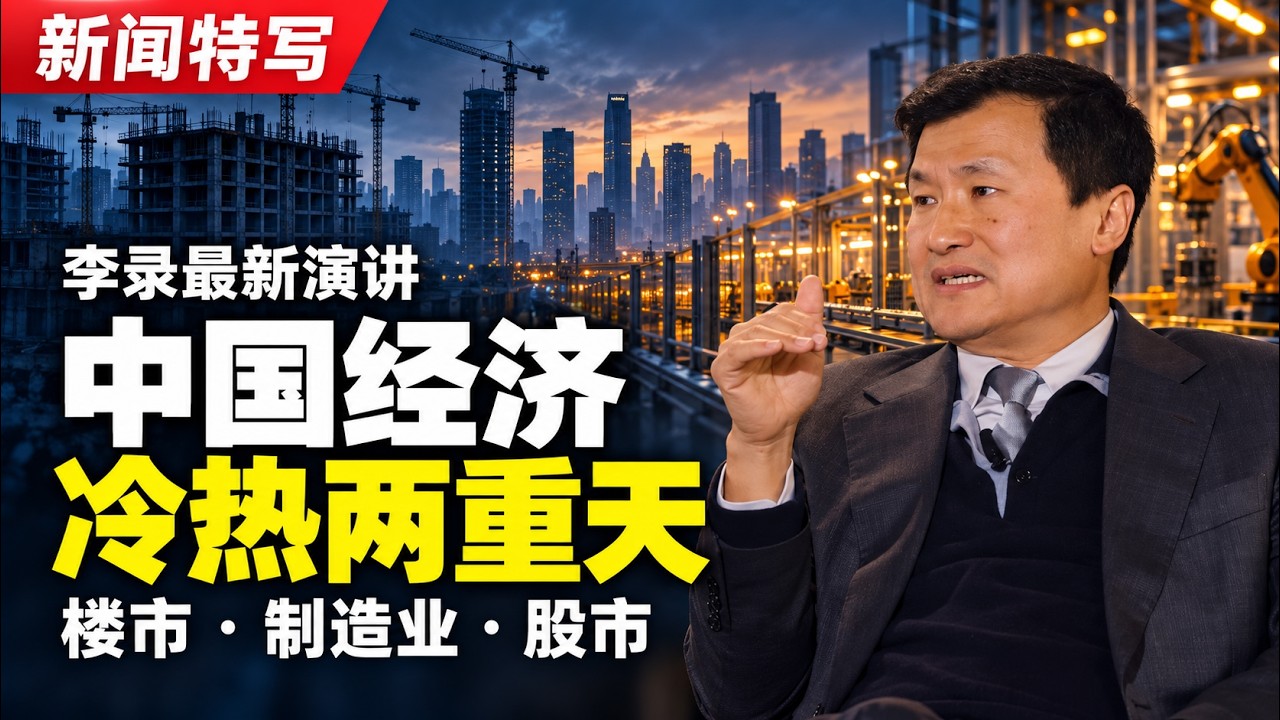
你是目标,还是代价?李录谈中国经济、股市与政策风险 |新闻特写20261019 — 王志安

王志安

中国以牺牲房地产与中产财富为代价换取核心科技自给并突破中等收入陷阱,随着地产规模收缩,权益资产终将接棒成为承载国民财富并推动增长的必然选择。

AI-assisted summary of 你是目标,还是代价?李录谈中国经济、股市与政策风险 |新闻特写20261019 — original source. Check the original for full context.

Source published:

Key ideas

  • 李录指出中国过去十年为突破“中等收入陷阱”推行强力产业升级,但转型代价主要由中产阶级承担:随着房价平均下跌约40%,带杠杆的中产家庭净财富蒸发达60%至70%,催生了高达165万亿人民币的防守性储蓄。 (4:44)
  • 资本配置发生结构性大腾挪,房地产业每年减少的约10万亿人民币交易额,被全面转向注入高端制造、核心科技自研与卡脖子技术突破。 (7:00)
  • 外部制裁与出口管制反向刺激了本土半导体生态,提供了市场经济中最稀缺的确定性订单需求,推动中国在成熟制程及相关设备上实现全面自主可控。 (7:00)
  • 展望国民资产负债表重构,李录认为在房地产占比永久性回落后,权益资本市场将成为承载国民与家庭财富、并与实体经济互相促进增长的唯一核心载体。 (26:36)

Detailed notes

## Background 本视频由知名自媒体人王志安于2026年10月19日发布在YouTube平台上,内容为投资家李录受访探讨中国经济转型、股市定位与政策风险的深度对谈。视频简介主要提供了频道会员加入方式、Patreon赞助渠道以及王志安个人新书《王志安谈治国理政第二卷》的各平台购买链接。

## TL;DR 李录在访谈中系统梳理了中国跨越“中等收入陷阱”的战略路径,指出“中国制造2025”与科技自主政策虽成功推动了高精尖制造业升级,但也让中产阶层和房地产承受了资产负债表收缩的巨大代价。他提出了“目标与代价”的十年政策轮动分析框架,强调投资者必须认清自身身处政策天平的哪一端。李录同时探讨了全球单一共同市场的不可逆性与半导体产业链的深层互依,并在问答中阐明,随着房地产比重下调,权益资本市场终将成为承载国民财富与驱动经济增长的核心资产。

## Atmosphere & style 全场对话呈现出理性、从容且极具穿透力的价值投资学者氛围。李录以宏观历史视角和冷静的务实态度剖析经济阵痛,在揭示中产阶层财富蒸发的残酷现实时语调沉静,而在以“筷子文化圈”比喻全球芯片命脉时又流露出睿智幽默。整场对谈既有对地缘博弈和体制代价的清醒洞察,又洋溢着对全球底层经济规律与商业本质的深刻信任。

## Bulletin - [04:44](https://www.youtube.com/watch?v=2l1IeyEamWs&t=284s) 李录指出中国过去十年为突破“中等收入陷阱”推行强力产业升级,但转型代价主要由中产阶级承担:随着房价平均下跌约40%,带杠杆的中产家庭净财富蒸发达60%至70%,催生了高达165万亿人民币的防守性储蓄。 - [07:00](https://www.youtube.com/watch?v=2l1IeyEamWs&t=420s) 资本配置发生结构性大腾挪,房地产业每年减少的约10万亿人民币交易额,被全面转向注入高端制造、核心科技自研与卡脖子技术突破。 - [07:00](https://www.youtube.com/watch?v=2l1IeyEamWs&t=420s) 外部制裁与出口管制反向刺激了本土半导体生态,提供了市场经济中最稀缺的确定性订单需求,推动中国在成熟制程及相关设备上实现全面自主可控。 - [26:36](https://www.youtube.com/watch?v=2l1IeyEamWs&t=1596s) 展望国民资产负债表重构,李录认为在房地产占比永久性回落后,权益资本市场将成为承载国民与家庭财富、并与实体经济互相促进增长的唯一核心载体。

## Key takeaways - [00:00](https://www.youtube.com/watch?v=2l1IeyEamWs&t=0s) 大多数发展中国家在达到中等收入水平后陷入长达数十年的停滞,中国政府选择以主动产业干预替代自然市场演进以打破该发展瓶颈。 - [02:26](https://www.youtube.com/watch?v=2l1IeyEamWs&t=146s) “中国制造2025”规划在遭遇外部贸易战及技术禁运后,于2021年进一步升级为以半导体、航空发动机及操作系统自研为核心的全面科技自主可控战略。 - [04:44](https://www.youtube.com/watch?v=2l1IeyEamWs&t=284s) 中产阶级资产配置此前高度集中于房地产(约占净资产70%且附带50%房贷杠杆),房地产价值深度缩水导致居民资产负债表受损并陷入防守性去杠杆。 - [04:44](https://www.youtube.com/watch?v=2l1IeyEamWs&t=284s) 居民部门采取削减消费、提前还贷和增加储蓄的防御策略,使得居民存款攀升至约165万亿人民币(约占GDP的120%),内需增长趋于停滞。 - [07:00](https://www.youtube.com/watch?v=2l1IeyEamWs&t=420s) 美国的技术出口管制为中国本土半导体企业创造了稀缺的确定性国内订单,从而为研发迭代和资本开支提供了充沛现金流。 - [07:00](https://www.youtube.com/watch?v=2l1IeyEamWs&t=420s) 借助生成式人工智能代码生成能力,中国企业正加速填补操作系统层面的短板,逐步替代海外服务器架构与专有计算平台生态。 - [10:48](https://www.youtube.com/watch?v=2l1IeyEamWs&t=648s) 中国宏观调控呈现约十年一次的周期性目标更替规律,前一周期的核心发展“目标”(如重工业或房地产)在下一周期往往转变为必须承受阵痛的“代价”。 - [10:48](https://www.youtube.com/watch?v=2l1IeyEamWs&t=648s) 对于参与中国市场的企业与投资者,最关键的战略考量在于准确研判自身业务处于国家核心政策账本的“目标”端还是“代价”端。 - [13:01](https://www.youtube.com/watch?v=2l1IeyEamWs&t=781s) 当前中国市场呈现资产价格与基本面脱节的“双层分化”,在整体市场悲观情绪蔓延之际,部分具备全球竞争力的顶尖企业估值极低,提供了罕见的长期投资机会。 - [13:43](https://www.youtube.com/watch?v=2l1IeyEamWs&t=823s) 全球底层经济已形成高深度分工的单一统一大市场,具备极强韧性,地缘政治摩擦通常只能改变贸易路线(如经第三方转口)而无法彻底打破比较优势规律。 - [19:31](https://www.youtube.com/watch?v=2l1IeyEamWs&t=1171s) 半导体高端产业链高度集中于东亚及受东亚文化影响的领袖圈层,大国在核心技术供应链上的深刻互依强化了维持战略稳定与避免冲突的现实必要性。 - [19:31](https://www.youtube.com/watch?v=2l1IeyEamWs&t=1171s) 全球价值投资者的终极财富度量标准在于其占全球整体购买力的所有权份额,其路径在于以折价长期持有最优质的创造价值的企业。 - [26:36](https://www.youtube.com/watch?v=2l1IeyEamWs&t=1596s) 中美AI发展哲学呈现路径分流:硅谷聚焦于探索前沿未知的技术极限,中国企业则高度以商业场景落地、客户需求与实用转化为核心驱动力。 - [26:36](https://www.youtube.com/watch?v=2l1IeyEamWs&t=1596s) 评估主权与政策风险的通用框架,在于穿透表面舆论并深刻理解特定历史时期主政者的真实政策目标,同时严格结合其长期的实际治理纪录进行定价。

## Detailed walkthrough ### [00:00](https://www.youtube.com/watch?v=2l1IeyEamWs&t=0s) Breaking the Middle-Income Trap

The interviewer opens the discussion by recounting a recent trip to Hong Kong, where he taught business students, analyzed several Chinese corporate case studies, and observed the local economic environment. Noting that the Chinese market has endured a severe roller-coaster ride over the past few years marked by a real estate bust and banking strains reminiscent of crises seen elsewhere in the world, he asks Li Lu how investors should evaluate China today. Li Lu frames the issue by pointing out that Chinese equity markets have essentially been stagnant for an entire decade, but argues that what occurred underneath the surface over those ten years is remarkable. A decade ago, the Chinese government faced a monumental strategic crossroads after reaching middle-income status, an economic threshold where dozens of developing nations historically stall out.

Li Lu explains that countries typically industrialize through low-to-mid-end manufacturing, but very few manage to shatter the ceiling into advanced, high-income economies. Most remain trapped for forty, fifty, or more years in what economists label the middle-income trap. Given the sheer scale of China's economy, Beijing realized that relying on a purely natural trajectory would likely leave the country stuck below that developmental ceiling. Consequently, Chinese policymakers chose to intervene proactively to accelerate the transition from low-end assembly to mid- and high-end manufacturing.

> “The question naturally is that what really keep a middle inome country really stagnant in there and never really break away the ceilings.” — Li Lu

- **Historical Precedent**: Dozens of nations across Latin America and other regions achieved middle-income levels only to remain stagnant for 40 to 50 years. - **Strategic Imperative**: Beijing determined that market forces alone would not naturally break through the ceiling, necessitating state-directed industrial migration.

---

[02:26](https://www.youtube.com/watch?v=2l1IeyEamWs&t=146s) Made in China 2025 and Tech Self-Sufficiency

To escape the trap, Beijing bypassed its traditional five-year planning horizon in favor of a comprehensive ten-year roadmap known as "Made in China 2025." This blueprint identified roughly ten core industrial sectors aimed at modernizing the manufacturing base. However, just a few years into execution, the first Trump administration initiated the trade war through aggressive tariffs. For Chinese leadership, this validated their worst fears: not only was overcoming the middle-income trap inherently difficult, but external superpowers would actively maneuver to hold China beneath the ceiling. The Biden administration subsequently sustained those tariffs while expanding technological embargoes and export controls.

By 2021—halfway into the ten-year initiative—the Chinese leadership doubled down on its strategy. Beyond upgrading manufacturing, they incorporated total technological self-sufficiency as an urgent national priority. The target shifted toward domesticating critical economic bottlenecks, including advanced semiconductors, commercial aircraft engines, and foundational software operating systems. Li Lu emphasizes that attempting to achieve goals that have eluded almost every other developing country inevitably demands massive trade-offs, following a pattern where grand state targets are paired with staggering systemic costs.

> “Now when you really try to achieve those impossible goals that so many country have failed to do that it doesn't really come without a deep and heavy cost.” — Li Lu

```mermaid flowchart TD accTitle: Evolution of China's Tech Strategy accDescr: Flowchart illustrating the evolution from Made in China 2025 through external sanctions to technological self-sufficiency.

subgraph Strategy["Strategic Roadmap"] A["Made in China 2025 Launched"] --> B["Low-to-Mid to High-End Manufacturing"] end

subgraph Catalysts["External Pressures"] C["US Trade War & Tariffs"] --> D["Tech Sanctions & Export Bans"] end

subgraph Response["Strategic Acceleration (2021)"] E["Bottleneck Breakthroughs"] F["Semiconductors, Aircraft Engines, OS"] end

B --> C D --> E E --> F ```

---

[04:44](https://www.youtube.com/watch?v=2l1IeyEamWs&t=284s) The Staggering Cost Borne by the Middle Class

Li Lu identifies the Chinese middle class as the primary sector forced to absorb the cost of this structural transformation. By 2021, the domestic real estate market had reached its historical zenith. At that peak, the average urban middle-class household held approximately 70% of its entire net worth in residential property, supported by roughly 50% mortgage leverage. Over the five years that followed, property values nationwide cratered by an average of 40%. Because of the leverage built into these home purchases, typical middle-class families witnessed between 60% and 70% of their total family wealth evaporate.

In response to this brutal wealth destruction, households reacted rationally through three defensive financial behaviors: cutting consumption, aggressively saving, and paying down existing mortgage debt as quickly as possible. This balance-sheet deleveraging caused domestic consumption growth to collapse toward roughly zero. Concurrently, household savings surged to 120% of GDP, amassing an unprecedented bank deposit hoard of approximately 165 trillion RMB. Combined with two to three consecutive years of flat or negative price indexes, consumer confidence suffered lasting damage, leaving domestic demand in deep stagnation.

> “And when that happens, what do you do? You do three things. You consume less, you save more, and to the extent possible, you pay down the debt.” — Li Lu

- **Household Asset Exposure**: ~70% of urban middle-class family net worth was concentrated in real estate as of 2021. - **Mortgage Leverage**: Typical home purchases carried ~50% loan-to-value leverage. - **Property Price Deflation**: Nationwide real estate values declined by an average of ~40%. - **Net Wealth Destruction**: Middle-class balance sheets experienced a 60% to 70% reduction in total equity. - **Precautionary Capital**: Total personal savings deposits reached roughly 165 trillion RMB (~120% of GDP).

---

[07:00](https://www.youtube.com/watch?v=2l1IeyEamWs&t=420s) High-End Upgrades, Sanctions, and Capital Reallocation

In stark contrast to the depressed household balance sheet, Li Lu describes a completely different picture in China's industrial and technological tier. Every major target set under Made in China 2025 has been reached ahead of schedule, with manufacturing successfully migrating into advanced segments. Li Lu observes that US-led technology restrictions unexpectedly acted as an invaluable catalyst for the domestic semiconductor sector. The most elusive asset in a market economy is guaranteed commercial demand; sanctions forced Chinese downstream enterprises to buy domestically, filling order books and providing local chipmakers with the revenue streams needed to fund research, capital expenditures, and rapid product iteration. Consequently, China has attained virtually full self-sufficiency across mature semiconductor nodes and equipment, while making steady inroads into advanced fabrication.

Technological bottlenecks are also being resolved through generative artificial intelligence, which excels at on-demand code generation at scale. Chinese developers are leveraging AI to bridge missing software infrastructure, progressively replacing proprietary foreign operating layers across personal computers, enterprise servers, and specialized architectures like Nvidia's CUDA. China now holds dominant global leadership in electric vehicles, lithium batteries, clean power equipment, energy storage, and heavy industrial machinery. Li Lu underscores that this realignment is mathematically reflected in national capital allocation: annual property transaction volume has plunged by roughly 70%, liberating approximately 10 trillion RMB per year. That exact sum—10 trillion RMB annually—has been redirected directly into industrial upgrading, high-tech manufacturing, and bottleneck elimination since the pivotal inflection year of 2021.

> “It turns out that the sanctions of US-led technology sanctions has been a godsend for the Chinese semiconductor industry because it has one of the most precious things in market economy which is demand which is you ask any entrepreneur what's the most important thing they say is the order book.” — Li Lu

| Sector / Indicator | Real Estate & Consumer Tier | Advanced Industrial & High-Tech Tier | |:--- |:--- |:--- | | **Growth Momentum** | Domestic demand growth near 0%; new sales down ~70% | Ahead of Made in China 2025 targets; global export dominance | | **Capital Allocation** | ~10 trillion RMB withdrawn annually from new real estate | ~10 trillion RMB invested annually in tech upgrades & R&D | | **Market Status** | Balance-sheet contraction; debt deleveraging | Near total self-sufficiency in mature semiconductors; replacing Nvidia CUDA | | **Key Driver** | Asset price deflation; middle-class wealth destruction | US sanctions creating guaranteed captive domestic order books; GenAI |

---

[10:48](https://www.youtube.com/watch?v=2l1IeyEamWs&t=648s) The 50-Year Cycle: Are You the Objective or the Cost?

Synthesizing China's economic trajectory over the past half-century, Li Lu observes a recurring developmental mechanism: roughly once every decade, the central government establishes a new overarching national objective, inevitably casting specific sectors or societal groups into the role of absorbing the cost. Intriguingly, what serves as an objective in one decade often becomes the cost in the next. In the early stages of industrial takeoff, the natural environment, clean air, and water systems were treated as acceptable costs; in subsequent decades, environmental remediation and green energy became the primary objective, leaving heavy polluters to pay the price.

Similarly, during China's massive urbanization wave, real estate developers and homeownership served as the core strategic objective that built modern cities and created middle-class equity. Over the past five to ten years, however, real estate was reassigned to become the cost, causing investors and developers in the sector to suffer severe pain. Li Lu notes that compressing centuries of Western modernization into a forty-year period requires ruthless prioritization. For entrepreneurs and investors navigating China, the single most critical analytical question is always determining which side of the state's ledger they occupy.

> “Being the cost of a state objective is no fun.” — Li Lu

- **Decadal Shifts**: Policy priorities rotate on roughly 10-year intervals, alternating which industries receive capital and which bear structural pain. - **Historical Inversions**: - *Industrial Boom*: Environment was the cost; manufacturing output was the objective. - *Ecological Transition*: Environmental technology became the objective; polluting enterprises became the cost. - *Urbanization Era*: Real estate expansion was the objective; land capital was the engine. - *Tech Self-Sufficiency Era*: Real estate and middle-class home equity became the cost; advanced manufacturing and national tech independence became the objective. - **Modernization Milestone**: Despite profound internal friction, China has emerged as an economy of unprecedented scale and population embarking on comprehensive, advanced industrial modernization.

[13:01](https://www.youtube.com/watch?v=2l1IeyEamWs&t=781s) 市场两极分化与寻找投资机会

李录在回顾中国市场现状时指出,当前经济呈现双层分化(two-tiered economy),整体市场信心缺失,金融市场更是整整十年陷入停滞、裹足不前。然而与此相对的是,一些具备全球极强竞争力的优秀企业,其股价却跌到了极低的水平。这种割裂现象让不同视角的投资者得出截然相反的结论。李录强调,对于一个理性的投资者而言,放眼全局就会拥有不同的判断:“So I would say that in today's market you probably find better opportunities than you would otherwise find in the different times.”(所以我认为,在当今的市场上,你或许能找到比以往其他时期好得多的投资机会。)

---

[13:43](https://www.youtube.com/watch?v=2l1IeyEamWs&t=823s) 世界秩序的演变:政治秩序与单一全球大市场

在准备进入现场提问环节前,主持人提出一个个人化的深刻问题:李录于 1997 年创立喜马拉雅资本(Himalaya Capital),主持人也是在那前后以年轻助理教授身份来到芝加哥大学。那时的世界开放、具有跨国流动性,人们可以自由旅行,整个人类社会洋溢着一种如今似乎正在消逝的宽宏大度精神(generosity of a spirit)。面对如今急剧变化的地缘环境,主持人询问李录如何看待未来的世界格局,以及是否将这些思考融入其投资理念中。

李录赞同过去三十年来世界确实发生了翻天覆地的变化。他分析指出,治理和运行世界的秩序演进是一个极为缓慢的过程,往往需要数十年甚至上百年才能形成和重构:

- **政治秩序的更替:** 现行秩序源于两次世界大战的浩劫,战后确立了由美国主导的国际秩序;冷战结束后这一秩序扩展为全球唯一的治理框架;如今它再次步入剧烈的转型期,未来将呈现何种形态尚不得而知。 - **底层经济秩序的成型:** 与政治秩序平行且更深层的,是过去几百年稳步形成的经济秩序。随着冷战结束和苏联解体,全球各民族和国家接入统一的商业贸易,真正建立起一个“单一全球统一大市场”(single global common market)。 - **共同市场的飞轮效应与不可逆性:** 这一大市场一旦形成,任何国家都极难主动脱钩退出,因为市场孕育了技术提升、劳动力分工和资源配置的高效飞轮。即便过去上百年来摩擦与贸易战不断,比较优势原理依然起效,商品总能通过第三方转口流动。例如美中直接贸易额虽然下降,但美国与墨西哥以及东盟(ASEAN)的贸易增量正好填补了这一缺口,本质上仍是相同贸易流经由第三方中转。 - **霸权成本与中国的崛起:** 美国在全球主导了八十年,承担了维护大市场运行的巨额成本,但如今发现成本与收益失衡,试图主动卸下部分全球责任,由此留下了权力真空。与此同时,过去三四十年间最大的变量是中国崛起为一个拥有完备制造业链条、高技术自给能力、巨大且统一开放内需市场的超级经济体,这彻底重塑了国际政治与经济版图。

```mermaid flowchart TD accTitle: 政治秩序与经济秩序演进对比 accDescr: 对比政治秩序的周期性重组与底层全球大市场的强韧互联

subgraph PoliticalOrder["表面政治秩序(变迁与摩擦)"] A["两次世界大战"] --> B["战后美国主导体系"] B --> C["冷战终结与单一秩序"] C --> D["责任收缩与秩序重组真空"] end

subgraph EconomicOrder["底层经济秩序(深度互依与飞轮)"] E["统一全球共同市场形成"] --> F["比较优势、分工与效率飞轮"] F --> G["脱钩成本过高,绕道第三方继续贸易"] G --> H["相互依存加深:战略稳定性"] end

PoliticalOrder -.->|"受制于底层经济规律"| EconomicOrder ```

---

[19:31](https://www.youtube.com/watch?v=2l1IeyEamWs&t=1171s) 半导体、“筷子文化圈”与中美战略稳定性

李录强调,全球在单一市场下的相互依存非但没有减弱,反而在持续加深。为了说明这种深刻的绑定,他举了当前生成式人工智能(Generative AI)最核心的命脉——半导体芯片的例子,并现场向主持人抛出了一个幽默的互动问题:生产所有关键半导体芯片的国家和地区,其共同特征究竟是什么?

面对主持人的迟疑与玩笑(“potato chips?”),李录揭晓了一个令人莞尔却极具现实意味的事实: - 全球生产这些支撑最新一轮科技浪潮芯片的所有地区和人群,毫无例外全部使用“筷子”(chopsticks)。 - 印度之所以芯片制造尚未成型,恰恰因为他们不用筷子;而引领美国顶级半导体企业的领袖们,从英伟达的黄仁勋(Jensen Huang)到超威半导体的苏姿丰(Lisa Su),同样来自筷子文化圈。 - 李录由此风趣地总结道:如果一个国家、一家企业打算将全部未来押注在这场新技术浪潮中,那么最明智的策略就是“必须善待使用筷子的人”(“you have to be nice to people who use chopsticks”)。

李录进一步分析,这正是美中两国最高领导人能在短短八个月内紧迫安排四次会晤的深层原因。在外交层面上,哪怕会议达成的最重要成果仅仅是“敲定下一次会面的时间”,这也反映出一种核心需求——“战略稳定性”(strategic stability)。各大国深知主动脱离全球共同市场的惨痛代价,在深层互依的现实下,维持和平稳定具有至高无上的战略价值。虽然各国都在全力竞争(中国力求半导体自给自足,美国寄望人工智能的技术突破),但保持底层的战略和平不仅是强烈的现实意愿,更是无法推卸的责任。

基于这一世界格局,李录阐述了其作为全球价值投资者的第六项核心原则: > “as a global investor your wealth is expressed as your percentage ownership of global purchasing power” > (作为一名全球投资者,你的财富本质上体现为你对全球购买力所占有的百分比份额。)

喜马拉雅资本落实这一原则的策略极其纯粹:在充满活力的国家和市场中,以具备优势的便宜价格买入顶尖优秀企业,长期持有以分享其价值创造,从而在对抗周期的同时维持并扩张在全球购买力中的份额。

---

[25:24](https://www.youtube.com/watch?v=2l1IeyEamWs&t=1524s) 现场互动:中美人工智能差异提问

在进入观众提问环节后,来自 EL2 Capital 的 Ed Lugo 率先发言,提问道:“I just want to get your sense of the difference between Chinese AI and American AI.”(我很想了解您如何看待中国人工智能与美国人工智能之间的差异。)

为了提升问答效率,李录与主持人决定将多个提问打包合并。随后,后排一名来自约翰斯·霍普金斯大学(Johns Hopkins)的观众接续举手,开始就中国市场的相关议题展开提问。

[25:58](https://www.youtube.com/watch?v=2l1IeyEamWs&t=1558s) 现场提问:AI路径、股市定位与政治风险定价

在问答环节的尾声,现场听众接连抛出核心问题。一名听众向李录请教,中国的股票市场在整体经济规划中究竟是“目标”(objective)还是“代价”(cost)。紧接着,来自 Unison 的 Dan Balars 提出了另一个尖锐的投资议题:“Hi Dan Balars from Unison. Uh I'm just curious how you underwrite uh political risk, you know, when the rules can change overnight considering you've been so successful investing in Chinese businesses.” 李录赞许了这些提问,并指出中国对人工智能(AI)的态度、中国股市是目标还是代价、以及如何评估政治风险,这三者在底层逻辑上是紧密交织、互相关联的。

```mermaid flowchart TD accTitle: 资本与政策互动逻辑架构 accDescr: 展现从AI研发取向、资产负债表转移到主权政治风险评估的宏观分析框架

subgraph TechApproach["技术落地路线"] A["硅谷模式:前沿探索/科研实验室"] B["中国模式:聚焦企业与消费者场景"] end

subgraph WealthShift["财富承载转移"] C["传统支柱:房地产占比回落"] --> D["新型资产:权益资本市场"] D --> E["经济飞轮:股市与增长相互驱动"] end

subgraph SovereignRisk["主权政治风险定价"] F["识别任何特定时期的核心政策目标"] G["检验历史实践纪录与政策轨迹"] H["立足主权国家主导的全球现实"] end

TechApproach --> WealthShift WealthShift --> SovereignRisk ```

[26:36](https://www.youtube.com/watch?v=2l1IeyEamWs&t=1596s) 中美AI研发哲学与股市在国民资产负债表中的角色

针对中美两国在人工智能发展路径上的差异,李录进行了对比。他分析称,硅谷探索 AI 的核心动力在于突破未知边界,不断追问“这项技术还能做到什么”,这也就是为什么那里的机构仍被称为“研究实验室”(research labs),致力于拓展前沿极限(frontier)。相比之下,中国 AI 公司虽然也对底层技术保有好奇,但其更核心、更具驱动力的考量在于商业实用性:“The Chinese AI companies I would say are fundamentally curious about those questions as well, but in addition and more importantly ask what can this technology do to my customers both my consumers and enterprise customers.” 这种以客户与商业场景为核心的导向,导致了两国在多项发展指标与商业结果上的显著分流。

谈及中国股市究竟是“目标”还是“代价”时,李录指出,在不同的历史发展阶段,政策的重心会有所变动。然而,从国民资产负债表的宏观维度来看,随着房地产在家庭资产与国家总财富中所占的比例不可避免地下调(尽管房产具有真实价值,不会无休止地下跌),一个根本性的问题摆在面前:究竟什么资产能够填补空白,承载起国家、家庭和人民的财富?李录明确指出,最终这个载体只能是权益市场:“Now when you answer that question you would say that at some point whether it's today or is another time it has to be and so that is the only asset that grow with the economy.” 他进一步阐释,这类资产不仅伴随经济一同增长,其增长本身更是推动实体经济向前的动因,二者构成了一个相互赋能的正向飞轮。

关于跨国投资中如何对政治风险进行定价和承保,李录强调,核心在于深刻理解主政者在任何特定阶段的真实意图与目标,并细致核查其长期的历史实践与行为纪录。他指出,这一逻辑不仅适用于中国,同样适用于美国及全球各个市场:“Our whole world is still somewhat organized based on nation sovereign state and that's just the reality we live with. So with all the consideration we talk about and we should apply that to all of the country you operate.” 在主权国家依然是全球秩序基本单元的现实下,投资者必须将政策目标的辨识与历史纪录的审视普遍运用于所有运营环境之中。

## Notable quotes > [10:48](https://www.youtube.com/watch?v=2l1IeyEamWs&t=648s) Being the cost of a state objective is no fun. — 李录

> [19:31](https://www.youtube.com/watch?v=2l1IeyEamWs&t=1171s) as a global investor your wealth is expressed as your percentage ownership of global purchasing power — 李录

## Mentioned 李录, 王志安, 喜马拉雅资本, 中国制造2025, 唐纳德·特朗普, 乔·拜登, 英伟达, 黄仁勋, 超威半导体, 苏姿丰, CUDA, 芝加哥大学, 约翰斯·霍普金斯大学, EL2 Capital, Ed Lugo, Unison, Dan Balars, 东盟

## Video description 1. YouTube 会员平台 成为本频道的会员,即可尊享专属福利,提前观看节目,直播,专属会员节目。 点击链接了解详情并加入:https://www.youtube.com/channel/UCBKDRq35-L8xev4O7ZqBeLg/join

2. Patreon 会员平台 在 Patreon 中加入「王局」会员,您不仅可以观看会员专属视频,直播,更能参与会员社群互动,更贴心的是,Patreon 支持使用中国大陆银行卡支付!点击链接立刻加入: Patreon 会员加入链接:https://www.patreon.com/join/8734589

王局新书【王志安谈治国理政第二卷电子书】不怎么火热销售中 【PATREON购买链接】https://www.patreon.com/c/wangzhian/shop 【苹果书店购买链接】 https://books.apple.com/us/book/%E7%8E%8B%E5%BF%97%E5%AE%89%E8%B0%88%E6%B2%BB%E5%9B%BD%E7%90%86%E6%94%BF%E7%AC%AC%E4%BA%8C%E5%8D%B7/id6739830450 【亚马逊电子书购买链接】 https://www.amazon.co.jp/%E7%8E%8B%E5%BF%97%E5%AE%89%E8%B0%88%E6%B2%BB%E5%9B%BD%E7%90%86%E6%94%BF%E7%AC%AC%E4%BA%8C%E5%8D%B7-Traditional-Chinese-%E5%BF%97%E5%AE%89-%E7%8E%8B-ebook/dp/B0DRJ8R48M

[Source](https://www.youtube.com/watch?v=2l1IeyEamWs)

中文简报

李录指中国年抽十万亿押注科技自给 股市将成承接国民财富唯一载体 中国以牺牲房地产与中产财富为代价换取核心科技自给并突破中等收入陷阱,随着地产规模收缩,权益资产终将接棒成为承载国民财富并推动增长的必然选择。 李录在访谈中系统梳理了中国跨越“中等收入陷阱”的战略路径,指出“中国制造2025”与科技自主政策虽成功推动了高精尖制造业升级,但也让中产阶层和房地产承受了资产负债表收缩的巨大代价。他提出了“目标与代价”的十年政策轮动分析框架,强调投资者必须认清自身身处政策天平的哪一端。李录同时探讨了全球单一共同市场的不可逆性与半导体产业链的深层互依,并在问答中阐明,随着房地产比重下调,权益资本市场终将成为承载国民财富与驱动经济增长的核心资产。 李录指出中国过去十年为突破“中等收入陷阱”推行强力产业升级,但转型代价主要由中产阶级承担:随着房价平均下跌约40%,带杠杆的中产家庭净财富蒸发达60%至70%,催生了高达165万亿人民币的防守性储蓄。 (4:44) 资本配置发生结构性大腾挪,房地产业每年减少的约10万亿人民币交易额,被全面转向注入高端制造、核心科技自研与卡脖子技术突破。 (7:00) 外部制裁与出口管制反向刺激了本土半导体生态,提供了市场经济中最稀缺的确定性订单需求,推动中国在成熟制程及相关设备上实现全面自主可控。 (7:00) 展望国民资产负债表重构,李录认为在房地产占比永久性回落后,权益资本市场将成为承载国民与家庭财富、并与实体经济互相促进增长的唯一核心载体。 (26:36)

Reading summary

投资人李录在对话中指出,中国为跨越“中等收入陷阱”实施了国家主导的产业与科技自给战略,致使房地产与中产阶层资产负债表阶段性承担了转型代价;随着财富结构调整,权益市场未来必将承担承载国民财富的重任。 跨越中等收入陷阱与技术自给战略 (0:00) 李录分析,多数发展中国家在步入中等收入阶段后常陷入长达数十年停滞,中国政府为避免自然演化下的受阻,选择以国家干预加速向中高端制造业转型。在《中国制造2025》蓝图落地后,面对美国连续两届政府实施的关税制裁与技术禁运,中方于2021年前后将目标升级为全面的“技术自给自足”,集中力量攻关先进半导体、商用航空发动机与底层操作系统等关键瓶颈。 李录认为,由美国主导的技术制裁客观上为中国本土半导体产业提供了市场经济中最稀缺的“订单确定性”,迫使下游企业采购国货,推动成熟制程与设备基本实现自给。同时,中国开发者借助生成式AI加速弥补底层软件生态短板,并在电动车、锂电池与重型装备等领域确立了全球出口主导地位。 资产重构:中产财富缩水与资本再分配 (4:44) 在这场深层次结构重塑中,李录认为中国城镇中产阶层承担了主要的吸收成本。截至2021年峰值,典型中产家庭约70%的净资产集中于房产,且带有约50%的房贷杠杆。随后五年内全国房价平均跌幅达40%,导致该群体的家庭净财富缩水约60%至70%。居民部门随之出现消费近乎零增长、加速还贷以及过度储蓄等防御性举措,储蓄总额累积至约165万亿元人民币(约占GDP的120%)。 宏观资金流向则展现出清晰的置换轨迹:房地产交易规模骤降约70%,每年从中释放出约10万亿元人民币的资金规模。李录指出,自2021年拐点以来,这笔等量资本被系统性地导入高科技制造、产业升级和技术攻坚领域,形成了实体产业高歌猛进与居民内需低迷的“双层经济”割裂特征。 政策目标的“代价”循环与股市的承接定位 (10:48) 李录总结中国近半世纪的发展机制指出,国家战略核心大约每十年轮替一次,且特定时期的“目标”在下一阶段往往会变成支付成本的“代价”。在早期工业化中,环境曾是增长的代价,随后生态治理则转为核心目标;而在城市化红利期作为增长引擎的房地产业,在科技自给时代则被调配为吸收调整成本的领域。 针对中国股市在战略蓝图中的属性,李录强调,尽管政策重心常随阶段变动,但从国民资产负债表长远维度观察,在房地产财富承载占比不可避免调降之后,唯一能够伴随经济增长、并反哺实体发展的资产载体唯有权益资本市场。他认为当前金融市场虽经历十年停滞,但也导致部分极具全球竞争力的优质企业估值降至极低区间,为价值投资提供了更优空间。 全球经贸飞轮与跨国政治风险定价 (13:43) 在地缘格局演化层面,李录指出,相较于由二战与冷战塑造、如今陷入收缩与真空的表面政治秩序,过去数百年形成的“单一全球统一大市场”具备不可逆的经济飞轮属性。即便直接关税与脱钩压力增加,国际贸易仍经由墨西哥、东盟等第三方依据比较优势实现流转;而在尖端半导体制造乃至AI领袖生态中,“筷子文化圈”的深层绑结使得各大国无法承担彻底决裂的代价,维系战略稳定性依旧是底层共同需求。 面对跨国规则可能一夜突变的政治风险,李录提出的核算与定价原则是:穿透表象以识别主权主政者在特定时期的真实意图与首要目标,并严格审视其长期的历史实践与行为纪录。他强调这种主权政治风险评估不仅针对中国,在民族国家仍为主导单元的全球投资实践中均普遍适用。 李录从宏观与产业逻辑论证了中国科技转型的推进及权益市场的潜在支柱作用,但中产资产负债表受损导致的内需停滞何时能够彻底修复、以及股市何时真正确立为国家财富核心承载平台,依然取决于未来的政策重心与执行路径。

精炼阅读摘要

投资人李录在访谈中指出,中国为了突破中等收入陷阱与外部技术封锁,实施了国家主导的产业转型,其代价由房地产与中产阶层承担;而在全球统一大市场的深层互依下,未来承载国民财富的资产势必将转向权益资本市场。 产业突围的代价转换 (0:00) 李录指出,历史上绝大多数中等收入国家会停滞四五十年而陷入陷阱,中国政府为此选择主动干预,推动从低端组装向中高端制造转型。以“中国制造2025”为核心并叠加上外部关税与技术禁运的倒逼,中国将半导体、商用飞机发动机和操作系统等技术自给自足作为核心目标。然而,在国家压缩实现现代化的周期中,政策目标约每十年轮换一次,上一个周期的目标常变为下一个周期的代价。在早期的重工业爆发期,自然环境成了代价;而在本轮战略跃升中,房地产和中产家庭资产负债表则承担了高额成本。 中产负债表收缩与资本再配置 (4:44) 李录提供的数据显示,2021年中国中产家庭约70%的净资产集中在房产上,且伴随约50%的房贷杠杆。随后的房地产调整使全国房价平均下跌约40%,导致典型中产家庭蒸发了60%至70%的财富。家庭由此采取理性防御:削减消费、增加储蓄、提前还贷。这导致内需消费增速趋近于零,居民储蓄总额激增至约165万亿元人民币(约占GDP的120%)。与此相对,年交易规模减少的房地产市场每年释放出约10万亿元人民币,被国家导向高端制造、研发与核心卡脖子工程的突破。 外部制裁效应与底层的经济互依 (7:00) 李录观察到,外部科技制裁在客观上为中国半导体行业创造了宝贵的本土确定性订单,推动成熟制程芯片和关键设备基本实现自给,并结合生成式AI填补软件底层生态。尽管地缘政治摩擦不断,战后形成的“单一全球统一大市场”具备极强的抗脱钩能力。美中直接贸易减少的份额,通过墨西哥与东盟等第三方中转得以填补。李录认为,高科技命脉(如半导体制造)高度依存于特定区域与东亚文化圈,使得大国在保持竞争的同时,仍有维持底层战略稳定的强烈现实诉求。 AI应用差异与资本市场新定位 (25:58) 在回答现场关于股市定位与政治风险的提问时,李录对比了中美AI研发哲学:硅谷聚焦于探索技术未知边界的前沿实验室,中国企业则更具实用驱动,聚焦于服务企业与消费端客户场景。李录强调,随着房地产在国民总财富中的占比下调,唯一能够伴随经济增长、承载国民财富并与实体经济形成正向循环的资产,最终只能是权益市场。评估跨国政治风险的核心,在于识别主权国家在各阶段的核心政策意图,并核查其长期历史执行纪录。 李录认为,尽管中国金融市场经历了长达十年的停滞与信心低迷,且中产阶层承受了严峻的去杠杆阵痛,但具有全球竞争力的龙头企业已被压制在极低估值区间,为理性的长期价值投资者提供了优于以往的买入机会。

Detailed notes — zh

## Background 本期视频由王志安于 2026 年 10 月 19 日在 YouTube 频道发布,题为《你是目标,还是代价?李录谈中国经济、股市与政策风险 |新闻特写20261019》。视频简介主要包含了频道的会员加入链接、Patreon 支持方式以及作者电子新书的各大平台购买渠道。 ## TL;DR 节目记录了著名华人投资家李录对当前中国宏观经济、产业转型与投资机遇的深刻剖析。李录指出,中国在过去数年通过国家战略主动刺破房地产泡沫、加速制造业与科技自立攻关,而中产家庭的资产负债表则承担了这一转型的沉重代价,形成了“目标”与“代价”并存的二元经济结构。同时,他探讨了全球统一经济大市场的不可逆性、半导体供应链的协同博弈,以及中美在 AI 商业化落地上的底层差异。最后,李录强调随着房地产时代落幕,股市权益资产将成为承载国民财富增长与驱动经济飞轮的核心载体,投资者须理性评估主权国家的政治与政策风险。 ## Atmosphere & style 整场对话理性克制而又充满思想张力,展现出顶级价值投资者超越短期波动的穿透力。李录以宏大而敏锐的视角层层抽丝剥茧,言谈间既有对中产资产缩水微观痛点的冷峻直视,又穿插着“半导体与筷子文化圈”等举重若轻的幽默调侃。现场气氛在思想交锋的凝神倾听与心领神会的苦笑掌声之间切换,给观众带来一种既深刻清醒又引人深思的智识沉浸感。 ## Bulletin - [10:04](https://www.youtube.com/watch?v=2l1IeyEamWs&t=604s) 李录指出,中国为跨越中等收入陷阱全力推进产业升级与科技自主,年均投入约10万亿元人民币,恰好对冲了房地产年销售额缩水所蒸发的约10万亿元资金。 - [04:33](https://www.youtube.com/watch?v=2l1IeyEamWs&t=273s) 本轮转型中中产家庭资产负债表承担了主要代价:受房价平均下跌约40%及杠杆影响,中产财富缩水60%至70%,推动居民储蓄总额激增至165万亿元(约占GDP的120%),消费趋于零增长。 - [06:58](https://www.youtube.com/watch?v=2l1IeyEamWs&t=418s) 外部半导体技术制裁反而激活了中国本土采购内循环,配合生成式AI对底层基础软件栈的重写,中国在成熟制程及新能源等关键赛道已确立自主掌控与全球领先优势。 - [27:20](https://www.youtube.com/watch?v=2l1IeyEamWs&t=1640s) 随着房地产财富蓄水池功能下降,李录强调股市权益资产是未来承载国民财富增长并与经济形成正向飞轮效应的唯一核心资产类别。 ## Key takeaways - [01:04](https://www.youtube.com/watch?v=2l1IeyEamWs&t=64s) 中国推出“中国制造2025”并聚焦十大领域,旨在通过国家力量实现中高端跃升,彻底突破多数发展中国家滞留数十年的中等收入陷阱。 - [01:04](https://www.youtube.com/watch?v=2l1IeyEamWs&t=64s) 面对美国从贸易战关税到先进硬科技“卡脖子”出口管制的极限施压,中国自2021年起将全面科技自立自强上升为不可动摇的顶层战略。 - [04:33](https://www.youtube.com/watch?v=2l1IeyEamWs&t=273s) 中国式跨越式发展的历史规律是在特定周期确立压倒性战略目标,而过去五年中承担最大代价的是资产深度捆绑在房产上的中产阶级。 - [04:33](https://www.youtube.com/watch?v=2l1IeyEamWs&t=273s) 家庭净资产断崖式缩水促使居民转向减少消费、增加储蓄与提前还贷,进而造成全社会数年的温和通缩与整体信心低迷。 - [06:58](https://www.youtube.com/watch?v=2l1IeyEamWs&t=418s) 外部严苛的技术禁运迫使国内庞大市场拥抱国产供应链,稳定的订单与现金流形成了反哺本土芯片研发试错与技术迭代的良性正循环。 - [06:58](https://www.youtube.com/watch?v=2l1IeyEamWs&t=418s) 生成式AI作为技术追赶的超级平衡器,正通过自动化代码生成加速重写与平替英伟达CUDA等关键底层基础系统与软件生态。 - [10:04](https://www.youtube.com/watch?v=2l1IeyEamWs&t=604s) 中国经济呈现鲜明的结构腾挪:房地产年销售额下跌70%所抽出的10万亿元,与高端制造业升级的年化资本支出在2021年精准对冲。 - [10:04](https://www.youtube.com/watch?v=2l1IeyEamWs&t=604s) 在中国从事商业与投资的核心法则,是必须看清自身在当前国家战略周期中究竟是作为被全力扶持的“目标”,还是被转嫁成本的“代价”。 - [13:01](https://www.youtube.com/watch?v=2l1IeyEamWs&t=781s) 当前资本市场在长达十年的停滞与全社会悲观情绪中孕育机遇,具备全球竞争力的顶尖中国资产正以极低估值提供罕见安全边际。 - [13:43](https://www.youtube.com/watch?v=2l1IeyEamWs&t=823s) 冷战后形成的全球统一大市场具有极高退出壁垒与比较优势分工飞轮,跨国贸易壁垒往往只会促使中美贸易转道第三方国家重构纽带。 - [19:31](https://www.youtube.com/watch?v=2l1IeyEamWs&t=1171s) 全球半导体产业链核心国家与企业掌门人高度重叠于“筷子文化圈”,大国深度捆绑使得维持彼此间的“战略稳定”成为底线共识。 - [24:24](https://www.youtube.com/watch?v=2l1IeyEamWs&t=1464s) 喜马拉雅资本将价值投资核心延伸为拥有“全球购买力百分比”,通过以折价买入卓越企业并长期持有来抵抗宏观秩序演变冲击。 - [26:36](https://www.youtube.com/watch?v=2l1IeyEamWs&t=1596s) 硅谷AI聚焦于探索前沿边界与科技上限,而中国AI企业则更以应用落地见长,重点围绕B端与C端的实际商业赋能展开竞争。 - [27:20](https://www.youtube.com/watch?v=2l1IeyEamWs&t=1640s) 房地产降温后,股票资产是唯一能伴随经济共同增长且驱动经济内生扩张的资产,长期必将从阶段性“代价”回归为核心“目标”。 - [28:32](https://www.youtube.com/watch?v=2l1IeyEamWs&t=1712s) 对主权与政策风险进行有效定价,需要投资者跳出短期规则变动,站在主权国家演进的根本利益与长远历史记录中建立一致的评估框架。 ## Detailed walkthrough ### [00:00](https://www.youtube.com/watch?v=2l1IeyEamWs&t=0s) 投资者的困惑:房地产崩盘与中国经济现状 对话由主持人向著名华人投资家李录(Li Lu)提问拉开序幕。主持人刚从中国香港讲学归来,期间不仅研究了多家中资企业案例,也实地考察了中国当下的市场环境。他坦言,过去几年中国市场的波动如同一场惊心动魄的过山车,尤其是近期房地产泡沫破裂与银行业所承受的压力,令人不禁联想到其他国家历史上经历过的经济危机。面对这些棘手的结构性问题,主持人向李录抛出了核心问题:身处当前的宏观风暴之中,投资者究竟该如何看待中国市场与当下的投资机会? 李录对此深有感触。他指出,如果回顾过去十年的中国资本市场,股票市场整体上几乎处于长达十年的横盘与停滞状态。然而,在表面波澜不惊的指数背后,中国经济内部其实发生了一场波澜壮阔且极具深远意义的深层变革。 ### [01:04](https://www.youtube.com/watch?v=2l1IeyEamWs&t=64s) 突破中等收入陷阱:“中国制造2025”与科技自立 李录分析道,大约十年前,中国政府走到了一个关键的十字路口:当时中国经济刚刚跨入中等收入水平门槛,摆在决策者面前的核心挑战是,如何彻底摆脱所谓的“中等收入陷阱”。放眼全球,有数十个国家在完成初步工业化、进入中低端制造业之后便停滞不前,在长达四五十年的时间里始终无法打破发展天花板。中国作为一个规模庞大的经济体,如果仅仅按部就班发展,极有可能步这些国家的后尘。因此,中国决策层决定主动出击,通过国家力量加速经济转型,将产业基本盘由中低端制造业全面升级为中高端制造业,由此制定了著名的十年期纲领——“中国制造2025”,明确锁定了十大重点突破领域。 这一雄心勃勃的产业升级计划很快遭遇了严峻的地缘政治挑战。李录指出,在该战略推行数年之后,特朗普第一任政府便发起了对华贸易战,这反而让中国更加坚信:外部势力绝不会坐视中国自然突破产业天花板,而是会刻意构筑壁垒进行遏制。随后拜登政府上台,不仅完整延续了关税惩罚,更在先进技术领域实施了极为密集的“卡脖子”出口管制。外部的极限施压促使中国政府在2021年前后进一步加码,不仅要求制造业向中高端跃迁,更将“科技自立自强”上升为重中之重,全面对标攻克半导体芯片、大飞机发动机、基础操作系统等关键“卡脖子”清单。 ```mermaid flowchart TD accTitle: 中国突破中等收入陷阱的产业与政策演进逻辑 accDescr: 展示从中国制造2025到外部制裁再到科技自立自强的战略推演过程 subgraph Strategy["产业升级目标"] A["达到中等收入水平<br/>面临停滞陷阱"] --> B["推出『中国制造2025』<br/>中低端转向中高端制造"] end subgraph External["外部压力加码"] B --> C["美国贸易战与技术封锁<br/>(关税限制与出口管制)"] end subgraph Acceleration["战略深化与自主可控"] C --> D["2021年加码战略<br/>聚焦『卡脖子』技术攻关"] D --> E["半导体设备/先进制程/大飞机发动机/底层系统软件全面替代"] end ``` - 许多国家在中低端制造阶段停滞达40至50年,未能突破中等收入天花板。 - “中国制造2025”确立了约10项重大战略支柱目标。 - 拜登政府在特朗普关税的基础上,将制裁进一步收紧并集中在硬科技封锁上。 ### [04:33](https://www.youtube.com/watch?v=2l1IeyEamWs&t=273s) 宏伟目标的另一面:中产家庭资产负债表的大缩水 在李录看来,任何试图在短短几年内完成历史上极少有国家能够实现的宏伟目标的尝试,都绝不可能凭空发生,“它必然伴随着沉重而深远的代价”。中国在过去半个世纪的发展模式,向来是在特定历史周期确立一个压倒性的国家目标,同时由特定群体来承担对应的巨大社会与经济成本。而在这轮制造业升级与科技攻坚的五年中,承担最大代价的正是中国的中产阶级家庭及其资产负债表。 李录用详实的数字勾勒了中产阶级的财富幻灭:到2021年中国房地产价格登顶之时,一个典型的中国中产家庭大约有70%的净资产都深度捆绑在房产之中,而这些房产平均背负着约50%的按揭杠杆。随着监管收紧与楼市泡沫破裂,在随后的五年时间里,全国房产价值平均缩水了约40%。由于杠杆效应的存在,这意味着普通中产家庭的财富总额平均蒸发了60%至70%。面对个人财富的断崖式暴跌,居民的微观行为模式发生了剧烈转向:减少消费、拼命储蓄、竭尽所能提前偿还房贷。这一连串反应导致国内整体消费需求增速逐步跌入接近零增长的冰点,全国居民储蓄率则一路飙升至占GDP的120%左右,银行储蓄存款总额达到了惊人的165万亿元人民币。伴随连续两三年的物价近乎零增长或温和通缩,全社会对未来的预期和信心受到了沉重打击。 李录尖锐地总结了中产家庭在面对资产缩水时的自保策略:“当这种情况发生时,你会怎么做?你会做三件事:减少消费、增加储蓄,并在可能的情况下尽量偿还债务。”(“When that happens, what do you do? You do three things. You consume less, you save more, and to the extent possible, you pay down the debt.”) - 典型中产家庭在2021年高点时,约70%的净资产沉淀在房产中。 - 中国购房者的平均房贷杠杆率在顶峰时约为50%。 - 全国平均房价在随后数年内跌幅达到约40%,导致家庭净财富整体缩水60%至70%。 - 中国居民储蓄总规模达到约165万亿元人民币,占全国GDP的120%左右。 - 消费需求增长趋近于零,经济面临两到三年的零通胀乃至负物价阶段。 ### [06:58](https://www.youtube.com/watch?v=2l1IeyEamWs&t=418s) 冰与火之歌:制造业突破、AI平替与新动能崛起 然而,当视线从黯淡的消费端转向中国政府锁定的战略目标领域时,看到的却是截然相反的一幅繁荣画卷。李录指出,过去五年到十年间,中国制造不仅牢牢确立了中高端地位,“中国制造2025”设定的每一项核心指标几乎都提前完成,攻克“卡脖子”技术难题也取得了超预期的进展。 以受外部冲击最剧烈的半导体行业为例,李录直言,由美国主导的尖端技术制裁,在客观上反而成了中国半导体产业的“天赐良机”。在市场经济中,对于任何初创科技企业而言,最宝贵的资源不是资金或研发概念,而是真实的订单和需求。过去国内客户习惯于采购海外成熟芯片,本土企业难以获得试错和成长的机会;而全面制裁迫使整个庞大的国内市场不得不全面拥抱国产供应链,源源不断的订单带来了丰厚的现金流,进而支撑高额利润反哺研发创新,推动产品迭代升级,形成了极其良性的内生循环。如今,中国在成熟制程芯片的设备与制造端已经基本实现完全自给,先进制程的攻坚也在快速逼近全面突破。 与此同时,生成式人工智能(Generative AI)的爆发式发展成为了这场技术追赶的超级“平衡器”(Equalizer)。生成式AI的核心能力在于按需实现规模化的智能输出,其中最广泛的落地应用便是自动化代码生成。长期以来,中国在芯片架构(如英伟达的CUDA生态)、PC及服务器操作系统等底层基础软件上极为薄弱,而如今借助AI辅助编程,大量核心基础软件栈正被逐一快速重写与替代。除了芯片与软件,中国在新能源汽车(EV)、光伏、新型储能、先进动力电池以及重型机械等领域,更是从当年的追赶者变成了全球具备统治力的绝对领头羊。 - 制裁创造了内生市场订单,使中国在成熟制程芯片的设备制造与晶圆代工上基本实现全面自主可控。 - 生成式AI正在大规模自动化生成底层系统代码,加速重构并平替英伟达CUDA等核心基础软件生态。 - 在新能源、动力电池、储能装备及重型工业制造等诸多赛道,中国企业已跃升为全球领导者。 ### [10:04](https://www.youtube.com/watch?v=2l1IeyEamWs&t=604s) 发展的轮回:在时代大潮中,你是目标还是代价? 李录进一步将当下的宏观图景进行了深刻的资金对冲剖析。他指出,中国房地产市场的年度销售额如今从峰值回落了约70%,对应蒸发的资金体量每年大约在10万亿元人民币左右;而极其耐人寻味的是,中国每年在制造业产业升级、设备更新和技术突破上的总投入,恰好也是每年10万亿元人民币左右。这两条曲线的分道扬镳,正好精准地交汇在2021年这个关键节点。这种剧烈的腾挪并不是偶然失误,而是中国过去五十年来一以贯之的发展逻辑的又一次重演。 ```mermaid flowchart LR accTitle: 2021年中国经济结构资金腾挪与战略转换 accDescr: 展示房地产蒸发资金与制造业科技投资的结构性对冲与角色转变 subgraph RealEstate["承担代价的领域:房地产"] A1["楼市年度销售额<br/>断崖式下跌70%"] --> A2["年化减少流出资金<br/>约10万亿元人民币"] end subgraph Manufacturing["承载目标的领域:高端制造"] B1["年均制造业升级与<br/>科技自主研发投入"] --> B2["年化资金注入<br/>约10万亿元人民币"] end A2 -.->|"2021年分水岭:资本向国家目标重构与再分配"| B2 ``` 李录回顾道,中国在短短40年内压缩走完了西方数百年的工业化历程,其核心逻辑就在于每隔十年左右就会树立一个不可动摇的国家新目标,并为此让另一个领域充当代价。在早期的工业化起飞阶段,为了追求GDP快速增长,优美的自然环境和清洁的河流空气成为了牺牲品;到了下一个十年,生态文明成为国家战略目标,环保技术应运而生,当年的高污染企业则沦为了被出清的代价。在城市化飞速推进的黄金岁月里,房地产开发商、购房的中产阶级曾是推动城镇化最受追捧的国家战略目标;而在过去五到十年里,伴随战略重心的转移,整个房地产链条骤然沦为了时代向科技升级转型必须支付的代价。 在演讲的高潮部分,李录向在场的所有企业家与投资者发出了极为震撼的提问。李录一针见血地指出:“无论何时,作为一名投资者或企业家,我敢肯定所有来自中国的人都会对此产生强烈共鸣:你永远都想搞清楚,自己究竟是国家战略的目标,还是为此付出的代价。”(“...at any given time as investor as an entrepreneur I'm sure all of those people uh from China would really strongly identify you always want to know whether you are the objective or you're the cost.”) 李录随后笑着调侃道:“沦为国家目标的代价可一点都不好玩。”台下的听众对此心领神会,报以阵阵苦笑与掌声。李录总结认为,抛开个体在微观层面所承受的巨大阵痛与牺牲不谈,单就整个宏观历史进程来打分,中国这样一个拥有庞大体量和人口规模的巨型经济体,确实正在不可逆转地踏上完成全面现代化的艰难征程。 - 房地产年销售规模从顶峰下跌约70%,每年收缩的资金规模约为10万亿元人民币。 - 中国在高端制造升级和自主技术突破上的年度资本支出同样约为10万亿元人民币,转折点均发生在2021年。 - 历史周期表明,早期的污染排放、后续的重污染企业、以及当下的房地产中产阶级,在不同阶段先后成为了国家重大目标的“代价”。 ### [13:01](https://www.youtube.com/watch?v=2l1IeyEamWs&t=781s) 市场分化与理性投资者的机遇 李录指出,当前的经济呈现出一种“双轨制”结构(two-tiered economy),全社会普遍缺乏信心,与此同时,金融市场在长达十年的时间里几乎陷入停滞、裹足不前。然而在这种低迷背景下,却有一批具备极强全球竞争力的顶尖企业以极低的价格在市场上交易,形成了鲜明的分化格局。 对于真正的理性投资者而言,这种被悲观情绪笼罩的市场反倒孕育着非同寻常的契机。李录认为,如果能够站在全局的视角审视整个商业图景,就会得出截然不同的结论。他直言:“在如今的市场中,你可能会发现比其他不同时期更好的投资机会。”(“So I would say that in today's market you probably find better opportunities than you would otherwise find in the different times.”) ### [13:43](https://www.youtube.com/watch?v=2l1IeyEamWs&t=823s) 世界秩序的演变与不可逆转的全球统一大市场 主持人准备向现场观众开放提问,但在提问之前抛出了最后一个宏观问题:李录于 1997 年创立喜马拉雅资本(Himalaya Capital),主持人也大约在同一时间以年轻助理教授的身份入职芝加哥大学。彼时的世界开放、具有跨国流动性,洋溢着一种如今似乎日渐匮乏的包容与慷慨精神(generosity of spirit),而如今的世界格局已大相径庭。主持人询问李录如何看待未来的世界走向,以及这些宏观思考如何融入其投资理念之中。 ```mermaid flowchart TD accTitle: 政治秩序与经济秩序的互动演化 accDescr: 展现二战后的政治秩序动荡与数百年来全球统一经济大市场的不可逆演进 subgraph Political ["政治秩序(较易震荡与重构)"] P1["二战后确立美国主导秩序"] --> P2["冷战结束:单一超级大国秩序"] P2 --> P3["美国战略收缩与责任后撤"] P3 --> P4["中国崛起:完整产业链与超级单一市场"] P4 --> P5["当前转型期:寻求'战略稳定'"] end subgraph Economic ["经济秩序(深层且不可逆)"] E1["数百年贸易扩张"] --> E2["1990年代苏联解体:全球统一步调"] E2 --> E3["形成统一大市场与全球分工飞轮"] E3 --> E4["脱钩成本高昂:转道第三方贸易"] end Political -.->|"地缘政治摩擦"| E4 E4 -.->|"贸易飞轮与利益约束"| P5 ``` 李录分析认为,治理和维系世界运转的“政治秩序”演变周期极为漫长,往往需要数十年甚至上百年。二战将世界推向崩溃边缘后确立了由美国主导的秩序,冷战结束后进一步演变为全球格局;而现在,这一秩序正在发生新一轮转型,未来的具体形态尚未完全展现。但在政治秩序之下,还存在着另一股沉淀了数百年的深层力量——“经济秩序”。大约 30 年前,伴随着苏联解体和冷战结束,几乎所有国家和人口都融入到了同一个自由贸易的市场经济中,最终形成了全球统一大市场。 李录强调,这个经济大市场一旦形成,任何单一国家想要主动退出都极其困难。因为统一市场会带来极致的分工、技术迭代、资源配置与持续改进的“飞轮效应”,任何长期退出的国家都将承受难以估量的巨大代价。回顾过去上百年的贸易战与贸易壁垒,即便人为设置阻碍,民间依然会依据比较优势原则,通过第三方国家曲折完成贸易。例如中美直接贸易数据虽然有所下滑,但若算上美国与墨西哥以及东盟(ASEAN)的贸易增量,正好相互抵消,“中美贸易本质上依然保持原样,只不过是借道第三方国家而已”。 - 政治秩序变化:美国在全球主导了 80 年并承担了维系全球大市场运转的主要成本,如今美国意识到成本与收益失衡,正试图主动推卸部分责任,但目前来看并不成功,从而形成了权力真空。 - 中国崛起:过去三四十年间,中国崛起为庞大的经济实体,不仅具备完整的制造业配套与技术自给能力,还拥有开放、监管统一的全球最大单一市场,深刻重塑了政治与经济格局。 ### [19:31](https://www.youtube.com/watch?v=2l1IeyEamWs&t=1171s) 半导体供应链、筷子文化圈与大国博弈 李录以生成式人工智能(Generative AI)为例,阐述全球统一大市场下各国相互依存的深度。AI 技术爆发的核心依赖半导体芯片,李录现场向主持人提问:“如果去观察所有生产半导体芯片的国家和地区,它们都有一个唯一的共同特征,你猜是什么?”主持人开玩笑猜测是否与薯片(potato chips)有关,李录揭晓了这个既诙谐又深刻的答案: > “所有生产半导体芯片的国家和人群,他们全都使用筷子。想想看,绝无例外。” > (“Every country that and all the people who produce the semiconductor chips all use chopsticks. Think about that. Without exception.”) 现场爆发出一阵笑声与惊叹。李录进一步调侃补充道,印度虽然也是软件大国,但目前并不制造半导体芯片,而且印度人不用筷子;更巧合的是,美国目前执掌顶级半导体公司的行业领袖们也几乎都是华人或来自“筷子文化圈”——从英伟达的黄仁勋(Jensen Huang)到 AMD 的苏姿丰(Lisa Su)等皆是如此。李录笑着总结:“如果你真像我们现在的国家和企业那样把全部身家押注在这项新技术上,那么无论面临什么问题,你都最好对用筷子的人客气一点。” 这一生动的现象并非巧合,它直接投射出大国之间无法切断的现实纽带。李录分析,这正是中美两国元首在短短八个月内紧迫地进行了四次互动与会晤的深层原因,其中两次会面最核心的成果就是“敲定下一次会面的时间表”。这种现象在国际关系中被称为“战略稳定”(strategic stability)——即稳定本身具备最高的战略价值。 - 战略稳定的驱动力:即便中美双方都在争分夺秒地展开极其激烈的竞争(中国全力冲刺半导体产业链的全面自给自足,美国则寄望于在 AI 技术突破上遥遥领先),但双方都深知从全球统一市场中脱钩的代价是无法承受的。 - 共同底线:维系和平与战略稳定是所有大国的首要利益与共同责任。 ### [24:24](https://www.youtube.com/watch?v=2l1IeyEamWs&t=1464s) 价值投资的终极法则与现场提问开启 谈及宏观秩序对投资者的实质启示,李录将其重新拉回至喜马拉雅资本坚守的价值投资基石。在喜马拉雅资本所扩充的“价值投资第六条原则”中,核心理念被明确定义为: > “作为一名全球投资者,你的财富体现为你对全球购买力的拥有百分比。” > (“As a global investor, your wealth is expressed as your percentage ownership of global purchasing power.”) 李录阐述道,践行这一原则的最佳途径,就是在最具活力的国家和市场中,以具备明显安全边际的有利价格买入那些极其卓越的伟大企业,并通过长期持有来享受企业创造的内生价值,从而在漫长的时间跨度中保护并不断扩大自身所占有的全球购买力份额。 分享结束后,活动正式进入现场观众问答环节。为了节省时间,主持人提议一次性收集三个问题。EL2 Capital 的 Ed Lugo 率先起立提问,希望请教李录对“中国 AI 与美国 AI 之间的本质差异”有何见解;紧接着,后排来自约翰斯·霍普金斯大学(Johns Hopkins University)的听众接过麦克风,准备围绕李录此前谈及的中国市场作进一步探讨。 ### [25:58](https://www.youtube.com/watch?v=2l1IeyEamWs&t=1558s) 现场提问:中美AI路径差异、中国股市定位与政治风险定价 现场听众向李录接连抛出了三个切中要害的核心问题。首先有听众提问,想了解李录对于中国股市究竟是“目标”(objective)还是“代价”(cost)的看法;随后,来自 Unison 的 Dan Balars 紧接着提问,考虑到李录在中国商业投资领域取得了长期的巨大成功,而在当地政策规则可能在一夜之间发生改变的背景下,投资者究竟该如何对这种政治风险(political risk)进行定价和承保(underwrite)。 李录对这些提问给予了高度肯定,指出这三个维度——中国对待 AI 的方式、中国股市究竟是目标还是代价、以及如何评估政治风险——在本质上是紧密交织在一起的。 ```mermaid flowchart LR accTitle: 现场提问与逻辑关联 accDescr: 展示现场听众提出的三个核心问题及其内在关联 A["中国 AI 发展路径差异"] --- D{"底层核心关联"} B["中国股市:目标还是代价?"] --- D C["政策与政治风险如何定价?"] --- D ``` - 核心议题一:中美在人工智能(AI)底层理念与商业落地上存在怎样的路径分歧。 - 核心议题二:在国家宏观政策调控与经济转型大局中,股市究竟被视作最终需要扶持发展的目标,还是为了其他宏观目的可以承受波动的代价。 - 核心议题三:面对可能突如其来的监管与政策转向,长期资本如何审视并量化主权政治风险。 ### [26:36](https://www.youtube.com/watch?v=2l1IeyEamWs&t=1596s) 硅谷与中国发展 AI 的根本分歧:探索前沿边界 vs 赋能客户需求 在剖析人工智能发展时,李录对比了硅谷与中国科技企业的底层驱动逻辑。硅谷探索 AI 的核心问题在于“这项技术还能做到什么”,其本质追求是突破科技极限,这也是为什么硅谷机构至今仍被称为“研究实验室”(Labs),他们聚焦于技术最前沿(Frontier),致力于把边界推向极致。 相对而言,中国 AI 企业虽然同样对技术前沿保持底层好奇,但他们更核心、更关键的关切在于技术落地与商业赋能。李录强调指出:“The Chinese AI companies I would say are fundamentally curious about those questions as well, but in addition and more importantly ask what can this technology do to my customers both my consumers and enterprise customers.” 这种以消费者和企业客户实际需求为导向的模式,构成了截然不同的发展路径,并且在未来的各项商业化与应用指标中,这种差异所带来的结果会逐步显现。 - 硅谷模式:以科研与技术前沿为主导,反复探索技术能力的上限与边界。 - 中国模式:以场景与实用价值为主导,重点解答技术如何服务于 C 端消费者与 B 端企业客户。 - 发展成效:两种不同的底层范式,最终将在应用渗透率、落地效率及各类商业化指标上体现出显著分化。 ### [27:20](https://www.youtube.com/watch?v=2l1IeyEamWs&t=1640s) 房地产转型下股市的终极定位:飞轮效应与唯一成长型资产 针对中国股市究竟是“目标”还是“代价”的问题,李录指出,在不同的历史阶段,政策层面的侧重点确实有所不同。然而,从国家整体与广大家庭的核心资产负债表来看,当房地产在家庭与国民财富中所占的比例开始实质性下降时(尽管房地产具备真实价值、不会无休止地下跌),社会必须回答一个根本性问题:未来究竟靠什么资产来承载国民与家庭的财富积累? 李录给出了清晰的判断:无论是在当下还是在未来的某一节点,这个资产载体必须且只能是股市权益资产。因为股票资产是唯一能够伴随整体经济一同增长的资产类别,它既因经济发展而增值,同时也是驱动经济持续增长的动力源泉,两者构成了深度绑定的飞轮效应(flywheel)。因此,从长期资产负债表重构的维度来看,资本市场必然会成为长远目标的一部分,而不仅是短期工具或代价。 ```mermaid flowchart TD accTitle: 资产负债表转型与股市飞轮效应 accDescr: 展示房地产降温后财富承载转移至股市并形成经济正向循环的飞轮逻辑 A["传统财富结构:房地产主导"] --> B["房地产比重下降<br/>(财富承载面临重构)"] B --> C["寻找唯一能随经济增长的资产:股市权益资产"] C --> D["国民与家庭财富增长"] D --> E["赋能实体经济扩张"] E --> C ``` - 资产负债表重构:居民与国家层面的财富蓄水池正在摆脱单纯依赖房地产的旧格局。 - 价值逻辑支撑:房地产虽具实体价值不会无限下挫,但无法继续充当未来增量财富的唯一载体。 - 核心论断引用:李录指出权益资产在经济中的飞轮本质时谈到:“And so that is the only asset that grow with the economy, in fact grow because of the economy and also really is the reason why the economy grow.” ### [28:32](https://www.youtube.com/watch?v=2l1IeyEamWs&t=1712s) 政治风险的底层逻辑:理解国家目标与主权现实 对于如何在投资中对政治风险进行承保和定价,李录指出,这要求投资者真正理解特定历史阶段下的核心目标,并深入考查过往的历史记录与实际表现。这种审视不仅适用于中国,同样适用于美国以及全球各类投资环境。 李录在现场笑谈道,当今世界在底层架构上依然是由各个主权国家(Sovereign states)所组织的,这就是所有跨国投资者必须面对并与之共存的现实。因此,理解政策变化不能仅停留在表面规则的突变,而必须把对国家核心诉求、历史演进逻辑的分析框架,一致性地应用到资本所布局的每一个国家和地区之中。 - 政治风险定价要素:深入厘清特定阶段国家的根本发展诉求,系统复盘其历史决策与治理记录。 - 投资认知现实:“Our whole world is still somewhat organized based on nation sovereign state and that's just the reality we live with.” 李录以此提醒投资者,主权国家维度的政策权衡是全球商业不可回避的前提。 - 统一分析框架:主权与政策风险并非某一地区独有,成熟投资者必须在全球所有运营与投资的国家中,贯彻一致的风险评估标准。 ## Notable quotes > [10:04](https://www.youtube.com/watch?v=2l1IeyEamWs&t=604s) you always want to know whether you are the objective or you're the cost. — 李录 > [10:04](https://www.youtube.com/watch?v=2l1IeyEamWs&t=604s) 沦为国家目标的代价可一点都不好玩。 — 李录 > [13:43](https://www.youtube.com/watch?v=2l1IeyEamWs&t=823s) 中美贸易本质上依然保持原样,只不过是借道第三方国家而已 — 李录 > [13:01](https://www.youtube.com/watch?v=2l1IeyEamWs&t=781s) So I would say that in today's market you probably find better opportunities than you would otherwise find in the different times. — 李录 > [24:24](https://www.youtube.com/watch?v=2l1IeyEamWs&t=1464s) As a global investor, your wealth is expressed as your percentage ownership of global purchasing power. — 李录 > [28:32](https://www.youtube.com/watch?v=2l1IeyEamWs&t=1712s) Our whole world is still somewhat organized based on nation sovereign state and that's just the reality we live with. — 李录 ## Mentioned 李录, 王志安, 特朗普, 拜登, 英伟达, 黄仁勋, AMD, 苏姿丰, 喜马拉雅资本, 芝加哥大学, EL2 Capital, Ed Lugo, 约翰斯·霍普金斯大学, Unison, Dan Balars, 中国制造2025, CUDA, 东盟 ## Video description 1. YouTube 会员平台 成为本频道的会员,即可尊享专属福利,提前观看节目,直播,专属会员节目。 点击链接了解详情并加入:https://www.youtube.com/channel/UCBKDRq35-L8xev4O7ZqBeLg/join 2. Patreon 会员平台 在 Patreon 中加入「王局」会员,您不仅可以观看会员专属视频,直播,更能参与会员社群互动,更贴心的是,Patreon 支持使用中国大陆银行卡支付!点击链接立刻加入: Patreon 会员加入链接:https://www.patreon.com/join/8734589 王局新书【王志安谈治国理政第二卷电子书】不怎么火热销售中 【PATREON购买链接】https://www.patreon.com/c/wangzhian/shop 【苹果书店购买链接】 https://books.apple.com/us/book/%E7%8E%8B%E5%BF%97%E5%AE%89%E8%B0%88%E6%B2%BB%E5%9B%BD%E7%90%86%E6%94%BF%E7%AC%AC%E4%BA%8C%E5%8D%B7/id6739830450 【亚马逊电子书购买链接】 https://www.amazon.co.jp/%E7%8E%8B%E5%BF%97%E5%AE%89%E8%B0%88%E6%B2%BB%E5%9B%BD%E7%90%86%E6%94%BF%E7%AC%AC%E4%BA%8C%E5%8D%B7-Traditional-Chinese-%E5%BF%97%E5%AE%89-%E7%8E%8B-ebook/dp/B0DRJ8R48M [Source](https://www.youtube.com/watch?v=2l1IeyEamWs)

Source quotes

[10:04] 李录: you always want to know whether you are the objective or you're the cost. [10:04] 李录: 沦为国家目标的代价可一点都不好玩。 [13:43] 李录: 中美贸易本质上依然保持原样,只不过是借道第三方国家而已 [13:01] 李录: So I would say that in today's market you probably find better opportunities than you would otherwise find in the different times. [24:24] 李录: As a global investor, your wealth is expressed as your percentage ownership of global purchasing power. [28:32] 李录: Our whole world is still somewhat organized based on nation sovereign state and that's just the reality we live with.

Source quotes

[10:48] 李录: Being the cost of a state objective is no fun. [19:31] 李录: as a global investor your wealth is expressed as your percentage ownership of global purchasing power

Original transcript

[0:00] So you mentioned China briefly there. [0:04] >> Yes. [0:04] >> So let's talk a little bit about that. I [0:07] just came back uh from China. I was [0:09] teaching the participants there in Hong [0:10] Kong and uh you know I took um advantage [0:14] of that occasion to do a couple of cases [0:16] on Chinese companies, study a little bit [0:18] the Chinese market. I mean you know it's [0:22] been quite a right let's put it this way [0:24] over the last few years. And I wanted to [0:27] ask you about this uh you know how do [0:29] you think about the Chinese market these [0:31] days with the problems in the Chinese [0:32] economy associated with the real estate [0:34] bust and the banking crisis? It looks [0:37] very reminiscent of some of the things [0:38] we've seen in other places but I wanted [0:40] to get from you a little bit how you see [0:43] investing in China these days. [0:45] >> Yeah. Okay. So you mentioned also the [0:48] Chinese market and [clears throat] you [0:50] look at the last 10 years they also have [0:52] stagnant for basically 10 years period [0:55] of time basically and what happens in [0:58] that 10 years is [clears throat] [0:59] fascinating you know 10 years ago that [1:02] the [1:04] Chinese uh [1:07] government has a decision to make you [1:09] know now they have achieved somewhat of [1:12] a middle income level. The question is [1:15] that how do we break away from it and so [1:18] many countries have reached that level [1:21] and then stagnant there. So much as so [1:24] that there is a term to describe it as [1:27] middle income trap. Many many dozens of [1:30] countries achieve that one and stay [1:33] there 40 50 years later. The Chinese [1:36] obviously is a large economy. So the [1:38] question naturally is that what really [1:41] keep a middle inome country really [1:44] stagnant in there and never really break [1:46] away the ceilings. Um [1:50] you know you you manufacture you [1:53] industrialize you go mid to low end [1:56] manufacturing but never really break [1:57] away from it. [clears throat] Um [2:01] and so they have a decision to make. So [2:04] do we want to really break it out and [2:06] can we do something to accelerate that [2:08] process or make sure that actually [2:10] happens? Um because on this natural [2:14] course a lot of a country have failed to [2:16] achieve that and stagnant and stay there [2:19] for 40 50 years in some countries even [2:22] longer. Um and so they embarked on this [2:27] process of migrating deliberately of the [2:30] economy from low to mid-end [2:33] manufacturing into mid to high-end [2:35] manufacturing. And they have instead of [2:38] a five-year plan now they got a 10-year [2:40] plan called made in China 2025 in which [2:44] they list a 10ish major objective that [2:48] will really aim to transform Chinese [2:50] basic manufacturing from low to midend [2:53] to mid to high-end [2:55] and as soon as that was embarked few [2:58] years later Trump first Trump [3:00] administration came on board and start [3:03] the trade war which reinforced their [3:06] idea [3:06] that not only on its own natural course [3:09] it may not achieve that ceiling or break [3:12] through that ceiling all the country [3:15] other countries might deliberately to [3:17] constrain them underneath of that [3:19] ceiling [3:21] and then of course the Trump one [3:23] followed by Biden administration that [3:26] also not only keep the treat uh tariff [3:30] but also added more of the technology [3:33] restrictions [3:34] so by 5 years into the 10-year plan by [3:38] 2021 [3:40] the Chinese government doubled down on [3:43] that direction essentially also decided [3:47] in addition to migrating the [3:49] manufacturing into the mid to high-end [3:52] also added technology self-sufficiency [3:55] particularly in the areas where they [3:57] have a real bottleneck whether it is the [4:00] semiconductors or the big aircraft [4:03] engines or the [4:06] operating software code etc etc they [4:08] have a long list that China was facing [4:11] so [clears throat] [4:12] and thus really start another five years [4:15] of a doubling down acceleration in that [4:18] process now when you really try to [4:21] achieve those impossible goals that so [4:24] many country have failed to do that it [4:27] doesn't really come without a deep and [4:30] heavy cost [4:33] and in fact that has been the model that [4:35] Chinese development is the economy that [4:38] a different period of time they always [4:39] have the big objective and target and [4:41] then they have big associate cost [4:44] associated with it and you mentioned [4:45] real estate in the last five years is is [4:49] basically [4:51] one of the principal cost of achieving [4:54] that goal is really the middle class [5:00] Chinese family balance sheet their [5:04] family wealth [5:06] by 2021 [5:09] that real estate price reach to the peak [5:13] a typical middle class Chinese family [5:17] have 70% of their net worth tied into [5:20] the home that they own but that home [5:23] carries with roughly about 50% of a [5:26] leverage mortgage [5:29] and then in the next five years until [5:32] now [clears throat] the real estate guys [5:34] on average nationwide lost about 40% of [5:38] the value. [5:41] And so they saw their entire [5:44] family fortune going down 60 70% on [5:48] average. [5:50] And when that happens, what do you do? [5:53] You do three things. You consume less, [5:57] you save more, and to the extent [5:59] possible, you pay down the debt. And [6:01] that's exactly what typical middlecome [6:04] Chinese family have done over the last [6:06] five years. And so the domestic demand [6:11] has been growing slower slower slower to [6:16] today roughly zero [6:19] and the saving rate has gone up today's [6:23] to call it 120% of GDP which is probably [6:27] the largest saving deposit anywhere in [6:30] the world basically 165 trillion R&B [6:35] and people also been through two three [6:38] years of roughly somewhat of either zero [6:44] uh price increase or slightly negative [6:47] in that more or less in that range and [6:50] therefore have a little bit confidence [6:51] issue when they look at uh in the [6:54] future. So that's one tier of the [6:56] economy. But you look at in the other [6:58] tier of the economy [7:00] on the objective of the Chinese [7:03] government over the last 10 years, five [7:06] years, you see remarkably a different [7:09] picture. And now the Chinese [7:11] manufacturing have finally break through [7:14] the lower to mid end into firmly into [7:18] the mid to high end. Every single one of [7:22] the objective the made in China 2025 has [7:26] been ahead. In the last five years the [7:31] the solving of the u of the bottleneck [7:36] issue have also made a tremendous [7:38] progress. You know taking the example of [7:40] the semiconductor. [7:42] It turns out that the sanctions [7:45] [clears throat] [7:46] uh of US-led technology sanctions has [7:50] been a godsend for the Chinese [7:53] semiconductor industry because it has [7:55] one of the most precious things in [7:58] market economy which is demand which is [8:01] you ask any entrepreneur what's the most [8:04] important thing they say is the order [8:05] book. If you have the revenue, you would [8:08] really have this whole ball rolling. [8:12] With more revenue comes profit, it comes [8:15] R&D and comes a better improvement comes [8:18] more revenue. And so that actually [8:21] happened to the point on the mature note [8:23] of the the Chinese uh both the equipment [8:26] side as well as the fabrication side [8:29] have really achieved almost complete [8:31] self-sufficiency and on the more cutting [8:35] edge advanced note you're really getting [8:39] close to be self-sufficient with a few [8:43] key missing ingredients but if you keep [8:46] this way that on is a natural course [8:48] will [8:49] And that's just one aspect of it. And of [8:51] course the one of the key capabilities [8:53] of generative AI is really producing [8:58] intelligence at a scale on demand. And [9:02] one of the biggest application is code [9:04] generating. And that solve a biggest [9:06] problem of some of those uh [9:10] uh basically uh bottleneck primarily the [9:14] missing of layer of the operating code [9:17] system. So from the PCs to the servers [9:20] to the semiconductor koda system of [9:23] Nvidia one by one all of those are now [9:26] being replaced with help of AI. So this [9:30] becomes a great equalizer. So on field [9:34] after field that you have seen that over [9:36] the last 10 years you got this [9:39] remarkable progress in terms of [9:42] migrating the basic contours of [9:46] manufacturing from low to mid end to mid [9:48] to high-end and in some areas new [9:52] energies EVs storage the batteries you [9:56] name it and it goes on and on having [9:58] machinery [10:00] they they just dominant [10:02] They [clears throat] becoming global [10:03] leaders [10:04] >> and in the ones they have bottleneck it [10:07] is also began to migrate and closing the [10:10] gap and at the same time it come with a [10:13] very high heavy cost to other [10:16] industries. Uh real estate you know for [10:19] example you know we now probably on the [10:22] annual new sales basis were down about [10:24] 70%. [10:26] And that actual 10 trillion also is [10:29] exactly how much has been spent on [10:31] manufacturing upgrading and technology [10:35] efficiency. So to the tone of about a 10 [10:38] trillion R&B a year and if you look at [10:40] the divergent is exactly around 2021. [10:45] And so but that's has been the [10:49] development model. If you look at back [10:51] over the last 50 years when China how it [10:54] is developed at any given time roughly [10:57] in my mind maybe every 10 years or so [10:59] you got a new set of objectives target [11:03] and it comes with a heavy cost [11:07] and sometime in the next 10 years the [11:10] objective could really become cost. In [11:13] early days of industrial takeoff, the [11:16] environment, air pollution, rivers, all [11:19] of them become cause and in the [11:20] preceding next two they become the [11:24] objective and so the new environmentally [11:28] friendly technologies were developed. So [11:30] the polluters were the cost and then in [11:34] the cost of urbanization [11:38] that the real estate developers were the [11:40] objective and building out of China into [11:43] what it is and the home ownership and [11:45] the firm middle class wealth and then in [11:48] the last five 10 years they become cost [11:51] and then so you began to suffer quite a [11:53] bit but overall you see the progress of [11:57] the country through those period of time [11:59] that's why you really compress a [12:02] development over you know few hundred [12:04] years into say 40 years but at any given [12:08] time as investor as an entrepreneur I'm [12:11] sure all of those people uh [12:13] [clears throat] [12:14] from China would really strongly [12:16] identify you always want to know whether [12:18] you are the objective or you're the cost [12:21] >> yeah being the cost of a state objective [12:25] is no fun [laughter] [12:28] I'm sure all of you really intimately [12:31] know that or have a friends really be [12:34] intimately involved in the process. But [12:36] that's how it is really developed. And [12:38] so overall if you give the score you [12:40] would say well of all of those changes [12:43] you basically have now had a country now [12:47] emerged with such a size and population [12:51] to really finally embarked on a complete [12:56] course of modernization. [12:58] And but because of that you know this [13:01] two-tiered economy and the general loss [13:04] of a confidence [13:06] and you also have the financial market [13:09] for 10 years are really exactly stagnant [13:12] going nowhere [13:13] >> and meanwhile you have some of the [13:15] greatest companies that are wartly [13:17] competitive trading at a very low prices [13:20] and again you have the bifurcation as [13:22] you see here. So but is if you're [13:25] rational investors and look at a whole [13:28] as a picture you you might take a [13:30] different perspective. So I would say [13:33] that in today's market you probably find [13:35] better opportunities than you would [13:37] otherwise find in the different times. [13:39] So that's really [13:41] >> yeah what you want to [13:43] >> so I'm going to take questions in a [13:44] moment and while you get your questions [13:46] ready so raise your hand I want to ask [13:48] you one last question okay very quickly [13:50] >> which is you founded Himalaya capital in [13:55] 1997 I arrived at the University of [13:57] Chicago about the same time as a young [13:59] assistant professor [14:02] and the world at least to me I don't [14:04] know how it looked to you at that time [14:06] we didn't know each other then was a [14:09] very different world or it looked to us [14:11] very different than it looks to me now. [14:13] It was a world that was open [14:16] transnational [14:17] uh where we you know could travel you [14:19] could do so many things. It was it had [14:22] some I don't know how to say the [14:23] generosity of a spirit to it uh that [14:26] seems to be a little bit lacking today. [14:28] It looks very different to me now. So I [14:31] want to ask you a little bit how you see [14:33] it going forward and whether you you [14:37] know incorporate any of those ideas in [14:38] the way you think about investing. [14:39] >> Yeah. Uh it's a great question Tunnel. [14:42] Um [14:44] the word really over the last 30 years [14:47] have changed. Uh there's no question [14:50] about that one. And the word order or [14:54] the big questions of how the world [14:57] really govern itself operate by itself [15:00] really do change in a slow scale. Um it [15:06] it you know it takes a decade sometimes [15:08] a hundred years for the order to really [15:11] formed and really transform [15:15] and the current order order really is [15:19] founded through two great world wars [15:22] which bring the the whole world into [15:25] brink of a collapse and then coming out [15:27] of this emerging [15:29] uh as the American order and then [15:32] through the cold war and the end of the [15:34] cold war become one order and now it's [15:36] transforming once again into something [15:39] [clears throat] that yet to be seen to [15:41] emerge would emerge out of it and but [15:45] underneath there is another order that [15:48] is has been steadily forming for the [15:50] last few hundred years which is the [15:53] economic order. The economic order [15:56] really forms when more and more [15:59] countries and populations join in a [16:02] common treat and transact business with [16:05] each other. They form a common market. [16:08] That common market was finally formed [16:12] roughly about 30 years ago [16:14] [clears throat] with the collapse of the [16:16] Soviet Union and the end of the cold [16:18] war. virtually all countries and all [16:21] populations began to join in one market [16:26] economy. [16:27] What is interesting about this economic [16:31] order is that once a common market is [16:35] formed, [16:37] it is a very difficult for any single [16:40] country to withdraw voluntarily [16:44] because what out of the market comes [16:47] efficiency comes the flywheel of [16:50] continuous improvement along the lines [16:54] of a technology efficiency division. [16:57] ation of labor, trading of resources etc [17:00] social. So any country who withdraw for [17:04] any extended period of time would come [17:06] with a great deal of a cost and so in [17:09] the end once it is formed it is a very [17:13] difficult disintegrate. It last much [17:16] much longer. You look at the trade wars [17:18] and the trade frictions over the [17:21] preceding 100 years. No matter what [17:24] really frictions and the barriers you [17:26] erected, people will find a way to trade [17:29] through basically a third country along [17:32] the same principles of really [17:34] comparative advantage in a sense. You [17:37] know, take an example of a US China [17:39] trade. Of course, that has declined. But [17:41] you look at the [clears throat] overall [17:43] US trade with say Mexico plus AC as [17:46] young they say the exact off offset [17:50] basically the US China trade is still [17:52] remain the same just to go through a [17:54] third party country essentially and that [17:56] is roughly true in most of the other [17:58] market as well. So the political order [18:02] is that US really [18:04] having led the globe for 80 years and [18:09] shouldered most of the cost in ensuring [18:12] that economic common market will [18:14] function as it say fit [18:18] began to realize that cost and the [18:21] benefit derived from it probably is a [18:23] bit of out of proportion and began to [18:25] voluntarily withdraw some of those [18:27] responsibilities [18:29] not very successful. uccessfully so far. [18:32] [clears throat] [18:33] uh and so left the vacuum and then of [18:37] course the single biggest change in the [18:39] political order is the rise of China [18:43] over the last 30 40 years and it become [18:46] enormous economic entity uh and with uh [18:51] a complete set of uh both manufacturing [18:55] and the technology [18:57] uh uh self-sufficiency and the single [19:01] largest market that is also open uh [19:06] unified regulation that is a huge change [19:11] to both the political order and the [19:14] economic order that we are now [19:16] witnessing that's really the changes we [19:19] are seeing at the same time you know uh [19:23] that our mutual dependency as I said [19:26] with one single market is only increase [19:29] not decrease over that period of time [19:31] and I give you one example for example [19:33] that uh uh you know in generative AI for [19:37] example the one thing that everybody [19:39] needed is chips [19:43] semiconductor chips where those chips [19:46] are being made where are they [19:50] you think about all the countries that [19:53] produce all the semiconductor chips [19:56] they have a one thing in common [20:00] one thing in common. What do you think [20:02] that might be? [20:05] >> Sorry, I'm not putting you on the [20:07] >> I'm putting me on [laughter] the spot, [20:08] you know. And now I have to think about [20:09] semiconductors. I was thinking that I [20:11] need to open it for questions, you know, [20:12] potato chips. [20:13] >> Do they have all [laughter] the [20:13] semiconductors in common? So [20:16] >> yeah, [clears throat] [20:17] >> one thing in common of all the places [20:20] that produce semiconductor chips that [20:24] are essential [clears throat] for this [20:26] current technological wave and that the [20:30] whole country seems to be batting on. Uh [20:33] and that is every [20:36] country [20:37] that and all the people who produce the [20:42] semiconductor chips all use chopsticks. [20:52] Think about that. [20:55] Without exception. [21:00] [laughter] [21:01] Sorry. Actually, [21:04] Indian doesn't produce conduct chips. [21:07] [laughter] You don't use chopsticks. [21:11] >> Yes, that's right. [laughter] [21:13] [gasps] Yes. [21:15] I mean fabrication. [21:17] Yes. and and of course all the people [21:20] who leading all the semiconductor uh [21:24] companies in this country also use shops [21:27] from Jensen to Leeu [laughter] [21:30] to Lisa you name it hawk all of them so [21:35] uh so there is a great deal of mutual [21:37] dependency as you can see that if you're [21:40] really batting to the extent we're [21:42] currently batting as a country as a [21:44] company as companies into this new [21:47] technology ology, whatever the problem [21:48] is in apparel, it could be that you have [21:51] to be nice to people who use chopsticks. [21:55] And so [laughter] [21:59] this is and it's not changing. It didn't [22:02] really happen by accident. We can go [22:04] into why but [laughter and gasps] [22:07] so it and it comes really look this this [22:11] there is a reason that the president of [22:15] United States and president China find a [22:18] urgency to meet four times in eight [22:22] months. Okay. Two into it. The other two [22:25] really the most important accomplishment [22:28] of every meeting is we schedule the next [22:30] meeting. [22:30] >> Yeah. [laughter] [22:33] [gasps] And this comes really the term [22:36] of a strategic stability. In other [22:38] words, the stability is of a strategic [22:41] importance and highlighted the sense of [22:45] a common one global market and the cost [22:49] of withdrawing voluntarily from it and [22:52] mutual dependency to keep it in a [22:55] peaceful manner. And of course everybody [22:58] meanwhile competing fearlessly all [23:00] believing that time is on their side you [23:03] know on China to complete the [23:06] semiconductor is suffic self-sufficient [23:09] and all kinds of others and the US [23:11] hoping the breakthrough uh of AI what [23:15] really can promise and other countries [23:17] have different set of a calculation but [23:20] it all comes to highlight the peaceful [23:23] stability of a paramount importance to [23:26] Everyone is of a strategic importance [23:29] and the largest countries really do have [23:32] the responsibility and also the desire [23:35] to [clears throat] keep it that way and [23:38] all the country would have felt the [23:39] weight of one single common market and [23:42] the cost of us of withdrawing from that [23:46] one and so the word by and large will [23:49] continue to progress in that regard. The [23:53] order that we have get familiar with [23:56] since the end of World War II is [23:59] somewhat changing and transforming [24:03] and what will emerge out of it in what [24:06] format is yet to be seen. But the [24:08] underlying progression formation of [24:11] another thing that is of more permanent [24:15] impact is the forming of global one [24:19] single common market is here to stay. [24:24] Now what is the implication for a [24:26] investor in a sense we come back to our [24:30] basic tenant of value investing of the [24:34] six principles the last one that we [24:37] added [24:38] is as a global investor [24:41] your wealth is expressed as your [24:46] percentage ownership of global [24:49] purchasing power [24:51] and one way to accomplish that. [24:55] Certainly the way we have been [24:57] practicing [24:58] is by buying great businesses in dynamic [25:04] C countries and market at advantages [25:08] advantageous prices and hold them for [25:10] the long term to create those value and [25:13] preserve our percentage and also grow it [25:18] over time. [25:20] And that's the one way that we have [25:22] practiced that. [25:24] >> Yeah. Just real quickly, uh, Ed Lugo [25:26] from EL2 Capital. Um, thank you again. I [25:28] really appreciate it. I just want to get [25:30] your sense of the difference between [25:33] Chinese AI and American AI. Okay. [25:37] >> It would be great. Thank you. [25:38] >> Good. I'll take two more questions at [25:40] the same time. [25:40] >> Yeah. Why don't we collect two questions [25:42] together? [25:42] >> Yeah. [25:42] >> Someone else was raising their hand. [25:44] Yeah. All the way in the back there. You [25:46] have one. And Oh, someone here too. [25:49] Yeah, [25:50] >> we'll do three questions. [25:51] >> Yeah, let's do let's couple up three [25:52] questions. Yeah. [25:53] >> Yeah. It's from Jos Hopkins and you [25:55] mentioned about the Chinese market. So I [25:58] want to learn to listen about your [26:00] opportunity opinion about whether the [26:03] Chinese stock market could be the object [26:05] object or the cost. [26:08] >> That's a good question actually. Yeah. [26:10] >> One more. [26:10] >> One more. [26:11] >> Yeah. Hi Dan Balars from Unison. Uh I'm [26:14] just curious how you underwrite uh [26:16] political risk, you know, when the rules [26:18] can change overnight considering you've [26:20] been so successful investing in Chinese [26:22] businesses. [26:22] >> Okay, good. Okay, so the Chinese [26:25] approach towards AI, whether Chinese a [26:28] market is objective or cost and how do [26:31] you underrite political risk, they're [26:32] all connected, of course. Um okay so if [26:36] you describe the Silicon Valley approach [26:39] to AI the fundamental question is what [26:42] else this technology can do that's the [26:45] primary that's why they still call them [26:48] labs as a research labs I want to see [26:51] what else it can do how far can we put [26:53] the edge of it that's why also called a [26:55] frontier [26:57] the Chinese AI companies I would say are [27:00] fundamentally curious about those [27:02] questions as Well, but in addition and [27:05] more importantly ask what can this [27:07] technology do to my customers both my [27:10] consumers and enterprise customers. [27:14] There lies a very different approach and [27:16] you can see from various different [27:18] metrics to see how that result will be [27:20] different. The Chinese stock market is [27:22] that objective or is that cost? Okay. At [27:25] the different times [27:28] [clears throat] the emphasizes are [27:29] different but when you think about when [27:32] you when you're primary balance sheet of [27:36] [clears throat] [27:37] uh both individual families as well as a [27:41] nation [27:42] when the real estate as a proportion [27:45] began to really go down in one way [27:49] by the way they don't really oh forever [27:51] go down because it has a real value. [27:53] What in the place would constitute the [27:56] wealth of the nation and the wealth of [27:59] the people and the families? Now when [28:02] you answer that question you would say [28:04] that at some point whether it's today or [28:07] is another time it has to be and so that [28:14] is the only asset that grow with the [28:17] economy. in fact grow because of the [28:21] economy and also [clears throat] really [28:24] is the reason why the economy grow. So [28:27] they all in basically in a flywheel [28:30] together. Now on the political risk [28:33] [clears throat] that comes to do really [28:35] understanding the objective at any given [28:38] time and the history and examine the [28:42] record of uh all of it and that really [28:45] related to China and it relate to us and [28:48] relate to a whole bunch of different [28:50] questions. [laughter] Our whole world is [28:52] still somewhat organized based on nation [28:55] sovereign state and that's just the [28:57] reality we live with. So with all the [29:00] consideration we talk about and we [29:01] should apply that to all of the country [29:03] you operate.