Heart Aerospace Flies Largest Electric Airliner to Challenge Jet Costs
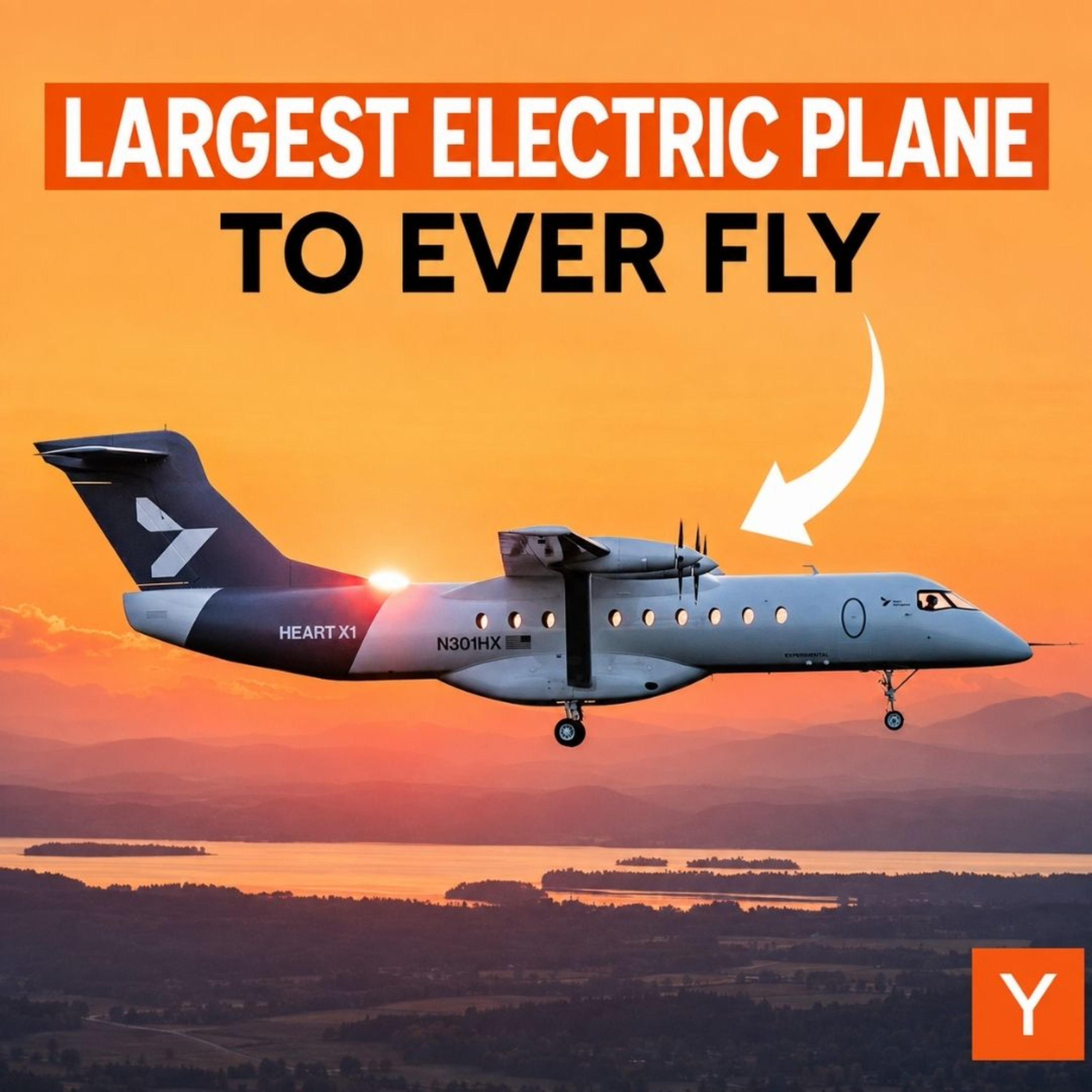
The World’s Largest Electric Aircraft Just Flew — Y Combinator

Y Combinator

Hybrid-electric propulsion eliminates the fixed thermal wear and taxi penalties that broke regional jet economics, cutting operating costs by 48% to revive abandoned short-haul routes.

AI-assisted summary of The World’s Largest Electric Aircraft Just Flew — original source. Check the original for full context.

Source published:

Key ideas

  • Heart Aerospace successfully flew the world's largest electric aircraft demonstrator in Plattsburgh, New York, featuring a 100-foot wingspan, a 25,000-pound takeoff weight, and an estimated takeoff electricity cost of just $5. (0:00)
  • To bypass the severe weight penalty of regulatory 45-minute holding reserves on pure-electric flights, Heart integrated an auxiliary turboprop engine that adds 20% to upfront build costs while boosting maximum range from 125 miles to 500 miles. (10:00)
  • Unlike eVTOL air taxi ventures pursuing small 3- to 4-passenger vertical craft, Heart targets mainline regional aviation with a 30- to 36-passenger airframe designed to operate out of existing runways at an operating cost 48% lower than fossil fuel alternatives. (10:55)
  • Heart standardizes core flight mechanics in-house, replacing eight external vendors with a single modular actuator design cut from 6061 aluminum to control ailerons, rudders, landing gear, braking, and propeller pitch. (7:05)

Detailed notes

## Background Published by Y Combinator on September 4, 2026, as part of the Hard Tech series, this episode features partner Gustaf Alströmer visiting Heart Aerospace's pilot plant in Los Angeles. The show explores how co-founder and CEO Anders Forslund advanced Heart from a tiny 3D-printed YC Demo Day model to flying the world's largest electric airplane—a 25,000-pound demonstrator with a 100-foot wingspan—and examines how electric propulsion can revive regional aviation.

## TL;DR Heart Aerospace achieved the maiden flight of its full-scale demonstrator in Plattsburgh, New York, marking the largest electric aircraft flight in history and the first clean-sheet US airliner flight in 18 years. CEO Anders Forslund demonstrates how electric powertrains eliminate the heavy maintenance wear and fuel penalties that cause conventional jet engines to abandon short regional routes. To navigate strict FAA loiter and diversion reserve requirements without incurring massive battery weight penalties, Heart adopted a hybrid architecture for its ES-30 airliner, pairing battery power for 125-mile zero-emission flights with an auxiliary turboprop extending range to 500 miles. Forslund outlines their vertically integrated manufacturing strategy in Southern California, highlighting in-house modular actuators and high-voltage iron bird test rigs as stepping stones toward disrupting the commercial narrowbody duopoly.

## Atmosphere & style The conversation carries a gritty, grounded sense of hard-tech optimism, trading futuristic hype for the tangible realities of aerospace engineering, aluminum machining, and megawatt-scale test rigs. Forslund comes across as pragmatic, self-effacing, and deeply technical, describing himself as a cross-disciplinary 'duck' while candidly recounting near-misses like fishing United Airlines' initial outreach out of a spam folder. The narrative conveys a palpable emotional arc, capturing the surreal leap from holding a toy-sized plastic prototype at YC Demo Day to getting goosebumps watching a 100-foot airliner thunder down an active runway.

## Bulletin - `00:00` Heart Aerospace successfully flew the world's largest electric aircraft demonstrator in Plattsburgh, New York, featuring a 100-foot wingspan, a 25,000-pound takeoff weight, and an estimated takeoff electricity cost of just $5. - `10:00` To bypass the severe weight penalty of regulatory 45-minute holding reserves on pure-electric flights, Heart integrated an auxiliary turboprop engine that adds 20% to upfront build costs while boosting maximum range from 125 miles to 500 miles. - `10:55` Unlike eVTOL air taxi ventures pursuing small 3- to 4-passenger vertical craft, Heart targets mainline regional aviation with a 30- to 36-passenger airframe designed to operate out of existing runways at an operating cost 48% lower than fossil fuel alternatives. - `07:05` Heart standardizes core flight mechanics in-house, replacing eight external vendors with a single modular actuator design cut from 6061 aluminum to control ailerons, rudders, landing gear, braking, and propeller pitch.

## Key takeaways - `00:00` Heart Aerospace flew the largest electric aircraft in aviation history, representing the first clean-sheet airliner in any category to fly in the United States in 18 years. - `01:45` Conventional jet engines penalize regional aviation economically because manufacturing and maintenance wear costs are identical whether flying 100 miles or 1,000 miles. - `01:45` Jet aircraft waste substantial fuel operating on short routes, burning up to 10% of their total fuel load simply taxiing from gate to runway. - `01:45` An electric powertrain delivers constant torque, enabling near-silent, efficient ground taxiing at one-tenth of normal operating speeds. - `04:15` Heart Aerospace leveraged early airline letters of intent and a physical 400 kW electric motor prototype to secure an institutional commercial order from United Airlines. - `07:05` In-house manufacturing of a modular 6061 aerospace-grade aluminum actuator allowed Heart to bypass eight separate suppliers and consolidate critical flight control mechanisms. - `07:05` The company validates avionics against extreme faults using a 1.6-megawatt hardware-in-the-loop 'iron bird' test rig simulating full flight power. - `08:50` Commercial FAA diversion rules require a 45-minute loiter reserve, which forces pure-electric aircraft to lock away approximately two-thirds of their battery capacity strictly for emergencies. - `10:00` Heart adopted a hybrid powertrain architecture adding an auxiliary turboprop, delivering an all-electric range of 125 miles and extending total hybrid range to 500 miles. - `10:00` Modern aircraft reliability depends primarily on software logic rather than mechanical airframe structures, driving Heart's strategy to build a continuous-update, software-defined plane. - `10:55` Heart rejects eVTOL and hydrogen models in favor of a 30- to 36-passenger regional plane that operates out of 5,000 existing US runways with an immediate negative green premium. - `10:55` Because battery energy density advances and software updates deploy over time, Heart expects its aircraft assets to become more capable over a ten-year lifespan. - `11:58` Long-term, Heart aims to challenge the Boeing and Airbus narrowbody duopoly by scaling manufacturing to absorb massive commercial aircraft order backlogs. - `11:58` To address pilot shortages, commercial aviation autonomy will likely deploy first in cargo routes before transitioning to remote supervision models for passenger flights. - `12:44` Operating in Los Angeles allows Heart to recruit specialized hardware and manufacturing talent emerging from the Southern California aerospace and 'New Space' ecosystem. - `13:58` Effective hard-tech leadership requires generalist founders who understand enough across adjacent engineering disciplines to evaluate, recruit, and align elite technical specialists.

## Detailed walkthrough ### `00:00` Heart Aerospace and the Scale of Electric Flight

Heart Aerospace has built and flown what stands as the largest electric airplane in aviation history. The demonstrator aircraft features a 100-foot wingspan, weighs 25,000 pounds at takeoff, and costs a mere $5 in electricity to leave the tarmac. In sheer physical scale, it exceeds any previous electric aircraft by roughly a factor of two, marking the first clean-sheet airliner in any category—electric or conventional—to fly in the United States in eighteen years. Its commercial successor, the ES-30, is engineered to transport passengers up to 125 miles purely on battery power, push out to 500 miles using a hybrid powertrain, and recharge fully in approximately 30 minutes.

Seven years prior to this flight, Heart Aerospace co-founders Anders Forslund and Klara entered Y Combinator with nothing more than an idea and a handheld, 3D-printed model. Today, that concept has evolved into a 40-person team headquartered in Los Angeles running taxi tests and flight trials with a full-scale airliner. Reflecting on the sheer absurdity of the scale transition, Forslund noted the surreal contrast between the palm-sized plastic toy from Demo Day and a 100-foot machine currently roaring down an active runway. When asked to distill the company’s core purpose into a concise thesis, Forslund summarized their ambition directly:

> “We build hybrid electric aircraft but our mission is to reduce the cost of air travel and we're building the technology to support that.”

- **Demonstrator Wingspan:** 100 feet - **Demonstrator Takeoff Weight:** 25,000 pounds - **Takeoff Energy Cost:** ~$5 in electricity - **ES-30 Range:** 125 miles pure electric, up to 500 miles hybrid - **ES-30 Turnaround Time:** ~30-minute fast recharge - **Milestone:** First clean-sheet airliner flown in the US in 18 years

---

`01:45` Why the Jet Engine Fails Regional Aviation

The fundamental advantage of Heart’s architecture stems from abandoning combustion turbines in favor of electric propulsion. While conventional jet engines consist of thousands of intricate components operating at temperatures hot enough to melt metal, an electric motor features essentially a single moving part. Scaling a motor from a drone-sized unit of a few grams up to a 400-kilowatt industrial aerospace motor does not add moving parts or structural complexity. Because there is no internal combustion or fluid cycle, mechanical wear is reduced almost to zero. Furthermore, an electric powertrain delivers a constant torque profile, enabling the propellers to spin at one-tenth of normal operating speeds during ground maneuvers. Instead of the deafening roar of a jet engine taxiing, an observer standing 100 feet away can easily hold a conversation in a normal speaking voice. On the demonstrator, the entire powertrain runs off eight battery packs arranged across the fuselage floor—equivalent in storage capacity to just four Tesla vehicles, carrying the energy equivalent of roughly $40 worth of fuel.

```mermaid flowchart TD accTitle: Jet Engine vs Electric Motor Economics accDescr: Diagram illustrating how jet engine fixed wear and taxi penalties push aviation toward long routes, while electric motors enable cheap short regional hops.

subgraph JetEngine["Conventional Jet Engine"] direction TB J1["Thousands of parts & extreme combustion heat"] --> J2["Fixed maintenance wear per cycle"] J2 --> J3["10% fuel burned just taxiing to runway"] J3 --> J4["Economic necessity: fly larger planes on longer routes"] end

subgraph ElectricMotor["Heart Aerospace Electric Motor"] direction TB E1["Essentially one moving part & zero combustion"] --> E2["Zero engine wear per cycle"] E2 --> E3["Constant torque allows near-silent, efficient taxi"] E3 --> E4["Economic sweet spot: ultra-cheap, short regional hops"] end ```

This mechanical contrast exposes a deep economic distortion in modern regional aviation. Anders Forslund explains that the operational economics of combustion engines heavily penalize short-haul routes:

> “It's as complex to build a jet engine for a 30-seater as it is for a 70-seater, so it costs the same.”

Because a jet engine endures the exact same thermal fatigue and wear during a 100-mile flight as it does over 1,000 miles, the aviation industry has systematically abandoned short routes in favor of larger aircraft flying longer distances. On short regional segments, conventional jets operate at terrible thermal efficiency, often burning up to 10% of their total fuel load simply taxiing from the gate to the runway. Yet half of all airline flights worldwide cover distances under two hours. The existing regional fleet relies on 40-year-old airframe designs that airlines are desperate to replace. For routes like island hopping across Hawaii or connecting isolated Norwegian fjord communities—turning an exhausting six-hour mountain drive into a 20-minute hop—electric power completely redefines the unit economics. Driven by rising oil prices, Heart’s projected operating cost advantage over incumbent fossil aircraft widened from 33% to 48% in just one year.

- **Powertrain Complexity:** 1 moving part (electric) vs. thousands of parts (jet turbine) - **Ground Operations:** Constant torque allows silent 1/10th speed taxiing - **Demonstrator Energy Storage:** 8 battery packs under floor (~4 Tesla equivalents) - **Regional Market Opportunity:** 50% of global commercial flights are under 2 hours - **Operating Economics:** 48% cheaper operating costs than fossil alternatives at current fuel prices

---

`04:15` From Swedish Air Force Dreams to YC Demo Day

Anders Forslund’s obsession with aviation took root in Sweden, where he grew up alongside an Air Force base watching Saab 37 Viggen fighter jets thunder over his childhood soccer field. That passion translated into an academic career, culminating in a PhD focused on jet engine mechanics. The pivotal turn toward electric propulsion occurred twelve years ago during a seminar at MIT. Elon Musk addressed the audience, declaring that every mode of transport would inevitably transition to electricity, with the sole exception of orbital rockets, and pointed to an energy density benchmark of 400 watt-hours per kilogram. Forslund experienced the moment as a direct call to arms. By day, he conducted formal jet engine research; by night, he tinkered with drone hardware at his kitchen table.

Before founding Heart Aerospace, Forslund secured Swedish government research grants to travel throughout Scandinavia interviewing regional airline executives. These early conversations laid the commercial groundwork for the startup. When Heart entered Y Combinator, they possessed no proprietary hardware, relying entirely on non-binding letters of intent (LOIs) from Nordic carriers like SAS, Braathens Regional Airlines, and Widerøe alongside a plastic model. Forslund used that initial validation to structure a disciplined, stage-gated hardware roadmap:

> “If you're a founder listening to this, the learning that you should have is every time you need more capital, it needs to be something material.”

Heart first leveraged their airline LOIs to raise money to build a full-scale 400-kilowatt electric motor—matching the dimensions of the jet turboprops they intended to disrupt. That physical motor prototype convinced commercial carriers that Heart was serious. Their first major institutional customer arrived serendipitously when co-founder Klara discovered an inbound message from United Airlines sitting in the general inbox spam folder. After pulling it out of the junk mail, Heart invited the United leadership team to view the 400 kW motor in person. United signed an order on the spot.

Aesthetically, Heart intentionally avoided the sleek, sci-fi styling typical of electric aviation startups. The airframe deliberately mirrors a rugged, conventional high-wing regional turboprop. As Forslund put it, the goal was not to design an exotic sports car, but rather a dependable utility vehicle that hides its "Superman cape under the hood."

---

`07:05` Inside the Pilot Plant: In-House Actuators and "Iron Bird" Test Benches

Inside Heart Aerospace’s Los Angeles pilot plant, the aircraft is moving rapidly from individual parts to an integrated system. Rather than outsourcing precision subsystems to traditional aerospace suppliers—where securing a single revision often takes an entire year—Heart machines its core components on-site. Demonstrating an actuator cylinder body cut from 6061 aerospace-grade aluminum, the engineering team revealed that the assembly comprises roughly 15 bespoke machined components. Heart developed a single modular actuator architecture that standardizes across multiple distinct aircraft functions, including the ailerons, rudder, landing gear extension, mechanical braking, and propeller pitch control. By taking this modular component in-house, the company bypassed a tangled web of eight separate outside vendors, consolidating design iterations under one roof.

The heart of the manufacturing facility operates as an enormous, interconnected "iron bird" test rig, resembling an exploded, deconstructed Picasso painting of the plane laid out across the concrete floor. Fed by 1.6 megawatts of electrical power—enough energy to sustain the plane in mid-air—the rig allows engineers to inject system-level faults in real time. The testing regime deliberately introduces programming glitches, sensor dropouts, and physically severed wiring harnesses to verify that redundant fly-by-wire controls remain stable under catastrophic failure conditions. In the passenger compartment, designed by a former SpaceX engineer who worked on the Crew Dragon capsule, Heart has configured the fuselage to accommodate up to 36 seats. However, commercial operators will primarily fly it with 30 passengers, transforming the surplus cabin volume into a spacious layout that grants every passenger six inches of additional legroom.

- **Actuator Material:** 6061 aerospace-grade aluminum - **Unified Architecture:** Same core actuator runs ailerons, rudders, landing gear, brakes, and prop pitch - **Test Bench Electrical Draw:** 1.6 megawatts of continuous power for hardware-in-the-loop validation - **Cabin Configuration:** Certified for up to 36 seats; optimized at 30 seats with +6 inches of legroom

---

`08:50` The Battery Cell Lab and the Energy Reserve Dilemma

At the core of Heart’s development facility is the battery cell laboratory, where the engineering team benchmarks commercial cells from top manufacturers across the United States, South Korea, and China. In this facility, cells are systematically tested and ranked across cycle life, thermal runaway resistance, raw procurement cost, and gravimetric energy density. While the highest-performing cell currently undergoing physical qualification on their test bench yields approximately 370 watt-hours per kilogram, a partner manufacturer is delivering sample cells reaching the coveted 400 Wh/kg threshold within months—fully unlocking Heart’s targeted payload and operational envelope. Overlooking the laboratory floor, a large digital countdown display ticking down 23 days serves as an operational homage to the urgency of YC Demo Day.

Yet Forslund emphasizes that the most grueling engineering hurdle in certifying an electric airliner has nothing to do with basic motor torque or nominal battery chemistry. The defining obstacle is aviation safety reserve regulations. Under FAA flight rules, commercial aircraft must carry sufficient reserve energy to hold in a holding pattern (loiter) for 45 minutes and divert to an alternate airport if their primary destination closes. Because one in every one thousand commercial flights in the United States experiences an airport diversion, these reserves are completely non-negotiable.

On a purely battery-electric aircraft, safety reserves create a brutal weight penalty: roughly two-thirds of the total onboard battery capacity must be held untouched in reserve simply to satisfy regulatory diverts, never contributing to scheduled revenue mileage. Making matters worse, while conventional aircraft burn off Jet A fuel and land significantly lighter than they took off, an electric aircraft must carry the full, static deadweight of its depleted battery pack throughout the entire approach and landing sequence. Overcoming this severe weight penalty forced Heart to rethink their powertrain strategy.

- **Current Cell Benchmarking:** ~370 Wh/kg active on test bench - **Next-Generation Cell Target:** 400 Wh/kg cells arriving within months - **Diversion Rate:** 1 in 1,000 commercial US flights diverted to alternate airports - **Regulatory Reserve Mandate:** 45 minutes of loiter time plus distance to alternate airport - **The Reserve Penalty:** ~66% of total battery energy on pure-electric flights locked away strictly for emergency reserves

`10:00` The Hybrid Architecture, Iterative Risk, and Software-Defined Planes

Heart Aerospace engineered its regional aircraft around a hybrid propulsion system by integrating a very simple, inexpensive turboprop engine alongside its electric powertrain. While adding this turboprop accounts for roughly 20% of the upfront manufacturing cost of the airplane, Anders Forslund argues that the flexibility completely justifies the expense: it provides an all-electric range of up to 125 miles for pure battery missions, while expanding total operational range up to 500 miles when operating as a hybrid. This architectural decision stems directly from a risk-management philosophy Anders borrowed from SpaceX. In legacy aerospace manufacturing, the assumption is that any failure leads to catastrophe, forcing engineers to delay action until every theoretical variable is solved. Heart Aerospace instead focuses on designing systems where the impact of early failure is minimized so the team can iterate rapidly.

Anders points out that modern aviation safety has evolved dramatically; structural airframe failures are extraordinarily rare, meaning the actual frontier of modern aircraft reliability lies in code and systems architecture. As Anders Forslund explains, “Planes don't crash these days because of a broken wing, they crash because of broken logic.” Rather than building a traditional mechanical plane with auxiliary electronics bolted on, Heart aims to construct an integrated software-defined platform—effectively building a computer with wings that can be continuously patched, refined, and updated over its lifecycle.

```mermaid flowchart TD accTitle: Heart Aerospace Hybrid Flight Envelope accDescr: Diagram showing Heart Aerospace's dual powertrain architecture and range capabilities.

subgraph Powertrain["Propulsion Architecture"] Batt["Battery-Electric Powertrain"] TP["Auxiliary Turboprop Engine"] end

subgraph Missions["Operational Range"] Short["All-Electric Range<br/>Up to 125 miles"] Long["Hybrid Extended Range<br/>Up to 500 miles"] end

Batt --> Short Batt & TP --> Long ```

- Upfront cost premium: Adding the backup turboprop accounts for approximately 20% of initial aircraft build costs. - Pure-electric capability: Flights up to 125 miles run purely on electric power without burning fuel. - Hybrid operational ceiling: Combining battery power with the turboprop extends passenger routes out to 500 miles.

`10:55` Flying Cars vs. Regional Airliners: Economics and Infrastructure

When addressing common industry skepticism about why Heart chose a regional airliner rather than starting with small urban air mobility concepts or hydrogen-powered aircraft, Anders draws a sharp line between markets. While venture capital has poured billions into electric vertical takeoff and landing (eVTOL) flying cars and air taxis designed to replace helicopters with three or four passengers, Heart is going directly after mainline commercial aviation. Heart's aircraft seats 36 passengers and integrates seamlessly into existing national runways without needing specialized vertiports.

Anders dismisses hydrogen propulsion as premature because the fuel economics do not yet work without heavy subsidies, whereas hybrid electric already delivers clear financial advantages today. In fact, battery and hybrid technology operate at a negative green premium, meaning airlines save operational money immediately rather than paying extra to be environmentally friendly. Furthermore, regional turboprops operating today are frequently 40 years old, depreciating and wearing out. Because battery densities improve over time and software can be updated, Heart’s airframes will actually increase in utility over their lifespans. As Anders Forslund puts it, “The plane will actually be better in 10 years than when you buy it.”

- Mainline scale: Heart targets 36 seats per plane compared to the 3 to 4 passenger limit of typical eVTOL air taxis. - Built-in runway access: The plane operates out of the existing 5,000 regional airports across the United States without new infrastructure. - Negative green premium: Operating costs are immediately cheaper than fossil-fuel burning turboprops rather than carrying a financial green penalty. - Asset appreciation: Anders likens owning the aircraft to buying real estate, arguing that battery upgrades will make the plane far more capable a decade after purchase.

`11:58` Narrowbody Ambitions, Cockpit Autonomy, and the Regional Flight Revival

A 36-passenger regional aircraft represents only the opening phase of Heart Aerospace's long-term product roadmap. Anders emphasizes that the real commercial prize in aviation lies in narrowbody aircraft like the Boeing 737 and Airbus A320, where airline demand has created historic order backlogs that legacy manufacturers cannot fulfill. As Anders Forslund observes, “Ridiculous backlogs, somebody doing what SpaceX did with rockets on airplanes just makes sense.” Heart aims to disrupt commercial aviation's established duopoly by building high-volume production lines that steadily scale toward larger fuselages.

At the same time, the cockpit is being engineered for an operational future facing chronic commercial pilot shortages. Autonomy will not appear overnight in passenger cabins; instead, Anders expects regional routes to transition first to remote supervision models—mirroring Waymo's fleet monitoring where a single remote pilot assists multiple autonomous aircraft. Cargo operations will adopt full autonomy first due to the lower stakes, with flight controls eventually migrating to commercial passenger routes. For travelers, regional electric aviation promises quieter flights, virtually no engine vibration, lower ticket prices, and a return to convenient direct flights out of local neighborhood airports.

- Target legacy backlog: Future models aim to compete with the dominant Boeing 737 and Airbus A320 commercial narrowbody duopoly. - Autonomous progression: Initial autonomous operations will deploy in air cargo before moving to remote pilot supervision modeled on autonomous vehicle operations. - Passenger experience: Significant reduction in cabin noise and cabin vibrations compared to fossil-fueled regional turboprops.

`12:44` Los Angeles Aerospace Ecosystem and the First Flight in Plattsburgh

Heart deliberately situated its pilot plant and development operations in Los Angeles to leverage California's unique intersection of aviation history and modern high-tech manufacturing. Anders describes Southern California as ground zero for aviation history, now reinvigorated by the "New Space" talent pool cultivated by SpaceX and its surrounding suppliers. Building complex aerospace hardware requires access to experienced engineers and mechanics who know how to fabricate flight hardware rapidly, reinforcing Anders' core principle that individual talent dictates execution speed. As Anders Forslund remarks, “Companies don't build planes, people do.”

That culmination of engineering work reached an emotional peak when Heart flew its full-scale demonstrator—making it the largest electric airplane in aviation history. Reflecting on the seven-year journey from their initial Y Combinator Demo Day pitch, Anders admits to feeling goosebumps just watching the plane roll down the tarmac. The demonstrator achieved its historic maiden voyage on Wednesday, August 12, in Plattsburgh, New York, validating years of risk-taking and hardware prototyping.

- Strategic location: Heart operates out of Los Angeles to tap into the aerospace engineering talent base built up by SpaceX and Southern California aerospace firms. - Seven-year journey: The company scaled from a small 3D-printed model at Y Combinator Winter 2019 to a full-scale demonstrator. - Historic milestone: The world's largest electric aircraft completed its maiden flight on Wednesday, August 12th in Plattsburgh, New York.

`13:58` Lessons on Founding Hardware Startups and Problem-Driven Innovation

Asked what advice he would offer to aspiring founders launching hard-tech companies today, Anders offers an unpretentious metaphor about his own generalist skill set. He characterizes himself as being like a duck: he knows how to swim, walk, and fly just enough across multiple engineering disciplines to recognize exceptional talent when he meets domain experts. This cross-disciplinary baseline gives hardware leaders the technical literacy required to hire and direct world-class engineers across propulsion, software, aerodynamics, and manufacturing.

Anders cautions against entering hard-tech startups purely for the vanity of entrepreneurship or the title of founder. Instead, the grueling nature of building complex physical machines requires a genuine obsession with solving a real-world dilemma. For Anders, the mission centers on using engineering to elevate human living standards through zero-emission transit. As Anders Forslund explains, “If we can get stuff that is lower emission, lower cost, lower pollution, just better quality of life, we should be doing it.”

- The generalist founder model: Anders compares effective hardware founders to ducks—possessing enough baseline knowledge across multiple disciplines to evaluate and assemble elite specialist teams. - Core founding motivation: He warns that founders should never start companies just for the sake of starting a business, but only when driven by a deep obsession with a concrete technological problem. - Ultimate mission: Scaling sustainable regional transit to reduce emissions, lower airfare costs, cut pollution, and improve regional mobility.

## Notable quotes > `10:00` Planes don't crash these days because of a broken wing, they crash because of broken logic. — Anders Forslund

> `10:55` The plane will actually be better in 10 years than when you buy it. — Anders Forslund

> `01:45` It's as complex to build a jet engine for a 30-seater as it is for a 70-seater, so it costs the same. — Anders Forslund

> `04:15` If you're a founder listening to this, the learning that you should have is every time you need more capital, it needs to be something material. — Anders Forslund

> `12:44` Companies don't build planes, people do. — Anders Forslund

## Mentioned Heart Aerospace, Anders Forslund, Klara, Gustaf Alströmer, Y Combinator, ES-30, United Airlines, SAS, Braathens Regional Airlines, Widerøe, SpaceX, Boeing 737, Airbus A320, Waymo, Elon Musk, Saab 37 Viggen, MIT, FAA

## Video description <p>Heart Aerospace (YC W19) just flew the largest electric airplane ever flown — a 100-foot wingspan, a takeoff weight of 25,000 pounds, and $5 of electricity to get it off the ground.</p><p><br></p><p>In this episode of Hard Tech, YC's Gustaf Alströmer visits Heart's pilot plant in LA and sits down with co-founder and CEO Anders Forslund to find out how they went from a 3D-printed model to a full-scale electric aircraft in seven years, why the jet engine has left short flights behind, and what cheap electric flight could unlock for the future of regional air travel.</p>

[Source](https://anchor.fm/s/8c1524bc/podcast/play/125213546/https%3A%2F%2Fd3ctxlq1ktw2nl.cloudfront.net%2Fstaging%2F2026-8-4%2F431196868-44100-2-944f55b7f1625.mp3)

中文简报

Heart Aerospace试飞全球最大电动客机,挑战喷气式飞机成本 混合动力总成消除了破坏支线喷气机经济性的固定热磨损和滑行油耗惩罚,将运营成本降低48%,以重振被废弃的短途航线。 Heart Aerospace在纽约州普拉茨堡完成了全尺寸验证机的首飞,这不仅是史上最大规模的电动飞机飞行,也是18年来美国首款全新设计的客机首飞。首席执行官Anders Forslund展示了电动动力系统如何消除导致传统喷气发动机放弃短途支线航线的高昂维护磨损和燃油损耗。为了应对美国联邦航空管理局(FAA)严格的空中盘旋和备降储备要求,同时避免因电池重量过大而受限,Heart为其ES-30客机采用了混合动力架构,将支持125英里零排放飞行的电池动力与辅助涡桨发动机相结合,将航程延伸至500英里。Forslund概述了他们在南加州的垂直整合制造战略,强调自主研发的模块化执行器和高压铁鸟试验台是撼动商用窄体客机双头垄断的基石。 Heart Aerospace在纽约州普拉茨堡成功试飞了全球最大的电动飞机验证机,其翼展达100英尺,起飞重量为25,000磅,据估计起飞耗电成本仅为5美元。 (0:00) 为了规避纯电飞行中法规要求的45分钟盘旋储备所带来的严重机重负担,Heart整合了一台辅助涡轮螺旋桨发动机,虽然初始造成本增加了20%,但将最大航程从125英里大幅提升至500英里。 (10:00) 与追求小型3至4座垂直起降飞行器的eVTOL空中出租车项目不同,Heart将目标瞄准主流支线航空,采用30至36座的机身设计,可在现有跑道上运行,其运营成本比化石燃料替代机型低48%。 (10:55) Heart在内部将核心飞行机械部件标准化,用由6061铝材切削而成的单一模块化执行器设计取代了八家外部供应商,用于控制副翼、方向舵、起落架、刹车和螺旋桨螺距。 (7:05)

Reading summary

Heart Aerospace has completed the maiden flight of what stands as the largest electric aircraft in aviation history, aiming to overturn the economics of regional air travel using a hybrid-electric architecture. Co-founder Anders Forslund contends that electric powertrains eliminate the disproportionate mechanical wear and fuel penalties of jet turbines on short routes, opening a path to low-cost regional transit. Powertrain Economics and the Regional Flight Gap (1:45) Modern aviation economics heavily penalize short flights. Conventional jet engines contain thousands of parts operating at extreme temperatures, accumulating the same thermal wear and maintenance cycles on a 100-mile hop as on a 1,000-mile journey, while burning up to 10% of their fuel merely taxiing. Because engines for smaller airliners cost roughly the same to manufacture as those for larger jets, carriers have steadily abandoned regional segments despite 50% of global flights covering trips under two hours. In contrast, Heart's electric motor architecture operates with essentially a single moving part, eliminates combustion wear, and delivers constant torque that allows propellers to spin at one-tenth normal speed for near-silent ground maneuvers. Forslund claims these factors yield a 48% operating cost advantage over fossil fuel aircraft at current energy prices, with the demonstrator costing approximately $5 in electricity to leave the runway. Managing Regulatory Reserves with Hybrid Architectures (8:50) The primary barrier to commercializing pure-electric flight is not nominal battery chemistry but FAA safety reserve rules, which mandate carrying enough energy for a 45-minute holding pattern plus diversion to an alternate airfield. Because diversions occur in roughly one out of every one thousand US commercial flights, compliance is non-negotiable. On pure battery flights, this rule locks away approximately two-thirds of total energy capacity as deadweight that cannot generate revenue. Compounding the challenge, electric planes do not burn off fuel mass before landing. Heart balances this constraint by pairing its battery powertrain with an auxiliary turboprop engine. While adding the turboprop increases initial airframe build costs by roughly 20%, it allows pure battery flights for trips up to 125 miles while expanding maximum operational range to 500 miles on hybrid power. Heart's testing bench currently qualifies 370 Wh/kg cells, with partner sample cells reaching 400 Wh/kg slated for delivery within months. In-House Prototyping and Software-Centric Aircraft Design (7:05) To accelerate iteration cycles, Heart bypassed legacy aerospace supply chains—where revisions often take a year—by machining core systems on-site in Los Angeles. The team designed a modular actuator assembly made from 6061 aerospace-grade aluminum that standardizes controls across ailerons, rudders, landing gear, mechanical braking, and propeller pitch, displacing eight separate outside vendors. Hardware validation takes place on a 1.6-megawatt 'iron bird' test rig that simulates flight loads while deliberately introducing programming glitches, sensor dropouts, and severed wiring to verify redundant fly-by-wire controls. Forslund argues that modern aviation risk lies primarily in software and systems logic rather than structural airframe failure, positioning the ES-30 as a software-defined aircraft that can be continuously upgraded over its operational life. Regional Infrastructure and Commercial Expansion (10:55) Heart rejected the eVTOL air taxi model, dismissing its three-to-four-seat capacities and unbuilt vertiport requirements in favor of a 30-to-36-passenger regional airliner capable of using the existing 5,000 regional airports across the United States. Forslund also dismissed hydrogen propulsion as economically unviable without extensive subsidies, arguing instead that hybrid-electric planes operate at a negative green premium by saving airlines money immediately. Looking ahead, Heart views regional routes as an entry point to challenge the Boeing 737 and Airbus A320 commercial narrowbody duopoly, whose manufacturing backlogs remain elevated. To address long-term pilot shortages, Forslund anticipates regional operations will eventually transition to remote supervision models, deploying first in cargo before expanding to passenger transport. Heart Aerospace proved the physical viability of large-scale electric flight with its demonstrator in Plattsburgh, New York. However, commercial adoption hinges on certifying its integrated hybrid systems, securing planned 400 Wh/kg battery cells, and scaling high-rate production against entrenched legacy aerospace incumbents.

精炼阅读摘要

Heart Aerospace 成功试飞了航空史上体量最大的电动验证机,联合创始人 Anders Forslund 指出,公司的核心使命并非单纯追求环保,而是通过颠覆传统喷气发动机的机械与经济模型,大幅降低区域航空的出行成本。 技术与经济突破:颠覆支线航空模型 (0:00) 该技术验证机翼展达100英尺,起飞重量为25,000磅,规模是此前所有电动飞机的两倍左右,其离开跑道的电力成本仅需约5美元。相比传统喷气发动机包含数千个极端高温工作部件且面临固定机械磨损,电动机本质上仅有一个运动部件,磨损几乎降至零。此外,电动机具备恒定扭矩特性,地面滑行转速仅需正常运行的十分之一,极大降低了噪音和能耗;相比之下,传统支线喷气机在短途飞行中,常有高达10%的燃油仅消耗在跑道滑行阶段。由于喷气机在100英里航程中承受的热疲劳与1,000英里完全相同,导致航空公司纷纷放弃短途航线,而全球有50%的商业航班飞行时间不足2小时。随着燃油成本攀升,Heart 测算其相比传统化石燃料飞机的运营成本优势已从33%扩大至48%。其后续商业机型 ES-30 计划纯电续航125英里,混合动力模式下可达500英里,并支持约30分钟快速充电。 法规瓶颈与破局:双动力架构与软件定义 (8:50) 纯电动飞机商业化面临的最大瓶颈并非名义电池化学指标,而是严格的航空法规储备要求。FAA 规定商业航班必须携带可供盘旋45分钟并飞往备降机场的能源储备,而在全美商业飞行中,每1,000架次就有1次需要备降。对于纯电飞机而言,约三分之二的车载电池容量必须作为不可动用的应急储备,且电池无法像燃油那样在飞行中消耗变轻,着陆时必须全程承担沉重的静态死重。为了解决这一储备惩罚,Heart 采取了类似 SpaceX 的渐进风险管理哲学,引入一台简单廉价的涡轮螺旋桨发动机形成油电混合动力。尽管这一辅助发动机使飞机初期制造成本增加了约20%,但它完美解决了法规储备问题,将纯电航程锁定在125英里,综合航程扩展至500英里。Anders 强调,现代空难的主因不再是机翼断裂等机械结构失效,而是逻辑漏洞,因此 Heart 正在将飞机打造成一个软硬件高度集成、可在线更新与修补的“带机翼的计算机”。 研发与供应链:自研模块化与铁鸟台架 (7:05) 在洛杉矶的试制工厂中,Heart 摒弃了传统航空航天耗时漫长的外包流程。针对副翼、方向舵、起落架收放、机械制动和螺旋桨变距等不同功能,工程团队开发了通用的模块化执行器架构,由约15个6061航空级铝合金自研加工零件组成,一举替代了过去需要对接的8家外部供应商。在系统验证方面,工厂搭建了由前 SpaceX 工程师参与设计的“铁鸟”地面综合测试台架,持续承载高达1.6兆瓦的电力负荷,并实时注入编程错误、传感器脱落和线束切断等故障信号,以严格检验多重冗余电传飞控系统在极端故障下的稳定性。在电池实验室中,团队正对来自美、韩、中主流厂商的电芯进行循环寿命、热失控防护与能量密度测试,当前测试台架上的电芯能量密度约为370瓦时/公斤,预计数月内交付的样本将达到400瓦时/公斤的关键门槛。 商业路径与愿景:从支线机队走向干线竞争 (10:55) 在市场路径选择上,Anders 明确将 Heart 与热门的 eVTOL(飞行汽车)及氢能源方案区分开来。eVTOL 载客仅3至4人且依赖新建起降场,氢能源则面临高昂的燃料溢价;而 Heart 的飞机定位于30至36座级正规支线客机,可直接利用全美现有的5,000个支线机场跑道。该方案具备“负绿色溢价”,即航司无需依赖补贴即可在运营第一天实现盈利。Anders 认为,由于电池能量密度的持续演进与软件迭代,这些机体在购入10年后反而会比交付时性能更强。公司的长远目标并非局限于支线客机,而是意图利用高产能制造流水线,打破波音737和空客A320在窄体干线客机领域的长期双寡头垄断,以应对行业积压严重的庞大订单需求。在驾驶舱演进方面,面对全球飞行员短缺,Heart 预计技术将首先从无人航空货运落地,随后借鉴 Waymo 模式过渡到客运航线的地面远程协助监督机制。 该全尺寸技术验证机于8月12日在纽约州普拉茨堡完成首飞,验证了从3D打印模型到实体客机的工程跨越。然而,未来能否真正挑战窄体客机双寡头垄断并重塑区域交通,仍取决于400瓦时/公斤高密度电芯的量产交付进度、FAA 适航审定推进,以及自动化远程驾驶技术的监管许可与实际推广。

Detailed notes — zh

## Background 本期节目由知名创业孵化器 Y Combinator 于 2026 年 9 月 4 日在其播客频道《Hard Tech》发布。节目中,YC 合伙人 Gustaf Alströmer 探访了校友企业 Heart Aerospace 位于洛杉矶的试生产工厂,并与联合创始人兼 CEO Anders Forslund 展开深入对话,探讨他们如何历时七年从一个 3D 打印模型打造出起飞仅需 5 美元电费、翼展达 100 英尺的全球最大全尺寸电动客机。 ## TL;DR 节目围绕 Heart Aerospace 打破航空业 18 年技术停滞的历程展开,深入剖析了传统喷气式燃气涡轮引擎在短途支线航线中制造成本畸高、磨损严重且低速极度耗油的经济模型缺陷。Anders 阐述了电动机在短途飞行中的降本优势,并拆解了其团队如何通过深度垂直整合、自研执行器架构、借鉴 SpaceX 的“容错与软件定义”风险哲学,以及引入简易低成本涡轮螺旋桨混动系统来解决严苛的民航备降储备电量法规。公司坚决避开载客量极小的空中出租车(eVTOL)和虚幻的氢能泡沫,依托全美 5,000 座现有机场切入 30 座以上的支线干线市场,旨在通过极致的低成本运营让支线航空重返随到随飞的黄金时代。 ## Atmosphere & style 整期访谈洋溢着硬核工程特有的理性激情与造物者的浪漫主义情怀,既有深入工厂车间“铁鸟台”剪断电缆测试容错的实干质感,也有重温孩童时期仰望战斗机初心时的纯粹触动。Gustaf 与 Anders 之间兼具老友叙旧的松弛与行业老兵的锋芒,对话节奏明快且信息密度极高。当 Anders 讲述从七年前手握巴掌大的 3D 打印玩具,到如今目睹 25,000 磅庞然大物在跑道滑行时浑身起鸡皮疙瘩的瞬间,听众能深刻感受到硬科技创业历经千锤百炼后迎来破晓的史诗级震撼。 ## Bulletin - `00:00` Heart Aerospace 成功试飞全球最大电动客机原型机:该机拥有 100 英尺翼展与 25,000 磅最大起飞重量,起飞耗电成本仅约 5 美元,为美国近 18 年来首架全新设计客机。 - `00:54` 传统喷气发动机在短途航线上制造复杂度与损耗成本高昂,且滑行与起降工况极其低效,促使电驱动力凭借全转速恒扭矩特性在超短途支线市场具备高达 48% 的运营经济优势。 - `10:00` 量产机型 ES-30 采用混合动力架构,纯电航程 125 英里搭配涡轮螺旋桨增程可达 500 英里,有效化解了民航安全冗余法规下对电池电量保留比例过高的限制。 - `10:48` Heart 避开空中出租车(eVTOL)与氢能概念,专注于替代 40 年机龄的 30-36 座支线支柱机型,直接利用全美现有的 5,000 座通用机场运营。 ## Key takeaways - `00:00` Heart Aerospace 完成全球最大电动客机原型试飞,体积与重量达同类最大竞品近两倍,计划量产的 ES-30 具备约 30 分钟快充能力。 - `00:54` 喷气发动机在 30 座与 70 座机型上的制造成本和单次起降磨损相近,导致短途航空经济模型失效并迫使航司放弃超短途航班。 - `00:54` 全球一半航班航程在 2 小时以内,电动机没有复杂的燃烧室与极端磨损,滑行时转速可降至十分之一,大幅削减短途飞行成本。 - `03:52` 创始人 Anders Forslund 受埃隆·马斯克关于 400 Wh/kg 电池阈值的演说启发,在瑞典政府科研基金支持下开启电动航空探索。 - `05:00` 通过在早期制造出可运转的 400 千瓦级实体电动机原型,Heart 从公开收件箱中促成了与联合航空(United Airlines)的商业预订单合作。 - `07:11` 洛杉矶工厂推行深度垂直整合,自研通用舵机执行器以规避传统航空长达一年的供应链等待,并以 1.6 兆瓦级铁鸟台进行极端故障注入测试。 - `07:11` 当前电芯能量密度已达 370 Wh/kg 且 400 Wh/kg 交付在即,而工程上的核心瓶颈在于民航法规要求强制储备 45 分钟盘旋与备降电量。 - `10:00` 引入成本较低的涡轮螺旋桨发动机使初期购置成本增加约 20%,却将实际运营航程由 125 英里大幅拉长至 500 英里。 - `10:00` 借鉴 SpaceX 风险哲学,将工程重心从“极力压低失败概率”转向“最小化犯错后果”,以软件定义架构打造长了翅膀的电脑。 - `10:48` 放弃 3 至 4 座的空中出租车争夺,Heart 直接聚焦 36 座干线支线机型,避开垂直起降场建设并直接复用全美 5,000 座现有机场基础设施。 - `10:48` 混合动力方案具备“显著的负绿色溢价”,通过软件与电池持续升级让飞机从折旧工具转变为具有增值潜力的耐用资产。 - `11:46` 面向未来的驾驶舱正朝 Waymo 式远程调度演进,通过更安静平稳的飞行让旅客重回社区小机场,实现航空出行的高频化普及。 ## Detailed walkthrough ### `00:00` 从3D打印玩具到全球最大电动客机 Heart Aerospace 打造出了人类有史以来飞行过的最大电动飞机。这架原型机拥有 100 英尺的翼展,最大起飞重量达到 25,000 磅,而让它飞离地面所需的电费仅仅只有 5 美元。其后续量产机型 ES-30 计划在纯电模式下飞行最远 125 英里,在混合动力模式下最远可达 500 英里,并且仅需大约 30 分钟即可完成充电。以体积和重量衡量,它是目前全球最大电动飞机的近两倍,更是过去 18 年来美国天空飞行的首架全新设计(clean-sheet)客机(无论燃油或电动)。 主持人 Gustaf Alströmer 回忆起七年前,Heart Aerospace 创始人兼 CEO Anders Forslund 第一次向他展示该项目时的情景。当时 Anders 手里拿着的不过是一个巴掌大小、用 3D 打印制作出来的模型飞机。Anders 感慨道:“I came to YC with that 3D-printed plane that was like this size, and now it's, you know, a 100-foot wingspan hurtling down the runway doing taxi testing.” 当年申请 YC 时,团队只有 Anders 和他的联合创始人 Klara 两人;而今天,他们在洛杉矶拥有一支 40 人的全职团队,正在建造一架货真价实的支线客机。 当被要求用两句话概括公司的定位时,Anders 表示:“We build hybrid electric aircraft but our mission is to reduce the cost of air travel and we're building the technology to support that.” 这支规模不大的初创团队,正在直面波音(Boeing)和空中客车(Airbus)等航空巨头多年未能攻克的难题。 - **原型机规格**:翼展 100 英尺,起飞重量 25,000 磅,单日起飞耗电成本约 5 美元。 - **ES-30 性能目标**:纯电续航 125 英里,混动续航 500 英里,快充时间约 30 分钟。 - **行业纪录**:规模约为同类最大竞品的 2 倍,且为近 18 年来美国首架全新研发的商用客机。 ### `00:54` 传统喷气式引擎在短途航线上的根本缺陷 Heart Aerospace 的核心工程突破是用电动机彻底取代了喷气式燃气涡轮发动机。Anders 解释说,无人机上几克重、只有一个活动部件的小电机,和他们制造的 400 千瓦大功率电机,本质上只是等比例放大的关系。电动机没有复杂的燃烧室,也不涉及极热气流,几乎没有磨损,制造成本大幅降低。相比之下,一台喷气式发动机由数千个精密零件组成,工作时燃料燃烧的温度高到足以熔化金属。 喷气引擎在地面滑行(taxiing)时噪音极大且极度浪费燃油,因为其推力机制必须维持高速旋转;而电动机具有全转速恒扭矩特性,在滑行时转速可以降到十分之一,即使站在 100 英尺外也极其安静。该原型机的动力仅靠平铺在机舱地板下的 8 个电池包提供,总电量仅相当于大约 4 辆特斯拉,消耗 40 美元电费就能覆盖传统飞机高昂的燃油消耗。 传统喷气引擎的经济模型在支线短途航线上已经彻底失效: 1. **制造成本与座位数不成比例**:为 30 座飞机制造喷气引擎的复杂度与成本,和制造 70 座飞机的引擎几乎相同。 2. **磨损与飞行里程脱节**:引擎飞 100 英里与飞 1,000 英里的起降损耗相差无几,这倒逼整个航空业不断追求更大的飞机和更长的航线。 3. **低速工况极其低效**:在短途航班中,单单滑行到跑道的过程就可能消耗总油量的 10%,起飞和降落阶段效率同样低下。 全球有一半的航班航程在两小时以内,这里存在着巨大的存量替换市场。目前这一细分市场运行的支线飞机大多是 40 年前的老旧设计。Anders 强调,短途飞行的核心竞争力不在于飞行距离,而在于飞行成本。这类飞机最适合超短途跳岛或穿梭航线,例如夏威夷的群岛飞行,或是让挪威峡湾小镇之间原本 6 小时的盘山车程缩短为 20 分钟的空中通勤。随着航油价格上涨,纯电飞机的运营经济效益优势在过去一年里已从 33% 飙升至 48%。 ### `03:52` 从瑞典空军基地少年到 MIT:马斯克的演讲点燃创业火种 这项技术的萌芽始于瑞典。Anders 在瑞典的一个空军基地旁长大,童年记忆伴随着头顶呼啸而过、飞越足球场的萨博“雷”(Viggen)战斗机。他从小痴迷于纸飞机、火箭和飞行器,后来一路攻读了喷气式发动机方向的博士学位,并最终前往麻省理工学院(MIT)做研究。 12 年前在 MIT,一个关键时刻改变了他的轨迹。埃隆·马斯克(Elon Musk)造访 MIT 并发表演讲,公开断言除了火箭之外,未来人类所有的交通方式都将走向电动化,并明确提到了 400 瓦时/千克(Wh/kg)的电池能量密度门槛。Anders 回忆,那一刻感觉就像是一场“战斗动员令”(call to arms)。当时他白天从事传统喷气引擎的研究,晚上则在厨房餐桌上摆弄无人机电机,逐渐对电动航空陷入痴迷。在真正创办公司之前,他甚至获得了瑞典政府的科研资助,走访北欧各大航空公司深入调研航线需求。 ```mermaid flowchart TD accTitle: Heart Aerospace 起步演进路径 accDescr: 展示从 MIT 受启发、获政府支持、入选 YC 到获取意向书与联合航空首批订单的发展流程。 subgraph Phase1["概念萌芽与学术期"] A["MIT 接触马斯克 400 Wh/kg 预言"] --> B["白天研究喷气引擎<br/>夜晚研发无人机电机"] B --> C["瑞典政府科研资金资助<br/>走访北欧航司建立行业联系"] end subgraph Phase2["YC 孵化与硬件验证"] C --> D["YC W19 孵化<br/>手持 3D 打印模型拿 SAS 等 LOI"] D --> E["自研 400 kW 尺寸电动机<br/>实体硬件吸引资本与客户"] end subgraph Phase3["商业化突破"] E --> F["垃圾邮件中捞出<br/>United Airlines 商务合作"] F --> G["全尺寸原型机制造与试飞"] end ``` ### `05:00` YC 早期历程、从垃圾邮件中捡到的巨头订单与自研策略 Anders 带着 3D 打印飞机模型进入 YC W19 时,市场上还没有电动支线客机的现成打法。团队当时的全部精力都放在获取航司的早期意向书(LOI)上,成功拿到了北欧航空(SAS)、Braathens(原音频误作 Embraer 与 Lidra/Widerøe 等北欧航空公司)等机构的意向协议。拿到意向书后,他们集中资源攻坚核心动力单元,造出了一台体积堪比小型喷气引擎的 400 千瓦级电动机原型。 Anders 对硬件创业者给出了关键建议:在融资阶段,仅仅拿出图纸是不够的,必须拿出能摸得着看得到的实体硬件,向投资人证明技术正在落地。正因为造出了这台实物电机,他们迎来了真正的转折点——商业航司的正式预订单。 有趣的是,Heart Aerospace 的第一个顶级航司客户联合航空(United Airlines)竟然来自垃圾邮件。当时 Klara 正在清理公司的公开收件箱 `info@`,发现了一封来自美联航的主动联络邮件并敏锐地意识到“这可能是一件大事”。随后美联航团队受邀来访,当他们亲眼看到那台已经运转的 400 千瓦电动机时,立刻达成了合作共识。 在飞机外形设计上,Heart 没有追求许多电动垂直起降(eVTOL)或新型航空初创公司热衷的科幻造型,而是刻意采用了最传统的涡桨客机外观。Anders 解释他们的产品美学:“We're not trying to build a sports car. I'd rather build something that looks very conventional but is kind of hiding its Superman cape under the hood.” ### `07:11` 垂直整合的洛杉矶试验工厂与电池技术 在洛杉矶的试生产工厂内,Heart Aerospace 践行着极深度的垂直整合。工厂正在加工用于舵机执行器(actuator)的 6061 航空铝材缸体。 Anders 指出,一套执行器包含约 15 个机加工组件,在传统航空供应链中,采购这些零件可能需要等待整整一年;而自主掌握生产后,工程团队可以实时修改公差、加工并快速测试。 该执行器采用了通用基础架构,不仅用于副翼和方向舵,还复用于起落架收放、刹车控制以及螺旋桨变距系统。Anders 总结的自研哲学是:“If you want to build something in-house, you should start with the things that you don't have to go to one supplier, but you go to like eight different.” 这种策略将系统复杂度转化为技术研发本身的迭代,而非受制于冗长的供应商网络。 整个工厂被构建成一个巨大的地面综合铁鸟台(Iron Bird test bench),飞机的所有线束和部件展开排布在地面上,形如一幅毕加索画作。测试平台能够承载高达 1.6 兆瓦的电能,团队在此进行极端“故障注入”(fault injection)测试,包括人为植入软件代码错误或直接剪断电缆,以验证多重冗余机制。负责座舱工程的专家曾参与 SpaceX 的“龙”飞船(Dragon Space Capsule)设计,客舱最大可容纳 36 名乘客,标准配置为 30 座,这意味着每位旅客能获得多达 6 英寸的额外腿部空间。 在核心的电芯实验室中,陈列着来自中国、美国和韩国顶级电芯制造商的样品,团队正在横向评估其充放电循环寿命、安全性、采购成本及能量密度。 - 12 年前马斯克提到的 400 Wh/kg 目标如今已触手可及:台面上现存最高的电芯能量密度已达 370 Wh/kg。 - 合作制造商生产的 400 Wh/kg 电芯预计在未来几个月内交付,足以完全满足飞机的性能指标。 实验室墙上挂着一个灵感来自 YC Demo Day Chrome 插件的 23 天倒计时器。Anders 坦言,公司面临的最艰难挑战既不是电机也不是电池本身的化学成分,而是航空法规的硬性安全冗余标准。在美国,平均每 1,000 次航班中就会有 1 次因天气或空域原因备降备用机场。民航法规要求飞机必须储备长达 45 分钟的空中盘旋等待(loiter)电量,加上飞往备降场的航程,导致电池总容量的近三分之二必须被强制保留作为安全储备。更残酷的是,燃油发动机会随着飞行消耗燃油而让机身越来越轻,而耗尽电量的电池重量却完全不会减少。 ### `10:00` 混合动力架构与 SpaceX 式的风险哲学 Heart Aerospace 正在基于极为简单的涡轮螺旋桨发动机(turboprop engine)构建其混合动力系统。这款发动机成本极低,虽然在绝大部分航程中根本不需要启动,但它的加入仍使飞机的初期购置成本增加了约 20%。联合创始人兼 CEO Anders Forslund 坚信这笔投入完全物有所值:纯电模式下飞机可以飞行 125 英里,而在混合动力系统的支持下,飞机的实际运行航程能够直接拉长至 500 英里。这一工程取舍源自 Anders 从 SpaceX 借鉴而来的风险应对哲学。 传统航空航天工业的思维定势是“后果往往是灾难性的,因此必须把事故发生的概率压降至极致”,这导致业界陷入“在我们洞悉一切之前,我们什么都无法推进”的僵局。Anders 采取了截然相反的思路:“如果我们去思考,嘿,我们要如何最小化犯错带来的后果?那样迭代起来就要容易得多。”他强调,当今飞机坠毁的原因早已不是机翼折断,而是系统逻辑的崩溃。Heart Aerospace 的终极目标是打造由软件定义的运载工具,让飞机成为一架“长了翅膀的电脑”。 ```mermaid flowchart TD accTitle: 混合动力航程与风险架构 accDescr: 展示纯电与混动系统的航程分配,以及基于软件定义的容错风险哲学。 subgraph Propulsion ["动力与航程配置"] A["纯电推进系统"] -->|"覆盖短途通勤"| B["125 英里全电航程"] C["低成本涡轮螺旋桨混动"] -->|"增加 20% 初期硬件成本"| D["500 英里运营航程"] end subgraph Philosophy ["SpaceX 式工程哲学"] E["传统航天: 极力降低失败概率<br/>必须洞悉一切才敢动手"] -.->|颠覆重构| F["Heart 理念: 最小化犯错后果<br/>让系统在软件层面具备高容错与快迭代"] F --> G["软件定义飞行器<br/>计算机安装在机翼之上"] end ``` ### `10:48` 颠覆干线航空而非争抢空中出租车,拒绝虚幻的氢能泡沫 面对外界关于“为何不先做飞行汽车或空中出租车(eVTOL)”的普遍质疑,Anders 给出了清晰的战略界定。他承认造飞行汽车确实很酷,但那些产品争夺的实际上是直升机市场,载客量通常只有 3 到 4 人;而 Heart 直奔干线飞机(mainline airplane)市场,单机载客量达到 36 人。此外,Heart 完全依托于成熟的现成基础设施运营,仅在美国就有多达 5,000 座现有机场可供起降,无需从零构建垂直起降场。 谈到另一大行业热点氢能源时,Anders 同样保持务实。他指出,混合电动方案最大的优势在于它目前就已经实现了“显著的负绿色溢价(significant negative green premium)”,这意味着客户不仅无需为环保买单,反而能直接享受到更低的综合运营成本,顺应了更大的产业趋势浪潮。更重要的是,Heart 打算淘汰替换的都是已有 40 年机龄的老旧机型,而电气化与软件架构让飞机转变为一种“会增值的资产”: > “这架飞机在 10 年后的表现实际上会比你刚买下它时更好。买飞机变得就像买房子一样。” Anders 坦言 36 座仅仅是一个起点。航空业真正庞大的市场在于窄体客机,例如波音 737 和空客 A320。当前这两大巨头面临着荒谬的订单积压,在飞机领域复制 SpaceX 改造火箭的壮举,在逻辑上完全行得通。 ### `11:46` 驾驶舱变革、航旅复兴与落户洛杉矶的地理重力 放眼长远未来,Heart 的飞机在设计之初就考虑到了驾驶舱飞行员数量减少的现实趋势。未来的航空形态将更接近 Waymo 的无人驾驶调度体系:由一名地面远程飞行员同时协同支持多架在空飞机。自主飞行技术会先在容错率更高、风险代价更小的货运领域落地验证,随后再逐步向客运干线飞机渗透。对于普通乘客而言,这种技术迭代将带来全方位的体验升级: - 极其微弱的发动机噪音和大幅降低的机体振动; - 大幅增加的航班班次与前所未有的廉价机票; - 旅客能重新回到自己家附近的社区小机场搭乘飞机出行,重温航空黄金时代随到随飞的便利。 为了实现这一蓝图,Heart 选择将研发制造中心设立在洛杉矶。洛杉矶不仅是航空史上最具历史底蕴的发源地和大本营,更是由 SpaceX 等企业辐射而出的“新航天(New Space)”产业生态重镇。Anders 坚信:“造飞机的不是冷冰冰的公司,而是活生生的人。” ### `12:35` 七年磨一剑:全球最大电动飞机首飞与创业初衷 在纽约州普拉茨堡(Plattsburgh, New York),团队迎来了历史性的一刻。七年前在 YC Demo Day 上展示 3D 打印模型的场景还历历在目,如今重达 25,000 磅、翼展 100 英尺的全尺寸飞机正准备滑向跑道。Anders 难掩内心的激动,直言仅是目睹飞机在跑道上加速滑行就已经让他浑身起鸡皮疙瘩:“这显然是我过去七年里日思夜想的画面。”这次首飞标志着人类历史上飞上天空的最大电动客机的诞生,仅需 5 美元的电费就能让这架庞然大物一飞冲天。 面对“如果今天带着所有积累的认知去启动一家新的硬科技公司,你会如何起步”这一问题,Anders 分享了自己朴素而真诚的创业观: > “我更像一只挺能干的鸭子,对吧?我懂一点点游泳,懂一点点飞行,也懂一点点走路。而这些技能刚好足够让我分辨出谁才是真正顶尖的人才。” Anders 强调,自己绝不会仅仅因为“想拥有一家公司”或“想当创始人”而创立企业;唯一的驱动力是发自内心地享受解决一个现实问题。如果能做出更低碳排放、更低成本、更少污染、同时能切实改善人们生活品质的产品,创业者就应当义无反顾地去实现它。 ## Notable quotes > `11:46` 造飞机的不是冷冰冰的公司,而是活生生的人。 — Anders Forslund > `10:00` 如果我们去思考,嘿,我们要如何最小化犯错带来的后果?那样迭代起来就要容易得多。 — Anders Forslund > `12:35` 我更像一只挺能干的鸭子,对吧?我懂一点点游泳,懂一点点飞行,也懂一点点走路。而这些技能刚好足够让我分辨出谁才是真正顶尖的人才。 — Anders Forslund ## Mentioned Heart Aerospace, ES-30, Gustaf Alströmer, Anders Forslund, Klara, Y Combinator, Boeing, Airbus, Tesla, Saab Viggen, Elon Musk, MIT, SAS, Braathens, Widerøe, United Airlines, SpaceX, Dragon Space Capsule, Waymo ## Video description <p>Heart Aerospace (YC W19) just flew the largest electric airplane ever flown — a 100-foot wingspan, a takeoff weight of 25,000 pounds, and $5 of electricity to get it off the ground.</p><p><br></p><p>In this episode of Hard Tech, YC's Gustaf Alströmer visits Heart's pilot plant in LA and sits down with co-founder and CEO Anders Forslund to find out how they went from a 3D-printed model to a full-scale electric aircraft in seven years, why the jet engine has left short flights behind, and what cheap electric flight could unlock for the future of regional air travel.</p> [Source](https://anchor.fm/s/8c1524bc/podcast/play/125213546/https%3A%2F%2Fd3ctxlq1ktw2nl.cloudfront.net%2Fstaging%2F2026-8-4%2F431196868-44100-2-944f55b7f1625.mp3)

Source quotes

[11:46] Anders Forslund: 造飞机的不是冷冰冰的公司,而是活生生的人。 [10:00] Anders Forslund: 如果我们去思考,嘿,我们要如何最小化犯错带来的后果?那样迭代起来就要容易得多。 [12:35] Anders Forslund: 我更像一只挺能干的鸭子,对吧?我懂一点点游泳,懂一点点飞行,也懂一点点走路。而这些技能刚好足够让我分辨出谁才是真正顶尖的人才。

Source quotes

[10:00] Anders Forslund: Planes don't crash these days because of a broken wing, they crash because of broken logic. [10:55] Anders Forslund: The plane will actually be better in 10 years than when you buy it. [1:45] Anders Forslund: It's as complex to build a jet engine for a 30-seater as it is for a 70-seater, so it costs the same. [4:15] Anders Forslund: If you're a founder listening to this, the learning that you should have is every time you need more capital, it needs to be something material. [12:44] Anders Forslund: Companies don't build planes, people do.

Original transcript

[0:00] This is the largest electric airplane ever to fly. It's got a 100 foot wingspan, a takeoff weight of 25,000 pounds and the electricity to get it off the ground costs just $5. Its successor, the ES-30, will fly up to 125 miles on battery alone, up to 500 miles as a hybrid, and recharge in about 30 minutes. It's the world's largest electric aircraft by about a factor 2. It's the first clean sheet airliner to be flown in any category, electric or not, in the US in the last 18 years. This is Anders Forslund. He's the CEO of Hart Airspace. Seven years ago, Anders showed me this plane. It's a 3D printed model you can hold in your hand. It's surreal, yeah. I came to YC with that 3D-printed plane that was like this size, and now it's, you know, a 100-foot wingspan hurtling down the runway doing taxi testing. So how do you go from basically a toy model to this? I visited Hart Aerospace's headquarters in L.A. to find out. came through YC seven years ago. Back then it was Anders and his co-founder Clara and that 3D printed model. Today it's a 40 person team in LA building a real airliner. How would you just describe Hart Aerospace in two sentences? We build hybrid electric aircraft but our mission is to reduce the cost of air travel and we're building the technology to support that. With a relatively small team they're going after something that Boeing and Airbus have not been able to pull off. Hart's plane swapped the jet engine for electric motors. You'd behold a motor that weighed a few grams that you put on a drone and has one moving part, and then you look at the 400 kilowatt ones, it's just like scaled up. So it's this really, really simple thing that has very few moving parts, so it means that you can produce them a lot they don't break because they don't really have combustion or fluid, so you get basically zero wear. Let's break that down. A jet engine has thousands of parts and birds' fuel hot enough to melt metal. An electric motor has essentially only one moving part. No combustion and doesn't really wear out. When you're taxiing with a jet engine, the rest of it is, by definition, is noise. In this, you have a constant torque profile, so you can spin it at, like, you know, one-tenth of the speed. hundred feet away from it. And the power source is eight battery packs laid across the floor of the plane. It's eight packs that are like across the floor of the fuselage. It's actually only about four Teslas for this one carrying that for $40 worth of fuel. To understand why this is such a big deal, let's look at what's broken about the jet engine, especially when it comes to short flights. It's as complex to build a jet engine for a 30-seater as it is for a 70-seater, so it costs the same. it wears the same whether you fly a hundred miles or a thousand miles. Mm-hmm. So it's pushing the industry into this direction of going larger and larger planes and longer and longer routes. They're extremely inefficient at Taxi, you can spend, you know, for a short flight, you can spend 10% of your fuels just taxing up to the runway. Takeoff is inefficient. Landing is inefficient. So that sort of segment of flying regionally is really badly served by the technology they all have today. And there's already an existing market. Half of all flights in the world are under two hours. There's a replacement market here that's not even driven by cost. The aircraft that we're competing with are 40-year-old designs. far you fly, it's about how cheap you fly. This aircraft would be absolutely best if it was flying the shortest possible route. Think island hopping in Hawaii or a Norwegian fjord town that goes from being a six-hour drive to a 20-minute flight. In the last year, it's gone from like being 33% better operating economics overall to 48% just because of this increased price in oil. So why hasn't anyone built this before? It started in Sweden. I grew up right next to an Air Force base in Sweden. You saw the Viggen Fighter Jets going over the soccer field. I was always super excited about that. Really into paper airplanes. Just been fascinated with planes, rockets, and all these things. He did a PhD on jet engines and ended up at MIT. That's where the idea found him, 12 years ago. He comes to MIT, this is 12 years ago, and Elon shows up and he's... talking about electric planes. He says, at one point that eventually all modes of transportation will go electric, besides rockets. He's talking about like 400 watt-hours per kilogram, and it kind of felt like a call to arms. This time I was like working on jet engines during the day. I was like tinkering with drones at the kitchen table at night. becoming kind of obsessed with this. [5:00] I was actually doing research on this, being paid by the Swedish government to go around, speak to all the airlines before I even had a company. It's established the relationships with the airlines in the Nordics before I even try to build something. When Anders got to YC, there was no playbook for this. With YC, we were all focused on getting some early interest from airlines. We got some LOIs from SAS, Embraer, and Lidra, and the three. Nordic Airlines, we really had no technology. Like I came to YC Demo Day with a little 3D printed model. So we went from having the LOIs to them building Like the 400 kilowatt motor, which was like the size of a small jet engine, that in turn attracted actual pre-orders. And then they came from United. And then that attracted more capital. And then we started building. And now we're building towards the plane. If you're a founder listening to this, the learning that you should have is every time you need more capital. It needs to be something material. Yeah. Ideally, something physical you can touch that you can show... that you made, their first big airline customer actually came out of the spam folder. United Airlines came through an inbound email through our info email. Clara was looking at it and she was like, I think this might be a thing. Like he was like cleaning out the spam. And that led us like through the front door. We just brought them over, showed them the electric motor we built that was the size of the jet engines we tried to replace. And They kind of immediately got it. And the design itself? Most electric aircraft startups try to look futuristic. Hart did the opposite. On purpose. It looks very much like the turboprops we're trying to replace. We're not trying to build a sports car. I'd rather build something that looks very conventional but is kind of hiding its Superman cape under the hood. This is the first one. We never even tested this one because we just realized that it wouldn't hold. And the new one just goes all the way through to the bottom here and it's a big thing so it's really sturdy. This is the pilot plant. Most of this plane is designed and built right here. This is a cylinder body for the actuator, 6061 Aerospace Aluminum. There's about 15 machine components in the actuator that we're working on developing in-house processes for. In traditional aerospace, this would be a supplier. You'd source it, you'd get a year to get one, and now you could just play around with it and test it. This is the same basic architecture for aileron, rudder, landing gear extension, braking, even in the pitch of the propellers. If you want to build something in-house, you should start with the things that you don't have to go to one supplier, but you go to like eight different. So then it just scales with the number of technologies rather than the number of suppliers. The whole plant is wired like one giant test bench. You can deconstruct it like a Picasso painting. here's the tail and all of this is being fed you know 1.6 megawatts of power you could keep the aircraft in the air from just everything that's happening here we're going to be testing fault injection so everything from like putting in programming error to cutting a wire everything's got to work even if everything goes wrong like the first time you get into model 3 and you're As the guy that's designing this, he worked on the Dragon Space capsule. You can fit up to 36 passengers, but most common probably going to be 30 passengers, which means everybody's going to get like six inches of extra leg room. And the heart of the operation is the battery lab, where the team is choosing to sell for the next aircraft. This is the battery cell lab, where we are trying to determine what our cell is going to be. We have lots of different cells which are on display here, from Chinese, American, and Korean manufacturers. can determine which one's going to have the most flight cycles, best safety, cost, and energy density. We talked about Elon coming to MIT 12 years ago and talking about like 400 watt-hour per kilogram batteries. Do we have any cells that are like 400 watt-hour per kilogram? The highest thing that we have on this table right now is about 370. One of the manufacturers is producing something at that 400 level that we're expecting to have within the next couple months. It easily meets our targets for of the aircraft. So you got the countdown timer there, 23 days. Inspired by YC Demo Day. Yeah, yeah. Chrome extension. The hardest problem had nothing to do with the motor or the battery. It's probably the biggest challenge we've had in the company. One in every thousand flights in the U.S. gets diverted to another airport. You kind of need 45 minutes of loiter and then you need to go to you kind of have to carry two-thirds of your battery needs to be for reserves. And unlike Jeff Fields, batteries don't get lighter. Their answer is [10:00] hybrid engine. We're basing it on a very simple turboprop engine. It's one of the most inexpensive ones. We don't have to use it for most flights, but it's still adding about, I guess, 20% of the upfront cost of the aircraft. And I think it's worth it. You can fly up to 125 miles all electrically and then you fly up to 500 miles with a hybrid system operational range. That call comes out of the philosophy that Anders borrowed from SpaceX about how you should treat risk. Traditional aerospace is like, well, the impact is always catastrophic. So let's minimize the probability. We don't know anything until we know everything. Whereas if you look at, hey, how do we minimize impact to getting it wrong? that's a lot easier to iterate on. Planes don't crash these days because of a broken wing, they crash because of broken logic. We want to build a software to find vehicles, the computer-owned wings. Anders has heard all the doubts. For example, why not just build flying taxis first? It's super cool, like they're really trying to build a flying car. We're attacking not the helicopter market, but the mainline airplane market. While these companies have like three or four passengers, we have you know, 36. We're also operating from an infrastructure That is... already there. You know, there's 5,000 airports in the US. Another common question he gets is why not use hydrogen? And the same with hydrogen. The great thing about using hybrid electric is that it's a it's Already now at a significant negative green premium. So you're surfing in a much bigger wave. The planes we're trying to replace, they're 40 years old. It becomes an appreciating asset. The plane will actually be better in 10 years than when you buy it. It becomes like buying a house. 36 seats is only the beginning. We love to build bigger planes. The large market is the narrow bodies. The 737 is the A3-320. ridiculous backlogs, somebody doing what SpaceX did with rockets on airplanes just makes sense. Longer term, the planes built for a world with fewer pilots in the cockpit. A remote pilot that is supporting many aircraft kind of like there's remote operators of the way most. Then we're going to see autonomy happening in cargo, where there's lower stakes, and then... you know, eventually making its way into aircraft. Obviously a lot less noise. There's a lot less vibration as well. There's gonna be more flights. There's gonna be cheaper ticket, so you're gonna be able to go to your neighborhood airport and take a plane. in the way you actually could in the past. It's also why Hart is building it here in L.A., the new center of gravity for this kind of company. This is the ground zero, the most historic place when it comes to aviation. You have the new space ecosystem that's kind of coming from SpaceX. Companies don't build planes, people do. It's the moment of seeing it literally take off. This is obviously a moment I've imagined for the last seven years. And even seeing it go down the runway gives me the goosebumps. get a moment where it kind of starts seeing the forest for all the trees kind of thing. When this airs, you will have flown the largest electric airplane in the world. Come a long way from demo day seven years ago. Oh man, I'm so grateful that you got that opportunity and now the day's here. It's gonna be amazing. Seven years of hard work finally led to this. Their first flight on Wednesday, August 12th in Plattsburgh, New York. I'm going to go. - If you start a new... hardware startup today. Everything that you know about building hard and entire career, How would you get started? I'm a pretty good duck, right? Like I know a little bit how to swim, I know a little bit how to fly, and I know a little bit how to walk. And that's enough for me to know when I find somebody that's... great. I would never start a company based on the fact that I wanted to have a company or be a founder. I would start because I really enjoy, you know, a problem. If we can get stuff that is lower emission, lower cost, lower pollution, just better quality of life, we should be doing it. you