YC’s Gilbert Tells Founders to Halt Automation for 100 Cold Pitches
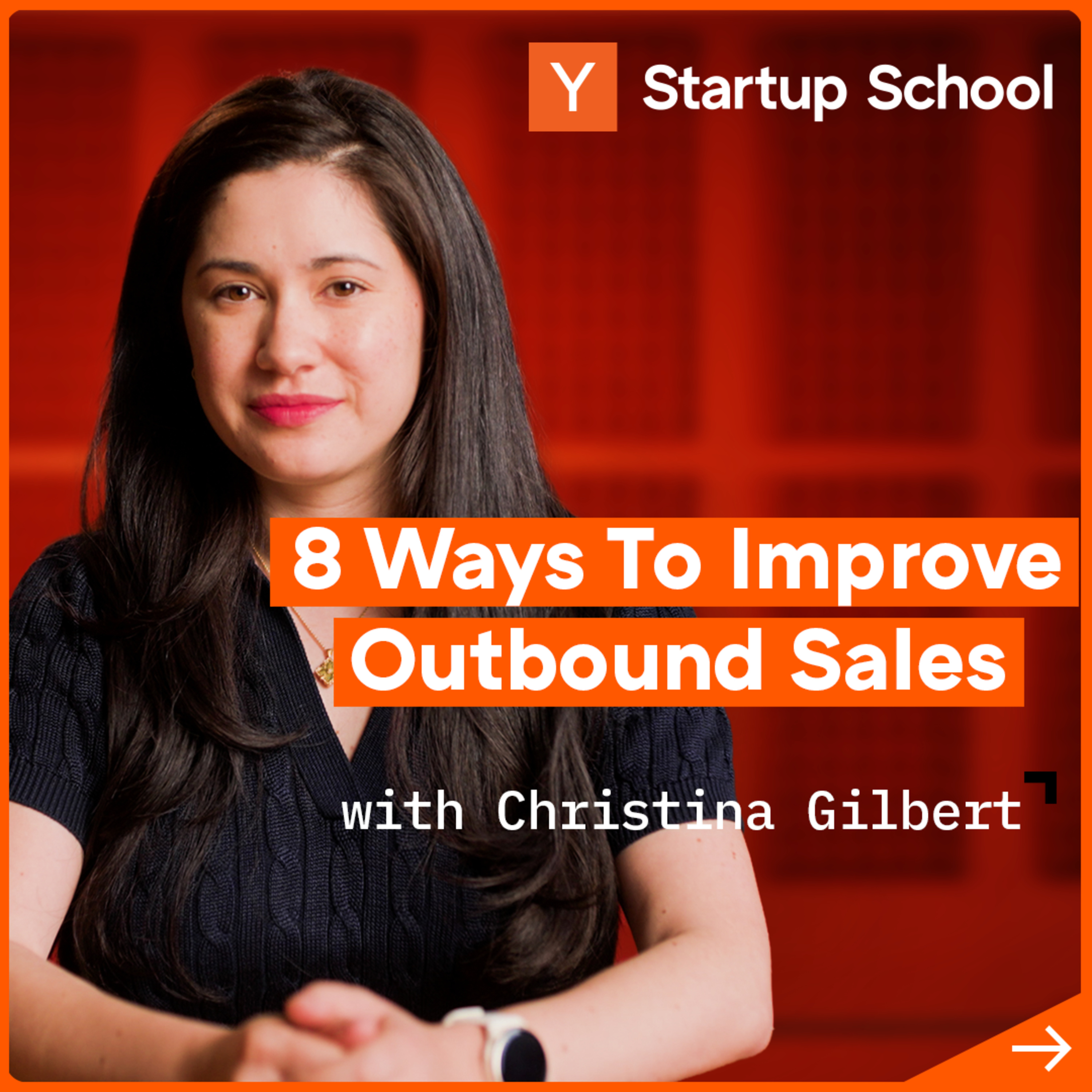
Y Combinator
Automating outbound sales eliminates the feedback loop required to diagnose why prospects ignore emails, concealing whether silence stems from poor targeting or a lack of product-market fit.
AI-assisted summary of 8 Ways To Improve Your Outbound Sales — original source. Check the original for full context.
Source published:
Key ideas
- Founders must conduct at least their first 100 outbound sales outreaches manually before automating, as blasting automated emails without intuition eliminates the feedback loop needed to diagnose failures. (0:00)
- Targeting accuracy outweighs email copy; reaching prospects who actively suffer professional downside from the problem is essential, whereas reaching the wrong titles guarantees zero conversions. (1:23)
- Cold sales messages should remain brief (5–8 sentences for email, 2–5 for LinkedIn) with a single-sentence value proposition focused on business outcomes rather than technical implementation details. (5:00)
- When reply rates fail across the diagnostic hierarchy—person, company, subject line, messaging, collateral, and deliverability—the failure typically signals a deeper product-market fit issue. (8:34)
Detailed notes
## Background Published by Y Combinator on September 13, 2026, across their podcast platforms, this episode features YC Visiting Partner Christina Gilbert sharing tactical guidance on outbound sales. According to the show description, Gilbert draws on her experience generating millions in founder-led sales at OneSchema to teach founders why they must execute their first 100 outreaches by hand, hone targeting, debug low reply rates, and sharpen messaging before turning to automation.
## TL;DR Christina Gilbert outlines eight essential rules to help early-stage founders fix struggling outbound pipelines, starting with the imperative to conduct manual outreach before automating so they can establish a real feedback loop. She argues that precise prospect and company targeting trumps clever email copy, advising founders to write brief, jargon-free messages centered on the buyer's acute business anxieties rather than technical features. Gilbert provides a systematic six-step diagnostic hierarchy to troubleshoot zero-reply campaigns, highlights the importance of rapid follow-ups and optimized LinkedIn profiles, and encourages founders to lift verbatim language directly from customer conversations to build a compounding sales moat.
## Atmosphere & style The presentation carries the brisk, pragmatic energy of an elite YC office hours session, blending no-nonsense tough love with empathetic founder mentorship. Gilbert speaks with authoritative clarity and candid realism, debunking common startup growth-hack shortcuts while acknowledging just how demoralizing cold prospecting can feel. The narrative style is crisp and analytical, transforming what is often perceived as an exhausting numbers game into a disciplined, diagnostic engineering problem.
## Bulletin - `00:00` Founders must conduct at least their first 100 outbound sales outreaches manually before automating, as blasting automated emails without intuition eliminates the feedback loop needed to diagnose failures. - `01:23` Targeting accuracy outweighs email copy; reaching prospects who actively suffer professional downside from the problem is essential, whereas reaching the wrong titles guarantees zero conversions. - `05:00` Cold sales messages should remain brief (5–8 sentences for email, 2–5 for LinkedIn) with a single-sentence value proposition focused on business outcomes rather than technical implementation details. - `08:34` When reply rates fail across the diagnostic hierarchy—person, company, subject line, messaging, collateral, and deliverability—the failure typically signals a deeper product-market fit issue.
## Key takeaways - `00:00` Automating outbound from day one deprives founders of a learning feedback loop when campaigns generate zero replies. - `00:00` Doing the first 100 outreaches by hand forces founders to diagnose specific prospect problems and uncover high-converting value propositions. - `01:23` Prospect role targeting matters more than messaging quality, because recipients without direct pain or budget will never buy regardless of copy quality. - `01:23` Prioritize prospects with direct career stakes tied to the problem, such as executives who could face termination if the issue remains unresolved. - `01:23` Monitor hiring posts and company headcount milestones as intent signals to time outreach effectively. - `01:23` Founders should exhaust their warm networks before launching cold outreach campaigns, as warm conversions vastly outperform cold lists. - `05:00` Buyers prioritize hitting business targets over technical architecture; technical explanations should be restricted to a single sentence in cold emails. - `05:00` Establish instant credibility by highlighting relevant technical background or notable existing clients, paired with a low-friction call to action. - `05:00` Treat the first 20 to 30 characters of the email body as vital real estate that functions as an extension of the subject line in inbox previews. - `07:22` A founder's LinkedIn profile acts as a digital billboard that gatekeeps response rates, requiring focused positioning and ruthless removal of irrelevant past gigs. - `08:34` Troubleshoot low reply rates systematically through a diagnostic hierarchy: person, company, subject line, messaging, collateral, and deliverability. - `08:34` Persistent zero-percent response rates across all troubleshooting layers usually indicate an underlying lack of product-market fit. - `09:47` Implement a 2-to-4 email follow-up sequence, concluding with a pressure-relieving 'breakup email' that often generates candid customer feedback. - `09:47` Respond instantly to warm inbound replies to prevent scheduling delays from killing potential deals. - `11:15` Mine buyer vocabulary during discovery calls and post-sale retrospectives to incorporate exact customer phrasing into outbound copy. - `11:15` Founder-led sales builds an unreplicable competitive moat and intuition that outsourced sales agencies cannot duplicate.
## Detailed walkthrough ### `00:00` Tip 1: Start Manual Before You Automate
Christina Gilbert introduces the guide for founders struggling with outbound sales who are facing low or near-zero reply rates. Drawing directly on her experience generating and closing millions of dollars in revenue through founder-led sales at OneSchema, as well as working with hundreds of YC companies as a visiting partner, she outlines the fundamentals needed to turn cold pipeline around. Her foundational rule is that founders must start completely manual before touching any automation tools.
During YC office hours, Gilbert frequently sees founders pull up an outbound email pipeline that is fully automated from day one. They set up an email tool, blast out 1,000 cold messages, and end up with zero replies. The fundamental flaw with this approach is the total absence of a feedback loop: when a campaign with no upfront thought yields nothing, the founder learns absolutely nothing. It is impossible to diagnose whether the failure stemmed from messaging, company targeting, prospect selection, deliverability issues, or an uninspired subject line. As Gilbert warns:
> “The biggest issue with this is if you get zero replies from a campaign that you didn't give any thought to in the first place, then at the end, when you have zero replies, you've learned nothing.”
To build genuine intuition, Gilbert instructs founders to conduct at least their first 100 outreaches entirely by hand—noting that in reality, it will probably take even more. Doing outreach "by hand" requires founders to sit down and focus deeply on one individual prospect at a time: reviewing her LinkedIn profile, reading about her company, diagnosing her specific operational problems, and determining what exact hook would earn her attention. This tedious, hands-on homework is precisely where the highest-converting outbound ideas and value propositions originate.
`01:23` Tip 2: Targeting Beats Perfect Messaging
Founders regularly spend hours obsessing over and polishing their email copy while giving almost no critical thought to who actually receives the email. Outbound prospecting is fundamentally like searching for a needle in a haystack; unless the recipient actively experiences the exact pain point being solved, even the most eloquent pitch will fall completely flat. Gilbert illustrates this with a founder from a recent YC winter batch who was selling a technical infrastructure product. The product needed to be purchased by senior engineering leaders, yet an inspection of the founder's LinkedIn outreach queue revealed he was blasting messages to Developer Relations managers, Go-To-Market managers, and even a Customer Success Manager. The founder could not understand why his reply rates were zero. Gilbert underscores the reality of bad list-building:
> “Those wrong job titles were never going to buy, no matter how good your email was.”
To isolate the correct titles, founders should inspect existing deals: who drove the sale forward, who actually signed the contract, and who released the budget. If a company is pre-revenue and lacks replies, founders must deduce who inside the organization has the most acute professional upside or downside tied to the problem. For instance, if pitching device-monitoring security software, a Chief Security Officer (CSO) is a prime target because a data breach could get them fired, whereas an engineering manager would likely resist being monitored altogether.
```mermaid flowchart TD accTitle: Prospect Targeting Decision Logic accDescr: Flowchart illustrating how founders should evaluate prospect fit based on pain points and organizational risk. subgraph S1["Assess Organizational Role"] A["Identify Candidate"] --> B{"Does role suffer the pain directly?"} B -->|"No (e.g. CS, GTM, DevRel for infra)"| C["Disqualify: Will not convert"] B -->|"Yes"| D{"What is their career stake?"} end subgraph S2["Evaluate Professional Stakes"] D -->|"Downside/Risk (e.g. CSO facing breach)"| E["High-Priority Target"] D -->|"Resistant to intervention (e.g. Eng Mgr)"| F["Avoid Target"] end ```
Targeting also requires rigorous scrutiny of target companies. Relying blindly on filters inside tools like LinkedIn Sales Navigator leads to poor data; searching broadly for "tech companies" frequently serves up IT implementation consultancies rather than software vendors. Founders must individually verify company profiles and watch for specific "intent signals." Job postings provide clear windows into current company priorities and tooling gaps. Company headcount expansion is another reliable indicator. For example, a company building compensation-planning software should avoid startups under 100 people (who do not yet have formalized employee leveling) and enterprises over 500 people (whose compensation bands are already set). Crossing the 100-employee mark serves as the exact sweet spot and trigger event. Finally, Gilbert emphasizes that for the very first sales, founders should exhaust their warm networks—colleagues, friends, family, investors, college roommates, and casual acquaintances—because warm conversion rates dwarf cold outreach.
- Founders must trace past deals to find the true champion: identify who pushed the deal, who signed, and who paid. - Tool search criteria can deceive: LinkedIn queries for tech firms routinely return IT implementation agencies. - Scaling milestones act as triggers: compensation software hits peak demand when a company grows past 100 employees. - Warm intros from anyone—including investors or someone met in a coffee shop—should always precede cold campaigns.
`05:43` Tip 3: Craft a Message Worth Reading
Moving to copy, Gilbert emphasizes that the single most vital element of an email is communicating a crisp, immediate explanation of how the product helps the recipient. Founders must step inside the executive's shoes and identify the top three anxieties keeping them awake at night, asking themselves what metrics could get that specific buyer fired or promoted, and why that buyer should believe the startup can deliver.
When cold copy cuts straight to the core of an executive's immediate crisis, buyers will respond even if they remain skeptical about the underlying technology. Gilbert explains the mindset shift that drives cold conversions:
> “When you write an email and the buyer thinks, 'That's exactly the problem that I have,' they really get it. They're likely to take the call, even without fully understanding or trusting your solution.”
`05:00` Writing High-Converting Emails and Subject Lines
Prospects do not care about technical specifications or product features; they care about hitting their own business goals. As Christina Gilbert puts it: “They don't care that you have blazing fast uploads. They don't care that your database is built in Rust. They're worried about how they're going to hit their quarterly target.” Consequently, product explanations must be kept to a single sentence because paragraphs of technical architecture belong in an initial discovery call, not cold outreach. To build trust quickly, founders should establish credibility by either citing notable companies they already assist or detailing their own relevant technical background. Every email requires an unambiguous, low-friction call to action—such as asking for a specific 20-minute window rather than a vague inquiry about whether the concept sounds appealing—paired with specific available slots or a scheduling link. Brevity is paramount: “Every filler word that you use dilutes the ones that matter.”
```mermaid flowchart LR accTitle: Cold Email Anatomy accDescr: Recommended structure for writing a cold outbound sales email. subgraph Hook["1. Credibility & Context"] A["Peer tone & relevant background"] --> B["Specific observation / trigger"] end subgraph Pitch["2. The Core Offer"] B --> C["1-sentence product value"] end subgraph Close["3. The Ask"] C --> D["Specific, low-friction CTA"] D --> E["Calendar link / time slots"] end ```
Gilbert analyzes a cold email sent by the founder of Apten (YC S24) to a prospect named Samir as a model of execution. Written in an unpretentious, peer-to-peer style devoid of corporate jargon, the message read like an email from a friend. The founder led with his credentials: “I used to be a software engineer at Tesla. We got crazy good at using SMS to convert the people who visited our website into car buyers.” He then highlighted a bespoke detail—noticing that Samir’s site collected phone numbers during sign-up—and closed with a specific proposal: “Would you be open to an experiment to see if we could improve your conversion rate by using AI to reactivate leads?” The founder focused entirely on solving the buyer's pain rather than delving into the underlying tech stack. Beyond the email body, founders must optimize their subject line and the first 20 to 30 characters of the email body, which appear in the Gmail inbox preview. Unconventional subject lines often beat literal descriptions; for an OpenClaw-style autonomous agent, the hook “broken agents” drastically outperformed “better agents for every workflow.”
- **Length thresholds:** Restrict cold emails to 5–8 sentences total; hold LinkedIn outreach to 2–5 sentences. - **Tone criteria:** Write like an industry peer; eliminate marketing jargon and corporate fluff. - **Inbox real estate:** Treat the first 20–30 characters of the body text as an extension of the subject line.
`07:22` Optimizing Your LinkedIn Profile for Outbound
On LinkedIn, a founder's profile performs the exact same gatekeeping function that a subject line performs for cold email. Before replying to a message or accepting a connection request, a prospect will inspect the sender’s page to determine legitimacy. Gilbert emphasizes that founders must turn their personal LinkedIn presence into a dedicated billboard for their startup, stripping away unrelated background details in favor of immediate clarity.
Mutual connections are the single most critical factor in driving LinkedIn connection acceptance rates. Because decision-makers in the same target vertical frequently know each other, accumulating relevant contacts creates a compounding network effect. Gilbert recommends making it a non-negotiable daily habit to max out your platform connection allowance to build this trust foundation.
- **Profile Picture:** Always use a real photograph to prove authenticity and build immediate baseline trust. - **Profile Banner:** Convert the banner graphic into a clear, jargon-free advertisement describing what the company builds. - **Headline & About Sections:** Condense the headline description and about copy into concise summaries mirroring the banner's core value proposition. - **Curate Experience:** Ruthlessly edit out non-relevant past hobbies, unrelated side gigs, or dated projects, leaving only the credentials that prove credibility to target buyers.
`08:34` Debugging Low Reply Rates
Early outbound efforts frequently yield meager conversion rates, but even two or three responses out of 100 manual sends provide a meaningful baseline for iteration. When diagnosing an underperforming campaign, Gilbert follows a strict hierarchy of troubleshooting steps before rewriting copy or worrying about infrastructure.
```mermaid flowchart TD accTitle: Outbound Debugging Hierarchy accDescr: Step-by-step diagnostic order to troubleshoot poor cold outbound reply rates. P["1. Person (Right role?)"] --> C["2. Company (Right ICP?)"] C --> S["3. Subject Line (Open rate)"] S --> M["4. Messaging (Body copy)"] M --> A["5. Collateral (Website/LinkedIn)"] A --> D["6. Deliverability (Spam/Technical)"] D --> PMF["Persistent 0% replies = Product-Market Fit Issue"] ```
If an outreach campaign systematically fails across every diagnostic layer, the issue is rarely tactical. Gilbert notes: “If you go through all six of these areas and they all seem to be reasonable and you're still getting zero replies, this often might be indicative of a deeper product market fit issue.”
- **Step 1 — Prospect Role:** Confirm you are contacting the person who actually experiences the problem and holds purchasing influence. - **Step 2 — Company Profile:** Verify the business fits the ideal customer profile and experiences the pain point right now. - **Step 3 — Subject Lines:** Check open indicators to confirm prospects are being enticed to look inside. - **Step 4 — Core Messaging:** Audit the body text for brevity, peer tone, and pain-oriented framing. - **Step 5 — External Collateral:** Review the founder’s LinkedIn profile and company landing page to ensure they appear professional and legitimate. - **Step 6 — Technical Deliverability:** Ensure emails are not landing in the spam folder or hitting technical DNS authentication roadblocks.
`09:47` Following Up, Moving Fast, and Time-Blocking
A single outreach email is easily missed in a crowded inbox, meaning consistent follow-up is necessary. Gilbert recommends sending two to four follow-up emails, spaced a couple of days apart. For the final touchpoint, she relies on a "breakup message" that acknowledges the prospect may not have this problem right now (e.g., stating that since they haven't responded, sales tax automation likely isn't a current priority, and offering to spare their inbox). These breakup emails often see elevated response rates because they remove all sales pressure, giving the prospect an easy out while generating actionable feedback on ICP fit.
When an interested prospect does respond, speed is critical: “Once you get a reply, you should be like a heat-seeking missile and that nothing is gonna get between you and getting onto their calendar.” Founder-led deals collapse when scheduling drags out, reinforcing the classic sales maxim: “time kills deals.”
Because cold outreach is demanding and easily displaced by urgent product tasks, founders must time-block their outbound work directly onto their calendar, deciding on daily targets, calculating the time per message, and having co-founders enforce accountability. As Gilbert argues: “The number one difference between founders who actually succeed with outbound and founders who don't is actually following through on the activity that they commit to.”
- **Follow-up Cadence:** Send 2–4 concise follow-up messages spaced over several days. - **Breakup Strategy:** Conclude with a graceful exit email; clean "no" responses help sharpen targeting criteria for future outreach. - **Speed to Schedule:** Respond instantaneously to warm leads to eliminate deal friction. - **Dedicated Calendar Blocks:** Treat manual outbound as a scheduled, non-negotiable operational task.
`11:15` Stealing Customer Language and the Founder's Superpower
The highest-performing sales copy is not written in isolation by founders, marketing advisors, or peers; it is lifted verbatim from buyers. Gilbert emphasizes: “The best feedback on your messaging always comes from your customer, not a friend, not an advisor, and not your co-founder.” During sales calls, founders should ask early on what specific sentence or concept in the cold email caught the buyer's attention. This reveals high-performing hooks and prompts the prospect to discuss their operational frustrations openly. Similarly, asking existing customers to identify the single deciding factor behind their purchase surfaces the exact terminology founders should reuse in subsequent campaigns.
Acknowledging that manual outbound feels like an exhausting grind after sending thousands of messages herself, Gilbert reminds founders that their position is an irreplicable advantage. While external agencies or junior sales hires treat outreach as a generic numbers game, a founder actively doing the work develops intuition: they notice job postings and instantly recognize company pain, and they learn which specific pain points resonate with smaller versus larger organizations. That granular customer knowledge compounds over time, making every subsequent sales motion faster, smarter, and easier to scale.
- **Discovery Call Question:** Ask, *“What got your attention about my message?”* to pinpoint winning hooks and get the buyer talking about their challenges. - **Post-Sale Retrospective:** Ask paying accounts to name the single reason they converted, then insert their exact vocabulary into future outbound emails. - **Compounding Intuition:** Founder-led outbound transforms customer discovery into a competitive moat that third-party sales agencies cannot replicate.
## Notable quotes > `11:15` The best feedback on your messaging always comes from your customer, not a friend, not an advisor, and not your co-founder. — Christina Gilbert
> `09:47` The number one difference between founders who actually succeed with outbound and founders who don't is actually following through on the activity that they commit to. — Christina Gilbert
> `05:00` Every filler word that you use dilutes the ones that matter. — Christina Gilbert
> `00:00` If you get zero replies from a campaign that you didn't give any thought to in the first place, then at the end, when you have zero replies, you've learned nothing. — Christina Gilbert
## Mentioned Apten, Christina Gilbert, Gmail, LinkedIn, LinkedIn Sales Navigator, OneSchema, OpenClaw, Rust, Samir, Tesla, Y Combinator
## Video description <p>The best outbound starts before you automate anything. Founders need to learn who actually has the problem, what gets their attention, and what makes them reply. YC Visiting Partner Christina Gilbert recommends doing at least your first 100 outreaches by hand so you can learn those things yourself.</p><p><br></p><p>Drawing from her experience generating and closing millions of dollars through founder-led sales at OneSchema, Christina shares eight ways founders can improve their outbound, from targeting the right people and writing emails worth reading to following up, debugging low reply rates, and using customer language to sharpen your message.</p>
[Source](https://anchor.fm/s/8c1524bc/podcast/play/125672219/https%3A%2F%2Fd3ctxlq1ktw2nl.cloudfront.net%2Fstaging%2F2026-8-13%2F431804026-44100-2-63676612def7f.mp3)