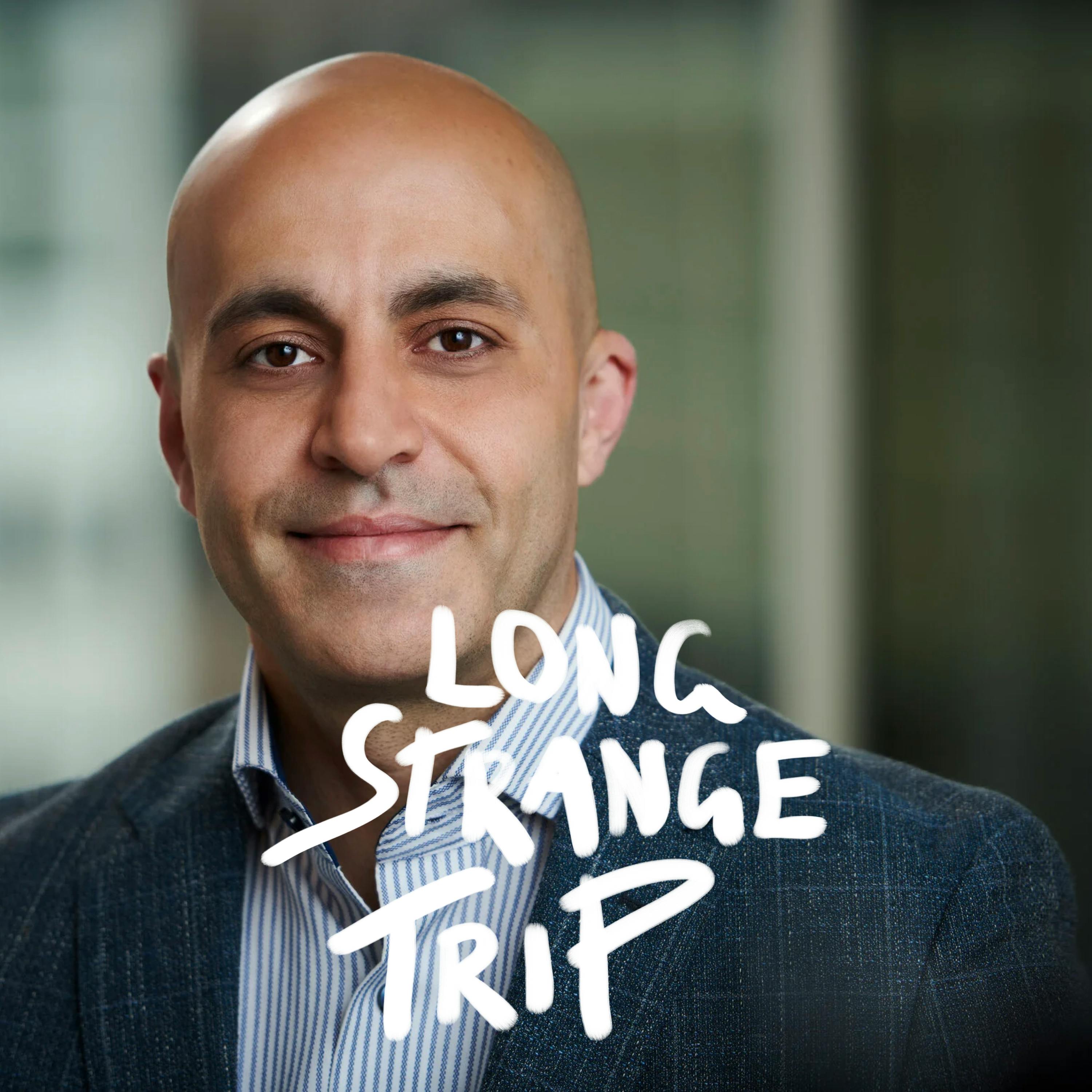
Databricks CEO Ghodsi Rebuffs IPO Rush, Warns Timid Leaders Fail
Sequoia Capital
Chief executives must abandon consensus and pour years of undivided focus into a single operational bottleneck, because enterprise software platforms fail whenever founders avoid conflict or mimic incumbent rivals.
Ali Ghodsi took over as Databricks CEO in 2015 on an interim trial basis without an initial pay raise when full-year commercial GAAP revenue stalled at $1.5 million, eventually scaling the company past $7 billion in ARR. (1:22)
Databricks abandoned its initial 'zero touch' product-led growth model after two flat quarters, transitioning to an enterprise sales engine led by Ron Gabrisko, where single account executive quotas exceeded the company's prior annual revenue. (12:16)
Rather than copying Snowflake directly, Databricks deployed an asymmetric wedge strategy focused on open storage formats, AI/ML workloads, and a 60-70% lower total cost of ownership. (27:02)
Databricks plans to pursue an IPO primarily to replace its internal liquidity program for 15,000 employees and alumni, remaining patient because it is already free-cash-flow break-even. (64:53)
Detailed notes
## Background
Published by Sequoia Capital as a podcast episode hosted by Brian Halligan on September 17, 2026, this interview features Databricks co-founder and CEO Ali Ghodsi. According to the episode description, the conversation explores how Ghodsi transitioned from an uncompensated interim trial CEO in 2015 into one of Silicon Valley's most effective chief executives, detailing his bottleneck-focused management philosophy, the competitive playbook used against Snowflake, and why conflict aversion disqualifies leaders.
## TL;DR
Ali Ghodsi unpacks the operational playbook that scaled Databricks from a stalled $1.5 million open-source business into a multi-billion-dollar enterprise powerhouse. He argues that early-stage companies usually suffer from a single primary bottleneck, requiring disproportionate executive obsession over two to three years—an approach that birthed the Lakehouse category and dismantled failed product-led growth experiments in favor of enterprise sales. Ghodsi also details why conflict aversion is fatal for executives, how to compete asymmetrically against market incumbents like Snowflake without feature copying, and how enterprises must restructure their core workflows around context capture rather than superficial AI chatbots. Finally, he shares his hands-on coding experiments to diagnose engineering friction, his rejection of excessive spans of control, and why Databricks remains patient regarding its eventual public offering.
## Atmosphere & style
The conversation carries an intense, masterclass-like rigor driven by Ghodsi's analytical bluntness and Halligan's humble, reflective questioning. Ghodsi speaks with palpable grit and zero corporate gloss, drawing on an immigrant's hunger and a researcher's intellectual discipline to dissect organizational dysfunction. The host dynamics are warm yet candid, featuring self-deprecating admissions from Halligan about his own conflict-averse tendencies contrasted against Ghodsi's uncompromising, battle-tested pragmatism. It feels like an authentic, behind-the-closed-doors post-mortem on high-stakes enterprise warfare.
## Bulletin
- `01:22` Ali Ghodsi took over as Databricks CEO in 2015 on an interim trial basis without an initial pay raise when full-year commercial GAAP revenue stalled at $1.5 million, eventually scaling the company past $7 billion in ARR.
- `12:16` Databricks abandoned its initial 'zero touch' product-led growth model after two flat quarters, transitioning to an enterprise sales engine led by Ron Gabrisko, where single account executive quotas exceeded the company's prior annual revenue.
- `27:02` Rather than copying Snowflake directly, Databricks deployed an asymmetric wedge strategy focused on open storage formats, AI/ML workloads, and a 60-70% lower total cost of ownership.
- `01:04:53` Databricks plans to pursue an IPO primarily to replace its internal liquidity program for 15,000 employees and alumni, remaining patient because it is already free-cash-flow break-even.
## Key takeaways
- `06:58` Early-stage companies rarely fail from dozens of minor flaws; they typically choke on a single primary bottleneck that demands 1 to 3 years of disproportionate CEO focus.
- `12:16` Product-led growth failed for Databricks in 2015, prompting a total pivot to traditional enterprise selling driven by high-EQ account executives who navigate organizational power rather than relying on technical arguments.
- `23:00` Front-door reference checks are roughly 80% untruthful; executive vetting requires proactive back-door conversations with a candidate's former managers 6 to 12 months before a hiring need arises.
- `27:02` Directly copying a competitor's features destroys strategic differentiation; asymmetric competition requires targeting a market leader's architectural and business-model vulnerabilities.
- `33:22` Launching a successful corporate second act, such as the Lakehouse, requires swinging the pendulum completely and aligning sales incentives through aggressive variable compensation spiffs and multipliers.
- `42:00` Conflict aversion is fatal in a chief executive; avoiding friction leads to back-channel hallway deals, blurred communication, and stalled operational velocity.
- `44:10` Startups break their centralized star topology around 200 to 250 employees, necessitating a transition to indirect management, formal KPIs, and delegation to functional executives.
- `46:40` Deploying true agentic AI in the enterprise requires systematically capturing ambient business context and institutional knowledge rather than relying on narrow chatbots or coding copilots.
- `50:00` Expanding engineering manager spans of control to 25 reports via 'vibe coding' is flawed because management remains an intrinsically emotional, conflict-resolving discipline.
- `52:55` Software delivery delays frequently stem from institutional process bottlenecks—like slow PRD authoring and manual test setup—rather than raw development time, as demonstrated when Ghodsi personally coded a connector over a single weekend.
- `57:18` CEOs must deliberately guard their calendars against operational overhead to ensure dedicated, deep-thinking time for the single 10x company bottleneck.
- `01:00:00` Asynchronous tools and AI cannot replace synchronous, face-to-face leadership meetings when building cross-functional trust and resolving departmental tribalism.
## Detailed walkthrough
### `00:00` Cold Open: The Absurdity of Eliminating In-Person Connection
The episode begins mid-conversation with an argument about why fully asynchronous communication fails at a fundamental human level. When asked whether recurring Monday morning leadership meetings are truly useful or simply organizational theater that could easily be replaced by a shared Google Doc, Ali Ghodsi rejects the premise entirely. He draws an analogy between running a human organization and sustaining a family, pointing out the absurdity of trying to run intimate human relationships through documents and AI agents.
> “We talk about humans. Why should I like you or trust you if I never get to meet you? I don't know if you're married. Why do you have to meet your wife at all and your kids? Can't you just have a Google Doc? We just write down the stuff you want to like. If there's something you want to teach your kids, put it in the goddamn Google Doc. Maybe you don't even have to respond to the Google Doc. Claude can.” — Ali Ghodsi
Host Brian Halligan introduces Ali Ghodsi, co-founder and CEO of Databricks, noting that when he previously interviewed Ben Horowitz of Andreessen Horowitz and asked him to name the single best CEO in Silicon Valley outside his own firm's portfolio, Horowitz answered without hesitation: Ali Ghodsi. Halligan reflects that having now conducted the interview, he completely agrees with that assessment and would have relished the opportunity to learn under him earlier in his own career.
---
`01:22` The Secret CEO Search and the 2015 Commercial Slump
Databricks was established with seven co-founders, but by 2015 the business found itself in a precarious situation. Although its underlying open source engine, Apache Spark, had exploded in popularity across the software industry, the business was barely monetizing it. GAAP revenue for the entire year limped in at approximately $1.5 million. The board of directors realized changes were necessary and began exploring external executive talent behind closed doors.
Ghodsi recalls hearing rumors through back channels that board members were actively interviewing seasoned outside candidates, and he even managed to discover the names of two contenders. Convinced the founders were going to be displaced and viewing himself as naturally pessimistic, Ghodsi prepared his exit strategy. He applied for a faculty teaching position at UC Berkeley and reached the final stages of accepting it, torn between stepping up to lead a company when he never desired the corner office, or returning to his true passion in academia.
The board’s internal search never involved a formal CEO interview with Ghodsi. Instead, members evaluated him informally over casual one-on-one sessions, careful not to reveal that an active executive search was underway. Ultimately, Andreessen Horowitz and Ben Horowitz opted to elevate Ghodsi directly. Horowitz operated on a strict, founder-first philosophy shaped by his own painful operational history—specifically remembering the sting of being asked when he would hand over his company to a "real CEO." Unwilling to inflict that experience on Databricks' technical founders, Horowitz backed Ghodsi on an interim trial basis, without a CEO pay package, keeping open the option to resume the executive search six to twelve months down the road if the experiment faltered.
```mermaid
flowchart TD
accTitle: Databricks 2015 Leadership Transition
accDescr: Flowchart illustrating the board's secret CEO search in 2015 and the decision to appoint Ali Ghodsi on an interim trial run.
subgraph Problem["2015 Crisis"]
P1["Apache Spark surges in popularity"]
P2["Commercial GAAP revenue stalls at ~$1.5M"]
P1 --- P2
end
subgraph Search["Board Response"]
S1["Board runs secret external CEO search"]
S2["Ali prepares exit & applies for Berkeley faculty"]
S1 -.-> S2
end
subgraph Resolution["The Founder-First Bet"]
R1["Ben Horowitz (a16z) prefers a technical founder"]
R2["Ali appointed CEO on trial run without CEO pay"]
R1 --> R2
end
Problem --> Search
Search --> Resolution
```
- Databricks had seven original co-founders.
- In 2015, full-year commercial GAAP revenue was approximately $1.5 million.
- Ali Ghodsi was neither officially told about the CEO selection process nor formally interviewed for the position.
- His alternative plan was stepping into a faculty appointment at UC Berkeley.
- The initial CEO appointment was structured as an unannounced trial run without a CEO title raise or salary adjustment.
---
`04:11` The Pattern: Choosing the Hardest Path
When reflecting on whether he would have been happier remaining in academia, Ghodsi admits that given the current struggles facing university institutions, returning would have likely been an error. When forced to decide between retreating to academia or accepting the business leadership role, he examined the turning points across his life and discovered a recurring behavioral pattern: he consistently achieved his greatest growth whenever he abandoned the comfortable path in favor of the most intimidating challenge available.
Growing up in Sweden, Ghodsi was obsessed with programming and dreamed of moving to Los Angeles to become a video game programmer for Electronic Arts. During high school, an acquaintance dangled an offer to move to the United States for an $80,000 salary to write games. He felt his life's dream was secured, but his parents intervened and forced him to attend university instead. While initially devastated, university exposed him to foundational computer science concepts he did not even know existed. Later, around 2000, he interned at Room 33—then Europe's largest mobile startup—and performed so well that executives offered him the number-two operating role if he dropped out. He chose to return to school instead, dodging the imminent collapse of the dot-com bubble.
The pattern repeated itself after graduation. A regional university offered Ghodsi a full professorship without requiring a doctorate. Rather than taking the immediate post, he chose to pursue a rigorous PhD at a premier institution. After completing his doctorate and securing a professorship, UC Berkeley offered him an entry-level postdoctoral research position. While the status of a Berkeley postdoc was substantially lower than his existing European professorship, he took the risk anyway because it pushed his boundaries. Faced with the CEO appointment in 2015, Ghodsi applied that exact life philosophy:
> “I know nothing about being CEO. I know nothing about businesses. Probably the most challenging thing I can do is probably take the CEO on. Going back to Berkeley, it's kind of like I know how the game works. I know academia. So that's and I think that was the right thing. And now it's kind of become a philosophy of mine. I want to sort of challenge myself as much as possible because, you know, how many years do we have on this planet?” — Ali Ghodsi
---
`06:58` Removing the Interim Tag and Forging a Playbook
Roughly twelve months into his tenure as CEO, the board's posture shifted permanently. During a routine one-on-one meeting, Ben Horowitz granted Ghodsi a substantial equity increase, raised his base compensation to match market executive standards, and initiated long-range planning sessions. The board never held a formal ceremony to declare his trial over. Instead, Horowitz later appeared at a Databricks all-hands meeting and admitted to the entire company that they had initially harbored deep doubts about whether Ghodsi could pull it off, openly acknowledging that the board had intentionally handed him a temporary, discounted salary during his trial period.
Halligan asks what lessons first-time founders can take from someone who sat in the CEO seat with zero business background and turned it into one of software's most valuable private franchises. Ghodsi emphasizes that early-stage leadership requires an extreme learning curve characterized by 100-hour workweeks, intense networking with top operators, and devouring business literature.
However, Ghodsi warns against the reflex of blindly copying external playbooks. Drawing an explicit comparison to Bruce Lee synthesizing disparate combat styles into Jeet Kune Do, Ghodsi points out that an operator must run every external tactic through first-principles thinking to assemble a unified framework of their own. Furthermore, he argues that struggling startups rarely suffer from dozens of fatal defects; they are almost always crippled by a single primary bottleneck that demands obsessive, disproportionate executive intervention to unlock.
> “I was building my own CEO playbook based on all the ingredients I was learning from the different places. And that way was like self consistent. I think that was one thing I would recommend to do. The second thing that's kind of been with me this whole time is I think typically companies are failing because one major problem. I mean, maybe they have two major problems or three, but usually it's like one giant bottleneck. And I think you should, at that point, identify what that giant bottleneck is, and then focus the whole company and you're all—” — Ali Ghodsi
`10:00` Finding the Bottleneck and Pouring Attention on It
Ali Ghodsi explains his operational philosophy: identify the single biggest bottleneck facing the company and direct a disproportionate, almost absurd amount of attention toward it. Going overboard on that one issue is not just acceptable—it is necessary, because otherwise, the bottleneck simply will not unclog. When he stepped in as CEO, the reality of Databricks was stark: they had built a wildly successful open-source project with world-class technology, yet they had zero commercial success to show for it. He mobilized the entire organization around fixing that single failure mode, hammering on it at every all-hands meeting and letting it consume his everyday thinking.
Brian asks what the typical time horizon is for tackling one of these bottlenecks—whether it operates on a weekly, quarterly, or yearly cycle. Ali stresses that strategic focus must be distinguished from the everyday tactical fires that constantly land in a CEO's lap:
> “That is not a strategic focus. That's just tactical stuff. So I would say a year, two years. Sometimes three, like creating the lake house category took I think multiple years.”
Databricks spent multiple years driving the Lakehouse vision before and after its launch, facing intense internal friction and open mockery from strategy consultants and the internet alike. Picking the right focal point is life-or-death for a startup: if an executive points all of the company's energy at the wrong target for two or three years, the company simply will not survive.
```mermaid
flowchart TD
accTitle: Strategic Bottleneck Focus vs Tactical Noise
accDescr: Diagram showing how a CEO must isolate one strategic bottleneck over multi-year cycles while filtering out daily tactical interruptions.
`12:16` Killing PLG and Admitting the Need for Enterprise Sales
When Ali took over the CEO seat, his very first move was to quietly replace almost the entire inherited executive staff over the course of twelve to eighteen months. To create bandwidth for commercialization, he handed off engineering and product management completely to one of his co-founders and did not look at it for two years. All of his energy went into building the muscles Databricks lacked.
Until that point, Databricks had clung tightly to a product-led growth (PLG) mindset. The team loved the low-friction AWS model where developers swiped credit cards, and an anti-sales ethos was deeply baked into the company's culture. They avoided quota-carrying account executives, relying instead on a small pool of sales engineers to function as the de facto sales team. In 2015, they even ran an experiment called "zero touch," cutting out human interaction entirely under the belief that an automated funnel would convert customers on its own. The result was immediate stagnation: revenue, which had been climbing, flatlined for two straight quarters at around $1.5 million.
```mermaid
flowchart LR
accTitle: Shift from Zero Touch PLG to Enterprise Sales
accDescr: Flowchart illustrating Databricks transitioning from a failed automated PLG funnel to hiring quota-carrying enterprise sales reps.
subgraph PLGFailure["The Failed PLG Approach (2015)"]
direction TB
P1["'Zero Touch' Automated Funnel"] --> P2["Credit Card Swipes Only"]
P2 --> P3["Result: Revenue Flatlined at $1.5M"]
end
subgraph EnterprisePivot["The Enterprise Sales Realization"]
direction TB
E1["Standard Enterprise AE Quota: $1M-$2M"]
E2["Single Great Rep Matches Years of Effort"]
E3["Decision: Hire Seasoned Enterprise AEs"]
end
Ali realized that since typical enterprise account executives carry quotas between $1 million and $2 million, a single top-performing seller could match everything Databricks had accomplished in its entire history. To figure out who to hire, he ran a thought experiment: were the top enterprise sellers at winning software companies hyper-technical individuals with PhDs? The reality was an unequivocal no. A deep technical background provided zero sales advantage, and in many cases, it actively held candidates back. Databricks had to discard its academic instincts and completely redesign its hiring criteria.
- **Databricks run-rate:** Hovering around $1.5 million when the zero-touch PLG experiment froze growth for two quarters.
- **Enterprise AE quota benchmark:** Typically $1 million to $2 million per rep, exposing the inefficiency of self-serve credit card sign-ups.
- **Hiring realization:** Academic credentials and deep technical chops were unnecessary—and often detrimental—for enterprise software sales.
`15:00` Decoding the Enterprise Seller: Aggression, High EQ, and Power Bases
Databricks brought in seasoned sales leader Ron Gabrisko, whom Ali credits with 99% of the sales team's ultimate success. Working alongside Ron forced Ali to abandon his academic assumptions about human behavior. While great engineers are frequently introverted and cautious about stepping on toes, world-class enterprise sellers possess a high degree of what Ali calls "professional aggressiveness."
Ali illustrates this with the story of Dave, one of Ron's earliest AE hires. Databricks had been completely unable to secure an audience with a target account until Dave went around every blocked channel, emailing the executive's boss and anyone else in the organization until a meeting was booked. The client executive was furious, telling Ali to remove Dave and never let him back into the building. When Ali confronted Dave about angering the customer, Dave was unapologetic, explaining that his job was to break glass, kick doors open, and get Ali into the room when no one answered emails.
Another early AE, Keith, demonstrated the emotional intelligence side of the craft. During a tense meeting, an executive blew up at Keith, asking who he thought he was. Instead of pushing Databricks software or arguing back, Keith pivoted entirely:
> “Then he suddenly just started asking her these weird questions. He's like, okay, so what is your team working on? That's what we're supposed to do. Sales. What is he doing? I'll shorten the story. At the end of that meeting, she was hugging him, saying, I'm so sorry for saying that.”
Keith later explained that when a customer becomes highly emotional, the rep must guide them back to familiar, safe territory, and managers are always comfortable speaking about their team's work. Ali realized that enterprise selling is not governed by logic, math, or computer science; it is an art centered on human psychology. The best reps combine professional persistence with high emotional intelligence and the ability to navigate a company's internal "power base"—the intricate web of stakeholders and hidden influencers behind any eight- or nine-figure purchasing decision.
When Brian asks how technical founders can track down their own version of Ron Gabrisko, Ali reflects on what made Ron stand out. Ron was the archetypal old-school seller from the high-pressure PTC and BMC Software school—"meat eating, doing pushups"—who had proven his skill by successfully selling commercial licenses around FTP, a technology that was inherently free and notoriously difficult to monetize.
`20:00` Hiring the Right Sales Machine Builder
Ali Ghodsi explains what made Ron Gabrisko such a standout hire to run enterprise sales at Databricks. First, Ron possessed a rare educational pedigree: an undergraduate engineering degree followed by an MBA from the Stanford Graduate School of Business (GSB), where he also casually picked up an engineering master’s degree simply because he had extra cycles to burn. This background allowed him to push back on technical founders and speak their language natively, preventing the usual "oil and water" friction between enterprise sales and engineering.
Beyond his intellect, Ron understood how to build a go-to-market engine from scratch rather than merely driving an existing vehicle. Ghodsi draws a sharp distinction: “I like to think of it as can they build the machine or can they just run somebody else's machine?” Ron had previously spent 11 years across two companies, helping take Cyclone from roughly $0 to $50 million ARR before its acquisition by Axway, where he scaled the business to hundreds of millions in revenue. This 11-year track record signaled immense loyalty, showing he would not bomb out after two years when building out a difficult multi-year motion. It also meant Ghodsi could manage him aggressively without fear that he would walk out over heated disagreements. Today, Ron serves as Chief Revenue Officer, having scaled Databricks from $1 million to over $7 billion in ARR.
```mermaid
flowchart TD
accTitle: Ron Gabrisko Scaling Journey
accDescr: Progression of Ron Gabrisko from engineering and Stanford GSB to scaling Databricks to 7 billion dollars in ARR.
subgraph Background["Dual Pedigree"]
A["Engineering Undergrad & Masters"]
B["Stanford GSB MBA"]
end
subgraph TrackRecord["11 Years Across Two Companies"]
C["Cyclone: $0 to ~$50M ARR"]
D["Axway: Scaled to Hundreds of Millions"]
end
subgraph DatabricksScale["Databricks Engine"]
E["Hired as Sales Leader"]
F["Scaled $1M to >$7B ARR as CRO"]
end
A & B --> C
C --> D
D --> E
E --> F
```
- **Candidate Qualities**: Ron possessed both traditional technical intellect and commercial sales acumen, a combination Ghodsi notes is extraordinarily rare.
- **Longevity and Tenacity**: Most executives bounce after two years, but Ron's decade-plus run at his prior roles demonstrated he could weather high-friction, multi-year organizational transformations.
- **The Classic PTC Seller Dynamic**: Ghodsi notes that seasoned, aggressive enterprise sellers are notoriously difficult to manage, making a high-conviction, thick-skinned relationship between CEO and sales leader essential.
---
`23:00` Hiring Ahead of the Curve and Avoiding False Positives
Ghodsi addresses the executive hiring treadmill that traps high-growth startups, pointing out that by the time a company realizes an executive seat must be filled, it is already too late. Rushed searches force founders to lower the bar to fill an immediate need. To combat this, Ghodsi advocates hiring ahead of the curve, initiating lengthy executive searches six months to a year before the role is critically required. This intentional buffer allows the CEO to maximize false negatives (rejecting talented people) in order to drive false positives (hiring the wrong person) as close to zero as possible.
Ghodsi outlines the devastating compounding cost of making a false-positive executive hire:
1. It takes six months to suspect an executive is failing.
2. It takes another six months to gather the courage to fire them.
3. The subsequent search takes another six to twelve months, during which the CEO is "gun-shy" and tempted to settle for a safe, compromise candidate who has "no strengths, but also no weaknesses."
4. Ramping the replacement takes another six months, ultimately burning two to two-and-a-half years of operational momentum.
Because he maintained an uncompromising filter, Ghodsi routinely rejected exceptional leaders who went on to achieve massive success elsewhere and still hold grudges over the rejection. While he acknowledges two notable mis-hires where he ignored early red flags during interviews or rushed the process, the vast majority of Databricks' executive team has stayed for nearly a decade. To vet candidates accurately, Ghodsi relies overwhelmingly on back-door reference checks, speaking to every previous manager a candidate has had, observing: “I would say like 10, 20% of the front doors end up actually being truthful. 80% are bullshit.”
---
`27:02` The Snowflake Rivalry: Exploiting Competitor Weaknesses
Brian Halligan pivots to Databricks' fierce rivalry with Snowflake, noting that HubSpot originally chose Snowflake when Databricks trailed far behind in revenue and growth. Halligan characterizes Snowflake as a hyper-aggressive sales machine whose CEO cold-called him directly, whereas Databricks was viewed as product-driven. Ghodsi pushes back slightly on the notion that Databricks lacked go-to-market teeth, citing the enterprise sales force built by Ron Gabrisko and Andy Kofoid. However, he acknowledges the brutal baseline math: Snowflake had double Databricks' revenue and was compounding at a faster rate.
Overcoming that lead required a patient, multi-year strategy focused on asymmetric advantages rather than copying the competitor's playbook. Ghodsi emphasizes: “Study your enemy carefully. Understand their weaknesses, and apply your strength to their weaknesses.” While Snowflake had built a game-changing product that disrupted the legacy data warehouses of hyperscalers, Ghodsi identified three critical vulnerabilities in their model:
| Snowflake Weakness | The Architectural Reality | Databricks Counter-Strategy (The Lakehouse) |
|:--- |:--- |:--- |
| **Proprietary Format Lock-In** | Founded by Oracle veterans, data was trapped inside a proprietary storage layer with high egress barriers. | **Open Lakehouse**: Customers retain direct ownership of their data in open storage formats. |
| **Lack of AI Support** | Optimized almost purely for SQL data warehousing; machine learning and AI capabilities were superficial or weak. | **Native AI Infrastructure**: Capitalized on Databricks' open-source Apache Spark roots to run AI and analytics in one place. |
| **Premium Pricing** | High margins extracted from customers because of product lock-in and warehouse performance. | **Lower Total Cost**: Offered a more flexible, open architecture without punitive storage-and-compute bundling markups. |
Ghodsi concluded that by rallying around the open "Lakehouse" concept, Databricks could target customers who refused vendor lock-in and wanted to run native AI directly on their data.
`30:00` The Snowflake Coexistence Playbook and the Trap of Copying
Databricks anchored its competitive strategy against Snowflake on deep architectural strengths that date back to 2009: artificial intelligence and open source data. Around 2019 and 2020, doubling down on AI was far from an obvious move because modern enterprise AI had not yet captured broad market attention. Nevertheless, Databricks identified where the competition was vulnerable and aggressively targeted total cost of ownership (TCO), aiming to deliver roughly one-third of the competitor's cost—a metric Ali Ghodsi notes they still routinely win on today. Rather than fielding an aggressive campaign telling buyers to rip out Snowflake or claiming that the rival product was inadequate, Databricks implemented a calculated "coexist strategy." Sales reps were dispatched account by account with a specific playbook: locate workloads ideally suited for machine learning, pull those specific jobs out, and migrate the underlying storage into open-source formats.
This disciplined execution ran counter to the narrative that Databricks' sales team was inferior. The multi-year push was anchored around creating an entirely new category: the Lakehouse. Today, even legacy data warehouse vendors claim to embrace lakehouses and open formats, vindicating the long-term gambit. Ghodsi recalls advice from MIT Sloan professor Arnoldo Hax, whose physical delivery left an impression:
> “I had a professor, Arnoldo Hax, and Arnoldo was one of those guys—he didn't have a double chin, he had like a quadruple chin, and he always had a line: ‘Watch the competition, but never follow the competition.’”
While classic military texts like Sun Tzu's *The Art of War* emphasize meticulously evaluating an adversary's troop numbers and terrain, Ghodsi highlights a widespread failure mode detailed in Clayton Christensen and Michael Raynor's *The Innovator's Solution*: obsessing over competitors to the point of merely mimicking them. When product managers blindly duplicate competing features, they surrender strategic differentiation. Had Databricks merely built a conventional data warehouse and claimed it was faster or better than Snowflake's, no enterprise buyer would have believed them, because Snowflake had pioneered that market. Instead, Databricks rode broader secular trends to leapfrog the architecture altogether through genuine product innovation.
```mermaid
flowchart TD
accTitle: Snowflake Coexistence and Wedge Playbook
accDescr: Diagram illustrating how Databricks targeted Snowflake accounts using a coexistence strategy rather than a rip-and-replace approach.
subgraph Entry["Target Account Entry"]
Identify["Identify Snowflake Accounts"]
AvoidRip["Reject Direct 'Rip-and-Replace' Pitch"]
end
subgraph Wedge["The Wedge Strategy"]
TargetML["Isolate Machine Learning & AI Workloads"]
ConvertOpen["Migrate Data to Open-Source Formats"]
TCOAdvantage["Deliver ~1/3 Total Cost of Ownership (TCO)"]
end
subgraph Positioning["Strategic Category"]
Lakehouse["Position Workloads within 'Lakehouse'"]
end
`33:22` Inventing the Lakehouse: Ridicule, Conviction, and Forcing Alignment
The decision to coin and champion the "Lakehouse" category was intensely contested internally. Experienced enterprise leaders pushed back hard, arguing that the term sounded absurd and confusing for executive buyers: "What is a lake in a house? It's like a house in front of a lake. What does that have to do with what we do?" Outside strategy firms surveyed target customers and concurred that the phrasing failed, proposing generic, corporate alternatives such as "Unified Data Science Platform." Internal sales leaders echoed the complaint that the term was overly technical and strange. Despite mounting skepticism that they were needlessly gambling an already successful business, leadership pushed ahead with sheer conviction.
In the early days, critics felt vindicated when industry observers openly mocked the name, spawning jokes about "data rapids," "data rivers," and "data hats." Yet the leadership treated any coverage—even glowing press—as a failure if it omitted the new category. If a fawning profile or major customer win failed to mention "Lakehouse," the marketing team was told to go back and get it corrected. When Ghodsi noticed Databricks ads on Facebook that generated stellar conversion numbers without mentioning Lakehouse, his head of marketing pushed back with hard data, pointing out that Apache Spark was the proven brand driver and that the lakehouse messaging performed poorly. Ghodsi overruled the metrics, insisting that marketing kill the working ads and run the lakehouse creative instead.
To break resistance among the sales force, Ghodsi sidestepped philosophical arguments and turned directly to compensation architecture. He introduced aggressive multipliers, spiffs, and incentives tailored to selling the new product:
> “If sales doesn't want to do something, then put it in the comp plan to do that thing.”
- External strategy firms ran surveys and formally recommended the bland category name "Unified Data Science Platform" instead of Lakehouse.
- Leadership mandated company-wide alignment rather than walling off Lakehouse into an isolated innovation pod.
- Conversion-rich marketing campaigns highlighting Apache Spark were discontinued to force brand association around Lakehouse.
- Direct debates with the sales organization over product readiness were halted by writing Lakehouse incentives straight into the variable comp plan.
`36:58` Refusing to Be a One-Trick Pony: Taking a Step Back to Go Bigger
Between 2018 and 2019, Databricks was already generating hundreds of millions of dollars in ARR, meeting almost any standard of a standout software success. Yet Ghodsi felt deeply dissatisfied. During meetings with public market investors, he would articulate an ambitious long-term vision of what Databricks could become, only to undergo a blunt moment of self-reflection once he stepped outside:
> “And I was being truth-seeking with myself after the meeting and saying, wow, we're not doing that. Like this picture that I'm painting is amazing. That's not what we're doing. We're just selling Spark right now.”
Having never sought the CEO job for its own sake, Ghodsi felt that if he was going to hold the post, the company had to pursue that transformative scale rather than settling into a comfortable plateau. Studying Silicon Valley history revealed a clear dividing line between single-product successes and generational platforms. While companies like Splunk built remarkable businesses around a specific domain like SIEM and observability, they remained "one-trick ponies." By contrast, tech titans such as Amazon, Google, and Microsoft commanded broad portfolios of diversified, industry-defining products.
Transitioning into a multi-product powerhouse required sacrificing short-term momentum and taking significant bets that ran the risk of failure. Brian Halligan draws an exact parallel to his experience leading HubSpot, where the leadership team deliberately stepped back from being a pure marketing application to construct a comprehensive CRM platform—weathering skepticism from public market investors until new product lines finally showed material revenue. Ghodsi agrees, noting that while public markets are notoriously cynical about high-minded visions on earnings calls until the financial print confirms them, private companies possess the rare latitude to endure the pain of multi-year transitions in order to leap forward.
`40:00` Non-Consensus Bets, Stamina, and the Immigrant Chip on the Shoulder
Ali Ghodsi reflects on the dynamic between public markets and enterprise leadership. In contrast to slick, smooth-talking executives who attempt to bluff their way through quarterly earnings calls, seasoned listeners eventually tune them out and demand tangible results: "show me the money." Developing transformative enterprise software demands years of sustained commitment before recognition arrives. Ali recalls how Databricks chose to be cloud-only AI at a time when conventional enterprise advice insisted that on-premises deployments were the only place where real money was made. Databricks spent five years building out its vision in relative obscurity. When market adoption finally exploded, outside observers marveled at how fast the transition had happened, completely oblivious to the half-decade of groundwork required to reach that turning point. To pull off a transformation like that, a founder must pursue a genuinely non-consensus idea, be proven right, and possess the stamina to endure four or five years of friction.
Brian transitions the conversation to Ali's internal reputation. Former colleagues and current employees describe Ali not merely as a thoughtful former computer science professor, but as an aggressive operator with a true "killer instinct." When asked where this fierce competitiveness originates, Ali attributes it to his upbringing as an immigrant in Sweden:
> "Honestly, I think growing up in Sweden as an immigrant and, you know, switching schools, environments, you know, it's like, you know, there's, there's this, you have to have this kind of aggression to succeed. And, you know, there's probably a lot of kind of anger that piles up over the years."
While moving to the United States softened him because it felt like a happier, more harmonious place, the friction of his early years left him with an enduring chip on his shoulder and a persistent urge to prove himself to the world.
`42:00` Why Conflict-Averse Leaders Fail as CEOs
Transitioning from an academic mindset to running an enterprise company taught Ali that conflict aversion is the most fatal flaw a chief executive can have. While conflict-averse individuals are often wonderful, empathetic human beings, the realities of the CEO post require relentless boundaries:
> "So I learned that very quickly that conflict-averse CEOs is like the worst thing possible. It, nothing worse than that."
In a high-growth company, internal and external stakeholders constantly attempt to extract commitments, resources, or informal blessings from the top. A conflict-averse executive falls into the trap of telling people what they want to hear, making false promises, or evading hard calls altogether. Ali emphasizes the necessity of delivering direct, unambiguous refusals:
- Shutting down hallway or elevator lobbying from employees trying to bypass established governance while pretending to be friendly ("no, I'm not going to approve because you caught me in the hallway here, go through the formal processes").
- Preventing organizational drift by enforcing laser focus on the single bottleneck that matters most.
- Eliminating nuance by communicating in stark, black-and-white terms so employees do not spend cycles trying to interpret subtle subtext ("let's make it black and white so that there no doubt so everybody knows, let's give them the cheat sheet").
Without absolute clarity, scaling enterprises—such as Databricks at 12,000 employees—devolve into chaotic environments where internal teams act like colliding atoms, canceling out each other's progress with conflicting strategies.
`44:10` Breaking Through Dunbar's Number: Moving from Star Topologies to Indirect Scale
Brian points to Dunbar's number—around 150 employees—as the classic inflection point where early-stage startups stall out, asking Ali how Databricks navigated that threshold on its journey toward 12,000 employees. Ali notes that for Databricks, the real cultural fracture occurred around 200 to 250 employees, which coincided with the company's CEO transition.
Prior to that inflection point, a startup operates effectively as a centralized "star" topology: one or two core leaders have direct visibility into every project, customer interaction, and hire. Beyond that threshold, direct line-of-sight collapses:
- Middle managers who existed previously existed largely in name only, because the CEO could still reach down around them to inspect the work directly.
- Once the employee base exceeds a leader's ability to know every name and project, the executive must transition to indirect scaling through systematic key performance indicators (KPIs), formal operational reviews, and trust in functional leaders.
- A natural operational slowdown is unavoidable because leaders can no longer manage simply by tapping team members on the shoulder.
```mermaid
flowchart TD
accTitle: Startup Management Topologies Before and After Dunbar's Number
accDescr: Diagram contrasting early-stage direct hub-and-spoke management with late-stage indirect hierarchical management.
subgraph ScaledStage["Scaled Stage: Over ~250 Employees (Indirect Process)"]
CEO2["CEO"]
M1["Executive / VP Layer"]
M2["Director / Manager Layer"]
F1["Frontline IC Teams"]
CEO2 -->|"KPIs & Formal Reviews"| M1
M1 -->|"Resource Allocation"| M2
M2 -->|"Execution Tracking"| F1
end
```
`46:40` Restructuring the Org Chart Around Artificial General Intelligence
Brian references recent organizational experiments by technology leaders like Jack Dorsey and Brian Armstrong, who aim to collapse management hierarchies down to two layers or view the enterprise as an AI system surrounded by human context-providers. Ali agrees with the broad trajectory but draws a crucial distinction between two concepts that are frequently confused: the formal corporate reporting structure (the org chart) versus the information dissemination and decision-making apparatus of the firm. Historically, organizations were constrained to hierarchical trees where updates and mandates moved step-by-step up and down the management chain.
Modern frontier models alter this premise fundamentally. Ali challenges industry skepticism around AGI, arguing that artificial general intelligence is already present in practice:
> "I keep asking this question every audience I go to. And I asked them, you know, how many of you think that the AI is smarter than most of the people around you most of the time? And I get like 90% of the hands up. Well, I define that as AGI. It's artificial general intelligence."
Ali notes that he posed this exact question to an audience of 32,000 attendees at the Moscone Center, and nearly every hand went up. While critics dismiss models due to hallucinations, Ali notes that human workers and executives hallucinate and make mistakes constantly.
```mermaid
flowchart LR
accTitle: The Enterprise AI Adoption Gap
accDescr: Diagram illustrating the gap between current narrow chatbot/coding usage and the comprehensive enterprise context capture needed for agentic workflows.
subgraph CurrentState["Current Enterprise AI Usage"]
direction TB
C1["Ad-hoc Chatbots"]
C2["Coding Copilots"]
end
subgraph MissingContext["The Missing Link: Enterprise Context Capture"]
direction TB
E1["Recorded Meetings"]
E2["Internal Communications / Emails"]
E3["Historical Decision Artifacts"]
end
subgraph TargetState["True Agentic Collaboration"]
direction TB
A1["Hundreds of Autonomous Co-Workers"]
A2["Cross-Functional Proposals"]
A3["Real-Time Strategic Synthesis"]
end
CurrentState -.->|"Blocked by Lack of Context"| MissingContext
MissingContext -->|"Enables"| TargetState
```
Despite having access to intelligence that outpaces the average human across broad tasks, modern enterprises remain trapped in low-leverage usage patterns. Companies deploy frontier models almost exclusively as rudimentary chatbots or isolated coding agents. When Ali polls enterprise audiences on whether they have hundreds of autonomous agentic co-workers actively collaborating, drafting complex proposals, and driving organizational decisions, nobody raises their hand. The missing link holding back true agentic workflows is enterprise context: models cannot coordinate enterprise work until companies systematically capture the ambient knowledge currently trapped in employees' heads, meeting recordings, emails, and day-to-day decision logs.
`50:00` Enterprise Ontologies and the Reality of Human Org Charts
Databricks built an internal-facing and external product called Databricks Genie that leverages AI over a comprehensive company “ontology”—a deep representation of internal business context, processes, and relationships. Ali Ghodsi explains that simply purchasing an AI tool does not solve enterprise intelligence: the magical experience Databricks enjoys internally stems from having meticulously built out its own corporate ontology over time. Databricks employees now use the Genie app continuously on their phones across meetings to answer complex operational questions instantly and trigger process automations. However, when asked whether this machine intelligence flattens the traditional pyramid-shaped corporate org chart, Ghodsi remains deeply skeptical of prevailing Silicon Valley hype.
While he agrees philosophically with the notion that intelligence can permeate an organization, he pushes back hard against tech companies aggressively widening management spans of control to 25 direct reports while demanding managers become "player-coaches" who write production code. In Ghodsi’s view, high-level management remains inherently emotional and human: managers must constantly resolve interpersonal conflicts, support dissatisfied team members, navigate career trajectories, and clarify ambiguous goals. Forcing managers to spend 80% of their day "vibe coding" while supervising 25 direct reports is unworkable.
> “And also you're asking the managers to also at the same time being player coach and submit code. And they should be vibe coding 80% of the time. And 20% of the time they're like managing 25 people... I think it's BS. I think things will break down.” — Ali Ghodsi
```mermaid
flowchart TD
accTitle: Reality of Managerial Bandwidth Under AI
accDescr: Diagram illustrating the clash between high managerial span of control and player-coach coding expectations.
subgraph BrokenModel["The Flawed AI Org Chart Model"]
M["Manager / Player-Coach"]
C["Vibe Coding<br>(80% of time)"]
D["25 Direct Reports<br>(20% of time)"]
M --> C
M --> D
end
subgraph RealConsequences["Operational Breakdown"]
H["Human Needs Neglected:<br>Career growth, discontent, alignment"]
B["Team Bottlenecks:<br>Unresolved tiebreakers & confusion"]
D -.-> H
D -.-> B
end
```
`52:55` Why Ali Coded a Production Connector and What It Revealed
Prompted by a question from X (formerly Twitter) about whether he still writes code, Ghodsi clarifies that he has coded since the third grade, ran product and engineering, and never stopped building projects on weekends. In November, he decided to start committing directly into production to experience firsthand how friction-laden the pipeline had become. The initiative started when Ghodsi wrote a complete software connector over a single two-day weekend—a task that internal teams typically scoped at three full quarters for one full-time employee. When engineers dismissed his weekend prototype as an unhardened proof-of-concept that lacked security and enterprise robustness, Ghodsi resolved to push code all the way through production to expose the exact organizational bottleneck.
Initial pushback from the team yielded only an incremental concession: after looking at AI tools, they promised to compress the timeline from nine months down to seven and a half months for one engineer. Unsatisfied, Ghodsi brought in an uncompromising full-time engineer to ruthlessly audit and redesign the pipeline. Three quarters later, the revamped team reported that they could deliver seven production connectors within a single quarter. When Ghodsi dug into the operational reality behind the shift, the team revealed that the true delays had never been about raw code writing:
- **Product Requirement Docs (PRDs):** PMs previously spent an entire quarter interviewing customers and perfecting written PRDs while engineering pipelines sat completely idle. The team compressed this to a single week using lightweight Markdown (`.md`) files that could be adjusted downstream.
- **Third-Party System Setup:** Configuring enterprise target environments (Salesforce, Workday, NetSuite) previously consumed months because internal teams lacked expertise and third-party vendors were slow to assist; the team outsourced this specialized setup entirely to external consultants.
- **End-to-End Testing:** Rather than reserving a grueling final quarter for QA testing, they shifted testing left, running end-to-end automated testing powered by AI from day one.
- **Team Resilience:** Rather than siloing one person on one connector—where parental leave, sickness, or vacation halted progress—they staffed a cohort of seven engineers across seven connectors simultaneously.
Ghodsi concluded that while the code itself can be synthesized rapidly, actual enterprise transformation requires thorough, grueling process reengineering across human systems.
> “It's going to take humanity a decade, at least. To absorb and diffuse AI. Because of what I just experienced in a tech company with super smart people who want AI and they're all like, you know, you have to basically do process reengineering of all organizations on the planet.” — Ali Ghodsi
`57:18` A Day in the Life: Escaping the Calendar Slave Trap
When asked about his operating cadence and calendar management, Ghodsi explains that his schedule does not follow a rigid template year-round; it fluctuates around cyclical milestones like board meetings and the annual Databricks Data + AI Summit. In practice, he divides his time into three primary buckets:
1. **The Single 10x Bottleneck:** Carving out disproportionate, deep-thinking time for the single systemic constraint that could make Databricks 10x more valuable—a strategic problem he believes only the CEO has the mandate to unblock, because everyone else is heads-down ensuring day-to-day operations run on time.
2. **Everyday CEO Operational Overhead:** Triage, escalations, back-to-back meetings, and daily tactical fires that crowd any chief executive's agenda, which he works aggressively to compress.
3. **Deep Product Reviews:** Operating as a technical product CEO, monitoring feature releases, customer feedback, and technical roadmaps across Databricks' engineering portfolio of 3,500 engineers.
To prevent becoming consumed by tactical operations, Ghodsi protects white space early in the morning and on weekends. He actively tries to keep the schedule open, noting that when days inevitably fill back-to-back from 8:00 AM to 6:00 PM, he feels he has become a slave to his calendar, working exclusively on other people's priorities rather than the core inflection points of the business.
> “I consider those days, I've just been a slave to my calendar. I'm just working for my calendar. So I've been just working on behalf of others.” — Ali Ghodsi
`01:00:00` Carving Out CEO Time and the Three-Day Executive Cadence
Ali Ghodsi reflects on the constant battle to protect his schedule from being consumed by administrative friction. He frequently vents to the office of the CEO after exhausting days, telling them, “This day is terrible. I get nothing done. We've done nothing today. I told them, I've done nothing for the company today in terms of progress. Like, I've done no CEO thing. I've just done block decisions, typewriting, this and that, the random crap that comes my way.” For Ali, real CEO work means carving out dedicated space to attack the company’s single biggest bottleneck rather than merely reacting to inbound noise.
When Brian Halligan asks how a massive enterprise like Databricks maintains operational alignment, Ali points out that deep trust and institutional memory do the heavy lifting—many leaders have worked alongside him for over a decade, meaning their specific strengths and failure modes are well understood. Organizationally, Databricks anchors its annual operating plan around just one or two critical targets. Brian recalls that HubSpot strictly limited itself to three, but Ali prefers even tighter discipline: he pushed for a single company goal this year before settling on two, warning that anything more dilutes focus until “it just becomes everything.”
```mermaid
flowchart TD
accTitle: Databricks Executive Cadence
accDescr: Diagram illustrating the three-day weekly executive sync structure designed to foster alignment and break departmental silos.
subgraph Cadence["Weekly Executive Staff Touchpoints"]
M["Monday (60–90 min)<br/>• Priority KPIs<br/>• Top 1–2 Annual Goals"]
W["Wednesday (30 min, 8:00 AM)<br/>• Emerging Bottlenecks<br/>• Informal News & Banter"]
F["Friday (30 min, 8:00 AM)<br/>• Around the Horn<br/>• Team Cohesion"]
end
Cadence --> Goal["Break Departmental Silos &<br/>Prioritize Company over Functional Teams"]
```
Brian asks whether the recurring Monday morning staff meeting is genuine work or mere theater that could easily be replaced by an asynchronous Google Doc. Ali rejects the premise entirely, drawing a sharp human analogy to mock the idea that software or AI could replace personal connection:
> “Why should I like you or trust you if I never get to meet you? You know, why? I don't know if you're married, but do you want? Why do you why do you have to meet your wife at all? And their kids? Can't you just have a Google Doc? We just write down the stuff you want to like, if there's something you want to teach your kids, put it into the goddamn Google Doc. Maybe you don't even have to respond to the Google Doc. Claude can.”
To maintain that personal connective tissue, the Databricks executive staff meets three times every week:
- **Monday staff meeting:** A 60-to-90-minute session zeroing in on key performance indicators (KPIs) and the company’s top priorities.
- **Wednesday and Friday check-ins:** Quick 30-minute touchpoints at 8:00 AM to kick off the day, address immediate operational bottlenecks as they pop up, or simply banter about the latest external news.
`01:03:09` Scaling via QBRs, Silo Busting, and Quarterly Off-Sites
Ali explains that frequent touchpoints are essential to overcome the inherent tribalism of executive teams. Every functional leader—whether Ron running sales or Chum leading legal—naturally tends to prioritize their own departmental reports as their primary team. Left unchecked, sales demands that legal step aside to close the quarter, legal insists on regulatory guardrails, and marketing clashes with both. Ali emphasizes: “The natural gravity is that you build up walls between departments and they don't like each other and they're butting hard against, you know, I need to close the quarter, get out of my way.” Frequent informal contact ensures executives view one another as their first team, subordinating departmental turf wars to enterprise priorities.
Beyond weekly meetings, Databricks relies heavily on Quarterly Business Reviews (QBRs) and off-sites to steer execution across products and geographies:
- **Two-to-three-day QBRs:** Segmented into dedicated product and go-to-market tracks to uncover underperforming regions, product missteps, or sales leadership issues, turning diagnostic discoveries into concrete operational pivots.
- **Quarterly strategy off-sites:** Rather than open-ended navel-gazing, these off-sites—held at least once per quarter across various departments—focus aggressively on dissecting and solving the single most pressing corporate bottleneck.
`01:04:53` Why Go Public? Running a Private NASDAQ vs. Public Market Whiplash
Brian raises a question submitted on X asking why Databricks would even consider an initial public offering, given public market scrutiny, stock price volatility, and abundant private liquidity. Ali answers directly that he believes Databricks would command a higher valuation if it were publicly traded today. In their previous financing round, the company accepted $5 billion in capital despite fielding around $20 billion in total demand, proving they could have pushed the private valuation much higher had they optimized for pricing.
However, Ali explains that the real driver for eventually going public is administrative necessity: Databricks currently runs an internal secondary marketplace to provide annual liquidity for roughly 12,000 current employees and several thousand alumni—amounting to approximately 15,000 participants across nearly 100 countries. Managing individual cross-border tax compliance and tender offers at that scale is essentially running an ad-hoc, private NASDAQ. Over time, entering the public markets is simply the more efficient way to facilitate liquidity for that scale of workforce.
Despite that eventual destination, Ali makes it clear that going public amidst the present market environment makes no sense. While capital-intensive frontier model developers like OpenAI or Anthropic must pursue public capital to fund infrastructure, Databricks is free-cash-flow break-even and under no pressure to raise:
> “As the world is going through this crazy AI transformation, you know, you're like, want to be public right now? That makes no sense to me. Anthropic, OpenAI has a different story. They need a lot of capital. They have huge capital needs. We're free cash flow break even. So we don't need the capital. So I think it's just better right now. We will go when I think the waters are more calm, like when there's a little bit more predictability...”
Ali points out how erratic public sentiment has become: one day Wall Street declares a "SaaS-pocalypse" where AI makes software value drop to zero; the next day Atlassian posts strong earnings and everyone rushes back into SaaS; then investors cycle blindly into semiconductors only to dump them when a fund blows up. Ali expects the turbulence to stabilize in roughly a year, preferring to wait out the confusion away from public scrutiny.
`01:06:55` Overcoming Conflict Aversion: Eating Your Vegetables and Facing the Gap
Brian turns to Ali's repeated emphasis on conflict tolerance and having an active "bullshit detector," asking how an average, non-confrontational CEO can build that muscle as their startup scales. Ali asserts that the root issue is self-deception. When things go wrong with personnel, strategy, or execution, founders create elaborate excuses to shield their egos instead of confronting reality.
For Ali, extreme truth-seeking requires an appetite for friction:
> “Start seeing the truth of what's actually not working with individuals or the company or your strategy. And if you want to take truth seeking to its extreme, you can't be conflict-averse about it. You kind of have to face and challenge that gap, that discrepancy, head on. Don't swallow that. Just go after it. Be aggressive about it.”
Ali dismisses the notion that some people are born naturally loving confrontation while others simply cannot handle it. He equates handling conflict directly to physical fitness: nobody inherently enjoys the grueling discipline of working out or dieting when the natural human instinct is to sit on the couch and eat sugar. It is uncomfortable for everyone, but effective leaders force themselves to do it anyway because the company's health demands it. His conclusion for leaders who shy away from tough confrontations is straightforward: “eat your vegetables” and get over it.
`01:10:00` Tackling Conflict Head-On: Why CEOs Must Get Over Discomfort
Ali Ghodsi offers an unapologetic final assessment on executive temperament, arguing that anyone who considers themselves conflict-averse simply cannot afford to indulge that trait as a chief executive. Comparing an executive who avoids confrontation to an aspiring athlete who refuses to train or eat properly because their family does not exercise, he emphasizes that facing friction directly is non-negotiable in the sport of building companies. While admitting that friction is naturally unpleasant and that no normal human being actively enjoys being pushed back on, criticized, or confronted with unhappiness, he stresses that top leaders cannot allow natural instincts of self-preservation to dictate their management style. As Ali bluntly puts it: “No, if you want to be in this sport... This is the name of the game. Like, you got to be crystal clear with people. And you have to tackle the conflicts head on.”
Following this direct advice, host Brian Halligan wraps up the conversation, praising Ali for his candor, the immense operational wisdom he shared, and the remarkable scaling trajectory of Databricks. Ali returns the compliment, noting that he observed Brian navigating many of the exact same growth hurdles during his tenure leading HubSpot.
`01:11:07` Brian’s Takeaways: Rejecting Conflict Aversion and Staying Power on Second Acts
Reflecting solo on the conversation, Brian unpacks two major lessons from Ali’s leadership philosophy. The first is an operational attitude he summarizes simply as not being a wuss. Drawing a direct parallel between Ali and Palo Alto Networks CEO Nikesh Arora, Brian notes that elite CEOs maintain ruthlessly sensitive bullshit detectors and refuse to tolerate posturing or evasion. Both leaders view conflict aversion as an organizational cancer and actively resist the temptation to prioritize personal popularity. Brian candidly confesses that as CEO of HubSpot, he frequently over-indexed on being liked, collecting Glassdoor best-workplace accolades that may not actually correlate with durable enterprise value, whereas leaders like Steve Jobs and Ali Ghodsi never compromised operational rigor for general approval.
```mermaid
flowchart TD
accTitle: The Second-Act Pendulum Shift
accDescr: A flowchart illustrating the strategic over-indexing required to transition a scale-up company from its initial product to a second act.
subgraph Trap["The Trap of Moderation"]
A["Company in the Middle"] --> B["Sales Org Sticks to First Act"]
B --> C["Second Act Stalls"]
end
subgraph Solution["The Over-Indexing Playbook"]
D["Swing the Pendulum Fully"] --> E["Limit to 1-2 Focus Areas per Year"]
E --> F["Sustain Conviction for 2-3 Years"]
F --> G["Breakthrough Platform Scale"]
end
```
The second core takeaway centers on the necessity of radical conviction paired with relentless staying power, particularly when pivoting scale-up businesses into their second acts. While Silicon Valley obsesses over founding vision, Brian argues that maintaining conviction through a massive second act is far more demanding because incumbents inherently face internal skepticism and commercial resistance. Ali demonstrated this staying power by driving Databricks into the Lakehouse category for two to three years on his annual operating plan, completely tuning out external mockery and internal doubt until the bet paid off. Brian recounts sharing this exact lesson in a board meeting the day prior with a portfolio CEO whose core application business is booming, but who now faces the daunting, politically fraught task of shifting to a broader platform:
- “Conviction without staying power is like a fad diet in January. It just doesn't work.”
- “At scale, those second acts, you need to like swing the pendulum all the way to the other side and get the whole darn company focused on the second act and just over index on it. Because if you're in the middle, people will stick with that old first act.”
- The ultimate venture returns emerge from executing on insights where an executive is correct about a thesis that the rest of the market and their own staff initially believe is wrong.
## Notable quotes
> `33:22` Conviction without staying power is like a fad diet in January. It just doesn't work.
> `27:02` Study your enemy carefully. Understand their weaknesses, and apply your strength to their weaknesses. — Ali Ghodsi
> `33:22` If sales doesn't want to do something, then put it in the comp plan to do that thing. — Ali Ghodsi
> `42:00` Conflict-averse CEOs is like the worst thing possible. — Ali Ghodsi
## Mentioned
Ali Ghodsi, Andreessen Horowitz, Andy Kofoid, Anthropic, Apache Spark, Arnoldo Hax, Atlassian, AWS, Axway, Ben Horowitz, BMC Software, Brian Armstrong, Brian Halligan, Bruce Lee, Claude, Clayton Christensen, Cyclone, Databricks, Databricks Data + AI Summit, Databricks Genie, Dunbar's number, Electronic Arts, Facebook, Glassdoor, HubSpot, Jack Dorsey, Jeet Kune Do, Lakehouse, Michael Raynor, MIT Sloan, Moscone Center, NASDAQ, NetSuite, Nikesh Arora, OpenAI, Oracle, Palo Alto Networks, PTC, Ron Gabrisko, Room 33, Salesforce, Snowflake, Stanford Graduate School of Business, Steve Jobs, Sun Tzu, The Art of War, The Innovator's Solution, UC Berkeley, Workday, X
## Video description
Ali Ghodsi never wanted the CEO job. In 2015, Databricks had a wildly successful open source project, $1.5 million in revenue, and a board quietly interviewing other candidates behind his back. He got the seat as a trial run. They didn't even give him a CEO salary. When I had Ben Horowitz on this podcast and asked him who the best CEO in Silicon Valley is outside his own portfolio, he didn't hesitate. He said Ali.
We get into how he actually runs the place: find the single biggest bottleneck in the company, then put an absurd, disproportionate amount of attention on it for two or three years. That's how the Lakehouse category got built, back when the strategy consultants, his own sellers, and most of the internet were laughing at the name. Ali breaks down the playbook he ran against Snowflake, why he's said no to phenomenal executives who still hold a grudge about it, and what he learned shipping code himself.
He's also blunt that conflict aversion disqualifies you from this job. I over-indexed on being liked at HubSpot. Ali doesn't.
0:00 – Introduction
1:22 – The secret CEO search and why the board bet on a founder
4:11 – Professor or CEO? Always taking the harder option
8:18 – Build your own playbook and pour everything into one bottleneck
12:16 – Killing PLG and learning what great enterprise sellers actually have
19:09 – Hiring ahead of the curve: sales leaders, execs, and back-door references
27:02 – The Snowflake rivalry: study your enemy, never copy them
33:22 – Lakehouse: conviction, ridicule, and the case for second acts
41:02 – The killer instinct and why conflict-averse CEOs fail
44:10 – Dunbar's number and rethinking the org chart around AI
48:00 – AGI is already here — enterprises just use it as a chatbot
52:55 – Does he still code? Two days for a connector vs. three quarters
57:18 – A day in the life, and why the Monday meeting isn't theater
1:04:53 – Why Databricks will go public, just not yet
1:08:09 – Get over conflict aversion, or don't be CEO
Databricks首席执行官Ghodsi拒绝仓促IPO,警告胆怯领导者必将失败
首席执行官必须摒弃寻求共识的做法,将数年精力全神贯注于单一运营瓶颈,因为企业软件平台往往在创始人回避冲突或模仿现存竞争对手时走向失败。
Ali Ghodsi详细拆解了推动Databricks从一家年营收停滞在150万美元的开源企业发展为数十亿美元企业级巨头的运营策略。他认为,早期公司通常只受制于一个核心瓶颈,需要管理层在两到三年内投入极大的专注力——正是这种方法催生了湖仓一体(Lakehouse)这一品类,并淘汰了失败的产品驱动增长实验,转而发力企业级销售。Ghodsi还深入阐述了为何回避冲突对高管是致命的、如何通过非对称方式与Snowflake等既有行业巨头竞争而不盲目抄袭功能,以及企业应如何围绕上下文捕获而非浅层的AI聊天机器人来重构核心工作流。最后,他分享了自己通过亲手编写代码诊断工程阻力的实验、对过宽管理幅度的排斥,以及Databricks对其最终上市计划保持耐心的原因。
Ali Ghodsi于2015年在公司全年商业GAAP营收停滞在150万美元时,以临时试用身份接任Databricks首席执行官且最初并未加薪,最终带领公司将ARR规模扩大至超过70亿美元。 (1:22)
Databricks在连续两个季度增长停滞后放弃了最初的“零接触”产品驱动增长模式,转向由Ron Gabrisko主导的企业级销售体系,当时单个客户代表的销售配额就超过了公司以往的全年营收。 (12:16)
Databricks没有直接模仿Snowflake,而是采取了非对称切入策略,专注于开放存储格式、AI/机器学习工作负载,并将总体拥有成本降低了60%至70%。 (27:02)
Databricks计划推进IPO主要是为了替代面向1.5万名员工和离职员工的内部流动性计划,由于公司已实现自由现金流收支平衡,因此在上市节奏上保持耐心。 (64:53)
Reading summary
Databricks co-founder and CEO Ali Ghodsi argues that scaling an enterprise software business requires confronting organizational bottlenecks with radical focus, rejecting conflict aversion, and sustaining multi-year, non-consensus product transformations.
Pivoting from Failed PLG to Enterprise Sales (12:16)
In 2015, despite the widespread adoption of Apache Spark, Databricks faced a commercial crisis, recording only about $1.5 million in full-year GAAP revenue. Ghodsi recalled that the company had initially embraced a product-led growth (PLG) mindset, relying on developer credit-card sign-ups and an automated 'zero touch' experiment that stalled revenue growth for two consecutive quarters. Recognizing that an individual enterprise account executive carries an annual quota of $1 million to $2 million, Ghodsi abandoned the self-serve model in favor of a specialized enterprise sales organization.
Databricks appointed Ron Gabrisko to lead sales, who brought an unusual mix of technical credentials—an engineering background and a Stanford MBA—alongside classic, aggressive enterprise selling experience from BMC and PTC. Ghodsi discarded his academic bias toward hiring technical PhDs, concluding that successful enterprise selling centers on human psychology, emotional intelligence, and navigating corporate power structures. Under this rebuilt go-to-market engine, Gabrisko eventually scaled revenue from around $1 million to over $7 billion in ARR.
Bottleneck Focus and Inventing the Lakehouse (10:00)
Ghodsi's operating philosophy centers on identifying the single strategic bottleneck holding the company back and disproportionately focusing resources on it over multi-year cycles. When competing against Snowflake, which had double Databricks' revenue and faster compounding growth, Databricks avoided copying its rival's core data-warehousing playbook. Instead, it pursued an asymmetric coexistence strategy: targeting Snowflake's proprietary storage format, lack of native AI workload support, and high pricing by offering open storage formats, AI infrastructure, and roughly one-third the total cost of ownership.
This approach culminated in creating the 'Lakehouse' category. Despite widespread external mockery, pushback from internal sales leaders, and recommendations from strategy firms to adopt generic names like 'Unified Data Science Platform,' leadership maintained absolute conviction. Ghodsi forced company-wide alignment by terminating high-converting marketing campaigns that only referenced Apache Spark and adding Lakehouse multipliers directly into sales compensation plans.
Eliminating Conflict Aversion in Leadership (42:00)
Reflecting on his transition from an academic researcher to an enterprise executive, Ghodsi argues that conflict aversion is the most destructive trait a CEO can possess. Because employees, managers, and external partners constantly lobby for informal approvals or compromise solutions, a leader who evades friction risks generating organizational drift. In an enterprise of 12,000 employees, Ghodsi asserts that executive communication must be unambiguous and direct to prevent cross-functional misalignment.
Ghodsi compares managing interpersonal conflict to physical conditioning: while confrontation is naturally uncomfortable, leaders must deliberately train themselves to tackle discrepancies head-on rather than soothing egos or offering false assurances. Host Brian Halligan underscored this observation, noting that prioritizing operational rigor over personal popularity is crucial for forcing through the difficult organizational transitions required for multi-product second acts.
Enterprise AI Realities and Human Management (50:00)
While Databricks built internal systems like Databricks Genie around structured corporate ontologies, Ghodsi remains skeptical of claims that generative AI can entirely flatten corporate management structures. He challenges Silicon Valley trends that expect managers to supervise 25 direct reports while spending the majority of their time 'vibe coding,' arguing that managerial work remains fundamentally human—centered on unblocking operational stalls, coaching, resolving emotional conflict, and setting priorities.
To understand software delivery friction firsthand, Ghodsi personally coded a production connector over a weekend, which an internal team had scoped at three quarters for one engineer. Ruthlessly auditing the pipeline revealed that operational drag was caused by lengthy requirement documents, manual third-party configurations, and late QA testing rather than raw coding speed. Ghodsi concluded that enterprise diffusion of AI will take at least a decade because it demands extensive organizational and process reengineering rather than simple code synthesis.
Operating Rhythm and Public Market Timing (64:53)
To prevent becoming overwhelmed by operational triage, Ghodsi protects dedicated time for Databricks' 10x strategic bottlenecks and relies on structured executive touchpoints—meeting Mondays for priority KPIs and holding brief check-ins on Wednesdays and Fridays to dismantle departmental silos. Rejecting purely asynchronous tools like Google Docs for senior leadership, Ghodsi argues that personal trust and alignment cannot be automated away.
Addressing an eventual initial public offering, Ghodsi stated that Databricks does not need to raise public capital immediately because the company is free-cash-flow break-even, having accepted $5 billion in its last private round out of $20 billion in total demand. Instead, the primary driver for an IPO is administrative: providing liquidity for roughly 15,000 employees and alumni across nearly 100 countries without having to continuously operate an internal secondary market. Given current volatility and shifting sentiment across software and semiconductor valuations, Databricks intends to delay going public until broader market conditions stabilize.
While Databricks has reached enterprise scale and cash-flow sustainability, its long-term trajectory hinges on navigating high public-market volatility and successfully executing the industry-wide organizational redesign required for full AI workflow adoption.
## Background
本期节目由红杉资本(Sequoia Capital)于 2026 年 9 月 17 日在播客及网页平台发布,由 Brian Halligan 主持。页面简介显示,Databricks 创始人兼 CEO Ali Ghodsi 曾是一名从未想过当 CEO 的学者,但在 2015 年公司年营收仅 150 万美元的危机时刻临危受命,最终带领公司成长为巨头并被 Ben Horowitz 誉为硅谷最出色的 CEO 之一;访谈深入探讨了他死磕单一核心瓶颈的运营哲学、与 Snowflake 的竞争策略、力排众议开创 Lakehouse 品类,以及为何直面冲突是合格 CEO 的先决条件。
## TL;DR
节目全面回顾了 Ali Ghodsi 从象牙塔学者转型为顶级商业操盘手的成长轨迹与管理心得。Ali 详细阐述了 Databricks 如何放弃不切实际的纯 PLG 模式,转向由狠角色统领的硬核企业级销售体系,并利用对手在专有格式、TCO 和机器学习上的短板打赢与 Snowflake 的持久战。他分享了在全网与内部嘲讽中以长达数年的偏执聚焦强推 Lakehouse 第二曲线的经验,并展示了自己亲自写代码以重构内部冗长官僚流程的案例。最后,他尖锐指出回避冲突是 CEO 的致命毒瘤,强调领导者必须像自律健身一样直面真相、敢于得罪人,并在 AI 剧烈变革期抵御二级市场的情绪波动。
## Atmosphere & style
整场对话节奏紧凑、直白且毫无硅谷式的公关客套,充斥着高度务实与对抗虚伪的犀利锋芒。Ali Ghodsi 的表述极具杀伤力和反思深度,既有学者从第一性原理拆解问题的严密理性,又带着移民成长背景所淬炼出的顽强斗志与“杀手本能”。主持人 Brian Halligan 则以同为资深创业者的视角进行坦诚自省与精彩拆招,两位操盘手之间的观点碰撞真实且极富张力,让听众深刻感受到商业顶级战场背后的残酷博弈与战略定力。
## Bulletin
- `12:16` Databricks 早期曾推行极端的 PLG“零接触”实验,导致收入连续两季度完全停滞在 150 万美元左右;Ali Ghodsi 接任 CEO 后彻底转向大企业销售,并撤换原有高管班子,将重心转移至成熟的 GTM 体系。
- `30:00` 面对竞争对手 Snowflake,Databricks 避开直接替换策略,而是精准切入最适合机器学习的工作负载,依托开源数据格式将客户总体拥有成本(TCO)压缩至对手的三分之一。
- `33:22` 在开创“Lakehouse(湖仓一体)”品类时,Ali 顶住内部骨干、外部咨询公司与同行的全网嘲讽,将新概念强制写入销售薪酬激励计划并撤下高转化但脱离战略的旧广告,动员全公司打造成第二增长曲线。
- `01:04:53` 尽管目前私有市场融资意向高达 200 亿美元且公司现金流已达盈亏平衡,Ali 仍选择暂缓 IPO,以防情绪化波动的公开市场干扰 Databricks 在 AI 关键转型期的深层战略布局。
## Key takeaways
- `00:00` 人与人之间的信任与情感纽带无法依靠冰冷的 Google 文档替代,高频的面对面交流和例会是消除跨部门隔阂不可或缺的机制。
- `01:22` 2015 年 Databricks 商业化陷入僵局时,董事会秘密物色外部 CEO 未果,最终受 a16z 坚持的“唯创始人论”驱动,让原本打算回伯克利当教授的 Ali 临危受命出任试用期 CEO。
- `10:00` 卓越的战略聚焦必须以两到三年为周期,识别出公司最大的单一瓶颈,并调动全公司超配的精力与资源将其彻底击穿。
- `15:00` 顶尖大企业销售需要极强的“职业进攻性”、极高情商与掌控复杂“权力底座”的能力,技术背景与博士学位在销售领域甚至可能成为负资产。
- `20:00` 选拔销售高管必须挑选能够亲手“造车”而非仅仅“开车”的体系化架构师,兼具工科理性思维与能够经受极限压力的超长韧性。
- `23:45` 高管招聘必须宁要“假阴性”(错杀明星)也绝不能要“假阳性”(误招平庸),并且必须通过大量后门背景调查(Back-door references)穿透包装还原真实全貌。
- `30:00` 对抗行业巨头切忌盲目抄袭功能,而应紧盯对手的根本性软肋(如专有封闭格式与高昂溢价),用自身在开源与 AI 的长处重塑竞争规则。
- `35:00` 克服组织阻力推行第二增长曲线的最有效手段是重构销售薪酬计划(Comp Plan),直接用真金白银驱动团队走出业务舒适区。
- `40:00` 回避冲突是 CEO 最致命的缺陷;领导者绝不能为了讨好员工或逃避对抗而妥协,必须像保持自律锻炼一样直面并化解组织中的每一处摩擦。
- `45:00` 当公司突破邓巴数临界点后,管理模式必须从早期 CEO 微观掌控的星形网络转向依靠流程、中层干部与 KPI 驱动的间接规模化管理。
- `48:00` 目前的 AI 实际上已达到 AGI 标准,企业之所以普遍将其当成“愚蠢的聊天机器人”,核心症结在于尚未构建起将企业私有上下文结构化的“本体(Ontology)”。
- `52:55` AI 提效的真正瓶颈不在代码编写本身,而在于沉重的组织流程与官僚壁垒;要想彻底释放 AI 生产力,必须经历漫长而彻底的组织流程再造。
- `01:00:00` 高管团队必须将彼此视为“第一团队”,通过周一 KPI 会议以及周中高频晨会打破销售、法务与工程之间的天然部门孤岛。
- `01:11:07` 打造百亿级平台的企业不能止步于“一招鲜”,在成长期必须具备跨越第二曲线的非共识信念,并敢于把全公司的精力彻底推向新的战略制高点。
## Detailed walkthrough
### `00:00` 周会与面对面沟通:为什么不能全靠一份 Google Doc?
节目开篇讨论了许多远程或异步办公团队常有的疑问:周一早上的全员例会究竟是有实质作用,还是纯粹的形式主义表演?是否只要写一份 Google Doc 就能把事情交代清楚?针对这一观点,Ali Ghodsi 提出了极其犀利的反驳。他认为人与人之间的连接不能被文档所取代:
> “我们谈论的是活生生的人。如果我从来没见过你,我凭什么喜欢你或者信任你?我不知道你结婚了没有。你为什么非要见你妻子和孩子呢?难道你们就不能共用一份 Google Doc 吗?把你想教孩子的东西全写在活见鬼的 Google Doc 里不就行了?甚至你都不用亲自去回那份 Google Doc,让 Claude 来代劳好了。”
Ali Ghodsi 借此讽刺了将组织完全非人化、文档化的极端思维,强调面对面交流所建立的情感联结、信任与团队认同是任何工具都无法替代的。随后主持人引入正题:本期嘉宾是 Databricks 创始人兼首席执行官 Ali Ghodsi。几个月前,主持人曾向 a16z 联合创始人 Ben Horowitz 提问,在 a16z 投资组合之外,谁是硅谷最出色的 CEO?Ben Horowitz 当时毫不犹豫地回答道:Ali Ghodsi。
### `01:22` 秘密进行的 CEO 物色与创始人的临危受命
Databricks 拥有七位联合创始人。创业初期,尽管他们开源的项目 Apache Spark 声名大噪、席卷整个技术圈,但商业化落地却举步维艰。到了 2015 年,公司局势动荡,全年的 GAAP 收入仅有区区 150 万美元左右。
面对惨淡的商业化表现,董事会开始私下物色外部职业经理人来替换当时的领导层。这套招聘流程非常保密,按规定创始人甚至不能知情。但 Ali Ghodsi 还是通过私下渠道听到了风声,并且至少清楚其中两名候选人的具体身份。作为一个自嘲“习惯把事情往最坏处想(glass half empty)”的人,Ali 认定董事会绝不可能挑中自己,甚至做好了整个创始团队散伙走人的心理准备。他甚至已经在加州大学伯克利分校(UC Berkeley)申请了教职并准备前往任教。
然而,董事会最终却决定让毫无商业与销售背景的 Ali Ghodsi 出任 CEO。这背后的核心推手是 a16z 的 Ben Horowitz:
> “他们就像信教一样坚定地坚信‘唯创始人论’(founders only)。”
Ben Horowitz 曾在自己的创业经历中被投资人当面质疑“什么时候才能给公司招一个正牌 CEO”,那种挫败感让他写进了书里。因此,他不愿把同样的事强加给创业者。Ben 决定让 Ali 接棒,但这本质上只是一次内部测试——甚至连正牌 CEO 的薪资都没给他开,董事会的想法很可能是:先观察 6 到 12 个月,如果期间物色到了出色的外部候选人,就再将 Ali 换掉。
```mermaid
flowchart TD
accTitle: Databricks 2015 年 CEO 遴选与决策背景
accDescr: 展示开源成功但商业化受挫背景下,董事会从秘密外聘到启用创始人的决策逻辑。
subgraph Crisis["2015 年危机现状"]
A["Apache Spark 开源项目大获成功"]
B["商业化遇阻:GAAP 收入仅约 150 万美元"]
end
subgraph BoardAction["董事会幕后操作"]
C["秘密物色外部成熟 CEO 候选人"]
D["候选人未达预期 / 搜索进展不顺"]
end
subgraph Outcome["创始团队抉择"]
E["Ali 做好离开打算<br/>申请 UC Berkeley 教职"]
F["Ben Horowitz 坚持'创始人优先'哲学"]
G["Ali 出任 CEO<br/>(试用期/无正式 CEO 薪资)"]
end
Crisis --> BoardAction
C --> D
D --> F
E -.-> G
F --> G
```
### `04:11` 抉择的哲学:永远选择更困难、更具挑战的道路
面对重返象牙塔圆梦当教授、还是跳入完全陌生的商业世界当 CEO 的艰难抉择,Ali Ghodsi 最终选择接下 CEO 职务。他回顾了自己从小到大的几处关键人生转折,发现自己一直在遵循同一个底层决策模式——**永远选择挑战更大的那条路**:
* **游戏程序员梦想 vs. 读大学**:在瑞典长大时,Ali 唯一的梦想就是去洛杉矶为 Electronic Arts(EA)制作电子游戏。高中时有人许诺给他一份年薪 8 万美元的赴美程序员工作,他觉得梦想成真;但父母坚持要求他必须读完大学。进入大学后,他才发现自己以为掌握了计算机科学,实际上只懂得一点皮毛编程。
* **成为创业公司二号人物 vs. 回校深造**:2000 年互联网泡沫期,他在当时欧洲最大的移动互联网创业公司 Room 33 实习,表现极佳,管理层力邀他退学担任公司“二号人物”。他克制住了诱惑回到学校,随后互联网泡沫破裂,这次坚持读书被证明是他人生中最正确的决定之一。
* **二线大学现成教授 vs. 顶尖名校读博**:大学毕业时,那所地处偏远城市的大学甚至愿意直接给他正教授职称(无需博士学位)。但他放弃了平坦坦途,硬着头皮申请进入极难录取的顶尖名校攻读博士,在极其艰难的学习中拓宽了眼界,并最终凭借扎实学术成果获得了正教授席位。
* **留在欧洲当教授 vs. 去伯克利当博后**:后来他获得去 UC Berkeley 的机会,但对方不提供教职,只给了一个微不足道的博士后(measly postdoc)职位。他依然选择放弃原有待遇前往伯克利,再次突破了自己的认知边界。
在 2015 年的节点上,回到伯克利当教授是打一场 Ali 完全熟悉规则的比赛;而商业和 CEO 对他而言是一片空白。正是这种“在有限的人生中尽可能挑战自己”的哲学,促使他走上了商业战场的最高指挥位。
### `06:50` 摘掉“临时”标签与打磨 CEO 的“截拳道”
Ali 接任 CEO 约一年后,董事会和投资人的态度发生了质的转变。在与 Ben Horowitz 的一次例行 1-on-1 会议上,董事会为他大幅增加了股权激励,并调高了薪酬,开始与他深入商讨长远战略。在随后的一次公司全员大会(All Hands)上,Ben Horowitz 当着全公司的面幽默地调侃道:“一开始我们也没觉得他真能干成,所以当年连正式的 CEO 工资都没给他开。”
回顾从一名零商业经验的学者成长为硅谷顶级企业操盘手的历程,Ali 给所有初次创业的 CEO 总结了关键原则:
1. **极度陡峭的学习曲线与第一性原理**:初任 CEO 必须承受每周 100 小时的高强度工作,疯狂向业内最优秀的人脉请教、翻阅所有商业书籍。但绝不能盲目照搬别人的做法。Ali 借用李小龙融合各派武学创立截拳道(Jeet Kune Do)的典故,强调 CEO 必须用第一性原理过滤吸收外部知识,形成一套自洽的专属于自己的操盘手册(CEO playbook)。
2. **聚焦单一核心瓶颈**:绝大多数公司的死亡并非因为成百上千个微小问题,而是倒在了一到两个致命瓶颈上。优秀的领导者必须具备在海量杂音中准确揪出那颗“最大的绊脚石”的能力,然后调动全公司的全部资源与注意力,将这个瓶颈彻底打穿。
> “就像李小龙博采各家武术之长创立截拳道一样,我也在吸收各地学来的知识,打造专属于自己的 CEO 操盘法。这样才能保证整套逻辑是自洽的。”
### `10:00` 聚焦瓶颈:战略性聚焦是以“两到三年”为周期的执念
在接管公司后,Ali Ghodsi 确立了一种极端而偏执的运营哲学:识别出阻碍业务前进的最大瓶颈,然后将超乎寻常的全部精力与资源压上去。他直言,首席执行官不应该害怕在单一问题上用力过猛,因为多数瓶颈坚固到常规努力根本无法撼动。当时 Databricks 的处境极具代表性——开源项目 Apache Spark 极其成功,技术实力无可挑剔,但在商业化上却毫无建树。Ali 当时的全部日常就是动员全公司、在每一次全员大会上灌输这一问题,强行让商业飞轮转动起来。他认为,CEO 每天都会被无数琐事淹没:高管离职、人事纠纷、董事会质询、法务纠葛、客户投诉或收入未达预期,如果不死磕核心瓶颈,你根本没有时间去真正推动任何质变。
当被问及这种专注的攻坚周期通常是几个月还是几年时,Ali 明确指出,真正的战略周期至少是“一到两年,有时甚至需要三年”。如果一个 CEO 的攻坚周期是以周或月计算,那根本不是战略聚焦,只是在被动灭火、处理日常危机而已。他以 Databricks 创建“湖仓一体(Lakehouse)”范式为例:在正式发布该架构之前,团队经历了漫长的内部阻力与咨询公司的质疑,发布后甚至在网络上遭遇了大量嘲讽。如果缺乏以数年为跨度的定力,过早放弃,这种行业级的突破根本不可能实现。
> “That is not a strategic focus. That's just tactical stuff. So I would say a year, two years.” —— Ali Ghodsi
>
> “And if you overdo it and you go too extreme overboard on that one issue, that's great.” —— Ali Ghodsi
>
> “That's it's really important that you identify that focus really clearly, because if you pick the wrong thing and you're focusing on it for two, three years, needless to say, you're not going to go anywhere.” —— Ali Ghodsi
```mermaid
flowchart TD
accTitle: 战略瓶颈攻坚模型
accDescr: 对比战术性被动灭火与两到三年战略瓶颈攻坚的区别
subgraph Reactive["日常战术陷阱(周/月)"]
R1["突发危机 / 琐事缠身"] --> R2["法务、董事会、人事震荡"]
R2 --> R3["疲于奔命但无法推动业务质变"]
end
subgraph Strategic["战略瓶颈攻坚(1-3年)"]
S1["锁定单一最大瓶颈"] --> S2["调动全员极度超配资源"]
S2 --> S3["顶住嘲讽与阻力持续攻坚"]
S3 --> S4["打破僵局实现质变(如:商业化、Lakehouse)"]
end
```
---
### `12:16` 放弃 PLG 幻想:从“零接触”实验失败到全面押注企业销售
为了打破商业化僵局,Ali 上任后采取的第一个激进步伐,就是在接下来的一年到一年半内几乎全面换掉了原有的管理团队。为了将全部注意力放在建立公司的商业化能力上,他把工程与产品研发完全移交给了联合创始人(Matei Zaharia),自己在整整两年时间里对研发细节几乎不闻不问,将全部精力倾注到营销体系的搭建中。
在此之前,Databricks 内部极度信奉产品驱动增长(PLG)模式。这帮学术出身的创始人迷恋 AWS 的自助式体验,希望用户直接刷信用卡使用产品,而公司甚至不需要配备任何专职销售人员。这种“讨厌销售”的偏见深深植根于公司早期的文化基因中。2015 年在 Ali 接任 CEO 之前,公司甚至发起过一项名为“零接触(zero touch)”的极端实验:销售团队不被允许与任何客户直接交谈,试图完全依赖全自动漏斗完成转化。结果这一举动导致原本处于增长态势的营收连续两个季度直接走平,停滞在 150 万美元左右。
面对这一惨淡现实,Ali 算了一笔非常朴素的经济账:在当时 150 万美元的总营收基数下,软件行业一个成熟的大企业客户经理(AE)个人的年化配额通常就高达 100 万至 200 万美元。这意味着,只要招聘到一个表现优异的销售冠军,其贡献的业绩就能一举超越全公司过去数年折腾的总和。随后他进行了一个思维实验:那些最顶尖的销售人员到底是不是技术天才或博士?现实击碎了他的学者偏见——业内最优秀的销售没有一个是技术极客或计算机博士,拥有博士学位在销售领域甚至是一个负资产。公司过去招募技术销售工程师来充当正职销售的思路完全走偏了。
> “Engineering a product, I handed it off to a co-founder, and I basically ignored it for two years.” —— Ali Ghodsi
>
> “I don't think it's not only not an advantage, it's a disadvantage to have a PhD.” —— Ali Ghodsi
- **关键实验数据**:2015 年推行的“零接触(Zero Touch)”全自动漏斗实验,导致公司收入连续两个季度完全停滞(Flatlined)。
- **当时的财务悬殊**:全公司总收入仅约 150 万美元,而行业内一名优秀 Enterprise AE 的个人年业绩配额(Quota)便达到 100 万至 200 万美元。
- **管理层重构**:上任后一年半内撤换整批高管班子,研发端全面交接,实现 CEO 精力与工程细节长达两年的战略性解耦。
---
### `15:00` 销售人员的胜任模型:从高情商、职业进攻性到权力底座
认清方向后,Ali 引入了销售负责人 Ron Gabrisko(Ali 将销售端 99% 的功劳归于他),并在这位老道操盘手的带领下彻底重塑了销售团队。Ali 逐渐意识到,优秀的技术人才通常性格内敛,害怕踩到别人的脚趾,而顶尖的企业级销售则必须具备一种被称为“职业进攻性(professionally aggressive)”的特质。
他分享了两个早期销售代表的真实故事:
1. **Dave 的“破窗而入”**:早期销售 AE Dave 费尽周折终于为 Databricks 约到了一家此前根本攻不进去的重要客户。但在会面时,对方高管当面雷霆大怒,指责 Dave 发邮件骚扰了包括其直属领导在内的全公司上下,勒令让这个销售彻底滚出大楼。当 Ali 困惑地质问 Dave 为何把客户彻底惹毛时,Dave 却理直气壮地回应道:“Ron 让我必须进到那栋大楼里,想尽一切办法进去。没人回复邮件,我就只能打破窗户、敲遍所有的门。会面我已经给你约到了,你还有什么好抱怨的?”
2. **Keith 的极致情商调解**:在另一次现场会面中,客户当场情绪失控,指着销售代表 Keith 质问:“你算个什么东西?你在这里对我指手画脚什么?”面对极度尴尬且充满火药味的场面,Keith 并没有辩解,而是突然抛出了一个看似无关的问题:“能跟我讲讲你们团队目前正在推进什么项目吗?”会面结束时,这位原本暴怒的高管竟然主动拥抱了 Keith 并真诚致歉。事后 Keith 解释,当察觉到对方处于强烈的情绪化状态时,最有效的办法是立刻将话题转移到对方最熟悉、最具安全感的舒适区——每个人都乐意谈论自己下属的日常工作。
通过这些经历,Ali 建立起了对企业销售的全新认知范式:这绝非依靠逻辑与数学推理的世界,而是一门高度依赖人性的复杂艺术。顶级销售不仅要有掌控全场的气场、极高的逆商与情商,更要懂得梳理复杂的“权力底座(Power Base)”。在企业级软件采购中,没有任何一个人能单方面直接签下一张上亿美元的支票,其背后是盘根错节的利益影响者网络。
这也解释了为什么 Ron Gabrisko 如此关键。Ron 来自 PTC、BMC 这一代崇尚“吃肉、做俯卧撑”风格的传统硬核销售熔炉,此前甚至能把本是免费的 FTP 软件卖出极高溢价。要向市场兜售免费开源软件的商业版本,恰恰需要这种能把“免费之物”卖出天价的顶级狠角色。
> “Nobody was responding to an email. So I went through every door I could and I had to break glass. I got you the meeting. You know, what are you complaining about?” —— Dave(转述)
>
> “It's a complicated web of influencers and people inside the customer, you know, that make this decision. So they have to work that power base.” —— Ali Ghodsi
### `20:00` 挑选销售统帅:能造车的人,而不是只会开车的司机
在为 Databricks 搭建企业级销售体系时,Ali Ghodsi 找到了 Ron Gabrisko 并任命其统领销售。Ali 阐述了选择 Ron 的三项核心特质。首先是兼具“工程师的聪明与商业头脑”:Ron 本科拥有工程学学位,在就读斯坦福商学院(Stanford GSB)期间,甚至因为“还有多余精力可以消耗”,顺手又读了一个工程硕士学位。这种背景让 Ron 能用工程师的技术语言与技术背景的创始人平等对话、辩论架构,而不是像“油和水一样互不相融”。
其次是考察候选人是只能“驾驶别人的车”,还是“亲手制造这台机器”。Ali 用汽车作比喻:“你有驾照、是个好司机,这很好;但你能为我造出一辆车来吗?”Ron 此前在初创企业 Cyclone 见证了营收从 0 冲到约 5,000 万美元的过程,在公司被 Axway 收购后,又经历了从 5,000 万向数亿美元的扩张。他不仅懂得 0 到 1 亿的完整缩放逻辑,而且极其理性思辨(cerebral),面对“为什么不把引擎放在车尾”这类打破常规的策略提问,能够条分缕析地指出破损点。
最后是极强的韧性与忠诚度(longevity)。Ron 在前两家公司待了整整 11 年。Ali 强调,探索 Go-to-Market 机制需要两到四年时间,如果销售主管干两年就崩溃离职,整个团队就得推倒重来。Ron 极高的抗压能力意味着 Ali 可以在管理上极为严苛甚至“粗暴”,双方爆发激烈争吵也不会导致团队瓦解。这种特质极为罕见,传统 PTC 系的顶级销售极难驾驭,而 Ron 最终带领 Databricks 实现了从 100 万美元到 70 亿美元 ARR 的惊人跨越,至今仍担任首席营收官(CRO)。
```mermaid
flowchart LR
accTitle: 销售统领选拔模型
accDescr: 展示 Ali Ghodsi 评估销售高管的关键维度,从背景匹配到造车能力再到长期韧性
subgraph Evaluation["核心考核维度"]
A["双重思维模型<br/>(工科底色 + 商业直觉)"]
B["造车者能力<br/>(从 0 到 50M 再到数亿规模)"]
C["超长韧性与忠诚度<br/>(抗高压、经受严苛管理)"]
end
subgraph Outcome["业务成果"]
D["打造可持续演进的 GTM 机器"]
E["跨越 1M 至 7B ARR 极速增长"]
end
Evaluation --> Outcome
```
---
### `23:45` 高管招聘的超前防线:宁要假阴性,绝不要假阳性
针对初创公司普遍遭遇的“高管频繁换人、无法随业务扩张而成长”的痛点,Ali 提出了超前招聘的原则:“当你意识到自己需要招一名高管时,实际上已经太晚了。”招聘存在时间与质量的博弈:如果有充裕的时间,就能以极高标准筛出顶尖人才;一旦时间被压缩,招进来的质量必然下滑。因此,必须在公司真正需要之前就启动寻访,将筛选流程拉长到 6 个月甚至整整一年。
超前寻访的核心目标在于降低“假阳性”(False Positive,误招平庸或不匹配的高管),哪怕为此大幅推高“假阴性”(False Negative,错失优秀人才)。Ali 算了一笔沉重的管理账:
- 招错人后,通常需要 6 个月察觉异样,但绝大多数 CEO 狠不下心立刻解雇,往往再给 6 个月观察期;
- 满 1 年后果断开人,又要花至少 6 个月重开搜索;
- 此时 CEO 因犯错而变得畏手畏脚(gun shy),往往会妥协选择一个“毫无突出优点、但也挑不出致命缺点”的中庸候选人;
- 算上新人的磨合期,整整两到两年半的黄金发展窗口期就被彻底浪费。
为防范该陷阱,Ali 宁愿在筛选时极其挑剔。他曾在 Databricks 拒绝过多位后续在其他公司取得辉煌成就的明星高管,那些高管至今仍对他心存怨念:“他们甚至对我怀恨在心,说:‘真不敢相信你当年没录用我,看看我后来的成绩,你犯了个大错误。’”Ali 则坦然接受,坚持“宁可错杀也不妥协”的原则,这也使得留下的核心高管团队多数稳定合作了近十年。
Ali 坦承自己在高管招聘上至少犯过两次重大错误,事后复盘发现所有危险信号在面试中早已显露无遗——例如候选人曾若无其事地讲起在前东家与人的激烈冲突,当时 Ali 以为事不关己,事后才意识到“下一个被他们卷入冲突的人就是我自己”。除了严控面试信号,Ali 强烈主张依靠大量“背调”(Back-door references)去联系候选人过去所有的直属主管:
> “做极为疯狂的背景调查。只要去和他们过去的所有主管聊一聊,你就能得到一个人极其立体、全方位的画像。”
相比之下,候选人主动提供的推荐人(Front doors)中有 80% 都是言过其实的废话,只有 10% 到 20% 能反映真实情况。
---
### `27:02` 对抗 Snowflake:剖析对手破绽,以 Lakehouse 击穿壁垒
主持人提到外界长期认为 Snowflake 是销售主导(其 CEO 甚至曾亲自给客户打冷门推销电话),而 Databricks 是产品驱动。Ali 反驳了这种二元论划分,指出 Databricks 拥有 Ron 以及后续加盟的 Andy 构建的强大销售军团;但他承认,当年 Databricks 的营收只有 Snowflake 的一半,且增速落后。要实现反超,绝不能指望一夜之间的奇迹,必须制定耗时数年的持久战战略:
> “仔细研究你的敌人,弄清他们的弱点,然后用你的长处狠狠打击他们的短处。”
Ali 盛赞 Snowflake 打造了一款颠覆性的优秀产品,彻底击溃了各大公有云大厂(Hyperscalers)自研的数据仓库。但 Databricks 团队深度剖析后,锁定了 Snowflake 身上三大不可调和的致命短板:
| 维度 | Snowflake 的致命弱点 | Databricks 的进攻策略(Lakehouse) |
|:--- |:--- |:--- |
| **数据架构** | 继承 Oracle 基因的高度专有封闭堆栈(Proprietary Stack),数据深锁在封闭格式中,存在极高厂商锁定风险 | 主打 Open Lakehouse,数据基于完全开放的标准,企业对自己的核心数据拥有 100% 控制权 |
| **计算负载** | 专为传统 SQL 数仓设计,对 AI 与机器学习原生支持薄弱 | 发挥 Databricks 源自 Apache Spark 的深厚 AI 基因,主打能在湖仓一体架构上直接跑原生 AI 任务 |
| **定价成本** | 依托高利润率模式,对客户收取高昂的产品溢价 | 提供极高性价比的统一计算存储底盘,直接击打高昂收费痛点 |
基于这三点破局方向,Databricks 树立起“Open Lakehouse”的全新旗帜,高调向市场传递定位:拒绝专有封锁,数据归客户所有;以原生底座兼顾传统 BI 与前沿 AI 计算,彻底拉开了与 Snowflake 的长期战略对决。
### `30:00` 对抗 Snowflake 的战略:研究对手弱点,绝不盲目抄袭
Ali Ghodsi 谈到 Databricks 早期对抗 Snowflake 的竞争打法。团队自 2009 年起就深耕 AI 领域,但在 2019 至 2020 年间,AI 尚未全面爆发,依靠这一优势突围在当时看起来胜算并不明朗。然而,团队清晰洞察到了对手的阿喀琉斯之踵(软肋),决定在两点上持续发力:一是利用自身的机器学习优势,二是大幅降低客户的总体拥有成本(TCO)。Databricks 致力于确保其 TCO 仅为 Snowflake 的三分之一,至今这一点仍然是其在客户竞标中的核心胜势。在销售执行上,他们没有采取轻率喊出“Snowflake 很烂”或强行要求“全面替换”的做法,而是制定了严密的共存(Coexist)策略:深入每一个大客户账户,精准挑出适合运行机器学习的工作负载并将其抽离出来,同时将底层数据格式全面转向开源格式。这套战术被销售团队极其坚决地按账户逐一推进落地。
在讨论市场定位时,Ali 强调不能简单去复制对手。他回忆起自己的一位名叫 Arnaldo Hax 的教授,这位教授有着标志性的四层下巴,每次都会一边抖动下巴一边说:“盯紧竞争对手,但绝不要尾随对手(Watch the competition, but never follow the competition)。”Ali 认为,有些企业对竞争视而不见是致命失误,《孙子兵法》(The Art of War)早就告诫为将者必须详尽了解敌人的兵力和地势;但走向另一个极端的企业——对对手彻底着迷并盲目抄袭功能,是更为普遍的死因。克莱顿·克里斯坦森(Clayton Christensen)在《创新者的解答》(The Innovator's Solution)中详细剖析了产品经理为何容易陷入一味模仿对手功能的怪圈。
```mermaid
flowchart TD
accTitle: Databricks 对战 Snowflake 的共存与突围策略
accDescr: 展示 Databricks 如何通过避开直面竞争,利用 AI、开源格式和成本优势逐步瓦解 Snowflake 阵地
subgraph Analysis["竞争分析与弱点定位"]
A["研究对手 Snowflake"] --> B["发现对手软肋:高 TCO / 闭源 / 不擅长 AI"]
C["明确自身核心基因:始于 2009 年的 AI 与开源底色"]
end
subgraph Playbook["共存突围打法 (Coexist Playbook)"]
B & C --> D["拒绝正面要求客户全面替换 Snowflake"]
D --> E["切入适合机器学习 (ML) 的特定工作负载"]
E --> F["推动底层存储格式转向开源"]
F --> G["将客户总体拥有成本 (TCO) 降至三分之一"]
end
subgraph Category["品类升级"]
G --> H["定义全新品类:Lakehouse"]
H --> I["打破‘仅是数据仓库’的旧认知框架"]
end
```
Ali 直言,如果 Databricks 当年直接宣称自己做了一个比 Snowflake 更好的“数据仓库”,根本不会有人买账,因为客户只会反问:别人才是这个品类的开创者和领导者,你们在胡扯什么?因此,团队必须打破旧有定义,依靠品类创新在产品侧实现真正的大幅超越。正如 Ali Ghodsi 所总结的:
> “要么你完全不关注竞争对手,要么你过度沉迷其中以至于只会抄袭他们。”(“Like either you don't obsess by the competition or you obsess and just copy them.” —— Ali Ghodsi)
- **共存策略落地**:不主张直接撕毁对手合约,而是瞄准最适合机器学习的切片场景,将数据格式开放化并实现三分之一的 TCO。
- **避免功能跟风**:针对数据仓库品类避开正面硬碰硬,通过技术分化重新定义游戏规则。
---
### `33:22` Lakehouse 的豪赌:从全网嘲讽到全员推行
为了把这场差异化竞争推向高潮,Databricks 启动了一项耗时三到四年的宏大战略——凭空创造一个名为“Lakehouse(湖仓一体)”的全新产品品类。然而在最初,这一决定在内部引发了剧烈反弹。资深骨干与管理层普遍质疑这个名称,认为把“Lake(数据湖)”和“House(数据仓库)”拼在一起滑稽可笑,听起来就像是“湖边的一栋度假木屋”,既显得技术极客化,又无法拿去和严肃的企业级高管沟通。公司聘请了外部知名的战略咨询公司做广泛调查,咨询公司给出的反馈同样是完全行不通,并建议采用平庸但安全的名称,比如“统一数据科学平台(Unified Data Science Platform)”。内部销售人员也直摇头,认为其晦涩难懂。
面对当时已颇为成功的业务基本盘,押上一切去赌一个怪异概念伴随着巨大阻力。概念刚推向市场时,互联网和行业人士极尽嘲讽,编造了诸如“Data Rapids(数据急流)”、“Data River(数据河流)”等笑话来挖苦。但 Ali 秉持着“没有公关是坏公关(Any PR is good PR)”的理念,力排众议顶住嘲讽。与很多企业为孵化第二曲线而单独成立“突击小分队”的做法截然不同,Ali 选择动员全公司力量压上:这不再是一个团队的项目,而是变成了全公司的核心意志。
在公司内部,推行 Lakehouse 达到了狂热的宗教级标准。如果有媒体写了一篇 Databricks 的深度好评文章,但文中没有提及“Lakehouse”,公关团队就会被当场质问甚至勒令去找记者交涉;如果拿到重磅客户订单,但客户证言里没带“Lakehouse”,同样会被认定是不合格的胜利。Ali 甚至在 Facebook 上刷到自家的优质广告,因为没提 Lakehouse 名字,立刻找市场负责人问责。当市场负责人拿着转化率数据据理力争,证明 Apache Spark 是金字招牌、有极高投资回报率,而怪异的 Lakehouse 根本没有转化时,Ali 毫不退让。正如 Ali Ghodsi 所坚决命令的:
> “抱歉,我不在乎。把那些效果好的广告全撤了,换上这个现在看起来没效果的广告。”(“I'm sorry, I don't care. Get rid of all those ads that work, and use this ad that doesn't work.” —— Ali Ghodsi)
- **命名争议**:外部咨询机构提议更平庸的“统一数据科学平台”,行业竞品则借机编段子嘲讽,但最终整个行业(包括 Snowflake)都不得不跟进采用 Lakehouse 与开源格式的叙事。
- **推进手段**:不设隔离的小团队,而是以全员动员的压迫式方式将新概念彻底融入媒体通稿、客户案例和品牌营销中。
---
### `35:00` 借助销售薪酬打破阻力,拒绝沦为“一招鲜”公司
在推行新产品的过程中,企业普遍面临销售人员因习惯拿成熟老产品提成而不愿兜售新架构的难题。对此,Ali 的手段极其直接:不陷入无休止的口头争论,而是彻底重构销售激励方案(Comp Plan)。他在薪酬体系中设计了大量的乘数因子(Multipliers)、专属奖励(Spiffs)和额外浮动分红,把 Lakehouse 的推广硬性写进销售的利益链中。在 Ali 看来,跟销售团队讲大道理是最愚蠢的做法,只要管理层坚信战略方向正确,就通过钱来指引方向。正如 Ali Ghodsi 所断言的:
> “别跟销售争论,那是愚蠢的。把它直接写进他们的薪酬计划里。”(“Don't argue with sales. That's dumb. Put it in their comp plan.” —— Ali Ghodsi)
主持人提到,Databricks 历史上多次主动“后退一步以期向前跃进十步”,从 PLG(产品主导增长)全面转向企业级销售、押注 AI、强推 Lakehouse 莫不如此,但许多私人公司的 CEO 却因畏惧短期内收入放缓、无法向投资人交代而裹足不前。Ali 回应称,他在 2018 至 2019 年做 Lakehouse 决策时,公司 ARR(年度经常性收入)已经达到了数亿美元,在外界看来已然极其成功,但他内心极其不甘心和失望,他有着更大的野心。当时他在向二级市场的投资人描绘 Databricks 未来宏伟远景时,走出会议室便对自己诚实地反思:“我们压根没在做那幅画卷里的事,我们现在充其量只是在卖 Spark。”
Ali 观察硅谷的公司发现,很多极具技术创新的企业最终都沦为了“一招鲜(One-trick pony)”的单一产品公司,比如在可观测性与安全 SIEM 领域极其耀眼的 Splunk;而真正基业长青的巨头如亚马逊、谷歌、微软,拥有庞大的多元化产品矩阵,外人无法用单一的功能或标签去定义它们。如果不愿安于现状,就必须敢于在私人公司阶段承担可能失败的巨大风险去下注第二曲线。正如 Ali Ghodsi 所总结的:
> “我不想做一家单一产品的公司。我想要拥有多元化的产品组合,并且每一个产品都能取得成功。”(“I didn't want to have a single product company. I wanted to have multiple companies, diversified product portfolio that each of them were successful.” —— Ali Ghodsi)
面对公开市场投资人,主持人也深有同感地提到 HubSpot 曾从营销应用向 CRM 平台跃迁并向市场硬推宏大叙事,但在新产品营收兑现之前,公开市场根本不在乎这些蓝图;Ali 亦坦承,公开市场听过财报电话会上太多的空话,唯有真正把战略耐住性子执行数年、最终将数字拿上台面,才能赢得属于自己的时代。
### `40:00` 非共识的耐力与“杀手本能”:为何害怕冲突的 CEO 注定失败
在资本市场和财报电话会议中,华尔街早已厌倦了那些夸夸其谈、满嘴跑火车的 CEO。投资者对空头支票脱敏,态度只有一句“拿数据说话(Show me the money)”。Ali Ghodsi 指出,一项真正能带来巨大回报的战略往往是非共识的,而且需要四到五年的极度耐力才能看到成效。当年 Databricks 坚持“纯云原生 AI(Cloud-only AI)”时,外界普遍认为他们疯了,因为当时的传统大单和所有业务都还在本地私有部署(On-premise)上。然而一旦蓄力爆发,外界又会不可思议地惊叹:“天呐,你们怎么能做得这么快?到底怎么造出这么多产品的?”但实际上,他们早已在黑暗中默默深耕了五年。
主持人 Brian Halligan 顺势指出,他私下向多位与 Ali 合作过的高管与员工打听过,大家给 Ali 的评价惊人一致:“他是个杀手(He's a killer),他在商业竞争中的激进程度超出了任何人的想象。”对此,Brian 感到极为好奇:一个看似温和的计算机科学系大学教授,骨子里的杀手本能和极具攻击性的作战风格究竟从何而来?
Ali 坦言,这源于自己从小在瑞典作为移民长大的经历。频繁更换学校和成长环境,让他身上背负着沉重的“自尊与证明欲(Chip on the shoulder)”,多年积压的愤怒与不甘迫使他必须拿出极强的攻击性才能在这个世界上生存并证明自己。虽然来到美国后被相对包容和谐的环境软化了不少,但那份好胜的底色从未消失。更重要的是,在掌舵公司的过程中,Ali 迅速领悟到一条铁律:对 CEO 而言,最致命、最灾难性的弱点就是“回避冲突(Conflict-averse)”。
Ali 进一步解释了为何不能当老好人:
- 作为 CEO,全公司每个人都在向你施压、索要资源或寻求特批。如果你害怕冲突,你就会随口答应、编造借口或者逃避话题,从而导致公司失去方向。
- 在走廊或电梯里被员工甚至高管拦下进行客套闲聊,然后对方趁机悄悄塞进一个私利审批,这种行为极其鬼祟。遇到这种情况必须毫不留情地当面拒绝,勒令其走正规流程。
- 人性普遍不懂得理解“微妙的语境(Nuance)”。如果 CEO 态度模棱两可,内部就会互相猜测甚至误解;CEO 必须把所有规则定得黑白分明,提供明确的指引,把全公司所有的能量聚焦在最核心的一个瓶颈上,而不是让 12,000 名员工像无头苍蝇一样内部碰撞摩擦。
> “作为 CEO,你很快就会明白,对 CEO 来说最糟糕的第一大特质就是回避冲突。我很快就意识到,害怕冲突的 CEO 是最糟糕的存在,没有什么比这更差劲了。” —— Ali Ghodsi
> “如果你害怕冲突,你就会对他们说‘好’,或者对他们撒谎,或者试图回避这个话题;你必须做到绝对清晰:‘我们这里不搞这一套,不行,我们绝不会那么做。’” —— Ali Ghodsi
---
### `45:00` 邓巴数与组织架构:从“星形网络”到间接规模化管理
当公司达到约 150 人(即著名的邓巴数)时,往往会遭遇组织失速的转折点。Ali 认为 Databricks 经历这一阵痛的大致节点是在 250 人左右,也恰好是公司交接 CEO 权杖的时期。在团队规模较小时,整个公司就像一个“星形网络(Star network)”,一两个人(通常是 CEO)知晓所有全局信息,能随时拍拍员工的肩膀了解所有细节。
一旦突破了这个临界点,CEO 再也不可能认识每个人的名字,更不可能直接插手所有细枝末节。此时必须建立制度与间接规模化管理能力:
- 引入清晰的 KPI、绩效评估与业务流程,确保组织这艘大船在没有 CEO 人工微操的情况下,依然沿着设定的航道前行。
- 真正落实管理层职责。很多初创期虽然名义上有“经理的经理”,但形同虚设,因为 CEO 随时能越级掌握全局;只有当团队庞大到 CEO 无法触达基层时,中层和高层的管理骨干才真正开始发挥决定性作用。
针对当前硅谷兴起的组织扁平化浪潮——比如 Jack Dorsey 倡导将公司视作一个 AI、员工围着 AI 进行训练、CEO 与一线员工之间绝不超过两层架构,以及 Brian Armstrong 极力压缩管理层级的做法——Ali 认为方向大致正确,但他强调大家在讨论时容易混淆两个核心概念:一个是法定的正式汇报关系(Official org chart),另一个则是公司内部汇集信息、分发信息与做出决策的实际运作机制。过去几十年来,这两者被完全绑定在一起,但现在随着技术的爆发,这种绑定正在被彻底打破。
```mermaid
flowchart TD
accTitle: 组织扩张带来的管理模式转型
accDescr: 从早期由CEO全盘掌握的星形网络结构,转向规模化后的分层管理与结构化流程控制。
subgraph Star["早期阶段(<250人):星形中心化掌控"]
direction TB
C1["CEO / 核心创始人"]
E1["基层员工 A"]
E2["基层员工 B"]
E3["基层员工 C"]
C1 --- E1
C1 --- E2
C1 --- E3
end
subgraph Hierarchical["规模化阶段(12,000人):间接系统化管理"]
direction TB
C2["CEO"] --> L1["管理高层"]
L1 --> L2["中层管理者"]
L2 --> L3["一线业务团队"]
P["明确的流程、KPI 与评审机制"] -.-> L2
P -.-> L3
end
Star ==> Hierarchical
```
> “你不能总是去拍大家的肩膀了,因为现在有太多人的肩膀了。你甚至都叫不出每个人的名字了。” —— Ali Ghodsi
---
### `48:00` AGI 已然来临,但企业内部依然把它当“蠢聊天机器人”
关于通用人工智能(AGI),Ali 提出了一个犀利且反共识的定义。他在各大公开演讲现场(包括在莫斯康展览中心面向 32,000 名观众)反复向台下抛出同一个问题:“在座各位中,有多少人认为现在的 AI 在绝大多数时间里比你身边的绝大多数人都要聪明?”每次举手赞同的人数都在 90% 以上。Ali 强调,如果一个系统大部分时间比你身边的人都要聪明,那么它毫无疑问就已经达到了 AGI(人工通用智能),即使它还没达到超级智能(Superintelligence)。
大众常常以“AI 会产生幻觉”来全盘否定其智商,但 Ali 反驳道,人类本身也在时刻产生幻觉并不断犯错,包括他自己也是错误不断。尽管底层模型已经拥有惊人的智力,但企业使用 AI 的现状却极度原始落后:
- 企业在实际业务中仅仅把 AI 当作“愚蠢的聊天机器人(Stupid chatbots)”,员工只是跑去提个问题、获取一段答案,或者充当代码生成的辅助工具(Coding agent)。
- 当 Ali 询问台下观众:“在你们公司内部,是否有数百个具备自主智能体特性的 AI 同事(Agentic co-workers)在彼此协作、向你递交战略提案并实时汇报?”从来没有任何一个人举过手。
Ali 指出,模型超强能力与企业实际落地的巨大鸿沟之间,唯一缺失的关键拼图就是“企业上下文(Enterprise context)”。大模型本身不了解公司的深层秘密与运营脉络,必须将潜藏在员工大脑中的隐性知识、日常做出的各项商业决策、每一次录制的会议记录以及发送的每一封电子邮件全部捕获并系统化,AI 才能真正跨越玩具阶段,演变成具有实质协同能力的生产力核心。
> “在座各位中,有多少人认为 AI 在绝大多数时间里比你身边的绝大多数人都要聪明?每一次我得到的举手率都在 90% 左右。对我来说,这就是 AGI 的定义。” —— Ali Ghodsi
> “如果你环顾四周问一句:企业内部到底是如何使用 AI 的?他们只是把它们当成愚蠢的聊天机器人来用。” —— Ali Ghodsi
### `50:00` 企业本体与 AI 时代扁平架构的迷思
阿里·戈德西(Ali Ghodsi)指出,单纯将大语言模型接入企业并不管用,核心在于构建“本体”(ontology)——即把上下文结构化地喂给 AI。Databricks 针对这一需求开发了名为 Genie 的产品。在内部,Databricks 构建了极其出色的专属本体,使得 Genie 表现得非常“神奇”:无论是阿里开会时随时抛出的任何业务疑问,还是跨部门的日常事务,Genie 都能立刻作答,团队甚至全天候在手机端使用 Genie App 自动化处理各种公司流程。然而,很多客户虽然买了 Genie,却因没有投入精力构建出匹配的本体,导致效果大打折扣。
谈到组织架构,针对外界热议的“AI 时代组织应该极度扁平、一人管理 25 人”的趋势,阿里提出了尖锐的质疑。部分公司提倡让管理者既当“代码选手(player coach)”,80% 的时间用来写代码(vibe coding),20% 的时间管理 25 个下属。阿里直言这完全脱离了管理本质:管理者面对的大量工作是极其复杂的人性问题——员工不开心、职业路径规划、目标模糊等,需要大量的情感交互与沟通。
“你不可能让 25 个直接下属向同一个人汇报,同时还能让他们每个人都超级开心、步调一致,并且清楚自己该做什么。”阿里直截了当地指出这种模式根本行不通:“我认为这纯属胡扯。事情迟早会彻底崩盘,你会得到一大群完全不知道到底发生了什么的怨声载道的员工,因为经理绝大多数时间都在忙着写代码,下属根本见不到经理。”
```mermaid
flowchart TD
accTitle: AI时代管理者双重压力困境
accDescr: 展示要求管理者既深度编码又管理超大团队所导致的组织断裂流程
subgraph Expectations["管理预期"]
A["公司要求: 管理25名下属"]
B["角色要求: Player-Coach (80% Vibe Coding)"]
end
subgraph Reality["执行现实"]
C["人类真实需求: 情绪疏导/职业规划/目标对齐"]
D["经理精力分散: 无法进行1对1沟通"]
end
subgraph Failure["组织后果"]
E["跨组决策僵局"]
F["团队士气低落且方向混乱"]
end
A --> D
B --> D
C -.->|"发生冲突"| D
D --> E
D --> F
```
- **本体(Ontology)的重要性**:将上下文组织并输入 AI,仅购买软件无法解决问题,必须在企业内部深度打磨本体。
- **Genie 在 Databricks 的落地**:随时解答任何会议提问,不仅输出答案,还逐步承接并自动化业务流程。
- **管理反思**:反对“一人管理 25 人且兼任主力工程师”的做法,认为这是“双重夹击(double whammy)”,最终两头落空。
---
### `52:55` 亲自写代码:两天做完的连接器与三季度的官僚链条
面对主持人在社交网络上征集到的问题“你现在还写代码吗?”,阿里给出了肯定的回答。他从小学三年级就开始写代码,此前掌管工程和产品团队,从未真正离开过技术一线。不过,自去年 11 月起,阿里开始亲自向生产环境提交代码,而驱动他的正是 Databricks 内部巨大的效率反差:他花了 2 天时间用 AI 拼出了一个数据连接器(connector),而内部工程团队的标准排期却是“单人耗时 3 个季度”。
团队最初对他的代码不以为然,辩称阿里的 Demo 只是 PoC(概念验证),既没有达到生产标准,也没有做安全性审查,漏洞百出。这激起了阿里的好胜心,他决定亲自走完代码进入生产环境、直面客户的全流程。团队被触动后虽然承认 AI 确实有效,但给出的改良时间表依然荒谬——将单人周期从 9 个月压缩到了 7.5 个月。阿里随即指派了一位“绝不接受这些扯淡借口”的骨干全职接手,带领团队重构整个研发流。3 个季度后,新团队交出了惊人的答卷:从“1 人 3 季度做 1 个”跃升为“1 季度交付 7 个”。
阿里私下询问该负责人背后的真相,对方坦承代码编写从来不是瓶颈,瓶颈在于陈旧的流程与组织拖延:
1. **需求收集与 PRD 撰写**:产品经理花费整整一个季度见客户、雕琢完美的 PRD,导致整条流水线在头 3 个月完全处于停滞状态。
2. **外部系统搭建**:团队不熟悉 Salesforce、Workday、NetSuite 等目标系统的配置流程,这些厂商往往也不愿提供配合,技术人员耗费数月在摸索中痛苦挣扎。
3. **测试滞后与单点故障**:测试被完全堆积在最后一个季度处理;并且每人独立负责一个连接器,一旦生病、休陪产假或度假,项目立刻停摆。
团队随后实施了彻底的再造:将复杂的 PRD 压缩为一周内写成的精简 Markdown 文档,允许上线后迭代修正;外部复杂系统的对接直接外包给专业顾问快速解决;利用 AI 将端到端测试前置;并将单兵作战改为 7 人协作交付 7 个连接器以避免单点延误。这次经历让阿里深刻意识到,AI 绝非单纯的写代码工具,要释放其威力必须重塑整个组织流程。
“人类至少需要花上整整十年,才能彻底吸收和普及 AI。”阿里总结道:“因为你必须对地球上所有的组织进行流程再造(process reengineering)。”
---
### `57:18` CEO 的精力操作系统与对抗日程表的奴役
谈及作为 CEO 的每日时间分配与节奏,阿里表示自己的日程并非一成不变,而是随着董事会、战略周期、年度技术峰会等节点动态调整。总体而言,他将自己的精力操作系统划分为三大块:
1. **倾注全力的最大瓶颈(The main bottleneck)**:这是阿里最痴迷的战略核心。他坚信这是能让公司估值实现 10 倍增长的事情,而且除了他自己,全公司没有人会去碰,因为其他管理层都在忙着让日常列车准点运行。他会为攻克该瓶颈挤出大块独立时间,在清晨或周末反复推演。
2. **日常运转与例行事务**:所有企业 CEO 都无法逃避的日常琐事。阿里会极力压缩这类日程的耗时,避免被动陷入开会循环。
3. **深扎产品一线**:作为典型的产品型 CEO,阿里将剩余的绝大多数时间花在 Databricks 的产品细节上。目前公司拥有多达 3,500 名工程师,产品线极长,但他依然坚持端到端跟进技术细节、新功能进展以及客户的真实反馈。
在日程管理上,阿里推崇主动保持日历的留白,以对抗“日程表奴役”。如果一天从早晨 8 点到傍晚 6 点被会议塞得满满当当,他认为自己在那一天充其量只是日历的奴隶,是在为别人的优先级打工,而不是在推进最重要的事情。
- **工程师规模**:Databricks 目前拥有 3,500 名工程师,产品矩阵庞大,阿里保持着对端到端技术细节的敏锐掌控。
- **时间哲学**:尽量让日历保持留白,空出的整块时间专门用来死磕能够推动公司 10 倍增长的关键瓶颈。
### `01:00:00` 组织运转的节奏与对抗部门壁垒的每周例会
在日常运作中,CEO 面临的一大挑战是如何在琐碎事务中夺回时间,专注于最核心的瓶颈。Ali Ghodsi 坦言,自己有时会对“CEO 办公室”团队直接抱怨:“今天太糟糕了,我什么都没做成。今天对公司的进展毫无贡献。我没有做任何 CEO 该做的事,只是在处理各种阻碍决策、打字回消息,以及扑面而来的各种杂事。”他渴望将时间留给攻克最关键的业务瓶颈。
当主持人问及 Databricks 作为一家大型企业如何“保持列车准点运行”时,Ali 指出,公司的基石在于长期的信任与背景积累——许多核心成员共事已超过 10 年,他非常清楚每个人的长处与短板:“我知道某人负责这块,但他可能会以某种方式搞砸,但在另外三方面却能做得极其出色。”在目标设定上,Databricks 极度克制:虽然 HubSpot 过去每年定三个目标,Ali 甚至希望更少;今年 Databricks 仅定下了两个公司级目标,而他原本只想要一个,因为目标一旦多了,就等于没有重点。
针对“周一早会是否只是形式主义的表演、能否全靠一份共享 Google 文档解决”的质疑,Ali 坚决反对 Jack Dorsey 那种推崇纯异步或全靠 AI 的极端做法。他打了一个非常形象的比方:人与人之间需要建立信任与喜爱,正如你不能只给妻子和孩子留一份 Google 文档来代替陪伴与教育,甚至指望 Claude 去回复。Databricks 的高管团队(E-Staff)每周不仅在周一开会 1 到 1.5 小时对齐关键优先事项与 KPI,还在周三和周五上午 8 点各开 30 分钟的晨会。
```mermaid
flowchart TD
accTitle: Databricks 跨部门协作机制
accDescr: 展示高频例会如何打破销售、法务与营销之间的部门壁垒,推动跨团队合作。
subgraph NaturalGravity["自然重力(部门孤岛)"]
Sales["销售团队<br/>急于成单/季度冲刺"]
Legal["法务团队<br/>合规审查/设置限制"]
Mktg["营销团队<br/>品牌与获客协同"]
Sales x--x|"冲突与隔阂"| Legal
Legal x--x|"阻碍与摩擦"| Mktg
end
subgraph Solution["高频同步与信任建设"]
Mon["周一例会 (1-1.5h)<br/>聚焦核心KPI与2个年度目标"]
WedFri["周三/周五晨会 (30m)<br/>快速排查瓶颈与闲聊破冰"]
QBR["季度QBR (2-3天)<br/>产研与GTM全面复盘纠偏"]
end
Solution -->|"打破壁垒 / 优先第一团队"| NaturalGravity
```
这周中两次看似随意的半小时晨会,有时围绕刚冒出来的核心瓶颈展开,有时只是轮流发言或闲聊前一天的重磅新闻。其核心目的在于维持高管团队的情感纽带与凝聚力。Ali 指出,组织的“自然重力”是各部门筑起高墙互不待见——销售为了冲季度业绩要求法务让路,法务则搬出合规不可行为由拒绝。如果不让高管们频繁接触并把彼此视为“第一团队”(First Team),而不是优先偏向向自己汇报的“第二团队”(纯销售或纯法务下属),公司将无法以整体利益为先。此外,公司每季度举行两到三天的季度业务复盘会(QBR),分产品与 GTM 多个线级全面排查销售停滞、领导力失效或产品方向走偏的问题,且每个季度至少举办一次聚焦瓶颈的战略 Off-site。
---
### `01:04:53` 为何 Databricks 暂缓 IPO:在狂躁的市场周期中保护转型
面对社交媒体上关于“私募市场流动性充裕且估值更高,为何还要谋求上市”的提问,Ali 明确表示,如果 Databricks 此时上市,其市值很可能会比一级市场估值“高得多”。在最近一轮融资中,市场对 Databricks 的投资意愿高达 200 亿美元,但公司最终只拿了 50 亿美元,如果想推高价格完全可以做到,只是他们并未以此为优化目标。
Databricks 之所以有最终走向公开市场的规划,一个核心诉求是为员工和前员工提供规范的流动性渠道。目前公司在约 100 个国家运营,要为现有的 1.2 万名员工以及包括前员工和部分供应商在内的约 1.5 万人组织年度二级市场套现,必须应对极其复杂的跨国税法,相当于在非公开市场里“模拟了一个纳斯达克交易所”。从长远来看,通过公开市场处理流动性是最合乎逻辑的归宿。
然而,Ali 强调当下绝非上市良机。公司在经历重大架构转型(例如从永久许可转向 SaaS 订阅)时往往会选择私有化,在不受公开市场干扰的情况下完成演变。如今全球正处于 AI 带来的剧烈变革期,而二级市场在此类颠覆性转型面前表现得极其情绪化、短视且无所适从:
> “随着世界正在经历这场疯狂的 AI 大变革,你说你想在现在上市?这对我来说完全没有意义。” —— Ali Ghodsi
Ali 对二级市场的羊群效应与摇摆不定给出了极为生动的吐槽:
- 稍早前市场高呼“所有 SaaS 公司都是垃圾,SaaS 大毁灭(SaaS-pocalypse)将彻底吞噬所有 AI 公司”;
- 紧接着 Atlassian 发布了一份亮眼财报,市场情绪瞬间反转成“SaaS 太棒了,我们应该全力买入 SaaS”;
- 一转眼又变成“我们必须把所有筹码押在半导体上,因为半导体是未来的绝对瓶颈……不,半导体也不行了,赶紧全卖了”。
Ali 解释道,与 Anthropic 或 OpenAI 这种对外部资本极度饥渴的模型厂商不同,Databricks 的自由现金流已经达到盈亏平衡,根本不需要靠公开市场输血。公开市场更擅长为常态化企业定价,面对“软件价值是否归零”、“为何收入反而加速增长”等剧烈变量往往难以理解。Databricks 宁愿等待水面归于平静、市场建立起相对可预测的共识之后(预计一年左右),再稳健地跨入公开市场。
---
### `01:08:09` 克服冲突回避:像吃蔬菜和去健身房一样逼近真相
针对很多管理者天生害怕冲突、缺乏“废话侦测器(Bullshit Detector)”的痛点,Ali 提出了极为尖锐的剖析。他认为,追寻真相的第一法则就是“不要对自己撒谎”:
> “首先,最重要的事情就是不要对自己撒谎。我觉得很多人都在对自己撒谎。他们不肯告诉自己公司到底出了什么问题,自己的问题又在哪里。当他们开始找借口时,心理防御机制就占据了上风。” —— Ali Ghodsi
在 Ali 看来,管理者必须从看清真相开始——看清哪个人表现不合格、公司的业务到底哪里运转不灵、既定战略到底存在什么致命漏洞。如果你要把“求真(Truth-seeking)”贯彻到极致,就绝不能回避冲突,而必须正面迎击并挑战那层现实与预期之间的差距,绝不能自己把苦水或借口吞下去。
对于“有人天生善于应对冲突,而普通人天生回避冲突”的说法,Ali 并不买账。他用健身与健康饮食作为类比:几乎所有人去健身房锻炼、吃蔬菜都会觉得痛苦和反感,人类的本能就是坐着不动、狂吃糖分,但人们依然会强迫自己保持健康的生活方式。面对冲突同样如此,它是一项反本能、反舒适区的自律要求。Ali 的结论毫不客气:“如果你是一个害怕冲突的人,那就克服它;要么,就别当 CEO。”
### `01:10:00` 克服对冲突的回避:CEO 绝不能当“不训练的运动员”
Ali Ghodsi 直言不讳地指出,逃避冲突与担任合格的 CEO 根本无法兼容。如果某人立志要成为 CEO,就不能为自己找借口声称自己天生“回避冲突”;这种态度就像一个自称是运动员的人说“我们家族不爱锻炼、不流汗,所以我既不训练也不注重健康饮食,虽然成绩不佳,但我就是这种类型的运动员”。Ali 强调,既然选择了投身于企业管理这项“竞技体育”,直面冲突就是这项游戏最基本的规则。管理者必须对团队表达得极为清晰明确,并且迎头处理各种争执与分歧。
Ali 也承认,逃避冲突是人类的本能,因为冲突总是令人不快——它意味着有人会反弹、会感到不高兴,甚至反过来指责你,世界上没有人会真正享受这种对抗。但作为 CEO,无论天性多抗拒冲突,都必须强迫自己跨越心理障碍、克服这种软弱。正如 Ali Ghodsi 所告诫的那样:“If you want to be in this sport... This is the name of the game. Like, you got to be crystal clear with people. And you have to tackle the conflicts head on.”
- 直面冲突是首席执行官不可回避的核心技能,绝不能当作性格偏好来推托。
- 产生冲突意味着面临下属的反击、情绪反弹与批评,虽然不合人性,但必须克服。
- 访谈临近尾声,主持人 Brian Halligan 盛赞 Ali 的管理洞见,并对他的巨大成就表示祝贺;Ali 则致意表示自己当年也看到 Brian 在 HubSpot 践行过诸多类似的举措。
### `01:11:07` Brian 的复盘总结:不当软蛋、坚守第二曲线信念与过度聚焦
对谈结束后,主持人 Brian Halligan 分享了他总结的核心心得。首要的一点是 CEO 绝不能软弱怯懦(“Don't be a wuss”)。Ali 的行事风格让他强烈联想到 Palo Alto Networks 的首席执行官 Nikesh Arora——两人都有极强的“胡扯探测器”(BS detector),对假大空零容忍,并且深信“逃避冲突是 CEO 的致命毒瘤”。Brian 反思道,自己当年掌舵 HubSpot 时过分在乎“被大家喜欢”,虽然赢得了 Glassdoor 的各种最佳雇主奖项、公司最终也很成功,但他怀疑这种过分讨好的心态是否真的与长远成功正相关。像 Steve Jobs、Nikesh Arora 或 Ali 这样的顶尖领导者,绝不会把精力浪费在讨好所有人上。
更关键的是,CEO 必须具备信念的勇气(courage of convictions)以及将信念贯彻到底的持久韧性。正如 Brian 所言:“You have to have the courage of your convictions and you have to have staying power on that conviction.” 缺乏持久力的信念就像一月份心血来潮制定的减肥计划一样毫无用处。最高明的信念往往来自于那句老话:“在所有人都认为你错了的事情上,你恰好是对的”。特别是对于 Scale-up(扩张期)的企业而言,开创“第二曲线”(Second Act)所需的坚定信念,甚至远比最初创业点子更重要。当年 Ali 推出 Lakehouse 架构时,几乎全行业乃至 Databricks 自己的内部员工都认为他疯了,但他坚持不懈、极具耐心地深耕数年,最终收获了颠覆性的商业回报。
面对业务正在飞速增长但亟需从单一应用(App)向平台(Platform)转型的公司,Brian 建议 CEO 必须把钟摆彻底推向另一侧,让全公司的精力极度倾斜(over-index)到第二曲线上,否则整个销售团队与组织惯性会本能地停留在舒服的原有业务中。Ali 每年只抓一两个核心聚焦领域,并连续两三年在年度战略中将 Lakehouse 列为头号重中之重,正是这种“过度聚焦”战胜组织惯性、完成剧烈变革的最佳范式。
```mermaid
flowchart TD
accTitle: 从信念到第二曲线的突破飞轮
accDescr: 展示了从坚持对抗共识的信念,到克服冲突阻力与全力倾斜资源,最终实现企业第二曲线跃迁的完整飞轮逻辑。
subgraph Conviction ["1. 建立非共识信念"]
A["提出'所有人皆认为你错'的第二曲线想法"] --> B["确立坚定信念与长期耐心(非一月热血)"]
end
subgraph Execution ["2. 强力推行与打破阻力"]
B --> C["拒绝当软蛋(迎头化解组织冲突)"]
C --> D["绝不讨好全员 / 压制销售部门的惰性"]
end
subgraph Focus ["3. 极度倾斜聚焦"]
D --> E["年度战略聚焦(仅抓1-2个核心战役)"]
E --> F["连续数年全力过度倾斜资源(Over-index)"]
end
F --> G["成功构建类似 Lakehouse 的第二曲线平台"]
```
- **摒弃讨好型人格**:过分看重员工喜爱度(如过度在乎 Glassdoor 奖项)往往会削弱执行力;顶尖 CEO 不怕得罪人。
- **第二曲线重于初代构想**:成长期企业最艰巨的挑战是向平台跃迁;若不彻底打破原有平衡,团队会自动退回舒适区。
- **战略聚焦法则**:真正的战略是做减法,像 Ali 一样把全公司力量长时间灌注在单个瓶颈上,才能穿透阻力、铸就长期壁垒。
## Notable quotes
> `40:00` 作为 CEO,你很快就会明白,对 CEO 来说最糟糕的第一大特质就是回避冲突。我很快就意识到,害怕冲突的 CEO 是最糟糕的存在,没有什么比这更差劲了。 — Ali Ghodsi
> `27:02` 仔细研究你的敌人,弄清他们的弱点,然后用你的长处狠狠打击他们的短处。 — Ali Ghodsi
> `23:45` 做极为疯狂的背景调查。只要去和他们过去的所有主管聊一聊,你就能得到一个人极其立体、全方位的画像。 — Ali Ghodsi
> `50:00` 你不可能让 25 个直接下属向同一个人汇报,同时还能让他们每个人都超级开心、步调一致,并且清楚自己该做什么。 — Ali Ghodsi
> `01:08:09` 最重要的事情就是不要对自己撒谎。我觉得很多人都在对自己撒谎。他们不肯告诉自己公司到底出了什么问题,自己的问题又在哪里。 — Ali Ghodsi
> `01:04:53` 随着世界正在经历这场疯狂的 AI 大变革,你说你想在现在上市?这对我来说完全没有意义。 — Ali Ghodsi
## Mentioned
Databricks, Ali Ghodsi, Brian Halligan, Ben Horowitz, Andreessen Horowitz (a16z), Apache Spark, Lakehouse, Snowflake, HubSpot, Ron Gabrisko, Matei Zaharia, Dave, Keith, Andy, Arnaldo Hax, Clayton Christensen, Steve Jobs, Nikesh Arora, Jack Dorsey, Brian Armstrong, Genie, UC Berkeley, Electronic Arts (EA), Room 33, Cyclone, Axway, PTC, BMC, AWS, Salesforce, Workday, NetSuite, Splunk, Anthropic, OpenAI, Atlassian, Claude, Facebook, Glassdoor, Sun Tzu, 《孙子兵法》, 《创新者的解答》
## Video description
Ali Ghodsi never wanted the CEO job. In 2015, Databricks had a wildly successful open source project, $1.5 million in revenue, and a board quietly interviewing other candidates behind his back. He got the seat as a trial run. They didn't even give him a CEO salary. When I had Ben Horowitz on this podcast and asked him who the best CEO in Silicon Valley is outside his own portfolio, he didn't hesitate. He said Ali.
We get into how he actually runs the place: find the single biggest bottleneck in the company, then put an absurd, disproportionate amount of attention on it for two or three years. That's how the Lakehouse category got built, back when the strategy consultants, his own sellers, and most of the internet were laughing at the name. Ali breaks down the playbook he ran against Snowflake, why he's said no to phenomenal executives who still hold a grudge about it, and what he learned shipping code himself.
He's also blunt that conflict aversion disqualifies you from this job. I over-indexed on being liked at HubSpot. Ali doesn't.
0:00 – Introduction
1:22 – The secret CEO search and why the board bet on a founder
4:11 – Professor or CEO? Always taking the harder option
8:18 – Build your own playbook and pour everything into one bottleneck
12:16 – Killing PLG and learning what great enterprise sellers actually have
19:09 – Hiring ahead of the curve: sales leaders, execs, and back-door references
27:02 – The Snowflake rivalry: study your enemy, never copy them
33:22 – Lakehouse: conviction, ridicule, and the case for second acts
41:02 – The killer instinct and why conflict-averse CEOs fail
44:10 – Dunbar's number and rethinking the org chart around AI
48:00 – AGI is already here — enterprises just use it as a chatbot
52:55 – Does he still code? Two days for a connector vs. three quarters
57:18 – A day in the life, and why the Monday meeting isn't theater
1:04:53 – Why Databricks will go public, just not yet
1:08:09 – Get over conflict aversion, or don't be CEO
1:11:07 – Brian's takeaways
[Source](https://pscrb.fm/rss/p/traffic.megaphone.fm/CPUAI6062518711.mp3)
Source quotes
[40:00] Ali Ghodsi: 作为 CEO,你很快就会明白,对 CEO 来说最糟糕的第一大特质就是回避冲突。我很快就意识到,害怕冲突的 CEO 是最糟糕的存在,没有什么比这更差劲了。
[27:02] Ali Ghodsi: 仔细研究你的敌人,弄清他们的弱点,然后用你的长处狠狠打击他们的短处。
[23:45] Ali Ghodsi: 做极为疯狂的背景调查。只要去和他们过去的所有主管聊一聊,你就能得到一个人极其立体、全方位的画像。
[50:00] Ali Ghodsi: 你不可能让 25 个直接下属向同一个人汇报,同时还能让他们每个人都超级开心、步调一致,并且清楚自己该做什么。
[68:09] Ali Ghodsi: 最重要的事情就是不要对自己撒谎。我觉得很多人都在对自己撒谎。他们不肯告诉自己公司到底出了什么问题,自己的问题又在哪里。
[64:53] Ali Ghodsi: 随着世界正在经历这场疯狂的 AI 大变革,你说你想在现在上市?这对我来说完全没有意义。
Source quotes
[33:22] Conviction without staying power is like a fad diet in January. It just doesn't work.
[27:02] Ali Ghodsi: Study your enemy carefully. Understand their weaknesses, and apply your strength to their weaknesses.
[33:22] Ali Ghodsi: If sales doesn't want to do something, then put it in the comp plan to do that thing.
[42:00] Ali Ghodsi: Conflict-averse CEOs is like the worst thing possible.
Original transcript
[0:00] And is that Monday morning meeting really useful or is it theater? Can't you just have a Google Doc and get it done that way? We talk about humans. Why should I like you or trust you if I never get to meet you? I don't know if you're married. Why do you have to meet your wife at all and your kids? Can't you just have a Google Doc? We just write down the stuff you want to like. If there's something you want to teach your kids, put it in the goddamn Google Doc. Maybe you don't even have to respond to the Google Doc. Claude can. Hey, everybody. Today we have Ali Goetzee on the podcast. He's the founder and CEO of Databricks. I've wanted to have him on for a while now. I had Ben Horowitz from A16Z on a few months ago, and I asked him, who is the best CEO out there? And without thinking much about it, he said, Ali And after interviewing him I kind of agree He really sharp A younger me would have loved to have worked for him and learned from him Hope you like it I be back at the end with my takeaways from the interview Ali welcome to Long Strange Trip Thanks so much Excited to be here You had an interesting road to the CEO chair at your company. From what I understand, the company was founded. There were seven co-founders at Databricks. And a few years in, it wasn't exactly ripping. The board decided it wanted to make a CEO change. Can you kind of take us into the room when those conversations were happening? And I assume they interviewed you. Like, what happened? Yeah, I don't know. I think I knew I was hearing from the grapevine that they were, like, interviewing other CEOs. And I would hear, oh, they interviewed that guy and interviewed this guy. So as far as I knew, I was like, they're not going to even pick me. I knew the identity of at least two people. So, you know, it was, I mean, 2015 was kind of a turbulent year for Databricks because we were having great success with our open source project, Apache Spark. We were just not having commercial success. Revenue was, you know, Gap revenue came in at like one and a half million that year. So the vibe wasn't great. And so I kind of, and I'm like a glass half empty guy. So I was like I you know I probably going to leave and we all probably going to leave So I like yeah So I actually applied for you know a faculty job at Berkeley And oh and I was going to take that actually kind of towards the end And I was like kind of facing the dilemma, which one should I should become CEO, which is I never wanted to be CEO. Or should I go back to my dream of being a professor, which is what I always wanted to do. Fascinating. Did they interview you? Not, no, not like, hey, this is a CEO interview. you like what's your scratch no not really maybe they had some one-on-ones with me that i knew like okay are they kind of like filling me out or something but all this was very hush-hush actually i was not allowed to know that there's like a process going on kind of the interesting thing about them picking you is my sense of the problem the board had with the company is it had very little commercial success you would have thought they would have hired someone with a lot of commercial background you had negative amounts of that what do you think was going on with that i think it's A16Z and Ben, this is the period also, I mean, they're still that way, but they were like religious about like founders only. And, you know, because they had themselves been through it. Remember, Ben famously was asked at some point, hey, when are you going to bring a real CEO into your company? And he felt like shit. He wrote about it in his book right So I think he didn want to do that to you know us founders So I think he really believed like let pick someone that is a founder He later then said hey this was anyway just a trial. We didn't even give you a CEO salary. So we were like really testing you out. So I think from his point of view, probably, I don't know, you should ask him. It's probably like, yeah, we'll try it out for six months, 12 months. If we're going to do a search, we'll put another guy in place in six months or so. And what do I know? Maybe the search that we're doing didn't turn out very great. Maybe they hadn't seen any very good candidates. I see. How do you think your life would have turned out if you had left and gone back to be a professor? Do you ever think about that? Yeah. Well, I mean, right now, academia is not doing super well. So it would have probably been a big mistake. But also, I introspective a lot during that period. Which one should I pick? My dream is professor. The CEO thing, I'm not even sure I want to do it like I did the business world I have that much respect for it even it's kind of like going to the dark side but then I like looked over my life and the decisions that I had done about to that point and I kind of like realize a pattern so when I was a kid I grew up programming I wanted to be a game programmer my dream was to move to LA from Sweden and work for electronic arts because they were making
[5:00] And in high school, I kind of, you know, someone I knew floated, hey, you can come to the U.S., you can get paid, I think it was 80K. and be a game programmer. So I was like, this is it. This is my dream. At that point, my parents were like, no, no, no, you're going to university. No way. And I thought, like, this is, like, end of life. Like, they're destroying my... But then I went to university, and it actually turned out I learned a lot of things. I learned a lot about computer science. Actually, I thought I knew everything about computer science, but then... At the university, I didn't know anything. I knew a little bit of programming. And then I was a startup in the year 2000. And I was getting an internship and at startup, I did really well. And they like offered me to be number two guy there, like drop out of school, be number two. The startup was called Room 33. It was actually, I think, Europe's largest mobile startup at the time. So it was like, wow, this is like... opportunity in my life But then at that time, I went back to university and then, you know, the IT bubble burst and... It turned out to be like the best decision of my life. Then that very university, which was kind of like in a city far away... They offered me professorship, even without a PhD. And even that I kind of, I was like, oh, do I take the professorship now and I'll be a full professor? Or do I go do an actual PhD at the top university, which is very difficult to get into and challenge myself? And I picked the challenging option, And again, it like opened my horizons like it was way harder. And it was much more difficult for me. And, you know, but I learned so much and it's like challenged me. And actually, so eventually I became a professor at that university. So then I had the opportunity to come to Berkeley at some point. And at Berkeley, they wouldn't take me as a professor. They would only take me as a measly postdoc. So kind of what happened is I took the chance, and I went to Berkeley, and I took the postdoc, and it again, like, widened my horizon. So I was, like, facing this decision, I was like, I should probably take the thing that challenges me. I know nothing about being CEO. I know nothing about businesses. Probably the most challenging thing I can do is probably take the CEO on. Going back to Berkeley, it's kind of like I know how the game works. I know academia. So that's and I think that was the right thing. And now it's kind of become a philosophy of mine. I want to sort of challenge myself as much as possible because, you know, how many years do we have on this planet? Yeah. Okay. Love that. You were obviously successful. At some point, did the board come back to you and say, it's not interim anymore. It's full time. I'll give you the background on why I'm asking this. I'm a... ginormous Boston Red Sox fan. And the Red Sox were terrible at the beginning of the season. They fired their manager, and they brought in the interim manager, Chad Tracy, who has he broke a 125-year record of wins in a row. He's just done a fantastic job, but he's still got the darn interim title. And it's like, when are they going to drop the title? Did they have a conversation with you, and what precipitated it after that six-month, one-year trial? Again, it was like about one year in, one of the one-on-ones I had with Ben was... First of all, they gave me a much bigger equity package, and they bumped my salary. And it talked about like the things that we strategically need to do. So it was kind of started to become clear, okay, this is not just, you know, a practice run or, you know, this temporary, they have like a little bit longer term perspective. So I think... But they never said it, you know, officially. Then a couple of months after that, I invited Ben to our company, All Hands, where he kind of said, yeah, we didn't think he's going to do it either. We gave him like a temporary salary. I had Ben on the pod. And I asked him, who is... Yeah. Who is the best CEO in Silicon Valley? Not in the Andreessen portfolio. And he didn't hesitate. He said you. which I thought was quite a nice compliment. What can other first time CEOs learn from you're stuck in the chair? You didn't know anything about it. What can you teach first time CEOs that that led you to where you are today? Well, I think that, you know, You have to be on this... Extreme learning curve. So, you know, it's not going to be easy. I mean, you're going to be working 100 hour weeks. That's what I was doing. I was making sure that I was networking with all the best and learning from everyone that I could find. I was reading all the books. I was doing all these kind of things. But I was applying first principles thinking to everything I was sort of. sucking in. So I was making sure that it's actually making sense to do these things. I wasn't just like, okay, let's copy this, let's copy that person said this, I'm going to do it that way. Uh, you know, I was kind of building my own, like kind of Bruce Lee built his own Jet Kun do based on all the different, you know, martial arts. I was building my own CEO playbook based on all the ingredients I was learning from the different places. And that way was like self consistent. Um, I think that was. That was one thing. That's one thing I would recommend to do. The second thing that's kind of been with me this whole time is I think typically companies are failing because one major problem. I mean, maybe they have two major problems or three, but usually it's like one giant bottleneck. And I think you should, at that point, identify what that giant bottleneck is. and then focus the whole company and you're all
[10:00] attention. almost to an extreme, like orders of magnitude of attention and focus should just go to this one issue. And if you overdo it and you go too extreme overboard on that one issue, that's great. The problem is, because you most likely won't be able to actually... unclog or remove this bottleneck. So you should just turn all your attention to that so for me at that time it was you know Open source project, check, super successful, you know, Tech, super awesome. no commercial success. So put all the attention on figuring out how do we get this, you know, Commercial engine humming. So that was like laser attention. I was getting the whole company mobilized. I was talking every all hands about this. I was thinking only about this one issue. And so I think that's a useful way of operating a company. I still operate the company that way. I try to identify what the main bottleneck is at the time. And I try to just focus on unclogging that because there's so much other stuff you have to do every day to hire people. There's drama. People are quitting the board, this and that legal department, customers, revenue missing. This is like a million things coming your way every day. You don't have any time to move the needle on anything. So focus on that main bottleneck. Okay, and typically, so you're laser focused on the bottleneck. What is the cycle on that? There's one bottleneck a year you're tackling or one every three years or one every three months? Kind of what is the cycle? Yeah, it's a longer cycle. So, like, I would say if I would, if the answer to that would have been months or week, then actually that's what everybody is doing every day. I think that's all the CEOs like, you know, because. Disaster lands in your knees. You have to drop everything else. You got to fix that thing. That is not a strategic focus. That's just tactical stuff. So I would say a year, two years. Sometimes three, like creating the lake house category. took I think multiple years. You know when we announced the Lakehouse category, we were ridiculed online. But it was a long journey to get to the launch of the lake house because there was so much resistance internally and from, you know, consultants and whatnot. Then we finally launched it. People were laughing at us. So you got to give things a few years. You can't you can't just give up immediately. So I think you should. That's it's really important that you identify that focus really clearly, because if you pick the wrong thing and you're focusing on it for two, three years, needless to say, you're not going to go anywhere. Okay, super helpful. What I read was the one of the first things you did on that bottleneck was you went out and hired, I forget, 13 people. kind of been there, done that enterprise sales reps. First, is that correct? And second, like, how did you even know how to interview them? How did you know who is good? Like, how does, so many of the CEOs I'm working with are going through this process. How did you do that? Actually, the first thing I did was kind of more or less revamp the whole executive staff. So I would say a year, year and a half later, the executive staff that was running the company was completely different from the one that I kind of inherited. So I would say that's like the one thing that I knew we got it. We got to change that. Because it's not working. Engineering a product, I handed it off to a co-founder, and I basically ignored it for two years. I focused my attention on everything else, to building up the rest of the muscle of the company. So that was the first one. We have been doing this PLG thing. So we wanted to product let's grow. We love AWS. People swipe a credit card. We didn't want to have any salespeople. So that was kind of codified into the... sort of ethos and culture of the company. We don't want sales. And we had, hired sort of sales engineers, and they were actually the sales department. We had a couple of AEs. But, it became clear that look PLG is not working and actually in 2015 before I became CEO for a little while we ran an experiment called zero touch which was we shouldn't even ever talk to a customer it should all be automated funnel Because PLG. And actually, you could see that there before that revenue was going up and it just flatlined for two quarters when we started doing that. So, you know, at one and a half million revenue, and you know you know that sales aes have a quarter of like a million or two million in most companies you know like Gosh, if we just get one AE... And that guy or that gal crushes it. That would be the whole thing that we've done for the last few years. So all the other options make no sense. We should just double down on hiring salespeople. Okay, but what kind of salespeople should we hire? Yes. And how did you know even what questions to ask in the interview? Okay, well, I... ran this little experiment in my head which was, let's look at companies where this is working. Are the best salespeople technical, super technical, super smart? Do they have PhDs? Like the PhD technical, you know, kids are the best sales guys. And no, it was like, absolutely not. So then, I learned two things from that. It's like, okay, so probably that's not the main thing. And secondly, it probably doesn't even have any advantage. Because if it had an advantage, there would be some of these sellers that were great sales
[15:00] who also happen to have a PhD would be at the top making all... But no, you found none of those guys. I don't think it's not only not an advantage, it's a disadvantage to have a PhD. There you go. There you go. So it became pretty clear that, OK, the way we are hiring is like we should change that. Like, we were... testing them on whether how technical they were because how smart are they? But I just looked at the best and none of the best are technical. So what are we even doing here? You know, so... we have to change revamp who we're hiring now we also had amazing sales leader that we hired Ron Grisco, who knew what grade looked like. So we worked with him and, you know, he should get 99% of the credit for what happened on the sales side. But it was pretty clear that we don't need to just get only the technical people. It started becoming clear that there is, you know, other skills that salespeople have that you should probably go after those. One of them is, you know, I think Great technical people tend to be kind of more introverted. I'm generalizing here. And they're sort of maybe not the most aggressive opinionated people that are just like toe stepping and so on. But I learned quickly that the best salespeople actually, they're kind of aggressive. Very aggressive. Yeah. And the first, one of the first, uh, ADs that Ron had hired, Dave, got us a meeting with a customer that we couldn't get a meeting with. And in the meeting, the exec that had gotten us the meeting said, that AE, that Get him out of here. I don't want to see that guy ever again. You know, he's he's emailed my boss, everybody else. This is like unacceptable. So I got Dave guy. I don't want to see him at all. So then I'm like, Hey Dave, you've like pissed off the customer. Like, well, what the hell is going on? He's like, Ron told me getting into the building, figure out some way of getting it. Nobody was responding to an email. So I went through every door I could and I had to break glass. I got you the meeting. You know, what are you complaining about? So it's how we become clear that, OK, they need to be professionally aggressive. Otherwise, you know, so it's kind of a little bit the squeaky wheel gets all the grease. So that itself is actually kind of counterintuitive for engineers, you know, from professor land that those are kind of, you know, so that was one. But also there was another meeting with one of the early ones. I remember Keith, we were in the room. And the customer somehow got pissed at this guy. and kind of told him, like, hey, who the hell are you? What are you even telling me? Like, you should, you know... And I was like, ooh, that's pretty bad. Then he suddenly just started asking her these weird questions. He's like, okay, so what is your team working on? That's what we're supposed to do. Sales. What is he doing? I'll shorten the story. At the end of that meeting, she was hugging him, saying, I'm so sorry for saying that. And, you know, so I was like, wow, what did you do in there? Like, he's like, well, I noticed she was emotional. So I wanted to bring it to a subject that she's comfortable with. Everybody's comfortable talking about what their team members are working on. So I moved the subject to an area. So I learned, okay, these guys, they're just like really, really amazing EQ, handling really difficult conversations, you know, that get really uncomfortable. You know, they're the kind of people that it's kind of hard to ignore them. You're going to like, if they email you, you're going to respond back to them. So it started becoming clear that there's like a rubric. They need to be a little bit professionally aggressive. They need to have amazing EQ. They need to be the kind of, you know... command of the room. And then eventually I started learning, okay, the really smart ones, they actually figure out, what's called the power base of the company, like how decisions get made high up in an organization. It's actually complicated. Not a single person will say, I'm going to buy this for $100 million. It's a complicated web of influencers and people inside the customer, you know, that make this decision. So they have to work that power base. So it started becoming clear that this is an art. And it's a very different art from what I grew up doing. And we should just hire the pros. And since it's so humanly intensive, it's self, people are dealing with other humans. A lot of the things we learn about how to deal with computers and math and logic and physics, it doesn't apply over here. changed. So probably these techniques that they've learned over the last 30 years are We should trust them. So that was kind of the journey we went through. And we revamped our sales team that way. And a lot of this I learned from Ron. I pushed back and we had like all these arguments, but, you know, eventually it turned out he's right. And we, you know, landed this model. Okay, so many of the CEOs I'm working with are struggling with this. They have PLG. They should go to enterprise. Then they're like... I need my Ron. How did you find your Ron? and talk about the early Ron, because it seems like everybody's looking for their Ron. Yeah. Well, first of all, I think he was unique because he's a classic salesperson. Like he's the classic. They call them, you know, meat eating, doing pushups. You know, he's the classic, you know, they call him PTC BMC style school seller. By the way, I grew up at PTC. Okay. So then, you know, so, you know, he had been selling. FTP which is free. and making a lot of money on selling free FTPs. Very hard to sell. It's hard to sell free stuff. So he was good at it. He's a phenomenal sales guy. But Ron was special. Ron also happened to have
[20:00] Engineering degree. He actually had an undergrad engineering degree, and then when he at Stanford did his GSP degree, he also kind of got an engineering master's just for fun because he had cycles to burn. So I think he kind of could push back on us and he could kind of, um, sort of talk in our kind of our language, you know, but he was really from that breed, but could speak our language and we could talk to each other and he would like entertain. So it wasn't like oil and water. Yeah. He was smart. He was smart. It's smart, but also our kind of smart. We've already covered now other types of smarts that maybe an engineer won't have, but he had both types of smarts. By the way, those people are very, very rare that they not only have an engineering undergrad, but they have a master's in engineering with Stanford, GSB. Correct. The second thing I looked for is... You know, and this comes back to, you know, can they build it? I like to think of it as can they build the machine or can they just run somebody else's machine? Yeah. My joke is kind of like, you know, do you have a driver's license or you're a good driver? OK, can you build a car for me? Yeah, totally. Very different. Right. But one had been in a startup called Cyclone. And I think they went from zero to 50 million ARR-ish. So he had seen that journey from zero to 50. Then company eventually sold, I think, to Axway. And there he had seen the growth up until hundreds of million. So you had really seen 0 to 50, 50 to 100-ish. So he understood that scale very carefully. in sort of very detailed way. He was very cerebral, so you could kind of really figure out, is he the guy that can build the car? Or... You know, he just is along for the ride and he's a great driver. But no, he knew how to build the car and you could argue with him like, hey, why don't we put the engine on the back or why don't we change the design this way? Like we could, but then that would break over this. That wouldn't make any sense. So, He had that. Third, he had been in these two companies, like basically not changed company for 11 years. So it meant he had longevity because a lot of these folks will just bomb out. Again, back to if you're doing something strategic like figuring out go to market, motion it's going to take you two three four years So if the guy or gal is like bombing out after two years, it's... You got to reset the start all returns organization. So he'd been there a long time. So I knew that he's going to kind of be loyal. So like if the going gets rough, he's not going to quit in the first instance, which also meant that I could probably be pretty rough. like, managing him. Like, I can be pretty aggressive, and he's not going to leave. Like, we can have huge fights, and he's not going to leave, because he didn't leave from that, you know, shithole is kind of how I felt. So then he's not going to leave from this shithole. You know. That turned out to be crucial because, you know, The classic PTC sellers, they're hard to manage. They're aggressive. Uh... you know, they're a handful to manage. They're very, very difficult to manage. Ron, as amazing as he is, and he's created our, like, you know... 1 million to 7 billion ARR engine. Okay, so Ron is still running sales. He is, yeah, CRO. Yeah, we have a president, but yeah, Ron is CRO. That's very rare. Yeah. In fact, these days, I would say VPs of sales, because these companies are growing so much faster than they used to, they're churning through them every like two or three years. And they say, well, they can't scale. They haven't seen the scale. So that is, congratulations on you and Ron. That is a really rare thing. Okay, you built out your exec team. Can you talk about that? And then same thing. Like, did you turn people over? Did you miss hires? Did people not scale like, Everyone's struggling with this that I work with. Yeah. Yeah. Look, I think that by the time you know that you need to hire an exec, it's too late. and... There's sort of a trade-off. If you give me infinite time, I'll hire the best person. I can find the best person. If you give me like five, six years, I can find a phenomenal person. But if you give me a very short amount of time, I can also hire someone quickly, but then the quality will not be great. So what I did is I tried to hire ahead of the curve. So like before we needed it, that would give me more time so that I could run the search for a longer period of time. And I could sort of increase false negatives and, and decrease false positives. Wait, how did you do that? False positives means that you hired someone that you thought was going to be great and they're not great. You made a mistake. Now you have to fire them. You know, it's going to take you a year to figure out that they're not great. I mean, you might know after six months, but you're not going to fire your executive for six months. So you're going to say that, oh, let's, you know, it's. Not clear. So you're going to give it another six months. Then after a year, if you have the guts, you're going to tell them it's not working out. You know, that might end there. It might take another six months. Now, once they've left, you've got to do the search again. You're doing the search now. You're gun shy because last time you screwed up. So now you're hesitating. You might go for a compromise candidate. which doesn't have any strengths, but also no weaknesses. And then you have to ramp that new person up. And so like you lost two, two and a half years. So try to avoid that whole thing. So how do you do that then? I mean, it sounds obvious.
[25:00] well Be really, really picky. So... Skip on a lot of candidates who could be great. So at Databricks, I've skipped and said no to phenomenal people who've gone on and done great things. And they have like a chip on their shoulder with respect to me. They're like, I can't believe you didn't hire me. Look at what I've done since then. Like a big mistake by you. I was like, yeah, but my... Playbook was... Here on the side, we're being just extremely picky. Take a decent amount of time. Start early. And most of those guys have been with me and gals have been with me like a decade. Okay, so you haven't seen the turnover in these. I have. I have. You know, I probably, I think I would say two. two cases where I made a mistake, maybe more, but to like really come to mind. And then you said, give yourself some time. Is that, Three months, six months, nine months to be picky. I think it takes at least six months to do a good search, maybe longer. Could take a year. We have had searches that took a year, right? Keep looking. People settle. You know, people settle and they say, look, I lift out everybody. This is the best we can get. You know, we haven't had a person in this role now forever. You know, just get someone in the seat right now. And that's the problem. Okay, so you... You knew. Like, look, the two that didn't work out. When I look back at the process I ran to Hired Us 2, all the signals were there. Even in the interview process, they told me stuff that kind of was... outrageous and I knew it was outrageous but I was like well yeah I guess this person had a big fight with that person none of my business It's like, wait, I could be that person next. So when I look back and I do a postmortem, I always see like, hey, all the signs were there. Like, what was I doing? Or, you know, in one of those cases, I rushed through the hire. Like I hired. It looked good. Like, you know, I went fast. And then I think that back doors are phenomenal. Like, dude, just do an insane amount of back doors. Yeah. You get like a phenomenal... 360 view of a person if you just talk to all of their managers in their past. Just go talk to all of their managers. Do also all the front doors. I would say like 10, 20% of the front doors end up actually being truthful. 80% are bullshit. Ali, I want to switch topics on you. You had a rivalry, obviously, with Snowflake. It was an interesting rivalry over time. And... My sense is you were pretty far behind, and at least from a revenue standpoint, you've passed them. And I just remember at HubSpot, we were looking at the two when we picked Snowflake way back when. What was the chess moves that worked relative to them? And... I guess I have a thesis that that was a very sales-driven... company. The CEO is the sales guy. He cold called me actually. And you folks were product-driven. Any thoughts on that in advising founders and CEOs about that kind of thing? Yeah, that was the consensus at the time that the companies were like that. I felt like at the time people were saying that, I thought that was unfair to us because I thought with Ron and everybody, we had like an amazing team. And then we had Andy come here and build up like an amazing, crazy machine that, you know, it's like an army. So I thought that was unfair at the time when they were saying that. But it is true that we were half the revenue and we were growing slower. So to accelerate the revenue so much that you can sort of overtake someone that's got double your revenue and bypass them, we knew it was going to take several years back to the good strategies take multiple years. You can't do them overnight. So study your enemy carefully. understand their weaknesses, and apply your strength, to their weaknesses. This was a great company. They had built an amazing product. It was a game-changing product that disrupted all the data warehouses of all the hyperscavers. So the hyperscalers were getting destroyed by Snowflake because it was such a great innovation, such a great product. So this is not like, hey, it's a PTC-like company. And, you know, like, no, this is like... Hardcore. But they had a few weaknesses. One was that It was proprietary because the folks came from Oracle. And so it's a fully proprietary stack. And still today, all the data gets stored inside of their proprietary format. They've now added open source stuff. That's just a small fraction of what they do. Most of the customers we bump to, they have this proprietary and people didn't want to get locked in. So that was one weakness. Second weakness they had was that They had no support for AI or they would say that they would, but we knew that that was pretty weak. So the second thing that we wanted to push really, really hard on and. But, you know, those two combined with third, it was pretty expensive. Now, it was expensive, to be fair, probably because it was a great product and it could extract a lot of margin out of it. So, you know, winners do that. You know, they have great product. So we went exactly for those three. So we said, hey, open Lakehouse. means you own your own data, It's completely open. Don't lock it. up over there. You can do AI on it because we were like our roots for AI. We've been
[30:00] in AI since 2009. So that's where we came from. So like apply that strength. And by the way, at the time, it wasn't clear that was going to work because AI was not a big thing. And 2019-2020. But we knew that that's a weakness. We'll keep pushing on that weakness. And then costs. Let's make sure that the TCO is a third. And still today, TCO is just... we typically win on TCO so and then we just hammered up extremely aggressively in account after account we have very careful playbook and the playbook were you know it wasn't just like let's just go out and say that snowflake sucks or anything like that it was emphasize. Identify the Achilles heel and press on those. Don't just go say, hey, rip out snowflake. It was a coexist strategy. Go in there. look at the exact workloads that could be amenable to machine learning, pull those out, move the format to open source. So we have very clear concise playbook and This kind of contradicts that our sales would suck or that they would be good at sales because sales executed display at Databricks. They went account by account and did that. So, you know, I would say and then it took multiple years. And we also had a category that's sort of exemplified this playbook. The category was Lakehouse. So, uh, so we had a three year strategy, four year strategy to create this category of lake house, which by the way was controversial. People didn't believe in it, but eventually the category took off. Now everybody says they have a lake house. Even stuff like we'll say that. And they say that they have open formats and so on. So, um, so yeah, so that's what we say. Study your enemy, study your competition carefully. And then, you know, Go after those weaknesses. I had a professor, Arnaldo Hacks, and Arnaldo was one of those guys. He didn't have a double chin. He had like a quadruple chin. And he always had a line. Watch the competition, but never follow the competition. He'd do it as chin would wag for another minute. So that second part is really important. Some companies are not customer obsessed. I think that's a, They're not competition obsessed. I think that's a mistake. You have to study the competition. From the art of war, which they say all the CEOs should read, art of war is all about studying your enemy, right? their position, is it high, low, do they have, you know, you know, more troops and so on. So you got to sell your troops, your competition. But then there's the companies that actually are obsessed with their competition. Like they're absolutely obsessed. And we have some companies right now that are obsessed by us. So then what they do is they just copy the competition. So they're just always trying to chase what capabilities or what positioning did the competition do, and they're just copying that. I think this is the most common failure mode. I think it's covered really well in a book, great book, not innovative dilemma, but innovative solution talks about the solution. And it talks about how product managers tend to just build the same features as the competition. And so this is the second pitfall that I see a lot of CEOs fall into. Like either you don't obsess by the competition or you obsess and just copy them. So in our case, we didn't just go and build a data warehouse. I say, hey. We have a data warehouse that's better than Snowflake's data warehouse. No one would have believed us. They would have just said, what are you talking about? They're the leaders in this. They created this category. What are you even talking about? So we have to say, no, no, no, no. This is a different thing. And it's different and multiple secular sort of trends. So we actually out innovated there on the product side as well. So you've got to do that as well. Not just copy. Okay. So, How did the idea for Lake House... come? Was it your idea? Was it kicking around in your head? How did you sell it internally? And how did you set it up as an initiative? Did the core team do it? Did you break a team off? A lot of the CEOs I'm working with are working on second acts and some are really struggling with it. How did you guys do that? What did you do right? What did you do wrong? Yeah, it was a controversial decision internally. And... You know, a lot of the seasoned folks were saying, don't do it. It's a funny word. It's a... you know? It's technical. what is a lake in a house? It's like a house in front of a lake. What does that have to do with what we do? Like, it's kind of funny. Like, this is kind of ridiculous. We're trying to be an enterprise company. We're going to talk to execs and you're going to talk about getting a house on a lake. But then, so we went to strategy firms and strategy firms outside also said, they did actually surveys with people. And they said, yeah, indeed, it doesn't work. So they came up with like bland category names for us. I think Unify Data Science Platform was their proposal. And then we ran it by some of our sales folks internally. And they're like, yeah, this doesn't make any sense. It's too technical. or something like, you know, So we have to kind of kind of march ahead and have a lot of conviction. And That was that easy because there's like, hey, you're risking. You have a company that's pretty successful. You want to risk it all? and going on this weird thing. But we did. And initially, all those people that said, don't do it, were vindicated because people were ridiculing it and saying it's like they were making all these. Haha, then data rapids going through the data river, data Hatsby, you know, so on. So...
[35:00] People are having a lot of fun with that, but I think it was also in the category of NEPR is a good 3R. It wasn't that bad in the big scheme of things. But we really did mobilize the whole company behind it. Okay. It wasn't a separate team. It was a whole company. It became the whole company. And it was really, you know, we would do it. Across the board. Like... Oh, there's an article about the other breaks. Amazing. It said great things about us. And we'd be like, no, no, no, wait, wait, wait. They didn't mention Lakehouse in the article. This is horrible. Can you go contact the reporter? What are you even doing? You know, oh, we got a big win here. Here's a customer win. Here's what the customer said. Hey, but the customer didn't mention Lakehouse. What the hell? You know. So it became like a completely like... Maniacally, religiously across the board in the company, you know, it's got to be a lake house. Otherwise, it's a loss. I don't care. You know, and, you know, I think I saw at some point great ads from Databricks that I was receiving on Facebook. Bye-bye. These are not mentioning Lakehouse. What the hell? And... My head of marketing said, yeah, you know how well the ROI is on putting a word lake house in an ad? Spark is the thing we're known for. Like, here's the conversion rates. You're a data guy. Look at the conversion breaks. Spark sells. This other weird, funny thing you have doesn't stop. I'm sorry, I don't care. Get rid of all those ads that work. and use this ad that doesn't work. So it took, you know, concerted effort by the whole company for multiple, multiple years. I'm sure sales reps are motivated by their comp plan, and it was easier to sell the core product. How did you incent and get them to start selling Lakehouse? Compliance was always a thing we were obsessed with. I was personally obsessed with it. So there would be always multipliers and, you know, extra spiffs and gravy on top of the comp plan and things of that nature we were every year we would make sure that the comp plan for sure will make sure like don't argue with sales That's dumb. Put it in their comp plan. If sales doesn't want to do something, then put it in the comp plan to do that thing. If you believe it's the right thing, right, you might be wrong, but it's the easiest thing in the world. So I don't really I don't engage in those debates. I just, I mean, I'll try to figure out are they right about it or not. But if I'm convicted, put in a comp plan and stop the debate. And the debate immediately stops. Okay. A couple of times in your history of the company, You decided to take a step back in hopes that you would take 10 steps forward. This is one. My sense is also moving from PLG to enterprise, really doing AI. There's been a few points where you take that step back so you can go faster. I see a lot of CEOs nervous to take that step back, nervous what the investors are going to say if revenue slows down in the short term. Advice to those CEOs or CEOs generally too timid. Well, I mean, first of all, I don't know if those CEOs you're referring to are public company CEOs or private company CEOs. Private. Yeah. Okay. Interesting. I would say on the private side, you have more latitude. I was greedy. And I had bigger hopes for Databricks than when we were at. I was disappointed. So at this point, when we did Lakehouse, right, 2018-19, we were... multiple hundreds of millions of dollars of ARR, And so we were a successful company by some metrics, but I was pretty unhappy. And I wanted the company to be much, much, much bigger and much, much more impactful at the time. And... We were talking to investors and I was telling investors, you know, I'm talking public company investors we were talking to, who were trying to understand what Databricks does, and I would paint them this big vision of what I want Databricks to do one day. And I was being truth-seeking with myself after the meeting and saying, wow, we're not doing that. Like this picture that I'm painting is amazing. That's not what we're doing. We're just selling spark right now. So it came from a place of like, Hey, do we want to be that big thing or not? And for me, it was like, okay, I don't want to do this job. Remember, I didn't even want to be CEO. So if I'm going to do this job, we want to be that, that, you know, that amazing vision. If you want to do that amazing vision. We've got to transform ourselves. Otherwise, we just get stuck. What I saw happening in Silicon Valley when I was studying companies was that these companies that end up being one trick ponies, they're amazing companies, amazing innovation, Splunk. this amazing observability security sim, but it's like one trick. But Amazon, Google, Microsoft, they have many, many products. And you couldn't define them by saying, oh, they just do that. That's too simplistic. So how do we become one of those? So if that's what your target is, you have to start taking the big bets and you might not succeed with them. And then I was stubborn, so I kept going with those bets a few years more, you know, and then eventually started to see the success out of those. It really came from that. Like, I was not content. I didn't want to have a single product company. I wanted to have multiple companies. diversified product portfolio that each of them were successful. You did the same right at HubSpot. We did the same. We were a marketing app company. It became a CRM platform. We took a massive step back so we could take 10 steps forward. And we sold it hard to the public investors to, And they didn't give a crap about the big vision until the revenue started showing up for the new products. Is that kind of similar for you? Yeah, I think that public markets are kind of, you know, Sounds great. We've heard so much BS on earnings calls. Yeah.
[40:00] The slick, smooth operator CEOs who are BSing every earnings call, you listen to them and it's like, some of us look at it like, oh my God, I can't stand this more than two minutes. They've heard that all the time on every earnings call. So I think they're just discounting all of that and saying, show me the money. So yeah, it takes multiple years until people start paying attention to the thing that's going to pay off. I've seen this again and again and again. Databricks was cloud-only AI and no one gave it to them. It was like on premise where all the business is at. You should move to that until it took off. Then suddenly it was like, oh, my God, how did you guys do it so fast? Like, yeah, we've been at it for five years. So, yeah, you do have to have stamina. You have to do the thing you believe in. You know, it has to be non-consensus, but you also have to be right. And you have to do it for four or five years. Then at that point, people start looking at it. And by the way, people's reaction will be like, oh, my God, how did this happen so fast? How did you build all these products? Where have you been, Brian? I can't believe you guys build all these things. And you're like, it's a completely different company. like how do you do it so quickly you're like actually we've been doing it for five years yes that rings a bell for me Ali I spoke to a bunch of people who have worked with you or work for you and one of the quotes I got is he a killer he plays more aggressive than you think is possible And I hearing this come out How does a mild computer science professor turn into a killer that's incredibly aggressive? Where's this come from? You know, I think I have a chip on my shoulder. Honestly, I think growing up in Sweden as an immigrant and, you know, switching schools, environments, you know, it's like, you know, there's, there's this, you have to have this kind of aggression to succeed. And, you know, there's probably a lot of kind of anger that piles up over the years. Uh, United States has softened me a lot, you know, uh, cause this is like a happy place for me. Like, it's like, okay, this is kind of harmony. I know it sounds, but yeah, I thought, you know, probably immigrant in Europe gave me a lot of chips on my shoulders and a lot of things to prove to myself and the world. So it probably comes from there, I would guess. Or maybe it's just genetic. Who knows? But as a CEO, you learn very quickly that probably the number one trait that is terrible for a CEO is if they conflict So I learned that very quickly that conflict CEOs is like the worst thing possible It nothing worse than that I'm not saying they're bad people. They're wonderful people. In fact, maybe the most wonderful people in the world are conflict-diverse, right? But the CEO job, you have to be crystal clear. And the reason is, I think, that everybody's pushing you, right? Everybody wants to get something from you. Can you do this? Can you prove that? Can we do this? If you're conflict-diverse, you're just going to say yes to them or you're going to lie to them or you're going to like try to avoid the subject you got to be crystal clear we don't do that here like no like no we're not going to do that no i'm not going to prove because you caught me in the hallway here go through the formal processes like just because you're chit-chatting with me in the elevator and i'm being nice and you're being nice back and now you're trying to jam in approval for something that's really sneaky of you so let's go through the proper process for this so like this is all this push all the time if you don't do it the company start you know going in all kinds of directions instead of laser focusing all that energy on that one bottleneck that you wanted to solve, right? I also think that it helps you being more consistent and clear so everybody kind of gets the message. People don't understand nuance. I think Ali meant this. No, no, no, I think he meant that. No no I think you totally misunderstanding him Let be crystal clear then Let make it black and white so that there no doubt so everybody knows Let give them the cheat sheet So you know you got to be aggressive with that And then you start getting people that are more like-minded and you kind of start rowing in the same direction. I feel like big companies otherwise, like we're 12,000 employees. It's like they start canceling each other out, atoms bouncing off of each other, you know, strategies that don't make sense. I saw it in big companies. So I'm trying to avoid that, you know, really. Just pulling on that thread, I have a thesis and I think you agree with it, is a pivot point in a lot of startups is when you get to 150 employees, Dunbar's number, and things start to really slow down. You guys hit 150 and then, you know, you're 12,000 today. Do you agree with that? So many of the companies I work with are ripping by that 150. What is your advice to founders to create some structure and process, but not really slow the damn thing down? Yeah, some slowdown is sort of necessary. The number number definitely happened. I felt for us, I felt like it was like 250 or something. But you're right. It was around the time, actually, we did the CEO transition, right? I think it goes from being...
[45:00] Everybody knows everyone. And you as a CEO know everything that's going on. So, In some sense, you can run the company kind of like a star. Like, you know, there's like... One person that knows everything or two people that knows everything. And then there's a bunch of people around, but you know everything. So you have to start putting structure in place. So that's you know, You don't know everything. You just trust that... you know, This part of the go-to-market will take care of itself. This part of... So you have to basically start... putting in processes where you're scaling indirectly. It's in a way, I know it sounds funny because I'm sure you have managers and managers of managers, but really it's the first time the company is going through the transition. Or if you have managers of managers? They might have had it before, but those managers, the managers didn't matter because the CEO knew everything anyway. So they were just managers of managers in name. But what happens when you actually can't reach down, because there's too many people, you actually can't reach down and understand what's going on. You really have to go through... the intermediate layer, you got to put structure in place. and make sure that the reviews... KPIs, Measure it in a way so you can make sure that the ship is going in the direction you want it to without going and tapping people's shoulders all the time because there's too many shoulders now. You don't even know the name of everyone anymore. Yeah. I've also interviewed Jack Dorsey on this podcast, and I read a lot about Brian Armstrong. And they're trying to recreate the CEO model and rethink it. And the way Dorsey kind of describes it is the company is an AI and and the employees kind of sit around the AI, and their main job is to train the AI and give it context over time, and that he wants no more than two layers between himself and the frontline employees. And Brian Armstrong is doing kind of similar things, like not just shrinking the org, but really collapsing the number of levels in the org. What is your take? It seems like there's a movement starting around this. And a bunch of the AI native companies I'm working with, are pretty intrigued by that. Yeah, I think directional is correct. We're doing the same. But I think we should separate two things that are, I think, a little bit sometimes being conflated. Okay. What is the official work chart you want to have in a company? And then what is the way in which your company... disseminates information, aggregates information, makes decisions and collects those. We should separate these two. So 10, 20 years ago, these were the same thing. There is no way to collect information other than, you know, You ask your person, they ask their people, like you kind of, So you go up and down. the tree structure of the org charts. That's how information disseminates up and down and decisions go up and down. That's the only way. You know, you can do it more... broadcast, that's like a top-down company, or you can do bottom-up, but those are the only options you have. Or you can just be random, poorly run company. Today, what has happened is that We have extremely smart AI. I keep asking this question every audience I go to. And I asked them, you know, How many of you think that the AI is smarter than most of the people around you most of the time? And I get like 90% of the hands up. Well, I define that as AGI. It's artificial general intelligence. It might not be super intelligence. but it is as good as most of the people around you Right? This is undisputed. Every time I ask this, audiences all agree on that. They don't agree that AGI is here because they have a weird definition of AGI. So we have these models that are super, super smart. Then we look at how AI is being used inside corporations. And by the way, people complain about them hallucinating, but humans hallucinate too. I make mistakes all the time. All the time. You know, so these things are phenomenal already. Let's just say they're smarter than most of the people around you most of the time is what I've gone from every I better I asked that at Moscone Center. to 32,000 people and ask them to raise their hands. And almost everybody raised their hand. But then you look around you and say, okay, what's happening inside the enterprise? How are AI being used? And they're just using them as stupid chatbots. They're going to the chatbot, asking it the question, and getting an answer. That's all that's happening. And then they're using them for coding. So they have a coding agent that are writing code. by and large. it's a little bit of an oversimplification. This is what's happening inside the enterprise today. So this huge gap between the capabilities the models have and You know, it is just not true. I asked this question, too. Do you have hundreds of agentic co-workers collaborating with each other, providing proposals to you, keeping you up to date and doing that? Nobody raises their hand. I've never had a single person raise their hand on that. OK, so what's what's. Lacking is... The enterprise context. So you need to capture the enterprise context that's in people's heads, decisions that are being made every day, what's happening inside every meeting that's being recorded, every email that's being sent. Everything has to be captured.
[50:00] put part of the context and then fed to the AI. We call this ontology. So, We want to capture the ontology. and feed it to the AI. So we actually built a product that does that. It's called Genie. And For Databricks, so it's not just buy this product and you will solve this problem and you're done. No, absolutely not. Turns out you have to also build this ontology. And at Databricks, we actually have a phenomenal ontology we built for ourselves. We've noticed our customers don't have They use the same product, but they haven't built up the anthology the same way we have. So for us now, it's magical. So, We have an org chart of people, they report up and down, and we can decide what the fanout should be and spans of control and all of that. But then we have Genie. And Jeannie pretty much answers any question I have in any meeting about anything. And it can also start automating tasks for us and getting us, you know, so we're all just sitting on our phones and using the Genie app all the time on all of these kind of things and feeding more context to it, building up more context, automating more and more processes in the company that we find. So, yeah, I think it's true that the Genie product does this and builds ontology. But then what about the humans? Yeah. What about that pyramid shaped orchard? Yeah, I think that that is... TBD And here's why, where I think there's a lot of stuff that's being said in the market that I'm not sure is correct. So I think the intelligence is true. So I agree philosophically with Jack Dorsey. The question is, does that apply to the org chart of humans, too? Like, so maybe I should just have... you know, one layer below me or two layers. Here's the problem. And I see some companies saying, okay, so therefore we're moving to 25... people fan out so each manager should manage 25 people there should also be player coaches because now we have ai that can write code for you and so on so i want every manager to write code ship it to production and manage 25 people And I'm like, okay, so how's that going? You look at what are managers doing. Well, a lot of it is like human stuff. You know, this person is unhappy, career choices, you know, unclear what the goals are that they want to do. There's a lot of human interaction. You can't have 25 direct reports. reporting to a person and being super happy and aligned and understand what they're going to do and all of that. And also you're asking the managers to also at the same time being player coach and submit code. And they should be vibe coding 80% of the time. And 20% of the time they're like managing 25 people. You're skeptical. Yeah, I think it's BS. I think things will break down. You're going to get unhappy. I think you're going to get a lot of unhappy employees. who don't know what the hell is going on, because, you know, there's like... They don't meet their manager because the manager is busy vibe coding most of the day. And, you know, there's 25 of them. You know, and to tiebreak just decisions across these all these groups. So I'm not fully bought in to how you resolve that, you know. It's like a double whammy of, you know... Manage more people and... do IC work yourself. Fair enough. I put out on X that I was having you on the pod and I got a bunch of interesting questions. And one of which was, Do you still code? I do. Well, first of all, I always was coding. So I never quit coding. I mean, remember, I ran engineering and product. Right. And I'm coding since third grade. So like I never stopped coding. I would code on the weekends just for fun and stuff. But November last year, I started also like committing stuff to production, like just to understand exactly how hard is it to go all the way into production. It started with an experiment where I built something... a connector. It took me two days to build a connector and our current teams were taking three quarters to build those connectors for one person. I was like, how can I do it in two days? And it's taking you guys three quarters. And... They said, well, you know, your thing is not production ready. It's not secure. It hasn't been thoroughly. Actually, basically, it doesn't really work. You've got like a proof of concept working. You can't get into production. So I really wanted to figure out. Are they right? Like, what's this gap? How can it be that the core thing... Took me two days. But all the kind of other extraneous stuff on top, That takes three quarters. So that's kind of what got me into the journey of like, hey, I need to commit code into production that goes and faces the customers. Only then can I have a feel for how this really works. And what we learned is actually, it was kind of interesting, The team went back. They used my kind of push and it came back and they said, you know, you kind of were right. AI is very effective. We haven't been using it. We can now compress the time it took. So we're going to compress it down from three quarters one person to seven and a half months one person. okay okay wait a minute like how's that even possible yeah um so uh so yeah they're like look it's not production ready it's not secure it's not that Then we got, you know, I went and I found a person. It's like we have a person that's, you know, He's not going to...
[55:00] gonna stand all this BS. He went in and together the team worked hard to revamp the process. So after we inserted this person and it was an FTE, And after, you know... Three quarters. They came back and they said, you know, we can do seven connectors in one quarter. Better. Yes. And I was like, okay, what happened? And like, oh, you know, technology got better, models got better, that's it. But I pulled him aside and I said, hey, can you tell me the real inside scoop of what's happening? Why was it so? And I said, look, here's the thing. You're right that the codes can be written very quickly. But... first of all to build these connectors we would go talk to customers it would take us one quarter to collect Feedback and write the PRD. And we write very good PRDs. We have very skilled PMs. That quarter... The whole pipeline is stalled. There's no... Nothing being written that quarter. Then you have to set up the systems that we connect to Salesforce work day next week. We don't know how to do that. We're not experts at that. Those companies maybe don't want to help us to set that up. We hate that part of the work where that takes a very long time. It's error prone. We found, consultants that can just do that for us. And now we can do that super fast. The quarter of PRD getting the requirements, Let's do that in one week. Quickly snap right down an MD file. And if it's not great, it's okay. We can fix it later. And then the testing. We would do one quarter of testing at the end. Well, let's just move that up front. Let's do this end-to-end with AI. And that way they're able to compress things. And instead of having one person... Per connector, let's have seven people, seven connectors. So if one person gets sick, they go on path leave, path leave, vacation. So we have to re-engineer the whole process. So that kind of got me into coding to understand, you know, what are all the processes that are needed and what are all the bottlenecks that's making it so slow. And that kind of informed my view now. that I've had for a while. I've been saying this for, I think since the beginning of the year, end of last year. It's going to take humanity a decade, at least. to absorb and diffuse AI. Because of what I just experienced in a tech company with super smart people who want AI and they're all like, you know, you have to basically do process reengineering. of all organizations on the planet. So, That's going to take a long while. And so that's what got me back into coding. I'm still doing it, but not as much as I did earlier this year. So you're doing some coding. What is a day in the life of Ali? Like it's Monday. I'm eating up an hour and a half of your time in this podcast. Like what is your cadence? Like when you get up at the morning, what do you eat? What are your meetings? How do you schedule your meetings? Do you have like Monday is a certain thing? Tuesday, like what is your operating system yourself? I actually think that it's not like one consistent thing. It changes, you know, throughout the year. And, you know, you have bursts of like, OK, board meeting strategy, our big summit in the year. So it's not the same thing throughout. But, you know, I see it as kind of three things. One is the main bottleneck that I'm obsessed with. Yep. I want to carve out a lot of time for that. So I'll get to that in a second. But that's like my main focal point. I want to unblock that big thing that I think is the thing that's going to get us 10x. And I think only I will do it because everyone else is busy running their trains on time. So nobody's thinking about this next big thing that we need to do. So that's the front. I'll come back to this one. Then. There's a whole bunch of stuff you have to do as CEOs. I don't need to tell you guys. Everybody, all the CEOs are doing it. You know what it is. It's all the shit that comes at you every day. It's the thing that packs your calendar back to back. You know, all those things. You got to do those. So I try to do those. I try to compress that as much as I can so it doesn't take too much of my time. But I do that. Then I'm a product CEO, so I think I'm I try to spend as much of the remaining time looking at what's happening inside the product, where we build and what are the features, what are customers saying about the product feature. So I try to keep up to speed with all the technical details of our product end to end. And it's a pretty big portfolio now with 3,500 engineers. So the portfolio has gone pretty big. So I spend a lot of my time on that. The remainder of the time, I go back to the first thing. I want to like do that. So on the weekends, in the morning when I wake up early, like, you know, I try to like think through how can I unblock that main thing. If we unblock that... then, you know, The company can be worth 10x more. And do you actually go in your calendar and say, do you create think time to think about that kind of thing? Or it's nights and weekends back burner. Like, how do you do that? Do you work from home a day to like work on things like that? I try to compress the calendar. What I mean by that is I try to keep it... Try to put nothing on the calendar. It ends up being packed anyway. But there are many blocks that are, you know, free where I can, you know, go back to this main thing. I think if I do the, you know... 8 a.m., back to back to back to back to back to 5, 6 p.m., I consider those days, I've just been a slave to my calendar. I'm just working for my calendar. So I've been just working on behalf of others. It's good. It's my job. You're working on everybody else's priorities.
[60:00] Back, right? So, how do I actually kind of carve out that? So I will tell my CEO office team, like, you know, he just like, This day is terrible. I get nothing done. We've done nothing today. I told them, I've done nothing for the company today in terms of progress. Like, I've done no CEO thing. I've just done block decisions, typewriting, this and that, the random crap that comes my way. You know, we need time to really go after the big bottlenecks. That's what I want to do. Okay. What is the cadence of the organization? Are you weekly staff meetings? Do you have... um one-on-ones with all your directs how often you do off-sites how do those work like how does a big company like yours operate keep the trains on time and work on that big initiative First of all, there's a lot of trust, so a lot of people have been here 10 years plus, right? and I know the weaknesses and strengths, so I know this is like that person's response for this, but they will screw it up in this way, but they'll be great at these other three ways. So I know what they're like. So that helps a lot. Context and history helps a lot. But We do. Staff meeting Mondays. an hour, an hour and a half, focus on top priorities. So we kind of go through the KPIs of the top priorities that we were every, every year, We have one or two or three goals. And those are like the thing to hold again back to. It used to be like, okay, so you will, you go in a year. You'll have one true hub spot. Every year we had three. I was like, can't be more than three. Yeah. I wanted it to be less. So this year we had two. Okay. Two goals. And I actually wanted it to be one, but it became two. So, you know, to get to, because, you know, it's just, otherwise it just becomes everything. And is that Monday morning meeting really useful or is it theater? Is it like, Can you just have a Google Doc and get it done that way? Okay, this goes back to this, can we just have an AI, the Jack Dorsey thing? We're talking about humans. Okay. Why should I like you or trust you if I never get to meet you? Hmm. You know, why? I don't know if you're married, but do you want? Why do you why do you have to meet your wife at all? And their kids? Can't you just have a Google Doc? We just write down the stuff you want to like, if there's something you want to teach your kids, put it into the goddamn Google Doc. Maybe you don't even have to respond to the Google Doc. Claude can. So, uh... So my staff meets three times a week. Also Wednesdays, also Fridays. Wednesdays and Fridays are 30 minutes in the morning. So like 8 a.m. 30 minutes. And what are you talking about on Wednesday at 8 a.m. for 30 minutes? Look, A lot of it is just like, okay, what's the main bottleneck right now? What's the main thing? It'll be something that's like, you know, popped up. That's like top of mind for everyone. And we got to like do this right now. sometimes we just go around the horn it's just 30 minutes to get the day started a lot of them were just joking around and having fun and talking about the biggest if there's something big in the news yesterday it could be unrelated like you know We can shoot the shit about that. It's just a way to get the day started. Some people will be on the phone. Some people will not. Some people will not come. Um... But... You know, if you want your e-staff to be tightly knit, And you want them to prioritize each other over their second team, which is the people that report to them. Mind you, all the people that report to them are of the same. They're all salespeople reporting to Ron, or they're all legal people reporting to Chum, or like, you know, it's like... So, The natural gravity. is that you build up walls between departments and they don't like each other and they're butting hard against, you know, I need to close the quarter, get out of my way. No, this is not legally possible or no marketing. So, yeah. How do you how do you change that so that we're doing the right thing for the company so that the company's priorities are first? Well, we've got to make sure that these people feel like they're a team. If those people feel like they have to hang out. If they never talk to each other and they're just writing Google Docs, it's not going to happen. So, yeah. So, we do meet three times a week and we do these. We have QBRs every quarter. Is that a day? Is that a week? Two, three days. There are multiple types of QBRs now. It's product QBR, go to market QBR. But, you know, we make sure that this is the scaling part, right? So, you got to make sure that everything is happening across all the regions, all the departments, all the products. This has to happen. or is veering off, or some region is stopping to sell, or sales leadership is bad, or whatever it is, how do you detect that? So you have to have these QBRs. In the QBRs as well, it all gets sussed out. And you take action plans on like, okay, we're going to change this. We're going to make change on this. We got this thing wrong. We built the wrong thing. All that happens in those. Got it. And a lot of my exec team is the ones like running all of these and making sure all those are running, right? Do you do off-site, strategy off-sites where you gaze at the stars or gaze at your navels? Yeah, we do. And we focus on the top bottlenecks. Yeah, we just did one. Once a year, once a quarter. There's definitely at least one per quarter. I see. You know, they might be a little bit focused for a department, you know, but absolutely. Yes. Okay. I had someone on X. asked me to ask you Why do you want to go public the
[65:00] Valuations tend to be less than the private markets. The scrutiny is not great. Like stock price changes every day is kind of weird for employees. There's plenty of liquidity out there in the private markets. Why? Yeah, so first of all, I think that if Databricks was public today, I think we'd be worth more. Okay. Now that answer might vary over time. There are times at which I knew We're worth more as a private company than we're as a public. But right now, if we're public, I think we would be worth much, much more, actually. And I know that the last fundraise, you know, we had close to 15, 20. T-Row, you had T-Row and the big guys in there. Yeah, but we raised five and the interest was 20 billion. So I just know that, you know, based on the supply demand curve, we could have got the price much, much, much higher if we wanted to. But that's not what we're optimizing for. I do think that markets tend to sometimes be fickle. For us, we are not. we're basically facilitating... A big... marketplace for the employees to get liquidity every year. You don't have to be public to do that. It's a complicated operation, you know, across, you know, probably close to 100 countries, And you have to make sure that the tax laws of every country is kind of... that taken into account, you got to facilitate this for, you know, for 12,000 people. We do it for ex-employees too, so they can participate in these, vendors that we do that's probably 15,000 people. So you have to like, it's a big undertaking. You're facilitating a marketplace. It basically, emulating a NASDAQ. in a private market. And, you know, at some point, I think that it just makes sense to be public to do that. And I don't think that will be too far into the future. I just don't want to go during this time where we're going through this big, crazy transition. If we're going through a big, crazy transition, You want to do it in private markets. Companies, when they go through big transitions themselves, you know, like when they went from, you know... perm licenses to like, you know, SAS licenses, they go private. They take them private, then they do the thing, and then they go back out. So as the world is going through this crazy AI transformation, you know, You're like, want to be public right now? That makes no sense to me. Anthropical Pane has a different story. They need a lot of capital. They have huge capital needs. We're free cash flow. break even. So we don't need the capital. So I think it's just better right now. We will go when I think the waters are more calm, like when there's a little bit more predictability, like this nonsense of All SaaS companies are shit, and SaaS-pocalypse is going to destroy all AI companies. Oh my god, Atlassian had a great earnings report. All SaaS is great. We should buy SaaS. Those are wrong. Oh, we should put all our money on semis, because semiconductors, the future is a bottleneck. We'll just go there. No, no, no, Semite's not over there. Let's sell it all. Okay, that big fund is going under. And, like, you know, it's like... just don't want to have to deal with this crazy back and forth. It seems public markets also are not very good at handling It's big. revolutionary transition that the world is going through. They're also having a hard time wrapping their heads around that. They're much better at the normal, whereas this big transformation, they can't figure it out. You know, it's after... Is the value software zero? Oh, wait, maybe it's like, no, but why is revenue going on? Revenue is accelerating? Oh, this should be high. So we just want to avoid that. I think things will settle in in a year or so. You've used the word bullshit and bullshit detector a bunch. And you talked about being comfortable with conflict. Let's just say you're not comfortable with the conflict and you're a normal homo sapien and you become a CEO and it's starting to scale. How do you develop that bullshit detector and use it? And how do you get used to this conflict? Because It's unnatural for most people. Yeah. Well, don't lie to yourself. You know? is the most important thing. I feel like a lot of people like themselves. They don't tell themselves what's wrong with the company, what's wrong with their... When they come up with excuses, self-defense mechanisms get in the way and they say, well, you know, Define excuses. So start seeing the truth of what's actually not working with... individuals or the company or your strategy. And if you want to take truth seeking to its extreme, You can't be conflict-averse about it. You kind of have to face and challenge that gap, that discrepancy, Head on. Don't swallow that. Just go after it. Be aggressive about it. push yourself it's like okay hey ali you're not conflict or some people are conflict the rest well it's kind of like saying oh you know some people they don't like to go to the gym and work out because it's like too annoying but other people they just seem to have this gene that makes them work out no it's hard for everyone it sucks for everyone to go to the gym and work out or eat healthy or do these things Yet we push ourselves. right now maybe it's slightly easier maybe some people have more motivation it's easier to push themselves maybe some people have an act for it maybe for some people it's harder But I think I put it in that category that you should, you know, eat your vegetables and you should live a healthy life. And that the natural thing is just eat a bunch of sugar and like, you know, just sit back and do nothing. OK, so if you're if you're conflict averse, get over.
[70:00] Yeah, get over it. Like, if you want to be CEO, you do not want to be a CEO. If you want to be CEO, don't say I'm a conflict of... Change that. Don't say, hey, I want to be an athlete, but I'm the kind of athlete that doesn't work out. Because, you know... In my family, we don't work out. So we don't practice. We don't work out. The results are not great, but I'm not the kind that works out and is healthy and eats healthy food. I'm the other kind. No, if you want to be in this sport... This is the name of the game. Like, you got to be crystal clear with people. And you have to tackle the conflicts head on. I don't love the conflicts. Who likes the conflicts? I would say it's human. to hit conflict. You know, it's like it's unpleasant. You know, it's a conflict means someone pushes back. They're unhappy there. They might criticize you back. It's not pleasant. Nobody likes that. It's a human thing to not like conflict. Now, some people really avoid it. Some people avoid it less. But get over it if you're a CEO. Ali, thanks for coming on. Congratulations on all your success. You were fantastic. Appreciate all the wisdom you've dropped on the crap. Likewise, pleasure to talk to you. I saw you do similar things at HubSpot, so thanks for having me on. My pleasure. Hope everyone liked that interview with Ali. I think he's fantastic. A couple of my takeaways. First is kind of a vibe takeaway. Don't be a wuss is sort of sort of a piece of his CEO advice. And he reminds me a lot. I interviewed Nikesh Arora from Palo Alto. Like they don't put up with any BS. They have strong BS detectors. They use those BS detectors. They both believe that conflict aversion is kind of cancer in a CEO. And I suspect they're right about that. and neither over indexes on being liked. When I was CEO of HubSpot, I think I did over index on it. We won all those Glassdoor prizes back in the day. I'm not sure that's correlated with long-term success. We did pretty well long-term, but I think I over indexed on it. And you look at like Steve Jobs and these guys, they definitely don't. Speaking of not being a wuss, You have to have the courage of your convictions and you have to have staying power on that conviction. You know, conviction without staying power is like a fad diet in January. It just doesn't work. And the best conviction is kind of there's an old saying you need to be right about something that everyone thinks you're wrong about. and if that happens to be true and you're convicted and patient with it that's where the big big outcomes come from. Now, a lot of people talk about conviction around the founding idea. I found, because I mostly work with scale-up CEOs, that conviction around second acts is is even more important than conviction around the first idea. And Ali did this a couple of times, but he talked the most about a product he launched a few years called Lakehouse, which was sort of, you know, a big competitive offering. It was unique in the market. Everyone thought he was wrong about it, including most of his employees. And he really, really just stuck to it. He had a lot of conviction and patience with it, and it paid off over a long period of time. I was in a board meeting yesterday with one of my CEOs, and they've got an application the business is ripping. But they need to move to more of a platform. It's going to be a very difficult shift. He's going to get a lot of pushback. His sales organization is really not going to want to sell it. And the advice I gave him is sort of the advice I gave myself at HubSpot. Like at scale, those second acts, you need to like swing the pendulum all the way to the other side and get the whole darn company focused on the second act and just over index on it. Because if you're in the middle, people will stick with that old first act. And I see him doing that. And what I liked about what he did was he only had one or two focus areas a year. He's very focused. It sounded like his number one focus for two or three years on his annual plan was that Lakehouse product. So over-index on the thing you want to change. Changing is harder as you get bigger. And so over-indexing is really important. I hope you liked it. I really enjoyed the interview. Follow us here if you want to tune in to all the Long Strange episodes with lots and lots of great CEOs. See you next time. Thank you.