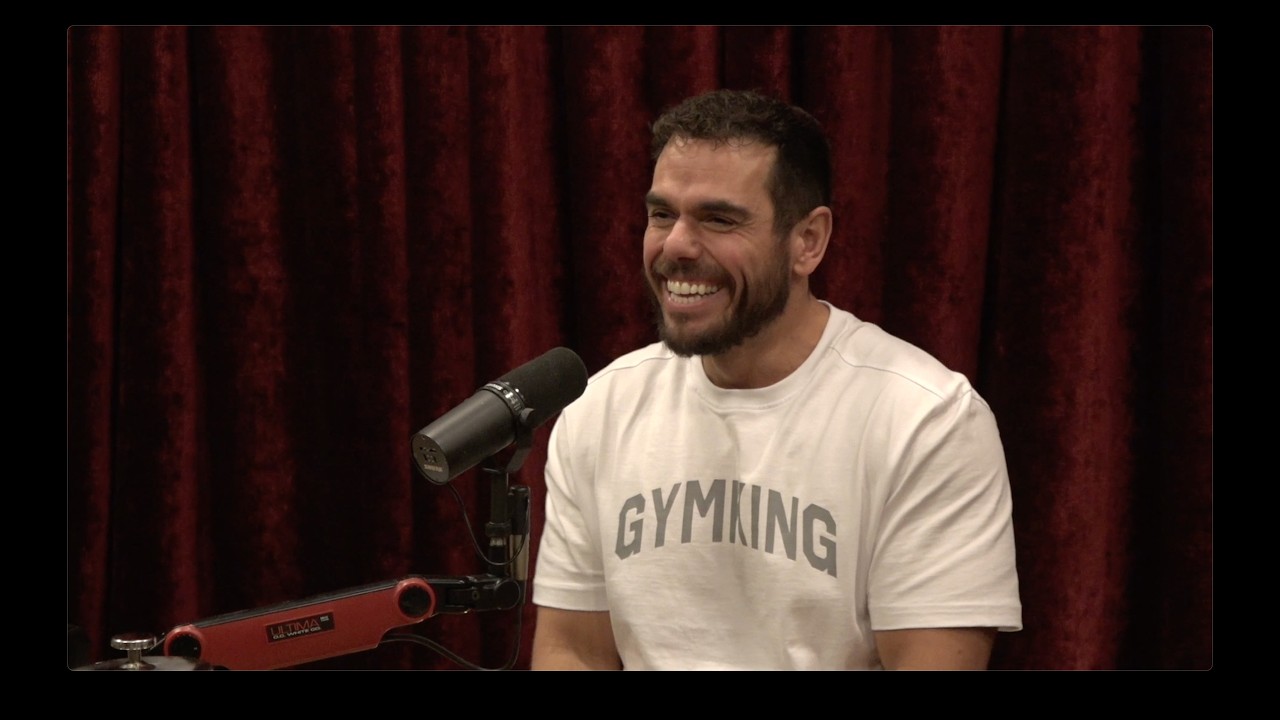
Ross Edgley Survives Extreme Organ Damage to Redefine Human Endurance
PowerfulJRE
Extreme physical suffering and advanced regenerative therapies allow athletes to push past conventional biological limits and redefine what the human body can endure.
Ultra-endurance athlete Ross Edgley completed unprecedented aquatic expeditions—including a 510-kilometer non-stop swim down the Yukon River and a 1,000-mile perimeter swim around Iceland—leveraging extreme sporting spectacles as a vehicle for ocean conservation and marine eDNA sampling. (87:45)
During extreme endurance bouts, Edgley sustained life-threatening physical trauma, including severe cellulitis and acute rhabdomyolysis with creatine kinase levels spiking to 19,000 U/L, far exceeding the 10,000 U/L kidney failure threshold. (5:40)
Emerging clinical research indicates that acute high-dose creatine supplementation (25 to 30 grams) can reverse cognitive impairment, brain fog, and executive dysfunction caused by acute sleep deprivation within three to four hours. (138:23)
Edgley advocates for heavy resistance training among endurance athletes, demonstrating that mechanotransduction reinforces tendons and ligaments while building a 'strength reserve' that drastically lowers the relative exertion of repetitive movements. (76:46)
Detailed notes
## Background
Published on YouTube by PowerfulJRE on October 20, 2026, this episode of the Joe Rogan Experience features ultra-marathon sea swimmer, athletic coach, and author Ross Edgley. The show notes highlight Edgley's endurance career, his television work, and the release of his book, "How to Hero."
## TL;DR
Ross Edgley details the brutal physical and psychological realities of his extreme endurance feats, including circumnavigating Iceland, swimming 510 non-stop kilometers down the Yukon River, and surviving severe rhabdomyolysis, hypothermia, and cellulitis in Loch Ness and Lake Trasimeno. The discussion examines the neurobiology of willpower—specifically the anterior midcingulate cortex—alongside strength reserve training, mechanotransduction, high-dose creatine, and hypoxic altitude conditioning. Joe Rogan and Edgley contrast these modern athletic achievements with historical warrior cultures, tribal initiation rites, and elite combat sports conditioning seen in fighters like Cain Velasquez, Justin Gaethje, and Carlos Prates. Together, they explore how extreme physical adversity and regenerative medicine expand the boundaries of what the human body and mind can endure.
## Atmosphere & style
The conversation carries an energetic, locker-room camaraderie that seamlessly blends gritty survival storytelling with deep dives into exercise physiology and neuroscience. Rogan serves as an intensely curious and animated sounding board, reacting with visceral amusement and awe as Edgley cheerfully recounts nightmarish physical ordeals ranging from wildlife standoffs to severe wetsuit malfunctions. The atmosphere balances gruesome tales of flesh-eating infections and extreme muscle breakdown with an uplifting, stoic philosophy centered on grit, purpose, and self-discovery.
## Bulletin
- [01:27:45](https://www.youtube.com/watch?v=IsCQwOXi6XI&t=5265s) Ultra-endurance athlete Ross Edgley completed unprecedented aquatic expeditions—including a 510-kilometer non-stop swim down the Yukon River and a 1,000-mile perimeter swim around Iceland—leveraging extreme sporting spectacles as a vehicle for ocean conservation and marine eDNA sampling.
- [05:40](https://www.youtube.com/watch?v=IsCQwOXi6XI&t=340s) During extreme endurance bouts, Edgley sustained life-threatening physical trauma, including severe cellulitis and acute rhabdomyolysis with creatine kinase levels spiking to 19,000 U/L, far exceeding the 10,000 U/L kidney failure threshold.
- [02:18:23](https://www.youtube.com/watch?v=IsCQwOXi6XI&t=8303s) Emerging clinical research indicates that acute high-dose creatine supplementation (25 to 30 grams) can reverse cognitive impairment, brain fog, and executive dysfunction caused by acute sleep deprivation within three to four hours.
- [01:16:46](https://www.youtube.com/watch?v=IsCQwOXi6XI&t=4606s) Edgley advocates for heavy resistance training among endurance athletes, demonstrating that mechanotransduction reinforces tendons and ligaments while building a 'strength reserve' that drastically lowers the relative exertion of repetitive movements.
## Key takeaways
- [52:03](https://www.youtube.com/watch?v=IsCQwOXi6XI&t=3123s) Extreme endurance demands neurological balance within the anterior midcingulate cortex (aMCC), which weighs pain against purpose to determine whether an athlete persists or quits.
- [05:40](https://www.youtube.com/watch?v=IsCQwOXi6XI&t=340s) Severe physical overexertion in extreme environments can rapidly trigger rhabdomyolysis, flooding the bloodstream with damaged muscle tissue and risking acute renal failure.
- [01:19:36](https://www.youtube.com/watch?v=IsCQwOXi6XI&t=4776s) Heavy resistance training stimulates mechanotransduction to strengthen connective tissues and creates a strength reserve, making ultra-endurance movements consume a smaller percentage of maximal capacity.
- [01:27:45](https://www.youtube.com/watch?v=IsCQwOXi6XI&t=5265s) Edgley utilizes high-profile athletic feats as a Trojan horse to draw global attention to marine conservation, illegal offshore toxic dumping, and the collapse of large predatory fish stocks.
- [01:24:54](https://www.youtube.com/watch?v=IsCQwOXi6XI&t=5094s) Tactical athletic specialization, such as Marcelo Garcia prioritizing vascular chokes over joint locks, demonstrates how mastering biomechanically absolute techniques nullifies massive opponent size advantages.
- [02:18:23](https://www.youtube.com/watch?v=IsCQwOXi6XI&t=8303s) Acute high-dose creatine protocols (25–30g) and targeted nootropics like Alpha-GPC and citicoline effectively counteract cognitive deficits, reaction time decline, and mental fatigue induced by severe sleep loss.
- [02:06:48](https://www.youtube.com/watch?v=IsCQwOXi6XI&t=7608s) Military selection pipelines like BUD/S see outsized graduation success from collegiate wrestlers and water polo players due to their conditioning in hypoxic environments, underwater grappling, and high thresholds for sustained misery.
- [02:28:01](https://www.youtube.com/watch?v=IsCQwOXi6XI&t=8881s) Ultra-endurance performance often peaks between ages 35 and 50 because multi-decade adaptations in capillary density and mitochondrial efficiency outweigh age-related declines in explosive power and VO2 max.
- [02:29:37](https://www.youtube.com/watch?v=IsCQwOXi6XI&t=8977s) Anti-doping restrictions on regenerative peptides like BPC-157 and TB-500 force injured professional athletes into prolonged impairment or invasive surgeries rather than allowing accelerated natural tissue repair.
- [01:45:29](https://www.youtube.com/watch?v=IsCQwOXi6XI&t=6329s) Cross-cultural anthropological traditions, from Kalenjin circumcision rites to Evenki survival customs, use intense physical pain and stoic restraint as mechanisms to forge psychological resilience.
- [33:00](https://www.youtube.com/watch?v=IsCQwOXi6XI&t=1980s) Norse fatalism illustrates that while external outcomes and prophecies may be completely uncontrollable, individuals maintain absolute sovereignty over their internal fortitude and resolve.
- [02:39:10](https://www.youtube.com/watch?v=IsCQwOXi6XI&t=9550s) Cognitive reframing allows athletes to endure extreme multi-day crises—such as wetsuit failures and severe tissue damage—by positioning the shame of quitting as far worse than temporary agony.
## Detailed walkthrough
### [00:01](https://www.youtube.com/watch?v=IsCQwOXi6XI&t=1s) The 18-Year-Old Scotch and Walking Away from a Whiskey Deal
The episode opens with Ross Edgley presenting Joe Rogan with a bottle of 18-year-old single malt scotch whisky, which prompts Rogan to marvel at its deep, smoky flavor. Edgley notes that the dram tastes distinctly like Scotland, leading Rogan to share an anecdote about why he had to walk away from a lucrative celebrity whiskey endorsement. Rogan explains that an outfit approached him offering substantial money to design and bottle his own branded whiskey. He initially inquired about collaborating with Buffalo Trace, but the distillers politely declined, explaining their unyielding commitment to aging whiskey in barrels for roughly eight years: “Look, we love you, but the reality is our whiskey takes like eight years in a barrel, period.”
Rogan sampled the blended liquid developed for his proposed line and found it merely acceptable. However, right around that time, he tasted an authentic 18-year-old scotch. The contrast was so staggering that Rogan realized he could never promote the product with an honest face. Reflecting on the encounter, Rogan noted: “I can't lie. If if I'll say this is my favorite whiskey, but that will be a lie cuz this is so much better.”
Rogan traces his appreciation of fine spirits back to his days working on the sitcom *NewsRadio*, where a show writer took him out and ordered him a $200 glass of high-end scotch over a massive ice cube, instantly changing his view of hard liquor. Although walking away from the endorsement deal cost him a significant sum of money, Rogan insists that because he is financially secure, he felt an obligation to honor the art form rather than shill an inferior product. Edgley agrees, emphasizing that in Scotland, distillation is treated with near-religious reverence, and both men observe that “there's no substitute for time in those barrels.”
[03:03](https://www.youtube.com/watch?v=IsCQwOXi6XI&t=183s) Loch Ness: 60 Hours, Cellulitis, and Hallucinations
Rogan mentions that he and Edgley were talking so intensely before the cameras rolled that Rogan had to physically leave the green room so they would not burn their best stories off-air. Edgley points out that it has been seven years since his previous appearance on the podcast—which followed his historic swim around mainland Great Britain—and admits his post-swim life has followed an unconventional trajectory.
He recounts undertaking a continuous 60-hour non-stop swim in Loch Ness to raise money for ocean conservation. Everything progressed steadily until the 60-hour mark, at which point Edgley began experiencing vivid visual hallucinations:
```mermaid
flowchart TD
accTitle: Loch Ness Swim Physical Breakdown Flow
accDescr: Sequence of physiological events leading to Ross Edgley's blackout during his 60-hour swim in Loch Ness.
subgraph Collapse ["Neurological & Physical Collapse"]
B & D & E --> F["Tunnel Vision: 'Eye of a Needle'"]
F --> G["Total Blackout in Loch Ness"]
end
subgraph Recovery ["Emergency Intervention"]
G --> H["Support Team Rescue"]
H --> I["Hospitalized for 13 Hours Unconscious"]
end
```
Edgley describes how his visual field collapsed until it felt like peering through the eye of a needle before going pitch-black. He suffered from simultaneous deep hypothermia and severe cellulitis, an aggressive bacterial skin infection caused by freshwater pathogens invading skin rubbed raw by his wetsuit. Rogan is stunned by the terrifying overlap: Edgley was hypothermic, suffering from a systemic staph infection, and had been awake for nearly three full days while swimming. While hallucinating, Edgley even felt something brush against his legs in the dark water. The infection left his skin feeling as though it were on fire while his internal core was shivering down to the bone.
- The Loch Ness charity event involved swimming non-stop for 60 consecutive hours.
- Severe wetsuit friction combined with freshwater bacteria led to a full-body cellulitis/staph outbreak across Edgley's neck and back.
- After blacking out in the water, Edgley was fished out by his support crew and remained unconscious or semiconscious in the hospital for roughly 13 hours.
- When Edgley finally regained full awareness, his mother and girlfriend were standing at the foot of his bed looking deeply worried, prompting him to admit: “Oh, it's not gone well, has it?”
[05:40](https://www.youtube.com/watch?v=IsCQwOXi6XI&t=340s) Lake Trasimeno Heat Wave and Rhabdomyolysis
Contrasting his ordeal in Scotland, Edgley describes tackling another marathon charity swim a year later at Lake Trasimeno in Italy. Bound by rigid Italian bureaucratic permits that required him to enter the water on a specific date, Edgley ran straight into an unprecedented heat wave—the hottest month ever recorded in Italy's history. The water temperature reached a stifling 36°C (96.8°F). Instead of battling hypothermia, Edgley found himself enduring severe heat stroke inside a natural hot bath so intense that he observed dead fish floating on the surface that appeared to have been boiled alive.
Looking at photos of Edgley from that era, Rogan comments that he looked like a real-life Wolverine with massive muscle mass and extreme chafing across his shoulders. When Rogan inquires why the Scottish swim produced such severe cellulitis compared to ocean swims like his circumnavigation of Iceland, Edgley clarifies that cold salt water naturally curbs bacterial growth, whereas freshwater lakes harbor abundant bacteria that thrive inside micro-tears in the skin.
Edgley explains that his sports science background gives him a detached, morbid curiosity about extreme physiological breakdown: “What's so strange though, and this is I'm aware this sounds a little bit twisted, but as a sports scientist and obviously researched the theory and philosophy of all this, whereas actually subjecting my body to it, I was like, 'Oh, cool. You know, this is what hypothermia feels like.'” In Italy, this curiosity was tested by an acute case of rhabdomyolysis, a dangerous medical condition where damaged skeletal muscle rapidly breaks down and leaks proteins into the bloodstream.
Edgley details how creatine kinase (CK) levels serve as the clinical benchmark for muscle tissue trauma:
- **Sedentary baseline:** ~80 U/L
- **Hard workout:** ~300 U/L
- **Standard marathon:** ~1,000 U/L
- **Ultramarathon:** ~4,000 to 5,000 U/L
- **Hospitalization threshold (kidney failure risk):** ~10,000 U/L
- **Edgley’s measured level:** 19,000 U/L, requiring emergency medical monitoring to prevent renal shutdown.
[08:37](https://www.youtube.com/watch?v=IsCQwOXi6XI&t=517s) Surviving Rhabdomyolysis and the Iceland Swim
Ross Edgley reflects on how bizarre it was to suffer severe rhabdomyolysis during a swimming challenge. Because swimming suspends the body in water without weight-bearing impact, high volumes of severe muscle breakdown seem counterintuitive. He credits his kidneys for performing exceptionally well to filter the breakdown products, allowing him to be discharged from the hospital after just a few days.
That harrowing medical experience unexpectedly became the foundation for his future extreme expeditions, including his 1,000-mile swim around Iceland. Having already survived rhabdomyolysis, hypothermia, and severe cellulitis, he arrived in Iceland feeling psychologically prepared for whatever physical trauma the ocean could present. “So, as a result, I kind of turned up in Iceland as this kind of bulletproof swimmer who was like, 'Oh, it doesn't matter what it's going to throw at me, I'm going to understand.'”
```mermaid
flowchart LR
accTitle: Progression from Medical Trauma to Iceland Swim
accDescr: Diagram tracing how extreme health conditions in freshwater swimming prepared Ross Edgley for the Iceland expedition.
subgraph Trauma["Physical Breakdown"]
A["Severe Rhabdomyolysis"]
B["Hypothermia & Organ Shivering"]
C["Severe Cellulitis"]
end
subgraph Recovery["Adaptation"]
D["Kidney Recovery in Hospital"]
E["Medical Self-Education"]
end
subgraph Challenge["Iceland Expedition"]
F["1,000-Mile Swim Around Iceland"]
end
Trauma --> Recovery
Recovery --> Challenge
```
Joe Rogan asks whether Edgley experienced paradoxical undressing during his hypothermic episodes, noting the common phenomenon where freezing victims feel overwhelmingly hot right before dying. Edgley confirms he experienced an identical sensation, though it was amplified by cellulitis: his outer skin felt like it was burning while his internal organs violently shivered. Rogan wonders why Edgley did not research the dangers of freshwater pathogens or search platforms like Perplexity beforehand. Edgley admits he only became an expert on cellulitis and freshwater bacteria after surviving the infection.
---
[10:00](https://www.youtube.com/watch?v=IsCQwOXi6XI&t=600s) Self-Discipline for Self-Discovery Across Cultures
Edgley pivots the conversation toward the deeper anthropological reasons why humans subject themselves to extreme physical ordeals. Rather than viewing endurance challenges as senseless suffering, he sees them as part of an ancient human tradition of self-imposed discipline to unlock deeper understanding: “I think now looking at the anthropology of as humans, the history of as humans across different cultures, different countries, we've always been doing this idea of self-discipline for self-discovery.”
To illustrate this, Edgley cites the Marathon Monks of Mount Hiei in Japan, who undertake a grueling spiritual journey of roughly 1,000 days over seven years, running nearly a marathon every day. Rogan compares this to the Tarahumara runners of Mexico, featured in the book *Born to Run*, who cover immense distances barefoot or in minimalist sandals crafted from discarded car tires.
- **Marathon Monks of Mount Hiei:** Complete roughly 1,000 marathons over seven years in spiritual asceticism.
- **Tarahumara (Rarámuri):** Renowned ultra-distance runners who make huarache sandals out of retreaded car tires.
---
[10:40](https://www.youtube.com/watch?v=IsCQwOXi6XI&t=640s) Biting the Snake Tongue with the Yaminawá Tribe
Edgley traces his own history of extreme endurance back to an initiation ritual he underwent twenty years earlier at age 21. While filming a documentary in the Amazon jungle, he spent a week drinking ayahuasca with the Yaminawá (Jamanawa) tribe. At the end of the ceremony, tribal leaders killed a snake and told Edgley that to complete his initiation into manhood, he had to bite its tongue clean out of its mouth. Edgley admits he was impressionable, surrounded by men with face paint, and simply followed through without questioning it.
Rogan responds with immediate disbelief and comedy, declaring a hard pass on any custom requiring someone to bite a reptile: “Pass. Hard pass. I'd rather be a boy forever. Fuck you. You can't tell me I have to eat a snake's tongue to be a man. Next thing you know, you got to suck a pig's dick.” He mocks the authority of an isolated jungle dweller with no modern technology, joking that one should demand they wear Nike sneakers before taking life advice from them. Rogan then concedes that caught in the ritual atmosphere, he likely would have done it too.
---
[11:46](https://www.youtube.com/watch?v=IsCQwOXi6XI&t=706s) Snake Venom Rituals and Russell's Viper Bites
The conversation leads Jamie Vernon to pull up news stories of people who use snake venom recreationally or ritually. One headline describes men in India who get bitten on the tongue by cobras to achieve a continuous high lasting up to a month. Another news story outlines an incident in Govindapuram, India, where a man suffered disastrous consequences following superstitious guidance: “Telly sniped by bit a man's tongue after an astrologer told him that performing a ritual with the serpent would stop his nightmares.”
During that ritual, the man mimicked the tongue-flickering motion of a Russell's viper, prompting the serpent to latch onto his tongue. In a botched attempt to help, a local priest cut the tongue with a knife, which only accelerated blood loss and pain. Jamie reads out the clinical effects of Russell's viper venom, noting severe cardiovascular damage, heostatic abnormalities, and renal failure. Rogan and Edgley point out the similarity to rhabdomyolysis, where the kidneys collapse from the sudden toxic load.
- **Russell's Viper:** One of the most dangerous snakes in India, responsible for a significant portion of fatal snakebites.
- **Venom Effects:** Hemotoxicity, profound pain, tissue necrosis, and acute renal failure (kidney shutdown).
- **Mortality Rate:** Jamie highlights that snakebites claim roughly 60,000 lives every year in India.
---
[14:56](https://www.youtube.com/watch?v=IsCQwOXi6XI&t=896s) The 24-Hour Vow of Silence and Fire Ants
Edgley explains that his own Amazonian snake encounter was only the beginning of a multi-stage ordeal. After biting the snake's tongue, the tribe informed him that he now possessed the wisdom of the jungle, but he was strictly forbidden from uttering a single sound for 24 hours. The elders warned him that breaking the silence would cause the snake's spirit to haunt him forever.
As part of this silent trial, the tribe instructed the naked 21-year-old Edgley to climb four meters up a tree. Once he was holding onto the trunk, the tribal members began smacking the base of the tree with sticks. The vibrations disturbed a massive nest of fire ants, which completely swarmed Edgley's naked body, inflicting intense stings across his skin and genitals. Edgley had to endure the entire onslaught in absolute silence. When Rogan asks if that was the catalyst for his lifetime of physical punishment, Edgley jokes that the podcast has turned into a therapy session.
Rogan shifts to the staggering statistic that snakebites kill 60,000 people annually in India. He reflects on how unimaginable poverty and environmental degradation—such as rivers completely choked with layers of plastic waste where no water is visible—might drive people to extreme risks, desperate rituals, or seeking mind-altering escapes through venom just to cope with daily life.
[17:19](https://www.youtube.com/watch?v=IsCQwOXi6XI&t=1039s) Rattlesnake Necrosis and Extreme Envenomation
Looking at gruesome pictures of someone voluntarily exposing their tongue to venom, Joe Rogan and Ross Edgley react with visceral disgust. Rogan points out that severe tissue destruction is precisely what hemotoxic and cytotoxic venoms are designed to do. He explains that a rattlesnake bite is terrifying not merely because the systemic venom can kill you, but because it rapidly rots away all the flesh and tissue surrounding the puncture site.
To illustrate how catastrophic the damage can be, Rogan recalls following a case from the early days of the internet where a man meticulously cataloged his medical ordeal online. Rogan notes, “I saw this poor guy. He got bitten and he had multiple reconstructions of his arm and he documented it all online.” Across roughly eight surgeries, the man documented the complete deterioration and slow, agonizing reconstruction of his arm from the initial bite onward.
[19:16](https://www.youtube.com/watch?v=IsCQwOXi6XI&t=1156s) Siberian Evenki Herders and Teeth Castration
Reflecting on bizarre physical trials and bodily extremes, Edgley pivots to his time living in Olenyok, Siberia, embedded with indigenous Evenki reindeer herders. He reflects on how modern society has prioritized excessive comfort, remarking, “And I think so often we've become too civilized. we we kind of have civilization over survival, you know, and there's certain things that they do, whether it's um they rely on the reindeer, they they kill them, they have them for their for their milk, butter, make all sorts out of them.” In the harsh sub-zero conditions of the Siberian tundra, the herders rely on reindeer for virtually every element of survival—including their meat, milk, and butter—which requires strictly managing the dynamics of massive herds.
When aggressive male reindeer began relentlessly fighting one another, the herders told Edgley that several bulls needed to be calmed down. Edgley assumed they would use traditional surgical tools and offered to help, saying, “Okay, look, that's a bit off key, but give me the knife and I I'll do whatever you need to do and they said, 'No, no, no, no. We'll stop you there, Ross.'” Instead, the Evenki practice a traditional method of semi-castration designed to make the animals docile without opening an incision that could easily become infected in the wilderness: they grasp the reindeer from behind and crush the testicles using their teeth. Edgley admits he stepped up when offered the task: “So, when I was out there, they said, 'Would you like to perform it?' I'm not proud of it. That's what I did.”
[20:26](https://www.youtube.com/watch?v=IsCQwOXi6XI&t=1226s) The Dog Neutering Debate and Animal Cancer
Rogan acknowledges that traditional herders and horsemen have long gelded animals for functional reasons, but he draws the line at performing it himself, turning the conversation to the routine neutering of domestic pets. He recounts taking his late English Mastiff, Johnny Cash, to a veterinarian who cupped the dog's testicles and asked why they were still there. Rogan pushed back immediately, asking: “Why would that be responsible? He's not having unnecessary babies. Why would Why do you want his body to not produce testosterone? Is it because there's a narrative? Is it because you profit off of it? Like what?” Rogan credits a trusted Los Angeles veterinarian who advised him that as long as a dog is secured behind a fence and cannot father unwanted litters, removing the testicles unnecessarily deprives the animal of natural hormone production and vitality.
When Rogan had questioned whether neutering prevented cancer, his vet dismissed the claim as nonsense, arguing that canine cancer is largely driven by poor-quality commercial pet food rather than intact reproductive organs. Rogan points out that wild animals rarely develop cancer under normal conditions, though he highlights the rare exception of Tasmanian devils, which suffer from a contagious, transmissible facial tumor spread through biting each other. He also shares that neuroscientist Andrew Huberman regretted neutering his bulldog after noticing the dog became sluggish and low on energy, prompting Huberman to place the bulldog on hormone replacement therapy to restore its testosterone.
[22:20](https://www.youtube.com/watch?v=IsCQwOXi6XI&t=1340s) Diving with Great Whites off Tasmania
The discussion of wild resilience turns to sharks, which possess ancient immune systems, skeletons made entirely of cartilage rather than bone, and an evolutionary history that makes them feel utterly alien to mammalian life. Edgley recalls a harrowing open-water dive forty feet deep off the coast of Tasmania, swimming with massive mature great whites. He describes how female great whites eventually cease growing in length and instead expand in girth, turning into what he calls “just a submarine with teeth,” which Rogan humorously likens to stocky New Zealand rugby players.
Edgley explains that the dive guides briefed him on the sharks' ampullae of Lorenzini—the specialized electroreceptive sensory organs that detect minute electrical impulses, muscle twitches, and elevated heart rates in the water. While the veteran divers alongside him remained calm with slow, controlled respiration, Edgley was out of his comfort zone, and the predators sensed his nervousness immediately:
```mermaid
flowchart TD
accTitle: Shark Predatory Assessment
accDescr: Flowchart showing how great white sharks detect physiological stress via the ampullae of Lorenzini and assess prey status.
subgraph SensoryInput ["Sensory Detection"]
A["Diver exhibits heavy breathing and elevated heart rate"]
B["Ampullae of Lorenzini detect electrical impulses"]
A --> B
end
subgraph Evaluation ["Predator Assessment"]
C["Shark identifies the 'weakest link' in the dive group"]
B --> C
D{"Diver's Behavioral Response"}
C --> D
end
subgraph Outcome ["Behavioral Resolution"]
D -->|"Panics or acts like prey"| E["Triggers predatory ambush attack"]
D -->|"Maintains eye contact and holds ground"| F["Shark aborts approach and swims off"]
end
```
The experienced divers signaled for Edgley to stop breathing heavily and cease acting like prey as a great white swam directly at him. Edgley held his ground and locked eyes with the animal, establishing a tense, interspecies non-verbal communication: “I sort of tried, not again, I'm not saying I squared up to it, but kind of was like, 'Can I help you?' And then it just went, 'All right, you're okay.'” Rogan stresses that maintaining composure was critical, noting that had Edgley panicked, the shark's predatory instinct likely would have resulted in a fatal strike.
[24:21](https://www.youtube.com/watch?v=IsCQwOXi6XI&t=1461s) Ambush Predators: Tiger Sharks in the Bahamas and Hawaii
Rogan underscores the terrifying speed and lethality of sharks by sharing a story from his close friend, bowhunter Adam Greentree. Back in Australia, one of Greentree's spearfishing companions was killed instantly when an ambush shark struck him as he surfaced from a reef crevice: “He was spear fishing and he came out of a thing like like a crevice or something in the reef and a shark just took didn't even see it coming.” Because reef systems are hunting grounds where predators patrol for vulnerable fish, an emerging diver can be mistaken for easy prey in a split second.
Edgley notes a similar dynamic when diving among tiger sharks in the Bahamas, emphasizing that they rely on stealth and surprise. As long as a diver maintains direct eye contact, tiger sharks generally recognize that their ambush has failed and will hold off, but dive masters constantly ordered him to keep his head on a swivel because sharks repeatedly attempted to stalk him from his blind spot. Rogan adds that tiger sharks represent a severe threat to surfers in Hawaii, bringing up widely circulated viral footage of a kayak fisherman whose small craft was violently rammed by an open-mouthed tiger shark that slammed into the hull mid-ocean.
- Rattlesnake venom rots surrounding flesh through severe localized necrosis, frequently requiring extensive reconstructive surgeries.
- Indigenous Siberian Evenki herders manage male reindeer aggression using traditional teeth semi-castration to avoid open wounds in freezing climates.
- Rogan strongly opposes routine dog neutering for responsible owners, arguing it strips vital testosterone and pointing out Andrew Huberman gave his bulldog testosterone after fixing him.
- Tasmanian devils represent one of the few species afflicted by transmissible cancer, spread via aggressive facial biting.
- Great white sharks utilize the ampullae of Lorenzini to detect electrical fields and rapid heart rates, quickly isolating nervous or inexperienced divers in a pack.
- Tiger sharks operate primarily as ambush hunters; maintaining direct eye contact often deters an approach, while looking away invites an attack.
[25:50](https://www.youtube.com/watch?v=IsCQwOXi6XI&t=1550s) Bull Sharks, Tiger Sharks, and Spearfishing Danger
Joe Rogan and Ross Edgley discuss shark encounters, reacting to video footage of an aggressive tiger shark attacking a watercraft. Rogan points out how disastrous it would be if someone were in an inflatable boat, noting that a single bite would puncture the craft and leave the person stranded far offshore. Edgley highlights that while great white sharks are often exploratory—testing objects with taste receptors located in their throats and sometimes biting out of curiosity before realizing a human is not a seal—bull sharks have an entirely different temperament: “Bull sharks are just angry.”
Rogan brings up a conversation he had with a resident of Central Florida who abandoned spearfishing entirely due to an alarming rise in bull shark encounters around the reefs. Rogan goes on an animated, humorous rant against the cultural movement to protect predatory sharks, arguing that society feels compassion for innocent animals like cows and calves while treating ferocious marine predators with reverence. As Rogan bluntly puts it: “You want to eat beautiful things like cows that are sweet and kind. You want to eat veal, but you won't eat monsters. You should be eating monsters. Monsters should be on every menu.”
- Bull sharks are known among divers and spearfishers for unprovoked aggression, unlike great whites, which frequently bite out of exploratory curiosity.
- Spearfishing off the reefs in Central Florida has grown significantly more hazardous due to frequent bull shark sightings.
---
[27:23](https://www.youtube.com/watch?v=IsCQwOXi6XI&t=1643s) The Yukon River Swim: Rapids, Wounds, and Apex Predators
Edgley recounts how the vulnerability he felt during shark encounters was matched only once in his life: during his world-record swim down the Yukon River in July. Covering 510 kilometers over 60 hours non-stop from Whitehorse to Dawson City in Canada's Yukon territory, he navigated freezing glacial water and intense turbulence. While passing through Five Finger Rapids, the powerful current hurled him violently against the river rocks, severely scraping and cutting the backs of his legs.
Because marathon swimming rules dictate that the athlete cannot touch the support boat or be assisted by the crew, Edgley had to inspect his injuries while remaining fully in the water. Lifting his leg out, blood began pouring directly from the cuff of his wetsuit. The scent of blood immediately attracted wildlife along the riverbanks. Edgley remembers the support crew bluntly warning him: “Ross, they can smell the blood. You're like an ice cream van. You're just advertising yourself to all the wildlife now in the Yukon.”
```mermaid
flowchart TD
accTitle: Yukon River Challenge Flow
accDescr: Sequence of events during Ross Edgley's 510 km non-stop river swim down the Yukon River.
subgraph Swim ["Yukon River Non-Stop Record Swim"]
A["Whitehorse to Dawson City (510 km, 60 hrs)"] --> B["Five Finger Rapids"]
B --> C["Thrown into rocks; legs severely lacerated"]
end
subgraph PredatorAlert ["Blood Scent & Predators"]
C --> D["Blood pours from wetsuit cuff into river"]
D --> E["Bears and wolves drawn to riverbank"]
E --> F["Support crew guards with heavy rifle"]
end
```
- Edgley set the world record for the longest non-stop river swim: 510 kilometers over roughly 60 hours.
- The swim took place in July through the Yukon territory in Canada, running downstream toward Alaska.
- Strict ultra-swimming regulations prohibited him from touching the support vessel or taking physical aid.
---
[29:00](https://www.youtube.com/watch?v=IsCQwOXi6XI&t=1740s) Encounters with Grizzly and Black Bears
As Edgley floated downriver, the contrast between the black bears and the brown bears lining the bank was stark. The black bears appeared skittish and confused by the strange object in the water, but a massive brown bear stood motionless on the bank, staring directly through him. When Edgley nervously asked his support team if he was safe to keep swimming, one crew member held up an enormous, heavy-caliber firearm and reassured him: “Ross, don't worry. If it gets too close to you, it'll end up in my freezer.”
Rogan and Edgley analyze bear behavior, noting the fundamental difference in threat levels. Rogan clarifies that predatory attacks on humans are statistically more common with black bears, whereas brown bear attacks are typically defensive—triggered by surprise or a sow protecting her offspring. Rogan emphasizes that stumbling across a 700-pound mother grizzly with cubs is one of the most fatal wilderness scenarios possible: “You run into a 700-pound mama with her babies and a jaw that could just crush your head like a candy bar.”
This discussion prompts Rogan to joke about an absurd, lethal *Jackass* concept: dressing stunt performers like Steve-O in salmon suits and having them swim upstream through waterfalls swarming with hungry grizzlies.
---
[31:05](https://www.youtube.com/watch?v=IsCQwOXi6XI&t=1865s) Berserkers, Úlfhéðnar, and the Battle of Stamford Bridge
Transitioning to his swim around Iceland, Edgley describes learning about ancient Norse warrior traditions from modern Icelandic locals. They explained the origins of the Berserker—etymologically tied to *bear-shirt* or bear pelt—warriors believed to channel the primal spirit of the bear into frenzy, often aided by hallucinogenic mushrooms. Edgley also mentions the *Úlfhéðnar* (wolf-warriors), regarded as Odin's elite fighters, who charged into battle without armor, painted, biting the rims of their shields, and howling.
Rogan and Edgley reflect on the raw physical power required to take down a massive brown bear in close-quarters combat using only primitive hand-to-hand weapons. Edgley brings up the legendary story of the 1066 Battle of Stamford Bridge, where a lone giant Norse berserker held an entire Anglo-Saxon army at bay on a narrow wooden bridge: “Stamford Bridge, the Norwegians were retreating, and as they were, there was just this one lone berserker who just stood on the bridge with a massive ax and was just taking down just soldier after soldier.” The warrior reportedly killed dozens of foes single-handedly until an enemy soldier drifted underneath the bridge in a boat and speared him from below through the floorboards. Rogan compares the terrifying presence of such a Viking warrior to Iceland's modern World's Strongest Man champions and UFC fighter Gunnar Nelson, imagining an axe-wielding giant like Hafþór Björnsson cutting down panicked soldiers on the battlefield.
- The term *berserker* derives from Old Norse, likely translating to "bear-shirt" (wearing animal pelts) or fighting bare without armor.
- The *Úlfhéðnar* were specialized wolf-warriors in Norse sagas associated with the god Odin.
- At the Battle of Stamford Bridge (1066), a single berserker delayed the English army before being killed from beneath the bridge structure.
[34:24](https://www.youtube.com/watch?v=IsCQwOXi6XI&t=2064s) Icelandic Stoicism, Gunnar Nelson, and Fate
Joe Rogan brings up Icelandic UFC fighter Gunnar Nelson and his legendary absolute division grappling match against Jeff Monson in Abu Dhabi. Rogan points out that while Nelson competed in mixed martial arts as a 170-pound welterweight, Monson was a 250-pound wall of sheer muscle whose neck and traps essentially started at the top of his head. Despite giving up a massive size advantage in a division with zero weight classes, Nelson defeated him. Ross Edgley connects this fearless mindset directly to the ancient Norse and Icelandic worldview, referencing the myth of Odin at Ragnarök. In Norse mythology, Odin already knew the prophecy foretold he would perish in the apocalypse by being swallowed by a giant wolf, yet he charged straight into the fray anyway. Edgley emphasizes that this cultural fatalism accepts that while fate cannot be altered, one has complete sovereignty over their inner resolve: “You know, that is your fate, but it's choosing your attitude towards it.” Rogan agrees that this unyielding ethos is why modern men remain captivated by Viking culture and stories of men charging into impossible odds.
- Gunnar Nelson competed at welterweight (170 lbs) in MMA but entered the open-weight absolute division in grappling against heavyweight Jeff Monson (roughly 250 lbs).
- Norse folklore emphasizes that destiny is fixed, yet honor lies in how one chooses to confront it regardless of outcome.
---
[35:55](https://www.youtube.com/watch?v=IsCQwOXi6XI&t=2155s) Berserkers and the Mushroom Mystery: Psilocybin vs. Amanita Muscaria
The conversation shifts to depictions of Vikings in popular media, including Robert Eggers' film *The Northman*. Rogan reflects on how cinematic portrayals blur supernatural myth with historical reality, leading into a discussion on whether Viking berserkers actually entered battle crazed on hallucinogens. Pulling up research, Rogan notes that the popular belief that berserkers consumed *Amanita muscaria* mushrooms to induce battle frenzy is merely a theory lacking solid archaeological or textual proof. In fact, typical pharmacological effects of *Amanita muscaria* include sedation, twitching, and delirium rather than focused, violent aggression. Rogan contrasts this with psilocybin, which generally induces feelings of empathy and connection rather than raw ferocity.
Rogan and Edgley explore the enigma surrounding *Amanita muscaria*, the iconic red mushroom with white spots reminiscent of fairy tales and Santa Claus imagery. Rogan mentions Terence McKenna’s hypothesis that historical fungal potency could have been subject to intense geographic, genetic, or seasonal variations—much like high-end Cuban cigars or chili peppers—meaning ancient preparations might have carried chemical profiles far different from modern specimens. Sharing his own personal experimentation, Rogan notes that taking *Amanita muscaria* produced almost no psychoactive journey, simply leaving him feeling strange, whereas psilocybin produces an undeniable, unmistakable shift in perception.
- Historical and archaeological records offer no definitive confirmation that Norse berserkers consumed hallucinogenic fungi before combat.
- *Amanita muscaria* pharmacology often produces drowsiness, delirium, and involuntary twitching rather than hyper-aggressive battle fury.
- Rogan notes that unlike psilocybin, which reliably triggers visionary experiences, *Amanita muscaria* reactions vary wildly from profound visions to mild, uncomfortable disorientation.
---
[38:22](https://www.youtube.com/watch?v=IsCQwOXi6XI&t=2302s) The Four Guardians of Iceland and Sacred Elf Roads
Edgley recounts how the folklore of Iceland came alive during his expedition to swim around the island. Before setting off, locals held a traditional *blót* ceremony to bless his journey, introducing him to the four mythical land-spirits (*Landvættir*) protecting the country's coasts from foreign invasion. According to the legend, an invading king sent a sorcerer in the form of a whale to scout the island:
```mermaid
flowchart TD
accTitle: The Four Mythical Guardians of Iceland
accDescr: Diagram illustrating the four directional land-spirits guarding Iceland's coasts against invasion.
subgraph West["West Coast"]
W["The Great Bull<br/>(Strength & Power)"]
end
subgraph North["North Coast"]
N["The Giant Eagle<br/>(Vision & Far Sight)"]
end
subgraph East["East Coast"]
E["The Dragon<br/>(Fast Water & Currents)"]
end
subgraph South["South Coast"]
S["The Mountain Giant<br/>(Rock & Defense)"]
end
```
Initially amused by the folklore, Edgley found himself reconsidering once he was immersed in the harsh elements. Swimming around the north coast, predatory seabirds constantly divebombed his head; along the east coast, the fierce East Icelandic Current and surging waterfalls matched the violent realm attributed to the dragon. Edgley also highlights the modern persistence of belief in the *Huldufólk* (hidden people or elves). He describes seeing paved Icelandic highways that curve abruptly and pointlessly through flat terrain. When asked, road engineers and locals explain in dead earnest that the detour was mandated to avoid sacred elven rocks, especially after heavy construction machinery and bulldozers inexplicably broke down whenever workers attempted to blast a path straight through.
- The western protector is a colossal bull symbolizing raw physical might.
- The northern sentinel is an eagle with sweeping sight guarding the skies.
- The eastern guardian is a dragon residing over wild rivers, waterfalls, and rapid coastal currents.
- The southern guardian is a towering mountain giant.
- Modern civil infrastructure in Iceland still deliberately diverts roads around rocks believed to be dwellings of the *Huldufólk*.
---
[40:07](https://www.youtube.com/watch?v=IsCQwOXi6XI&t=2407s) Consciousness Rendering Reality and the Valkyries in the Northern Lights
Rogan connects Icelandic folklore to the theoretical physics concept that reality is not an objective concrete construct, but rather rendered dynamically by consciousness—analogous to a video game engine in *Halo* that only renders the map spaces a player is currently viewing. Rogan muses that modern humans render reality through the lens of textbooks, biology degrees, and scientific explanations of tides and storms. Conversely, when ancient, illiterate warrior tribes immersed in raw nature took high doses of entheogens without modern science, their rendered reality genuinely manifested spirits and entities: “Like if consciousness really does render reality, then well, then the elves are real, right?” He argues that anyone who has taken heroic doses of mushrooms knows the overwhelming sensation of encountering an entity that feels entirely independent and preexisting rather than imagined.
Edgley validates this eerie psychological immersion with an experience from a training swim off the Icelandic coast. After emerging from freezing water and stripping out of his wetsuit under a sky blazing with the aurora borealis, an elderly local fisherman walked out of the darkness, leaned in, and whispered: “They’re probably deciding if you live or die.” Rogan laughs that the spirits probably looked at Edgley swimming for 60 hours straight in freezing seas and concluded he had a death wish. Edgley explains that the fisherman told him ancient Norse tradition viewed the Northern Lights not as charged atmospheric particles, but as the armor and ride of Odin's Valkyries descending to choose which souls to take from the earth.
- Theoretical rendering models suggest reality may only collapse into form upon conscious observation, mirroring 3D gaming engines.
- Rogan posits that ancient minds, devoid of modern scientific frameworks, may have rendered an entirely different experiential reality containing real mythological entities.
- In Norse mythology, the Northern Lights were believed to be the reflection of the shields and armor of the Valkyries carrying out Odin's judgment.
[43:29](https://www.youtube.com/watch?v=IsCQwOXi6XI&t=2609s) The Valkyries’ Farewell and Iceland’s Elves
Ross Edgley recounts how an old local had warned him that the shimmering aurora borealis was actually the shields and swords of the Valkyries riding through the sky to decide who lives, dies, and returns to dine with Odin in Valhalla. After swimming for 112 days through the Icelandic summer under continuous 24-hour daylight, the northern lights inexplicably reappeared on his very final swim. Floating on his back in the water, Edgley looked up and thought, “If as the Valkyries, if Odin is listening, thank you so much.” Joe Rogan compares the experience to the closing cinematic of a video game or the ending of an epic movie, marveling at how consciousness seems to render reality around major human milestones.
The conversation pivots to Icelandic folklore and the cultural reverence for the hidden folk (*huldufólk*). The hosts pull up a story about construction crews rerouting roads around sacred rocks that elves purportedly forbade anyone from moving. While Edgley jokes about respecting the elves completely, Rogan tears into media reports claiming TV cameras mysteriously malfunctioned when pointed at the stone, laughing that a hungover crew member probably just botched the shoot. When Edgley wonders if the old fisherman who warned him was Odin in disguise, Rogan fires back that he was simply a drunk local taking pleasure in tormenting an Englishman: “That old fisherman was fucking with this cocky jacked British guy. He's looking at you like, ‘Fuck you in your six-pack. The elves are going to kill you.’”
- A cited Icelandic survey revealed that over 80% of respondents refused to deny the existence of elves, with 8% stating with certainty that they exist.
- Rogan jokes that the 8% who are completely certain are dangerous religious fanatics, but acknowledges that the folklore stems from a profound respect for nature in a brutally hostile environment.
---
[46:44](https://www.youtube.com/watch?v=IsCQwOXi6XI&t=2804s) A Land of Boiling Taps, Volcanoes, and eDNA
Examining an Icelandic perspective on nature, Rogan reads a local quote emphasizing that Icelanders do not mess with nature when houses can be flattened by earthquakes, winds can knock grown men over, and scalding water pours straight from the tap because subterranean lava is running just beneath the ground. Edgley agrees, describing Iceland as a landscape that constantly feels like it is trying to kill you. Yet people endure there, living normal lives and casually watching television while geothermal heat boils their pipes.
Edgley explains the scientific and personal backdrop of his expedition. His partner of 13 years supported the expedition alongside the University of Iceland, which had partnered with him to gather environmental DNA (eDNA) samples along the perimeter of the country. This sampling allowed researchers to track coastal marine biodiversity at an unprecedented level of precision. However, just as sponsors, scientific vessels, and logistics were locked in place, the couple discovered they were expecting their first child. When Edgley phrases it as "we found out we were pregnant," Rogan cuts in to tease the phrasing: “In America, we frown upon that 'we are pregnant.' She's pregnant. You're definitely not pregnant.” His partner gave him her blessing to embark on the swim under one strict condition: he had to survive and make it home in time for the delivery.
---
[48:41](https://www.youtube.com/watch?v=IsCQwOXi6XI&t=2921s) Racing Hurricane Erin and Ice Shards for Fatherhood
With a firm deadline to reach the maternity ward, Edgley found himself fueled by a visceral drive he had never felt in previous endurance challenges. That motivation was tested severely in the final stretch, when the expedition faced an escalating gauntlet of natural disasters with roughly 100 miles remaining. The tail end of Hurricane Erin was tearing across the Atlantic toward the east coast, while near Grindavík a volcanic eruption was spewing toxic gases that risked fatal poisoning if the crew drifted too close. Simultaneously, meltwater from one of Europe's largest glaciers was calved into the sea, releasing table-sized chunks of razor-sharp ice directly into Edgley's path during pitch-black night swims.
When the support crew told Edgley they would need to halt operations and shelter in place for two weeks, he flatly refused. Driven by the singular purpose of seeing his child born, he powered through excruciating physical damage, including jellyfish stings across his face and severe tongue disintegration from chronic saltwater exposure. Edgley states: “I was like, I'm not not being back for the birth of my son.” By defying the planned delay, he completed the swim and arrived home with just three days to spare before his son was born.
```mermaid
flowchart TD
accTitle: Ross Edgley Final Swim Obstacles
accDescr: The compounding hazards Ross Edgley faced during the final 100 miles of his swim around Iceland.
subgraph Hazards["Compounding Environmental Hazards"]
A["Hurricane Erin Atlantic Storm Front"]
B["Grindavík Volcanic Eruption & Poisonous Gas"]
C["Table-Sized Calved Glacial Ice in Pitch Black"]
D["Physical Toll: Salt Tongue & Jellyfish Stings"]
end
subgraph Decision["Crew Standstill vs. Deadline"]
E["Crew Recommendation: Hold for 2 Weeks"]
F["Hard Deadline: Birth of First Child"]
end
Hazards --> E
F -->|"Pushes Through Hazards"| G["Finishes Swim 3 Days Before Son's Birth"]
```
---
[49:36](https://www.youtube.com/watch?v=IsCQwOXi6XI&t=2976s) How Becoming a Father Rewires Empathy and Capacity for Love
Reflecting on the psychological transformation of parenthood, Rogan notes that having children awakens a primal biological switch that non-parents cannot fully anticipate. While emphasizing that he never judges or shames people who choose not to have kids, Rogan explains that fatherhood permanently altered his emotional makeup. He recalls an insightful remark shared by comedian Dave Chappelle outside the Comedy Store: “Not only did having children change the amount of love that I have, it changed my capacity for love.”
Rogan explains how this expanded emotional capacity reshaped how he perceives other people. Instead of viewing an aggressive or dysfunctional 40-year-old man as merely an asshole, he now recognizes that every adult was once someone’s innocent infant whose life was derailed by bad luck, poor decisions, trauma, or neglect. This perspective makes seeing homelessness particularly heartbreaking for him, viewing every struggling person on the street through the lens of a vulnerable child who lost their way.
Edgley wholeheartedly agrees, explaining that he discussed the underlying neurochemical shift with neurobiologist Andrew Huberman. Becoming a father instantly eradicated the narrow self-absorption that had previously fueled his extreme athletic career. The Iceland swim carried additional emotional weight because Edgley had lost his own father four years earlier. Caught in the liminal space between grieving his dad and awaiting his newborn son, Edgley wrote his book *How to Hero* as both a tribute honoring the lessons his father passed down and an enduring letter to guide his son’s future.
[52:03](https://www.youtube.com/watch?v=IsCQwOXi6XI&t=3123s) Seeking Breaking Points and the Anterior Midcingulate Cortex
Joe Rogan reflects on Ross Edgley's drive, noting that while living that way sets an extraordinary example as a role model, Edgley's willpower is genuinely unusual. Rogan respects it immensely even though he considers it completely crazy and would never want to do it himself. He draws a direct parallel to his close friend Cameron Hanes, who regularly runs grueling 200- and 300-mile ultramarathons. Rogan believes running those distances is physically detrimental, but he respects the underlying intention: pushing past every limit to find an absolute breaking point. Rogan explains, “And everyone has this thing in their head that they need to sort out. And sometimes the way you sort it out is by doing something that's fucking insanely hard to find out who you really are.”
For Rogan, personal exploration takes the form of daily maintenance rather than multi-day epics: a couple of hours of hard physical torture every day. Taking even a few days off induces self-doubt, disorientation, and anxiety over whether he can still endure it. Edgley relates, mentioning conversations with neuroscientist Andrew Huberman about how his own dopamine circuitry operates. When someone challenges him to swim for 24 hours or do a three-day swim past bears, Edgley instinctively jumps at it. Edgley links this mental grit to the anterior midcingulate cortex (aMCC), visualizing it as a set of balance scales weighing grit against quit, and pain against purpose:
```mermaid
flowchart TD
accTitle: Anterior Midcingulate Cortex Grit Balance
accDescr: Diagram illustrating how the anterior midcingulate cortex weighs pain versus purpose to drive the decision to continue or quit.
subgraph Inputs["Internal Stimuli"]
P["Physical Pain & Suffering<br/>(Tongue falling off, cellulitis, severe chafing)"]
M["Purpose & Meaning<br/>(Drive, goals, mental commitment)"]
end
subgraph aMCC["Anterior Midcingulate Cortex"]
Balance{"aMCC Balancing Scales"}
end
P --> Balance
M --> Balance
Balance -->|"Purpose > Pain"| Grit
Balance -->|"Pain > Purpose"| Quit
```
Edgley explains, “And for me, you just need as much pain as it is, you just need to outweigh it with enough purpose.” When purpose is sufficient, a person continues forward regardless of severe bodily trauma such as cellulitis or losing pieces of their tongue to salt water. He adds that high-level UFC fighters undoubtedly possess an exceptionally developed anterior midcingulate cortex.
[55:45](https://www.youtube.com/watch?v=IsCQwOXi6XI&t=3345s) Rhabdomyolysis and the Cain Velasquez vs. Junior dos Santos Trilogy
Rogan brings up an incident where a UFC fighter was pulled from a card due to alarmingly elevated creatine kinase levels in his blood. Initially confused about whether the athlete had simply consumed excessive creatine, Rogan realized the fighter's muscle tissue was completely shredded from overtraining, making competing medically unsafe. Looking up fighters who suffered from rhabdomyolysis, the discussion turns to former heavyweight champion Junior dos Santos and his brutal trilogy with Cain Velasquez.
Rogan emphasizes that Velasquez possessed the greatest cardiovascular endurance of any heavyweight in mixed martial arts history, earning the moniker "Cardio Cain." Rather than loading up on maximum-effort power shots, Velasquez operated at a consistent 60 to 70 percent output with flawless technique, ensuring he never gassed out. While dos Santos knocked Velasquez out with an overhand right in their initial Fox broadcast bout—a fight Velasquez entered with a torn meniscus—the subsequent rematches were entirely one-sided wars of attrition. In both the second and third bouts, a healthy Velasquez dragged dos Santos through exhausting five-round beatings. Opponents often broke mentally in the second round, trapped under unrelenting pressure they simply could not shake off. Rogan notes that leaving fights on death's door makes severe rhabdomyolysis a frequent, unsurprising aftermath for elite combat athletes.
- Cain Velasquez earned the nickname "Cardio Cain" for maintaining a relentless pace unmatched in the heavyweight division.
- Velasquez threw punches at roughly 60–70% power to preserve his gas tank across five championship rounds.
- Heavyweights facing Velasquez routinely took on a "thousand-yard stare" by round two from the suffocating pace.
[58:04](https://www.youtube.com/watch?v=IsCQwOXi6XI&t=3484s) Robbie Lawler vs. Rory MacDonald and Melvin Manhoef
The conversation shifts to Robbie Lawler versus Rory MacDonald 2 at UFC 189, which Edgley and Rogan cite as one of the most violent, life-or-death battles in combat sports history. Rogan paints a vivid picture of the iconic round-four stare-down where both men stood their ground, drenched in blood, refusing to return to their corners. Lawler’s upper lip was split completely in half—looking like a severed slice of pie during the post-fight Octagon interview—while MacDonald's nose was completely shattered until his nervous system simply gave out in the fifth round from overwhelming pain. Edgley observes that fighters in those moments rely on stress-induced analgesia, operating much like a wild animal that will chew off its own limb to escape a snare, flooded with norepinephrine to suppress agony.
Rogan attributes Lawler’s durability to raw genetic savagery, calling him a true warrior from the time he began watching him compete at twenty years old. To illustrate Lawler’s iron resolve, Rogan details his classic come-from-behind knockout victory over Melvin Manhoef. Manhoef was a vicious Dutch kickboxer trained at Amsterdam's legendary Mike's Gym—the training ground of kickboxing greats like Badr Hari. Manhoef, muscular and explosive, would even make his ring walks wearing a spiked dog collar. During their fight, Manhoef systematically pulverized Lawler’s legs with heavy low kicks, putting Lawler in catastrophic danger until Lawler connected with a single devastating right hand, knocking Manhoef completely unconscious into the "shadow realm."
- Robbie Lawler suffered a massive split lip at UFC 189 that hung open during Rogan's post-fight Octagon interview.
- Rory MacDonald's body finally collapsed in round five when the physical agony of a shattered nose overwhelmed his central nervous system.
- Melvin Manhoef came out of Mike’s Gym in Amsterdam, an elite fight camp famed for producing aggressive strikers like Badr Hari.
- Despite having his legs chewed up by Manhoef's ferocious kicks, Lawler turned the fight around instantly with a walk-off one-punch knockout.
[01:01:15](https://www.youtube.com/watch?v=IsCQwOXi6XI&t=3675s) Animal Mimicry in Combat and The Fighting Nerds
Ross Edgley and Joe Rogan reflect on terrifying combatants, drawing parallels between historical Berserkers and UFC champion Alex Pereira, noting how Pereira embodies the spirit of an animal through his grounded "Jaguar style." Rogan points to the Brazilian MMA camp The Fighting Nerds, spearheaded by head coach Pablo Sucupira, who trains elite fighters like welterweight Carlos Prates. Sucupira takes an intensely data-driven approach to mixed martial arts—running statistical analytics on which techniques land at high percentages—while simultaneously studying nature footage of wild predators locked in life-or-death battles to instruct his fighters on space and positioning.
```mermaid
flowchart LR
accTitle: The Fighting Nerds Training Philosophy
accDescr: Diagram showing how The Fighting Nerds combine data analytics and animal combat observation to dominate space in MMA.
subgraph Inputs ["Foundational Analysis"]
D["Data Analytics & Move Success %"]
A["Animal Combat Observation<br>(e.g., Mongoose vs. Cobra)"]
end
subgraph Outcome ["In-Cage Result"]
R["Opponent Frozen on Defense"]
end
D --> F
A --> F
F --> P
P --> R
```
Rogan highlights the classic dynamic between a mongoose and a cobra. The mongoose is neither deadlier nor inherently faster than the serpent; instead, it is a master of distance management. It uses subtle fakes and feints to provoke the snake into striking, slides backward to make the venomous strike fall short, and gradually maps the cobra’s exact reach. Prates adopts this precise mechanism in the Octagon: he relentlessly marches forward, draws out desperate attacks, evades by fractions of an inch, and resets back into dangerous forward pressure, leaving opponents permanently stuck in survival mode.
Ross Edgley connects this primal approach to literature, citing Samuel Johnson: “Become a beast to get rid of the pain of being a man.” He observes that during his extreme endurance swims, he channels oceanic apex predators just as ancient Norse warriors channeled the bear. Rogan remarks that modern society often mocks or rejects this primal pursuit because starting as an insecure beginner is humiliating, leading critics to dismiss martial disciplines under buzzwords like "toxic masculinity."
[01:04:23](https://www.youtube.com/watch?v=IsCQwOXi6XI&t=3863s) Brain Chemistry, Whirlpools, and Mental Reframing
Edgley shifts the discussion to the neurobiology of failure and perseverance, explaining how the ventral striatum regulates the loop between expectation, reality, and dopamine. When a fighter is dominating—such as prime Conor McGregor, Anderson Silva, or modern champion Ilia Topuria—the ventral striatum floods the system with positive reinforcement. However, the instant an established strategy fails or an opponent turns the tide, dopamine plummets, plunging the brain into a biochemical crisis.
Edgley experienced this firsthand while swimming the treacherous waters off Iceland. Instructed by his support boat to dig deep for four continuous hours to break out of a massive oceanic counter-current, he kept his head down, battled the waves, and swam until his watch timer expired. When he paused and asked his crew how much distance they had covered, they delivered crushing news: he had been pinned in the exact same spot against the whirlpool for four hours without moving an inch forward. The revelation caused an immediate dopamine crash, creating a sensation he describes as a dark internal biochemical fog.
To overcome catastrophic plateaus and physical agony—including extreme neck chafing, cellulitis, and chunks of his tongue shedding from saltwater exposure—Edgley maps mental fortitude through two distinct neural pathways:
- **Anterior Mid-Cingulate Cortex (aMCC):** The center for raw grit, discipline, and willpower. It represents grinding teeth and pushing straight through misery simply because you committed to the task.
- **Dorsolateral Prefrontal Cortex (dlPFC):** The center for tactical problem-solving and cognitive reappraisal. Edgley uses it to actively reshape how he perceives physical suffering, leaning into Joseph Campbell’s Hero's Journey, viewing himself as slaying internal dragons while entering the cave of the unknown. Edgley notes: “Sometimes that strategy is just reframing your suffering when you're constantly losing.”
He was trapped in that Icelandic whirlpool system for the majority of that day before shifting tidal dynamics finally allowed him to break free.
[01:07:18](https://www.youtube.com/watch?v=IsCQwOXi6XI&t=4038s) Ocean Perils, Rescues, and Reynisfjara's Sneaker Waves
The conversation turns to the sheer terror of open-water survival. Rogan and his producer Jamie banter about their own swimming limits, with Rogan admitting that he would be completely finished within fifteen minutes if dropped into rough, freezing ocean currents. Rogan recounts a harrowing story previously told on the podcast by comedian Greg Fitzsimmons, who risked his life while on a family vacation to sprint into an offshore rip current to pull a drowning woman back to shore. Rogan notes the extreme hazard of water rescues: terrified victims instinctively climb onto their rescuer, dragging both individuals underwater.
Edgley brings up Reynisfjara, the black sand beach situated on the southern coast of Iceland, recognized as one of the most hazardous stretches of coastline on Earth. The area is notorious for massive, unpredictable "sneaker waves" that surge hundreds of feet further up the shoreline than normal breakers. Edgley recounts being on the beach around the time a young girl in a visiting family tragically lost her life to the surf. Despite visible warnings, Edgley observed tourists routinely playing chicken with the freezing ocean—racing down to the shoreline to capture selfies against the crashing whitewash before sprinting back. Jamie pulls up images of the dramatic basalt sea stacks and brooding black sands, prompting Rogan to exclaim that the landscape resembles Mordor straight out of *The Lord of the Rings*.
[01:09:06](https://www.youtube.com/watch?v=IsCQwOXi6XI&t=4146s) Sneaker Waves, Overfalls, and the Perils of the Surf
Looking at footage of tourists perched precariously on coastal rocks, Joe Rogan and Ross Edgley reflect on how quickly the sea turns lethal. Joe recounts watching unsuspecting visitors pose for photos right beside heavy surf; though he hesitated to be a killjoy, just an hour after leaving the spot, he heard emergency sirens and saw rescue helicopters hovering overhead, signaling the worst. The conversation turns to how deceptive ocean waters can be, recalling a former WWE wrestler who tragically drowned in a rip current at Venice Beach. As Joe emphasizes, “If you don't know how to swim, the ocean is a monster, man.”
Ross explains that ocean conditions become especially violent during "wind over tide," where opposing forces create turbulent swells known as overfalls. In these conditions, waves cease to roll smoothly and instead crash in violent concussions around a swimmer. Beneath the surface, the turbulence obliterates sea life against the rock faces, turning the water into a caustic slurry of pulverized jellyfish. Ross describes the gruesome sensation of swimming through severed tentacles that shoot up the nostrils, enter the ears, and get inhaled into the throat. While the jellyfish around Iceland do not typically deliver lethal venom, accumulating multiple stings inevitably inflames the lymphatic system, causing fierce itching in the groin and armpits. Joe adds that his youngest daughter suffered an agonizing sting in Costa Rica, noting that while standard coastal species may not be fatal, they inflict sheer agony.
- **Overfalls:** Extreme chop and chaotic swells caused when wind and tide move directly against each other, creating detonating rather than rolling waves.
- **Involuntary Inhalation:** Heavy surf smashes jellyfish into rock faces, leaving suspended stingers and tentacle fragments that swimmers inadvertently inhale or take into their sinuses.
- **Lymphatic Response:** Repeated stings, even from milder cold-water jellyfish, trigger systemic immune reactions that cause intense burning and itching in the armpit and groin lymph nodes.
---
[01:11:00](https://www.youtube.com/watch?v=IsCQwOXi6XI&t=4260s) The Abyss and Beach Town Perspective
Joe marvels at the psychological pull the ocean exerts on human beings, noting how people are naturally transfixed when staring out into a massive expanse of open water. In his view, gazing into that vast, indifferent void forces humility upon the observer, which explains why coastal communities tend to cultivate a relaxed, grounded culture in stark contrast to high-stress, man-made concrete jungles like downtown Manhattan. As Joe puts it, “There's something about that that just calms people the fuck down because it puts you into perspective.” Confronting something so immense—especially under a night sky framed by the stars of the Milky Way—serves as an immediate reminder of one's relative insignificance.
Ross agrees, tying that oceanic perspective back to the profound psychological state he felt completing his swim in Iceland under the aurora borealis. The raw majesty of the natural world serves as a cosmic affirmation of human endurance, reminding an athlete that their struggle is a tiny part of a grander whole.
```mermaid
flowchart TD
accTitle: Environmental Impact on Human Mindset
accDescr: Flowchart contrasting the psychological impact of man-made urban environments versus natural oceanic expanses.
subgraph Urban["Man-Made Environments (e.g., Downtown Manhattan)"]
U1["Surrounded entirely by human creations"] --> U2["Artificial pressure and constant stimulation"]
U2 --> U3["Elevated stress and inflated self-importance"]
end
subgraph Oceanic["Natural Expanses (e.g., Ocean & Beach Towns)"]
O1["Confronting the vast, uninhabitable abyss"] --> O2["Immediate sense of scale and insignificance"]
O2 --> O3["Perspective, emotional calm, and grounded humility"]
end
```
---
[01:12:18](https://www.youtube.com/watch?v=IsCQwOXi6XI&t=4338s) David Goggins and the Unrelenting Fire of 'The Lab'
Ross and Joe contrast different mental frameworks for enduring prolonged physical punishment. Ross explains that over the course of an ultra-endurance expedition lasting dozens or hundreds of days, he chooses to lean into gratitude and maintain a smile rather than relying strictly on aggressive internal berating. While he admires David Goggins's hard-nosed approach, Ross discovered that constant self-flagellation simply is not sustainable over months at sea: “For me personally, after, you know, a 100 days, I can't keep calling myself a cunt, I'm just like, oh, have a day off.”
Joe explains that Goggins is a one-of-a-kind anomaly driven by an internal fire that cannot be replicated or recommended to normal people. Goggins lives daily in what he calls "the lab," grinding through 20-mile runs with a weighted vest, calisthenics, and high-volume lifting sessions entirely in private without an audience or cameras. Even severe orthopedic trauma has failed to slow him down. When severe bone-on-bone knee degeneration triggered irregular bone spurs that destroyed his joint alignment, Goggins underwent major corrective surgery where his tibia was sawed through, realigned, and screwed back together. Rather than resting, he immediately hopped onto an indoor stationary bike to pedal for five to six hours every day.
- **The Philosophy of Gratitude vs. Aggression:** Ross finds that swimming with genuine joy and appreciation sustains multi-month expeditions better than non-stop hostility and anger.
- **The "Lab" Mentality:** David Goggins performs his most punishing physical feats in total solitude, maintaining relentless volume with no spectators or media coverage.
- **Extreme Orthopedic Reconstruction:** Goggins underwent an osteotomy to reshape his leg alignment after severe bone-on-bone friction led to runaway bone growth, subsequently rehabbing through continuous hours on a stationary trainer.
---
[01:14:40](https://www.youtube.com/watch?v=IsCQwOXi6XI&t=4480s) Shoulder Decompression, the Shadow Self, and Whale-Like Biomimicry
Discussing their own injuries, Ross shares that he underwent a subacromial decompression on his left shoulder—an operation typically reserved for heavy weightlifters where excess bone is shaved away to eliminate impingement, a rarity among swimmers. The conversation turns to the mental toll of extreme discipline, drawing on psychological concepts like Carl Jung’s shadow self, Friedrich Nietzsche's warning against becoming the monster one fights, and Jordan Peterson's ideas on harnessing internal aggression. As Ross observes of Nietzsche’s philosophy, “Whoever fights monsters should see to it that they too don't become a monster, if you stare into the abyss too long, the abyss will stare back into you.” He notes that he occasionally channels that darker competitive energy when critics online claim he is far too muscular to succeed at ultra-distance swimming.
Joe brings up the striking visual paradox of Ross's body: virtually all open-water and marathon swimmers possess long, lean frames, whereas Ross is heavily muscled and built like a strength athlete. Ross explains that his physique is a deliberate exercise in biomimicry. While pool and channel swimmers model themselves after agile predators like dolphins or mako sharks, sleek hydrodynamics offer little survival value against freezing currents and violent Arctic storms. To endure freezing water and brutal winds, Ross intentionally built dense muscle mass, which acts as a powerful thermic engine that generates constant body heat with every stroke.
- **Subacromial Decompression:** Ross required keyhole surgery on his left shoulder to shave away bone spurs and alleviate mechanical impingement.
- **Harnessing the Shadow:** Integrating aggressive, competitive urges rather than suppressing them allows endurance athletes to push past negative public feedback and self-doubt.
- **Whale-Like Biomimicry:** Unlike lean pool racers, Ross prioritizes heavy muscular mass to provide insulation, raw pulling power against open-ocean gales, and the metabolic heat generation necessary to survive frigid seas.
[01:16:46](https://www.youtube.com/watch?v=IsCQwOXi6XI&t=4606s) Mechanotransduction and Cam McEvoy’s Swimming Revolution
Ross Edgley explains that an often-overlooked dimension of heavy strength training is mechanotransduction—the physiological process where mechanical stimuli prompt ligaments, tendons, and connective tissues to adapt and strengthen. In ultra-endurance open-water swimming, the weak link is rarely aerobic capacity or lactic threshold; rather, an expedition ends because a rotator cuff or connective structure tears under the relentless repetitive strain. By keeping high muscle mass and lifting heavy, Edgley sacrifices raw top-end swim speed for physical robustness: “This swim isn't going to stop because of my VO2 or lactic threshold. It's going to stop because something tears, right?”
Turning to elite swimming methodology, Edgley highlights Australian sprint champion Cameron McEvoy, who revolutionized the sport by demonstrating a strong direct correlation between a swimmer's one-rep max on weighted pull-ups and their sprint velocity in the 50-meter freestyle. McEvoy stripped away the conventional doctrine of endless "garbage yardage"—the traditional miles upon miles of grueling lap swimming—and replaced it with short, high-intensity sprint sets (sometimes as little as 800 meters total, which Edgley laughs is merely his warm-up) paired with extreme weighted pull-ups. Joe Rogan and Jamie Vernon react with disbelief as they pull up footage of McEvoy performing pull-ups with an added 80 kilograms (roughly 176 pounds) strapped to his waist, noting that McEvoy has also used up to 90 kilograms and knocks out multiple sets of five reps at 50 kilograms. Edgley explains that in swimming, every pull stroke functions like a unilateral, single-limb lat pull-down; having overwhelming raw pulling power lets a sprinter tear through the water.
```mermaid
flowchart TD
accTitle: Strength Reserve Concept in Swimming
accDescr: Diagram illustrating how high maximal strength reduces the relative physical effort of each stroke during endurance swims.
subgraph HighMax["Maximal Strength Development"]
A["Weighted Pull-Ups & Heavy Resistance"] --> B["Elevated 1-Rep Max / Maximal Pull Force"]
end
subgraph ReserveEffect["Strength Reserve Application"]
B --> C["Huge 'Strength Reserve'"]
C --> D["Each Swim Stroke = Tiny % of Capacity"]
end
subgraph Outcome["Endurance & Durability"]
D --> E["High Resistance to Structural Fatigue"]
D --> F["Mechanotransduction: Reinforced Rotator Cuff & Tendons"]
end
```
[01:19:36](https://www.youtube.com/watch?v=IsCQwOXi6XI&t=4776s) Strength Reserve and Eddie Hall’s CrossFit Feat
Edgley applies McEvoy’s sprinting insight to his own ultra-endurance expeditions through the physiological concept of "strength reserve." If an athlete builds an immense ceiling of strength, every submaximal effort represents an infinitesimal fraction of their total capacity, reducing fatigue and shielding joints during tens of thousands of strokes across cold open seas.
To demonstrate strength reserve in its purest, most comical form, Edgley brings up his close friend Eddie Hall, the former World's Strongest Man and the first person to deadlift 500 kilograms. Hall entered a CrossFit competition featuring the benchmark workout "Isabel" (30 snatches at 60 kg / 132 lbs for time). Rogan and Edgley watch footage of elite CrossFitters—such as Noah Ohlsen—executing proper Olympic weightlifting form, catching the barbell overhead in a squat and driving through their legs. Hall, possessing unmatched upper-body power and zero CrossFit background, completely bypassed the intended biomechanics: he manhandled the 60-kilogram bar into the air using a bizarre hybrid of a front delt raise and a bent-over row, with the bar never even touching his chest. Hall obliterated the workout in roughly 50 seconds, breaking the record previously held by elite competitors like Rich Froning Jr. Rogan finds it surreal that Froning achieved comparable times despite being significantly smaller, while Edgley highlights Hall's feat as undeniable proof of raw reserve: “He's got an immense strength reserve. And so that's my point, dude... as strong as I get when I'm strength training, it just means that every single stroke over the Arctic Circle is a smaller fraction of what I'm capable of.”
- Cameron McEvoy regularly performs weighted pull-up sets with 50 kg to 80 kg (up to 90 kg for heavy singles), radically altering traditional swim training.
- The CrossFit benchmark workout discussed is "Isabel": 30 barbell snatches at 60 kg (approximately 132 lbs) completed as fast as possible.
- Eddie Hall completed the 30-rep Isabel workout in roughly 50 seconds using raw shoulder and back power rather than standard snatch technique.
[01:21:46](https://www.youtube.com/watch?v=IsCQwOXi6XI&t=4906s) Muscle Fiber Adaptations and Strongman Boxing
The conversation shifts to muscle fiber architecture and the balance between endurance and bulk. Edgley shares that a medical MRI scan once revealed he carries an unusually high percentage of fast oxidative glycolytic (type IIa) fibers. Situated between fatigue-resistant slow-twitch endurance fibers and explosive fast-twitch power fibers, these hybrid fibers produce substantial force while maintaining remarkable resistance to exhaustion. Rogan questions the standard medical assumption that this trait is purely genetic, asking whether science underestimates how dramatically an organism adapts when pushed: “I wonder how much of what we say, oh, he has a genetic advantage. Like are we sure, or did this guy's body change because of necessity?” Edgley agrees that while doctors theorized a genetic baseline, his unrelenting regimen of high-volume strength-endurance training unquestionably nurtured and expanded that specific fiber pool.
Rogan, Jamie, and Edgley clarify common fitness jargon along the way, defining WOD ("workout of the day") and discussing pacing. They then discuss Eddie Hall's recent pivot away from pure strongman mass (weighing well over 300 pounds) toward combat sports and MMA training. They reflect on Hall’s boxing exhibition matches, including his bout where he went the distance against Tommy Fury, as well as his heavy-hitting clash with Hafþór Júlíus Björnsson ("The Mountain"). Rogan expresses deep admiration for Björnsson's disciplined composure in the ring, highlighting how impressive it was that Björnsson did not rely solely on brute size and strength, but rather worked to box behind technical discipline.
[01:24:54](https://www.youtube.com/watch?v=IsCQwOXi6XI&t=5094s) Technique, Giant Killers, and Playing to Strengths
Joe Rogan and Ross Edgley analyze footage of Hafþór Júlíus Björnsson's boxing match against Eddie Hall, highlighting how surprisingly clean Thor's technique looked. Rather than winging wild power shots like Hall, Thor moved well, threw straight jabs without overextending, and dropped Hall multiple times by realizing his sheer mass guaranteed knockout power without sacrificing form. Edgley points out that the fundamental rules of martial arts sometimes bend around men of that scale, noting that when grappling massive athletes, “you get an arm bar and they just stand up with you.”
```mermaid
flowchart LR
accTitle: Tactical Specialization Against Giant Opponents
accDescr: Marcelo Garcia's strategy of bypassing limb submissions to target chokes against larger opponents.
subgraph Problem["Limb Submissions"]
A["Armbar / Kimura"] --> B["Giant opponent powers through or absorbs break"]
end
subgraph Solution["Vascular Chokes"]
C["High-Elbow Guillotine"] --> E["Cuts Blood to Brain"]
D["Rear-Naked Choke"] --> E
E --> F["Unavoidable Unconsciousness"]
end
```
Rogan brings up Brazilian jiu-jitsu legend Marcelo Garcia, widely regarded as the ultimate “giant killer.” Despite weighing around 160 pounds and possessing black-belt mastery over joint locks, Garcia rarely bothered trying to finish kimuras or armbars against massive opponents, knowing a fighter can choose to withstand a broken bone. Instead, he specialized almost entirely in high-elbow guillotines and rear-naked chokes. As Rogan summarizes Garcia's strategic calculus: “If he can get that rear naked choke around your neck and stop the blood to your brain, that's it. You go to sleep.”
Edgley connects this to the philosophy of elite performance across all disciplines, observing that the very best competitors double down on their primary competitive advantage:
> “I often think, you know, the best athletes are the best at doing what they do best.”
Just as Khabib Nurmagomedov leaned entirely into suffocating wrestling and Alex Pereira mastered elite striking, Edgley realized he would never possess the poetic stroke or physiology of Michael Phelps. Instead, he developed an unmatched strength reserve for an endurance athlete, allowing him to endure grueling multi-day sea swims that traditional pool racers would never attempt.
[01:27:45](https://www.youtube.com/watch?v=IsCQwOXi6XI&t=5265s) The Heroic Age of Antarctic Exploration and Scott's Fate
Edgley traces his appetite for extreme physical suffering to stories his father and grandfather told him about the Heroic Age of Antarctic Exploration, specifically the contrasting expeditions of Roald Amundsen and Captain Robert Falcon Scott as they raced to the South Pole. Amundsen approached the mission with ruthless Norwegian efficiency, incorporating survival wisdom from Arctic indigenous peoples, using skilled cross-country skiers, and planning his supply logistics around sled dogs. He systematically culled and ate the dogs on the return journey to keep the team alive.
In stark contrast, Scott's British expedition relied on tinned rations, experimental motorized sleds that promptly broke down, and ponies that fell through the ice. The British crew ended up manhandling their heavy sleds on foot across hundreds of frozen miles, only to reach the South Pole and find Amundsen’s Norwegian flag already planted. On the harrowing retreat, Captain Lawrence Oates realized his severely frostbitten feet were slowing the group down. During a raging blizzard, Oates stepped out of the tent with the immortal farewell: “Gentlemen, I'm going for a short walk. I might be a while,” sacrificing his life so his teammates might survive—though the remaining men perished anyway.
Edgley explains that this clash between civilization and raw survival informs his own endeavors. Rogan points out that the public is captivated by Edgley's feats precisely because he enters environments where death is a real possibility. While Rogan hesitates to call these ventures "stunts," Edgley welcomes the phrasing with a laugh:
> “I always say they're almost these sporting spectacles that we use as a Trojan horse to deliver ocean conservation.”
- Amundsen utilized indigenous Arctic techniques, trained cross-country skiers, and dog sled teams, planning ahead to sacrifice dogs for food on the return trek.
- Scott's expedition suffered catastrophic gear failures, including broken motor sledges and drowned transport ponies, forcing human sledge-hauling across the ice.
- Lawrence Oates walked into an Antarctic blizzard to die voluntarily in a failed attempt to save his starving, freezing crew.
[01:29:56](https://www.youtube.com/watch?v=IsCQwOXi6XI&t=5396s) Ocean Depletion and the Roots of Somali Piracy
The conversation turns to the critical environmental state of marine ecosystems. Rogan laments that commercial fishing has depleted approximately 90% of the ocean's large fish, pointing out that open ocean waters are largely barren while coastal habitats face relentless exploitation. Despite international treaties, rogue commercial fleets continually flout fishing laws and wipe out marine life with zero accountability.
Rogan traces the geopolitical fallout of unchecked ocean dumping, explaining how local fishermen off the Horn of Africa were transformed into modern pirates. Foreign ships took advantage of Somalia's lack of a functioning central navy to dump industrial and toxic sludge directly into their coastal waters, poisoning local waters and killing the fish stocks the coastal population relied upon to survive. The displaced fishermen banded together into armed vigilante squads—initially styling themselves as the "Volunteer Coast Guard of Somalia"—to intercept foreign dumping vessels and demand compensation for the ecological damage.
Over time, this retaliation morphed into a lucrative criminal industry of hijacking merchant vessels for multimillion-dollar ransoms. Rogan notes that pirate boarding crews frequently sustained themselves by chewing khat, a stimulant plant that induces long bouts of amphetamine-like sleeplessness and manic energy. Rogan argues that much of the subsequent criminal network, including diaspora-related financial fraud schemes seen in places like Minnesota, shares a direct historical lineage with the initial destruction of Somali fishing waters by unchecked foreign polluters.
[01:33:07](https://www.youtube.com/watch?v=IsCQwOXi6XI&t=5587s) Khat, Depleted Fisheries, and the Rise of Somali Piracy
Joe Rogan breaks down how ordinary coastal fishermen in Somalia ended up turning to organized piracy. Once local fishing collapsed, economic desperation drove people to chew khat, take amphetamines, and turn to armed kidnapping, eventually escalating to military-grade firepower like carbines and.50-caliber rifles. Ross Edgley jokes about whether khat would cause him issues during an anti-doping water test, wondering if it is banned in sport or illegal in the United States.
The discussion shifts to a 2009 article about how the collapse of the Somali government created an unregulated free-for-all on the seas, allowing foreign vessels to exploit Somali waters. Rogan recalls reading that foreign entities systematically dumped toxic waste off the coast, destroying the marine ecosystem and ruining the fishing economy. He has Jamie Vernon query the Perplexity AI search engine to investigate whether offshore toxic dumping directly triggered the pirate epidemic.
- Rogan outlines the chain reaction: economic collapse of fishing villages leads to drug use (khat/amphetamines), armed kidnapping, and massive ransom payoffs for heavy weaponry.
- Edgley asks, “Is that khat legal? Can I take that when I'm water tested or—,” prompting Rogan to point out it is likely a Schedule I substance in America.
- A 2009 report noted that Somali pirates were holding roughly 18 cargo ships simultaneously at the height of the early crisis.
[01:34:55](https://www.youtube.com/watch?v=IsCQwOXi6XI&t=5695s) AI Fact-Checking, Ocean Dumping, and the MV Faina Hijacking
Vernon runs queries through Perplexity, initially getting a skeptical response citing a UN report that found no definitive evidence linking toxic dumping to the specific crews kidnapped. Rogan counters that AI simply pulls from disparate web sources that often downplay such crimes: “People dumped—like for sure someone’s dumped toxic shit into the ocean. We know they do that. And so it doesn't seem that far of a stretch to imagine that that initially started off a crash in their economy if their fishing grounds were poisoned.”
A refined search corroborates the claim: Somali pirate representatives had repeatedly cited two decades of toxic waste dumping as justification for their maritime raids. In 2008, pirate spokesman Sugule Ali (referenced alongside Januna Ali Jama) framed their demands as reparations for 20 years of toxic waste dumping along Somalia's coastline. That claim gained global attention after the pirates seized the *MV Faina*, a Ukrainian freighter loaded with Soviet-era battle tanks and heavy military equipment. Official UN envoys, including Ahmedou Ould-Abdallah, along with UNEP spokesman Nick Nuttall, had also acknowledged reliable intelligence that European and Asian firms used the ungoverned coastline as a hazardous dumping ground because political instability prevented scientific field investigations. Edgley jokes about swimming off the Somali coast to sort it out, but Rogan advises against it, quipping that swimming through 20 years of toxic sludge dressed as a dollar bill on a gold boat would get him killed.
```mermaid
flowchart TD
accTitle: Chain of Events in Somali Piracy
accDescr: Flowchart illustrating the escalation from toxic dumping off Somalia to maritime piracy and ship seizures.
subgraph Origin["1. Environmental Collapse"]
A["Foreign Companies Dump Toxic Waste & Illegal Fishing"] --> B["Destruction of Marine Habitats & Fish Stocks"]
end
subgraph Reaction["2. Economic Desperation"]
B --> C["Somali Fishermen Lose Livelihoods"]
C --> D["Militant Retaliation & Armed Maritime Hijackings"]
end
subgraph Escalation["3. Organized Piracy"]
D --> E["Ransom Extortion & Heavy Weapon Acquisition"]
E --> F["High-Profile Seizures (e.g., MV Faina Tanker)"]
end
```
[01:38:20](https://www.youtube.com/watch?v=IsCQwOXi6XI&t=5900s) Shark Attacks in Egypt and Monster Soup
The conversation turns to other catastrophic human impacts on ocean ecology. Rogan recalls the fatal shark attack on a young Russian tourist at a Red Sea resort in Egypt, noting the harrowing viral audio of the victim crying out for his father. Rogan points out that the attack was likely provoked by livestock carriers dumping dead sheep carcasses directly into the water near the coastline rather than properly disposing of them on land.
Disposing of livestock remains offshore created what Rogan describes as a literal "monster soup," chumming the waters and pulling apex predators into shallow swimming areas right off luxury vacation resorts. Edgley asks if he needs to swim in Somalia next, to which Rogan replies: “Whatever the fuck is in that water, whatever the 20 years of toxic dumping, that's not good. You don't want that in your skin.”
[01:39:39](https://www.youtube.com/watch?v=IsCQwOXi6XI&t=5979s) Cardio Kings in MMA: Merab, Bisping, and the Diaz Brothers
Edgley pivots the conversation back to physical endurance, asking Rogan to name the fighters with the best cardiovascular conditioning in MMA history. Rogan highlights current bantamweight champion Merab Dvalishvili and former middleweight champion Michael Bisping. He recalls how Bisping completely broke Jason "Mayhem" Miller through relentless output: “Bisping had phenomenal cardio. Bisping would melt people. I remember his fight with Jason ‘Mayhem’ Miller, who was very talented... Bisping just melted him. Just his pace was insane.”
Rogan also singles out Nick Diaz and Nate Diaz for their pace, along with newer-generation fighters like flyweight Joshua Van, who pushes a frantic pace in the fifth round identical to his first. The modern level of conditioning in the UFC has surged across the lighter weight classes, where athletes are far less penalized by body mass.
- **Merab Dvalishvili:** Renowned for relentless, non-stop wrestling and striking output across 25 minutes.
- **Michael Bisping:** Legendary high-pace volume striker who famously drowned opponents with work rate.
- **Nick and Nate Diaz:** Triathlon-conditioned volume punchers who break opponents through attrition.
- **Joshua Van:** Flyweight surging through the ranks whose round-five output matches round one.
[01:40:22](https://www.youtube.com/watch?v=IsCQwOXi6XI&t=6022s) Cain Velasquez, Altitude, and Hypoxia Conditioning
While lighter fighters like Demetrious "Mighty Mouse" Johnson are naturally expected to maintain high cadences, Rogan and Edgley agree that heavyweight Cain Velasquez was an anomaly of human physiology. Heavyweights carry massive muscle mass, yet Velasquez fought with the motor of a lightweight. Rogan shares an anecdote told to him by Daniel Cormier: Velasquez could sit out of competition for three months with an injury, step straight back onto the mat at American Kickboxing Academy (AKA), and blow everyone out of the water on grueling conditioning drills.
However, even Velasquez's legendary cardiovascular engine proved vulnerable to extreme altitude. At UFC 188 in Mexico City, Velasquez arrived only two weeks before the fight, whereas interim champion Fabrício Werdum spent an extended training camp living and sparring in the mountains above 9,000 feet. Velasquez famously gassed out under the thin air, allowing Werdum to lock in a third-round guillotine choke and claim the undisputed title. Rogan emphasizes that altitude cannot be faked: “It just shows you that altitude training is fucking critical, man. If you want to compete at altitude... It is so hard to work out at altitude.” Rogan notes that he used the Exxavit/Alture XP hypoxia trainer in his studio gym to condition himself before a high-elevation hunt in Utah.
- Cormier told Rogan that Velasquez could take several months off for injuries, walk back into the gym, and instantly outpace active fighters during brutal cardio drills.
- Velasquez lost his title to Fabrício Werdum at UFC 188 in Mexico City (approx. 7,350 ft elevation) after only two weeks of acclimation.
- Werdum prepped for the bout by establishing a camp over 9,000 feet above sea level.
- Rogan utilized a dedicated studio hypoxia trainer to simulate low-oxygen conditions prior to a mountain hunt in Utah.
[01:41:54](https://www.youtube.com/watch?v=IsCQwOXi6XI&t=6114s) Altitude Chamber Training and Physiological Adaptations
Joe Rogan describes his routine of using a high-altitude simulation chamber in preparation for his annual September hunting trips. He followed a strict protocol for two months, performing two grueling cardio sessions per week inside the chamber, adhering to the coaches' warnings: “Don't do more than that cuz you'll get to a point where you can't recover.” Rogan noticed a profound physiological change in his stamina and hemoglobin levels while climbing steep, loose dirt at elevations ranging from 5,000 to 9,000 feet. Experiencing noticeable benefits in just two months, Rogan plans to maintain the bi-weekly regimen for an entire year leading up to the next September.
The conversation turns to extreme simulated altitudes. Rogan points out that the machine can simulate elevations exceeding 20,000 feet above sea level, although the highest he has dared to train at is 14,500 feet. He describes training at that level as absolute insanity, doing sprint intervals on the Airdyne bike, sprinting on the treadmill, and performing kettlebell swings with virtually no air. Opening the door after a session brings an immediate, overwhelming rush of oxygen. After recurring sessions, the body adapts rapidly, leaving ordinary low altitudes—like Austin’s 500 to 600 feet—feeling saturated with unlimited oxygen: “You feel like there's so much fucking air you can run through a building.”
```mermaid
flowchart TD
accTitle: Altitude Training Adaptation Cycle
accDescr: Diagram illustrating the biological progression from extreme simulated altitude training to enhanced sea-level performance.
subgraph Chamber ["Hypoxic Chamber Stress"]
A["Set chamber up to 14,500 ft"] --> B["High-intensity sprints & kettlebell swings"]
B --> C["Severe oxygen deprivation (hypoxia)"]
end
subgraph Recovery ["Physiological Adaptation"]
C --> D["Door opens: Massive oxygen rush"]
D --> E["Recovery & Hemoglobin/RBC production"]
E --> F["Systemic cardiovascular adaptation"]
end
subgraph Performance ["Real-World Application"]
F --> G["Effortless breathing at 500-600 ft"]
F --> H["Sustained power output on mountain inclines (5,000-9,000 ft)"]
end
```
[01:43:51](https://www.youtube.com/watch?v=IsCQwOXi6XI&t=6231s) High-Altitude Camps and Controlled Dehydration in Combat Sports
Rogan and Ross Edgley discuss how elite combat sports teams leverage high elevations for athletic conditioning. They bring up Dagestani fighters and their mountainous training camps. While Dagestan averages 500 meters (1,500–1,600 feet) and borders the Caspian Sea below sea level, mountain peaks rise to 14,000 feet, and fighter Khabib Nurmagomedov's mountain village sits at roughly 2,000 meters (around 6,500 feet). Rogan compares this to the Olympic Training Center in Colorado Springs and high-altitude training in Denver.
Edgley notes that elite coaches also combine elevation work with fluid restriction, pointing to dehydration training. Rogan confirms this approach, mentioning that Justin Gaethje's striking coach, Trevor Wittman, sends fighters on demanding mountain incline runs while deliberately withholding water during training sessions. Edgley identifies this as controlled dehydration, a grueling conditioning strategy to push mental and physical endurance past conventional limits.
[01:45:29](https://www.youtube.com/watch?v=IsCQwOXi6XI&t=6329s) The Kalenjin Tribe and Rite-of-Passage Pain Tolerance
Transitioning to endurance running, Edgley recounts his expedition to Namibia where he trained with the San Bushmen while filming a documentary. After running a marathon a day in extreme heat with minimal hydration, Edgley spoke with an athlete around the campfire who traced his lineage to Kenya's Kalenjin community—a group renowned for producing a disproportionate number of world-class marathon runners. When Edgley guessed that their dominance came from altitude or barefoot running biomechanics, the runner pointed instead to a brutal traditional rite of passage.
The runner detailed the traditional male circumcision ritual undergone by young men in front of the entire community without water, hygiene, or anesthesia. Mud or clay is applied across the initiate’s face, and the village elder performs the procedure with a knife or sharp stone. The candidate is strictly forbidden from flinching, making a sound, or allowing the dried mud to crack: “If you flinch and the mud cracks, all of a sudden in the tribe, everyone will be like, 'Ah, he's not very desirable.'” Those who pass the test—along with crawling through thorny scrub while wounded without reacting—are considered fit to reproduce and pass on their genetic pain tolerance over generations. Edgley jokes that when the man pulled out a knife and asked, “Ross, do you want to be faster?”, he quickly declined. Rogan laughs about the logistics of the ritual, wondering what happens to recruits who were already circumcised in infancy.
- **Kalenjin Ritual Requirements**:
- Full-face application of mud/clay before the incision.
- Zero tolerance for flinching; cracking the dried mud ruins social status and marriage prospects.
- No painkillers, water, or sanitation provided during the cut.
- Subsequent tasks include crawling through thorny brush while bearing open wounds without vocalizing pain.
[01:48:42](https://www.youtube.com/watch?v=IsCQwOXi6XI&t=6522s) Emil Zátopek's Legendary Helsinki Olympic Treble
Edgley contrasts genetic pain conditioning with the story of legendary Czech long-distance runner Emil Zátopek, whom he labels the greatest endurance runner to ever exist. At the 1952 Helsinki Olympic Games, Zátopek won gold in the 5,000 meters and the 10,000 meters. Deciding on a whim to race the marathon despite never having run the distance in competition, Zátopek ignored his coach's desperate pleas to protect his legacy.
When Zátopek asked who the pre-race favorite was, his coach identified British runner Jim Peters. Unfazed, Zátopek laid out a deadpan strategy to trail Peters closely throughout the course: “Okay, no problem. What I do, I will run on his shoulder and then just at the end before we get into stadium, I go boop and I run around and I will finish.” Edgley shares an interview clip from Peters recounting the surreal race experience of running in the lead, only to suddenly see Zátopek materialize right at his shoulder mid-marathon.
[01:49:49](https://www.youtube.com/watch?v=IsCQwOXi6XI&t=6589s) Emil Zátopek and the Pure Joy of Hard Training
Ross Edgley recounts a classic legend about Czechoslovakian distance runner Emil Zátopek at the 1952 Helsinki Olympics. Having already captured gold medals in both the 5,000-meter and 10,000-meter events, Zátopek decided on a whim to enter the marathon, a distance he had never contested before. During the race, he turned to British runner Jim Peters and confessed:
> “I um I'm so sorry. I've never run marathon before. Um so I don't know if this too fast or too slow.”
Peters, hoping to break Zátopek mentally, replied that their pace was far too slow and that they were in serious trouble. Unfazed, Zátopek simply responded, “No problem. I will see you at finish line,” pulled ahead, and won his third Olympic gold medal.
Joe Rogan and Ross marvel over archival footage showing Zátopek’s notoriously labored, grimacing running style. Rogan observes, “He looks like he's in agony,” while Ross jokes that Zátopek always ran as if he had been shot in the leg. Ross points out that Zátopek pioneered modern interval training, performing unheard-of workloads such as 100 repetitions of 400-meter sprints. His eccentric training regimens were legendary: he would run through the woods carrying his wife—Olympic javelin champion Dana Zátopková—on his back, and when severe snow trapped him indoors, he would jog in place inside a bathtub while washing dirty laundry with his feet. For the couple, date night often meant his wife launching a javelin across a field while Emil sprinted like a dog to retrieve it for her. Ross contrasts athletes who merely suffer through brutal training with those who genuinely love the madness:
> “So Emil Zátopek to your point I always find it fascinating that sometimes when you talk about people who are you know I've been training so hard I've sacrificed so much I'm like yeah that's great but I don't want to go against an Emil Zátopek someone who just loves it.”
[01:51:44](https://www.youtube.com/watch?v=IsCQwOXi6XI&t=6704s) The Brutal Mind Games of Backyard Ultras
The conversation shifts to backyard ultra-marathons, where runners repeat a loop every hour until only one person remains standing. Ross brings up ultrarunner Mark Darrah, recalling a story Chris Williamson told about Darrah competing in the Last Soul Ultra. Darrah was filmed on night-vision cameras openly stalking his rivals on the trail, looming right behind an opponent who stopped to tie his shoelace to break him psychologically. In the Last Soul Ultra, competitors are literally competing to "collect souls," receiving a trinket at the end representing every runner who quit. Ross notes that Darrah previously ran 94 to 95 consecutive hours without sleep (covering 636.5 km over 95 laps) to claim victory. Rogan wonders what psychological hallucinations occur after four straight days on one's feet:
> “Like what was he seeing? What was he seeing at hour 92? How many elves did he come into contact with? For sure he saw elves. For sure.”
```mermaid
flowchart TD
accTitle: Backyard Ultra Format
accDescr: Diagram illustrating the continuous loop format of a backyard ultra until one winner remains.
subgraph RaceLoop["The Backyard Loop"]
A["Start 4.167-mile loop on the hour"] --> B["Complete loop within 60 minutes"]
B --> C{"Can the runner start next loop?"}
end
C -- "Yes" --> A
C -- "No: Runner quits or misses cutoff" --> D["Eliminated / Soul Collected"]
D --> E{"How many runners left?"}
E -- "Multiple" --> RaceLoop
E -- "Exactly 1 remaining" --> F["Sole Winner ('Last Man Standing')"]
```
Producer Young Jamie pulls up live footage of Darrah competing in another backyard ultra event that very day, already past Loop 54 (over 50 hours in). Ross explains that Darrah views the entire first 24 hours of a race as merely buying an entry ticket—the real race only begins on day two. Ross argues that Darrah’s unique background in lacrosse and consistent heavy weight training give him an advantage over typical endurance runners. That extra strength reserve and mechanotransduction protect his joints and biomechanics from collapsing over multi-day efforts.
- **Last Soul Ultra Record Discussed:** 95 laps covering 636.5 km over roughly 94 straight hours without sleep.
- **Backyard Ultra Mentality:** The first 24 hours (100 miles) is considered merely the warm-up to filter out the field.
- **Biomechanical Edge:** Darrah’s heavier, muscular build provides a structural strength reserve absent in frail endurance archetypes.
[01:54:44](https://www.youtube.com/watch?v=IsCQwOXi6XI&t=6884s) Hallucinations, UFC Mind Games, and Physical Outliers
Ross shares his own sleep-deprived hallucinations during a record swim across Loch Ness. Looking up at the dark, narrow banks at 2:00 a.m., the tree canopy formed the exact silhouette of a luxury cruise ship. When the branches swayed in the wind, his brain convinced him passengers were waving down from the ship's railings to cheer him on. Holding a half-eaten banana in the water, Ross began waving and shouting back to the trees, “Guys thank you so much, your support means especially 2:00 in the morning. God bless you guys,” while his girlfriend and boat crew watched in utter bewilderment.
Turning back to the psychology of competition, Rogan and Ross discuss how high-level sports rely on fierce gamesmanship. Ross brings up Jiří Procházka asking Alex Pereira before their UFC bout not to use shamanic rituals or spiritual magic, with Rogan laughing:
> “I want a clean fight. No magic.”
When Ross asks who the greatest psychological mind-game artist in UFC history is, Rogan points to Chael Sonnen and Conor McGregor. McGregor successfully dismantled José Aldo's composure before knocking him out in 13 seconds, but that same mental warfare failed against Khabib Nurmagomedov. Rogan recalls Khabib holding McGregor down, punching him in the face, and yelling, "Let's talk now," while McGregor could only plead, "It's only business."
Ross and Rogan reflect on how impossible it is to define a single athletic blueprint for greatness. An outsider might look at Khabib—a devout, teetotal Muslim training rigorously in the Dagestani mountains—as the ideal model, only to find Jon Jones at the other end of the spectrum, partying and doing cocaine while dominating the division. Rogan notes that sports history is driven by these genetic and mental outliers—figures like Bo Jackson, Michael Jordan, and Tiger Woods—who defy conventional sports science and embody the mythic hero archetypes described by Joseph Campbell.
[01:58:01](https://www.youtube.com/watch?v=IsCQwOXi6XI&t=7081s) Combat Sports Rivalries and Jon Jones's Unmatched Fight IQ
Ross Edgley reflects on the psychological appeal of iconic combat sports rivalries, comparing the contrasting narratives between Daniel Cormier and Jon Jones to classic boxing matchups like Floyd Mayweather Jr. versus Ricky Hatton. Edgley points out how media narratives often pit wholesome figures against villainous personalities—such as Mayweather training ostentatiously around money versus Hatton having a calm cup of tea with his grandmother. Joe Rogan notes that despite the public persona, Hatton was an absolute animal in the ring who separated numerous opponents from consciousness.
Addressing Jon Jones, Rogan explains that Jones is not a classic villain but an entirely different breed of human whose wild nature fuels his excellence. Rogan points out that possessing goat-level status requires world-class technique, supreme athletic talent, an extraordinary work ethic, and an exceptionally high fight IQ. Jones understands preparation down to every detail and famously refused to take a fight against Chael Sonnen on short notice—even though he held every physical and technical advantage. When Jones ultimately faced Sonnen, he overwhelmed him in the opening round, delivering ground-and-pound with such ferocity that he pushed off the mat and tore his own big toe completely around, an injury that still requires him to tape his toes together before every fight.
```mermaid
flowchart TD
accTitle: Anatomy of Jon Jones's Dominance
accDescr: A breakdown of Jon Jones's core attributes leading to fight outcomes against Chael Sonnen and Vitor Belfort.
subgraph Fights["Defining Octagon Moments"]
CS["Chael Sonnen Bout<br/>Extreme ground-and-pound<br/>snaps own toe in round 1"]
VB["Vitor Belfort Bout<br/>Hyperextended armbar survival<br/>Submission win in later round"]
end
T --> CS
W --> CS
C --> CS
T --> VB
W --> VB
```
- **Calculated Matchups:** Rogan highlights that Sonnen excelled at 185 pounds and nearly took the title from Anderson Silva, whereas Jones was a far larger light heavyweight who refused to take risks without proper camp preparation.
- **Extreme Ground Force:** Jones generated so much torque pushing off the canvas while striking Sonnen that he snapped his own toe bone backwards without immediately realizing it.
- **Refusal to Tap:** Against Vitor Belfort—a Carlson Gracie Brazilian jiu-jitsu black belt—Jones allowed his arm to be brutally hyperextended in an armbar before escaping and submitting Belfort with a keylock in the following round, requiring an extensive rehabilitation process afterward.
> “There’s a certain amount of you have to have all these things to be the goat like John. You have to have all these things like perfect technique, incredible work ethic when he does work, uh, amazing talent, and an IQ for it.” — Joe Rogan
---
[02:01:03](https://www.youtube.com/watch?v=IsCQwOXi6XI&t=7263s) Justin Gaethje's Durability, Composure, and Technical Violence
Turning to extreme physical resilience and the role of the anterior midcingulate cortex in fighting, Rogan and Edgley discuss Justin Gaethje. Rogan identifies Gaethje as perhaps the most durable fighter in combat sports history, while emphasizing that any human being can be knocked out if caught cleanly with high-impact techniques like flying knees or wheel kicks. Rogan cites the example of Johnny Walker recently knocking out a 265-pound heavyweight clean with a knee from the Thai clinch.
In analyzing Gaethje's dramatic fight with Max Holloway, Rogan stresses that Gaethje suffered a broken nose from a jumping spinning back kick at the very end of round one, yet still fought through five rounds of punishing exchanges before the final, iconic ten-second brawl. Furthermore, Gaethje’s unflinching mental composure under fire stands out: after taking a crippling liver shot from Ilia Topuria that dropped him, Gaethje walked back to his corner praising his opponent's shot rather than panicking. Rogan dismantles the misconception that Gaethje is merely a reckless brawler, pointing out that his wrestling background allows him to trap opponents with devastating collar-tie uppercuts.
- **Vulnerability to Clean Strikes:** Rogan asserts that durability has physical limits: clean spinning kicks, flying knees, and flush power shots will disconnect anyone from consciousness regardless of neck strength or chin.
- **Broken Nose Compromise:** In his five-round battle against Holloway, Gaethje's breathing was completely compromised from the conclusion of the first round onward due to a shattered nasal bone.
- **Unshakable Composure:** Edgley compares Gaethje's in-cage cheerfulness under punishment to legendary Czech distance runner Emil Zátopek, who smiled through intense strain.
> “Like he went back to his corner after the second round with Tapora. Tapora dropped him with a liver shot. He goes nice liver shot. He said nice liver shot. He got me with a nice body shot. He was like complimenting his opponent for hitting him in a good spot.” — Joe Rogan
---
[02:04:25](https://www.youtube.com/watch?v=IsCQwOXi6XI&t=7465s) Learning How to Lose: The Special Forces Knockout Drill
Connecting Gaethje's psychological resilience to neurobiology, Edgley brings up the ventral striatum and the intense biochemical crash humans experience when faced with failure or defeat. While struggling through adverse tides on his ultra-marathon swim around Great Britain, Edgley received vital perspective from a friend serving in the Special Forces. The operative explained that their elite selection tests are not structured to see how well soldiers win, but rather to evaluate how well they handle repeated, inescapable loss.
To illustrate this, Edgley recounts a punishing drill his friend underwent during training. Candidates were forced to push an assault bike until their heart rates exceeded 180 beats per minute, taking them into extreme physical redline and oxygen debt. Immediately upon getting off the bike, the recruit was placed inside a room opposite an imposing 6-foot-6 soldier, with a closed door behind him where the recruit’s platoon supposedly waited. Instructed to fight through to the door, the recruit engaged the massive opponent until an observer holding a clipboard gave a silent nod. At that cue, the larger man struck the recruit and knocked him out cold. The recruit was revived with smelling salts and immediately asked if he wanted to quit; upon saying no, he was ordered to get back on his feet and engage the man all over again.
> “He said, ‘Ross, in the special forces, uh, we’re not seeing how well you can win, we’re seeing how well you can lose.’” — Ross Edgley
[02:05:55](https://www.youtube.com/watch?v=IsCQwOXi6XI&t=7555s) Adversity Testing and the Brutality of Selection
Ross Edgley recounts a story told to him by a friend regarding an extreme military selection test designed around unwinnable adversity. In the drill, a candidate is repeatedly knocked down by an imposing figure with a clipboard nodding approval between hits. After being knocked down three times and revived, the candidate is told he has passed. One candidate even managed to get past the fighter to reach the exit door, only to find it bolted shut. Edgley observes, “You were never going to win, like ever. But that's not what they were testing. They were testing your ability to lose time and time again.”
Joe Rogan pushes back strongly against using head trauma as an endurance metric, emphasizing the permanent dangers of brain injuries: “You knock a guy out, a big giant guy knocks you out three times. That's a terrible idea.” Edgley agrees that concussive damage is severe, but notes that hearing the raw selection stories from friends in special operations makes one realize why those operators end up mentally bulletproof.
```mermaid
flowchart TD
accTitle: Selection Adversity Drill Flow
accDescr: A diagram illustrating the unwinnable military selection drill described by Ross Edgley.
subgraph Drill["The Selection Drill"]
A["Candidate Faces Enforcer"] --> B["Knocked Down by Punches"]
B --> C["Revived & Evaluated"]
C -->|"Repeat 3 Times"| A
C --> D["Candidate Evades to Exit"]
end
D --> E["Exit Door Bolted Shut"]
E --> F["Core Lesson: Testing Willingness to Endure Inevitable Loss"]
```
---
[02:06:48](https://www.youtube.com/watch?v=IsCQwOXi6XI&t=7608s) Why Wrestlers and Water Polo Players Excel at BUD/S
Rogan brings up popular YouTuber and former Navy SEAL MrBallen (John Allen), recalling his insight into which athletic backgrounds produce the highest graduation rates at BUD/S (Basic Underwater Demolition/SEAL training). According to MrBallen, the two most successful demographics are wrestlers and water polo players. Rogan explains that wrestlers thrive because they are already accustomed to being constantly dehydrated, exhausted, and pushing through misery: “They take satisfaction suffering the most.”
Rogan then mentions his surprise at water polo players excelling until he learned that players are forbidden from touching the bottom and must tread water constantly while battling opponents. Edgley reveals that water polo is precisely his own competitive sporting background, having competed from the England schoolboys level all the way to international representation.
---
[02:07:50](https://www.youtube.com/watch?v=IsCQwOXi6XI&t=7670s) "Blood in the Water" and the Violence of Water Polo
Edgley details the storied brutality of water polo, highlighting the infamous 1956 Olympic match known as the "Blood in the Water" match between Hungary and the Soviet Union. Occurring during the Hungarian Revolution while Soviet tanks and bombs were actively attacking Hungary, the Olympic semifinal turned into a literal bloodbath where the water turned red from underwater violence, ending in a 4–0 Hungarian victory. Rogan is amazed by the intensity of the sport, joking about whether fighting is technically permitted the way it is in ice hockey.
Edgley explains that underwater combat is an integral part of the game. He shares a personal injury story from a match in the south of France when he was young: coming over the top of an opponent, he took an elbow straight to the jaw with his tongue out, cleanly splitting his tongue in half. Because the match required immediate transition back on defense—similar to fast-paced basketball—Edgley sprinted back, heart racing, pumping blood across the pool:
> “The whole water has just turned red around me, but I don't notice. I think it's somebody else. So I go, 'Guys, guys, stop. Stop. Someone's been hit.' And then I look and everyone in the stands is looking at me.”
Feeling something flapping in his mouth like a piece of stuck toffee, Edgley realized it was his severed tongue. He was pulled from the pool and stitched up, noting that mouth tissue heals surprisingly quickly, returning to normal within about a week.
- **Malta open-sea water polo**: Edgley describes playing matches in Malta where goals are dropped directly into the open ocean, meaning players routinely deal with jellyfish swarms drifting across the goalmouth as an ordinary hazard of play.
- **Olympic fighting rules**: While Rogan and producer Jamie discuss fighting being strictly prohibited under formal Olympic regulations, Edgley notes that below the surface, the grappling and underwater striking remain relentless. He points out that the women's division can be even more physical because full suits offer extra leverage to drag opponents down.
---
[02:11:34](https://www.youtube.com/watch?v=IsCQwOXi6XI&t=7894s) "Swimming Mixed with BJJ" and Stress Inoculation
Watching footage of underwater water polo brawls, Rogan and Edgley discuss the unique mechanics of the sport, which Rogan describes as "swimming mixed with BJJ." Underwater cameras reveal players actively choking each other, throwing body shots, and dragging opponents under the surface while referees watch from above.
Edgley points out that standard matches consist of four- to five-minute quarters of non-stop sprinting and treading water, combined with full-contact grappling. He explains how competing internationally at age 13 against grown men in the under-18 division—facing fully grown, bearded athletes from powerhouse teams like Hungary and Malta—served as ultimate stress inoculation:
> “Like there's sometimes when I'm caught in an Arctic storm, I'm like, it's not as bad as playing Hungary. Like the amount of times I was so close to drowning, it was nuts.”
This early exposure forced him to become comfortable being uncomfortable, giving him the mental and physical "drownproofing" that makes facing extreme Arctic ocean storms during his ultra-marathon swims feel manageable by comparison.
[02:13:24](https://www.youtube.com/watch?v=IsCQwOXi6XI&t=8004s) The Forging of Carlos Prates and the Stoic Idea of Getting "Wintered"
Joe Rogan brings up UFC fighter Carlos Prates, referencing a video about the Fighting Nerds team and how Prates models certain fight movements after animals. Rogan highlights Prates’s rough beginnings, noting that he had an unimpressive record early on—roughly five wins and four losses across his first nine fights. Everything changed when Prates moved to Thailand, where the only way to earn a living was by stepping into the ring. He began fighting almost weekly, sometimes competing up to six times in a single month, eventually amassing over one hundred Muay Thai bouts. That relentless exposure erased the daunting dread that freezes most competitors when the cage door closes. Instead, Prates is seen smiling and relaxed, famously smoking cigarettes during fight week and on fight day, partying, and remaining utterly calm before demolishing elite opposition. Rogan notes that watching him dismantle top-tier competition reveals an enormous gulf in comfort: “he's just essentially a product of that of just like being in the fire for so long you just get forged.”
Ross Edgley connects Prates’s forged calm to classical philosophy, specifically citing the Stoic philosopher Epictetus and the concept of getting "wintered." Epictetus taught that while wars were fought in the summer, the brutal, unglamorous training endured during the hard winter dictated victory or defeat. Ross also points to the ancient Spartans, who were stripped down to a loincloth and cast out into the freezing wilderness to fight for their food, producing terrifyingly hardened warriors. Bringing the concept back to the combat sports world, Ross mentions their mutual friend, elite Muay Thai striker Liam Harrison, whom Rogan jokes fights as if he is infected with rabies, calling him "a little demon."
- Carlos Prates turned his career around in Thailand through extreme fight frequency, logging over 100 Muay Thai bouts.
- Prates maintains a famously casual lifestyle around bouts, smoking cigarettes and partying while staying completely composed inside the ring.
- Epictetus taught the principle of getting "wintered"—using cold, difficult winter preparation to guarantee success in summer conflicts.
- Ancient Spartans used winter exposure and scarcity to condition young men into resilient warriors.
---
[02:15:48](https://www.youtube.com/watch?v=IsCQwOXi6XI&t=8148s) ADHD as a Superpower vs. Modern Schooling
Ross points out that Liam Harrison seems to be constantly vibrating, exhibiting clear traits of Attention Deficit Hyperactivity Disorder (ADHD), while mentioning recent studies indicating that combat athletes with ADHD can process sensory information far faster than average. Rogan immediately pushes back against labeling ADHD as an illness, stating: “I don't think it's a disorder. I think it's a superpower. I think we are conditioning children to sit in a classroom and do something that's insanely boring.” Rogan argues that school forces naturally energetic kids into an unnatural environment, pathologizing anyone who is not built to sit still for hours. He cites his own obsessive nature as evidence, explaining that he can drink coffee and shoot pool for ten straight hours without eating or wanting to quit. He sees that same obsessive drive in grappler Gordon Ryan, who trains 365 days a year out of a blend of discipline and consumed focus.
Rogan clarifies that while he is sympathetic to individuals who genuinely suffer from debilitating, scattered attention that impairs everyday living, he believes the condition is vastly overdiagnosed. He argues that modern schooling takes children who have just woken up, fully rested and running on sugary breakfasts, and expects them to stay silent in a desk listening to history lectures about World War II when their biology demands they run around outside. Rather than acknowledging that standard desk-bound education is fundamentally boring, society labels them deficient and prescribes medications like Ritalin, ignoring how intensely those same children can concentrate when immersed in activities they genuinely love, such as video games.
- Rogan considers ADHD an overdiagnosed condition that functions as an obsessive superpower when channeled into passions like sports, pool, or martial arts.
- Jiu-jitsu champion Gordon Ryan exemplifies this hyper-focused obsession by training every single day of the year.
- Rogan argues modern classrooms misinterpret natural childhood energy and boredom as mental pathology, rushing to medicate children who simply want to be active.
---
[02:18:23](https://www.youtube.com/watch?v=IsCQwOXi6XI&t=8303s) Nootropics, Focus Protocols, and High-Dose Creatine
Ross agrees that conventional definitions fall short, explaining that he prefers to view his mind through the lens of dopamine regulation and neurochemistry. When tackling massive ultra-marathon swims, he relies on a dialed-in chemical stack: 400 milligrams of caffeine paired with nootropics like Cognizin (citicoline) and Alpha-GPC to elevate acetylcholine levels. This neurochemical balance sharpens his focus without making him feel over-stimulated or jittery, allowing him to stay mentally locked onto the biomechanics of every single stroke over thousands of repetitions. Following protocols popularized by neurobiologist Andrew Huberman, Ross cycles his Alpha-GPC intake—typically taking it for two days followed by three days off—to prevent rapid tolerance buildup.
```mermaid
flowchart TD
accTitle: Cognitive Endurance and Focus Stacks
accDescr: Ross Edgley and Joe Rogan's supplement approaches for endurance focus and sleep deprivation mitigation.
subgraph RossStack ["Ross Edgley: Ultra-Swim Focus Stack"]
A["400 mg Caffeine"] --> D["Targeted Acetylcholine Support"]
B["Cognizin (Citicoline)"] --> D
C["Alpha-GPC (Cycled: 2 Days On / 3 Days Off)"] --> D
D --> E["Calm, Repetitive Stroke Focus"]
end
subgraph RoganStack ["Joe Rogan: Sleep Deprivation Protocol"]
F["Acute Sleep Loss (e.g., Late-Night Pool)"] --> G["High-Dose Creatine (25–30g Acute Load)"]
G --> H["Mitigated Cognitive Decline & Restored Memory"]
end
```
The conversation shifts to Rogan’s favorite cognitive booster: creatine. While traditionally known for physical strength and muscular performance, Rogan highlights newer research demonstrating creatine’s potent neuroprotective and cognitive effects, particularly under acute sleep deprivation. Pulling up data on the fly, Rogan notes that consuming a large acute dose—roughly 25 to 30 grams, well above the standard daily maintenance dose of 5 grams—substantially shields the brain from the cognitive decline, memory impairment, and mental fatigue caused by severe sleep loss. Rogan admits he frequently relies on these focus strategies after nights out at the comedy club, where he comes home wired at midnight and ends up running pool drills for hours into the morning.
- Ross Edgley's swimming focus stack combines 400 mg of caffeine, Cognizin, and Alpha-GPC to optimize acetylcholine and maintain repetitive stroke concentration.
- Per Andrew Huberman's guidance, Alpha-GPC is cycled (two days on, three days off) to avoid building tolerance.
- High acute doses of creatine (25 to 30 grams) have been shown in studies to counteract the cognitive deficits, brain fog, and memory lapses associated with severe sleep deprivation.
[02:21:30](https://www.youtube.com/watch?v=IsCQwOXi6XI&t=8490s) Creatine, Sleep Deprivation, and Cognitive Performance
Joe Rogan and Ross Edgley discuss the fluctuating nature of cognitive performance and the role creatine can play in maintaining mental sharpness under extreme fatigue. Rogan notes that his own baseline changes day to day, observing, “your brain is very it's it's it's like the fucking earth's temperature. It fucking fluctuates a lot.” Edgley admits that while he did not use creatine during his grueling Yukon River swim, the severe physical and mental breakdown he experienced toward the finish makes him eager to test it on future endurance challenges as an added weapon in his nutritional arsenal.
```mermaid
flowchart TD
accTitle: Creatine Uptake Mechanism Under Sleep Deprivation
accDescr: Diagram illustrating how overnight sleep deprivation combined with a high dose of creatine enhances cognitive function.
subgraph Deprivation["Sleep Deprivation State"]
A["Overnight Sleep Deprivation"] --> B["Altered Brain Metabolism"]
B --> C["Enhanced Cellular Uptake of Creatine"]
end
subgraph Supplementation["Intervention & Effects"]
D["Single High Dose of Creatine"] --> E["Peak Effect at 4 Hours"]
C --> E
E --> F["Sustained Benefits up to 9 Hours"]
F --> G["Improved Processing Capacity & Short-Term Memory"]
end
```
Young Jamie pulls up a scientific study examining the effects of a high single dose of creatine on fifteen sleep-deprived subjects kept awake overnight. The research indicates that sleep deprivation alters brain metabolism in ways that actively stimulate the cellular uptake of creatine. Within three hours of ingestion, subjects showed measurable cognitive enhancement, with positive effects peaking at four hours and persisting for up to nine hours, particularly in processing speed and short-term working memory. Rogan wonders what the supplement would do for well-rested individuals facing high-stakes mental tests like the ACT.
Turning to athletic applications and potential side effects, Rogan points out that combat sports athletes frequently utilize creatine, though extreme weight cutters must manage it carefully because it promotes water retention and muscle mass. As an extreme example, Rogan cites Alex Pereira, who famously weighed in at 185 pounds for middleweight bouts before rehydrating up to 225 or 226 pounds on fight night. Although the study warns that acute, excessive doses of creatine put heavy stress on the kidneys, Rogan compares an isolated high dose to a single night of heavy drinking, noting that individual metabolic resilience varies wildly—joking that comedian Shane Gillis drinks constantly yet still shows perfect liver panels.
- The study evaluated 15 subjects kept awake overnight solving cognitive tasks.
- Creatine's positive metabolic and cognitive effects peaked around hour 4 and lasted up to 9 hours.
- Study warnings highlight kidney strain from excessive acute doses, advising against unsupervised mega-dosing at home.
- Alex Pereira routinely cut down to 185 lbs and rebounded to 225–226 lbs by fight night.
[02:25:25](https://www.youtube.com/watch?v=IsCQwOXi6XI&t=8725s) Marginal Gains, Heat Acclimation, and Rogan's Sauna Protocol
Looking toward future athletic milestones at age 41, Edgley explains that he is hunting for marginal gains through nootropics and advanced conditioning tools: “Aggregation of marginal gains. Now I'm just at a point where I'm like right where can I just get like 1% here there.” Rogan strongly recommends incorporating hypoxic conditioning—which stimulates red blood cell production similarly to EPO—and insists that daily high-heat sauna sessions should be a staple in Edgley's regimen.
Rogan explains the physiological difference between altitude and heat protocols, noting that combining them simultaneously is counterproductive due to how blood plasma and cardiac output respond. At high altitude, a lack of oxygen makes it difficult to drive heart rates exceptionally high, whereas heat spikes cardiac demand almost instantly. Rogan details his personal post-workout sauna routine:
> “I do heavy bag rounds and then after the rounds, I jump right into the sauna... I drink some electrolytes. I always bring a big 64 ounce jug of water with ice and electrolytes in it. And then I go in 196 degrees and I sit in there for 20 25 minutes and I wear uh one of those uh straps, one of those um heart rate monitors and my shit will be at like 147 148 the entire time I'm sitting there.”
Inside the 196°F heat, Rogan leverages the extreme temperature to perform intense tissue stretching that would otherwise be impossible to achieve. By forcing his muscles into deep stretches while heat-stressed, his heart rate frequently climbs into the 150s.
[02:28:01](https://www.youtube.com/watch?v=IsCQwOXi6XI&t=8881s) The Physiology of Aging Endurance Athletes
The conversation shifts to the surprising dominance of older athletes in ultra-endurance disciplines, where meta-analyses show competitors between 35 and 50 years old regularly winning major events rather than merely surviving them. While Rogan asks whether this stems from mental toughness forged over a lifetime, Edgley points out that prolonged training over decades produces structural physiological adaptations that young athletes simply cannot match:
> “One is capillary density, mitochondrial efficiency that you only get after like years and years and years. So, it's like when you're younger, $\text{VO}_2$, lactic threshold, elasticity of tendons, all of those things absolutely are better when you're younger.”
Edgley argues that modern heat acclimation protocols, hypoxic chambers, and specialized recovery therapies are creating an unprecedented generation of older elite performers. Rogan and Edgley point to combat sports and running icons defying the standard aging curve: 39-year-old Alex Pereira capturing titles, marathon legend Eliud Kipchoge winning at an advanced age, and 49-year-old Yoel Romero, whom Rogan describes as an ageless physical freak of nature. Rogan highlights Romero's recent bare-knuckle boxing match against Darren Till, where Romero moved like a cat, dropped Till, and fought a bout that many viewers scored in his favor despite being nearly fifty years old.
[02:29:37](https://www.youtube.com/watch?v=IsCQwOXi6XI&t=8977s) Aging Elite Athletes and Longevity Science
Ross Edgley and Joe Rogan examine the longevity of elite athletes like Lionel Messi, Cristiano Ronaldo, and LeBron James. Edgley points out that from a physiological standpoint, LeBron's ongoing dominance defies biology: as athletes age, fast-twitch muscle fibers decrease and tendon elasticity declines. While a soccer player like Messi can adapt by relying on vision and spraying passes from the midfield, basketball demands constant high-impact plyometrics. Rogan compares this athleticism to UFC heavyweight Ciryl Gane, noting that Gane’s fluid movement and footwork stem from his basketball roots.
```mermaid
flowchart TD
accTitle: Factors in Modern Athletic Longevity
accDescr: Chart comparing natural physiological aging against LeBron James's aggressive intervention model.
subgraph Protocol["LeBron James Intervention Model"]
D["Multi-Million Dollar Annual Budget"]
E["Targeted Bodywork & Massage"]
F["Advanced Therapies & Peptides"]
end
Aging -.->|"Counteracted by"| Protocol
```
Rogan highlights that LeBron famously spends millions of dollars each year maintaining his body through rigorous rehabilitation, soft tissue work, and advanced therapies. Given the physical wear of NBA schedules, Rogan argues it is almost certain LeBron relies on cutting-edge recovery compounds:
> “Why wouldn't you be on BPC-157 and TB-500 and, and if you're allowed to be, you should definitely be on testosterone and definitely be on some sort of human growth hormone, either something that pumps it up like sermorelin, which like naturally makes your body produce more testo—or more human growth hormone, something that allows his body to regenerate tissue and heal quicker.”
---
[02:31:13](https://www.youtube.com/watch?v=IsCQwOXi6XI&t=9073s) Anti-Doping Regulations and Peptides in Pro Sports
The conversation shifts to anti-doping policies in professional sports leagues like the NBA and UFC. Looking up league rules, they find that growth hormone secretagogues, synthetic compounds, and growth hormone-releasing peptides are strictly prohibited. Rogan finds it counterproductive that WADA and the NBA ban healing peptides like BPC-157, labeling them experimental or unapproved despite their potent restorative benefits and absence of harmful side effects.
They bring up cases of high-profile athletes managing injuries away from the public eye. Rogan notes how Conor McGregor stepped out of the UFC drug-testing testing pool after snapping his tibia, only to pack on immense muscle mass during his recovery. He argues that in combat sports—where the explicit goal is to inflict bodily damage on an opponent during training and competition—preventing athletes from using tissue-repair peptides forces fighters to enter contests compromised by nagging shoulder, knee, and hand injuries.
- **Banned Categories**: NBA anti-doping policy forbids synthetic peptides, growth hormone secretagogues, and unapproved experimental substances.
- **WADA Status**: BPC-157 was previously permitted before being placed on the World Anti-Doping Agency prohibited list.
- **Combat Sports Context**: Rogan emphasizes that completing a 12-week fight camp with elite sparring partners without sustaining injuries is essentially impossible.
---
[02:33:47](https://www.youtube.com/watch?v=IsCQwOXi6XI&t=9227s) Hyperbaric Chambers, Regenerative Medicine, and Industry Conflicts
Rogan and Edgley share their firsthand experiences with regenerative medicine, focusing on hyperbaric oxygen therapy, red light therapy, and stem cells. Following his grueling swim in the Yukon River, Edgley tore most of the tendons in his rotator cuff. He did not realize the severity at the time because he was distracted by severe hypothermia and evading bears. Rather than undergoing invasive surgery to reattach the tendons, Edgley recovered using stem cells, hyperbaric chambers, and red light therapy, allowing him to line up for his expedition in Iceland.
Rogan criticizes the pharmaceutical industry and traditional medical establishments for pushing back against peptide and regenerative therapies. He asserts that corporate entities seek to monopolize patents or discourage alternatives that might cut into lucrative orthopedic surgeries:
> “And unfortunately, people are willing to sacrifice the greater health and recovery of the entire population for their own personal gain. And that's dark, but accurate.”
They also caution that because advanced stem cell treatments are heavily restricted in the United States, patients seeking clinics overseas face real dangers if they select shady, unregulated facilities. While reputable centers like CPI (Cellular Performance Institute) in Tijuana run ethical, sterile operations, substandard clinics have caused severe staph infections and neurological damage. Rogan underscores that medical error ranks as one of the top causes of death in the United States, meaning patient vulnerability is inherent across all medicine. When administered responsibly, however, regenerative therapies not only save athletic careers but dramatically restore mobility and daily comfort for non-athletes suffering from chronic joint pain.
[02:37:46](https://www.youtube.com/watch?v=IsCQwOXi6XI&t=9466s) Stem Cell Innovations and Corporate Distortions in Healthcare
Reflecting on recent medical breakthroughs, Joe Rogan and Ross Edgley marvel at how modern regenerative medicine can restore people who were once permanently hobbled. Rogan points out an acquaintance who had severe issues two years prior and can now run continuously without discomfort, marveling that such treatments simply did not exist in the past. He emphasizes that medicine is only scratching the surface of what is possible, pointing to emerging developments like Muse stem cell therapies as massive leaps forward. However, Rogan cautions that the financial incentives baked into the American medical landscape warp public perception about what works, noting, “You know, money influences so many narratives in this country. It distorts reality. You're looking at everything through a funhouse mirror lens.”
Edgley transitions the conversation toward his post-swim hospital experience, prompting Rogan to ask about the quality of the food. In contrast to standard American hospital fare—which Rogan jokes would be sugary Froot Loops to aid recovery—Edgley reveals that the Canadian hospital in the Yukon served real nourishment, including moose meat, jerky, and pancakes.
- **Muse stem cells:** Highlighted by Rogan as one of the most promising recent therapeutic innovations requiring continued research.
- **Yukon hospital recovery:** Edgley was fed local wild game, specifically moose meat and jerky alongside pancakes, rather than ultra-processed food.
---
[02:39:10](https://www.youtube.com/watch?v=IsCQwOXi6XI&t=9550s) The Yukon Swim and the "Poo Flap" Catastrophe
Edgley recounts a humiliating ordeal from his Yukon River expedition. Because ultra-marathon marathon swimming rules strictly forbid touching the support boat, being touched by crew members, or making contact with dry land, going to the bathroom posed an enormous engineering challenge. To solve this, his team designed a custom black wetsuit outfitted with a specialized rear hatch or zipper, referred to as a "poo flap." Although the mechanism functioned properly during practice runs, disaster struck roughly six hours into what became a grueling 60-hour swim. Edgley still cannot determine whether the suit's flap was misaligned or his own anatomy was slightly off, but when he attempted to relieve himself, the waste failed to clear the garment and dumped directly inside the suit.
Facing an unthinkable crisis, Edgley had to negotiate with his own brain whether to abandon the swim or endure the consequences. Describing the mental fork in the road, Edgley recalls: “In that moment, pain versus purpose, grit or quit. I'm like Ross. If you quit, you are going to be known as the guy who soiled himself and gave up in the Yukon. or do you zip it up and just and keep going?” Choosing grit, he zipped the flap shut and kept swimming. Because the neoprene wetsuit was black and exposed to the elements, it acted like a slow cooker, baking roughly 90 percent of the trapped waste against his skin for the remaining 54 to 55 hours of the swim.
```mermaid
flowchart TD
accTitle: The Yukon Wetsuit Dilemma
accDescr: Flowchart illustrating Ross Edgley's decision-making process after the wetsuit flap failure during the Yukon swim.
subgraph Problem["The Malfunction"]
A["6 Hours into 60-Hour Swim"] --> B["Poo flap fails to clear suit"]
B --> C["Suit fills with waste"]
end
subgraph Decision["Mental Crossroads"]
C --> D{"Grit or Quit?"}
D -->|"Quit"| E["Known as the guy who soiled himself and gave up"]
D -->|"Grit"| F["Zip up and keep swimming"]
end
subgraph Consequence["The Aftermath"]
F --> G["Black neoprene acts as a slow cooker for 54+ hours"]
G --> H["Severe distraction masks torn rotator cuff tendons"]
end
```
- **Expedition duration:** The Yukon swim lasted approximately 60 hours in total, with the malfunction occurring a mere six hours from the start.
- **Sanitary containment:** Roughly 90% of the fecal matter remained sealed inside the suit with no possibility of reaching in to clean it while swimming.
- **Support crew reaction:** Upon arrival at the hospital, Edgley warned the tough Yukon locals—men accustomed to skinning bears and gutting wolves—about what was inside the suit. When they sliced open the neoprene, the smell overwhelmed them and they bolted, leaving Edgley clutching a lone flannel washcloth.
- **Pain masking:** When doctors later asked Edgley how he could have failed to notice his torn rotator cuff tendons, he explained that the sheer agony of swimming in baked human waste while worrying about stalking bears and wolves completely eclipsed the orthopedic pain.
---
[02:41:55](https://www.youtube.com/watch?v=IsCQwOXi6XI&t=9715s) Expanding the Limits of Human Potential
Rogan observes that despite the gruesome hazards and physical degradation Edgley endures, his extreme feats serve a vital psychological function for the wider public. By pushing past what seems physiologically endurable, Edgley forces onlookers to re-evaluate their own excuses and self-imposed boundaries. Rogan stresses that even if ordinary people never attempt a multi-day swim, witnessing someone survive such trials proves that the human organism is capable of dramatically more than conventional wisdom suggests.
Edgley wholeheartedly agrees, conceding that he would never advise anyone to adopt his punishing lifestyle, but stating that his underlying goal is to inspire subtle shifts in other people's self-belief. Edgley explains: “I think my purpose is people to get them to shift their barometer, their own personal barometer, just one degree of what they think they're capable of.” Rogan commends him for succeeding in that mission, praising his resilience and uniqueness as the two exchange parting compliments to close the episode.
## Notable quotes
> [52:03](https://www.youtube.com/watch?v=IsCQwOXi6XI&t=3123s) Everyone has this thing in their head that they need to sort out. And sometimes the way you sort it out is by doing something that's fucking insanely hard to find out who you really are. — Joe Rogan
> [02:37:46](https://www.youtube.com/watch?v=IsCQwOXi6XI&t=9466s) Money influences so many narratives in this country. It distorts reality. You're looking at everything through a funhouse mirror lens. — Joe Rogan
> [02:33:47](https://www.youtube.com/watch?v=IsCQwOXi6XI&t=9227s) People are willing to sacrifice the greater health and recovery of the entire population for their own personal gain. And that's dark, but accurate. — Joe Rogan
## Mentioned
Ross Edgley, Joe Rogan, Jamie Vernon, Andrew Huberman, Cameron Hanes, David Goggins, Eddie Hall, Cameron McEvoy, Gunnar Nelson, Jeff Monson, Cain Velasquez, Junior dos Santos, Robbie Lawler, Rory MacDonald, Melvin Manhoef, Carlos Prates, Pablo Sucupira, Jon Jones, Chael Sonnen, Conor McGregor, Khabib Nurmagomedov, Justin Gaethje, Alex Pereira, Mark Darrah, Emil Zátopek, Dana Zátopková, Jim Peters, MrBallen, Roald Amundsen, Robert Falcon Scott, Lawrence Oates, Marcelo Garcia, Fabrício Werdum, Daniel Cormier, Trevor Wittman, Yoel Romero, Eliud Kipchoge, LeBron James, Gordon Ryan, Dave Chappelle, Buffalo Trace, NewsRadio, UFC, NBA, World Anti-Doping Agency, University of Iceland, Perplexity AI, Loch Ness, Lake Trasimeno, Yukon River, Five Finger Rapids, Reynisfjara, Grindavík, MV Faina, How to Hero
## Video description
Ross Edgley is an ultra-marathon sea swimmer, athletic coach, television personality, and author. His new book, "How to Hero," will be available on November 10.
Perplexity: Download the app or ask Perplexity anything at https://pplx.ai/rogan.
Don’t miss out on all the action this week at DraftKings! Download the DraftKings app today! Sign-up using https://dkng.co/rogan or through my promo code ROGAN.
Switch today at https://www.Visible.com for just 25/mo. Or Save $10 on your first month of Visible+ Pro with code ROGAN.
Ross Edgley and Joe Rogan argue that extreme physical trials serve as essential human mechanisms for psychological self-discovery, demonstrating how neurochemical regulation, biomechanical strength reserve, and environmental conditioning allow individuals to transcend conventional physiological limits.
Cultural Traditions and Neurobiology of Deliberate Suffering (10:00)
Edgley frames extreme endurance as an ancient anthropological tradition of self-discipline for self-discovery, comparing his experiences to Japan's Mount Hiei Marathon Monks, the Tarahumara runners, and indigenous rituals like his Yaminawá initiation in the Amazon. He connects voluntary endurance to neurobiology, noting that the anterior midcingulate cortex (aMCC) develops through deliberately engaging in demanding physical trials. In parallel, Edgley and Rogan discuss how the ventral striatum regulates dopamine crashes when expectations fail, drawing on unwinnable Special Forces selection drills designed to evaluate an operative's response to repeated defeat.
Biomechanical Strength Reserve and Environmental Extremes (76:46)
Edgley emphasizes that ultra-endurance challenges are typically ended by connective tissue tears rather than aerobic deficits. Through mechanotransduction, heavy resistance training stimulates structural adaptations in tendons and ligaments. Citing Australian swimmer Cameron McEvoy's shift from high-volume pool mileage to weighted pull-ups, Edgley advocates building a high "strength reserve" so repetitive submaximal strokes demand minimal relative effort. He illustrates this concept with strongman Eddie Hall, who bypassed standard Olympic lifting technique to complete the CrossFit "Isabel" workout in roughly 50 seconds through sheer upper-body strength.
Edgley contrasts these biomechanical preparations with volatile environmental hazards. During a swim across Italy's Lake Trasimeno, a record heat wave raised water temperatures to 36°C (96.8°F), triggering severe heat stroke and rhabdomyolysis in freshwater laden with bacteria. In Iceland, he faced turbulent overfalls, four-hour plateaus against opposing whirlpool currents, and underwater slurries of pulverized jellyfish that inflamed the lymphatic system.
Chemical Protocols, Altitude Simulation, and Thermal Stress (138:23)
To maintain stroke mechanics and cognitive clarity during multi-day expeditions, Edgley details a nootropic protocol consisting of 400 milligrams of caffeine combined with acetylcholine promoters like Cognizin (citicoline) and cycled Alpha-GPC (taken two days on, three days off). Rogan notes complementary neurological strategies, such as using acute 25–30 gram creatine loads to offset cognitive deficits caused by sleep deprivation.
Rogan and Edgley also examine contrasting physical conditioning methods. Rogan describes using altitude simulation chambers up to 14,500 feet to spur red blood cell adaptations, comparing it to mountain training and controlled dehydration used by elite combat sports coaches. Conversely, Rogan utilizes post-workout sauna sessions at 196°F for 20 to 25 minutes, maintaining heart rates of 147 to 148 bpm. Rogan cautions against combining altitude and heat protocols simultaneously, arguing that conflicting blood plasma and cardiovascular demands make concurrent application counterproductive.
Longevity Science, Peptides, and Institutional Barriers (151:13)
Analyzing long-career athletes such as LeBron James, Edgley and Rogan observe that aging inevitably degrades fast-twitch fibers and tendon elasticity, requiring intensive therapeutic intervention. Rogan criticizes anti-doping policies from organizations like WADA and the NBA that prohibit restorative peptides such as BPC-157. He argues that restricting non-performance-enhancing healing compounds prevents athletes from effectively repairing soft-tissue damage sustained during elite competition and sparring camps.
Rogan points to emerging regenerative technologies, such as Muse stem cell therapies, as major breakthroughs for physical recovery. However, he warns that corporate financial incentives within American medicine often distort the narrative around modern healing alternatives, prioritizing profit over effective restorative treatments.
Edgley and Rogan conclude that the ultimate role of extreme physical feats is not to prescribe suffering for the general population, but to recalibrate the public's perception of human capability. Unresolved questions remain regarding how sports governing bodies should ethically regulate regenerative compounds like peptides while protecting athlete health against catastrophic training wear.
## Detailed walkthrough
### [00:01](https://www.youtube.com/watch?v=IsCQwOXi6XI&t=1s) 威士忌的时间法则与商业妥协
节目开场,Ross Edgley 为 Joe Rogan 带来了一瓶 18 年单一麦芽苏格兰威士忌。两人倒酒品尝后,Rogan 大赞其泥煤与烟熏风味非常纯正,并分享了一段自己推掉名人威士忌代言合同的往事。当时有品牌方找上门,愿意支付丰厚报酬让他联名打造一款专属威士忌。起初 Rogan 提出希望与知名酒厂水牛足迹(Buffalo Trace)合作,但对方坦言其波本威士忌必须在桶中陈酿至少八年,没有任何速成捷径。后来赞助商拿来样品,Rogan 试饮并分给朋友尝过后,觉得口感尚可,直到他不慎喝到了一杯顶级的 18 年苏格兰威士忌,瞬间打消了做这门生意的念头。
Rogan 回忆起早年拍摄情景喜剧《NewsRadio》时,剧组一位编剧带他第一次接触高端威士忌的经历。编剧不仅对大块方冰有着近乎严苛的要求,还直接请他喝了一杯售价高达 200 美元的威士忌,彻底打破了他“威士忌难喝、喝酒只为买醉”的刻板印象。正因体验过真正的桶陈陈年风味,Rogan 宁愿放弃巨额代言费也要毁约退出项目。他坦言:“如果我穷,我可以撒谎,但我有很多钱,所以我绝不撒谎去说这是我最喜欢的威士忌,因为这违背了威士忌的神圣性。”
- 商业妥协界限:Buffalo Trace 坚持每桶必须经历八年陈酿才能出厂,无法配合快速商业化贴牌。
- 时间的沉淀:Edgley 与 Rogan 一致认同橡木桶内的陈化时间没有任何替代品,苏格兰人对待制酒严苛得犹如宗教信仰。
---
### [03:01](https://www.youtube.com/watch?v=IsCQwOXi6XI&t=181s) 尼斯湖 60 小时极限耐力游与濒死昏迷
两人的话题迅速从苏格兰威士忌转到苏格兰水域。距两人上次就 Edgley 环游大不列颠一役对谈已过去七年。为了海洋保护慈善筹款,Edgley 挑战在尼斯湖进行连续 60 小时不间断公开水域游泳。起初一切按计划进行,但随着时间推移到第 60 个小时,极度的睡眠剥夺与低温让他产生严重幻觉,随后视野急剧收缩,形容为“仿佛在通过针眼看世界,孔隙越来越小,最后眼前彻底陷入漆黑”。
除了连熬三天的重度疲劳,他当时体内正经历着致命的双重冲击:由于长时间穿着湿式潜水服摩擦破皮,淡水中的细菌诱发了严重的金黄色葡萄球菌感染,导致背部和颈部出现大片蜂窝织炎;与此同时,骨髓深处的重度失温症(Hypothermia)也已侵袭全身。他形容自己的皮肤因感染像在烈火中燃烧,骨头里却冻得发颤。失去意识后,保障团队用网将其打捞出水并送医急救。Edgley 在彻底断片昏迷约 13 个小时后,才在医院病床上睁开眼睛,看到母亲和女友守在床头。
- 幻觉与昏迷:连续游动 60 小时导致神经系统崩溃,昏迷长达 13 个小时,送医全程完全丧失意识。
- 致命并发症:重度失温症结合由潜水服摩擦破损引起的深层蜂窝织炎(葡萄球菌感染)。
- 水质差异:苏格兰内陆湖泊的淡水环境富含特定细菌,相较海水缺乏盐分的抑菌作用,因而极易导致严重感染。
---
### [05:40](https://www.youtube.com/watch?v=IsCQwOXi6XI&t=340s) 特拉西梅诺湖的热浪与极端横纹肌溶解
尼斯湖事件发生一年后,Edgley 再次奔赴意大利特拉西梅诺湖(Lake Trasimeno)进行慈善游泳挑战。由于当地审批流程的官僚主义限制,他被强制要求在指定的一天内下水,恰逢意大利有记录以来最炎热的一个月。湖水水温竟飙升至摄氏 36 度(约华氏 96.8 度),整片湖泊犹如滚烫的热水澡盆,湖面上漂浮着大量被活活烫死的死鱼。如果说在尼斯湖他是遭受失温与感染的折磨,在意大利他则陷入了完全相反的极端——严重中暑引发的横纹肌溶解症(Rhabdomyolysis)。
尽管身体承受着肉体崩溃的绝境,作为运动科学家的 Edgley 却带着一种病态的学术好奇去感受这一切。他现场科普了衡量肌肉损伤的指标——血液中的肌酸激酶(Creatine Kinase,简称 CK):静息状态下人体的 CK 指数约为 80 U/L;经历一次高强度力量训练后约为 300 U/L;跑完全程马拉松大约在 1,000 U/L 左右;超马选手可能会升至 4,000 至 5,000 U/L。一旦指标冲上 10,000 U/L,肾脏就会面临被大量肌肉分解产物堵塞的衰竭风险,医院会直接拉响警报实施急救。而他在完成这次酷热极端游泳后,医院测出他的肌酸激酶水平竟高达 19,000 U/L。
```mermaid
flowchart TD
accTitle: 肌酸激酶(CK)在不同生理极限下的水平对比
accDescr: 展现从正常静息状态到极限中暑横纹肌溶解的肌酸激酶指数攀升过程
subgraph Normal_to_Active["常规生理负荷"]
A["静息常态<br/>~80 U/L"] --> B["高强度举铁抗阻<br/>~300 U/L"]
B --> C["全马马拉松终点<br/>~1,000 U/L"]
end
subgraph Ultra_to_Clinical["临床危险与极端耐力"]
C --> D["超级马拉松极限<br/>4,000 - 5,000 U/L"]
D --> E["临床急诊红线(急性肾衰风险)<br/>10,000 U/L"]
E --> F["Ross Edgley 意湖极限游测值<br/>19,000 U/L"]
end
```
- 水温记录:特拉西梅诺湖当时测得水温高达 36°C(96.8°F),造成大量游鱼被煮死,游泳者极易中暑。
- 横纹肌溶解严重度:常规医学标准下超过 10,000 U/L 需紧急住院以防肾衰竭,而 Edgley 的指标达到了惊人的 19,000 U/L。
### [08:37](https://www.youtube.com/watch?v=IsCQwOXi6XI&t=517s) 从横纹肌溶解到冰岛环岛游:将创伤转化为“防弹装甲”
罗斯·埃奇利(Ross Edgley)回顾了自己在淡水极限长游后遭遇的严重身体崩溃。在一项身体完全漂浮在水中的非负重运动中,肌肉发生如此大规模的分解实属罕见。多亏了他的肾脏在危急关头拼命代谢,并在几天后让他顺利出院。这次死里逃生的经历反而成为了他职业生涯的垫脚石:当他后来决定去环冰岛游泳 1,000 英里时,他已经深刻了解了横纹肌溶解症(rhabdomyolysis)、失温症(hypothermia)和蜂窝织炎(cellulitis)的所有临床表现与后果。他带着一种无所畏惧的从容走入冰岛的冰冷海水,心想:“无论环境对我施加什么折磨,我都已经懂得如何应对了。”
乔·罗根(Joe Rogan)询问他在失温濒死时,是否体验过那种传说中“身体极度发热、想要脱光衣服”的矛盾性脱衣反应。罗斯确认当时确实如此,但蜂窝织炎让情况变得更加诡异而折磨:一方面他的皮肤像着了火一样火辣滚烫,但另一方面他的内脏器官却在极度剧烈地发抖。当被问及下水前是否预料到淡水感染风险时,罗斯自嘲道:“没有,我是在中招之后才成为专家的。”罗根开玩笑称,换作自己一定会先用 Perplexity 搜索所有淡水与海水的潜在致命风险,甚至还得查查“尼斯湖水怪是不是真的”。
- **冰岛挑战**:罗斯完成了环冰岛 1,000 英里的极限游泳壮举。
- **极端生理交织**:深度失温引起的内脏颤抖与蜂窝织炎带来的体表灼痛同时爆发。
- **无知到精通**:面对淡水细菌引发蜂窝织炎的风险,他在赛前毫无预备,全凭亲身患病才彻底摸透其机理。
---
### [10:00](https://www.youtube.com/watch?v=IsCQwOXi6XI&t=600s) 自我折磨的人类学意义与亚马逊咬蛇舌仪式
谈及为什么总有人自愿去承受极端折磨,罗斯认为这植根于人类跨越文化与历史的本能——“通过自我约束来实现自我发现”。从日本比叡山在七年内完成上千天马拉松修行的“千日回峰行”苦行僧(marathon monks),到墨西哥铜峡谷穿着废旧轮胎底凉鞋奔跑的塔拉乌马拉人(Tarahumara),人类一直在用肉体极限探索精神边界。
```mermaid
flowchart TD
accTitle: 自我折磨到自我发现的仪式链条
accDescr: 展现从肉体痛苦到精神蜕变的人类学修行模式,包含亚马逊部落与苦行僧的对比。
subgraph Mindset["精神核心"]
A["自我约束与极限折磨"] --> B["自我发现与精神蜕变"]
end
subgraph Examples["跨文化范例"]
B --> C["日本千日回峰行僧侣:7年日行马拉松"]
B --> D["塔拉乌马拉人:自制胎皮草鞋长跑"]
B --> E["亚马逊部落成人礼:死藤水 + 咬蛇舌 + 蚁刑"]
end
```
随后,罗斯分享了一段 20 年前在秘鲁亚马逊雨林的离奇经历。当时年仅 21 岁、容易受影响的他正在为一部纪录片拍摄素材,并与当地的雅玛纳瓦部落(Yaminawá tribe)一起连续喝了一周的死死藤水(Ayahuasca)。在成年礼的高潮,部落族人杀死了一条毒蛇,并要求他用牙齿咬掉蛇的舌头。罗根当场爆笑吐槽:“去你的!你休想告诉我必须吃蛇舌头才能算个男人,下一步是不是就得去给猪口交了?”但罗斯坦言,当时自己被涂上战面油彩、身处特定仪式氛围中,脑子一热就真的照做了。
- **千日回峰行**:日本天台宗僧人需在约七年时间里完成千日修行,后期几乎每日徒步一个全马甚至更长距离。
- **塔拉乌马拉族(Tarahumara)**:出自书籍《天生就会跑》(*Born to Run*),以身着简易轮胎凉鞋进行超长距离奔跑闻名。
- **成年礼考验**:饮用死藤水净化后,通过咬掉被杀毒蛇的舌头作为跨入成年门槛的标志。
---
### [11:46](https://www.youtube.com/watch?v=IsCQwOXi6XI&t=706s) 印度毒蛇咬舌幻觉与罗素蝰蛇悲剧
罗根和罗斯的对话随即引申到了网上关于“被蛇咬舌”的疯狂新闻。制作人杰米(Jamie Vernon)在屏幕上调出报道:在印度,居然有人为了追求长达一个月的“极度致幻状态”,主动让眼镜蛇咬自己的舌头。罗根震惊地感慨,生活究竟得糟糕到什么地步,才会有人觉得“让眼镜蛇咬舌头吸毒”是个好主意,甚至还不如直接拿棉签蘸毒液涂抹。
紧接着,他们查到了另一则相关报道:印度一名男子听信了占星师的避灾建议,试图通过模仿蛇吐信的动作来进行驱邪仪式以摆脱噩梦,结果被一条致命的罗素蝰蛇(Russell's viper)狠狠咬中了舌头。荒谬的是,事后现场的一名祭司为了“救人”,竟然拿刀把该男子的舌头割开了一道口子,使伤势雪上加霜。
罗根向罗斯询问蛇毒引发的“肾功能衰竭(renal failure)”究竟意味着什么,罗斯结合自己的横纹肌溶解经验解释,这本质上就是肾脏超负荷彻底罢工、全身内脏系统开始崩盘。杰米在后台查证后指出,罗素蝰蛇每年在印度导致多达 6 万人死亡,其毒液会造成极其严重的心血管衰竭、凝血障碍及急性肾衰竭。罗根则感叹,印度许多地方底层生活艰辛、河流漂满塑料垃圾污染极其严重,在那种绝望的环境下,有些人或许真的宁愿被毒蛇咬一口去“和神明对话”来彻底逃离现实。
- **罗素蝰蛇(Russell's viper)**:亚洲极其危险的剧毒蛇种之一,年致死率极高,毒素可致凝血异常及急性肾功能衰竭。
- **荒谬的二次伤害**:被咬后祭司擅自切开伤者舌头,加剧了出血与创伤。
- **极端致幻文化**:在部分迷信或极端案例中,民众被报道借助微量爬行动物毒液来诱发剧烈濒死幻觉。
---
### [14:56](https://www.youtube.com/watch?v=IsCQwOXi6XI&t=896s) 树上的禁言考验与子弹蚁洗礼
罗斯回归正题,澄清自己在亚马逊进行的仪式与印度被活蛇咬伤完全不同——他的部落是将死蛇头处理后让他咬断蛇舌。然而,仪式真正的肉体折磨在咬下蛇舌后才刚开始。部落长辈严肃地宣布,他已经获得了雨林的智慧,但在接下来的 24 小时内必须保持绝对沉默(vow of silence)。
长辈们警告他:“如果你发出一点声音,蛇的恶灵将纠缠你一辈子;但如果你一声不吭,你就会被赐予丛林的无上智慧。”随后,他们命令一丝不挂的罗斯爬上一棵约 4 米高的树干并死死抱住。族人们随后在树底疯狂敲击树干,刹那间,成群的火蚁/猛蚁顺着树干倾巢而出,彻底将赤身裸体的罗斯包围淹没,疯狂叮咬他包括私处在内的全身每一寸皮肤。年仅 21 岁的罗斯只能在剧痛中死咬牙关、硬生生忍住不叫出声来。罗根打趣道,这分明就是他日后热衷于各种极限自我折磨的真正心理根源,这场对话简直变成了一场挖掘童年创伤的精神诊疗。
> “如果你发出声音,蛇的灵魂将缠绕你的余生;但如果你一声不吭,你将获得丛林的智慧。”
> —— 罗斯·埃奇利回忆亚马逊部落长辈的告诫()
### [17:19](https://www.youtube.com/watch?v=IsCQwOXi6XI&t=1039s) 毒蛇咬伤的破坏力与西伯利亚驯鹿的“半去势”
对话从令人毛骨悚然的生理伤害画面展开。Joe Rogan 提到有人舌头烂掉的惨状,指出这就是蛇毒可怕的地方:被响尾蛇咬伤不仅可能致死,毒液还会彻底腐蚀伤口周围的肌肉与软组织。他回忆起互联网早期看到的一个案例,一名男子被响尾蛇咬伤后经历了多达八次手臂重建手术,并在网上全程记录了整条手臂触目惊心的恶化与修复过程。随后,Ross Edgley 顺着“对舌头动刀/身体摧残”的话题,分享了一段他在西伯利亚奥列尼奥克(Olenyok)与埃文基人(Evenki)牧民共同生活的极度硬核经历。Edgley 感慨现代社会往往让人们过于文明化,将舒适置于生存本能之上,而埃文基人则完全依赖驯鹿生存,从鹿奶、黄油到肉类无所不用。
在管理庞大的驯鹿种群时,公鹿经常因为争斗而互相伤害,牧民必须对部分公鹿进行绝育以使其温顺,但又需要保留它们干活的体力。Edgley 当时主动提议拿刀帮忙,却被牧民拦下。牧民解释他们采用的是一种“半去势法”(semi-castration),其操作方式极其原始——牧民直接从公鹿身后将其按住,然后用人类自己的牙齿将鹿睾丸咬碎破坏。Edgley 坦言当时牧民甚至问他要不要试一试,他不得不硬着头皮照做,并笑着自嘲:“我对此并不感到自豪,但我当时确实这么做了。”
---
### [20:26](https://www.youtube.com/watch?v=IsCQwOXi6XI&t=1226s) 宠物绝育的争议与自然法则
听完西伯利亚的驯鹿去势,Rogan 联想到给马阉割(gelding)的传统,但他随即话锋一转,强烈反对现代社会对宠物狗普遍推行的绝育观念。他分享了自己当年带着爱犬——一头名为 Johnny Cash 的獒犬去看兽医的经历。当时女兽医托着狗的睾丸质问他为什么还不给狗做绝育,甚至反问这难道不是一个负责任主人的做法。Rogan 当场反驳:“负责任的主人管好自己的狗就行了,它又不会在外面乱配种生小狗,为什么非要剥夺它身体自主产生睾酮的权利?”他质疑兽医行业力推绝育背后到底是为了商业利益还是盲从某种教条。
Rogan 提到自己刚搬到洛杉矶时遇到的一位极具仁心的兽医。那位兽医直截了当地告诉他,只要院子有围栏、能看管好狗,就完全没有必要切除睾丸;至于所谓“不绝育就会得癌症”的说法,那位兽医称其为“一派胡言”(complete horseshit),并指出家养动物得癌症更可能是劣质宠物食品造成的。两人随后展开延伸讨论:野生动物中极少见到癌症,塔斯马尼亚恶魔(Tasmanian devil)算是一个罕见的例外,但它们是通过互相撕咬面部来传播一种传染性面部肿瘤(DFTD)。Rogan 还提到神经生物学家 Andrew Huberman 曾给自己的斗牛犬做了绝育,事后十分后悔,甚至不得不开始自费给狗狗注射外源性睾酮以维持其体能与活力。
- Rogan 的核心观点:“‘如果你是一个负责任的狗主人,就不要给你的狗绝育,因为绝育后它们会变得萎靡不振。’(Don't cut your nuts off your dog if you're a responsible dog owner cuz they get tired.)”
- 鲨鱼因为骨骼全由软骨构成且进化年代极早,拥有令人惊叹的古老免疫系统,在自然界中几乎不会患上癌症。
---
### [22:30](https://www.youtube.com/watch?v=IsCQwOXi6XI&t=1350s) 塔斯马尼亚与大白鲨的眼神博弈
从鲨鱼不可思议的生理结构,Ross Edgley 聊到了他在澳大利亚塔斯马尼亚与大白鲨无笼共游的惊险瞬间。那里的成年雌性大白鲨体型大得超乎想象,达到一定体长后便停止纵向生长,转而变得极度粗壮,如同“长着牙齿的潜水艇”,体格宛如新西兰橄榄球国家队的前锋。Edgley 当时跟随几位经验极其丰富的水肺潜水员潜入约40英尺(约12米)深的海底,但大白鲨凭借灵敏的劳伦氏壶腹(Ampullae of Lorenzini,鲨鱼头部的电感受器),瞬间看穿了所有人。
劳伦氏壶腹能捕捉到水中生物最微弱的电信号、心跳频率以及微小的肌肉抽搐。在那群潜水员中,其他老手心率极低、游刃有余,而潜水经验不足且首次面对大白鲨的 Edgley 心跳剧烈,在鲨鱼眼中毫无疑问成了“全场最脆弱的一环”。群鲨径直朝着 Edgley 游了过来。随行的专业潜水员通过手势紧急提醒他:“千万不要像猎物一样大口急促呼吸,稳住身体!” Edgley 在极度压迫感下强装镇定,没有慌乱逃跑,而是直接迎面对视那头巨大的顶级掠食者,用身体语言传达出“你找我有事吗”的强硬态度。大白鲨在他面前评估了数秒后,才转身游开。如果当时出现任何恐慌挣扎,结局可能就是直接被撕碎。
```mermaid
flowchart TD
accTitle: 大白鲨感知与捕食反应流程
accDescr: 展示大白鲨如何通过劳伦氏壶腹捕获人体电信号并根据人类反应做出掠食或放弃判断
subgraph Sense["生理感应阶段"]
A["潜水员入水"] --> B["劳伦氏壶腹 (Ampullae of Lorenzini) 运作"]
B --> C{"心率与微动作监测"}
end
subgraph Assess["弱点识别"]
C -->|"老练潜水员:心率平稳、姿态自如"| D["判定为非猎物/难缠目标"]
C -->|"Edgley:心跳剧烈、肌肉紧张"| E["判定为'最脆弱环节' (Weakest Link)"]
end
subgraph Encounter["对峙与抉择"]
E --> F["鲨鱼径直逼近目标"]
F --> G{"人类心理与动作反应"}
G -->|"惊慌逃窜、急促呼吸"| H["诱发扑咬捕食 (致命后果)"]
G -->|"直视鲨鱼、稳定呼吸、保持正面"| I["消除猎物假象,鲨鱼自行散开"]
end
```
---
### [24:20](https://www.youtube.com/watch?v=IsCQwOXi6XI&t=1460s) 虎鲨伏击潜水员与皮划艇遭遇袭击
Joe Rogan 接过话题,提到自己的好友、知名弓猎手 Adam Greentree 曾讲过一个发生在澳大利亚的惨剧:Greentree 的一位朋友在水下进行潜水打鱼(spearfishing),刚从一处礁石缝隙中探出头来,甚至还没看清周围环境,一头潜伏在珊瑚礁附近的鲨鱼就一口将他的头颅咬下。Rogan 指出,鲨鱼是顶级的伏击型捕食者(ambush predators),它们潜伏在暗处搜寻任何判断失误或在错误时间出现在错误地点的鱼类。
Edgley 对此深表赞同,并分享了自己在巴哈马群岛与虎鲨(Tiger shark)潜泳的经历。他解释道,虎鲨这类伏击者极其依赖盲区偷袭,只要你的视线正对着它们,让它们意识到“你已经看见我了”,它们通常不敢贸然进攻;但潜水时必须让头部像雷达一样不停转动巡视四周,因为好几次虎鲨都是从正后方悄无声息地逼近,如果不是他回头对视,“百分之百今天就不可能坐在这里说话了”。
Rogan 随后指出虎鲨在夏威夷也是冲浪者面临的巨大威胁,几乎所有致死案例都与虎鲨有关。他在节目中调出了一段著名的惊险网络视频:一名男子独自划着皮划艇在夏威夷外海钓鱼,一头体型庞大的虎鲨突然张开血盆大口猛烈撞击皮划艇侧面,直接将皮划艇撞偏倾斜,钓鱼者在镜头前吓得失魂落魄、绝望大喊“虎鲨!虎鲨!”。两人看着画面中的巨兽,再次惊叹于海洋顶级掠食者那种毫无征兆的爆发力与致命威胁。
### [25:50](https://www.youtube.com/watch?v=IsCQwOXi6XI&t=1550s) 鲨鱼的威胁与“怪物肉”调侃
两人看着海上猛兽的视频,惊叹于虎鲨撕咬充气艇的凶悍,乔·罗根(Joe Rogan)直言如果当时乘的是充气橡皮艇,那整个人就彻底完了,直接被扔在离岸一英里的汪洋大海中自生自灭。罗斯·埃奇利(Ross Edgley)随之谈到公牛鲨的危险性与白鲨截然不同:大白鲨往往只是好奇,因为味蕾长在喉咙深处,它们咬人一口通常只是想确认猎物,发现不是海豹时往往会松口离去,但受害者却已因大出血而丧命;相比之下,公牛鲨则是纯粹的脾气暴躁,只要心情不好就会主动发起攻击。罗根提到自己在佛罗里达认识的一名渔民如今已不敢再去暗礁区潜水捕鱼,因为那里的公牛鲨已经泛滥成灾。
谈到这里,罗根针对环保舆论中“保护鲨鱼”的呼声展开了一段充满荒诞黑色幽默的猛烈吐槽。他不解为什么人们同情心泛滥去禁止鱼翅捞捕,却对餐桌上的家畜心安理得:“If you could get [expletive] veal scallopini at Italian restaurant, you should be able to get monster dick soup.”(如果你能在意大利餐厅吃到小牛肉煎肉排,你就应该能在任何地方点到怪物汤。他们应该把那玩意儿卖到到处都是,让它们变成我们的盘中餐,去他的鲨鱼。)在罗根看来,人类愿意吃温柔善良的奶牛和幼犊,却不敢把真正的深海怪物当作食材吃干抹净,实在荒谬可笑。
---
### [27:23](https://www.youtube.com/watch?v=IsCQwOXi6XI&t=1643s) 育空河510公里极限挑战与嗜血野兽
罗斯顺着“极度无助脆弱”的话题,回忆起自己打破世界纪录的经历——在加拿大育空河(Yukon River)进行的 510 公里、长达 60 小时不间断的超长河流游泳挑战。这场挑战从怀特霍斯(Whitehorse)一路顺流而下游往道森市(Dawson City),途经危险的“五指急流”(Five Finger Rapids)时,罗斯被狂暴的水流猛烈冲撞到礁石上,导致双腿后侧被严重割伤,至今仍留有深深的伤疤。
```mermaid
flowchart TD
accTitle: 育空河极限挑战诱发野兽追踪流程
accDescr: 展示罗斯撞击礁石受伤出血后,气味吸引野生黑熊与棕熊的过程
subgraph Challenge ["极限游泳规则"]
A["育空河 510 公里极限长泳<br/>(60小时无休)"] --> B["严苛规则:全程不可碰船,<br/>任何人不得触碰身体"]
end
subgraph Accident ["意外负伤"]
B --> C["撞击五指急流礁石<br/>双腿被大面积割破"]
C --> D["鲜血从湿式潜水服中渗出<br/>顺着水流迅速扩散"]
end
subgraph Reaction ["野兽反应"]
D --> E["被护航团队戏称为<br/>'移动的冰淇淋车'"]
E --> F["黑熊:生性胆怯警惕<br/>在岸边疑惑观望"]
E --> G["棕熊:冷酷直接注视<br/>评估是否为可捕食猎物"]
end
```
更惊险的是挑战规则的残酷:罗斯不能触碰护航船只,任何团队人员也不得碰他,因此他无法上船接受包扎。他只能浮在水面上把腿抬起,眼睁睁看着鲜血顺着湿式潜水服不断滴入河中。血腥味瞬间在原始荒原中扩散,原本在起初 24 小时内毫无动静的野生动物立刻闻风而动,岸边接二连三出现了熊与狼群的身影。后勤团队的同伴朝他大喊:“Ross, they can smell the blood. You're like an ice cream van. You're just advertising yourself to all the wildlife now in the Yukon.”(罗斯,它们闻到血腥味了。你现在就像一辆冰淇淋车,正在向育空荒原上的所有野生动物打广告招揽它们过来呢。)
罗斯回忆,对于从未与野兽打过交道的英国人来说,那种心理压力巨大无比。黑熊相对胆小怯懦,看着他时神情带着疑惑与警惕;但巨大的棕熊(灰熊)完全不同,它端坐在岸边,目光冷漠而直接地穿透过来,仿佛在打量眼前这个在水里划动的生物究竟算不算一顿美餐。罗斯惶恐地询问船员自己是否安全、还能不能游,船上一位全副武装的同伴扛着大口径猎枪淡定地安慰他:“别担心,要是它敢靠得太近,它今晚就会进我的冷冻库。”这句硬汉般的承诺才让罗斯硬着头皮继续向前划水。
- **挑战地点与路线**:加拿大育空地区(Yukon),从怀特霍斯(Whitehorse)至道森市(Dawson City),流向阿拉斯加。
- **时间与距离数据**:7月份成行,水温冰冷刺骨,连续游泳 510 公里,历时 60 小时。
- **危险地形**:五指急流(Five Finger Rapids)的暗礁与湍流。
---
### [30:01](https://www.youtube.com/watch?v=IsCQwOXi6XI&t=1801s) 熊的攻击习性与致命的母爱
罗根指出,尽管民间常有统计称人死于黑熊攻击的概率更高,但这需要从攻击动机来区分:统计上黑熊一旦主动攻击人类,往往出于纯粹的捕食意图;而棕熊发起袭击,绝大多数是因为受到突然惊吓而产生的自卫,或者是带崽母熊为了保护幼崽。在自然界中,护崽的母熊是所有荒野遭遇中最致命的存在,没有任何人能承受这种怒火。
罗根用极其生动的语言描绘了偶遇母灰熊时的绝望困境:“You run into a 700 pound mama with her babies and a jaw that could just crush your head like a candy bar.”(如果你撞上一只带着幼崽的700磅重母熊,它的下颌能像咬碎糖果棒一样轻易咬碎你的脑袋。)在那种情况下,人类既跑不过它,也来不及爬上树,一旦走错了路线太靠近幼崽,母熊绝不会冒任何风险,唯一的结局就是成为野兽口中的碎肉。
这番关于熊捕食本能的谈话激发了罗根一个荒诞不经的恶搞点子:他打趣说,如果要想设计一个终极致命的《蠢蛋搞怪秀》(Jackass)特技,应该让史蒂夫-欧(Steve-O)等人穿上特制的三文鱼套装,然后跳进有九到十只棕熊驻守的瀑布逆流游泳,看看谁能活着游过去。罗根笑称自己真不该在播客里公开这个点子,因为史蒂夫-欧听到之后搞不好马上就会打电话给服装师定做道具。
---
### [31:04](https://www.youtube.com/watch?v=IsCQwOXi6XI&t=1864s) 诺斯狂战士传说与斯坦福桥战役
罗斯将话题引向自己在育空长泳一年后前往冰岛环岛游泳的见闻。在冰岛,当地的部族后裔向他讲述了古代诺斯狂战士(Berserker)的传奇文化。语言学上,“Berserker”一词源自古诺斯语,字面含义是“穿熊皮的人”(bear shirt),引申为不着铠甲披挂而战斗的狂暴武士;除了熊皮战士外,还有被称为“Úlfhéðnar”(狼皮衫武士)的分支,他们被视为北欧主神奥丁的专属战神,据说这些人在战斗前会吞食致幻蘑菇,赤身裸体涂抹战纹,疯狂撕咬盾牌并在寒风中狼嚎冲锋。
罗斯与罗根随后重温了公元 1066 年著名的斯坦福桥战役(Battle of Stamford Bridge)中的传奇一幕。当时入侵英格兰的挪威军队被迫撤退,一名体型庞大如巨人的挪威狂战士孤身一人镇守在狭窄的木桥中央,挥舞着巨大的双刃战斧,只身抵挡住整支英格兰大军的轮番推进,接连斩杀了数十名敌军士兵。英军在正面战场无法逾越这尊杀神,陷入极度恐慌,最终是一名英军士兵划着木桶潜入桥底,透过木桥的缝隙自下而上用长矛突刺,才将这位“斯坦福桥狂战士”击杀。
罗根借此联想到冰岛在世界大力士比赛中令人咋舌的统治力,以及在终极格斗冠军赛(UFC)中征战的冰岛名将冈纳·纳尔逊(Gunnar Nelson)。罗根感叹,试想一下如果让《权力的游戏》里的“魔山”哈弗索·朱利叶斯·比约恩森(Hafþór Júlíus Björnsson)那样体重 400 磅的冰岛巨汉,手持寻常人根本提不动的生铁大斧与沉重木盾横刀立马,浑身浴血在桥头大肆劈砍,任谁都会在目睹战友接连被劈碎的场景中吓得魂飞魄散。古诺斯武士流淌在血脉深处的原始战力,至今依然在冰岛运动员身上隐隐浮现。
### [34:24](https://www.youtube.com/watch?v=IsCQwOXi6XI&t=2064s) 冰岛武士精神与面对宿命的态度
Joe Rogan 和 Ross Edgley 聊到了冰岛格斗选手 Gunnar Nelson 在阿布扎比(ADCC)无差级别缠斗比赛中击败 Jeff Monson 的经典战役。Joe Rogan 感叹道,Gunnar Nelson 在 UFC 打的是 170 磅的次中量级,而 Jeff Monson 体重足有 250 磅左右,全身肌肉隆起,肩膀宽硕得仿佛直接长在头顶两侧。在不设体重量级的无差组角逐中,Nelson 居然击败了这个庞然大物,这展现了惊人的实力与意志。
Ross Edgley 指出,这种无所畏惧的战斗精神与冰岛深厚的文化根基息息相关。他提到在环冰岛游泳期间了解到的北欧神话:奥丁在预知诸神黄昏(Ragnarok)结局的情况下,明知自己难逃被巨狼吞噬的厄运,依然毅然奔赴战场。在冰岛和北欧的民间信仰中,命运是早已注定的,个人无法改写剧本,但唯一的自由在于如何面对命运。Ross Edgley 总结道:
> “Everybody believed that you were destined. That's already written for you. But it's how you can control your attitude towards it.”
这不仅解释了为何现代大众对维京题材电影(如电影《北欧人》(The Northman))如此着迷,也体现了冰岛人深入骨髓的宿命观——无论对手是 250 磅的巨汉还是必死的命运,唯有一战。
---
### [36:06](https://www.youtube.com/watch?v=IsCQwOXi6XI&t=2166s) 狂战士之谜:致幻蘑菇与战斗狂怒
两人转向维京狂战士(Berserkers)在战前服用致幻药物的传说。电影《北欧人》虽然展现了残酷而逼真的历史细节,但也掺杂了神秘主义内容。Joe Rogan 提到,有人认为狂战士在上阵前摄入了裸盖菇素(psilocybin),但通常吃蘑菇会让人感到与万物互联、内心平静,而非暴力厮杀。随后他们查阅资料,屏幕显示“狂战士战前吃蘑菇”仅是一个流行的假说,缺乏确凿的考古或文献证据。
历史理论中常被提及的是毒蝇伞(*Amanita muscaria*,即红盖白点的蘑菇)。然而,毒蝇伞通常引发的是谵妄、肌肉抽搐与嗜睡,并不典型地导致狂暴攻击。Joe Rogan 解释道,Terence McKenna 曾提出一种观点:毒蝇伞的药力极不稳定,可能受到基因、产地甚至采摘季节的影响,或许当年的维京人掌握了某种类似“古巴雪茄”般的特异产地品种。与药效直接明确的裸盖菇素相比,毒蝇伞的体验差异极大,Rogan 提到自己尝试毒蝇伞时几乎没有任何显著效果,只是感觉有些异样。
---
### [38:22](https://www.youtube.com/watch?v=IsCQwOXi6XI&t=2302s) 冰岛的四大守护神与精灵禁地
Ross Edgley 分享了自己环冰岛游泳前参加的传统祈福仪式(Blót)。在仪式上,当地人向他讲述了冰岛四方守护神(Landvættir)的传说:古时有外国国王企图入侵冰岛,派出一位化身为鲸鱼的巫师前去刺探军情。巫师游经西海岸时,遇到象征力量的巨牛;转向北海岸,遇到目光如炬、洞察万里的巨鹰;到了东海岸,瀑布急流间盘踞着酷爱湍流的巨龙;而在南海岸,则有顶天立地的山巨人驻守,巫师最终只能无功而返。Edgley 笑称,起初他以为这只是神话,但在冰岛北部游泳时遭遇海鸟俯冲围攻,到了东部看到奔涌的急流与海蚀洞时,他完全能理解这种神话体验。
```mermaid
flowchart TD
accTitle: 冰岛四方守护神传说
accDescr: 外国巫师化身鲸鱼刺探冰岛四方时遭遇的神话守护生物。
A["化身鲸鱼的巫师刺探冰岛"] --> B["西海岸:象征力量与威严的巨牛"]
A --> C["北海岸:象征敏锐视野的巨鹰"]
A --> D["东海岸:栖息于急流瀑布的巨龙"]
A --> E["南海岸:守护土地的巍峨山巨人"]
```
Edgley 还补充道,冰岛的现代公路经常出现毫无道理的急转弯。如果向当地人询问为何笔直的路线要绕一大圈,当地人会一脸严肃地回答:那片土地是隐形人/精灵(Huldufólk)的圣地,当初施工时推土机和机械接连离奇损坏,所以只得绕道修建。至今许多冰岛人对此深信不疑。
---
### [40:07](https://www.youtube.com/watch?v=IsCQwOXi6XI&t=2407s) 意识渲染现实与极光下的女武神预言
针对冰岛的神秘现象,Joe Rogan 提出了一个当代物理学假说:现实可能是由意识渲染出来的,其机制类似于 3D 游戏引擎(如《光环》),系统并不需要实时渲染玩家不在的地图,只有当意识涉足某个区域时,现实才会被投射出来。在现代,科学解释了潮汐、雷电和生物演化;但回到古代,当面对未知的原始自然、甚至服用了蘑菇时,意识完全可能投射出精灵、巨人和神明。如果意识真的决定了现实的本质,那么古代人所见到的超自然实体对他们来说就是百分之百的客观真实。
Ross Edgley 深表赞同,并回忆起在冰岛试游时的一段惊悚遭遇。当时他刚完成一次训练泳,正在脱掉潜水服擦干身体,天空中漫天北极光绚烂绽放。此时,一个不知从哪儿冒出来的老渔民悄悄凑到他耳边,低声对他说了一句话:
> “They're probably deciding if you live or die.”
Ross 被这突如其来的话惊呆了,赶紧追问缘由。老渔民解释道,在古老的北欧民间传说中,那漫天的北极光其实正是奥丁麾下的女武神(Valkyries)在天际驰骋,她们正在上方俯视,权衡并裁决这个一次次跳入冰海狂游的疯子的生死。
### [43:29](https://www.youtube.com/watch?v=IsCQwOXi6XI&t=2609s) 极光与冰岛精灵传说:现实渲染与对自然的敬畏
罗斯·埃奇利(Ross Edgley)回顾了在冰岛游泳期间目睹北极光的奇妙体验。当地传说中,北极光是女武神瓦尔基里(Valkyries)在天际驰骋时闪烁的盾牌与利剑,她们俯瞰战死的勇士,挑选能够进入瓦尔哈拉殿堂与奥丁共进晚餐的英灵。罗斯原本觉得这种说法略显荒诞,然而在夏季经历了 112 天几乎 24 小时白昼的环岛游泳后,就在最后一次下水游泳的尾声,北极光突然再度在夜空中绽放。罗斯当时仰泳漂在水面上,心怀敬畏地默默祈祷,如果这真的是女武神、如果奥丁正在倾听,他由衷地表示感谢。乔·罗根(Joe Rogan)借此打趣说,这就像古代旅程的终点,或者是通关电子游戏后播放的炫酷过场蒙太奇,甚至如同“意识正在实时渲染现实”的奇妙错觉。
随后两人聊起冰岛著名的“精灵文化”。罗斯提到冰岛人绝不会移动某些特定的大石头,因为据说精灵居住其中。罗根调侃说自己绝对会百分之百尊重精灵,并提及有新闻报道称,摄影团队试图拍摄精灵石时设备屡屡发生故障。尽管罗根随即大笑吐槽这大概是摄影师技术太烂、或者像两天前被眼镜蛇咬了舌头在发疯,但冰岛人对这一信仰极其认真。罗斯笑着回忆,之前警告他“神明正在决定你的生死”的,其实只是一位老渔民;罗根大笑着分析那位老渔民的心理:一个疲惫微醺的老头看到一个满身肌肉、留着大胡子、带着六块腹肌准备挑战极限的英国年轻人,纯粹是想吓唬他、让他心惊胆战。
两人接着查看了一组真实的民调数据:超过 80% 的冰岛受访者拒绝否认精灵的存在,甚至有 8% 的人坚信精灵存在。冰岛人解释称,这种传统归根结底是对大自然的敬畏。在冰岛,地震能摧毁房屋,强风能将人掀翻,水龙头里流出的沸水时刻提醒着居民——脚下不远处就是滚烫的岩浆。罗根惊叹于冰岛人“硬得像铁钉一样”,竟能在脚踩岩浆、水龙头喷沸水的高危环境中安然入睡,甚至还有闲情看电视上的真人秀。
- 冰岛调查数据:超过 80% 的受访者“拒绝否认”精灵的存在,8% 的受访者“坚信”精灵切实存在。
- 冰岛独特的自然环境使地热极为活跃,部分居民家中的自来水龙头流出的是滚烫的沸水,随时提醒着地表之下的岩浆活动。
---
### [47:35](https://www.youtube.com/watch?v=IsCQwOXi6XI&t=2855s) 生死时速:飓风、火山与冰川阻隔下的归途
罗斯透露,他最终在长子出生的前三天成功赶回了家。在筹备这次环冰岛游泳前,罗斯与相恋 13 年的女友达成共识,并与冰岛大学达成科研合作——罗斯在沿岸游泳时采集环境 DNA(eDNA)样本,帮助科学家以极高精度监测当地的海洋生物多样性。然而在赞助商、支持船只和大学团队全部就位后,他们意外得知女友怀孕了。罗根幽默地纠正罗斯“我们怀孕了”的英式口癖:“在全美——或者说在我看来——我都反感这种说法,是她怀孕了,你绝对没怀孕!”不过,女友全力支持他去完成挑战,唯一的底线是:“你必须按时活着回来。”
在挑战的最后阶段,冰岛严苛的极端环境集中爆发。大西洋上袭来的埃琳飓风(Hurricane Erin)横扫东海岸,当时距离终点仅剩 100 英里;格林达维克(Grindavík)附近的火山剧烈喷发并释放出致命的毒气,船队无法靠得太近,否则吸入即会致命;与此同时,欧洲最大的冰川之一不断崩解,在海面上漂浮着桌面大小的坚硬冰块,夜间能见度极差,罗斯在海里游进时只能凭肉身硬生生撞击冰块。
保障团队一度劝阻罗斯,表示可能需要在避风处等待两周才能继续。但肩负准父亲责任的罗斯坚决拒绝延误,他向团队表态必须尽快完成:“‘团队对我说:听着罗斯,我们可能得在这里困上两周。’而我说:‘不,我必须赶回去。’无论水母蜇在脸上,还是舌头因长期浸泡高盐度海水而脱皮溃烂,这一切都不重要了,我绝不能错过儿子的降生。”最终,他以不可思议的毅力战胜了风暴,刚好提前三天抵达医院。
```mermaid
flowchart TD
accTitle: 罗斯·埃奇利冰岛最后百英里极限挑战
accDescr: 流程图展示罗斯在冰岛最后100英里游泳中同时面临的多重致命威胁与推动他完成挑战的硬性截止日期。
subgraph Hazards["终点前100英里的多重致命威胁"]
H1["飓风埃琳席卷大西洋东海岸"]
H2["格林达维克火山喷发释放致命毒气"]
H3["巨大冰川崩解碎片(夜间肉身撞击桌大冰块)"]
H4["生理极限:水母蜇伤面部、舌头高盐溃烂"]
end
subgraph Decision["团队与个人的抉择"]
D1["支持团队建议:避险滞留等待2周"]
D2["罗斯坚定拒绝:必须赶上第一任孩子出生"]
end
subgraph Outcome["最终结果"]
O1["提前3天安全返乡,见证儿子降生"]
end
Hazards --> D1
D1 -->|拒绝拖延| D2
D2 --> O1
```
---
### [49:36](https://www.youtube.com/watch?v=IsCQwOXi6XI&t=2976s) 父亲身份带来的生化蜕变与共情能力
罗根深有共鸣地表示,为人父母会激发一种未生育者难以体会的原始力量。罗根强调自己并不想道德绑架不生孩子的人,没有孩子依然可以成为极其优秀、对社会有贡献的人,但成为父亲确实深刻重塑了他的人格。罗根援引了著名喜剧演员戴夫·查普尔(Dave Chappelle)在喜剧工坊(The Comedy Store)停车场对他说过的一句话:“‘戴夫·查普尔说过:有了孩子不仅改变了我所拥有的爱意多寡,更改变了我去爱的能力容量。’”
罗根进一步阐述,这种容量的提升让他彻底改变了看待他人的视角。过去遇到一个 40 岁且举止混账的成年人,他会直接咒骂对方是混蛋;但如今心态平静时,他会意识到“那也曾是某个人怀里的婴儿”——对方如今的糟糕状态,可能是由于成长过程中经历了一连串错误的决定、恶劣的家庭教育、残酷的创伤或极度不幸的命运。正因如此,罗根现在看到无家可归者时常常感到非常痛心,因为他们都曾是某位母亲视若珍宝的孩子。
罗斯对罗根的观点表示完全赞同。他提到自己曾与神经科学家安德鲁·休伯曼(Andrew Huberman)讨论过这一现象,发现成为父亲在生物化学和激素层面上彻底改变了自己。过去在极端游泳项目中,他承认自己非常自私、一心扑在目标上;但儿子的诞生让他瞬间脱离了这种自我中心。此外,罗斯在四年前失去了父亲,而如今自己也成为了父亲,这次冰岛极限挑战因此处于一种连接生死的情感交汇点。罗斯在新书《How to Hero》中写道,这次冰岛环泳既是对父亲生前教诲的崇高致敬,也是写给未出世儿子的一封深情家书。
### [52:03](https://www.youtube.com/watch?v=IsCQwOXi6XI&t=3123s) 痛苦、使命与前扣带皮层:在极限中探寻自我
乔·罗根(Joe Rogan)感叹罗斯·埃奇利(Ross Edgley)以身作则的生活方式将成为其孩子极佳的榜样,并直言罗斯拥有极其罕见的意志力。罗根坦言自己绝不想去经历那些极致折磨,但他发自内心地尊重这种挑战。他提到了好友卡梅隆·海恩斯(Cameron Hanes)经常参与 200 至 300 英里的超长距离耐力赛:“他是在试图找出自己的崩溃极限在哪里,他想把自己逼到崩溃的边缘。”在罗根看来,无论这种做法在生理健康层面是否明智,探索精神崩溃点的举动本身是一场“绝对高尚的探寻”。每个人理清内心世界的方式各不相同,罗根自己的习惯是每天承受两小时左右的训练折磨,一旦连续休息几天,就会产生身份认同上的焦虑,怀疑自己是否还能承受这种高压。
罗斯对此深有同感,笑称自己有时休息过后也会自我怀疑:“我真的还要再去游上 6 天吗?我脑子到底出了什么毛病?”随后,罗斯谈到了自己与神经科学家安德鲁·休伯曼(Andrew Huberman)关于多巴胺系统与前扣带皮层中段(anterior mid-cingulate cortex, aMCC)的深入交流。罗斯意识到自己的多巴胺奖赏回路与众不同——当别人提出去游 24 小时或在熊出没的水域游 3 天时,他的第一反应竟是兴奋地想要应战。
罗斯用天平来比喻人在极端困境下的抉择:一边是坚毅与使命(grit and purpose),另一边则是放弃与痛苦(quit and pain)。当舌头因海水侵蚀脱落、皮肤严重擦伤或患上蜂窝织炎时,大脑中的前扣带皮层中段就在对这两端进行称重。只要赋予行动的使命感足够沉重,就能彻底压过肉体承受的剧烈痛苦。罗根赞同道,如果对顶尖 UFC 格斗选手的这一大脑区域进行扫描,其神经回路必然异常粗壮。
```mermaid
flowchart TD
accTitle: Anterior Mid-Cingulate Cortex Decision Balance
accDescr: 展现前扣带皮层中段在面对极限痛苦时,如何权衡使命感与放弃决定的心智决策天平。
subgraph Inputs ["感知输入"]
P["极端痛苦与创伤<br/>(舌头剥落 / 蜂窝织炎 / 体能枯竭)"]
M["清晰的使命与信念<br/>(探寻极限 / 坚毅品格)"]
end
subgraph aMCC ["大脑决策核心:前扣带皮层中段 (aMCC)"]
Scale{"动态权衡机制<br/>Pain vs. Purpose"}
end
subgraph Outcome ["行为结果"]
Continue["压倒痛苦:选择继续坚持 (Grit)"]
Surrender["痛苦过载:身体机制崩溃或放弃 (Quit)"]
end
P --> Scale
M --> Scale
Scale -->|"使命感 > 肉体痛苦"| Continue
Scale -->|"肉体痛苦 > 使命感"| Surrender
```
- 卡梅隆·海恩斯经常挑战 200 到 300 英里的超级超级马拉松赛事。
- 罗根每日依靠 1 至 2 小时的高强度体能训练维持心理状态,若暂停数日便会引发心理焦虑。
- 罗斯指出:“无论伴随着多大的痛苦,你只需要用足够的使命感去压过它。”
---
### [55:45](https://www.youtube.com/watch?v=IsCQwOXi6XI&t=3345s) 凯恩·维拉斯奎兹与横纹肌溶解:重量级擂台上的体能炼狱
罗根谈及过去曾有格斗选手在赛前因血液中肌酸激酶(Creatine Kinase, CK)异常飙升而退赛的事件。当时很多人误以为是摄入肌酸补剂过量,实则是过度训练导致了严重的横纹肌溶解症(rhabdomyolysis),肌肉纤维严重受损并释放毒素入血,身体彻底处于报废边缘。这让两人联想到 UFC 重量级名将朱尼尔·多斯·桑托斯(Junior dos Santos)与凯恩·维拉斯奎兹(Cain Velasquez)之间震撼业界的残酷三部曲。
罗根高度评价了凯恩的超凡耐力。凯恩在巅峰期被冠以“体能凯恩(Cardio Cain)”的绰号,被公认为格斗史上心肺耐力最恐怖的重量级选手。凯恩对体能分配有着大师级的理解,他从不盲目把每一拳都打出 100% 的全力,而是将输出稳定维持在 60% 至 70%,配合近乎完美的格斗技术持续输出,几乎永不疲倦。在首战中,凯恩因半月板撕裂缠着护膝出战,被多斯·桑托斯一记标志性的强力右手重拳直接 KO。但在二番战与三番战中,完全健康的凯恩展现了窒息般的碾压统治力。
在这两场长达五回合的残酷战争中,凯恩用永动机般的施压把多斯·桑托斯拖入了肉体炼狱。到了第二回合,对手眼中往往会流露出无助的“千米凝视(thousand-yard stare)”,意识到自己根本不可能在接下来的时间里把这个怪物从身上推开。多斯·桑托斯在这些激战中承受了毁灭性的伤害,甚至在赛后出现横纹肌溶解。罗根直言,在许多高烈度的巅峰对决之后,选手们几乎是在“鬼门关前走了一遭”。
- “凯恩·维拉斯奎兹拥有格斗界有史以来所有重量级选手中最强大的心肺耐力。”这是罗根对凯恩历史地位的评价。
- 凯恩的技术策略是将输出功率恒定在 60% 至 70%,换取贯穿整场比赛的非人压迫感。
- 严重的过度训练与赛场殴打会导致肌酸激酶激增,诱发急性横纹肌溶解症。
---
### [58:04](https://www.youtube.com/watch?v=IsCQwOXi6XI&t=3484s) 罗比·劳勒的野蛮基因:UFC史诗血战与惊天逆转
谈到将意志推向极限的战斗,两人一致认为罗比·劳勒(Robbie Lawler)与罗里·麦克唐纳(Rory MacDonald)在 UFC 189 上的二番战是格斗史上最血腥、最震撼的生死战之一。比赛进入第四回合结束时,两人满脸鲜血、在八角笼中央怒目对峙的画面成为了综合格斗历史上的永恒图腾。赛后罗根采访劳勒时,劳勒的上嘴唇已经被打得完全裂开,“像切开的一块派一样豁着”,却依然在八角笼中向观众疯狂咆哮着自己永不退缩。到了第五回合,罗里因鼻骨粉碎性骨折,剧烈痛苦彻底超出了大脑与身体的承受极限,中枢神经如同断电一般瘫倒在地。
罗斯从生理学角度分析,这种情况下人体必然触发了应激诱导镇痛机制(stress-induced analgesia),如同被捕兽夹夹住的野兽甚至会咬断自己的肢体逃生,体内去甲肾上腺素的激增完全阻断了神经痛觉信号。罗根则强调劳勒骨子里刻着纯正的“原始穴居人基因”与战士 DNA。
罗根回忆起劳勒早年在 Strikeforce 升重挑战名将梅尔文·曼霍夫(Melvin Manhoef)的传奇之战。曼霍夫出自阿姆斯特丹殿堂级的迈克馆(Mike's Gym,曾培养出巴德·哈里 Badr Hari),具备顶级的泰拳踢拳功底、惊人的爆发力与极具压迫感的野兽气质。在那场对决中,曼霍夫凭借狂暴的低扫腿将劳勒的支撑腿踢得几乎失去知觉。然而,在身体即将散架的绝境之下,浑身重创的劳勒仅仅凭借一记势大力沉的精准右手迎击重拳,就不可思议地将曼霍夫直接打入深度昏迷的“暗影领域(shadow realm)”,完成了格斗史上最经典的绝地翻盘之一。
- 罗比·劳勒在 UFC 189 战胜罗里·麦克唐纳时嘴唇严重撕裂,双方赛前经历了载入史册的第四回合赛末对峙。
- 麦克唐纳最终因鼻骨粉碎引发剧烈神经性过载,导致机体防御性关机倒地。
- “那家伙骨子里流淌着战士的基因,我从他二十岁起就看着他打比赛,他是一个彻头彻尾的野蛮人。”罗根如此描述劳勒天生的强悍特质。
- 梅尔文·曼霍夫以出场佩戴带刺狗项圈著称,代表了阿姆斯特丹迈克馆极具杀伤力的暴风雨式进攻风格。
### [01:01:15](https://www.youtube.com/watch?v=IsCQwOXi6XI&t=3675s) 狂战士心态与格斗书呆子(Fighting Nerds)的动物模拟哲学
罗斯·埃奇利(Ross Edgley)与乔·罗根(Joe Rogan)从狂暴的格斗选手切入,谈到了亚历克斯·佩雷拉(Alex Pereira)那种宛如美洲豹(Jaguar)般的步法与气场。埃奇利指出,佩雷拉将某种动物的灵魂具象化在身体之中,如果换作自己在八角笼里看到佩雷拉出场,绝对会感到毛骨悚然。
罗根随即引出当今综合格斗界极具特色的战队——格斗书呆子(Fighting Nerds)及其主教练帕布罗·苏库普(Pablo Sucupira)。罗根提到队中备受瞩目的次中量级悍将卡洛斯·普拉特斯(Carlos Prates),并透露该团队的一大核心训练方法就是让拳手模仿动物,教练甚至会在线上深入研究各种野兽的生死决斗。他们从动物界领悟到的核心不在于单纯的快或致命,而在于“空间控制”。
```mermaid
flowchart LR
accTitle: 动物模拟战斗哲学
accDescr: 展示格斗书呆子战队从自然界动物搏杀中提取空间控制与距离掌控的逻辑流程
subgraph Nature ["自然界搏杀观察"]
A["獴蛇对决示例"] --> B["假动作试探 (Feinting)"]
B --> C["掌控危险距离"]
end
subgraph MMA ["综合格斗应用"]
D["数据分析与战术复盘"] --> E["格斗书呆子战队哲学"]
C --> E
E --> F["卡洛斯·普拉特斯: 持续施压与滑步避险"]
end
```
罗根详细分析了獴(mongoose)与眼镜蛇(cobra)搏杀的例子:獴并不是速度或杀伤力绝对凌驾于眼镜蛇之上,而是掌控空间的大师。獴会不断进行虚晃与假动作,在逼近眼镜蛇的同时诱使其出击,一旦毒蛇咬空,獴便迅速后撤并逐渐摸透蛇的攻击距离。罗根评价道:“帕布罗是个极聪明的人,他们真的是书呆子,会做数据分析,研究哪些动作管用、哪些不管用,以及在什么概率下会发生什么;他采用极度数据驱动的综合格斗训练方法,但思想又非常开放,因为他会去考量动物的移动机制。”在这种训练下,普拉特斯在八角笼中展现出惊人的距离控制能力,始终保持向前压迫,迫使对手永远处于防守状态,难以组织有效进攻。
- 17 世纪英国作家塞缪尔·约翰逊(Samuel Johnson)名言:“化身为野兽,以摆脱做人的痛苦。”(“Become a beast to get rid of the pain of being a man.”)埃奇利认为现代人大多遗忘了这种原始力量,而他在极限长距离游泳中常以鲨鱼为灵感,顶级运动员也深谙此道(如佩雷拉双脚平踏地面、源源不断汲取力量的美洲豹式打法)。
- 罗根指出,大多数普通人无法踏上这种残酷的锤炼之路,因为他们害怕从初学者做起、害怕面对过程中的羞辱与挫败,最后反而将这种硬核追求贬低并标签化为所谓的“有毒男子气概”(toxic masculinity)。
---
### [01:04:23](https://www.youtube.com/watch?v=IsCQwOXi6XI&t=3863s) 神经科学:腹侧纹状体崩溃与痛苦重构
讨论转向生理与极端挫折对大脑的机制影响。埃奇利详细拆解了人在面临失利或困境时的大脑神经回路。大脑中的腹侧纹状体(ventral striatum)主要负责处理“期望、奖赏与现实”的关系。在顺风顺水时——正如全盛时期的康纳·麦格雷戈(Conor McGregor)、安德森·席尔瓦(Anderson Silva)或当下的伊利亚·托普里亚(Ilia Topuria)——腹侧纹状体持续释放多巴胺,反馈积极的胜利信号。
然而,一旦事情彻底偏离轨道,系统便会瞬间失控。埃奇利用自己在冰岛极冷海域长泳的真实遭遇举例:当时他被困在一个巨大的逆流漩涡中,后勤团队告诉他必须埋头猛划 4 个小时才能游出这个强涡流。他咬牙在冰水中死拼了整整 4 个小时,计时器响起时他抬头询问游出了多远,团队却告诉他:“罗斯,你一直在原地打转,你整整在同一个地点游了 4 个小时,寸步未进。”
在被罗根追问得知真相的那一刻大脑发生了什么时,埃奇利解释那绝不仅仅是心理上的沮丧,而是神经递质与生物化学层面的“直接内爆”:多巴胺彻底枯竭,腹侧纹状体亮起红灯,大脑陷入一片漆黑的生化阴霾中。
```mermaid
flowchart TD
accTitle: 极端困境下的大脑生化与决策机制
accDescr: 展示面对严重受挫时腹侧纹状体的多巴胺崩溃及两种应对神经路径
A["遭遇极端挫折 (如逆流原地游4小时)"] --> B["腹侧纹状体: 行为判定无效"]
B --> C["多巴胺骤降 / 生化风暴崩溃"]
C --> D{"应对路径选择"}
subgraph Path1 ["意志硬抗路径"]
D --> E["前中扣带皮层 (aMCC)"]
E --> F["坚韧咬牙 (Grit or Quit) / 纯粹自律硬撑"]
end
subgraph Path2 ["战略认知路径"]
D --> G["背外侧前额叶皮层 (dlPFC)"]
G --> H["认知重构 (Reframing) / 借用英雄之旅叙事"]
end
```
摆脱这一深渊的关键在于理解并激活其他大脑区域:
1. **前中扣带皮层(anterior mid-cingulate cortex, aMCC)**:掌管意志与放弃、痛苦与目标的搏斗,凭借纯粹的自律与毅力咬牙硬撑。
2. **背外侧前额叶皮层(dorsolateral prefrontal cortex, dlPFC)**:掌管战略思维。在舌头脱皮剥落、脖子严重磨损擦伤、患上蜂窝织炎且系统濒临崩溃时,可以通过调整划水策略,或者在认知层面上彻底“重构痛苦”。
埃奇利援引约瑟夫·坎贝尔(Joseph Campbell)的“英雄之旅”(Hero's Journey)理论,强调在深陷最黑暗的洞穴、独自面对恶龙时,必须将自己视作故事中的主角,通过升华磨难来打破多巴胺枯竭的死局。最终,埃奇利在那片海湾中熬了大半天,直到潮汐发生变化才成功脱困。
---
### [01:07:23](https://www.youtube.com/watch?v=IsCQwOXi6XI&t=4043s) 致命洋流与雷尼斯黑沙滩的巨浪吞噬
话题延伸至深海漩涡与水下自救的危险性。罗根调侃制作人杰米(Young Jamie)如果在二十度(华氏度)的冰冷逆流漩涡里大概活不过一会儿,罗根自己也坦言如果在那种恶劣大洋中,15 分钟之内自己就会溺毙沉入海底。
两人随后谈起溺水救援的极端凶险。罗根提到喜剧演员兼好友格雷格·西蒙斯(Greg Fitzsimmons)在度假期间见义勇为的真实事件:一名妇女在近海被离岸流(riptide)卷走,命悬一线,格雷格在家人在场的情况下冒着生命危险跳入海中将她成功救起。罗根指出,人在溺水绝望时会出于本能死死勒住施救者,根本无法冷静配合,稍有不慎就会导致施救者与溺水者双双溺亡。
埃奇利对此深有感触,并提到了位于冰岛南海岸极其凶险的雷尼斯黑沙滩(Reynisfjara):
- 该沙滩被公认为世界上最致命的海岸之一,以毫无预警突袭的“疯狗浪”(sneaker waves)著称。
- 埃奇利在当地时曾目睹过悲剧,曾有一名小女孩在此不幸丧生。
- 令他震惊且不解的是,大量游客缺乏敬畏之心,甚至故意在巨浪扑来时冲到水边自拍合影然后尖叫逃跑。
- 罗根看着屏幕上调出的雷尼斯黑沙滩画面,被玄武岩柱与惊涛骇浪的阴森景象所震撼,直呼那画面宛如《指环王》中不真实的魔多(Mordor)绝境。
### [01:09:06](https://www.youtube.com/watch?v=IsCQwOXi6XI&t=4146s) 致命暗涌、破碎水母与海洋的威慑
罗斯·埃奇利(Ross Edgley)与乔·罗根(Joe Rogan)谈到了冰岛黑沙滩上极具欺骗性的“疯狗浪”(sneaker waves)。埃奇利回忆道,那些巨浪毫无征兆地扑向岸边,当他在现场时,看到许多游客正悠闲地坐在礁石上摆姿势拍照。埃奇利心里虽然觉得危险,但又不想充当扫兴的人去打扰他们,便带着团队离开了;然而仅仅一个小时后,他们就听到了救护车的呼啸声并看到直升机盘旋在海面上空,立刻意识到发生了最坏的惨剧。罗根感叹大自然的可怕,并提到几年前一位前 WWE 摔跤手(沙德·加斯帕德,Shad Gaspard)在威尼斯海滩被离岸流卷走溺亡的惨剧:“If you don't know how to swim, the ocean is a monster, man.”(如果你不会游泳,大海就是一头怪兽。)
随后,埃奇利描绘了在冰岛极端海况中游泳的恐怖经历。当风向与潮水反向交汇时(wind over tide),水面会形成极为凶险的“破浪水流”(overfalls)。在那种环境下,海浪已经不再是平缓起伏地翻卷,而是在身边宛如炸弹般“引爆”。更折磨人的是,海浪拍击礁石时将大量水母撕成碎末,导致他在划水时,破碎的水母触手会顺着鼻腔、耳道钻入体内,甚至在呼吸换气时直接将触手吸入气管。罗根提到水母蜇伤极其痛苦,自己的小女儿在哥斯达黎加曾被水母稍微碰了一下便痛不欲生;埃奇利则表示,冰岛的水母虽然单次毒性不致命,但如果被蜇上五六次,毒素就会开始侵袭淋巴结,引发腋下或腹股沟剧烈的奇痒与肿痛。
- **疯狗浪(Sneaker Waves)**:具有突发性和极高的卷入力量,冰岛等地的游客常因坐在近水岩石上拍照而丧生。
- **破浪水流(Overfalls)**:风向与潮汐方向相反时形成的险恶浪况,波浪呈现爆炸式的碎浪状态。
- **体内水母刺激**:被巨浪击碎的水母碎片散布在水中,会导致极度难受的黏膜刺激与淋巴免疫反应。
---
### [01:10:59](https://www.youtube.com/watch?v=IsCQwOXi6XI&t=4259s) 面对深渊的谦卑与大卫·戈金斯的心态差异
罗根指出,海浪与无垠水面对于人类有着一种天然的吸引力。人们之所以渴望凝视这片深渊,是因为海洋的广袤能瞬间将个体的渺小置于宏观视角之中。人在浩瀚的大海面前什么也掌控不了,甚至无法在其中生存,这种极致的无力感反而让人彻底平静下来。罗根对比了繁华喧嚣的曼哈顿市中心与宁静的海边小镇,认为大城市的狂躁是因为到处充斥着人造产物,而在海边仰望银河、直面怒海时,任何人都会意识到自己微不足道。埃奇利对此深表认同,并联想到自己在冰岛游泳挑战的最后一天,在极光下食用神奇蘑菇的经历,仿佛整个宇宙都在以这种方式宣告他的征程圆满结束。
在谈到如何熬过漫长挑战的心理机制时,埃奇利表示自己更倾向于以“感恩”的心态去游泳,尽量在水中保持微笑。他由衷敬佩大卫·戈金斯(David Goggins)那种硬汉到底、咬牙死磕的激励模式,但自己尝试后发现这并不适合长达数月的极限漂流。埃奇利坦言:“But for for me personally, after, you know, a 100 days, I can't keep calling myself a [bitch]. I'm just like, oh, have a day off.”(但对我个人而言,游了100天之后,我不可能整天对着自己骂懦夫,我只会觉得‘放自己一天假吧’。)罗根也赞同戈金斯是个不可复制的特例,那个男人心中始终燃烧着永不熄灭的心魔,常年在没有任何人注视的“实验室”里独自承受非人的折磨——每天负重背心跑20英里、做引体向上、俯卧撑,日复一日从不间断。
---
### [01:13:40](https://www.youtube.com/watch?v=IsCQwOXi6XI&t=4420s) 骨骼损伤、阴暗面驯服与仿生学体型构建
罗根详细讲述了戈金斯近乎疯狂的身体耐受度:戈金斯的双膝软骨早已磨损殆尽,骨头与骨头直接剧烈摩擦,由于身体因应力激增而增生骨质(沃尔夫定律相关反应),膝关节几何结构严重变形。医生甚至不得不锯开并下移他的腿骨,用螺钉重新固定,而戈金斯术后却直接跨上室内动感单车,连续骑行五六个小时。埃奇利随后透露,自己其实也曾经历过类似的手术。由于常年游泳产生巨大磨损,他的左肩接受了肩峰下减压术(subacromial decompression),医生通过微创手术削去了大量增生的骨质以腾出活动空间。虽然举重运动员偶见此类问题,但医生此前从未在耐力游泳选手身上见过如此严重的肩部骨磨损。
聊到面对苦难的心态时,埃奇利提到了卡尔·荣格(Carl Jung)关于“阴暗自我”(shadow self)的理论,以及尼采的名言:“与恶龙缠斗过久,自身亦成为恶龙;凝视深渊过久,深渊将回以凝视。”罗根与埃奇利一致认为,拥有内心的“怪兽”并不是坏事,关键在于能否将它关回笼子里,而戈金斯正是将这股毁灭性的力量驯化为了前行的动力。最后,针对外界对自己庞大肌肉体型的质疑,埃奇利解释了背后的仿生学(biomimicry)逻辑:
```mermaid
flowchart TD
accTitle: 埃奇利超长距离耐力游泳的仿生学与体型逻辑
accDescr: 对比传统泳池运动员海豚式体型与埃奇利极地北冰洋游泳所需的鲸鱼式体型设计
subgraph Pool["传统泳池/短程游泳"]
P1["海豚/灰鲭鲨形态"] --> P2["轻盈修长、流水线身材"]
P2 --> P3["追求水阻最小化与诗意划水"]
end
subgraph Arctic["极地开放水域极限游泳"]
A1["鲸鱼形态 (仿生学)"] --> A2["高肌肉量与庞大体格"]
A2 --> A3["对抗北极风暴的绝对力量"]
A2 --> A4["肌肉收缩产热效应 (Thermic Effect)"]
end
```
许多人疑惑一名超长距离耐力运动员为何练得如此壮硕,甚至网络上有评论嘲讽他“块头太大,根本不可能游得完”。埃奇利反驳道,泳池里的竞技选手修长轻盈,像海豚或灰鲭鲨一样极富美感,但那种身板在北极风暴里根本无济于事。他需要的是“鲸鱼”般的体魄:庞大的体量不仅能提供破浪前行的绝对力量,而且充足的肌肉量具有极高的生热效应(thermic effect),每一次划臂划腿都能在冰冷刺骨的海水中为身体源源不断地产生活命的热量。
### [01:16:46](https://www.youtube.com/watch?v=IsCQwOXi6XI&t=4606s) 机械力学信号传导与游泳训练革命:从卡梅隆·麦克沃伊谈起
罗斯·埃奇利(Ross Edgley)深入探讨了力量训练在耐力游泳中的核心作用。他提到了“机械力学信号传导(mechano transduction)”这一生理机制:人们通常认为力量训练只是为了增强肌肉力量,但实际上韧带、肌腱等结缔组织也会对机械刺激产生强烈反应。对于长距离游泳来说,肩袖肌群的肌腱必须坚不可摧,因为阻止极限游泳的往往不是最大摄氧量(VO2 max)或乳酸阈值,而是身体某处肌腱发生撕裂。因此,他宁愿舍弃一部分速度,换取更强大的抗损伤抗冲击能力。
随后,罗斯提到了男子 50 米自由泳世界纪录保持者卡梅隆·麦克沃伊(Cameron McEvoy)。麦克沃伊彻底打破了传统游泳训练理念,研究发现引体向上的单次极限重量(1RM)与短距离冲刺泳速之间存在强烈的直接相关性。麦克沃伊颠覆了传统“垃圾里程(garbage yardage)”的堆量游法(以往运动员盲目游成千上万米,而麦克沃伊单组训练量有时仅有 800 米,甚至只相当于罗斯的热身量),而是专注于负重 80 至 90 公斤(约合 176 至 198 磅)进行全发力的极限引体向上。每一次划水在本质上都类似于单侧单臂的高位下拉,这种力量赋予了他极其惊人的水下推进爆发力。
- 结缔组织强化:机械力学信号传导促使肩袖肌群肌腱增厚,防止在漫长划水中发生组织撕裂。
- 麦克沃伊的引体向上数据:视频中展示了麦克沃伊以 80 公斤(约 176 磅)负重完成引体向上,甚至能以 50 公斤负重完成 3 组每组 5 次。
- 划水力学本质:每一次高强度的水下推进都等同于一次单臂负重下拉,单次极限力量直接决定划水功率。
> “This swim isn't going to stop because of my VO2 or lactic threshold. It's going to stop because something tears, right? So, that's why being like this, I'm not as fast, but I sacrifice that for being more physically robust.” —— 罗斯·埃奇利
---
### [01:18:16](https://www.youtube.com/watch?v=IsCQwOXi6XI&t=4696s) 力量储备概念与埃迪·霍尔的“暴力 Isabel”抓举
```mermaid
flowchart TD
accTitle: 力量储备与运动表现关系图
accDescr: 展示基础力量储备如何降低单次重复负荷在最大极限中所占比例,并对比短跑爆发力与长距离耐力的应用。
subgraph StrengthReserve["力量储备机制 (Strength Reserve)"]
direction TB
MaxLimit["超高单次极限力量 (1RM Pull-up / Clean)"]
SubMaxLoad["次最大负荷 (自重划水 / 60公斤杠铃)"]
Ratio["单次动作仅占极限能力的极小百分比"]
MaxLimit --> Ratio
SubMaxLoad --> Ratio
end
subgraph Applications["不同领域的实际表现"]
direction LR
SprintPower["麦克沃伊 (短距离冲刺): 极限爆发划水"]
CrossFitCase["埃迪·霍尔 (CrossFit Isabel): 50秒纯力量生拉硬拽"]
EnduranceSwim["罗斯·埃奇利 (北极耐力游): 数十万次划水极低损耗"]
end
Ratio --> SprintPower
Ratio --> CrossFitCase
Ratio --> EnduranceSwim
```
从麦克沃伊的短距离爆发力出发,罗斯引申出了“力量储备(strength reserve)”在耐力运动中的逻辑:如果一个人能负重 100 公斤完成引体向上,那么克服自身体重的划水动作在极限能力中所占的百分比就会变得极小。为了生动阐述力量储备,罗斯以他的好友、前世界大力士冠军(WDC)及首位硬拉 500 公斤的人埃迪·霍尔(Eddie Hall)参加 CrossFit 比赛为例。
在经典的 CrossFit 基准训练“Isabel”(要求以最快速度完成 30 次 60 公斤杠铃抓举)中,常规运动员如诺亚·奥尔森(Noah Ohlsen)会使用极其标准的技巧,利用腿部驱动、下潜接杠并顺势借力。然而,埃迪·霍尔凭借超过 300 磅的庞大体型和不可思议的力量储备,完全无视了抓举技术:杠铃根本不触碰胸部,硬生生通过前三角肌平举配合划船动作直接将 60 公斤杠铃轮番举过头顶。乔·罗根(Joe Rogan)和杰米(Jamie)在观看视频时连呼疯狂。埃迪·霍尔甚至以约 50 秒的恐怖成绩打破了纪录,击败了此前由理查·弗罗宁(Rich Froning)等技巧型名将保持的成绩。
- 力量储备逻辑:“如果你能负重 100 公斤做引体向上,就意味着自身体重所占的做功能力比例大幅缩小”,单次动作的相对疲劳度极低。
- 运动术语说明:对话中明确了 WOD 指代“Workout of the Day”(每日训练),而 EMOM 指代“Every Minute on the Minute”(每分钟固定组次)。
- 埃迪·霍尔的壮举:使用“前三角肌平举混杂划船”的极其费力的非标姿势,在 50 秒内完成了 30 次 60 公斤抓举。
> “Because Eddie is so strong and he's got such a big strength reserve, he basically, as you're about to see now, just—I mean, that's a front delt raise mixed with a row. If you don't know, that is so much harder to do it that way.” —— 罗斯·埃奇利
---
### [01:21:46](https://www.youtube.com/watch?v=IsCQwOXi6XI&t=4906s) 肌纤维特性、肌肉量平衡与大力士跨界拳击
讨论转向了耐力与肌肉体积之间的微妙平衡。罗斯分享了他之前接受核磁共振(MRI)肌肉检查的发现:人体肌肉通常分为抗疲劳的慢肌纤维(适用于超级马拉松)和负责爆发力的高速快肌纤维,而他的检查结果显示,他体内拥有极高比例的“快氧化酵解型肌纤维(Fast Oxidative Glycolytic fibers / FOG)”。这种肌纤维兼具两者优势——既能输出极高力量,又具备极强的抗疲劳能力。
乔·罗根随即对“先天遗传还是后天适应”提出了深刻探讨,质疑如果一个人在受训前没有做过检测,科学界如何能断定是先天基因还是身体因长期严苛生存需求做出的功能性重塑。最后,两人还聊到了大力士转型格斗的趣事,包括埃迪·霍尔减重参加 MMA,以及他与汤米·富里(Tommy Fury)打满全场的拳击赛;罗根还提及了埃迪·霍尔与“魔山”哈夫索尔·布扬松(Hafþór Björnsson)的那场重量级对决,并对布扬松在擂台上展现出的技战术自律而非单纯依赖蛮力印象深刻。
- 快氧化酵解型纤维(FOG / Type IIa):介于纯快肌与纯慢肌之间,既有爆发性机械输出,又有较高的有氧代谢能力。
- 适应机制争议:究竟是天生具备耐受特质,还是严苛的极地与力量负荷逼迫肌纤维类型发生了表观表型转化,依然是运动生理学的讨论热点。
- 跨界竞技状态:埃迪·霍尔从巅峰期 300 多磅的世界极限力量形态,逐步向跨界拳击和 MMA 所需的精干体脂率转化。
> “Wonder of how much of what we say, 'Oh, he has a genetic advantage'—like are we sure, or did this guy's body change because of necessity?” —— 乔·罗根
### [01:24:54](https://www.youtube.com/watch?v=IsCQwOXi6XI&t=5094s) 拳击技术与柔术中的体型优势
两人继续观看哈夫托·布扬松(Hafþór Björnsson,“魔山”)与埃迪·霍尔(Eddie Hall)的拳击比赛录像。Joe Rogan 盛赞布扬松的进步,指出不论是谁在指导布扬松,都完成了一项极其出色的工作。尽管布扬松天生拥有惊人神力,但他并没有盲目挥拳,而是像受过专业训练的拳手一样,技术动作极为规范干净,甚至连刺拳都没有出现过度伸展的情况;相比之下,埃迪·霍尔则在不断挥舞狂野的重拳。布扬松在比赛中通过干净的移动和发力,数次击倒霍尔。
Ross Edgley 感叹,在面对这种超级巨汉时,常规格斗技巧的法则往往需要被打破或弯曲,因为当一个人强壮到一定地步,即便被锁死手臂十字固(Armbar),他们也能硬生生把对手抱起站立。Rogan 对此表示认同,并提到了传奇柔术大师马塞洛·加西亚(Marcelo Garcia)。加西亚被称为“巨人杀手”(giant killer),体重仅有约 160 磅,面对比自己大得多的强壮对手时,加西亚从不尝试木村锁(Kimura),而是专注于攻击颈部——他发展成了高肘断头台(high elbow guillotine)和裸绞(rear naked choke)的顶尖专家。
Rogan 强调,在面对体型占压倒性优势的对手时,攻击关节往往不如直接窒息有效:“If someone gets you an armbar, you can allow your arm to get broken. And I've seen it happen a lot of times. But what you can't do is stop a guy from choking you unconscious.”(如果有人对你施展十字固,你可以任由手臂被折断,我见过很多次这种事;但你无法阻止一个人把你勒到失去知觉。)一旦颈部动脉被阻断、脑供血停滞,对手除了昏睡过去别无选择,这就是加西亚能够克制庞然大物的原因。
- 布扬松在面对霍尔的狂野大摆拳时,依靠规范的拳击刺拳与站位移动,在整场比赛中数次击倒霍尔。
- 加西亚以 160 磅左右的体型战胜无差别级巨汉的核心逻辑:放弃对抗力量差距巨大的关节技(如木村锁),专攻高肘断头台和裸绞等颈部绞技。
---
### [01:26:46](https://www.youtube.com/watch?v=IsCQwOXi6XI&t=5206s) 专精天赋与南极探险的残酷教训
Ross Edgley 顺着格斗话题指出,最顶尖的运动员往往是在极致发挥自己最擅长的特质:例如哈比卜·努尔马戈梅多夫(Khabib Nurmagomedov)专精摔跤控制,亚历克斯·佩雷拉(Alex Pereira)专精站立打击。Edgley 坦言自己在游泳领域也是如此,他深知自己没有迈克尔·菲尔普斯(Michael Phelps)那样诗意流畅的泳姿与身材骨架,因此他的策略是建立耐力运动员罕见的极大力量储备,并将自己的身躯推向极致的超长距离挑战。Rogan 评论道,大多数竞技游泳选手绝不愿意连续游上三天,因为常规比赛只需在几秒或几分钟内全力以赴,且一转身就能看到岸边,而 Edgley 面临的则是无休止的漂泊与未知的多日跋涉。
Edgley 回忆起祖父和父亲常给他讲的两大类故事——运动员传奇与南极探险黄金时代(Heroic Age of Antarctic Exploration)。他特别提到了罗尔德·阿蒙森(Roald Amundsen)与罗伯特·法尔肯·斯科特(Robert Falcon Scott)奔向南极点的鲜明对比。阿蒙森凭借挪威人极致的务实与效率,虚心向北极原住民学习雪橇犬驾驶,全员精通越野滑雪,甚至周密计划好在返程中系统性杀犬为食。而英国海军军官斯科特则坚持英国传统作风,带来了极易陷落冰层的小马、频繁故障的机械雪橇与低质罐头,且全靠人力拉雪橇。
当斯科特一行历经千辛万苦抵达南极点时,映入眼帘的却是早已立在那里的挪威国旗,最终他们在返程途中全军覆没。Edgley 特别讲述了劳伦斯·奥茨(Lawrence Oates)上尉的悲壮诀别:奥茨因严重的冻伤而行动迟缓,意识到自己正在拖累整个团队的生还机会,在暴风雪呼啸的帐篷里,他平静地对队友留下了一句名言:“Gentlemen, I am going outside and may be some time.”(先生们,我出去走走,可能要待上一会儿。)说完便走向风雪赴死以减轻队伍负担。Edgley 感叹,在文明与生存的交界处,人往往必须进入异乎寻常的极端精神世界才能存活。
```mermaid
flowchart TD
accTitle: 南极探险路径对比
accDescr: 对比阿蒙森团队的务实准备与斯科特团队的技术失误及后果
subgraph Amundsen["罗尔德·阿蒙森(挪威队)"]
A1["向北极原住民学习经验"] --> A2["全员精通越野滑雪 + 极地雪橇犬"]
A2 --> A3["严密后勤:返程系统性消耗犬肉充饥"]
A3 --> A4["成功率先抵达南极点并安全返航"]
end
subgraph Scott["罗伯特·法尔肯·斯科特(英国队)"]
S1["选用不耐寒矮种马 + 机械雪橇"] --> S2["机械故障 / 矮马坠冰 / 人力拉橇"]
S2 --> S3["抵达极点见挪威国旗,团队士气崩溃"]
S3 --> S4["奥茨牺牲自保团队,全员仍难逃严寒覆灭"]
end
```
- 阿蒙森以生存实用主义为准则,凭借北极原住民狗拉雪橇经验与滑雪技能稳健往返。
- 斯科特团队拒绝吃狗肉,依靠人力拉曳雪橇,在返程恶劣暴风雪中弹尽粮绝,全员丧生。
---
### [01:29:22](https://www.youtube.com/watch?v=IsCQwOXi6XI&t=5362s) 海洋过度捕捞与索马里海盗的起源背景
Rogan 谈到,大众之所以痴迷于 Edgley 的挑战,是因为他将自己置于真正可能丧命的极端环境,尽管有些人可能会将其轻蔑地称为“噱头”(stunt),但实际上这是极为宏大的极限旅途。Edgley 欣然接受这种说法,并指出这类极限体育景观实际上是他宣传海洋保护的“特洛伊木马”。Rogan 随即谈到人类对海洋的肆意掠夺:大众往往以为大洋中心充满生命,但实际上绝大多数海洋生物都集中在近岸及大陆架水域,如今大洋中约 90% 的大型鱼类已被捕杀殆尽,许多远洋捕鱼船队完全无视各国制定的保护法规。
谈及海洋生态的破坏,Rogan 讲述了一个关于索马里海盗起源的历史背景。在成为全球臭名昭著的海盗之前,当地人绝大多数是自给自足的和平渔民。然而,外国船只趁索马里局势动荡,在其近海非法倾倒有毒污泥、工业化学品乃至核废料,严重破坏了近海生态系统,导致鱼类大面积死亡。为了反击并维持生计,当地渔民组成了自称“索马里人民海岸警卫队”的武装组织,最初只是扣押倾倒毒废料的外国船只并索要赔偿。
但很快,这种索要赎金的暴力模式演变为了有利可图的劫持绑架网络。这些海盗在行动中常常大量咀嚼卡特草(Khat,一种富含类似安非他命兴奋剂成分的叶子),从而在数天不眠不休的亢奋、癫狂状态下持枪劫持大型货轮。Rogan 总结道,索马里海盗并非像黑胡子那样源远流长,而是现代地缘政治与海洋生态遭外国毒害共同诱发出的恶果。
- 全球远洋大型掠食性鱼类(如大型金枪鱼)数量据估计相比往昔锐减达 90%。
- 索马里沿海海盗最初以“索马里人民海岸警卫队”(People's Coast Guard of Somalia)自居,最初动机是阻止外国船只在索马里沿岸倾倒有毒核化废料及非法捕鱼。
- 海盗群体通过咀嚼卡特草(Khat)维持数日亢奋、无需进食的作战状态,随后逐渐从环境自卫滑向了国际绑架与有组织犯罪。
### [01:33:07](https://www.youtube.com/watch?v=IsCQwOXi6XI&t=5587s) 索马里海盗的起源与有毒废料倾倒
谈话从沿海渔业被切断后的生存绝境展开。Joe Rogan 描述了一个典型的恶性循环:渔民世世代代生活在村庄里,捕鱼是唯一的生计;当鱼群由于外力消失,所有人被迫陷入极端绝望。为了应对现实与饥饿,他们开始咀嚼巧茶(khat,一种含卡西酮的天然兴奋剂)甚至使用苯丙胺类药物,随后走上武装绑架与勒索之路。赎金源源不断涌入后,冲锋枪变成了突击卡宾枪,甚至是.50 口径重机枪。Ross Edgley 开玩笑地问这种东西在公开水域接受兴奋剂检测时能不能碰:“Is that cat legal? Can I take that when I'm water tested or...”,Joe 明确回应这多半是禁药,在美国大概率属于一类管制物质。
为了探寻背后的历史根源,制作人 Jamie 检索了一篇 2009 年的报道。文章指出,自 1991 年索马里中央政府崩溃后,这片海域就成了外国船只肆意掠夺的无法无天之地。Joe Rogan 提出一个更深层的视角:海盗的滋生不仅源于外国非法拖网捕捞抢光了鱼获,更伴随着欧洲与亚洲企业长期向索马里近海倾倒有毒废料。为了求证,Joe 让 Jamie 在 Perplexity AI 中输入针对性提问。AI 起初总结联合国的相关调查报告,称海盗绑架的并不全是排毒人员,联合国早期实地调查也缺乏确凿的具体倾倒点证据。但 Joe 指出,AI 的弊端在于过度依赖某些官方口径的在线文章,而海盗问题的本质是一个环环相扣的因果链条(chain of consequences):跨国资本将有毒垃圾排入公海是公认的事实,这种生态投毒直接摧毁了当地渔业经济。
Ross 调侃自己要不要游到索马里海域去化解争端,Joe 连连劝阻,打趣说如果真要去,干脆把自己打扮成一张行走的美元钞票,或者乘一艘金灿灿的小船,立上一块写着“我们没有枪”的牌子。Perplexity 随后修正了答案,证实许多索马里海盗发言人确实明确将袭击行为定性为对外国长达近二十年倾倒有毒废弃物的报复。
```mermaid
flowchart TD
accTitle: 索马里海盗形成的因果链条
accDescr: 展示索马里海盗从外国倾倒废料到演变为武装劫持的演化逻辑
subgraph ECO["生态与经济崩溃"]
A["外国企业近海倾倒有毒废料"] --> B["渔场资源枯竭与水质污染"]
C["外国大型船只非法越界捕捞"] --> B
B --> D["本地渔民生计彻底断绝"]
end
subgraph PIR["武装升级与海盗化"]
D --> E["绝望中靠巧茶/兴奋剂支撑"]
E --> F["最初以保护渔场为名拦截外船"]
F --> G["索取巨额赎金并获取黑市重火器"]
G --> H["演变为跨国武装劫持商业货轮"]
end
```
- 2008年,索马里海盗发言人 Sugule Ali(Januna Ali Jama)曾对外公开宣称,索取赎金是对外国近二十年来不断向索马里海岸倾倒有毒废弃物的报复行动。
- 乌克兰军火货轮“法伊纳号”(MV Faina)曾被海盗成功劫持,船上载有主战坦克和大量军用物资,瞬间让海盗集团掌握了近乎正规军的装备。
- 联合国索马里特使艾哈迈杜·乌尔德-阿卜杜拉(Ahmedou Ould-Abdallah)及联合国环境规划署(UNEP)发言人尼克·纳托尔(Nick Nuttall)曾多次公开指出,可靠情报显示有外国企业利用索马里政局动荡将其海域当作危险废料倾倒场,但当地极端的治安状况阻碍了全面的科学实地勘测。
### [01:38:20](https://www.youtube.com/watch?v=IsCQwOXi6XI&t=5900s) 投毒海洋的恶果与红海鲨鱼袭击事件
Joe Rogan 顺着海洋倾倒的话题,谈到人类肆意向大海抛弃废弃物所引发的自然反噬,其中最令人不寒而栗的便是埃及红海度假区的鲨鱼袭人惨剧。当时一名年轻人在度假胜地游泳时遭到虎鲨袭击遇难,惨烈的视频在网络上疯传,遇害者在海水中绝望地哭喊着呼唤父亲。根据后续调查推测,事故的诱因正是由于过往的运畜船将死掉的羊只尸体(sheep carcasses)直接推下海丢弃,腐肉的气味随洋流漂散,把大量嗜血的鲨鱼一路引诱到了近岸的度假水域。
原本风平浪静、适合家庭度假的清澈海滩,瞬间沦为充满顶级掠食者的“怪物肉汤”(monster soup)。Joe Rogan 对此义愤填膺,痛斥那些无良排污者与弃尸船只,并嘲讽了某些过度浪漫化海洋掠食者的观点,调侃称人类有时真得重新端起鱼翅汤来清醒一下,别总误以为鲨鱼是温顺的人类朋友。Ross 接着玩笑问自己是否该去索马里海里游上一圈来解决争端,Joe 严肃地劝他彻底打消这个念头:那片海域浸泡了二十年的工业与化学有毒废料,光是皮肤接触就足以致命,绝不是血肉之躯应该挑战的极限环境。
- 埃及红海沿岸度假村频发的鲨鱼致命袭击事件,多与货船为图省事将病死牲畜尸体直接抛入大海引诱鲨鱼近岸觅食密切相关。
- 长期向封闭或半封闭海域倾倒工业废料,不仅破坏微观浮游生物环境,更会通过食物链聚集毒素,改变大型海洋掠食者的行为轨迹。
### [01:39:39](https://www.youtube.com/watch?v=IsCQwOXi6XI&t=5979s) MMA 史上顶级体能怪物与高原训练的法则
话题随后平滑转向了体能训练与竞技格斗。Ross Edgley 虚心向 Joe 请教:“Going back to the cardio, I wanted to ask your opinion on this. Uh best cardio in the UFC or MMA actually in history.” 两人开始盘点综合格斗史上那些拥有深不见底体能储备的标志性选手。首先被提及的是雏量级摔跤机器 Merab Dvalishvili,以及前中量级冠军 Michael Bisping。Joe 回忆道,Bisping 的体能完全能将对手“活活熔化”,特别是在对阵实力不俗的 Jason "Mayhem" Miller 时,Bisping 用无休止的压迫和高节奏彻底摧毁了对手。此外,以铁人三项训练闻名的 Nick Diaz 和 Nate Diaz 兄弟,以及蝇量级新星 Joshua Van 也榜上有名——Van 在打到第五回合时展现的击打频率和移动速度居然与第一回合毫无二致。
在所有体能怪兽中,重量级前冠军 Cain Velasquez(凯恩·维拉斯奎兹)被两人公认为最不可思议的存在。通常情况下,像 Demetrious "Mighty Mouse" Johnson 这样的小级别拳手拥有永动机般的体能尚能用物理规律解释,因为他们受重力拖累较小;但 Cain 作为体重超过 240 磅的巨汉,竟然具备与蝇量级匹敌的输出频率,这在生理学上几乎是反常识的。Joe 分享了 Daniel Cormier(DC)亲口透露的内部逸事:Cain 曾因严重伤病连续两三个月完全停止训练,归队后第一次参加心肺对抗训练课,就能在极其高强度的循环 drill 中把拳馆里所有保持常态训练的队员全部拖垮。
然而,哪怕是体能强悍如 Cain Velasquez,最终也败给了大自然的高原法则。在墨西哥城(高海拔环境)对阵 Fabricio Werdum 的冠军卫冕战中,Cain 犯了致命错误——他仅仅提前两周前往高原适应。而聪明的挑战者 Werdum 早早就在墨西哥城上方海拔超过 9000 英尺(约 2740 米)的高山里安营扎寨、长期闭关。结果在比赛中,全盛时期的 Cain 罕见地严重透支脱水,最终在极度疲惫下被 Werdum 施以断头台降服夺冠。Joe Rogan 借此总结了高海拔备战对极限耐力的残酷要求:“It just shows you that altitude training is fucking critical, man.” 他还向 Ross 展示了演播室里常备的 Exalt XP 低氧模拟训练舱(hypoxia trainer),并讲述了自己此前为了前往犹他州高海拔山区严苛打猎,如何在低氧舱中进行近乎自虐的心肺体能特训。
- **Michael Bisping**:以高频率输出、极强的主动步法压迫著称,曾依靠无解的体能储备在比赛后半程直接拖垮以体能和韧性见长的 Jason Miller。
- **Diaz 兄弟**:结合马拉松、长距离公路自行车和铁人三项的长效有氧训练法,开创了轻击累加伤害、拖入体能消耗战的独特格斗流派。
- **Cain Velasquez**:UFC 历史上罕见的重量级有氧怪兽,其心脏泵血容量与乳酸清除能力打破了传统大级别选手的体能天花板,但因低估墨西哥城海拔与高氧债而遭遇滑铁卢。
- **低氧适应训练**:急性暴露在低氧环境(如仅提前两周)不仅无法促成促红细胞生成素(EPO)和红细胞总量的代偿性增加,反而会因过度换气加速脱水与电解质失衡;Werdum 的高海拔长期驻扎则实现了真正的毛细血管新生与代谢适应。
### [01:41:54](https://www.youtube.com/watch?v=IsCQwOXi6XI&t=6114s) 低氧舱训练对高海拔与体能的显著提升
Joe Rogan 详细分享了他使用高海拔模拟舱(低氧舱)的亲身体验。他在舱内进行了为期两个月的高强度训练,严格遵循指导建议,每周只进行两次硬核的有氧训练。设备指导人员警告绝不能超过这个频率,否则身体根本无法恢复,只有在极度适应后才能偶尔尝试每周三次。这项训练带来了立竿见影的效果,因为 Joe 每年九月都会前往同一地点打猎,该地的最高海拔约为 9,000 英尺,平时在 5,000 至 7,000 英尺之间攀爬陡峭松散的土坡极其艰难。在低氧舱练过之后,他的耐力与体能储备有了质的飞跃。Joe 赞叹道:“I could feel that I had more gas. 100%.”(我百分之百能感觉到自己体内的‘油’更足了。)他现在计划在来年九月前坚持整整一年的双周训练,届时的适应效果必将更加惊人。
该低氧舱设备最高可模拟 20,000 英尺以上的超高海拔,而 Joe 自己最高尝试过 14,500 英尺,他形容那种环境简直是“疯了”——里面根本吸不到氧气。训练者需要在里面进行 AirDyne 风阻自行车冲刺、跑步机冲刺和壶铃摇摆。每当训练结束打开舱门的一瞬间,身体会迎来强烈的氧气冲击波,令人头皮发麻。然而,随着身体逐步适应这种极端缺氧,之后的每次训练都会变得更加轻松。相比之下,回到海拔仅 500 到 600 英尺的平原地区时,呼吸会变得无比畅快,感觉浑身充满了无限能量,甚至能“撞穿一堵墙”。正因如此,许多世界顶尖的格斗与耐力训练营都把高海拔训练作为核心手段。
```mermaid
flowchart TD
accTitle: 高海拔低氧训练对耐力表现的适应机制
accDescr: 展示在极端低氧舱中进行超负荷训练如何促进生理代偿并在常压低海拔环境下释放极限体能。
subgraph HypoxicTraining["低氧环境适应训练"]
A["低氧模拟舱<br/>最高可达 14,500+ 英尺"] --> B["高强度间歇<br/>风阻单车/冲刺/壶铃"]
B --> C["严控训练频次<br/>每周上限 2 次以防崩溃"]
end
subgraph PhysiologicalShift["生理代偿与恢复"]
C --> D["血红蛋白与载氧能力提升"]
D --> E["神经耐受力与能量储备扩容"]
end
subgraph RealWorldImpact["实战与平原表现"]
E --> F["高海拔野外攀爬<br/>5,000-9,000 英尺游刃有余"]
E --> G["回到常压平原<br/>体能爆棚无窒息感"]
end
```
- 训练极限:设备可模拟超 20,000 英尺,Joe Rogan 体验过的最高极限为 14,500 英尺。
- 训练项目:低氧环境下的 AirDyne 冲刺、跑步机冲刺及壶铃摇摆。
- 恢复要求:每周严格限制在 2 次极限缺氧训练,过量会导致中枢与生理系统无法恢复。
---
### [01:43:56](https://www.youtube.com/watch?v=IsCQwOXi6XI&t=6236s) 格斗选手的海拔拉练与脱水控水训练
两人的话题延伸到各大格斗流派对高海拔与极端环境的运用。例如享誉格斗界的达吉斯坦选手们,经常在山地中进行高海拔拉练。制作人 Jamie 查证指出,达吉斯坦虽然临近里海沿岸有低于海平面的区域,但其平均海拔约为 500 米(约 1,500 至 1,600 英尺),最高山峰达 14,000 英尺,而像 Khabib Nurmagomedov 等人生活的山村海拔约在 2,000 米(约 6,500 英尺)左右,这与美国科罗拉多斯普林斯(Colorado Springs)奥林匹克训练中心的高原环境非常接近。
此外,顶尖格斗教练 Trevor Wittman(Justin Gaethje 的主教练)也经常带着拳手前往丹佛的高海拔山区进行艰苦的上坡跑步。Ross Edgley 和 Joe 还特别提到了 Justin Gaethje 标志性的“控水训练”(Controlled Dehydration)——在训练过程中完全不喝水。通过这种在脱水与缺氧双重极端压力下的严苛磨砺,选手们锻造出了令人匪夷所思的心肺韧性和精神毅力。
---
### [01:45:29](https://www.youtube.com/watch?v=IsCQwOXi6XI&t=6329s) 纳米比亚见闻:肯尼亚卡伦金人的残酷割礼与耐痛演化
Ross Edgley 随后分享了一段他在纳米比亚与桑人(Bushmen)共同生活时的惊人见闻。当时他们为了拍摄纪录片,在几乎没有饮用水的极端环境下每天在沙漠中跑一个全马,土著向导们在沙地上如履平地般滑行,而 Ross 只能步履沉重地苦苦追赶。队伍中有一位向导拥有肯尼亚卡伦金部落(Kalenjin)的血统——卡伦金人以诞生超乎寻常的世界级马拉松冠军而闻名天下。
围坐在营火旁时,向导询问 Ross 是否知道卡伦金人为何跑步如此无敌。Ross 猜测是高海拔适应或赤足跑步带来的完美生物力学结构,但向导全盘否定,直言其核心秘密在于部族的“成年割礼”。在没有任何麻醉、水或清洁条件的原始环境下,少年必须在全族人面前接受割礼。部族长辈会在少年脸上抹满泥浆,酋长直接用刀割下包皮。整个过程中,少年必须纹丝不动且绝不能有丝毫面部抽搐;一旦疼痛导致脸上的干泥裂开,全族人就会认为他软弱无能,他将失去择偶资格并无法繁衍后代。只有那些泥浆完好无损、对极度剧痛毫无反应的人,才能将自己的基因一代代传递下去。Ross 笑着回忆,向导讲完后拔出一把刀问他:“Ross, do you want to be faster?”(Ross,你想变得更快吗?)吓得 Ross 连声回绝:“I'm good.”(我挺好的,不用了。)
- 割礼考验:少年面部涂满泥浆,酋长用刀切除包皮,少年不得发出声音或做出任何痛苦表情。
- 进化淘汰:若泥浆因面部抽搐而开裂,少年将被视为无魅力者,无法结婚生子;耐痛极强者的基因得以世代传承。
- 附加磨砺:除了割礼,受试者还必须带着流血的伤口爬过荆棘丛,全程同样不可表现出痛楚。
---
### [01:48:42](https://www.youtube.com/watch?v=IsCQwOXi6XI&t=6522s) 长跑传奇埃米尔·扎托佩克的赫尔辛基神话
针对这种靠严酷淘汰铸就跑步神话的现象,Ross Edgley 引出了他心目中历史上最伟大的耐力跑运动员——捷克斯洛伐克长跑巨星埃米尔·扎托佩克(Emil Zátopek)。在 1952 年赫尔辛基奥运会上,扎托佩克创造了至今无人能打破的传奇纪录:他先是一举夺得了 5,000 米和 10,000 米两枚金牌。随后,扎托佩克在从未跑过全马的情况下,转头对教练说他打算明天去跑马拉松。
教练当场大惊失色,竭力劝阻他放弃这种荒唐的想法,认为马拉松是截然不同的比赛,距离是长跑的两倍以上,敦促他见好就收。但扎托佩克只是平静地问教练:“谁是夺冠大热门?”教练告诉他是一位夺冠呼声极高的英国选手。扎托佩克随即制定了极为大胆且令人忍俊不禁的战术:“Okay, no problem. What I do, I will run on his shoulder and then just at the end before we get into stadium, I go boop and I run around and I will finish.”(行,没问题。那我就贴着他的肩膀跑,快进体育场前我‘嗖’地超过去冲过终点就行了。)Ross 提到一部纪录片中采访了年事已高的英国选手,对方生动地回忆起当年比赛进行得顺风顺水时,突然感到扎托佩克像鬼魅一样如影随形地贴在了自己的肩膀旁边。
### [01:49:49](https://www.youtube.com/watch?v=IsCQwOXi6XI&t=6589s) 埃米尔·扎托佩克的疯狂训练与心理战
罗斯·埃奇利(Ross Edgley)讲述了捷克斯洛伐克长跑传奇埃米尔·扎托佩克(Emil Zátopek)在赫尔辛基奥运会上的名场面。当时扎托佩克首次参加马拉松比赛,在途中转头询问旁边的竞争对手:“不好意思,我以前从没跑过马拉松,所以我不知道现在的配速是太快还是太慢了。”对手原本打算搞他的心态,便回答说:“不不不,这配速太慢了,我们麻烦大了。”扎托佩克听到后毫无惧色,留下一句“没问题,终点线见”,随即加速甩开所有人,一举夺冠。最终扎托佩克在那届奥运会上一举包揽男子5000米、10000米和马拉松三枚金牌。乔·罗根(Joe Rogan)看着当年的录像感叹扎托佩克的跑姿极其难看,“看起来像腿部中弹了一样”,脸上写满了极度痛苦的表情。
```mermaid
flowchart LR
accTitle: 扎托佩克赫尔辛基奥运会马拉松心理战反转
accDescr: 对手试图通过虚报配速击垮扎托佩克的心理,却反被扎托佩克借势加速夺金。
A["扎托佩克询问配速:<br>'这太快还是太慢?'"] --> B["对手企图搞崩心态:<br>'太慢了,我们麻烦大了'"]
B --> C["扎托佩克果断加速:<br>'没问题,终点见'"]
C --> D["包揽三金创神话:<br>5000m、10000m与马拉松"]
```
埃奇利进一步拆解了扎托佩克反常规且超前的训练方式:他是间歇训练法的先驱,人们以前认为身体根本无法承受这种负荷。扎托佩克甚至会跑100个400米冲刺,或者背着妻子在树林里跑步。大雪封路无法出门时,他甚至会跳进浴缸,踩着脏衣服当洗衣板做踩踏训练。他的妻子也是一位顶尖标枪选手,夫妻俩的“约会之夜”就是妻子奋力掷出标枪,扎托佩克像小狗一样狂奔去把标枪捡回来交还给她。埃奇利总结道,面对那些夸夸其谈“自己训练多苦、做出了多少牺牲”的人,他丝毫不惧,真正可怕的是像扎托佩克这样的人——“他就是纯粹热爱这一切”。
- 扎托佩克在1952年赫尔辛基奥运会上斩获三枚长跑金牌(5000米、10000米、马拉松)。
- 他开创了极高强度的间歇冲刺体系,曾在一堂课中完成100组400米冲刺。
- 面对恶劣天气与无器材环境,扎托佩克利用在浴缸踩洗脏衣服来维持体能刺激。
---
### [01:51:44](https://www.youtube.com/watch?v=IsCQwOXi6XI&t=6704s) 后院超级马拉松与“收割灵魂”的马克·道尔
话题转向残酷的“后院超级马拉松”(Backyard Ultra)——这是一种没有固定距离和终点的淘汰赛,选手每小时跑一圈约6.7公里,直到场上只剩最后一人坚持完成才算获胜。乔·罗根好奇追问究竟能跑多久,埃奇利与罗根的制作人杰米(Young Jamie)随即调出近期赛事画面:选手马克·道尔(Mark Darle / Mark Dahl)以惊人的94小时不眠不休奔跑夺冠(跑了95圈,总距离达636.5公里)。这项赛事被戏称为“最后的灵魂超级马拉松”(Last Soul Ultra),优胜者会在赛后拿到一个象征挂满对手被淘汰“灵魂”的吊坠挂件。
罗根惊叹在92小时不睡觉的高强度奔跑下,选手的精神状态早已彻底错乱,忍不住调侃道:“他在第92个小时能看到什么?他到底碰到了多少只精灵?我敢保证他绝对看到精灵了。”埃奇利指出道尔身材较魁梧,曾有长曲棍球(lacrosse)背景并长期坚持力量训练。这恰好印证了此前探讨的“机械传导”和“力量储备”——强大的生物力学骨骼与肌肉支撑,能确保运动员在近百小时的极端冲击下身体架构不崩溃。
道尔甚至将激烈的心理博弈带入了这项传统上讲求“温情互助”的耐力赛事:视频中,当领先的竞争对手停下来系鞋带时,道尔便悄无声息地贴在对方背后凝视,犹如猛兽在夜视仪下尾随猎物。埃奇利赞叹这种心理战打破了超马界人人友好支持的刻板形象;正如罗根所指出:“如果最后只能有一个人站着,你就根本不可能做到超级友善互助。”
- 比赛机制要求选手每小时完成固定环路,前24小时在道尔眼里仅仅是“入场门票”。
- 马克·道尔创下连续奔跑94小时不合眼、覆盖636.5公里的惊人纪录。
- 力量训练储备了更高的生物力学刚性,让体型偏大的运动员能避免关节与软组织衰竭。
---
### [01:54:42](https://www.youtube.com/watch?v=IsCQwOXi6XI&t=6882s) 极限疲劳下的幻觉与格斗擂台上的心理压制
埃奇利分享了自己在耐力挑战中遭遇幻觉的亲身经历。他在游尼斯湖(Loch Ness)的深夜里极度疲惫,狭窄湖岸两旁的树木在夜幕中形成了一艘巨大邮轮的轮廓。当风吹拂树梢摇摆时,他产生错觉,以为那是邮轮甲板上站满了专程熬夜支持他的粉丝。于是埃奇利一边在冰冷刺骨的水中嚼着香蕉,一边对着岸边的树林挥手高喊:“兄弟们太感谢了!凌晨两点还能来支持我,上帝保佑你们!”船上的女友和保障团队全看呆了,无奈地意识到埃奇利已经神智不清,正在对着大树致谢。
随后罗根与埃奇利聊起心理战在格斗界的极致体现。埃奇利提起UFC名将伊里·普罗哈兹卡(Jiří Procházka)与亚历克斯·佩雷拉(Alex Pereira)交手前,伊里曾郑重喊话佩雷拉“不要在赛前使用萨满巫术”,罗根对此大笑:“这是UFC历史上最伟大的时刻之一,有人在赛前说‘你不准用魔法,我要一场干净的对决,严禁使用魔法!’”
在被问及谁是UFC历史上最擅长心理战的人选时,罗根和埃奇利讨论了切尔·松恩(Chael Sonnen)与康纳·麦格雷戈(Conor McGregor):
- 康纳在对战何塞·奥尔多(José Aldo)时将心理摧毁玩到了极致,通过抢金腰带和连番羞辱彻底打乱了这位传奇霸主的节奏。
- 但康纳这一套在卡比布·努尔马戈梅多夫(Khabib Nurmagomedov)面前彻底失效;卡比布在地面压制康纳时,一边出重拳猛砸其面部,一边咆哮逼问:“现在聊聊啊!有本事现在跟我聊啊!”打得康纳只能求饶回应“这只是生意”。
针对人类竞技中的异类现象,埃奇利打趣说,如果外星人降临地球想知道何为终极格斗选手,人们向外星人介绍卡比布这种滴酒不沾、在大山里虔诚苦修的典范,外星人刚以为找到了“格斗模版”,人类就得尴尬地补充:“呃,其实旁边还有个叫乔恩·琼斯(Jon Jones)的家伙,吸着可卡因照样把所有人打得落花流水。”罗根对此总结道:“这世界上总会有极端离群值,当你偶然遇到他们时,会觉得非常不可思议;这正是我们痴迷观看离群值的原因。”无论是迈克尔·乔丹(Michael Jordan)、泰格·伍兹(Tiger Woods)还是博·杰克逊(Bo Jackson),正是这种突破常规的非凡天赋与约瑟夫·坎贝尔(Joseph Campbell)笔下的英雄之旅,深深吸引着全人类。
### [01:58:01](https://www.youtube.com/watch?v=IsCQwOXi6XI&t=7081s) 格斗中的宿敌与“野兽”本色:从 Mayweather 到 Jon Jones
Ross Edgley 回忆起自己观看综合格斗与拳击比赛时的感受,提到了丹尼尔·科米尔(Daniel Cormier)与乔恩·琼斯(Jon Jones)之间那场经典的宿敌对决。在 Ross 看来,这场对决就像是戏剧化的“正邪较量”:一面是教孩子们摔跤、形象正面健康的科米尔,另一面则是狂傲不羁的琼斯。这种鲜明对比让他联想到拳击界弗洛伊德·梅威瑟(Floyd Mayweather)与英国名将里奇·哈顿(Ricky Hatton)的大战——镜头前梅威瑟打着沙袋喊着“如果不赚钱就毫无意义”,而哈顿却在悠闲地陪奶奶喝茶,显得极其亲切温馨。然而,Joe Rogan 随即打断并笑着纠正这种滤镜,指出哈顿在拳台上其实是个不折不扣的狠角色,曾击溃并打昏过无数强敌,赛场外的温和并不能掩盖他野兽般的破坏力。
谈到乔恩·琼斯,Joe Rogan 强调外界不能用单纯的“好人”或“坏人”去定义他。在 Joe 看来,琼斯生来就与众不同,是那种骨子里极其狂野的罕见存在。要成为像琼斯这样的历史最佳(GOAT),必须兼备完美的格斗技术、极度刻苦的训练执行力、不可思议的运动天赋以及顶级的格斗智商(Fight IQ)。琼斯非常清楚面对不同对手该采取何种策略,一个著名的例子就是他绝不接受临时接赛(short notice)。即便对手是查尔·松恩(Chael Sonnen)——一个在技术对位和体型上琼斯哪怕凌晨三点被叫醒都能轻松击败的对手,琼斯也坚决不在未充分备战的情况下出战。当两人最终正式交锋时,琼斯在第一回合便以毁灭性的地面砸拳彻底摧毁了松恩。然而令人毛骨悚然的是,琼斯在地面强力下砸借力蹬地时,用力过猛生生将自己的大脚趾完全扭转折断。即便重创至此,他依然拿下了比赛,而这根断趾的旧伤导致琼斯至今每次出战都必须用胶带将脚趾牢牢固定缠绕。
> “Well, you know, Jon's not a bad guy. He's just an animal. I mean, he's he's cut from a different cloth, you know.” —— Joe Rogan
- 里奇·哈顿在台下虽有与祖母喝茶的温情一面,但在拳台上是令人生畏的重炮手,曾让无数对手丧失意识。
- 乔恩·琼斯在身体规格上远大于查尔·松恩(松恩生涯代表作是在 185 磅的中量级硬撼安德森·席尔瓦,而琼斯绝不可能降到 185 磅)。
- 琼斯在碾压松恩的过程中,因地面砸拳蹬地力量过大导致大脚趾严重骨折脱位,直到赛后回放镜头才被清晰捕捉。
---
### [02:00:17](https://www.youtube.com/watch?v=IsCQwOXi6XI&t=7217s) 忍痛极限与最强耐受力:Gaethje 的冷静与硬度
两人接着盘点了乔恩·琼斯职业生涯中令人震撼的意志力时刻。其中最典型的一幕是对阵巴西名将维托尔·贝尔福特(Vitor Belfort)。当时身为卡尔森·格雷西(Carlson Gracie)门下巴西柔术黑带的贝尔福特,在比赛中锁死了一个近乎完美的十字固,将琼斯的手臂彻底超伸。在绝大多数选手都会因剧痛断臂而拍垫认输(tap)的情况下,琼斯硬生生扛了下来,甚至在下一回合反手用木村锁(Kimura)降服了贝尔福特。尽管琼斯赢下了比赛,但那条手臂遭到了严重损伤,赛后不得不经历漫长而痛苦的康复期。Ross 指出,无论是面对贝尔福特的十字固,还是与亚历山大·古斯塔夫森(Alexander Gustafsson)的一番战血战,琼斯的大脑前扣带回皮层(aMCC)显然异常强大。
随后话题转向了谁是 UFC 历史上最抗打(durable)的斗士,Joe Rogan 毫不犹豫地提到了贾斯汀·盖奇(Justin Gaethje)。尽管马克斯·霍洛威(Max Holloway)曾以极度震撼的方式 KO 过盖奇,但 Joe 解释说,在格斗界面对顶级高手的重击,任何血肉之躯在遭受高扫踢、舍身轮踢或飞膝击中下巴时,大脑都会被剥夺意识,这与耐受力无关。就像不久前强尼·沃克(Johnny Walker)在泰拳缠抱中以一记飞膝当场将一名 265 磅的重量级巨汉直接打挺击昏一样,某些致命打击是生理上无法硬抗的。
Joe 深入剖析了 UFC 300 上霍洛威与盖奇的惊世之战:盖奇在第一回合最后一秒被霍洛威的腾空转身后摆腿踢碎了鼻梁骨,整场比赛都是在呼吸受阻、满脸鲜血的受损状态下鏖战到了第五回合。在比赛读秒阶段,本已点数领先的霍洛威手指地面展开正面死拼,盖奇毫不犹豫地迎头对轰,直到最后一秒才被击倒。这种抗击打与钢铁意志在此前对阵伊利亚·托普利亚(Ilia Topuria)时也同样体现得淋漓尽致。更令人称奇的是盖奇在战火中的异常镇定:第二回合被托普利亚一记极具毁灭性的爆肝拳击倒回角后,盖奇神色泰然自若,毫无慌乱,甚至由衷地赞美对手:“漂亮的爆肝拳,打得真准。”Joe 指出,盖奇绝非外界刻板印象中只会空翻的鲁莽打手,而是一位格斗智商极高的战术大师,尤其是他利用摔跤背景结合颈部抓把打出的上勾拳(collar tie uppercut),几乎重创过每一位对手。
> “Gathje is probably the most durable guy ever, which is like incredible that Max Holloway knocked him out like that.” —— Joe Rogan
- 维托尔·贝尔福特曾以极其凶险的十字固折断超伸了琼斯的手臂,但琼斯拒绝认输并在次回合木村锁反杀。
- 贾斯汀·盖奇在对阵霍洛威时,第一回合末鼻骨便被腾空回旋踢粉碎性破坏,依然支撑着血战了五个回合。
- 盖奇拥有卓越的摔跤底子,其招牌技术是结合内颈缠抱发力拉扯并轰出致命的上勾拳(collar tie uppercut)。
---
### [02:04:25](https://www.youtube.com/watch?v=IsCQwOXi6XI&t=7465s) 习惯失败的韧性:特种部队的残酷选拔
Ross Edgley 将盖奇面对逆境和受击时的超常反应,与大脑神经科学中的腹侧纹状体(ventral striatum)联系起来。普通人在经历挫折或失利时,大脑内部往往会产生剧烈的崩溃感与痛苦感;但顶尖的摔跤手不同,他们从小就在成百上千次的被抱摔、被碾压和被击打中摸爬滚打,早已对失败脱敏。Ross 坦言,自己在进行超长距离环英国游泳挑战时,面对日复一日落后于潮汐窗口的绝境,神经和生化层面几乎被挫败感击垮。当时一位在特种部队服役的挚友的一番话彻底重塑了他的思维格局。
那位特种部队朋友告诉 Ross,在特种部队的残酷甄选中,考核官看的从来不是一个人有多擅长赢得胜利,而是看他在一次又一次被彻底击垮后,有多能承受失败并继续挺住。朋友举了一个真实的特选测试科目:学员先是在风阻突击自行车(assault bike)上全力冲刺,将心率逼到 180 次/分以上,整个人处于极度缺氧、肺部剧烈灼烧、几乎咳血的红线极限状态。紧接着,学员立即被推进一个房间,里面站着一名身高 6 英尺 6 英寸(约 1.98 米)的庞大假想敌,壮汉身后是一扇紧闭的门,教官告知门后就是你的战友和连队,你必须不惜一切代价冲过去。学员在体能彻底透支的情况下扑向巨汉展开肉搏,而角落里拿着记录板的考官稍一点头,巨汉便会骤然发力,一拳将学员当场打得彻底休克失去意识。当学员被嗅盐刺鼻的气味唤醒、神志尚未完全清醒时,考官会死死盯着他的脸质问:“你要放弃吗?你想退出吗?”只要学员喘息着回答“不,我还能继续”,教官便让他立刻起立,再次扑向那个巨大的对手继续扭摔。
> “Ross, in the special forces, uh, we're not seeing how well you can win, we're seeing how well you can lose.” —— 特种部队友人向 Ross Edgley 传授的心态准则
```mermaid
flowchart TD
accTitle: 特种部队抗挫甄选考核流程
accDescr: 展示特种部队如何通过极限体能透支、力量悬殊肉搏、物理击昏以及嗅盐唤醒施压来考验受训者的心理韧性
subgraph Phase1 ["第一阶段:极限制氧体能透支"]
A["风阻自行车全力冲刺<br/>心率逼升至 180+ bpm"] --> B["体能红线极限<br/>严重缺氧且呼吸剧烈灼烧"]
end
subgraph Phase2 ["第二阶段:绝望对抗与物理重创"]
B --> C["进入密室直面 6'6 壮汉<br/>任务:突破防线救援队友"]
C --> D["极度力竭状态下贴身肉搏"]
D --> E["考官发出暗号<br/>壮汉直接一拳致昏"]
end
subgraph Phase3 ["第三阶段:心理施压与意志考核"]
E --> F["使用嗅盐强行唤醒学员"]
F --> G{"考官近距离高压质问:<br/>是否选择退出?"}
G -- "放弃" --> H["考核失败淘汰"]
G -- "拒绝退出" --> I["立即起身重返战斗<br/>继续对抗强敌"]
end
```
### [02:05:55](https://www.youtube.com/watch?v=IsCQwOXi6XI&t=7555s) 特种部队选拔的残酷考验与脑震荡风险
Ross Edgley 讲述了他朋友经历的残酷特种部队选拔:受训者被一名手持写字板的教官示意后,一次次被重拳击倒,连续被击倒三次再被弄醒,教官才宣布“你通过了”。其中一名受训者甚至奋力冲破阻拦摸到了门,却发现门早就被从外面彻底锁死。Ross 指出,这门测试压根不是为了让人获胜,而是“测试你一次又一次承受失败的能力”(“They were testing your ability to lose time and time again.”)。Joe Rogan 对此深感不以为然,指出虽然逆境训练的意图可以理解,但被壮汉连续重拳击中面部致晕三天的做法是极度危险的,反复脑震荡会彻底毁掉一个人的一生。Ross 坦言特种部队朋友们口中的选拔故事确实非常野蛮,但也正是这种极端筛选让他们在心理上变得坚不可摧。
- 选拔考核的核心逻辑是剥夺任何获胜可能,专门测试学员在注定失败的绝境中面对纯粹逆境的韧性。
- Joe Rogan 直言:“脑震荡,反复的脑震荡会改变一个人的一生”(“However, concussions, repeated concussions can change a person's life.”),认为直接往脸上打重拳击昏的考核方式非常糟糕。
---
### [02:06:48](https://www.youtube.com/watch?v=IsCQwOXi6XI&t=7608s) 水球运动与海豹突击队选拔的共通韧性
谈到坚韧的心智,Joe Rogan 提到了油管博主、前海豹突击队成员 MrBallen 的观点。MrBallen 曾分析过最容易通过海豹突击队 BUD/S(基础水下爆破/海豹训练)的两类人:一类是摔跤手,因为他们习惯了在极度脱水、精疲力竭的状态下训练,并且“从忍受最大的痛苦中获得满足感”;另一类出人意料的则是水球运动员。Joe 解释道,水球运动员在比赛期间双脚绝对不能着地,必须持续踩水并进行高强度拼抢,体能要求极其变态。
听到这里,Ross Edgley 兴奋地透露自己就是水球运动员出身,从英格兰学生队一路打到了国际赛事。两人随即聊到了历史上著名的 1956 年墨尔本奥运会匈牙利对阵苏联的半决赛——“水中血战”(Blood in the Water)。当时两国正处于真实的武装冲突中,匈牙利选手甚至是在枪林弹雨和炸弹轰炸下备战。双方在赛场泳池中激烈厮杀,鲜血直接将泳池水染成了红色,最终匈牙利以 4-0 获胜。
```mermaid
flowchart TD
accTitle: BUD/S 选拔成功率最高的两类运动员心智特征
accDescr: 展示摔跤手与水球运动员因其极端严苛的专项训练环境而在海豹突击队选拔中表现突出的共同特质。
subgraph Wrestlers["摔跤选手 (Wrestlers)"]
W1["极端控重与脱水训练"]
W2["习惯身体精疲力竭"]
W3["以承受最大折磨为傲"]
end
subgraph WaterPolo["水球运动员 (Water Polo Players)"]
P1["比赛全程绝不触底踩水"]
P2["水中高对抗摔跤 (水下柔术)"]
P3["时刻面临窒息与溺水威胁"]
end
Wrestlers --> Success["通过海豹突击队 BUD/S 选拔的高成功率群体"]
WaterPolo --> Success
```
---
### [02:08:35](https://www.youtube.com/watch?v=IsCQwOXi6XI&t=7715s) 水下“柔术”肉搏与被咬断一半的舌头
Ross Edgley 分享了自己当年打水球时的惊悚伤情。在法国南部的一场比赛中,他从上方跃起争球,下颌意外撞上了对手的手肘,嘴巴猛地咬合,直接把伸在外面的舌头咬成了两半。由于水球节奏如同篮球般攻防极速转换,队友大喊让他回防,他忍痛全速游回半场防守。随着剧烈运动心跳狂飙,大量鲜血从他口中喷涌而出,将身边的池水染得通红。由于身体毫无痛觉感知,Ross 起初还以为是别人受了伤,大喊叫停比赛,直到全场观众目瞪口呆地看着他,他感觉嘴里像卡了块太妃糖、吐出来一看才发现是自己的半截舌头在嘴里晃荡。他随即被换下送去缝合,好在舌头愈合能力惊人,一周左右便恢复了。
- 在马耳他等地,水球狂热到人们直接在海里立球门比赛,守门员被漂来的水母蜇伤也只是比赛常态。
- Joe Rogan 将水球比作“水上冰球”,感叹这项运动充满了水下的隐蔽犯规和斗殴。Ross 解释称,水面下全是抓扯防守和水下柔术(BJJ),女子水球由于泳衣面积更大、互相抓扯撕拽的情况更为恶劣。
- 两人边看网上的水球比赛录像边讨论,镜头放慢后可以清晰看到队员们在水下互掐脖子、重拳打脸,Joe 惊呼这简直是一边极速游泳一边打无道服柔术。
---
### [02:12:40](https://www.youtube.com/watch?v=IsCQwOXi6XI&t=7960s) 越级对抗成年人与极端压力脱敏
Ross Edgley 回忆道,自己在 13 岁尚未经历青春期时就入选了英格兰 18 岁以下组国家队,被迫与满脸络腮胡、身材强壮的成年级对手对抗。在面对马耳他或匈牙利等水球强国时,水下几乎全是暗算和暴力撕扯,他无数次在水下被按住,几乎濒临溺水窒息。
这种极端经历对他的心智产生了不可逆转的淬炼。Ross 直言,这种长期在溺水边缘徘徊的日常就相当于天然的“防溺训练”(drownproofing)。正是因为年少时经历了类似 Justin Gaethje 所说的那种极端“压力脱敏训练”(stress inoculation training),使得他如今在极地长泳时面对暴风雨也能泰然处之:“有时当我在北极风暴中受困时,我心里想的却是:‘这还没跟匈牙利队打比赛难受呢’”(“Like there's sometimes when I'm caught in an Arctic storm, I'm like, it's not as bad as playing Hungary.”)。在极度恶劣的环境中,他早已学会了如何“在极度不适中保持坦然”。
### [02:13:24](https://www.youtube.com/watch?v=IsCQwOXi6XI&t=8004s) 战斗神经元、泰国苦修与斯多葛式的“冬训”
Joe Rogan 谈及巴西格斗战队“战斗神经元”(Fighting Nerds)以及拳手卡洛斯·普拉特斯(Carlos Prates)的经历。在职业生涯初期,普拉特斯的战绩并不起眼,仅取得了 5 胜 4 负左右的开局。为了打破困境,他毅然前往泰国。在泰国,若想谋生就必须不断打比赛,因此他几乎每周都要登台,甚至创下过单月打 6 场的纪录。在累积了超过 100 场泰拳赛事的极端高频实战后,普拉特斯彻底克服了常人走进铁笼时的巨大恐惧。如今他在八角笼中总是面带微笑、游刃有余;即便比赛当周甚至比赛当天抽烟、喝酒、派对,登场后依然能以碾压姿态摧毁世界顶级选手,比如在澳大利亚客场以凶悍狂暴的表现打败前冠军挑战者杰克·德拉·马达莱纳(Jack Della Maddalena)。
Ross Edgley 对此深表共鸣,将其比作在烈火中反复锻造。他引用了古罗马斯多葛派哲学家爱比克泰德(Epictetus)的名言“经受冬训”(getting wintered)。古时战争多在夏季爆发,但严冬中的苦训才决定了最终的战斗力;正如斯巴达战士往往只被分发一条缠腰布,便被扔进寒冬荒野中为生存与食物搏杀,从而被铸就成可怖的勇士。两人随后聊到了共同的好友、英国泰拳名将利亚姆·哈里森(Liam Harrison),Rogan 笑称哈里森在场上的凶悍劲头就像是一只染了狂犬病的小恶魔。
- 普拉特斯生涯前 9 场战绩仅约 5 胜 4 负,后在泰国通过高频参赛完成蜕变,累计拥有 100 多场泰拳经验。
- 爱比克泰德提出“getting wintered”,强调在残酷逆境(严冬)中储备的韧性决定了实战(夏役)的表现。
- “And he's just essentially a product of that of just like being in the fire for so long you just get forged.” —— Joe Rogan 总结道。
---
### [02:16:03](https://www.youtube.com/watch?v=IsCQwOXi6XI&t=8163s) ADHD 是疾病还是超能力?
Ross Edgley 提到利亚姆·哈里森平时整个人像是在高频振动,显然具备典型的 ADHD(注意缺陷多动障碍)特质,而多项针对格斗选手的科研表明,患有 ADHD 的人格斗信息处理速度往往更快。Joe Rogan 对此提出了鲜明反对,他直言自己根本不信 ADHD 是一种所谓的“病症”。在 Rogan 看来,现代教育体系强迫精力充沛的孩子坐在一间极其枯燥的教室里听讲,这违背了人类的天性。许多孩子早晨饱睡醒来,吃了高糖早餐,体内能量爆炸,面对枯燥的二战历史自然毫无兴趣,只想出门奔跑玩球;而医学界却急于给他们贴上缺陷标签并开具利他林(Ritalin)。
Rogan 与 Edgley 一致认为,这种特质在特定领域实质上是一种“超能力”。当投入到真正热爱的事物时,拥有这种大脑机制的人能够进入常人难以企及的深度痴迷状态。Rogan 以自己为例,他可以连续打 10 个小时的台球而不吃任何东西,仅靠喝咖啡维持专注,其他人早已精疲力竭想放弃,他却依然兴致盎然;巴西柔术传奇戈登·瑞安(Gordon Ryan)一年 365 天无休的高强度专注训练也是这种狂热驱动的体现。Rogan 强调自己并非否认有人真正承受着无法聚焦的散漫困扰,但现行诊断严重过度,扼杀了那些生来就不适应死板常规系统的天才。
- Rogan 认为 ADHD 特质赋予人超常的“过度专注”(hyperfocus),在电竞、台球和高强度竞技体育中尤为明显。
- 两人批评学校机制把天性好动的健康儿童当成病人来下药管制。
- “I don't think it's a disorder. I think it's a superpower. I think we are conditioning children to sit in a classroom and do something that's insanely boring.” —— Joe Rogan 强调。
---
### [02:18:23](https://www.youtube.com/watch?v=IsCQwOXi6XI&t=8303s) 神经递质、促智补剂与超长游泳时的生化调节
谈及多巴胺与神经专注,Ross Edgley 表示朋友也常说他有 ADHD 倾向,但他更倾向于从生物化学角度去调控大脑运作。在进行长距离极端耐力游泳时,Edgley 会摄入 400 毫克咖啡因,并配合专利促智成分 Cognizin(胞磷胆碱)和 Alpha-GPC。这些补剂能有效影响乙酰胆碱(acetylcholine)系统,让大脑在没有过度亢奋躁动的情况下进入一种极致内敛的专注状态,使他能在海中数十小时内把每一个划水动作(如高肘抱水)都执行得分毫不差。
两人就使用周期展开了讨论。Edgley 指出,安德鲁·休伯曼(Andrew Huberman)曾建议 Alpha-GPC 必须进行周期性循环使用(例如服药 2 天、停药 3 天),否则人体会迅速产生耐受性。随后他们还调侃了能量饮品和运动饮料包装上常印的“功能性饮料”(functional beverages)这一营销辞令,指出几乎所有饮料其实都有特定“功能”——不是让人补水、提神,就是让人喝醉。
```mermaid
flowchart TD
accTitle: 脑部神经生化调控与耐力表现
accDescr: 展现咖啡因、促智成分配合乙酰胆碱提升极限耐力专注力的机制流程
subgraph INTAKE["摄入补充"]
A["400 mg 咖啡因"]
B["Cognizin / Alpha-GPC"]
end
subgraph NEURO["生化通路"]
C["促进乙酰胆碱系统\n(Acetylcholine)"]
end
subgraph OUTPUT["身心状态"]
D["去除躁狂杂念\n(非过度亢奋)"]
E["极致机械专注\n(逐次校准高肘抱水)"]
end
A --> C
B --> C
C --> D
D --> E
```
- **Cognizin**:一种专利形态的脑营养补剂,用以支持脑部乙酰胆碱合成与认知专注。
- **Alpha-GPC 周期**:参考 Huberman 的建议,一般采取吃 2 天歇 3 天的节奏,防止耐药性快速建立。
- “If I take that combination, I am just dialed in and just swimming. Every single stroke, I'm just there like going good, high elbow, good.” —— Ross Edgley 描述道。
---
### [02:20:21](https://www.youtube.com/watch?v=IsCQwOXi6XI&t=8421s) 肌酸对睡眠剥夺的急性认知拯救
Joe Rogan 随后分享了自己在提升大脑状态方面的亲身体验,强调肌酸(creatine)是近年来彻底改变他认知的一款重要补剂。虽然肌酸传统上多用于肌肉力量增长,但近几年的脑科学研究表明,它对维持精神专注和大脑能量代谢有着巨大作用,尤其在处于睡眠剥夺状态时效果惊人。
两人现场核对了科研数据。对于严重睡眠不足导致的大脑迟钝、记忆衰退以及认知功能下滑,常规的每日低剂量维持方案并不够用,研究中使用的急性干预剂量高达 25 至 30 克。Rogan 提到自己经常从喜剧俱乐部深夜归来,甚至半夜打台球导致严重缺睡,在随后必须进行长达数小时的高强度播客对话时,这种大剂量的急性肌酸补充能够强力挽救疲劳涣散的神经系统,大幅抵消缺觉带来的负面认知后果。
- 肌酸的常规健身维持量多为每天 3-5 克,但针对睡眠剥夺的急性认知修复研究中使用的剂量达 25 至 30 克。
- 大剂量肌酸能直接为大脑神经元补给能量,显著缓解缺觉引发的反应迟钝、短期记忆衰退与脑雾。
- “It severely mitigates the negative aspects of sleep deprivation in terms of cognitive function, memory, all those different things.” —— Joe Rogan 阐述道。
### [02:21:30](https://www.youtube.com/watch?v=IsCQwOXi6XI&t=8490s) 肌酸与脑代谢:极端疲劳下的认知增强实验
乔·罗根(Joe Rogan)与罗斯·埃奇利(Ross Edgley)深入探讨了肌酸(Creatine)对认知能力的调控作用。罗根指出人类大脑的每日状态波动极大,有时思维敏捷火力全开,有时却连词汇都想不起来,“你的大脑就像地球的温度一样,波动非常大。”埃奇利坦言,在此前挑战育空河(Yukon River)游泳时他并未摄入肌酸,游到后期身体与精神几近崩溃;如果未来重返类似极限挑战,他极度渴望将肌酸作为认知补充工具加入装备库。
```mermaid
flowchart TD
accTitle: 单次大剂量肌酸对睡眠剥夺受试者的认知改善流程
accDescr: 展示受试者整夜不眠、摄入高剂量肌酸后脑代谢与短期记忆提升的时间节点与潜在肾脏负担风险。
subgraph 实验设定与摄入
A["15名受试者整夜通宵睡眠剥夺"] --> B["睡眠剥夺促使脑代谢改变并加速肌酸吸收"]
B --> C["受试者单次摄入超大剂量肌酸"]
end
subgraph 认知效能阶段
C --> D["3小时后:脑代谢与认知表现出现积极改善"]
D --> E["4小时后:达到效果峰值(处理速度与短期记忆显著提升)"]
E --> F["持续维持:效能最长延续达9小时"]
end
subgraph 潜在生理代价
C -.-> G["肾脏承受沉重代谢负担(不建议居家自行模仿)"]
end
```
制作人杰米(Young Jamie)随后调出了德国最新的医学实验数据。该研究让 15 名受试者在通宵无眠的状态下进行认知测试:
- **代谢加速吸收**:睡眠剥夺会导致脑代谢发生改变,从而促进脑细胞对肌酸的吸收。
- **起效与峰值窗口**:受试者在服用高剂量肌酸 3 小时后,大脑代谢和认知功能便出现明显改善;该效应在 4 小时达到巅峰,并能维持长达 9 小时,受试者的信息处理能力和短时记忆力提升尤为显著。
- **健康警告**:研究明确告诫公众切勿在家自行尝试单次超高剂量摄入,因为这种极端剂量会对肾脏造成极其沉重的代谢负荷,伴随不可预知的健康风险。
面对这一发现,罗根好奇这种补充法若应用在非睡眠剥夺人群(例如参加 ACT 等重大升学考试的学生)身上会产生何种表现。他认为单次超剂量的身体毒性或许与“大醉一场”类似,真正危险的是每天长期大剂量服用。埃奇利则感叹这打开了补剂研究的新疆界,尽管日常总有许多狂热健身者不断在危险边缘“踩红线试探极限”。
---
### [02:23:31](https://www.youtube.com/watch?v=IsCQwOXi6XI&t=8611s) 格斗选手的减重极限与年长运动员的生理飞跃
话题随即延伸至终极格斗冠军赛(UFC)选手的补剂与体重管理策略。罗根指出,肌酸在格斗界虽被广泛使用,但其锁水增重的特性对需要严苛脱水的选手来说是柄双刃剑。他举出亚历克斯·佩雷拉(Alex Pereira)的极端案例:当年在 185 磅(中量级)比赛时,佩雷拉在称重后通过疯狂补液,能在比赛当晚飙升到 225 至 226 磅,净增重达 40 磅。埃奇利对这种生理弹性感到不可思议。
现年 41 岁的埃奇利表示,单纯从体能训练层面来看,自己已接近人类上限,未来的边际收益必须依赖促智药(Nootropics)、缺氧训练(Hypoxia training)等手段:“边际增益的聚合效应,我现在已经到了只能去思考‘我到底还能在哪里抠出 1% 提升’的阶段。”
罗根建议埃奇利将桑拿作为每日必修课,并介绍了利用特制舱室进行极限训练的经验:
- **低氧与高热切勿混同**:高海拔缺氧训练刺激红细胞生成素(EPO)增加红细胞;高温训练则刺激血浆容量扩张。由于缺氧环境下心率自然受抑,而在极端高温下心率会急剧飙升,将两者强行结合是违背生理规律且事倍功半的。
- **热适应极限心率控制**:罗根分享了自己的硬核流程——打完多轮重沙袋后大汗淋漓,仅喝带电解质的冰水稍作喘息,便直接步入 196°F(约 91°C)的干蒸桑拿房静坐 20 到 25 分钟。佩戴心率带监测显示,在整整 25 分钟的静坐甚至高温拉伸期间,其心率全程死死被钉在 147 到 150 bpm 以上的高位,强行迫使深层肌肉软组织就范。
埃奇利指出,近期的荟萃分析颠覆了人们对年龄与耐力的固有认知。许多 35 岁到 50 岁的老将正称霸超级耐力赛场。尽管年轻选手在最大摄氧量(VO2 max)、乳酸阈值和肌腱弹性上占据优势(这解释了为何百米飞人总是年轻人),但年长运动员经年累月累积出的毛细血管密度、线粒体代谢效率以及千锤百炼的心智硬度,正配合现代的热适应与低氧科技,孕育出惊人的运动常青树。两人还特别提到了现年 49 岁依然身如鬼魅的约埃尔·罗梅罗(Yoel Romero),他在裸拳拳击赛中击倒达伦·提尔(Darren Till)的逆天表现堪称违背衰老法则的奇迹,而诸如埃鲁德·基普乔格(Eliud Kipchoge)等传奇跑者也在不断将马拉松长青神话推向新高度。
### [02:29:37](https://www.youtube.com/watch?v=IsCQwOXi6XI&t=8977s) 顶尖运动员的长青之谜:勒布朗·詹姆斯的极端身体保养
罗斯·埃奇利(Ross Edgley)与乔·罗根(Joe Rogan)探讨了现代体坛中那些打破年龄规律的长青传奇。埃奇利列举了利昂内尔·梅西(Lionel Messi)、克里斯蒂亚诺·罗纳尔多(Cristiano Ronaldo)与勒布朗·詹姆斯(LeBron James)。在埃奇利看来,梅西到了职业生涯后期依然能踢出高水平完全说得通,因为梅西拥有无与伦比的球场视野和大局观,哪怕运动能力随年龄下滑,他也能从容坐在中场组织调度、精准分球;然而勒布朗在近四十岁高龄仍维持着炸裂的爆发力,这在生理学上几乎是反常识的。埃奇利指出,随着人体自然衰老,快肌纤维的比例必然大幅减少,肌腱的弹性也会不可避免地下滑。罗斯·埃奇利直言:“我理解梅西,他太不可思议了,凭借对比赛的视野和一切能力,他可以留在中场调度分球,但勒布朗的存在完全不合常理。”
罗根对此回应称,勒布朗之所以能抗拒衰老规律,核心原因在于他对身体康复的投入达到了极致。勒布朗每年以花费数百万美元保养身体而闻名,涵盖高频深度按摩、各种前沿理疗设备等所有能想到的手段。罗根推测,除了常规护理,勒布朗必然也借助了现代生物化学技术;无论NBA当前的具体规定如何,如果一位顶级运动员追求极限恢复,完全没有理由拒绝 BPC-157、TB-500 等多肽类物质,甚至包括促生长激素释放肽(如塞莫瑞林 Sermorelin)或睾酮替代治疗,因为这些手段能从根本上刺激组织再生并加快愈合速度。罗根还联想到 UFC 重量级名将西里尔·加恩(Ciryl Gane),指出加恩过去打篮球的背景极大地赋予了他轻盈流畅的步法与空间移动能力,因为篮球本质上就是持续不断的高强度增强式训练(Plyometrics)。
---
### [02:31:13](https://www.youtube.com/watch?v=IsCQwOXi6XI&t=9073s) 肽类禁令争议:从NBA与反兴奋剂政策到格斗选手的伤病现实
罗根在节目中现场核实了 NBA 对肽类化合物的监管规定。官方条例明确禁止使用合成生长激素释放肽(GHRPs)、生长激素促泌剂(Secretagogues)以及其他旨在刺激生长激素生成或促进身体恢复的合成化合物。谈到 BPC-157 时,罗根对反兴奋剂机构的决策表达了强烈质疑。BPC-157 最初曾被世界反兴奋剂机构(WADA)允许使用,但后来却被列入未批准物质的违禁清单。罗根强调,现存研究从未证实 BPC-157 存在负面副作用,反而在临床研究与海量现实案例中都被证实对组织与韧带损伤具有极强的修复功效,仅仅因为它是尚未完全商业专利化的实验性化合物就被全面封杀,极其不合理。
他们随后聊到了职业运动员在面对严重伤病时的灰色抉择。例如卢卡·东契奇(Luka Dončić)曾在季后赛前遭遇严重伤病,随后远赴西班牙接受未公开细节的秘密治疗,坊间广泛猜测其采用了干细胞或 BPC-157;而综合格斗巨星康纳·麦格雷戈(Conor McGregor)在腿部骨折后直接退出了反兴奋剂检测池(Testing Pool),随后在极短时间内增重到220磅,肌肉维度暴涨得宛如“金刚狼”。罗根由此为职业格斗选手的生存现状鸣不平:MMA 这项运动的本质就是通过击打和关节技给对手制造伤害,选手在长达数月的备战中每天都在与高水平伙伴互相消耗,几乎没有任何顶级拳手能在完全无伤的状态下走入八角笼,每个人都带着手部骨裂、肩袖撕裂或膝盖积液的暗伤。乔·罗根犀利地指出:“你不可能和一群训练有素的刺客一起经历长达12周的训练营,却一点伤都不受。”他认为允许选手使用 BPC-157 修复伤病,纯粹是出于让运动员健康完赛的基本人道考量。
---
### [02:33:47](https://www.youtube.com/watch?v=IsCQwOXi6XI&t=9227s) 干细胞、高压氧舱与再生医学:对抗医疗体制利益与延长生涯
除了肽类,高压氧舱(Hyperbaric Chamber)和红光理疗也已成为顶尖运动员的核心修复工具。埃奇利分享了自己完成育空河(Yukon River)极限挑战后的亲身经历:当时他的肩袖肌腱几乎大面积撕裂,但当医生震惊地质问他为何一直毫无察觉时,埃奇利只能苦笑解释,自己在冰水里既要抗击严重的失温,又要时刻提防岸边的灰熊袭击,当时的生存压力根本容不得他分心去注意肩膀的疼痛。面对几乎要终结职业生涯的重创,埃奇利并未接受传统开刀,而是接受了干细胞注射、高压氧舱以及红光疗法,肩部最终得以奇迹般完全康复,让他成功站在了冰岛极限游泳的起跑线上。罗斯·埃奇利感慨道:“如果当时没有这些疗法,我可能不得不通过手术重新缝合肌腱,它们对我来说就是这么有效。”
罗根进一步剖析了美国再生医学推广缓慢背后的深层经济阻力:大型制药集团渴望将这些天然或非专利肽类药物化、专利化以牟取暴利,而骨科手术利益集团同样对再生医学充满敌意,因为一旦干细胞与肽类能在不开刀的情况下治愈关节韧带撕裂,骨科医院将损失数以亿计的手术收益。罗根指出,医疗失误与误诊已成为美国人口的第三大死因,传统医疗干预本就伴随着巨大风险。尽管海外一些无资质诊所存在严重感染甚至致瘫的隐患,但像蒂华纳的细胞性能研究所(CPI)等规范机构已经展现出惊人的治疗伦理与水准。乔·罗根由衷地呼吁:“在针对这些疗法的问题上,我们绝不能把婴儿和洗澡水一起倒掉,这完全可以帮助大量面临极其严重问题的人。”他透露,不仅是职业运动员,哪怕是普通长跑爱好者,在经过如 Ways2Well 诊所的关节精准注射治疗后,多年的顽固膝盖剧痛也能迅速消除,再生医学不仅是在延长运动员的竞赛周期,更是在挽救普通大众的健康寿命。
### [02:37:46](https://www.youtube.com/watch?v=IsCQwOXi6XI&t=9466s) 前沿医疗疗法与金钱对健康认知的扭曲
Joe Rogan 与 Ross Edgley 深入探讨了再生医学与前沿疗法的巨大突破。Rogan 提到有人在两年前接受了相关治疗后,现在可以随意跑步而完全没有疼痛困扰,这种在过去根本不存在的疗法正在彻底改写医疗可能。Rogan 特别强调:“And I think this is just the beginning. I think we're at the beginning of this stuff.”(我认为这只是个开始,我们正处于这些新事物的起步阶段。)随着新技术的层出不穷,Muse 干细胞疗法等更高效的手段相继问世,但仍需要更多研究和实践来让大众获益。
两人随即指出,由于资本力量的渗透,很多真正有益的医疗进展遭受了偏见与阻力。Rogan 批评道:“You know, money influences so many narratives in this country. It distorts reality. You're looking at everything through a funhouse mirror lens.”(金钱在这个国家影响了太多舆论叙事,它扭曲了现实,让你像透过哈哈镜看世界一样。)资本的利益诉求使得大众极难分辨什么是真正有益的推荐,什么是应该避免的劣质产品。作为对比,Ross 谈及自己在加拿大育空完成极限游泳后被送进医院的经历:医院里提供的伙食居然包括野生麋鹿肉(Moose meat)、肉干和薄煎饼;而 Rogan 则嘲讽在美国的医院里,病人往往只能分到像 Froot Loops(水果麦圈)这样毫无营养价值的甜食来“康复”。
---
### [02:39:07](https://www.youtube.com/watch?v=IsCQwOXi6XI&t=9547s) 育空河 60 小时游泳与“潜水服拉链”的尴尬事故
Ross Edgley 随后向播客制作人 Jamie 和听众致歉,分享了一段他在加拿大育空河进行极限耐力游泳时极其狼狈而痛苦的真实经历。由于规则极其严苛,在挑战过程中他绝对不能触碰支援船只、不能被人触碰,也不能接触陆地,因此排便成了一个棘手的难题。为此,团队在定制的黑色潜水服上特制了一个带拉链的“便溺舱门”(poo flap)。虽然在前期训练中测试成功,但在正式开始 60 小时的极限挑战仅仅 6 个小时后,意外就发生了——由于开口位置偏差,排泄物完全没有顺畅排出,而是全部堆积在潜水服内部。
这一突发状况瞬间将 Ross 推向了意志力的终极考验,直接触发了脑内的前中扣带皮层(aMCC):在剧烈痛苦与目标之间、在坚持(Grit)与放弃(Quit)之间做出抉择。Ross 当时的内心独白无比决绝:“Ross. If you quit, you are going to be known as the guy who soiled himself and gave up in the Yukon. or do you zip it up and just and keep going?”(Ross,如果你现在放弃,你就会永远被称作那个在育空河里拉在裤子里然后放弃的家伙;还是说你把拉链拉上,继续游下去?)为了不当懦夫,他选择拉好拉链硬撑下去。在接下来长达 54 个多小时里,大约 90% 的排泄物被严严实实地封存在黑色紧身潜水服中,像是在慢炖锅里被体温和阳光“烘烤”,他也完全无法把手伸进紧身服里清理。
```mermaid
flowchart TD
accTitle: 极限排便事故中的决策机制
accDescr: 展示 Ross Edgley 在潜水服便溺后权衡放弃与坚持的心理决策路径
subgraph Problem["装备故障 (开赛 6 小时)"]
A["60 小时育空河极限游泳"] --> B["特制潜水服排便舱门失效"]
B --> C["90% 排泄物滞留潜水服内部"]
end
subgraph Decision["心理意志对决 (aMCC 激活)"]
C --> D{"痛苦 vs. 使命"}
D -->|"放弃 (Quit)"| E["被永久铭记为拉在裤子里放弃的人"]
D -->|"坚持 (Grit)"| F["拉上拉链,在严酷环境下继续游完"]
end
subgraph Outcome["最终结果 (坚持到底)"]
F --> G["在慢炖锅般的潜水服中继续游 54+ 小时"]
G --> H["忍受感染风险与肩袖撕裂直到完赛"]
end
```
---
### [02:40:44](https://www.youtube.com/watch?v=IsCQwOXi6XI&t=9644s) 忍受极端折磨、医院获救与重新定义人类极限
挑战结束后,Ross 被紧急送医救治。当地的保障团队成员全都是在育空旷野打熊、给狼开膛破肚的硬汉,但在他们剪开潜水服的一瞬间,面对在潜水服内发酵烘烤了近 55 个小时的刺鼻气味,这帮硬汉也当场败下阵来,丢下一句“我们同在”后落荒而逃,只留 Ross 一人拿着毛巾遮羞。这也完美解释了为什么 Ross 在游泳时连自己严重的肩袖肌腱撕裂都浑然不觉——在狼熊环伺、双腿内侧被排泄物长时间浸泡磨损且面临败血症危险的高压状态下,肉体的其他痛感早就被完全屏蔽了。
在 Rogan 看来,绝大多数普通人虽然不会去进行长达 60 小时的极限游泳,但 Ross 这种自虐式的壮举意义非凡。Rogan 指出:“What they're going to get out of that is this understanding that you're capable of so much more than you think you are and just raising of expectations or at least raising of the limits of the possibil.”(人们从中获得的,是意识到自己能做到的远比想象中多得多,这提升了对自我的期望,拓宽了人类潜能的边界。)Ross 对此深表赞同,坦承自己的生活方式极其糟糕、不推荐给任何人,但他追求的正是这种精神象征:“I think my purpose is people to get them to shift their barometer, their own personal barometer, just one degree of what they think they're capable of.”(我认为我的使命是让人们改变衡量自己的内在晴雨表,哪怕只将对自己能力的认知指针往前拨动一度。)对话在两位好友关于意志力、极限探索的真诚致敬与欢声笑语中圆满结束。
## Video description
Ross Edgley is an ultra-marathon sea swimmer, athletic coach, television personality, and author. His new book, "How to Hero," will be available on November 10.
https://www.youtube.com/@rossedgley
https://www.linktr.ee/HowtoHeroBook
https://www.rossedgley.com
Perplexity: Download the app or ask Perplexity anything at https://pplx.ai/rogan.
Don’t miss out on all the action this week at DraftKings! Download the DraftKings app today! Sign-up using https://dkng.co/rogan or through my promo code ROGAN.
Switch today at https://www.Visible.com for just 25/mo. Or Save $10 on your first month of Visible+ Pro with code ROGAN.
[Source](https://www.youtube.com/watch?v=IsCQwOXi6XI)
Source quotes
[52:03] Joe Rogan: Everyone has this thing in their head that they need to sort out. And sometimes the way you sort it out is by doing something that's fucking insanely hard to find out who you really are.
[157:46] Joe Rogan: Money influences so many narratives in this country. It distorts reality. You're looking at everything through a funhouse mirror lens.
[153:47] Joe Rogan: People are willing to sacrifice the greater health and recovery of the entire population for their own personal gain. And that's dark, but accurate.
Original transcript
[0:01] Joe Rogan podcast. Check it out.
[0:03] >> The Joe Rogan Experience.
[0:06] >> TRAIN BY DAY. JOE ROGAN PODCAST BY
[0:08] NIGHT. All day.
[0:14] >> Thank you. My man brought 18year-old.
[0:19] >> That's good.
[0:20] >> Woo. That's the real deal. 18year-old
[0:23] single malt scotch whiskey.
[0:26] >> That's smoky.
[0:27] >> Delicious.
[0:28] >> That is smoky. I had a this is a true
[0:30] story. I had a deal set up for a a
[0:34] whiskey deal like they wanted to do, you
[0:36] know, they do these things like with
[0:37] celebrities and I was like, "Well, we
[0:39] got a lot of money. I guess I could do
[0:41] it. All right, let's do it." And so they
[0:44] said that they could help me like design
[0:46] the whiskey. I'm like, "Oh, that'd be
[0:47] really cool." So, at first I wanted to
[0:49] do it with Buffalo Trace, but Buffalo
[0:51] Trace was like, "Look, we love you, but
[0:52] the reality is our whiskey takes like
[0:55] eight years in a barrel, period. M like
[0:57] this. This the only way they do it.
[0:59] Like, oh, that makes sense. That's why
[1:01] it's so good. Okay, that makes sense.
[1:03] So, I tried this whiskey and I was like,
[1:05] "Ah, it's pretty good. It's pretty
[1:06] good." I tried gave it to my friends
[1:07] like, "It's pretty good." And then I
[1:09] [ __ ] up and I had some 18-year-old
[1:12] scotch and it was so good. I'm like, "I
[1:15] can't lie. If if I'll say this is my
[1:18] favorite whiskey, but that will be a lie
[1:20] cuz this is so much better.
[1:23] >> This is There's no substitute for time.
[1:26] No,
[1:26] >> there's no substitute for time in those
[1:28] barrels.
[1:29] >> That tastes like Scotland as well,
[1:30] doesn't it?
[1:31] >> I remember one of the writers when I was
[1:33] on news radio, he exposed me to this
[1:35] stuff. He said, "Uh, do you like
[1:36] whiskey?" I'm like, "It's okay. It's
[1:38] kind of nasty. You just do it to get a
[1:39] buzz, right?" He's like, "No, no, no.
[1:41] You got to like He was like very
[1:42] specific. You have like a a large cube
[1:44] of ice and he's like, "Come on, let me
[1:46] buy you a It's like a $200 whiskey." I'm
[1:48] like, "What? $200 for a [ __ ] glass?"
[1:50] He's like, "Yeah, yeah, yeah. Trust me,
[1:51] trust me." And so he bought me this
[1:53] glass. I was like, "Oh,
[1:56] oh, okay."
[1:56] >> It was £200.
[1:58] >> It's a different thing.
[1:59] >> It's a different thing. If you drink a
[2:01] 20-year-old whiskey, it's a very
[2:04] different thing. So, it cost me who
[2:05] knows how much money
[2:07] >> cuz I I got to get out of the deal. And
[2:08] they're like, "What?" And I was like, "I
[2:11] can't." No. Like, I can't lie. I can't
[2:13] lie and say this is my favorite.
[2:15] >> I respect that. I respect that.
[2:16] >> I can't I could if I was poor. Look, if
[2:18] I was broke, I could lie, but I'm I have
[2:21] a lot of money, so I'm like, I'm not
[2:22] lying
[2:22] >> to the sanctity of whiskey.
[2:24] >> Because this is there's they figured it
[2:26] out. Like the Irish and the Scotch the
[2:30] Scots, they figured it out
[2:31] >> in Scotland. This is like a religious
[2:34] thing.
[2:35] >> Yeah, for sure.
[2:36] >> They don't [ __ ] around.
[2:37] >> For sure.
[2:37] >> You get some really old Scotch, man.
[2:40] Really old Scotch whiskey has a very
[2:42] distinct taste
[2:44] >> and they're willing to wait [ __ ] 18
[2:46] years to get that taste. That's crazy.
[2:49] >> M
[2:51] That just reminds me of Scotland.
[2:52] >> We had to stop the podcast before the
[2:54] podcast even started cuz we were talking
[2:55] about so much cool [ __ ] I'm like, I'm
[2:57] going to leave the room
[2:59] >> cuz uh I don't want us to miss any of
[3:01] this. So, first of all, you were telling
[3:03] me you swam around the you 60 hours in
[3:07] Loch Ness.
[3:08] >> Yeah. Speaking of Scotland.
[3:09] >> Oh, cuz we This is strange cuz obviously
[3:11] it was seven years ago now when we
[3:13] caught up when I swam around Great
[3:14] Britain and then since then
[3:16] >> that was seven years ago. weird, right?
[3:18] Wow. Right. And then and then now I've
[3:20] just been on this kind of strange career
[3:22] trajectory, if you can call it a career
[3:23] in inverted commas. So, we did yet a 60
[3:25] hour uh non-stop swim in Loch Ness. Um
[3:28] was going well. So, it was all for ocean
[3:30] conservation. We raised so much money.
[3:31] It was amazing. Um it was going well up
[3:33] until the 60 hour point. Started
[3:35] hallucinating, started seeing things.
[3:37] Basically, the only way I can describe
[3:38] it is um uh you like you're looking
[3:40] through the eye of a needle. It's just
[3:42] getting smaller and smaller and smaller.
[3:43] And then it just went completely black.
[3:44] Just went completely dark.
[3:45] >> Did you black out? Yeah. Blacked out.
[3:47] Basically, it was hypothermia mixed with
[3:49] cellulitis. So, cellulitis is a skin
[3:52] infection. Exactly. Exactly. From the
[3:54] wet suit that was just getting to my
[3:55] blood.
[3:56] >> God. You had a staff infection and at
[3:58] the same time you were hypothermic
[4:00] >> and at the same time you've been up for
[4:02] 3 days.
[4:02] >> Yeah. It's exactly. It was a bad place
[4:04] to be, Joe. It was a bad place.
[4:06] >> That's so crazy. 60 hours of swimming is
[4:09] so insane. 60 hours of running is
[4:12] insane. But you could stop running and
[4:14] take a nap. You know what I'm saying?
[4:16] >> It was so bad with the Loch Ness
[4:17] monster. It was bad. It was bad.
[4:19] >> Do you think that's real?
[4:20] >> Um I mean something touched my leg when
[4:22] I was in
[4:23] >> But you were hallucinating.
[4:25] >> Yeah. Yeah. Yeah. It's true. I'm not the
[4:26] best person to ask, but exactly what you
[4:28] just said there. It was strange cuz my
[4:30] skin was on fire from the cellulitis,
[4:32] but then I could feel in my bones. I was
[4:34] getting so cold.
[4:36] >> Anyway, long story short, God,
[4:37] >> blacked out. I woke up and um just Oh,
[4:40] there we go. Yeah.
[4:42] >> Yeah. Oh, there you go. Yeah. It's all
[4:43] over your back and your neck.
[4:46] >> Oh, so you just ridden with staff
[4:47] infection.
[4:48] >> Yeah, that's how bad it was.
[4:50] >> Oh, that's horrible.
[4:52] >> And I think it was it was that coupled
[4:53] with the hypothermia. So, this is going
[4:54] to sound so strange, but but it went
[4:55] completely black. I remember waking up
[4:57] and then I was in the hospital.
[4:58] >> So, did they have to scoop you out of
[5:00] the water?
[5:00] >> Yeah. Yeah.
[5:01] >> How do they do you have someone beside
[5:03] you like with a net like?
[5:04] >> Yeah, we had we had a team. They were
[5:06] amazing. They scooped me up. I look, I
[5:08] basically open my eyes, the next thing I
[5:09] know, I see my mom and my girlfriend at
[5:10] the head of the the hospital bed and I
[5:12] just went, "Oh, it's not gone well, has
[5:14] it?" And they were like, "Ross, no, it's
[5:15] not going."
[5:16] >> You woke up in the hospital room.
[5:17] >> Yeah.
[5:18] >> Wow. So, the entire transport to the
[5:20] hospital, you were out cold.
[5:21] >> Yeah. Yeah.
[5:22] >> How long were you out cold for?
[5:23] >> They think about 13 hours. Yeah. I was
[5:25] sort of
[5:25] >> You were out cold for 13 hours.
[5:27] >> Coming in and out of I don't I don't say
[5:28] it proudly. Sort of coming in and out of
[5:30] consciousness. cuz I still sort of
[5:31] remember little bits but then like I
[5:32] said the main thing was just being there
[5:34] with my mom and my girlfriend and they
[5:36] were just they looked disappointed. I
[5:37] was like I'm so sorry. So so from there
[5:40] what's interesting a year later uh in
[5:43] Lake Tresamino in Italy um we did
[5:45] another swim for charity. It was
[5:46] amazing. Everything was organized but
[5:48] because of Italian bureaucracy they said
[5:50] you have to do it on this particular
[5:52] day. Um getting into the water it was
[5:54] 36° and I don't know what that is in
[5:57] Fahrenheit but hot. It was a bath
[5:59] basically. We got caught in a heat wave.
[6:01] So going in there, um, I had hypothermia
[6:04] before. Now I have hypothermia. It's a
[6:06] heat stroke. Um, we
[6:08] >> So you're like swimming in a hot bath
[6:10] >> basically.
[6:10] >> What is 36° in Fahrenheit? Is that like
[6:13] 90°?
[6:14] >> Yeah. 96.8. Yeah.
[6:16] >> 96. Holy [ __ ] That's crazy. What is
[6:19] there a [ __ ] volcano under there?
[6:21] >> This is it. That's nuts.
[6:22] >> So they said it was the hottest month
[6:23] ever recorded in Italy. I got caught in
[6:25] this.
[6:26] >> It's got to kill fish. No.
[6:28] >> Yeah, it was. I was swimming past fish
[6:29] that had been boiled alive.
[6:31] >> Oh my god. By the way, go back to that
[6:34] picture of him.
[6:35] >> Jacked.
[6:36] >> Jacked, son.
[6:38] >> That was after I saw.
[6:39] >> He looked like the real live Wolverine
[6:41] in that picture.
[6:42] >> It's like if Marvel comics if Wolverine
[6:44] That's what it looked like.
[6:45] >> You can see the chafing on my shoulder
[6:47] there. But no cellulitis thankfully.
[6:49] >> Thank Thank god. So this is um
[6:51] >> that was Iceland. Yeah.
[6:53] >> Yeah. Yeah. And I think what's
[6:53] interesting, so
[6:54] >> why did you why do you think you got
[6:56] cellulitis from the water in Scotland,
[6:59] >> they think cuz it was fresh water,
[7:01] >> right? Yeah. Yes,
[7:02] >> that makes sense.
[7:02] >> The swim around ice just as bad. It was
[7:06] so bad. But equally, you just got salt
[7:08] water,
[7:09] >> right? But it's it's not doesn't have
[7:11] the bacteria content
[7:12] >> is exactly it. Yeah.
[7:13] >> Wow.
[7:15] Of course. But boy, fresh water's nasty.
[7:17] >> Yeah,
[7:18] >> it's nasty. But especially at well it
[7:20] wasn't 96° but if it was imagine that.
[7:23] >> Yeah.
[7:23] >> Well I think what was interesting is is
[7:25] from then trusting me. So I got rabbi
[7:27] myis uh there. So that's just muscle
[7:29] breakdown basically.
[7:29] >> You got robbed though too?
[7:31] >> Bad. Yeah. Really bad.
[7:32] >> Wait a minute. In Iceland or in
[7:34] Scotland?
[7:34] >> Well certainly in Iceland but but in
[7:36] Italy. Yes. So I had hypothermia and
[7:38] cellulitis in Loch Ness. Fast forward a
[7:40] year then I got rabbiis and heat stroke
[7:42] in Italy. What's what's so strange
[7:44] though, and this is I'm aware this
[7:46] sounds a little bit twisted, but as a
[7:48] sports scientist and obviously
[7:49] researched the theory and philosophy of
[7:51] all this, whereas actually subjecting my
[7:53] body to it, I was like, "Oh, cool." You
[7:55] know, this is what hypothermia feels
[7:57] like. And it was the same with
[7:58] rabdomiis. So, so basically sitting here
[8:00] right now just chilling, you know, not
[8:02] been trained or anything like that. Ah,
[8:03] creatine kynise. So, that's an enzyme
[8:05] that's responsible for muscle breakdown.
[8:07] Um, so when it's in your muscles,
[8:08] basically in your in your blood, it says
[8:11] there's been some muscle breakdown.
[8:12] Sitting here right now, it might be
[8:13] about 80. If we had a hard workout,
[8:16] maybe 300. If you run a marathon, 1,000.
[8:19] If you run an ultramarathon, maybe
[8:21] getting up to 4,000, 5,000. At 10,000,
[8:25] your creatine kynise, they are rushing
[8:27] you to a hospital. At that point,
[8:30] they're really worried about your
[8:31] kidneys that are just working overtime
[8:32] to try to filter it out. They said,
[8:34] Ross, yours is at 19,000, which is so
[8:37] weird for a sport where you are
[8:40] suspended in water. It's not even
[8:41] weightbearing. You shouldn't have this
[8:43] amount of muscle breakdown. So, I think
[8:45] thankfully my kidneys did an amazing
[8:47] job. Shout out to my kidneys. Filled me
[8:48] out and got me out of the hospital in a
[8:50] few days. But I think what's so strange
[8:52] is that sort of a career then led me to
[8:55] swim around Iceland where I just knew
[8:58] what rabdomiolyis, hypothermia,
[9:00] cellulitis. I knew what all of those
[9:02] things were. So, as a result, I kind of
[9:04] turned up in Iceland as this kind of
[9:07] bulletproof
[9:09] swimmer who was like, "Oh, it doesn't
[9:11] matter what it's going to throw at me,
[9:12] I'm going to understand."
[9:13] >> Oh my god, dude. That is insane.
[9:16] >> And then we swam 1,000 miles around
[9:18] Iceland, which was amazing.
[9:19] >> When you were getting the hypothermia,
[9:21] they say that before people die, they
[9:23] get hot and they want to take their
[9:24] clothes off. Did you have that feeling?
[9:26] >> Exactly that. But I think part of that
[9:27] was the cellulitis as well cuz my skin
[9:29] felt like it was on fire but then
[9:31] equally at the same time like I could
[9:32] just I was shivering with my internal
[9:34] organs. It's a strange position.
[9:36] >> Did you take into consideration the
[9:37] possibility of cellulitis before you got
[9:39] into that fresh water? Did you know
[9:40] about it?
[9:41] >> No. No. I became an expert afterwards.
[9:46] >> I would want to research like like throw
[9:48] it in perplexity like what are the cons?
[9:50] What's the worst thing that can happen
[9:52] here in the water? What are the physical
[9:54] dangers I have to worry about with fresh
[9:55] water versus salt water?
[9:57] >> Yeah.
[9:57] >> Is the lock monster real?
[10:00] >> Should have researched that. I think
[10:01] what's weird and I'm glad we started,
[10:03] you know, our catch up like this because
[10:04] I think so often people go, why do you
[10:06] do it? But I think now looking at the
[10:08] anthropology of as humans, the history
[10:10] of as humans across different cultures,
[10:12] different countries, we've always been
[10:14] doing this idea of self-discipline for
[10:16] self-discovery.
[10:17] >> Yeah. You know, you look at the the
[10:19] marathon monks of Japan, for instance,
[10:21] um over seven years, over a thousand
[10:22] days, we'll almost do a marathon a day.
[10:25] Um
[10:25] >> those guys in Mexico from the Born to
[10:27] Run book.
[10:28] >> Exactly. Tamar or whatever. Yeah.
[10:30] >> Yeah. They just they run either barefoot
[10:32] or with small homemade shoes they make
[10:34] from rubber tires and [ __ ] Exactly.
[10:36] >> They make like sandals out of like
[10:38] retreaded tires.
[10:40] >> Exactly. I mean, it's weird as well like
[10:42] even going back further as well. So I
[10:43] ended up doing a documentary ages ago.
[10:45] So 20 years ago now did Iraaska for a
[10:49] week in the Amazon jungle with the
[10:50] Jamanawa tribe. At the end of this week
[10:53] as part of the initiation into manhood
[10:55] um we basically then this is such a
[10:57] random story but we they they kill the
[11:00] snake and you have to bite the tongue
[11:03] out of the snake. Pass. Hard pass. I'd
[11:06] rather be a boy forever. [ __ ] you. You
[11:09] can't tell me I have to eat a snake's
[11:11] tongue to be a man. Next thing you know,
[11:13] you got to suck a pig's dick. If you
[11:15] don't suck that pig's dick, you're not a
[11:16] real man.
[11:18] >> Says who? Says some [ __ ] guy in the
[11:21] jungle who doesn't even have Starlink.
[11:23] [ __ ] you. [ __ ] you, buddy. How about you
[11:25] get a pair of Nikes?
[11:26] >> You don't even have shoes, you [ __ ]
[11:28] idiot.
[11:29] >> I was young and impressionable. I didn't
[11:30] question it, so I did it. I bit the
[11:32] tongue, Joe. I bit the tongue.
[11:34] >> I would have bit the tongue, too. I'm
[11:35] just [ __ ] around. I would have
[11:36] definitely bit that tongue, especially
[11:38] if they brought me in and put face paint
[11:40] on me and [ __ ] That was it. I was
[11:42] caught up in the moment. I was caught up
[11:43] in the moment. I'm like, we all do.
[11:46] >> I got sidetracked when I was looking up
[11:48] people biting tongues of snakes.
[11:49] >> Men get high from cobra bite on tongue.
[11:52] >> It says they got high for at least a
[11:53] month.
[11:55] >> Oh my god. How' you hate your life so
[11:57] much? You sign up to get high for a
[11:59] month by getting bit on the tongue by a
[12:01] cobra. Like [ __ ] take me away. This
[12:03] job sucks. I just want to be high.
[12:07] >> We've all done things we regret. You
[12:09] know, you
[12:10] >> Yeah, but that's off the charts. Getting
[12:12] bit on the tongue by a cobra. I'd be
[12:14] like, is there a way? Can I just grab
[12:16] the cobra venom and put it on a [ __ ]
[12:18] Q-tip?
[12:19] >> Oh, hold on. Maybe a little better. It's
[12:21] after the astrologers's nightmare
[12:23] advice, they did it.
[12:24] >> Oh, after astrologers nightmare advice.
[12:27] >> This might be a different story.
[12:28] >> Well, that's a different snake, too,
[12:30] isn't that?
[12:31] >> Performing a ritual. That was probably
[12:32] the what I was doing. Yeah. Telly sniped
[12:34] by bit a man's tongue after an
[12:36] astrologer told him that performing a
[12:38] ritual with the serpent would stop his
[12:39] nightmares.
[12:41] >> That that is essentially what I did.
[12:43] >> Bro, where's that guy from? Say that say
[12:45] that name.
[12:46] >> Ross, you got it. Go for it.
[12:48] >> Goido Palium.
[12:50] >> That might be accurate. That's pretty
[12:52] goddamn good. That's a real world
[12:54] traveler, ladies and gentlemen. That's
[12:56] how they pronounce things. They roll
[12:57] their Rs and [ __ ] Can you put that back
[12:59] up, please? That was nuts.
[13:01] >> This is crazy.
[13:02] >> So, this is the thing. So, so he wasn't
[13:03] lying.
[13:04] >> So, this is a different snake. This is
[13:05] the Russell's viper. One of the most
[13:07] common snakes to inflict bites on people
[13:09] in India. During the ritual, the man
[13:11] mimicked the snake's tongue flickering
[13:13] movements, which is when the incredibly
[13:15] deadly snake bit him on the tongue. Yo.
[13:20] After the snake bit the man, the priest
[13:22] attempted to make a cut in his tongue
[13:23] using a knife, which only worsened the
[13:26] pain. Shocker.
[13:28] I thought that would have fixed
[13:29] everything. The venom from the Russell's
[13:31] Viper usually causes cardiovascular
[13:34] complications, heostatic abnormalities,
[13:37] renal failure, and is renal failure.
[13:40] What is that?
[13:40] >> Uh, essentially, I think it's the
[13:42] kidneys basically no longer doing their
[13:43] job shutting down. So, internal organs
[13:44] just go.
[13:45] >> So, like Rabbdo,
[13:46] >> very similar. Those who are bitten need
[13:48] treatment immediately. The man was
[13:50] rushed to a nearby medical center. Jesus
[13:51] Christ. Did that guy even get high?
[13:54] >> This was not This was in the same uh
[13:56] >> surgery was performed probably for the
[13:58] cut on his tongue. Like who the [ __ ] did
[14:00] you let cut your tongue dude?
[14:01] >> Also in India they get high off of this.
[14:03] So it's a
[14:05] sidebyside story there. So this is the
[14:07] same snake or the cobra.
[14:08] >> Different different different
[14:11] loads of people doing it. So this see
[14:12] this makes me feel better.
[14:14] >> But here's my question. It does make me
[14:15] feel better too. But here's my question.
[14:18] What is the venom? Like can't you just
[14:20] rub it on your tongue? Can't you put it
[14:21] on like a spatula or some [ __ ]
[14:23] >> There you go.
[14:24] >> Oh boy, fella. Why?
[14:27] >> No. No. I I didn't do that. No, no, no.
[14:30] But he's he's making you do that and
[14:31] then all a sudden you're in front of God
[14:34] and God's explaining the nature of life
[14:36] and the universe. It's a continuous
[14:37] cycle and you've done this a million
[14:39] times before and you're getting better
[14:40] at it, but you're not done. And when you
[14:42] do get done, you will be God. Bye.
[14:47] >> That's amazing. I wish I'd have had that
[14:50] experience.
[14:51] >> Yeah. And it lasts three days. For three
[14:53] days, you're talking to God and God's
[14:54] coming out of a serpent's tongue.
[14:56] >> That's amazing. But we did that. I think
[14:58] what was I didn't some as was slightly
[15:00] different to to that. So basically after
[15:02] you had basically just you know tongued
[15:05] a snake.
[15:06] >> They turn to you and they go okay now
[15:09] you have the wisdom of the jungle but
[15:11] you cannot speak for 24 hours. So
[15:13] everyone just like that. Okay. We take a
[15:15] vow of silence. And then for the next 24
[15:17] hours one of the things that they had us
[15:19] do was climb a tree. So I disappear
[15:21] about 4 meters up this tree holding on
[15:22] like that completely naked. And they
[15:24] just start smacking the bottom of the
[15:26] tree. And I just get engulfed in fire
[15:28] ants. But can't make a sound. You can't
[15:31] make a sound. And they said, "If you
[15:32] make a sound, the spirit of the snake
[15:34] will haunt you for the rest of your
[15:35] life. But if you don't make a sound,
[15:36] you'll be blessed with the wisdom of the
[15:37] jungle."
[15:38] >> How old were you?
[15:39] >> 21. Yeah. 21.
[15:41] >> Jesus. So, was that the beginning of all
[15:43] this self torture?
[15:44] >> I think it might have been. This has
[15:46] turned into therapy.
[15:47] >> How many times did you get bit by fire
[15:49] ants?
[15:49] >> Oh, loads. I was
[15:50] >> Did they They get the nuggets. They get
[15:52] the whole thing. They got all the they
[15:54] got all the nuggets.
[15:55] >> Damn, son.
[15:57] >> But but but I think it's interesting
[15:58] that when I talk about my my swim,
[16:01] >> what Jamie,
[16:01] >> this kills [ __ ] 60,000 people a year
[16:03] in India.
[16:06] >> What?
[16:07] >> Oh my god.
[16:08] >> This you're l I would say you're lucky
[16:10] to be alive clearly, but
[16:12] >> wow. Well, I don't know if it's the same
[16:14] snake.
[16:15] >> This is from the This is the Russell's
[16:17] viper,
[16:17] >> right? But he didn't get a Russell's
[16:18] viper. He was in the Amazon.
[16:20] >> Yeah. Yeah, that's a different animal.
[16:22] The the Indian thing seems insane
[16:24] though.
[16:24] >> I don't know what's going
[16:25] >> They let it bite their tongue.
[16:27] >> I guess India like in certain parts of
[16:29] it, life is so hard they're like, "Fuck
[16:31] it. I'll do anything." You know what I
[16:33] mean? Like you see some of this the the
[16:35] scenes online of India and the the
[16:37] pollution in the rivers is so it's so
[16:41] preposterous. You're like, "How did it
[16:43] get this bad?" where like entire rivers
[16:45] are filled with plastic. Like you don't
[16:47] see any water at all. You just see
[16:49] plastic and then you see people just
[16:50] dumping their stuff into that river.
[16:52] You're like, is there no adults in the
[16:55] room? Like, how the [ __ ] did this
[16:56] happen? There's no other way. There's no
[16:58] other way to do this than to dump all
[17:00] the plastic in the river and everyone's
[17:02] in agreement.
[17:03] >> This is crazy. Like, what the [ __ ] Give
[17:05] me the snake. I'll take that snake.
[17:07] >> That's my way out.
[17:09] >> Let's go. I want to talk to God. How
[17:11] many times do I have to do this?
[17:12] Forever. This is How many times have I
[17:14] done? Hundreds of thousands. Oh, no. Oh,
[17:17] I thought I was unique. Oh my god, those
[17:19] pictures.
[17:20] >> What do you got, dude? I don't want to
[17:22] show me. Let's go. Oh my tongue.
[17:27] >> Oh, nice.
[17:28] >> Oh god, these [ __ ] they get their
[17:30] tongue rotted out because that's one of
[17:32] the things that venom does. That's why
[17:34] like when when a rattlesnake bites you,
[17:36] it's so dangerous. It's not just the
[17:38] venom can kill you, but it also rots all
[17:40] the [ __ ] tissue around where the bite
[17:42] is. I saw this poor guy. He got bitten
[17:46] and he had multiple reconstructions of
[17:48] his arm and he documented it all online.
[17:50] And this was quite a while ago. It was
[17:52] like the early days of the internet, but
[17:53] this guy did this documentation of what
[17:56] his arm looked like from the time he got
[17:58] bit by this rattlesnake to like eight
[17:59] surgeries later. Crazy. Think DraftKings
[18:03] isn't available in your state? Think
[18:05] again. The cage is set and DraftKings
[18:07] keeps the full card at your fingertips
[18:09] in one sports app live in all 50 states.
[18:13] Once the cage door closes, everybody has
[18:15] a pick. DraftKings keeps you close to
[18:17] the pay-per-view card from the first
[18:19] walk out to the final horn. Make your
[18:21] calls as the card unfolds. Download the
[18:25] DraftKings Sports app and use the code
[18:27] Rogan. New customers can spend five and
[18:30] get 200 in bonuses within 21 days.
[18:33] That's code Rogan. Spend five, get 200
[18:36] in bonuses in partnership with
[18:38] DraftKings. The crown is yours.
[18:40] >> Gambling problem? Call 1800 gambler. on
[18:42] 1800 my reset Connecticut call
[18:44] 8887897777
[18:46] or visit ccpg.org on behalf of boothill
[18:49] casino in Kansas bet tax pass through
[18:51] may apply in Illinois 21 and over void
[18:53] in Canada event contract trading with
[18:54] draft kings predictions involves risk of
[18:56] loss availability varies predictions
[18:58] offer void in New York bet to get bonus
[19:00] bets that expire in 7 days trade to get
[19:02] predictions dollars that expire in one
[19:03] year $50 in rewards issued every 7 days
[19:06] via click to claim for 21 days one
[19:07] non-withdrawable reward redeemable terms
[19:09] at dk&ng.co/offer co/offer. Limited time
[19:12] offer nationwide based on sportsbook
[19:13] predictions and free-to-play sports
[19:15] contest availability varies by state.
[19:16] >> So this guy's doing it to his tongue.
[19:18] Oh, but I think it's it's weird as well.
[19:20] This is going to sound so strange, but I
[19:21] I I think sometimes that that granted is
[19:24] strange because it's voluntary, but
[19:26] again, this is a weird example, but I
[19:27] was living with the um uh in Olanok in
[19:30] Siberia with the Aveni herders out
[19:32] there. And I think so often we've become
[19:34] too civilized. we we kind of have
[19:36] civilization over survival, you know,
[19:38] and there's certain things that they do,
[19:39] whether it's um they rely on the
[19:41] reindeer, they they kill them, they have
[19:42] them for their for their milk, butter,
[19:44] make all sorts out of them. But this one
[19:46] particular story, I'm going to apologize
[19:47] in advance now, but to manage the amount
[19:50] of reindeer that they have in these huge
[19:52] herds. They basically said to us, "Look,
[19:54] we need to basically castrate some of
[19:56] the male reindeer cuz they're fighting.
[19:58] So, we still need them, but we need to
[19:59] castrate them." I was like, "Okay, look,
[20:01] that's a bit off key, but give me the
[20:03] knife and I I'll do whatever you need to
[20:04] do and they said, "No, no, no, no. We'll
[20:05] stop you there, Ross." We actually do a
[20:06] form of um semicration. So, we just want
[20:08] to make them slightly more docile so
[20:10] they're not fighting as much. And they
[20:11] >> they do it with the teeth.
[20:12] >> Exactly that. Yeah.
[20:13] >> Yeah. They they grab them from behind
[20:15] and they bite their nuts with their
[20:16] teeth.
[20:17] >> That's exactly it. Yeah. So, when I was
[20:18] out there, they said, "Would you like to
[20:20] perform it?" I'm not proud of it.
[20:24] >> That's what I did.
[20:26] >> I understand that they have to do that
[20:28] like the way they gel horses, you know,
[20:31] they do that with horses as well. I
[20:32] understand it, but uh I don't want to be
[20:35] a part of that. I won't even do that to
[20:37] my dogs. Like I went to a veterinarian
[20:40] once and she literally cradled my dog,
[20:42] Johnny Cash. I had this mastiff named
[20:44] John Johnny Cash. He was the best. And
[20:46] this lady cradled his balls. She goes,
[20:48] "What are these? Why are these here?" I
[20:50] go, "Well, those are his testicles, and
[20:52] he was born with them, and that's how
[20:53] his body produces testosterone."
[20:56] And she's like, "Wouldn't it be
[20:57] responsible to have him neutered?" And I
[21:00] was like, "Why would that be
[21:01] responsible? He's not having unnecessary
[21:03] babies. Why would Why do you want his
[21:05] body to not produce testosterone? Is it
[21:08] because there's a narrative? Is it
[21:09] because you profit off of it? Like what?
[21:11] Fortunately for me, I had a doctor when
[21:14] I first moved to Los Angeles, a
[21:15] veterinarian who was an a I mean, this
[21:18] guy was an animal lover. I mean, he was
[21:20] like a dog whisperer. I brought my dog
[21:22] in and immediately he was like my dog's
[21:24] best friend. And uh I said, "Should I
[21:26] get him fixed?" He goes, "No, there's no
[21:28] reason to." He goes, "You have a fence.
[21:30] your dog's not going to hop out and make
[21:32] puppies that aren't going to be taken
[21:33] care of. If you're a responsible dog
[21:35] owner, don't get your dog fixed." I go,
[21:37] "Really?" I thought it was like for
[21:38] their health so they don't get cancer.
[21:40] He goes, "Complete horseshit." He goes,
[21:41] "If dogs get cancer, it's most likely
[21:43] probably from really bad food.
[21:45] >> They're eating shitty food just like
[21:47] people get cancer. You know, not a lot
[21:49] of animals get cancer. It's not a lot of
[21:51] nor Well,
[21:52] >> Tasmanian devils do,
[21:54] >> but they get cancer from biting each
[21:56] other. They're one of the weirdest cases
[21:58] of cancer. They have a transmissible
[22:00] cancer.
[22:02] >> Like Tasmanian Devil from the cartoon.
[22:04] You ever seen those [ __ ] in real
[22:05] life?
[22:05] >> Yeah. Yeah.
[22:06] >> They they have the craziest sounds.
[22:09] >> Anyway, my point is don't cut your nuts
[22:11] off your dog if you're a responsible dog
[22:13] owner cuz they get tired. Even Huberman,
[22:15] we were talking about Huberman before.
[22:16] He did it to his bulldog and he felt bad
[22:18] so he started giving his bulldog
[22:19] testosterone.
[22:20] >> He said, "Yeah, when I caught up with
[22:21] him." Yeah. Is it true as well? Sharks
[22:23] don't get cancer as well. They've got
[22:24] these crazy immune systems. Yeah. Yeah.
[22:26] Sharks.
[22:26] >> Also, they're not bones. It's like we're
[22:28] so distant from them. They are so old.
[22:30] >> My god. So I Yeah, I went swimming with
[22:32] great whites of Tasmania. Oh my god.
[22:36] >> Yeah. Yeah. You'll be You'll be aware of
[22:38] this as well.
[22:38] >> Tasmania. So outside Australia. The real
[22:41] ones. The real ones. Those are the OGs.
[22:44] >> Yeah. Yeah. Yeah. They get big. They
[22:45] stop growing. The females certainly they
[22:47] stop growing in length at a certain
[22:48] point. Then they just get bigger. It's
[22:50] just a submarine with teeth.
[22:51] >> Like New Zealand rugby players.
[22:53] >> Exactly. Exactly like that. Exactly like
[22:56] that. It is nuts. So they they explained
[22:58] to me they basically said they have
[23:00] something called um the ampulive
[23:01] laurenzini. So they're able to pick up
[23:02] electrical impulses. Is your heart
[23:04] beating quick? Are you are you
[23:06] twitching? Do you look like prey?
[23:07] >> Oh Jesus Christ.
[23:08] >> I was down there with some very
[23:09] experienced divers as well. We dived and
[23:11] we swam with them on the dive when we
[23:12] went down about 40 ft. What was nuts is
[23:16] they immediately knew that I was the
[23:17] weakest link. They immediately knew that
[23:19] I I was kind of out of my depth when it
[23:21] came to diving. And they all just
[23:23] started swimming towards me like and
[23:24] they're just going, "Ross, Ross, I'm not
[23:26] saying square up to it, but please stop
[23:29] breathing so heavy and acting like
[23:30] prey." So, in that moment, it was just
[23:33] strange how we had a conversation, but
[23:36] it was obviously non-verbal and across
[23:37] species that it was looking at me, came
[23:39] straight up to me. I sort of tried, not
[23:42] again, I'm not saying I squared up to
[23:43] it, but kind of was like, "Can I help
[23:45] you?" And then it just went, "All right,
[23:47] you're okay." And just
[23:48] >> Well, you didn't panic.
[23:50] >> No. And if you panic that might have
[23:51] been the end.
[23:52] >> Yeah. But just the the way that they
[23:54] like I said describe that ampuli of
[23:55] Laurenini that they are just looking at
[23:57] me. There is this it's a this apex
[23:59] predator with just like thousands of
[24:01] years and it's downloading data on me
[24:04] and it just knew 10 of us down there and
[24:06] it knew that I was the weakest link.
[24:08] >> Jeez.
[24:09] >> Yeah. Great.
[24:09] >> It's probably so obvious, right? Those
[24:11] other guys are so comfortable in the
[24:13] water. They've done it a million times.
[24:14] Probably have a very low heart rate down
[24:16] there. It's a novel experience for you.
[24:18] And there's sharks.
[24:20] >> Exactly that. Exactly.
[24:21] >> My good friend Adam Greenree, one of his
[24:23] buddies back home in Australia, got his
[24:25] head bit off by a shark.
[24:26] >> He was he was uh spear fishing
[24:29] >> and he came out of a thing like like a
[24:31] crevice or something in the reef and a
[24:34] shark just took
[24:36] >> didn't even see it coming. Just
[24:37] >> didn't even see it coming. just popped
[24:39] out and the shark saw something that
[24:41] looked like food that was coming out of
[24:43] the reef
[24:44] >> cuz they're, you know, they're they're
[24:45] in the reefs looking for all sorts of
[24:47] whatever they eat,
[24:48] >> whatever fish [ __ ] up and, you know, or
[24:51] in the wrong place at the wrong time.
[24:52] They're so damn scary.
[24:55] >> Cuz they're ambush predators as well.
[24:57] >> The tiger sharks of Bahamas similarly
[25:00] swimming with them and so often it's
[25:02] just enough to look at them. As long as
[25:03] they can see your eyes, they go, "Okay,
[25:05] you've seen me." But the amount of times
[25:07] sometimes when we were down there and
[25:08] they're like, "Ross, have your head on a
[25:09] swivel because they were just coming up
[25:11] behind me." And had I have not turned
[25:12] around 100% I wouldn't be speaking to
[25:14] you now.
[25:16] >> Dude, in Hawaii, they're a real problem,
[25:18] man. They're a real problem for the
[25:20] surfers.
[25:21] >> You know, whenever you hear about
[25:22] someone getting got, it's a tiger shark.
[25:25] >> There's a crazy video we played on here
[25:26] once of this guy. He's uh he's in a
[25:28] kayak and he's out in the middle of the
[25:30] ocean fishing and a tiger shark just
[25:33] slams into his kayak and you see its
[25:35] mouth wide open, his big [ __ ] head
[25:38] and it knocks the kayak sideways. It's
[25:41] terrifying.
[25:42] >> And he's screaming, "Tiger shark, tiger
[25:45] shark." Just
[25:46] >> here it is. Watch this. Watch this.
[25:47] >> Eat of them.
[25:48] >> Watch this. Oh no,
[25:50] >> bro. [ __ ] that. [ __ ] all that.
[25:54] >> That That was a tiger, was it?
[25:55] >> Yes. [ __ ] all that. Look at this thing.
[25:58] Launch up. Imagine if he was in an
[26:00] inflatable.
[26:02] >> If he was in an inflatable, that's a
[26:04] wrap.
[26:05] >> You just got your [ __ ] popped by a tiger
[26:07] and now you're floating a mile offshore,
[26:10] whatever the [ __ ] is.
[26:12] >> It's the same like bull sharks as well,
[26:14] though. Bull sharks are just angry.
[26:16] Experts like friends of mine have just
[26:18] said like they will just come over to
[26:19] you with with a white shark. They're
[26:20] they're curious. Their taste buds are in
[26:22] their throats. They'll come over, nip
[26:23] you, and they're just like, "Oh, sorry.
[26:25] I didn't realize you weren't a seal. The
[26:26] only problem is is you're bleeding out.
[26:28] Whereas a bull shark, they'll just be
[26:29] like, I'm just in a bad mood. I'm just
[26:31] going to come over and just miss. Yeah,
[26:33] exactly. I talked to this dude in
[26:35] Florida. He said he will not spearfish
[26:37] anymore. He said they live in central
[26:40] like central Florida. He said when
[26:42] you're off the reefs, he said it's so
[26:44] [ __ ] dangerous. He's like the bull
[26:45] sharks are all over the place now.
[26:47] >> Yeah.
[26:47] >> Cuz everybody's like sharks are amazing.
[26:50] Stop the shark fin soup. [ __ ] serve
[26:53] it up. Okay. Serve up monster dick soup.
[26:57] It should be everywhere. What the [ __ ]
[27:00] are you talking about? You want to eat
[27:02] beautiful things like cows that are
[27:03] sweet and kind. You want to eat ve but
[27:06] you won't eat monsters. You should be
[27:08] eating monsters. Monsters should be on
[27:09] every menu. If you could get [ __ ] ve
[27:12] scallopini at Italian restaurant, you
[27:14] should be able to get monster dick soup.
[27:16] They should sell that [ __ ] everywhere.
[27:18] They should become our food. [ __ ] them.
[27:20] [ __ ] sharks. But further to that point,
[27:23] I would say then I was completely out of
[27:25] my day. I've never felt more vulnerable
[27:27] in that moment. The other the only other
[27:29] time I felt vulnerable was um I broke
[27:30] the record for the world's longest
[27:32] non-stop river swim. So it was 510 km uh
[27:35] 60 hours all the way down the Yukon
[27:37] River. We hit these uh the five finger
[27:39] rapids at one point. Uh I basically kind
[27:41] of just got thrown against rocks. Uh cut
[27:43] up pretty bad.
[27:44] >> So where does this start in the Yukon?
[27:46] >> Yeah. Yes, it was a white horse to
[27:48] Dawson. I hope I've got that the right
[27:50] way round. Yeah. So you're Are you in
[27:51] BC? Like where are you in
[27:53] >> in
[27:54] >> What is Yukon? Is it's Alaska?
[27:55] >> No, no, no, no. Uh Canada.
[27:57] >> Canada,
[27:57] >> but it goes to Alaska. Yeah. If you
[27:59] continue with the Yukon River, it will
[28:01] eventually go to Alaska.
[28:02] >> So does it come down? What part of
[28:04] Canada does it come through?
[28:05] >> Oh, that's a good question.
[28:06] >> So it's cold as [ __ ] though is my point.
[28:07] >> It's freezing.
[28:08] >> And what time are you going there?
[28:10] >> We went like
[28:12] we went July.
[28:13] >> So the Northwest Territories, that's
[28:14] what they call it, right?
[28:15] >> Yeah.
[28:16] >> Is that what they call it?
[28:17] >> Yeah. And we just it was it's just the
[28:19] wild wild west out there. And I we we
[28:21] took off like I said we started um
[28:23] basically what was so so strange is for
[28:26] the first 24 hours didn't see much in
[28:27] the way of wildlife. I got thrown
[28:29] against these white water rapids got hit
[28:31] on the rocks and that's why the back of
[28:32] my legs are still cut up now. And then
[28:34] from that the the rules are no one can
[28:36] touch you. You can't touch the boat. So
[28:38] I'm like guys I can't stop. So I just
[28:39] pull my leg out the water like this. And
[28:42] as I do, blood is just dripping out the
[28:44] end of my wets suit. Literally like
[28:46] clockwork. As soon as that happened,
[28:49] bears, wolves, everything. I said,
[28:51] "What's happening?" And they said,
[28:52] "Ross, they can smell the blood. You're
[28:54] like an ice cream van. You're just
[28:55] advertising yourself to all the wildlife
[28:58] now in the Yukon."
[28:59] >> Really?
[29:00] >> Yeah. Again, now the black bears, fine.
[29:02] As you know, they're they're skittish.
[29:04] And it it was so for me, strange
[29:06] Englishman, first time dealing with
[29:07] bears. The black bears were looking just
[29:09] like, "What are you? I don't know." a
[29:10] bit skittish. The brown bears. No,
[29:13] >> they look at you very different.
[29:15] >> So,
[29:15] >> they look right through you.
[29:17] >> So different. They're just almost like
[29:18] sitting there just kind of look and we
[29:20] had, like I said, a boat full of people.
[29:22] We had protection on there and stuff,
[29:24] but it just didn't care. It was It was I
[29:26] was so aware.
[29:27] >> How big was the brown bear?
[29:28] >> I I would have no as an Englishman who
[29:31] has no experience that I've done it just
[29:33] scarily big for me. Yeah, it was big.
[29:36] Yeah. And I just carried on swimming. It
[29:37] was interesting how it was almost like
[29:39] it was looking going, "You're not a
[29:41] salmon, but you're not a bear. I don't
[29:43] know. I wonder if you're hungry." And I
[29:45] just I carry on. So I turned to the
[29:46] guys. I said, "Guys, am I okay? Am I
[29:48] safe? Shall I keep swimming?"
[29:50] Thankfully, one of the team turned
[29:51] around. It wasn't even a gun. It was
[29:52] like a cannon. And they said, "Ross,
[29:54] don't worry. If it gets too close to
[29:55] you, it'll end up in my freezer." I was
[29:57] like, "Right, that's what I wanted to
[29:58] hear." We just carried on.
[30:01] >> Yeah, I know.
[30:01] >> You know, um, statistically, you're more
[30:03] likely to get killed by a black bear.
[30:07] Well, no, that's not correct.
[30:09] Statistically, when a black bear attacks
[30:11] you, it's more likely in predation.
[30:14] Whereas, when a brown bear attacks you,
[30:16] it's more likely surprised and it's
[30:18] defending itself. Or it's a mother with
[30:20] her cubs, which is the most dangerous.
[30:23] >> That's interesting.
[30:24] >> Just like in real life, you [ __ ] with a
[30:25] lady's kids, like you [ __ ] with if you
[30:27] [ __ ] with a grizzly bear and you come
[30:29] near its kids, they they are terrifying.
[30:33] They run at you full clip. Mo most of
[30:35] the times when dudes get attacked and
[30:37] killed, that's that's where you [ __ ]
[30:38] up.
[30:39] >> You run into a 700 pound mama with her
[30:42] babies and a a a jaw that could just
[30:46] crush your head like a candy bar.
[30:48] >> Like, [ __ ] you. Like, you you can't and
[30:51] you can't run away from her and you
[30:52] can't climb up a tree. You can't do
[30:54] [ __ ]
[30:55] >> And you just zigged when you should have
[30:57] zagged and you got too close to her kids
[30:59] and she doesn't want to take any
[31:00] chances. So, you just became food.
[31:04] >> Yeah. Why what was what was kind of
[31:05] strange that's kind of it was so weird
[31:08] going from the Yukon and then a year
[31:10] later we did the Iceland swim and and
[31:12] there were some of these old uh sort of
[31:13] modern day Viking chiefs who basically
[31:15] were explaining about the concept of a
[31:17] berserker as well. Berserker obviously
[31:18] just meaning bear shirt saying that
[31:20] these berserkers these ancient Nordic
[31:22] warriors would so often just try to
[31:24] embody the spirit of the animal and
[31:26] there was even the U of Huffner which
[31:28] are
[31:28] >> that's called bear shirts that's what
[31:30] berserker means
[31:31] >> yeah bear pelt bear shirt basically
[31:33] >> that's what berserker means wow you
[31:35] learn something new every day Jamie
[31:37] >> so they would embody literally the
[31:40] spirit of the animal like I said there
[31:41] was almost from berserkers as well there
[31:43] were almost like subcategories as well
[31:44] so there were the I hope I'm pronouncing
[31:46] it right Huffner
[31:47] which were the wolf warriors and they
[31:49] were Odin's chosen warriors there.
[31:52] There's stories of them just running
[31:53] into battle, no armor, basically naked,
[31:55] painted, biting down onto their shields
[31:58] as well and howling into the wind.
[32:00] >> You know, they were also doing
[32:01] mushrooms.
[32:02] >> I know, right? Yeah, that was that was
[32:04] one of the things about those fellas.
[32:06] Berserker comes from the old Norse
[32:08] berserker, most likely meaning bear
[32:10] shirt, a warrior wearing a bear skin.
[32:12] Exact etmology is disputed. An
[32:14] alternative interpretation is bear shirt
[32:17] referring to fighting without armor.
[32:19] >> Huh. In plain English, it means a
[32:22] frenzied warrior. But I guess you have
[32:23] to be a pretty frenzied warrior to kill
[32:25] a [ __ ] bear back then.
[32:27] >> You know, there was no rifle, son. You
[32:28] had to do it in an intimate fashion. If
[32:31] you're going to kill a brown bear,
[32:33] you're going to kill especially a male.
[32:35] The ones in if you get to anywhere where
[32:37] the salmon live, they get gigantic. M.
[32:41] >> Which brought me to this terrible idea
[32:42] that I had that I really shouldn't put
[32:43] out there in the universe, but if you
[32:45] wanted to have like the ultimate really
[32:48] [ __ ] dangerous jackass stunt, you
[32:50] would put these guys in salmon suits.
[32:54] >> And make them swim.
[32:56] >> Oh my god.
[32:57] >> Through when those bears are like
[32:58] catching those salmon that are going up
[33:00] the waterfall
[33:01] >> in those rivers where there's like nine
[33:03] ten of them.
[33:04] >> I would watch it.
[33:04] >> Yeah. Put put the jackass guys. I
[33:07] shouldn't have said it. I shouldn't have
[33:08] said it cuz someone's going to take I
[33:10] could see Steo calling his [ __ ]
[33:12] costume designer right now.
[33:13] >> It's so true. But it was so interesting
[33:15] as well because again swimming around
[33:16] Iceland you hear stories of berserkers.
[33:18] You know the famous one of Stamford
[33:19] Bridge.
[33:20] >> No, this was an amazing story 1066 I
[33:22] believe when the Norwegians were
[33:23] invading England. Stamford Bridge the
[33:26] Norwegians were retreating and as they
[33:29] were there was just this one lone
[33:31] berserker who just stood on the bridge
[33:33] with a massive ax and was just taking
[33:35] down just soldier after soldier. just
[33:37] wave after wave and took them down.
[33:39] Eventually, it was somebody who actually
[33:40] went under the bridge and managed to
[33:42] stab him from underneath. But it was
[33:44] known as the Berserker of Stamford
[33:45] Bridge.
[33:46] >> Stab him from under the bridge. That's
[33:47] how they got him.
[33:48] >> Yeah, eventually. But he was just like
[33:50] those guys in Iceland that win those
[33:52] strongman competitions. Just imagine one
[33:55] of those guys with a battle axe, you
[33:57] know? Imagine like the mountain from
[33:59] Game of Thrones with a giant wood and
[34:02] steel, wood and iron [ __ ] huge shield
[34:05] in front of him and an enormous battle
[34:07] axe that you couldn't even pick up and
[34:09] he's just hacking through people and
[34:11] everyone's watching their friends die.
[34:12] So, they're all in a panic and he's
[34:14] covered in blood and he's 400 lb.
[34:16] >> It's so true. And I think even as well,
[34:18] I mean, I'm a huge fan of Gunnar Nelson
[34:20] as well. You know, you look at the the
[34:22] history of just Icelandic athletes,
[34:24] warriors, and it's nuts.
[34:25] >> Yeah. Did Gunnar beat Jeff Monson in an
[34:29] absolute contest in Abu Dhabi? When
[34:32] Gunner w Gunner fought in the UFC,
[34:36] >> I only think he's fought as a
[34:37] welterweight, correct? I think he's only
[34:39] fought at 170. Jeff Monson's like 250.
[34:43] Do you know who Jeff Monson is?
[34:44] >> Yeah, of course.
[34:46] >> He's a muscle. He's like a He's just
[34:48] muscle. His whole [ __ ] body like his
[34:50] his his shoulders start at his the top
[34:53] of his head. He's [ __ ] enormous. And
[34:56] Monson and the him, they went into an
[34:59] absolute, which is there's no weight
[35:00] classes in grappling. They still allow
[35:02] that. And he beat him, which is [ __ ]
[35:05] insane. That is crazy. But it traces
[35:07] back to their culture as well. This is
[35:09] one thing that I I loved when swimming
[35:10] around Iceland that for instance um you
[35:13] know the story of Odin and Ragnarok, do
[35:14] you know? Yes. At the end where you
[35:16] know, spoiler alert for those listening,
[35:17] Odin knew he was going to die in
[35:18] Ragnarok that the Norse apocalypse, but
[35:20] ran in anyway. Uh, spoiler alert, he got
[35:22] uh eaten by a giant wolf. But this is
[35:24] what I loved that the Icelandic and
[35:26] Nordic folklore is like, look, you can't
[35:28] control fate. Everybody believed that
[35:29] you were destined. That's already
[35:30] written for you. But it's how you can
[35:32] control your attitude towards it. And I
[35:35] think that's the thing that I've
[35:36] certainly found from Icelandic culture
[35:38] that it doesn't matter if you are Gunner
[35:40] Nelson going up against 250 lb monster,
[35:42] you will just run into battle anyway.
[35:44] Yeah.
[35:44] >> You know, you that is your fate, but
[35:45] it's choosing your attitude towards it.
[35:48] >> Yeah.
[35:48] >> Yeah. Well, that's very attractive to
[35:50] most people. Most most men, they wish
[35:53] they could be like that. Damn, shows
[35:54] like it's true.
[35:55] >> It's why I mean, how many goddamn Viking
[35:57] shows have there been so many Viking
[35:59] shows and Viking move? Have you seen the
[36:01] Northmen? That movie?
[36:03] >> Yeah. Yeah. Yeah. Amazing. Yeah. And
[36:04] quite accurate apparently as well.
[36:06] >> Yeah, I bet it's accurate. Well, except
[36:08] for the supernatural [ __ ] But again,
[36:10] mushrooms. These guys are high as [ __ ]
[36:12] all the time on psilocybin. Who knows
[36:14] what they were saying? And they, you
[36:16] know, they they that's what's
[36:17] interesting is because like people
[36:19] assume that mushrooms make you peaceful.
[36:21] That's why the whole thing's so
[36:22] confusing
[36:23] >> because they really for most people they
[36:25] make you like more connected to everyone
[36:26] around you. But
[36:28] >> possibly, but it's unproven. The idea is
[36:30] that berserkers ate mushrooms before
[36:32] battle is a popular theory, not an
[36:34] established historical fact. There's no
[36:36] solid archaeological or textual evidence
[36:39] demonstrating drug use. Okay. So, what
[36:41] is the what is the Oh, it's a e aminita
[36:44] pascaria. But I've heard uh it also be
[36:47] psilocybin. I've heard that being
[36:49] proposed.
[36:50] >> You know, it's in that that Viking show.
[36:53] I think they Can you put that back up,
[36:54] please? I think in the Viking show they
[36:57] they talk about us or it looks like
[36:59] they're eating psilocybin. It doesn't
[37:00] look like Amanita. Amanita mascara is
[37:02] like really obvious. It's a bright red
[37:05] with white dots on it. It looks like
[37:07] Santa Claus.
[37:09] >> Um the red one with the white spots. Its
[37:11] effects don't nearly explain the battle
[37:13] fury. It can cause delirium, twitching,
[37:15] drowsiness while violent aggression
[37:17] isn't typical. Yeah, even the delirium,
[37:20] twitching, and drowsiness. The problem
[37:21] with this explanation is it's not really
[37:23] known what ammonita mascaria does. It's
[37:26] not like a a it's not a normal
[37:28] psychedelic, and it also doesn't seem to
[37:31] be as effective as it was at one point
[37:33] in time. So the theory is like Terrence
[37:36] McKenna's theory was that it's it's very
[37:38] variable like a lot of things are like
[37:40] peppers are very variable to in genetics
[37:44] region and maybe even seasonally that
[37:47] you had to like get these mushrooms from
[37:49] a very specific area. You just like like
[37:52] you want Cuban cigars. There's like some
[37:54] mushrooms in a very specific area that
[37:57] contained a much more potent version of
[37:59] whatever they do to you,
[38:01] >> you know, but it's unclear. The ammonita
[38:04] mascar is like psilocybin is very clear.
[38:06] Like no one eats that and goes, "Oh, I
[38:08] don't see it." Like you eat the sil but
[38:11] ammonita mascara it varies a lot. I've
[38:14] heard people having insane experiences
[38:16] on it and I myself tried it and it was
[38:18] almost nothing. Did very little. It made
[38:21] you feel weird.
[38:22] >> But you're so right as well that mixed
[38:24] with certainly being out in Iceland when
[38:25] you hear stories of elves, trolls, you
[38:27] know, all these things. And then when
[38:28] you're out there, like I said, I started
[38:30] the swim. I had a blot ceremony.
[38:32] Basically just means that they blessed
[38:33] my journey as I swam around Iceland. And
[38:35] at the start they were talking about,
[38:36] you know, the different realms of
[38:37] Iceland as well. Um, do you know the
[38:39] story about the the the different
[38:40] guardians of Iceland?
[38:42] >> What are the different guardians?
[38:43] >> Oh, so basically the story goes that um
[38:46] back in the day there was a a foreign
[38:48] king who wanted to invade uh Iceland. So
[38:50] he sent this sorcerer disguised as a
[38:52] whale to see where they could attack
[38:53] from. Went over to the west coast. There
[38:55] was a huge bull that is representative
[38:57] of strength and power. Said you can't
[38:58] attack there. Went around to the north
[39:00] coast. Over the north coast, huge eagle
[39:02] that represents vision. Can see for
[39:03] miles. It was like right you can't
[39:04] attack there. East coast uh dragon realm
[39:07] of the dragon. Basically dragons love
[39:09] fast flowing water. So there's loads of
[39:11] waterfalls. The east Icelandic current
[39:12] guns down there. And then on the south
[39:14] coast there was a massive giant as well.
[39:16] Upon hearing this at the start during
[39:18] the blot ceremony, I was like, "Okay,
[39:19] that's a cool story." You get around the
[39:21] top of Iceland and all of a sudden birds
[39:23] are just coming down, divebombing me,
[39:26] like you get over to the east coast and
[39:28] you see some of the caves and the
[39:29] waterfalls and I'm like, "Oh, for sure."
[39:31] If you were on mushrooms, I can 100%
[39:33] believe this. Yeah, it's amazing. And
[39:35] even now as well, if you're in Iceland
[39:37] and you see a road that is just like
[39:39] inexplicably curved and goes around, I'm
[39:42] like, "What what's happening there? That
[39:44] that road makes no sense. it should just
[39:45] be going straight. And with a completely
[39:47] straight face, a lot of locals will say,
[39:49] "That's going through the elves sacred
[39:51] land. We had to build around it." And
[39:52] I'll say, "What do you mean?" And they
[39:53] said, "We were trying to build a road
[39:55] and then inexplicably the machines broke
[39:58] down. The bulldozer broke down. We got
[40:00] some more in." So there's a lot of
[40:02] people out there who still believe in
[40:03] that. And I'm like, "Yeah, on mushrooms.
[40:05] I can believe it."
[40:07] >> Well, think about Do you know the
[40:09] popular theory? There's a popular theory
[40:11] that consciousness is rendered or rather
[40:14] reality is rendered by consciousness and
[40:16] that consciousness
[40:18] renders reality much like a computer and
[40:22] uh a 3D game engine renders a game.
[40:25] >> So like if you're playing a game like
[40:28] say if you're playing Halo, it doesn't
[40:30] have to reg it doesn't have to render
[40:32] all these maps that you're not in it.
[40:35] It's only rendering the map that you're
[40:36] in. Right.
[40:37] >> Right. So as you go into the new maps,
[40:39] then it starts to render it. So there's
[40:42] legitimate physicists that are
[40:45] entertaining the possibility that
[40:47] reality is not concrete and that reality
[40:50] is actually rendered by consciousness.
[40:54] And here's my thought. I don't know if
[40:56] this is accurate. I don't know if
[40:57] they're right. I don't know if they're
[40:58] wrong. It it's weird and it makes sense,
[41:00] but reality doesn't make sense. Neither
[41:01] does the fact the universe is infinite.
[41:03] So let's put all that aside. And God
[41:04] made us all in his image. Great. Let's
[41:07] put that aside and just stop and think
[41:10] about what is real. What is
[41:12] consciousness capable of rendering when
[41:16] it has access to science? It has access
[41:19] to all these different university
[41:21] courses you could take on biology and
[41:23] evolution and the nature of the world
[41:26] and what causes the tide and what makes
[41:29] uh thunderstorms happen and all these
[41:31] different things that we know now. Now
[41:34] imagine if those things didn't exist
[41:37] >> and all you have is just super
[41:41] hyperfocused on nature primitive people
[41:44] who have gods as an explanation for
[41:47] everything and they're on mushrooms.
[41:50] Like if if consciousness really does
[41:53] render reality then well then the elves
[41:57] are real, right? Cuz then cuz if you've
[42:00] done enough mushrooms, you have
[42:02] encountered an entity. You've
[42:04] encountered something. It doesn't seem
[42:06] like you're making it up. It seems like
[42:08] it's there all the time, but you don't
[42:10] have access to it. And then all a sudden
[42:12] you're in front of it. And if you're in
[42:13] a world where there's no explanations
[42:16] for anything because no one knows how to
[42:17] read, okay? You have a bunch of [ __ ]
[42:20] weird grunts for your language.
[42:22] >> You have extra consonants and [ __ ] and
[42:24] all your words. like this is and they're
[42:27] warrior people and you're on mushrooms
[42:29] and you're respecting the elf land so
[42:32] much so you move your road around
[42:35] 100%. But I I
[42:37] >> THAT SOUNDS BETTER THAN TODAY.
[42:38] >> NO, I AGREE. I agree. I love what you
[42:40] said there as well cuz I remember at the
[42:42] start of my swim I did a training swim.
[42:44] I'm toweling down afterwards getting out
[42:45] of my wets suit and this like old old
[42:48] guy, this old fisherman just comes out
[42:50] of nowhere. First thing he says to me
[42:52] under the northern lights I'm looking
[42:54] up. They're amazing. They've just
[42:55] illuminated the entire sky. I'm like,
[42:56] "Wow." Looking up and he just comes over
[42:58] and just whispers in my ear and he just
[43:00] said, "They're probably deciding if you
[43:02] live or die." And I went, "Oh, excuse."
[43:06] I went,
[43:06] >> "Oh, boy."
[43:07] >> I went, "I'm sorry. I'm
[43:08] >> This [ __ ] keeps swimming for 60 hours
[43:12] at a time. He wants to die. They
[43:14] probably saw right through you.
[43:16] >> This guy's crazy."
[43:17] >> I said, "I'm sorry. I'm sorry. What did
[43:19] you say?" He goes, "They're probably
[43:19] deciding if you live or die." I said,
[43:21] "You, please, you're going to have to
[43:22] explain." He said that we believe that
[43:24] in an ancient Nordic folklore that
[43:25] basically the northern lights are the
[43:27] Valkyries, Odin's female warriors, and
[43:29] that is their shimmering shields and
[43:31] their swords as they're riding through
[43:32] the sky looking down at the fallen to
[43:34] see who makes it back to Valhalla to
[43:36] dine with Odin. And I was again at the
[43:39] time I was like, "Oh, that's a bit off
[43:41] key."
[43:46] >> But then what a funny way to describe
[43:49] it. 112 days later, we swim obviously
[43:52] through the uh through the summer, so
[43:53] there's less chance to see the northern
[43:55] lights because you get 24 hours of
[43:56] daylight. And then right at the very end
[43:58] on the very very very last swim,
[44:00] northern lights come up again. It was
[44:02] weird. And I am on my back
[44:05] just like
[44:07] if as the Valkyries, if Odin is
[44:09] listening, thank you so much.
[44:11] >> Well, if you again, if you live back
[44:13] then, you would think that your journey
[44:15] is complete. And so at the end of the
[44:16] video game, you get to see some cool
[44:18] montage of scenes and and beautiful
[44:21] sites. And I mean, that's what happens
[44:23] in a movie. Like this is the end of the
[44:24] movie.
[44:26] >> You did it. That's what's weird about
[44:28] reality. Like this idea that
[44:30] consciousness is rendering reality.
[44:32] >> Again, I really don't understand it. I
[44:34] don't know if it's I don't even know if
[44:36] it makes sense.
[44:36] >> Oh, there we go. Yeah.
[44:38] >> In Iceland, respect the elves or else.
[44:40] Yeah, I'm respecting the [ __ ] out of
[44:42] them elves. Okay.
[44:43] >> This rock, they won't move.
[44:45] >> I'm not touching that rock.
[44:46] >> The elves don't want it moved.
[44:48] >> Yeah, I think they're real, dude.
[44:50] >> 100%.
[44:50] >> I think they're real. I think you just
[44:52] can't see them normally.
[44:53] >> Uh, it said news crews tried to film the
[44:56] rock and every time they tried to film
[44:58] it like it wouldn't record something
[45:01] like that.
[45:01] >> Good. [ __ ] you. [ __ ] you. Fake news.
[45:05] Fake news. Don't film the rock. Yeah.
[45:07] The real news is there's [ __ ] elves
[45:09] are real. They moved this. They moved
[45:11] the road. True. Even TV crews say their
[45:13] cameras failed to record anything when
[45:15] pointed at the rock.
[45:16] >> I bet I go over there and record the
[45:18] [ __ ] out of it with my iPhone. [ __ ] you.
[45:20] How is there a picture of it? [ __ ] off.
[45:22] You got a guy working for you that's an
[45:24] [ __ ] Doesn't know how to use the
[45:25] He's probably got his tongue bit by a
[45:27] cobra two days ago. The guy's tripping
[45:29] balls.
[45:30] >> [ __ ] off.
[45:31] >> Yeah. Well, that not that that might
[45:32] have been a different rock.
[45:33] >> It's just fun. It's look fun. Like
[45:34] whoever the guy was saying they're
[45:36] deciding whether you live or die, he's
[45:38] having fun.
[45:38] >> Oh, it's a good time. Who is that guy?
[45:41] It was just an old fisherman.
[45:42] >> Yeah, that old fisherman was [ __ ]
[45:44] with this cocky jacked British guy. He's
[45:46] looking at you like, "Fuck you in your
[45:48] six-pack. The elves are going to kill
[45:50] you."
[45:50] >> Odin, you know [ __ ] with you. That
[45:52] guy was [ __ ] with you 100%.
[45:54] >> Odin describes He disguises himself as
[45:56] an old man.
[45:57] >> Or he's an [ __ ] He's an old
[45:59] fisherman. He's [ __ ] drunk every
[46:01] night. He's tired of life. He sees his
[46:03] beautiful young Englishman with a
[46:05] [ __ ] manly beard and a six-pack just
[46:08] looking jacked, ready to swim for days.
[46:10] He's like, "Fuck you. The elves are
[46:12] going to kill you."
[46:13] >> That's he wanted you to be nervous. He's
[46:15] like, "This [ __ ] dork. [ __ ] him."
[46:17] >> 80%.
[46:18] >> In a survey, 80 over 80% of the
[46:20] respondents refused to deny the
[46:21] existence of elves.
[46:22] >> Wow.
[46:23] >> And 8% were certain they existed.
[46:25] >> Well, those guys are dangerous. The 80%
[46:27] were certain. Those are dangerous
[46:28] people. Those are religious fanatics.
[46:30] Put that back up, please. Those guys,
[46:32] they can't be trusted. How the [ __ ] do
[46:34] you know? It's all about respect for
[46:35] nature, which is something Icelanders
[46:37] know is very much alive. I agree with
[46:39] that. Said gunnel. What a what an
[46:41] Iceland name. Guy's name is Gunnel.
[46:44] >> But when your house can be destroyed by
[46:46] an earthquake, when you could be blown
[46:48] over by the wind, when boiling water
[46:50] from your taps tells you there's lava
[46:52] not far beneath your feet, then you
[46:54] don't mess with nature. Holy [ __ ] They
[46:57] get boiling water from their taps
[46:59] sometimes.
[47:00] >> Yeah.
[47:00] >> What the [ __ ] man?
[47:02] >> Can you imagine going to sleep? You know
[47:04] that there's so much lava underneath
[47:06] your house that water is boiling coming
[47:09] out of your tap. You're like, "Good
[47:10] night."
[47:14] >> No deal.
[47:14] >> I wonder what's on Real Housewives of
[47:16] Beverly Hills. You [ __ ] sitting there
[47:18] staring at Kim Kardashian and
[47:22] No Way. Caitlyn Jenner is on TV. Oh,
[47:26] they're all together again. All this
[47:28] [ __ ] lava under your feet. But that's
[47:30] Icelandic people. They're just hard as
[47:31] nails. I said this. It's like it's just
[47:33] a country that's trying to kill you.
[47:35] When we were there actually at the very
[47:37] end. So I I basically I made it back by
[47:40] 3 days for the birth of my first child.
[47:43] >> Congratulations.
[47:44] >> Thank you so much. That's awesome.
[47:45] >> Oh yeah.
[47:45] >> That's a life changer, huh?
[47:47] >> It was amazing. Yeah, it was. But but at
[47:49] the end, for instance, so so my
[47:50] girlfriend, she's amazing. We've been
[47:51] together for 13 years. And the the
[47:54] basically the University of Iceland
[47:55] said, "Look, if you can collect Edna
[47:56] samples, environmental DNA samples
[47:58] around the coast of Iceland, we can
[47:59] track biodiversity in a level of detail
[48:01] we've never seen before." So we had them
[48:03] on board, we had sponsors on board, we
[48:04] had a boat on board,
[48:05] >> and then we found out we were pregnant.
[48:07] So I was like, "Oh."
[48:08] >> So you know,
[48:09] >> in America, we frown upon that we are
[48:11] pregnant.
[48:12] >> Oh, really? We frowned upon that.
[48:13] >> She's pregnant.
[48:14] >> Yeah, she's pregnant. You're definitely
[48:15] not pregnant.
[48:16] >> You definitely are pregnant. She's
[48:18] pregnant.
[48:19] >> And when I say in America, I mean me.
[48:22] I frown upon that kind of talk.
[48:24] >> She's pregnant.
[48:25] >> Yeah,
[48:26] >> she uh she's amazing. She just said,
[48:27] "Look, you know, go, but you need to
[48:29] make it back." So, we had that hard
[48:31] >> that's a good thing to say. You need to
[48:33] live.
[48:35] >> You need to survive.
[48:36] >> You're about to have a baby. Don't swim
[48:38] for 60 days, you [ __ ] [ __ ] You
[48:40] have responsibilities.
[48:41] >> Oh, I know. But I think, and I've heard
[48:43] you talk about, you know, fatherhood and
[48:44] stuff, it it invoked something in me, a
[48:47] level of motivation that I've never
[48:48] experienced before. It was just at the
[48:50] end. So we got caught in uh Hurricane
[48:52] Erin was coming through the Atlantic. So
[48:54] that was over the east coast. We had a
[48:55] 100 miles to finish. And in Grinder,
[48:57] there was a volcano going off that had
[48:59] poisonous gas. So we couldn't get too
[49:00] close to that as well. Inhale that
[49:02] you're dead. And then here there was one
[49:04] of Europe's largest glaciers that just
[49:06] sent shards of ice as big as this table.
[49:08] And at night, you just couldn't see it.
[49:09] You're just hitting them.
[49:10] >> Oh my god.
[49:11] >> The team was like, "Look, Ross, I'm so
[49:12] sorry. We're going to be here for two
[49:14] weeks." And I was like, "No, no, no. I'm
[49:15] I'm so sorry. I need I need to get
[49:17] back." You know, and it was that that
[49:19] form of motivation at the end just
[49:22] knowing you had that hard deadline that
[49:24] I just I jellyfish coming off my face,
[49:27] tongue falling off from saltwater
[49:28] exposure. It didn't matter. I was like,
[49:30] I'm not not being back for the birth of
[49:32] my son. And I made it back, like I said,
[49:33] by 3 days.
[49:34] >> Wow.
[49:35] >> Yeah. It got But it got nuts.
[49:36] >> Well, it's very it's a very primal
[49:38] feeling. It it ignites something in you
[49:40] that does not exist in people that don't
[49:42] have children. I don't think I don't
[49:44] think I mean I I am very careful about
[49:46] this. I do not think you have to have
[49:48] children. I don't like to shame people
[49:50] that don't want to have kids. I don't
[49:51] like shame people people who never had
[49:53] kids. I don't think it's I think you can
[49:55] be a wonderful person and contribute to
[49:57] the world without children.
[49:59] >> But I could just say for me it changed
[50:01] who I am. It changed it changed me in a
[50:03] in a very profound way. And I always
[50:06] bring up this Dave Chappelle quote, so I
[50:07] apologize to people who've heard it
[50:09] before, but he said something very
[50:10] profound once in the parking lot of the
[50:12] comedy store. He said, "Not only did
[50:14] having children change the amount of
[50:16] love that I have," he goes, "it changed
[50:18] my capacity for love."
[50:21] >> I love that.
[50:22] >> Yeah. And it did that for me. And it
[50:24] also did for me this other very profound
[50:26] thing where it made me stop looking at
[50:29] people as a static thing. When I met if
[50:32] I met a guy and he's 40 and he's an
[50:34] [ __ ] I'm like, "Fuck that guy. He's
[50:35] a [ __ ] asshole." I don't think that
[50:38] way anymore. Now, I mean, sometimes I
[50:40] do. is if I'm short-tempered, if I'm in
[50:42] a bad mood, if I'm t, you know, I'm in a
[50:44] rush, under stress, I can have slips,
[50:46] I'm not perfect at this, but when I'm at
[50:49] peace, I look at that guy as a baby.
[50:52] That's a baby. That's someone's little
[50:53] boy. And [ __ ] didn't go well for him.
[50:56] There was a series of either bad
[50:58] decisions or bad experiences or bad
[51:01] parenting or bad judgment or bad luck.
[51:04] And now here he is, just a [ __ ] mess.
[51:07] And that's why I have a hard time seeing
[51:09] homeless people. It it it genuinely
[51:12] bothers me. I never see homeless people
[51:14] and I'm I go [ __ ] that guy. I will go
[51:15] [ __ ] that guy if they're like getting
[51:17] close to my kids and they're being
[51:18] aggressive and they're schizophrenic.
[51:20] >> But most of the time I think that that
[51:22] was somebody's baby. That's somebody's
[51:24] baby.
[51:24] >> I'm exactly the same. It completely
[51:26] changes. It changes your like
[51:27] biochemistry. I was talking to Huberman
[51:29] about this and I I really hormonally I
[51:31] felt I was I was always a bit selfish, a
[51:34] bit single-minded in my swims and stuff.
[51:36] As soon as he arrived, I was like that
[51:38] that's it. Everything changes. It was
[51:39] crazy. I I I think as well it was it was
[51:41] strange for me because I I lost my dad
[51:43] as well four years ago and then I was
[51:44] becoming a dad myself. So the Iceland
[51:46] swim sort of existed in this strange
[51:48] world between the two. Um and that was
[51:50] like really sort of big for me. I I even
[51:53] said you know in my new book I talk
[51:54] about how it's it's kind of this idea
[51:56] that um the swim was almost a tribute to
[51:58] everything that my dad had taught me but
[52:00] equally a letter to my future son you
[52:02] know and I hope that they look at that
[52:03] and go okay yeah all the values and
[52:06] everything that I was taught. Well, just
[52:08] living the way you live, just by example
[52:11] would be an insane role model for your
[52:13] kid. I mean, you're a very unusual
[52:15] person. Your your will is very odd. You
[52:18] know, the your the ability to do those
[52:20] kind of things I respect greatly. I
[52:21] don't want to do it. I think it's
[52:23] [ __ ] but I respect I respect it
[52:27] greatly. You know, I'm good friends with
[52:28] Cameron Haynes, and you know, he runs a
[52:31] lot of these like really insane 200, 300
[52:34] mile races
[52:35] >> and uh I respect it. I don't think it's
[52:37] good for you. I But I get what he's
[52:39] doing. He's trying to find out where his
[52:41] breaking point is. You know, he's trying
[52:42] to push himself to his breaking point.
[52:44] >> That is exactly
[52:46] >> And I admire that greatly cuz that is a
[52:49] noble quest. Whether or not you think
[52:51] it's smart, I don't I don't think it's
[52:53] smart, but but I don't want to do it.
[52:56] But it is a noble quest. It is a an
[52:58] absolutely noble quest. And he is
[53:00] different than me. We are all different.
[53:02] And everyone has this thing in their
[53:04] head that they need to sort out. And
[53:06] sometimes the way you sort it out is by
[53:08] doing something that's [ __ ] insanely
[53:10] hard to find out who you really are.
[53:12] >> I think that's
[53:13] >> and I think I like to do it a little bit
[53:15] every day. That's my method. My method
[53:17] is do a little bit every day. When I say
[53:18] a little bit, like couple hours, that's
[53:20] what I like. Couple hours of torture
[53:22] every day. Find out who I am. And when I
[53:24] take a few days off, I get nervous. I
[53:26] get confused. Who am I? I don't know. I
[53:28] don't know if I could do this anymore.
[53:30] You know what I mean? You know those
[53:31] feelings? I'm sure you even get those as
[53:33] many times if you if you take a few
[53:35] weeks off working out
[53:36] >> and you start working out again. You're
[53:37] like, "Oh my god, am I really going to
[53:38] put myself through this again?"
[53:40] >> It's so true,
[53:41] >> right? Am I really going to go swim for
[53:43] 6 days again? What the [ __ ] is wrong
[53:44] with me?
[53:45] >> You know, so true. But I was chatting to
[53:47] Hubman about this cuz I I was just I'm
[53:49] so aware that my dopamine system
[53:51] probably works a little bit differently,
[53:52] you know, in that someone says, "Oh,
[53:53] let's go do a you know, 24-hour swim." I
[53:56] go and then they go, "Oh, 3 days past
[53:59] bears." I'm like, "Okay, hold my beer.
[54:00] I'm in. And I think that's what's so
[54:02] weird. But but and I know you and
[54:03] Hoopman spoke about with your anterior
[54:05] midsulate cortex. And that's the only
[54:07] way that I can actually for me it was so
[54:10] interesting chatting to to him because
[54:12] in my head when your tongue is falling
[54:15] off or or you know you're just chafing
[54:18] cellulitis. I I think of it like
[54:19] weighing scales and you kind of got grit
[54:21] or quit pain and purpose. And at any
[54:24] point the anterior midsulate cortex that
[54:25] part of your brain is just weighing them
[54:27] up. And for me, you just need as much
[54:30] pain as it is, you just need to outweigh
[54:32] it with enough purpose.
[54:34] >> You do that, you'll continue. If not,
[54:37] and I think it's so I mean, I love the
[54:39] UFC. There are certain fighters who if
[54:42] you did a scan, 100% their anterior mids
[54:44] singular cortex would just be like this.
[54:46] >> 100%. This episode is brought to you by
[54:48] Visible. As fall hits, we enter another
[54:50] season of change. Time to shift gears,
[54:53] drop the dead weight, and upgrade the
[54:54] wardrobe for the drop in temperature.
[54:57] But one thing that doesn't need to
[54:59] change, your phone. The smartest upgrade
[55:01] this season isn't a new phone, it's a
[55:03] better wireless plan. Switch to Visible,
[55:06] the ultimate wireless hack. You get
[55:08] unlimited 5G data and unlimited hotspot
[55:11] powered by Verizon for just $25 a month.
[55:16] That means keeping the phone you already
[55:18] have, ditching your overpriced phone
[55:20] bill, and pocketing some savings for
[55:22] yourself. All the perks of big wireless
[55:25] for half the cost. Switch today at
[55:27] visible.com. The Visible plan starts at
[55:30] just $25 a month. Or get the premium
[55:34] Visible Plus Pro plan and save $10 on
[55:37] your first month with promo code Rogan.
[55:40] Terms apply. See visible.com for plan
[55:43] features and network management details.
[55:45] I was going to bring this up earlier.
[55:46] One of the fighters got pulled from a
[55:48] card a few years back. I can't remember
[55:50] when, but it was because of uh exactly
[55:52] what you were talking about like
[55:53] creatine levels in his blood. And I was
[55:56] like, "What?" I was confused at the
[55:57] time. I didn't know like what that
[55:59] meant. I was like, "What? Creatine? What
[56:01] does that mean? Took too much creatine?"
[56:02] Like, "No, his body is so broken down
[56:04] from training. It's not safe for him to
[56:06] fight." Like, how's that possible? Like,
[56:08] how does somebody show up at the actual
[56:10] fight day blown out? Junior Dos Santos,
[56:13] fighting is worth the health risk
[56:14] because it's everything to me. Was it
[56:16] Junior?
[56:17] >> Wow.
[56:18] >> He got pulled from a fight.
[56:19] >> It said CK down here.
[56:23] >> Yeah. So I think there you go. Rabdomyis
[56:26] breaking down. Yeah.
[56:27] >> Muscle fiber treatable.
[56:29] >> Oh, but I don't think that he got pulled
[56:31] from the fight. I think this is just
[56:34] what happened to him in that fight. So
[56:36] that fight
[56:37] >> was I believe.
[56:38] >> So he had two fights with well he had
[56:40] three fights with Kane Velasquez. Kane
[56:43] Velasquez has the greatest cardio of any
[56:45] heavyweight that ever lived. They used
[56:47] to call him Cardio Kane. It was a freaky
[56:50] gift that he had. And it was also his
[56:52] understanding of management of cardio
[56:54] was incredible. He never threw anything
[56:56] full blast. Everything was like 60 70%
[56:59] but with perfect technique and he would
[57:01] just never get tired. Like never get
[57:03] tired. And the first fight Junior Dos
[57:06] Santos caught him with a big right hand
[57:08] and knocked him out. It was on Fox. It
[57:10] was a big deal. Then they have this
[57:11] rematch. In the rematch, Kane's healthy.
[57:13] The first fight he went into with a
[57:14] blown out knee and his knee wrapped up.
[57:16] He [ __ ] up his meniscus like in
[57:17] training. And then in the second fight,
[57:20] he's fully healthy and he mauls Junior
[57:22] dos San Hantos and it's a war. It's a
[57:24] five round crazy war where it looks like
[57:26] they're both gonna well it looks like
[57:28] Junior's gonna die. It looks like he's
[57:29] going to die and then he does it again
[57:31] in the second fight. They have a third
[57:33] fight rather second rematch. The second
[57:34] rematch the same same sort of result.
[57:36] Kane just mauls him. Like Kane was just
[57:39] Kane was on a completely different level
[57:41] to everybody else when it came to
[57:43] cardio. guys would get this thousand
[57:45] yard stare in the second round like I
[57:47] can't do this for five rounds. I can't I
[57:49] can't keep this guy off me. It's
[57:50] impossible.
[57:52] >> And so if he got rabbedo from that
[57:53] fight, I would not be surprised though.
[57:55] I I bet a lot of fighters get rabbedo
[57:58] after the fights
[57:59] >> cuz some of those fights they're on
[58:01] death's [ __ ] door. They're on death's
[58:04] door.
[58:04] >> I think one of the worst got to be Lola
[58:07] McDonald, right?
[58:08] >> Oh my god. Oh my god. one of the one of
[58:11] the craziest life or death fights in the
[58:15] history of the sport.
[58:16] >> And
[58:16] >> and they stared each other down in the
[58:18] final round.
[58:19] >> I know. They're staring each other down
[58:21] and blood is pouring out of both of
[58:22] their faces. Robbie's lip is split
[58:25] halfway open. The whole thing was not
[58:27] the end of it. When I was interviewing
[58:29] him, half of his lip is like open like a
[58:31] slice of pie.
[58:33] >> It's [ __ ] insane. And he's saying how
[58:36] he's never going to quit. and I'm going
[58:37] to keep coming and keep coming and I'm
[58:39] never going to stop. And I was like,
[58:41] "Holy shit." This guy just got through
[58:43] five rounds of the most violent [ __ ]
[58:45] ever. Look at the two of them just
[58:46] staring each other down.
[58:48] >> It was unbelievable.
[58:49] >> Like,
[58:50] >> yeah.
[58:51] >> Life or death. Like they got they got to
[58:53] to the death store and it Rory when he
[58:56] collapsed, it's like his nose had been
[58:58] shattered and the pain was just
[59:00] overwhelmed his brain. His body shut off
[59:03] and he just collapsed. He couldn't
[59:04] couldn't take it anymore. It was crazy,
[59:07] too. Yeah. When they're staring at each
[59:09] other before the final round like
[59:11] [ __ ]
[59:12] >> Is that the worst?
[59:12] >> Look at Robbie screaming in the crowd
[59:14] with his arms up.
[59:15] >> So, what I think is going on there,
[59:17] there's a few I think there's like
[59:18] stress induced analesia. The way that
[59:20] like an injured animal will bite off its
[59:22] arm to get out of a trap that must be
[59:24] going on. So, just pain suppression,
[59:26] norepinephrine, everything.
[59:28] >> There's a there's also some [ __ ]
[59:30] genetics. Robbie Law's got some caveman
[59:33] jeans, son.
[59:34] >> Pardon me. He's got some warrior jeans.
[59:37] That dude, that's in his DNA. I've been
[59:39] watching that kid fight since he was 20
[59:41] years old. He's a [ __ ] savage. Like a
[59:45] savage to the core. One of the greatest
[59:46] knockouts in the history of the sport
[59:48] happened when Robbie was fighting up a
[59:50] division. So he he was fighting this guy
[59:52] Melvin Manhof. And Melvin Manhof is a
[59:56] kickboxer, a very high level kickboxer
[59:59] who came out of Mike's gym in Amsterdam.
[60:01] Mike's gym in Amsterdam is legendary.
[60:03] produced Bhari.
[60:05] Uh there's like a a a series of like
[60:10] wicked kickboxers came out of Mike's gym
[60:13] and Melvin Manov sort of epitomized that
[60:15] style. They were hyper aggressive and
[60:17] Melvin is built like you. Like look at
[60:19] him.
[60:19] >> Oh my god.
[60:20] >> So Melvin in this fight, Melvin is
[60:22] chewing up Robbiey's legs. He keeps leg
[60:25] kicking them. I mean he's punishing his
[60:27] legs. Melvin was so fast and so
[60:29] powerful. and they get in the exchange
[60:31] and boom, Robbie hits him with one punch
[60:33] and knocks him out. If you and he's just
[60:35] out cold like look at they zoom in on
[60:37] his face. He's just he's in the shadow
[60:39] realm right now. But if you go to
[60:40] earlier in the fight like what Melvin
[60:43] was doing to him, it was a crazy
[60:45] comeback. Like go earlier in the fight.
[60:47] Melvin is all over him. I mean he's so
[60:50] dangerous and so fast.
[60:54] Like Melvin was putting him in really
[60:56] bad spots. He kept rocking him. And when
[60:59] you talk about like highlevel
[61:01] kickboxers, Melvin was elite. I mean,
[61:03] like perfect technique, ridiculous power
[61:06] and athleticism and just a warrior
[61:08] spirit just attack you from the he would
[61:10] come out for his fights with a dog
[61:12] collar on. But he had like a spike dog
[61:15] collar and be dancing getting ready for
[61:17] his fights. Terrifying human being.
[61:20] >> He's he's scary. I think going back to
[61:22] the Berserker, um, there's such a
[61:24] parallel between him and Alex Pereira,
[61:25] you know, that idea like with the Jaguar
[61:27] style, you know, embodying the spirit of
[61:29] an animal. I mean, I don't know about
[61:31] Melvin, I would be terrified if I if I
[61:33] was in the cage and I saw Pereira
[61:34] walking out.
[61:35] >> Well, do you know the the team, the
[61:36] Fighting Nerds,
[61:38] >> of course. Yeah. So, the head dude, uh,
[61:41] I can't I'm blanking on his name, but I
[61:42] was just watching this video about, uh,
[61:45] uh, Carlos Prates, who is one of my
[61:47] all-time favorites right now in in the
[61:49] UFC in the welterweight division. And
[61:50] one of the things they were talking
[61:51] about is how he has his fighters mimic
[61:55] animals
[61:56] >> and he studies animals and animals
[61:58] fighting to the death online, and that
[62:00] it's all about controlling the space.
[62:03] Like you they they gave an example of
[62:05] the mongoose and the cobra. And it's not
[62:08] that the mongoose is faster than the
[62:10] cobra or more deadly than the cobra.
[62:12] It's the mongoose is a master of
[62:14] controlling space. The mongoose is like
[62:16] fainting. Like as he's coming into the
[62:18] cobra he's like moving in a little bit.
[62:20] Yeah. Pablo. Pablo is a brilliant guy
[62:23] and he's the one I mean they really are
[62:25] nerds. Like they really do like data
[62:27] analytics and they study all moves that
[62:29] work and moves that don't work and what
[62:31] happens at what percentage of time. like
[62:33] he's got a very datadriven approach to
[62:35] MMA training, but also like super
[62:37] open-minded cuz he's like considering
[62:39] animal movements.
[62:40] >> That's amazing.
[62:41] >> Yeah. And the things that he was talking
[62:43] about was monguses and cobras. And they
[62:45] had this example and it shows like these
[62:48] monguses. They're essentially like
[62:51] juking with the cobra. They're fainting.
[62:53] They're trying to get the cobra to react
[62:54] and they move back when the cobra reacts
[62:56] and they sl but they're they're trying
[62:58] to draw this cobra in and get a sense of
[63:01] what the cobra's distance is.
[63:03] >> That's crazy.
[63:03] >> And all of his fighters, particularly
[63:05] Carlos, is a master at controlling
[63:08] distance. He's always pressing forward
[63:10] and then when you come at him, he slides
[63:12] away and he's pressing forward and it's
[63:14] always you're always in danger. You're
[63:15] constantly in danger. So, you're always
[63:17] like on the defensive and you're trying
[63:19] to get some offense and it doesn't work
[63:20] and then you're back on the defense.
[63:22] Masterful.
[63:23] >> That's fascinating. Yeah.
[63:25] >> I think it's almost lost. It was the
[63:27] 17th century writer, English writer,
[63:28] wasn't it? Samuel Johnson,
[63:30] >> who said, "Become a beast to get rid of
[63:32] the pain of being a man."
[63:34] >> And I think so often we've lost that.
[63:36] Certainly for me when swimming in many
[63:38] ways, I was very much inspired by the
[63:40] shark. You know, when I was swimming,
[63:41] very much like the berserker, the bear.
[63:43] And I think some of the best athletes,
[63:45] like I said, I love Pereira and his
[63:46] jaguar style, you know, both feet on the
[63:48] floor, so constantly generating power.
[63:50] But yeah, Samuel Johnson, become a beast
[63:52] to get rid of the pain of being a man.
[63:54] Love that quote.
[63:55] >> That's a great quote and very applicable
[63:58] definitely. But for most people, like
[64:00] the the journey, the path is just too
[64:03] daunting.
[64:04] >> Just the idea of it is just, oh, what am
[64:06] I going to do?
[64:07] >> Want to start out a beginner and just
[64:08] get humiliated all the time. [ __ ] that.
[64:11] It's just like doesn't seem fun at all,
[64:14] you know? And they don't want to do it.
[64:15] And so then they'll dismiss it and talk
[64:17] and then it becomes toxic masculinity
[64:20] which is adorable.
[64:22] >> That was adorable.
[64:23] >> I think I think also what's what I found
[64:25] so interesting is again I was trying to
[64:27] h about this but the the different parts
[64:29] of the brain. So your vententral
[64:30] striatum the part of the brain that's
[64:31] almost um involved in expectation reward
[64:35] and reality. So so to use a fighting
[64:38] example when things are going well for a
[64:40] fighter what's happening the vententral
[64:42] strumm is going okay I've done this and
[64:44] that and I'm winning. It's prime Conor
[64:45] McGregor. It's prime Anderson Silva,
[64:48] it's modern-day Ilia Tapura. You know
[64:50] that everything's going well. But as
[64:52] soon as that goes wrong, something goes
[64:55] wrong, all of a sudden dopamine
[64:57] plummets, vententral stratum goes,
[64:58] "Okay, that behavior is now not
[65:00] working." And I think it's been so
[65:02] interesting seeing fighters. The same
[65:04] with it when when I'm swimming, I can
[65:05] get caught in a countercurren. There's
[65:07] been times where I swim and they go,
[65:08] "Ross, you got to swim for 4 hours to
[65:10] swim out of this massive whirlpool." I
[65:12] swim for 4 hours, head down, head down
[65:14] like that. My alarm goes off. I look at
[65:15] my watch. I go, "Guys, how far have we
[65:16] swam?" And they go, "Ross, you you've
[65:18] been swimming on the same spot. You've
[65:20] not moved. You just been swimming on the
[65:21] same spot for four hours." And I think
[65:23] it's interesting that that it's not just
[65:25] losing, it's actually like the brain,
[65:28] the biochemistry just implodes. And I
[65:31] think you kind of saw that. Like I said,
[65:33] I think
[65:33] >> what happened in your mind when you
[65:35] found out you were in the same spot for
[65:36] 4 hours.
[65:37] >> I mean, it's like I said, it's not just
[65:39] a loss understanding the neuroscience of
[65:41] it. basically the vententral stratitum
[65:43] going this isn't working dopamine is no
[65:45] longer released all of a sudden it is
[65:47] just like a dark biochemical cloud and
[65:51] when you understand that you can start
[65:54] to try to process out of it
[65:55] >> how'd you get out of that
[65:56] >> I'm glad you asked there's another part
[65:57] of the brain as well called the
[65:58] dorsolateral prefrontal cortex and
[66:00] that's involved in strategy so
[66:02] essentially when you are completely
[66:03] losing vententral stratum goes this
[66:06] isn't working so when I'm swimming
[66:08] tongue's falling off neck chafing
[66:10] cellulitis vententral central strumm
[66:12] this is not working and then you've got
[66:14] two options again this is an
[66:15] oversimplification but in my head this
[66:17] is how I basically um map it out
[66:19] anterior mids singular cortex grit or
[66:21] quit pain and purpose discipline you
[66:23] just do it because you said you were
[66:24] going to do it you just grit your teeth
[66:25] and get through it or dorsolateral
[66:28] prefrontal cortex over here which is
[66:29] more strategy and sometimes you can just
[66:31] completely reframe what you're doing you
[66:34] can change technique and everything as
[66:35] well when you're swimming but sometimes
[66:37] just reframing that suffering you know a
[66:39] great man said be the hero of your movie
[66:41] and I think um looking at the hero's
[66:43] journey as well um I think that's so
[66:46] interesting where Joseph Campbell talks
[66:48] about that idea of just kind of the the
[66:50] hero slaying your dragon innermost cave
[66:52] battling. So I think sometimes that
[66:54] strategy is just reframing your
[66:56] suffering when you're constantly losing
[66:59] >> and how long did it take you to get out
[67:00] of that whirlpool?
[67:02] >> I think we were we were there for most
[67:04] of that day. most of that day and then
[67:06] with the tide because basically over the
[67:07] top of Iceland it's like a giant bay so
[67:10] you get counterurrens whirlpools and
[67:13] eventually with everything that's
[67:14] happening you'll eventually be able to
[67:15] swim out of it
[67:16] >> eventually.
[67:17] >> Yeah.
[67:18] >> Yeah. But you can
[67:19] >> Yeah.
[67:19] >> Jamie's dead
[67:25] in me.
[67:26] >> I'm dead too, [ __ ] I'm dead too,
[67:28] [ __ ]
[67:28] >> How How much can you swim? Can you swim
[67:30] good?
[67:31] >> Yeah.
[67:32] >> Come on. I don't I mean what's What do
[67:34] you mean? You mean like in a [ __ ]
[67:35] whirlpool in the middle of the ocean,
[67:37] dog? It's 20° out.
[67:39] >> I could probably hand I don't know how
[67:41] strong of an under. I've never been.
[67:42] >> I'd be dead in 15 minutes. In 15
[67:44] minutes, I'm underwater
[67:45] >> in the ocean. I could probably save
[67:47] someone.
[67:48] >> You could save someone
[67:49] >> depending on the waves.
[67:50] >> J, you know who saved somebody? Greg
[67:51] Simmons.
[67:52] >> Did you ever hear that story? Didn't he
[67:54] tell it on the podcast?
[67:55] >> Yeah.
[67:55] >> I wouldn't go out though. I wouldn't
[67:57] test my
[67:57] >> Some lady was on vacation. Some lady was
[67:59] drowning. He jumped in the water and
[68:01] rescued her.
[68:02] >> Oh,
[68:02] >> yeah. Yeah. She was offshore and I guess
[68:06] the riptide caught her
[68:08] >> and uh Greg risked his [ __ ] life.
[68:10] Went out there and grabbed her and
[68:11] helped her.
[68:12] >> What a legend.
[68:13] >> Legend. I was like, "Damn, dude." I'm
[68:15] like, "Did you think at one point?"
[68:16] Because his family was there, too. He's
[68:18] on vacation. I was like, "Do you think
[68:20] that maybe you wouldn't be able to make
[68:21] it back? Did you worry about that?" He's
[68:23] like, "Yeah,
[68:24] >> cuz it's crazy. People don't
[68:25] understand." Like certainly on
[68:27] >> drowning people are dangerous.
[68:28] >> Yeah. because they'll hold on to you and
[68:30] you won't be able to like get them to
[68:31] relax
[68:32] >> and then they won't let go of you and
[68:34] then you're both drowning.
[68:35] >> Exactly. It's in ICE on the south coast.
[68:37] It's called Rainers Foda. It's
[68:38] considered like literally one of the
[68:39] most dangerous beaches in the world and
[68:41] they have these sneaker waves that just
[68:43] come from nowhere and we were there and
[68:46] I think it was a family. I think it was
[68:47] a little girl who lost her life. But
[68:49] witnessing it as well, there were so
[68:51] many tourists who thought it was fun to
[68:53] run up as close as they could and as the
[68:55] waves crash over, they get a selfie and
[68:56] they run. And I was like, I don't I
[68:58] don't want to be like, oh, here we go.
[69:00] What the [ __ ] dude? That's like some
[69:02] [ __ ] right out of Lord of the Rings.
[69:03] Look at that. That doesn't even look
[69:04] real.
[69:05] >> That looks like Mordor.
[69:06] >> The sneaker waves from there. They will
[69:08] come from nowhere and they would just
[69:10] absolutely Yeah.
[69:11] >> [ __ ] you.
[69:12] >> There you see the tourists there.
[69:13] >> I don't go anywhere near that [ __ ] [ __ ]
[69:15] you.
[69:15] >> Oh, there you go. Yeah. So, you would
[69:16] have tourists when we were there and I
[69:18] felt I was so conflicted cuz I was I was
[69:21] like, look, I don't want to be a killjoy
[69:23] or anything. There's people taking
[69:24] pictures while sitting on those rocks
[69:26] and then you just saw massive waves. We
[69:28] left and then an hour later we saw
[69:31] helicopters overhead. We heard
[69:33] ambulances and we we knew the worst.
[69:35] >> Yeah, you can die. You can die doing
[69:37] that. That is a guy who was a WWE
[69:39] wrestler died a few years ago.
[69:41] >> He got caught in a a rip a rip tide,
[69:44] right? Is that what happened to him?
[69:44] >> That's what I was thinking of was I was
[69:46] saying like I think that was like on
[69:47] Venice Beach or Santa Monica.
[69:48] >> I think you're right. I think it was in
[69:49] Venice. Yeah, man. It's [ __ ]
[69:51] terrifying. If you don't know how to
[69:52] swim, the ocean is a monster, man.
[69:54] >> Oh, yeah. Even on on certain parts as
[69:56] well, when you get wind over tide,
[69:57] that's the worst. The tides going one
[69:59] way, wind's going the other, and we get
[70:00] what's called the overfalls. And
[70:02] swimming over there, it was nuts.
[70:04] There's the waves. They're not rolling
[70:07] anymore. They're detonating. That's the
[70:08] only way I can describe it. It's just
[70:10] going off around you. And when you're
[70:11] swimming in there as well, what's
[70:12] happening underneath is all the
[70:14] jellyfish are just getting smashed on
[70:15] the rocks. So, as you're swimming,
[70:17] jellyfish tentacles are literally going
[70:19] up your nose, in your ear. You're
[70:21] inhaling them as well.
[70:22] >> Oh, great. That's got to be good for
[70:24] you.
[70:26] >> Jellyfish can [ __ ] you up, too.
[70:28] >> Yeah. Yeah.
[70:28] >> They'll sting the [ __ ] out of you,
[70:29] especially the wrong ones.
[70:30] >> The ones in Iceland are all right, but I
[70:31] think after you take maybe like five or
[70:34] six, they start attacking your lymph
[70:36] nodes. You start scratching under your
[70:37] armpits or over your groin. My youngest
[70:39] daughter got u a little bit just a touch
[70:42] from a jellyfish in Costa Rica
[70:45] >> and oh my god it was horrible. She was
[70:46] in agony. It was terrible. And they keep
[70:49] like stuff on the beach that you pour on
[70:50] them cuz it happens so often
[70:52] >> and people get zapped by jelly. It's not
[70:54] they're not dangerous. They don't kill
[70:55] you but they [ __ ] hurt like hell.
[70:57] >> Yeah. Yeah.
[70:59] >> Dude, the the ocean itself is just like
[71:01] the like what's interesting about all
[71:03] those people in that photograph that's
[71:05] in that video that are watching and
[71:07] standing. Isn't it fascinating how
[71:09] people are drawn to that abyss? They're
[71:12] drawn to the the majesty of that water,
[71:15] just the vastness of it. There's
[71:17] something about that that I think is
[71:20] really good for people. I I think it's
[71:22] one of the reason why people like going
[71:23] to the ocean and sitting on the beach. I
[71:25] think there's something about that that
[71:26] just calms people the [ __ ] down because
[71:28] it puts you into perspective. It's like,
[71:29] "Hey, [ __ ] look out at all that
[71:31] [ __ ] water, okay? You can't live in
[71:33] any of that." All right? You are so
[71:36] nothing. And that's why I think beach
[71:38] towns are so chill.
[71:40] >> Like beach towns are not like like why
[71:43] is uh downtown Manhattan so [ __ ] you.
[71:47] Everybody's like hyped up.
[71:49] >> It's because they're surrounded by
[71:50] people created [ __ ] If you you're just
[71:53] standing there staring at the vastness
[71:55] of the ocean. You're like, "All right,
[71:56] relax." And then at night time you see
[71:58] the stars, too. You see the [ __ ]
[71:59] Milky Way and then there's the ocean.
[72:01] Like, all right, this is clearly I'm not
[72:03] that important.
[72:04] >> 100%.
[72:04] >> I'm barely anything.
[72:06] >> 100%. And like we said with Iceland with
[72:07] some mushrooms under the northern light,
[72:10] >> especially on the last day of your swim.
[72:12] It's like the universe letting you know
[72:14] you did it. You you completed your
[72:16] journey. [ __ ] bananas, man.
[72:18] >> This is exactly it. But I love what you
[72:19] said there as well. I mean, certainly on
[72:21] the swim, it was so interesting.
[72:24] Sometime I I tried to swim with
[72:26] gratitude as much as I can. you know,
[72:28] swim with a smile and you're just
[72:29] grateful to be there because I I love
[72:32] David Gogggins and I've tried his form
[72:34] of motivation where it's, you know, man
[72:37] up, grit your teeth, get through this.
[72:39] But for for me personally, after, you
[72:41] know, a 100 days, I can't keep calling
[72:43] myself a [ __ ] I'm just like, oh, have
[72:46] a day off.
[72:46] >> Listen, David is a very unique
[72:48] character.
[72:49] >> I don't know anybody like him, and I
[72:51] don't recommend it. I don't recommend
[72:53] you becoming him. Good [ __ ] luck. You
[72:56] have to have that demon inside of you
[72:58] like that guy does. He's a sweetheart of
[72:59] a guy though. I love him to death.
[73:01] >> But that dude, that fire ain't going
[73:03] out.
[73:04] >> He's 50 years old. That fire is not
[73:06] going out. He does things where people
[73:09] aren't watching. That's what's crazy
[73:10] about David. It's not all these like
[73:13] things where people get to see. It's not
[73:15] No, no, no, no, no, no, no, no. He calls
[73:17] it being in the lab. Like every day he's
[73:20] doing it. Like, dude, every day he's out
[73:22] there running 20 miles. He runs with a
[73:24] weight vest on. He he gets in from that.
[73:27] He does weights. He does chin-ups and
[73:29] push-ups. Like, it's not it doesn't
[73:30] stop. It doesn't end.
[73:32] >> And then the next day, it's another
[73:33] thing. It's another [ __ ] insane
[73:35] thing. And it never ends. And no one's
[73:36] watching.
[73:37] >> No one's watching. It's not being
[73:39] documented. He's he's just doing it. And
[73:42] then every now and then, he'll go out
[73:43] and run some [ __ ] 200 mile race and
[73:45] everybody's like, "What the [ __ ] man?"
[73:47] Like, what are And he's also got no
[73:48] knees. His knees are completely blown
[73:50] apart. He's got bone on bone on both of
[73:52] his [ __ ] knees. He's had multiple
[73:54] operations where they had to actually
[73:56] his bone had grown so [ __ ] up that
[73:59] they had to chop his [ __ ] leg in half
[74:02] and pull it down so they could make it
[74:04] level because the the bone it's it's
[74:07] like called what is it called? Wolf
[74:08] syndrome or some [ __ ] where you're they
[74:10] grind against each other. So your body
[74:12] tries to protect itself by building
[74:13] extra bone and when it builds it it
[74:15] [ __ ] up the geometry of the knees. They
[74:17] don't work correctly. So then you're
[74:19] running like bone on bone with [ __ ] up
[74:22] geometry and you get back pain, all
[74:23] kinds of. So he had his [ __ ] knee
[74:26] sawed off and and shifted downward and
[74:30] then screwed into place and you know
[74:31] what he did? He just got on a [ __ ]
[74:33] bicycle and he started using a bicycle
[74:35] then and so he's [ __ ] indoor cycling
[74:38] all day for five six hours.
[74:40] >> I had something actually. Yeah,
[74:42] subocchocchromial decompression with my
[74:43] shoulder, which um so often
[74:45] weightlifterss will get it, but they
[74:46] said we've never really seen it in a
[74:47] swimmer, but it was exactly the same. I
[74:48] needed to have the the bone shaved down
[74:51] to make room again.
[74:52] >> Holy [ __ ]
[74:53] >> Yeah. Yeah, that was that the left
[74:54] shoulder. The right's always been fine,
[74:56] though.
[74:56] >> So, when they shaved down the bone, did
[74:57] they have to Is your cartilage okay or
[75:00] >> Yeah, cartilage was fine. And it was,
[75:01] you know, and just the bone keyhole.
[75:03] Yeah, just there. Yeah, just went in,
[75:04] shaved down the bone. And I was
[75:05] >> How much bone did they shave down?
[75:07] >> A good amount. Yeah. And after
[75:08] >> Did you get like a little cup of it to
[75:10] save? I should have asked, shouldn't I?
[75:11] >> Should save that.
[75:12] >> But I I love what you said there as well
[75:14] because I just think Gogggins taps into
[75:16] something that that so few people want
[75:17] to almost address. Carl Young talked
[75:19] about it with your shadow self. You
[75:20] know, that part of your psyche that you
[75:22] don't want to reveal to the world. Are
[75:23] you aggressive, jealous, hyper
[75:25] competitive? Um, again, it was it was
[75:28] nature, wasn't it? Whoever fights
[75:29] monsters should see to it that they too
[75:31] don't become a monster. If you stare
[75:33] into the abyss too long, the abyss will
[75:34] stare back into you.
[75:35] >> Yeah. And I think that's what Gogins
[75:38] does brilliantly or Jordan Peterson as
[75:40] well. You know, the the problem isn't
[75:42] having a monster, it's making sure you
[75:44] can't put it back in the cage.
[75:45] >> Yeah.
[75:45] >> And I think that's what Gogggins does so
[75:47] well. And I did take inspiration from
[75:48] that on certain swims as well where uh
[75:51] you know, reading a few comments online,
[75:53] people go, "He's never going to do this
[75:54] swim. He's too big to be a swimmer. This
[75:56] is going to fail badly."
[75:57] >> That is the weird thing about you
[75:59] though, like most endurance athletes
[76:01] aren't that heavily muscled.
[76:03] >> Yeah.
[76:03] >> You know what I mean? That is very odd
[76:05] when I've show pictures of you to my
[76:07] friends and I like I talk about people
[76:08] who have done crazy [ __ ] and I've
[76:10] detailed some of the insane things
[76:11] you've done, some of the insane swims
[76:13] and they're like, "How is he doing that
[76:14] when it's that jacked?" I'm like, "That
[76:16] is weird, right?" Yeah. I think there's
[76:18] a few different things to unpack. So, so
[76:20] the first is you just need bulk. So,
[76:23] going back to biomimicry, I we're
[76:24] talking about that a lot now, but I
[76:26] think what's so interesting is I want to
[76:27] become more whalike. You know, I I think
[76:29] absolutely you look at a pool swimmer,
[76:31] they are poetic in the water. They're
[76:33] amazing. They look like dolphins, a
[76:34] makeo shark. That would be useless for
[76:37] me when caught in an arctic storm. So, I
[76:39] need
[76:39] >> strength,
[76:40] >> strength and bulk. Yeah, muscle mass
[76:42] being thermic. So, I can generate heat
[76:44] with every single movement. Um, but
[76:46] equally on top of that, I think it's
[76:47] also really interesting that through my
[76:49] strength training, it's called met
[76:50] mechano transduction just basically
[76:52] means people think of strength training
[76:53] as improving the the strength of the
[76:54] muscles, but it's connective tissue,
[76:56] ligaments and tendons that respond to
[76:58] that mechanical stimuli. So, for me,
[77:02] when swimming, I need the connective
[77:03] tissue. My my the tendons in my rotator
[77:06] cuff need to be bulletproof because
[77:08] that's what's going to give up. This
[77:10] this swim isn't going to stop because of
[77:11] my V2 or lactic threshold. It's going to
[77:14] stop because something tears, right?
[77:15] >> So, that's why being like this, I'm I'm
[77:17] not as fast, but I sacrifice that for
[77:20] being more physically robust.
[77:21] >> That makes sense.
[77:22] >> And I think finally, this is something
[77:24] as well which is really interesting at
[77:25] the moment. So, I'm a huge fan of Cam
[77:27] Makavoy, the 50 m world record holder
[77:30] for freestyle, and he's just rewritten
[77:31] the rule book on swimming. Basically,
[77:33] there's a direct correlation between
[77:34] your one rep max on pull-ups and your
[77:36] swim sprint speed. And he's really
[77:38] >> Yeah. Really real strong correlation.
[77:41] So, he's now basically doing one rep max
[77:44] with pull-ups with 80, 90 kilos and just
[77:47] speed reps as well, Joe. Just ripping.
[77:50] And you see what he's done. He's He's
[77:52] barely swimming in terms of
[77:54] >> 90 kilos.
[77:55] >> Yeah, he's an absolute savage.
[77:57] >> Isn't that like 185 lbs or some [ __ ]
[77:59] What is that?
[78:00] >> Yeah. Yeah. It's on his Instagram
[78:01] recently did it with 80. He's he's an
[78:03] absolute spe.
[78:04] >> And how many how many chin-ups is he
[78:06] doing that way?
[78:06] >> I think he was doing about three. He's
[78:08] an absolute specimen. Yeah. And watch.
[78:10] So that's that's swimming. That's that's
[78:12] sprinting. So obviously that's that's
[78:14] not endurance. But taking inspiration
[78:16] from that, you have what's called your
[78:17] strength reserve. So, strength reserve
[78:19] just basically means if you are capable
[78:21] of doing a pull-up with 100 kilos, that
[78:24] means your own body weight is a
[78:26] basically a smaller percentage of what
[78:28] you're capable of. Here we go.
[78:30] >> Is that him? There he goes.
[78:31] >> Uh 80 kilos.
[78:33] >> That's insane. And what is it? What is
[78:34] it, Jamie? Did we figure out what that
[78:36] is?
[78:36] >> I mean, I'll ask my phone.
[78:37] >> It's 2.2. So, it's like 176, I think.
[78:40] >> What is 80 kg in pounds?
[78:43] >> But look how
[78:46] >> Yeah, 176. That's crazy.
[78:49] >> He's amazing.
[78:50] >> And he's completely rewritten the rule
[78:52] books when it comes to swims. Like I
[78:54] said, 50 um world record holder at the
[78:57] moment. Oh,
[78:57] >> that's crazy. He's doing that.
[78:59] >> Three sets of five with 50 kg. And so
[79:03] this is just to generate strength for
[79:05] the sprinting.
[79:06] >> Exactly. That you think about it, if
[79:07] your one rep max on pull-ups is so good,
[79:09] every single stroke is almost like a
[79:10] unilateral, a single lit limb pull down.
[79:13] So he's just ripping through the water
[79:16] like that. But what's been really
[79:17] interesting is traditionally you used to
[79:19] just swim for miles and miles. It was
[79:21] almost we call it like uh garbage
[79:23] yardage that you just swimming swimming
[79:25] swimming. He was swimming sometimes in
[79:26] his sets like 800 m which is my warm up
[79:29] but it was just all flat out. So he's
[79:32] revolutionized swimming. So that's
[79:34] sprinting. But what I taken from it,
[79:36] like I said, your strength reserve,
[79:37] basically, if you're capable of a huge
[79:40] one rep max on pull-ups, it means that
[79:42] every single stroke that you take is a
[79:44] smaller percentage of what you're
[79:45] capable of. I think the best example I
[79:48] can think of like this is a good friend
[79:49] of mine, Eddie Hall, uh, World Strong's
[79:51] man, first guy to deadlift 500 kilos.
[79:53] Uh, he entered a CrossFit competition
[79:55] and there was a particular wad. It was
[79:58] 60 kilos. There's a brilliant video if
[79:59] you've seen it, Jamie, but there's it's
[80:01] 60 kilos and you see these CrossFitters,
[80:04] they're upped overhead and it's a clean
[80:06] and it's a beautiful push press, but
[80:09] because Eddie is so strong and he's got
[80:12] such a big strength reserve, he
[80:14] basically, as you're about to see now,
[80:17] just I mean, that's a front delt raise
[80:20] mixed with a row. You see what that's
[80:23] crazy? If you don't know, that is so
[80:26] much harder to do it that way. 60 kilos.
[80:28] I believe 60 kilos. And so, like I said,
[80:30] the CrossFitters, perfect technique.
[80:32] They clean it to the chest and then they
[80:34] are bending their knees and they are
[80:36] [ __ ] ain't even touching his chest.
[80:37] That's crazy.
[80:38] >> It's a front delt raise kind of with a
[80:41] rope.
[80:41] >> That's literally insane. If you don't
[80:43] know, that's literally insane.
[80:45] >> But my point here is I mean Eddie's an
[80:47] absolute specimen, but my point here is
[80:49] is he doesn't train for this. This is
[80:52] completely he doesn't this isn't his
[80:53] >> clearly cuz he doesn't do that movement
[80:55] at all. If he did that movement, he
[80:56] wouldn't be doing it that way.
[80:58] >> But he's got an immense strength
[80:59] reserve. And so that's my point, dude.
[81:03] >> Actually, he broke the record.
[81:06] >> That is so insane. That's so insane that
[81:09] he did that that way. Now watch a
[81:11] regular crossfitter do it. Can you show
[81:12] a regular crossfitter do it?
[81:14] >> It's not on this video.
[81:15] >> Regular, but you can find it. Regular
[81:16] crossfitters, they catch it on their
[81:18] chest.
[81:19] >> Is Exactly.
[81:19] >> And then they step back
[81:21] >> as a poetic technique. And so that
[81:23] that's my point. So, coming back to the
[81:25] the swimming that as strong as I get
[81:27] when I'm strength training, it just
[81:28] means that every single stroke over the
[81:30] Arctic Circle is a smaller fraction of
[81:33] what I'm capable of.
[81:34] >> That makes sense. That makes sense. And
[81:36] then you have to be able to have that
[81:38] fine line between endurance and bulk
[81:40] >> is exactly.
[81:41] >> So, muscular endurance and you know, but
[81:44] also having strength
[81:45] >> is exactly it. I think also what was
[81:47] really interesting, an MRI scan
[81:48] revealed, so you have slow twitch fibers
[81:50] that are very resistance to fatigue.
[81:51] They're your ultramarathon runners. Then
[81:53] you have your fast twitch fibers that
[81:54] are sprint speed power and and what was
[81:57] so strange is on my MRI they said Ross
[81:59] you have an unusual proportion of fast
[82:01] oxidative glycolytic fibers. So they're
[82:03] basically in between the two. They're
[82:05] able to produce a lot of force but
[82:07] they're very resistance to fatigue as
[82:08] well.
[82:09] >> Is that cultivated?
[82:10] >> Interesting. They said I think I had a
[82:13] genetic predisposition for that but with
[82:15] the amount of training I've done I've
[82:16] also nurtured it.
[82:17] >> Interesting. How do they know that you
[82:19] have a genetic predisposition for it if
[82:21] they didn't examine you before you
[82:22] started all this training?
[82:23] >> It was all theory. Yeah, they said
[82:24] >> that's my question is I wonder how much
[82:26] of it is adaptable. Wonder of how much
[82:28] of what we say, oh, he has a genetic
[82:30] advantage. Like are we sure
[82:32] >> or or did this guy's body change because
[82:35] of necessity?
[82:36] >> It made intuitive sense when
[82:38] >> what would you call that? A clean press?
[82:40] >> The what Eddie Hall did?
[82:42] >> Uh
[82:43] no, it's there's a
[82:45] >> it's part of a workout called the
[82:46] Isabel. I just thank you.
[82:48] >> It's called the Isabella itself.
[82:51] >> So this is Noah Olsen who's an absolute
[82:53] specimen by the way competed in more
[82:56] >> catching it and then using his legs to
[82:58] to complete it. So he's doing it.
[83:00] Awesome. This is perfect technique. Look
[83:02] at that. Catching it.
[83:03] >> Oh, so they're not catching it on their
[83:05] chest and pressing.
[83:06] >> It's like a snatch press kind of
[83:08] something.
[83:09] >> Okay. So he's So it's called the
[83:11] Isabella. But do you see the rest I
[83:13] suppose between sets compared to the
[83:15] right the the delus and and like I said
[83:16] no is a good friend. He's an absolute
[83:18] specimen.
[83:20] >> What is uh what is the term wad? What
[83:22] does that stand for again?
[83:23] >> Of the day.
[83:24] >> There you go.
[83:25] >> What is it? Workout of the day of the
[83:26] day.
[83:27] >> And e-oms is uh reps per minute, right?
[83:31] >> Isn't that what it is?
[83:32] >> Where are we? Is it
[83:34] >> okay? So this workout of the day is a
[83:36] whole bunch of these.
[83:37] >> Oh, 30 snatches. I think this one's
[83:39] different. Actually, it might be
[83:40] different.
[83:42] Well, the I did the Eddie it said that
[83:44] he he did that particular Isabelle
[83:46] benchmark workout in 50 seconds. So, I
[83:48] think that's
[83:49] >> I mean that's just what I'm going off
[83:50] of. I was trying to find
[83:51] >> interesting if it's something different.
[83:52] My bad. But
[83:53] >> no, but yeah. But it does illustrate
[83:56] >> interesting. Uh beating the previous
[83:58] male record previously associated with
[84:00] figures like Rich Froing, but Rich
[84:02] Froing is like way smaller than him,
[84:04] >> which is crazy
[84:06] >> that he could do that cuz it's the same
[84:08] weight, right?
[84:09] >> Is it the same weight they're all using?
[84:10] Yeah. Yeah. It will be 60. Yeah.
[84:12] >> That's even nuts that Rich Froin could
[84:14] do that with cuz I don't think his body
[84:17] weight is anywhere even close to that.
[84:20] >> Eddie Hall's 300 plus pounds, right?
[84:23] He's got a bit leaner now as well.
[84:25] >> Yeah, he he's getting smaller. Well,
[84:26] he's done some MMA fights and [ __ ]
[84:28] >> Yeah. With Tommy as well. Did you see he
[84:30] went the distance as well with Tommy
[84:31] Fury boxing?
[84:32] >> Yes. Crazy.
[84:33] >> I think they both won that fight. It was
[84:34] amazing in that, you know. Yeah. No one
[84:36] expected him to go that far. You know
[84:38] what I was really impressed with when he
[84:40] had a boxing match with the mountain.
[84:42] And what I was really impressed with was
[84:44] The Mountain. I never say his name
[84:46] correctly. How do you say his name?
[84:48] >> Thor Bjönson, I believe.
[84:49] >> Bjönson. Bjönson.
[84:50] >> Thor Bjönson. Yeah.
[84:51] >> He didn't use his strength. Like he was
[84:54] throwing punches like with perfect
[84:55] technique. He was throwing punches like
[84:57] a boxer. like he learned how to whoever
[85:00] trained him,
[85:01] >> they did an amazing job because the guys
[85:03] obviously got ridiculous power, but he
[85:06] he he's like throwing punches correctly
[85:09] and he dropped Eddie Hall a few times
[85:11] whereas Eddie Hall is just winging at
[85:12] him with the these wild power shots.
[85:15] Thor is moving around him and look, see
[85:17] how he's throwing his technique. It's
[85:18] very clean, man. Even his jab,
[85:21] >> look at that. It's he's not
[85:22] overextending. M
[85:24] >> I mean he clearly is like a new boxer
[85:26] but a very good athlete and is figuring
[85:29] out how to use his his technique and and
[85:32] recognize that the power is always going
[85:34] to be there cuz he's so [ __ ] huge.
[85:36] >> He dropped him a few times in that at
[85:38] least once in that fight.
[85:39] >> I find that amazing when sometimes like
[85:41] the laws of martial arts sometimes need
[85:43] to be slightly bent for people that
[85:45] size. You know again having rolled with
[85:47] certain people like they you get an arm
[85:48] bar and they just stand up with you.
[85:50] >> Yeah. Well that's a problem. Like
[85:51] there's certain techn Marcelo Garcia who
[85:54] was the giant killer. He famously would
[85:56] just go for necks like because he felt
[85:59] like a kamura like he obviously he knew
[86:02] how to use a kamura. He's a very high
[86:03] level black belt. One of the greatest
[86:05] grapplers of all time if not the
[86:06] greatest. And Marcelo never hit Kamuras.
[86:09] He would just get necks. So he became a
[86:11] neck specialist. So his whole thing was
[86:13] high elbow guillotine and rear naked
[86:15] choke. If you got your back you're
[86:17] [ __ ] And that was what how he was
[86:19] able to defeat much larger opponents
[86:21] because you can't really defend. If he
[86:23] can get that rear neaked choke around
[86:24] your neck and stop the blood to your
[86:26] brain,
[86:27] >> that's it. You go to sleep. Like you you
[86:29] can not tap. If someone gets you an arm
[86:31] bar, you can allow your arm to get
[86:32] broken. And I've seen it happen a lot of
[86:34] times. But what you can't do is stop a
[86:36] guy from choking you unconscious. And so
[86:38] Marcelo being as smart as he is and
[86:40] being a small guy, he's like 160 pounds,
[86:42] he just figured, okay, I'll just get
[86:44] everybody's neck. And he just became a
[86:46] neck specialist. I love what you said
[86:47] there as well because I I often think,
[86:49] you know, the best athletes are the best
[86:51] at doing what they do best. And what I
[86:53] mean by that, whether it's ultramarathon
[86:54] running, whether it is CrossFit, World's
[86:56] Strongest Man, it doesn't matter. You
[86:57] lean into what you're really good at.
[86:59] You sort of kabib wrestling, uh, you
[87:02] know, Pereira striking.
[87:03] >> Sure.
[87:03] >> It's just you just drill what you're
[87:05] really good at. I think for me, swimming
[87:07] certainly that's what I've sort of honed
[87:09] in on. I'm like, look, I'm not going to
[87:10] be built like Michael Phelps. don't have
[87:12] this poetic nice stroke, but what I can
[87:14] do is just get crazy strong for a
[87:16] endurance athlete. So, my strength
[87:18] reserve is so much bigger
[87:20] >> and do something really insane like
[87:22] swimming for three [ __ ] days.
[87:24] >> Exactly.
[87:24] >> That's the thing is like most of these
[87:25] guys are just not going to be willing to
[87:26] do that. They're willing to do a race
[87:28] because in a race you just go all out
[87:30] and you know it only lasts for a few
[87:32] seconds and when it's over it's over.
[87:34] >> You know,
[87:35] >> yeah,
[87:35] >> you do that and you can turn around the
[87:37] the shore's right there. Like you you
[87:39] have to keep going. you have many days
[87:41] in front of you and that's just a
[87:43] completely different thing.
[87:45] >> You know, I think that's it because I've
[87:47] always I was brought up with my my dad
[87:49] and my granddad telling me stories one
[87:51] of athletes but two, you know, the
[87:52] heroic age of Antarctic exploration when
[87:54] Admonson Robert Falcon Scott Shackleton
[87:56] were trying to get to the South Pole and
[87:58] you know about the Robert Robert Falcon
[87:59] Scott and Admonson the the contrast in
[88:01] what they did
[88:03] >> you know with Admonson just Norwegian
[88:04] efficiency to get to the South Pole.
[88:07] turns up. He's learned so much from
[88:08] those indigenous in the Arctic. Uh
[88:10] learned about dogs. All of the crew were
[88:13] gifted in cross-country skiing. In
[88:15] comparison, the the British guy, Robert
[88:16] Falcon Scott, brought ponies that fell
[88:19] through the ice, mechanical sleds that
[88:21] broke down, tinned food, terrible.
[88:23] >> What was so interesting as they got
[88:25] there, Admonson even knew as he got to
[88:28] the South Pole, he had a certain amount
[88:29] of dogs,
[88:30] >> and then on the way back, he knew he
[88:32] could start systematically eating the
[88:34] dogs on the way back. Whereas the
[88:35] British, Robert Falcon, Scott, refused
[88:37] to do that. They were just handling,
[88:38] manhandling all of their sleds. And when
[88:40] they got there to the South Pole, they
[88:42] saw the Norwegian flag there already.
[88:44] Then were forced to trek back. And I
[88:46] mean, one of the most harrowing, it was
[88:47] Lawrence Oats, um, whose foot was, you
[88:50] know, badly injured and he just knew
[88:52] that he was holding up the team. And
[88:54] then famously, as they were caught in a
[88:55] in a blizzard, he just turned to the
[88:57] team and just said, "Gentlemen, I'm
[88:59] going for a short walk. I might be a
[89:01] while." And he just walked to his death
[89:02] to try to make sure that his team made
[89:04] it. Oh my god.
[89:05] >> And they didn't. They didn't
[89:06] unfortunately. Yeah.
[89:07] >> And I think it's that idea of kind of
[89:09] like,
[89:10] >> you know, civilization and survival. You
[89:14] know, you have to go to a a strange
[89:16] place sometimes to actually make it. And
[89:18] I think that's that was almost the
[89:19] appeal for my career in inverted commas,
[89:22] if you could call it.
[89:22] >> Well, that's the appeal to people that
[89:24] are watching for sure. that you're
[89:25] clearly going to some strange place
[89:27] where you could die,
[89:28] >> you know, and that's why people like
[89:30] watching your what would you call I
[89:32] almost said stunts, but that's
[89:33] disrespectful. No,
[89:35] >> I say but they're not stunts. They're,
[89:37] you know, journeys.
[89:38] >> Yeah, they they are. Yeah, they in some
[89:41] ways when we're we're a noble way of
[89:43] saying
[89:43] >> I appreciate that, but no, right? It it
[89:47] is I always say they're almost these
[89:48] sporting spectacles that we use as a
[89:50] Trojan horse to deliver ocean
[89:52] conservation. So, I don't mind stunt at
[89:54] all. that you're doing that. Yeah. I
[89:56] mean, obviously that's good, you know. I
[89:57] mean, I I think that there's one area of
[90:01] the world that we really are
[90:02] disrespecting and that's our oceans. And
[90:05] when I say that, I mean,
[90:07] >> we can't keep pulling fish out at the
[90:09] rate we're doing.
[90:10] >> It's nuts. If you talk to fishermen and
[90:13] if you talk like the people that have
[90:15] done surveys and the obviously the ocean
[90:16] is enormous, it's very hard to
[90:18] understand, but the the middle of it is
[90:20] not where everything is. Most of the
[90:22] life on the ocean is near the shores and
[90:25] or at least reasonably close to the
[90:26] shores.
[90:28] 90 [ __ ] percent of all big fish
[90:31] aren't in the ocean anymore. Like all
[90:33] these tuna men that used to fish tuna
[90:36] way back in the day and catch thousands.
[90:39] It's a lot less now. It's and no one is
[90:42] even thinking about it. And you know,
[90:45] there's regulations that some countries
[90:46] have on the way they're allowed to fish,
[90:49] but some countries don't follow any of
[90:51] those [ __ ] regulations.
[90:53] >> You know, I mean, it's and what we've
[90:55] done to the, you know, fun fact, this is
[90:57] how Somalians became pirates.
[91:00] >> So, Somalians became pirates because
[91:02] they were fishermen. And they were all
[91:04] just fishermen. They were just peaceful
[91:06] fishermen living in Somalia. And these
[91:09] uh different countries were dumping
[91:11] toxic waste off their shore and it was
[91:14] killing all the fish. And so they first
[91:17] started kidnapping these people who were
[91:19] dumping these boats filled with toxic
[91:22] sludge or whatever the [ __ ] they were
[91:23] dumping nuclear waste, whatever they're
[91:25] dumping into the ocean and demanding a
[91:28] ransom because these people have caused
[91:29] them so much loss because the their fish
[91:31] are all dead. And then they thought
[91:33] about it and said, "Well, [ __ ] this. Why
[91:34] don't we just kidnap people?" And so
[91:36] that became their new sport.
[91:39] So the fish are all dead and they were
[91:42] on that what is that stuff called? Cat.
[91:45] >> Is that what it's called? So there's a
[91:48] there's a narcotic that they take called
[91:51] cat. And it's a a leaf that you chew. Is
[91:54] a nut. Is it a nut?
[91:55] >> No, it's a leaf. I thought
[91:56] >> it's a leaf. Um whatever it is, it's uh
[92:00] something that you chew that gives you
[92:02] like an amphetamine like state like look
[92:03] at me. I'm the captain now. Like that's
[92:06] that's cat. You [ __ ] You're messed
[92:09] up. You weigh 80 pounds. You've been up
[92:12] for seven days and now you're kidnapping
[92:15] people. And so that's that's literally
[92:18] Somalia's history. So when you look at
[92:20] like the Somalian scams that are
[92:22] happening in America and you look at
[92:24] like the stuff that's going on in
[92:25] Minnesota, like what how do all these
[92:27] Somalians get involved in all these
[92:28] scams? It all goes back to Europeans
[92:31] poisoning their water.
[92:32] >> Wow.
[92:33] >> Yep. Yeah,
[92:34] >> Russian I think I think Russian poison.
[92:36] I don't know. I don't want to blame any
[92:37] countries, but someone was dumping toxic
[92:40] waste in their water and that's what
[92:41] started all off. That's true, right? I
[92:43] think they called themselves the
[92:44] People's Coast Guard of Somalia. That's
[92:47] how they started it off.
[92:48] >> Wow. I know.
[92:49] >> They don't have a long history of
[92:50] pirates. They're not like like
[92:51] Blackbeard or any [ __ ] like that. This
[92:53] is a fairly recent and human history uh
[92:56] turn for their culture and it probably
[92:59] led to a lot of other criminal activity
[93:01] if you think about it. Like if the the
[93:03] core nature of your civilization gets
[93:07] shut off, the core nature is you're a
[93:08] fisherman, right? You you live in a
[93:10] village, you all catch fish, that's what
[93:12] you live off of. All that gets shut
[93:13] down. People go into desperation mode.
[93:15] People start taking cat. They're
[93:17] probably taking cat already. But they
[93:18] they they're doing amphetamines. And
[93:20] then they're kidnapping folks. Next
[93:22] thing you know, you're getting machine
[93:23] guns. You get all that money. Now you
[93:24] got a [ __ ] you got carbines.
[93:28] >> You got a 50 cal.
[93:29] >> Is that cat legal? Can I take that when
[93:31] I'm water tested or
[93:32] >> I don't think it is.
[93:34] >> Oh,
[93:35] >> I think it's I think it's uh is legal.
[93:37] >> I don't know what it is in America. We
[93:39] probably have it schedule one. House
[93:41] Somalian fishermen became pirates.
[93:43] >> It's a little old. It's 2009. This
[93:44] mostly just says that once they lost
[93:46] their government, uh it became a
[93:48] free-for-all. Right here,
[93:50] >> stealing all their
[93:51] >> I think that was part of it as well.
[93:53] >> Fishermen just kind of got pissed.
[93:54] >> I think that was part of it as well, but
[93:55] I think there was an aspect of it about
[93:58] poisoning the water. at I'm sure it
[94:00] probably came up later because this is
[94:01] still 2009. This is right right when it
[94:03] was kicking off really
[94:04] >> at this time when this article was
[94:06] written. It said they had 18 cargo ships
[94:08] being held.
[94:10] >> Okay, this is but see I think this is
[94:13] everything had already started to fall
[94:14] apart and I think it started to fall
[94:15] apart when the fish went away. If I
[94:18] remember correctly, this was quite a
[94:20] long time ago I read this. But see if
[94:22] you can put it into perplexity. Say uh
[94:24] is there a connection between uh Somali
[94:27] pirates and offshore dumping of toxic
[94:30] waste that led to depleting of their
[94:32] fishing grounds?
[94:32] >> I didn't ask that exact question. I just
[94:34] asked what was the reason they started
[94:35] taking ransoms.
[94:36] >> Um but see if that factors in see if it
[94:39] says that if you say was there uh an
[94:42] aspect of it where they were kidnapping
[94:44] people who had poisoned their water.
[94:47] kidnapping people who poisoned their
[94:50] water.
[94:55] Isn't AI wonderful? I know it's going to
[94:57] kill us all. Not necessarily. People
[94:59] they kidnap were not all people poison
[95:01] the water, right? But initially,
[95:04] there were serious reports and
[95:05] allegations of foreign companies dumping
[95:07] hazardous waste off of Somalia. However,
[95:09] a UN environmental OCHA account said two
[95:13] years earlier, UN fact-checking missions
[95:15] found no evidence. probably because the
[95:17] UN was dumping
[95:19] and its post tsunami inquiries did not
[95:21] identify specific dumping sites. So,
[95:23] they were kidnapping people, poisoning
[95:25] their water is much more definitive than
[95:26] the evidence supports. Yeah, I don't
[95:29] know if we know
[95:31] um the problem with AI it's pulling from
[95:34] all these different sources online.
[95:38] Yeah, maybe the story I read was biased
[95:40] as well, but the story that I well I
[95:42] read was sort of a sympathetic take on
[95:45] why there's so many uh pirates. I don't
[95:48] not sympathetic, but an understanding
[95:50] take like they're saying like you need
[95:52] to understand that this is a chain of
[95:54] consequences,
[95:56] >> a chain of events that took place. And
[95:58] one of those things was people dump like
[96:01] for sure someone's dump toxic [ __ ] into
[96:04] the ocean. We know they do that. And so
[96:06] it doesn't seem that far of a stretch to
[96:08] imagine that that initially started off
[96:11] uh a crash in their economy if their
[96:12] fishing lands were fishing poisoned.
[96:16] >> Go and try and sort it out. I'll do a
[96:17] swim there.
[96:18] >> Don't do that.
[96:20] >> Yeah. Swim and dress up like a dollar
[96:22] bill.
[96:24] >> I think I could either there or what?
[96:25] Straight up on
[96:26] >> a gold boat. Get yourself in a gold boat
[96:29] and put a sign that says we have no guns
[96:32] and go have fun.
[96:33] >> That would be amazing. I re asked and it
[96:35] gave a different answer.
[96:36] >> Yes, some Somali pirates explicitly
[96:38] describe their attacks as retaliation
[96:40] for toxic waste dumping, not just
[96:42] illegal fishing. Uh, previous answer
[96:44] understated the reporting behind that
[96:46] claim, but it does not established that
[96:49] the crews they kidnapped themselves
[96:51] dumping waste. Right. They probably just
[96:52] found people offshore and said, "You
[96:55] were dumping. I'm the captain now." In
[96:58] two Okay. Uh, 2008 pirate spokesman. Oh,
[97:01] they have a spokesman. I wonder if he
[97:03] was elected. I wonder how he became
[97:05] spokesman. You think he had a campaign?
[97:07] You think people had like signs on their
[97:08] lawn? Elect Joanna Ali Jama for
[97:12] spokesman of the pirates described a
[97:15] ransom demand as a way uh of reacting to
[97:18] the toxic waste has been continually
[97:20] dumped on the shores of our country for
[97:22] nearly 20 years. Oh [ __ ] 20 years is a
[97:25] long [ __ ] time. But I I believe that
[97:27] the report connected that claim to the
[97:30] captured MV Fina, a Ukrainian ship
[97:33] carrying tanks and military equipment,
[97:35] not a vessel identified in the report as
[97:37] a dumping waste. But what a great ship
[97:39] to bust. Imagine you get a [ __ ] a
[97:42] boat that's got tanks and military
[97:44] equipment. Now you got yourself a
[97:46] [ __ ] army, dog. Environmental
[97:49] accusations weren't solely a private
[97:51] invention. In that reporting, UN envoy
[97:53] Boy, say that guy's name. Oh,
[97:55] >> help me out.
[97:56] >> No,
[97:57] >> I'm not even going to attempt that one.
[97:58] >> Almadu Aloudude Abdala said the UN had
[98:02] reliable information that European and
[98:04] Asian companies were dumping toxic waste
[98:06] off Somalia. UNP spokesman Nick Natal
[98:10] described Som Somalia as a hazardous
[98:12] waste dumping ground, but said
[98:15] insecurity prevented a proper scientific
[98:17] assessment of the problems con extent.
[98:20] Listen, man. People love to dump [ __ ] in
[98:23] the ocean, these [ __ ] [ __ ] Like,
[98:25] you know, you remember when that kid got
[98:26] killed in Egypt? He was at a resort in
[98:28] Egypt and he got killed by a shark.
[98:30] >> I think I saw the video.
[98:32] >> It's a horrible video cuz he's screaming
[98:34] for his father.
[98:35] >> He's screaming for his father.
[98:37] >> Mhm.
[98:37] >> So, what we had uh heard and we looked
[98:40] into it. It's not conclusive, but it
[98:43] seems like they were dumping sheep
[98:45] carcasses in the ocean.
[98:47] >> Like when they had sheep carcasses, they
[98:49] didn't want them just laying around
[98:50] rotting. So they put them in a boat,
[98:52] take them out to sea and dump them in
[98:53] the water. So what did that attract?
[98:56] >> What do you think that
[98:58] sharks?
[99:00] >> And so then these sharks were in that
[99:02] area
[99:04] >> and people there was a really beautiful
[99:06] resort. People go take their families,
[99:08] go on vacation in a [ __ ] monster
[99:11] soup.
[99:12] >> Monster soup right out there. I tell
[99:13] you, make [ __ ] soup out of their
[99:15] dicks. Take pull them out of the water.
[99:18] Serve it up. We need to go back to
[99:19] sharks fin soup. These [ __ ] people
[99:21] think sharks are their friends.
[99:23] >> Do I So So do I need to swim Somalia and
[99:26] sort that out then?
[99:26] >> I don't think you do. I think you should
[99:28] probably stay out of that. Maybe that'll
[99:29] be the one that kills you.
[99:30] >> No.
[99:31] >> Whatever the [ __ ] is in that water,
[99:33] whatever the 20 years of toxic dumping,
[99:36] that's not good. You don't want that in
[99:37] your skin.
[99:38] >> No deal. No deal.
[99:39] >> Yeah. Going back to the cardio, I wanted
[99:41] to ask your opinion on this. Uh best
[99:42] cardio in the UFC or MMA actually in
[99:45] history.
[99:45] >> Oh boy.
[99:46] >> I'm going to go I'm going to put some up
[99:47] there. Morab.
[99:49] >> Morab is probably
[99:49] >> Bisping.
[99:50] >> Yeah, Bisping had phenomenal cardio.
[99:52] Bisping would melt people. I remember
[99:54] his fight with J Jason Mayhem Miller who
[99:56] was very talented.
[99:57] >> Yeah,
[99:58] >> Bisping just melted him. Just his pace
[100:00] was insane.
[100:00] >> Nick Diaz.
[100:01] >> Nick Diaz. Insane pace. Y
[100:03] >> Nate Diaz also also incredible cardio.
[100:06] Yeah,
[100:06] >> there's a lot of these guys now. It's
[100:08] like it's we're we're in a realm now of
[100:10] of athletes. Joshua Van, insane cardio.
[100:13] Insane cardio. Joshua Van, who's the
[100:16] flyweight champ in the fifth round,
[100:17] fights like he's in the first round.
[100:18] Insane. The level now is is is at an
[100:21] all-time high.
[100:22] >> But that's why Kane Velasquez was so
[100:23] weird because it just didn't make sense.
[100:25] Didn't make sense. Demetrius Johnson and
[100:27] the smaller guys, you just kind of like
[100:28] Yeah. Yeah. You're not inhibited by
[100:29] gravity the same way. But with Kane
[100:31] Velasquez, you were like that just you
[100:33] shouldn't you should be able to do that.
[100:34] >> DC told me Kane would take a couple
[100:36] months off of training like he had an
[100:37] injury, had to take time off of
[100:39] training, come back three months later,
[100:40] [ __ ] everybody up at the gym. He said in
[100:42] cardio drills. He said it was nuts. Oh,
[100:44] >> that was nuts. He said his his base was
[100:47] just just insanity. Meanwhile, he lost
[100:50] the title to Fabricio Verdoom in Mexico
[100:53] City at altitude because he was only
[100:55] there for 2 weeks.
[100:57] >> And Fabricio Verdum, he got a place to
[101:00] train in the mountains above Mexico
[101:02] City. So, Fabricio was living at like I
[101:05] think it was like 9,000 plus feet above
[101:07] sea level and training up there.
[101:09] >> And so, he had phenomenal cardio. And
[101:11] Kane actually gassed out in that fight
[101:14] and Fabricio caught him in a guillotine
[101:15] to win the title.
[101:16] >> I remember. Yeah.
[101:17] >> Yeah, man. That was a big moment because
[101:19] nobody had ever not just beaten Kane
[101:22] that way, but beating Kane with like
[101:25] where Kane was tired
[101:26] >> like you never saw Kane tired.
[101:28] >> It just shows you that altitude training
[101:31] is [ __ ] critical, man. If you want to
[101:34] compete at altitude, I was showing you
[101:37] the uh hypoxia chamber that we have
[101:39] here, the Exalt uh I think it's called
[101:42] the Exalt XP hypoxia trainer. It is so
[101:46] hard to work out at altitude, but if you
[101:49] can do it, I did it in preparation for
[101:52] this uh hunt that I did in Utah. And so
[101:54] I did it for two months and I was very
[101:57] rigorous. I was very regular. I was
[101:59] doing two really hard cardio workouts
[102:01] inside that thing a week. That's all
[102:03] they recommend. They said, "Don't do
[102:04] more than that cuz you'll get to a point
[102:06] where you can't recover." Like you want
[102:07] two, maybe three once you've built up,
[102:10] but I never got to three. Made a giant
[102:12] difference. Giant difference. Like I
[102:14] could really cuz I go to the same place
[102:16] every year and at the highest point it's
[102:19] probably 9,000 ft. At sometimes you're
[102:21] at 5,000 7,000 but you know you're
[102:24] walking up like very steep loose dirt at
[102:27] 5,000 7,000 ft. It's hard. It's really
[102:30] hard. So, so was you could feel it
[102:32] physiologically
[102:33] hemoglobin. You could feel
[102:34] >> I could feel that I had more gas. 100%.
[102:36] Amazing.
[102:37] >> Yeah. A big difference. Big difference.
[102:39] >> And uh I only got to do it for two
[102:41] months. And now I'm thinking I'm getting
[102:43] ready for next September. I'm like, if I
[102:44] can do it for a whole year, if I could
[102:46] do that twice a week for a year, that'll
[102:48] make a giant difference by the time
[102:50] September rolls around.
[102:51] >> 100%. I think that's going to change a
[102:53] lot of the way I think that particular
[102:55] type of training when you're training at
[102:58] like that machine can crank you up to
[103:00] above 20,000 ft above sea level. I've
[103:03] only done 14 I've done 145. That's the
[103:06] highest I've done. It's it's insanity.
[103:08] There's no air in there, man. There's no
[103:09] [ __ ] air in there. And you're doing
[103:11] sprints on the air dye machine. You're
[103:12] doing sprints on the treadmill and and
[103:14] doing kettle bell swings. And it's like
[103:16] when you get out of there, man, it's
[103:18] like your body gets this rush of oxygen
[103:20] like
[103:22] As soon as you open the door, you're
[103:23] like, "Oh my god." But then once you
[103:26] recover from it, the next time it's a
[103:27] little bit easier, and the next time
[103:29] it's a little bit easier. It's like you
[103:30] feel your body adapting cuz it's like,
[103:33] "Oh [ __ ] we got to do this." So in a
[103:35] realworld scenario like what we are
[103:37] here, like what is the sea level here?
[103:40] What's the altitude here?
[103:41] >> 500 600 ft.
[103:43] >> Nothing. It's nothing. You feel like
[103:45] there's so much [ __ ] air you can run
[103:46] through a building. That's what it feels
[103:48] like. And I think that's a gamecher. And
[103:51] so many of these like really high level
[103:53] camps have chosen to train at altitude.
[103:56] >> You know, you have a bunch of them have
[103:58] done obviously the Dagistanis, they
[104:00] train I I don't know what what is
[104:01] Dagistan what is uh Dagistan above sea
[104:04] level. I got it's in the mountains.
[104:06] >> Yeah.
[104:07] >> I got to say they're probably 4,500
[104:09] 5,000 ft.
[104:11] >> You know, obviously they have the
[104:13] Olympic training center in Colorado
[104:14] Springs. I think that's above 5,000 ft,
[104:17] >> you know, and
[104:19] They have actually both they go they
[104:21] have they have areas below sea level
[104:24] >> that are down by the Caspian coast and
[104:26] they have mountain peaks that
[104:29] average elevation is 500 meters though.
[104:31] >> Interesting.
[104:32] >> So it's like 1500 600 feet.
[104:34] >> Yeah. Max is max is what?
[104:36] >> That's a peak. That's a mountain peak is
[104:38] 14,000.
[104:38] >> Max is 14,000. But these some of these
[104:41] mountain towns like where Kabib is.
[104:43] Where's he at?
[104:45] >> I know they do runs. They do runs at
[104:47] altitude,
[104:48] >> you know, as does like the guys in
[104:50] Denver
[104:51] >> in a high spot.
[104:51] >> What's that?
[104:52] >> 2,000 meters above. So 6,500 or so
[104:55] >> where he is.
[104:57] >> Okay. So he's pretty high. Mountain
[104:58] >> village 6 6,000 ft is high.
[105:00] >> So if if you're training at that
[105:02] altitude, that's that's akin to Colorado
[105:05] Springs or a lot of these places,
[105:07] >> you know. Um Justin Gate's coach, Trevor
[105:09] Whitman, he has a lot of his guys, they
[105:11] do runs in the mountains. They do these
[105:13] runs uphill of the mountains and
[105:15] >> unlimited water as well. There's some
[105:17] good stuff now around dehydration
[105:18] training.
[105:19] >> That's Justin's big thing. He will not
[105:20] drink water while he's training.
[105:21] >> Control dehydration. Yeah.
[105:23] >> Oh Jesus.
[105:25] >> Could be up there.
[105:27] >> That's that view is insane.
[105:29] >> So there there is a this is a weird
[105:31] story. I've got um there is a method
[105:33] that could make you a faster runner. Um
[105:35] and I'm going to apologize now. This is
[105:37] a little bit left field, but I was in
[105:38] Namibia. I was um learning from the sand
[105:40] bushman out there. We were How do you
[105:42] organize that?
[105:42] >> Yeah. Oh, was a a documentary
[105:44] >> through WhatsApp.
[105:45] >> Yeah. Can I come?
[105:48] >> So, we are out there doing like a
[105:50] marathon a day. We for the entire week,
[105:52] barely any water. It was horrible.
[105:54] >> One particular guy out there and they're
[105:55] amazing. They're just gliding across the
[105:57] sand basically as well. I'm just like
[105:59] heavy running trying to keep up with
[106:00] them. And there was one particular guy
[106:01] in the tribe as well who was um could
[106:03] trace his ancestry back to the Kurigin
[106:05] tribes. Did you know about the Kurigan
[106:06] tribe?
[106:06] >> No.
[106:07] >> So, it's basically an ethnic group
[106:08] specific to Kenya. You are Oh, you you
[106:10] already smashed yours. I'm still working
[106:11] on mine.
[106:12] >> Let's get
[106:13] >> I'm sorry. I'm sorry. Silly talking
[106:15] [ __ ] Let's go. Sorry.
[106:17] >> So, basically, um, Curigen tribe ethnic
[106:19] groups specific to Kenya produce, uh,
[106:21] more amazing marathon runners than
[106:23] anywhere else. It's disproportionate
[106:24] just how good they are with this
[106:26] particular group of people. Um, and as
[106:28] we're sitting around the campfire, they
[106:29] turned to me and they said, uh, this guy
[106:31] goes, Ross, do you know why we're so
[106:32] good? Do you know why the Kurs are so
[106:34] good at running? And I said, altitude.
[106:36] And he went, nope. And I was like,
[106:38] barefoot running. of beautiful
[106:39] biomechanics. Nope.
[106:41] >> Circumcision.
[106:42] >> Oh, you know it.
[106:43] >> Yeah. And crawling crawling through
[106:44] needles.
[106:45] >> Oh, you know it.
[106:46] >> Crawling through thorns.
[106:47] >> You're right. And they but but with the
[106:49] mud as well.
[106:50] >> Yeah.
[106:50] >> And they don't pass on. Yeah. So it's
[106:52] >> the circumcision as a grown boy with uh
[106:56] no no nothing. No water, no cleanliness,
[107:00] no no anesthesia. Just they cut it. I
[107:03] think they use a knife, right? Or a
[107:04] sharp rock. Well, the the the the theory
[107:06] goes that he was saying that basically
[107:08] with the circumcision, you're basically
[107:09] as a young man in front of the entire
[107:11] tribe, they all come out and they put
[107:13] clay like mud on your face and so you
[107:15] have to like just sit there and then
[107:16] basically the guy takes the chief of the
[107:18] tribe takes your tackle and then with
[107:20] essentially a tackle. I like that.
[107:23] Takes your tackle, circumcise you, you
[107:25] cannot flinch. If you flinch and the mud
[107:28] cracks, all of a sudden in the tribe,
[107:29] everyone will be like, "Ah, he's not
[107:31] very desirable." So, you don't basically
[107:33] find a girl. you don't have kids and
[107:35] only those where the mud doesn't crack,
[107:37] they're considered desirable and they
[107:39] pass on their genetics. So, generation
[107:41] after generation, you're passing on this
[107:44] pain tolerance and in the end you end up
[107:47] cur tribe just unbelievable runners.
[107:49] Yeah. I mean, he looked across and said,
[107:51] "Ross, do you want to be faster?" Pulled
[107:52] out a knife and I was like, "I'm good."
[107:54] >> Yeah. What if you're already
[107:55] circumcised? What is he going to do?
[107:56] Take it back an inch? [ __ ] dude.
[108:00] >> Yeah. What does he do then? Like I want
[108:02] in, but the problem is they did me when
[108:03] I was a kid.
[108:04] >> I didn't want to ask.
[108:05] >> Didn't even help. I didn't have to crawl
[108:07] through thorns. Nothing.
[108:08] >> Yeah. You have to crawl through thorns
[108:10] with your bloody dick.
[108:11] >> Yeah. Yeah. Yeah.
[108:12] >> And you can't winse. Can't make any
[108:14] noise.
[108:14] >> That's the whole point. Yeah. And then
[108:16] you can't react to the pain.
[108:17] >> Those who don't react considered
[108:18] desirable. They pass on their genetics a
[108:20] generation after generation. You just
[108:22] get this incredible
[108:23] >> Are you going to show me a video, Jamie?
[108:25] How dare you?
[108:26] >> I just paused. I just But that's what
[108:28] they look like. Put the mud on their
[108:29] faces, I think. Oh boy.
[108:33] >> Getting ready.
[108:33] >> Some lady talking about it.
[108:35] >> Yeah.
[108:35] >> Yeah. Fun times.
[108:36] >> And then you just got to remain there.
[108:37] >> All that just to run.
[108:38] >> Yeah. One of my
[108:40] >> I hope somebody beats him that doesn't
[108:41] do that.
[108:42] >> Well, it's funny you said that actually.
[108:44] So, do you know about um Emil Zatipek?
[108:46] >> No.
[108:46] >> Oh my god. This guy, he the greatest
[108:48] endurance runner in my opinion to ever
[108:50] exist. He's amazing. So, so basically to
[108:52] this day, no one's ever done what he did
[108:53] at the Olympics. Helsinki Olympics. won
[108:55] the 5,000, won the 10,000, and then
[108:59] turned to his coach and he just went,
[109:01] "Um, I think I will run marathon
[109:03] tomorrow." And his coach was like, "No,
[109:04] no, no. Look, this is a terrible idea.
[109:06] You should not run the marathon. It's
[109:07] completely different events, you know,
[109:08] over twice as far, Emil, this is a
[109:11] terrible uh an idea." And he turns and
[109:13] Emil just goes, "Who who is the
[109:15] favorite?" And it was a British guy. So,
[109:17] it was the British guy. He's he's
[109:19] everybody thinks he's going to win. And
[109:21] Emil goes, "Okay, no problem. What I do,
[109:22] I will run on his shoulder and then just
[109:24] at the end before we get into stadium, I
[109:26] go boop and I run around and I will
[109:28] finish. And the coach is like, "Please,
[109:29] Emil, this is just, you've got two gold
[109:31] medals. Please, let's just leave it
[109:32] there." And he goes, "No, no, no, no.
[109:34] This documentary is amazing." It then
[109:36] cuts to the British guy who's older and
[109:38] he's recounting this this entire race.
[109:41] And he says, "I am uh I'm running and uh
[109:43] things are going well." And then I I
[109:45] feel on my shoulder I feel this this
[109:47] Emil just pops up on my shoulder. And a
[109:49] meal turns to me, he goes, "I um I'm so
[109:51] sorry. I've never run marathon before.
[109:53] Um so I don't know if this too fast or
[109:55] too slow." And I thought to myself, "You
[109:58] [ __ ] I'm going to mess with you. I'm
[110:00] going to mess with your head." So I
[110:00] turned and I said, "No, no, no. This is
[110:02] far too slow. We're in trouble."
[110:04] Thinking that would break in a meal just
[110:06] turned and went, "No problem. I will see
[110:08] you at finish line." And ran and won.
[110:10] Three gold medals, Helsinki Olympics.
[110:12] The reason I tell that story as well is
[110:14] not many people know. But his training,
[110:16] next time you're down an athletics
[110:17] track, he used to do 100 400 meter
[110:21] sprints.
[110:22] >> What?
[110:22] >> Yeah. A sprint marathon. A day. Yeah.
[110:24] Well, not a day, but but his he
[110:26] pioneered interval training. People
[110:27] didn't think you could train that hard.
[110:29] There he is.
[110:30] >> Wow.
[110:31] >> Look. And what I love as well is how he
[110:32] ran. He ran like he'd been shot in the
[110:34] leg. That's not a meal. He was just
[110:36] There he is. There he is. So, he runs
[110:37] like he's been shot. Ugly technique.
[110:39] Bad. Yeah. This And again, I think this
[110:43] is the marathon. This is after he's
[110:44] already won the 5,000 and the 10,000.
[110:47] And here he is. He
[110:48] >> He looks like he's in agony.
[110:50] >> Yeah. Yeah. So, and the story goes with
[110:51] that as well. And this is what I love.
[110:53] So, with somebody like him,
[110:56] 100 400 meter sprints, but his his wife
[110:58] was an amazing javelin thrower as well.
[111:01] So, date night for them is they'd go out
[111:03] and his wife would just like launch the
[111:05] javelin and he would go and get it like
[111:06] a dog and then come back
[111:09] and be like, "Here you go, babe." She'd
[111:10] be like, "Thanks, babe." and just
[111:12] hilarious.
[111:14] >> He used to uh run with his wife on his
[111:16] back through the woods and then
[111:17] sometimes when he wasn't able to run
[111:18] because it was snowing too much or
[111:19] condition wouldn't allow uh famously he
[111:21] would get in the bath and just basically
[111:23] just tread on on dirty laundry as well
[111:25] just to try to just as well. So Emil
[111:28] Zatipekc to your point I always find it
[111:30] fascinating that sometimes when you talk
[111:32] about people who are you know I've been
[111:34] training so hard I've sacrificed so much
[111:37] I'm like yeah that's great but I don't
[111:38] want to go against an Emil Zatipek
[111:40] someone who just loves it someone who
[111:42] just date night is running out their
[111:43] intervals bringing back
[111:44] >> well have you heard of that race they do
[111:47] where it's a race until everyone else
[111:50] drops out
[111:51] >> of course backyard ultras.
[111:53] >> Yeah but it's there there can only be
[111:55] one one person can win. Oh yeah. Yeah.
[111:58] That's amazing. You must I think Chris
[112:00] Williamson was talking about you a
[112:01] mutual friend of ours talking about Mark
[112:02] Dael who was just basically like hunting
[112:05] and like just stalking the competition
[112:08] and it was called the last soul ultra.
[112:10] And so Mark Dow when this guy stopped
[112:11] like tie his shoelace Mark was behind
[112:13] him and just hunting him like prey and
[112:16] they had them on the the night vision
[112:18] and they're like what is going on? It's
[112:19] just mind games.
[112:21] >> And so one person eventually doesn't
[112:24] quit.
[112:24] >> Exactly.
[112:25] >> Everybody else quits.
[112:26] >> Yeah. Exactly.
[112:26] >> How long did they go?
[112:27] >> These go I think there's the current
[112:30] record I swear somebody did something
[112:32] like 91 hours.
[112:33] >> Yeah. It's just it's just nuts. It's
[112:36] just nuts. I swear. Yeah. Oh my god.
[112:39] Recent I think it was Phil Jamie if you
[112:41] find it. But he he recently Yeah.
[112:44] >> Oh yeah. Go Mark. That's when he won the
[112:45] last Ultra.
[112:46] >> 95 laps 636.5
[112:50] km.
[112:51] >> The man
[112:52] >> last soul ultra. Oh my god. He but he
[112:54] talks about it as well. What I love is
[112:56] he talks about actually collecting their
[112:59] souls. So So at the end you're basically
[113:01] given a trinket which has got
[113:03] everybody's soul on it and he's there
[113:05] like some
[113:06] >> ancient warrior holding it
[113:09] >> in a way is kind of right. He ran for 94
[113:12] straight hours without sleep to win the
[113:14] Last Soul Ultra. 94 hours is crazy.
[113:20] >> Like what was he seeing? What was he
[113:24] seeing at hour 92? How many elves did he
[113:27] come into contact with? For sure he saw
[113:29] elves. For sure.
[113:31] >> For sure.
[113:32] >> There he is.
[113:32] >> There's him on Loop 72.
[113:34] >> Yeah.
[113:35] >> Oh my god. And the thing about him too
[113:36] is he's kind of a bigger guy. I believe
[113:38] his background was lacrosse as well. So
[113:40] he weight trains, which goes back to
[113:42] what I was talking about before about
[113:44] mechano transduction, strength reserve
[113:47] that you're that you'd say that doesn't
[113:49] make sense for an ultra endurance
[113:50] athlete. Again, I would argue that his
[113:52] biomechanics are just perfect and they
[113:54] won't break down compared to somebody
[113:56] who doesn't have that strength
[113:57] background.
[113:58] >> Um, so they're actually Yes, the there's
[114:00] a backyard ultra. He's actually doing it
[114:01] at the moment, I think. I'm
[114:02] >> 94 hours.
[114:05] >> Oh, that was an update from now.
[114:07] >> What's that?
[114:07] >> That video I just played was right.
[114:08] >> Yeah, they're doing it now. So, I think
[114:10] it's Team America.
[114:10] >> Oh, it's happening right now.
[114:12] >> On Loop 54 right now or this one two
[114:14] hours ago
[114:15] >> and he's just on social media just
[114:17] talking through everything as well.
[114:19] >> Loop 54. How many days ago was that?
[114:21] >> This is 20 hours. 20 hours right now. I
[114:24] was at noon.
[114:25] >> He talked about like on the first 24
[114:27] hours he's just like that's just your
[114:28] ticket. You know that just gets you in
[114:31] the race. It's now it begins and that's
[114:32] after 24 hours.
[114:34] >> Oh my god.
[114:34] >> What a legend.
[114:37] >> Oh my god.
[114:38] >> Yeah. I think and also
[114:40] >> 24 hours. It's crazy.
[114:42] >> It's nuts. It's nut. I mean for me on
[114:44] some of my swims as well just those
[114:46] hallucinations like when they start like
[114:48] probably one of my worst was Loch Ness
[114:51] and that was before everything went
[114:52] really bad. Loch Ness is basically
[114:53] really narrow. Um and when you look up
[114:56] at night it looked like there was loads
[114:57] of trees but the trees almost formed the
[114:59] silhouette of uh like a cruise ship. I
[115:02] remember being like that's really weird.
[115:03] I'm eating a banana and I'm looking up
[115:05] and all of a sudden the branches start
[115:07] waving and to me at the time I was like
[115:10] it looks like people have come to the
[115:11] side of the cruise ship to support me.
[115:13] So my girlfriend's watching and all the
[115:15] crew and I'm just there eating a banana
[115:17] and I'm going guys thank you so much
[115:19] your support means especially 2:00 in
[115:21] the morning. God bless you guys. Thank
[115:23] you like that. And my girlfriend's like
[115:24] oh he's he's talking to the trees like
[115:27] he's thanking them for their support.
[115:29] >> So sometimes Oh you go. Yeah. That's
[115:31] when he's tying his
[115:32] >> That's when he's stalking him.
[115:33] >> He's just waiting behind him.
[115:35] >> He's like, "What are you doing?" And
[115:38] >> what I love, it's all mind games at this
[115:40] point.
[115:40] >> Not going anywhere.
[115:41] >> Wow.
[115:42] >> I think the reason I love Mark as well
[115:43] is because he's bringing a level of
[115:45] gamesmanship and mind games that that
[115:47] wasn't really seen in Ultra Endurance,
[115:50] >> right? They're all supposed to be super
[115:51] supportive of each other.
[115:52] >> Exactly. And I think you see it in other
[115:54] sports as well.
[115:54] >> Yeah. But you can't be super supportive
[115:56] if there's only going to be one person
[115:58] standing.
[115:58] >> Exactly. Exactly. I mean, one of my
[116:00] favorite examples in in MMA was uh uh
[116:02] Yuri and Pereira where they were talking
[116:06] about no shamanic ritual.
[116:10] >> And I'm like, look, whatever
[116:11] >> Yuri was saying, don't use any voodoo,
[116:14] please.
[116:15] >> Don't use any magic.
[116:16] >> I thought this is the greatest time in
[116:17] the UFC when someone's going, "You're
[116:19] not allowed to use magic.
[116:20] >> I want a clean fight. No magic."
[116:22] >> It's amazing. I mean, on that note, who
[116:24] do you think is the best at mind games
[116:25] in UFC history? Chaos son be
[116:29] >> Chelson's really good, but Conor
[116:31] McGregor's pretty damn good, too.
[116:33] >> Conor McGregor when he fought Jos Aldo,
[116:35] he had Jose Aldo in a funk because Aldo
[116:38] was a legend and he was respected by
[116:40] everyone and Connor was just continually
[116:42] disrespecting him
[116:44] >> and just mocking him. He stole his belt
[116:46] famously at the press conference.
[116:48] >> He was in his [ __ ] head,
[116:50] >> you know. But obviously that backfired
[116:52] against Kabib because that [ __ ] didn't
[116:53] work on Kabib. Kabib was on top of him.
[116:55] Punched him in the face saying, "Let's
[116:57] talk now. Let's talk now." He just
[116:59] punched him in the face. Let's talk now.
[117:01] >> And Conor was trying to say, "It's only
[117:03] business." He's like, "Come on, we're
[117:04] talking."
[117:04] >> This is what I find so strange that if
[117:06] aliens came down to this world and you
[117:08] had to explain to them like, "Who is the
[117:10] best mixed martial artist?" You'd go,
[117:11] "Okay, so here's Kabib, uh, devout
[117:13] Muslim, doesn't drink, uh, you know,
[117:16] lives in the mountains." And you go,
[117:17] "Oh, cool. So that's the blueprint." And
[117:19] you go, "Ah, well, no. Sorry. So there's
[117:21] a guy John Jones over here.
[117:23] >> It does coke. [ __ ] everybody up.
[117:28] >> Exactly.
[117:29] >> Well, there's outliers. There's
[117:30] outliers. There's outliers. You know,
[117:32] >> that's exactly it.
[117:33] >> There's always like these Bo Jackson
[117:34] characters that could do anything.
[117:36] >> There's there's there's people out there
[117:37] in the world that are outliers and it's
[117:39] uh very unusual when you stumble across
[117:42] them. It's one of the things we love
[117:44] watching an outlier. We love watching
[117:46] someone that's just like so unique and
[117:47] different than everyone else. Like, wow.
[117:50] >> We love that. like a Michael Jordan, a
[117:52] Tiger Woods or someone is just like
[117:54] above and beyond. You're like, "Wow, I
[117:56] love that."
[117:56] >> That was it. Definitely looking at like
[117:57] the hero's journey with Joseph Campbell,
[117:59] good versus evil. And with the whole
[118:01] Daniel Comey and Jon Jones rivalry, I
[118:03] was like, "Oh, this is it. This is
[118:04] amazing. This is the, you know, the good
[118:06] and evil and this is and then you have
[118:08] something like John Jones who just goes,
[118:09] "Oh, no, that's that's not." For me in
[118:11] boxing as well, it was Mayweather and I
[118:13] loved Ricky Hatton as well. So when you
[118:15] saw Mayweather there, like if it doesn't
[118:17] make money, it doesn't make sense on the
[118:18] bags. And then you got Ricky Hatton
[118:20] having a cup of tea with his grandma and
[118:21] you're like, "Oh, this is it. That's so
[118:23] wholesome."
[118:24] >> That's a little bit of [ __ ] though.
[118:25] Ricky was a [ __ ] animal. He He was He
[118:28] was an animal. Ricky separated a lot of
[118:31] people from their consciousness. He was
[118:33] an animal. That was Daniel.
[118:35] >> That was just a skill thing,
[118:37] >> right? Okay. But Daniel Cormier is a
[118:38] good one. They're teaching kids
[118:39] wrestling and you're like, "Ah, this is
[118:41] amazing." And then
[118:41] >> Yeah.
[118:42] >> Yeah.
[118:42] >> Well, you know, John's not a bad guy.
[118:44] He's just an animal. I mean, he's he's
[118:46] cut from a different cloth, you know.
[118:48] There's there's people in this world
[118:50] that are just wilder, you know, and it's
[118:52] one of the reasons why he's so good.
[118:54] There's a certain element if you want to
[118:55] be a professional cage fighter. You have
[118:58] to there's a certain amount of you have
[118:59] to have all these things to be the goat
[119:01] like John. You have to have all these
[119:03] things like perfect technique,
[119:06] incredible work ethic when he does work,
[119:08] uh, amazing talent, and an IQ for it.
[119:11] It's that's a a really underrated factor
[119:14] is Jon knows what to do with each po
[119:17] famously will not take a fight on short
[119:19] notice. Even with a guy like Chale Sunen
[119:22] who on paper you can wake John up at
[119:24] 3:00 in the morning he's going to [ __ ]
[119:26] Chel Sunn up on paper. No disrespect to
[119:28] Chale he's a great fighter but there's
[119:30] levels and I think Jon is just on a
[119:32] complete and he's a larger man right
[119:34] Chale did his some of his best work
[119:36] almost won the title against Anderson
[119:37] Silva at 185.
[119:39] >> Jon is never making 185. He's a much
[119:41] bigger man. And
[119:43] >> John would not take a fight with Jail
[119:44] Sonnen on short notice.
[119:45] >> And when when he did take a fight with
[119:47] Jail Sonnen, he [ __ ] him up in the
[119:48] first round. He just annihilated him
[119:50] >> even with a bad toe.
[119:51] >> And well, he smashed his toe in the
[119:53] process. He was pushing off the ground
[119:55] so hard that he twisted his own [ __ ]
[119:57] toe around.
[119:58] >> I think we isolated it in a replay where
[120:01] we could see the moment where his toe
[120:03] snapped. And it was because he was
[120:04] delivering ground and pound with such
[120:07] force that as he was pushing off he
[120:10] snapped his own toe and turned it
[120:11] around.
[120:12] >> And to this day when he fights he has to
[120:14] tape those toes together
[120:16] >> to this day.
[120:17] >> One of my favorite Jon Jones is the uh
[120:18] the arm bar with Vtor Bell for
[120:20] >> Oh yeah.
[120:20] >> Yeah.
[120:21] >> Completely hyperextended.
[120:23] >> But it's another example of like guys
[120:25] won't tap if you break their arm.
[120:27] >> You know they they will hang on. And
[120:28] then he wound up winning that fight by
[120:30] Kamura in the next round.
[120:32] >> Yeah.
[120:32] >> Yeah. He got through that where most
[120:34] people would have tapped. His arm was
[120:36] [ __ ] and he couldn't fight for a long
[120:38] time after that cuz he had to
[120:39] rehabilitate that arm. His arm was
[120:41] [ __ ]
[120:42] >> Yeah.
[120:43] >> That going back to the
[120:44] >> Yeah. Look at that. I mean that is and
[120:45] also that's Vtor who was a Brazilian
[120:48] jiu-jitsu black belt under Carlson
[120:49] Gracie elite arm bar and then he wound
[120:52] up tapping Vtor in the next round. Even
[120:54] with his fight with um Gustiffson as
[120:56] well, it just like going back to that
[120:59] anterior meticulate cortex, it just must
[121:01] be massive in him as well. Do you think
[121:03] who who do you think I mean there's
[121:04] obviously Gatei, who do you think is one
[121:07] of the most durable, one of the most
[121:08] >> Gachi is probably the most durable guy
[121:10] ever, which is like incredible that Max
[121:12] Hollow knocked him out like that. But
[121:13] other guys that stopped him before, too.
[121:15] But that's just a part of being a human
[121:16] being. If you're a human being and you
[121:19] get hit by the greatest fighters in the
[121:20] world, you get stopped. It's just how it
[121:22] is. It's just there's if you get hit
[121:24] clean, no matter who you are, some guys
[121:26] are more durable than other guys, but no
[121:28] matter who you are,
[121:30] >> somebody head kicks you, if somebody
[121:32] hits you with a wheel kick or something
[121:33] like that, you're most likely going to
[121:34] go unconscious or close to it.
[121:36] >> Yeah,
[121:37] >> that's just a part of the game. A flying
[121:39] knee, very few people can survive that.
[121:41] It's just it's like one of those things
[121:43] where you get hit and you just sep this
[121:46] weekend uh or two weekends ago rather
[121:49] >> with uh Johnny Walker.
[121:51] Yeah. Johnny Walker hit this dude with
[121:55] uh a knee from the tie clinch and a
[121:58] heavyweight.
[121:59] >> Yeah. And just separated him from his
[122:02] consciousness. Like, and this guy's a
[122:04] massive 265 lb man that he did it to.
[122:07] And it just proves my point. It's like
[122:09] no matter who you are, there's certain
[122:11] things if you get hit with them, you
[122:13] just can't take it. You just can't take
[122:14] it. And with,
[122:16] >> you know, the Max Holloway fight with
[122:17] Justin that was in a five round war. He
[122:20] had been beaten up because he got hit
[122:22] with a jump spinning back kick to the
[122:24] face at the end of the first round
[122:26] shattered his nose. So his nose bowden
[122:28] was broken. So he's compromised from the
[122:30] end of the first round on and then Max
[122:32] is hitting him with all these shots and
[122:34] then finally in the fifth round in a
[122:37] fight that Max is winning, Max points to
[122:39] the ground and says, "Let's just stand
[122:40] and throw." And they just whail at each
[122:42] other and Max famously knocks him out
[122:43] like one of the greatest. But that's not
[122:45] indicative of how durable he is. It's
[122:48] like most people would have never made
[122:50] it to that fifth round. He's insanely
[122:52] durable and that's why you saw that
[122:54] fight with Ilia Taporia. He weathered
[122:56] that second round and came back strong
[122:58] in the third. He's insanely durable.
[123:00] Like maybe the most durable guy in the
[123:02] sport and the most calm under fire. Like
[123:06] he never it never changes his
[123:08] expression. He never looks lost. Even
[123:11] when he's getting hurt, he never looks
[123:13] out of it. He just looks hurt. But he's
[123:15] always like like he went back to his
[123:17] corner after the second round with
[123:18] Tapora. Tapora dropped him with a liver
[123:20] shot. He goes nice liver shot. He said
[123:22] nice liver shot. He got me with a nice
[123:24] body shot. He was like complimenting his
[123:27] opponent for hitting him in a good spot.
[123:29] He was like that calm like that was
[123:30] nice. Nice liver shot.
[123:32] >> It's almost that Emil Zatipek. It's
[123:33] genuine. You seen in the corner he's
[123:35] having the best time. I'm just like oh
[123:38] you're wired different.
[123:39] >> He's wired different. Justin's wired
[123:41] very different. He's wired very
[123:42] different. He's very smart. Like, he's a
[123:45] smart meatthead. Like, people think of
[123:47] him as being a dumbass because he's like
[123:49] silly and he does back flips and uh-uh,
[123:52] he's thought it out. Like, he's he knows
[123:54] what he's doing. Like, he's he's doing
[123:56] things that are very intelligent in
[123:57] there. And he has a bunch of things that
[123:59] he does that he does better than anybody
[124:01] else. And one of them is the uppercut
[124:03] from the collar tie. He does this collar
[124:05] tie uppercut. He hits everybody with it
[124:07] because he's a really good wrestler.
[124:09] even though he doesn't use his wrestling
[124:11] in MMA, he started out as a wrestler and
[124:13] he's a very good athlete. And he's got
[124:15] this collar tie uppercut that he catches
[124:18] everybody with
[124:19] >> and he pulls you into that uppercut,
[124:21] man. He [ __ ] a lot of guys up with
[124:23] that. That's one of his signature moves.
[124:25] >> But you you've spoke about as well with
[124:26] his wrestling in the past. I think this
[124:28] is so interesting going back to what we
[124:29] said about the the vententral stratum,
[124:31] the part of the brain that when things
[124:32] aren't going well, it almost implodes.
[124:34] Like losing feels so so bad. But I think
[124:36] wrestlers are just used to just getting
[124:39] beaten up, beaten up. One of the best
[124:41] examples on the swim, I have a friend
[124:42] who's in the special forces. Um, I was
[124:45] just every single tide, every single
[124:47] swim, I was just behind. I was behind.
[124:49] It was just again, like I said, just
[124:51] biochemically, neuroscience, I was just
[124:52] imploding. And he turned to me and this
[124:54] this really helped to sort of change my
[124:56] perspective on things. He said, "Ross,
[124:58] in the special forces, uh, we're not
[125:00] seeing how well you can win, we're
[125:01] seeing how well you can lose." Time and
[125:03] time again. I said, "Well, what do you
[125:04] mean?" And he goes, "There was one
[125:05] particular exercise that we did.
[125:07] Basically, you're on the assault bike,
[125:08] heart rate over 180, and they're
[125:10] checking heart rate monitor. So, you are
[125:12] redlining, coughing up a lung,
[125:13] breathing. They get you off the assault
[125:15] bike. They take you into a room. There's
[125:16] a guy there who's like 6'6, just huge.
[125:19] And then there's a door behind him, and
[125:20] they say, "Okay, you need to get past
[125:22] him. Behind that door, your friends,
[125:24] your platoon regiment are over the other
[125:27] side of the door. So, they just run in.
[125:29] This guy 6'6 is there just holding you."
[125:31] And then there's a guy with a clipboard
[125:32] in the corner. guy with clipboard gives
[125:34] a nod. Bang, knocks them clean out. He's
[125:38] out cold. The next thing he knows, he's
[125:40] being brought back round with smelling
[125:41] salts and he gets up like that and
[125:43] there's in his face going, "Do you want
[125:44] to quit? Do you want to k quit?" And my
[125:46] friend at the time was just like, "No,
[125:48] no, I'm good." And they so they let him
[125:50] up. He goes again, starts wrestling this
[125:52] massive six, waits for the signal, guy
[125:55] with a clipboard, nods, bang, knock down
[125:57] again. Did it three times, brought them
[126:00] back round and then and then they go,
[126:01] "Okay, you've passed. you passed. What
[126:03] was interesting is my friend said one
[126:04] guy actually made it past and got to the
[126:07] door only to find it was bolted shut.
[126:09] You were you were never going to win
[126:11] like ever. But that's not what they were
[126:13] testing. They were testing your ability
[126:15] to lose time and time again.
[126:17] >> Oh, that's terrible for you.
[126:19] >> No, it's bad. But but that idea of just
[126:22] sheer adversity,
[126:23] >> the idea is interesting. However,
[126:25] concussions, repeated concussions can
[126:27] change a person's life
[126:28] >> for sure. Yeah.
[126:29] >> Yeah. You knock a guy out, a big giant
[126:31] guy knocks you out three times. That's a
[126:32] terrible idea
[126:33] >> for sure.
[126:34] >> You sure they was punching them? He was
[126:35] punching him in the face.
[126:37] >> The way that the story was told to me.
[126:38] Yeah,
[126:39] >> I know. I mean, there's some br
[126:41] selection. Some of my friends in the
[126:42] special forces, some of the stories they
[126:43] tell me about selection, I'm like, that
[126:45] is brutal, but then you you realize
[126:47] that's why they're mentally bulletproof.
[126:48] >> Do you know who Mr. Ballin is on uh
[126:51] YouTube?
[126:51] >> No. Really interesting guy. Uh he's got
[126:53] a a great YouTube channel where he tells
[126:56] all these crazy uh spooky mystery
[126:58] stories, but he's a Navy Seal
[127:00] >> and former Navy Seal. And one of the
[127:02] things that he said about um what the
[127:04] people that make it through Buds, two
[127:06] people that do really well, two groups
[127:07] of people, one of them is wrestlers
[127:09] because they're just mentally tough.
[127:11] They're like they're they're training
[127:13] and constantly being dehydrated and
[127:16] tired and just pushing and and taking
[127:18] satisfaction being the most miserable.
[127:20] That's one of the things that wrestlers
[127:22] do. They take satisfaction suffering the
[127:24] most. They do really well. And then
[127:26] water polo players.
[127:28] >> Yeah. Yeah.
[127:28] >> And then I was like, "Wow, why water
[127:30] polo?" And then I didn't know that water
[127:32] polo players never touch the ground.
[127:35] They're constantly treading water while
[127:37] they're playing that [ __ ] game. Like
[127:39] you have to be in insane shape to be in
[127:42] water polo. I never would have thought
[127:43] of water.
[127:44] >> You know, that was my background, by the
[127:45] way.
[127:45] >> I didn't.
[127:46] >> Yeah. Yeah. So I played England school
[127:47] boys all the way through to
[127:48] international.
[127:48] >> Oh, that makes sense.
[127:50] >> No, no, no. I love that you brought that
[127:52] up because it's it's absolutely true.
[127:53] Again, there's um there's a famous very
[127:56] famous match. It was basically called
[127:57] Blood in the Water and it was the
[127:58] Hungarians versus the Soviets and B
[128:01] there was they were at war. You so they
[128:03] were they were actually at war. The
[128:04] Hungarians were training under gunfire,
[128:06] bombs going off and everything. They
[128:08] then drew each other. I can't remember
[128:10] the name. It might have been the
[128:11] Melbourne Olympics, I believe, in the
[128:13] semi-finals. They drew each other.
[128:15] There's famous pictures where basically
[128:16] the water just went red. Blood in the
[128:19] water. That's what it was called, the
[128:20] match. And they just go at it. Um,
[128:23] >> so they were at war with each other in
[128:24] real life.
[128:25] >> Yeah. And then they
[128:26] >> So the Hungarians were at war with the
[128:28] Russians and then they went to war in
[128:30] volleyball in water.
[128:32] >> In water polo, they got Yeah. They got
[128:33] put against each other and they just go
[128:35] at it. It's nuts. I mean, even like, you
[128:37] can't see, but under my tongue, it's all
[128:39] a little bit of a mess under there cuz I
[128:41] remember I was playing water polo. Um,
[128:43] we were in the south of France. I come
[128:44] over the top like that. And as I do, I
[128:47] catch an elbow and I just like bite
[128:49] down. My tongue must have been out. And
[128:51] so it cut my tongue in half. And then I
[128:53] remember you then have to defend. It's
[128:54] kind of like basketball constantly back
[128:56] and forth like it's that quick.
[128:57] >> Why you got a mouth full of blood at
[128:59] >> Oh, there we go. Yeah.
[129:01] >> Blood in the water.
[129:02] >> Yeah.
[129:03] >> Wow. So they're just fighting each
[129:04] other.
[129:05] >> Yeah. I think Hungary won, I believe,
[129:07] 4-0.
[129:08] >> You have to be in insane shape.
[129:10] >> Yeah.
[129:10] >> To do that that game.
[129:12] >> They're trained. I always found this
[129:13] interesting because I made the England
[129:15] school boy squad um at 13 and I was
[129:18] playing against under 18. So I was I was
[129:20] the wrong side of puberty and I was just
[129:22] like playing against these just like men
[129:25] who were trained in like water
[129:26] jiu-jitsu. So I would throw a punch and
[129:28] then I just be under the water while
[129:30] >> you fight all the time in that.
[129:32] >> All the time.
[129:32] >> So it's like hockey.
[129:33] >> It's exactly Yeah.
[129:34] >> Hockey in the water.
[129:35] >> It's exactly that. Yeah. Yeah. So one
[129:37] guy
[129:38] >> might be my new favorite sport. Are they
[129:40] still allowed to fight?
[129:40] >> Yeah. Yeah. Yeah. If you put on YouTube,
[129:42] just put underwater fights, water polo.
[129:43] Just put it on and they'll have cameras
[129:44] at the Olympics and it's absolutely I
[129:46] mean, also
[129:47] >> in the Olympics currently, you're still
[129:48] allowed to fight
[129:49] >> for sure. Yeah. Yeah. I mean, look, some
[129:50] of the women
[129:51] >> are they allowed to fight in the
[129:52] Olympics in hockey?
[129:53] >> Oh, I don't know.
[129:54] >> Probably not.
[129:55] >> That's weak.
[129:57] >> Weak sauce. That's part of the game.
[129:59] >> It's But I mean, I come
[130:01] >> boxing. You have boxing in the Olympics.
[130:04] You won't let people fight in hockey.
[130:05] That's whack.
[130:06] >> Agreed. But I Yeah. Back to my tongue. I
[130:08] come over the top.
[130:09] >> What' you say, Jimmy? You're strictly
[130:11] prohibited in Olympics.
[130:13] >> Strictly
[130:13] >> certainly not in water, by the way. You
[130:14] still see it. And the women
[130:16] >> water polo, they still they still get
[130:17] after it.
[130:18] >> The women's game is worse as well
[130:18] because obviously they got more of a
[130:19] suit to grab hold of as well. And you
[130:21] look at some of the underw
[130:28] and it splits my tongue in half. And I
[130:30] remember I then sprinted back to defend
[130:32] cuz they're Ross. Defend, defend. So I
[130:34] sprint all the way back and you can
[130:35] imagine now blood is just pumping around
[130:37] my body. My heart is going nuts and I
[130:40] stop and there's just blood everywhere.
[130:42] Like the whole water has just turned red
[130:44] around me, but I don't notice. I think
[130:46] it's somebody else. So I go, "Guys,
[130:47] guys, stop. Stop. Someone's been hit."
[130:49] And then I look and everyone in the
[130:51] stands is looking at me. And as they
[130:53] did, I remember it's almost like, you
[130:55] know, when you got like toffee or
[130:56] something in your mouth stuck in your
[130:57] teeth.
[130:58] >> Well, that was my tongue. So I was like
[131:00] I was going like trying to spit whatever
[131:02] it was out. And then I looked and it was
[131:04] just flapping.
[131:06] >> Oh my god.
[131:06] >> And they were like, "No, no, no. You're
[131:07] done." And I got out. They sewed it up.
[131:09] >> That's why it's a mess underneath.
[131:11] >> Yeah.
[131:11] >> How long does that take to heal?
[131:12] >> Well, weirdly, the tongue heals really
[131:14] quickly. Yeah. So, it wasn't wasn't too
[131:16] long. I was good in about a week.
[131:18] >> Yeah. Wow.
[131:19] >> Yeah. It was pretty bad. But it's the
[131:20] same in Malta as well. So, it's it's
[131:22] huge in Malta. Um, but out there, they
[131:25] will just put goals in the middle of the
[131:27] sea and just start playing, you know.
[131:28] So, we would go out and and if you're in
[131:30] gold and jellyfish come over, that is
[131:32] that is just part of the game.
[131:34] >> Warrior people. Let me see. Uh, water
[131:36] polo fights.
[131:37] >> Yeah, I could I'm It's not that
[131:39] >> not that exciting.
[131:40] >> No, it's tough to see.
[131:41] >> We'd have to curate.
[131:42] >> I mean, it's not find a good one.
[131:43] >> It's a lot of dudes really small.
[131:47] >> It's moving very slowly because it's
[131:49] underwater,
[131:50] >> right?
[131:51] >> Let me see.
[131:51] >> And it's also in slow mot.
[131:52] >> Oh, it's slow-mo. Also, they're showing
[131:54] these guys hitting each other in
[131:55] slow-mo.
[131:56] >> It's really hard to catch it, I think,
[131:58] as fast movement's happening because
[132:00] >> it's just the amount of endurance that
[132:02] you have to have to play a game like
[132:03] this. How long are your periods?
[132:06] >> Like how long quarters depends on the
[132:09] age group, but yeah, four four minute
[132:11] quarters. Four, five minute quarters.
[132:12] >> So for four minutes, you're treading
[132:14] water and sprinting.
[132:16] >> It's weird. You're exactly right. It's
[132:18] swimming mixed with BJJ.
[132:21] >> Whoa. People are
[132:22] >> It's swimming mixed with like Yeah. I
[132:24] mean, Hungary are amazing.
[132:26] >> Oh, they're smacking each other in the
[132:27] face and [ __ ] Oh, that guy's choking
[132:28] that guy.
[132:30] >> Oh, they literally hold on to each other
[132:32] and then they swing it. Oh, this is
[132:34] crazy.
[132:34] >> Yeah, there we go.
[132:35] >> Oh my god, this is Oh my god, this is
[132:37] crazy.
[132:38] >> It's pretty standard. This is just Yeah,
[132:40] this is normal at a local competition.
[132:41] That's pretty standard.
[132:42] >> No wonder why these guys make good
[132:43] seals.
[132:44] >> Yeah. Yeah, it it's is you're literally
[132:46] drownroofing yourself. Like there's
[132:48] sometimes when I'm caught in an Arctic
[132:49] storm, I'm like, it's not as bad as
[132:52] playing Hungary. Like the amount the
[132:54] amount of times I was I was so close to
[132:57] drowning, it was nuts.
[132:59] >> Crazy.
[133:00] >> Yeah. And I think especially as well, I
[133:02] was always so young, like I said, I made
[133:04] the under 18 England school boys team
[133:05] when I was 13. So I was the wrong side
[133:07] of puberty and and we were playing
[133:09] against Malta at the time and they were
[133:11] just like big like beards playing
[133:13] against Hungary. And I just learned very
[133:15] quickly to be comfortable being
[133:17] uncomfortable, you know, that that
[133:18] Justin Gate stress inoculation training
[133:21] that ever since when I swim now and
[133:23] they're like, "Ross is an Arctic storm."
[133:24] I go, "Still got my tongue. He's not
[133:27] >> [ __ ] dude.
[133:28] >> Not too fat.
[133:30] >> You know, we were talking about uh
[133:31] Carlos Prates in that video that I was
[133:34] watching about the fighting nerds about
[133:35] how the guy like emulates animals and
[133:38] stuff. One of the things that they were
[133:39] talking about is how Carlos had a losing
[133:41] record early in his career. He's like or
[133:43] close to it like five wins, four losses
[133:45] or something like that. It wasn't doing
[133:46] well the first nine fights of his
[133:48] career. And then he decides to go to
[133:50] Thailand and he flies to Thailand. And
[133:52] the only way to make any money in
[133:53] Thailand is you have to fight. So he
[133:55] winds up fighting like every week. So he
[133:57] fights like six times in a month and
[133:58] he's like fighting constantly. But
[134:00] because of that constant fighting, then
[134:02] he gets like really accustomed and calm
[134:04] fighting. He has over a hundred Muay
[134:06] Thai fights.
[134:07] >> So he's fighting all the time and it
[134:10] just becomes relaxed to him. And so when
[134:12] you see him fight, he's always smiling,
[134:14] having fun in there. It's because he's
[134:15] fought so many times that he's sort of
[134:19] that fear of whatever that experience is
[134:22] like. For most people, it's like this
[134:23] daunting thing. They lock the cage door.
[134:25] Holy [ __ ] This guy is smoking
[134:28] cigarettes the week of the fight,
[134:30] smoking cigarettes the day of the fight,
[134:32] drinking, partying, just dead relaxed
[134:35] when he gets in there and [ __ ]
[134:37] everybody up. Like literally world class
[134:39] fighters like Jack Dela Matalena who was
[134:41] the former world champion beat the [ __ ]
[134:44] out of him at in in at his in his home
[134:46] country of Australia just beats his ass
[134:49] in a in a like a ferocious way where
[134:52] you're watching like wow like the level
[134:54] the gap between them is so vast
[134:57] >> and he's just essentially a product of
[135:00] that of just like being in the fire for
[135:03] so long you just get forged
[135:06] >> like constantly fighting See, I love
[135:08] that. That goes back to like the ancient
[135:09] Stoics, Epictit Tetus famously, I love
[135:11] this term. He said getting wintered. He
[135:13] said that wars were fought in the
[135:14] summer, but what you do in the winter
[135:15] has a profound impact on how well
[135:17] prepared you'd be. So, they would just
[135:19] be doing a cold hard winter's training.
[135:21] The Spartans as well famously would be
[135:23] given essentially a loin cloth and just
[135:25] been told to endure the winter to fight,
[135:27] you know, for your food, you know, so
[135:28] you just create these crazy warriors.
[135:30] And I think now we're getting modern
[135:32] versions. I think the the closest, you
[135:34] know, our mutual friend Liam Harrison,
[135:36] but he's just he's wired different, you
[135:39] know.
[135:39] >> Yeah, I said I told him he fights like
[135:40] he has rabies.
[135:44] >> Absolutely. That's the best way to
[135:47] >> He's like a little demon.
[135:48] >> But what I love about Liam as well, if
[135:50] anyone's ever spent any time around him,
[135:52] and he won't mind me saying this, but
[135:53] he's he's like vibrating. He's
[135:55] definitely got ADHD, but now there's so
[135:58] many studies with fighters saying those
[136:00] with ADHD actually process things so
[136:03] much quicker.
[136:03] >> I don't even believe in ADHD.
[136:06] >> Oh, you don't?
[136:06] >> No, I don't think it's a disorder that
[136:08] you're doping.
[136:08] >> I don't think it's a disorder. I think
[136:09] it's a superpower. I think we are
[136:12] conditioning children to sit in a
[136:13] classroom and do something that's
[136:14] insanely boring. And some people can
[136:16] endure it, and God bless them. And some
[136:18] people are not designed for it. And I'm
[136:20] one of them. And I don't think HD ADHD
[136:22] is a problem at all. Oh, I think I think
[136:24] it's a superpower. I think it gives you
[136:26] the ability to concentrate on things
[136:27] that you love to an extent that most
[136:30] people cannot fathom.
[136:31] >> I agree.
[136:32] >> You could obsess at things. I could play
[136:34] pool for 10 hours in a row and I don't
[136:36] eat. I just drink coffee and play pool
[136:38] and I don't have any problem with that.
[136:39] And everybody else wants to quit. I want
[136:40] to keep going forever. I That's ADHD.
[136:43] And I I see it in other people that are
[136:46] great at things. Gordon Ryan, for sure,
[136:48] he's got it. He [ __ ] trains 365 days
[136:50] a year. It's both things. It's
[136:52] discipline, but it's also this obsession
[136:55] that comes from if you were in school,
[136:57] they would say you have a disorder.
[136:58] There's something wrong with you. Why
[137:00] can't you sit down and do this boring
[137:01] [ __ ] all day? Well, cuz I don't like
[137:03] that. But if you sit those kids down in
[137:05] front of a computer and let them play
[137:06] video games, look at all the
[137:08] concentration they have. Look at all the
[137:09] focus they have. Look at how locked in
[137:11] they are in what they're doing. I don't
[137:13] believe in it. I I believe it's a thing.
[137:15] I don't believe it's a disorder. And by
[137:17] the way, I'm not unsympathetic to the
[137:19] varying degrees that people suffer from
[137:21] all sorts of disorders. I think for some
[137:23] people it probably is some sort of an a
[137:25] real genuine issue, right? Where they
[137:27] can't focus it and it's not something
[137:29] they can concentrate on other things
[137:31] that they love. They're just constantly
[137:32] scattered. I'm not talking about that. I
[137:34] think it's entirely overdiagnosed. And I
[137:37] think there's a lot of people that are
[137:39] just people that are just not wired to
[137:42] follow the standard norm of what I think
[137:45] is a very boring structure of most
[137:48] school work and most most school like
[137:51] most of what you have to endure when
[137:53] you're a young kid is sitting down when
[137:55] you have the most energy. You just woke
[137:58] up, okay? You you're fully rested. You
[138:00] ate breakfast. It's probably filled with
[138:02] sugar and you're just [ __ ] piping.
[138:04] You're sitting in that chair going Jesus
[138:06] Christ. I don't give a [ __ ] about
[138:07] Hitler. Why am I in this class learning
[138:09] about World War II? I'm 10. I want to go
[138:12] outside. I want to play ball. I want to
[138:14] run around with my friends. I want to do
[138:16] fun things. This sucks. And they'll tell
[138:18] you, you need to get on riddling.
[138:20] >> You know, they'll say, "Billy can't
[138:21] concentrate. Billy doesn't know how to
[138:22] count.
[138:23] >> I I completely because I think to that
[138:25] point, exactly. Friends of mine have
[138:27] said like, Ross, you have you definitely
[138:29] traits of ADHD." And again, I'm the same
[138:31] as you. I don't like that term because I
[138:32] always just say my dopamine works a
[138:33] little bit differently. And what I mean
[138:35] by that sometimes as well is even
[138:37] understanding the sort of biochemistry
[138:39] on 400 milligrams of caffeine and then
[138:41] maybe like cognizen for acetylcholine as
[138:43] well. So I'm
[138:44] >> what is cognizen?
[138:45] >> Um it basically is a a supplement a
[138:49] neutropic that will positively interact
[138:51] with acetylcholine which is a
[138:53] neurotransmitter that is less jacked up.
[138:55] You're just kind of dialed in and
[138:57] focused. Um that and alpha GPC. If I
[139:00] take that combination, I am just dialed
[139:03] in and just swimming. Every single
[139:05] stroke, I'm just there like going good,
[139:06] high elbow, good. And so,
[139:08] >> are you like constantly filling up in
[139:10] that stuff? Are you like replenishing
[139:11] your stock while you're as you're
[139:13] swimming?
[139:13] >> Yeah, alpha GPC you I know Huberman
[139:15] talks about you have to cycle that. So,
[139:17] that I will. Um, but certainly with
[139:18] caffeine, Cognizant, I'll be having that
[139:20] pretty much on most swims.
[139:22] >> Alpha GPC you have to cycle in terms of
[139:23] like how often can you take it?
[139:25] >> Hubman talks about every two days and
[139:27] then three days off. I think that sort
[139:29] of cycle. Yeah, you can build up a very
[139:30] quick tolerance to it.
[139:31] >> Interesting. 2 days and then 3 days off.
[139:33] But this other stuff, Cognizen you said.
[139:36] So what is in that?
[139:37] >> Uh so so that's the ingredient. That's
[139:38] the neutropic. I hope I'm getting this
[139:40] right.
[139:40] >> So it is an actual it's not a
[139:42] combination.
[139:43] >> No no no. And that affects acetylcholine
[139:45] which is amazing just for their just
[139:47] focus.
[139:47] >> Do you ever take acetylcholine by
[139:48] itself?
[139:49] >> No. So that's the neuro
[139:50] >> or alpha GPC. Do you ever take that?
[139:52] >> Uh alpha. Yeah. Alpha GPC. Yeah. There
[139:54] you go. So, it's a patented branded form
[139:56] of aceticoline.
[139:59] >> Um, a natural brain nutrient and
[140:01] neutropic ingredient used in dietary
[140:02] supplements, energy drinks, and
[140:04] functional beverages. I like that term,
[140:06] functional beverages. Isn't everything
[140:08] beverage functional?
[140:09] >> You know, you're getting hydrated,
[140:11] you're getting drunk,
[140:13] >> you're getting caffeinated. Those are
[140:14] functional.
[140:15] >> But will you do that as well? Whether
[140:16] you're training or dialed in on
[140:18] something, you'll know how your brain
[140:19] runs. You'll say, "Okay, I've got you
[140:21] know what really helps me is creatine."
[140:23] Creatine is a big one and uh I only
[140:26] become aware of that over the last I
[140:27] don't know few years or so that how much
[140:30] of an effect it has on mental focus and
[140:32] one of the things that they've shown is
[140:34] people with sleep deprivation that when
[140:36] you have we're sleepd deprived when you
[140:39] take I think it's 10 or 20 mil grams
[140:42] >> a lot it's a lot right 20 is it 20 grams
[140:45] >> a lot I think it's more than that
[140:46] >> is it uh so whatever it is uh I I
[140:49] believe it's 20 grams or above whatever
[140:51] it is whatever the what's wrong with
[140:53] number is just so we could help people.
[140:55] >> Um it severely mitigates the uh negative
[140:59] aspects of sleep deprivation in terms of
[141:01] cognitive function, memory, all those
[141:03] different things. And I find that, you
[141:04] know, I've done a bunch of podcasts
[141:06] where, you know, like I said, I play
[141:07] pool a lot. I have a I have a real
[141:08] problem. And sometimes I'll come home
[141:10] from the comedy club and it'll be, you
[141:12] know, midnight and I'm wired from, you
[141:14] know, hanging out and
[141:15] >> Oh, 25
[141:16] >> 25 30 grams for many adults.
[141:19] >> A small study.
[141:20] >> Strongest acute study is large. Uh,
[141:22] okay.
[141:24] Not a normal daily maintenance dose.
[141:26] Okay. So, so if you're tired, take 25 to
[141:29] 30 grams.
[141:30] >> And then that's the response. And
[141:32] normally I take 10 or 20. That's my
[141:34] normal.
[141:35] >> And you and that's cognitively then
[141:36] you'll be back to baseline.
[141:39] >> Uh, allegedly. It's hard to know, you
[141:41] know. I mean, we all vary daily. I I
[141:44] have days where I come in, I'm like,
[141:45] "Oo, I'm firing today." And then other
[141:47] days where I'm like, I can't even
[141:48] remember words. Like, how the [ __ ] am I
[141:50] doing this for a
[141:50] >> living? Yeah,
[141:51] >> you know, your brain is very it's it's
[141:53] it's like the [ __ ] earth's
[141:55] temperature. It [ __ ] fluctuates a
[141:56] lot.
[141:57] >> That is exactly it. And certainly on my
[141:58] longer swims. Now, creatine, I actually
[142:00] didn't do that during the Yukon swim.
[142:02] So, weirdly, there's just a part of me
[142:03] that does want to go back just to
[142:05] actually trial that because towards the
[142:07] end of the Yukon swim, I was in pieces.
[142:09] So, I would love to see if I could
[142:11] actually, you know, supplement to go
[142:12] that much further. And I think creatine
[142:14] was one that that I would love to add to
[142:16] the arsenal.
[142:17] >> So, here's what Jamie just pulled up. It
[142:18] says as part of the study 15 test
[142:20] subjects were kept awake overnight and
[142:22] had to solve cognitive tasks during this
[142:24] time. Sleep deprivation tends to change
[142:27] uh leads rather to changes in brain
[142:29] metabolism that promote the cellular
[142:30] uptake of creatine. Beforehand the test
[142:32] subjects have received a high single
[142:34] dose of creatine important metabolic
[142:36] product that is found in food and can
[142:38] also be produced by the body itself. 3
[142:40] hours after taking the creatine, a
[142:42] positive effect on the brain metabolism
[142:44] and cognitive performance of the test
[142:46] subjects could already be observed. The
[142:48] effect reached its peak after 4 hours
[142:50] and lasted up to 9 hours. In particular,
[142:52] the improvements in processing capacity
[142:55] and short-term memory were seen. The
[142:57] results suggested that a single but high
[142:59] dose of creatine enhances thinking
[143:01] capacity and causes changing changes
[143:04] rather in the brain's energy reserves
[143:06] during sleep deprivation. I wonder um
[143:09] what it does if you're not sleep
[143:11] deprived. Like what if you're a kid and
[143:12] you have to take your ACTs or something
[143:14] like that? Like what what would that do
[143:16] for you?
[143:16] >> That is interesting cuz I I think that's
[143:18] the next frontier almost as well. Like I
[143:20] think we we've known
[143:21] >> small test subject, right? But it's
[143:23] still if you get a significant result
[143:24] from 15 people and you can measure the
[143:26] changes.
[143:27] >> I'd like to see it on a large study, but
[143:29] it's interesting.
[143:31] >> What what are a lot of the athletes
[143:32] using now in the OC supplement wise?
[143:34] creatine.
[143:34] >> Creatine is for sure one of them. But
[143:36] the issue with creatine is also it helps
[143:38] you put mass on. And a lot of these guys
[143:40] are trying to lose weight. So I don't
[143:42] know uh what what they're doing in terms
[143:45] of like there's some guys that are
[143:46] extreme weight cutters. There's guys
[143:48] that are cutting, you know, 20 lb, 30
[143:50] lbs the week of the fight. It's really
[143:53] and and rehydrating to a ridiculous
[143:55] extent like before the fight. Like Alex
[143:57] Pereira is the greatest example. Alex
[143:59] would gain 40 lbs when he was fighting
[144:02] at 185 lbs. So he's fighting at 185 and
[144:05] he would weigh in on fight day at 225
[144:07] 226
[144:09] >> which is nuts.
[144:10] >> Yeah. I always love Rob whist who let
[144:12] this guy in.
[144:13] >> Very strange. So it's also saying don't
[144:15] take that much
[144:16] >> right. Don't take that much
[144:18] >> even once. It says
[144:19] >> oh even once it's bad because it could
[144:20] put a heavy strain.
[144:21] >> It says for the time being however it's
[144:23] not advisable for people to take such a
[144:25] high dose of creatine at home at home as
[144:28] high doses of the substance put a heavy
[144:30] strain on the kidneys and can cause
[144:31] health risks. I wonder if you can
[144:33] mitigate that strain by hyper um
[144:36] >> said it was temporary too.
[144:38] >> It's temporary. Yeah, for sure. It says
[144:39] four hours.
[144:41] >> But what's temporary?
[144:42] >> The the the gain of cognitive effects.
[144:46] >> Well, for the large dose, right, for
[144:47] sleep deprived people,
[144:49] >> it's just that seems risky.
[144:50] >> Oh, yeah, definitely. Yeah. I mean, I
[144:52] don't think but I think one dose is
[144:54] probably akin to one night of drinking.
[144:57] Like, I don't think it's that bad. I
[144:58] think I think the real problem is you
[145:00] can't take that amount every day.
[145:02] >> No.
[145:02] >> Like what is I know people that take 20
[145:04] grams a day though.
[145:06] >> There's so many people though that are
[145:08] just redlinining.
[145:09] >> And the thing is it's like their their
[145:11] biology might be different than your
[145:13] biology. You know, some people like they
[145:15] don't have a problem drinking every day.
[145:17] Like Shane Gillis can just drink every
[145:18] day and he's he got his liver tested.
[145:20] He's fine. And we were all like what?
[145:24] >> But I'm fascinated by this.
[145:25] >> The [ __ ] Like I said, for future swims,
[145:27] I think, you know, certainly at 41 years
[145:29] old, I'm kind of as fit as I'm going to
[145:31] be, you know, is that's this is the new
[145:33] frontier for me, you know, looking at
[145:34] neutropics. Um I know where
[145:37] >> I bet hypoxia training, too.
[145:39] >> You think? Yeah, that could add. Yeah.
[145:41] >> Yeah. Yeah. I I really do. I think it
[145:43] just it raises your capacity.
[145:45] >> I think it changes the red blood cell
[145:47] count in your body.
[145:48] >> That's it. Yeah.
[145:49] >> Yeah. I mean, just like EPO does, right?
[145:51] >> Aggregation of marginal gains. Now I'm
[145:53] just at a point where I'm like right
[145:54] where can I just get like 1% here there.
[145:56] >> Are you using sauna regularly?
[145:58] >> Not as often I should be.
[145:59] >> Yeah.
[145:59] >> God that should be a daily for you.
[146:00] >> Yeah. You think? And even doing my
[146:01] cardio in there as well.
[146:03] >> Well yeah you can. I mean that's one of
[146:05] the aspects of the exalt chamber.
[146:07] >> So they do two different types of uh
[146:09] training in it. One type of training is
[146:11] high altitude. The other type is high
[146:13] heat.
[146:14] >> So uh I'll do sessions in there at 100°.
[146:16] And so yeah. And so but it's not high
[146:19] altitude. It's like st it's regular
[146:21] altitude. It's counterproductive to do
[146:23] the two of them together.
[146:24] >> Yeah. Because it's blood plasma
[146:27] >> according to the guys who are smart.
[146:30] >> The the the thing you're doing is when
[146:32] you are at high altitude, your heartbeat
[146:35] is naturally lower. It's difficult to
[146:37] get your heartbeat that high because
[146:39] there's no no oxygen in the air. When
[146:41] you're at high heat, your heart rate is
[146:43] high immediately. Like one of the things
[146:45] that I do, I'll uh do bag work. I do
[146:48] heavy bag rounds and then after the
[146:49] rounds, I jump right into the sauna. So,
[146:52] I go from being exhausted, I give myself
[146:55] just so I'm not dying so I could breathe
[146:58] normal. Like at the end of the rounds,
[147:00] I'm usually like really breathing heavy.
[147:02] I drink some electrolytes. I always
[147:04] bring a big 64 ouncez jug of water with
[147:07] ice and electrolytes in it. And then I
[147:09] go in 196 degrees and I sit in there for
[147:12] 20 25 minutes and I wear uh one of those
[147:15] uh straps, one of those um heart rate
[147:18] monitors and my [ __ ] will be at like 147
[147:21] 148 the entire time I'm sitting there
[147:23] >> cuz I never it never got to go down.
[147:26] >> So it's jacked up from the workout,
[147:28] right? And then I go right in and it I
[147:30] might be at 100 when I step in there and
[147:32] it goes right back up, right back up. So
[147:35] like 10 15 minutes in there, I'm just
[147:37] sitting there and I'm at one especially
[147:39] when I start doing heavy stretches,
[147:40] which is why I do a lot of I find that
[147:43] you can do stretches when you're in that
[147:46] 195 degree 196 degree heat that you're
[147:48] just not going to be able to pull off.
[147:50] And so I force my tissue to just force
[147:54] it into position and hold it. And that
[147:56] really jacks your heart rate up. Then
[147:58] I'll get into the 150s because I I love
[148:01] to go on a bit of a tangent as well.
[148:03] Now, there's so many good meta studies
[148:05] on um so studies of lots of studies of
[148:07] ultra endurance athletes, but some of
[148:08] the best now. These aren't guys just
[148:10] like hanging in there. These guys are
[148:11] winning between 35 up to 50. You know,
[148:14] those like grizzly old guys and old
[148:16] women who are just amazing.
[148:18] >> Don't you think that's mental though?
[148:19] Like your your mind gets harder as you
[148:21] get older.
[148:22] >> This is exactly what I was about to jump
[148:23] on. So, I think there's a few things.
[148:24] One is capillary density, mitochondrial
[148:27] efficiency that you only get after like
[148:29] years and years and years. So, it's like
[148:31] when you're younger, V2, lactic
[148:33] threshold, elasticity of tendons, all of
[148:36] those things absolutely are better when
[148:38] you're younger. And that's why you see
[148:39] so many 100 meter, you know, champions
[148:41] and sprinters, they're always younger.
[148:43] But now, I think all of those things
[148:45] that you're talking about now, heat
[148:46] adaptation, uh, hyperbaric James,
[148:48] everything like that, um, hypoxic
[148:50] chambers, sorry. Everything like that is
[148:52] just trying to create, I think, now a
[148:54] new generation of older athletes. And
[148:55] we're even seeing it 39 years old, Alex
[148:58] Pereira.
[148:59] >> Yes. You're Romero 49.
[149:01] >> Yeah. Yeah. But he is he's off the
[149:03] charts.
[149:04] >> He makes no sense.
[149:05] >> He's off the chart. That's an outlier.
[149:06] He's he's an outlier. He's another guy.
[149:09] >> He is. Yeah.
[149:09] >> He's he's so unusual when you look at
[149:11] him. He doesn't seem like he's aging.
[149:13] It's It's insane.
[149:15] >> You know, and he's still moves like a
[149:17] cat at 49 years old.
[149:19] >> Did you see his bare knuckle fight that
[149:21] he had with Darren Till? Crazy.
[149:22] >> I know.
[149:23] >> Knocked Darren Hill down. Arguably could
[149:25] have won that fight. You know, it was a
[149:26] very close fight, but arguably you could
[149:28] have given the A lot of people online
[149:29] thought Yoel won that fight 49.
[149:32] >> Yeah, but we're seeing it across the
[149:33] board now as well. Like Kip Chigi won
[149:36] the very recent marathon. Was it
[149:37] Melbourne? I can't remember. You got
[149:39] Messi, you got Ronaldo. Messi has only
[149:40] just retired. Ronaldo, LeBron, I think
[149:43] LeBron makes no sense because everything
[149:45] that I just described there, your
[149:46] proportion of fast twitch fibers reduces
[149:48] as you get older. Elasticity of tendons.
[149:51] >> Yeah.
[149:52] >> How? So, I understand if you're Messi
[149:54] who's just amazing, his vision of the
[149:56] game and everything, he can sit there in
[149:57] midfield just spraying the ball,
[149:59] >> but LeBron makes no sense.
[150:01] >> Well, LeBron is meticulous in his
[150:02] rehabilitation. Meticulous. He spends an
[150:05] incredible amount of time, like famously
[150:07] spends millions of dollars just on
[150:09] rehabilitating his body every year.
[150:11] >> Wow.
[150:11] >> On massage and all different therapies
[150:14] and I mean, he's doing everything. And
[150:15] I'm sure he's I don't know what the
[150:17] rules are in the NBA with peptides and
[150:19] all that other jazz, but I'm sure he's
[150:20] on all that stuff, too, right?
[150:22] >> I mean, if he's not, I'd be stunned.
[150:24] Like, why wouldn't you be? That's crazy,
[150:26] >> you know? Why wouldn't you be on BPC57
[150:29] and TB500 and and if you're allowed to
[150:31] be, you should definitely be on
[150:32] testosterone and definitely be on some
[150:35] sort of uh human growth hormone either
[150:39] something that pumps it up like
[150:41] Samoralin, which like naturally um makes
[150:44] your body produce more testo or more
[150:46] human growth hormone, something that
[150:48] allows his body to regenerate tissue and
[150:50] heal quicker. He has to be on something.
[150:52] M
[150:52] >> I mean I would imagine otherwise it's
[150:54] crazy that he could perform
[150:56] >> cuz one of the things that we talk about
[150:58] a lot or I talk about a lot with serial
[151:00] gone who's the UFC heavyweight champion
[151:02] is that serial has a background in
[151:03] basketball and I think that's a factor
[151:06] because I think his movement his ability
[151:08] to move his it's like basketball you're
[151:11] doing plyometrics all the time.
[151:13] >> Peptides are banned.
[151:14] >> What's the rules? Synthetic and growth
[151:16] hormone releasing peptides are banned in
[151:18] the NBA.
[151:19] >> Are they testing them? What is banned?
[151:21] Growth hormone releasing peptides,
[151:23] growth hormone uh secrets.
[151:27] How do you say that word?
[151:29] >> Secretogs.
[151:30] >> Secretogs and other synthetic compounds
[151:33] designed to stimulate growth hormone or
[151:35] enhance recovery are strictly
[151:36] prohibited.
[151:37] >> But what about uh BPC57?
[151:40] >> Specifically, that one
[151:41] >> BPC57 was weird because it was allowed
[151:43] by water and then it was banned.
[151:45] >> It should be allowed. All it does is
[151:46] regenerate tissue or rather uh help heal
[151:49] tissue. It's banned. Banned in the NBA.
[151:51] It's classified as an unapproved
[151:53] substance under the world anti-doping
[151:55] ay's prohibited list
[151:57] >> and follows broader anti-doping policies
[152:00] against unapproved peptides and
[152:01] experimental drugs. Listen man, there's
[152:04] zero studies that show there's any
[152:06] negative effects of BBC157.
[152:08] And there's a lot of at least anecdotal
[152:10] evidence first and foremost that it's
[152:13] very beneficial for people recovering
[152:14] from injuries. But then there's other
[152:16] also studies that indicate that it
[152:19] really is helpful for people.
[152:20] >> So someone was suspended.
[152:22] >> No, I was looking this up because uh
[152:24] last year this player was on the Lakers,
[152:25] Luca Donuch, very famously got hurt
[152:27] right before the playoffs started. And
[152:28] he went to Spain to get treated and did
[152:31] not get better. And what that treatment
[152:33] was was not really publicly talked
[152:35] about, but people were saying, you know,
[152:37] get him on stem cells, get him on BBC
[152:38] 157, right?
[152:39] >> Get him back in the get him back so we
[152:41] can play that. I don't know if if they
[152:43] are doing it. They have to take time off
[152:45] so they can hide, you know, from
[152:46] whatever.
[152:47] >> Sort of like Connor did when he broke
[152:48] his leg, right? He got out of the doping
[152:50] pool,
[152:51] >> right?
[152:51] >> Yeah. And then got jacked and they go
[152:54] [ __ ] jacked.
[152:55] >> Became Wolverine.
[152:56] >> Got super jacked. He looked like you.
[152:57] All of a sudden, he weighed 220 lbs.
[152:59] [ __ ] jacked.
[153:01] >> I don't know if he got that big, but
[153:03] point is like I think uh at least
[153:05] peptides that help injuries. Listen, you
[153:08] you're dealing with a sport where your
[153:10] primary goal is to create an injury on
[153:12] your opponent and you're practicing
[153:14] injuring each other all day long. Like
[153:16] you're going to get injuries and
[153:18] anything that would help these athletes
[153:20] get to the finish line, like get to the
[153:22] cage in reasonable health because
[153:24] they're always banged up. Like whenever
[153:26] you see even at a world championship
[153:27] level when you see a guy looks awesome,
[153:29] guarantee that guy's dealing with some
[153:30] [ __ ] Guarantee that guy's got a sore
[153:32] hand, a [ __ ] up shoulder, his knee
[153:35] hurts, something's wrong. There's no way
[153:37] you get through a 12week camp with a
[153:39] bunch of [ __ ] trained assassins and
[153:42] you don't get banged up. You're getting
[153:44] banged up. And BPC57 would help those
[153:46] people.
[153:47] >> But they're also doing there's a lot of
[153:49] stuff these guys are doing now. A lot of
[153:50] guys are invested in hyperbaric
[153:52] chambers. Um they're doing a lot of
[153:54] hyperbaric therapy which really does
[153:56] accelerate uh healing uh from injuries
[154:00] and just general just general overall
[154:03] recovery from just life itself. I mean
[154:05] it's Incredible.
[154:06] >> They were amazing for me. Like we were
[154:08] talking about earlier when I tore most
[154:10] of the tendons in my rotator cuff. That
[154:12] was after the Yukon and the doctor was
[154:14] like, "How how did you not know?" And I
[154:15] was like, "Well, I had hypothermia and I
[154:17] was trying to dodge bears. I had other
[154:19] stuff. I had other stuff on my mind at
[154:22] the time. If I was a doctor, I'd be so
[154:24] pumped to talk to you. I'd be like,
[154:25] "Whoa, like look, this is an interesting
[154:28] study."
[154:29] >> Right. Right.
[154:30] >> Like what what did you say? But but it
[154:33] was mu stem cells were were amazing.
[154:35] Then hyperbaric red light therapy. I did
[154:38] everything and that got me back to the
[154:39] start line uh ready for Iceland. Um I
[154:42] think without it I might have needed
[154:44] them reattached with surgery. So that's
[154:45] how good they were for me.
[154:46] >> Yeah, it's extraordinary what they can
[154:48] do now and it keeps getting better. And
[154:51] you know in this country there's this
[154:53] battle between pharmaceutical drug
[154:55] companies that want to they want to
[154:57] patent these peptides and they want to
[154:58] profit off of them. And then there's
[155:00] also a lot of people who don't want
[155:02] people taking these therapies because it
[155:05] will cost them money in terms of the
[155:06] amount of orthopedic surgeries they get.
[155:08] >> That's a real thing and they have
[155:10] influence and there's it's a real
[155:12] problem and and unfortunately people are
[155:14] willing to sacrifice the greater health
[155:17] and recovery of the entire population
[155:19] for their own personal gain. And that's
[155:21] dark but accurate.
[155:23] >> Agreed. Yeah. And if we were really
[155:25] smart, we would be investing an
[155:27] incredible amount of money into studying
[155:29] these things. And there's not just that,
[155:31] they're helping people with neurological
[155:33] conditions. They're helping people
[155:34] recover from like Parkinson syndrome
[155:36] >> or Parkinson symptoms, you know, they're
[155:39] they're they're doing them intraasally
[155:42] for people that have lung disorders.
[155:44] Like there's a lot of like really good
[155:46] work that's being done
[155:47] >> with stem cells. Does it mean they all
[155:49] are the same and they all work great?
[155:50] No. That's like there's shady places.
[155:52] This is also part of the problem. Like
[155:54] if you're traveling to some god-forsaken
[155:56] part of the world to go do this therapy
[155:57] because it's not legal in America.
[155:59] >> Okay. Well, you got to be real careful
[156:01] where you're going. You know, there's
[156:03] some places like
[156:04] >> the CPI, which is in Tijana, that's very
[156:07] ethical and they they do everything
[156:08] really great. But there's other places
[156:10] where I've heard people get infected,
[156:12] they have like horrible disease, you
[156:13] know, they they get staff infections and
[156:16] they wind up almost paralyzed. A lot of
[156:18] [ __ ] up things can happen
[156:20] >> when you're doing this stuff. if you
[156:21] don't go to a good place.
[156:22] >> Yeah.
[156:22] >> But it it the bottom line is though
[156:25] that's a problem with all medical
[156:28] interventions. That's a problem with
[156:29] surgery. That's a problem with like it's
[156:31] a big one of the main killers in this
[156:33] country. I think it's we we talked about
[156:35] this recently. It's like the number
[156:37] three killer in this country is medical
[156:40] mishaps. like is either misdiagnosis or
[156:45] bad treatment or some sort of a mistake
[156:48] that someone makes.
[156:50] >> It's a problem,
[156:51] >> you know. So, it's a pro. It's like
[156:53] human beings are very vulnerable and
[156:55] >> you know, so it's not a cure all, but it
[156:58] is a very promising therapy. And for
[157:00] people that have had incredible results,
[157:02] and I'm one of them, from stem cells,
[157:04] like I'm screaming from the rooftops
[157:06] like, "Hey, let's not just throw the
[157:07] baby out with the bath water with this
[157:09] stuff. this this should be you should we
[157:12] could help a lot of folks who have a lot
[157:14] of like real serious problems with this
[157:16] [ __ ]
[157:16] >> That's what they said to me. They were
[157:17] like Ross, you know, this would have
[157:18] been a death sentence for your career.
[157:20] You know, you'd have swam around Great
[157:22] Britain. You've just done the Yukon.
[157:23] You're good. You're done. You know,
[157:24] whereas it's amazing now I've seen it
[157:26] that it's just managed to extend my
[157:28] career, you know, just a little bit
[157:29] more. I think that's
[157:30] >> and just also for people that aren't
[157:32] professional athletes, just extend your
[157:33] health. Like so many people that have
[157:35] had like these injuries like a a good
[157:37] friend of mine had a knee problem and
[157:39] you know he's not an athlete he's just a
[157:41] guy who runs and his knee was in pain
[157:42] all the time. I brought him into waste
[157:44] well he got a shot in his knee. This was
[157:46] 2 years ago and he's like I run all the
[157:48] time it never bothers me now. I'm like
[157:49] that's nuts man that didn't exist
[157:51] before.
[157:52] >> Agreed.
[157:53] >> That didn't exist.
[157:54] >> Agreed.
[157:54] >> And I think this is just the beginning.
[157:56] I think we're at the beginning of this
[157:58] stuff. They keep coming out with new
[158:00] innovations and and new therapies that
[158:03] are even more effective. Muse stem cells
[158:05] being one of the greatest ones that's
[158:07] more recent.
[158:07] >> I agree. I agree.
[158:08] >> They need more studies, more stuff, more
[158:10] work. This is going to help a lot of
[158:12] [ __ ] people, man. And you know, we
[158:14] have to be really careful as to what
[158:16] influence we're receiving as to why this
[158:18] is a bad thing.
[158:20] >> You know, I think this is a real problem
[158:21] in this country in particular because
[158:23] this country is like so ate up with
[158:25] money. You know, money influences so
[158:27] many narratives in this country. It
[158:29] distorts reality. You're looking at
[158:31] everything through a funhouse mirror
[158:33] lens. You know, it's it's hard to tell
[158:34] what's what.
[158:35] >> Yeah.
[158:36] >> What's good for you, what's bad for what
[158:37] should be recommended, what should be
[158:39] never taken.
[158:40] >> You know,
[158:41] >> my hospital visit on that note was was
[158:43] so bad at the end. The rotator cuffs was
[158:45] also like the
[158:45] >> How bad was the food?
[158:47] >> It It was pretty good actually. It was
[158:48] in Canada in the UK. It was pretty good.
[158:50] Yeah. Yeah. Pancakes meat. Moose meat
[158:52] and pancakes.
[158:52] >> Genuinely did. Yeah. They gave you
[158:54] moose. Yeah. Yeah. and jerky as well.
[158:56] Oh, it was so good.
[158:57] >> That's incredible.
[158:58] >> Yeah, it was amazing.
[158:58] >> [ __ ] yeah, Canada.
[158:59] >> Yeah. Yeah,
[159:00] >> that's awesome.
[159:01] >> Indeed. America, you'd get [ __ ]
[159:04] >> Froot Loops.
[159:06] >> Froot Loops to recover.
[159:07] >> It was amazing. But we uh Oh, I'm going
[159:10] to apologize now for this story, but but
[159:11] basically, uh, during the Yukon swim, I
[159:13] had a specially made wet suit.
[159:15] >> So, because I can't touch the boat, no
[159:17] one can touch me, I can't touch land.
[159:19] Um, going to the toilet was obviously
[159:20] problematic.
[159:21] >> Oh boy.
[159:22] >> Right. Right. So you'd have like one of
[159:23] them hatches out the back
[159:24] >> is exactly it. Yeah, we had we had a poo
[159:26] flap made like just this zip. Yeah, a
[159:28] poo flap mate. So we had a poo flap made
[159:30] on the suit. Um it worked in training.
[159:33] Um we then we took it on the swim to to
[159:36] this day. I think we were honestly about
[159:37] 6 hours into what was a 60-hour swim. 6
[159:40] hours in.
[159:41] >> I didn't even think about pooping.
[159:42] >> Yeah, you don't know, do you? That's
[159:44] what will the whole expedition will come
[159:46] unstuck because of that. We're 6 hours
[159:48] in. Uh, to this day I still don't know
[159:50] if the poo flap was in the wrong place
[159:51] or my bum hole is in the wrong place.
[159:53] But I end up going to the toilet and it
[159:55] doesn't work. Like what was meant to
[159:56] clear the wets suit doesn't clear the
[159:58] wet suit.
[159:58] >> So it's filling your suit up with poop.
[160:00] >> Exactly that. Yeah. Yeah. I I'm then
[160:02] faced with a decision and this goes back
[160:03] to what we were talking about your
[160:04] anterior mids singular cortex. In that
[160:06] moment, pain versus purpose, grit or
[160:08] quit. I'm like Ross. If you quit, you
[160:11] are going to be known as the guy who
[160:12] soiled himself and gave up in the Yukon.
[160:15] or do you zip it up and just and keep
[160:17] going? So, I zipped it up. I kept going.
[160:20] >> Oh, you're swimming in your own poop.
[160:21] >> But it was even worse. It was a It was a
[160:24] black wet suit as well. So, it was
[160:25] essentially just baking, you know, like
[160:26] a slow cooker. I know.
[160:29] >> So, none of it got out. All of it was in
[160:31] there.
[160:32] >> Um, I would say 90% remained in.
[160:34] >> 90%. Could you reach in and grab it as
[160:36] you're swimming?
[160:37] >> No. No. No.
[160:38] >> Clean out the No, no, no, no. There was
[160:40] no reaching.
[160:41] I'm so sorry, Jamie. I'm so sorry. So
[160:44] anyway, yeah, at the end of the swim
[160:45] when they're taking me to hospital, I I
[160:47] turn to everybody and I just go, you
[160:48] know, guys, and and again, the people in
[160:50] Canada, the team that we had are
[160:51] amazing. They're from the Yukon, you
[160:53] know, they kill bears, they gut wolves,
[160:54] they've seen everything. And they were
[160:56] like, Ross, don't you worry. And I said,
[160:57] no, guys, I'm going to apologize now.
[160:59] I've saw myself in my wets suit and it's
[161:01] been baking for what has been 55 hours.
[161:03] >> They cut me out of my wets suit. They
[161:05] cut me out. And they go, Ross, don't
[161:06] worry. We're here. We're a brotherhood.
[161:08] We've been
[161:09] >> They did. They did. They did. They went
[161:12] We're here. Oh god.
[161:14] >> And they bolt. So I'm left there with a
[161:16] flannel just covering myself.
[161:18] >> Oh, and you just baked poo all over.
[161:20] >> Yeah. So like I said, when they said,
[161:22] "How did you not realize you'd torn your
[161:24] tendons in rotation?" I was like,
[161:25] "Because I soiled myself because bears
[161:28] and wolves were after me."
[161:30] >> That is
[161:31] >> very reasonable explanation for why you
[161:32] didn't notice that you were in pain.
[161:34] >> It doesn't staff in any way, shape, or
[161:36] form.
[161:37] >> 100%. All kinds of stuff. Probably
[161:39] sepus. Sepsis. Who knows what that does
[161:42] to you? That's got to be terrible.
[161:44] You're scratching yourself and then
[161:45] there's pool over your butt. Oh, the
[161:47] inside of your legs. Oh, would you would
[161:49] you have carried on?
[161:50] >> Lord, I don't know. I hope so.
[161:51] >> Good.
[161:52] >> I hope I'd be as strong as you.
[161:55] >> No one knows until you do it, right?
[161:57] Well, I think that's one of the things
[161:59] that the kind of events that you
[162:01] participate in really genuinely does
[162:03] like it changes people's expectations of
[162:06] what's physically and humanly possible.
[162:08] And they all they all have to look at
[162:09] themselves and and say, "Okay, maybe I
[162:12] can do more than I think I can." And I
[162:15] think even though these are extremes and
[162:17] I think most people are not going to
[162:18] swim for 60 hours, what they're going to
[162:20] get out of that is this understanding
[162:22] that you're capable of so much more than
[162:24] you think you are and just raising of
[162:27] expectations or at least raising of the
[162:30] limits of the possibil.
[162:33] And I think that alone is like a great
[162:35] benefit to people.
[162:36] >> I'm so glad you said that. That's
[162:37] exactly what I say when I say I don't
[162:39] recommend my lifestyle to anyone. You
[162:41] know, it's a terrible lifestyle choice.
[162:43] >> It's terrible. It's terrible. But but I
[162:46] say that that's not my purpose. I don't
[162:47] think I think my purpose is people to
[162:49] get them to shift their barometer, their
[162:51] own personal barometer, just one degree
[162:53] of what they think they're capable of.
[162:54] Yes. You know, and if if if that's what
[162:56] I managed to do, then you know, I will
[162:57] continue to soar myself in my wet suit.
[162:59] >> I think you have done that. I think you
[163:01] have done that. So, congratulations and
[163:03] continue on, sir.
[163:04] >> Thank you very much, brother. It's very
[163:05] good to see you. Awesome. Thank you so
[163:07] much.
[163:07] >> Thank you.
[163:08] >> Always good to see you. You're a freak.
[163:10] You were one of a kind, man. I
[163:11] appreciate you very much.
[163:13] >> That was awesome, by the way.
[163:14] >> Oh, you like It was good. Well, thank
[163:15] you, man. You brought it.
[163:16] >> Yeah, but you crushed far more than me.
[163:18] I was trying.
[163:19] >> We're having fun.
[163:21] >> Thank you. It was fun. Thanks. Very fun.
[163:22] Bye, everybody.