Gamma's path to $100M ARR
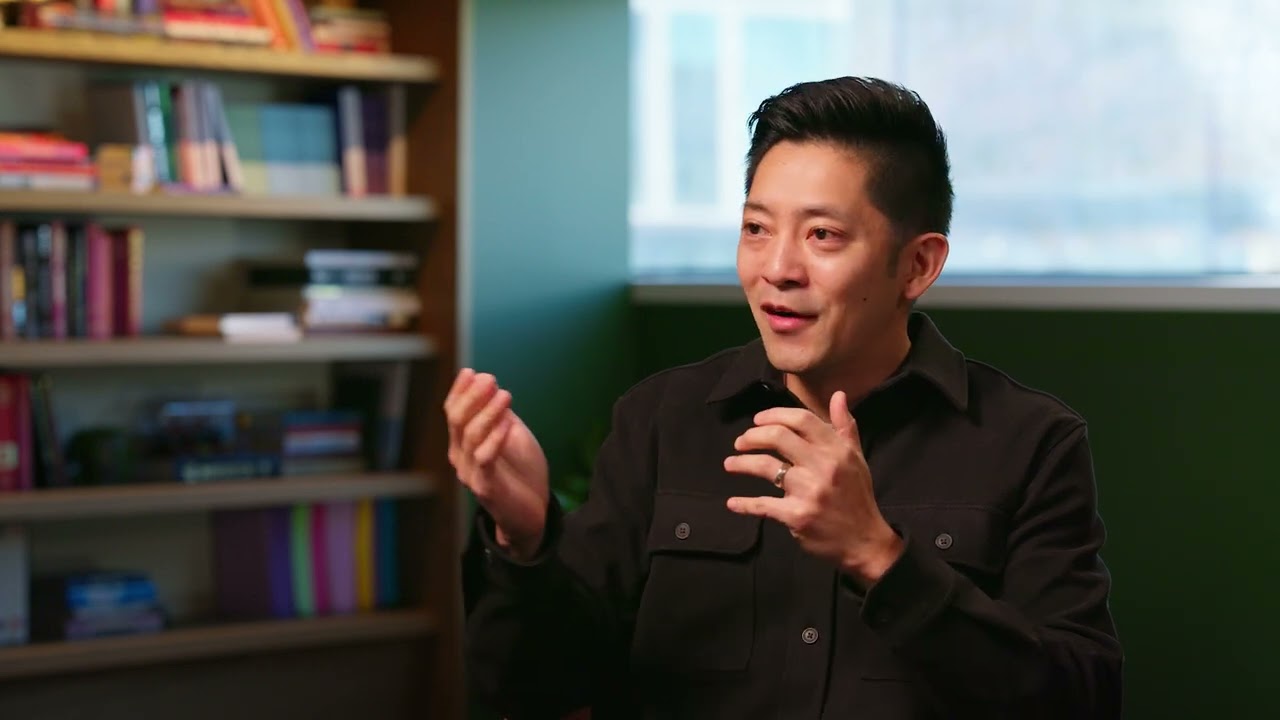
Gamma's path to $100M ARR — Stripe

Stripe

AI-assisted summary of Gamma's path to $100M ARR — original source. Check the original for full context.

Source published:

Key ideas

  • Gamma surpassed $100M ARR in under three years after fundamentally redesigning its product around the first 30 seconds of user onboarding and integrating generative AI. (4:08)
  • Operating in an AI-native landscape compressed Gamma's traditional three-year product roadmap into a six-month execution plan driven by weekly steering rhythms rather than quarterly cadences. (11:31)
  • The company maintained extreme team leverage by pairing a deliberately slow hiring pace with automated platforms like Intercom's Fin for support and Stripe for immediate worldwide monetization. (17:00)
  • To protect gross margins and avoid 'token leakage,' Gamma built an orchestration layer that dynamically routes requests across frontier and cost-efficient lightweight models based on task complexity. (19:51)

Detailed notes

## Background Published by Stripe on YouTube on October 21, 2026, this interview features Grant Lee, co-founder and CEO of Gamma. The conversation explores how Gamma completely rebuilt its product experience and scaled past $100 million in ARR in less than three years.

## TL;DR After an initial Product Hunt surge in 2022 led to plateauing growth, Gamma chose not to buy paid marketing and instead re-engineered its onboarding around an effortless 'first 30 seconds' infused with generative AI. Lee explains how the company compresses traditional three-year roadmaps into six-month execution sprints, relying on a lean team of generalists and autonomous coding tools. To maintain profitable unit economics at scale, Gamma dynamically orchestrates model routing across frontier and lightweight LLMs while leaning on automated platforms like Intercom's Fin and Stripe. Ultimately, Lee warns founders against generating unvetted 'AI slop,' stressing that AI must amplify rigorous communication and clear thinking rather than replace it.

## Atmosphere & style The interview has the pragmatic, intensely focused feel of an insider masterclass on modern company building. Lee speaks with measured candor, transparently breaking down near-death growth plateaus and operational pivots without posturing or hype. The dynamic balances tactical architectural decisions with thoughtful philosophical reflections on communication, giving viewers an urgent yet grounding look at what it takes to survive and lead on the frontier of AI SaaS.

## Bulletin - [04:08](https://www.youtube.com/watch?v=1_W21ZDr17M&t=248s) Gamma surpassed $100M ARR in under three years after fundamentally redesigning its product around the first 30 seconds of user onboarding and integrating generative AI. - [11:31](https://www.youtube.com/watch?v=1_W21ZDr17M&t=691s) Operating in an AI-native landscape compressed Gamma's traditional three-year product roadmap into a six-month execution plan driven by weekly steering rhythms rather than quarterly cadences. - [17:00](https://www.youtube.com/watch?v=1_W21ZDr17M&t=1020s) The company maintained extreme team leverage by pairing a deliberately slow hiring pace with automated platforms like Intercom's Fin for support and Stripe for immediate worldwide monetization. - [19:51](https://www.youtube.com/watch?v=1_W21ZDr17M&t=1191s) To protect gross margins and avoid 'token leakage,' Gamma built an orchestration layer that dynamically routes requests across frontier and cost-efficient lightweight models based on task complexity.

## Key takeaways - [00:00](https://www.youtube.com/watch?v=1_W21ZDr17M&t=0s) Grant Lee conceived Gamma after realizing hours were wasted aligning boxes and formatting in Google Slides rather than refining core ideas. - [01:06](https://www.youtube.com/watch?v=1_W21ZDr17M&t=66s) Early internal dogfooding via weekly 'Gammarama' presentations allowed the team to surface UX gaps and product paper cuts immediately. - [01:46](https://www.youtube.com/watch?v=1_W21ZDr17M&t=106s) For early self-serve prosumer products, product-market fit narrows down to two essential signals: strong organic word of mouth and initial willingness to pay. - [04:08](https://www.youtube.com/watch?v=1_W21ZDr17M&t=248s) Following an initial post-Product Hunt plateau, Gamma opted to completely rebuild onboarding to deliver magic in the first 30 seconds instead of buying paid marketing. - [05:30](https://www.youtube.com/watch?v=1_W21ZDr17M&t=330s) The arrival of ChatGPT aligned with Gamma's writing-first architecture, enabling automated layout assembly and triggering sustained organic virality by March 2023. - [08:06](https://www.youtube.com/watch?v=1_W21ZDr17M&t=486s) Maintaining a lead in AI requires hiring low-ego, adaptable generalists and actively studying creative onboarding patterns across diverse industries. - [09:44](https://www.youtube.com/watch?v=1_W21ZDr17M&t=584s) AI startups must master a dual horizon: shipping impactful customer improvements daily while preserving an ambitious 5-to-10-year organizational vision. - [11:31](https://www.youtube.com/watch?v=1_W21ZDr17M&t=691s) Traditional SaaS multi-year and quarterly planning cycles are obsolete in AI, requiring companies to steer dynamically on weekly cadences. - [13:10](https://www.youtube.com/watch?v=1_W21ZDr17M&t=790s) Maintaining lean headcounts enables engineering teams to rapidly embrace agentic coding without the bureaucratic friction of restructuring large legacy teams. - [17:00](https://www.youtube.com/watch?v=1_W21ZDr17M&t=1020s) Leveraging Stripe and Intercom's Fin enabled Gamma to scale support and monetize globally from day one without expanding operational headcount. - [18:22](https://www.youtube.com/watch?v=1_W21ZDr17M&t=1102s) Founders must avoid unconstrained 'token maxing' and focus on whether AI features drive genuine ROI, cost reductions, or operational transformation. - [19:51](https://www.youtube.com/watch?v=1_W21ZDr17M&t=1191s) Gamma uses dynamic model orchestration to balance quality and unit economics, reserving frontier models for synthesis while routing routine work to lightweight models. - [21:11](https://www.youtube.com/watch?v=1_W21ZDr17M&t=1271s) Cheaper deck creation triggered a Jevons paradox, evolving presentations from rare ceremonial decks into automated, ambient layers of company intelligence. - [22:42](https://www.youtube.com/watch?v=1_W21ZDr17M&t=1362s) Founders should participate in peer networks across meetups and chat groups, actively disseminating emerging frontier insights to their teams in all-hands meetings. - [24:03](https://www.youtube.com/watch?v=1_W21ZDr17M&t=1443s) Easy AI generation risks flooding teams with 'AI slop'; leaders remain responsible for doing the hard thinking required to communicate clearly and concisely.

## Detailed walkthrough ### [00:00](https://www.youtube.com/watch?v=1_W21ZDr17M&t=0s) The Origin Story

The concept for Gamma emerged directly out of the pandemic following an acquisition. After his previous startup was acquired, Grant Lee returned to his early professional roots in consulting and advising early-stage startups. While prepping for a meeting scheduled for the next day, he found himself opening Google Slides to organize his thoughts, only to run headfirst into the tedious, manual friction of presentation tools. He spent valuable hours nudging formatting, aligning boxes, and obsessing over making the deck look presentable rather than sharpening the substance of the ideas. As Lee recalled:

> “I was preparing for a meeting the next day and basically pulling up Google Slides and trying to get all of my thoughts together and realizing I was spending all this time trying to format, align boxes, trying to get this thing to look half-decent like I did any work, rather than on the content itself.”

The existing software landscape felt fundamentally broken. The very next day, Lee reached out to two of his former colleagues who were still working at Optimizely, pitching them a bold reinvention: “Hey crazy idea. What if we try to reimagine slide decks or presentations?” That conversation sparked the foundation of Gamma.

[01:06](https://www.youtube.com/watch?v=1_W21ZDr17M&t=66s) Early Dogfooding and Finding the Wedge

To narrow Gamma down from an unbounded, do-everything tool into an initial shippable product, the team relied heavily on internal dogfooding and structured company rituals. They instituted an internal presentation session called “Gammarama,” where anyone on the team could present on any topic they felt passionate about to inspire or educate colleagues. Presenters were required to build their deck end-to-end within Gamma and present directly from it. At the end of every presentation, the team conducted a post-mortem to identify UX gaps, missing core features, and product “paper cuts.”

Simultaneously, conversations with early adopters revealed that internal, lower-stakes, high-frequency presentations represented the ideal initial wedge. While Gamma harbored longer-term ambitions of serving higher-stakes and broader presentation needs, locking in high-frequency everyday use cases provided an active flywheel for rapid user feedback and edge-sanding.

When discussing product-market fit (PMF) in a modern self-serve, prosumer software landscape, Lee argued that PMF is not a static milestone, but rather “definitely one that is constantly a feeling that you have to re-earn it, especially at every stage you get.” For an early self-serve business, he filters PMF down to two non-negotiable hurdles before worrying about broader market questions:

> “When you're just getting started, the only thing that matters, in my opinion, is the first two, which is strong word of mouth, some initial willingness to pay.”

- **The Word-of-Mouth Test:** When people sign up organically, do they immediately recommend and share the tool with their peers and coworkers? - **The Monetization Test:** Are users genuinely willing to pull out a credit card, proving that the product provides sufficient economic utility to sustain a real company? - **TAM and Expansion Complexity:** While vertical niches (such as education) may exhibit high love, founders must later confront whether the total addressable market is large enough to justify scaling.

[04:08](https://www.youtube.com/watch?v=1_W21ZDr17M&t=248s) The First 30 Seconds and the AI Inflection

Gamma tackled organic virality first, leading to a public beta launch on Product Hunt in August 2022. The launch achieved widespread visibility—sweeping Product of the Day, Product of the Week, and Product of the Month—and drove an enormous surge of incoming signups. Once the initial hype subsided, signups plateaued rather than sustaining organic compounding. Users were not spreading the product organically. The team faced a stark strategic crossroads: artificially prop up momentum by spending money to build an outbound pipeline and generate awareness, or pause and completely re-engineer the product experience.

```mermaid flowchart TD accTitle: Gamma Pivot Architecture accDescr: Flowchart illustrating the evolution from the August 2022 Product Hunt launch to the March 2023 inflection point driven by the first 30 seconds and AI integration.

subgraph PHLaunch ["August 2022: Public Beta"] A["Product Hunt Launch"] --> B["Wins Day / Week / Month"] B --> C["Signup Spike & Plateau"] end

subgraph Decision ["Strategic Crossroads"] C --> D{"Growth Choice"} D -->|"Rejected"| E["Buy Pipeline & Marketing"] D -->|"Chosen"| F["Go Back to Drawing Board"] end

subgraph Redesign ["Winter 2022-2023: Re-engineering"] F --> G["Focus: The First 30 Seconds"] G --> H["Integrate Stable Diffusion"] G --> I["Leverage LLMs & ChatGPT Moment"] end

subgraph Relaunch ["March 2023: Relaunch"] H & I --> J["Effortless First 30 Seconds Magic"] J --> K["Self-Sustaining Organic Virality"] end ```

The team chose to rebuild, directing all engineering efforts toward optimizing what they dubbed the "first 30 seconds" of onboarding. In roughly three months, the small team reworked the onboarding flow so that the first half-minute delivered an immediate spark of delight that convinced users to stay for the next 30 seconds and ultimately share Gamma with peers:

> “We poured as much as we could into making that first 30 seconds feel magical.”

This redesign intersected directly with the breakthrough arrival of generative AI. Gamma had already been experimenting with image generation via Stable Diffusion prior to August, recognizing the visual essence of presentations. When ChatGPT launched, Gamma’s writing-first foundation allowed them to weave large language models directly into the workflow to assemble layout blocks automatically. Relaunching in March 2023, Gamma crossed an organic inflection point, achieving sustained viral distribution without spending any capital on marketing.

[08:06](https://www.youtube.com/watch?v=1_W21ZDr17M&t=486s) Staying on the Frontier and Company Culture

Operating in a hyper-fast AI market creates a constant existential pressure—the persistent anxiety that falling slightly behind today could cause a company to forfeit its lead tomorrow. To prevent complacency and avoid falling prey to the sunk-cost fallacy, Lee focuses on hiring low-ego, collaborative problem solvers who actively enjoy questioning assumptions, learning, and tracking emerging technology.

Within the company, internal Slack channels serve as rapid-fire repositories where employees post creative onboarding experiences and innovative workflows from across the tech landscape, regardless of industry. The team studies these external reference points to see what ideas can inspire Gamma’s own product development. To anchor these explorations in real-world utility, Gamma pairs experimentation with intensive user research, bringing in prospective users who spend their entire working lives inside traditional slide decks but have never heard of Gamma to test their product intuition against live workflows.

[09:44](https://www.youtube.com/watch?v=1_W21ZDr17M&t=584s) Relentless Iteration and Dual-Horizon Ambition

Building a great product demands an obsessive ear for user behavior. Grant Lee explains that Gamma constantly observes where users run into trouble, their points of confusion, and even the subtle tone of voice they use when describing features. This micro-level feedback informs what stays, what gets discarded, and what needs immediate fixing. Lee emphasizes that while top startups have always valued iteration, the current environment has raised the stakes dramatically: it is no longer optional if a company wants to stay competitive.

When asked about contemporary peers that inspire him, Lee highlights companies like Clay and ElevenLabs. What stands out is their dual ability to execute daily at breakneck speed—rapidly shipping campaigns, product features, and improvements—while simultaneously preserving an ambitious, long-term vision looking five to ten years out. Balancing short-term delivery with long-term aspiration is a rare organizational trick.

> “Can you both be someone, and as a company, focused on the impact you want to make 5, 10 years from now, as well as every single day feeling like you're shipping things you're proud of, customers are loving it, they're cheering you on, you have so many champions?” — Grant Lee

[11:31](https://www.youtube.com/watch?v=1_W21ZDr17M&t=691s) Compressing the Operating Cadence: From Years to Weeks

The operational rhythm of AI-native companies marks a complete departure from earlier SaaS eras. Reflecting on his time helping build operating cadences at Optimizely—which was already considered one of the fastest-moving Y Combinator companies of its time—Lee notes that companies traditionally operated on quarterly cadences and rigid three-to-five-year strategic horizons. At Gamma, that entire paradigm has collapsed.

In a company all-hands meeting, Lee acknowledged that their previous three-year roadmap had essentially become their six-month execution plan. Because market conditions and model capabilities shift drastically month over month, traditional quarterly planning feels far too slow. While Gamma maintains broader multi-year ambitions that remain steady in the distance, immediate prioritization operates on a weekly steering rhythm where leadership frequently updates plans and pivots as fresh data emerges.

```mermaid flowchart LR accTitle: Gamma Planning Cadence Comparison accDescr: Diagram contrasting traditional SaaS multi-year planning with Gamma's high-velocity weekly steering rhythm.

subgraph Traditional["Prior SaaS Rhythm (e.g., Optimizely)"] direction TB T1["3–5 Year Strategic Plan"] --> T2["Rigid Quarterly Planning Cycles"] end

subgraph Gamma["AI-Native Rhythm (Gamma)"] direction TB G1["Long-Term Vision (5–10 Yrs)"] --> G2["3-Yr Vision Compressed to 6 Mos"] G2 --> G3["Weekly Steering & Dynamic Reprioritization"] end ```

> “Everything we think we should accomplish in 3 years probably needs to be accomplished in 6 months.” — Grant Lee

[13:10](https://www.youtube.com/watch?v=1_W21ZDr17M&t=790s) The Lean Team Dilemma and Agentic Disruption

Compressing three years of work into six months creates a structural hiring paradox. Organizations cannot scale headcounts tenfold in a compressed timeline, nor can most candidates handle the velocity. Gamma intentionally adopted a policy early on to “hire painfully slow” in order to stay agile and maintain high ownership per person. However, keeping the team tight while growing ambitions presents a continuous catch-22, as each selective hire provides an immediate surge in organizational output.

Gamma focuses on recruiting broad generalists who are hungry to make an outsized impact rather than relying on standard corporate org playbooks. This lean posture is particularly crucial because underlying engineering practices are being upended in real time. Rather than having a large legacy engineering team that must be forcefully restructured around AI, a lean team allows engineers to organically explore agentic coding and reinvent their own development systems without bureaucratic friction.

> “I think it would have been much harder if we had a massive engineering team that all of a sudden had to now figure out what is fundamentally changing, what is not, and whose job is going to be completely refactored in different ways.” — Grant Lee

- **Talent profile:** Prioritizes adaptable generalists who seek direct ownership and high leverage over specialized functional managers. - **Agentic coding adoption:** Small engineering teams integrate autonomous coding tools faster and adjust their architectures organically compared to bloated legacy departments. - **Cultural preservation:** Keeping teams lean preserves core company culture and maintains high ARR-per-employee leverage.

[17:00](https://www.youtube.com/watch?v=1_W21ZDr17M&t=1020s) Scaling Infrastructure with Fin and Stripe

Operating lean at massive scale requires picking infrastructure partners that automate heavy operational lifts. Lee points to two critical platforms that unlocked Gamma’s rapid global scaling without bloating internal operations:

1. **Customer Support:** Gamma partnered early with Intercom and their AI agent Fin. This automated setup enables the company to resolve inquiries in real time across a massive, expanding global user base without needing a sprawling support department. 2. **Global Monetization:** Gamma used Stripe to flip on international markets instantly. In previous software eras, expanding into new geographical regions required multi-quarter legal, banking, and technical efforts. Partnering with Stripe allowed Gamma's self-serve, prosumer model to monetize worldwide from day one, effectively reversing the historical expansion model by monetizing first and establishing local presences later.

> “When we started Gamma, working at prior companies, these were things that took multi-month, multi-quarters to unlock different regions, and we've never had any friction there.” — Grant Lee

[18:22](https://www.youtube.com/watch?v=1_W21ZDr17M&t=1102s) Unit Economics and Managing Token Costs

As an AI-driven presentation platform, Gamma pays close attention to token volume and underlying infrastructure costs. Rather than pursuing unconstrained usage that leads to "token leakage" and eroded margins, the founding team deliberately designed Gamma to run efficiently from its foundation, maintaining strong gross margins that generate cash flow for continuous reinvestment.

Lee cautions against "token maxing," where users burn through vast compute allocations without realizing commensurate business value. As AI models and products mature, the conversation inevitably returns to classic return on investment (ROI). Companies must determine whether their AI features are genuinely delivering a measurable reduction in costs, tangible productivity gains, net-new revenue, or a fundamental operational transformation for the customer.

> “If they're spending so much in tokens, what are they receiving in value? That's where you need to think about if you're a product like ours, what level of transformation are you offering?” — Grant Lee

[19:51](https://www.youtube.com/watch?v=1_W21ZDr17M&t=1191s) Model Orchestration and Token Efficiency Across User Segments

As Gamma operates across a massive global footprint, customer success cannot simply be measured by token consumption. Grant Lee explains that the company focuses on tangible return on investment rather than raw usage: “Our goal is not just to ensure they can max out all their token spend. It's actually thinking about what do they get in return for using a tool like ours, and how do we make sure whatever business objectives they have, we can help them move further and faster in that direction than they could on their own.” To deliver on that promise, Gamma segments its user base across regions and user types—ranging from prosumers to enterprise B2B accounts—and runs continuous experimentation.

Under the hood, Gamma relies on an orchestration layer that routes prompts across multiple underlying model providers. Frontier models are reserved for complex, difficult synthesis and creative tasks, while lighter models handle more straightforward duties. Because model providers are constantly releasing new versions and updating pricing structures, Gamma treats model selection as a dynamic optimization problem where they are constantly adjusting settings behind the scenes.

```mermaid flowchart TD accTitle: Model Orchestration Architecture accDescr: Diagram illustrating how Gamma routes user tasks across different model providers based on complexity and cost efficiency.

UserReq["User Prompt / Document Input"] --> Router["Gamma Model Orchestrator"] Router -->|"Complex, nuanced task"| Frontier["Frontier Models<br/>(High reasoning power)"] Router -->|"Standard, routine task"| Lightweight["Cost-Efficient Models<br/>(Fast & lightweight)"] Frontier --> Output["Generated Deck / Visual Artifact"] Lightweight --> Output ```

- **Customer focus over token spend:** Success is framed around whether customers reach their specific business objectives faster than they could unassisted. - **Dynamic model routing:** Because not all tasks carry equal complexity, Gamma pairs specific workloads to the most appropriate model to balance user-facing quality with backend margins. - **Continuous experimentation:** The engineering team actively tweaks dials across geographic and cohort segments to take advantage of rapidly shifting model costs and capabilities.

---

[21:11](https://www.youtube.com/watch?v=1_W21ZDr17M&t=1271s) Jevons Paradox: Presentations as Automated Company Intelligence

When asked whether Gamma has triggered a classic Jevons paradox—where making presentation creation dramatically cheaper and easier leads to vastly more slide decks being produced—Grant Lee confirms that deck production is surging, but notes that the underlying nature of presentations has transformed. Historically, creating a deck was an intensive, time-consuming endeavor reserved for major milestones such as company all-hands meetings, formal strategy updates, or external keynote speeches. Now, presentations have expanded into lightweight, frequent vehicles for everyday reporting and operational updates.

Instead of sitting down to hand-craft layouts, Lee uses Gamma to package customer insights from the front lines, product roadmap developments, and unaddressed execution gaps into modular visual updates distributed directly through Slack and other internal channels. In this workflow, presentations cease to be static, manually assembled artifacts and instead function as an ambient layer of organizational intelligence. As Lee reflects: “It's not even always me thinking about the presentation. It's me thinking about what are the questions generally we need to be answering, and the presentations themselves can be automated and propagated in different ways that weren't possible in the past. It becomes an extension of almost your company intelligence.”

- **Expansion of use cases:** Presentations are moving beyond ceremonial all-hands decks into routine frontline reporting and real-time knowledge sharing. - **Automated propagation:** Content generation is increasingly tied directly into the company’s operating system, answering internal questions on demand without manual slide design. - **The medium as a vessel:** The slide presentation is merely a flexible vessel for capturing and transmitting ideas cleanly across an organization.

---

[22:42](https://www.youtube.com/watch?v=1_W21ZDr17M&t=1362s) Staying on the Bleeding Edge: Founder Communities and Collective Curiosity

For new founders trying to stay at the epicenter of the fast-moving AI revolution, Lee highlights two foundational requirements: cultivating internal team curiosity and actively participating in tight-knit peer networks. Staying on the frontier becomes natural when a company’s employees possess an organic appetite to experiment with emerging technologies. Externally, Lee leans heavily on informal dialogues with fellow AI-native builders to compare technical notes, discuss tooling stacks, and share observations.

He praises the uniquely collaborative ethos of the San Francisco Bay Area startup ecosystem, while emphasizing that high-value founder communities now operate globally across WhatsApp chats and specialized peer groups. Lee regularly synthesizes the questions, debates, and technical discoveries emerging from these private channels and brings them directly to Gamma's internal team. As Lee describes his routine: “That's where I personally get a lot of my inspiration in hearing the questions that are popping up in these different chats or in-person meetups, and then bringing a lot of that back to when we run all-hands, oftentimes I'll kick it off with, 'What am I observing? What are the things I'm seeing?' And ensuring anything I'm noticing at the bleeding edge is not just in my head, but it's pervasive across the entire company.”

- **Cultivating curious teams:** Living at the frontier requires hiring individuals whose default posture is continuous technical exploration. - **Peer founder networks:** Open exchange among founders building AI-native products provides an essential sounding board for testing tools and operating approaches. - **Democratizing signals internally:** Founder observations from external meetups and WhatsApp communities must be shared systematically in all-hands meetings so the entire workforce understands emerging market dynamics.

---

[24:03](https://www.youtube.com/watch?v=1_W21ZDr17M&t=1443s) Advice for Builders: Avoiding "AI Slop" and the Responsibility of Clear Communication

When asked for a single message he would put on a billboard for all founders and builders, Lee cautions against the temptation to generate low-effort, synthetic output simply because AI makes doing so frictionless. While generative tools can rapidly flood the world with content, the core human challenge of communication remains unchanged: articulating a clear mental model and transferring that insight into someone else’s mind requires genuine thought and deliberate effort. Lee points out that flooding teams with unvetted "AI slop" creates negative value rather than leverage.

Referencing internal writing guidelines popularized by Clay, Lee underlines the duty that communicators owe to their audiences: “If you saved an hour of time writing, and it actually just ends up costing people 10 hours more time to read it, you've done a disservice to the organization.” Rather than letting AI substitute for clear reasoning, leaders must take full responsibility for shaping and refining their ideas so that the output truly represents their best thinking. He summarizes his central philosophy for founders: “My one piece of advice is to all builders, founders, any leader out there is your ideas still matter, but you have to make them matter. To do so means putting in the hard work to communicate effectively, to make sure that when you're putting stuff out there, it actually encapsulates your thinking.”

- **The danger of AI slop:** Frictionless generation makes it dangerously easy to propagate noise that fails to communicate actual meaning. - **Asymmetric communication costs:** Writers should invest more time crafting and refining ideas than it takes recipients to read and absorb them. - **Making ideas matter:** AI cannot replace the discipline required to clarify ideas; founders must ensure their output accurately encapsulates rigorous strategic thinking.

## Notable quotes > [24:03](https://www.youtube.com/watch?v=1_W21ZDr17M&t=1443s) If you saved an hour of time writing, and it actually just ends up costing people 10 hours more time to read it, you've done a disservice to the organization. — Grant Lee

> [11:31](https://www.youtube.com/watch?v=1_W21ZDr17M&t=691s) Everything we think we should accomplish in 3 years probably needs to be accomplished in 6 months. — Grant Lee

## Mentioned Gamma, Grant Lee, Stripe, Google Slides, Optimizely, Product Hunt, Stable Diffusion, ChatGPT, Clay, ElevenLabs, Intercom, Fin, Slack, WhatsApp

## Video description A conversation with Grant Lee, Gamma cofounder and CEO, on rebuilding their product and scaling to exceed $100 million ARR in under 3 years.

Explore Stripe: https://stripe.com/startups

00:00 Origin story 01:06 Early dogfooding 04:08 The first 30 seconds 08:06 Culture building 11:31 Operating cadence 13:10 Lean teams 17:00 Scaling infrastructure 18:22 Managing AI token costs 21:15 Transforming presentations 24:03 Advice for founders

[Source](https://www.youtube.com/watch?v=1_W21ZDr17M)

中文简报

Gamma实现1亿美元ARR之路 在2022年Product Hunt带来初期爆发随后增长陷入停滞后,Gamma并未选择购买付费营销,而是围绕融入生成式AI的轻松“前30秒”体验彻底重构了新用户引导。Lee解释了公司如何依靠通才组成的精简团队以及自主编程工具,将传统三年的路线图压缩进六个月的执行冲刺中。为了在规模化扩展中保持良好的单客经济效益,Gamma在前沿与轻量级大语言模型之间动态协调路由,同时依托Intercom的Fin和Stripe等自动化平台。最后,Lee告诫创业者不要生成未经检验的“AI垃圾内容”,并强调AI必须用于强化严谨的沟通与清晰的思维,而非取而代之。 Gamma在从根本上围绕用户引导的前30秒重新设计产品并接入生成式AI后,在不到三年内突破了1亿美元ARR。 (4:08) 身处AI原生竞争格局,Gamma将传统的三年产品路线图压缩为六个月的执行计划,并由每周的调整节奏而非季度节奏驱动。 (11:31) 公司通过刻意放缓招聘节奏,并结合用于客服支持的Intercom Fin以及用于即时全球变现的Stripe等自动化平台,保持了极高的团队人效杠杆。 (17:00) 为了保障毛利率并避免“Token损耗”,Gamma构建了一个编排层,根据任务复杂度在前沿模型与高性价比轻量级模型之间动态路由请求。 (19:51)

Reading summary

Gamma co-founder Grant Lee outlines how the company achieved viral growth by rebuilding onboarding around generative AI, shifting from conventional multi-year SaaS cadences to compressed, lean operational rhythms. Onboarding Redesign and the AI Inflection (4:08) Gamma launched its public beta on Product Hunt in August 2022, securing top rankings but quickly facing a growth plateau as organic compounding stalled. Rather than spending capital on outbound marketing, the team spent three months over the winter of 2022–2023 re-engineering the user onboarding journey. They prioritized what Lee termed the 'first 30 seconds' of the product experience, ensuring users experienced immediate utility before deciding whether to abandon the tool. This redesign converged with advances in generative artificial intelligence. Having previously experimented with Stable Diffusion for visual generation, Gamma incorporated large language models after ChatGPT's release to automate document-to-presentation layouts. Upon relaunching in March 2023, Gamma hit an inflection point of self-sustaining organic virality without paid marketing spend. Compressing Roadmaps and Preserving Lean Teams (11:31) The operating cadence at AI-native companies diverges sharply from previous SaaS generations. Drawing comparisons to his experience at Optimizely, Lee noted that traditional three-to-five-year roadmaps and rigid quarterly planning cycles have collapsed. At Gamma, a three-year roadmap was compressed into a six-month execution plan, paired with weekly steering cycles that reprioritize initiatives based on shifting model capabilities. To manage this accelerated velocity without organizational bloat, Gamma adopted a policy to hire deliberately slowly, favoring adaptable generalists over specialized middle managers. Lee argued that keeping engineering teams lean enables developers to organically adopt agentic coding workflows, avoiding the structural inertia and reorganization friction typical of legacy development organizations. Automating Operations and Dynamic Model Orchestration (17:00) To support global scale with minimal headcount, Gamma relied on automated infrastructure, deploying Intercom's Fin AI agent for customer support and Stripe to turn on worldwide self-serve billing immediately. Lee noted this setup inverted traditional software expansion, allowing the company to monetize globally on day one rather than spending quarters establishing regional presences. On the unit economics side, Gamma manages compute margins through dynamic model orchestration. Rather than encouraging indiscriminate token consumption, the platform routes user prompts dynamically: complex reasoning and synthesis tasks are directed to frontier models, while routine tasks run through lightweight, cost-efficient alternatives. This routing allows the company to adapt to shifting provider pricing while preserving software gross margins. Jevons Paradox and Avoiding AI Slop (21:11) Lee confirmed that lowering the friction of deck creation has triggered a Jevons paradox, leading to a surge in slide production. However, use cases have shifted away from ceremonial keynote decks toward ambient, frequent updates. Presentations increasingly serve as automated internal intelligence artifacts distributed over Slack to answer operational questions on demand. At the same time, Lee cautioned builders against generating unvetted synthetic output, warning against 'AI slop.' Referencing guidelines popularized by Clay, he argued that saving an hour of writing at the expense of costing colleagues ten hours of reading creates net negative organizational value. Communication tools should distill rigorous human thinking rather than substituting for it. While AI automation drastically reduces the technical cost of generating presentations, Lee emphasizes that the core discipline of communication remains human: leaders must continue refining their own ideas rather than offloading clear thinking to generative tools.

精炼阅读摘要

Gamma 联合创始人 Grant Lee 阐述了公司如何通过押注“前30秒体验”与生成式 AI 转型实现自发式病毒传播,并探讨了 AI 原生企业在极度压缩的运营节奏下,如何依靠精简团队、动态模型编排和清晰沟通来构建可持续商业模式。 前30秒体验与生成式 AI 拐点 (4:08) Gamma 最初源于解决传统演示文稿制作中繁琐排版与对齐痛点的想法。在 2022 年 8 月通过 Product Hunt 推出公开测试版后,产品虽包揽日榜、周榜和月榜冠军,但初期热度退去后用户增长陷入停滞。面对购买获客流量还是彻底重构体验的抉择,团队拒绝了付费采买营销管道,耗时约三个月将全部工程精力投入到重构“前30秒”入职流程中,力求在半分钟内带给用户即时惊喜并促成二次分享。 这轮重塑恰逢生成式 AI 技术突破。Gamma 此前已在尝试 Stable Diffusion 生成图像,在 ChatGPT 推出后,团队凭借先前的文本优先架构,迅速将大语言模型融入排版模块。2023 年 3 月重新上线后,Gamma 在零营销支出的情况下迎来自主有机传播的拐点。Lee 指出,在自服型产品初期,衡量产品与市场匹配度(PMF)的核心标准唯有两条:强劲的自发口碑推荐,以及用户真实的付费意愿。 运营节奏压缩与精简团队的取舍 (11:31) 在 AI 原生领域,以往 SaaS 企业的规划范式已不复存在。Lee 观察到,传统模式下基于季度规划和三至五年的战略周期已经彻底瓦解,在 Gamma,以往三年的路线图被压缩成了六个月的执行计划。尽管企业维持着五到十年的远期愿景,但具体执行优先级转向了以周为单位的动态校准,以应对模型能力和市场格局的月度剧变。 周期的大幅压缩给招聘带来了悖论:企业无法在极短时间内成倍扩充员工,多数候选人也难以适应这种节奏。Gamma 采取“极度克制”的招聘策略,专注于招募具有高责任感、适应力强的主动型通才。这种精简团队形态使工程师能自发尝试 Agent 辅助编程并重塑开发流程,避免了大型传统研发团队面对 AI 变革时的重构阻力与官僚摩擦。 依托生态伙伴与动态模型编排优化单位经济 (17:00) 保持小团队运营的前提是借助成熟基础设施剥离沉重营运负担。Gamma 通过采用 Intercom 的 AI Agent Fin 自动化处理全球客服,并借助 Stripe 在成立第一天即开启全球多币种变现,颠覆了传统软件出海漫长繁复的本地化开拓流程。 在底层架构上,Gamma 警惕盲目追求高 Token 消耗的虚假繁荣,严防利润侵蚀。团队构建了模型编排层,实行动态路由分发:仅将复杂的综合任务和创意生成分派给前沿大模型,常规任务则由轻量级、高性价比的模型处理。团队持续根据模型厂商的价格和能力演进调节参数,旨在确保底层毛利空间的同时,为客户提供能带来实际生产力或降本收益的可量化投资回报率。 杰文斯悖论与抵制“AI 废话”的沟通责任 (21:11) 生成门槛的大幅降低引发了“杰文斯悖论”,演示文稿的制作总量剧增,其产品形态也随之演变。演示文稿不再局限于全员大会或重大战略发布等仪式化场合,而是演变为一种日常化、高频次的内容载体。团队将一线客户洞察和产品进展沉淀为模块化视觉更新并分发至 Slack,使演示文档成为企业环境中的流动智慧层。 然而,Lee 严正警惕无节制生成“AI 废话”(AI slop)的倾向。他援引 Clay 的内部写作原则强调,如果写作者使用 AI 节省了 1 小时,却导致读者需要耗费 10 小时去费力解读低质内容,便是对组织的消耗。生成式工具虽能快速铺设内容,但人类沟通的本质仍是将清晰的心智模型传递给他人,创业者必须承担起打磨思考的责任,确保产出真正凝聚并传达了自己的严谨构想。 Gamma 的经验证明了通过极简团队与模型编排实现高效扩张的可行性;但在模型能力同质化与内容泛滥的未来,如何在自动化生产扩张与深度高信噪比沟通之间长期保持平衡,仍是 AI 生产力工具必须面对的课题。

Source quotes

[24:03] Grant Lee: If you saved an hour of time writing, and it actually just ends up costing people 10 hours more time to read it, you've done a disservice to the organization. [11:31] Grant Lee: Everything we think we should accomplish in 3 years probably needs to be accomplished in 6 months.

Original transcript

[0:00] Let's start at the very, very beginning. [0:02] Every entrepreneur has some origin story. What's your superhero origin story? [0:09] This was basically into the pandemic. [0:12] The last startup I was at was we had just been acquired, [0:16] and I went back into my early roots [0:18] in consulting and advising early-stage startups. [0:21] I was preparing for a meeting the next day and basically pulling up Google Slides [0:26] and trying to get all of my thoughts together [0:30] and realizing I was spending all this time trying to format, [0:33] align boxes, trying to get this thing to look half-decent [0:36] like I did any work, rather than on the content itself. [0:39] It just felt really broken. [0:41] Literally the next day, I called up two of my former colleagues, [0:44] they're still at Optimizely, and said, "Hey crazy idea. [0:48] What if we try to reimagine slide decks or presentations?" [0:52] -That was the beginning of the journey. -Awesome. [0:55] I think one of the interesting things is the product today [0:57] is really powerful, and it can let you [1:01] express a ton of ideas really, really easily. [1:04] How did you think about the first product, the first thing? [1:08] Basically, how do you cut down from, "We can do anything," to, [1:12] "This is the first thing I'm willing to put into a user's hands?" [1:15] Part of this is the intuition you get from just dogfooding the product. [1:21] We actually had, in the very beginning, created these almost fake use cases. [1:26] We had internally what we called Gammarama, [1:29] which is anybody at the company could present on any topic. [1:33] You, as someone that's coming up with something you're passionate about, [1:36] you want to be able to educate or inspire the rest of the team, [1:39] do you have the tools necessary to do the job? [1:42] We'd obviously have everyone do that in Gamma. [1:45] They would create something end-to-end, they would present it, [1:47] and at the end of the presentation, they'd share all their feedback, [1:50] like what are all the different paper cuts [1:52] or just gaps in the core product that didn't deliver. [1:55] At the same time, you're also just talking to your early users. [1:57] We realized a lot of the internal use cases, [2:00] lower stakes, high frequency, were ones we can focus on and win, [2:04] with obviously the aspiration longer term [2:06] to be able to serve a much wider set of use cases. [2:08] But if we can get the high frequency, lower stakes, then it gives us a chance [2:11] to have that flywheel going, getting more feedback, iterating, [2:14] making sure we can sand down the rough edges. [2:16] Very cool. [2:18] I think one of the questions that I always struggled with when I was an entrepreneur [2:21] was this question of product-market fit. [2:25] Do I have it? Do I not? [2:27] There's a million different answers to this question, [2:29] but how do you think about product-market fit, [2:31] especially in your space? [2:32] When did you have it? Do you have it? [2:34] How do you even think about this problem? [2:36] I think in today's market, it's definitely one that is constantly [2:40] a feeling that you have to re-earn it, especially at every stage you get. [2:44] The bigger you get, the market's bigger. [2:46] I'd say early stage for a product that has prosumer or self-serve elements to it, [2:52] there's really only two tests in my mind. [2:54] The first is, do you have a product that has strong word of mouth? [2:59] When people sign up for it, do they tell all their friends, [3:02] colleagues to check it out? [3:04] Do you get some sort of organic virality? [3:06] Then the second is, is there willingness to pay? [3:08] It's great if you have a product and everyone's using it, [3:10] but if actually there's no willingness to pay, [3:13] then you don't have enough of a business to actually build on. [3:16] Early on, those are the only two things. [3:19] Then depending on how complex or big your product gets, [3:23] how many different types of solutions you're offering [3:25] and different segments of users you're going after, [3:28] I think that's where the complexity comes into place because you may have [3:31] product-market fit in a very small market, for instance, [3:33] maybe only educators love your product, and you have product-market fit, [3:37] but how big is that TAM? [3:38] Then if you get bigger, then it's like, maybe some types of businesses [3:41] like your product, but it's only for certain verticals. [3:44] You have product-market fit, but is it big enough? [3:46] Is it big enough TAM? [3:47] Those are the questions that become a little bit more challenging. [3:50] When you're just getting started, the only thing that matters, [3:52] in my opinion, is the first two, which is strong word of mouth, [3:55] some initial willingness to pay. [3:57] That earns you the right to ask the bigger questions later on. [4:00] In your case, did you go after both of those at the same time, [4:03] one of those and then the other? [4:05] How did you think about the concept of virality [4:08] and then also willingness to pay? [4:09] We definitely tried to answer the virality piece first. [4:12] We had an initial attempt at this, actually, in August of 2022. [4:18] We launched on Product Hunt, and this was our public beta. [4:22] We ended up winning Product of the Day, Product of the Week, Product of the Month, [4:26] and it felt like it was going really well. [4:28] You see this huge spike in signups, and then signups started plateauing out. [4:32] We knew that we didn't have strong organic growth. [4:35] People weren't telling all their friends about Gamma. [4:39] We had basically a choice. [4:40] At the time, you can either try to invest way more in trying to create pipeline [4:44] and building awareness, or you can go back to the drawing board. [4:48] For us, we went back to the drawing board to say, [4:51] "We need to re-engineer the product [4:53] such that when people sign up, they see the magic, [4:56] they are able to share it with others, and you start seeing the organic signups [5:00] go up and up without any additional marketing." [5:02] That was the bar we set for ourselves. [5:04] When we relaunched in March of 2023, we did see that inflection point. [5:09] All of a sudden, the product was growing on its own [5:11] without actually having to spend any money on marketing. [5:14] Awesome. [5:15] What was one or two changes that you made in the product that caused that delta? [5:21] We were a relatively small team at the time. [5:23] It was all hands on deck [5:24] to focus on what we call the first 30 seconds of the product. [5:28] The moment you sign up, can we deliver some magic to you [5:31] in the first 30 seconds that hopefully unlocks the next 30 seconds, [5:35] but more importantly, unlocks your willingness to share [5:37] Gamma with all of your friends? [5:39] We poured as much as we could [5:40] into making that first 30 seconds feel magical. [5:44] For us, that was the whole difference. [5:46] It was just over 3 months, [5:47] so we didn't have a lot of time to re-architect the entire product, [5:51] but we had enough time to make sure that first 30 seconds felt magical. [5:55] Critically, those two dates, I think, if I'm getting my memory correct, [5:59] they span the ChatGPT moment. [6:01] -Is that right? -That's right. [6:02] Cool. How much did AI contribute to this? [6:05] Was there an inflection due to some new technology that was coming online? [6:09] Absolutely. [6:11] There were, for us, two different AI tailwinds. [6:14] One, even before our August launch, [6:17] we had started playing around with Stable Diffusion. [6:19] I think we understood that on the image side, [6:21] things were going to get better and better, [6:23] and so much of presentations are visual. [6:26] If we could ensure we could somehow incorporate that, [6:29] we felt like that would be a tailwind. [6:30] Then to your point, ChatGPT moment, [6:33] we felt like we had already had a writing-first-based approach, [6:37] and so could we lean into LLMs to help you pre-assemble [6:41] some of the building blocks that we had in the product [6:43] and get you to a better starting point? [6:45] We were able to take advantage of both of those. [6:47] It was super rudimentary in hindsight, but enough to give you that initial spark, [6:53] because the market itself was early enough for us [6:55] to be super differentiated in that early market. [6:58] Awesome. [6:58] Is there anything you'd learn from that moment? [7:01] Because, in theory, you could have maybe built that 3–6 months earlier. [7:05] Is there any lesson you took from that, or is that more like, actually, [7:08] it is important to dogfood, it is important to let it bake? [7:11] I think it is. [7:12] Again, not every product is one you could probably dogfood. [7:16] For us, it was an advantage. [7:18] But dogfooding allowed us to have that intuition around [7:22] how much incremental value is it if we were to leverage LLMs [7:27] or the image models to provide you some starting point. [7:31] When we finally got to the point where, yes, it actually creates this [7:35] massive incremental value that just wasn't possible before. [7:39] Again, going back to the first 30 seconds, [7:42] it's really hard to provide any true value or magic in that first 30 seconds. [7:47] When we focused on that, I think it's like two things. [7:51] You need to know that the technology is there, [7:53] but then you need to have the constraint to say, [7:56] "Does it deliver on what we think is important?" [7:58] For us, that constraint was the first 30 seconds. [8:01] Combining those two then ended up checking the box and saying, [8:04] "Now is the right time to be able to do this." [8:06] One of the things when I talk to founders in a similar position is, [8:10] in spite of all the success, there's this feeling that you could lose it tomorrow [8:15] if you just fall a little bit behind. [8:17] It sounds like you have a very similar feeling. [8:18] What have you done in your daily habits to ensure that you, [8:22] to the best of your abilities, are on the bleeding edge? [8:25] You're not too captured by sunk cost. [8:27] Generally, what are you doing differently than maybe you would have done 5 years ago [8:31] to stay on that frontier? [8:35] There's a few things, I think, culturally, that we've had [8:37] from the beginning that you just want to reinforce. [8:40] Openness, transparency. [8:42] The people we hire, I'd say, in general, these are low-ego, highly collaborative, [8:46] always wanting to question and learn and grow. [8:50] It's especially important in this day and age. [8:53] The other thing we do within even Slack, [8:56] we have different channels where we're sharing things that other companies [9:00] are doing a great job at, and it doesn't even need to be in the same category. [9:04] It's like other onboardings that are magical. [9:06] What parts of it feel like things we should emulate [9:09] or be able to be inspired by? [9:11] That is, these channels are constantly being fired off where people are sharing. [9:16] We're constantly thinking about how can we deliver more value to our customers. [9:20] Then meeting reality [9:21] by actually getting in front of as many customers as possible [9:25] and ensuring that when we think [9:26] we have something that might be special or useful, [9:28] that the customers also think so as well. [9:31] We've done a ton of different versions of user research studies, [9:35] and so oftentimes we'll recruit people that live in slide decks. [9:39] Many of them have not heard of Gamma, [9:41] so we'll get them into Gamma trying to do different tasks. [9:44] We listen to where they run into issues, their confusion, the tone of voice [9:48] when they're describing certain things. [9:50] That gives us a level of granular feedback that we can go back and say, [9:55] "What is working, what is not?" [9:57] And make sure that we're constantly fixing. [9:59] Relentless iteration is probably the only way you can describe it, [10:01] is that willingness to do that. [10:03] I think the most successful startups have always had that mindset, [10:06] but today, there does feel like in the air that you have to. [10:11] There's no other option. [10:12] Whereas maybe in the past, it felt a little bit more optional. [10:15] Today, it's like, if you want to be in this race, [10:17] you have to be iterating, and you have to be iterating relentlessly. [10:20] Any companies that come to mind that you want to shout out [10:23] that are particularly inspiring in the recent past? [10:26] Many of our AI peers, the Clays of the world, ElevenLabs, [10:31] what you get inspired by is two things. [10:33] One, their ability to execute superfast on the day-to-day. [10:37] You see their campaigns coming out, the features they're launching, [10:40] while at the same time holding this super long-term vision [10:44] for where they want to take things. [10:45] They're aspirational in the impact they want to make. [10:48] When you talk to their employees or their teammates [10:50] or the partners that we're working with, they all think so long-term. [10:54] I think that's the trick. [10:55] Can you both be someone, and as a company, focused on the impact you want to make [11:00] 5, 10 years from now, as well as every single day [11:03] feeling like you're shipping things you're proud of, [11:05] customers are loving it, they're cheering you on, [11:08] you have so many champions? [11:09] That's way easier said than done. [11:11] That, in my mind, is the trick. [11:13] Before we started the tape, I asked you a question. [11:15] I'm like, "Do you plan quarterly?" And you laughed. [11:18] That reaction is what I get from a lot of these AI-native companies. [11:21] Maybe talk a little bit about, you worked at Optimizely, [11:24] you were in the prior generation of software. [11:26] Compare, contrast with just generally the clock speed of these organizations. [11:30] What is different about these AI-native companies in this moment? [11:34] How are they operating differently than prior generations? [11:36] It's just absolutely insane, I would say, the difference between [11:43] the operating cadence or the rhythm. [11:45] Coming from Optimizely, [11:47] which at the time was already one of the fastest-growing YC companies, [11:51] I helped create the operating rhythm there, [11:53] which is we had our quarterly rhythm, we had the 3 to 5-year plan. [11:58] More recently, at an all-hands at Gamma, when we're thinking through [12:01] what is our long-term plan, I basically admitted that what used to be [12:06] our 3-year vision or plan, honestly, has been compressed to maybe our 6-month plan. [12:13] Everything we think we should accomplish in 3 years [12:14] probably needs to be accomplished in 6 months. [12:16] We're actually executing on that 6-month plan today, [12:19] which it wouldn't have seemed possible before. [12:23] Then, when you go to quarterly planning, quarters are just so long. [12:27] Even months, when I look back month over month, so much changes. [12:32] I think as a founding team, as leadership, you get much more into a fluid rhythm [12:38] around every week, every day, you're providing updates, [12:42] you're steering the ship as you go, and there's a willingness [12:45] to really reprioritize things when new information comes in, [12:49] and to accept that you just have to be highly adaptable. [12:53] When we think about quarterly planning, we still have some form of that, [12:56] but it's almost like we have these big ambitions that probably don't change [13:01] a whole lot when you think far, far into the future. [13:03] But in the near term, you're just constantly steering and navigating. [13:07] I would say it's probably more on a weekly planning cadence at this point. [13:11] I think one of the consequences I've noticed of this, [13:14] because you're taking this 3-year plan, compressing it to 6 months, [13:17] is the org can't get that big because, A, you don't have time. [13:22] It's like hiring has not been magically compressed by a factor of 10. [13:26] That just hasn't happened yet. [13:29] Also, most people can't handle that compression. [13:32] What you see is these teams that are operating very lean in terms of headcount [13:36] per dollar or something like that. [13:38] Is that what you've observed? [13:40] What do you think that changes about who you hire, [13:42] and how you hire and how you think about building teams? [13:46] I would say it's a catch-22 because we've run really lean, [13:50] but every time we've hired, we feel this boost in productivity, [13:55] and it can be counterintuitive. [13:57] I think for us, we early on had this saying of, [13:59] "Hey, we're going to hire painfully slow." [14:01] I think there was definitely benefit to doing that, keeping the team lean. [14:05] But as you get bigger, your ambition gets bigger. [14:08] The 6-month timeline is, there's so much you want to fill in that timeline. [14:13] I do think growing the team is important. [14:15] We are still going through this moment of, [14:17] what is the right profile of hire that we need? [14:20] I think we've still felt people that are generalists that can go pretty broad, [14:24] that are still very hungry and wanting to have impact, [14:28] are like the typical profile of individuals that thrive at Gamma. [14:33] It is changing fast, and I think it is worth us [14:36] just constantly thinking through what is the best way to construct the team [14:40] and really having no preconceived playbook of, [14:43] "This is exactly how you build," anymore. [14:46] You have to feel it out organically and make sure that you don't lose [14:50] the culture, the essence of the company along the way. [14:53] I think one of the other things in that is there's an inherent leverage [14:57] that has to come because the teams are smaller per revenue in some sense. [15:02] How do you think about that leverage? [15:04] Is that a temporary thing due to the superfast growth rate? [15:08] Or do you suspect that the ARR per employee for these companies [15:12] will continue to maintain at that rate? [15:14] Will it increase? What's your general prediction? [15:16] Then how are you using AI to maintain seeing that leverage [15:19] over those fewer employees, bigger footprint? [15:22] It's hard to say, but for us, what we'd rather err on the side of is [15:26] when you have fewer employees, what you can almost guarantee [15:30] is that every employee feels like they have a huge amount of impact. [15:35] Then you back into who are the types of people you recruit for that role. [15:40] They are always people that are hungry to have that level of impact, [15:43] that want to be able to do many different things [15:45] that really take pride in that ownership. [15:48] I think that definitely benefits us at this stage. [15:51] It also benefits us at this stage because almost every single function [15:55] is being disrupted in different ways. [15:58] I think engineering being probably the most obvious one, [16:02] where how we are developing products has fundamentally changed. [16:07] The whole notion of much more agentic coding, [16:10] and how we leverage different tools and techniques, [16:13] I think it just looks so different that you don't want to have a team [16:17] that has to completely overnight change themselves and how they operate. [16:22] You'd rather that feel a little bit more organic. [16:24] I think that goes back to having a small team with a ton of ownership. [16:27] They can own how they want to architect their own system and be thoughtful [16:31] about what is the right way to do that for the future. [16:34] I think it would have been much harder if we had a massive engineering team [16:37] that all of a sudden had to now figure out what is fundamentally changing, [16:43] what is not, and whose job is going to be completely refactored in different ways. [16:49] We have the luxury of pacing it in a specific way [16:52] and then being thoughtful about how that evolves [16:55] over the next couple of quarters and years ahead. [16:58] One of the things that we've seen just from your business, [17:00] you're growing superfast. [17:02] What is the pieces of technology or tools that you're using [17:05] to help accelerate your growth? [17:07] There's been a few that have helped us scale up. [17:10] One on the customer support side, [17:12] we've been partnering with Intercom and Fin from early on, [17:15] and I think that's allowed us to really make sure [17:17] that as our user base gets bigger and bigger, [17:19] we can answer them in real-time [17:22] and supporting our customers in the right way, [17:25] and they've been great. [17:26] I'd say the other one actually has been Stripe. [17:29] For us, scaling internationally fast was not something I even thought was possible. [17:34] When we started Gamma, working at prior companies, [17:38] these were things that took multi-month, [17:40] multi-quarters to unlock different regions, [17:42] and we've never had any friction there. [17:45] For us, especially since early on, so much of it was a self-serve-driven, [17:49] prosumer business, we were able to work with Stripe [17:52] in lockstep to make sure every region we want to flip on, [17:55] there was never any friction. [17:57] We've really benefited from that. [17:58] Now we can think through the next evolution of that is how do we actually [18:02] build physical presence in these different regions, [18:04] actually invest even more. [18:05] We've had the luxury of being able to do that in the reverse order [18:08] than we would have in the past. [18:10] Awesome. [18:11] We're super proud to be able to work with you and earn your business. [18:14] I think it's been inspirational to see you all scale so quickly. [18:18] I think one of the other interesting elements given your product, [18:22] and how much you leverage AI [18:24] is you must have a very interesting relationship to token volume. [18:29] I'm really curious as a product thinker, [18:32] generally how you think about cost as you're building products. [18:36] Do you think about cost? [18:38] Generally, how are you making sure [18:40] that you're providing new value to the customers, [18:42] but that you're also essentially scaling [18:44] in a way that's going to be commercially viable? [18:46] You don't actually just lose a bunch of money [18:48] from token leakage or something like that. [18:49] Totally. [18:51] I think we've had a sort of different approach for how we built the foundation, [18:55] which is we've tried to run Gamma pretty efficiently. [18:59] Always have had strong gross margins. [19:01] That allows us to reinvest in the business [19:03] and ensure we can grow in a way that felt sustainable. [19:07] I think as you evolve in the next phase of this, as you think about, [19:12] it's easy for certain categories of products where token maxing, [19:17] your users are just blowing through all their tokens. [19:19] Then the question is, are they seeing the same level of value from your product? [19:26] The very classic, is there ROI? [19:29] If they're spending so much in tokens, what are they receiving in value? [19:34] That's where you need to think about if you're a product like ours, [19:37] what level of transformation are you offering? [19:40] Are you unlocking key? [19:41] Is it really a reduction in cost and productivity gains? [19:45] Is it increasing revenue? [19:46] Or is there something fundamentally [19:48] you're helping unlock about their business? [19:51] That's the stage we're at today is really being thoughtful about, [19:54] our goal is not just to ensure they can max out all their token spend. [19:58] It's actually thinking about what do they get in return for using a tool like ours, [20:01] and how do we make sure whatever business objectives they have, [20:05] we can help them move further and faster in that direction [20:08] than they could on their own. [20:09] How do you do that across such a huge user base? [20:13] Are you generally thinking about it in terms of different segments [20:16] for B2B, prosumers? [20:18] Generally, how are you breaking that down? [20:19] Is that changing in the age of AI? [20:21] Totally. [20:22] We do a ton of segmentation, so across different regions, [20:25] different types of users, and then we do a lot of experimentation. [20:28] In Gamma, you have basically orchestration across many different model providers. [20:33] Some models, when you're running frontier, [20:36] you want it to be able to handle obviously very difficult tasks. [20:39] Not all tasks are equal. [20:41] How do you then ensure that you're using the right model for the right job? [20:45] All of that can be things that you're constantly experimenting. [20:47] Certainly, the number of models [20:49] that are just being released constantly is changing. [20:52] You have a chance to always try to balance [20:55] how do I maximize the value I'm giving to my customers [20:59] in a way that still is cost-efficient on the back end. [21:03] We have a chance to really, across segments, tinker quite a bit. [21:07] As things change, we're constantly moving the dials. [21:11] Another product question would be, Gamma, it makes it much easier [21:16] to take an idea out of your head, express it. [21:18] Is there a Jevons paradox here where you're just seeing [21:20] massively more slide decks being created? [21:22] You personally, what's your slide deck per day at this point? [21:26] It's definitely starting to increase more and more. [21:28] I think you end up unlocking different types of use cases, too. [21:32] For me, most of the time I was spending on presentations [21:36] was company all-hands or leading a strategy update, [21:40] or maybe speaking at a conference. [21:41] Those would be pretty consuming. [21:43] Now I can generate a lot of different presentations [21:46] that are much more like normal reporting. [21:49] Giving my team updates on what we're seeing [21:51] on the front lines with customers, or updates on how the product is evolving, [21:56] things that are still gaps in what we're delivering. [21:58] That knowledge can then be shared in real-time, whether it's in Slack [22:02] or other mechanism of distribution. [22:04] It's not even always me thinking about the presentation. [22:07] It's me thinking about what are the questions [22:09] generally we need to be answering, [22:11] and the presentations themselves can be automated and propagated [22:14] in different ways that weren't possible in the past. [22:16] It becomes an extension of almost your company intelligence. [22:21] You can actually help answer things in real-time [22:24] because the presentation is just the vessel. [22:27] The ideas are there to be captured. [22:29] They don't all need to be something that now needs to require a human [22:33] to even think about, "I'm creating the presentation." [22:35] It can be all instrumented deeply into the operating system of the company. [22:40] Very cool. [22:42] Let's say there's a founder listening to this, they're getting started today. [22:46] What is your advice for how to stay on the bleeding edge, [22:50] and be in the center of this AI revolution? [22:54] I think you have a team that is constantly curious, [22:57] that living at the bleeding edge, that becomes just that much easier. [23:00] Finding peers, I think, for me, [23:02] we talk about some of these other AI-native companies [23:05] that are very inspiring in seeing how they're building, [23:08] what they're using, constantly in dialogue with them and sharing and comparing notes. [23:13] Part of the beauty of building in SF and the broader Bay Area [23:17] is it's just such a collaborative environment. [23:19] I think founders have such a willingness to share [23:23] and to hopefully encourage each other. [23:26] Whether you're in SF or not, if you're in a community [23:28] where that exists, you got to take full advantage of it. [23:32] I think a lot of those communities oftentimes also live on WhatsApp [23:35] and other channels of communication. [23:38] That's where I personally get a lot of my inspiration in hearing [23:41] the questions that are popping up in these different chats or in-person meetups, [23:45] and then bringing a lot of that back to when we run all-hands, [23:48] oftentimes I'll kick it off with, "What am I observing? [23:51] What are the things I'm seeing?" [23:53] And ensuring anything I'm noticing [23:55] at the bleeding edge is not just in my head, [23:57] but it's pervasive across the entire company. [24:00] You're out there. [24:03] If you had a message you could put on a billboard, what is it? [24:07] My message is today, when it comes to AI content creation, [24:11] it's become so easy to just propagate, get all this stuff out there. [24:16] I think it misses the point [24:18] of what I think the challenge has always been. [24:20] When you think about trying to get what's in your head [24:23] into somebody else's, to get others to see what you see, [24:26] it still requires a lot of effort. [24:28] You cannot just put out AI slop. [24:30] I think Clay also has written this piece around AI writing, [24:34] guidelines internally. [24:35] You should be spending more time writing [24:37] than it takes for someone else to consume it. [24:40] If you saved an hour of time writing, and it actually just ends up [24:45] costing people 10 hours more time to read it, [24:48] you've done a disservice to the organization. [24:50] My one piece of advice is to all builders, founders, any leader out there is [24:56] your ideas still matter, but you have to make them matter. [24:59] To do so means putting in the hard work to communicate effectively, [25:03] to make sure that when you're putting stuff out there, [25:06] it actually encapsulates your thinking. [25:08] Hopefully, that leads to just more progress and faster progress for you. [25:11] Very cool. [25:12] Thank you so much for joining us, and I hope you continue to crush it. [25:16] Congrats on all the success, and we're rooting you from here at Stripe. [25:21] Awesome. Thank you so much for having me. [25:22] Thank you.