Netflix Taps Peter Rice to Pivot Content Strategy Toward Prestige
Joseph Carlson After Hours
Netflix's revenue deceleration represents a temporary creative hurdle rather than a structural defeat to YouTube, positioning the stock for asymmetric upside as new leadership pivots to premium content.
Netflix is facing market skepticism over slowing revenue growth and plateauing viewership, but continues to generate record normalized quarterly free cash flow of $2.9B while retiring $12.9B in stock over the trailing twelve months. (5:00)
To address creative stagnation and domestic quality gaps, Netflix replaced Chief Content Officer Bela Bajaria with industry veteran Peter Rice and is pursuing top Hollywood executive talent to pivot toward prestige programming. (13:26)
SpaceX scaled quarterly revenue to $14.5B toward a projected $40B annual run-rate, supported by Starlink expanding to 13.6M subscribers alongside growing AI compute server infrastructure. (20:18)
Carlson warns investors against emotionally driven market commentary, citing tech critic Ed Zitron's profane Substack attack on Nvidia CEO Jensen Huang as an example of flawed, outcome-predetermined bear research. (23:08)
Detailed notes
## Background
This video was published on YouTube by Joseph Carlson After Hours on October 21, 2026. The description promotes Carlson's stock analysis platform Qualtrim, provides links to his growth and dividend portfolios, and includes his standard financial and legal disclaimers about being an amateur investor studying high-quality compounders.
## TL;DR
Joseph Carlson analyzes Netflix following its recent earnings, arguing that the bearish narrative surrounding slowing top-line growth and competition from YouTube overlooks record free cash flow, aggressive share repurchases, and a promising creative pivot under Peter Rice. He also highlights strong fundamental momentum at SpaceX driven by Starlink subscriber growth and AI compute expansion, while defending Intuitive Surgical's sticky robotic surgery ecosystem. Finally, Carlson delivers a 'fail of the week' segment critiquing AI skeptic Ed Zitron for an emotionally charged Substack tirade against Nvidia CEO Jensen Huang, warning viewers against motivation-driven research.
## Atmosphere & style
The presentation is analytical, calm, and grounded in a disciplined long-term compounder mindset, contrasting sharply with sensationalized market headlines. Carlson speaks with measured clarity, methodically dissecting balance sheets and operational metrics before adopting a dryly amused, incredulous tone when addressing apocalyptic media commentary and personal internet rants. Listening feels like an intimate, pragmatic portfolio debrief that balances sober financial modeling with sharp, witty observations on market psychology.
## Bulletin
- [05:00](https://www.youtube.com/watch?v=IhtkjAPaBrA&t=300s) Netflix is facing market skepticism over slowing revenue growth and plateauing viewership, but continues to generate record normalized quarterly free cash flow of $2.9B while retiring $12.9B in stock over the trailing twelve months.
- [13:26](https://www.youtube.com/watch?v=IhtkjAPaBrA&t=806s) To address creative stagnation and domestic quality gaps, Netflix replaced Chief Content Officer Bela Bajaria with industry veteran Peter Rice and is pursuing top Hollywood executive talent to pivot toward prestige programming.
- [20:18](https://www.youtube.com/watch?v=IhtkjAPaBrA&t=1218s) SpaceX scaled quarterly revenue to $14.5B toward a projected $40B annual run-rate, supported by Starlink expanding to 13.6M subscribers alongside growing AI compute server infrastructure.
- [23:08](https://www.youtube.com/watch?v=IhtkjAPaBrA&t=1388s) Carlson warns investors against emotionally driven market commentary, citing tech critic Ed Zitron's profane Substack attack on Nvidia CEO Jensen Huang as an example of flawed, outcome-predetermined bear research.
## Key takeaways
- [01:45](https://www.youtube.com/watch?v=IhtkjAPaBrA&t=105s) Market sentiment around Netflix is heavily depressed due to deceleration in top-line revenue growth from over 15% down to roughly 10%, overshadowing strong cash flow generation.
- [05:00](https://www.youtube.com/watch?v=IhtkjAPaBrA&t=300s) Excluding the non-operating Warner Bros. Discovery windfall, Netflix's normalized earnings per share are projected to compound at approximately 20% annually across 2026, 2027, and 2028.
- [05:00](https://www.youtube.com/watch?v=IhtkjAPaBrA&t=300s) Netflix's $12.9B in share buybacks over the trailing twelve months represents genuine share retirement rather than the dilutive stock-based compensation offset common among tech peers.
- [10:18](https://www.youtube.com/watch?v=IhtkjAPaBrA&t=618s) The narrative that YouTube's viewership growth harms Netflix is flawed, as consumer use cases differ and Netflix's Q3 churn improved year-over-year both domestically and globally.
- [13:26](https://www.youtube.com/watch?v=IhtkjAPaBrA&t=806s) Netflix's core business vulnerability stems from internal creative output and a lack of recent breakout cultural hits rather than competitive displacement by YouTube.
- [13:26](https://www.youtube.com/watch?v=IhtkjAPaBrA&t=806s) The executive replacement of Bela Bajaria with Peter Rice signals Netflix's strategic pivot away from high-volume algorithmic filler toward award-winning, prestige drama.
- [17:18](https://www.youtube.com/watch?v=IhtkjAPaBrA&t=1038s) Trading at an 18x forward P/E multiple with a 4% free cash flow yield, Netflix offers favorable asymmetric upside if high-level executive recruitment successfully fixes its content quality deficit.
- [20:18](https://www.youtube.com/watch?v=IhtkjAPaBrA&t=1218s) SpaceX is compounding both volume and monetization simultaneously, growing Starlink subscribers to 13.6M while expanding monthly ARPU from $66 to $69.
- [20:18](https://www.youtube.com/watch?v=IhtkjAPaBrA&t=1218s) SpaceX is leveraging rocket launch operations as an enabler to scale dedicated AI server farms and data center compute clusters.
- [22:03](https://www.youtube.com/watch?v=IhtkjAPaBrA&t=1323s) Intuitive Surgical's robotic console ecosystem creates high switching costs and sticky, recurring revenue streams through instruments, accessories, and maintenance.
- [26:09](https://www.youtube.com/watch?v=IhtkjAPaBrA&t=1569s) Ed Zitron's personal attack against Jensen Huang exemplifies motivation-driven bear research, where analysts work backward from emotional hatred to validate predetermined conclusions.
## Detailed walkthrough
### [00:00](https://www.youtube.com/watch?v=IhtkjAPaBrA&t=0s) Overview: Netflix Earnings, SpaceX, and the Fail of the Week
Earnings season is entering its second week, highlighted by key reports from Netflix, SpaceX, and Intuitive Surgical. Netflix is a substantial holding in Joseph Carlson's portfolio, sitting on an unrealized gain of approximately $15,000. Despite its strong historical performance, market sentiment around Netflix is fraught with confusion and uncertainty. Investors are intensely divided over whether the platform is losing viewer engagement, whether subscriber growth is stalling, and whether broader organizational shakeups signal internal distress. The company recently laid off about 1,000 workers, but unlike routine corporate downsizing, these cuts went straight to the top, cleaning house by removing several high-level executives.
Carlson sets the agenda for the episode to dissect Netflix's leadership shifts, examine its true financial performance, and contextualize its outlook beyond the mixed earnings release. In addition, the video covers SpaceX's recent results, the factors driving its share price, and Elon Musk's ambitious assertion that the space exploration firm could achieve up to $1 trillion in annual recurring revenue by 2028. Finally, the episode introduces a "fail of the week" segment focusing on Ed Zitron, a prominent artificial intelligence skeptic known for forecasting the collapse of the AI bubble, who had an unfiltered Substack meltdown described by Carlson as an unmasking moment.
[01:45](https://www.youtube.com/watch?v=IhtkjAPaBrA&t=105s) Netflix Revenue Growth Deceleration and Wall Street Expectations
Netflix’s management was fully aware entering the quarter that public sentiment was hovering near rock bottom, with the stock having fallen by nearly half from previous highs. A major driver of this investor unease is viewer engagement: data indicates that YouTube continues its steady, upward trajectory on television screens and mobile devices, whereas Netflix's viewership metrics have plateaued or trended downward. Despite these competitive pressures, Carlson points out that looking solely at market chatter obscures the company’s underlying financial engine, which remains remarkably robust.
```mermaid
flowchart TD
accTitle: Netflix Revenue Growth Cycles
accDescr: Progression of Netflix's revenue growth rates from rapid expansion to near standstill, reacceleration, and current moderation.
subgraph Historical["Historical Volatility"]
A["2021: Fast Expansion"] --> B["2022: Growth Stalls / Sub Loss"]
B --> C["2023-2025: Price Hikes, Password Crackdown, Ad Tier"]
C --> D["Peak Growth: >15% YoY"]
end
subgraph Outlook["Maturing Trajectory"]
D --> E["Recent Quarters: 9.8% - 10.5% YoY"]
E --> F["Full-Year 2026: ~13.2% - 13.3% YoY"]
F --> G["Projected 2027: ~10.9% YoY"]
end
```
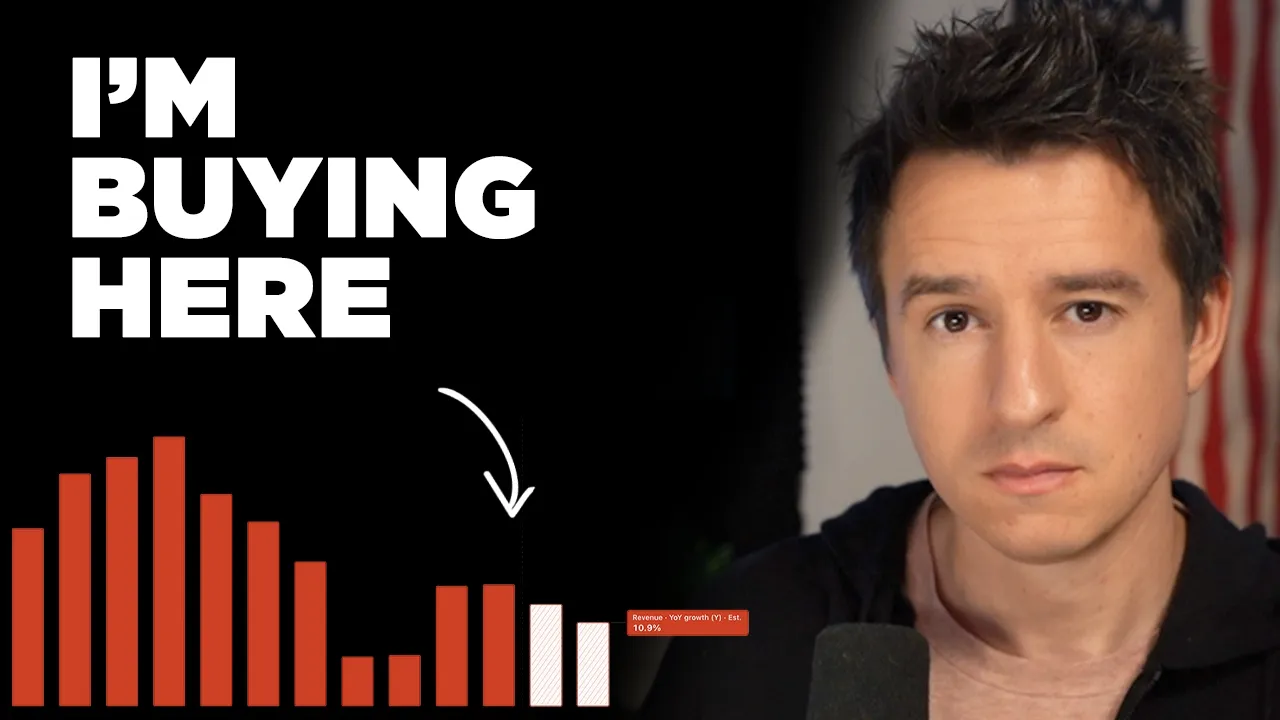
Looking at historical revenue changes on a year-over-year quarterly basis reveals severe cyclicality. In 2021, top-line sales expanded aggressively before grinding to a halt in 2022, when Netflix shed subscribers and relied almost exclusively on pricing power. The subsequent rebound pushed growth past 15%—the critical benchmark where Wall Street awards premium multiples—driven by the password-sharing crackdown, new ad tiers, and regular subscription price hikes. As those tailwinds fade, revenue growth has drifted into the 9.8% to 10.5% range. For 2026 as a whole, consensus expectations see a respectable 13.2% to 13.3% rate, but projections for 2027 point toward a further slowdown to roughly 10.9%. Carlson captures the market's single-minded focus when evaluating these figures:
> “In today's market, it seems like really the only metric that matters is revenue. And as soon as that slows down, the stock gets heavily penalized.”
- Revenue growth exceeded 15% during the password-crackdown and ad-tier acceleration phase.
- Quarterly revenue growth has compressed to between 9.8% and 10.5%.
- Full-year growth is projected at 13.2%–13.3% for 2026 and 10.9% for 2027.
[05:00](https://www.youtube.com/watch?v=IhtkjAPaBrA&t=300s) Cash Flow Engine, Aggressive Buybacks, and Normalized EPS
While equity markets currently fixate on top-line deceleration, Carlson argues that market cycles inevitably revert to valuing free cash flow and profitability over time. In its most recent quarter, Netflix achieved a record $2.9 billion in free cash flow on a normalized basis, excluding a one-off $2.9 billion payment associated with Warner Bros. Discovery. This cash generation allows the company to simultaneously expand its content production budget and execute massive share repurchases, totaling $12.9 billion over the trailing twelve-month period.
Carlson emphasizes that these buybacks represent genuine share retirement rather than the dilutive "treadmill" typical of tech companies offsetting excessive stock-based compensation. When the stock price drops, buyback efficiency surges, compounding earnings per share and free cash flow per share for remaining shareholders. Furthermore, standard charts for Netflix's earnings per share look distorted: the unadjusted figures create the false impression that EPS exploded in 2025–2026 due to the Warner Bros. Discovery windfall, only to stall in 2027 at a 6% growth rate. Stripping out non-operating items paints a far steadier picture:
> “The reality here is that if you take out the Warner Brothers Discovery merger, in 2026 they grew around 20%. In 2027, they'll grow around 20% and then in 2028 they'll grow around 20%. That's what the true estimates are.”
- Normalized quarterly free cash flow reached a record $2.9 billion.
- Share repurchases totaled $12.9 billion over the trailing twelve months.
- Normalized earnings per share are projected to compound at roughly 20% per year across 2026, 2027, and 2028 once one-time payments are excluded.
[08:37](https://www.youtube.com/watch?v=IhtkjAPaBrA&t=517s) Organic Growth Fundamentals and the Negative Media Narrative
If an investor mentally strips out the one-off Warner Bros. Discovery payout from the trailing twelve-month figures by chopping off the tops of the corresponding four quarterly bars, Netflix's projected earnings per share dips before steadily resuming a clean, upward organic climb. Looking strictly at the underlying financial performance, the company appears exceptionally solid: highly profitable, generating strong returns, operating efficiently, returning capital to shareholders through share buybacks without diluting equity, and projecting favorable future earnings estimates. Yet financial metrics alone do not tell the full story, and Wall Street has grown deeply anxious over engagement and viewing hours not visible on the balance sheet.
```mermaid
flowchart TD
accTitle: Netflix Perception vs Reality
accDescr: Diagram illustrating media narratives of YouTube competition versus Netflix's actual dual-consumption reality.
subgraph Media["Media Narrative"]
A["Wall Street Journal Headline:<br/>'Netflix Has Hit a Wall'"] --> B["YouTube Viewership +14%"]
B --> C["Assumption:<br/>Netflix Losing Subscribers"]
end
subgraph Reality["Operational Reality"]
D["Differentiated Use Cases"] --> E["YouTube: Daily Habit / Casual / Podcasts"]
D --> F["Netflix: Shared Drama / Movies / Series"]
E & F --> G["Simultaneous Consumption"]
G --> H["Netflix Revenue +12%<br/>Q3 Churn Lower YoY"]
end
```
Media coverage surrounding Netflix has turned intensely pessimistic. A prime example appeared on the front page of *The Wall Street Journal*, bearing the headline that America's dominant streaming service has hit a wall. Accompanied by a chart illustrating YouTube surging ahead in total viewing time while Netflix plateaued, the coverage established an alarming narrative that Netflix is faltering as a major loser in the streaming wars. When market observers watch YouTube's numbers climb alongside a slight deceleration in Netflix's stock, that bearish sentiment rapidly spins out of control across financial news outlets.
---
[10:18](https://www.youtube.com/watch?v=IhtkjAPaBrA&t=618s) Debunking the YouTube vs. Netflix Zero-Sum Myth
The narrative that YouTube's ascendance comes directly at Netflix's expense ignores fundamental consumer behavior. Viewers do not cancel Netflix simply because they spend more time watching YouTube; they cancel only when they conclude the platform itself is no longer worth paying for. During the very period YouTube's viewing hours climbed 14%, Netflix managed to grow its revenue by 12%. Furthermore, if YouTube's gains were actively draining Netflix's customer base, Netflix's churn rate would be spiking, yet management reported that churn dropped year-over-year in the most recent quarter, with fewer cancellations than the prior year.
> “The best evidence that we've got that we're delivering that value is churn. We've got healthy retention in every region. Q3 churn both globally and in the United States improved year on year was better than forecast. It's already industryleading.”
Many investors appear completely baffled by this dynamic, struggling to understand how retention can hit industry-leading levels while a rival video platform surges. In reality, consumers routinely incorporate YouTube into daily routines—commuting, watching tutorials, or putting on podcasts and gaming streams over lunch—while keeping an $8 monthly Netflix subscription to sit down and watch narrative shows on weekends. YouTube satisfies frequent, casual entertainment, whereas Netflix provides prestige storytelling, feature films, and household series like *The Walking Dead* or *East of Eden* that cannot be accessed on YouTube. The two platforms fulfill fundamentally distinct roles and coexist easily within a household's monthly budget.
- YouTube viewership increased by 14% while Netflix grew total revenue by 12%.
- Q3 churn improved year-over-year both within the United States and globally, beating internal guidance.
- Typical monthly ad-supported subscription cost of roughly $8 is easily justified by a household for even a handful of desirable series.
---
[13:26](https://www.youtube.com/watch?v=IhtkjAPaBrA&t=806s) The Content Drought and Creative Restructuring
The genuine challenge confronting Netflix is not YouTube, but its own internal creative output. Streaming platforms live and die by whether they consistently deliver entertainment compelling enough to warrant a recurring subscription fee. A year ago, Netflix routinely dominated pop culture with massive, water-cooler sensations such as *Bridgerton*, *Squid Game*, and *Stranger Things*. That stream of undeniable hits has noticeably slowed down, leaving the service vulnerable to creative stagnation and public criticism that its catalog has been diluted by mediocre, formulaic made-for-streaming releases.
Recognizing that subscriber retention demands high-caliber programming rather than sheer volume, Netflix has initiated high-profile leadership changes in its content division. Bela Bajaria, who previously oversaw hit network television such as *Brooklyn Nine-Nine*, *The Mindy Project*, *Superstore*, and *Bates Motel* before serving as Netflix's Chief Content Officer over global slates, *Wednesday*, and live sports expansion like WWE and the NFL, has exited the company. While her global flywheel successfully localized content across international markets, Netflix urgently needs domestic, must-watch prestige hits to rival competitors like Apple TV+, which has gained critical and cultural momentum with series such as *Severance*.
To pivot toward premium storytelling, Netflix recruited veteran entertainment executive Peter Rice. Rice brings a storied track record from Fox Searchlight, 20th Century Fox, and Disney's FX division, having stewarded prestige and award-winning projects ranging from *Romeo + Juliet*, *X-Men*, and *Moulin Rouge!* to *Sideways*, *Little Miss Sunshine*, *Juno*, and *Slumdog Millionaire*, as well as television juggernauts like *This Is Us*, *Abbott Elementary*, *The Bear*, and *Shogun*. His appointment signals a deliberate strategic pivot away from broad, generic filler toward elite creative packaging designed to generate the cultural buzz Netflix needs to sustain its platform.
- **Outgoing Leadership:** Bela Bajaria (former Chief Content Officer; oversaw *Bridgerton*, *Wednesday*, live events including NFL and WWE broadcasts, and past broadcast hits like *Brooklyn Nine-Nine* and *Superstore*).
- **Incoming Executive:** Peter Rice (former 20th Century Fox, Fox Searchlight, and Disney/FX executive).
- **Peter Rice Track Record:**
- Films: *Romeo + Juliet* (1989/1996 era), *X-Men*, *Moulin Rouge!*, *Sideways*, *Little Miss Sunshine*, *Juno*, *Slumdog Millionaire*.
- Television: *This Is Us*, *Abbott Elementary*, *The Bear*, *Shogun*.
[17:18](https://www.youtube.com/watch?v=IhtkjAPaBrA&t=1038s) Netflix Content Overhaul and Valuation
Netflix appears to be moving away from purely algorithm-driven programming to take bolder creative risks with its flagship releases. While management will not publicly criticize departing executives, the strategic shift is evident: they want to produce elevated, culturally resonant projects akin to those from HBO, Warner Bros., or Apple TV, guided by visionary directors willing to take artistic chances. To drive this transformation, Netflix is reportedly in talks with former Warner Bros. executives Michael De Luca and Pam Abdy, who oversaw major critical and commercial successes such as *One Battle After Another*, *House of Gucci*, *The Sinners*, *Minecraft*, and *Weapons*. Bringing in leaders of their stature would provide direct credibility and deep industry relationships, enticing top-tier Hollywood filmmakers and producers to partner with Netflix on high-caliber features they might otherwise take elsewhere.
Carlson emphasizes that this is not a short-term, margin-padding cost-cutting exercise, but a deliberate push to remedy a persistent quality deficit. Much of Netflix's current catalog gets panned across platforms like Rotten Tomatoes, IMDb, and Letterboxd, whereas competitors like Apple TV consistently deliver prestige, award-worthy television. Netflix has the balance sheet to finance top-tier art, and resolving this creative hurdle could unlock massive upside. As Carlson observes: “The company is as good as it is today with the content it currently has. Imagine how good this company would be if they genuinely get in a rhythm of generating extremely good content.” Trading at a modest forward price-to-earnings ratio of 18 and offering a 4% free cash flow yield (even after factoring in stock-based compensation), the downside risk appears largely priced in, setting up asymmetric upside if programming quality takes off.
- **Content strategy shift:** Transitioning from algorithmic filler to premium, risk-tolerant artistic projects.
- **Executive targets:** In discussions with former Warner executives Michael De Luca and Pam Abdy to bridge ties with elite Hollywood talent.
- **Forward P/E multiple:** 18x.
- **Free cash flow yield:** 4% (inclusive of stock-based compensation).
---
[20:18](https://www.youtube.com/watch?v=IhtkjAPaBrA&t=1218s) SpaceX Earnings: Starlink Growth and AI Server Infrastructure
SpaceX posted another blowout quarter, reinforcing expectations that its top-line revenue is rapidly scaling toward a $40 billion annual run-rate. The company followed up a $7 billion quarter by putting up $14.5 billion, driven heavily by its core connectivity division: Starlink satellite internet. Starlink added an incremental 1.6 million paying accounts during the period, expanding its subscriber base from 12 million up to 13.6 million. Concurrently, monthly average revenue per user (ARPU) climbed upward from $66 to $69, demonstrating that the company is effectively compounding both user volume and monetization simultaneously.
Beyond orbital launches—which function primarily as an operational catalyst to deploy the satellite constellation rather than an isolated commercial driver—the major emerging catalyst is AI infrastructure. SpaceX is constructing massive computing clusters and dedicated server farms to capture surging global demand for AI compute. Aside from the standard grand promises typical of Elon Musk, the underlying fundamentals of the earnings report delivered exactly what private market investors were hoping to see.
```mermaid
flowchart TD
accTitle: SpaceX Revenue and Infrastructure Engine
accDescr: Diagram illustrating SpaceX's operational drivers including Starlink connectivity, rocket launches, and AI server data centers.
subgraph Core ["Connectivity Engine (Starlink)"]
Subs["Subscribers: 12M to 13.6M (+1.6M QoQ)"]
ARPU["Monthly ARPU: Up from $66 to $69"]
Rev["Quarterly Revenue: Scaled to $14.5B"]
end
subgraph Infrastructure ["Launch & Compute Assets"]
Launch["Rocket Launch Ops (Deployment Catalyst)"]
Servers["Massive Compute Clusters & AI Server Farms"]
end
Launch --> Core
Core --> Rev
Servers --> Rev
```
- **Quarterly revenue:** Reached $14.5 billion, more than doubling the prior quarter's $7 billion benchmark.
- **Projected revenue runway:** Expected to approach approximately $40 billion annually.
- **Subscriber metrics:** Starlink users grew by 1.6 million quarter-over-quarter, rising from 12.0 million to 13.6 million.
- **Monthly ARPU:** Expanded from $66 to $69 per subscriber.
---
[22:03](https://www.youtube.com/watch?v=IhtkjAPaBrA&t=1323s) Intuitive Surgical: The Sticky Robotic Ecosystem
Intuitive Surgical delivered a solid quarter despite negative price action in the market, presenting an attractive setup for long-term compounder investors. Rather than being a simple hardware or device seller, the company operates an integrated medical platform. Once a surgical system is placed inside an operating room, it locks in a durable, high-margin ecosystem encompassing recurring instrument sales, maintenance contracts, software upgrades, and routine system expansions.
Furthermore, the business benefits from high switching costs: surgeons invest significant cognitive overhead and clinical training into mastering these robotic consoles, making hospitals extremely reluctant to switch to competing platforms. Although Intuitive Surgical discounted specific hardware configurations in select scenarios to accelerate unit adoption and capture market share, Carlson views this as sound competitive positioning rather than an operational red flag. The quarter exhibited healthy top-line expansion and sustained operating leverage, making the market's post-earnings dip look unjustified.
---
[23:08](https://www.youtube.com/watch?v=IhtkjAPaBrA&t=1388s) "Fail of the Week": Ed Zitron's Unfiltered Tirade Against Jensen Huang
The "Fail of the Week" segment targets prominent AI bear Ed Zitron, whose extensive essays arguing that the generative AI boom is an impending bubble recently culminated in an unhinged personal attack on Substack. Rather than offering detached, dispassionate financial analysis, Zitron unleashed an aggressive, profanity-laden rant accusing Nvidia CEO Jensen Huang of orchestrating an artificial supply chain crisis to boost corporate profits at the public's expense. Carlson highlights how the veneer of objective market analysis fell completely apart, quoting Zitron's exact words:
> “Jensen Wong is responsible for making life worse for everyone. What a greedy, joyless, soulless oaf of a man. Doing this requires you to be a certain kind of low that no money or status can ever fix. Jensen Wong is a piece of shiz. Every hyperscaler CEO is too... These scumbags drove the price of everything up so that they could all help Jensen Wong make more money. We did not need him to build all these GPUs. He just wanted to sell them to boost earnings. Everyone who participated in the early shipment of GPUs is a scumbag.”
Carlson criticizes the sheer emotional animosity driving the bear thesis, noting how absurd it is to dismiss the leaders of the most valuable tech enterprises in modern history as malicious frauds. Highlighting Huang's personal trajectory, Carlson points out that Jensen started out working entry-level shifts at Denny's—literally scrubbing toilets—before spending decades building Nvidia into the world's most valuable enterprise. Along the way, Huang's foresight in gaming, crypto, and parallel computing not only secured America's leadership position in sovereign AI and national defense, but also created immense wealth for his team, with internal surveys indicating roughly 70% of Nvidia's workforce are now millionaires. Rather than cashing out to live an idle, lavish lifestyle, Huang continues working daily because he loves the mission, making Zitron's cartoonish depiction of him as an evil villain the exact opposite of reality.
[26:09](https://www.youtube.com/watch?v=IhtkjAPaBrA&t=1569s) The Pitfalls of Motivation-Driven AI Bear Research
Joseph Carlson concludes his discussion on artificial intelligence skepticism by addressing the underlying psychology of dedicated AI bears. He cautions his audience against relying on market commentary or analysts whose thesis is rooted in personal animus rather than dispassionate financial analysis. Carlson emphasizes that when someone approaches the market with deep emotional hostility toward specific tech executives or corporate figures, their output inevitably becomes flawed. As he points out: “Now, this should go without saying, but if your research or who you're following their research is primarily driven by unfettered hatred towards different individuals, it's not likely to be the best research.”
He diagnoses this approach as textbook motivation-driven research, where the investigator starts with an immutable, predetermined conclusion and works backward, scavenging for any fragment of data that might validate their preexisting worldview while ignoring counter-evidence. Carlson singles out tech critic Ed as an illustration of this mindset, noting that once a commentator decides the people running these companies are malicious actors, every strategic move they make is filtered through that lens. Describing this rigid perspective, Carlson observes: “Ed has figured out that these guys are evil.” From that premise, every capital expenditure, product launch, or partnership is automatically viewed with suspicion: “And so anything they do is bad, anything they do is evil, and it's all a bubble, it's all a scam, it's all gonna explode.” Carlson dryly bids “good luck” to any investors attempting to navigate their portfolios based on such emotionally loaded, apocalyptic narratives before signing off and wrapping up the episode.
- Motivation-driven research begins with a fixed, predetermined outcome and selectively pieces together isolated bits of evidence to justify an already established verdict.
- Relying on commentary driven by personal contempt toward company leaders blinds investors to objective fundamentals and technological utility.
## Notable quotes
> [01:45](https://www.youtube.com/watch?v=IhtkjAPaBrA&t=105s) In today's market, it seems like really the only metric that matters is revenue. And as soon as that slows down, the stock gets heavily penalized. — Joseph Carlson
## Mentioned
Joseph Carlson, Netflix, SpaceX, Intuitive Surgical, Elon Musk, Ed Zitron, YouTube, Warner Bros. Discovery, The Wall Street Journal, Bela Bajaria, Peter Rice, Apple TV+, Michael De Luca, Pam Abdy, Starlink, Jensen Huang, Nvidia, Denny's
## Video description
Join Qualtrim, the stock analysis platform I built and use, and join over 13,000 other paying members: https://www.qualtrim.com/
-Disclaimer
Some of the links below are affiliate links, I can earn money from them at no cost to you.
This content is not a solicitation, is not endorsed by M1, and was not reviewed by M1; the opinions expressed are solely those of the authors and do not reflect M1's views. Information presented is accurate as of the video posting date; for the most up-to-date information, please refer to m1.com. Before making any investment decisions, consult your personal investment, legal, and tax advisors, as this content is for informational purposes only and not intended as investment recommendations.
📚 My favorite Investing Books: https://amzn.to/3KwyIhG
📷 All the tech I use to record videos: https://www.amazon.com/shop/josephcarlson/list/2L5YMP4DFYA8O?ref_=cm_sw_r_cp_ud_aipsflist_aipsfjosephcarlson_FAKKKMYKF486ZR6H2DSQ
SOCIAL MEDIA
▀▀▀▀▀▀▀▀▀▀▀▀▀▀▀▀▀▀▀▀▀▀▀▀▀▀
🎥 More free content: https://www.youtube.com/channel/UCbta0n8i6Rljh0obO7HzG9A
🐦 I post random thoughts on Twitter too: https://twitter.com/joecarlsonshow
DISCLAIMER
▀▀▀▀▀▀▀▀▀▀▀▀▀▀▀▀▀▀▀▀▀▀▀▀▀▀
I am not a professional investor and have never claimed to be. I'm an amateur investor sharing my experience of what I've learned, where I have had success, and where I've had failures. I share my thoughts on investing and performance with transparency. My approach and goal to investing is to buy high-quality long-term investments in world-class businesses that I call "compounders". I view my investments as businesses, not as stocks. Before creating content on YouTube full time I worked as a senior-level programmer for 8 years. Over the years as a programmer, I compounded my knowledge of development. I take the same iterative learning approach to my study of investing. I study investing as a craft in the continual pursuit of being better. I will make mistakes in investment decisions from time to time. Results are not guaranteed. Please do not blindly follow me into any investments, and make sure your portfolio and investments are built around your specific income, risk tolerance, personality, timeline, and overall circumstances.
Joseph Carlson contends that Wall Street's pessimism over Netflix's slowing revenue growth ignores its underlying cash generation, disciplined share buybacks, and strategic content overhaul, while also evaluating operational expansion at SpaceX and warning against emotionally driven AI skepticism.
Netflix Deceleration Versus Underlying Cash Generation (5:00)
Although Netflix's quarterly revenue growth has moderated from over 15% down to between 9.8% and 10.5%—with consensus estimates projecting 13.2%–13.3% in 2026 and 10.9% in 2027—Carlson argues that market fixation on top-line deceleration obscures a strengthening cash engine. On a normalized basis excluding a one-off $2.9 billion payment linked to Warner Bros. Discovery, Netflix delivered a record $2.9 billion in quarterly free cash flow and retired $12.9 billion in shares over the trailing twelve months without offsetting dilution from stock-based compensation.
Carlson points out that unadjusted earnings charts misrepresent the business by making growth appear to stall in 2027. Once non-operating items are removed, he estimates normalized earnings per share will compound at roughly 20% annually across 2026, 2027, and 2028. At a forward price-to-earnings ratio of 18 and a 4% free cash flow yield, he views the current valuation as providing asymmetric upside.
Debunking the YouTube Substitution Myth (10:18)
Carlson challenges media narratives, including coverage from The Wall Street Journal, asserting that YouTube's viewership gains come at the expense of Netflix's business model. While YouTube viewing hours increased by 14%, Netflix still expanded revenue by 12% over the same period. Furthermore, Netflix reported that third-quarter subscriber churn declined year-over-year both in the United States and globally, outperforming internal forecasts.
Rather than competing directly in a zero-sum contest, the two services fulfill complementary consumer habits. YouTube captures casual, frequent daily consumption such as tutorials, podcasts, and short entertainment during commutes or work breaks, whereas Netflix serves as a destination for long-form narrative dramas and prestige productions. At roughly $8 per month for an ad-supported plan, Carlson argues consumers readily maintain both services simultaneously.
Strategic Content Restructuring and Quality Overhaul (13:26)
According to Carlson, Netflix's genuine vulnerability is an internal creative drought following earlier cultural sensations like Bridgerton, Squid Game, and Stranger Things. To reverse catalog dilution and prioritize premium, risk-tolerant storytelling over algorithmic volume, Netflix replaced Chief Content Officer Bela Bajaria with veteran film and television executive Peter Rice, whose production credits include award-winning titles such as Slumdog Millionaire, The Bear, and Shogun.
Netflix is also reportedly in discussions with former Warner Bros. executives Michael De Luca and Pam Abdy to rebuild relationships with premier Hollywood filmmakers. Carlson notes this high-level executive turnover represents a deliberate push toward prestige, critically acclaimed content comparable to HBO or Apple TV+, rather than a routine margin-cutting measure.
Scaling Momentum at SpaceX and Intuitive Surgical (20:18)
Beyond Netflix, Carlson highlights SpaceX's operational expansion as quarterly revenue doubled sequentially from $7 billion to $14.5 billion, moving toward an estimated $40 billion annual run-rate. Growth was propelled by Starlink, which expanded its subscriber base from 12.0 million to 13.6 million while growing monthly average revenue per user from $66 to $69. SpaceX is also investing heavily in orbital launch infrastructure and AI compute server farms.
Carlson similarly defends Intuitive Surgical following a post-earnings market decline. He characterizes the company as an integrated medical ecosystem with formidable switching costs, where installed robotic platforms generate durable, high-margin recurring revenue from instruments, services, and software upgrades, making selective hardware discounting a sound market-share strategy rather than a structural weakness.
The Analytical Flaws of Emotion-Driven Research (23:08)
In a critique of persistent artificial intelligence bears, Carlson examines an unfiltered Substack commentary by Ed Zitron attacking Nvidia CEO Jensen Huang and hyperscaler executives. Carlson argues that Zitron's polemic abandons objective financial critique in favor of personal hostility, misrepresenting Huang's decades-long trajectory in parallel computing and semiconductor leadership.
Carlson cautions investors against motivation-driven research, where an analyst starts with an inflexible, hostile conclusion—such as viewing corporate leaders as malicious or all AI spending as an imminent scam—and selectively gathers evidence to validate that narrative. He stresses that filtering complex market developments through personal contempt blinds investors to technological utility and company fundamentals.
Carlson concludes that short-term market reactions frequently penalize revenue deceleration while underappreciating free cash flow resilience, deliberate operational pivots, and durable competitive moats. He maintains that tracking execution and objective financial metrics provides a more reliable investing framework than following sentiment-heavy or emotionally polarized commentary.
[1:45] Joseph Carlson: In today's market, it seems like really the only metric that matters is revenue. And as soon as that slows down, the stock gets heavily penalized.
Original transcript
[0:00] Well, yesterday we had a big day. It was
[0:01] the beginning of week two of earning
[0:03] season. In this case, we had Netflix
[0:05] report earnings. This is a very large
[0:06] position in my portfolio. We have SpaceX
[0:09] reported as well as Intuitive Surgical.
[0:12] Now, I'm going to be spending some time
[0:13] going over Netflix's earnings report
[0:16] because, like I mentioned, it's a big
[0:18] position in my portfolio. And although
[0:20] I'm currently in the green on this one,
[0:22] I'm in the green by $15,000. Uh, it's
[0:24] done well so far. Netflix is a company
[0:27] that it has a lot of opinions. A lot of
[0:29] people don't even know what's going on
[0:30] with Netflix. Are they struggling with
[0:32] engagement? Are they growing? Is growth
[0:34] slowing? Are they changing around
[0:36] everything with their company?
[0:37] Apparently, Netflix fired a thousand
[0:39] employees. Now, that was big news in and
[0:41] of itself, but this wasn't a normal
[0:43] firing. They also fired numerous
[0:45] executives. They really cleaned house.
[0:47] They fired big people, like top people
[0:50] at the company. And then we had the
[0:51] earnings call. Some things look really
[0:53] good on it. Some things look really
[0:54] questionable. And in this episode, we're
[0:56] going to be going over all of it. In
[0:58] this episode, I'm going to give you a
[0:59] clear picture of Netflix, what's
[1:01] actually going on with the management,
[1:02] the reason they're making these changes,
[1:04] a clear financial picture of the
[1:06] company, how their performance was this
[1:07] quarter, and looking into the future.
[1:10] So, we'll be going over all of it and
[1:11] trying to put this in context. And then,
[1:13] of course, we have SpaceX. They gave the
[1:14] report yesterday as well. I'll be going
[1:16] over that one as well. The changes
[1:18] they're making, the reason the stock's
[1:20] up, and Elon Musk's remarks that SpaceX
[1:23] could do up to a trillion dollars in
[1:25] annual recurring revenue by 2028. And of
[1:28] course, we have the fail of the week,
[1:29] which in this case is the notable AI
[1:31] skeptic and bearer Ed Zitron. Ed has
[1:34] become popular by making lots of claims
[1:36] about how the AI bubble will collapse,
[1:38] and he just had a crash out on a
[1:40] Substack this morning. It's really a
[1:41] taking the mask off moment, so we'll be
[1:43] going over that. Now to begin, we'll
[1:45] start off with Netflix. Netflix knows
[1:47] that this was a dicey quarter. Netflix
[1:49] knows and management knows that
[1:51] sentiment is about rock bottom on this
[1:54] company. Their stock price is cut nearly
[1:56] in half. There's many investors
[1:58] concerned about engagement. Many
[2:00] investors concerned about YouTube.
[2:02] YouTube on the charts is is just
[2:03] trending up. It continues to climb up.
[2:05] Netflix is going about level on
[2:07] viewership and even down. Now, before
[2:09] going into some of the context here on
[2:11] their content slate and competition with
[2:13] YouTube, I think it's important to
[2:15] understand how truly remarkable of a
[2:17] company Netflix actually is in terms of
[2:19] the raw fundamentals, the financials of
[2:21] it. I have a series of charts here to
[2:23] illustrate this. Let's go ahead and
[2:24] start off with the first one here. This
[2:26] chart is not of the total revenue of the
[2:28] company. It's how much the revenue is
[2:29] growing every single quarter,
[2:31] year-over-year. So, you can see back in
[2:33] 2021, Netflix growth was growing really
[2:36] fast. But then they ran into a problem.
[2:38] their growth basically came to a
[2:39] standstill. In fact, in 2022, there was
[2:42] one quarter they barely grew at all.
[2:43] They actually lost subscribers, so it
[2:45] was only pricing power growing them. Not
[2:47] a good situation. And of course, that's
[2:49] when the stock crumbled. Then Netflix
[2:51] instituted a series of price hikes. They
[2:54] also instituted ad tears and that caused
[2:56] the growth to speed back up. And this
[2:58] category up here, 15% or above, is
[3:01] really what Wall Street likes to see.
[3:03] These 15% grower companies get the
[3:06] premium valuation. But Netflix was
[3:08] growing that fast because they had a lot
[3:09] of tailwinds. They had the price
[3:11] increases on top of the password
[3:12] crackdown on top of the rapidly growing
[3:15] ad tear. So they had a lot of things
[3:17] moving in their advantage to cause them
[3:19] to grow above 15%. Growth is
[3:21] decelerating for Netflix based on just
[3:23] the past couple of quarters. And now we
[3:25] get to a point where it's growing
[3:26] between 9.8% and 10.5%
[3:30] right on that double digit limit. And
[3:32] that's a little bit of a landmark for
[3:34] investors. They want companies that are
[3:35] growing above 10% even if you're a
[3:37] mature company. So Netflix is now in
[3:39] this dicey territory where they're
[3:41] trying to still keep growth above double
[3:43] digits. Now when I look at this on a
[3:45] closer time scale, let's go ahead and
[3:46] look at an annual one here instead of
[3:48] quarterly. This is what it looks like.
[3:50] 2025 they grew 16%. Then we have 2026.
[3:53] They're expected to grow this year
[3:54] around 13.2 to 13.3%.
[3:58] That's still healthy growth. I don't
[4:00] think any investor has really big
[4:01] concerns with how fast Netflix is
[4:03] growing this year. The problem is
[4:04] [snorts] when we get into 2027. The big
[4:07] question going into 2026 is how much can
[4:10] they grow next year? How much can they
[4:12] grow in 2027? And the annual assessments
[4:15] today are around 10.9%.
[4:17] So we see this deceleration. We see
[4:20] Netflix going from 16% now struggling to
[4:23] grow above 10%. Now this level of
[4:25] deceleration is not terrible. Netflix
[4:27] went from a period of excessive growth
[4:29] now to a more moderate growth level. And
[4:31] normally this wouldn't be such a bad
[4:33] thing. But in the market we're in today,
[4:35] investors basically only care about
[4:37] revenue growth. It's like the only thing
[4:39] that matters. In a normal market, all
[4:41] the financials matter. The earnings per
[4:43] share means something or the free cash
[4:44] flow or buybacks mean something. In
[4:46] today's market, it seems like really the
[4:48] only metric that matters is revenue. And
[4:50] as soon as that slows down, the stock
[4:52] gets heavily penalized. So, when we look
[4:53] at a chart like this and we see those
[4:55] bars of revenue growth year-over-year
[4:57] going down instead of up, that is bad
[4:59] news for Netflix. But I don't believe
[5:01] the market will only care about revenue
[5:03] forever. I think that's just a temporary
[5:06] thing. Markets tend to care about free
[5:08] cash flow and profits over time. And
[5:10] Netflix is incredibly good at growing
[5:11] its profits. For example, in this past
[5:14] quarter, Netflix did a record amount of
[5:16] free cash flow on a normalized basis.
[5:18] They did $2.9 billion in free cash flow.
[5:21] Now, there's a quarter here that
[5:22] obviously beat it, but that's because of
[5:23] the Warner Brothers Discovery payout.
[5:26] That was $2.9 billion paid to Netflix.
[5:28] When you take out that additional
[5:30] payment, Netflix just broke its record
[5:32] of how much free cash flow it generated.
[5:34] This is really strong. Now, you can see
[5:37] it quarter over quarter here. When we
[5:38] look at this chart, we can see the free
[5:39] cash flow over time. Netflix is steadily
[5:41] marching its free cash flow higher over
[5:43] time. Now, what are they doing with
[5:44] their massive amounts of cash flow?
[5:46] Well, of course, they raise their
[5:48] content budget, so they're spending more
[5:49] on content than ever before, but they're
[5:51] also doing more in buybacks than ever
[5:52] before. Netflix is a company that's
[5:54] returning tremendous amounts of money
[5:56] back to the investor via buybacks. In
[5:58] fact, this chart here shows the growth
[6:00] of it. This is on a trailing 12-month
[6:02] basis. They bought back $12.9 billion.
[6:05] Now, again, some of this is aided by the
[6:07] Warner Brothers Discovery payout, but
[6:09] even if you factor that out, their
[6:10] buybacks are going to be at a record
[6:11] high this year. So right now Netflix is
[6:14] buying back shares aggressively and
[6:16] that's especially helpful when stock
[6:18] prices drop. The stock price dropping
[6:20] enhances the effectiveness of the share
[6:22] buybacks which increases the per share
[6:24] free cash flow growth and the per share
[6:25] earnings per share growth. All of that's
[6:27] really good for the investor. So we're
[6:29] not in a situation where the stock price
[6:31] drops and there's nothing Netflix can
[6:33] do. No tools in their toolbox. No, if
[6:36] you're a long-term investor and the
[6:37] stock price drops, you can just wait
[6:39] around and watch them reduce shares
[6:42] continually, making it so that you have
[6:43] a greater stake in the company. All of
[6:45] this shows that Netflix is an extremely
[6:47] profitable, efficient company that can
[6:49] return a tremendous amount of dollars
[6:51] back to the investor. This isn't money
[6:53] that they're diluting by paying out
[6:55] stockbased comp and then buying back
[6:56] those shares, going on a treadmill. This
[6:59] is actually reducing the share count.
[7:01] Now, the next thing we can look at is
[7:02] the earnings per share. Typically,
[7:04] investors think earnings per share is
[7:06] important. I know in today's market,
[7:07] it's not stressed as much, but earnings
[7:10] per share is kind of the thing that's
[7:11] really important over time with the
[7:12] stock. Netflix is growing their earnings
[7:15] per share incredibly fast. This chart is
[7:17] misleading. The reason this chart is
[7:19] misleading is because it shows from 2025
[7:22] into 2026, Netflix is going to have a
[7:25] massive step up in EPS. And then from
[7:28] 2026 to 2027, it appears like growth is
[7:31] basically halting. But this is not
[7:34] really accurate because again we have
[7:35] that Warner Brothers Discovery payout
[7:37] that counted as net income that was part
[7:40] of their earnings per share. So we had
[7:42] an artificial boost from 2025 to 2026
[7:45] making it look like the jump from 2026
[7:47] to 2027 as not impressive. Here's
[7:50] another chart showing the growth rate
[7:51] every single quarter year-over-year. And
[7:54] you can see again that during these time
[7:55] periods, this is back in 2024 and 2025,
[7:58] the growth rate was crazy. And then it
[8:00] looks like the earnings per share growth
[8:01] rate all of a sudden hit a wall. The
[8:03] growth rate did not hit a wall here.
[8:04] Even though this chart shows that these
[8:06] bars are growing around 6% per year,
[8:08] then it's going to speed back up to 21%
[8:10] year-over-year. The reality here is that
[8:12] if you take out the Warner Brothers
[8:13] Discovery merger, in 2026 they grew
[8:16] around 20%. In 2027, they'll grow around
[8:18] 20% and then in 2028 they'll grow around
[8:21] 20%. That's what the true estimates are.
[8:24] You can see that better visualized on
[8:25] this chart. We're looking at the
[8:26] earnings per share growing over time.
[8:28] This is where we're at with the most
[8:30] recent quarter. And then you can see the
[8:31] analyst estimates. The reason that these
[8:33] four quarters are so big is because this
[8:35] is the trailing 12 months. And once that
[8:37] initial Warner Brothers Discovery payout
[8:39] is worked out of that trailing 12
[8:41] months, you can see that the EPS
[8:42] projected goes down, then it starts to
[8:44] climb back up on a normal level. A way
[8:46] to visualize cutting out the Warner
[8:48] Brothers Discovery payment is just to
[8:50] pretend you chopped off the tops of
[8:52] these four bars. If you did that, this
[8:54] is a picture of their organic growth.
[8:55] Now, I understand the financials of a
[8:57] company aren't everything. There's
[8:58] additional context that's very important
[9:00] beyond it. But what I see here is an
[9:02] incredibly impressive company, a super
[9:04] profitable one. One that is continuing
[9:06] to grow strong, generate strong returns,
[9:09] one that runs efficiently. It returns
[9:11] capital back to the shareholder without
[9:12] diluting it. One that even has good
[9:14] estimates in the future. It doesn't seem
[9:16] like there's too much trouble based on
[9:18] the numbers themselves. But like I said,
[9:20] there's context behind that. And what
[9:21] investors are worried about is all that
[9:23] additional context. What is going on
[9:24] with engagement and viewing hours that
[9:26] isn't captured in these numbers? Well,
[9:28] we can go over a couple things. The
[9:30] first thing is the media coverage right
[9:32] now is extremely negative for Netflix.
[9:34] Like super super negative. We have
[9:38] articles like this. This is on the front
[9:39] page of the Wall Street Journal
[9:40] yesterday saying Netflix America's
[9:42] dominant streaming service has hit a
[9:44] wall. In this article, there's a chart
[9:45] here that the Wall Street Journal
[9:46] featured. It's not too detailed of a
[9:48] chart, but it illustrates the point very
[9:50] clearly. The point is that YouTube is
[9:53] winning with view time. People are just
[9:55] watching more YouTube and Netflix is
[9:57] actually faltering a little bit. So we
[9:58] just have this picture being painted.
[10:00] Now while investors are looking at these
[10:01] numbers of YouTube viewership going up
[10:03] while Netflix is staying flat, it paints
[10:05] this picture that Netflix is a big
[10:07] loser. The stock is decelerating a
[10:09] little bit and the narrative spins out
[10:11] of control. And I could find a hundred
[10:13] other media coverage like this painting
[10:16] this incredibly bad picture for Netflix.
[10:18] But when I was looking at this, I think
[10:19] it leaves out some central questions.
[10:21] For example, when YouTube gains
[10:23] viewership, does Netflix really lose in
[10:25] that situation, and this is the central
[10:27] point worth making here. People do not
[10:29] necessarily cancel Netflix because they
[10:32] watch more YouTube. They cancel Netflix
[10:34] when they feel like Netflix is not worth
[10:36] paying for. YouTube's viewing went up
[10:39] 14% while Netflix grew revenue by 12%.
[10:43] So Netflix is growing alongside YouTube.
[10:46] And if it were the case that YouTube's
[10:48] additional viewership causes people to
[10:50] cancel Netflix, then the Bears have some
[10:52] explaining to do. For example, why is
[10:54] Netflix's churn, which means the amount
[10:56] of people canceling going down?
[10:58] Management just noted that this quarter,
[11:00] the most recent quarter, churn went
[11:02] down. Fewer people canled than they did
[11:04] last year. The best evidence that we've
[11:07] got that we're delivering that value is
[11:09] churn. We've got healthy retention in
[11:11] every region. Q3 churn both globally and
[11:14] in the United States improved year on
[11:16] year was better than forecast. It's
[11:18] already industryleading. See, some
[11:20] investors look at this data and they're
[11:21] just mystified. They have no clue, no
[11:23] potential clue of how this can happen.
[11:26] How can this be? How can Netflix reduce
[11:28] churn and improve retention while
[11:30] YouTube is gaining more viewership? Is
[11:33] it possible for someone to spend more
[11:35] time watching YouTube while maintaining
[11:37] a Netflix subscription? Is that even a
[11:40] possibility? Wait a second. Maybe that
[11:42] is a possibility. Maybe a lot of people
[11:44] are spending more time on YouTube while
[11:47] also enjoying Netflix sometimes. That
[11:50] that may actually be the case. And of
[11:52] course, when you think about it, it's
[11:53] obviously the case. People can spend
[11:55] more time watching YouTube as part of
[11:57] their daily routine, their commute. They
[11:59] can put videos on while they're eating
[12:01] lunch. And they can also have a Netflix
[12:03] subscription because there might be a TV
[12:05] series that they want to watch. Maybe
[12:06] they're in the East of Eden. I don't
[12:08] know. Maybe they're watching some
[12:09] different show. And if they're looking
[12:11] forward to watching a couple episodes
[12:12] this weekend, they might also maintain a
[12:15] Netflix subscription. See, this is the
[12:17] type of juxtiposition that doesn't help
[12:19] investors. Every time you show a chart
[12:21] of YouTube viewership going up, that
[12:23] does paint the picture that Netflix is
[12:24] losing, but that's not necessarily the
[12:26] correct takeaway. And I think that's the
[12:28] point here. Netflix is increasing its
[12:31] revenue. It's increasing its viewership.
[12:33] Churn is going down. Retention is
[12:35] improving while YouTube is growing. And
[12:37] part of the difference here is the
[12:39] purposes that these two things serve.
[12:41] YouTube is primarily for podcasts,
[12:44] commentary, tutorials, gaming,
[12:47] personalities. Frequent and casual
[12:49] viewing makes it a daily habit. Netflix,
[12:52] on the other hand, is for stories,
[12:55] movies, series, and shared household
[12:57] entertainment. If you're into the latest
[12:59] series that's on TV, East of Eden or
[13:02] Below, or whatever it may be, maybe
[13:03] you're watching old reruns of The
[13:05] Walking Dead. They're all on Netflix.
[13:06] Maybe that one show is causing you to
[13:09] stick around to Netflix week after week
[13:11] because The Walking Dead is not on
[13:12] YouTube. That's why these can both exist
[13:14] in the same sphere. People put a high
[13:17] value on entertainment. Even if there's
[13:19] just a couple good shows once in a while
[13:21] to watch on Netflix, for most people
[13:23] that justifies an $8 a month
[13:24] subscription. So, to be clear, the
[13:26] argument that I'm making here is not
[13:27] that YouTube doesn't matter or it's not
[13:29] competitive at all to Netflix. I do
[13:31] think it offers people different
[13:33] opportunities of what to spend their
[13:34] time on. So, it is a competition, but
[13:37] the the bigger point here is that
[13:39] Netflix will be successful or not
[13:41] successful based on how good their
[13:43] content is. That's really what it comes
[13:44] down to. If people really feel like
[13:47] paying for a subscription is worth it,
[13:49] they will pay for it. Even in addition
[13:50] to YouTube, the only way for Netflix to
[13:52] truly thrive is if they can offer
[13:54] entertainment worth paying for. And that
[13:56] has been the problem. When you look back
[13:58] just like a year ago, Netflix seemed to
[14:01] have huge cultural hits after huge
[14:04] cultural hits. You had like
[14:05] Bridgetgerton, which may not be your cup
[14:07] of tea, but it was a a big cultural hit.
[14:09] We have Squid Game, again, not for
[14:12] everyone, but it was incredibly popular.
[14:14] And then we had Stranger Things, which
[14:15] seemed like it was for everyone, like
[14:16] everybody watched that show. These are
[14:18] massive cultural hits. And then they
[14:19] just stopped. Like the Wall Street
[14:21] Journal said, it just hit a wall. And
[14:23] [snorts] this is part of the risk with
[14:24] Netflix. It's a company that has
[14:26] creative risk. Whenever they release a
[14:28] series, they don't know how it's going
[14:29] to do beforehand. They have to just wait
[14:31] and see. And Netflix has been
[14:33] overreactive in some cases, cancelling
[14:35] series prematurely, which has hurt their
[14:37] library. But it seems like Netflix is
[14:40] getting the message. They need better
[14:42] shows and they need them quickly. They
[14:44] need to change gears. They no longer can
[14:46] make mediocre made for streaming
[14:49] television and movies. And the way I'm
[14:50] confident that Netflix has got this
[14:52] message is from these recent layoffs. If
[14:54] we look at what's actually going on
[14:56] here, I put together a little profile of
[14:58] the history of the individuals that were
[15:00] laid off and the new people they hired
[15:02] and it paints a picture that Netflix is
[15:04] really adapting to the feedback. The
[15:05] first one that's confirmed is Bella
[15:07] Bajaria is fired. She's completely gone.
[15:10] Now, in her career prior to Netflix,
[15:12] what she brought to the table, her slate
[15:14] of content was were things like Brooklyn
[15:16] 999, The Mindy Project, Superstore,
[15:18] Bates Motel, Chicago Dramas, and she
[15:21] moved up in the ranks to the chief
[15:22] content officer since 2023. Supervised a
[15:25] broad global slate around Bridgetgerton,
[15:26] Wednesday, adolescence, and expanded
[15:28] live events, the NFL, WWE, so on. This
[15:31] is part of the flywheel of Netflix
[15:33] making hit shows within the United
[15:35] States whether they're produced in the
[15:36] UK and Canada wherever. If they're a hit
[15:39] in the cultural zeitgeist of the United
[15:41] States, it carries through the entire
[15:42] world. We've seen that many times before
[15:44] and that happened with shows like Squid
[15:45] Game. The major point of criticism and
[15:48] where I think Netflix is actually
[15:49] changing gears here is they want more
[15:51] breakout US television. We just have not
[15:53] had anything breakout recently. Apple's
[15:56] running away with it. Apple has shows
[15:58] like Severance. They have a Widow's Bay.
[16:00] They have all these shows that are doing
[16:02] really well. Netflix really doesn't have
[16:03] that much to speak of. The issue here is
[16:05] the frequency of must-see hits, shows
[16:08] that people feel like they have to sign
[16:10] up for to see on Netflix. So, she's out.
[16:12] And who did Netflix bring on to replace
[16:14] her? They brought on someone named Peter
[16:16] Rice. Now, looking at Peter Rice's
[16:17] history, he has experience with 20
[16:19] Century Fox and Disney and a really good
[16:22] side of Disney. These aren't like the
[16:23] little kids shows. He's on the FX side,
[16:25] and I really like his history here. He
[16:28] started off a long time ago actually
[16:29] when I was born 1989. Romeo and Juliet,
[16:32] the first X-Men, Mulan Rouge. Those are
[16:35] are all great movies. With Fox
[16:36] Searchlight, he led shows like Sideways,
[16:38] Little Miss Sunshine, Juno, Slum Dog
[16:40] Millionaire. At Fox/D, he was over shows
[16:43] like This Is Us, Abbott Elementary, The
[16:45] Bear, and Shogun. Now, why would Netflix
[16:47] want this guy? Well, he has a much
[16:49] better history of incredibly prestige
[16:52] creative deal making. So, he's not so
[16:54] much for like the mass market. The goal
[16:56] here isn't to find someone that can
[16:58] create content for every little lo local
[17:00] jurisdiction and spread uh you know
[17:02] daytime television type of shows
[17:04] everywhere. The goal here is to make it
[17:06] so that Netflix has the cultural hits,
[17:09] the must-sea television, the widows, the
[17:11] widows bay, the severance shows, all
[17:14] these ones that people really sign up
[17:15] for services to see, Netflix wants them.
[17:18] This is their guy to try to help do
[17:19] that. One of the interesting things here
[17:20] is it looks like Netflix is becoming
[17:22] less algorithm driven and taking more
[17:24] creative risks with their big hits. So
[17:27] that's the biggest change that's been
[17:28] confirmed so far. Now Netflix management
[17:31] won't come out and say, "Look, this
[17:33] person that we fired wasn't doing a good
[17:34] enough job creating original content and
[17:36] really cultural hitting shows. They're
[17:38] not going to criticize who they just let
[17:40] go." They want them to be successful,
[17:42] but they're clearly changing gears
[17:43] because they want better shows, ones
[17:45] that seem like they come from Warner
[17:47] Media or Apple TV. movies that feel like
[17:49] ones created by real directors taking
[17:51] artistic risk. That's the direction
[17:53] Netflix is going because they need those
[17:55] hits to generate continual growth
[17:57] throughout the entire world. Now,
[17:58] there's another change that they're
[17:59] potentially making. So, this is
[18:01] speculative. We know that they're in
[18:02] talks with these two people, but Netflix
[18:04] is in discussion with two previous
[18:06] people that were really big wigs at
[18:08] Warner, and they are over a lot of great
[18:10] stuff. Michael Duca and Pam Abdi. with
[18:13] Abdi at Warner. They oversaw a ton of
[18:15] the biggest hits. Shows like One Battle
[18:17] After Another, House of Gucci, The
[18:19] Sinners, Minecraft, Weapons, on and on.
[18:22] These two are the real deal, and I hope
[18:23] that Netflix is able to pick them up
[18:25] because the biggest thing that they have
[18:27] is a good relationship and connection
[18:29] with the rest of Hollywood. It' make it
[18:31] so that Hollywood producers and big-time
[18:33] filmmakers would seriously consider
[18:34] working with Netflix on films that they
[18:36] otherwise wouldn't. So, you can see the
[18:38] direction Netflix is going here. This
[18:39] isn't just a run-of-the-mill layoff by
[18:42] saving some margin this quarter. That's
[18:44] not their goal. It is a change in
[18:46] direction of their content to raise the
[18:48] quality of content to take more genuine
[18:51] risks to make stuff that is truly art
[18:53] and not just optimized streaming service
[18:55] hits. Now, when I look at Netflix
[18:58] overall, I do think that this company
[19:00] has a genuine issue with its content.
[19:02] The majority of it is just not good. A
[19:05] lot of their shows, they're just not
[19:06] good. They get crushed by Rotten
[19:07] Tomatoes. They get crushed by Letterbox.
[19:09] They get crushed by IMDb. And there's
[19:12] services like Apple that are knocking it
[19:13] out of the park. They're creating real
[19:15] prestige premium television. And it's
[19:18] not that Netflix needs all of its
[19:19] content to be like that, but they need
[19:20] more of it to be like that than they're
[19:22] currently giving us. We need to feel
[19:23] like there's more HBO shows, more Apple
[19:26] TV level of quality shows on Netflix
[19:28] service. And the company has the budget
[19:30] to do this. The reason they're not is
[19:32] specifically because of management,
[19:34] which they're now changing. So when I
[19:36] look at Netflix, I view it in one simple
[19:38] way. The company is as good as it is
[19:41] today with the content it currently has.
[19:44] Imagine how good this company would be
[19:46] if they genuinely get in a rhythm of
[19:48] generating extremely good content. If
[19:51] that happens, this company could fly.
[19:54] The stock could soar far above what it's
[19:56] doing. And in the meantime, Netflix is
[19:58] trading at a low valuation. The Ford PE
[19:59] ratio is at an 18 right now. The free
[20:02] cash flow yield even with stockbased
[20:04] comp is at 4%. So this is one where
[20:06] currently I think the downside is rather
[20:08] limited. A lot of the skepticism and
[20:10] pessimism is already priced in and
[20:12] there's a lot of upside if Netflix can
[20:14] improve things and grow faster than
[20:16] expected. Now of course at the same time
[20:18] we also had SpaceX give their earnings
[20:20] report. It was very impressive. SpaceX
[20:22] is growing super fast and that's really
[20:24] no surprise to anyone. It was expected
[20:26] to grow fast. Uh when I looked at this
[20:28] again, this is why I mentioned that I
[20:30] think in a year or so they'll have
[20:31] revenues of $40 billion. So the the
[20:34] numbers right now are a bit misleading.
[20:36] The quarter before $7 billion in the
[20:38] quarter they posted 14.5 billion. That
[20:41] is fast growth. They're going to get up
[20:42] to $40 billion quickly. When we look at
[20:45] the reasons for its growth, we can take
[20:46] a look at SpaceX and divide it up into
[20:48] two different parts. SpaceX is basically
[20:51] a very profitable connectivity business
[20:54] with satellite internet. That's one half
[20:56] of the business. And it's really good. I
[20:58] love this business. I can't stress that
[21:00] enough. We have subscribers going up
[21:01] from the previous quarter at 12 million
[21:04] to now 13.6 million. So they added on an
[21:07] incremental 1.6 million subscribers in
[21:10] the quarter. They're doing a great job
[21:11] with it. We also have this chart here
[21:13] showing the SpaceX monthly average
[21:16] revenue per user. This y-axis does not
[21:18] start at zero. It starts at 66. So it
[21:20] just helps illustrate the trend that
[21:22] last quarter it was at $66. Then this
[21:24] quarter it edged up to $69. very good
[21:27] growth and both the number of
[21:28] subscribers and the average amount the
[21:30] subscribers are paying. Then we have the
[21:32] space business. I don't really count
[21:34] this as a business in and of its own. It
[21:37] kind of is, but it's really not that
[21:38] meaningful and it's really there to be a
[21:40] catalyst for the connectivity business.
[21:42] But the other side of this, really
[21:44] what's pushing the numbers is the second
[21:46] half, which is AI. Elon's building these
[21:48] giant computers, giant server farms that
[21:51] will fulfill on a lot of the AI demand.
[21:52] Outside of the grand deals promises
[21:54] we're used to with Elon Musk, I didn't
[21:56] find anything really concerning about
[21:57] SpaceX's report. I thought it was good
[21:59] overall and I think it gave investors
[22:01] exactly what they're looking for. Um,
[22:03] next up we have Intuitive Surgical. This
[22:05] is a company I've not yet invested in,
[22:07] but I really like the stock. I think
[22:09] it's a great company. I plan on doing a
[22:11] deep dive on Qualrum in it in the
[22:12] future. But basically, this company is a
[22:15] medical platform. They're not just a
[22:17] device seller. They sell a device and
[22:20] then when the device is installed, they
[22:22] offer an array of services and upgrades
[22:24] and expansion. When their device gets
[22:26] installed, doctors and surgeons also
[22:28] learn how to use it. Once they learn how
[22:30] to use it, there's a little bit of
[22:32] switching costs cognitively with
[22:34] learning a different system. So, it
[22:35] becomes part of an entire ecosystem. And
[22:38] I won't go into too much detail in this
[22:40] quarter other than saying this is a
[22:43] great great quarter for Intuitive
[22:45] Surgical. The stock price is down today.
[22:48] I don't think it should be. They showed
[22:50] real growth, real operating leverage.
[22:52] They're trying to take more market
[22:53] share, so they've lowered some prices of
[22:55] some machines in different
[22:56] circumstances. I don't view that as a
[22:59] red flag. I really think this is a
[23:00] strong quarter by Intuitive Surgical.
[23:02] Now, that's all we had yesterday, and
[23:03] I'll have more commentary on the reports
[23:04] that have come out today with Meta and
[23:06] others reporting later this week. Now,
[23:08] moving on, we get to the fail of the
[23:10] week, which in this case, I have to
[23:11] highlight Ed Zitron. He is a notable AI
[23:13] bear and he comes up with a really
[23:15] extensive thesises on why all of this is
[23:18] a bubble and it's going to collapse.
[23:19] What we see today is a a part of Ed
[23:23] Zitron's post. This is from a Substack
[23:25] and I think this is the mask coming off
[23:27] the face. He says side note F Jensen
[23:30] Wong. Now he uses different different
[23:32] language there but he says F. Jensen
[23:35] Wong man. This means that increased
[23:37] prices of RAM and consumer electronics
[23:38] was a result of an artificial supply
[23:40] chain crisis created by Jensen Wong,
[23:43] pushing Nvidia's customers to take early
[23:46] deliveries of GPUs. Jensen Wong is
[23:48] responsible for making life worse for
[23:51] everyone. What a greedy, joyless,
[23:53] soulless oaf of a man. Doing this
[23:55] requires you to be a certain kind of low
[23:57] that no money or status can ever fix.
[24:00] Jensen Wong is a piece of shiz. Every
[24:03] hyperscaler CEO is too. So it's not just
[24:06] Jensen Wong according to him. Every
[24:08] hyper hyperscaler CEO is a piece of
[24:10] shizz. These scumbags drove the price of
[24:13] everything up so that they could help
[24:15] they could all help Jensen Wong make
[24:18] more money. We did not need him to build
[24:20] all these GPUs. He just wanted to sell
[24:22] them to boost earnings. Everyone who
[24:24] participated in the early shipment of
[24:26] GPUs is a scumbag. All of that is a
[24:29] direct quote. I haven't changed the
[24:30] context of any of it. He has pure
[24:32] hatred, unfiltered enmity towards these
[24:35] people. Completely hates them. And it's
[24:37] been visible in interviews in the past.
[24:39] I've noticed that he completely hates
[24:40] anybody that's running these successful
[24:42] companies. But now it's really just
[24:44] there's just no hiding it. He's not even
[24:45] attempting to hide it anymore that he
[24:47] truly hates every one of these people.
[24:49] And this is supposed to be someone
[24:50] that's an investor, objective,
[24:52] clearsighted, not having his analysis
[24:54] driven primarily by personal animus for
[24:57] different groups of people.
[24:59] He's calling the most successful
[25:01] business people in American history, all
[25:03] of them, scumbags and saying, "F all of
[25:06] them." These are the people that have
[25:08] literally created the most successful
[25:09] businesses in the world, giving the
[25:11] United States a powerful position in
[25:13] artificial intelligence for our own
[25:15] uses, for our own advancement, for own
[25:17] defense. And then the people like
[25:18] Jensen, who he specifically points out
[25:20] here, Jensen started as a Denny's
[25:22] employee. He was scrubbing toilet seats
[25:25] in part of his life. He continued to
[25:27] build a company Nvidia and run it his
[25:30] entire life to become the biggest
[25:31] company in the world, making literally
[25:34] tens of thousands of millionaires with
[25:37] him. In fact, there's polls that show
[25:39] that around 70% of Nvidia employees are
[25:42] millionaires. That's thousands of people
[25:45] that are made rich through Jensen,
[25:47] through him creating this company,
[25:48] through him navigating it to have so
[25:50] much preparation for both uh crypto, AI,
[25:53] gaming, you name it, all the computation
[25:55] that would eventually happen. He created
[25:57] an incredible company, made tons of
[25:59] people rich at the same time, and
[26:00] instead of living a lavish life, he just
[26:02] keeps working. He enjoys working, but
[26:05] he's the bad guy. He's the evil one that
[26:06] you should hate. This is this is the
[26:08] level of analysis we're getting from the
[26:09] AI bears. Now, this should go without
[26:11] saying, but if your research or who
[26:14] you're following their research is
[26:16] primarily driven by unfettered hatred
[26:18] towards different individuals, it's not
[26:20] likely to be the best research. It's not
[26:22] likely to be the most objective. It is
[26:24] motivationdriven research. You already
[26:26] have a motivation. You already have a a
[26:28] conclusion in your mind. It's
[26:30] predetermined. And you'll just use any
[26:32] evidence you can find or any scrapped
[26:34] piece of evidence together to get to
[26:35] that determination you've already made.
[26:37] Ed has figured out that these guys are
[26:39] evil. And so anything they do is bad,
[26:41] anything they do is evil, and it's all a
[26:44] bubble, it's all a scam, it's all gonna
[26:45] explode. That's his thoughts. If that's
[26:47] the analysis you're following, good
[26:49] luck. That's it for this episode. Hope
[26:51] you enjoyed. See you in the next one.