包智光称科学受制经验盲区 无法证伪自由意志存在
蜉蝣天地Meanders
包智光指出当代科学将现实简化为确定性与随机性属于“路灯下找钥匙”的方法局限,实验科学既无法证实自由意志,亦无依据宣称其绝不可能存在。
AI-assisted summary of 人真的有自由意志吗? — original source. Check the original for full context.
Source published:
Key ideas
- 现代科学图景将现实归结为确定性因果律与随机过程的组合,但这种框架从根本上挤压了真正的自由意志存在的空间。 (0:00)
- 天主教神学对全知的理解在历史上曾与物理决定论极为相似,即上帝事先掌握一切细节,进而导致自由意志易被视为单纯的隐喻。 (3:00)
- 包智光指出,科学受限于自身的认识论闭环与历史假设,既无法彻底跳出外部审视现实,也绝无可能完全证实自由意志的不存在。 (3:00)
- 借用“路灯下找钥匙”的寓言,包智光警示科学方法论极易陷入一种错觉:误以为经验工具所能照亮的范围就是全部存在的边界。 (3:00)
Detailed notes
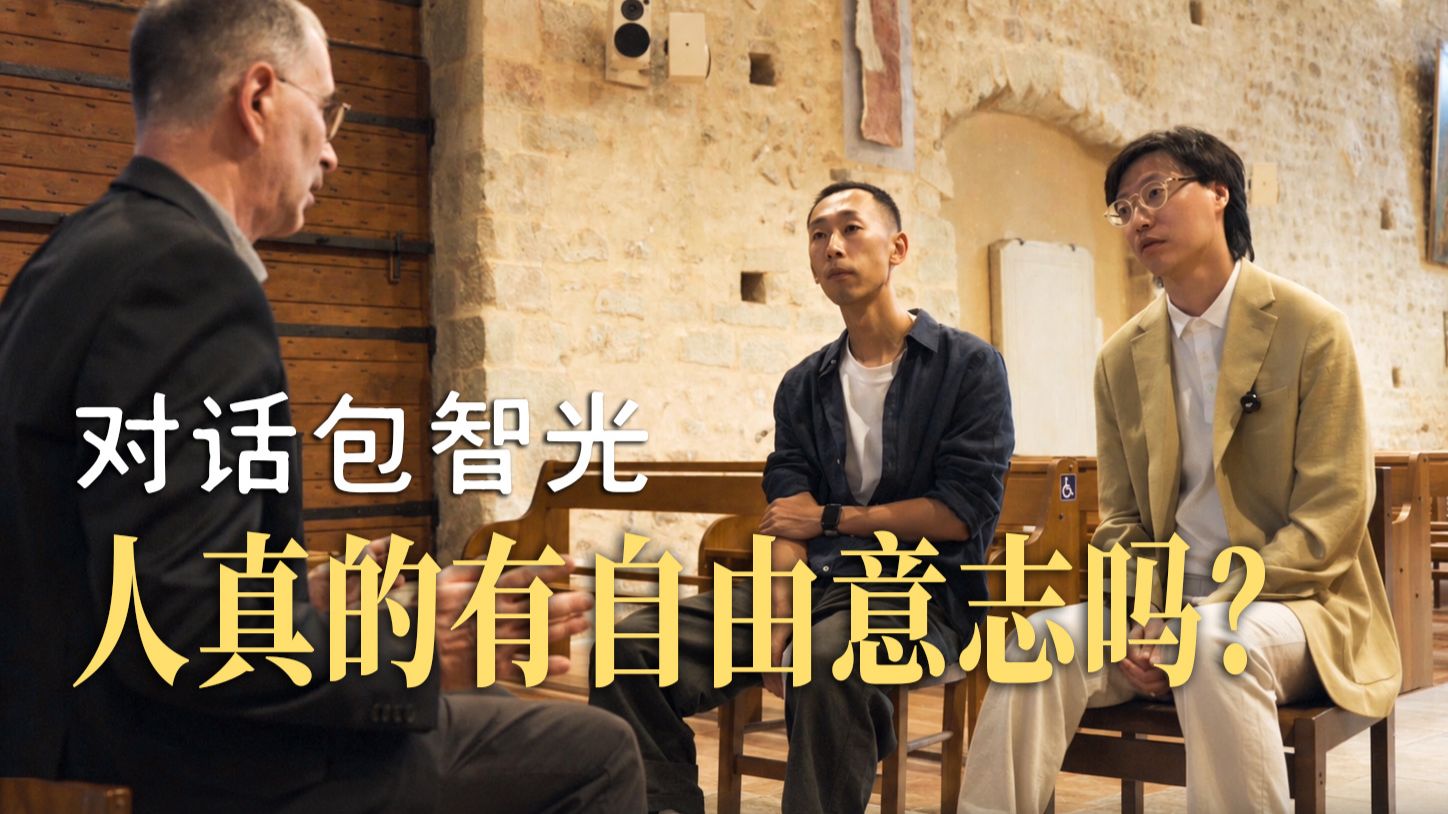
## Background 该视频由B站UP主“蜉蝣天地Meanders”于2026年10月22日发布。根据简介,本期内容节选自汉洋与吕东对谈学者包智光(François Barriquand)的完整节目,聚焦于人类是否拥有自由意志的哲学与科学探讨。
## TL;DR 包智光指出,现代科学描述的世界通常被严格的物理决定论与随机性所占据,这让基于天主教或传统哲学视角的真正人类自由意志显得无处安放。然而,正如历史上神学预知论与决定论之间的纠缠,爱因斯坦等科学家虽然在理论上否定自由意志,但在现实生活中仍不得不依靠它。包智光并不试图直接证明自由意志的存在,而是借用在路灯下找钥匙的比喻强调,实证科学的方法论具有局限性,不能因为现有观测工具只能照亮特定规律,就断言光照之外不存在真实的自由选择。
## Atmosphere & style 对话散发着严谨、从容且深沉的思辨气息,充满法式哲学的审慎与温和。学者并没有站在教条或反科学的立场高谈阔论,而是以坦诚、谦逊的姿态剖析科学与神学的认知边界。透过路灯找钥匙这一生动生趣的譬喻,整段交流呈现出一种知性而发人深省的沉静张力,引导听众反思我们对现代科学全知性的盲目推论。
## Bulletin - [00:00](https://www.bilibili.com/video/BV1itn16VEm1?t=0s) 现代科学图景将现实归结为确定性因果律与随机过程的组合,但这种框架从根本上挤压了真正的自由意志存在的空间。 - [03:00](https://www.bilibili.com/video/BV1itn16VEm1?t=180s) 天主教神学对全知的理解在历史上曾与物理决定论极为相似,即上帝事先掌握一切细节,进而导致自由意志易被视为单纯的隐喻。 - [03:00](https://www.bilibili.com/video/BV1itn16VEm1?t=180s) 包智光指出,科学受限于自身的认识论闭环与历史假设,既无法彻底跳出外部审视现实,也绝无可能完全证实自由意志的不存在。 - [03:00](https://www.bilibili.com/video/BV1itn16VEm1?t=180s) 借用“路灯下找钥匙”的寓言,包智光警示科学方法论极易陷入一种错觉:误以为经验工具所能照亮的范围就是全部存在的边界。
## Key takeaways - [00:00](https://www.bilibili.com/video/BV1itn16VEm1?t=0s) 当代物理学往往试图用普遍规律解释全部现实,这些规律主要由确定性机制与随机过程构成。 - [00:00](https://www.bilibili.com/video/BV1itn16VEm1?t=0s) 如果现实仅由必然发生的因果链和纯粹的随机涨落组成,真正的人类自主选择权将无处立足。 - [00:00](https://www.bilibili.com/video/BV1itn16VEm1?t=0s) 从天主教信仰与哲学角度来看,自由绝不仅是“非自主决定的预设”与“非自主发生的偶然”之间的简单混合物。 - [00:00](https://www.bilibili.com/video/BV1itn16VEm1?t=0s) 探讨自由意志的核心目的并非机械地重申宗教教条,而是检验真正的自由在当代科学框架下是否仍具可辩护性。 - [00:00](https://www.bilibili.com/video/BV1itn16VEm1?t=0s) 年轻群体(如十八岁)通常直觉性地视自由为理所当然,关于自由意志真实性的怀疑与危机往往在二十岁左右显现。 - [03:00](https://www.bilibili.com/video/BV1itn16VEm1?t=180s) 历史上部分神学观念认为上帝完全知晓所有未来细节,这种预知视角与机械决定论具有极高的相似性。 - [03:00](https://www.bilibili.com/video/BV1itn16VEm1?t=180s) 在彻底的决定论立场下,自由往往被降级为日常生活中的实用隐喻,爱因斯坦便是在否定自由意志的同时维持道德生活概念的典型代表。 - [03:00](https://www.bilibili.com/video/BV1itn16VEm1?t=180s) 人类目前既无法通过实证科学证明自由意志存在,科学家也同样无法凭借现有手段证明自由意志绝不可能存在。 - [03:00](https://www.bilibili.com/video/BV1itn16VEm1?t=180s) 基于数学与逻辑的实验科学身处认识论闭环之中,始终受限于历史假定与方法边界,无法完全超脱于现实之外进行客观鸟瞰。 - [03:00](https://www.bilibili.com/video/BV1itn16VEm1?t=180s) “路灯下找钥匙”的比喻揭示了现代实证科学的局限:研究者往往只聚焦于工具能照亮的地方,并误把被照亮的世界当作存在的全部。
## Detailed walkthrough ### [00:00](https://www.bilibili.com/video/BV1itn16VEm1?t=0s) Physical Determinism, Randomness, and the Theological Dilemma
The conversation begins with an inquiry into why François Barriquand devoted so much effort to researching the concept of freedom. Barriquand explains that contemporary scientific worldviews often posit that everything in existence obeys fundamental physical laws, which in principle could account for the entirety of reality. Even though no individual scientist has achieved such exhaustive descriptions, it remains widely held that the ultimate laws of nature might describe reality in its totality. Looking at current physics, those laws appear to combine deterministic mechanisms—events bound to happen strictly according to prior conditions—with stochastic processes governed purely by randomness.
```mermaid flowchart TD accTitle: Scientific Determinism vs Genuine Freedom accDescr: A diagram contrasting the reduction of nature into determinism and randomness against the theological concept of human freedom.
subgraph ScientificView["Scientific Description of Reality"] A["Physical Laws"] --> B["Deterministic Processes\n(Fixed outcomes)"] A --> C["Randomness / Stochasticity\n(Chance outcomes)"] end
subgraph FreedomGap["The Dilemma of Choice"] B --> D["No personal agency:\nPredetermined"] C --> E["No personal agency:\nPure chance"] D & E -.-> F["Leaves no room for\nGenuine Human Freedom"] end
subgraph CatholicTheology["Faith & Contemporary Philosophy"] G["Catholic Understanding:\nFreedom exceeds determinism & chance"] G -.->|Tension| F end ```
Under this standard scientific framework, genuine human freedom seems fundamentally squeezed out. From a Catholic perspective, agency cannot merely be a hybrid of things forced upon us by deterministic chains and things that happen arbitrarily through random fluctuations. Barriquand notes that this tension extends far beyond theology into modern philosophy: does genuine freedom exist, or is it an illusion? His intellectual pursuit is not merely to reiterate doctrinal convictions that freedom is real, but to explore whether genuine freedom can remain an acceptable, defensible proposition within contemporary scientific frameworks. When asked how one might explain this to an eighteen-year-old student, Barriquand remarks that younger people usually take their freedom for granted without agonizing over it; the skepticism typically takes root later in life, around the age of twenty.
- Barriquand highlights the conceptual conflict between standard physics and theological agency: “Because of it, for the Catholic faith, the human freedom should be more than just a mixture of something that we don't choose because it is predetermined, and something that we also don't choose because it just comes out randomly.” - The core philosophical query remains whether the reality of authentic agency can be reconciled with scientific worldviews rather than being instantly dismissed as pre-scientific sentimentality.
[03:00](https://www.bilibili.com/video/BV1itn16VEm1?t=180s) Foreknowledge, Theological Determinism, and the Streetlight Analogy
Addressing whether denying freedom also entails denying the existence of God, Barriquand admits that non-existence of freedom is an open possibility, but clarifies that historically, theological views on divine foreknowledge were surprisingly similar to mechanistic determinism. Many Catholic theologians believed God knows the entire future in advance down to the smallest detail. Consequently, some thinkers found it easy to accept that if God possesses complete foreknowledge, science might in principle mirror that predictive power. Under such a deterministic stance, freedom becomes merely a convenient existential metaphor. Barriquand points to Albert Einstein as an example of someone who explicitly rejected the reality of free will yet continued utilizing the concept in daily moral and existential life.
Barriquand acknowledges that he possesses no definitive proof that free will exists, nor does he pretend to have one. Instead, his philosophical inquiry aims at the reverse assertion: scientists cannot claim with absolute certainty that freedom is impossible. Experimental science, armed with mathematics and logic, operates inside what Barriquand characterizes as an inescapable epistemological circle where observations and hypotheses are continuously bounded by historical assumptions and methodological constraints. Science cannot grasp reality completely from the outside. To illustrate this limitation, he recounts a classic parable of a person searching for lost keys at night:
> A person is searching for something under the glow of a street lamp. A friend walks up and asks, "What are you looking for?" The person answers, "I'm looking for my keys." The friend asks, "Did you lose them here?" To which the person replies, "No, but that's where I can see something; that is where I can hope to find something."
Barriquand suggests that modern scientific methodologies risk making the exact same error: researchers direct their attention strictly where empirical instruments cast light, gradually falling into the illusion that what falls inside that illuminated circle represents the totality of existence. Science, by its very methodology, lacks the means to prove that there is nothing beyond the patch of light it examines.
- Barriquand stresses his own investigative stance and limits of proof: “There is no way to prove that freedom exists, and I have no pretension to be able to prove that it exists as well.” - He characterizes the epistemic trap of over-relying solely on what current experimental methods can illuminate: “We have light somewhere, we follow the light, and then we have the impression that what is covered by light is everything.”
## Notable quotes > [03:00](https://www.bilibili.com/video/BV1itn16VEm1?t=180s) We have light somewhere, we follow the light, and then we have the impression that what is covered by light is everything. — François Barriquand
> [00:00](https://www.bilibili.com/video/BV1itn16VEm1?t=0s) For the Catholic faith, the human freedom should be more than just a mixture of something that we don't choose because it is predetermined, and something that we also don't choose because it just comes out randomly. — François Barriquand
> [03:00](https://www.bilibili.com/video/BV1itn16VEm1?t=180s) There is no way to prove that freedom exists, and I have no pretension to be able to prove that it exists as well. — François Barriquand
## Mentioned François Barriquand, 汉洋, 吕东, Albert Einstein
## Video description 本期视频节选自汉洋和吕东对谈包智光 François Barriquand 的完整节目
[Source](https://www.bilibili.com/video/BV1itn16VEm1)