Lundqvist Bets on Founders Over Products in Post-Rangers Deals
Bloomberg Originals
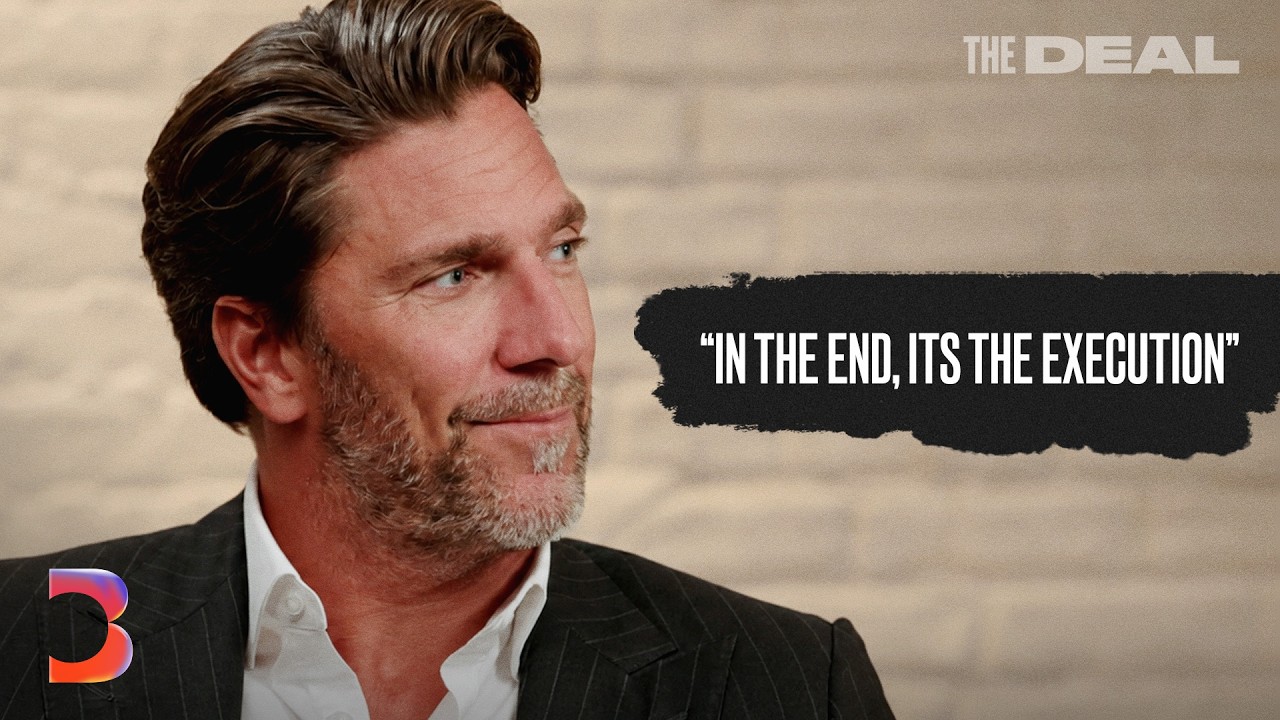
Retired NHL goaltender Henrik Lundqvist says venture returns hinge on leadership execution rather than product appeal, making the discipline to reject pitches his most vital business filter.
AI-assisted summary of How Henrik Lundqvist Built His Second Career | The Deal — original source. Check the original for full context.
Source published:
Key ideas
- Henrik Lundqvist evaluates business opportunities by vetting leadership character over product viability, relying on the discipline of saying 'no' to screen inbound deals. (0:00)
- NHL franchise valuations have surged from $400 million–$500 million five years ago to routinely reaching $2 billion, driven by elite on-ice product and international best-on-best tournaments. (4:04)
- Following his playing career, Lundqvist partnered with MSG executive chairman Jim Dolan to take on an official brand ambassadorship spanning broadcast analysis, community appearances, and corporate events. (12:01)
- To oversee his business and wealth management, Lundqvist relies on a complementary dynamic with 17-year business manager Adam Campbell (CMG) and J.P. Morgan, pairing Campbell's data-driven due diligence with his own gut instincts. (14:36)
Detailed notes
## Background Published on YouTube by Bloomberg Originals on October 22, 2026, this episode of "The Deal" features Hockey Hall of Fame goaltender Henrik Lundqvist in conversation with hosts Alex Rodriguez and Jason Kelly. The program explores how the Olympic and World Championship gold medalist transitioned from his iconic on-ice career to building business opportunities and continuing his work with Madison Square Garden and executive chairman Jim Dolan.
## TL;DR In this interview, Henrik Lundqvist shares his journey from arriving in New York as an anonymous 23-year-old rookie to becoming a celebrated franchise icon and active businessman. He outlines his core investment philosophy of prioritizing strong leadership over the product itself, supported by a 17-year partnership with his business manager to balance gut instinct with hard data. Lundqvist also discusses his ongoing post-career relationship with Madison Square Garden as a brand ambassador, his transition to national television analysis on TNT, and his deep commitment to philanthropy through the Henrik Lundqvist Foundation and the Garden of Dreams.
## Atmosphere & style The conversation has a warm, highly respectful, and reflective tone, feeling like an intimate boardroom chat between elite peers who understand the unique pressures of New York sports. The dynamic between Lundqvist and co-host Alex Rodriguez is particularly engaging, filled with mutual admiration and lighthearted banter about the transition to sports business and the humor of armchair critics. It feels deeply personal yet professionally insightful, capturing Lundqvist's transition from the high-stakes, singular focus of a goaltender to the multi-dimensional, collaborative world of business and philanthropy.
## Bulletin - [00:00](https://www.youtube.com/watch?v=AOIbgRQjb3E&t=0s) Henrik Lundqvist evaluates business opportunities by vetting leadership character over product viability, relying on the discipline of saying 'no' to screen inbound deals. - [04:04](https://www.youtube.com/watch?v=AOIbgRQjb3E&t=244s) NHL franchise valuations have surged from $400 million–$500 million five years ago to routinely reaching $2 billion, driven by elite on-ice product and international best-on-best tournaments. - [12:01](https://www.youtube.com/watch?v=AOIbgRQjb3E&t=721s) Following his playing career, Lundqvist partnered with MSG executive chairman Jim Dolan to take on an official brand ambassadorship spanning broadcast analysis, community appearances, and corporate events. - [14:36](https://www.youtube.com/watch?v=AOIbgRQjb3E&t=876s) To oversee his business and wealth management, Lundqvist relies on a complementary dynamic with 17-year business manager Adam Campbell (CMG) and J.P. Morgan, pairing Campbell's data-driven due diligence with his own gut instincts.
## Key takeaways - [00:00](https://www.youtube.com/watch?v=AOIbgRQjb3E&t=0s) Lundqvist approaches investing by betting on leadership and execution rather than product hype, prioritizing the discipline to say 'no'. - [00:56](https://www.youtube.com/watch?v=AOIbgRQjb3E&t=56s) Drafted in the 7th round in 2000, Lundqvist arrived in New York in 2005 at age 23 and overcame early doubt by holding firm confidence in his preparation. - [02:40](https://www.youtube.com/watch?v=AOIbgRQjb3E&t=160s) Competing against NHL stars in the Swedish Elite League during the 2004–05 lockout proved to Lundqvist that he could succeed at the highest level in North America. - [04:04](https://www.youtube.com/watch?v=AOIbgRQjb3E&t=244s) Rapidly escalating NHL franchise valuations to around $2 billion reflect the strength of the on-ice product and high-profile international rivalries. - [07:19](https://www.youtube.com/watch?v=AOIbgRQjb3E&t=439s) Playing for an Original Six franchise with a century-long legacy instills institutional pride that keeps young athletes humble. - [07:55](https://www.youtube.com/watch?v=AOIbgRQjb3E&t=475s) Lundqvist established a personal connection with MSG CEO Jim Dolan over shared interests, including music, while developing respect for MSG's operational scale. - [10:08](https://www.youtube.com/watch?v=AOIbgRQjb3E&t=608s) Top-tier sports ownership removes player excuses by investing heavily in micro-details such as training facilities, game preparation, and five-star travel. - [12:01](https://www.youtube.com/watch?v=AOIbgRQjb3E&t=721s) Dolan offered Lundqvist an open door to remain part of the MSG family well before his retirement, facilitating his transition into an ambassadorial role. - [13:00](https://www.youtube.com/watch?v=AOIbgRQjb3E&t=780s) Retirement brings an emotional shift from intense pre-game tunnel vision to genuine gratitude and presence in the arena. - [14:36](https://www.youtube.com/watch?v=AOIbgRQjb3E&t=876s) Lundqvist manages his post-playing business infrastructure by balancing his own intuitive reads on founders with business manager Adam Campbell's financial data analysis. - [17:59](https://www.youtube.com/watch?v=AOIbgRQjb3E&t=1079s) As a national NHL analyst for TNT, Lundqvist focuses on player psychology and split-second mechanics to deliver balanced, non-partisan commentary. - [19:05](https://www.youtube.com/watch?v=AOIbgRQjb3E&t=1145s) Fan criticism is often detached from on-ice reality, as high seating and slow-motion television replays create a false perception that the game is easy. - [20:32](https://www.youtube.com/watch?v=AOIbgRQjb3E&t=1232s) Lundqvist's rookie-season involvement with the Garden of Dreams Foundation established his belief that elite athletes carry a duty of civic responsibility. - [21:03](https://www.youtube.com/watch?v=AOIbgRQjb3E&t=1263s) Together with his wife Therese, Lundqvist established the Henrik Lundqvist Foundation to support partner organizations in the US and Sweden alongside youth leadership initiatives. - [22:51](https://www.youtube.com/watch?v=AOIbgRQjb3E&t=1371s) Lundqvist remains one of only 11 players in New York Rangers history to have his jersey number retired to the rafters of Madison Square Garden.
## Detailed walkthrough ### [00:00](https://www.youtube.com/watch?v=AOIbgRQjb3E&t=0s) Business Philosophy: Betting on People Over Products
The conversation opens with Henrik Lundqvist outlining his fundamental approach to vetting business deals and investments. Faced with an endless stream of inbound offers, he emphasizes that the power of refusal is far more critical than simply accepting proposals. When evaluating whether to pursue an opportunity, Lundqvist focuses his attention less on the product itself and more on the leadership steering the ship. Having experienced both successful and unsuccessful ventures throughout his career, he has learned that ultimate success always comes down to execution, which is dictated by the character and capability of the leadership team at the top.
As Lundqvist explains his guiding criteria for investments: “I bet on people more than the product because I've had some good deals, some bad deals.”
Hosts Jason Kelly and Alex Rodriguez introduce Lundqvist as a legendary New York Ranger who arrived in Manhattan from Sweden and never looked back. Rodriguez highlights Lundqvist's standing as one of the most respected and revered figures in New York sports history, praising his deep ties to Madison Square Garden, his long-standing relationship with MSG executive chairman and CEO Jim Dolan, and his extensive philanthropic work.
```mermaid flowchart LR accTitle: Lundqvist Business Decision Framework accDescr: Decision flow showing how opportunities are filtered by leadership quality over product appeal.
subgraph Inbound["Opportunity Intake"] A["Inbound Pitch / Deal"] --> B{"First Filter"} end
subgraph Evaluation["Leadership Assessment"] B -->|"Prioritize 'No'"| C["Pass on Deal"] B -->|"Evaluate Leadership"| D{"Bet on People"} end
subgraph Execution["Outcome"] D -->|"Weak Management"| C D -->|"Strong Management"| E["Commit & Execute"] end ```
[00:56](https://www.youtube.com/watch?v=AOIbgRQjb3E&t=56s) Arriving in New York as a 23-Year-Old Rookie
Kelly begins the sit-down by reflecting on what it meant for Lundqvist to arrive in New York City as a young athlete with ambitions extending beyond the rink. Lundqvist recounts arriving in 2005 at the age of 23. While he had already established a dominant resume in Sweden—winning championships and earning recognition as the premier goaltender in the country—he arrived in North America essentially anonymous. Drafted in the seventh round by the Rangers five years earlier in 2000, he came to town with an open mind, acute excitement, and a touch of anxiety. He had heard about the mythology surrounding an Original Six franchise and the relentless glare of the New York media market, but admits that nothing fully prepares an athlete until they live it firsthand.
Rodriguez touches on the psychological reality behind athletic success, asking whether Lundqvist suffered from imposter syndrome or intimidation when stepping onto the ice at Madison Square Garden. Lundqvist acknowledges experiencing fleeting moments of doubt, wondering if the opportunity was simply too good to be true. However, having left behind his family, friends, and support network in Sweden, he realized that self-doubt could easily derail his career if allowed to fester. He forced himself to maintain absolute conviction that he belonged on that stage.
His confidence was anchored in his final season in Sweden during the 2004–05 NHL lockout. Because the North American season was canceled, premier NHL talent flocked to the Swedish Elite League (Elitserien). Competing directly against elite NHL stars and goaltenders—and ultimately winning the Swedish championship—gave Lundqvist concrete, firsthand proof that he could hold his own at the highest level: - Lundqvist arrived in New York in 2005 at age 23 after being selected in the 7th round of the 2000 NHL Entry Draft. - Adapting to the North American game required adjusting to a smaller ice sheet, quicker play, and higher player skill levels. - “So if you don't come with that mindset that I'm going to make it, that doubt can definitely be a hurdle,” Lundqvist notes regarding the mental resolve needed to relocate across the Atlantic.
[04:04](https://www.youtube.com/watch?v=AOIbgRQjb3E&t=244s) The Post-Lockout NHL and the Explosion of Franchise Valuations
The transition to the NHL in 2005 coincided with a delicate recovery period for the sport. Kelly and Rodriguez observe that hockey was re-establishing itself with fans after a full season was lost to the lockout, drawing parallels to Rodriguez's experience as an MLB rookie during the 1994 baseball strike. Lundqvist recalls that the entire league felt a collective pressure to rebuild fan trust and shake off rust, especially since several players had taken an entire calendar year off from competition. In New York, the Rangers rapidly captured momentum, making his rookie year an exhilarating ride.
Turning to the present day, Rodriguez points out the astonishing financial ascent of NHL franchises, which traded hands for $400 million to $500 million just five or six years ago and now routinely command $2 billion valuations. Lundqvist welcomes this hyper-growth as a devoted fan of the sport. He attributes the surging enterprise values to the quality of the on-ice product, international best-on-best showcases (such as the 4 Nations Face-Off and the Winter Olympics), and intense cross-border rivalries like Canada versus the United States that draw massive global viewership. While hockey ranks behind soccer in Sweden and trails other major leagues in the United States, Lundqvist is energized by the sport's global cultural momentum.
Summarizing what drives these multi-billion dollar valuations, Lundqvist states: “So when you look at the value of different organisations, it starts with, in my mind, the product.”
[07:19](https://www.youtube.com/watch?v=AOIbgRQjb3E&t=439s) The Madison Square Garden Machine and Jim Dolan
Reflecting on his integration into the New York Rangers organization, Lundqvist highlights the unique responsibility of representing an Original Six team with more than a century of history. He notes that the Dolan family and the MSG leadership excel at honoring the franchise's heritage. Playing under the bright lights of Madison Square Garden provided an immediate grounding effect for a young player; no matter how well an individual performs, the weight of the institution reminds them that they are merely one chapter in a century-long legacy: “And that to me as a young player keeps you in check a little bit too.”
When asked about his dynamic with Jim Dolan, Lundqvist recalls that they had minimal contact during his rookie season, but gradually forged a connection over shared interests—chief among them, a deep passion for music. Lundqvist even attended a concert Dolan performed with his band in Stockholm years ago. Over his tenure, Lundqvist developed immense respect for the operational complexity required to run MSG, Radio City Music Hall, the Sphere in Las Vegas, and iconic sports teams simultaneously.
Now retired, Lundqvist reflects on the contrast between the simplicity of his playing days and the multidimensional demands of life after hockey. Running a modern business entails endless decision-making and operational fires, whereas an athlete’s focus is singular. Whenever he laces up his skates today, he finds solace in the purity of the goaltender's job: - The New York Rangers' centennial identity fosters institutional pride that keeps players humble. - Operating the MSG entertainment ecosystem—from team operations and concerts to the Sphere—functions as an intricate daily "machine." - “And now when I'm retired, I come back to how easy life was when I just had to stop a puck,” Lundqvist remarks when comparing professional business complexity to professional sports focus.
[10:08](https://www.youtube.com/watch?v=AOIbgRQjb3E&t=608s) The Player-Owner Dynamic and Jim Dolan’s Investment
Alex Rodriguez opens by reflecting on his own recent transition into sports ownership, admitting that sitting on the business side has given him a completely fresh appreciation for what owners face. While he sometimes misses the pure simplicity of “hit ball, see ball”—much like a goaltender stopping a puck—Rodriguez emphasizes that running a conglomerate like Madison Square Garden Sports is immensely demanding, and he praises Jim Dolan for being surprisingly underrated when it comes to numbers and business instincts. When Rodriguez asks what lessons Henrik Lundqvist learned from his relationship with Dolan as player, owner, and now colleague, Lundqvist points directly to Dolan’s willingness to spare no expense for the roster. In Lundqvist’s eyes, a truly great owner removes every possible excuse by investing in state-of-the-art training facilities, five-star travel accommodations, and first-rate game preparation.
Beyond the competitive resources, Lundqvist highlights the deep personal loyalty Dolan showed him and his family when his career came to a close. Having his No. 30 jersey raised to the rafters at Madison Square Garden was an emotional milestone, made seamless by the organization’s generosity toward his family. As Lundqvist explains: “To me, it's an owner that invests in the team and gives all the players an opportunity to perform at the highest level.”
- Rodriguez observes that running multiple franchises under one corporate roof requires an exceptional feel for numbers that outsiders frequently overlook. - High-level athlete care comes down to the micro-details: the standard of the practice facility, hotel quality, and travel arrangements. - Dolan and the Rangers front office ensured Lundqvist’s family was closely embraced and supported during his retirement ceremonies.
[12:01](https://www.youtube.com/watch?v=AOIbgRQjb3E&t=721s) Transitioning into the Next Chapter as an MSG Ambassador
Lundqvist explains that roughly halfway through his tenure with the Rangers, he recognized that New York City and Madison Square Garden were places where he wanted to anchor himself permanently, even if his role would eventually evolve. Toward the end of his playing days, he sat down for an open conversation with Jim Dolan, who offered unconditional support. Dolan told him directly that whenever he decided to hang up his skates, the organization wanted him to remain an active part of the MSG family. For an athlete who spent his entire career in a single market, that institutional loyalty was rare validation for the years of sweat equity he had poured into the building.
That understanding paved the way for his post-playing transition—a phrase Lundqvist prefers to call his “next chapter in life” rather than retirement, which he feels sounds far too passive. Over his first year off the ice, his responsibilities crystallized into an official ambassadorship for MSG, spanning television coverage, community appearances, charity galas, and attending Knicks and Rangers games. He jokes with Rodriguez that while Rodriguez was naturally social during his playing days, Lundqvist used to maintain intense tunnel vision on game nights. Away from that suffocating competitive pressure, Lundqvist finds himself far more present, soaking in the building’s atmosphere and experiencing goosebumps born out of pure gratitude rather than pregame nerves.
```mermaid flowchart TD accTitle: Lundqvist Post-Career MSG Ambassador Path accDescr: Diagram tracing Lundqvist's progression from franchise goaltender to Madison Square Garden ambassador. subgraph PlayingDays["On-Ice Career"] A["15 seasons with NY Rangers"] --> B["Tunnel vision & total game focus"] end subgraph TransitionPhase["Front Office Alignment"] B --> C["Late-career meeting with Jim Dolan"] C --> D["Open-door offer for post-retirement role"] end subgraph AmbassadorRole["The Next Chapter"] D --> E["MSG Brand Ambassador"] E --> F["Broadcast studio analysis"] E --> G["Charity & corporate events"] E --> H["Knicks & Rangers games presence"] end ```
- Dolan offered Lundqvist an open door before he even stepped away, telling him: “Whenever you're deciding to walk away from the game, just know that we would love for you to be a part of this.” - Lundqvist notes that entering the arena today brings a different emotional register—one of appreciation rather than high-stakes game tension.
[14:36](https://www.youtube.com/watch?v=AOIbgRQjb3E&t=876s) Assembling the Business Team: Gut Instinct vs. Hard Data
Transitioning from active player to businessman forced Lundqvist to rethink his daily infrastructure. In his early twenties, his financial decisions were simple: whether he could afford another guitar, buy a new car, or rent his first apartment. As his personal life expanded to include marriage, children, schooling, insurance, and complex investments, the administrative load grew considerably. Lundqvist emphasizes that young players rarely have the bandwidth or genuine interest to sit through lengthy finance calls after games. To protect his focus, he formed a tight circle of trust early in his career, partnering with business manager Adam Campbell at CMG—a working relationship that has spanned 17 years.
When fielding investment opportunities across New York City, Lundqvist relies on Campbell’s analytical discipline while following his own intuition regarding leadership. He stresses that in a market saturated with pitches, having the discipline to say “no” is far more valuable than saying “yes.” While Campbell and advisors at J.P. Morgan evaluate the balance sheets and conduct formal due diligence, Lundqvist evaluates the character and drive of the founders running the venture. Summarizing their complementary dynamic, Lundqvist remarks: “I'm more gut, he's more data.”
- Lundqvist has maintained the exact same business management relationship with Adam Campbell at CMG for 17 consecutive years. - His broader advisory framework incorporates institutional wealth management through J.P. Morgan. - Lundqvist’s principal rule in evaluating deals is betting on the people executing the vision rather than just the underlying product.
[17:59](https://www.youtube.com/watch?v=AOIbgRQjb3E&t=1079s) Television Analysis on TNT and the View from Row 40
When Lundqvist moved behind the desk as a national NHL analyst for TNT, his dynamic with hockey fans shifted. Rodriguez compares this to his own transition joining Fox's MLB broadcasts alongside Derek Jeter, David Ortiz, and Kevin Burkhardt, noting that broadcasting puts an athlete's voice on display rather than their physical talent. Lundqvist acknowledges the challenge of shedding his lifelong identity as a Ranger when covering the league nationally. He consciously watches his tone during Rangers broadcasts to avoid sounding like a partisan cheerleader, aiming instead to earn viewers’ trust through even-handed insight.
Rather than over-relying on exhaustive prep binders, Lundqvist anchors his analysis in first-hand psychological experience. He uses his platform to unpack split-second plays that look like catastrophic blunders on slow-motion television replays, explaining the hidden positioning cues and thought processes of the players on the ice. This sparks banter between Rodriguez and Lundqvist about how perspective warps fan criticism. Lundqvist quips that fans sitting directly on the glass rarely claim to have all the answers because the puck moves too fast, whereas spectators sitting up in row 40—or lounging on home couches with five instant replays and a social media account—believe the game is simple. As Lundqvist puts it: “The higher up you sit in the stands, the better you are.”
- Lundqvist avoids looking like an overt partisan on national TV by framing controversial plays through player psychology rather than team allegiance. - His broadcasting philosophy centers on explaining split-second mistakes that casual television viewers easily misinterpret. - Rodriguez and Lundqvist joke that high-altitude seats, DVR replays, and social media give armchair critics an illusion of omniscience.
[20:32](https://www.youtube.com/watch?v=AOIbgRQjb3E&t=1232s) Philanthropic Foundations: The Garden of Dreams
Jason Kelly brings the discussion to Lundqvist’s extensive philanthropic footprint alongside his wife. Lundqvist traces the roots of his charitable strategy directly back to his rookie year in 2005, when he first arrived in New York and was introduced to Madison Square Garden's flagship charity, the Garden of Dreams Foundation. Working with the foundation opened his eyes early in his twenties to the outsized platform and positive social influence an athlete possesses in Manhattan, laying the groundwork for his family's long-term community work.
- Lundqvist joined the Garden of Dreams Foundation immediately upon arriving in New York as a rookie in 2005. - The MSG-affiliated charity served as his foundational education in using an athletic profile for community impact.
[21:03](https://www.youtube.com/watch?v=AOIbgRQjb3E&t=1263s) Giving Back and Launching the Henrik Lundqvist Foundation
Reflecting on his development both on and off the ice, Henrik Lundqvist describes how playing in New York and being surrounded by the Madison Square Garden organization offered invaluable lessons early in his career. Reaching the pinnacle of professional hockey brought a realization that his role carried duties far beyond athletic performance. As Lundqvist explains: “We talked earlier about when you reach a certain level, it's more than just stopping a puck.” While he possessed a natural drive to help grow the sport of hockey, his philanthropic perspective deepened dramatically through firsthand charity interactions, many of which originated through the MSG-affiliated Garden of Dreams Foundation. Moments spent comforting sick children or helping young people secure educational opportunities revealed the tangible, uplifting power of direct community engagement.
Those experiences prompted Lundqvist and his wife, Therese, to expand their philanthropic footprint and establish an independent charitable vehicle that could impact both their adopted home in the United States and their native Sweden. Together, they founded the Henrik Lundqvist Foundation. Their initial blueprint centered on assembling an experienced governing board composed of longtime personal supporters who possessed robust professional networks. From there, the foundation targeted established partner institutions with which they could collaborate directly, while also designing original initiatives such as their flagship Young Ambassador Program to empower the next generation.
```mermaid flowchart TD accTitle: Henrik Lundqvist Foundation Structure accDescr: Diagram illustrating the board, key partner organizations, and internal youth initiative of the Henrik Lundqvist Foundation.
HLF["Henrik Lundqvist Foundation<br/>(Co-founded with wife Therese)"]
subgraph Partners ["Core Partner Organizations"] NYP["NewYork-Presbyterian<br/>Children's Hospital"] RMH["Ronald McDonald House<br/>(Sweden)"] FBNY["Food Bank For New York City"] end
subgraph InHouse ["Signature Initiatives"] YAP["Young Ambassador Program<br/>(Youth Service & Leadership)"] end
HLF --> Partners HLF --> InHouse ```
- **Foundational Motivation**: Lundqvist felt that elite athletic success carries a civic duty: “With that comes some sort of responsibility.” - **Core Institutional Partners**: - NewYork-Presbyterian Children's Hospital in New York City - Ronald McDonald House in Sweden - Food Bank For New York City - **Young Ambassador Program**: An internal educational initiative designed to inspire and mobilize youth to experience community service firsthand, reinforcing the personal fulfillment that comes from charitable action.
[22:51](https://www.youtube.com/watch?v=AOIbgRQjb3E&t=1371s) Celebrating a New York Legacy
The conversation concludes with the hosts praising Lundqvist's legendary run in New York sports and his graceful transition into post-hockey pursuits. As fellow New York athletic icons reflecting on shared history in the city, the hosts honor Lundqvist's extraordinary standing in Rangers franchise history, highlighting that he is one of only eleven players to have had their jersey number retired to the rafters of Madison Square Garden. Lundqvist humbly acknowledges the tribute as the interview comes to a close, exchanging warm thanks with the hosts for revisiting his journey across sports, business, and community impact.
## Notable quotes > [00:00](https://www.youtube.com/watch?v=AOIbgRQjb3E&t=0s) I bet on people more than the product because I've had some good deals, some bad deals. — Henrik Lundqvist
> [17:59](https://www.youtube.com/watch?v=AOIbgRQjb3E&t=1079s) The higher up you sit in the stands, the better you are. — Henrik Lundqvist
## Mentioned Henrik Lundqvist, Alex Rodriguez, Jason Kelly, Jim Dolan, Madison Square Garden, New York Rangers, Hockey Hall of Fame, International Ice Hockey Federation Hall of Fame, Swedish Elite League, Radio City Music Hall, Sphere, Adam Campbell, CMG, J.P. Morgan, TNT, Fox, Derek Jeter, David Ortiz, Kevin Burkhardt, Garden of Dreams Foundation, Therese Lundqvist, Henrik Lundqvist Foundation, NewYork-Presbyterian Children's Hospital, Ronald McDonald House, Food Bank For New York City, Young Ambassador Program, New York Knicks
## Video description Henrik Lundqvist isn’t just a member of the Hockey Hall of Fame and the International Ice Hockey Federation Hall of Fame, but he’s one of only 11 New York Rangers to have had his jersey retired.
In this episode of The Deal, the Olympic and World Championship gold medalist tells Alex Rodriguez and Jason Kelly why he wanted to keep working at Madison Square Garden with Jim Dolan and how he developed business opportunities while still on the ice.
#Hockey #Sports #Business
-------- Like this video? Subscribe: http://www.youtube.com/Bloomberg?sub_confirmation=1
Get unlimited access to Bloomberg.com for just $1.99 your first month: https://www.bloomberg.com/subscriptions?in_source=YoutubeOriginals Bloomberg Originals offers bold takes for curious minds on today’s biggest topics. Hosted by experts covering stories you haven’t seen and viewpoints you haven’t heard, you’ll discover cinematic, data-led shows that investigate the intersection of business and culture. Exploring every angle of climate change, technology, finance, sports and beyond, Bloomberg Originals is business as you’ve never seen it.
Subscribe for business news, but not as you've known it: exclusive interviews, fascinating profiles, data-driven analysis, and the latest in tech innovation from around the world.
Visit our partner channel Bloomberg News for global news and insight in an instant.
[Source](https://www.youtube.com/watch?v=AOIbgRQjb3E)