Saudi-UAE Proxy Rivalry Stalls Yemen Peace and Fuels Sudan War
The Economist
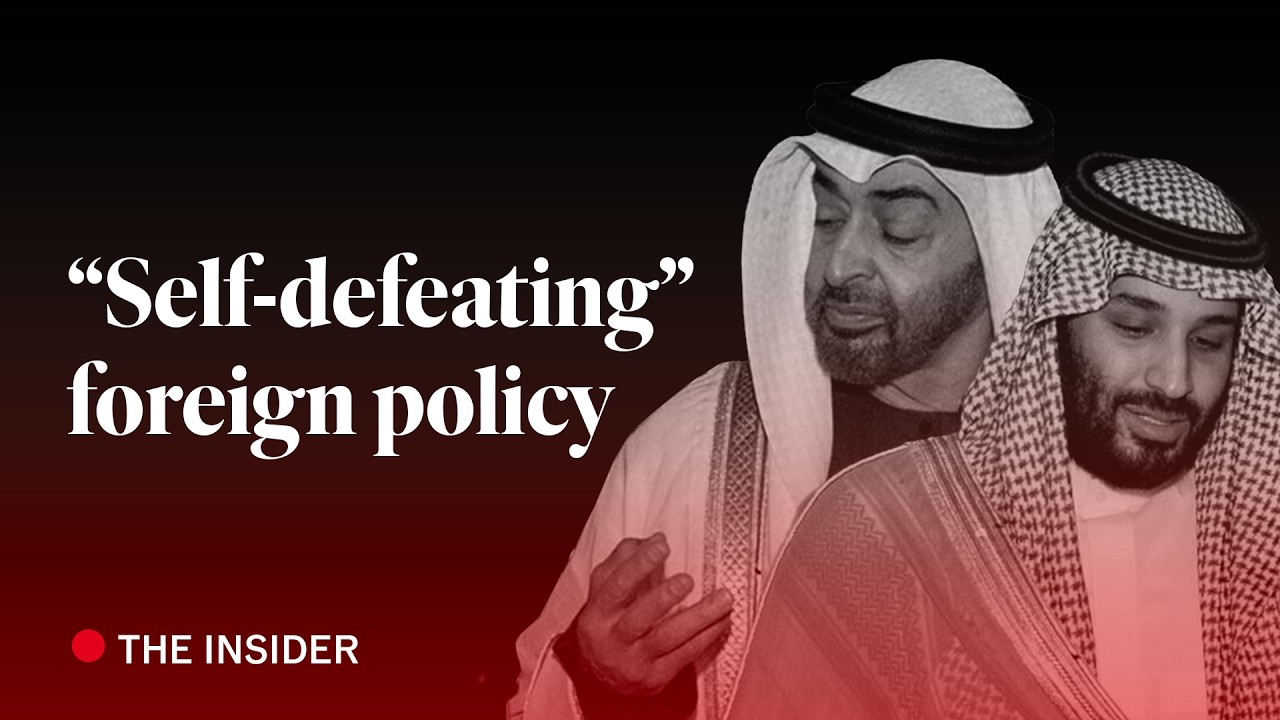
Competing military interventions by Riyadh and Abu Dhabi are proving self-defeating by destabilizing the critical Red Sea maritime corridors both monarchies require for their own food and energy security.
AI-assisted summary of Why Saudi Arabia and the UAE can't stop the Yemen war | The Economist — original source. Check the original for full context.
Source published:
Key ideas
- The close alliance between Saudi Arabia and the UAE has deteriorated into an intense regional rivalry driven by clashing egos, conflicting views of leadership, and divergent foreign policy philosophies. (1:09)
- In Yemen, the shared goal of countering the Houthis fractured as Saudi Arabia backed a unified state while the UAE supported southern separatists, eventually leading their respective proxies to clash. (2:51)
- The rivalry has spilled across the Red Sea into Sudan, where Saudi Arabia backs the Sudanese Armed Forces to secure its maritime flank while the UAE supports the Rapid Support Forces to protect commercial port interests. (4:36)
- Gulf investments in agricultural land across East Africa intended to ensure food security have proven counterproductive, as fueling regional conflict directly destabilizes the maritime trade corridors needed to import food. (7:41)
Detailed notes
## Background Published by The Economist on YouTube on October 24, 2026, this episode of The Insider explores the escalating regional rivalry between Saudi Crown Prince Mohammed bin Salman and UAE President Mohamed bin Zayed. According to the page description, the editors analyze the origins of the rift between the two former allies, how their competing agendas fuel wars in Yemen and Sudan, and why their interventions are ultimately proving self-defeating.
## TL;DR Once close allies who launched joint military interventions in Yemen and blockaded Qatar, Saudi Arabia and the UAE have drifted into an intense regional rivalry fueled by clashing personal ambitions and divergent strategic philosophies. While Riyadh adheres to state sovereignty and envisions itself as the natural leader of the Arab world, Abu Dhabi operates as an agile, commerce-driven middle power willing to back non-state proxies, including southern separatists in Yemen and the Rapid Support Forces in Sudan. These incompatible postures have sparked direct proxy clashes, prolonged Sudan's devastating conflict, and ignited a scramble for Red Sea ports and East African farmland. Ultimately, the editors argue that this proxy friction undermines the very maritime trade routes and regional stability that both Gulf monarchies require for their own food and economic security.
## Atmosphere & style The discussion carries a sober, clinical, and sharply analytical tone characteristic of The Economist's geopolitical reporting. The editors engage in a fluid, intellectual exchange that dissects monarchical ego and grand strategy with detached realism, before confronting the tragic human costs of these policies. Watching the program feels like sitting in on an insider foreign-policy debrief, where polished palace diplomacy steadily gives way to bleak examinations of proxy clashes, mercenary gold networks, and man-made famine.
## Bulletin - [01:09](https://www.youtube.com/watch?v=QPpWpZEmgPA&t=69s) The close alliance between Saudi Arabia and the UAE has deteriorated into an intense regional rivalry driven by clashing egos, conflicting views of leadership, and divergent foreign policy philosophies. - [02:51](https://www.youtube.com/watch?v=QPpWpZEmgPA&t=171s) In Yemen, the shared goal of countering the Houthis fractured as Saudi Arabia backed a unified state while the UAE supported southern separatists, eventually leading their respective proxies to clash. - [04:36](https://www.youtube.com/watch?v=QPpWpZEmgPA&t=276s) The rivalry has spilled across the Red Sea into Sudan, where Saudi Arabia backs the Sudanese Armed Forces to secure its maritime flank while the UAE supports the Rapid Support Forces to protect commercial port interests. - [07:41](https://www.youtube.com/watch?v=QPpWpZEmgPA&t=461s) Gulf investments in agricultural land across East Africa intended to ensure food security have proven counterproductive, as fueling regional conflict directly destabilizes the maritime trade corridors needed to import food.
## Key takeaways - [00:00](https://www.youtube.com/watch?v=QPpWpZEmgPA&t=0s) Saudi Arabia and the UAE initially formed a tight regional axis anchored in shared monarchical systems, oil wealth, and personal rapport between MBS and MBZ. - [00:00](https://www.youtube.com/watch?v=QPpWpZEmgPA&t=0s) Early foreign policy alignment between the two Gulf monarchies included a joint military intervention in Yemen in 2015 and the blockade of Qatar. - [01:09](https://www.youtube.com/watch?v=QPpWpZEmgPA&t=69s) MBS views Saudi Arabia as the natural hegemon entitled to guide Gulf policy, whereas MBZ views the UAE as a more agile, modern middle power unwilling to take Saudi directives. - [01:09](https://www.youtube.com/watch?v=QPpWpZEmgPA&t=69s) Saudi Arabia relies on a traditionalist doctrine prioritizing established state sovereignty and Arab-world ties, while the UAE acts as a global commercial hub willing to partner with non-state actors and breakaway republics. - [02:51](https://www.youtube.com/watch?v=QPpWpZEmgPA&t=171s) While both powers sought to push back Houthi dominance in Yemen, Riyadh aimed to preserve national unity while Abu Dhabi backed the Southern Transitional Council seeking an independent South Yemen. - [02:51](https://www.youtube.com/watch?v=QPpWpZEmgPA&t=171s) Armed clashes between Saudi-backed and UAE-backed proxy forces in southern Yemen forced the UAE to scale back its operational footprint without resolving the underlying strategic schism. - [04:36](https://www.youtube.com/watch?v=QPpWpZEmgPA&t=276s) The Red Sea represents an existential security corridor for Saudi Arabia, especially as threats in the Strait of Hormuz make western pipelines and coastal terminals critical for crude oil exports. - [04:36](https://www.youtube.com/watch?v=QPpWpZEmgPA&t=276s) The UAE's strategy along the Red Sea basin focuses on commercial transit and maritime logistics, leading it to partner with General Hemedti's Rapid Support Forces in Sudan. - [04:36](https://www.youtube.com/watch?v=QPpWpZEmgPA&t=276s) Sudan's civil conflict is fueled and prolonged by external Gulf commercial channels that help launder and monetize illicit gold mined by the RSF. - [04:36](https://www.youtube.com/watch?v=QPpWpZEmgPA&t=276s) Introducing multiple external patrons into Sudan's war exponentially increases diplomatic complexity, making negotiated cease-fires significantly less likely. - [07:41](https://www.youtube.com/watch?v=QPpWpZEmgPA&t=461s) To hedge against hyper-arid food vulnerabilities, Gulf nations purchased vast tracts of fertile land in Sudan and East Africa, generating deep local resentment over water and crop extraction. - [07:41](https://www.youtube.com/watch?v=QPpWpZEmgPA&t=461s) The Gulf land-grab strategy in the Horn of Africa is fundamentally self-defeating because stoking regional conflict undermines the maritime shipping routes required to bring food imports home safely. - [10:06](https://www.youtube.com/watch?v=QPpWpZEmgPA&t=606s) Beyond geopolitical rivalry, foreign military intervention and proxy warfare across the Red Sea basin have inflicted severe humanitarian catastrophes, displacement, and famine on local populations.
## Detailed walkthrough ### [00:00](https://www.youtube.com/watch?v=QPpWpZEmgPA&t=0s) A Once-Close Relationship Between Two Gulf Monarchs
The relationship between Saudi Arabia and the United Arab Emirates began with remarkable common ground. Both countries are wealthy, monarchical, resource-rich Muslim nations situated in close geographical proximity. Their rulers—Crown Prince Mohammed bin Salman (MBS) of Saudi Arabia and President Mohamed bin Zayed (MBZ) of the UAE—also shared striking personal parallels: both were younger brothers never originally guaranteed the throne. For years, MBZ served almost as a mentor to the younger Saudi prince.
Their foreign policies moved in lockstep across high-stakes regional interventions. In 2015, they launched a joint military intervention in Yemen, and they later joined forces to impose a diplomatic and economic blockade on Qatar. What appeared to outside observers as an unbreakable Gulf axis, however, gradually began to fracture, giving way to an intense regional rivalry.
```mermaid flowchart TD accTitle: Alliance to Rivalry Dynamic accDescr: Diagram illustrating the shift from shared Saudi-UAE cooperation to strategic divergence.
subgraph EraOfAlliance ["Early Era of Alliance"] direction LR A["Shared Interests & Wealth"] --> B["Mentorship: MBZ guides MBS"] B --> C["Joint Actions: Yemen (2015) & Qatar Blockade"] end
subgraph SourcesOfFriction ["Emergence of Friction"] direction LR D["Saudi Ambition: Regional Hegemon"] E["Emirati Pragmatism: Dynamic Middle Power"] end
subgraph Flashpoints ["Proxy Friction Flashpoints"] direction LR F["Yemen: State Unity vs. Southern Separatism"] G["Sudan & Red Sea: SAF vs. RSF & Maritime Control"] end
EraOfAlliance --> SourcesOfFriction SourcesOfFriction --> Flashpoints ```
[01:09](https://www.youtube.com/watch?v=QPpWpZEmgPA&t=69s) Personality Clashes and Divergent Worldviews
The unraveling of the partnership stems from two primary drivers: clashing egos and fundamentally incompatible doctrines of foreign policy. While the inner workings of Gulf royal courts remain notoriously opaque, the personal dynamic shifted as MBS consolidated power. MBS views Saudi Arabia as the undisputed heavyweight of the Gulf—boasting the largest economy, geography, and population—and felt entitled to dictate foreign policy priorities for the entire Arabian Peninsula. Conversely, MBZ bristled at this dynamic, regarding the UAE as a far more modern, agile, and dynamic middle power that had no interest in taking instructions from a younger Saudi prince.
Beyond personal friction lies a profound philosophical divergence over security and statecraft. Saudi Arabia operates with a traditionalist worldview deeply anchored in the Arab and Muslim worlds, treating established state sovereignty as paramount. The UAE, by contrast, operates like a global commercial, financial, and transit hub. Abu Dhabi is eager to look far beyond the Arab world, frequently forging ties with non-state actors, breakaway factions, and unrecognized republics if it advances Emirati commercial and trade reach.
As Greg explains: > “MBS in Saudi Arabia sees himself as the head of the biggest Gulf country, the biggest Gulf economy, what what he considers to be the natural leader of this region.”
In contrast, he points out the contrasting Emirati posture: > “It is happy to make deals with countries outside the region. In fact, very often it wants to look beyond the Arab and Muslim world. It is very happy to work with non-state actors and breakaway republics and things that are not traditional states.”
[02:51](https://www.youtube.com/watch?v=QPpWpZEmgPA&t=171s) Yemen: One Goal, Two Incompatible Strategies
Nowhere did this philosophical split become clearer than in Yemen. Both Saudi Arabia and the UAE shared the core objective of pushing back the Houthi movement and preventing it from dominating Yemeni territory. However, their methods directly collided due to their differing views on the Yemeni state.
Throughout the Cold War, Yemen existed as two distinct entities: a religious monarchy turned dictatorship in the north, and the Middle East’s only communist state in the south, before unifying in 1990. Driven by its doctrine of state sovereignty, Riyadh prioritized preserving a unified Yemeni state, backing factions committed to national territorial integrity. The UAE took the opposite approach, seeing southern separatists organized under the Southern Transitional Council (STC)—who fight to re-establish an independent South Yemen—as their most effective operational proxy.
Eventually, Saudi-backed and Emirati-backed factions turned their guns on each other in the south. Riyadh eventually asserted its dominance and forced Abu Dhabi to scale back its footprint, but the strategic breach remained unhealed. As Greg summarizes: > “Eventually, the Saudi backed and the UAE backed forces in Yemen wound up clashing with one another over this issue of separatism. The Saudis got the upper hand, eventually forced the UAE to curtail its support for these factions in Yemen. But going forward, the the schism is still there.”
[04:36](https://www.youtube.com/watch?v=QPpWpZEmgPA&t=276s) Ports, the Red Sea, and the Catastrophe in Sudan
The rivalry migrated across the water into the Red Sea basin and Sudan, shifting between pure security concerns and aggressive commercial positioning. For Saudi Arabia, the Red Sea is an existential security flank: Sudan lies a mere 200 kilometers across the water at its narrowest point. This waterway grew even more critical as threats around the Strait of Hormuz prompted Saudi Arabia to rely on Red Sea pipelines and terminals for crude oil exports. Consequently, Riyadh aligned with the Sudanese Armed Forces (SAF) under the traditional status quo logic that the national army represented the sovereign state.
The UAE approached the region through a transactional commercial lens. Abu Dhabi has spent years amassing concessions and investments in commercial ports, maritime infrastructure, and littoral shipping routes. Seeking a pliable partner on the ground to safeguard these economic interests, the UAE backed General Mohamed Hamdan Dagalo (widely known as Hemedti) and the paramilitary Rapid Support Forces (RSF).
This external meddling has prolonged Sudan's civil war. While external actors cannot be blamed for climate change, the UAE is seen as directly magnifying the other two historic drivers of protracted warfare: corruption and complexity. Hemedti finances his operations by controlling illicit gold mines, using Gulf commercial channels to launder the proceeds and sustain the conflict. Introducing foreign patrons into an already crowded multi-faction war exponentially increases the diplomatic difficulty of negotiating a cease-fire.
As one host reflects on the devastating fallout of this commercial expansion: > “So in pursuit of these narrow commercial aims which they could have got in all kinds of other places, they've caused a humanitarian and—”
- The narrowest crossing between the Saudi coast and Sudan spans only about 200 kilometers across the Red Sea. - The RSF's war effort is bankrolled in part through seized gold mining operations whose yields flow through Gulf trading networks. - Academic studies on conflict resolution demonstrate that introducing extra foreign patrons significantly decreases the likelihood of early negotiated settlements.
[07:41](https://www.youtube.com/watch?v=QPpWpZEmgPA&t=461s) Agricultural Land Grabs and a Self-Defeating Rivalry
Another core driver of Gulf involvement in the Horn of Africa is the pursuit of food security. Given their hyper-arid climate, Gulf Cooperation Council (GCC) states rely heavily on food imports. To hedge against supply shocks, Saudi Arabia, Qatar, and the UAE have poured billions into purchasing large tracts of fertile agricultural land along the Nile in Sudan and across East Africa to export crops back home.
This policy has fueled local resentment, as regional water supplies and prime acreage are siphoned off to feed wealthy Gulf populations while local communities face food stress. The speakers point out that this entire strategy is inherently flawed: global food supply is rarely constrained by outright global scarcity, but rather by purchasing power and the safety of maritime trade routes. By backing armed factions and stoking conflict across the Red Sea basin, the Gulf states are destabilizing the very transit corridors required to bring food home safely.
As the discussion emphasizes regarding the policy's fundamental lack of logic: > “The idea that you have to sort of control large tracts of arable land makes no sense. And particularly so if you then fuel the war and you end up—”
The interventionism in Sudan and the Horn of Africa is described not only as a humanitarian tragedy, but as fundamentally self-defeating for both Riyadh and Abu Dhabi. While ethical arguments against meddling rarely sway realpolitik decision-makers, the editors highlight that the proxy friction is undermining the core commercial and security goals the two monarchies set out to protect.
[10:06](https://www.youtube.com/watch?v=QPpWpZEmgPA&t=606s) The Humanitarian Fallout of Occupation
The discussion touches on the devastating consequences and human suffering resulting from military intervention and territorial control in the region, pointing out the severe humanitarian toll on local populations: “causing a famine in the place where you've occupied it.”
## Notable quotes > [01:09](https://www.youtube.com/watch?v=QPpWpZEmgPA&t=69s) MBS in Saudi Arabia sees himself as the head of the biggest Gulf country, the biggest Gulf economy, what what he considers to be the natural leader of this region. — Greg
## Mentioned Mohammed bin Salman (MBS), Mohamed bin Zayed (MBZ), Saudi Arabia, United Arab Emirates (UAE), Yemen, Sudan, Qatar, Houthis, Southern Transitional Council (STC), Sudanese Armed Forces (SAF), Mohamed Hamdan Dagalo (Hemedti), Rapid Support Forces (RSF), Gulf Cooperation Council (GCC), Red Sea, Strait of Hormuz, Nile
## Video description The rivalry between Saudi Arabia and the United Arab Emirates is fuelling conflict in the Middle East.
Mohammed bin Salman, Crown Prince of Saudi Arabia, and Mohamed bin Zayed, president of the UAE, were once allies. But personal animosity and differing foreign policy has driven a wedge between the two men—and their countries—that has knock-on effects in the wars in nearby Sudan and Yemen.
On the latest Insider show, The Economist’s editors discuss where the rivalry between MBS and MBZ comes from, how it is playing out on the ground, and why it is proving self-defeating for both countries.
#SaudiArabia #UAE #MiddleEast #TheEconomist #TheInsider
00:00 - A once-close relationship 01:09 - What went wrong between MBS and MBZ 02:51 - One goal in Yemen, two strategies 04:36 - Ports, oil and the Red Sea 06:13 - Why the rivalry is self-defeating
Watch the full show: bit.ly/4z8v0lS Sign up to the Insider newsletter: https://econ.st/4nOyzIb
Subscribe to The Economist: https://www.economist.com/subscribe Download our app: https://www.economist.com/get-the-app
Follow The Economist on Instagram: https://www.instagram.com/theeconomist/ Follow The Economist on Facebook: https://www.facebook.com/TheEconomist Follow The Economist on X: https://x.com/TheEconomist
[Source](https://www.youtube.com/watch?v=QPpWpZEmgPA)