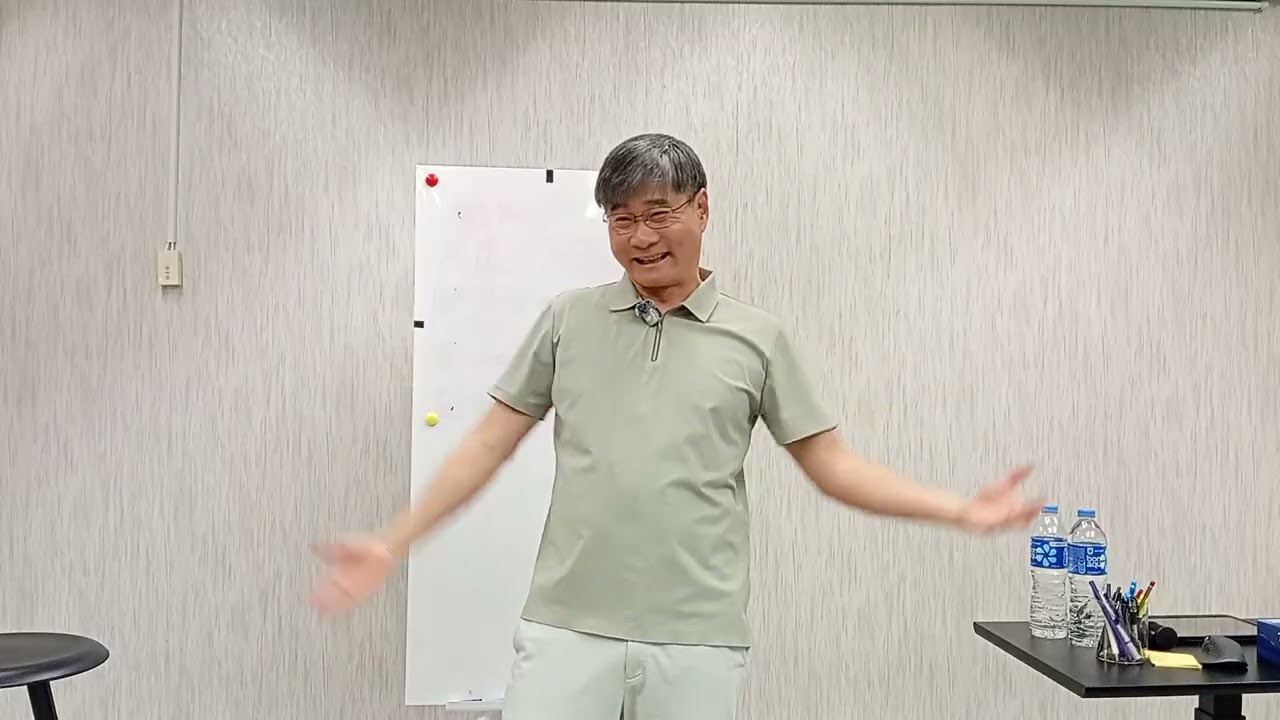
Professor Jiang argues that modern meritocracy is an exhausted sorting mechanism rooted in Masonic and Kabbalistic eschatology, which mistakenly attempted to engineer an earthly paradise through calculated cognitive hierarchies. (21:28)
Technocratic institutions like ETS distorted Alfred Binet's diagnostic IQ framework into a universal measure of human worth, fostering intense involution, compliance, and burnout across elite universities. (35:00)
Jiang forecasts the systemic collapse of mass industrial society within five to ten years due to geopolitical conflicts and resource scarcity, accelerating the push toward Central Bank Digital Currencies and Universal Basic Income. (131:40)
The lecture proposes replacing meritocratic schooling with organic education grounded in the Western literary canon, contact with nature, and ancestral culture to cultivate individual purpose. (54:40)
Detailed notes
## Background
Published on YouTube by the Predictive History channel on October 25, 2026, this recording captures Global Meet-Up #8 held in Hong Kong. According to the description, the October 24, 2026 lecture features Professor Jiang explaining the occult origins of the meritocracy.
## TL;DR
Tracing his journey from a childhood in Toisan to Yale University, Professor Jiang delivers an expansive critique arguing that meritocracy is an exhausted sorting mechanism born out of Masonic and Kabbalistic eschatology rather than genuine human flourishing. He details how institutions like Harvard, Yale, and ETS distorted intellect into rigid testing metrics, resulting in involution, hyper-competition, and spiritual alienation. Jiang outlines an impending systemic breakdown of mass industrial society over the coming decade driven by war, resource scarcity, and AI surveillance, while advocating for a return to canonical Great Books, biological family bonds, and organic communities. Ultimately, he calls for individuals to abandon self-betrayal, conquer fear and ego, and align their lives with their intrinsic spiritual purpose in preparation for a post-collapse reconstruction led by prophetic insight.
## Atmosphere & style
The presentation carries the intense, visionary charge of an apocalyptic debriefing mixed with a freewheeling, deeply personal fireside lecture. Jiang speaks with candid self-deprecation and intimate vulnerability—openly discussing domestic trauma, imposter syndrome, and parenting trials—before pivoting seamlessly into sweeping, prophetic pronouncements about geopolitical catastrophe, esoteric metaphysics, and elite psychology. The delivery is unhurried, idiosyncratic, and urgent, capturing an atmosphere where cosmic theories and pragmatic survival advice share the stage in an earnest attempt to deprogram the audience from institutional compliance.
## Bulletin
- [21:28](https://www.youtube.com/watch?v=3xwJFjWcFow&t=1288s) Professor Jiang argues that modern meritocracy is an exhausted sorting mechanism rooted in Masonic and Kabbalistic eschatology, which mistakenly attempted to engineer an earthly paradise through calculated cognitive hierarchies.
- [35:00](https://www.youtube.com/watch?v=3xwJFjWcFow&t=2100s) Technocratic institutions like ETS distorted Alfred Binet's diagnostic IQ framework into a universal measure of human worth, fostering intense involution, compliance, and burnout across elite universities.
- [02:11:40](https://www.youtube.com/watch?v=3xwJFjWcFow&t=7900s) Jiang forecasts the systemic collapse of mass industrial society within five to ten years due to geopolitical conflicts and resource scarcity, accelerating the push toward Central Bank Digital Currencies and Universal Basic Income.
- [54:40](https://www.youtube.com/watch?v=3xwJFjWcFow&t=3280s) The lecture proposes replacing meritocratic schooling with organic education grounded in the Western literary canon, contact with nature, and ancestral culture to cultivate individual purpose.
## Key takeaways
- [12:12](https://www.youtube.com/watch?v=3xwJFjWcFow&t=732s) Meritocracy aggressively discriminates by favoring abstract logic and working memory over emotional intelligence, perseverance, and genuine curiosity.
- [15:00](https://www.youtube.com/watch?v=3xwJFjWcFow&t=900s) Elite universities have evolved into risk-averse institutions that breed conformity, funneling graduates into corporate tracks rather than nurturing public intellectualism.
- [18:24](https://www.youtube.com/watch?v=3xwJFjWcFow&t=1104s) Hyper-competitive admissions and involution exhaust children and misallocate resources, whereas models like vocational training align education with practical human needs.
- [30:00](https://www.youtube.com/watch?v=3xwJFjWcFow&t=1800s) The meritocratic hierarchy originated from Masonic and Gnostic-Kabbalistic concepts that elevated human reason to divine status in an effort to reconstruct paradise on earth.
- [35:00](https://www.youtube.com/watch?v=3xwJFjWcFow&t=2100s) Standardized testing under the Educational Testing Service institutionalized the misapplication of Binet's baseline diagnostic IQ metric as an uncapped measure of human value.
- [40:48](https://www.youtube.com/watch?v=3xwJFjWcFow&t=2448s) Modern parenting is undermined by the blank slate fallacy, parental projection, and a reductionist view of critical thinking that suppresses innate synthetic cognition.
- [54:40](https://www.youtube.com/watch?v=3xwJFjWcFow&t=3280s) Conventional education restricts child development by prioritizing economic utility over foundational pillars of nature, ancestral culture, and canonical Great Books.
- [01:10:00](https://www.youtube.com/watch?v=3xwJFjWcFow&t=4200s) Transnational capital historically rebranded its calculative operations as 'reason' while marginalizing organic institutions like family and religion as mere 'emotion.'
- [02:02:44](https://www.youtube.com/watch?v=3xwJFjWcFow&t=7364s) Mass industrial meritocracy acts as an impersonal sorting mechanism for eight billion people that will crumble as resource scarcity and geopolitical crises deepen.
- [02:11:40](https://www.youtube.com/watch?v=3xwJFjWcFow&t=7900s) Severe economic disruptions and unemployment will drive state transitions toward Central Bank Digital Currencies and digital identity infrastructure tied to relief programs.
- [02:22:15](https://www.youtube.com/watch?v=3xwJFjWcFow&t=8535s) Modern oligarchs exhibit a Faustian psychology, using ceaseless ambition and grand civilizational projects to rationalize collateral damage and evade internal guilt.
- [02:35:00](https://www.youtube.com/watch?v=3xwJFjWcFow&t=9300s) The collapse of mass industrial systems will require an 'age of prophets' defined by empathy, imagination, and holistic wisdom rather than technocratic sorting.
- [02:37:45](https://www.youtube.com/watch?v=3xwJFjWcFow&t=9465s) Enduring happiness depends on aligning mind, body, and soul with intrinsic purpose, while chronic self-betrayal to satisfy external social expectations manifests as severe illness.
## Detailed walkthrough
### [00:00](https://www.youtube.com/watch?v=3xwJFjWcFow&t=0s) Global Meet-Up in Hong Kong and the Crisis of the World
Professor Jiang opens the Hong Kong meetup by welcoming the audience, sharing that he and his son Chris had just arrived the previous day on a long flight from Toronto and were still nursing lingering jet lag. The gathering forms part of what he terms his "end of the world tour," following three months across North American cities including Los Angeles, Austin, Tampa, Toronto, and Montreal. Meeting his viewers in person has been gratifying, noting that the community is remarkably diverse, energized, and drawn together from all walks of life by a shared attempt to understand what has gone wrong with the world.
He reflects on the grim geopolitical trajectory of recent weeks, noting that the global picture continues to darken in line with his prior forecasts. The war in Iran appears poised to intensify, the conflict in Ukraine is escalating, and civil unrest, protests, and revolts are sweeping across Europe. Meanwhile, Africa faces the early stages of mass famine, and South America is experiencing anti-incumbent right-wing political shifts, with Jiang predicting that Lula will soon lose power to Flávio Bolsonaro. While his timelines may occasionally slip, he argues the overarching direction remains unmistakable and will escalate sharply starting next year. With systemic collapse looming, Jiang explains that over the coming months he plans to pivot his lectures toward constructive solutions: what this community can build, where real hope lies, and how society will look once the current structure gives way.
The core subject of the Hong Kong lecture is education, specifically an autopsy of the meritocracy. Jiang acknowledges that conventional wisdom sees the meritocratic model—where the best and brightest attend premier universities and then steer society toward progress—as the pinnacle of fairness. He himself is a clear product of it, having earned a full scholarship to Yale University that completely altered the trajectory of his life. Yet he intends to mount a direct, uncomfortable critique of the system, encouraging the room to interrupt, question, and debate him freely.
> “And my central thesis is that the meritocracy is failing society.”
- **North American tour stops:** Los Angeles, Austin, Tampa, Toronto, and Montreal.
- **Global crisis indicators cited:** Escalation in Iran and Ukraine, European riots and revolts, impending mass famine in Africa, and South American anti-incumbent shifts.
- **Premise of meritocracy:** The promise that society's most intellectually capable climb to elite universities and lead progress fairly.
---
[05:00](https://www.youtube.com/watch?v=3xwJFjWcFow&t=300s) Childhood in Toisan, Immigration, and Choosing Mistakes
Jiang grounds his critique in his personal biography. Born in July 1976 in Toisan (Taishan), a poor fishing village just across the water from Hong Kong, he arrived at the very end of the Cultural Revolution, mere months before Chairman Mao's death. Seeking a better future, his father emigrated to Canada to work as a dishwasher—a grueling job he would hold for the rest of his life. At age six, Jiang joined him in Canada speaking no English at all, as only Cantonese was spoken at home. Entering first grade, he understood nothing of what his teacher said, spending the entire school year daydreaming, gazing out the window, and playing with classmates.
At the close of the school year in July, his well-meaning teacher called his mother in for a conference to explain that her polite, pleasant son had learned nothing and made zero progress in English. Expecting the teacher to recommend repeating first grade, Jiang's mother was caught off guard when the educator suggested instead that the boy be demoted to kindergarten. Overhearing this, Jiang was horrified and intensely embarrassed. Yet rather than deferring to the teacher's professional authority, his mother turned directly to her six-year-old son and asked what he wanted to do. Jiang insisted he wanted to advance straight to grade two.
Though the teacher warned it was a terrible decision—and grade two did indeed unleash severe struggles with bullying, failing marks, and resorting to cheating to survive—Jiang remains deeply grateful for his mother's choice. He argues that genuine education is never about smooth compliance or superficial performance; it requires agency over one's own destiny. Making painful mistakes and bearing their consequences taught him far more than an easy path through kindergarten ever could have.
> “It's about being the master of your own learning destiny.”
---
[08:52](https://www.youtube.com/watch?v=3xwJFjWcFow&t=532s) The Grade 10 Substitute Teacher and the Road to Yale
By grade 10, Jiang had become a deeply troubled, angry teenager. His academic record was dismal, his command of English was poor, and his home life was fractured by violent domestic arguments with his equally angry father, occasionally requiring police intervention. Feeling entirely hopeless, his days were largely consumed by watching television. His trajectory pivoted unexpectedly when a young student-teacher intern in her early twenties took over his English class for a single week.
Sensing something unique in her presence, Jiang pushed himself to work hard in what had consistently been his worst subject. At the end of the week, the substitute pulled him aside for a ten-minute conversation outside the classroom that altered his life. She asked him where he wanted to attend college. When Jiang responded with apathy, pointing out that his poor grades made the question irrelevant, she looked at him and insisted he was special, possessing the potential to climb to extraordinary heights if he applied himself. Whether she handed out the same encouragement to every student or spoke from youthful inexperience did not matter; Jiang believed her completely.
```mermaid
flowchart TD
accTitle: Jiang's Early Path to Yale
accDescr: Flowchart illustrating Professor Jiang's journey from early school struggles to admission at Yale University.
subgraph Struggle ["Early Upbringing & Schooling"]
A["Born in Toisan (1976)"] --> B["Emigrates to Canada at age 6"]
B --> C["Academic failure & bullying in elementary school"]
C --> D["Troubled grade 10 teen; domestic conflict"]
end
subgraph TurningPoint ["The Catalyst"]
D --> E["Grade 10 substitute teacher pulls him aside"]
E --> F["Told he is special; inspires self-belief"]
end
subgraph Outcome ["Academic Pivot"]
F --> G["Three years of intensive work"]
G --> H["Admitted to Yale on a full scholarship"]
end
```
That spark sparked a three-year transformation. Jiang evolved from an unmotivated, language-deficient student into an academic achiever who won a full scholarship to Yale. At the time, he viewed his acceptance as living proof of the meritocratic ideal: an impoverished immigrant boy rising through grit and resilience to enter one of the most elite institutions in the world.
- **Family background:** Working-class immigrant household; father worked as a lifelong dishwasher.
- **Turning point:** A 10-minute hallway conversation with a substitute intern in 10th-grade English.
- **Academic outcome:** Transformation over three years, culminating in a full-ride scholarship to Yale University.
---
[12:12](https://www.youtube.com/watch?v=3xwJFjWcFow&t=732s) The Three Flaws of Meritocracy and the Fallacy of Raw IQ
Looking back at his time in the Ivy League, Jiang reveals that he would never want his own three children to attend Yale or replicate his undergraduate experience. While he sees friends and former classmates relentlessly engineering their children's lives to secure spots at Harvard and Yale—coaching gifted 14-year-olds who read university literature and compete as state-level athletes—he rejects that objective entirely.
Jiang begins outlining three fundamental systemic flaws within the meritocracy. The first major issue strikes directly at the idea of fairness. Far from being equitable, the meritocratic apparatus functions as an engine of aggressive discrimination. It cherry-picks children who possess high IQ, raw analytical logic, and exceptional working memory, while effectively discarding everyone else.
> “Look, we know this, in life you don't need high IQ to succeed.”
He contends that genuine success, flourishing, and lifelong contribution do not hinge on raw cognitive scores; they demand curiosity, a genuine passion for learning, perseverance, and high emotional intelligence. Yet contemporary meritocratic structures obsess over logic and IQ, discarding the vast majority of young minds whose unique gifts lie outside standard testing metrics.
- **Flaw 1 of meritocracy:** Rigged discrimination in favor of high IQ, abstract logic, and rote memory at the expense of other human gifts.
- **Overlooked determinants of success:** Curiosity, perseverance, emotional intelligence, and self-directed drive.
- **Contrasting parental view:** Jiang refuses to push his three children into the elite Ivy League pipeline despite having walked it himself.
[15:00](https://www.youtube.com/watch?v=3xwJFjWcFow&t=900s) The Anti-Intellectual Nature of Elite Universities
Addressing the audience in Hong Kong, Professor Jiang moves past standardized testing and the SAT to lay out his second core critique: elite meritocracy is fundamentally anti-intellectual. While universities are ostensibly designed to cultivate intellectual habits—nurturing curiosity, imagination, speculation, open debate, and the willingness to learn from failure—elite campuses like Harvard and Yale do the opposite. Because admission sets students on a relentless, high-stakes trajectory toward becoming Washington interns, corporate lawyers, and physicians, failure is treated as catastrophic. Consequently, risk-taking and genuine curiosity are abandoned in favor of rigid compliance. Drawing from his own years as a student at Yale, Jiang observes that many Ivy League peers were unwilling to entertain unfamiliar viewpoints or engage in open debate, adhering instead to a narrow template of achievement.
This institutional risk aversion, Jiang argues, has produced a society almost entirely devoid of genuine public intellectuals. Elite universities consume vast social resources yet consistently produce bankers, lawyers, and doctors rather than broad, speculative thinkers willing to engage the public in good faith. Jiang notes with self-effacing humor that his own YouTube platform expanded to nearly three million subscribers not because he has all the right answers, but because audiences are starving for intellectual exploration: “I'm not right about most things, but I'm a curious person and I'm imaginative, I'm willing to engage in people in debate as long as they do so with good faith.”
[18:24](https://www.youtube.com/watch?v=3xwJFjWcFow&t=1104s) Involution, the Death of Childhood, and Societal Misallocation
Jiang turns to his third critique of the meritocratic engine: the destructive spiral of involution. When Jiang applied to Yale in 1995, the acceptance rate stood at roughly 20 percent; today, it hovers around 5 percent. This mathematical squeeze compels parents to engineer their children's resumes from toddlerhood. In hyper-competitive environments like Hong Kong, childhood itself has been extinguished, with kindergarteners drilled in vocabulary and mathematics merely to secure admission to prestigious primary and secondary schools.
This hyper-optimization is not confined to East Asia. Touring Western campuses such as McGill University in Canada, Jiang encountered students who were utterly exhausted, skipping classes to play video games and smoke cannabis. Having been helicopter-parented from infancy under the dogma that failure is not an option, these students arrive at university emotionally depleted and burnt out.
```mermaid
flowchart TD
accTitle: The Cycle of Meritocratic Involution
accDescr: Flowchart illustrating how early hyper-parenting and competitive schooling leads to burnout and a lack of public intellectuals.
subgraph EarlyLife ["Early Childhood & Schooling"]
A["Parental Resume Engineering"] --> B["Death of Childhood & Play"]
B --> C["Hyper-Competitive Admissions"]
end
subgraph CollegeAdult ["Higher Education & Beyond"]
C --> D["Narrow Focus on Elite Credentials"]
D --> E["Student Burnout & Apathy"]
E --> F["Surfeit of Bankers and Lawyers"]
E --> G["Absence of Public Intellectuals"]
end
```
Beyond damaging children, Jiang argues that the meritocracy severely distorts overall social investment by funneling immense capital into training an insular elite. By contrast, Nordic nations such as Finland direct the bulk of their educational resources toward vocational colleges that train electricians and plumbers—practical careers that align with what the majority of people actually want out of life. As Jiang emphasizes, most citizens desire stable employment and a healthy family rather than an immersion in Plato, Immanuel Kant, and Dante.
[21:28](https://www.youtube.com/watch?v=3xwJFjWcFow&t=1288s) The Pre-Meritocratic University Model and the Occult Thesis
To demonstrate that modern educational anxiety is not inevitable, Jiang contrasts today's meritocratic monoculture with the historical American higher education framework, which deliberately maintained three distinct functional tiers:
- **Ivy League Institutions:** Functioned primarily as finishing schools and social clubs for the wealthy elite.
- **Dedicated Research Universities:** Institutions like Johns Hopkins University and the University of Chicago, designed specifically for scholars and scientists.
- **Agricultural & Mechanical (A&M) State Schools:** Focused on training the engineers and agriculturalists required to build and expand the national economy.
Jiang contends that standard socioeconomic critiques—which allege that elite private institutions simply rigged societal rules to protect their own prestige—fail to explain how a handful of private American colleges captured the entire global ethos of education or why testing instruments like the SAT became so all-pervasive. He posits that the true origin of meritocracy lies in occult eschatology. Powerful Masonic networks in the United States operated under a specific cosmological belief: by organizing society and intelligence into a calculated hierarchy, they could hasten the end times and engineer heaven on earth. Outlining the rest of his address, Jiang announces three objectives: unpacking the occult roots of meritocracy, detailing its psychological toll, and presenting an alternative path forward. As Jiang summarizes his overarching premise: “And the meritocracy was really the plan to create heaven on earth.”
[24:45](https://www.youtube.com/watch?v=3xwJFjWcFow&t=1485s) The Medieval Fallen World and the Modern Quest for Paradise on Earth
To uncover how this utopian ambition took hold, Jiang traces Western intellectual history back a thousand years to medieval Europe. Under the hegemony of the Catholic Church, medieval society was static, rigid, and resigned to hardship. Human existence was understood as inherently fallen and corrupt due to original sin in the Garden of Eden. Earthly life was not meant to be perfected; it was a site of penance where serfs and peasants endured four or five decades of labor, avoided sin, and submitted to ecclesiastical authority in exchange for redemption in the afterlife.
Centuries of spiritual discipline and repression eventually triggered a violent intellectual recoil. Jiang compares this historical swing to a restrictive diet: after months of consuming only salad and water, a person develops an insatiable craving for rich food. Similarly, the Protestant Reformation shattered the medieval paradigm, unleashing a deep cultural urge to cast off external spiritual authority and assert individual agency.
```mermaid
flowchart LR
accTitle: Shift from Medieval Penance to Modern Self-Deification
accDescr: Historical progression from the medieval view of Earth as penance to modernity's belief in human self-deification.
subgraph Medieval ["Medieval Paradigm"]
M1["Original Sin / Fall"] --> M2["Earth as Penance"]
M2 --> M3["Submission to Church"]
end
subgraph Modernity ["Modern Revolution"]
R1["Protestant Reformation"] --> R2["Romantic Rebellion & Milton"]
R2 --> R3["Masonic & Revolutionary Drive"]
R3 --> R4["Man as God Creating Earthly Paradise"]
end
Medieval -->|"Dialectical Rupture"| Modernity
```
This cultural rupture manifested across literature, heterodox theology, and politics:
- **John Milton and the Romantic Poets:** While John Milton's *Paradise Lost* recounted the fall of man, Romantic readers like William Blake radically reinterpreted the epic, casting Satan not as humanity's destroyer, but as a heroic liberator defying divine tyranny.
- **Jewish Messianic Movements:** Figures such as Sabbatai Zevi and Jacob Frank rebelled against orthodox rabbinic authority, claiming direct communion with the divine and asserting that traditional religious law was obsolete.
- **Freemasonry and Political Revolution:** Masonic lodges mobilized to champion scientific rationalism, liberty, and personal autonomy, culminating in upheavals like the French Revolution.
Modernity, Jiang concludes, was forged when centuries of repressed human desire exploded into a radical philosophical inversion: the conviction that human beings need not wait for divine redemption, but can instead deify themselves and construct paradise within the material world. As Jiang puts it: “Okay, so the radical departure created by modernity is the idea that we as individuals can become God and create paradise on earth.”
[30:00](https://www.youtube.com/watch?v=3xwJFjWcFow&t=1800s) Kabbalah, Gnosticism, and the Masonic Eschatology of Reason
In earlier religious worldviews, humanity was taught that man was inherently fallen and sinful, unable to be trusted, with life spent doing penance before death and entry into heaven. Professor Jiang explains that this paradigm was radically replaced by the belief that the individual possesses the agency and divine duty to imagine and build a better world. This conviction drove the Pilgrims to America to construct a "New Jerusalem," carrying with them Freemasonic traditions underpinned by an eschatology rooted in the Kabbalah. Kabbalah, as Jiang outlines, essentially takes Gnostic and Hermetic philosophy and maps it onto the biblical narrative—reinterpreting stories like Adam and Eve, King David, and the patriarchs to unveil their cosmic significance.
Central to this Gnostic-Kabbalistic worldview is an inversion of modern materialist assumptions: rather than the physical body generating consciousness, consciousness is understood to give rise to the material body. Under a purely materialist model, human beings are fragmented, separated, and reducible; under the Gnostic conception of conscious energy, everyone is interconnected beyond the confines of space and time. Within this framework, God created the cosmos to know and complete itself, but unredeemed human egotism defied the divine will and shattered the world. Salvation and cosmic repair require humans to redeem themselves and restore order. Within Freemasonry, this redemption takes a specific form: establishing a system where reason reigns supreme and becomes God. In their modern eschatological framework, that instrument of reason is none other than the meritocracy.
> “And in their eschatology, what is reason? Reason is the meritocracy.” — Professor Jiang
```mermaid
flowchart TD
accTitle: The Occult Genealogy of the Meritocracy
accDescr: Diagram tracing Gnostic and Kabbalistic metaphysics to the Masonic pursuit of meritocracy.
subgraph Metaphysics ["Gnostic & Kabbalistic Foundations"]
A["Consciousness Precedes Matter"] --> B["The Shattered World / Human Egotism"]
B --> C["Tikkun / Repairing the World through Self-Redemption"]
end
subgraph Implementation ["Masonic & Institutional Translation"]
C --> D["Freemasonic Ideal: Reason Becomes God"]
D --> E["The Perfect Temple Built of 'Perfect Cubes'"]
E --> F["The Meritocracy & Standardized Testing"]
end
```
[35:00](https://www.youtube.com/watch?v=3xwJFjWcFow&t=2100s) The Engineering of the Meritocracy: James Conant, ETS, and the Misuse of IQ
Jiang charts how the meritocratic architecture was erected in twentieth-century America. A century ago, higher education was neatly divided into three distinct tiers: the Ivy League for wealthy scions, research universities for brilliant scholars, and land-grant agricultural and mechanical (A&M) state schools for the general public. That balance collapsed when the Ivy League achieved total cultural dominance by deploying the SAT. The test was championed by James B. Conant, president of Harvard University in the 1930s, who sought a nationwide scholarship mechanism to identify the "best and brightest." Conant tasked Henry Chauncey with operationalizing the exam; Chauncey subsequently became the founding president of Educational Testing Service (ETS), the private entity that went on to monopolize standardized testing through the SAT, GRE, TOEFL, and MCAT.
Jiang notes that both Conant and Chauncey were Pilgrim descendants whose institutional design mirrored the Freemasonic allegory of temple building: constructing a sacred edifice by shaping individuals into uniform, "perfect cubes" through the exercise of reason. To identify and measure those cubes, the system seized upon the concept of IQ. Yet Jiang stresses that the scientific legitimacy of IQ is fundamentally illusory. It originated with French psychologist Alfred Binet (whose work laid the groundwork for the Stanford-Binet intelligence scale), who devised it solely as a diagnostic threshold to flag children vulnerable to severe developmental, nutritional, or mental health deficits—never as an open-ended metric of human worth. American technocrats nonetheless elevated IQ into an absolute standard of intellectual capacity, assuming that selecting high-IQ individuals via the SAT would diffuse reason throughout society and bring about social perfection. Instead, the project proved profoundly exclusionary, solidifying inequality under the unyielding premise that raw intelligence is static and unchangeable.
> “The original conception of meritocracy was to use IQ and the SAT and the Ivy League to transform society in a way that allow for the spread of reason, okay? Does that make sense? But in practice, through IQ, through standardized testing, it's led to a more divisive, more unequal society.” — Professor Jiang
- **Three Historical Tiers of U.S. Higher Education**: Ivy League (elites and wealth), research institutions (intellectuals), and state/A&M schools (broad public).
- **Architects of the Testing Regime**: Harvard President James B. Conant initiated the nationwide talent search; Henry Chauncey designed the testing apparatus and led ETS.
- **ETS Portfolio**: Private administrator of the SAT, GRE, TOEFL, and MCAT.
- **Origin vs. Misapplication of IQ**: Alfred Binet conceived the metric merely as a protective lower baseline for developmental intervention, not an uncapped linear hierarchy of merit.
[38:00](https://www.youtube.com/watch?v=3xwJFjWcFow&t=2280s) The AI Pivot: Bypassing the Corrupted Variables of Family and Culture
When the meritocratic experiment produced severe societal stratification rather than an enlightened brotherhood of reason, the ruling secret societies and technocratic architects refused to accept that IQ or meritocracy were inherently flawed concepts. Instead, they concluded that the experiment had been derailed by unmanageable external variables—namely race, culture, and above all, the traditional family unit. From their perspective, human beings could never become fully rational as long as parochial community ties and parental influence continued to warp their development. Consequently, the establishment has shifted tactics from academic institutional filtering to artificial intelligence, an agenda driving the explosive infrastructure boom in global data centers.
Rather than trying to reshape humanity through traditional schooling and standardized testing, the technocratic project now seeks to condition human behavior directly from birth via ubiquitous, personalized AI companions. Jiang points to recent corporate rollouts, such as Meta's AI initiatives like Muse, illustrating a future where an individual is paired with an artificial intelligence that functions as an intimate daemon, soulmate, or digital guardian angel. Because the child grows up with complete, unquestioning trust in this unseen guide, following its directions on health, exercise, study, and moral conduct, humanity can theoretically be steered into an engineered harmony of pure reason, entirely decoupled from the organic authority of the home.
> “What they believed is, there were these external factors we cannot control that corrupted our experiment, our mission, including the family. So, if you are one of these guys, you're like, the solution moving forward is to negate or remove the influence of the family, of culture, of community from equation.” — Professor Jiang
[40:48](https://www.youtube.com/watch?v=3xwJFjWcFow&t=2448s) The Three Illusions of Modern Parenting and the Trap of "Critical Thinking"
Turning directly to contemporary schooling and child-rearing, Jiang identifies three flawed foundational premises that dominate contemporary education, leading to unhappy, dysfunctional children:
1. **The Blank Slate / Empty Vessel Fallacy**: The assumption that infants are empty containers waiting to be stuffed with facts, drills, and skills, prompting parents in places like China to force three- and four-year-olds into rigorous mathematics and competitive athletics.
2. **The "Mini-Me" Projection**: The narcissistic parental impulse to treat children as miniature duplicates of themselves, burdening them with the parent's unfulfilled ambitions in ballet, tennis, or academics on the assumption that earlier training guarantees success.
3. **The Creativity and Critical Thinking Fetish**: The widespread belief that because AI automates algorithmic and routine labor, schools must prioritize human "creativity" and "critical thinking" to keep children competitive.
Jiang argues that the modern pedagogical understanding of "critical thinking" does the exact opposite of fostering authentic creativity. Rather than opening young minds to synthetic or holistic insight, institutional critical thinking trains children strictly in reduction and categorization. It forces students to dismantle complex living phenomena into isolated constituent parts, label those pieces mechanically, and apply narrow logical operations to them. Jiang warns that this hyper-reductive mindset strips away genuine creative cognition, preparing children for mechanistic analysis at the very moment they need an entirely different mode of understanding.
> “So these are the three major ideas that drive parenting education today. And what I will show you is all three ideas are actually wrong and kind of productive. It leads to unhappy children.” — Professor Jiang
[45:00](https://www.youtube.com/watch?v=3xwJFjWcFow&t=2700s) Channeling the Divine and the Innate Consciousness of Children
Professor Jiang challenges conventional views on intellectual development by arguing that genuine creativity requires synthesis rather than reductive dissection. To him, the standard scientific method leads nowhere because breakthrough discoveries rely fundamentally on imaginative leaps. The greatest scientific minds throughout history, including Isaac Newton, Albert Einstein, and Galileo Galilei, did not follow the rigid strictures of the modern scientific method; they viewed real knowledge as something received through higher inspiration. As Jiang puts it, “What they believed is if you want true knowledge, you have to channel it.” Rather than conditioning children to become mechanical thinkers, education should teach them to recognize their innate divinity and build lives that foster that higher connection.
Recognizing this connection fundamentally changes how one views childhood: children are not blank slates, but infinite consciousnesses possessing full awareness from day one. Jiang illustrates this with a domestic anecdote about his own household. When his middle son was roughly three and a half years old, his one-year-old daughter, who had just learned to walk but could not yet speak, slapped her older brother. When Jiang sternly demanded an apology, the toddler began babbling and gesturing, clearly trying to spin an excuse. Mid-explanation, she froze, realizing she lacked the physical speech to communicate her thoughts. This moment proved to Jiang that a child’s underlying consciousness operates at a level far higher than their immediate capacity for verbal expression.
Jiang notes that this clarity also makes young children uncannily perceptive judges of character. Unlike adults, who routinely deceive themselves into tolerating toxic figures because someone happens to be their boss or their sister’s husband, children react honestly, instinctively pulling away from untrustworthy people. Because their perception of reality remains uncorrupted by societal self-deceit, Jiang argues that children do not originate merely from biological parents, but come directly from God with a distinct, predetermined purpose that neither the child nor the parent may yet fully comprehend.
- Newton, Einstein, and Galileo rejected rigid reductionism, relying instead on imaginative leaps and channeling divine insight.
- A child's internal consciousness and understanding far exceed their developmental ability to articulate language.
- Unlike adults who rationalize bad behavior through social conventions, young children possess an uncompromised ability to judge character and identify bad actors immediately.
---
[49:45](https://www.youtube.com/watch?v=3xwJFjWcFow&t=2985s) Predestined Parenthood and Defying the Meritocratic Experts
Reflecting on the deeper origin of families, Jiang recounts a dinner conversation in Toronto with an experienced physician who had tracked patients across four decades of practice. The doctor observed an extraordinary pattern: looking back over forty years, every major event, trial, and choice in a person's life seemed to converge precisely to equip them to parent the specific child they ultimately had. Jiang embraces this idea of predestination, suggesting that children choose their parents because those specific individuals are uniquely positioned to assist them in fulfilling their spiritual purpose.
Jiang applies this realization directly to his own family of three highly sensitive children, each possessing complex, atypical needs. Despite having spent decades in education and reading thousands of pedagogical texts, Jiang admits conventional literature offers no answers for his children. If they were placed in an ordinary household, they might struggle to survive; however, because his wife stays home and his own career affords significant schedule flexibility, both parents are able to dedicate their days to strategizing and catering to their children's specific temperaments. This design convinces him that parents must disregard external authorities and follow their own instincts. Addressing parents directly, Jiang insists, “Because everything that you have done, everything that you've experienced, every pain, every trauma, every triumph that you've experienced in the past, has led you to this moment so you can be the best parent for your child.”
This truth runs entirely counter to the ethos of the modern meritocracy, which commands parents to surrender their autonomy to bureaucratic institutions, pediatricians, teachers, and university professors. Jiang argues that society must instead be rebuilt around the organic, sacred bond between parent and child—the single most powerful and loving force in human existence. Rather than forcing every individual through the homogenizing meat-grinder of meritocratic standardization, civilization ought to celebrate divergent paths, recognizing that parents know their children better than any credentialed third party ever could.
- A veteran Toronto physician observed over a 40-year career that every life experience uniquely prepares parents for their specific children.
- Meritocratic systems dismantle family autonomy by ordering parents to defer unconditionally to institutional authorities and credentialed experts.
- Jiang asserts that the foundational building block of a healthy civilization is the natural, loving bond between parent and child rather than institutional mandates.
---
[54:40](https://www.youtube.com/watch?v=3xwJFjWcFow&t=3280s) Reincarnation, Bo's Defiance, and the Return to Nature in Education
Accepting a child's sovereign purpose requires parents to surrender their personal ambitions for their offspring. Jiang illustrates this struggle through his middle son, Bo, an exceptionally stubborn child. While Jiang's wife joked that Bo would grow up to be a wealthy businessman, Jiang resisted, wanting his children to become writers, teachers, or public intellectuals who contribute meaningfully to society rather than wealthy extractors who take from it. Jiang spent years fruitlessly attempting to discipline Bo into his idealized mold, only to realize that Bo's defiance ran so deep that the boy would literally rather die than abandon his authentic self. Jiang observes that young children do not fear physical death because they still retain an intuitive memory of reincarnation; only later does society condition them to dread dying. Confronting this reality forced Jiang to abandon his parental micromanagement: “So, through a lot of painful mistakes I've come to this conclusion where our children are going to live the lives they want and we as parents should enable and empower them to live the lives that they want.”
```mermaid
flowchart TD
accTitle: The Child-Centered Educational Model
accDescr: Diagram showing the child's divine purpose supported by parental love and three core educational pillars.
subgraph Foundation ["Core Foundation"]
A["Divine Purpose of the Child"] --- B["Parent-Child Bond & Love"]
end
subgraph Pillars ["Three Missing Educational Pillars"]
C["1. Immersion in Nature<br/>(Understanding the Mind of God)"]
D["2. Ancestral Culture"]
E["3. The Great Books"]
end
Foundation --> Pillars
```
Jiang translates this philosophy into a blueprint for educational reform designed around two central goals: honoring the child's purpose and safeguarding the sacred love between parent and child. Traditional schools fail because they ignore three foundational pillars: nature, culture, and the great books. Focusing on the first pillar, Jiang emphasizes, “Nature is the best teacher in the world.” The biographies of historical scientific geniuses consistently reveal childhoods spent outdoors on farms, directly engaging with the mechanics of the natural world. Modern urban schooling isolates children inside artificial concrete abstractions where they receive pre-packaged food and pre-packaged knowledge without understanding the origins of either. Jiang envisions self-sufficient school communities where children and adults live and work together, allowing children to learn outdoors in forests, run spontaneous experiments, cultivate their own food, and intuitively apprehend the divine order animating the universe.
- Children lack the conditioned adult fear of death because they maintain an innate, pre-socialized recollection of having existed before birth.
- Modern urban education severs students from reality through synthetic abstractions, cutting them off from how food is grown and how foundational knowledge is produced.
- A healthy alternative educational model rests on three missing pillars: immersive nature, cultural lineage, and the great books.
[01:00:00](https://www.youtube.com/watch?v=3xwJFjWcFow&t=3600s) The Core Curriculum: The Occult, Eschatology, and the Great Books as Portals
Professor Jiang concludes his lecture by outlining an alternative educational paradigm centered on an off-grid communal setting where children produce their own food and generate their own electricity, allowing them to witness the whole cosmos contained within a single village. He argues that conventional schooling fails because it attempts to motivate learning purely through economic utility—telling children to study merely to get a job and make money, which prompts them to logically ask why their parents cannot simply support them indefinitely. Instead, learning must activate the three existential questions embedded in every human heart: where did I come from, what is my purpose here, and where am I going? To ignite a child's inner drive, education must provide an overarching cosmology and eschatology that provides a complete, participatory mythology of the universe.
Rather than centering a curriculum on mathematics and science, Jiang advocates placing the occult and the study of comparative religion at the foundation. He notes that beneath disparate religious traditions lies a shared core realization: all beings emerge from the same source and aspire to return to it, imparting a duty of gratitude and an urgent call to embrace *carpe diem* because earthly human experience is unique across the cosmos. Alongside nature and the occult, Jiang places the Great Books—the Bible, Homer, Dante, Shakespeare, and Milton—at the pinnacle of human learning.
Nature compels one to investigate God, but the Great Books act as spiritual mechanisms that grant direct passage into the divine consciousness. Jiang outlines his aspiration to establish an institution around these pillars over the coming years: “Nature is what gives you insight into the mind of God. Nature is what compels you to better understand God. But the great books is what fully allows you to enter the mind of God.” By orienting a school around purpose, nurturing parent-child love, and immersion in the Great Books, he envisions raising a new generation of artists, poets, and thinkers capable of guiding human civilization forward.
- The three foundational questions innate to human consciousness: "Where do I come from? What am I doing here? What's my purpose? Where am I going?"
- The occult curriculum teaches that all traditions trace back to a unified source to which all life returns, cultivating gratitude and active engagement (*carpe diem*).
- Canonical texts highlighted: the Bible, Dante Alighieri (*The Divine Comedy*), Homer, William Shakespeare, and John Milton.
---
[01:05:00](https://www.youtube.com/watch?v=3xwJFjWcFow&t=3900s) Q&A: Democratizing the Canon and Why the Ivy League Abandoned the Great Books
Opening the floor to questions, an audience member asks how Jiang reconciles his scathing critiques of Ivy League universities with the reality that institutions like Yale, Harvard, Oxford, and Cambridge have historically served as the premier custodians of the Great Books. Jiang responds by distinguishing between the past—such as his own student days at Yale—and the present day, asserting that elite institutions have largely discarded their mission of teaching and safeguarding the Western canon, leaving only isolated pockets of students who still engage with it.
Jiang argues that true poets, prophets, and philosophers were revolutionaries committed to breaking knowledge monopolies rather than preserving aristocratic enclaves: “Why did Dante write The Divine Comedy in a vernacular? Because he wanted to spread the truth to everyone.” Historically, spiritual and intellectual stagnation occurred whenever a ruling elite cornered the market on literacy. In response, figures like Dante, Homer, Jesus, the Buddha, and Muhammad sought to dismantle that monopoly by speaking in the vernacular and democratizing access to truth.
Reflecting on his own pedagogical experience, Jiang recalls how his perspective shifted after teaching Dante, Homer, and Plato to Chinese students who had limited English proficiency and had never previously encountered Western classical literature. Contrary to the elitist assumption that such complex texts can only be appreciated in a cloistered Ivy League seminar, the students were deeply captivated, identifying directly with Achilles in the *Iliad* and immersing themselves in the moral architecture of Dante’s *Divine Comedy*. He observes the same dynamic online, where self-directed students skip university lectures to watch two-hour deep dives on YouTube, and individuals with ADHD find themselves intensely focused when the material carries authentic existential resonance. Jiang concludes that elite claims to exclusive ownership of the Great Books are fundamentally flawed, reaffirming his personal mission to make Dante accessible to everyone.
```mermaid
flowchart TD
accTitle: Democratization of the Great Books
accDescr: Diagram illustrating how ancient prophets and modern digital education dismantle elite knowledge monopolies.
subgraph EliteMonopoly["The Aristocratic Model"]
A["Elite Universities & Monopolies<br/>(Ivy League, Clergy, Scribes)"]
B["Restricted Access to Knowledge & Latin/High Liturgy"]
A -->|"enforces"| B
end
subgraph RevolutionaryDemocratization["The Vernacular Tradition"]
C["Prophets & Poets<br/>(Dante, Homer, Jesus, Buddha)"]
D["Vernacular Translation & Universal Truth"]
C -->|"breaks monopoly via"| D
end
subgraph ModernApplication["Mass Democratization"]
E["Cross-Cultural Students<br/>(e.g., Chinese students reading Homer)"]
F["Open Digital Platforms<br/>(YouTube deep-dive lectures)"]
D --> E
D --> F
end
```
---
[01:10:00](https://www.youtube.com/watch?v=3xwJFjWcFow&t=4200s) Q&A: The Rise of the Bourgeoisie, Transnational Capital, and the Invention of "Reason"
A second audience member asks for clarification regarding the historical transition from medieval religious hierarchy to modernity, specifically probing how the desire to bring God down to Earth evolved into a toxic form of meritocracy that enshrines instrumental "reason" over consciousness. Jiang acknowledges the conceptual leap and fills in the socio-economic context of the shift from the Middle Ages to modernity. Major historical ruptures do not happen in an ideological vacuum; they require rising constituencies with vested material interests to dismantle entrenched authorities like the feudal aristocracy, priesthoods, and rabbinates that fight to maintain the status quo.
In Europe, this transformative constituency was the merchant class—the emergent bourgeoisie. To challenge the traditional power of monarchies and the Church, this class wielded a new weapon: transnational capital. Feudal monarchs waging expensive wars were forced into structural dependence on merchant financiers. However, raw financial leverage alone could not rally the broader population or supplant the spiritual authority of religion; the pursuit of commercial power needed to be cloaked in philosophical and moral legitimacy. To achieve this, transnational capital rebranded its organizing logic as "reason."
```mermaid
flowchart LR
accTitle: Transnational Capital and the Division of Reason and Emotion
accDescr: Flowchart tracing how the merchant class cloaked capital under the banner of reason, dividing it from emotion and tradition.
subgraph RiseOfClass["Class Realignment"]
MC["Merchant Class / Bourgeoisie"]
TC["Transnational Capital<br/>(Financing War & Debt)"]
MC -->|"deploys"| TC
end
subgraph IdeologicalCloak["Philosophical Rebranding"]
TC -->|"cloaked as"| R["'Reason'<br/>(Abstract, Calculative Logic)"]
end
subgraph Dichotomy["The Modern Divide"]
R -.->|"opposed to"| E["'Emotion'<br/>(Heart, Tradition, Intuition)"]
E --- OB["Obstacles to Capital Movement:<br/>• Religion & Family<br/>• Nation-State & Kings<br/>• Prejudice & Local Culture"]
end
```
Jiang highlights that prior to the sixteenth century, human civilizations did not maintain an adversarial divide between reason and emotion. In ancient Greek, Indian, and Chinese philosophy—epitomized by the Chinese concept of *xin* (心, the heart-mind)—thinkers recognized that genuine reasoning originates within and cannot be severed from emotional life and lived experience. The artificial modern split was engineered because "reason" became synonymous with the calculative, friction-free circulation of capital, whereas "emotion" was retroactively redefined to include all traditional institutions and sentiments that obstructed global capital flows:
> “Why? Because reason represents a capital and emotion represents forces that prevent the spread of transnational capital. These forces include religion. Right? Include the family. Include prejudice. Include the nation state. Include the king. It's all traditions that blocked or obstructed the movement of capital, right?”
By establishing this binary, the emergent capitalist order created an imperative for new administrative and educational institutions designed to cultivate calculative rationality while suppressing traditional, communal attachments.
- The historical shift away from medieval society required an economic constituency: the rising merchant class / bourgeoisie.
- Monarchy and aristocracy were subordinated through war financing driven by transnational capital.
- The philosophical concept of "reason" was deployed as a universal ideological cloak for the operations of capital.
- Classical civilizations (Greek, Indian, Chinese) viewed reason and feeling as indivisible; the Chinese concept of *xin* (heart-mind) demonstrated that true intellect emanates from emotional experience.
- Traditional structures classified as irrational "emotion" because they resisted global capital included organized religion, family bonds, local prejudice, monarchy, and the nation-state.
[01:15:00](https://www.youtube.com/watch?v=3xwJFjWcFow&t=4500s) Freemasonry, Kabbalah, and Reason as the Spark of God
Professor Jiang traces the ideological roots of modernity back to institutional movements that emerged over several centuries. He identifies Freemasonry as an essential vehicle, calling it “the religion of capitalism.” While traditional religions were tethered to emotion, the rise of capitalism required a new framework to cultivate and propagate pure reason. According to Jiang, the Freemasons created science and laid the foundations of the meritocracy, and today their intellectual descendants are creating artificial intelligence.
```mermaid
flowchart TD
accTitle: Coalescence of Ideologies into Meritocracy
accDescr: Diagram tracing how Freemasonry, Kabbalah, and Jesuit influences merged to form the meritocratic filtration system.
subgraph IdeologicalRoots["Ideological Fusion"]
A["Freemasonry<br/>('Religion of Capitalism' / Reason)"]
B["Kabbalah<br/>(Messianic Eschatology)"]
C["Jesuits<br/>(Institutional Transmission)"]
end
subgraph CoreGoal["Divine Mandate"]
D["Reason as God's remnant spark"]
E["Duty to force heaven on Earth via education"]
end
subgraph Mechanism["Institutional Filtration"]
F["The Meritocracy"]
G["Filter and develop those with reason"]
H["Eliminate / marginalize those without reason"]
end
A & B & C --> D
D --> E
E --> F
F --> G
F --> H
```
This evolution did not happen in isolation. Jiang explains that Freemasonry coalesced with Kabbalistic thought and Jesuit influences. From Kabbalah, these thinkers adopted what he terms “messianic eschatology”—the belief that human beings have an active duty to force the end times and bring about heaven on earth through deliberate worldly action. Under this worldview, humanity possesses reason because God breathed life into Adam; even after the Fall and God's departure, a remnant divine spark remained within humanity. Jiang states: “Reason is the capacity to think like God.”
Consequently, if reason is the divine creative engine meant to reshape the world, those who lack reason are seen as dead weight to be filtered out:
- **Meritocracy as filtration**: It was engineered not as a benign social ladder, but as a system to identify individuals capable of godlike reason, develop them, and exclude everyone else.
- **Systemic corruption**: Over centuries, the bureaucratic mechanisms devised to spread these lofty ideas inevitably corrupted the ideas themselves.
[01:20:00](https://www.youtube.com/watch?v=3xwJFjWcFow&t=4800s) Materialist Meritocracy versus Creative Potential
Responding to an audience member who asks whether they should dismantle meritocracy entirely, Jiang quickly pushes back on any revolutionary framing: “I am not here to spark a revolution, like let's burn down Yale, OK? No, guys, no. No, this is a process that will happen anyway, OK? Because this is an idea where it's a dead idea, okay?” Just as the medieval world dissolved into modernity, the modern era has exhausted itself, and the historical pendulum is beginning to swing away from hyper-materialism back toward spirituality. He observes that while people appreciate his analytical content, it is his spiritual teachings that have drawn massive audiences to his channel.
When an attendee defends meritocracy by suggesting it helps talented individuals escape humble circumstances and reinvent systems, Jiang acknowledges the theoretical upside but argues the reality is entirely inverted. Meritocracy pits people against one another and reduces intellectual life to competitive material acquisition.
| Environment / Background | Intellectual Mindset | Behavior & Values |
|:--- |:--- |:--- |
| **Elite Meritocracy (e.g., Harvard, Yale)** | Narrow-minded, rigid, materialistic, pseudo-intellectual | Constantly looking for arguments to prove they are right; incapable of admitting error |
| **Non-Elite / Art Schools / No Formal Degree** | Open, curious, spiritually grounded | Ask genuine questions; prioritize truth over status; willing to be wrong |
True creative potential is unlocked through empathy, sharing oneself with others, and embracing spiritual truth. Elite credentialing institutions instead manufacture dogmatism.
[01:22:45](https://www.youtube.com/watch?v=3xwJFjWcFow&t=4965s) The Collapse of Systems, Network States, and World War III
Addressing a question about how human-centered, spiritual communities can survive against hyper-efficient, data-driven societies, Jiang clarifies that the world is facing total systemic collapse rather than a tidy transition between standard paradigms. The vacuum will spawn radically different competing structures:
- **AI Chauvinist States**: Polities driven strictly by artificial intelligence and automated optimization.
- **Network States / Corporate Polities**: Models championed by figures like Peter Thiel, where society is administered entirely by private corporations rather than civic governments.
- **Spiritual Family-Based Communities**: Organic networks focused on unconditional parental love and personal purpose.
Jiang argues that spiritually grounded communities do not need to out-compete corporate or AI states on raw metrics. Instead, because they cultivate genuine human creativity and intellectual energy, they produce the vital cognitive resource that all other rigid systems desperately need. Their strategic flexibility allows them to negotiate with and supply these rival systems without being consumed by them.
When an audience member asks whether the world has entered global conflict, Jiang does not hesitate: “I think that we're already in World War III, okay? And look, if you go back to World War II, they didn't know they were in World War II.” Historically, names are applied long after the conflict begins. The war in Iran is already shattering global supply chains, which Jiang predicts will cause severe inflation, empty shelves, and famines worldwide within the coming year.
Asked whether China will be dragged into the conflagration, Jiang notes that Chinese geopolitical culture is historically insular and prefers to “turtle up” during global upheavals to protect its ruling elite from external risk. By contrast, Western powers plunge into Middle Eastern wars not out of rational geopolitics, but driven by latent Kabbalistic and messianic eschatology.
[01:26:24](https://www.youtube.com/watch?v=3xwJFjWcFow&t=5184s) Personal Suffering, Family, and Alienation at Yale
An audience member asks whether, given the impending collapse of global order, prospective parents should hold off on having children. Jiang offers a deeply vulnerable and emphatic counter-argument: “I will not be here speaking to you today were it not for my children.”
He reveals the immense personal difficulty that preceded his recent public recognition:
- He reached 50 years old having spent 49 years living through profound hardship, finding career visibility and success only within the past twelve months.
- His time at Yale University was alienating and deeply damaging. Rather than finding a community of inspiring intellectuals, he experienced severe imposter syndrome, felt like a complete fraud, and found the environment far more traumatic than his earlier years in Toronto.
- Having his three children provided the grounding, purpose, and spiritual anchor that carried him through long stretches of despair, making family the core bedrock necessary to withstand systemic collapse.
[01:30:00](https://www.youtube.com/watch?v=3xwJFjWcFow&t=5400s) Imposter Syndrome at Yale, Peter Hessler, and Ego Death Through Fatherhood
Reflecting on his personal path, Professor Jiang admits that his early academic and professional life was plagued by severe imposter syndrome. During his time at Yale, he constantly questioned his right to be there, believing he was neither wealthy nor intelligent enough compared to his peers. His recurring dread was that administrators would eventually knock on his dormitory door to confess they had made an admission error and escort him off campus. That insecurity transformed into an aggressive need to validate himself and achieve swift recognition. In China, he tried to establish himself as a journalist and watched peers reach the heights he desperately craved. He recalls his intense envy toward Peter Hessler, whose book *River Town* became an immediate bestseller, launching Hessler into a prominent writing career at *The New Yorker*. Jiang struggled through repeated professional failures and could not comprehend why success eluded him while others soared.
Everything changed when he had children and experienced what he describes as profound ego death. Prior to fatherhood, his ambitions were entirely self-absorbed, driven by an urgent desire to show his Yale classmates that he belonged. Having children dissolved that vanity, replacing self-aggrandizement with a singular, outward devotion to their welfare and future. Because of that shift, finding immense recognition later in life—reaching 50 years old with three children and amassing over three million subscribers on YouTube—carries no personal intoxication for him. He views worldly rewards like subscriber counts, money, and high-profile podcast invitations as essentially irrelevant compared to being a devoted father and moral role model. Looking back, he sees this delayed timing as providential, noting that early celebrity would have corrupted his character. Quoting actor Rob Lowe’s observation that fame permanently freezes people at the exact age they attain it, Jiang emphasizes that youthful stardom traps individuals within public expectations. Because his ego dissolved before finding a mass audience, he feels entirely unconstrained by reputation, comfortably appearing on eclectic and controversial platforms—from comedy programs with Sam Hyde and Kurt Metzger to trolling shows like Matt and Evan, or engaging in a three-hour discussion with Nick Fuentes—simply to expand his perspective without fearing public disapproval.
As Professor Jiang explains regarding the protective nature of his delayed success: “The universe didn't want me to succeed when I was young because that fame, that success would have corrupted me.”
- **Yale Admissions Anxiety**: Jiang lived in constant fear that the university would realize its mistake and ask him to leave.
- **Journalistic Jealousy**: While working in China, Jiang deeply envied Peter Hessler's instant breakthrough with the publication of *River Town* and subsequent work for *The New Yorker*.
- **The Psychology of Late Fame**: Achieving public reach at age 50 with three children insulated Jiang from narcissism and allowed total creative freedom across unconventional podcast circuits.
---
[01:35:00](https://www.youtube.com/watch?v=3xwJFjWcFow&t=5700s) Family as Cosmic Purpose and the Three Forces Dismantling Global Capital
Jiang argues that the two greatest barriers preventing people from reaching their full potential are fear and ego. While conventional wisdom suggests that having children makes an individual timid, cautious, and conservative, Jiang insists the opposite is true: the unconditional love of a family eliminates existential doubt and empowers decisive action. He points to Homer’s *Odyssey* as a foundational text on this truth, emphasizing that the epic's core teaching is that family constitutes the ultimate purpose of mortal existence. In Jiang's view, worldly wealth is an illusion, fame is fleeting, and power functions as a disease, whereas the shared human experience of family and nurturing children is entirely unique within the cosmos.
An audience member asks about the coming transition of systems and how new human arrangements will organize as the half-grid and legacy structures collapse. Jiang responds by diagnosing the current world order as a monopoly operated by transnational financial capital, which is now facing systemic disruption from three primary forces: nationalism, religion, and technology (specifically artificial intelligence). As global capital breaks down, these three forces will surge into the vacuum. The near future will see the simultaneous rise of an AI-driven control grid deploying digital IDs and digital currencies, widespread resurgent religious revival among young people seeking meaning amid instability, and hardened nationalist movements dismantling globalist institutions.
```mermaid
flowchart TD
accTitle: Collapse of Transnational Capital and Emergent Systems
accDescr: Diagram illustrating how three disruptive forces break the monopoly of transnational capital into new governance structures.
subgraph Legacy ["Current Hegemony"]
TC["Global Transnational Capital"]
end
subgraph Emergence ["Emergent Societal Forms"]
CS["Autonomous City-States<br/>(Singapore, New York, Toronto)"]
NS["Network States & AI Cults<br/>(Peter Thiel Corporate Models)"]
CG["AI Control Grid<br/>(Digital ID & Centralized Currencies)"]
end
TC -->|"Systemic Breakdown"| Forces
NAT --> CS
REL --> NS
AI --> CG
REL --> CG
AI --> NS
```
When asked whether humanity can escape ego and fear without parenthood, Professor Jiang underlines the transformative clarity of building a home: “The two worst things in life that's holding you back from your full potential are your fear and your ego.”
- **The Homeric Ideal**: Citing the *Odyssey*, Jiang asserts that familial devotion is the ultimate earthly mission that anchors human identity against transient pursuits.
- **Three Systemic Disruptors**:
- *Nationalism*: Fracturing globalist trade and governance frameworks.
- *Religion*: Reclaiming youth seeking order during societal unraveling.
- *Technology/AI*: Fueling new corporate networks and centralized control architectures.
- **The End of Universal Systems**: Transnational financial capital is losing its monopolistic hold, yielding to fragmented, competing ideologies.
---
[01:39:00](https://www.youtube.com/watch?v=3xwJFjWcFow&t=5940s) City-States, Network States, and the Elite Psychology of Eschatology
Elaborating on the organizational models that will replace the traditional nation-state, Jiang stresses that the modern nation-state is largely an artificial construct that will not endure. Instead, human governance will diversify into a chaotic spectrum of regional and ideological structures. Autonomous city-states—modeled after modern Singapore and potentially adopted by metropolises like New York or Toronto—will govern local jurisdictions while collaborating with surrounding territories. Concurrently, new "network states," championed by figures like Peter Thiel, will emerge as corporate-governed societies blending artificial intelligence with religious devotion, even giving rise to messianic AI cults.
Addressing an audience inquiry regarding whether a historically positive eschatology exists, Jiang clarifies that eschatological narratives reflect human psychology: the more power an elite class accumulates, the less empathy and imagination it possesses. Dominant eschatologies—including those maintained within Freemasonry—are framed as benevolent projects by their architects, who believe universal peace is achieved through total conformity, obedience, and servitude. Jiang contrasts the strict, compliant safety of Hong Kong with the vibrant, chaotic, and dangerous diversity of New York City, observing that while he personally prefers New York's creative energy, ruling elites universally favor Hong Kong's manageable compliance. Ideas, he explains, spread through mechanisms such as secret societies, and those mechanisms inevitably corrupt the original idea to consolidate ruling-class power. Finally, addressing expectations around artificial intelligence, Jiang demystifies the technology, rejecting notions of genuine machine consciousness and characterizing AI as an overhyped "recursive statistical loop" whose real danger lies in elite deployment of digital IDs and trackable digital currencies to monitor the public—a theme he introduces through his personal experience passing through Hong Kong border immigration.
Explaining how high-level power inevitably corrupts grand philosophical visions, Professor Jiang observes: “The reason why these eschatologies end up being negative is just human psychology, which is like the more power you have, the less empathy and imagination that you have.”
- **Emergent Political Topologies**:
- *City-States*: Self-governing urban hubs operating in regional federation.
- *Network States*: Corporate-run polities merging multinational administrative power with digital cultism.
- **Elite Eschatological Bias**: Powerful governing classes gravitate toward eschatologies requiring absolute submission because standardized populations are easier to manage.
- **Hong Kong vs. New York City**: A cultural dichotomy illustrating the elite preference for civic compliance and low crime over turbulent, creative urban freedom.
- **The Reality of AI**: Jiang dismisses autonomous machine consciousness, defining artificial intelligence as a statistical mechanism repurposed for digital identity tracking and state surveillance.
[01:45:00](https://www.youtube.com/watch?v=3xwJFjWcFow&t=6300s) Hong Kong Immigration and AI-Driven Surveillance
Professor Jiang begins this segment by recounting a personal encounter at Hong Kong immigration. He describes an agent suddenly panicking over having "run out of paper," which prompted a supervisor to step in, close the inspection lane, seize his and his son's passports, and take them both into a back room. After being made to wait for roughly 50 minutes just to have a single sheet printed out, Jiang concluded the delay was deliberate theater orchestrated by authorities. Convinced of his own perceived influence, he reflects that while an intelligence service a decade earlier might have sent physical operatives to tail him through the city or bug his hotel room to prevent unrest, modern surveillance has rendered such manual methods obsolete.
He explains that contemporary tracking relies entirely on automated data collection. His passport details entered at the border and a subsequent ten-minute check-in process at his hotel seamlessly fed into a centralized monitoring apparatus. With widespread facial recognition cameras tracking his movements, physical wiretaps are no longer necessary. In Jiang's view, modern artificial intelligence functions primarily by harvesting behavioral metadata—recording whom an individual associates with, where they eat lunch, and whether they ride the MTR—to construct predictive psychological profiles.
“All I need to know is, Who are you associated with? and what your behavior is, okay?” Jiang explains, describing the mechanics of behavioral modeling.
- **Immigration delay:** Jiang and his son were detained in a back office for approximately 50 minutes over an ostensible paper shortage.
- **Hotel check-in:** The check-in process took 10 minutes, which Jiang attributes to data entry into a municipal tracking network.
- **Metadata profiling:** Surveillance systems utilize daily transit and dining habits to build psychological models and forecast future actions.
---
[01:47:35](https://www.youtube.com/watch?v=3xwJFjWcFow&t=6455s) The Solitary Spiritual Journey and Avoiding a Cult
An audience member asks how an educational or spiritual framework can protect an individual as they move toward the light and face the risk of retreating, noting that the spiritual path is inherently solitary, arduous, and full of uncertainty. Jiang agrees with the premise, emphasizing that spiritual development is strictly an individual responsibility rather than something an external guide can bestow. Invoking Plato’s allegory of the cave alongside the "red pill" metaphor from *The Matrix*, he explains that someone can describe the light outside, but an individual must undertake the agonizing ascent themselves, enduring a blinding identity crisis and a breakdown of existing beliefs. Once a person takes that step, there is no returning to blissful ignorance.
Because of this dynamic, Jiang insists he is vigilant about preventing his following from deteriorating into a cult of personality. He jokes that "every cult ends up a sex cult," but more seriously argues that imposing his will on others would defeat his core objective of encouraging people to seek the truth independently. He emphasizes that his work is not motivated by money, fame, or power, but by a desire to set an upright example for his children, making personal failure irrelevant so long as the effort is made.
“What you have to do is, painfully, traumatically, climb out of the cave yourself and be blinded by the light and suffer a crisis of identity, a crisis of faith,” Jiang tells the audience.
---
[01:50:50](https://www.youtube.com/watch?v=3xwJFjWcFow&t=6650s) Accountability, Prediction Models, and Divine Inspiration
Following up on the discussion of cults, an attendee asks Jiang how he plans to ensure that his proposed "school of prophets" avoids devolving into an extremist or dogmatic sect, while also requesting his outlook on Southeast Asia, specifically Indonesia. Jiang answers that his defense against becoming a closed group is radical openness and transparency. Unlike traditional secret societies that rely on esoteric obscurity to trap followers, he broadcasts his intentions and arguments openly on public platforms like YouTube, creating an unalterable public record that keeps him accountable.
Beyond transparency, Jiang points to his predictive model as an objective benchmark. He acknowledges that while some of his forecasts may sound extreme, they establish a clear framework for debate. Referencing predictions he made two years prior—that Donald Trump would win the presidency, initiate a war against Iran, and lose that war—he points to his grandest prediction: that Trump will secure a third term in office. If that scenario materializes, Jiang argues it will validate his worldview and challenge listeners to re-evaluate reality; if Trump dies in office or fails to obtain a third term, followers can simply dismiss his teachings and move on. Jiang attributes his predictive capacity not to conventional analytical deduction, but to a belief in personal divine channeling, asserting that the universe selects virtuous and honest vessels and would cut him off if he became greedy or egotistical. When reminded of the question regarding Southeast Asia, he briefly dismisses the topic, warning grimly, "It's not good, man."
“If Trump in fact gets a third term, then everything I've said makes sense, okay?” Jiang asserts regarding the benchmark for his ideas.
- **Accountability through public record:** All lectures and plans are published openly on YouTube to allow public scrutiny and prevent secret society dynamics.
- **Key past predictions:** Trump winning election, initiating conflict with Iran, and subsequent defeat.
- **Benchmark prediction:** Donald Trump securing a third term, which Jiang posits as the ultimate test of his predictive model.
- **Southeast Asia forecast:** Jiang declined to elaborate on Indonesia, summarizing the regional outlook simply as "not good."
---
[01:55:38](https://www.youtube.com/watch?v=3xwJFjWcFow&t=6938s) Teaching Struggles and Resentment in China
An attendee asks Jiang to summarize his teaching career in mainland China, particularly his experiences in Beijing, and to encapsulate the difficulties he encountered. Jiang reflects on the experience with lingering resentment. After graduating from Yale University with a degree in English literature, he arrived in China assuming that his academic pedigree and willingness to deliver free lectures would quickly bring him renown. Instead, he found that private schools and parents primarily sought visible stereotypes rather than substantive scholarship—specifically preferring tall, conventional Westerners in the mold of Dashan (Mark Rowswell).
Feeling marginalized and bitter, Jiang temporarily left the Chinese education system before financial pressures and the need to provide for his children forced him back into the classroom. He eventually settled at a low-tier high school that gave him the freedom to teach what he wanted because of its lax standards. There, he taught the Great Books and his own history curriculum, uploading the recorded lessons to YouTube. Jiang reflects that during those years of obscurity, no one in China believed he would achieve recognition except for his wife, whom he characterizes as an angel sent by the universe. He notes the irony that local interest in him only surged after he gained an audience in the United States, leaving him to question why Chinese audiences often defer to Western validation, right before an audience member asks if he believes in manifestation.
“And then, you know, what I realized is, they just want a white guy, okay?” Jiang remarks regarding the hiring preferences he encountered in the Chinese education sector.
- **Academic background:** Yale University graduate with a major in English literature.
- **Hiring preferences:** Experienced frustration over institutions seeking visible Western archetypes ("a Dashan") over qualified Asian-American educators.
- **Curriculum:** Taught Great Books and customized history seminars, which formed the foundation of his YouTube lecture series.
[02:00:00](https://www.youtube.com/watch?v=3xwJFjWcFow&t=7200s) Reality Distortion Fields and Occult Sensitivities
Professor Jiang begins by clarifying that he is not responsible for major world crises or political outcomes, pushing back against those in his audience who attribute global events directly to his predictions. Addressing the room, he humorously disclaims personal culpability: “Okay, guys, it's not my fault this is happening, okay? Just to be absolutely clear, okay? It's not my fault Trump is president, okay? It's not my fault that the Iran war is happening.” He rejects the idea that simply speaking about an event causes it to manifest in physical reality, observing that distinct individuals possess fundamentally different kinds of powers.
He categorizes charismatic leaders like Steve Jobs and Donald Trump as individuals who project their own reality onto others through sheer force of personality. Referring to Steve Jobs’ famous “reality distortion field,” Jiang notes that Jobs and Trump share the superpower of warping external reality to conform to their internal ideas. By contrast, Jiang identifies his own occult ability not as projection, but as extreme sensitivity:
> “My power is my sensitivity in that I'm able to—and I know this sounds really quacky, but I'm able to hear or know someone's thoughts from a long way, okay? So I'm able to know what someone is thinking a long way away. Okay? I have tremendous insight into the character and the thinking process of a lot of people. And I know what they're thinking, even though they themselves may not know it.”
Just as human society contains warriors, intellectuals, and entrepreneurs, the occult sphere exhibits distinct character archetypes who manifest power through entirely different mechanisms.
---
[02:02:44](https://www.youtube.com/watch?v=3xwJFjWcFow&t=7364s) The Meritocracy, Mass Society, and the Jewish Community Model
An audience member named Morgan raises a practical objection regarding Jiang’s proposed alternative educational and spiritual model. Morgan asks what kind of graduate this system produces, and how governments or corporations—which rely strictly on meritocratic paper credentials—could ever abandon conventional hiring metrics to evaluate someone educated in an occult or religious framework. Jiang responds by diagnosing meritocracy as a temporary byproduct of mass industrial society:
> “We live in a unique moment in history called Mass Industrial Society where you have eight billion people. If you have eight billion people, then you need to categorize these people. And the best way to categorize these people is for the meritocracy, right? If you went to an elite university, well then you should be given preferential treatment in society.”
Jiang argues that this eight-billion-person mass industrial paradigm is destined to collapse due to impending resource shortages, food scarcity, and escalating global warfare. As mass systems disintegrate, the priority will no longer be filtering people through standardized sorting mechanisms, but maximizing and harnessing each individual's creative potential.
To illustrate how a non-meritocratic, high-retention social model operates, Jiang points to the Jewish diaspora, which represents roughly 0.2% of the global population yet exerts disproportionate cultural and institutional influence. He explains that while mass meritocracy discards underperformers, the Jewish ethos operates on mutual solidarity:
> “Well, what the Jewish people do that no one else does is say, every Jew matters. We as Jewish people have a responsibility to take care of each and every other Jewish person because in each Jewish person is God. When one Jewish person dies, then all Jewish people die.”
By making a collective commitment to ensure that every single member of the community has a viable path to success, they create immense collective resilience. Jiang envisions his proposed educational model along these exact lines: establishing an organic community that cherishes individual diversity rather than repressing it through corporate grading.
```mermaid
flowchart TD
accTitle: Transition from Mass Industrial Meritocracy to Organic Community
accDescr: Diagram contrasting mass industrial sorting with the decentralized organic community model.
subgraph MassSociety["Mass Industrial Society (Collapsing)"]
A["8 Billion Population"] --> B["Scarcity & Systemic Wars"]
B --> C["Meritocratic Sorting & Filtering"]
C --> D["Standardized Credentials & Discarded Individuals"]
end
subgraph OrganicCommunity["Post-Collapse Organic Model"]
E["Local Schools & Communities"] --> F["Recognition of Divine Spark"]
F --> G["Every Member Cultivated"]
G --> H["Maximized Creative Potential & High Resilience"]
end
```
---
[02:05:46](https://www.youtube.com/watch?v=3xwJFjWcFow&t=7546s) Defining Family and Purpose for Singles
An attendee expresses a sense of disorientation, questioning where unmarried or childless individuals fit into a framework that previously placed the purpose of life on having a family. Jiang reassures the questioner by redefining family beyond biological reproduction:
> “Having a family doesn't necessarily mean having children. Having a family just means taking care of people who you love.”
He reflects on his own career as an educator, recounting that before he had children of his own, his students served that role because he derived deep fulfillment from sharing himself with young people in the classroom. For singles, Jiang argues that the exact same happiness can be found in volunteering, teaching, and giving oneself to others. The ultimate goal of the communal school he proposes is to function as an extended family where every participant is dedicated to mutual care.
---
[02:07:05](https://www.youtube.com/watch?v=3xwJFjWcFow&t=7625s) The Necessity of Evil: Dialectics, Family Life, and Biblical Archetypes
Another audience member asks about the doctrine that souls enter the world with a predetermined purpose: what happens if a child or a generation is born specifically to do evil? Jiang embraces the question, admitting that people in positions of power are often psychopathic "lizard people," and humorously reveals that he and his wife suspect their own five-year-old middle child might be one:
> “My wife and I talk about this all the time, because we see this compulsion to do evil in our middle child. My wife and I think he's a lizard person... He's always talking about how to make money. And he said to my wife, 'When dad comes home, I want him to give a concert. I want him to sing.' And my wife is like, 'Well, he knows you're famous. He doesn't know why you're famous, but he wants to monetize your fame.' And he's like five years old, okay?”
While initially worried about his son turning out purely materialistic, Jiang reframes the problem through Hegelian dialectics (thesis, antithesis, synthesis) and Jewish mystical thought. He notes that in Kabbalistic traditions, the path to goodness does not bypass wrongdoing, but passes directly through it: “The path to goodness is through evil.”
To ground this, Jiang analyzes major biblical figures, contrasting the tragic fate of the purely righteous with the elevation of morally compromised transgressors:
* **Moses**: The most loyal, obedient servant of God, who dedicated his entire life to liberating the Israelites from Egypt. Yet, when Moses asks only to step foot into the Promised Land, God abruptly denies him, allowing him only to gaze upon it from a mountain peak before dying.
* **Jacob**: A deceitful, manipulative figure—whom Jiang jokingly calls a "lizard person"—who swindles his brother Esau out of his birthright and paternal blessing. Yet Jacob's subsequent exile leads him to Rachel and Leah, ultimately siring the twelve tribes and receiving the name Israel.
* **King David**: A ruthless, manipulative political actor who usurps the throne from King Saul, orchestrates the death of Uriah to steal Bathsheba, and presides over bloody familial strife.
Jiang argues that precisely because David committed heinous crimes, the severity of God's punishment forced him into radical soul-searching:
> “Because of all his crimes, God punishes him. The punishment forces him into deep reflection, which then makes him beloved to God. The deep reflection builds a connection to God. Okay? So again, everyone is here on his or her own journey.”
Jiang concludes that external human definitions of evil are constructed to enforce social control, whereas the fundamental law of the universe is free will. Transgression frequently acts as the catalytic fire that drives deep reflection and an eventual bond with the divine.
---
[02:14:02](https://www.youtube.com/watch?v=3xwJFjWcFow&t=8042s) Digital Currency, Banking Power, and Corporate Enclosure
Turning to an audience question regarding Central Bank Digital Currencies (CBDCs) and digital identification systems, Jiang explains that the underlying architecture is already being constructed. The historic foundation of modern financial sovereignty—the private banking system's monopoly on printing money through the issuance of debt and commercial loans—is currently under siege.
Power is rapidly migrating from traditional commercial banks toward massive technology conglomerates like Google and Apple. Because these tech platforms control daily transactions and consumer software ecosystems, they possess the infrastructure to issue proprietary digital tokens and process transactions through systems like Apple Pay. Jiang highlights the simmering structural conflict between entrenched banking cartels and emerging Big Tech sovereigns, before turning to the central challenge of the new regime: how these institutions plan to compel mass public compliance.
[02:15:00](https://www.youtube.com/watch?v=3xwJFjWcFow&t=8100s) Economic Collapse, UBI, and Geopolitical Vulnerability in Southeast Asia
Addressing how digital currencies and universal digital IDs could be introduced, Professor Jiang outlines an economic crisis mechanism. If a global crash leaves 20% to 30% of the population unemployed, governments will step in to distribute Universal Basic Income (UBI), requiring digital financial infrastructure to deliver relief. As Jiang warns the audience: “If you want to eat, you have to adopt the system, right?” Under conditions of extreme crisis, public resistance disappears, and both digital currency and digital IDs will become virtually impossible to stop.
An audience member asks about Professor Jiang’s perspective on Hong Kong, referencing previous lectures where his view seemed ambivalent or critical. Jiang clarifies that he views Hong Kong as an extraordinary cultural crossroads—cosmopolitan, efficient, well-organized, and resilient. However, he warns that Southeast Asia as a broader region faces severe long-term geopolitical instability:
- **Resource Discrepancies**: The region is heavily populated but suffers from scarce domestic fresh water resources.
- **The Tibetan Plateau Chokepoint**: Most Southeast Asian fresh water flows downstream from the Tibetan Plateau, which is controlled by China.
- **Future Water Conflicts**: While nations fight over oil today, Jiang predicts that within a decade water will become the primary trigger for conflict.
- **Sociopolitical Fractures**: The intersection of upstream river control, overpopulation, resource scarcity, and unresolved ethnic tensions leaves Southeast Asia uniquely exposed.
When an attendee presses Jiang further on specific political dynamics regarding where they are sitting, he humorously demurs: “No comment. No comment. Yes. Yes. I am conscious of where I am. Yes. No comment.”
---
[02:18:15](https://www.youtube.com/watch?v=3xwJFjWcFow&t=8295s) Matriarchy, Disguised Paternity, and the Nuclear Family
The discussion shifts to family structure and education. An audience member asks whether the traditional nuclear family—husband, wife, and children—is the natural ideal or if alternate models hold merit. Jiang admits he struggles with this question, noting that across human prehistory, long stretches of society operated as matriarchies. In scarce environments where bearing children was precious, women held primary authority because the survival of offspring depended on their care, whereas patriarchy and strict property ownership evolved primarily to service mass industrial societies designed to breed maximum labor.
In historical matriarchies, Jiang explains, family units were far more fluid. While a matriarch might have had a recognized partner, she maintained intimate relations with multiple men to obscure biological paternity:
```mermaid
flowchart TD
accTitle: Communal Child-Rearing through Disguised Paternity
accDescr: Flowchart showing how disguising paternity distributes parental responsibility across an entire community.
subgraph ScarcityModel["Matriarchal / Tribal Structure"]
A["Fluid Intimacy"] --> B["Disguised Paternity"]
B --> C["Indeterminate Fatherhood"]
C --> D["Collective Responsibility"]
D --> E["All Adults Care for All Children"]
end
subgraph ModernView["Western / Industrial Perspective"]
F["Strict Monogamy / Nuclear Family"]
G["Defined Paternity & Property Rights"]
F --> G
end
```
By keeping paternity ambiguous within small groups, every man in the community felt a distinct, personal obligation to protect and support every child. From a modern Western perspective, this model is often viewed with moral disgust; however, Jiang notes that members of such surviving societies value it because children are universally supported rather than isolated.
Jiang admits his own personal cultural bias: he was raised to believe that a wife should be loyal solely to her husband, and in discussions with his daughter, she strongly prefers the nuclear model as well. Nevertheless, he argues that social structures reflect material conditions: while the nuclear model functions under specific population regimes, collective or matriarchal systems served vital survival functions during demographic crises.
---
[02:22:45](https://www.youtube.com/watch?v=3xwJFjWcFow&t=8565s) Bad Parenting, State Overreach, and the Collapse of Industrial Society
An attendee raises a counterpoint: what happens to children when parents are abusive, negligent, or addicted to drugs? The questioner cites a recent incident in Dubai and London where a dysfunctional mother required state intervention, asking how an anti-statist or decentralized framework protects the vulnerable from bad parents.
Jiang acknowledges the reality of parental harm, sharing a candid personal reflection: “I know because I grew up in an abusive house.” Drawing on his own childhood, he recalls being beaten by his father—partly because he was an independent, rebellious child, but primarily because his father had spent exhausting days working in restaurants being humiliated and dehumanized by workplace superiors. That accumulated work frustration was ultimately displaced onto the child at home:
- **Displaced Stress**: Industrial work environments inflict anxiety and degradation on workers, which gets discharged as domestic abuse.
- **Metaphysical Purpose**: Jiang expresses a spiritual conviction that souls choose their parents to experience necessary life lessons, and that parents are naturally configured to receive their children once artificial systemic stresses are removed.
- **The Limits of Mass Society**: Mass industrial societies containing 8 billion people commodify human life until “no one’s life is worth anything,” replacing organic creativity with systemic exploitation.
- **Inevitability of Collapse**: Jiang predicts that modern mass industrial systems and intrusive state bureaucracies cannot survive indefinitely. Once they crumble, humanity will have to rely once again on instinctive biological bonds rather than bureaucratic surveillance.
---
[02:26:15](https://www.youtube.com/watch?v=3xwJFjWcFow&t=8775s) Building Psychological Resilience Through Faith and Self-Forgiveness
The conversation concludes with an inquiry on how individuals can build personal resilience against evil and the predatory forces of the world. Jiang argues that his own grounding comes from faith in God, described as the Monad: the single, benevolent source of existence that is fundamentally loving, merciful, and generous.
According to Jiang, the greatest obstacle people face is psychological guilt and shame. Without an external foundation of divine forgiveness, people become paralyzed by their own failures:
> “You need to believe in God. You need to believe in Jesus, basically, in order to be able to forgive yourself. Because often, you yourself don't have the power to forgive yourself.”
Jiang warns that when people conclude they are irreparably corrupted, they enter a destructive downward spiral:
1. **The Damnation Spiral**: Believing they are already damned and unworthy of love, individuals “double down” on wickedness, reasoning they may as well indulge in total hedonism and malice.
2. **Elite Hubris and Longevity**: Jiang applies this directly to global elites who acquired billions through ruthless exploitation. Aware of their transgressions and assuming hell is inevitable, they double down on dark behaviors, chasing occult solutions and extreme longevity technologies to cheat death.
3. **Liberation from Guilt**: By contrast, recognizing that the Monad views earthly experience as an ongoing learning curriculum frees individuals from the paralysis of shame. Mistakes are viewed as educational iterations rather than existential catastrophes, neutralizing the fear of social ridicule and fostering authentic spiritual endurance.
[02:30:00](https://www.youtube.com/watch?v=3xwJFjWcFow&t=9000s) The Faustian Mindset of the Elites
An audience member asks how one might ever lead figures of immense power, such as Elon Musk or Donald Trump, toward self-forgiveness. Professor Jiang replies that figures operating at that tier of influence inhabit an entirely different psychological reality. Referencing Trump’s alleged sentiment of knowing he is bound for hell anyway, Jiang explains that elites do not operate under ordinary moral guilt. Instead, their worldview closely mirrors Johann Wolfgang von Goethe’s epic poem *Faust*, which Jiang notes is widely read among the elite and regarded as the pinnacle of German literature. In Goethe's tale, the scholar Faust enters into a pact with Mephistopheles in his insatiable quest for absolute knowledge. Under the terms of the bargain, the devil is granted the right to claim Faust's soul only if Faust ever stops striving, becomes complacent, and declares himself satisfied with the present moment. Throughout a lifetime spent wielding immense powers across time and space, Faust continually pushes forward; when he finally rests in old age, God intervenes and dispatches angels to carry his soul to heaven because he never ceased his struggle.
Jiang points out that modern oligarchs view their own actions through this exact lens. In their eyes, building Starlink, Tesla, or SpaceX means they are actively driving human civilizational progress, leading them to believe that God will ultimately grant them redemption no matter what harm or collateral damage occurs along the way. Donald Trump similarly exhibits this ceaseless, daily conflict well into his late seventies, treating constant struggle as the ultimate purpose of existence. Rather than worrying about self-forgiveness, they assume that continuous disruption keeps damnation at bay. When asked whether one should try to reform this destructive mindset, Jiang counters with an ecological thought experiment involving a forest inhabited by wolves, rabbits, and deer. While wolves are inherently predatory, eliminating them would cause the rabbit population to explode, decimating the vegetation and triggering a total systemic collapse. In Jiang's words: “The elite don't really see things the way that we see things.”
```mermaid
flowchart TD
accTitle: The Faustian Striving Loop
accDescr: Diagram illustrating the Faustian pact psychology attributed to modern elites.
subgraph ElitePact["Faustian Bargain"]
A["Insatiable Ambition & Worldly Power"] --> B["Relentless Struggle & Striving"]
B --> C{"State of Complacency?"}
C -- "No: Continuous disruption & building" --> D["Immunity from Damnation / Self-Justification"]
D --> B
C -- "Yes: Contentment & rest" --> E["Vulnerable to Soul Forfeiture"]
end
```
- Goethe's *Faust* establishes that the devil cannot claim a soul so long as the individual remains engaged in continuous striving.
- Modern elites perceive their massive infrastructure projects as an absolute moral counterweight that guarantees divine pardon for any committed evil.
- Predatory figures function within the social ecosystem much like wolves in a forest, maintaining structural dynamics that cannot be artificially excised without causing systemic ruin.
---
[02:35:00](https://www.youtube.com/watch?v=3xwJFjWcFow&t=9300s) The Ecology of Wolves, Industrial Collapse, and the Age of Prophets
Continuing the wolf analogy, Jiang argues that the predatory nature of sociopathic elites reveals a critical negative lesson about the nature of human fulfillment. Figures like Musk—isolated despite his wealth, entangled in turbulent relationships, and estranged from his children—and Trump illustrate that supreme worldly dominance does not produce contentment. Observing their lives allows ordinary individuals to recognize that ruthless ambition leads to misery and to deliberately choose an alternate path. Jiang observes that mass industrial society functions as a rigid hierarchy where extraction naturally elevates psychopaths to the top. However, he predicts this entire industrial paradigm will collapse within the next five to ten years.
While the current elite may attempt to retreat into fortified bunkers to indulge in decadence, Jiang contends that their self-contained enclaves will inevitably decay. Post-collapse civilization will instead require an entirely different archetype of leadership characterized by deep imagination, empathy, and a commitment to human knowledge. Jiang describes this impending transition as the entrance into an "age of prophets," reiterating his vision of founding a university specifically designed to nurture and train such figures. As he summarizes the coming civilizational turnover: “What I do believe is in the next five years, next ten years, mass industrial society will collapse.”
- Mass industrial hierarchies systematically filter for psychopaths at the top because their architecture is inherently extractive.
- Extreme worldly success fails to secure personal peace, as evidenced by chaotic personal lives and fractured families among top oligarchs.
- The impending breakdown of industrial civilization will render underground elite bunkers obsolete, creating an urgent demand for empathetic leaders dedicated to human creativity.
- Jiang envisions an educational institution dedicated to preparing prophetic guides capable of leading civilizational reconstruction.
---
[02:37:45](https://www.youtube.com/watch?v=3xwJFjWcFow&t=9465s) What Is Happiness: Alignment, Telos, and Refusing Self-Betrayal
Taking a final question from the floor, Jiang addresses the fundamental nature of happiness and how one ought to orient their life. Drawing on traditional Chinese medicine and ancient medical philosophies, he defines happiness as the complete harmonization and alignment of consciousness, body, soul, and spirit. When these internal dimensions operate in unison, an individual lives in accordance with their natural purpose or *telos*, resulting in robust physical and mental vitality.
Conversely, unhappiness emerges whenever a person betrays their inner essence. Subjugating one's true desires to satisfy the external expectations of parents, teachers, or social conventions creates deep internal friction. Jiang warns that this sustained self-betrayal manifests physiologically, frequently culminating in serious medical crises like cancer as well as broken relationships. He contrasts the person who longs to be a baker but forces themselves to become an accountant to meet societal demands; abandoning one's core calling inevitably generates resentment, illness, and domestic strife. True happiness requires conquering fear and letting go of ego in order to pursue one's purpose without regard for outside judgment. As Jiang urges in his closing remarks: “So I think the number one, the thing is to always do what you want to do.” With this final injunction to remain uncompromised, the Hong Kong gathering concludes.
- Traditional Chinese medicine identifies physical wellness with the alignment of the body, soul, and spirit.
- Personal unhappiness is treated as the direct byproduct of self-betrayal driven by conformity to external social pressure.
- Forcing oneself into an ill-fitting career path, such as working as an accountant when one desires to be a baker, fosters chronic stress and severe physical pathology.
- Genuine freedom relies on transcending personal ego and cultivating the courage to follow one's intrinsic purpose.
## Video description
In this Saturday, October 24, 2026 lecture in Hong Kong, Professor Jiang explains the occult origins of the meritocracy.
Professor Jiang argues that the modern meritocracy is an anti-intellectual, occult-rooted sorting apparatus of mass industrial society that is doomed to collapse, urging a return to family-centered life, spiritual alignment, and alternative education.
Three Core Flaws of Modern Meritocracy (12:12)
Jiang asserts that the meritocratic apparatus fails because it operates as an engine of aggressive discrimination, prioritizing narrow IQ, abstract logic, and working memory over essential traits like curiosity, perseverance, and emotional intelligence. In his view, elite institutions such as Harvard and Yale actively suppress risk-taking and genuine curiosity by treating failure as catastrophic, channeling students into conformist roles as corporate lawyers, bankers, and physicians rather than producing broad public intellectuals.
This framework also triggers intense involution, in which mathematically plummeting acceptance rates—dropping at Yale from around 20 percent in 1995 to roughly 5 percent today—force parents to engineer their children's resumes from infancy. Jiang points out that this eliminates childhood in places like Hong Kong and leaves Western university students at institutions like McGill exhausted, burnt out, and disaffected.
Occult Origins and the AI Shift (21:28)
Rather than viewing higher education testing simply as an economic tool, Jiang traces modern meritocracy to Freemasonic and Kabbalistic eschatological ideas that sought to force heaven on earth by categorizing humanity into uniform, rational hierarchies. Figures such as James B. Conant of Harvard and Henry Chauncey of the Educational Testing Service operationalized this vision via standardized testing instruments like the SAT, GRE, and MCAT, drawing on questionable interpretations of IQ.
According to Jiang, as this sorting mechanism produced social stratification rather than an enlightened brotherhood of reason, technocratic architects concluded that unmanageable variables—particularly the traditional family and culture—had disrupted the experiment. Consequently, he claims the ruling establishment is shifting from institutional academic testing to ubiquitous artificial intelligence companions, aiming to condition human behavior directly from birth while driving an infrastructure boom in global data centers.
Family Purpose and Alternative Pedagogy (40:48)
Jiang rejects dominant educational dogmas, including the belief that infants are blank slates to be drilled or mini-me extensions of their parents' ambitions. He contends that institutional 'critical thinking' merely trains children in reductive dissection rather than true imaginative synthesis. Citing scientific breakthroughs by figures like Newton and Einstein, he claims genuine knowledge relies on higher inspiration and viewing children as innate, sovereign consciousnesses who choose their parents for a predestined purpose.
To counter meritocratic utility, Jiang proposes an educational model set in off-grid communal environments where children generate their own food and power. This curriculum de-emphasizes mechanical STEM tracks in favor of comparative religion, the occult, and the Great Books, aiming to address fundamental existential questions regarding origin, purpose, and destiny rather than preparing children merely to earn a living.
Imperial Breakdown and Post-Industrial Governance
Diagnosing mass industrial society of eight billion people as an unsustainable phase destined to collapse within five to ten years from resource and water shortages, Jiang argues that traditional nation-states will fracture. In their place, governance will splinter into autonomous city-states resembling Singapore and corporate-governed 'network states' blending artificial intelligence with messianic devotion. At the same time, he anticipates economic shocks could prompt governments to introduce Universal Basic Income, accelerating mandatory digital IDs and Central Bank Digital Currencies.
Jiang contrasts the predatory, Faustian ethos of contemporary oligarchs—such as Elon Musk and Donald Trump, whom he views as isolated by ruthless ambition—with an incoming 'age of prophets.' In this post-collapse landscape, he envisions decentralized networks prioritizing empathy, imagination, and holistic self-alignment over extractive credentials.
Jiang leaves open the practical challenge of how graduates trained under alternative spiritual and communal curricula will navigate a world that still demands conventional institutional credentials before the complete breakdown of mass industrial society occurs.
[0:00] Okay, welcome everyone. It's such a pleasure to be with everyone in Hong Kong. My son Chris and I flew in from Toronto yesterday. It was a very long flight and we both have a bit of a jack lag. So as you know, I've been on an end of the world tour around the world. And for the past three months, I was in North America. We went to a lot of cities, Los Angeles, Austin, Tampa. Toronto, Montreal and you know it's been so gratifying to be able to meet you guys my viewers and my subscribers for the first time and I have to say we have such a great community it's very diverse people from all walks of life and there's so much enthusiasm energy in this community. a lot. and trying to explain what is wrong with the world. And if you've been following the news these past few weeks, it seems as though things are getting more and more dire. The war in Iran is about to heat up. The war in Ukraine is escalating. There are these riots and protests and revolts throughout Europe. We don't know what's happened in Africa, that you will have the beginnings of a mass famine in Africa, throughout South America. There are these anti-incumbent right-wing revolutions going on. Lula will lose to Flavio Bolsonaro very soon. And so it seems as though things I've been predicting or forecasting for the past couple of years, wrong. The general direction is correct. And it's all very depressing. And I think that things will really escalate starting next year. So what I want to do for the next few questions months is begin a series of lectures on what we can do as a community and what the hope for the world is and what I think the world will look like after everything collapses. And so I want to focus today's lecture on education, specifically the meritocracy. The meritocracy is the idea that and the brightest should go to the best universities and once they graduate they become they should become the leaders of society and lead society forward in a progressive manner. I myself am a product of the meritocracy. I'm very thankful for my education at Yale. I received a full scholarship to study at Yale and it really changed my life. I wouldn't be here today if I didn't go to Yale. of the meritocracy, but I want to focus my lecture on a criticism of of the meritocracy, which some of you may find offensive. And again, the point of these meetups is to have discussion and debate. So as you know from my lectures, I'm a very open person. So if there are things that I'm saying that you want me to clarify, or you want me to explain, and we can have a conversation, we can debate, I'm really happy to, okay? So feel free to interrupt me as I make my argument. And my central thesis is that the demotocracy is failing society. It's failing everyone. Okay, and this is a counterintuitive argument because again, you think that the meritocracy, it's fundamentally about fairness. But what I want to show you today is that it is not fair. It's failing our children. And I want to propose a different path forward. And we can together as a community start to conceptualize and start to imagine what this path forward could look like. Okay. come First of all, what I want to do is tell you my personal story. Some of you know the contours of my story, but I want to emphasize certain points about my journey to this point today.
[5:00] I was born actually not far from Hong Kong. I myself am Cantonese. I was born maybe two hours. somewhere across the sea, okay, but in a place called Toisan, Taisan, and it was a poor fishing village, and the year was 1976, and so this is at the tail end of the Cultural Revolution, and I was born in July, and a couple months later, Chimran Mao will die, which will basically mark the end of the Cultural Revolution, and my father, at the end of the Cultural Revolution, a better life for his family. And he went over and he was a dishwasher and he stayed a dishwasher for his entire life. I went over when I was six years old and I didn't speak any English when I went over. My family didn't speak English at home. So I went over and I started grade one. And that entire year, I didn't understand anything the teacher said. I was daydreaming. I was just looking outside the window. I was making friends. So at the end of my first year in Canada, my teacher, who was a very nice person, she called my mother in for conversation. It's the end of July and everyone is outside on vacation and my teacher said to my mother, you know, your son, he's a really nice and polite kid. But this entire year, he did not learn anything. His English has not improved at all. So my mother is not educated, but I mean it's pretty obvious where the teacher was going to go with this. So my mother said, "Do you mean to say that my son should repeat grade one?" And my teacher said, "No, actually." I think your son should go to kindergarten. And I hear this, and I am embarrassed. I'm shocked. I was a proud boy. I'm still a proud person. And my mother should have agreed with the teacher. Because, you know, if you go to kindergarten, you basically fit in better. You'll be older. You have time to learn English. But there was something about me, like I didn't want to go to kindergarten and lose space. And my mother did something really unusual. Rather than say, you're the teacher, you're right, you're the professional. She turned to me, okay, and I'm six years old, and I have actually no idea about anything. She turns to me and says, and asks me, what do you want to do? And I'm like, I want to go on to grade two. I don't want to go to kindergarten, and I don't want to be grade one. I want to go to grade two. And my teacher was like, that's a terrible, terrible idea. In fact, she was right, because I did go to grade two. Things got worse for me, because not only was I doing well in school, but I was also bullied on the playground. I was not fitting in. I started to cheat in order to get by in school. Really create a really... traumatic childhood for me because of bullying, we get worse. I would continue to perform badly in school. But even today, I'm really thankful. Because I think that in education, it's not about doing one school, it's about Being the master of your own learning destiny. It's about making your own choices and making your own mistakes and learning from your mistakes. So even though I did have a traumatic childhood, even though I suffered a great deal, looking back at my childhood, I really felt that it was more important that I made my own mistakes, had my own freedom, than to very smoothly do well in school. Another person I'm really thankful to is my substitute teacher. I can't remember her name. I don't even remember what she looks like, but she changed my life. Because in grade 10, this is a high school. I am at this point a very troubled teenager. I am not doing well in school. My English is pretty bad. And at home I have a lot of issues with my father. My father, he's a very angry man.
[10:00] I'm a very angry young man and so we fought a lot and the police have to come in and it's just a tough time for me and I felt really hopeless. when that substitute teacher came in, there was something about her that made me want to perform, or want me to do better in school. Previously, all I did was watch TV. And so, that one week in English class, and again, English is my worst subject, I really tried hard, and at the end of the week, the teacher So the teacher took me outside for 10 minutes, and those 10 minutes changed my life because she asked me a question no one's ever asked me before. She asked me, where do you want to go for college? I'm like, I don't know. I mean, does it matter? I'm not a good student. She told me I was special. And there was something about me. And if I really worked hard, then I could climb to great heights. And maybe she told this to every student she met. Maybe she didn't know what she was talking about because she was in her early 20s. She was an intern. She wasn't even a real teacher. But I believed her. And those words sparked something in me because from then on, I really wanted to do on school. And over the course of the next three years, I transformed I mean, kid who was not very motivated in school and who did not speak very good English and Somehow I got into Yale on a full scholarship. Okay, and when I got into Yale on a full scholarship, I was very thankful to the idea of a meritocracy. Like I am a product of meritocracy and I think that I prove that meritocracy works because I I came from a poor family, and through my hard work, through my perseverance, through my resilience, I was able to get into one of the best universities in the world, and then embark on my career. But looking back, I am looking at my time at Yale, I asked myself, would I want my three kids to go to Yale to experience what I did in university? And my answer is no. Okay, so I have classmates, I have friends who are hell-bent on getting their kids to Harvard and Yale, and they are exceptional kids, okay? We're talking like kids who are like maybe 14 and they're able to read at a university level. They're like state athletes. So... The kids today are incredible and they will do very well at Harvard and Yale. And these are very gifted kids. But I would not want my kids to experience... What I experienced at Yale, okay, and so today I will explain why my problems with the meritocracy and in a very broad general perspective i have three major issues with the meritocracy okay and again some of you will disagree so um i want us to engage in conversation and debate, okay? My first major issue with the meritocracy is, you know, when we hear the word meritocracy, we think fairness. But I think the meritocracy is the opposite of fairness, because it discriminates heavily on Um... in favor of a certain group of kids. And they obviously have high IQ, they have good memory, and it discards everyone else. Okay, and I think a much clearer system is one in which all students, all children are able to prosper regardless of his or her interests regardless of his or her particular characteristics. Okay, so I think that right now we value IQ, reason, logic, too heavily. But I, but Look, we know this, in life you don't need high IQ to succeed. You just need to work hard, you need to have a passion for learning, you need to have curiosity. Emotional intelligence is probably much more useful or effective than a high IQ. But for whatever reason, We only discriminate in favor of
[15:00] High IQ through standardized testing, the SAT. Okay, so I don't think it's a very fair system. Um, second thing about the meritocracy, and I know this is going to be very controversial, but my second problem with the meritocracy is that it is anti-intellectual. Thank you. For me, universities ought to be a place where you develop intellectual habits. And the idea of individual habits means to be curious about the world and to be imaginative and to... speculate. and make mistakes, to fail so you learn from your mistakes, to engage in open and honest debate. Guess what guys? We don't do that universally. Why? Because when you go to Harvard and Yale, well, you are embarked on a path to success. Success means getting a Washington internship. It means getting to law school. It means getting to medical school. It means being the best possible. Being the best possible means you can't fail. And it's a really silly thing because, you know, these universities, there are places where we should develop intellectuals, our future intellectuals. But... Um... Having been at Yale, knowing a lot of people who are in Diary League, I have to say that a lot of my classmates, a lot of people who are in Diary League are anti-intellectual in that they're unwilling to engage in open debate and they're not willing to learn new ideas. They're not very curious. They have a very narrow definition of success and they live their lives in a very narrow way in order to achieve their success. And I think that's wrong because if Yale and Harvard are like this, where are society's intellectuals coming from? Look around the world today and there are very few public intellectuals. You know, you guys know this, but I think a major reason why my YouTube channel blew up, I have almost 3 million subscribers, and the reason why I get invited on so many podcasts is few public intellectuals in the world today. I'm not right about most things, but I'm a curious person and I'm imaginative, I'm willing to engage in people in debate as long as they do so with good faith. That to me is very disappointing because We spend so many resources on these elite universities. And we produce very few public intellectuals. We produce a lot of Washington bankers, a lot of lawyers, a lot of doctors, but very few public intellectuals. And I think it's because these elite universities have a very narrow definition of success. Okay, so that's my second problem with these universities. My third problem is the idea of involution. Thank you. Thank you. If I applied to Yale today, there was no way I could get into Yale. When I applied to Yale in 1995, the acceptance rate at that time was 20%. Today it's like 5%. And the applicants, their resumes are just getting better and better. Why? Parents insist on creating a resume for their child from day one. And as we know, because we're in Hong Kong, this has led to the death of childhood for children. Children are not allowed to play anymore because you have to learn your vocabulary, you have to learn your math in kindergarten so you can get into a good primary school, so you can get into a good... High school, so you can get into a good university. And it's really destroyed the happiness and mental health of children. I went back to North America and I thought that there were issues in Chinese education. There were issues in Western education period. I was at McGill University touring and talking to students and they didn't even go to class. They smoke cannabis, they play video games, and I think
[20:00] A lot of these kids, they're burnt out. From day one, they've been helicopter parent. They have very few freedom to fail. Failure is not an option for these families. And so, I would say that the meritocracy has been very bad for children. But it's been also a very bad for society. We are spending so many resources on educating a few elite. Okay? And you're like, well, is there a better system? There are lots of better systems out there. You go to the Nordic countries, Finland, okay? Do you know where they spend most of the resources? On vocational colleges, on training plumbers, electricians, because that's where the majority of people want to go to school. support a family, okay? Most people want a good job and a good family. They don't want to read Plato and Kant and Dante, okay? That's most people. And I think that, you know, if you want to grow and prosper, you should be accommodating to most people. So you should spend most of your resources on what most people want. And that's what the Nordic countries do. All right. Also, Before the meritocracy, there was a better system. In the United States, they had three types of... universities. The first type was the Ivy League. That's where the rich people went. Okay? Only if you were rich, did you go to the Ivy League? It was a social club. Then you had the research universities where smart people went. This included Chicago and John Hopkins, okay? Smart people went there to become professors and scientists, and they did a great job. They're still doing a great job today. The third type are what we call A&M, which are basically state schools to train farmers and engineers, which is what you need in order to grow an economy, okay? what allowed the United States to prosper so quickly. If you go to the Nordic countries, they have a pretty good system as well. Okay? So, the question for us is, why do we have The meritocracy. All right. And, you know, you can cynically say, well, it's because these universities, Yale, Harvard, have all the power. And so they're able to warp or manipulate society to the benefit. And that is the larger explanation. That's what most people believe. But what I want to argue to you today is that doesn't explain... everything, okay? That's going to explain how a few private schools in the United States are able to control the entire education system. That's going to explain to us why the SAT became so prevalent. I'm going to offer you another explanation, which is the real reason why the meritocracy has to do with the occult or eschatology. Thank you. Thank you. Thank you. okay so that's my argument to you today The powerful people in the United States, they are Freemasons and they have a particular understanding of the cosmos. And they believe that they can do certain things in order to bring about the end times or to bring about heaven on earth. And the meritocracy was really the plan to create heaven on earth. Okay? So the first thing I'm going to do, the second thing I'm going to do is explain why the meritocracy or the occult eschatology is actually really bad. for children. And the third thing I'm gonna do is offer an alternative vision. for the future because the meritocracy is collapsing. Alright, so those are the three things I want to do today. And now open the floor to questions. The first thing I want to do is explain to you the occult background to the meritocracy. Then I want to explain what's bad for children, for students, for humans in general actually. The third thing I want to do is provide an alternative vision. that we can as a community discuss and ruminate on over the next few months, over the next few years. Okay. All right. So... To explain the meritocracy, we need to go back a few years
[25:00] thousand years. And this is medieval Europe. And, medieval Europe To our eyes, it's a very strange place, because it's a very static, hierarchical society. The Catholic Church is in charge, but even in other religions, It's a very static world. And the reason why is, at this time humans are taught that the world that we live in, Okay? It is fallen. It is evil. Why is it fallen? Why is it evil? Because Adam and Eve ate that fruit when God told them not to eat it. So we were banished from paradise and now we are in... Hell. And so, whether it's Catholic, whether it's a Catholic church or Jewish rabbis, they say the same thing, which is, we must redeem ourselves, so therefore we must do penance. Okay? We come here And we live our lives, and our lives kind of suck, because we're basically slaves and serfs or peasants, okay? It's a terrible, terrible life. But that is Thank you so much. But that is the plan of God, because God is punishing us for the fall. And so, you know, we'll do like 40, 50 years of a hard life on earth where we do not commit any sin. But after we die, we will have spiritual happiness, okay? So the most important thing is to respect the church or obey the law. And this is, again, for a thousand years almost, how the Western world understood life and meaning and purpose. As you can imagine, there are lots of people who did not like this idea. There are lots of rebellions. Okay, and this ultimately led to the process of reformation. And what people don't appreciate was what a radical revolution The Pository Reformation is because it really reconceptualized reality. Okay. So think of a metaphor where, you know, for For whatever reason, for months and months you go on a very strict diet. You only drink water, you only eat salad. Well, I guarantee you, you have this hunger for fatty, salty food, right? And that hunger will just build and build as you repress yourself more and more. Well, that's the same thing that happened in human history where for centuries the Catholic Church and the Jewish rabbis were repressing. their people. And the people there, the zeitgeist, the culture, want to rebel against all authority and assert its independence. Okay? And so starting after the Reformation, you have rebalanced all over the place. John Milton wrote his classic, "Paradise Loss," which was an aversion of the traditional story of the Fall, right? Rather than say the Fall was what doomed humanity, John Milton was trying to say, "No, Satan actually liberated us from from prison. And that was a very romantic reading of John Milton's Paradise. And if you read like William Blake and other romantic poets, they believed that Satan was actually the hero of the story. Okay, so you have John Milton, Paradise Laws, and you also have, like in the Jewish tradition, people like Zebi and Jacob Frank arise to say the rabbis are dictators. We should ignore the law because we have a direct connection to God. Then you have the Freemasons arise in order to pursue science, liberty, individualism. Then you have the French Revolution. So rather than say there is one direct cause for modernity, what we can say is, for centuries, spiritual authority was able to repress human emotion, the human desire for freedom, for truth, for individuality. And over the span of 100 years, this desire for individual truth and freedom just exploded, and it's created the world that we live in today. Okay, so the radical departure created by modernity is the idea that we as individuals can become God and create paradise on earth. Okay?
[30:00] Before Everyone was taught that we are fallen, we are sinful, therefore we cannot be trusted. We just do our penance and then we die and then we go to heaven. Now it's like, no. I am an individual and I have the capacity to imagine a better world and I have a divine responsibility to build a better world. Okay? And there are lots of people who believe this, including the pilgrims who went to the in order to build the New Jerusalem. And America was founded by these programs, and there were lots of Freemasons who went over to the United States. Okay? And there was an eschatology. Thank you. Thank you. Thank you. And the eschatology derives from the Kabbalah. Okay? So in previous lectures, I've talked a lot about the Kabbalah, okay? But I'll just summarize very quickly what the Kabbalah is. Basically, the Kabbalah, It takes Gnostic or Hermetic philosophy and applies it to the Bible. Okay, so in the Bible you have lots of these stories: Adam and Eve, the patriarchs, you know, King David, and these are all really interesting stories. But what the Kabbalah is, is trying to explain the cosmic significance of these stories. And it uses Gnostic philosophy in order to explain it, okay? that. We are all consciousness. Okay? So, it's an inversion of what we believe. We believe that the body is what gives rise to consciousness, but what they believe is that consciousness gives rise to the body. And if you believe that... the world is conscious energy as opposed to material bodies, then you see the world in a very different place. If you see the world materialistically, you see us as divided. You can also see us as reducible, okay? But if you see us as all energy, then we're all connected and we are beyond time and space. I don't have time to go into Gnosticism, but I will later on. Okay? But just know that the Kabbalah is trying to apply Gnostic philosophy to the Bible. And in doing so, it comes to a radical idea. And the radical idea is this. God created the world in order to complete itself, to know itself. But during this process of creating the world, because we... are too egotistical because we are unredeemed. We defied God and that broke the world. Okay? And so if you want to repair the world, if you want to save the world, if you want to end the world, if you want to bring God to earth, what we need to do is repair ourselves, redeem ourselves. Okay? So in the free Masonic tradition, the idea is if we create a system in which reason triumphs, okay? Reason becomes God. Thank you. Thank you. then the world can be perfected. And in their eschatology, what is reason? Reason is the meritocracy. Thank you. Thank you. All right. So Let me explain very quickly the history of meritocracy. Alright, so what happened again, 100 years ago, you had these three different types of universities. You had the Ivy League for rich kids, you had research universities for smart kids, you had A&M state schools for everyone else. Okay, and this system worked really well. But the Ivy League then became dominant. Okay, it became dominant because it used something called the SAT. Thank you. And SAT was pioneered by two people. The first is James B. Conant, who was president of Harvard in the 1930s. and Harvard is obviously the most influential university in the United States at this time, and James C. Conant wanted to create a scholarship program to find the best and brightest students from all over the United States, okay? So he tasked a man named Henry Chauncey with creating the SAT. Henry Chauncey will go on to become president of something called ETS, Education Testing Services. He was the first president. You may not know who he is, but I'm pretty sure. you know ETS, right? They're the ones behind TOEFL, GRE, SAT and the MCATs. Okay? So they are a company, a private company, that specializes in standardized
[35:00] All right. So they create the SAT to find the best and the brightest. And What we know is both are descendants of pilgrims, but we can suspect that they were also Freemasons, okay? Because this is a Freemasonic ideal of creating a temple, right? And how do you create a temple? Well, you need... to have perfect cubes. Because once you have perfect cubes, you can stack them on top of each other. But how do you get perfect cubes? Well, you have to do so for reason. And how do you promote reason? You promote reason for a concept called the IQ. Okay? Here's a fun fact that you guys may not know, but the idea of IQ, it is very, very unscientific, okay? It has absolutely no basis in anything at all. It is something that was completely made of. So IQ comes to us because a... French psychologist was worried about social inequality. So he created a concept called IQ, and his name was Bennett, by the way, okay? So that's why they're something called the Bennett Stanford IQ test. But basically, his idea was this. There has to be like a threshold where you can't go... be like under, otherwise you have like a lot of social problems like diet issues and maybe mental health issues. So he just said IQ should be a fresh hold. You go under it, it's problematic, but other than that, it's not a really useful measure. Wow. For the reason, the Americans took the idea of IQ and turn it into a standard. The reason why, of course, is that it aligned with the idea of reason. So the idea was to use the SAT to find the people with the highest IQ, make IQ the standard for academic performance, and then by that, you slowly... pervade yourself, spread yourself throughout the education system, and then everyone becomes smarter, right? Okay, does that make sense? And then once everyone becomes smarter, then through that mechanism, you are able to perfect society. It didn't turn out that way, okay, because what we discovered is the IQ, it is exclusionary. And what they discovered is, what they believe is that IQ can't be changed. But the original conception of meritocracy was to use IQ and the SAT and the Ivy League to transform society in a way that allow for the spread of reason, okay? Does that make sense? But in practice, through IQ, through standardized testing, it's led to a more divisive, more unequal society. Right? So if you are a Freemason, if you are the secret societies in power that believe all this, right? You don't believe that, oh, IQ was a failure or this entire project was a failure. What you believe is... We need to discount other factors from the equation, including family, including culture, including race, okay? Alright, so what these people believed is, the meritocracy failed not because IQ is a flawed concept, or the meritocracy itself is a flawed concept, or the entire project is a flawed concept. What they believed is, there were these external factors we cannot control that corrupted. our experiment, our mission, including the family. So, If you are one of these guys, you're like, the solution moving forward is to negate or remove the influence of the family, of culture, of community. from equation. Right? Once you're able to do that, then you're able to achieve the holy empire of reason. You're able to make everyone reasonable. And so what we're seeing is they're shifting the focus from the meritocracy which has been a failure, by the way, to AI, artificial intelligence. Okay. This is why you're seeing a massive growth of data centers, because the eschatology is still the same, but now they're switching tactics. Rather than try to change people through the schooling system, through the meritocracy, they're like, "Okay, now we're going to change people. we are going to make people reasonable to AI.
[40:00] Okay? So as you know, Facebook has been promoting a new service called Muse. What is Muse? It's a personal AI. It's an AI service. Right? And so imagine The moment you're born, there's an AI. And you know, you can pretend the AI is your soulmate, or your daemon, or an angel, who cares, it doesn't really matter. But you trust this AI, and this AI tells you to be a good person, to work out, to be healthy, to do one school, And because you never you don't even know what this AI is and you just think that this AI is God. You just do exactly what the AI tells you. And if everyone. does this, then in theory, we should be able to achieve reason in the world. Everyone will be a good person doing good works. Right? Okay, that's a theory. So that's the history of meritocracy. Does it make sense to you guys? So now what I'm going to do now is show you why this is actually a really bad idea, why AI will make things actually much worse for everyone. Okay. Thank you. Okay, you know what, let's do this. I give up. All right. Yeah, don't worry, don't worry. Yeah, it's fine. Okay. All right. So, Um Thank you. I want to talk about children and education. Okay, so um I think there are three major beliefs that everyone thinks is really simple and intuitive, right? The first is... All children are blank slates, right? They're blank vessels, they're empty vessels. And what we need to do is pour things into them to fill them up. That's what's driving the education system we have today, where children as young as three or four. They're doing mathematics in China. They're doing sports, right? You know. like black so you just fill them with stuff and then they'll be great okay that's the first idea that we have. The second idea that we have is that the children are just a Um, mini, mini me, right? Like if you're a parent, then the chojuan is just "U" but a smaller "U", okay? And so a lot of parents are like, "Well, I failed at ballet or I failed at tennis, so I want my kid to be successful at ballet and tennis." And if my kid starts earlier, then my kid should succeed, okay? The third thing is the idea of critical thinking. Thank you. or creativity, right? Everyone's like, "Oh, in a time of AI, What we need to do is teach our kids critical thinking and creativity because that will make us better than AI. Okay? AI can do all the simple algorithmic tasks, but we humans are creative and therefore we should teach our kids how to be creative. So these are the three major ideas that drive parenting education today. And what I will show you is all three ideas are actually wrong and kind of productive. It leads to unhappy children. Let me first focus on the idea of critical thinking and creativity. What people don't appreciate is that How kids are taught in school to be critical thinkers, it does actually make them critical thinkers. Because if you look at how this is taught in schools, it's really about reduction and categorization. Okay? Okay, does that make sense? So what I'm doing is, I'm taking phenomena and bringing them down into their constituent parts, categorizing these parts, and then trying to analyze their logic together. Okay? That's what we mean by critical... Thinking. Okay, and this is reductive. Thank you. And this is completely the wrong approach. If you really want Kids to be creative and they're not to
[45:00] creative, what you want them to do is synthesize rather than reduce. Okay? And so, think of this. If you actually follow the scientific method, You'll get nowhere. Okay? Because creativity, it's really about the leap of the imagination. What creativity really is, is what we call channeling. Thank you. Okay? If you go... And look at the greatest scientists in history, whether it be Newton or Einstein or Galileo, they didn't believe in the scientific method because it was too reductive. too rigid for them. What they believed is if you want true knowledge, you have to channel it. You have to speak to the divine and the divine will give you knowledge. Okay? So, in other words, rather than teach kids typical thinkers, we need to teach them to appreciate their own divinity and live a life that allows them to connect more to the divine, okay? So that's the first idea. Second idea is, if that's true, then kids aren't blank slates. Kids have an intimate connection with the divine. Okay? They're a consciousness like we are. And the consciousness that they have is like us, infinite. And they are so from day one. So let me tell you a story about my kids. So I have three kids. And they fight all the time. And my middle son, he was... about three when my daughter was born, okay? And the two keep on fighting with each other. One day, my daughter learned how to walk and she's about one years old, okay? My son is like three and a half. And they threw us together. For a reason, she learned how to walk, but she can't speak yet, okay? My daughter... slaps my son. And I look at my daughter Angle and says, "You apologize now. and my daughter looks at me and she starts playing. And I'm like, "Um, What's going on here, okay? Clearly, she's trying to... like bullshit me, okay? She's trying to like explain why, oh, I was really hitting him, okay? And then she's, but when she was talking, she suddenly realized, I actually can't speak. So, so, you have to, you realize that where the consciousness is on higher, you know, than their capacity to express themselves. Okay? Again, if you have young children, you will notice this. The other thing about children is, They are excellent judges of character, okay? They will know right away who's a good person, who's a bad person, who to trust and who not to trust. What we've done is we have socialized ourselves into self-deceit, right? So we know this person is a bad person, but we're like, well, but he's my boss. Or he's my sister's husband, so you put up with this crap, okay? Children don't do that. Children are like, you're a bad person, so I should stay away from you, okay? So children are not blank slates. They have their own... conception of the universe which is often more pure and more truthful than ours, okay? And this leads us to a third point which is like we assume that children come from us but I think that if you think about it, if you just extrapolate, then what you recognize is that children come from God. Children come here with a purpose and they are here to achieve their purpose. We don't know what their purpose is. They themselves may not even know what their purpose is, but they come here with a purpose. So let me tell you an interesting story. But like last week, I was having dinner with a Toronto doctor and he's had decades of experience. "You know, as a doctor, what is one of the most unusual things that you've noticed during your practice?" Okay? And he told me something really interesting that I've never really understood before. Once he told it to me, it really blew my mind. It made a lot of sense. And what he said to me was this: Yeah.
[50:00] Having known people, for decades, okay? Like just charting their lives for like 40 years, okay? Because he's a doctor, he sees patients regularly, right? How? He says this: Having seen them with kids, he recognizes that Everything that they've done has led them to a point of having a child so that they could take care of this child. Alright? So, what this means is, and I know this is hard for you guys to accept, is maybe this child, this soul, came to us for a reason, And that child picked us as a parent because we were the best equipped to help that child achieve his or her purpose. Okay, does that make sense? So it's almost like all things are pre-ordained or predestined, meaning the life you have led has allowed you to become the best parent for the child that you have, if you choose to have a child. And that's only true for my life. We have three kids, and all three are very sensitive, children with their own very specific needs. I say to my wife, I've been in education for like decades. I've read hundreds, possibly thousands of books on education. Our children make no sense to me. Okay? I don't know how if our kids were with someone else, how they could survive. Because my wife and I, my wife doesn't work, and my job allows me a lot of flexibility, spend a lot of time with my kids. And both my wife and I spend most of our time discussing the kids, strategizing on how to take care of them. And so the idea is, well, no one else could take care of our kids. And so this tells us that our kids came to us. intentionally. Those are all designed. our kids couldn't go anywhere else. And we couldn't have any other kids. Okay? It means that our lives are very stressful and very demanding, but... But this is how the universe works, okay? So, if you're a parent, what I will say to you is, you are the best parent for your child, okay? Don't listen to anyone else's advice. Don't listen to teachers. Don't listen to doctors. Don't read these books. Trust your heart. Because everything that you have done, everything that you've experienced, every pain, every trauma, every triumph that you've experienced in the past, has led you to this moment so you can be the best parent for your child. Okay? And you know, that's something that I just learned last week, but I think it makes a lot of sense. I think that I am the best parent for my children, and so I should just trust my instincts. And so, think about a society in which parents have the freedom to be the best parent to their child. Because we don't have that society today, okay? Today we have the meritocracy, in which case, parents are told to defer to authority. They are told to listen to teachers or to doctors or to professors. Because authority experts know better, but in reality, we the parent, If you have children, we know the best. Only we can actually take care of the child to the best of our ability. Okay, so moving forward, that's what I think the solution is. The fundamental bond of society, what allows society to function, is the love between a parent and a child. and society should be structured around that love. Because it's the most beautiful, it's the most powerful force in the world. A bond between a parent and a child. And all of society should revolve around this bond and make it possible. You're the parent, you know what's best for the child, the child is here to be taking care of you. Okay, so we have to ask ourselves, rather than trying to build a meritocracy, rather than trying to make everyone the same, how can we better... Appreciate and celebrate our diversity, our difference. We all came here for our own individual purpose. All three of my children are different. And honestly, I don't actually agree with some of their purposes. But what I've learned is you can actually fight them. OK. So I have-- My middle child, Bo, He is verse
[55:00] stubborn. And my wife is like, "Oh, he'll be a rich person one day." And I was like, "But I don't want that for my children, you know? I want my children to be intellectuals. I want them to be teachers. I want them to be writers. I want them to contribute..." like, to society rather than be a rich person who steals from society. And for the longest time, I was trying to... Teach ball to be a good person. And he would always be naughty and he would always make me angry. And eventually I came to the conclusion like he would rather die. than not be him. Okay? He doesn't care. He's like, "Well, I know I came from another world, and I'm just in this body to have my purpose, and if I don't achieve my purpose, what's the point of being here? So I'd rather just die, come back at a later time." Okay? And children aren't afraid of death. If you are a parent, you know this. Children are not afraid to die because they remember being reincarnated. They remember a different life and they know that if I die I will just go back. Later on you're conditioned to fear death, but as a child you're not afraid to die. So, through a lot of painful mistakes I've come to this conclusion where our children are going to live the lives they want and we as parents should enable and empower them to live the lives that they want. Okay, so I will really quickly provide a conception, a framework for what a new school is. should look like. Remember the idea is how do you make the purpose of a child the center of the school? How do you protect and nourish the love between a parent and a child? Okay? And if you accomplish these two things, then I guarantee you the school will be successful. And it will unleash an incredible amount of human creativity in the world. Okay? So, really simple conception. There are three things that are not taught in schools today that need to be the fundamental basis for any school. And these three things are: one, nature, okay, to their culture, and three, the great books. Alright? So, what is nature? Nature is the best teacher in the world. You go into the biographies of these great scientists, and you will find a very common pattern, which is they grew up in nature, they grew up on farms. They grew up understanding how the world works. Today kids grow up in cities. Cities are abstractions. They remove you from the logic of the universe, okay? If you are in nature and you observe birds, trees, if you just explore, what you're really doing as a child is digging into or uncovering the mind of God. The mind of God which permeates the entire universe. And if you do that, you have an intuitive understanding of the mind of God and that will drive your further study. So if you want the child to be a great scientist, the child must grow up in nature. Okay? The child must know where food comes from. The child must know how to make his own food. And children love that. The problem today is that we put kids in a room all day and we feed them food. They have actually no idea where the food comes from. We give them knowledge, they have actually no idea where the knowledge comes from. Okay? It's all abstraction. to learn. If you just put kids out in a forest somewhere, they create their own games, they do their own science experiments, they just explore and learn. in a way that is beyond our own imagination, okay? So nature has to be a very important part of it. Look, maybe it's possible to create a self-sufficient school community, right? Where imagine that It's a school, but it's really a substitution community where the adults and the kids have to
[60:00] create their own electricity. have to go their own food, right? You're just off the grid, you're by yourself, and Imagine the power that would have on the kid's imagination, because the child is able to see the entire cosmos in a little village. So, as of nature. The occult is key because All humans come to this world with three questions, okay? There is inside your heart three pressing questions. Yeah. Where do I come from? What am I doing here? What's my purpose? Where am I going? Okay? We all in our hearts strive for a complete mythology of the cosmos. And that's why eschatology is so powerful, because it is a story that is complete, and you can participate in this story. And eschatology will always undergird society, That's why we need to appreciate the cult origins of the meritocracy. So if you really want kids to learn, you have to teach them this cosmos, this cosmology. And then they'll be like, "Okay, now I know why I'm learning." Okay? If you just say, "Okay, you need to learn in order to get a job, to make money," they'll be like, "Well, yeah, but you have money, so why can't you just support me for the rest of my life?" You have to tell them exactly. where they came from, why they're here, where they're going. Then that activates their drive. Alright? So the occult, and so the occult, it's really about studying religion. Rather than make science and math the core of your curriculum, you make religion and the occult the core of your curriculum. What we find is that different traditions all say the same thing, which is we all come from the source, and we all aspire to return to the source, and we should be thankful and grateful for the time we have on this planet. Carpe diem, seize the day. Like, work hard, enjoy your life here, because the experience that you have here is completely unique. It is unique and is different from anywhere else in the cosmos. Okay, so that is the occult. Now last is the great books. Some of you know that I taught a seminar on Dante. I think every child should read the Bible, Dante, Homer, Shakespeare, Milton. Why? Because Ultimately, sorry, Ultimately, The great books, it's a portal into the mind of God. The great books, don't just think of them as physical things, what they are are spiritual things. portals into the divine consciousness. And so the more you read Dante, the more you approach the mind of God. Nature is what gives you insight into the mind of God. Nature is what compels you to better understand God. But the great books is what fully allows you to enter the mind of God. the center of your school, and you make helping the child find his or her purpose and... maintaining or nurturing the love between parent and child, then I think that you could create a school where you educate a new generation of intellectuals, artists, writers, poets, thinkers, intellectuals, that could lead humanity forward. And that is the vision that I want to work on over the next few years and maybe even build over the next few years. to questions or comments. Thank you. Okay.
[65:00] So we'll start. Yeah. Can you speak loud? Yeah, sure. Thank you for your lecture. really, really into a poll. I understand and agree with like all your entities with Ivy League institutions, but I'm quite curious, like, Given your interests, you cultivate intellectualism, given your interest in getting to work on to read the great democracy. How do you reconcile your critiques of these institutions with the fact that I believe is probably one of the only places on the earth where Great world to green tech. I forgive you. attention that they deserve? Yeah, that's a great question, okay? So let me summarize the question. Like, I say the great books are key to a great education, to nurturing a great mind, yet if you look at the world today, it's really these elite universities, Oxford, Cambridge, Yale, Harvard, that protect the great books. Okay, maybe that was true when I went to Yale. you went to a good school, but it's no longer true today, okay? Today, the Ivy League has abandoned their mission of teaching and promoting the great books. Maybe there's an elite group of students within these campuses that still read the great books. But the thing to remember, okay, and this is hard, is that all the great poets, were first and foremost Democrats. Why did Dante write The Divine Comedy in a vernacular? Because he wanted to spread the truth to everyone. Okay? So, the great... like these poets were prophets who were also revolutionaries. They felt that what was stunting human growth. What was destroying innovation in society was the fact that you had an elite that monopolized knowledge and literacy. If you really wanted society to prosper, you want humanity to flourish, you need to destroy this monopoly and spread truth to everyone. That's something that every poet, every prophet has taught. Donnie taught this, Homer taught this. Jesus taught this, Muhammad taught this, the Buddha taught this. You need to democratize knowledge. So what I'm saying is, yes, before I did believe that only if you went to Yale could you read and appreciate the great books because they're so complex. You need a very special environment to foster this sort of learning. But having taught the great books in China, having taught Dante and Homer in China, and these are kids who don't speak English that well and who are far removed from the Western culture experience. But they loved it. The three great writers that my students loved and still rave about are Dante, Homer, Plato. And I'm like, okay, that makes no sense, because they never heard of these three guys before, but they read the Iliad. they identified with Achilles. When they read Divine Comedy, they're so drawn into the cosmos that Donny created. And that's what I've done with this community as well, where, you know, YouTube has really democratized the great books to a wide range of people. to learn Okay, I get a lot of comments on YouTube, which is like, you know what, I'm at university, but I don't go to class. I just watch your YouTube lectures. Okay? And like before, another very common comment is, "I have ADHD, but I can sit down and watch you for two hours." Alright? So, I don't think that... So I think... I think the very idea of an elite education is problematic. I think that each and every one of us wants to learn, but this learning has to be, has to resonate, it has to speak some truth. That's why I think that the great books can be read by anyone and everyone. Like I've said this in the past before, but I want to make it my mission to make sure that everyone is able to read Dante. Okay? All right. Yes? Could you speak loudly, because the acoustics in this room isn't great. Again, thanks for the amazing talk. So I think my question is about your introduction of free bases and how that led to Eric Hawley.
[70:00] I don't know, like, the lead A. idea of how we can structure education Not that you're in society. Society? Yes. I was wondering I personally didn't really understand the belief that they took from wanting to bring God to earth. And then reason being that, like reason being the thing they want to uplift in everyone and how that thing relates to a very toxic VA. So the function of society rather than consciousness or religion. Yeah, okay. Yeah, okay. So that's a great question. And unfortunately, because time is limited, I'm doing a lot of leaps, okay? So let me provide some background. All right, so... Okay. So, the first idea is, this is a massive shift away from medieval society into modernity. Basically this mass rebellion against the structure and authority and hierarchy of society. Okay. But for... The shift to happen, there have to be new interest groups that benefit from the shift. Does that make sense? Like, shifts doesn't happen just automatically. There has to be new constituencies, new vested interests, that facilitate the shift. Otherwise, the authority can just clamp down. Okay? And so who are these groups that facilitate the shift? And the answer is the merchant class. Okay? Or what we call the bourgeoisie. or middle class. So previously it was the priests, the rabbis, the aristocracy that was in charge, and they wanted things to stay the same. But now you have this new group of people, the merchant class, that wanted to change society in a way that benefited them, okay? So the shift was happening, and again, there's this... So, Zeitgeist, that's striving for individuality, for truth, for connection to God. Okay? But for this process to be facilitated, the merchant class had to come into power. And the main mechanism that they used to obtain more power is transnational capital. Thank you. Translational capital allowed them to force their aristocracy to work with them. Because now if you're a king and you want to fight a war, you need financing from these merchants. Alright, so now capital Thank you. is... Okay, thank you so much. So capital is now this new force in society. But... Again, people want religious truth. And so you can't just be like, "Oh, money." You have to cloak this religious truth in a way, sorry, you have to cloak this thing in a form of religious truth to appeal to as many people as possible. So rather than to say the word capital, they came up with the word reason. Thank you. And now, for the first time in human history, we've never seen this before, but there's a dichotomy between reason, An emotion. If you just read every writer before the 16th century, they all appreciate that reason and emotion were the same thing. You can only have reason from emotion. Chinese, the word is sin, right? Reason comes from the heart. But it was just the Chinese, it was also like the Indians, the Greeks, everyone appreciated that reason and emotion were one the same. You could not actually think. without emotion because emotion was your experiences, your life, okay? But now you have this dichotomy between reason and emotion. Why? Because reason represents a capital and emotion represents forces that prevent the spread of transnational capital. These forces include religion. Right? Include the family. Include prejudice. Include the nation state. Include the king. It's all traditions that blocked or obstructed the movement of capital, right? So now you have this economy. But once you have this economy, you now need a new organization In order to spread reality
[75:00] ...in throughout the world, and this new organization is called, what is what we call Freemasonry. Thank you. Freemasonry is the religion of capitalism. Thank you. Emotion is tied to old religion, but for reason to spread you need a new religion, and a new religion is called Freemasonry. Who created science? The Freemasons did. In order to spread, you know, So they created science, but they also created the meritocracy. Okay, now they're creating AI. Does that make sense? All right. I'm going to say people who want to steal playing ball to earth. Excuse me? Are you the same people who still want to know? All right. OK. All right. All right. So this is a really complicated story, OK? But I'll try to make this as simple as possible. All right. So I'm explaining this in a very simple way. This is a process that takes centuries, and there are different ideologies at work. So the Freemasons were created, but then you also have the Kabbalah as well. And then you have the Jesuits. So what's happening is that as these new ideas are spreading, as these new organizations are forming, they influence each other and then they coalesce together. Okay? And so Freemasonry is a religion of capital, so it wants to spread reason. And then they merge with the Kabbalah. What the Kabbalah is, is what we call Messianic eschatology. The belief that humans can force the end times through certain actions. Okay? And so the Freemasons believed that yes, we have reason and therefore we now have a duty to exercise our reason in order to bring about heaven on earth. Okay, and how do we do that? By making sure that everyone has reason. And how do you do that? Through education. Does that make sense? Okay, all right. And so this is how all it ties together. But one thing that we need to appreciate is that ideas change over time, but you always need mechanisms in order to spread these ideas. And then what happens is these mechanisms will then corrupt the ideas. Okay, so it's a very organic, very complicated process. All right. Yes, at the back. I just have like a follow up to how do the people themselves who are all this, how do they like swear that where they believe that there's a consciousness, but then also through like reason, they kind of have no trust for like anything because they're usually like this reason lens. So they don't have any trust in other people, but they believe we're all one. So really good. How do they think about it? Okay, so let me explain what reason is from a Kabbalistic perspective, okay? Alright, so God quit everything. But because of the fall, God left us. When God left us, There's still element of Him still in us, the spark of Him in us, because He created us, right? Remember how in the Bible it says that God created Adam by breathing life into him, right? So there's a remnant of God in us, and that is what we call reason, okay? Reason is the capacity to think like God. In which case, reason is our creative force. If we can harness our reason, then we can be like God and shape the world in a way that we want. Now, you can argue about how many people have reasoned If that is the case, then These people should just be eliminated. That's why the idea of the meritocracy is important. Because the idea of the meritocracy is meant to be a filtration system to seek out those with reason, and then the meritocracy is meant to harness and develop their reason to the full potential, and if you don't have reason, if you're not capable of reasoning, then you should just be eliminated. be able to create a perfect world where
[80:00] ...is dominant. Does that make sense? All right. Yes. Yeah, go ahead. Yeah, I have a question. So let's say we mentioned that you want to remove my hypocrisy. the entirety. And let's say like-- OK, all right, guys, guys, guys, I am not a revolutionary, OK? I am not here to spark a revolution, like let's burn down Yale, OK? No, guys, no. No, this is a process that will happen anyway, OK? Because this is an idea, where It's a dead idea, okay? Just like how the medieval age gave us modernity, I think this modern age will now die and new ideas will come out. And often what happens is the pendulum swings widely, okay? So maybe today we're too materialistic. And so maybe we are now looking for more spirituality. So again, my own personal experience is my YouTube lectures are very popular because people are drawn to my spiritual aspects. Okay? Like, yeah, I do typical analysis, but a lot more people are drawn to my spiritual teachings as well. Okay? Okay, so yeah, sorry, go on. Yeah, so I mean, like, I'm just thinking about how bad a solution is good. I said, like, we're talking about the benefits of great commerce. make some particular, or let's say the village, and they would reinvent the system, and they come back, and they go back, and the other village, let's say, is a shooter. Okay. You know, that's a great point that you make, okay? So maybe there are really talented people out there. And the meritocracy allows them to lead their circumstances and reach their full potential. What I'm trying to say is that... Our full potential is realized when we help others, when we share ourselves with others, when we embrace our spirituality. That is how we achieve our true creative potential. The meritocracy doesn't do that. The meritocracy forces us to compete against each other. It forces us to... I want to focus on material wealth rather than spiritual truth. Okay, so you're right in that, yes, in theory the meritocracy should be helping people achieve their creative potential, and that could, in the long run, be good for society. But in my experience, I find that going to Yale and Harvard makes people very stubborn. very narrow-minded, very materialistic, and almost very anti-intellectual. I find that people instead who go to art school or who don't really have a form of education, they tend to be more curious. They tend to ask good questions and they're willing to admit they're wrong. Whereas if you are a part of a meritocracy, you're always looking for reasons to prove you are right. Okay? All right. Yes? Question. Which is, say we create a more spiritual and more perfect world, how do you see it competing against other tribes or societies that are more quantifiable, merrier, or more efficient? Do you see like... How do you like to give us a lot about that? Yeah, that's a great question. Okay. So I want to rephrase the question, but like, The idea is that we are not going from one system to another, okay? What we're experiencing is a total system collapse. When that happens, you have new systems emerge, and these systems are very diverse. You will have, obviously, an AI shavannous state in some places. You will also have the meritocracy, but you also have corporate states. Okay, so someone like Peter Thiel is promoting something called the network state. is just basically a society run by a corporation. So rather run by people, have it run by corporations, is that a lot better? So you have a lot of different models out there. And a lot of these models will compete against each other. So what I'm trying to say is that if we go with this model, basically communities that focus on building the love between parent and child and helping the child find purpose, this will unleash the greater potential of all children. much more flexible than other models, and therefore able to navigate the conflict amongst these different systems. Basically, I know what we're saying this is,
[85:00] Yes, there will be different models, different systems out there, okay? But they are all seeking creativity. They're all seeking intellectualness. The main product of this system is to provide an intellectual energy to other systems as well. And that's how you navigate the conflicts amongst these systems. So rather than compete against these other systems directly, maybe try to the much more flexible. and strategic in how you negotiate with these other systems. OK? All right, yes? Two questions. One, do you think we are already in row 3? and to extend the situation in the archive. Okay, so I've said this before, but I think that we're already in World War III, okay? And look, if you... If you go back to World War II, they didn't know they were in World War II. I mean, if you go back to World War I, they didn't know they were in World War I. Later on, historians will simplify this. matters. But it's clear that right now the world is falling apart. This war in Iran, it is disrupting global supply chains. and The world runs on global supply chains. So next year, I think you'll start to see inflation. But you also see empty shelves. You might also see some famines in the world. Okay? So we're heading towards a very tough time. What was your next question? The main question is, do you think that China will be bought or be voluntarily be evoking the law. Yeah, that's a really good question, okay? My understanding of Chinese culture, right, and we can disagree about this, is China tends to be insular. So whenever there's a global crisis emerging, China chooses to turtle up or close its borders so it's avoid involving itself in... in actual conflicts. Because if you are the elite in China, from your perspective, like, the greatest mistake you can make is to involve yourself in a global conflict, and because then you are just vulnerable to risk. So what China does is, I think, completely reasonable, okay? But then the question then is, like, why do Western nations constantly involve themselves in, like, these geopolitical messianic eschatology, okay? You cannot explain the Iranian war from a geopolitical perspective. You can only explain it through the lens of a messianic eschatology. Thank you. Okay? Alright. Good. OK, any more questions, guys? Yes, back there. . You're talking about kids, you're talking about education, and you know, if you have three kids, are you worried at all? Have you worried to suggest for other parents or future parents? Would you tell them that they should wait a bit instead of for your, you know, starting a family right now? Because I do, you know, I do understand it's important for us to be based around values. Okay, so the question is, obviously the world's falling apart, and I have three kids. And what I recommend... others have kids themselves. And okay, so I will not be here speaking to you today. were it not for my children. Thank you. I, you know, I've had a very tough life. Maybe, you know, this past year, you know, I've become very successful. I've become very famous. But I'm 50 years old. And for 49 years, I had a very, very tough time. immediately. intellectuals and meet a lot of friends and I didn't I was alienated at Yale and Yale was in many ways far more traumatic than Toronto. At Yale I had like an imposter syndrome. I felt like a fraud. I'm like
[90:00] What am I doing here? I'm not that smart, I'm not that rich, I shouldn't be here. And you know, they made a mistake in letting me in. And my greatest fear was that one day they'll knock on my door and say, sorry, you have to leave because we made a mistake, we shouldn't let you in, okay? So that was my greatest fear. But, you know, being at Yale... made me want to prove myself. And I wanted to prove myself right away. So in China, I worked as a journalist trying to become famous. And I met a lot of people who did become famous. So I'm sure you guys know Peter Hessler. But, you know, we were working as journalists at the same time. Rivertown came out. It was like an instant bestseller. It made him famous. He started right for The New Yorker. And I was obviously very envious, very jealous of his success. And I didn't understand why I was struggling when he was, in fact, so successful. I tried other fields. I was a complete failure. And so I was not very successful. Things changed to me. Things changed when I had children, okay? Because now I'm like, you know what? I can't do this for myself. Alright, before I wanted to be famous to prove I was better than everyone else. I wanted to prove to my Yale classmates that I did belong and I could be successful. It was always about me. But when you have children, you experience something called "Eagle Death," which is like, everything you do now is not for you, but for your child. And it doesn't really matter what the reward is. And so I think that I'm very fortunate that I succeeded at 50 years old when I have three kids because I don't care anymore. You know, it's like people keep on asking me like, how does it feel to have three million subscribers on YouTube? Like, I don't I don't care. It's not relevant to me, okay? What's relevant to me is the fact that I have to be a good role model to my children. And I have to work hard to build a better future for my children. I have a clear purpose in my life. And it's all driven by my love for my children. So the fact that I'm famous, the fact that I get invited on podcasts, the fact that I could make a lot of money, it's not relevant to me. What's relevant to me is, how are my children doing? Am I being a good role model to my children? Am I loving them? Do they know that I love them? Am I working hard to build a better future for them? So, again, look at my life. I have to believe that everything was predestined. The universe didn't want me to succeed when I was young because that fame, that success would have corrupted me. a lot of famous people. And it's not a good idea to be famous when you're young. You know, so Rob Lowe, who's a very famous actor, he once said this. He said, like, fame... freezes you in time. Okay, it's really true. Fame freezes you in time, meaning like if you got famous at 16, you stay 16 for the rest of your life. The reason why is People expect you to be that person when you're 16. And so you can't actually grow and make mistakes and be a different person because then you defy people's expectations. And I don't have that problem. I can constantly change as I need to. I'm not beholden to the public perception of who I am. So if you watch my podcast appearances, I'll go on stupid podcasts. I once went on a podcast on Matt and Evan, and he's just a troll. Why did you go on a podcast? Because it's different. I go on Sam Hyde, Kurt Metzger. I'll do this comedy podcast because I want to broaden my perspective. I'll talk to Nick Fuentes. for three hours because I want to hear what he has to say. But maybe if I were younger, I wouldn't do that because I'd be very afraid of,
[95:00] my reputation. You know, I'd be afraid that I'd be criticized by other people. But I don't have that problem because my ego has died. Everything I do is focus on ensuring a better future for my children. Everything I do is to be a good role model to my children. And that's what having children means. If you really want to be who you truly are, you will have children. Because then, once you have children, your purpose is crystallized and you just go and do it. No more doubt, no more anxiety, no more ego. The two worst things in life that's holding you back from your full potential are your fear. and your ego. Okay? And it's a really strange thing, because you would think that having children would make you more afraid, more conservative, more cautious. And it's not, no, no, having children Having to love... of a family empowers you to achieve what you always want to achieve. So I recommend everyone to start a family, okay? And you have to ask yourself, why are we really here? Okay? Is it to become a billionaire? Is it to, you know, become famous? I think we're all here First and foremost, to have a family and take care of children. Because if you think about, like, in our world, what is that one experience you can have here, you can't have anywhere else in the cosmos? And the answer is a family. Okay? And, you know, this is something that Homer taught me. If you read the Odyssey, I've taught the Odyssey. The entire focus is on how family is the purpose of life. Okay? Fame will go away. The money is just an illusion. Okay? Power is a disease. Okay? But the family, the children, is what makes you who you truly are. Thank you. All right. Yes? This coming transition of systems and connecting on the half grid, Do you have a perspective of how those alternative systems can rise, like how people can gather to transform their environment and their relationships? Okay, so I will say that right now, There are three major forces at work that are trying to destroy the current system. So in previous lectures I've said that this current system is controlled by global financial capital, global transnational capital. And there are three major forces that are trying to disrupt and destroy the monopoly of transnational capital. And these three forces are: Nationalism, Religion. and technology, AI, okay? So understanding this, then we can understand how in the breakdown of systems, what arises? Well, Once the global order breaks down, then you will have the reemergence of Nationalism? religion, and artificial intelligence. Okay? So in a lot of places, you'll have the emergence of an AI control grid, digital ID or digital currency. You'll also have the rise of religion, okay? More and more young people will turn to religion, more and more people will turn to religion in this time of chaos. And you also have nationalism. Alright, so I would say these are the three major trends. We'll see. But I mean in the last bit of all our communities, ascending, families, genderless. Do you see tribes being formed by all of these revolution of existence? Okay, so there will be almost a great variety of new systems, okay? So right now the world's about into nation states. And this won't last because the nation state itself is an artifice. Most places aren't actually natural nation states. but there are other places that are city-states. Singapore is a city-state. I think in the future, maybe Toronto will become a city-state. Maybe New York will become a city-state, okay? So places that are autonomous, but which are also working...
[100:00] in collaboration with the surrounding areas. So city-states are one new phenomenon. Another new phenomenon are a merger of AI and religion. Okay, so an AI god, network states basically, okay? And this is promoted by Peter Thiel. Network states, so a society that is run by a corporation. Okay, multinationals basically. You'll have religious cults, a lot of like Messianic cults arising. So it'll be very, very diverse. Okay? And you'll have a range. It'll be complete chaos. Right? all right um yeah yeah is the anything or anyone in history was had a how would the peace of college A positive eschatology, or would you consider even on Earth a positive eschatology? I mean, it depends on who you talk to, because no one will say their eschatologies are bad. Right? From a Freemasonry perspective, this is a very positive eschatology. The reason why these eschatologies end up being negative is just human psychology, which is like the more power you have, the less empathy and imagination that you have. Okay, so the problem with eschatologies is that they're also often promoted by powerful people. And powerful people do not like diversity. They want everyone to be the same because then it's easier to control. And that's why these eschatologies that are dominant are eschatologies that demand conformity, obedience. servitude, okay? But what they believe is, once we learn to obey, Thank you. then the world will be much more peaceful, much good, more, much nicer to live in, okay? And like, there's obviously a lot of truth to that, okay? Because, I mean, you know, and again, I don't be offensive, but like, compare... Maybe New York City with Hong Kong, okay? It's pretty safe in Hong Kong, right? Would we agree? People follow the rules, there's very little crime, it's very nice to live in. And then you go to New York City, where, like, you know, it's pretty dangerous. And what's the difference? Well, I mean, the population of Hong Kong is much more compliant than the population in New York City. So from the perspective of the elite, would you rather have New York City or Hong Kong? I personally would rather live in New York City because New York City is a very vibrant, diverse, creative place. But I'm not the elite. So the elite are trying to create a world in which... from their perspective, it's just easier to govern. And that's why they have these eschatologies, okay? So remember, the takeaway is: ideas spread through mechanisms. Okay? And then these mechanisms then will corrupt the idea. So the eschatology is the idea where they spread through secret societies. And the secret societies want to use this eschatology in order to amass more power for themselves. And that's why these eschatologies end up the way they do. All right. Do you think that AI won't develop into a tunnel? You know, I think AI is not what people think it is. I don't think AI is actually conscious. AI is just a recursive statistical loop. And if you actually study AI, it's actually not as impressive as as they make it out to be. What they want to use AI for is digital currency and digital ID. to track everyone everything okay? Well... Right? So let me tell you a story okay? So I come into Hong Kong and you know after passing through immigration And... While I'm talking about
[105:00] to the immigration officer He's like, "Oh, oh my god, we've run out of paper!" It's like a crisis, okay? So the supervisor comes, like, "Oh, you've run out of paper!" Okay, well then, you know, close the line and like, we'll take his passport and we'll go to the back of the room and we'll, you know, figure it out there, okay? So they take me and my son to the back of the room. and we wait for like 50 minutes for them to print out a piece of paper, okay? So clearly it was all theater. I don't know why they go through all this trouble, okay? They think they're being very smart about it. So clearly I'm a very influential person and they want to track me. And like maybe 10 years ago, what would happen is they would have bugged my hotel, they would send a couple of agents to follow me around Hong Kong to make sure I was not, you know, causing revolution here. Right? But nowadays they don't have to do that. Because all they do is basically in a system, put in all my passport details. When I went to the hotel, it took me 10 minutes to check in, into my hotel. And so, you know, basically the hotel was basically inputting my data into the system as well. And now with cameras everywhere, my room is all tracked because of the facial recognition technology. They don't have to bug my room. They don't send agents, okay? They know movements with their surveillance technology. That's what AI is. That's a world we live in where where all your actions are tracked, and then these actions create metadata. And what metadata is, I don't need to listen in to your conversation, it doesn't matter. All I need to know is, Who are you associated with? and what your behavior is, okay? Like where you go for lunch, like do you take the MTR? And from that, the AI is able to categorize you as certain person to create a psychological profile on you, which then is able to predict how you'll behave moving forward. Okay? And that's the world we live in today. As time passes, the system will become much more sophisticated. Okay? Yeah? So if you go back to like education, and you kind of got to do it with like speaking of your history, wow. I feel like when you go on a spiritual journey, it's inherently alone, inherently difficult, and you're uncertain the whole time, you're saying. So I'm wondering, in this framework, how do you protect someone going into the light and retreating? Because it's always up to them in the end. So I'm just wondering how the-- Yeah. So thank you for the question, OK? The question is-- This spiritual journey has to be an individual journey. And that's a really important thing that people don't actually appreciate. Because a lot of people look to me to provide spiritual guidance. And I'm sorry, but you have to go through this journey yourself. It's like Plato's cave where... If I come down and I tell you, "Oh, there's some light up there and let me tell you what it's like," right? That does nothing for you, okay? What you have to do is, painfully, traumatically, climb out of the cave yourself and be blinded by the light and suffer a crisis of identity, a crisis of faith. And this is a very long process. And then only after that can you emerge on the other side and know what reality truly is. You yourself have to choose to take the... red pill, right? I'm morphed, I give you a choice, the blue pill or the red pill, but you have to choose to take the red pill yourself and then you have to go through a very long process of painful waking up to reality. to And this is the most painful thing anyone can do in this life. Nothing beats this in terms of pain, trauma, agony. That said, once you've made the choice, you can't ever go back. Okay? And that's what makes it so painful because you also, during this process, recognize that, "Oops! I can't."
[110:00] ever go back to my ignorant blissful life anymore. So, what I'm really conscious of is like, I don't want to start a cult, okay? Because first of all, every cult ends up a sex cult, okay? Which is not good. But also, like, look, if I want to build a better world, I need everyone to seek the truth himself or herself. I can't actually give it to them. And cults are really about personality cults, right? And it's really about me imposing my will on everyone. And you Because it is easier than climbing out of the cave yourself and into the light, okay? But like, that defeats the entire point of what I'm trying to do. And again, I'm not doing this for myself. I'm not doing this for fame, money, or power. I'm doing this for my children. I want to be a good example to my children. So for me, failure doesn't really matter. But like the effort, the attempt is what matters. Yeah? Yeah, I have two questions, maybe following on for messages now. Maybe like you mentioned before that you want to start a school on profits, right? I want to ask you, like, how do you prevent that school not to have, like, to be like a pal? or not have a critical extremist views as their political news. And then probably my second question is predictions on Southeast Asia, one thing that's come from Indonesia, if you have any due to two cents. OK. So yeah, so thank you for your question. So a great question, which is how do I prevent-- What do I do from just degenerating into a cult? And so what I believe is in openness and transparency. Alright? So I basically want to do the opposite of a secret society, which is like, I want to tell everyone what I'm doing and just go do it. Okay, and this openness and transparency is what holds me to account. So that's one strategy, which is like, okay, I've already told you what I'm going to do. I've already told you what the plan is. And so now I have to go execute it. And if I don't execute it in this way, then I can hold to account, right? You'd be like, wait a minute, in a public forum, you said this, and we have a recording because we put it on YouTube, right? So that's one mechanism. The other mechanism that I have is predictions. Okay, so how do you know I'm not bullshitting you? How do you know I'm telling the truth? Because I make these predictions based on my model, okay? So, I'm not saying all my predictions will turn out correct. Because some are actually kind of crazy, okay? But... My predictions and my model provides a framework for us to have discussion and debate, right? So then you know exactly who I am and if I'm trustworthy or not. Because if you just look at these secret societies, they always have like a lot of nonsense in them in order to basically lock you into the cult. Okay? And I don't want that. So I make these predictions and if they turn out correct, then you know that what I say has some validity. If they don't turn out correct, then you can just ignore me. Okay? So, I did make three predictions last two years ago that have turned out to be fairly accurate. I predicted that Trump would win, that he would start a war against Iran and that he would lose his war. But since then, I've also made a lot more predictions. And so we'll see if they turn out. My biggest prediction that I've made, of course, is that Trump will get a third term. and validate who I am. If Trump in fact gets a third term, then everything I've said makes sense, okay? And this is going to force you to reflect and ask yourself, why is the world like this? And this might start your own journey, you know, you take the red pill. If Trump doesn't get a third term, he dies in office, guess what guys, we're good, okay? Alright? You can just ignore me and I think things may go back to normal. Okay, so I put this out there. And you know what? I will continue to make predictions, because making predictions is also a way for me to keep myself honest.
[115:00] right uh because what i believe is this my predictions don't come to me through my analysis. They come to me through divine inspiration, okay? I mean, I'm channeling these predictions. Why am I able to make these accurate predictions? Because the universe favors me. Because the universe thinks that I could be a vessel for change in this world. And they pick me, I think, because I prove myself to be virtuous. I've proven myself to Seek truth regardless of the consequences. I prove myself to be an honest and good person. If I become corrupt, if I start to pursue too much money, if I start to be too egotistical, I'm pretty sure the universe would turn off, or cut me off, right? In which case, I wouldn't have these predictions or my predictions would fail. Okay? So, for me, it's important I make predictions as well to judge myself how attuned I am with the intentions of the universe. OK. Thank you. Right. I have a question. Oh, my prediction for Southeast Asia? You don't want to know. It's not good, man. All right. Anyone else? Yeah? You and then back there, OK? Yeah? No, no, no, you go first and then... Can you talk about the teaching experience in China? Especially in the model of Beijing. Can you summarize it? The difficulty you met is a simple word. Yeah. Yeah, so you know my China experience has been very weird, okay? Because When I first went to China, I was sure that I'd be very successful and famous right away because I'm a graduate of Yale. I was an English literature major. And I went to China to teach English. And so I thought that my knowledge would spread really fast. And I was also very selfless in that I was... Um... going and giving lectures for free, I was trying to spread as much truth and knowledge as possible. And then, you know, what I realized is, they just want a white guy, okay? I mean, it's, you know, and it took me a very long time to figure this out, but like, they don't want knowledge, they want a white guy, who is also pretty tall and, you know, and all that, good looking as well. They want a Da Shan, okay? They don't want me, they want Daxan. And so I struggled with that for a very, very long time. And it of course made me very bitter, very resentful. So I left the Chinese education system for a while. But because I have children, I needed a job. And so I went back to teach the classroom, even though I didn't want to. national school in China. If you are Asian, you'd be discriminated against by the parents, by, you know, the administration. But I went back in order to make sure my children are fed, basically. I needed a job. And I was working as a high school teacher, and I found a school that was not very good, but the good thing is, like, they let me do whatever I want, because I didn't So I taught the great books, I taught my history class, and then I uploaded to YouTube, and then, you know, we are here today. Okay? But there was no, but no one in China, okay? This is really important. No one in China thought that I would be successful one day. Except my wife. But she's an angel. She was sent down from the universe to guide me and help me. But the vast majority of Chinese people didn't think that I'd be successful. Okay, and the great irony is now a lot of Chinese people want to meet me because I In America, in the United States, I'm very famous. So it's something that I struggle with. It's something that I struggle with. Why is it that Chinese hear so much about what white people think? Yeah. So my question is... Do you believe in manifestation?
[120:00] Because... and you make your own mind. It's like the Jews. You kind of, "Oh, my God, Okay, guys, it's not my fault this is happening, okay? Just to be absolutely clear, okay? It's not my fault Trump is president, okay? It's not my fault that the Iran war is happening. A lot of people think this. A lot of people think, well, it's because you spoke it that it manifested in reality. It's like, all right, okay. I think... that there are different people with different powers I do know people who are extremely charismatic and they impose... their reality onto other people, like people like Steve Jobs, Donald Trump. You know, they say that Steve Jobs has something called a reality distortion, projector, okay? So he's able to speak and then he's able to warp reality According to his... ideas. And I think Donald Trump has the same superpower. I'm different. My power is my sensitivity in that I'm able to And I know this sounds really quacky, but I'm able to... hear or know someone's thoughts from a long way, okay? So I'm able to know what someone is thinking a long way away. Okay? I have tremendous insight into the character and the thinking process of a lot of people. And I know what they're thinking, even though they themselves may not know it. So I think there are different-- so does that make sense? Okay? There are different-- Character types. in this universe. I don't see myself as necessarily... and it's the same for, you know, like, you have people who are warriors, and you have people who are intellectuals, you have people who are, you know, entrepreneurs, okay? I think in the occult, you have the same thing. We have different people who are able to manifest different powers. Morgan? Professor, in your education proposal, religion or cult, What kind of person does this produce? And assuming it gets truly meritocracy, How does a government or corporation abandon the meritocracy hiring process or selection process, there's some risk that the religion or the call of thinking comes into This... person's decision making. So, governments are You know, just meritocracy, just look at the paper qualification and corporations where they employ, maybe they look in the same metrics. What student does your proposal for you? Okay, alright, so we live in a time called Mass Industrial Society. Okay? We live in a unique moment in history called Mass Industrial Society where you have eight billion people. If you have eight billion people, then you need to categorize these people. And the best way to categorize these people is for the meritocracy, right? If you went to an elite university, well then you should be given provincial treatment in society. Okay, so we live in a mass society and we have different mechanisms in order to govern this mass society. What I'm trying to say is that we are moving to a world where mass industrial society is going to collapse. Where you don't have apion people anymore because you don't have enough food to feed them. We have too many wars going on. And when you make this transition, rather than try to differentiate people, rather than try to filter out people, what you're really trying to do is you're trying to harness or maximize each individual's creative potential. Okay, so, you know, Everyone's like, why is it that the Jewish people... Um... which is like, I don't know, like 0.2% of the total global population. Why does that have so much influence in society? Well, what the Jewish people do that no one else does is say, every Jew matters. We as Jewish people have a responsibility to take care of each and every other Jewish person because in each Jewish person is God.
[125:00] Okay? When one Jewish person dies, then all Jewish people die. And so there's this heavy investment in the community to make sure that every person that is Jewish has a path to success. Okay? And no other society does that. I mean, you can criticize Jews for all you want, but it is clear that The Jewish people work hard to ensure that each and every one of them has the success of a life. And if they can do that, what can other people do that? Okay? And I'm saying, and so that is the proposal here. You know, to create a school that then becomes possibly a society in which every person is valued for who he or she is. And this diversity, this individuality is celebrated in the community as opposed to being ignored or repressed, okay? Well, I feel very lost today because you... So that the purpose of life is, I mean, centered on having a family. How about the singles? Well, I myself... Having a family doesn't necessarily mean having children. Having a family just means having... taking care of people who you love. Okay? And, you know, like if you're a teacher, then that's also like having a family because like, you know, before I had a family, I love going to the classroom every day because I love sharing myself with young people. So, if you don't have a family, then you will find the same happiness in volunteering, in teaching, in giving yourself to others. And that's also the idea of a community I'm trying to create where it's all a family, where everyone is committed to helping each other. Yes? Can you speak loud? He said that we come to the earth and he said in the government about purpose, do you think it's a good faith in your children? Like, what if your, not even a child of our kids or this generation, was born to be evil? It might have you eat evil Amen. You know, that's a great question, okay? So it's a really interesting question, which is like, okay, I just said that children come here with a purpose, and what if the purpose is to do evil, right? And it is true that the people in power are pretty evil, that they're psychopaths, okay? And my wife and I talk about this all the time, because we see this compulsion to do evil in our middle child. My wife and I think he's a illicit person. You guys are the illicit people, but we think he's a illicit person. So, He's always talking about how to make money. And he's like, he said to my wife, "When dad comes home, I want him to give a concert. I want him to sing." And my wife is like, "Well, he knows you're famous. He doesn't know why you're famous, but he wants to monetize your fame." And he's like five years old, okay? The guy is like five years old. We think he'll be very rich one day. And again, I was concerned about this because I don't want my child to become materialistic. I don't want my child to become a lizard person. And... What I've realized is that The universe doesn't work straight. The universe works through Antiphysis, sorry, thesis, antiphysis, symphysis, okay? It's never a straight path. And, There are a lot of Jewish people who believe this. There are Jewish people who believe the path... to goodness is not by... Negating evil or not or refusing to do evil, okay? The path to goodness is through evil. And this is something that they've... Um... They use the Bible to explain. Okay, so I'm not sure if you guys know the Bible that well, but if you're
[130:00] You wish. the There are some very important figures. in the Bible, okay? Moses is obviously the most important, then you have David, then you have Jacob, you have Abraham, okay? So I would say these, and then you have Elijah. So there are many different figures. What you will find is this in the Bible, it's actually a pretty consistent pattern. Those who have done nothing but good, Those who are the most devoted to God, the most loyal to God, people like Moses, God doesn't like. It's really, really strange, okay? Moses dedicated his entire life to freeing God's people from Egypt. And all he wanted All he wanted from God is an opportunity to step foot on the Promised Land. And God said, "No!" You're not getting that, Moses. I'll let you look at the promised land from a mountaintop, but you will never set foot on it, Moses. And like it's the strangest thing. Why is it that the most devoted to God, Moses, is not rewarded in any way by God? Then you have like two very controversial figures, okay? King David, who is the most beloved of God. Israel is the kingdom of David And then you have Jacob, who gave his name to Israel. And these are two very problematic figures in the Bible. So again, if you know the Bible, Jacob was very deceitful. He stole the birthright and the blessing from his brother Esau, the older brother. And then he has to run off where he meets Rachel, falls in love with Rachel, and marries Leah, and they start the 12 tribes of Israel. Okay? So it's a really weird thing where you know Jacob is a very deceitful, very manipulative person. He was a lizard person. but, Then he is forced into exile, where he meets the lover's life, and then he gives birth to Israel. King David is also a very manipulative, very deceitful person. He steals the throne from King Saul, he kills his own son, Absalon, he manipulates himself into power, and he steals Bathsheba, from her husband and kills her husband as well but Because of all his crimes, God punishes him. The punishment forces him into deep reflection, which then makes him beloved to God. The deep reflection builds a connection to God. Okay? So again, everyone is here on his or her own journey. I don't know what other people's journey is. I only know my own journey. Is that my place to judge other people's journey? Okay, because it's possible that that person's journey is what will lead him or her to God, even though that journey may seem mysterious or evil in our eyes. Okay? So, um... Evil is a concept that doesn't really exist in the universe. It's something that we've created in our world in order to maintain authority. The fundamental principle of the universe is free will. And we all have to go on our own journey. And there are a lot of Jewish... Kabbalists who believe that the only path to good is through evil. Okay? Because by committing evil, you're forced to engage in reflection. You're forced to build a strong connection to God. All right. Um... Sorry, sorry, sorry. Back there first. Okay, yeah, so the question of digital currency and digital ID, okay? Already the system is being formulated. So, the current system is controlled by the banks. Because it's the banks that have the power to print money by issuing loans. Okay? This power is now shifting over to the corporations like Google and Apple because they can issue tokens. You can use their digital currency through Apple Pay. So there's this shift going on. And obviously the banks don't want to give up this power. And then you ask the question, how do you actually get people to comply?
[135:00] And the simple solution, I'm not saying this is going to happen, but the simple solution is, let's pretend the economy collapses all around the world. You have like 20%, 30% unemployment. Government step in and says like, we need to issue UBI, universal basic income, okay? Well, that's digital currency, guys. All right? If you want to eat, you have to adopt the system, right? Okay, so right now people don't want to adopt the system, but if a major crisis happens, and government is forced to come in and issue UBI, then digital currency, digital ID will be very easy to implement, okay? - Thanks. Yeah. Yeah, you can't stop this. Okay, any more? Questions? Yeah. Well, yeah, I mean, I just watched one of your previous lectures, but there's a... I think you mentioned you talked a little bit about Hong Kong, and then like you mentioned that we have a certain attitude towards Hong Kong, that I would say, not very positive, I would say, but I'm not sure exactly what's your stance on Hong Kong. Is it because you don't like it because of this? more economic system-wise or people are more realistic is that, Thank you. Okay, my attitude towards Hong Kong is that... It's a very interesting place because this is a crossroads of culture. It's a very cosmopolitan, very open, very efficient, very well-organized place. And Hong Kong is probably much more resilient than other places, okay? But I'll be honest with you, I don't think Southeast Asia has a good future First of all, you have a lot of people here with very few resources. If you look at a map of Southeast Asia, most people get their fresh water supply through the Tibetan Plateau. Let's just say, that there's a major crisis, and now people fight over the water, okay? This will really quickly spiral out of control. Right now we fight over oil, but I guarantee you in 10 years time we'll be fighting over water. And I think Southeast Asia is extremely vulnerable because of its very limited water supply. Southeast Asia gets water downstream from the Tibetan plateau, and right now China controls the Tibetan plateau. So I mean, I'm just saying geopolitically, Southeast Asia is in a lot of trouble. Too many people, too few resources, too many ethnic conflicts in the area. Thank you. Okay. I ask, we're going to go. No comment. No comment. Yes. Yes. I am conscious of where I am. Yes. No comment. Yes. Um, Any other questions? Yeah, one question. Back to education. Sorry about the integration with obviously or the family. Whether it's change or whether it's about real women, Should be with Have a great day. Yeah, you know, that's a really interesting question, like the nuclear family, okay? Man, wife, children. What do I think of that? I don't... so this is a question that I struggle with because if you look at human history, There was a long stretch when society was actually... run by a woman. It was a matriarchal society. And it makes sense, okay? Because let's just say, okay, in a mass industrial society, you need to have things like patriarchy and property. in order to organize society. Because you're trying to breed as many children as possible. But in a world of scarcity, where having children is precious, then woman have all the power because women need to be taken care of in order to have children. Okay? And also what's really interesting is that if you look at the matriarchy,
[140:00] E... A família é muito mais fluida. Ok? So the matriarch would have a husband, que eles reconhecem, mas eles precisam de dormir com Basically, anyone she wants to. e E a razão por isso aconteceu é que ela se desiguiu paternidade. Porque se você tem poucas pessoas, se não é uma grande comunidade, então todos precisam participar de cuidar dos crianças. E a maneira de incentivar as pessoas que fazem isso é por desquising paternidade, onde as relações são muito free. Ok? Se é free, não é que ninguém sabe whose child é that. E se você realmente ir ao mundo, há ainda sociedades like that. E, de uma Western perspectiva, é horrível. Oh, meu Deus! Como... E o que você vê... Everyone? Like, that's disgusting. We'll have more on that. We actually talk to... As pessoas que vivem em comunidades, eles pensam que é uma boa coisa, porque... Everyone looks after every child. Everyone feels a distinct responsibility to every child. Então, eu, myself, não quero viver em um lugar de um lugar como um que eu preferir a nuclear família, mas talvez seja porque eu cresci em um ambiente que... Taught me que A mulher não deveria ter sexo com quem quer. A mulher deveria ser loyente ao seu marido. Ok? But maybe from... Outro. Eu falo com minha filha sobre isso e minha filha não gosta disso, ela gosta de um sistema. Ela gosta de um sistema nuclear. Mas eu acho que se você tiver uma crise onde você tinha que ter um grupo de população, onde não havia mais pessoas, que provavelmente faz mais sentido em um grupo de nuclear. Ok. Ah, yes? Yeah, so at the end of the lecture, you invite a large computer system. E aí, eu vou te dar uma possibilidade de fazer o seu potencial. Um, tipo de, como, seu innate bom ou seu próprio propósito. É... O que você faz com os paises de mal? Você sabe que lá, ali em semana, uma cidade de Dubai, em Londres, e ela ficou com um cão de cão. E ela estava lá no street, e ela tinha uma criança que estava com um filho de mal. E então, o estado tinha que virar e dizer, você é uma mãe de mal, e ela estava com um filho de mal. E a realidade é que você tem um monte de pais que são assim. Eles são irresponsáveis, talvez eles sejam drogues e eles sejam. E também há muitos pais de abuso de pais. Eu sei porque eu cresci em um abuso de casa. E então... Você é absolutamente certo em que, sim, há problemas ruins. Mas o que eu diria é Por que eles são bad? E aí, quando eu era um pai me ajudou, meu pai me ajudou. Bom, foi porque eu estava mechando. Eu era um muito independente e muito jovem. Mas também, o seu dia foi um dia que ele foi um restaurante, onde ele foi simplesmente raciocinado em trabalho por seus homens superiores. E então, ele tinha todo esse frustrimento. Maybe I'm naive, but I think that... Obrigado. O que é que os pais querem fazer um bom trabalho. E se você deixar eles focerem
[145:00] The child, they will do a good job. Because again, I think like the way the universe is structured, the child picks a parent and the parent has lived a life to be prepared for receiving the child. And there are these external factors at work that create stress and anxiety and fear that disrupt the bond between the parent and the child. So again, maybe I'm naive, but I think that if you just leave people alone and just let them, allow them to follow their instincts, then they will... do a good job. And if they don't do a good job, then maybe that was the plan of the universe as well. So I think that the idea of a mass industrial society, it is unique in human history. I think it's very anti-human. I mean like at the end of the day you have 8 billion people No one's life is worth anything. Right? There's no sense of struggle. And how people obtain powers by exploiting other people as opposed to being creative. I personally think this mass industrial society system won't last. It's going to break down. the state bureaucracy will break down as well. In which case, you have no choice but to believe the parent's love for the child is very strong. Right now, I think there's just too much state interference. The state bureaucracy is too intrusive, too cumbersome, and yeah. We're good. Right. Next. Thank you. Thank you. Sorry, John, what time is it? Thank you. Thank you. So we talked about crime, we talked about evil, how did one become more resilient to searching horses? Okay, that's a great question. I think that what I've learned that has brought a lot of resilience, a lot of happiness to my life is, I believe God exists. I have faith in God. And I believe that God, the monad, is the source of everything. And this monad is fundamentally loving. Open. generous, merciful. So you can commit no wrong in his eyes. You know, the toughest problem that people have in life is self-forgiveness. Shame, guilt are powerful psychological forces. So, You need to believe in God. You need to believe in Jesus, basically, in order to be able to forgive yourself. Because often, you yourself don't have the power to forgive yourself. You think that I'm not worthy. I've done so much evil, I've done so much wrong, that no one can possibly love me. And so I should just double down, man. You know, like, I've done so much evil, I'm going to hell anyway. So I might as well just enjoy my life and commit as much evil as possible. And also, like, maybe if I get enough money, I won't have to die. Yes. Okay, so we're run by an elite who committed so much evil to get those billions of dollars. They know all the evil that they've committed in their hearts. And they're like, okay, well then I should just keep on going, double down, because I'm going to burn hell anyway. And it's possible if I keep on going, I will discover the secret of longevity, right? If I just worship Satan, if I just worship these demons, maybe I will live forever, right? But once you believe, once you know that God is all-forgiving, and... you're here just to experience life then you're much more willing to take risks. You're much more resilient. You have to be able to forgive yourself for everything you do. When you make a mistake, you're like, this is all part of the learning process. This is what God wants me to do. Whereas, if you don't believe in God, you're like, I made a mistake. My parents are going to be angry. My classmates are going to laugh at me. And this sense of shame and guilt just happens. Build and build and build and forces you into a life of fear. Okay. Thank you. All right. Okay. Yeah?
[150:00] How would you go about getting somebody like Elon to get seller forgiveness, or like Trump, or something like that? Yeah, that's a great question, right? Because Trump, I think, has actually said this, right? It's like, "Well, you know, I'm gonna burn hell anyway, so who cares?" I think it's not an exact quote, but I think he said something very similar along those lines, which is like, So, you know... Like, who cares? I just keep on doing what I'm doing in the hope that maybe Satan will redeem me. Okay? So, I think that if you're of that power level, like Elon Musk and Donald Trump, you live in a very different mentality. So I'm not sure if you guys have read the book Faust by Goethe. And it's a very interesting epic poem because it is considered the greatest epic poem in the German language. And it was very influential. And a lot of elite read it. This is a man, a scholar false, and he is on the quest for... absolute knowledge, okay? He has this insatiable curiosity about the world. And so he makes a deal with the devil, Mephessopolis. And the deal is basically... that as long as you keep on struggling and striving, the devil cannot claim your soul. But the moment that you lose this desire for striving, as long as you become complacent, then the devil can claim your soul. Okay? And the steel is made, and Mephestalist gives a lot of powers. The power to travel across time and space, the power to conduct magic, okay? And he lives a very interesting life with a lot of achievements. And at the end of his life, he becomes satisfied with who he is. He wants to live in the moment. And so, now the devil can come and claim his soul. But the moment that the devil comes to claim his soul, God intervenes, sends angels, and sends false to heaven. Okay? So, the elite don't really see things the way that we see things. Okay? They think they're doing God's work because they are contributing to the development of humanity, right? And then Musk is like, "I'm like, you know, I have Starlink, I have Tesla, I have SpaceX." Right? And so like, no matter how much evil I commit, In the pursuit of these things, God will ultimately forgive me. And it's only if I stop struggling that the devil can claim my soul. So, as long as I keep on pushing, then I'm good. And trouble is the same way, right? Look, the guy's 80 years old. And like, look at how much trouble he's caused the world this past year. Right? Like, every day, it's a new drama with this guy. Every day. And it's like, they believe, but they believe in the purpose of life is struggle. right? it's a very Faustian conception of the world some people would use the word satanic, okay? but like that's how they see the world And they've been taught to see the world this way ever since they were young. So the elite have a different mythology than we do. They see things differently than... we do, this thing, so like, it's not really like, how do I forgive myself, it's like, I mean, I mean, God will forgive me. And... Yeah. So how would you like to change that? Okay, so that's a great question. All right. So they have this mindset and it's a really bad mindset because it just leads to so much evil in the world, okay? But let's just... Use a thought experiment. Which is to say, okay, let's just say we're in a forest. In a forest, there are different animals. There are wolves, there are rabbits, there are deers. Okay. And we know that wolves are bad or evil because they eat rabbits and they eat deer. Would we come in and kill all the wolves or try to re-engineer the wolves in a way that makes them peaceful? We wouldn't because we appreciate that.
[155:00] The logic and an order to nature. And if we kill the wolves, then that might destroy the forest because you have too many rabbits breeding, and then the ecosystem collapses because these rabbits eat all the vegetation. And maybe, I don't know, but maybe we live in a similar dynamic where you'll always have wolves, and these wolves will always become the elite because they're psychopaths, but maybe... They allow us to to truly discover the meaning of life and truly discover humanity. Because we know Elon Musk is not a happy person. There's no way Elon Musk is a happy person because he's got 13 kids who hate him. He's got, you know, he's switching like... wives all the time, I don't think Donald Trump is a happy person either. But like knowing why they're not happy allows us to pick a different path. Okay, and like also I will point this out which is like I In a mass industrial society, you will always have people like Elon Musk and Donald Trump in charge, because only psychopaths can rise up in a mass industrial society, because a mass industrial society is basically a hierarchy where the top exploit the... bottom. But, What I do believe is in the next five years, next ten years, mass industrial society will collapse. And you will need a new generation of leaders to rebuild civilization after collapses. And these people need to have imagination and empathy. Okay, which is the opposite of what the elite have. So the elite are going to maybe go into the bunkers and have like, you know, orgies and all that, okay? But like this will break down and they will die off. And then it's the people who choose to dedicate themselves to the preservation and promotion of human knowledge and human creativity that will prosper and thrive in this new era. Okay? So I think we are heading into the age of profits. And, you know, that's why I say, like, I want to build a university for profits, because I think that humanity will need profits. Okay. All right. Okay. So we have time for one more question, I think. Is that right? All right, so we'll do one more question, and then we'll break. If you guys want photos, we need photos. Yes, okay. You get the last question, yes? Not for me. Why is it going to be a step? It's the style of movement, why are you making people like AICs and all these things, and by your definition, what is my life? As you mentioned, you tell me something about happiness. What is happiness? Right? I think that happiness is just... The harmonization of of who you are. So what I mean by that is that if we look at the consciousness, Okay, when the causes is a line, the body is healthy. And this is something that is taught in traditional Chinese medicine and other ancient medical practices as well. Meaning like our consciousness, meaning like the body, soul, and spirit, when they're aligned together, then you're a happy person. Because you are fulfilling your telos, your purpose. And when we're unhappy is we're betraying who we are. So we know, so like, so we're doing something that we don't want to do. but we feel we have to do it because our parents made us, or teachers made us, or we have to do this in order to get what we want. But when you engage in an act of betrayal, of yourself that makes you a very unhappy person and often leads to medical ailments like cancer. So happiness is just the connection between your body, your soul, and your spirit, okay? Where you're aligned together, right? Does that make sense? Okay? So basically, happiness is just doing what you want to do. Having the freedom and courage to do what you want to do, regardless of what other people think. To let go of your ego and your fear and just pursue... Your purpose in life.
[160:00] Some people want to be like bakers, but end up being accountants. And they're like, "I don't want to be an accountant, I want to be a baker." Well then you should just go and be a baker. And then that is what will make you a happy person. If you betray yourself and you're like, "I want to be a baker, but I'm an accountant," you will probably get cancer at some point. You will have a very unhappy person. family life you will not get along with your friends, okay? So I think the number one, The thing is to always do what you want to do. Just listen to your heart. Don't betray yourself. Okay. All right. Thank you. Okay, all right, great. That's it, guys. Thank you so much.