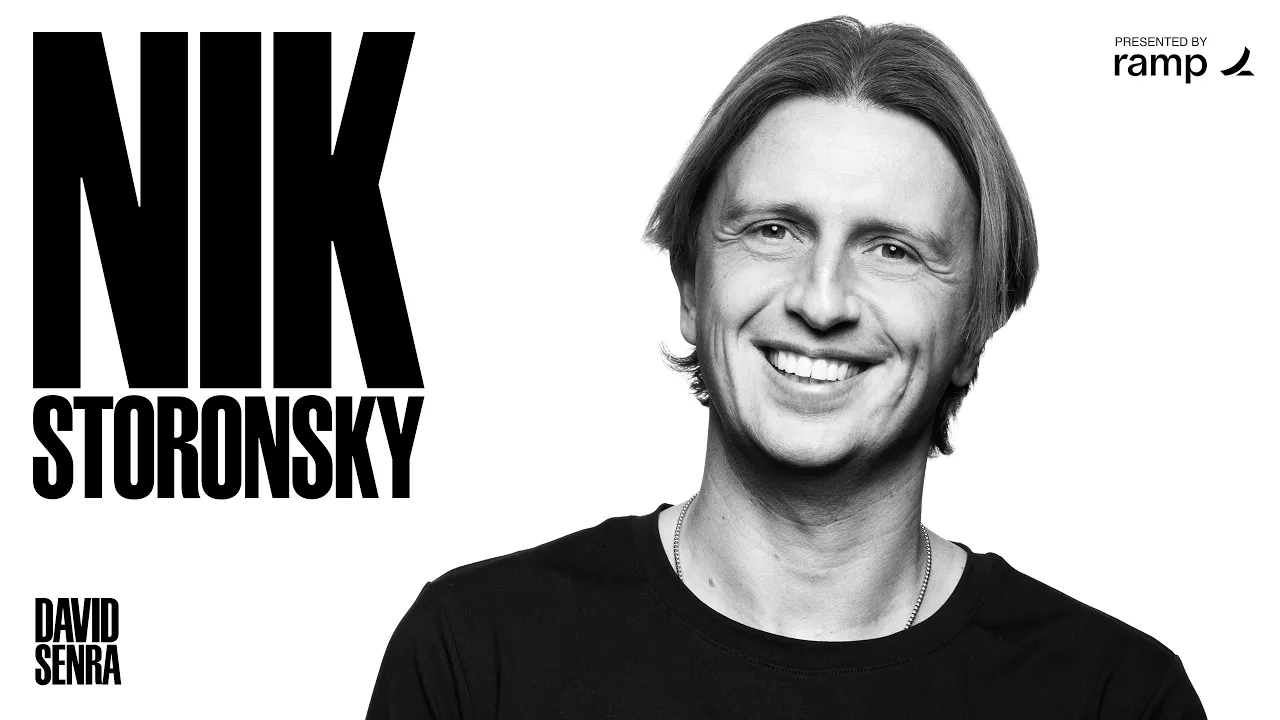
Revolut Targets JPMorgan as Storonsky Scales Single-Ledger Bank
David Senra
Revolut Chief Executive Officer Nik Storonsky argues legacy lenders will lose market share to founder-led software firms because risk-averse professional managers protect their jobs instead of overhauling obsolete infrastructure.
Nik Storonsky is targeting the number one banking position across 100 countries, leveraging a software-driven single global ledger to outcompete fragmented legacy banks without maintaining physical branches. (2:04)
Revolut is leveraging AI to shrink product squad sizes from ten specialists down to two or three full-stack operators, having already automated roughly 90% of customer support volume that previously required over 5,000 agents. (23:31)
Adopting an algorithmic trading approach to R&D, Revolut funds new product squads for 9 to 18 months, systematically killing the bottom 25% cohort by gross profit velocity while scaling top bets growing 10% to 20% month-over-month. (20:28)
Revolut engineered Pragma, a proprietary transformer foundation model trained on 30 million daily financial transaction sequences, aiming to use bank cash flows to self-fund proprietary data centers and frontier AI infrastructure. (62:10)
Detailed notes
## Background
This interview was published by David Senra on YouTube on October 25, 2026. It features Nik Storonsky, co-founder and CEO of the $115 billion digital bank Revolut, discussing his hyper-competitive philosophy, operational discipline, and ambitions to build the world's leading bank across 100 countries.
## TL;DR
Nik Storonsky details how Revolut evolved from a zero-fee travel card into a full-stack global bank operating on a unified single ledger across 38 countries. He contrasts founder-led intensity with the defensive mindset of career CEOs, explaining why full banking licenses provide an insurmountable moat over superficial fintechs. Storonsky reveals Revolut's machine-like operating principles: funding product bets algorithmically, eliminating middle managers, replacing institutional VCs with seasoned operators, and integrating AI into core workflows. Ultimately, he frames Revolut's high-margin banking cash flows as the launchpad to build an unstoppable tech powerhouse and finance massive proprietary AI moonshots.
## Atmosphere & style
The conversation carries an intense, relentless energy rooted in Storonsky's unapologetic drive to dominate and win at all costs. Senra acts as an engaged, historically minded interlocutor, drawing parallels to legendary industrialists like Andrew Carnegie while Storonsky speaks with the blunt, quantitative clarity of an elite trader. The exchange feels stripped of corporate polish, delivering a raw and clinical masterclass on organizational design, extreme work ethic, and institutional discipline.
## Bulletin
- [02:04](https://www.youtube.com/watch?v=hT_MAAwFLIc&t=124s) Nik Storonsky is targeting the number one banking position across 100 countries, leveraging a software-driven single global ledger to outcompete fragmented legacy banks without maintaining physical branches.
- [23:31](https://www.youtube.com/watch?v=hT_MAAwFLIc&t=1411s) Revolut is leveraging AI to shrink product squad sizes from ten specialists down to two or three full-stack operators, having already automated roughly 90% of customer support volume that previously required over 5,000 agents.
- [20:28](https://www.youtube.com/watch?v=hT_MAAwFLIc&t=1228s) Adopting an algorithmic trading approach to R&D, Revolut funds new product squads for 9 to 18 months, systematically killing the bottom 25% cohort by gross profit velocity while scaling top bets growing 10% to 20% month-over-month.
- [01:02:10](https://www.youtube.com/watch?v=hT_MAAwFLIc&t=3730s) Revolut engineered Pragma, a proprietary transformer foundation model trained on 30 million daily financial transaction sequences, aiming to use bank cash flows to self-fund proprietary data centers and frontier AI infrastructure.
## Key takeaways
- [00:02](https://www.youtube.com/watch?v=hT_MAAwFLIc&t=2s) Storonsky is targeting Jamie Dimon's entire market share spanning enterprise, retail, and investment banking, arguing that investment banking is bloated, highly manual, and ripe for software automation.
- [06:12](https://www.youtube.com/watch?v=hT_MAAwFLIc&t=372s) Founder-led companies structurally outperform professional CEOs because hired managers optimize for short-term bonus pools and downside protection, whereas founders possess total identity alignment and play permanent offense.
- [10:41](https://www.youtube.com/watch?v=hT_MAAwFLIc&t=641s) Delaying a full banking license limits fintechs to secondary wallet status with 10% to 20% penetration, whereas full bank charters unlocked up to 80% market adoption in Ireland by securing primary account trust.
- [17:58](https://www.youtube.com/watch?v=hT_MAAwFLIc&t=1078s) Running a company like an engineered machine governed by objective KPIs eliminates internal corporate politics and aligns cross-functional performance around gross profit.
- [20:28](https://www.youtube.com/watch?v=hT_MAAwFLIc&t=1228s) Product development is funded like a quantitative trading portfolio: bets are given 9 to 18 months to prove viability, with the bottom quartile eliminated unsentimentally and winners scaled aggressively.
- [29:15](https://www.youtube.com/watch?v=hT_MAAwFLIc&t=1755s) A flat hierarchy with over 50 direct reports is maintained by systematically cutting middle managers and hiring autonomous performers who independently identify and achieve their goals.
- [31:05](https://www.youtube.com/watch?v=hT_MAAwFLIc&t=1865s) Placing personal empathy ahead of winning leads executives to tolerate mediocrity, whereas elite organizations prioritize winning to make tough firing decisions regarding average performers.
- [33:31](https://www.youtube.com/watch?v=hT_MAAwFLIc&t=2011s) Abundant venture capital encourages founders to solve structural problems with money rather than intellectual leverage, masking operational inefficiencies and weakening resilience.
- [37:38](https://www.youtube.com/watch?v=hT_MAAwFLIc&t=2258s) Navigating Europe's strict 20 basis point interchange fee caps and complex multi-jurisdiction compliance forced Revolut to build 80% gross margins and operational discipline that US competitors lack.
- [44:32](https://www.youtube.com/watch?v=hT_MAAwFLIc&t=2672s) Venture capitalists should be excluded from operational governance and board voting rights because non-operator investors behave like cheerleaders trying to dictate play on the field.
- [49:28](https://www.youtube.com/watch?v=hT_MAAwFLIc&t=2968s) Frustration with traditional venture capital led Storonsky to launch Quantum Light, a quantitative investment fund utilizing machine learning models to select software investments.
- [55:17](https://www.youtube.com/watch?v=hT_MAAwFLIc&t=3317s) When COVID-19 cut travel revenue by 70%, Revolut adopted aggressive performance marketing playbooks from mobile gaming and blanketed 50% of European airports to build trust and capture low-CPM real-world impressions.
- [01:00:23](https://www.youtube.com/watch?v=hT_MAAwFLIc&t=3623s) Storonsky treats a global bank balance sheet as a cash-generating engine designed to self-fund frontier technology bets outside traditional finance, including dedicated data centers and foundational AI models.
- [01:03:58](https://www.youtube.com/watch?v=hT_MAAwFLIc&t=3838s) Unlike legacy incumbents saddled with incompatible mainframe systems from decades of M&A, Revolut operates on a single global ledger and unified codebase, enabling international expansion via simple configuration changes.
## Detailed walkthrough
### [00:02](https://www.youtube.com/watch?v=hT_MAAwFLIc&t=2s) Coming for Jamie Dimon's Dinner
David Senra opens the conversation with immense energy, admitting he told the crew to hit record immediately because the banter off-camera was already too good. Having texted his partner Rob that this session would be a “masterpiece,” Senra recounts what he has repeatedly heard from other founders over the years: Nik Storonsky is relentlessly competitive, moves with staggering speed, and behaves like a conqueror. Asked where that drive originates and how he views competition, Storonsky explains that he has been fiercely competitive since he was six years old, shaped early on by competitive sports—such as swimming and boxing—as well as academic Olympiads. He regards it as a combination of genetics and character: some individuals simply possess an innate wiring where coming in second feels intolerable.
```mermaid
flowchart LR
accTitle: Revolut Expansion Scope
accDescr: The dual targets of Revolut's market disruption across retail and enterprise finance.
subgraph S1["Disruption Scope"]
A["Retail Banking"] --> B["Enterprise & Corporate Accounts"]
B --> C["Investment Banking Automation"]
end
subgraph S2["Scale Objective"]
C --> D["Global Multi-Product Platform"]
end
```
Senra brings up a memorable quote from an earlier discussion in which Storonsky was asked whether expanding Revolut into the United States meant he was coming after JPMorgan Chase CEO Jamie Dimon's lunch. Storonsky corrected the premise: he is coming for Dimon's dinner. As Storonsky clarifies with a laugh, lunch in the United States is small, whereas dinner is far larger. Taking dinner represents going after not just the retail banking market, but also enterprise services and even investment banking. He argues that investment banking remains bloated, highly manual, and unnecessarily expensive, making it ripe for automated, low-cost disruption.
- Storonsky on his lifelong competitive obsession: “And for me it was always a natural desire to be number one in whatever I choose to do, right? Like if I choose to play a game, I need to be number one. And then I'm extremely pissed off if I'm number two.”
- Storonsky on challenging legacy banking giants: “So like coming for dinner means, you know, not only going for retail business, but also for enterprise as well. Also potentially for investment banking because it's also possible to disrupt investment banks.”
---
[02:04](https://www.youtube.com/watch?v=hT_MAAwFLIc&t=124s) Building the #1 Bank in 100 Countries
Tracing Revolut's progression from its inception, Storonsky outlines how the business originated roughly ten years prior with a straightforward travel card. It allowed users to spend currency abroad at interbank exchange rates without punitive foreign exchange fees. From that beachhead product, the platform methodically layered on credit, wealth management, stock trading, cryptocurrency, and business accounts, alongside non-financial consumer features such as hotel booking (Stays) and eSIMs. Today, Revolut operates as a digital-first global bank active in 38 countries—holding banking licenses in the majority of them—while aggressively adding 10 to 15 new national markets every one to two years.
When Senra presses him on the sheer audacity of declaring an ambition to become the dominant financial institution across 100 distinct countries, Storonsky treats it not as hyperbole, but as a structural opportunity. Traditional global finance is highly fragmented: every sovereign territory has 20 to 50 domestic banks operating legacy software and expensive brick-and-mortar branch networks. This landscape creates a historic opening for a unified, software-driven global player to enter each territory, slash transaction costs, eliminate branch overhead, and deliver a superior customer experience.
When asked about his psychological mindset and whether he wakes up looking in the mirror feeling like he has not done enough, Storonsky dismisses tracking rivals directly. Instead, he benchmarks himself against his own potential:
- Rather than obsessing over tens of thousands of incumbent banks, he asks himself how he would dismantle and outcompete his own company if he were attacking it from the outside.
- Senra draws an exact parallel to Shopify founder Tobi Lütke, who treats his role as an external corporate raider stepping in to question why previous management made past decisions.
- Storonsky maintains that the winning operational standard requires operating at 100% capacity daily; even in defeat, there is no self-reproach if absolute effort was sustained.
- Storonsky on his long-term expansion target: “And then the idea is to build a large global bank which is number one in at least 100 countries.”
- Storonsky on self-competition: “And then in terms of competition, how I look at competition, I mean to be honest I don't really look at competition. I look at kind of myself, right? And then what would I do to beat up myself, right? To outcompete, to outsmart somehow.”
---
[06:12](https://www.youtube.com/watch?v=hT_MAAwFLIc&t=372s) Why Founders Beat Professional CEOs
Storonsky identifies his greatest operational advantage as the nature of his competition: the vast majority of incumbent banks are steered by hired professional CEOs rather than founders. Hired executives typically operate on truncated three-to-four-year tenures, optimizing solely for vanity parity metrics and short-term bonus pools before moving on. Because they are not ten-times performers and have personal downside risk, they default to playing defense. Storonsky, by contrast, operates on permanent offense, constantly asking what new industry, geography, or product surface area Revolut can seize next.
```mermaid
flowchart TD
accTitle: Founder vs Professional CEO Incentives
accDescr: Contrasting the defensive preservation of hired CEOs with the unified offense of a founder.
subgraph Hired["Professional CEO Dynamic"]
H1["3-4 Year Tenure & Bonus Focus"] --> H2["Separation of Self & Company"]
H2 --> H3["Defensive Risk Avoidance / Job Preservation"]
end
subgraph Founder["Founder Dynamic"]
F1["Indefinite Time Horizon"] --> F2["100% Identity & Value Alignment"]
F2 --> F3["Aggressive Offense & Calculated Long-Term Risk"]
end
```
The split between hired managers and founders comes down to identity alignment. Professional CEOs view themselves and the institution as two separate entities, inevitably making suboptimal decisions to protect their employment status. A founder experiences zero daylight between personal well-being and corporate well-being. Senra notes that Storonsky dedicates roughly 99.5% of his life to building the company, rendering work and life virtually indistinguishable.
Storonsky explains that this total alignment directly refutes regulatory suspicions regarding founder-led growth. Regulators frequently assume that ambitious founders take reckless, excessive risks in pursuit of scale. Storonsky argues the inverse is true: because his entire life and net worth are tied to Revolut's survival and success, he is the last person who would gamble the institution on reckless risks, whereas professional executives face little long-term accountability once their bonuses are banked.
- Storonsky on hired executive incentives: “Well, professional CEOs, ultimately their goal is not to improve organization, right? Their ultimate goal is to protect their job.”
- Storonsky on personal alignment: “I think about myself and as a company as as one entity, right? Like I do everything what is good for the company and I never kind of try to diverge myself what is good for me.”
- Storonsky on regulatory risk perception: “Because I'm the only one motivated for this company to succeed and to survive, right? And that means I'm actually not going to take stupid excessive risk compared to professional CEOs or professional boards.”
[08:50](https://www.youtube.com/watch?v=hT_MAAwFLIc&t=530s) The Mistake of Delaying a Full Banking License
David Senra brings up an earlier admission by Nik Storonsky: when founding Revolut, his original plan was deliberately to avoid becoming regulated as a bank, something Storonsky has since characterized as one of the biggest mistakes he ever made. Storonsky reflects on the counterintuitive dynamics of dealing with financial regulators. As a startup, applying for a banking license with zero users poses relatively little perceived danger to regulatory bodies: if a nascent firm fails or collapses over a three-to-five-year horizon, the systemic fallout is minimal. However, Revolut initially opted for a far lighter footprint—securing e-money and payment licenses simply to move money quickly. While an e-money license could be obtained in less than a year, a full banking license typically took three to four years, making the shortcut intensely tempting to a fast-moving founder.
The trap emerged once Revolut grew exponentially under that lighter framework. By the time the company finally applied for a UK banking license, it had already amassed seven to eight million users. In the eyes of regulators, granting a license to a consumer giant with millions of depositors represented immense downside risk: if anything went sideways, the regulator would bear the direct public blame. As Storonsky recounts, no company in modern UK history had ever attempted to apply for a banking license with an existing base of seven to eight million domestic customers. Navigating that regulatory gauntlet ultimately took Revolut nearly five years, turning an initial shortcut into a long, grinding hurdle.
- Revolut operated under lighter electronic money (e-money) and payment licenses during its initial hypergrowth phase.
- Applying for a full UK banking license after reaching 7–8 million UK customers prolonged the licensing approval process to nearly five years.
[10:41](https://www.youtube.com/watch?v=hT_MAAwFLIc&t=641s) Why Unregulated Fintechs Hit a Ceiling
Senra questions whether regulation serves as a true moat and why American fintech players like Chime or Cash App have largely avoided becoming chartered banks. Storonsky argues that although regulation carries immense overhead, operating as a fully licensed bank is non-negotiable if a company wants to capture mass-market dominance. Without a banking license, a financial app remains relegated to fringe or lower-income niches and secondary transaction use cases. Consumers may play with an app or use it for peer-to-peer transfers, but they will never deposit their primary paychecks, park substantial portions of their wealth, or conduct long-term stock and ETF investments with an institution they perceive as anything less than a bank.
This distinction between secondary fintech products and true primary banks explains why fintechs without banking charters hit hard plateaus at early-adopter adoption rates of 10% to 20%, occasionally spilling over to family referrals to reach 20% to 24%. By contrast, holding a banking license allows Revolut to achieve deep, mainstream penetration. In Ireland, for instance, Revolut has achieved an 80% market penetration rate, where four out of five adults use an account. Storonsky attributes this remarkable scale to a combination of terrible local banking competition (only four major, underperforming domestic incumbents) and a geographically dispersed, international population. Across Europe, Revolut routinely achieves 20% penetration in massive markets like the UK and France, and 30% to 40% across Spain and other territories—numbers Storonsky insists are fundamentally impossible without the legal status and consumer trust of being an actual bank.
> “To build a very large business to capture large market share, it's just unavailable. So, I think in US a lot of companies started like Chime, Cash App, it was simple before 10 12 years ago. They all never went for banking license. I think it's a big mistake.” — Nik Storonsky
```mermaid
flowchart TD
accTitle: Unregulated Fintech vs Licensed Bank Growth Ceilings
accDescr: Diagram contrasting consumer trust and adoption ceilings between unregulated fintechs and licensed banks.
subgraph Unregulated ["Unregulated Fintech (E-Money / Partner Model)"]
U1["Niche / Low-Income Cohorts"] --> U2["Secondary Usage & Small Balances"]
U2 --> U3["Ceiling: 10%–20% Penetration"]
end
subgraph Licensed ["Full Banking License (Revolut Model)"]
L1["Primary Bank Accounts & Salaries"] --> L2["Full Wealth, Stock & ETF Products"]
L2 --> L3["Scale: 40%–80% Mass Penetration"]
end
```
[12:47](https://www.youtube.com/watch?v=hT_MAAwFLIc&t=767s) The Innovation Limbo of Legacy Banks
When Senra asks what incumbent institutions are doing wrong when Revolut enters a market, Storonsky identifies the fatal weakness of traditional banking: incumbent banks are run by professional CEOs who are risk-averse and non-technical. Because their primary corporate objective is protecting legacy rents, they enter a state of paralysis where innovation ceases entirely. Even when an institution relies on an obsolete, third-party legacy core banking system that desperately needs to be rewritten or migrated, management refuses to touch it. Any major platform migration introduces immediate execution risk that could blow up under their tenure, leading executives to conclude that inaction is the safest career move.
Storonsky argues that legacy leadership fails because it treats banking purely as an exercise in regulation rather than an exercise in software engineering. When executives lack software development intuition, they cannot evaluate technological risk, build proprietary tools, or judge modern technical trade-offs. As a consequence, they default to avoiding change entirely, leaving their institutions structurally incapable of competing with product-driven technology companies.
> “Well, they they're stuck in limbo of professional management who are extremely risk-averse. As a result, there is zero lack of zero intention to innovate. Um and then all the resources spent on protecting what they have already, right?” — Nik Storonsky
- Legacy bank executives prioritize downside protection over technology upgrades to safeguard their current tenures.
- Outdated, third-party core systems remain in place because executives perceive software migration as an unacceptable career risk.
- Incumbent management treats banking solely as compliance, fundamentally lacking the technical capability to build software in-house.
[14:12](https://www.youtube.com/watch?v=hT_MAAwFLIc&t=852s) Sponsor Break: Ramp & Deel
Senra steps in to highlight the podcast's presenting sponsors, Ramp and Deel, tying their value propositions directly to fundamental operational principles from top technology companies:
- **Ramp:** Senra points to SpaceX's culture of relentlessly challenging and slashing operating expenses as proof that disciplined cost control frees up cash to pursue ambitious new bets. He notes that the median company running on Ramp cuts expenses by 5% while growing revenue by 16%, creating a compounding structural advantage over rivals who run inefficient finance stacks.
- **Deel:** Highlighting how elite founders treat hiring exceptional global talent as their foremost priority, Senra notes that companies such as Ramp, Shopify, ElevenLabs, Uber, and DoorDash rely on Deel's global payroll and compliance infrastructure to source and retain top-tier talent worldwide. He quotes the founder of ElevenLabs, who explained that Deel allowed them to hire specialized talent globally to break down communication and language barriers.
[16:29](https://www.youtube.com/watch?v=hT_MAAwFLIc&t=989s) Engineering the Company Like a Machine
Senra returns to Storonsky’s thesis that competing against non-founder, professional CEOs gives him a decisive advantage. Storonsky agrees, pointing out that professional managers do not build products because they do not feel the software, do not personally use it, and do not understand the craft of software development. In his view, building an enduring financial institution requires a founder to operate simultaneously as an uncompromising, detail-oriented manager and an expert product builder who can unify technical systems, regulatory frameworks, compliance operations, and team organization into a single cohesive mechanism.
Storonsky visualizes the entire company as an integrated machine. The founder's job is to define the inputs—the organizational structure, talent, cultural standards, and product roadmap—to predictably yield the desired output: an exceptional product that millions of customers use daily. Rather than delegating operations away, Storonsky constantly monitors the machine's velocity and execution quality, personally stepping in to alter configurations, rebuild sub-units, or eliminate bottlenecks whenever performance slips as headcount grows.
> “It's like a machine, right? So, there are inputs and then the whole machine should produce you right output, which is amazing product that people use.” — Nik Storonsky
```mermaid
flowchart LR
accTitle: The Company as a Machine Architecture
accDescr: Systems diagram showing company inputs transformed through founder intervention to produce customer products.
[17:58](https://www.youtube.com/watch?v=hT_MAAwFLIc&t=1078s) The Self-Correcting Machine and the Trader Mindset
Nik Storonsky describes how scaling Revolut repeatedly required diagnosing systemic friction and engineering functional solutions into the organization. Whenever the company began to slow down and the machine faltered, he restructured development around independent, parallelized squads operating on a shared core platform. When regulation and compliance threatened to stall product momentum, he built an internal government and regulatory affairs apparatus dedicated to clearing those hurdles. When high-caliber recruitment became a choke point, he created targeted hiring pipelines. Nik summarizes this ongoing feedback loop simply: “You build something, then you hit a bottleneck, right? You identify the problem, you solve the problem, you go again.”
David Senra connects this operational architecture to Nik's previous career as a financial trader, asking how that background shaped Revolut's culture and management style. Nik explains that trading ingrained in him the principles of strict risk management and quantitative evaluation. In conventional institutions and corporate banking hierarchies, initiatives and individuals are judged on intuition and executive rhetoric—assumptions that are often flatly incorrect. By enforcing clear performance metrics and hard KPIs, a company can eliminate subjective office politics entirely. Nik insists on objective performance tracking: “Metrics and KPIs that actually kills politics within an organization because, look, everything is transparent, right?” When an individual contributor or department head misses their mark, the shortfall is visible in the raw figures rather than obscured by polished corporate presentations.
```mermaid
flowchart TD
accTitle: The Bottleneck-Resolution Engine
accDescr: Revolut's continuous operational loop of scaling, hitting operational bottlenecks, and engineering standardized structural solutions.
subgraph Cycle ["Operational Feedback Loop"]
A["Parallel Product Teams Build on Shared Platform"] --> B["Hit Bottleneck<br/>(Regulation, Hiring, Quality)"]
B --> C["Engineer New Muscle<br/>(Dedicated Org Unit or Tool)"]
C --> D["Standardize Across Company"]
D --> A
end
```
[20:28](https://www.youtube.com/watch?v=hT_MAAwFLIc&t=1228s) Algorithmic Bet Allocation: Doubling Down on Winners and Cutting Losers
Revolut formalized its product development into a disciplined, stage-gated portfolio process. Whether an idea originates bottom-up from engineers or top-down from leadership, it undergoes review by a dedicated committee. Once approved, the initiative is funded as an isolated bet with a small, cross-functional team of up to ten people: three to four backend engineers, two to four mobile/frontend developers, a designer, a product owner, and occasionally a data scientist or operations manager. The squad is given 9 to 18 months to build, launch, and prove the business model.
Success is measured strictly by gross profit (GP) velocity. Having launched approximately 50 product bets over the prior decade, Revolut benchmarks new initiatives against historical cohorts. Top-performing bets exhibit 10% to 20% month-over-month growth, rapidly delivering between $1 million and $3 million in consecutive monthly gross profit. Any product that falls into the bottom 25% cohort over its initial run is sunset without sentimentality. Conversely, winning bets in the top quartile are scaled rapidly: one squad expands into multiple teams, then a department, and ultimately into a major company-wide P&L driver. Nik explains why an objective framework is non-negotiable: “I don't really trust my intuition in terms of which products to build, which products not to build because historically I was wrong so times. And I think only approach which like completely algorithmic, right? Top bets you continue to fund, bottom bets you just cut like within 18 months.”
- **Squad Composition Benchmark:** Typically capped at roughly 10 people (3–4 backend engineers, 2–4 frontend/mobile engineers, 1 designer, 1 product owner, plus optional data/ops support).
- **Target Growth Velocity:** Top 10 bets achieve 10% to 20% gross profit growth month-over-month.
- **Sunset Threshold:** Any project landing in the historical bottom 25% cohort is terminated within an 18-month window.
- **Winner Allocation:** High performers receive continuous compounding capital and headcount, evolving from single teams into core divisional lines.
[23:31](https://www.youtube.com/watch?v=hT_MAAwFLIc&t=1411s) AI Reorganization and the Full-Stack Autonomous Employee
The conventional team structure of ten specialists is changing fundamentally due to the rapid integration of artificial intelligence. Nik reflects that the previous ten years were spent optimizing organizational design around human capabilities and compensating for human shortcomings. With code-generation and multi-modal models advancing rapidly, he believes the standard team footprint will shrink to two or three people at most, as single engineers become proficient across frontend, backend, and data science workflows.
Revolut has already operationalized AI at scale across its core divisions. Roughly 90% of customer support volume is automated—a function that previously required more than 5,000 human representatives. Internal engineering throughput has increased by an estimated 30%, while localized translations and product cross-selling are largely managed by large language models. However, Nik sees task-based chatbots as merely an intermediate phase. His concrete objective is deploying fully autonomous, full-stack AI employees equipped with enterprise credentials, corporate email addresses, Slack access, and administrative entry into back-office software to carry out complex workflows independently.
[25:23](https://www.youtube.com/watch?v=hT_MAAwFLIc&t=1523s) Flat Hierarchy, 50+ Direct Reports, and Rapid Standardization
When Senra asks about his organizational design—referencing Alexandr Wang's extreme span of control—Nik reveals that he directly manages between 50 and 52 reports. Beyond his immediate executive tier, Nik frequently bypasses management layers to work directly with frontline product owners, designers, and individual software engineers on active projects.
His management philosophy is grounded in hiring self-guided talent that does not require day-to-day supervision: “Whenever you hire smart self-guided people, you don't really need to manage them. So, you just need to show them direction, and then ensure that they're all synchronized.” To prevent independent teams from devolving into chaos or re-inventing basic infrastructure, Nik enforces strict company-wide operational standards. When any isolated squad develops an internal tool, workflow shortcut, or technological instrument that improves development velocity, Nik personally ensures it is adopted across every department. His primary function within the machine is identifying local breakthroughs and standardizing them enterprise-wide.
[26:55](https://www.youtube.com/watch?v=hT_MAAwFLIc&t=1615s) Spreading Innovation and the Carnegie-Ford Machine
When David Senra asks for a tangible example of spotting an operational breakthrough in one pocket of the company and rolling it out everywhere, Nik Storonsky points to Revolut’s product design workflow. For years, Revolut’s design organization relied exclusively on Figma. Recently, Storonsky noticed that one specific team was shipping interfaces dramatically faster than everyone else by using large language models (LLMs). Rather than drawing wireframes inside a design interface, the team uploaded Revolut’s entire design system into an LLM at the code level. By prompting the model to generate user flows against that system, they bypassed static mockups entirely. The output was not an inert canvas in Figma, but a fully functional, interactive interface running on a laptop or simulator where buttons responded and flows could be tested directly—all produced three to four times faster than building screens manually. Recognizing the efficiency gain, Storonsky immediately mandated the method across Revolut’s entire design organization.
Senra draws a direct historical line between Storonsky’s operating model and nineteenth-century industrialists like Henry Ford and Andrew Carnegie. Carnegie routinely traversed the globe to inspect iron and steel works, hunting for any technical edge—even a 1% or 5% gain in a fraction of his operations—and importing breakthroughs back to America. While competitors ridiculed Carnegie’s heavy investments in process technology, those cumulative efficiencies compounded over three decades into an insurmountable moat. Storonsky agrees with the comparison, framing Revolut strictly as an engineered mechanism: “And then if you if you spot innovation in certain part of the machine, you need to spread it as as fast as possible.”
- **The Old Design Flow:** Manual screen and frame construction inside Figma, resulting in static visual mockups.
- **The New LLM Workflow:** Revolut’s design system uploaded at the code level to prompt live, clickable, interactive simulator interfaces.
- **Speed Multiplier:** Interfaces and user flows are produced 3x to 4x faster than standard Figma workflows.
[29:15](https://www.youtube.com/watch?v=hT_MAAwFLIc&t=1755s) Eliminating Information-Passers and Hiring Self-Guided Missiles
Storonsky has systematically eliminated traditional middle managers who act merely as communication conduits. Over the past decade, he observed countless managers whose daily work consisted entirely of harvesting status updates from individual contributors and forwarding them to stakeholders and senior leadership. These intermediaries added no tangible value: they did not alter team direction, discover better ways to execute roadmaps, or generate technical innovations. Disgusted by the overhead of people whose sole function was taking numbers from workers and handing them to him, Storonsky stripped those layers out to ensure direct visibility and uninhibited execution speed.
In place of conventional managers, Storonsky searches for what he terms “self-guided people,” comparing them to precision munitions. To maintain a flat organization with roughly 50 direct reports, he evaluates personnel based on how much management bandwidth they consume to hit a target:
```mermaid
flowchart TD
accTitle: Four Tiers of Employee Autonomy
accDescr: Hierarchy of employees from self-guided missiles down to below-average performers based on direction needed.
subgraph Autonomous["High Performers"]
A["Brilliant: Self-Guided Missiles<br/>Self-identify goals & hit them"]
B["Good Performers<br/>Given a goal, reach it without iteration"]
end
subgraph Drains["Management Drains"]
C["Average Performers<br/>Require weekly iteration to reach goal"]
D["Below Average Performers<br/>Consume time & still miss goal"]
end
A --> B
B --> C
C --> D
```
Storonsky explains his mental model for team autonomy: “I always joke that, you know, self-guided people are like self-guided missiles, right? So you got brilliant people, you don't even need to tell them what the goal is. They self-identify the the goal and then they self-reach it, right? So they're like self-guided missile which also identify the goals.” Good performers can be assigned a goal and will execute it cleanly without iterative supervision. Average performers absorb continuous management time through weekly status checks and course corrections before they cross the finish line. Below-average performers soak up executive time and still fail to hit their targets. Storonsky’s philosophy is simple: “So, in order for you to have as many direct reports as possible, you just need to minimize management time spent on each of them.”
[31:05](https://www.youtube.com/watch?v=hT_MAAwFLIc&t=1865s) Prioritizing Winning Over Empathy
When Senra asks how Storonsky handles the average performers who drain executive bandwidth, Storonsky confirms without hesitation that he fires them. He observes that many talented executives stumble on this discipline because their instinct is to protect feelings rather than secure victory. In Storonsky’s view, placing personal empathy ahead of the company's competitive standing leads leaders to tolerate mediocrity and settle for second, third, or fourth place. To build an elite machine, an executive must accept that making the correct organizational decision often requires making an uncomfortable, unsentimental choice: “I think if you're much more weighted in terms of winning, right, your empathy to other people is at second place, and then you you will do uh right decisions even if they are tough decisions.”
Senra notes that Elon Musk shares a similar philosophy, once warning his engineering leadership that if their engineers liked them, they were failing at their jobs. Storonsky agrees that executive likability should never be the metric of success: “Well, they might be likable, right, but then likable is never the goal for for executives. right? is always to achieve the goal, right? With the minimum number of resources spent.” Senra emphasizes the recurring theme in Storonsky’s thinking: treating the extraction of massive outcomes from minimal inputs not just as an operational goal, but almost as an art form. Storonsky views the entire craft of entrepreneurship through this lens—finding the right vector end-to-end and building the solution with the leanest possible expenditure of capital and human labor.
[33:31](https://www.youtube.com/watch?v=hT_MAAwFLIc&t=2011s) Why Too Much Money Breeds Waste and the Reality of Global Competition
Storonsky sees severe cultural flaws in the American technology ecosystem, driven by a surplus of cheap venture capital. In regions like California, founders treat capital as though it is free, raising huge sums at inflated valuations and attempting to brute-force execution with cash instead of intellectual leverage: “I think there is definite culture of uh trying to solve problems with money rather than with your brains.” He illustrates this trap with early-stage B2B enterprise software companies: a startup reaches its first $1 million in Annual Recurring Revenue (ARR) and prematurely tries to scale by hiring an expensive Vice President of Sales, who promptly hires 50 costly account executives. Storonsky argues that founders must first discover how to sell the product cheaply, engineer a repeatable sales engine, and only then feed personnel into that validated system to guarantee strong payback periods.
Senra points out that unlimited funding removes the constraints that force entrepreneurs to become resourceful, talented, and resilient in the first place. When Senra suggests that the American market is widely considered the most brutal competitive arena in the world, Storonsky dismisses the idea. While Europe is even softer and less competitive than the United States, Storonsky argues that neither comes close to the relentless intensity found in China, where tech companies operate under the punishing "996" schedule (9:00 AM to 9:00 PM, six days a week). Against that level of execution, Western companies relying on bloated balance sheets and relaxed pacing stand little chance of competing on pure output.
[35:24](https://www.youtube.com/watch?v=hT_MAAwFLIc&t=2124s) Hardcore Work Ethic and the Statistical Necessity of Weekends
Nik Storonsky argues that success in early-stage startups comes down to pure intensity. Facing competitors who have rigorous technical education and work 9 to 9 six days a week makes it virtually impossible to win without extreme dedication. To illustrate this, he shares an anecdote from Revolut’s earliest days: he began the company in a co-working space alongside 140 other startups. Within five years, only three of those companies were still alive—and every single one of those three worked through the weekends. After ten years, just two of the 140 survived. Based on those numbers, Storonsky maintains that weekend work is not merely an optional grind, but a statistical requirement for survival: “So I think working on weekends is a must if you want to survive, purely statistically.”
```mermaid
flowchart TD
accTitle: Startup Survival Rates Over 10 Years
accDescr: Funnel illustrating the attrition of 140 startups over a decade, showing only weekend-working teams survive.
subgraph Cohort["Co-working Space Cohort"]
A["140 Startups<br>(Day 1)"]
end
subgraph FiveYears["5 Years In"]
B["3 Survivors<br>(All worked weekends)"]
end
subgraph TenYears["10 Years In"]
C["2 Survivors Remaining"]
end
A -->|"High attrition"| B
B -->|"Long-term survival"| C
```
When David Senra asks whether this brutal schedule applies across Revolut’s broader culture, Storonsky explains that he works those hours himself and that the vast majority of his direct reports mirror the same intensity. While alignment might taper off slightly among people managed by his direct reports, he believes Revolut stands out as probably one of the hardest-working companies not just in Europe, but even when compared directly against tech companies in the United States.
- Revolut started in a shared co-working space of 140 startups.
- 5-year survival rate: 3 out of 140 companies (all worked weekends).
- 10-year survival rate: only 2 out of 140 companies remained.
- Storonsky's direct reports operate on this intensive 9-to-9/10-to-10 pace.
---
[36:32](https://www.youtube.com/watch?v=hT_MAAwFLIc&t=2192s) The Silicon Valley Flaw: Throwing Money at Problems
Addressing the Silicon Valley tech culture, Storonsky outlines why an abundance of capital creates long-term structural weakness in founders. He acknowledges that the California ecosystem possesses top-tier advantages: immense venture capital, world-class universities, and an influx of driven international talent. However, the habit of spending lavishly rather than solving underlying problems damages entrepreneurial development. When unlimited money is available to paper over inefficiencies, companies build massive waste, and founders never develop the operational resilience required when funding cycles turn.
Storonsky emphasizes that relying on cash prevents founders from learning the craft of running a lean, resilient business: “It's so easy to kind of, you know, close the problem with the money.” Senra agrees, noting that if an entrepreneur avoids the crucible of fixing core unit economics under severe constraints, they end up ill-prepared for real-world headwinds.
---
[37:38](https://www.youtube.com/watch?v=hT_MAAwFLIc&t=2258s) Europe’s Regulatory Gauntlet as Revolut’s Moat
Storonsky details how the punishing European operating environment forged Revolut into an unusually efficient machine. Revolut launched with negative gross margins that persisted for three to five years before the team optimized operations and drove gross margins up to positive 80%. In Europe, interchange fees are capped at roughly 20 basis points (compared to roughly 100 basis points or more in the United States), consumer credit card rates are heavily regulated, and underwriting is tightly restricted.
```mermaid
flowchart LR
accTitle: Operating Environment Comparison
accDescr: Contrasting the European regulatory constraints Revolut faced against the US operating landscape.
subgraph Europe["European Environment (Revolut's Crucible)"]
direction TB
E1["Interchange capped at 20 bps"]
E2["Credit heavily restricted"]
E3["Fragmented: Local branches & licenses"]
E4["Strict, rigid employment laws"]
end
subgraph US["US / Latin America Landscape"]
direction TB
U1["Interchange ~100+ bps"]
U2["Easier consumer lending"]
U3["Large single market"]
U4["At-will employment flexibility"]
end
Furthermore, setting up a primary bank across Europe cannot be done with a single blanket move. Even with a European banking passport, issuing local IBANs and operating as a customer's primary account often requires establishing a local physical branch, dealing with distinct domestic regulators, integrating into local clearing connectivity, handling different national languages, and navigating stringent labor laws. Unlike the United States with its employment-at-will framework, European employment laws require founders to hire with meticulous care. Storonsky reflects: “Technically, this difficult environment in Europe actually uh taught us how to uh build business in a very uh kind of in a competitive landscape.” Senra points out the natural competitive consequence: having survived and reached 80% gross margins in such a hostile landscape, Revolut enters markets like the United States possessing an operational toolkit that domestic competitors who had it easier cannot match.
| Operating Vector | European Reality (Revolut) | US / Latin American Markets |
|:--- |:--- |:--- |
| **Card Interchange** | Capped at ~20 basis points | Uncapped / ~100+ basis points |
| **Lending & Credit** | Capped rates; tight lending controls | Vastly easier to underwrite & distribute |
| **Expansion Complexity** | Local branches, local regulators, multiple languages | Unified national market / single common language |
| **Labor Regulations** | Strict, non-at-will employee protections | At-will employment; simple hiring/firing |
| **Margin Trajectory** | Negative gross margins for 3–5 years, engineered to 80% | Higher day-one revenue cushions |
---
[40:02](https://www.youtube.com/watch?v=hT_MAAwFLIc&t=2402s) Sponsor Break: AppLovin & Zero to One
David Senra pauses to share a favorite quote from Peter Thiel’s book *Zero to One*: “The single most powerful pattern I have noticed is that successful people find value in unexpected places and they do this by thinking about business from first principles instead of formulas.” He ties this mindset directly to advertising platform AppLovin, highlighting its performance across mobile gaming environments.
- AppLovin reaches an audience of over one billion potential customers inside mobile games.
- Ads feature full-screen video with an average viewing duration of 35 seconds.
- Campaigns can be set up in minutes without complex workflows.
- Advertisers have scaled campaigns to hundreds of thousands of dollars in daily spend, driving millions in revenue.
---
[41:08](https://www.youtube.com/watch?v=hT_MAAwFLIc&t=2468s) Why VCs Are Like Football Cheerleaders
Senra turns to Storonsky’s public critiques of venture capitalists, specifically his analogy comparing investors to football cheerleaders. Senra notes the stark contrast between how founders revere the entrepreneurial act—bringing an enterprise from pure thought into reality across 40 countries with tens of millions of users—and the private resentment many feel toward their financial backers.
Storonsky traces his view back to Revolut's beginnings 12 to 13 years ago in the UK and broader Europe. At the time, capital was scarce, and traditional venture funds acted more like predatory, highly legalistic private equity firms. Founders were forced into punitive shareholder agreements packed with aggressive liquidation preferences, reduced founder voting rights, and demanded board seats. These investors operated under the delusion that their capital alone created the business and that they were therefore entitled to take credit for its accomplishments: “These people basically think that because of them the company was kind of created because they gave money.”
Storonsky dismantles this investor self-importance on two fronts:
1. **Venture Capital Is an Asymmetric, Low-Risk Business:** Raising LP capital and charging a standard “2 and 20” management fee is far simpler than building an operational enterprise from scratch. VCs do not risk their own money, face relatively mild competition merely centered on winning deal allocations, and avoid the grinding day-to-day burden of real company building: “Getting getting money from because their business is very simple, right? Okay, they they have LPs, they collect money from them and then they invest in startups and then they have a business model of 220, right? So, it's so much easier compared to building a real operational business from scratch.”
2. **Board Observers Don't Know How to Run Companies:** Historically, European VCs pitched themselves as essential partners who would teach founders how to manage and scale a business. In reality, almost none of them had ever founded or operated a business themselves. Sitting in a boardroom listening to presentations does not teach someone how to run a business: “Having a board seat or doesn't uh teach you how to run a company at all, right? You you are just an observer.” Despite this lack of practical knowledge, early investors still wielded immense statutory power over founders via shareholder terms and board governance.
[44:32](https://www.youtube.com/watch?v=hT_MAAwFLIc&t=2672s) Why VCs Are Like Cheerleaders Trying to Play the Match
Nik Storonsky warns that venture capitalists often adopt a mindset where they believe they have the authority to instruct founders on how to run their companies. In his experience, this dynamic proved actively dangerous, as VC advice repeatedly proved detrimental to the business. He urges entrepreneurs to scrutinize their shareholder agreements from the outset to strictly limit investor power: “So, I think you know my advice to entrepreneurs would be even if you raise money from VCs, try to pay a lot of attention to shareholder agreement, right? And then to ensure that they're purely financial players that have no right, no voting right, no seat at the table at decision-making.”
Storonsky compares VCs intervening in operations to spectators overstepping their role: “Because if something goes wrong, right? You effectively have cheerleaders, if you know, who look at the match, and then they try to play this match, you know, instead of professional players. And that's why, you know, always disaster.”
When David Senra asks why the advice proved so perilous, Storonsky points directly to the universal VC recommendation that a founder must bring in seasoned leaders: “I mean, one of the advices was, ‘Okay, you know what? You need to hire experienced executive.’ You know what? No, it doesn't work.” In Revolut’s first five years, Storonsky hired more than 50 experienced executives; within a year of hiring, he retained only two of them.
Storonsky explains that executives, like professional athletes, have a prime window: “Why experienced executives, you know, almost never works work out? It's the same as football players, right? They have their prime.” Over time, their personal priorities shift, their skill sets degrade, and markets and competitive landscapes evolve, making past success a misleading predictor of future performance. Furthermore, Storonsky highlights a severe negative selection bias in hiring veteran managers. He prefers hiring top-tier performers when they are 25 to 30 years old:
```mermaid
flowchart LR
accTitle: Talent Selection Dilemma
accDescr: Contrasting high-velocity young talent hiring against the negative selection bias of seasoned executives.
subgraph YoungTalent["Top 1% Young Talent (Age 25–30)"]
A["Track Record of Extreme Progression"] --> B["Steep Upward Trajectory at Revolut"]
end
subgraph SeasonedExecs["Experienced Executive Pool"]
C["Elite Performers Already Exited Market<br>(Founding Companies or Retired)"]
D["Remaining Available Hires"] --> E["Negative Selection Bias / Past Their Prime"]
end
```
Top-performing individuals who achieved extraordinary career velocity have usually already made their fortunes, started their own companies, or retired. Those remaining on the open job market who market themselves strictly on their executive pedigree lack that rare, rapid progression and are inherently less capable than hungry, high-trajectory operators.
- Over 50 experienced executives were hired during Revolut's initial five years, but only two survived past their first year.
- Storonsky filters prospective hires by evaluating whether their career progression puts them in the top 1% compared to peers, recruiting them between ages 25 and 30 to maintain that velocity internally.
---
[47:18](https://www.youtube.com/watch?v=hT_MAAwFLIc&t=2838s) Removing VCs from the Boardroom and the Travis Kalanick Rule
Storonsky recounts an instance where a prominent VC attempted to force him to fire his top employee on the grounds that the team member was “too hardcore” and needed to conform to a standard nine-to-five mindset. Storonsky flatly refused: “I said no, that's it.” Even when faced with a coalition of multiple investors, Storonsky fought back aggressively until the investors retreated. This clash reinforced his conviction that investors without operational chops pose an existential threat if granted governance leverage. Consequently, Storonsky systematically used successive funding rounds to strip venture capitalists of their board seats, entirely clearing the Revolut board of VC representation.
Senra highlights how this perspective mirrors that of former Uber CEO Travis Kalanick, who observed on the podcast that more than 90% of VCs fail to meet the baseline standard of “do no harm,” and only about 1% are genuinely helpful. Kalanick's core instruction to founders was to take the capital and tell the investors to go away. Storonsky agrees with the sentiment, emphasizing that tight legal drafting in shareholder agreements must guarantee that investors cannot interfere:
> “You always need to have operators rather than VCs on the board, who people who actually build businesses, who who know how to do things.”
- Revolut entirely eliminated venture capital investors from its board of directors, replacing them exclusively with seasoned operators.
- Storonsky uses funding rounds strategically to reclaim board seats and strip outside financial investors of operational controls.
---
[49:28](https://www.youtube.com/watch?v=hT_MAAwFLIc&t=2968s) Launching Quantum Light: Competing with VCs via Algorithmic Investing
Storonsky’s frustration with institutional venture capitalists directly spurred him to build his own venture firm, Quantum Light. Around 2022 or 2023, following a contentious dispute with a top-tier firm that had invested at Revolut’s $33 billion valuation and wielded veto rights on shareholder agreement changes, Storonsky resolved to enter their industry: “I was extremely pissed off and I thought, you know what, I I also need to compete with VCs in that business because they they are so bad and out of my frustration I started the fund as well.”
Unlike conventional funds run on human intuition, Quantum Light relies on quantitative, statistical machine learning models to identify and evaluate early-stage software companies:
```mermaid
flowchart TD
accTitle: Quantum Light Venture Model
accDescr: How Quantum Light uses quantitative data models to deploy capital and add operational value.
subgraph Sourcing["Algorithmic Selection"]
M["Machine Learning Models"] --> D["Statistical Data Analysis"]
D --> P["Select 30–40 Startups over 2–3 Years"]
P --> A["Deploy Equal Capital Allocations"]
end
subgraph Scaling["Operational Platform Support"]
A --> O["Revolut Playbooks:<br>Hiring, Performance & Expansion"]
A --> C["Enterprise Distribution:<br>Vendor Contracts & Revolut Customer Base"]
A --> S["Direct Founder Advice from Storonsky"]
end
```
Storonsky pairs this algorithmic selection with hands-on operational advantages drawn directly from Revolut’s scale. Portfolio companies receive tested playbooks for recruitment, performance management, and geographic expansion. Revolut also acts as a customer, purchasing enterprise software directly from portfolio startups to validate them and provide enterprise case studies, while opening access to Revolut's customer base.
Quantum Light deploys money through equal portfolio allocations across 30 to 40 companies selected over two-to-three-year periods. The firm launched with a $250 million Series B fund, anchored by Storonsky committing 20% to 25% of his personal capital alongside other tech founders. That fund delivered a 56% IRR. Quantum Light then expanded into a $500 million Series C fund backed by major institutional LPs, ranking within the top 5% of global venture funds by returns. When Senra compares the ambition behind this model to systematic quantitative powerhouses like Renaissance Technologies, Storonsky notes that his long-term goal is to build an asset manager of scale: “Well, obviously the goal is to build something large like BlackRock but in private markets.”
- Quantum Light Fund I: $250 million Series B fund; 20% to 25% funded personally by Storonsky, delivering a 56% IRR.
- Quantum Light Fund II: $500 million Series C fund funded by institutional limited partners, performing in the top 5% of venture funds globally.
- Investment strategy: Machine learning models select 30 to 40 companies over a two-to-three-year horizon, deploying equal allocations to eliminate human cognitive bias.
[53:35](https://www.youtube.com/watch?v=hT_MAAwFLIc&t=3215s) Data Signals and the Prime Age for Investors
When evaluating early-stage venture bets at his investment fund, Nik Storonsky looks far beyond surface metrics or generic firm track records, drilling down into partner-level performance data. A critical signal uncovered by their statistical modeling is the investing partner's age. Storonsky observes that venture capital returns correlate negatively with older partners, finding that firms should generally steer clear of deals led by partners over forty years old. The sweet spot for spotting generational companies lies strictly between thirty and forty years old, a demographic reality that Storonsky notes applies just as strongly to startup executives as it does to VC check-writers.
David Senra clarifies whether this quantitative investment vehicle is part of Revolut or operated independently. Storonsky confirms that it is an entirely separate entity managed by a dedicated team. While partner age is only one component among a multivariate set of predictive data points, Storonsky emphasizes that numbers do not lie: “So, the best cohorts are 30 to 40 years old of young partners who are investing. They they they they they're the best at identifying good companies.”
- Storonsky's fund analyzes historical return data down to individual venture partner track records rather than evaluating VC firms as a whole.
- Quantitative analysis reveals partners aged 30 to 40 show the highest hit rate for picking breakout winners.
- The same prime-age dynamic observed in venture partners correlates with operational performance among startup executives.
- The investment fund operates as an autonomous entity distinct from Revolut's banking operations, with independent day-to-day leadership.
---
[54:33](https://www.youtube.com/watch?v=hT_MAAwFLIc&t=3273s) From Pure Organic Growth to COVID-19 Survival
For the first six or seven years of Revolut's existence, the company spent zero money on paid acquisition, expanding entirely through word-of-mouth and organic distribution. That early business model was fundamentally built around an e-money license tied to a multi-currency travel debit card that removed foreign exchange fees for cross-border spending. When the COVID-19 pandemic swept across the globe in 2020 and 2021, international travel ground to an absolute halt, delivering an existential shock to the core product.
Because the company was tethered so closely to international transit rather than full-service commercial banking, top-line revenues plummeted by roughly 70 percent almost overnight. Facing a catastrophic shortfall, Storonsky and his leadership team were forced to aggressively optimize costs and streamline operations just to stay afloat. Surviving that demand collapse forced Revolut to evolve beyond a pure travel feature, setting the stage for its transition into a fully licensed banking platform and compelling Storonsky to fundamentally rethink their historical resistance to paid acquisition.
- Revolut spent nothing on paid marketing for its first six to seven years, relying entirely on viral product-led distribution.
- When COVID-19 travel restrictions eliminated consumer transit, Revolut's revenues dropped by approximately 70%.
- At the onset of the pandemic, Revolut operated on an e-money travel card infrastructure rather than a full-scale deposit-taking banking institution.
- The severe cash constraint forced intense operational optimizations that restructured the company for its next phase of growth.
---
[55:17](https://www.youtube.com/watch?v=hT_MAAwFLIc&t=3317s) Engineering a Scientific Marketing Engine from Gaming
When Storonsky finally committed to deploying capital into paid marketing, he approached customer acquisition with the rigor of a mathematical optimization problem rather than an exercise in creative branding. Recognizing that Revolut lacked internal marketing expertise, he looked across industries to identify which sectors spent the largest sums of capital with the thinnest margins for error. The clear answer was the mobile gaming sector, where companies deploy annual budgets exceeding $1 billion and measure lifetime value (LTV), unit payback periods, and performance ad arbitrage with ruthless precision.
Senra jokes that gaming companies were minting money for ad-tech platforms like AppLovin, which generates billions in operating profit. Storonsky explains that he set out to hire the top operators managing these massive performance budgets, firing his first marketing hire before recruiting an exceptional leader out of the gaming industry to build Revolut's growth infrastructure. As Revolut secured formal banking licenses, Storonsky identified trust as the ultimate bottleneck for digital banks lacking physical high-street branches: “If you're a digital bank, you don't have branches, people don't see you physically, they trust you less by definition compared to HSBC, Lloyds, JP Morgan Chase, and so on.”
```mermaid
flowchart TD
accTitle: Scientific Marketing Strategy Engine
accDescr: Flowchart illustrating how Revolut applies gaming-style arbitrage to physical marketing spaces to build digital bank trust.
subgraph Physical_Arbitrage["Real-World Impression Arbitrage"]
C --> D{"Digital CPMs vs. Real World"}
D -->|"Lower Cost / Higher Density"| E["Blanket 50% of European Airport Terminals"]
D -->|"Physical Touchpoint"| F["Launch 'Rev Store' Experience in Barcelona"]
end
subgraph Core_Outcome["Strategic Moat"]
E --> G["Ubiquitous Brand Impression Arbitrage"]
F --> G
G --> H["Institutional Trust at Modern Bank Scale"]
end
```
- Storonsky benchmarked gaming companies because their $1 billion-plus ad budgets necessitated absolute precision with performance ad tracking and unit economics.
- Revolut fired its initial marketing lead before successfully hiring top-tier talent seasoned in high-stakes gaming UA (user acquisition).
- Storonsky recognized that digital banks suffer from an innate trust deficit relative to centuries-old retail banks like HSBC, Lloyds, and JPMorgan Chase.
- To bridge the trust gap, Revolut engineered a hybrid acquisition model combining rigorous digital performance metrics with heavy physical real-world branding.
---
[57:45](https://www.youtube.com/watch?v=hT_MAAwFLIc&t=3465s) Airport Domination and Physical Impression Arbitrage
To solve the trust equation and capture massive audience reach, Revolut pioneered a physical-world impression arbitrage strategy. Digital performance advertising prices climb constantly on a cost-per-impression basis, but the physical world contains high-traffic locations where impressions can be purchased at a steep discount relative to online channels. Revolut executed this playbook by buying advertising dominance across approximately 50 percent of all European airports, wrapping entire corridors and arrival halls in Revolut branding to guarantee that millions of travelers are fully surrounded by the product.
Extending this logic to retail environments, Revolut launched its first "Rev Store" in Barcelona—designed not as a traditional bureaucratic bank branch with teller windows, but as a sleek, Apple-style product showroom engineered to capture foot traffic and generate low-cost physical impressions. Senra describes walking through European airports enclosed in a total "cocoon" of Revolut branding for minutes at a time, calling it an unprecedented and brilliant display of ubiquitous marketing. Storonsky explains that the strategy boils down to simple math: calculating annual passenger journeys, the sheer volume of impressions generated, and the discounted unit cost relative to competitive online auction environments.
- Revolut secured ad placements across roughly 50% of all airports throughout Europe.
- The out-of-home airport strategy treats physical spaces as an arbitrage opportunity where the cost per thousand impressions is significantly cheaper than digital performance ads.
- The company opened an experiential "Rev Store" showcase in Barcelona modeled after Apple retail stores rather than traditional transactional bank branches.
- Physical ubiquity serves a dual purpose: capturing measurable volume arbitrage and establishing deep institutional legitimacy in the eyes of consumers.
---
[01:00:23](https://www.youtube.com/watch?v=hT_MAAwFLIc&t=3623s) Funding Tech Moonshots and Transactional Transformers
Senra highlights Storonsky's intense competitive fire—noting how his frustration with traditional VCs drove him to launch a competing fund—and asks why Storonsky frequently compares Revolut to global tech giants like Meta rather than traditional financial institutions. Storonsky explains that retail banking is not an end in itself, but rather an engine for high-margin, recurring cash flow. In his long-term vision, a global banking balance sheet exists to generate vast pools of capital capable of financing ambitious technological moonshots that would be impossible under conventional startup financing structures.
As an early example of this technical ambition, Storonsky reveals that Revolut built "Pragma," its own proprietary Large Language Model. Rather than training transformer models purely on linguistic text, Revolut architected Pragma to operate natively on financial transactional data. Looking ahead, Storonsky wants to deploy capital into sovereign-scale technical infrastructure, expressing a direct desire to construct Revolut's own data centers and train large-scale foundation models in-house. Outlining this ultimate corporate thesis, Storonsky makes his capital allocation strategy clear: “So basically to build a a large business so that it produce so much cash flow that it is possible to fund some kind of you know moonshot bets which might not...”
- Storonsky views building a global digital bank as a high-margin cash engine designed to self-fund frontier technology bets.
- Revolut engineered a proprietary transformer-based model named Pragma, designed to run directly on transaction sequences instead of text words.
- Storonsky aims to reinvest bank cash flows into constructing dedicated proprietary data centers and training massive internal AI models.
- Revolut's long-term business strategy mirrors the structure of big tech companies like Meta, using core monetization engines to underwrite massive, capital-intensive moonshots.
[01:02:10](https://www.youtube.com/watch?v=hT_MAAwFLIc&t=3730s) Moonshots Beyond Banking and the Pragma Foundation Model
Nik Storonsky explains that the long-term moonshot bets he envisions will almost certainly venture outside the confines of traditional financial services. From his perspective, the core mechanics of banking have largely already been established; what Revolut does today is modernize and consolidate those capabilities rather than invent entirely new financial mechanisms. “Ultimately we're just rewriting legacy products, right? So we're building the same financial products but we are building them much cheaper and much nicer compared to all the ones,” Nik explains. By bringing these services under a single app umbrella, Revolut allows disparate financial features to interconnect and communicate seamlessly. However, Nik’s personal ambition reaches toward frontier technology bets that have never been built before. While these concepts currently remain in his head due to immediate resource and time constraints, he anticipates that Revolut will have the scale and capital to fund them over the next three to five years.
One major internal technological initiative already underway is Pragma, a proprietary foundation model trained directly on Revolut's vast transaction stream. Processing roughly 30 million transactions every day provides the company with billions of data points that can feed a transformer-based architecture. Instead of relying purely on off-the-shelf generalized large language models, training a foundation model natively on raw financial transactions unlocks capabilities across the company's entire product suite, including advanced anti-fraud detection, automated credit risk assessment, and algorithmic investment tools.
```mermaid
flowchart TD
accTitle: Pragma Foundation Model Architecture
accDescr: Revolut feeds daily transaction streams into a transformer foundation model to power fraud, credit, and investment systems.
subgraph DataEngine["Data Scale"]
TX["30M Daily Transactions<br/>(Billions of Records)"]
end
subgraph CoreAI["Core Intelligence"]
PRAGMA["Pragma Transformer<br/>Foundation Model"]
end
subgraph Deployments["Downstream Applications"]
FRAUD["Anti-Fraud Engine"]
CREDIT["Credit Scoring Models"]
INVEST["Investment Tools"]
end
- Revolut processes approximately 30 million customer transactions per day, creating a multi-billion transaction dataset for machine learning.
- Pragma applies transformer-based architectures directly to transaction logs rather than text, creating a generalized financial intelligence layer.
---
[01:03:58](https://www.youtube.com/watch?v=hT_MAAwFLIc&t=3838s) Taking on JPMorgan and the Single-Ledger Advantage
When asked why an American consumer would choose Revolut over an incumbent like JPMorgan Chase, Nik highlights Revolut’s native global architecture. While JPMorgan delivers a strong local US product, it remains fundamentally domestic in scope. Revolut matches the domestic US feature set while offering immediate access to multicurrency global accounts, allowing a user in the United States to open European or Australian accounts and transfer money internationally at near-zero latency and cost. Their underlying monetization models also diverge sharply: legacy institutions like JPMorgan rely heavily on lending spreads and credit net interest margin, whereas Revolut drives revenue primarily through paid subscription tiers, high-velocity transaction volumes, and commissions. Credit cards and personal loans exist on Revolut, but Nik notes that credit remains a small portion of the overall balance sheet that they retain rather than securitize or sell off.
The structural moat separating Revolut from legacy banking conglomerates lies in core software architecture. Historically, global banks expanded across borders by acquiring existing local institutions. This strategy created a fragmented sprawl of disconnected regional backends, incompatible mainframes, and disparate reporting pipelines that require months of manual effort just to pull unified data. In contrast, Revolut operates on a single global ledger and one standardized software codebase. Entering a new market such as the United States or Mexico does not require building a bespoke local bank; it simply requires updating software configuration files for local regulatory onboarding rules. This architectural leverage requires a fraction of the headcount to operate, generates massive economies of scale, lowers prices for users, and compounds organizational know-how into what Nik views as an inevitable global platform. “And I think you know with time it can become like unstoppable machine right because it provides a much better products and services at a much better price compared to local banks,” Nik observes. David Senra concludes the interview on that note, highlighting the concept of building an unstoppable machine before pointing listeners toward his in-depth historical biographical studies on the *Founders* podcast.
| Metric / Dimension | Legacy Banks (e.g., JPMorgan Chase) | Revolut |
|:--- |:--- |:--- |
| **Geographic Scope** | Deeply local domestic focus; isolated foreign outposts | Native global accounts; multi-currency transfers across borders |
| **Expansion Method** | M&A acquisitions of local banks creating fragmented systems | Single global ledger; market entry via software configuration files |
| **Core Revenue Model** | High reliance on credit, lending spreads, and balance-sheet risk | Subscription tiers, transaction volume, and transaction commissions |
| **Operational Scale** | Heavy headcount tied to legacy tech stack maintenance | Automated software workflows requiring far fewer operational staff |
| **User Experience** | Fragmented interfaces across products and regions | Cheaper, fully unified mobile app interface |
## Notable quotes
> [06:12](https://www.youtube.com/watch?v=hT_MAAwFLIc&t=372s) Well, professional CEOs, ultimately their goal is not to improve organization, right? Their ultimate goal is to protect their job. — Nik Storonsky
> [25:23](https://www.youtube.com/watch?v=hT_MAAwFLIc&t=1523s) Whenever you hire smart self-guided people, you don't really need to manage them. So, you just need to show them direction, and then ensure that they're all synchronized. — Nik Storonsky
> [29:15](https://www.youtube.com/watch?v=hT_MAAwFLIc&t=1755s) So in order for you to have as many direct reports as possible, you just need to minimize management time spent on each of them. — Nik Storonsky
> [35:24](https://www.youtube.com/watch?v=hT_MAAwFLIc&t=2124s) So I think working on weekends is a must if you want to survive, purely statistically. — Nik Storonsky
> [55:17](https://www.youtube.com/watch?v=hT_MAAwFLIc&t=3317s) If you're a digital bank, you don't have branches, people don't see you physically, they trust you less by definition compared to HSBC, Lloyds, JP Morgan Chase, and so on. — Nik Storonsky
## Mentioned
Nik Storonsky, David Senra, Jamie Dimon, JPMorgan Chase, Revolut, Chime, Cash App, Shopify, Tobi Lütke, Ramp, Deel, SpaceX, ElevenLabs, Uber, DoorDash, Alexandr Wang, Henry Ford, Andrew Carnegie, Figma, Slack, Elon Musk, Peter Thiel, Travis Kalanick, AppLovin, Quantum Light, BlackRock, Renaissance Technologies, HSBC, Lloyds, Pragma, Apple, Meta, Zero to One, Founders
## Video description
Nik Storonsky is the co-founder and CEO of Revolut, a digital bank valued at $115 billion that is available in 38 countries. A former trader, he started Revolut with a card for spending abroad without bank fees and expanded it into a full-service bank with the goal of becoming number one in 100 countries. Nik explains why founders have an edge over professional CEOs, how he runs Revolut like a machine, and why he funds product bets algorithmically, doubling down on winners and cutting losers. He discusses hiring self-guided people over experienced executives, what Europe's regulatory constraints taught him, why he keeps VCs off his board, starting the Quantum Light fund, buying ads across Europe's airports, and how AI is changing the way Revolut is organized.
Show notes: https://www.davidsenra.com/episode/nik-storonsky
Made possible by
Ramp: https://ramp.com
Deel: https://deel.com/senra
AppLovin: https://applovin.com/senra
David Senra
X: https://x.com/davidsenra
Instagram: https://www.instagram.com/davidsenra
LinkedIn: https://www.linkedin.com/in/davidsenra
Facebook: https://www.linkedin.com/company/senrashow
Threads: https://www.threads.com/@davidsenra
Spotify: https://spti.fi/TVrr557
Apple Podcasts: https://apple.co/4msoZtb
Website: https://www.davidsenra.com
Chapters
00:00:00 Coming for Jamie Dimon's dinner
00:02:04 Building the #1 bank in 100 countries
00:06:12 Why founders beat professional CEOs
00:08:45 Revolut's biggest mistake
00:12:47 Why legacy banks can't innovate
00:17:20 Running a company like a machine
00:20:28 Funding winners and cutting losers like a trader
00:23:31 How AI is changing Revolut's team structure
00:25:23 50 direct reports and spreading innovation fast
00:29:59 Hiring self-guided missiles
00:33:31 Too much money makes founders weaker
00:37:38 What Europe's constraints taught Revolut
00:41:08 Why VCs are like football cheerleaders
00:49:28 Starting a fund to compete with VCs
00:54:28 From zero marketing to buying Europe's airports
01:00:21 Funding moonshots like a global tech company
01:03:58 Building an unstoppable machine
Revolut founder Nik Storonsky argues that legacy banks run by risk-averse, non-technical executives are structurally vulnerable to an automated, software-driven global platform. By pairing a unified technological architecture and full banking licenses with ruthless operational efficiency, Storonsky aims to capture market share across 100 countries and use banking cash flows to fund frontier technology bets.
Unified Architecture Versus Fragmented Legacy Banking (63:58)
Storonsky positions Revolut's single global ledger and shared codebase as its primary structural advantage over traditional financial giants like JPMorgan Chase. Whereas historical conglomerates expanded by acquiring local banks—leaving them saddled with incompatible regional mainframes and manual reporting pipelines—Revolut enters new jurisdictions like the United States or Mexico primarily by adjusting software configuration files for local onboarding regulations. This software-first model minimizes headcount and eliminates the overhead of brick-and-mortar branch networks.
Storonsky also points out that traditional banks rely heavily on net interest margins and lending spreads, whereas Revolut monetizes through paid subscriptions, transaction volumes, and commissions, keeping credit as a minor portion of its balance sheet. He targets not merely retail banking, but enterprise accounts and investment banking, arguing that the latter is bloated, manual, and ripe for low-cost automation.
Why Full Banking Licenses Create Moats (10:41)
Addressing the US fintech landscape where platforms like Chime and Cash App operate without bank charters, Storonsky maintains that acquiring full banking licenses is indispensable for capturing mainstream adoption. In his view, unlicensed apps face an adoption ceiling of 10% to 24% because consumers refuse to deposit primary paychecks or park substantial wealth in secondary financial tools. Operating as a chartered bank enabled Revolut to hit 80% penetration in Ireland and 20% to 40% across major European markets like the UK, France, and Spain.
Storonsky nonetheless cites delaying Revolut's initial application for a UK banking license as one of his greatest miscalculations. Seeking rapid initial growth, Revolut relied on lighter electronic money licenses to scale to seven to eight million users before applying for a full charter. That massive existing depositor base heightened perceived systemic risk among regulators, turning what is normally a three-to-four-year process for a new startup into a grueling five-year ordeal.
Algorithmic Operations and High Span of Control (20:28)
Storonsky structures Revolut as an engineered machine, rejecting intuition-based management in favor of strict quantitative metrics and stage-gated portfolio bets. Initiatives are assigned small squads of roughly ten people given 9 to 18 months to prove viability based on gross profit velocity. High performers achieving 10% to 20% month-over-month growth are scaled into major P&L drivers, while bets falling into the bottom 25% cohort are terminated. Storonsky expects team sizes to compress to two to three people as AI tools expand engineer capabilities, building on existing automations that handle 90% of customer support.
To preserve velocity, Storonsky directly manages between 50 and 52 reports, intentionally eliminating conventional middle managers who merely relay status updates. He categorizes staff by autonomy, actively shedding average performers who demand continuous oversight. Storonsky dismisses executive likability in favor of goal delivery, arguing that placing empathy over organizational performance tolerates mediocrity.
Capital Constraints, Governance Clashes, and Marketing Arbitrage (33:31)
Storonsky critiques Silicon Valley venture capital culture, asserting that cheap capital encourages startups to paper over inefficiencies with money instead of building lean sales and operational engines. He argues that European regulatory hurdles—including interchange caps of 20 basis points and fragmented cross-border rules—acted as a crucible that pushed Revolut from initial negative gross margins to positive 80%. After frequent clashes with venture capitalists who urged him to hire conventional executives or soften working intensity, Storonsky purged VCs from Revolut's board and launched Quantum Light, an autonomous fund that selects early-stage investments using machine learning models.
When Revolut shifted to paid user acquisition following a 70% revenue decline during COVID-19 travel disruptions, Storonsky imported marketing talent from the mobile gaming industry. Treating acquisition as a mathematical arbitrage problem, Revolut bypassed rising digital ad rates by purchasing dominant physical ad space across roughly 50% of European airports and opening experiential retail stores, securing high-volume impressions at discounted unit costs to establish institutional trust.
Banking Cash Flows as Moonshot Fuel (60:23)
Rather than viewing retail banking as an ultimate corporate destination, Storonsky treats it as a vehicle to generate dependable, high-margin cash flow to finance frontier technology bets outside traditional finance. Revolut has already built Pragma, a proprietary foundation transformer model trained directly on the company's daily volume of 30 million transaction records to optimize fraud detection, credit underwriting, and algorithmic investing.
Storonsky's three-to-five-year vision includes constructing proprietary data centers and training massive internal foundation models. In his assessment, modernizing legacy banking involves rewriting known products to run more efficiently, whereas his broader ambition involves deploying Revolut's capital into unproven moonshot technologies that conventional startup funding cannot support.
While Revolut's operational intensity, algorithmic governance, and single-ledger architecture have driven international expansion across 38 countries, the strategy depends on sustaining extreme work ethic and managing widespread regulatory scrutiny. Storonsky's long-term pivot toward capital-intensive infrastructure and non-financial moonshots will test whether a regulated banking entity can successfully transform into an enduring frontier technology conglomerate.
[6:12] Nik Storonsky: Well, professional CEOs, ultimately their goal is not to improve organization, right? Their ultimate goal is to protect their job.
[25:23] Nik Storonsky: Whenever you hire smart self-guided people, you don't really need to manage them. So, you just need to show them direction, and then ensure that they're all synchronized.
[29:15] Nik Storonsky: So in order for you to have as many direct reports as possible, you just need to minimize management time spent on each of them.
[35:24] Nik Storonsky: So I think working on weekends is a must if you want to survive, purely statistically.
[55:17] Nik Storonsky: If you're a digital bank, you don't have branches, people don't see you physically, they trust you less by definition compared to HSBC, Lloyds, JP Morgan Chase, and so on.
Original transcript
[0:02] All right, I had to tell them to start
[0:03] recording immediately because even the
[0:05] conversation we were just having I was
[0:06] like, "Oh, we're going to have a lot of
[0:07] fun today." I text my partner Rob. I was
[0:08] like, "I think me and Nick are going to
[0:09] do a masterpiece cuz I've been hearing
[0:11] about you from other founders for years
[0:14] about like this guy's super competitive.
[0:16] He moves excessively fast and he's a
[0:19] conqueror. Can you explain like how you
[0:22] view competition and like what you're
[0:23] trying to do in the world?
[0:24] >> I was extremely competitive since I was
[0:26] 6 years old. So, it was always in a
[0:28] competitive sports
[0:30] or competitive olympiads as well.
[0:33] And for me it was always a natural
[0:35] desire to be number one
[0:37] in whatever I choose to do, right? Like
[0:40] if I choose to play a game, I need to be
[0:41] number one. And then I'm extremely
[0:43] pissed pissed off if I'm number two. So,
[0:46] I always had this character.
[0:48] >> You think the competitive drive came
[0:49] from sports? What sports were you
[0:50] playing?
[0:51] >> I was doing a lot. I was doing kind of,
[0:53] you know, swimming, boxing,
[0:55] a lot of sports. Yeah, in in the
[0:57] childhood. I think it's more like a
[0:58] character and genes combination that you
[1:01] get. You know, some people are extremely
[1:02] competitive, some people are not
[1:03] competitive at all.
[1:04] >> So, how do you look at the competition?
[1:06] I heard this We were talking earlier. It
[1:07] was one of the most hilarious quotes
[1:09] where somebody asked you like, "Oh,
[1:10] you're you want to expand the bank into
[1:12] the United States, right? And are you
[1:14] coming for Jamie Dimon's lunch?" And you
[1:17] go, "I'm coming for his dinner."
[1:19] >> [laughter]
[1:21] >> I mean, the the idea was that, you know,
[1:23] lunch is always you know, something
[1:24] small and dinner is usually in US much
[1:27] larger than in Europe as well. So, like
[1:29] coming for dinner means, you know, not
[1:31] only going for retail business, but also
[1:33] for
[1:34] enterprise as well. Also potentially for
[1:36] investment banking because it's also
[1:38] possible to disrupt investment banks.
[1:41] >> How so?
[1:42] >> I mean, it's still very manual, still
[1:44] very
[1:45] expensive. I mean, it's all possible to
[1:47] make it all much cheaper as well.
[1:50] Why not?
[1:51] >> Okay, so explain cuz like I think a lot
[1:53] of people that are going to be listening
[1:54] to this don't like they don't they're
[1:56] not going to understand what Revolut is
[1:57] today and where you're trying to go. So,
[1:58] like explain what you're doing like the
[2:00] state of the business now and then what
[2:02] you're trying to do moving forward.
[2:04] >> So, maybe I start with
[2:06] 2 years ago with what we started. So, I
[2:08] started with a simple card which allowed
[2:11] you to spend money abroad at interbank
[2:13] rates avoiding effective banking fees
[2:16] and
[2:18] with good effects rates.
[2:19] And then at later stage I expand into
[2:21] other products into credit, wealth and
[2:23] trading, crypto, business accounts. We
[2:26] also build a lot of non-financial
[2:28] business.
[2:29] So, the result now we are
[2:32] a large digital bank providing
[2:34] all the services that banks provide plus
[2:36] providing a lot of services on top of
[2:39] it. For example, you can book stays with
[2:41] us, you can buy e-sims and so on.
[2:45] >> [sighs and gasps]
[2:45] >> And then the idea is to build a large
[2:47] global bank which is number one in at
[2:51] least 100 countries.
[2:53] And that's what we are trying to do now.
[2:55] So, right now we're live in 30 probably
[2:58] 38 countries.
[2:59] In majority of them we have banking
[3:01] licenses.
[3:02] And then we are slowly expanding 10-15
[3:04] new markets every I would say 1 to 2
[3:07] years.
[3:08] >> Okay, so this goes back to again we just
[3:10] hit on what how this country started.
[3:12] You're super competitive. You say these
[3:13] like little lines, right? That you're
[3:15] like you just dropped there. But like
[3:17] you just like oh, I want to build the
[3:18] number one bank in 100 different
[3:20] countries.
[3:21] >> Yeah.
[3:22] >> You understand that's that's a a wild
[3:25] wild like thing to say and an ambition.
[3:27] I don't think you say it casually like
[3:28] oh yeah, I just want to be 100 you know,
[3:30] top number one in 100 countries. Like
[3:32] you actually mean it. So, like go into
[3:34] like how this like what is your inner
[3:36] monologue in terms of like competition
[3:38] and how you view like this game that
[3:40] you're playing.
[3:42] >> Yeah, basically
[3:43] mentally for me if I chosen to do this
[3:46] game, right? And as I said before I need
[3:49] to be a number one in
[3:50] And right now there is a huge
[3:51] opportunity in the world where we have
[3:53] many countries and then in in each
[3:54] country have 10, 20, 30, 40, 50 banks.
[3:57] They're all very fragmented.
[3:59] Basically, there is a unique chance in
[4:01] the world to build a global bank which
[4:04] provides much better services and
[4:05] products at the much better price in
[4:07] every single country. And then
[4:09] effectively to optimize to compete with
[4:11] these banks to to drive prices on their
[4:15] products down, to improve customer
[4:16] experience, to save customers time as
[4:18] well because you don't need all these
[4:20] physical branches for banks and so on.
[4:23] >> Can you say more about this like this
[4:25] ambition or this like competitive drive
[4:27] that you have? So like
[4:28] like how how does it manifest in your
[4:30] life every day? Like you wake up with
[4:31] just like a burning desire to achieve
[4:33] mission success? Are you looking
[4:34] yourself in the mirror and just like I'm
[4:35] not doing enough? Like what is
[4:36] happening? Like I'm interested in you
[4:38] the entrepreneur and then we'll talk
[4:39] about the business, but like this is a
[4:40] fascinating part for me.
[4:42] >> Well, basically it's a banking business
[4:44] and the way I view it, okay, if I chosen
[4:46] to be in this business, I need to be a
[4:48] number one in it. And obviously there
[4:50] are tens of thousands of banks in the
[4:51] world. And what it means to be a number
[4:53] one, okay, it means to be number one in
[4:56] country 1 2 3 4 and so on. Let's say
[4:58] it's
[4:59] 100 countries. And then in terms of
[5:01] competition, how I look at competition,
[5:03] I mean to be honest I don't really look
[5:04] at competition. I look at
[5:07] kind of myself, right? And then
[5:10] what would I do to beat up myself,
[5:13] right? To outcompete, to outsmart
[5:15] somehow. And the philosophy is very
[5:17] simple, sir. Every day you need to be
[5:19] like
[5:20] almost 100% every day. And then even if
[5:23] you lose to competition, then uh
[5:26] you cannot really blame yourself because
[5:27] okay, every day you were at 100%, right?
[5:30] So I think you know that's that's a
[5:31] mentality that will help you win.
[5:34] Uh most likely.
[5:35] >> I love this. Have you spent any time
[5:37] with Tobi Lutke, the founder of uh
[5:38] Shopify?
[5:39] >> Uh no, not yet.
[5:40] >> Okay. So uh he was on the show. We're
[5:42] I'm actually recording with him in like
[5:43] another like 2 weeks. But he says he
[5:44] likes to take the view that he's a
[5:47] corporate raider. That somebody now has
[5:49] bought Shopify, it's him, and he's like,
[5:52] "What the hell was the previous
[5:52] management doing? How would I basically
[5:54] improve every single element of what
[5:56] this previous management was?" Even
[5:57] though
[5:58] it also is him.
[5:59] >> Mhm.
[6:00] >> Uh so you said basically the same thing.
[6:01] It's like, "Well, okay, you can't really
[6:03] control what your competitors do. I can
[6:04] control what I do. Let me analyze how
[6:06] I'm doing and then how would I beat me,
[6:09] you know, from the outside?
[6:10] >> Yeah, let's uh probably give it away.
[6:12] >> Why do you think you have this
[6:13] opportunity to be number one? Like what
[6:14] do you see that they're doing wrong that
[6:16] you think think think that you can do
[6:17] better?
[6:18] >> A lot of them they are
[6:20] not founders. That's number one, right?
[6:22] So they they are only for 3 4 years at
[6:24] best. They just collect their bonuses
[6:26] and that's it for it and then they
[6:28] might, you know, optimize certain parity
[6:31] metrics.
[6:33] But then they they are not really 10x
[6:35] people, right? So they are and they just
[6:38] there for their bonuses effectively for
[6:39] 3 4 years. As a result, they don't
[6:41] really need to do bold decisions. They
[6:43] always play in defense. They never play
[6:45] in offense. I have a different style,
[6:47] right? So yes, of course I play defense
[6:49] as well, but I always think
[6:51] okay, what I can do more, right? Which
[6:53] industry I can get? Like which product
[6:55] can I launch and so on. So it's like,
[6:57] you know, always pushing myself, pushing
[6:58] myself to do more.
[7:00] >> Why do you think it's important that
[7:01] you're competing against non-founders?
[7:03] >> I mean, it's much easier to compete not
[7:05] against founders, right? If I would be
[7:06] competing with all the banks and they
[7:08] were all founder-led,
[7:10] as a result, we would all have, you
[7:12] know, much better products by now.
[7:13] That's That's not what's happening,
[7:14] right?
[7:17] >> Say more about the difference between in
[7:18] your perspective between a founder and a
[7:20] professional CEO.
[7:21] >> Well, professional CEOs, ultimately
[7:23] their goal is not
[7:26] to improve organization, right? Their
[7:29] ultimate goal is to protect their job.
[7:31] So they, by definition,
[7:34] they make suboptimal decisions for for
[7:37] the company.
[7:38] Because they they think about themselves
[7:40] and they think about the companies as
[7:42] two entities, right? I think about
[7:44] myself and as a company as as one
[7:46] entity, right? Like I do everything what
[7:47] is good for the company and I never kind
[7:49] of try to diverge myself what is good
[7:52] for me.
[7:53] Uh this should be different to what is
[7:55] good for the company. For me it's the
[7:56] same.
[7:57] So I have like 100% alignment with the
[8:00] company.
[8:01] >> Yeah, I heard you say something like
[8:02] your entire life is work. It's like
[8:04] 99.5%
[8:06] of the your time is dedicated to your
[8:10] built to building your business,
[8:11] correct?
[8:11] >> Yeah. Yeah. Yeah.
[8:13] Also, when we when we speak with
[8:14] regulators, they're all are kind of
[8:16] yeah, but you know, growth or it's not a
[8:18] good mentality and so on. And then my
[8:20] answer is very simple.
[8:22] Every time when
[8:23] you think as a regulator that I'm
[8:26] excessive risk taker, it's completely
[8:28] wrong, right? Because I'm the only one
[8:30] motivated for this company to succeed
[8:32] and to survive, right? And that means
[8:34] I'm actually not going to take stupid
[8:36] excessive risk compared to professional
[8:37] CEOs or professional boards.
[8:39] >> Cuz there's no separate This is what I
[8:40] hate when everyone's like, "Oh, it's
[8:41] just business. It's not personal." It's
[8:43] like no such thing with founders.
[8:44] >> Yeah. Yeah.
[8:45] >> So,
[8:46] this is another thing that surprised
[8:47] when I started reading about you was
[8:50] originally you you set out to like not
[8:53] be regulated. And there was something
[8:54] about you saying this is like the the
[8:56] worst mistake you ever made. Can you
[8:58] talk about what happened and how you
[8:59] learned this lesson?
[9:00] >> Yeah, basically when we got 7 million
[9:02] customers and then we applied for
[9:03] banking license, uh
[9:06] the entity with a zero customers
[9:08] is less riskier compared to an entity
[9:10] with a
[9:11] millions of customers.
[9:13] And then the regulator's eyes, they
[9:16] become, you know, much more riskier to
[9:18] you, right? Because for them it's much
[9:19] easier to to give a
[9:21] a license to a company with a zero
[9:22] customers because maybe they will have
[9:24] zero customers customers in 3 4 5 years
[9:27] time, right?
[9:28] If you give her a banking license to a
[9:30] company with 5 10 million customers, and
[9:32] something goes wrong, right? Then my
[9:34] regulator will be to be to be blamed.
[9:36] >> Why were you not regulated before? What
[9:37] was the state of the business when you
[9:39] applied for the banking license? What
[9:40] were you doing before?
[9:41] >> Well, we simply got e-money license,
[9:43] payment licenses. So, we we were on
[9:45] >> just moving money.
[9:46] >> much lighter licenses, yes.
[9:48] >> Okay.
[9:48] >> Yeah. And then the the idea was banking
[9:50] license back then was 3 4 years to get,
[9:53] while e-money license you can get within
[9:55] 1 year. So, obviously as a founder, you
[9:57] want to to do things faster. So, that's
[9:59] why we went for e-money license.
[10:01] And then we got a lot of customers, and
[10:03] then we moved to banking license, and
[10:05] then it became almost because we were
[10:07] very very large.
[10:08] Uh, I think in history of UK, uh, it
[10:11] never happened before that uh,
[10:13] a company with uh, 7 or 8 million
[10:16] customers in UK applied for for banking
[10:18] license.
[10:19] >> So, is that difficult process? Like what
[10:21] happened?
[10:22] >> Uh, it took us almost uh, 5 years to to
[10:24] to get a banking license in UK. Yeah.
[10:26] >> Okay, so what would you do differently
[10:28] before? You would have tried it like
[10:29] what you I think the way you put it is
[10:31] like regulation is not a moat. That's
[10:33] not the the right word to to but it's
[10:34] like there's a huge benefit to actually
[10:37] getting yourself regulated. Is this
[10:39] correct? Is this the way you thought
[10:40] about it?
[10:41] >> It's like uh, there are pros and cons
[10:43] uh, to build a large business
[10:46] uh, it's a must, right? Uh, because uh,
[10:48] if you want to really compete with
[10:50] banks, you need to get uh, trust from
[10:52] customers. They need to put salaries in.
[10:54] They need to put a lot of their wealth
[10:56] in their accounts. They need to start
[10:57] trading stocks with you
[10:59] uh, ETFs and so on.
[11:01] So, they need to trust you and then in
[11:02] their minds uh,
[11:05] I mean they they trust banks.
[11:06] >> What do you think the American like
[11:08] companies are doing wrong about this?
[11:10] >> To build a very large business to
[11:11] capture large market share, it's it's
[11:13] just unavailable. So, I think in US uh,
[11:15] a lot of companies started like Chime,
[11:17] Cash App, uh, it was simple before 10 12
[11:21] years ago. They all never went for
[11:24] banking license. I think it's a big
[11:25] mistake. So, they could never become a
[11:27] large business because
[11:28] >> Explain why they can't become a large
[11:30] business without it though.
[11:32] >> Just because they are not a bank, right?
[11:33] They they can target certain uh, niche
[11:35] audience, certain cohorts of customers
[11:39] I don't know the low income and so on.
[11:41] But they can now never go to to prime
[11:43] audience, right? And they can never
[11:44] become uh, a prime bank account without
[11:47] the banking license.
[11:48] >> But why do you think that relegates them
[11:49] to being a small company?
[11:51] >> Well, just because uh, yes, early
[11:52] adopters 10 to 20% of population will
[11:54] try them. Maybe it will go from early
[11:56] adopters to their friends, family and
[11:58] another like you know, 2% so 4% of
[11:59] population. While you want 40, 50, 60,
[12:02] 70%. For example, in Ireland we have our
[12:04] 80% market penetration. So, four out of
[12:06] five Yes.
[12:08] >> Four out of five adults use uh, Revolut
[12:10] accounts.
[12:11] >> Okay, how did that happen?
[12:12] >> Slowly. Uh, I think a combination of uh,
[12:14] of competition, very bad banks. They
[12:16] have only four banks which are bad, plus
[12:19] a very
[12:20] small country with a lot of people
[12:23] living outside of Ireland as well. So, I
[12:25] think all together
[12:26] it led to us being 80% of 80% of the
[12:29] market.
[12:31] If you look at other markets, for
[12:32] example, in the UK, we're about 20%
[12:34] penetration. France is 20%, Spain
[12:37] uh several markets are 30 30 40%
[12:40] penetration. So, it is possible to go to
[12:42] 60 70 80 as as Ireland shows, but for it
[12:45] to be a bank.
[12:47] >> So, I'm very curious like when you're
[12:48] going into a new market and you said
[12:50] there's just bad banks, just like low
[12:52] competition here. Like what are you
[12:54] seeing that they're doing wrong?
[12:56] >> Well, they they they're stuck in limbo
[12:57] of professional management who are
[13:00] extremely risk-averse. As a result,
[13:02] there is zero lack of
[13:05] zero intention to innovate.
[13:07] Um and then uh
[13:09] all the resources spent on uh
[13:12] protecting what they have already,
[13:14] right?
[13:15] So, for example, you can have a very old
[13:18] legacy third-party core banking system.
[13:21] Obviously, you need to change it to your
[13:23] own or to to some new provider, but then
[13:26] banking management will never do it
[13:27] because uh
[13:29] it introduces risk, right? Because you
[13:30] need to migrate customers, you know,
[13:32] something might go wrong.
[13:34] And they're they never
[13:35] take a risk, right? So, that's the
[13:37] problem. Plus, on top of it, uh because
[13:39] a lot of them are not technical, so they
[13:41] don't really understand how to do a lot
[13:43] of technical things.
[13:45] As a result, for them default choice is
[13:48] to
[13:50] uh not do anything for regulators and
[13:52] then for uh
[13:53] for for legacy banks because doing
[13:56] anything is a risky in an industry where
[14:00] you lack certain skills, so certain
[14:02] technical skills. And banking is about
[14:05] uh
[14:06] it's not only about like regulation,
[14:07] it's also about building tech. And I
[14:09] think all these people are very bad at
[14:11] building tech.
[14:12] >> I want I want you about the presenting
[14:13] sponsor of this podcast, Ramp. I have
[14:16] been reading a lot about SpaceX lately.
[14:18] SpaceX is one of the most valuable
[14:19] businesses in the world, and one of the
[14:21] main themes in the history of SpaceX is
[14:23] constantly attacking and questioning
[14:25] your cost. Ramp helps many of the most
[14:27] innovative businesses in the world do
[14:29] exactly that. The median company running
[14:31] on Ramp cuts their expenses by 5%, and
[14:34] one thing SpaceX has demonstrated is
[14:36] that a religious dedication to
[14:38] controlling costs can help actually
[14:39] increase revenue because you can pursue
[14:42] opportunities you couldn't otherwise,
[14:44] and we see that in the Ramp data, too.
[14:47] The median company running on Ramp also
[14:48] grows their revenue by 16%.
[14:51] So, when you're running your business on
[14:53] Ramp and your competitors are not, you
[14:55] have a massive competitive advantage
[14:57] that compounds over time. Ramp is the
[14:59] only platform designed to make your
[15:00] finance team faster and happier. Many of
[15:03] the top founders and CEOs I know run
[15:05] their business on Ramp. I run my
[15:07] business on Ramp, and you should, too.
[15:08] Go to ramp.com to learn how it can help
[15:11] your business save time, save money, and
[15:13] grow revenue. That is ramp.com.
[15:16] Deel is how the best founders turn the
[15:18] world into their talent pool. I've been
[15:20] studying how history's greatest founders
[15:22] operate for a decade, and one thing they
[15:24] all have in common is they understand
[15:25] that recruiting and hiring the very best
[15:27] talent is your most important priority.
[15:29] A players recognize other A players,
[15:31] which is why top companies like Ramp,
[15:33] Shopify, 11 Labs, Uber, and DoorDash all
[15:36] use Deel. Many of the top founders I
[15:38] know have personally invested in Deel
[15:40] after using the product, and what they
[15:42] discovered is that Deel is the best
[15:44] company in the world at building
[15:45] infrastructure for global hiring. Deel
[15:46] will help your business hire, pay, and
[15:48] manage any worker anywhere in the world,
[15:51] so you can retain the best talent
[15:52] anywhere, and spend the rest of your
[15:54] time focusing on what you do best,
[15:56] delivering value to your customers. The
[15:58] founder of 11 Labs has a great
[15:59] description of the value Deel can give
[16:02] your company. He said, "We built 11 Labs
[16:04] to break down language and communication
[16:06] barriers. With Deel enabling us to hire
[16:08] and support exceptional talent anywhere,
[16:11] we can accelerate our innovation and
[16:13] bring more voices, stories, and ideas to
[16:15] every corner of the world." Deel is
[16:18] trusted by over 40,000 companies and
[16:20] growing fast. Learn how they can help
[16:22] your business by going to
[16:23] deel.com/sindura.
[16:25] That is deel.com/sindura.
[16:29] >> So, one of your advantages as you see it
[16:32] is you're competing against
[16:33] non-founders. You're competing against
[16:35] professional CEOs and these professional
[16:37] CEOs are not technical. So, they
[16:38] actually can't invent technology, so
[16:40] therefore they cannot innovate.
[16:41] >> And that's what you're attacking.
[16:42] >> Yeah, exactly. They just don't even
[16:45] think about building products, right?
[16:46] Because they they just don't feel it.
[16:48] They don't use it. They don't
[16:50] They don't know how to do it. They're
[16:52] just professional managers.
[16:53] Thing is very important for
[16:56] to build successful business, you need
[16:57] to
[16:58] obviously go to be a great manager, like
[17:00] very tough manager, be very in details,
[17:03] and be very good product person as well.
[17:06] To know how to build and turn the
[17:08] product. Tech, regulation, compliance,
[17:10] people all together.
[17:12] It's It's like a machine, right? So,
[17:14] there are inputs and then the whole
[17:16] machine should produce you right output,
[17:17] which is amazing product that people
[17:19] use.
[17:19] >> Okay, explain how you're building this
[17:20] machine.
[17:21] >> I mean, you need to visualize in your
[17:22] head kind of, you know, what are the
[17:25] inputs in this machine and what do you
[17:27] want to achieve? What are the goals,
[17:29] right? And then uh
[17:31] Inputs is obviously your organization,
[17:32] your structure, your people.
[17:35] How you build product, what you want to
[17:36] build. And then you effectively observe
[17:40] kind of, you know, the whole structure
[17:41] working, the whole product being built,
[17:42] and you always interfere, right? If
[17:44] something goes wrong, and then you kind
[17:46] of change certain parts of the machine.
[17:49] For example, when we started, it was a
[17:52] very small team, 10, 20, 30 people. We
[17:54] hit a bottleneck when
[17:57] kind of team team grow, but then speed
[17:58] slow down.
[17:59] Machine stop working, so what I did, I I
[18:01] I just ensured that we have, you know, a
[18:03] lot of very small independent team who
[18:05] just work on the same platform, right?
[18:07] And then speed increased because people
[18:09] people work was paralyzed. So, they work
[18:11] on different products, different
[18:12] features using the same tools. And they
[18:15] were all independent. But then again, we
[18:17] hit bottleneck with regulation
[18:19] compliance. Again, I built another
[18:21] muscle in the machine, which is reg
[18:22] affairs, government affairs department,
[18:24] and so on. So, they they had to produce
[18:26] in certain outcomes. Then we hit again a
[18:28] bottleneck with hiring
[18:30] fast enough good people. Again, we build
[18:33] a lot of
[18:35] process for recruitment targeting the
[18:37] best people.
[18:38] >> [gasps]
[18:38] >> So, it kind of, you know, moves in
[18:40] circles, right? You you you build
[18:41] something, then you hit a bottleneck,
[18:44] right? You identify the problem, you
[18:45] solve the problem, you go again.
[18:47] >> And so, now you're adding another
[18:49] essentially like skill to this machine
[18:51] that is your company. You were before
[18:54] you started Revolut, you were doing you
[18:56] were a trader, right?
[18:57] >> Yeah.
[18:57] >> I heard about what you just described
[18:59] before, where it's like you have a I
[19:00] don't even know if you call them bets.
[19:02] Like you'll have like 20 different ideas
[19:04] or like small teams working on 20
[19:06] different ideas, right? At time. Explain
[19:08] how these teams are structured and like
[19:10] how your previous career as a trader
[19:12] influenced the way you're building and
[19:13] managing your company.
[19:15] >> I think what what was useful as a trader
[19:16] was
[19:17] risk management and then quantifying
[19:20] everything. Uh
[19:22] Uh because there are fortunately
[19:23] unfortunately in in banks or in other
[19:26] organizations, um
[19:28] a lot of things uh
[19:30] evaluated based on their
[19:33] people's intuition, which in a lot of
[19:35] cases simply wrong, right? So, in order
[19:38] to evaluate correctly what is done and
[19:40] what is not done, you need to have a
[19:42] metrics, you need to have KPIs.
[19:44] >> Wait, are you saying dumb or done?
[19:45] >> Done. Done.
[19:46] >> Okay.
[19:47] >> Done. Done.
[19:48] >> Okay.
[19:48] >> I'm not going to call myself dumb.
[19:50] >> [laughter]
[19:51] >> Metrics and KPIs that actually kills
[19:54] politics within an organization because
[19:56] um
[19:57] Look, everything is transparent, right?
[19:59] You as an individual contributor, you as
[20:01] a manager, do you achieve your metrics?
[20:02] Do you achieve your goal, right? Why you
[20:04] haven't achieved it? So, it doesn't
[20:05] matter what you say. I mean, there are
[20:07] objective numbers. I think it's
[20:08] extremely important to to have as a part
[20:12] of the machine. When I worked in the
[20:13] bank,
[20:14] uh
[20:15] they didn't really really have it. So,
[20:17] they had the professional CEO, then they
[20:19] had their
[20:21] a lot of politics within an
[20:22] organization.
[20:24] and I think it's it's just simply wrong
[20:25] how how people run general businesses.
[20:28] >> Okay, so explain like setting these
[20:31] little bets up.
[20:32] >> I mean, to be honest, it's pretty simple
[20:33] because we were always high velocity for
[20:36] the company when we release a lot of
[20:38] features, a lot of products. And then at
[20:40] certain point of time, I decided to
[20:42] install discipline in building bets
[20:44] because we're building a lot of things,
[20:45] but we were not really tracking
[20:47] how they were performing. So, we simply
[20:50] build there a stage of process when
[20:52] first there is kind of, you know, a
[20:54] decision to produce a bet. It can be
[20:56] bottom-up or top-down. Then there is a
[20:58] discussion. Call it committee. Whether
[21:00] it makes sense to produce the bet and
[21:02] then if decision is made, we
[21:05] fund the bet. So, we
[21:07] separate a team of up to 10 people,
[21:09] front-end developers, back-end
[21:10] developers, designer, product owner,
[21:12] sometimes data scientist, operation
[21:13] manager. And then they build a new
[21:15] product within 9 to 18 months.
[21:18] And then when they launch the product,
[21:20] we simply look at growth of the product
[21:22] in terms of gross profit.
[21:24] And because we've done it for last 10
[21:26] years, we already have launched, say, 50
[21:28] bets. And then we know that
[21:31] our top 10 bets,
[21:33] they grow, say, 10-20% month on month
[21:35] and they produce, I don't know, 1
[21:37] million GP, 2 million GP, 3 million GP
[21:40] each month consecutively.
[21:43] And then if we release a bet and then we
[21:45] see that this bet is historically in
[21:48] cohort of bottom 25% of all the bets, we
[21:50] simply sunset it. So, we instill
[21:52] discipline when we're not really running
[21:54] businesses which are not growing very
[21:56] fast.
[21:57] And then bets
[21:59] which are growing very fast, we're
[22:00] actually doubling down, right? So, we
[22:02] give them more teams. One team becomes
[22:04] second team, three teams, four teams,
[22:06] five teams, then becomes department,
[22:07] then becomes a a major P&L lines.
[22:11] So, I think this process is just, you
[22:12] know, very disciplined to always filter
[22:14] out things that don't work out. Even
[22:15] myself, I kind of, you know, I don't
[22:18] really trust my intuition in terms of
[22:19] which products to build, which products
[22:21] not to build because historically I was
[22:23] wrong so so times. And I think only
[22:25] approach which
[22:27] like completely algorithmic, right?
[22:30] Top bets you continue to fund, bottom
[22:32] bets you just cut like within 18 months.
[22:34] >> trader in you.
[22:36] >> Exactly.
[22:36] >> There's a lot of what you're saying
[22:37] reminds me of Bezos and the way he
[22:38] describes this all these like obviously
[22:40] these disparate bets that he would place
[22:42] inside of Amazon
[22:43] when he was obviously building company.
[22:45] And he has a great line where he's like
[22:46] you need to pour gasoline on the
[22:47] promising sparks. So, your whole thing
[22:50] is I'm going to cut the bottom, but then
[22:51] the top performing would do you have a
[22:53] percentage of the 10% top? Usually
[22:55] >> up to 25% of all the guys.
[22:56] >> Okay, and then you're just now we know
[22:58] >> We scale it up.
[22:59] >> Okay, and you're dedicating a lot more
[23:00] money and resources. Why is it important
[23:02] at the very beginning before it's
[23:03] unproven to to cap the team size of 10?
[23:06] >> It's not necessarily 10. Like it can be
[23:08] a bit more. It just depends how complex
[23:10] is the product, but it should not be
[23:12] more Generally, it should not be more
[23:13] than 10 people. I guess as a rule of
[23:15] thumb, okay, you need to probably two,
[23:17] three back-end developers. You need
[23:19] uh
[23:20] two In our case, because we also produce
[23:22] mobile apps, you need uh
[23:24] two to four front-end developers. So,
[23:26] three to four back-end developers, one
[23:28] product owner, one designer, and it
[23:30] gives you 10 people.
[23:31] >> Is the way you're structuring these
[23:32] teams changing because of AI now?
[23:34] >> Yes, that's actually
[23:36] um
[23:37] a thing now that I'm kind of, you know,
[23:39] trying to change because
[23:42] last 10 years I think I I optimized a
[23:45] lot how you direct people, how you build
[23:48] organization around people, around their
[23:49] strengths and weaknesses.
[23:51] Like avoiding politics, putting KPIs,
[23:52] and so on. But, actually avoiding
[23:55] people's weaknesses, right? With AI
[23:58] structure needs to be a result of, to be
[24:00] honest with you. I think the team should
[24:01] not be 10 people anymore. It should be
[24:03] two people, three people at best,
[24:05] because of one uh one developer can do
[24:07] front-end, back-end,
[24:09] can even do, you know, data science as
[24:10] well. So, it should be a result.
[24:13] >> Can you give me a download of your
[24:14] thoughts about how AI is changing the
[24:16] way that you're running your company?
[24:18] >> Well, many things under I think we are
[24:20] just in the beginning. So, we automated
[24:22] customer support about some 90% of all
[24:25] customer support team is automated now.
[24:27] We're doing the same. Before it used to
[24:28] be 5,000 people plus, now it's uh it's
[24:31] it's much less. Obviously, engineering
[24:33] is automated as well. We increase speed
[24:35] of
[24:36] engineers by 30%.
[24:39] Translation, uh
[24:40] cross-selling as well done by uh LLMs
[24:44] now. Um
[24:46] a lot of things, but I think ultimate
[24:48] goal is uh
[24:50] at least a bit for us now is to be able
[24:52] to build uh
[24:54] like full-stack AI employee.
[24:56] Uh
[24:56] I think it's completely doable with our
[24:58] current technology. So, it's it's not
[25:00] like uh chat tool or another like
[25:02] interface where you tell what to do and
[25:04] then it produces something. No, it's
[25:06] it's more like AI employee which can
[25:08] join calls with you, which have email,
[25:10] which have Slack account, which have
[25:12] access to all internal uh back office
[25:14] system, and uh can do work. So, I think
[25:17] that's kind of you know the the ultimate
[25:19] goal, but I mean, sooner or later, you
[25:21] know, majority of companies will come
[25:22] to.
[25:23] >> Yeah, you keep mentioning over and over
[25:24] again like uh I don't know if you use
[25:25] the word bureaucracy. I don't think you
[25:26] did, but like you you hate politics, you
[25:28] want to minimize that. You want like
[25:30] data. You're much more like just I don't
[25:32] care what you say is like did we hit the
[25:33] numbers or not, and is this growing or
[25:34] not? What's your organizational
[25:36] structure? Do you just have a a shitload
[25:38] of direct reports? Like Alexander Wang
[25:40] was sitting in that chair like 2 weeks
[25:41] ago, and he had some crazy [ __ ] like 200
[25:44] direct reports.
[25:45] >> Yeah. So, like what's your How how are
[25:47] you organized?
[25:48] >> Uh so, I have about 50 51 52. Um
[25:52] reality I'm not even speak Well, I speak
[25:55] with my direct reports, but I also give
[25:57] a deeper, right? I give it down to
[25:58] individual contributor in in in bottom
[26:00] projects. So, I can speak directly with
[26:02] designer, with product owner, with uh
[26:04] developer. Philosophy is very simple,
[26:06] right? So, whenever you hire uh smart
[26:10] self-guided people, you don't really
[26:12] need to manage them. So, you just need
[26:14] to
[26:15] show them direction, and then ensure
[26:17] that they're all synchronized. This is
[26:19] like a nightmare, right? So, you need to
[26:20] ensure that all people are using the
[26:22] same standardized equipment, right?
[26:24] That's what you need in the company as
[26:25] well. You don't need
[26:27] every single team or department to
[26:28] reinvent their own
[26:30] bicycles, right? Or their own weapons.
[26:32] Now, it has to be
[26:34] the same standard approach. And then, if
[26:36] someone invents, you know, some
[26:38] additional kind of tool or additional
[26:40] instrument which allows us to move even
[26:43] faster, then we need to standardize it
[26:45] across all all the teams and
[26:46] departments. And that's what I what I do
[26:49] very well. I'm I'm very good at
[26:50] supporting innovation in one team or one
[26:52] department and then actually spreading
[26:54] it
[26:54] across the whole company.
[26:55] >> Can you give me an example of you
[26:57] spotting an innovation and spreading it
[26:58] through the other departments?
[26:59] >> For example, recently was we for
[27:03] for design, we always used Figma.
[27:07] Right now, I spotted that one team is
[27:09] actually producing designs much faster
[27:12] using LLMs and then instead of actually
[27:15] designing in certain
[27:17] interface of the product, they
[27:19] they simply uploaded our design system
[27:22] on the code level
[27:23] to LLM.
[27:24] And then, they prompt to produce certain
[27:26] flows based on our design system. As a
[27:29] result, the whole design is not really a
[27:30] frame in Figma, but it's like a live
[27:33] interface on your laptop or on your
[27:35] simulator. So, you can click through
[27:37] things. It reacts and so on.
[27:39] But, the most important thing, you can
[27:41] do it three, four times faster compared
[27:43] to doing frames in in Figma or screens
[27:45] in Figma.
[27:47] And then, I'm pushing the whole system
[27:49] to to all designers now.
[27:51] >> Have you spent any time like reading
[27:52] about like entrepreneurs like from the
[27:54] past at all?
[27:55] >> Yeah, of course. Yeah.
[27:56] >> Like anybody stick out that that you
[27:59] admire you studied?
[28:01] >> Yeah, of course. I I read books about
[28:04] Henry Ford.
[28:04] >> I'm I'm glad you said Henry Ford. You're
[28:06] sitting there talking about like
[28:08] you're building a machine. You're like
[28:09] observing these innovations in all
[28:11] different parts of your machine. And I
[28:12] need to make sure that it's spread
[28:13] throughout the this entire machine.
[28:14] That's like Henry Ford, Andrew Carnegie.
[28:16] He would travel around the world. Now,
[28:17] we obviously our technology can
[28:19] proliferate, you know, somebody can tell
[28:20] you about it, you see it online,
[28:21] whatever. He'd have to like physically
[28:22] go and travel to the factories cuz
[28:24] they're building physical stuff. And
[28:26] like, "Oh, wait, this idea in Britain, I
[28:28] take I'm going to take it back to
[28:29] America." And that's the way he Carnegie
[28:32] Ford did this, too, but Carnegie
[28:33] specifically sounds exactly like you,
[28:36] where he's just like, "I don't care if
[28:38] it's a 5% improvement in 1% of our
[28:41] business. Like, if there's a better way
[28:42] to do it, we are going to do that." And
[28:44] he was moving against
[28:46] usually older competitors that would not
[28:48] invest in technology. And in fact, when
[28:50] they found out what he was spending so
[28:51] much resources on it, they thought he
[28:53] was [ __ ] crazy and actually gave him,
[28:54] cuz he ran a company for 30 years, it
[28:55] actually gave him this compounding
[28:57] advantage that by the time like his
[28:59] competitors could never catch up. He was
[29:00] like so far ahead. But it's like you you
[29:02] were thinking very similar to Carnegie
[29:03] in in what you were just describing.
[29:05] >> I think it's super important to you're
[29:06] just building a machine which moves
[29:08] faster, which achieves the goals.
[29:10] And then if you if you spot innovation
[29:12] in certain part of the machine, you need
[29:13] to spread it as as fast as possible.
[29:15] >> Yeah, and so this idea that you you kind
[29:18] of hate like managers that just pass
[29:21] along
[29:22] like what to do, correct? You've
[29:24] eliminated them from your company?
[29:25] >> Yeah, exactly. I've seen so many by now
[29:29] last last 10 years. I just simply what
[29:31] they do, okay, they they take
[29:32] information from their individual
[29:35] from individual contributors and then
[29:36] they pass it to I don't know,
[29:38] stakeholders, right? I mean, it's like
[29:39] what what was what's their value add,
[29:40] right? Did you change direction of the
[29:42] team? No, I mean, they know what they're
[29:45] doing.
[29:45] Okay, did you bring any innovation? Did
[29:48] you identify the easiest way to achieve
[29:50] the road map, right?
[29:52] No, not really. But I mean, what what's
[29:54] your job like, you know, just you know,
[29:55] taking numbers from them and passing
[29:57] them to myself? I just don't get it.
[29:59] >> You prune your team is what I've heard.
[30:01] And you're searching for I think what
[30:02] you call self-guided missiles.
[30:04] >> The self-guided people, yeah.
[30:05] >> It's almost like a
[30:08] founder and employee form is what you're
[30:09] going after?
[30:10] >> I always joke that, you know,
[30:11] self-guided people are like self-guided
[30:13] missiles, right?
[30:15] So you got brilliant people, you don't
[30:17] even need to tell them what the goal is.
[30:18] They self-identify the the goal and then
[30:22] they self-reach it, right? So they're
[30:24] like self-guided missile which also
[30:26] identify the goals.
[30:27] Then um
[30:29] people who are good, but not excellent,
[30:31] you need to tell them the goal and then
[30:33] they're without any kind of iteration,
[30:35] they they will reach the goal. Average
[30:38] people, you tell them the goal, and then
[30:40] you need to spend weekly iterations with
[30:42] them to direct them, to tell them what
[30:44] to do, and then they will reach the
[30:45] goal, right? So, you spend management
[30:47] time. That's what I I don't want. And
[30:49] then, uh below average people, okay, you
[30:51] you you gave them the goal, um you spent
[30:53] time with them, and then most likely
[30:55] they will not hit the goal, right? So,
[30:57] that's a problem.
[30:58] So, in order for you to have as many
[31:00] direct reports as possible, you just
[31:02] need to minimize management time spent
[31:04] on each of them.
[31:05] >> Let's just assume you've gotten rid of
[31:06] all your below average people anyways.
[31:08] How do you identify the average people,
[31:11] and then do you just fire them as well?
[31:13] >> I do, yes. Uh
[31:14] like a lot of people I know who are very
[31:17] good executives, they struggle with this
[31:19] issue.
[31:20] >> Why do you think they struggle?
[31:21] >> I think it's just, you know,
[31:23] they much more care about being
[31:25] empathetical
[31:27] to other people rather than caring about
[31:30] winning.
[31:31] So, I think if you're much more weighted
[31:32] in terms of winning, right, your empathy
[31:35] to other people is at second place, and
[31:36] then you you will do uh
[31:39] right decisions even if they are tough
[31:40] decisions.
[31:41] And then, people who are kind of, you
[31:43] know, more empathetic and less uh
[31:45] attached to being a winner,
[31:48] then they might prioritize their being
[31:50] number two or number three or number
[31:51] four rather than uh prioritize
[31:54] getting better people in their team.
[31:56] >> Have you heard how Elon speaks about
[31:57] this?
[31:58] >> No.
[31:58] >> So, he would tell the people uh
[32:01] like the people managing the engineering
[32:03] team. He's like, "If your engineers like
[32:05] you, you're doing you're not doing the
[32:06] right job." And his whole thing was
[32:07] exactly that. He's just like, "We're
[32:08] here to win. We're here to achieve the
[32:10] goal, and then how people feel is like
[32:12] completely secondary to that."
[32:13] >> Yeah, exactly.
[32:14] >> That's more how you think?
[32:15] >> I think it's very important whatever you
[32:17] hire an executive for, your observe
[32:19] executives
[32:20] uh
[32:21] like people who are very likable by
[32:23] their direct reports uh
[32:26] it they might not be the right people. I
[32:28] think the best executives there are
[32:31] they're very tough, right? Well, they
[32:33] might be likable, right, but then
[32:35] likable is never the goal for for
[32:36] executives. right? is always to achieve
[32:39] the goal, right? With the minimum number
[32:41] of resources spent.
[32:42] So, they're they're the best.
[32:43] >> Same word with this cuz I've heard this
[32:45] like you you like small you like large
[32:47] outcomes that come from small inputs.
[32:49] You just said something like that just
[32:51] now.
[32:52] Like achieve the goal with the minimum
[32:53] amount of resources.
[32:55] >> Yeah.
[32:55] >> So, it's like a almost like an art to
[32:57] like I know you don't think of yourself
[32:58] as an artist for [laughter] sure. But
[33:00] like there is like an art you're trying
[33:01] to like it's not just you want to win,
[33:03] you also want to win like the right way.
[33:05] Where it's like you could win and you
[33:07] just expended way more resources than
[33:08] somebody else who's like no, I want to
[33:09] try to find the minimum
[33:11] input possible for large outcome.
[33:13] >> Yeah, exactly. If you think what
[33:14] founders do, what entrepreneurs do, what
[33:15] are like great executives do, okay, they
[33:18] have the goal they need to reach end to
[33:21] end.
[33:22] So, what it means, okay, they need to
[33:23] identify direction, where to go, and
[33:25] then they need to
[33:26] build something within this direction
[33:29] with a minimal number of resources
[33:30] spent.
[33:31] >> Do you see a lot of waste in the like
[33:33] the American entrepreneur ecosystem
[33:35] though?
[33:35] >> I think there is too much money, right?
[33:36] There are a lot of founders they think
[33:38] money is free, which is probably almost
[33:41] free in in California because you can
[33:43] raise you know so much money at the
[33:44] ridiculous valuations, and then just
[33:46] spend.
[33:47] So, I think there is definite culture of
[33:50] uh
[33:51] trying to solve problems with money
[33:54] rather than with your brains.
[33:55] >> Explain to young entrepreneurs that are
[33:57] going down that path why that's not the
[33:59] right move.
[34:00] >> Well, for example, you
[34:03] you're into B2B business, right? And
[34:04] then you kind of you know start up a
[34:06] company, you you have your first sales,
[34:08] first say 1 million ARR,
[34:11] and then you decide to scale it, and
[34:13] then
[34:14] suddenly you decide to hire expensive VP
[34:16] of sales who will who will hire another
[34:19] like you know 50 sales people to sell
[34:21] your product.
[34:22] You need to find a way to start selling
[34:25] a product cheaply, build a system,
[34:27] and then simply feed additional
[34:31] employees into the system, so you always
[34:33] have you know great payback. Starting
[34:35] big, hiring you know very VP of sales
[34:38] who will hire also very expensive team
[34:39] or is a decision.
[34:41] >> Okay, so essentially like they remove
[34:43] the constraint for money. Therefore,
[34:45] they're not developing the skillset that
[34:46] constraints make you. If you're going to
[34:48] survive under this set of constraints,
[34:49] you actually have to be good. You
[34:50] actually have to be talented. You
[34:51] actually have to be resourceful. And
[34:53] they're essentially papering that with
[34:54] money. And it might work for the short
[34:56] term, but long term they're going to get
[34:58] beaten by somebody like you.
[34:59] >> I mean if we are in the same industry
[35:00] then yes, for what the I mean in many
[35:02] cases in US it's not that competitive,
[35:05] right?
[35:05] >> Wait, that's a wild statement. Why would
[35:07] you say in the US it's not that
[35:08] competitive? I feel other people would
[35:09] feel it's the most competitive
[35:10] environment.
[35:11] What do you see as a European?
[35:13] >> I mean the Europe is even less
[35:14] competitive.
[35:15] >> Yeah.
[35:15] So you think it's not competitive?
[35:16] >> China China is not competitive, yeah.
[35:19] So China is 996, right? And then even if
[35:21] you are good in Europe or even if you
[35:22] are good in US, I mean how can you
[35:24] outcompete the people who work 9 to 9 6
[35:28] days a week, right? Plus they have uh
[35:31] very good education, technical
[35:32] education. So it's very hard. When I
[35:34] started
[35:35] I started in co-working space with 140
[35:37] companies.
[35:39] Within a 5-year time only three
[35:41] companies survived. They all worked on
[35:43] the weekends.
[35:45] Within
[35:46] 10 years only two companies survived out
[35:48] of 140.
[35:49] So I think working on weekends is a must
[35:51] if you want to survive, purely
[35:53] statistically.
[35:54] >> Okay, so working 7 days a week is one
[35:55] thing, but working 9 to 9 or 10 to 10,
[35:58] like what what is it what is the actual
[35:59] culture?
[36:00] >> Well, I work like that, right?
[36:02] >> You're the founder. I don't know a
[36:04] single founder that's like no, no, I'm
[36:06] I'm I'm on PTO. Like I understand that.
[36:08] I'm talking about your
[36:09] >> Uh
[36:09] yeah, my direct reports like absolute
[36:12] majority of them they work like that,
[36:13] right?
[36:14] >> [sighs and gasps]
[36:15] >> They might be like a bit less alignment
[36:17] in in our
[36:19] for direct reports of my direct reports.
[36:21] But still I think out of all European
[36:22] companies we're probably one of the
[36:24] hardest working.
[36:26] And I think we are also one of the
[36:28] hardest working companies if you include
[36:30] US as well.
[36:32] >> I want to know
[36:33] what you think like the people the
[36:35] entrepreneurs that are that have this
[36:36] like Calif- California tech like culture
[36:40] and operating system, what What think
[36:42] they're doing wrong? You said there's
[36:43] just too much money.
[36:44] They're not that competitive.
[36:46] >> [laughter]
[36:46] >> No,
[36:47] everything else is seems there is there.
[36:49] There is a ecosystem. Talent is very
[36:51] good. You got, you know, great
[36:52] universities plus
[36:54] uh
[36:55] like a lot of expats, you know, coming
[36:57] to study in these universities.
[37:00] People are rather hard working.
[37:03] But the culture when, you know, there's,
[37:04] you know, too much money and then people
[37:06] spend choose to spend a lot of money on
[37:08] the problems, I think it's wrong
[37:09] culture.
[37:10] >> Cuz they're not solving actually solving
[37:11] the problem, the underlying problem.
[37:13] >> I think it's just
[37:14] a lot of waste, number one, and then
[37:16] you're not really developing yourself as
[37:18] an entrepreneur. It's so easy to kind
[37:20] of, you know, close the problem with the
[37:21] money.
[37:22] If you have unlimited number unlimited
[37:24] amount of money, I mean, you just, you
[37:26] know, throw money here, here, here.
[37:28] But then you're not prepared for the
[37:29] future when, you know, for some reason
[37:31] money can disappear.
[37:33] >> That's a very interesting take. You're
[37:34] not developing yourself as an
[37:36] entrepreneur.
[37:37] >> Yeah.
[37:38] >> Give me examples of how you developed
[37:39] yourself.
[37:40] >> Well, when we started, if you look at
[37:42] the unit economics of the business, we
[37:43] really started with a negative gross
[37:45] margin. And the negative gross margin
[37:47] continued for next three, four, five
[37:49] years until we optimized it to up to 80%
[37:52] of positive gross margin.
[37:54] And then if you look at why is that,
[37:56] right? So, in our business, if you look
[37:58] at our
[37:59] Europe, everything is extremely capped
[38:01] and regulated compared to US. For
[38:03] example, interchanges 20 base points
[38:05] versus 100% in US.
[38:08] Credit card rates are capped in majority
[38:10] of countries. Credit is very limited,
[38:12] right? You cannot really freely give
[38:13] credit to many people.
[38:15] It's very difficult to actually set up a
[38:17] bank in Europe given country by country
[38:20] because even if you have a banking
[38:21] license in Europe, you cannot be a
[38:24] primary bank because with regulation
[38:26] that's allow you to
[38:28] uh start issuing local accounts unless
[38:30] you start a local branch of the bank in
[38:32] that physical location.
[38:34] >> I mean, let's say you need to have an
[38:35] office, you need to have local
[38:36] connectivity, local regulation, and so
[38:38] on. So, you go country by country and
[38:39] takes a lot of time, a lot of
[38:41] resources as well.
[38:43] So, different languages as well.
[38:45] >> And you had to do all of this.
[38:46] >> Yes, plus very tough employment laws in
[38:50] in many countries. And US is very easy,
[38:52] right? I mean, it's like employment at
[38:53] will.
[38:54] In Europe it's not like that.
[38:56] So, you need to be very careful how you
[38:57] hire, who you hire.
[38:59] So, all all this together is actually
[39:01] producing environment which is not very
[39:03] profitable, right? And very difficult to
[39:04] build a company.
[39:06] And then
[39:07] even in that environment we kind of
[39:08] succeeded, right? But then we succeeded
[39:10] because we spend a lot of time and a lot
[39:14] of uh energy and a lot of uh
[39:17] kind of, you know, brain power to
[39:18] optimize on every single problem. If I
[39:20] was to have the same business in Brazil
[39:22] or like in US or maybe in other
[39:24] countries in Mexico,
[39:26] uh certain aspects would be much easier.
[39:28] If you look at unit economics, uh credit
[39:30] is so much easier to give. Interchange
[39:31] is not kept.
[39:33] Technically, this difficult environment
[39:35] in Europe actually uh taught us how to
[39:39] uh
[39:39] build business in a very
[39:42] uh kind of in a competitive landscape.
[39:44] You see what I mean?
[39:45] >> Okay, so if you were surviving in this
[39:46] very difficult environment, now you have
[39:48] the skill set that people that did not
[39:49] have to go through that, and now you
[39:51] have to compete head-to-head with them
[39:52] in let's say
[39:53] like America, they're going to be very
[39:55] hard to compete with. You're going to be
[39:56] very hard to compete with cuz they
[39:57] haven't developed the same skill sets
[39:59] and they didn't go through the stuff you
[40:00] did.
[40:00] >> Okay, that makes perfect sense.
[40:02] >> I found one of my all-time favorite
[40:04] quotes when I was reading the book Zero
[40:05] to One. The quote says, "The single most
[40:07] powerful pattern I have noticed is that
[40:09] successful people find value in
[40:11] unexpected places and they do this by
[40:14] thinking about business from first
[40:16] principles instead of formulas." That is
[40:18] exactly what AppLovin has done with
[40:20] their advertising platform. AppLovin
[40:22] connects you with over a billion
[40:23] potential new customers in mobile games.
[40:25] AppLovin allows you to capture undivided
[40:27] attention. AppLovin ads are full-screen
[40:30] videos that are watched for an average
[40:32] of 35 seconds. That is retention that
[40:34] blows other ad platforms out of the
[40:36] water and you can launch on AppLovin in
[40:39] minutes. You set the goal and AppLovin
[40:41] achieves it. No complex setup, no
[40:43] expertise needed. And AppLovin scales
[40:46] quickly. They They put your ads in front
[40:48] of over a billion potential customers.
[40:50] Other businesses have seen immediate
[40:52] results, scaled to hundreds of thousands
[40:54] of dollars of spend per day, and
[40:56] increased their revenue by millions. So,
[40:58] you want to get started quickly before
[40:59] all of your competitors are on AppLovin.
[41:02] And you can do that by going to
[41:03] applovin.com. That's applovin.com.
[41:08] >> You said some very interesting things
[41:09] about investors that I want to talk to
[41:11] you about because it's really important.
[41:13] This show, the whole idea was just like
[41:15] I think entrepreneurs are the most
[41:16] important people in the world. The idea
[41:17] that you know, somebody has an idea and
[41:20] it doesn't exist and they they through
[41:22] through determination, agency, you know,
[41:25] aggression, like they make something
[41:26] that didn't exist that started in their
[41:28] mind real. And in your case, you have,
[41:30] you know, you're in 40 countries or
[41:32] whatever the case is, thousands of
[41:34] employees, how many customers? Tens of
[41:36] millions? Like, if from an idea that you
[41:38] had, you know, when you were what? In
[41:40] your late 20s at the time.
[41:43] Yeah, it's it's absolutely incredible. I
[41:44] think that's a miracle to me.
[41:46] And yet a lot of the discussion that
[41:49] takes place, that what founders say
[41:50] about investors in private, they do not
[41:52] say in public. And so, we were talking
[41:54] earlier because I saw this clip of you
[41:56] where you compared investors to
[42:00] football cheerleaders.
[42:02] Can you give Can you explain why you
[42:04] made that comparison?
[42:05] >> Well, basically uh
[42:07] uh
[42:08] I I I gave you this story before. So,
[42:10] what I what I thought of the company was
[42:11] 12, 13 years ago,
[42:13] um back then in Europe and in the UK, it
[42:15] was extremely difficult environment to
[42:17] raise money. Simply, there were not that
[42:19] many VCs around and then there were all
[42:22] more like private equity guys, like
[42:24] extremely aggressive, extremely
[42:25] legalistic.
[42:26] So, to raise money, you had to sign a
[42:29] lot of bad conditions in your
[42:30] shareholder agreement, uh liquidation
[42:32] preferences, board seats,
[42:34] like, you know, reducing your voting
[42:36] rights as a founder, and so on.
[42:38] So, these people basically
[42:42] think that because of them
[42:45] the company was kind of created because
[42:47] they gave money.
[42:48] And that they are entitled to less
[42:53] part of its success.
[42:54] So, that's the mentality of like you
[42:56] know
[42:57] quite a few investors that invested very
[43:00] early on like in in my company for
[43:02] example.
[43:03] I think it's kind of largely wrong this
[43:06] mentality because uh
[43:09] getting money from LPs is extremely
[43:11] easy. I also
[43:12] >> Wait, getting money you said?
[43:13] >> Getting getting money from
[43:15] because their business is very simple,
[43:16] right? Okay, they
[43:17] they have LPs, they collect money from
[43:19] them and then they invest in startups
[43:21] and then they have a business model of
[43:22] 220, right?
[43:24] So, it's so much easier compared to
[43:26] building a real operational business
[43:28] from scratch.
[43:30] Uh because they never risk with their
[43:31] own money, right? They don't really need
[43:33] to work hard. I mean, there is
[43:35] competition but competition is just
[43:36] enough for getting deals.
[43:38] So, I think their job is
[43:40] so much easier.
[43:41] That's number one.
[43:44] And then
[43:45] number two is uh
[43:47] back then there was you know almost no
[43:48] competition compared to what it is now
[43:51] in in VC circles. And back then there
[43:53] was uh
[43:55] basically this opinion that we as VC
[43:58] will help you run the company, the
[44:00] company will be successful because we'll
[44:02] give you advice, you know, how how to
[44:04] run a company.
[44:05] Reality
[44:06] like almost none of them they ever build
[44:08] any company, right? So, they they just
[44:10] raise money from LPs, they invested
[44:13] their money
[44:14] in in many companies and
[44:17] uh sometimes they have board seats,
[44:18] sometimes they don't. Having a board
[44:19] seat or doesn't uh teach you how to run
[44:21] a company at all, right? You
[44:23] you are just an observer.
[44:25] As a result, you have all these people
[44:27] with a lot of power, right? Because they
[44:29] give you money, they put some conditions
[44:31] in shareholder agreement.
[44:32] Uh and then they also have this
[44:34] mentality that they can't tell you what
[44:35] to do as a founder, right? And that's in
[44:38] my experience was very dangerous. And I
[44:41] had many cases in the past when
[44:43] certain VCs
[44:45] I mean, their advice was simply wrong
[44:47] for for for for the company.
[44:49] So, I think you know my advice to
[44:50] entrepreneurs would be even if you raise
[44:53] money from VCs, try to pay a lot of
[44:56] attention to shareholder agreement,
[44:57] right? And then to ensure that they're
[44:59] purely financial players that have no
[45:01] right,
[45:02] uh no voting right, uh no seat at the
[45:04] table at decision-making. Super
[45:06] important.
[45:07] Because uh
[45:08] if something goes wrong, right? Uh you
[45:11] effectively have cheerleaders, if you
[45:14] know, who look at the match, and then
[45:15] they try to play this match, you know,
[45:19] uh instead of professional players. And
[45:21] that's why, you know, a
[45:22] >> always disaster.
[45:23] >> Why do you say some of the advice they
[45:24] gave you was dangerous?
[45:26] >> I mean, one of the advices was,
[45:28] "Okay, you know what? You need to hire
[45:29] experienced executive."
[45:32] You know what? No, it doesn't work. Uh
[45:35] when I started first five years,
[45:38] I had probably 50 plus experienced
[45:39] executives, I kept only two, right?
[45:42] Within one year. It just doesn't work.
[45:44] Why is that? Why experienced executives,
[45:46] you know, almost never works work out?
[45:48] It's the same as football players,
[45:49] right? They have their prime.
[45:51] Like really similar, there is a prime
[45:53] age, and uh
[45:55] like it doesn't mean they became
[45:57] uh less good. I think they they changed
[45:59] their priorities, right? Plus, probably
[46:02] they became less good. Plus,
[46:04] things changed, times changed,
[46:05] competition changed. So, people who were
[46:08] good before, who had, you know, past
[46:11] track record of being good before, uh
[46:13] they might not be good in your company
[46:15] for the future. That's number one. It's
[46:17] extremely naive to think so. And then,
[46:20] number two, there is also a negative for
[46:23] selection bias, right? If you think that
[46:26] people who extremely good, like for
[46:27] example, how I hire people, uh I look at
[46:29] their their track record of achievement,
[46:32] and then they need to be top 1% of
[46:35] compared to their peers in terms of
[46:36] their career progression.
[46:38] >> [gasps]
[46:38] >> And then I try to pick up them when they
[46:39] are 25, 30 years old, so they continue
[46:41] on the same trajectory in in in Revolut.
[46:44] Uh whenever you're hiring experienced
[46:45] executive,
[46:48] really there is a negative selection
[46:50] bias, because people who extremely good
[46:51] already made it, right? Uh
[46:53] and then they either probably running
[46:54] their own businesses, uh or they
[46:56] retired, or something else. And then
[46:58] people who never had this extreme career
[47:00] progression,
[47:01] who you hire as experienced executive,
[47:04] they just, you know, by definition less
[47:06] good compared to people with extremely
[47:08] fast career progression who already not
[47:10] in the market.
[47:10] >> Okay, so you found basically the advice
[47:12] they gave you to be completely the
[47:14] opposite of what you should have been
[47:15] doing, based on what you just said.
[47:16] >> Yeah, exactly.
[47:18] And then yeah, a lot of advice when you
[47:20] know, they think that certain people in
[47:22] the company are good because they're
[47:23] experienced. Well, I think I'm really
[47:25] opposite.
[47:27] And then
[47:28] one of them, he's actually quite quite a
[47:30] good investor, he he was forcing me to
[47:33] fire my best person because he was too
[47:35] hardcore.
[47:38] So, a lot of this relationship is yeah.
[47:41] >> [laughter]
[47:43] >> This guy needs to work 9-5, okay? So,
[47:45] how did this like tell me more about
[47:46] this? Like you obviously fought back,
[47:47] the guy didn't get fired, what happened?
[47:49] >> I mean, of course of course I didn't
[47:51] fire him.
[47:53] I said no, that's it.
[47:55] >> Okay, but that's it? And the guy
[47:56] >> He took it to the limit, yeah. I mean,
[47:57] we good friends.
[47:58] >> did you have a fight with the investor?
[47:59] Like what happened?
[47:59] >> Yeah, I have a yeah.
[48:00] >> Yeah. And so, how did you settle it? You
[48:02] had all the power? Like what happened?
[48:04] >> I fighted with him and then
[48:05] yeah, even though they they they they
[48:08] had a collision of, you know, many
[48:09] investors, but you know what? They they
[48:12] they step back.
[48:13] >> Okay, so how did you get them to step
[48:14] back?
[48:14] >> Well, I think, you know, pretty early on
[48:15] I realized that
[48:18] like quite quite a few of VCs,
[48:22] they are not very operational and
[48:25] they can be actually dangerous for the
[48:26] company if they have any power. So,
[48:29] every single investment round I just,
[48:31] you know, remove VCs. So, took you know,
[48:33] both seats. So, now I don't have any VCs
[48:37] on the board. I think that's the best.
[48:39] You always need to have operators rather
[48:41] than VCs on the board, who people who
[48:43] actually build businesses, who who know
[48:44] how to do things.
[48:45] >> Your mindset reminds me a lot about
[48:46] Travis Kalanick from Uber. He was on the
[48:48] show and I think he like one of the
[48:50] clips that went like got millions and
[48:51] millions of views was on this where he
[48:52] just actually thinks that like
[48:54] just doing no harm is an excessively
[48:57] high bar for a VC. He said something
[48:58] like over 90% of VCs, they can't even
[49:01] not [ __ ] things up. Not much to be He's
[49:03] like, not even be helpful. They just
[49:04] can't not [ __ ] things up. And then he
[49:06] said like 1% in his experience have been
[49:10] actually helpful. And his thing would
[49:12] which he would tell all entrepreneurs, I
[49:13] think he said on the show, is just like,
[49:15] tell them to give you the money and go
[49:16] away. That's how you think.
[49:18] >> I mean, also about some of the yes,
[49:19] ensuring shareholder agreements, they
[49:21] just don't have any powers.
[49:23] >> Yeah, I will make you rich richer. You
[49:25] just leave me alone. It's basically
[49:27] >> Yeah.
[49:28] >> You also set up your own, I don't know
[49:29] if you call it a VC fund.
[49:31] >> Yes, it's a VC fund.
[49:33] So, basically
[49:34] >> What's it called, first of all?
[49:35] >> Uh Quantum Light.
[49:36] >> Okay.
[49:37] >> So
[49:37] >> Explain what you're doing. This is
[49:39] funny. I just picked up on this now
[49:40] because you were analyzing like the
[49:42] legacy banks. You're like, I'm not like
[49:44] look at all the all the obvious mistakes
[49:45] they're doing. Some of that came through
[49:47] experience, right? Hard-fought
[49:49] experience. The way they're doing it
[49:50] doesn't make sense. I'm going to show
[49:51] you a different way to do it.
[49:52] >> Yeah, basically the idea was in I think
[49:54] it was 2022
[49:57] or 2023 when
[49:58] I came out with this idea and
[50:01] the idea came actually from my personal
[50:03] pain, from a fight with investor. It was
[50:06] actually one of very big names. They
[50:09] entered or they invested in Revolut. It
[50:12] was uh
[50:13] I think just after COVID or during COVID
[50:16] when all the stocks went up, they
[50:18] invested at 33 billion valuation.
[50:21] So, basically they they they had legal
[50:22] right to
[50:24] uh
[50:25] not to allow us changes in shareholder
[50:27] agreement because they were like, you
[50:28] know, last investor, blah blah.
[50:30] >> So, you had a bunch of these bad
[50:31] experiences with with VCs. You're going
[50:33] to start your own VC fund. Explain how
[50:35] your fund is different.
[50:36] >> So, basically I had this fight and then,
[50:38] you know, I was extremely pissed off and
[50:39] I thought, you know what, I I also need
[50:41] to compete with VCs in that business
[50:43] because they they
[50:44] >> [laughter]
[50:44] >> are so bad and out of my frustration I
[50:46] started the fund as well. And then the
[50:48] idea was
[50:50] basically to invest not based on a human
[50:52] judgment, but based on their science and
[50:54] based on their machine learning models.
[50:56] Statistical statistical investment is
[50:58] number one. Number two,
[51:01] actually help with founders with
[51:02] operational advice or playbooks that we
[51:05] develop to travel how to hire people,
[51:06] how to do performance management, how to
[51:08] do product expansions, and so on.
[51:10] And then finally, help them sell their
[51:12] product as well because we are a large
[51:13] enterprise, we are buying, you know,
[51:15] from from a lot of vendors. And having
[51:17] us as a as a client helps to sell into
[51:20] other enterprises.
[51:22] Or potentially sell to our
[51:24] um our customers as well, our revenue
[51:27] customers. So, I think overall, plus my
[51:30] personal advice, obviously. So,
[51:32] I thought overall the package was so
[51:34] much better compared to purely financial
[51:35] players, uh VCs.
[51:37] >> You just said your personal advice as
[51:38] well. So, like are you just making
[51:40] concentrated bets? Is this like another
[51:41] thing where you're doing 20 or 50 at a
[51:43] time, or you're just like concentrating
[51:44] money behind a handful?
[51:46] >> [snorts]
[51:47] >> Uh it's again a statistical investment
[51:48] for us. It's based on machine learning
[51:49] models. So, the way it works, our model
[51:52] selects 30-40 companies to invest over
[51:54] 2-3 years, and then puts equal amount of
[51:57] money in each
[51:59] in each startup. So, we started with a
[52:00] founder series B fund.
[52:03] So, it's closed. It's fully invested.
[52:06] It produced now
[52:08] like 56% IRR.
[52:10] >> And you you started like 250 million or
[52:12] something, right?
[52:13] >> We started 250 million, yes, for the
[52:15] first fund. So, now it's like 56% IRR.
[52:18] We started investing in second fund now,
[52:20] which is
[52:22] 500 million. So, it's series C now
[52:23] companies. Again, based on the model,
[52:25] also very high return. I think it's top
[52:28] 5% of funds
[52:30] in the world now in terms of returns.
[52:32] We'll probably do a large fund as well
[52:33] for for late stage.
[52:34] >> Where's the money coming from?
[52:35] >> Uh it's different LPs. So, initially I
[52:37] started 20% was my own money. So, I put
[52:40] 20% of it or 25% of it,
[52:43] and then the rest came from other
[52:44] founders.
[52:45] Second fund, we already got quite a few
[52:47] institutional players as well.
[52:49] >> I've never heard of somebody building a
[52:51] bank compare themselves to like Meta.
[52:53] So, I'm going to get into that in 1
[52:54] second. But,
[52:56] you don't do anything like [ __ ]
[52:57] half-assed or like small, right? You're
[52:58] just like, "Okay, I started 250. Now
[53:00] you're just going to see how far you can
[53:01] take this." This is it be like a, you
[53:03] know, a giant like Renaissance
[53:04] Technologies kind of thing?
[53:06] >> Well, obviously
[53:07] uh the goal
[53:08] is to build something large like
[53:12] BlackRock but in private markets.
[53:15] Again, we'll see if we if we if we get
[53:17] there.
[53:18] But I think idea and approach makes
[53:20] sense because uh
[53:22] like you now have a lot of data on
[53:24] startups and then you can apply all
[53:26] these machine learning models
[53:28] to identify the best ones.
[53:30] And then
[53:31] models pretty sophisticated. So, for
[53:33] example, one of their uh
[53:35] signals we look at we look at
[53:38] who invested in the company, who is
[53:39] investing. And we are look we are
[53:41] looking not only in the fund performance
[53:42] who invest in the company but down to
[53:44] the partner level.
[53:45] And then we'll also look at the age of
[53:46] the partner. And then there are you
[53:48] know, very interesting things when you
[53:49] look at
[53:50] uh these variables as as age of the
[53:51] partner. And then you'd rather not
[53:54] invest in companies where
[53:57] partners who are investing uh are older
[53:59] than 40 years old. So, the best cohorts
[54:02] are 30 to 40 years old of young partners
[54:05] who are investing. They they they they
[54:06] they're the best at identifying good
[54:07] companies.
[54:09] Same as same as with executives as well.
[54:11] Yeah, so so there's a certain prime age
[54:13] when you
[54:14] what you need to look at. Again, there
[54:15] are many variables, right? The age is
[54:17] not only one thing, right? But uh
[54:20] statistically speaking, that's what you
[54:22] need to look at.
[54:23] >> And is this a separate company from
[54:24] Revolut or is it
[54:24] >> Yeah, it's completely separate.
[54:25] >> Okay, so completely separate. And you
[54:26] have somebody else running it?
[54:27] >> Yeah.
[54:28] >> Okay. You said something about um
[54:29] helping them sell uh their product as
[54:32] well.
[54:33] Talk about like the the early days of
[54:34] like marketing. I heard you spent
[54:35] nothing on marketing for the first like
[54:37] five or seven years.
[54:39] >> Yes, first seven years it was completely
[54:41] organic. Uh plus COVID also hit and uh
[54:46] 2021 I remember company was six, seven
[54:48] years old. Uh COVID hit and uh
[54:51] like our revenues went down I think 70%.
[54:56] And back then we were not in banking
[54:58] business. We were still kind of you
[55:00] know, e-money with uh travel card. So,
[55:03] it was very heavily related to related
[55:06] with travel business. And then as COVID
[55:08] hit, uh travel business completely gone.
[55:11] So we had to survive somehow.
[55:15] We kind of optimized a lot during that
[55:16] time.
[55:17] >> Okay, but explain you you why you
[55:20] decided to start to start spending money
[55:21] marketing cuz like I go to Europe and
[55:23] it's like I feel like I'm blanketed with
[55:25] your ads. I see your stuff everywhere.
[55:27] Now it makes perfect sense after talking
[55:28] to you. It's not like, oh yeah, I'm
[55:29] going to do like a little bit here, a
[55:30] little bit there. It's just like once I
[55:32] find something works, I just you know,
[55:33] essentially go scorched scorched earth
[55:35] on it.
[55:36] >> Yeah, basically the way I think about
[55:37] marketing is I actually done it for 6
[55:39] years, 7 years. I just didn't have time
[55:41] plus we didn't have enough resources.
[55:43] But then when I started doing it, I
[55:45] went really really deep. So basically I
[55:47] started with who we need to hire to run
[55:50] a proper marketing machine. Not like
[55:52] here and there, but scientifically,
[55:54] right? Where we need to invest money in
[55:56] marketing with with with a proper
[55:57] return.
[55:58] And then my idea was very simple.
[56:01] Who are the companies with largest
[56:03] marketing spent?
[56:05] Who are extremely cautious with their
[56:06] marketing spent?
[56:08] Where is the you know, very low margin
[56:10] of error? And back then it was gaming
[56:12] companies, right? Gaming companies had
[56:13] their a lot of marketing spent
[56:15] performance ads.
[56:17] So then certain companies were also
[56:18] doing a lot of above the line campaigns.
[56:21] >> Are the gaming companies doing well or
[56:22] not?
[56:22] >> Gaming companies were the largest
[56:25] spending companies in the world on
[56:27] marketing.
[56:29] So if you look at their budgets,
[56:31] it could easily be you know, 1 billion
[56:33] plus on the marketing.
[56:34] >> lot of them were going to AppLovin.
[56:36] >> [laughter]
[56:37] >> Yeah.
[56:39] >> Which AppLovin's going to print like 6
[56:40] billion in profit this year. So they're
[56:42] doing well.
[56:42] >> like amazing. Yeah. Yeah. Yeah. So I
[56:44] ended up you know, hiring you know,
[56:46] extremely good
[56:48] person who who started running marketing
[56:50] at Revolut.
[56:51] And then we also then once we had a
[56:53] decent
[56:53] >> you go on, like
[56:55] am I understanding you're so you're
[56:56] studying how gaming companies are
[56:58] advertising or you just want to know
[56:59] what they were spending?
[57:00] >> The idea was
[57:01] who are the best professionals who know
[57:03] how to spend money in marketing, right?
[57:06] And then
[57:07] the idea is that these professionals
[57:09] will work in gaming companies because I
[57:10] have the largest budgets.
[57:12] >> Got it.
[57:12] >> So, that's how I got my first, well,
[57:14] actually second. First one I fired. He
[57:16] wasn't for big in gaming.
[57:18] >> Probably VC's cousin. Actually hired him
[57:20] or something.
[57:21] >> And anyway, we went went very deep into,
[57:23] you know, performance marketing, LTVs,
[57:25] payback.
[57:26] And then recently we also started doing
[57:28] because we we got a banking license and
[57:30] then what we realized, or what I
[57:32] realized quite early on, is all about
[57:34] trust, right?
[57:36] If you're a digital bank, you don't have
[57:37] branches, people don't see you
[57:38] physically, they trust you less by
[57:40] definition compared to HSBC, Lloyds, JP
[57:43] Morgan Chase, and so on.
[57:45] And then okay, how how you build trust,
[57:47] how you arbitrage
[57:50] effectively performance marketing spend
[57:51] because in performance marketing spend
[57:52] you pay per impression and then there
[57:55] are a lot of spaces in physical world
[57:58] which you can buy who will which will
[58:00] also produce impression but at a much
[58:02] cheaper price compared to
[58:05] digital world.
[58:07] So, for example, we bought probably now
[58:10] 50% of all airports in in Europe, right?
[58:15] Like in almost 50% of airports in Europe
[58:17] will now have ads, right? Again, because
[58:19] of simple math.
[58:21] How many times a year people travel,
[58:23] right? How many times a year they're in
[58:24] the airport, how many impressions we
[58:27] produce, how much it will cost us,
[58:28] right? And there is arbitrage to
[58:29] performance marketing.
[58:31] And then similar ideas to to other
[58:33] places in physical world. For example,
[58:34] we we we started now doing
[58:36] equivalent of legacy branches, what we
[58:39] call a cold rev store, right? Rev
[58:41] experience. So, we set up first fresh
[58:43] shop in Barcelona. Again, arbitraging
[58:46] impressions of
[58:47] in physical world versus digital world.
[58:50] Because how many people pass every year
[58:53] our shop?
[58:54] >> What what is the shop though?
[58:55] >> I mean, it's more like Revolut
[58:57] experience. It's not a real banking
[58:59] legacy branch. You come in and then you
[59:01] experience all our products. It's all
[59:03] done in a very modern way. Like Apple
[59:06] type of store but for Revolut
[59:09] And then the idea is that we we just
[59:10] generate impressions for people who
[59:12] which pass the street who come come over
[59:14] as well.
[59:14] >> Like a lot of companies advertise in
[59:16] airports. It's just like, oh, it's like
[59:17] something on the screen maybe for 30
[59:19] seconds or whatever. It might be one
[59:20] billboard. It's like, you walk I'm
[59:22] walking for like 2 minutes and it's
[59:24] still I'm like enclosed. There's like a
[59:26] huge like a I'm in a cocoon of Revolut
[59:28] ads. And how did you come up with that
[59:30] idea too though?
[59:31] >> Just buying full airport.
[59:33] >> I can't think of another company that
[59:34] I've seen do this and I think like it's
[59:36] actually a really smart move. More
[59:37] people should do that. Like I I'm
[59:38] There's it's I may not use your
[59:40] services, but like I definitely know
[59:42] that you exist and what you do. Like you
[59:43] essentially were aiming for ubiquity is
[59:45] the way like I was thinking about that
[59:46] when I was walking through the airport.
[59:48] >> Yeah, in my mind the way I just see now
[59:49] paying for impressions much cheaper
[59:51] compared to in physical world compared
[59:53] to digital world.
[59:53] >> just like paying for impressions though
[59:55] because like, you know,
[59:56] >> I mean, building trust as well.
[59:57] >> You
[59:58] I think the trust thing was actually one
[59:59] of the most interesting insights and you
[60:01] said a lot of interesting [ __ ] today.
[60:02] But like I think there's something about
[60:04] the ubiquity of it. It's not just one
[60:06] sign saying, you know, this is Revolut
[60:09] and this is what we do. It's like entire
[60:12] hallways. Like you're just walking and
[60:13] I'm being surrounded by this. It's like
[60:15] I'm telling you I can't think of another
[60:16] company. This is before I even thought
[60:18] of having you on the show. I was just
[60:19] like, this is this is actually a really
[60:20] good idea. I'm not going to walk past
[60:22] this and not know this company exists.
[60:23] One of the last things I want to talk to
[60:24] you about goes right to this like
[60:25] grandiose like ambition you have. I
[60:27] think people that may not known you
[60:29] before this pick up on your super
[60:31] competitive. I mean, I love the fact
[60:33] that you were like kind of got pissed
[60:34] off at VCs like, all right, well, now I
[60:35] have to compete with you cuz you made me
[60:36] so mad.
[60:37] Um
[60:38] but I've never heard anybody else
[60:40] building
[60:42] a bank. One, you said there's really no
[60:44] true global bank and you want to be the
[60:46] first one. So, I I I like the level of
[60:47] ambition. But then you compare just like
[60:51] we want to be a global technology
[60:52] company.
[60:53] And I think you you might have mentioned
[60:54] a few companies, but the one I
[60:56] remember was like a global technology
[60:58] company like Meta. Explain that. The
[61:01] connection between what you're building
[61:03] which may people think that maybe like
[61:04] even a boring, you know, business has
[61:06] been around for Banks have been around
[61:07] for a long time, but that's not the way
[61:08] you're you're you're viewing what you're
[61:10] building.
[61:10] >> Yeah, basically our
[61:12] idea and our goal is to
[61:15] generate enough cash flow from this
[61:18] business to be able to fund
[61:22] like really big bets which can consume a
[61:25] lot of capital, right?
[61:27] Like for example
[61:28] I would love to go into LLMs as well to
[61:31] build our own models and we we in fact
[61:33] you know build our own transactional
[61:34] model called Pragma. So it's LLM but all
[61:37] transformer based on transactions rather
[61:39] than words.
[61:40] >> [gasps]
[61:40] >> But I would love even to go deeper,
[61:42] right? To to kind of to build our own
[61:45] data centers to train our own model all
[61:47] models to kind of you know to do a lot
[61:50] deeper tech compared to what we do now.
[61:53] But then you know it it it requires a
[61:55] lot of uh
[61:56] investments, right? And there a lot of
[61:59] uh cash flow.
[62:00] >> [sighs]
[62:01] >> So basically to build a a large business
[62:03] so that it produce so much cash flow
[62:05] that it is possible to fund some kind of
[62:08] you know moonshot bets which might not
[62:10] necessarily produce P&L in the next two
[62:12] three four
[62:13] >> five years. Are these moonshot bets
[62:14] unrelated to like financial services?
[62:17] >> Yeah, most likely. Yeah.
[62:19] Cuz I mean in financial service I mean
[62:20] what else can we do? I mean
[62:22] almost everything is invented already.
[62:24] So we just
[62:25] like ultimately we're just rewriting
[62:28] legacy products, right? So we're
[62:30] building the same financial products but
[62:32] we are building them much cheaper and
[62:34] much nicer
[62:35] compared to all the ones. Plus we are
[62:37] putting them under one umbrella in one
[62:39] app. So it's all very convenient. Plus
[62:41] we also innovate on top so they are all
[62:43] kind of you know interconnects with with
[62:44] each other, talk to each other.
[62:46] >> [snorts]
[62:47] >> But ultimately it's is the same old
[62:48] banking but done in a new way, right?
[62:51] What I really love to do is to
[62:53] to to go out of it and then
[62:56] do something you know which
[62:58] was not done before.
[63:00] >> Inside the industry?
[63:01] >> In all industries, yeah.
[63:03] >> All industries?
[63:04] >> More like in tech industry.
[63:06] >> Have you like shared publicly like some
[63:07] of these like moonshot ideas or you're
[63:10] like keeping inside the company like
[63:11] >> For now or all these ideas I just have
[63:13] you know in in in my head and then I
[63:15] just know that we don't have enough
[63:18] resources and time to to to build them,
[63:21] but I hope you know in 3 4 5 years time
[63:24] we might have enough resources to to
[63:26] build them.
[63:27] Pragma is a
[63:28] it's foundation model trained on our
[63:31] transaction data. As a search, we have
[63:34] 30 million
[63:35] uh transactions every day. So, we have
[63:37] billions and billions of transactions.
[63:40] >> [gasps]
[63:40] >> And then it is possible effectively to
[63:41] train a transformer based model on
[63:44] transactions and then use it in
[63:47] like almost any aspect of
[63:49] financial services. So, it can be
[63:51] anti-fraud model.
[63:52] It can be credit model. Potentially can
[63:56] be investment model and so on.
[63:58] >> When you launch here, why would I want
[64:01] to use your bank as opposed to like JP
[64:03] Morgan?
[64:04] >> So, JP Morgan is a very local. Gives you
[64:06] US bank account plus US based products.
[64:11] If you ever have a exposure outside of
[64:13] US, we are banking partner because
[64:15] we do everything what JP Morgan does for
[64:17] you in US. Plus on top of it we provide
[64:20] all the global assets.
[64:22] You can have global accounts with us.
[64:24] So, being in US you can open account in
[64:26] Europe, Australia. You can send money
[64:28] instantly between all countries. And so
[64:31] on and so forth. So, instead of giving
[64:33] you
[64:34] a
[64:35] local based financial products, local
[64:37] based benefits with points, we give you
[64:39] effectively global exposure.
[64:41] So, that's very good position. Plus on
[64:43] top of it is much nicer in terms of
[64:46] interface plus much cheaper compared to
[64:47] JP Morgan.
[64:48] >> What's the difference between that you
[64:49] make money compared to what way they
[64:51] make money?
[64:52] >> They are much more credit focused
[64:54] compared to us. We are much more
[64:56] subscription focused plus transaction
[64:58] business plus commission focused.
[65:00] >> What are you doing on the credit side?
[65:01] Are you just selling all that off?
[65:03] >> Credits are just standard products,
[65:04] credit cards and loans. Selling them off
[65:06] or not yet, no.
[65:07] >> Okay.
[65:07] >> Cuz it's still very small portion of our
[65:09] balance sheet.
[65:10] >> So, you think your advantage relative to
[65:11] the legacy banks is you're more of a
[65:12] technology company.
[65:14] >> Our advantage is the tech. And then
[65:17] if you think about banks in the past,
[65:20] when when they expanding country to
[65:22] country they just bought other banks. As
[65:23] a result they have
[65:25] many systems and many countries they
[65:26] don't really control anything to produce
[65:28] any report. Takes months to extract data
[65:31] from from different systems.
[65:33] Our advantage is that we have
[65:35] just standardized one system one one
[65:38] ledger across many countries. As we go
[65:40] from one country to another country we
[65:41] do not need to write things from
[65:42] scratch. We just
[65:45] just configuration of our software. You
[65:48] know for example I'm boarding in UK we
[65:50] just selling configs to change on
[65:52] boarding to US or to change on boarding
[65:54] to Mexico and and so on. So it becomes
[65:56] you know one product which is highly
[65:57] configurable. We do not need to build uh
[66:00] another bank in another country from
[66:02] from from scratch.
[66:04] As you do it you obviously need you know
[66:06] much less people to maintain it compared
[66:08] to 10 banks in 10 10 countries. As a
[66:10] result there is
[66:11] economy of scale so we can sell products
[66:13] much cheaper compared to to other banks.
[66:16] Plus the whole institutional knowledge
[66:18] how you build product how you do
[66:19] marketing and so on. So you reply the
[66:21] same knowledge in in in any new country.
[66:24] And I think you know with time it can
[66:25] become like unstoppable machine right
[66:27] because it provides a much better
[66:29] products and services at a much better
[66:31] price compared to local banks.
[66:33] >> Over time I'm building an unstoppable
[66:34] machine.
[66:35] That's a great place to end. Thanks Nick
[66:37] for the time. It was awesome.
[66:38] I hope you enjoyed this episode. Please
[66:40] remember to subscribe wherever you're
[66:41] listening and leave a review and make
[66:43] sure you listen to my other podcast
[66:44] founders. For almost a decade I have
[66:46] obsessively read over 400 biographies of
[66:49] history's greatest entrepreneurs
[66:50] searching for ideas that you can use in
[66:52] your work. Most of the guests you hear
[66:54] on this show first found me through
[66:56] founders.