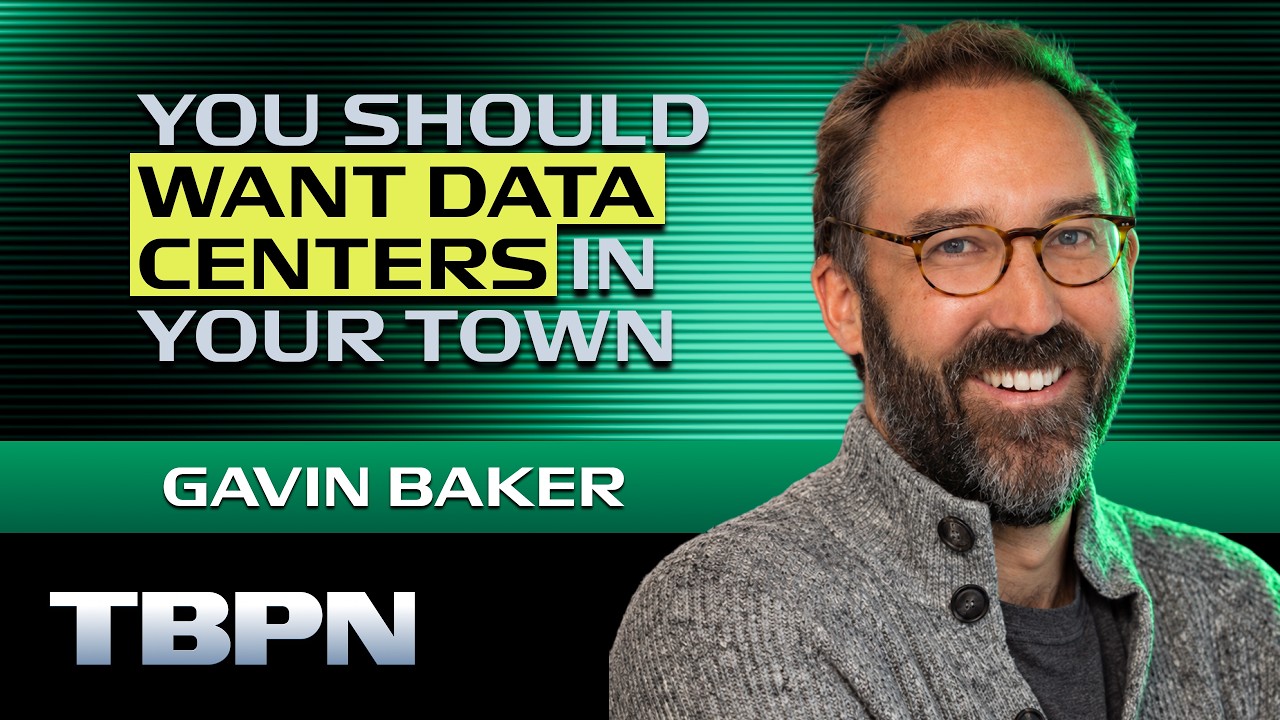
Baker Says Anthropic, SpaceX IPOs Will Unlock Private AI Capital
TBPN
Impending public listings by Anthropic and SpaceX will unfreeze regulatory illiquidity caps across major mutual funds, unleashing billions in fresh private investment for AI infrastructure as climbing compute prices enable operators to self-fund expansion.
Anthropic's S-1 registration statement reveals roughly $6–$7 billion in annualized run-rate revenue off of approximately $10 billion in cumulative capital burn, with customer contracts across half the Fortune 500 representing just 0.1% of their corporate expenses. (0:00)
GPU compute markets have transitioned from backwardation into contango, where forward prices for late 2027 delivery trade at a premium over 2026 spot rates despite massive incoming capacity additions. (11:53)
Open-weight inference and developer platforms like Fireworks AI, Baseten, Together AI, Modal, and Cognition have outpaced frontier labs in revenue growth velocity since June. (5:16)
Public listings for mega-cap private firms like SpaceX and Anthropic will unlock regulatory illiquidity headroom within traditional mutual funds, unlocking billions of dollars in new private AI capital. (34:38)
Detailed notes
## Background
Published on YouTube by TBPN on October 27, 2026, this video presents a full-length interview with Atreides Management Managing Partner Gavin Baker. According to the video description, the episode explores key takeaways from Anthropic's S-1 filing, surging demand for GPUs and rising compute costs, how public listings for Anthropic and SpaceX could free up capital for AI investments, the proliferation of AI agents, and why public markets are underestimating the AI expansion.
## TL;DR
Gavin Baker analyzes Anthropic's S-1 filing, arguing that its ~$10 billion cumulative burn, solid cash metrics, and broad enterprise base refute claims of a fragile, hyper-concentrated bubble and indicate that corporate adoption is still in its earliest stages. He explains that the compute market has shifted into contango—with forward GPU pricing through 2027 commanding premiums over spot rates—driven by physical execution bottlenecks and relentless demand across open-weight inference providers and agentic workflows like Grokbot. Looking forward, Baker argues that public listings for Anthropic and SpaceX will alleviate statutory illiquidity caps for mutual funds, unlocking vast new pools of capital to fund the next wave of private AI infrastructure alongside cash-flow-financed cloud capex.
## Atmosphere & style
The conversation crackles with high-energy, insider optimism, established immediately by Baker's upbeat posture and maintained through rapid-fire financial banter in the TBPN Ultradome. Baker combines deep institutional fluency in market plumbing with conversational, self-deprecating humor about his age and agent workflows, maintaining what he terms 'cultivated equanimity' toward skeptics. The dynamic feels like an intimate, front-row strategy session between seasoned market operators who view the AI and energy buildout as a tangible, high-stakes industrial renaissance rather than an abstract market fad.
## Bulletin
- [00:00](https://www.youtube.com/watch?v=crdg4X5BZPc&t=0s) Anthropic's S-1 registration statement reveals roughly $6–$7 billion in annualized run-rate revenue off of approximately $10 billion in cumulative capital burn, with customer contracts across half the Fortune 500 representing just 0.1% of their corporate expenses.
- [11:53](https://www.youtube.com/watch?v=crdg4X5BZPc&t=713s) GPU compute markets have transitioned from backwardation into contango, where forward prices for late 2027 delivery trade at a premium over 2026 spot rates despite massive incoming capacity additions.
- [05:16](https://www.youtube.com/watch?v=crdg4X5BZPc&t=316s) Open-weight inference and developer platforms like Fireworks AI, Baseten, Together AI, Modal, and Cognition have outpaced frontier labs in revenue growth velocity since June.
- [34:38](https://www.youtube.com/watch?v=crdg4X5BZPc&t=2078s) Public listings for mega-cap private firms like SpaceX and Anthropic will unlock regulatory illiquidity headroom within traditional mutual funds, unlocking billions of dollars in new private AI capital.
## Key takeaways
- [00:00](https://www.youtube.com/watch?v=crdg4X5BZPc&t=0s) Anthropic's S-1 filing outperformed market expectations, demonstrating solid unit economics and silencing critics who anticipated broken margins.
- [00:00](https://www.youtube.com/watch?v=crdg4X5BZPc&t=0s) Enterprise AI penetration remains in its infancy: while half the Fortune 500 has onboarded Anthropic, it accounts for only 0.1% of their aggregate corporate spending.
- [04:02](https://www.youtube.com/watch?v=crdg4X5BZPc&t=242s) Anthropic's revenue is backed by a broad enterprise base—including 250 accounts spending over $10 million and 11,000–12,000 accounts spending over $100,000—countering narratives of extreme customer concentration.
- [05:16](https://www.youtube.com/watch?v=crdg4X5BZPc&t=316s) Open-weight inference clouds are growing faster than OpenAI and Anthropic, with revenue expanding so fast during funding rounds that effective valuation multiples compress between handshake and closing.
- [07:44](https://www.youtube.com/watch?v=crdg4X5BZPc&t=464s) Pairing xAI models with Cursor's frontend engineering has turned Grokbot into a breakout enterprise productivity agent, allowing investors to run autonomous late-night research workflows.
- [11:53](https://www.youtube.com/watch?v=crdg4X5BZPc&t=713s) Compute forward curves have entered contango, with mid-to-late 2027 Blackwell cluster reservations pricing higher than mid-2026 spot capacity due to persistent demand overhangs.
- [15:06](https://www.youtube.com/watch?v=crdg4X5BZPc&t=906s) Standing up data center capacity mirrors running a Formula 1 team: inexperienced developers suffer 3-to-6-month activation delays, making modular solutions like Nvidia's DGX POD vital to reduce trapped working capital.
- [20:11](https://www.youtube.com/watch?v=crdg4X5BZPc&t=1211s) Frontier AI labs that locked in long-term compute agreements at $10 to $15 per watt prior to May 2026 now hold deeply in-the-money assets that can be flipped at 3x to 5x premiums onto the spot market.
- [20:11](https://www.youtube.com/watch?v=crdg4X5BZPc&t=1211s) Public equity markets continue to misprice the compute crunch, remaining oblivious to supply bottlenecks that private operators and frontier labs explicitly report.
- [21:37](https://www.youtube.com/watch?v=crdg4X5BZPc&t=1297s) AI in biology is already delivering immediate life-saving breakthroughs by screening 50-to-60-year-old compound libraries to treat rare pediatric diseases, despite the tech industry's persistent PR deficit.
- [23:14](https://www.youtube.com/watch?v=crdg4X5BZPc&t=1394s) The Tomorrow X Summit aims to democratize institutional research by providing 400 to 500 scholarships for independent creators on X, Substack, and Reddit to question top executives directly.
- [29:12](https://www.youtube.com/watch?v=crdg4X5BZPc&t=1752s) The nationwide AI data center buildout serves as a vital catalyst for American re-industrialization by driving foundational expansions of the national electrical grid.
- [31:26](https://www.youtube.com/watch?v=crdg4X5BZPc&t=1886s) Rare earth processing bottlenecks stem from dirty and complex refining processes rather than physical crust scarcity, creating high-upside investment opportunities in clean chemical refining.
- [34:38](https://www.youtube.com/watch?v=crdg4X5BZPc&t=2078s) Anticipated IPOs for SpaceX and Anthropic will free up statutory illiquid allocation limits across traditional mutual funds, recycling massive marginal capital into private venture rounds.
- [37:02](https://www.youtube.com/watch?v=crdg4X5BZPc&t=2222s) Surging cloud compute spot rates and contract repricings will allow hyperscalers and neoclouds to fund a much larger share of 2027 capex out of internal operating cash flows rather than external capital raises.
- [38:56](https://www.youtube.com/watch?v=crdg4X5BZPc&t=2336s) Direct retail equity distribution in transformative enterprises like SpaceX offers a superior wealth-generation mechanism for American society compared to bureaucratic foundation models.
## Detailed walkthrough
### [00:00](https://www.youtube.com/watch?v=crdg4X5BZPc&t=0s) Anthropic’s S-1 and Enterprise AI Penetration
The TBPN hosts welcome Gavin Baker, Managing Partner at Atreides Management—affectionately nicknamed "The Baconator"—into the TBPN Ultradome. Gavin sets an upbeat tone from the start, declaring, “I'm awesome, man. Happiness is a choice. I'm only ever fantastic, awesome, superb, phenomenal.” The hosts agree that the week calls for optimism, particularly in light of Anthropic filing its S-1 registration statement. Despite pre-filing market anxieties that hidden, broken unit economics would surface as a bombshell, the disclosure proved reassuring and effectively silenced outspoken AI skeptics like Ed Zitron.
Gavin views the filing as an undeniable beat against expectations. He emphasizes that Anthropic has only burned approximately $10 billion to achieve its current scale, while demonstrating encouraging profitability signals, cash generation, and unit economics. Annualizing its reported third-quarter performance points to around $6 billion to $7 billion in run-rate revenue. The most astonishing takeaway for Gavin, which he highlighted on X, is the asymmetry between adoption and corporate wallet share: while roughly half of the Fortune 500 has onboarded Anthropic, those contracts represent merely 0.1% of their collective corporate expenses.
The hosts marvel at the duality of that metric. On one hand, securing half of the Fortune 500 or S&P 500 as customers within just a few years is an extraordinary feat for a young company. On the other hand, it exposes how much of the enterprise landscape remains untapped. While some non-adopters may be committed to Google Cloud or OpenAI, the hosts observe that a huge portion of the enterprise world is still struggling through internal adoption hiccups, governance questions, and the basics of deploying models into production workflows. Gavin agrees that enterprise diffusion is still in its infancy, noting, “Yeah, very early. I mean, if anything, maybe earlier than I thought we were.”
- **Anthropic Cumulative Capital Burn:** ~$10 billion to reach scale.
- **Reported Run-Rate / Scale:** Approximately $6–$7 billion annualized based on Q3 figures.
- **Enterprise Penetration:** Roughly 50% of the Fortune 500 have adopted Anthropic, yet it accounts for only ~0.1% of their total corporate expenses.
---
[04:02](https://www.youtube.com/watch?v=crdg4X5BZPc&t=242s) Customer Concentration vs. Diversification in the S-1
The discussion turns to a prominent macro critique: whether the AI trade is an artificial bubble propelled by an extreme power-law concentration, where a handful of hyper-obsessed tech companies in San Francisco drive virtually all compute spending while the broader corporate world lags behind. The hosts draw parallels to the early era of social media advertising, where top spenders subsidized early growth, and cite Ramp corporate card data suggesting that the top 1% of enterprise customers account for roughly 90% of aggregate AI dollar spend.
Gavin pushes back against the narrative that Anthropic relies on a fragile, hyper-concentrated customer base, pointing directly to the cold disclosures in the S-1. Recent press narratives—including an article in *The New York Times* suggesting that 80% of Anthropic's revenue came from just eight clients—proved unfounded. Gavin points out, “In the S-1 there are only 250 accounts spending more than $10 million.” Rather than a tiny cabal like Meta pouring in tens of billions across a few monolithic accounts, Anthropic demonstrated a surprisingly broad foundation.
The hosts add that the filing outlines between 11,000 and 12,000 enterprise accounts spending over $100,000 annually. Gavin notes that while Ramp's spend sample might accurately reflect broader cross-industry card transactions, Anthropic’s official regulatory disclosures provide a far more authoritative view of frontier enterprise revenue, revealing genuine breadth across mid-tier and upper-tier commercial accounts.
```mermaid
flowchart TD
accTitle: Anthropic Customer Account Distribution
accDescr: Visualizing the enterprise customer tiers disclosed in Anthropic's S-1 filing.
subgraph S1["Anthropic S-1 Enterprise Tiers"]
TierLarge["~250 Enterprise Accounts<br/>Spending >$10M annually"]
TierMid["11,000 - 12,000 Accounts<br/>Spending >$100k annually"]
TierBroad["Half of Fortune 500<br/>Only ~0.1% of corporate expenses"]
end
TierLarge --- TierMid
TierMid --- TierBroad
```
---
[05:16](https://www.youtube.com/watch?v=crdg4X5BZPc&t=316s) The Surge in Open-Weight Inference Clouds and the Fireworks Funding Story
Gavin pivots to broader ecosystem trends, observing a major acceleration in the AI infrastructure landscape that took off in June. While OpenAI re-accelerated over the summer and Anthropic demonstrated massive momentum heading into the autumn, the fastest-growing cohort in tech has actually been the open-weight inference and developer platforms—including Fireworks AI, Baseten, Together AI, Modal, and Cognition. Gavin highlights that these open-weight-first infrastructure players are growing at rates that outstrip both OpenAI and Anthropic. Anthropic even left its October ARR placeholder blank in initial S-1 drafts, a telltale sign that leadership expected another strong month-over-month jump, though Gavin notes it will be healthy for markets to transition away from frantic monthly ARR updates.
The hosts point out that Silicon Valley and West Coast private market investors have witnessed this firsthand: during fundraising rounds, these inference startups routinely grew by double-digit percentages between receiving their first term sheet and the initial close, leaving East Coast investors largely unaware of the sheer speed of compute demand.
Gavin validates this dynamic with a firsthand account from Atreides Management’s recent investment:
> “Well, my firm Atreides led the last Fireworks round and it was actually hard to price it because they were growing so fast. Like we—I thought we had a handshake. You're like, 'Well, we've increased revenue. Yesterday's price is not today's price.' And you're like, please like, let's just get the deal done. I mean literally, it's like the valuation was going—the multiple was effectively going down every day.”
- **Fastest-Growing AI Segment:** Open-weight inference and developer cloud providers (Fireworks, Baseten, Together, Modal, Cognition).
- **Growth Velocity:** Growth rates outpace frontier labs (OpenAI and Anthropic), driven by surging demand for cost-effective, dedicated open-weight model serving.
- **Deal Dynamics:** Valuation multiples compressed in real time during the Fireworks fundraise because revenue grew so rapidly between the initial handshake and signing.
---
[07:44](https://www.youtube.com/watch?v=crdg4X5BZPc&t=464s) Cursor, SpaceX, and the Utility of Grokbot Agents
The hosts examine the drivers behind this inference boom. Earlier in the year, developer tools like Cursor generated huge compute demand across specialized inference clouds. However, ex-Cursor growth has remained extraordinary, aided by tectonic shifts in the ecosystem—most notably SpaceX insourcing Cursor compute following corporate integrations. The hosts note that while xAI's underlying frontier models have not always posted market-dominating benchmark scores, pairing xAI models with Cursor's elite design, product polish, and distribution has turned Grokbot into a breakout tool, leaving behind earlier political baggage and corporate bans.
Asked what is driving this rapid adoption, Gavin shares his personal experience as an active power user. Despite earlier attempts to hack together personal coding setups using tools like Claude Code—which he jokingly chalks up to user error as a 50-year-old investor—nothing has matched the frictionless utility of Grokbot.
Gavin delivers an emphatic endorsement of the tool:
> “I mean, as a user, Grokbot is the most impactful AI product to me and to our firm that we've had yet. That we've had yet. Like I, you know, I glued together all this stuff with Claude Code and it was really—I'm sure it was user error on my part, you know, 50 years old, doing my best. But Grokbot, it just makes it so easy. I think I'm up to like 17 Grokbots and every day I think of a new one to add.”
The conversation shifts to how modern knowledge workers structure their digital workforce. The hosts observe that Gavin is essentially building an internal management hierarchy of specialized bots—a digital "Senior Grokbot" layer—prompting a broader discussion on how executives divide AI agents across professional investment analysis and personal life workflows.
[09:48](https://www.youtube.com/watch?v=crdg4X5BZPc&t=588s) Executive Assistant Privilege and AI Agents
The conversation opens with an exploration of whether personal and professional productivity tools will merge into a single do-it-all AI agent, or if individuals will maintain distinct products for different contexts—such as Grokbot or Claude Code for work, and Instinct or Muse for personal use. Asked how he grapples with these options, Gavin Baker remarks on his own unique position: “Well, I guess you would say I I guess I have executive assistant privilege because my assistant Susan is exceptional.” While he has downloaded Instinct and experimented with Muse, he finds those tools less critical personally because Susan handles his executive life.
On the professional investing side, however, Baker notes that AI agents have proven indispensable: “I mean Grokbot has just been transformative for me.” In investing, the game revolves around routing the right information to the right person at the right time, a task Grokbot handles with precision. The host agrees, highlighting the emotional relief of kicking off a complex research project at 10 p.m. on a Sunday. Rather than crossing boundaries by calling a subordinate after a late-night shower thought and forcing them to grind for six hours, an investor can instruct an AI agent to consume a million tokens sizing a niche market. Baker notes his own leadership boundary: while team members in trading are always welcome to call him on weekends, he makes a point never to call them.
```mermaid
flowchart TD
accTitle: AI Agent Workflows vs Human Delegation
accDescr: Diagram illustrating how personal, executive, and investing tasks are handled via human assistants versus autonomous AI agents.
subgraph PersonalLife["Executive & Personal Scheduling"]
Susan["Executive Assistant (Susan)"]
PersonalApps["Personal Agents (Instinct / Muse)"]
end
subgraph ProfessionalInvesting["Investing & Professional Workflows"]
Grok["Grokbot / Professional Agents"]
NightResearch["Late-Night Sunday Research"]
end
[11:53](https://www.youtube.com/watch?v=crdg4X5BZPc&t=713s) Compute Contango, Jevons Paradox, and Forward GPU Pricing
Transitioning to the broader AI infrastructure landscape, the hosts point to a week dominated by Anthropic’s S-1 filing, following a week consumed by supply forecasts—debating how many gigawatts SpaceX and others will bring online next year and whether Jevons paradox will allow the industry to absorb it all. Baker observes that while commentators easily recite Jevons paradox, public perception struggles to internalize it. In reality, the spot market for compute has tightened dramatically, with GPU rental prices climbing nearly every single day throughout October.
Baker pokes fun at macroeconomic and commodity commentators on X who try to apply complex frameworks to the sector: “So for you know all the commodity experts who are focused on backwardation and what that implied I got news for you. We're not in backwardation anymore.” Citing Carmen Lee, founder of Silicon Data (a firm Baker’s fund has invested in and views as the definitive authority), Baker points out her announcement at GTC that compute has entered **contango**—meaning forward prices exceed current spot rates. Portfolio companies securing 4,000 Nvidia Blackwell GPUs for mid-2026 are stunned to discover that booking another 4,000-chip cluster for September 2027 carries a steep price premium rather than a discount:
- Silicon Data’s Carmen Lee announced at GTC that the compute curve has officially shifted from backwardation into contango.
- Startups booking 4,000-GPU Blackwell clusters for May/June 2026 face significantly higher pricing when trying to contract an additional 4,000 GPUs for late 2027.
- Despite widespread awareness of upcoming power and silicon supply, market demand continues to outpace available compute capacity well into 2027.
---
[15:06](https://www.youtube.com/watch?v=crdg4X5BZPc&t=906s) The Formula 1 Analogy, Deployment Friction, and DGX PODs
Discussing how this capacity will be built and financed, Baker highlights a healthy market shakeout that favors competent operators capable of securing customer prepayments rather than relying on risky debt. He defends CoreWeave as an exceptional technical operator—noting they run clusters reliably and hold the SemiAnalysis diamond tier—but explains that their current market pressure stems from business terms: “They just sadly locked in a vast amount of compute and long-term contracts that are now way way under market.” In contrast, Elon Musk reasoned from first principles that compute prices would keep climbing, choosing to sell into the spot market, capture massive prepayments, and achieve capital payback periods well under a single year.
Baker compares the operational rigor required to bring gigawatts of compute online to running a top-tier motorsport operation: “bringing on the power, standing up a cluster, it's like running a Formula 1 team.” Inexperienced players who simply acquire land, secure a power interconnection, and obtain a zero-down offtake agreement are finding that execution is brutal. If an operator lacks the specialized personnel to tune cars, change tires, and replace rear wings mid-race, the operation stalls. While top-tier operators like CoreWeave, Crusoe, Nebius, SpaceX, and the major hyperscalers have demonstrated physical execution, many others let clusters sit idle for three to six months while attempting to energize them:
> “And right now when you get the GPUs, you know, maybe if you're if you're SpaceX and you're really really exceptional at execution in the physical world, you can get them energized quickly. But a lot of people it takes them six months you know three months six months to get them energized really get them working and if we can through you know this new product from Jensen get that time down I think that's that's also healthy because that effectively takes a lot of working capital out of the market...”
Baker underscores Nvidia’s DGX POD announcement at GTC Berlin—a pre-assembled, seven-rack modular unit—as a critical hardware breakthrough. By turning cluster activation into a plug-and-play process, it drastically compresses the months-long setup lag that otherwise traps hundreds of billions of dollars in non-revenue-generating working capital.
---
[19:42](https://www.youtube.com/watch?v=crdg4X5BZPc&t=1182s) Neolabs Offloading Contracts into Spot
The conversation turns to the evolving dynamic between frontier AI labs ("Neolabs") and specialized cloud providers ("Neoclouds"). The host asks whether rumors of labs pivoting into cloud providers simply mean they intend to take multi-year fixed offtake contracts they previously signed and flip that excess capacity directly onto the soaring spot market.
Baker agrees with that assessment, pointing to comments made by OpenAI CFO Sarah Friar. Friar remarked that while critics initially mocked the lab for signing massive, multi-year compute commitments, those long-term contracts are turning into immensely valuable assets in an environment where compute prices continue to rise.
[20:11](https://www.youtube.com/watch?v=crdg4X5BZPc&t=1211s) The Compute Contango and Public Market Blind Spots
Gavin Baker emphasizes that long-term compute contracts locked in prior to May 2026 have proven to be extraordinarily lucrative investments. Companies that contracted power and compute at historical baselines around $10 to $15 a watt are now holding assets that could immediately be flipped at a three, four, or five times premium in the current market. Reflecting on remarks made by Carmen Lee, Baker highlights that the compute forward curve is trading in deep contango. The market is not merely experiencing a temporary crunch in the spot market today; securing and bringing a new cluster online in mid-to-late 2027 commands truly vast sums of capital.
Despite these clear market signals, public equity markets appear completely detached from this reality. Baker points out that while the public markets have not fully digested the trend, the information is publicly available across inference cloud press releases, public statements from leaders like Sarah Friar, and industry commentary across social channels confirming how virtually impossible it is to procure compute into 2027. Speaking on this disconnect between market reality and investor sentiment, Gavin Baker notes: “So, it's all out there, but I think for whatever reason, it's not legible to the public markets.”
- **Historical pricing vs. current value**: Contracts secured prior to May 2026 at roughly $10 to $15 per watt are sitting deep in the money, capable of commanding a 3x to 5x premium today.
- **Forward curve in contango**: Future compute delivery through mid-to-late 2027 remains exceptionally tight and expensive despite massive planned capacity additions.
- **Public vs. private legibility**: Public markets continue to overlook compute supply bottlenecks that cloud operators and private founders explicitly report.
---
[21:37](https://www.youtube.com/watch?v=crdg4X5BZPc&t=1297s) AI in Biology, Drug Repurposing, and the Industry’s PR Deficit
When questioned about whether the heavy infrastructure investments into biological AI will suffer from protracted multi-year timelines before generating commercial drug revenues, Baker argues that immediate value is already being unlocked through compound repurposing rather than de novo discovery alone. While traditional drug pipelines take years and novel regulatory frameworks like Montana’s new drug initiative are beginning to emerge, machine learning has already demonstrated the ability to screen existing compound libraries—some dating back 50 or 60 years—and identify cures for devastating rare diseases affecting thousands of children.
Baker recounts that a close friend recently used AI to identify a cure for a rare pediatric disease, underscoring that AI is already actively saving human lives. However, the broader technology sector has completely failed to communicate these humanitarian breakthroughs to the public. As the hosts joke about tech needing to emulate the popularity of big pharma, Baker laments the industry’s narrative shortcomings: “And I do think, you know, the AI industry, it's, you know, they're like negative five out of 100 from like a PR perspective.”
```mermaid
flowchart LR
accTitle: AI Drug Discovery and Repurposing Impact
accDescr: Diagram contrasting traditional drug discovery timelines with AI-driven compound repurposing.
subgraph Repurposing["Immediate AI Unlock"]
A["Existing Compound Libraries<br>(50-60 Year Old Drugs)"] --> B["AI Molecular Screening"]
B --> C["Cures for Rare Pediatric Diseases<br>(~10,000 Kids/Year)"]
end
subgraph Traditional["Long-Horizon Development"]
D["De Novo Drug Design"] --> E["Multi-Year Clinical Pipelines"]
E --> F["Commercial Market Revenue"]
end
```
---
[23:14](https://www.youtube.com/watch?v=crdg4X5BZPc&t=1394s) The Tomorrow X Summit and Democratizing Financial Access
The conversation shifts to the upcoming Tomorrow X Summit taking place on November 17th and 18th. Baker and the hosts marvel at the gathered roster, which includes industry heavyweights such as Jensen Huang, David Solomon, Marc Rowan, Lisa Su, and Stanley Druckenmiller, alongside key startup founders like Lynn Deng from Fireworks AI, Chase Lochmiller from Crusoe, Scott Wu from Cognition, Max from Lovable, and Tuhin Roy from Base10 Partners. Addressing the flood of dozens of daily texts and emails asking for invitations, Baker clarifies that the event is open to the public via website registration at tomorrowxsummit.com, subject only to necessary security screenings given the high-profile speaker lineup.
Baker explains that the underlying mission of Tomorrow X is to break down the information barriers separating institutional insiders from individual investors. For this inaugural edition, the conference has provided roughly 400 to 500 scholarships for active independent financial contributors across X, Substack, and Reddit. These creators are given dedicated breakout sessions directly with corporate management teams, enabling them to ask critical questions and publish their findings for their own audiences. Describing his desire for open, polite debate, Gavin Baker emphasizes: “And you don't have to be bullish. You know, I want, you know, I love skeptics. I love bears. You just, you just have to be polite and nice and constructive.”
- **Conference Dates**: November 17–18.
- **Headliners**: Jensen Huang, David Solomon, Marc Rowan, Lisa Su, Stanley Druckenmiller, and unannounced speakers of comparable stature.
- **Private Company Leaders**: Lynn (Fireworks AI), Chase Lochmiller (Crusoe Energy), Scott Wu (Cognition), Max (Lovable), and Tuhin (Base10 Partners).
- **Retail & Creator Access**: 400–500 complimentary scholarships for content creators across X, Reddit, and Substack with direct management access.
---
[26:50](https://www.youtube.com/watch?v=crdg4X5BZPc&t=1610s) Handling Social Media Criticism and Cultivating Equanimity
Asked how he handles the intense weekly scrutiny, hostility, and polarized reactions on social media, Baker cites his co-organizer Antonio Gracias, who describes participating on X as an exercise in "cultivated equanimity." Baker insists he does not view social platforms as a forum to prove himself right, but rather as an intellectual filtering mechanism to stress-test his optimistic thesis against credible bearish arguments. As long as criticism is substantive, he actively seeks out counter-theses that challenge his baseline assumptions.
As an illustration of productive bearish input, Baker highlights an insightful post by a private equity analyst examining Anthropic’s compute utilization. The analyst observed that while Anthropic dedicating 74% of its compute fleet to model training appears bullish on commercial pipeline capacity, it also presents a major downside risk: if training compute demand ever slows down, that massive 74% compute reserve could suddenly flood the market as inference supply, crushing spot pricing. Describing his posture toward engagement, Gavin Baker explains: “Antonio, who I'm doing the conference with, he says, 'Being on X is an exercise in cultivated equanimity.' I don't take any of it personally. I'm not on X to be right.”
---
[29:12](https://www.youtube.com/watch?v=crdg4X5BZPc&t=1752s) American Re-Industrialization and the Real Economy of AI
In the final minutes of the segment, Baker reflects on his broader mission to articulate a tangible, optimistic vision of AI for the American public. He addresses common community pushback against data center construction, noting the irony of critics who claim they will only accept facilities when the wealthiest areas do so; Loudoun County, Virginia—home to the famed US-East cloud availability zone—is already the wealthiest county in the United States and has the highest concentration of data centers per capita.
Baker argues that the AI infrastructure buildout represents a generational economic engine for everyday blue-collar workers and small towns across the country. Crucially, the compute boom is forcing a massive expansion of national electrical grid generation, providing the essential foundation required for broader domestic manufacturing. Articulating the foundational link between energy buildouts and economic renewal, Gavin Baker insists: “We're re-industrializing America. We're, you know, massively increasing our electrical generation capacity, which is you cannot re-industrialize without power. That's job number one.”
[30:32](https://www.youtube.com/watch?v=crdg4X5BZPc&t=1832s) Calling Balls and Strikes on Anthropic and the Value of Stances on X
Gavin Baker explains his philosophy as an investor and public voice, stating that he tries to highlight positive developments while remaining strictly objective. He points to his track record covering Anthropic: during the summer, he called out that they were losing market share, but by October, the data showed them reaccelerating and taking share again, and their S-1 turned out to be an upside surprise. Emphasizing his objective mandate, Gavin notes: “I'm trying to call balls and strikes because my job is to just get it right.”
The TBPN hosts remark on the social media dynamic on X (formerly Twitter), where users frequently get flustered by strong takes. They point out that public debate would be excruciatingly dull if commentators only offered equivocal hedge statements like "it might be this or that." Instead, taking a firm stand—whether claiming "it's over" or "we're back"—serves as the catalyst for real, substantive debate.
[31:26](https://www.youtube.com/watch?v=crdg4X5BZPc&t=1886s) Deep Tech Stack: Gold Bugs, Asteroid Mining, and Refining Rare Earths
The conversation pivots to how deep Baker looks down the AI physical stack, comparing direct lab investments to holding raw commodities like copper or energy infrastructure. Baker notes that in his previous career at Fidelity, he ran a diversified fund for nine years where he invested heavily across natural resources and energy. He recounts holding marketing meetings with gold analysts and always keeping gold for portfolio construction, but he cannot resist poking fun at gold diehards. “I've never gotten more hate than from the gold crowd about the idea of asteroid mining in the asteroid supply,” Baker laughs, noting how viscerally threatened gold bulls are by the prospect of technological disruption, much like how lab-grown diamonds disrupted natural diamond holdings.
Turning back to the AI supply chain, Baker explains that while his firm evaluates industrial and power infrastructure, they have kept direct commodity exposure restrained, preferring targeted private market investments. Specifically, they focus on rare earths. He explains that rare earth minerals are not actually scarce in the earth's crust; rather, the process of refining them is exceptionally dirty and complex. Consequently, his firm backed a company pioneering a cleaner chemical refining process, highlighting that DARPA has also deployed smart programs around this bottleneck. Baker explains that as an investor, he casts a wide net across natural resources because weak signals often appear in unexpected places, even if he concentrates portfolio risk only where the firm holds a definitive competitive edge.
[34:38](https://www.youtube.com/watch?v=crdg4X5BZPc&t=2078s) The Marginal Capital Decider and Unlocking Mutual Fund Liquidity
The hosts ask how the financing of the massive AI buildout will evolve toward 2027 as the marginal capital deciders shift from seed-stage VCs and growth funds to massive institutional entities like mutual funds, insurance balance sheets, and sovereign wealth funds. Baker highlights an underappreciated structural mechanic governing traditional American mutual funds: strict regulatory limits on illiquid holdings.
```mermaid
flowchart TD
accTitle: Mutual Fund Private Capacity Unlock
accDescr: Flowchart illustrating how SpaceX and Anthropic IPOs unlock illiquid capacity for mutual funds to invest in AI private markets.
subgraph LockedState["Constrained Capital"]
PF["Mutual Fund Portfolios"] -->|"Hold illiquid pre-IPO stock"| IlliquidCap["Statutory Illiquidity Cap Reached"]
IlliquidCap -->|"Limits new investments"| PrivMarketBlock["Frozen Private Tech Deployments"]
end
subgraph LiquidityEvent["Public Listings & Exits"]
IPO1["SpaceX IPO"]
IPO2["Anthropic IPO"]
IPO1 & IPO2 -->|"Convert to public liquid shares"| FreeFloat["Lockup Expirations"]
end
subgraph UnleashedCapital["Marginal Capital Redeployment"]
FreeFloat -->|"Frees regulatory headroom"| NewCap["Billions in New Private Capacity"]
NewCap -->|"Reinvested into"| NextGen["Next-Gen AI & Infra Buildout"]
end
Because mega-cap private holdings eat up illiquid capacity, public liquidity events will radically shift the supply of private growth capital. “SpaceX and Anthropic going public is actually going to free up a huge amount of buying power in private markets once those are fully unlocked,” Baker argues. Once those positions become fully unlocked and liquid, legacy asset managers—such as Capital Research, T. Rowe Price, Morgan Stanley Investment Management, Goldman Sachs Asset Management, and Franklin Templeton—will have immense capacity restored to back private rounds. Simultaneously, sovereign wealth funds across the Gulf Cooperation Council (GCC)—specifically UAE vehicles like Mubadala and MGX—remain aggressive, front-footed backers, underscored by recent mega-deals like Apollo taking a stake in Mubadala and Tradesman/Valor co-leading Crusoe with Mubadala.
[37:02](https://www.youtube.com/watch?v=crdg4X5BZPc&t=2222s) Repricing Cloud Capacity and Cash-Flow-Financed Capex
Beyond external fund injections, Baker predicts that the necessity for third-party financing will soon diminish because AI compute is currently underpriced across the hyperscalers and neoclouds. Most early compute contracts were struck well below subsequent market clearing levels. As those legacy multi-year agreements expire and reprice upward—and as operators mix in more high-margin spot instances (mirroring CoreWeave's strategy)—cloud infrastructure revenue and operating cash flows will surge dramatically.
- Clouds experienced massive revenue acceleration last quarter, which Baker expects to compound steadily across hyperscalers and neoclouds alike.
- Surging high-margin compute contracts drop straight to operating cash flow, arming these companies with internal capital.
- Baker anticipates that much more of the 2027 infrastructure buildout will be funded out of internal cash flow rather than external debt or equity raises, suggesting that external financing needs may already be nearing their peak.
Reflecting on his stance, Baker emphasizes that if the underlying fundamentals change, he will adapt immediately, but his aim remains to explain why the technology is a net positive for everyday Americans.
[38:56](https://www.youtube.com/watch?v=crdg4X5BZPc&t=2336s) Democratizing Tech Wealth: Direct Share Ownership vs. Bureaucracies
The hosts discuss how public sentiment around AI labs on platforms like X might normalize once Anthropic and OpenAI complete public listings. Today, only an insular circle of roughly 50,000 private tech insiders hold direct financial exposure, fueling polarized, binary debates. Once everyday retail investors and middle-of-the-road market participants gain liquid exposure through standard brokerage accounts, the public discourse is likely to become far less extreme.
Baker enthusiastically supports direct broad-based equity distribution over traditional philanthropic foundations. He praises Elon Musk's goal of ensuring every American child has a share of SpaceX, as well as similar wealth-distribution initiatives championed by Michael Dell and Brad Gerstner. Bypassing administrative bodies resonates far more with Baker: “I think that's way better for America than setting up some foundation that a board or a bunch of bureaucrats are going to decide how to allocate the money; just give people the money.” Empowering individual citizens through direct equity stakes, he concludes, represents a superior path for both American society and capitalism.
[40:42](https://www.youtube.com/watch?v=crdg4X5BZPc&t=2442s) Preparing Retail Share Access Ahead of the SpaceX Liquidity Wave
The conversation concludes with an emphasis on having retail distribution infrastructure fully tested, implemented, and rolled out before massive private market liquidity events occur—most notably ahead of an eventual public offering for SpaceX. Rather than waiting around for policymakers to build institutional pathways or lamenting that there is no public mechanism to distribute equity broadly, the speaker points out that the software and platforms already exist, function seamlessly, and are readily available for anyone to download directly from the app store. This enables ordinary retail investors to participate in value creation directly without institutional gatekeeping. As one host summarizes the philosophy: “Just give give people the money. Give everybody a stake in capitalism.”
With strong agreement around expanding everyday participation in the upside of major private tech enterprises, the hosts wrap up the episode by thanking Gavin Baker and teasing their upcoming appearance at the Tomorrow Summit, taking place November 17th and 18th in Austin, Texas, before signing off.
- **Infrastructure readiness:** Retail share distribution tools need to be battle-tested and fully deployed in advance of large-scale IPOs so any individual who wants to participate can do so immediately.
- **Event promotion:** The hosts and guest will be attending the Tomorrow Summit on November 17th–18th in Austin, Texas (tomorrowsummit.com).
## Notable quotes
> [34:38](https://www.youtube.com/watch?v=crdg4X5BZPc&t=2078s) SpaceX and Anthropic going public is actually going to free up a huge amount of buying power in private markets once those are fully unlocked — Gavin Baker
> [26:50](https://www.youtube.com/watch?v=crdg4X5BZPc&t=1610s) Being on X is an exercise in cultivated equanimity. I don't take any of it personally. I'm not on X to be right. — Gavin Baker
> [30:32](https://www.youtube.com/watch?v=crdg4X5BZPc&t=1832s) I'm trying to call balls and strikes because my job is to just get it right. — Gavin Baker
> [07:44](https://www.youtube.com/watch?v=crdg4X5BZPc&t=464s) Grokbot is the most impactful AI product to me and to our firm that we've had yet. — Gavin Baker
> [00:00](https://www.youtube.com/watch?v=crdg4X5BZPc&t=0s) Happiness is a choice. I'm only ever fantastic, awesome, superb, phenomenal. — Gavin Baker
## Mentioned
Gavin Baker, Anthropic, SpaceX, OpenAI, Atreides Management, Ed Zitron, Meta, Ramp, Fireworks AI, Baseten, Together AI, Modal, Cognition, Cursor, xAI, Grokbot, Claude Code, Instinct, Muse, Carmen Lee, Silicon Data, CoreWeave, Elon Musk, Crusoe Energy, Nebius, Nvidia, Jensen Huang, Sarah Friar, Tomorrow X Summit, David Solomon, Marc Rowan, Lisa Su, Stanley Druckenmiller, Lynn Deng, Chase Lochmiller, Scott Wu, Max, Lovable, Tuhin Roy, Base10 Partners, Antonio Gracias, Fidelity, DARPA, Capital Research, T. Rowe Price, Morgan Stanley Investment Management, Goldman Sachs Asset Management, Franklin Templeton, Mubadala, MGX, Apollo, Tradesman, Valor, Michael Dell, Brad Gerstner, TBPN
## Video description
This is our full interview with Gavin Baker.
We discuss his biggest takeaways from Anthropic's S-1, the growing demand for GPUs and why compute prices keep rising, how SpaceX and Anthropic going public could unlock more capital for AI investment, the rise of AI agents, and why he believes Wall Street is underestimating the AI boom.
TBPN is made possible by:
Ramp - https://ramp.com
Public - https://public.com
Cisco - https://www.cisco.com
Console - https://www.console.com
CrowdStrike - https://www.crowdstrike.com
Figma - https://www.figma.com
MongoDB - https://www.mongodb.com
NYSE - https://www.nyse.com
Railway - https://railway.com
Shopify - https://www.shopify.com/
Codex - http://openAI.com/codex
Atreides Management founder Gavin Baker argues that Anthropic's S-1 registration filing dispels market fears of extreme customer concentration while highlighting the nascent state of enterprise AI adoption, alongside a compute market that has structurally shifted into contango.
Anthropic's S-1 and Enterprise AI Diffusion (0:00)
Anthropic's S-1 registration statement revealed approximately $6 billion to $7 billion in annualized revenue based on third-quarter results against roughly $10 billion in cumulative capital burn. Baker highlights that while approximately half of the Fortune 500 has onboarded Anthropic, those contracts represent merely 0.1% of their aggregate corporate expenses, underscoring that corporate deployment remains in its earliest stages.
The filing also countered reporting that suggested extreme revenue concentration. While media reports had claimed that eight accounts generated 80% of Anthropic's revenue, the disclosures showed approximately 250 enterprise accounts spending more than $10 million annually, and between 11,000 and 12,000 accounts spending over $100,000. Baker argues this demonstrates a broad foundation of mid- and upper-tier enterprise clients rather than an artificial bubble sustained by a few Silicon Valley tech firms.
Inference Acceleration and Realized Agent Utility (5:16)
Beyond frontier model developers, Baker identifies open-weight inference and developer platforms—such as Fireworks AI, Baseten, Together AI, Modal, and Cognition—as the fastest-growing segment in technology. Demand for open-weight serving has expanded so rapidly that revenue growth compressed valuation multiples between initial handshake terms and final closes during recent fundraises, including Atreides' investment in Fireworks AI.
Simultaneously, enterprise utility is crystalizing around polished developer environments and automated agents. Baker highlights the combination of Cursor and xAI's Grokbot, noting that deploying specialized bot workflows has transformed his investment research by executing off-hours data processing and market sizing without requiring human staff interventions.
Compute Contango and the Physical Execution Moat (11:53)
Citing Silicon Data founder Carmen Lee, Baker observes that the compute pricing curve has transitioned from backwardation into contango, where forward prices exceed spot rates. Securing Nvidia Blackwell clusters for mid-2026 is currently cheaper than contracting additional capacity for late 2027. Consequently, older contracts locked in prior to May 2026 at $10 to $15 per watt now represent assets that can command a three-to-five-times premium, prompting frontier labs to monetize surplus contracted capacity directly into the spot market.
Baker likens data center operations to Formula 1 racing, pointing out that inexperienced operators often face three-to-six-month activation delays trying to energize hardware. Hardware innovations like Nvidia's modular, pre-assembled DGX POD units aim to compress this deployment lag, reducing the massive amounts of working capital otherwise trapped in non-operational clusters.
Capital Plumbing and Cash-Flow-Financed Infrastructure (34:38)
Addressing the financing requirements for ongoing infrastructure buildouts into 2027, Baker identifies a regulatory dynamic in traditional American mutual funds. Institutional asset managers like Capital Research, T. Rowe Price, and Morgan Stanley Investment Management face strict statutory caps on illiquid pre-IPO holdings. When mega-cap private companies such as SpaceX and Anthropic complete public offerings, these holdings become liquid, freeing substantial balance-sheet capacity for mutual funds to reinvest into new private venture and infrastructure rounds.
Furthermore, Baker forecasts that the need for external debt and equity financing will moderate. As historical, below-market cloud contracts expire and reprice upward alongside high-margin spot instances, hyperscalers and specialized clouds will generate significantly higher operating cash flows, allowing them to fund an increasing portion of future infrastructure capital expenditures internally.
While public markets remain skeptical of compute supply and enterprise adoption, Baker contends that structural constraints, operational moats, and forward compute contango reflect persistent, unmet enterprise demand that will increasingly be self-funded through operating cash flows.
## Background
本期内容由科技播客频道 TBPN 于 2026 年 10 月 27 日发布在 YouTube 平台上。视频记录了对 Atreides Management 掌门人 Gavin Baker 的完整深度专访,围绕 Anthropic 的 S-1 招股书、GPU 算力定价逆转与远期升水、SpaceX 与 Anthropic 上市对 AI 资本生态的解锁,以及华尔街对当下 AI 繁荣的低估等核心议题展开探讨。
## TL;DR
Gavin Baker 深入剖析了 Anthropic S-1 招股书所披露的高资本效率与企业端极低渗透率背后的巨大增长潜力,并破除了其营收高度集中的市场谣言。他指出算力租赁市场已从现货溢价彻底转向期货升水(Contango),2026 至 2027 年优质算力依然极度紧缺,推动云厂商上调合同定价并大幅扩张现金流。此外,他还阐述了开源权重推理生态的爆发、AI Agent 改造投研工作流的实践,并预测 SpaceX 和 Anthropic 等巨头的公开上市将盘活巨额私募资本,助力全社会共享技术红利与实现投资民主化。
## Atmosphere & style
整场对谈快节奏且干货极度密集,充溢着资深买方投资人特有的敏锐、务实与底气十足的自信。主持人与嘉宾配合默契,在严肃硬核的财务与基础设施推演中穿插着极客式的幽默调侃,既有对二级市场认知脱节的犀利剖析,也有对网络舆论从容不迫的修养表达。听感上犹如置身一场顶级对冲基金的高壁垒闭门交流,在客观理性与对前沿科技再工业化的宏大乐观愿景之间碰撞出强烈的思想张力。
## Bulletin
- [00:00](https://www.youtube.com/watch?v=crdg4X5BZPc&t=0s) Anthropic S-1 招股书披露其年化经常性收入(ARR)已达 60 至 70 亿美元且累计仅消耗约 100 亿美元,尽管已渗透 50% 的财富 500 强企业,但在其总支出中仅占 0.1%,商业化落地仍处极早期。
- [11:49](https://www.youtube.com/watch?v=crdg4X5BZPc&t=709s) 算力租赁市场打破传统现货溢价模式,正式进入“期货升水(Contango)”,2026 至 2027 年的远期算力集群报价持续攀升,破除了产能过剩导致算力崩盘的预期。
- [19:42](https://www.youtube.com/watch?v=crdg4X5BZPc&t=1182s) 2026 年 5 月前以 10 至 15 美元/瓦锁定的长期算力合约在现货市场上出现 3 至 5 倍的转售暴利溢价,推动 Neolabs 转售算力额度成为具备套利能力的 Neoclouds。
- [37:02](https://www.youtube.com/watch?v=crdg4X5BZPc&t=2222s) 随着早期低价长期合同到期并向上重定价,加上高利润现货算力并网,头部云厂商营收与利润加速释放,2027 年前后的 AI 基建建设预计将主要依靠内生现金流驱动,外部融资顶峰将至。
## Key takeaways
- [02:40](https://www.youtube.com/watch?v=crdg4X5BZPc&t=160s) Anthropic 的客户结构极为健康且分散,年消费超千万美元的客户仅约 250 家,而年消费超 10 万美元的客户达 1.1 万至 1.2 万家,打破了收入被少数巨头垄断的传言。
- [02:40](https://www.youtube.com/watch?v=crdg4X5BZPc&t=160s) 开源权重(Open-weight)基础设施生态(如 Fireworks、BaseTen、Together、Modal)的收入复合增速已全面超越专有模型巨头,资本涌入极快导致融资估值难以追赶业务增长。
- [09:48](https://www.youtube.com/watch?v=crdg4X5BZPc&t=588s) AI 代理(Agent)正在重构投资与研究工作流,Grokbot 等工具消除了深夜调研与员工管理边界的冲突,实现全天候精准信息交付。
- [11:49](https://www.youtube.com/watch?v=crdg4X5BZPc&t=709s) 算力市场正处于期货升水状态,即便 2026 年后有大量电力和数据中心并网,2027 年下半年的高质量集群(如 Blackwell)依然面临极度短缺与高额溢价。
- [15:00](https://www.youtube.com/watch?v=crdg4X5BZPc&t=900s) 大规模 GPU 集群部署的工程壁垒堪比运营 F1 车队,单纯囤积土地和电力指标的投机者正被出清,产能正加速向具备高阶运维交付能力的头部企业集中。
- [15:00](https://www.youtube.com/watch?v=crdg4X5BZPc&t=900s) 长期固定价格包销协议令早期云厂商错失了算力暴涨的红利,而采用现货浮动定价与短周期预付款模式能够将投资回收期压缩到一年以内。
- [20:11](https://www.youtube.com/watch?v=crdg4X5BZPc&t=1211s) 华尔街与二级公开市场对 2027 年前的远期算力紧缺存在显著认知脱节,未充分定价算力合同转售带来的巨额溢价与利润率弹性。
- [21:37](https://www.youtube.com/watch?v=crdg4X5BZPc&t=1297s) AI 在生物制药领域的最大即时价值在于“老药新用”,通过重新发掘老化合物潜能实质治愈罕见病,但全行业在社会公关与真实价值传播上仍极其欠缺。
- [23:14](https://www.youtube.com/watch?v=crdg4X5BZPc&t=1394s) Tomorrow X 峰会通过为数百位独立创作者提供全额资助并设立高管闭门研讨会,致力于打破传统投行与华尔街的信息垄断,推动投资研究民主化。
- [26:50](https://www.youtube.com/watch?v=crdg4X5BZPc&t=1610s) 围绕 Anthropic 训练与推理算力分配比例(高达 74% 投入训练)的博弈展现了做空与做多的两极视角:一方面代表推理变现的潜在空间,另一方面隐藏训练需求降温后算力倾销的风险。
- [26:50](https://www.youtube.com/watch?v=crdg4X5BZPc&t=1610s) 数据中心与能源基础设施建设是推动美国再工业化与创造蓝领高薪就业的关键,全美家庭收入中位数领先的区域往往也是数据中心密度最高的地区。
- [31:26](https://www.youtube.com/watch?v=crdg4X5BZPc&t=1886s) 稀土等 AI 核心硬件供应链的瓶颈不在于矿产储量的稀缺,而在于环境友好型精炼工艺的突破,这也成为战略资本关注的重点。
- [34:38](https://www.youtube.com/watch?v=crdg4X5BZPc&t=2078s) SpaceX 和 Anthropic 上市解禁后将大幅释放美国公募基金因非流动性资产持仓限制而被锁死的流动性,中东主权财富基金(如 Mubadala、MGX)也已成为 AI 基建轮次的核心边际出资人。
- [38:55](https://www.youtube.com/watch?v=crdg4X5BZPc&t=2335s) 推动核心科技公司走向公众 IPO 并普及大众化零售投资工具,比依赖官僚基金会更能让普通民众直接享有资本主义与技术跃升的财富红利。
## Detailed walkthrough
### [00:00](https://www.youtube.com/watch?v=crdg4X5BZPc&t=0s) Anthropic S-1 的超预期表现与企业端渗透率
TBPN 主持人迎来 Atreides Management 掌门人 Gavin Baker(戏称“The Baconator”)。话题迅速切入 Anthropic 刚刚公布的 S-1 招股书文件。主持人指出,此前外界曾有种种怀疑,担心 AI 背后隐藏着难以为继的商业模式,但这份文件宛如一次强劲的“超预期表现(beat)”,连唱衰派(如 Ed Zitron 等)都陷入了沉默。Gavin Baker 赞同这一判断,指出 S-1 展现出的数据极其令人振奋:不仅资本消耗被控制在极其理性的范围内,其盈利能力、现金流创造能力以及单机经济效益(unit economics)都极为扎实。
更为惊人的事实是企业端的渗透空间。Gavin Baker 谈到他在社交平台 X 上的感慨:尽管财富 500 强(Fortune 500)中已有约半数公司采购了 Anthropic 的服务,但 Anthropic 在这些巨头公司内部的开支占比仅为可怜的 0.1%。“I just cannot believe that whatever it is, half of the Fortune 500 has adopted Anthropic and it's 0.1% of their expenses,” Gavin Baker 惊叹道。主持人对此开玩笑道,这让人不禁反思另外那 50% 的巨头到底在干什么。这表明大多数传统企业仍处于跨越 AI 落地门槛的极早期探索阶段,有的受困于全面铺开的阻力,有的则仍押注在 Google 或 OpenAI 身上。按第三季度年化数据计算,Anthropic 的 ARR 已经来到 60 至 70 亿美元的惊人体量,而在财富 500 强内部的渗透率却如此之低,证明技术扩散的真正红利期才刚刚开始。
- Anthropic 累计至今仅烧掉了约 100 亿美元(“burned $10 billion”),在同等规模的模型公司中表现出极高的资本效率。
- 财富 500 强中已有 50% 成为其客户,但 Anthropic 占这些客户总支出的比例仅为 0.1% 左右。
- 若按其披露的第三季度数据年化,其年经常性收入(ARR)已达到 60 至 70 亿美元区间。
---
### [02:40](https://www.youtube.com/watch?v=crdg4X5BZPc&t=160s) 客户集中度质疑与开源权重生态的全面爆发
主持人提出市场上一种普遍的悲观论调:眼下的 AI 热潮是否只是极少数旧金山狂热极客公司的“圈内狂欢”?就像当年的社交广告一样遵循极端的幂律分布(Power Law),少数企业贡献了绝大部分预算,而传统的长尾大企业则无动于衷。Gavin Baker 对这一说法提出了明确的反驳。此前《纽约时报》曾报道称 Anthropic 80% 的营收来自 8 家大客户,但 S-1 展现的真相却截然不同:实际客户群体极其多元化,并不存在 Meta 或其他巨头包揽百亿美元的畸形集中情况。
Gavin Baker 进一步指出,自 6 月份以来,AI 领域出现了一个更为关键的结构性转变:随着 OpenAI 的夏季再加速,开源权重(open-weight)模型生态迎来爆发式增长。诸如 Fireworks、BaseTen、Together、Modal 以及 Cognition 等主打开源权重模型的基础设施与推理云平台,其增长势头甚至超过了 OpenAI 与 Anthropic 本身。尽管 Anthropic 10 月份的数据展现出强烈的重新加速迹象,但整个开源生态在资本市场上的疯狂飙升,已成为西海岸风投圈内公开的秘密。
“I was actually shocked how diversified their customer base actually was,” Gavin Baker 在谈到 Anthropic 的 S-1 时明确表示。
```mermaid
flowchart TD
accTitle: AI市场双轨加速模式
accDescr: 展示以Anthropic为代表的专有模型与开源权重推理基础设施同步爆发的结构
subgraph Proprietary["专有大模型前沿"]
A["Anthropic S-1 披露"] --> B["超预期财务与ARR"]
B --> C["企业端广泛分散的客户群"]
end
subgraph OpenWeight["开源权重基础设施生态"]
D["Open-Weight 浪潮"] --> E["推理与计算云平台<br>(Fireworks / BaseTen / Together / Modal)"]
E --> F["收入复合增速超头部闭源厂商"]
end
C -.->|"协同驱动全球AI采用率"| F
```
- Anthropic 仅有约 250 个账户的年消费超过 1,000 万美元,而年消费超过 10 万美元的客户达到了 1.1 万至 1.2 万家,打破了收入被少数巨头垄断的传闻。
- 尽管 Ramp 等金融科技平台的数据显示少数初创公司贡献了大部分刷卡金额,但 S-1 的权威数据证实了企业直采维度的广泛健康。
- 开源权重优先的初创企业增长速度惊人,甚至在从拿到首份投资意向书(term sheet)到最终交易交割(close)的短暂几周内,收入就能实现两位数百分比的暴涨。
---
### [07:11](https://www.youtube.com/watch?v=crdg4X5BZPc&t=431s) 估值追不上增速:Fireworks 融资经历与 Cursor、Grokbot 落地实践
谈及开源权重推理平台的狂飙突进,Gavin Baker 分享了 Atreides Management 领投 Fireworks 最近一轮融资的亲身经历。他感慨道,当时给项目定价极度困难,因为公司的收入每天都在翻倍刷新。“Yesterday's price is not today's price,” 主持人打趣道;Baker 坦言双方即便达成了口头意向,但随着业务的狂飙,实际买入的估值倍数(multiple)每天都在被动下降,投资人恨不得立刻把交易锁死。
早先此类推理云的增长严重依赖于代码编辑器 Cursor 的爆发,但随后生态迅速多元化,SpaceX 更是将 Cursor 的计算需求大举内化。伴随 Cursor 与 SpaceX/xAI 的深度融合,Grokbot 的崛起引发了主持人的关注。面对工具链的演进,Baker 结合自己的实际体验表示,以往用 Claude Code 等工具自己东拼西凑搭建 Agent 流程极其痛苦且容易出错,而 Grokbot 彻底改变了生产力形态。“As a user, Grokbot is the most impactful AI product to me and to our firm that we've had yet,” Gavin Baker 评价道。他透露自己目前已经在日常运作中部署了大约 17 个 Grokbot,并且每天都在发掘新的工作流,从而开启了用 AI Agent 重新定义个人生活与投资公司运营的新阶段。
- Gavin Baker 领导的 Atreides Management 主导了 Fireworks 的最新一轮融资,经历了因业务增速过快而难以锁价的罕见局面。
- Gavin Baker 个人在工作中已深度运行 17 个 Grokbot,全面接管并自动化其投资研究与日常管理流程。
### [09:48](https://www.youtube.com/watch?v=crdg4X5BZPc&t=588s) AI 助理的落地现状:从个人全能代理到投资研究利器
随着各类 AI 助手的涌现,日常工作与个人事务的边界正在重构。主持人和嘉宾探讨了当前用户究竟会走向“一个统包所有的超级 Agent”,还是在多款产品间切换(例如工作中使用 GrokBot 或 Claude Code,个人生活使用 Instinct 或 Muse,而 OpenAI 则两端发力)。针对这一选择难题,Gavin Baker 幽默地表示自己享有“高管助理特权(executive assistant privilege)”,因为他的执行助理 Susan 表现极为出色,所以他虽然体验了 Instinct 和 Muse,但目前在个人生活安排上并没有强烈的替代需求。
然而,在专业投资研究领域,AI 已经带来了颠覆性的变化。Gavin Baker 坦言,投资的核心本质在于“确保正确的信息在正确的时间传递给正确的人”,而 GrokBot 在这一维度上的表现堪称革命性。主持人也感叹,AI 带来的极大满足感在于它消除了管理与人际界限的心理负担——在周日晚上 10 点,老板如果在洗澡时灵光一现,绝不好意思打电话给分析师要求其立即加班 6 小时查阅市场规模,否则就会变成令人厌恶的差劲领导;但 AI 却随时待命,毫不抱怨地消耗数百万 Token 去深入调研。Gavin Baker 也补充了自己的原则:“我的政策实际上是,任何从事交易(trades)的人都随时欢迎在周末给我打电话。我尽量不在周末给别人打电话。”
- **AI 工具分化**:工作流场景倾向于 GrokBot 与 Claude Code,个人助理场景倾向于 Instinct 与 Muse。
- **投资核心逻辑**:精准、即时的信息分发是投资决策的生命线。
- **全天候研究优势**:AI 代理彻底解决了深夜即兴研究与员工工作生活平衡(WLB)之间的边界冲突。
---
### [11:49](https://www.youtube.com/watch?v=crdg4X5BZPc&t=709s) 算力现货与期货的倒错:从现货溢价到“期货升水”
在谈及 Anthropic 发布 S-1 招股书的当下,市场关注点正从企业财务转向大规模算力供应与吸纳能力(包括未来一年可能上线的数吉瓦电力以及 SpaceX 的算力集群)。尽管市场上总有人对高额供应能否被消化产生动摇并提及杰文斯悖论(Jevons paradox),但 Gavin Baker 依然保持坚定的看多立场。他指出,真实市场的走向往往反直觉:在刚过去的 10 月里,各类 GPU 的租赁价格几乎每天都在上涨,算力现货市场(spot market)正在极度收紧。
更关键的是远期算力市场的结构性转变。Gavin Baker 提到社交媒体上许多宏观与大宗商品投资人热衷于科普“现货溢价(backwardation)”与“期货升水(contango)”。根据其投资的权威算力数据机构 Silicon Data 创始人 Carmen Lee 在 GTC 大会上的披露,算力市场目前已正式进入“期货升水(contango)”状态,这意味着未来远期算力的价格比现货更为昂贵。Gavin Baker 以自己投资组合中的初创公司为例证实了这一点:某家公司已锁定了 2026 年 5/6 月上线的 4,000 张 Blackwell 集群,但当他们试图预订 2027 年 9 月上线的另一组 4,000 张集群时,被未来远期报价的高昂程度彻底震惊。事实证明,即便人人都知道未来将有海量供给上线,直到 2027 年下半年,高品质算力依然一票难求。对于那些基于现货溢价逻辑做空的专家,Gavin Baker 明确表示:“对于所有关注现货溢价及其含义的大宗商品专家,我要告诉你们一个消息:我们已经不再处于现货溢价状态了。”
```mermaid
flowchart TD
accTitle: Compute Market Shift from Backwardation to Contango
accDescr: 展现了算力租赁市场从传统现货溢价转向远期升水、价格持续攀升的结构性变化。
subgraph Shift["算力定价模式逆转"]
A["传统/早期预期:现货溢价 (Backwardation)<br/>现货紧缺,远期随供给增加而大幅折价"]
B["当前行业现实:期货升水 (Contango)<br/>2026/2027 远期算力报价显著高于当前现货"]
end
subgraph Impact["市场现状与企业挑战"]
C["现货市场日日提价,算力池深度见底"]
D["投资组合公司预订 2027 年 Blackwell 集群,面对远期天价倍感震惊"]
end
A --> B
B --> C
B --> D
```
---
### [15:00](https://www.youtube.com/watch?v=crdg4X5BZPc&t=900s) 算力运营如同 F1 车队:长期固定协议的陷阱与短约预付模式
在探讨供应释放节奏时,Gavin Baker 认为当前资本市场的收紧是一件健康的“净化机制”,它将算力产能集中到真正有交付能力的专业运营方手中。关于云厂商的商业模式,他剖析了 CoreWeave 目前面临的困境:CoreWeave 的运维和集群工程极具竞争力(拥有 SemiAnalysis 的钻石级评级),但痛点在于“他们以固定价格锁定了巨额算力,并签订了长期合同,而这些合同现在的价格远远低于市场公允价格”。
相比之下,埃隆·马斯克(Elon Musk)通过第一性原理思考做出了完全不同的抉择:判断算力价格必然持续上涨,因此选择拥抱现货市场、短周期合同并收取高额预付款,从而将投资回收期压缩到远低于一年的水平。Gavin Baker 指出,CoreWeave 如今也意识到了这一点,正在全力转向提升现货敞口,减少低价的长期包销协议(offtake agreements)。
Gavin Baker 形象地比喻道:“部署一个大型 GPU 集群……就像运营一支 F1 车队。”这绝非拿了一块地、拉了一路电、签个零首付协议就能搞定的事。在现实中,必须有能力快速调度设备、调试底盘、极速换胎、排除撞击故障。当前大量缺乏实战经验的投机者正被市场清洗出局,GPU 正在加速向具备极强交付与通电运营能力的头部玩家集中——例如 CoreWeave、Crusoe、Nebius、SpaceX 以及各大超大规模云服务商(Hyperscalers)。此外,针对新集群通电动辄耗费 3 至 6 个月、导致数千亿美元资产趴在资产负债表上无法产生收入的行业痛点,黄仁勋在 GTC Berlin 上发布的 DGX POD(7 个机柜预装集成、即插即用)将显著缩短通电周期,大幅释放行业的营运资金占用。
- **商业模式对比**:
- **传统模式(如 CoreWeave 早期)**:签订长期固定价格包销协议,锁定收益的同时错失了算力单价暴涨的红利。
- **第一性原理模式(如马斯克策略)**:依靠现货市场浮动定价并获取大额预付款,实现少于一年的极限回本周期。
- **交付壁垒的 F1 效应**:高算力密度集群的通电调试极其复杂,行业经历从“盲目拿地拿电”向“比拼工程交付硬实力”的转变。
- **硬件集成提速**:NVIDIA DGX POD 通过预装集成化设计,大幅削减传统长达半年的并网通电等待期。
---
### [19:42](https://www.youtube.com/watch?v=crdg4X5BZPc&t=1182s) 算力套利雏形:Neolabs 转向 Neoclouds 的转售浪潮
针对行业内关于 Neolabs(新兴 AI 实验室)是否会转型为 Neoclouds(新型算力云)的猜测,主持人提出一个假设:这些初创团队是否会将其此前签署的多年期算力包销额度,直接挂到现货市场上转手抛售以赚取暴利差价?Gavin Baker 对此给予了干脆肯定的回答:“是的(Yes)。”这一现象正如顶级 CFO Sarah Friar 所透露的趋势,当初众人嘲弄企业签下天量算力采购承诺,如今这些早期锁定的合同反倒成了能在极度缺货的市场中产生巨额现金流与套利空间的黄金资产。
### [20:11](https://www.youtube.com/watch?v=crdg4X5BZPc&t=1211s) 算力期货远期溢价与公开市场的认知脱节
Gavin Baker 深入探讨了当前算力市场面临的严峻供需失衡与定价现状。他指出,如果你在 2026 年 5 月之前的任何时间签署了长期算力合约,那基本上就是“深度实值”(way in the money):当时采购算力的成本可能仅为每瓦 10 到 15 美元,而如今如果转手出售,能以 3 倍、4 倍甚至高达 5 倍的暴利溢价卖出。对此,主持人强调业内人士对此表述“是完全字面意义上的写实”(she was being literal)。
更核心的逻辑在于 Carmen 提到的算力远期曲线呈现出“期货溢价”(contango)的形态。这表明算力短缺绝非局限于即期现货市场(spot market);哪怕放眼未来有大量新增数据中心与电力容量上线,要在 2027 年中后期上线并锁定一个算力集群,买方仍然必须支付极其庞大的天价资金。尽管 Sarah Frier、各类推理云厂商的公开新闻稿,以及社交媒体 X 上的众多讨论都在频繁提及 2027 年前算力一位难求的困境,但这些信号在二级公开市场上却迟迟未被充分消化和定价值。Gavin Baker 总结道:“因此,所有这些信息都摆在台面上,但我认为出于某种原因,公开市场根本看不懂这些。”
- **合约转售溢价**:2026 年 5 月前锁定的算力合约(成本约 10–15 美元/瓦)如今在二级市场转手可享有 3x 至 5x 溢价。
- **远期曲线形态**:算力市场并非仅现货短缺,远期合约呈现 Contango(远期溢价),意味着 2027 年中后期的算力采购成本依然居高不下。
- **市场认知差**:尽管 X 平台和各推理云公司已有充分讨论,华尔街与二级市场投资者仍对 2027 年的算力紧缺缺乏透彻理解。
---
### [21:37](https://www.youtube.com/watch?v=crdg4X5BZPc&t=1297s) AI 赋能生物医药与行业的公关短板
谈及生物学与制药领域,主持人指出各大 AI 实验室对生物方向展现出极大兴趣,但市场主要的顾虑在于漫长的落地时间线——高额的基础设施与算力成本正在不断砸下,而新药从研发、临床到真正上市产生商业回报往往需要耗费数年。Gavin Baker 对此回应称,除了像蒙大拿州出台的新药研发激励政策等外部助推外,AI 在现阶段已经带来了一项极其关键的重大突破:老药新用(drug repurposing)。
Gavin 透露,科研人员通过 AI 发现,某些已有 50 到 60 年历史的现有成熟化合物,竟能够精准治疗每年影响约 10,000 名儿童的罕见绝症,并实现实质上的治愈。他提到自己的朋友就亲历了这类突破,并直言 AI 实际上已经在现实生活中挽救了许多生命。然而,AI 行业目前在公共传播上做得极度失败,Gavin Baker 尖锐地批评道:“AI 行业从公关的角度来看,得分大概是负五分(满分一百分)。”主持人笑称 AI 应该多向药企这些“大众宠儿”学习公关,Gavin 则强调,AI 从业者必须开始主动对外讲好这些真正拯救生命的真实故事。
---
### [23:14](https://www.youtube.com/watch?v=crdg4X5BZPc&t=1394s) Tomorrow X 大会:打破信息壁垒与散户投资民主化
话题随后转向即将于 11 月 17 日至 18 日举办的 Tomorrow X 峰会。主持人惊呼该峰会的演讲嘉宾阵容极其夸张,包括黄仁勋(Jensen Huang)、David Solomon、Michael Ronen、苏姿丰(Lisa Su)、Stanley Druckenmiller 等众多科技与金融巨头。Gavin 澄清道,这是他们举办的第一届大会,而他每天都会收到二十多条发来询问“如何获取参会门票”的私信和邮件。他强调大会完全对公众开放,任何人都可以在官方网站(Tomorrowxsummit.com)注册报名,无需特意托他或联合创办人 Antonio 走后门,只是由于重磅政商嘉宾云集,现场会设置极高级别的安检筛选流程。
```mermaid
flowchart TD
accTitle: Tomorrow X 大会运作与赋能模式
accDescr: 描述 Tomorrow X 大会如何连接机构高管、初创公司 CEO 与社交媒体内容创作者,进而实现投资信息民主化。
subgraph Speakers["峰会重磅嘉宾与管理层"]
A["科技与金融巨头<br/>(黄仁勋 / 苏姿丰 / Druckenmiller 等)"]
B["高成长私营企业 CEO<br/>(Fireworks / Crusoe / Cognition / Base10 等)"]
end
subgraph InteractiveSessions["专属闭门与炉边对话"]
C["买方机构主持的<br/>炉边谈话 (Fireside Chats)"]
D["400-500 位受资助创作者<br/>管理层专属互动研讨会 (Breakout Sessions)"]
end
subgraph Distribution["信息下沉与散户赋能"]
E["跨平台专业研报输出<br/>(X / Substack / Reddit)"]
F["零售投资者与公众<br/>(打破一级/二级市场信息壁垒)"]
end
A --> C
B --> D
C --> E
D --> E
E --> F
```
Gavin 解释称,该大会的核心愿景在于“投资民主化”(democratize investing)。除了上市公司大佬,大会还邀请了数十位顶尖初创公司的掌舵人,如 Fireworks 的 Lynn、Crusoe 的 Chase、Cognition 的 Scott、Lora 的 Max 以及 Base10 的 Adeyemi Ajao 等。为了打破华尔街的信息垄断,峰会为 400 至 500 位在 X、Substack、Reddit 等平台上活跃的优质财务分析创作者提供了全额奖学金名额,让他们免费参会,并为这些创作者安排了与企业管理层的专属闭门研讨会(breakout session)。创作者们可以直接向 CEO 提问,随后将第一手调研写给自己的受众。Gavin 特别强调,他挑选参会者并不要求盲目看多:“我喜欢怀疑论者,我喜欢看空者。你只需要保持礼貌、友善和建设性即可。”
---
### [26:50](https://www.youtube.com/watch?v=crdg4X5BZPc&t=1610s) 面对网络恶评的心态、算力分配分歧与美国再工业化
在节目的最后部分,主持人问及 Gavin Baker 面对每周聚光灯下的赞誉与恶评时如何排解心理压力。Gavin 引用联合创办人 Antonio 的格言表示:“活跃在 X 平台上是一场‘修身养性以求从容不迫’的修行(an exercise in cultivated equanimity)。”他表示自己并不在乎在网上争论输赢,自己的底色是“负责任的乐观主义者”(responsible optimist),但始终在积极寻找反方事实与做空逻辑。
他举了一个令他深思的看空视角:曾有一位网名为“PE analyst”或“LBO analyst”的用户指出,Anthropic 将高达 74% 的算力都砸在模型训练上;从多头角度看,这说明他们若转型推理能释放巨大的商业化营收,但从空头角度看,一旦未来技术演进导致训练所需算力断崖式下跌,这 74% 的巨量算力供给将瞬间涌入推理市场,从而击垮算力租金体系。Gavin 坦言这种高质量的看空论点极具启发性。
此外,Gavin 坚信自己有责任为公众描绘 AI 带来的更宏大、积极的图景,消除大众受好莱坞惊悚电影影响而产生的恐慌。针对民间对本地建设数据中心的抵触情绪,Gavin 反驳道,全美家庭收入中位数最高的弗吉尼亚州劳登县(Loudoun County),恰恰也是全美拥有最高人均数据中心密度的区域(即 AWS 的 US-East 核心可用区)。他强调,数据中心与 AI 正在为普通蓝领美国人带来高薪工作,激活衰落的小镇,并倒逼美国大幅提升发电能力:“没有电力就无法实现再工业化,那是头等大事。”
> “活跃在 X 平台上是一场修身养性以求从容不迫的修行。我绝不把任何网络攻击往心里去,我上 X 平台并不是为了证明自己是对的。” —— Gavin Baker 谈及应对社交媒体恶评与心智模型。
### [30:32](https://www.youtube.com/watch?v=crdg4X5BZPc&t=1832s) 客观评判市场与在 X(Twitter)上鲜明表态
Gavin Baker 谈到他在公开表达观点时坚持实事求是的态度。在夏季时,他曾直言 Anthropic 正在流失市场份额;而到了 10 月,随着 Anthropic 的 S-1 文件披露,数据呈现出超预期的加速反弹与份额增长。Gavin Baker 强调自己的投资哲学就是像裁判一样公正:“I'm trying to call balls and strikes because my job is to just get it right.”(我努力做到像裁判判好球坏球一样客观公正,因为我的职责就是把事实搞对。)主持人随后调侃道,社交平台 X 上的用户经常因不同观点而情绪激动,但如果大家都在模棱两可地说“可能是这样、也可能是那样”,这个平台就会变得极其无趣;唯有旗帜鲜明地表明“彻底完蛋”或是“我们杀回来了”,才能引发真正的公共讨论。
```mermaid
flowchart LR
accTitle: Gavin Baker 对 Anthropic 的阶段性评估
accDescr: 展示 Gavin Baker 从夏季观察到份额流失,到10月依据S-1文件修正判断的过程。
subgraph S1["夏季评估"]
A["观察到竞争压力"] --> B["判断 Anthropic 流失份额"]
end
subgraph S2["十月修正"]
C["S-1 文件披露超预期"] --> D["确认重新加速并夺回份额"]
end
B -.->|"数据反转"| C
```
### [31:26](https://www.youtube.com/watch?v=crdg4X5BZPc&t=1886s) AI 产业链延伸:大宗商品、能源基建与小行星采矿的争论
主持人抛出一个行业现象:投资者既可以花大量时间研究 OpenAI、Anthropic、Google 或各大 Neo-Cloud(新型云服务商),也可以直接买入铜等大宗商品,因为铜几乎是大模型基建需求的完美代理。Gavin Baker 回应称,他在富达投资(Fidelity)管理多元化基金长达 9 年,长期涉足能源与自然资源领域,并且始终深知黄金在投资组合构建中的价值。谈及此,他笑着分享了一个经常激怒“黄金死多头”的观点——小行星采矿(Asteroid Mining)。当他提出未来小行星采矿可能大幅增加供应时,遭到了黄金投资者前所未有的抨击,犹如当年人造钻石技术冲击传统钻石行业一样颠覆了他们的认知。
在 AI 实物基础设施方面,Gavin Baker 的团队虽然持续关注能源、工业基建与大宗资源,但并未将其作为投资组合的核心仓位。在私募市场中,他们选择投资于稀土精炼的化学工艺技术公司。他指出稀土的关键并不在于储量稀缺,而在于提炼过程极其污染环境;美国国防高级研究计划局(DARPA)在此领域也开展了许多极具前瞻性的布局。对于投资边界,Gavin Baker 总结道:“As an investor, you never know where a weak but important signal is going to come from, and so want to cast as wide a net as possible, but then also kind of focus maybe the portfolio on the areas where I do feel like maybe we have the biggest competitive advantage as a firm.”(作为投资者,你永远不知道微弱但关键的信号会从哪里冒出来,因此需要尽可能广泛地撒网,但同时也要将投资组合聚焦在公司具备最大竞争优势的领域。)
- 稀土产业链的核心痛点不是矿产本身的稀缺性,而是分离和精炼工艺的高污染性。
- DARPA 在稀土绿色提炼技术方面推动了多项关键计划。
### [34:38](https://www.youtube.com/watch?v=crdg4X5BZPc&t=2078s) 2027 年边际资本主导者演变:公募基金与主权财富基金
主持人询问 AI 基础设施建设的融资边际决策者将如何演变。过去几年,投资格局经历了从种子轮风险投资(VC),到大型风投基金,再到大型对冲基金领投 Pre-IPO 轮的变化;而未来几年,富达(Fidelity)、保险资金和主权财富基金(SWF)的巨额资金正加速进场。Gavin Baker 指出,市场严重低估了美国公募基金(Mutual Funds)的非流动性资产持仓比例限制。SpaceX 和 Anthropic 这类庞然大物一旦完成 IPO 并实现流通股解禁,将为私募市场释放出极其庞大的购买力:“SpaceX and Anthropic going public is actually going to free up a huge amount of buying power in private markets once those are fully unlocked.”(SpaceX 和 Anthropic 上市且完全解禁后,实际上将为私募市场释放出巨量的购买力。)
在主权财富基金方面,海湾阿拉伯国家合作委员会(GCC)成员国、特别是阿联酋(UAE)的机构表现得最为激进和主动。阿联酋旗下的 MGX 和穆巴达拉(Mubadala)等主权基金在 AI 领域深度布局。Gavin Baker 透露,其机构 Atreides Management 曾与 Mubadala 联合领投了算力基础设施公司 Crusoe 的融资;而阿波罗全球管理(Apollo)随后收购 Mubadala 的相关股权,标志着传统私募巨头与中东主权资本在 AI 融资链条上的进一步闭环。
- 参与大型 AI 轮次的重要机构涵盖:Capital Research、T. Rowe Price、Morgan Stanley Investment Management (MSIM)、Goldman Sachs Asset Management (GSAM) 以及 Franklin Templeton 等。
- 阿联酋资本在 AI 基建领域布局极其进取,Mubadala 与 Atreides 联合领投了 Crusoe。
### [37:02](https://www.youtube.com/watch?v=crdg4X5BZPc&t=2222s) 云计算营收加速与资本开支内生化
Gavin Baker 强调,市场严重低估了当前云计算算力合同的价格重估潜力。此前许多超大规模云厂商(Hyperscalers)和新型算力云签署的长期协议价格远低于当前现货市价。随着这些低价合同到期并向上重定价,加上更多按现货价格计价的高利润算力上线(例如 CoreWeave 正在推行的策略),头部云厂商的营收增速在上一季度已经出现显著加速,未来还将持续超预期提升。这些高增量收入将直接转化为极高的营业利润和经营现金流。
基于这一现金流扩张趋势,Gavin Baker 提出了一个不同于市场悲观预期的核心判断:到 2027 年,AI 基础设施的大规模建设很可能主要依靠科技巨头自身的经营现金流来完成,而非过度依赖外部股权或债权融资。他直言:“I think you're going to be able to finance probably more than people think of the 2027 buildout out of cash flow. I don't know if we've seen the peak of external financing, but I think we're getting close.”(我认为 2027 年的算力基建将有比人们预期更多的份额能够直接通过现金流来资助。我不知道外部融资的高峰是否已经过去,但我认为我们已经非常接近那个顶点了。)
```mermaid
flowchart TD
accTitle: AI 算力合同重定价与现金流自给模型
accDescr: 说明历史低价合同重新定价如何驱动云厂商现金流增长,进而支撑2027年基建投资。
A["低价历史合同到期"] --> B["算力合同大幅向上重定价"]
C["上线更高比例的现货/高价算力"] --> B
B --> D["超大规模云与新型云厂商营收加速"]
D --> E["高利润率转化为强劲经营现金流"]
E --> F["2027年AI基建主要由内体现金流支撑"]
```
### [38:55](https://www.youtube.com/watch?v=crdg4X5BZPc&t=2335s) IPO 普及与散户财富普惠:向全民分配技术红利
随着 Anthropic 和 OpenAI 等核心 AI 实验室未来走向公开上市,公众舆论与社交平台的心态有望发生重大转变。目前全球仅有大约数万人直接持有这些头部 AI 公司的股权,利益格局的高度集中导致网络舆论呈现出极端的二元对立;而一旦成千上万乃至数百万普通公众能够通过公开市场直接或间接(如养老金)分享技术红利,投资心态将变得更加务实和平和。
谈及技术财富的社会分配,Gavin Baker 赞扬了埃隆·马斯克(Elon Musk)将 SpaceX 股份分配给更广泛人群的做法。他认为这种直接赋予民众资产所有权的方式,远胜于将资金交给官僚机构或基金会管理:“I think that's way better for America than setting up some foundation that a board or a bunch of bureaucrats are going to decide how to allocate the money; just give people the money.”(我认为这比设立一个由董事会或一群官僚决定如何分配资金的基金会要好得多;直接把钱或资产交给民众就行了。)他进而呼吁更多美国富豪和企业家效仿埃隆·马斯克、迈克尔·戴尔(Michael Dell)以及 Brad Gerstner 的做法,将资本主义的成果直接转化为普惠大众的财富基石。
### [40:42](https://www.youtube.com/watch?v=crdg4X5BZPc&t=2442s) 迎接 SpaceX 上市流动性浪潮与大众资本参与
在谈到未来的公开市场流动性时,对话聚焦于必须在庞大的流动性浪潮到来之前——尤其是 SpaceX 正式上市之前——把散户参与的金融基础设施彻底搭建、测试并铺开完毕。这样一来,任何想要参与其中的普通人都可以直接利用现有成熟的工具参与投资,而不需要寄希望于繁琐缓慢的政府计划。正如主持人所感慨的那样,市场不需要再去幻想“要是政府能推出一个项目,让我能直接把股票分给美国大众就好了”,因为现实中现成的方案早已落地:“它就在那里,运转良好,保持更新,而且就在应用商店里,你直接去下载就行了。”
这种工具的普及切中了让大众直接分享经济成果的核心诉求。嘉宾与主持人在交流中强烈认同应当降低门槛,让大众切切实实享受到资产增值的红利,主持人直言不讳地指出:“直接把钱给人们,让每个人在资本主义中都拥有一份权益(Give everybody a stake in capitalism)。”在轻松而坚定的共识氛围中,双方结束了这场针对流动性、计算成本与前沿科技商业化路径的深度对谈。
在节目的尾声,主持人向嘉宾致谢,并预告了即将到来的线下峰会行程:
- **Tomorrow Summit**:活动定于 11 月 17 日至 18 日在德克萨斯州奥斯汀(Austin, Texas)举行,观众可通过官方网站 tomorrowsummit.com 了解详情。
## Notable quotes
> [34:38](https://www.youtube.com/watch?v=crdg4X5BZPc&t=2078s) SpaceX and Anthropic going public is actually going to free up a huge amount of buying power in private markets once those are fully unlocked. — Gavin Baker
> [37:02](https://www.youtube.com/watch?v=crdg4X5BZPc&t=2222s) I think you're going to be able to finance probably more than people think of the 2027 buildout out of cash flow. I don't know if we've seen the peak of external financing, but I think we're getting close. — Gavin Baker
> [11:49](https://www.youtube.com/watch?v=crdg4X5BZPc&t=709s) 对于所有关注现货溢价及其含义的大宗商品专家,我要告诉你们一个消息:我们已经不再处于现货溢价状态了。 — Gavin Baker
> [26:50](https://www.youtube.com/watch?v=crdg4X5BZPc&t=1610s) 活跃在 X 平台上是一场修身养性以求从容不迫的修行。我绝不把任何网络攻击往心里去,我上 X 平台并不是为了证明自己是对的。 — Gavin Baker
> [00:00](https://www.youtube.com/watch?v=crdg4X5BZPc&t=0s) I just cannot believe that whatever it is, half of the Fortune 500 has adopted Anthropic and it's 0.1% of their expenses — Gavin Baker
> [21:37](https://www.youtube.com/watch?v=crdg4X5BZPc&t=1297s) AI 行业从公关的角度来看,得分大概是负五分(满分一百分)。 — Gavin Baker
## Mentioned
Gavin Baker, Atreides Management, TBPN, Anthropic, OpenAI, SpaceX, Fireworks, BaseTen, Together, Modal, Cognition, Cursor, Grokbot, CoreWeave, Crusoe, Nebius, NVIDIA, Blackwell, Carmen Lee, Silicon Data, Sarah Friar, Jensen Huang, Lisa Su, David Solomon, Stanley Druckenmiller, Michael Ronen, Elon Musk, Michael Dell, Brad Gerstner, Fidelity, Mubadala, Apollo Global Management, MGX, DARPA, Tomorrow X Summit
## Video description
This is our full interview with Gavin Baker.
We discuss his biggest takeaways from Anthropic's S-1, the growing demand for GPUs and why compute prices keep rising, how SpaceX and Anthropic going public could unlock more capital for AI investment, the rise of AI agents, and why he believes Wall Street is underestimating the AI boom.
TBPN is made possible by:
Ramp - https://ramp.com
Public - https://public.com
Cisco - https://www.cisco.com
Console - https://www.console.com
CrowdStrike - https://www.crowdstrike.com
Figma - https://www.figma.com
MongoDB - https://www.mongodb.com
NYSE - https://www.nyse.com
Railway - https://railway.com
Shopify - https://www.shopify.com/
Codex - http://openAI.com/codex
Sign up for TBPN’s daily newsletter at TBPN.com
Follow TBPN:
https://TBPN.com
https://x.com/tbpn
https://open.spotify.com/show/2L6WMqY3GUPCGBD0dX6p00?si=674252d53acf4231
https://podcasts.apple.com/us/podcast/technology-brothers/id1772360235
https://www.youtube.com/@TBPNLive
[Source](https://www.youtube.com/watch?v=crdg4X5BZPc)
Source quotes
[34:38] Gavin Baker: SpaceX and Anthropic going public is actually going to free up a huge amount of buying power in private markets once those are fully unlocked.
[37:02] Gavin Baker: I think you're going to be able to finance probably more than people think of the 2027 buildout out of cash flow. I don't know if we've seen the peak of external financing, but I think we're getting close.
[11:49] Gavin Baker: 对于所有关注现货溢价及其含义的大宗商品专家,我要告诉你们一个消息:我们已经不再处于现货溢价状态了。
[26:50] Gavin Baker: 活跃在 X 平台上是一场修身养性以求从容不迫的修行。我绝不把任何网络攻击往心里去,我上 X 平台并不是为了证明自己是对的。
[0:00] Gavin Baker: I just cannot believe that whatever it is, half of the Fortune 500 has adopted Anthropic and it's 0.1% of their expenses
[21:37] Gavin Baker: AI 行业从公关的角度来看,得分大概是负五分(满分一百分)。
Source quotes
[34:38] Gavin Baker: SpaceX and Anthropic going public is actually going to free up a huge amount of buying power in private markets once those are fully unlocked
[26:50] Gavin Baker: Being on X is an exercise in cultivated equanimity. I don't take any of it personally. I'm not on X to be right.
[30:32] Gavin Baker: I'm trying to call balls and strikes because my job is to just get it right.
[7:44] Gavin Baker: Grokbot is the most impactful AI product to me and to our firm that we've had yet.
[0:00] Gavin Baker: Happiness is a choice. I'm only ever fantastic, awesome, superb, phenomenal.
Original transcript
[0:00] Next guest is Gavin Baker from Atrades
[0:02] Management, the managing partner heard
[0:05] of him. Oh, he's been on the show
[0:07] before.
[0:08] >> The Baconator.
[0:08] >> We're going to bring him in to the TVP
[0:10] and Ultradome
[0:11] >> and catch up with him. How you doing,
[0:12] Gavin? Good to see you.
[0:14] >> I'm awesome, man. Happiness is a choice.
[0:16] I'm only ever fantastic, awesome,
[0:19] superb, phenomenal.
[0:20] >> I mean, I I completely agree. I love
[0:23] that happiness is a choice, but also it
[0:24] feels like this is a week to be extra
[0:27] happy. like the Anthropic S1 went out
[0:29] and it seemed like a beat. It seemed
[0:30] like like if you were worried, oh, the
[0:33] economics are not working secretly
[0:36] behind the scenes and there's going to
[0:37] be some bombshell in there. The haters
[0:39] have been kind of quiet. Ed Zetran
[0:41] hasn't posted like things are, you know,
[0:43] it seems like things are on track. But
[0:45] what has your interpretation been this
[0:47] week?
[0:48] >> I do think the Anthropic S1 was pretty
[0:50] clearly an upside surprise. Um the fact
[0:52] that they've only burned$10 billion.
[0:55] >> Yeah. the um profitability, the cash
[0:58] generation, the unit economics, they're
[1:01] all very encouraging. Um the you know, I
[1:05] put it on X, but I just cannot believe
[1:08] that whatever it is, half of the Fortune
[1:10] 500 has adopted Anthropic and it's 0.1%
[1:15] of their expenses.
[1:17] >> Yeah.
[1:17] >> It's just a wild stat.
[1:19] >> Yeah. The the funny thing is that I read
[1:22] that I read that as the uh
[1:24] >> No, we can still hear you.
[1:26] >> No, yeah, we can hear you. Uh I I read
[1:27] that 50%.
[1:28] >> No.
[1:29] >> What?
[1:30] >> Yeah. Yeah.
[1:30] >> Oh, just as like like Okay. Yeah. That's
[1:32] incred incredibly impressive for a
[1:34] company in just a few years to get half
[1:35] the Fortune 500 or the S&P 500 on as
[1:38] customers. But I was kind of like, what
[1:40] are the other half of the S&P 500 doing?
[1:43] I felt like every Fortune 500 would or
[1:45] or S&P 500 would be multi-product using
[1:48] everything. But there's a lot of
[1:49] companies that just haven't really
[1:50] gotten through the adoption hiccups of
[1:54] rolling out AI broadly. Maybe some of
[1:56] them are all in on Google or Open AI,
[1:58] but by and large I think some of them
[2:00] are just still figuring out how AI can
[2:02] be deployed in their organizations. Uh
[2:04] but is that your read on it that we're
[2:06] still sort of early on the diffusion
[2:07] story in enterprise?
[2:10] >> Yeah, very early. I mean, if anything,
[2:11] maybe earlier than I thought we were.
[2:13] Yeah. Um and it's I mean it's just
[2:16] astonishing whatever the number is 67
[2:18] billion
[2:19] >> annualized if you annualize the reported
[2:22] third quarter
[2:23] >> the um you know wherever the ARR is
[2:26] right now to but to be that big
[2:30] >> with such low penetration into the
[2:32] Fortune 500
[2:33] >> Yeah.
[2:34] >> is crazy.
[2:35] >> It is pretty extraordinary.
[2:37] >> Yeah. Totally.
[2:38] >> Yeah. How do you how how have you
[2:40] processed the like some of the criticism
[2:42] right now of the AI trade is that you
[2:44] have a very small number of companies
[2:46] driving the majority of the spend. I
[2:48] think if you can look historically and
[2:50] say that that same dynamic probably
[2:52] played out with like social media ads
[2:54] where like a very small number of
[2:55] companies were driving a massive amount
[2:57] of the spend. And so you're going to
[2:59] kind of see power laws in a lot of
[3:00] places. My read on it is that you have
[3:04] like there are companies based in San
[3:06] Francisco that are just a thousand times
[3:09] more obsessed with AI than than the the
[3:12] say let's say like the long tale of
[3:14] public company employees and so of
[3:16] course they're going to spend
[3:17] dramatically more and it's possible that
[3:20] that longtail never actually cares
[3:22] enough but they sort of fade to relative
[3:25] obscurity and you have the disruptors
[3:27] that are saying like yeah this
[3:29] technology is real it works it it's not
[3:31] perfect yet. It's not like a drop in
[3:32] cooworker that will immediately you give
[3:34] it a dollar and it'll give you $10 back,
[3:37] but it's very capable and so if you
[3:38] obsess over it. And so that's been sort
[3:41] of my overall read. Like I don't think
[3:43] it's necessarily
[3:45] of course you'd want a more diversified
[3:47] revenue base if you could. But in
[3:51] general it feels very natural that all
[3:53] the spend is coming from a very small
[3:54] group of people that like realizes that
[3:57] something fundamental has changed and
[3:58] they're trying to take every advantage
[3:59] of it while the rest of the world is
[4:01] asleep.
[4:02] >> I might
[4:04] respectfully disagree a little. NS1
[4:06] there are only 250 accounts spending
[4:09] more than $10 million. So actually you
[4:11] know somebody in the New York Times said
[4:13] that you know maybe 10 days ago that 80%
[4:15] of their revenue came from eight
[4:16] customers. I was actually shocked how
[4:19] diversified
[4:21] their customer base actually was.
[4:25] >> And if you are uh
[4:27] >> well the number to me was the the
[4:29] something like 11 or 12,000 spending
[4:31] over $100,000
[4:33] >> like that that feels diversified. Oh
[4:35] yeah,
[4:35] >> but I'm but I'm talking about like the
[4:37] ramp data that's saying like look like
[4:39] 1% of companies are spending you know
[4:42] 90% of the dollars.
[4:45] >> Well I I mean the ramp data is what it
[4:47] is but we have much more authoritative
[4:49] data now from the anthropic S1
[4:52] >> and it shows a very diversified spending
[4:55] base for anthropic. Now maybe the ramp
[4:58] data is correct for AI overall.
[5:00] >> Sure. But the anthropic S1 like relative
[5:03] to a thought that you know Meta was
[5:05] spending 10 billion y and there were
[5:07] these multiple billion dollar plus
[5:09] accounts that were driving it all that
[5:12] just it's much more diversified customer
[5:14] base franthropic
[5:16] >> and then for the AI broadly I do think
[5:20] that something that has happened since
[5:22] June is you've really seen you know
[5:24] first we saw open AI really accelerate
[5:26] in the summer and has open AI
[5:29] accelerated so did open weight uh models
[5:33] and there are so many companies you know
[5:35] whether it's fireworks whether it's base
[5:37] 10 whether it's together
[5:39] >> whether it's modal whether it's
[5:40] cognition that are at scale
[5:43] >> really open weight first and they're all
[5:46] growing faster than either openai or
[5:48] anthropic
[5:49] >> and that was true when open AAI was
[5:51] really accelerating the summer and it's
[5:53] still true in October
[5:54] >> when anthropic has had clearly a pretty
[5:57] big reaceleration like I just I'm pretty
[5:59] skeptical that they would have put
[6:02] the, you know, the,
[6:04] you know, the blank space for the
[6:06] October ARR in the S1 if they didn't
[6:09] know it was going to be pretty good.
[6:11] >> Yeah.
[6:11] >> Um, and I do think it'll be great for
[6:14] the market to get away from these
[6:15] monthly AR things.
[6:16] >> Totally.
[6:17] >> But to me,
[6:18] >> yeah, it's interesting. Yeah. Like
[6:20] seeing the the the modals, the base
[6:22] tens, the fireworks, the togethers all
[6:24] out uh you can probably I feel like this
[6:27] is common knowledge. basically all
[6:29] they've all been out in market and so
[6:31] private markets investors have been
[6:33] getting these sort of updates and and a
[6:34] lot of these companies have been like
[6:36] starting fundraises growing dramatically
[6:39] from the period where they got their
[6:41] first term sheet to when they're
[6:42] actually like pulling in capital and so
[6:46] that that data is like broadly like I
[6:49] would say the east coast is just not
[6:50] aware of that at all um some of them are
[6:53] picking it up but it's not like sort of
[6:55] common knowledge whereas on the west I
[6:57] would say like over here people are
[6:59] like, "Yeah, these companies are were
[7:00] already at scale and then they're
[7:02] growing, you know, double digits just
[7:05] during the period of like first term
[7:08] sheet to close or like first close."
[7:11] >> Well, my firm of trades led the last
[7:14] fireworks round and it was actually hard
[7:17] to price it because they were growing so
[7:19] fast.
[7:20] >> Um,
[7:21] >> like we I thought we had a handshake.
[7:22] Yeah.
[7:22] >> You're like, "Well, we've increased
[7:24] revenue.
[7:25] >> Yesterday's price is not today's price."
[7:27] >> Yeah. And you're like, please like,
[7:28] let's let's just get the deal done.
[7:30] >> Lock it.
[7:31] >> I mean, literally, it's like the
[7:32] valuation was going, you know, the
[7:33] multiple was effectively going down, you
[7:35] know, every day.
[7:36] >> Every day. Yeah. That's crazy.
[7:38] >> And if anything, it feels like that
[7:40] ecosystem has accelerated and
[7:43] diversified. Yeah.
[7:44] >> Because earlier this year, Cursor was a
[7:46] real big driver for all those inference
[7:48] clouds. Y
[7:49] >> and I mean I the Xcursor growth I think
[7:53] you know is is what's really
[7:55] extraordinary and that's just because
[7:56] you know SpaceX has been insourcing the
[7:58] cursor compute.
[7:59] >> Yes. So on on cursor SpaceX like the
[8:02] post merger integration it feels like uh
[8:05] Grockbot has step forward in terms of
[8:08] capability is the key to growth there.
[8:12] um like we haven't seen the the models
[8:14] from XAI like stunned on a particular
[8:16] benchmark but the cursor team has always
[8:18] been fantastic on product and
[8:19] distribution. Uh in the prior era Grock
[8:23] was putting up pretty remarkable results
[8:25] on the on the benchmarks but then there
[8:27] were all the political considerations
[8:28] and the the product was banned in some
[8:31] companies. Um it feels like Grockbot
[8:33] might be in a particularly different
[8:35] slot because they have that go to market
[8:36] motion through cursor with the cursor
[8:40] design team behind it. Is that what's
[8:42] driving growth there? What are you
[8:43] seeing on the Grockbot side that's
[8:45] actually showing uh acceleration in that
[8:48] product category?
[8:49] >> I mean, as a user, Grockbot is the most
[8:52] impactful AI product
[8:55] >> to me and to and to our, you know, to
[8:58] the to the firm.
[8:59] >> Yeah.
[9:00] >> That we've had yet. Like I, you know, I
[9:02] clued together all this stuff with cloud
[9:04] code and it like was really,
[9:06] >> you know, I'm sure it was user error on
[9:08] my part, you know,
[9:09] >> 50 years old. Yeah,
[9:10] >> I'm doing my best. But Grockbot, it just
[9:13] makes it so easy. I think I'm up to like
[9:15] 17 Grock bots and every day I think of a
[9:18] new one to add.
[9:20] >> Um,
[9:21] >> yeah, you're giving me a layer of uh
[9:23] somebody the the senior manager, senior
[9:26] Grockbot. Um, how are you how are you
[9:28] personally dividing uh AI agents across
[9:32] your personal life and your professional
[9:35] life? Because a lot of people will have
[9:37] like a family office with a personal
[9:39] assistant who manages, you know, getting
[9:41] gifts for their family members or
[9:43] planning birthday parties and then
[9:45] separately they'll have an executive
[9:46] assistant who plans their business
[9:48] travel and their calendar for work
[9:50] stuff. And it feels like we might be
[9:52] entering a world where those two merge
[9:54] together and you have one agent that
[9:55] does everything. But we also might wind
[9:57] up in a world where people are using
[9:59] Grockbot at work or cloud code at work
[10:01] and then instinct or muse and personal
[10:04] and OpenAI has products in both and
[10:06] there's sort of like a an array but it's
[10:08] a decision for everyone. How have you
[10:10] been grappling with it?
[10:11] >> Well, I guess you would say I I guess I
[10:14] have executive assistant privilege
[10:15] because my assistant Susan is
[10:16] exceptional. Yeah.
[10:19] going felt the need, you know, to um
[10:22] Yeah, I've I've of course downloaded
[10:24] Instinct and played around with Muse.
[10:26] >> Sure.
[10:26] >> Um but
[10:28] >> and I could see they would be super
[10:30] amazing if if I didn't have someone like
[10:33] U Susan in my professional life, but I
[10:36] do.
[10:36] >> Yeah. Um
[10:38] but for the more professional use cases,
[10:43] >> I mean Grockbot has just been
[10:45] transformative.
[10:47] >> Yeah.
[10:47] >> For me.
[10:48] >> Yeah. There is
[10:49] >> so much Yeah. So much of investing is
[10:51] making sure that the right information
[10:53] gets to the right person at the right
[10:54] time. Y
[10:55] >> and Grockbot is so good at that.
[10:57] >> Yeah. And there's also something so
[11:00] satisfying with the AI agents of like it
[11:04] can be 10 p.m. on a Sunday and you can
[11:06] kick off like a real research effort
[11:09] that yes, you could probably call
[11:11] someone on your team and say, "I need
[11:12] you to like that would be crossing a
[11:15] professional line. All of a sudden,
[11:16] you'd be like kind of a hassle of a work
[11:18] of a boss and people might not want to
[11:19] work there because they're like, "Yeah,
[11:20] he calls me every time he takes a
[11:22] shower. He has a shower thought and then
[11:24] I got to work for six hours." But
[11:25] instead, the AI is like, "Yeah, boss.
[11:27] I'm right here. Oh, I' I'd love to look
[11:29] that up for you and spend a million
[11:31] tokens figuring out, you know, with the
[11:33] market size of something or other, but
[11:35] yeah.
[11:36] >> Well, my policy is actually anybody in
[11:38] trades is always welcome to call me on
[11:40] anytime on the weekend. I try not to
[11:43] call people.
[11:43] >> Yeah.
[11:44] >> On the weekends. Um
[11:46] >> Yeah.
[11:48] Um so
[11:49] >> uh how uh so
[11:53] I think like you know rewind this week
[11:55] is you know uh anthropic S1 week and so
[11:58] there's there's a lot of focus there.
[12:00] Last week it felt like the focus was
[12:03] like the general attention was towards
[12:04] how much supply is coming online
[12:07] >> next year. How many gigawatts uh SpaceX
[12:10] is going to bring online. How are you uh
[12:14] what's your what's your you know
[12:16] generally you've maintained uh a sort of
[12:19] bullishness that that some other people
[12:21] on the timeline have lost here and there
[12:24] but uh how are you processing like how
[12:27] the
[12:28] how the how the industry can sort of
[12:30] absorb all of that supply if we hit the
[12:33] higher end of some of the ranges being
[12:35] discussed and and and is it just Jevans
[12:38] paradox you know again and again and
[12:40] again Mhm.
[12:41] >> Uh and again until we finally every
[12:43] everyone says like you know everyone
[12:45] likes to say it but it's hard to fully
[12:47] >> internalize.
[12:49] >> I think that's I think that's right.
[12:51] It's it's easy to say it's it's hard to
[12:53] internalize and believe and October has
[12:55] kind of been a strange month because
[12:58] the price to rent essentially any kind
[13:00] of a GPU has gone up every day. So the
[13:04] spot market for compute is getting
[13:06] tighter. And it's not just the spark
[13:08] market. Um you know it is I do love
[13:11] reading these primers on X from you know
[13:15] commodity and macro investors about
[13:17] these super complicated concepts called
[13:20] backwardation and contango and what they
[13:24] might mean for the forward curve of
[13:26] compute and the future price of compute.
[13:29] You know these are contango
[13:31] backwardation.
[13:33] Um, but you know, Silicon Data, which I
[13:36] do think is, you know, my firm is an
[13:38] investor in them, but I I do think
[13:40] they're the most authoritative data
[13:41] source. Carmen Lee, the founder, stood
[13:44] up at GTC and said that the compute
[13:47] market is now in contango.
[13:49] >> The, you know, the forward, it's not
[13:51] just that the spot market is tight.
[13:54] >> If you want a cluster a year from now,
[13:57] you have to pay a lot of money.
[14:00] >> Yeah. And this is and this is maybe
[14:02] another you know discontinuity between
[14:05] public and private markets
[14:08] but just the number of companies we have
[14:10] in our portfolio who are like okay we
[14:12] got a cluster of 4,000 black wells and
[14:14] you know and we got it in May or June of
[14:18] 26 and we want to bring on another
[14:21] cluster of 4,000 in September of 2027.
[14:25] >> Yeah. and they are shocked by how much
[14:27] more they have to pay in the future. And
[14:31] it's not like they're everybody is
[14:33] unaware of this. Everybody's aware of
[14:35] the supply that's coming on. But even
[14:37] with all of that supply coming on, it is
[14:40] hard for the companies in our portfolio
[14:44] to find compute
[14:46] even well into 27.
[14:49] >> So for you know all the commodity
[14:51] experts who are focused on backwardation
[14:53] and what that implied
[14:55] I got news for you. We're not in
[14:57] backwardation anymore.
[14:59] >> And then I do think as far as how much
[15:02] capacity is going to come online,
[15:06] one thing that I think is actually
[15:07] healthy about what's happened in these
[15:08] financing markets is I hope it
[15:11] concentrates capacity and supply in the
[15:14] competent operators where they can
[15:17] finance it through prepayments. Um, you
[15:20] know, you can kind of finance these GPU
[15:21] purchases two ways. And by the way,
[15:23] Corewave is great. Corby runs GPS well.
[15:26] They bring them out. They they are very
[15:27] very good.
[15:29] >> They just sadly locked in a vast amount
[15:32] of compute and long-term contracts that
[15:34] are now way way under market, you know,
[15:38] and I
[15:40] >> So they sold their they sold their GPUs
[15:42] for fixed prices and that's why they're
[15:45] getting hammered right now. It's not
[15:46] that they don't have compute. They're
[15:47] not bringing it on. They have the semi
[15:49] analysis diamond tier. Everyone knows
[15:51] that the clusters work. They're good.
[15:53] they are reliable, but they just sold
[15:57] for too cheap and they should have held
[15:59] on or had variable prices.
[16:00] >> Like is is do you think Elon studied
[16:02] that and said like we're not going to
[16:03] make that same mistake and that's why
[16:05] they're adopting this more short-term
[16:08] >> contract? I don't Elon is a first
[16:10] principles comp thinker. I don't think
[16:12] he was probably studying Cororeweave or
[16:15] Nebius or really anyone else. Yeah,
[16:17] >> he was probably reasoning from first
[16:19] principles. But the conclusion he came
[16:21] to
[16:21] >> is prices are going up.
[16:24] >> We if we're willing to sell into the
[16:25] spot market, we can have paybacks well
[16:28] under a year.
[16:29] >> Yeah.
[16:30] >> Get big prepayments.
[16:31] >> Y
[16:32] >> and that's I think that's a better
[16:35] probably financing model for the market
[16:37] we're in. And what I also like about it,
[16:40] and by the way, Corewave, I think, is
[16:42] very aware of this. They're trying to
[16:43] get more spot exposure. they're trying
[16:45] to,
[16:45] >> you know, um, do less of these big
[16:48] long-term offtake agreements.
[16:50] >> Um,
[16:51] >> but standing up a big GPU club,
[16:54] >> not not just standing up, bringing on
[16:56] the power, standing up a cluster, it's
[16:58] like running a Formula 1 team.
[17:00] >> Yeah.
[17:01] >> And a bunch of people who have no real
[17:04] relevant experience, you know, whatever.
[17:07] They acquire some land and some power
[17:09] and then, you know, they get a zero down
[17:12] payment offtake agreement.
[17:14] um from someone and a lot of that is
[17:18] being cleaned up and I think um
[17:23] you know supply is being
[17:26] what this is a forcing function to
[17:28] allocate GPUs to people who can actually
[17:32] bring on a cluster energize the GPUs run
[17:36] it well like you know running a formula
[17:38] on team it's like really hard you got to
[17:39] like pack everything up put it on a
[17:42] plane go to a new city, unpack it, set
[17:45] it up, set the car up. You need all the
[17:48] people, you know, to like, you know,
[17:51] whatever, change the tires, to change
[17:52] the rear wing if you get in a collision,
[17:55] to, you know, do whatever needs to be
[17:56] done during the race to do the strategy,
[17:58] to communicate with the driver. It's
[18:00] really really hard if and it's not like
[18:04] you know some of these people they don't
[18:06] have the relevant experience you know
[18:09] Cororeweave, Crusoe, Nebius, SpaceX the
[18:13] big hyperscalers
[18:15] you know the these are companies that
[18:16] can bring on GPUs and energize them and
[18:19] and run them. Um,
[18:22] but and I do think something that was
[18:23] announced at GTC Berlin is actually
[18:25] pretty important for this and that's
[18:26] that DSX pod which is going to make it a
[18:29] lot easier. You know,
[18:30] >> sure,
[18:31] >> seven racks, it comes pre-assembled. You
[18:33] know, you just kind of literally plug it
[18:35] in and it works.
[18:37] >> And right now when you get the GPUs,
[18:39] >> you know, maybe if you're if you're
[18:41] SpaceX and you're really really
[18:42] exceptional at execution in the physical
[18:44] world, you can get them energized
[18:46] quickly. But a lot of people it takes
[18:49] them six months you know three months
[18:51] six months to get them energized really
[18:53] get them working and if we can through
[18:56] you know this new product from Jensen um
[18:59] get that time down I think that's that's
[19:02] also healthy because that effectively
[19:04] takes a lot of working capital out of
[19:06] the market you know you have as these
[19:08] numbers are getting bigger if it takes
[19:10] six months to energize them you know
[19:11] that could be hundreds of billions of
[19:13] dollars of assets that are not
[19:14] generating revenue so I think that's
[19:17] another that's a product innovation
[19:19] that's going to help with this. But I
[19:21] think this is um you know we we will see
[19:25] who who energizes GPUs in in in 27. I'm
[19:30] I'm confident that the you know the
[19:32] companies I named I think they're going
[19:34] to
[19:35] >> I mean the future is always uncertain
[19:37] but these are companies with a proven
[19:39] track record of execution. Yeah.
[19:40] >> And we'll see about others.
[19:42] >> So I have a followup on that. Um, one is
[19:44] uh just one click higher from the
[19:46] Neoclouds or the Neolabs and there's
[19:48] been this speculation that NeoClouds
[19:50] might Neolabs might sort of pivot into
[19:52] Neoclouds. Is that dynamic going to look
[19:54] like they signed a multi-year offtake
[19:56] agreement with a Neocloud and then they
[19:59] want us to just sell into the spot
[20:00] market. That's what's going to happen.
[20:02] >> Yes. I mean what Sarah Frier said and
[20:04] Sarah Frier is an exceptional CFO. She
[20:08] said, you know, everybody made fun of us
[20:09] for citing all these compute commitments
[20:11] and we could sell them all at a three,
[20:14] four, or 5x premium
[20:15] >> today.
[20:15] >> And she was being literal.
[20:17] >> Yep. Yep.
[20:18] >> And so if you if you signed a long-term
[20:21] compute contract,
[20:23] >> Yep.
[20:23] >> really at any point prior to May of
[20:28] 2026,
[20:29] >> you were way in the money. you're buying
[20:32] compute for, you know, maybe 10 or 10 or
[20:36] $15 a watt
[20:37] >> and you could sell it at a massive
[20:39] premium to that today.
[20:42] >> Yep.
[20:42] >> And then the point the point, you know,
[20:44] that Carmen made about, you know, the uh
[20:46] the forward curve
[20:47] >> being in contango is actually really
[20:49] important and just like
[20:51] >> it's not just a spot market. It's tight
[20:53] today. You have to pay vast amount even
[20:56] with all this capacity coming online.
[20:58] you have to pay a truly vast amount to
[21:00] bring on a cluster in mid to late 27.
[21:03] And I think that's something that just
[21:05] maybe public markets are not
[21:07] appreciating even though you know it's
[21:10] not all of this is public. You know
[21:12] Sarah Frier said that
[21:14] >> you know the all these inference clouds
[21:17] have kind of given press releases. You
[21:19] hear a bunch of people on X talk about
[21:21] how hard it is to find compute into 27.
[21:24] Carmen Lee stands up and says, you know,
[21:26] like the market in 27 is is crazy
[21:29] strong. Yeah.
[21:30] >> So, it's all out there, but I think for
[21:33] whatever reason, it's not legible to the
[21:35] public markets.
[21:36] >> Sure.
[21:37] >> Uh what talk about your outlook on
[21:41] biology as a as a as an area that that
[21:44] the labs are investing in. It feels very
[21:46] exciting and that there's, you know,
[21:47] tremendous potential, but I think the
[21:49] overall concern is around timelines.
[21:51] It's like there's very real costs like
[21:54] coming online, infrastructure costs and
[21:58] opportunities in biology seem like
[22:00] they're very real but uh may take you
[22:04] know years to get these you know will
[22:07] almost certainly take years to get drugs
[22:09] in market and actually drive you know
[22:11] revenue that would then finance.
[22:15] >> Yeah. I mean we'll we'll see how long it
[22:16] takes. You know, Montana has an
[22:18] interesting new program for for new
[22:19] drugs, which I think is helpful. But I
[22:23] think a really big unlock we we have a
[22:26] lot of compounds and people have used AI
[22:30] to figure out that you can use um maybe
[22:34] a drug that we've had for 50 or 60 years
[22:37] for a very rare disease that's
[22:40] devastating for like 10,000 kids a year
[22:42] and effectively cure that disease. And a
[22:45] friend of mine did this and it's, you
[22:47] know, it's it's it's his story to tell
[22:49] so I'm not going to tell it. But AI has
[22:52] already saved a lot of lives. And I do
[22:55] think, you know, the AI industry, it's,
[22:58] you know, they're like negative five out
[23:00] of 100 from like a PR
[23:03] perspective.
[23:04] >> 100%.
[23:04] >> But they
[23:06] >> we got to be more like pharma, the
[23:07] popular kids.
[23:08] >> Yeah. Exactly.
[23:10] >> Well, no, they need to start telling
[23:11] these stories.
[23:12] >> Yeah. Yeah. Um, and by the way, are you
[23:15] guys are coming to Tomorrow X?
[23:16] >> We are. We are November 17th, 18th.
[23:19] We'll be there with you.
[23:21] >> The lineup is unbelievable.
[23:22] >> The lineup is crazy. Jensen Wong, David
[23:24] Solomon, Mike Rowan, Lisa Sue, Stan Den
[23:27] Miller, so many more, so many people.
[23:30] >> But the one thing I just want to say is
[23:32] I get like
[23:34] >> 25 emails or texts a day saying, "Hey
[23:37] man, can I come to your conference?" And
[23:39] the answer is you can just sign up.
[23:42] Yeah, you can just sign up.
[23:42] >> Anyone can come. Now, there's going to
[23:44] be a security screen because of some of
[23:46] the people who are coming and I, you
[23:48] know, there are unannounced speakers
[23:49] that are, you know, comparable in
[23:51] caliber to some of those you referenced.
[23:53] Um, so we're going to have a lot of
[23:55] security at the conference and
[23:56] everybody's, you'll be screened,
[23:58] >> but you can just sign up. You do not
[24:00] need to ask me. You don't need to ask
[24:02] Antonio. You can just come. And it's
[24:06] like the whole goal is to kind of
[24:08] democratize
[24:10] investing. And in addition to those
[24:12] companies, you know, we are we're going
[24:13] to have Lynn from Fireworks, Chase from
[24:16] Cruso, Scott from Cognition, we're going
[24:19] to have Max from Lora. We're going to
[24:21] have a lot of companies.
[24:22] >> Yeah. Base 10.
[24:23] >> Tuin Tuin from base 10. um we are going
[24:26] to have a lot of these CEOs there that
[24:30] are going to be on a stage and then
[24:32] we're going to have you know dozens of
[24:35] other private CEOs and you know it's a
[24:38] it's an attempt to kind of like open up
[24:40] the aperture of you know information for
[24:45] retail investors and democratize this.
[24:47] So like if you're wondering about coming
[24:50] just sign up. You don't need to ask me.
[24:55] >> Tomorrowxsummit.com,
[24:57] not Gavin Baker's email.
[25:00] >> You can go to a URL on the public or you
[25:03] can get
[25:05] Gavin to sign
[25:06] >> and they will email you when you sign
[25:09] up. Yes.
[25:10] >> Um what what what do you think will
[25:13] change in the content and the
[25:15] conversation between last year's event
[25:18] and this year's event? What are you
[25:19] hoping to get across?
[25:20] >> We did. This is the first time. This is
[25:22] the first one.
[25:22] >> Oh, sure.
[25:23] >> Yeah. Yeah.
[25:23] >> Oh, sorry. Yeah.
[25:24] >> I'm excited. We're going to have, you
[25:25] know, we're going to have bysiders doing
[25:27] the fireside chats.
[25:29] >> Um,
[25:30] >> we're going to have, you know,
[25:32] management teams are going to have the
[25:33] opportunity. We've, if you are an active
[25:35] contributor on X,
[25:37] >> Substack, Reddit,
[25:39] >> you get to come for free.
[25:40] >> Yeah.
[25:40] >> Um, and then management teams are going
[25:43] to be able to do a breakout session
[25:46] >> with all of those ex accounts. So if
[25:48] you're
[25:49] >> if you're one of the, you know, four or
[25:52] 500, you know, kind of, you know,
[25:54] financial commentators that we've given
[25:56] a scholarship to,
[25:58] >> you're going to get, you know, a lot of
[26:00] management teams are going to opt in and
[26:01] you're going to be able to kind of have
[26:03] your own session with the management
[26:06] team to ask your questions. Then you're
[26:08] going to be able to go write what you
[26:09] learned for your audience. Um, and I'm,
[26:13] you know, I think we have a really high
[26:14] quality, you know, I mean, I I I I
[26:17] picked most of them. And you don't have
[26:18] to be bullish. You know, I want, you
[26:21] know, I love skeptics. I love bears. You
[26:23] just, you just have to be polite and
[26:25] nice and constructive. And you can be
[26:27] bearish
[26:28] >> while being polite, nice, and
[26:29] constructive. And, you know, we're we
[26:31] have loads of we have loads of skeptics.
[26:33] We have loads of optimists. Like, I
[26:35] think it's going to be great. And then
[26:36] I'm I hope every CEO does, you know, you
[26:39] know, kind of a hit on your show after
[26:41] they're on stage or before. Yeah.
[26:43] >> Um
[26:44] >> I'm the longest it might be the longest
[26:47] TVPN episode ever,
[26:48] >> I think. So see
[26:50] >> how do you deal with how how do you deal
[26:51] with um
[26:53] >> all the uh all the attention, positive
[26:55] and negative? Does ever
[26:58] >> You mean for me?
[26:58] >> Yeah, for you.
[27:00] >> For you. I know. I just feel like I you
[27:02] I you you talked about your your mindset
[27:04] right at the beginning of the show just
[27:05] you know you know it's a choice to be
[27:07] happy but uh I feel like when it comes
[27:10] when the the the spotlight you know once
[27:14] every week shines directly on you
[27:16] there's a lot of love a little bit of
[27:18] hate sprinkled in there
[27:20] >> there's
[27:21] >> the whole the full spectrum of human
[27:23] emotions
[27:23] >> we can call it what it is I mean there
[27:25] there there are a lot of there are a lot
[27:26] of detractors let's say I would just say
[27:28] look Antonio who I'm doing the
[27:30] conference with He says, "Being on X is
[27:32] an exercise in cultivated equinimity.
[27:35] >> I don't take any of it personally. I'm
[27:37] not on X to be right.
[27:40] >> I'm right now I would, you know, I'm I'm
[27:42] a responsible optimist, but I'm trying
[27:45] to be open-minded to new negative facts
[27:47] and constantly search them out. But I'm
[27:49] really on X, you know, to learn." And I,
[27:53] you know, all of the hate, like I try to
[27:55] sip through it for, oh wow, that is
[27:57] actually a very good compelling bearish
[28:00] argument. Um, you know, like there was
[28:02] an interesting post. I forget it was
[28:05] like PE analyst or LBO analyst and it
[28:08] just said, hey, you know, the fact that
[28:11] Anthropic is dedicating 74% of their
[28:13] compute to training, you could read it
[28:16] and on the one hand it's bullish because
[28:18] they could be generating a lot more
[28:19] revenue. On the other hand, if all this
[28:22] compute is being uh dedicated towards
[28:25] training and for any reason somebody
[28:27] decides you need less compute for
[28:29] training, that's a lot of supply that
[28:31] could hit the inference market. And hey,
[28:33] wow, that's like a really interesting,
[28:36] you know, bearish perspective. And so,
[28:40] you know, um
[28:42] I'm human. I don't like I'm human, but
[28:46] it's also just like I'm here to learn. I
[28:49] want to get to the right answer. I'm
[28:51] sharing my views. If somebody shares an,
[28:54] you know, a helpful negative
[28:55] perspective, I try to thank them. I need
[28:57] to go like thank that that person, LBO
[28:59] analyst, I think it was. I didn't have
[29:01] time. Um,
[29:04] but yeah, it's it's an exercise in
[29:06] cultivate cultivated equinimity. You
[29:07] can't you can't um
[29:10] you can't take it personally. Yeah. But
[29:12] I do I am trying
[29:16] you know doing what little I can you
[29:18] know has like Gavin Baker you know I
[29:20] don't have millions or tens of millions
[29:23] of followers but I am trying to help
[29:27] paint I think a more optimistic vision
[29:31] for AI
[29:33] doing all what I can to help the
[29:35] American public understand that hey like
[29:37] you actually want a data center
[29:39] >> in your in your town. You know, one of
[29:41] my favorite exchanges was somebody said,
[29:44] "Well, I I'll wait until they start
[29:46] building data centers in the wealthiest
[29:47] county in America." Well, Luden County
[29:49] is the wealthiest county in America.
[29:50] They have the highest per capita data
[29:52] centers.
[29:53] >> Yep.
[29:53] >> Um
[29:54] >> Virginia, US East
[29:58] availability zone.
[29:59] >> Yep.
[29:59] >> So, just understanding that like
[30:02] >> I understand why, you know, some people
[30:04] are worried. Um there there's been a lot
[30:06] of fear. There's, you know, that we've
[30:08] all seen scary movies, but a lot of
[30:10] awesome things are happening today
[30:12] because of AI for ordinary Americans,
[30:15] for bluecollar Americans, for these
[30:18] small towns. We're re-industrializing
[30:21] America. We're, you know, massively
[30:24] increasing our electrical generation
[30:26] capacity, which is you cannot
[30:27] re-industrialize without power. That's
[30:30] job number one. So, I think a lot of
[30:32] good things are happening and I'm just
[30:33] trying to do what little I can to at
[30:35] least tell that side of the story and
[30:38] then be pretty balanced. Like, you know,
[30:40] anthropic, I called it like I saw it in
[30:42] the summer. They were losing market
[30:44] share.
[30:45] >> I'm calling it like I see it in October.
[30:48] They are reacelerating and gaining
[30:50] share.
[30:50] >> Yeah.
[30:51] >> The S1, it was an upside surprise to me.
[30:54] I'm trying to call balls and strikes.
[30:56] >> Sure. because my job is to just get it
[31:00] right.
[31:01] >> Yeah.
[31:02] >> Uh Jordan,
[31:03] >> and it's funny because, you know, people
[31:05] will get so flustered by, you know,
[31:07] seeing different posts on X, but imagine
[31:09] how boring X would be if no one ever
[31:12] took a stance. It was just like, well,
[31:14] it might be this, it might be that.
[31:15] >> Yeah. Yeah.
[31:16] >> And it might be this.
[31:17] >> No, no.
[31:19] It's over or we're back. This is the
[31:21] best thing ever of the world. Because
[31:22] then we can have a debate. At least you
[31:23] take a stand. Yeah. It's great. Uh Jordy
[31:26] mentioned uh getting sharp on bio,
[31:28] starting to think about opportunities
[31:29] there. Uh how deep have you gone in the
[31:32] AI stack? I saw a funny post that was
[31:34] like you could spend all your time
[31:36] thinking about OpenAI and Anthropic and
[31:38] Google or and then you know meet all the
[31:41] neo clouds and meet Lynn and Tuin and
[31:44] figure out what's going on in the
[31:45] private markets or you could just buy
[31:47] copper and you can just sit there and
[31:48] hold copper right because like it's
[31:50] almost a perfect proxy or something like
[31:52] that. But how far have you gone down
[31:54] into energy infrastructure, commodities,
[31:57] like how how sharp are you on those? How
[31:59] how relevant or interesting is th are
[32:01] those markets to you in this world since
[32:03] they do seem adjacent?
[32:05] >> No, I pay close attention to all of
[32:07] those. I ran a diversified fund in prior
[32:09] life for nine years. You know, I was an
[32:11] energy investor.
[32:12] >> Um, you know, natural resources. I
[32:15] always um for many years I did um would
[32:18] do like kind of marketing meetings with
[32:20] the uh with the uh gold analyst at at at
[32:24] uh my my prior employer Fidelity. So
[32:26] always you know knew about the merits of
[32:28] gold from a portfolio construction
[32:30] perspective would always have it in the
[32:31] fund. By the way just because it
[32:33] triggers people I want to say it.
[32:35] >> I find it so amusing how upset gold
[32:39] bowls get at the idea of asteroid
[32:41] mining.
[32:43] Oh my goodness. The idea of asteroid
[32:46] mining.
[32:46] >> Oh yeah.
[32:48] >> No one no one has ever been I've never
[32:51] gotten more hate than from the gold
[32:53] crowd about the idea of asteroid mining
[32:55] in the the asteroid supply.
[32:58] >> I mean
[32:59] >> I mean it was like talk about a
[33:01] challenge to your world view.
[33:03] >> Wait are they like it's one of those
[33:05] things you have to like you need to
[33:07] imagine technological disruption right?
[33:10] Like look at the diamond industry,
[33:11] right? Like if you if you understood
[33:14] that that technology disruption was
[33:16] possible, you probably
[33:18] >> built labs like, you know, 20 years ago,
[33:21] >> maybe you would have done something
[33:22] different with that, you know, with the
[33:24] diamonds in your family. But um but as
[33:28] far as I mean, I do we have spent a lot
[33:30] of time on like energy, on the
[33:32] industrial infrastructure, on on natural
[33:35] resources.
[33:37] um but we have not made it a big part of
[33:40] the portfolio. We've done some things in
[33:42] private markets as far as um trying to
[33:45] help with rare earths
[33:47] >> and but this is not through acquiring
[33:49] mines. It's more
[33:51] >> you know the problem with rare earths
[33:52] it's not that they're rare, it's that
[33:54] refining them is a very dirty process,
[33:56] you know. So we we we you know that
[33:58] we've invested in a company that you
[34:00] know has a chemical process for refining
[34:03] rare earths and you know I actually
[34:05] think DARPA has done some pretty smart
[34:06] stuff like they kind of have a a lot of
[34:09] different efforts around this but yeah I
[34:12] mean I try to pay as close attention um
[34:15] to all of it as I can because you um
[34:18] you know as an investor you you you
[34:21] never know where a weak but important
[34:23] signal is going to come from and so want
[34:25] to cast as wide than that as possible,
[34:28] >> but then also kind of focus maybe the
[34:30] portfolio on the areas where I do feel
[34:33] like maybe we have the the biggest
[34:35] competitive advantage as a firm. Um,
[34:38] >> how are you thinking about the evolution
[34:40] of like the the marginal capital decider
[34:45] sort of changing in 2027 potentially?
[34:48] Like if you go back a couple years, you
[34:50] have essentially like seedstage VCs
[34:52] making bets on these AI labs and then
[34:55] eventually some you know more scaled up
[34:58] venture firms being important capital
[35:00] partners. Some of them have taken board
[35:02] seats but they are not deciding the
[35:04] race. Now it's big hedge funds preIPO
[35:08] rounds but we're coming up to a world
[35:10] where the fidelities of the world the
[35:13] insurance agencies are going to be
[35:15] involved. the insurance funds and
[35:17] sovereign wealth funds are going to be
[35:18] increasingly involved in financing the
[35:20] buildout. Like what does the next year
[35:22] look like from a perspective of like how
[35:25] we get the big dollars into the AI
[35:28] buildout?
[35:30] >> I mean I think you named all the big
[35:32] dollar sources. Yeah. And something that
[35:34] I think is pretty underappreciated is,
[35:36] you know, American mutual funds.
[35:37] >> Okay.
[35:38] >> You're limited in the percentage you can
[35:41] hold in a liquid asset.
[35:42] >> Sure. And so SpaceX
[35:45] and Anthropic
[35:46] >> Y
[35:47] >> going public
[35:48] >> Yep.
[35:48] >> is actually going to free up a huge
[35:51] amount of buying power.
[35:53] >> Interesting.
[35:54] >> In private markets
[35:56] >> um once those are fully unlocked because
[35:59] it's they have to be public and
[36:01] unlocked.
[36:02] >> Interesting. So um I think you will see
[36:07] mutual funds you know and they they
[36:08] they've always been involved you know my
[36:11] former colleagues Capital Research Drop
[36:13] Price
[36:14] >> MSAM GS Sam you know Franklin Templeton
[36:18] if I forgot anyone I'm sorry um I love
[36:21] you all
[36:23] but like they've been they've been
[36:24] pretty involved I mean the sovereigns
[36:26] have been very involved particularly
[36:29] um you know particularly the ones in the
[36:31] GCC and particularly the ones in the
[36:33] UAE.
[36:33] >> Yeah.
[36:34] >> Like MGX, um Mubata, all the sovereigns
[36:37] there. I mean,
[36:39] >> Trades and Valor, we co-led Cruso with
[36:41] Mubata. So, I think the um the UAE in
[36:44] particular has been extremely
[36:46] front-footed.
[36:47] >> Yeah.
[36:47] >> With all their sovereigns with respect
[36:49] to AI.
[36:50] >> Yeah.
[36:50] >> Um
[36:51] >> and now Apollo is taking a stake in
[36:53] Mubatala, uh which sort of completes the
[36:56] the cycle.
[36:57] >> Yes. Yeah. Um,
[37:02] but I mean that that's going to have to
[37:04] evolve, but it's also
[37:06] >> I do think we're probably getting
[37:10] has these underpriced. So all these
[37:13] clouds they signed contracts
[37:16] at well below what below market values
[37:19] and has those contracts repric higher
[37:21] has they bring on more compute with more
[37:24] spot like we discussed with you know the
[37:26] same thing that coreweave is is is
[37:28] trying to do. I do think you're going to
[37:32] see like there's a pretty big
[37:33] acceleration in the clouds last quarter
[37:36] and you know forget relative to
[37:38] expectations this or that but I think
[37:41] you're going to see a pretty continuous
[37:43] acceleration
[37:44] in the sum of the big hyperscalers cloud
[37:48] revenue growth the neo clouds that
[37:51] number is just going to continue to
[37:52] accelerate
[37:54] and then you know it's it's dropping
[37:56] down at very high margins so that you
[37:58] know operating cash flow is following
[38:01] and then you're going to be able to I
[38:03] think finance probably more than people
[38:06] think of the 2027 buildout
[38:10] um
[38:12] out of cash flow
[38:14] >> like I don't know if we've seen the peak
[38:15] of external financing
[38:18] >> but um I think we're getting close.
[38:21] >> Yeah. Yeah. That's
[38:22] >> and that'll be really helpful.
[38:23] >> Totally. Yeah. No, no one can complain
[38:26] about that. That's just uh yeah
[38:27] investing in the future. AI skeptics
[38:29] will be
[38:30] >> in a bad place.
[38:31] >> In a horrible place. We're going to have
[38:32] to check on check on them.
[38:34] >> You're going to have to go around.
[38:35] >> And look, maybe I'm maybe I'm wrong and
[38:38] you know, but like I will change my mind
[38:40] when the facts change and I'm just going
[38:41] to try and keep calling balls and
[38:43] strikes and then trying to, you know, be
[38:46] an advocate to help understand ordinary
[38:49] Americans that this technology can and
[38:52] should be awesome for them.
[38:54] >> Yeah. Yeah.
[38:55] >> Yeah. Yeah, I'm I'm very interested to
[38:56] see how uh anthropic and open open AI
[39:01] becoming public companies like impacts
[39:03] like overall sentiment specifically on X
[39:07] because right now you've have such a
[39:09] small number of people
[39:11] >> that actually hold shares in these
[39:13] companies, right? And so like maybe
[39:15] there's 50,000 people that have some
[39:17] incentive to be relatively optimistic
[39:20] one you know or you know you should be
[39:22] able to see both the bull case and the
[39:24] bare case for for any company but when
[39:27] that changes and you have millions of
[39:29] people globally that suddenly can have
[39:31] exposure how does sentiment change right
[39:33] and I think I think people are going to
[39:35] be I I think it will be less much less
[39:38] extreme once you have the the the sort
[39:40] of middleof the road investor has some
[39:43] exposure Right. And it's not like
[39:45] totally binary where like very very
[39:47] small number of people have exposure
[39:49] like and and and it's direct exposure,
[39:51] right? Cuz if you happen to own shares
[39:54] through some retirement fund or through
[39:55] a hyperscaler or things like that,
[39:58] >> um it uh it's
[39:59] >> maybe and maybe some of them will do
[40:01] what Elon did. You know, every child in
[40:03] America is going to have a share of
[40:04] SpaceX.
[40:05] >> That's awesome. I think that's way
[40:06] better for America than setting up some
[40:08] foundation. Yeah. that you know a board
[40:10] or
[40:12] a bunch of bureaucrats are going to
[40:14] decide how to allocate the money. Yeah.
[40:16] >> You know, just give people the money.
[40:17] >> Yeah.
[40:18] >> Like I hope like
[40:19] >> that's simple.
[40:20] >> Let people make individual decisions.
[40:23] Yeah.
[40:23] >> And I would, you know, I would encourage
[40:25] more company and more, you know, more
[40:28] wealthy people in America to do what
[40:30] Elon and Michael Dell and and of course,
[40:32] you know, my friend Brad Kersner Yeah.
[40:34] >> have done. Um, I think that's awesome
[40:37] for America and great for capitalism.
[40:38] >> Yeah. And it's it feels so important
[40:40] that that infrastructure got built
[40:42] before the big liquidity wave before
[40:45] SpaceX goes public so that it's there
[40:47] and it's been tested and it's been
[40:48] implemented and rolled out uh so that uh
[40:51] anyone who wants to participate in that
[40:53] can actually go and like take advantage
[40:54] of it uh without needing to, you know,
[40:57] say, "Oh, it'd be nice if the government
[40:58] had a program that would let let me give
[41:00] shares directly to the American
[41:01] populace." It's like, nope, it's there.
[41:03] It works. It's up to date. like it's in
[41:05] the app store. You can go download it.
[41:07] Um I love it.
[41:08] >> Just give give people the money. Give
[41:10] everybody a stake in capitalism.
[41:12] >> Yeah. No, I completely agree. It's
[41:13] great. Uh well, thank you.
[41:15] >> We'll see you very soon.
[41:16] >> We'll see you tomorrowsummit.com.
[41:18] >> Tomorrow xummit November 17th, 18th,
[41:21] Austin, Texas. We'll see you there. Have
[41:23] a great rest of your day.
[41:24] >> Cheers. Good to see Goodbye.