Kalshi Bets on Federal Shield as 44 States Challenge Sports Contracts
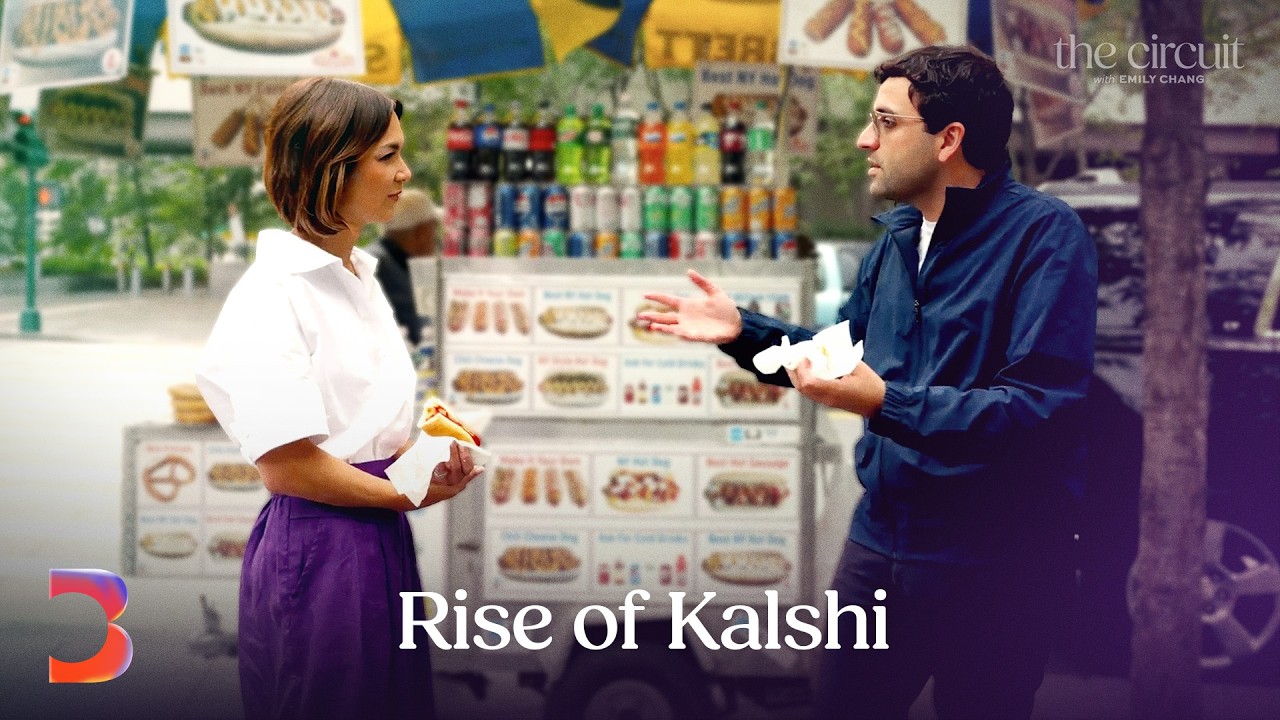
How Betting on Anything Became Big Business | The Circuit with Emily Chang — Bloomberg Originals

Bloomberg Originals

Kalshi's multi-billion-dollar valuation hinges on sports wagering rather than civic forecasting, leaving the exchange vulnerable to state-level gambling challenges that co-founder Tarek Mansour concedes will likely reach the Supreme Court.

AI-assisted summary of How Betting on Anything Became Big Business | The Circuit with Emily Chang — original source. Check the original for full context.

Source published:

Key ideas

  • Kalshi is locked in a high-stakes jurisdictional battle as 44 state attorneys general accuse the platform of operating an unlicensed casino, while the CFTC sues states to maintain exclusive federal derivatives jurisdiction. (10:36)
  • Despite Kalshi's positioning around economic and political forecasting, sports contracts still generate roughly two-thirds to 70% of total volume, down from 95% earlier in the year. (10:36)
  • Traders aged 18 to 21 transacted $5 billion on Kalshi in a single year, capitalizing on federal commodity regulations that permit trading at 18, whereas state casinos and sportsbooks require participants to be 21. (16:12)
  • Thin liquidity in down-ballot political races poses acute manipulation risks, with research showing an injection of just $3,500 can shift odds by five cents or more across 97% of midterm event markets. (21:07)

Detailed notes

## Background Published by Bloomberg Originals on YouTube on October 28, 2026, this episode of 'The Circuit with Emily Chang' features host Emily Chang reporting from New York alongside Kalshi co-founders Tarek Mansour and Luana Lopes Lara. The program investigates the explosive rise of Kalshi as the world's largest prediction market, examining its regulatory battles, mounting competition, and the fierce societal debate over whether it serves as a public utility or gamified gambling.

## TL;DR The documentary traces Kalshi's trajectory from an academic concept developed at MIT into a multi-billion-dollar federally regulated event exchange that allows peer-to-peer trading on politics, sports, and current events. Emily Chang interrogates the friction between Kalshi's positioning as an objective forecasting tool and critics' charges that it acts as an addictive 'casino in your pocket,' especially given that sports drive the majority of volume and roughly 75% of users lose money. The report dives into Kalshi's high-stakes legal battles with the CFTC and state regulators, controversies surrounding political ties like Donald Trump Jr.'s equity stake, and vulnerabilities surrounding low-liquidity market manipulation in election betting. Despite ongoing threats from shifting regulatory tides and potential Supreme Court scrutiny, Kalshi's founders maintain that prediction markets have become an indelible fixture of the financial ecosystem.

## Atmosphere & style The piece carries an urgent, slick, and investigative tempo, balancing breezy on-the-street strolls in Lower Manhattan with sharp, adversarial sit-down cross-examinations. Emily Chang pushes past corporate talking points with rapid-fire ethical scenarios and direct challenges about youth gambling, creating a palpable tension between the founders' cerebral, MIT-trained market idealism and the gritty financial realities facing retail traders. The visual and narrative arc moves from a tech-founder triumph story into an uneasy exploration of regulatory hollow-outs, political entanglements, and addictive smartphone speculation.

## Bulletin - [10:36](https://www.youtube.com/watch?v=XNZN6gYhpLU&t=636s) Kalshi is locked in a high-stakes jurisdictional battle as 44 state attorneys general accuse the platform of operating an unlicensed casino, while the CFTC sues states to maintain exclusive federal derivatives jurisdiction. - [10:36](https://www.youtube.com/watch?v=XNZN6gYhpLU&t=636s) Despite Kalshi's positioning around economic and political forecasting, sports contracts still generate roughly two-thirds to 70% of total volume, down from 95% earlier in the year. - [16:12](https://www.youtube.com/watch?v=XNZN6gYhpLU&t=972s) Traders aged 18 to 21 transacted $5 billion on Kalshi in a single year, capitalizing on federal commodity regulations that permit trading at 18, whereas state casinos and sportsbooks require participants to be 21. - [21:07](https://www.youtube.com/watch?v=XNZN6gYhpLU&t=1267s) Thin liquidity in down-ballot political races poses acute manipulation risks, with research showing an injection of just $3,500 can shift odds by five cents or more across 97% of midterm event markets.

## Key takeaways - [01:52](https://www.youtube.com/watch?v=XNZN6gYhpLU&t=112s) Kalshi operates as a peer-to-peer binary event contract exchange charging trade transaction fees rather than operating as a house-backed bookmaker taking opposing risk. - [04:10](https://www.youtube.com/watch?v=XNZN6gYhpLU&t=250s) Co-founders Tarek Mansour and Luana Lopes Lara sued their federal regulator, the CFTC, winning in late 2024 to launch legal political event contracts weeks before the presidential election. - [07:02](https://www.youtube.com/watch?v=XNZN6gYhpLU&t=422s) Public perception of prediction markets is frequently clouded by offshore or crypto-based rivals listing controversial contracts on warfare and death. - [08:17](https://www.youtube.com/watch?v=XNZN6gYhpLU&t=497s) Cash incentives have attracted insider trading and market manipulation, including illicit trades by a White House teleprompter operator and former Representative George Santos. - [09:43](https://www.youtube.com/watch?v=XNZN6gYhpLU&t=583s) Federal oversight of the sector has drawn scrutiny as the CFTC commission shrank under Donald Trump to a single sympathetic commissioner, Chair Michael Selig, who views event contracts as valuable financial activity. - [10:36](https://www.youtube.com/watch?v=XNZN6gYhpLU&t=636s) State gaming authorities and licensed commercial sportsbooks represent the primary existential threat to Kalshi, arguing its federal exchange model bypasses state taxes and consumer gaming protections. - [12:20](https://www.youtube.com/watch?v=XNZN6gYhpLU&t=740s) Critics label prediction apps a frictionless 'casino in your pocket,' highlighting that approximately 75% of Kalshi users lose money. - [14:49](https://www.youtube.com/watch?v=XNZN6gYhpLU&t=889s) The Trump family has significant financial ties to prediction platforms, with Donald Trump Jr. holding an advisory equity stake in Kalshi valued in the millions. - [21:07](https://www.youtube.com/watch?v=XNZN6gYhpLU&t=1267s) Low capital requirements allow bad actors to distort odds in illiquid political markets, exemplified by an anonymous trader spending $44,000 to push a sub-5% candidate to a 96% win probability on Polymarket. - [21:07](https://www.youtube.com/watch?v=XNZN6gYhpLU&t=1267s) Juxtaposing market betting odds directly beside scientific polling data on television broadcasts risks misleading voters and distorting mainstream election coverage. - [22:29](https://www.youtube.com/watch?v=XNZN6gYhpLU&t=1349s) Kalshi leadership maintains that with tens of millions of users, prediction markets have transitioned from an experimental novelty into a permanent, bipartisan fixture of global financial architecture.

## Detailed walkthrough ### [00:05](https://www.youtube.com/watch?v=XNZN6gYhpLU&t=5s) Introduction to Kalshi and Prediction Markets

Emily Chang opens with a lighthearted exchange about a movie depicting insider trading, observing that addressing the issue head-on helps clarify how markets must be protected. She introduces Tarek Mansour and Luana Lopes Lara, the co-founders of Kalshi, a platform where users trade on outcomes ranging from daily weather patterns to celebrity weddings. When the pair founded Kalshi in 2018, prediction markets were an obscure topic largely confined to academic circles. Today, the platform commands an unavoidable public profile driven by viral attention, billions of dollars in volume, and fierce debate over whether prediction platforms serve a genuine public utility or function as mobile gambling.

Critics point out that approximately 75% of users end up losing money, raising questions about consumer protection and transparency. Mansour counters that Kalshi clearly discloses its inherent financial risks, emphasizing that both wins and losses are a normal function of markets. When Chang asks why Kalshi shouldn't simply be considered a "casino in your pocket," Mansour rejects the soundbite framing, comparing it to asking whether artificial intelligence is good for society: “That's like same as asking like why is AI good for society, right? Like these are large complex topics that cannot be summarized in a soundbite.” As Kalshi expands, it faces mounting scrutiny from regulators, legal challenges, and competing platforms amid public concern over market integrity.

[01:52](https://www.youtube.com/watch?v=XNZN6gYhpLU&t=112s) From Lebanon and Wall Street to Kalshi's Direct Binary Contracts

Walking through Lower Manhattan toward Goldman Sachs, Mansour recalls his early days working as a Wall Street quantitative trader after emigrating from Lebanon to study at MIT. Growing up in Lebanon during periods of intense political and economic turbulence shaped his worldview: an hour could dramatically shift circumstances from stability to chaos. Mansour explains, “What it made me do is view the world essentially more probabilistically.” That mathematical and risk-oriented outlook carried directly into his trading career and ultimately sparked the concept behind Kalshi.

During the political upheavals of 2016—specifically the Brexit referendum and Donald Trump’s presidential victory—Mansour watched major financial institutions and hedge funds struggle to construct complex hedges to manage downside risk. Watching institutional desks scramble for an indirect "Trump trade," Mansour wondered why market participants could not take direct positions: “What if these investors could just buy yes on Trump winning the election? That just seems like a much more direct, simple way to do it.”

```mermaid flowchart LR accTitle: Kalshi Binary Contract Flow accDescr: How Kalshi pairs two opposing traders to create a funded contract and takes a transaction fee. subgraph Market["Kalshi Exchange"] T1["Buyer: YES"] -->|"Matches"| OB["Order Book"] T2["Buyer: NO"] -->|"Matches"| OB OB -->|"Collects contract capital"| ST["Settlement Pool"] OB -->|"Charges trade fee"| REV["Kalshi Revenue"] end ST -->|"Outcome verified"| P["Payout: $1 per winning contract"] ```

Kalshi operates as a peer-to-peer exchange where contracts settle on a binary "yes" or "no" outcome. If a user buys "yes," a counterparty on the platform takes the opposing "no" position, and contract prices fluctuate between $0.01 and $0.99 according to shifting collective probabilities. Kalshi generates revenue by collecting transaction fees on each trade rather than taking house risk. Addressing the Arabic name *Kalshi* (meaning "everything"), Mansour notes their ambition to build a universally accessible financial market. He stresses that forecasting value goes beyond gambling:

> “They use it for the forecast. And the thing that they like about it is because in some ways prediction markets are sort of one of the only non-elite sources of information. When you look at prediction markets, it's bottom up. It's people that are essentially putting skin in the game, money where their mouth is, and so people find the data very, very valuable.”

- Mansour states that roughly 75% of Kalshi's visitors use the platform exclusively as a forecasting tool without placing trades. - Contract pricing reflects real-time aggregated beliefs, creating a public probability feed on current events.

[04:10](https://www.youtube.com/watch?v=XNZN6gYhpLU&t=250s) Co-Founders, Regulation, and the Legal Battle with the CFTC

At Kalshi's office, Chang meets co-founder and Chief Operating Officer Luana Lopes Lara. Lopes Lara followed an unconventional path to financial technology, training seriously as a ballerina in Brazil before shifting focus to mathematics and computer science at MIT. Lopes Lara and Mansour recall their college dynamic, with Lopes Lara noting that Mansour tried to adopt a cool persona while she embraced being studious: “I knew I wasn't cool. I'm like, 'I'm not going to be cool. I might as well just study and be nerdy and sit in the front row.'” While the two briefly dated early on, both emphasize that their venture and operational mission took priority over their personal past.

In late 2020, during the closing stretch of the first Trump administration, Kalshi cleared a historic hurdle by obtaining approval from the Commodity Futures Trading Commission (CFTC) to operate as the first federally regulated event contract exchange in the United States. However, that regulatory framework restricted the types of contracts Kalshi could list. When Kalshi moved to launch political event contracts, the CFTC under the Biden administration intervened, blocking election markets on grounds that they constituted illegal gaming.

```mermaid flowchart TD accTitle: Kalshi Regulatory and Legal Path accDescr: Timeline of Kalshi's regulatory engagement and legal battle with the CFTC from 2020 to 2024. A["2020: CFTC grants first federal event exchange license"] --> B["Kalshi seeks expansion into election contracts"] B --> C["Biden CFTC blocks election contracts as gaming"] C --> D["Kalshi sues CFTC to permit political event contracts"] D --> E["Late 2024: Federal court rules in favor of Kalshi"] E --> F["Election markets launch weeks before 2024 vote"] ```

Believing the CFTC had exceeded its statutory authority, Kalshi took the aggressive step of suing its own federal regulator. Mansour explains why they pursued litigation: “It was kind of the only option we had in a lot of ways, because if we don't do it, these markets might never see the light of day because we had another company that tried to do it and do it. So it was a sense of responsibility there, but also because we were right.” In autumn 2024, weeks before the presidential election, Kalshi prevailed in court. While legacy national polls reported a dead heat between Kamala Harris and Donald Trump, Kalshi’s election contracts priced Trump’s victory probability above 60%. Around the vote, Kalshi processed over $100 million in trading volume, cementing prediction markets in the mainstream press and displaying live betting odds on massive digital displays in Times Square.

[07:02](https://www.youtube.com/watch?v=XNZN6gYhpLU&t=422s) Rivalry with Polymarket and Controversial Event Contracts

The rapid growth of the prediction sector has created intense competition between Kalshi and Polymarket, the crypto-based platform led by CEO Shayne Coplan. Tabloids and social media frequently highlight the friction between Mansour and Coplan. Mansour downplays personal animosity, but argues that off-shore or loosely regulated platforms risk damaging public perception for the entire industry. Because media coverage frequently conflates all platforms under generic headlines, Kalshi often bears the fallout when controversies arise:

> “The coverage is it doesn't say Polymarket did X, Y, Z. It says prediction markets did X, Y, and Z. And we are put in a position where you always have to explain to people that like, no, we're not doing war markets. We're not doing death markets.”

While Polymarket did not respond to requests for comment, the company publicly asserts that it actively bars market manipulation and insider trading, accusing Kalshi's marketing campaigns of spreading misinformation about the broader sector. Kalshi stresses that as a federally regulated entity, it strictly prohibits contracts tied to warfare, assassinations, or death. Despite operating strictly within US federal rules, Kalshi embraces aggressive marketing, leaning into bold campaigns that present the platform as an underdog challenging conventional financial structures.

[08:17](https://www.youtube.com/watch?v=XNZN6gYhpLU&t=497s) Insider Trading Scandals, Manipulation, and Market Integrity

As liquidity and contract diversity expand, prediction markets increasingly attract bad actors seeking to exploit asymmetric non-public information. Federal regulators uncovered an incident where a White House teleprompter operator earned more than $100,000 by trading on speeches prior to their public delivery. In another case, former US Representative George Santos publicly posted on social media that he planned to attend the State of the Union address, while secretly wagering on Kalshi that he would not attend. Santos netted over $17,000 before regulators flagged the trade as market manipulation, prompting Kalshi to ban him from the platform for life.

Bloomberg reporters Christopher Beam and Denitsa Tsekova point out that tracking manipulation will become harder as prediction market volumes balloon. Beam notes that illicit trading attempts are an unavoidable consequence of cash incentives: “The incentives are there and when the incentives are there, someone's going to take advantage of it.” Tsekova adds that while Kalshi actively polices suspicious activity, defining and enforcing the boundary between inside access and specialized expertise grows complex as markets draw in more participants. Emily Chang closes by launching a rapid-fire test to dissect that boundary:

- **Scenario 1:** A White House staff member trading on an upcoming presidential announcement is defined as an insider. - **Scenario 2:** A professional athlete’s romantic partner trading on inside injury reports before official disclosure.

[09:43](https://www.youtube.com/watch?v=XNZN6gYhpLU&t=583s) Insider Trading and a Hollowed-Out CFTC

Addressing hypothetical contracts, such as betting on interest rate announcements, Tarek Mansour notes that a Federal Reserve employee trading with prior knowledge of a monetary decision would indisputably be considered an insider. Emily Chang pushes on the broader concern: if event markets exist for practically everything under the sun, almost anyone can possess non-public information, raising the question of whether every market can be manipulated. Mansour responds that manipulation and cheating are endemic across all financial systems and that the goal is not pretending bad actors do not exist, but establishing robust regulatory oversight. As Tarek Mansour argues, “Manipulation and insider trading exists in all financial markets, the same way that fraud and cheating exists in any system.” The focus, he insists, must be on rooting out insiders and establishing fair rules so everyone can participate on an even playing field.

Yet enforcement faces steep questions about regulatory capacity. The Commodity Futures Trading Commission (CFTC)—the federal regulator tasked with policing prediction markets—has been effectively hollowed out under President Donald Trump, shrinking its traditional five-person bipartisan commission down to a single commissioner: Chair Michael Selig. Rather than serving as an adversarial monitor, the Trump-appointed chair has publicly embraced prediction markets, framing them as a social good. As Chair Michael Selig put it, “This is financial market activity, so it's something that I think is valuable to society.” With federal oversight concentrated in one sympathetic regulator, the markets he oversees have surged at breakneck speed.

[10:36](https://www.youtube.com/watch?v=XNZN6gYhpLU&t=636s) The Sports Betting Engine and the Regulatory Turf War

No sector of Kalshi has grown faster than sports. During the World Cup, Kalshi posted $27 billion in trading volume and attracted 3 million new users. While Kalshi executives frequently tout their diversification into economics and politics, sports remains the financial lifeblood of the company. When Chang presses Mansour on data showing sports still represents roughly 75% of total volume, he counters that the proportion has fallen from about 95% at the start of the year down to around two-thirds or 70%. In his view, sports contracts act as a top-of-funnel customer onboarding ramp where newcomers test the platform before branching into macroeconomic or cultural contracts.

This reliance on sports has made Kalshi a prime target for state governments and licensed commercial sportsbooks. While conventional sports wagering is legal across nearly 40 states, those operators are subject to hundreds of millions in state licensing fees and strict local tax codes—obligations Kalshi bypasses under its federal exchange designation. When asked who poses the existential threat to his business, Mansour points straight to the states and the entrenched gaming interests operating within them. Without sports, Kalshi would be a dramatically smaller operation.

Opponents argue that calling these bets “derivatives” or “event contracts” is a regulatory loophole masking a direct-to-consumer casino. In response, a coalition of 44 state attorneys general signed a letter decrying prediction markets as a novel form of casino gambling, with 20 states actively litigating over whether state-level gambling laws apply. The CFTC retaliated by filing lawsuits against the states, triggering an all-out jurisdictional turf war over who has legal authority to govern prediction markets.

```mermaid flowchart TD accTitle: The Prediction Market Regulatory Battle accDescr: A diagram contrasting state-level sportsbooks with Kalshi and showing the legal conflict between states and the CFTC.

subgraph States["State Regime"] S_Reg["State Regulators & Commercial Sportsbooks"] S_Model["Take opposite side of bets<br/>Pay state taxes and licensing fees"] end

subgraph Federal["Federal Regime"] F_Reg["CFTC (Federal Regulator)"] K_Model["Kalshi: Regulated Exchange<br/>Peer-to-peer trading (0.8% fee)"] end

S_Reg -->|"Claims Kalshi is an unlicensed casino"| K_Model F_Reg -->|"Sues states to assert exclusive federal jurisdiction"| S_Reg ```

[12:20](https://www.youtube.com/watch?v=XNZN6gYhpLU&t=740s) Exchange vs. Sportsbook: “A Casino in Your Pocket”?

Chang asks what happens to Kalshi if sports markets are stripped away. Mansour maintains that carving out specific subject matters based on moral judgments makes little sense; instead, he insists that market structure must dictate regulatory classification. He emphasizes the operational daylight between a bookmaker and an exchange: sportsbooks run house-backed books where the operator takes the other side of every wager, profiting when users lose, whereas Kalshi functions purely as an intermediary facilitating trades between peers. When Chang asks point-blank why Kalshi isn't just a “casino in your pocket,” Mansour draws a strict operational boundary:

> “On Kalshi, when customers lose, they don't lose it to me. They lose it to other customers.” — Tarek Mansour

Chang notes that Kalshi collects an 0.8% fee on each transaction, creating an incentive to maximize betting volume regardless of user outcomes. Mansour parries by comparing Kalshi directly to equity markets, explaining that the New York Stock Exchange and the Nasdaq charge comparable trading fees and actively pursue greater liquidity and user counts without being branded gambling halls. On the streets, however, everyday citizens view the distinction as academic semantics. Passersby describe the apps as addictive, frictionless gambling, noting that while previous generations had to leave the house to visit a bookie or casino, young people today can wake up and wager within ten seconds. Observers warn that classifying sports bets as “derivatives” or “event contracts” may pass muster in a federal courtroom, but it fails the smell test for the average person.

[14:49](https://www.youtube.com/watch?v=XNZN6gYhpLU&t=889s) The Trump Family Connection and the Supreme Court Question

The existential question of whether Kalshi is a legitimate financial derivatives exchange or an offshore-style bookmaker may ultimately reach the Supreme Court. When asked if the high court will take up the jurisdictional fight between state and federal authorities, Mansour admits it is probable: “I'd probably say yes. I don't know.”

The regulatory landscape is further complicated by unprecedented political ties. The Trump administration has treated prediction markets as strictly federal territory, while Donald Trump Jr. holds a financial stake in both Polymarket and Kalshi. In 2025, Donald Trump Jr. received a $300,000 equity stake in Kalshi as a paid strategic advisor—a stake now potentially valued in the millions. Observers note that having a sitting president's immediate family financially anchored to a hyper-growth speculative platform subject to federal regulatory fights is historic. Reports also surfaced that Trump Jr. appeared at a private gathering of Republican attorneys general, urging them to back down on their state lawsuits against prediction markets.

Asked about his personal interactions with Trump Jr., Mansour states that they speak infrequently and limits the scope of the advisory role. He insists their conversations center exclusively on product-led growth and direct consumer outreach:

> “We don't talk about regulatory or policy. It was always made clear from the start by both parties that there will not be any involvement on that front.” — Tarek Mansour

- Donald Trump Jr. received a $300,000 equity grant in Kalshi in 2025 that has ballooned in value alongside the company's valuation. - Trump Jr. reportedly spoke directly to Republican attorneys general at a private meeting, pressing them to cease state-level challenges against prediction markets.

[16:12](https://www.youtube.com/watch?v=XNZN6gYhpLU&t=972s) Marketing to Gen Z, 18-to-21 Trading, and the Ethics of Losses

Regulatory pressure has not tempered Kalshi's marketing push. The platform has courted Gen Z users through TikTok campaigns, paid creator sponsorships, and celebrity advertisements promising rapid wealth. Some niche users, like a trader named Joseph, focus on specific micro-inefficiencies—such as trading local temperature highs when seasonal shifts cause traders to systematically underestimate heat readings. But traders who consistently turn a profit are an extreme minority.

Chang confronts Mansour with internal market realities: despite social media influencers boasting about overnight windfalls, roughly 75% of users on Kalshi end up losing money. Mansour rejects the idea that Kalshi hides these figures, arguing that risk disclosures are prominent and that failure rates in other retail trading products are even worse. As Tarek Mansour points out, “I think these day trading options get 95% of retail loses money.” Financial observers note, however, that young retail traders are increasingly shifting money intended for long-term investments into gamified short-term contracts, putting future financial stability at risk.

Another major flashpoint is age. In most states, physical casinos require patrons to be 21, but because Kalshi operates under federal commodities frameworks, it permits anyone 18 and older to open an account. In this year alone, users between the ages of 18 and 21 traded $5 billion on Kalshi. Mansour emphasizes that Kalshi simply abides by existing federal commodity statutes setting the floor at 18:

> “The law today is 18 plus, and I follow the law. And so that question is also better addressed to policymakers. Like if policymakers are supportive to move that to 21 plus, that is something that we would respect.” — Tarek Mansour

When pressed on whether Kalshi deflects corporate responsibility by arguing that heavy regulation will simply drive users to illicit offshore alternatives, Mansour contends the company is actively inviting Congress and regulators to define the rules. He stresses that Kalshi's goal when engaging lawmakers is not to evade oversight, but to establish clear statutory definitions and robust consumer safeguards across the prediction market sector.

[19:09](https://www.youtube.com/watch?v=XNZN6gYhpLU&t=1149s) Tech Parallels, Irresponsible Trading, and Youth Gambling

Emily Chang presses Tarek Mansour on the broader societal fallout of tech platforms, pointing to the massive regulatory settlements and strict platform restrictions levied against Meta and asking whether he sees parallels with prediction markets. Mansour acknowledges that any emerging technology carries inherent risks, comparing the sector to artificial intelligence and established financial institutions like stock, options, and futures markets. He argues that whenever individuals are given the tools to speculate on outcomes, a small fraction will inevitably act recklessly. Addressing this dynamic, Mansour explains: “In our market, and this is true for any type of financial markets, it's true for options, it's true for futures, it's true for stock market, it's true for prediction markets.”

Critics, however, contend that platforms like Kalshi lack adequate safeguards for their youngest demographic—users who are being introduced to gambling mechanisms well before learning basic personal finance or saving habits. Young retail participants voice the psychological trap of easy wins giving way to steep losses, noting how accessible betting apps have made high-stakes speculation for a generation facing high living costs. One young trader admits to losing approximately $5,000 after initially believing small wins represented easy money, remarking that many young people feel gambling is their only shot at financial mobility.

- Mansour concedes that technological platforms and financial markets inevitably face a small percentage of irresponsible traders. - Young traders express that high living costs make gambling seem like the only path forward, with one noting a personal loss of around $5,000 after early successes.

[20:05](https://www.youtube.com/watch?v=XNZN6gYhpLU&t=1205s) The Midterms Hub and the Holy Grail of Political Betting

Even as scrutiny mounts regarding gambling addiction and consumer protection, Kalshi is leaning heavily into the arena that drove its prominence: political elections. Mansour describes election forecasting as the definitive proving ground for prediction markets, arguing that high-profile political races demonstrate the core utility of real-money contract pricing better than any other sector. Regarding this central ambition, Mansour asserts: “Elections really are the holy grail of prediction markets, right?”

Mansour demonstrates Kalshi's dedicated midterms hub, which aggregates contracts across the Senate, House, gubernatorial races, and the overall balance of power. The interface displays price movements and odds over time as fresh news and data emerge. While the sleek dashboards mirror official newsroom graphics or scientific polling data, the underlying numbers reflect bets rather than statistically weighted voter samples. This dynamic introduces serious concerns about election integrity, raising the question of whether speculative financial markets genuinely offer more objective clarity than traditional polls.

```mermaid flowchart TD accTitle: Kalshi Midterms Hub Structure accDescr: Visual breakdown of Kalshi's midterms election hub into race categories feeding the balance of power overview. subgraph Hub["Midterms Hub Dashboard"] Senate["Senate Races"] House["House Races"] Gov["Gubernatorial Contests"] end Senate --> Balance["Balance of Power Aggregate"] House --> Balance Gov --> Balance Balance --> Odds["Real-Time Contract Pricing"] ```

[21:07](https://www.youtube.com/watch?v=XNZN6gYhpLU&t=1267s) Market Manipulation, Cheap Odds Distortions, and Media Exposure

The intersection of real capital and political races exposes prediction markets to deliberate manipulation. In smaller or less liquid contests—such as state representative or mayoral elections—it can take as little as a few hundred to a few thousand dollars to skew a candidate’s implied probability. The broadcast highlights a stark January case where an anonymous Polymarket trader deployed $44,000 to push a California gubernatorial candidate's odds to 96%, despite traditional polling showing the candidate below 5%. Furthermore, a recent study revealed that a modest capital injection of $3,500 is sufficient to shift contract pricing by five cents or more across 97% of midterm-related prediction markets.

This low barrier to manipulating odds becomes especially potent as prediction data enters mainstream political discourse. Kalshi actively funds partnerships with media organizations to broadcast its odds on national television, often positioning these market prices directly alongside conventional polling data. When asked whether presenting bettor odds next to scientific polls risks misleading viewers, Kalshi's team acknowledges the tension. Luana Lopes Lara concedes that juxtaposing these metrics without clear definitions can create significant public confusion: “I think it definitely creates the question of like, is it clearly defined? What are the polls saying? What are prediction markets saying? But having them right next to each other and comparing them, I think it definitely can create a lot of issues.”

- A single anonymous Polymarket trader spent $44,000 to raise a California gubernatorial candidate's odds to 96%, even though the candidate polled under 5%. - Research indicates that spending just $3,500 can swing odds by 5¢ or more in 97% of midterm prediction markets. - Kalshi pays for visibility partnerships with media networks, placing trading data on screen alongside traditional polls.

[22:29](https://www.youtube.com/watch?v=XNZN6gYhpLU&t=1349s) The Regulatory Pendulum and the Future of Prediction Platforms

Regardless of which political faction wins the midterms or whether distorted odds erode voter confidence, Kalshi profits by taking a transaction fee on the trading volume. However, the volatile landscape of American politics poses a potential existential risk to the platform itself. With the possibility of shifting presidential administrations and regulatory heads, the legal and oversight climate governing event contracts could rapidly turn hostile.

When Emily Chang asks how Kalshi will fare if the political and regulatory pendulum swings backward, Mansour downplays partisan exposure. He contends that the platform attracts both allies and detractors across both sides of the aisle. With the platform's user base swelling into the tens of millions, Mansour maintains that prediction markets have transcended the experimental phase and are now an embedded pillar of modern finance. Defending the durability of the platform, Mansour insists: “It's not about whether prediction markets going to be here or not. We're way past that point.”

## Notable quotes > [12:20](https://www.youtube.com/watch?v=XNZN6gYhpLU&t=740s) On Kalshi, when customers lose, they don't lose it to me. They lose it to other customers. — Tarek Mansour

> [09:43](https://www.youtube.com/watch?v=XNZN6gYhpLU&t=583s) Manipulation and insider trading exists in all financial markets, the same way that fraud and cheating exists in any system. — Tarek Mansour

> [01:52](https://www.youtube.com/watch?v=XNZN6gYhpLU&t=112s) When you look at prediction markets, it's bottom up. It's people that are essentially putting skin in the game, money where their mouth is, and so people find the data very, very valuable. — Tarek Mansour

> [22:29](https://www.youtube.com/watch?v=XNZN6gYhpLU&t=1349s) It's not about whether prediction markets going to be here or not. We're way past that point. — Tarek Mansour

## Mentioned Kalshi, Polymarket, Emily Chang, Tarek Mansour, Luana Lopes Lara, Shayne Coplan, Michael Selig, Donald Trump, Donald Trump Jr., Kamala Harris, George Santos, Christopher Beam, Denitsa Tsekova, Commodity Futures Trading Commission, Goldman Sachs, Massachusetts Institute of Technology, New York Stock Exchange, Nasdaq, Meta

## Video description Emily Chang hits the streets of New York with Tarek Mansour, who along with Luana Lopes Lara created Kalshi, the biggest prediction market in the world. The co-founders face a host of new competitors, vocal opponents and a very public debate about what the platform really is and its impact on society.

Watch more: https://www.youtube.com/show/VLPLqq4LnWs3olV2nw7GgFjXHvxVc3T5hXXT?sbp=QAE%3D

Hosted by high-profile journalist Emily Chang, The Circuit is a fast-paced, dynamic series that lives at the intersection of culture, tech, entertainment, and business. Every week, Chang will go on location to meet the world’s most fascinating founders, influencers, and innovators, conducting intimate interviews and bringing audiences behind the scenes of the most impactful stories, launches, and trends.

#Kalshi #Business #Markets

-------- Like this video? Subscribe: http://www.youtube.com/Bloomberg?sub_confirmation=1

Get unlimited access to Bloomberg.com for just $1.99 your first month: https://www.bloomberg.com/subscriptions?in_source=YoutubeOriginals Bloomberg Originals offers bold takes for curious minds on today’s biggest topics. Hosted by experts covering stories you haven’t seen and viewpoints you haven’t heard, you’ll discover cinematic, data-led shows that investigate the intersection of business and culture. Exploring every angle of climate change, technology, finance, sports and beyond, Bloomberg Originals is business as you’ve never seen it.

Subscribe for business news, but not as you've known it: exclusive interviews, fascinating profiles, data-driven analysis, and the latest in tech innovation from around the world.

Visit our partner channel Bloomberg News for global news and insight in an instant.

[Source](https://www.youtube.com/watch?v=XNZN6gYhpLU)

中文简报

44州质疑体育合约合法性,Kalshi押注联邦保护伞 Kalshi数十亿美元的估值依赖于体育博彩而非公民预测,这使得该交易所易受各州赌博指控的冲击;联合创始人Tarek Mansour承认此争议很可能会上诉至最高法院。 该纪录片回顾了Kalshi从麻省理工学院(MIT)的学术构想,发展为受联邦监管、估值数十亿美元事件合约交易所的历程,该平台支持就政治、体育和时事进行点对点交易。Emily Chang探讨了Kalshi作为客观预测工具的自我定位与批评者指责其为令人上瘾的“口袋赌场”之间的冲突,尤其是体育合约贡献了大部分交易量,且约75%的用户处于亏损状态。报道深入剖析了Kalshi与美国商品期货交易委员会(CFTC)及各州监管机构的高风险法律博弈、小唐纳德·特朗普(Donald Trump Jr.)持股等政治关联引发的争议,以及选举博彩市场因流动性不足而面临的操纵风险。尽管面临监管环境变化及最高法院潜在审查的持续威胁,Kalshi创始人仍坚称预测市场已成为金融生态中不可磨灭的一部分。 Kalshi正陷入一场高风险的管辖权争端:44个州的总检察长指控该平台运营无照赌场,而CFTC则起诉各州以捍卫联邦对衍生品的专属管辖权。 (10:36) 尽管Kalshi主打经济和政治预测定位,但体育合约仍占其总交易量的约三分之二至70%,低于今年早些时候的95%。 (10:36) 18至21岁的交易者一年内在Kalshi上交易了50亿美元,这利用了联邦商品法规允许18岁参与交易的规定,而各州赌场和体育博彩公司则要求年满21岁。 (16:12) 低位次政治竞选中薄弱的流动性带来了严峻的操纵风险,研究显示,仅需投入3500美元即可使97%的中期选举事件市场的赔率变动5美分或更多。 (21:07)

Detailed notes — zh

## Background 该视频由彭博旗下频道 Bloomberg Originals 于 2026 年 10 月 28 日在 YouTube 平台发布。节目中,知名主持人 Emily Chang 与全球最大预测市场平台 Kalshi 的联合创始人 Tarek Mansour 一同走上纽约街头,深入探讨该平台在面临激进竞争对手、尖锐外部反对以及关于其社会影响与本质属性的激烈舆论争议中如何崛起与应对。 ## TL;DR 本期节目全方位审视了预测市场平台 Kalshi 的爆发式增长及其背后的巨大争议。从创始人在黎巴嫩成长背景下形成的概率对冲思维,到起诉美国商品期货交易委员会(CFTC)并在 2024 年大选前赢得关键合规战,Kalshi 正逐渐渗透到政治选举、体育博彩及日常热点事件之中。然而,内幕交易频发、平台 75% 交易用户面临亏损的现实,以及年轻一代可能过早沉迷投机的成瘾隐患,使平台备受“合法化赌场”的道德与法律拷问。面对各州总检察长的联合发难与低成本资金操纵选举赔率的风险,创始人 Mansour 坚称该行业已成不可逆转的发展趋势,其作为自下而上真实概率工具的价值将长期存在。 ## Atmosphere & style 整期节目节奏紧凑且充满审讯式的张力,Emily Chang 犀利直接的追问与 Tarek Mansour 沉着从容的金融精英辩护形成了激烈的言辞交锋。街头普通年轻人坦陈损失数千美元的痛感与纽约华尔街高风险资本运作的冷酷在镜头前交织碰撞,营造出一种金融科技狂欢与潜在社会成瘾危机并存的躁动氛围。观众在观看时既能直观感受到技术创新打破传统金融和民调垄断的冲击力,又会被其在监管真空与道德灰色地带狂奔所带来的不安感深深牵引。 ## Bulletin - [04:10](https://www.youtube.com/watch?v=XNZN6gYhpLU&t=250s) Kalshi 作为受联邦监管的二元期权事件交易所,在起诉 CFTC 胜诉后全面引爆选举预测市场,大选期间交易额突破 1 亿美元并展现出极高胜率预测能力。 - [10:33](https://www.youtube.com/watch?v=XNZN6gYhpLU&t=633s) 体育博彩类目成为 Kalshi 最大的交易支柱,世界杯期间交易量达 270 亿美元,但也引发了 44 个州联合发函抨击其为“新型赌场”以及 20 个州的法律诉讼。 - [16:12](https://www.youtube.com/watch?v=XNZN6gYhpLU&t=972s) 散户亏损与成瘾隐患凸显,平台约 75% 的交易者最终亏损,18 至 21 岁年轻群体一年内刷出高达 50 亿美元交易额。 - [21:07](https://www.youtube.com/watch?v=XNZN6gYhpLU&t=1267s) 小规模政治选举合约面临极低操纵成本风险,研究显示平均仅需 3500 美元即可使 97% 的中期选举合约价格发生显著波动。 ## Key takeaways - [01:52](https://www.youtube.com/watch?v=XNZN6gYhpLU&t=112s) Kalshi 采用点对点二元合约撮合机制,合约在 0 至 1 美元之间波动,平台通过收取每笔约 0.8% 的手续费盈利而不与用户对赌。 - [01:52](https://www.youtube.com/watch?v=XNZN6gYhpLU&t=112s) 平台 75% 的注册用户仅查看概率而不参与实际交易,大众将其视为不受精英话语过滤的草根信息源。 - [04:10](https://www.youtube.com/watch?v=XNZN6gYhpLU&t=250s) 面对拜登政府时期 CFTC 将政治合约定性为非法博彩的禁令,Kalshi 选择起诉直属监管机构并在 2024 年大选前夕胜诉。 - [07:02](https://www.youtube.com/watch?v=XNZN6gYhpLU&t=422s) 合规与离岸预测市场矛盾激化,Mansour 抨击 Polymarket 等竞品开设战争与死亡盘口导致整个行业声誉蒙受连带损害。 - [07:02](https://www.youtube.com/watch?v=XNZN6gYhpLU&t=422s) 内幕交易与操纵屡见不鲜,白宫提词器操作员押注演讲用词非法获利超 10 万美元,前议员桑托斯因虚假声明配合下注被终身封禁。 - [09:43](https://www.youtube.com/watch?v=XNZN6gYhpLU&t=583s) 监管机构陷入制度真空,CFTC 委员仅剩特朗普任命的迈克尔·塞利格一人,外界质疑其更倾向于支持行业发展而非充当看门人。 - [10:33](https://www.youtube.com/watch?v=XNZN6gYhpLU&t=633s) Kalshi 积极撇清赌场标签,强调自身与纳斯达克相同均属于中立交易所,但各州认为其绕过了巨额牌照费和税收监管。 - [13:38](https://www.youtube.com/watch?v=XNZN6gYhpLU&t=818s) 政界高层利益网络深度渗透,小唐纳德·特朗普不仅投资 Polymarket,还作为 Kalshi 付费顾问持有价值数百万美元的股权。 - [16:12](https://www.youtube.com/watch?v=XNZN6gYhpLU&t=972s) 针对 75% 用户亏损的道德指责,创始人将其类比为日内股票期权交易中 95% 散户亏损的常态,并主张监管优于一刀切封禁。 - [20:05](https://www.youtube.com/watch?v=XNZN6gYhpLU&t=1205s) Kalshi 将政治大选视为预测市场的核心试金石,正全面布局 2026 年中期选举仪表盘以成为主流胜率数据源。 - [21:07](https://www.youtube.com/watch?v=XNZN6gYhpLU&t=1267s) 预测市场胜率与主流媒体直播并列展示引发误导质疑,缺乏流动性的小型选举盘口易被数千美元资金恶意操纵并影响选民认知。 - [22:29](https://www.youtube.com/watch?v=XNZN6gYhpLU&t=1349s) 创始人坚信预测市场已跨越存亡危机,成为仅次于人工智能的高速增长产业,未来两党政治风向变化无法撼动其根基。 ## Detailed walkthrough ### [00:05](https://www.youtube.com/watch?v=XNZN6gYhpLU&t=5s) 预测市场的崛起与争议风暴 Emily Chang 与 Kalshi 联合创始人 Tarek Mansour 的对话从一部关于内幕交易的电影展开。Mansour 直言不讳地指出,直面这些争议电影的意义在于提醒团队时刻思考如何保护金融市场。作为全球最大的预测市场平台之一,Kalshi 允许用户对从每日天气到泰勒·斯威夫特(Taylor Swift)何时结婚等包罗万象的事件进行真金白银的押注。 在 2018 年公司成立之初,预测市场在学术圈之外几乎无人知晓;然而如今,Kalshi 已经成长为一个难以被忽视的庞然大物,伴随而来的是数十亿美元的交易额、巨大的关注度以及同样尖锐的公共质疑。批评者指责这类市场在本质上滋生腐败,且有大约 75% 的参与者会蒙受亏损。当被问及平台是否有道德责任对这些亏损更透明、以及 Kalshi 为何不算“装在口袋里的赌场”时,Mansour 认为平台在风险提示上始终非常明确,并将这一性质的探讨与“人工智能对人类社会是好是坏”相提并论,指出这属于极其庞大复杂的系统性议题,绝非一句简短的口号所能概括。 ```mermaid flowchart LR accTitle: Kalshi平台基础运作与争议机制 accDescr: 展示Kalshi对赌合约如何撮合、平台如何盈利以及带来的双刃剑效应。 subgraph CoreEngine["撮合机制与盈利"] A["事件合约<br/>(Yes / No 结果)"] --> B["点对点对赌<br/>(买入Yes vs 卖出/买入No)"] B --> C["实时动态概率价格"] C --> D["按每笔交易抽取手续费"] end subgraph Impact["市场影响与争议"] D --> E["草根预测数据<br/>(75%用户仅查看概率)"] D --> F["投机与监管风险<br/>(75%交易用户亏损/内幕交易隐患)"] end ``` - 平台交易规模已跃升至数十亿美元级别,成为当下金融科技领域增长最迅猛、争议最大的赛道之一。 - 批评声浪指出平台多数散户面临资产损失,75% 的交易者最终以亏损收场。 - Mansour 面对外界指责其像赌场的质疑时表示:“That’s like same as asking like why is AI good for society, right? Like these are large complex topics that cannot be summarized in a soundbite.”(这就像问人工智能对社会有什么好处一样,对吧?这些都是大型复杂课题,绝非几句简短发言就能概括清楚的。) --- ### [01:52](https://www.youtube.com/watch?v=XNZN6gYhpLU&t=112s) 创始人的黎巴嫩背景与对冲思维的诞生 走在前往高盛集团(Goldman Sachs)纽约总部的旧路上,Mansour 回忆起自己初入华尔街时的兴奋感。作为一个数学极客,他将自己对世界独特观察视角的形成归因于在黎巴嫩的成长经历。彼时的黎巴嫩局势动荡,好坏境况的转变往往就在一小时之内。这种生活环境迫使他不得不以概率思维来理解和审视周围的一切,而这一底层逻辑最终推动了他日后做出的每一个重大决策,直至创立 Kalshi。 2016 年,作为华尔街交易员的 Mansour 亲眼目睹了英国脱欧(Brexit)公投以及唐纳德·特朗普(Donald Trump)当选美国总统所带来的金融海啸。当时各大投资银行与对冲基金深陷恐慌,千方百计寻找复杂的衍生工具来构建所谓的“特朗普交易”以对冲风险。然而,由于传统金融工具链条繁琐,机构往往难以高效应对这种黑天鹅事件。这促使 Mansour 思考一个颠覆性的构想:为什么投资者不能直接通过买入一份写着“特朗普赢得大选”的“Yes”合约来直接对冲风险?这种简单粗暴的点对点(P2P)二元期权交易模式,成为了 Kalshi 的产品雏形。 - 名字渊源:“Kalshi”在阿拉伯语中意为“一切”(Everything),象征着平台囊括世间万物事件的野心。 - 业务模式:Kalshi 是一个点对点交易平台,每笔交易都是一个简单的“Yes”或“No”合约;当一人押注“Yes”时,必须有另一人押注其判断错误,合约价格根据市场买卖力量在 0 到 1 美元之间实时浮动,平台则通过抽取交易手续费盈利。 - 数据价值:根据 Mansour 透露,平台上有高达 75% 的注册用户根本不下场交易,他们登录平台纯粹是为了查看实时的概率预测,因为这种需要真金白银押注(Skin in the game)的市场被大众视为极少数不受传统精英话语体系过滤的“自下而上”真实信息源。 --- ### [04:10](https://www.youtube.com/watch?v=XNZN6gYhpLU&t=250s) 从 MIT 校园到起诉 CFTC 的监管豪赌 Kalshi 的联合创始人兼首席运营官 Luana Lopes Lara 同样有着极其独特的跨界背景。她在巴西长大,最初是一名接受专业训练的芭蕾舞演员,随后转型攻读数学与计算机科学。两人在麻省理工学院(MIT)相遇。Lara 回忆当时自己是坐在教室第一排专心听课的学霸,而 Mansour 则是一个试图让自己显得很酷的学生,甚至曾试图坐在她旁边学习她的作息与读书习惯。两人早期曾短暂交往过,但他们很快将精力转移至创业,并确立了“公司利益高于一切”的原则。 ```mermaid flowchart TD accTitle: Kalshi合规扩张与诉讼历程 accDescr: 展示Kalshi如何从CFTC监管批准走向起诉监管机构并最终赢得大选市场的过程。 subgraph Step1["初涉监管(2020年)"] S1["向CFTC申请资质"] --> S2["获批成为首家联邦监管的事件合约交易所"] end subgraph Step2["业务拓展受阻(拜登政府时期)"] S2 --> S3["计划推出政治选举预测合约"] S3 --> S4["CFTC认定选举下注属于非法赌博(Gaming)并下达禁令"] end subgraph Step3["法律对决与破局(2024年)"] S4 --> S5["Kalshi起诉自身监管主管机关CFTC"] S5 --> S6["大选前数周法院判决Kalshi胜诉"] S6 --> S7["正式上线大选预测市场<br/>(交易量突破1亿美元,准确预测胜率)"] end ``` 2020 年,在特朗普第一任期末尾,Kalshi 扫清了第一个重大合规障碍,获得了美国商品期货交易委员会(CFTC)的批准,成为全美第一家受联邦监管的事件合约交易所。然而,当时 CFTC 将其业务严格限制在传统监管的大宗商品与经济事件范围之内。当 Kalshi 试图涉足政治选举预测时,拜登政府时期的 CFTC 予以强力阻拦,将政治投注直接定性为违法的博彩行为。面对生死存亡的红线,Kalshi 做出了一个孤注一掷的决定:直接起诉自己的监管主管机关 CFTC。 - 谈到与前任联合创业及合伙关系时,Mansour 强调团队默契:“The company always comes first for us, essentially... Company above all else, and you know it’s worked out for us.”(对我们来说,公司永远排在第一位……公司高于一切,事实证明这种方式对我们非常奏效。) - 面对为何敢于起诉直属监管机构的疑问,Mansour 坚定表示:“It was kind of the only option we had in a lot of ways, because if we don't do it, these markets might never see the light of day... So it was a sense of responsibility there, but also because we were right.”(在很多层面上这是我们唯一的选择,因为如果我们不去做,这些市场可能永远见不到天日……所以这既是一种责任感,也因为我们本来就是对的。) - 诉讼胜利与里程碑:2024 年美国总统大选前夕,Kalshi 在联邦诉讼中胜诉,扫清了上线选举合约的法律障碍。在大选期间民调显示卡玛拉·哈里斯(Kamala Harris)与特朗普难解难分的情况下,Kalshi 市场始终给出了特朗普超过 60% 的胜率。大选前后数周内,平台处理了超过 1 亿美元的交易额,其大屏幕广告甚至直接立在了纽约时代广场中心。 --- ### [07:02](https://www.youtube.com/watch?v=XNZN6gYhpLU&t=422s) 与 Polymarket 的死斗及内幕交易隐患 随着预测市场全面爆发,行业呈现出两强争霸的格局:合规阵营的领头羊 Kalshi 与其宿敌 Polymarket(由 Shayne Coplan 领导)。Mansour 与 Coplan 之间的互撕与敌意在媒体上屡见报端。Mansour 解释两者的矛盾并非个人恩怨,而是关乎行业的长远声誉。由于许多离岸或非合规平台开设战争、死亡甚至暗杀等毫无底线的灰色预测盘口,导致主流媒体在报道负面新闻时,往往笼统地使用“预测市场行业”这一统称,让一直坚守底线、严禁此类合约的 Kalshi 蒙受不白之冤。对于相关指责,Polymarket 方面未回应置评请求,但此前曾声明其严禁操纵与内幕交易,反指 Kalshi 的广告在误导公众。 然而,无论平台声称多么合规,预测市场与生俱来的高额金钱回报正不断诱发内幕交易行为。随着彭博社记者 Christopher Beam 与 Denitsa Tsekova 的介入报道,两个典型的灰色操纵案例浮出水面: 1. 白宫提词器操作员案:监管机构调查发现,一名白宫工作人员利用提词器提前获知发言内容的职务便利,在特朗普发表演讲时精准押注演讲特定用词,非法获利超过 10 万美元。 2. 前国会议员乔治·桑托斯(George Santos)案:桑托斯在社交媒体上公开发帖称自己将出席国情咨文演讲,制造假象误导散户,暗中却在 Kalshi 上多次下注押自己“不会出席现场”,以此手法套现超过 1.7 万美元。最终 CFTC 认定其构成市场操纵,Kalshi 随即对其实施了终身封禁。 彭博社记者指出,随着预测市场的池子越来越大,知晓各类非公开敏感信息的人群也在成倍扩张,内幕交易已经成为这种平台无法根除的系统性副产物,未来针对“内幕交易者(Insider)”与“高水平研究专家(Expert)”之间界限的监管界定与司法指控只会变得愈发困难。 - 面对同行恶性竞争带来的附带伤害,Mansour 抱怨道:“The coverage is it doesn't say Polymarket did X, Y, Z. It says prediction markets did X, Y, and Z. And we are put in a position where you always have to explain to people that like, no, we're not doing war markets. We're not doing death markets.”(媒体的报道从不说 Polymarket 做了某某事,而是统称‘预测市场’做了某某事。这导致我们总是陷入被迫向公众解释的境地:我们不做战争市场,我们不做死亡市场。) - 彭博记者 Denitsa Tsekova 在探讨内幕交易趋势时分析指出:“I think it's inevitable. The incentives are there and when the incentives are there, someone's going to take advantage of it.”(我认为这是不可避免的。利益诱惑就摆在那里,只要有巨大的利益诱惑在,就一定会有人去钻空子利用它。) ### [09:43](https://www.youtube.com/watch?v=XNZN6gYhpLU&t=583s) 内幕交易质疑与监管机构的权力真空 随着预测市场的触角延伸到现实生活的方方面面,市场操纵与内幕交易的阴影也随之而来。当被问及如果一名美联储员工利用利率决策的先验知识在平台上交易是否算内幕交易时,塔里克·曼苏尔(Tarek Mansour)毫不犹豫地承认:“如果他们事先知道将要做出什么决定,那绝对是内幕交易。”面对艾米丽·张(Emily Chang)关于“当几乎任何事情都能设立市场时,几乎人人都可以成为内幕人士,所有事情难道不会被操纵吗”的尖锐提问,曼苏尔辩护称,内幕交易和作弊存在于任何金融体系之中,核心在于如何监管与剔除作弊者以确立公平规则。 然而,本应承担这一监管重任的美国商品期货交易委员会(CFTC)却陷入了前所未有的制度空虚。在特朗普总统任内,原本应由五人组成的委员会缩水到了仅剩一人——特朗普任命的主席迈克尔·塞利格(Michael Selig)。塞利格在外界看来更像是一个行业的摇旗呐喊者而非严格的看门狗。对于这一市场活动,迈克尔·塞利格公开表示:“这是金融市场活动,因此我认为它对社会是有价值的。”监管看门人的缺位,使得本应受到严格审查的庞大衍生品市场在缺乏有效制衡的环境中迅猛扩张。 ### [10:33](https://www.youtube.com/watch?v=XNZN6gYhpLU&t=633s) 体育博彩争议:交易所与博彩公司的联邦/州级地盘之争 在所有迅速膨胀的品类中,体育市场的发展最为迅猛,一跃成为 Kalshi 最大的交易支柱。在世界杯期间,Kalshi 的交易量达到了惊人的 270 亿美元,并新增了 300 万名用户。艾米丽·张直指平台的核心矛盾:尽管 Kalshi 一直宣称要摆脱对体育的依赖实现多元化,但体育目前仍占其交易量的 75% 左右。曼苏尔对此回应称,年初这一比例高达 95%,现在已降至约三分之二或 70%,并坚称体育只是引导用户熟悉产品、进而探索其他合约的“敲门砖”。 这一模式迅速引爆了 Kalshi 与各州政府及传统博彩业之间的全面战争。体育博彩虽在近 40 个州合法化,但传统运营商必须向各州缴纳数以百万计的牌照费和税收,而 Kalshi 却完全绕过了这一体系。目前已有 44 个州签署联名信,抨击预测市场是“新型赌场”,20 个州更是在法庭上与其实施法律对决。对此,CFTC 甚至代表预测市场直接起诉各州,将争端推向了前所未有的管辖权争夺战。 ```mermaid flowchart TD accTitle: 传统博彩公司与 Kalshi 运营机制及监管路径对比 accDescr: 展现传统博彩与预测市场在交易对手、收益模式及监管层级上的核心差异 subgraph 传统体育博彩 ["传统体育博彩模式 (Sportsbook)"] A1["博彩用户"] -->|"下注输赢"| B1["博彩公司 (庄家)"] B1 -->|"从用户输钱中获利"| C1["州级博彩委员会监管 / 缴纳州牌照税"] end subgraph Kalshi预测市场 ["Kalshi 衍生品交易所模式 (Exchange)"] A2["买方用户"] <-->|"撮合对冲 (0.8% 手续费)"| B2["卖方用户"] B2 -->|"不与用户对赌"| C2["联邦 CFTC 监管 (商品交易法框架)"] end ``` 针对外界指责 Kalshi 是“装在口袋里的赌场”,曼苏尔极力将交易所(Exchange)与传统博彩公司(Sportsbook)区分开来。他表示,传统博彩公司是用户的对手盘,庄家赢在散户输钱;而在 Kalshi 上,平台不赚取输赢差价,仅按每笔交易收取约 0.8% 的手续费。面对艾米丽提出的“平台盈利与交易量直接挂钩,因此存在鼓励更多人过度下注的财务动机”这一质疑,塔里克·曼苏尔反驳道:“我和纳斯达克一样,在拥有更多用户和更多交易量方面拥有财务利益,纳斯达克并不会去区分谁是赢家、谁是输家,并区别对待他们。” - 世界杯期间交易量:270 亿美元,新增用户 300 万人 - 体育类目占比变动:从年初的 95% 下降到约三分之二至 70% - 各州司法反弹:44 个州联名指责其为新型赌场,20 个州正在法庭展开法律对抗 - 平台抽成标准:单笔交易约收取 0.8% 的手续费 ### [13:38](https://www.youtube.com/watch?v=XNZN6gYhpLU&t=818s) 公众感知与高层利益网络:特朗普家族的深度介入 在纽约街头,普通大众对预测市场的理解与曼苏尔的金融术语形成了鲜明反差。一名年轻受访者直言不讳地指出,这和赌博没有任何差别:“二十三十年前,那一代人必须走出家门才能赌博,而现在你一觉醒来,10 秒钟内就能完成下注。”他补充道,这种即时性严重危害了他这一代人,身边不少朋友深陷其中甚至毁了生活。业内观察人士同样指出,无论在法庭上用“事件合约”或“金融衍生品”进行怎样复杂的法律包装,对于普通用户来说,预测市场的感官体验与赌博软件毫无二致,这些技术性辩解在常识面前根本经不起推敲。 与此同时,这一灰色地带正在被美国最高权力层所笼罩。特朗普已公开表态认为预测市场属于联邦管辖范围。更为瞩目的是,其子小唐纳德·特朗普(Donald Trump Jr.)不仅投资了竞争对手 Polymarket,还在 2025 年以付费顾问身份获得了 Kalshi 价值 30 万美元的股权,如今这笔股权价值已飙升至数百万美元。这种现任总统家族深度介入飞速发展且监管未定型金融工具的局面,在历史上极为罕见。 面对这一巨大的利益冲突质疑,艾米丽询问曼苏尔与小特朗普的沟通频率以及具体建议内容。塔里克·曼苏尔回答道:“双方从一开始就非常明确,在政策和监管层面上绝不发生任何牵涉。”然而,现实情况却扑朔迷离——有报道披露,小特朗普曾在今年早些时候闭门出席共和党总检察长会议,并公开警告他们不要插手打压预测市场。随着联邦与州的矛盾升级,这场定性之争最终很可能需要由美国最高法院来一锤定音。 ### [16:12](https://www.youtube.com/watch?v=XNZN6gYhpLU&t=972s) 瞄准年轻一代与成瘾风险:75%的亏损现实 为了维持惊人的增长速度,Kalshi 启动了激进的营销机器,通过名人广告、TikTok 病毒式视频和网红代言,全面渗透 Z 世代(Gen Z)群体。许多年轻散户尝试在气象等垂直领域寻找套利空间,例如一位名叫约瑟夫(Joseph)的交易员通过押注人们低估了降温幅度而在短期内连连获利。但像他这样能够稳定盈利的用户只是极少数。数据表明,Kalshi 上有高达 75% 的用户最终都在亏损,而在社交媒体上,各类网红却充斥着“在 Kalshi 上轻松暴富”的误导性宣传。 更令社会担忧的是用户年轻化问题。根据现行联邦规则,平台的准入门槛为 18 岁以上。仅今年一年,18 至 21 岁——这一在绝大多数州甚至无法合法进入实体赌场的年轻群体——就在 Kalshi 上刷出了高达 50 亿美元的交易额。艾米丽质疑平台是否有道德责任向公众坦白多数人亏损的真相,曼苏尔对此回应称,这与日内股票交易并无本质不同:“但我认为那 75% 的数据,有趣的是人们从不把它与日内交易的亏损比例放在一起引用,在那些日内期权交易中,95% 的散户都在亏钱。” 面对年轻一代可能将未来的储蓄和投资资金挪用于高风险投机的现实,曼苏尔坚称限制年龄并非解决之道,否则只会将用户逼向完全不受保护的离岸黑市。当艾米丽犀利追问他究竟何时才能停止拿“有更糟糕的海外选择”作为挡箭牌、真正承担起平台责任时,塔里克·曼苏尔表示:“我们向决策者传达的信息并不是‘这里什么问题都没有’,我们的信息是‘让我们对其进行监管,共同找出合理的防护栏,看看制度漏洞究竟在哪里’。” ### [19:09](https://www.youtube.com/watch?v=XNZN6gYhpLU&t=1149s) 投机风险与年轻用户的“成瘾”争议 Emily Chang 谈到 Meta 刚刚达成了一项巨额和解协议,面临庞大的处罚金额并被迫在其平台上增加多项限制措施,并就此询问 Tarek Mansour 是否看到了预测市场与社交媒体巨头之间的相似之处。Tarek Mansour 坦言任何新技术的出现都会伴随风险,这与人工智能(AI)如出一辙。他辩解称,预测市场本质上也是一种金融市场,期权、期货或股票市场同样如此,只要赋予大众对各种事件进行投机的能力,“就会有小部分客户成为不负责任的用户,做出不负责任的交易”(“There will be a small percentage of customers when you enable them to speculate on different things that will be irresponsible users, like irresponsible trading.”)。 然而,批评人士指出,像 Kalshi 这样的平台必须为年轻用户设立更完善的保护机制。现实中,许多年轻人在学会如何储蓄之前,就已经先学会了如何赌博。街头采访中,一位受访者讲述了沉迷其中的心路历程:刚开始时往往能在平台上随手赚几个零花钱,让人误以为赚钱轻而易举,但随之而来的便是急转直下的亏损。当被问及损失了多少钱时,对方无奈地表示已经亏掉了大约 5000 美元,并感叹如今物价飞涨、生活成本高昂,许多人觉得唯有靠赌一把才有出路,平台把参与门槛做得如此之低,反而加剧了这种不健康的心态。 - 批评者认为平台缺乏针对年轻用户的安全防护机制,过早接触投机可能诱发赌博成瘾。 - 街头受访者透露因误以为预测市场是“轻松来钱的途径”,最终亏损高达 5000 美元。 --- ### [20:05](https://www.youtube.com/watch?v=XNZN6gYhpLU&t=1205s) 选举预测:预测市场的“圣杯”与中期选举中枢 尽管外界对预测市场助长赌博成瘾的担忧日益加剧,Kalshi 依然选择在最初奠定该行业地位的核心领域——政治选举——上加倍下注。在行业参与者眼中,政治大选是检验预测市场价值的试金石。Tarek Mansour 极为笃定地指出:“选举确实是预测市场的圣杯,它们向所有人证明了这些市场的本质,证明了这些市场的实用价值,同时也提供了最大的价值。”(“Elections really are the holy grail of prediction markets, right? They are the one that proves to everyone what these markets are. They prove the utility of these markets, and they are also the one that provide the most value.”) 面对 2026 年美国中期选举,Kalshi 正在极力将自己打造成外界获取选举胜率的首选信息源。Tarek Mansour 向 Emily Chang 现场展示了平台搭建的“中期选举枢纽”(midterms hub)。该界面被梳理为几个主要板块,涵盖参议院、众议院、州长选举以及综合了所有席位情况的“权力平衡”(balance of power)全景。Tarek Mansour 表示,他们非常热衷于展示随着更多数据的汇入,各项胜率随着时间推移所产生的动态走势。然而,这个看起来高度严肃、官方的仪表盘背后,所呈现的数字并不是传统的民调数据,而是真金白银押下的赌注。批评人士警告称,这极有可能加剧公众认知的混乱,甚至沦为不良行为者散布虚假信息的全新工具。 ```mermaid flowchart TD accTitle: 预测市场选举数据从下注到公众传播的流转链路 accDescr: 展示资金下注如何形成预测市场胜率,并通过媒体放大影响公众认知与投票信心的流程。 subgraph Capital["资金输入与市场机制"] A["交易者资金注入<br/>(小额竞选/低流动性市场)"] --> B["Kalshi / Polymarket<br/>中期选举仪表盘胜率"] end subgraph Media["媒体传播与放大"] B --> C["媒体付费合作<br/>全国电视直播展示"] C --> D["胜率与传统民调并列呈现"] end subgraph Public["公众与社会影响"] D --> E["观众混淆民调与赌注"] E --> F["塑造公众认知与影响选票公信力"] end ``` --- ### [21:07](https://www.youtube.com/watch?v=XNZN6gYhpLU&t=1267s) 低成本操纵与公众认知风险:真金白银还是虚假赔率? 当真金白银被摆上台面时,政治选举所面临的操纵风险已经不仅仅关乎金钱得失,更直接侵蚀到选票本身的公正性与公信力。尽管传统民调近年来面临信任危机,但预测市场并不一定更加可靠。如果有利益相关方出于政治动机,故意在市场上砸钱拉高某个候选人的胜率,情况就会变得极为复杂。在州众议员或市长选举等规模较小、流动性不足的竞选中,操纵成本低得惊人,往往只需几百到几千美元,就能直接把一个候选人的胜率拉上拉下。 相关操纵案例和学术研究进一步证实了这一隐患: - 1 月份,一名匿名的 Polymarket 交易员仅花费了 4.4 万美元,就将一名加州州长候选人的预测胜率一路推高到了 96%,而当时传统民调显示该候选人的实际支持率尚不足 5%。 - 一项最新研究发现,平均只需 3500 美元,就能使 97% 与中期选举相关的预测市场合约价格波动 5 美分或更多。 这种低廉的操纵成本意味着极低的舆论操纵门槛,尤其是当 Kalshi 通过与多家主流媒体建立付费合作关系、将这些预测赔率直接搬上全美电视直播画面时,风险被成倍放大。面对 Emily Chang 关于“将预测市场数据与民调并列展示是否会误导观众”的质问,受访者承认这确实会引发质疑,若没有明确界定何为民调、何为市场下注,“把它们放在一起直接进行对比,我认为绝对会引发很多问题”(“But having them right next to each other and comparing them, I think it definitely can create a lot of issues.”)。 --- ### [22:29](https://www.youtube.com/watch?v=XNZN6gYhpLU&t=1349s) 监管钟摆与预测市场的存续之辩 每逢重大政治节点,预测市场都会吸引巨大的能量和全社会的注意力。Tarek Mansour 认为这种关注度正是他们所渴望的,但他同时也意识到其中的责任:“我认为目前的利害关系确实非常重大,而向大众普及如何正确使用这些市场的责任也落在了我们肩上。”(“The way I would phrase it is like the stakes are high and the onus on us to educate people about how to use them.”)然而不可忽视的是,无论中期选举中谁赢谁输,抑或这些胜率波动对选民投票信心造成何种冲击,Kalshi 都能从每笔交易中稳稳抽取手续费。 讽刺的是,变幻莫测的政治风向本身也可能成为悬在 Kalshi 头顶的达摩克利斯之剑。当被问及未来特朗普卸任、新一届政府上台导致监管钟摆再度转向严厉时 Kalshi 该何去何从,Tarek Mansour 表现得十分坦然。他指出两党内部都有 Kalshi 的支持者和反对者,有人早已洞察其价值,也有人尚未看清。但对他而言,平台的根基已经牢不可破,现在他们拥有数以千万计的客户,并正在成长为除 AI 之外发展最迅猛的朝阳产业。Tarek Mansour 断言:“这个行业将长期存在,现在的关键已经不再是预测市场能否活下去,我们早已跨过了那个阶段。”(“It's an industry that's here to stay. It's not about whether prediction markets going to be here or not. We're way past that point.”) ## Notable quotes > [22:29](https://www.youtube.com/watch?v=XNZN6gYhpLU&t=1349s) It's an industry that's here to stay. It's not about whether prediction markets going to be here or not. We're way past that point. — Tarek Mansour > [20:05](https://www.youtube.com/watch?v=XNZN6gYhpLU&t=1205s) Elections really are the holy grail of prediction markets, right? They are the one that proves to everyone what these markets are. They prove the utility of these markets, and they are also the one that provide the most value. — Tarek Mansour > [16:12](https://www.youtube.com/watch?v=XNZN6gYhpLU&t=972s) 我们向决策者传达的信息并不是‘这里什么问题都没有’,我们的信息是‘让我们对其进行监管,共同找出合理的防护栏,看看制度漏洞究竟在哪里’。 — Tarek Mansour > [10:33](https://www.youtube.com/watch?v=XNZN6gYhpLU&t=633s) 我和纳斯达克一样,在拥有更多用户和更多交易量方面拥有财务利益,纳斯达克并不会去区分谁是赢家、谁是输家,并区别对待他们。 — Tarek Mansour ## Mentioned Emily Chang, Tarek Mansour, Luana Lopes Lara, Kalshi, Polymarket, Shayne Coplan, Christopher Beam, Denitsa Tsekova, Donald Trump, Donald Trump Jr., Kamala Harris, George Santos, Michael Selig, Goldman Sachs, CFTC, Nasdaq, Meta, TikTok ## Video description Emily Chang hits the streets of New York with Tarek Mansour, who along with Luana Lopes Lara created Kalshi, the biggest prediction market in the world. The co-founders face a host of new competitors, vocal opponents and a very public debate about what the platform really is and its impact on society. Watch more: https://www.youtube.com/show/VLPLqq4LnWs3olV2nw7GgFjXHvxVc3T5hXXT?sbp=QAE%3D Hosted by high-profile journalist Emily Chang, The Circuit is a fast-paced, dynamic series that lives at the intersection of culture, tech, entertainment, and business. Every week, Chang will go on location to meet the world’s most fascinating founders, influencers, and innovators, conducting intimate interviews and bringing audiences behind the scenes of the most impactful stories, launches, and trends. #Kalshi #Business #Markets -------- Like this video? Subscribe: http://www.youtube.com/Bloomberg?sub_confirmation=1 Get unlimited access to Bloomberg.com for just $1.99 your first month: https://www.bloomberg.com/subscriptions?in_source=YoutubeOriginals Bloomberg Originals offers bold takes for curious minds on today’s biggest topics. Hosted by experts covering stories you haven’t seen and viewpoints you haven’t heard, you’ll discover cinematic, data-led shows that investigate the intersection of business and culture. Exploring every angle of climate change, technology, finance, sports and beyond, Bloomberg Originals is business as you’ve never seen it. Subscribe for business news, but not as you've known it: exclusive interviews, fascinating profiles, data-driven analysis, and the latest in tech innovation from around the world. Visit our partner channel Bloomberg News for global news and insight in an instant. [Source](https://www.youtube.com/watch?v=XNZN6gYhpLU)

Source quotes

[22:29] Tarek Mansour: It's an industry that's here to stay. It's not about whether prediction markets going to be here or not. We're way past that point. [20:05] Tarek Mansour: Elections really are the holy grail of prediction markets, right? They are the one that proves to everyone what these markets are. They prove the utility of these markets, and they are also the one that provide the most value. [16:12] Tarek Mansour: 我们向决策者传达的信息并不是‘这里什么问题都没有’,我们的信息是‘让我们对其进行监管,共同找出合理的防护栏,看看制度漏洞究竟在哪里’。 [10:33] Tarek Mansour: 我和纳斯达克一样,在拥有更多用户和更多交易量方面拥有财务利益,纳斯达克并不会去区分谁是赢家、谁是输家,并区别对待他们。

Source quotes

[12:20] Tarek Mansour: On Kalshi, when customers lose, they don't lose it to me. They lose it to other customers. [9:43] Tarek Mansour: Manipulation and insider trading exists in all financial markets, the same way that fraud and cheating exists in any system. [1:52] Tarek Mansour: When you look at prediction markets, it's bottom up. It's people that are essentially putting skin in the game, money where their mouth is, and so people find the data very, very valuable. [22:29] Tarek Mansour: It's not about whether prediction markets going to be here or not. We're way past that point.

Original transcript

[0:05] Isn't that a movie about insider trading? [0:08] Yep. But it's the... [0:09] Well, the whole point is [0:10] that it helps us think about all the dangers that, [0:13] that we need to protect the markets. [0:14] Well, you want to tackle the issues head on, right? [0:16] Right. Exactly. And you can also take a joke, I guess. [0:19] Yeah, Exactly. That [0:20] too [0:21] I guess. Tarek Mansour [0:23] and Luana Lopes Lara are the co-founders of Kalshi, [0:25] a prediction market platform [0:27] where you can bet on everything from today's weather [0:29] to Taylor Swift's wedding. [0:33] But back in 2018, when they founded their company, [0:35] very few people outside [0:37] of academia had heard of prediction markets. [0:39] These days, Kalshi seems to be everywhere [0:42] with an in-your-face presence that's hard to ignore. [0:45] Buzz, controversy, and a ton of money. [0:47] Billions of dollars in trades. [0:49] These are fundamentally corrupt markets. [0:53] 75% of people lose money. [0:55] Do you feel a moral obligation [0:57] to be more transparent about that? [0:59] I think we are very transparent [1:01] that, you know, there are risks. [1:02] People lose money and people win money. [1:04] Its blockbuster growth has been fueled by a generation [1:07] of users drawn in by the lure of easy money. [1:10] Why isn't Kalshi a casino in your pocket? [1:12] That's like same as asking like why is AI [1:14] good for society, right? [1:15] Like these are large complex topics [1:17] that cannot be summarized in a soundbite. [1:20] But as Kalshi continues on its trajectory, [1:22] it's now facing a host of new competitors, local opponents, [1:25] and a very public debate about what this platform is [1:28] and the potential harms it can cause. [1:31] It can feel a little bit like being in [1:32] the middle of a hurricane sometimes. [1:33] Yeah. What speed are the winds blowing today? [1:35] When I get to the office, we'll see. [1:36] Category five? Yeah, maybe. Maybe. [1:52] So this is your old walk to Goldman? [1:54] Yeah. I really loved it. [1:56] I mean, it was really cool and it's all buildings [1:58] and finance [1:59] and I'm a math geek, so you know, it's like really kind [2:02] of a very exciting time. [2:04] How does a mathematical mind see the [2:05] world that the rest of us don't? [2:07] So growing up in Lebanon, it was a very volatile country. [2:11] The delta, like the, the difference [2:12] between good and bad can be an hour. [2:13] All this chaos outside and this volatility [2:16] and it was just like hard to stomach. [2:18] What it made me do is view the world [2:20] essentially more probabilistically. [2:21] That has sort of in some ways [2:23] propelled every decision I made [2:25] all the way to starting Kalshi. [2:27] Mansour left Lebanon to attend MIT [2:29] and then became a trader on Wall Street. [2:31] In 2016, he watched as big banks [2:33] and hedge funds scramble to offset risk. [2:36] It was all about like Brexit and the Trump election [2:38] and everybody was super stressed about that [2:41] and you could feel the anxiety. [2:42] No one saw it coming though. [2:44] Yeah, that's the whole thing, right? [2:45] A bunch of the sort of institutional [2:47] investors were saying like, oh, what do we do? [2:48] How do we kind of get a position on Trump winning? [2:52] What's a Trump trade? But this is the thing [2:53] that really got me excited about, well, [2:56] what if these investors could just buy [2:58] yes on Trump winning the election? [3:00] That just seems like a much more [3:01] direct, simple way to do it. [3:05] Kalshi is a peer-to-peer platform. [3:07] Every trade is a contract, a simple yes [3:09] or no on whether something will happen. [3:12] By the yes, and somewhere on the other side, [3:14] someone is betting you're wrong. [3:17] The price of that contract moves in real time based on [3:20] what the market believes. [3:22] Kalshi makes money by charging a transaction [3:24] fee on every trade. [3:27] So Kalshi means everything in Arabic. [3:29] Yeah. What does that say about your ambitions? [3:31] We want to build a financial market that is sort [3:32] of anyone can basically participate in it. [3:35] That doesn't mean everybody's going to win, [3:37] but you have a shot to, if you do the research, [3:38] if you learn, if you dig into topics, [3:40] you get into rabbit holes, you can get better. [3:42] So keep trying? I mean, should anyone stop? I don't know. [3:45] I mean, I think 75% of our customers don't trade. [3:48] They use it for the forecast. [3:50] And the thing that they like about it is [3:51] because in some ways prediction markets are sort of one [3:55] of the only non-elite sources of information. [3:57] When you look at prediction markets, it's bottom up. [3:59] It's people that are essentially putting skin in the game, [4:02] money where their mouth is, and [4:03] so people find the data very, very valuable. [4:10] Have you been here before? [4:11] I haven't. Oh, it's the first time? [4:13] Yeah. What's the vibe? [4:15] How would you describe the culture here? [4:16] Right now it's pretty calm, I think. [4:17] Culture is everybody's working and they're very focused. [4:20] So good to see you. It's so good to see you. [4:23] Thanks so much for having us. [4:24] Of course, of course. Thank you for having us. [4:26] Mansour's co-founder [4:28] and Kalshi COO, Luana Lopes Lara had an unorthodox path [4:32] to the world of fintech. [4:34] Growing up in Brazil, she trained as a ballerina [4:36] before pivoting to math and computer science. [4:39] There are a lot of stories out there. [4:40] What's true or not true? [4:42] Well, there's a lot of untrue. [4:45] There's a lot of untrue. Yeah, [4:46] it's like you can start there. [4:47] So you met at MIT. Yep. [4:50] There's a story that Luana is the smart one [4:53] and that you used to try to sit next to her [4:56] to learn her study habits. [4:57] She was more nerdy. Tarek was the type of guy [4:59] that tried to seem very cool. [5:01] I knew I wasn't cool. I'm like, "I'm not going to be cool. [5:03] I might as well just study [5:05] and be nerdy and sit in the front row." [5:07] I also heard you used to date. True? [5:10] Long time ago. Yes, that's true. [5:11] How did you get beyond that to launch a starter? [5:13] Well, the company. The company always comes first [5:15] for us, essentially. [5:16] And by the time we started the company, [5:18] it was basically already fizzled out. [5:20] Company above all else, and you know it's worked out for us. [5:24] In 2020, in the final months [5:26] of the first Trump administration, [5:28] they cleared their first major hurdle when they got approval [5:30] from the Commodity Futures Trading Commission [5:32] to become the first federally regulated [5:35] event contract exchange. [5:37] But Kalshi was limited to the kinds [5:38] of markets the agency had traditionally regulated. [5:42] When they tried to expand into elections, [5:44] the CFTC then under the Biden administration said no, [5:47] calling election betting a form of gaming. [5:51] So Kalshi decided to sue its own regulator. [5:55] What made you so sure that was the right move? [5:58] It was kind of the only option we had in a lot of ways, [6:01] because if we don't do it, these markets might never see the [6:03] light of day because we had another company that tried [6:05] to do it and do it. [6:07] So it was a sense of responsibility there, [6:08] but also because we were right. [6:10] In 2024, just weeks [6:12] before the presidential election, [6:13] Kalshi won its lawsuit against the CFTC [6:16] and started offering markets on elections. [6:19] Prediction markets were thrust into the national [6:21] conversation as betters rushed in. [6:23] And while polls showed Kamala Harris and Donald Trump neck [6:26] and neck, Kalshi's markets gave Trump over 60% odds. [6:31] In the weeks around the election, [6:33] Kalshi processed over a hundred million dollars in trades. [6:36] Looking at our billboard right in Times Square. [6:40] Wow. We realized with obviously the number [6:43] of users coming in, the volume, how much it was cited [6:45] by the media, we realized, oh wow, it's like actually, [6:50] it actually might be happening for real now. [6:52] With Donald Trump back in the White House, [6:54] prediction markets that the Biden administration flagged [6:56] for review were suddenly fine. [6:58] Since then, the bets have kept on coming. [7:02] The breakneck growth of prediction markets has been led [7:04] by two players, Kalshi [7:06] and its arch rival, Polymarket led by CEO Shane Copeland. [7:12] And the hostility between Mansour [7:13] and Copeland is well documented. [7:16] How bad is the bad blood? [7:18] It really isn't that bad. It certainly seems bad if you [7:20] read the tabloids or even tweets. [7:22] The tabloids are, you know, the tabloids love drama. [7:24] I mean, they're tabloids, right? [7:26] Like it all is centered [7:27] around, you know, doing the right thing. [7:29] And when you have an actor that essentially doesn't do that, [7:33] that can basically like sully the industry a little bit. [7:36] The coverage is it doesn't say Polymarket did X, Y, Z. [7:39] It says prediction markets did X, Y, and Z. [7:41] And we are put in a position where you always have [7:42] to explain to people that like, no, [7:43] we're not doing war markets. [7:44] We're not doing death markets. [7:46] Polymarket didn't respond to our request for comment. [7:49] The company says it prohibits insider trading [7:51] and manipulation and [7:52] that Kalshi's ads are misinforming the public, [7:55] which only harms the industry as a whole and participants. [7:59] Kalshi says it doesn't offer markets on death, [8:01] assassinations or war in keeping with US regulations, [8:05] but playing by the rules doesn't mean Kalshi is [8:07] content to play it safe. [8:09] Their ads make that pretty clear. [8:11] If history has taught us anything, it's not [8:13] to root against the underdog. [8:17] Yet as the number of prediction markets has grown, [8:19] so has the temptation for some [8:21] to trade on insider information. [8:23] Federal regulators said a White House teleprompter operator [8:26] made over $100,000 by placing bets on Trump's speeches. [8:30] Former US Representative George Santos posted on social [8:33] media that he would show up for the state of the Union. [8:37] Meanwhile, he placed multiple bets on Kalshi [8:39] that he would not attend, making over $17,000. [8:43] I'm going to be in the gallery. [8:44] I never said I was going to be on the floor or maybe. [8:48] The CFTC called it manipulation [8:50] and Kalshi banned him for life. [8:53] I know you are very busy [8:54] because there is not a lull in these markets. [8:58] Bloomberg reporters Christopher Beam [9:00] and Denitsa Tsekova have been covering the explosive rise [9:03] of prediction markets day in and day out. [9:06] How many more cases like this are we likely to see? [9:09] I think it's inevitable. [9:10] The incentives are there [9:12] and when the incentives are there, [9:13] someone's going to take advantage of it. [9:15] Kalshi says that they are cracking down on insider trading, [9:20] cracking down on manipulation, [9:21] but you also have to wonder how far that's going to extend. [9:25] As those markets grow [9:26] and as the group of people who have that information grows, [9:29] I can see how this is harder and harder to prosecute. [9:33] Quick game. Great. Insider versus expert. [9:35] A White House staffer on a presidential announcement. [9:38] That would be an insider. A player's girlfriend [9:40] or boyfriend on injury status. [9:43] Well, one, we'd never do this [9:44] market and two, that would be an insider. [9:45] A Federal Reserve employee on interest rates. [9:49] If they have knowledge beforehand of what they're going [9:52] to decide, definitely insider. [9:54] So if you have a market for just about everything, [9:56] almost everyone can be an insider. [9:58] Like can't anything be gamed? [10:00] Manipulation and insider trading exists in all financial [10:02] markets, the same way that fraud [10:04] and cheating exists in any system. [10:06] The key thing is how do you regulate that system [10:08] to make sure you root out the insiders and the cheaters [10:11] and establish fair rules of the road so [10:12] that people can participate fairly? [10:14] Yet the CFTC, the very agency that's supposed [10:17] to police all of this, has been hollowed out. [10:19] Under President Trump, the five-person commission is [10:21] now down to one man. [10:23] Chair Michael Selig, [10:24] a Trump appointee who's acted more like a [10:26] champion than a watchdog. [10:28] This is financial market activity, so it's something [10:30] that I think is valuable to society. [10:33] Meanwhile, the markets he's supposed [10:34] to be watching keep expanding. [10:36] None faster than sports, Kalshi's biggest category. [10:40] During the World Cup, Kalshi recorded $27 billion in trading [10:44] volume and added three million new users. [10:47] You've talked a lot about [10:48] how Kalshi is diversifying away from sports, [10:51] but by our count, it's still 75% of volume. [10:54] So how diverse are you if sports still pays for this? [10:56] Yeah, I'm not sure if that counts right. [10:57] I mean, depends on how you count. So it's lower. [10:59] I mean, we are at 95% at the beginning of the year. [11:02] We're much lower now. I think it's like two thirds or 70%. [11:06] And so they tend to be an effective way for people [11:07] to basically come into the product, experience it, [11:10] understand it, and then they start exploring other things. [11:13] Sports betting is legal in nearly 40 states, [11:16] but those operators pay millions in state [11:18] licenses and taxes. [11:20] Kalshi doesn't. What are Kalshi's biggest [11:24] threats at this point? [11:26] Well, the states. [11:28] Particularly the gambling companies based in the states [11:32] and regulated by the states. [11:34] Obviously the gambling companies want to make money, [11:37] the states want to raise taxes, [11:39] and so they are probably the biggest [11:41] antagonist to Kalshi right now. [11:44] Without sports, what is Kalshi? [11:47] A much smaller company. Kalshi operates as an exchange [11:52] and says it's different from sports books, [11:54] which take the opposite side of bets [11:56] and win when their betters lose. [11:58] Opponents argue Kalshi is a gambling platform [12:01] that has found a legal loophole. [12:03] 44 states have signed a letter calling prediction markets a [12:06] new form of casino, and 20 are fighting in court over [12:09] whether state sports betting laws apply. [12:12] The CFTC has responded [12:13] by suing states right back in what's become a full-blown [12:16] turf war over who should regulate prediction markets. [12:20] What happens to Kalshi if sports betting goes away? [12:22] It's hard to imagine a world where you're going [12:25] to carve out specific topics [12:29] because some people believe that's okay versus not others. [12:31] And then the structure is sort of the key thing [12:34] that determines how we should be regulated. [12:36] What we're focused on is making sure that people understand [12:38] that difference between an exchange and how it [12:40] works and a sportsbook and how it works [12:43] and why they're different, like one is federally regulated [12:44] and one is regulated at the state level. [12:46] Why isn't Kalshi a casino in your pocket? [12:49] It looks and feels like gambling. [12:50] It looks like someone's speculating, [12:52] feels like it's like a form of gambling, [12:55] but there's a key distinction and key difference. [12:56] On Kalshi, when customers lose, they don't lose it to me. [12:58] They lose it to other customers. [13:00] So my role is to establish fair rules of the game [13:03] for the marketplace to thrive. [13:04] But you do take a fee on every trade. [13:06] Yeah, we're not a nonprofit. [13:08] New York Stock Exchange takes a fee on every trade, right? [13:10] We take 0.8%, they take something similar. [13:12] That doesn't make New York Stock Exchange gambling. [13:14] But the more people bet, the more money you make, [13:15] so your incentive is volume. [13:17] Do you have a financial interest in [13:19] more people betting more, whether or not it's good for them? [13:23] I have a financial interest in having more users, yes. [13:25] The same way that the NASDAQ has a financial interest in [13:27] having more users and more volume. [13:28] I mean, NASDAQ is not figuring out who are their winners [13:30] and who are their losers and treat them differently. [13:38] Do you know what a prediction market is? [13:39] It's something that's come out of gambling [13:44] and trading too. [13:46] And then it's just something that people are using just [13:48] to pass the time. [13:51] Is it gambling or is it trading? [13:53] It's the same thing as gambling. [13:54] I mean, it's just essentially you could bet on anything. [13:56] Like 20, 30 years ago, the generation had to go out [13:59] and go out of their own house to gamble [14:01] where now you can just wake up [14:02] and 10 seconds later you're gambling. [14:05] I know it's affecting my generation bad. [14:07] I mean, I know friends that are addicted to it [14:09] and it ruins lives. [14:10] Does it sound like gambling to you? [14:13] I think that if you exercise restraint... [14:17] I think it can go either way. I think [14:18] that if you're doing it as like a [14:20] fun hobby, then absolutely. [14:22] So if it's vibes based, it's gambling. [14:26] I think for your average user, the experience [14:29] of using a prediction market is pretty much identical [14:32] to using a gambling app, which is why this argument that, [14:35] oh, it's not sports gambling, it's derivatives contracts, [14:39] event contracts, those are kind of technicalities [14:41] that might pass muster in a court, [14:45] but I think for your average person just don't really [14:48] pass the smell test. [14:49] The question of whether Kalshi is a financial exchange [14:52] or a gambling company may ultimately be [14:54] decided by the highest court. [14:56] Does the Supreme Court take up the case of [14:58] who should regulate prediction markets? [15:00] Yes or no? [15:03] I'd probably say yes. I don't know. [15:05] That's a question for lawyers. I mean, I don't know. [15:08] Trump has made it clear he thinks this is the [15:10] federal government's turf. [15:12] His son, Donald Trump Jr. [15:13] is an investor in Polymarket and a paid advisor to Kalshi. [15:17] In 2025, he received a $300,000 equity stake in Kalshi [15:21] that's now potentially worth millions. [15:24] I don't think we've ever had the family [15:27] of a sitting president being [15:28] so closely involved in a financial instrument that's growing [15:32] so fast, [15:33] and that clearly has a lot of regulatory questions raised. [15:38] The CFTC has been incredibly defensive, so I think [15:42] that's the dynamic that, to certain extent, [15:44] is facing some scrutiny. [15:46] How often do you personally talk to Donald Trump Jr.? [15:49] Not very often. One specific thing he's advised you on? [15:52] It was really always focused about going direct [15:53] and talking to our customers and people directly. [15:56] We don't talk about regulatory or policy. [15:59] It was always made clear from the start by both parties [16:01] that there will not be any involvement on that front. [16:04] Earlier this year, Donald Trump Jr. [16:06] reportedly showed up at a closed door gathering [16:08] of Republican Attorneys General [16:10] and told them to back off prediction markets. [16:12] The controversy hasn't slowed down [16:14] Kalshi's marketing machine. [16:16] Chasing new users, they've aggressively gone [16:18] after Gen Z with celebrity ads, viral TikToks, [16:21] and influencer deals. [16:26] You will be the first millionaire in your family. [16:28] Oh my God, they're going over. [16:29] No. Prediction market traders often focus on a category [16:33] where they think they have an edge. [16:34] What are you trading on Kalshi now mostly? [16:36] Just the weather. I usually just do high temperatures. [16:39] I had a theory last year where while it was cooling down, [16:42] people were underestimating the temperature would be [16:44] consistently, and [16:46] for a few days in a row it was actually easy [16:48] to cash in on that. [16:49] Yet traders like Joseph, [16:51] who win more often than they lose, are the minority. [16:53] Do you worry about young people getting hooked? [16:57] Irresponsible users are a real worry [16:58] for any of these types of products. [16:59] The law today is 18 plus, and I follow the law. [17:03] And so that question is also [17:04] better addressed to policymakers. [17:05] Like if policymakers are supportive to move that to 21 plus, [17:09] that is something that we would respect. [17:10] There are influencers all over social media saying they [17:14] made easy money on Kalshi [17:15] but when you look at the numbers, 75% of people lose money. [17:19] Do you feel an obligation, a moral obligation [17:22] to be more transparent about that? [17:24] I think we are very transparent that there are risks in [17:28] every trading product. [17:30] There are risks. I would say though that the 75%, [17:32] what's interesting to me is [17:34] that actually it's never quoted next to [17:37] how many people lose money day trading. [17:39] I think these day trading options get [17:40] 95% of retail loses money. [17:42] What do you make of their argument? [17:44] Well, yeah, it's common knowledge [17:47] that day traders lose a lot of money, and [17:49] therefore I was taught from an early age not [17:52] to try to day trade. [17:55] We're seeing some recent studies say people are more [17:58] likely to allocate some of the money they'll actually put [18:01] to investing and put it in sports betting. [18:03] So I think the most important thing is the money you put [18:06] there, where is it coming from? [18:07] Is it coming from money that's allocated for your future, [18:11] money that's for investments, money [18:12] that potentially in the long term, [18:14] if you put in different vehicles, [18:15] can give you better returns? [18:17] This year alone, users between 18 [18:20] and 21 who would be too young [18:21] to walk into a casino in most states traded $5 [18:24] billion on Kalshi. [18:26] We are a financial exchange [18:28] and we follow the same rules that everyone else does, [18:30] but I think if those rules are [18:31] to be changed, we'll follow the new rules. [18:34] But for us, what we think is better is never trying to [18:37] stop something from happening [18:38] because the people would just go offshore [18:41] or do it in another way that is unregulated and way worse. [18:44] At what point do you stop pointing to a worse option [18:48] and take responsibility? [18:49] We're not just here saying like, "Okay, [18:51] there's a worse option so we don't have [18:52] to do anything." I'm actually here saying, [18:54] "Let's talk about regulation. [18:56] Let's figure out what are the right regulations [18:57] and figure out the right safeguards." But we are actually [19:00] welcoming that conversation. [19:01] And when we talk to policymakers, our message is not, "Hey, [19:03] there's nothing to see here." Our [19:04] message is like, "Let's regulate it. [19:05] Let's figure out what are the right [19:06] guardrails and where are the gaps?" [19:09] There's just this huge settlement with Meta, [19:11] massive numbers, restrictions on their platforms now. [19:14] Do you see any parallels there? [19:17] There are parallels that any type of technology [19:19] comes with risks, for sure. [19:21] Like AI comes with risks. [19:22] In our market, and this is true for any type [19:24] of financial markets, it's true for options, it's true [19:26] for futures, it's true for stock [19:27] market, it's true for prediction markets. [19:29] There will be a small percentage [19:30] of customers when you enable them [19:32] to speculate on different things [19:34] that will be irresponsible users, [19:36] like irresponsible trading. [19:38] But critics say platforms like Kalshi should create more [19:40] safeguards for their youngest users, some who've learned [19:43] to gamble before they've learned to save. [19:45] It'll start off, you know, [19:47] you'll make a few bucks here and there. [19:49] You'll think it's easy money. It just goes down from there. [19:52] How much have you lost? Like 5K. [19:56] Okay. Things are so expensive nowadays. [19:58] The only chance they have is gambling [19:59] and that's just not a good mindset [20:01] and they made it so like accessible. [20:05] Even as concerns grow about prediction markets [20:07] and gambling addiction, Kalshi is doubling down on the [20:10] category that arguably started it all, elections. [20:14] Elections really are the holy [20:15] grail of prediction markets, right? [20:16] They are the one that proves [20:18] to everyone what these markets are. [20:19] They prove the utility of these markets, [20:21] and they are also the one that provide the most value. [20:25] With the 2026 midterms, Kalshi is making a play to be seen [20:28] as a go-to source for election odds. [20:30] Critics say it's more likely to add confusion [20:33] and give bad actors a new tool to spread misinformation. [20:37] Okay, so this is the midterms hub? [20:38] Oh yeah. So what we did is we [20:40] broke this down into three... [20:41] Couple themes here. Like you'll see Senate, house, governor, [20:44] balance of power, which is an [20:45] amalgamation of all these combined. [20:47] We love showing like how things change over time [20:50] as more data comes through. [20:53] Kalshi's midterms dashboard certainly looks [20:56] official, but look closely. [20:58] Those numbers aren't polling data, they're bets. [21:00] And with elections, the stakes [21:02] of getting manipulated aren't just financial. [21:04] They go to the integrity of the vote itself. [21:07] Polls do have a credibility problem, [21:08] but our prediction market's really that much better. [21:11] When you put money on the table, [21:13] things become more complicated. [21:14] What if I have an incentive [21:15] to push a certain candidate's odds [21:17] higher than there certainly are? [21:19] What we see is that in smaller races, state representative [21:22] or mayoral elections, it can take as little [21:25] as a few thousand or even a few hundred dollars to [21:28] push a candidate's odds up or down. [21:31] In January, an anonymous polymarket trader spent $44,000 [21:35] to push a California gubernatorial candidate's odds to 96%, [21:40] even though polls had him at less than 5%. [21:43] A recent study found that for $3,500, you can move 97% [21:48] of midterm related prediction markets by five cents or more. [21:51] That's a remarkably cheap way to shape public perception, [21:54] especially if those odds are being displayed on national [21:57] television, visibility that Kalshi is currently paying for [22:00] through partnerships with several media organizations. [22:04] Putting prediction market data next to polls on television, [22:08] do you think this could confuse viewers? [22:12] I think it definitely creates the question of like, [22:16] is it clearly defined? [22:18] What are the polls saying? [22:19] What are prediction markets saying? [22:21] But having them right next to each other [22:24] and comparing them, [22:25] I think it definitely can create a lot of issues. [22:29] Do you feel like the stakes are high with this election? [22:30] I think it's always, you know, [22:32] around any big tent pole moment, you're always going [22:36] to have more energy and attention [22:38] and all that, which is good. That's what we want. [22:40] The way I would phrase it is like the stakes are high [22:42] and the onus anonymous to [22:43] educate people about how to use them. [22:46] Whoever wins or loses in the midterms [22:48] or what the results do to public confidence in the vote, [22:51] Kalshi will take its cut. [22:53] Ironically, the fickle world [22:55] of political fortunes could be an existential threat. [22:59] What happens to Kalshi when Trump leaves office when [23:01] there's a new administration [23:04] and perhaps the regulatory pendulum swings back? [23:07] You know, we have supporters and detractors from both [23:09] sides of the aisle, some people that see it [23:12] and some people that don't see it or don't see it yet. [23:14] To me, it's really the focus is like, okay, we have [23:17] tens of millions of customers now. [23:18] This is a fast growing industry outside of AI. [23:21] It's an industry that's here to stay. [23:22] It's not about whether prediction [23:23] markets going to be here or not. [23:25] We're way past that point.