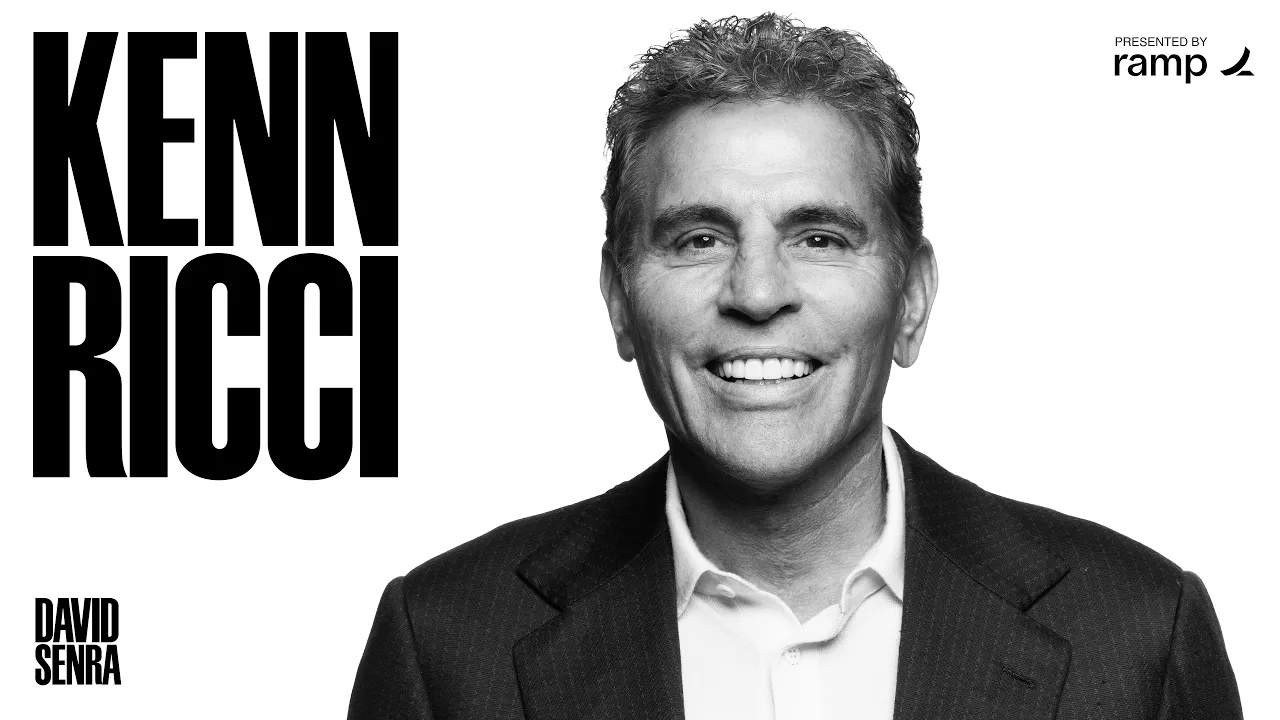
Ricci argues that large corporate acquisitions signal an inability to grow organically and that enduring customer retention requires granting frontline workers unilateral authority to resolve six-figure operational crises.
Kenn Ricci scaled Flexjet into a private aviation giant operating over 360 aircraft and serving as the world's largest Gulfstream operator, initially acquiring its predecessor charter business for just $27,500 in his twenties. (25:36)
Ricci's debt financing for Flight Options unlocked only after Warren Buffett acquired NetJets for $725 million in 1998, which validated the fractional jet business model to skeptical lenders. (35:05)
Ricci repurchased Flight Options out of distress during the 2008 financial crisis for roughly $42 million after losing control to Raytheon in 2002, later acquiring Flexjet from Bombardier in 2014. (51:33)
Flexjet paid a $30 million breakup fee to abort an initial public offering in order to remain private and stay aligned with long-term operational values rather than quarterly market pressures. (63:01)
Detailed notes
## Background
Published on YouTube by David Senra on October 28, 2026, this episode features an in-depth conversation with Kenn Ricci, chairman and principal owner of Flexjet. The discussion chronicles Ricci's journey from purchasing a small $27,500 charter operation to building a multibillion-dollar fractional jet powerhouse, detailing his lessons on entrepreneurship, private capital, and family wealth transfer.
## TL;DR
Aviation entrepreneur Kenn Ricci shares how he scaled Flight Options and later Flexjet into a massive private aviation leader operating hundreds of aircraft, including navigating a devastating boardroom ouster by Raytheon and buying the company back amid the 2008 financial crisis. He outlines his contrarian operational strategies, such as using pre-owned aircraft fleets, rejecting debt-heavy corporate mergers, and empowering frontline customer service agents to comp six-figure flights on the spot. Alongside his business narrative, Ricci presents an unconventional philosophy on multi-generational family governance, advocating for full financial transparency and transferring wealth to children early in life rather than controlling them from the grave.
## Atmosphere & style
The conversation carries an intimate, contemplative, and deeply philosophical tone, blending hard-nosed business execution with vulnerable reflections on identity and legacy. Senra acts as an engaged historical interlocutor, connecting Ricci's experiences to titans like Henry Ford and Charlie Munger while Ricci speaks with the relaxed clarity of an operator who has weathered severe crises. Listening feels like sitting in on a private masterclass where balance-sheet discipline meets spiritual purpose, moving seamlessly between boardroom battles and life-defining moral lessons.
## Bulletin
- [25:36](https://www.youtube.com/watch?v=D76BdIPTfGw&t=1536s) Kenn Ricci scaled Flexjet into a private aviation giant operating over 360 aircraft and serving as the world's largest Gulfstream operator, initially acquiring its predecessor charter business for just $27,500 in his twenties.
- [35:05](https://www.youtube.com/watch?v=D76BdIPTfGw&t=2105s) Ricci's debt financing for Flight Options unlocked only after Warren Buffett acquired NetJets for $725 million in 1998, which validated the fractional jet business model to skeptical lenders.
- [51:33](https://www.youtube.com/watch?v=D76BdIPTfGw&t=3093s) Ricci repurchased Flight Options out of distress during the 2008 financial crisis for roughly $42 million after losing control to Raytheon in 2002, later acquiring Flexjet from Bombardier in 2014.
- [01:03:01](https://www.youtube.com/watch?v=D76BdIPTfGw&t=3781s) Flexjet paid a $30 million breakup fee to abort an initial public offering in order to remain private and stay aligned with long-term operational values rather than quarterly market pressures.
## Key takeaways
- [02:34](https://www.youtube.com/watch?v=D76BdIPTfGw&t=154s) Transferring wealth early through family limited partnerships allows assets to compound outside parental estates while removing distrust and bitter estate battles.
- [06:58](https://www.youtube.com/watch?v=D76BdIPTfGw&t=418s) Charlie Munger advocated giving children wealth while alive, arguing that withholding inheritance fosters deep family resentment and that lost ambition is an acceptable risk.
- [17:06](https://www.youtube.com/watch?v=D76BdIPTfGw&t=1026s) To avoid sibling conflict and jealousy over investments, the Ricci family instituted a 60/20/20 co-investment rule alongside annual transparent financial audits excluding spouses.
- [25:36](https://www.youtube.com/watch?v=D76BdIPTfGw&t=1536s) Ricci acquired J&J Aviation for $27,500 using the company's own cash balance and a $500 loan, rebranding it as Corporate Wings primarily to maintain his personal flying job.
- [30:51](https://www.youtube.com/watch?v=D76BdIPTfGw&t=1851s) The fractional aviation model revolutionized private flying by splitting ownership into quarter shares and resolving the deadhead repositioning costs that plagued charter companies.
- [34:18](https://www.youtube.com/watch?v=D76BdIPTfGw&t=2058s) Flight Options created a cost advantage by applying the fractional model to pre-owned secondary market aircraft rather than buying new airframes directly from manufacturers.
- [38:11](https://www.youtube.com/watch?v=D76BdIPTfGw&t=2291s) A key architectural necessity of fractional fleets is holding a dedicated core float of unsold aircraft to manage scheduling spikes without stranding retail customers.
- [41:36](https://www.youtube.com/watch?v=D76BdIPTfGw&t=2496s) Ricci strongly opposes large mergers and corporate acquisitions, viewing them as admissions of weak organic growth that destroy organizational culture.
- [43:10](https://www.youtube.com/watch?v=D76BdIPTfGw&t=2590s) Raytheon exercised an 18-month shotgun buyout clause in 2002 to force Ricci out of Flight Options, leading to an identity crisis that redirected his focus toward private capital.
- [54:49](https://www.youtube.com/watch?v=D76BdIPTfGw&t=3289s) A Bombardier exclusivity contract with NetJets inadvertently forced the cancellation of Flexjet's $600 million Global order, opening the door for an exclusive fractional partnership with Gulfstream.
- [01:03:01](https://www.youtube.com/watch?v=D76BdIPTfGw&t=3781s) Father Ted Hesburgh's mentorship helped Ricci reconcile capitalism with purpose through three rules: be true to your God, be as good as your parents, and champion the underdogs.
- [01:09:25](https://www.youtube.com/watch?v=D76BdIPTfGw&t=4165s) Flexjet empowers frontline customer service representatives to comp flights up to $300,000 on the spot without management approval to resolve customer crises instantly.
## Detailed walkthrough
### [00:02](https://www.youtube.com/watch?v=D76BdIPTfGw&t=2s) Educating Through Travel and Experiencing Commercial Flight
Kenn Ricci describes raising his three children, who were born six years apart across a twelve-year span. While launching and expanding his aviation business, he was actively piloting planes while running daily operations, leading to familiar questions about balancing work and parenting. To impart a love for global exploration, he had each child skip eighth grade to spend that entire year traveling. Rather than embarking on a single extended journey, they took six three-week trips structured around customized academic subjects chosen by the child—such as World War II history, India, or Asia—avoiding conventional vacation destinations like Paris or London. The only two destinations Ricci mandated for every child were Auschwitz and North Korea, making Ricci someone who has visited North Korea three distinct times.
By the time his youngest son, Austin, reached eighth grade in 2017, Ricci realized the boy had grown up flying exclusively on private aircraft and had never once boarded a commercial flight. Deciding that this insular upbringing was unhealthy, Ricci booked commercial airline tickets for both of them to Tokyo. Austin experienced standard commercial aviation procedures for the first time: standing in airport lines, checking baggage, waiting for boarding zones, taking off shoes, and going through TSA security. Once they were seated on the airliner prior to takeoff, Ricci checked in with his son, prompting Austin to observe the presence of other passengers.
> “Austin, what do what do you think?” — Kenn Ricci
> “Hey, Dad, there's people on this plane. I don't know.” — Austin Ricci
- Ricci's three children are spaced six years apart, spanning twelve years from oldest to youngest.
- Eighth-grade homeschooling trips consisted of six separate three-week journeys focused on self-directed study.
- Mandatory destinations for all three children: Auschwitz and North Korea (Ricci visited North Korea three times total).
- Austin's maiden commercial flight was an international trip to Tokyo in 2017.
---
[02:34](https://www.youtube.com/watch?v=D76BdIPTfGw&t=154s) Rethinking Parenting, Trust, and Wealth Transfer
Prompted by David Senra on why he decided to distribute his wealth to his children during his lifetime rather than posthumously, Ricci explains that modern parenting has adopted an overprotective "helicopter" model fixated on physical presence rather than building reciprocal trust. He contrasts today’s tightly monitored routines with his own childhood in Cleveland, Ohio, where he would ride his bicycle away at 9:00 a.m. and only had to return in time for dinner. Ricci contends that withholding information about financial assets and inheritance structures signals a fundamental distrust of one's children. He notes that parents often discuss sex more openly than money, despite money having the potential to cause far greater damage.
Ricci outlines three core observations regarding standard generational wealth management:
1. **The Trust Industry Exploits Fear:** A massive cottage industry of lawyers, trustees, and banks pushes the narrative that patriarchs and matriarchs must retain strict control, allowing intermediaries to continuously skim management fees from family wealth.
2. **The Need to Control from the Grave:** Referencing the Chinese proverb that "the son of a lion is a lamb," Ricci notes that aggressive, lion-like entrepreneurs are conditioned to exercise total control. Conventional trusts releasing assets in tranches at ages 25, 35, and 45 operate as artificial mechanisms to preserve parental influence long after death.
3. **The False Belief That Wealth Causes Laziness:** Ricci rejects the prevailing assumption that transparency about wealth inevitably ruins a child's ambition. He argues that if a financial disclosure instantly ruins a child, it represents a failure of parenting rather than a flaw in the capital.
Ricci chose an early distribution model because he loves his children, wants to see them enjoy their resources while he is still alive, and wants to actively guide them while he possesses the financial judgment to help.
> “Think about wealth transfer and if you don't tell your kids about their financial arrangement, you're saying you don't trust them.” — Kenn Ricci
```mermaid
flowchart TD
accTitle: Conventional vs Early Trust Transfer Models
accDescr: Comparison of traditional trust industry wealth preservation versus Kenn Ricci's early transfer model.
subgraph Traditional["Conventional Industry Model"]
A["Parental Distrust & Need for Control"] --> B["Staged Trusts: Releases at 25, 35, 45"]
B --> C["Advisors, Lawyers & Trustees Skim Fees"]
C --> D["Control Maintained Post-Mortem"]
end
subgraph EarlyTransfer["Ricci Early Distribution Model"]
E["Mutual Trust & Financial Transparency"] --> F["Early Wealth Distribution During Lifetime"]
F --> G["Active Parental Mentorship & Financial Coaching"]
G --> H["Children Enjoy Wealth While Parent Observes"]
end
```
---
[05:30](https://www.youtube.com/watch?v=D76BdIPTfGw&t=330s) Growing Up with an Undercover Federal Spy
When Senra asks about his family background, Ricci explains that he was raised in a middle-class environment and became wealthy by accident rather than through a grand monetary master plan. His father was a GS-12 federal government investigator with a deep intelligence background, having served in World War II, the OSS (Office of Strategic Services), and Naval Intelligence. In the early 1960s, Attorney General Robert F. Kennedy established the Organized Crime Drive (OCD) within the U.S. Treasury Department, and Ricci's father spent seventeen years working domestic undercover investigations focused on organized crime and the Mafia.
Because Ricci's father was Italian-American, the government assigned him the undercover alias "Richard Dill" (or "Dick Dill"). Demonstrating the meticulous nature of long-term undercover operations, his father worked only three major cases over his entire seventeen-year undercover career. One notable assignment occurred when Ricci was seven years old: the family relocated to Lincoln, Nebraska for two months to live undercover while his father investigated the local police chief's ties to organized crime. Ricci fondly recalls staying at a Holiday Inn with an outdoor pool, which felt like the height of luxury to him since his family did not own a swimming pool.
> “He came out of World War II, worked in the OSS, worked in naval intelligence, and then had a the in the 60s, early 60s, Bobby Kennedy set up the OCD, the organized crime drive through the Treasury Department. And my dad was a part of that part of that that group at that investigated investigated domestic mostly mafia, mostly organized crime in those in that era.” — Kenn Ricci
- Father's government rank: GS-12 federal employee (OSS, Naval Intelligence, Treasury Department OCD).
- Undercover cover identity: "Richard Dill" ("Dick Dill").
- Operational scope: Three undercover cases completed across seventeen years.
- Childhood memory: Two months stationed at a Lincoln, Nebraska Holiday Inn with a pool during an active investigation of the local police chief.
---
[06:58](https://www.youtube.com/watch?v=D76BdIPTfGw&t=418s) Charlie Munger’s Advice on Giving Money to Children
Senra connects Ricci's philosophy to an interview he conducted with Charlie Munger roughly six months before Munger passed away. Having studied hundreds of biographies of historical business figures who struggled with how wealth affected their descendants—summarized by the classic dilemma of a poor man's son raising a rich man's son—Senra had asked Munger for his resolution to the problem. Munger replied instantly without hesitation: "You give them the money."
When Senra pressed Munger on the logic behind giving away the money early, Munger explained that failing to do so breeds long-term bitterness and damages the family relationship. When asked whether receiving massive early inheritances would make children less ambitious, Munger conceded that it often does, but dismissed it as an acceptable outcome. Ricci agrees with Munger's assessment, confirming that each child possesses a unique personality and temperament, which he directly addresses in annual family meetings devoted to wealth education.
> “You give them the money.” — Charlie Munger (quoted by David Senra)
> “They'll hate you if you don't... what's the point of building a relationship and making all this money and then at the end of your life your kids hate you?” — Charlie Munger (quoted by David Senra)
> “Yeah, some of them have $250 million and they're not as ambitious. Like, so what?” — Charlie Munger (quoted by David Senra)
[08:28](https://www.youtube.com/watch?v=D76BdIPTfGw&t=508s) Overcoming the Equality Trap and the Family Limited Partnership
Kenn Ricci tackles one of the primary reasons wealthy families fracture across generations: the false assumption that all children must receive exactly identical financial outcomes. Because Ricci began passing down assets to his oldest child twelve years before his youngest was born, those transferred assets naturally compounded and appreciated at drastically different rates over time. Rather than pretending those disparities do not exist, Ricci addresses the imbalance head-on at the start of every family financial gathering: “Look guys, you're not equal. It doesn't mean I don't love you. doesn't mean it's just it's just how things are. And the sooner you get over that fact, the happier you'll be. It's just like it wasn't set out that way.”
When David Senra asks if Ricci has already transferred the bulk of the wealth he plans to give, Ricci confirms that he has, having gifted equity through a family limited partnership (FLP) when the children were infants. Senra observes that this parallels the exact vehicle Sam Walton used to build Walmart’s generational wealth without paying crushing estate taxes, an idea Walton picked up from his father-in-law when the retail chain’s shares were worth just $5,000 per child. Ricci set up his own family partnership in 1990—five years before his first child was born in 1995—and gifted non-voting partnership shares immediately upon their births while retaining complete operational and distribution control as the general partner.
For Ricci, handing over capital early is not just an estate planning maneuver; it is an active parenting philosophy. Rather than setting up rigid trust structures that attempt to dictate outcomes after death, he wants to watch his children handle real money, observe their successes and failures, and offer living counsel when they stumble. As Ricci argues, parents who fear that money will instantly corrupt their children are misunderstanding their role: “So I think sometimes we want to rule from the grave. You have this trust environment that's there and then if you're going to spo this is going to spoil your kids, then you really weren't that good of a parent. If that was the one thing that did it, they couldn't handle this. Or maybe the the alternative is it's all the more reason to give it to them when they're alive so you can guide them through it, right?”
```mermaid
flowchart TD
accTitle: Family Limited Partnership Structure
accDescr: Diagram showing how Kenn Ricci structures and distributes wealth through a Family Limited Partnership.
subgraph FLP ["Family Limited Partnership (Created 1990)"]
GP["Kenn Ricci (General Partner)<br/>Retains full control & flexibility over distributions"]
LP["Children (Limited Partners)<br/>Receive gifted equity at birth"]
end
GP -->|"Guidance while alive"| LP
LP -->|"Appreciation compounds early"| Estates["Individual Estates<br/>(Ages 37, 31, 25)"]
```
- **Early FLP Formation:** Ricci established the family limited partnership in 1990, five years before his first child arrived in 1995, intentionally creating the estate structure before any assets appreciated.
- **The Sam Walton Precedent:** Sam Walton divided company equity among his four children when each share was worth approximately $5,000, passing the asset down before it exploded in value.
- **Living Guidance over Dead Hand Control:** Ricci rejects leaving restrictive testamentary trusts, preferring to be available in person when his children inevitably ask, "What should I do, Dad?"
---
[11:02](https://www.youtube.com/watch?v=D76BdIPTfGw&t=662s) Sponsor Break: Ramp and AppLovin
David Senra pauses the conversation to highlight the episode's presenting sponsors, Ramp and AppLovin, tying both services back to foundational business principles drawn from his biographical reading. Discussing Ramp, Senra notes that studying SpaceX highlights how Elon Musk's relentless campaign against internal costs paradoxically unlocked top-line growth by freeing up capital for ambitious new bets. Ramp offers software designed to give finance teams that same leverage; median companies running on the platform reduce operational expenses by 5% while growing revenue by 16%, creating a compounding operational advantage over less disciplined peers.
Turning to AppLovin, Senra recalls Peter Thiel’s core lesson in *Zero to One* that true value is uncovered by approaching problems from first principles rather than repeating conventional industry formulas. AppLovin applied that mindset to digital marketing by building a high-engagement mobile gaming ad network that reaches more than one billion potential customers. Rather than relying on fleeting banner placements, AppLovin runs full-screen video ads that average 35 seconds of watch time, allowing brands to launch automated campaigns in minutes and scale daily ad spend into the hundreds of thousands of dollars.
---
[13:11](https://www.youtube.com/watch?v=D76BdIPTfGw&t=791s) Philanthropy, Personality Tests, and Radical Family Transparency
When Senra asks whether early wealth transfer has produced any negative consequences, Ricci responds without hesitation: “Not one. Not one. In fact, I've seen many things I didn't really I didn't think would happen.” The deliberate financial education started when the kids were only five or six years old, but instead of lecturing them on compounding interest or tax efficiency, Ricci focused entirely on charitable giving. In early family meetings, the family discussed which causes deserved support and why; his daughter championed animal welfare, his older son supported Catholic initiatives, and his youngest, around age six, humorously insisted on directing donations to Disney until Ricci had to gently explain that Disney was not a struggling 501(c)(3) nonprofit.
As the children reached adolescence—specifically when the youngest turned sixteen—the meetings transitioned from purely philanthropic discussions to full financial reviews. Before opening the books, Ricci had the entire family complete comprehensive personality evaluations to identify left-brain and right-brain tendencies, ensuring the siblings understood each other’s mental models and could collaborate without unnecessary friction. Once that baseline was established, the five family members (Ricci, his wife, and their three children) began reviewing an exhaustive annual balance sheet that lays out where all the capital sits, who maintains legal control, which banks hold accounts, and how assets transfer. Today, with the children aged 37, 31, and 25, every member transparently reports their own personal estate and annual expenditures to the group.
Ricci notes that although he considers himself "accidentally wealthy," his net worth dramatically surged over the past six years alongside the explosive valuation of Flexjet, his crown jewel. Senra asks what other holdings sit in Ricci's portfolio, prompting Ricci to explain his strict investment discipline: “I always say I'm an inch wide and a mile deep. I've made a lot of investments only in aviation. And I probably know more about the area of aviation. I've invested it.” Over his career, those aviation-focused assets have included flight-training provider SIMCOM (which he later sold to CAE) and the fixed-base operator network that became Atlantic Aviation.
- **Philanthropy First:** Financial education began at ages 5–6 centered on charitable giving rather than balance sheets, teaching stewardship before personal accumulation.
- **Personality Profiling:** Sibling collaboration was anchored in psychological testing to preempt emotional and cognitive misunderstandings around wealth management.
- **Radical Transparency:** The five-person family unit holds annual meetings with complete visibility into every individual's net worth, bank accounts, and annual spending.
- **Aviation Specialization:** Ricci refuses to invest outside aerospace, holding major historical stakes in assets such as SIMCOM and Atlantic Aviation alongside Flexjet.
---
[15:46](https://www.youtube.com/watch?v=D76BdIPTfGw&t=946s) The Three-Generation Curse and Sibling Rules on Spouses
The transparency Ricci instilled led his children to take ownership of their family's long-term legacy. On their own initiative, the siblings began researching historical biographies of dynasties that collapsed, recognizing the famous proverb of "shirtsleeves to shirtsleeves in three generations" as a persistent historical pattern. Determined not to become another cautionary tale, the adult children formed their own pact and brought two specific operating rules back to the family council.
First, the siblings decided that spouses are strictly excluded from the core family wealth meetings. Two of the three children are married, but they collectively agreed that financial transparency with partners must remain a private matter handled inside each individual marriage. Because the original five members spent over a decade building mutual vulnerability, shared vocabulary, and trust, they felt dropping in-laws directly into that high-stakes environment without years of conditioning would destabilize the dynamic. As Ricci summarizes their reasoning: “They decided in these meetings that each one of them will decide how to share financial information in their own family. That this isn't a group share. This is us five and we've been doing this for 10 years, 12 years, and it's not something we're not going to toss people into the middle of it because we don't know their personalities.”
Second, the children focused directly on the psychological mechanics of generational wealth destruction. They realized that outside of financial mismanagement, the deepest threat to dynastic unity is sibling resentment stemming from perceived unequal treatment and bitterness toward the family patriarch—the exact trap Ricci defused years earlier by insisting from day one that life is never mathematically equal.
- **Studying Dynastic Failure:** The children actively researched business biographies to diagnose why family wealth notoriously evaporates by the third generation.
- **Spouse Exclusion Rule:** Sibling financial meetings are reserved strictly for the core family unit; each sibling independently decides how much financial detail to communicate to their own spouse.
- **Preserving 12-Year Trust:** The group recognized that their candor required more than a decade of grooming and could not survive importing outside personalities into the boardroom.
[17:06](https://www.youtube.com/watch?v=D76BdIPTfGw&t=1026s) The 60/20/20 Co-Investment Rule
Kenn Ricci explains how giving his three children their wealth early led to an unexpected internal dynamic. While they had moved past concerns about equal distribution, a new point of tension emerged around performance: one child might make an exceptional investment and generate massive returns, while the others lagged behind, creating the potential for sibling envy. To protect their relationship, the three children independently designed a system to share investment upsides.
Under this framework, whichever sibling finds or leads an investment opportunity is entitled to fund up to 60% of it personally, but is required to offer 20% to each of the other two siblings. The other two are under no obligation to participate. By giving everyone the option to co-invest, the rule eliminates resentment before it can start: an individual sibling either joins in the upside or acknowledges that they chose to pass. Ricci takes pride in noting: “That was their idea, not my idea.”
```mermaid
flowchart TD
accTitle: Sibling 60-20-20 Investment Allocation Rule
accDescr: Visual breakdown of how Kenn Ricci's three children split individual deal allocations to avoid jealousy.
subgraph Lead["Lead Sibling Deal Sourcing"]
A["New Investment Opportunity"] --> B["Lead Sibling takes up to 60%"]
end
subgraph Offer["Mandatory Sibling Offer"]
B --> C["Offer 20% to Sibling B"]
B --> D["Offer 20% to Sibling C"]
end
subgraph Outcome["Outcome Choice"]
C --> E["Opt In: Share Upside"]
C --> F["Opt Out: Zero Resentment"]
D --> E
D --> F
end
```
[17:50](https://www.youtube.com/watch?v=D76BdIPTfGw&t=1070s) Overhearing His Parents and Discovering Air Force ROTC
When David Senra asks about the origins of Ricci's career and wealth, Ricci recalls his upbringing in Cleveland, Ohio. His father was a government worker, and money was perpetually tight. Ricci attended St. Ignatius, a local Jesuit high school that routinely sent around 30 graduates straight to the University of Notre Dame. Ricci applied, was admitted, and scheduled an official campus visit in March 1974. Living in a house built with such thin framing that he jokes “houses have 2x4s, ours had 1 by twos,” the only child overheard his parents debating behind closed doors the night before his trip. His mother argued against letting him go at all, terrified that he would fall in love with Notre Dame only for them to break his heart by admitting they could not afford the tuition; his father argued that maybe he would visit, dislike it, and solve the problem on his own.
Knowing his family could not pay, Ricci arrived on campus determined to find a solution rather than put his parents in an agonizing spot. Financial aid deadlines had passed, but because the Vietnam War was still a raw, contentious issue in early 1974, military ROTC detachments were facing severe recruiting shortfalls. Deciding on a whim that he wanted to be an aviator—perhaps because he liked the look of naval uniforms—Ricci walked into the ROTC building and was trying to read an upside-down phone number through an office window to call about signing up for the Navy. An officer tapped him on the shoulder, asked what he was doing, and learned Ricci was an incoming freshman who wanted to fly Navy planes:
> “He goes, ‘I'm shocked because they usually admit smarter people than that.’ He said, ‘The Navy has ships and the Air Force has planes. I'm Colonel Mueller. I'm head of the Air Force detachment and I'm enrolled in the Air Force.’”
Ricci joined Air Force ROTC on the spot, securing full tuition funding. He also shares a humorous memory from his freshman year about a sergeant teaching him a low-level campus hustle to stretch his $100 monthly stipend: buying brand-new books at the campus bookstore, submitting the receipts for full military reimbursement, and then returning the new books to buy used copies and pocket the difference.
- Ricci had never flown an airplane prior to joining ROTC; he chose aviation simply because, if military service was required to afford college, flying seemed fun.
- Because anti-military sentiment was high during the tail end of the Vietnam War, wearing his uniform around campus one day a week was an uncomfortable social burden.
- Ricci completed his primary flight training concurrently with college classes and summer sessions, logging his initial hours in Cessna 152s and 172s before moving to T-37 and T-38 military jet trainers upon graduation.
[21:52](https://www.youtube.com/watch?v=D76BdIPTfGw&t=1312s) Accidental Wealth and 40 Years of Aviation Growth
Senra highlights how Ricci's laser focus mirrors the Warren Buffett and Charlie Munger philosophy of staying inside a defined circle of competence. Ricci agrees, summarizing his asset allocation with self-deprecating humor: “I always say my portfolio of investments is unbelievably diversified. It's cash and airplanes.” He does not view himself as an innate corporate strategist who could turn around any random company, but rather as someone who built an empire purely out of love for flight:
> “I'm successful because I love to fly and I learned everything. Right. That that's what put me here. But I didn't I never had a goal to become wealthy or to build a business.”
A substantial portion of his success was riding a massive macro secular wave. When Ricci entered private aviation in 1985, there were only approximately 5,000 private jets operating worldwide; today, that number has swelled to roughly 35,000. He chose private aviation over commercial airlines or military service because of the freedom, the spontaneity, and the ability to interact with prominent passengers through an open cockpit door.
His journey was far from smooth. After leaving the military, Ricci flew air cargo freight and landed a job at Northwest Orient Airlines, only to be furloughed shortly after arriving. Convinced aviation was an unreliable life path, his father warned him that pilots were nothing more than itinerant “airport jockeys” drifting from job to job. Yielding to his father's pressure to establish a fallback career, Ricci enrolled in law school. Although he did not love the law, it kept his options open until private aviation took off. His father lived long enough to fly in Ricci's first Learjet before passing away in 1991, though he never lived to see the full multibillion-dollar scale of what his son would build.
[25:36](https://www.youtube.com/watch?v=D76BdIPTfGw&t=1536s) Buying a Fraudulent Charter Company for $27,500
While attending law school, Kenn Ricci could only take on work as a part-time pilot, serving as a fill-in flier for a Cleveland-based outfit named J&J Aviation. The operation, however, turned out to be a straight fraud exploiting the early-1980s 10% federal investment tax credit. Under that tax law, acquiring an aircraft generated an immediate 10% credit. J&J Aviation exploited this by selling Cessna Citation jets for $750,000 to West Coast investors who were thousands of miles away from Cleveland. The buyers claimed their $75,000 tax credit and wired the $750,000 purchase price, while the head of the company, Jeff Tow, fabricated monthly lease statements for aircraft that did not even exist. Tow would draft dummy paperwork reporting roughly 40 flight hours, $90,000 in revenue, and $78,000 in operating expenses, mailing the owners a bogus $12,000 distribution check while parking the $1.5 million principal in a bank account and dripping out the interest. After about 18 months of hearing excuses that their jets were constantly in the air, the investors demanded to see their planes, Tow got caught, and he fled the scene.
With Tow gone, J&J Aviation was reduced to three employees—a secretary, a dispatcher named Rick Michaels, and Ricci—managing a fleet of about six real, tiny piston-engine aircraft, such as Piper Navajos. Michaels called Ricci to tell him that no one else wanted the business, admitting he was not equipped to run it himself, and urged Ricci to buy it because he understood aviation. Ricci was just 26 years old and had never planned to be an entrepreneur; his sole motivation was preserving his flying job so the airplanes would not disappear. Two of the aircraft departed, leaving four behind. Ricci decided to rename the company Corporate Wings and phoned his father for backing.
Ricci explained to his father that the purchase price was $27,500, but because the business already had $27,000 sitting in its bank account, he could acquire it using its own cash. When his father asked how he planned to cover the remaining $500, Ricci quipped, “Why do you think I called you?” With that $500 loan from his father, Corporate Wings was born.
- J&J Aviation relied on the 10% investment tax credit on $750,000 Cessna Citations to lure remote West Coast investors into purchasing phantom aircraft.
- Founder Jeff Tow pocketed $1.5 million for two non-existent jets, sending fake monthly statements with $12,000 payouts until he was discovered and vanished.
- At age 26, Ricci purchased J&J Aviation—rebranded as Corporate Wings—with four remaining aircraft using $27,000 of the company's own cash plus $500 borrowed from his father.
- “I didn't even buy this company to be an entrepreneur,” Ricci recalls. “I bought it so I could still have a job.”
---
[28:22](https://www.youtube.com/watch?v=D76BdIPTfGw&t=1702s) Carving a Niche Flying Rock Stars and Celebrities
Facing an industry where every operator offered standard charter planes, Ricci looked for an uncrowded niche to scale Corporate Wings. By chance, he connected with Chapman Freeborn, a specialist air-brokerage firm that managed logistics and cargo freight for touring rock stars. While massive stages and equipment moved via ground transit or heavy cargo aircraft, the rock stars required private passenger transport. While large bands like the Eagles opted for 15-to-18-seat turboprops to accommodate their entire entourage, solo headliners toured in corporate jets. Ricci struck an arrangement with Chapman Freeborn to personally pilot the celebrity legs of these tours.
Ricci flew stars such as Elton John, Bryan Adams, Bruce Springsteen, Tony Bennett, and Barbra Streisand. Piloting celebrity tours paid handsomely: standard corporate pilots earned about $7,000 a month at the time, but a three-month concert tour paid $20,000 a month with no corporate responsibilities attached. Ricci used those lucrative three-month blocks to earn money and spent the remaining nine months of the year back in Cleveland learning the business, refining operations, and assembling an aircraft fleet.
To secure the heavy iron required for international touring without spending his own money, Ricci structured creative financing agreements with wealthy individuals interested in acquiring large-cabin jets like the Gulfstream II. He convinced buyers that if they purchased the aircraft, he would manage it, allow them private access, and charter it out on three-month tours to cover the plane's carrying costs for the entire year. Through this model, Ricci raised zero external equity—relying solely on client-funded capital—and eventually moved to London for a year and a half to fly Richard Branson, an experience that gave him global operating expertise.
```mermaid
flowchart TD
accTitle: Celebrity Charter Model
accDescr: Flowchart showing how Ricci financed large aircraft using high-net-worth owners and Chapman Freeborn tours.
subgraph Monetization["Touring Operations"]
D["Chapman Freeborn"] -->|"Books Solo Celebrities"| E["3-Month Arena Tours"]
B -->|"Operates Tours"| E
E -->|"Covers Full Year Carrying Costs"| A
E -->|"$20k/Mo. Pilot Salary"| F["Kenn Ricci (Founder / Pilot)"]
end
```
- Standard corporate pilot pay was roughly $7,000 per month, while Chapman Freeborn celebrity music tours paid $20,000 per month.
- Tour clients flown by Ricci included Elton John, Bryan Adams, Bruce Springsteen, Tony Bennett, and Barbra Streisand.
- Ricci lived in London for 18 months acting as personal pilot for Richard Branson.
- Aircraft like the Gulfstream II were financed with zero founder capital by promising owners that a single three-month tour charter would cover the entire jet's annual operating costs.
---
[30:51](https://www.youtube.com/watch?v=D76BdIPTfGw&t=1851s) Scaling Infrastructure and the Invention of Fractional Ownership
As Corporate Wings established its reputation handling international operations and large-cabin Gulfstreams, signing smaller aircraft into its managed fleet became straightforward because clients reasoned that a company capable of global flight management was more than qualified to handle domestic aircraft. Ricci expanded the managed fleet into the low twenties, navigating the step-function staffing thresholds inherent in aviation operations:
- A single individual can manage up to 3 aircraft without support staff.
- Managing 15 aircraft requires a dedicated infrastructure of 17 people.
- That same 17-person team can scale the operation up to 30 aircraft.
- Crossing beyond 30 aircraft triggers a leap to 35 personnel.
During this period in the early 1990s, original equipment manufacturers (OEMs) like Cessna, Bombardier, and Gulfstream operated like automakers rather than building strictly to pre-orders. Cessna maintained franchised dealer networks based on tiered volume quotas—requiring dealers to buy batches of single-engine and twin-engine aircraft to secure specific commission tiers. When market demand softened, factories kept assembly lines running, creating excess inventory parked without FAA registration marks, termed "white tails."
The 1991 Gulf War deepened the aviation downturn, leaving manufacturers like Hawker stuck with unsold white-tail jets. Richard Santulli, the founder of NetJets, saw an opportunity in Hawker’s excess inventory. Recognizing that an idle jet deteriorates mechanically—fluids leak and seals dry out when aircraft sit parked five days a week in corporate hangars—Santulli observed that while an average corporation flew only 300 hours a year, an airframe was engineered to fly 1,000 to 1,200 hours annually. Santulli went to Hawker and took 20 white-tail aircraft on consignment with zero capital down, offering to sell fractional interests.
By selling the aircraft in 200-hour blocks, Santulli matched four owners to each jet to hit its optimal 800-to-1,200-hour annual profile, introducing the concept of fractional ownership. This original structure is why NetJets tail numbers continue to end with the call sign "QS" for "quarter share." This structural shift caught traditional charter operators like Corporate Wings off guard. Standard charter services were forced to bill round-trip deadhead legs—charging an Ohio client the cost of flying an empty jet home from Florida—whereas NetJets introduced floating fleets that eliminated round-trip repositioning penalties and drew traditional charter customers away.
- “Rick Rich Santulli, brilliant, realized that the average company flies an airplane 300 hours a year,” Ricci explained. “A plane wants to fly 1,200 hours a year. So, why don't we get four people to share them?”
- NetJets aircraft tail numbers still end in the suffix "QS", commemorating the original 200-hour "quarter share" sales model.
- NetJets was launched by taking 20 surplus Hawker "white tails" on consignment during the 1991 Gulf War downturn, requiring zero upfront capital from Santulli.
- Traditional charter operators were economically disadvantaged against fractional models because single-direction charter trips required charging customers for empty repositioning legs back to home base.
[34:18](https://www.youtube.com/watch?v=D76BdIPTfGw&t=2058s) Emulating NetJets with Pre-Owned Aircraft
Between 1993 and 1996, Kenn Ricci watched Richard Santulli’s NetJets rapidly gain traction by offering point-to-point fractional ownership. Under that model, clients no longer paid to fly an empty plane back to its home base; NetJets dropped them off at their destination and handled the logistics of moving the aircraft to the next passenger. As NetJets began taking clients from traditional charter operations, Ricci recognized both the threat and the underlying opportunity. NetJets supplied clients with factory-new aircraft obtained directly on consignment from manufacturers. Ricci decided he would mirror their fleet choices model for model—pairing every new Hawker with a pre-owned Hawker, and every new Citation with a pre-owned Citation—while acquiring the planes on the secondary market.
By purchasing pre-owned airframes at roughly half the cost of factory-new planes, Ricci could offer the exact same fractional flight experience and pay-only-when-on-board model at a 50% discount on the initial asset buy-in. The critical hurdle was financing: unlike NetJets, Ricci could not rely on manufacturer consignment to assemble his fleet. He had to secure independent debt capital to buy the inventory outright.
```mermaid
flowchart TD
accTitle: NetJets vs Flight Options Business Model
accDescr: Comparison of NetJets using new aircraft on consignment versus Flight Options using pre-owned aircraft funded by debt.
subgraph NetJets["NetJets Model"]
direction TB
N1["Brand-New Aircraft"] --> N2["Acquired on Consignment"]
N2 --> N3["Full-Price Buy-In"]
end
subgraph FlightOptions["Flight Options Model"]
direction TB
F1["Pre-Owned Aircraft ('Previously Enjoyed')"] --> F2["Purchased via Debt Financing"]
F2 --> F3["50% Discount on Buy-In"]
end
```
[35:05](https://www.youtube.com/watch?v=D76BdIPTfGw&t=2105s) The Buffet Catalyst and Launching Flight Options
In 1996, Ricci drafted formal financial projections, modeled his cash flows, and began pitching commercial banks to borrow between $30 million and $40 million to stand up the fractional fleet. Over roughly 15 months, he pitched 35 to 40 financial institutions, but none of them understood how to value or collateralize fractional jet ownership. Lenders repeatedly questioned how an undivided fractional share of an airplane tail could secure their debt. By the end of that roadshow, Ricci had secured only an unworkable $7 million offer that required putting up an equivalent $7 million in personal collateral.
Everything changed in June 1998, when Warren Buffett bought NetJets through Berkshire Hathaway for $725 million. Buffett's acquisition instantly validated the fractional aviation model across Wall Street. Having just pitched every major aviation lender, Ricci found himself first in line when the credit markets opened up. That summer, institutions like Bombardier Capital, Boeing Capital, and Fleet Bank provided nearly $300 million in credit facilities in $50 million tranches. With financing secured, Ricci separated the fractional concept from his original charter operation, Corporate Wings, and formally branded the business Flight Options, launching operations on October 13, 1998.
- Kenn Ricci pitched 35 to 40 banks over 12 to 15 months seeking $30M–$40M before Warren Buffett’s transaction.
- Warren Buffett purchased NetJets in June 1998 for $725 million, legitimizing the industry overnight.
- Ricci turned down a restrictive $7 million collateral-backed loan offer and subsequently closed nearly $300 million in credit lines.
- Initial credit lines of roughly $50 million each were extended by Bombardier Capital, Boeing Capital, and Fleet Bank.
- Flight Options officially went live on October 13, 1998.
[38:11](https://www.youtube.com/watch?v=D76BdIPTfGw&t=2291s) The Core Fleet Operational Model
Flight Options launched with a starting fleet of approximately 25 aircraft across three categories: two light jet models and one midsize jet model. Ricci selected that number because fractional operators must maintain a dedicated base fleet to ensure guaranteed availability. If multiple fractional co-owners of a single tail request to fly on the same day, an operator must possess spare inventory to service each owner simultaneously. Ricci calculated that a core fleet of roughly eight airframes per aircraft type was required to convince prospective buyers of operational reliability.
Crucially, those original core aircraft were never sold to retail clients. Instead, they served as operational float. Only when four new owners bought fractional shares in an aircraft type would the company acquire an additional aircraft. Decades later, Flexjet retains this exact architecture: out of its modern fleet of approximately 365 aircraft, roughly 70 planes serve strictly as unsold core fleet to handle scheduling overlaps and peak travel days.
[39:33](https://www.youtube.com/watch?v=D76BdIPTfGw&t=2373s) Hypergrowth and the Realities of Capital-Intensive Businesses
Customer demand for Flight Options proved immediate and massive. Offering fractional jet ownership at half the price of NetJets led to $100 million in sales during the company's first three months of operation, followed by $400 million in its first full year. Eager buyers mailed in checks for $800,000 before receiving the underlying paperwork, demanding to fly the next day while legal documents were sorted out later.
The operational and financial strain of such rapid growth was immense. Ricci quickly discovered that managing rapid top-line expansion in an asset-heavy, capital-intensive business requires far more than sales momentum. As Ricci observed:
> “I didn't really realize that you know in capital intensive industries particularly like aviation the balance sheet is the whole game. It's not the income statement it's the balance sheet you know forget income forget EBITDA it's free cash flow and well how strong is your balance sheet that that's what drives that business.”
To shore up the business, Ricci brought in institutional equity partners. Shortly thereafter, the dot-com crash of 2000 hit, marking the third major recession of his career. While passenger flight volume remained intact, operating cash flow tightened drastically, putting Flight Options under severe pressure with its lenders.
[41:36](https://www.youtube.com/watch?v=D76BdIPTfGw&t=2496s) Why Mergers Fail: Cultural Destruction and Capital Inefficiency
Faced with severe credit market pressure during the post-2000 downturn, Ricci considered the standard options available to distressed firms: shutting down, selling the company for pennies, or executing a strategic turnaround through a merger to buy time with lenders. He chose to pursue a merger, but the experience ultimately solidified his disdain for large corporate integrations. Looking back with decades of hindsight, Ricci argues that large-scale acquisitions are usually an admission of organic failure. If a firm needs more market share, spending 10 to 12 times cash flow to acquire a competitor is far less capital-efficient than investing that same capital directly into improving its own product to win market share organically.
Beyond financial inefficiency, Ricci highlights culture as the main casualty of mergers. While an existing company culture can absorb an influx of new staff if the acquisition adds around 10% to the headcount, attempting to absorb a workforce expansion of 30% or 40% inevitably shatters the host company's culture. Desperate to resolve Flight Options' financial strain, Ricci agreed to a 50/50 merger with Raytheon's struggling fractional subsidiary, Raytheon Travel Air, setting the stage for significant conflict.
> “Acquisitions. Mergers are incredibly difficult. I hate them. I don't do them very often. I think they're immensely culturally they're damaging.” — Kenn Ricci
> “I think they're a sign of weakness because you can't build your business on your own.” — Kenn Ricci
[43:10](https://www.youtube.com/watch?v=D76BdIPTfGw&t=2590s) The Shotgun Clause: Losing Flight Options to Raytheon
Raytheon owned Beechcraft (which merged into Hawker Beechcraft) and operated an internal fractional program called Raytheon Travel Air as a distribution channel for its aircraft. However, Travel Air was bleeding roughly $30 million a year. Raytheon proposed consolidating it with Kenn Ricci’s Flight Options, which was operating around break-even with modest profits but lacking free cash flow. Combining the two entities allowed them to eliminate redundant back-office costs while Raytheon sought to refocus on its core defense contracts—missiles and submarines.
The merger was structured as a 50/50 partnership governed by a shotgun clause, also known as "shareholders' roulette," where either party could make an offer that the other had to either accept to sell or match to buy at that exact valuation. Ricci had 18 months to underwrite the transaction. He partnered with private equity firm Warburg Pincus, which valued the combined business at $360 million. Ricci flew to Raytheon’s headquarters in Lexington, Massachusetts, offering them $180 million for their half. Instead of accepting the payout and congratulating him for turning the business around, Raytheon grew suspicious that Ricci was trying to steal a valuable asset. Exercising the mechanism of the shotgun clause, Raytheon turned the tables and bought Ricci out of his 16% stake, stripping him of operational control in 2002.
```mermaid
flowchart TD
accTitle: Shotgun Clause Buyout Mechanism
accDescr: Flowchart showing how Kenn Ricci attempted to buy out Raytheon and ended up being bought out instead.
subgraph Consolidation ["50/50 Consolidation"]
A["Flight Options<br/>(Kenn Ricci - 16% equity)"]
B["Raytheon Travel Air<br/>(Losing $30M/year)"]
A & B --> C["Combined Flight Options<br/>(Subject to Shotgun Clause)"]
end
subgraph Valuation ["Valuation & Buyout Attempt"]
C --> D["Warburg Pincus Values<br/>Company at $360M"]
D --> E["Ricci Offers Raytheon<br/>$180M for Their 50%"]
end
subgraph Outcome ["Raytheon Counter-Move"]
E --> F{"Raytheon Reaction"}
F -->|"Suspects Ricci is stealing company"| G["Raytheon Exercises Shotgun Clause<br/>to Buy Ricci Out"]
G --> H["Ricci Ousted in 2002<br/>('Worst Day of My Life')"]
end
```
- Raytheon Travel Air was losing $30 million annually when it was combined with Flight Options.
- The 50/50 merger agreement included a 180-day/18-month "shareholders' roulette" buyout mechanism.
- Warburg Pincus appraised the combined enterprise at $360 million, setting the buyout tag for 50% at $180 million.
- Kenn Ricci personally owned 16% of the equity at the time of the forced buyout.
[44:49](https://www.youtube.com/watch?v=D76BdIPTfGw&t=2689s) The Emptiness of the Buyout and the Move to Phoenix
Despite walking away in his early forties with tens of millions of dollars, Ricci viewed being ousted as an unmitigated disaster: “I lost my throne. I lost my passion for living. I lost the vision. I didn't have any vision like what am I doing now?” David Senra highlights the disconnect between traditional startup culture—which glorifies the "start, scale, sell" treadmill—and the lived reality of founders who genuinely love their work, drawing a direct comparison to Travis Kalanick losing control of Uber despite receiving billions of dollars in stock wealth.
Ricci struggled with deep emotional conflict. He did not want the company to flourish without his presence, because he felt his leadership was the vital binding force that built it. At the same time, he could not bear the thought of it failing, since that would invalidate his original concept and hurt his close friends among the company’s 800 employees. Cleveland compounded his misery, as local acquaintances and restaurant patrons constantly stopped him to ask what had happened. Seeking anonymity and a clean break, he ruled out Los Angeles because returning east required a red-eye flight, and dismissed Denver due to the cold weather. In 2003, Ricci moved west of the Mississippi to settle in Phoenix, Arizona.
- Ricci was 42 years old, married, and had two young children when Raytheon bought him out.
- Most of Flight Options' 800 employees were located in Cleveland, making everyday public interactions an exhausting reminder of the loss.
- Ricci relocated permanently to Phoenix in 2003 to escape the constant community questioning.
[47:30](https://www.youtube.com/watch?v=D76BdIPTfGw&t=2850s) Launching Directional Capital
Warburg Pincus sought to capitalize on Ricci’s industry expertise by offering him an Executive in Residence (EIR) role with a $250,000 annual salary, tasking him with finding private aviation deals in exchange for a small slice of equity. Ricci declined the offer. He recognized that entering an exclusive agreement would surrender his autonomy, as Warburg would hold ultimate veto power over any prospective acquisition.
Ricci chose instead to launch his own firm, Directional Capital, maintaining strict focus: an inch wide and a mile deep, investing exclusively in the private aviation ecosystem he knew inside and out. Distressed operators and entrepreneurs sought him out because he already understood core operating metrics—such as cost per flight hour, occupied rates, and dispatch reliability—without requiring operational tutorials. Ricci leaned candidly into his past mistakes, using the Raytheon buyout as a credibility builder to show target companies that he understood the legal and financial landmines of private aviation deals.
- Warburg Pincus offered Ricci $250,000 a year plus deal carry to serve as an EIR.
- Ricci rejected the arrangement so he could source deals independently before deciding whose capital to accept.
- Directional Capital partnered with his long-time associate Mike Rossi, who had joined Ricci in the early 1990s as Ricci transitioned out of full-time piloting into executive leadership.
[49:12](https://www.youtube.com/watch?v=D76BdIPTfGw&t=2952s) The FBO Play: Acquiring Mercury Air Centers and the Problem with Private Equity
Working alongside Mike Rossi and Allied Capital, Directional Capital acquired Mercury Air Centers for $80 million. Mercury, a chain of 18 or 19 fixed-base operators (FBOs) predominantly on the West Coast, was in default on its debt with Foothill Capital (a division of Wells Fargo). The purchase fit within the boundaries of Ricci’s non-compete clause with Raytheon, which barred him from operating fractional or charter aircraft operations but permitted investments in ancillary services like jet fueling, ground handling, and hangar space.
Discussing the FBO sector, Ricci expresses strong disdain for how private equity firms subsequently rolled up the market into a duopoly, admitting that his sale of Mercury Air Centers to Atlantic Aviation helped spark the trend. Ricci argues that the regulatory shift after the Sarbanes-Oxley Act of 2002 drove capital away from public scrutiny and straight into private equity hands. While public corporations are accountable to broader social, environmental, and employee governance standards, private equity managers face no such disclosure requirements: “They are solely based upon a return to investors. So they're solely about greed.” Ricci points out that modern private equity FBO rollups gouge private aircraft owners with arbitrary surcharges, including fabricated "event fees" tied to occurrences as trivial as a lunar eclipse, creating widespread backlash across the private aviation landscape.
- Mercury Air Centers operated 18 to 19 locations when Directional Capital and Allied Capital acquired it out of default for $80 million.
- The business generated high-margin returns on the spread between the wholesale purchase price and retail sales price of aviation fuel.
- Ricci later sold Mercury Air Centers to Atlantic Aviation, which became one of the two dominant private equity-backed FBO chains controlling the market.
[51:33](https://www.youtube.com/watch?v=D76BdIPTfGw&t=3093s) Buying Flight Options Back in the Financial Crisis
After parting ways with Flight Options, Kenn Ricci pivoted to the fixed-base operator (FBO) sector, purchasing a business for $80 million in 2005 alongside Allied Capital (who held an 80% stake, while Ricci owned 20%). At the time, FBO businesses traded at around six times EBITDA, compared to the 15 to 20 times EBITDA multiples common today. By 2007, they roughly doubled the size of the company and sold it to Macquarie—which later became Atlantic Aviation—for $615 million, providing Ricci with a substantial liquidity cushion. Looking back at losing Flight Options, Ricci reflects: “Right. So again, the worst day in my life. I don’t I you know, let's just have faith in the future. I see none of this coming, right? I see none of this coming. But that's where I get the capital.”
What came next was an unexpected reversal of fortune. Raytheon had lost an estimated $600 million owning Flight Options, the workforce had unionized, and operational performance was deteriorating. Raytheon reached out to Ricci to ask if he would take the troubled business off their hands. Ricci jumped at the chance despite the timing: “I want my company back. I don't care what shitty position it's in. I want my company back. Think about this one. Financial crisis happens in September. I buy it in December. So, how dumb am I? I'm the dumbest guy in the world. I buy this company back in the in the the dear of the financial crisis.”
The headline transaction was structured around $135 million, but factoring in assumed liabilities and payables, the practical cost was roughly $42 million. Ricci funded the acquisition with $15 million in cash and secured a three-year, $27 million seller note from Raytheon backed solely by his personal guarantee across his assets.
- **FBO flip economics:** Acquired for $80 million in 2005, scaled, and sold to Macquarie for $615 million in 2007.
- **Flight Options buyback price:** Effectively ~$42 million ($15 million cash plus a $27 million three-year personal note).
- **Private jet market concentration:** The total global fleet expanded from ~5,000 jets in the 1980s to ~35,000 today, with the United States representing roughly 85% of global demand. As Ricci points out regarding international expansion: “Don't need an Asian strategy. There's three flights a day over there. I'm doing 800 flights in the US. Like, what are my strategy to get those last three flights? I mean, what are you thinking?”
---
[54:49](https://www.youtube.com/watch?v=D76BdIPTfGw&t=3289s) The Bombardier Deal and the $600 Million Relief
Having reacquired Flight Options, Ricci found an aging fleet starved of capital and resolved to secure modern aircraft. He targeted Bombardier's super-midsize Challenger 300—an eight-passenger transcontinental aircraft perfectly suited to replace his older inventory. Bombardier already owned fractional rival Flexjet, which held exclusive rights to the Challenger 300. When Ricci approached Bombardier's head of sales offering a $300 million purchase order for 20 Challengers at $15 million each, the sales executive hesitated to let a non-compete spoil such a massive sale. The pitch was escalated to Bombardier leadership under Pierre Beaudoin, whom Ricci knew through YPO. Beaudoin proposed a bolder counter-offer: having Ricci buy Flexjet outright.
In 2014, Ricci acquired Flexjet for $180 million, a cash infusion the struggling manufacturer welcomed. However, Bombardier tied the sale to a massive fleet commitment: Ricci had to place an order exceeding $1 billion, which included Challengers, Learjets, and 15 ultra-long-range Global aircraft priced at $40 million each ($600 million total)—capital Ricci simply did not possess.
```mermaid
flowchart TD
accTitle: Flextjet Acquisition and Fleet Evolution
accDescr: Flowchart showing how Ricci acquired Flexjet and transitioned to Gulfstreams
subgraph Acquisition ["2014 Flexjet Acquisition"]
A["Ricci approaches Bombardier<br/>for 20 Challenger 300s ($300M)"] --> B["Bombardier offers to sell<br/>Flexjet for $180M"]
B --> C["Bombardier bundles $1B+ order<br/>(Challengers + 15 Globals at $600M)"]
end
subgraph Resolution ["NetJets Conflict & Pivot"]
C --> D["NetJets exclusivity blocks<br/>Bombardier from selling Globals to Ricci"]
D --> E["Ricci relieved of $600M commitment<br/>Bombardier heavy jet tier opened"]
E --> F["2017: Secures exclusive fractional<br/>fleet deal with Gulfstream"]
end
```
A month before closing in October, Bombardier executives requested an urgent meeting. Ricci feared NetJets had intervened to outbid him, but instead they arrived with an unexpected complication: a pre-existing contract with NetJets barred Bombardier from selling Globals to any other fractional operator. Bombardier apologized and informed Ricci they had to cancel the $600 million Global order. Feigning disappointment, Ricci was privately ecstatic: “And of course I went, ‘Oh, that sucks. Are you kidding me? This destroys everything I needed a vision of.’”
---
[58:00](https://www.youtube.com/watch?v=D76BdIPTfGw&t=3480s) Transitioning to Gulfstream and the 4-Year Integration
The removal of the Bombardier Global order opened the door for Ricci to look elsewhere for heavy jets. By 2017, Ricci struck an exclusive agreement with Gulfstream to operate their aircraft in the fractional space. Today, Flexjet operates roughly 85 Gulfstreams—a fleet larger than that operated by the United States government—making them the largest operator of Gulfstreams in the world.
Ricci chose to retire the Flight Options brand entirely and unify the enterprise under the Flexjet moniker. Under Raytheon's tenure, Flight Options had suffered severe reputational harm from deferred cabin maintenance, torn seating, unreliable service, and bitter union relations.
Integrating the two businesses took four arduous years (from 2014 to 2018). Both entities were roughly identical in size—each employing around 300 pilots, totaling roughly 600 pilots across the system—but the operational and cultural disparities proved difficult to bridge:
- **Fleet quality mismatch:** Flight Options operated neglected Hawker aircraft, whereas Flexjet operated modern Challenger jets; high-paying Flexjet customers refused to be downgraded to older Flight Options cabins.
- **Cultural and labor friction:** Flight Options had a contentious, unionized pilot group, whereas Flexjet pilots strongly rejected union representation. Pilots openly segregated themselves by legacy identity, complicating Ricci's effort to merge seniority lists, dispatch systems, and company culture while decertifying the union.
[01:00:00](https://www.youtube.com/watch?v=D76BdIPTfGw&t=3600s) Operational Headaches of Mergers and Faith in the Fractional Model
Kenn Ricci illustrates the grueling operational complexity of merging flight operations through everyday logistical friction. He highlights the challenge of outfitting 600 pilots with new uniforms: deciding on a crossover day meant that for an extended transition period, pilots flew wearing different uniforms, creating an awkward split between "the blue pilots and the brown pilots." Reflecting on this chaotic four-year period, David Senra points out how clearly it explains why Ricci despises mergers and acquisitions. Yet despite these bruised experiences and taking on massive financial uncertainties—such as signing a contract before knowing where $600 million in financing would come from—Ricci remained fiercely optimistic because of his unshakeable belief in fractional aircraft ownership.
Ricci argues that fractional ownership is by far the superior aviation business structure. When comparing charter operators, aircraft management companies, and fractional companies across top-line revenue, bottom-line profit, and operating margins, he emphasizes that the fractional system is unmatched. Honoring NetJets pioneer Richard Santulli, Ricci states: “Rich Santulli, he invented this model and it was brilliant.”
[01:01:00](https://www.youtube.com/watch?v=D76BdIPTfGw&t=3660s) Quadrupling Flexjet and the $30 Million Cost to Stay Private
By 2018, Flexjet had navigated through the worst of its integration hurdles. The pilots voted out their union in favor of self-representation—a milestone Ricci notes as the only time in pilot history that a union voted to decertify in favor of representing themselves. Equipped with the specific aircraft fleet he wanted and a unified workforce, the business experienced explosive growth over the ensuing eight years, quadrupling in size.
```mermaid
flowchart TD
accTitle: Resolution of Flexjet Operational and Structural Hurdles by 2018
accDescr: Diagram illustrating pilot restructuring, fleet modernization, and the private capital decision that fueled Flexjet's quadrupling.
subgraph Integration["2014-2018 Operational Streamlining"]
A["600 Pilots Unified<br>(Union Decertification)"]
B["Standardized Fleet Acquisition<br>(Gulfstreams & Selected Jets)"]
end
subgraph Ownership["Ownership Independence"]
C["Aborted Public Listing<br>($30M breakup penalty)"]
D["Commitment to Private Structure"]
end
subgraph Growth["Enterprise Expansion"]
E["Business Quadruples in Size"]
end
A --> E
B --> E
C --> D --> E
```
Senra asks Ricci why keeping Flexjet private was so paramount, referencing the aborted attempt to take the company public via a deal that Ricci terminated at a cost of roughly $30 million. Ricci frankly terms that ordeal a "million dollar mistake" (and quips "shoot me" at the mention of going public). He explains that staying private is rooted in core convictions rather than mere avoidance of regulatory burdens or earnings calls:
> “Because I believe in a higher being. I think there's a purpose we have beyond wealth accumulation.”
Ricci shares that having attended a Jesuit high school, he inherited what he calls the "guilt gene" and spent decades grappling with his ultimate purpose. Since founding his ventures in the late 1980s and 1990s, he struggled to reconcile capitalism with his inner drive to serve others, acknowledging that wealth accumulation naturally serves oneself rather than the broader community. It took until 2018 for his personal philosophy, life, and enterprise to finally lock into complete alignment.
[01:03:01](https://www.youtube.com/watch?v=D76BdIPTfGw&t=3781s) Father Ted Hesburgh’s Three Rules for a Life of Significance
Seeking moral clarity on his capitalist career, Ricci turned to one of his key mentors: Father Ted Hesburgh, who served as president of the University of Notre Dame for 35 years. Hesburgh had saved Notre Dame from insolvency during World War II when student enrollments vanished, transforming it into a global institution while pairing deep spirituality with sharp business acumen. Having led student government during his college days, Ricci maintained access to Hesburgh after the priest retired.
During one visit, Ricci confessed his deep inner conflict to Hesburgh, remarking that he felt Jesus was surely a socialist rather than a capitalist because capitalist wealth seemed disconnected from religious purpose. Ricci lamented that he possessed what felt like a "shitty gift," explaining that while other people were granted noble gifts like curing cancer or ministering to the impoverished, his unique talent was reading balance sheets and engineering business operations. Father Hesburgh quickly set him straight:
> “God thought enough of you to give you that gift. You're going to be tempted your whole life with being selfish with this gift or thinking about how to continuously use this gift for others. But God had enough confidence in you to give you that gift. And so run with it.”
Father Hesburgh then stripped away Ricci's overthinking, imparting three core guidelines for leading a life of genuine impact:
- **Be true to your God:** Not bounded strictly by Catholicism or Christianity, but living faithfully to whatever higher purpose brought you into existence.
- **Be as good as your parents:** Recognizing that while parents are inherently flawed, they embody a genuine commitment to give and nurture life.
- **Champion the cause of underdogs:** Making it an instinct to scan every room, identify the underdog, and step forward to support them.
[01:05:47](https://www.youtube.com/watch?v=D76BdIPTfGw&t=3947s) Giving Away Everything and Sam Zell’s Philosophy on True Wealth
Ricci recounts that during the period when he was still piloting flights—transporting clients ranging from rock stars to President Bill Clinton—he spent his lengthy downtime between legs reading voraciously. He encountered a biography of a Native American chief who had to prove his worthiness to lead by giving away all of his worldly possessions. Deeply affected by this example of detached leadership, Ricci made the dramatic decision in 1992 to give away everything he owned. While other entrepreneurs test their grit through physical feats (such as undergoing dental surgery without Novocaine to prove bravery), Ricci felt compelled to conquer the psychological grip of money:
> “I had to prove to myself that that wasn't what ran my life. That the accumulation of wealth wasn't what wasn't going to be what ran my life. That I had the courage to use the talent I had, not for self-accumulation.”
Senra connects Ricci's detachment from possessions to a lunch conversation he had with billionaire real estate investor Sam Zell. Zell observed that a shocking number of wealthy individuals are miserable because they spend their non-renewable time doing things they despise just to pile up excess money they will never spend. According to Zell, private jet travel is the only genuine material luxury because it directly preserves time; beyond that, material spoils deliver hollow satisfaction. Zell remarked that his greatest joy was not his estate in Malibu or his residence in Chicago, but taking his extended family of 35 people to a small village in France between Thanksgiving and Christmas every year and covering the entire experience. Both Senra and Ricci conclude that lasting fulfillment never stems from personal consumption, but entirely from what one is able to give away to others.
[01:07:50](https://www.youtube.com/watch?v=D76BdIPTfGw&t=4070s) Henry Ford, Scaling Service, and Kenn's Six Life Principles
David Senra pushes Kenn Ricci to explain his evolution from giving away wealth in 1992 to reaching the absolute certainty he felt by 2018. Ricci clarifies the scale of the transition: while he gave away what he had in 1992 and experienced a liquidity event in the mid-2000s, his wealth today is greater by a factor of 40 compared to what it was in 2006. When Senra suggests that greater wealth brings greater temptation, Ricci disagrees, prompting Senra to share one of his favorite maxims from business history courtesy of Henry Ford: “Money comes naturally as a result of service.” Senra emphasizes that building massive wealth is simply a byproduct of finding ways to improve people's lives and scaling that impact to touch as many people as possible. If an entrepreneur obsesses purely over serving others, the financial rewards inevitably follow.
Ricci completely agrees, summarizing the core philosophy of his life into six guiding tenets:
```mermaid
flowchart TD
accTitle: Kenn Ricci's Six Principles
accDescr: The six core tenets of Kenn Ricci's life and operational philosophy.
subgraph Mindset["Purpose and Craft"]
A["Passionate about what you do"]
B["Compassionate about how you do it"]
end
subgraph Relationships["Human Connection"]
C["Memories are worth whatever they cost to create"]
D["Friendship is a one-way street: only what you do for others"]
E["No downside in doing good for someone you dislike"]
end
subgraph Perspective["Daily Outlook"]
F["Don't miss the best five days of your life: wake up expectant"]
end
When articulating these beliefs, Ricci stresses that true friendship demands zero scorekeeping and that every morning offers boundless potential. “Friendship is a one-way street. It's only what you do for your friends. It's not what they do for you,” Ricci explains. He adds that since no one knows ahead of time when their absolute greatest days will occur, you have to greet every morning expecting it could be one of them, while remembering that there is never any downside to doing something genuinely kind for someone you do not like.
- **Wealth Multiplier**: Ricci notes that his net worth expanded by roughly 40 times between 2006 and today.
- **The Six Tenets**:
1. Be passionate about what you do.
2. Be compassionate about how you do it.
3. Memories are worth whatever they cost to create.
4. Friendship is a one-way street based solely on what you give, not what you get.
5. Never miss the best five days of your life by waking up each morning with wonder.
6. There is never a downside to doing good for someone you dislike.
[01:09:25](https://www.youtube.com/watch?v=D76BdIPTfGw&t=4165s) Empowering Employees to Comp a $300,000 Flight
As the conversation draws toward a close, Senra offers a personal reflection on Flexjet's standing in the private aviation industry. He points out that many of his entrepreneurial friends—an notoriously disagreeable, demanding, and hard-to-please cohort—consistently fly Flexjet and rave about the remarkable caliber of its customer service. Ricci seizes on the compliment to explain the operational design that makes Flexjet's service stand out from conventional corporate hospitality.
Ricci argues that genuine customer care is tested solely under crisis conditions. “Customer service is about what you do when things go to hell. It's not about what you do when things are going well,” Ricci asserts. In typical corporate bureaucracies, an operational failure—such as a mechanical breakdown—forces front-line staff to escalate decisions through endless managerial layers while an angry customer waits. Flexjet entirely eliminates this bottleneck. Frontline customer service representatives, who typically earn around $80,000 a year, are vested with complete autonomous authority to solve the problem immediately on the call. They do not need supervisor permission to re-route aircraft, deploy charter solutions, or comp an entire $300,000 flight. For Ricci, removing the approval chain demonstrates radical institutional trust, empowering staff to act decisively and instantly relieve the customer's distress.
[01:10:46](https://www.youtube.com/watch?v=D76BdIPTfGw&t=4246s) Closing Thoughts and the Founders Podcast
David Senra wraps up the episode by thanking Kenn Ricci for sharing his insights and invites listeners to leave reviews and subscribe across podcast platforms. He encourages the audience to dive into his flagship podcast, *Founders*, where he has spent nearly a decade reading over 400 biographies of history's most notable entrepreneurs to distill actionable lessons for modern operators—noting that most of the featured guests on his interview show first discovered his work through those biographical deep dives.
## Notable quotes
> [01:09:25](https://www.youtube.com/watch?v=D76BdIPTfGw&t=4165s) Customer service is about what you do when things go to hell. It's not about what you do when things are going well. — Kenn Ricci
> [02:34](https://www.youtube.com/watch?v=D76BdIPTfGw&t=154s) Think about wealth transfer and if you don't tell your kids about their financial arrangement, you're saying you don't trust them. — Kenn Ricci
> [01:07:50](https://www.youtube.com/watch?v=D76BdIPTfGw&t=4070s) Friendship is a one-way street. It's only what you do for your friends. It's not what they do for you. — Kenn Ricci
## Mentioned
Kenn Ricci, David Senra, Austin Ricci, Robert F. Kennedy, Richard Dill, Charlie Munger, Sam Walton, Flexjet, SIMCOM, CAE, Atlantic Aviation, Ramp, AppLovin, Elon Musk, Peter Thiel, University of Notre Dame, St. Ignatius High School, Northwest Orient Airlines, J&J Aviation, Jeff Tow, Rick Michaels, Corporate Wings, Chapman Freeborn, Elton John, Bryan Adams, Bruce Springsteen, Tony Bennett, Barbra Streisand, Eagles, Richard Santulli, Warren Buffett, Mike Rossi, Pierre Beaudoin, Travis Kalanick, Flight Options, NetJets, Raytheon, Raytheon Travel Air, Hawker Beechcraft, Warburg Pincus, Directional Capital, Allied Capital, Mercury Air Centers, Macquarie, Bombardier, Gulfstream, Cessna, Boeing Capital, Bombardier Capital, Fleet Bank, Foothill Capital, Wells Fargo, Challenger 300, Bombardier Global, Learjet, Hawker, Gulfstream II, Sarbanes-Oxley Act, Young Presidents' Organization (YPO), Father Ted Hesburgh, Bill Clinton, Sam Zell, Henry Ford, Founders podcast
## Video description
Kenn Ricci is the chairman and largest shareholder of Flexjet, a fractional private jet company that operates more than 360 aircraft and is the largest Gulfstream operator in the world. A former Air Force-trained pilot, Kenn bought a small Cleveland charter company in his twenties so he could keep flying, built it into Flight Options, lost control of it to Raytheon in 2002, and bought it back during the 2008 financial crisis before acquiring Flexjet from Bombardier in 2014. He explains how Warren Buffett’s purchase of NetJets unlocked his financing, why he avoids mergers, why he has kept Flexjet private, and why he gave his children their wealth early through a family limited partnership. He also shares the advice from Notre Dame’s Father Ted Hesburgh that shaped his idea of a life of significance, and why every Flexjet employee can fix a customer’s problem without approval.
Show notes: https://www.davidsenra.com/episode/kenn-ricci
Made possible by
Ramp: https://ramp.com
Deel: https://deel.com/senra
AppLovin: https://applovin.com/senra
David Senra
X: https://x.com/davidsenra
Instagram: https://www.instagram.com/davidsenra
LinkedIn: https://www.linkedin.com/in/davidsenra
Facebook: https://www.linkedin.com/company/senrashow
Threads: https://www.threads.com/@davidsenra
Spotify: https://spti.fi/TVrr557
Apple Podcasts: https://apple.co/4msoZtb
Website: https://www.davidsenra.com
Chapters
00:00:00 Kenn's son had never flown commercial
00:02:34 Giving your kids their wealth while you're alive
00:07:03 Charlie Munger: "You give them the money"
00:15:57 The rule his kids made to avoid jealousy
00:25:36 Buying a failed charter company for $27,500
00:35:05 Turned down by every bank until Buffett bought NetJets
00:39:33 $100 million in sales in 3 months
00:41:36 Why he hates mergers
00:42:58 Losing his company: the worst day of his life
00:52:15 Buying his company back in the financial crisis
00:56:08 The $600 million problem that led to Gulfstream
01:03:01 Father Hesburgh's 3 rules for a life of significance
01:05:47 Why he gave away everything he owned
01:09:57 Why any employee can comp a $300,000 trip
Kenn Ricci argues that durable success in capital-intensive enterprises and generational wealth management requires relinquishing rigid control in favor of radical transparency, specialized domain focus, and operational empowerment. Drawing from his career building Flexjet into a multi-billion-dollar private aviation company, Ricci asserts that enterprise value stems from frontline customer service and balance sheet discipline rather than corporate acquisitions.
Early Wealth Transfer and Sibling Governance (2:34)
Ricci rejects conventional estate planning models that withhold assets posthumously or release them in staggered age tranches, contending that such structures reflect parental distrust and enrich fee-extracting intermediaries. Echoing Charlie Munger’s advice that withholding wealth only creates long-term bitterness, Ricci transferred equity to his children during infancy using a family limited partnership established in 1990. Rather than enforcing artificial financial parity among children born years apart, he openly addresses the natural differences in compounding asset values during annual family meetings, which also incorporate personality tests to foster mutual understanding.
Scaling Fractional Aviation on Operational Float (35:05)
After acquiring a troubled flight operation for $27,500 at age 26 and building capital through concert tour charter contracts, Ricci launched Flight Options in 1998 to challenge NetJets. His core strategy was pairing pre-owned aircraft at a 50% discount against NetJets' factory-new fleet. While commercial banks initially resisted collateralizing undivided fractional aircraft shares, Warren Buffett's $725 million acquisition of NetJets in June 1998 validated the business model, allowing Ricci to secure roughly $300 million in credit facilities from institutions including Bombardier Capital and Boeing Capital.
The Hazards of Mergers and Flexjet Turnaround (41:36)
Ricci argues that major corporate mergers represent an admission of organic failure, noting that absorbing headcount increases above 10% routinely shatters corporate culture. After a 2002 shotgun clause forced him out of Flight Options during a 50/50 merger with Raytheon Travel Air, Ricci shifted to fixed-base operations, acquiring Mercury Air Centers for $80 million in 2005 and selling it to Macquarie for $615 million in 2007. This liquidity allowed him to repurchase the distressed Flight Options business out of the 2008 financial crisis for an effective net cost of roughly $42 million, after Raytheon lost an estimated $600 million on the operation.
In 2014, Ricci acquired Flexjet from Bombardier for $180 million, subsequently voiding a linked $600 million fleet obligation when a competitor's exclusivity terms blocked the jet purchase. Integrating Flight Options and Flexjet required four years to reconcile clashing fleets, align pilot cultures, and achieve an unprecedented voluntary union decertification. Ricci later paid a $30 million termination penalty to cancel a planned public listing, choosing to keep Flexjet private and ultimately quadrupling its operational size.
Frontline Empowerment and Service-Driven Value (69:25)
Influenced by mentorship from former Notre Dame president Father Ted Hesburgh and his own symbolic renunciation of personal assets in 1992, Ricci views wealth accumulation as a secondary byproduct of delivering authentic service. Aligning with real estate investor Sam Zell’s conviction that private aviation is the only genuine material luxury because it saves irreplaceable time, Ricci emphasizes that customer service is proven strictly during operational disruptions rather than routine travel.
To prevent bureaucratic delays when mechanical or scheduling breakdowns occur, Flexjet authorizes frontline customer service representatives earning approximately $80,000 annually to resolve issues autonomously. Staff are empowered to charter external replacement aircraft or comp a $300,000 flight without managerial escalation, removing approval bottlenecks to protect client relationships during critical failures.
Ricci demonstrates that high-risk, capital-intensive businesses can navigate cyclical downturns through balance-sheet discipline, private capital flexibility, and radical delegation of operational authority. However, his framework depends heavily on founder-centric conviction and high debt tolerance, leaving unresolved how readily these trust-based governance and frontline-empowerment models can be sustained across future generations without his direct stewardship.
[69:25] Kenn Ricci: Customer service is about what you do when things go to hell. It's not about what you do when things are going well.
[2:34] Kenn Ricci: Think about wealth transfer and if you don't tell your kids about their financial arrangement, you're saying you don't trust them.
[67:50] Kenn Ricci: Friendship is a one-way street. It's only what you do for your friends. It's not what they do for you.
Original transcript
[0:02] I just interrupt you before we started
[0:04] recording. I wanted you brought up your
[0:05] talking about the addiction of flying
[0:07] privately and and and and I um I have
[0:10] three children and they're six years
[0:11] apart. So there's 12 years from the
[0:13] oldest to the youngest. And when I was
[0:15] building the business and of course
[0:17] remember I started the business I was
[0:18] flying too. So I would fly and run the
[0:20] business. When you raise a child you
[0:22] start on braille and you start to figure
[0:24] out like you know what's the
[0:25] relationship going to be like? Did I
[0:27] spend enough time? Did I miss little
[0:28] league games? But I decided I was going
[0:30] to give them a love of travel. So I had
[0:32] them all skip eighth grade and we
[0:34] traveled during their eighth grade year
[0:36] and we didn't leave for for the whole
[0:38] year. We'd go on six three-week trips
[0:40] and during that time I would homeschool
[0:42] them and I'd make them build a
[0:44] curriculum around where they wanted to
[0:45] go and we didn't take them to Paris and
[0:48] London. I mean we took them to places
[0:49] around curriculum who wanted World War
[0:51] II, who wanted to go to India, who was
[0:53] fascinated with Asia. So we built these
[0:55] curriculums around. Actually, the two
[0:57] places I made them all go was Awitz and
[1:00] North Korea. So, I'm probably the only
[1:02] person that's been three times to to
[1:03] North Korea. But, you know, life
[1:06] changed. So, starting 2005 to 2017,
[1:10] think of the the the 12 years between
[1:12] the youngest one who when he did his
[1:15] trip in 2017, I realized had never been
[1:18] on an airline. And I
[1:20] >> an you mean a private jet?
[1:22] >> No, no, no. He never been on an airliner
[1:23] because life for me had changed.
[1:25] >> Never been He never flown commercial. He
[1:27] never flown commercial. And so I decided
[1:29] that's a bad way to raise a child.
[1:31] [laughter]
[1:31] So I decided his name's Austin. So I
[1:33] said to Austin, um, we're going to go
[1:36] we're going to go commercial. We were
[1:37] going to Tokyo. And we get we we go to
[1:40] the airport. Never done this before. We
[1:42] wait in line, check our baggage, uh, you
[1:44] know, wait for our seat to be called,
[1:46] you know, sit down. Don't take your
[1:48] shoes off. But but all the things you
[1:50] do, right, security and so on. We sit
[1:53] down and finally we're getting ready to
[1:54] take off and I look over at Austin. I
[1:56] go, "Austin, what do what do you think?"
[1:57] He goes, "Hey, Dad, there's people on
[2:00] this plane. I don't know." So, what he
[2:02] didn't get was like the commercial the
[2:04] public part of of commercial transport.
[2:06] >> It's funny that you you we were talking
[2:08] about this right before we started
[2:09] recording. I was like, "We got to hit
[2:10] play cuz I'm so interested in like you
[2:12] started talking about, you know, a lot
[2:14] of people that build successful
[2:15] companies like you do. Uh they're
[2:17] there's just this huge doubt in their
[2:20] mind like I, you know, I'm hugely
[2:21] driven. I have a goal in my life, but
[2:23] like there has to be things that are
[2:24] sacrificed for that goal. Obviously,
[2:25] time with the children is one thing that
[2:27] that people do, but one of the things
[2:29] you didn't even know I was going to ask
[2:30] you first was I heard you talk about
[2:32] something that's interesting to me. That
[2:34] is you you decided to share your wealth
[2:38] with your kids, not when you die, not
[2:40] when they're older, but right now. You
[2:42] have a very interesting perspective on
[2:43] this. Can you explain what you're doing?
[2:45] >> I became to believe that we have the
[2:47] wrong perspective on raising children.
[2:49] And we seem to think it's about this
[2:51] time we spend with them. So therefore,
[2:53] we kind of raise this helicopter
[2:54] mentality, right? We go everywhere with
[2:56] the kids. We don't let them out of our
[2:58] sight anymore. When I was growing up, I
[3:00] left at 9:00 in the morning on my bike
[3:02] and I just had to be home for dinner.
[3:04] And mom didn't chase me around
[3:06] Cleveland, Ohio. Right? Those days are
[3:08] gone. We tend to think that we put time
[3:10] into them. That's the essential. When
[3:12] what we really need to put with them is
[3:14] we need to show them that we trust them
[3:16] and they can trust us. Think about
[3:19] wealth transfer and if you don't tell
[3:22] your kids about their financial
[3:24] arrangement, you're saying you don't
[3:25] trust them. And uh I I told my wife
[3:28] grow, you know, when the kids were
[3:29] young, I go, you know, we're thought
[3:31] we're thought as parents to talk more
[3:32] about sex than we are about money. And
[3:34] the reality is money will get you in a
[3:36] lot more trouble than sex will. So I had
[3:39] three observations about wealth
[3:40] transfer. One is that um there's a whole
[3:43] cottage industry around trusts and the
[3:46] management of generational wealth
[3:49] transfer and there's big money in it.
[3:51] The system wants you to think you have
[3:53] to control wealth because that brings in
[3:55] the trustees that brings in the law
[3:57] firms and the banking firms and all
[3:59] those necessary professionals to kind of
[4:01] skim away your your wealth. Second of
[4:04] all, the Chinese have a saying the the
[4:06] the the son of a lion is a lamb. And so,
[4:10] uh, the, uh, I think people that create
[4:13] a lot of wealth, particularly if it's
[4:14] entrepreneurial wealth, tend to have
[4:17] they're very they're lions. And lions
[4:19] are control things. And so, why not buy
[4:23] into the system where you control your
[4:24] children? And so, this this is why these
[4:26] trusts are set up. At 25, they get this.
[4:28] At 35, they get that. At 45 we get they
[4:31] get this. Right? And this is kind of a a
[4:34] way to control from from the grave or
[4:36] for the patriarch or matriarch or the
[4:38] wealth to still be influential even when
[4:41] they're not around because
[4:42] >> they're used to being they want to be in
[4:45] charge. They want to be important. They
[4:46] don't want to lose their their
[4:47] relevancy. And then finally, there's the
[4:50] most bizarre one to me is if we tell our
[4:53] kids, if we give our kids wealth and we
[4:55] tell them about wealth and they know
[4:56] about this, they'll become lazy. Well,
[4:58] man, does that say you were must have
[5:00] been an awful parent if that was the one
[5:02] thing that that that flips the switch.
[5:04] You couldn't parent through that. So, I
[5:07] decided a past number one, most
[5:10] importantly, I love my children and I
[5:12] love watching them be happy. I want to
[5:14] watch them spend their money. I want to
[5:16] watch them be wealthy. But most
[5:17] importantly, I want to help them. I know
[5:20] a little bit about re about wealth. I
[5:21] knew a little bit about now I'm
[5:23] accidentally wealthy. I didn't get here
[5:24] with some strategic, you know, some
[5:26] monetary plan, financial plan.
[5:28] >> Hold on. We're going to we're going to
[5:29] dive deeper on that. But give me some
[5:31] background. Did you grow up middle
[5:32] class, poor? Like, what was your
[5:34] childhood like?
[5:34] >> Oh, my father was a grade 12, worked for
[5:36] the US government. He's actually a spy.
[5:39] Uh he had a fascinating background. He
[5:41] came out of World War II, worked in the
[5:42] OSS, worked in naval intelligence, and
[5:45] then um had a uh uh the in the 60s,
[5:48] early 60s, Bobby Kennedy set up the OCD,
[5:51] the organized crime drive through the
[5:52] Treasury Department. And my dad was a
[5:54] part of that part of that that group at
[5:57] that investigated uh investigated
[5:59] domestic mostly um mafia, mostly
[6:02] organized crime in those in that era.
[6:04] His undercover name was Richard Dill.
[6:06] Don't get he was investigated in a lot
[6:08] of cases Italian. He was Italian. They
[6:10] changed his name to D. Think of that's
[6:12] that's the government at work. I
[6:14] remember [snorts] one time he, by the
[6:16] way, he only in 17 years of undercover
[6:19] work, he only worked on three cases. So,
[6:21] shows you the time it takes, right, to
[6:22] be in to work.
[6:23] >> So, his undercover name was Dick Dill.
[6:25] >> Richard D. Dick D. [laughter]
[6:27] >> Richard's always Yeah. Yeah. He was
[6:30] investigating the police chief of
[6:32] Lincoln, Nebraska. and ties to the
[6:35] organiz I'm 7 years old at the time. I
[6:38] don't know much about it, but but I knew
[6:39] that I knew that we had to go live in
[6:41] Nebraska for 2 months cuz he was there
[6:43] undercover as a family. This was the
[6:45] greatest time of my life. We stayed at a
[6:47] holiday had a pool. I'd never been any
[6:49] place where they had like a pool outside
[6:50] your so that hits on. It's like middle
[6:52] class somewhere around there. Didn't
[6:54] have a pool. The reason I wanted to
[6:55] start on this and I'm going to still
[6:56] pull on this thread if you don't mind is
[6:58] because my I have this other podcast
[6:59] called Founders. I read biographies of
[7:01] history entrepreneurs.
[7:03] People struggle with this all the time.
[7:05] It's in these books for going back 200
[7:07] years. They're like, I was essentially
[7:08] the the the problem is I was the son of
[7:10] a poor man. My kids are the son of a
[7:12] rich man. What do I do here? And so I
[7:14] had the the luck of a lifetime to be
[7:16] able to go and have dinner at Charlie
[7:18] Mer's house right before he died.
[7:19] Probably 6 months before he died. And
[7:20] one of the questions I asked him with is
[7:21] because me and him had run he read, you
[7:23] know, hundreds of biographies. I was
[7:25] doing the same. That was the the the my
[7:27] my like craft and the main before I
[7:30] started the show like all I was focused
[7:31] on and I was just like what's the your
[7:33] answer to that like you read the same
[7:34] books I do what what's your answer you
[7:36] know he grew up he wasn't poor but they
[7:37] were in mall it was like a normal life
[7:39] and he goes you give them the money and
[7:41] you know cuz monger is just no
[7:43] straight to everything and I go why he
[7:45] goes cuz what he goes they'll hate you
[7:46] if you don't and he goes what's the
[7:48] point of building a relationship and
[7:49] making all this money and then at the
[7:51] end of your life your kids hate you and
[7:52] that was his very simple way of looking
[7:54] at this
[7:54] >> fantastic fantastic fantastic insight,
[7:56] right? Like I said, I want to watch them
[7:58] enjoy their wealth.
[7:59] >> He did say one funny thing though cuz
[8:01] somebody I think I I may have asked him
[8:03] to follow up either me or somebody else
[8:04] to follow up and I go, "Yeah, but won't
[8:05] that make them a little less ambitious?"
[8:08] He goes, "Yes." [laughter]
[8:10] >> And in his case, I think he gave he gave
[8:12] a couple hundred million to I think nine
[8:13] kids or something like that. And he's
[8:14] like, "Yeah, some of them have $250
[8:16] million and they're not as ambitious."
[8:18] Like, so what?
[8:19] >> They're different. Every kid is
[8:20] different. In fact, one of the things we
[8:22] have these family meetings once a year
[8:23] where we talk about wealth and one of
[8:25] the things I start out with each project
[8:26] because when I look at why families rip
[8:28] apart over wealth, right? It's really in
[8:30] two areas. One of them is that they feel
[8:33] somehow they're entitled to be equal,
[8:35] but they're not. I have a child that
[8:36] started inheriting wealth 12 years
[8:38] before the youngest one. You don't think
[8:40] his estate, you don't think what he has
[8:42] appreciated at different rates than the
[8:44] youngest one? So, I start every meeting.
[8:46] I go, "Look guys, you're not equal. It
[8:47] doesn't mean I don't love you. doesn't
[8:48] mean it's just it's just how things are.
[8:50] And the sooner you get over that fact,
[8:52] the happier you'll be. It's just like it
[8:54] wasn't set out that way.
[8:56] >> So, have you already given all the
[8:57] wealth you're going to give to them or
[8:58] that you keep how do you like how
[9:00] >> Well, um Well, yes, pretty much so
[9:03] because we gifted shares of a family
[9:05] limited partnership when they were very
[9:08] young.
[9:08] >> Did you get this idea from Sam Walton?
[9:09] >> Uh no, not
[9:10] >> you know that's how Sam Walton avoided a
[9:12] lot of he didn't do it to avoid estate
[9:14] tax. He wind up He's like, "Well, if you
[9:16] want to avoid estate tax, you give give
[9:18] your kids the asset before it
[9:19] appreciates. It's so logical. The crazy
[9:22] thing is he did this, his father-in-law
[9:23] gave him the idea. I've read every
[9:25] single book on Sam Walton and his
[9:27] father-in-law gave him the idea. They
[9:28] did this when the value of Sam Walton's
[9:30] company was like I think the shares that
[9:32] he gave to his four kids were $5,000
[9:34] each. Ditto. Okay. I started the family
[9:37] purchase in 1990. I have my first child
[9:39] in 1995. So, I have the vision of what
[9:43] it's going to do 5 years before it
[9:45] happens, right? And as soon as I could,
[9:47] as soon as I could, I gifted shares.
[9:49] When they were born, I gifted. It's a
[9:51] family limited partnership. So the
[9:52] general partner, which is me, still can,
[9:55] you know, I have all the flexibility in
[9:56] the world to make distributions. It's a
[9:59] phenomenal vehicle. So Walton had it
[10:01] right. It's a great vehicle. So they're
[10:04] not created equal. I want to watch them
[10:06] happy. I want to watch them use their
[10:08] but but also I want to guide them. I
[10:10] want to be here alive when they're
[10:12] making stupid decisions with their money
[10:14] or making good decisions with their
[10:15] money. I've made stupid and I've made
[10:18] bad decisions with money, too. But so,
[10:20] so why can't I be the one to guide them?
[10:22] Otherwise, assuming they they still love
[10:25] me when I'm dead. They tend to love you
[10:27] more when you're dead. But in any case,
[10:29] assuming they still love me, well,
[10:31] they're going to go, "What would dad
[10:32] have done?" Well, isn't it better to
[10:34] like be here alive when they ask you
[10:36] what what should I do, Dad?
[10:38] found it. So I think sometimes we want
[10:41] to rule from the grave. You have this
[10:42] trust environment that's there and then
[10:44] if you're going to spo this is going to
[10:46] spoil your kids, then you really weren't
[10:47] that good of a parent. If that was the
[10:49] one thing that did it, they couldn't
[10:50] handle this. Or maybe the the
[10:52] alternative is it's all the more reason
[10:54] to give it to them when they're alive so
[10:56] you can guide them through it, right? As
[10:58] opposed to when they're dead and you
[10:59] can't do anything when you're dead and
[11:01] you can't do anything about it.
[11:02] >> I want to tell you about the presenting
[11:03] sponsor of this podcast, RAMP. I have
[11:06] been reading a lot about SpaceX lately.
[11:08] SpaceX is one of the most valuable
[11:09] businesses in the world and one of the
[11:10] main themes in the history of SpaceX is
[11:13] constantly attacking and questioning
[11:15] your cost. Ramp helps many of the most
[11:17] innovative businesses in the world do
[11:18] exactly that. The median company running
[11:20] on ramp cuts their expenses by 5%. And
[11:24] one thing SpaceX has demonstrated is
[11:26] that a religious dedication to
[11:27] controlling costs can help actually
[11:29] increase revenue because you can pursue
[11:32] opportunities you couldn't otherwise.
[11:34] And we see that in the ramp data too.
[11:36] The median company running on ramp also
[11:38] grows their revenue by 16%. So when
[11:42] you're running your business on ramp and
[11:43] your competitors are not, you have a
[11:45] massive competitive advantage that
[11:47] compounds over time. Ramp is the only
[11:49] platform designed to make your finance
[11:51] team faster and happier. Many of the top
[11:53] founders and CEOs I know run their
[11:55] business on RAM. I run my business on
[11:57] RAMP and you should too. Go to ramp.com
[12:00] to learn how it can help your business
[12:01] save time, save money, and grow revenue.
[12:04] That is ramp.com.
[12:06] I found one of my all-time favorite
[12:08] quotes when I was reading the book 0ero
[12:09] to1. The quote says, "The single most
[12:11] powerful pattern I have noticed is that
[12:13] successful people find value in
[12:15] unexpected places. And they do this by
[12:18] thinking about business from first
[12:19] principles instead of formulas." That is
[12:22] exactly what Apploven has done with
[12:23] their advertising platform. Apploven
[12:26] connects you with over a billion
[12:27] potential new customers in mobile games.
[12:29] Apploving allows you to capture
[12:30] undivided attention. Apploven ads are
[12:33] full screen videos that are watched for
[12:35] an average of 35 seconds. That is
[12:37] retention that blows other ad platforms
[12:40] out of the water and you can launch on
[12:42] Apploven in minutes. You set the goal
[12:44] and Apploven achieves it. No complex
[12:46] setup, no expertise needed. And Apploven
[12:49] scales quickly. They can put your ads in
[12:51] front of over a billion potential
[12:53] customers. Other businesses have seen
[12:55] immediate results, scale to hundreds of
[12:57] thousands of dollars of spend per day
[12:59] and increase their revenue by millions.
[13:01] So you want to get started quickly
[13:03] before all of your competitors are on
[13:05] Apploven. And you can do that by going
[13:07] to apploven.com.
[13:08] That's apploven.com.
[13:11] Have you seen any downsides to this
[13:13] decision?
[13:15] >> Not one. Not one. In fact, I've seen
[13:17] many things I didn't really I didn't
[13:19] think would happen. So for instance, I
[13:22] asked them go now remember this is going
[13:24] back when they're young I started
[13:26] talking to them about money now at 5
[13:28] years old 6 years old now we're not
[13:29] talking about tax effective or
[13:31] compounding interest but what I taught
[13:33] him early on was giving I so our early
[13:36] family meetings were all about who
[13:39] should we give money to and why loved
[13:42] animals my son loved Catholicism uh and
[13:46] my youngest son when when I remember the
[13:48] first time we were giving he was maybe 6
[13:50] years told he always wanted to give it
[13:51] to Disney and I was like well us and
[13:53] Disney is not really a non forprofit
[13:55] like [laughter]
[13:56] >> they're doing okay
[13:56] >> they have they have their own
[13:57] methodology so I taught them first to
[13:59] give
[14:00] >> then before we started really diving
[14:02] into the estate and I really went into
[14:04] that when the youngest one was around 16
[14:07] where we really started going through
[14:09] like every year we go through a
[14:10] spreadsheet where's the money how does
[14:12] it transfer who has control of it
[14:14] where's the bank like like all the stuff
[14:16] you need to know everything but before
[14:19] we did that we did a we did a
[14:21] personality test and everybody reported
[14:24] on their personality cuz kids are
[14:25] different. Who who thinks leftrain, who
[14:28] thinks right brain. So I wanted the kids
[14:30] to understand how they could get along.
[14:32] So I started with that. So then we
[14:34] started talking about money, how it
[14:36] transfers, like what we would do with
[14:38] it. Two surprising things. Number one is
[14:41] that it creates this trust and I have
[14:43] these I have this amazingly trusting
[14:46] group. Now the kids in the group of
[14:49] five, my wife and I and the three
[14:50] children, they report. They show us
[14:52] their estate and what they spent money
[14:54] on and we share this.
[14:55] >> How old are the kids now?
[14:57] >> So 37 uh 20 uh 31 and 20 and 25.
[15:01] >> Okay.
[15:02] >> Yeah. Okay. So it's been going on for
[15:04] it's been going on for a while. But the
[15:06] other thing like I you know I mentioned
[15:08] I'm accidentally wealthy. You have to
[15:09] realize that even when we were talking
[15:11] about this, we weren't talking about it
[15:13] that the volume we're talking about say
[15:14] I mean my personal net worth has
[15:16] accelerated in the last 6 years along
[15:19] with Flexjet which is the asset I own
[15:21] and you know one of one of the largest
[15:23] assets I own and and and and protect.
[15:25] >> One of it's got to be the largest asset.
[15:27] >> Well, it's the largest one. But uh
[15:29] >> what else you got that I don't know
[15:30] about?
[15:30] >> Well, I I mean I'm I always say I'm an
[15:32] inch wide and a mile deep. I've made a
[15:34] lot of investments only in aviation. And
[15:36] I probably know more about the area of
[15:38] aviation. I've invested it. I own
[15:40] SIMCOM, which I sold to CAE. I owned I
[15:42] owned what is today um uh uh Atlantic
[15:45] Aviation.
[15:45] >> Hold on. Let's so let's this is exactly
[15:47] so I want to start talking about the
[15:48] business because I think I understand
[15:50] the what you did on with their kids and
[15:52] why you did it. And I think again
[15:53] anybody's wealthy has to think through
[15:54] these things. I think discussing them
[15:55] openly is service to other people.
[15:57] >> Oh, I'm sorry. Let me finish what I what
[15:58] I learned. Go. Okay. So number one, this
[16:00] amazing trust that they got amongst
[16:01] themselves, right? They started
[16:03] investigating and reading about
[16:05] biographies and families that blew it
[16:08] and they came to realize that the third
[16:10] transfer of wealth, the third generation
[16:12] is the tough one. And so they've started
[16:14] to talk about
[16:15] >> sleeves to share sleeves in three
[16:16] generations something very durable
[16:18] through human history.
[16:19] >> So they've come together to talk about
[16:20] the next passing of wealth and
[16:22] generational and two two things that
[16:24] they they've come up in the last year.
[16:25] One is they decided not to include
[16:27] spouses in these meetings. They decided
[16:30] that each one of them, two of them have
[16:32] spouses, one doesn't. They decided in
[16:34] these meetings that each one of them
[16:36] will decide how to share financial
[16:38] information in their own family. That
[16:40] this isn't a group share. This is us
[16:42] five and we've been doing this for 10
[16:44] years, 12 years, and it's not something
[16:46] we're not going to toss people into the
[16:48] middle of it because we don't know their
[16:49] personalities. We didn't have 10, 12
[16:51] years of grooming to to get them to this
[16:54] point. So that was number one. Number
[16:56] two was when they look at generational
[16:58] wealth transfer and why families come
[17:00] apart. One of the things that happens
[17:02] other than they all feel like they
[17:03] weren't treated equal. They're mad at
[17:05] the patriarch for not treating them all
[17:06] equal, which we've gotten over. But the
[17:08] other thing that that that happens is
[17:10] one of them does really well, takes the
[17:12] money and makes a great investment and
[17:14] the other ones do less and then there
[17:17] becomes a little jealousy amongst them.
[17:19] So they decided they came to the idea
[17:22] that any investments they all make
[17:24] they're going to share and the person
[17:26] who has the investment three kids the
[17:29] person that has the investment can put
[17:31] 60% of it in but has to offer but not
[17:34] required 20% to each of the other
[17:37] siblings and they can participate or not
[17:40] thereby alleviating the the opportunity
[17:42] for them to be jealous. Look I gave you
[17:45] the opportunity to come in you came in
[17:46] or you didn't or we share the upside
[17:47] together. That was their idea, not my
[17:49] idea.
[17:50] >> That's really interesting. Okay, so
[17:51] let's go to the source of the wealth.
[17:52] You were a pilot. Okay,
[17:54] >> take me back to like first of all, how
[17:56] old were you when you learn how to fly
[17:57] planes?
[17:57] >> You talked about my upbringing with my
[17:58] parents a little bit. My dad was a
[18:00] government employee and um I went to a a
[18:03] Jesuit high school, St. Ignatius, and
[18:05] they sent at the time in the 70s, they
[18:07] sent 30 people to Notre Dame. They moved
[18:09] them right from there to to Notre Dame.
[18:10] And I loved it. I wanted to go there and
[18:12] I was uh I got I got I got admitted and
[18:15] then I'm going up for a visit. And I
[18:17] grew up and you know houses have 2x4s.
[18:19] Ours had 1 by twos. So I could hear my
[18:22] parents. I'm an only child and I could
[18:24] hear my parents talking the night before
[18:26] I'm going to Notre Dame and they say you
[18:28] have to tell him we shouldn't let him go
[18:30] because what if he goes up there and he
[18:31] likes it and then he wants to go and we
[18:33] tell him we can't afford to send him. My
[18:35] mom was saying I wouldn't let him go and
[18:37] my dad would go let him go maybe he
[18:39] doesn't like it and then he comes back
[18:41] and says I don't want to go anyhow and
[18:42] then we don't have to have the subject.
[18:44] But I knew going up for that class visit
[18:46] that didn't matter how much I liked it.
[18:48] I knew what was coming when I came home
[18:50] and said whether I wanted to go or not.
[18:51] So I was inclined not to go and put my
[18:54] parents in a bad position. When I get
[18:56] there I ask them on campus, is there a
[18:58] um is there financial aid event? Like
[19:00] well you missed the deadline. This is
[19:02] March. But the Vietnam War, this is
[19:04] 1974. The Vietnam War was still very
[19:08] ripe, very raw. And uh people did not
[19:10] like the military. And so they said, "If
[19:13] you're willing to go into ROC, they're
[19:15] always short of the candidates. They
[19:17] never fulfilling their quota." So for
[19:19] some reason, don't ask me why, I decided
[19:21] I wanted to be a Navy pilot. Maybe I
[19:23] like the double breasted suits,
[19:24] whatever. So I go down to the ROTC
[19:27] building and there's no cell phones and
[19:29] I'm looking through the glass window.
[19:31] I'm trying to read upside down on the
[19:33] phone what number to call on Monday
[19:35] morning to tell them they had a new
[19:36] naval aviator.
[19:37] >> Why did you pick aviation? You had never
[19:38] flown a plane or anything.
[19:39] >> No, I had to go in the military. I know
[19:41] I had to go out with DC. I figured if I
[19:42] got to go into the military, flying
[19:44] looks like a lot of fun to me. I'm
[19:46] copying the number down and somebody
[19:47] taps me on the shoulder and they said,
[19:49] "Can I help you?" And I said, "Yes, sir.
[19:51] I'm an incoming freshman at Notre Dame
[19:53] and I want would like to join the Navy
[19:55] because I want to fly." And he said,
[19:57] "You've been admitted to Notre Dame." I
[19:59] said, "Yes." He goes, "I'm shocked
[20:00] because they usually admit smarter
[20:02] people than that." [laughter]
[20:04] He said, "The Navy has ships and the Air
[20:06] Force has planes. I'm Colonel Mueller.
[20:09] I'm head of the Air Force detachment and
[20:11] I'm enrolled in the Air Force. And I
[20:13] never heard I never knew how my parents
[20:15] reacted, but I came home
[20:17] >> cuz then they'll pay for school.
[20:19] >> Yeah. I don't know that I've ever told
[20:20] the story. It was the first time I
[20:21] learned how to defraud the government.
[20:23] >> It was [laughter] I I'm a freshman at
[20:25] Notre Dame. I'm enrolled. I've got my
[20:27] hat. I got my uniform. And um and and
[20:30] the the the sergeant who administered
[20:31] that said, "Now, I know you I know
[20:34] you're a plea here, but here's how
[20:35] here's how you you get a $100 a month
[20:37] stipen for general expenses." He goes,
[20:39] "But there's other income." He goes,
[20:40] "Here's what you do. You go to the
[20:42] bookstore. You buy all brand new books.
[20:44] You bring me the receipt. I'll reimburse
[20:47] you for the new books. You take them
[20:48] back to the bookstore and then you buy
[20:49] the used books." [laughter] So like my
[20:52] first my first interaction with the
[20:53] military is I was taught like how to
[20:55] take advantage of the US government. Do
[20:57] you take time off from Notre Dame to
[20:58] learn how to fly like?
[20:59] >> No, no, no. You learn it concurrent. You
[21:01] you you you you one day a week and this
[21:03] was the tough one. One day a week you
[21:05] have to stay in uniform and and believe
[21:07] me at that time post you know that that
[21:10] p that Vietnam war era that was not an
[21:12] easy task because people did not like
[21:15] the military at all at that time. So you
[21:17] know you have all these courses around
[21:19] the air force in the summer you go to
[21:21] whatever your summer program was your
[21:23] summer school and so on and then so
[21:25] that's where I learned to fly. So what
[21:27] kind of planes do you fly the first?
[21:28] >> Oh, you know the Cessna 152, Cesna 172.
[21:32] >> They're not putting in like the F-16s.
[21:34] >> No, that comes after [laughter] grade.
[21:36] >> No. In fact, you know, when you
[21:37] graduate, what happens then you go to
[21:39] general flight training which is done
[21:40] like in T at that time was done in T37s
[21:42] and T-38s and then you get assigned, you
[21:45] know, it's a year and a half before you
[21:47] get control of a jet in the Air Force.
[21:49] There's the primary training, then
[21:50] there's the training you you go into.
[21:52] >> Okay. So you you mentioned, hey, I'm an
[21:54] inch wide, but I'm a mile deep. All my
[21:56] businesses focus on the this we
[21:58] mentioned Buffin and Munger. I don't
[21:59] know if we said on the show if we were
[22:00] talking before, but like we me both
[22:02] mentioned Buffin and Munger a bunch of
[22:03] times and their whole thing is like know
[22:04] your circle of competence and just stay
[22:05] inside that circle. So that sounds like
[22:07] what you did. Your first
[22:08] >> I always say my portfolio of investments
[22:10] is is unbelievably diversified. It's
[22:12] cash and airplanes. That's my [laughter]
[22:14] diversification strategy.
[22:16] >> So what's the first business you do in
[22:19] aviation?
[22:20] >> So first of all, I don't I don't I don't
[22:22] think of myself as a businessman. In
[22:24] fact, I I'll often say there's two
[22:25] people that are very successful in
[22:27] business. One is a person that just gets
[22:29] business. They could run a yogurt store.
[22:31] They could run a steel manufacturing
[22:33] plant. They just get business. They
[22:35] understand how they're connected. They
[22:37] see market strategy and business is just
[22:39] very clear to them. And the other ones
[22:40] that are just passionate about what they
[22:42] do. You're passionate about your
[22:43] podcast. You're successful in business
[22:45] because this is what you love to do. I'm
[22:47] successful because I love to fly and I
[22:50] learned everything. Right. that that's
[22:52] what put me here. But I didn't I never
[22:54] had a goal to become wealthy or to build
[22:56] a business. So
[22:57] >> that's the accidental wealthy part
[22:58] you're talking about.
[22:59] >> Of course, in many ways, right?
[23:01] Accidentally that I even formed a
[23:02] business. Accidentally that uh you know
[23:05] that when I go into private aviation
[23:08] there's only 5,000 jets in the world and
[23:10] today there's 35,000 jets. So part of my
[23:13] luck
[23:13] >> wait say that part again.
[23:15] >> Yeah.
[23:15] >> When you started
[23:16] >> So 1985 figure by
[23:18] >> there's only 5,000 jets.
[23:19] >> 5,000 jets in the world. And today
[23:21] there's 35,000 private jets in the
[23:23] world. So part of my part of my luck was
[23:26] just to be when this industry grew up. I
[23:28] entered an industry because I could have
[23:30] been an airline pilot. I could have gone
[23:32] into I could have stayed in the
[23:33] military, but I I was attracted to
[23:35] private aviation. It was more free to
[23:36] me. It was more it was more spontaneous.
[23:39] It was more interesting. Uh the people
[23:41] you would meet that there's no cockpit
[23:43] door. I could have conversations with
[23:45] passengers and learn from them. So, who
[23:47] knew in 1985 that private aviation would
[23:50] be this unbelievable growth industry in
[23:53] the next 40 years, right? Didn't know
[23:54] that. So, that's that's part of it. But
[23:57] but what I'm really doing is flying. I
[23:59] leave the I leave the military. I become
[24:01] a cargo pilot flying air freight. Then I
[24:04] go to Northwest Orient. I'm at Northwest
[24:06] Orin in a very brief period of time.
[24:07] They have a furlow. So, I lose my job.
[24:09] >> So, wait. Northwest Orient doesn't exist
[24:11] anymore.
[24:12] >> No, they aine. It was an airline. Yeah.
[24:14] It was it was you know the airlines were
[24:16] Panam, TWWA, Northwest the the airlines
[24:19] that flew all around the globe. They
[24:21] were the good air they were the airlines
[24:22] that were the prestigious ones.
[24:24] >> Okay. So you're in Northwest uh Orient.
[24:26] You said you got furled which is another
[24:28] term for I don't have a job. [laughter]
[24:31] >> So I came back to Ohio. Ohio birthplace
[24:33] of the Wright brothers.
[24:35] >> Well not that's in southern Ohio but
[24:37] >> yeah but I think Dayton right something
[24:38] like that.
[24:39] >> But my my father was he he didn't see it
[24:43] as a very stable career. He he said, "I
[24:45] know a lot of piots and they're all
[24:46] airport jockeyies. They just kind of
[24:48] move from place to place and they end up
[24:50] taking whatever job they can. It's just
[24:51] not a stable industry." So, it was at
[24:54] that time that I I I went to law school
[24:57] and uh really um
[24:59] >> So, you love flying and pilots. Your
[25:01] dad's giving you hindsight bad advice
[25:04] considering what your life has turned
[25:06] out. [laughter]
[25:07] >> Uh and you're going to do something you
[25:09] don't love.
[25:10] >> Correct. Correct.
[25:11] >> For prestige or money. said you needed
[25:14] something to fall back on in case this
[25:15] aviation thing doesn't work out. Well,
[25:18] the aviation thing worked out. Okay. But
[25:20] >> did he live long enough to see it?
[25:21] >> You know, he died in 1991, so kind of.
[25:24] >> Okay.
[25:25] >> Kind of. Uh he saw me he saw me have a
[25:28] business. He saw me fly. He flew on one
[25:30] of my first lure jets. Loved it. Okay.
[25:32] But he never I mean, no, he would never
[25:34] he never saw this coming. Got it.
[25:36] >> The only job I can have in law school is
[25:38] a part-time pilot. So, I'm a fill-in
[25:40] pilot for a company called J&J Aviation.
[25:43] And J&J Aviation was a was a fraud. I
[25:46] mean, I'm just an employee there. But
[25:48] what they did was in the early ' 80s,
[25:50] they had investment tax credit of 10%.
[25:52] And if you bought an aircraft, you got
[25:54] an immediate 10% credit. So, they would
[25:57] sell these citation jets for $750,000.
[26:00] So, they had about a fleet of about six
[26:02] airplanes. And then they they'd sell
[26:04] these citation jets to investors on the
[26:06] West Coast, a long way from Cleveland.
[26:09] And they would they'd get the $75,000
[26:12] investment tax credit. And then they pay
[26:14] the $750,000 for the plane. And then the
[26:18] head of J&J was a guy named Jeff To. And
[26:20] every month he would pretend that these
[26:22] aircraft were on lease, but they
[26:24] weren't. The aircraft didn't even exist.
[26:26] He would make up a dummy statement. He
[26:28] would say, "It flew 40 hours this month.
[26:30] The revenue was was $90,000. the
[26:33] expenses were 78,000. Here's your
[26:35] $12,000 check. So, he simply put the 70
[26:38] the million5 the two aircraft. He put
[26:41] the million5 in the bank and kind of
[26:42] dribbled out the interest in a fake
[26:44] statement. Well, finally after about a
[26:46] year and a half, the owner said, "We got
[26:48] to see our jets." And they were never
[26:50] they were always in the air. They were
[26:52] never around. But one day, they they
[26:53] caught him and he flew the coupe. So,
[26:55] this little company J&J Aviation had
[26:57] like three employees, you know, a
[26:59] secretary, a dispatcher.
[27:00] >> Is it just charter? What's it like was
[27:03] using these managed airplanes or these
[27:05] these phantom airplanes, but there were
[27:07] six of them. They were Navajos and these
[27:09] little tiny piston engine aircraft. And
[27:11] the dispatcher dispatcher there, Rick
[27:13] Michaels, calls me up and he says, uh,
[27:16] he said, "You know, nobody here wants to
[27:18] do this and and I don't have I'm not
[27:20] smart enough to do it, but but you seem
[27:22] to know a little about aviation. You
[27:24] should buy the company." So, I called my
[27:26] dad.
[27:26] >> And you're how old at the time?
[27:28] >> 26.
[27:29] >> And you never thought you were going to
[27:30] be an entrepreneur? No, in fact, I
[27:32] didn't even buy this company to be an
[27:33] entrepreneur. I bought it so I could
[27:34] still have a job. Like, I needed to make
[27:36] sure these airplanes didn't go away so I
[27:37] could keep flying. I mean, that was the
[27:39] whole goal. And Rick said he could do it
[27:41] by himself. So, I left I kept I knew I
[27:43] had to employ the dispatcher and run
[27:45] what it ended up two of the planes left.
[27:47] So, I had four airplanes when I started.
[27:49] And I called my dad and I said, "Dad, I
[27:51] I'm going to I want to buy this company
[27:53] uh J&J Aviation. I'm actually going to
[27:54] name it Corporate Wings." And he goes,
[27:56] "Oh." He goes, "Um, I go, it's it's
[27:59] $27,500."
[28:01] And he said, "Well, how are you going to
[28:02] pay for it?" And I said, "Well, the
[28:03] company has $27,000 in the bank, so I
[28:06] think I can just use their own money to
[28:08] buy them." And he goes, "Oh." He goes,
[28:10] "Well, what are you what are you doing
[28:11] for the other $500?" I go, "Why do you
[28:12] think I called you?" [laughter]
[28:14] So, that was really how I bought
[28:16] corporate wings and that company's still
[28:17] here today. Explain how you get from
[28:20] corporate rings to flesh jets.
[28:22] >> Right away, I decided where is the where
[28:24] is the niche for this corporate wings?
[28:26] like everybody has a charter plane like
[28:28] but how do I get bigger niches and so on
[28:30] and I you know life is timing I met into
[28:33] I I met someone who worked for Chapman
[28:34] Freeborn I don't know if you know this
[28:36] company they move all the rock stars
[28:37] around
[28:38] >> so they move the freight you know every
[28:40] rockstar comes with a stage and part of
[28:42] that stage can go on the land part of it
[28:44] has to go in in big aircraft depending
[28:46] upon what but the it's a cargo moving
[28:48] system and along with it they had this
[28:50] ancillary business to move the star to
[28:52] move the celebrity I
[28:53] >> I'm watching this documentary on eagle
[28:55] the eagle host the band the Eagles and
[28:57] they're
[28:58] >> they have a bunch of success early on
[29:00] and one of their favorite things about
[29:01] being in a band and being a rockstar is
[29:03] that they have this private plane.
[29:04] >> Absolutely.
[29:04] >> It's like little like turbo prop.
[29:07] >> Yeah. The big groups went in those turbo
[29:09] props cuz they needed 15 18 seats. It's
[29:12] the single performers that went in the
[29:13] corporate jets. Okay. El I flew Elton
[29:16] John, Brian Adams, uh Bruce Springsteen,
[29:19] uh Tony Bennett, Barbara Stryand. Those
[29:22] were the ones those were my clients. So
[29:24] with Chapman Freeborn, whenever they
[29:26] would get a cargo movement and they
[29:28] needed to move the Celebrity, I made a
[29:30] deal with them to do that. And that was
[29:31] how that that was really your initial
[29:34] niche.
[29:34] >> But it was really cuz I wanted to fly
[29:35] and I thought it'd be
[29:36] >> Oh, you're you're piloting them.
[29:38] >> Yeah, of course I am. [laughter] Of
[29:39] course I am. Sure. And you know what? It
[29:41] was a good gig because you um when you
[29:44] flew those celebrity tours, say a pilot
[29:46] at that time got 7,000 a month. If you
[29:48] flew a three-month tour, you would get
[29:50] 20,000 a month. Of course, you had no
[29:52] you had no work for that. And it was
[29:54] kind of perfect cuz I could fly the tour
[29:56] for 3 months and then have the rest of
[29:58] the time I'd work on the business or or
[30:00] you know, kind of learn the business and
[30:02] fig and figure it out. So that I'm
[30:04] building the business concurrently with
[30:06] doing these celebrities. Then I have
[30:07] these big planes. So I start to go more
[30:10] international. I fly, you know, I I take
[30:12] up I flew Richard Branson for a year and
[30:14] a half. I live in London. Best flying
[30:16] because I got to learn the world.
[30:18] >> Wait, wait. So you're flying Richard
[30:19] Branson now. This is a corporate private
[30:21] jet,
[30:21] >> correct? And you're just
[30:22] >> Well, but remember to get the
[30:23] celebrities, I had to go to to people
[30:25] that wanted to buy a large like a
[30:27] GFream, a Gulf Stream 2 at the time.
[30:29] Okay. And I had to tell them, you used
[30:31] the aircraft. I'm going to lease it out
[30:33] 3 months a year, which will pay for the
[30:34] aircraft for the whole year.
[30:35] >> Mhm.
[30:36] >> And so I got people to give me airplanes
[30:38] on that financial agreement.
[30:40] >> They're putting up the money.
[30:41] >> Yes. Correct.
[30:42] >> That's how Okay. So that's how you're
[30:43] doing this very limited.
[30:44] >> Correct. Correct. I'm doing it without
[30:45] without any there no ken capital at this
[30:47] point in time. I don't even have I got
[30:48] the $500 from dad. So now
[30:51] go into the '9s and along concurrent
[30:54] with building this business once you
[30:56] have the large cabin filling in the rest
[30:58] of the fleets kind of easy cuz people
[31:00] think if you can do the big stuff if you
[31:02] can travel the world handling my
[31:04] airplane. So we is is you must be
[31:06] qualified. So we start to build a
[31:08] managed fleet of aircraft till it gets
[31:10] to in the low 20s. And there's, you
[31:12] know, when you build businesses, there's
[31:14] these steps, right? Like without any
[31:16] other help, I could run three airplanes
[31:17] myself, you know, but then if I want to
[31:20] run 15, that's kind of the next step. I
[31:23] need 17 people to run 15. And then I
[31:26] need 17 till I get to 30. And then when
[31:28] I get to 30, I need 35 people. There's
[31:31] these steps of infrastructure. So I'm
[31:33] about where I need to be. and early and
[31:36] so in the early '9s um we don't even
[31:38] realize this today but today big
[31:42] manufacturers Gulfream Bombardier Cessna
[31:45] they pre-ell their aircraft and they
[31:47] don't build them if they're not sold but
[31:49] going back so going back to the '9s they
[31:52] looked at it like the car industry Cesna
[31:54] had a dealer network where people to be
[31:57] a dealer you had the level of dealer if
[31:59] you bought three single engines and one
[32:01] twin engine you were this level if you
[32:02] bought four twin engines you got this
[32:04] commission structure and you were a
[32:06] larger dealer. But when the business
[32:08] didn't sell, there were all these
[32:09] whitetails
[32:10] >> and so what's that?
[32:11] >> A white tail. So a white tail is a plane
[32:13] that doesn't have an end number on it
[32:15] >> because they don't know who to title it
[32:17] to cuz it's not sold.
[32:18] >> Okay.
[32:18] >> So it was like the the auto industry.
[32:20] They kept building kept the
[32:21] manufacturing run going and if they
[32:23] couldn't if sales couldn't keep up then
[32:25] they just parked them in a lot and
[32:26] called them whitetails. Well, the Gulf
[32:28] War I happens in 1991
[32:31] and it goes ahead that these whitetails
[32:34] Hawker has these whitetails and Richard
[32:36] Sanuli who was the founder of netjets
[32:39] goes to Hawker and says you can't sell
[32:41] the airplanes. I'll take 20 of them and
[32:43] sell them on consignment fractionally.
[32:46] >> Is that the first
[32:47] >> This is how fractional
[32:48] >> that is the invention of
[32:50] >> that's the invention of fractional
[32:51] ownership. Rick Rich Sanulie, brilliant,
[32:54] uh, realized that the average company
[32:56] flies an airplane 300 hours a year. A
[32:58] plane wants to fly 1,200 hours a year.
[33:01] So, why don't we get f four people to
[33:03] share them?
[33:04] >> What does it mean a plane wants to fly
[33:06] 1,200 hours a year?
[33:07] >> Well, because if you look at a lot of
[33:09] things, number one is an airplane
[33:10] doesn't like to sit around. They break
[33:12] when they don't fly. The the fluids leak
[33:14] out and they so they want to fly. Number
[33:16] one. Number two, they had the capacity
[33:18] to fly a thousand,000 to,200 hours a
[33:21] year. So an average corporate owner at
[33:23] that time was leaving the plane in the
[33:25] hanger five days a week. And so why not
[33:27] utilize that debt asset? That was his
[33:29] that was his vision. And so he initially
[33:32] thought, well, if I get four people to
[33:34] each put 200 hours on the plane, that's
[33:36] kind of the perfect. So, I'm going to
[33:37] shell the sell the planes in quarters,
[33:40] which is why if you see NetJets's end
[33:42] number today, it still ends in QS
[33:45] quarter share
[33:46] >> because originally they only sold 200
[33:48] hours. Now, today you can buy 100 hours,
[33:50] 75, but that was his vision. And he sold
[33:52] these whitetails, these consignment
[33:55] aircraft. So, he never put up any
[33:56] capital. He said, "If I sell them, I'll
[33:58] I'll give them back to you."
[34:00] >> So, all of a sudden, now this becomes
[34:02] invogue. And where is he stealing
[34:04] customers from? me the charter operator
[34:07] >> because in the charter business at that
[34:10] time if you took my plane and went to
[34:11] Florida I had to charge you to return
[34:13] the plane back to Cleveland otherwise
[34:15] how did I get it home?
[34:16] >> Yeah.
[34:16] >> He had the idea of this floating
[34:18] dispatch. I'll drop you in Florida and
[34:20] then the next client I'll figure out how
[34:22] to get them from here to there. Well the
[34:24] the that was attractive to a lot of
[34:27] different companies. And so he was
[34:29] starting to steal business. I got a
[34:31] little nervous. So between 1993 and
[34:34] 1996, I'm watching this unfold and I
[34:38] say, "Well, he's selling these brand new
[34:40] assets because he's getting them from
[34:41] the manufacturers on consignment. I'm
[34:43] going to go into the used market and I'm
[34:45] going to buy them used, pre-owned, uh,
[34:48] previously enjoyed, I like to say, and
[34:51] I'm going to go ahead and I'll have the
[34:54] exact same airplanes he did." So
[34:55] whatever NetJet had, if they bought
[34:56] brand new Hawkers, I had a used hawker
[34:58] program. If they brought brand new
[35:00] citations, I just emulate them. Had a
[35:02] used citation program. That was my
[35:04] vision.
[35:05] I would be buying them used at at half
[35:08] price. So the service is the same. It's
[35:11] still you can fly. You only pay for it
[35:12] when you're on board. It's just the buy
[35:14] in is is going to be 50%. That was my
[35:17] vision. But unlike him, I couldn't buy
[35:20] these on consignment. I had to have
[35:22] capital to do it. So in 1996 I put
[35:25] together the this is my first time
[35:27] really starting to look at a business.
[35:29] It's the first time I kind of understand
[35:30] the debt that I have to present the
[35:32] presentation how you know looking at
[35:34] cash flow and projections and I go out
[35:37] to different banks probably 35 or 40 of
[35:40] them with this idea of fund me the
[35:43] amount of money I need to start the
[35:44] business. I think I needed 30 or $40
[35:46] million of borrow. I wanted to borrow
[35:48] it. And they look at me and the banks
[35:50] are like, "We don't get it." Like,
[35:52] where's our collateral? We have the tail
[35:54] of the airplane. You're selling out.
[35:55] Like, how do I have a quarter of a
[35:57] plane? So, none of them were a buyer. I
[36:00] think at the end of of of 12 months or
[36:02] 15 months of being on the road, I had
[36:04] maybe 7 million of opportunities if I
[36:07] put up assets equivalent to 7 million.
[36:09] It was the worst financing ever. In June
[36:11] of of 1998, Warren Buffett buys NetJets
[36:15] for $750 million and he christens the
[36:19] industry and I just happened to be the
[36:21] guy who saw the banks last. And that
[36:24] summer I got almost $300 million of debt
[36:28] financing. So again, accidentally
[36:30] wealthy
[36:31] >> because they're like, "Well, Warren is
[36:33] doing it's a good idea.
[36:35] >> Had a good idea." Yes.
[36:36] >> Yep. And all of a sudden, Bombardier
[36:38] Capital, Boeing Capital, Fleet Bank, all
[36:41] 50 million here, 50 million there gave
[36:43] me these lines of credit that allowed me
[36:45] to buy the initial fleet, which I went
[36:47] active October 13th, 1998.
[36:50] >> But what is the company? Is it still
[36:51] corporate wings?
[36:52] >> No, I phoned a I I I branded that
[36:55] product Flight Options.
[36:56] >> Okay, that was the brand.
[36:58] >> Deal is how the best founders turn the
[37:01] world into their talent pool. I've been
[37:03] studying how history's greatest founders
[37:04] operate for a decade. And one thing they
[37:06] all have in common is they understand
[37:07] that recruiting and hiring the very best
[37:09] talent is your most important priority.
[37:12] A players recognize other A players,
[37:14] which is why top companies like Ramp,
[37:16] Shopify, 11 Labs, Uber, and Door Dash
[37:18] all use Deal. Many of the top founders I
[37:20] know have personally invested in Deal
[37:23] after using their product. And what they
[37:24] discovered is that Deal is the best
[37:26] company in the world at building
[37:27] infrastructure for global hiring. Deal
[37:29] will help your business hire, pay, and
[37:30] manage any worker anywhere in the world.
[37:33] So you can retain the best talent
[37:34] anywhere and spend the rest of your time
[37:37] focusing on what you do best, delivering
[37:39] value to your customers. The founder of
[37:41] 11 Labs has a great description of the
[37:43] value Deal can give your company. He
[37:45] said, "We built 11 Labs to break down
[37:47] language and communication barriers.
[37:49] With deal enabling us to hire and
[37:51] support exceptional talent anywhere, we
[37:53] can accelerate our innovation and bring
[37:55] more voices, stories, and ideas to every
[37:58] corner of the world. Deal is trusted by
[38:00] over 40,000 companies and growing fast.
[38:03] Learn how they can help your business by
[38:05] going to deal.comra.
[38:08] That is deal.com/
[38:10] senra.
[38:11] >> So that's flight options. You start with
[38:13] how many planes with flight options?
[38:14] >> Well, once I get the financing probably
[38:16] 25.
[38:17] >> Okay. Why'd you pick a number like that?
[38:18] >> There were three different fleets. Okay.
[38:21] Two two light jets and a and a medium
[38:23] jet. And you need about eight aircraft
[38:26] to be your core fleet. In other words,
[38:28] if if you and me are both going to buy a
[38:30] share of an aircraft, we recognize there
[38:31] can only be one because if you and I
[38:33] want to fly the same day, who gets the
[38:36] plane? So, you had to show the potential
[38:38] prospect that you had a fleet. And eight
[38:40] was about the number that people Well,
[38:42] oh, you have you have eight citations,
[38:44] I'll buy one. And then you have you can
[38:46] service us.
[38:47] >> So, if you had 25 planes to start out,
[38:49] how many customers like what when do you
[38:51] hit your limit? Like, oh, we had 100
[38:52] people's too much. Like what's the
[38:54] >> No, because remember these are core
[38:56] fleet. These planes never get sold. What
[38:58] I do from this point on is if four
[39:00] people buy a buy the citation, I buy
[39:02] another citation.
[39:04] >> Okay?
[39:04] >> So these 24 aircraft are awesome.
[39:06] >> You don't stay with 24 25 for
[39:07] >> and you know what that kind of that's
[39:09] still a model we use today. If we look
[39:10] at our fleet of 365 aircraft, we would
[39:13] tell you that about 70 of them are core
[39:15] fleet. They don't get sold. They're just
[39:17] there to support your our customers
[39:19] ownership in a share of a jet.
[39:20] >> Okay.
[39:21] >> Yeah. because we need that because on
[39:23] peak travel days we're going to have
[39:24] more demand than there's just not enough
[39:26] airplanes to go around. So we still have
[39:28] that core fleet model.
[39:29] >> Okay. So but this is called flight
[39:30] options.
[39:31] >> Yes.
[39:31] >> How do we get from flight options to
[39:33] flesh jets?
[39:33] >> Okay. So uh there it's a little longer
[39:36] than you probably hoped but $100 million
[39:38] in sales between October and December.
[39:41] 400
[39:41] >> away first three months of
[39:43] >> David. This was the most amazing thing
[39:45] I've ever seen in my life. People
[39:46] thought it was such a great bargain that
[39:48] they would send me a check. I think the
[39:50] buy in at that time was like $800,000.
[39:53] People would send a check for $800,000
[39:55] and say, "Send me the paperwork. I want
[39:57] to fly tomorrow." In other words, they
[39:58] loved it so much they knew they couldn't
[40:00] fly till I had the money. They'd send me
[40:01] the the checks and they'd go, "Send me
[40:03] the paperwork. We'll get to that stuff
[40:04] later. Just let me fly."
[40:05] >> Yeah.
[40:06] >> So 100 million in the first 3 months,
[40:09] 400 million in the next year, and now
[40:12] all of a sudden I have no I've got a
[40:13] tiger by the tail and no clue, right?
[40:16] because a business that grows that fast
[40:18] is immensely complicated particularly
[40:19] for cash flow. And I think at that time
[40:21] I didn't really realize that you know in
[40:23] capital intensive industries
[40:25] particularly like aviation the balance
[40:27] sheet is the whole game. It's not the
[40:28] income statement it's the balance sheet
[40:30] you know forget income forget EBID it's
[40:33] free cash flow and well how strong is
[40:35] your balance sheet that that's what
[40:36] drives that business. I didn't know I
[40:38] didn't know that in 1998 I hadn't
[40:40] figured that all out yet. I'm in my
[40:42] early 40s when this is happening. And so
[40:44] then I bring in I bring in an equity
[40:46] partner. So now I have some equity
[40:47] partners around the table. 2000 we have
[40:49] the dotcom bomb.
[40:51] >> So I've been through I've been through
[40:52] four recessions. That was that was
[40:54] number three. So now the business is
[40:56] struggling a little bit. Cash flow
[40:58] struggling not volume struggling. And we
[41:01] decide you know when a business is in
[41:03] trouble you there's there's two things
[41:04] you can really do. Well three things I
[41:06] guess you could close it down. Two is
[41:08] that you can sell it for a song. Or or
[41:10] three, you you you you strategically
[41:13] change direction. So you you go to the
[41:14] bankers because your problem is always
[41:16] the credit markets. It's always who's
[41:18] who's out there for you. And you say, "I
[41:20] have a new strategy. I'm going to merge
[41:21] with this company. Here's the
[41:22] projections." And you buy yourself time
[41:24] to see if you can put these companies
[41:26] together.
[41:28] Acquisitions. Mergers are incredibly
[41:30] difficult. I hate them. I don't do them
[41:32] very often. I think they're immensely
[41:34] culturally they're damaging. Why do you
[41:37] hate mergers?
[41:38] >> I I hate them for me because for me I
[41:41] think they're a sign of weakness because
[41:43] you can't build your business on your
[41:44] own. You can't whatever this company is
[41:47] offering you in terms of let's say it's
[41:49] market share. Let's say they have a part
[41:51] of the market. You have a part of the
[41:53] market and you say gosh we'll capture
[41:54] the market. Well do you really need to
[41:57] spend 12 10 times cash flow to grab the
[42:00] market? Would you invest that money
[42:02] yourself and get grab the market share
[42:04] or do you not have a good enough product
[42:06] to do it? So I think we don't analyze
[42:08] enough what it costs for whatever your
[42:11] logic is for bringing that in. Give me
[42:14] the logic for why you're doing that. And
[42:16] I would tell you 90% of the time you
[42:18] could probably do this yourself without
[42:20] the acquisition. Now once you do the
[42:22] acquisition culturally if you have a
[42:24] business build on culture which is
[42:26] essential for me it's essential for us
[42:28] it's impossible building a c bringing in
[42:31] you know you can integrate a culture if
[42:33] 10% of the workforce is being added
[42:35] adding 30% 40% culturally impossible and
[42:38] then you're going to destroy your
[42:39] culture. So you probably had you
[42:41] probably overpaid you I don't know if
[42:43] your business if the business reasoning
[42:45] is sound and you you really put your
[42:47] culture at risk so that's why I don't
[42:48] like them.
[42:49] >> Okay. So, but you were this was the the
[42:51] >> I'm in trouble. I'm in trouble
[42:52] financially.
[42:53] >> So, you have to
[42:54] >> Yeah. I haven't figured this out yet.
[42:55] You're You're asking me this was this is
[42:57] 26 years ago. I have knowledge that's
[42:59] accumulated since [laughter] then. Um
[43:01] so, we merged with a company that's also
[43:03] in trouble called Traveler. It's a
[43:05] division of Rathon and we do the we slap
[43:07] it together 50/50.
[43:09] >> Are they in the same business? What are
[43:10] they?
[43:10] >> Yes, they have a company called Traveler
[43:12] that has a a brand new product line
[43:15] >> but also fractional ownership. Okay.
[43:17] Henrian owned Beachjet at the time,
[43:19] Beachcraft, Beach Aircraft. And and they
[43:22] had merged it with Hawker Beach. It
[43:24] became Hawker Beach. And so they were
[43:27] trying to see they had Travel Air as a
[43:29] distribution channel for their aircraft.
[43:31] So they it's not making money. It's
[43:34] losing $30 million a year. They they
[43:35] slap it together with flight options
[43:37] which was marginally breaking even on.
[43:39] We were making money but not free cash
[43:41] flow.
[43:42] >> So we put these company consolidate, get
[43:44] rid of the back office. Uh uh Rathon
[43:47] wants to focus on missiles and
[43:48] submarines and in the concept of putting
[43:50] these two together 50/50. We come up
[43:52] with shareholders roulette. Are you
[43:53] familiar with that term?
[43:55] >> Yeah. Where you have to
[43:56] >> you have to make an offer to buy
[43:57] >> buy or sell it
[43:58] >> at the same price. So I had 18 months to
[44:00] underwrite the transaction. I go to
[44:02] Warberg Pinkus. I need I need an outside
[44:04] I need an investment partner to do this.
[44:07] They see the model. They value the
[44:08] business at 360 million. I go running up
[44:11] to Lexington, Massachusetts to go into
[44:14] Rathon to tell them, "I'm here with your
[44:16] $180 million. This company was a piece
[44:18] of and now I'm here. I figure,
[44:20] where are you putting the Ken Ricky
[44:22] statue that I found like I found all
[44:24] this money for you?" And they looked at
[44:26] me and they thought I was stealing the
[44:27] business and they bought me out.
[44:29] >> Oh.
[44:29] >> And I'm gone. 2002, I've lost my throne.
[44:33] It was the worst day of my life. I had I
[44:35] was passionate. I love this business. My
[44:37] friends were in the business. Right.
[44:39] >> Hold on. We got we got to pause here cuz
[44:40] this is very interesting. How much of
[44:42] the 180 come to you personally?
[44:44] >> You hit the nail on the head. You have
[44:45] you have a knack for asking the exact
[44:46] right question. I own 16% of the
[44:48] company.
[44:49] >> Okay. Fast forward today. The punch
[44:51] line's going to be I bought this company
[44:52] back and now I have a controlling
[44:54] interest. So, who thought the worst day
[44:56] of my life?
[44:57] >> But still, like you thought, let's go
[44:58] back to like you were you learned how to
[45:01] be a pilot when you're in college. You
[45:03] grow up, you know, middle class in Ohio.
[45:06] Now you have millions of dollars and you
[45:08] just said it's the worst day of your
[45:09] life. This is really really important
[45:11] because the whole point of this show is
[45:13] like I usually talk to people that do
[45:14] things for a very long time and there's
[45:16] like this new industrial like
[45:18] entrepreneur ecosystem and it's driven
[45:20] by investors and they tell they give the
[45:21] worst advice to founders ever. They're
[45:22] like start scale sell. It's like I've
[45:24] talked to all these investors or excuse
[45:25] me these entrepreneurs that sold. They
[45:27] all talk about like this. If you sold
[45:28] something you loved they they're like
[45:30] yeah but your uh uh Travis uh from Uber
[45:34] >> Yeah. was in that chair and he made
[45:36] billions of dollars and lost Uber. Yeah.
[45:39] Ask him how he felt when he had four or
[45:40] five billion dollars dropped in his
[45:41] head. He didn't give a
[45:42] >> Didn't give a about it. Absolutely
[45:44] didn't give a about start scale.
[45:46] Get a new investor.
[45:48] >> It's crazy. So, okay. So, worst day of
[45:50] your life. Let's take take me to that.
[45:51] You were like, I thought I was going to
[45:52] have this company. They bought you out.
[45:54] >> First of all, no one was going to be
[45:56] more passionate about building that
[45:57] business than me. I don't care who
[45:58] Rathon put in there. It was never going
[46:00] to you know, these businesses are small
[46:02] margins. They're they're highly
[46:04] technical. It's uh there's not an MBA
[46:06] program at Harvard on how to run private
[46:08] aviation. At least there wasn't at that
[46:10] time. It's become a lot more popular
[46:12] now.
[46:12] >> You're in your 40s at this point?
[46:14] >> Yeah. 42.
[46:15] >> Married with ch with children?
[46:16] >> Uh yes, at the time.
[46:17] >> How many kids?
[46:17] >> Uh two children at the time.
[46:18] >> Okay. Yeah. So, you got you got a
[46:20] couple, you know, tens of millions,
[46:22] whatever the the number is.
[46:23] >> What's your what's your thought process?
[46:25] Like where Well, first of all, I I
[46:27] always say it was the worst day of my
[46:29] life. I lost my throne. I lost my
[46:31] passion for living. I lost the vision. I
[46:33] didn't have any vision like what am I
[46:34] doing now? And then you know when you do
[46:37] this it's horribly conflicting because
[46:40] you don't want the company to succeed
[46:41] without you, right? You you had to be
[46:43] the binding force. So you really don't
[46:45] want it to succeed. But on the other
[46:47] hand, you don't want it you don't want
[46:48] it not to succeed. You built this baby.
[46:50] Your friends are there. If it doesn't
[46:52] succeed, then your whole idea was for
[46:54] So it's very conflicting. And I
[46:57] got so tired like of being in Cleveland
[46:59] and at a restaurant. What happened?
[47:00] people wanted to hear this story because
[47:02] at the time, you know, there's there's
[47:04] 800 employees, so all in mostly in
[47:07] Cleveland. So, I decided I was going to
[47:09] move.
[47:09] >> This is what we were talking about
[47:10] before. I was like, where where do you
[47:11] live? You're like, Arizona. Like, how
[47:12] the hell did you wind up in Arizona?
[47:13] >> I just decided I was going to go west of
[47:15] the Mississippi. I was going to be in a
[47:17] big town. It was Denver, LA, or or
[47:19] Phoenix. And uh LA was a redeye to get
[47:22] back east. So, I decided and Denver was
[47:25] a little cold. So, I ended up in in
[47:27] Phoenix and been there since 2003. So
[47:30] now nothing to do. I'm in Phoenix. At
[47:32] least I'm not being asked what the hell
[47:34] happened. And Warberg Pinkis obviously
[47:37] took a liking to me. That's why they
[47:38] backed me. They said, "We want to get
[47:40] more into this space. We'd like to give
[47:42] you $250,000 a year. You'll be our
[47:45] executive and residence. You'll find
[47:47] deals for us and we'll give you a little
[47:48] piece of the action of whatever you do
[47:50] in private aviation."
[47:52] And I was like, "Well, wait a second.
[47:54] Like, why would I do that first? Why
[47:56] don't I go find the deals and then
[47:58] decide who I want to bring in? Like why
[48:01] would I just line up with Warberg?
[48:02] Because then they get to say yes or no
[48:04] on a deal. In other words, I come to buy
[48:06] your company and I have to call Warberg
[48:07] and go, "Can I buy them?"
[48:09] >> Whereas if I just do this myself, I
[48:11] could come in, make the deal, and then
[48:13] go find the capital. So that's when I
[48:15] started directional capital, which was a
[48:17] company met again an inch wide, a mile
[48:19] deep. We put our our our website went
[48:21] out. We only invest in an area we know a
[48:23] lot about. I knew people in the industry
[48:25] who needed capital at the time and they
[48:27] came to me because they knew they didn't
[48:29] have to explain to me what was our cost
[48:31] per hour, what was dispatch
[48:32] availability, what was, you know, what
[48:34] was occupied rate.
[48:35] >> You knew the ins and outs of the
[48:36] business already
[48:37] >> and they trusted me and then
[48:38] >> and you're getting equity in return for
[48:40] cash. Is that what you're doing?
[48:41] >> Well, you mean when I
[48:44] >> Absolutely. Absolutely. It's venture.
[48:45] It's it's private equity, right? And
[48:47] then they always liked my story. Well,
[48:48] Ken, what what mistake did you make that
[48:51] helped me finance my company? And don't
[48:52] make that mistake. I I played on that.
[48:55] You know, I look, I I can tell you where
[48:56] the where the the bodies are buried.
[48:58] >> And lo and behold, I was working two or
[49:01] three different deals. My my partner
[49:02] Mike Rossy, who came in with me in the
[49:05] early '9s when I kind of transitioned
[49:07] out of pilot into starting to work more
[49:09] on the businesses. Um we get approached
[49:12] by Allied Capital who there was a
[49:14] company called Mercury Air Centers based
[49:16] mainly on the West Coast. They're in
[49:18] default on their debt with Foothill
[49:20] Capital, a division of Wells Fargo. And
[49:22] we buy this company for $80 million in
[49:25] concert with Alli Capital.
[49:26] >> What does Mercury do?
[49:27] >> They FBOS's. They own only FBOs, fuel
[49:30] fuel, you know, private fuel facilities
[49:33] for private jets.
[49:34] >> A lot of people are buying up FBOs right
[49:35] now is what I hear.
[49:36] >> It's horrible.
[49:37] >> Why?
[49:37] >> Well, here's the problem. I started the
[49:39] industry. So I in in many ways I created
[49:41] this monster.
[49:43] >> Well, because they're only going to
[49:44] private equity. And we could get into
[49:46] whole my whole philosophy on private
[49:47] equity. I don't think it's really good.
[49:50] Sybans Oxley changed in 2000, right?
[49:52] Those Sorbane Oxley rules made it so
[49:54] hard to be a public company. But even
[49:57] those companies that are public still,
[49:58] if you read their if you read their
[50:00] annual reports, they have some master
[50:02] besides greed, they have environmental
[50:05] policies, they have social policies,
[50:07] they have policies regarding their
[50:09] employees and their leadership. Private
[50:12] equity has to disclose none of that.
[50:14] They are solely based upon a return to
[50:16] investors. So they're solely about
[50:18] greed. And so they've taken an industry
[50:20] and just tried to monopolize it. It's a
[50:22] duopoly now in the FBO industry. Again,
[50:25] I started it because I sold the business
[50:27] to Atlantic Aviation as which is one of
[50:29] the duopolists. They're just pushing the
[50:31] envelope and what's the most amount of
[50:33] money we can abscond with from these
[50:35] wealthy people that buy jets and they
[50:37] have this new thing called event fees
[50:39] which they make up in the morning. A
[50:40] lunar eclipse, let's charge an event
[50:42] fee. Uh, you know, I mean, it's just
[50:44] it's just horrible. And I think there's
[50:45] being a real rep repercussion into the
[50:48] industry now. But we digress.
[50:50] >> But you buy it in early 2000 Mercury Air
[50:54] Center, these FBO chain the 18 or 19.
[50:56] >> What did you like about their business
[50:57] that you wanted to buy it?
[50:59] >> Well, first of all, it was in the
[51:00] vertical I knew. So I knew how to market
[51:02] to corporate pilots. I knew why people
[51:04] wanted an FBO. The business made money
[51:07] on the on the spread between what they
[51:09] bought fuel for and what they sold it
[51:11] for. So relatively easy business to
[51:13] understand. I had a non-compete. I
[51:15] couldn't necessarily compete in the
[51:17] operating side of the business. So, it
[51:18] was available. I The non-compete didn't
[51:21] cover fuel distribution or hanger and so
[51:23] on. I can see where it was a very
[51:25] fragmented industry. We had 18 FBOs. It
[51:28] was the sec one of the second largest at
[51:30] the time. And so going out and buying
[51:32] these little mom and pops and giving
[51:33] them 4 million, 3 million. We were
[51:35] buying it six times etha at the time.
[51:37] Today, these businesses, an FBO business
[51:39] will trade at 15 to 20 times today. Mhm.
[51:42] >> Did that bought it for $80 million in
[51:44] 200 and 2005 and then sold it in 2007 to
[51:49] McQuary, which now is called Atlantic
[51:51] Aviation. So we built it about doubled
[51:53] the size of it and sold it for 615
[51:56] million.
[51:56] >> Oh, so that's where you have a you're
[51:57] getting a huge chunk of cash now.
[51:59] >> Great. I own 20% Alli Capital had 80.
[52:01] Okay.
[52:02] >> Okay. So Mike and I
[52:03] >> that's a really good in two years
[52:04] considering you had to do something and
[52:06] you couldn't do what you really wanted
[52:06] to do.
[52:07] >> Right. Right. So again, the worst day in
[52:10] my life. I don't I you know, let's just
[52:12] have faith in the future. I see none of
[52:14] this coming, right? I see none of this
[52:15] coming. But that's where I get the
[52:18] capital. And what do you think happens
[52:19] next? Rathon's had enough fund with with
[52:21] flight options. They've lost $600
[52:23] million in the in the years they've
[52:25] owned it. The company's become unionized
[52:28] and it's a problem and it's it's going
[52:30] to crap. So, who do they call, Ken? You
[52:32] want to take this piece of off our
[52:34] hands? And what do I say? Of course I
[52:35] do. [laughter]
[52:37] I want my company back. I don't care
[52:39] what shitty position it's in. I want my
[52:41] company back. Think about this one.
[52:43] Financial crisis happens in September. I
[52:45] buy it in December. So, how dumb am I?
[52:48] [laughter]
[52:48] I'm the dumbest guy in the world. I buy
[52:50] this company back in the in the the dear
[52:52] of the financial crisis. And what do you
[52:54] have to pay for it? 135 million.
[52:56] >> Okay.
[52:57] >> Okay. Of which the reality is the
[52:59] because there's li there's payables,
[53:01] there's liabilities. We're assuming the
[53:03] reality is it was it was around it was
[53:05] around 42 million and I borrowed a 27 I
[53:10] gave a $27 million personal note and 15
[53:13] million in cash.
[53:14] >> What did you back up that personal note
[53:15] with?
[53:16] >> Just me.
[53:17] >> How did you do that?
[53:18] >> The seller took a note for 27 million.
[53:20] Not a long note. I think three year a
[53:22] three-year note. But I you know there
[53:25] were I had I had invested in a couple
[53:27] other small businesses at the time. I
[53:29] had I had assets. I had a home. I had I
[53:31] hadn't
[53:32] >> Did you have to pledge to the home or
[53:33] No.
[53:33] >> Oh, yeah.
[53:33] >> Okay. That's where I was getting
[53:35] personal guarantee of everything.
[53:36] >> That's what I thought. Okay. That's
[53:37] where I was getting.
[53:37] >> Yeah. And I did have the $100 million
[53:39] that from the you know, I used some of
[53:40] that, but I had some I had some I had
[53:42] some net worth out there that was that
[53:44] was viable.
[53:45] >> Is this the company that becomes Fleck
[53:47] Jets?
[53:47] >> Yes. One more step and we're done.
[53:49] >> Okay.
[53:49] >> So, I inherit flight options back. I
[53:52] decide the the the no capital's been
[53:54] invested. I need a new fleet of planes.
[53:56] So, I look around the industry. Who's
[53:58] got the best fleet? It's Bombardier.
[54:00] They have these Challenger 300s which
[54:02] are super mid. This is where the market
[54:04] is going. There's these eight passengers
[54:06] transcontinental. Kind of the perfect
[54:08] fit for the shitty planes I have at the
[54:10] time that are Can I pause there? Yeah.
[54:12] Because like you said earlier there's
[54:13] like there was like 5,000 private jets
[54:16] when uh you started in the industry in
[54:18] like the ' 80s or whatever that was.
[54:19] Then there's 35,000 today.
[54:21] >> Yeah.
[54:22] >> I think I read like almost all of them
[54:23] are in America. Like what is America's
[54:25] share of that?
[54:26] >> 85% of the market.
[54:27] >> That's incredible. [laughter] Yeah,
[54:29] people always ask me, "What's your
[54:31] what's your strategy for Asia?" Don't
[54:33] need one. Don't need an Asian strategy.
[54:36] There's three flights a day over there.
[54:38] I'm doing 800 flights in the US. Like,
[54:40] what are my strategy to get those last
[54:42] three flights? I mean, what are you
[54:43] thinking? [laughter]
[54:45] >> Okay. So, you need a new flight or you
[54:47] need new planes and you go to
[54:48] Bombardier,
[54:49] >> right? So, so what I really want is the
[54:51] Challenger 300, but they have a company
[54:53] called Flexjet and they have
[54:55] exclusivity. They only have Challenger
[54:57] 300s.
[54:57] >> Okay. of a fleshed is also fractional
[54:59] ownership.
[54:59] >> It's fractional same owned by
[55:01] >> by Bombardier.
[55:02] >> Okay.
[55:02] >> Based in Dallas. But I caught a good
[55:04] sales guy. I caught this I caught a guy
[55:06] who was head of sales that when I told
[55:09] him I wanted to buy 20 Challengers and
[55:12] at the time they were about 15 million a
[55:14] piece. So when I came up with $300
[55:16] million order, he scratched his head and
[55:19] was like, "Am I really going to lose a
[55:20] $300 million order because there's this
[55:23] non-compete with a company we own?" So
[55:25] he goes to Pierre Badwen who was run the
[55:28] head of Bombardi. The family's own
[55:29] Bombardi. The Badwin family's own that
[55:31] that that company for years, still does
[55:32] control it. And I had known Pierre
[55:35] through YPO. He liked me. And he said,
[55:38] "Well, Ken knows aviation." And why
[55:41] don't you, he tells Steve, the head
[55:43] sales guy, why don't you see if he'd buy
[55:44] Flexjet? [laughter]
[55:47] So I went to buy planes and they sold me
[55:49] Flexjet in 2014.
[55:51] >> Why did they want to get rid of it?
[55:52] Well, because again they're in the
[55:53] manufacturing business to be honest with
[55:55] you. They were financially struggling
[55:57] after the crisis. So picking up I paid
[55:59] 180 million for Flexjet. Picking that up
[56:02] was 180 million they probably needed at
[56:04] the time. With 180 million came an order
[56:06] to buy 20 more aircraft. By the way,
[56:09] with the deal they made me expand the
[56:11] order to have globals, which I had no
[56:14] idea how I was going to pay for. I had
[56:16] to buy 15 globals and they were 40
[56:18] million a piece and I did not have that
[56:19] $600 million. So, where'd you come up
[56:21] with that?
[56:22] >> Oh, that's a that's again life is life
[56:23] is funny. So, we signed the deal. We're
[56:26] going to buy flex jet.
[56:26] >> Sign the deal not knowing how you're
[56:27] going to pay for the globals.
[56:28] >> Well, I knew how to pay the 180. No, I I
[56:31] did not know how I was going to pay for
[56:32] the globals. I did not know how. So,
[56:34] with with the buying of 180 million, I
[56:36] place a billion dollar order for
[56:38] Challenger 300s and globals and and
[56:40] actually some Lear Jets, which they
[56:41] owned at the time, too. So, I buy the I
[56:43] I placed the order. Fingers crossed that
[56:46] we'll ever be able We'll figure out how
[56:47] to pay for those airplanes later. I got
[56:48] to get flex in here. They call me
[56:51] up. It's We're going to close like in
[56:53] October. They call me up in September
[56:54] and I get the By the way, I need to come
[56:56] see you. And I'm like, I'm toasted. I'm
[56:58] I'm on this deal because they're
[57:00] coming they're coming to tell me NetJets
[57:02] has beating my offer cuz there's only
[57:04] three companies left at the time.
[57:06] There's Flexjet, Flight Options, and
[57:08] NetJets. These are the or the Citation
[57:10] shares, too. But there's three big
[57:12] companies. And the number two and number
[57:14] three are about to merge. And I figure
[57:16] Warren Buffett isn't going to let this
[57:17] happen. He's gonna he's he's in there.
[57:19] He's coming in to take my bid. So, I
[57:22] know they're coming to tell me and they
[57:24] sure enough they sit down and they go,
[57:25] "We have a problem with NetJets." And
[57:28] I'm like, "Oh, no. They had globals
[57:31] there also." And they were not. And and
[57:34] Bombardier claims they were not aware
[57:37] that in the contract when they sold the
[57:38] Globals to NetJets, it prohibited them
[57:41] selling them to me. So, the message they
[57:43] had to convey was, "We can't sell you
[57:46] the Globals." That's not a bad
[57:48] >> Whoa. 600 million I didn't have to worry
[57:50] about. [laughter]
[57:51] And of course I went, "Oh, that sucks.
[57:53] Are you kidding me? This destroys
[57:55] everything I needed a vision of."
[57:58] [laughter]
[58:00] >> And now fast forward, right? Two years
[58:02] later, we do the Gulf Stream and part of
[58:03] that deal we get exclusivity. So now
[58:05] we're the only people that can operate
[58:07] Gulf Streams.
[58:08] >> Oh, I didn't know this. So wait, so so
[58:10] Net uses global to this day. Well, see
[58:13] what would have happened if if they
[58:14] didn't pull that card on me. I would
[58:16] have had to be committed in each
[58:17] category, light jet, midjet, and heavy
[58:19] jet to buy the Barbaria product. That
[58:22] was the deal. They didn't want to lose
[58:23] their distribution channel. But they
[58:25] took heavy off the plane, off the
[58:26] tarmac. They they took that away because
[58:28] they couldn't sell me the Globals. That
[58:30] opened me the opportunity to go ahead
[58:32] and buy the Gulf Streams, which I did in
[58:34] 2017.
[58:35] >> Awesome.
[58:36] >> And now we still buy them today. I mean,
[58:37] we're the largest GFream operator in the
[58:38] world. We have 85 of them.
[58:40] >> Wow.
[58:40] >> Yeah. Yeah, we have more than the US
[58:42] government. [laughter]
[58:44] >> That's a great stat.
[58:44] >> So now I own Flexjet.
[58:46] >> Yeah. And then why do you decide, okay,
[58:47] I'm going to use that name instead of
[58:49] >> Well, because Flight Options were for
[58:50] Okay.
[58:51] >> Flex is a better name.
[58:52] >> It had a bad reputation. It wasn't
[58:54] paying its bills. I bought
[58:55] >> Flight Options because because they had
[58:57] it up.
[58:57] >> Yeah. They the the the lost half their
[58:59] customer base because they gave shitty
[59:01] service. The planes lost capital. They
[59:03] never invested in the planes. So the
[59:04] seats were torn. I mean, it just the
[59:06] name had a bad reput they were
[59:08] unionized.
[59:08] >> Yeah. Yeah.
[59:09] >> And it's this bad union reputation and
[59:11] so so Flexjet was the much better way to
[59:13] go forward.
[59:14] >> Okay. What year do you are you buying
[59:15] >> 2014?
[59:16] >> 2014.
[59:17] >> Yeah. Okay. Takes me the next four years
[59:19] to integrate the two companies including
[59:21] getting rid of the union.
[59:23] >> Why four years?
[59:24] >> Well, culturally the companies were
[59:26] different exactly the same size about
[59:28] like 300 pilots each, 600 pilots total
[59:31] between the two customers. Remember, you
[59:34] got the shitty hawkers over at Flexjet
[59:36] and you have the nice challengers at Fle
[59:39] I mean the shitty at flight options and
[59:41] the the challengers at Flexjet and the
[59:43] Flexjet customer doesn't want to be on
[59:44] the shitty hawker. So the integration of
[59:47] trying to get the systems the the
[59:48] economics of putting the systems
[59:50] together weren't that easy.
[59:51] >> It was a lot harder than you expected.
[59:52] >> Yeah, a lot harder. Culturally, Flexship
[59:55] was like we hate the union and everybody
[59:57] identified themselves. Well, I'm I'm a
[59:58] flight options pilot. I'm a flex ship
[60:00] pilot. Just think about how do how do
[60:02] you get uniforms to 600 pilots?
[60:04] >> Yeah.
[60:04] >> Right. What do you have to pick uniform
[60:06] crossover day? Like so for a while you
[60:09] got two different colored pilots flying
[60:10] and you got the blue pilots and the
[60:12] brown pilots. I mean it just was it just
[60:14] was very complicated.
[60:16] >> But even though you're going through
[60:17] this difficult 4-year period and this
[60:19] makes more sense now. I've got like the
[60:21] whole history of why you hate mergers
[60:22] and acquisitions [laughter]
[60:24] >> and you have a couple experiences that
[60:25] are bad. I have, but are you still
[60:27] really you strike me as a supremely
[60:29] optimistic guy? You're just like, okay,
[60:30] I'm going to sell this contract. I'll
[60:31] figure out where the 600 million is
[60:32] coming later. Right.
[60:34] >> Do you still have a lot of faith in the
[60:35] fractional ownership business?
[60:36] Absolutely.
[60:37] >> So, you're like, you're know this is
[60:38] what you're going to do for this is like
[60:40] your life.
[60:40] >> Yeah. Not not for this program, but if I
[60:42] showed you the the economics of how a
[60:44] charter operator works, how a management
[60:46] company works, and how a fractional
[60:48] company works, and showed you topline,
[60:50] bottom line, and margin, it's the only
[60:52] operationally dynamic model. It's the
[60:55] best model. Rich San Julie, he invented
[60:58] this model and it was brilliant.
[60:59] >> Okay, so the 4-year period, now we're in
[61:01] 2018. Now you're under Flex Shetts. You
[61:04] have the uniform pilots.
[61:05] >> The union's gone.
[61:06] >> The union's gone.
[61:06] >> The only time we've ever only time a
[61:08] union's ever voted to to for
[61:10] self-representation in the history of
[61:12] pilots.
[61:12] >> Oh wow. Okay.
[61:13] >> Only time.
[61:14] >> Yeah.
[61:14] >> Now you have the planes that you want.
[61:17] >> The kind of planes that you want. Okay.
[61:19] >> The state of the business there though,
[61:20] I feel from let's say let's say that's 8
[61:23] years ago.
[61:23] >> Yeah. Has the business like doubled in
[61:26] size? Tripled like quadrupled.
[61:28] >> Quadrupled. Quadrupled. Okay. It's a
[61:30] private company. We're not even going to
[61:31] get into the fact that you almost like
[61:33] took it public and that.
[61:34] >> Shoot me. But go on.
[61:35] >> Yeah. And then you paid like I think $30
[61:36] million to get out of it. Million dollar
[61:39] mistake.
[61:40] >> Well, first of all, why why is this so
[61:41] important to you? Cuz I'm obsessed with
[61:42] like familyowned businesses, private
[61:43] companies. Like it's just like to me
[61:45] like the ideal situation. You know, I
[61:47] have a bunch of friends that are public
[61:48] company CEOs. Yeah. And they all
[61:49] secretly hate it by the way. [laughter]
[61:51] But like why was it so important to like
[61:54] in addition to let's take away like the
[61:55] reporting and how difficult it is
[61:56] running a public company but like why
[61:58] did you want to keep your company
[62:00] private?
[62:00] >> Because I believe in a higher being. I
[62:02] think there's a purpose we have beyond
[62:05] wealth accumulation. Okay. There has to
[62:07] be I've always struggled and of course I
[62:09] went to Jesuit high school so of course
[62:11] I was of course I have the guilt gene
[62:13] but I've always struggled with the
[62:14] question like why am I here? It took me
[62:16] till 2018
[62:19] to really find who I am, why I'm here to
[62:22] all come into alignment. And it's
[62:24] crystal clear in my life today. I always
[62:27] struggled with it. I could go back to
[62:29] conversations in the late ' 80s and late
[62:31] 90s when I was starting the business.
[62:33] And I'm asking, how does this business
[62:35] serve others? And I think fundamentally
[62:37] I always knew my life had to be about
[62:40] serving others, but always shied away
[62:42] from wealth because that didn't seem
[62:43] like wealth doesn't serve others. that
[62:45] serves me right. You can have there's
[62:46] very, you know, wealth seems to be very
[62:49] tempting. So, it took me a long time to
[62:52] find my life.
[62:54] >> Before we get to 2018, you're figuring
[62:55] this out. Take me to some of these
[62:57] conversations where you're like
[62:58] questioning this with like what's your
[62:59] inner monologue? Are you sharing these
[63:00] thoughts with other people?
[63:01] >> Yeah. In fact, probably, you know, if
[63:03] you were to ask me like some of the most
[63:04] influence of people in my life. One of
[63:06] the most influential was Father Ted
[63:07] Hesper who le who led the University of
[63:09] Notre Dame for 35 years. You know, he
[63:11] ran this amazing institution. He grew it
[63:14] from going broke during World War II
[63:16] because they had no students to becoming
[63:18] one of the most prominent universities
[63:20] in the in the world today, right? And he
[63:22] did that over a 35 year tenure as
[63:24] president. And he had an amazing
[63:26] business sense as well as being a
[63:29] priest. So, you know, he he was an
[63:32] amazing resource and had amazing
[63:33] insights. And I remember going to him at
[63:36] a time he he retired from president, so
[63:39] he was very available. I ran the student
[63:41] government when I was there. So, I knew
[63:42] him from my days at Notre Dame.
[63:44] >> And so, you go to him
[63:45] >> and I asked him a question. I asked him,
[63:47] I said, um, you know, I'm I'm I'm pretty
[63:51] sure that that I'm pretty sure that
[63:53] Jesus was not a capitalist. I'm pretty
[63:56] sure he had to be a socialist cuz I
[63:58] don't recognize anything in what I was
[64:01] taught about why we are here in the life
[64:04] of capitalism. I don't see that. I I'm
[64:06] not finding that. And I said that to him
[64:09] and he looked at me and he said, "I have
[64:10] two thoughts for you. Number one, it can
[64:14] be if it consumes you." I actually said
[64:17] to him, I said, 'You know, I got a
[64:18] shitty gift. You know, if I could cure
[64:21] cancer, that would be a great gift. If I
[64:23] could like heal the poor, I mean,
[64:25] there's a lot of good gifts. There's a
[64:26] lot of very altruistic gifts. I don't
[64:28] have that gift. I got the gift for
[64:30] looking at a balance sheet and
[64:31] understanding how the business can
[64:33] translate to the balance sheet. I I
[64:35] understand that. that that's my special
[64:36] gift. And he said to me, um, yeah, you
[64:40] can you God thought enough of you to
[64:43] give you that gift. You're going to be
[64:44] tempted your whole life with being
[64:47] selfish with this gift or thinking about
[64:49] how to continuously use this gift for
[64:51] others. But God had enough confidence
[64:53] [clears throat] in you to give you that
[64:54] gift. And so run with it. And number
[64:57] two, he told me, don't overthink this.
[65:00] He goes, life is really simple. We want
[65:03] to make it We want to make it so
[65:05] complicated. To have a life of
[65:06] significance, you only have to do three
[65:08] things. Be true to your God. Be as good
[65:10] as your parents and champion the causes
[65:12] of underdogs. He didn't say be a
[65:14] Catholic. He didn't say be a Christian.
[65:16] He said be true to whatever you think is
[65:18] why you're here in existence. Be as good
[65:20] as your parents. Our parents are flawed
[65:22] in so many ways. He didn't say be the
[65:24] perfect parent. But parents come with a
[65:27] genuine acceptance that they want to
[65:29] give life, right? So he said be be as
[65:31] good as and then champion the cause of
[65:32] underdogs. Always look around the room,
[65:34] find the underdog and go to them.
[65:36] >> Okay. So you're having these
[65:37] conversations you're with people you
[65:40] trust and yourself for several years.
[65:41] And then you said you didn't really
[65:42] figure out why you're here till your two
[65:44] until 2018. What was the answer that
[65:46] arrived in 2018?
[65:47] >> You want to know my immediate my
[65:48] immediate reaction? So remember I'm
[65:50] still doing a little bit of flying. I'm
[65:51] flying these rock stars. I'm flying Bill
[65:53] Clinton at the time actually. And um and
[65:55] and I'm and I'm reading because when
[65:57] you're a pilot you have a lot of time to
[65:58] read. you're you're waiting a lot and I
[66:00] read a biography about an Indian chief
[66:03] and in order to become head of his tribe
[66:05] to become chief he had to prove that he
[66:08] was worthy of the tribe and that meant
[66:10] giving away all his worldly possessions.
[66:13] Somehow this sticks with me. I have the
[66:15] conversation and in 1992 I decide to
[66:17] give away everything to prove to myself.
[66:20] I saw one of your guests talk about I
[66:22] think it was about um having a a tooth
[66:25] procedure without Novacaane to prove he
[66:27] had courage.
[66:28] >> Everybody's seen this. [laughter]
[66:30] >> That clip got tens of millions of views.
[66:32] >> Okay, that's how I know it. That wasn't
[66:34] my courage. My courage was to give away
[66:36] all my assets and then to build them
[66:38] back up.
[66:39] >> Well, it didn't matter. I I had to prove
[66:41] to myself that my that that that wasn't
[66:43] what ran my life. That the accumulation
[66:45] of wealth wasn't what wasn't going to be
[66:48] what ran my life. That I had the courage
[66:50] to use the talent I had, not for
[66:52] self-accumulation. Okay, so this is kind
[66:54] of what we were talking about before um
[66:56] we recording. I told you fantastic lunch
[66:58] I had with Samzel and his whole thing
[67:01] was just like he's like I know all the
[67:03] rich guys. You'd be surprised how
[67:05] miserable most of them are. They have
[67:06] more money than they'll ever spend. They
[67:08] trade time which they can't get more of
[67:10] uh doing things they don't like for more
[67:12] money they can ever spend. He's like
[67:13] there's only one true luxury in life and
[67:14] that's like get to private jet money.
[67:16] That's what this advice that he gave me
[67:17] cuz he's like you bought everything in
[67:19] the world and he's just like it doesn't
[67:21] matter. He's like the thing that made
[67:23] him the happiest wasn't his compound in
[67:25] Malibu or his place in Chicago. It was
[67:27] that every year I think between
[67:28] Thanksgiving and uh Christmas he took
[67:31] his entire family this extended family
[67:33] and everything and he was able it was
[67:34] like 35 people and he would take them to
[67:36] this little village in France for a few
[67:38] weeks and be able to pay and provide
[67:39] that experience for every single person.
[67:41] Right. And his whole thing was just like
[67:43] you're not like going to be happy on the
[67:45] things that you consume. It's the thing
[67:46] for other exactly what you give what you
[67:49] give away not what you take in.
[67:50] >> So so but but bring me to this like
[67:52] realization. So you did that in '92, but
[67:54] to bring me to this realization 2018
[67:56] where you're just like now I know for
[67:58] sure.
[67:58] >> Well, let's let's just say two things,
[68:00] right? In '92, even though you know, now
[68:02] I'm now I've given away everything. So I
[68:03] have not, you know, that was a that was
[68:05] a proof of Ken, but I again I didn't
[68:08] have a lot of wealth. I mean, I had that
[68:09] nice event. I had the nice event in the
[68:11] mid. I mean, don't don't get me wrong,
[68:12] I'm I'm I'm wealthy, but I'm not this
[68:14] wealthy, okay? Uh you know, today I mean
[68:17] it's a factor of 40 compared to what it
[68:19] was in 2006, right? So but but but well
[68:24] I don't you know that just means the
[68:26] temptation gets greater. No, no, it's
[68:27] not the temptation. It's just like one
[68:29] of my favorite lines from the history of
[68:30] entrepreneurship is that it's comes from
[68:32] Henry Ford. He says, "Money comes
[68:33] naturally as a result of service." And
[68:34] so his whole point is like you want to
[68:36] make more wealth. That's fine. Find a
[68:38] way to make somebody else's life better.
[68:39] And then the way you make more wealth is
[68:41] create is increase the amount of
[68:43] people's lives that you get better.
[68:44] Correct? And if you just focus on
[68:45] service, the money will come back to
[68:46] you.
[68:46] >> Interview's over. You just captured
[68:48] everything, right? I mean, I will tell
[68:49] you, I mean, if you asked me, I would
[68:51] say, look, six things. Be be passionate
[68:54] about what you do, compassionate about
[68:55] how you do it. Memories are worth
[68:57] whatever they cost to what whatever they
[68:59] cost to create. Friendship is a one-way
[69:01] street. It's only what you do for your
[69:03] friends. It's not what they do for you.
[69:05] Don't miss the best five days of your
[69:06] life. These are these are um
[69:10] you never know what they're going to be.
[69:11] So, wake up every day with the idea that
[69:13] what a wonderful day this could be.
[69:14] Right? So, those are the things that
[69:16] that cross my mind. And by the way,
[69:18] there's no downside in in doing
[69:20] something for somebody you don't like.
[69:23] Doing something good for somebody you
[69:24] don't like. No downside in that.
[69:25] >> I think it's excellent advice. That's a
[69:27] perfect place to close our first
[69:28] conversation. I really enjoyed meeting
[69:30] you. I was looking forward I've heard
[69:31] nothing but great things about you. I
[69:32] will end a little different than I
[69:33] normally do.
[69:34] >> What I will say about your business is a
[69:36] lot of my friends use flex shets and
[69:39] they all talk about the same thing. is
[69:40] like you have remarkable customer
[69:42] service and these are highly
[69:43] disagreeable, you know, high-powered
[69:45] entrepreneurs that are not easy to
[69:46] please. So, you should be very proud of
[69:48] the the business that you've built and
[69:50] one that's growing rapidly right now and
[69:51] I hope you hold on to it. I know you
[69:52] just sold about 20% of it, whatever the
[69:54] case is, but I think there's good things
[69:55] in the future of flex.
[69:57] >> Let me say one thing about customer
[69:58] service cuz you brought it up. Um, one
[70:01] of the keys to customer service is, you
[70:02] know, if there's a problem because
[70:04] customer service is about what you do
[70:05] when things go to hell. It's not about
[70:07] what you do when things are going well.
[70:09] Within our organization, there is no
[70:11] approval process. The person you talk to
[70:13] on the phone when you call and schedule
[70:15] your trip and you say, "We had a
[70:17] breakdown. I got to get this." That
[70:19] person has all the authority to comp
[70:21] your trip to give you whatever money
[70:23] they need. They don't have to call a
[70:24] supervisor to say, "David needs help."
[70:26] So, I empower everyone in the
[70:28] organization at whatever level. First of
[70:30] all, it says trust, which is the
[70:32] foundation of I trust throughout the
[70:34] organization. That carries trust to that
[70:36] person. But this is a person making
[70:37] $80,000 a year that can comp you a
[70:39] $300,000 trip. So that's how we think
[70:42] about customer service.
[70:43] >> I love it. Thanks. Great. Great.
[70:46] >> I hope you enjoyed this episode. Please
[70:47] remember to subscribe wherever you're
[70:49] listening and leave a review. And make
[70:50] sure you listen to my other podcast,
[70:52] Founders, for almost a decade. I've
[70:54] obsessively read over 400 biographies of
[70:56] history's greatest entrepreneurs
[70:58] searching for ideas that you can use in
[70:59] your work. Most of the guests you hear
[71:02] on this show first found me through
[71:04] Founders.