Crusoe Pivots to $31 Billion AI Cloud by Divesting Bitcoin Mines
Sequoia Capital
Vertically integrating power plants directly into data centers hedges commodity risk like Exxon, while avoiding fatal founder bottlenecks requires firing faster as companies scale exponentially.
Crusoe closed a financing round at a $31 billion valuation, scaling a vertically integrated AI infrastructure business that spans power plant generation, electrical equipment manufacturing, gigawatt-scale data centers, and managed AI cloud services. (0:00)
Rather than pivoting opportunistically into generative AI, Crusoe utilized Bitcoin mining from day one as a zero-latency monetization mechanism for stranded energy before divesting the division to NYDIG to remove investor friction and focus fully on AI. (23:45)
Crusoe models its strategic architecture after integrated oil and gas supermajors like ExxonMobil, linking upstream power production directly to downstream compute consumption to establish structural operational hedges. (17:02)
To bypass constrained electrical grids, Crusoe collocates compute directly with underutilized clean baseload energy hubs, including geothermal and hydro in Iceland and Norway, behind-the-meter flared gas in Texas, and small modular nuclear reactors. (20:48)
Detailed notes
## Background
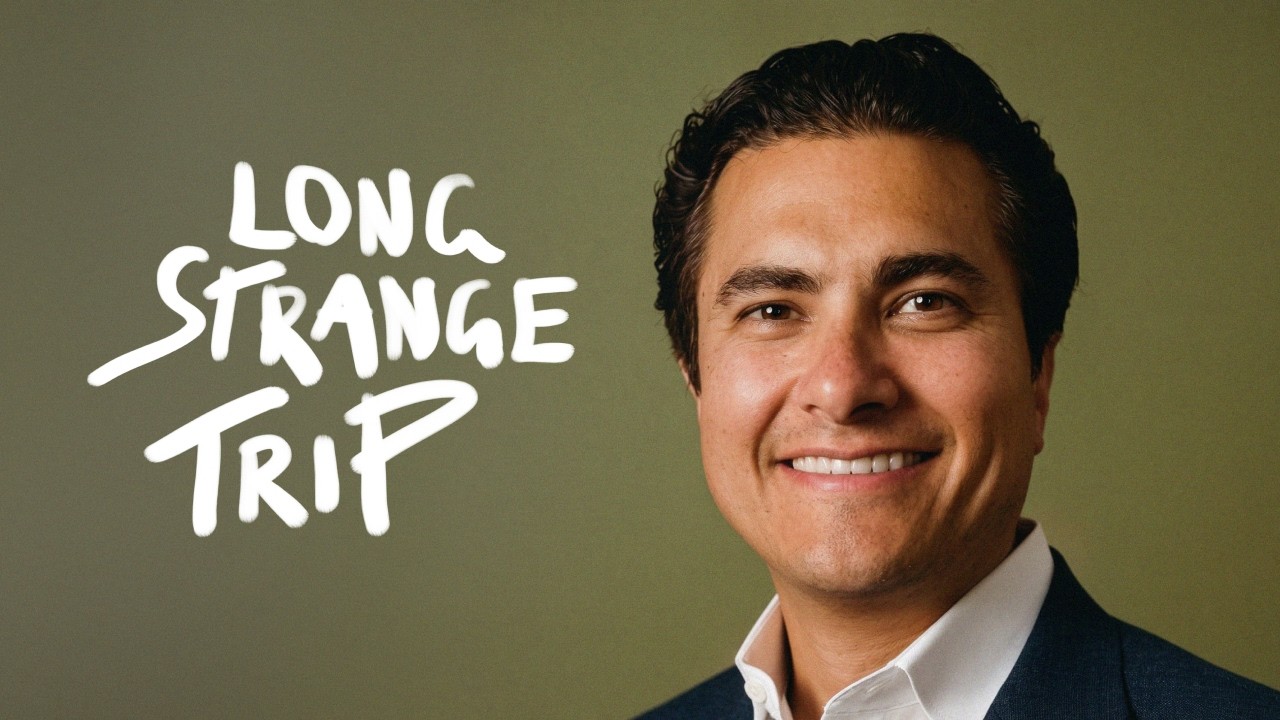
Published on YouTube by Sequoia Capital on October 29, 2026, this episode of the 'Long Strange Trip' series features host Brian Halligan in conversation with Crusoe co-founder and CEO Chase Lochmiller. According to the page description, the discussion explores how Crusoe operates as an integrated AI supermajor—building power plants, manufacturing electrical gear, and running gigawatt-scale data centers—following a round valuing the company at $31 billion after divesting its original Bitcoin mining unit.
## TL;DR
Chase Lochmiller details the operational architecture behind Crusoe, explaining how the company models itself on vertically integrated energy supermajors like Exxon rather than traditional cloud providers. He unpacks the strategic decision to sell Crusoe's profitable Bitcoin mining business to NYDIG in order to focus entirely on building infrastructure for generative AI across four complex pillars: energy, manufacturing, data centers, and cloud compute. Lochmiller also reflects on his personal evolution as an executive leading over 2,000 employees, touching on public speaking coaching, the necessity of decisive personnel management, community engagement around data center expansion, and how surviving and summiting Mount Everest shaped his framework for stochastic risk.
## Atmosphere & style
The conversation carries a reflective, cerebral, and steady tone, pairing Brian Halligan's warm, collegial probing with Chase Lochmiller's measured, analytical delivery. Despite the dizzying industrial complexity and high stakes of building multibillion-dollar energy infrastructure, Lochmiller speaks with an unhurried, grounded humility that demystifies executive scale. The dialogue smoothly shifts between gritty operational realities—such as managing friction between welders and machine learning researchers—to deeply philosophical reflections on personal growth and the humbling quiet of standing atop Everest at sunrise.
## Bulletin
- [00:00](https://www.youtube.com/watch?v=64vUl9k-IAQ&t=0s) Crusoe closed a financing round at a $31 billion valuation, scaling a vertically integrated AI infrastructure business that spans power plant generation, electrical equipment manufacturing, gigawatt-scale data centers, and managed AI cloud services.
- [23:45](https://www.youtube.com/watch?v=64vUl9k-IAQ&t=1425s) Rather than pivoting opportunistically into generative AI, Crusoe utilized Bitcoin mining from day one as a zero-latency monetization mechanism for stranded energy before divesting the division to NYDIG to remove investor friction and focus fully on AI.
- [17:02](https://www.youtube.com/watch?v=64vUl9k-IAQ&t=1022s) Crusoe models its strategic architecture after integrated oil and gas supermajors like ExxonMobil, linking upstream power production directly to downstream compute consumption to establish structural operational hedges.
- [20:48](https://www.youtube.com/watch?v=64vUl9k-IAQ&t=1248s) To bypass constrained electrical grids, Crusoe collocates compute directly with underutilized clean baseload energy hubs, including geothermal and hydro in Iceland and Norway, behind-the-meter flared gas in Texas, and small modular nuclear reactors.
## Key takeaways
- [00:00](https://www.youtube.com/watch?v=64vUl9k-IAQ&t=0s) Crusoe operates across four distinct operational layers under one roof: energy generation, electrical manufacturing, physical data centers, and managed AI cloud software.
- [05:23](https://www.youtube.com/watch?v=64vUl9k-IAQ&t=323s) Founder scalability relies on placing proven domain experts over each vertical so executive leadership can alternate between deep technical dives and delegated execution.
- [02:47](https://www.youtube.com/watch?v=64vUl9k-IAQ&t=167s) The operational sprawl of a fast-growing startup is manageable for founders because the 'boiling frog' progression provides continuous institutional context from day two to 2,000 employees.
- [10:00](https://www.youtube.com/watch?v=64vUl9k-IAQ&t=600s) Internal alignment across complex cross-functional stacks requires repetitive communication until the executive feels sick of hearing their own talking points.
- [15:14](https://www.youtube.com/watch?v=64vUl9k-IAQ&t=914s) Startups overwhelmingly fail from self-inflicted execution issues, flawed hiring, and poor culture rather than competitive homicide.
- [19:15](https://www.youtube.com/watch?v=64vUl9k-IAQ&t=1155s) Vertical integration enables natural coopetition, allowing Crusoe to partner and share physical infrastructure with direct market competitors.
- [23:45](https://www.youtube.com/watch?v=64vUl9k-IAQ&t=1425s) Bitcoin mining served as the initial, interruptible monetization engine for stranded oilfield flared gas, bootstrapping the capital flywheel necessary to build high-performance GPU cloud clusters.
- [30:19](https://www.youtube.com/watch?v=64vUl9k-IAQ&t=1819s) Crusoe divested its Bitcoin mining operations to NYDIG to resolve institutional capital mandate restrictions and eliminate organizational split-focus.
- [28:40](https://www.youtube.com/watch?v=64vUl9k-IAQ&t=1720s) Unlike Bitcoin mining's flat and interruptible energy profile, AI data centers present dynamic utilization curves driven by training, inference, and ambient cooling swings.
- [32:51](https://www.youtube.com/watch?v=64vUl9k-IAQ&t=1971s) Executive stage presence and public speaking are learnable skills that require structured repetition and coaching, especially for technical or quantitative founders.
- [38:19](https://www.youtube.com/watch?v=64vUl9k-IAQ&t=2299s) CEOs almost universally fire struggling employees too slowly, often waiting long after the initial realization that an exponentially scaling organization has outgrown an early contributor.
- [42:54](https://www.youtube.com/watch?v=64vUl9k-IAQ&t=2574s) Bridging blue-collar field welders and cutting-edge AI researchers requires a shared culture of 'collective genius,' where software optimizations directly interface with physical hardware constraints.
- [44:15](https://www.youtube.com/watch?v=64vUl9k-IAQ&t=2655s) Local community pushback against data centers represents a marketing deficit, requiring leaders to engage town stakeholders directly with factual local benefits rather than defensive posturing.
- [47:44](https://www.youtube.com/watch?v=64vUl9k-IAQ&t=2864s) High-performing CEOs must actively solicit negative feedback and reward internal truth-tellers because growing organizations naturally filter out bad news.
- [50:54](https://www.youtube.com/watch?v=64vUl9k-IAQ&t=3054s) Lochmiller de-risked his Mount Everest summit by acclimatizing on adjacent peaks, cutting passes through the unpredictable Khumbu Icefall from eight to four.
## Detailed walkthrough
### [00:00](https://www.youtube.com/watch?v=64vUl9k-IAQ&t=0s) Vertical Integration: Power Plants to AI Models
Crusoe operates an unusually broad, vertically integrated AI infrastructure business that spans four distinct operational layers. At the foundational layer, the company focuses on energy generation: bringing electrons online, constructing power plants, and negotiating with independent power producers and public utilities. Just above that, Crusoe designs, builds, and operates both massive gigawatt-scale and smaller-scale data centers (“AI factories”), while also manufacturing critical electrical hardware in-house. At the top of the stack, the company develops and runs a managed AI cloud platform offering specialized software services, hosting models, and optimizing runtime performance.
Chase Lochmiller explains that operating such a wide spectrum of work streams requires a distinct leadership model. To remain scalable across these disparate industries, he relies on deep domain experts heading each vertical. This structure allows him to dive deeply into technical discussions with any specific team when needed, while maintaining high trust in their day-to-day execution. As Lochmiller puts it: “What's made me very scalable as a leader is that we have these critical areas of domain expertise where I can move around and I can go very deep with any individual, but I trust them a lot to be making the right decisions as we're sort of scaling things.”
```mermaid
flowchart TD
accTitle: Crusoe Vertically Integrated AI Stack
accDescr: Diagram illustrating Crusoe's integrated stack across four key operational layers from energy generation to AI cloud.
subgraph Energy["1. Energy Generation"]
E1["Power Plants & Electrons"]
E2["IPPs & Utility Partnerships"]
end
subgraph Hardware["2. Manufacturing & Facilities"]
M1["Electrical Equipment Manufacturing"]
M2["Data Center Construction"]
end
subgraph Compute["3. AI Factories"]
C1["Gigawatt-Scale Data Centers"]
C2["Edge & Small-Scale Facilities"]
end
subgraph Cloud["4. Managed Cloud Platform"]
S1["Managed AI Services"]
S2["Model Serving & KV Cache Optimization"]
end
Energy --> Hardware
Hardware --> Compute
Compute --> Cloud
```
- **Scope of operations:** Energy generation, power plant engineering, electrical manufacturing, data center facilities, and cloud software.
- **Scale:** Ranges from localized micro-scale deployments to multi-gigawatt facilities.
- **Valuation milestone:** Crusoe recently closed a financing round valuing the company at $31 billion.
---
[01:40](https://www.youtube.com/watch?v=64vUl9k-IAQ&t=100s) The Through Line: From Everest and Hedge Funds to Hard Problems
Welcoming Chase Lochmiller to the podcast *Long Strange Trip*, the host highlights Lochmiller’s unconventional career path: transitioning from an academic path intended for a professorship, to high-frequency quantitative hedge fund trading, to summiting Mount Everest, to becoming an energy entrepreneur, and ultimately emerging as a leading data center builder for the AI boom.
When asked whether an underlying logic connects these seemingly disparate pursuits, Lochmiller rejects the idea of a calculated, master-planned trajectory. Instead, he explains that his compass has always simply been the gravitational pull of difficult, consequential challenges: “That's I think that's been the through line of my career, take on big challenges, solve hard problems that are exciting and inspiring to me.”
---
[02:47](https://www.youtube.com/watch?v=64vUl9k-IAQ&t=167s) The "Boiling Frog" and the Infinite Growth Loop
Addressing the common misconceptions about the CEO role, Lochmiller emphasizes that looking at a leader running a multibillion-dollar company at scale offers a distorted snapshot that ignores the long, non-linear progression required to get there. He describes the experience of scaling a startup through the metaphor of the “boiling frog”: because the founder is in the water from the very beginning—starting as a two-person team with a co-founder, making first hires, and slowly scaling to ten people and beyond—the founder has accumulated years of institutional context that tempers the feeling of chaos.
Lochmiller argues that founder CEOs must continuously reinvest in their personal development to avoid being outgrown by the business. At Crusoe, this philosophy is formalized into a core company principle termed living on the "infinite growth loop," which treats every individual and project as an unfinished experiment requiring steady, daily refinement: “Every person is work in progress and every single day we try to improve on who we were yesterday.” Over horizons of months and years, these compounding marginal gains yield massive transformations in executive capability and organizational execution.
The host shares an anecdote from Sequoia's peer forums (the "kids table" and "adults table" for CEOs managing between 20 and 2,000 employees), where a peer founder confessed: “My business becoming dizzyingly complex beneath me. How the hell do I keep up?” Lochmiller acknowledges that if an outsider were dropped into Crusoe today, the sheer speed and operational sprawl would feel overwhelming, but his continuous presence across every stage of the company's evolution provides the context required to manage the pressure calmly.
- **Foundational stage:** Began with only Lochmiller and his co-founder handling every responsibility before hiring their initial team.
- **Cultural value:** "Live on the infinite growth loop"—predicated on the belief that no employee, leader, or product is ever a finished product.
- **Peer forum context:** Sequoia's CEO forums host founders leading companies scaling between 20 and 2,000 headcount.
---
[05:23](https://www.youtube.com/watch?v=64vUl9k-IAQ&t=323s) Managing Dizzying Complexity Across Four Verticals
Lochmiller concedes that anyone parachuted into Crusoe cold would struggle with severe cognitive overload: “If someone were to take me off the streets and parachute me in and drop me in and say, 'Hey, go run this company Crusoe.' I would absolutely 100% have that dizzying paralyzing anxiety feeling.” The company’s unique complexity stems from its wide organizational breadth. Under one corporate roof, Crusoe employs blue-collar factory welders manufacturing physical electrical gear alongside cutting-edge AI researchers developing algorithms to manage KV caches and optimize model inference.
To prevent operational paralysis, Lochmiller delegates authority across four distinct business pillars: energy development, data center infrastructure, industrial manufacturing, and AI cloud computing. His approach relies on placing proven domain experts at the helm of each division. This gives Lochmiller the flexibility to zoom in for deep technical investigations into specific engineering or supply chain hurdles, while trusting his leadership bench to make daily tactical decisions that align with Crusoe's overarching vertically integrated strategy.
- **Workforce diversity:** Spans heavy-industry personnel (welders, power plant operators, manufacturing technicians) to software specialists (distributed systems engineers, machine learning researchers).
- **Core technical focus areas:** Power generation and interconnection, equipment fabrication, physical data center construction, and low-latency KV cache management for large language models.
- **Operational pillars:**
1. Energy (generation, electrons, utilities, independent power producers)
2. Data centers (megawatt- and gigawatt-scale AI factories)
3. Manufacturing (mission-critical electrical equipment)
4. AI Cloud (managed services, high-performance compute clusters)
---
[07:34](https://www.youtube.com/watch?v=64vUl9k-IAQ&t=454s) Cross-Functional Accountability, Trust, and the Weekly Staff Meeting
The discussion shifts to how founders build trust and assign Directly Responsible Individuals (DRIs) across wide organizations. The host notes that in recent CEO discussions, founders admitted they deeply trusted only three to four individuals across their entire enterprise to handle wide cross-functional initiatives. Lochmiller points out that his team would not characterize him as a purely hands-off leader who simply hands out blank checks of trust.
Instead, Lochmiller's leadership approach hinges on strict programmatic alignment followed by accountability: “I want to understand what we're doing in this vertical. We're We have alignment on a direction we're headed. I get it and I get how it influences the other pieces of the business. And then I hold you know, my team accountable to go execute on what we agreed upon, you know, from a plan perspective.”
When managing cross-functional initiatives that require shared resources across manufacturing, cloud, and energy, friction is inevitable. To manage this natural organizational tension, Crusoe relies on a dedicated program management office alongside a rigorous weekly executive staff meeting. Lochmiller uses this recurring executive session to surface friction points between teams in real time, resolve inter-departmental bottlenecks, and ensure leaders stay aligned across the full breadth of the business.
[10:00](https://www.youtube.com/watch?v=64vUl9k-IAQ&t=600s) Repeating Yourself Until Sick of It: Alignment Across the Vertical Stack
Managing a vertically integrated company requires seamless collaboration between very different operational layers, and Chase Lochmiller acknowledges that learning how to coordinate across that stack came with plenty of skinned knees. Coming from a background of smaller teams and tight-knit organizations, he was accustomed to saying something once and watching everyone absorb it and execute. In a rapidly scaling organization, that informal intuition breaks down completely.
Lochmiller realized that internal communication requires an almost uncomfortable degree of repetition. Just keeping hundreds of employees marching in the exact same direction means constantly reiterating the company’s mission, priorities, and ownership assignments. While startups naturally enjoy the advantage of being nimble and fast, larger organizations inevitably fight bureaucratic inertia. To seize the AI infrastructure moment, Crusoe has to actively resist that drag and preserve its dynamic speed through relentless, disciplined message discipline.
As Chase Lochmiller explained: “I found it that as soon as I'm sort of getting sick of hearing myself say something, then we're just scratching the surface of when when I'm just hitting the the point where I you know, I'm saying it enough times.”
---
[11:19](https://www.youtube.com/watch?v=64vUl9k-IAQ&t=679s) Urgency at Scale and Elon Musk's Dual-Tension Superpower
When asked whether Crusoe has slowed down as it scaled—a common ailment for expanding enterprises—Lochmiller insists the company actually feels faster and more chaotic than ever. Massive developments occur daily, requiring an unrelenting sense of urgency. The key managerial challenge is eliminating any creeping sense of comfort or employee entitlement, particularly the dangerous assumption that the company has already “made it” and can now coast on previous wins.
To illustrate how to drive urgency at scale, Lochmiller points to Elon Musk's unique operational philosophy. Musk balances two seemingly contradictory pressures: inspiring employees with the grand vision that their success will fundamentally alter human history, while simultaneously instilling existential terror that the company is on the brink of collapse if people do not operate at their absolute limit. While Lochmiller does not take the existential panic to Musk's extreme, he views threading the needle between world-changing inspiration and high-stakes accountability as critical for running a large, fast-moving organization.
Reflecting on Musk's management dynamic, Chase Lochmiller observed: “Elon has this superpower of, you know, simultaneously enabling people to believe that if they're successful, they're going to change the world and there will be this incredible financial outcome and this incredible outcome that's driving massive impact, uh, while also holding people accountable through the high pressure of, like, 'We're going to go out of business tomorrow.'”
---
[13:24](https://www.youtube.com/watch?v=64vUl9k-IAQ&t=804s) Learning to Lead: Binging Business Books and Accumulating Scar Tissue
Leading Crusoe has been a personal crash course in management for Lochmiller, as it has grown into the single largest organization he has ever worked for, recently crossing the milestone of 2,000 employees. Before founding the company, he had never managed an enterprise of that magnitude. Historically an eclectic reader who consumed everything from science fiction and technical manuals to literary novels and economic treatises, Lochmiller dramatically shifted his habits once Crusoe launched, aggressively binging every top business and leadership book recommended to him.
Books alone were not enough; scaling into the role demanded external guidance and on-the-job failure. Lochmiller leaned heavily on experienced mentors and an executive coach who helped him cultivate the instincts required to direct thousands of people. He views effective leadership not as an innate trait, but as the byproduct of making mistakes, acquiring painful scar tissue, and converting those hard-learned lessons into operational intuition. While he draws on close personal mentors, he also studies public figures like Musk, regarding him as one of the greatest business builders and visionaries humanity has ever produced.
Summarizing his leadership journey, Chase Lochmiller stated: “Crusoe's now the largest company I've ever worked for uh and uh you know, we we we recently surpassed uh 2,000 employees.”
---
[15:14](https://www.youtube.com/watch?v=64vUl9k-IAQ&t=914s) Startups Die of Suicide, Not Homicide
Every founder experiences waves of paranoia, often triggered by scrolling through social media, seeing a competitor raise a massive venture round, or discovering another team building something adjacent. Lochmiller admits that looking over your shoulder is an easy trap to fall into when you are singularly focused on building your company. However, early in Crusoe's lifecycle, he received a vital piece of advice that permanently reoriented his posture toward market rivals: startups almost never get wiped out by the competition; they destroy themselves from the inside.
True failure stems from failing to execute against the immediate task, neglecting company culture, failing to recruit elite talent, or misjudging core business opportunities. In any market large enough to justify building a generational enterprise, there is virtually never a single winner-take-all outcome. Having other well-funded players enter the arena serves as external validation of the opportunity rather than a death sentence. Instead of obsessing over external threats, management must stay focused entirely on its own internal operational rigor.
Emphasizing this core startup reality, Chase Lochmiller remarked: “And like one of the great pieces of advice that I got, you know, early on was like, 'Most startups die from suicide, not from homicide.'”
- Startup mortality is overwhelmingly driven by flawed execution, weak culture, and poor hiring rather than competitive displacement.
- High-value infrastructure markets inherently support multiple massive winners rather than a solitary monopolist.
- External competitive activity should be interpreted as validation of the addressable market size, not an existential crisis.
---
[17:02](https://www.youtube.com/watch?v=64vUl9k-IAQ&t=1022s) Modeling an AI Supermajor on Exxon: The Upstream, Midstream, and Downstream Stack
Addressing where he sits on the paranoia spectrum today, Lochmiller notes that he does not view rival compute providers as existential competitors. Because AI and superintelligence infrastructure represent the largest economic buildout of our generation, there are far more opportunities for infrastructure operators to collaborate than to fight. Rather than viewing Crusoe as a standard cloud provider, Lochmiller models the business directly on the traditional energy sector, aiming to build an integrated "AI supermajor" akin to ExxonMobil or Chevron.
In oil and gas, the value chain is organized into three distinct tiers: upstream (drilling and extracting raw hydrocarbons from the ground), midstream (transporting raw commodities via pipelines from wellheads to processing hubs), and downstream (refining crude oil and natural gas into finished market commodities like gasoline, jet fuel, and plastics). Vertically integrated supermajors like Exxon famously avoid hedging their commodity exposure because their structural integration provides an automatic, internal hedge: when oil prices crash, upstream drilling margins compress, but downstream refining margins expand because their input feedstocks have become substantially cheaper. Crusoe applies this exact vertical architecture to the compute layer, bridging raw energy generation directly with data center infrastructure and managed AI cloud services.
Making the strategic parallel explicit, Chase Lochmiller stated: “And for us, I view it as we're trying to build an AI supermajor in the same way that Exxon and Chevron are supermajors in the oil and gas industry.”
```mermaid
flowchart LR
accTitle: The Vertically Integrated Supermajor Value Chain
accDescr: Flowchart illustrating the upstream, midstream, and downstream segments modeled after oil supermajors and applied to AI compute infrastructure.
subgraph Upstream["Upstream Layer"]
A["Energy Production<br/>(Power Plants / Flared Gas)"]
end
subgraph Downstream["Downstream Layer"]
C["Conversion & Delivery<br/>(Data Centers & Managed AI Cloud)"]
end
A --> B
B --> C
```
[19:15](https://www.youtube.com/watch?v=64vUl9k-IAQ&t=1155s) The Exxon Analogy and Partnering with Competitors
Chase Lochmiller discusses how Crusoe approaches the market much like an integrated energy giant, noting that vertical integration creates natural pockets of mutual benefit even among nominal rivals. In the oil and gas industry, an upstream operator might lay down pipeline infrastructure and subsequently transport resources for the very upstream competitors it vies with on leases. Chase embraces that exact posture for Crusoe: while other compute or energy firms might look like direct competition on paper, shared infrastructure and complementary assets open up mutually beneficial arrangements. The interviewer jumps in to share an eerie parallel from his ocean climate fund, Propeller. Just the day prior, he heard a pitch from a deep-sea rare earth mining startup that used the exact same reference point, pitching an end-to-end, super vertically integrated business model modeled explicitly on Exxon.
The conversation turns to Blue Energy—a startup founded by Jake Jurewicz building offshore, ocean-sited nuclear plants that Sequoia backed—and how Crusoe’s energy sourcing strategy has evolved from scavenging waste flared gas to engaging with high-capacity grid power and dedicated generation like natural gas in Abilene, Texas. Chase insists that partnering broadly across all these frontiers is core to their philosophy, reflecting his fundamental view of the ecosystem:
> “We're willing to partner with businesses that we may compete with in other cases. Um but again, it comes back to this perspective that I just feel like there's so many more ways for us to help each other than uh for us to work against each other.”
[20:48](https://www.youtube.com/watch?v=64vUl9k-IAQ&t=1248s) An Energy-First Philosophy: From Flared Gas and SMRs to Iceland and 100-Hour Batteries
Crusoe is driven by a singular mandate: activating megawatts to power machine intelligence. Because the demand profile of AI clusters is massive and growing exponentially, Chase does not believe in waiting for a single silver-bullet power solution. Instead, Crusoe acts as a catalyst across a wide spectrum of established and experimental energy sources. This includes behind-the-meter natural gas, wind, solar, and battery storage, as well as pioneering advanced nuclear technologies. Crusoe partnered with Oklo to develop plans for the first small modular reactor (SMR)-powered AI factory at Idaho National Laboratory, and is tracking innovations like Blue Energy’s offshore nuclear model, which takes advantage of the same conventional steam turbine technology common to both gas generation and nuclear plants as a bridge toward firm baseload zero-carbon power.
Geographically, Crusoe moves compute to where stranded, underpriced clean energy exists in surplus rather than forcing power to travel across constrained electrical grids. Chase highlights Iceland as a geological marvel—a "land of fire and ice"—blessed with abundant low-cost geothermal power, surplus hydro, natural ambient cooling, and a small population base with limited domestic demand. Norway offers a comparable opportunity, rich in underutilized and expandable hydropower. Beyond generation, Crusoe tracks emerging storage technologies to firm up intermittent resources, spanning Redwood Materials' recycling of electric vehicle and lithium-ion batteries to long-duration 100-hour storage from startups like Form Energy and Antora Energy.
> “The demand from intelligence for energy is voracious. And and, you know, it's really going to accelerate the human progress as it has more access to energy.”
```mermaid
flowchart TD
accTitle: Crusoe Energy to Compute Architecture
accDescr: Diagram illustrating how Crusoe aggregates diverse energy sources and long-duration storage into compute infrastructure.
subgraph Storage["Storage & Firming"]
E["Repurposed EV Batteries (Redwood Materials)"]
F["100-Hour Long-Duration Storage (Form / Antora)"]
end
subgraph Compute["Ubiquitous Compute Layer"]
G["Modular & Hyperscale AI Factories"]
H["AI Cloud & Model Training"]
end
A --> G
B --> G
C --> G
D --> E
D --> F
E --> G
F --> G
G --> H
```
- **Novel Nuclear Deployments:** Partnered with Oklo to bring the first SMR-powered AI compute facility to the Idaho National Laboratory.
- **Geothermal and Hydro Hubs:** Leveraged Iceland's low-cost geothermal and hydropower reserves paired with free ambient air cooling, alongside Norway's underutilized hydro capacity.
- **Storage Spectrum:** Exploring short-term battery recycling (Redwood Materials) alongside iron-air and thermal long-duration 100-hour batteries (Form Energy, Antora Energy) to convert intermittent generation into baseload compute power.
[23:45](https://www.youtube.com/watch?v=64vUl9k-IAQ&t=1425s) The Bitcoin Genesis: A Monetization Engine, Not a Pivot
The interviewer asks Chase to explain the dramatic, high-stakes decision to eventually divest the Bitcoin mining business that originally fueled the company's growth. While outsiders viewed Crusoe's shift toward high-performance GPU data centers as an opportunistic pivot to capture the generative AI boom, Chase explains that AI was the actual blueprint from day one. During his graduate studies at Stanford focusing on computer vision and natural language processing, and his work as a quantitative portfolio manager, Chase became deeply convinced that machine intelligence would reshape human civilization. He points to Tim Urban’s seminal *Wait But Why* series on superintelligence—which argued that multi-layer neural networks scale systematically with compute and data—along with teachings from Stanford professor Andrew Ng, who famously analogized AI to electricity:
> “Electricity's not good for one thing, right? If you ask someone what what is electricity good for? It's It's not like, oh, electricity's good to like turn on the lights. It's like, yes, it's good at turning on the lights and it's also good at powering my computer and my car and heating my stove and, you know, all these different things that we really take for granted with electricity. And so, it's not just like one thing that, you know, uh that that that AI is good for. It's It's really good for everything.”
Recognizing that compute scaling ultimately reduces to an energy problem, Chase founded Crusoe to solve the supply bottleneck by co-locating compute directly with stranded, unmarketable energy. The most immediate opportunity was flared natural gas in oil fields—an environmental disaster where drillers lit byproduct gas on fire because they lacked pipeline takeaway capacity. Crusoe brought modular generators and mobile data centers to the wellheads, but needed an instant, location-agnostic revenue stream to monetize those electrons. Bitcoin mining was the perfect zero-latency buyer of power to bootstrap the capital equipment flywheel. However, when Chase began carving out resources to stand up Crusoe’s first AI cloud clusters, he encountered intense pushback from skeptics who questioned why he would divert focus and capital away from a wildly profitable Bitcoin mining machine. Undeterred, the team endured early technical missteps, learned how to operate GPU clusters by trial and error, and cold-called academic researcher friends to test the very first instances of Crusoe Cloud.
[28:40](https://www.youtube.com/watch?v=64vUl9k-IAQ&t=1720s) The ChatGPT Inflection and the Energy Profile of AI vs. Bitcoin
During the early phase of building out GPU infrastructure powered by flare gas in locations like North Dakota’s Bakken oil field, Crusoe went through numerous iterations trying to bring the compute business to life. The pivotal turning point arrived on November 30, 2022, with the public launch of ChatGPT. That release fundamentally transformed the landscape overnight, catalyzing a wave of AI startups that urgently required the exact storage, compute, and high-performance networking infrastructure Crusoe had spent years engineering.
```mermaid
flowchart TD
accTitle: Power Demand Comparison between Bitcoin Mining and AI
accDescr: Diagram contrasting the flat, interruptible power load of Bitcoin mining with the variable, temperature-sensitive load of AI data centers.
subgraph BTC["Bitcoin Mining Load"]
B1["Fixed Draw Baseline"] --> B2["Interruptible via Demand Response"]
B2 --> B3["Flatline Consumption Profile"]
end
subgraph AI["AI Data Center Load"]
A1["Dynamic Workload Variation<br>(Training & Inference)"] --> A3["Variable Utilization Profile"]
A2["Seasonal & Diurnal Cooling Load<br>(Day Chiller Spikes vs. Night Natural Cooling)"] --> A3
end
```
Lochmiller explains that while Bitcoin mining and AI infrastructure appear distinct, they are deeply complementary from a power consumption standpoint:
- **Bitcoin Mining**: Operates as a stable, flatline power load. Operators can assign it a fixed draw amount, keep it running steadily, and dial it up or down rapidly to participate in demand-response programs depending on available grid energy.
- **AI Compute**: Exhibits continuous variance in power utilization across large-scale training runs and inference workloads.
- **Cooling Variations & PUE**: Power usage effectiveness (PUE) fluctuates significantly throughout the day. Facilities must run air conditioning units and chillers aggressively during peak daytime heat, whereas cooler night temperatures provide natural cooling, causing overall data center power demands to ebb and flow.
---
[30:19](https://www.youtube.com/watch?v=64vUl9k-IAQ&t=1819s) Divesting the Bitcoin Mining Business to NYDIG
When asked why Crusoe decided to sell off a profitable, cash-generating Bitcoin business rather than keeping both units under one umbrella, Lochmiller emphasizes that it came down to focus and finding the right steward. Crusoe found that partner in NYDIG, led by CEO Tejas Shah and Ross Stevens. Stevens’ firm, Stone Ridge, had already built one of the largest natural gas enterprises in the United States, positioning their team with the rare intersection of operating scaled natural gas assets alongside deep involvement in the Bitcoin ecosystem.
Beyond finding a capable buyer, the strategic imperative was eliminating organizational and fundraising friction:
> “What drove me to divest that business was really focus. And, you know, we we are doing a lot at Crusoe and increasingly we were doing more, and it felt like we were having to balance this tension between do we allocate capital and resources and attention towards our Bitcoin business or against this AI infrastructure business.” — Chase Lochmiller
Furthermore, maintaining the Bitcoin arm created significant fundraising hurdles. Prospective institutional investors frequently told Lochmiller they admired the AI infrastructure business but were legally or mandate-blocked from investing in entities tied to cryptocurrency. While Lochmiller remains a committed Bitcoin advocate and personal holder—viewing it as an essential, non-state-controlled, decentralized, digitally native monetary network—he determined that becoming the category-defining vertically integrated AI infrastructure company required Crusoe to go all-in on AI.
---
[32:51](https://www.youtube.com/watch?v=64vUl9k-IAQ&t=1971s) Learning Executive Polish and Public Speaking
Addressing an observation about his measured, articulate demeanor in public forums, Lochmiller discloses that executive polish did not come naturally to him. Coming from the quantitative finance world, he had spent his earlier career in an intensely secretive culture where teams shared everything internally but disclosed nothing publicly to protect trading alpha. Transitioning into the role of an outward-facing founder-CEO forced him to work deliberately on his communication:
- **The Shift from Quant to Public Leader**: Early on, public speaking required grueling preparation on what to say and how to phrase it, as university lecturing had not prepared him for high-stakes executive storytelling.
- **Going Off the Cuff**: Through sheer volume and repetition, Lochmiller reached a point where extensive scripting became unnecessary; he found his communication was actually stronger off the cuff once he built the muscle to translate complex mental models into plain language.
- **Executive Coaching with Shane Metcalf**: Lochmiller worked closely with coach Shane Metcalf to develop his presentation style, executive presence, and management psychology.
---
[34:46](https://www.youtube.com/watch?v=64vUl9k-IAQ&t=2086s) The Felicis Founder Budget and Navigating People Problems
When asked whether all venture-backed CEOs should hire a coach, Lochmiller responds unequivocally: “Yes.” He highlights an investor practice pioneered by Felicis Ventures, which allocates a dedicated personal development budget for founders. Felicis explicitly reserves capital for executive coaching, leadership offsites, and personal up-leveling based on the thesis that early-stage investments are fundamentally bets on the founder's capacity to grow alongside the company.
```mermaid
flowchart LR
accTitle: The Role of Long-Term Executive Coaching
accDescr: Flowchart illustrating how continuous coaching sessions build deep trust that enables rapid crisis resolution and effective people management.
A["Continuous Coaching Sessions<br>(Laying the Foundation)"] --> B["Deep Trust & Understanding<br>(Uncovering Blind Spots)"]
B --> C["Real-Time Crisis Navigation<br>(Course Correcting in High-Stakes Moments)"]
C --> D["Resolving Complex People Challenges<br>(Alignment, Transitions, Retaining Talent)"]
```
Lochmiller explains that working with Metcalf often felt like therapy, providing a space to work through founder psychology. Even when an individual session yielded no immediate breakthrough, it laid the foundation of mutual trust so that when major crises emerged, Metcalf understood his blind spots and natural defense mechanisms well enough to guide him through course corrections.
Ultimately, Lochmiller points out that technical execution is rarely what breaks a scaling enterprise; human dynamics are:
> “So many of the problems with building companies are are people problems, right? Being able to effectively navigate the people of side of this is like it's, that's like most of the challenges. Like, you know, you get these smart, ambitious, and opinionated people; getting everybody to work and row in the same direction and agree on things, or if they don't agree, to commit to whatever pathway you're taking. I mean, that is always the hardest thing.” — Chase Lochmiller
He observes that a CEO’s most agonizing decisions revolve around talent: deciding whether to keep investing in someone versus concluding that the organization has outgrown them, or mediating irreconcilable disagreements between two brilliant employees. If navigated well, resolving those people challenges becomes a company's single greatest superpower.
[38:19](https://www.youtube.com/watch?v=64vUl9k-IAQ&t=2299s) The Bias of Firing Too Slowly and the Startup Laws of Physics
Chase Lochmiller reflects on the universal executive struggle around personnel, arguing that leaders almost always wait too long to dismiss struggling employees. For most CEOs, pulling the trigger happens long after the decision should have been made: “Wh-when you fire someone, you've clearly been thinking about it for a long time. And it's almost like when you started thinking about it, that was sort of the right time to fire them, but, like, uh, you know, it's hard to.” When evaluating whether someone is no longer right for the job, Lochmiller doesn't rely solely on teammates pointing out underperformance. Instead, he views the CEO's role as reading a complex “mosaic of information”—gathering disparate signals from technical staff, people-oriented managers, and various corners of the company to make a reasoned judgment call.
This dilemma often stems from structural scaling realities rather than malicious intent or poor effort. Lochmiller cites a concept from a First Round Capital blog post on the "Startup Laws of Physics," which observes that while people scale linearly, companies scale exponentially. Even when employees continually invest in self-improvement, an ambitious venture can grow tenfold in two years, leaving behind someone who was previously phenomenal:
```mermaid
flowchart LR
accTitle: Growth Trajectory Divergence
accDescr: Diagram illustrating linear employee growth contrasted with exponential company growth causing organizational outgrowing.
subgraph Growth["Trajectories"]
A["People Scale Linearly"]
B["Startups Scale Exponentially"]
end
subgraph Dilemma["The Gap"]
C["2 Years Later: Company is 10x"]
D["Role Outgrows the Early Contributor"]
end
A --> D
B --> C
C --> D
```
This dynamic creates painful human trade-offs for a founder who has bonded with staff over late nights and early mornings:
- Every firing situation is an individual "snowflake" requiring custom judgment rather than a formulaic checklist.
- The personal pain of letting go of dedicated colleagues who gave everything to the initial mission makes decisive action difficult.
- Lochmiller's leadership approach lands between two executive extremes: Ali Ghodsi of Databricks, who kept almost the exact same management team for a decade with only one departure, and Dev Ittycheria of MongoDB, who averaged two executive turnovers per year (Lochmiller notes that Crusoe's current COO/CFO worked alongside Ittycheria for a decade without being churned).
- In Lochmiller's view, grounded in playing competitive sports, the locker room bonds run deep, but teammates recognize when someone is struggling, and everyone ultimately understands that the priority is fielding a winning roster.
---
[42:54](https://www.youtube.com/watch?v=64vUl9k-IAQ&t=2574s) Bridging Welders and AI Researchers
Unlike traditional SaaS companies like HubSpot where the workforce profile largely "rhymed," Crusoe bridges an unusually broad operational divide, employing both blue-collar tradespeople like welders and electricians alongside bleeding-edge AI researchers. Lochmiller explains that unifying these groups hinges on a foundational cultural value: tapping into the "collective genius." Because no single individual possesses the end-to-end domain expertise required to build gigawatt-scale infrastructure and operational clouds simultaneously, every discipline depends on the others to succeed.
This integrated dynamic sparks cross-functional innovation that siloed tech companies never see. Practical innovations developed by on-site electricians wiring complex systems directly inform how technical researchers optimize their workloads. By managing the full operational stack—what Lochmiller describes as running the operating system all the way "from, you know, the electron to the token"—the field work and the software architecture directly complement one another.
---
[44:15](https://www.youtube.com/watch?v=64vUl9k-IAQ&t=2655s) The Data Center Backlash and the Industry's Marketing Problem
As data center infrastructure has transformed into an election-cycle talking point, industry executives increasingly face public protests and fierce community pushback over resource consumption. Lochmiller responds with a first-principles mindset, pointing out that everyone at Crusoe is driven by a desire to do good in the world, whether through local job generation, expanded school and community tax revenue, water management, or powering humanity's most transformative technological wave. Lochmiller identifies the core issue driving local pushback:
> “I've often said that like what the data center industry like their biggest problem is we have a marketing problem. We we haven't been able to get the truth out there. And to me, the truth is on our side.”
To counter widespread misinformation, Lochmiller bypasses defensive posturing and directly meets with local community stakeholders, including county judges and town residents. Rather than adopting an arrogant "I'm smarter than you" posture, he walks them through the factual realities of the project, focusing on shared benefits and authentic dialogue, which consistently wins people over regardless of political affiliation. Despite this constructive engagement, the intensity of anti-data-center sentiment and bad actors seeking public attention has forced Crusoe to significantly scale up its corporate physical security footprint.
[47:44](https://www.youtube.com/watch?v=64vUl9k-IAQ&t=2864s) Community Outrage, Thick Skin, and Mining for Bad News
When facing local community meetings where angry residents are screaming and yelling, Chase Lochmiller explains that no traditional training prepares an executive for the intensity of that room. The only effective response is appealing directly to people's shared humanity and trying to understand the root motivations behind their distress. Lochmiller emphasizes the necessity of listening to concrete facts rather than reacting defensively. While he naturally holds strong convictions, he stresses that true leadership requires intellectual flexibility: “Hey, I had high conviction that we were doing things the right way. Upon learning this new thing, we should probably be doing this differently and we could probably doing this better.” He views this as a foundational growth mindset that allows an organization to distinguish between unfounded, emotionally charged hysteria and legitimate, critical feedback that can turn the company into a more responsible community steward.
When asked whether having thick skin is an indispensable quality for a CEO, Lochmiller agrees completely, saying, “100%.” He describes the CEO role as fundamentally being the primary shock absorber and receiver of bad news, tasked with maintaining an unclouded mind to make rational decisions under continuous pressure. As Crusoe expands toward thousands of employees, a widening structural distance naturally forms between executive leadership and front-line workers. To counter this insulation and allow staff to speak truth to power, Lochmiller actively hunts for negative feedback rather than relying on standard reporting pipelines. While early employees have no hesitation challenging a founder directly, later hires tend to put leadership on a pedestal; breaking through that barrier requires constantly soliciting critique, reacting to it without defensiveness, and publicly altering course in response. As Lochmiller puts it: “I care way less about the good news than I do about the bad news.”
- **Absorbing criticism:** The CEO must act as an approachable receiver of bad news so employees across all organizational tiers feel empowered to voice ground-level truth.
- **Relentless solicitation:** Encouraging dissent requires explicitly modeling that feedback produces real change rather than retaliation or dismissiveness.
- **Running into the fire:** Lochmiller argues that the critical mark of executive leadership is a willingness to seek out problems and run directly into burning buildings to resolve operational flaws.
---
[50:54](https://www.youtube.com/watch?v=64vUl9k-IAQ&t=3054s) Designing Around the Khumbu Icefall's Stochastic Risk
Lochmiller connects company culture directly to the instincts and personal philosophies of its founders, pointing out that Crusoe established a core corporate operating value called "think like a mountaineer." This tenet encapsulates preparation, extreme resilience, and an endurance mindset for long-term operational expeditions. Lochmiller’s own mountaineering experience includes a harrowing 2014 attempt on Mount Everest that was halted when a massive avalanche in the Khumbu Icefall tragically killed 15 Sherpas. Returning home, his wife hoped he would close that chapter forever, but Lochmiller found himself consumed by the unfinished goal: “Look, this thing like haunts me and like it's all I think about and like I like have to go back.” His wife relented under one condition: that he complete the attempt before they started having children.
In planning his successful 2018 expedition via Nepal's southern route, Lochmiller analyzed the two distinct danger zones above Base Camp: the high-altitude Death Zone above 8,000 meters (between Camp IV and the summit) and the Khumbu Icefall between Base Camp and Camp I. While high-altitude physiological stress can be managed through rigorous physical conditioning, gear, and supplemental oxygen, the tumbling glacial terrain of the Khumbu Icefall presents pure stochastic risk—unpredictable serac collapses and sudden avalanches outside human control where "oops, you die." Standard commercial expeditions run four full round trips (eight individual transits) through the Icefall to acclimatize progressively up through Camp III. To systematically de-risk the climb, Lochmiller and his climbing partner redesigned their entire acclimatization itinerary, summiting neighboring peaks in the Khumbu Valley to adapt to altitude instead, thereby cutting their required passages through the deadly icefall in half.
```mermaid
flowchart TD
accTitle: Everest Acclimatization Strategy Comparison
accDescr: Flowchart contrasting the traditional 8-pass Khumbu Icefall route with Lochmiller's de-risked 4-pass strategy.
subgraph Traditional["Traditional Commercial Expedition"]
T1["Base Camp"] -->|"Acclimatization Laps (8 Passes)"| T2["Khumbu Icefall"]
T2 --> T3["Camps I - III"]
T3 --> T4["Camp IV: South Col"]
end
- **Objective vs. stochastic hazards:** Physical elevation and cold can be actively managed, whereas shifting glacial seracs represent pure environmental chance.
- **Neighboring peak acclimatization:** Spending prolonged periods atop nearby mountains allowed Lochmiller's team to achieve necessary red blood cell adaptations safely outside the avalanche paths.
- **Fifty percent exposure reduction:** Restructuring the ascent reduced their transits across the Khumbu Icefall from the standard eight crossings down to four.
- **Expedition training regimen:** Preparation required years of disciplined long-distance trail running combined with dedicated high-altitude training trips.
---
[55:25](https://www.youtube.com/watch?v=64vUl9k-IAQ&t=3325s) The Balcony, Sunrise, and the 8,848-Meter Summit
During the summit push from Camp IV, Lochmiller departed around 11:00 p.m. into freezing darkness, ascending through the Death Zone toward the South Summit. By the time he reached the Balcony at roughly 8,600 meters—a mere 250 vertical meters below the 8,848-meter peak—exhaustion nearly broke his resolve. He had barely eaten in 48 hours, suffered from severe dehydration, and endured excruciating leg cramps in the dark, feeling that the final stretch was impossibly far away. Recognizing that these symptoms were standard physiological fatigue rather than life-threatening altitude sickness, his climbing partner urged him to press onward.
As the sun breached the horizon, the emotional and psychological landscape shifted dramatically. Witnessing the Himalayan sunrise from the roof of the world triggered a sudden surge of adrenaline and an elevation of spirit that carried him through the final 250 meters of vertical ascent. Standing atop Mount Everest, Lochmiller did not experience bravado or personal conquest, but rather a profound, humbling awe at the scale of the natural universe: “When I got to the summit I think, you know, my feeling was was really one of just sheer awe. Just like, you know, just a a sense of awe for the universe and, you know, an awe for, you know, this, you know, being on the summit and and sort of experiencing, you know, that that the whole the whole world around me.” The ultimate psychological impact of standing at the highest point on Earth was an acute realization of how tiny and small an individual truly is.
[57:11](https://www.youtube.com/watch?v=64vUl9k-IAQ&t=3431s) Summiting Everest and Wrapping the Conversation
Reflecting on the final moments of his Mount Everest expedition, Chase Lochmiller describes the profound emotional clarity of standing at the top of the world. Rather than feeling overwhelmed by ego, he was struck by a quiet awe and perspective. As Chase put it, “that sense of like, I'm small and I'm inspired by the world around me and just like the magnificence of existence.” Blessed with a clear, sunny day at the peak, his team was able to linger at the summit for about an hour, snapping photographs and soaking in what he characterizes as a heroic moment of personal achievement before making the descent.
Brian Halligan congratulates Chase on both the climb and Crusoe's rapid operational ascent, noting that he is rooting for him as an extraordinary founder tackling an immense infrastructure problem. Thanking Brian for the conversation, Chase marks the close of the wide-ranging interview spanning data centers, energy markets, executive growth, and extreme mountaineering.
[57:45](https://www.youtube.com/watch?v=64vUl9k-IAQ&t=3465s) Brian Halligan’s Takeaways: The Learning Machine and Public Speaking
Following the interview, Brian steps back to break down his core takeaways for founders and operators watching Chase scale Crusoe. His first observation centers on Chase’s innate temperament as a human being who genuinely seeks out hard challenges—a trait Brian prioritizes heavily when recruiting and backing founders. Brian points out that Chase had never run a massive enterprise before, yet eight years into Crusoe's journey, he has transformed himself into an adaptive learning machine. Chase read relentlessly and leveraged an executive coach to navigate the transition. Brian, who coaches several Sequoia founders himself, emphasizes that executive coaching is rarely just tactical advice; it is largely about gaining context, listening to burdens, empathizing, and serving as an executive sounding board or therapist.
Brian also highlights Chase’s deliberate effort to master communication. While Chase now presents as remarkably articulate, composed, and smooth, that level of polish was not his innate baseline; he had to systematically train for it. Brian argues that founders often underestimate the tangible value of executive stage presence: “Like if you're up in front of your company, you're up in front of investors, I don't think it hurts to be articulate and smooth.”
```mermaid
flowchart TD
accTitle: Brian Halligan's Key CEO Takeaways
accDescr: A breakdown of the leadership principles observed from Chase Lochmiller's journey scaling Crusoe.
subgraph SelfDevelopment["Personal Mastery"]
A["Embrace Hard Challenges"] --> B["Continuous Learning & Executive Coaching"]
B --> C["Deliberate Polish & Articulate Communication"]
end
subgraph StrategyAndCulture["Strategy & Culture"]
D["Competition & Coopetition<br/>('Die of suicide, not murder')"]
E["Mining for Bad News<br/>(Reward pushback & truth)"]
F["Strong Opinions, Changeable Minds<br/>(Avoid stubbornness)"]
end
SelfDevelopment --> StrategyAndCulture
```
[59:01](https://www.youtube.com/watch?v=64vUl9k-IAQ&t=3541s) Competition, Mining for Bad News, and Adaptability
Turning to strategy, Brian resonates with Chase’s perspective on market rivalry, recalling a mantra frequently repeated during his tenure building HubSpot: “you're much more likely to die of suicide than murder.” He praises Chase’s comfort with coopetition—partnering closely with companies that might look like competitors on paper. Brian notes that HubSpot navigated a massive coopetitive dynamic with Salesforce for years, and he urges founders never to hide behind hostility: grab coffee and build relationships directly with competitors because market dynamics evolve unpredictably over time.
Finally, Brian underscores two non-negotiable qualities of high-performing CEOs as organizations swell into the hundreds or thousands:
- **Mining for bad news:** In large organizations, employees instinctively sanitize information and feed the CEO only good news. Leaders must proactively train the company to deliver brutal truths and explicitly celebrate employees who push back or raise alarms in public forums.
- **Intellectual flexibility:** While Chase holds sharp, well-reasoned convictions, he readily alters his stance when the underlying facts change. Brian cautions that unyielding stubbornness destroys leadership credibility: “being stubborn is a really tough quality in a CEO. It makes you quite hard to follow.”
## Notable quotes
> [47:44](https://www.youtube.com/watch?v=64vUl9k-IAQ&t=2864s) I care way less about the good news than I do about the bad news. — Chase Lochmiller
> [59:01](https://www.youtube.com/watch?v=64vUl9k-IAQ&t=3541s) being stubborn is a really tough quality in a CEO. It makes you quite hard to follow. — Brian Halligan
## Mentioned
Chase Lochmiller, Brian Halligan, Crusoe, Sequoia Capital, Mount Everest, Khumbu Icefall, ExxonMobil, Chevron, Blue Energy, Jake Jurewicz, Oklo, Redwood Materials, Form Energy, Antora Energy, Idaho National Laboratory, NYDIG, Tejas Shah, Ross Stevens, Stone Ridge, Tim Urban, Andrew Ng, Stanford University, Shane Metcalf, Felicis Ventures, First Round Capital, Ali Ghodsi, Databricks, Dev Ittycheria, MongoDB, HubSpot, Salesforce, Elon Musk, ChatGPT
## Video description
Chase Lochmiller runs one of the most operationally complex companies in AI: Crusoe builds power plants, manufactures electrical equipment, operates gigawatt-scale data centers, and runs a managed AI cloud on top, all under one roof. He just closed a round at a $31 billion valuation, and he got there by selling off the Bitcoin mining business that was paying the bills.
Chase explains why Crusoe is modeled on Exxon, not a cloud provider, and why he partners with companies that look like competitors. He makes the case that a company that outgrows the person who got it there is the rule, not the exception, and that CEOs almost always fire too slowly. He also talks candidly about hiring a coach, working hard to become a polished speaker when it didn’t come naturally, and why the data center industry’s biggest problem is a marketing problem.
I meet with a group of Sequoia founder CEOs between 20 and 2,000 employees, and one of them told me his business is becoming dizzyingly complex beneath him. Chase has the clearest answer I’ve heard for how to hold that in your head.
And yes, we talk about summiting Everest.
0:00 – Introduction
2:12 – The boiling frog: how a founder holds a 2,000-person company in his head
8:16 – DRIs, the weekly staff meeting, and saying it until you're sick of it
11:19 – Urgency at scale: Elon's "change the world or die tomorrow" tension
14:55 – Startups die of suicide, not homicide
19:29 – Energy first: flared gas, Iceland hydro, and nuclear
23:26 – Bitcoin to AI was the plan all along
32:36 – Polish is learned: coaches, public speaking, and Felicis's self-improvement budget
37:48 – Firing too slowly, and when the company outgrows the person
42:39 – Welders and AI researchers, the data center backlash, and mining for bad news
50:54 – Everest: designing around the Khumbu Icefall's stochastic risk
57:31 – Brian's takeaways
Crusoe CEO Chase Lochmiller argues that scaling artificial intelligence infrastructure requires an integrated, full-stack model—spanning energy generation to cloud software—coupled with an adaptive leadership approach that embraces coopetition and continuous organizational learning.
The AI Supermajor and Full-Stack Integration (17:02)
Modeled after integrated oil supermajors like ExxonMobil and Chevron, Crusoe spans energy generation, electrical equipment manufacturing, data center facilities, and cloud software. By operating across the upstream (power generation), midstream (transmission and infrastructure), and downstream (data centers and managed AI cloud) tiers, the firm creates an internal hedge against market swings while managing the complete pipeline from electron to token.
Catalyzing Stranded and Diverse Power Sources (20:48)
Rather than waiting for a single energy solution, Crusoe co-locates compute clusters with underutilized and clean energy resources globally. Sourcing strategies include flared natural gas in places like North Dakota's Bakken oil field, geothermal and hydro reserves in Iceland and Norway, small modular reactors via a partnership with Oklo at Idaho National Laboratory, and long-duration storage technologies from firms like Form Energy and Antora Energy.
The Strategic Shift From Bitcoin to AI (23:45)
Although Crusoe began by using mobile data centers to monetize flared gas through Bitcoin mining, Lochmiller maintained that machine intelligence was the primary goal from inception. Bitcoin mining provided a flatline, interruptible load that served as an immediate buyer of power to bootstrap infrastructure. Following the release of ChatGPT in late 2022, Crusoe divested its Bitcoin mining operations to NYDIG to concentrate capital on AI compute workloads, resolving investor mandate constraints and operational focus tensions.
Leadership Evolution in Scaling Organizations
Managing an organization crossing 2,000 employees spanning factory welders and AI researchers forced Lochmiller to evolve from an academic and quantitative finance mindset to public executive leadership. Addressing the reality that startups expand exponentially while individual skills scale linearly, he leveraged mentors and executive coaching to handle people problems, communicate through disciplined repetition, and address underperformance earlier.
Coopetition, Thick Skin, and Mountaineering Mindsets (15:14)
Operating on the premise that startups die from internal execution failures rather than external competition, Crusoe treats competitors as potential infrastructure partners. Facing local data center backlash over community resources, Lochmiller advocates for direct stakeholder engagement, intellectual flexibility, and actively mining for bad news. This resilience is formalized in Crusoe's value to 'think like a mountaineer,' inspired by Lochmiller's 2018 Everest summit where systematic planning was used to de-risk exposure to unpredictable hazards.
As data centers draw growing scrutiny over community resource consumption and physical security footprints, Crusoe's long-term execution depends on balancing rapid gigawatt-scale infrastructure construction with effective local stakeholder engagement and energy firming technologies.
精炼阅读摘要
Crusoe 联合创始人兼首席执行官 Chase Lochmiller 认为,人工智能规模化扩展的瓶颈在本质上是能源供给问题;公司借鉴传统石油巨头埃克森美孚的上下游整合模型,将原本被废弃或受限的电力资源直连至自建数据中心与 AI 云平台,试图在跨越重工业制造与前沿软件算法的极度复杂体系中构建新一代“AI 超级巨头”。
仿效传统石油巨头的四层垂直整合架构 (0:00)
Crusoe 的业务横跨四个截然不同的操作层级:底层是能源生产(接入电子、建设电厂、与独立发电商和公用事业机构谈判);第二层是关键电气硬件制造与设施建造;第三层是吉瓦级及小型边缘“AI 工厂”(数据中心)的设计与运营;顶层则是提供大语言模型托管与 KV 缓存优化的托管 AI 云平台。Lochmiller 将这套商业模式直接比作埃克森美孚(ExxonMobil)与雪佛龙(Chevron)等传统石油超级巨头(Supermajors)。在传统油气行业中,一体化架构由上游开采、中游管输与下游炼化构成,天然具备抗周期对冲能力——当油价大跌时,上游利润虽被压缩,但下游原料成本同步降低,使得炼化利润扩大。Crusoe 将相同逻辑套用在算力领域,打通从源头电子到最终模型 Token 的全链条,公司估值在近期融资中达到 310 亿美元。
面对跨界业务带来的认知负荷,Lochmiller 指出,若无多年累积的组织语境,空降接管此类多业务企业会带来瘫痪般的焦虑。他并非采取完全放任的信任模式,而是在能源开发、基础设施、电气制造和 AI 云计算四个板块分别任用具备深厚垂直领域知识的专家,并辅以专门的项目管理办公室和高强度的每周高管例会。这使他在深入介入特定技术或供应链瓶颈的同时,确保各业务线的日常决策高度对齐整体战略。
直连闲置能源生态与剥离比特币业务 (23:45)
Crusoe 创立初期的核心策略是将算力直接搬迁至无法外送的受限能源产地。公司最初在北达科他州巴肯(Bakken)油田利用伴生放空燃烧的废气(Flared Gas)发电,并引入比特币挖矿作为无需网络延迟且对地理位置不敏感的即时买家,以此盘活资本设备飞轮。然而,Lochmiller 强调开发 AI 基础设施才是公司自创立以来的真正蓝图。2022 年 11 月 30 日 ChatGPT 发布后,初创企业对高性能网络、存储与 GPU 的爆发性需求迅速印证了这一战略。尽管比特币挖矿具有可快速调节的平稳负载特性,但大规模 AI 集群的用电波动显著,且受昼夜冷热交替影响而面临剧烈的 PUE 与制冷负荷波动。
为彻底解决两项业务争夺组织精力和资本的内在张力,并破除部分机构投资者因加密货币合规限制而无法注资的障碍,Crusoe 最终将盈利的比特币挖矿资产全盘剥离给 NYDIG。在能源结构上,Crusoe 拒绝押注单一方案,正积极推进多样化能源布局:公司与 Oklo 合作在爱达荷国家实验室规划首个小型模块化反应堆(SMR)驱动的 AI 工厂,关注 Blue Energy 的海上浮动核电,在冰岛与挪威开发富余的地热及水电,并探索 Form Energy 和 Antora Energy 的 100 小时铁空气与热储能技术,以期将间歇性能源转化为稳定的全天候算力。
跨界团队融合与创始人的无限成长循环 (2:47)
Crusoe 内部同时吸纳了车间蓝领电焊工、电气技工与优化大模型推断的顶级 AI 算法研究员。Lochmiller 认为,传统 SaaS 企业员工背景高度趋同,而全栈基建公司则必须依托“集体智慧”文化——任何个人都无法独自掌握从吉瓦级电力工程到底层算法优化的全套知识,电气师现场布线的实战经验往往能直接反哺软件架构的性能调优。对于自身管理能力的演进,Lochmiller 用“温水煮青蛙”来形容创始人与企业的同步成长:从双人创始团队逐步扩张到突破 2000 人,长期的制度语境积累让其能够承受外界看来令人眩晕的复杂度。
Crusoe 将此提炼为“生活在无限成长循环中”(Live on the infinite growth loop)的企业价值观,即假定每位员工与产品都是尚未完工的试验品,通过持续微调取得复利成长。面对规模扩张带来的官僚惯性,Lochmiller 借鉴了埃隆·马斯克(Elon Musk)将“改写人类历史的崇高愿景”与“明日即可能破产的极限压力”相结合的管理张力,并恪守“初创企业死于自杀而非谋杀”的信条,坚信基础设施市场的容量足够支撑多个赢家,公司成败取决于内部执行力、团队文化与招聘质量,而非外部竞争对手的融资动态。
应对线性人才瓶颈与外部舆论反弹 (38:19)
在人员管理上,Lochmiller 指出多数 CEO 都存在开除员工过于迟缓的通病。他引用“初创企业物理法则”解释道,人的能力通常呈线性增长,而高速发展的初创企业则呈指数级扩张,公司在两年内膨胀十倍意味着早期优秀的功臣极易落后于岗位要求,领导者必须将团队胜利置于私人情感之上果断调整队伍。作为曾尝试登顶珠峰(并在 2018 年成功登顶)的极限登山者,Lochmiller 将“像登山家一样思考”作为准则,擅长通过重构路线来化解客观随机风险——例如在珠峰攀登中通过先期登顶邻近山峰适应海拔,将穿行致命昆布冰瀑(Khumbu Icefall)的暴露次数从常规的 8 次锐减至 4 次。
这一严谨面对客观风险的心理机制同样体现在商业治理中:随着组织庞大导致基层与决策层距离拉开,Lochmiller 极度警惕“过滤坏消息”的信息孤岛效应,主动扮演吸收坏消息的避震器,鼓励下属挑战权威,并公开根据新事实修正决策。针对近年来数据中心在水资源与电力消耗上面临的地方社区激烈抵制,他认为行业面临着严重的“公关营销问题”,管理层必须摈弃高傲与防御姿态,亲自面对地方官员与居民摆事实、算经济账,以公开透明的沟通化解公众恐慌,同时因应安全挑战强化了企业的实体安保配置。
Brian Halligan 总结认为,Lochmiller 的演进证明了顶级创始人的关键在于成为不知疲倦的“学习机器”、保持观点敏锐但随时准备依据事实纠偏,并积极与潜在竞争对手展开竞合(Coopetition)。然而,随着 Crusoe 估值与规模持续扩张,如何在极端重资产投资的建设周期中化解社区对能耗资源的抵触、承受蓝领工业制造与顶尖前沿软件交织的复合执行风险,仍是其建立 AI 超级巨头过程中必须直面的长周期考验。
Detailed notes — zh
## Background
本期视频由红杉资本(Sequoia Capital)于 2026 年 10 月 29 日发布在 YouTube 频道。内容围绕 Crusoe 首席执行官 Chase Lochmiller 展开,深入探讨了这家估值已达 310 亿美元、横跨发电厂建设、电气制造、吉瓦级数据中心与全托管 AI 云的重资产垂直整合巨头,以及他如何剥离盈利的比特币业务转向 AI 基础设施、借鉴埃克森美孚模式并征服珠峰的故事。
## TL;DR
访谈全面复盘了 Crusoe 如何从北达科他州油田的废弃伴生气发电与比特币挖矿起步,最终成长为贯通底层能源、自研电气制造与顶层 AI 云计算的“算力超级巨头”。Chase 阐述了将公司对标埃克森美孚的“能源优先”逻辑,解释了为什么即便在算力与电力博弈中竞争加剧,初创企业也往往“死于自杀而非他杀”,并复盘了为了战略聚焦果断剥离比特币业务的心路历程。此外,他还分享了跨越 2,000 人组织的沟通与管理法则、后天习得公众演讲与聘请教练的经历、直面数据中心社区抗议时的“厚脸皮”心态,以及如何将两次攀登珠穆朗玛峰、规避孔布冰瀑随机风险的极限思维深度融入企业文化与战略决策中。
## Atmosphere & style
对话洋溢着理智、坚韧且极具实战沉淀的商业智慧氛围,红杉主持人 Brian 与 Chase 之间的交流自然流畅、毫无浮夸之气。Chase 的谈吐既展现出前量化基金从业者和工程师的严谨逻辑,又带着极限登山家的冷静与敬畏感。从探讨跨部门协同与痛心裁员的残酷现实,到回忆海拔 8600 米绝境中迎来破晓日出的壮丽,整场访谈在宏大商业雄心与诚恳的个人脆弱性之间张弛有度,带给听众一种既脚踏泥泞又仰望群星的沉浸感与思想启发。
## Bulletin
- [00:00](https://www.youtube.com/watch?v=64vUl9k-IAQ&t=0s) Crusoe 刚刚完成 310 亿美元估值融资,其商业模式覆盖油田伴生气现场发电、核心电气设备自主制造、吉瓦级 AI 数据中心运营直至顶层全托管 AI 云平台,形成全栈垂直整合。
- [30:19](https://www.youtube.com/watch?v=64vUl9k-IAQ&t=1819s) 为彻底聚焦 AI 算力基础设施并扫清顶级风投因合规条款对加密货币的投资限制,Crusoe 果断将贡献稳定丰厚现金流的比特币挖矿资产全盘剥离给 NYDIG。
- [17:02](https://www.youtube.com/watch?v=64vUl9k-IAQ&t=1022s) Crusoe 战略性对标埃克森美孚等油气“超级巨头”,通过打通上游发电、中游电力与基建工程以及下游 AI 云服务,构建起能够跨周期对冲价格波动的天然抗风险壁垒。
- [44:15](https://www.youtube.com/watch?v=64vUl9k-IAQ&t=2655s) 创始人兼 CEO Chase Lochmiller 认为数据中心行业面临的核心危机是“营销与公关失焦”,必须由最高层深入县级乡镇直接沟通,用真实的电水税收数据化解社区恐慌与虚假信息。
## Key takeaways
- [00:00](https://www.youtube.com/watch?v=64vUl9k-IAQ&t=0s) 全链路垂直整合是 Crusoe 打造高壁垒 AI 基础设施的核心,业务横跨从底层现场发电、设备制造到顶层模型推理加速与托管 AI 云。
- [02:12](https://www.youtube.com/watch?v=64vUl9k-IAQ&t=132s) 创始人应对组织指数级复杂度的秘诀在于“温水煮青蛙”式的逐步迭代,并践行“生活在无限成长循环中”的核心价值观。
- [07:34](https://www.youtube.com/watch?v=64vUl9k-IAQ&t=454s) 利用 DRI(直接责任人)机制、专业项目管理职能和周度高管例会穿透各业务板块,在保持敏捷的同时化解跨部门固有摩擦。
- [10:00](https://www.youtube.com/watch?v=64vUl9k-IAQ&t=600s) 在规模化管理中,沟通的临界点是“管理者讲到自己都觉得恶心反胃时,团队才刚刚开始真正理解并吸收”。
- [11:19](https://www.youtube.com/watch?v=64vUl9k-IAQ&t=679s) 优秀的组织张力借鉴了马斯克的管理哲学:既要让团队坚信成功后能改变世界并获得巨大回报,又要时刻保持“明天就会倒闭”的高压紧迫感。
- [14:55](https://www.youtube.com/watch?v=64vUl9k-IAQ&t=895s) 绝大多数初创企业“死于自杀而非他杀”,真正的毁灭往往源自内部执行力溃败与战略失焦,而非外部竞品的正面击溃。
- [20:48](https://www.youtube.com/watch?v=64vUl9k-IAQ&t=1248s) 践行“能源优先”与“算力追逐能源”方法论,从伴生气、冰岛地热、挪威水电到 Oklo 的 SMR 小型核反应堆,全谱系消纳闲置与低成本电力。
- [23:43](https://www.youtube.com/watch?v=64vUl9k-IAQ&t=1423s) 用廉价能源驱动通用 AI 算力从第一天起就是既定战略,比特币挖矿最初只是消纳伴生气离网电力的快速变现过渡引擎。
- [28:40](https://www.youtube.com/watch?v=64vUl9k-IAQ&t=1720s) 比特币平稳可调的用电模型与 AI 计算受模型负载与昼夜制冷影响的高波动用电模型,在能源调度侧具有极高的互补性。
- [32:51](https://www.youtube.com/watch?v=64vUl9k-IAQ&t=1971s) 公众演讲与领袖从容度是可以通过刻意练习后天习得的,高管教练对于创始人的持续认知迭代至关重要。
- [38:19](https://www.youtube.com/watch?v=64vUl9k-IAQ&t=2299s) 初创企业扩张呈指数级而个人成长多为线性,管理层普遍存在解雇太慢的偏差;一旦冒出换人念头,往往就已到了该换人的节点。
- [41:10](https://www.youtube.com/watch?v=64vUl9k-IAQ&t=2470s) 高管更迭遵循“竞技体育团队”法则:团队私交再深,踏上赛场的唯一目标也是赢球;当成员严重掉队时,果断换人是对胜负的唯一职业负责。
- [42:54](https://www.youtube.com/watch?v=64vUl9k-IAQ&t=2574s) 将一线电焊工与顶尖 AI 科学家融于一炉,通过自研软硬件打通从物理级“电子”到模型端“Token”的全栈闭环。
- [47:44](https://www.youtube.com/watch?v=64vUl9k-IAQ&t=2864s) 好消息令人愉悦,但坏消息对决策的价值远高于好消息;CEO 必须展现脆弱性,主动在组织内外挖掘真实的批评与异议。
- [50:54](https://www.youtube.com/watch?v=64vUl9k-IAQ&t=3054s) 将攀登珠峰的“登山家思维”融入企业风控:通过先登周边山峰提前适应海拔,将通过孔布冰瀑这一“不可控随机风险”区域的次数由 8 次直接减半至 4 次。
## Detailed walkthrough
### [00:00](https://www.youtube.com/watch?v=64vUl9k-IAQ&t=0s) 垂直整合的重资产帝国:从发电厂到 AI 云端
Crusoe 的商业模式具备极高的运营复杂度,其核心在于从底层能源到顶层软件的端到端全链路垂直整合。公司业务跨越了一条极为庞大的产业链:从现场发电、并网输电、自建发电厂,与独立发电商(IPP)和公共事业机构合作;到自研制造关键电气设备、建造并运营从吉瓦级超大规模到微型边缘级的各类“AI 工厂”(AI factories);再到在硬件基础设施之上,搭建并运营一套提供托管 AI 服务的全托管 AI 云平台。对于刚刚完成 310 亿美元估值融资的首席执行官 Chase Lochmiller 而言,管理这样一个庞然大物的秘诀在于打造极度专业化的领域梯队,使管理者既能下潜到技术细节,又能把控宏观大局。
```mermaid
flowchart TD
accTitle: Crusoe 垂直整合 AI 基础设施架构
accDescr: 展示 Crusoe 从底层能源到顶层云服务的四个垂直整合业务板块
subgraph Energy["能源层 (Energy)"]
E1["现场发电 / 伴生气消除"]
E2["电厂建设与公用事业/IPP 合作"]
end
subgraph Manufacturing["制造与设施层 (Infrastructure)"]
M1["电气核心设备自主制造"]
M2["吉瓦级超大型与分布式 AI 工厂数据中心"]
end
subgraph Cloud["软件与平台层 (AI Cloud)"]
C1["自研 AI 算力托管云平台"]
C2["模型推理加速与托管 AI 服务 (KV Cache 优化)"]
end
Energy --> Manufacturing
Manufacturing --> Cloud
```
在领导力模型上,Chase 强调创始人的可扩展性来自各业务板块之间建立的极度信任与高度对齐。正如 Chase 所指出的:“我们的业务非常复杂,因为它是垂直整合的,涵盖了跨度极大的各类工作流。”在这种架构下,团队内每一位高管既深耕各自的垂直领域,又对 Crusoe 宏观的 AI 基础设施闭环战略拥有全局共识,从而确保庞大组织不会在横向扩展时分崩离析。
### [02:12](https://www.youtube.com/watch?v=64vUl9k-IAQ&t=132s) “温水煮青蛙”效应:从 2 个人到 310 亿美元巨头的蜕变
从数学教授预备军、量化对冲基金交易员、登顶珠峰的极限登山家,到涉足能源领域的创业者,再到如今全球领先的数据中心建造者,Chase 将其看似跳跃的职业生涯归结为同一条底层逻辑——对攻克极具挑战性的硬核问题拥有无法抑制的渴望。而对创始人而言,学会成为一家巨型企业的 CEO 本身就是一个终极挑战。许多人习惯从既成事实的角度静态审视一家成功企业,误以为那是某种一蹴而就的线性历程,但事实绝非如此。
Chase 借用“温水煮青蛙”的比喻解释了创始人如何能够消化数千人规模的组织压强。如果一个外人被突然空投进今天的 Crusoe,面对狂飙突进的建设节奏和极度严苛的工程交付,必然会感受到巨大的窒息与失控感;但作为从第一天起就见证一切的创始人,脑中早已积累了完整的演进脉络与组织上下文。Chase 回忆道:“在最初刚起步的时候,只有我和我的联合创始人,在很长一段时间里就只有我们两个人。”随后从招募第 1 号员工,到团队扩展到 10 人——当时同样觉得焦头烂额,但那点混乱与今天相比微不足道。
面对规模化扩张对领导者提出的残酷要求,Crusoe 在内部确立了名为“生活在无限成长循环中”(Live on the infinite growth loop)的核心价值观。Chase 坚持认为组织中没有任何一个人、任何一项业务是最终的“成品”,所有人与体系每天都在经历自我迭代。正如他总结的:“创始 CEO 的旅程就是你必须不断提升自己的水平,如果你想拥有一家具有规模效应的企业,你就必须持续投资于自我升级。”
### [04:45](https://www.youtube.com/watch?v=64vUl9k-IAQ&t=285s) 眩晕的复杂度:工匠焊工与 AI 研究员的同舱共济
在红杉资本(Sequoia Capital)定期为拥有 20 至 2000 名员工的创始 CEO 举办的闭门交流会(内部称为“儿童桌与成人桌”)上,一位处于业务极速爆发期的创始人吐露了真实的焦虑:“我的业务正在我脚下变得令人目眩神迷地复杂,我究竟该怎样才能跟上它的步伐?”主持人将这一困惑抛给 Chase,询问他是否也曾被这种失控感所吞没。
Chase 坦言,如果今天把自己从大街上随机抓来直接空降掌管 Crusoe,他也“百分之百会产生那种令人眩晕、甚至让人陷入瘫痪的焦虑感”。然而,Crusoe 之所以能平稳运转,在于其横跨物理世界与虚拟世界的两极形态得到了专业维度的化解。在物理制造端,Crusoe 拥有自己的重工业厂房,工人们在一线焊接和组装用于超大型数据中心的关键电气设备;在算力云端,顶尖的 AI 研究员正在编写前沿算法,优化模型推理承载并管理 KV 缓存(KV cache)的调度。
- **能源基础设施**:与独立发电商协作,将滞留能源及新建清洁能源转化为可用电力;
- **重工设备制造**:自建工厂直接装配核心电力控制与输配电设备,打通供应链堵点;
- **算力工厂营建**:开发设计并运营吉瓦级(Gigawatt-scale)及模块化数据中心机房;
- **全托管 AI 云平台**:构建底层计算引擎与上层模型服务,为顶尖 AI 公司提供算力集群。
为了驾驭这种横跨四大垂直产业(能源、数据中心、制造业、AI 云计算)的组织,Chase 的管理杠杆在于寻找各个关键领域的顶尖专家:“能够让我成为一个具备高扩展性领导者的关键,在于我在能源、数据中心、制造业和 AI 云计算这几个核心垂直领域中,都找到了具备深厚行业积累的专家。”这种分工使他在需要时能与一线人员下潜探讨极致的技术细节,而在日常中则能将战术决策权充分下放。
### [07:34](https://www.youtube.com/watch?v=64vUl9k-IAQ&t=454s) 跨部门协同的张力:从直接责任人(DRI)到周度高管会
当一个组织的规模不断膨胀,如何跨越职能壁垒落实跨部门任务便成了所有 CEO 共同的梦魇。主持人指出,多数创始人在跨部门协调时能“深度信任”并委以 DRI(Directly Responsible Individual,直接责任人)重任的核心骨干,平均下来仅有区区 3 到 4 人。当被问及自己是否天生就是一个容易放权、信任他人的管理者时,Chase 给出了坚决的否定回答。
Chase 直言:“我不认为我的团队会把我形容成一个天生就极其信任别人的人。”他的管理风格从来不是放任自流式的彻底撒手,而是建立在明确的业务逻辑穿透之上——他必须深刻理解每个垂直业务板块的目标、行进路线以及它对整个商业生态其他环节的辐射影响。在战略方向彻底对齐后,再通过明确的项目计划进行强约束性的结果问责。
- **DRI 机制与项目管理职能(Program Management)**:设立专门的项目管理部门以追踪各板块资源的调度与整合,但必须由清晰的业务骨干承担最终端到端交付的兜底责任。
- **周度高管例会(Weekly Staff Meeting)**:Chase 每周召集核心高管与直接下属召开全体会议,横向穿透整个公司的运转现状。跨部门协作中隐藏的摩擦、脱节与痛点往往会在会上直接浮出水面,并在现场予以定夺化解。
正如 Chase 谈到多组织协作时的评述:“在跨职能或跨组织的协作中,固有的张力是客观存在的。”由于 Crusoe 本身是一个高密度垂直整合的系统,各部门必须在冲突与摩擦中反复磨合,将能源、基建与代码融为一体。
### [10:00](https://www.youtube.com/watch?v=64vUl9k-IAQ&t=600s) 跨层协同与沟通法则:说到自己反胃才刚刚够
在探讨全栈垂直整合企业的运营时,Chase Lochmiller 指出,不同层级之间的无缝协作是企业能否成功的决定性因素。在小团队或小型组织工作时,管理者往往只需把一件事说一次,大家就能心领神会,工作自然而然就会理顺。然而,随着组织规模急剧扩张,依靠单次沟通达成共识的设想便彻底失效了。
Chase 坦言,在大型企业中推动组织对齐的过程有时十分折磨人。他总结出一条极为深刻的沟通经验:管理者必须不厌其烦地向团队重申公司的方向、行动原因以及人员分工。只有不断打破大公司的组织惰性,才能保持初创公司特有的敏捷与高速响应能力。
> “我发现,一旦我开始厌倦听到自己重复某句话时,我们其实才刚刚触及皮毛,才刚达到我讲得足够多的节点。” —— Chase Lochmiller
- 初创企业的先天优势在于敏捷与反应速度,能够迅速抓住时代契机。
- 规模化组织最大的威胁是体制惰性,克服惰性的核心手段是高密度的重复对齐与清晰的层级协同。
---
### [11:19](https://www.youtube.com/watch?v=64vUl9k-IAQ&t=679s) 规模化下的紧迫感:在“改变世界”与“明日倒闭”之间保持张力
对于大型科技公司普遍存在的“规模变大、速度变慢”的弊病,Chase 表示 Crusoe 内部非但没有降速,反而感觉比以往任何时候都要更快、更疯狂,每天都有重大事项在推进。为了抗拒大公司内部滋生的舒适感与特权心态,管理者必须向团队注入极强的紧迫感,杜绝“我们已经大功告成、可以躺平摸鱼”的松懈思维。
在这一点上,Chase 极为推崇 Elon Musk。他分析了 Elon 独步天下的领导力超能力:一边向员工描绘宏伟愿景,让他们深信一旦成功便能颠覆世界并收获巨大的财务与社会回报;另一边则施加极致的生存高压,时刻警醒团队公司随时处于破产边缘。Chase 坦言自己没有 Elon 那么极端,但要在庞大组织中驱动全员高速狂奔,精妙地拿捏并维持这种双向张力是一门必修的艺术。
> “Elon 拥有这样一种超能力:他能同时让人们坚信只要成功就能改变世界、带来难以置信的财务回报与巨大影响力;与此同时,他又通过高压让人保持极度负责,就像在说‘我们明天就要倒闭了’。” —— Chase Lochmiller
---
### [13:25](https://www.youtube.com/watch?v=64vUl9k-IAQ&t=805s) 创业者的蜕变:管理者的伤疤组织与导师辅导
谈到个人管理经历,Chase 幽默地提到 Crusoe 已经突破了 2000 名员工,成为了他人生中待过的规模最大的公司。在此之前,他从未领导过如此庞大的组织。过去他涉猎广泛,阅读大量的科幻小说、技术专著、文学经典与《经济学人》类读物;而创立 Crusoe 之后,他彻底转向,如饥似渴地研读所有人推荐的优秀商业书籍。
从一名普通从业者蜕变为数千人团队的掌舵人并非一蹴而就。Chase 强调,这依赖于优秀的商业导师、专业的领导力教练,以及无数次在实战中犯错、失败所留下的“伤疤组织”(scar tissue)。正是这些在实战中沉淀下来的深刻教训,构成了他日后管理巨型复杂企业的坚实底气。
- 持续依靠外部领导力教练进行自我迭代与管理能力升级。
- 将早期犯错与受挫视为不可或缺的“伤疤”,并转化为长期的战略直觉。
---
### [14:55](https://www.youtube.com/watch?v=64vUl9k-IAQ&t=895s) 初创公司死于自杀而非他杀
许多初创公司 CEO 常常陷入一种持续的偏执与焦虑之中:在社交媒体 X 上刷到动态、看到竞品完成了巨额融资、或是市场上冒出概念相似的新对手,便时刻担心自己会被竞争对手击溃。对此,Chase 引用了一句影响他深远的商业谏言:“大多数初创公司死于自杀,而非他杀(Most startups die from suicide, not homicide)。”
真正的毁灭极少来自外部竞品,而是源于企业内部执行力的溃败:未能聚焦于眼前最核心的业务、未能搭建正确的团队文化、未能吸引顶尖人才,或是抓错了商业契机。任何真正值得追求的宏大商业蓝海,从来都不是赢家通吃的零和博弈;出现竞争者,反而是市场对该商业逻辑巨大价值的一种印证与肯定。
> “大多数初创公司死于自杀,而非他杀。杀死你的不是其他企业,从根本上说,是你自己没有执行好眼前的事情,没有建立起正确的文化,没有吸引到合适的人才,没有专注于正确的商业机会。” —— Chase Lochmiller
---
### [17:02](https://www.youtube.com/watch?v=64vUl9k-IAQ&t=1022s) 构建 AI 超级巨头:能源与算力领域的“埃克森美孚”
当被问及在竞争偏执的正弦波曲线上处于何种位置时,Chase 坦言自己对竞品并不焦虑。Crusoe 本质上是一家底层基础设施公司,算力与超级智能(Superintelligence)的基础设施赛道体量极其庞大,容得下多家卓越企业并存。在他眼中,外界所谓的竞争对手,实际上存在大量合作共赢的空间。
Chase 将当下的 AI 算力基础设施与传统油气产业进行了深度类比。油气产业链清晰地划分为上游(勘探与打井钻探)、中游(管道运输与物流转运)和下游(炼油加工与终端化工品分销)。Crusoe 的战略并非做单一的云提供商,而是要成为类似埃克森美孚(ExxonMobil)或雪佛龙(Chevron)那样的“超级巨头”(Supermajor)。通过纵向整合上中下游,构建自带的天然风险对冲机制——当油价下跌时,上游井口的开采利润率虽然受到压缩,但下游炼油厂由于原材料成本大幅下降,加工利润率反而显著扩张。
```mermaid
flowchart LR
accTitle: 油气产业链与 AI 算力基础设施类比
accDescr: 展示油气行业上中下游与 Crusoe 纵向整合超级巨头架构的对应关系
subgraph Upstream["上游 (Upstream)"]
A["地质勘探与油气打井<br/>(原材料生产)"]
D["一次能源获取<br/>(火炬气 / 水电 / 核能)"]
end
subgraph Midstream["中游 (Midstream)"]
B["管道与物流转运<br/>(原材料输送)"]
E["电力转换与输配电工程<br/>(数据中心物理基础设施)"]
end
subgraph Downstream["下游 (Downstream)"]
C["炼油厂与化工厂<br/>(转化为汽油/塑料终端品)"]
F["算力集群与托管 AI 云<br/>(转化为智能计算与 API)"]
end
A --> B --> C
D --> E --> F
```
- 埃克森美孚著名的战略之一就是从不进行单纯的原油价格对冲,其天然对冲来自于上游开采与下游炼化的利润错位抵消。
- Crusoe 将这套超级巨头模型复制到 AI 算力领域,通过贯穿能源发电、数据中心构建至上层 AI 云服务的垂直整合,建立起足以抵抗市场周期震荡的结构性壁垒。
### [19:15](https://www.youtube.com/watch?v=64vUl9k-IAQ&t=1155s) 竞合模式与埃克森类比:将算力市场带向滞留能源
Chase Lochmiller 探讨了能源巨头埃克森美孚(ExxonMobil)带来的商业启发:在大宗能源领域,上游企业之间虽有直接竞争,但当一方铺设了输油或输气管道时,它也能为潜在竞争对手提供管网运输服务。这种“该竞争时竞争、该合作时合作”的竞合关系,正是 Crusoe 所奉行的核心哲学。Chase Lochmiller 强调,在算力基础设施赛道上,同行之间能够互利合作的维度远多于针锋相对的内耗。
主持人随即分享了一个有趣的巧合:除了在红杉资本的工作之外,他还创立了一家名为 Propeller 的海洋投资基金。前一天他在听一家深海稀土矿产开采初创团队路演时,对方也同样将埃克森美孚作为“超垂直一体化”全链条布局的对标典范。随后主持人引出了红杉投资的海洋浮动核能公司 Blue Energy,并向 Chase 发问:Crusoe 最初以捕获荒野中被浪费的滞留能源(stranded energy)起家,如今得克萨斯州阿比林(Abilene)的超级数据中心项目却消耗着海量的常规天然气,Crusoe 在能源利用上的战略边界究竟在哪里?
“At this point, you know, Crusoe's very focused on activating megawatts for intelligence and that requires all sorts of energy resources and all sorts of different use cases.” Chase Lochmiller 明确指出,当前 Crusoe 的核心使命就是激活兆瓦级电力来驱动智能,这必然要求公司兼容并蓄地拥抱各种能源形态与应用场景。
---
### [20:48](https://www.youtube.com/watch?v=64vUl9k-IAQ&t=1248s) “能源优先”的全谱系拼图:从伴生气、SMR 核能到地热与长时储能
Chase Lochmiller 进一步阐释了 Crusoe“能源优先(Energy-First)”的系统化方法论。算力基础设施是支撑未来全球经济发展的智能底座,而智能对电力的饥渴极其庞大,因此行业绝不存在单一的“灵丹妙药”(silver bullet)。为了在不同地理与资源条件下获取低成本、高密度的电力,Crusoe 正在全谱系推进创新试验:除了天然气和表后(behind-the-meter)的风电、光伏,公司近期还与微型核反应堆企业 Oklo 达成合作,计划在爱达荷国家实验室(INL)打造首个由小型模块化反应堆(SMR)供电的 AI 工厂;同时,他们也在关注 Blue Energy 等企业如何利用通用的蒸汽轮机技术,在燃气轮机与核基荷电力之间架起过渡桥梁。
在地理选址上,Crusoe 坚决践行“算力追逐能源”的逻辑。例如冰岛被誉为“冰与火之国”,地表遍布极其充沛廉价的地热能与水电资源,人口稀少且坐拥天然的冷凉气候,具备极其高效的被动冷却条件;挪威同样存在大量未被充分利用、且有扩建潜力的低成本水电。Crusoe 将算力直接部署在这些边远地区,免去了电力远程并网外送的瓶颈。在储能方面,Chase 同样寄予厚望,不论是 Redwood Materials 对废旧电动车锂电池的回收梯次利用,还是 Form Energy 与 Antora Energy 研发的 100 小时低成本长时储能(LDES),都将成为 Crusoe 支撑全天候算力运行的关键拼图。
```mermaid
flowchart TD
accTitle: Crusoe 能源优先基础设施架构
accDescr: 展示 Crusoe 如何连接多元能源供应端并转化为驱动智能的计算底座
subgraph PowerSources["多元能源捕获端 (Energy Assets)"]
G1["油田伴生天然气 (Flared Gas)"]
G2["海外滞留清洁电力 (冰岛地热 / 挪威水电)"]
G3["新一代核能基荷 (Oklo SMR / Blue Energy)"]
G4["先进储能调峰 (Form Energy / Redwood)"]
end
subgraph Delivery["Crusoe 现场转化模式"]
M1["模块化发电机组 (Modular Power Gen)"]
M2["集装箱式模块化数据中心 (Modular DCs)"]
end
subgraph Compute["智能基础设施层 (Compute Layer)"]
C1["大规模 AI 训练与推理集群"]
C2["全球经济发展与智能输出"]
end
PowerSources --> Delivery
Delivery --> Compute
```
- **多元化能源布局**:涵盖油气伴生气、表后风光储、冰岛地热、挪威水电以及前沿 SMR 小型核反应堆。
- **先进储能技术跟踪**:包括 Redwood Materials(动力电池回收)、Form Energy(铁空气 100 小时电池)与 Antora Energy(热电池/热储能)。
- **核心逻辑**:全球智能基础设施需求无比庞大,“计算基础设施将无处不在,成为赋能全球经济发展的底层架构”。
---
### [23:43](https://www.youtube.com/watch?v=64vUl9k-IAQ&t=1423s) 从比特币到 AI 云:既定路线的暗牌与被质疑的阵痛
外界普遍认为 Crusoe 是在 AI 爆发后才抛弃比特币挖矿、仓促转型的投机者,但 Chase Lochmiller 揭露,用廉价能源支撑通用计算与 AI 从始至终就是公司成立的第一天蓝图。在创立 Crusoe 之前,Chase 曾担任量化投资组合经理,并在斯坦福大学攻读人工智能硕士学位,深耕计算机视觉与自然语言处理。当时著名博主 Tim Urban 在《Wait But Why》博客上发表关于“超级智能之路”的深度长文,深刻影响了 Chase 的世界观:多层神经网络作为高度非线性的建模工具,只要持续喂入更多的数据与算力,在各种任务上的泛化能力就会产生质的跃升。
Chase 回忆起斯坦福导师吴恩达(Andrew Ng)的名言:“AI 就是新时代的电力。”电力之所以伟大,不是因为它只能用来点亮电灯,而是因为它能驱动计算机、电动机、汽车与炊具;AI 同样是一项能全方位拔高人类技术上限的元科学(meta-science)。既然数据与算力是推动模型迭代的核心瓶颈,那么追根溯源,算力的瓶颈本质上就是能源问题。
“The original thesis for the business was like go find stranded energy that is otherwise being underutilized and bring a market to that stranded energy with compute.” Chase 解释了 Crusoe 的底层逻辑:传统商业模式是花费重金将能源输送到消费市场,而 Crusoe 则是反其道而行之,利用能够接入互联网的计算设备,直接把“市场带到滞留能源现场”。油田开采过程中,大量副产伴生气因缺乏管输设施只能原地燃烧放空(flaring),不仅造成严重的碳排放与甲烷泄露,企业还得倒贴合规成本。Crusoe 运去模块化发电设备与移动数据中心,变废为宝就地发电。在早期阶段,比特币挖矿是唯一能瞬间将这种断续、离网电力转化为现金流的最优变现引擎。然而,当比特币业务产生强劲现金流、Chase 坚持拨出资源自研 AI 云平台时,团队却遭遇了外界与投资人的猛烈质疑:大家无法理解为何放着大把暴利不赚,非要去折腾极其复杂、早期接连碰壁且看不到客户的 AI 集群。
- **理论渊源**:Tim Urban(Wait But Why 超级智能系列)、吴恩达“AI 即电力”论断、斯坦福计算机视觉与 NLP 研究背景。
- **能源与算力飞轮**:伴生气放空(环境灾难/处理成本) $\rightarrow$ 模块化发电与数据中心就地消纳 $\rightarrow$ 比特币挖矿快速变现并自造血 $\rightarrow$ 沉淀重资产运营能力后向 AI 算力云升级。
- **早期阻力与试错**:首批 AI 集群搭建过程充满挫折,外界痛批其不务正业,Chase 只能拉来大学科研圈的好友作为最初的种子算力用户反复测试。
### [28:40](https://www.youtube.com/watch?v=64vUl9k-IAQ&t=1720s) 从北达科他州的伴生气到 ChatGPT:比特币与 AI 的电力协同
Chase Lochmiller 回顾了 Crusoe 的早期探索历程。当时他们一直在摸索各种产品形态,甚至问过自己:“我们能不能用北达科他州巴肯油田(Bakken oil field)这里的天然气来给 GPU 供电?”团队经历了多次业务迭代去摸索商业模式,但真正的转折点发生在 2022 年 11 月 30 日——ChatGPT 的发布。Chase 强调:
> “November 30th, 2022, I think that was just like the moment that changed everything and, you know, just it it led to all these new startups that, you know, were demanding the exact type of compute infrastructure that we had been building and the exact type of solutions that we had been building from a, you know, storage, compute, networking, etc.”
这让 Crusoe 长期积累的存储、算力和网络一体化基础设施瞬间迎来了爆发式的市场需求。
Chase 坚信比特币挖矿与 AI 计算在能源侧是天生互补的。两者的电力消耗模型截然不同:比特币挖矿的负荷极其平稳(flatline),几乎可以设定一个固定的功率基线并始终保持,且能根据电网的需求响应(demand response)和可用电力随时上下调节;而 AI 的用电负荷则波动更大(variance),不仅在跑大模型的推理和训练工作负载时会剧烈起伏,还会因为制冷系统产生明显的季节性与昼夜差异。白天室外气温高,必须全功率运转空调和冷水机组(chillers),导致电源使用效率(PUE)升高;夜间自然冷却条件更好,能耗相应降低。两者搭配本应形成极其优秀的电力平抑方案。
```mermaid
flowchart TD
accTitle: 比特币与 AI 算力在电力特性上的互补性
accDescr: 对比比特币挖矿平稳可调的用电特征与 AI 算力因负载和冷却产生的动态波动特征。
subgraph PowerSource["能源供给端 (Stranded Energy)"]
Grid["油田伴生气 / 闲置能源"]
end
subgraph BTC["比特币挖矿负荷"]
direction TB
B1["基线负荷极平稳 (Flatline)"]
B2["支持敏捷需求响应,可随时削峰填谷"]
end
subgraph AI["AI 数据中心负荷"]
direction TB
A1["大模型训练与推理导致负载动态起伏"]
A2["制冷受昼夜温差影响:白天 PUE 高,夜间利用自然冷却"]
end
Grid --> BTC
Grid --> AI
```
### [30:19](https://www.youtube.com/watch?v=64vUl9k-IAQ&t=1819s) 卖掉赚钱的业务:聚焦战略与剥离比特币资产
主持人提出质问:既然 Crusoe 从一开始就打算做 AI,而且比特币挖矿本身利润丰厚,为什么不把它留在账上,而是选择在此时剥离?这是否经历过激烈的内部推演和阻力?
Chase 坦言,做出剥离决策的前提之一是为该业务找到了极佳的归宿——数字资产金融服务巨头 NYDIG。Chase 与 NYDIG 创始人 Ross Stevens 多年私交甚笃,对首席执行官 Tejas Shah 带领的团队也极为敬佩。更重要的是,Stone Ridge 旗下搭建了全美最大的天然气业务之一。NYDIG 团队既拥有大规模运营天然气资产的扎实行业背景,又深耕比特币生态,是接盘这块业务最完美的管理人。
但最终促成断腕剥离的核心驱动力在于“聚焦”(focus):
> “But really, I I I think what drove me to divest that business was really focus.”
当时 Crusoe 的业务体量和复杂性急速攀升,公司面临严重的资源拉扯:有限的资本、人力与管理层注意力,到底应该投向比特币业务,还是投向 AI 基础设施?同时,来自一级市场投资者的反馈也非常明确。许多顶级投资机构明确表态,他们极其看好 Crusoe 的 AI 基础设施叙事,但由于基金合规条款限制,他们完全不能投资任何与加密货币(crypto)挂钩的标的。如果同时保留两块业务,公司定位就会变得模糊复杂。为了扫清融资障碍,将 Crusoe 打造为垂直一体化 AI 基础设施领域定义品类的旗帜性公司,剥离比特币业务是必然之举。Chase 澄清,他个人依然是比特币的狂热支持者和持有者,深信其作为非国家控制、去中心化、数字原生的开放货币体系的价值,但对于 Crusoe 的公司战略而言,“all in” AI 基础设施才是绝对正确的选择。
### [32:51](https://www.youtube.com/watch?v=64vUl9k-IAQ&t=1971s) 领导力修行:从量化基金的沉默极客到舞台中央的从容表达
主持人指出 Chase 在各类对话与公开亮相中表现得极其老练优雅(polished),与许多不善辞令的技术型 CEO 截然不同,并追问这是如何训练出来的。Chase 直言,公众演讲从来不是他的天赋,而是长期艰苦刻苦训练的结果。在创立 Crusoe 之前,他的职业生涯主要集中在量化交易领域,那是一个高度崇尚保密(secretive)的行业:
> “So you're working with very smart people, but you're you're doing it in a very secretive way, right? It's like you you're very open with your teammates and then you don't tell anything to anybody in the world about what you're doing for fear that you might leak some of your alpha.”
由于担心泄露“Alpha”(超额收益模型),量化从业者绝不会向外界公开展示成果。因此,早期的 Chase 完全没有面向公众表达的习惯。为了克服这一短板,他必须针对每一次发言的主题和表达方式做极高强度的排练准备。随着长年累月的练习,演讲逐渐形成肌肉记忆,他如今在大部分场景下甚至更倾向于脱稿即兴发挥(wing it),因为那更能还原他真实的思维过程,并能更精准清晰地把脑海中的战略构建传递给受众。
谈到高管教练(executive coach),主持人询问是否所有由他辅导的 CEO 都应该聘请教练,Chase 毫不犹豫地回答:“是的。”他特别提到了早期投资机构 Felicis 的独特支持机制:Felicis 会专门为被投企业的创始人设立一笔“个人自我提升专项预算”,用于聘请高管教练、参加领导力研修或举办高管离线会。这种机制的底层逻辑在于:风投本质上是押注创始人本身的进化能力,创始人绝不应是一个静态的版本,而必须随着公司的指数级扩张实现自我的持续迭代。
### [36:00](https://www.youtube.com/watch?v=64vUl9k-IAQ&t=2160s) 管理中最棘手的难题永远是“人”
Chase 与教练 Shane Metcalf(前 15Five 联合创始人)合作多年,建立了极深的信任关系。在公司早期,Shane 就像 Chase 的战术智囊与心理治疗师。Chase 感慨,即便在某些辅导中看似没有解决当下具体的运营难题,但这种深度的沟通为日后的危机应对打下了坚实的基础。当重大危机真正降临时,这位深刻理解你思维盲区、深知你在极限压力下会有何种反应的教练,能够精准地引导你校正航向。
Chase 强调,无论外界把商业模式描述得多复杂,初创公司最严峻的考验自始至终都是“人”的问题:
> “I mean, people say this, and it's you know, I mean I may sound like I'm, you know, repeating the the common folklore, but like, you know, so many of the problems with building companies are are people problems, right? Being able to effectively navigate the people of side of this is like it's, that's like most of the challenges.”
把一群极度聪明、雄心勃勃且观点鲜明的人聚在一起,让他们朝着同一个方向奋力划桨,或者在出现分歧时做到“有保留地服从并全力执行”(disagree and commit),这是最艰难的管理艺术。作为 CEO,最痛苦的抉择往往发生在这两点:一是究竟该继续相信并培养某个下属,还是果断决定“我们需要换掉这个岗位上的人”;二是如何调和两个同样顶尖却在关键路线上彻底针锋相对的骨干。这构成了创业最硬的骨头,但只要攻克下来,也会成为公司最强大的护城河。对话最后,主持人引申出硅谷那句经典的准则“慢招人,快开人”(hire slow and fire fast),引发了关于团队更迭与解雇节奏的深刻讨论。
### [38:19](https://www.youtube.com/watch?v=64vUl9k-IAQ&t=2299s) 解雇决策的迟疑与“初创公司物理定律”
当被问及是什么促使首席执行官最终痛下决心解雇员工时,Chase Lochmiller 直言,管理者几乎普遍存在解雇太慢的认知偏差。对于绝大多数 CEO 而言,当你最终做出开除某个人的决定时,说明你心里其实已经为此权衡盘算了很久;事实上,从你第一次冒出“这个人可能不合适”念头的那个瞬间起,往往就已经是换人的正确时机了,但人们在情感和执行上却极难做到如此果断。关于换人信号的来源,Chase Lochmiller 指出,这绝非单纯依赖团队其他成员打小报告说“某人水平不行”,CEO 的核心职责更像是在审视一幅复杂的信息马赛克(mosaic of information)。那些零散的线索拼图来自于公司的四面八方——有的源自极其硬核的技术人员,有的出自善于处理人际关系的组织管理者,CEO 必须把所有跨领域的碎片拼接在一起,站在全局高度为企业利益作出终极裁决。
这种人事更迭往往伴随着残酷的组织规律。Chase Lochmiller 提到了 First Round Capital 曾发表过一篇题为《初创公司的物理定律》(Startup Laws of Physics)的经典博文,其核心逻辑在于:个人的成长往往是线性递增的,而优秀企业的发展速度却是指数级爆发的。这意味着,即便你不断激励员工挑战自我、自我投资,但只要企业真如野心勃勃的创始人所设想的那样爆发式跃迁,两年前在某个岗位上表现极其完美的人,两年后当公司规模扩大了十倍时,可能在客观能力上根本无法成长为驾驭新局面的人选。与并肩作战的战友分道扬镳是管理中最痛苦的现实,大家一起通宵达旦、经历黎明前最黑暗的低谷,目睹他们为使命倾其所有,但现实就是组织超越了个人的承载上限。正如 Chase Lochmiller 所言:“I think almost always there's a bias towards you just end up firing people too slowly.” 他强调,每一次辞退案例都像一片独一无二的雪花(snowflake),具体情况各不相同,最终只能由一把手依据客观事实进行定夺。
- **组织与个人成长的错配机制**:First Round Capital 提出的初创企业物理法则表明,团队能力成长呈线性(Linear Scale),企业扩张呈指数级(Exponential Scale),导致早期功臣极易在公司规模增长 10 倍后掉队。
- **CEO 的信号判断模型**:并非单一依赖负面绩效反馈,而是综合硬核工程技术端、人力与文化端等跨部门的“马赛克信息”进行全盘研判。
---
### [41:10](https://www.youtube.com/watch?v=64vUl9k-IAQ&t=2470s) 高管团队流动的两极流派与“竞技体育”法则
主持人随即抛出了一个耐人寻味的对比:在同为优秀云端数据公司的同行中,Databricks 的 CEO Ali Ghodsi 在长达十年的时间里几乎维持着原班高管团队,整个核心管理层十年间仅调整换过一个人;而在 MongoDB,CEO Dev Ittycheria 的做法截然相反,高管层平均每年都要换掉两个人。面对这两种风格迥异却同样极其成功的管理样本,Chase Lochmiller 笑着透露,Crusoe 现任的首席运营官(COO)兼首席财务官(CFO)此前就曾在 MongoDB 与 Dev Ittycheria 并肩作战了大约十年,显然他不是被换掉的那批人。
对于高管流动的频次,Chase Lochmiller 认为商业世界没有唯一的标准答案,每种模式都有其成立的语境,而他自己的管理哲学则介于这两者之间。他习惯用从小参与竞技体育的经历来类比团队管理:在运动队中,队员们在更衣室和球场上朝夕相处,彼此之间建立着无比深厚的情感纽带;但归根结底,球队踏上赛场唯一的目的就是赢得胜利。如果阵中某位队友状态极度挣扎,或者成为了导致整支队伍满盘皆输的薄弱环节,整支球队都会敏锐地感知到这一点,并且大家心里都清楚,为了球队能够取胜,用更强的人替换掉他是唯一正确的职业选择。正如 Chase Lochmiller 所总结的那样:“I think what I found most effective for me is that if you have someone that's really struggling, the team recognizes it and, you know, we view it as, you know, the team is ultimately there to win.”
```mermaid
flowchart TD
accTitle: Executive Turnover Philosophy Comparison
accDescr: A comparison between long-term stability and high turnover models, positioning Crusoe in the middle based on a sports team metaphor.
subgraph Extremes["高管周转率的两端"]
A["Ali Ghodsi (Databricks)<br/>十年仅换 1 人<br/>极度稳定型"]
B["Dev Ittycheria (MongoDB)<br/>平均每年换 2 人<br/>高速迭代型"]
end
subgraph CrusoePhilosophy["Chase Lochmiller 的折中哲学"]
C["类比竞技体育团队<br/>更衣室深厚情感 + 目标导向"]
D{"团队成员严重挣扎 / 成为短板?"}
E["果断换人以确保胜利"]
F["长期共同作战与磨合"]
end
A -.-> C
B -.-> C
C --> D
D -- "是 (危害团队赢球)" --> E
D -- "否 (胜任指数级扩展)" --> F
```
---
### [42:54](https://www.youtube.com/watch?v=64vUl9k-IAQ&t=2574s) 焊接工人与 AI 科学家:打造从“电子到 Token”的贯通文化
在企业文化的塑造上,Crusoe 面临着硅谷极其少见的异构鸿沟。主持人对比了自己在 HubSpot 时的经验(那里的员工背景与思维方式高度同质、彼此押韵),而 Crusoe 的业务全链条却极其激进地将电焊工(welders)、一线电工与顶尖的 AI 研究员(AI researchers)强行拼合在同一个组织架构之下。针对如何横跨这两种画风完全迥异的工种构建统一文化与薪酬体系的疑问,Chase Lochmiller 阐述道,多元背景正是 Crusoe 从创立第一天起就拥有的天然基因,而公司的核心价值观之一便是“激发集体智慧”(tapping into the collective genius)。
在这个庞大的闭环系统中,没有任何单一技术领域的专家能够独自拿出端到端的基础设施方案。电气工人在现场铺设复杂线路、解决物理级散热与供电时的创新,可以直接反馈并优化上层研究员的模型吞吐负载;而 AI 科学家的真实算力需求,又反向指导着下层建筑管理系统(Building Management System)的软硬件重构。Chase Lochmiller 强调,正是这种打通底层物理“电子”(electron)直到顶层模型“Token”全链路的自研操作系统能力,构成了 Crusoe 最难以被模仿的护城河。关于如何拉齐认知,Chase Lochmiller 坚定地表示:“And one of our core values is tapping into the collective genius, right? It's like no one person has all the domain expertise to deliver the full solution that we're trying to bring to bear.”
---
### [44:15](https://www.youtube.com/watch?v=64vUl9k-IAQ&t=2655s) 数据中心反弹潮、公关营销困局与社区现场博弈
伴随人工智能浪潮的极速狂飙,大型数据中心正在演变成备受关注的政治与民生热点议题。主流财经媒体《华尔街日报》频频报道风投人和算力基础设施高管在公开行业会议上遭到示威抗议或围攻,围绕电力争夺、水资源消耗及税收政策的质疑甚嚣尘上。面对这种外部声讨与人身安全风险,Chase Lochmiller 表达了自己的底层立场:他环顾 Crusoe 内部,每一位员工的核心初衷都是为世界创造切实价值,绝无恶意;而算力基建完全可以找到一种在用水效率、地方税收分成、学校社区建设以及最终驱动人类技术跃迁之间达成全赢的实现路径。
在应对外界指责时,Chase Lochmiller 始终坚持第一性原理。他认为,当前数据中心行业面临的最大硬伤本质上是一个“严重的营销问题”(a marketing problem)——行业未能把底层事实与真相清晰地传递给大众,导致舆论场上充斥着海量的虚假信息。正如 Chase Lochmiller 尖锐指出的那样:“And there's just so much misinformation around around this out there that, you know, I've often said that like what the data center industry like their biggest problem is we have a marketing problem.” 为了扭转局面,他拒绝居高临下的说教姿态,而是亲自走进基建所在地的乡镇会议室,面对面对接县长、法官(county judge)与当地民众,用详实客观的数据拆解项目到底在做什么、能为社区带来哪些回报。他坚信只要拿出真诚与客观事实,不同政治立场的受众都是能够被说服的;不过鉴于外界部分激进分子的极端做派,Crusoe 也不得不全面升级并扩大了管理层的安保防护规模。
- **基础设施的社区利益平衡框架**:Crusoe 强调在选址落地时兼顾水资源利用方案、地方税收截留、当地教育与公共基础设施反哺,用量化指标对抗舆论偏见。
- **直面地方行政力量的沟通策略**:跳过宏大的公关包装,由最高管理层亲自下沉至县级司法与行政官员层面闭门沟通,以第一性原理客观解构项目影响。
- **安保级别提升**:由于 AI 议题的政治化及社会公众的狂热对立,公司被迫显著加强了面对极端抗议者的安保配置。
### [47:44](https://www.youtube.com/watch?v=64vUl9k-IAQ&t=2864s) 面对社区抗议与坏消息:CEO 的“厚脸皮”与主动探寻问题
当被问及第一次走进一个人们对自己大喊大叫的抗议现场是何种感受、这种场面是否根本无法提前训练时,Chase Lochmiller 指出,唯一的应对方式是诉诸人性,去理解对方为何会情绪激动、因何说出那些话。这要求领导者基于事实去倾听,并保持智识上的弹性(intellectual flexibility)。Chase Lochmiller 表示:“Hey, I had high conviction that we were doing things the right way. Upon learning this new thing, we should probably be doing this differently and we could probably doing this better.”(“嘿,我之前坚信我们的做法是对的。但在了解了这一新情况后,我们可能应该换一种方式,并且完全可以做得更好。”)他强调, Crusoe 整个团队以及他作为领导者都在践行这种成长型思维:努力过滤掉毫无根据的狂热与歇斯底里,同时认真吸收合法的批评意见,从而在社区中扮演更负责任的管理者角色。
针对 CEO 是否必须具备“厚脸皮”(thick skin)的问题,Chase Lochmiller 认为这是 100% 必需的品质。CEO 的本职工作就是频繁充当坏消息的接收器,并在此情况下保持头脑清醒、做出正确决策。与此同时,随着企业规模扩大,CEO 与一线员工的物理和心理距离会被拉大,如何让基层敢于“对权威说真话”(speak truth to power)成为持续的挑战。当被追问如何让第 2,000 名员工(往往把 CEO 当神一样崇拜)像前 20 名老员工那样敢于正面挑战他时,Chase 解释说,这需要无休止地主动去“挖掘”批评。当员工亲眼看到 CEO 坦然接受批评、正面回应甚至改变主意时,他们才会受到鼓舞,敢于表达不同意见。
```mermaid
flowchart TD
accTitle: CEO 处理负面反馈与信息的闭环流程
accDescr: 展示 CEO 如何从社区抗议和一线员工中挖掘负面反馈、过滤噪音并转化为行动。
subgraph Input["外部与内部信息输入"]
A["社区抗议与外部质疑"]
B["一线员工的真实顾虑"]
end
subgraph Process["过滤与认知调整"]
C["过滤非理性情绪"]
D["提取事实与合理批评"]
E["保持智识弹性 / 改变既有观点"]
end
subgraph Action["决策与组织赋能"]
F["调整业务方向 / 改进社区治理"]
G["树立接受批评的范例"]
H["鼓励基层敢于直言 (Speak Truth to Power)"]
end
A --> C
B --> D
C --> D
D --> E
E --> F
E --> G
G --> H
H --> B
```
- **坏消息优先原则**:领导者天生需要奔向着火的建筑。好消息固然令人高兴,但对 CEO 而言,坏消息的价值远高于好消息;必须弄清楚团队在哪些地方表现糟糕、存在哪些隐患并亲手解决它们。
- **拉近一线距离**:防止被崇拜光环孤立的关键在于展示脆弱性,让员工确信提出刺耳真相不仅安全,而且能直接改变公司航向。
---
### [50:54](https://www.youtube.com/watch?v=64vUl9k-IAQ&t=3054s) 珠峰探险与 Crusoe 价值观:规避孔布冰瀑的“随机风险”
谈及攀登珠穆朗玛峰的经历,Chase Lochmiller 透露 Crusoe 的核心价值观之一就是“像登山家一样思考”(think like a mountaineer),这代表着坚韧的文化底韧、极致的事前准备、周密规划以及经受严酷远征考验的意愿。他在公司内部甚至做过专门的主题演讲,分享自己两次登顶珠峰的经验与教训。2014 年他首次尝试登顶时,孔布冰瀑(Khumbu Icefall)发生重大雪崩,导致 15 名夏尔巴人(Sherpas)丧生,探险被迫中止。回到家后,妻子原本庆幸这一危险篇章终于翻过,但 Chase 却坦言自己一直被未竟的目标所困扰,满脑子都是重返珠峰,最终争取到在要孩子前完成第二次冲顶。
重返珠峰时,Chase 采取了一种完全重构风险的全新策略。从尼泊尔南坡攀登,常规路线上有两个最致命的地段:一个是 8,000 米以上的“死亡地带”(Camp IV 到峰顶),这是由极端海拔决定的客观风险,可以通过高强度训练和生理准备来管理;另一个则是大本营到 Camp I 之间的孔布冰瀑。冰瀑实质上是一座不断滑塌的流动冰川,充斥着完全不受个人控制的“随机风险”(stochastic risk)——无论是冰塔坍塌还是雪崩,一旦发生就毫无生还可能。
传统的商业登山队会让队员在冰瀑与各个营地之间反复上下以适应海拔,常规探险往往需要在孔布冰瀑往返多达 8 次(即 4 个来回)。为了最大程度对冲这一不可控风险,Chase Lochmiller 与搭档自主设计了一套反常规的适应方案:
```mermaid
flowchart LR
accTitle: 传统珠峰适应路线与创新去风险路线对比
accDescr: 对比传统商业队的8次孔布冰瀑穿越与通过周边峰适应后仅穿行4次的创新方案。
subgraph Traditional["传统商业登山路线"]
T1["大本营"] <-->|"4次往返 / 共8次穿行"| T2["孔布冰瀑 (极高随机风险)"]
T2 <--> T3["Camp I / II / III 反复拉练"]
end
subgraph Optimized["Chase 的去风险创新路线"]
O1["攀登周边多座高峰"] -->|"峰顶充分适应高海拔"| O2["返回珠峰大本营"]
O2 <-->|"仅1次往返适应 + 1次冲顶\n共4次穿行冰瀑 (风险减半)"| O3["Camp I 直奔峰顶"]
end
```
- **周边山峰拉练**:他们先在珠峰周边的其他山峰登顶并长时间停留,以此完成绝大部分生理适应,将身体调整到适宜海拔状态。
- **冰瀑暴露减半**:进入珠峰后,他们仅进行了一次大型适应性拉练便返回大本营,最终将穿越孔布冰瀑的次数从常规的 8 次压缩到 4 次,将暴露在不可控随机自然灾害中的概率切断了一半。
- **极致的体能准备**:为支撑该策略,他们进行了长达数年的严酷体能储备,包括大量的长距离越野跑(trail running)和高海拔针对性特训。
---
### [55:25](https://www.youtube.com/watch?v=64vUl9k-IAQ&t=3325s) 8600 米绝境与登顶时刻:阳台的日出与宇宙敬畏
2018 年冲顶当晚,考验达到了极限。队伍在夜间 11 点左右离开 Camp IV 向峰顶进发,在行进至海拔约 8,600 米的“阳台”(The Balcony,距离 8,848 米峰顶仅差 200 余米)时,Chase 几乎想要放弃并折返。当时天色漆黑一片,他在过去 48 小时内几乎没有进食,严重脱水,双腿剧烈抽筋,身心极度痛苦。在那片黑暗与绝望中,峰顶看起来遥不可及,是登山搭档的鼓励支撑着他继续迈步。
转折发生在太阳破晓的瞬间。随着第一缕晨光洒在世界之巅,脚下的群山与辽阔大地展现在眼前,周围壮丽的景象瞬间激发出强烈的精神力量与肾上腺素,支撑着他战胜身体的极度衰竭,完成了最后 250 米的冲刺。当最终站在珠峰之巅时,疲惫转化为了纯粹的敬畏。正如 Chase Lochmiller 动情回顾的那一刻:“And uh you know when I got to the summit I think you know my feeling was was really one of just sheer awe. Just like you know just a a sense of awe for the universe and you know an awe for you know this you know being on the summit and and sort of experiencing you know that that the whole the whole world around me. Um you know I think I think was just a really special one and it makes you feel small.”(“当我到达峰顶时,我的感受完全是纯粹的敬畏。是对宇宙的敬畏,对置身于峰顶并体验身边整个世界的敬畏。那是一种非常特别的体验,它会让你感到自己是如此渺小。”)这种在极限风险前缜密设计、在绝境中忍耐并在登顶后保持谦卑的心态,也成为他日后管理巨型复杂企业的精神底色。
### [57:11](https://www.youtube.com/watch?v=64vUl9k-IAQ&t=3431s) 登顶珠峰的时刻与访谈收尾
Chase Lochmiller 回忆起站在珠穆朗玛峰顶端的那一刻,那种体验让人深感自身的渺小,同时又被周遭世界的壮丽与生命存在的浩瀚所震撼。登顶当天天气极好,阳光明媚,他们在峰顶停留了大约一个小时,拍摄了许多照片,尽情沉浸在那段属于胜利与英雄主义的成就时刻中。
主持人 Brian 对 Chase Lochmiller 和 Crusoe 取得的卓越成就表示由衷祝贺,并称赞他是一位极其出色的 CEO,期待他未来走得更远。Chase Lochmiller 也向 Brian 表达了谢意,表示整场对谈非常愉快。
### [57:45](https://www.youtube.com/watch?v=64vUl9k-IAQ&t=3465s) 主持人复盘:学习机器与后天习得的演讲表达
访谈结束后,Brian 分享了自己对 Chase Lochmiller 的几点核心观察与思考。首先从人性特质来看,Chase 展现出了极强的主动挑战硬核难题的偏好,而这正是红杉资本在考察和投资创始人时最为看重的品质。Chase 坦言在创立 Crusoe 之前从未担任过此类管理岗位,但在创业的八年历程中,他展现出了极度恐怖的进化能力。正如 Brian 所评价的那样:“He's 8 years into the journey and man, he's a learning machine.” Chase 不仅通过海量阅读自我迭代,还聘请了专业高管教练。Brian 指出,教练的作用往往不仅是直接给出建议,更在于倾听困境、理解上下文、产生同理心,并在很大程度上扮演着心理咨询师的角色。
另一项令人印象深刻的特质是 Chase 的公众演讲能力。他在镜头前表达极其顺畅、条理清晰,但这种从容并非与生俱来的预设属性,而是经过刻意训练后天习得的成果。Brian 强调,作为一名企业领袖,无论面对全员大会还是投资者沟通,清晰流畅的表达能力都是至关重要的基本功。
### [59:01](https://www.youtube.com/watch?v=64vUl9k-IAQ&t=3541s) 竞合关系、坏消息文化与认知灵活性
谈及商业竞争时,Brian 联想到了自己在 HubSpot 的经历,非常认同 Chase 的竞争观。Brian 强调:“He said something we used to say at HubSpot all the time, you're much more likely to die of suicide than murder.” 创业公司死于自身执行失误的概率远大于被外部竞品击垮。Chase 极度推崇“竞合(Co-opetition)”策略,这与 HubSpot 多年来与 Salesforce 保持的关系如出一辙;优秀的创始人不应排斥与竞品打交道,甚至应该主动约竞品喝咖啡建立联系。
在组织管理层面,随着团队规模急剧扩张,CEO 很容易被“报喜不报忧”的滤镜所包围。员工本能地以为领导只爱听好消息,但顶尖的 CEO 恰恰相反,他们需要刻意训练组织向上反馈坏消息,并在众人面前鼓励那些敢于提出异议、带来负面反馈的员工。此外,Chase 展现出了极佳的认知弹性——他持有明确且坚定的观点,但只要客观事实发生变化,他就能立刻推翻先前的假设并转变想法。Brian 总结道,在企业掌舵人身上,盲目固执是一种极为致命的缺陷,那会让团队无所适从、难以追随。
```mermaid
flowchart TD
accTitle: CEO卓越领导力复盘模型
accDescr: 展示Brian总结的顶尖CEO所需的核心能力与心智模型,分为个人特质与组织经营两部分。
subgraph PersonalTraits["个人进化特质"]
A["学习机器 (Learning Machine)"] --> A1["刻意练习公众演讲与表达"]
A --> A2["引入教练与同理心反馈"]
B["强观点与灵活认知"] --> B1["事实改变时果断修正方向"]
end
subgraph OrgStrategy["竞争与组织策略"]
C["竞合视角 (Co-opetition)"] --> C1["聚焦内部执行 (死于自杀而非谋杀)"]
C --> C2["主动接触同行竞争对手"]
D["组织纠偏机制"] --> D1["打破报喜不报忧滤镜"]
D --> D2["鼓励公开反馈负面信息"]
end
```
- **死于自杀而非谋杀**:创业公司衰败的核心诱因通常是自身战略与执行层面的瓦解,而非竞争对手的直接正面打击。
- **拥抱竞合模式**:不要将同行视作不可接触的死敌,健康的竞合协作能够为企业打开更大的生态空间。
- **挖掘坏消息文化**:规模化团队往往会自发过滤负面信号,优秀的 CEO 必须反向构建信任机制,公开奖励传递坏消息和提出异议的人。
- **坚决避免盲目顽固**:拥有坚定信念的同时保留根据新事实修正判断的敏锐度,否则难以带领庞大的团队持续应对未知挑战。
## Notable quotes
> [14:55](https://www.youtube.com/watch?v=64vUl9k-IAQ&t=895s) 大多数初创公司死于自杀,而非他杀。杀死你的不是其他企业,从根本上说,是你自己没有执行好眼前的事情,没有建立起正确的文化,没有吸引到合适的人才,没有专注于正确的商业机会。 — Chase Lochmiller
> [10:00](https://www.youtube.com/watch?v=64vUl9k-IAQ&t=600s) 我发现,一旦我开始厌倦听到自己重复某句话时,我们其实才刚刚触及皮毛,才刚达到我讲得足够多的节点。 — Chase Lochmiller
> [11:19](https://www.youtube.com/watch?v=64vUl9k-IAQ&t=679s) Elon 拥有这样一种超能力:他能同时让人们坚信只要成功就能改变世界、带来难以置信的财务回报与巨大影响力;与此同时,他又通过高压让人保持极度负责,就像在说‘我们明天就要倒闭了’。 — Chase Lochmiller
> [02:12](https://www.youtube.com/watch?v=64vUl9k-IAQ&t=132s) 创始 CEO 的旅程就是你必须不断提升自己的水平,如果你想拥有一家具有规模效应的企业,你就必须持续投资于自我升级。 — Chase Lochmiller
> [38:19](https://www.youtube.com/watch?v=64vUl9k-IAQ&t=2299s) I think almost always there's a bias towards you just end up firing people too slowly. — Chase Lochmiller
> [23:43](https://www.youtube.com/watch?v=64vUl9k-IAQ&t=1423s) The original thesis for the business was like go find stranded energy that is otherwise being underutilized and bring a market to that stranded energy with compute. — Chase Lochmiller
## Mentioned
Crusoe, Chase Lochmiller, Sequoia Capital, Brian, ExxonMobil, Chevron, Propeller, Blue Energy, Oklo, Redwood Materials, Form Energy, Antora Energy, Tim Urban, Wait But Why, Andrew Ng, NYDIG, Ross Stevens, Tejas Shah, Stone Ridge, Felicis, Shane Metcalf, 15Five, First Round Capital, Databricks, Ali Ghodsi, MongoDB, Dev Ittycheria, HubSpot, Salesforce
## Video description
Chase Lochmiller runs one of the most operationally complex companies in AI: Crusoe builds power plants, manufactures electrical equipment, operates gigawatt-scale data centers, and runs a managed AI cloud on top, all under one roof. He just closed a round at a $31 billion valuation, and he got there by selling off the Bitcoin mining business that was paying the bills.
Chase explains why Crusoe is modeled on Exxon, not a cloud provider, and why he partners with companies that look like competitors. He makes the case that a company that outgrows the person who got it there is the rule, not the exception, and that CEOs almost always fire too slowly. He also talks candidly about hiring a coach, working hard to become a polished speaker when it didn’t come naturally, and why the data center industry’s biggest problem is a marketing problem.
I meet with a group of Sequoia founder CEOs between 20 and 2,000 employees, and one of them told me his business is becoming dizzyingly complex beneath him. Chase has the clearest answer I’ve heard for how to hold that in your head.
And yes, we talk about summiting Everest.
0:00 – Introduction
2:12 – The boiling frog: how a founder holds a 2,000-person company in his head
8:16 – DRIs, the weekly staff meeting, and saying it until you're sick of it
11:19 – Urgency at scale: Elon's "change the world or die tomorrow" tension
14:55 – Startups die of suicide, not homicide
19:29 – Energy first: flared gas, Iceland hydro, and nuclear
23:26 – Bitcoin to AI was the plan all along
32:36 – Polish is learned: coaches, public speaking, and Felicis's self-improvement budget
37:48 – Firing too slowly, and when the company outgrows the person
42:39 – Welders and AI researchers, the data center backlash, and mining for bad news
50:54 – Everest: designing around the Khumbu Icefall's stochastic risk
57:31 – Brian's takeaways
[Source](https://www.youtube.com/watch?v=64vUl9k-IAQ)
Source quotes
[14:55] Chase Lochmiller: 大多数初创公司死于自杀,而非他杀。杀死你的不是其他企业,从根本上说,是你自己没有执行好眼前的事情,没有建立起正确的文化,没有吸引到合适的人才,没有专注于正确的商业机会。
[10:00] Chase Lochmiller: 我发现,一旦我开始厌倦听到自己重复某句话时,我们其实才刚刚触及皮毛,才刚达到我讲得足够多的节点。
[11:19] Chase Lochmiller: Elon 拥有这样一种超能力:他能同时让人们坚信只要成功就能改变世界、带来难以置信的财务回报与巨大影响力;与此同时,他又通过高压让人保持极度负责,就像在说‘我们明天就要倒闭了’。
[2:12] Chase Lochmiller: 创始 CEO 的旅程就是你必须不断提升自己的水平,如果你想拥有一家具有规模效应的企业,你就必须持续投资于自我升级。
[38:19] Chase Lochmiller: I think almost always there's a bias towards you just end up firing people too slowly.
[23:43] Chase Lochmiller: The original thesis for the business was like go find stranded energy that is otherwise being underutilized and bring a market to that stranded energy with compute.
Source quotes
[47:44] Chase Lochmiller: I care way less about the good news than I do about the bad news.
[59:01] Brian Halligan: being stubborn is a really tough quality in a CEO. It makes you quite hard to follow.
Original transcript
[0:00] We have a complex business cuz it's
[0:01] vertically integrated and it spans like
[0:03] a huge scope of different work streams.
[0:05] Everything from energy generation and
[0:07] bringing electrons online, building
[0:09] power plants, working with independent
[0:11] power producers and utilities to
[0:13] building data centers, operating at
[0:15] scale, very large scale AI factories to
[0:17] very small scale AI factories, and then
[0:19] building and operating a managed AI
[0:21] cloud [music] platform with managed AI
[0:23] services. What's made me very scalable
[0:26] as a leader is that we have these
[0:29] critical areas of domain expertise where
[0:31] I can move around and I can go very deep
[0:33] with any individual, but I trust them a
[0:36] lot to be making the right decisions as
[0:37] we're sort of scaling things. And
[0:39] everybody has a broad perspective of,
[0:41] you know, what we're doing at the macro
[0:43] scale and how each individual leader
[0:46] contributes to that vertically
[0:47] integrated AI infrastructure platform
[0:50] that we're building here at Crusoe.
[1:03] [music]
[1:10] >> Okay, everybody. Today we have on Chase
[1:13] Lockmiller. Crusoe's building so many of
[1:16] the data centers that power the age of
[1:18] intelligence. He's a very
[1:21] professional CEO and he talks all about
[1:24] the road from zero beginnings to a $31
[1:28] billion valuation that he just closed.
[1:30] He gets into the nuts and bolts of
[1:32] scaling a very operationally intensive
[1:34] business. I think you're going to like
[1:36] it.
[1:37] Chase, welcome to the Long Strange Trip.
[1:39] >> All right, thanks for having me.
[1:40] >> We call this the Long Strange Trip
[1:42] because my journey as a CEO was a very
[1:45] long strange trip. Kind of tracking your
[1:47] career, you've had a long, maybe not
[1:49] strange, but interesting trip. Like you
[1:52] were on track to become a professor,
[1:54] you became a hedge fund trader, you
[1:57] became a mountaineer climbing Mount
[1:59] Everest among other things.
[2:02] You're kind of an energy entrepreneur,
[2:04] at least through my lens when you first
[2:05] got going, and now you're the world's
[2:07] best data center builder. Is there a
[2:09] through line in all of this, Chase?
[2:13] >> Um as a person, I've always been
[2:16] uh
[2:17] attracted to trying to solve hard
[2:20] problems. That's I think that's been the
[2:22] through line of my career, take on big
[2:24] challenges, solve hard problems that are
[2:28] exciting and inspiring to me.
[2:30] >> Mhm.
[2:31] One hard problem is becoming a CEO and
[2:34] scaling as a CEO is in and of itself is
[2:37] a hard problem. What has surprised you
[2:40] about
[2:41] you know, all of a sudden you're a CEO
[2:42] and you got to build this company. What
[2:43] is What What do people have wrong about
[2:45] the CEO journey?
[2:47] >> It can sometimes be misleading to just
[2:49] take a snapshot of someone like deep
[2:52] into it and and just assume it's some
[2:55] linear path on on on how you actually
[2:57] get there. I was actually having this
[2:58] discussion with another CEO. You know,
[3:00] when you're a founder CEO, you sort of
[3:02] have this benefit of uh sort of you
[3:06] know, the the boiling frog syndrome,
[3:08] where you know, right now, things are
[3:11] really crazy at Crusoe. There's just so
[3:13] much happening. Everything's happening
[3:14] very quickly. The scale at which it's
[3:16] happening is crazy. Uh you know, when
[3:18] people get dropped into Crusoe and they
[3:21] start working at Crusoe, it's like it's
[3:23] intense and there's there's just a lot
[3:25] going on across the company. And you
[3:27] know, there's a question of like, how do
[3:28] you actually hold that all in one
[3:30] person's head? And you know, when you're
[3:33] the founder CEO, you have so much
[3:34] context of like the history of how you
[3:37] got here. And it wasn't always this
[3:39] crazy, right? Like when we first
[3:40] started, it was just me and my
[3:41] co-founder. It was just the two of us
[3:43] for for for, you know, quite a while.
[3:45] And then we, you know, had our first
[3:46] hire and we had our first, you know,
[3:47] incremental hires. And you know, when we
[3:49] were 10 people, it felt crazy, but it's
[3:51] nothing compared to what it is today.
[3:53] And the journey of a CEO is
[3:57] journey of a founder CEO is like you
[3:59] have to continually be upping your game.
[4:03] You have to be continually investing in
[4:05] yourself to be able to scale if you if
[4:08] you want to have a scaled business. And
[4:10] you know, this is partially reflected
[4:12] like you know, at Crusoe we have a core
[4:14] company value that's like live on the
[4:15] infinite growth loop. Like nobody is
[4:18] nobody's a finished product, right?
[4:20] Nothing we've done here is a finished
[4:22] product. Everything is a work in
[4:24] progress. Every person is work in
[4:25] progress and every single day we try to
[4:27] improve on who we were yesterday. And if
[4:30] you look at those compounding returns of
[4:33] those continuous focus on improvements
[4:35] and how how you actually get better,
[4:36] when you zoom back out over, you know,
[4:38] the course of
[4:39] a month, a year, 5 years, the results
[4:43] can be astounding.
[4:44] >> Mhm.
[4:45] Okay, my I had an entry actually I had a
[4:47] quite an interesting day today. I run
[4:49] something called the kids table and the
[4:51] adults table for Sequoia.
[4:53] And it's basically getting a bunch of
[4:55] CEOs together, all founder CEOs,
[4:57] to kind of talk about their problems and
[4:59] try to help each other with the journey.
[5:01] And we've got a bunch of them between 20
[5:03] and 2,000 employees. All of them are
[5:06] ripping, like really ripping.
[5:08] And I got a quote from one of the CEOs
[5:11] today, "My business becoming dizzyingly
[5:14] complex beneath me. How the hell do I
[5:16] keep up?"
[5:18] Did you Do you have that feeling today
[5:20] or did you have that feeling I had that
[5:22] I had that feeling?
[5:23] >> If someone were to take me off the
[5:25] streets and parachute me in and drop me
[5:27] in and say, "Hey, go run this company
[5:29] Crusoe." I would absolutely 100%have
[5:31] that have that dizzying paralyzing
[5:34] anxiety feeling.
[5:36] Um I actually feel great about where
[5:38] we're at within Crusoe because I've been
[5:41] there for every step of the journey and
[5:43] I've been able to surround myself with
[5:45] incredibly dynamic and capable leaders
[5:49] that I'm able to offload and trust a lot
[5:51] of responsibility and resources to.
[5:53] And you know, we we sort of you know, we
[5:56] have a complex business cuz it's
[5:58] vertically integrated and it spans like
[5:59] a huge scope of different work streams.
[6:02] Everything from, you know, energy
[6:03] generation and, you know, bringing
[6:05] electrons online building power plants,
[6:08] working with independent power producers
[6:09] and utilities to building data centers
[6:12] operating at scale, very large scale AI
[6:14] factories to very small scale AI
[6:16] factories, and then building and
[6:17] operating a managed AI cloud platform
[6:20] and with managed AI services. It's, it's
[6:22] a whole wide spectrum of different
[6:25] employees. And you know, we have
[6:26] factories where we're manufacturing
[6:28] critical electrical equipment for data
[6:30] centers; and then we have AI researchers
[6:33] that are working on the best, most
[6:35] effective ways to serve and host AI
[6:37] models and manage the KB cache. And
[6:41] you know, there's, there's a whole bunch
[6:42] of different, different folks in
[6:43] between. So,
[6:45] what's made me very scalable as a leader
[6:49] is that I have been able to find domain
[6:52] experts in each of these key verticals
[6:55] from energy, data centers, manufacturing
[6:58] and AI cloud computing. And if you look
[7:01] at the the folks here at Crusoe, we have
[7:04] these critical areas of domain expertise
[7:06] where individually I can I can move
[7:09] around and I can go very deep with any
[7:11] individual,
[7:12] but I trust them a lot to be making the
[7:14] right decisions as we're sort of scaling
[7:16] things. And everybody has a at least a
[7:18] broad perspective of you know, what
[7:21] we're doing at the macro scale and how
[7:23] each individual component, each
[7:25] individual leader contributes to that
[7:28] broader vertically integrated AI
[7:31] infrastructure platform that we're
[7:33] building here at Crusoe.
[7:34] >> Trust is an interesting word. We talked
[7:36] about it on the call. Actually, I had
[7:38] just finished a call before this. I kind
[7:40] of said to everybody like, how many
[7:42] people in your organization do you
[7:44] deeply trust enough to say, you're the
[7:46] DRI in this thing that cuts across the
[7:48] whole org and have deep trust? And it
[7:51] was like three to four people on
[7:53] average. Are you just a naturally
[7:55] trusting fellow? Did you have to learn
[7:58] to let go?
[7:59] >> I don't think my team would describe me
[8:02] as like a just naturally very trusting
[8:04] person. I look, I it's it's not that I'm
[8:06] like, you know, hands-off, go you know,
[8:09] go for it, you know, you know, go go do
[8:11] whatever you want. That's That's not
[8:13] really my approach to management. It's
[8:14] It's really
[8:16] uh
[8:16] I want to understand what we're doing in
[8:18] this vertical. We're We have alignment
[8:21] on a direction we're headed. I get it
[8:23] and I get how it influences the other
[8:25] pieces of the business. And then I hold
[8:28] you know, my team accountable to go
[8:30] execute on what we agreed upon, you
[8:32] know, from a plan perspective.
[8:33] >> Okay, on that DRI topic, it seems to me
[8:35] as CEOs grow,
[8:38] like they've got their orgs, those orgs
[8:40] get bigger,
[8:41] they struggle with getting things done
[8:43] across the orgs. They at some point are
[8:46] like, we need DRIs, we need to entrust
[8:48] those DRIs. And the bigger the orgs get,
[8:50] the harder it gets.
[8:52] And you're you've got like four
[8:54] different major
[8:57] orgs underneath you. How do you get
[8:59] someone that cuts across? How do you
[9:01] have mini versions of you?
[9:03] >> You know, we we struggle with this
[9:04] problem just like any organization,
[9:05] right? Anytime you're trying to do
[9:06] something that is cross-org, you know,
[9:11] pulling in resources from one team to
[9:13] work with another resource from another
[9:15] team,
[9:16] you know, it it just is complicated. You
[9:18] know, we we we do have a program
[9:20] management function, which helps, but
[9:22] you know, who's ultimately accountable
[9:24] for delivery of a lot of these things?
[9:27] The way I find is like, you know, I run
[9:29] a, I run a staff meeting once a week
[9:30] that, like, has, you know, a lot of the,
[9:33] you know, key executives and and my
[9:34] direct reports in the meeting, and we
[9:36] cover
[9:37] things across the whole business, and,
[9:39] you know, when there are pain points of
[9:41] how teams are working together, they,
[9:43] they surface in those meetings. And, you
[9:45] know, we try to address them and but,
[9:47] you know, it it there is an inherent
[9:49] tension to doing things that that are
[9:51] are are cross-functional or cross
[9:52] cross-organization.
[9:54] We We've sort of had to figure it out
[9:56] though, you know, just being a
[9:57] vertically integrated business, having
[10:00] collaboration between those layers that
[10:04] are where where you're transitioning
[10:06] across the stack, I think is a a a
[10:09] function if you're going to be
[10:09] successful as a vertically integrated
[10:11] company.
[10:11] >> And then like what have you learned
[10:13] about that? Like if you must have
[10:14] skinned your knees on it.
[10:16] Any ah-has other than the staff meeting?
[10:18] >> You know, I was I was always used to
[10:19] just working in smaller teams and
[10:21] smaller organizations. And if I said
[10:23] something once,
[10:24] people kind of listened and you know, we
[10:27] worked in a small group and you know, it
[10:29] all kind of worked itself out. I I found
[10:32] it that as soon as I'm sort of getting
[10:35] sick of hearing myself say something,
[10:39] then we're just scratching the surface
[10:41] of when when I'm just hitting the the
[10:44] point where I you know, I'm saying it
[10:46] enough times. And so just, that that
[10:49] whole communication layer about getting
[10:51] people on the same page to march in the
[10:53] same direction it it's sometimes like
[10:55] painful, the amount of times you have to
[10:57] remind people, um, of what we're doing
[11:00] and why we're doing it and who's doing
[11:02] what. And,
[11:03] but you know, that that's sort of what
[11:05] it takes to get alignment. And I think
[11:07] that is one of the challenges of running
[11:09] a bigger organization and it's why there
[11:11] are opportunities always for startups is
[11:13] that they can be more nimble, they can
[11:15] move quicker
[11:17] uh than than than bigger companies. And
[11:19] we're trying to fight that inertia of a
[11:21] bigger company to be able to continue to
[11:23] move fast and uh capture the opportunity
[11:27] at this moment in time when it it it's
[11:30] sort of required to be a dynamic
[11:32] dynamic organization to succeed in you
[11:35] know, today's today's business age.
[11:37] >> Yeah, your business is such that you
[11:39] have to go fast. Like you can't take
[11:41] your time. Most CEOs complain that as
[11:44] they get bigger, they slow down. Have
[11:47] you figured out ways to keep the pace up
[11:49] or have you slowed down?
[11:50] >> I mean, it feels faster and crazier than
[11:53] it's ever been. Like at at Crusoe,
[11:55] there's a lot of big things happening uh
[11:58] on a daily basis. So I I I I would say
[12:00] we are we are continuing to move with
[12:02] incredible urgency. You know, I I
[12:05] I think Elon's probably like the best in
[12:07] the world at this, but like you know,
[12:09] just
[12:10] trying to eliminate any sense of like
[12:12] entitlement or uh you know, eliminate
[12:16] any sense of like
[12:17] hey, just you should be comfortable like
[12:19] we made it like we're here. Now we just
[12:21] have to coast. Elon has this superpower
[12:24] of, you know, simultaneously enabling
[12:28] people to believe that if they're
[12:30] successful, they're going to change the
[12:32] world and there will be this incredible
[12:33] financial outcome and this incredible
[12:36] outcome that's driving massive impact,
[12:38] uh, while also
[12:40] holding people accountable through the
[12:42] high pressure of, like, "We're going to
[12:44] go out of business tomorrow." And if you
[12:45] don't act within you know, the the
[12:47] greatest degree of urgency that you're
[12:49] physically capable of we're going to
[12:51] we're going to die. And you know, that
[12:53] that like holding that tension is is is
[12:55] quite a quite a superpower. Um I would
[12:58] say that I'm not quite as extreme as
[13:01] Elon uh in in in driving this tension of
[13:04] we're going to go out of business
[13:05] tomorrow versus hey, the opportunity we
[13:08] have to change the world is you know,
[13:10] should inspire you to work hard.
[13:12] But I I I I do think that you know,
[13:14] threading the needle of that is is an
[13:16] incredibly important thing to be able to
[13:18] drive a large organization to move
[13:21] quickly and with a high degree of
[13:23] urgency.
[13:23] >> Okay.
[13:25] Is this your first time running a
[13:26] company like this? Do you study other
[13:29] CEOs and try to borrow pieces of their
[13:31] playbook and is Elon your guy you're
[13:33] trying to borrow big pieces? Um who do
[13:36] you look up to?
[13:37] >> It's kind of funny. Um Crusoe's now the
[13:39] largest company I've ever worked for
[13:42] uh and uh you know, we we we recently
[13:44] surpassed uh 2,000 employees.
[13:46] And you know, I used to read a ton of
[13:49] books across fiction, non-fiction, um,
[13:52] you know, kind of whatever I was
[13:53] interested in, sort of a wide-ranging
[13:55] things, from you know, science fiction
[13:57] and you know, technical books to you
[14:00] know, novels and you know, whatever the
[14:02] latest and greatest you know, economist
[14:04] book was. But I shifted when I started
[14:07] Crusoe, there was like a period where I
[14:08] just binged on like every you know,
[14:11] every good business book recommendation
[14:13] anybody would give me. I would like you
[14:14] know, binge those things and I got to
[14:16] you know, I had the fortune of having a
[14:18] number of great mentors. I had a great
[14:19] coach
[14:21] that that really helped me grow into
[14:23] becoming a leader of of people cuz I'd
[14:24] never really been a leader of a big
[14:26] organization before starting Crusoe
[14:28] either. And so
[14:30] it it it definitely took work. It took
[14:33] effort to, you know, get to where I'm at
[14:37] in terms of like what is it what does it
[14:39] take to be a good manager?
[14:41] And it took making mistakes and failing
[14:44] and learning on the job and just like
[14:46] going, you know, on my own personal
[14:48] journey and my own personal path to to
[14:51] to like embed a lot of scar tissue that
[14:53] I could then, you know, leverage in the
[14:55] future. I do think that there are
[14:57] certainly mentors and people that I look
[14:59] up to that I have closer relationships
[15:00] with. I do very much look up to guys
[15:03] like Elon that, you know, I think he's
[15:04] just one of the the greatest
[15:06] entrepreneurs and greatest business
[15:07] builders and, you know, greatest
[15:09] visionaries that, you know, humanity's
[15:11] ever ever had.
[15:13] >> If you don't mind, like what were some
[15:15] of those mistakes? What's some of that
[15:16] scar tissue that all the other CEOs out
[15:19] there are probably going to make the
[15:20] same mistake?
[15:21] >> One of the things that struck me early
[15:24] on was, you know, sometimes
[15:26] when you're a CEO, you're, you're sort
[15:28] of singularly focused on building this
[15:30] business, and you're sort of watching
[15:32] what's happening out in the market.
[15:33] You're, you know, scrolling X or,
[15:36] you know, what whatever news sources you
[15:38] have, and you see something else that's
[15:40] happening in the marketplace, and you're
[15:42] like, "Hey, that, that other group's
[15:43] kind of like do the same thing that I'm
[15:45] doing," or,
[15:47] you know, "that I have this new
[15:48] competitor that just raised this big
[15:50] round," or, you know, you're always kind
[15:52] of like looking over your shoulder.
[15:53] There's like a a bit of a paranoia. And
[15:55] like one of the great pieces of advice
[15:57] that I got, you know, early on was like,
[15:59] "Most startups die from suicide, not
[16:02] from homicide." It's not other
[16:04] businesses that kill you. It's, it's,
[16:06] it's you fundamentally not executing on
[16:09] on the thing that's in front of you, and
[16:10] you not building the right culture, not
[16:13] attracting the right people, not
[16:14] focusing on the right business
[16:16] opportunity because any, you know, real
[16:18] meaningful business opportunity worth
[16:20] pursuing, you know, it's not typically
[16:22] going to be a single winner take all
[16:24] business.
[16:26] And, you know, if it's a good business
[16:27] opportunity, it probably means there's
[16:29] room for multiple winners. And so, if
[16:32] someone else is pursuing it, you should
[16:33] almost kind of view that as a
[16:35] compliment, almost a validation of like
[16:37] the business opportunity. But, it's
[16:38] really up to you, and it's really up to
[16:40] your management team, and it's really up
[16:41] to the team you put together to really
[16:43] execute against that opportunity. Not be
[16:46] worried about like how you're going to
[16:47] get,
[16:48] you know, killed by the competition.
[16:50] >> My paranoia would go up and down, sine
[16:52] wave, over time.
[16:54] Uh,
[16:55] I think if I were in your shoes, I'd be
[16:57] pretty paranoid right now. Are you Where
[16:59] are you on your paranoid paranoia sine
[17:01] wave?
[17:02] >> You know, I'm not really paranoid with
[17:03] competition. I mean,
[17:05] you know, in certain regards, like, you
[17:07] know, Crusoe's an infrastructure
[17:08] business, right? And there are We don't
[17:11] view it as a winner-take-all category.
[17:13] We think there's going to be a number of
[17:14] great businesses built here. And I
[17:16] think, you know, even people that even
[17:18] groups that people would paint as
[17:20] competition to us, I view it as like
[17:23] there's far more ways for us to work
[17:24] together than to work against each
[17:25] other. I think, you know, the the the
[17:27] greatest opportunity of our lifetime is
[17:29] building the infrastructure layer of
[17:30] intelligence. And it's, again, it's not
[17:33] going to be a winner-take-all
[17:35] opportunity. And one kind of comparison
[17:37] that I've often made is that, you know,
[17:39] I I I kind of view this
[17:41] compute infrastructure layer of AI and
[17:44] SI, I guess that's people are calling it
[17:46] now, today. This infrastructure layer of
[17:49] superintelligence is is really There's a
[17:51] lot of effective comparisons to the oil
[17:54] and gas industry. And if you look at If
[17:56] you look at the value chain across the
[17:58] oil and gas industry, you know, it's
[17:59] typically broken down into three
[18:01] components. You have the upstream
[18:02] business, where people are actually
[18:04] drilling holes in the ground and and and
[18:05] pumping wells of oil and gas. Um, you
[18:08] have the midstream business, which is
[18:10] where you're taking those
[18:11] uh those raw commodities and and
[18:13] transporting them
[18:15] uh from the wellhead to the the the
[18:17] natural gas processing plant or the oil
[18:19] refinery. And then you have the
[18:20] downstream business, which is actually
[18:22] processing
[18:23] uh those raw outputs from the earth and
[18:25] then converting them into usable
[18:26] materials, whether it's gasoline or jet
[18:28] fuel or plastics or, you know, what
[18:30] whatever it is and then you're
[18:31] ultimately selling that into the market.
[18:33] And
[18:34] within that stack, there's all these
[18:36] different margins that move up and down
[18:39] depending on the prices of oil,
[18:40] depending on the demand from consumers,
[18:42] depending on the demand for businesses.
[18:44] And for us, I view it as we're trying to
[18:47] build an AI supermajor in the same way
[18:50] that Exxon and Chevron are supermajors
[18:52] in the oil and gas industry. And
[18:55] with that, you sort of have this
[18:56] embedded risk,
[18:58] uh, risk management where, you know,
[19:00] Exxon very famously doesn't hedge their
[19:02] oil exposure because when oil prices
[19:05] come down, their upstream business at
[19:07] the wellhead, uh, those margins actually
[19:10] get compressed, but their downstream
[19:12] business,
[19:13] uh, at the refinery, those margins
[19:14] actually expand because the raw input
[19:15] costs, costs actually go down. And um
[19:19] you know, that they they have these
[19:21] natural areas of collaboration versus
[19:23] competition where they're competing with
[19:25] other upstream businesses, but when they
[19:27] have a pipeline in area, they're serving
[19:29] other upstream businesses that they may
[19:30] compete with. And I think Crusoe's, you
[19:33] know, kind of similar in that regard.
[19:35] We're willing to partner with businesses
[19:36] that we may compete with in other cases.
[19:38] Um but again, it comes back to this
[19:40] perspective that I just feel like
[19:42] there's so many more ways for us to help
[19:43] each other than uh for us to work
[19:45] against each other.
[19:47] >> Can I say something weird to you?
[19:49] >> Yeah, please.
[19:51] >> In addition to my Sequoia work, uh I
[19:53] started an ocean fund called Propeller.
[19:57] And I heard a pitch yesterday from a
[19:59] company and I'm not sure about this
[20:00] company, but uh or about this industry
[20:03] is mining,
[20:05] you know, rare earth metals from the
[20:07] ocean.
[20:08] And same analogy, like we're going to do
[20:10] an end-to-end, we're going to build an
[20:12] an an
[20:13] [laughter] Exxon was the exact same
[20:15] company that they talked about as a
[20:17] super vertically
[20:19] uh integrated version. Speaking of that,
[20:22] uh we invested in Blue Energy and I know
[20:25] you know Jake from Blue Energy building
[20:27] nuclear in the ocean.
[20:28] Uh, you talk about that. Like you're
[20:32] You've had a kind of a journey with the
[20:33] energy offset. It seems like you started
[20:35] in just like there's there's wasted
[20:38] energy out there and we're going to put
[20:40] it to work and you're still doing it.
[20:42] But it sounds like the Abilene facility
[20:44] is a lot of just natural gas. Like where
[20:46] where are you?
[20:48] >> At this point, you know, Crusoe's very
[20:50] focused on
[20:51] activating megawatts for intelligence
[20:54] and that requires all sorts of energy
[20:57] resources and all sorts of different use
[20:59] cases.
[21:00] Uh, at times it's natural gas. You know,
[21:03] we're we're focused on trying to find
[21:04] and and and
[21:06] catalyze
[21:08] innovative new energy solutions.
[21:11] That can be things like Blue Energy.
[21:13] They're trying out new nuclear, you
[21:15] know, energy production technologies.
[21:17] We've another partnership with Allo um
[21:19] that we announced recently where we're
[21:20] trying to bring to life the first uh,
[21:22] SMR-powered AI factory at the Idaho
[21:25] National Lab. We've done stuff with
[21:27] behind-the-meter wind uh,
[21:29] with behind-the-meter gas, with
[21:31] behind-the-meter
[21:33] solar, with batteries. You know, we
[21:35] we've tried many different things. We've
[21:36] gone to Iceland, right? Where Iceland's
[21:38] this sort of like geological phenomenon
[21:41] that it exists, but it's this land of
[21:42] fire and ice where you have very
[21:44] abundant low-cost geothermal energy,
[21:47] very low-cost hydropower, and not a lot
[21:50] of people and and very, you know, cheap
[21:52] efficient cooling.
[21:54] Uh, and and bringing the demand for
[21:56] power there via compute has been our
[21:58] philosophy of and and that's really what
[22:00] we mean when we say take an energy-first
[22:02] approach to building uh, compute
[22:04] infrastructure. Uh, Norway's another
[22:06] great market for us where, you know,
[22:08] they have, you know, a lot of low-cost
[22:11] uh, hydropower that's, you know, being
[22:12] underutilized and can can be built
[22:15] bigger than it is today. And so, we
[22:17] don't think it's a silver bullet.
[22:19] Uh, we think compute infrastructure will
[22:21] be ubiquitous to serve the
[22:23] infrastructure layer of intelligence
[22:25] that's ultimately going to power uh,
[22:27] global economic development.
[22:30] And so you need to use different energy
[22:32] solutions in different cases. And and so
[22:34] we're really excited about a lot of the
[22:35] innovation taking place in the in the
[22:37] industry. And you know, blue energy is
[22:39] another great example of, like, you
[22:40] know, can we leverage the same steam
[22:43] turbine technology that, you know, is is
[22:45] needed for gas generation
[22:48] to basically that that's needed for both
[22:51] gas generation and nuclear energy to be
[22:53] a sort of bridge between gas and and and
[22:56] base load firm nuclear power.
[22:58] You know, all of these things we think
[22:59] are great. We think a lot of the
[23:01] development in new battery technology is
[23:03] really exciting. Everything from like,
[23:05] you know, what what's happening with
[23:07] companies like Redwood materials that
[23:09] are repurposing used electric vehicle
[23:12] batteries and used lithium ion batteries
[23:15] to long-duration storage solutions like
[23:18] Form Energy and Entora
[23:20] that we think will be cost-effective
[23:22] 100-hour batteries. And so there's like
[23:25] a spectrum of a whole different things
[23:26] and and we kind of view it as like we
[23:29] sort of need them all. The demand
[23:32] from intelligence for energy is
[23:34] voracious. And and, you know, it's
[23:36] really going to
[23:38] accelerate the
[23:40] human progress
[23:41] as it has more access to energy.
[23:43] >> Mhm. One of the things I find
[23:45] fascinating about you and your company
[23:47] is you started
[23:50] essentially in the Bitcoin mining
[23:51] industry with stranded
[23:53] energy.
[23:55] Putting that to work and it was a really
[23:56] good business. You were cranking with
[23:58] it. And it sounds like from the
[24:00] beginning you sort of foresaw there's
[24:02] going to be a need for AI infrastructure
[24:04] and you started building it out.
[24:07] And it rhymed.
[24:08] At some point you decided we're going to
[24:10] sell off this
[24:12] most of our business is this Bitcoin
[24:15] mining business.
[24:17] When did you make that decision? How did
[24:19] you tell your board?
[24:21] Take us behind the scenes on when that
[24:23] became a good idea in your head. That
[24:25] was That was a bold move.
[24:27] >> Well, so the thing was is that I think
[24:30] externally a lot of people thought this
[24:32] was a pivot for us. But internally, and
[24:35] if you talk to any of our investors or
[24:36] any of our employees that have been here
[24:38] for a very long time, they'll tell you
[24:40] that like this was sort of the plan all
[24:41] along was this energy first approach to
[24:44] computing. You know, I had been doing
[24:46] research in AI like as a as a quant
[24:49] portfolio manager and then, you know, I
[24:51] was at Stanford for grad school in
[24:53] working in AI and doing a lot of work in
[24:55] computer vision and natural language
[24:57] processing. And I was like pretty AI
[24:59] pilled like early days. Like, you know,
[25:01] when
[25:02] you know, I was reading
[25:04] things like like like one of the more
[25:05] influential things on me was actually
[25:07] Tim Urban had this blog called Wait But
[25:10] Why and he wrote this
[25:12] >> Yeah, it's great. It's fantastic.
[25:14] Um, just like everybody should go out
[25:15] and read that, you know, but there were
[25:17] a couple pieces that were particularly
[25:19] influential on me.
[25:21] Um, there was one that was like about
[25:22] the path to superintelligence. And in
[25:25] it, you know, he sort of like espoused
[25:27] this thesis that, like, you know, these
[25:31] these multi-layer neural networks were
[25:33] essentially like really good non-linear
[25:35] modeling, you know, mechanisms that, as
[25:38] they had more data and more compute,
[25:41] they just got better and better at
[25:43] modeling, you know, whatever whatever
[25:45] thing that you're trying to model,
[25:46] whether it's, you know, natural language
[25:48] or, you know, computer vision or, you
[25:50] know, whatever it was. And so,
[25:52] I was sort of playing that out and felt
[25:54] like, you know, AI was this meta-science
[25:56] that wasn't going to improve one thing,
[25:58] it was going to improve everything,
[25:59] right? So, I had this professor at
[26:01] Stanford named Andrew Ng and
[26:04] you know, he has this famous saying
[26:05] where he says, you know, AI is like
[26:06] electricity, right? Electricity's not
[26:09] good for one thing, right? If you ask
[26:11] someone what what is electricity good
[26:12] for? It's It's not like, oh,
[26:14] electricity's good to like turn on the
[26:15] lights. It's like, yes, it's good at
[26:16] turning on the lights and it's also good
[26:18] at powering my computer and my car and
[26:23] heating my stove and, you know, all
[26:25] these different things that we really
[26:27] take for granted with electricity. And
[26:29] so, it's not just like one thing that,
[26:31] you know,
[26:32] uh that that that AI is good for. It's
[26:34] It's really good for everything. And
[26:36] and, you know, I was I had like high
[26:38] conviction of this fairly early days.
[26:39] And, you know, I felt like if data and
[26:41] compute were the bottlenecks, ultimately
[26:44] compute becomes an energy problem.
[26:46] And when you you sort of play that out
[26:50] and think about that at scale. And and
[26:51] and we sort of seen this unfolding
[26:52] actually with Bitcoin mining. And so,
[26:54] the original thesis for the business was
[26:56] like go find stranded energy
[27:00] that is otherwise being underutilized
[27:02] and bring a market to that stranded
[27:05] energy
[27:06] with compute. Instead of trying to bring
[27:08] that stranded energy to a market where
[27:10] it can be bought and sold, bring the
[27:11] market to the energy. And, you know,
[27:13] that's what led us to you know, our
[27:15] initial stranded energy resource was was
[27:18] natural gas that was being flared in the
[27:21] oil in the oil field, where, you know,
[27:23] oil companies were drilling for oil.
[27:25] They produced natural gas as a
[27:26] byproduct. And then, absent having a
[27:28] pipeline, they just light it on fire.
[27:30] And it was this huge environmental
[27:32] liability. It was a waste product. They
[27:33] were paying money to dispose of it. It's
[27:35] a disaster. Um and you know, it's still
[27:38] happening at scale today. But, uh you
[27:41] know, our solution to that was we would
[27:42] bring these small modular
[27:45] generators and these small modular data
[27:47] centers. And we would we would basically
[27:49] utilize that gas on site and use it to
[27:50] power compute infrastructure.
[27:52] Um which, you know, our first
[27:55] monetization engine of that was was
[27:57] Bitcoin mining, right? It was the
[27:58] easiest way to take energy and turn it
[28:00] into money. And, you know, we sort of
[28:02] created this great flywheel effect with
[28:03] the Bitcoin business. And, you know,
[28:05] there were definitely criticisms early
[28:06] days when I was like, "Hey,
[28:09] I'm trying to do this AI cloud
[28:11] platform." And people were like, "What
[28:12] are you talking about? Like, why are you
[28:13] spending any resources on that? Like,
[28:17] uh you have this great thing. You're
[28:18] like making all this money in Bitcoin.
[28:19] Like, what are you What are you talking
[28:20] about? Why would you focus on anything
[28:21] else?" And, um
[28:23] you know, we we we tried a ton of stuff
[28:26] and we failed and we screwed a bunch of
[28:27] stuff up in terms of like building out
[28:29] our first AI AI clusters. And we're
[28:30] trying to figure out what the product
[28:32] looked like and who we were going to
[28:33] serve, and I called a bunch of my
[28:35] friends that were researchers at
[28:36] universities and saying, you know, "Hey,
[28:38] can you, can you do you have a use for
[28:40] these GPUs that I'm powering from this,
[28:43] you know, gas in the middle of, you
[28:45] know, the the Bakken oil field in North
[28:46] Dakota?" And uh you know, that there
[28:49] were just like many different iterations
[28:50] of trying to get that business to life.
[28:52] But, you know, the magic moment was was
[28:55] really, you know, the launch of ChatGPT.
[28:57] So, November 30th, 2022, I think that
[29:00] was just like the moment that changed
[29:01] everything and, you know, just it it led
[29:04] to all these new startups that, you
[29:05] know, were demanding the exact type of
[29:07] compute infrastructure that we had been
[29:09] building and the exact type of solutions
[29:11] that we had been building from a, you
[29:12] know, storage, compute, networking, etc.
[29:16] Now, I had always felt that like Bitcoin
[29:19] and AI and I still feel this way that
[29:21] they they actually go together very well
[29:23] because AI data centers do not consume
[29:27] energy in the same way that Bitcoin
[29:29] mining does. Bitcoin mining is very like
[29:32] you can you can almost give it like a
[29:34] fixed draw amount of power and say like
[29:36] stay at that power level and just like
[29:38] consume that. And it will be like very
[29:40] flatline.
[29:41] And uh and then you can move that up and
[29:43] down depending on demand response and
[29:45] what what available energy is.
[29:47] AI has a bit more variance in terms of,
[29:51] you know, it's overall power utilization
[29:52] and, you know, you see this in, you
[29:54] know, certain certainly when you're
[29:55] training big workloads for inference and
[29:57] training, but you also have seasonality
[29:59] with cooling. Um you know, you tend to
[30:03] have higher PUE during the day when
[30:05] you're having to run your your air
[30:07] conditioning units and your your
[30:08] chillers more aggressively cuz it's
[30:10] hotter than at night when the cool when
[30:12] you have like more natural cooling.
[30:14] Um you know, depending on workloads that
[30:16] are being run on the clusters, things
[30:18] can ebb and ebb and flow a bit.
[30:19] >> Okay, but I'm going to come back to you.
[30:22] You
[30:22] It So, it was it was on you were
[30:24] thinking of it was an AI company all
[30:26] along. You made a decision to sell off
[30:29] what was a good business. Why don't you
[30:31] just keep it?
[30:33] When did you broach that with the team?
[30:35] When did that become a good idea in your
[30:37] head? Did you get pushed back on it?
[30:39] >> Uh
[30:40] part of it was we had a great partner
[30:43] that we felt like this business we built
[30:45] would land in a really good home, which
[30:47] was NYDIG. Uh and and you know, I I
[30:50] really Ross Stevens has become a a good
[30:52] friend, you know, over the years and I I
[30:54] and uh Tejas Shah, who's the CEO there,
[30:57] um you know, just deep amount of respect
[30:59] for that team. And we felt like they
[31:01] were great people that would, you know,
[31:03] be great stewards of this business. And
[31:05] they had a lot of experience within
[31:06] natural gas in terms of, you know, Stone
[31:08] Ridge has built out one of the largest
[31:09] natural gas businesses in the United
[31:11] States.
[31:12] And so, this intersection of people that
[31:13] knew and had operated natural gas assets
[31:16] at scale and um were deeply involved in
[31:19] the Bitcoin ecosystem, we felt like they
[31:21] were they were great partners for that
[31:23] business.
[31:25] But really, I I I think
[31:27] what drove me to divest that business
[31:31] was really
[31:33] focus.
[31:35] And, you know, we we are doing a lot at
[31:38] Crusoe and increasingly we were doing
[31:40] more, and it felt
[31:43] like we were having to balance this
[31:46] tension between do we allocate capital
[31:48] and resources and attention towards our
[31:51] Bitcoin business or against this AI
[31:53] infrastructure business.
[31:54] And And we were also getting feedback
[31:56] from investors where,
[31:58] you know, it would make the story too
[32:01] complex in the eye of an investor where
[32:03] they would say, "Okay, I love what
[32:05] you're doing over here on this AI
[32:06] business, but
[32:08] um, my firm, we're actually blocked from
[32:10] making any investments that are tied to
[32:11] crypto." So, there were challenges to
[32:14] just making the business focused and
[32:17] making it, you know, this
[32:18] category-defining company across
[32:21] vertically integrated AI infrastructure
[32:24] and not having the distraction of being
[32:27] anything related to Bitcoin. And so, you
[32:29] know, I am still personally a huge
[32:31] Bitcoin supporter and holder and you
[32:34] know, I think it's an important to exist
[32:36] for the world as a, you know, non-state
[32:38] controlled, decentralized, digitally
[32:40] native, open monetary ecosystem.
[32:43] But it was
[32:45] the right thing for Crusoe to go all in
[32:48] on AI infrastructure.
[32:50] >> Mhm.
[32:51] One thing I'm noticing about you on this
[32:53] call and I watched you in other formats
[32:57] is you're very polished, Chase.
[33:00] Most CEOs don't have your level of
[33:02] polish. Is that something you learned
[33:05] along the way? You said you had a coach.
[33:08] Did your coach help you with that?
[33:10] >> I had a coach and I I still we're still
[33:13] we're still quite close. We're not
[33:14] working as closely together as we once
[33:15] did, but Shane Metcalf, he was a a
[33:17] phenomenal
[33:19] phenomenal coach for me.
[33:21] I learned so much from him.
[33:23] I
[33:25] public speaking was never something that
[33:27] came naturally to me. It was something I
[33:29] had to work really really hard at.
[33:31] Because I I just wasn't doing it. Like
[33:34] I'd given lectures and things like at
[33:36] you know, universities and
[33:38] but it it wasn't a
[33:40] it wasn't something that I was routinely
[33:42] doing especially like the quant space is
[33:44] a very
[33:46] you know, it's a very technical
[33:47] industry. So you're working with very
[33:48] smart people, but you're you're doing it
[33:50] in a very secretive way, right? It's
[33:52] like you you're very open with your
[33:53] teammates and then you don't tell
[33:55] anything to anybody in the world about
[33:58] what you're doing for fear that you
[33:59] might leak some of your alpha. So I was
[34:02] like never out in the world like
[34:03] presenting stuff and, and so it was
[34:05] something that I had to work very, very
[34:07] hard at to just be prepared for what I
[34:10] was going to say, how I was going to say
[34:11] it. And you know, I think if you do it
[34:14] enough,
[34:16] you just get practice, and at some point
[34:18] you just like stop having to prepare as
[34:20] much for things. And then
[34:22] most things at this point I kind of just
[34:24] like wing them,
[34:26] because you know, that like there there
[34:28] are certainly things that like just
[34:29] require tremendous amount of
[34:30] preparation. But you know, I think I'm
[34:33] often better off the cuff because I, you
[34:35] know, it's just like how I how I think
[34:36] through things and I I'm. I'm I've
[34:38] developed a a good skill set of being
[34:40] able to explain what's in my mind,
[34:43] uh, you know, fairly clearly to to to to
[34:46] whoever I'm talking to.
[34:46] >> What else did you learn from First of
[34:49] all, should all the CEOs I work with
[34:50] hire a coach?
[34:52] >> Yes.
[34:52] >> And like Yes, okay, interesting. What
[34:54] did you learn Like what did Shane teach
[34:56] you or what did he push you on?
[34:58] >> You know, one of our investors uh
[35:01] Felicis
[35:02] they had this really cool thing they do
[35:05] for for companies and I haven't seen
[35:06] anybody else do this.
[35:08] Uh but they have a budget for
[35:12] like personal investment essentially.
[35:14] It's It's like uh
[35:15] you know, it's it's not It's It's like
[35:17] meant for like self-improvement. It's
[35:18] meant for things like executive coaching
[35:20] and offsites, and just ways of
[35:23] up-leveling yourself as a leader,
[35:26] because they're like, "Look, we're
[35:27] making this big investment in, like, the
[35:29] founder of, the CEO, and, you know,
[35:31] we're betting on you being able to get
[35:33] better that, you're you're not a static
[35:35] version of yourself, that you're
[35:37] actually going to be a, uh, you know, a,
[35:39] a, a, a better version of yourself over
[35:40] the course of time, uh, you know, as the
[35:42] business grows." And you know, I think I
[35:45] I just thought that was like such a
[35:46] thoughtful approach to the investment
[35:48] especially like in venture where like
[35:50] the investments are so much about the
[35:52] people and the ability of the founder to
[35:54] scale.
[35:56] Uh
[35:57] you know, I
[35:59] Sh-
[36:00] Shane
[36:01] like early days, it just felt like Shane
[36:03] was a guy that like always had the
[36:04] answer to the problem that I was like
[36:06] racking my brain on. And you know, he
[36:08] was as much of uh
[36:10] a coach as like almost like a therapist
[36:12] for me. Like
[36:13] >> That's how I feel with CEOs. It's like
[36:15] they're a therapist [laughter].
[36:16] >> It was So, you know, we we really did
[36:19] have a a very uh you know, we still do a
[36:21] very very special relationship that's
[36:23] very trusted and
[36:24] um I I I just felt like you know, it's
[36:27] something you have to work at and you
[36:29] build this trust with a person.
[36:32] And even if it doesn't feel like you're
[36:34] making progress on any given session,
[36:37] you're laying the groundwork and you're
[36:38] laying this foundation for when that
[36:40] really big thing does pop up.
[36:42] This person knows you so deeply, and
[36:45] they know where your blind spots are,
[36:47] and they know how you might be
[36:48] responding in a certain situation, and
[36:51] they know how to, like, guide you to
[36:52] course correct, uh, to be able to, you
[36:55] know, rise to whatever occasion it is.
[36:57] And, you know, I think
[37:00] I don't know. I mean, people say this,
[37:02] and it's
[37:03] you know, I mean I may sound like I'm,
[37:05] you know, repeating the the common
[37:06] folklore, but like, you know, so many of
[37:09] the problems with building companies are
[37:10] are people problems, right? Being able
[37:12] to effectively navigate the people of
[37:14] side of this is like it's, that's like
[37:17] most of the challenges. Like, you know,
[37:19] you get these smart, ambitious, and
[37:20] opinionated people; getting everybody to
[37:22] work and row in the same direction and
[37:25] agree on things, or if they don't agree,
[37:27] to commit to whatever pathway you're
[37:28] taking. I mean, that is always the
[37:30] hardest thing. And uh
[37:33] you know, as a CEO, I think
[37:35] you know, sometimes the biggest
[37:36] challenges are, you know, when do I
[37:40] keep believing in someone, and when do I
[37:42] decide like, "Hey, we need to move on,
[37:44] and like we need a different different
[37:45] person in this role."
[37:47] Uh you know, I I I think it's
[37:49] or I or how do we get like two brilliant
[37:51] people to work together on something
[37:53] that are fundamentally disagreeing, and
[37:55] um
[37:56] like I don't know. I've just found the
[37:57] people to be the the hardest thing, and
[37:59] also like the greatest superpower if you
[38:01] can get it right.
[38:02] >> People [snorts] always said to me, "You
[38:04] should hire slow and fire fast." I did
[38:07] the opposite.
[38:10] Particularly on the fire side.
[38:12] It sounds like you moved some people
[38:13] out. Did you do it too slowly? Did you
[38:16] ever regret it? Or were there signals
[38:19] that kind of push you over the edge?
[38:21] >> I think almost always there's a bias
[38:23] towards
[38:24] you just end up firing people too
[38:26] slowly. It's It's just like there's an
[38:28] inherent bias. So, even if you're very
[38:30] responsive, like, you know, I, I, I do
[38:32] think that for most CEOs,
[38:38] you know, wh-when you fire someone,
[38:40] you've clearly been thinking about it
[38:41] for a long time. And it's almost like
[38:43] when you started thinking about it, that
[38:44] was sort of the right time to fire them,
[38:46] but, like,
[38:47] uh, you know, it's hard to.
[38:49] >> What signal do you are you looking at?
[38:51] Is it other people on the team saying
[38:53] this person's sub par? Is it What is it?
[38:56] >> Uh um it's it's not that. It's it it you
[38:59] know, that is definitely like a data
[39:01] point. It's it's like a
[39:03] uh I think our job as a CEO is
[39:06] you know, you
[39:08] are reading this mosaic of information,
[39:11] right? You you've all these little
[39:12] tidbits and you and you know, they're
[39:13] often and from like you know, very
[39:15] different parts of the organization and
[39:17] different you know, they're coming from
[39:18] someone super technical, it's coming
[39:20] from someone, you know, that's like
[39:22] uh more of a people person. Coming you
[39:24] know,
[39:25] like all all these like different things
[39:26] and and you're sort of amassing all
[39:28] these different pieces of information
[39:30] and you know, it's up to you to like
[39:31] make a judgment call around like what
[39:33] the best decision is for the company.
[39:35] I do think that I forget who published I
[39:37] think it was like First Round Capital
[39:39] has this really great blog called like
[39:41] the Startup Laws of Physics.
[39:43] And
[39:44] uh
[39:44] you know, the the the the the crux of it
[39:47] is is something along the lines of you
[39:49] know, people scale linearly, companies
[39:52] scale exponentially. So, you sort of
[39:55] have this
[39:56] great company scale exponentially. So,
[39:58] you sort of have this dynamic where,
[40:00] even if you challenge your people to
[40:02] continue to grow and continue to invest
[40:04] in themselves, if the company really
[40:06] grows in the way that you're sort of
[40:08] setting out if as an as an ambitious
[40:10] leader, often times like, the person who
[40:13] was the right person for that role at
[40:16] one point in time may not be able to
[40:19] grow and scale to be the person in that
[40:21] role 2 years later when the company is
[40:23] 10 times bigger. And
[40:25] that that's, that's a hard reality to
[40:28] face as a leader, because you end up in
[40:30] the trenches with these people; you end
[40:31] up, like, working late nights, early
[40:34] mornings, you know? You, you know, you
[40:35] see these people really giving
[40:36] everything they have, you know, to the
[40:38] mission. And, uh, when you, when you
[40:41] have those moments where the, the
[40:42] company outgrows the person, it's
[40:44] really, it's, it's just hard, right? Cuz
[40:46] you care a lot about these people on a
[40:48] personal basis, even if you know the
[40:50] best thing for the company is to, you
[40:52] know, find someone new for for a
[40:54] specific role. Anyway, coming back to
[40:56] what why we why I fired people in the
[40:57] past, it's almost like every case is a
[41:00] snowflake. Every single one is different
[41:02] and, you know, it's it's
[41:04] it's ultimately up to you to make the
[41:05] the the judgment call of what's what's
[41:07] the right thing for the business.
[41:09] >> Okay.
[41:10] I have I
[41:11] two of my recent interviews, I
[41:12] interviewed Ali Ghodsi from
[41:15] uh Databricks.
[41:16] >> Yeah,
[41:17] great guy.
[41:18] >> And he he's basically had the same
[41:21] management team for 10 years with the
[41:24] exception of turned over one person.
[41:26] And then Dev Ittycheria, is a friend of
[41:28] mine,
[41:29] and coming on the pod, on average he
[41:33] turned over two per year on the exact
[41:35] team for lots of reasons.
[41:37] I find that odd. They're in kind of
[41:39] similar businesses and it's just so and
[41:41] they're both really good and they're so
[41:44] different.
[41:45] >> Totally. Actually, my current COOs and
[41:49] CFO worked alongside Dave at MongoDB for
[41:53] for about a decade.
[41:55] So, he wasn't one of the people that
[41:56] was, you know, churned.
[41:57] [laughter]
[41:58] >> Well, by churn I mean some of them
[41:59] leave. They
[42:00] >> No, I I totally understand and
[42:03] but look, I don't think there's any
[42:04] right answer and
[42:06] you know, I I've seen different things
[42:08] work. Uh
[42:09] I think what I found most effective for
[42:11] me is that um if you have someone that's
[42:14] really struggling, the team recognizes
[42:17] it and, you know, we we we view it as
[42:20] you know, the team is ultimately there
[42:22] to win. And, you know, I...I mean, I saw
[42:24] this. I grew up playing competitive
[42:26] sports and, you know, if you...if you
[42:28] were on a team, you always loved your
[42:29] teammates, you know? You had a
[42:31] strong, special bond that, like, came
[42:32] from, you know, the locker room down the
[42:34] field and, you know, if you had a
[42:36] teammate that was just, like, struggling
[42:38] or a, you know, a weak link and,
[42:41] you know, led to, you know, the team's
[42:42] downfall, you know, it was like you...
[42:44] you knew that the right thing to do was
[42:46] to replace that person with someone.
[42:48] >> It sounds like you're in the middle of
[42:50] those two.
[42:51] >> I'm in the middle of the two, for sure.
[42:53] >> Fine.
[42:53] >> Yeah.
[42:54] >> Uh speaking of teams and people, one
[42:57] thing that is fascinating about your
[42:58] business, and I just think about the
[43:00] culture we built at HubSpot,
[43:02] people rhymed at HubSpot, but on your in
[43:04] your organization, you have AI
[43:06] researchers and you have welders.
[43:09] How do you create a culture across all
[43:11] of them? Are they different cultures?
[43:13] How do you comp people across all of it?
[43:15] How does all that work?
[43:17] >> Yeah, no, it's it's a great question. We
[43:18] we We've always felt like we've had an
[43:20] incredibly diverse culture just from the
[43:24] people that are coming to help build
[43:26] this. And one of our core values is
[43:28] tapping into the collective genius,
[43:30] right? It's like no one person has all
[43:32] the domain expertise to deliver the full
[43:35] solution that we're trying to bring to
[43:37] bear.
[43:38] And we all can learn from one another,
[43:40] and all of us working together towards a
[43:43] cohesive solution is going to result in
[43:46] an amplified result that none of us
[43:48] could have done individually.
[43:49] And, you know, there have been critical
[43:52] innovations that people have gotten
[43:54] from, you know, people like electricians
[43:56] that are, you know, working on on on
[43:58] wiring things up to, you know, the the
[44:00] the researchers are then benefiting
[44:02] from, you know, those those specific use
[44:03] cases. And, you know, how we think
[44:05] about, you know, the whole building
[44:06] management system, how we think about
[44:08] sort of the operating system from, you
[44:11] know, the electron to the token, I think
[44:12] is something that really sets us apart.
[44:15] >> I read an article in the journal about
[44:17] VCs and people in your industry when
[44:19] they're presenting at conferences, like
[44:21] people are attacking them or protesting
[44:23] them.
[44:24] And you're sort of in the middle of a
[44:26] wave. It's an election issue around the
[44:27] data centers. And I've heard your story
[44:30] on why it's good for communities and why
[44:31] it's great for humanity.
[44:35] Are you facing some of that heavy
[44:37] criticism
[44:38] yourself? And how do you deal with it
[44:41] personally?
[44:42] Is Do you have security? Like, where are
[44:46] How How tricky is this for you?
[44:48] >> The way I think about it is
[44:51] when I look around at the people at
[44:53] Crusoe,
[44:54] these are all people that want to do
[44:55] good for the world. There's not a single
[44:57] person I met at Crusoe that doesn't want
[44:59] to do good for the world. And I believe
[45:02] fundamentally that there is
[45:05] a right way to, you know, bring this
[45:08] infrastructure to life where everybody
[45:10] can benefit. You know, energy, you know,
[45:12] from a water usage standpoint, from a
[45:13] tax revenue standpoint, from a school
[45:15] and community standpoint, and then from,
[45:18] you know, the end use cases and and how
[45:19] it's actually fueling
[45:22] human progress through, you know, the
[45:23] greatest technological wave we've ever
[45:25] experienced.
[45:26] >> I've heard I've heard you explain it.
[45:28] You explained it extremely well and you
[45:30] make a lot of sense. And I wish the rest
[45:32] of the AI leaders would explain it as
[45:34] well as you did. But like for you, you
[45:37] must be catching a lot of flak in like
[45:40] >> Well, so my major thing is like
[45:43] I'm I'm all I always try to take a very
[45:45] first principled approach to things. And
[45:47] if I have high conviction in
[45:50] something like I I've built up from a a
[45:53] set of ground truth facts,
[45:56] I have no problem disagreeing with
[45:58] someone. And, you know, I I can try to
[46:00] poke holes into why, you know, someone
[46:02] else I think is wrong and why, you know,
[46:04] we're trying to do things the right way.
[46:05] But I I do feel like fundamentally at
[46:07] Crusoe like permeates in the culture
[46:09] like people want to do this the right
[46:11] way. People want to do this as a as a
[46:13] good service to the world. This has
[46:15] become a political issue, particularly
[46:17] around the uh you know, the the AI data
[46:21] centers. And there's just so much
[46:23] misinformation around around this out
[46:25] there that, you know, I've I've often
[46:27] said that like what the data center
[46:29] industry like their biggest problem is
[46:31] we have a marketing problem. We we
[46:32] haven't been able to get the truth out
[46:33] there. And to me, the truth is on our
[46:36] side. And so when you explain the truth,
[46:39] and I've been in these rooms, you know,
[46:40] where, you know, I I I go to these local
[46:42] communities, I meet with the county
[46:43] judge, I meet with,
[46:45] um, you know, folks in these communities
[46:47] that were where we're building
[46:48] infrastructure. And when you sit down
[46:49] and you really explain to them what's
[46:51] happening and you know, you're not
[46:52] coming at it from like a hey, I'm I'm
[46:54] smarter than you, you got to like listen
[46:55] to me. It's like it's like here here's
[46:56] just like what's happening and here's
[46:58] here's how we're trying to do our very
[46:59] best to make it uh good for you and and
[47:02] good for us and good for the world. And
[47:05] you know, I think when you have those
[47:07] conversations, like people are receptive
[47:08] to it. Right? Independent of politics,
[47:11] you know, political allegiances, I think
[47:14] people are receptive to authenticity and
[47:17] facts. And so, that's really our
[47:19] approach to this.
[47:20] Now, am I worried from a security
[47:23] standpoint? Sure. We had to increase our
[47:26] security footprint just, you know, uh
[47:29] given given there's there's, you know,
[47:32] crazy people out there that
[47:34] uh want to want to want to create a big
[47:36] statement. So, uh yeah.
[47:38] >> Yeah.
[47:39] Um and so, I assume some of these rooms
[47:41] you're walking into, there's some
[47:42] hysterical people.
[47:44] What is that like the first room you
[47:46] walk into and people are screaming and
[47:48] yelling at you like there's no training
[47:50] for that.
[47:50] >> Again, I I think honestly like appealing
[47:53] to, you know, their humanity and like
[47:56] understanding why someone may be, you
[47:58] know,
[48:00] saying what they're saying. I think
[48:01] listening to the facts, I think like
[48:04] I you know, I often have very strong
[48:05] opinions, but I can always change them
[48:08] in light of new information and new
[48:09] facts. So, like that's like uh I think
[48:11] it's important to have that like
[48:12] intellectual flexibility to say like,
[48:15] "Hey, I had high conviction that we were
[48:16] doing things the right way.
[48:17] Upon learning this new thing, we should
[48:20] probably be doing this differently and
[48:21] we could probably doing this better."
[48:23] And I think like that is like an
[48:25] inherent growth mindset that we have
[48:27] here as a company and you know, I've
[48:29] tried to channel as a leader. Like to,
[48:31] you know, have uh, you know, the the
[48:34] ability to listen to, you know, these
[48:36] these these these criticisms and and and
[48:40] uh, you know, try to try to filter out
[48:42] like what is crazy hysteria that's, you
[48:44] know, unfounded in truth and what's like
[48:47] legitimate critical feedback that we
[48:48] should, you know, be using to become a
[48:51] better steward of of these communities.
[48:53] >> Do you think having thick skin is a very
[48:56] important attribute for a CEO.
[48:59] >> 100%.
[49:01] >> Like
[49:02] Uh yeah, I mean just your job is to like
[49:05] cons-
[49:07] be the receiver of bad news
[49:09] very frequently and then be able to
[49:12] think with a clear mind
[49:14] and you know, make decisions in light of
[49:16] that that that bad news. And
[49:19] I think the other thing that, you know,
[49:20] is important for a leader is, like,
[49:23] and you know, frankly, something that
[49:25] I'm always struggling with is, like, as
[49:27] the company grows and the company gets
[49:28] bigger, I I'm like I'm like further
[49:31] from, like a, a distance from, like,
[49:33] individuals, you know, on the front
[49:35] lines of the company. So trying to like
[49:36] close the gap, making sure that I'm
[49:38] always approachable to like
[49:40] that people can speak truth to power,
[49:43] right? You want to be in a position
[49:45] where
[49:47] people can voice their concerns and be
[49:49] heard and you know, it in the light of
[49:52] presenting truth
[49:54] you know, in the context of everything
[49:55] else that's happening that you can
[49:56] actually adjust
[49:58] you know, the the direction of your
[49:59] business.
[50:00] >> Do you have methods to encourage that to
[50:02] make sure people will stand up to you?
[50:04] Like do you have
[50:05] Cuz the 2,000 person you hire, they put
[50:07] you on a pedestal. The 20th person's
[50:10] beating you up day to day.
[50:11] >> Yeah, I mean honestly it's it's it's
[50:13] like
[50:14] mining for it, just asking for it
[50:16] relentlessly. Uh I think when people see
[50:19] examples of you taking criticism and
[50:22] feedback, responding to it, changing
[50:25] your mind, I think it empowers people to
[50:27] be like, "Oh, actually my voice should
[50:30] you know, I should voice my concern."
[50:32] And you know, like
[50:33] I think people often have this
[50:35] perspective that you as the leader, you
[50:38] as the CEO, you want to only want to
[50:39] hear the good news. Generally like the
[50:41] good news is great. Like I want to hear
[50:43] it, but like I care way less about the
[50:45] good news than I do about the bad news.
[50:46] So like trying to trying to like run
[50:48] into those like what's going wrong? Like
[50:50] what are we bad at? Like what you know,
[50:52] how do we fix these things? What are the
[50:53] problems? How do I go resolve those?
[50:55] Like you know, I think that is a
[50:57] critical characteristic of a CEO is like
[51:00] be that willingness to go seek out and
[51:02] like run into the burning buildings,
[51:04] figure out the problems, and you know,
[51:06] go try to, you know, help help resolve
[51:08] them.
[51:09] >> Okay. This question's for me and I would
[51:11] imagine other people are interested.
[51:13] I've ne-never met someone that climbed
[51:15] Mount Everest.
[51:17] And
[51:18] I'm really impressed.
[51:21] What is it like? What is the training
[51:23] like?
[51:24] What does it feel like when you get to
[51:26] the top of that mountain? [laughter]
[51:29] >> Uh you know, in a lot of ways like a
[51:31] company culture is sort of a reflection
[51:33] of, you know, the CEO or the founder's
[51:35] culture. And, you know, that's really
[51:37] what's happened at Crusoe. Like we we
[51:38] actually have a core company value to
[51:40] think like a mountaineer,
[51:41] um which is like this sense of cultural
[51:44] resilience and preparation and planning
[51:46] and, you know, willingness to endure the
[51:47] expedition. A lot of that value and the
[51:50] practices that we've written about for
[51:52] that value describe a lot of what it's
[51:54] like to climb Mount Everest. And And so,
[51:56] you know, there's actually this whole
[51:57] internal presentation I have around, you
[51:59] know, the various Everest trips that I
[52:00] had because I actually tried to climb
[52:02] Mount Everest once in 2014 and there was
[52:04] a big avalanche that occurred and it it
[52:06] ended up killing 15 Sherpas in the
[52:08] Khumbu Icefall. And, um
[52:11] you know, I made sort of this conscious
[52:13] decision like, you know, I came back
[52:16] and my wife was like, "Oh, thank god
[52:17] like that chapter is done and like you
[52:19] don't have to do this anymore." And I
[52:20] was like, "Look, this thing like haunts
[52:22] me and like it's all I think about and
[52:24] like I like have to go back." She's
[52:25] like, "You're insane." Um but like if
[52:27] you're going to do that, please do it
[52:28] before we have kids. Um so, uh but when
[52:32] I thought about that, it was like very
[52:34] much like when you think about Mount
[52:36] Everest,
[52:37] you know, and and I climbed on the south
[52:38] side, which is, you know, the Nepal side
[52:40] uh through the Khumbu Valley. There's
[52:42] this, you know, you basically start at
[52:44] base camp and then or you trek up to
[52:46] base camp and then you go from base camp
[52:47] to camp one and then there's camp two,
[52:49] camp three, camp four and then you you
[52:51] have this push to the summit. Well, the
[52:53] two most dangerous areas on the mountain
[52:56] are basically from camp four to the
[52:58] summit, which is which is frequently
[52:59] referred to as the death zone. This is
[53:01] where you're above 8,000 m. So, you
[53:04] know, very intuitive why that's
[53:05] dangerous. You're at very, very high
[53:07] altitude where humans really shouldn't
[53:08] be living. Um but the other most
[53:11] dangerous area is this area between base
[53:13] camp and Camp I, which is called the
[53:15] Khumbu Icefall. So, this was the area
[53:18] where
[53:19] uh you know, this disaster occurred when
[53:21] I was there in 2014. And uh the thing
[53:24] about the Khumbu Icefall is that, you
[53:25] know, it's it's a glacier that's sort of
[53:27] falling, right? So, it's this beautiful,
[53:29] like, really cool ice jungle gym. But
[53:32] there's a lot of things that are just,
[53:33] like, stochastic risk, right? It's like
[53:36] these things that are totally outside of
[53:37] your control where it's like a serac
[53:39] falls or an avalanche occurs and, you
[53:42] know, oops, you die. And that was the
[53:45] type of risk where I was like,
[53:48] look, I know
[53:49] there ways I can consciously train and
[53:51] prepare for the high elevation, and, you
[53:54] know, I can manage my risk up there like
[53:56] more effectively, and I know consciously
[53:58] I'm taking that risk.
[53:59] The risk I felt less comfortable with
[54:02] was this stochastic risk. And a
[54:04] traditional Everest expedition involves
[54:07] going from base camp to Camp I, and
[54:09] you're you actually acclimatize on the
[54:11] mountains. You go base camp, Camp I,
[54:12] back to base camp. Base camp, Camp I,
[54:14] Camp II, back to base camp. Up to Camp
[54:16] III, back to base camp. And you actually
[54:18] end up doing eight trips through the
[54:20] Khumbu Icefall. So, like, four round
[54:22] trips on a typical commercially guided
[54:24] expedition.
[54:25] In order to de-risk that, me and my
[54:27] climbing partner actually designed a
[54:29] different approach to climbing Everest,
[54:32] which was
[54:33] we ended up going and climbing a bunch
[54:35] of mountains nearby
[54:37] and spending a lot of time at the
[54:38] summits of those mountains so that we
[54:40] would acclimatize without taking this
[54:43] stochastic risk in the Khumbu Icefall.
[54:46] And we actually only did one big
[54:47] acclimatization trip up Mount Everest
[54:49] and then back to base camp. So, we ended
[54:51] up doing basically four passes through
[54:53] the Khumbu Icefall instead of eight. I
[54:55] was conscious of the risks that I wanted
[54:57] to take. Um, you know, the planning,
[55:00] preparation, you know, all that you
[55:02] know, we had to think through a a ton of
[55:03] stuff: a lot of training, a lot of
[55:05] long-distance trail running, and uh
[55:08] you know a couple of different like high
[55:10] altitude you know training training
[55:12] trips but you know that the point I want
[55:14] to get across is like you know conscious
[55:16] risk taking and intense planning and
[55:18] preparation that really went into uh a
[55:21] very successful Everest
[55:23] summit in 2018.
[55:25] >> You worked so hard at it and you wanted
[55:26] it so badly. What was the feeling inside
[55:28] of you when you got to the top?
[55:30] >> It was like because I almost turned
[55:33] around at this uh this area called the
[55:35] balcony. It's about 8,600 m.
[55:38] Um so the summit's 8848 um and and so
[55:42] you know not too far from the summit in
[55:44] terms of elevation but like
[55:46] it felt impossibly far and it was still
[55:49] dark out right? So we left camp four at
[55:52] like 11:00 p.m. It was still dark out
[55:54] when we got to the balcony.
[55:56] My you know you feel terrible like you
[55:59] know
[56:00] I hadn't eaten much in the last 48 hours
[56:02] like I was dehydrated. I felt awful. My
[56:05] legs were cramping like
[56:07] and it was dark.
[56:08] Right? And you know my partner was
[56:10] really the person who inspired me to
[56:11] continue. I I like I felt fine apart
[56:14] from those things. So it wasn't like
[56:16] felt like I was putting myself at risk.
[56:18] And once once the sun came up
[56:22] and you start seeing the sunrise and
[56:23] you're you're sort of high up in this
[56:25] mountain you're like
[56:26] you're just inspired by you know your
[56:29] surroundings. You you know it was this
[56:30] elevation of your spirits and uh gave
[56:33] you the adrenaline to kind of like make
[56:35] the push through that final
[56:37] uh you know 250 m.
[56:39] And
[56:40] uh you know when I got to the summit I
[56:42] think
[56:43] you know my feeling was was really one
[56:45] of just sheer awe. Just like you know
[56:47] just a a sense of awe for the universe
[56:51] and you know an awe for you know this
[56:54] you know being on the summit and and
[56:55] sort of experiencing you know that that
[56:58] the whole the whole world around me. Um
[57:01] you know I think I think was just a
[57:02] really special one and it makes you feel
[57:05] small. Right? And uh you know I think I
[57:08] think there's something uh very
[57:10] interesting about like, you know, having
[57:11] that sense of like, I'm small and I'm
[57:13] inspired by the world around me and just
[57:15] like the magnificence of existence. And
[57:19] you know, that was kind of my my
[57:20] experience on the summit. We we It was
[57:22] beautiful. We had about We had a very
[57:24] sunny day, so we spent about an hour
[57:26] up at the summit and you know, just took
[57:28] a bunch of pictures.
[57:30] You know, just really enjoyed this this
[57:32] this
[57:33] heroic moment of achievement.
[57:35] >> Mhm.
[57:36] Congratulations on all your success. I'm
[57:38] rooting for you.
[57:40] You're a fantastic CEO. Thanks for
[57:42] coming on.
[57:43] >> Brian, thanks for having me. This was
[57:44] really fun.
[57:45] >> Okay, I hope you liked that episode with
[57:47] Chase. He is a very legit CEO scaling
[57:50] that business really well. I'll give you
[57:52] a couple of my takeaways.
[57:54] My first takeaway is kind of on him.
[57:57] As a homo sapien, he's a person who
[58:00] really likes hard challenges. And like
[58:03] when I recruit and I fund CEOs, that's
[58:07] definitely a quality that I look for. I
[58:09] liked how he talked about just how much
[58:11] the CEO job changed. He had never done
[58:13] anything like that before.
[58:15] He's 8 years into the journey and man,
[58:18] he's a learning machine. He read a lot
[58:19] about it. He hired a coach. It sounds
[58:22] like his coach was really useful.
[58:24] And I coach a bunch of Sequoia CEOs and
[58:28] you know, some of it is giving them
[58:29] advice, but a lot of it is gaining
[58:31] context and listening to the problems
[58:33] and empathizing
[58:35] and really kind of being like a
[58:37] therapist. So, he benefited a lot from
[58:39] that.
[58:40] The other thing he worked hard on,
[58:41] sounds like his public speaking. He's
[58:43] very smooth, like really articulate and
[58:45] smooth.
[58:46] And sounds like that wasn't his default
[58:49] setting. He's had to really work at that
[58:51] and I think that's important. Like if if
[58:53] you're up in front of your company,
[58:54] you're up in front front of investors, I
[58:56] don't think it hurts to be articulate
[58:59] and smooth.
[59:01] I liked the way he talked about
[59:02] competition. He said something we used
[59:04] to say at HubSpot all the time, you're
[59:05] much more likely to die of suicide than
[59:08] murder.
[59:09] Um it was very much our case. It sounds
[59:12] to me he's really into co-op petition
[59:14] and I think a lot of founders frown on
[59:16] that. We had major co-op petition over
[59:19] many, many years with salesforce.com.
[59:21] So, I wouldn't shy away from that. The
[59:23] other thing I always did is I always got
[59:25] to know our competitors cuz cuz you
[59:27] never know.
[59:28] Um
[59:29] and so don't don't be afraid to reach
[59:30] out your to your competitors and have
[59:32] coffee. The last thing I took that I
[59:34] really liked is as the organization gets
[59:37] bigger and I felt this at HubSpot,
[59:40] everyone wants to give you good news.
[59:41] You're the CEO and they expect you want
[59:44] to hear good news and you really want
[59:47] the opposite. You want to hear the bad
[59:49] news and you want to train the
[59:50] organization to give you that bad news.
[59:53] So, almost encouraging people when they
[59:56] push back at you and [music] when they
[59:57] give you bad news inside of a you know,
[60:00] a pretty good size setting. I think
[60:03] that's a really important quality in
[60:04] CEOs. The other thing that I think's an
[60:06] important CEO quality that I think he
[60:09] does and you might too, but
[60:12] he has very strong opinions as you've
[60:13] heard, but if the facts change, he's
[60:15] willing to change his mind and being
[60:17] stubborn is a really tough quality in a
[60:20] CEO. It makes you quite hard to follow.
[60:23] Anyway, those are some of my takeaways.
[60:24] I thought he was great.
[60:26] Um it's an amazing business. He's an
[60:27] amazing CEO. I hope you liked it and
[60:30] I'll see you next time on Long Strange
[60:31] Trip.