Biographer Robert Caro Links Democratic Building Woes to Rare Political Will
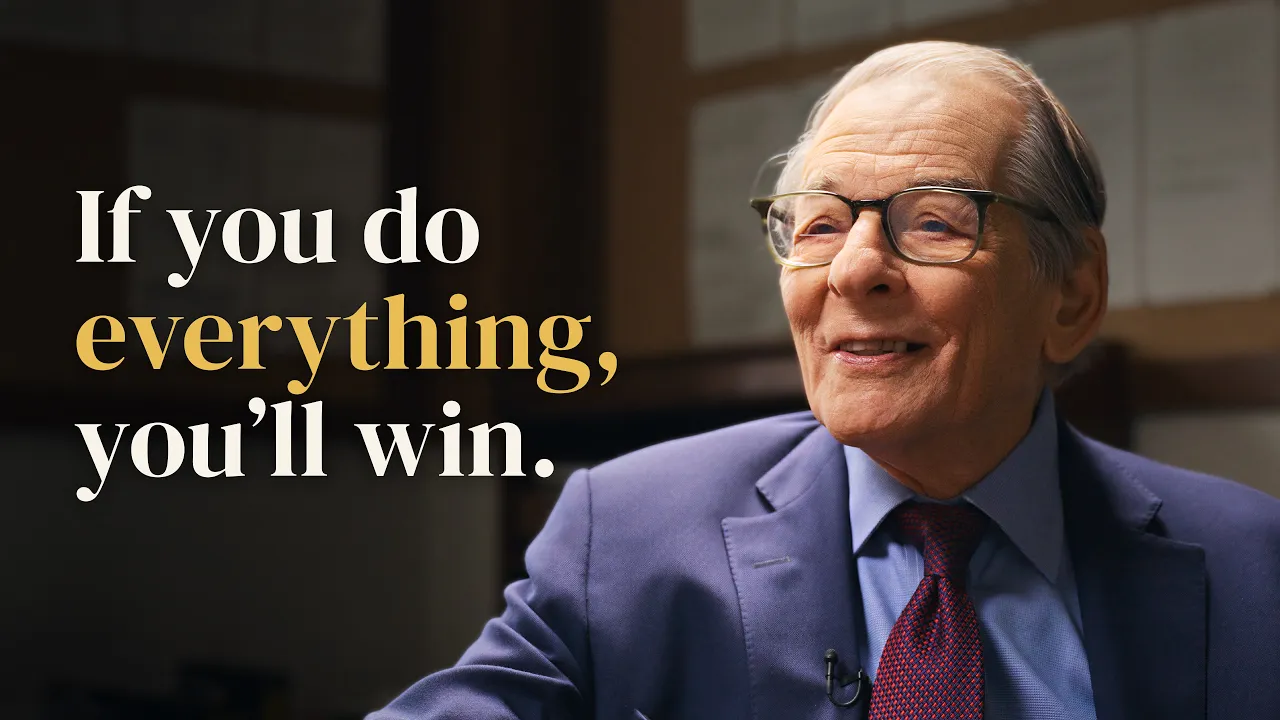
What Robert Caro learned about power after studying it for 50 years — Dwarkesh Patel

Dwarkesh Patel

Robert Caro argues modern democracies face infrastructure paralysis because major public works require exceptional, ruthless political will that institutional rules cannot engineer and rare leaders only occasionally supply.

AI-assisted summary of What Robert Caro learned about power after studying it for 50 years — original source. Check the original for full context.

Source published:

Key ideas

  • Robert Caro rejects the idea that modern bureaucratic barriers alone explain why public works have stalled, noting that Robert Moses faced similar opposition in the 1920s and overcame it through exceptional tactical will and political genius. (5:03)
  • The original manuscript for The Power Broker was 1,050,000 words long before editor Robert Gottlieb cut roughly 350,000 words to preserve the work as a single 700-page volume. (45:33)
  • Caro donated his personal research archive—including approximately 700 typed interview records from The Power Broker—to the New-York Historical Society, turning down higher bids from institutions like the University of Texas to keep the documents accessible. (48:55)
  • Caro argues Lyndon Johnson's domestic achievements, such as the Civil Rights and Voting Rights Acts, could never have been passed by John F. Kennedy because Kennedy lacked Johnson's visceral, overriding ambition to overhaul American poverty. (36:08)

Detailed notes

## Background This episode was published on YouTube by Dwarkesh Patel on October 30, 2026. According to the show description, the interview features renowned biographer Robert Caro reflecting on his fifty-year career investigating the mechanics of power, his monumental biographies of Robert Moses and Lyndon B. Johnson, and the craft of historical research.

## TL;DR In this wide-ranging conversation, Robert Caro reflects on his lifelong study of political power through the careers of Robert Moses and Lyndon B. Johnson, discussing the sheer ruthlessness and unrelenting will required to build massive public works and enact transformative legislation. Caro explores the moral evolution of Moses from an idealistic young reformer to an unchecked autocrat, while detailing Johnson's mastery of raw institutional leverage and persuasive force. He also examines the modern trade-offs between democratic accountability and bureaucratic paralysis in public infrastructure projects. Finally, Caro reveals his painstaking research methods, the necessity of compressing sweeping narratives into a singular core theme, and the profound personal solitude required to sustain decades of historical writing.

## Atmosphere & style The conversation carries a reverent, intimate, and contemplative atmosphere, marked by Patel's deep admiration for Caro and Caro's measured, grandfatherly gravitas. Sitting amid the weight of decades of research, Caro speaks with vivid narrative power, blending self-deprecating humor with quiet emotional weight as he recounts the tragic human costs of political ambition and the soul-crushing isolation of the Texas frontier. Listening feels like gaining rare access to an old-school master craftsman reflecting on power, history, and the sacrifices demanded by a lifetime of rigorous literary obsession.

## Bulletin - [05:03](https://www.youtube.com/watch?v=f0J_EeW42Lo&t=303s) Robert Caro rejects the idea that modern bureaucratic barriers alone explain why public works have stalled, noting that Robert Moses faced similar opposition in the 1920s and overcame it through exceptional tactical will and political genius. - [45:33](https://www.youtube.com/watch?v=f0J_EeW42Lo&t=2733s) The original manuscript for The Power Broker was 1,050,000 words long before editor Robert Gottlieb cut roughly 350,000 words to preserve the work as a single 700-page volume. - [48:55](https://www.youtube.com/watch?v=f0J_EeW42Lo&t=2935s) Caro donated his personal research archive—including approximately 700 typed interview records from The Power Broker—to the New-York Historical Society, turning down higher bids from institutions like the University of Texas to keep the documents accessible. - [36:08](https://www.youtube.com/watch?v=f0J_EeW42Lo&t=2168s) Caro argues Lyndon Johnson's domestic achievements, such as the Civil Rights and Voting Rights Acts, could never have been passed by John F. Kennedy because Kennedy lacked Johnson's visceral, overriding ambition to overhaul American poverty.

## Key takeaways - [02:39](https://www.youtube.com/watch?v=f0J_EeW42Lo&t=159s) Getting political insiders to reveal sensitive secrets requires confronting them directly with detailed documentary evidence and handwritten marginalia rather than asking open-ended questions. - [02:39](https://www.youtube.com/watch?v=f0J_EeW42Lo&t=159s) Lyndon Johnson's early accumulation of congressional leverage relied on controlling campaign cash flows, explicitly marking candidate funding requests as 'Okay', partial amounts, or absolute blacklists ('No, never'). - [05:03](https://www.youtube.com/watch?v=f0J_EeW42Lo&t=303s) Infrastructure deadlock is not unique to modern democracy; in the 1920s, highway expansion was also widely declared impossible until Moses circumvented legal and property obstacles to construct the Southern State Parkway and Jones Beach. - [08:45](https://www.youtube.com/watch?v=f0J_EeW42Lo&t=525s) Large-scale public construction in a democracy swings between the extremes of unchecked autocracy and complete paralysis, often relying on rare, generational figures of exceptional political will rather than administrative rule changes. - [12:42](https://www.youtube.com/watch?v=f0J_EeW42Lo&t=762s) The core tragedy of Robert Moses is not inherent villainy, but the gradual hardening of an idealistic civil service reformer into an autocrat who ceased listening to outside opposition. - [21:27](https://www.youtube.com/watch?v=f0J_EeW42Lo&t=1287s) Moses insulated himself from mayoral and gubernatorial control by constructing an interlocking fortress of overlapping commissions and authorities with staggered board terms. - [27:57](https://www.youtube.com/watch?v=f0J_EeW42Lo&t=1677s) The construction boom of the 1930s was catalyzed by the Great Depression, which allowed Moses to access immense federal relief funds and employ master artisans and desperate laborers at rock-bottom wages. - [32:51](https://www.youtube.com/watch?v=f0J_EeW42Lo&t=1971s) Lyndon Johnson's legendary persuasive force ('The Treatment') derived entirely from the tangible institutional leverage he held over senators' committee assignments and floor legislation. - [41:00](https://www.youtube.com/watch?v=f0J_EeW42Lo&t=2460s) Caro's biographical method demands compressing the entire narrative thesis into a single sentence or paragraph before drafting begins, ensuring every chapter supports the core theme. - [45:33](https://www.youtube.com/watch?v=f0J_EeW42Lo&t=2733s) Digital archiving tools accelerate finding source documents and military testimonies, but Caro insists they do not speed up the ultimate writing pace because every page must still be thoroughly read. - [52:59](https://www.youtube.com/watch?v=f0J_EeW42Lo&t=3179s) Caro views the soul-crushing frontier isolation of the early Texas Hill Country as a primary psychological force shaping both Lyndon Johnson and his mother, Rebekah Baines Johnson. - [58:29](https://www.youtube.com/watch?v=f0J_EeW42Lo&t=3509s) Maintaining deep narrative concentration requires Caro to maintain an intense, self-imposed daily solitude, cutting off outside communication during working hours at significant cost to personal relationships.

## Detailed walkthrough ### [00:00](https://www.youtube.com/watch?v=f0J_EeW42Lo&t=0s) "If You Do Everything, You Will Win"

Dwarkesh Patel opens the conversation by invoking Lyndon B. Johnson’s defining maxim: "If you do everything, you will win." Over five decades of chronicling Johnson's life, Robert Caro embodied that exact doctrine. To capture the visceral reality of Johnson’s youth, Caro moved to the edge of the Texas Hill Country to experience its barren poverty and isolation firsthand. He combed through millions of pages of archival records across presidential and Senate libraries, tracking down anyone who witnessed Johnson’s rise—from the operative who helped steal the pivotal 1948 Senate election to the exhausted chauffeur who accompanied Johnson on his early, desperate campaign trails. Patel asks Caro whether he recognizes aspects of himself in the figures he writes about, wondering if his ability to portray Johnson and Robert Moses with such narrative intensity stems from shared character traits.

Caro responds with a blend of warmth and self-protective humor, stating clearly that he hopes he does not share the darker impulses of his subjects. As Caro explains: “Among other things they’re so, I’ll use the word, ruthless.” Yet he acknowledges that their total refusal to accept defeat formed an essential component of their historical stature: “You say they’d do anything to win. That’s part of their greatness.” Caro recounts an early research experience that made him realize how deeply his own investigative journey mirrored Moses’s obsessive methods. While researching *The Power Broker*, Caro tracked down Fiorello La Guardia’s mayoral papers, which the Municipal Archives had stashed away three levels underground inside the 79th Street Boat Basin along the Hudson River. Sitting in that subterranean vault day after day beside a wall of metal filing cabinets, Caro found personal notations written in Moses’s own hand, suddenly recognizing that he was retracing Moses's exact steps through the machinery of municipal power.

Patel points out that even if Caro does not share their cruelty, he shares their absolute relentlessness—neither Johnson, Moses, nor Caro would ever take "no" for an answer when pursuing an objective. Caro accepts the comparison as a compliment, reflecting on the moral duty a biographer has to track down essential witnesses. When pursuing Johnson’s earliest political secretary and driver, Caro knew that no other living soul possessed direct knowledge of Johnson’s inner life during endless hours behind the wheel across rural Texas: “I said, 'There’s no other human being on earth who knows what Lyndon Johnson is doing all these hours driving back and forth across Texas. I don’t know what I have to do, but I have to get him to tell me honestly about this thing.'”

[02:39](https://www.youtube.com/watch?v=f0J_EeW42Lo&t=159s) How Caro Gets People to Talk: From Chauffeurs to John Connally

Patel asks how Caro consistently persuades political veterans to disclose sensitive, damaging secrets that they know they should take to their graves. Caro explains that getting reluctant sources to open up requires confronting them with precise documentary evidence that only they can decipher. Rather than asking broad, open-ended questions, Caro enters interviews armed with intimate knowledge of the paper trail, putting the subject in a position where they realize evasive generalities will not work.

A prime example was Caro's interrogation of John Connally regarding Johnson’s early accumulation of national influence through campaign cash. Connally had served as Johnson’s trusted lieutenant, physically collecting political funds and dispensing them to congressional candidates strictly according to Johnson’s instructions. While examining archival documents, Caro discovered congressional requests for money marked with Johnson’s handwritten marginalia. If a candidate asked for $1,500, Johnson might scrawl "Okay, 1,500" or reduce it to "500." Sometimes Johnson wrote a flat "No," but on certain requests he inscribed the chilling notation: "No, never." When Caro placed these documents in front of Connally and pressed him on what that phrase meant, Connally could not deny the reality: “I asked Connally what that meant, and he said, 'This guy was never going to get money from Lyndon Johnson.'” Once Connally confirmed the system, Caro was able to push into the deeper human motivations behind Johnson’s personal vendettas and political alliances, unlocking the vivid stories behind the ledger entries.

```mermaid flowchart TD accTitle: LBJ Campaign Cash Allocation Flow accDescr: Flowchart showing how Lyndon Johnson reviewed and marked cash requests from congressional candidates via John Connally.

A["Congressional Candidate submits request for campaign funds"] --> B["Johnson evaluates candidate loyalty & leverage"] B --> C{"LBJ's Handwritten Annotation"} C -->|"Okay, 1,500"| D["Full funding approved & disbursed via John Connally"] C -->|"500"| E["Partial allocation approved"] C -->|"No"| F["Request denied for this cycle"] C -->|"No, never"| G["Permanent blacklisting from LBJ's political cash network"] ```

[05:03](https://www.youtube.com/watch?v=f0J_EeW42Lo&t=303s) Does America Need Another Robert Moses?

Patel turns the discussion to contemporary public infrastructure paralysis, noting that critics across the political spectrum now lament the near-impossibility of building large-scale public works in America. A prime symbol of this dysfunction is New York’s Second Avenue Subway, which took roughly half a century and more than $4 billion just to open an initial 1.5-mile stretch. A growing body of commentary argues that *The Power Broker* was so devastatingly effective in exposing Moses’s unilateral authority that society overcorrected. By surrounding every public project with environmental impact statements, land use reviews, community board approvals, and protracted litigation, modern governance made it virtually impossible to construct anything. Patel asks whether modern institutions have swung too far, and whether Moses could even operate in today’s legal environment.

Caro firmly rejects the premise that Moses succeeded simply because he lived in an era without legal obstacles. When Moses began his career in the 1920s, public officials and commentators routinely insisted that democracy could no longer build infrastructure: “This was in the 1920s. People were saying, 'Government can’t build anything. There are too many blocks. Nothing’s getting built.'” The private automobile had transformed society, but travelers were stranded on antiquated horse-and-buggy dirt roads because wealthy estate holders and farmers blocked every proposed highway route through their land. Moses stepped into this impasse without even possessing statutory eminent domain powers, yet he overcame the obstacles through sheer tactical ingenuity and unbending will.

Caro recounts Moses discovering the undeveloped sandbars of Jones Beach, recognizing immediately that it was the finest public beach on the Atlantic coast, located just 27 miles from the stifling tenements of New York City: “He says, 'This is the greatest beach I’ve ever seen. It’s only 27 miles from New York City. If I can build a road out here, I will give the people of New York City this great beach.'” Despite entrenched opposition from landed barons whose farms stood in the path of the parkway, Moses bypassed every legal barricade, appropriated land, outmaneuvered state legislators, and laid down the Southern State Parkway to make the shore accessible to the masses. Caro reflects on Moses’s unstoppable momentum: “It’s an act of political genius, and it’s also an act of will: 'I’m going to do it.'”

- Modern public works comparison: The Second Avenue Subway required approximately 50 years and more than $4 billion to deliver just 1.5 miles of track. - The 1920s parallel: Long Island highway expansion was widely declared impossible because dozens of private property owners held legal veto power over right-of-way acquisitions. - Moses’s breakthrough: Constructed Jones Beach State Park and its approach parkways 27 miles outside New York City without established eminent domain authority.

[08:45](https://www.youtube.com/watch?v=f0J_EeW42Lo&t=525s) The Dilemma of Building in Democracies

Patel sharpens the dilemma by contrasting California’s high-speed rail project—which absorbed $15 billion over a decade without producing a single operational mile of track—with contemporary China, which built tens of thousands of miles of high-speed rail over the same period by deploying ruthless, Moses-style central authority that ignores local objections and forcibly displaces populations. Patel asks Caro how a democratic society can navigate between the two unacceptable extremes: the unchecked bulldozing of communities on one side, and total infrastructure paralysis on the other.

Caro offers a candid, sobering assessment: “I’m not sure there is a good spot.” In any large-scale infrastructure effort, dozens, scores, or hundreds of private landowners will inevitably resist having tracks or highways cut across their property. Because democratic systems grant individual citizens rights to contest public actions, decades can elapse where society sits paralyzed under the impression that nothing grand will ever be built again. In Caro’s view, progress in a democracy does not typically arise from fine-tuning bureaucratic rules, but from rare, generational bursts of exceptional political will: “I’m trying to say that every once in a while someone comes along who’s a genius, if that’s the right word, at getting big things built for the public. Decades may pass when there’s no one like that.”

When Patel suggests that this implies America might actually need a modern-day Moses, Caro hesitates, wrestling openly with the moral trade-offs of power. He makes clear that he never wants to see a public official who operates with Moses’s callous disregard for human suffering: “The answer is, I certainly don’t want someone who’s as ruthless and disregarding public opinion as a Robert Moses.” Yet he immediately adds the uncomfortable counterweight: without individuals who possess the rare political will to push past stubborn resistance, democratic societies remain unable to build the public goods they desperately need.

[12:42](https://www.youtube.com/watch?v=f0J_EeW42Lo&t=762s) Moses the Young Idealist vs. the Later Destroyer

Caro addresses the widespread misconception held by people who have not read *The Power Broker*—namely, that the biography is a one-dimensional indictment portraying Moses as an unmitigated villain from start to finish. When critics assert that everything Moses touched was corrupt or destructive, Caro has a straightforward retort: “When people say to me everything was bad that he did, what I say is, 'You didn’t read the book.'”

The opening hundreds of pages of the biography depict an earnest, brilliant young idealist. Before Moses possessed any power to lay concrete, he poured his life into the dry, technical mechanics of municipal reform, laboring exhaustively to redesign the civil service so that working-class public servants would earn promotions through merit rather than ward-boss political patronage. That same idealistic fire fueled his initial park vision on Long Island, where he dreamed of rescuing crowded urban families from sweltering slums and providing them with pristine ocean parks and green parkways.

The tragedy of Moses’s life, Caro emphasizes, is not that he began as a monster, but that the prolonged exercise of unchecked authority altered his character. Over decades of triumph, Moses ceased listening to any outside voice, ultimately arriving at the conviction that his vision alone mattered: “Now, does that evolve into 'I think there ought to be a highway here no matter what anybody says, and no matter how many thousands of people are in the way,' like the Cross Bronx Expressway, 'I’ll evict them'? It does. He changes.” For Caro, that profound moral deterioration is the core theme of *The Power Broker*: tracing how an idealistic civil service reformer transformed into a builder willing to dislocate tens of thousands of vulnerable citizens without remorse.

[15:13](https://www.youtube.com/watch?v=f0J_EeW42Lo&t=913s) The Hardening of Robert Moses and the Cross Bronx Expressway

Robert Moses began his career driven by the impulse to improve people's everyday lives by opening up public access to beaches and the ocean. Over time, however, that idealism underwent a drastic transformation. He turned into a builder who demanded projects be completed simply because he decreed they should be built, regardless of public protest or expert counsel. A prime manifestation of this unyielding drive was the Cross Bronx Expressway. Even before construction began, Moses was repeatedly warned against the project. The moment it opened, it instantly transformed into the world's longest traffic jam, leaving tens of thousands of residents evicted from their neighborhoods without any adequate relocation provisions.

Robert Caro reflects on this transformation not necessarily as conventional graft, but as an inner calcification wrought by unchecked authority. As Caro observes:

> “So in a way it’s a story of how you give somebody power without the power, in a way — I don’t want to use the word ‘corrupting’ him — but hardening him to anyone who opposes him, to any opposition.”

- **The Cross Bronx Expressway:** Built despite widespread prior warnings, resulting in perpetual traffic gridlock and the displacement of tens of thousands of working-class residents without municipal relocation assistance. - **The Psychological Arc:** An evolution from an idealistic reformer focused on public leisure to an autocratic administrator deaf to criticism and unconcerned with human collateral damage.

---

[18:03](https://www.youtube.com/watch?v=f0J_EeW42Lo&t=1083s) Watching Moses Lose Power at Randall's Island

When Robert Caro began researching and writing *The Power Broker* in 1966 and 1967, Moses was still in office, meaning his eventual downfall unfolded directly before the young biographer's eyes. Caro admits that at the time he was young and largely feeling his way through the process, but watching Moses's grip on the city slip away proved deeply poignant. During Moses’s peak, interviewing him at his Triborough Bridge Authority headquarters on Randall’s Island meant stepping into an empire of deference: petitioners packed the waiting rooms, and the moment an interview concluded, a secretary would rush in with an exhaustive list of important callers seeking favors.

Toward the end of their seven interviews, Caro experienced a stark, quiet turning point. Following one long session—likely their final interview—the secretary walked in empty-handed; not a single person had called while they spoke. Despite Caro’s sharp awareness of the suffering Moses had inflicted across New York, the sudden emptiness of that office carried an unmistakable pathos. As Caro reflects:

> “So whatever you thought of Moses, you felt the poignance of someone losing power.”

When Dwarkesh Patel asks whether Moses himself realized his era was over, Caro explains that Moses remained largely insulated from his own decline. Well into his eighties and growing deaf, Moses was surrounded by loyal “Moses men” who still treated him with total subservience. Although Moses recognized that his projects had stalled, he maintained an obstinate belief that he could simply push forward as he always had and overcome his opponents once again.

---

[21:27](https://www.youtube.com/watch?v=f0J_EeW42Lo&t=1287s) The Resignation Bluff and the Interlocking Web of Authority

In 1962, Robert Moses attempted to employ a political weapon he had successfully wielded against numerous governors and mayors for decades: threatening his immediate resignation whenever an elected official crossed him. When he tried the maneuver on Governor Nelson Rockefeller, Rockefeller unexpectedly called his bluff with a polite reply: “I regretfully accept.” When Patel asks whether earlier governors and mayors could have stripped Moses of his power just as easily, Caro explains that while elected officials technically possessed the legal authority to fire him, in practice it was politically impossible for decades. Moses enjoyed nearly untouchable public adulation as the idol of New York, and editorial boards reflexively sided with him against politicians.

```mermaid flowchart TD accTitle: Robert Moses' Web of Autonomous Power accDescr: Interlocking commissions and authorities created a structure that protected Moses from being fired.

subgraph Authorities["Interlocking Commissions & Authorities"] TB["Triborough Bridge Authority"] SPA["State Power Authority"] NYC["NYC Parks Commissioner"] LIP["Long Island Parks Commission"] JB["Jones Beach Commission"] end

subgraph Leverage["Political and Structural Armor"] POP["Broad Public Idolatry & Press Favor"] TERMS["Staggered Term Expirations"] JUR["Multi-jurisdictional Immunity"] end

Authorities --> Leverage Leverage --> SHIELD["Immunity to Mayoral and Gubernatorial Firing"] ```

Beyond his popularity, Moses had constructed a fortified administrative fortress across New York State. By serving concurrently across multiple overlapping agencies—as Chairman of the State Power Authority, Chairman of the Triborough Bridge and Tunnel Authority, New York City Parks Commissioner, Long Island State Park Commissioner, and President of the Jones Beach State Parkway Authority—he created an interlocking web where term expirations were staggered and distinct jurisdictions shielded him. Firing him from one post left his empire intact. Only in the 1960s, as public cracks appeared in his armor, could an exceptionally confident executive like Rockefeller finally afford to withstand the press backlash and push him out.

---

[24:06](https://www.youtube.com/watch?v=f0J_EeW42Lo&t=1446s) The One Question Left and the Destruction of Henry Epstein

Caro conducted seven extensive face-to-face interviews with Robert Moses before their relationship abruptly terminated. During the seventh interview, Caro brought up an undisclosed contribution made to Moses’s commission by a wealthy golf course owner whose property was subsequently spared by a rerouting of a planned parkway. Following that inquiry, Moses refused ever to speak with Caro again. When asked what single question he would ask Moses if granted an eighth interview, Caro answers without hesitation:

> “Off the top of my head, if I only had one question to ask him, I’d ask him, ‘Did you realize you were changing?’”

Caro believes Moses never saw the shift in himself. In Moses's own mind, his grand vision for highways and parks was so fundamentally correct that any human displacement was merely the unavoidable cost of progress. Having suffered bitter defeats as an idealistic young reformer when his early civil service plans were dismissed, Moses resolved never to be rendered helpless again. He adopted a doctrine of unmitigated ruthlessness: if an opponent stood in his path, Moses searched relentlessly for a personal vulnerability—financial impropriety, a hidden mistress, or personal vice—to annihilate them.

- **The Ruin of Henry Epstein:** When Bronx politician Henry Epstein protested the Cross Bronx Expressway—demonstrating that shifting the route just two blocks south would save tens of thousands of residents from eviction while displacing only a couple hundred—Moses neutralized him by exposing his extramarital affair to the public. - **The Philosophy of Leverage:** Moses learned from early policy failures that pure persuasion was useless; securing permanent power required uncovering the personal weaknesses of adversaries and exploiting them without hesitation.

---

[27:57](https://www.youtube.com/watch?v=f0J_EeW42Lo&t=1677s) Building During the Great Depression and the Lost Craft of Urban Architecture

Caro underscores that *The Power Broker* is not merely the portrait of a single official, but the study of an era. Moses’s explosive building pace during the 1930s was made possible largely because the Great Depression gave public works an unprecedented advantage over private enterprise. Moses had access to immense federal relief funds and a desperate workforce. When he needed architects, thousands of unemployed professionals lined Fifth Avenue hoping for a position. He was able to hire premier architectural and engineering talent for low wages and command grueling labor around the clock through harsh winters, knowing that any worker who fell behind could be instantly fired with no alternative employment available.

Patel then asks why civic infrastructure from the late 19th and early 20th centuries, such as Grand Central Terminal, exhibited such striking architectural beauty compared to the plainer public works of the post-war era, despite the nation being far poorer when the former were constructed. Caro explains that earlier projects benefited from an abundance of skilled immigrant artisans who carved intricate stone facades by hand. Gesturing across from his own 15th-floor apartment, Caro points out the elaborate decorative stonework crowning the roofline of a neighboring pre-war building—magnificent artisan work commissioned at such heights that, ironically, almost no one from the street could ever see it.

[31:07](https://www.youtube.com/watch?v=f0J_EeW42Lo&t=1867s) Cheap Labor and Architectural Detail in the Depression

Robert Caro reflects on how grand public works were financed and constructed during the Great Depression. Builders were able to achieve extraordinary levels of craftsmanship because the economic desperation of the era made skilled labor exceptionally cheap. Contractors could hire master artisans at rock-bottom wages to sculpt intricate stonework and decorations high up on building facades—details placed on upper floors where practically nobody walking at street level would ever notice them.

[32:51](https://www.youtube.com/watch?v=f0J_EeW42Lo&t=1971s) The Sources of Lyndon Johnson’s Power: Leverage vs. Persuasion

Dwarkesh Patel turns the conversation to *Master of the Senate*, asking whether Lyndon B. Johnson’s effectiveness originated primarily from his personal persuasiveness in one-on-one encounters or from the sheer leverage he amassed through favors and threats. Caro explains that the two elements cannot be separated, because raw political power formed the bedrock beneath every persuasive overture Johnson made.

When Johnson grabbed a colleague, leaned in close, and draped his arm around his shoulder, the target was not simply experiencing the raw force of Johnson's personality. Behind the physical charm and cajoling was an acute awareness of what Johnson could do to their career:

> “When you were talking to him, if he asked something of you, you knew he had the power behind him to give you or deny you things that you wanted.”

If a reluctant senator opposed Johnson on a bill, that senator understood that Johnson had the absolute power to grant or deny an essential committee assignment, or single-handedly decide whether a home-state bill ever saw the Senate floor.

```mermaid flowchart TD accTitle: The Mechanics of Lyndon Johnson's Persuasion accDescr: Diagram showing how Johnson's personal charm and physical presence rested upon structural Senate power to influence votes.

subgraph JohnsonArsenal ["Johnson's Arsenal"] P["Personal Charisma & Physical Intimidation<br/>('The Treatment', leaning in, arm around shoulder)"] L["Structural Institutional Leverage<br/>(Committee assignments, scheduling legislation)"] end

subgraph TargetSenator ["Target Senator's Calculus"] V["Decision to Vote with Majority Leader"] A["Awareness of Consequences<br/>(Favors granted or career blocked)"] end

L -->|"forms bedrock of"| P P -->|"applied directly to"| TargetSenator L -->|"enforces"| A A -->|"compels"| V ```

[34:39](https://www.youtube.com/watch?v=f0J_EeW42Lo&t=2079s) Coke Stevenson and the Tragedy of the 1948 Senate Election

Patel brings up *Means of Ascent*, his personal favorite book, which chronicles the bitter 1948 Texas Democratic Senate primary between Lyndon Johnson and former Texas governor Coke Stevenson, known universally as "Mr. Texas." Patel asks whether Caro, while researching and composing Stevenson's portrait, privately wished Stevenson had won.

Caro answers directly and without hesitation:

> “The answer is yes. I think Coke Stevenson, although he was an idealist, he knew how to get things done.”

Stevenson had been an effective, accomplishing governor, and Caro believes he would have been an equally formidable United States senator. The heartbreak of the election lies in the underhanded tactics used to defeat him. Stevenson was an old-fashioned man who simply could not fathom that an opponent would go to the extremes that Johnson did—including systemic vote theft in Box 13—to steal the election. Stevenson's fundamental inability to grasp Johnson's ruthless playbook sealed his defeat.

[36:08](https://www.youtube.com/watch?v=f0J_EeW42Lo&t=2168s) Why John F. Kennedy Could Not Have Passed the Great Society

Patel poses an alternate history: what if John F. Kennedy had won the presidency in 1960, but Johnson had refused the vice-presidential slot and stayed on as Senate Majority Leader? Patel wonders whether the landmark civil rights and anti-poverty legislation passed between 1963 and 1965 would have simply passed earlier under a Kennedy-Johnson partnership.

Caro rejects this counterfactual entirely, arguing that legislation of that scale required an inner drive that Kennedy never possessed:

> “No, because Kennedy did not have the overriding desire to change America.”

While Caro considers Kennedy an utterly charming, capable president who handled foreign policy far better than Johnson ever did, Kennedy lacked Johnson's burning domestic ambition. Johnson’s drive was forged in places like Cotulla, Texas, where he had taught impoverished Mexican American schoolchildren and emerged resolved to rewrite American education and anti-poverty laws. That fierce domestic determination produced the Civil Rights Act and Voting Rights Act. Yet Caro emphasizes the heartbreaking duality of Johnson’s tenure: the very president whose domestic vision was unmatched saw his entire presidency torn apart and ruined once his focus was consumed by the Vietnam War.

[39:07](https://www.youtube.com/watch?v=f0J_EeW42Lo&t=2347s) Willpower over Stamina: The Work Habits of Moses and Johnson

Patel attempts to ask Caro why Johnson escalated the Vietnam War despite mounting disasters, but Caro declines to answer, explaining that he is actively working on that exact question for his forthcoming final volume. Patel pivots to the superhuman stamina shared by Robert Moses and Lyndon Johnson, both of whom routinely worked 16-hour days and slept very little, asking whether this stemmed from a unique physical constitution or pure willpower.

Caro attributes it entirely to sheer will:

> “I think it’s just their will. A lot of people have their energy.”

For Moses and Johnson, fatigue was never allowed to enter the equation when pursuing an objective. To illustrate Johnson’s unrelenting drive, Caro recalls Johnson telephoning a fellow senator at 5:00 AM to lobby for a vote, prompting the groggy senator to answer sarcastically:

> “Oh, Lyndon, I was just lying here waiting for your call.”

[41:00](https://www.youtube.com/watch?v=f0J_EeW42Lo&t=2460s) The Core Device of Biography: Reducing a Book to One Sentence

Patel asks Caro how he maintains his bearings during the five to ten years it takes to produce a single volume, especially when only his wife, Ina Caro, and his editor ever read the manuscript before publication. Caro admits that one can never be entirely certain of being on the right track, but reveals the strict structural rule he adopted after stumbling through the composition of *The Power Broker*.

Before writing a single sentence of a manuscript, Caro sits at his desk for an extended period to map out the entire narrative arc from start to finish. He forces himself to compress the theme of the entire work into a minimal summary:

> “Before I start a book, I try to get it down to a sentence or at most a paragraph and say, 'Really, what is this book about?'”

Caro explains that without this intense distillation, an author will find themselves three years into drafting, adrift and wondering what they are actually trying to achieve. Every chapter, vignette, and piece of evidence must hang directly from that core thesis.

[44:31](https://www.youtube.com/watch?v=f0J_EeW42Lo&t=2671s) Researching Vietnam in the Digital Age

Patel notes that Caro wrote most of his masterpieces before the advent of the internet and digitized research tools, and asks how modern digital archives are affecting his process for his current volume on Johnson's final years.

Caro notes that these tools have made a profound difference in his current work on the Vietnam War. For instance, in reconstructing a specific engagement—the Battle of the Ia Drang Valley—he can instantly sit at his computer and identify which university archives hold the oral histories of the soldiers who fought there, locate exact official military documents, and track down testimonies that would have previously required weeks of blind searching across the country.

[45:33](https://www.youtube.com/watch?v=f0J_EeW42Lo&t=2733s) The Pace of Research and the Compulsion to Overwrite

Dwarkesh Patel asks whether having modern document tools back when writing earlier volumes would have accelerated Robert Caro's pace. Caro rejects the premise. While indexing and locating records might take less time today, locating them is the trivial step: “finding them is a small thing compared to reading them.” Even with instant searches, his innate method would still demand reading every single page directly, so the work could never have sped up.

Patel then poses a thought experiment: if someone had traveled back to 1975 to inform a forty-something Robert Caro that his Lyndon B. Johnson project would stretch past four decades, would he have felt terrified or thrilled? Caro explains that his sheer volume of work has always outrun publishing constraints, beginning with *The Power Broker*. He delivered a massive manuscript of 1,050,000 words to his editor, Robert Gottlieb. Because Caro insisted the biography remain a single volume, Gottlieb had to compress it to 700 pages (around 700,000 words), forcing them to excise roughly 350,000 words. Gottlieb famously remarked, “I cut a lot of the best stuff I ever read.” Caro continues to find it painful that so much essential history hit the cutting-room floor, yet he remains powerless to change his prose habits while drafting: “But I don’t seem to have the ability not to write the stuff that I think should be written, even though I know so much of it is going to have to be cut.”

```mermaid flowchart LR accTitle: Editing The Power Broker accDescr: Diagram showing the 350,000-word cut from the original draft of The Power Broker to its final single-volume publication. A["Original Manuscript<br/>1,050,000 words"] -->|"Cut by Robert Gottlieb<br/>& Robert Caro<br/>(-350,000 words)"| B["Published Single Volume<br/>~700,000 words / 700 pages"] ```

[48:55](https://www.youtube.com/watch?v=f0J_EeW42Lo&t=2935s) The Unseen Archive and Donating to the New-York Historical Society

Patel notes the room full of filing cabinets packed with unused research notes and interviews, asking Caro what he hopes future historians will do with these materials. Caro stresses that an enormous volume of historical truth never fit into the published books. He points to House Speaker Sam Rayburn as a prime example: despite passing crucial elements of Franklin D. Roosevelt's New Deal agenda and wielding titanic influence over the House of Representatives, Rayburn lacks an adequate, comprehensive biography, leaving a glaring void in American history that Caro's interview notes could fill.

The cabinets house granular, typed interview notes from across Caro's career, including approximately 700 interviews conducted solely for *The Power Broker*, as well as exhaustive inquiries with mid-century U.S. senators and their staff members. To ensure these irreplaceable records remain within reach for future generations, Caro gave his personal archive to the New-York Historical Society. He deliberately turned down far more lucrative offers from competing institutions, including the University of Texas, taking “a great deal less money” so that researchers would not have to fly across the country to examine the documents:

- The archive contains roughly 700 detailed, typed interview files from the reporting for *The Power Broker*. - Extensive notes on mid-century Senate operations and assistants never made it into *The Years of Lyndon Johnson*. - Caro willingly accepted a substantial financial cut to keep the physical archive centrally located and open in New York City rather than Austin, Texas.

[52:59](https://www.youtube.com/watch?v=f0J_EeW42Lo&t=3179s) Frontier Desolation and the Formative Power of Texas Loneliness

Turning to setting, Patel observes that Caro’s scenes—from New York's Gold Coast and tenements to the early settlement of the Texas Hill Country—remain captivating on their own merits, even apart from the powerful figures who came out of them. Caro agrees, reflecting on how interviewees spoke of their grandfathers arriving in the Hill Country when it was dangerous, contested frontier land where families faced the real terror of massacres and deprivation.

Beyond physical violence, Caro argues that the defining element shaping character in the Texas Hill Country was its soul-crushing isolation. Lyndon Johnson’s childhood ranch sat roughly 18 miles beyond Johnson City. Caro recalls writing a passage—later cut to three pages—about the deep loneliness endured by Johnson’s mother, Rebekah Baines Johnson, who could climb a hill in the afternoon and see nothing on the horizon except endless empty ridges:

> “With all the wonderful books that have been written, I’m not sure that America understands the heroism of, forgetting Indians and raiders, just the loneliness of what life was like for these people.”

Caro recounts driving out past Austin during his field reporting to interview elderly childhood peers of Johnson. One woman directed him to drive 22 miles out of Austin, turn left past a cattle guard onto a dirt road, and continue another 22 miles without passing a single person or house. Experiencing that absolute desolation firsthand drove home the silent endurance required of those early settlers.

[58:29](https://www.youtube.com/watch?v=f0J_EeW42Lo&t=3509s) The Productive Solitude of the Writing Life

Patel brings the discussion to Caro’s own experience of solitude, asking how living and working with his wife, Ina Caro, in self-imposed isolation has shaped his life and craft. Caro acknowledges that total quiet is essential to the sustained concentration his biographies require, even if it runs against his naturally social instincts.

He describes his rigid daily routine: arriving at his office every morning, switching off his telephone, and maintaining complete silence throughout the working hours. Though he admits he would often love to break away and chat with a friend, he forces himself to stay inside the material: “I’m concentrating on the book. I can’t do that. It’s going to break the concentration.” While some long-time friends understand why he will not pick up or return a telephone call until the workday is over, others struggle to accept it, making this intense isolation a lasting tax on his personal relationships. Patel concludes the interview by thanking Caro, noting that after six years of hosting his show, Caro was the guest he wanted most of all.

## Notable quotes > [18:03](https://www.youtube.com/watch?v=f0J_EeW42Lo&t=1083s) So whatever you thought of Moses, you felt the poignance of someone losing power. — Robert Caro

> [41:00](https://www.youtube.com/watch?v=f0J_EeW42Lo&t=2460s) Before I start a book, I try to get it down to a sentence or at most a paragraph and say, 'Really, what is this book about? — Robert Caro

## Mentioned Antithesis, Battle of the Ia Drang Valley, California High-Speed Rail, Civil Rights Act, Coke Stevenson, Cotulla, Texas, Cross Bronx Expressway, Dwarkesh Patel, Fiorello La Guardia, Franklin D. Roosevelt, Grand Central Terminal, Henry Epstein, Ina Caro, Jane Street, John Connally, John F. Kennedy, Jones Beach State Park, Jones Beach State Parkway Authority, Long Island State Park Commission, Lyndon B. Johnson, Master of the Senate, Means of Ascent, Nelson Rockefeller, New York City Parks Department, New-York Historical Society, Rebekah Baines Johnson, Robert Caro, Robert Gottlieb, Robert Moses, Sam Rayburn, Second Avenue Subway, Southern State Parkway, State Power Authority, Texas Hill Country, The Power Broker, The Years of Lyndon Johnson, Triborough Bridge and Tunnel Authority, University of Texas, Vietnam War, Voting Rights Act, WorkOS

## Video description 𝐄𝐏𝐈𝐒𝐎𝐃𝐄 𝐋𝐈𝐍𝐊𝐒 * Transcript: https://www.dwarkesh.com/p/robert-caro * Apple Podcasts: https://podcasts.apple.com/us/podcast/robert-caro-the-master-biographer-reflects-at-91/id1516093381?i=1000798931746 * Spotify: https://open.spotify.com/episode/4qFEcgsHB5hAnRoGw0Ypiv

𝐒𝐏𝐎𝐍𝐒𝐎𝐑𝐒 * Antithesis lets you run thorough simulation tests on every PR your coding agents ship. That’s because Antithesis is FAST. On a recent project, it packed fifteen hours of simulation into each fifteen-minute run: every change could be tested in thousands of hostile worlds before being merged. Every minute your software spends in Antithesis is one of the unluckiest hours it will ever experience. Learn more at https://antithesis.com/dwarkesh

* WorkOS’s Airlock is a judgment layer that sits between your agents and your most important tools. When an agent makes a request, Airlock evaluates it against your company’s policies and decides whether to allow it, block it, or escalate it to a human. If it allows it, Airlock takes action on behalf of the agent, which means your agents never see your API keys or other credentials. Airlock is in early access. If you’re interested, go to https://workos.com/airlock

* Jane Street’s mystery ASIC puzzle is over, and they’ve published a blog post that reveals the chip’s purpose. You can read it here: https://blog.janestreet.com/asic-puzzle-results/. More importantly, there’s another challenge live now! For this one, you have to design a protocol-emulator ASIC that can be used to test chips outside of a live system. Jane Street will pay to fabricate their favorite submissions. The competition is open until January 18th. Get started at https://janestreet.com/dwarkesh

To sponsor a future episode, visit https://dwarkesh.com/advertise.

𝐓𝐈𝐌𝐄𝐒𝐓𝐀𝐌𝐏𝐒 00:00:00 – How Caro gets people to talk 00:05:03 – Does America need a little more Moses today? 00:12:42 – Moses the young idealist 00:17:57 – Watching Moses lose power 00:24:01 – Did Moses realize he was changing? 00:27:53 – Building during the Great Depression 00:32:51 – The threats and promises of Lyndon Johnson 00:36:08 – Could Kennedy have passed Johnson’s laws? 00:41:00 – Getting a book down to one sentence 00:46:21 – All the material that never made it into the books 00:52:59 – Loneliness

[Source](https://www.youtube.com/watch?v=f0J_EeW42Lo)

中文简报

传记作家罗伯特·卡洛将民主建设困境归因于罕见的政治意志 罗伯特·卡洛认为,现代民主国家面临基础设施瘫痪,是因为大型公共工程需要非凡且无情的政治意志,而这是制度规则无法设计出来的,且仅由极少数领导人偶尔展现。 在这场广泛深入的对话中,罗伯特·卡洛回顾了他通过罗伯特·摩西和林登·B·约翰逊的职业生涯对政治权力进行的长年研究,探讨了建设巨型公共工程和推行变革性立法所必需的冷酷无情与坚定意志。卡洛探讨了摩西从理想主义青年改革家蜕变为不受制衡的独裁者的道德演变,并详细阐述了约翰逊对原始制度杠杆和说服力量的娴熟运用。他还分析了现代公共基础设施项目中民主问责制与官僚瘫痪之间的权衡。最后,卡洛透露了他细致严谨的研究方法、将宏大叙事浓缩为单一核心主题的必要性,以及维持数十年历史写作所需的极度孤独。 罗伯特·卡洛驳斥了仅凭现代官僚壁垒就能解释公共工程为何停滞的观点,并指出罗伯特·摩西在20世纪20年代曾面临类似的反对,并凭借非凡的战术意志和政治天赋克服了这些阻碍。 (5:03) 《权力经纪人》的原始手稿长达105万字,编辑罗伯特·戈特利布削减了大约35万字,以便将这部作品保留为一本700页的单行本。 (45:33) 卡洛将包括《权力经纪人》约700份打字采访记录在内的个人研究档案捐赠给了纽约历史学会,拒绝了德克萨斯大学等机构出价更高的收购请求,以保持这些文献的易获取性。 (48:55) 卡洛认为,林登·约翰逊在国内取得的成就(如《民权法案》和《选举权法案》)是约翰·F·肯尼迪绝不可能促成的,因为肯尼迪缺乏约翰逊那种从根本上彻底改变美国贫困状况的强烈、压倒一切的雄心。 (36:08)

Reading summary

Over five decades of examining Robert Moses and Lyndon B. Johnson, biographer Robert Caro argues that political achievement requires an unrelenting will to amass leverage, though unchecked authority inevitably hardens leaders against human suffering. The Anatomy of Power: Leverage Over Persuasion (2:39) Caro emphasizes that effective political persuasion is inseparable from structural leverage. In Lyndon Johnson's Senate, his legendary personal cajoling—leaning in close with physical intensity—carried weight because colleagues understood he held absolute power over committee assignments and legislative scheduling. That leverage originated early: archival records show Johnson personally annotating campaign fund requests with notes ranging from 'Okay, 1,500' to a chilling 'No, never,' which John Connally confirmed meant permanent political blacklisting. The Evolution from Idealism to Ruthlessness (12:42) Rejecting the idea that figures like Robert Moses began as villains, Caro notes that Moses spent his early career as an earnest civil service reformer trying to replace political patronage with meritocracy. His tragic arc was an inner calcification: prolonged, unaccountable power convinced Moses that his vision alone mattered. This hardening culminated in projects like the Cross Bronx Expressway, which displaced tens of thousands of working-class residents without municipal relocation assistance. Democratic Infrastructure and the Impasse of Building (5:03) Addressing modern construction gridlock—such as New York's Second Avenue Subway taking roughly 50 years and over $4 billion for 1.5 miles—Caro dismisses the claim that Moses merely operated in an era devoid of legal obstacles. In the 1920s, private landowners routinely blocked public roads, yet Moses circumvented statutory limits through sheer tactical will to build Jones Beach and its parkways. While Caro abhors Moses's callousness, he notes that democracies struggle to build grand public goods without rare, generational figures possessing exceptional political will to override resistance. The Biographer's Craft: Exhaustive Immersion and Distillation (41:00) Caro's research approach mirrored the relentlessness of his subjects. To uncover Johnson's motivations, he relocated to the barren Texas Hill Country, dug through millions of archival pages, and conducted roughly 700 interviews for *The Power Broker* alone. Before drafting, Caro forces himself to distill a multi-volume project into a single sentence or paragraph to maintain narrative focus. Even with digital indexing tools aiding his ongoing research on the Vietnam War, Caro stresses that locating records is minor compared to the exhaustive, unhurried reading required of every page. Caro wrestles with the unresolved tension in democratic governance: the mechanisms designed to protect individual citizens from autocratic overreach often paralyze public works, yet the rare political will capable of overcoming that paralysis frequently borders on destructive ruthlessness.

精炼阅读摘要

传记作家Robert Caro在五十年间对Robert Moses与Lyndon B. Johnson的研究中指出,权力的获取与行使高度依赖超常意志力与结构性筹码,但这往往导致掌权者在道德与心理层面出现不可逆的冷酷硬化;而在民主体制中,大规模公共建设始终在官僚否决导致的瘫痪与独断专行导致的破坏之间艰难摇摆。 意志力、筹码与不择手段的统治术 (0:00) Caro指出,Johnson与Moses取得政治突破的根本动力,在于贯彻“倾尽一切手段即可获胜”的超常意志力,但这种特质伴随着冷酷与残忍。在参议院时期,Johnson著名的“个别说服”(The Treatment)看似倚仗压迫性的身体语言与个人魅力,其实质支撑是绝对的制度筹码——同僚们深知他能单方面决定委员会席位与提案命运。在政治献金分配上,Caro于档案中发现了Johnson亲笔批注“绝不给予”(No, never)的黑名单,其助手John Connally只得严格执行;在1948年得克萨斯州参议员初选中,Johnson甚至依靠“13号投票箱”操纵选票击败了恪守传统操守的对手Coke Stevenson。 Caro本人的调查工作同样体现了这种不达目的誓不罢休的韧性。为了重构历史现场,Caro不仅迁居得克萨斯荒原体验赤贫环境,还在Hudson River地下的市政档案库中连续数日翻阅纽约前市长La Guardia的秘密卷宗,并花费数年追踪Johnson早年的司机与秘书,通过拿出带有批注的原始文件当面质询,迫使知情老手吐露深藏数十年的内幕真相。 民主制度下的基建困境与摩西模式 (5:03) 针对当代美国基建陷入停滞的现状(如纽约第二大道地铁耗时约半个世纪、耗资逾40亿美元仅建成1.5英里,加州高铁耗资150亿美元历经十年未通车一英里),舆论界有观点认为《权力掮客》(The Power Broker)对单边权力的严厉揭露导致制度修正过度,密集的环评与司法诉讼锁死了建设能力。Caro明确驳斥了Moses仅仅是“身处阻力较少时代”的假设。他指出,早在1920年代,大量庄园主和农户就利用法律否决权阻挠道路规划,当时舆论同样判定民主政府已无法修建大工程;Moses在缺乏成熟法定征收权(eminent domain)的前提下,凭借战术权谋与强硬意志强行突破封锁,建成了长岛南州大道(Southern State Parkway)与琼斯海滩(Jones Beach)。 然而Caro对呼唤“现代摩西”的倾向保持警惕。他认为大型基建必然侵犯部分私有产权,民主社会赋予公民抗辩权必然会拖慢进度,甚至出现长达数十年毫无建树的僵局,但在专制推土机与官僚瘫痪之间“很难找到两全其美的平衡点”。Caro坦言自己绝不希望看到一个如Moses般完全蔑视民意与弱者苦难的行政长官,但也承认若缺乏敢于压制阻力的罕见政治意志,民主体制将难以获得迫切需要的公共设施。 权力的心理异化与联锁机构护城河 (12:42) Caro强调,《权力掮客》的核心议题是无约束权力如何异化人性,而非将其定性为脸谱化的恶棍。早年的Moses是一位纯粹的理想主义改革者,潜心设计文官制度改革以消除政党分肥,并渴望为贫民窟居民开辟滨海公园;然而数十年的大权独揽使其心理逐渐硬化,坚信唯有自己的宏图才具有价值。在修建横贯布朗克斯高速公路(Cross Bronx Expressway)时,他不顾交通瘫痪预警,强行驱逐数万名工人阶级居民且不予妥善安置;当政界人士Henry Epstein证明仅需将路线向南微调两个街区即可挽救整个社区时,Moses通过曝光其婚外情丑闻迅速将其政治摧毁。 Moses之所以能长期凌驾于多任市长与州长之上,根源在于其构建的跨辖区机构护城河。他同时出任三区大桥管理局、纽约市公园处、州电力局等多个独立部门首脑,利用任期交错与独立发债能力形成了自给自足的权力网络。在很长一段时间里,由于大众崇拜与媒体护航,民选官员在政治上根本无法将其解职;直到1962年Moses再次以辞职相要挟时,州长Nelson Rockefeller才抓住舆论转向的契机,顺水推舟接受其辞呈,终结了他的行政帝国。 传记创作的凝炼方法与档案留存 (41:00) 在长达数十年的著述历程中,Caro形成了一套极度自律的创作法则:在正式动笔之前,必须将整部著作的核心命题凝炼为一句话或一段话,以防在长达数年的写作中迷失方向,确保所有章节和细节均紧扣主旨。Caro认为数字化工具虽然极大方便了历史线索的检索,但无法加快传记作家的写作进度,因为快速定位档案只是细枝末节,“通读每一页原始文献”的繁重劳动依然无法替代。出于对历史细节的详尽记录,《权力掮客》初稿曾高达105万字,最终由编辑Robert Gottlieb忍痛删减约35万字才得以单卷出版。 为了使大量未载入正史的研究成果免于湮灭,Caro将包含约700份深度采访记录的个人档案捐赠给New-York Historical Society。他主动拒绝了包括得克萨斯大学在内开出的更丰厚竞价,大幅牺牲个人经济收益,只为将档案保留在纽约核心区域,供未来的学者研究二十世纪中叶参议院运转实况以及众议院议长Sam Rayburn等被低估的政治人物。此外,Caro强调深入历史发生地的必要性,例如唯有亲历得克萨斯Hill Country令人窒息的荒凉与孤独,才能理解塑造Johnson坚韧性格的地理与社会成因。 关于Johnson为何在深知后果的情况下仍持续升级越战,Caro表示该问题留待传记第五卷解答。整场对话表明,研究权力的终极意义并不在于提供技术性的制度设计方案,而在于揭示出民主社会必须时刻面对的核心矛盾:如何在不产生冷酷暴政的前提下,激发足以冲破制度僵局的政治领导力。

Source quotes

[18:03] Robert Caro: So whatever you thought of Moses, you felt the poignance of someone losing power. [41:00] Robert Caro: Before I start a book, I try to get it down to a sentence or at most a paragraph and say, 'Really, what is this book about?

Original transcript

[0:00] "If you do everything, you will win." That is the maxim by which Lyndon [0:04] Johnson lived his life. My guest today is Robert Caro. [0:08] Over the 50 years that he has spent writing  about Lyndon Johnson, he has lived in the [0:14] edges of the Texas Hill Country to understand  the poverty and loneliness of Johnson’s youth. [0:18] He has sifted through millions of documents  in the Senate and presidential libraries [0:23] of the entire nation. He has chased down for [0:27] interviews everyone, from the former goon who  helped Johnson steal an election to the chauffeur [0:32] who drove him on his first desperate campaign. In other words, my guest today is a man [0:37] who understands Johnson’s aphorism:  "If you do everything, you’ll win." [0:43] Mr. Caro, it is such a huge  honor to have you on the show. [0:45] It’s great to be here. My first question is what [0:49] I hinted at in the introduction. How much do you see yourself [0:55] represented in Johnson or in Moses? Is part of the reason you’re able to [1:00] write so compellingly about them that  you share some of their qualities? [1:06] Let me say first, I think, I hope, there are  qualities of both these guys that I don’t share. [1:15] Among other things they’re so,  I’ll use the word, ruthless. [1:20] You say they’d do anything to win. That’s part of their greatness. [1:30] I remember when I started learning about  Robert Moses, I went to the La Guardia [1:36] papers, which were kept in the Boat Basin. They were stored by the Municipal Archives, [1:44] literally in the 79th Street Boat Basin  on the Hudson River, three levels down. [1:50] There was this row of file  cabinets against the wall. [1:55] I’m sitting there day after day  going through these documents. [2:00] Occasionally I’d come across a note that  Robert Moses wrote, and I realized I’m [2:06] following the same path he was. It’s fascinating, actually. [2:13] Obviously, not all the qualities. But the quality I’m referring to [2:17] here is that just like Johnson or just like  Moses, you refuse to take no for an answer. [2:24] If somebody says, "I won’t give you  an interview," you don’t stop there. [2:28] You refuse to leave a stone unturned. So there is a relentlessness that [2:34] you share with these subjects. I’m going to take that as a compliment. [2:39] Yes. You feel there are certain  people that you have to interview. [2:49] If they don’t want to give you an  interview, you can’t, I feel, say no. [2:55] Like Lyndon Johnson’s first secretary, the one  who rode in the car with him on the campaigns. [3:04] I said, "There’s no other human being on earth  who knows what Lyndon Johnson is doing all [3:11] these hours driving back and forth across Texas. I don’t know what I have to do, but I have to get [3:18] him to tell me honestly about this thing." This raises another question [3:23] that I wanted to ask you. You’re interviewing all these people, [3:29] and in many cases, they must know that it’s not  good for them to tell you what you want to know. [3:37] In many cases, they tell you anyway. How do you get people to tell you things [3:43] that they know they shouldn’t tell you? You ask terrific questions. Sometimes [3:49] you’re sitting there and you know this person  doesn’t want to talk to you about what you [3:57] want to get out of them, like John Connally on  how Johnson used money to get political power. [4:06] I’m thinking, "But I’ve been through the notes. Connally collected the money and gave it out at [4:12] Johnson’s instructions, so he’s the only  guy who can tell me how Johnson did this, [4:20] how he judged who to give money to." Sometimes Johnson would write [4:24] on a request for money. If the guy asked for $1,500, [4:29] Johnson would write, "Okay, 1,500." Sometimes he’d write 500, sometimes he’d [4:36] write no, but sometimes he’d write, "No, never." I asked Connally what that meant, and he said, [4:46] "This guy was never going to  get money from Lyndon Johnson." [4:51] Then when you ask why he felt this way about  this particular congressman, that’s when the [4:58] really fascinating stories emerge. Before we get more into Johnson, [5:05] I want to first start with Moses. In the last decade or two, [5:13] people have been complaining that it’s become  too hard and too difficult to build things, [5:19] especially for the government to build things. If you look at the Second Avenue subway, [5:24] they’ve been building it for around 50 years. They’ve opened up a mile and a half. [5:28] It cost more than $4 billion. People have been saying, [5:33] "The Power Broker came out. It was an immensely influential book. [5:37] We were concerned about so much power  being centralized and delegated to one [5:45] person so they could build. We wanted to prevent that, [5:48] and so we made environmental review and land  use review and community boards and litigation." [5:56] People say, "We’ve overcorrected. We’ve  gone too far in the other direction." [6:02] What do you think of that? They also say that because [6:06] of all these safeguards, Robert Moses  could not operate in the same way today. [6:12] But the fact is, when Robert Moses  started, there were also safeguards. [6:18] People were also saying,  "You can’t build anything." [6:20] This was in the 1920s. People were saying, [6:24] "Government can’t build anything. There are too many blocks. [6:29] Nothing’s getting built. We need  highways. It’s the age of cars. [6:34] Everyone’s getting automobiles,  but we have the same old roads. [6:38] Nobody can build them because the property owners  don’t want the roads built through their land." [6:46] Robert Moses comes along, and all of a sudden  those things vanish because, despite all the [6:54] safeguards and everything else, he just builds. Doing The Power Broker, it was just fascinating [7:02] to me to see how he gets around everything. It doesn’t matter what it is. [7:08] He’s going to build a beach at Jones Beach. He sees it one day. [7:14] He says, "This is the  greatest beach I’ve ever seen. [7:17] It’s only 27 miles from New York City. If I can build a road out here, I will give [7:25] the people of New York City this great beach." But it seems impossible to build that road [7:32] because the property owners don’t want the  road going through their farms and property. [7:40] He basically says, "I’m going to build it." To watch him do it, to overcome each obstacle, [7:47] there are so many, and then all of a  sudden it’s open and you have Jones [7:52] Beach and you have it accessible to New York. It’s an act of political genius, and it’s also [7:58] an act of will: "I’m going to do it." That’s fascinating to learn about. [8:07] So you think today if there were a Moses-type  figure, they would figure out a way to work [8:12] around everything that’s been set up? The answer to that is, when Moses was [8:20] building, they were saying the same  thing. "Nobody’s ever going to build. [8:26] We need roads for the automobiles,  but they’d have to go through [8:30] dozens of farms, scores of properties. No one’s ever going to be able to do it." [8:37] But he comes along and does it. So today someone would come along and do it. [8:45] This, I think, is a profound question  for democracies: how do we end up in a [8:53] place which is not the extremes of ’50s or  ’60s Moses, but also not where we are now? [9:03] Where I live in California, we’ve spent, I  don’t know, $15 billion over the last decade. [9:08] We haven’t gotten a single new line  or single new mile of railway that [9:13] those $15 billion have been spent to build. Whereas in a different system… You could say China [9:19] today is like New York City in the ’40s and ’50s. They have a very Moses-type attitude and they [9:25] put up tens of thousands of miles of  railways over the last 10-20 years. [9:30] But of course, at the cost of similar amounts  of displacement of people and recklessness. [9:37] So how do we land in a good  spot between either extreme? [9:42] I’m not sure there is a good spot. What you just said is the situation. [9:49] To build anything on a large scale,  you’re confronted with dozens or [9:58] scores or perhaps hundreds of property  owners who don’t want it built there. [10:04] So the question is, how does anything get built? Then someone comes along and can do it. [10:14] When Robert Moses started, it seemed impossible,  actually impossible, to build roads out into [10:22] Long Island because the road would have to  cross scores of properties, most of whose [10:29] owners didn’t want the roads coming through. They had the power to stop them then because [10:34] he didn’t have the power of eminent domain. But Moses said basically, "I’m going to build it." [10:43] He would find a way to overcome each difficulty. What am I trying to say by that? [10:51] I’m trying to say that every once in a  while someone comes along who’s a genius, [11:00] if that’s the right word, at getting  big things built for the public. [11:06] Decades may pass when there’s no one like that. You say, "Everything’s stalled. Nothing big [11:14] is ever going to be built again." Then someone suddenly comes along [11:20] and all of a sudden things get built. That’s the nature of political genius. [11:26] I happen to be writing about two guys, Lyndon  Johnson and Robert Moses, Johnson with civil [11:35] rights and Moses with public works, where  people were saying, "You can’t do this." [11:44] But they did it. Correct me if I’m putting [11:47] words in your mouth, but if I may attempt an  interpretation of what you said, it sounds like [11:56] you think we need a little Moses today. A great insight. I sometimes wonder [12:08] about just what you said. The answer is, I certainly [12:16] don’t want someone who’s as ruthless and  disregarding public opinion as a Robert Moses. [12:28] But at the same time, you need someone who’s  going to find a way to get things built. [12:35] He’s going to have to find a way despite the  fact that so many people don’t want it built. [12:42] A lot of people who haven’t read the book  have this impression that you think everything [12:46] Moses did was bad, and that we need to make  sure that we can never have a Moses again. [12:53] So it’s interesting to hear you say  that we need a little Moses again. [12:58] When people say to me everything was bad that he  did, what I say is, "You didn’t read the book." [13:05] Because certainly the first parts of the book,  hundreds of pages, are about a young idealist [13:12] who sees this great need for recreation, for  beaches on Long Island for the city people, [13:20] and is going to find a way to make  them accessible to people in the city. [13:28] It’s an act of genius and willpower  the way he does it, and that’s great. [13:36] Now, does it evolve into where Moses listens  to nobody, and the only thing that matters is [13:49] what he wants to get built? It does evolve into that. [13:56] He does change. But the young Moses, the  idealist, before he’s building, is an expert [14:04] in the technicalities of civil service. He devotes all his energies to trying to [14:12] reform the civil service so that people get  promoted on merit instead of political pull. [14:20] He works so hard at that. You see a real idealism. [14:22] You see a real idealism in his early  works, when he says, "I want to make [14:30] these beaches accessible to New York." Now, does that evolve into "I think there [14:38] ought to be a highway here no matter  what anybody says, and no matter how [14:43] many thousands of people are in the way," like  the Cross Bronx Expressway, "I’ll evict them"? [14:49] It does. He changes. That to me is a big  part of the story of The Power Broker: [15:01] how this guy who’s in the beginning a young,  idealistic guy who wants to build to make [15:13] lives better for people, to give them access to  the ocean and beaches, changes into someone who [15:21] just wants to build because he thinks something  should be built no matter what anyone else says. [15:28] He’s going to do it no matter how many  hundreds, thousands of people he has to evict, [15:34] no matter how bad an idea it is,  like the Cross Bronx Expressway. [15:39] People are telling him not  to do that before he does it. [15:43] The minute this road opens, it’s  the world’s longest traffic jam. [15:48] Not thousands, but tens of thousands of  people were evicted, thrown out of their [15:53] homes by him without any relocation provisions. So in a way it’s a story of how you give somebody [16:08] power without the power, in a way — I don’t want  to use the word "corrupting" him — but hardening [16:18] him to anyone who opposes him, to any opposition. Coding agents work best when they get fast, [16:30] detailed feedback. My sponsor, Antithesis, [16:33] gives your agents some of the richest feedback  there is by running every change they make [16:37] through thousands of hostile simulations. This usually isn't feasible. Simulation [16:42] testing is hard. It normally requires rebuilding  your software around a fake network and clock, [16:47] among other things. So most teams don't bother. [16:50] Even if they do, getting enough  coverage typically takes hours. [16:53] So they run these simulations overnight, by which  point all the day's changes are jumbled together, [16:58] and it's harder for the agents  to tell which PR broke something. [17:02] Antithesis solves both problems. It  runs your software inside a fully [17:07] deterministic simulated computer, so you  don't have to rebuild anything yourself. [17:11] And it explores fast enough  that you can test every PR. [17:14] On a recent project, it packed 15 hours of  simulation testing into each 15-minute run. [17:20] That speed comes from both  parallelism and branching. [17:23] Because it's deterministic, whenever  Antithesis finds an interesting state, [17:27] it can save that exact moment and branch  off hundreds of different futures. [17:31] It never wastes time replaying events,  hoping to stumble across that state again. [17:35] And it doesn't just explore randomly. [17:37] Antithesis systematically injects  faults and tweaks your system in [17:41] the ways most likely to break it. So every minute in Antithesis is [17:46] one of the unluckiest hours your  software will ever experience. [17:49] Learn more at antithesis.com/dwarkesh. You start writing the book in ’66, ’67. [18:03] You’re writing it while Moses is losing power. His career is not over yet. [18:11] So the story changes while you’re writing it. I don’t know if you’ve talked about that, [18:16] but presumably the conclusion changes  because you don’t know whether he’s [18:20] going to lose that power or not when you start. That’s a great question. I watch that happen, [18:27] and I’m young. Whatever my age was, [18:33] I didn’t really know what I was doing. I watched him lose power, and I learned enough [18:42] about him to know how sad this was going to be. If I could think a moment, there's a moment that [18:54] this happened… Yeah… His office was still  up at the Triborough Bridge Authority. [19:03] When he was in power, I interviewed  him in that office several times. [19:10] You felt his power. You felt outside  there were all these people sitting [19:16] around waiting for his decisions. As soon as I finished, the secretary [19:21] would come in with a list of telephone  calls from people who had called wanting [19:29] something from him while I was talking to him. I remember I had one long interview with him. [19:40] Maybe it was my last one. By the time I finished, I realized [19:45] there had been no calls. The secretary had nothing to tell him. [19:51] So whatever you thought of Moses, you felt  the poignance of someone losing power. [20:04] That’s fascinating. That’s  what I was wondering about. [20:07] You couldn’t help feeling sad for him,  even though you knew what he had done. [20:18] You couldn’t help feeling, "Oh, this is,  in a way, tragic that no one’s calling [20:24] and asking him for a favor anymore." Did he realize that was happening? [20:32] I don’t think he really did. In a way, I’m sure he did. [20:38] But by that time he was so insulated. Whatever his age was, he was up in his 80s. [20:46] He was deaf. He still had at the Triborough  headquarters on Randall’s Island all these [20:58] Moses men who were loyal to him and treated  him with the same deference they always had. [21:07] He knew he wasn’t getting his projects done. But I know he felt he was just going to keep [21:15] pushing like he always did,  and he was going to win again. [21:19] The answer to your question is no, I  don’t think he did ever realize that. [21:27] In, I think, ’62, as you say, he tries to pull a  trick on Nelson Rockefeller that he had pulled on [21:37] countless previous mayors and governors, which is  to threaten to resign if he didn’t get his way. [21:46] Rockefeller says, "I regretfully  accept," and nothing happens. [21:52] That made me wonder as I was reading it. Could all those previous governors and mayors who [21:58] were getting threatened have done the same thing? Great question. Yeah, the answer is yes. [22:05] Well, you say, "could they  have done the same thing?" [22:11] In part, the answer is yes. They had the power to fire him. [22:18] He wasn’t an elected official. But there wasn’t really a possibility. [22:26] The answer to the question at the bottom is no,  they couldn’t, because he was simply too popular. [22:33] You couldn’t fire Robert Moses. That’s like firing some person [22:41] who was the idol of New York. But in addition, with his genius, [22:48] he had created, in all his different posts  — chairman of the State Power Authority, [22:56] chairman of Triborough Bridge Authority, Parks  Commissioner, Long Island Parks Commissioner, [23:03] Jones Beach Commissioner — such an interlocking  web that you couldn’t fire him from everything, [23:11] because the terms ended in different ways, and  some you didn’t have the power to fire him from. [23:17] He had really made it impossible. Well, almost impossible, because at the end, [23:26] if you wanted to do it, Rockefeller did it. But by that time, [23:32] cracks had appeared in the armor. I think for decades, the answer to your [23:38] question is you couldn’t do it. But then as he got older, [23:42] cracks appeared in the armor. If you wanted to brave criticism [23:51] in all the newspapers and public criticism and  everything else, you probably could have done it. [24:01] Which leads into the next  question I want to ask you. [24:06] You interviewed him seven times. The seventh time, you mentioned [24:12] your awareness of a donation that was made to his  commission by a millionaire whose golf course was [24:20] spared by the new route for his parkway. After that, he didn’t talk to you again. [24:27] If you had gotten an eighth interview with  Robert Moses, what is the one question [24:33] you would most want to ask him? Oh, God, what a great question. [24:48] Off the top of my head, if I only had  one question to ask him, I’d ask him, [25:01] "Did you realize you were changing?" That’s off the top... That’s [25:07] a great question you asked. But that’s the answer I’ll give for now. [25:14] That’s something I always  would like to have asked him. [25:20] Do you think he realized that he was changing? No. I think he felt from the beginning that he had [25:29] this vision to build roads here and parks there. That was the best thing to do. [25:38] It was going to get done, and it should get done. No matter how many hardships he had to inflict [25:44] on people, no matter how many thousands he  had to evict, no matter what he had to do, [25:51] he was going to get the roads built. You see this increasing ruthlessness, [25:57] this utter ruthlessness of him. If someone stood in his way, he was going to [26:03] find a way to remove that person as an obstacle. I’ll give you an example of that if you want. [26:10] There’s a politician in the  Bronx named Henry Epstein. [26:17] Henry Epstein is opposing  the Cross Bronx Expressway. [26:22] He’s saying to Robert Moses, "You’re putting  it right through a neighborhood where you [26:26] have to evict tens of thousands of people. You can just move it two blocks to the south, [26:31] and you only have to evict  a couple of hundred people." [26:35] Moses sets out to destroy Epstein, and basically  does, by making it known he’s having an affair. [26:42] If he can find a weakness in  somebody, that he has a mistress, [26:47] that he’s taking money or something, he’ll use it. He’ll use whatever he has to to get things done. [26:56] He learns that, in my opinion, by failing  to get things done when he’s very young. [27:04] He has things that he wants to  get done, and they don’t get done. [27:12] The awareness comes on him. We can see it in the book, [27:16] or in my learning about him. I try to show how he learns [27:22] that he has to find weaknesses in people. If he has a weakness, he’s going to use it. [27:32] He’s going to get things done. There’s a hardening, an increased [27:40] ruthlessness, where the only thing  that matters is to get the thing done. [27:46] Anyone who stands in his way is  going to get whatever it takes. [27:49] If Moses has to destroy him, he’ll destroy him. As you say, you’re writing not the history [27:57] of one man, but of an era in America. One of the most interesting things about [28:05] The Power Broker is, especially in the period in  which he’s able to accomplish so much so quickly, [28:13] what’s happening, and you talk  about this, is the Great Depression. [28:19] He’s hiring thousands of architects, tens  of thousands of linemen, for pennies on the [28:25] dollar to do big public works for the city. So I wonder how big a part of Moses’ early [28:34] achievements is just that the government,  because of the Great Depression, could [28:40] compete with the private sector for the top  talent and for lots and lots of labor working [28:48] 24/7 through the winter, moving fast. Another great question. The answer is [28:56] that it played a big role. He needed architects for something. [29:03] I don’t remember what it is. It’s in The Power Broker. [29:07] They lined up on Fifth Avenue,  thousands of out-of-work architects [29:14] that he could hire for very low wages. But more than the wages, they were available, [29:23] because they didn’t have anything to do. He was able to hire so many people, [29:31] and hire and fire them in a ruthless  way, making the workmen work hard. [29:40] He could just fire them. It was the Depression. They [29:43] didn’t have other jobs to go to. He used that. Yes. [29:50] As somebody who has studied urban development  so deeply, here is one thing I’m curious about. [29:59] You look at the things that were built  at the beginning of the last century, [30:04] or before the beginning of the last century  — Grand Central Station and all the beautiful [30:10] architecture in New York — versus the things that  were built in the second half of the century. [30:17] They look a lot less beautiful. The earlier, more beautiful things [30:21] were built by a much poorer country. What changed? Why were you able to [30:26] build more beautiful things before? One thing that changed is you had all [30:30] these out-of-work artisans who could, we’ll  just say, carve stonework on buildings. [30:39] My apartment is on the 15th  floor of an apartment house. [30:46] Across the street is a building  that’s 15-16 stories high. [30:53] You say, "Look at all the beautiful  carving that’s done in the stonework [30:58] of that building up on the roof." I said, "The only people who can [31:02] see it are the people in my apartment and  the people in the apartment next to it." [31:07] Someone was willing to spend that money  because the builders who built that could [31:13] hire skilled people at such low wages that  they could make them do the decorations [31:24] to make a building beautiful up on floors that  nobody’s going to see, because people came cheap. [31:35] If you want your agents to do real  work, they need to be able to use [31:38] the tools that your company runs on. Things like email or Slack or Stripe. [31:42] But giving them unfettered access  is risky, because they could send [31:45] confidential information to a customer or refund  a bunch of payments that they shouldn't have. [31:50] Of course, you could just review every request  manually, but that doesn't typically last. [31:55] That's why my sponsor, WorkOS, built Airlock. It's a judgment layer that sits between [32:00] your agents and your tools. Any time that an agent wants to [32:03] do something, it makes a request to  Airlock, which evaluates it against [32:07] your company's policies and decides whether to  allow it, block it, or escalate it to a human. [32:12] Whenever a request is allowed, Airlock  takes the relevant action for the agent, [32:17] hitting the necessary endpoints  and passing along the response. [32:20] That way, your agents never see your  API keys, and so they can't leak them [32:24] or use them for unauthorized purposes. Since Airlock holds the keys to all your [32:29] tools, it has to be rock solid. Fortunately, WorkOS has spent the [32:34] better part of the last decade building auth and  permissions products, and they're battle-tested. [32:39] More than 3,000 companies rely on  WorkOS, including OpenAI and Anthropic. [32:43] Airlock is in early access. If you're interested, go to workos.com/airlock. [32:51] I want to ask you about Johnson now. In Master of the Senate, you make two [32:58] points about how Johnson is effective,  at least this is the way I read it. [33:02] One is that he’s very persuasive  if you’re talking to him. [33:08] The other is he’s put himself in a position  of leverage such that he has things to [33:15] promise you or things to threaten you with. It’s not that he’s convinced you of anything, [33:20] but you know that you need his  favor if you want to be successful. [33:25] Of the two, I’m curious which was  really the source of his power: [33:30] his leverage or his persuasion? Behind his persuasion was the power. [33:38] When you were talking to him,  if he asked something of you, [33:42] you knew he had the power behind him to  give you or deny you things that you wanted. [33:49] Say he was asking a senator  for a vote on a specific issue. [33:55] The senator might not agree with him, might not  want to give him the vote, but he would know. [34:01] He wants a committee assignment. Johnson has the power to give him that or not. [34:07] Or he would know he wants a specific law. Johnson has the power to get [34:12] that law passed or not. Behind everything — when Johnson [34:17] is talking to you, and he puts his arm around you,  and he leans into you — it’s not just the force of [34:24] his personality that he’s bringing to bear on you. Behind that personality, you know he has the [34:31] power to do things to you or for  you that you better be aware of. [34:39] Means of Ascent, the book about the election  with Coke Stevenson, the 1948 Senate election. [34:47] That is my favorite book perhaps ever. You paint such a compelling portrait of this [34:56] person, Coke Stevenson, governor of Texas. They called him Mr. Texas. [35:01] As you were writing his profile and  writing this book, did part of you wish [35:07] that he had won the Senate election? You couldn’t help feeling… I’ll [35:16] answer you directly. The answer is yes. I [35:19] think Coke Stevenson, although he was an  idealist, he knew how to get things done. [35:25] When he was governor of Texas,  he really accomplished things. [35:30] I think if he had gone to the Senate, he would  have been a great senator and accomplished things. [35:36] So you wish that he had won. You feel the tragedy that [35:47] he lost because of the way he lost. The thing about Coke Stevenson, he really [35:54] didn’t realize someone could do all the things  to him in the election that Lyndon Johnson did. [36:05] He didn’t come to grips with that. Suppose that Kennedy wins in ’60, [36:12] but Johnson refuses the vice presidency,  so he’s still majority leader. [36:19] How different do you think the bills that  Kennedy would pass under Johnson as majority [36:26] leader would be from the laws that Johnson  as president was eventually able to pass? [36:33] That is to say, the things that  happened in ’63 and ’64 and ’65, [36:36] would they have just happened earlier? No, because Kennedy did not have the [36:45] overriding desire to change America. John Kennedy was utterly charming. [36:54] He was a good president. He was good in foreign policy, [36:59] where Johnson certainly was not. But what he did not have was this [37:09] vision, this desire to change  America that Lyndon Johnson had. [37:18] Lyndon Johnson comes back from his year teaching  the poor kids in Cotulla determined to change the [37:27] education system to help poor people more, to  do all these other things to help poor people. [37:36] That determination is  something that’s really unique. [37:40] It’s what made him domestically such a  great president, that we have all these [37:44] civil rights laws, these anti-poverty laws that  we wouldn’t have had without Lyndon Johnson. [37:52] His presidency ends in tragedy because  of foreign policy, because of Vietnam. [37:58] But he has this desire to get things done to  help people in America that’s almost unique. [38:12] You say, "Gee, he’s determined to do this." He’s going to find a way to do it. [38:20] You watch him doing it. Then you say, "He was doing it." [38:27] When his attention turns to Vietnam, everything  falls apart, and his presidency is ruined. [38:42] The things he started out to do domestically  don’t get done in the way he would have done them. [38:48] But he starts out after the election with  the education laws, with the anti-poverty [38:54] bills to change the country. He’s on his way to doing it. [38:59] That’s the great tragedy of Johnson and Vietnam. If I can ask about that, and it’s okay if you [39:07] don’t want to talk about this  because it’s in the next book. [39:11] But if you’re willing to  talk about it, fundamentally, [39:16] why did Johnson keep escalating, even when— The answer to your question is I’m still trying [39:24] to figure that out right now, so I’m not going to— That’s fine. [39:29] Because that’s quite a mystery. One of the things that’s true of [39:34] both Johnson and Moses is this  inexhaustible energy, working 16 [39:41] hours a day, sometimes even more than that. I wonder how much you think that is the fact [39:47] that they had a different constitution, that  they just had different reserves of energy. [39:55] Or do you think it was just  that their will was so strong? [39:58] I think it’s just their will. A lot of people have their energy. [40:04] When you see Robert Moses sleeping very little,  showing that he’d do anything to get his way, [40:15] to get things done, being tired or something  doesn’t even seem to figure into the equation. [40:23] Sometimes I’m looking at something —  I can’t remember one off the top of [40:28] my head — and you’ll say, "Johnson’s making  this call at 2:00 and 3:00 in the morning. [40:35] He’s up making these calls to get his way." In fact, there’s a funny anecdote. [40:41] Johnson calls one senator at 5:00 AM  to ask him for his vote on something, [40:50] and the senator says, "Oh, Lyndon, I was  just lying here waiting for your call." [40:57] So it’s their will. I want to ask you a  little bit about writing biography now. [41:06] One question I have is, you spend  5-10 years writing a single book. [41:13] Through that process, maybe  your editor and your wife are [41:18] the only people who have seen the manuscript. So how do you make sure you’re on the right track? [41:25] Because you’ve got to wait so long from when  you start to when you get public feedback. [41:31] How do you make sure that everything’s  going to hang together and you’re [41:35] pursuing the message the way you want to? Part of your question is, how do you be [41:41] sure you’re on the right track? The answer to that is you’re not. [41:47] But how do you try to stay on the right track? I do have a device for that. [41:52] Before I start a book — I learned this the hard  way with The Power Broker, because I didn’t do [42:01] it with The Power Broker — I think through  what I want the book to be, the whole book. [42:11] People say, "You mean you  think it through to the end?" [42:14] The answer is yes. Then you  say, "What is this book about?" [42:20] I sit at that desk sometimes for a long  time before I start writing, when I’m [42:26] thinking about the book, just asking myself in  one way or another, "What is this book about?" [42:34] You’ve got to get it down to one sentence. You say, "You can’t get it down to one sentence." [42:39] Then you say, "Yeah, but Bob, you learned  you better get it down to one sentence, [42:44] or three years from now you’re going to be writing  and you’re going to be saying, ‘What am I trying [42:49] to do?’" Before I start a book, I try to get it  down to a sentence or at most a paragraph and say, [43:01] "Really, what is this book about?" I try to make everything [43:07] hang together around that point. Back in August, my sponsor, Jane Street, released [43:13] the design files for a mystery chip and challenged  my audience to figure out its true purpose. [43:19] The challenge is over, and Jane Street  has released a blog post highlighting [43:22] some of their favorite submissions. They also reveal the ASIC's purpose. [43:26] I won't spoil it here, but if you're  curious, I've linked to it in the show notes. [43:29] Anish, who helped design the puzzle, walked  me through some of the best write-ups. [43:33] I think my favorite submission was probably this  insane visualization made by Kjartan van Driel and [43:38] Leander Post, who started by showing in 3D how a  chip is made from standard cells, how all of the [43:45] metal layers fit together to actually comprise the  logic of the chip, and then showed each component [43:51] of our puzzle design, what it does, and how they  reverse-engineered it, before then showing how [43:56] it all fits back together into the puzzle. Don't worry if you missed this challenge. [44:00] There's a new one live right now. So the goal with this new challenge [44:03] is we want people to design a hardware protocol  emulator chip that can be used to analyze and [44:08] emulate different communication protocols. And as a bonus, we're going to pay to [44:12] fabricate our favorite submissions, and you'll  actually get your chip back, mounted on a board, [44:17] ready for you to test in real life. The competition is open until January 18th. [44:22] Go to janestreet.com/dwarkesh to get started. A lot of your books you’ve written before we [44:31] had digital archives, the internet, and  all the resources that made available. [44:39] How much of a difference  have those resources made? [44:43] They’re making a big difference right now. The book I’m doing now, I’m writing about Vietnam. [44:52] Let’s say I want to do a battle. I want to write in detail. [44:57] This just happened. I picked a  battle that I wanted to do in detail. [45:03] It’s called the Battle of the Ia Drang Valley. Nobody’s written about it in detail. [45:09] But I could go to my computer and I could look  up where the oral histories are from soldiers [45:16] who fought in that battle, what colleges  the oral histories are at, what documents [45:26] are available, in a way you couldn’t do before. Do you think it would’ve made a big difference [45:33] when you were writing the earlier volumes? No. It might’ve made things faster, but just the [45:45] way I am, I would look at the documents anyway. Things would go faster now. [45:53] But I think about what you just asked. I was thinking about it the other day. [45:59] It’s difficult for me to explain it, but  I don’t think it would’ve gone any faster. [46:06] I can’t quite tell you why. Certainly you could find the documents faster. [46:15] But finding them is a small  thing compared to reading them. [46:21] A question just occurs to me. I’m curious to get your answer. [46:27] If we were able to time travel back to ’75  and I could tell Robert Caro then that these [46:38] three new volumes on Lyndon Johnson he’s about  to embark on will take more than 40 years, [46:45] how do you think 40-something-year-old  Robert Caro would have reacted to that? [46:51] Would he have been happy? Would he have been afraid? [46:54] You ask terrific questions. The realization  came to me when I was thinking about Johnson. [47:12] I’ll give you a long answer,  but this is the accurate answer. [47:17] I had to cut so much out of The Power Broker. I cut out so much stuff that [47:25] shouldn’t have been cut out. I gave Bob Gottlieb, my editor, [47:31] a manuscript that was 1,050,000 words long. The most they could fit into one volume — and [47:40] he really worked at this, because I was determined  it would only be one volume — was 700 pages, or [47:54] about 700,000 words, instead of 1,050,000  words, which meant we had to cut 350,000 words. [48:05] He has said, "I cut a lot of  the best stuff I ever read." [48:13] I felt a lot of the stuff that I cut  out, it’s tragic that no one knows it. [48:19] To this day, people ask me about things. I say, "Oh, I wrote that." [48:23] Then they say, "Well, no one ever read it." But the way I am, I don’t know that I would’ve [48:33] changed anything, because as I’m writing  the book, I’m saying, "Oh, this is too long. [48:38] This is going to be too long. I’m going to have to cut so much." [48:42] But I don’t seem to have the ability not to  write the stuff that I think should be written, [48:50] even though I know so much of  it is going to have to be cut. [48:55] Speaking of which, you have, in the other  room here, cabinets and cabinets of notes on [49:04] interviews, notes as you’re working, things  which have never been published before. [49:10] Eventually other historians will be able  to study those notes and those documents [49:16] that you have compiled over your career. What is it that you hope they do with it? [49:22] What kind of scholarship do you hope for? I cut out so much stuff from [49:28] the books that I wish people knew. Sometimes you’re reading something and you’re [49:37] saying, "Oh, if I had written about that, the  newspapers wouldn’t be covering it the same way. [49:45] There’d be a different understanding of it." I’ll give you an easy example. [49:51] Sam Rayburn. I have a brief  chapter on Rayburn in my books. [49:57] But Rayburn is a great figure in American history. There’s no good biography of Sam Rayburn, [50:04] yet he ran the House of Representatives. He passed so many of Roosevelt’s [50:11] bills and other bills. He did so much for America [50:15] that it’s a tragedy for me that nobody knows it. The material to know it is in those cabinets. [50:25] There happen to be a lot of examples of things  where I said, "Whoa, that stuff didn’t make it [50:32] into the books," but they’re there. I have hundreds of interviews. [50:38] I think I have 700 interviews  for The Power Broker alone. [50:42] The notes for those interviews are in the  file cabinets: detailed, typed-up notes. [50:50] So there’s a lot of material there  that I think would help people [50:58] understand how New York evolved the way it did. With Johnson, well, I’m writing about it now, [51:10] things that happened under his presidency. There’s more understanding of it. [51:16] It’s not going to make its way into my books. But they’re going to be there. [51:20] That’s why I gave my archive to  the New-York Historical Society. [51:26] Now, I have to say, I was offered  a lot more money by other places. [51:33] But I took a lot less money, a great deal less  money, an amount that mattered a lot to me, [51:40] because I wanted them to be easily accessible. I wanted them to be in New York. [51:48] I didn’t want them to be at the University  of Texas, where you have to fly down there. [51:54] I wanted it to be in New York. The material is there for a lot of [52:00] stuff that I never got to put in my books. But it’s there if somebody wants it. [52:07] I’ll give you an example. I wrote so much more. [52:14] I interviewed so many senators, so many assistants  to senators, to try and write about the Senate. [52:22] Then I had to cut out or not write or not even go  into the vast majority — I don’t want to say 90%, [52:31] because I don’t really know a percent — of  what I learned that is not in the books, [52:36] but is in the file cabinets. [52:38] So they are there for someone to look at.  That's why my archives are in New York. [52:44] It’s great to know that that research will pay  dividends through many generations of scholars. [52:50] Well, hope so. Because obviously it [52:52] will not be possible to interview the folks you  interviewed in the ’60s, ’70s, and ’80s again. [52:59] This makes me wonder. In order to paint a  picture of the era that you’re writing about, [53:08] and the eras which shaped Moses and Johnson, in  The Power Broker you talk about the Gold Coast [53:15] in New York and the tenements. In the Johnson biographies, [53:18] you talk about what the Hill Country was  like when the frontier was being settled. [53:24] One thing that’s interesting is that  even if Johnson had not become president, [53:31] the story of what was happening in the  Hill Country would still be fascinating. [53:36] It’s an odd thought, but it makes me wonder  if you could spend 10-20 years writing the [53:41] biography of a totally ordinary person, because  a lot of what was true about Johnson would have [53:48] still been fascinating even if his  career didn’t end up where it did. [53:52] The example that you give of  what the Hill Country was like. [53:58] We see all these Western movies and all. But when I started to learn about the people [54:04] who settled Johnson City — Lyndon Johnson’s  ancestors, but only the generation before him, [54:15] or at most two generations before him — you say,  "God is this fascinating, what it was like." [54:23] What was it like? I wanted to do this book. What was it like to take your [54:30] family and move them to the frontier? To move them, on one level, to Indian country, [54:39] where you might find your family massacred  one day, and all these other difficulties. [54:51] That’s in my notes, because when I was talking to  people, they would talk about their grandfathers, [55:00] or what their grandfathers told them. When I’m talking to them about Johnson, I’m [55:09] learning all about what life was like in that era. I said, "What an amazing, amazing story this is." [55:20] You say, "Well, there are a lot of books on it." I happen to think there are not enough. [55:25] What’s also so amazing is just  how different of a country it was. [55:32] You think about Johnson growing up in Johnson  City, in this tiny little lonely town, and [55:39] even then being on a ranch that is tens of miles  away from the city, versus America in the ’60s. [55:48] It’s such a different place. I wonder if Johnson ever felt some [55:52] shock at how different his upbringing  was from the country he was leading. [55:59] The answer is yes. He was very aware of the  frontier, of what his grandfather’s land was like. [56:13] When he grew up in Johnson City — in  the outskirts on the Johnson Ranch, [56:19] which after all was 18 miles beyond Johnson  City — what it was like to grow up on a ranch [56:27] like that… In so many ways it was different. It formed your character in a different way. [56:36] Loneliness is a big deal. I wrote a section, [56:44] and then I had to cut it down to about three  pages, on his mother and how lonely she was. [56:51] What it was like for people to settle their farms  and ranches where there was nobody around you. [56:59] I think I have a line where she could walk  out in the afternoon and walk up on a hill, [57:06] and there was nothing to see but more hills. There were no other houses near there. [57:12] I myself was shocked. I was trying to  interview everybody who grew up with [57:23] Lyndon Johnson, so they were elderly people. You’d call an elderly woman, and she’d say, [57:35] "You drive out of Austin 22 miles and look  on your left, you’ll find a cattle guard. [57:46] There’s a dirt road there. You turn left on the dirt road, [57:50] and it’s 22 miles to our farm." And you say, "I drove 22 miles. [57:58] I didn’t pass another house. I didn’t pass another person." [58:02] And this woman is living there all her life. With all the wonderful books that have been [58:10] written, I’m not sure that America understands  the heroism of, forgetting Indians and raiders, [58:21] just the loneliness of what  life was like for these people. [58:29] I want to close on that, on loneliness,  because obviously you’re not living on a [58:35] ranch in the middle of nowhere. You’re living in New York City. [58:38] But you and Ina have together basically  been working alone for so long. [58:48] How has loneliness affected  your work and also your life? [58:56] Great question. A lot. Let  me think how I can say this. [59:09] I come here in the morning. I turn off my telephone. [59:23] I’m not going to talk to anybody all day. I’m a friendly guy. [59:35] Sometimes that very fact is  hard, as a matter of fact. [59:40] You’d like to pick up the phone and  chat with somebody, but you say, [59:46] "I’m concentrating on the book. I can’t do that. It’s going [59:51] to break the concentration." That sounds like such a phony thing. [60:00] But you say, "I can’t really do that. I’m trying to think about this other thing." [60:10] I think it’s impacted my entire life. Some people understand, but some people [60:22] don’t understand that you don’t call them back. If people call me, I’m not going to call [60:28] them back till the end of the day. I have friends who understand that, [60:34] but a lot of people don’t understand that. So that’s a fact of my life. [60:44] Robert Caro, I can’t tell you  how much of an honor it’s been. [60:47] For six years that I’ve had this podcast, people  will ask me, "Who is the person you most want to [60:53] have on that you haven’t had on the podcast?" Every single time, I’ve said Robert Caro. [60:59] So it’s a huge, huge honor. Thank you so much for doing this. [61:02] It was a terrific interview. Thank you very much.