“Very high risk” Trump will escalate Iran war after midterms | The Economist
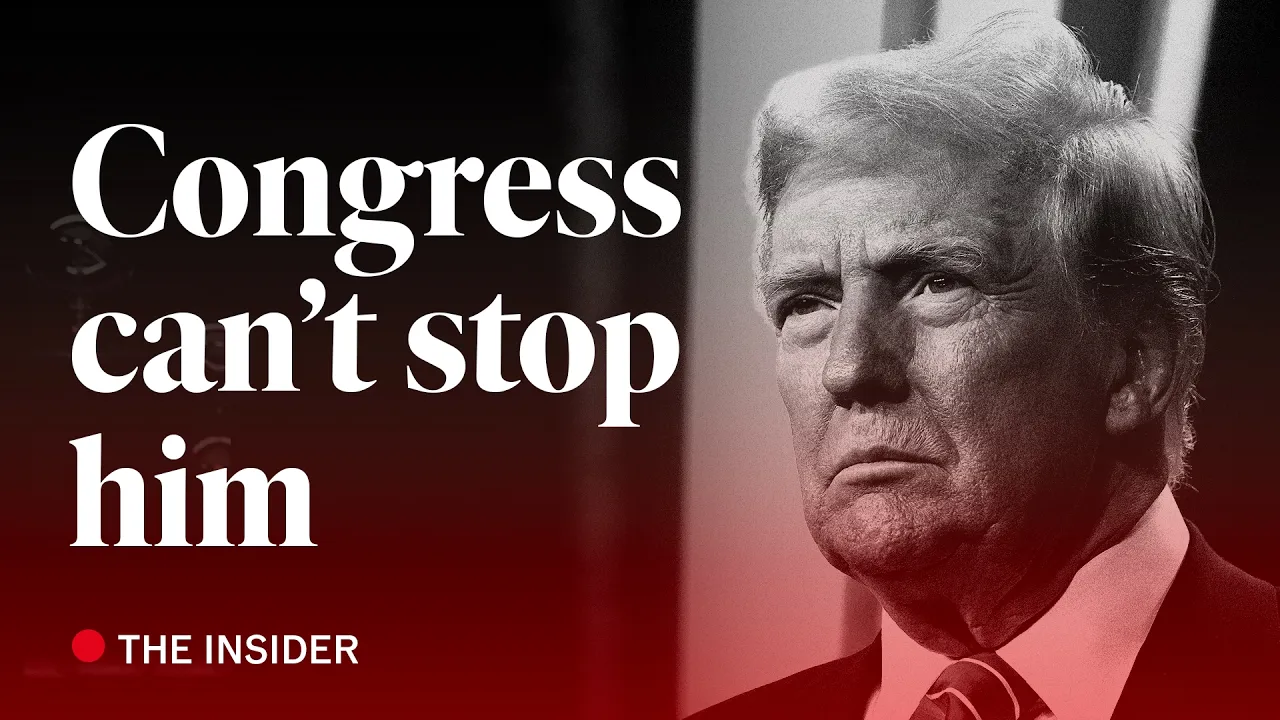
The Economist
AI-assisted summary of “Very high risk” Trump will escalate Iran war after midterms | The Economist — original source. Check the original for full context.
Source published:
Key ideas
- Washington observers warn of a very high risk that Donald Trump will launch renewed military strikes against Iran shortly after the midterm elections. (0:00)
- While a potential Democratic takeover of Congress cannot constitutionally halt executive war powers, crude oil approaching $120 a barrel and market sell-offs represent the chief constraints on Trump. (1:29)
- The ongoing US naval blockade is imposing severe readiness costs, with each month at sea creating roughly a year of accumulated wear and training deficits for the fleet. (3:31)
- Gulf states are deeply alarmed by the prospect of widening war, with disruptions having already collapsed Qatari liquefied natural gas exports to just 5% of pre-war volumes. (4:38)
Detailed notes
## Background Published on YouTube by The Economist on October 30, 2026, this episode of The Insider explores whether Donald Trump will re-escalate military action against Iran following the upcoming midterm elections. Featuring editor-in-chief Zanny Minton Beddoes alongside senior editors Edward Carr, Shashank Joshi, and David Rennie, the program examines whether an embattled White House will turn to foreign conflict and whether Congress, financial markets, or regional partners can avert further war.
## TL;DR The panel assesses a dangerous, mounting momentum toward renewed kinetic strikes against Iran after the midterms, driven in part by Benjamin Netanyahu's domestic political survival and unfinished business regarding Iran's underground enriched uranium. Although internal enthusiasm for a major war is surprisingly absent among top Trump administration aides, unilateral presidential war powers mean that a potential Democratic takeover of Congress cannot block executive military action. Instead, the only genuine constraints on Trump are volatile financial markets and oil prices approaching $120 a barrel, especially as China's strategic reserves can no longer cushion supply shocks. Strategists remain torn between a prolonged maritime blockade that severely exhausts US Navy fleet readiness and a swift strike campaign, while furious Gulf allies warn that Tehran mistakenly believes the midterms will tie the president's hands.
## Atmosphere & style The discussion carries a measured, analytical, and distinctly ominous tone characteristic of high-level geopolitical intelligence briefings. The correspondents converse with unhurried authority, balancing cool tactical realism with a palpable sense of alarm over miscalculations by both Tehran and Washington. It feels like an intimate glimpse into elite diplomatic soundings, where sobering realities—such as naval wear-and-tear and regional gas disruptions—are unpacked with pragmatic clarity against an impending sense of military escalation.
## Bulletin - [00:00](https://www.youtube.com/watch?v=cUevqOdZ-UA&t=0s) Washington observers warn of a very high risk that Donald Trump will launch renewed military strikes against Iran shortly after the midterm elections. - [01:29](https://www.youtube.com/watch?v=cUevqOdZ-UA&t=89s) While a potential Democratic takeover of Congress cannot constitutionally halt executive war powers, crude oil approaching $120 a barrel and market sell-offs represent the chief constraints on Trump. - [03:31](https://www.youtube.com/watch?v=cUevqOdZ-UA&t=211s) The ongoing US naval blockade is imposing severe readiness costs, with each month at sea creating roughly a year of accumulated wear and training deficits for the fleet. - [04:38](https://www.youtube.com/watch?v=cUevqOdZ-UA&t=278s) Gulf states are deeply alarmed by the prospect of widening war, with disruptions having already collapsed Qatari liquefied natural gas exports to just 5% of pre-war volumes.
## Key takeaways - [00:00](https://www.youtube.com/watch?v=cUevqOdZ-UA&t=0s) Momentum in Washington is rapidly building toward kinetic strikes against Iran following the midterm elections, driven by a tight circle of decision-makers. - [00:00](https://www.youtube.com/watch?v=cUevqOdZ-UA&t=0s) Benjamin Netanyahu has emerged politically weakened from Israeli elections, providing him strong domestic incentives to push Trump toward a coordinated offensive against Iran. - [00:00](https://www.youtube.com/watch?v=cUevqOdZ-UA&t=0s) Paradoxically, no senior figure within Trump's inner circle—including JD Vance, Stephen Miller, or Susie Wiles—appears ideologically enthusiastic about an expanded war. - [01:29](https://www.youtube.com/watch?v=cUevqOdZ-UA&t=89s) Congressional control by Democrats would offer little immediate resistance to presidential war powers, mirroring George W. Bush's 2007 troop surge despite an opposition Congress. - [01:29](https://www.youtube.com/watch?v=cUevqOdZ-UA&t=89s) Crude oil climbing toward $120 per barrel serves as the primary practical ceiling that could force the White House to hesitate on military action. - [01:29](https://www.youtube.com/watch?v=cUevqOdZ-UA&t=89s) China's strategic petroleum reserves have been largely exhausted, eliminating an important global cushion against future oil supply disruptions. - [01:29](https://www.youtube.com/watch?v=cUevqOdZ-UA&t=89s) A protracted aerial campaign offers questionable military utility given that earlier US strikes have already dismantled Iran's obvious soft targets. - [03:31](https://www.youtube.com/watch?v=cUevqOdZ-UA&t=211s) Maintaining a continuous maritime blockade is starving Tehran of revenue, but naval planners warn it inflicts unsustainable operational wear on US fleet readiness. - [04:38](https://www.youtube.com/watch?v=cUevqOdZ-UA&t=278s) Gulf monarchies face severe economic consequences from regional hostilities, highlighted by Qatari LNG export shipments falling to 5% of normal levels. - [04:38](https://www.youtube.com/watch?v=cUevqOdZ-UA&t=278s) Iranian officials mistakenly assume that a Republican defeat in the midterms will bind Trump's foreign policy, prompting Qatari mediators to warn Tehran that presidents retain unilateral war powers. - [06:10](https://www.youtube.com/watch?v=cUevqOdZ-UA&t=370s) Recent provocative Israeli flight patterns near Iran's border have heightened regional anxiety that Israel may intentionally spark an open confrontation. - [06:10](https://www.youtube.com/watch?v=cUevqOdZ-UA&t=370s) Israel considers the conflict fundamentally unfinished because Iran's deeply buried stockpiles of highly enriched uranium remain intact.
## Detailed walkthrough ### [00:00](https://www.youtube.com/watch?v=cUevqOdZ-UA&t=0s) The High Risk of Escalation After the Midterms
Reflecting on recent conversations in Washington, editor-in-chief Zanny Minton Beddoes notes that observers are warning to brace for renewed kinetic strikes against Iran shortly after the midterm elections. Shashank Joshi observes that while Washington decision-making is confined to an extremely tight circle—leaving most outsiders guessing—his soundings suggest a dangerous momentum building toward conflict. This pressure does not stem solely from Donald Trump. In Israel, Prime Minister Benjamin Netanyahu has emerged politically bruised from recent national elections, giving him an incentive to strike Iranian targets to settle unfinished business and, more cynically, delay domestic coalition talks that could see him ousted from power. Speculation is rife that Netanyahu is actively lobbying Trump for a coordinated, joint offensive.
Oddly, it remains difficult to identify any senior figure inside the Trump administration who genuinely champions an expanded military confrontation. High-level aides and advisers—from Vice President JD Vance and senior adviser Stephen Miller to Chief of Staff Susie Wiles—do not exhibit enthusiasm for a major war. Despite this lack of internal ideological drive, an aggressive resumption of kinetic activity feels increasingly inevitable. While other geopolitical challenges such as Russia’s war in Ukraine, tensions surrounding Cuba, and high-stakes summits with North Korea demand bandwidth, the panelists agree that Iran stands out as the single flashpoint most likely to consume post-election policy. As Shashank Joshi summarizes:
> “The strange thing is that there's no individual person in Trump's administration who you think is really enthusiastic about this.”
[01:29](https://www.youtube.com/watch?v=cUevqOdZ-UA&t=89s) Can Congress, Oil Prices, or Markets Constrain Trump?
Addressing the possibility of Democrats flipping one or both houses of Congress, deputy editor Edward Carr dismisses the notion that legislative control could handcuff the president’s commander-in-chief powers. He points to the precedent set in 2007, when George W. Bush authorized the troop surge in Iraq despite the war's deep domestic unpopularity and an opposition Congress. Instead of Capitol Hill, Carr highlights market fundamentals as the real restraining factor. Historically, the administration has recoiled whenever crude prices approach $120 a barrel. Global benchmark oil prices are already climbing toward that threshold amid election speculation, and a fresh round of strikes could push them higher. Unlike previous price shocks, China can no longer cushion the market, having largely drained its strategic oil reserves.
Beyond price spikes, Carr questions the underlying military logic of an extended bombing campaign when earlier strikes have already destroyed Iran's obvious, soft targets. While reports hint that JD Vance has initiated tentative backchannel overtures to Tehran to test whether pressure might bring them to the negotiating table, a protracted aerial campaign appears strategically aimless. A rapid market sell-off remains the principal deterrent for the president. Though Trump has already framed potential post-election Wall Street declines as the natural consequence of a Republican defeat, his acute sensitivity to financial markets makes him terrified of being remembered as another Herbert Hoover.
> “What I can't understand is how really a a big long bombing campaign with Iran accomplishes very much when you've already had one that's taken out all the obvious and easy targets.”
- **Congressional limitations:** History shows Congress cannot easily block unilateral executive foreign military actions, making a midterm turnover ineffective as an immediate brake on strikes. - **Critical price ceiling:** Oil nearing $120 per barrel represents a severe domestic political liability that could force the White House to hesitate. - **Depleted buffers:** China’s exhausted reserves reduce its capacity to absorb further crude supply shocks. - **Legacy anxieties:** Trump’s sensitivity to equity sell-offs makes him desperate to avoid historical comparisons to Herbert Hoover.
[03:31](https://www.youtube.com/watch?v=cUevqOdZ-UA&t=211s) The Strategic Dilemma: Slow Choke vs. Rapid Escalation
Within the administration, an intense debate divides strategic planners over whether to sustain the current containment strategy or launch swift, decisive strikes. One school of thought argues that the administration has Iran right where it wants it: oil continues to transit the Strait of Hormuz, Iran’s offshore floating crude reserves across Asia are drying up, and an acute domestic financial crisis is closing in on Tehran. Proponents of this view argue that the United States should simply maintain the blockade and starve the regime out.
However, military and naval planners push back forcefully against a drawn-out containment strategy. Sustaining a maritime blockade in the Middle East is inflicting severe readiness costs on the US Navy. Fleet experts point out that for every single month spent policing the waters, the Navy incurs roughly one year's worth of accumulated wear, tear, and training deficits. This operational friction creates a difficult tactical dilemma: should the US slowly asphyxiate Iran at the expense of fleet readiness, or trigger a sudden kinetic escalation, absorb the immediate price spike, and clear Iran off the board so Trump can focus on the remaining two years of his term?
```mermaid flowchart TD accTitle: US Strategic Debate on Iran Strategy accDescr: Diagram comparing the Slow Blockade approach versus the Kinetic Strike strategy and their respective consequences.
subgraph Strategy["US Strategic Approaches"] A["Option A: Slow Blockade"] B["Option B: Kinetic Strikes"] end
subgraph StrategicTradeoffs["Operational & Geopolitical Costs"] C["Drains Iranian revenue & Asian floating storage"] D["Severely degrades US Navy fleet readiness"] E["High short-term oil price shock & market panic"] F["Removes Iran file to clear two-year agenda"] end
A --> C A --> D B --> E B --> F ```
[04:38](https://www.youtube.com/watch?v=cUevqOdZ-UA&t=278s) Gulf Fury and Iranian Miscalculations
Reporting back from a tour of the Gulf, geopolitics editor David Rennie shares that senior regional officials are downright “furious” over the prospect of renewed warfare. While booming energy exports have proved financially beneficial for American producers, Gulf monarchies face severe economic disruption. In Qatar, liquefied natural gas (LNG) export volumes have plunged to a meager 5% of their pre-war baseline. Regional leaders see zero strategic logic in further military strikes and are alarmed by what they view as extreme political naivety in Tehran.
According to Qatari mediators who maintain constant communication with Tehran, Iranian officials mistakenly believe that a midterm defeat for Republicans would automatically bind Trump's hands through congressional oversight. Consequently, Iranian negotiators have refused to make diplomatic concessions, betting they can harm Trump at the polls. Qatari officials have been forced to give basic civics lessons to Iranian counterparts, bluntly warning them that US presidents hold unilateral authority over foreign policy and that withholding concessions will backfire. As David Rennie explains:
> “The Qataris have literally been giving like sort of American politics lessons to the Iranians and say that isn't how it works.”
- **Gulf gas disruptions:** Qatari LNG outbound shipments have collapsed to just 5% of their pre-war norms. - **Tehran's tactical error:** Iran believes a divided Congress will restrain the White House, prompting them to withhold concessions. - **Diplomatic warnings:** Qatari interlocutors have tried to correct Iran’s misunderstanding of executive war powers to avert further escalation.
[06:10](https://www.youtube.com/watch?v=cUevqOdZ-UA&t=370s) Israeli Ambitions and the Unresolved Nuclear File
The conversation turns to Israel’s domestic imperatives and the unresolved status of Iran’s nuclear infrastructure. Last week, suspicious flight patterns involving Israeli military jets flying directly up to the Iranian frontier before turning back stoked anxiety in the Gulf that Israel was deliberately trying to trigger an open confrontation. Observers fear that regional chaos suits Netanyahu, who could exploit an outbreak of hostilities to form a national unity government or push Washington to redeploy military assets from Gulf bases to Israel.
Beyond tactical domestic maneuvering, Israel faces a major strategic concern: despite heavy damage inflicted in earlier rounds of fighting, Iran’s underground, highly enriched uranium stockpiles remain intact. Because air attacks have left this core threat unresolved, Israel considers the mission unfinished. While American and Israeli timelines differ, the panel concludes that the probability of renewed kinetic action after the midterms is uncomfortably high, with no plausible endgame in sight. As David Rennie notes regarding regional perceptions of Israeli leadership:
> “Generally, the view is that it benefits Benjamin Netanyahu to have fighting resume.”
## Notable quotes > [06:10](https://www.youtube.com/watch?v=cUevqOdZ-UA&t=370s) Generally, the view is that it benefits Benjamin Netanyahu to have fighting resume. — David Rennie
## Mentioned Donald Trump, Zanny Minton Beddoes, Edward Carr, Shashank Joshi, David Rennie, Benjamin Netanyahu, JD Vance, Stephen Miller, Susie Wiles, George W. Bush, Herbert Hoover, The Economist, Congress, US Navy, Iran, Israel, Qatar, China, Russia, Ukraine, Cuba, North Korea, Strait of Hormuz
## Video description Will Donald Trump re-escalate the Iran war if he loses the midterms? American history is full of lame-duck presidents who, powerless at home, turn to foreign policy to exercise authority. Mr Trump could soon join the flock.
Congress is up for grabs at the midterms on November 3rd. The Economist’s election model predicts that Democrats are very likely to take control of the House, and could win the Senate, too. If Republicans take a thumping at the polls, how could an embattled Mr Trump react abroad?
Zanny Minton Beddoes, The Economist’s editor-in-chief, and Edward Carr, deputy editor, are joined by Shashank Joshi, our Washington bureau chief, and David Rennie, our geopolitics editor on this week’s episode of The Insider. They’ll discuss the likelihood of Mr Trump escalating the war in Iran after next week’s elections and whether Congress has any chance of stopping the president.
#Iran #Trump #usa #war #conflict #usa
00:00 - Will Trump restart the war if he loses the 2026 midterms? 01:29 - Congress, stocks, high oil prices: can anything stop Trump? 03:31 - Does Trump have Iran where he wants them? 04:38 - The view from countries in the Gulf 06:10 - How will Netanyahu react after Israel’s election?
Watch the full show: http://bit.ly/4kvBOFs Sign up to the Insider newsletter: https://econ.st/4nOyzIb
Subscribe to The Economist: https://www.economist.com/subscribe Download our app: https://www.economist.com/get-the-app
Follow The Economist on Instagram: https://www.instagram.com/theeconomist/ Follow The Economist on Facebook: https://www.facebook.com/TheEconomist Follow The Economist on X: https://x.com/TheEconomist
[Source](https://www.youtube.com/watch?v=cUevqOdZ-UA)