Tech Stock Bloodbath, Binance Hacked, The Mansion Section | Diet TBPN
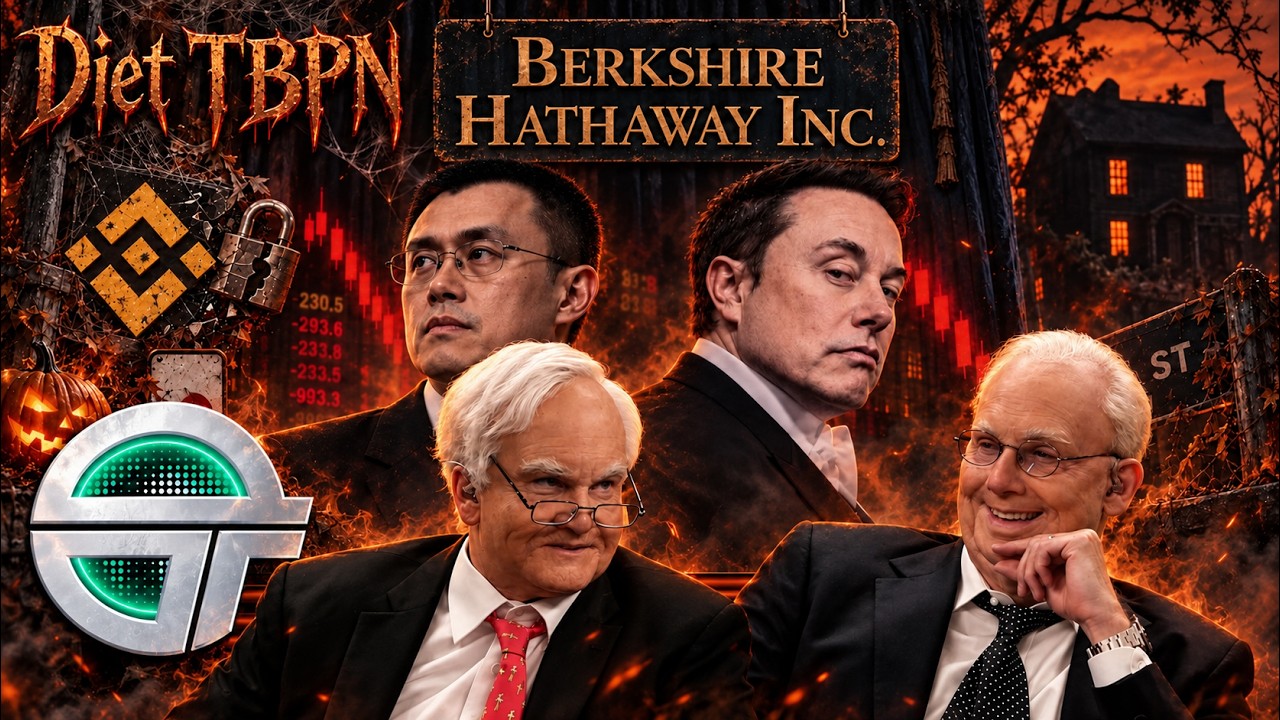
TBPN
AI-assisted summary of Tech Stock Bloodbath, Binance Hacked, The Mansion Section | Diet TBPN — original source. Check the original for full context.
Source published:
Key ideas
- Alphabet wiped out roughly $500 billion in market value during its worst single trading session on record as search disruption concerns reignited broad AI monetization anxieties. (5:00)
- North Korea-linked hacking group TraderTraitor breached Binance for $6.3 billion, leaving an estimated $3.3 billion under attacker control after stablecoin issuers froze roughly $3 billion. (6:30)
- U.S. Q3 GDP expanded at an annualized rate of 3.4%, beating analyst expectations of 3.1% ahead of midterm elections, yet the Nasdaq tumbled 3.34% amid severe big-tech earnings fallout. (3:27)
- Intel plunged 30% in a single day down to $63 per share, wiping out a year's worth of CHIPS Act and foundry optimism following a disastrous earnings call. (12:26)
- Reddit CEO Steve Huffman warned that Google AI search overviews ingest Reddit data without sending referral clicks, accelerating Reddit's push toward a login-only walled garden. (26:41)
Detailed notes
## Background Published on YouTube by TBPN on October 31, 2026, this episode of Diet TBPN presents a 30-minute condensed cut of the daily live tech talk show hosted by John Coogan and Jordi Hays. According to the page description, the episode tackles major headlines across the tech landscape, including a brutal market selloff, a massive hack on Binance, and the extravagant real estate of Minecraft creator Notch.
## TL;DR Dressed in elaborate prosthetics as Berkshire Hathaway executives for Halloween, the hosts unpack a severe tech market downturn that saw Alphabet lose $500 billion and Intel plunge 30% despite a stronger-than-expected 3.4% U.S. GDP report. They investigate a catastrophic $6.3 billion Binance exploit attributed to North Korean cyber operatives and a vendor breach at Polymarket. The conversation also explores Notch's $70 million Beverly Hills mansion, examines Warren Buffett's 48-year water-free Cherry Coke diet, and critiques the adoption limits of autonomous AI agents across corporate law, DoorDash, and Reddit's battle with Google AI overviews.
## Atmosphere & style The broadcast pairs sharp market commentary with deadpan visual absurdity, as the hosts deliver heavy financial and geopolitical news while buried under hours of Hollywood-grade prosthetic makeup. The dynamic is loose, fast-paced, and irreverent, swinging rapidly from grim statistics about market selloffs and state-sponsored crypto heists to playful debates about mansion candy rooms and soda consumption. Watching the episode feels like dropping into an energetic, chaotic morning trading desk that uses theatrical satire to cope with digital and economic turmoil.
## Bulletin - [05:00](https://www.youtube.com/watch?v=irzhgGKGKu0&t=300s) Alphabet wiped out roughly $500 billion in market value during its worst single trading session on record as search disruption concerns reignited broad AI monetization anxieties. - [06:30](https://www.youtube.com/watch?v=irzhgGKGKu0&t=390s) North Korea-linked hacking group TraderTraitor breached Binance for $6.3 billion, leaving an estimated $3.3 billion under attacker control after stablecoin issuers froze roughly $3 billion. - [03:27](https://www.youtube.com/watch?v=irzhgGKGKu0&t=207s) U.S. Q3 GDP expanded at an annualized rate of 3.4%, beating analyst expectations of 3.1% ahead of midterm elections, yet the Nasdaq tumbled 3.34% amid severe big-tech earnings fallout. - [12:26](https://www.youtube.com/watch?v=irzhgGKGKu0&t=746s) Intel plunged 30% in a single day down to $63 per share, wiping out a year's worth of CHIPS Act and foundry optimism following a disastrous earnings call. - [26:41](https://www.youtube.com/watch?v=irzhgGKGKu0&t=1601s) Reddit CEO Steve Huffman warned that Google AI search overviews ingest Reddit data without sending referral clicks, accelerating Reddit's push toward a login-only walled garden.
## Key takeaways - [00:00](https://www.youtube.com/watch?v=irzhgGKGKu0&t=0s) Berkshire Hathaway stood out as a rare gainer at a $1.17 trillion valuation while the broader tech market endured a severe multi-trillion-dollar selloff. - [03:27](https://www.youtube.com/watch?v=irzhgGKGKu0&t=207s) U.S. GDP growth clocked in at an annualized 3.4% driven by consumer spending and business investment, but market sentiment deteriorated sharply due to tech margin compression. - [05:00](https://www.youtube.com/watch?v=irzhgGKGKu0&t=300s) Alphabet's historic $500 billion single-day valuation drop highlighted growing investor anxiety over whether heavy AI infrastructure spending can offset search ad business disruption. - [05:00](https://www.youtube.com/watch?v=irzhgGKGKu0&t=300s) The bull thesis for Alphabet remains supported by its unified AI stack, including proprietary TPU silicon, frontier models, and rapidly expanding cloud computing revenues. - [06:30](https://www.youtube.com/watch?v=irzhgGKGKu0&t=390s) Binance suffered the largest exploit in crypto history at $6.3 billion, originating from the compromised laptop of a single engineer and bypassing its $1 billion SAFU emergency reserve. - [06:30](https://www.youtube.com/watch?v=irzhgGKGKu0&t=390s) The $3.3 billion in unfrozen assets secured by North Korean state hackers represents more than 10% of the entire country's $26.6 billion annual GDP. - [10:00](https://www.youtube.com/watch?v=irzhgGKGKu0&t=600s) Bitcoin displayed notable structural resilience compared to the 2014 Mt. Gox incident, falling only about 4% versus the 25% to 27% collapse seen a decade earlier. - [12:26](https://www.youtube.com/watch?v=irzhgGKGKu0&t=746s) Intel cratered 30% on the day and dropped over 50% from its $140 peak as executive communication on its third-party foundry strategy failed to reassure Wall Street. - [12:26](https://www.youtube.com/watch?v=irzhgGKGKu0&t=746s) Polymarket experienced a $2.7 million to $3 million theft across roughly 700 user wallets traced to a compromised UK-based vendor rather than an underlying smart contract bug. - [15:37](https://www.youtube.com/watch?v=irzhgGKGKu0&t=937s) Markus 'Notch' Persson's 2014 purchase of a $70 million Beverly Hills spec home exemplifies how sudden solo-founder liquidity reshape luxury real estate expectations. - [20:00](https://www.youtube.com/watch?v=irzhgGKGKu0&t=1200s) Warren Buffett maintains an extreme diet consisting of Cherry Coca-Cola providing roughly 25% of his daily caloric intake, with Bill Ackman recounting that Buffett claims not to have drank water in 48 years. - [23:45](https://www.youtube.com/watch?v=irzhgGKGKu0&t=1425s) Autonomous legal AI agents proved capable of drafting filings and securing monetary settlements within 10 days, demonstrating tangible micro-litigation utility. - [23:45](https://www.youtube.com/watch?v=irzhgGKGKu0&t=1425s) DoorDash reported negligible order volume driven by autonomous consumer AI agents, highlighting that routine, low-friction habits resist immediate agentic disruption. - [26:41](https://www.youtube.com/watch?v=irzhgGKGKu0&t=1601s) Reddit is adapting to Google AI's zero-click search environment by walling off access behind strict login requirements to preserve user and ad value. - [26:41](https://www.youtube.com/watch?v=irzhgGKGKu0&t=1601s) The Invesco QQQ trust experienced a rare Friday gap-down exceeding 2.5%, matching severe market stress events seen only during the dot-com bust, 2008 financial crisis, and early COVID-19 pandemic.
## Detailed walkthrough ### [00:00](https://www.youtube.com/watch?v=irzhgGKGKu0&t=0s) Halloween at the Desk: Prosthetics, Greg Abel, and Berkshire’s Green Day
The hosts open the morning broadcast in full, elaborate Hollywood-grade prosthetics to celebrate Halloween, transforming the set into Berkshire Hathaway leadership. While joking that they “phoned it in a little bit this year” compared to past efforts, they marvel at the quality of the practical effects. John and Jordi point out Tyler seated at the table, transformed into Warren Buffett’s hand-picked successor, Greg Abel, complete with gleaming, unnervingly white teeth that Tyler insists are all-natural. Tyler attempts a flat, deadpan Greg Abel impression for the crew, prompting the hosts to warn him that walking around the neighborhood dressed like that for trick-or-treating later will genuinely terrify people. Tangents fly immediately, including the calculation that there are exactly 55 days between Halloween and Christmas, which matches the age of last year's guest, Marc Andreessen.
Behind the humor, the visual transformation took serious dedication: the team arrived at the studio at 6:00 a.m., spending nearly four full hours in makeup chairs. Taking pride in using practical effects over digital trickery, they joke that artificial intelligence could never replicate it, though advancing tech might make audiences skeptical of real footage in the coming years. Turning to the markets, John notes a stark divergence: while the broader market is suffering an outright bloodbath, Berkshire Hathaway sits in the green at a $1.17 trillion valuation. Embodying the Oracle of Omaha, John reaches out to strike the studio gong, groaning in mock agony as if throwing his back out, noting that while the young whippersnappers in tech are bleeding, old-school value investing is having its moment.
- The team spent nearly four hours in makeup starting at 6:00 a.m. to get fitted with prosthetics. - Marc Andreessen is 55 years old, matching the 55-day countdown from Halloween to Christmas. - Berkshire Hathaway was the lone bright spot on the hosts' boards, trading higher at a $1.17 trillion market capitalization.
[03:27](https://www.youtube.com/watch?v=irzhgGKGKu0&t=207s) GDP Beats Expectations Amid a Tech Stock Bloodbath
The hosts transition to the latest macro figures, contrasting robust top-line economic data against an ugly market reality. The Commerce Department’s latest reading showed U.S. gross domestic product expanded at an annualized rate of 3.4%, soundly beating consensus analyst expectations of 3.1%. The growth was driven primarily by resilient consumer spending and robust business investment, marking the fastest economic expansion recorded in a year. The report arrives as the final major economic checkpoint ahead of the Tuesday midterm elections, setting up a debate over whether voters will cast their ballots based on strong GDP figures or their shrinking investment portfolios.
Jordi argues that despite glowing headline metrics, public sentiment is driven far more by day-to-day emotion: “Well, and of course, I think voters care more about vibes than anything else.” At the moment, those vibes are decidedly grim across Wall Street. The tech-heavy Nasdaq tumbled roughly 3.34% on the day, while the Dow Jones Industrial Average dropped 1.13%. The immediate catalyst stems from bruising earnings reports across mega-cap tech, led by sudden skepticism over whether artificial intelligence infrastructure investments can translate into immediate, bottom-line search and advertising profit.
- **U.S. Q3 GDP growth:** 3.4% annualized rate (versus 3.1% expected by analysts). - **Nasdaq performance:** Down 3.34%. - **Dow Jones Industrial Average:** Down 1.13%. - **Political timing:** The GDP report serves as the final comprehensive economic check before Tuesday's midterm elections.
[05:00](https://www.youtube.com/watch?v=irzhgGKGKu0&t=300s) Google’s $500B Wipeout: Search Struggles vs. the Full AI Stack
A massive drag on the broader market came courtesy of Alphabet, which suffered its worst single trading session on record, wiping out roughly $500 billion in market value. The hosts cite the front page of *The Wall Street Journal*, which warned that Google search struggles are reigniting AI anxiety among institutional investors. John reflects that while headlines warning of AI disruption have circulated for three years, the corporate inertia of cash-printing monopolies masked the threat until hard financial data forced the issue into earnings reports.
```mermaid flowchart TD accTitle: Alphabet AI Stack and Market Tensions accDescr: Diagram illustrating the conflict between Alphabet's legacy core search business and its integrated AI capabilities.
subgraph Headwinds["Market Anxieties ($500B Drop)"] A["Search Ad Business"] --> B["AI Transition Tradeoffs"] B --> C["Margin Compression"] end
subgraph Tailwinds["The Bull Case (One-Stop Shop)"] D["Frontier AI Models"] E["Fast-Growing Cloud Business"] F["In-House Custom Silicon (TPUs)"] end
Headwinds -.->|"Offsets"| Tailwinds ```
At the same time, the hosts observe the stark contrast presented within the very same newspaper. While the front page sounded the alarm on Alphabet’s search headwinds, the back of the Business & Finance section laid out a compelling bull case for why Alphabet remains positioned to win in an AI-driven pullback:
> “On the front page of the journal, you got Google search struggles, reignite AI anxiety, they're losing 500 billion, and, you know, their earnings analysis is here, but on the back of the business section, business and finance section, you have Alphabet can still win in an AI pullback, more of a bull case, saying it's the closest thing in tech to a one-stop AI shop with a frontier model, a fast-growing cloud computing business, major in-house chip effort and large core advertising businesses.”
The hosts note that Berkshire Hathaway had recently "backed up the truck" to buy Alphabet shares. Even if immediate search margins face tradeoffs, Alphabet remains unusually diversified across every layer of the modern computing stack—boasting proprietary silicon, high-margin cloud infrastructure, proprietary research labs, and an entrenched advertising engine.
[06:30](https://www.youtube.com/watch?v=irzhgGKGKu0&t=390s) The $6.3 Billion Binance Heist: North Korea, SAFU Reserves, and Single-Engineer Vulnerabilities
The conversation turns to what is being called the largest heist in cryptocurrency history: a staggering $6.3 billion cyberattack against Binance. According to reports in *The Wall Street Journal*, the attack blew completely past the exchange’s emergency safety net, the Secure Asset Fund for Users (SAFU), which held approximately $1 billion in assets under management. The hosts express astonishment at the sheer scale of the breach and the apparent lack of internal security friction, pointing out that the initial compromise occurred via the laptop of a single Binance engineer. Jordi emphasizes that moving that volume of capital should require complex multi-signature authorization and strict protocols, comparing it to traditional retail banking where wire transfers routinely demand multi-factor authentication, administrative hurdles, and phone confirmation.
In response to the exploit, stablecoin issuers Tether and Circle coordinated with blockchain security firms to freeze roughly $3 billion of the stolen tokens. However, that still left an estimated $3.3 billion under the absolute control of the attackers. Market observers also suspect the hackers leveraged decentralized protocols to take out liquid loans against the stolen collateral prior to the freezes taking effect, effectively extracting untraceable capital in real time.
The incident also provoked high-profile drama on social media. Binance’s founder entered an exchange on X with Elon Musk, who bluntly labeled the breach a total disaster. The Binance founder countered by claiming the exchange could weather the crisis and asserted he holds assets like private SpaceX equity that could be liquidated to cover depositors.
Cybersecurity researchers have traced the attack to North Korea’s state-sponsored TraderTraitor hacking syndicate. The macroeconomic implications of the heist for North Korea are staggering:
> “So if 3 billion does make it to North Korea, that's like 5% of, or almost 10% of their GDP. Their GDP in 2025 for all of North Korea was 26.6 billion. So that's pretty material to the country, which is pretty crazy to think about.”
Compounding the exchange’s trouble, the broader crypto selloff triggered by the hack instantly devalued Binance’s remaining SAFU emergency reserve by an estimated $100 million. John and Jordi question why an emergency recovery fund would be held in volatile crypto assets rather than fiat currency like U.S. dollars, noting that catastrophic hacks predictably crash token valuations precisely when emergency liquidity is needed most.
- **Total sum exploited:** $6.3 billion. - **Binance SAFU reserve:** ~$1 billion AUM prior to the attack (depreciated by $100M during the market crash). - **Frozen funds:** ~$3 billion frozen by stablecoin issuers (Tether, Circle) and partners. - **Funds under attacker control:** ~$3.3 billion. - **Attributed actor:** TraderTraitor (North Korean state-sponsored cyber group). - **Economic impact:** The $3.3 billion haul represents more than 10% of North Korea’s entire $26.6 billion GDP.
[10:00](https://www.youtube.com/watch?v=irzhgGKGKu0&t=600s) Crypto Resilience, CZ vs. Elon Musk, and North Korean Cyber Warfare
Comparing the recent Binance security incident to past catastrophes, the hosts note how remarkably resilient Bitcoin has remained. When Mt. Gox was hacked back in 2014, the price of Bitcoin collapsed roughly 25% to 27% in the two weeks following the breach; by contrast, Bitcoin dipped only around 4% after this latest attack. This muted reaction suggests that the median crypto investor today is far more insulated from centralized exchanges, leaning into self-custody and largely unfazed by turmoil at major trading hubs. Meanwhile, social media exploded with reactions. Solana developer Mert Mumtaz tweeted that he just wanted "one boring day," while Changpeng "CZ" Zhao publicly pleaded with Elon Musk to stop trolling with emojis, reminding Musk that Binance holds over a billion dollars worth of SpaceX stock and would appreciate some backing. A Binance representative chimed in to assure everyone that annual company revenues are more than sufficient to cover the exploit's damages without needing to liquidate their SpaceX stake.
The scale of the attack prompted Mert to declare that the public is living through a real-world cybersecurity movie—an unrelenting "revenge of the machines." However, the hosts emphasize that this was not some autonomous rogue AI swarm gone wild, but an orchestrated assault run by North Korean state-sponsored hackers. On-chain graphics tracking the movement of the stolen crypto show an intricate, incomprehensible spiderweb of transactions that only specialized analytics software could unravel. As one host put it:
> “Mert goes on to say, normies aren't aware yet, but we're actually living through the movie for cybersecurity without exaggeration.”
- **Historical context:** Mt. Gox’s 2014 collapse triggered an immediate ~25%–27% plunge in Bitcoin over two weeks; the latest Binance exploit shaved off just under 4%. - **CZ’s message to Elon Musk:** Asked Musk to stop posting troll emojis, noting Binance’s SpaceX equity is valued in excess of $1 billion. - **On-chain analysis:** Security firms like Chainalysis face massive workloads tracing the spiderweb-like laundering networks engineered by North Korean cyber operatives.
---
[12:26](https://www.youtube.com/watch?v=irzhgGKGKu0&t=746s) Intel's Historic Plunge and the Polymarket Security Breach
Turning to legacy tech, Intel suffered a devastating collapse that looked as catastrophic as a multibillion-dollar heist. The stock cratered 30% in a single day and 27% over a five-day stretch, wiping out a year’s worth of optimism driven by US government CHIPS Act subsidies and hopes for its third-party foundry services. After peaking near $140 per share, the stock plummeted to $63, coming dangerously close to round-tripping back to its March levels around $43. The brutal selloff followed an abysmal earnings call that left analysts stunned; tech commentator Nick Dorsey posted that Intel director Lip-Bu Tan sounded completely lost on the line, while CNBC's Jim Cramer confessed he was outright furious. The hosts observe that despite the deep disappointment, the broader tech industry genuinely wants Intel to succeed as an American semiconductor powerhouse, making its continuous stumbling all the painful to watch.
In the middle of the conversation, the hosts break into laughter over their elaborate prosthetic old-man makeup—having dressed up as Warren Buffett and Charlie Munger for Halloween—joking that this is exactly what they will look like when they are still doing the show in their 80s and 90s. The broadcast then shifts to a breaking security breach at Polymarket, where roughly $2.7 million to $3 million was drained from approximately 700 user wallets. Reporting from *Wired* clarified that Polymarket's core platform was not compromised directly; instead, hackers breached a UK-based third-party vendor. While international trading was briefly halted for several hours to conduct an investigation and notify UK law enforcement, the disruption caused severe headaches for traders holding fast-expiring contracts.
> “The craziest time ever to be operating any kind of financial institution.”
- **Intel selloff numbers:** Dropped 30% on the day, down 27% across five days, and sitting down over 50% from its $140 peak. - **Polymarket attack details:** An estimated $2.7 million to $3 million stolen across 700 affected user wallets via an exploited UK third-party vendor rather than the prediction protocol itself.
---
[15:37](https://www.youtube.com/watch?v=irzhgGKGKu0&t=937s) Notch's $70M Beverly Hills Compound and the Tech Market Selloff
The conversation pivots to lavish tech fortunes, focusing on *Minecraft* creator Markus Persson (better known as "Notch"). After selling his solo-developed indie phenomenon to Microsoft for $2.5 billion, Notch famously outbid Jay-Z and Beyoncé in 2014 to purchase an extravagant $70 million spec mansion in Beverly Hills, California. While $70 million has become almost commonplace for ultra-luxury Los Angeles real estate today—with speculative builds frequently listing between $200 million and half a billion dollars—at the time, it set a jaw-dropping record. Notch turned the mansion into an entertainment palace, throwing themed spectacles such as an elaborate Mars party where guests walked around in astronaut suits. One host recalls visiting the home in person and marvelling at its outlandish amenities, most notably a dedicated "candy room" equipped with giant silver dispensers packed with sweets, a 16-car showroom garage behind viewing glass, a massive wine cellar, and a private gym.
The hosts, still in character as elderly Omaha billionaires, debate where the mansion ranks on a tier list. While one rates it "S tier" for its prime hillside location, the other jokes that an authentic Warren Buffett disciple would consider it "F tier," tear the mega-mansion down, and replace it with a modest 1,500-square-foot house mirroring Buffett's humble, decades-old Omaha residence. Wrapping up the hour, a look at the live market ticker reveals a brutal day across big tech: Tesla slid 2%, Microsoft dropped 2%, Amazon slipped nearly 3%, and Nvidia took the brunt of the hit, falling almost 6%.
> “He outbid Jay-Z and Beyonce and paid a record at the time, $70 million for Beverly Hills, California spec home.”
- **Notch's 2014 purchase:** Set an LA real estate record at $70 million after outbidding Jay-Z and Beyoncé. - **Mansion features:** Giant wall-mounted candy tubes, a 16-car glass-walled garage, a home gym, a screening area, and panoramic city views. - **Market selloff snapshot:** - **Nvidia (NVDA):** Down nearly 6% - **Amazon (AMZN):** Down almost 3% - **Microsoft (MSFT):** Down ~2% - **Tesla (TSLA):** Down ~2%
[20:00](https://www.youtube.com/watch?v=irzhgGKGKu0&t=1200s) Warren Buffett’s 48-Year No-Water Story + The Cherry Coke Diet
The hosts check the market tickers, noticing SpaceX up 6% while Meta holds up relatively well, down only 2%. Pitching Buffett-style ad copy for their sponsor CrowdStrike, they joke about protecting businesses from "mumbo-jumbo." They quickly pivot to breaking news published by *Business Insider* regarding the 96-year-old Berkshire Hathaway legend Warren Buffett and his lifelong hydration habits.
According to an anecdote recounted by Pershing Square founder Bill Ackman on a podcast, Buffett once visited Ackman’s house for dinner. Prepared for the visit, Ackman stocked up on Buffett’s staple drink: Cherry Coca-Cola. When Buffett sat down, Ackman offered still or sparkling water before serving the soda, but Buffett declined both. As Ackman recalled the exchange:
> “Bill, I haven't had water in 48 years.”
The hosts reflect on Buffett's famous 2015 quip that he is roughly "one quarter Coca-Cola," with the soda accounting for 25% of his daily caloric intake. Meanwhile, the broadcast cuts to the show's producer Tyler, who is fully costumed in prosthetics and makeup as Berkshire Hathaway's successor Greg Abel. Abel retired as Berkshire's CEO after six decades, passing the reins to Abel. Tyler jokes that he feels ready to run Berkshire for another 40 years, despite feeling intense physical pressure beneath the heavy prosthetic layers—comparing the sensation to being trapped under deep ocean water in Hollywood. Tyler resolves to keep the disguise on through his dinner plans with friends later that evening, even planning a quick drive-by visit to the local gym valet.
---
[23:45](https://www.youtube.com/watch?v=irzhgGKGKu0&t=1425s) AI Agents File Lawsuits + DoorDash’s AI Adoption Reality Check
Turning back to online discourse, the hosts examine a viral post by Philip Jackson showcasing autonomous AI agents acting in real-world legal capacities. Jackson recounted hiring an AI agent called Muse to sue someone on his behalf: within 20 minutes of papers being served, the opposing company offered a settlement; within 10 days, payment and expense compensation arrived, leading Muse to file a motion to dismiss. The hosts joke about a dystopian micro-transaction future where friends' personal AI agents instantly sue each other and trade micropayments whenever someone takes a sip of another person's drink. They suggest DoorDash could monetize this workflow by certifying Dashers as official process servers via an API.
```mermaid flowchart LR accTitle: AI Agent Litigation Flow accDescr: Sequence showing how an AI agent executes legal action from filing to settlement. subgraph Action["Autonomous Filing"] A["Agent (Muse) Files Suit"] --> B["Papers Served on Target"] end subgraph Settlement["Resolution"] B --> C["Opponent Offers Settlement (20 Mins)"] C --> D["Damages & Expenses Paid (10 Days)"] D --> E["Agent Files Motion to Dismiss"] end ```
Despite the explosive capabilities of autonomous AI agents in legal disputes, corporate adoption tells a much more modest story. Reviewing DoorDash's earnings call commentary, the hosts highlight management's tempered assessment of AI ordering agents:
> “My take on all things technology is you never want to fight gravity. That's why DoorDash has an API, a CLI, right? They're leaning in like a Walmart, like a Shopify. But at the same time, you do not want to be delusional. If you look at where AI agents are today, we are seeing maybe several hundred orders in total from some of these third-party agents...”
The hosts note that having an AI push the "Get Burrito" button simply is not a compelling consumer value proposition yet, because ordering food via DoorDash is already frictionless and driven by habitual re-ordering behaviors.
---
[26:41](https://www.youtube.com/watch?v=irzhgGKGKu0&t=1601s) Reddit’s Google AI Traffic Problem + The Historic Market Selloff
The conversation moves to Reddit’s stock selloff and commentary from its recent earnings call regarding Google's integration of AI overviews. Reddit CEO Steve Huffman reported that although Google crawls Reddit content aggressively, Google's "AI mode" does not drive referral clicks back to the platform. Users who previously appended "site:reddit.com" to queries now absorb answers directly inside Google’s AI interface without visiting Reddit or viewing ads. Reddit stated it is not banking on search traffic returning and is moving toward strict "login-only" access walls, effectively walling Reddit off as an intranet and private social network.
The hosts then review historical market statistics shared by the social media account OddStats, contextualizing the brutal sell-off in the Invesco QQQ trust: - QQQ gapped down 2.5% or worse on a Friday (down nearly 3.5% that day, on top of an earlier 1% decline). - Prior instances of Friday drops this severe are exceedingly rare: occurred three times in 2001, once in June 2002, once in October 2008, twice at the onset of the COVID-19 pandemic, and on "Liberation Day."
Channeling classic value-investing tenets from Warren Buffett and Charlie Munger, the hosts emphasize having a "margin of safety" and remembering that "when your favorite holding period is forever," market drawdowns are less terrifying. To wrap the episode, the crew displays a Greg Abel "money spread" with Tyler still in costume, praises Buffett and Munger as two of the business world’s finest role models, and urges listeners to enjoy a cold Coke, grab some See’s Candies, ship freight via BNSF Railway, and sign up for GEICO before signing off for the weekend.
## Notable quotes > [03:27](https://www.youtube.com/watch?v=irzhgGKGKu0&t=207s) I think voters care more about vibes than anything else. — Jordi Hays
## Mentioned John Coogan, Jordi Hays, Tyler, Warren Buffett, Charlie Munger, Greg Abel, Marc Andreessen, Elon Musk, Changpeng Zhao, Lip-Bu Tan, Jim Cramer, Nick Dorsey, Markus Persson, Jay-Z, Beyoncé, Bill Ackman, Philip Jackson, Steve Huffman, Mert Mumtaz, Berkshire Hathaway, Alphabet, Google, Binance, Tether, Circle, SpaceX, Intel, Polymarket, Minecraft, Microsoft, Tesla, Amazon, Nvidia, Meta, DoorDash, Reddit, CrowdStrike, See's Candies, BNSF Railway, GEICO, TraderTraitor, Chainalysis, Muse, The Wall Street Journal, Business Insider, Wired, OddStats, Invesco QQQ
## Video description Sign up for TBPN’s daily newsletter at TBPN.com
Diet TBPN delivers the best of today’s TBPN episode in 30 minutes. TBPN is a live tech talk show hosted by John Coogan and Jordi Hays, streaming weekdays 11–2 PT on X and YouTube, with each episode posted to podcast platforms right after.
Described by The New York Times as “Silicon Valley’s newest obsession,” the show has recently featured Mark Zuckerberg, Sam Altman, Mark Cuban, and Satya Nadella.
TBPN is made possible by: Ramp - https://ramp.com Public - https://public.com Cisco - https://www.cisco.com Console - https://www.console.com CrowdStrike - https://www.crowdstrike.com Figma - https://www.figma.com MongoDB - https://www.mongodb.com NYSE - https://www.nyse.com Railway - https://railway.com Shopify - https://www.shopify.com/
Follow TBPN: https://TBPN.com https://x.com/tbpn https://open.spotify.com/show/2L6WMqY3GUPCGBD0dX6p00?si=674252d53acf4231 https://podcasts.apple.com/us/podcast/technology-brothers/id1772360235 https://www.youtube.com/@TBPNLive
Chapters: 00:00 Buffett & Munger’s Halloween Takeover + The Greg Abel Reveal 03:27 U.S. GDP Beats Expectations + The Tech Stock Bloodbath 06:30 Binance’s $6.3B Crypto Heist + North Korean Hackers 12:26 Intel Stock Plunges 30% + Polymarket Gets Hacked 15:37 Minecraft Creator Notch’s $70M Mansion + The Candy Room 20:03 Warren Buffett’s 48-Year No-Water Story + The Cherry Coke Diet 23:45 AI Agents File Lawsuits + DoorDash’s AI Adoption Reality Check 26:41 Reddit’s Google AI Traffic Problem + The Historic Market Selloff
[Source](https://www.youtube.com/watch?v=irzhgGKGKu0)