Nas, Rev Run Credit Kurtis Blow With Building Hip-Hop Blueprint
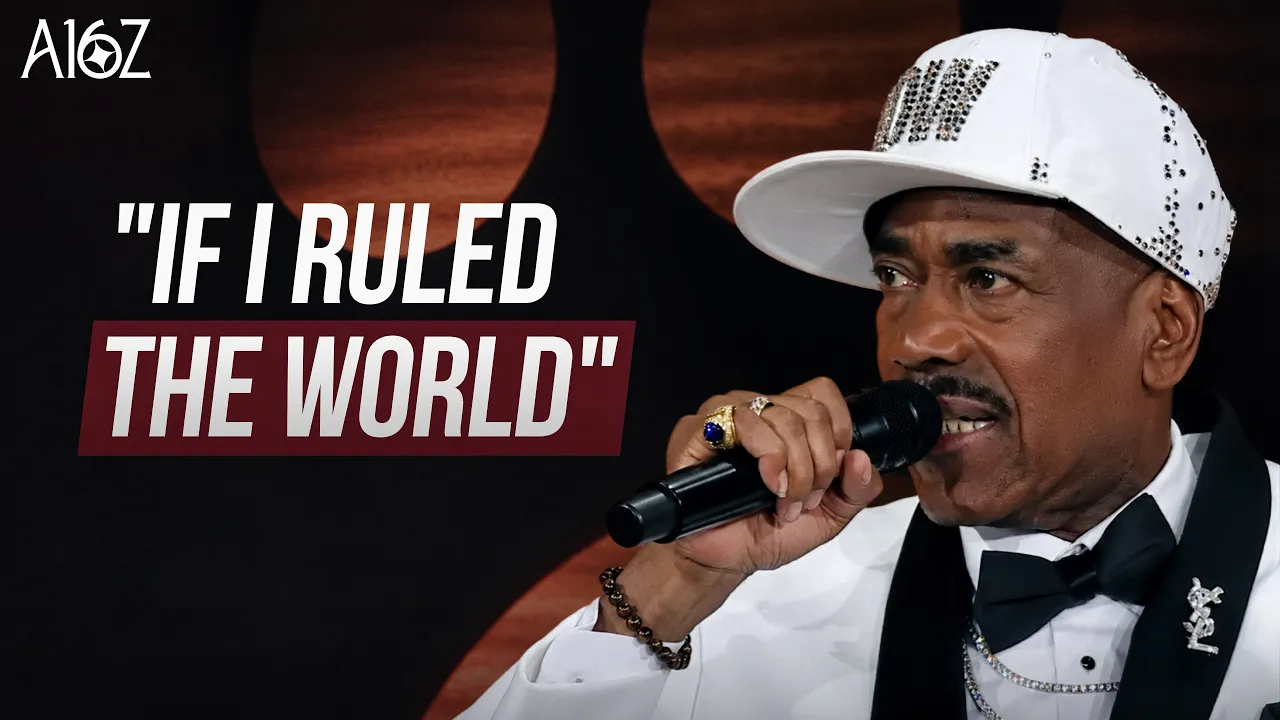
How Kurtis Blow Inspired Nas and Lauryn Hill’s Classic — a16z

a16z

Early hip-hop emerged as a resource-starved mutation of disco during New York's 1970s fiscal crisis, creating the performance and songwriting foundations that propelled Run-DMC and Nas to multi-platinum success.

AI-assisted summary of How Kurtis Blow Inspired Nas and Lauryn Hill’s Classic — original source. Check the original for full context.

Source published:

Key ideas

  • Hip-hop culture originated in 1970s New York as an organic urban mutation of dance and disco music, forged by youth navigating systemic urban decay, redlining, and municipal neglect. (1:52)
  • Kurtis Blow mentored a teenage Joey Simmons (Rev Run), paying him $35 per show as his DJ before Simmons went on to co-found Run-DMC. (13:10)
  • Nas's 1996 classic 'If I Ruled the World' featuring Lauryn Hill was directly inspired by Kurtis Blow's 1985 anthem, with Blow predicting its multi-platinum success upon first hearing the cassette. (20:32)
  • The Paid in Full Foundation, spotlighted by Roxanne Shanté and Nas, exists to provide overdue recognition and financial reverence to foundational hip-hop architects who established the culture without blueprints or initial capital. (23:00)

Detailed notes

## Background Published by a16z on YouTube on October 31, 2026, this Paid in Full fireside chat features Nas, Rev Run, and Roxanne Shanté celebrating the foundational hip-hop legacy of Kurtis Blow. The video description highlights Kurtis Blow's recollections of building hip-hop culture from nothing in 1970s Harlem, Rev Run's beginnings under his mentorship, Nas's reimagining of "If I Ruled the World" with Lauryn Hill, and Roxanne Shanté's tribute to the pioneers who paved the way.

## TL;DR In an intimate retrospective, Kurtis Blow recounts hip-hop's origins as "ghetto disco" amidst the fiscal crises, redlining, and urban decay of 1970s New York City. The conversation details his strategic partnership with Russell Simmons, his mentorship of a teenage Joey Simmons (Rev Run) through $35 DJ gigs, and their shared arena tours and film work in Krush Groove. Nas reflects on how Kurtis Blow's 1985 anthem "If I Ruled the World" provided uplifting representation that inspired his own 1996 hit with Lauryn Hill, which Kurtis Blow instantly predicted would go double platinum. The session concludes with Roxanne Shanté emphasizing the core mission of the Paid in Full Foundation: honoring and properly compensating the architects who built hip-hop out of pure passion.

## Atmosphere & style The discussion carries a reverent, familial warmth, feeling less like a formal panel and more like a generational family reunion steeped in deep mutual respect. There is an emotional arc of nostalgia and triumph, shifting from vivid, gritty memories of 1970s Harlem street survival to humorous backstage tour anecdotes involving Eddie Murphy and Prince. The tone balances affectionate storytelling between Kurtis Blow and Rev Run with Nas and Roxanne Shanté's solemn, heartfelt acknowledgment of the sacrifices made by hip-hop's earliest pioneers.

## Bulletin - [01:52](https://www.youtube.com/watch?v=_d83IiEU7_0&t=112s) Hip-hop culture originated in 1970s New York as an organic urban mutation of dance and disco music, forged by youth navigating systemic urban decay, redlining, and municipal neglect. - [13:10](https://www.youtube.com/watch?v=_d83IiEU7_0&t=790s) Kurtis Blow mentored a teenage Joey Simmons (Rev Run), paying him $35 per show as his DJ before Simmons went on to co-found Run-DMC. - [20:32](https://www.youtube.com/watch?v=_d83IiEU7_0&t=1232s) Nas's 1996 classic 'If I Ruled the World' featuring Lauryn Hill was directly inspired by Kurtis Blow's 1985 anthem, with Blow predicting its multi-platinum success upon first hearing the cassette. - [23:00](https://www.youtube.com/watch?v=_d83IiEU7_0&t=1380s) The Paid in Full Foundation, spotlighted by Roxanne Shanté and Nas, exists to provide overdue recognition and financial reverence to foundational hip-hop architects who established the culture without blueprints or initial capital.

## Key takeaways - [01:52](https://www.youtube.com/watch?v=_d83IiEU7_0&t=112s) Early hip-hop was built purely from personal resourcefulness and passion during a period of intense trauma and municipal abandonment in 1970s New York. - [01:52](https://www.youtube.com/watch?v=_d83IiEU7_0&t=112s) Before the term 'hip-hop' was coined, participants referred to the lifestyle through terms like 'rocking,' 'breaking,' 'burning,' and 'partying.' - [05:52](https://www.youtube.com/watch?v=_d83IiEU7_0&t=352s) Kurtis Blow characterizes hip-hop as an urban evolution of dance club culture, describing it as 'ghetto disco.' - [05:52](https://www.youtube.com/watch?v=_d83IiEU7_0&t=352s) Studying club DJs across New York—specifically DJ Hollywood's dynamic call-and-response MCing at Bronx's Club 371—fundamentally transformed Kurtis Blow's performance style. - [09:27](https://www.youtube.com/watch?v=_d83IiEU7_0&t=567s) To stand out among dozens of MCs, Kurtis Blow applied an 'outside-in' communications strategy by dominating outer markets like Queens before tackling central New York. - [09:27](https://www.youtube.com/watch?v=_d83IiEU7_0&t=567s) Kurtis Blow partnered with Russell Simmons to launch Night Fevers Disco under Rush Productions, initiating their long-term professional relationship. - [13:10](https://www.youtube.com/watch?v=_d83IiEU7_0&t=790s) Rev Run started as Kurtis Blow's teenage DJ and protégé, earning $35 per gig and hauling vinyl crates across the city via subway and bus. - [13:10](https://www.youtube.com/watch?v=_d83IiEU7_0&t=790s) The signature call-and-response name scratches Run used in Run-DMC were originally developed during live routines warming up the crowd for Kurtis Blow. - [15:26](https://www.youtube.com/watch?v=_d83IiEU7_0&t=926s) Kurtis Blow acted as a protective older brother and father figure to young Joey Simmons, shielding him from Russell Simmons' temper. - [15:26](https://www.youtube.com/watch?v=_d83IiEU7_0&t=926s) Run's famous stage shout 'This is my motherfucking house!' and aggressive microphone-smashing persona originated as a parody of an Eddie Murphy comedy routine. - [18:43](https://www.youtube.com/watch?v=_d83IiEU7_0&t=1123s) Kurtis Blow achieved historic crossover appeal, touring international arenas alongside major acts like Nile Rodgers, Marvin Gaye, and Bob Marley. - [20:32](https://www.youtube.com/watch?v=_d83IiEU7_0&t=1232s) Kurtis Blow's 1985 anthem 'If I Ruled the World' and his presence in 'Krush Groove' offered an empowering counter-narrative to bleak media depictions of the South Bronx. - [20:32](https://www.youtube.com/watch?v=_d83IiEU7_0&t=1232s) Upon first hearing Nas and Lauryn Hill's reimagined cassette of 'If I Ruled the World', Kurtis Blow immediately alerted Sony executives that the record would achieve double-platinum success. - [23:00](https://www.youtube.com/watch?v=_d83IiEU7_0&t=1380s) Roxanne Shanté emphasizes that the mission of Paid in Full transcends industry politics to honor the architects who built hip-hop out of pure love and paved the way for future generations.

## Detailed walkthrough ### [00:00](https://www.youtube.com/watch?v=_d83IiEU7_0&t=0s) Honoring Kurtis Blow: The Architects and the Legacy

Nas introduces the evening’s discussion as an exploration of the deeper roots of hip-hop, highlighting the foundational era before it evolved into an international business and cultural empire. Looking across at pioneers like Kurtis Blow, Nas reflects on his childhood perception of hip-hop legends, recalling how their voices emanating from stereo equipment made them seem larger than life: “The face speakers was what I was looking at. I was stare at the radio just like what's their lives like?” Kurtis Blow was a defining catalyst whose music directly altered Nas’s own creative trajectory, most notably when Nas reinterpreted Blow’s iconic track “If I Ruled the World” alongside Lauryn Hill.

This conversation, held under the auspices of the Paid in Full Foundation, pivots beyond the mere mechanics of making records to emphasize the enduring lineage of hip-hop culture. Kurtis reminisces on watching young Joey Simmons grow from an ambitious teenager into Rev Run of Run-DMC. Nas points out that this gathering serves as an intimate reflection on survival, brotherhood, and the creative spirit that sparked an unprecedented global movement from the streets of New York City.

[01:52](https://www.youtube.com/watch?v=_d83IiEU7_0&t=112s) Built From Nothing: Harlem, Burning Buildings, and Escapism

Nas asks Kurtis Blow (born Kurtis Walker) to revisit his early Harlem days before recording contracts existed, asking what his young ambitions were and if he ever foresaw the music reaching a global audience. Kurtis clarifies that in those nascent days, the culture lacked even the name “hip-hop”; instead, participants described their lifestyle through active expressions like “rocking,” “breaking,” “burning,” and “partying.”

```mermaid flowchart TD accTitle: The Genesis of Hip-Hop Culture accDescr: A process diagram showing how 1970s New York hardships led to community innovation and disco-fueled escapism. subgraph S1["Societal Upheaval"] A["Civil Rights Aftermath & Trauma"] --> B["Fiscal Crisis & Redlining"] end subgraph S2["Street Reality"] B --> C["Arson & Abandoned Buildings"] C --> D["Youth Tagging Graffiti with Markers"] end subgraph S3["Cultural Creation"] D --> E["Club Escapism & Speaker Bass"] E --> F["Birth of Early Hip-Hop Culture"] end ```

The era was marked by deep social trauma following the civil rights movement and the assassinations of Martin Luther King Jr., Malcolm X, JFK, and RFK. In the 1970s, as chronicled in the documentary *The Bronx Is Burning*, systemic municipal abandonment, redlining, and landlord arson to collect insurance payouts left blocks in ruins. Young people turned abandoned structures into hangouts, creating early forms of graffiti by tagging their names with magic markers.

Despite federal neglect and New York City facing bankruptcy—punctuated by the infamous presidential refusal of financial aid—the youth channeled systemic neglect into innovation. Kurtis stresses that the foundation was built purely from personal resourcefulness and passion: > “We built the music and the culture from the ground up with nothing.”

For Kurtis and his peers, music served as a transformative refuge. He describes visiting dance spaces simply to submerge his senses in the vibrations of massive sound systems, placing his head against the grilles to feel the bass resonate through his entire body.

[05:52](https://www.youtube.com/watch?v=_d83IiEU7_0&t=352s) Ghetto Disco, Phony IDs, and DJ Hollywood's Microphone Influence

When Nas asks if the music filling those early speakers was disco, Kurtis vigorously affirms his appreciation for the genre, defining hip-hop as an urban evolution born out of dance club culture: > “I called it a mutation of disco. Wow. Even more so, it's ghetto disco.”

The disco era arose directly out of the post-civil rights and flower-child eras, providing an outlet where hard-working residents spent their weekends wearing their best suits and silk dresses under flashing strobe lights. Harlem youth, often lacking the entrance fees for high-end Manhattan venues, found creative workarounds. In 1975, at age 16, Kurtis procured a fake ID on 42nd Street declaring him 21 years old.

Armed with his false credentials, Kurtis studied the techniques of leading selectors across New York’s nightclub circuit, regularly visiting prominent spaces: - Le Jardin (Levigotas) - Nemo's - Negril - Superstar Cafeteria - Hotel Diplomat - Ipanema - Paradise Garage

His DJ research culminated in the Bronx at Club 371 ("The House of Joy and Fun"), where Harlem native DJ Hollywood headlined to blocks-long queues. Watching Hollywood command the crowd on the microphone reshaped Kurtis's performance approach. Having already begun MCing in 1974 at a former Harlem police station turned youth venue called the WHAM (on 152nd Street and Amsterdam Avenue, across from the 151st Street battlegrounds park), Kurtis had developed his early microphone style by impersonating WWRL radio disc jockey Hank Span ("Super 16"). Hollywood’s live call-and-response dynamism showed him how to scale up that craft.

[09:27](https://www.youtube.com/watch?v=_d83IiEU7_0&t=567s) Russell Simmons, Queens, and the Boondocks Strategy

Kurtis Blow and Russell Simmons first crossed paths as City College of New York (CCNY) students around 1977. Recognising Simmons’s promotional abilities, Kurtis orchestrated a showcase to win him over. He invited Simmons to a crowded Harlem house party with 150 neighborhood friends and deployed DJ Hollywood-inspired call-and-response chants (“If you got on clean underwear, somebody say, 'Oh yeah!'”) before dropping Chic’s hit “Good Times.” The calculated showcase convinced Simmons, establishing their long-term professional partnership.

Kurtis applied concepts from his communications studies to design a deliberate career roadmap. To break through a crowded field of roughly 50 prominent MCs across New York City during 1978 and 1979, he implemented an outside-in strategy: > “I learned that if you want to compete, go out to the outskirts of the city into the what we call the boondocks and get yourself a track record, you know, pull out a number one in this market, a number one in this market, and then come back to the big city and say, 'Hey, man, give me a shot.'”

Kurtis persuaded Simmons to co-found Night Fevers Disco in Russell’s home territory of Queens under the banner of Rush Productions. Spending weekends in Queens brought Kurtis directly into contact with Russell’s younger brother, Joey Simmons (later Rev Run). Joey eagerly immersed himself in their world, putting up promotional flyers along Jamaica Avenue, running errands, and cooking breakfast just to stay close to the scene. Kurtis took the teenager under his protective wing, beginning a lifelong bond that persisted through personal accidents and family transitions.

[13:10](https://www.youtube.com/watch?v=_d83IiEU7_0&t=790s) DJing in the Attic and the $35 Gigs

Rev Run recalls his earliest days working alongside Kurtis Blow when he was only 14 or 15 years old. Before he ever rapped, Run was primarily Kurtis Blow’s DJ, though he describes himself back then as an evolving hybrid of DJ and MC. Because he could not yet drive, Run spent entire weekends hauling two heavy crates of vinyl across New York via buses and subways to stay at Kurtis’s house, eventually resorting to taking cabs. Run had taken over an attic bedroom upstairs from his brother Russell Simmons, where the whole neighborhood crew would congregate to practice and hang out.

Kurtis supported Run’s development directly, giving him $35 per show. To the teenage Run, that cash felt like “a billion dollars back then.” Rather than buying standard Technics 1200 turntables, Run used his earnings to purchase a set of Quanta turntables and practiced until his hands became lightning-fast. On stage, Kurtis and Run developed a seamless live dynamic: Kurtis would open the set alone behind the turntables to warm up the crowd, Run would slip out unannounced to take over the DJ booth, and Kurtis would grab the microphone to rhyme. After running through a few songs, Kurtis would step back to the decks, allowing Run to cut up records and introduce him to the crowd. It was during these live routines that Run conceived the classic chant calling out Kurtis Blow's name, which Run later adapted for Jam Master Jay to call out Run on stage once Run-DMC formed.

- Run developed the name-chant scratch routine for Kurtis Blow until he broke his wrist and handed the duty off to Davey DMX. - Run met his wife at an event where they performed at a roller-skating rink in Long Island.

---

[15:26](https://www.youtube.com/watch?v=_d83IiEU7_0&t=926s) Mentorship, *Krush Groove*, and "This Is My House"

Kurtis Blow reflects on taking the young Joey Simmons under his wing starting when Joey was just 13 years old. Kurtis acted as a fiercely protective older brother and father figure, often shielding Joey from Russell Simmons' temper. Rev Run acknowledges that he couldn't fully comprehend at the time why someone as legendary as Kurtis looked out for him, but notes: “I was his son.” Kurtis echoes that lifelong bond, declaring, “This guy right here, he was my heart.” Their partnership moved from local stages to major cross-country tours and the silver screen when they co-starred in the 1985 feature film *Krush Groove*. Nas reminisces about watching *Krush Groove* in theaters as a kid, being completely captivated by their larger-than-life presence.

```mermaid flowchart TD accTitle: Evolution of Rev Run Stage Persona accDescr: Diagram tracing the lineage of Run's classic stage aggression from Eddie Murphy's comedy to Run-DMC's arena routines.

subgraph Inspiration["Comedy Roots"] A["Eddie Murphy Routine:<br/>'This is my house...'"] end

subgraph Rehearsal["Group Incubation"] B["Rev Run adopts phrase offstage"] C["Jam Master Jay urges Run:<br/>'Say it on stage!'"] end

subgraph StagePerformance["Arena Routine"] D["Explosive opening yell:<br/>'This is my motherf***ing house!'"] E["Throwing mic stands &<br/>dropping microphones"] end

A --> B B --> C C --> D D --> E ```

Nas highlights an iconic moment in *Krush Groove* where Run gets into an argument with his brother Russell and storms out onto the stage. Run reveals the comedic origin of his explosive catchphrase, “This is my motherfucking house!”: he borrowed it directly from an Eddie Murphy stand-up routine parodying Murphy’s father ordering guests to leave his home. Run repeated the joke endlessly backstage until Jam Master Jay pushed him to scream it during their live performances. When Run later informed Murphy that he was the inspiration behind the famous concert line, Murphy couldn't believe it.

On tour with Kurtis Blow and the Fat Boys—both produced by Kurtis Blow—Run-DMC brought an aggressive rock-and-roll attitude to the stage, regularly tossing mic stands, yelling at audiences, and slamming microphones onto the deck at the end of their sets. The nightly destruction grew so severe that the tour sound engineer pleaded with Kurtis to rein them in. When asked to make them stop smashing equipment, Kurtis simply replied, “No, just make them pay for it,” and Run dutifully paid the bill for every broken mic.

---

[18:43](https://www.youtube.com/watch?v=_d83IiEU7_0&t=1123s) Arena Tours, Prince, and the Jheri Curl

Kurtis Blow broke barriers as hip-hop’s premier touring powerhouse, sharing arena bills across the globe with legendary soul, funk, and reggae acts like Nile Rodgers, Marvin Gaye, and Bob Marley. Run recalls an evening at Madison Square Garden where Davey DMX fell ill, forcing Run to rush in and set up the turntables to DJ Kurtis’s set opening for Bob Marley. Kurtis describes the era as a waking dream, recounting a backstage encounter with Prince in Memphis, Tennessee, right after the success of “If I Ruled the World” and *Krush Groove*.

Eager to meet Prince, Kurtis arranged a joint photo shoot through his record label at a local club. The venue was swarmed by an audience of 3,000 women inside and another 2,000 clamoring outside. Both artists showed up sporting impeccably styled Jheri curls. While the crowd mobbed them for autographs and photos, Kurtis humorously acknowledges the disparity in their star wattage: Prince took 2,000 pictures with the swooning crowd, while Kurtis managed around 20.

---

[20:32](https://www.youtube.com/watch?v=_d83IiEU7_0&t=1232s) "If I Ruled the World" and Lauryn Hill

Nas speaks directly to Kurtis Blow about the profound impact of his 1985 anthem “If I Ruled the World.” Nas emphasizes that during a bleak era when mainstream media depicted the South Bronx as nothing more than burning buildings, Kurtis was on records uplifting the borough and celebrating the beauty, style, and resilience of its people. Seeing a Black man command the silver screen in *Krush Groove* and proclaim “If I Ruled the World” inspired Nas to write his own 1996 update featuring Lauryn Hill. Nas asks Kurtis what it felt like to hear his foundational anthem reimagined a decade later.

Kurtis recalls the moment a cassette of the Nas and Lauryn Hill track arrived at his home. Having recently outfitted his modest Nissan with a high-fidelity, high-output sound system, Kurtis popped the tape in and sat parked for two hours, rewinding the track over and over in disbelief. Blown away by Nas’s verses and Lauryn Hill’s vocals, Kurtis immediately phoned Sony executives with an enthusiastic prediction: “You put that record out and put normal promotion behind it and I guarantee it will go double platinum.” His prediction proved accurate, cementing an enduring creative lineage between hip-hop's foundational era and its golden age.

---

[23:00](https://www.youtube.com/watch?v=_d83IiEU7_0&t=1380s) Roxanne Shanté on the Essence of Paid in Full

As the conversation draws to an emotional close, Nas turns to Roxanne Shanté to provide the final word on Kurtis Blow’s legacy. Shanté steps back from industry politics to define the core mission of the Paid in Full Foundation. She explains that honoring legends like Kurtis Blow transcends individual rivalries or commercial milestones; it is about paying genuine reverence to the architects who built the culture out of pure passion when there was no money or blueprint in place.

> “See, Paid in Full is not about anybody’s personal feelings about anything that takes place in the industry, but it is about the love of hip-hop and a person’s accomplishments and their love and their passion and their contribution to hip-hop.” — Roxanne Shanté

Shanté stresses that Kurtis was present on the front lines from the culture's birth, fighting through every obstacle so later generations could inherit a global platform. Because of that relentless groundwork, she notes, honoring Kurtis Blow is not just fitting—it is an absolute necessity.

[24:06](https://www.youtube.com/watch?v=_d83IiEU7_0&t=1446s) Paid in Full: The Final Tribute to Kurtis Blow

The fireside chat concludes on an emotional and celebratory note of gratitude and reverence for Kurtis Blow's legacy and foundational role in hip-hop history. As the conversation wraps up, the speaker expresses deep affection and honors him for blazing the trail for generations of artists that followed in his footsteps. Roxanne Shanté highlights that this recognition is not just symbolic, but a long-overdue acknowledgment of his lifetime contributions, telling him: “And congratulations because you deserve to be paid in full.” Kurtis Blow graciously accepts the honor, responding simply with heartfelt appreciation: “Thank you.”

- The closing remarks underscore the core mission of the Paid in Full Foundation: ensuring hip-hop pioneers receive proper recognition, respect, and compensation for building the culture from the ground up.

## Notable quotes > [01:52](https://www.youtube.com/watch?v=_d83IiEU7_0&t=112s) We built the music and the culture from the ground up with nothing. — Kurtis Blow

## Mentioned Kurtis Blow, Nas, Lauryn Hill, Rev Run, Roxanne Shanté, Russell Simmons, Run-DMC, Paid in Full Foundation, The Bronx Is Burning, DJ Hollywood, Hank Span, Chic, Jam Master Jay, Davey DMX, Eddie Murphy, The Fat Boys, Krush Groove, Prince, Bob Marley, Nile Rodgers, Marvin Gaye, City College of New York (CCNY), Sony, If I Ruled the World

## Video description Before hip-hop was a global industry, Kurtis Blow remembers building the culture in a New York where “we had nothing.” In this Paid in Full fireside chat, Nas, Rev Run, and Roxanne Shanté celebrate one of hip-hop’s foundational artists and trace the influence he had on the generations that followed.

Kurtis takes Nas back to 1970s Harlem, when hip-hop wasn’t even called hip-hop, and explains how disco, DJing, block parties, and a city in crisis helped give rise to a new culture. Rev Run shares how Kurtis took him under his wing as a teenager, from carrying records and DJing his shows to developing the stage presence that would eventually define Run-DMC. And Nas explains why Kurtis’ “If I Ruled the World” meant enough to him to revisit it with Lauryn Hill years later.

The conversation closes with Roxanne Shanté reflecting on what Paid in Full is ultimately about: recognizing the passion, accomplishments, and contributions of the pioneers who helped make hip-hop what it is today.

Timestamps: 0:00 Intro 0:47 Built From Nothing: Hip Hop's Origins 5:19 Hip Hop Was "Ghetto Disco" 7:02 A Fake ID and Every Disco in New York 9:27 Meeting Russell Simmons (and Little Joey) 12:12 Breakfast, Flyers, and "My Heart" 16:17 Krush Groove and "This Is My House" 18:43 Bob Marley, Prince, and the Jheri Curl 20:32 "If I Ruled the World" and Lauryn Hill 23:00 Paid in Full: The Final Tribute

Resources: Learn more about the Paid in Full Foundation: https://paidinfullfoundation.org Follow Kurtis Blow on X: https://x.com/KurtisBlow1 Follow Nas on X: https://x.com/Nas Follow Rev Run on X: https://x.com/RevRunWisdom Follow Roxanne Shanté on X: https://x.com/ImroxanneShante

Stay Updated: If you enjoyed this episode, be sure to like, subscribe, and share with your friends!

Find a16z on X: https://twitter.com/a16z

Find a16z on LinkedIn: https://www.linkedin.com/company/a16z

Listen to the a16z Show on Spotify: https://open.spotify.com/show/5bC65RDvs3oxnLyqqvkUYX

Listen to the a16z Show on Apple Podcasts: https://podcasts.apple.com/us/podcast/a16z-podcast/id842818711

Follow our host: https://x.com/eriktorenberg

Please note that the content here is for informational purposes only; should NOT be taken as legal, business, tax, or investment advice or be used to evaluate any investment or security; and is not directed at any investors or potential investors in any a16z fund. a16z and its affiliates may maintain investments in the companies discussed. For more details please see http://a16z.com/disclosures.

[Source](https://www.youtube.com/watch?v=_d83IiEU7_0)

中文简报

Nas与Rev Run致敬Kurtis Blow奠定嘻哈蓝图 早期嘻哈是在1970年代纽约财政危机期间,作为迪斯科在资源匮乏下的变体而诞生的,它创造的演出与创作根基推动了Run-DMC和Nas取得多白金唱片的成功。 在一次深入的回顾中,Kurtis Blow讲述了嘻哈音乐在1970年代纽约市经历财政危机、红线政策和城市衰退背景下,作为“贫民窟迪斯科”诞生的起源。对话详细叙述了他与Russell Simmons的战略合作,他通过每次35美元的DJ演出指导当时尚是青少年的Joey Simmons(Rev Run),以及他们共同参与的体育馆巡演和电影《Krush Groove》的拍摄工作。Nas回忆了Kurtis Blow在1985年的经典之作《If I Ruled the World》如何提供了振奋人心的代表力量,并激励了他自己在1996年与Lauryn Hill合作的同名热门单曲,Kurtis Blow当时便一眼断定该单曲将达到双白金销量。对话最后,Roxanne Shanté强调了Paid in Full基金会的核心使命:表彰并合理回报那些纯凭热爱开创嘻哈文化的奠基人们。 嘻哈文化起源于1970年代的纽约,是舞曲和迪斯科音乐在城市中自发形成的变体,由应对体制性城市衰退、红线政策和市政忽视的年轻人共同铸就。 (1:52) Kurtis Blow指导了当时仍是青少年的Joey Simmons(Rev Run),并在Simmons联合创立Run-DMC之前,以每场35美元的报酬聘请他担任DJ。 (13:10) Nas在1996年与Lauryn Hill合作的经典作品《If I Ruled the World》直接受到了Kurtis Blow 1985年同名经典曲目的启发,Blow在初次听到卡带时便预言了其多白金唱片的成功。 (20:32) 由Roxanne Shanté和Nas着重介绍的Paid in Full基金会,旨在向那些在毫无蓝图和初始资本的情况下开创该文化的嘻哈奠基人提供迟来的认可与经济上的尊崇。 (23:00)

Reading summary

In a panel hosted by the Paid in Full Foundation, hip-hop pioneer Kurtis Blow, alongside Nas, Rev Run, and Roxanne Shanté, traces the culture's evolution from the severe economic hardships of 1970s New York into a global movement. The participants illustrate how early hip-hop relied on deliberate grassroots career strategies, hands-on mentorship, and an enduring creative lineage that directly influenced golden-era classics. Urban Crisis and the Roots of Ghetto Disco (1:52) During the 1970s, New York City youth faced post-civil rights trauma, municipal bankruptcy, redlining, and landlord arson that left areas like Harlem and the South Bronx in ruins. Kurtis Blow explains that young people converted abandoned buildings into hangouts and tagged them with markers, turning to sound systems for sensory escapism. Before the term "hip-hop" existed, participants described their lifestyle through activities like "rocking" and "breaking." Blow characterizes early hip-hop as a "mutation of disco" or "ghetto disco," providing working-class residents an outlet to dress up and dance under club strobe lights. At age 16 in 1975, Blow acquired a fake ID on 42nd Street to study prominent selectors across Manhattan nightlife, visiting venues like Le Jardin and Paradise Garage. His research culminated in the Bronx at Club 371, where DJ Hollywood commanded crowds using call-and-response microphone work. This live dynamic reshaped Blow's performance approach, expanding beyond the radio DJ impersonations he had practiced at Harlem's WHAM youth center. Grassroots Strategy and Mentoring Joey Simmons (9:27) To navigate a crowded field of roughly 50 active MCs across New York City in 1978 and 1979, Blow teamed with City College classmate Russell Simmons under Rush Productions. Applying his communications studies, Blow devised an outside-in "boondocks strategy"—establishing a track record and winning followings in outer regions like Queens before leveraging that success to demand attention in the Manhattan market. This Queens base brought Blow into contact with Russell's younger brother, Joey Simmons (later Rev Run of Run-DMC). Blow took the 14-year-old under his wing, paying him $35 per show to haul vinyl crates on subways and DJ for him. Practicing in an attic on Quanta turntables, the pair created an alternating performance routine where Blow and Simmons swapped between DJing and MCing. During these sets, Simmons invented crowd name-chants that he later adapted for Jam Master Jay in Run-DMC. Tour Dynamics and Run-DMC's Stage Aggression (15:26) As hip-hop gained national reach, Blow brought emerging talent onto arena tours alongside major soul, funk, and reggae acts such as Nile Rodgers, Marvin Gaye, and Bob Marley. Rev Run even stepped in to DJ Blow’s Madison Square Garden set opening for Marley on short notice. Touring together with the Blow-produced Fat Boys, Run-DMC introduced a disruptive rock-and-roll attitude, smashing microphones and knocking over stands. When sound engineers demanded an end to the destruction, Blow told them not to stop the energy, insisting instead that the group simply pay for every broken microphone. Simmons and Blow also co-starred in the 1985 feature film Krush Groove. Simmons reveals that his iconic stage catchphrase, "This is my motherfucking house!", originated from an Eddie Murphy stand-up routine parodying Murphy's father. Simmons repeated the joke backstage until Jam Master Jay urged him to shout it during live arena performances. Creative Lineage and the Paid in Full Tribute (20:32) Blow’s 1985 anthem "If I Ruled the World" offered an uplifting counter-narrative celebrating neighborhood resilience during an era when mainstream media depicted the South Bronx solely through burning buildings. Nas credits Blow's cinematic and musical presence with inspiring his 1996 reimagining of the song featuring Lauryn Hill. When Blow first heard a cassette of Nas and Hill's recording in his car, he sat listening on repeat for two hours before calling Sony executives to accurately predict the record would achieve double-platinum sales. Closing the gathering, Roxanne Shanté articulated the core mission of the Paid in Full Foundation, noting that honoring pioneers transcends industry rivalries or commercial metrics. Shanté emphasized that Blow and his contemporaries constructed hip-hop culture from the ground up out of pure passion, without established templates or financial promises, making formal industry acknowledgment and compensation an overdue necessity. The discussion underscores how hip-hop's worldwide commercial success was built upon communal resourcefulness, street-level innovation, and protective intergenerational mentorship. While celebrating these creative origins, the participants emphasize that the industry must continue to formally recognize and compensate the foundational architects who created the culture without financial blueprints.

精炼阅读摘要

在 Paid in Full 基金会主办的座谈中,嘻哈先驱 Kurtis Blow 联合 Nas、Rev Run 及 Roxanne Shanté 回溯了嘻哈文化的奠基历程。对话阐明了这项文化如何从 1970 年代纽约的城市危机与废墟中萌芽,通过迪斯科演变、非传统市场突围以及紧密的师徒纽带,最终发展为深刻影响后世的全球性运动。 街区危机与“贫民窟迪斯科”的诞生 (1:52) 1970 年代的纽约市深受民权运动领袖遇刺后的创伤笼罩,伴随着市政财政濒临破产、红线歧视政策以及房东为骗取保费而纵火毁楼的乱象。Kurtis Blow 回忆,在那个尚未出现“Hip-Hop”专有名词的年代,年轻人群体在废弃建筑中聚集并用记号笔留下早期涂鸦,将跳舞和感受大功率音响系统的低音震颤视为逃离残酷现实的庇护所。他们依靠纯粹的个人热情与创造力,在社会遗弃的真空中建立起文化雏形。 Kurtis 将早期嘻哈定义为俱乐部舞蹈文化的演变,即“迪斯科的突变”或“贫民窟迪斯科”(ghetto disco)。为了规避曼哈顿高端俱乐部的高额门票,16 岁的 Kurtis 于 1975 年使用假身份证混入各大知名夜店研习 DJ 技巧。他在布朗克斯的 Club 371 见证了 DJ Hollywood 的麦克风呼应控制力,这促使他将早年在哈林区青少年活动中心 WHAM 模仿电台主持 Hank Span 的喊话方式,升级为极具现场感染力的大型 MC 表演风格。 郊区战略与早期商业推广网络 (9:27) 1977 年左右在纽约市立学院(CCNY)求学期间,Kurtis Blow 结识了具备商业推广天赋的 Russell Simmons。为了说服 Simmons 展开合作,Kurtis 精心筹划了一场 150 人的哈林区家庭派对,通过从 DJ Hollywood 处汲取的互动喊话成功调动全场气氛,随后播放 Chic 的热门歌曲《Good Times》,以此展现自身舞台价值并促成两人的长期合作。 面对 1978 至 1979 年间纽约约 50 名活跃 MC 的激烈竞争,Kurtis 运用传播学概念制定了“郊区战略”(boondocks strategy)。该策略主张避开竞争高度饱和的核心城区,先进入周边边缘市场积累冠军战绩与声誉,再携亮眼表现反攻大都市主流圈。Kurtis 据此说服 Simmons 在其故乡皇后区以 Rush Productions 名义联合创立 Night Fevers Disco,成功开辟出属于自己的演艺阵地。 扶持门徒与 Run-DMC 舞台风格孵化 (13:10) 在皇后区演出期间,Kurtis 将 Russell 尚处少年期的弟弟 Joey Simmons(即后来的 Rev Run)纳入麾下,充当起如父如兄的保护者角色。年仅十四五岁的 Run 早期主要担任 Kurtis 的演出 DJ,每周末通过公交和地铁搬运沉重的黑胶唱片箱跨区排练。Kurtis 为每场演出向 Run 支付 35 美元报酬,Run 则用积蓄购入 Quanta 唱机刻苦练习,并在舞台配合中摸索出极具标志性的点名搓盘环节,为日后 Run-DMC 的舞台互动奠定了基础。 这种密切的合作随后延伸至全美巡演以及 1985 年的电影《Krush Groove》。在巡演过程中,Run-DMC 逐渐形成了极具摇滚破坏力的表演风格:Run 将喜剧演员 Eddie Murphy 调侃父亲的脱口秀台词“这是我的房子”借用为开场咆哮,并在 Jam Master Jay 的鼓励下将其打造成标志性现场动作;即便舞台人员屡次因摔坏麦克风而向制作人 Kurtis 投诉,Kurtis 也选择让年轻后辈“照价赔偿”而非扼杀其激进表达,守护了年轻艺人的舞台张力。 经典重塑与先驱价值的代际确认 (20:32) 1985 年,Kurtis 发布经典单曲《If I Ruled the World》,不仅打破壁垒与 Prince、Bob Marley 等巨星同台巡演,更在主流媒体普遍将南布朗克斯渲染为废墟时,通过音乐肯定了黑人社区的尊严与风采。这一作品深刻启发了当时少年时期的 Nas。1996 年,Nas 携手 Lauryn Hill 对该曲进行了全新演绎;Kurtis 回忆称,自己在汽车音响中反复重温该翻唱长达两小时,并立即致电索尼高管断言该单曲必达双白金销量,这一预测随后得到市场印证。 座谈尾声由 Roxanne Shanté 阐释了 Paid in Full 基金会的核心使命。Shanté 指出,对 Kurtis Blow 等先驱的致敬超越了业内恩怨与商业考量,其核心在于对“在没有资金、没有先例的艰苦环境中凭借热爱奠定文化根基”的设计师们表达实质性尊重与认可,确保文化缔造者的历史贡献获得应有的铭记与回报。 本场对话展现了嘻哈文化如何在城市破败与制度性忽视的夹缝中依靠草根韧性崛起,并通过紧密的代际传承机制演化为全球现象。虽然讨论聚焦于先驱开拓的浪漫与师友温情,但对于早期艺术家在行业未成熟时期所面临的经济权益保障缺位,主要通过 Paid in Full 基金会的致敬倡议予以回应与补偿。

Detailed notes — zh

## Background 该视频由 a16z 频道于 2026 年 10 月 31 日发布在 YouTube 平台上。视频简介显示,这是一场 Paid in Full 基金会的炉边谈话,Nas、Rev Run 与 Roxanne Shanté 齐聚一堂,共同向嘻哈文化的奠基人 Kurtis Blow 致敬,追溯他在纽约一无所有的草创年代如何开辟文化并深刻影响后辈巨星的历史。 ## TL;DR 对谈中,Kurtis Blow 回顾了 1970 年代纽约财政破产与社区废墟的艰难岁月,详述了青年人如何将迪斯科与街头聚会演变为最初的嘻哈文化,并分享了他运用传播学策略开拓外围市场、进军主流的奋斗历程。Rev Run 动情回忆了少年时期担任 Kurtis 的 DJ、受其庇护提携,并将标志性舞台风格延伸至 Run-DMC 传奇的成长轨迹。Nas 则阐述了 Kurtis 名作《If I Ruled the World》对其精神世界的震撼,解释了日后与 Lauryn Hill 重新翻唱该经典的文化初衷;整场对话在 Roxanne Shanté 对先驱功绩的崇高赞颂中落下帷幕,展现了跨越数代嘻哈人的传承纽带。 ## Atmosphere & style 整场对话洋溢着深厚的温情、由衷的敬意与老友重逢般的欢愉,既有对艰辛草创岁月的严肃回望,也不乏系鞋带打趣、巡演摔麦克风等生动诙谐的昔日轶事。台上数位不同世代的传奇巨星围坐促膝长谈,后辈对开拓者的感激仰望与前辈对晚辈的护犊深情自然交织,情感弧线真挚而动人。观众能真切感受到一种充满历史厚重感的家庭式聚会氛围,听众仿佛置身于嘻哈名人堂的幕后,静心聆听一部自街头废墟破土而出的文化史诗。 ## Bulletin - [01:48](https://www.youtube.com/watch?v=_d83IiEU7_0&t=108s) 嘻哈文化诞生于1970年代纽约破产与南布朗克斯区大火的社会危机废墟中,黑人青年将其作为逃避现实与凝聚社区的“街区迪斯科”(Ghetto Disco)。 - [09:27](https://www.youtube.com/watch?v=_d83IiEU7_0&t=567s) Kurtis Blow 运用大学传播学理论推行“迂回包围”策略,避开曼哈顿内卷并转战外围边缘市场,促成与 Russell Simmons 的合作并庇护培养了少年时代的 Rev Run。 - [13:10](https://www.youtube.com/watch?v=_d83IiEU7_0&t=790s) Rev Run 从14岁为 Kurtis Blow 担任每场35美元的打碟DJ做起,逐步开创了将说唱歌手名字搓盘呼叫作为登场Intro的经典舞台表演模式。 - [20:32](https://www.youtube.com/watch?v=_d83IiEU7_0&t=1232s) Nas 幼年深受 Kurtis Blow 名曲《If I Ruled the World》的格局鼓舞,后与 Lauryn Hill 联手翻唱重制,经 Kurtis 试听并断言后成功斩获双白金销量纪录。 ## Key takeaways - [01:48](https://www.youtube.com/watch?v=_d83IiEU7_0&t=108s) 嘻哈诞生前夕纽约正经历财政破产危机与纵火骗保潮,处于被联邦遗弃困境中的黑人青年在废弃楼宇中自发孕育出全新文化。 - [05:19](https://www.youtube.com/watch?v=_d83IiEU7_0&t=319s) 早期街头风潮统称为 Rocking、Breaking、Burning 或 Partying,其本质是吸收曼哈顿迪斯科舞厅享乐主义并本土化演变而来的“Ghetto Disco”。 - [07:02](https://www.youtube.com/watch?v=_d83IiEU7_0&t=422s) 年仅16岁的 Kurtis Blow 凭借在第42街伪造的21岁假身份证,踩遍曼哈顿与布朗克斯各大迪斯科舞厅考察 DJ Hollywood 的控场与说唱技巧。 - [09:27](https://www.youtube.com/watch?v=_d83IiEU7_0&t=567s) Kurtis Blow 与 Russell Simmons 在纽约市立学院结识,凭借在哈莱姆派对上运用 Chic 的《Good Times》引爆全场,两人敲定长期商业合作。 - [10:40](https://www.youtube.com/watch?v=_d83IiEU7_0&t=640s) Kurtis 活学活用大学传播学理论,倡导避开市区50多名 MC 的正面对决,转战皇后区等外围边缘地带积累战绩后再杀回主流核心市场。 - [13:10](https://www.youtube.com/watch?v=_d83IiEU7_0&t=790s) Rev Run(Joey Simmons)13岁起便在 Kurtis 的羽翼庇护下成长,靠贴传单、做杂工以及打碟赚取每场35美元报酬逐步买下专业唱机设备。 - [14:10](https://www.youtube.com/watch?v=_d83IiEU7_0&t=850s) Rev Run 在为 Kurtis Blow 打碟时首创在唱片上反复搓出 Rapper 名字作为登场声效的绝活,后来这一编排由 Jam Master Jay 继承并成为 Run-DMC 标志。 - [15:26](https://www.youtube.com/watch?v=_d83IiEU7_0&t=926s) Run 在巡演舞台上的狂暴台风及口头禅“This is my motherf***ing house”源自 Eddie Murphy 喜剧段子,频繁砸碎麦克风的账单则由演出方直接扣除赔偿。 - [18:43](https://www.youtube.com/watch?v=_d83IiEU7_0&t=1123s) Kurtis Blow 成为首位打入主流大型巡演的说唱歌手,曾与 Bob Marley 在麦迪逊广场花园同台,并曾在孟菲斯与 Prince 共同参与引发5000人围堵的杂志拍摄。 - [20:32](https://www.youtube.com/watch?v=_d83IiEU7_0&t=1232s) Kurtis Blow 在电影中展现的文化尊严促使 Nas 携手 Lauryn Hill 翻唱《If I Ruled the World》,Kurtis 在车内连听两小时后即刻向索尼预言该单曲必达双白金。 - [23:00](https://www.youtube.com/watch?v=_d83IiEU7_0&t=1380s) Roxanne Shanté 代表 Paid in Full 基金会强调,该项目的终极目的是抛开行业名利与恩怨,全力致敬并给予在废墟中奠基文化的先驱们应得的荣耀与回报。 ## Detailed walkthrough ### [00:00](https://www.youtube.com/watch?v=_d83IiEU7_0&t=0s) 传奇序章:站在巨人的肩膀上 在嘻哈成长为全球数十亿美元规模的庞大产业之前,在其潜力尚未被大众理解的草创年代,Kurtis Blow 就已经在纽约街头开疆拓土。在 Paid in Full 基金会的这场对谈开场中,Nas、Rev Run(Joey Simmons)与 Roxanne Shanté 共同向这位嘻哈文化的奠基人致敬。Nas 动情地回顾了童年时代对这些前辈的仰望:那时家里只有收音机,小孩子盯着发声的扬声器面板,想象着收音机里那些发声之人的生活到底是什么模样。如今与自己的英雄们同台,他感叹这种历史联结的厚重。 席间充满温情与老友重逢的幽默打趣。Kurtis Blow 弯下腰系鞋带,Nas 夸赞他的鞋子利落帅气;Rev Run 谈起 Kurtis 早年如何在兄长 Russell Simmons 面前护着年仅 13 岁的自己,正如电影《Krush Groove》中所演绎的那样,Kurtis 视他为“心头肉”;Nas 则谈到 Kurtis 的传世名曲《If I Ruled the World》,坦言正是因为这首歌的影响力,才促成自己多年后与 Lauryn Hill 重新翻唱这首经典。Nas 定调指出,当晚的交流超越了具体的唱片与商业成绩,核心在于 Kurtis Blow 这位先驱、他所开创的文化浪潮,以及代代相传的文化遗产。 - **对谈嘉宾阵容**:Kurtis Blow、Nas、Rev Run(Run-DMC 成员)、Roxanne Shanté。 - **核心传承脉络**:从 Kurtis Blow 1985 年的原版《If I Ruled the World》,到 Nas 与 Lauryn Hill 1996 年合作的重制版《If I Ruled the World (Imagine That)》。 --- ### [01:48](https://www.youtube.com/watch?v=_d83IiEU7_0&t=108s) 浴火重生的纽约:从废墟与动荡中诞生的街头文化 Nas 将话题引回尚未有唱片合约与主流金曲的 1970 年代哈莱姆区(Harlem),询问当年的年轻人 Kurtis Walker(Kurtis Blow 的本名)脑海中究竟怀揣着怎样的梦想。Kurtis Blow 回忆道,在嘻哈最初萌芽的阶段,甚至连“嘻哈”(Hip-Hop)这个词都未曾出现,大家把这种街头风潮称为 Rocking、Breaking、Burning 或是单纯的 Partying。那时的黑人青年刚刚经历完 1960 年代民权运动的巨大阵痛与创伤,马丁·路德·金、麦尔坎·X、约翰·肯尼迪与罗伯特·肯尼迪相继遇刺身亡,社区组织者、激进分子与政府官员之间充斥着无休止的争吵与抗议。 更严峻的是当时的纽约陷入了严重的破产危机与物理毁灭。1970 年代的南布朗克斯区(South Bronx)正如纪录片《布朗克斯在燃烧》(The Bronx is Burning)所记录的那样,房东为了骗取高额火灾保险赔偿金而恶意纵火,导致街道两旁几乎每个街区都有被烧成废墟的焦黑建筑;时任美国总统福特更明确拒绝向纽约市提供联邦救助以帮助城市清理重建。在极度破败与被遗弃的环境中,年轻人躲在废弃楼宇里聚会,墙上开始出现最初的粗糙涂鸦(例如有人用记号笔写着“我叫约翰,我曾在这里,现在我不在了”)。在 Kurtis 看来,嘻哈正是从这种一无所有的绝境中破土而出。正如 Kurtis Blow 引用当年一位社区组织者在书中所写的那句话所说:“街道这边的房屋正在烈火中坍塌,但另一边的孩子们却在竭尽全力拼凑出全新的东西。” ```mermaid flowchart TD accTitle: 嘻哈文化的诞生背景 accDescr: 展示1970年代纽约社会危机与废墟环境下街头青年孕育嘻哈文化的脉络 subgraph Crisis["1970年代纽约社会危机"] A["民权运动创伤与领袖遇刺"] --> C["城市破产与联邦拒绝援助"] B["房东纵火骗保与建筑废墟化"] --> C end subgraph Culture["青年街头自发文化"] C --> D["废弃建筑聚会与早期涂鸦"] D --> E["草创期形态: Rocking / Breaking / Burning"] E --> F["以纯粹热爱与避难精神创造 Hip-Hop"] end ``` - **时代背景**:1960 年代末至 1970 年代初民权领袖遇刺余波、纽约财政破产危机、联邦政府拒绝援助(“Ford to City: Drop Dead” 时代)。 - **空间环境**:哈莱姆区与布朗克斯区的废弃建筑、恶性纵火潮(Arson wave)。 - **早期命名**:在“Hip-Hop”概念定型前,街头统称为 Rocking、Breaking、Burning、Partying。 --- ### [05:19](https://www.youtube.com/watch?v=_d83IiEU7_0&t=319s) 从俱乐部逃避现实:街头迪斯科(Ghetto Disco)的蜕变 对于生活在泥潭中的青年而言,音乐最核心的功能是逃避现实(Escapism)。Kurtis Blow 回忆自己当年去俱乐部时,最沉迷的体验就是把整个脑袋直接贴在巨大的音响扬声器前,任由滚滚低音从头部一路震颤轰鸣到脚趾尖,闭上双眼彻底沉浸并放飞自我。Nas 随即追问,当时从音箱里传出的是否正是盛极一时的迪斯科音乐(Disco)。 Kurtis 坦然承认自己是迪斯科时代的铁杆拥护者。他解释说,随着民权运动争取到投票权,伴随嬉皮士浪潮与“爱你的邻居”文化席卷社会,跳舞成为了普通人最重要的消遣方式。劳工大众辛苦工作整整一周,到了周末便穿上考究的西装领带或丝绸长裙,涌入曼哈顿下城的迪斯科舞厅,在旋转的迪斯科球与频闪灯光下载歌载舞。这种享乐风气经过哈莱姆等黑人贫困社区的浸染与重新诠释,最终催生了嘻哈。Kurtis Blow 一针见血地指出:“我把它称为迪斯科的变异,更确切地说,它就是街区迪斯科(Ghetto Disco)。” - **感官体验**:将头埋入俱乐部巨大音箱(Bass rumble),以身体感受低频振动作为逃避现实的出口。 - **文化演进本质**:从主流中产曼哈顿的华丽迪斯科(正装、频闪灯、反光球),变异、本土化为街头黑人青年自己的“Ghetto Disco”。 --- ### [07:02](https://www.youtube.com/watch?v=_d83IiEU7_0&t=422s) 伪造身份证跑遍全城:师承 DJ Hollywood 与 WAM 俱乐部的麦克风启蒙 贫困挡不住对音乐的渴求。由于身处哈莱姆贫困街区,根本无力承担曼哈顿高端俱乐部的昂贵门票,16 岁的 Kurtis Blow 于 1975 年在第 42 街搞到了一张伪造的假身份证,将自己的年龄篡改为 21 岁。拿着这张通行证,立志成为一名 DJ 的他开启了全城俱乐部的实地考察之旅,几乎踩遍了纽约当时所有的知名迪斯科场所:Leviticus、Nemo's、Nell Gwyn's、Superstar Cafeteria、Hotel Diplomat、Ipanema 以及著名的 Paradise Garage。 在考察过程中,Kurtis 在布朗克斯区的 Club 371(被称为“欢声笑语之屋” House of Joy and Fun)见识到了 DJ Hollywood 的现场。DJ Hollywood 虽出身哈莱姆,却在布朗克斯俱乐部创下万人空巷、绕街排队的盛况。他在麦克风上展现出的节奏韵律和控场技巧,让早在 1974 年便开始在哈莱姆 WAM 俱乐部担任 MC 的 Kurtis 大受震撼。当时 Kurtis 在阿姆斯特丹大道与 152 街交界处(一处旧警察局改建的俱乐部,正对着著名的街头说唱对决场地 Battlegrounds 公园)掌麦,主要模仿当时 WWRL 广播电台“Super 16”节目的传奇 DJ Hank Spann 的播音声线。见到 DJ Hollywood 的创新之后,他迅速吸收了这种将口头说唱与舞池互动深度融合的台风。 - **伪造证件历程**:1975 年(16 岁)在曼哈顿 42 街购买虚假 ID,将年龄写为 21 岁以获取进场资格。 - **考察名所清单**:Leviticus、Nemo's、Nell Gwyn's、Superstar Cafeteria、Hotel Diplomat、Ipanema、Paradise Garage、Club 371。 - **早期 MC 实践(1974 年)**:在哈莱姆 152 街与阿姆斯特丹大道的 The WAM(旧警局改建场地),隔街正对 Battlegrounds 公园,声线模仿广播名宿 Hank Spann。 --- ### [09:27](https://www.youtube.com/watch?v=_d83IiEU7_0&t=567s) 结识 Russell Simmons 与“迂回包围”的传播策略 Nas 提问 Kurtis Blow 当初究竟是如何被发掘、并最终成为历史上第一位签约主流大型唱片公司的说唱歌手。Kurtis 回顾道,关键转折点始于他在大学时期结识后来的 Def Jam 联合创始人 Russell Simmons。两人于 1977 年在纽约市立学院(CCNY)相识(Kurtis 入学较早,相遇时仅 17 岁)。为了证明自己的实力,Kurtis 精心设局,说服 Russell 到哈莱姆自己的街区看一场家庭派对 DJ 演出。现场挤满了大约 150 名街坊拥趸,当 Kurtis 播放 Nile Rodgers 领衔的 Chic 乐队名曲《Good Times》时,现场气氛彻底引爆;他熟练地抛出 DJ Hollywood 风格的互动口号:“把双手举到空中挥动,就像你完全不在乎一样;如果你今天穿了干净内裤,就大声喊‘Oh yeah’!”全场雷动的响应彻底征服了 Russell Simmons,两人随即结为挚友与事业搭档。 在大学攻读传播学(Communications)专业的 Kurtis 将商业与传播理论活学活用。他敏锐地意识到,在 1978 至 1979 年间的纽约核心圈,至少活跃着 50 多位极具竞争力的优秀 MC;如果直接在市中心硬拼,极难脱颖而出。根据传播学原理,要想在大都市成名,最有效的策略是走“迂回路线”:先深入远离市中心的外围边远区域(the boondocks)建立战绩,在各个细分小市场逐个拿下第一名,再带着亮眼的成绩单杀回核心市场证明自身价值。基于此逻辑,Kurtis 建议 Russell:“去你的老巢皇冠区开一家俱乐部吧!”两人合伙在皇后区创办了 Night Fevers 迪斯科,这也成为 Russell 的弟弟、当时年幼的 Rev Run(Joey Simmons)进入嘻哈世界的起点。年少的 Joey 当时为了融入这个圈子,心甘情愿为他们做早餐、跑腿买袜子、在牙买加大道(Jamaica Avenue)沿街张贴 Rush Productions 的演出传单。Kurtis 不仅悉心照料他,更全力将他护在羽翼之下,促成了日后 Run-DMC 传奇的萌芽。正如 Rev Run 回忆自己当年拼命想要获得认可的心态时所说:“我当时只是个想要融入他们的小毛孩,所以只要能留下来,让我做什么我都愿意。” - **关键引路人**:Russell Simmons(1977 年在 CCNY 结识,后创立 Rush Productions 与 Def Jam)。 - **派对试金石**:哈莱姆区 150 人现场,播放 Chic 的《Good Times》,运用经典喊话口令带动全场互动。 - **外围市场突围策略(传播学理论)**:避开曼哈顿核心区 50 多位 MC 的饱和内卷,转战外围边缘市场(Queens 等 Boondocks),打造标杆战绩后再反哺主流视野。 - **Night Fevers 俱乐部与 Rev Run 的启蒙**:在皇后区落地俱乐部项目,年仅十来岁的 Joey Simmons 从贴传单(Jamaica Avenue)、做早餐、做场工做起,受到 Kurtis Blow 的全程庇护与提携。 ### [13:10](https://www.youtube.com/watch?v=_d83IiEU7_0&t=790s) 从扛黑胶的少年 DJ 到舞台开场设计 Rev Run(当时大家称他为 Little Joey)回忆自己大约 14、15 岁时就跟着 Kurtis Blow 到处演出。因为年纪太小,很多时候根本没法正式巡演,平时只能频繁借住在 Kurtis 家里。周末时,他得一个人扛着整整两箱沉重的黑胶唱片,倒火车、挤公交赶往演出地点,后来才开始学着打出租车。在成为传奇说唱歌手之前,Run 本身就是一个技艺精湛的 DJ,甚至兼具 DJ 与 Rapper 的双重角色。 Run 占据了哥哥在楼上的阁楼,和整个伙伴团体整天泡在里面练习。虽然 Run 的父亲给他买过设备,但真正让他建立起专业 DJ 台的,是 Kurtis Blow 发给他的演出报酬。Kurtis 每场演出付给他 35 美元,这笔钱在当时对一个少年来说简直是天文数字。Run 攒下这些钱买了一套 Quantay 唱机(尽管当时还买不起顶级的 Technics),每天疯狂练习搓盘,手速快到几乎“只能抓到空气中的残影”。 两人的现场配合极具开创性:演出开场时,Run 会率先独自登台打碟热场;随后 Kurtis Blow 低调登台接替打盘,Run 则抄起麦克风直接开始说唱。在一场长岛(Long Island)轮滑场的演出中,Run 甚至因此结识了自己未来的妻子。等 Run 唱完几首后,他又会换回 DJ 台,为 Kurtis 切出震撼的登场 Intro。当时正是 Run 灵机一动,在唱片上反复搓出 Kurtis Blow 的名字作为人声呼唤(Call-out),引导台下齐声高呼“Kurtis Blow!Kurtis Blow!”。后来 Run 摔断了手腕,这一职责交给了 Davy DMX,并在播放《Christmas Rappin'》时继续沿用;而当 Joey 蜕变为独立说唱歌手 Run 时,他又把这一手绝活传授给了 Jam Master Jay,让 Jay 在台上同样以搓盘呼喊“Run”作为自己的专属登场仪式。 - Run 14-15 岁时为 Kurtis Blow 担任 DJ,每场演出收入 35 美元,用这笔钱购买了 Quantay 唱机。 - 开创了将 Rapper 名字刻入黑胶搓盘声作为舞台登场 Intro 的先河,这一模式后来成为 Run-DMC 的标志性编排。 ### [15:26](https://www.youtube.com/watch?v=_d83IiEU7_0&t=926s) 宛如父子的保护与《Krush Groove》的舞台狂暴 当 Nas 询问 Kurtis 看到当年的小 Joey 一步步成长为 Run-DMC 的超级巨星内心有何感想时,Kurtis 深情地表示,自己从 Joey 13 岁起就把他带在身边,甚至时刻防备着 Joey 的亲哥哥 Russell Simmons 对他苛责动粗:“This guy right here, he was my heart.”。在 1985 年上映的嘻哈经典电影《Krush Groove》中,两人亲如父子的师徒关系与共同巡演的经历被真实地搬上了大银幕。Nas 坦言这部电影对自己影响极深,当年在电影院看到银幕上的这一群黑人先锋时直接为之疯狂;前一晚他与 DOC 通话时,对方也对片中兄弟争吵后毅然登台的名场面记忆犹新。 谈及自己在舞台上标志性的狂暴台风与名言“This is my motherf***ing house”,Run 透露这其实源自长岛邻居、喜剧巨星 Eddie Murphy 的单口相声梗——Eddie 曾模仿自己的父亲威严地吼道:“这是我的房子!如果你不喜欢,大可以滚出去!”Run 平时在台下总念叨这句话,Jam Master Jay 便建议他直接搬上大银幕和巡演舞台。当 Run 后来告诉 Eddie Murphy 自己这句名言的来源时,Eddie 一开始还震惊地直呼不敢相信。在随 Kurtis Blow 和 The Fat Boys 一起巡演的岁月中,Run 展现出了狂野的叛逆期特质:登台大喊“这是我的房子”、疯踹麦克风支架、演出结束时狠狠地当场摔砸麦克风(Mic Drop)。调音师每天都被砸坏的麦克风逼得抓狂,私下向 Kurtis 哀求:“Kurtis,求求你去跟他们说说,别再摔麦克风了,每天都在报废设备!”而 Kurtis 只是淡定地回应:“别劝他们,直接找他们要赔偿,让他们赔就是了。” ```mermaid flowchart TD accTitle: Run-DMC 舞台风格与名言演化图 accDescr: 展示 Run 从喜剧梗与叛逆情绪中提炼出经典舞台口头禅及砸麦克风台风的过程 subgraph Inspiration ["灵感源头"] A["Eddie Murphy 喜剧段子<br/>'This is my house'"] B["青春期对抗情绪与好胜心<br/>(与 Kurtis Blow 巡演同台)"] end subgraph StageCraft ["舞台转化"] C["Jam Master Jay 建议:<br/>把这句话搬上现场舞台"] D["狂暴舞台表现:<br/>踹飞麦克风架 / 演完怒摔麦克风"] end subgraph Impact ["行业印记"] E["电影《Krush Groove》经典场景"] F["嘻哈文化摔麦 (Mic Drop)<br/>及标杆性台风确立"] end A --> C B --> D C --> E D --> E E --> F ``` - Run 在巡演舞台上频繁摔坏麦克风,调音师无奈向 Kurtis Blow 告状,Kurtis 的解决方式是让主办方直接开账单让 Run 照价赔偿。 - 口头禅“This is my motherf***ing house”直接脱胎于 Eddie Murphy 调侃父亲的脱口秀段子。 ### [18:43](https://www.youtube.com/watch?v=_d83IiEU7_0&t=1123s) 与鲍勃·马利、王子同台的巨星梦境 作为首位登上大规模商业主流巡演舞台的嘻哈音乐人,Kurtis Blow 与 Nile Rodgers、Marvin Gaye 以及 Bob Marley 等乐坛绝对殿堂级巨星同台竞技。Run 回忆道,有一回在麦迪逊广场花园(Madison Square Garden)与 Bob Marley 的超大型联合演出前夕,DJ Davy DMX 突然生病,年纪尚幼的 Run 紧急顶替上阵为 Kurtis 调试唱机,近距离见证了嘻哈与世界级巨星同台的历史时刻。Kurtis 感慨回顾那段岁月,坦言那段生活宛若一部电影般的梦境。 在发布《If I Ruled the World》并参演电影《Krush Groove》之后,正处于事业巅峰的 Kurtis Blow 向唱片公司提出心愿:希望能与 Prince 安排一次联合杂志拍摄。拍摄地点最终选在田纳西州孟菲斯的一家俱乐部。当天夜里,俱乐部内挤满了 3000 名狂热的女粉丝,门外还聚集了 2000 多人因满员而无法入场。在闪光灯与狂欢人海中,顶着同款经典 Jheri Curl 卷发造型的 Prince 与 Kurtis 坐在一起。Kurtis 幽默地回忆起两人的巨星差距:“Prince had 2,000 shots. 2,000. He did it 2,000 times and I did it about 20.”——面对疯狂索要签名与合影的万千女性,Prince 足足拍了 2000 张合影,而自己只拍了大约 20 张。 - Kurtis Blow 曾作为嘻哈代表与 Bob Marley 在麦迪逊广场花园同台演出。 - 孟菲斯俱乐部拍摄事件中,现场共汇聚了约 5000 名女性狂热追随者(场内 3000 人,场外 2000 人)。 ### [20:32](https://www.youtube.com/watch?v=_d83IiEU7_0&t=1232s) Nas 的致敬:《If I Ruled the World》的传承 Nas 庄重地向 Kurtis Blow 表达了由衷的崇拜与敬意。他指出,在主流媒体每天都在渲染布朗克斯区深陷火海(“The Bronx is Burning”)与混乱犯罪的灰暗年代,Kurtis 却在音乐中歌颂“Up in the Bronx where the people are fresh”,用充满尊严与艺术感的笔触向世人传递黑人社区的内在美丽。更令 Nas 震撼的是,在那个种族藩篱森严的时代,一个黑人男性居然敢于在全国公映的电影大银幕上面向全世界高唱《If I Ruled the World》: > “This black man had the audacity to be in a movie on a silver screen and speak to the world and say if I rule the world, you did rule the world.” —— Nas 这种豪迈的远见深深击中了少年时期的 Nas,促使他在多年后邀请 Lauryn Hill 一起重新翻唱、改编了这首传世经典。 Kurtis Blow 动情地回忆起第一次听到 Nas 与 Lauryn Hill 版本的场景。当时他刚提了一辆虽然便宜但音响系统顶级的日产(Nissan)轿车,他亲自给车里改装了高保真车载音响。当他把那盘试听卡带塞进车载播放器的那一刻,他被震撼得在车里反复倒带重听了整整两个多小时,完全沉浸在 Nas 锐利的词句与 Lauryn Hill 惊艳的歌喉之中。激动万分的 Kurtis 随后立刻给索尼音乐(Sony)回电,斩钉截铁地预测:“You put that record out and put normal promotion behind it and I guarantee it will go double platinum.”——后来的市场反响完全印证了 Kurtis 的预言,这首致敬之作最终毫无悬念地达成了双白金销量的奇迹。 - Kurtis 在自己的日产车内连续两小时单曲循环 Nas 与 Lauryn Hill 录制的《If I Ruled the World》卡带。 - Kurtis 听完试听带后主动致电索尼音乐管理层,断言只要配合正规宣发,该单曲必定突破双白金销量。 ### [23:00](https://www.youtube.com/watch?v=_d83IiEU7_0&t=1380s) Roxanne Shanté 的结语:Paid in Full 的真谛 访谈行至尾声,说唱传奇女歌手 Roxanne Shanté 为全场作总结发言,阐明了 Paid in Full 基金会的深层初衷与核心价值。她明确指出,Paid in Full 从来无关音乐行业内部的名利纷争或个人恩怨,而是纯粹聚焦于对嘻哈文化的真挚热爱,并致敬那些倾注一生热忱为文化构筑地基的先驱功臣: > “See, Paid in Full is not about anybody's personal feelings about anything that takes place in the industry, but it is about the love of hip-hop and a person's accomplishments and their love and their passion and their contribution to hip-hop.” —— Roxanne Shanté Shanté 动情地强调,现场所有人亲耳见证了 Kurtis Blow 讲述自己从一无所有的蛮荒原点出发、在重重阻力中奋勇拼搏并最终将嘻哈塑造成全球性现代产业的波澜壮阔史。正是鉴于这种无与伦比的先锋热忱与历史功绩,Kurtis Blow 当之无愧地成为 Paid in Full 基金会最高荣誉的致敬对象。 ### [24:06](https://www.youtube.com/watch?v=_d83IiEU7_0&t=1446s) 终极致敬:先驱者配得上全部的荣耀与回报 在对谈的尾声,现场的气氛充满了温情、敬意与感动。大家向嘻哈音乐的传奇开拓者 Kurtis Blow 表达了最崇高的敬意与由衷的爱,肯定了他为几代音乐人与整个文化版图奠定的基石。这不仅是对他过往音乐成就的认可,更是对他在嘻哈历史中无可替代地位的致敬。 发言者在深情的致辞中向 Kurtis Blow 表达了心中的感恩与敬爱,并为他送上最诚挚的祝贺,正如现场发言者所说:“and congratulations because you deserve to be paid in full.”(恭喜你,因为你理应获得全部的回报与荣耀)。Kurtis Blow 随后以诚恳而充满感激的“Thank you”(谢谢)作答,为这场跨越代际、充满温情与敬意的对话画上了圆满的句号。 - **核心致敬**:彰显了 Paid in Full Foundation 的初衷与核心价值,即铭记并表彰那些在艰难岁月中无中生有、开辟嘻哈文化的先驱者。 - **真挚回响**:Kurtis Blow 的深切回应凝聚了老一辈艺术家对后辈敬仰与认可的欣慰之情。 ## Notable quotes > [01:48](https://www.youtube.com/watch?v=_d83IiEU7_0&t=108s) 街道这边的房屋正在烈火中坍塌,但另一边的孩子们却在竭尽全力拼凑出全新的东西。 — Kurtis Blow ## Mentioned Kurtis Blow, Nas, Rev Run, Roxanne Shanté, Russell Simmons, Lauryn Hill, Paid in Full Foundation, Run-DMC, DJ Hollywood, Hank Spann, Davy DMX, Jam Master Jay, The DOC, Eddie Murphy, Bob Marley, Prince, Nile Rodgers, Marvin Gaye, Chic, The Fat Boys, Krush Groove, If I Ruled the World, If I Ruled the World (Imagine That), Christmas Rappin', Good Times, Def Jam, Rush Productions, Sony Music, WWRL, Quantay, Technics, The WAM, Club 371, Night Fevers, Paradise Garage, Madison Square Garden, New York City College (CCNY) ## Video description Before hip-hop was a global industry, Kurtis Blow remembers building the culture in a New York where “we had nothing.” In this Paid in Full fireside chat, Nas, Rev Run, and Roxanne Shanté celebrate one of hip-hop’s foundational artists and trace the influence he had on the generations that followed. Kurtis takes Nas back to 1970s Harlem, when hip-hop wasn’t even called hip-hop, and explains how disco, DJing, block parties, and a city in crisis helped give rise to a new culture. Rev Run shares how Kurtis took him under his wing as a teenager, from carrying records and DJing his shows to developing the stage presence that would eventually define Run-DMC. And Nas explains why Kurtis’ “If I Ruled the World” meant enough to him to revisit it with Lauryn Hill years later. The conversation closes with Roxanne Shanté reflecting on what Paid in Full is ultimately about: recognizing the passion, accomplishments, and contributions of the pioneers who helped make hip-hop what it is today. Timestamps: 0:00 Intro 0:47 Built From Nothing: Hip Hop's Origins 5:19 Hip Hop Was "Ghetto Disco" 7:02 A Fake ID and Every Disco in New York 9:27 Meeting Russell Simmons (and Little Joey) 12:12 Breakfast, Flyers, and "My Heart" 16:17 Krush Groove and "This Is My House" 18:43 Bob Marley, Prince, and the Jheri Curl 20:32 "If I Ruled the World" and Lauryn Hill 23:00 Paid in Full: The Final Tribute Resources: Learn more about the Paid in Full Foundation: https://paidinfullfoundation.org Follow Kurtis Blow on X: https://x.com/KurtisBlow1 Follow Nas on X: https://x.com/Nas Follow Rev Run on X: https://x.com/RevRunWisdom Follow Roxanne Shanté on X: https://x.com/ImroxanneShante Stay Updated: If you enjoyed this episode, be sure to like, subscribe, and share with your friends! Find a16z on X: https://twitter.com/a16z Find a16z on LinkedIn: https://www.linkedin.com/company/a16z Listen to the a16z Show on Spotify: https://open.spotify.com/show/5bC65RDvs3oxnLyqqvkUYX Listen to the a16z Show on Apple Podcasts: https://podcasts.apple.com/us/podcast/a16z-podcast/id842818711 Follow our host: https://x.com/eriktorenberg Please note that the content here is for informational purposes only; should NOT be taken as legal, business, tax, or investment advice or be used to evaluate any investment or security; and is not directed at any investors or potential investors in any a16z fund. a16z and its affiliates may maintain investments in the companies discussed. For more details please see http://a16z.com/disclosures. [Source](https://www.youtube.com/watch?v=_d83IiEU7_0)

Source quotes

[1:48] Kurtis Blow: 街道这边的房屋正在烈火中坍塌,但另一边的孩子们却在竭尽全力拼凑出全新的东西。

Source quotes

[1:52] Kurtis Blow: We built the music and the culture from the ground up with nothing.

Original transcript

[0:00] Before hip-hop became a global business, [0:02] before the world understood what this [0:04] music could be, Curtis Blow was out [0:06] there helping make history. We built the [0:09] music and the culture from the ground [0:12] up. We didn't even call it hip-hop. It [0:15] was called rocking, breaking, burning, [0:18] partying. How does it feel, Curtis, to [0:19] see little Joey become grunt DMC? I [0:23] remember him at 13. I used to protect [0:26] him from Russell. Could nobody touch [0:28] him. Like the movie Crush Groove. This [0:30] guy right here, he was my heart. Still [0:33] is. This man said, "If I rule the world, [0:35] you did rule the world. So I had to do [0:37] your song over with Miss Lauren Hill. [0:39] How did you like that song, my brother?" [0:41] >> Oh my gosh, [0:48] >> man. I'm on a stage with Yeah. [0:50] >> All all my heroes. [0:52] >> All my heroes. Hey, [0:55] >> you know the way y'all look like y'all [0:57] look like radios back then. I was as a [0:59] kid. That was the face speakers was what [1:02] I was looking at. I was stare at the [1:04] radio just like what's their lives like? [1:07] >> Well, I think I should tie my shoes. [1:10] >> Those some nice shoes too, Mr. Blow. Mr. [1:12] Blow [1:13] >> clean. So, tonight, ladies and [1:15] gentlemen, we're celebrating one of the [1:17] architects of this culture. Before [1:19] hip-hop became a global business, before [1:22] the world understood what this music [1:24] could be, Curtis Blow was out there [1:27] helping make history. And for me [1:29] personally, his music became part of my [1:32] own journey. So, this conversation is [1:35] more about uh legacy and than records. [1:39] It's about the man, the movement he [1:42] started, and the legacy he carries. So, [1:46] let's get right into it. Mr. The Curtis [1:49] Blow, The King. [1:52] What was it like? Take me back to [1:54] Harlem, New York, before the record [1:57] deals, before the hit records. [2:00] What was young Curtis Walker dreaming [2:02] about? Did you ever imagine hip-hop [2:06] would take you around the world? [2:09] >> Wow. [2:10] Well, you know, [2:13] going back [2:16] to those days when hip hop hop was [2:20] really, really brand new. [2:23] I mean, we didn't even call it hip-hop. [2:27] It was called rocking, [2:31] >> breaking, [2:34] burning, [2:37] party. [2:39] You know, we just love music [2:42] and we wanted to have a good time. You [2:44] know, it the context of the whole [2:48] situation was we were coming out of the [2:51] civil rights movement [2:52] >> in the 1960s. [2:55] I remember Martin Luther King was [2:57] assassinated. Malcolm X, you know, JFK, [3:03] RFK, [3:05] you know, community organizers [3:08] were having debates and protests with [3:11] activists and government officials and [3:15] they were arguing. It was traumatic [3:17] during that time. But [3:20] there was a community organizer who [3:23] wrote a book and he had this one [3:25] statement. He said, "You know, the [3:28] buildings are burning down on one side [3:31] of the street, but the kids on the other [3:34] are trying to put something together." [3:39] >> And you know, I don't know if you know [3:41] about the Bronx in the 70s. There was a [3:44] documentary called The Bronx is Burning [3:47] and All of that. and and and landlord [3:50] owners would just fire up, you know, put [3:54] their building on on fire just to [3:57] collect the insurance money. And so [4:00] every block had a building been burnt [4:02] down to the ground. So we also hung out [4:06] in these abandoned buildings and you can [4:09] go in there. Used to the first time we [4:12] would see something like graffiti, you [4:14] know, guy with sign on the wall with a [4:16] magic marker. My name is John. Here I [4:20] am. Now I'm not here. So [4:26] now you know. [4:28] And so um you know that was a graffiti [4:31] but it was like degragation. And I [4:34] remember uh the president came to New [4:38] York's and he refused to give us money [4:43] because New York was broke at the time. [4:45] And so uh I remember the newspaper the [4:49] president says no to federal aid to New [4:52] York City to clean it up because all the [4:55] the degragation that was going on with [4:57] the buildings and everything. But you [4:59] know, we came out of that era that that [5:02] that moment in time where we didn't have [5:07] anything. We had nothing. We built the [5:10] music and the culture from the ground up [5:16] with nothing. [5:18] >> Absolutely. [5:19] >> With nothing. [5:22] just the love of the music, you know, it [5:25] was very very important, you know. Uh it [5:28] was more like escapism for us. Uh I [5:33] remember just going to the club and and [5:37] putting my head in the speaker and [5:39] listening to the bass rumble [5:43] all the way down to my toes and I would [5:45] close my eyes and just go off. And that [5:49] was hip-hop to me, you know. [5:52] >> Was it disco music you was listening to? [5:55] >> Uh [5:57] uh that's a good question because it it [6:01] was definitely disco. I am [6:06] uh a avid supporter [6:09] of that era. [6:12] Uh disco music was so very important. [6:15] Like I say, you know, we're coming out [6:16] of the civil rights movement and then we [6:19] have the right to vote and then we have [6:21] the hippies and the flower childs and [6:24] you know, love your neighbor movement [6:27] and dancing became our [6:31] greatest pastime. Everyone would work [6:34] all week. You work hard all week. You go [6:36] to the disco or the club downtown with [6:39] the strobe lights and the disco ball and [6:42] the lights are flashing and everybody's [6:44] looking good with suits and ties and [6:47] silk dresses and we danced the night [6:50] away and that was it. So, so hip hop [6:54] came out of that era. [6:56] >> Yeah. I called it a mutation [7:00] >> of disco. [7:02] >> Wow. Even more so, it's ghetto disco. [7:08] >> Yeah, I like that. [7:09] >> I'm from the hood. I'm up in Harlem. I [7:13] didn't have the money to pay to get in [7:15] those clubs. So, in 1975, [7:20] I was 16. I got a phony ID [7:25] down on 42nd Street, [7:28] >> right? [7:28] >> Yeah. And so it made me 21. [7:33] >> Wow. [7:33] >> So I could get in all the clubs, man. I [7:36] went to the Levigotas, the Nemo, [7:40] Neguins, Superstar, Cafeteria, Hotel [7:44] Diplomat, Iponymas, the garage. Man, I [7:49] was there. You name it. I went to every [7:51] disco in New York City because I was [7:54] studying to become a DJ. So, I wanted to [7:57] see all the different styles and do my [7:59] research and find out. All right. Yeah. [8:03] So, I ran up to DJ Hollowway up in the [8:06] Bronx 371. [8:08] >> I thought he's from Harlem. DJ, [8:10] >> he's from Harlem, but he was number one [8:13] up at Club 371, the House of Joy and [8:17] Fun. [8:18] >> And that was it. I saw him. He had a [8:20] line around the block trying to get it [8:22] in. And man, I saw this man just do some [8:27] incredible stuff on the microphone that [8:29] I never heard before. Now I'm an MC [8:31] already, right? I've been rapping or [8:34] let's say MCing since 1974 in Harlem at [8:38] the Wham [8:39] >> 74. [8:40] >> In 74 is when I started MCN. I was [8:43] trying to impersonate [8:46] my hero on the radio. His name was Hank [8:49] Span. WWRL [8:52] Super 16 on the server. [8:56] >> Wow. [8:57] >> So, so I did that voice impersonating [8:59] him at a a club called the Wham. It was [9:03] a old police station on 152nd Street in [9:06] Amsterdam, the hill, and across the [9:09] street from the battlegrounds. I know [9:11] you heard of the battlegrounds. 151st [9:13] and 152nd. It's a park right there. We [9:16] did battles right there. Uh, but anyway, [9:19] >> real history, y'all. [9:20] >> That was my first job. [9:22] >> Real history, the real [9:23] >> New York history [9:25] >> and hip-hop history. [9:26] >> Yeah. So, [9:27] >> for somebody that was there. So, how did [9:29] you how did you get discovered? Sorry to [9:31] cut you off. How did how did Curtis Blow [9:34] get discovered as a rapper and signed to [9:37] to be the first rapper on a major label? [9:40] Um, [9:42] well, [9:44] as the years went by, you know, I [9:47] convinced Russell. Russell and I met in [9:49] college 77. [9:53] Uh, well, I went to college a year [9:55] earlier. Um, I was at 17 when I met [10:00] Russell and convinced him to come over [10:03] to my block in Harlem [10:07] and listen to me DJ. [10:10] >> So, I had it all set up. I had my crew, [10:13] you know, my team, my whole block was [10:15] there. It was crowded. We had, I don't [10:17] know, about 150 PE people in a house [10:21] party. And I'm sitting there, I'm doing [10:24] my whole Hollywood. I'm throw your hands [10:26] in the air and waving them like you just [10:29] don't care. And if you got on clean [10:31] underwear, somebody say, "Oh yeah." [10:34] >> Oh yeah. [10:36] Right. And somebody screamed, "Oh, all [10:39] that stuff, the crowd response and he [10:41] heard that and our crowd, it was set up, [10:44] you know, when he came in. I said, "All [10:45] right, let's go." Right. And we threw on [10:49] good times. Oh my gosh. now Rogers, you [10:53] know, and so I rocked the good times for [10:56] Russell and we became friends. Uh went [10:59] back to school and I learned in [11:02] communications, that was my major. I [11:04] learned in communications is you want to [11:06] make it in the big city. You know, New [11:09] York, we had a lot of competition like [11:11] at least 50 MC's during that time, you [11:14] know, in 7879. And so, uh, I said, uh, [11:18] um, I learned that if you want to [11:21] compete, go out to the outskirts of the [11:24] city into the what we call the boondocks [11:29] and get yourself a track record, [11:33] you know, pull out a number one in this [11:36] market, a number one in this market, and [11:38] then come back to the big city and say, [11:41] "Hey, man, give me a shot. I'm number [11:43] one here. I'm number one over there. You [11:45] know, I'm doing my thing. I got a track [11:47] record blah blah blah blah blah right [11:49] and that's how you get successfully [11:54] you know a job on anything but then so I [11:59] said Russell let's open up a club out in [12:01] your hood we opened up the night fevers [12:03] disco and that's where I met Ron Joey [12:06] and uh so I used to go out there on the [12:09] weekends and stay at his house [12:12] >> I used to cook breakfast for y'all [12:14] >> yeah and and and so we had a great [12:18] family. I got together Ron's house, [12:20] >> you know. Uh [12:21] >> I used to give flyers, put the flyers up [12:23] on Jamaica Avenue. That was my first job [12:25] to put flyers up. [12:27] >> Rush Productions. [12:28] >> Yep. [12:28] >> Rush Productions. And Kurt was down with [12:30] Rush Productions as a promoter with [12:33] Russell. They promoted Kurt. They both [12:35] went to CCNY, right? And I was just a [12:37] little kid wanting to be down. So [12:39] whatever I could do to get down, I would [12:41] do. Whether I was cook breakfast or get [12:43] them socks or whatever. I remember my [12:45] father taking him to the store. I just [12:47] used to cater to them and I was just [12:48] trying to sneak my way in and Kurt took [12:51] me under the wing. [12:52] >> Yep. Yeah. And and and you know that [12:56] story that you told about you uh [12:59] breaking your arm. [13:00] >> Yes. [13:01] >> It was your wrist. [13:02] >> My wrist. [13:02] >> I thought it was your arm. [13:04] >> No, it was my wrist. I broke my wrist. [13:05] Okay. [13:06] >> And um I was heartbroken because not [13:08] only my wrist was broke, my heart was [13:10] broke cuz I couldn't go on tour cuz I [13:12] was his DJ. [13:13] >> Yeah. But but how old were you, Ron? [13:15] >> I was probably 14, 15, [13:18] >> you see. And and so I used to stay at [13:21] his house a lot, [13:22] >> right? Because I'm counting out on the [13:25] weekend with a whole two crates of [13:27] records and taking the train and a bus [13:29] and all that. And then I started driving [13:31] cab. [13:32] >> You was a DJ before you was a rapper. [13:33] >> Oh yeah. Yeah. [13:34] >> He was like a mixture of a DJ and a [13:36] rapper. [13:36] >> Of course. Yes. Yes. Yes. I remember [13:38] that. Both both of you were. [13:40] >> Yes. I started out as a DJ. But the one [13:42] thing like Joey used to he had an attic [13:48] >> upstairs, right? [13:50] >> Yeah. I took it over from my brother. [13:51] >> Him and the whole crew used to be up [13:55] there. His dad bought him some turns. [13:57] >> Turntables. Yep. But I No, you bought [13:59] the turntables by paying me. [14:01] >> Ah. [14:01] >> Used to give me $35 a show, which was a [14:04] billion dollars back then. And I brought [14:06] some quantas. I wasn't able to get the [14:08] techniques. Remember the quantas? And I [14:10] used to DJ. And I got real fast. I used [14:13] to go so fast you just catch air. [14:15] >> He was awesome. Incredible as a [14:17] >> catching air. [14:19] >> Nothing. The lady's about to say [14:21] something. We had a show. He would come [14:23] out by himself [14:26] DJ for a little while and then I come [14:29] out, not even introduce myself and start [14:32] DJing. And he would take the mic and [14:34] start rapping. [14:35] >> Yep. That's where I met my wife at at at [14:38] a Long Island um ring. [14:40] >> And then after he did a couple of [14:43] numbers, he would come back to the [14:45] turntables and cut up our intro. Yes. [14:47] And I would start the show [14:49] >> and that's how the um I came up with [14:51] calling him out and then they t Curtis [14:54] Blow Curtis Blow. I came up with that. [14:57] >> That was his idea. [14:58] >> So then he called me out run once I [15:01] became my own person. Ah, [15:04] >> so I was thinking I could take a record [15:06] and scratch his name and call him out. [15:08] So I was doing that until I broke my [15:10] wrist and I passed it to Davey and they [15:12] would throw on Christmas rapping and [15:14] then you call Curtis Blow out and by the [15:16] time I became run Jay I taught told Jay [15:19] called me out run. [15:22] Yep. [15:23] >> That's crazy. [15:24] >> That's incredible. [15:25] >> True story. [15:26] >> How does it feel Curtis to see little [15:28] Joey [15:29] become Run DMC? [15:32] How did that feel for you? Because you [15:34] mentored him, [15:34] >> man. It's like my god. I remember [15:39] him at 13. [15:42] I used to protect him from Russell. [15:45] >> Yep. Yep. [15:46] >> Could nobody touch him [15:48] >> anywhere. Like the movie. [15:50] >> I was his son. [15:51] >> Like the the son of Curtis Blow. Like [15:52] the movie Crush Groove. [15:54] >> Everything. [15:55] >> This This guy right here, he was my [15:58] heart. Still is. [15:59] >> Yes. [16:00] >> My heart. I was very lucky to have him. [16:03] >> Yes. Yes. [16:04] >> Took care of me. I didn't even know why. [16:06] I couldn't figure out how I got to be [16:07] down with Curtis Blow, but it was a big [16:10] big honor to be down with Curtis Blow. [16:12] And um then we made movies together. [16:14] Crush Groove and we tooured together. [16:17] >> One of my favorite movies. I don't know [16:19] if you've seen Crush Groove. If you [16:20] didn't see Crush Groove, you got to see [16:22] it. Came out 1985. [16:25] These brothers was doing it. I went to [16:27] movie theaters and I lost my mind. [16:29] actually talked to Doc last night and he [16:32] said he referenced the movie and he [16:35] talked about when the scene with you and [16:38] your brother arguing. Yep. [16:40] >> And then you went on stage. I don't know [16:41] if you want to share this. [16:43] >> I'll share it [16:44] >> with the people. Where did you get the [16:46] >> This is my mother effing house. I got it [16:47] from Eddie Murphy cuz Eddie Murphy made [16:49] the joke about his father saying this my [16:52] house. This is my my house. If you don't [16:55] like it, you can get out. And I used to [16:56] say that all the time. And Jay said, [16:58] "You need to say that on stage." I was [17:00] like, "What? Say it." I WAS LIKE, "THIS [17:02] IS MY MOTHER." AND AND THEN I TOLD [17:04] EDDIE. Eddie was like, "Get the out of [17:07] here." I'm like, "No, I got that from [17:09] you." He's like, "Because I was inspired [17:10] by Eddie cuz he lived right in Long [17:12] Island and he was so close and he was so [17:14] funny and that's where my Emma effing [17:17] house came from." [17:18] >> You came up with this part. There's been [17:20] a whole lot of superstars. Russell came [17:22] up with that because I was on tour with [17:25] Kurt and the Fat Boys which he produced [17:27] the Fat Boys. He produced some Run DMC [17:30] and my job. I mean I see he was my dad [17:33] but you know you competitive with your [17:35] father. I that's why I'm just so happy I [17:37] was able to give him his flowers today [17:38] because I I was a bad kid. I was not a I [17:41] was not a good son for a while. I [17:43] >> No, I was bad father. [17:45] >> Well, he was a bad father's a bad So I [17:48] just wanted to curse everybody out. So I [17:49] used to come out and say this is my [17:51] house and I did it throw mic stands and [17:53] act crazy. I don't know where I got it [17:55] from but um [17:57] >> it's a queen stand. [17:57] >> Got it from Kurt I guess [17:59] >> and Kurt is blood. [17:59] >> You know what else they used to do at [18:02] the end of this show? [18:04] They say [18:07] >> or throw the mic down. [18:08] >> They used to drop the mic down. We're on [18:10] >> every bit of attitude I could figure [18:11] out. [18:12] >> They're crushing microphones every [18:14] night. So the sound man comes to me. The [18:17] sound man says, "Kurt, Kurt, please, [18:20] please, can you talk to them and tell [18:23] them stop dropping the mics because [18:25] they're breaking the mics every night? [18:27] We have [18:28] >> between him and and Jesse Jackson." [18:30] Right. [18:30] >> Right. I I was [18:31] >> TELL THEM TO STOP CURSING. [18:32] >> NO, NO. I was like I was like, "No, just [18:36] make them pay for it." [18:38] >> I paid for it. [18:39] >> You'll make good money for it. I did [18:41] what I had to do, but I didn't stop. And [18:43] you were like the first hip-hop artist [18:44] on tours with the big gigantic now [18:48] Rogers and all these other big bands, [18:50] >> right? [18:50] >> How was that being that rap guy on this [18:54] big tour with all these guys who hadn't [18:56] seen rap music? [18:58] >> Marvin Gay, Bob Marley, he was the big [19:00] the big kahuna. [19:01] >> Did you say Bob Marley? [19:02] >> He was on tour. I Davey got sick one day [19:05] and I was getting ready to set up the [19:06] turntables to DJ for him at the garden [19:09] when he was playing with Bob Marley. [19:12] That's how old school and how great Kurt [19:14] was. Played with the biggest band ever. [19:17] >> Wow. Superstar. It was all amazing. It [19:22] was like I tell this all the time to [19:24] people like it was a a dream story, you [19:28] know. It was a movie for sure. You know, [19:31] meeting Michael Jackson, meeting Prince. [19:33] I did a a a photo shoot with Prince. [19:36] Now, this is right after I did If I Rule [19:39] the World and Crush Groove. So, I was a [19:41] little hot in all that. And so, I set it [19:44] up with my record company. Hey, hook up [19:47] a photo shoot with me and Prince. I [19:49] wanted to meet Prince, right? And so, [19:52] they set it up. We did it at a club down [19:55] over in Memphis, Tennessee. And I'm [19:58] there sitting right next to Prince, [20:01] right? So, there's 3,000 women inside [20:05] this club. and another 2,000 outside [20:07] that couldn't get in. But out of all [20:11] those women [20:13] who wanted an autograph and take [20:17] pictures, y'all both had that curl. [20:20] >> Prince [20:22] had that curl was fly. [20:24] >> Prince had 2,000 shots. 2,000. He did it [20:27] 2,000 times and I did it about 20. [20:32] Kurt, I redid your song over. I was so [20:35] impressed by you if I ruled the world. [20:38] That song, man, it did something to me [20:42] seeing you do that song at Crush Groove [20:44] and it just Yeah. [20:50] So many hit records. So many hit [20:52] records. Uh it's crazy you talking about [20:54] the Bronx, but yet you had a song at the [20:56] same time the Bronx Burning you said up [20:58] in the Bronx where the people are fresh. [20:59] >> AJ Scratch, [21:00] >> there was one DJ. You were telling a [21:02] different story than what the news was [21:03] telling. You was uplifting the Bronx. [21:06] You was uplifting and giving a message [21:08] about the people how beautiful we really [21:10] were during the worst times ever. So [21:13] when you did If I Rule the World and I [21:15] said this man said if I rule the world, [21:17] this black man had the audacity to be in [21:19] a movie on a silver screen and speak to [21:22] the world and say if I rule the world, [21:23] you did rule the world. So I had to do [21:25] your song over with Miss Lauren Hill. [21:28] How did you like that song, my brother? [21:30] >> Oh my gosh. [21:32] Wasn't it incredible? [21:36] >> Honored. [21:37] >> I mean, [21:38] >> homage to you. [21:40] >> I I I I remember getting a cassette tank [21:45] in my house. I just bought a new car, a [21:48] new uh Nissan, one of those little [21:51] little cheap Nissan, right? Um but it [21:55] had the best sound system that you would [21:59] ever hear. I mean, I'm talking about it [22:02] was loud. Like I, you know, I went to [22:04] the store and got some new speakers and [22:06] all that, you know. I had they, you [22:08] know, pump up their cars and stuff like [22:10] that, but this was fidelity. And I took [22:13] the tape, I put the tape in my car and I [22:17] listened to that tape for about two [22:19] hours long. [22:22] Kept rewinding and rewinding. What did [22:25] he say? Oh my gosh, that's Lauren Hill. [22:28] Oh my god. I kept listening to that [22:31] song. I got so excited. I called Sony. I [22:36] called them back. I said, "I got the [22:38] tape." I listened to the tape. So, what [22:39] did you think? I think that it is great. [22:44] And I'm going to tell you this. [22:46] You put that record out and put normal [22:50] promotion behind it and I guarantee it [22:53] will go double patent. [22:56] >> And it did. So, thank you. [22:59] >> Thank you. [23:01] Thank you, man. I think that was the [23:04] last question because I could sit up [23:05] here and talk to all three of y'all for [23:08] three hours. Shante, the queen, do you [23:11] have any last words? [23:16] Everyone was wondering what I was going [23:18] to say when I sat here. [23:21] And I just need y'all to understand [23:23] this. What you see in front of you right [23:25] now is a true reflection of what paid in [23:28] full is about. See, paid in full is not [23:32] about anybody's personal feelings about [23:34] anything that takes place in the [23:36] industry, but it is about the love of [23:38] hiphop and a person's accomplishments [23:40] and their love and their passion and [23:43] their contribution to hip-hop. And as I [23:45] have sat here and as we all have sat [23:47] here, we have heard this man talk about [23:50] his passion being there from the [23:52] beginning, being there in the fight to [23:54] make sure that hip hop has become what [23:57] it is today. So that is only right that [24:00] he becomes an honore of paid in full. [24:03] So, I look over to him right now and I [24:06] say to you, I love you [24:09] >> and congratulations because you deserve [24:12] to be paid in full. [24:15] >> Thank you.