Academic writing often fails not due to poor clarity, organization, or grammar, but because reviewers and editors find it lacks professional value for their specific community. (13:42)
Professional scholarly writing functions to change readers' minds rather than explain personal thinking or demonstrate that an author completed the assigned research. (19:34)
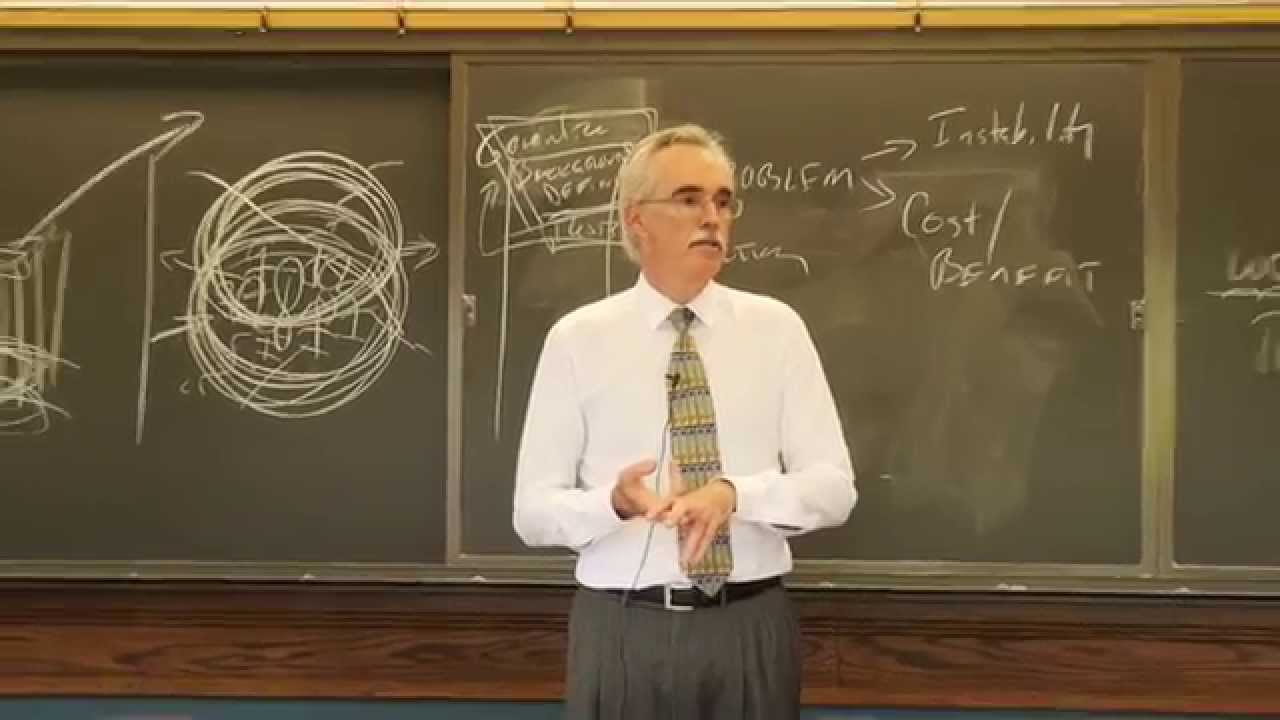
Academic discourse relies on tension-building instability words—such as 'however,' 'although,' and 'inconsistent'—to establish a problem that carries identifiable costs or benefits for the audience. (53:15)
Relying on a 'gap in the literature' framing assumes a bounded, crossword-puzzle model of knowledge that fails in modern disciplines where potential gaps are functionally infinite. (69:19)
Detailed notes
## Background
Published on YouTube by UChicago Social Sciences on June 26, 2014, this session is presented by Larry McEnerney, Director of the University of Chicago's Writing Program. According to the page description, the lecture is designed to communicate helpful rules, skills, and resources to graduate students and emerging scholars aiming to perfect their writing style.
## TL;DR
Larry McEnerney challenges conventional writing instruction by arguing that expert academic writing is not about adhering to mechanical rules, demonstrating personal mastery, or expressing self-identity. Instead, academic prose must generate value by understanding the target reading community and actively working to change what readers think. Effective scholarly writing avoids mere exposition or additive 'flow' ('and'), relying instead on contrastive instability ('but', 'however') that articulates a clear problem, cost, or benefit. Ultimately, researchers must abandon outdated positivist ideas about filling knowledge gaps and learn the coded discourse required to challenge and move forward an ongoing disciplinary conversation.
## Atmosphere & style
The presentation is pragmatic, energetic, and bluntly unsentimental, stripping away academic romanticism with wry humor and tough love. McEnerney commands the room with authoritative directness, openly discussing rejected manuscripts, career anxieties, and the box of Kleenex kept beside his office desk for weeping scholars. Watching the lecture feels like receiving an insider's unvarnished masterclass, guiding students through the disorienting, high-stakes transition from dutiful classroom essayists to persuasive intellectual combatants.
## Bulletin
- [13:42](https://www.youtube.com/watch?v=vtIzMaLkCaM&t=822s) Academic writing often fails not due to poor clarity, organization, or grammar, but because reviewers and editors find it lacks professional value for their specific community.
- [19:34](https://www.youtube.com/watch?v=vtIzMaLkCaM&t=1174s) Professional scholarly writing functions to change readers' minds rather than explain personal thinking or demonstrate that an author completed the assigned research.
- [53:15](https://www.youtube.com/watch?v=vtIzMaLkCaM&t=3195s) Academic discourse relies on tension-building instability words—such as 'however,' 'although,' and 'inconsistent'—to establish a problem that carries identifiable costs or benefits for the audience.
- [01:09:19](https://www.youtube.com/watch?v=vtIzMaLkCaM&t=4159s) Relying on a 'gap in the literature' framing assumes a bounded, crossword-puzzle model of knowledge that fails in modern disciplines where potential gaps are functionally infinite.
## Key takeaways
- [03:04](https://www.youtube.com/watch?v=vtIzMaLkCaM&t=184s) Writing programs frequently fail advanced scholars because rule-governed instruction works for low-stakes memos, whereas expert academic writers need to focus on reader perception.
- [05:03](https://www.youtube.com/watch?v=vtIzMaLkCaM&t=303s) Texts feature two conflicting axes: the horizontal axis of drafting to process personal thought, and the vertical axis of communicating to alter a reader's understanding.
- [08:15](https://www.youtube.com/watch?v=vtIzMaLkCaM&t=495s) Graduate students are misled by decades of schooling where paid teachers were obligated to read every page and grade personal intellectual growth.
- [15:13](https://www.youtube.com/watch?v=vtIzMaLkCaM&t=913s) Value is not an inherent textual property or located inside the author's head; it exists entirely within the expectations and doubts of a specific target audience.
- [22:47](https://www.youtube.com/watch?v=vtIzMaLkCaM&t=1367s) In professional academia, nothing counts as knowledge until it has been challenged by peers competent to doubt and evaluate it.
- [25:13](https://www.youtube.com/watch?v=vtIzMaLkCaM&t=1513s) Newness and original data do not automatically create academic value, as dynamic disciplinary communities continually adopt useful concepts and discard obsolete facts.
- [36:00](https://www.youtube.com/watch?v=vtIzMaLkCaM&t=2160s) Transitioning with 'and' merely adds information and invites indifference, whereas transitioning with 'but' challenges existing consensus and commands reader attention.
- [38:47](https://www.youtube.com/watch?v=vtIzMaLkCaM&t=2327s) Scholarly introductions compress preliminary arguments by deferentially praising the field before pinpointing where existing work falls short.
- [50:55](https://www.youtube.com/watch?v=vtIzMaLkCaM&t=3055s) Drawing on Jean-François Lyotard, academic knowledge operates under the form of exteriorized commodities valued strictly by whether consumer-readers find them usable.
- [53:15](https://www.youtube.com/watch?v=vtIzMaLkCaM&t=3195s) The traditional 'martini glass' essay model promotes opening with broad, stable consensus, blinding writers to the need for immediate rhetorical instability.
- [56:19](https://www.youtube.com/watch?v=vtIzMaLkCaM&t=3379s) Academic problems must be conceptual challenges the scholarly audience struggles to understand, rather than the author's private curiosity or autobiographical history.
- [01:02:50](https://www.youtube.com/watch?v=vtIzMaLkCaM&t=3770s) Professional literature reviews should not summarize readings chronologically; they should stage citations so they contradict one another to heighten the research problem.
- [01:11:01](https://www.youtube.com/watch?v=vtIzMaLkCaM&t=4261s) Interdisciplinary writing poses exceptional rhetorical challenges because different departments evaluate arguments and define valid problems using incompatible standards.
- [01:15:52](https://www.youtube.com/watch?v=vtIzMaLkCaM&t=4552s) Effective papers separate the author's chronological discovery process from the reader's needs, placing the core conceptual problem at the very front of the published text.
## Detailed walkthrough
### [00:34](https://www.youtube.com/watch?v=vtIzMaLkCaM&t=34s) The University of Chicago's Top-Down Approach to Writing
Larry McEnerney opens by explaining that the University of Chicago’s writing program is fundamentally different from almost every other program in the United States. While most institutions adopt a "bottom-up" model centered on freshmen—offering courses like freshman composition, freshman writing, or freshman seminars—Chicago does not offer a freshman composition course at all. In fact, Chicago is one of the rare universities with more faculty members than freshmen, largely because its instructors teach continuously across the medical school, where most practicing physicians also hold faculty appointments. When the program was founded in the late 1970s and early 1980s, its mandate was not to assist incoming undergraduates, but rather to work with the faculty.
The program's founder noted an inverted hierarchy of writing competence on campus: freshmen actually wrote reasonably well, third- and fourth-year students wrote noticeably worse, graduate students struggled intensely, and the faculty suffered from the most acute writing problems. This observation upends the conventional belief that writing is merely a foundational, remedial skill on par with early reading and arithmetic that should be mastered by high school or the start of college. McEnerney recounts that throughout thirty years of teaching, academics and professionals have often greeted writing instruction with defensiveness and offense. He notes the particular hostility he encounters when conducting workshops in London, where rooms full of Oxford- and Cambridge-educated academics bristled at being told an instructor from Chicago had been brought in to teach them how to write.
- Chicago operates one of only two top-down writing programs known in the United States, prioritizing faculty and advanced researchers over freshmen.
- The conventional view treats post-secondary writing instruction as remedial, assuming anyone struggling after high school failed to learn basic skills.
- The founder of the Chicago program observed that writing ability deteriorated as academic advancement increased: “The people with the real writing problems are the faculty, which just turns on its head the standard notion that writing is a basic skill.”
[03:04](https://www.youtube.com/watch?v=vtIzMaLkCaM&t=184s) Rules Versus Readers for Expert Writers
McEnerney clarifies that the workshop is neither remedial nor a review of principles students should have learned earlier. Most importantly, it is not a seminar on writing rules. He plans to directly critique the rule-governed training the audience has received throughout their academic careers, arguing that rules are detrimental to advanced scholars. A rule-based approach serves a purpose only when people churn out high volumes of low-value, routine communication—such as daily office memos where standard templates and quick formulas suffice. Advanced academic writing, by contrast, operates under an entirely different expectation of value, meaning writers must abandon rigid formulas and focus on audience perception.
He defines the audience members as "expert writers"—not necessarily because of their mechanical mastery of prose, but because they possess specialized, expert knowledge on their topics. Unlike high schoolers writing basic introductions to standard subjects, academic researchers operate on the frontiers of knowledge, conceptualizing thoughts nobody has had before. The value of their work lies precisely in the difficulty and sophistication of their thinking, but this same complexity creates a profound writing challenge.
- Rule-governed training functions well for high-volume, low-value writing, but breaks down in high-level intellectual work.
- McEnerney defines "expert writers" as individuals possessing specialized knowledge on complex frontiers rather than effortless prose stylists.
- McEnerney explicitly directs the room to change their focus: “And so you, one of the things that I'm gonna be saying to you is you need to stop thinking about rules and start thinking about readers.”
[05:03](https://www.youtube.com/watch?v=vtIzMaLkCaM&t=303s) Writing to Think Versus Writing to Communicate
The core predicament for expert writers stems from the role writing plays in their cognitive process. Unlike journalists, who gather facts and sit down to communicate already-formed ideas, scholars must use the act of writing itself as a vehicle for thinking through complex material. McEnerney recalls how his high school instructors claimed that thinking and writing were two strictly separate, sequential steps, requiring a student to finish all thinking before writing a single word. To enforce this, a teacher required him to submit the outline used to do the thinking alongside every paper; McEnerney simply wrote the paper first and then generated the outline backward to comply, secretly assuming he was uniquely defective because his essays did not spring fully formed from his head like Athena. In reality, no advanced thinker works in that sequential fashion.
This dynamic creates a structural conflict between two dimensions of a text: the horizontal axis and the vertical axis. The writer generates a text along the horizontal axis as a tool to facilitate their own thoughts. However, the success of that text depends entirely on the vertical axis, where readers engage with the document to change their understanding of the world. Because experts naturally use one set of linguistic patterns to work through complex ideas and a completely different set of patterns when reading, drafts that reflect a writer's thinking process inevitably disrupt and frustrate the reader's comprehension.
```mermaid
flowchart TD
accTitle: Dual Axes of Academic Writing
accDescr: Diagram contrasting how a writer produces text on a horizontal axis with how a reader processes text on a vertical axis.
subgraph WriterAxis ["Horizontal Axis: Writing to Think"]
W["Expert Writer"] -->|"drafts to process complex ideas"| T["Text / Manuscript"]
end
subgraph ReaderAxis ["Vertical Axis: Reading to Understand"]
T -->|"must alter perspective"| R["Expert Reader"]
R -->|"reads using different linguistic patterns"| E["Changed Worldview"]
end
WriterAxis -.->|"interferes with"| ReaderAxis
```
- High school pedagogy teaches a linear myth: thinking must conclude before drafting begins, enforced through prior outlining.
- McEnerney recounts the rigid instruction of his youth: “I had a teacher who said to me, you are not ready to write your first word until you are finished thinking, and she said to me, 'To prove this to you, whenever you turn in a paper, I'm going to have you turn in the outline you use to do your thinking.'”
- Expert writers draft along a horizontal axis to construct their own thoughts, but audiences read along a vertical axis to evaluate value and alter their view of the subject.
- A predictable cognitive friction occurs because the language structures that aid internal thinking clash directly with the language structures readers require for efficient processing.
[08:15](https://www.youtube.com/watch?v=vtIzMaLkCaM&t=495s) The Reader's Reaction: The Chain of Disengagement
When a writer allows their drafting patterns to dominate the text, the reader experiences a predictable progression of negative reactions. McEnerney questions the audience about what happens when they encounter writing that clashes with their reading expectations. The very first effect is that the reader slows down, being forced to re-read sentences and paragraphs repeatedly. The second consequence is a breakdown in comprehension, where the reader finds the material muddled and fails to grasp the point. The third stage is emotional: the reader becomes aggravated. Ultimately, the reader reaches a breaking point and simply stops reading or starts skimming.
```mermaid
flowchart LR
accTitle: The Reader Breakdown Chain
accDescr: The four successive negative steps an audience goes through when reading difficult prose.
A["1. Slows Down / Re-reads"] --> B["2. Fails to Understand"]
B --> C["3. Gets Aggravated"]
C --> D["4. Stops Reading / Skims"]
```
McEnerney asks the graduate students why they persist through frustrating texts themselves. A student responds that they keep re-reading because they "need to read the content of the paper." McEnerney highlights this as the crux of the problem: when readers are not compelled by necessity, they simply abandon the text. Graduate students are ill-prepared to handle this reality because their lifelong academic training has shielded them from audience abandonment. Having written perhaps one or two hundred academic papers over their lives, their readers never quit halfway through. That audience endurance, however, was not evidence of effective writing; it existed solely because teachers and professors were paid to assign a grade.
- Readers respond to poorly calibrated prose in four sequential stages: slowing down (re-reading), failing to understand, becoming aggravated, and finally quitting or skipping.
- Academic scholars only endure bad writing when an external necessity forces them to extract the underlying content.
- Past academic success obscures writing flaws because instructors read every page out of professional obligation: “They were paid.”
[11:18](https://www.youtube.com/watch?v=vtIzMaLkCaM&t=678s) Writing for Readers Who Aren't Paid to Care
Larry McEnerney notes that academics tend to become deeply uncomfortable whenever the conversation turns to money, but he confronts the room with a blunt economic reality: teachers read student essays solely because they are compensated to do so. They do not read class papers to learn something new about the world or to alter their own intellectual perspectives. Instead, as chalk taps against the blackboard, McEnerney explains that teachers read because they are paid to care about the students themselves. Every rule and writing habit graduate students have acquired was forged inside this artificial environment where the reader’s job description was personal investment in the writer.
Outside the classroom, that dynamic abruptly disappears. In the world beyond school, journal editors and academic colleagues have no financial or institutional obligation to care about the author. When McEnerney asks the room why an outside audience would ever read their work, a participant suggests it happens when readers believe it is relevant to their own pursuits. McEnerney agrees, clarifying that audiences read exclusively when they believe the piece offers value to them. He dismisses the polite fiction offered by professors who claim student papers are intellectually valuable to their own research: unless those faculty members published the work—which would be plagiarism—the claim is untrue. At best, student writing is informative to instructors only because it reveals novel, unanticipated ways that people can misunderstand a topic.
> “The rules that you've learned about writing were rules that were generated in the system where you are writing to somebody who's paid to care about you.” — Larry McEnerney
[13:42](https://www.youtube.com/watch?v=vtIzMaLkCaM&t=822s) The Primacy of Value and the Kleenex Box
While writers are routinely taught to focus on clarity, organization, and persuasiveness, McEnerney argues that those craft elements mean nothing if the piece lacks value. Persuasion is far more significant than formal organization, but value supersedes everything else. To illustrate the stakes, McEnerney describes the layout of his own office. Beside his desk sits a dedicated writing corner with two chairs: his chair and the writer’s chair. Right next to the writer’s chair sits an indispensable prop—a box of Kleenex.
```mermaid
flowchart TD
accTitle: The Hierarchy of Text Attributes
accDescr: Diagram illustrating that clarity, organization, and persuasion remain entirely useless without value to the reader.
subgraph baseline["Surface Craft"]
C["Clarity"]
O["Organization"]
P["Persuasion"]
end
subgraph core["Essential Prerequisite"]
V["Reader Value"]
end
baseline -->|"if lacking"| U["Useless Output"]
V -->|"gives purpose to"| baseline
```
The tissues are there because careers unravel in that chair. Graduate students, postdocs, and faculty members arrive distraught because grant proposals, drafts, and journal submissions are rejected. Although manuscripts are occasionally rejected because they lack clarity, structure, or convincing arguments, the vast majority fail for a far simpler reason: reviewers find no professional value in them. McEnerney stresses that a piece can be impeccably clear, flawlessly organized, and logically persuasive, but if it is useless to the audience, it remains entirely useless.
> “If it's clear and useless, it's useless. It's organized and useless, it's useless. It's persuasive and useless, it's useless.” — Larry McEnerney
[15:13](https://www.youtube.com/watch?v=vtIzMaLkCaM&t=913s) Value Resides in the Reader, Not the Text
Graduate students in the social sciences frequently panic over the fear that their core ideas inherently lack worth. McEnerney dismisses this anxiety as fundamentally confused. Value is not an intrinsic, material property locked inside the words or the author's brain; value exists entirely within the reading community. A manuscript can be prized by one subfield and dismissed as pointless by another, precisely because different groups operate with distinct intellectual needs and priorities.
McEnerney recounts how graduate students frequently burst into his office panicked about the mandate to publish, yet when asked which journals they plan to submit to, they look bewildered and ask what difference the target journal makes. They operate under the mistaken belief that clarity, organization, and merit are universal traits residing in the manuscript itself, discernible to any neutral reader. This blind spot is reinforced by standardized testing, such as AP exams or the SAT, which trains students to write for an imaginary, uniform grader and systematically prevents them from thinking about real variations among audience communities.
> “There's no such thing as value here; value's here—the question is whether this particular community of readers values it, which is why it's so much about readers and not about content.” — Larry McEnerney
- Standardized tests penalize writers by rewarding generic prose directed at an artificial, standardized reader.
- Submitting an article without knowing the target journal reveals the flawed assumption that textual quality exists independent of a community.
- Physical scientists rarely make the mistake of locating value in the text itself, whereas social scientists fall into this trap constantly.
[17:21](https://www.youtube.com/watch?v=vtIzMaLkCaM&t=1041s) The Biology Test: Comparing Version 1A and Version 1B
Distributing a handout, McEnerney sets up an experiment. He asks whether there are any biologists in the room; when none speak up, he jokes that this is fortunate because biologists would have to leave. The excerpt relies on specialized biological content so the audience knows nothing about the subject matter, forcing them to react purely to the mechanics of the writing. He asks the audience to imagine acting as a review panel evaluating two competing submissions—1A and 1B—for funding or publication.
McEnerney reads version 1A aloud:
> “As a consequence of the cost of sex, the theoretical probability of clonal and sexual coexistence is low. Observation of coexistence in vertebrate taxa has been reported. Within the frozen niche variation model, a relevant parameter difference in overall niche breadth. A wider niche breadth for the sexuals and for the clones is predicted in performances in monocultures. Performances in mixtures do not indicate such a relationship. Switching of behaviors or resource use patterns between mixed and pure cultures may be the cause. Proposed study will examine the predictions of the FNV model.”
He then reads version 1B:
> “As a consequence of the cost of sex, the theoretical probability of clonal and sexual coexistence is low. Nonetheless, observation of coexistence in vertebrate taxa has been widely reported. Within the accepted model of frozen niche variation, coexistence is explained by difference in overall niche breadth. However, although the FNV model correctly predicts wider niche breadth for the sexuals and for the clones, its predictions are inconsistent with reported performances in mixtures. Proposed study will examine whether the anomaly may be explained by the switching of behaviors or resource use patterns between mixed and pure cultures.”
The audience immediately votes that version 1B is far more fundable. When asked to pinpoint the reason, a student answers that 1B successfully establishes why the work is "important."
[19:34](https://www.youtube.com/watch?v=vtIzMaLkCaM&t=1174s) Stop Explaining: Writing to Change Readers' Minds
McEnerney zeroes in on the word "important." If reviewers reject version 1A because the work does not seem important, the author’s instinctive defensive reaction is to assume the readers simply failed to understand the material. Driven by that assumption, the author attempts to fix the piece by doing the single most catastrophic thing possible: they explain. McEnerney commands the room never to do this, explaining that students have been trained since childhood to view writing as an exercise in explaining things to teachers who wanted proof that the student understood the curriculum.
In that student model, "explaining" merely meant uncovering the contents of one's own mind. In professional life, however, readers do not care about the interior state of an author's head unless they are paid to care. True professional writing is not about communicating personal thoughts or displaying private competence; its sole function is to alter the ideas held by the audience. Reflecting on his own teaching habits, McEnerney confesses that when students made claims in argument courses, he used to make the pedagogical error of asking, "Why do you think that?" He abandoned that question because it invites the student to inspect their own brain. Instead, he now asks the only question that matters: "Why should I think that?"
> “Professional writing, what is it? It's not conveying your ideas to your readers; it's changing their ideas.” — Larry McEnerney
[22:47](https://www.youtube.com/watch?v=vtIzMaLkCaM&t=1367s) The Fundamental Rule of Academia: Readers Who Challenge
Larry McEnerney asks the audience why the straightforward transfer of thoughts does not work in an academic or professional setting: why can a writer not simply expect the reader to accept whatever they write? When a student jokingly suggests, “We're all stubborn,” McEnerney retorts that while that might explain why stubborn resistance persists, it is not why the system is supposed to operate that way. Instead, he reveals the foundational principle governing the entire scholarly enterprise:
> “Because there's a rule of western academia. It's rule that's of course, broken in the breach of a million times, but the rule says nothing will be accepted as knowledge or understanding until it has been challenged by someone competent to challenge it.”
This fundamental rule profoundly alters who academic readers are and how they behave. Everyday readers—like someone on the quad asking for directions to the library—listen simply to acquire useful information; they do not reflexively doubt the speaker because challenging the directions is not their role. Teachers, on the other hand, read because they are paid to care about student writers and evaluate their knowledge. Academic peers, however, possess a formal professional function: to actively challenge everything the writer asserts. Consequently, McEnerney argues that writers cannot lead with mere explanation. Explaining can only legitimately happen once two prior conditions have been met: value has been established, and the process of persuasion is already underway. He cautions PhD-level scholars against the school-bred instinct to explain from line one—such as the classic, teacher-pleasing blunder of starting a paper with a definition just to demonstrate that the author knows what the term means.
[25:13](https://www.youtube.com/watch?v=vtIzMaLkCaM&t=1513s) The Illusion of "Original" Knowledge and the Positivist Fallacy
Turning back to sample text B, McEnerney asks how a writer creates importance, immediately warning against the siren calls of "new" and "original":
> “If you think that you're here to do new original work, if you would find the synapse in your brain that is storing those words, kill it.”
McEnerney explains that graduate students are not in academia merely to produce original work, but to do valuable work. To illustrate how cheap "new knowledge" truly is, he notes that the room could create brand-new knowledge in thirty seconds simply by counting the number of people present in room 302—yet nobody in the world would read that paper because nobody cares.
He drives this point home with an anecdote about a close friend from his own PhD days at the University of Chicago:
- She discovered dusty, unexamined 19th-century travel journals kept by an Englishwoman who journeyed across the world for thirty years.
- Believing she had struck academic gold, she obtained grant funding, spent three months reading and analyzing the archives in Norwich, and submitted her dissertation to her faculty committee.
- Within an hour and a half, the committee returned the draft, rejecting the dissertation flatly.
- When the student protested that nobody in the world knew what this woman had written, the committee replied: “Right, and we still wish we didn't know what she said because we do not care.”
- Her research was undeniably original and new, but the committee bluntly told her, “it is not knowledge.”
```mermaid
flowchart TD
accTitle: Positivist vs Academic Conversation Model of Knowledge
accDescr: Contrasts the obsolete linear buildup model of knowledge with the dynamic conversation model where an academic community decides value.
subgraph Positivist ["Dead Positivist Model"]
direction TB
P1["New Fact / Discovery"] --> P2["Accumulate into Total Knowledge"]
P2 --> P3["Retained Permanently (Assumes Truth)"]
end
subgraph Dynamic ["Living Academic Model"]
direction TB
D1["New Claims / Inputs"] --> D2["Scholarly Community Gatekeepers"]
D2 -->|"Decides Value / Knowledge"| D3["Conversation Moving Through Time"]
D3 -->|"Excretes / Discards Obsolete Ideas"| D4["Abandoned Errors"]
end
```
McEnerney illustrates on the blackboard why the student was mistaken: she was operating under a dead, "positivistic" model where knowledge merely accumulates brick by brick over time, and anything previously unknown simply gets stacked on top. In reality, academic knowledge is determined by living, moving conversations held by groups of people. While historically those gatekeepers have looked like McEnerney—or, as his niece tells him, “too male, too pale, too stale”—they are the ones who determine what counts as knowledge. That boundary is permeable: conversations absorb new claims, but they also "excrete" older positions once the community realizes they were misguided or wrong. Therefore, writers cannot make an essay matter by simply declaring it a "new," "original," or "important" study; they must connect to what the ongoing community currently values as knowledge.
[31:17](https://www.youtube.com/watch?v=vtIzMaLkCaM&t=1877s) Decoding Value: The Code Words of Academic Discourse
Because writers cannot manufacture importance by self-proclaiming an "important study," McEnerney instructs the audience to inspect sample passage 1B directly on the page and circle every word that signals value to the scholarly audience. The audience calls out key transitional and tension-building terms from the passage:
- "Nonetheless"
- "Widely accepted" (emphasized by McEnerney over just "accepted")
- "However"
- "Although"
- "Inconsistent"
- "Reported"
- "Anomaly"
McEnerney presents this exercise as a practical, actionable habits intervention:
> “Here's my first piece of advice to you that you can do to make your writing better starting this afternoon, is spend 15 minutes a week for the rest of this year, taking articles in your field, print 'em out so you have a hard copy. Go through and circle every word in the writing that is creating value to the readers.”
He wagers that if a student brings him an article they believe contains none of these value-bearing terms, he will easily find five or ten. The difference is not that the words are absent, but that novice graduate students do not yet know the "code." Every academic discourse community has its own specific vocabulary to signal instability, urgency, and value. By dedicating fifteen minutes each week to circling these terms in published hard copies, scholars accomplish two goals: they train their eyes to recognize how professional fields negotiate value, and they compile a personal word list to draw upon during their own revision process before submitting work.
[34:10](https://www.youtube.com/watch?v=vtIzMaLkCaM&t=2050s) Knowing the Readers: The Real Work of Graduate Study
Larry McEnerney explains that fixing writing problems can sometimes happen remarkably fast—taking an article that would not get published and transforming it within an hour so that it gets accepted. Other times it takes weeks. While not always magic, it works because the root problem is often straightforward: writers do not know their readers. McEnerney recalls what he tells undergraduates who ask why getting a PhD takes four, five, or six years, wondering if graduate students are merely learning more subject matter. He clarifies that only half of their time is spent accumulating subject knowledge; the other half is spent learning their specific community of readers.
Persuasion cannot happen without knowing that audience intimately, because persuasion fundamentally depends on understanding what the readers doubt. If a writer does not know what readers doubt, they cannot overcome those doubts. Looking back at the sample texts, McEnerney asks the room which underlined words in example B established that community. The audience identifies words like “widely,” “accepted,” and “reported”—signals that cue an existing disciplinary community that wants to understand the subject. Without such words, a writer fails to signal the existence of any conversation or readership.
> “If you do not know these people, you are very unlikely to create value and you are very unlikely to be persuasive because persuasion depends on what they doubt.” — Larry McEnerney
[36:00](https://www.youtube.com/watch?v=vtIzMaLkCaM&t=2160s) Kill the Word “Flow”: “And” vs. “But” in Creating Value
Turning to transitional markers such as “nonetheless,” “however,” and “although,” McEnerney asks what function they serve. When an audience member suggests they “create a flow, to a certain extent,” McEnerney delivers a sharp, humorous directive: find the synapse in your brain storing that concept and kill it. He acknowledges that students are constantly taught to use “flow words” or “transition words” (like *because*, *if*, *unless*, *however*, *although*, *and*, and *but*) to produce clear, organized prose. Having flow is not inherently bad, but flow has absolutely nothing to do with creating value.
To illustrate the distinction, McEnerney contrasts the words “and” versus “but.” If a scholar goes to an academic community and essentially says, “Hey community, I have read your work, thought about what you think, *and* I have something to say,” it generates little interest. But if the scholar says, “Hey readers, I have read your work, I know what you think, *but* you are wrong,” the community is forced to pay attention.
When an audience member objects that telling journal editors they are wrong is risky because those very people are the ones reviewing the manuscript, McEnerney pushes back emphatically. He insists that anyone can open every edition of any scholarly journal over the past 20 years, and every single paper published will open by saying someone in the field is wrong.
```mermaid
flowchart TD
accTitle: The Difference Between Adding and Challenging
accDescr: A comparison showing how 'and' creates indifference while 'but' demands reader attention.
subgraph AddApproach["The 'And' Approach (Low Value)"]
A1["'I read your work...'"] --> A2["'...AND here is something more to add.'"]
A2 --> A3["Reader Reaction: 'We don't care.'"]
end
subgraph ChallengeApproach["The 'But' Approach (High Value)"]
B1["'I read your work...'"] --> B2["'...BUT this piece of it is wrong.'"]
B2 --> B3["Reader Reaction: Must defend their doubts and read on."]
end
```
> “He can name a journal. We will go to the every edition of that journal in the last 20 years and every paper will say that somebody's wrong. Everyone.” — Larry McEnerney
[38:47](https://www.youtube.com/watch?v=vtIzMaLkCaM&t=2327s) Knowing the Code: Praising the Field Before Correcting It
The secret to telling powerful readers they are wrong lies in mastering the community’s professional “code.” McEnerney jokes that you cannot simply tell dominant figures in your field, “I've read all your stuff and you're idiots.” Instead, the acceptable academic code requires showering the field’s scholars with genuine praise first: acknowledging how brilliant they are, how remarkably they have advanced the discipline, and how amazed you are by their contributions. Only after validating their intellect do you introduce the turn: “*but* there’s this little thing you got here that’s wrong.”
Faced with that move, readers appreciate the respect and lean in to ask what they missed. At that point, the author must supply an argument rather than a mere explanation. The audience already wrote the original literature; they do not need it explained to them. Academic introductions exist precisely to provide a compressed, preliminary argument showing readers why they might be wrong, earning their willingness to read past the first two pages.
By contrast, researchers who simply announce that they have something new to add, or that they wish to “put my voice into the conversation,” run an even deadlier risk than controversy: being met with complete indifference. Readers will simply reply that they do not care and have no reason to listen.
> “Do not explain, argue. You're talking to people who like, wrote this stuff. You don't have to explain it to 'em. You have to predict what they're gonna doubt when you say they're wrong.” — Larry McEnerney
[41:56](https://www.youtube.com/watch?v=vtIzMaLkCaM&t=2516s) The Pragmatics of Academic Success vs. “Individual Voice”
McEnerney addresses the controversial reputation of the University of Chicago writing program, dryly admitting that critics in composition studies often view them as “fascists.” While traditional writing programs urge students to challenge institutions or cultivate an authentic “individual voice,” McEnerney’s philosophy is unabashedly pragmatic: identify the people with power in your community and give them what they want. While he recognizes the ethical appeals of personal expression, that advice fails graduate students who are sitting in his office terrified that their academic careers are stalling.
Success requires playing by the disciplinary rules: challenging the community *inside* the established terms of that community. If writers fail to use the polite, codified conventions for pointing out errors, they get slapped down; if they avoid pointing out errors altogether out of fear, their manuscripts are rejected for lack of value.
Moving to page three of the handout, McEnerney critiques a standard high-school definition that portrays an essay as a creative composition written from a personal point of view to analyze ideas and preserve thoughts indefinitely. He calls this definition dangerous because it completely ignores readers and value, centering entirely on the writer’s private thinking. Taking a Wittgensteinian stance—that the meaning of a thing is defined by what it does—McEnerney argues that writing is not meant to be a vehicle for unappreciated self-expression. Its true function is to help a specific set of readers better understand something *they* want to understand.
```mermaid
flowchart LR
accTitle: Individual Voice Versus Reader Value
accDescr: Contrasting writer-centered essay composition with functional, reader-centered academic writing.
subgraph WriterCentered["Writer-Centered Tradition"]
W1["Write to express self / think"] --> W2["Ignores reader desires"]
W2 --> W3["Result: Reader indifference"]
end
subgraph FunctionalAcademic["UChicago Functional Approach"]
F1["Identify powerful readers"] --> F2["Learn the community's code"]
F2 --> F3["Help readers understand what they care about"]
F3 --> F4["Result: Scholarly value and publication"]
end
```
- High school pedagogy teaches that essays exist to allow writers to analyze ideas and preserve thoughts indefinitely for themselves.
- McEnerney's Wittgensteinian counter-definition: writing exists to help a specific group of readers understand something they already desire to understand well.
- Graduate students who treat writing as personal cognition cannot expect editors and reviewers to owe them appreciation.
> “When I sit with somebody up in my office, who's worried about their career not going anywhere, it can't be about their individual voice. It's about what's gonna make it valuable to their readers.” — Larry McEnerney
[46:27](https://www.youtube.com/watch?v=vtIzMaLkCaM&t=2787s) The Dangerous Myth of Permanence
McEnerney tackles the belief that academic writing exists to preserve a writer’s ideas indefinitely, calling it a dangerous misconception tied directly to school-based writing models. To illustrate the paralyzing effect of this mindset, he shares an anecdote about a former first-year student of his who later became the chair of a philosophy department. In college, the student would turn in two-page papers and receive six pages of feedback from McEnerney. Years later, struggling to finish his first book, the student sent McEnerney a 400-page manuscript, expecting an 800-page critique.
Instead, McEnerney sent back just two words: "You're done." When the student protested that he could still revise it and make it better, McEnerney insisted again that it was finished. The student eventually confessed his real anxiety: somebody might read the book in 500 years and find mistakes. McEnerney bluntly told him, “Jonathan, nobody's gonna read it in 500 years.” When the student protested, “But Aristotle,” McEnerney dismissed the comparison outright. Academic work is not designed to ensure personal immortality or eternal permanence for ideas; its sole purpose is to move an ongoing discussion ahead right now, which is impossible if the manuscript stays hidden away in a desk drawer.
> “The function of your writing is to move this conversation forward.” — Larry McEnerney
- The belief in writing for permanence creates impossible standards that prevent scholars from finishing their work.
- In any academic discipline, most published work will eventually be superseded and left behind, which is a normal and healthy part of scholarly progress.
---
[48:33](https://www.youtube.com/watch?v=vtIzMaLkCaM&t=2913s) Writing to Change Readers, Not to Reveal Yourself
Critiquing typical handbook claims that writing exists for the author to understand concepts, share feelings, or sharpen organizational skills, McEnerney argues that such ideas are completely skewed toward student exercises. Writing does allow a scholar to participate in the world, but not through self-expression or emotional sharing. Instead, scholarly participation happens strictly through altering what other people think. When students counter that writing without personal expression implies dishonesty, McEnerney rejects the false dichotomy between expressing inner truth and lying. Language serves multiple functions depending on context: speaking under oath requires revealing inner knowledge (noting humorously that an FBI agent had literally been in his office that very morning), while comforting a friend who received bad health news requires language focused entirely on the listener.
Academic writing has a distinct, specialized function: intervening in an existing intellectual community. Graduate students struggle precisely because their entire schooling has conditioned them to view writing as an exercise in opening up their skulls and displaying their internal knowledge on the page.
> “The function of an academic piece is not to communicate your ideas, it's to change the ideas of an existing community.” — Larry McEnerney
```mermaid
flowchart TD
accTitle: School Writing vs Academic Writing Functions
accDescr: Contrasts the inward school model of self-expression with the outward academic model of community intervention.
subgraph School["School Model (Interior)"]
A["Writer's Mind / Feelings"] -->|"Reveal interior / demonstrate learning"| B["Teacher Grades Mind"]
end
subgraph Professional["Professional Model (Exterior)"]
C["Writer's Text"] -->|"Intervention / Instability"| D["Disciplinary Community"]
D -->|"Changes"| E["Community's Thoughts & Knowledge"]
end
```
---
[50:55](https://www.youtube.com/watch?v=vtIzMaLkCaM&t=3055s) Knowledge in the Space Between Heads and the Form of Value
Drawing on Jean-François Lyotard's *The Postmodern Condition*, McEnerney discusses the "thorough exteriorization of knowledge." In the past, people praised an eminent professor by pointing to the vast amounts of information stored inside her mind, claiming she had forgotten more than others would ever learn. Today, that conception of knowledge is obsolete. Scholarly stature is no longer defined by how much information resides inside an individual head, but by what that scholar produces and changes out in the external space between heads.
McEnerney acknowledges that Lyotard’s next conclusion is deeply uncomfortable for many academics: the relationship of knowledge producers to their work has become identical to the relationship between commodity producers and their goods. Just as a farmer relates to wheat or a coal miner relates to coal, a scholar relates to knowledge through the form of value. Scholars produce something that is traded, evaluated, and used by consumers in an external market of ideas.
> “Your relationship to your own knowledge is the same as a relationship of a farmer to the wheat or a miner to the coal.” — Larry McEnerney
- Academic reputation reflects external impact in the disciplinary conversation, not private erudition.
- Knowledge operates under the form of value, determined by whether users and readers find it usable and valuable.
---
[53:15](https://www.youtube.com/watch?v=vtIzMaLkCaM&t=3195s) Instability Words and the Flawed Martini Glass Model
Moving from theory into practical craft on page eight of the handout, McEnerney examines words like *because*, *if*, *unless*, *and*, comparing them to words like *but*, *although*, *however*, *inconsistent*, and *anomaly*. While some are conjunctions and others are nouns or adjectives, they share a distinct rhetorical effect. The audience offers descriptors like "tension," "challenge," "contradiction," and "red flags." McEnerney groups these under the umbrella term **instability**.
```mermaid
flowchart LR
accTitle: The Martini Glass Model of Writing
accDescr: Illustrates the ineffective school-taught model that moves from broad generalizations to a thesis and back out to broad generalizations.
McEnerney contrasts instability with the traditional "mode of explanation" taught in schools, which rests on a positivistic view of knowledge. In that flawed paradigm, a writer begins with a solid foundation—background, definitions, or broad generalizations—moves down to a narrow thesis statement, proves the thesis, and then broadens back out at the end. McEnerney labels this the "martini glass model of writing" and warns graduate students against it. Intellectual engagement does not begin with broad, settled common ground; it begins with a problem that disrupts stability.
> “So many people have been taught this model, they don't even know they're using it.” — Larry McEnerney
---
[56:19](https://www.youtube.com/watch?v=vtIzMaLkCaM&t=3379s) Locating the Problem in the Reader's World
Effective writing must open with a problem, but McEnerney emphasizes that it cannot simply be the writer's personal problem. Many academic drafts mistakenly adopt a diary-like posture: announcing that the author has been fascinated by a subject since childhood and now wants funding or publication to satisfy their personal curiosity. He warns that readers do not care about solving the author's private lack of knowledge.
The problem must be located in something the target community of readers cares about. For academic audiences, that problem is conceptual—something they want to understand. For non-academic or applied audiences, the problem is practical—something in the world they want to fix. For example, a researcher seeking an education grant should open with the tangible crisis of a broken school system. Even if the grant reviewers have elite educations and send their own children to top schools, the broken system is a problem that matters to them, giving the writing immediate urgency and value.
> “The problem needs to be located, not in necessarily in the readers, but in something the readers care about.” — Larry McEnerney
- Avoid the autobiographical framing ("Ever since I was young, I've been fascinated by...") in grant proposals and papers.
- Academic problems center on what a scholarly community struggles to understand.
- Non-academic problems center on practical situations the audience wants to fix or improve.
[58:00](https://www.youtube.com/watch?v=vtIzMaLkCaM&t=3480s) Instability as the Foundation of Academic Problems
Larry McEnerney explains that an academic problem must be located within a specific reading community, which is fundamentally different from providing general background or definitions. A thesis can only function as a solution if the audience clearly perceives the problem being addressed. McEnerney often asks writers whether their thesis represents a solution to a problem, and when they immediately reply that it does, he asks where that problem was stated—only to find it is completely absent. In professional writing, the problem must be explicitly articulated on the page so readers can recognize the value of the solution.
Problems possess two core characteristics. The first is that the situation must be rendered unstable; the writer must generate a palpable sense of instability. This is achieved using words such as *but*, *however*, *inconsistent*, *although*, and *anomalies* to show that the existing situation lacks coherence. McEnerney contrasts this with the conventional school writing model, which trains students to rely on stability and continuity—attempting to establish validity by demonstrating that a claim merely connects to something already accepted as true.
```mermaid
flowchart TD
accTitle: School Writing Model vs Academic Value Model
accDescr: A diagram contrasting the school approach of continuity and stability with the academic model of instability and problem-solution value.
subgraph School["School Model (High Interference)"]
S1["Existing Knowledge"] -->|"Continuous & Consistent"| S2["New Claim / Thesis"]
S2 --> S3["Judged on Validity"]
end
subgraph Academic["Professional Model (Value Driven)"]
A1["Shared Knowledge"] -->|"Tension / 'But' / Anomaly"| A2["Instability & Cost"]
A2 -->|"Perceived Problem"| A3["Thesis as Solution"]
end
```
This divergence creates a damaging interference pattern. When readers enter a text, they are actively hunting for instability, inconsistency, and tension to assess whether the piece is worth their time. When writers offer language of continuity instead, they clash directly with the reader's interpretive process. As McEnerney warns:
> “They're looking for something that shows them inconsistency. You are giving them language of continuity. You are interfering with their reading process. They're slowing down, they're getting confused, they're getting aggravated, and they can stop two paragraphs into your text, two paragraphs.”
[01:00:50](https://www.youtube.com/watch?v=vtIzMaLkCaM&t=3650s) The Coded Language of Costs and Benefits
The second defining characteristic of a problem—one that many academics struggle with—is framing it through the language of costs and benefits. Writers must use coded language to demonstrate that the identified instability imposes an actual cost on the readers themselves, not just on the writer, or conversely, that resolving the instability yields a tangible benefit to the reading community. Readers know that existing scholarship is filled with minor inconsistencies, most of which do not matter in the slightest; therefore, pointing out an inconsistency is insufficient unless the author shows why it hurts the field.
McEnerney advises writers to closely examine the target journals in their field to see whether successful authors rely primarily on the rhetoric of cost, the rhetoric of benefit, or a blend of both. When an established pattern exists in published articles, scholars should simply adopt it. As McEnerney remarks:
> “The published articles will show you the language that works right there in front of you if you just look at it.”
[01:02:50](https://www.youtube.com/watch?v=vtIzMaLkCaM&t=3770s) Rethinking the Literature Review
When an audience member asks about handling literature reviews and the conflicting advice surrounding them, McEnerney identifies the literature review as one of the hardest things for PhD students to write because they confuse their audience's expectations. In a classroom setting, a professor evaluates a literature review simply to see if the student read and understood the material. In professional texts, however, reviewers are not checking whether the author knows the basic literature. While lit reviews do serve secondary functions like credibility and ego-massaging, their central professional purpose is to enrich the problem.
```mermaid
flowchart LR
accTitle: Literature Review Functions
accDescr: Flow showing the difference between a student literature review listing past works chronologically versus a professional review that builds layered instability.
subgraph Student["Student Approach: Chronological List"]
direction TB
L1["1998: Scholar A said X"] --> L2["2000: Scholar B said Y"]
L2 --> L3["2005: Scholar C said Z"]
end
subgraph Professional["Professional Approach: Enriching Instability"]
direction TB
P1["2001: Foundational Claim"] -->|"Contradicted by"| P2["2004: Rival Finding"]
P2 -->|"Complicated by"| P3["2005: New Evidence"]
P3 -->|"Creates Cost for Field"| P4["Sharpened Problem"]
end
```
Instead of mechanically listing citations chronologically—noting what was said in 1998, 2000, and 2005—a skilled scholar orchestrates the literature to manufacture tension. They show how a 2004 claim complicates an assertion made in 2001, and how a 2005 development puts both into motion, creating compounding layers of complexity. This allows the writer to move forward not from a platform of comfort, but from an intensified instability that threatens the community's assumptions. As McEnerney summarizes the rhetorical move:
> “Are we moving forward? Yes, but from instability, not from stability. That's a big difference.”
[01:06:45](https://www.youtube.com/watch?v=vtIzMaLkCaM&t=4005s) Background versus Problem, and the "Gap" Trap
Turning to page 12 of the handout, McEnerney examines an introductory excerpt by historian William H. Sewell Jr.:
> “Ever since Herodotus, historians have written about events, battles, alliances, scandals, conquest, conspiracies, revolts, royal successions, reforms, elections, religious revivals, assassinations, discoveries. Momentous events have always been the bread and butter of narrative history.”
While schoolteachers might mistake this opening catalogue for traditional background information, it is actually the setup for an instability, revealed immediately by the word that follows: *but*. Sewell writes that despite the historical prominence of events, the event has rarely been scrutinized as a theoretical category. When faculty advise graduate students that their drafts lack "background," students mistakenly add descriptive history, whereas faculty actually mean they cannot tell why the piece matters—the missing "background" is the problem itself.
Finally, McEnerney introduces a common trap for junior academics: relying on the language of a "gap" rather than an "error." Intimidated by the prospect of telling prominent scholars that they are wrong, young researchers default to claiming there is an unstudied gap in existing knowledge. While this occasionally succeeds, McEnerney notes that it far more often fails to engage readers or persuade them of the work's necessity.
[01:09:19](https://www.youtube.com/watch?v=vtIzMaLkCaM&t=4159s) The Death of the "Gap in Knowledge" Model
Larry McEnerney challenges the audience to think about why framing a research paper around a "gap in knowledge" is an ineffective and dangerous strategy. He draws a crossword puzzle on the blackboard to illustrate the underlying assumption of this approach. The "gap" model relies on an outdated, bounded view of human knowledge, where there are a fixed number of pieces to be filled in. In this crossword-puzzle world, finding an empty space and filling it is a clear contribution.
However, if we accept the modern reality that knowledge is infinite, the gap model completely falls apart. McEnerney explains that if knowledge is infinite and you fill one gap, you have mathematically accomplished nothing because there are still an infinite number of gaps remaining. While he concedes that pointing out a gap can occasionally work, he warns that it is a highly risky rhetorical strategy.
```mermaid
flowchart TD
accTitle: Bounded vs Infinite Models of Knowledge
accDescr: A flowchart comparing the bounded crossword puzzle model of knowledge with the infinite model of knowledge.
subgraph Bounded ["Bounded Model (Crossword Puzzle)"]
A["Knowledge is Finite"] --> B["Fixed Number of Pieces"]
B --> C["Filling a Gap is Valuable"]
end
subgraph Infinite ["Infinite Model (Modern View)"]
D["Knowledge is Infinite"] --> E["Infinite Number of Gaps"]
E --> F["Filling One Gap Leaves Infinite Gaps"]
F --> G["Filling a Gap is Insufficient"]
end
```
- **The Crossword Analogy:** Bounded knowledge assumes a fixed set of pieces where filling a gap is a meaningful, permanent addition.
- **The Infinite Reality:** Infinite knowledge means filling a single gap leaves the total landscape of unknown information completely unchanged.
- **The Danger:** "I'm not saying gap can never work. I'm saying gap is very dangerous," McEnerney warns.
[01:11:01](https://www.youtube.com/watch?v=vtIzMaLkCaM&t=4261s) Defining the Community of Readers
McEnerney returns to the text by Bill Sewell to show how a master writer avoids the simple "gap" trap. When Sewell writes that a concept has "rarely been scrutinized as a theoretical category," the word "rarely" might look like code for a gap. However, Sewell immediately elevates this by identifying the specific communities for whom this lack of scrutiny is a crisis. It is not a problem simply because the gap exists; it is a problem because a community of scholars is actively using fundamental categories they do not actually understand. Sewell spends the next two sentences explicitly defining his target communities: traditional narrative historians (who refuse to theorize) and historical sociologists (who disdain mere events).
This leads McEnerney into a passionate warning about the perils of interdisciplinary writing. Many graduate students are drawn to interdisciplinary work because universities champion it, but they underestimate the rhetorical nightmare of writing for multiple audiences. If a student puts together a dissertation committee with three professors from three different departments, they are dealing with three distinct communities who define problems and evaluate arguments in completely incompatible ways. He points to the introduction of Edward Said's *Orientalism* as a brilliant, extended example of a writer successfully constructing and addressing multiple communities—in Said's case, nine of them.
> “Because those are three different communities, who are not only gonna define problems differently, they're gonna see arguments differently,” Larry McEnerney explains.
[01:14:15](https://www.youtube.com/watch?v=vtIzMaLkCaM&t=4455s) Navigating the Handout: Problem Construction and the "Wrong" Chart
McEnerney quickly previews the remaining sections of his instructional handout, urging the audience to focus on the function of the writing rather than rigid formal rules. On page 16, he highlights an introduction written by a pair of economists, calling it one of the finest examples of problem construction he has ever seen because of how it builds layer upon layer of tension.
On page 17 of the handout, these same economists do something McEnerney has virtually never seen in an academic introduction: they include a chart that is intentionally incorrect. Typically, writers use charts to explain data or provide evidence. In this case, the authors use a "wrong" chart purely as a rhetorical device to construct and visualize the problem they are tackling. McEnerney admires how they pull this off with a highly deferential, polite tone that acknowledges how smart everyone in the field is, while simultaneously showing that their current models are broken.
> “Using a chart as a problem constructing technique, wow,” Larry McEnerney marvels.
- **Page 16:** Features an exemplary introduction by economists building multi-layered problems.
- **Page 17:** Demonstrates the rare rhetorical use of an intentionally incorrect chart to establish a problem.
- **Pages 20–23:** Covers the dangers of the gap model, the transition from gap to error, and further analysis of Bill Sewell's work.
[01:15:52](https://www.youtube.com/watch?v=vtIzMaLkCaM&t=4552s) The Case of John Tutino: The Evolution of a Problem
To illustrate the profound difference between a writer's thinking process and a reader's reading process, McEnerney analyzes an article by historian John Tutino on the Mexican independence revolution and the Hidalgo Revolt of 1810. The article's first paragraph seems to offer standard historical background, but the second paragraph immediately pivots, stating that this interpretation "challenges an entrenched vision of Mexican history."
The real story of how this paper was written is revealed in the footnote. Tutino notes that the paper was first presented at a seminar organized by Eric Van Young at the University of California, San Diego. McEnerney explains that Tutino likely arrived at that seminar armed with pages of raw, meticulously researched archival data—specifically, tables showing maize plot rentals and tenant ranchero rents at Puerto de Nieto from 1820 to 1825. At the workshop, the audience's reaction was almost certainly, "Why should we care about maize rents in Puerto de Nieto?"
According to the footnote, it was only through subsequent discussions, feedback from readers of the *Hispanic American Historical Review* (HAHR), and a final reader's comment pointing out that his interpretations were "controversial" that Tutino realized the true significance of his work. It took Tutino three years of research and feedback to realize that his data actually proved that the entire historical community's understanding of the Hidalgo Revolt was wrong. Even though Tutino only discovered his actual "problem" at the very end of his intellectual journey, he placed it in the very first sentence of his published article. McEnerney concludes by urging the audience to separate their own chronological thinking process from the structure they present to their readers.
> “To the extent that you are embedded in making your writing handed to the reader on this process, you are very likely to interfere with their reading process,” Larry McEnerney warns.
[01:20:20](https://www.youtube.com/watch?v=vtIzMaLkCaM&t=4820s) The Brutality of Writing and an Open Door Policy
Larry McEnerney brings the workshop to an empathetic close, acknowledging the emotional strain and tears that academic writing frequently produces. Addressing the reality of students crying in his office, he remarks, “This stuff is, can be brutally hard and just plain brutal.” He confesses that his intense, high-energy delivery during the presentation is deliberately dramatic in the hope of steering students clear of those agonizing struggles before they reach a crisis point. However, as the Director of the Writing Program at the University of Chicago, he emphasizes that his door is always open to anyone needing guidance on their writing. Whenever students email him requesting an appointment, his answer is consistently yes, rooted in a deep institutional empathy: “I will welcome it because no one on campus more than I, appreciates just how hard it is, the stuff that you're doing.”
At the same time, McEnerney offers a practical warning about scheduling and expectations. Because his travel and teaching calendar fluctuates and he is not always in residence, scheduling a consultation often takes a couple of weeks of lead time. He cautions against last-minute panics: if a student reaches out saying a paper is due at the end of the current week, he will try to help, but more often than not, his schedule simply will not permit an immediate turnaround. Giving him sufficient advance notice ensures a productive session. With that final counsel, he concludes the workshop and invites anyone with immediate questions to linger. As the audience breaks into appreciative applause, McEnerney jokingly waves it off, quipping, “Don't do that. I just get more dramatic when people do that,” leaving the room laughing as the session wraps.
- **Director Role & Accessibility**: As head of the campus writing program, McEnerney welcomes all graduate students to consult with him regarding their writing craft and professional drafts.
- **Contact Information**: Reachable by email at `LMCE@uchicago.edu`.
- **Scheduling Lead Time**: Consultations must be scheduled well in advance; due to frequent travel and obligations, meetings often need to be booked several weeks out, making emergency end-of-the-week turnarounds very difficult to accommodate.
## Video description
Do you worry about the effectiveness of your writing style? As emerging scholars, perfecting the craft of writing is an essential component of developing as graduate students, and yet resources for honing these skills are largely under utilized. Larry McEnerney, Director of the University of Chicago's Writing Program, led this session in an effort to communicate helpful rules, skills, and resources that are available to graduate students interested in further developing their writing style.
Larry McEnerney argues that advanced academic writing fails when treated as rule-bound self-expression or mere explanation; its true function is to create value for a specific disciplinary community by identifying instability and changing readers' minds.
The Shift from Self-Explanation to Reader Value (13:42)
McEnerney asserts that graduate students and researchers struggle because their writing habits were formed in classrooms where instructors were financially compensated to read and care about student comprehension. Outside the academy's grading system, editors and peers have no obligation to read. Consequently, surface-level virtues such as clarity, organization, and persuasion are entirely useless if a piece lacks perceived professional value to its audience.
This breakdown occurs when writers confuse drafting with communicating. Advanced scholars necessarily write along a "horizontal axis" to construct and sort through complex thoughts. However, readers engage the text along a "vertical axis" to alter their own understanding of a discipline. When an author transfers their internal thinking process directly onto the page through expository explanation, readers face severe friction: they slow down, struggle to comprehend, become aggravated, and ultimately abandon the manuscript.
Communal Knowledge Versus the Positivist Originality Trap (25:13)
A pervasive misconception among emerging scholars is that academic success depends on producing "new" or "original" work. McEnerney illustrates the flaw of this view with the case of a doctoral student whose dissertation on previously unexamined 19th-century travel journals was promptly rejected because her committee found no reason to care about the material. Merely accumulating unstudied facts reflects an obsolete, positivist model of knowledge that treats research like bricks piled onto a permanent wall.
Drawing on Jean-François Lyotard's observation of the exteriorization of knowledge, McEnerney maintains that knowledge does not reside in private erudition, but in the active conversations of disciplinary communities. Because western academic convention dictates that nothing is accepted as knowledge until challenged by qualified peers, writing operates under the form of economic value. A scholar's work is valuable only to the extent that an external community of gatekeepers finds it usable for their own intellectual ends.
Engineering Instability Over School-Taught Continuity (58:00)
To capture reader attention, McEnerney urges writers to abandon the traditional "martini glass" model of writing, which starts with broad background definitions and proceeds linearly through continuous claims. Academic readers do not read to be comforted by continuity; they search for intellectual tension. Framing research by connecting it to established work with additive words like "and" produces indifference. In contrast, introducing tension through markers such as "but," "however," "although," and "anomaly" forces engagement by signaling that accepted understandings are inadequate.
Deploying this tension requires mastering professional academic discourse. Rather than bluntly attacking peers, effective writers praise the established brilliance of the field before executing a pivot that highlights a crucial vulnerability or oversight. Furthermore, McEnerney argues that literature reviews must not be chronological summaries designed to demonstrate that a student did the reading; instead, their professional purpose is to weave past studies into compounding layers of instability that frame a pressing problem.
Constructing Problems and Rejecting the Gap Model (69:19)
McEnerney strongly cautions against framing research around a "gap in knowledge." The gap metaphor assumes a bounded, crossword-puzzle model of reality where filling an empty space represents permanent progress. In an infinite landscape of knowledge, however, filling an arbitrary gap leaves infinite gaps remaining, leaving readers to question why that specific absence matters.
Instead of claiming an area has been overlooked, master academic writers construct problems by pairing instability with explicit costs and benefits to the audience. Examining works by scholars like William H. Sewell Jr. and John Tutino, McEnerney notes that compelling introductions delineate specific reading communities and show how unresolved anomalies undermine the community's existing frameworks. Writers must separate the chronology of their research from the presentation of the problem, placing the conceptual crisis at the very front of the text even if they only uncovered it at the end of their investigation.
McEnerney concludes that academic writing is an intensely demanding craft because it requires scholars to subordinate their personal voice and research timeline to the exacting demands of external readers. To internalize these conventions, he advises researchers to spend fifteen minutes each week analyzing the coded, value-creating vocabulary within published articles in their target journals rather than relying on last-minute edits.
## Background
该视频由 YouTube 频道 UChicago Social Sciences 于 2014 年 6 月 26 日发布。视频内容为芝加哥大学写作项目主任 Larry McEnerney 主讲的专题讲座,旨在向研究生与青年学者传授切实可行的写作规则、策略与技巧,以解决高阶学术写作资源利用不足并提升写作者风格的问题。
## TL;DR
Larry McEnerney 彻底颠覆了以“规则与自我表达”为中心的传统写作观,指出高阶学术写作的核心功能并非向外界袒露作者的思考过程,而是改变目标读者共同体的认知。文章的学术价值不在于盲目追求“原创”或填补所谓的“知识盲区”,而在于精准识别读者群体的既有共识,并通过引入“不稳定性”构建出读者切实关切的“问题”。作者必须将漫长曲折的个人思考推演过程完全倒置重构,熟练运用成本与收益的学科密码,将论文打造成服务于同行阅读体验的高效说服工具。
## Atmosphere & style
整场讲座充满戏剧张力与犀利的幽默感,主讲人 McEnerney 风格凌厉、直言不讳,甚至带有一种舞台式的表演张力。他毫不留情地刺破学术界温情脉脉的幻象,把青年学者在现实发表中遭遇退稿、焦虑落泪的残酷现实摆在台面上,现场既有被戳中痛点时的心领神会与哄堂大笑,也有警钟长鸣下的严肃反思。整体氛围在高密度的颠覆性认知输出与深切的人文关怀之间自如切换,极具震撼力与临场代入感。
## Bulletin
- [00:00](https://www.youtube.com/watch?v=vtIzMaLkCaM&t=0s) 芝加哥大学写作项目打破传统的“自下而上”大一补习模式,专注服务教职员与研究生的高阶专业写作,直指成人写作危机。
- [14:12](https://www.youtube.com/watch?v=vtIzMaLkCaM&t=852s) 专业写作的根本目标不是向读者“解释”作者的脑中想法,而是改变目标读者群体的认知;价值存在于读者共同体之中,而非文本自身。
- [25:13](https://www.youtube.com/watch?v=vtIzMaLkCaM&t=1513s) 仅宣称发现“新颖/原创知识”或填补“学术空白(Gap)”极为危险;在无限知识模型下,只有指出既有认知的“错误(Error)”并揭示其代价,才能建立学术价值。
- [53:09](https://www.youtube.com/watch?v=vtIzMaLkCaM&t=3189s) 高水平论文必须摆脱陈旧的“马天尼杯模型”,开篇即通过不稳定性词汇(如 however、inconsistent)制造张力,并直接界定读者共同体与潜在成本。
## Key takeaways
- [00:00](https://www.youtube.com/watch?v=vtIzMaLkCaM&t=0s) 芝加哥大学写作项目采取“自上而下”的方法,创立初衷并非补习新生基础技能,而是解决顶尖教授与青年学者面临的高层次专业写作危机。
- [03:04](https://www.youtube.com/watch?v=vtIzMaLkCaM&t=184s) 僵化的规则导向训练仅适用于日常低价值事务性写作,专家级学术写作必须彻底转变为以受众为核心的“读者导向思维”。
- [04:00](https://www.youtube.com/watch?v=vtIzMaLkCaM&t=240s) 专家在思考推演时使用的语言结构,与读者阅读审视时习惯的模式截然相反;直接把思考草稿丢给读者会引发减速、困惑与阅读放弃。
- [08:10](https://www.youtube.com/watch?v=vtIzMaLkCaM&t=490s) 学生时代老师阅读作业是因为领取了批改薪水,而真实学术界没有任何人有义务关心作者本人,文章必须先确立对读者的“价值”。
- [14:12](https://www.youtube.com/watch?v=vtIzMaLkCaM&t=852s) 清晰、条理和说服力并不能拯救一篇没有价值的文章;价值具有主观相对性,仅取决于特定读者共同体的需求与认可。
- [19:34](https://www.youtube.com/watch?v=vtIzMaLkCaM&t=1174s) 专业写作的本质不是向读者袒露大脑内部进行“解释”,而是提供论证去重塑甚至改变读者的思想共识。
- [22:47](https://www.youtube.com/watch?v=vtIzMaLkCaM&t=1367s) 学术读者的天职是质疑与挑战;在实证主义累加模型淘汰后,知识本质上是由当代学术共同体动态界定与筛选的产物。
- [25:13](https://www.youtube.com/watch?v=vtIzMaLkCaM&t=1513s) 写作者应扼杀对“新颖”与“原创”的盲目执念,空洞的新知识若缺乏共同体关切,在学术体系中根本不被视作知识。
- [31:17](https://www.youtube.com/watch?v=vtIzMaLkCaM&t=1877s) 建议每周花 15 分钟圈读顶刊论文中的价值功能词(如 nonetheless、inconsistent、anomaly),建立起属于本领域的专业修辞密码表。
- [36:00](https://www.youtube.com/watch?v=vtIzMaLkCaM&t=2160s) 连接词如 and 只能带来平庸的累加,学术价值往往依靠 but 等转折词指出同行或权威的认知偏差来触发读者的警觉与倾听。
- [38:47](https://www.youtube.com/watch?v=vtIzMaLkCaM&t=2327s) 挑战同行绝非人身羞辱,而是运用学术圈的礼貌密码:先极尽所能肯定前辈的卓越贡献,再精准指出某一关键局限并展开论证。
- [44:21](https://www.youtube.com/watch?v=vtIzMaLkCaM&t=2661s) 散文的本质是维特根斯坦式的功能论,其意义在于帮助读者更好地理解问题,写作的终极目标是推进当下的学术对话而非追求流芳百世。
- [48:34](https://www.youtube.com/watch?v=vtIzMaLkCaM&t=2914s) 现代知识已经彻底外化为头脑之间公共空间中的价值交换物,写作者必须抛弃以自我为中心的宣泄式表达。
- [58:00](https://www.youtube.com/watch?v=vtIzMaLkCaM&t=3480s) 学术问题具备两大核心支柱:一是通过不稳定词汇制造认知张力,二是用成本与收益语言证明该问题对读者群体的重大影响。
- [01:03:05](https://www.youtube.com/watch?v=vtIzMaLkCaM&t=3785s) 顶尖论文的文献综述不是报菜名式罗列年份与学者,而是利用文献交锋层层加码、深化并丰富学术问题的严重性。
- [01:09:19](https://www.youtube.com/watch?v=vtIzMaLkCaM&t=4159s) 知识缺口(Gap)模型源于封闭的拼图假定;面对无限未知的现代学科,必须依靠指出理论框架的错误与悖论来确立紧迫性。
- [01:11:58](https://www.youtube.com/watch?v=vtIzMaLkCaM&t=4318s) 功能性写作会在开篇迅速界定目标读者共同体,跨学科研究的凶险之处正在于不同读者群体对“问题”与“证据”的评判标准割裂。
- [01:15:52](https://www.youtube.com/watch?v=vtIzMaLkCaM&t=4552s) 学者漫长摸索的思考过程往往在终点才发现核心论点,但最终发表的成稿必须彻底将该顺序倒置,以读者阅读体验重构全文逻辑。
## Detailed walkthrough
### [00:00](https://www.youtube.com/watch?v=vtIzMaLkCaM&t=0s) 芝加哥大学写作项目的“自上而下”独特理念与破除补习偏见
主讲人 Larry McEnerney 首先开门见山地解释了芝加哥大学(University of Chicago)写作项目的独特性。全美几乎所有大学的写作项目都采取“自下而上”(bottom-up)的方法,其主要面对的教学对象是刚入校的大一新生(freshmen),普遍开设新生写作(freshman composition)或新生研讨课。然而,芝加哥大学据知是全美仅有的两所采取“自上而下”(top-down)进路的院校之一,学校甚至根本不设针对本科新生的新生写作必修课。McEnerney 幽默地提醒听众,芝加哥大学是极少数教职员工(faculty)人数比新生还多的学校之一。这部分原因在于写作项目深入医学院教学,而医学院里大量医生同时身兼教职,虽然在计算师生比时通常不计入这部分人,但这使得校园内汇聚了极高密度的学者与教员。
该项目在 20 世纪 70 年代末至 80 年代初创立时的初衷,根本不是为了辅导学生,而是为了帮助教职人员。项目创始人曾直言不讳地指出一个反常现象:大一新生刚入校时文章写得相当不错;到了大三、大四,写得反而没那么好了;到了研究生阶段,写作开始陷入挣扎;而全校真正面临严重写作危机的,其实是教授和教员。这一洞察彻底颠覆了社会大众将“写作视为基础技能”的传统偏见。人们通常认为读、写、算(reading, writing, arithmetic)是小学、中学最多到大学低年级就该掌握的基础技能,如果成年后还需要专门上写作课,就说明自身能力有缺陷,因此这类课程往往被烙上“补习班”(remedial)的耻辱标签。
McEnerney 分享了他 30 年教学经历中的尴尬与抗拒。无论走到哪里,学员的最初反应往往是不情愿乃至感到被冒犯。尤其是在英国伦敦讲课时,当面对一整屋毕业于牛津(Oxford)和剑桥(Cambridge)的资深专业人士或顶尖学者,主办方介绍“我们请来了这位专家指导你们写作,顺便提一句,他来自芝加哥”,全场顿时投来如同海浪般扑面而来的敌意。因此,McEnerney 郑重向学员澄清:本次研讨绝对不是一堂补救基础缺陷的补习课。
- 芝加哥大学写作项目创立于 1970 年代末至 1980 年代初,核心定位是服务学者与教职员。
- 全美传统写作教育普遍专注 Freshman Composition,而芝加哥大学专注高层次专业写作。
- 长期以来社会将成人写作辅导误判为“补习性质”(remedial),引致高知群体的抵触情绪。
### [03:04](https://www.youtube.com/watch?v=vtIzMaLkCaM&t=184s) 摆脱“规则导向”陷阱:从规则思维转向读者思维
McEnerney 强调,本课程绝不会传授僵化的“写作规则”,反而要花大力气去批判和瓦解听众过去所接受的规则导向训练(rule-governed training)。他尖锐地指出,规则导向的训练方式对于在座学者这一层次的人来说极为有害。这种基于规则的模板化套路只适用于一种场景:那就是写作者需要大量机械地产出内容,但单篇文字的价值相对很低。例如在商业公司里,员工每天需要写一两篇简短的备忘录(memo)向同事传递基本信息,此时遵循“句子该多长、格式该怎样”的标准规则能确保产出效率。
然而,现场的研究生与学者所做的工作绝非这种低价值产出,其学术成果必须创造极高的智识价值。在这种要求下,死记硬背语法规则和行文格式毫无意义。正如 Larry McEnerney 所告诫的那样:“And so you, one of the things that I'm gonna be saying to you is you need to stop thinking about rules and start thinking about readers.” 他要求所有研究人员必须彻底完成从关注“规则”到关注“读者”(readers)的心态转变。
```mermaid
flowchart LR
accTitle: Writing Training Modes
accDescr: Comparison between rule-governed training for low-value writing and reader-centered training for high-value expert writing.
subgraph LowValue["低价值 / 事务性写作"]
A["日常备忘录 / 简单通报"] --> B["规则导向训练 (Rules)"]
B --> C["机械化套用格式与句式"]
end
subgraph HighValue["高价值 / 专家学术写作"]
D["前沿学术论文 / 专著 / 提案"] --> E["读者导向思维 (Readers)"]
E --> F["重塑受众认知与领域认知"]
end
```
### [04:00](https://www.youtube.com/watch?v=vtIzMaLkCaM&t=240s) 专家型作者的困境:用写作辅助思考 vs. 面向读者的认知干预
随后,McEnerney 剖析了“专家型作者”(expert writers)面临的独特困境。所谓专家作者,并不必然意味着写作手法老练,而是指作者正在探讨一个自身拥有极高专业知识的领域。不同于用写作去涉猎粗浅通识的高中生,现场的研究者和大学学者处于知识的最前沿(frontiers of knowledge),思考着人类此前从未触及的复杂问题。
这种前沿探索带来了一个根本性的创作机制变化:学术专家与新闻记者不同,专家是在利用写作过程本身来辅助自己思考(using your writing process to help yourself think)。当思想极其复杂时,如果不落在纸面上推演,大脑根本无法维持该深度的思考。McEnerney 调侃了高中老师灌输的谎言:老师曾告诫他“思考和写作是两个独立过程,没想明白之前一个字也不准动笔”,甚至要求上交论文时必须附带事先拟好的构思大纲。当时 McEnerney 总是先把整篇论文写完,再倒回去补写一份大纲交差;他一度以为全天下只有自己是这样“偷工减料”,别人都能像雅典娜(Athena)直接从宙斯额头跃出一样一气呵成写就佳作。但他指出真相是:“Nobody works that way!” 任何人进行高层次学术思考时,写作本身就是思考的载体。
这就导致了写作空间上的双轴冲突:
1. **水平轴(Horizontal Axis - 产生文本)**:专家在水平方向上随着思维推进即兴生成草稿,其语言结构主要服务于作者自身的思维梳理。
2. **垂直轴(Vertical Axis - 传递功能)**:文本最终要交到读者手中,由读者自上而下透过文本审视世界;文章是否成功,取决于能否改变读者看待世界的方式。
冲突的根源在于:专家在思考推演时使用的语言模式(language patterns),与这批专家在充当读者时所习惯的阅读模式截然相反。当作者把服务于个人思考的语言模式直接丢给读者时,就会粗暴地干扰读者的阅读进程。
```mermaid
flowchart TD
accTitle: Dual Axis Dilemma in Expert Writing
accDescr: The horizontal axis represents generating text to think, while the vertical axis represents readers reading to change their view.
subgraph Horizontal["水平轴:作者创作与思考"]
Author["专家作者 (Thinking)"] -->|"利用语言辅助高难度思考"| Draft["生成学术文本 (Text)"]
end
subgraph Vertical["垂直轴:读者理解与审视"]
Draft -->|"文本结构干扰阅读习惯"| Reader["专业读者 (Reading)"]
Reader -->|"成功转化"| World["改变对世界的认知 (Worldview)"]
end
```
### [08:10](https://www.youtube.com/watch?v=vtIzMaLkCaM&t=490s) 读者遭遇阻碍的三部曲与学术作者的“被付费”特权
当写作者的表达模式与读者的阅读习惯发生严重冲突时,读者会经历怎样的心理与行为变化?McEnerney 引导现场学生一同推演这一过程。台下学生相继猜测是“直接跳过不读”、“无法理解”或“感觉内容混乱”。McEnerney 将这些反应进行了精准的层级归类,指出读者在最终放弃阅读之前,必然经历三个步步升级的阶段:
1. **第一阶段:阅读速度变慢(Slow down)**。读者会不由自主地降低阅读节奏,或者被迫反复重读(reread and reread)同一个句子和段落。
2. **第二阶段:产生误解与困惑(Misunderstand / Don't understand)**。作者的组织混乱直接阻断了有效理解。
3. **第三阶段:情绪变得恼火(Get aggravated)**。读者耐心耗尽,烦躁愤怒。
当这三步走完后,读者的终极反应就是彻底停止阅读(Stop)。
面对这一结论,McEnerney 抛出了一个核心拷问:为什么现场学者在读晦涩文献时即便反复重读、怒火中烧,却依然不得不硬着头皮读下去?学生回答:“Because I need to read the content of the paper.” 因为研究需要,别无选择。然而,在现实发表与学术竞争中,如果外部读者并不是非读你的文章不可,他们会如何反应?答案是:他们会立刻关掉文章,看都不看。
McEnerney 直言,在场的研究生根本不知道如何应对这种残酷的现实阻力。在过去的求学历程中,大家可能已经写过 100 篇到 300 篇不等的学术习作,但无论写得多晦涩难懂,过去的读者(老师和教授)从来没有中途放弃过阅读。正如 Larry McEnerney 剥去学术温情面纱后一针见血指出的那样:“Let's be a little more crude about it. They were paid.” 过去的老师之所以读完那些论文,纯粹是因为给学生打分是他们的本职工作,他们为此领了薪水。这种校园温室环境让学者产生了一种虚假的安全感,误以为外界读者也会无条件容忍自己混乱糟糕的表达。
- 读者遭遇不良写作的三阶反应链:减速重读 $\to$ 无法理解 $\to$ 烦躁恼火 $\to$ 彻底放弃。
- 学生写作者面临的认知盲区:误以为所有读者都有义务读完自己的文章。
- 教学环境与学术实战的本质分野:过去的阅卷老师是“拿了报酬”(paid to grade)被迫阅读,而学术界与社会的真实读者没有任何义务容忍低效沟通。
### [11:18](https://www.youtube.com/watch?v=vtIzMaLkCaM&t=678s) 走出象牙塔:读者不再被雇来关心你
Larry McEnerney 抛出了一个让学者们常常感到不适的话题:金钱。他直白地指出,学生以往在学校里写下的每一篇文章,老师之所以愿意花时间去阅读,并不是为了改变自己对世界的看法,纯粹是因为“他们拿了这份工资,职责就是去关心学生”。整个教育体系所训练出来的写作规则,其根基都是建立在“读者拿钱关心你”这一前提之上的。然而,当步入走出校园的“真实世界”后,这一机制将彻底瓦解。
学术期刊的编辑、同行评议专家以及未来的同行,没有一个人拿了薪水来关心作者本人。当现场有听众回答“读者会在认为论文与自身工作相关时才读”时,McEnerney 进一步概括为“因为他们认为这对他们有价值”。McEnerney 尖锐地揭露了师生互动中的温情假象:很多教授对学生夸赞“你的文章太有价值了”,其实是在撒谎——或者说,这种文章唯一的价值,仅仅是让教授惊叹“原来人们还会以这种我从未想过的方式产生误解”。如果有教授坚称学生论文具有真正的专业价值,McEnerney 就会直接反问他们:“那你把它发表了吗?如果没有,直接挪用算不算剽窃?”面对追问,教授们往往只能尴尬地承认文章其实并没有实质的专业价值。
- 写作的四层要求层层递进:清晰(Clear)、组织良好(Organized)、具说服力(Persuasive),以及至高无上的**有价值(Valuable)**。
- 清晰和条理并不能拯救一篇文章;如果一篇论文毫无用处,那么哪怕它再清晰、再结构严密、再具说服力,它依然毫无意义。
> Larry McEnerney 警告在场的每一位学者:“You've learned to write in a system where you're writing to readers who are paid to care about you. That will stop.”
---
### [14:12](https://www.youtube.com/watch?v=vtIzMaLkCaM&t=852s) 价值的本质:价值存在于读者的头脑中,而非文本里
在芝加哥大学写作项目的办公室里,McEnerney 特意在靠墙的咨询角摆放了两把椅子,紧挨着写作者椅子的旁边放着一盒舒洁(Kleenex)面纸。这绝非夸张,而是因为太多教授、青年学者和博士生坐在那里痛哭流涕——他们的课题申请被拒、稿件被退、无法发表论文,而整个职业生涯和学术前途全都命悬一线。McEnerney 诊断道,退稿的原因偶尔是因为不清晰、缺乏条理或缺乏说服力,但绝大多数惨剧的根源,都是因为文章“没有价值”。
这种现实令文科与社科学者感到极度恐慌,因为他们普遍陷入了一个致命的认知误区:以为价值蕴含在文本或思想本身之中,整日焦虑“万一我的思想本身没有价值怎么办”。McEnerney 直斥这种想法太愚蠢,因为“价值绝不存在于思想本身,而存在于读者之中”。文本是否有价值,完全取决于特定读者共同体(Community of readers)是否认可其价值。常常有博士生慌慌张张地冲进他的办公室大喊“我面临巨大的发表压力,我必须得发论文”,可当 McEnerney 询问“你打算投给哪本期刊”时,他们竟然茫然反问“这有关系吗?”在这些学生眼中,好文章似乎具有普适的标准,任何人看一眼都能判定是否清晰优秀。McEnerney 痛批这种与读者脱节的思维,特别是标准化考试(如 AP 考试、SAT 考试)培养出的标准化读者假象,彻底剥夺了学生针对不同读者群体的差异进行策略性写作的能力。
```mermaid
flowchart TD
accTitle: 写作价值来源的误区与真相
accDescr: 对比传统写作认知中将价值归于文本本身,与专业写作中将价值归于读者共同体的区别。
subgraph WrongModel["错误认知:以文本为中心"]
A["作者的想法"] --> B["文本自身 (清晰/条理)"]
B --> C["内在固有价值 (客观存在)"]
end
subgraph RightModel["正确认知:以读者为中心"]
D["作者的文本"] --> E{"特定读者共同体"}
E -->|"符合领域需求 / 提供价值"| F["认可发表 / 资助"]
E -->|"无用 / 无关"| G["退稿 / 沉沦"]
end
```
> Larry McEnerney 强调了价值的主观性与相对性:“Value lies in readers, right, not in the thing.”
---
### [17:15](https://www.youtube.com/watch?v=vtIzMaLkCaM&t=1035s) 案例对决:1A 与 1B 的生物学文本实验
为了让听众彻底摆脱对具体专业知识的依赖,纯粹从语言机制上体会写作的差异,McEnerney 发放了一份生物学实验材料(开玩笑地要求现场的生物学专业学生必须离场,因为他希望大家完全读不懂内容)。他带领全场朗读了两个旨在申请基金或期刊发表的文本版本:
- **版本 1A**:以纯粹客观、铺陈陈述的语调开篇,提到由于有性生殖成本(Cost of sex),克隆与有性共存的理论概率极低;随后罗列在脊椎动物分类群中观察到了共存现象;在冰冻生态位变异模型(Frozen Niche Variation, FNV 模型)中,参数差异体现在总体生态位宽度上;预测单培养下有性群体比克隆群体生态位更宽,但混合培养下的表现并未体现该关系;行为或资源利用模式的转变可能是原因;拟议的研究将检验 FNV 模型的预测。
- **版本 1B**:在相同的前提事实下,使用了强烈的转折与张力结构。指出理论概率虽低,“然而(Nonetheless)”脊椎动物的共存已被“广泛报道(widely reported)”;在“公认的(accepted)”FNV 模型中,共存通过生态位宽度差异解释;“然而,尽管(However, although)”该模型正确预测了单培养下的宽度,“其预测却与混合培养下的报告表现不一致(inconsistent)”;因此,拟议的研究将检验这一“反常现象(anomaly)”是否可以由行为转变解释。
全场听众毫无悬念地一致推选 1B 更有可能获得资助或发表。当听众指出 1B 清晰展现了研究“为什么重要(important)”时,McEnerney 抓住了“重要”这个词,开始推演写作者最容易犯下的灾难性连锁反应。
> Larry McEnerney 抛出对决结论:“Which of these we're gonna be more likely to fund? Second one, of course, why?”
---
### [19:34](https://www.youtube.com/watch?v=vtIzMaLkCaM&t=1174s) 致命误区:停止解释,专业写作是改变读者的想法
假设评审人告诉 1A 的作者“你的研究看起来并不重要”,作者通常的下意识反应是愤怒与委屈:“你显然根本没读懂我的文章!”如果此时让 1A 作者去修改重写,他们便会犯下一个毁灭性的错误——**去向读者“解释”(Explain)**。McEnerney 严厉警告在场学者:“千万不要这么做(Do not do that)。”
在过去的学校教育中,老师之所以要求学生“解释”,是因为老师想借此考核学生脑子里到底懂不懂知识点。这导致学生被深度驯化出一种下意识习惯:将“解释”等同于“向世界袒露自己的大脑内部”。然而在现实的学术与专业领域,除非别人拿了钱,否则没有任何人在乎你的大脑内部在想些什么。传统的观念误以为写作是向读者传达自己的想法,但在专业世界里,这一定义必须被彻底颠覆:**专业写作绝不是传达你的想法,而是改变读者的想法**。McEnerney 反思自己过去指导学术论辩时常犯的“教师病”,以前他总爱问学生“你为什么这么想(Why do you think that?)”,这依然是在探究学生脑子里有什么;而现在,他只会以冷酷的读者视角质问学生:“你凭什么让我这么想(Now why should I think that?)?”
> Larry McEnerney 总结了专业写作的根本转变:“Professional writing, what is it? It's not conveying your ideas to your readers. It's changing their ideas. Nobody cares what ideas you have.”
### [22:47](https://www.youtube.com/watch?v=vtIzMaLkCaM&t=1367s) 学术读者的本质:带着质疑审视一切
Larry McEnerney 抛出了一个核心问题:为什么在学术界或专业领域里,“你这么想,我也就这么想”这种逻辑根本行不通?台下一位学生开玩笑回答说:“因为我们都太固执了(We're all stubborn)。”Larry 笑着承认这或许是它在现实中能起作用的原因,但绝不是学术机制预期的运转方式。他指出,西方学术界存在一条根本规则,尽管现实中经常被违背,但原则上它始终成立。关于这一准则,Larry McEnerney 明确指出:“规则表明,任何事物在被具备质疑资格的人挑战之前,都不能被承认为知识或理解(The rule says nothing will be accepted as knowledge or understanding until it has been challenged by someone competent to challenge it)。”
这一规则彻底改变了读者的性质。老师阅读学生的作业,是因为他们拿了薪水去关照写作者;普通人在校园里被问路时,你说“往右拐一直走”,对方绝不会停下来质问“对此我很怀疑”,因为日常读者的功能不是挑刺。然而,学术读者完全不同——他们的专业职责就是质疑写作者所说的一切。正因如此,写作者绝不能先从“解释”入手;解释必须包裹在“已经建立起价值”与“说服已经展开”的前提之中。很多博士生常犯的严重错误就是提笔就解释,甚至一开篇就下定义,因为学校里的考试训练让学生误以为展示自己“知道定义”就是一切,但这在专业学术写作中是大错特错的。
```mermaid
flowchart TD
accTitle: 读者角色与学术写作逻辑
accDescr: 对比普通读者/教师与学术读者的差异,说明学术写作中建立价值与说服必须优先于解释。
subgraph Readers["读者类型与职责差异"]
T["教师 / 日常行人<br/>(关照作者 / 纯粹获取信息)"]
A["专业学术读者<br/>(职业职责:质疑与挑战)"]
end
subgraph WritingFlow["专业写作的正确顺序"]
V["1. 建立研究价值<br/>(创造读者的关切)"]
P["2. 展开学术说服<br/>(应对同行的质疑)"]
E["3. 阐释具体知识与细节<br/>(解释只在说服框架内成立)"]
end
A --> V
V --> P
P --> E
```
### [25:13](https://www.youtube.com/watch?v=vtIzMaLkCaM&t=1513s) 杀死“原创”与“新颖”:无人关心的知识毫无价值
谈到如何让文章变得重要,Larry McEnerney 情绪激动地告诫大家,必须从大脑中彻底清除“新颖(new)”和“原创(original)”这两个词。面对台下学术界必须做原创研究的固有观念,Larry McEnerney 尖锐地反驳道:“如果你认为自己来这里是为了做全新且原创的研究,若能在脑中找到储存这些词汇的神经突触,请彻底扼杀它(If you think that you're here to do new original work, if you would find the synapse in your brain that is storing those words, kill it)。”他强调,学者来到这里的目的绝非仅仅追求原创,而是为了做“有价值的工作(valuable work)”。
创造“新知识”本身轻而易举。Larry 举例说,只要花 30 秒数一数现场这间屋子里有多少人,一项全世界没人知道的“全新知识”就诞生了,但根本不会有任何人去读这篇论文,因为大家会直接反问:“谁在乎那间屋里有几个人!”为了进一步说明,他分享了自己读博时一位好友的亲身经历:
- 该好友在英格兰诺里奇(Norwich)一间图书馆落满尘土的后库里,偶然发现了一批 19 世纪晚期英国女性环球旅行 30 年写下的逐年日记。
- 她兴奋地申请了为期三个月的课题资助,飞赴诺里奇通读了全部日记并撰写成文,满心以为可以顺利通过答辩拿到博士学位。
- 论文委员会仅仅用了一个半小时就退回了成果,直截了当地告诉她绝不可能授予博士学位。
- 当她抗议“全世界此前没人知道这个女人说了什么”时,委员会冷酷地回应:“是的,我们现在依然希望自己不知道,因为我们根本不在乎。”
- 委员会最后向她点明了残酷的真相:这项研究确实是全新的、原创的,但它在学术共同体眼中“根本不算知识”。
### [27:57](https://www.youtube.com/watch?v=vtIzMaLkCaM&t=1677s) 知识观的范式转移:从实证积累到共同体对话
这位博士生的悲剧根源在于她生活在一种过时的“实证主义知识观(positivistic world)”中。在这种陈旧模型里,知识被视作不断累加的积木,只要你发现了一点别人不知道的新东西填补空白,知识库就会扩大,大家都皆大欢喜。Larry 指出,这种模型早就已经彻底消亡了。现代学术界遵循的是一套截然不同的“动态对话模型”——知识是由历史进程中具体的“人”共同界定的。
这些握有定义权的人在历史上往往具有单一的面孔,正如 Larry 开玩笑援引自己侄女对他的评价那样:“太男性、太苍白、太陈腐(too male, too pale, too stale)。”尽管这带来了诸多问题且多元化进程异常缓慢,但这就是学术界的现实运转机制:只有学术共同体认可的内容才算作知识。这个共同体并非永远正确,更不会将所有东西永久封存;学术对话更像是在时间中不断向前移动并“排泄(excreting)”代谢物的有机体,学者们前行一段后会发现当年的某些想法极度愚蠢并将其抛弃。当代学者自知现存的许多认知是错误的,但若想推动认知变得更好,你就必须直接进入由他们界定的“现有知识体系与学术对话”中,而不是自说自话地宣称自己做出了“新发现”或写了一篇“重要研究”。
```mermaid
flowchart LR
accTitle: 知识模型的范式转变
accDescr: 比较实证主义累加模型与动态学术对话模型,说明知识是如何被学术共同体筛选、淘汰与界定的。
subgraph OldModel["传统实证主义模型(已淘汰)"]
direction TB
O1["发现未知事实"] --> O2["线性向上累加"] --> O3["知识永久保留且永不出错"]
end
subgraph NewModel["现代共同体对话模型(现实机制)"]
direction TB
C1["共同体人群对话<br/>(制定知识门槛与标准)"]
C2["渗透性边界<br/>(吸收有价值的新论点)"]
C3["代谢排泄机制<br/>(主动抛弃陈旧/错误的共识)"]
C1 --> C2
C2 --> C3
end
```
### [31:17](https://www.youtube.com/watch?v=vtIzMaLkCaM&t=1877s) 破译价值密码:15分钟训练法与词汇清单
文章光自称“重要”毫无意义。Larry 带领全场重读讲义中的范文 1B,要求所有人拿起笔圈出那些向读者传达“价值”的特定词汇,而不是空洞的主观宣称。在学生们的逐一辨认下,一系列核心功能词被提取出来:
- “尽管如此(Nonetheless)”
- “被广泛接受(Widely accepted)”
- “然而(However)”
- “虽然 / 尽管(Although)”
- “不一致 / 矛盾(Inconsistent)”
- “据报告(Reported)”
- “反常现象(Anomaly)”
针对这些词汇,Larry McEnerney 给出了立竿见影的写作实操建议:“这是我给你们的第一条建议,今天下午就可以开始用来提升写作水平:在今年接下来的时间里,每周花 15 分钟找来你所在领域的论文,打印出纸质版,圈出文中所有为读者创造价值的词(Here's my first piece of advice to you that you can do to make your writing better starting this afternoon, is spend 15 minutes a week for the rest of this year, taking articles in your field, print 'em out so you have a hard copy. Go through and circle every word in the writing that is creating value to the readers)。”
他甚至向学生们打赌:如果有人觉得某篇发表的文章里完全没有这种价值词,可以直接发邮件给他;初学者往往一个都看不出来,但他保证自己一眼就能找出 5 到 10 个。这背后的差距就在于“学术共同体的代码(codes)”。每个学科领域都有其特有的价值传达密码,写作者必须熟练掌握这些行话代码。通过每周 15 分钟的圈读训练,学生不仅能训练出识别价值信号的敏锐嗅觉,还能亲手建立起一张专属的“无价词汇表(invaluable word list)”。在未来的写作修改阶段,若发现自己文章的前两段无法标出 10 个明确传递学术价值的词,就可以直接对照这张词汇表进行针对性的重构。
### [34:10](https://www.youtube.com/watch?v=vtIzMaLkCaM&t=2050s) 读博的本质与理解读者群体的怀疑
写作问题的解决有时立竿见影。Larry McEnerney 指出,有些原本无法发表的学术论文,经过仅仅一个小时的针对性调整就能成功发表;有时则需要数周时间。这绝非什么不可捉摸的魔法,因为核心症结往往非常单纯:问题不在于学科知识本身,而在于写作者是否真正了解自己的读者群体。每当有本科生疑惑地问他,为什么读博士需要花上四到六年时间,难道仅仅是为了学习更多专业知识吗?Larry McEnerney 的回答直截了当:博士生只有一半的时间是在学专业知识,另一半时间则必须用来摸透他们的读者。
了解目标读者所组成的特定学术共同体,是建立写作价值与说服力的基石。说服力的本质完全取决于读者内心存有什么样的怀疑;如果写作者根本不知道读者在怀疑什么,就绝不可能在文章中化解这些疑虑。在上一节分析的文本 B 中,“widely”(广泛地)、“accepted”(公认的)、“reported”(报道的)这类词汇,其真正作用在于向读者明确传递信号:这里存在一个共同体,他们迫切渴望弄清某个特定问题。没有这些词汇,文章就无法与任何读者共同体建立联结。
> “I will say this again, if you do not know your readers, the particular people in a community, if you do not know these people, you are very unlikely to create value and you are very unlikely to be persuasive because persuasion depends on what they doubt.” —— Larry McEnerney
### [36:00](https://www.youtube.com/watch?v=vtIzMaLkCaM&t=2160s) 过渡词的迷思:“顺畅”与“价值”的本质差异
当 Larry McEnerney 询问学生诸如“nonetheless”(尽管如此)、“however”(然而)、“although”(虽然)等词的作用时,有学生回答它们在某种程度上创造了文本的“流动感”(flow)。Larry McEnerney 幽默而严厉地反驳,让学生立刻找到大脑中存储这种观念的神经元突触并“掐死它”(kill it)。学生们从小被灌输的观念是:优秀的散文需要依靠过渡词(transition words,如 because、if、unless、however、and、but)来营造清晰流畅的行文。然而,行文顺畅本身并没有错,但它与创造学术价值毫无瓜葛。
过渡词之间的功能差异揭示了价值的真正来源,最鲜明的对比莫过于连词“and”(而且)与“but”(但是)。如果一个学者走向学术共同体说:“读者们,我读了你们的成果,我思考了你们的观点,而且(and)我有一些话想说”,几乎没有人会在意;但如果换一种方式说:“读者们,我读了你们的成果,我知道你们的想法,但是(but)——你们错了”,整个共同体都会瞬间警惕并倾听。当台下学生提出担忧,认为在期刊投稿时指责同行或编辑“错了”会导致文章被拒时,Larry McEnerney 坚决反驳:如果现在去翻阅任何主流学术期刊过去 20 年的每一期论文,会发现每一篇成功发表的论文在开篇实质上都在指出“某人错了”。
```mermaid
flowchart TD
accTitle: 学术写作的两种切入路径
accDescr: 展示顺从补充型写作与挑战认知型写作在读者关注度上的巨大反差
subgraph PathA["纯累加模式(无学术价值)"]
A1["梳理前人文献:'我拜读了各位的观点'"] --> A2["使用连接词 'And':'而且我也有些想法要补充'"]
A2 --> A3["读者反应:'我们根本不在乎,没理由听你说'"]
end
subgraph PathB["问题导向模式(创造学术价值)"]
B1["精准定位共识:'前人做出了极其卓越的贡献'"] --> B2["使用转折词 'But':'但在某一点上存在认知盲区/错误'"]
B2 --> B3["读者反应:'凭什么说我们错了?拿出证据来!'"]
end
```
### [38:47](https://www.youtube.com/watch?v=vtIzMaLkCaM&t=2327s) 掌握学术界的“密码”:从解释转向论证
指出同行或期刊主编犯了错误,绝不意味着直接羞辱他们。如果一个学者对领域内的权威泰斗直呼“读了你们的文章,发现你们全是一群白痴”,下场注定是灾难性的。学者必须掌握学术界的沟通“密码”(the code)。密码的核心逻辑是:首先极尽所能地肯定并赞美前辈们的杰出贡献,承认他们推动了该领域的巨大发展;随后话锋一转,指出在某个极小的关键环节上,既有认知存在偏差或漏洞。
这种转折会立刻唤起读者的警觉与好奇。此时,作者必须提供严密的“论证”(argument),而非居高临下的“解释”(explanation)。面对开创该领域的学术权威,作者绝不需要向他们解释基础概念,而是必须准确预判当听到自己被指出错误时读者会产生怎样的怀疑,并在引言中迅速给出有力的论证预告。这就是引言的真正使命:在前两页让读者相信后续内容对自己具有重大价值,进而愿意投入时间研读全文。相反,如果学者仅仅采取安全求稳的姿态,宣称“前人工作很棒,我只是想加点新东西”或“想在学术对话中发出自己的声音”,读者共同体的真实反应往往极其残酷:冷漠与忽视。
> “Yeah, but the code is, wow, are you smart!... You are so smart and you've contributed and you've advanced this community through in fabulous ways, but there's this little thing you got here that's wrong.” —— Larry McEnerney
- **论证与解释的界限**:切勿向领域专家解释他们自己撰写的内容,写作的核心在于预判读者对“既有观点有误”这一断言的怀疑并加以击破。
- **引言的战略功能**:引言必须在前两页内以最精炼的方式展示为何读者需要重新审视自身认知的盲区。
- **安全叙事的陷阱**:在学术界,试图仅凭“增添新知”或“表达自我声音”而不挑战任何既有框架,招致的风险并不是被批评,而是被彻底无视。
### [41:56](https://www.youtube.com/watch?v=vtIzMaLkCaM&t=2516s) 芝加哥大学写作项目的现实哲学:抛弃个人声音
Larry McEnerney 坦言,芝加哥大学写作项目在主流写作教学界其实并不受欢迎,甚至常被同行批评为“法西斯主义”(fascists)。传统的写作项目往往崇尚崇高的道德与伦理理想,主张培养学生的“个人独立声音”(individual voice),鼓励学生以反叛者的姿态直接挑战现有体制。然而,当博士生因论文发表受阻、学术生涯濒临崩溃而走进 Larry McEnerney 的办公室求助时,抽象的“个人声音”无法解决生存危机。芝加哥大学写作项目的核心教条极其务实:“识别出你所在共同体中掌握权力的人,然后给他们想要的东西”(identify the people with power in your community and give them what they want)。
挑战学术共同体与顺应共同体规则并不冲突。关键在于必须在学术共同体所认可的语境与“密码”内部发起挑战。批评存在礼貌的表达范式,也存在粗暴失礼的表达方式;写作者必须精准学习特定共同体的修辞密码。如果不按规则编码,就会被学术界无情打击;但如果因为害怕风险而完全不敢指出错误,文章则会直接面临被期刊拒稿的命运。
> “Here's what we teach people to do. We say, identify the people with power in your community and give them what they want. That's what we teach people to do.” —— Larry McEnerney
### [44:21](https://www.youtube.com/watch?v=vtIzMaLkCaM&t=2661s) 维特根斯坦式的功能论:散文不是为了作者思考而存在
转向讲义第 3 页关于“人们为什么写散文”的讨论时,Larry McEnerney 引用并痛批了一段面向高中生的典型定义——“散文是一种结构化、创造性的书面构作,从或多或少的个人视角处理特定主题”。他直言这一定义不仅荒谬,而且对专业写作者极具误导性,因为它完全切断了文本与“读者”和“价值”之间的联系。许多人深信写散文是为了给写作者提供分析思想、情境与人物的机会并将思维无限期保存,这种完全以写作者为中心的自我沉醉是学术发表的大忌。
Larry McEnerney 援引维特根斯坦的哲学观点指出:“一个事物的意义在于它的功能”(What something means is what it does)。写作的存在意义完全由它的实际功能决定:帮助特定的读者群体更好地理解他们极度渴望弄懂的事情。至于文章是否具备结构性、是否具有创造性、是否涵盖了特定主题,仅仅是实现上述终极功能的手段。写作者当然可以为了梳理自己的思绪而写作,但绝不能在写完之后抱怨读者缺乏赏识。读者并不欠作者任何赞赏,也不可能仅仅因为作者“写出来了”就认可其价值。
> “By definition, anything you write has the function of helping your readers understand better something they wanna understand well. That's what it is because that's what it does. I'm Wittgensteinian on this point. What something means is what it does.” —— Larry McEnerney
### [46:27](https://www.youtube.com/watch?v=vtIzMaLkCaM&t=2787s) 永久流传的迷思:写作是为了推进对话,而非成为亚里士多德
麦克纳尼(Larry McEnerney)回顾了他与著名学者霍米·巴巴(Homi Bhabha)曾经的一场争论。他指出,许多学者心底潜藏着一种极其危险的道德预设——认为写作的目的是“无限期地保留思想”(preserve them indefinitely),甚至借此赋予作者某种程度的永恒性。麦克纳尼对此斩钉截铁地予以驳斥。为了说明这一点,他分享了一个生动幽默的真实故事:他以前教过的一名学生如今已是某哲学系的系主任,当年在第一学年写两页纸的论文时,麦克纳尼曾破天荒地批注了整整六页纸的评语。多年后,这位学生准备出版自己的第一本专著,耗费多年反复修改,终于将厚达四百页的书稿寄给麦克纳尼,还满心期待地打趣说:“太棒了,拉里,我猜这次我要收到八百页评语了。”
```mermaid
flowchart TD
accTitle: 对话推进机制对比
accDescr: 展示学生对写作永久性的误解与学术界真实对话推进机制的差异
subgraph Myth["错误的传统执念:追求永恒"]
M1["埋头打磨书稿数年"] --> M2["锁在抽屉 / 害怕500年后被挑错"]
M2 --> M3["对话停滞,毫无实际影响力"]
end
subgraph Reality["真实的学术机制:推进对话"]
R1["果断定稿发表"] --> R2["介入同行当下的对话"]
R2 --> R3["思想未来被迭代或遗忘 (正常规律)"]
end
```
然而,麦克纳尼只回了他两个字:“你写完了”(You're done)。学生不甘心地争辩说自己还能改得更好,并脱口说出了内心的终极焦虑:“但五百年后会有人读这本书,我不想让他们从中挑出错误。”麦克纳尼毫不留情地当头棒喝:“乔纳森,五百年后根本没人会读它。”麦克纳尼向在座的研究生强调,除了极少数像亚里士多德这样的人物,几乎所有人的著作最终都会成为被历史抛在脑后的尘埃,但这并不是坏事;学术写作的真正价值绝不在于跨越时空的永恒保存,只要书稿还锁在抽屉里,它就一文不值。
> “The function of your writing is to move this conversation forward.” —— Larry McEnerney
- 麦克纳尼在学生寄来四百页书稿后仅回复了两个单词:“You're done.”
- 乔纳森的执念代表了许多学者的心理包袱:担心五百年后的读者挑出毛病,从而陷入无限修改的停滞状态。
- 绝大多数学术成果最终都会被学术演进抛在身后,写作的首要目标是介入并推动当下的学术对话。
---
### [48:34](https://www.youtube.com/watch?v=vtIzMaLkCaM&t=2914s) 利奥塔与知识的外化:写作不是宣泄内心,而是改变他人的思想
麦克纳尼逐条批驳了学校教育灌输给学生的自我中心式写作观——那些认为写作是“为了理清自己的思路”、“分享个人情感与世界互动”或“享受表达个人想法的快感”的说辞,纯粹是学生阶段遗留的狭隘偏见。针对台下可能产生的抵触情绪,他直言:学术写作的本质绝对不是传达关于作者个人的任何东西,它的唯一职责就是“改变读者的思考方式”。这并不等同于撒谎,语言的功能本就丰富多元——麦克纳尼甚至开玩笑提及,当天上午就有一名联邦调查局(FBI)特工坐在他的办公室里,那种场合下的语言确实需要供出内心的真实情况;而当面对身患重病的朋友时,语言的作用则是倾注关怀。将语言单一地定义为“表达自我”,是一种极其贫瘠的认知。
随后,麦克纳尼引导学生阅读讲义底部引用的让-弗朗索瓦·利奥塔(Jean-François Lyotard)在《后现代状况》中的经典论述。利奥塔指出,现代知识已经发生了彻底的“外化”(exteriorization)——知识不再是学者头脑中储存的信息量。麦克纳尼回忆自己学生时代评价某位卓越教授时,大家往往崇拜其个人博学,“她脑子里忘掉的东西都比我这辈子学到的还要多”;但如今,学术界衡量一位伟大教授的标准,完全取决于他们在“人与人头脑之间的外部空间”(the space between heads)创造了什么。学者与自身知识的关系,正如同农民与小麦、矿工与煤炭的关系一样,彻底转变成了商品生产与价值交换的关系。尽管这种工具化的论断让许多学者感到情感上难以接受,但现实规则正是如此。
> “The function of an academic piece is not to communicate your ideas, it's to change the ideas of an existing community.” —— Larry McEnerney
- 语言具有多种功能,法律审讯(如早晨 FBI 特工造访办公室)需要剖白内心,安抚患病友人需要共情,而学术文本旨在重塑学术共同体的既有共识。
- 利奥塔的知识外化理论证明:知识已脱离个体头脑的容器属性,转变为头脑之间公共空间中的建构物。
- 知识供应者与知识本身的关系,等同于大宗商品生产者与商品(小麦、煤炭)之间的价值形式关系。
---
### [53:09](https://www.youtube.com/watch?v=vtIzMaLkCaM&t=3189s) 制造张力与打破“马天尼杯”模式:从读者关心的问题切入
麦克纳尼带领学生翻到讲义第八页,将讨论从高深的理论层面拉回到写作的具体实操工具上。他列举了一组词汇:连接词如 *because*、*if*、*unless*、*and*,转折词如 *but*、*although*、*however*,以及名词和形容词如 *inconsistent* 与 *anomaly*。当麦克纳尼询问台下这些看似词性不同的词汇究竟有何共同功能时,现场学生迅速给出了反馈:“制造紧张感”(tension)、“挑战”(challenge)、“矛盾”(contradiction)和“警示信号”(red flags)。麦克纳尼总结道,芝加哥大学写作项目将这类词汇的功能统称为“不稳定性”(instability)。
```mermaid
flowchart LR
accTitle: 论文开篇模式对比
accDescr: 对比传统陈腐的马天尼杯开篇模型与高效的问题驱动型开篇模型
subgraph Martini["错误的马天尼杯模型 (Martini Glass)"]
direction TB
M_Top["宏大背景 / 泛泛而谈的定义"] --> M_Mid["收窄至特定 Thesis"]
M_Mid --> M_Bot["结尾再次泛化总结"]
end
subgraph ProblemDriven["推荐的问题驱动模型"]
direction TB
P_Top["捕捉领域既有不稳定性 (Instability)"] --> P_Mid["定位读者共同体关切的 Problem"]
P_Mid --> P_Bot["提出解决方案并改变读者认知"]
end
```
利用这种“不稳定性”,麦克纳尼痛批了绝大多数人从小被动接受的传统写作范式——所谓的“马天尼杯模型”(martini glass model)。在这种实证主义(positivistic)思维指导下,作者习惯先建立稳固的基石:罗列背景知识、罗列既有定义,或者以最糟糕的“宏大泛论”开篇;接着将漏斗逐渐收窄至具体的中心论点(thesis),最后在文末再次拔高扩散到宽泛的总结。麦克纳尼告诫大家千万不要采取这种写法。真正的专业开篇必须始于一个“问题”(problem),而且这个“问题”绝不是作者自己的个人兴趣(例如“我从小就对某事着迷,请给我经费让我解决我的困惑”),而必须精准定位在目标读者群体所关心的事情上——对于纯学术同行而言,是他们渴望搞懂的学术认知冲突;对于非学术决策者而言,则是现实世界中亟待解决的痛点(如显而易见陷入瘫痪的教育体制)。
> “The problem needs to be located, not in necessarily in the readers, but in something the readers care about.” —— Larry McEnerney
- 标志“不稳定性”的核心词汇包括:*however*、*but*、*although*、*inconsistent*、*anomaly* 等,它们在文本中共同承担制造认知张力的功能。
- “马天尼杯模型”的三部曲(宏大背景/定义 $\to$ 特定论点 $\to$ 宏大泛化)是学生习作的典型坏习惯,缺乏学术说服力。
- 撰写研究计划或论文导言时,切忌将个人自娱自乐式的“求知欲”包装为问题,必须将其构建为读者群体在智识上或实践中极力想要克服的障碍。
### [58:00](https://www.youtube.com/watch?v=vtIzMaLkCaM&t=3480s) 问题的两大核心特征之一:制造“不稳定感”与读者的认知干扰
在具体的读者群体中定位问题,与单纯罗列普遍背景或下定义有着本质的区别。学术写作中的论点(thesis)只有在读者切实感知到“问题”的存在时,才能被认可为一种有效的解决方案。Larry McEnerney 犀利地指出,他在辅导写作者时常常询问:“你的这个论点,它是在解决某个问题吗?”作者往往理所当然地回答:“那当然是。”然而当被追问“那你究竟在哪儿说明了这个问题”时,答案往往令人尴尬——文本里根本没有写出来。McEnerney 强调,十有八九、乃至百之八九十九的情况下,问题必须清清楚楚地落在纸面上,读者才能顺理成章地将论点视为应对该问题的解药。
从宏观结构来看,一个真正成立的学术“问题”具备两大核心特征,其第一特征就是**不稳定性(instability)**。写作者必须在读者心中主动制造出一种不稳定感,这依赖于诸如“但是”(but)、“然而”(however)、“不一致”(inconsistent)、“尽管”(although)、“异常现象”(anomalies)等词汇,以此揭示当前认知的失衡与矛盾。绝大多数写作者之所以写不好,症结就在于他们脑中的旧模型是一个“追求稳定性与连贯性(continuity)”的模型——他们以为只要证明自己的论点与前人已知的真理保持顺承,论点的有效性就确立了。
这种认知与现实之间构成了残酷的讽刺:写作者通篇使用代表顺承与连贯的词汇,而读者在阅读时真正搜寻的,却是代表不稳定、不一致和紧张感(tension)的语言。当写作者一意孤行地想在开篇展示“自己的研究与前人多么连贯一致”,而读者却在焦急地寻找“这里到底有什么问题以证明其价值”时,致命的认知干扰便发生了。读者读得越来越慢、越来越困惑、越来越烦躁,甚至读完前两段就会直接把文章扔在一边放弃阅读。
关于这种写作者意图与读者期待的冲突,Larry McEnerney 总结道:“The horrible irony is your readers are actually searching for language of instability, inconsistency and tension.”
```mermaid
flowchart TD
accTitle: 读者期待与低效写作的认知冲突
accDescr: 对比传统学生的连续性写作模型与专业读者的问题驱动型需求
subgraph WriterModel["低效写作者的模型(追求稳定)"]
W1["已知背景 / 既有研究"] -->|"展示顺承与一致"| W2["连续性语言 (And, Also, Continuity)"]
W2 --> W3["抛出论点 (试图证明有效性)"]
end
subgraph ReaderModel["专业读者的评估机制(追求价值)"]
R1["审视既有认知"] -->|"搜寻矛盾与张力"| R2["不稳定性语言 (But, However, Anomalies)"]
R2 --> R3["感知问题与代价"]
R3 --> R4["认可论点为解决方案"]
end
W2 -.->|"产生认知干扰与阻力"| R2
```
---
### [01:00:50](https://www.youtube.com/watch?v=vtIzMaLkCaM&t=3650s) 问题的两大特征之二:成本与收益的编码语言
问题的第二大特征往往让许多学者感到不适甚至抗拒,那就是**成本(cost)与收益(benefit)的编码语言**。写作者不仅要揭示不稳定状态,还必须使用读者群体所熟悉的特定修辞代码,向读者证明这种不稳定性给**他们**(而非作者自己)带来了沉重的认知或实践代价;或者反过来证明,一旦该不稳定状态被解决,将给**读者群体**带来切实的好处。
成本语言与收益语言代表了两种截然不同的修辞策略。面对学术界权威,一种策略是极尽尊崇地表达:“尊敬的同行们,你们的研究无比卓越,极大地推进了该领域的发展,但你们的工作中其实存在一处微小的矛盾。”此时,权威读者心中唯一的念头就是:这个矛盾对我们来说有代价吗?McEnerney 幽默地坦白,任何学者的著作里其实都塞满了前后不一与矛盾之处,但其中绝大多数根本无关紧要;如果写作者指出的矛盾不造成任何实质代价,同行根本懒得理会。另一种策略则是收益视角:“诸位的工作存在某处不足,但如果加以修正,你们将获得巨大的收益。”
McEnerney 强烈建议在场的研究生,务必仔细研读各自学科目标期刊已经发表的论文,观察顶级学者到底偏好成本语言还是收益语言。如果发现明显的行文惯例,不要标新立异,照着模仿即可。发表在权威期刊上的文章本身就是活生生的修辞范本,只要学者懂得去观察,最有效的语言形式早已明明白白地摆在眼前。
关于如何对待学术前辈研究中的漏洞,Larry McEnerney 阐述了读者的真实心理:“'Cause guess what? You know what about my work? It's got tons of inconsistency in it. Much of it doesn't make any difference. Is the inconsistency you're pointing out costing us anything?”
- **成本语言(Cost)**:明确指出若无视该矛盾或盲区,学界现有的理论推演、实验结果或实践应用将面临错误或瘫痪。
- **收益语言(Benefit)**:向读者描绘一旦填补此漏洞,将为既有知识体系或后续研究拓展出怎样的新路径。
- **修辞现实主义(Rhetoric)**:摒弃孤芳自赏的文风,直接向目标期刊成功发表的范例学习其编码规则。
---
### [01:03:05](https://www.youtube.com/watch?v=vtIzMaLkCaM&t=3785s) 文献综述的真正功能:层层加码深化问题,而非堆砌知识清单
现场有听众提问关于论文中“文献综述”(Literature Review)的困惑:导师总要求必须写一段文献综述,若不写就会被批评,但写作者往往不知其意图何在。McEnerney 随即深入剖析了文献综述在学生作业与专业出版物之间的天壤之别。他指出,博士生写文献综述之所以感到痛苦异常,是因为他们完全搞错了阅读对象。在研究生课程中,授课教师阅读文献综述只是为了评分与考核,目的是检验学生“到底懂不懂这些知识点”;然而在专业学术界,同行评审绝不是为了审查作者有没有读书,文献综述具有完全不同的专业功能。
听众互动中有人提到文献综述有助于“迎合前人自尊”(ego massaging)或“树立自身可信度”(credibility),McEnerney 对此全盘承认,认为这些确实是真实存在的功用。但他进一步指出,专业级文献综述最核心的高级功能,是**通过文献来层层丰富和深化“问题”(enrich the problem)**,而非平铺直叙地汇报流水账。
学生写文献综述的典型坏习惯是报菜名式的年代罗列:“1998年张三说了这个,2000年李四说了那个,2002年王五又说了这个……”而顶尖学者的文献综述则像一部充满戏剧张力的交响乐:2001年学者A提出了观点X;然而2004年学者B提出了观点Y,这两个观点一旦碰撞便产生了深刻的张力;到了2005年,学者C的论断进一步使局势复杂化,若将其与2001年A的论述放在一起考量,整个领域的理解便陷入了重重危机。专业写作正是通过层层堆叠复杂性与张力向前推进的——它绝不是从风平浪静的“稳定状态”起步,而是从高度紧绷的“不稳定状态”中破土而出。高水平学者更会借此顺势拔高成本,指出这不仅仅是前人错了,更意味着如果整个学界沿着前人的思路继续走下去,所有人都将误入歧途。
在区分平庸综述与高级综述的核心差异时,Larry McEnerney 明确指出:“Really good professional lit reviews will use the lit review to enrich the problem.”
---
### [01:07:03](https://www.youtube.com/watch?v=vtIzMaLkCaM&t=4023s) 案例剖析:Bill Sewell 的“背景”陷阱与“盲区”(Gap)的局限
为了生动印证上述观点,McEnerney 引导大家翻开讲义第12页,分析著名历史学家与社会学家 William H. Sewell Jr. 的一段经典开篇:“自希罗多德以来,历史学家就一直在书写事件——战役、联盟、丑闻、征服、阴谋、叛乱、王位继承、改革、选举、宗教复兴、刺杀与地理发现。重大事件历来是叙事历史的家常便饭。”如果拿这段话去问中学老师,多数人会欣然判定作者是在交代“历史背景”。但 McEnerney 纠正道,作者绝不是在交代背景,只要看到紧接其后的转折词——“但是”(But),一切真相大白:Sewell 紧接着写道,尽管历史叙事中到处充斥着事件,但“事件”本身却极少作为一个理论范畴接受审视。
很多研究生常听到导师抱怨:“你这篇文章写得不行,引言根本进不去,你得给我补更多背景。”学生听罢往往老老实实去补充大段历史沿革或学科百科,结果再次被导师打回。McEnerney 揭露了导师评语的潜台词:当导师说“需要更多背景”时,他们真正想说的是“我根本看不出你这篇破论文有什么价值”。读者需要的所谓背景,从来不是知识的平铺直叙,而是一个具有紧迫感的问题!
在剖析 Sewell 的文本时,McEnerney 提出了学术界极为关键的深层问题:Sewell 指出“事件很少作为理论范畴被审视”,这无疑制造了一种不稳定感,但它足以构成一个真正有分量的问题吗?由此,McEnerney 抛出了讲义后续将深入探讨的核心命题——**“学术盲区”(Gap)与“学术错误”(Error)的对立**。许多年轻学者由于资历尚浅,不敢公开指责学界大佬犯了错误,因而胆怯地躲在“盲区语言”的庇护伞下,套用千篇一律的说辞:“大家在这个领域研究了很久,但唯独这个角落还没人研究,这里存在知识空白。”McEnerney 警告在座学生,虽然 Gap 策略偶尔能奏效,但在绝大多数专业评审场景中,单纯宣称“存在盲区”根本无法打动读者,因为它无法证明这个盲区到底给学术界带来了什么不可承受的代价。
在点破导师对“背景”一词的真正诉求时,Larry McEnerney 强调:“They don't mean that. They mean I can't figure out why this matters. The background they need is a problem.”
- **知识盲区(Gap)的修辞局限**:仅仅证明“前人没做过某事”,无法等同于证明“这件事值得做”;没有代价支撑的空白往往只是因为其无足轻重。
- **学术错误(Error)的修辞力量**:直接揭示既有理论框架的缺陷或悖论,迫使读者为了避免理论崩塌而必须关注作者的新主张。
### [01:09:19](https://www.youtube.com/watch?v=vtIzMaLkCaM&t=4159s) 知识“缺口”模型的陷阱:填补无限当中的一小块毫无意义
Larry McEnerney 抛出一个常见的研究动机论调:“知识存在缺口(gap in knowledge),我们必须填补它。”台下听众尝试回答为什么这种策略行不通,有人说“缺口太小”,有人说“你可能不是第一个想到这个缺口的人”。McEnerney 指出,即便你是第一个能填补它的人,这个写法通常依然不会奏效,因为“缺口”暗含了一种早已过时的知识模型。他在黑板上画了一个纵横字谜(crossword puzzle),解释说缺口模型假设知识是有边界的、拼图块数是固定的;只有在这个封闭系统里,兴奋地喊“看,我填上了这一块”才有价值。
然而,现代学术界认为知识是无限扩张的。McEnerney 质问听众:如果知识是无限的,而你填补了一个缺口,还剩下多少个缺口?答案是“依然剩下无限多个缺口”,因此从宏观上看你什么都没做。“I'm not saying gap can never work. I'm saying gap is very dangerous,” McEnerney 警告道。许多作者以为指出“前人很少研究某事”就能自然成文,但“很少(rarely)”往往只是代表缺口的暗号。单纯指责“自希罗多德以来历史学家一直在谈论‘事件’,却从未有人追问其定义”,对很多学术圈子而言根本不构成问题;唯有当它导致整个学科依赖着自己都搞不懂的核心范畴在运转时,它才会演变成真正的危机。
```mermaid
flowchart TD
accTitle: 知识模型对比
accDescr: 对比有界知识模型与无限知识模型下缺口价值的差异
subgraph Bounded["有界模型(字谜拼图,已过时)"]
B1["知识有明确边界"] --> B2["总块数固定"]
B2 --> B3["填补一个缺口 = 推进完整度"]
end
subgraph Infinite["无限模型(现代学术现状)"]
I1["知识与未知无限"] --> I2["填补了一个缺口"]
I2 --> I3["剩余缺口仍是无限 = 价值未明"]
end
```
### [01:11:58](https://www.youtube.com/watch?v=vtIzMaLkCaM&t=4318s) 界定读者共同体:交叉学科写作的凶险与构建技巧
McEnerney 带领大家细读讲义中 William Sewell 的文本。当 Sewell 写到“沉溺于具体事件偶然性的传统叙事历史学家原则上拒绝明确的理论化”,台下有人猜测这是在“铺垫问题”或“提供背景”。McEnerney 当即纠正:“不,这是在界定读者共同体(community)。”紧接着下一句,Sewell 指出“历史社会学家以及少数转向社会科学的历史学家,为了摆脱政治叙事的霸权,普遍蔑视对单一事件的研究,转而探寻历史变迁的普遍因果模式”。Sewell 仅用了短短两句话,就划定了两群深陷困境的人:传统叙事历史学家,以及除他们之外的其余历史学者。
在文本开篇就精准锚定读者群体是极高水平的功能性写作(functional writing)。McEnerney 举了爱德华·萨义德(Edward Said)在《东方学》(*Orientalism*)引言中的例子,称萨义德一口气构建了大约九个不同的学术圈子。这也揭示了跨学科研究写作极其艰难的根源。许多学生来到芝加哥大学是因为学校标榜蔑视传统学科边界,但跨学科最致命的问题在于读者群体的分裂:“You got the right three people, amazing. You got the wrong three people, you're gonna have a writing nightmare.” 如果学位论文委员会里的三位教授来自三个不同领域,他们不仅对“何为问题”的看法南辕北辙,评判论证有效性的标准也完全脱节。
- Sewell 在第一段仅用两句话分别点名了“传统叙事历史学家”与“历史社会学家及转向社会科学的学者”,直接明确了文章是写给谁看的。
- 真正的功能性写作关注的是文本发挥的实际作用,而非表面遵循了哪条呆板的形式规则。
- 萨义德的《东方学》引言是构建读者共同体的极佳范例,作者在其中同时对话并圈定了多达九个群体。
### [01:14:15](https://www.youtube.com/watch?v=vtIzMaLkCaM&t=4455s) 讲义案例巡礼:颠倒常规的图表与问题层级
McEnerney 快速梳理了讲义后续的精彩篇幅。第 13 页对截至目前的问题构建模型进行了系统总结。随后他特别推荐了第 16 页的一篇经济学论文引言,称赞这是他见过的最佳问题构建范例之一:几位经济学家通过极长的引言,建立起了一层又一层紧密嵌套的问题网络。
尤为惊人的是第 17 页底部的图表。学术论文引言中极少出现图表,因为人们普遍认为图表的功能要么是解释机制,要么是提供实证数据支持。但这篇论文的作者反其道而行之——他们放上去的图表在理论上是“错的”。McEnerney 赞叹这种将图表直接当作问题构建工具的手法极其精妙:“Using a chart as a problem constructing technique, wow.” 作者在行文中保持着极度恭敬的语码(codes),肯定同行们都非常聪明,却以极具说服力的方式挑出了深层漏洞。此外,讲义第 20 页与第 22 页分别深入探讨了“缺口(gap)”的致命危险以及“缺口与错误(gap and error)”的本质区别。
### [01:15:52](https://www.youtube.com/watch?v=vtIzMaLkCaM&t=4552s) John Tutino 的玉米地租金:从思考过程到读者价值的蜕变
McEnerney 翻到讲义第 24 页,分析 John Tutino 关于墨西哥独立革命的论文。文章开头第一段叙述了 1810 年的伊达尔戈起义(Hidalgo Revolt)引发了独立战争并带来深远变革;读者常误以为这只是平铺直叙的历史背景,但第二段第一句立刻挑明:“方才给出的解释挑战了对墨西哥历史的一种根深蒂固的传统观点。”第三段紧接着宣告本文将提出全新解释。
然而整篇文章最精彩的秘密藏在脚注与背后的创作故事中。Tutino 在脚注中提到该文最初宣读于加州大学圣迭戈分校(UCSD)由 Eric Van Young 组织的研讨会。McEnerney 翻到第 25 页指出,Tutino 当年在研讨会上展示的核心内容,其实是他在墨西哥耗费大量时间从泛黄档案中挖掘出的繁复表格——例如 1820 至 1825 年间波多德涅托(Puerto de Nieto)的租佃农场主租金,以及玉米地(maize plots)的租金波动(1820 年是 60 比索,1821 年跌到 33,1822 年变成 30)。台下听众当时的真实心声必然是:“我们凭什么要在乎波多德涅托那几块玉米地的租金?”
脚注记录了残酷但真实的学术打磨历程:《拉美历史评论》(*HAHR*)的评审人直言不讳地要求他必须将这个个案的“更大意义(larger significance)”阐释清楚;而最后一位评审人更是提醒他,他的解释具有极大的颠覆性。Tutino 可能花了三年时间埋头算数据,直到最后一刻在评审人的追问下,才猛然意识到自己的数据究竟击中了什么核心学术问题——这项研究推翻了整个学术圈对伊达尔戈起义的既定认知。在 Tutino 的思考进程(thinking process)中,这个结论是在探索的终点才浮现的;但在他的成稿里,这一问题被直接提到了文章的第一句话。McEnerney 告诫学者们:
> “To the extent that you are embedded in making your writing handed to the reader on this process, you are very likely to interfere with their reading process.”
作者必须经历那个漫长摸索的思考过程,但一旦付诸笔端,就必须彻底将其倒置重组以服务读者的阅读过程;只有学会为读者重构问题,写作者才能摆脱被退稿与忽视的巨大痛苦。在结束前,McEnerney 为自己的超时和“荒诞戏剧化(ridiculously theatrical)”的讲课风格致歉,并强调自己绝非开玩笑,因为他见过太多研究生在办公室里因写作受挫而痛苦落泪。
| 阶段 | 思考过程(Thinking Process / 作者视角) | 呈现过程(Reading Process / 读者视角) |
|:--- |:--- |:--- |
| **开端** | 申请经费、前往墨西哥、查阅泛黄档案、收集数据 | 抛出全行业公认的核心认知与深层危机(第二段直接宣战) |
| **中途** | 统计玉米地租金(1820 年 60 比索、1821 年 33 比索...) | 提出新解释与理论框架,展示数据如何瓦解旧认知 |
| **终点** | 历时数年、经评审人追问后,才意识到研究颠覆了伊达尔戈起义的定论 | 支撑细节(将原始租金表格作为证实新观点的证据) |
### [01:20:20](https://www.youtube.com/watch?v=vtIzMaLkCaM&t=4820s) 写作的残酷与办公室之约:讲座结语
Larry McEnerney 在讲座接近尾声时,以一种既严肃又带着人文关怀的口吻谈到了写作给研究生带来的心理压力。他提到那些在办公室里擦眼泪的场景,直言不讳地指出学术写作本身就是一场极其艰难的磨炼:“This stuff is, can be brutally hard and just plain brutal.”(“这些东西可能残酷得要命,而且就是纯粹的残酷。”)他坦白道,自己在台上之所以表现得如此富有戏剧性、甚至有些夸张严苛,正是希望学生们能尽早掌握这些原则,不至于在日后陷入绝境而哭着跑来敲他的办公室大门。然而,他随后话锋一转,郑重向全场表达了开放与支持的态度:作为芝加哥大学写作项目(Writing Program)的主任,他始终欢迎任何想要与他探讨写作的学生。
```mermaid
flowchart TD
accTitle: 约见 Larry McEnerney 的预约流程与建议
accDescr: 展示学生向 Larry McEnerney 预约写作指导的最佳方式与时间预期
A["学生发送邮件预约<br/>(LMCE@uchicago)"] --> B{"提前量与时间安排"}
B -->|"提前数周发出预约"| C["顺利安排面谈<br/>获得深入写作指导"]
B -->|"临近截止日期<br/>(如'本周末必须交论文')"| D["通常无法排期<br/>(会尽量尝试但难度极大)"]
```
McEnerney 给出了具体的联络方式与预约建议。他的邮箱是 `LMCE@uchicago`,并承诺如果大家发邮件询问能否预约面谈,他的回答必然是肯定的。但他同时也提前给出了现实的提醒:由于日程安排以及有时不在校内,排上面谈可能需要等待两周左右的时间。他告诫大家千万不要等到火烧眉毛才来求助——如果学生在临近周末交论文的最后关头突然发信求救,他往往分身乏术,虽然会尽力尝试,但通常很难临时排开时间。只要留出足够提前量,他就非常乐意与大家坐下来深入交流,因为在整个校园里,没有人比他更能深刻理解大家正在从事的研究与写作到底有多么不易。在宣布讲座结束并允许想留下来交流的学生继续停留后,全场响起了掌声,McEnerney 则幽默地制止道:“Don't do that. I just get more dramatic when people do that.”(“别鼓掌,大家一鼓掌我就会变得更戏剧化。”)这引来了全场心领神会的笑声。
- 联络信息:芝加哥大学写作项目主任 Larry McEnerney,电子邮箱为 `LMCE@uchicago`。
- 预约提醒:通常需要提前数周预约;由于日程紧张且时常不在校内,难以承接“当周末即截稿”的紧急求助。
## Notable quotes
> [03:04](https://www.youtube.com/watch?v=vtIzMaLkCaM&t=184s) And so you, one of the things that I'm gonna be saying to you is you need to stop thinking about rules and start thinking about readers. — Larry McEnerney
> [19:34](https://www.youtube.com/watch?v=vtIzMaLkCaM&t=1174s) Professional writing, what is it? It's not conveying your ideas to your readers. It's changing their ideas. Nobody cares what ideas you have. — Larry McEnerney
> [22:47](https://www.youtube.com/watch?v=vtIzMaLkCaM&t=1367s) The rule says nothing will be accepted as knowledge or understanding until it has been challenged by someone competent to challenge it. — Larry McEnerney
> [48:34](https://www.youtube.com/watch?v=vtIzMaLkCaM&t=2914s) The function of an academic piece is not to communicate your ideas, it's to change the ideas of an existing community. — Larry McEnerney
> [53:09](https://www.youtube.com/watch?v=vtIzMaLkCaM&t=3189s) The problem needs to be located, not in necessarily in the readers, but in something the readers care about. — Larry McEnerney
> [58:00](https://www.youtube.com/watch?v=vtIzMaLkCaM&t=3480s) The horrible irony is your readers are actually searching for language of instability, inconsistency and tension. — Larry McEnerney
> [01:03:05](https://www.youtube.com/watch?v=vtIzMaLkCaM&t=3785s) Really good professional lit reviews will use the lit review to enrich the problem. — Larry McEnerney
## Mentioned
Larry McEnerney, University of Chicago, University of Oxford, University of Cambridge, Athena, Zeus, Kleenex, AP, SAT, Homi Bhabha, Aristotle, Jean-François Lyotard, The Postmodern Condition, Ludwig Wittgenstein, Federal Bureau of Investigation (FBI), William H. Sewell Jr., Herodotus, Edward Said, Orientalism, John Tutino, Eric Van Young, University of California, San Diego (UCSD), Hispanic American Historical Review (HAHR), Miguel Hidalgo y Costilla
## Video description
Do you worry about the effectiveness of your writing style? As emerging scholars, perfecting the craft of writing is an essential component of developing as graduate students, and yet resources for honing these skills are largely under utilized. Larry McEnerney, Director of the University of Chicago's Writing Program, led this session in an effort to communicate helpful rules, skills, and resources that are available to graduate students interested in further developing their writing style.
[Source](https://www.youtube.com/watch?v=vtIzMaLkCaM)
Source quotes
[3:04] Larry McEnerney: And so you, one of the things that I'm gonna be saying to you is you need to stop thinking about rules and start thinking about readers.
[19:34] Larry McEnerney: Professional writing, what is it? It's not conveying your ideas to your readers. It's changing their ideas. Nobody cares what ideas you have.
[22:47] Larry McEnerney: The rule says nothing will be accepted as knowledge or understanding until it has been challenged by someone competent to challenge it.
[48:34] Larry McEnerney: The function of an academic piece is not to communicate your ideas, it's to change the ideas of an existing community.
[53:09] Larry McEnerney: The problem needs to be located, not in necessarily in the readers, but in something the readers care about.
[58:00] Larry McEnerney: The horrible irony is your readers are actually searching for language of instability, inconsistency and tension.
[63:05] Larry McEnerney: Really good professional lit reviews will use the lit review to enrich the problem.
Original transcript
[0:00] (majestic music)
[0:34] - Let me immediately clarify things a bit
[0:38] by telling you a little
bit about the difference
[0:40] of the University of
Chicago's writing program.
[0:42] We're one of, as far as we know,
[0:44] two in the country who takes what we call
[0:46] a top-down approach to
writing, rather than bottom-up.
[0:49] Every other school in the country,
[0:51] their primary constituency is freshman.
[0:54] So most every school has something
[0:56] like freshman composition,
freshman writing,
[0:57] freshman seminars, et cetera.
[0:59] We don't actually have that course here.
[1:03] As I remind people, Chicago is,
[1:06] I don't know if it's the only
university in the country,
[1:09] but one of the few that has more faculty
[1:11] than we have freshman.
[1:14] That's because our program teaches
[1:16] throughout the medical school
[1:17] and they don't usually count those faculty
[1:19] when they're talking about
faculty ratios to students.
[1:21] But we teach in the
medical school all the time
[1:23] and they're chockablock with faculty,
[1:25] 'cause most of their doctors
are also faculty members.
[1:28] So when this program got started
[1:30] in the late '70s, early '80s,
[1:32] our task was not to help the students,
[1:33] it was to help the faculty.
[1:36] This writing program got
created because the people
[1:39] on this campus, as a guy
who started, used to say,
[1:43] you know, our freshmen write pretty well.
[1:47] By the time they're third
and fourth year students,
[1:49] they don't write as well.
[1:52] Our graduate students struggle.
[1:54] But the people with the
real writing problems
[1:56] are the faculty, which
just turns on its head
[1:59] the standard notion that
writing is a basic skill.
[2:03] The standard notion in the
U.S. and around the world
[2:05] is writing, reading, writing, arithmetic.
[2:07] You're supposed to learn it
in high school, or excuse me,
[2:09] grammar school, high school,
maybe a little bit of college.
[2:13] But if you have to learn it after that,
[2:14] there's something wrong
with you and therefore,
[2:16] there's something remedial
about programs like this.
[2:19] I've been talking to
people for 30 years who,
[2:23] their main reaction to any program I teach
[2:25] is that they do not want to be there
[2:27] and they think there's
something a little bit,
[2:29] you know, offensive.
[2:33] I teach a lot in London, let me tell you,
[2:35] you get a whole bunch of
Oxford and Cambridge-educated
[2:38] professionals or academics
in a room and say,
[2:42] we've brought in this guy to
help you with your writing,
[2:46] and by the way, he's from Chicago.
[2:49] You know, waves of hostility
coming at me across the room.
[2:54] So I need to, I need you to know
[2:57] that this is not a remedial course.
[2:59] This is not a course in anything
[3:01] that you should have learned
earlier on and didn't.
[3:04] It is overwhelmingly
not a course in rules.
[3:08] I am not going to give
you rules for writing.
[3:10] In fact, I'm gonna spend
a lot of time attacking
[3:13] the fact that your training has
been rule-governed training.
[3:16] We think that is very bad for people
[3:19] who are operating at the
level that you're operating.
[3:22] Rule-governed training is very
useful for people who are,
[3:25] and forgive me for saying this,
[3:28] who are churning out a lot of writing,
[3:30] each of which is a relatively low value.
[3:32] So if you're working at a
business where you have to write
[3:35] a short memo every day or two,
[3:37] to convey some information to somebody,
[3:40] it's fine to have a rule.
[3:42] It's fine to say, this is
what it's gonna look like,
[3:44] here's what your sentences
should look like, get it out.
[3:47] But that is not what you're doing.
[3:49] That is not the level of value
your work has to generate.
[3:52] And so you, one of the things
that I'm gonna be saying
[3:54] to you is you need to
stop thinking about rules
[3:56] and start thinking about readers.
[4:00] So here's the problem that experts have.
[4:02] You are in our vocabulary,
[4:07] you are what we call expert writers.
[4:10] What this means is not that
you are necessarily expert
[4:13] at writing, although you may
be extremely good at writers,
[4:17] but what it means is that you
are writing about a subject
[4:21] at which you have expert knowledge.
[4:23] You are not like high school students,
[4:26] who are using their writing
to introduce themselves
[4:29] to some something at a fairly basic level.
[4:32] You are operating at the
most sophisticated levels.
[4:35] When I work with faculty
on this and other campus,
[4:38] I am working with people
who are after all,
[4:40] on the frontiers of knowledge.
[4:41] They're thinking stuff,
nobody's thought before.
[4:44] This is very hard stuff.
[4:47] So here's what you're doing,
[4:51] you are thinking about your
world in very difficult ways.
[4:57] This is a terrifically good thing,
[4:58] and it's the source of most
of the value of your work.
[5:03] Now, you are also
writing about that world,
[5:07] and this is where it starts,
the problem starts arising.
[5:10] Unlike a journalist,
[5:13] almost surely you are using
[5:15] your writing process
to help yourself think.
[5:21] In other words, the
thinking that you're doing
[5:23] is at such a level of complexity
[5:26] that you have to use writing
[5:28] to help yourself do your thinking.
[5:31] This is quite different
from high school students.
[5:33] My high school teachers told me,
[5:34] "Larry, there are two different processes.
[5:36] "First, there's a thinking process,
[5:37] "then there's a writing process."
[5:39] I had a teacher who said to me,
[5:40] you are not ready to write your first word
[5:42] until you are finished
thinking, and she said to me,
[5:45] "To prove this to you,
I'm going to have you,
[5:47] "whenever you turn in a paper,
I'm going to have you turn in
[5:50] "the outline you use to do your thinking."
[5:53] This was not a problem for me.
[5:55] First, I wrote the paper,
then I wrote the outline,
[5:59] but I thought I was the only one.
[6:01] I thought everybody else,
when they did this thinking,
[6:03] just, you know, thought
it till they were done
[6:08] and then their essay, like Athena,
[6:10] burst from their forehead onto the page.
[6:13] I thought I was trying to keep it secret
[6:15] that I didn't work that way.
[6:17] Nobody works that way!
[6:19] It doesn't mean you don't
have outlines or good idea.
[6:21] It doesn't mean you don't
take notes it's a good idea.
[6:23] It doesn't mean you don't
have other ways of thinking,
[6:25] but you are using your writing
to help yourself think.
[6:29] If you don't do this, for most people,
[6:31] you cannot think at the
level you need to think.
[6:34] Quite different say,
[6:34] from a journalist who's
sitting down writing.
[6:36] The journalist is not
using the writing process
[6:39] to think up new ideas about the world.
[6:42] You are.
[6:44] This means you have a very different set
[6:46] of writing challenges
than anybody else has.
[6:48] This is a course about those challenges.
[6:50] Our program is about those challenges
[6:53] because here's the challenge:
[6:56] You write this text, this
grant proposal, this article,
[7:00] this dissertation proposal, this book,
[7:03] you actually generate it
on the horizontal axis.
[7:06] You actually generate the text
[7:08] while you are doing your thinking,
[7:10] but then you're gonna send
this text out to readers
[7:16] and the readers are gonna
look through that text
[7:18] and if you've done your job,
[7:20] they're gonna change the
way they see the world.
[7:23] So here's the problem, symbolically,
[7:26] you actually generate a
text on the horizontal axis,
[7:30] but whether it does its job
depends on the vertical axis,
[7:35] and here's the problem very predictably,
[7:38] experts use language
in one set of patterns
[7:42] to do their thinking.
[7:44] But those very same experts
read with a different pattern.
[7:48] So here's what happens,
you have used your text
[7:51] as you must use it to help yourself think,
[7:53] but you're gonna use writing
patterns and language patterns
[7:56] that interfere with the
way you three readers read
[7:58] when they read, even when those readers
[8:00] are also other experts.
[8:03] So you are interfering
with their reading process
[8:06] when you're writing.
[8:07] I promise you, you are.
[8:10] What happens to readers when you do that?
[8:15] The last thing they're gonna
do is they're just gonna stop.
[8:18] What happens before then?
[8:19] What leads up to that stopping?
[8:21] You're absolutely right, they stop.
[8:22] But let's talk a little bit
about what leads up to it.
[8:25] You're writing like this,
they're reading like this.
[8:29] What's the first thing
that happens to them?
[8:34] This has never happened to you?
[8:36] Pardon?
[8:38] I can't hear.
[8:40] Right, so they misunderstand.
[8:42] That's the second thing that happens.
[8:44] The second thing that
happens is you interfere.
[8:46] They do not understand.
[8:48] What's the first thing that happens?
[8:52] - They're skipping stuff.
- They're skipping stuff.
[8:55] I'm gonna put that in
the bucket of stopping.
[8:57] They just stop, either in
little ways or big ways,
[9:00] they stop.
[9:02] What was the first thing I said?
[9:05] This has never happened to you?
[9:07] You've never tried to read something
[9:08] which was clearly not written in the way
[9:10] you are trying to read it?
[9:11] I bet that in the last
week you've written,
[9:14] you've read stuff that was not written
[9:16] in the way you are seeking to read it.
[9:18] What's the first thing
that happens to you?
[9:21] - [Speaker] It seems muddled.
[9:23] - I'm gonna put that in that
doesn't understand bucket.
[9:25] See what I mean?
[9:26] I mean, I'm being..
[9:27] Pardon me?
[9:28] - [Speaker] You need to reread paragraphs.
[9:29] You're reading it over and over and over.
[9:31] - The first thing that
happens is you slow down
[9:35] and rereading is a
version of slowing down.
[9:38] You either read more
slowly the first time,
[9:40] or you have to read and
reread and reread and reread.
[9:42] You slow down.
[9:45] We're gonna get back to why
this matters in a minute.
[9:47] Second, you don't understand.
[9:50] Third?
[9:52] Come on.
[9:55] You get aggravated!
[9:57] Then you're done, right?
[10:01] You're done.
[10:03] Now, when this happens to you
and you reread and reread,
[10:07] why did you do that?
[10:08] Why didn't you just stop?
[10:10] - [Speaker] Because I need to
read the content of the paper.
[10:14] - That's exactly right.
[10:16] What do you suppose happens
if they don't need to read it?
[10:20] - [Speaker] They don't.
[10:21] - They don't.
[10:25] The problem is, forgive
me for saying this,
[10:28] you have no idea how
to handle that problem.
[10:32] You don't.
[10:33] You really don't.
[10:34] Why not?
[10:36] How many things have you
written in your life?
[10:38] Imagine the number of cat--
[10:40] Academicy stuff.
[10:41] Forget the letters and
all that kind of stuff.
[10:43] Academicy stuff.
[10:44] Order of magnitude.
[10:46] I don't know.
[10:47] 300?
[10:49] 300 texts, let's make it up.
[10:50] 500, a thousand, I don't
know how many it is.
[10:51] We'll make it up.
[10:52] I'll make it up, 200, 200.
[10:55] A hundred, how 'bout a hundred?
[10:56] This is better with a hundred.
[10:58] You've written a hundred
academic texts in your life.
[11:03] Did the readers stop reading them?
[11:08] Did they?
[11:09] - Never.
- No, why not?
[11:12] - They were grading it.
- They were grading it.
[11:14] Let's be a little more crude about it.
[11:16] They were paid.
[11:17] (class laughs)
[11:18] Oh my God, guys,
[11:20] academics get all freaked
out when I talk about money.
[11:23] I said, guys, I got news for you,
[11:25] your teachers read your stuff
[11:28] because they were paid to what?
[11:31] Were your teachers reading your text
[11:34] to think about the world?
[11:36] That's not what they're paid to do.
[11:38] Why were your teachers reading your texts?
[11:42] Why were people paying them to do it?
[11:44] To change the way they see the world?
[11:47] No, why?
[11:53] Teachers read text
[11:56] (chalk tapping)
[11:59] because they are paid to
care about the students.
[12:03] You've learned to write in a system
[12:05] where you're writing to readers
[12:07] who are paid to care about you.
[12:11] That will stop.
[12:15] That will stop, right.
[12:18] That will stop.
[12:19] The rules that you've
learned about writing
[12:22] were rules that were
generated in the system,
[12:25] where you are writing to somebody
[12:26] who's paid to care about you.
[12:30] That's over.
[12:32] In the real, in the world beyond school,
[12:34] I call it a real world,
but I'm not sure it's real,
[12:36] it's just the world beyond school.
[12:39] They're not paid to care about you.
[12:41] Why are they reading?
[12:44] Why are they reading your stuff?
[12:45] Why will they read it?
[12:47] The journals?
[12:49] Your colleagues?
[12:53] - [Speaker] If they think
it's relevant for their work.
[12:54] - Because they think
it's valuable to them.
[12:59] How much of student work
is valuable to the faculty
[13:01] to which the students are writing?
[13:09] And by the way, some
faculty who said to you,
[13:11] oh, your work was so valuable, thank you.
[13:13] They were lying.
[13:14] (class laughs)
[13:15] No, they were lying.
[13:17] It was valuable to them,
[13:18] but it was valuable to them
because they learned that people
[13:21] misunderstood things in
ways they had no idea
[13:23] people could misunderstand things.
[13:24] (class laughs)
[13:26] Oh, faculty sometimes look at me and say,
[13:29] oh no, no, Larry, you're
wrong, no, no, no.
[13:30] Student writing is actually
professionally valuable.
[13:33] I say then, did you publish it?
[13:36] That if you didn't it's plagiarism,
[13:40] and they said, well no,
actually it wasn't not valuable.
[13:42] Look, here's the problem you've got.
[13:45] Yeah, your writing needs to be clear.
[13:48] Sure, your writing needs to be organized.
[13:52] The rules that govern this are
not what you think they are.
[13:54] In fact, they're not rules.
[13:56] Yes, your writing needs to be persuasive.
[13:59] This is way more important than this.
[14:00] But more than anything else from now on,
[14:03] your writing needs to be valuable
[14:08] because if it's not that
nothing else matters.
[14:10] It makes zero difference.
[14:12] Faculty come into my office,
[14:15] and forgive me for the
drama, but in my office,
[14:17] there's two chairs in the writing corner.
[14:19] I have a chair at my desk
[14:20] and then there's two chairs over here.
[14:22] There's my chair and then
there's writer's chair
[14:24] and next to the writer's
chair is a box of Kleenex.
[14:28] And I'm not kidding
[14:30] because I have people coming to me saying,
[14:32] I'm not getting, they're
not accepting my proposal,
[14:35] they're not accepting my draft.
[14:37] I get faculty who come in
[14:38] and say they're not publishing my work.
[14:42] And of course there's
Kleenex there because like,
[14:44] you know, careers are depending on it.
[14:48] And sometimes it's because it's not clear.
[14:50] And sometimes it's because
it's not organized.
[14:51] And sometimes it's because
it's not persuasive.
[14:53] But overwhelmingly it's
because it's not valuable.
[14:58] And the other stuff doesn't matter.
[15:01] If it's clear and useless, it's useless.
[15:04] It's organized and useless, it's useless.
[15:07] It's persuasive and useless, it's useless.
[15:11] That's the way it is.
[15:13] Now, this terrifies people
because they make the mistake,
[15:18] fortunately, I'm talking
to social scientists,
[15:21] physical scientists
don't have this mistake.
[15:24] They think value lies here.
[15:27] They think, oh my God,
[15:27] what if my ideas just aren't valuable?
[15:30] That's dopey.
[15:33] There's no such thing as value here.
[15:35] Value's here.
[15:38] The question is whether this particular
[15:40] community of readers values it,
[15:42] which is why it's so much about readers
[15:43] and not about content.
[15:45] Can you imagine writing a text
[15:47] which one group of readers
thinks is terrifically useful
[15:50] and another group of
readers thinks it's useless?
[15:53] Well, yeah.
[15:54] I gotta tell you,
[15:56] sometimes PhD students come
into my office and say,
[15:58] I really gotta get this article published.
[16:00] I'm under so much pressure
to publish, I gotta publish!
[16:02] And I say, okay, what journals
are you gonna submit it to?
[16:05] And they look at me and
say, what does that matter?
[16:11] Because they think it needs to be clear,
[16:14] it needs to be organized,
it needs to be persuasive,
[16:15] and those are just sort
of in the thing itself.
[16:17] Or anybody could look at
it and decide it's clear.
[16:21] That's crazy wrong.
[16:22] But most importantly, is valuable.
[16:24] Value lies in readers,
right, not in the thing.
[16:29] And so how people can
think about their writing
[16:31] without thinking about readers
[16:33] is probably the biggest
challenge you face.
[16:37] You've been trained to think
[16:37] about writing formally, rule-governed.
[16:41] You have to stop and you
have to think about readers,
[16:45] not generic readers.
[16:47] God help you if you came up in a system
[16:49] with standardized tests
or you had to write papers
[16:53] for a standardized reader,
[16:55] like on an AP test or an SAT test.
[16:59] That's disastrous because
it specifically teaches you
[17:02] not to think about any
differences between readers.
[17:04] We are gonna be talking about
differences between readers
[17:07] and thinking about those differences,
[17:10] because that's what I think
is how writing actually works,
[17:13] except in the bizarre world
of standardized testing.
[17:15] So I'm gonna pass these out.
[17:21] Okay, turn to the first page,
[17:23] and here's what I wanna do.
[17:25] Very quickly, I wanna imagine
that this is a group of,
[17:29] by the way, any biologists in the group?
[17:32] Wonderful 'cause biologists have to leave.
[17:34] No, this is a, this is a, this is a,
[17:36] a test about it has to do with content,
[17:38] has to do with biology
[17:39] and I don't want you to
know anything about it
[17:40] because I want you to be
responding to the language,
[17:43] the writing of it.
[17:44] So here's what I'm gonna ask you to do,
[17:45] we're gonna read two imagined contenders
[17:48] for a grant or publication,
and we're gonna decide
[17:51] which of these two we're
gonna publish. Okay?
[17:54] I'm gonna read, you
stay with me as I read.
[17:57] 1A, as a consequence of the cost of sex,
[18:00] the theoretical probability
[18:01] of clonal and sexual coexistence is low.
[18:03] This is not sociology, this is biology.
[18:06] As a consequence of the cost of sex,
[18:08] the theoretical probability in clonal
[18:10] of clonal and sexual coexistence is low.
[18:12] Observation of coexistence
in vertebrae taxa
[18:14] has been reported.
[18:15] Within the frozen niche variation model,
[18:18] a relevant parameter difference
in overall niche breadth.
[18:21] A wider niche breath for the
sexuals and for the clones
[18:23] is predicted in performances
in monocultures.
[18:25] Performances in mixtures
[18:26] do not indicate such a relationship.
[18:28] Switching of behaviors
or resource use patterns
[18:31] between mixed and pure
cultures may be the cause.
[18:33] Post study will examine the
predictions of the FNB model.
[18:36] Okay, as again,
[18:37] I hope you didn't understand any of that.
[18:39] 1B, as a consequence of the cost of sex,
[18:42] the theoretical probability of clonal
[18:43] and sexual coexistence is low.
[18:45] Nonetheless, observation of
coexistence invertebrate taxa
[18:48] has been widely reported.
[18:50] Within the accepted model
of frozen niche variation,
[18:53] coexistence is explained by difference
[18:54] in overall niche breadth.
[18:56] However, although the FNV model
[18:57] correctly predicts wider niche breadth
[18:59] for the sexuals and for the clones,
[19:00] its predictions are inconsistent
[19:02] with reported performances in mixtures.
[19:04] Proposed study will
examine whether the anomaly
[19:06] may be explained by the
switching of behaviors
[19:08] or research use patterns
between mix and peer cultures.
[19:10] Which of these we're gonna
be more likely to fund?
[19:13] Second one, of course, why?
[19:15] Now tell me why.
[19:19] - [Speaker] It laid out why
their work was important or how.
[19:21] - Okay, I'm gonna,
[19:23] I'm gonna be really big on
particular words, right?
[19:30] Important,
[19:32] right?
[19:33] The first thing you said.
[19:34] Now, imagine if you're the writer of 1A
[19:39] and we said to her, your
work doesn't seem important.
[19:45] What's her likely response?
[19:47] - [Speaker] You obviously
didn't understand.
[19:49] - You obviously didn't
understand it. (laughs)
[19:52] And we said, all right,
fix it, make it better.
[19:58] What is, this is crucial.
[19:59] What is that writer likely to do
[20:02] if we said we didn't, it's not important
[20:06] and the writer thinks
you didn't understand it.
[20:09] They're about to make a gigantic mistake
[20:12] because they would do what?
[20:14] What do you do when somebody says to you,
[20:15] "I don't understand?"
[20:18] You, explain.
[20:20] Do not do that.
[20:23] (class laughs)
[20:27] You think I'm kidding.
[20:30] Why do I not want you to explain,
[20:31] and by the way, why did your
teachers want you to explain?
[20:35] Why did your teachers
want you to explain stuff?
[20:38] - [Speaker] They wanted to know--
[20:40] - Because they wanted to know
whether you understood it.
[20:44] You guys don't know how to explain stuff.
[20:46] You explain stuff under the model
[20:48] of demonstrating to somebody
that you understand it.
[20:50] That's how you've learned to explain.
[20:52] You don't even know you
know that you've done this.
[20:54] You have learned that what explaining is
[20:57] it's revealing to the world,
the inside of your head.
[21:02] No one cares about the
inside of your head.
[21:07] At least not unless you pay us.
[21:11] If you pay us to care,
we will care, right?
[21:17] But in the real world, you're
gonna stop paying your readers
[21:20] to care about the inside of your head.
[21:22] Here's a shock, you think
writing is conveying your ideas.
[21:30] It's not.
[21:32] Let me say that again.
[21:34] You think that writing is communicating
[21:38] your ideas to your readers.
[21:41] It is not.
[21:44] What is professional writing?
[21:45] Professional writing, what is it?
[21:49] It's not conveying your
ideas to your readers.
[21:56] It's changing their ideas.
[22:00] Nobody cares what ideas you have.
[22:07] This is way more radical than it sounds.
[22:11] I used to make the mistake
of saying to students
[22:13] who came in, I teach argument a lot
[22:15] and I say to students
who make an argument,
[22:17] why do you think that?
[22:19] And then I realize this
is a horrible question.
[22:21] It's a teacherly question.
[22:23] A teacher says why do you think that
[22:25] because the teacher wants to know what?
[22:28] What's in his head.
[22:30] I said, "Oh my God, I'm
doing the same thing!"
[22:31] So now I don't say to him,
why do you think that?
[22:34] I say, now why should I think that?
[22:38] - Because I think that.
[22:39] (laughs)
[22:41] - And guess what?
[22:43] That doesn't work.
[22:45] Right, which is interesting why
it doesn't work in academia.
[22:47] Why doesn't it work in academia?
[22:49] Why doesn't that work?
[22:51] A professional?
[22:52] This is a great question, right?
[22:53] Why is it that I don't
say, okay, you think it,
[22:55] I'll think it.
[22:56] Why does that not work in,
[22:57] I mean at least it's
not supposed to work in,
[22:59] sometimes it works,
[23:00] but why is it not supposed
to work in an academic realm?
[23:05] (student speaking unclear)
[23:07] - Because what?
[23:08] - [Speaker] We're all stubborn.
[23:09] - Well, that's probably why it does work.
[23:11] But that's not why it's supposed to work.
[23:16] Because there's a rule
of western academia.
[23:21] It's rule that's of course,
[23:22] broken in the breach of a million times,
[23:24] but the rule says nothing
will be accepted as knowledge
[23:28] or understanding until
it has been challenged
[23:31] by someone competent to challenge it.
[23:35] That's the rule.
[23:37] This is very important because
it changes your readers.
[23:41] Look,
[23:43] teachers read because they're
paid to care about writers.
[23:48] Some readers in the world, in many cases,
[23:50] read to find out information they need.
[23:52] If you go to somebody on the
quad and say, "Excuse me,"
[23:54] or somebody stops you
in the quad and says,
[23:55] "Excuse me, can you tell me
how to get to the library?"
[23:59] And you say, "Okay, yeah,
[24:00] "go over there and turn
right and go up there."
[24:03] They don't say, "Well, I doubt that."
[24:07] Because they're not,
they don't as readers,
[24:11] have the function of
challenging what you say.
[24:14] But at least in theory
and in a lot of practice,
[24:17] your readers are different
from those readers on the quad
[24:20] and they're way different from teachers.
[24:24] Your readers have the
professional function
[24:27] of challenging what you say.
[24:30] So explaining turns out only to happen
[24:34] inside of these two functions,
[24:37] you only explain inside of
value having been generated
[24:42] and persuasion having begun.
[24:45] It is an enormous mistake
of PhD level writers
[24:48] that they try to explain first,
[24:53] and I know why you try to explain first,
[24:55] because in school they just
wanted you to explain first
[24:57] because the whole thing was
just about seeing what you know.
[25:00] Start explaining line one.
[25:01] Classic thing, begin with the definition.
[25:03] Teachers love this.
[25:04] Begin with the definition
[25:05] because it tells the teachers what?
[25:08] You know the definition.
[25:09] Don't begin with
definition, guys, all right.
[25:13] So back to B.
[25:16] How you gonna make it important?
[25:18] How do you make it important?
[25:22] Now, the second word you said.
[25:26] Oh no, that's a terrible word.
[25:29] Do me a favor and do me a favor,
[25:30] take the word new or worse, original.
[25:37] If you think that you're
here to do new original work,
[25:40] if you would find the
synapse in your brain
[25:42] that is storing those words, kill it.
[25:45] No, and people say to me, oh,
[25:47] does that mean I'm here
to do non-original work?
[25:49] No, but you are not here
to do original work.
[25:53] You are here to do valuable work.
[25:55] What's the difference?
[25:58] You think you're here
to create new knowledge?
[26:01] Well, you know how hard it
is to create new knowledge?
[26:04] We can create new knowledge
in the next 30 seconds.
[26:07] All we have to do is count up
[26:08] the number of people who are in this room
[26:10] because nobody in the world knows
[26:11] how many people are in this room.
[26:13] (class laughs)
[26:14] No one knows and we will
create new knowledge right now.
[26:17] We'll just count the people in this room.
[26:18] We'll say, okay, now we know.
[26:21] Is anybody gonna read that paper?
[26:23] Why not?
[26:26] They're gonna say,
[26:27] "Who cares how many
people are in that room!"
[26:30] Dear friend of mine, when
I was a PhD student here,
[26:34] discovered journals written by a woman
[26:37] in the last part of the
19th century in England.
[26:42] She traveled around the the world
[26:43] and every year she wrote a journal,
[26:44] and somehow they ended up
in a library in Norwich
[26:48] and she was over in Norwich one day
[26:49] and she stumbled into a back room
[26:51] and there was all these journals
with tons of dust on 'em.
[26:53] She blew off the dust and she said,
[26:54] "Oh my gosh, that's amazing.
[26:55] "This woman traveled
the world for 30 years
[26:56] "and wrote a journal
every time she traveled!"
[26:59] She came back here, wrote
up a grant and said,
[27:00] "Whoa, I wanna spend three
months studying this."
[27:03] And then she got her money and
she went over to the Norwich
[27:05] and she spent three months
and she read the whole thing
[27:07] and she wrote it all up and
she handed it to her committee
[27:09] and in an hour and a
half they send it back
[27:10] and they said, "You've got to be kidding."
[27:13] She said, "Well, I'm
gonna get my dissertation,
[27:15] "I'm gonna get green now, right?"
[27:16] They said, "You've got to be kidding,
[27:17] "of course we're not going
to give you your PhD."
[27:21] And she said, "But, but, but, but,
[27:23] "but nobody in the world
knew what this woman said!"
[27:25] "Right," they said, "And we
still wish we didn't know
[27:28] "what she said because we do not care."
[27:35] And she said, "but it's
original research,"
[27:40] she said, "I guarantee you it's new."
[27:43] And they said, "That's right,
it's new and it's original,
[27:48] "but it is not knowledge."
[27:51] And she said, "That's ridiculous,
it has to be knowledge."
[27:55] No it's not ridiculous.
[27:57] (blackboard clatters)
[28:00] She was living in a positivistic world,
[28:03] where knowledge looks like this.
[28:05] In a positivistic world,
[28:08] knowledge is just built up over time,
[28:10] and anytime you find out
something that people didn't know,
[28:13] you get to just add up to this model,
[28:15] and knowledge just keeps on
growing and everybody's happy.
[28:18] And that is dead, dead.
[28:21] Well, mostly dead.
[28:23] Here's the model now.
[28:29] Sorry, these are people,
these are human beings.
[28:33] There are conversations
moving through time
[28:37] and there's a bunch of people
[28:38] and they get to say what knowledge is
[28:41] and that horrified you.
[28:43] Why would those people get to
say, why did they get to say,
[28:47] especially because historically,
[28:49] of course they've looked just like me.
[28:54] As my niece says to me
every time she sees me,
[28:57] too male, too pale, too stale.
[29:00] (class laughs)
[29:02] Why on earth would these people
[29:04] get to say what knowledge is?
[29:07] I get it,
[29:09] I get it.
[29:10] Big problem, but they do.
[29:13] And that's a fact.
[29:15] These people get to say
what counts as knowledge.
[29:20] The good news is they are changing.
[29:23] Way too long, way too late, way too slow,
[29:26] but they're changing.
[29:27] But the point is that's the way it works.
[29:29] You may not like it, but
that's the way it works.
[29:32] They get to say.
[29:34] So they get to say, yep,
you're right, that was new,
[29:37] I didn't know how many people were in 302.
[29:40] But it doesn't count as knowledge.
[29:42] It doesn't have any value to us.
[29:45] Doesn't count.
[29:47] The good news is this thing
does move through time.
[29:50] The other good news is
this boundary is permeable.
[29:55] Stuff comes in
[29:58] and unlike this model, stuff goes out.
[30:01] I like to think of academic conversations
[30:03] as sort of excreting as they go.
[30:06] Stuff gets left behind.
[30:07] It's not like this,
[30:09] where everything gets added
up is always there forever.
[30:13] That's not the way it works.
[30:15] They go along for a while, they
think of things for a while
[30:17] and then they say, whoop, that was dumb.
[30:20] Don't think that anymore.
[30:22] They go along for a
while and they say, whoa,
[30:24] we were doing that!
[30:25] Don't do that anymore.
[30:27] It's not this buildup model.
[30:29] This buildup model assumed
that everything was right.
[30:30] We don't think that.
[30:31] We think a lot of what we
think right now is wrong.
[30:33] We just dunno what the wrong is
[30:36] and we don't know what better is.
[30:37] We wanna know, we do, we
wanna get better at it,
[30:42] but in order for us to do that,
[30:44] you have to be dealing with
the stuff we say is knowledge.
[30:51] That might not feel good,
but that's how it works.
[30:55] So important isn't gonna do it.
[30:58] (blackboard clatters)
[31:00] New isn't gonna do it.
[31:01] Original isn't gonna do it
because I talk to people
[31:04] and they say, you know, people
don't think this is a value.
[31:06] They're not publishing it.
[31:07] Well, and somebody says they
don't think it's important.
[31:08] So you know what they do?
[31:09] They say this important study.
[31:13] (class laughs)
[31:15] Well no.
[31:17] What is it about B that
makes it feel important?
[31:21] What is it?
[31:22] Tell me the words.
[31:24] On the page.
[31:25] - [Speaker] Well there's,
there's like a first sentence,
[31:28] there's a disconnect between theory and--
[31:31] (blackboard clatters)
[31:32] - Here's what I literally want you to do,
[31:34] I want you to literally,
everybody in the room,
[31:36] I want you to literally go through 1B
[31:39] and circle the words, the specific words,
[31:42] that are making it valuable to
the audience, to the readers.
[31:46] What's the first verb you see?
[31:48] A word, not verb.
[31:49] What's the first word you
see that makes it valuable?
[31:53] - Nonetheless.
- Nonetheless.
[31:54] Next?
[31:56] - [Speaker] Accepted.
[31:57] - Accepted is but
actually widely accepted.
[32:03] Next?
[32:05] However.
[32:06] Next?
[32:08] Although, although.
[32:11] Next?
[32:13] Inconsistent.
[32:15] Next?
[32:18] - Anomaly.
- Reported.
[32:21] Next?
[32:23] Anomaly.
[32:24] Here's my first piece of advice to you
[32:26] that you can do to make
your writing better
[32:27] starting this afternoon,
[32:29] is spend 15 minutes a week
for the rest of this year,
[32:34] taking articles in your field,
[32:37] print 'em out so you have a hard copy.
[32:39] Go through and circle
every word in the writing
[32:43] that is creating value to the readers.
[32:46] If you see an article
[32:48] that you think doesn't
have any of those words,
[32:50] send it to me.
[32:52] I'll give you my email.
[32:53] Send me your email and say,
[32:54] "Larry, I found an article
that doesn't do it."
[32:56] Here's what I bet, you will
see none, I will see 10.
[33:01] Well, 10 or five.
[33:03] I guarantee you five, likely 10.
[33:06] What's going on?
[33:07] How come you don't see
'em and I see five or 10?
[33:10] You missed them here.
[33:12] I see 'em, I know the code.
[33:17] Every community has its own codes.
[33:20] The communities you're
entering have their own codes,
[33:24] a set of words that communicates value.
[33:28] You must know the codes of the
communities you're working in
[33:31] and they are particular to communities.
[33:33] Some codes are shared
[33:34] among a bunch of communities, some aren't.
[33:36] You've got to know, we gotta know.
[33:40] If you spend 15 minutes a week
for the rest of this year,
[33:42] you'll be doing two things.
[33:44] One, you'll be training yourself to look
[33:45] for the code of creating value.
[33:48] The other thing you'll
be doing if you're smart,
[33:50] is you'll be writing
down each of those words
[33:52] and you'll be creating
an invaluable word list,
[33:56] so that when it's a week
before something is done
[33:59] and you're doing one of your revisions,
[34:01] you're gonna do what?
[34:02] You're gonna do the same
thing on your own work.
[34:04] And if you can't underline 10 words
[34:06] in the first two paragraphs,
you're gonna do what?
[34:09] You're gonna go to the word list
[34:10] and you're gonna jump 'em in, right?
[34:14] Sometimes, sometimes it's that simple.
[34:18] Sometimes we take articles
that wouldn't get published
[34:20] in an hour we do things
and they get published.
[34:23] Sometimes weeks.
[34:25] I'm not suggesting this is always magic,
[34:27] but sometimes it's magic,
[34:28] 'cause sometimes the
problem are pretty simple.
[34:31] The problems have to do with these people.
[34:34] You have to know them.
[34:37] As I say to undergraduates
who look at me and they say,
[34:38] why does it take six years or five years
[34:40] or even four years to get a PhD?
[34:42] Aren't they just learning more stuff?
[34:43] No, half their time is
spent learning more stuff.
[34:46] The other half is learning their readers.
[34:49] I will say this again, if
you do not know your readers,
[34:52] the particular people in a community,
[34:55] (blackboard clatters)
[35:01] if you do not know these people,
[35:03] you are very unlikely to create value
[35:06] and you are very unlikely to be persuasive
[35:09] because persuasion depends
on what they doubt.
[35:13] If you don't know what they doubt,
[35:15] how on earth you're gonna
overcome those doubts?
[35:18] You must know them.
[35:20] It's not enough to know
your subject matter.
[35:22] You gotta know your readers.
[35:25] Okay, so what is it about nonethe--
[35:27] There's two things going on here then.
[35:28] One of them has to go on with
the community of readers.
[35:32] Tell me the words you underline
[35:33] that has to do with the community.
[35:36] Of the words you underlined in B,
[35:38] which words have to do with the community?
[35:41] - Widely.
- Widely.
[35:43] - Accepted.
- Accepted.
[35:45] - Reported.
- Reported.
[35:47] Those are words that cued
that there was a community
[35:50] of people who want to understand this.
[35:55] You don't have those words,
[35:56] you're not signaling any community.
[36:00] What do the other words do?
[36:02] Nonetheless, however,
although, what do they do?
[36:08] - [Speaker] They create a
flow, to a certain extent.
[36:11] - They do.
[36:15] And find the synapse in your
head that has that word.
[36:20] And kill it.
- Okay.
[36:22] - Here's what's going on.
[36:24] He has been told or taught or learned,
[36:26] (blackboard clatters)
[36:28] that in order to have persuasive,
clear, organized prose,
[36:33] you had to have what are
sometimes called flow words,
[36:36] or are sometimes called transition words.
[36:39] Words like because,
[36:41] and if, and unless,
[36:44] and however, and although,
[36:50] and and and/but.
[36:54] All right.
[36:55] Are those words bad?
[36:56] Those words aren't bad and
is it bad to have flow?
[36:59] It's not bad to have flow,
[37:00] but they have nothing to do with value.
[37:04] Why?
[37:05] What's the difference between
and and but in creating value?
[37:12] - [Speaker] That challenges
the point make...
[37:18] - Imagine if you go to
your readers and say,
[37:19] hey readers, hey community,
[37:23] (blackboard clatters)
[37:24] hey community,
[37:27] I've read your stuff.
[37:28] I've thought about what you think
[37:31] and I have something to say.
[37:37] Hey readers, I've read your stuff.
[37:40] I know what you think, but
[37:45] you're wrong.
[37:49] Which one are they gonna pay attention to?
[37:52] - [Speaker] It's hard when
you try to publish in journals
[37:55] because if you say the people are wrong
[37:57] and those are your editors.
[37:59] (class laughs)
[38:01] - Here's what I will say,
[38:02] and if somebody wants to
do it right now, check it.
[38:06] He can name a journal.
[38:07] We will go to the every
edition of that journal
[38:10] in the last 20 years
and every paper will say
[38:14] that somebody's wrong.
[38:18] Everyone.
[38:20] Now he just, wait, what's the difference?
[38:24] He says, and he's been,
and I understand it,
[38:27] I can't go to these editors
and say they're wrong!
[38:31] And I am telling you that
every article published
[38:34] in that journal in the last 20 years
[38:36] has opened by saying readers are wrong.
[38:40] You're looking at me
like I don't believe it.
[38:42] But look, what's the difference?
[38:47] - [Speaker] I guess there is a difference
[38:48] between saying someone
who is wrong and like,
[38:54] notifying the knowledge
altogether and contributing.
[38:57] - Yeah, one way to put it is
[38:59] (blackboard clatters)
[39:01] you have to know the code.
[39:05] You have to know the code.
[39:07] If you say to the people
who are the dominant figures
[39:09] in your field, "You know what,
[39:11] "I've read all your
stuff and you're idiots."
[39:15] Not gonna go well.
[39:18] Right?
[39:19] Don't say that.
[39:21] What should you say to them?
[39:23] The dominant figures in their field?
[39:26] (speaking unclear)
[39:30] - I say, what do you say to them?
[39:32] - [Speaker] You've been
thinking about this wrong,
[39:33] and I have value.
[39:34] - Yeah, but if you wanna learn the code,
[39:37] what are you supposed to code is?
[39:39] - [Speaker] Well, you address
exactly what you think.
[39:41] - Yeah, but the code
is, wow, are you smart!
[39:45] Wow!
[39:48] Whoa, I'm just amazed!
[39:51] You are so smart
[39:52] and you've contributed
and you've advanced this,
[39:56] (blackboard clatters)
[39:57] you've advanced this community
through in fabulous ways,
[40:04] but there's this little thing you got here
[40:09] that's wrong.
[40:12] And now they say, oh yeah,
[40:14] well thank you for appreciating that.
[40:16] What do you think we have wrong?
[40:18] And then you better have an
argument, not an explanation.
[40:23] Do not explain, argue.
[40:25] You're talking to people
who like, wrote this stuff.
[40:27] You don't have to explain it to 'em.
[40:29] You have to predict
what they're gonna doubt
[40:31] when you say they're wrong.
[40:33] So you say to them,
"You're wrong about this,"
[40:36] and they say, "Why should
I agree that I'm wrong,"
[40:39] and you say, "Well, here's why."
[40:41] That's what introductions do.
[40:43] They give a quick version
[40:44] of why these people should
think that they're wrong.
[40:48] And they say, "Well, okay, preliminarily.
[40:52] "I've read your first two pages.
[40:54] "Now I'll start reading the rest of it."
[40:56] Why?
[40:57] Because you've caused them
to think that your work
[40:59] might be valuable for them.
[41:02] Imagine if you go to them and say,
[41:04] "Wow, your work has been really great
[41:06] "and now here's something
new that you didn't know."
[41:10] See, here's what happens.
[41:11] People say to me, man,
[41:12] if I say that they've
done something wrong,
[41:14] I'm taking a huge risk.
[41:16] True.
[41:18] You think you're not taking
a risk if you do this?
[41:21] What's the risk you run if you do this?
[41:24] Hey, really smart people,
I've done all your work,
[41:26] I've studied all your stuff,
[41:27] and I have something I want to add.
[41:32] No, no, no, that's actually a
really good reaction, right?
[41:34] What's the risk you run there,
[41:38] when you say there's
something I want to add?
[41:42] We don't care.
[41:44] Or worse, I'd like to put my
voice into the conversation.
[41:51] Say we don't have any
reason to listen to it.
[41:56] Let's pause on that one for a minute.
[42:01] The University of Chicago writing program
[42:03] is not real popular in the
world of writing programs
[42:07] and you can see why.
[42:10] A lot of people think we're fascists.
[42:15] I don't dispute it.
[42:16] Here's what we teach people to do.
[42:19] We say, identify the people
with power in your community
[42:24] and give them what they want.
[42:28] That's what we teach people to do.
[42:30] Lots of people have said to
us in some version or another,
[42:33] you're supposed to teach people
[42:37] to challenge the existing community.
[42:40] Well, actually, I just did, right?
[42:43] But notice that I did it inside
the terms of the community.
[42:47] People say, why don't you teach people
[42:48] to have their own individual voice?
[42:53] And I'm gonna say, I get that argument.
[42:56] I get the moral and ethical pressure
[42:59] to teach people to have
their individual voices.
[43:04] But when I sit with
somebody up in my office,
[43:06] who's worried about their
career not going anywhere,
[43:10] it can't be about their individual voice.
[43:13] It's about what's gonna make
it valuable to their readers.
[43:18] You need to understand that this program
[43:20] that we have is motivated by those people
[43:24] who have come to us and said
our writing is not succeeding,
[43:28] and the whole program is aimed at them.
[43:31] How do you make them, help them succeed?
[43:34] There's a ton of ethical
issues involved in that.
[43:38] We're not gonna, you don't really care.
[43:40] I just wanna put 'em out there.
[43:41] There's also the personal at risk issue.
[43:44] You want me to go to this
really important person,
[43:47] the editors of this journal
and tell 'em they're wrong?
[43:49] Yeah, I do.
[43:50] I need you to do it under the code.
[43:52] You wanna do it under the code.
[43:54] There's polite ways to do it.
[43:56] There's insulting ways to do it.
[43:58] You need to learn how they
do it in that community.
[44:02] If you don't do it in
the way they code it,
[44:04] you're gonna get slapped down.
[44:07] But what if you don't do it at all?
[44:10] You're gonna get rejected.
[44:13] So, alright,
[44:16] sorry for the drama.
[44:17] Oh my gosh, especially
'cause we're on page one
[44:20] of a 30 page handout.
[44:21] All right, page two, page three, sorry,
[44:23] it's technically it's,
[44:24] we were on page two 'cause
there was no page one.
[44:29] Let me just show you a
couple of things quickly
[44:30] from this top two paragraphs.
[44:32] The top paragraph why people write essays.
[44:37] This is a caricature, I
admit, this is a caricature.
[44:39] It's come from something trying to explain
[44:41] to high school students
why people write essays,
[44:44] and I just wanna show
you how wrong this is,
[44:46] how dangerous this is,
[44:48] and how much some of it has actually,
[44:51] you've adopted without
knowing you've adopted it.
[44:54] By definition, an essay
is a structured, creative,
[44:56] written composition, dealing
with a specific subject
[44:58] from a more or less
personal point of view.
[45:00] That's wrong.
[45:01] You notice it says nothing about readers
[45:02] and it says nothing about value.
[45:04] By definition, anything
you write has the function
[45:10] of helping your readers understand better
[45:11] something they wanna understand well.
[45:14] That's what it is because
that's what it does.
[45:18] I'm Wittgensteinian on this point.
[45:20] What something means is what it does.
[45:22] Here's what your writing does.
[45:24] It helps a particular set of readers
[45:26] understand better something
they wanna understand well.
[45:31] That's what its job is.
[45:33] All this other stuff, being structured,
[45:34] being creative, being written,
[45:36] dealing with subjects, is
how you fulfill the function.
[45:41] And sometimes you do it this
way and sometimes you don't.
[45:43] But what is immediately lost
is that sense of function.
[45:47] People write essays because
it gives them an opportunity
[45:50] to analyze ideas, situations, and people
[45:52] and to preserve them indefinitely.
[45:53] Can you see how mis--
[45:55] This is all about the writer.
[45:57] It's why people write essays
so that they can think!
[46:01] Okay, I got no problem with
somebody writing an essay
[46:04] because they wanna think.
[46:06] What I have a problem with is
that they come to my office
[46:08] and say, my readers don't appreciate me.
[46:11] Well, why did you write it?
[46:12] I wrote it so I could think.
[46:14] They don't owe you their appreciation.
[46:18] They're not gonna appreciate
it just because you wrote it.
[46:23] And this is very different and in many,
[46:27] you could make the case, you
can make a very important case,
[46:30] Homi Bhabha and I used to
argue about it when you,
[46:32] not argue, I just Homie, you write,
[46:34] there's really moral
problems with this, right?
[46:38] Want to be clear about that.
[46:41] Preserve them indefinitely.
[46:42] Very, very dangerous idea.
[46:45] Can you see how that's this model,
[46:48] this notion that you're writing preserves
[46:49] your ideas indefinitely?
[46:51] Know it does not.
[46:54] A student of mine who's now the chair
[46:55] of a philosophy department
had a lot of trouble
[46:57] getting his first book out.
[46:59] He wrote this book and
he was working on it,
[47:01] kept working on it, working
on it, and he sent it to me.
[47:04] He was actually a student of
mine in his first year here,
[47:06] and he used to write me two page papers
[47:08] and I would give him
six pages of comments.
[47:10] So he now, he sends me a
400 page book and he says,
[47:12] "Oh, this is cool, Larry,
[47:13] "I'm gonna get 800 pages of comments."
[47:16] I sent him two words.
[47:18] I said, "You're done," and
he came back at me and said,
[47:22] "No, I'm not done, I
could make it better."
[47:24] I said, "You're done."
[47:25] He said, "But Larry, this is ridiculous.
[47:26] "Look at like, I look at myself
[47:28] "and I see I can make it better."
[47:29] I said, "Jonathan, you're done."
[47:31] He said, "But, but somebody's
gonna read this in 500 years,
[47:34] "and I don't want them to find mistakes."
[47:36] "Jonathan, nobody's gonna
read it in 500 years."
[47:39] The function of your writing
[47:41] is to move this conversation forward.
[47:44] It cannot do that if
it's in your desk drawer.
[47:47] Your function is to move
a conversation forward.
[47:51] It's not to preserve
indefinitely because guess what?
[47:54] You could be some of
the stuff, count on it,
[47:56] you're gonna be some of
the stuff at some point,
[47:58] that gets left behind.
[47:59] This is not a bad thing.
[48:01] If you think it's gonna
be preserved indefinitely,
[48:05] you're just wrong.
[48:06] It's really not.
[48:07] And he looked at me and
he says, "But Aristotle,"
[48:09] I said, "Come on, Jonathan."
[48:13] Not only does it ensure
permanence of ideas for the--
[48:16] Permanence of ideas?
[48:17] No it doesn't.
[48:18] It also ensures a degree of
permanence for the writer.
[48:21] No, it doesn't.
[48:22] If you have that in your head,
[48:24] of course you cannot write, right?
[48:27] That's a standard none of us can meet,
[48:29] except like Aristotle, right?
[48:31] Don't, don't let yourself go there.
[48:34] It is a way for the writer
[48:35] to understand more clearly
ideas and concepts.
[48:38] Horizontal access, horizontal
access, horizontal access.
[48:43] It's a way for the writer to participate
[48:45] in the world by sharing his feelings?
[48:50] Is it a way for you, is
your writing a way for you
[48:52] to participate in the world?
[48:53] Yes, but not by sharing your
feelings or your thoughts,
[48:58] but by changing other people's thoughts.
[49:02] That's how you participate.
[49:05] It's a way for the writer
to sharpen thinking
[49:07] and organizational skills.
[49:09] Can you see how skewed
this is towards students?
[49:14] There's a way for the writer
[49:15] to enjoy the personal
thrill and satisfaction
[49:19] of communicating his own
personal ideas and feelings.
[49:22] I will say it again,
[49:23] your writing is not
communicating anything about you.
[49:27] That's not its job.
[49:28] Its job is to change the
way your readers think.
[49:32] Now, people look at me and say, well,
[49:34] that must mean you're lying.
[49:36] No, it's not like there's
only two options in the world,
[49:39] right, communicating your
inner thoughts or lying.
[49:43] It's not, you don't
understand the function.
[49:45] Sometimes, sometimes the
function of something I say
[49:49] is to communicate my inner beliefs.
[49:51] If I'm on trial and someone says--
[49:52] I literally had an FBI agent
in my office this morning.
[49:55] That's kind of freaky, but
it's actually the truth.
[49:57] So sometimes I sort of have this, okay,
[49:59] I need to know about
the inner part of you.
[50:02] Sometimes I'm sitting with a friend,
[50:06] who's just gotten some
really bad health news
[50:10] and my language is not
about me, it's about her.
[50:15] The idea that language
has only one function
[50:18] seems to be impoverished beyond measure.
[50:21] You have to think, I urge
you to think of language
[50:24] as having many different functions.
[50:26] The function of an academic piece
[50:28] is not to communicate your ideas,
[50:31] it's to change the ideas
of an existing community.
[50:34] Now, sometimes you do that
by communicating your ideas,
[50:37] sometimes you don't.
[50:39] But understand what it's for
[50:41] and understand that your training
[50:43] has been all about revealing your head.
[50:46] You've been trained, it's in your blood,
[50:48] that that's how you're
supposed to do when you write,
[50:51] and that's just not the case.
[50:55] So go to the bottom one.
[50:57] Welcome to the world, the new world.
[51:00] We may thus expect the thorough
exteriorization of knowledge
[51:03] with respect to the knower,
[51:04] at whatever point he or she may occupy
[51:06] in the knowledge process,
[51:07] the old principle that the
acquisition of knowledge
[51:10] is indissociable from
the training of minds
[51:13] or even of individuals, becoming obsolete
[51:15] and will it become ever
more so the relationship.
[51:17] Here's what he's talking about.
[51:19] When I was in school and
somebody said, oh, she's amazing.
[51:22] This professor, she's professor
so-and-so, she's amazing!
[51:27] Well, we talked about,
[51:28] we talked about how much
she had in her head.
[51:30] We said, she knows more about this.
[51:34] She's forgotten more
than I will ever learn.
[51:38] And what Leotard is saying
here is that knowledge
[51:41] no longer has anything to do
[51:43] with the inside of individual heads.
[51:46] Now, we talk about somebody
being a great professor,
[51:48] what are you talking about?
[51:50] You're talking about what they have,
[51:52] he or she has done
[51:54] in this exterior space between heads.
[52:00] Now, it's not how smart they
are, how much they know,
[52:02] it's what they've done in
the space between heads,
[52:06] what they've exteriorized,
what they've done out there.
[52:09] That's your job.
[52:11] It's not to reveal the
interior of your head.
[52:13] It's to change what's going on
[52:15] in the spaces between heads
[52:17] or however much you want to talk about
[52:19] the construction of knowledge.
[52:21] This is very unpleasant to lots of people.
[52:25] The relationship between the suppliers
[52:27] and users of knowledge to the
knowledge they supply and use,
[52:30] that is your relationship
to your own knowledge,
[52:33] is now tending and will increasingly tend
[52:36] to assume the form already
taken by the relationship
[52:38] of commodity producers and consumers
[52:41] to the commodities they
produce and consume.
[52:44] That is the form of value.
[52:47] Your relationship to your
own knowledge is the same
[52:49] as a relationship of a farmer to the wheat
[52:52] or a miner to the coal.
[52:55] The relationship is the form of value
[52:57] and I bet for many of you
that doesn't feel very good.
[53:01] People don't like that.
[53:03] I get that they don't like it,
[53:05] but I can tell you that's the way it is.
[53:09] All right, now let's get
out of the stratosphere
[53:11] and get down to some nuts and bolts.
[53:14] The next few pages,
[53:15] just summarize what
I've been talking about.
[53:20] Go to page eight.
[53:23] (blackboard clatters)
[53:27] So now I wanna go back to the difference
[53:30] between because, if and unless and and,
[53:35] and talk about words like,
but, although, however,
[53:40] inconsistent and anomaly.
[53:47] These words are all serving
the same function in this text.
[53:53] These are transition
words, as he rightly said,
[53:56] or flow words.
[53:58] These are not--
[54:00] Anomaly's a noun.
[54:01] Inconsistent is an adjective.
[54:03] But can you see what all
these have in common?
[54:07] Anomaly, inconsistent,
but, however, although,
[54:12] these are flow words, but these are not.
[54:15] So what does this list have in common?
[54:21] However, but, although,
inconsistent, anomaly.
[54:25] - They create tensions.
- They create tension.
[54:27] It's a good word for it, tension.
[54:31] Gimme some other words.
[54:32] - Challenging.
- Challenge.
[54:35] Good.
[54:37] - Contradiction.
- Contradiction.
[54:41] - Red flags.
- Red flags.
[54:46] We use the word for all of this, instab--
[54:49] We use two words, first of
all, we use instability.
[54:52] There's not magic.
[54:53] I don't have, I have no trouble at all
[54:55] if you want to use the words like tension.
[54:57] Can't read my own handwriting.
[55:01] Challenge, contradiction, red flag.
[55:04] We find the word instability to be helpful
[55:08] because here's what we
think is one general way
[55:11] to talk about it.
[55:12] It's not magic, which is helpful,
[55:16] and that is
[55:19] a lot of people come out of
school with a model for writing
[55:23] at the beginning of a text
[55:25] that's basically in the
mode of explanation.
[55:28] That is, they think
that what you should do
[55:31] is give background or
something like definitions or,
[55:35] and then move to something like a thesis.
[55:39] Notice this is all very much
on the positivistic model.
[55:42] That is, knowledge starts
by a solid foundation.
[55:47] You have a solid foundation
of previous knowledge.
[55:49] You have a solid
foundation of a definition.
[55:51] You have a solid foundation of,
here's the worst one of all,
[55:54] generalizations.
[56:00] Right?
[56:01] So many people have
been taught this model,
[56:03] they don't even know they're using it.
[56:04] You open with the generalization,
[56:06] you move to a specific thesis.
[56:07] Then you talk about the thesis.
[56:08] Then you move out to a
generalization at the end.
[56:10] We call it the martini
glass model of writing.
[56:13] Wow, you don't want to do this.
[56:16] You really don't wanna do this.
[56:18] All right?
[56:19] Instead,
[56:23] you open with what I show you
[56:25] on page eight is a problem.
[56:30] Whose problem?
[56:32] - Readers.
- The community.
[56:33] - You got it.
[56:34] A specific set of readers,
[56:38] not, which is what you're
doing right now very likely,
[56:42] your problem.
[56:45] I see all kinds of texts
that have the language of,
[56:48] dear reader, I have this problem
that really interests me.
[56:53] Sometimes you have this sense
of, ever since I was young,
[56:58] I've been fascinated by fill in the blank
[57:02] and now I've spent,
[57:04] I want you to fund me for a
year of solving my problem,
[57:11] of not knowing enough about blank.
[57:14] Right?
[57:17] Wrong problem, wrong
location of the problem.
[57:22] The problem needs to be located,
[57:24] not in necessarily in the readers,
[57:27] but in something the readers care about.
[57:31] For academics, it's something
the readers wanna understand.
[57:33] If they're not academics,
it's something the readers,
[57:36] a problem that the readers want to fix.
[57:39] So for example, I know
nobody's here's in education,
[57:42] but if you want to get funding in a grant
[57:44] for studying something on education,
[57:45] you start with a problem in the world.
[57:47] We got an education system
that's clearly broken.
[57:50] That's a problem.
[57:51] That's a problem your readers care about.
[57:53] Probably not the reader's problem.
[57:54] They actually probably have
pretty good educations.
[57:56] They probably are sending their
kids to pretty good schools,
[57:58] but they care about
that problem, all right.
[58:00] You locate problems in
specific reading communities.
[58:07] This is very different
[58:08] from general background or definition.
[58:12] Then you move to a solution
[58:16] and of course, notice your
thesis can be in a solution
[58:18] only if the readers perceive the problem.
[58:22] Sometimes I'll say to people,
[58:23] "This thesis, is it a
solution to a problem?"
[58:25] They say, "Yeah, of course it is."
[58:26] Okay, so where did you
say what the problem is?
[58:28] It's not there!
[58:31] It's not there.
[58:32] It's gotta be there, not gotta be there.
[58:34] Nine times outta 10, 99 times
outta 100 it's gotta be there.
[58:36] So that the readers can say
it's a solution to that problem.
[58:41] Now, in very general terms,
[58:42] and I'm just gonna
sketch this out quickly,
[58:44] we find that problems have
two chief characteristics.
[58:47] One is the situation has to be unstable.
[58:53] That is, you have to generate
a sense of instability.
[58:56] Words like, but however, inconsistent,
[58:59] although, anomalies, show the situation
[59:01] to be inconsistent, unstable.
[59:05] Can you see the crucial difference
[59:06] in why so many writers are so bad at this?
[59:09] Look at this language.
[59:12] Look at this model.
[59:14] This model is a model of
stability and continuity.
[59:19] This model is a model
that says this thesis--
[59:24] Validity, its validity is established
[59:27] by it being continuous with something
[59:30] that we already know to be valid.
[59:33] So the language that people use
[59:35] is a language of
continuity and consistency.
[59:38] The horrible irony is your readers
[59:40] are actually searching for
language of instability,
[59:43] inconsistency and tension.
[59:46] So the crucial point I wanna make
[59:49] is we're back to this
interference pattern.
[59:51] People say, well look,
[59:54] I just wanna talk at this
point about consistency.
[59:59] I wanna show the continuity
[60:00] between what I'm saying
and what comes before.
[60:02] That's what I want to do
at this part of my text.
[60:07] What happens if the readers are looking
[60:08] for that moment of your
text for a problem?
[60:12] What if they're looking to
decide whether it's valuable
[60:14] by whether or not they have a problem?
[60:16] It's not neutral.
[60:18] They're looking for something
that shows them inconsistency.
[60:21] You are giving them
language of continuity.
[60:24] You are interfering with
their writing reading process.
[60:27] They're slowing down,
they're getting confused,
[60:29] they're getting aggravated,
[60:30] and they can stop two
paragraphs into your text,
[60:34] two paragraphs.
[60:35] They're done
[60:37] because what they're looking for is value
[60:39] and you're using language
that's not neutral.
[60:42] It is contradicting and interfering
[60:45] with their sense of identifying value.
[60:50] Okay.
[60:52] There's a second point,
[60:54] which a lot of academics really dislike,
[60:57] some don't mind it at all,
[61:00] which we call the language
that costs and benefits
[61:03] and we differentiate that for a reason.
[61:06] What we mean is not
always, but very often,
[61:10] you need to code, use code
language to your readers
[61:14] to show them that the instability
imposes a cost on them.
[61:20] Not on you, on them.
[61:22] Or conversely, that the instability,
[61:25] if it's solved, offers a benefit to them.
[61:30] The language is different.
[61:32] There's a language of cost
and a language of benefit.
[61:35] There's a version of saying, dear readers,
[61:37] dear important readers, you are brilliant.
[61:38] You've advanced this enormously.
[61:40] We're so grateful,
[61:41] but there's this little
inconsistency in your work.
[61:44] Now they wanna know, well,
[61:48] does that inconsistency cost us anything?
[61:52] 'Cause guess what?
[61:52] You know what about my work?
[61:53] It's got tons of inconsistency in it.
[61:55] Much of it doesn't make any difference.
[61:58] Is the inconsistency you're pointing out
[62:00] costing us anything?
[62:02] Or you can say to them, hey,
[62:03] there's inconsistency in
your work, if you improve it,
[62:07] you get this benefit from it.
[62:10] Those are different coded languages.
[62:12] I urge you to pay attention
to the actual journals
[62:14] that you're imagining publishing in
[62:15] and see whether or not
there's a pattern of language
[62:18] of benefit and language of cost.
[62:20] There may not be a pattern.
[62:21] You may see both, but
if there's a pattern,
[62:23] you know what my advice is gonna be?
[62:26] Use it.
[62:28] Follow it.
[62:31] Rhetoric.
[62:31] The published articles
will show you the language
[62:34] that works right there in front of you
[62:37] if you just look at it.
[62:40] So skip past page nine, page 10.
[62:42] This is just some
[62:48] explanations of some bad habits.
[62:50] Oh yes, please.
[62:53] - There's always the
paragraph that you say,
[62:54] like all the other papers that.
[62:56] - Oh, the literature review?
[62:57] Yeah, okay, sure.
[62:59] - [Speaker] Different comments,
like if I don't put it,
[63:01] then I should have it.
[63:04] - No, I'm happy to talk.
[63:07] Talking about the lit review,
[63:11] let's start by doing this.
[63:14] Let's specifically talk about
a, sorry, literature review.
[63:18] I just did a terrible thing
to whoever poor people
[63:21] who are actually gonna watch this.
[63:24] All right, let's talk about that.
[63:26] First of all,
[63:28] writing a lit review as a PhD student
[63:30] is one of the hardest
things there is to do.
[63:32] It's incredibly hard
because you don't know
[63:34] who your readers are.
[63:36] Let's talk about a straight
teacher reading a lit review.
[63:41] What is the function of a
lit review for the teacher
[63:45] who is not reading it to change
her view about the world,
[63:49] but is reading it to judge you?
[63:52] What's the function of a
lit review for that reader?
[63:56] To show that you understood it, right?
[63:59] That's perfectly clear.
[64:00] Is that its function
in a professional text.
[64:04] - [Speaker] Position.
[64:05] - Is that its function
in a professional text?
[64:08] You think they're reading this to find out
[64:10] whether you know the stuff about anything?
[64:13] What's its function in
a professional text?
[64:16] It has several, what's one?
[64:18] What's the function of a lit
review in professional text?
[64:21] - [Speaker] Well, I think
partly it's massaging that ego.
[64:23] Like you said, you.
[64:25] - Ego massaging.
[64:26] That's a real function.
[64:27] I got no problem with that.
[64:28] People think, no, no.
[64:29] It's a real function.
[64:30] Ego massaging's a function.
[64:33] Credibility's a function.
[64:35] Forgive me for jumping,
credibility's a function.
[64:38] - [Speaker] From where
are you moving forward?
[64:41] - Yeah, but I, but I hate the language
[64:42] of moving forward, right?
[64:44] - Or what you're challenging.
- There you go.
[64:46] You know how to, no,
you see the difference?
[64:48] You see the difference.
[64:50] Here's what professional good lit reviews,
[64:52] and I didn't include on in this handout,
[64:53] but you send me an email
I'll send you some.
[64:55] Really good professional lit reviews
[64:59] will use the lit review
to enrich the problem.
[65:05] Instead of saying here's what
a student lit review says.
[65:09] In 1998, he said this.
[65:11] In 2000, he said this.
[65:14] In 2002 he said this.
[65:16] In 2005 he's--
[65:17] Sorry for the he's,
[65:18] but I'm looking at a
bunch of he's here, right?
[65:21] A professional lit review says what?
[65:23] In 2001, he said this,
[65:27] but in 2004 he said something,
which if we're smart,
[65:33] we realize, puts intention.
[65:39] And then in 2005 he said this,
[65:44] which complicates the situation here,
[65:46] but even more complicates
it if we put that in motion
[65:49] with what he said back in 2001.
[65:52] Now we have layers of complexity,
complication and tension.
[65:58] Now can we say I'm moving forward?
[66:00] Yeah, but you notice I'm not
moving forward from stability.
[66:05] I've now enhanced their
sense of instability.
[66:10] And if you're really good,
you hike up the costs.
[66:14] You start saying, wow,
[66:16] not only is there a little tension there,
[66:18] but it's attention that
matters is this community
[66:21] as we go forward, because
it suggests that not only
[66:26] were they wrong, but we are
wrong as we move forward
[66:30] based on their ideas!
[66:33] So it's not just them,
it's kinda the rest of us.
[66:37] Are we moving forward?
[66:38] Yes, but from instability,
not from stability.
[66:43] That's a big difference.
[66:45] So for example,
[66:48] let's take a couple of examples
of this 'cause perfectly,
[66:54] we can use these examples to talk further,
[66:56] more about lit reviews.
[66:57] Page 12.
[67:04] Here's an instance from Bill Sewell,
[67:05] who was just a terrific writer.
[67:09] Ever since Hiratitus, historians
have written about events,
[67:13] battles, alliances, scandals,
conquest, conspiracies,
[67:16] revolts, royal successions,
reforms, elections,
[67:19] religious revivals,
assassinations, discoveries.
[67:22] Momentous events have always
been the bread and butter
[67:24] of narrative history.
[67:25] Now, if you talk to some
high school teachers
[67:27] and they'll say, you'll say to
them, what is he doing there?
[67:31] They will say to you, oh,
he is giving background.
[67:35] No, he's really not.
[67:38] When do we find out that
he's not giving background?
[67:41] The next word is, but.
[67:46] He's not giving background.
[67:48] He's building a problem.
[67:52] And the differences are enormous.
[67:55] So many faculty members
will say to students,
[67:57] "You know what, this paper
really isn't working very well.
[67:59] "This introduction doesn't work,"
[68:01] and the student says, "Well,
what do I need to do,"
[68:02] and they'll say something like,
[68:03] "Well, you need to gimme
more background here."
[68:05] Oh my God.
[68:07] When you say background to people,
[68:08] they usually say, okay,
I guess give more history
[68:10] of this subject or something.
[68:12] They don't mean that.
[68:14] They mean I can't figure
out why this matters.
[68:17] The background they need is a problem.
[68:21] But despite the prominence of events
[68:23] in historical narratives,
[68:24] the event has rarely been scrutinized
[68:26] as a theoretical category.
[68:29] Now, is that a problem?
[68:34] Is it coded as a problem?
[68:36] It's undoubtedly a instability, but
[68:42] is it a problem?
[68:43] I'm gonna cut to something that's,
[68:44] I want to just be able to
put on the table for you.
[68:47] Later on in this handout, you're
gonna see a couple of pages
[68:50] on the difference between what we call gap
[68:52] and what we call error.
[68:54] A lot of especially young academics,
[68:56] very worried about telling
these important people
[69:00] that they're wrong.
[69:01] Instead, they use the language of gap.
[69:04] That is, they say, we've studied
this stuff for a long time,
[69:08] but we haven't looked at this.
[69:09] There's a gap in our knowledge
[69:12] and the truth is that
that sometimes works,
[69:14] but way more often than
not, it does not work.
[69:17] Why not?
[69:19] A gap in knowledge, we have
a gap in our knowledge.
[69:21] Why wouldn't that work?
[69:23] - Small gap.
- Pardon me?
[69:25] It's only a small gap, that's sure.
[69:27] Well why would it work?
[69:30] - Pardon?
[69:31] - [Speaker] You're
probably not the first one
[69:32] to think about the gap.
[69:33] - Well that's, but perhaps
you're the first one
[69:36] who's been able to fill it.
[69:38] It still isn't gonna work.
[69:39] It often doesn't work.
[69:40] - [Speaker] What's the cause?
[69:43] - Here's what gap assumes.
[69:45] Another model of knowledge
that is now dead.
[69:49] This is supposed to look
like a crossword puzzle.
[69:53] Can you imagine that this
is a crossword puzzle?
[69:56] Here's what the gap model assumes.
[69:58] It assumes that knowledge is bounded.
[70:02] It assumes that knowledge
is like a crossword puzzle
[70:04] with a fixed number of pieces.
[70:06] And you say, ooh, ooh, ooh, look!
[70:09] I filled in this piece.
[70:12] This only makes sense in a
bounded model of knowledge.
[70:16] Go back to this model.
[70:17] (blackboard clatters)
[70:20] What if we think this is wrong
[70:22] and that knowledge is infinite?
[70:25] It's just gonna keep on being infinite.
[70:28] Now what happens to the gap?
[70:31] Think of it this way,
[70:32] if knowledge is infinite
and you filled in a gap,
[70:34] how many gaps are left?
[70:37] You have done nothing.
[70:40] Because there's still an
infinite number of gaps left.
[70:44] I'm not saying gap can never work.
[70:45] I'm saying gap is very dangerous.
[70:48] Is Bill talking about a gap here,
[70:50] when he says it's rarely,
see the word rarely?
[70:53] That's usually, that's often code for gap.
[70:55] Oops.
[70:56] Gap, haven't done something, gap!
[70:59] Is this a gap?
[71:01] No.
[71:03] It's rarely been scrutinized
as a theoretical category.
[71:07] Why is that a problem?
[71:09] And for whom is it a problem?
[71:11] For whom is it a problem if you say,
[71:14] ever since Hiratitus, historians
have talked about events,
[71:18] but nobody's ever asked
what they mean by that.
[71:24] Ooh, that's a gap.
[71:26] Not for some communities.
[71:27] For some communities it's what?
[71:30] It's a gigantic problem if the
community is using categories
[71:36] that they do not understand,
[71:41] right?
[71:42] In some communities they went, whoa,
[71:45] this is a problem 'cause
we're taking for granted
[71:47] that we understand some
fundamental category
[71:50] for our field and we don't even know
[71:51] what the hell we're talking about.
[71:56] Dangerous.
[71:58] So what is he doing in the next sentence?
[72:00] Traditional narrative historians
[72:02] who reveled in the contingency
[72:03] in particular area of hit events,
[72:04] generally refused on principle,
[72:06] to engage in explicit theorizing.
[72:08] Background?
[72:09] No, what?
[72:14] What?
[72:15] - [Speaker] Setting up a problem.
[72:16] - Nope, community.
[72:19] What community you talking about here?
[72:22] Narrative historians.
[72:25] You people have a problem,
narrative historians.
[72:28] Next sentence, meanwhile,
historical sociologists,
[72:31] along with the minority of historians,
[72:32] turn in the social
sciences in order to escape
[72:34] the hegemony of political narrative,
[72:35] generally disdain the study of mere events
[72:37] and decide instead to discover
general causal patterns
[72:40] underlying historical change.
[72:41] What's he doing there?
[72:45] Another community.
[72:48] He's defining his communities.
[72:49] Here are the two communities
who have problems,
[72:52] traditional narrative historians,
[72:54] and basically every other historian.
[72:59] Two sentences he's
described his community,
[73:03] the people who have a problem.
[73:06] You wanna know a very
extended version of this?
[73:08] Read the introduction
of Said's "Orientalism",
[73:10] where he constructs I
think, nine communities.
[73:13] People say to me, oh my God,
I have this huge problem.
[73:15] I'm writing interdisciplinary stuff.
[73:16] Interdisciplinary stuff is extremely,
[73:18] extremely difficult to write.
[73:19] People come to this
campus because we proclaim
[73:22] that we're, you can do
interdisciplinary studies here.
[73:23] We scorn traditional disciplinary
boundaries, puh, puh.
[73:27] You know, here's the
problem you're gonna have
[73:29] when you do interdisciplinary work,
[73:30] who's in your community of readers?
[73:33] Go ahead, put that committee
together that has somebody,
[73:37] three people on it
[73:38] and they're from three
different committees.
[73:40] Be very careful.
[73:44] You got the right three people, amazing.
[73:46] You got the wrong three people,
[73:47] you're gonna have a writing nightmare.
[73:49] Because those are three
different communities,
[73:51] who are not only gonna
define problems differently,
[73:53] they're gonna see arguments differently.
[73:57] So what Bill is doing here is he's saying,
[73:59] there's two communities
of people I'm writing to,
[74:01] and he lays 'em out in the
first paragraph of a text.
[74:04] This is first rate functional writing.
[74:07] You gotta understand the
function, not what it looks like.
[74:10] Not the rules, not the
formal, but the function.
[74:15] I will shut up in one minute.
[74:17] So page 13 summarizes the
model from this point.
[74:23] Let me just tell you
what's left in the handout.
[74:26] Page 16,
[74:34] one of the best pieces
of problem construction
[74:36] I've ever seen.
[74:37] A couple of economists
[74:39] writing a very long
introduction that establishes
[74:43] layer upon layer upon layer of problem.
[74:47] On page 17, they do something
which I have virtually
[74:49] never seen done before.
[74:52] See this chart?
[74:53] See this graph at the bottom of page 17?
[74:56] You don't usually see
charts and introductions
[74:59] because they usually, what are
you thinking charts are for?
[75:01] Either to explain or to
give evidence for something.
[75:04] You know what this chart is?
[75:06] It's wrong!
[75:09] How cool is that?
[75:11] It's a problem, right?
[75:14] Using a chart as a problem
constructing technique, wow.
[75:20] And by the way, watch their codes.
[75:21] You'll see how they do
this in a very deferential,
[75:25] everybody's really smart,
but gosh, you know,
[75:30] really, really nice piece of writing.
[75:34] Page 20 talks about something
[75:36] that I've already mentioned,
the danger of gap.
[75:39] Page 22 goes to gap and error.
[75:44] I look at Bill again,
Bill's work on page 23.
[75:52] I said one more minute, but
I'm gonna take two more.
[75:54] The last thing I'll look at is this,
[75:55] I think quite useful article
on page 24 from John Totino,
[75:59] whom I've never met.
[76:02] But I think this is such a great example
[76:03] of cycling all the way
back to where we started.
[76:08] The revolution in Mexican independence.
[76:10] First paragraph, the
Hidalgo Revolt of 1810
[76:13] marked the commencement of conflicts
[76:14] that brought independence
to Mexico in 1920
[76:16] and led to a series of
revolutionary changes
[76:19] that endured for decades
into the national era.
[76:21] As colonial rule ended,
the contested processes.
[76:24] What is that?
[76:25] You look the anybody,
they're gonna say, oh,
[76:26] that's background.
[76:27] He's giving a historical
background, right?
[76:30] No, look at the beginning
of the next paragraph.
[76:33] The interpretation just given challenges
[76:35] and entrenched vision of Mexican history.
[76:36] Whoa.
[76:38] You know, he's, this
is really, really open.
[76:41] John Totino was strong
enough professionally,
[76:43] that he could say, hey, all you people,
[76:45] you're all wrong.
[76:47] Now, he talks about the view that's wrong
[76:51] in the second paragraph.
[76:52] Look at the beginning third paragraph.
[76:53] This essay argues for a
different interpretation.
[76:55] Okay, so what he's done
is he's first said,
[76:57] here's a view of history,
and then it said,
[76:59] this challenge is what
all you people think.
[77:01] Now he says in this essay,
here's what I'm gonna do.
[77:04] Here's what I want you
to notice, the footnote.
[77:10] This essay was first presented
[77:11] in a seminar organized by Eric Van Young
[77:13] at the University of California San Diego.
[77:16] Look at the next page, page 25.
[77:18] Here's what I'm quite
sure John Totino presented
[77:21] in that seminar at the University
of California San Diego.
[77:25] He presented this data,
[77:26] which he had spent quite a lot
of time in Mexico generating.
[77:29] Tenant rancheros at Puerto de Nieto,
[77:32] 1820 to 1825, rents in pesos.
[77:34] Table two, maize plot rentals
[77:36] at Puerto de Nieto 1820 to 1825.
[77:40] You know, because in 1820 it
was 60, and in 1821 it was 33,
[77:44] and in 1822 was 30.
[77:44] This, I'm quite sure, is what
he presented at the workshop.
[77:50] What do you suppose people
thought to themselves
[77:52] at the workshop?
[77:55] Why would I care what happened
in the rents of maize plots
[78:00] at Puerto de Nieto from 1820 to 1825?
[78:06] Go back to the footnote.
[78:09] Discussion there helped
to clarify the importance
[78:13] and the uncertainties of
the issues explored here.
[78:17] More recently, several
HAHR, that's the journal,
[78:21] readers asked that I make
the larger significance
[78:24] of the gay study more explicit.
[78:27] I say, who the hell cares what happened
[78:29] in Puerto de Nieto, John?
[78:31] I mean, I know you went
down there, you got a grant,
[78:32] you look through a lot of books
[78:33] and you came up with a lot of numbers,
[78:34] but why would we care?
[78:39] A final reader, you see
why I love this so much?
[78:42] He's probably been working on this essay
[78:43] for article for what, three years maybe?
[78:46] A final reader suggested
[78:49] that my interpretations
appear controversial.
[78:57] Like, hey John, you see
this work you've been doing?
[79:00] It suggests that everything
the people in this community
[79:03] think about the Hidalgo Revolt is wrong.
[79:09] He didn't even know that
until the end of his process.
[79:16] In his thinking process,
[79:18] it was probably three
years until a final reader
[79:23] told him what problem he
was actually engaging.
[79:27] Where does that come in his article?
[79:31] It's the first sentence.
[79:33] The difference between this
process and this process.
[79:39] To the extent that you are embedded
[79:40] in making your writing handed
to the reader on this process,
[79:44] you are very likely to interfere
with their reading process.
[79:48] The more you can--
[79:49] You've gotta do this, guys,
[79:51] you've gotta do this
process to do your thinking,
[79:53] but the more that you can learn
[79:55] how to alter it for these people,
[79:59] the more successful you're likely to be
[80:01] and the less painful this whole reading,
[80:03] this painful writing
process is gonna be for you.
[80:07] Okay, I apologize for two things.
[80:09] One, for being longer
than I intended and two,
[80:10] for being ridiculously
theatrical about this.
[80:15] My only excuse for that is,
[80:17] I'm not kidding when I say
I have people in my office
[80:20] using the Kleenex.
[80:21] This stuff is, can be brutally
hard and just plain brutal.
[80:27] I am dramatic here in the hope
[80:30] that you will not end up in my office,
[80:33] but let me say you are welcome.
[80:35] I'm the director of the
writing program on campus.
[80:38] I welcome anyone who wants to come
[80:42] and talk to me about writing.
[80:44] If you send me an email and
say, can we make an appointment?
[80:47] The answer will be yes.
[80:48] It may be a while, I should warn you.
[80:51] Larry McEnerney, my
email is LMCE@uchicago.
[80:57] Sometimes I'm not in
residence, sometimes I am,
[81:00] but it may be a couple of
weeks before we can meet.
[81:02] So just warn you.
[81:03] Sometimes people, if you
say, Larry, can we meet
[81:06] and I've just gotta turn this paper in
[81:08] at the end of the week.
[81:09] The answer is usually I
can't do it then I'll try.
[81:11] But if you give me time,
[81:13] then we'll do it and I will welcome it
[81:16] because no one on campus more than I,
[81:18] appreciates just how hard it is,
[81:20] the stuff that you're doing.
[81:22] Okay, let's stop and we're done.
[81:24] If anybody wants to hang
around, you're welcome to do so.
[81:27] (clapping)
[81:31] Don't do that.
[81:33] I just get more dramatic
when people do that.
[81:34] (class laughs)